Review

Almond: Domestication, Germplasm, Drought Stress Tolerance and Genetic Improvement Perspectives

1
Department of Agriculture, Food and Environment, University of Catania, Via Santa Sofia n. 100, 95123 Catania, Italy
2
Department of Arboriculture and Viticulture, National School of Agriculture of Meknès (ENAM), BP. S/40, Meknès 50000, Morocco
3
Departamento de Ciencia Vegetal, Centro de Investigación y Tecnología Agroalimentaria de Aragón (CITA), Avda. Montañana 930, 50059 Zaragoza, Spain
4
Instituto Agroalimentario de Aragón—IA2, CITA—Universidad de Zaragoza, 50013 Zaragoza, Spain
5
Faculty of Sciences and Techniques, University Sultan Moulay Slimane, PB 523, Beni Mellal 23000, Morocco
6
Department of Horticulture, Faculty of Agriculture, Erciyes University, Kayseri 38280, Türkiye
7
Higher School of Technology Khenifra, University Sultan Moulay Slimane, P.B. 170, Khenifra 54000, Morocco
*
Authors to whom correspondence should be addressed.
Horticulturae 2026, 12(4), 493; https://doi.org/10.3390/horticulturae12040493
Submission received: 24 February 2026 / Revised: 11 April 2026 / Accepted: 13 April 2026 / Published: 17 April 2026
(This article belongs to the Special Issue Rosaceae Crops: Cultivation, Breeding and Postharvest Physiology)

Abstract

Almond (Prunus dulcis (Mill.) D.A. Webb) is one of the most economically important nut crops worldwide, valued for its nutritional properties and adaptability to diverse agroecological environments. This review summarizes current knowledge on almond domestication, genetic diversity, production trends, and improvement strategies, with a focus on drought tolerance under climate change. Archaeobotanical and molecular evidence indicate central Asia and the eastern Mediterranean as key centers of origin, where recurrent introgression from wild Prunus species contributed to the high genetic variability of cultivated almond. Global production trends reveal increasing challenges due to prolonged drought, climate variability, and rising water and energy costs, particularly affecting major producers such as the United States. Mediterranean regions are transitioning from traditional low-density orchards to intensive systems, where cultivar and rootstock choice are crucial for sustainability. Self-fertile and late-blooming cultivars improve yield stability, while interspecific hybrid rootstocks enhance water use efficiency and tolerance to drought and poor soils. Drought stress impacts almond physiology and yield, although moderate deficit irrigation can maintain productivity and improve kernel quality. Future improvement relies on germplasm conservation, marker-assisted selection, and genomic tools to develop climate-resilient cultivars integrated with sustainable water management strategies.

1. Almond Domestication and Economic Importance

1.1. Almond Origin and Domestication

The almond (Prunus dulcis (Mill.) D.A. Webb), formerly known as Prunus amygdalus var. dulcis (L.) Batsch, is currently recognized as the most economically significant and widely distributed nut crop worldwide [1]. It belongs to the large genus Prunus, which is part of the Rosaceae family, subfamily Amygdaloideae. The Rosaceae family encompasses more than 3000 species, distributed across three subfamilies and about 100 genera [1,2]. Many of these species are cultivated for their edible fruits such as apples, pears, raspberries, and strawberries. The genera Rosa, Crataegus, Sorbus, and Physocarpus have an ornamental appeal.
The domestication of species belonging to the Rosaceae family dates to about 4000 years ago [3]. Traces of almond tree ancestors have been found in Israel and date back to about 19,000 years ago, although domestication occurred about 14,000 years later [4]. Archaeobotanical and recent molecular studies [5,6,7,8,9] confirm central Asia as a center of early domestication. In 1700 AD, the Franciscans brought the almond tree from Spain to California, but its cultivation began only in the following century [10]. The first evidence of Prunus shells in Europe was detected in southern Greece and can be dated back to the Mesolithic and Neolithic periods (15,000–3000 BC) [11].
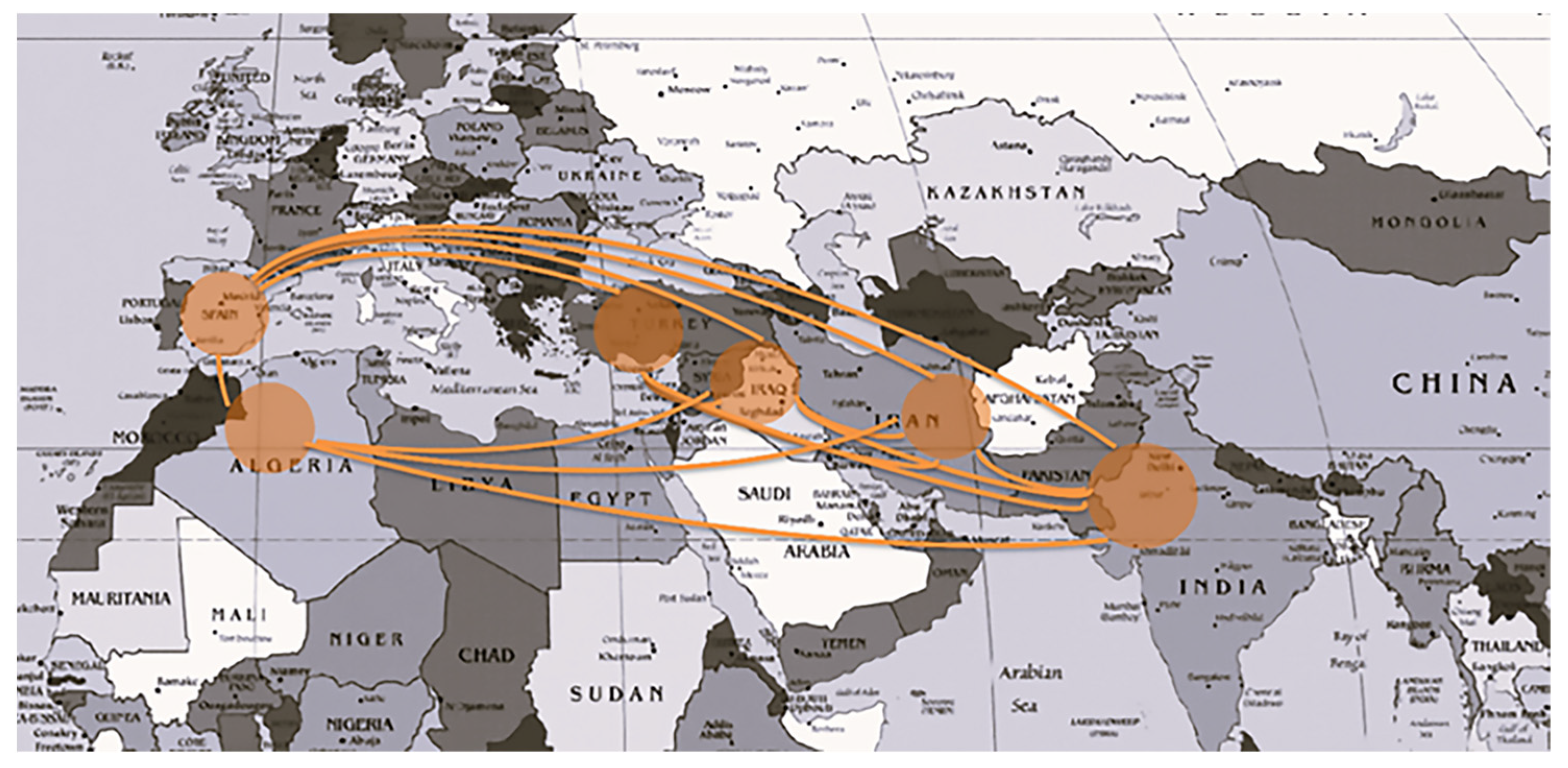
One of the most widely accepted theories on the origin of the species is that the almond tree arose from the cross of various wild species. About 30 wild species of almond trees are reported in the literature. Wild almonds were widespread from Asia (from the south–west to the center–north) to the Caucasus, particularly in foothill areas and wooded regions (Figure 1). Among these, P. bucharica, P. fenzliana, P. kunamica, P. orientalis, P. kotschii, P. korschinskii, and P. webbii are genetically close to P. dulcis [12]. In particular, P. fenzliana has been identified as the main ancestor of P. dulcis [13]. Evidence of spontaneous and repeated genetic contributions from Prunus orientalis in the Middle East and P. webbii in southern Europe to cultivated populations supports the hypothesis of recurrent introgression from wild to domesticated species [7,14]. Gene flow between wild species and, subsequently, cultivated species has contributed to the great biodiversity of the almond tree [15]. Furthermore, several distinctive traits inherited by almond are already present in wild species and have been fundamental for the crop’s adaptation and spread. These include self-compatibility, insect-mediated pollination, a perennial life cycle, and tolerance to drought stress [15,16,17,18].
The great biodiversity observed among the almond trees cultivated in Europe has been generated by sexual propagation of compatible genotypes [6]. In fact, most species have a gametophytic self-incompatibility system managed by the multi allelic locus S [19]. Natural mutations have also contributed to the genetic variability of the almond tree. For example, sweetness trait was gained after a dominant spontaneous mutation occurred in wild species during domestication in a single gene on chromosome 5 called “Sweet kernel” Sk [20]. Molecular markers have been used to assess almond biodiversity, the relationships between genotypes and the origin and diffusion of P. dulcis cultivars [6,7,8,21,22]. Several studies show that there are genotypic differences within genotypes developed in different geographic areas [23,24,25].

1.2. Economic Importance of Almond

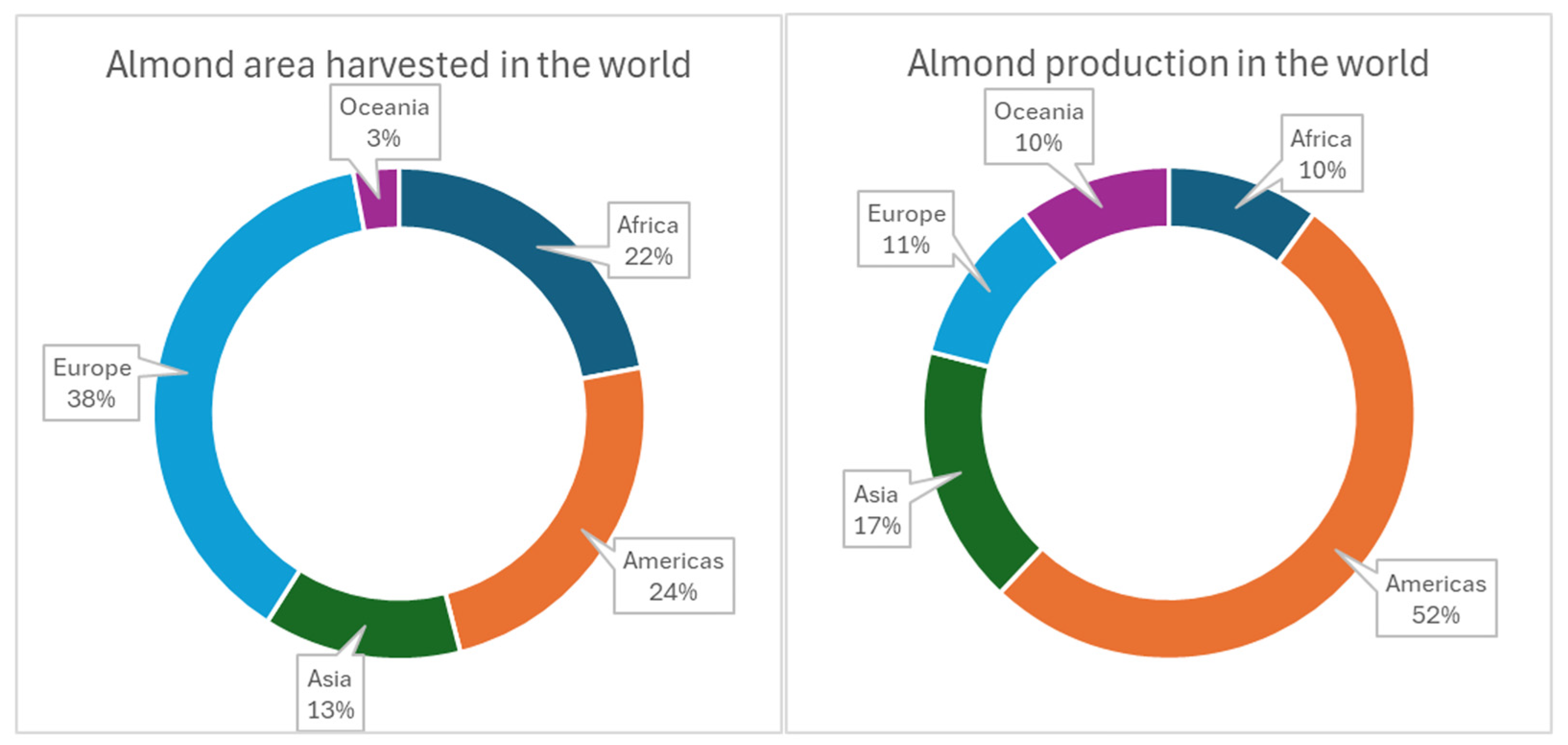
According to FAOSTAT data in 2023, the worldwide cultivated area and production was 2,322,067 ha and 3,513,970 tons, respectively [26]. The main producers are the USA (1,791,690 tons), Spain (297,660 tons), and Australia (260,000 tons) (Table 1) [26]. About 50% of the world’s almond production comes from the United States, while Europe accounts for only 10% even though the percentage of land devoted to almond cultivation relative to each country’s total cultivated area is higher than in the United States (Figure 2). Overall, the world almond market in the period 2022–2023 was characterized by a decrease in production in some important producing countries such as the USA, Australia, Turkey and Morocco. Specifically, the USA remains the world leader, but this drop in production greatly affects the market. This trend has continued since 2021 probably due to the prolonged drought in California, rising energy and water costs, and global price pressure. Instead, in Spain, Italy, Portugal, and Algeria, the production has increased (Table 2). The highest growth rate in Europe is in Portugal (from 46,220 to 69,510 t), caused by the rapid expansion of irrigated plantations and the growing market demand. The 300% increase in production experienced in Syria over the past year is not a trend, but a recovery after several abnormal years. In fact, between 2020 and 2022 a major decrease in production (74%) was caused by political instability, with inevitable consequences on agricultural infrastructure, and by the scarcity of water and other fundamental inputs.
Despite Portugal’s growth, Spain is first in Europe for production (297,660 t) and harvested area (765,540 ha) (Table 3). In recent years, the country has been undergoing significant reconversion from traditional orchards (low plant density with 333–400 plants per hectare) towards intensive and super-intensive systems. Italy, second in terms of production and third in terms of harvested area in Europe (Table 3), has achieved a production of 77,680 t (almonds in shell) with a cultivated area of 54,100 ha. As shown in Table 3, only Italy, Greece and Portugal are characterized by a yield higher than 1 ton per hectare among the European countries.
The relatively low yield per hectare is typical of Mediterranean countries and is linked both to the cultivar and to the field management techniques, characterized by low plant density and low mechanization. Due to the recent cultivation of almond trees in USA, the plantations are modern and use technology and genetically improved cultivars. However, in countries such as Spain and Italy, the conversion of farms to intensive and super-intensive systems is very recent. The first commercial super-high-density (SHD) almond orchard was established in Lleida in 2010, and shortly afterwards, SHD orchards began to be planted across all major almond-producing countries [27]. This investment will likely lead to a significant increase in production in the coming years.
According to modern projections, almond cultivation represents an excellent economic investment [12]. The consumption of the kernel is associated with health benefits thanks to the presence of fatty acids, amino acids, vitamins, minerals and secondary metabolites [28]. This awareness increases consumer demand and therefore its economic value [29].

2. Almond Cultivars and Rootstocks

2.1. Almond Cultivars

Almond cultivars exhibit remarkable variation in morphological traits, physiological characteristics, agronomic behavior and fruit composition, constituting a valuable genetic reservoir that drives the continuous breeding and improvement of new cultivars, despite often sharing common ancestors [21]. The large number of cultivars currently grown across diverse productive regions (Table 4) also reflects their broad capacity for acclimation, making varietal choice a critical factor to consider when establishing a new orchard [12].
Despite this broad genetic diversity, productive and commercial sectors in the main almond-producing countries currently rely on only a limited number of cultivars, mostly those selected for their superior kernel quality (Table 4).
In contrast, the remaining cultivars, grown and marketed, constitute a heterogeneous group, characterized by almonds of varying sizes and shapes, which are sold under local or regional names according to their origin and specific traits. These undefined mixtures often contain high proportions of double kernels and may occasionally include bitter kernels (no more than 5%), likely due to the mixing of almonds produced by bitter almond rootstocks with those of the scion cultivars [12]. Although almonds are known since antiquity, only in 2018 was the amygdalin biosynthetic pathway characterized in almond [32]. In this pathway, PdCYP79D16 and PdCYP71AN24 were identified as the cytochrome P450 (CYP) enzymes catalyzing phenylalanine-to-mandelonitrile conversion, PdUGT94AF3 was identified as an additional monoglucosyl transferase (UGT) catalyzing prunasin formation, while PdUGT94AF1 and PdUGT94AF2 were confirmed to be the two enzymes catalyzing amygdalin formation from prunasin [32]. A year later, the gene responsible for bitterness, the sweet kernel (Sk) gene, encoding a basic helix loop helix (bHLH) transcription factor, was identified [20].
As in other tree crops, the choice of plant material in almond cultivation is of critical importance, as the long-term economic viability of the orchard depends on the sustainability of this selection. An inappropriate choice will affect the orchard throughout its entire lifespan, and any corrective intervention—when feasible—entails additional costs that ultimately reduce overall profitability.
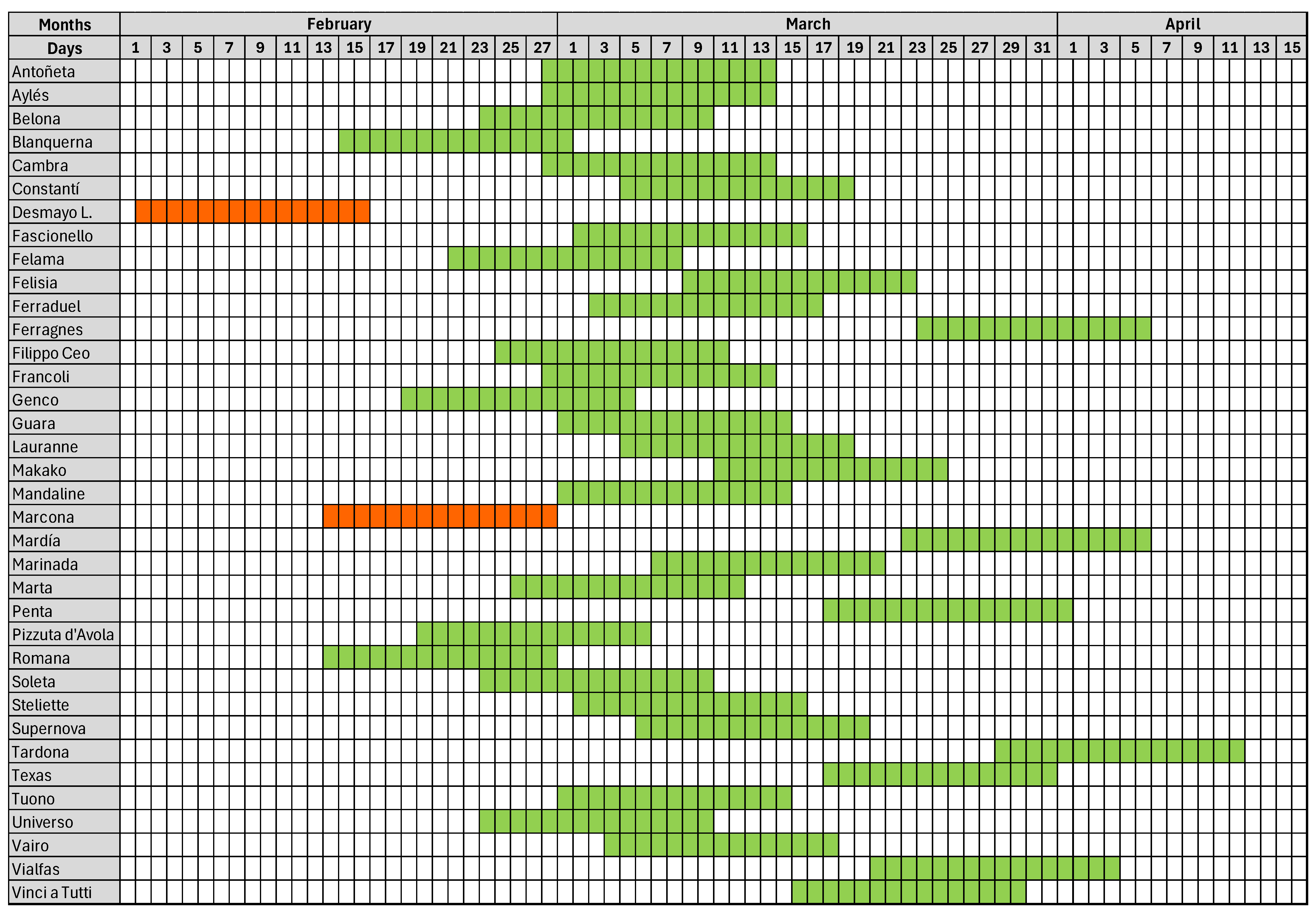
Among the available options, self-fertile and late-blooming cultivars provide notable advantages, as they contribute to achieving more consistent yields across years while maintaining high fruit quality. Self-compatible naturally occurring almond cultivars were found in the Italian region of Puglia, which have been widely used as sources of this trait in many breeding programs, particularly the cultivar “Tuono” [33]. Out of the P. dulcis species, other sources of self-compatibility used for almond breeding are peach, P. mira, P. davidiana and Yugoslavian P. webbii accessions [34]. In regions where late spring frosts are not the main constraint, the increasing scarcity of pollinators becomes a limiting factor; under such conditions, self-fertile cultivars with moderately delayed blooming also represent a significant improvement for production, particularly given that several of them exhibit excellent kernel quality. The adoption of these self-fertile and late-blooming cultivars has strengthened the competitiveness and economic efficiency of modern almond orchards by enhancing management flexibility, stabilizing yields and improving overall profitability [35]. Felipe et al. (2022) [12] provided a comprehensive overview of the main self-fertile European cultivars and their most relevant agronomic and fruit-quality characteristics (Figure 3). Table 3 shows the flowering dates of the main almond cultivars in comparison with two traditional self-incompatible cultivars, “Marcona” and “Desmayo Largueta”. These two cultivars have been widely used as mutual pollinizers, particularly in the Mediterranean areas of Spain with a warm climate. However, in inland regions, their flowering periods do not consistently overlap, and the degree of synchrony may vary depending on climatic conditions, making it necessary to use other cultivars such as “Ramillete” and “Carrero”. Along the same lines, the expression of different genes involved in ICE-CBF-COR and in the independent CBF pathways in almond pistil tissue exposed to −4 °C was analyzed by Bielsa et al. (2021) [36]. These authors characterized the cold stress response of “Guara”, Soleta® and Belona® as well as identified two genes, CLO and BBX20_2, which are possible cold-tolerant biomarkers in breeding [36].
At the moment of establishment, the choice of cultivar largely determines the orchard’s future productive potential and its suitability for commercial markets. Complementarily, the selection of the rootstock ensures adequate adaptation to soil conditions and defines the range of cultural practices and management strategies that can be successfully implemented. These considerations also influence the overall orchard design, including row spacing, planting density, and the distribution of cultivars, which in turn determine the feasibility of specific management practices, the level of mechanization, and the efficiency of pollination [37]. Taken together, these factors underscore the need for thorough and reliable information on available cultivars and rootstocks to ensure an informed and effective selection.

2.2. Almond Rootstocks

The optimization of orchard performance, however, relies not only on selecting the appropriate cultivar but also on choosing a compatible and well-adapted rootstock. In Europe, the most widely used rootstocks are almond x peach hybrid, almond x plum hybrid and complex hybrids that are particularly clonal types propagated vegetatively (Table 5). In last decades, “GF-677” has been replaced by other interspecific hybrids, including the red-leafed series (Garnem®, Felinem® and Monegro®) [38]. These new releases showed resistance to root-knot nematodes (RKNs) of the species Meloidogyne spp., good performance in replanting conditions and in limestone soils, also providing good vigor and tolerance to chlorosis [38], as well as drought [39,40,41] (Table 5). However, these rootstocks show poor adaptation to root asphyxia and heavy soils [42]. In recent years, other interspecific hybrid rootstocks belonging to a private Spanish breeding programs have been released as rootstocks for intensive orchard systems, the Rootpac® series, especially Rootpac® 20 and Rootpac® 40 (Table 5). A new rootstock belonging to the GN series, Pilowred®, has been introduced, for intensive and super-intensive orchards [12] because it confers a low vigor to the scion cultivar [43], better water use efficiency (WUE) than other GN series rootstocks [39], resistance to RKN, low chilling requirement, early sprouting and early fruiting [12].

3. Drought Stress Effects and Tolerance in Almond

3.1. Impact of Drought Stress on Almond Productivity and Quality

Drought stress exerts a direct and multifaceted effect on almond productivity, impacting both the quantity and quality of yield. Indeed, water stress during the main phenological stages, such as floral differentiation, flowering time, fruit set and kernel filling, has been demonstrated to have a considerable effect on reproductive success and production. A reduction in soil moisture has been demonstrated to have a detrimental effect on the process of carbon assimilation, thus affecting the development of fruit. This results in the production of small nuts, low kernel weight and low fruit yield, especially for sensitive cultivars [44]. In circumstances of extreme drought, protracted hydraulic failure and carbon starvation have been demonstrated to induce irreversible damage, branch dieback and increased tree mortality [45].
The repercussions of cumulative stress on almond orchards and farmers’ income are two-fold. Firstly, it has been demonstrated that such stress can lead to a decrease in annual yields. Secondly, it has also been demonstrated that it can compromise the longevity of almond orchards and farmers’ income, especially in rainfed systems, which dominate traditional almond-growing regions. Therefore, irregularity of yield under drought conditions is one of the major threats to the sustainability of almond production. Notwithstanding the deleterious effects previously mentioned, a moderate and well-managed water deficit does not invariably result in a reduction in economic value. However, Barreales et al. (2023) demonstrated that controlled deficit irrigation can improve the water status of almond trees without compromising fruit quality [46]. Consequently, moderate water stress has been shown to enhance the phenolic content and antioxidant capacity of almond kernels, thereby increasing their potential nutraceutical value [47]. In a comparable study, sustained water stress was shown to impact lipid composition and oxidative stability without greatly compromising kernel yield [46]. However, these biochemical and nutritional changes are highly cultivar-dependent and affected by the timing, duration and intensity of drought stress. From a production perspective, the challenge lies in balancing yield stability with improvement of quality under water deficit irrigation. While well-controlled drought can be used as a management tool to improve kernel quality, excessive or poorly timed water stress could induce a significant yield decrease and threatens orchard viability.

3.2. Physiological and Adaptive Responses of Almond to Drought Stress

Recent advances in almond drought research have significantly improved the under-standing of physiological, biochemical, and agronomic responses to water deficit. In fact, water deficit can have contrasting effects on almond production depending on its timing, duration and intensity. Severe drought stress, especially during sensitive phenological stages such as flowering time, fruiting and kernel filling, can lead to yield decreases exceeding 30–60% [48,49,50,51], particularly due to impaired carbon assimilation, increased fruit drop and decreased kernel size. When midday stem water potential drops below about −2.0 to −2.5 MPa due to a larger cumulative effect of water stress, irreversible physiological damage such as hydraulic failure and carbon starvation may occur, inducing to branch dieback and even tree mortality [52,53,54,55]. Key physiological thresholds are increasingly used to guide irrigation management in almond orchards. For instance, midday stem water potential values between −1.0 and −1.5 MPa are generally considered optimal for maintaining productivity [52].
However, moderate and well-managed water deficit, mainly during less sensitive stages (e.g., post-harvest or late kernel filling), could be strategically practiced using regulated deficit irrigation. Investigations have revealed that water economy of 20–40% can be achieved without significant yield penalties, while improving kernel quality characteristics such as phenolic content, antioxidant capacity and lipid stability [46,56]. Nevertheless, the success of this practice depends strongly on cultivar, rootstock and environmental conditions. Therefore, controlled drought can be a useful agronomic tool, but only when carefully adjusted to avoid yield losses.
The tolerance of almond to drought is based on a suite of physiological adjustments that allow trees to maintain metabolic activity under water deficit conditions. Previous investigations highlighted that almond cultivars differs significantly in relation to their ability to regulate transpiration, hydraulic conductance, leaf gas exchanges efficiency, photosynthetic rate and stomatal conductance under drought deficit conditions [44]. Drought tolerance in almond cultivars is typically characterized by early stomatal closure, enabling reduced water loss while sustaining acceptable levels of carbon assimilation [57]. It varies significantly among cultivars and rootstocks, particularly in terms of physiological mechanisms such as early stomatal closure, reduced transpiration and improved water use efficiency [44,58,59,60]. Cultivars such as Ferragnès, Garrigues and Arrubia have shown good adaptation to water-limited environments, demonstrating stable physiological performance and yield under deficit irrigation conditions (Table 6) [46,61]. Similarly, previous investigations highlighted that genotypes such as White and Texas exhibit powerful acclimation responses, including reduced stomatal conductance and improved osmotic adjustment. Further studies confirmed that drought-tolerant almond genotypes exhibited rapid stomatal regulation, limiting transpiration losses while maintaining sufficient photosynthetic activity [58,59]. In addition, rootstocks such as Prunus scoparia have shown enhanced drought resilience by improving hydraulic conductivity and water uptake efficiency [62]. These traits collectively contribute to maintaining plant water status and minimizing productivity losses under water deficit conditions. Similar studies reported that drought-tolerant rootstocks maintain higher membrane stability and antioxidant capacity under stress conditions [59].

3.3. Agronomic Strategies, Cultivar Choice and Rootstock Performance Under Drought Conditions

Agronomic studies [56,63] highlighted the importance of optimized irrigation strategies, proving that integrating rainfall patterns with deficit irrigation scheduling can enhance water productivity without compromising yield. Moreover, emerging screening approaches combining physiological, biochemical and remote sensing indicators [64] provide strong tools for identifying drought-tolerant cultivars. These advances emphasize the importance of integrating irrigation management, plant physiology and genetic improvement to improve almond resilience under climate change scenarios.
From a biochemical perspective, osmotic adjustment explained by the accumulation of compatible solutes like proline and soluble sugars plays a substantial role in maintaining intracellular turgor and protecting integrity of membrane [61,65,66,67,68]. Enhanced antioxidant activities of some enzymes such as superoxide dismutase, catalase and peroxidases have also been reported in drought-tolerant Prunus cultivars, as indicators of mitigating oxidative stress caused by water deficit. Hormonal regulation is another key component that plays an important role in almond drought response. Accumulation of abscisic acid under drought conditions activates stomatal regulation and activates pathways related to stress interaction. In fact, interference with auxins, cytokinins and ethylene affect growth inhibition and recovery capacity [61]. Cultivars with rapid adjusting of the hormonal balance would be capable to recover more efficiently after re-watering, a major trait under intermittent drought conditions. In the context of water scarcity, regulated deficit irrigation has emerged as an alternative strategy to enhance efficient water use in almond orchards without compromising yield or kernel quality. Conti et al. (2025) showed that moderate regulated deficit irrigation during less sensitive phenological stages can significantly decrease consumption of water while maintaining acceptable physiological performance and productivity and constitutes an ideal pathway for water-limited environments [69]. Under Mediterranean climate conditions, sustained deficit irrigation could alter the kernel composition, increase the phenolic compounds and the antioxidant capacity. Consequently, this may also enhance or at least maintain the nutritional quality of the final almond product [46]. However, the success of regulated deficit irrigation effectively depends on cultivar selection, rootstock, climate and soil type (Table 5). Therefore, the adoption of regulated deficit irrigation must be carefully calibrated to climatic local conditions to avoid long-term tree stress and mortality.
Rootstock choice plays a crucial role in determining almond tree performance under drought conditions, as it directly affects architecture of the root system, efficiency of water uptake, nutrient acquisition and tree vigor. In water-limited areas, the use of drought-tolerant rootstocks can significantly mitigate the negative effects of water deficit on growth and productivity. Khadivi-Khub and Anjam (2016) showed that Prunus scoparia was a strong promising rootstock for almond under drought conditions, demonstrating suitable vegetative growth, fruit set and yield stability in comparison to more commonly used rootstocks (Table 5) [62]. Ranjbar et al. (2022) showed that grafting commercial almond cultivars onto well-adapted rootstocks has been shown to improve drought resilience by enhancing hydraulic conductivity and maintaining acceptable plant water status during water stress periods [70]. In Tunisia, Ben Yahmed et al. (2022) proved that R40 was suitable for high density with medium canopy and balanced nutritional status [67]. Guara, Lauranne and Tuono on R40 showed the best choice for physiological and mineral parameters. Such combinations may limit yield losses and delay the onset of damage that could be caused by water deficit. In Morocco, for example, where soil depth, texture and capacity of water uptake vary considerably across almond-growing areas, the importance of matching rootstocks to local edaphic conditions is as strong as climatic adaptation. Cultivar selection further modulates drought response. Mediterranean cultivars such as Marcona and Ferragnès have considered moderate drought tolerance with stable kernel quality when deficit irrigation regimes were implemented [71,72] (Table 6). Additionally, locally potentially resilient Moroccan almond populations, subjected to long-term exposure to arid and semi-arid conditions, usually exhibit conservative growth characters and good survival under prolonged drought stress [44]. However, these traditional genotypes are mostly characterized by variable yield and heterogeneous quality of nut [22,31], highlighting the need for selection and breeding.
Table 6. Some almond cultivars and genotypes show drought-related traits relevant under Mediterranean climate conditions.
Cultivar/GenotypeOriginKey Drought-Tolerance TraitsReferences
FerragnèsFranceAdaptable to sustainable deficit irrigation[46]
GarriguesSpainGood adaptation to water scarcity[61]
ArrubiaItalyGreat physiological acclimation to water stress, high yields[44]
TexasUSAGreat physiological acclimation to water stress, high yields[44]
WhiteIranGood morphological/physiological performances under drought stress[73]
Prunus scoparia(rootstock)IranHigh drought tolerance, improved fruit yield when used as rootstock[62]

4. Genetic Resources and Improvement

4.1. Biodiversity and Traditional Breeding

Biodiversity plays a vital role in genetic improvement because it represents a resource to address new environmental and climate challenges, as well to find new resistance sources against biotic stresses. Wild species have traditionally been used as a source of genetic variability in crop improvement programs, making a significant contribution in advancing plant breeding [15]. In fact, local accessions preserve characteristics of rusticity and tolerance that are potentially useful for the selection of improved genotypes [74]. The importance of genetic biodiversity is confirmed by the considerable number of germplasm collections (in situ and ex situ) in the world. In particular, the first collection of almonds was described in Russia in 1935 followed by those held in USA, France, Spain, Italy, Portugal, and Greece, among others [22,37].
The selection of genotypes based on phenotypic traits represents one of the earliest human interventions in genetic improvement, allowing the preservation and enhancement of the most promising natural populations [75]. For over a century, humans have carried out controlled crosses by selecting both the pollen donor and the female parent for the introgression of specific traits of interest [75]. However, this mass-selection approach is both time-consuming and costly. Seeds from these crosses must be sown and grown, and the resulting plants must pass through a multi-year juvenility period, with direct repercussions on the space required and the time needed for selection. In addition, the high heterozygosity of almond [22,76] requires the set-up of large-scale pollinations to increase the chances of detecting at least one individual combining all the desired characteristics.
In modern almond breeding programs, selection generally focuses on traits such as regulation of the flowering period, self-compatibility, vigor, tolerance to biotic and abiotic stresses, productivity and fruit quality. The choice of working on delaying or advancing flowering, to focus on a specific abiotic stress or disease, depends on the characteristics of the cultivation site. For example, delaying flowering is useful in areas with frequent cold spells, while advancing flowering is beneficial in Mediterranean areas.
As regards the qualitative aspects, consumers drive genetic improvement programs [77], but in general the focus is on nutraceutical characteristics [78]. Furthermore, the product has multiple uses, such as the following: raw, processed into snacks (toasted and/or salted), bakery products, and plant-based milk. The characteristics required differ for each of these purposes. For example, if the product is intended for fresh consumption, the seed must have a regular shape without any visible defects. The bakery and cosmetics industries require seeds with high oil content (necessary, for example, to produce nougat) [79,80].
Modern biotechnologies, such as in vitro cultivation techniques and molecular biology tools, have made it possible to overcome many of the limitations associated with traditional genetic improvement.
Through vegetative propagation, individuals genetically identical to the original mother plant (clones) are obtained and can be used as a complementary tool to breed methods because it accelerates the evaluation phase of some traits. Micropropagation is the most used technique to obtain high numbers of healthy clones. Furthermore, in vitro culture offers an interesting new prospect (already present in some commercial contexts) of self-rooted cultivars. These are characterized by early production (approximately 1–2 years earlier), the possibility of mechanization because they are ideal for super-intensive systems, and good water management efficiency [12].

4.2. Molecular Tools and Genomic Resources

The use of molecular markers associated with traits of interest has accelerated the selection process described above. Microsatellites (SSRs) and Single Nucleotide Polymorphisms (SNPs) are the most widely used markers in almond trees for marker-assisted selection (MAS). In addition, several studies on the genome of the species have identify different Quantitative Traits Loci (QTLs) used in genetic improvement programs.
To date, markers have been reported for sweet seed [81], flowering time [82], self-compatibility [82,83,84,85,86], shell hardness [87,88], resistance to brown rot [89] and tolerance to bacterial spotting [90].
Restriction fragment length polymorphism (RFLP), SSR, cleaved amplified polymorphic sequence (CAPS) markers and competitive allele-specific PCR (KASP) technology are currently used to identify and select sweet kernel genotypes [91]. RAPD, SSR markers and several QTLs have been associated with the major gene Lb that controls late flowering [92]. Furthermore, several candidate genes have been associated with early or late flowering [93]. Initially, the identification of S-alleles was based on classical molecular approaches, including PCR amplification of intronic regions of the S-RNase gene. Following the development of genotyping-by-sequencing (GBS) technologies, SNP marker panels and KASP assays have been set up to screen the S locus. Notably, Goonetilleke et al. (2018) have produced reference maps and SNP marker sets that can be employed in the assisted selection of self-compatible genotypes [94]. Several differentially expressed genes have been associated with drought response [95,96].
These important achievements in the field of almond genetics and breeding would not have been possible without the availability of reference genome assemblies. Currently, three almond genome assemblies are available at the Genome Database for Rosaceae (https://www.rosaceae.org/organism/24336, accessed on 1 April 2026), the most recent being the Prunus dulcis Texas Genome v3.0 obtained by coupling PacBio and Hi-C reads sequencing technologies from the Texas cultivar [76]. Overall, the availability of almond reference genome assemblies enables the discovering and the application of molecular markers for the selection of improved cultivars.
Genetic improvement of rootstocks concerns various traits. Rootstocks with a highly developed root system are preferred to ensure a good water supply [97]. Rootstock is the main factor in resistance to pathogens such as nematodes; it also determines tolerance to alkaline and calcareous soils and promotes higher yields in non-irrigated soils. Rootstocks can also influence fruit quality, yield, flowering period and tree vigor [97]. This last characteristic is of great interest in modern field design because it is necessary to increase plant density in super-intensive systems.

5. Conclusions and Perspectives

In the present review, the almond crop was examined with emphasis on its increasing economic relevance and its physiological and genetic mechanisms underlying drought tolerance, a key target currently driving breeding efforts and ensuring long-term crop sustainability.
Almond production in the Mediterranean area faces significant challenges under current and projected climate conditions. Increased frequent and intensive drought, reducing groundwater availability and rising competition for water resources, is one of the major constraints, especially for smallholder farmers depending on rainfed or poorly irrigated systems. In many traditional almond orchards with aging trees, low planting density and insufficient management practices reduce adaptive capacity and productivity. The Mediterranean area has a rich reservoir of local almond genetic resources that can be valorized relaying on systematic characterization and selection for drought tolerance. Eco-physiological monitoring progress, investigating deeply plant water status indicators and remote sensing tools, give promising pathways to optimize irrigation scheduling and early stress detection [69]. The adoption of controlled deficit irrigation, combined with improved orchard structure and soil management, can substantially improve the efficient water use in almonds.
From a breeding perspective, complementing the elements outlined in the dedicated paragraph, it is essential to integrate molecular tools and local farmer knowledge. Participatory selection programs involving growers could accelerate the dissemination of drought-resilient cultivars adapted and suitable to local conditions. In parallel, the development and promotion of drought-tolerant rootstocks should be prioritized to enhance orchard resilience across diverse and large areas. Policy support will be substantial to promote these opportunities. Investments in technologies to manage water-efficient irrigation, nursery certification systems and modernization of orchards programs can significantly improve adaptation capacity. Strengthening research–extension–farmer linkages and involving almond production into broader climate adaptation strategies will be the key to ensuring the long-term sustainability of almond production in the Mediterranean under ongoing and future climate change.

Author Contributions

Writing—original draft preparation, G.D., O.K., I.I., K.A., C.C., L.P.L., V.R.A., M.T.E.R., J.G., B.B., M.E., A.U., A.E.Y. and M.J.R.-C.; visualization, C.C.; writing—review and editing, G.D. and M.J.R.-C. All authors have read and agreed to the published version of the manuscript.

Funding

This research was funded by PRIMA project MEDPOMESTONE “Valorizing some pome and stone fruit germplasm variability to ensure resilience to climate change in the Mediterranean area” (ID 1680).

Data Availability Statement

The original contributions presented in this study are included in the article. Further inquiries can be directed to the corresponding author.

Conflicts of Interest

The authors declare no conflicts of interest.

References

  1. Socias i Company, R.; Ansón, J.M.; Espiau, M.T. Taxonomy, Botany and Physiology. In Almonds: Botany, Production and Uses; CABI: Wallingford, UK, 2017; pp. 1–42. [Google Scholar]
  2. Soundararajan, P.; Won, S.Y.; Kim, J.S. Insight on Rosaceae Family with Genome Sequencing and Functional Genomics Perspective. BioMed Res. Int. 2019, 2019, 7519687. [Google Scholar] [CrossRef]
  3. Zohary, D.; Spiegel-Roy, P. Beginnings of Fruit Growing in the Old World. Science 1975, 187, 319–327. [Google Scholar] [CrossRef]
  4. Zohary, D.; Hopf, M.; Weiss, E. Domestication of Plants in the Old World; Oxford University Press: Oxford, UK, 2012. [Google Scholar]
  5. Decroocq, S.; Cornille, A.; Dlalah, N.; Duval, H.; Tricon, D.; Quilot, B.; Khalid, W.K.; Chague, A.; Eduardo, I.; Batlle, I.; et al. Insights Into the Almond Domestication History. Evol. Appl. 2025, 18, e70150. [Google Scholar] [CrossRef] [PubMed]
  6. Lougmani, C.; Mesnil, A.; Fahmy, R.; Decroocq, V.; Bui, Q.T.; Liu, S.; Chen, X.; Chague, A.; Venon, A.; Chagné, D.; et al. Genomic Footprints of Domestication in Almond (Prunus dulcis). bioRxiv 2025. [Google Scholar] [CrossRef]
  7. Delplancke, M.; Alvarez, N.; Benoit, L.; Espíndola, A.; I Joly, H.; Neuenschwander, S.; Arrigo, N. Evolutionary History of Almond Tree Domestication in the Mediterranean Basin. Mol. Ecol. 2013, 22, 1092–1104. [Google Scholar] [CrossRef]
  8. Velasco, D.; Hough, J.; Aradhya, M.; Ross-Ibarra, J. Evolutionary Genomics of Peach and Almond Domestication. G3 Genes Genomes Genet. 2016, 6, 3985–3993. [Google Scholar] [CrossRef]
  9. Wang, W.; Li, Z.-J.; Zhang, Y.-L.; Xu, X.-Q. Current Situation, Global Potential Distribution and Evolution of Six Almond Species in China. Front. Plant Sci. 2021, 12, 619883. [Google Scholar] [CrossRef]
  10. Rodríguez-Robles, L.; Devin, S.R.; Ye, X.; Sagbas, H.I.; Mahdavi, S.M.E.; von Wettberg, E.B.; Feng, J.; Rubio, M.; Martínez-Gómez, P. Prunus Movement Across the Silk Road: An Integrated Evolutionary and Breeding Analysis. Horticulturae 2024, 10, 1381. [Google Scholar] [CrossRef]
  11. Hansen, J.M. The Palaeoethnobotany of Franchthi Cave. Excavations at Franchthi Cave, Greece; Indiana University Press: Bloomington, IN, USA, 1991; Volume 7. [Google Scholar]
  12. Felipe, A.; Rius, X.; Rubio-Cabetas, M. El Cultivo Del Almendro, 2nd ed.; Felipe, A., Rius, X., Rubio-Cabetas, M., Eds.; 2022; ISBN 978-950-42-0085-7. [Google Scholar]
  13. Zeinalabedini, M.; Khayam-Nekoui, M.; Grigorian, V.; Gradziel, T.M.; Martínez-Gómez, P. The Origin and Dissemination of the Cultivated Almond as Determined by Nuclear and Chloroplast SSR Marker Analysis. Sci. Hortic. 2010, 125, 593–601. [Google Scholar] [CrossRef]
  14. Gradziel, T.M.; Martínez-Gómez, P. Almond Breeding. In Plant Breeding Reviews; Wiley: Hoboken, NJ, USA, 2013; pp. 207–258. [Google Scholar]
  15. Delplancke, M.; Alvarez, N.; Espíndola, A.; Joly, H.; Benoit, L.; Brouck, E.; Arrigo, N. Gene Flow among Wild and Domesticated Almond Species: Insights from Chloroplast and Nuclear Markers. Evol. Appl. 2012, 5, 317–329. [Google Scholar] [CrossRef] [PubMed]
  16. Dicenta, F.; García, J.E. Inheritance of Self-Compatibility in Almond. Heredity 1993, 70, 313–317. [Google Scholar] [CrossRef]
  17. Socias I Company, R. Fruit Tree Genetics at a Turning Point: The Almond Example. Theor. Appl. Genet. 1998, 96, 588–601. [Google Scholar] [CrossRef]
  18. Godini, A. About the Possible Relationships between Amygdalus Webbi Spach and Amygdalus communis L. NUCIS Newsl. 2000, 9, 17–19. [Google Scholar]
  19. Kodad, O.; Alonso, J.M.; Fernández i Martí, A.; Oliveira, M.M.; Socias i Company, R. Molecular and Physiological Identification of New S-Alleles Associated with Self-(in)Compatibility in Local Spanish Almond Cultivars. Sci. Hortic. 2010, 123, 308–311. [Google Scholar] [CrossRef]
  20. Sánchez-Pérez, R.; Pavan, S.; Mazzeo, R.; Moldovan, C.; Aiese Cigliano, R.; Del Cueto, J.; Ricciardi, F.; Lotti, C.; Ricciardi, L.; Dicenta, F.; et al. Mutation of a BHLH Transcription Factor Allowed Almond Domestication. Science 2019, 364, 1095–1098. [Google Scholar] [CrossRef]
  21. Pérez de los Cobos, F.; Martínez-García, P.J.; Romero, A.; Miarnau, X.; Eduardo, I.; Howad, W.; Mnejja, M.; Dicenta, F.; Socias i Company, R.; Rubio-Cabetas, M.J.; et al. Pedigree Analysis of 220 Almond Genotypes Reveals Two World Mainstream Breeding Lines Based on Only Three Different Cultivars. Hortic. Res. 2021, 8, 11. [Google Scholar] [CrossRef]
  22. Di Guardo, M.; Farneti, B.; Khomenko, I.; Modica, G.; Mosca, A.; Distefano, G.; Bianco, L.; Troggio, M.; Sottile, F.; La Malfa, S.; et al. Genetic Characterization of an Almond Germplasm Collection and Volatilome Profiling of Raw and Roasted Kernels. Hortic. Res. 2021, 8, 27. [Google Scholar] [CrossRef] [PubMed]
  23. Distefano, G.; Caruso, M.; La Malfa, S.; Ferrante, T.; Del Signore, B.; Gentile, A.; Sottile, F. Genetic Diversity and Relationships among Italian and Foreign Almond Germplasm as Revealed by Microsatellite Markers. Sci. Hortic. 2013, 162, 305–312. [Google Scholar] [CrossRef]
  24. Gentile, A.; Inzirillo, I.; Bennici, S.; Scollo, F.; Las Casas, G.; Di Guardo, M.; La Malfa, S.; Distefano, G. Genomic Approaches for Almond Traceability from Nursery and along the Food Chain. Hortic. Plant J. 2025, 11, 1103–1115. [Google Scholar] [CrossRef]
  25. Pavan, S.; Delvento, C.; Mazzeo, R.; Ricciardi, F.; Losciale, P.; Gaeta, L.; D’Agostino, N.; Taranto, F.; Sánchez-Pérez, R.; Ricciardi, L.; et al. Almond Diversity and Homozygosity Define Structure, Kinship, Inbreeding, and Linkage Disequilibrium in Cultivated Germplasm, and Reveal Genomic Associations with Nut and Seed Weight. Hortic. Res. 2021, 8, 15. [Google Scholar] [CrossRef]
  26. FAOSTAT Faostat Statistical. Available online: https://www.fao.org/faostat/en/#data/QCL (accessed on 27 March 2026).
  27. Maldera, F.; Vivaldi, G.A.; Iglesias-Castellarnau, I.; Camposeo, S. Two Almond Cultivars Trained in a Super-High Density Orchard Show Different Growth, Yield Efficiencies and Damages by Mechanical Harvesting. Agronomy 2021, 11, 1406. [Google Scholar] [CrossRef]
  28. Gracia, B.M.; Reig, D.L.; Rubio-Cabetas, M.J.; García, M.Á.S. Study of Phenolic Compounds and Antioxidant Capacity of Spanish Almonds. Foods 2021, 10, 2334. [Google Scholar] [CrossRef]
  29. Sottile, F.; Massaglia, S.; Peano, C. Ecological and Economic Indicators for the Evaluation of Almond (Prunus dulcis L.) Orchard Renewal in Sicily. Agriculture 2020, 10, 301. [Google Scholar] [CrossRef]
  30. Socias i Company, R.; Gradziel, T.M. (Eds.) Almonds: Botany, Production and Uses; CABI: Wallingford, UK, 2017. [Google Scholar]
  31. Calle, A.; Aparicio-Durán, L.; Batlle, I.; Eduardo, I.; Miarnau, X. Review of Agronomic and Kernel Quality Traits of 273 Almond Cultivars. Genet. Resour. Crop Evol. 2025, 72, 3783–3828. [Google Scholar] [CrossRef]
  32. Thodberg, S.; Del Cueto, J.; Mazzeo, R.; Pavan, S.; Lotti, C.; Dicenta, F.; Neilson, E.H.J.; Møller, B.L.; Sánchez-Pérez, R. Elucidation of the Amygdalin Pathway Reveals the Metabolic Basis of Bitter and Sweet Almonds (Prunus dulcis). Plant Physiol. 2018, 178, 1096–1111. [Google Scholar] [CrossRef] [PubMed]
  33. Socias i Company, R. Latest Advances in Almond Self-Compatibility. Acta Hortic. 2002, 591, 205–212. [Google Scholar] [CrossRef]
  34. Gradziel, T.M. Almond (Prunus dulcis) Breeding. In Breeding Plantation Tree Crops: Temperate Species; Jain, S., Prriyadarshan, P., Eds.; Springer: New York, NY, USA, 2009; pp. 1–32. [Google Scholar]
  35. Alonso Segura, J.M.; Socias i Company, R.; Kodad, O. Late-Blooming in Almond: A Controversial Objective. Sci. Hortic. 2017, 224, 61–67. [Google Scholar] [CrossRef]
  36. Bielsa, B.; Ávila-Alonso, J.I.; Fernández i Martí, Á.; Grimplet, J.; Rubio-Cabetas, M.J. Gene Expression Analysis in Cold Stress Conditions Reveals BBX20 and CLO as Potential Biomarkers for Cold Tolerance in Almond. Horticulturae 2021, 7, 527. [Google Scholar] [CrossRef]
  37. Rubio-Cabetas, M.J.; Bielsa, B.; Espiau, M.T. Origin, Genetic Diversity and Evolution in Almond Tree. In Economically Important Trees: Origin, Evolution, Genetic Diversity and Ecology; Springer: Singapore, 2024; pp. 357–389. [Google Scholar]
  38. Felipe, A.J. ‘Felinem’, ‘Garnem’, and ‘Monegro’ Almond × Peach Hybrid Rootstocks. HortScience 2009, 44, 196–197. [Google Scholar] [CrossRef]
  39. Bielsa, B.; Hewitt, S.; Reyes-Chin-Wo, S.; Dhingra, A.; Rubio-Cabetas, M.J. Identification of Water Use Efficiency Related Genes in ‘Garnem’ Almond-Peach Rootstock Using Time-Course Transcriptome Analysis. PLoS ONE 2018, 13, e0205493. [Google Scholar] [CrossRef] [PubMed]
  40. Bielsa, B.; Sanz, M.Á.; Rubio-Cabetas, M.J. Uncovering Early Response to Drought by Proteomic, Physiological and Biochemical Changes in the Almond × Peach Rootstock ‘Garnem’. Funct. Plant Biol. 2019, 46, 994–1008. [Google Scholar] [CrossRef]
  41. Bielsa, B.; Sanz, M.Á.; Rubio-Cabetas, M.J. ‘Garnem’ and Myrobalan ‘P.2175’: Two Different Drought Responses and Their Implications in Drought Tolerance. Horticulturae 2021, 7, 299. [Google Scholar] [CrossRef]
  42. Amador, M.L.; Sancho, S.; Bielsa, B.; Gomez-Aparisi, J.; Rubio-Cabetas, M.J. Physiological and Biochemical Parameters Controlling Waterlogging Stress Tolerance in Prunus before and after Drainage. Physiol. Plant. 2012, 144, 357–368. [Google Scholar] [CrossRef] [PubMed]
  43. Bielsa, B.; Madera, F.; Rubio-Cabetas, M. Pilowred®: Un Nuevo Portainjerto Resistente a Nemátodos Que Confiere Un Vigor Reducido. Resultados Preliminares En Varias Localizaciones. In Proceedings of the X Congreso de Mejora Genética de Plantas, SECH, Pontevedra, Spain, 19 September 2022. [Google Scholar]
  44. Fernandes de Oliveira, A.; Mameli, M.G.; De Pau, L.; Satta, D. Almond Tree Adaptation to Water Stress: Differences in Physiological Performance and Yield Responses among Four Cultivar Grown in Mediterranean Environment. Plants 2023, 12, 1131. [Google Scholar] [CrossRef] [PubMed]
  45. Anderegg, W.R.L.; Berry, J.A.; Smith, D.D.; Sperry, J.S.; Anderegg, L.D.L.; Field, C.B. The Roles of Hydraulic and Carbon Stress in a Widespread Climate-Induced Forest Die-Off. Proc. Natl. Acad. Sci. USA 2012, 109, 233–237. [Google Scholar] [CrossRef] [PubMed]
  46. Barreales, D.; Pereira, J.A.; Casal, S.; Ribeiro, A.C. Influence of Sustained Deficit Irrigation and Foliar Kaolin Application on Almond Kernel Composition. Sci. Hortic. 2023, 321, 112262. [Google Scholar] [CrossRef]
  47. Lipan, L.; Martín-Palomo, M.J.; Sánchez-Rodríguez, L.; Cano-Lamadrid, M.; Sendra, E.; Hernández, F.; Burló, F.; Vázquez-Araújo, L.; Andreu, L.; Carbonell-Barrachina, Á.A. Almond Fruit Quality Can Be Improved by Means of Deficit Irrigation Strategies. Agric. Water Manag. 2019, 217, 236–242. [Google Scholar] [CrossRef]
  48. Goldhamer, D.A.; Viveros, M.; Salinas, M. Regulated Deficit Irrigation in Almonds: Effects of Variations in Applied Water and Stress Timing on Yield and Yield Components. Irrig. Sci. 2006, 24, 101–114. [Google Scholar] [CrossRef]
  49. Girona, J.; Mata, M.; Marsal, J. Regulated Deficit Irrigation during the Kernel-Filling Period and Optimal Irrigation Rates in Almond. Agric. Water Manag. 2005, 75, 152–167. [Google Scholar] [CrossRef]
  50. Fereres, E.; Soriano, M.A. Deficit Irrigation for Reducing Agricultural Water Use. J. Exp. Bot. 2007, 58, 147–159. [Google Scholar] [CrossRef]
  51. Fulton, A.; Grant, J.; Buchner, R.; Connell, J. Using the Pressure Chamber for Irrigation Management in Walnut, Almond and Prune; University of California, Agricultural and Natural Resources: Davis, CA, USA, 2014. [Google Scholar] [CrossRef]
  52. Shackel, K.; Lampinen, B.; Sibbett, S.; Olson, W. The Relation of Midday Stem Water Potential to the Growth and Physiology of Fruit Trees under Water Limited Conditions. Acta Hortic. 2000, 537, 425–430. [Google Scholar] [CrossRef]
  53. Naor, A. Irrigation Scheduling and Evaluation of Tree Water Status in Deciduous Orchards. Hortic. Rev. 2010, 32, 111–165. [Google Scholar]
  54. Egea, G.; Nortes, P.A.; Domingo, R.; Baille, A.; Pérez-Pastor, A.; González-Real, M.M. Almond Agronomic Response to Long-Term Deficit Irrigation Applied since Orchard Establishment. Irrig. Sci. 2013, 31, 445–454. [Google Scholar] [CrossRef]
  55. Romero, P.; Botia, P.; Garcia, F. Effects of Regulated Deficit Irrigation under Subsurface Drip Irrigation Conditions on Vegetative Development and Yield of Mature Almond Trees. Plant Soil 2004, 260, 169–181. [Google Scholar] [CrossRef]
  56. Bellvert, J.; Quintanilla-Albornoz, M.; Mata, M.; Pelechá, A.; Minuesa, C.; Torguet, L.; Pallarés, N.; Miarnau, X. Agronomic Management Strategies to Mitigate Almond Orchard Water Stress under Drought and Irrigation Shortages. Irrig. Sci. 2026, 44, 12. [Google Scholar] [CrossRef]
  57. Rouhi, V.; Samson, R.; Lemeur, R.; Damme, P. Van Photosynthetic Gas Exchange Characteristics in Three Different Almond Species during Drought Stress and Subsequent Recovery. Environ. Exp. Bot. 2007, 59, 117–129. [Google Scholar] [CrossRef]
  58. Gohari, S.; Imani, A.; Talaei, A.R.; Abdossi, V.; Asghari, M.R. Physiological Responses of Almond Genotypes to Drought Stress. Russ. J. Plant Physiol. 2023, 70, 141. [Google Scholar] [CrossRef]
  59. Yildirim, A.N.; Şan, B.; Yildirim, F.; Çelik, C.; Bayar, B.; Karakurt, Y. Physiological and Biochemical Responses of Almond Rootstocks to Drought Stress. Turkish J. Agric. For. 2021, 45, 522–532. [Google Scholar] [CrossRef]
  60. Bakhtiari, E.S.; Mousavi, A.; Yadegari, M.; Haghighati, B.; Martínez-García, P.J. Physiological and Biochemical Responses of Almond (Prunus dulcis) Cultivars to Drought Stress in Semi-Arid Conditions in Iran. Plants 2025, 14, 734. [Google Scholar] [CrossRef]
  61. Jurado-Mañogil, C.; Martínez-Melgarejo, P.A.; Martínez-García, P.; Rubio, M.; Hernández, J.A.; Barba-Espín, G.; Diaz-Vivancos, P.; Martínez-García, P.J. Comprehensive Study of the Hormonal, Enzymatic and Osmoregulatory Response to Drought in Prunus Species. Sci. Hortic. 2024, 326, 112786. [Google Scholar] [CrossRef]
  62. Khadivi-Khub, A.; Anjam, K. Prunus scoparia, a Suitable Rootstock for Almond (Prunus dulcis) under Drought Condition Based on Vegetative and Fruit Characteristics. Sci. Hortic. 2016, 210, 220–226. [Google Scholar] [CrossRef]
  63. Sperling, O.; Tricerri, N.; Orozco, J.; Ellis, Z.; Gardi, I.; Secchi, F.; Zwieniecki, M.A. Integration of Seasonal Rainfall and Irrigation into a Water Management Plan for Almond Orchards: Should We Irrigate in Response to Drought or to Maintain Growth Potential? Agric. Water Manag. 2025, 319, 109743. [Google Scholar] [CrossRef]
  64. Gispert, J.R.; Marimon, N.; Romero, A.; Miarnau, X. Screening Almond Cultivars for Water Stress Tolerance Using Multiple Diagnostic Parameters. Agronomy 2026, 16, 478. [Google Scholar] [CrossRef]
  65. Jimenez, S.; Dridi, J.; Gutierrez, D.; Moret, D.; Irigoyen, J.J.; Moreno, M.A.; Gogorcena, Y. Physiological, Biochemical and Molecular Responses in Four Prunus Rootstocks Submitted to Drought Stress. Tree Physiol. 2013, 33, 1061–1075. [Google Scholar] [CrossRef]
  66. Martínez-García, P.J.; Hartung, J.; Pérez de los Cobos, F.; Martínez-García, P.; Jalili, S.; Sánchez-Roldán, J.M.; Rubio, M.; Dicenta, F.; Martínez-Gómez, P. Temporal Response to Drought Stress in Several Prunus Rootstocks and Wild Species. Agronomy 2020, 10, 1383. [Google Scholar] [CrossRef]
  67. Ben Yahmed, J.; Ghrab, M.; Benmoussa, H.; Ben Mimoun, M. Physiological Behavior and Nutritional Status of Almond Scion-Rootstock Combinations in a High-Density Planting System under Warm Mediterranean Conditions. Sci. Hortic. 2022, 303, 111209. [Google Scholar] [CrossRef]
  68. Prgomet, I.; Pascual-Seva, N.; Morais, M.C.; Aires, A.; Barreales, D.; Castro Ribeiro, A.; Silva, A.P.; Barros, A.I.R.N.A.; Gonçalves, B. Physiological and Biochemical Performance of Almond Trees under Deficit Irrigation. Sci. Hortic. 2020, 261, 108990. [Google Scholar] [CrossRef]
  69. Conti, L.; Gaeta, L.; Giannini, M.; D’Onghia, A.; Montesano, F.F.; Losciale, P. Scouting Ecophysiological Variables to Monitor Regulated Deficit Irrigation in Almond. Sci. Hortic. 2025, 352, 114442. [Google Scholar] [CrossRef]
  70. Ranjbar, A.; Imani, A.; Piri, S.; Abdoosi, V. Grafting Commercial Cultivars of Almonds on Accurate Rootstocks Mitigates Adverse Effects of Drought Stress. Sci. Hortic. 2022, 293, 110725. [Google Scholar] [CrossRef]
  71. Palasciano, M.; Logoluso, V.; Lipari, E. Differences in Drought Tolerance in Almond Cultivars Grown in Apulia Region (Southeast Italy). Acta Hortic. 2014, 1028, 319–324. [Google Scholar] [CrossRef]
  72. Martínez-García, P.J.; Kodad, O.; Gouta, H.; Devin, S.R.; Prudencio, A.S.; Rubio, M.; Martínez-Gómez, P. Genomic Designing for Drought Tolerant Almond Varieties. In Genomic Designing for Abiotic Stress Resistant Fruit Crops; Springer International Publishing: Cham, Switzerland, 2022; pp. 161–175. [Google Scholar]
  73. Yadollahi, A.; Arzani, K.; Ebadi, A.; Wirthensohn, M.; Karimi, S. The Response of Different Almond Genotypes to Moderate and Severe Water Stress in Order to Screen for Drought Tolerance. Sci. Hortic. 2011, 129, 403–413. [Google Scholar] [CrossRef]
  74. Catalano, C.; Gusella, G.; Inzirillo, I.; Cannizzaro, G.; Di Guardo, M.; La Malfa, S.; Polizzi, G.; Gentile, A.; Distefano, G. Exploring Additive and Non-Additive Genetic Models to Decipher the Genetic Regulation of Almond Tolerance to Diaporthe Amygdali. Front. Plant Sci. 2025, 16, 1608958. [Google Scholar] [CrossRef]
  75. Batlle, I.; Dicenta, F.; Socias i Company, R.; Gradziel, T.M.; Wirthensohn, M.; Duval, H.; Vargas, F.J. Classical Genetics and Breeding. In Almonds: Botany, Production and Uses; CABI: Wallingford, UK, 2017; pp. 111–148. [Google Scholar]
  76. Castanera, R.; de Tomás, C.; Ruggieri, V.; Vicient, C.; Eduardo, I.; Aranzana, M.J.; Arús, P.; Casacuberta, J.M. A Phased Genome of the Highly Heterozygous ‘Texas’ Almond Uncovers Patterns of Allele-Specific Expression Linked to Heterozygous Structural Variants. Hortic. Res. 2024, 11, uhae106. [Google Scholar] [CrossRef]
  77. Özcan, H.; Güney, M.; Karcı, H.; Tevfik, H.; Kafkas, S.; Acar, İ.; Kafkas, E. Exploring Nut Quality Traits in Almond Varieties: A Comparative Study of Local and Foreign Cultivars and Their F1 Hybrid Offsprings. Euphytica 2024, 220, 96. [Google Scholar] [CrossRef]
  78. Musa-Veloso, K.; Paulionis, L.; Poon, T.; Lee, H.Y. The Effects of Almond Consumption on Fasting Blood Lipid Levels: A Systematic Review and Meta-Analysis of Randomised Controlled Trials. J. Nutr. Sci. 2016, 5, e34. [Google Scholar] [CrossRef]
  79. Rapposelli, E.; Rigoldi, M.P.; Satta, D.; Delpiano, D.; Secci, S.; Porceddu, A. Genetic, Phenotypic, and Commercial Characterization of an Almond Collection from Sardinia. Plants 2018, 7, 86. [Google Scholar] [CrossRef] [PubMed]
  80. Socias, R.; Kodad, O.; Alonso, J.M.; Gradziel, T.M. Almond Quality: A Breeding Perspective. In Horticultural Reviews; Wiley: Hoboken, NJ, USA, 2007; pp. 197–238. [Google Scholar]
  81. Sánchez-Pérez, R.; Howad, W.; Garcia-Mas, J.; Arús, P.; Martínez-Gómez, P.; Dicenta, F. Molecular Markers for Kernel Bitterness in Almond. Tree Genet. Genomes 2010, 6, 237–245. [Google Scholar] [CrossRef]
  82. Ballester, J.; Socias I Company, R.; Arus, P.; De Vicente, M.C. Genetic Mapping of a Major Gene Delaying Blooming Time in Almond. Plant Breed. 2001, 120, 268–270. [Google Scholar] [CrossRef]
  83. Tamura, M.; Ushijima, K.; Sassa, H.; Hirano, H.; Tao, R.; Gradziel, T.M.; Dandekar, A.M. Identification of Self-Incompatibility Genotypes of Almond by Allele-Specific PCR Analysis. Theor. Appl. Genet. 2000, 101, 344–349. [Google Scholar] [CrossRef]
  84. Ortega, E.; Sutherland, B.G.; Dicenta, F.; Boskovic, R.; Tobutt, K.R. Determination of Incompatibility Genotypes in Almond Using First and Second Intron Consensus Primers: Detection of New S Alleles and Correction of Reported S Genotypes. Plant Breed. 2005, 124, 188–196. [Google Scholar] [CrossRef]
  85. Fernández i Martí, À.; Howad, W.; Tao, R.; Segura, J.M.A.; Arús, P.; Socias i Company, R. Identification of Quantitative Trait Loci Associated with Self-Compatibility in a Prunus Species. Tree Genet. Genomes 2011, 7, 629–639. [Google Scholar] [CrossRef]
  86. Gómez, E.M.; Dicenta, F.; Batlle, I.; Romero, A.; Ortega, E. Cross-Incompatibility in the Cultivated Almond (Prunus dulcis): Updating, Revision and Correction. Sci. Hortic. 2019, 245, 218–223. [Google Scholar] [CrossRef]
  87. Arús, P.; Ballester, J.; Jáuregui, B.; Joobeur, T.; Truco, M.J.; De Vicente, M.C. The European Prunus Mapping Project: Update on Marker Development in Almond. Acta Hortic. 1998, 484, 331–338. [Google Scholar] [CrossRef]
  88. Sideli, G.M.; Mather, D.; Wirthensohn, M.; Dicenta, F.; Goonetilleke, S.N.; Martínez-García, P.J.; Gradziel, T.M. Genome-Wide Association Analysis and Validation with KASP Markers for Nut and Shell Traits in Almond (Prunus dulcis [Mill.] D.A.Webb). Tree Genet. Genomes 2023, 19, 13. [Google Scholar] [CrossRef]
  89. Baró-Montel, N.; Eduardo, I.; Usall, J.; Casals, C.; Arús, P.; Teixidó, N.; Torres, R. Exploring Sources of Resistance to Brown Rot in an Interspecific Almond × Peach Population. J. Sci. Food Agric. 2019, 99, 4105–4113. [Google Scholar] [CrossRef]
  90. Goonetilleke, S.N.; Bell, T.V.; Wirthensohn, M.G. High Throughput DNA Markers to Detect Bacterial Spot Tolerance in Almond. Acta Hortic. 2024, 1406, 59–66. [Google Scholar] [CrossRef]
  91. Lotti, C.; Minervini, A.P.; Delvento, C.; Losciale, P.; Gaeta, L.; Sánchez-Pérez, R.; Ricciardi, L.; Pavan, S. Detection and Distribution of Two Dominant Alleles Associated with the Sweet Kernel Phenotype in Almond Cultivated Germplasm. Front. Plant Sci. 2023, 14, 1171195. [Google Scholar] [CrossRef]
  92. Sanchez-Perez, R.; Del Cueto, J.; Dicenta, F.; Martínez-Gómez, P. Recent Advancements to Study Flowering Time in Almond and Other Prunus Species. Front. Plant Sci. 2014, 5, 334. [Google Scholar] [CrossRef]
  93. Prudencio, Á.S.; Hoeberichts, F.A.; Dicenta, F.; Martínez-Gómez, P.; Sánchez-Pérez, R. Identification of Early and Late Flowering Time Candidate Genes in Endodormant and Ecodormant Almond Flower Buds. Tree Physiol. 2021, 41, 589–605. [Google Scholar] [CrossRef]
  94. Goonetilleke, S.N.; March, T.J.; Wirthensohn, M.G.; Arús, P.; Walker, A.R.; Mather, D.E. Genotyping by Sequencing in Almond: SNP Discovery, Linkage Mapping, and Marker Design. G3 Genes Genomes Genet. 2018, 8, 161–172. [Google Scholar] [CrossRef] [PubMed]
  95. De Pascali, M.; Vergine, M.; De Bellis, L.; Luvisi, A. Physiological Responses and Gene Expression Profiling of Drought Tolerance in Two Almond Tree Genotypes. Horticulturae 2025, 11, 515. [Google Scholar] [CrossRef]
  96. Esmaeili, F.; Shiran, B.; Fallahi, H.; Mirakhorli, N.; Budak, H.; Martínez-Gómez, P. In Silico Search and Biological Validation of MicroRNAs Related to Drought Response in Peach and Almond. Funct. Integr. Genom. 2017, 17, 189–201. [Google Scholar] [CrossRef] [PubMed]
  97. Rubio-Cabetas, M.J.; Felipe, A.J.; Reighard, G.L. Rootstock Development. In Almonds: Botany, Production and Uses; CABI: Wallingford, UK, 2017; pp. 209–227. [Google Scholar]
Figure 1. The reconstruction of the diffusion of the almond tree from the eastern Mediterranean region to the western areas, along with the continuous exchanges that fostered the crop’s evolution and domestication, based on the information reported by Delplancke et al. (2013) [7].
Horticulturae 12 00493 g001
Figure 2. FAOSTAT data about area harvested and production of almond in the world (year 2023).
Horticulturae 12 00493 g002
Figure 3. Blooming periods of some of the most important almond cultivars (in green) in comparison with two traditional Spanish cultivars (in orange) (estimated mean values for cold and temperate growing regions) (adapted from Felipe et al., 2022 [12]).
Horticulturae 12 00493 g003
Table 1. Harvested area (ha) and production of almond (t) in the world [26].
CountryArea Harvested (ha)CountryProduction (t)
Spain765,540USA1,791,690
USA558,472Spain297,660
Morocco230,797Australia260,000
Tunisia199,455Türkiye170,000
Portugal71,690Morocco146,058
Syria71,118Syria135,433
Türkiye68,967Iran102,414
Libya60,445Italy77,680
Italy54,100Tunisia70,938
Iran43,342Algeria69,637
Australia40,856Portugal69,510
Algeria38,544Afghanistan67,000
Afghanistan37,000Chile45,890
Greece18,680Greece36,730
Table 2. Trend in almond production between 2022 and 2023 [26].
AreaYears% Change
2022 (t)2023 (t)
USA1,869,1601,791,690−4.14%
Australia365,000260,000−28.77%
Spain245,990297,66021.00%
Türkiye190,000170,000−10.53%
Morocco175,763146,058−16.95%
Syria31,617135,433328.52%
Iran88,560102,41415.63%
Italy74,59077,6804.14%
Tunisia70,00070,9381.34%
Algeria66,23269,6375.13%
Portugal46,22069,51050.44%
Afghanistan63,51567,0005.49%
Chile48,09445,890−4.59%
Greece39,68036,730−7.43%
Libya33,91635,8235.64%
Uzbekistan30,94528,261−8.67%
Lebanon25,78129,30913.69%
Table 3. Top 8 European countries by harvested area and almond production [26].
CountryArea Harvested (ha)CountryProduction (t)
Spain765,540Spain297,660
Portugal71,690Italy77,680
Italy54,100Portugal69,510
Greece18,680Greece36,730
France2330France2130
Bulgaria1080Bulgaria620
Croatia1070Cyprus420
Hungary430Hungary350
Table 4. Main characteristics of the principal cultivars from each of the major producing countries.
CultivarBloomingPolinizationVigorRipeningCountryReference
“Nonpareil”MidSelf-incompatibleHighEarlyUSA/Australia[30,31]
“Monterey”MidSelf-incompatibleHighLateUSA/Australia[31]
“Independence”MidSelf-compatibleHighMidUSA[31]
“Butte”LateSelf-incompatibleHighLateUSA[31]
“Chellaston”Very earlySelf-incompatible-MediumAustralia[30]
“Fritz”MidSelf-incompatibleHighLateAustralia[30]
“Mission”LateSelf-incompatibleHighLateAustralia[30,31]
“Ne Plus Ultra”Early midSelf-incompatibleHighMid-lateAustralia[31]
“Carmel”MidSelf-incompatibleMidLateUSA/Australia[30]
“Capella”MidSelf-compatibleMid-highEarly midAustralia[31]
“Mira”MidSelf-compatibleMid-highMidAustralia[31]
“Maxima”MidSelf-incompatibleMid-highEarly midAustralia[31]
“Rhea”Early midSelf-incompatibleMid-highMidAustralia[31]
“Carina”Early midSelf-compatibleMid-highEarlyAustralia[31]
“Lauranne”/AvijorVery lateSelf-compatibleMidEarlySpain[12]
“Guara”LateSelf-compatibleMidVery earlySpain[12]
“Vairo”LateSelf-compatibleHighEarlySpain[12]
“Marinada”Very lateSelf-compatibleMidLateSpain[12]
“Soleta”Semi-lateSelf-compatibleMidLateSpain[12]
“Penta”Extra lateSelf-compatibleMidEarlySpain[12]
“Marcona”MediumSelf-incompatibleHighLateSpain[31]
“Largueta”Very earlySelf-incompatibleMidMid to lateSpain[31]
“Ferragnes”Very lateSelf-incompatibleHighMidSpain[31]
“Ferraduel”Very lateSelf-incompatibleMidMidSpain[31]
“Isabelona”Mid-lateSelf-compatibleMidMid-lateSpain[12]
“Mardia”Very lateSelf-compatibleMidEarlySpain[12]
“Vialfas”Very lateSelf-compatibleMidEarlySpain[12]
“Felama”Mid-lateSelf-compatibleMidEarlySpain[12]
Table 5. Hybrid rootstocks of Prunus that are most widely used in Mediterranean countries, the USA, and Australia (adapted from Felipe et al., 2022 [12]).
RootstockOriginVigorTolerance to DroughtCalcareous SoilRoot
Hypoxia
AgrobacteriumPhytophthoraArmillariaRoot-Knot NematodesRoot Lesion NematodesSuckering Tendency
GF-677INRAvigorousyesRSSSSSTno
Hansen 536®UC DavisvigorousyesRSSSSRTno
Monegro®CITAvigorousyesRS---RSno
Garnem®CITAvigorousyesRSST-RSno
Felinem®CITAvigorousyesRSST-RSno
Barrier®CNRvigorous-TSS-SRmRno
Myran®INRAmoderately vigorous-STSSTRSno
Krymsk® 86Krymskmoderately vigorousyesmRTSTTSSno
CadamanINRAmoderately vigorous-TSS-SRSno
Rootpac® 40Agromillorasemi-dwarfingyesTS---RSno
Rootpac® RAgromillorasemi-dwarfing-RTSmR-RmRlow
Ishtara®INRAsemi-dwarfing-TTSmRTRSlow
Rootpac® 20Agromilloradwarfing-TT--TRRlow
IRTA-1®IRTAdwarfingyesRSSSSSSno
Pilowred®CITAdwarfingyesRSST-RSno
S = susceptible, T = tolerant, mR = moderately resistant, R = resistant.
Disclaimer/Publisher’s Note: The statements, opinions and data contained in all publications are solely those of the individual author(s) and contributor(s) and not of MDPI and/or the editor(s). MDPI and/or the editor(s) disclaim responsibility for any injury to people or property resulting from any ideas, methods, instructions or products referred to in the content.