
Molecular Regulation of Fruit Quality Traits in Citrus: RNA-Seq-Based Meta-Analysis
 ,
,  and
and 
Abstract
1. Introduction
2. Materials and Methods
2.1. Systematic Search and Data Collection of RNA-Seq Studies
2.2. Quality Control, Mapping, and Count Generation
2.3. Differential Expression Analysis and Gene Ontology Enrichment
2.4. Cross-Validation Through Fruit QTL Trait Mapping
2.5. WGCNA
2.6. Functional Enrichment of Key Modules
3. Results
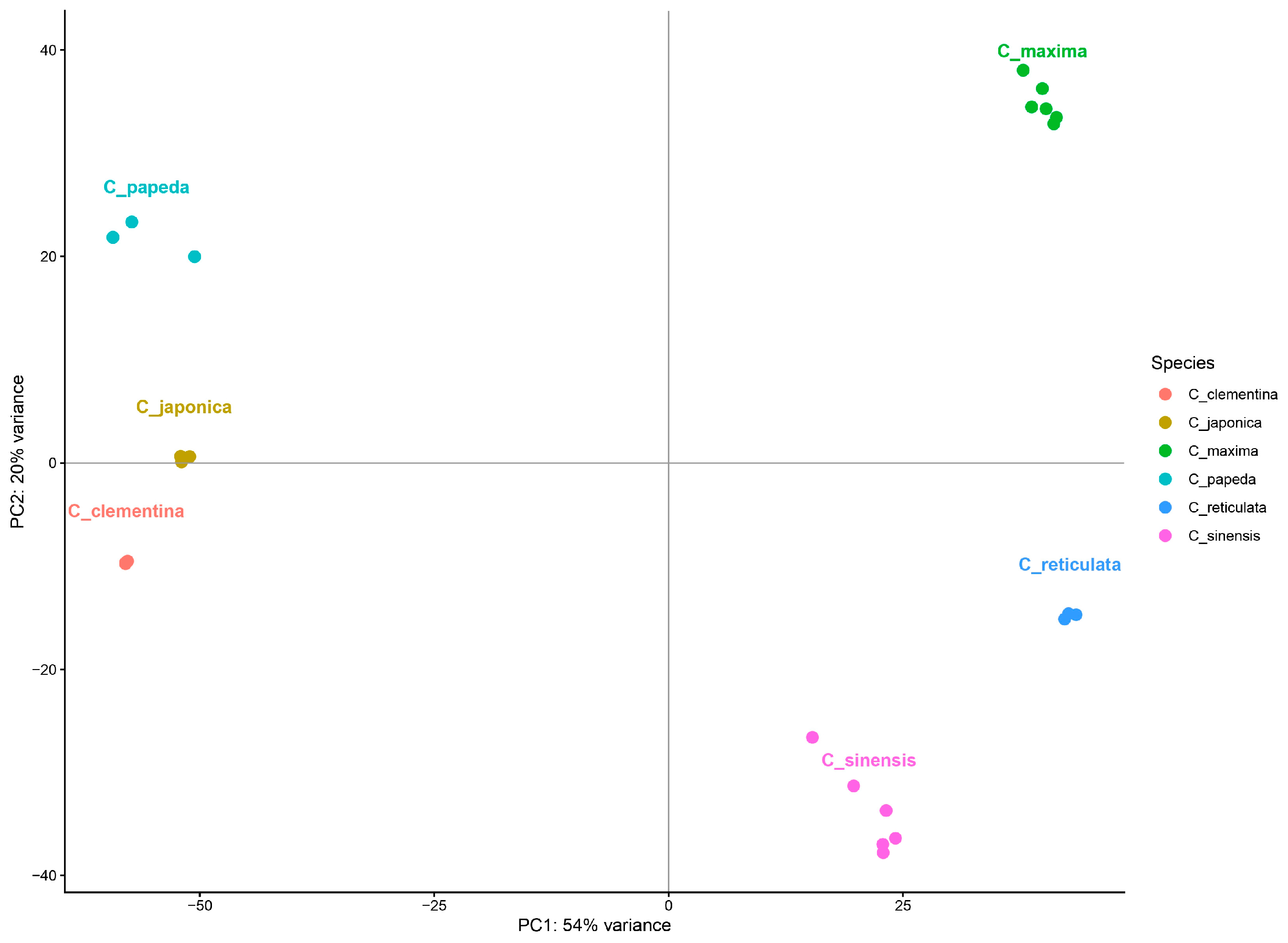
3.1. Summary of Meta-Analysis of RNA-Seq Data
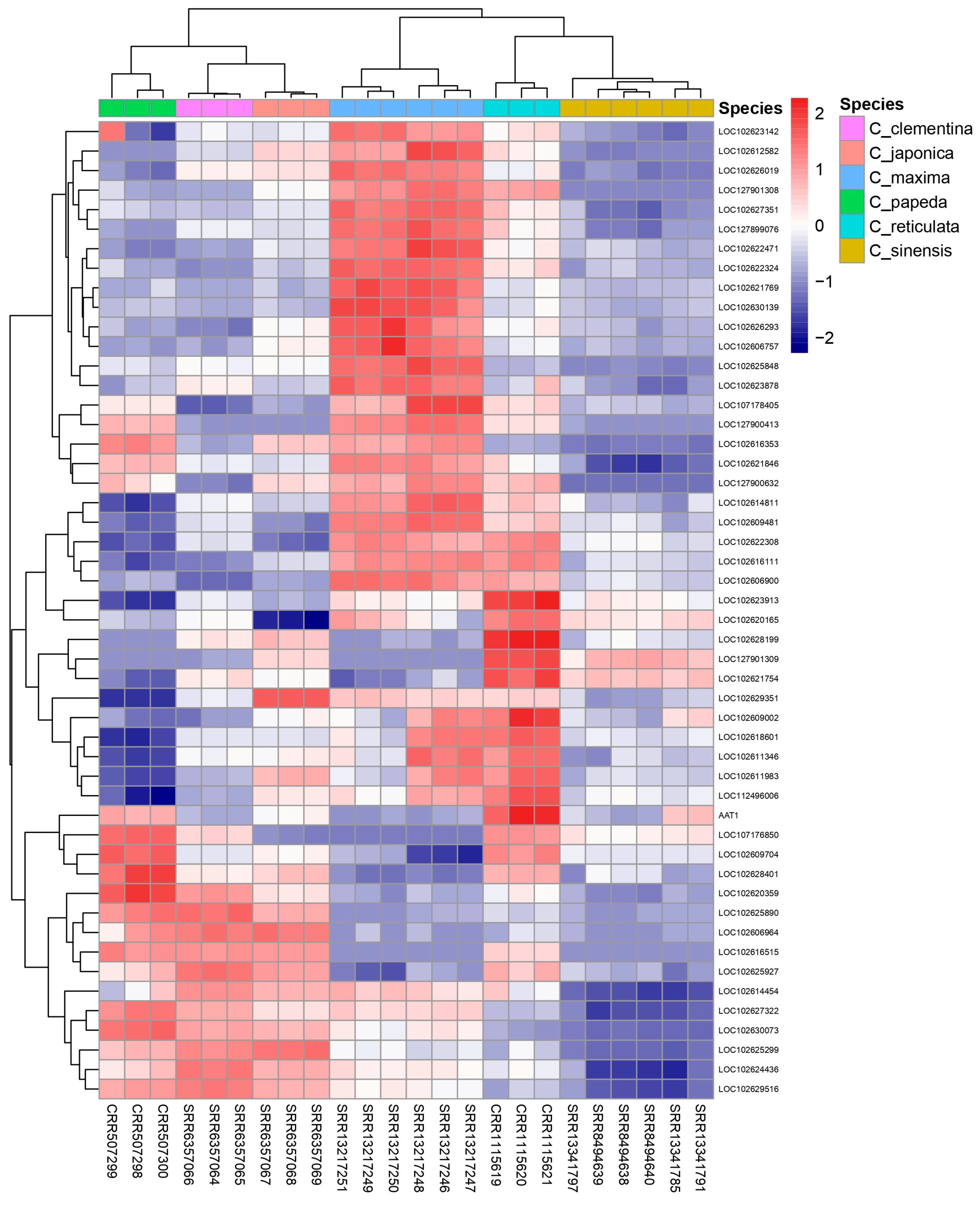
3.2. Fruit Trait-Related Genes
3.2.1. C. papeda
3.2.2. Citrus reticulata
3.2.3. C. sinensis
3.2.4. Citrus maxima
3.2.5. C. japonica
3.2.6. C. clementina
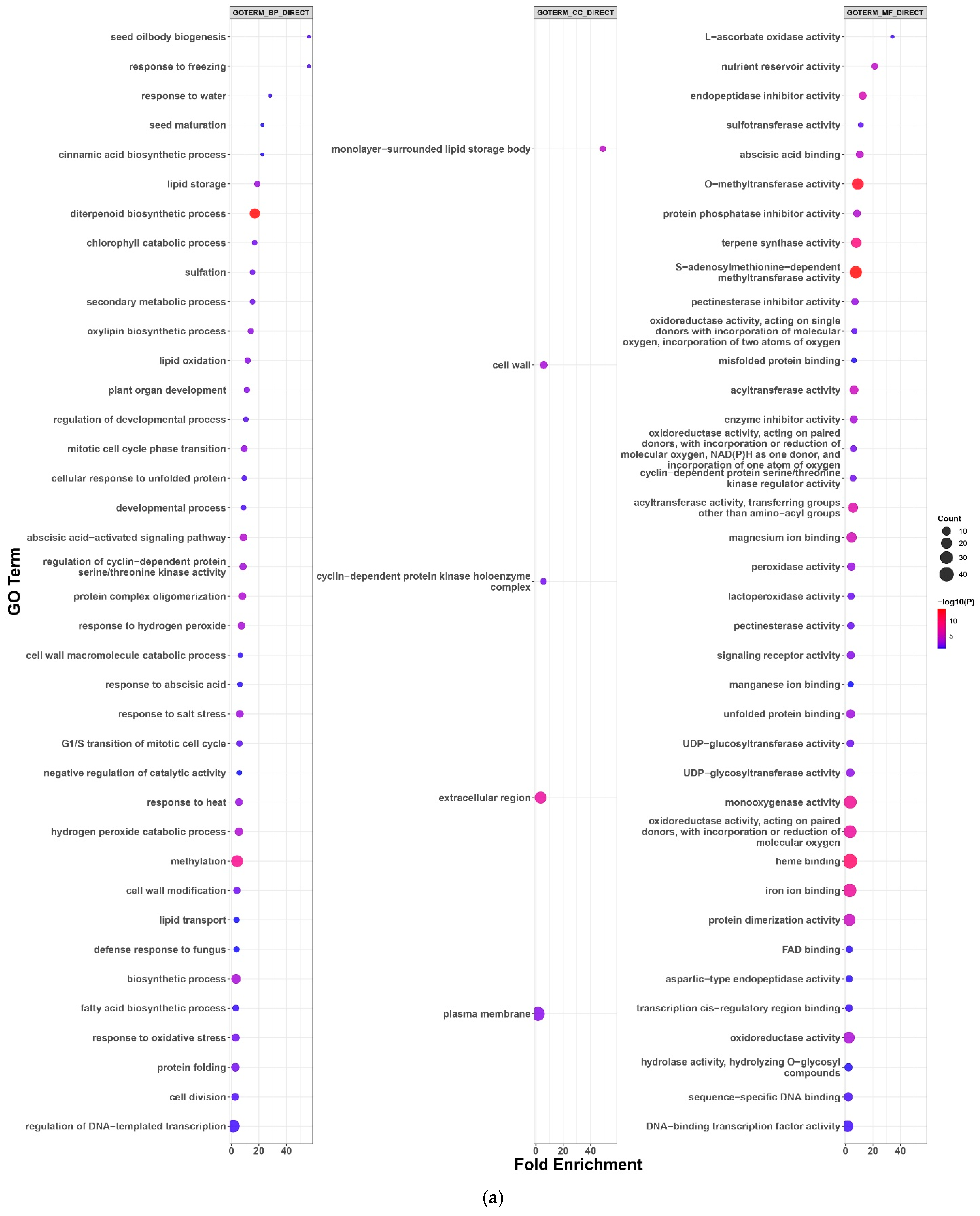
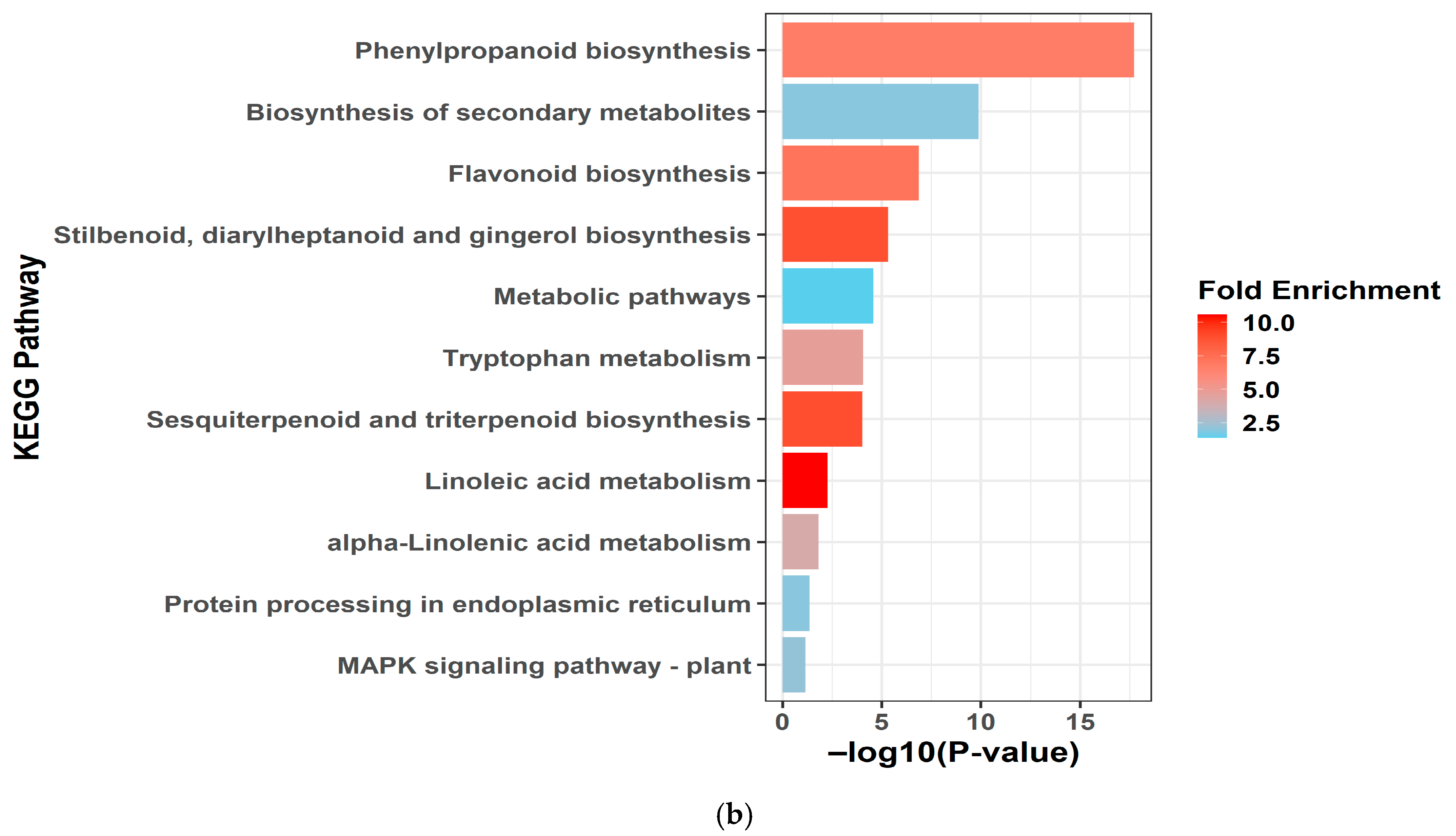
3.3. Gene Ontology (GO) and KEGG Analysis
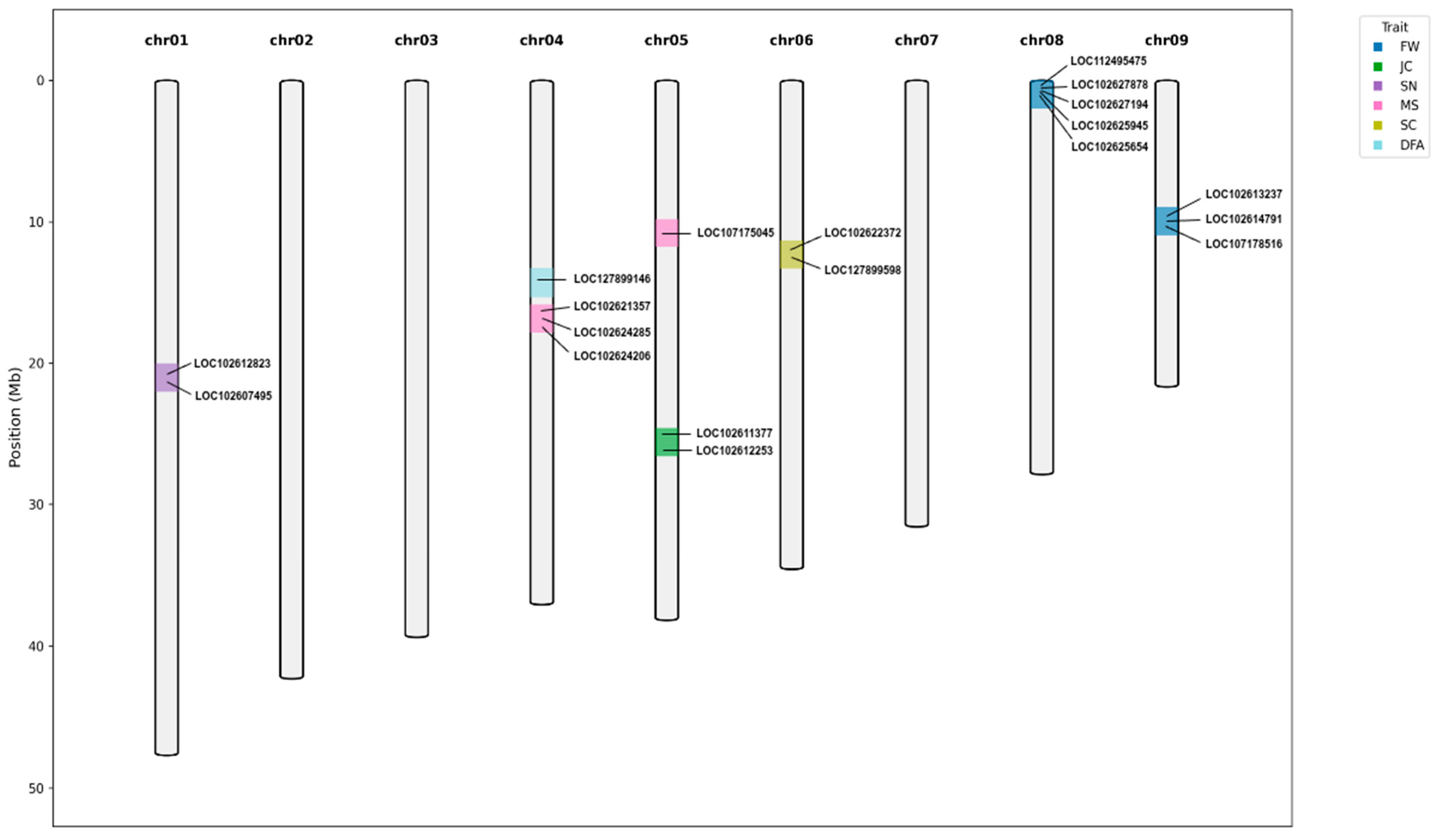
3.4. Co-Localization of Differentially Expressed Genes with Fruit Quality QTL Regions
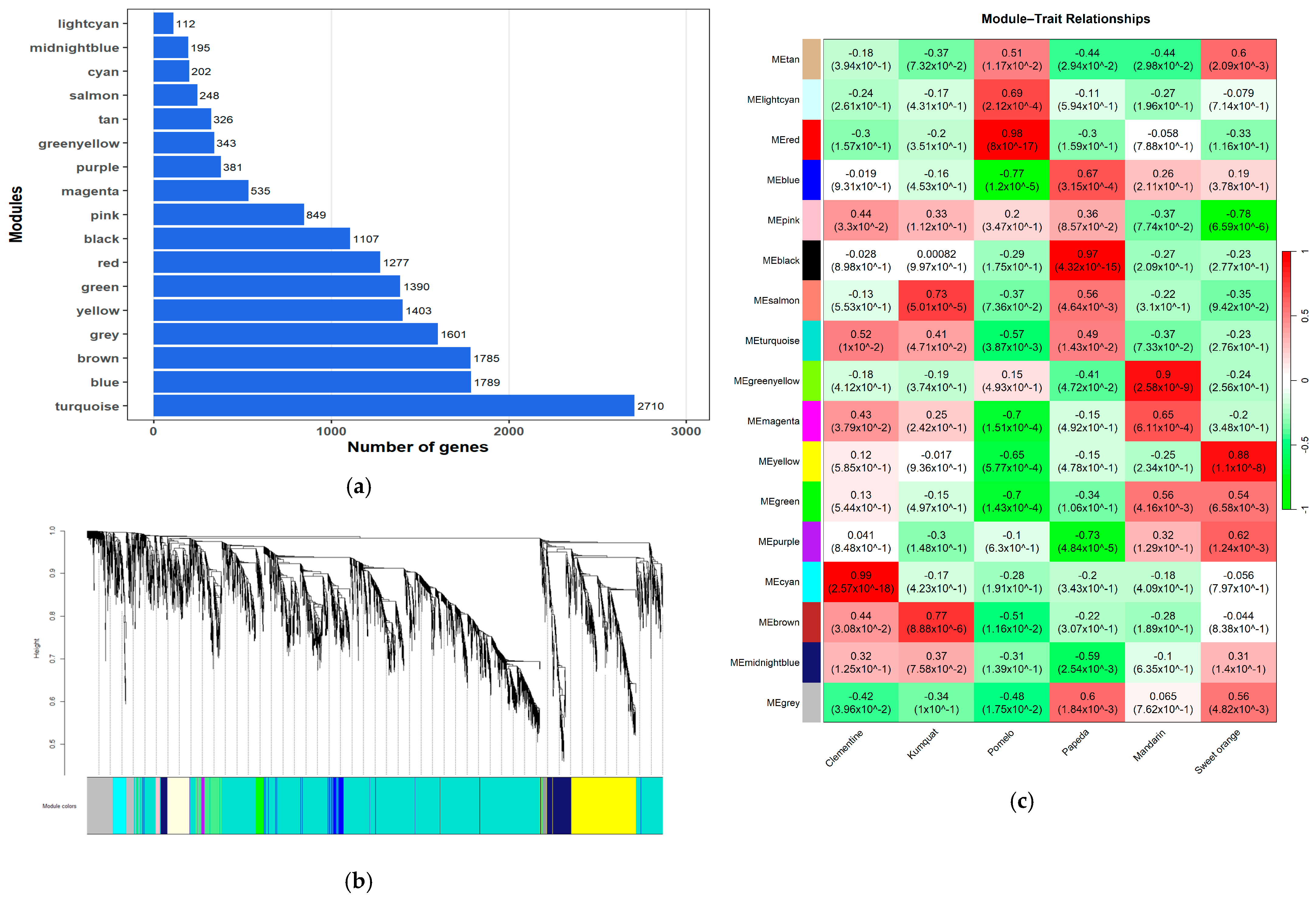
3.5. Identification of Co-Expression Modules
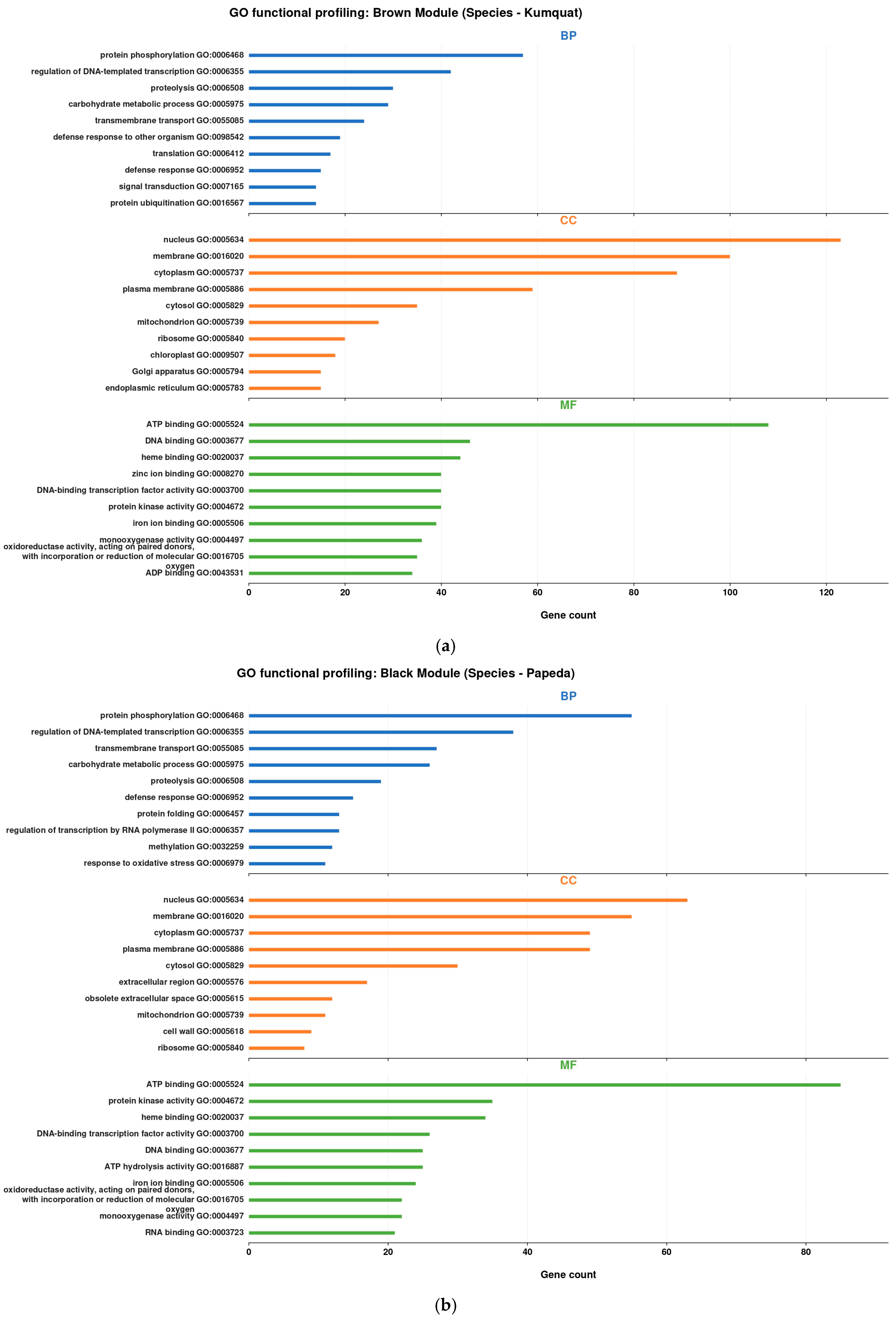
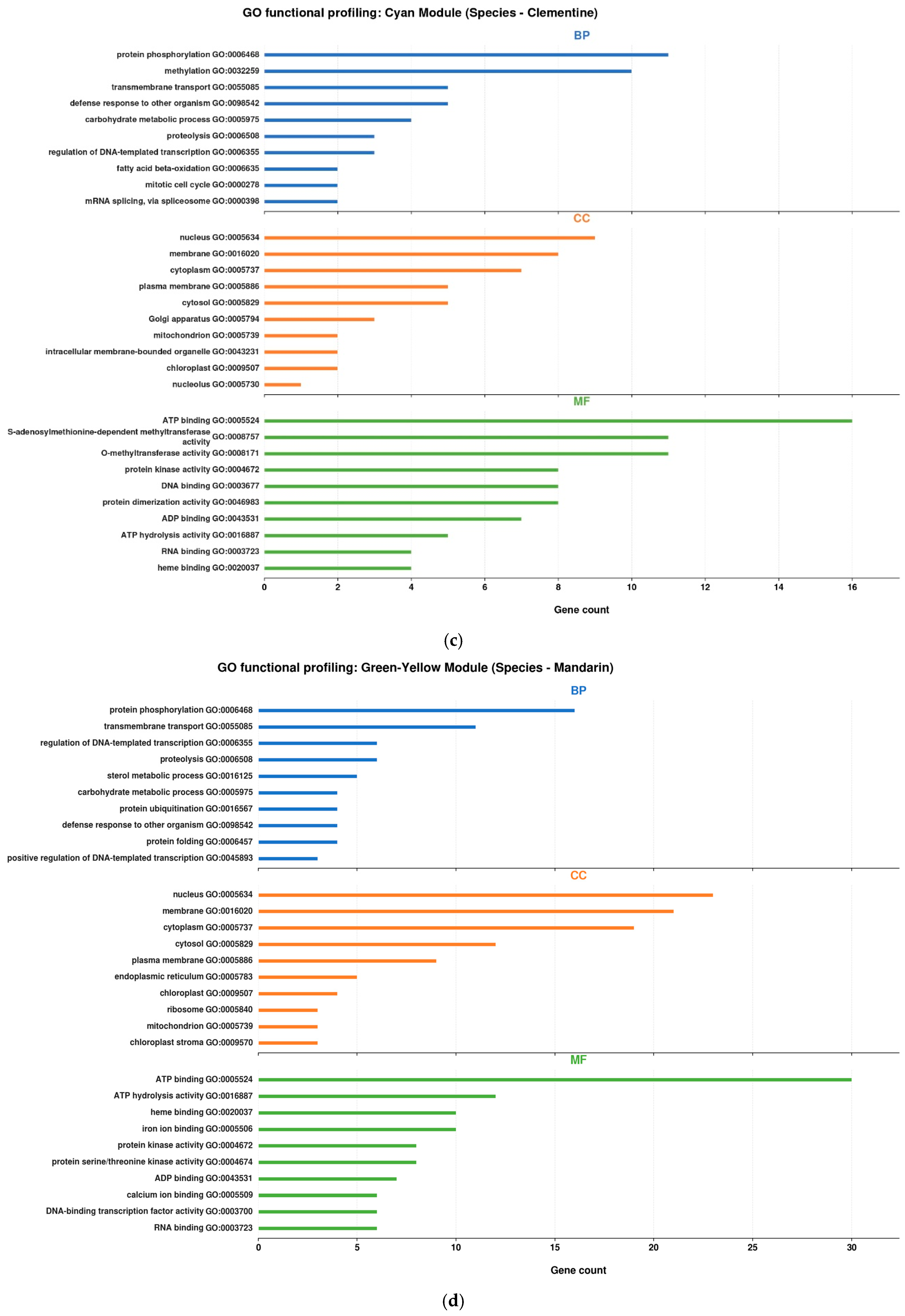
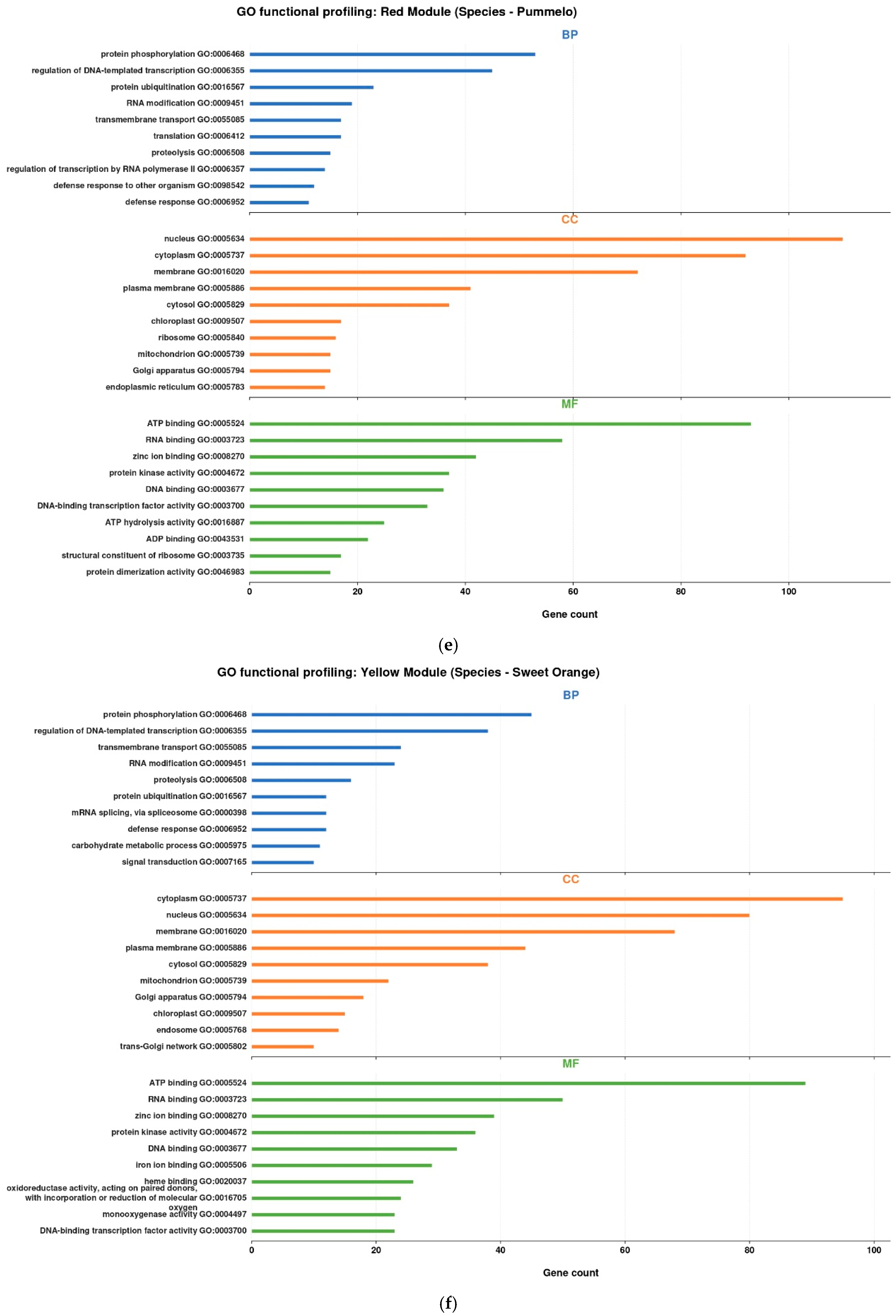
3.6. Functional Enrichment Analysis of Key Modules
Module-Specific Biological Insights
4. Discussion
5. Conclusions
Supplementary Materials
Author Contributions
Funding
Data Availability Statement
Acknowledgments
Conflicts of Interest
Abbreviations
| FAOSTAT | Food and Agriculture Organization |
| NCBI SRA | National Center for Biotechnology Information—Sequence Read Archive |
| GEO | Gene Expression Omnibus |
| CNCB | China National Center for Bioinformation |
| RNA-Seq | RNA-Sequence |
| HLB | Huanglongbing |
| HISAT2 | Hierarchical Indexing for Spliced Alignment of Transcripts 2 |
| DESeq2 | Differential Expression Analysis-Seq2 |
| PCA | Principal Component Analysis |
| VST | Variance Stabilized Transformation |
| DEG | Differentially Expressed Gene |
| GBS | Genotyping-by-sequencing |
| GWAS | Genome-Wide Association Studies |
| QTL | Quantitative Trait Locus |
| WGCNA | Weighted Gene Co-expression Network Analysis |
| ME | Module Eigengene |
| kME | Module Eigengene-based Connectivity |
| GO | Gene Ontology |
| BP | Biological Process |
| MF | Molecular Function |
| CC | Cellular Component |
| FDR | False Discovery Rate |
| LOB | Lateral Organ Boundary |
| CML | Calmodulin-like |
| OFP | Ovate Family Protein |
| LOX | Lipoxygenase |
References
- Arumuganathan, K.; Earle, E.D. Nuclear DNA content of some important plant species. Plant Mol. Biol. Rep. 1991, 9, 208–218. [Google Scholar] [CrossRef]
- Huang, Y.; He, J.; Xu, Y.; Zheng, W.; Wang, S.; Chen, P.; Zeng, B.; Yang, S.; Jiang, X.; Liu, Z.; et al. Pangenome analysis provides insight into the evolution of the orange subfamily and a key gene for citric acid accumulation in citrus fruits. Nat. Genet. 2023, 55, 1964–1975. [Google Scholar] [CrossRef]
- Xu, Q.; Chen, L.L.; Ruan, X.; Chen, D.; Zhu, A.; Chen, C.; Bertrand, D.; Jiao, W.B.; Hao, B.H.; Lyon, M.P.; et al. The draft genome of sweet orange (Citrus sinensis). Nat. Genet. 2013, 45, 59–66. [Google Scholar] [CrossRef]
- Wu, B.; Yu, Q.; Deng, Z.; Duan, Y.; Luo, F.; Gmitter, F., Jr. A chromosome-level phased genome enabling allele-level studies in sweet orange: A case study on citrus Huanglongbing tolerance. Hortic. Res. 2023, 10, uhac247. [Google Scholar] [CrossRef]
- Wu, G.A.; Terol, J.; Ibanez, V.; López-García, A.; Pérez-Román, E.; Borredá, C.; Domingo, C.; Tadeo, F.R.; Carbonell-Caballero, J.; Alonso, R.; et al. Genomics of the origin and evolution of Citrus. Nature 2018, 554, 311–316. [Google Scholar] [CrossRef] [PubMed]
- Liu, H.; Wang, X.; Liu, S.; Huang, Y.; Guo, Y.X.; Xie, W.Z.; Liu, H.; Tahir Ul Qamar, M.; Xu, Q.; Chen, L.L. Citrus Pan-Genome to Breeding Database (CPBD): A comprehensive genome database for citrus breeding. Mol. Plant 2022, 15, 1503–1505. [Google Scholar] [CrossRef] [PubMed]
- Liu, C.; Li, T.; Cui, L.; Wang, N.; Huang, G.; Li, R. OrangeExpDB: An integrative gene expression database for Citrus spp. BMC Genom. 2024, 25, 521. [Google Scholar] [CrossRef]
- Seminara, S.; Bennici, S.; Di Guardo, M.; Caruso, M.; Gentile, A.; La Malfa, S.; Distefano, G. Sweet Orange: Evolution, Characterization, Varieties, and Breeding Perspectives. Agriculture 2023, 13, 264. [Google Scholar] [CrossRef]
- Marboh, E.S.; Singh, A.K.; Dubey, A.K.; Prakash, J. Analysis of genetic variability among citrus (Citrus spp.) genotypes using morphological traits. Indian J. Agric. Sci. 2015, 85, 203–211. [Google Scholar] [CrossRef]
- Sharma, R.; Singh, G.; Bhattacharya, S.; Singh, A. Comparative transcriptome meta-analysis of Arabidopsis thaliana under drought and cold stress. PLoS ONE 2018, 13, e0203266. [Google Scholar] [CrossRef]
- Barker, R.; Kruse, C.P.S.; Johnson, C.; Saravia-Butler, A.; Fogle, H.; Chang, H.S.; Trane, R.M.; Kinscherf, N.; Villacampa, A.; Manzano, A.; et al. Meta-analysis of the space flight and microgravity response of the Arabidopsis plant transcriptome. NPJ Microgravity 2023, 9, 21. [Google Scholar] [CrossRef] [PubMed]
- Azad, M.; Tohidfar, M.; Ghanbari Moheb Seraj, R.; Mehralian, M.; Esmaeilzadeh-Salestani, K. Identification of responsive genes to multiple abiotic stresses in rice (Oryza sativa): A meta-analysis of transcriptomics data. Sci. Rep. 2024, 14, 5463. [Google Scholar] [CrossRef] [PubMed]
- Murtaza, M.; Aqeel, M.; Waheeb, S.A.; Rehman, N.; Irum, S.; Almahasheer, H.; Zahed, R.; Hassan, R.N.; Fiaz, S.; Uzair, M.; et al. Transcriptome-based meta-analysis of drought stress regulatory genes in tomato. BMC Plant Biol. 2025, 25, 1347. [Google Scholar] [CrossRef]
- Yi, G.; Shin, H.; Min, K.; Lee, E.J. Expanded transcriptomic view of strawberry fruit ripening through meta-analysis. PLoS ONE 2021, 16, e0252685. [Google Scholar] [CrossRef]
- Asadi, A.; Shariati, V.; Mousavi, S.; Mariotti, R.; Hosseini Mazinani, M. Meta-analysis of transcriptome reveals key genes relating to oil quality in olive. BMC Genom. 2023, 24, 566. [Google Scholar] [CrossRef]
- Balan, B.; Marra, F.P.; Caruso, T.; Martinelli, F. Transcriptomic responses to biotic stresses in Malus x domestica: A meta-analysis study. Sci. Rep. 2018, 8, 1970. [Google Scholar] [CrossRef] [PubMed]
- Rawat, N.; Kiran, S.P.; Du, D.; Gmitter, F.G., Jr.; Deng, Z. Comprehensive meta-analysis, co-expression, and miRNA nested network analysis identifies gene candidates in citrus against Huanglongbing disease. BMC Plant Biol. 2015, 15, 184. [Google Scholar] [CrossRef]
- Srivastava, A.K.; Pongener, A.L.E.M.W.A.T.I. Asian citrus: A meta-analysis on soil fertility and plant nutrition constraints. Ann. Plant Soil Res. 2023, 25, 345–352. [Google Scholar] [CrossRef]
- Zhang, W.; Zhu, S.; Qin, W.; Sun, A.; Li, H.; Hao, K.; Zhong, Y. Optimizing Irrigation and Nitrogen Management Enhances Yield, Resource Efficiency, and Fruit Quality in Global Citrus Systems: A Meta-Analysis. SSRN 2025. [Google Scholar] [CrossRef]
- Feng, G.; Wu, J.; Yi, H. Global tissue-specific transcriptome analysis of Citrus sinensis fruit across six developmental stages. Sci. Data 2019, 6, 153. [Google Scholar] [CrossRef]
- Liu, T.J.; Li, Y.P.; Zhou, J.J.; Hu, C.G.; Zhang, J.Z. Genome-wide genetic variation and comparison of fruit-associated traits between kumquat (Citrus japonica) and Clementine mandarin (Citrus clementina). Plant Mol. Biol. 2018, 96, 493–507. [Google Scholar] [CrossRef]
- Zhao, C.; Wang, J.; Li, Y.; Zhang, L.; Nawaz, G.; Wu, S.; Xu, T. Integrated Analysis of Metabolome and Transcriptome Reveals the Difference in Flavonoid Biosynthesis between the Red- and White-Sarcocarp Pomelo Fruits. Metabolites 2022, 12, 1161. [Google Scholar] [CrossRef]
- Yin, M.; Song, X.; He, C.; Li, X.; Li, M.; Li, J.; Wu, H.; Chen, C.; Zhang, L.; Cai, Z.; et al. The haplotype-resolved genome assembly of an ancient citrus variety provides insights into the domestication history and fruit trait formation of loose-skin mandarins. Genome Biol. 2025, 26, 61. [Google Scholar] [CrossRef]
- Wang, F.; Wang, S.; Wu, Y.; Jiang, D.; Yi, Q.; Zhang, M.; Yu, H.; Yuan, X.; Li, M.; Li, G.; et al. Haplotype-resolved genome of a papeda provides insights into the geographical origin and evolution of Citrus. J. Integr. Plant Biol. 2025, 67, 276–293. [Google Scholar] [CrossRef]
- Bolger, A.M.; Lohse, M.; Usadel, B. Trimmomatic: A flexible trimmer for Illumina sequence data. Bioinformatics 2014, 30, 2114–2120. [Google Scholar] [CrossRef] [PubMed]
- Kim, D.; Paggi, J.M.; Park, C.; Bennett, C.; Salzberg, S.L. Graph-based genome alignment and genotyping with HISAT2 and HISAT-genotype. Nat. Biotechnol. 2019, 37, 907–915. [Google Scholar] [CrossRef]
- Liao, Y.; Smyth, G.K.; Shi, W. featureCounts: An efficient general purpose program for assigning sequence reads to genomic features. Bioinformatics 2014, 30, 923–930. [Google Scholar] [CrossRef]
- Rapaport, F.; Khanin, R.; Liang, Y.; Pirun, M.; Krek, A.; Zumbo, P.; Mason, C.E.; Socci, N.D.; Betel, D. Comprehensive evaluation of differential gene expression analysis methods for RNA-seq data. Genome Biol. 2013, 14, 3158. [Google Scholar] [CrossRef] [PubMed]
- Bourgon, R.; Gentleman, R.; Huber, W. Independent filtering increases detection power for high-throughput experiments. Proc. Natl. Acad. Sci. USA 2010, 107, 9546–9551. [Google Scholar] [CrossRef]
- Sherman, B.T.; Hao, M.; Qiu, J.; Jiao, X.; Baseler, M.W.; Lane, H.C.; Imamichi, T.; Chang, W. DAVID: A web server for functional enrichment analysis and functional annotation of gene lists (2021 update). Nucleic Acids Res. 2022, 50, W243–W248. [Google Scholar] [CrossRef] [PubMed]
- Curtolo, M.; Cristofani-Yaly, M.; Gazaffi, R.; Takita, M.A.; Figueira, A.; Machado, M.A. QTL mapping for fruit quality in Citrus using DArTseq markers. BMC Genom. 2017, 18, 289. [Google Scholar] [CrossRef]
- Khefifi, H.; Dumont, D.; Costantino, G.; Doligez, A.; Brito, A.C.; Bérard, A.; Morillon, R.; Ollitrault, P.; Luro, F. Mapping of QTLs for citrus quality traits throughout the fruit maturation process on clementine (Citrus reticulata × C. sinensis) and mandarin (C. reticulata Blanco) genetic maps. Tree Genet. Genomes 2022, 18, 40. [Google Scholar] [CrossRef]
- Bala, H.; Kaur, M.; Manchanda, P.; Uppal, G.S.; Malik, P.; Sidhu, G.S.; Vikal, Y. Emanating candidate genes responsible for fruit quality traits in citrus through GBS-based genome wide association studies. BMC Genom. 2025, 26, 1127. [Google Scholar] [CrossRef] [PubMed]
- Langfelder, P.; Horvath, S. WGCNA: An R package for weighted correlation network analysis. BMC Bioinform. 2008, 9, 559. [Google Scholar] [CrossRef]
- Zhang, B.; Horvath, S. A general framework for weighted gene co-expression network analysis. Stat. Appl. Genet. Mol. Biol. 2005, 4, 17. [Google Scholar] [CrossRef]
- Ashburner, M.; Ball, C.A.; Blake, J.A.; Botstein, D.; Butler, H.; Cherry, J.M.; Davis, A.P.; Dolinski, K.; Dwight, S.S.; Eppig, J.T.; et al. Gene ontology: Tool for the unification of biology. The Gene Ontology Consortium. Nat. Genet. 2000, 25, 25–29. [Google Scholar] [CrossRef]
- Yu, G.; Wang, L.G.; Han, Y.; He, Q.Y. clusterProfiler: An R package for comparing biological themes among gene clusters. OMICS 2012, 16, 284–287. [Google Scholar] [CrossRef]
- Nicolosi, E.; Deng, Z.N.; Gentile, A.; La Malfa, S.; Continella, G.; Tribulato, E. Citrus phylogeny and genetic origin of important species as investigated by molecular markers. Theor. Appl. Genet. 2000, 100, 1155–1166. [Google Scholar] [CrossRef]
- Borredá, C.; Perez-Roman, E.; Talon, M.; Terol, J. Comparative transcriptomics of wild and commercial Citrus during early ripening reveals how domestication shaped fruit gene expression. BMC Plant Biol. 2022, 22, 123. [Google Scholar] [CrossRef] [PubMed]
- Feng, G.; Ai, X.; Yi, H.; Guo, W.; Wu, J. Genomic and transcriptomic analyses of Citrus sinensis varieties provide insights into Valencia orange fruit mastication trait formation. Hortic. Res. 2021, 8, 218. [Google Scholar] [CrossRef]
- Terol, J.; Nueda, M.J.; Ventimilla, D.; Tadeo, F.; Talon, M. Transcriptomic analysis of Citrus clementina mandarin fruits maturation reveals a MADS-box transcription factor that might be involved in the regulation of earliness. BMC Plant Biol. 2019, 19, 47. [Google Scholar] [CrossRef]
- Rey, F.; Zacarías, L.; Rodrigo, M.J. Carotenoids, Vitamin C, and Antioxidant Capacity in the Peel of Mandarin Fruit in Relation to the Susceptibility to Chilling Injury during Postharvest Cold Storage. Antioxidants 2020, 9, 1296. [Google Scholar] [CrossRef]
- Yin, C.; Tian, L.; Li, J.; Cao, Y.; Dong, X.; Huo, H.; Xu, J.; Liu, C. Evaluation of pear fruit quality in different ripening stages based on internal quality characteristics. J. Food Compos. Anal. 2025, 140, 107282. [Google Scholar] [CrossRef]
- Wu, G.; Prochnik, S.; Jenkins, J.; Salse, J.; Hellsten, U.; Murat, F.; Perrier, X.; Ruiz, M.; Scalabrin, S.; Terol, J.; et al. Sequencing of diverse mandarin, pummelo and orange genomes reveals complex history of admixture during citrus domestication. Nat. Biotechnol. 2014, 32, 656–662. [Google Scholar] [CrossRef]
- Wasternack, C.; Hause, B. Jasmonates: Biosynthesis, perception, signal transduction and action in plant stress response, growth and development. An update to the 2007 review in Annals of Botany. Ann. Bot. 2013, 111, 1021–1058. [Google Scholar] [CrossRef]
- Harpaz-Saad, S.; Azoulay, T.; Arazi, T.; Ben-Yaakov, E.; Mett, A.; Shiboleth, Y.M.; Hörtensteiner, S.; Gidoni, D.; Gal-On, A.; Goldschmidt, E.E.; et al. Chlorophyllase is a rate-limiting enzyme in chlorophyll catabolism and is post translationally regulated. Plant Cell 2007, 19, 1007–1022. [Google Scholar] [CrossRef]
- Majer, C.; Hochholdinger, F. Defining the boundaries: Structure and function of LOB domain proteins. Trends Plant Sci. 2011, 16, 47–52. [Google Scholar] [CrossRef] [PubMed]
- Meyer, R.S.; Purugganan, M.D. Evolution of crop species: Genetics of domestication and diversification. Nat. Rev. Genet. 2014, 14, 840–852. [Google Scholar] [CrossRef]
- Lun, W.; Fa, H.; Yue, H.; Jiaxian, H.; Shuizhi, Y.; Jiwu, Z.; Chongling, D.; Xiaolin, J.; Yiwen, F.; Shaohua, W.; et al. Genome of Wild Mandarin and Domestication History of Mandarin. Mol. Plant 2018, 11, 1024–1037. [Google Scholar] [CrossRef] [PubMed]
- Perez-Roman, E.; Borredá, C.; Tadeo, F.R.; Talon, M. Transcriptome analysis of the pulp of citrus fruitlets suggests that domestication enhanced growth processes and reduced chemical defenses increasing palatability. Front. Plant Sci. 2022, 13, 982683. [Google Scholar] [CrossRef] [PubMed]
- Yu, Q.; Chen, C.; Du, D.; Huang, M.; Yao, J.; Yu, F.; Brlansky, R.H.; Gmitter, F.G. Reprogramming of a defense signaling pathway in rough lemon and sweet orange is a critical element of the early response to ‘Candidatus Liberibacter asiaticus’. Hortic. Res. 2017, 4, 17063. [Google Scholar] [CrossRef] [PubMed]
- Sun, X.; Yu, T.; Bin, M.; Hu, C.; Bi, F.; Peng, X.; Yi, G.; Zhang, X. Transcriptomic analysis reveals the defense mechanisms of citrus infested with Diaphorina citri. Hortic. Plant J. 2023, 9, 450–462. [Google Scholar] [CrossRef]
- Yu, K.; Xu, Q.; Da, X.; Guo, F.; Ding, Y.; Deng, X. Transcriptome changes during fruit development and ripening of sweet orange (Citrus sinensis). BMC Genom. 2012, 13, 10. [Google Scholar] [CrossRef]
- Liu, J.; Wu, Y.; Cui, X.; Zhang, X.; Xie, M.; Liu, L.; Liu, Y.; Huang, J.; Cheng, X.; Liu, S. Genome-wide characterization of ovate family protein gene family associated with number of seeds per silique in Brassica napus. Front. Plant Sci. 2022, 13, 962592. [Google Scholar] [CrossRef] [PubMed]



| S.No | BioProject ID | Species | No. of Samples | Stage | % Mapping * | Reference |
|---|---|---|---|---|---|---|
| 1. | PRJNA517400 | Citrus sinensis | 6 | Fruit (180 days; fruit tissue) | 90–93% | [20] |
| 2. | PRJNA421473 | Citrus clementina | 3 | Fruit (180 days; whole fruit) | 83–93% | [21] |
| 3. | PRJNA421473 | Citrus japonica | 3 | Fruit (180 days; whole fruit) | 83–93% | [21] |
| 4. | PRJNA683589 | Citrus maxima | 6 | Fruit (~180–240 days; sarcocarp) | 90–92% | [22] |
| 5. | PRJCA025346 | Citrus reticulata | 3 | Fruit (180 days; whole fruit) | 91–92% | [23] |
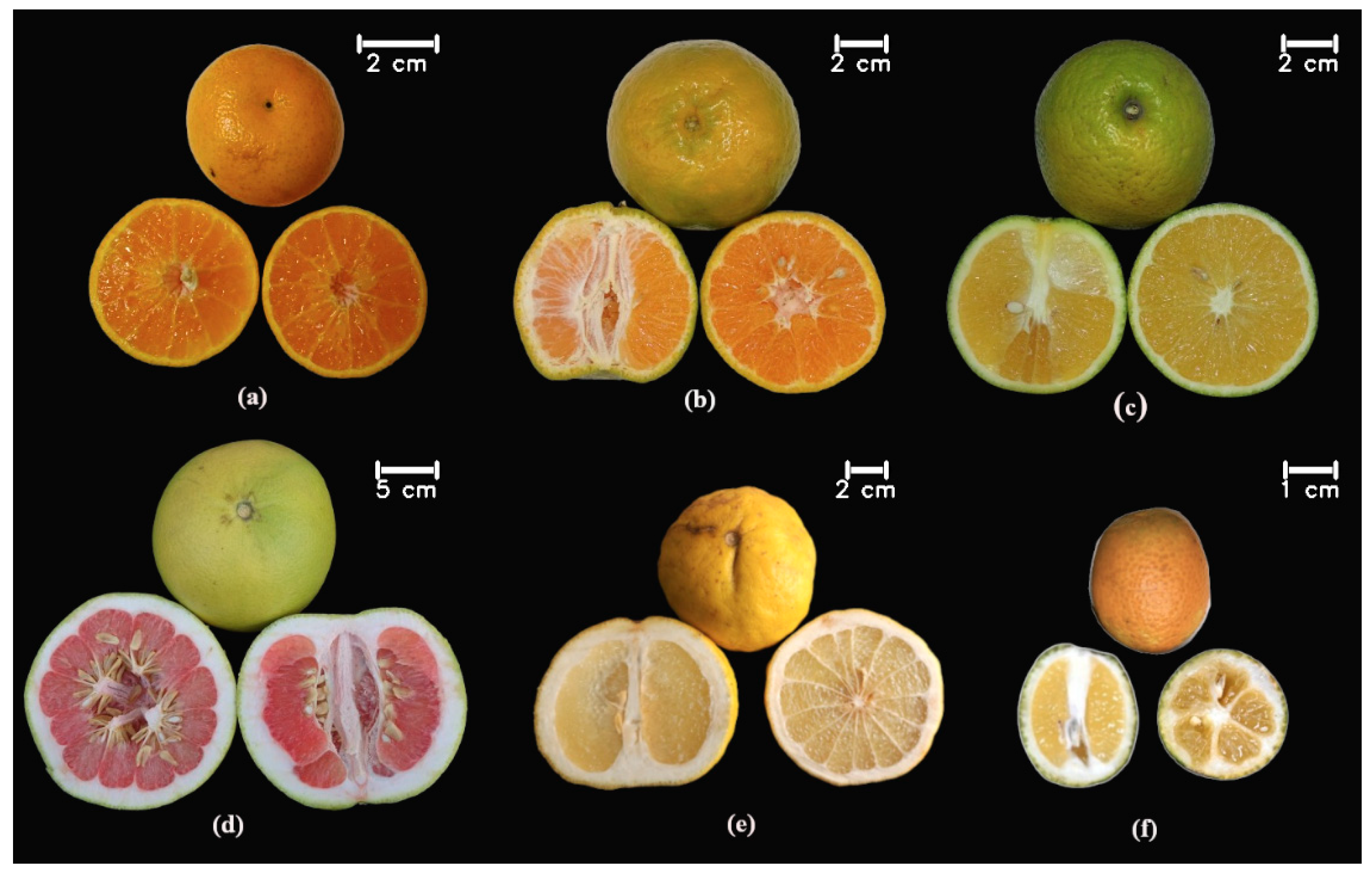
| 6. | PRJCA009572 | Citrus papeda | 3 | Fruit (no days mentioned; small whole fruit) | 89–90% | [24] |
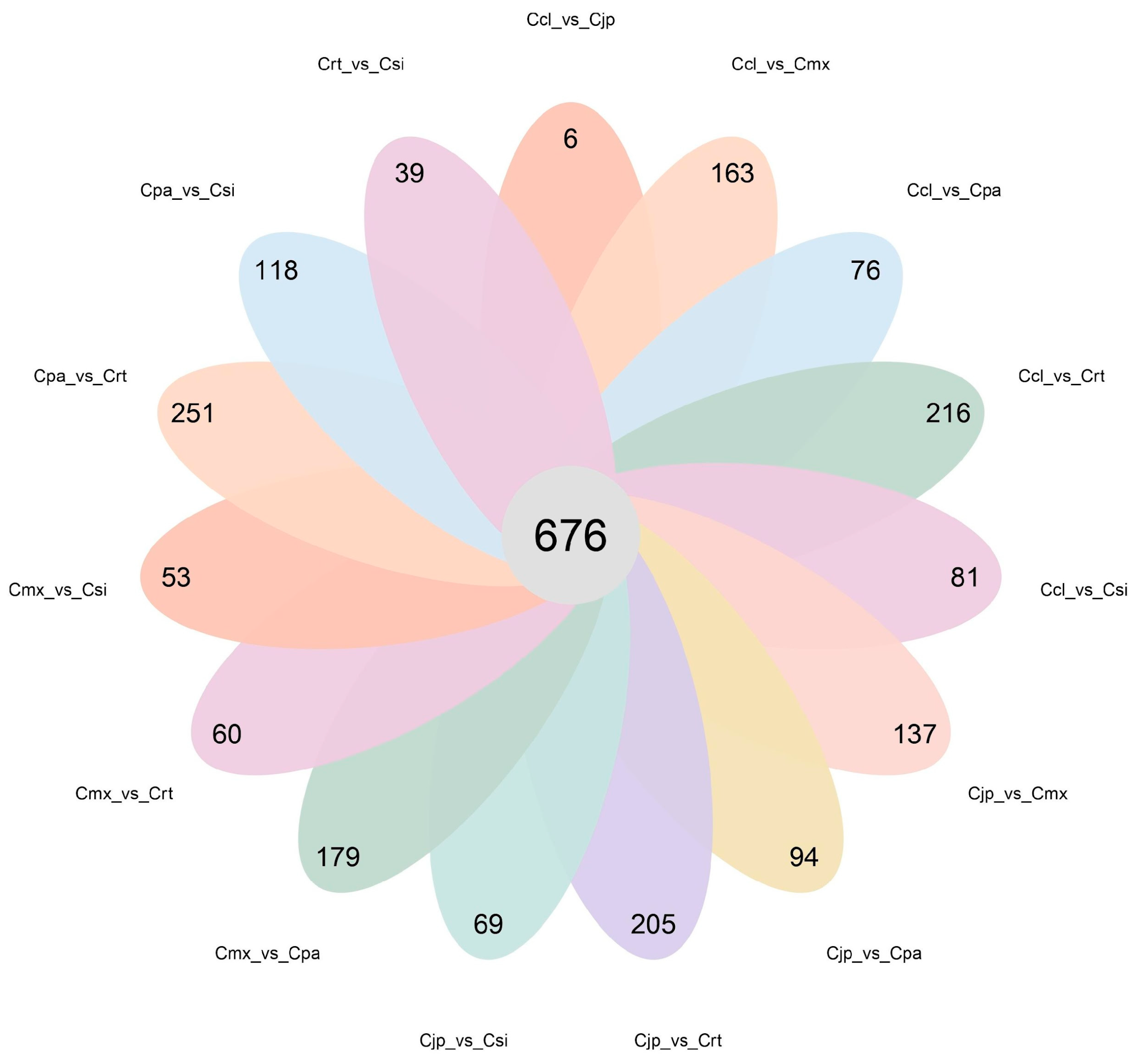
| S.No | Comparison (A vs. B) | DEGs | Genes Up (Species A) | Genes Up (Species B) | Dominant Metabolic Trend |
|---|---|---|---|---|---|
| 1. | C. clementina vs. C. japonica | 6 | 3 | 3 | C. clementina: terpene synthases, defense genes ↑ → aroma and disease resistance |
| 2. | C. clementina vs. C. reticulata | 216 | 203 | 13 | C. clementina: volatile and phenylpropanoid genes ↑ → aromatic complexity |
| 3. | C. clementina vs. C. maxima | 162 | 147 | 15 | C. clementina: flavonoids ↑; C. maxima: sugar and growth ↑ |
| 4. | C. clementina vs. C. papeda | 75 | 45 | 30 | C. clementina: aroma and flavor genes ↑; C. papeda: stress response ↑ |
| 5. | C. clementina vs. C. sinensis | 81 | 66 | 15 | C. clementina: terpene synthase and acid metabolism ↑; C. sinensis: pigment and sugar genes ↑ |
| 6. | C. japonica vs. C. maxima | 137 | 123 | 14 | C. japonica: defense and flavonoid genes ↑; C. maxima: fruit size and sugar ↑ |
| 7. | C. japonica vs. C. papeda | 93 | 55 | 38 | C. japonica: secondary metabolism ↑; C. papeda: stress tolerance ↑ |
| 8. | C. japonica vs. C. reticulata | 205 | 187 | 18 | C. japonica: aroma and acidity ↑; C. reticulata: sweetness ↑ |
| 9. | C. japonica vs. C. sinensis | 69 | 56 | 13 | C. japonica: volatile metabolism ↑; C. sinensis: sugar and carotenoid ↑ |
| 10. | C. maxima vs. C. papeda | 179 | 20 | 159 | C. papeda: defense/stress ↑; C. maxima: sugar metabolism ↑ |
| 11. | C. maxima vs. C. reticulata | 60 | 34 | 26 | C. maxima: growth ↑; C. reticulata: flavor and pigment ↑ |
| 12. | C. maxima vs. C. sinensis | 53 | 8 | 45 | C. maxima: cell expansion ↑; C. sinensis: pigment and sugar ↑ |
| 13. | C. papeda vs. C. reticulata | 249 | 218 | 31 | C. papeda: flavonoid/limonoid defense ↑; C. reticulata: aroma/sugar ↑ |
| 14. | C. reticulata vs. C. sinensis | 39 | 4 | 35 | C. reticulata: aroma volatiles ↑; C. sinensis: carotenoids and sweetness ↑ |
| 15. | C. papeda vs. C. sinensis | 118 | 88 | 30 | C. papeda: stress and bitter compounds ↑; C. sinensis: sugar and carotenoid ↑ |
| S.No | Fruit Character | Likely Molecular Drivers | Observed Expression Pattern |
|---|---|---|---|
| 1. | Bitterness (limonoids) | Up: UGT76B1 (LOC102606711), P450s (LOC102627430, LOC127902134) | High in C. papeda; low in C. sinensis |
| 2. | Aroma complexity | Up: TPS, P450 (LOC102607400, LOC102618084, LOC102627625), AAT1 (LOC102614123, LOC102612840) | High in C. japonica and C. reticulata |
| 3. | Sweetness | Up: SUS (LOC102628674, LOC102619819), invertase (LOC102613488) | Dominant in C. sinensis and C. maxima |
| 4. | Pigmentation (orange color) | Up: PSY, BCH, CCD4 (LOC102621234) | C. reticulata → C. sinensis |
| 5. | Antioxidant content | Up: CHS (LOC102607309), F3H (LOC107178641), peroxidase (LOC102607325, LOC102629997, LOC102613924, LOC102625757, LOC102613627) | C. papeda and C. japonica |
| 6. | Fruit size | Up: expansins (LOC102624467), cell wall proteins (LOC127899924, LOC102613488, LOC112496066) | C. maxima and C. sinensis |
| 7. | Acidity | Citrin (LOC102577975), citrate transport | High in C. japonica; low in C. sinensis |
| S.No | Trait | Chr,Marker/SNP ID | Gene Symbol (Position (bp)) | Gene Description | Reference |
|---|---|---|---|---|---|
| 1. | Fruit Weight | Chr8_CiC4368-01 0.00–1.98 | LOC112495475 (475628) | Endochitinase-like | [31,32] |
| LOC102627878 (490203) | Endochitinase-like | ||||
| LOC102627194 (1577166) | Pathogenesis-related protein 1-like | ||||
| LOC102625945 (1879060) | Serine carboxypeptidase-like 17 | ||||
| LOC102625654 (1895275) | Serine carboxypeptidase-like 18 | ||||
| Chr9_9972980 (fw/ACIDITY/NSPF) 8.97–10.97 | LOC102613237 (9993386) | Glucan endo-1,3-beta-glucosidase-like | [33] | ||
| LOC102614791 (10175928) | Glucan endo-1,3-beta-glucosidase-like | ||||
| LOC107178516 (10733325) | Wall-associated receptor kinase 3-like | ||||
| 2. | Juice Content | Chr5_25614659 24.61–26.61 | LOC102611377 (25700538) | (E)-beta-farnesene synthase | [33] |
| LOC102612253 (26390372) | Aspartic proteinase nepenthesin-1-like | ||||
| 3. | Seed Number | Chr1_21029403 20.03–22.03 | LOC102607495 (21226403) | Transcription repressor OFP12 | [31,32] |
| LOC102612823 (20345254) | auxin-induced protein 22D | ||||
| 4. | Mesocarp Size | Chr4_16867277 15.86–17.86 | LOC102621357 (16075602) | Squamosa promoter-binding-like protein | [33] |
| LOC102624285 (16296295) | 11-beta-hydroxysteroid dehydrogenase A | ||||
| LOC102624206 (17003043) | Probable 3-beta-hydroxysteroid isomerase | ||||
| LOC107175045 (10033462) | Loganic acid O-methyltransferase-like | ||||
| 5. | Segment Count | Chr6_12323301 11.32–13.32 | LOC102622372 (11957966) | L-ascorbate peroxidase 2, cytosolic | [33] |
| LOC127899598 (12121545) | 18S ribosomal RNA | ||||
| 6. | Diameter of Fruit Axis | Chr4_14366349 11.32–13.32 | LOC127899146 (13361977) | ABC transporter G family member 1-like | [33] |
Disclaimer/Publisher’s Note: The statements, opinions and data contained in all publications are solely those of the individual author(s) and contributor(s) and not of MDPI and/or the editor(s). MDPI and/or the editor(s) disclaim responsibility for any injury to people or property resulting from any ideas, methods, instructions or products referred to in the content. |
© 2026 by the authors. Licensee MDPI, Basel, Switzerland. This article is an open access article distributed under the terms and conditions of the Creative Commons Attribution (CC BY) license.
Share and Cite
Jagannadham, P.T.K.; Thirugnanavel, A.; Parteki, T.S.; Meshram, D.T.; Srivastava, A.K.; Ziogas, V. Molecular Regulation of Fruit Quality Traits in Citrus: RNA-Seq-Based Meta-Analysis. Horticulturae 2026, 12, 492. https://doi.org/10.3390/horticulturae12040492
Jagannadham PTK, Thirugnanavel A, Parteki TS, Meshram DT, Srivastava AK, Ziogas V. Molecular Regulation of Fruit Quality Traits in Citrus: RNA-Seq-Based Meta-Analysis. Horticulturae. 2026; 12(4):492. https://doi.org/10.3390/horticulturae12040492
Chicago/Turabian StyleJagannadham, Prasanth Tej Kumar, Anbazhagan Thirugnanavel, Tejaswini S. Parteki, Dedoas T. Meshram, Anoop Kumar Srivastava, and Vasileios Ziogas. 2026. "Molecular Regulation of Fruit Quality Traits in Citrus: RNA-Seq-Based Meta-Analysis" Horticulturae 12, no. 4: 492. https://doi.org/10.3390/horticulturae12040492
APA StyleJagannadham, P. T. K., Thirugnanavel, A., Parteki, T. S., Meshram, D. T., Srivastava, A. K., & Ziogas, V. (2026). Molecular Regulation of Fruit Quality Traits in Citrus: RNA-Seq-Based Meta-Analysis. Horticulturae, 12(4), 492. https://doi.org/10.3390/horticulturae12040492