


Abstract
Castanea henryi is one of the important fruit tree species cultivated in the mountainous regions of China. Castanea henryi is a starch-accumulating type. As an intracellular substance, starch plays an important role in maintaining cell turgor and sustaining fruit firmness. Although starch metabolism has been extensively studied in model and fruit crops, its regulatory mechanisms in Castanea henryi remain poorly understood. This review synthesizes recent advances in starch physicochemical properties, metabolic pathways, and regulatory mechanisms during fruit development, seed germination, and postharvest storage. Current knowledge gaps, including limited molecular characterization and gene functional analysis in Castanea henryi, are highlighted. This review provides a framework for future research and breeding strategies aimed at improving fruit quality and storage performance.
1. Introduction
Castanea henryi, a species of the genus Castanea in the family Fagaceae, is one of the most important woody fruit trees in the mountainous areas of southern China. Its nuts are rich in starch, vitamins, minerals, and various essential amino acids, and are renowned for their unique flavor, thus gaining wide popularity among domestic and international consumers [1]. According to statistics from the Food and Agriculture Organization (FAO) of the United Nations, the cultivation area of Castanea henryi in China has reached 800,000 hectares with an annual output of 2.197 million tons, ranking first in the world up to 2023.
As a primary reserve metabolite, starch is widely distributed in various plant organs and plays a crucial role in plant growth and development. The nuts of Castanea henryi accumulate a high level of starch content ranging from 47.58% to 56.94%, which is higher than that of other nuts, such as C. mollissima, pine nuts, etc. During fruit development, photosynthetic intermediates are accumulated and converted into starch. Upon the onset of ripening, starch is degraded into different sugars. Furthermore, the nuts are no longer supplied with carbohydrates synthesized through photosynthesis from the parent plant after harvest. Instead, they rely on the catabolism of stored starch via respiration to generate energy for maintaining metabolic activities or supporting seedling growth. Therefore, elucidating and regulating the mechanisms of starch metabolism can extend the postharvest shelf life of Castanea henryi nuts and improve seed and seedling quality.
Despite increasing research on starch metabolism in fruit crops, the integration of physiological, biochemical, and molecular insights in Castanea henryi remains fragmented. In particular, the coordination between starch metabolism, fruit quality, and postharvest behavior has not been systematically addressed. This review aims to summarize the recent research developments from three aspects: the physicochemical properties of starch, the metabolic pathways of plant starch, and the mechanisms of starch metabolism during fruit development and seed germination. The objective of this review is to provide a theoretical basis for breeding high-quality, starch-rich, and storage-tolerant Castanea henryi germplasm and new cultivars.
2. Structural Characterization of Fruit Starch
Starch is the most abundant carbohydrate in plant storage organs, with a molecular formula of (C6H10O5)n. As a polymeric compound, it is composed of multiple glucose molecules linked by α-D-1,4-glycosidic bonds. Based on its molecular structure, starch can be categorized into amylopectin and amylose [2]. Amylopectin is characterized by a structure with “few short chains and numerous long chains” and a relatively low molecular weight. Amylopectin is the primary starch fraction in fruits of kiwifruit with about 80%, whereas amylose accounts for only about 20% of the total starch content [3]. Similarly, amylopectin accounts for 70% to 85% of the starch content in unripe bananas and apples [4]. Starch predominantly exists in the form of starch granules, which dynamically changes during the growth and development of fruits [3]. At the harvesting stage, kiwifruit usually show a relatively high level of starch content. A consistent starch granule morphology is found across different kiwifruit varieties, such as Hayward, Gold3, Gold9, and Hort16A [3]. The size of starch granules generally ranges from 2 to 100 μm. In higher plants, starch can be synthesized in plastids of both photosynthetic and non-photosynthetic cells, leading to the formation of amyloplasts. Previous research has indicated that starch granules are released from chloroplasts and subsequently hydrolyzed, with a gradual decrease in the number of chloroplasts over time during the cold storage of kiwifruit. This suggests that amyloplasts may originate from chloroplasts in fruits [5], distinguishing kiwifruit from the independent differentiation of starch granules in cereal crops. Fruit starch is usually associated with the accumulation of mineral elements [6]. The potassium content in kiwifruit starch is 3 to 30 times higher than that in regular starch, and the calcium and magnesium contents in kiwifruit starch are also significantly higher than those in corn and wheat starches [7]. Similarly, banana and papaya starches also exhibit high levels of potassium and phosphorus contents. So, fruit starch serves as both a carbohydrate storage and a mineral nutrient accumulator, differentiating it from cereal starch with a primary role of solely energy storage. The microstructure of starch granules were examined by scanning electron microscopy (SEM) in Castanea henryi. The overall microstructure of kernels was presented as a honeycomb-like structure (porous starch structure), and the starch granule morphology displays a slight difference among cultivars. The shape of starch granules was oval, round, or asymmetric polygonal. The particle size of the starch granules varied from 5 to 19 μm, and may be related to the starch content [8].
3. Starch Synthesis and Degradation in Plants
3.1. Starch Synthesis Pathway and Key Enzymes
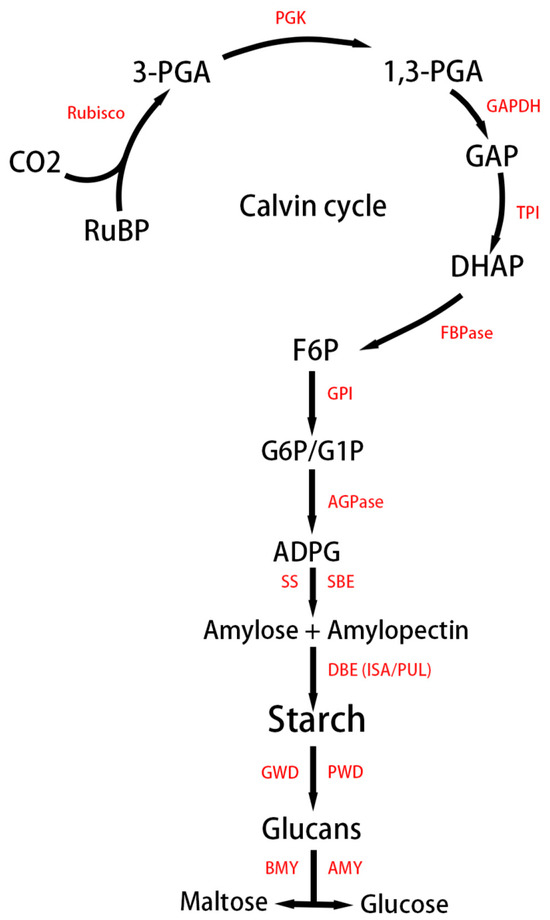
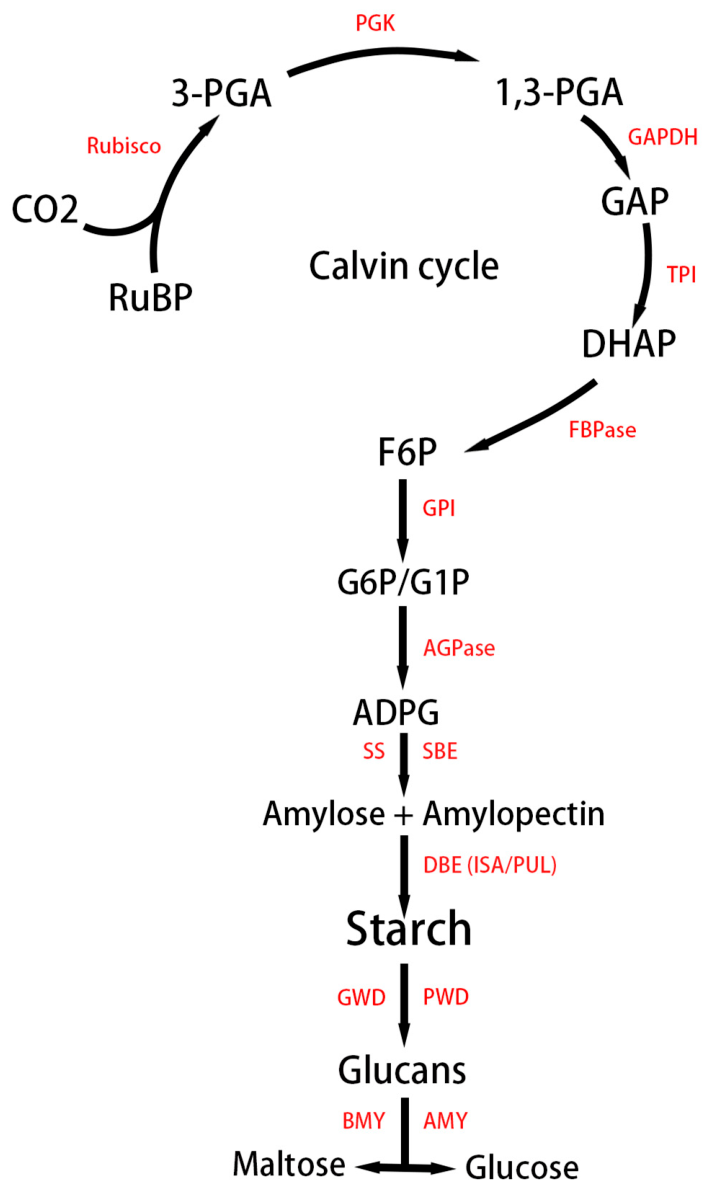
In higher plants, starch is primarily classified into two types: transitory starch and storage starch [9]. The former is stored in the chloroplasts of leaves as a product of photosynthesis; however, it is degraded into maltose and glucose during the night and transported out of the chloroplasts for sucrose biosynthesis. This process is essential for sustaining leaf respiration, as well as the overall metabolism, growth, and development [9]. In contrast, storage starch is synthesized in amyloplasts and serves as the principal form of starch storage in plants. The starch in roots and stems of chestnut was found to rapidly decompose into soluble sugars under drought and waterlogging stress [10]; however, the starch could accumulate rapidly again under waterlogging stress, reflecting the different carbon utilization strategies of Castanea for drought and waterlogging stress. Plants initially fix carbon dioxide (CO2) through the Calvin cycle to generate 3-phosphoglycerate (3-PGA), which is subsequently converted into triose phosphates (TP) and transported into the vacuole. Alternatively, 3-PGA can be transformed into fructose-6-phosphate (F6P) within the chloroplast, followed by sequential conversion into glucose-6-phosphate (G6P) and glucose-1-phosphate (G1P). Under the catalysis of ADP-glucose pyrophosphorylase (AGPase), G1P is converted into ADP-glucose (ADPG) [11]. ADPG then acts as a substrate for the enzymes of starch synthase (SS), branching enzyme (BE), and debranching enzymes (DBEs) in amylose and amylopectin synthesis [12].
The process of starch synthesis involves several steps catalyzed by multiple enzymes (Figure 1). Among these enzymes, AGPase appears to play a central regulatory role in starch accumulation. At 35–70 days after pollination (DAP) the AGPase showed an overall upward trend, and the activities were higher in fertile ovules than those in abortive ovules. A critical period for the formation of fertile and abortive ovules is 49 DAP [13]. AGPase is the first key enzyme acting as a rate-limiting enzyme in starch synthesis [11]. It catalyzes the formation of ADPG, the direct precursor for starch synthesis [14]. In kiwifruit, AGPase activity exhibits a significant positive correlation with starch accumulation [15]. In banana, AGPase activity reaches its peak at the young fruit and veraison stages, which is consistent with the trend of starch accumulation [9]. In apple, the elevated AGPase activity drives the accumulation of substantial starch during the middle stage of fruit development [4]. Furthermore, AGPase activity is regulated by post-translational redox modifications. In its reduced state, it displays higher substrate affinity, then enhances starch synthesis efficiency [14].
Figure 1.
The process of starch synthesis and decomposition. RuBP, Ribulose-1,5-bisphosphate; 3-PGA, 3-phosphoglycerate; 1,3-PGA, 1,3-bisphosphoglycerate; GAP, Glyceraldehyde-3-phosphate; DHAP, Dihydroxyacetone phosphate; F6P, fructose-6-phosphate; G6P, glucose-6-phosphate; G1P, glucose-1-phosphate; ADPG, ADP-glucose; Rubisco, Ribulose-1,5-bisphosphate carboxylase/oxygenase; PGK, Phosphoglycerate Kinase; GAPDH, Glyceraldehyde-3-phosphate dehydrogenase; TPI, Triose-phosphate isomerase; FBPase, Fructose-1,6-bisphosphatase; GPI, Glucose-6-Phosphate Isomerase; AGPase, ADP-glucose pyrophosphorylase; SS, starch synthase; SBE, starch-branching enzyme; DBE, debranching enzyme; ISA, isoamylase; PUL, pullulanase; GWD, glucan water dikinase; PWD, phosphoglucan water dikinase; AMY, α-amylase; BMY, β-amylase.
The enzymes of starch synthase (SS), starch-branching enzyme (SBE), and debranching enzyme (DBE) cooperate with each other to regulate the branching structure of amylopectin in plants [16]. SS catalyzes the link of multiple ADP-glucose molecules to form linear chains [16]. SBE then introduces α-1,6-glycosidic bonds on both sides of the α-1,4-linked linear chains to generate numerous branched structures [16]. Subsequently, SBE and SS cooperate to further elongate these branches. Specifically, SBE catalyzes the hydrolysis of α-1,4-glycosidic bonds to form α-1,6-branch points. SBE I preferentially generates long branches (B1–B3 chains), while SBE IIa/IIb is primarily responsible for synthesis of short branches [14]. In rice, SBE IIb mutation results in a reduction in amylopectin short chains and changes in starch crystallinity [17]. DBE, including isoamylase (ISA) and pullulanase (PUL), modifies the branch chains to form well-structured starch granules [13]. The ISA I/II complex is crucial for amylopectin synthesis. In contrast, PUL mainly cleaves short branch chains, exhibiting functional overlap with ISA [18].
3.2. Starch Degradation Pathway and Key Enzymes
During the late stages of fruit development or postharvest storage, starch is degraded into soluble sugars by multiple enzymes. Glucan water dikinase (GWD) or phosphoglucan water dikinase (PWD) is capable of reversibly phosphorylating glucans, thereby disrupting the intact structure of starch granules [19]. Specifically, GWD catalyzes the formation of glucan-6-phosphate, which is further converted into glucan-3,6-bisphosphate by PWD. These two enzymes jointly initiate starch degradation [19]. However, the phosphorylation of amylopectin by PWD is dependent on the presence of the C6 phosphate group introduced by GWD or the structural modifications of glucans introduced by the C6 phosphate [20]. α-Amylase (AMY) and β-amylase (BMY) participate in the degradation of glucans into glucose monomers [21]. AMY is an endoenzyme that specifically cleaves α-1,4-glycosidic bonds to generate maltooligosaccharides and limit dextrins, whereas BMY is an exoenzyme that hydrolyzes α-1,4-glycosidic bonds from the non-reducing end of starch chains, producing maltose [21]. Early studies have demonstrated that in living tissues, such as Arabidopsis leaves, α-amylase, pullulanase, β-glucosidase, and α-glucan phosphorylase play secondary roles in starch breakdown. In contrast, BMY acts as the primary enzyme responsible for hydrolyzing storage starch and transient starch, producing β-limit dextrin and β-maltose [22,23]. During the postharvest ripening of kiwifruit, the activities of AMY and BMY increase continuously, driving significant starch degradation and a concomitant rise in soluble sugar content [24]. Similarly, enhanced AMY and BMY activities lead to the formation of internal cavities in starch granules during apple ripening, with a subsequent degradation gradually [25]. The expression level of VvBMY is significantly higher than that of AGPase during the grape ripening stage, serving as a core regulatory factor in starch degradation. Short-day shading treatment upregulates the expression of CsAMY2, CsBAM3, and CsGAH in citrus fruits. This upregulation promotes the degradation of starch into soluble sugars, resulting in a 15–20% increase in soluble sugar content. These findings elucidate the physiological mechanism by which light signals regulate starch and sugar metabolism in citrus, providing a novel strategy for the quality regulation of horticultural crops [26]. However, β-amylase cannot hydrolyze α-1,6 branch points or act directly in their vicinity. Therefore, the complete degradation of amylopectin also requires the participation of debranching enzymes (DBEs). DBEs are involved in the further transformation of starch degradation products, among which isoamylase III (ISA III) and pullulanase (PUL) are responsible for hydrolyzing α-1,6 branch points in limit dextrins, generating linear sugar chains that can be further degraded by amylases [14]. During rice seed germination, increased PUL activity accelerates starch degradation, while the upregulation of the ISA III gene in duckweed enhances starch degradation to cope with cadmium stress.
4. Starch Metabolism During Fruit Development
As reproductive organs of plants and an important food source for humans, fruits undergo complex carbohydrate metabolic transformations during their development. Starch, the most important storage polysaccharide in plants, plays a dual role in fruit development. Firstly, it serves as a temporary storage form of photosynthetic products, maintaining the carbohydrate concentration gradient between source and sink tissues, thereby facilitating the transport of assimilates to fruits. Secondly, its degradation products of soluble sugars could provide an energy and material basis for fruit cell division, expansion, ripening, etc. Overall, starch metabolism during fruit development follows a conserved pattern across species; however, its temporal dynamics and regulatory mechanisms may differ significantly in starch-rich nuts such as Castanea henryi.
4.1. The Temporal Dynamic Characteristics of Starch Metabolism in Fruits
Fruits usually accumulate starch during development, which is subsequently degraded into soluble sugars after harvest, serving as the most important material for fruit sweetness. Starch metabolism in fruits can be categorized into three phases: accumulation, stability, and degradation. Notably, variations in metabolic rhythms are observed among different fruit species. The accumulation phase predominantly occurs from the cell division stage to the early cell expansion stage in certain species, during which the starch synthesis rate is higher than that of degradation. For example, starch accumulation begins around 30 days after flowering in apple fruits, peaking at about 90 days after flowering [27]. For kiwifruit, net starch accumulation initiates during the cell expansion stage, and attains its maximum level at commercial harvest [3]. During the process of single-seed formation in Castanea henryi, there are significant differences in starch accumulation and metabolism between fertile and abortive ovules. A large amount of starch accumulates in the fertile ovules, and the morphology and starch distribution differed significantly at the 49th day after pollination [13]. In young fruits, starch mainly accumulated in the chloroplasts of pericarp [28]. During this stage, the activities of starch synthesis-related enzymes, such as AGPase, SS, and SBE, are elevated. The size of starch granules increases from 3–4 μm to 10–12 μm, with the simultaneous accumulation of amylopectin and amylose [3]. At this stage, starch granules maintain an intact structure, with optimal viscosity properties.
Starch accumulation and degradation occur simultaneously within the fruit, showing a dynamic equilibrium. In apples, starch content remains stable from 90 days after flowering until the pre-ripening stage, with balanced synthesis and degradation rate [29]. In grapes, starch granules in the pulp completely disappear between 28 and 56 days after flowering [28]. From 49 to 63 days after flowering, the rates of starch synthesis and degradation in fertile ovules remain balanced. And 37 candidate genes related to starch metabolism were identified, including 3 AGPase genes, 1 GBSS gene, and 2 BMY genes [13]. In non-fertile ovules, starch was rapidly degraded with the highly increased level of the BMY genes and enzyme activities, indicating that the imbalance in starch metabolism is an important factor causing ovule sterility.
The starch content shows a continuous upward trend, and starch grains were mainly distributed in the inner and outer integuments and chalazal ends of the fertile ovules in Castanea henryi [13]. At 63–70 days after flowering, starch distribution greatly increased, and the starch grains were almost entirely distributed over the fertile ovule. And the starch granule-bound starch synthase and ADP-glucose pyrophosphorylase genes were actively expressed at 94 days after flowering [30]. Chestnut seeds regulate the accumulation of soluble sugars, reducing sugars and starch by controlling glycosyl transferase and hydrolysis activity during development. During the late stage of fruit development, the contents of starch, amylose, and amylopectin in chestnuts vary among varieties, and the accumulation amounts are significantly higher than those at the early stage of fruit development [31]. Furthermore, the starch content is also related to the origin of the chestnut varieties. Varieties from the south, such as LYB (577.6 g/kg) and ND1 (584.2 g/kg), have significantly lower starch content compared to varieties from the north, namely YL (620.1 g/kg) and HP (601.7 g/kg) [32]. However, the starch accumulation pattern of other fruit trees during the later stage of fruit development is different from that of Castanea henryi. The degradation phase occurs during the late ripening stage of fruit or post harvest, during which starch degradation rate is significantly higher than that of synthesis. During this period, starch granules decrease to 6–8 μm, with wrinkled surface. Amylopectin is preferentially hydrolyzed, leading to a general reduction in starch viscosity. Exogenous ethylene can accelerate the degradation rate of starch granules by two- to three folds [33]. Subsequently, starch granules become rough fragments, and are ultimately degraded into glucose, fructose, and sucrose. This process results in a transition from “starch storage” to “sugar accumulation”. In apple and pear, starch content usually increases initially and then decreases over time, exhibiting an inverse correlation with soluble sugar levels in the mid-to-late developmental stages. In contrast, sugar-accumulating fruits such as grape and strawberry only have trace amounts of starch during the young fruit stage. For these fruits, sugar accumulation primarily relies on direct carbohydrate transport [28]. In kiwifruit, postharvest starch is completely degraded into soluble sugars, resulting in an approximate 10% increase in sweetness [34]. In banana, starch content declines from 70% to less than 10% of dry weight within 7–10 days post harvest [35]. During this degradation stage, the activities of starch degradation-related enzymes, such as AMY, BMY, and DBE, are significantly increased [28].
4.2. The Tissue-Specific Differences in Starch Metabolism of Fruits
Starch metabolism exhibits significant variations among different fruit tissues, such as pericarp, flesh, and core, which directly affects the uniformity of fruit quality. In apple, chloroplasts in the outer pericarp possess well-developed grana and intergranal membrane systems, enabling photosynthetic starch synthesis. In contrast, plastids in the core lack grana stacks, which cannot synthesize starch through photosynthesis. Although starch granules in the outer pericarp are larger, those in the core exhibit higher density. The slower starch degradation rate in the core results in higher starch content, and the sustained high cellular turgor pressure renders the core harder than the flesh. However, in kiwifruit, the total starch content in the outer pericarp is slightly higher than that in the core. This suggests that starch may not be the key factor contributing to differences in storage and shelf life among kiwifruit varieties [36]. In grape, pericarp starch content is higher than that of the flesh throughout the fruit development [28]. During veraison, slight starch accumulation is observed in the pericarp, whereas starch in the flesh almost completely disappears after the young fruit stage. In Chinese chestnut, the tissue specificity of starch metabolism is characterized by exclusive starch accumulation in the cotyledons of the seed. Starch granule proliferation initiates at 60 days after flowering (DAF) and peaks between 70 and 90 DAF [30]. In contrast, tissues such as the pericarp and shell exhibit no starch accumulation throughout the developmental process [30]. In grape, the higher expression levels of VvAPS and VvAPL genes drive starch accumulation in the pericarp, while the active expression of VvBMY and VvAMY genes accelerates starch degradation in the flesh [28]. This tissue-specific differentiation ensures functional specialization within the fruit. Starch in the pericarp provides energy for the development of protective tissues and secondary metabolism, while starch degradation in the flesh supplies raw material for sugar accumulation. The ethylene involved in seeds is related to ovulate development and starch synthesis. The ACC levels remained consistently greater in fertile ovules than in abortive ovules. The ACSase activity coding by CmACS7 was identified, and micro Solanum lycopersicum plants overexpressing CmACS7 had a significantly greater rate of seed failure than did wild-type plants [37]. Specific ARF genes are crucial for coordinating seed kernel development and starch accumulation by systematic bioinformatic analysis. Notably, we discovered that CmARF5a and CmARF18 may act as key repressors of starch accumulation [38].
5. Starch Metabolism During Storage
Starch is widely utilized as a thickener, expander, and stabilizer in the food industry. Its metabolic properties directly affect the storage quality and processing performance of crops. In Castanea henryi, postharvest starch degradation is expected to play a critical role in determining shelf life and texture, although specific studies remain limited. Chestnut cultivars are characterized by crunchiness, sweetness, aromatic intensity, caramel aroma, and lipid fraction during storage [39]. Moderate freezing and thawing processes increased the retrogradation of starch but decreased its particle size, viscosity, shear type, thinning degree, and hardness. However, the inclusion of Tremella fuciformis polysaccharide effectively countered dehydration, reduced viscosity, and prevented the retrogradation of frozen–thawed chestnut starch [40]. Prolonged storage of leads to starch degradation, resulting in a continuous increase in water absorption and solubility, a decrease in swelling power, which increased noodle hardness and cooking loss [41]. Storage temperature regulates the conversion of starch components by modulating the activities of starch synthases [41]. The activities of soluble starch synthase (SSS) and starch-branching enzyme (SBE) increased under high temperature, thereby promoting amylopectin accumulation. In contrast, the activities of granule-bound starch synthase (GBSS) decreased under low temperature, thereby inhibiting amylose synthesis.
The development of various tree fruits keeps a close relationship with starch accumulation and decomposition. During postharvest storage of kiwifruit, almost of starch is degraded into soluble sugars. Starch content of “Emperor” banana decreases by more than 80% during ripening, which is mainly hydrolyzed by amylase and glucoamylase [42]. The peak activity of these enzymes coincides with ethylene release, which is the common regulatory pathway of starch metabolism in climacteric fruits. For “Grand Nain” banana, a globally cultivated variety, exogenous ATP application during shelf life can regulate the activity of starch-degrading enzymes. Compared to the control, this treatment increases the activities of α-amylase, β-amylase, and phosphorylase, thereby accelerating starch degradation and soluble sugar accumulation in banana fruits [43]. Exogenous ATP can act as an energy donor and signaling molecule, activating the synthesis and activity of starch-degrading enzymes, and establishing a regulatory pathway of “ATP → enhanced enzyme activity → starch degradation → quality improvement”. This provides a safe and efficient technical measure for the postharvest quality regulation. Cheng et al. also found that liquid nitrogen spray freezing (especially at −80 °C and −100 °C) could significantly increase the freezing rate, and better maintain the integrity of the cell structure, when freezing the kernels of chestnuts with different heat transfer media (nitrogen and air) and rates [44].
Integrated transcriptomic and metabolomic analyses have revealed that starch metabolism in durian (Durio zibethinus) fruits undergoes a stage transition of “synthesis-degradation” during ripening [45]. During the developmental stage, the high expression of ADP-glucose pyrophosphorylase genes (DzAPS2, DzAPL1) and starch synthase genes (DzSS1) promotes starch accumulation. In the ripening stage, however, the activation of α-amylase genes (DzAMY3) and β-amylase genes (DzBAM1) drives the accelerated degradation of starch. Simultaneously, sucrose phosphate synthase genes (DzSPS1, DzSPS4) and sucrose transporter genes (DzSUC2, DzSWEET10) coordinately regulate sucrose accumulation, revealing the molecular characteristics of the coordinated regulation of starch and sugar metabolism in tropical fruits [45]. Multiple β-amylase gene family members were identified in the Chinese chestnut genome. Despite differences in sequence characteristics, expression patterns, and subcellular localization, all these members are involved in fruit development and postharvest starch degradation processes [46]. Transcriptome sequencing analysis revealed the expression patterns of genes involved in starch and sucrose metabolism during kernel development of Chinese chestnut [47]. By biochemical assays and RNA-Seq analysis, the molecular and physiological mechanisms were elucidated for salicylic acid (SA) that regulated postharvest starch metabolism and delayed quality deterioration in apples [48]. SA treatment can inhibit starch degradation and excessive sugar accumulation by regulating the expression of key starch and sugar metabolism genes and suppressing ethylene synthesis, which thereby effectively maintain fruit firmness and flavor. And treatments with ozone and microbubbles also contribute to the improved storage of high-quality chestnuts, by significantly reducing the decay frequency and the associated microbial populations during postharvest storage [49].
During fruit postharvest storage, respiratory activity directly affects major metabolic pathways, including starch metabolism, leading to changes in sugars, amino acids, and organic acids contents [50]. Furthermore, the physicochemical properties of fruit starch are highly sensitive to environmental signals such as temperature and hormones. For instance, at low temperatures (5–10 °C), the hydrolysis rate of starch in kiwifruit increases more frequently than that at room temperature [51]. Abscisic acid (ABA) treatment reduces the amylose content in banana fruits at both the harvest and edible stages. Ethylene treatment increases the degradation rate of kiwifruit amylopectin by two- to threefold [34]. Similarly, low temperatures and ethylene accelerate starch degradation in tomatoes, which distinguishes fruit starch from cereal starch, which exhibits greater environmental stability [52].
6. Starch Metabolism and Regulation During Seed Germination
Starch is the most abundant carbohydrate in seeds and is efficiently degraded into soluble sugars. It can not only supply energy for embryo development but also participate in signal transduction and cell structure formation [53]. Therefore, the efficient and orderly metabolism of starch is decisive for the success of seed germination, directly affecting germination rate, seedling vigor, and early stress resistance. Experiments involving grinding seeds at different germination stages followed by reaction with iodine solution, as well as direct iodine staining of seed longitudinal sections, have demonstrated through color gradient phenomena that starch content in seeds gradually decreases during germination. Starch degradation is activated upon the initiation of seed imbibition. For example, starch begins to gradually decompose during the initial imbibition stage of quinoa seed germination [54]. In Persian clover (Trigonella persica), amylose starch granules are formed in cotyledons during seed germination [53]. In rice (Oryza sativa), starch reserves in the endosperm start to degrade rapidly 4 days after the onset of seed germination, accompanied by a significant increase in glucose and maltooligosaccharides (especially maltotriose) [55]. Unlike wild-type rice, where amylose and amylopectin are degraded simultaneously, the high-resistant starch rice mutant RS4 exhibits a significantly lower amylose hydrolysis rate compared to amylopectin during seed germination [56]. However, the starch degradation in Castanea henryi seed is slightly slow, and even increases at the initial stage of germination. Liu et al. reported the starch content increased in 0–10 days and decreased in 10–35 days, while the soluble sugar content continuously decreased in 0–30 days and increased in 30–35 days during germination [57]. Another study also confirmed this conclusion: the initial breakdown of starch in Castanea henryi seeds occurs at a slower rate compared to other fruit trees. Du et al. reported that the starch content of the seeds remained unchanged within 120 h after treatment when GABA was applied to chestnut seeds [58].
Starch degradation occurs in the endosperm during germination. It was found that the expression levels of two starch synthase genes, SS1 and SS2, remained at a relatively low level within 10–30 days after germination, using the ribosomal protein gene RPL34 as a stable internal reference gene in Castanea henryi [59]. During the seed germination, amylase activity initially increases, reaches a peak, and subsequently declines gradually. Usually starch is degraded by alpha-amylase (AMY, EC 3.2.1.1), beta-amylase (BMY, EC 3.2.1.2) or via the phosphorylation pathway in Castanea henryi. α-Amylase exhibits higher activity in the early stages of seed germination, randomly hydrolyzing the α-1,4 glycosidic bonds within starch molecules to generate oligosaccharides such as dextrin, maltose, and maltotriose [60]. Elevated α-amylase activity has also been detected in the initial stages of litchi seed germination. Overexpression of the wheat α-amylase gene TaAMY2 can enhance α-amylase activity by 2.0-fold–437.6-fold, significantly altering the viscosity properties of starch [61]. Under the regulation of a seed-specific promoter, overexpression of wheat TaAMY1 can increase α-amylase activity in mature grains by 20-fold–230-fold [62]. Liu et al. screened 49 genes related to starch metabolism through transcriptome sequencing during the germination process of Castanea henryi seeds, among which 37 genes encoding AMY were identified [57]. Furthermore, the AMY1, AMY2, and AMY3 genes were significantly more highly expressed during the S1–S2 stages of cultivated Castanea henryi seed germination [63]. Additionally, the synthesis of wheat α-amylase is induced by gibberellin (GA) and activated via a calcium-dependent signal transduction pathway, thereby promoting starch degradation in the endosperm [64]. β-Amylase becomes functional shortly after α-amylase, hydrolyzing α-1,4 glycosidic bonds from the non-reducing end of starch molecules and releasing one maltose unit at a time. During seed germination, β-amylase activity also increases significantly following the activation of α-amylase, especially after embryo germination. Transcriptome analysis revealed the upregulation of beta-amylase synthesis genes such as BMY4 and BMY7 in strongly selected genes of cultivated seeds, and the increase in β-amylase activity [63]. Phosphorylase (SP, EC 2.4.1.1) activity is typically most prominent when the activities of α-amylase and β-amylase are low. Sixteen genes encoding BMY and eight genes encoding SP were identified in the sequencing data of Castanea henryi transcriptome by researchers [57]. Plant α-glucosidase or maltase (MAL, EC 3.2.1.20) can directly adsorb onto and hydrolyze starch granules, releasing glucose directly from the granules and providing an alternative pathway for starch degradation [60]. Rice α-glucosidase isoenzymes, such as ONG1, ONG2, and ONG3, also possess the capacity to bind to and degrade starch granules [65]. Previous proteomic analyses have revealed that rice seeds already possess a complete set of starch-degrading enzymes prior to germination, and their activation depends more on “activation” post imbibition rather than de novo enzyme synthesis [66]. Nineteen MAL genes were identified, four that were significantly upregulated at 10 and 30 days after germination [57].
Starch metabolism is precisely regulated by multiple mechanisms, such as hormonal regulation, environmental signals, and feedback regulation. Plant hormones play a key role in coordinating the interplay between seed germination and starch metabolism. The embryo-produced GA is transported to the aleurone layer. It can induce the biosynthesis of various hydrolytic enzymes, which subsequently activate the mobilization of starch reserves [67]. In contrast, abscisic acid (ABA) inhibits starch degradation and seed germination [68]. The expression of ABA synthesis-related genes such as NCED2/5 and NCED3/9 was downregulated during the seed germination process of cultivated chestnuts, thereby promoting starch degradation and seed germination [63]. In addition, phosphatidic acid synthesis-related genes such as PLD1 and GPAT9 are highly expressed in wild species, which may be related to the regulation of stubborn seed germination [63]. Exogenous melatonin can modulate starch metabolism by regulating the expression levels of ABA- and GA-related genes, thereby adjusting seed germination under stress conditions [69]. Additionally, ethylene (ETH), salicylic acid (SA), strigolactones (SLs), cytokinins (CKs), and jasmonic acid (JA) may affect seed dormancy and germination processes through crosstalk with other hormones [70]. Furthermore, nitric oxide (NO) can alleviate the inhibitory effect of cadmium stress on the germination of Cynanchum atratum seeds by regulating the activity of sugar metabolism-related enzymes [71].
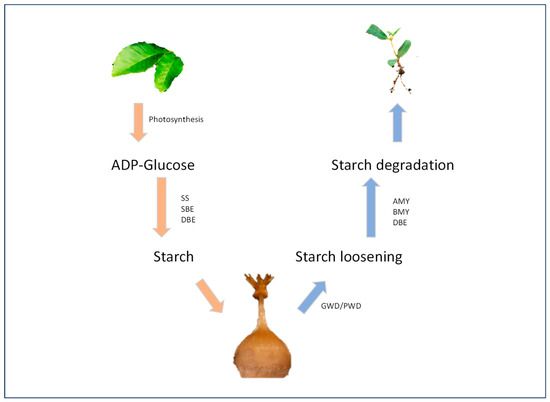
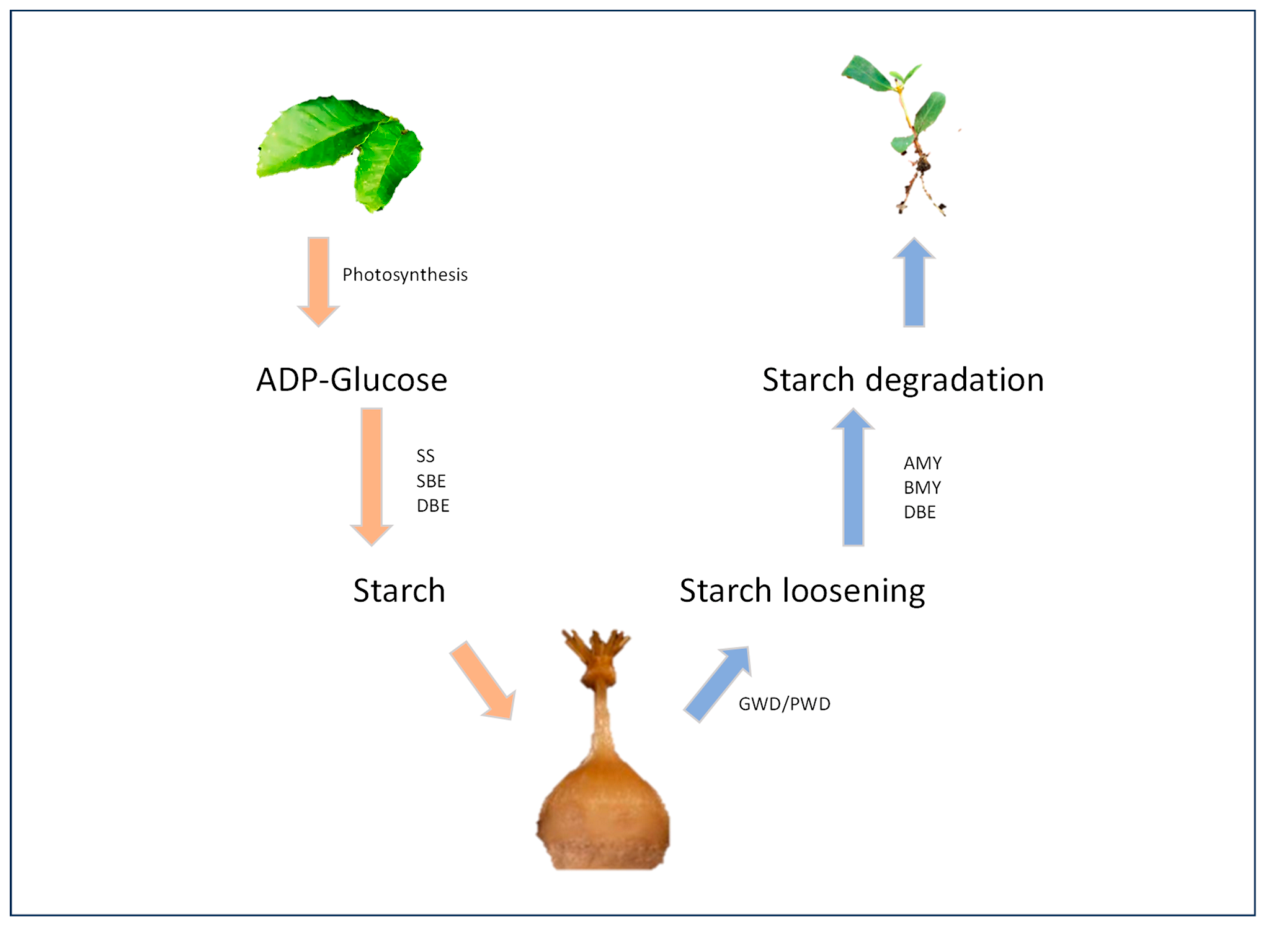
Environmental conditions also significantly affect the efficiency of starch metabolism during seed germination. Drought stress significantly inhibits amylase activity in barley seeds, impeding starch degradation. However, exogenous brassinosteroid treatment can alleviate this inhibitory effect [72]. The exogenous application of polyamines can also effectively mitigate the adverse effect of drought stress by the maintenance of ROS homeostasis, enhancement of antioxidant defense capacity, and upregulation of sugar metabolism-related genes [73]. In rice, submerged germination conditions enhance amylase activity, which can improve the efficiency of glycolysis and ethanol fermentation, thereby effectively maintaining energy supply and cellular homeostasis [74]. Cold plasma treatment can indirectly promote starch utilization and increase seed germination rates by alteration of seed coat permeability and activation of internal enzyme systems [75]. Temperature is another critical limitation factor for seed germination. Amylase activity in pecan (Carya illinoinensis) seeds increases with rising temperature in a certain range. In contrast, low-temperature affect the translocation of stored substances within seeds, thereby hindering seed germination. Therefore, screening for a suitable temperature to modulate stored starch metabolism can serve as a strategy for controlling the seed germination of horticultural crops. These findings indicate that starch metabolism during germination is tightly regulated by enzymatic, hormonal, and environmental factors; however, species-specific regulatory networks in Castanea henryi remain to be elucidated. A conceptual model for Castanea henryi illustrating the potential mechanism of starch metabolism is presented in Figure 2.
Figure 2.
Regulatory mechanisms of Castanea henryi involved in starch metabolism.
7. Conclusions
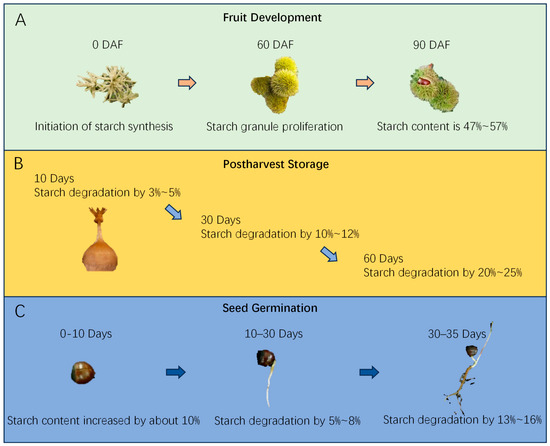
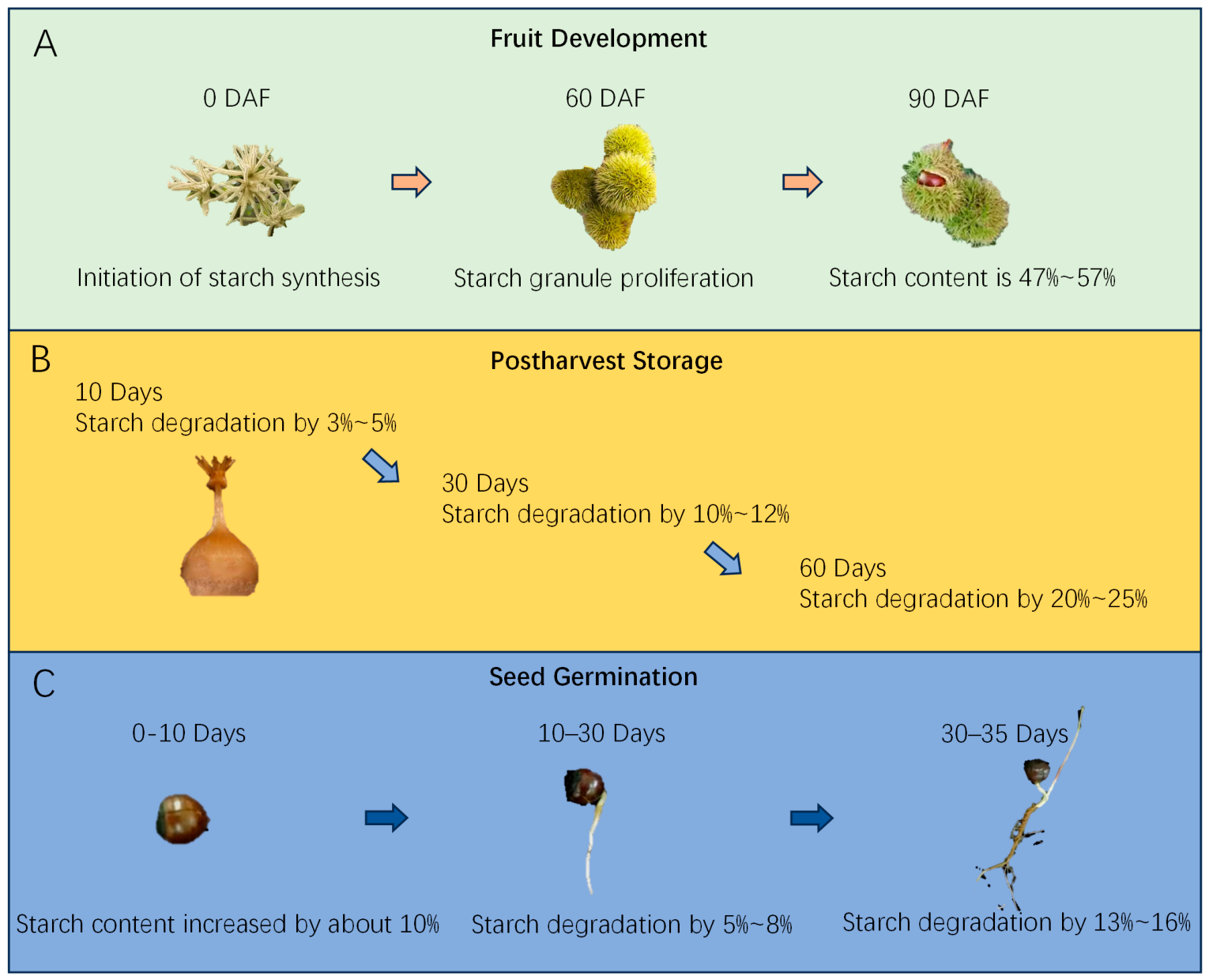
Chestnuts are gaining increasing attention due to their unique flavor and abundant nutritional value. Starch metabolism is a key determinant of fruit quality, storage performance, and seedling establishment. Current research primarily focuses on the dynamic changes in starch content, composition, structure, and enzyme activity during chestnut growth and development, as well as the starch degradation in postharvest fruits. A chronology of starch accumulation/degradation for Castanea henryi is presented in Figure 3. Current research still lacks in elucidating the molecular mechanisms of starch accumulation/degradation in chestnut fruits, such as the identification and functional characterization of genes involved in the starch degradation pathway, although a few studies have been conducted, such as one that analyzes genetic variations among the cultivated chestnut varieties by genomic sequencing [76], another that predicts nut weight by SNPs in transcriptomic regions [77], etc. Future research should further focus on gene identification, regulatory networks, and breeding applications. This will be of great significance for the creation of new high-starch chestnut germplasm and the breeding of superior chestnut varieties.
Figure 3.
A chronology of starch accumulation/degradation for Castanea henryi.
Author Contributions
W.Z.: Writing—Original Draft, Resources. M.H.: Editing, Resources. R.W.: Writing—Review and Editing. Y.C.: Resources. D.P.: Writing—Review and Editing, Resources. Y.Z.: Conceptualization, Writing—Review and Editing, Funding Acquisition. B.Y.: Conceptualization, Writing—Review and Editing. All authors have read and agreed to the published version of the manuscript.
Funding
This research was financed by the “Pioneer” and “Leading Goose” R&D Program of Zhejiang Province (2023C02032).
Data Availability Statement
The original contributions presented in this study are included in the article. Further inquiries can be directed to the corresponding authors.
Conflicts of Interest
The authors declare no conflict of interest.
References
- Xie, C.; Tian, E.; Jim, C.Y.; Liu, D.; Hu, Z. Effects of climate-change scenarios on the distribution patterns of Castanea henryi. Ecol. Evol. 2022, 12, e9597. [Google Scholar] [CrossRef] [Scilit]
- Li, C.; Hu, Y.; Huang, T.; Gong, B.; Yu, W.-W. A combined action of amylose and amylopectin fine molecular structures in determining the starch pasting and retrogradation property. Int. J. Biol. Macromol. 2020, 164, 2717–2725. [Google Scholar] [CrossRef] [Scilit]
- Li, D.; Zhu, F. Starch structure in developing kiwifruit. Int. J. Biol. Macromol. 2018, 120, 1306–1314. [Google Scholar] [CrossRef] [Scilit]
- Patiño-Rodríguez, O.; Agama-Acevedo, E.; Ramos-Lopez, G.; Bello-Pérez, L.A. Unripe mango kernel starch: Partial characterization. Food Hydrocoll. 2020, 101, 105512. [Google Scholar] [CrossRef] [Scilit]
- Li, A.; Lin, J.; Zeng, Z.; Deng, Z.; Tan, J.; Chen, X.; Ding, G.; Zhu, M.; Xu, B.; Atkinson, R.G.; et al. The kiwifruit amyloplast proteome (kfALP): A resource to better understand the mechanisms underlying amyloplast biogenesis and differentiation. Plant J. 2024, 118, 565–583. [Google Scholar] [CrossRef] [Scilit]
- Liu, D.; Ma, L.; Zhou, Z.; Liang, Q.; Xie, Q.; Ou, K.; Liu, Y.; Su, Y. Starch and mineral element accumulation during root tuber expansion period of Pueraria thomsonii Benth. Food Chem. 2021, 343, 128445. [Google Scholar] [CrossRef] [Scilit]
- Lan, T.; Wang, J.; Lei, Y.; Lei, J.; Sun, X.; Ma, T. A new source of starchy flour: Physicochemical and nutritional properties of starchy kiwifruit flour. Food Chem. 2024, 435, 137627. [Google Scholar] [CrossRef] [Scilit]
- Wang, W.; Zhang, S.; Chen, Y.; Zhao, Y.; Shi, F.; Khalil-Ur-Rehman, M.; Bai, X.; Zhu, C. Transcriptome analysis provides insights into the mechanisms of starch biosynthesis in the kernels of three chestnut cultivars. Forests 2022, 13, 2028. [Google Scholar] [CrossRef] [Scilit]
- Dong, N.; Jiao, G.; Cao, R.; Li, S.; Zhao, S.; Duan, Y.; Ma, L.; Li, X.; Lu, F.; Wang, H.; et al. OsLESV and OsESV1 promote transitory and storage starch biosynthesis to determine rice grain quality and yield. Plant Commun. 2024, 5, 100893. [Google Scholar] [CrossRef] [Scilit]
- Camisón, Á.; Ángela Martín, M.; Javier Dorado, F.; Moreno, G.; Solla, A. Changes in carbohydrates induced by drought and waterlogging in Castanea sativa. Trees 2020, 34, 579–591. [Google Scholar] [CrossRef] [Scilit]
- Solis-Badillo, E.; Agama-Acevedo, E.; Tiessen, A.; Lopez Valenzuela, J.A.; Bello-Perez, L.A. ADP-glucose pyrophosphorylase is located in the plastid and cytosol in the pulp of tropical banana fruit (Musa acuminata). Plant Foods Hum. Nutr. 2020, 75, 76–82. [Google Scholar] [CrossRef] [Scilit]
- Tappiban, P.; Smith, D.R.; Triwitayakorn, K.; Bao, J. Recent understanding of starch biosynthesis in cassava for quality improvement: A review. Trends Food Sci. Technol. 2019, 83, 167–180. [Google Scholar] [CrossRef] [Scilit]
- Qiu, Q.; Tian, X.; Wu, G.; Wu, J.; Fan, X.; Yuan, D. Comparative analysis of the transcriptome during single-seed formation of Castanea henryi: Regulation of starch metabolism and endogenous hormones. BMC Plant Biol. 2023, 23, 90. [Google Scholar] [CrossRef] [Scilit]
- Cho, Y.G.; Kang, K.K. Functional analysis of starch metabolism in plants. Plants 2020, 9, 1152. [Google Scholar] [CrossRef] [Scilit]
- Nardozza, S.; Boldingh, H.L.; Osorio, S.; Höhne, M.; Wohlers, M.; Gleave, A.P.; MacRae, E.A.; Richardson, A.C.; Atkinson, R.G.; Sulpice, R.; et al. Metabolic analysis of kiwifruit (Actinidia deliciosa) berries from extreme genotypes reveals hallmarks for fruit starch metabolism. J. Exp. Bot. 2013, 64, 5049–5063. [Google Scholar] [CrossRef] [Scilit]
- Zhu, J.; Zhang, C.-Q.; Xu, J.; Gilbert, R.G.; Liu, Q. Identification of structure-controlling rice biosynthesis enzymes. Biomacromolecules 2021, 22, 2148–2159. [Google Scholar] [CrossRef] [Scilit]
- Lin, L.; Huang, J.; Zhang, L.; Zhang, C.; Liu, Q.; Wei, C. Effects of inhibiting starch branching enzymes on molecular and crystalline structures of starches from endosperm different regions in rice. Food Chem. 2019, 301, 125271. [Google Scholar] [CrossRef] [Scilit]
- Wangpaiboon, K.; Charoenwongpaiboon, T.; Klaewkla, M.; Field, R.A.; Panpetch, P. Cassava pullulanase and its synergistic debranching action with isoamylase 3 in starch catabolism. Front. Plant Sci. 2023, 14, 1114215. [Google Scholar] [CrossRef] [Scilit]
- Malinova, I.; Mahto, H.; Brandt, F.; AL-Rawi, S.; Qasim, H.; Brust, H.; Hejazi, M.; Fettke, J. EARLY STARVATION 1 specifically affects the phosphorylation action of starch-related dikinases. Plant J. 2018, 95, 126–137. [Google Scholar] [CrossRef] [Scilit]
- Mahlow, S.; Orzechowski, S.; Fettke, J. Starch phosphorylation: Insights and perspectives. Cell. Mol. Life Sci. 2016, 73, 2753–2764. [Google Scholar] [CrossRef] [Scilit]
- Zhou, Z.; Li, B.; Lin, Z.; Zhong, W.; Wei, W.; Shan, W.; Chen, J.; Lu, W.; Wu, C.; Kuang, J. Mango MiEIL4 modulates starch degradation during fruit ripening by upregulating the expression of β-amylase and α-amylase genes. Postharvest Biol. Technol. 2025, 229, 113721. [Google Scholar] [CrossRef] [Scilit]
- Lloyd, J.R.; Kossmanna, J.; Ritte, G. Leaf starch degradation comes out of the shadows. Trends Plant Sci. 2005, 10, 130–137. [Google Scholar] [CrossRef] [Scilit]
- Yu, T.; Zeeman, S.C.; Thorneycroft, D.; Fulton, D.C.; Dunstan, H.; Lue, W.; Hegemann, B.; Tung, S.; Umemoto, T.; Chapple, A.; et al. α-Amylase is not required for breakdown of transitory starch in Arabidopsis leaves. J. Biol. Chem. 2005, 280, 9773–9779. [Google Scholar] [CrossRef] [Scilit]
- Xu, Y.; Yang, C.; Zhang, Y.; Cao, Q.; Wan, C.; Chen, C.; Chen, J.; Huang, Z.; Gan, Z. Blue light treatment delays postharvest ripening of kiwifruit by suppressing ethylene biosynthesis, starch degradation, and cell wall metabolism. LWT 2024, 199, 116105. [Google Scholar] [CrossRef] [Scilit]
- Lv, J.; Sun, C.; Qiu, Y.; Ge, Y.; Chen, J. Exogenous methyl jasmonate (MeJA) mediated carbohydrate metabolism in apple fruit during ripening. Plant Physiol. Biochem. 2025, 218, 109329. [Google Scholar] [CrossRef] [Scilit]
- Zaman, F.; Liu, D.-H.; Liu, Y.-Z.; Khan, M.A.; Alam, S.M.; Luo, Y.; Han, H.; Li, Y.-T.; Elshahat, A. Short-day shading increases soluble sugar content in citrus fruit primarily through promoting sucrose distribution, starch degradation and sucrose storage ability. Plant Physiol. Biochem. 2025, 223, 109779. [Google Scholar] [CrossRef] [Scilit]
- Dinh, D.L.; Stösser, R. Starch accumulation in the flower organs in apple from the beginning of flower bud differentiation until anthesis in apple. Erwerbs-Obstbau 2004, 46, 81–86. [Google Scholar] [CrossRef] [Scilit]
- Zhu, X.; Zhang, C.; Wu, W.; Li, X.; Zhang, C.; Fang, J. Enzyme activities and gene expression of starch metabolism provide insights into grape berry development. Hortic. Res. 2017, 4, 17018. [Google Scholar] [CrossRef] [Scilit]
- Doerflinger, F.C. Starch Metabolism in Apple Fruit and Its Relationship with Maturation and Ripening. Ph.D. Thesis, Cornell University, Ithaca, NY, USA, 2015. [Google Scholar]
- Li, S.; Shi, Z.; Zhu, Q.; Tao, L.; Liang, W.; Zhao, Z. Transcriptome sequencing and differential expression analysis of seed starch accumulation in Chinese chestnut Metaxenia. BMC Genom. 2021, 22, 617. [Google Scholar] [CrossRef] [Scilit]
- Zhang, C.; Chen, X.; Liu, W.; Ji, Y.; Yang, Y.; Chen, J.; Li, P.; Li, D. Differential expression analysis of sugar accumulation-related genes during chestnut nut development. J. Plant Physiol. 2023, 282, 153918. [Google Scholar] [CrossRef] [Scilit]
- Li, H.; Li, Z.; Cheng, B.; Huang, R.; Wang, X.; Zhang, H.; Zhang, J.; Wang, D. Comparative analysis of sugar-starch profiles in northern and southern Chinese chestnuts grafted Northward. LWT-Food Sci. Technol. 2026, 245, 119244. [Google Scholar] [CrossRef] [Scilit]
- Zhu, L.; Shan, W.; Wu, C.; Wei, W.; Xu, H.; Lu, W.; Chen, J.; Su, X.; Kuang, J. Ethylene-induced banana starch degradation mediated by an ethylene signaling component MaEIL2. Postharvest Biol. Technol. 2021, 181, 111648. [Google Scholar] [CrossRef] [Scilit]
- Hu, X.; Kuang, S.; Zhang, A.D.; Zhang, W.S.; Chen, M.J.; Yin, X.R.; Chen, K.S. Characterization of starch degradation related genes in postharvest kiwifruit. Int. J. Mol. Sci. 2016, 17, 2112. [Google Scholar] [CrossRef] [Scilit]
- Phillips, K.M.; McGinty, R.C.; Couture, G.; Pehrsson, P.R.; McKillop, K.; Fukagawa, N.K. Dietary fiber, starch, and sugars in bananas at different stages of ripeness in the retail market. PLoS ONE 2021, 16, 0253366. [Google Scholar] [CrossRef] [Scilit]
- Li, D.; Zhu, F. Physicochemical properties of kiwifruit starch. Food Chem. 2017, 220, 129–136. [Google Scholar] [CrossRef] [Scilit]
- Cui, Y.; Ji, X.; Yu, W.; Liu, Y.; Bai, Q.; Su, S. Genome-wide characterization and functional validation of the ACS gene family in the chestnut reveals its regulatory role in ovule development. Int. J. Mol. Sci. 2024, 25, 4454. [Google Scholar] [CrossRef] [Scilit]
- Liu, X.; Li, Y.; Liang, M.; Wang, D.; Wang, M.; Lu, Y.; Liu, X.; Zhang, H.; Wang, X.; Yu, L. Comprehensive analysis of the ARF gene family reveals their roles in Chinese chestnut (Castanea mollissima) seed kernel development. Biology 2025, 14, 1460. [Google Scholar] [CrossRef] [Scilit]
- Frangipane, M.T.; Garzoli, S.; de Vita, D.; Massantini, R.; Corona, P. Identifying the sensory profile and fatty acid composition for quality valorization of Marrone chestnut cultivars. Eur. Food Res. Technol. 2024, 250, 2837–2847. [Google Scholar] [CrossRef] [Scilit]
- Zhuang, W.; Zheng, S.; Chen, F.; Gao, S.; Zhong, M.; Zheng, B. Effects of Tremella fuciformis mushroom polysaccharides on structure, pasting, and thermal properties of Chinese chestnuts (Castanea henryi) starch granules under different freeze–thaw cycles. Foods 2023, 12, 4118. [Google Scholar] [CrossRef] [Scilit]
- Wang, Y.; Miao, L.; Wu, H.; Duan, X.; Chang, L.; Hong, H.; Guo, W.; Sun, H. The dynamic epigenetic atlas and its effects on instability of starch and seed storage protein quality traits in wheat (Triticum aestivum L.). Front. Plant Sci. 2025, 16, 1685120. [Google Scholar] [CrossRef] [Scilit]
- Zhang, P.; Whistler, R.L.; BeMiller, J.N.; Hamaker, B.R. Banana starch: Production, physicochemical properties, and digestibility—A review. Carbohydr. Polym. 2005, 59, 443–458. [Google Scholar] [CrossRef] [Scilit]
- Lo’ay, A.A.; Hamed, S.E.; EL-Khateeb, A.Y.; Mohamed, A.H. Implementation exogenous ATP on the starch degradation enzyme activities of ‘Grand Nain’ banana fruit during shelf life. Sci. Hortic. 2020, 262, 109021. [Google Scholar] [CrossRef] [Scilit]
- Cheng, L.; Wu, W.; Li, J.; Lin, X.; Wen, J.; Peng, J.; Yu, Y.; Zhu, J.; Xiao, G. Effect of heat transfer medium and rate on freezing characteristics, color, and cell structure of chestnut kernels. Foods 2023, 12, 1409. [Google Scholar] [CrossRef] [Scilit]
- Sangpong, L.; Suntichaikamolkul, N.; Singcha, P.; Wangpaiboon, K.; Khaksar, G.; Sirikantaramas, S. Integrative analysis of the transcriptome and starch/sugar content revealed changes in starch/sugar metabolism in durian (Durio zibethinus L.) fruit ripening. Food Biosci. 2025, 71, 107028. [Google Scholar] [CrossRef] [Scilit]
- Jiang, S.Z.; Lian, H.; Xiong, Y.F.; Luo, K.J.; Su, X.Q.; Chen, S.P. Genome-wide identification and analysis of the β-amylase gene family in Castanea henryi. J. For. Environ. 2021, 41, 545–553. [Google Scholar] [CrossRef]
- Zhang, L.; Lin, Q.; Feng, Y.; Fan, X.; Zou, F.; Yuan, D.; Zeng, X.; Cao, H. Transcriptomic identification and expression of starch and sucrose metabolism genes in the seeds of Chinese chestnut (Castanea mollissima). J. Agric. Food Chem. 2015, 63, 929–942. [Google Scholar] [CrossRef] [Scilit]
- Qiu, L.; Ye, N.; Zhao, Y.; Cao, M.; Ge, M.; Ren, X.; Tang, Y.; Ma, H. Rapid starch degradation characterized by the related gene expression and key enzymes resulted in an optimum comprehensive quality of sugar, acid, and firmness in postharvest apples. Postharvest Biol. Technol. 2025, 23, 113943. [Google Scholar] [CrossRef] [Scilit]
- Lee, U.; Joo, S.; Klopfenstein, N.B.; Kim, M.S. Efficacy of washing treatments in the reduction of postharvest decay of chestnuts (Castanea crenata ‘Tsukuba’) during storage. Can. J. Plant Sci. 2016, 96, 1–5. [Google Scholar] [CrossRef] [Scilit]
- Pott, D.M.; Vallarino, J.G.; Osorio, S. Metabolite changes during postharvest storage: Effects on fruit quality traits. Metabolites 2020, 10, 187. [Google Scholar] [CrossRef] [Scilit]
- Chai, J.; Yang, B.; Xu, N.; Jiang, Q.; Gao, Z.; Ren, X.; Liu, Z. Effects of low temperature on postharvest ripening and starchiness in ‘Cuixiang’ kiwifruit. LWT 2024, 209, 116795. [Google Scholar] [CrossRef] [Scilit]
- Lu, J.; Chen, Y.; Zhang, T.; Wang, F.; Qi, M.; Li, T.; Liu, Y. SlCV affects starch metabolism by regulating SlBAM3 stability under low night temperature stress in tomatoes. Hortic. Res. 2025, 12, 233. [Google Scholar] [CrossRef] [Scilit]
- Bakhshy, E.; Zarinkamar, F.; Nazari, M. Structural and quantitative changes of starch in seed of Trigonella persica during germination. Int. J. Biol. Macromol. 2020, 164, 1284–1293. [Google Scholar] [CrossRef] [Scilit]
- Yan, H.; Nie, Y.; Cui, K.; Sun, J. Integrative transcriptome and metabolome profiles reveal common and unique pathways involved in seed initial imbibition under artificial and natural salt stresses during germination of Halophyte quinoa. Front. Plant Sci. 2022, 13, 853326. [Google Scholar] [CrossRef] [Scilit]
- Murata, T.; Akazawa, T.; Fukuchi, S. Enzymic mechanism of starch breakdown in germinating rice seeds I. An analytical study. Plant Physiol. 1968, 43, 1899–1905. [Google Scholar] [CrossRef] [Scilit] [PubMed]
- Sun, J.; Wu, D.; Xu, J.; Rasmussen, S.K.; Shu, X. Characterization of starch during germination and seedling development of a rice mutant with a high content of resistant starch. J. Cereal Sci. 2015, 6, 94–101. [Google Scholar] [CrossRef] [Scilit]
- Liu, B.; Lin, R.; Jiang, Y.; Jiang, S.; Xiong, Y.; Lian, H.; Zeng, Q.; Liu, X.; Liu, Z.J.; Chen, S. Transcriptome analysis and identification of genes associated with starch metabolism in Castanea henryi seed (Fagaceae). Int. J. Mol. Sci. 2020, 21, 1431. [Google Scholar] [CrossRef] [Scilit] [PubMed]
- Du, C.; Chen, W.; Wu, Y.; Wang, G.; Zhao, J.; Sun, J.; Ji, J.; Yan, D.; Jiang, Z.; Shi, S. Effects of GABA and vigabatrin on the germination of Chinese chestnut recalcitrant seeds and its implications for seed dormancy and storage. Plants 2020, 9, 449. [Google Scholar] [CrossRef] [Scilit] [PubMed]
- Liu, B.; Jiang, Y.; Lin, R.; Xiong, Y.; Jiang, S.; Lian, H.; Liu, X.; Liu, Z.-J.; Chen, S. Selection and validation of reference genes desirable for gene expression analysis by qRT-PCR on seed germination of Castanea henryi. BioRxiv 2021. preprint. [Google Scholar] [CrossRef] [Scilit]
- Nakai, H.; Ito, T.; Tanizawa, S.; Matsubara, K.; Yamamoto, T.; Okuyama, M.; Mori, H.; Chiba, S.; Sano, Y.; Kimura, A. Plant α-glucosidase: Molecular analysis of rice α-glucosidase and degradation mechanism of starch granules in germination stage. J. Appl. Glycosci. 2006, 53, 137–142. [Google Scholar] [CrossRef] [Scilit]
- Zhang, Q.; Pritchard, J.; Mieog, J.; Byrne, K.; Colgrave, M.L.; Wang, J.; Ral, J.F. Overexpression of a wheat α-amylase type 2 impact on starch metabolism and abscisic acid sensitivity during grain germination. Plant J. 2021, 108, 378–393. [Google Scholar] [CrossRef] [Scilit]
- Zhang, Q.; Pritchard, J.; Mieog, J.; Byrne, K.; Colgrave, M.L.; Wang, J.; Ral, J.F. Over-expression of a wheat late maturity alpha-amylase type 1 impact on starch properties during grain development and germination. Front. Plant Sci. 2022, 13, 811728. [Google Scholar] [CrossRef] [Scilit]
- Liu, Y.; Zhang, Y.; Zheng, Y.; Nie, X.; Wang, Y.; Yu, W.; Su, S.; Cao, Q.; Qin, L.; Xing, Y. Beta-amylase and phosphatidic acid involved in recalcitrant seed germination of Chinese chestnut. Front. Plant. Sci. 2022, 13, 828270. [Google Scholar] [CrossRef] [Scilit]
- Zhuo, J.; Wang, K.; Wang, N.; Xing, C.; Peng, D.; Wang, X.; Qu, G.; Kang, C.; Ye, X.; Li, Y.; et al. Pericarp starch metabolism is associated with caryopsis development and endosperm starch accumulation in common wheat. Plant Sci. 2023, 330, 111622. [Google Scholar] [CrossRef] [Scilit] [PubMed]
- Nakai, H.; Tanizawa, S.; Ito, T.; Kamiya, K.; Kim, Y.-M.; Yamamoto, T.; Matsubara, K.; Sakai, M.; Sato, H.; okio Imbe, T.; et al. Rice α-glucosidase isozymes and isoforms showing different starch granules-binding and -degrading ability. Biocatal. Biotransform. 2008, 26, 104–110. [Google Scholar] [CrossRef] [Scilit]
- He, D.; Han, C.; Yao, J.; Shen, S.; Yang, P. Constructing the metabolic and regulatory pathways in germinating rice seeds through proteomic approach. Proteomics 2011, 11, 2693–2713. [Google Scholar] [CrossRef] [Scilit]
- Diaz-Mendoza, M.; Diaz, I.; Martinez, M. Insights on the proteases involved in barley and wheat grain germination. Int. J. Mol. Sci. 2019, 20, 2087. [Google Scholar] [CrossRef] [Scilit]
- Huang, Y.; Sun, M.M.; Ye, Q.; Wu, X.Q.; Wu, W.H.; Chen, Y.F. Abscisic acid modulates seed germination via ABA INSENSITIVE5-mediated phosphate11. Plant Physiol. 2017, 175, 1661–1668. [Google Scholar] [CrossRef] [Scilit]
- Liu, Z.; Dai, H.; Hao, J.; Li, R.; Pu, X.; Guan, M.; Chen, Q. Current research and future directions of melatonin’s role in seed germination. Stress Biol. 2023, 3, 53. [Google Scholar] [CrossRef] [Scilit] [PubMed]
- Xu, H.; Wang, F.; Damari, R.N.; Chen, X.; Lin, Z. Molecular mechanisms underlying the signal perception and transduction during seed germination. Mol. Breed. 2024, 44, 27. [Google Scholar] [CrossRef] [Scilit] [PubMed]
- Liu, F.-F.; Qiao, X.-H.; Yang, T.; Zhao, P.; Zhu, Z.-P.; Zhao, J.-H.; Luo, J.-M.; Xiong, A.-S.; Sun, M. Nitric oxide promoted the seed germination of Cynanchum auriculatum under cadmium stress. Agronomy 2023, 14, 86. [Google Scholar] [CrossRef] [Scilit]
- Zemour, K.; Adda, A.; Chouhim, K.M.A.; Labdelli, A.; Merah, O. Amylase activity and soluble sugars content of durum wheat seeds during germination under water stress. Agric. Res. 2024, 13, 676–683. [Google Scholar] [CrossRef] [Scilit]
- Li, Z.; Peng, Y.; Zhang, X.Q.; Ma, X.; Huang, L.K.; Yan, Y.H. Exogenous spermidine improves seed germination of white clover under water stress via involvement in starch metabolism, antioxidant defenses and relevant gene expression. Molecules 2014, 19, 18003–18024. [Google Scholar] [CrossRef] [Scilit]
- Zhang, Y.; Xia, Y. Quercetin enhances tomato seed germination via phenylpropanoid -dependent regulation of ROS, hormone signaling, and starch hydrolysis. Plant Physiol. Biochem. 2025, 230, 110590. [Google Scholar] [CrossRef] [Scilit] [PubMed]
- Karimi, J.; Bansal, S.A.; Kumar, V.; Pasalari, H.; Badr, A.A.; Nejad, Z.J. Effect of cold plasma on plant physiological and biochemical processes: A review. Biologia 2024, 79, 3475–3487. [Google Scholar] [CrossRef] [Scilit]
- Wang, Y.; Yuan, X.; Yang, J.; Jiang, X.; Chen, S.; Chen, H.; Li, Y. Genetic variation in the main cultivar collection of Castanea henryi revealed by genome resequencing. Curr. Issues Mol. Biol. 2026, 48, 173. [Google Scholar] [CrossRef] [Scilit] [PubMed]
- Kang, M.-J.; Shin, A.-Y.; Shin, Y.; Lee, S.-A.; Lee, H.-R.; Kim, T.-D.; Choi, M.; Koo, N.; Kim, Y.-M.; Kyeong, D.; et al. Identification of transcriptome wide, nut weight-associated SNPs in Castanea crenata. Sci. Rep. 2019, 9, 13161. [Google Scholar] [CrossRef] [Scilit]
Disclaimer/Publisher’s Note: The statements, opinions and data contained in all publications are solely those of the individual author(s) and contributor(s) and not of MDPI and/or the editor(s). MDPI and/or the editor(s) disclaim responsibility for any injury to people or property resulting from any ideas, methods, instructions or products referred to in the content. |
© 2026 by the authors. Licensee MDPI, Basel, Switzerland. This article is an open access article distributed under the terms and conditions of the Creative Commons Attribution (CC BY) license.