Systematic Review

Effects of Pollen Storage on Physiological Quality and Reproductive Performance in Date Palm (Phoenix dactylifera L.): A Systematic Review and Meta-Analysis


by
Ricardo Salomón-Torres
1,*,
Mohammed Aziz Elhoumaizi
2,
Glenn C. Wright
3,
Abdelouahhab Alboukhari Zaid
4,
Yohandri Ruisanchez-Ortega
1,
Fidel Núñez-Ramírez
5 and
Laura Samaniego-Sandoval
1
1
Unidad Académica San Luis Río Colorado, Universidad Estatal de Sonora, San Luis Río Colorado C.P. 83500, Sonora, Mexico
2
Laboratory for Agricultural Productions Improvement, Biotechnology and Environment (LAPABE), Faculty Sciences, University Mohammed First, BP-717, Oujda 60000, Morocco
3
School of Plant Sciences, University of Arizona, Yuma Agriculture Center, Yuma, AZ 85364, USA
4
Khalifa International Award for Date Palm and Agricultural Innovation, Abu Dhabi P.O. Box 3614, United Arab Emirates
5
Instituto de Ciencias Agrícolas, Universidad Autónoma de Baja California, Mexicali C.P. 21705, Baja California, Mexico
*
Author to whom correspondence should be addressed.
Horticulturae 2026, 12(4), 475; https://doi.org/10.3390/horticulturae12040475
Submission received: 15 March 2026 / Revised: 10 April 2026 / Accepted: 10 April 2026 / Published: 13 April 2026
(This article belongs to the Section Propagation and Seeds)

Abstract

Date palm (Phoenix dactylifera L.) production relies on the availability of viable and physiologically active pollen during female flowering, making pollen storage an important strategy to overcome flowering asynchrony and ensure effective artificial pollination. In this study, we systematically reviewed and quantitatively synthesized the effects of pollen storage conditions on pollen physiological quality and reproductive performance in date palm. Following PRISMA guidelines, 22 experimental studies were identified in the qualitative synthesis, and comparable quantitative datasets were used for meta-analysis. Acetocarmine staining, the most commonly used method for assessing pollen stainability across studies, was selected as the standardized indicator of pollen stainability. Multilevel random-effects meta-regression models were applied to evaluate temporal deterioration patterns over storage periods of up to 24 months, while standardized forest plot meta-analyses were used to estimate pooled effects after 12 months of storage. The results revealed a strong temperature-dependent decline in pollen physiological quality. Acetocarmine stainability declined by −6.41, −3.10, −2.62, and −2.24% month−1 under ambient, refrigerated, mild freezing, and moderate freezing conditions, respectively, whereas germination declined by −6.77, −1.86, −3.14, −1.09, and −1.05% month−1 under ambient (23–25 °C), refrigerated (4–5 °C), mild freezing (−5 °C), moderate freezing (−20 °C), and deep freezing (−80 °C) conditions, respectively. After 12 months of storage, stainability, germination, and fruit set were significantly reduced relative to fresh pollen. In contrast, pollen storage had no significant effect on final fruit weight, suggesting that pollen deterioration primarily affects fertilization success rather than subsequent fruit development. The available evidence suggests that low-temperature storage represents the most effective strategy for preserving date palm pollen functionality. Refrigerated storage around 4 °C appears to provide a reliable and accessible option for short- to medium-term pollen preservation, whereas freezing conditions may be advantageous for longer storage periods when moisture control and thawing procedures are properly managed.

1. Introduction

The date palm (Phoenix dactylifera L.) is a dioecious crop, with male and female flowers growing on separate plants. Therefore, its commercial production depends critically on the availability of viable and physiologically functional pollen during the female flowering period [1]. In modern date palm orchards, pollination is predominantly artificial (manual or mechanized), making pollen a strategic agricultural input that determines fruit set, yield, and quality [2]. This dependence explains why pollen biology, quality, and post-harvest handling have been recurring themes in research and innovation within the date industry [3]. Given the economic importance of date palm cultivation in arid and semi-arid regions, ensuring the availability of high-quality pollen has become a key agronomic priority.
Pollen is the male gametophyte and is responsible for transporting genetic material to the ovule through the growth of the pollen tube. Its performance is determined by physiological processes (metabolic activity, membrane integrity, hydration capacity, and pollen tube growth) and by structural traits (exine/intine, cytoplasmic content, and reserves), which can vary among male genotypes and be affected by environmental conditions [1,4]. In the date palm, there is substantial variability among male genotypes because different pollen sources can induce differential responses in fruit development through the effects of xenia and metaxenia [5,6].
These effects are particularly relevant in premium cultivars such as ‘Mejhoul’ and ‘Deglet Nour’, where fruit uniformity and quality largely determine market value [7,8]. In this context, identifying more efficient pollen sources, whether through local genotypes, elite selections, or specific males adapted to environmental conditions, addresses the need to maximize consistent production and ensure the availability of pollen with reproducible quality [9,10]. In commercial plantations, there has also been significant interest in comparing pollen sources, such as ‘Deglat Beida’, ‘Deglet Nour’, ‘Dhakki’, ‘Khadrawy’,‘Ghanami’, ‘Fard’, and ‘Jarvis’, due to their differential performance in fruit set, yield, and fruit quality [11,12].
The importance of pollen management has increased considerably due to current climate change scenarios. Rising temperatures, irregular winters, and altered phenological patterns often lead to asynchronous flowering, in which male palms release pollen before or after the peak receptivity of female inflorescences [3,6]. Consequently, pollen conservation is no longer just a convenient practice but has become an adaptive measure to reduce production risk, due to the lack of temporal overlap between male and female flowering, and to ensure timely pollination in commercially valuable cultivars [9]. Additionally, pollen conservation is fundamental for preserving male genetic resources, exchanging germplasm, and supporting genetic improvement programs, especially in regions where the availability of male palms is limited or where high-value agronomic pollen material is required [13,14].
Fresh pollen generally exhibits the highest physiological performance, but its quality declines rapidly when exposed to unsuitable humidity and temperature conditions [15]. Therefore, controlled drying prior to storage is a critical step to reduce moisture content and stabilize the pollen’s cellular structures [16]. The use of desiccants, such as silica gel, saturated salts, or other systems, is recommended to prevent excess moisture from accelerating deterioration processes and reducing pollen’s tolerance to cooling or freezing [16]. Several studies have described storage methods using plastic containers, glass bottles, plastic bags, and airtight vials, with variations in sealing, light protection, and with or without desiccants [1]. These studies report that the type of container influences moisture exchange, thermal stability, and the risk of condensation during temperature fluctuations [17].
Temperature remains one of the most critical factors affecting pollen longevity during storage. Preservation methods are usually organized by temperature ranges: room temperature (23–25 °C), refrigeration (4–5 °C), freezing (−20 °C), deep freezing (−80 °C), and cryopreservation (−196 °C, liquid nitrogen) [18,19,20]. As the temperature decreases, metabolic processes slow down considerably. However, residual water within the pollen grains can cause intracellular damage if dehydration is insufficient or thawing protocols are inadequate [13,16]. In date palm pollen, numerous studies have explored these conditions, highlighting the interest in its conservation at −80 and −196 °C, due to its potential to decouple pollen availability from the flowering calendar and its relevance for germplasm banks and national collections, with cryopreservation being the most effective tool for long-term storage [13,21]. However, the use of −20 or 4 °C remains the best conservation option for farmers due to its accessibility [1,22]. Therefore, systematically comparing the impact of these temperatures on different outcomes (pollen integrity/physiology, in vitro germination, fruit set, and fruit weight) is crucial for translating experimental evidence into management decisions [7,9].
Assessment of pollen physiological quality has been approached using a wide variety of laboratory methods, leading to conceptual confusion in the literature, as not all tests measure the same biological attribute [23,24]. Generally, staining tests can be classified into viability staining tests and structural or cytological stains [23,24]. Physiological viability stains include 2,3,5-triphenyltetrazolium chloride (TTC), the fluorochromatic reaction (FDA), and Alexander staining, which estimate the metabolic activity or cellular integrity of the pollen grain [25,26]. These tests are considered closer approximations of physiological viability. On the other hand, structural or cytological stains, such as acetocarmine, iodine-potassium iodide (IKI), and lactophenol cotton blue (LPCB), do not measure actual viability, but rather the presence of cytoplasm, grain structure, or starch content [23,24]. These stains may overestimate viability, especially in stored pollen, so their correct naming and use are essential for comparing studies. This distinction is especially important for quantitative evidence synthesis since the use of different staining methods reported under the same label, “viability”, can introduce substantial conceptual heterogeneity across studies [24].
In vitro pollen germination assays provide a more functional assessment by directly measuring the pollen’s ability to hydrate, germinate, and produce a pollen tube under controlled conditions [7,27]. In date palm pollen, the most commonly used media consist of combinations of sucrose, boron, and calcium, typically solidified with agar. Alternatively, liquid media may be dispensed as small drops on Petri dishes, where pollen grains are incubated and subsequently evaluated for germination under controlled conditions. Variations in pH, temperature, and incubation time are commonly applied depending on the protocol used [13,28,29]. Methodological and optimization studies have shown that the composition of the medium and incubation conditions can substantially change the results. Therefore, standardization and a proper description of the method are essential for comparing evidence [23,24].
Beyond the quality measured in the laboratory, the agronomic objective is to ensure adequate reproductive performance under actual pollination conditions. Evidence in date palm pollen indicates that its origin can induce xenia/metaxenia effects on fruit traits, and its storage time can reduce pollen vigor, altering the pollen competitive ability, or affecting fertilization success under narrow receptivity windows [5,6,7]. It is worth noting that discrepancies have been reported between laboratory evaluations and field performance, where some germination or staining tests have underestimated actual reproductive success [23,24]. In the ‘Mejhoul’ and other cultivars, it has been reported that preserved pollen can still be used under certain schemes, although performance depends on the combination of genotype, storage time, and temperature, and the field pollination strategy [6,9].
Despite the growing number of available studies, challenges remain in translating them into robust recommendations. These difficulties arise mainly from the diversity of methods used to evaluate pollen physiological quality, the variability in pollen performance under different storage temperatures and container types, and the discrepancies among reported results for staining, germination, fruit set, and fruit weight [7,17,21]. Furthermore, the available evidence has rarely been synthesized through quantitative approaches capable of integrating results across different experimental designs and storage conditions. Based on the existing evidence, pollen storage duration and temperature are expected to differentially affect pollen physiological quality and reproductive performance in date palm, with a stronger impact on fruit set than on final fruit weight. In this context, the objective of this study was to conduct a systematic review and meta-analysis to quantify and compare the effects of storage temperature and preservation time on date palm pollen physiological quality, assessed through stainability and in vitro germination tests, as well as on fruit set and fruit weight. In this study, “stainability” refers to the structural integrity of pollen grains detected by cytological staining assays and is distinguished from “germination” (physiological growth of the pollen tube) and the concept of “viability”, defined as the overall capacity of pollen to successfully perform its biological function. By defining these distinctions, a robust, evidence-based framework is provided for interpreting pollen performance, from physiological assessments in the laboratory to reproductive outcomes observed under field conditions.

2. Materials and Methods

2.1. Protocol

This systematic review and meta-analysis were conducted following the Preferred Reporting Items for Systematic Reviews and Meta-Analyses (PRISMA 2020) guidelines [30]. The methodological protocol was defined a priori, including the search strategy, eligibility criteria based on the PICO framework [31], and a quantitative synthesis plan tailored to the experimental evidence identified, including the definition of comparable outcomes, the use of fresh pollen as the reference condition, and the statistical integration of multiple observations across studies.

2.2. Selection Criteria

The Population, Intervention, Comparison, and Outcome (PICO) model was applied to address the following research question: “How do different pollen storage and preservation methods affect pollen stainability, in vitro germination, fruit set, and fruit weight in date palm (Phoenix dactylifera L.)?” The PICO components were defined as follows: Population (P): Date palm pollen grains obtained from different male genotypes, cultivars, or pollen sources. Intervention (I): Pollen storage and preservation methods, including variations in storage temperature (ambient, refrigerated, frozen, or cryogenic), storage duration, dehydration or drying procedures, freeze-drying, and types of storage containers. Comparison (C): Fresh pollen or pollen stored at different temperatures, durations, or preservation methods, allowing for a direct comparison of storage conditions. Outcome (O): Quantitative measures of pollen physiological quality, including stainability (%) and in vitro germination (%) and, when available, fruit set (%) after pollination, and fruit weight (g) with stored pollen.
Original experimental studies conducted under laboratory and/or field conditions were included if they evaluated the effect of pollen storage and preservation methods on pollen stainability, in vitro germination, fruit set, or fruit weight, and provided quantitative data that allowed comparisons between fresh and stored pollen conditions, either within individual studies or across comparable datasets. Studies in other species, case reports, pilot studies, literature reviews, systematic reviews, meta-analyses, book chapters and books, and studies without quantitative data or without a clear description of the pollen storage and evaluation conditions, were excluded.

2.3. Search Strategy

A systematic and comprehensive search of the scientific literature was conducted to identify experimental studies related to the storage, preservation, and functional quality of date palm pollen. The search was carried out primarily in the Scopus and Web of Science (WoS) databases, as these are recognized sources for their broad coverage and editorial rigor in agricultural sciences. The primary search was conducted in Scopus, using the Title, Abstract, and Keyword fields, with the following query: TITLE-ABS-KEY ((“Phoenix dactylifera” OR “date palm pollen”) AND ((“viability” OR “germination” OR “in vitro germination” OR “stainability” OR “acetocarmine” OR “TTC” OR “FDA” OR “fluorochromatic reaction” OR “FCR”) OR (“storage” OR “preservation” OR “desiccation” OR “dehydration” OR “moisture” OR “refrigeration” OR “freezing” OR “cryopreservation” OR “liquid nitrogen” OR “lyophilization” OR “freeze-drying”))).
The search was performed on 15 January 2026, and no restrictions were applied regarding the year of publication to include both classic studies and relevant recent research. The studies included in the final analysis span from 1995 to 2025. Given that the search strategy was conducted using English-language keywords in international databases, the retrieved and included studies were limited to publications available in English. Subsequently, the same search query and keywords used in Scopus were applied to the Web of Science database. The online search was complemented using Google Scholar, given its ability to retrieve literature not always indexed in traditional databases. In this phase, the same keywords used in the Scopus search, including “date palm pollen”, “viability”, “in vitro germination”, “storage”, “preservation”, “acetocarmine”, “refrigeration”, “cryopreservation”, and “freezing”, were applied through a keyword-based search approach. The retrieved records were subsequently screened manually to identify additional potentially relevant studies not captured in the primary databases.

2.4. Study Selection

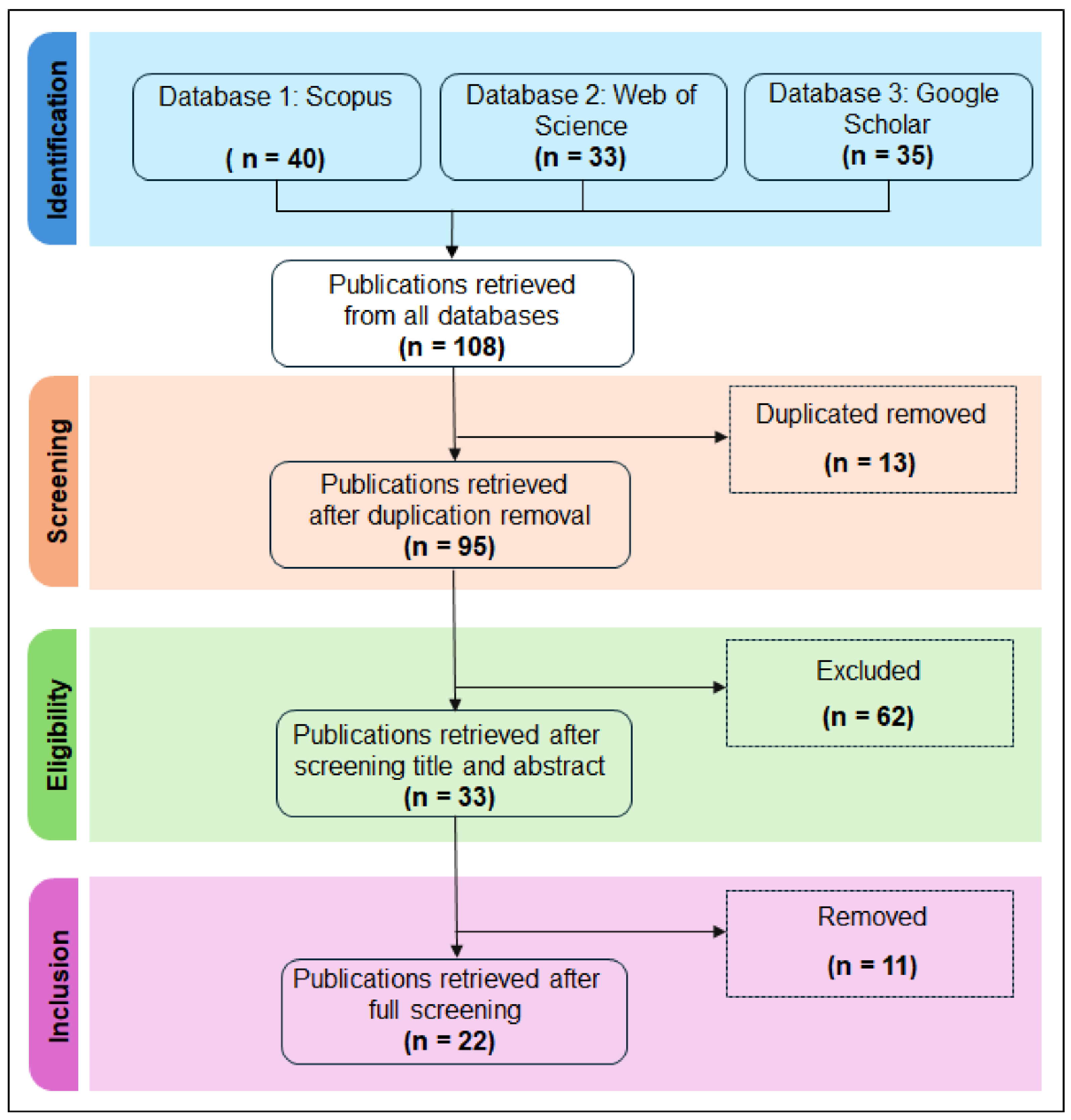
The selection of studies was carried out following the PRISMA guidelines and was structured in four stages: (1) identification, (2) screening, (3) eligibility, and (4) final inclusion. In the identification stage, the search in Scopus retrieved 40 records, Web of Science 33 records, and the complementary search in Google Scholar 35 records (total = 108). In the screening stage, 13 duplicates were removed (3 repeated records in Web of Science and 10 from Google Scholar, which coincided with the Scopus result), leaving 95 unique records for evaluation.
Subsequently, in the eligibility stage, based on the title and abstract of the scientific publications, studies that did not correspond to the objective of the review were excluded. These included studies that did not address pollen storage/preservation methods, did not evaluate stainability, germination, or fruit set or fruit weight, as well as documents ineligible due to their publication type, such as narrative reviews, systematic reviews, book chapters, and books. A total of 62 publications were excluded, leaving 33 for the final stage. For the inclusion stage, after reviewing their full text, 11 studies were excluded because they did not describe pollen storage together with quantitative assessments of stainability and/or germination, and when possible, fruit set or fruit weight, suitable for data extraction.
Finally, 15 studies from Scopus and seven additional studies identified through Google Scholar were integrated. Web of Science did not contribute any additional eligible studies (beyond duplicates) because they did not meet the search criteria. In total, 22 studies (k = 22) were included for the qualitative synthesis, and the subset with comparable data was used for the quantitative synthesis (meta-analysis). The complete process flow is presented in Figure 1 (PRISMA diagram), and the included studies are summarized in Table 1, with their characteristics and extracted variables.

2.5. Methodological Quality Assessment

The methodological quality of the included studies was independently assessed by two reviewers in plant reproductive biology and pollen management. The assessment was performed using a predefined methodological checklist specifically designed for this study, to evaluate the internal quality and sufficiency of the reported information in relation to the objectives of this systematic review. Any discrepancies between the reviewers were resolved through discussion and consensus.
The checklist considered criteria related to: (i) the clear description of the origin of the male pollen, (ii) the clarity of the storage conditions and duration, (iii) the consistency and reproducibility of the pollen assessment methods (staining, in vitro assays, and controlled hand pollination), and (iv) the clear definition of the outcomes analyzed, including stainability, germination, fruit set, and fruit weight. Furthermore, comparability between treatments within each study and consistency between the methods applied and the reported results were assessed. Each criterion was evaluated as Yes (Y) when clearly reported, Partial (P) when the description was incomplete, and No (N) when the information was not reported or not identifiable. Based on these criteria, the overall methodological quality of each study was classified as High, Moderate, or Low according to the sufficiency of the reported methodological information, where studies were considered High when most criteria were clearly reported (Y ≥ 5 and N ≤ 1), Moderate when some methodological aspects were partially reported or unclear (N = 1–2 or P ≥ 3), and Low when several criteria were not reported or insufficient for comparability (N ≥ 3).
This evaluation of methodological quality was used to interpret heterogeneity among the studies and to identify comparable datasets, for each outcome included in the quantitative synthesis (meta-analysis). A summary of this evaluation is presented in Table S1 (Supplementary Material).

2.6. Data Extraction

Data extraction was performed from the 22 studies presented in Table 1. For each study, the information was disaggregated by a specific combination of storage condition, duration, evaluation method, and response variable, allowing for the identification of comparable units of analysis across studies. When studies reported different storage durations or preservation conditions, each comparable observation was extracted as a separate analytical record. Comparability was defined based on shared outcome variables (e.g., staining or germination) and the presence of a corresponding fresh pollen reference (0 months), allowing for the calculation of mean differences between stored and fresh pollen. Consequently, individual studies could contribute multiple observations to the dataset when different storage durations or preservation conditions were evaluated. Because multiple observations could originate from the same study, this hierarchical structure was later accounted for in the statistical analysis using multilevel meta-analytical models (see Section 2.8).
The extracted data included: storage condition (fresh pollen, ambient, refrigerated, frozen, or cryopreservation), storage duration (expressed in months), pollen evaluation method (cytological staining, in vitro germination assays, or controlled hand pollination), and outcome evaluated (stainability, germination, fruit set, or fruit weight). Each combination was recorded as a separate row, accurately reflecting the original experimental design of each study.
Based on this disaggregation, Table S2 (Supplementary Material) was constructed, which contains all the reported combinations and classifies each according to its eligibility for meta-analysis. The complete dataset was first compiled, after which subsets of comparable combinations were identified according to storage conditions, duration, evaluation method, and outcome. A dataset was considered eligible when at least three independent studies provided comparable observations for the same outcome variable, allowing comparisons between stored pollen and fresh pollen reference values. Within these datasets, individual storage categories could contain fewer studies because not all experiments reported identical storage conditions or durations. Datasets that did not meet this minimum criterion were not considered for quantitative meta-analysis.
For each eligible combination, mean values, and their corresponding standard deviations (SD) were extracted when available in the text, tables, or figures of the original studies. These values were used as primary inputs for calculating effect sizes in the meta-analysis. When a study assessed multiple storage times, these were recorded individually, whereas studies with a single assessment date were recorded as a single time point. Fresh pollen was used as the reference condition and standardized as 0 months of storage. Data extraction was performed independently by the authors, and any discrepancies were resolved by consensus through a review of the full text, tables, and original figures. Finally, based on this comparability assessment, four results were identified for quantitative synthesis: pollen staining (cytological staining with acetocarmine), in vitro germination, fruit set obtained through controlled manual pollination, and fruit weight at harvest.
To ensure comparability across studies, storage temperatures were harmonized into standardized categories based on the ranges most frequently reported in the literature. The following classification was applied: ambient room temperature (23–25 °C), refrigeration (4–5 °C), mild freezing (−4 to −5 °C), moderate freezing (−20 °C), and deep freezing (≤−80 °C). When studies reported temperatures falling within these ranges, they were assigned to the corresponding category.

2.7. Effect Size Index

For each eligible outcome, the effect size was expressed as the mean difference (MD) between stored pollen and fresh pollen within each study. The MD was defined as the difference between the mean value of the evaluated parameter under a specific storage condition (temperature and duration) and the corresponding mean value under the reference condition within the same study, defined as fresh pollen (0 months of storage). This difference was calculated as: Δ = Stored − Fresh, and was applied consistently within each outcome according to its original measurement scale (percentage for pollen stainability, in vitro germination, and fruit set; and grams for fruit weight), allowing direct within-study comparisons between stored and fresh pollen.
Positive MD values were interpreted as an increase in pollen performance (stainability, germination, or fruit set, or fruit weight) under the evaluated condition, while negative values were interpreted as a reduction relative to the reference condition. The mean difference was selected as the effect measure because the outcomes included in the meta-analysis (stainability, germination, fruit set, and fruit weight) were reported as continuous variables, allowing direct comparison within each outcome, which was analyzed separately on a consistent measurement scale, without the need for additional standardization. For percentage-based outcomes (stainability, germination, and fruit set), the MD represents differences in percentage points, whereas for fruit weight it represents differences in grams. The standard deviation associated with each mean was used to estimate the variance of each individual effect and its corresponding confidence interval.

2.8. Statistical Analysis

Independent meta-analyses were performed for each outcome, using comparable quantitative data identified from the complete dataset according to the criteria established in Table S2. The effect size was expressed as a mean difference (MD) between stored pollen and the reference condition (fresh pollen), and pooled effects were calculated with their corresponding 95% confidence intervals. The mean difference was used because each outcome variable was analyzed separately and measured on a consistent scale across studies.
Because multiple observations were extracted from the same study (different storage durations or temperature conditions), multilevel random-effects meta-analysis models were applied to account for the hierarchical structure of the data and the potential non-independence of observations within studies. Model parameters were estimated using restricted maximum likelihood (REML), with the study included as a random effect. Between-study heterogeneity was assessed using the I2 statistic, Cochran’s Q statistic (p < 0.05), and the between-study variance (τ2).
Because some studies contributed more than one effect size, additional standard errors were additionally evaluated to assess whether statistical significance was sensitive to within-study dependence among observations. Accordingly, robust standard errors and corresponding p-values were considered as a sensitivity analysis, whereas the multilevel random-effects models estimated by REML remained the primary analytical framework.
To evaluate temporal deterioration patterns during storage, separate meta-regression models were performed for each temperature category, using storage duration (months) as a continuous moderator. Storage temperatures reported across studies were grouped into predefined categories (ambient, refrigerated, mild freezing, moderate freezing, and deep freezing) based on comparable temperature ranges, allowing estimation of the rate of decline in pollen performance over time within each condition. These temporal trends were used to quantify degradation rates in stainability and germination over storage periods up to 24 months, as this was the maximum duration for which comparable datasets were available across at least three independent studies. Data beyond this range were not included in the quantitative synthesis due to insufficient comparability among studies (see Table S2). In addition to the temporal analysis, standardized forest plot analyses were performed at 12 months of storage to compare the magnitude of deterioration among storage conditions using pooled effect sizes. This dual analytical approach allowed the integration of temporal deterioration dynamics with standardized comparisons at a fixed storage time.
For fruit weight at harvest, differences among cultivars may generate substantial baseline variation among studies. To minimize this effect, comparisons were performed within each study using the paired difference between stored pollen and fresh pollen (Δ = stored − fresh). When sufficient variance information was available, these paired differences were synthesized using multilevel random-effects meta-analysis models. This within-study comparison approach allowed the evaluation of storage effects while minimizing bias associated with cultivar-specific baseline differences.
All statistical analyses were performed using the R statistical software version 4.5.2 (R Foundation for Statistical Computing, Vienna, Austria). Meta-analytical models, including multilevel random-effects models and meta-regression analyses, were implemented using the metafor package, while data handling and visualization were performed using dplyr, tidyr, and ggplot2 [38,39,40].

3. Results

3.1. Effects of Pollen Storage on Stainability (Acetocarmine)

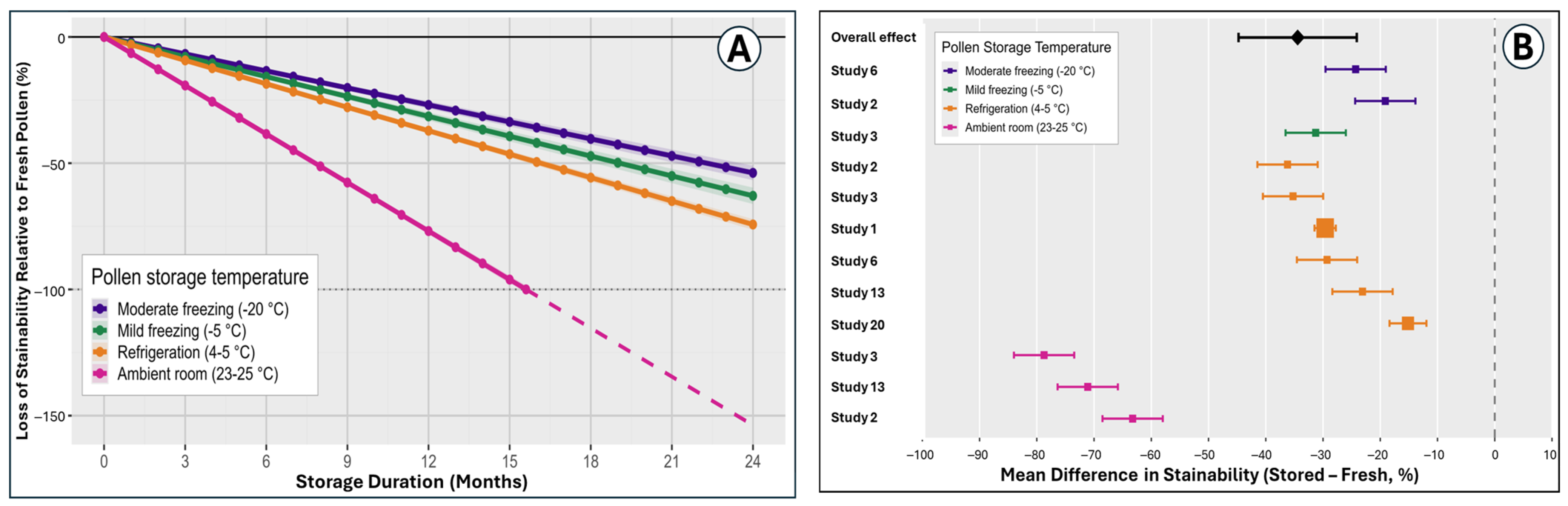
Figure 2B is a forest plot showing the differences in stainability between stored and fresh pollen after 12 months of storage. Across all studies and storage conditions, pollen stainability was significantly reduced after one year of storage, with a pooled mean difference of −34.43% (95% CI: −44.76 to −24.10, p < 0.001). Substantial heterogeneity was observed among studies (τ2 = 163.95, I2 = 96.3%), reflecting variation in storage temperatures and experimental protocols.
The largest reductions were observed under room temperature conditions with −68.41% (95% CI: −77.3 to −59.5, p < 0.001), whereas refrigerated pollen (4 °C) exhibited intermediate losses −27.95% (95% CI: −35.6 to −20.3, p < 0.001). Freezing treatments showed comparatively smaller declines, with mild freezing (−5 °C) reducing stainability by −23.09% (95% CI: −31.4 to −14.8, p < 0.001) and moderate freezing (−20 °C) by −20.07% (95% CI: −29.3 to −10.8, p < 0.001), indicating improved preservation of pollen stainability at lower storage temperatures. The overall pooled effect remained statistically significant, and this inference was consistent when evaluated using robust standard errors (Δ = −34.4%, 95% CI: −48.9 to −19.8, robust p = 0.018), confirming an overall reduction in pollen stainability after 12 months of storage, although substantial heterogeneity among studies indicates that the magnitude of this effect varies considerably across experimental conditions.

3.2. Effects of Pollen Storage on Germination In Vitro

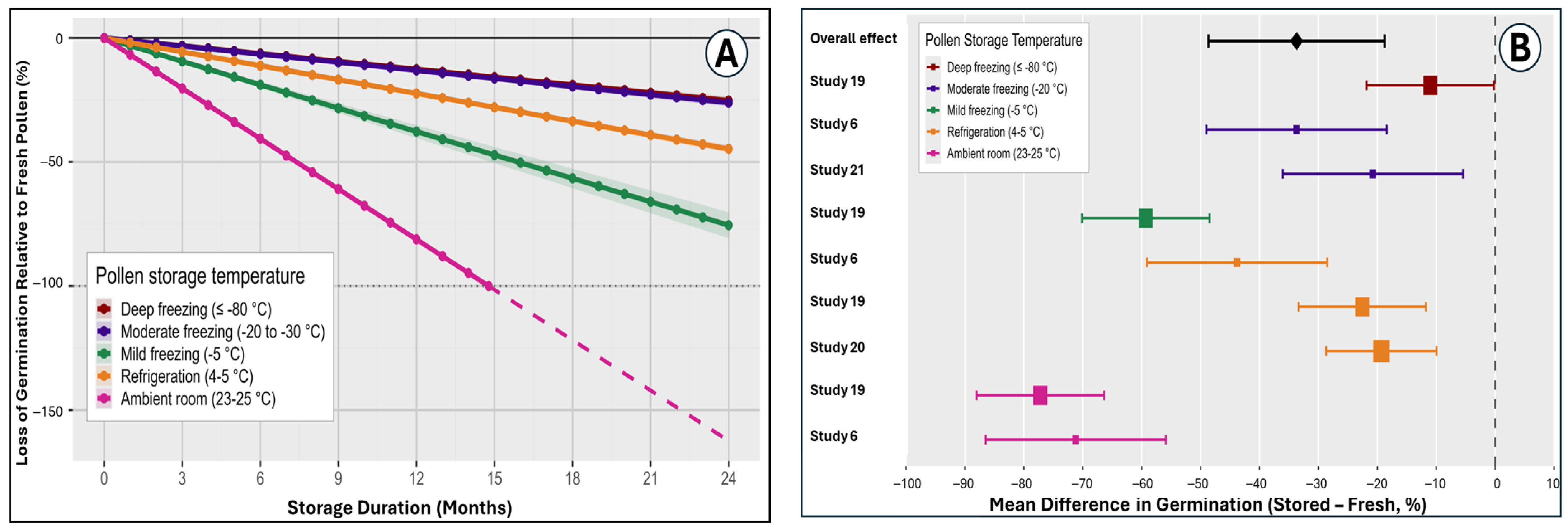
Figure 3A shows a clear temperature-dependent decrease in pollen germination relative to fresh pollen under all storage conditions over a 24-month period. The regression model revealed that pollen stored at room temperature exhibited the greatest decline over time (−6.77% month−1, 95% CI: −6.83 to −6.71, p < 0.001). Mild freezing (−5 °C) also resulted in substantial deterioration (−3.14% month−1, 95% CI: −3.36 to −2.93, p < 0.001), whereas refrigerated pollen (4 °C) showed a more moderate decline (−1.86% month−1, 95% CI: −1.93 to −1.80, p < 0.001). Freezing treatments at lower temperatures further reduced the rate of deterioration, with moderate freezing (−20 °C) showing a slope of −1.09% month−1 (95% CI: −1.15 to −1.02, p < 0.001) and deep freezing exhibiting the slowest decline (−1.05% month−1, 95% CI: −1.12 to −0.99, p < 0.001).
All estimated slopes were significantly different from zero, indicating an overall decline in pollen germination across storage temperatures during the evaluated storage period, although variability among studies suggests that the magnitude of this effect differs across experimental conditions. Despite variability among studies and storage protocols, the overall pattern was consistent, demonstrating a strong temperature effect on the preservation of pollen germination during storage.
Figure 3B is a forest plot analysis at 12 months of storage, showing a significant reduction in pollen germination compared with fresh pollen. Across the selected studies and storage conditions, the pooled effect indicated a mean decrease of −33.7% in germination relative to fresh pollen (95% CI: −48.7 to −18.7, p < 0.001). Substantial between-study heterogeneity was detected (τ2 = 207, I2 = 82.7%), reflecting variability among storage conditions and experimental protocols.
The largest reductions in germination were observed under room temperature storage, with a mean decrease of −73.5% (95% CI: −84.5 to −62.5), followed by mild freezing, which showed a reduction of −59.0% (95% CI: −72.5 to −45.6). Intermediate declines were observed under moderate freezing with −25.7% (95% CI: −38.4 to −13.0) and refrigeration with −25.4% (95% CI: −34.2 to −16.6). In contrast, deep freezing showed a smaller and non-significant reduction in germination with −10.7% (95% CI: −24.2 to 2.7, p > 0.05). The overall pooled effect remained statistically significant, and this inference was consistent when evaluated using robust standard errors (Δ = −33.7%, robust p = 0.0215), confirming an overall decline in pollen germination after 12 months of storage, although substantial heterogeneity among studies indicates that the magnitude of this effect varies across experimental conditions.
Table 2 compares the degradation slopes estimated from the meta-regression analyses of stainability (Figure 2A) and germination (Figure 3A). Under different storage conditions, both indicators showed a constant temperature-dependent decrease, with the highest deterioration rates at ambient conditions and progressively lower rates at cooler storage temperatures.

3.3. Effects of Pollen Storage on Fruit Set

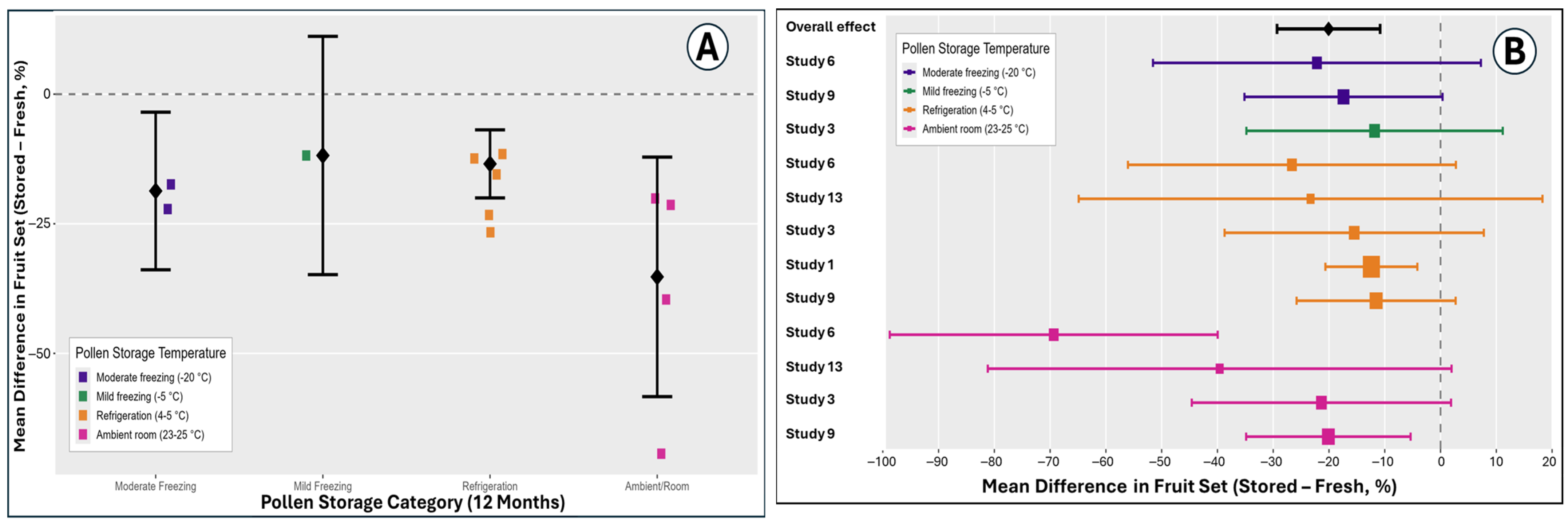
Figure 4A reveals the effect of pollen storage on fruit set compared to fresh pollen after 12 months of storage under different temperature conditions. The greatest reduction in fruit set was observed at room temperature, with a mean decrease of −35.2% (95% CI: −58.3 to −12.1, p = 0.003). Moderate freezing also resulted in a significant reduction with −17.8% (95% CI: −31.8 to −3.76, p = 0.013). Refrigerated pollen (4 °C) showed a smaller, but statistically significant, decrease in fruit set with −13.5% (95% CI: −20.0 to −7.05, p < 0.001). In contrast, mild freezing showed a non-significant reduction with −11.8% (95% CI: −34.8 to 11.2, p = 0.313). Figure 4A shows the estimates for each study as colored squares, while the black diamonds represent the pooled effect size for each storage category with their corresponding 95% confidence intervals.
Figure 4B presents the forest plot summarizing the effect of pollen storage on fruit set compared to fresh pollen after 12 months of storage under different temperature conditions. In all included studies, pollen storage resulted in a significant overall reduction in fruit set, with a pooled mean difference of −19.3% (95% CI: −27.4 to −11.2, p < 0.001).
The greatest reduction in fruit set was observed at room temperature with −29.82% (95% CI: −42.13 to −17.52, p < 0.001). Intermediate reductions were observed with moderate freezing of −18.50% (95% CI: −33.64 to −3.37, p = 0.017) and refrigeration with −14.85% (95% CI: −23.56 to −6.13, p < 0.001). In contrast, mild freezing showed a smaller and non-significant reduction of −12.87% (95% CI: −37.46 to 11.72, p = 0.305). Heterogeneity between studies was relatively low (τ2 = 44.5, I2 = 17.2%); however, this result should be interpreted with caution, as the relatively small number of studies and observations contributing to this analysis may limit the ability of the I2 statistic to detect true between-study variability. The overall pooled effect remained statistically significant, and this inference was consistent when evaluated using robust standard errors (Δ = −19.28%, robust p = 0.0049).

3.4. Effects of Pollen Storage on Fruit Weight at Harvest

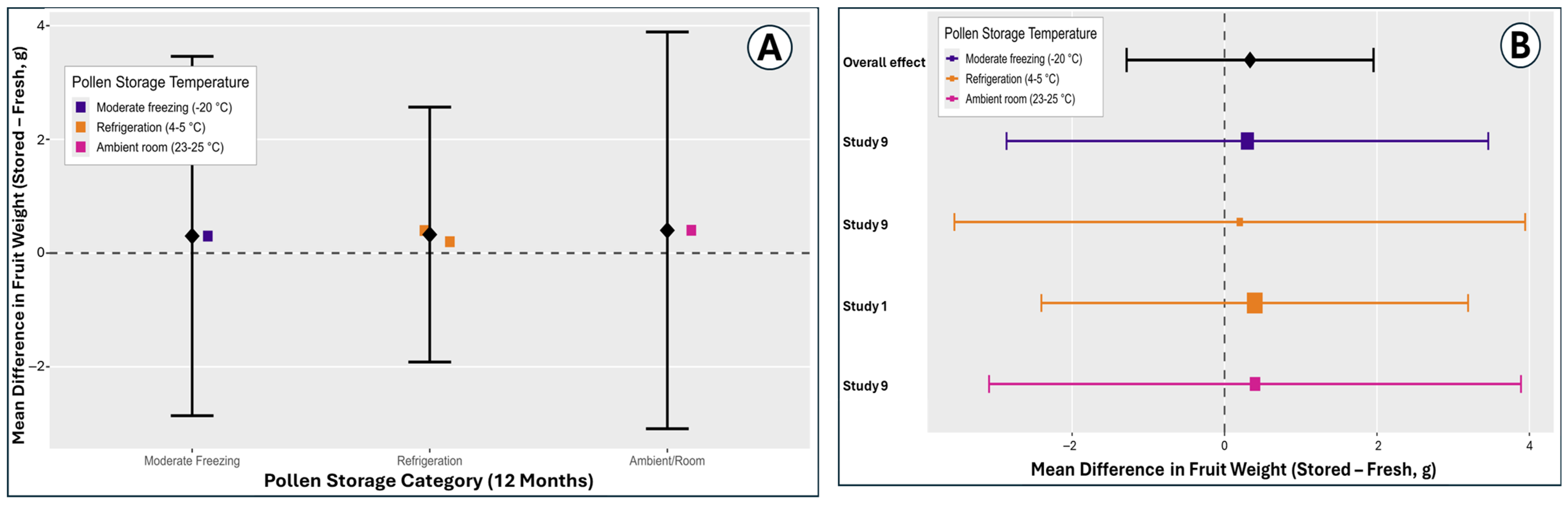
Figure 5A shows the effect of pollen storage on fruit weight at harvest, compared to fresh pollen, after 12 months of storage under different temperature conditions. No significant differences in fruit weight at harvest were detected between stored and fresh pollen. Moderate freezing showed an estimated mean difference of 0.30 (95% CI: −2.86 to 3.46, p = 0.852), refrigeration of 0.33 (95% CI: −1.92 to 2.57, p = 0.776), and room temperature of 0.40 (95% CI: −3.09 to 3.89, p = 0.822). All confidence intervals overlapped zero, indicating no detectable effect of pollen storage on fruit weight at harvest.
Figure 5A shows the estimates for each study as colored squares, while black diamonds represent the pooled effect size for each storage category with their corresponding 95% confidence intervals. Heterogeneity between studies was negligible (τ2 = 0, I2 = 0%), although interpretation should be cautious due to the limited number of studies available per storage category.
Figure 5B shows a forest plot summarizing the effect of pollen storage on fruit weight at harvest compared to fresh pollen after 12 months of storage under different temperature conditions. In all included studies, pollen storage did not produce a significant change in fruit weight at harvest, with a pooled mean difference of 0.34 (95% CI: −1.28 to 1.95, p = 0.685). Heterogeneity was also negligible (τ2 = 0, I2 = 0%), indicating that no inter-study variability was detected in the available dataset.
Analysis by storage category revealed no significant effects under any condition. Room temperature showed an estimated mean difference of 0.40 (95% CI: −3.09 to 3.89, p = 0.822), moderate freezing of 0.30 (95% CI: −2.86 to 3.46, p = 0.852), and refrigeration of 0.33 (95% CI: −1.92 to 2.57, p = 0.776). All confidence intervals overlapped at zero, indicating no effect of pollen storage category on fruit weight at harvest under the conditions of the available data. The overall pooled effect remained statistically non-significant, and this inference was consistent when evaluated using robust standard errors (Δ = 0.34, robust p = 0.0775).

4. Discussion

The present synthesis confirms that pollen physiological quality progressively deteriorates during storage, particularly under suboptimal temperature conditions, and that this deterioration is associated with reduced reproductive success in date palm. Controlled pollen storage experiments conducted in Tunisia, India, and Pakistan reported progressive reductions in pollen stainability and germination with increasing storage time, especially at room temperature [9,15,17,32]. Similarly, some field pollination experiments have shown that stored pollen can lead to lower fruit set compared with fresh pollen, even when laboratory indicators still suggest moderate pollen viability [22,29]. Together, these studies indicate that storage temperature and duration are a major determinant of pollen functionality in date palm.

4.1. Pollen Storage and the Decline of Pollen Physiological Quality

During storage, structural and biochemical changes within pollen grains, such as membrane degradation, lipid peroxidation, and reduced enzyme activity, progressively impair cellular integrity. Since most staining assays depend on membrane integrity and metabolic activity, these physiological alterations may reduce the ability of pollen grains to react to cytological stains. Hachef et al. [14] reported a gradual decrease in pollen germination during prolonged refrigerated storage, while Jaskani et al. [15] observed significant reductions in pollen viability in several cultivars after prolonged storage at 4 °C and −20 °C. Similarly, Kumawat et al. [32] and Sharma et al. [17] documented progressive decreases in pollen stainability and fruit set as storage duration increased.
Several studies have reported that reductions in pollen physiological quality during storage are often accompanied by lower reproductive performance, particularly reduced fruit set when stored pollen is used for pollination [7,22,29]. However, the magnitude of pollen deterioration varies among studies, likely due to differences among male genotypes and methodological differences in pollen evaluation protocols [23,24,27,33,35,37]. This pattern aligns with the quantitative synthesis, showing an overall reduction in pollen staining of −34.4% after 12 months of storage across all studies (Figure 2B). However, the high heterogeneity observed between studies indicates that the extent of pollen deterioration varies substantially depending on storage conditions, pollen sources, and assessment protocols.
While the overall pattern indicates a progressive decline in pollen physiological quality during storage, the underlying biological processes are unlikely to follow a strictly linear trajectory. Deterioration may accelerate or stabilize over time depending on physiological thresholds and storage conditions, leading to non-linear patterns of viability loss. Therefore, the observed trends should be interpreted as general representations of pollen viability decline rather than exact descriptions of its temporal dynamics.

4.2. Temperature-Dependent Preservation of Pollen Physiological Quality

Temperature is widely recognized as a key factor influencing the preservation of pollen physiological quality during storage. Experimental studies in date palm consistently show that lower storage temperatures slow pollen deterioration, whereas room-temperature storage leads to faster losses in physiological quality [17,20,22,29]. Several comparative studies have reported that refrigeration (4 °C) and freezing preserve higher pollen stainability and germination percentages than ambient storage over comparable periods [15,17,19,32] (Figure 3A). In agreement with these reports, the meta-regression identified the fastest deterioration under ambient conditions and progressively slower deterioration at lower temperatures. For germination, the meta-regression indicates that pollen stored at room temperature may lose nearly 7% of its germination capacity per month, whereas deterioration slows markedly under refrigeration and freezing conditions (Figure 3A). The regression slopes indicate that pollen deterioration occurs across all storage temperatures, although the rate of decline varies substantially depending on the thermal conditions (Figure 2A,B), suggesting that storage slows but does not completely halt physiological degradation. Residual heterogeneity among studies may reflect differences in pollen genotype, storage protocols, and laboratory evaluation methods. Although storage temperatures were standardized into defined categories (see Section 2, Materials and Methods), some variability within these ranges may persist across studies, which should be considered when interpreting the observed patterns.
Table 2 compares the deterioration rates of stainability and germination under different storage temperatures. Stainability declines at relatively similar rates under mild and moderate freezing, suggesting that once metabolic activity is strongly reduced, further temperature decreases have limited effects on pollen structural integrity. In contrast, germination shows greater variation among freezing treatments. Mild freezing sometimes performs worse than refrigeration, possibly due to incomplete dehydration and freeze injury, whereas deep freezing produces the slowest decline in germination. This pattern is consistent with experimental studies from North Africa, which showed that pollen stored at −20 °C retained germination capacity better than pollen stored at warmer temperatures [9,22].

4.3. From Pollen Physiological Quality to Reproductive Success

Although laboratory measures such as stainability and in vitro germination are widely used as indicators of pollen physiological condition, their relationship with actual reproductive success is not always direct. In date palm, successful fertilization requires that pollen grains hydrate on the stigma, produce a functional pollen tube, and complete fertilization under field conditions. Consequently, laboratory tests such as staining or in vitro germination should generally be interpreted as indicators of potential pollen performance rather than direct measures of in vivo fertility [7,20,22,23]. Consistent with this interpretation, the quantitative synthesis indicates that pollen germination decreases by an average of −33.7% after 12 months of storage across all studies (Figure 3B). However, the high heterogeneity observed among the studies indicates that the magnitude of this decrease varies substantially depending on storage conditions and experimental protocols.
El Kadri and Ben Mimoun [22] reported that pollen stored under different temperatures maintained measurable germination capacity but resulted in significantly lower fruit set when used for pollination. Similar discrepancies between laboratory tests and field performance were also noted by Ateyyeh [20], who observed that pollen viability tests sometimes overestimated the actual fertilization capacity of stored pollen. This can occur because storage-related damage can affect pollen hydration, pollen tube growth, or pollen-pistil interactions under field conditions, even when germination is still detectable in controlled laboratory tests [7,22].
Quantitative synthesis confirms that pollen storage reduces fruit set after 12 months, with an average decrease of approximately −19% across studies (Figure 4B), although greater reductions can occur at room temperature, where fruit set can decrease by around −35% (Figure 4A). Furthermore, meta-analysis indicates that this reduction in reproductive success does not translate into significant changes in final fruit weight (Figure 5A,B), suggesting that pollen deterioration primarily affects the processes leading to fertilization, rather than later stages of fruit development. Consistent with this interpretation, the quantitative synthesis shows no detectable effect of pollen storage on fruit weight at harvest time (Figure 5A,B), with negligible heterogeneity and highly consistent results among studies.
This pattern may be interpreted as potentially reflecting orchard management practices, such as fruit thinning, which are commonly used to regulate crop load and can reduce variability in final fruit size [6,21,22,29], although this explanation is based on inference rather than direct evidence from the analyzed dataset. These findings indicate that laboratory assessments should be interpreted together with reproductive outcomes when evaluating pollen storage strategies in date palm cultivation.

4.4. Methodological Considerations in Pollen Quality Assessment

The evaluation of pollen quality in date palm has traditionally relied on laboratory methods such as staining techniques and in vitro germination assays. Although these approaches are widely used because they are rapid and relatively simple to perform, their results are not always directly comparable among studies due to differences in staining reagents, germination media, incubation temperature, and pollen hydration procedures [5,18,24].
Staining techniques such as acetocarmine are widely used to estimate pollen stainability and mainly reflect cellular integrity, whereas assays such as TTC are intended to detect metabolic activity associated with physiological viability. Because these methods measure different aspects of pollen physiology, their results are not always directly comparable and may overestimate functional pollen performance relative to germination assays or field pollination outcomes [20].
Nevertheless, differences in incubation conditions, hydration procedures, and pollen handling can substantially influence germination results, contributing to variability among studies [27,37]. For example, Al-Najm et al. [5] demonstrated that the composition of germination media and incubation conditions can substantially influence germination percentages in date palm pollen. Given these methodological differences, caution is required when comparing laboratory estimates of pollen quality across experiments.

4.5. Biological and Phenological Sources of Variability in Pollen Performance

Beyond storage conditions and methodological differences, biological variability among pollen sources represents another important factor influencing the physiological quality and reproductive performance of date palm pollen. Several studies have reported significant differences in pollen stainability, germination capacity, and fertilization success among male genotypes, indicating that pollen performance is partly determined by intrinsic genetic and biochemical characteristics of the pollen donor [5,32]. Munir [27] reported significant variation in pollen germination among male genotypes, while Abdel-Sattar and Yahia [37] found that the biochemical composition of pollen can influence its viability and germination capacity. These genotype-dependent differences suggest that physiological stability during storage may partly depend on the intrinsic characteristics of the donor.
Phenological factors associated with pollen collection may also influence pollen quality before storage begins. Experimental studies have shown that pollen collected during intermediate stages of flowering often exhibits higher stainability and germination percentages than pollen collected during early or late stages of spathe opening. This suggests that pollen maturity at collection influences subsequent storage tolerance, with optimally mature pollen showing greater structural stability and germination readiness [27,35].
Environmental and operational factors related to pollination practices may further influence reproductive outcomes. For instance, the timing of pollination during the day has been reported to affect fruit set, likely due to environmental conditions influencing pollen hydration, stigma receptivity, and pollen tube growth dynamics [9]. Overall, these findings indicate that pollen performance in date palm is influenced by a combination of genetic, phenological, and environmental factors in addition to storage conditions. This biological variability may contribute to the heterogeneity observed among studies.

4.6. Implications for Pollen Storage and Pollination Management in Date Palm Cultivation

Because artificial pollination is widely practiced in date palm orchards, the availability of viable pollen is a key factor determining successful fertilization and stable fruit production. Effective pollen storage strategies help overcome temporal mismatches between male and female flowering and facilitate pollination management in commercial plantations [6,22,29] (Figure 5A,B).
The temperature dependence of pollen deterioration indicates that refrigerated or freezing conditions extend pollen functional lifespan relative to ambient storage. Proper handling of pollen after storage is also essential. Stored pollen may rapidly lose functionality if exposed to ambient conditions for prolonged periods, and inadequate thawing or hydration procedures, such as repeated freeze–thaw cycles, or insufficient pollen rehydration, may negatively affect pollen performance even when laboratory stainability appears acceptable [7,22,33].
Practical recommendations for pollen storage have also been proposed in previous studies. Kumawat et al. [32] and El Kadri and Ben Mimoun [22] highlighted that refrigeration offers an accessible and effective option for farmers, while cryogenic storage has been suggested as a suitable strategy for the long-term conservation of germplasm [13]. These approaches allow growers to mitigate flowering asynchrony and ensure pollen availability during critical pollination periods.
Finally, while laboratory tests such as staining and germination assays provide useful indicators of pollen quality, fruit set remains the most relevant measure of successful pollination under orchard conditions. Field-based reproductive outcomes therefore provide an essential validation of laboratory estimates of pollen functionality [7,22,23]. Effective pollen management therefore depends not only on storage temperature, but also on post-storage handling and validation under field conditions, highlighting the importance of integrating laboratory assessments with field performance when developing pollen storage strategies for commercial date palm cultivation.

4.7. Strengths and Limitations of the Current Evidence

The present study provides a quantitative synthesis of experimental evidence on pollen storage in date palm, by integrating physiological indicators and reproductive outcomes from multiple independent studies. A key strength of this work is the application of a dual analytical framework integrating temporal meta-regression with standardized forest plot analyses at a fixed storage duration. This approach allowed the evaluation of both the dynamics of pollen deterioration over time and the magnitude of storage effects at a standardized time point.
Another strength of the analysis is the integration of multiple indicators of pollen functionality, including staining-based assessments of pollen quality, in vitro germination, and reproductive outcomes such as fruit set and fruit weight. Because these indicators capture different aspects of pollen performance, their combined evaluation provides a more comprehensive understanding of how storage affects pollen functionality [7,22,23].
Despite these strengths, several limitations of the available literature should be considered. First, methodological heterogeneity among studies evaluating pollen stainability and germination may influence reported estimates, as experimental protocols differ in staining techniques, germination media, incubation conditions, and hydration procedures [5,18,24]. The relatively high heterogeneity observed in some physiological indicators reflects the diversity of experimental protocols, pollen sources, and storage conditions among studies rather than inconsistencies in the overall temperature-dependent pattern. Second, biological variability among pollen sources may contribute to differences among studies. Factors such as male genotype, pollen maturity at collection, and environmental conditions during pollen production can influence pollen physiological quality and storage tolerance [27,33,35,37].
Finally, the number of studies evaluating reproductive outcomes beyond fruit set remains limited. Although no significant effect of pollen storage on fruit weight was detected, additional experimental studies would help clarify whether pollen storage influences later stages of fruit development beyond fertilization and to strengthen the link between laboratory pollen assessments with field pollination performance.

5. Conclusions

This meta-analysis synthesizes experimental evidence on the effects of pollen storage on physiological quality and reproductive performance in date palm. The results show that pollen deterioration during storage is strongly temperature dependent, with lower storage temperatures substantially slowing the loss of pollen stainability and germination capacity. The analysis further indicates that pollen storage primarily affects fertilization success rather than subsequent fruit development. Stored pollen was associated with reduced fruit set, whereas no significant effect was detected on final fruit weight. These findings suggest that pollen deterioration mainly influences early reproductive processes associated with germination and fertilization, while fruit growth after fertilization depends largely on maternal tissues and post-fertilization developmental processes. Overall, the available evidence supports low-temperature storage as the most effective strategy for preserving pollen functionality. Refrigeration may be suitable for short- to medium-term storage, whereas freezing conditions may allow longer-term preservation when appropriate moisture control and handling procedures are applied, although the results indicate that not all freezing conditions are equally effective, as mild freezing (−5 °C) may perform less favorably than refrigeration.
This study provides an evidence-based framework for optimizing pollen storage and improving pollination management in commercial date palm production systems.

Supplementary Materials

The following supporting information can be downloaded at https://www.mdpi.com/article/10.3390/horticulturae12040475/s1: Table S1: Methodological quality assessment of the studies selected from the systematic review. Table S2: Quantitative dataset extracted from the studies included in the systematic review. For each study, storage condition, storage duration, evaluation method, outcome, and reported value were recorded. Reference numbers correspond to the reference list in the main manuscript. The last column indicates whether each study-condition-method-outcome combination was included in the quantitative meta-analysis based on comparability criteria.

Author Contributions

Conceptualization, R.S.-T.; methodology, R.S.-T. and F.N.-R.; software, L.S.-S. and Y.R.-O.; validation, G.C.W., F.N.-R. and Y.R.-O.; investigation, F.N.-R. and Y.R.-O.; data curation, L.S.-S. and M.A.E.; writing—original draft preparation, R.S.-T., G.C.W. and M.A.E.; writing—review and editing, R.S.-T., M.A.E., F.N.-R., G.C.W. and A.A.Z.; visualization, L.S.-S. All authors have read and agreed to the published version of the manuscript.

Funding

This research received no external funding.

Data Availability Statement

The original contributions presented in this study are included in the article/Supplementary Material. Further inquiries can be directed to the corresponding author.

Acknowledgments

The authors would like to thank Boliberto Torres for his valuable advice and technical support in the application and interpretation of the statistical methods used in this study.

Conflicts of Interest

The authors declare no conflicts of interest.

References

  1. Salomón-Torres, R.; Krueger, R.; García-Vázquez, J.P.; Villa-Angulo, R.; Villa-Angulo, C.; Ortiz-Uribe, N.; Sol-Uribe, J.A.; Samaniego-Sandoval, L. Date Palm Pollen: Features, Production, Extraction and Pollination Methods. Agronomy 2021, 11, 504. [Google Scholar] [CrossRef]
  2. Chao, C.T.; Krueger, R.R. The Date Palm (Phoenix dactylifera L.): Overview of Biology, Uses, and Cultivation. HortScience 2007, 42, 1077–1082. [Google Scholar] [CrossRef]
  3. Maryam, S. Advances in Pollen Biology and Pollination Strategies for Date Palm: A Review. J. Hortic. Sci. Technol. 2024, 15, 15–22. [Google Scholar] [CrossRef]
  4. Stanley, R.G.; Linskens, H.F. Pollen: Biology, Biochemistry, Management; Springer: Berlin, Germany, 1974. [Google Scholar]
  5. Al-Najm, A.; Brauer, S.; Trethowan, R.; Merchant, A.; Ahmad, N. Optimization of in Vitro Pollen Germination and Viability Testing of Some Australian Selections of Date Palm (Phoenix dactylifera L.) and Their Xenic and Metaxenic Effects on the Tissue Culture–Derived Female Cultivar “Barhee”. Vitr. Cell. Dev. Biol. Plant 2021, 57, 771–785. [Google Scholar] [CrossRef]
  6. Salomón-Torres, R.; Elhoumaizi, M.A.; Zambrano-Reyes, C.; Zaid, A.A.; Ruisanchez-Ortega, Y.; Peña-Yam, L.P.; Gutiérrez-Pacheco, M.M. Effect of Pollen Storage Duration on Stainability, Fruit Set, and Physical Traits in Date Palm (Phoenix dactylifera L.) Cultivar ‘Mejhoul’. Plants 2025, 14, 3189. [Google Scholar] [CrossRef]
  7. El Kadri, N.; Ben Mimoun, M. In Vitro Germination of Different Date Palm (Phoenix dactylifera L.) Pollen Sources from Southern Tunisia under the Effect of Three Storage Temperatures. Int. J. Fruit Sci. 2020, 20, S1519–S1529. [Google Scholar] [CrossRef]
  8. Zaid, A.; Oihabi, A. Variety Mejhoul The Jewel of Dates Origin, Distribution and International Markets; KIADPAI: Abu Dhabi, United Arab Emirates, 2022. [Google Scholar]
  9. Kadri, K.; Elsafy, M.; Makhlouf, S.; Awad, M.A. Effect of Pollination Time, the Hour of Daytime, Pollen Storage Temperature and Duration on Pollen Viability, Germinability, and Fruit Set of Date Palm (Phoenix dactylifera L.) Cv “Deglet Nour”. Saudi J. Biol. Sci. 2022, 29, 1085–1091. [Google Scholar] [CrossRef] [PubMed]
  10. Sharma, K.M.; Kumar, M.; Muralidharan, C.M.; Salomón-Torres, R. Date Palm Pollination Management. In Date Palm; Al-Khayri, J.M., Jain, S.M., Johnson, D.V., Krueger, R.R., Eds.; CABI: Wallingford, UK, 2023; pp. 209–240. [Google Scholar]
  11. Alavipour, S.; Khaleghi, E.; Moallemi, N.; Mehdikhanlou, K.; Trohi, A. Heteromorphism of Normal and Abnormal Flowers of Date Palm Cv. “Barhee” and Comparison of Green and Red Ghanami Pollens as Dominant Pollen. S. Afr. J. Bot. 2023, 163, 541–551. [Google Scholar] [CrossRef]
  12. Salomón-Torres, R.; Ortiz-Uribe, N.; Villa-Angulo, R.; Villa-Angulo, C.; Norzagaray-Plasencia, S.; Garcia-Verdugo, C. Effect of pollenizers on production and fruit characteristics of date palm (Phoenix dactylifera L.) cultivar Medjool in Mexico. Turk. J. Agric. For. 2017, 41, 338–347. [Google Scholar] [CrossRef]
  13. Araújo de Oliveira, A.C.; da Silva Lédo, A.; Polek, M.L.; Krueger, R.; Shepherd, A.; Volk, G.M. Optimization of In Vitro Germination and Cryopreservation Conditions for Preserving Date Palm Pollen in the USDA National Plant Germplasm System. Plant Cell Tissue Organ Cult. 2020, 144, 223–232. [Google Scholar] [CrossRef]
  14. Hachef, A.; Bourguiba, H.; Zarkouna, R.; Oueslati, R.; Cherif, E.; Zehdi-Azouzi, S. Effect of Long-Term Storage on Pollen Reproductive Quality and Polyphenolic Content of Date Palm (Phoenix dactylifera L.) Species in Tunisia. Appl. Fruit Sci. 2024, 66, 1453–1462. [Google Scholar] [CrossRef]
  15. Jafar Jaskani, M.; Fatima, B.; Salman Haider, M.; Abbas Naqvi, S.; Nafees, M.; Ahmad, R.; Ahmad Khan, I. Evaluation of Pollen Viability In Date Palm Cultivars Under Different Storage Temperatures. Pak. J. Bot. 2015, 47, 377–381. [Google Scholar]
  16. Boughediri, L.; Cerceau-Larrival, M.T.; Dore, J.C. Significance of Freeze-Drying in Long Term Storage of Date Palm Pollen. Grana 1995, 34, 408–412. [Google Scholar] [CrossRef]
  17. Sharma, K.M.; Baidiayavadra, D.A.; Muralidharan, C.M.; Panchal, C.N.; Verma, P. Effect of Storage Temperature and Containers on Date Palm (Phoenix dactylifera L.) Pollen Viability and Post-Storage Pollination. Sugar Tech 2024, 26, 1516–1521. [Google Scholar] [CrossRef]
  18. Mortazavi, S.M.H.; Arzani, K.; Moieni, A. Optimizing Storage and In Vitro Germination of Date Palm (Phoenix dactylifera L.) Pollen. J. Agric. Sci. Technol. 2010, 12, 181–189. [Google Scholar]
  19. Anushma, P.L.; Linta, V.; Rajesekharan, P.E.; Ganeshan, S. Pollen Storage Studies in Date Palm (Phoenix dactylifera L.). Int. J. Chem. Stud. 2018, 6, 2640–2642. [Google Scholar]
  20. Ateyyeh, A.F. Effect of Storage Method on Date Palm and Pistachio Pollen Viability. Jordan J. Agric. Sci. 2012, 8, 573–582. [Google Scholar]
  21. Mohamed, M.E.; Hamza El-Hag, K.; Abdalla Albashir Ibrahim, M.; Ahmed Elnagib, O.; Saad Adam, A. A Note on Effect of Storage of Date Palm (Phoenix dactylifera L.) Pollen Grains on Their Germination and Date’s Fruit Setting. Univ. Khartoum J. Agric. Sci. 2015, 23, 296–302. [Google Scholar] [CrossRef]
  22. El Kadri, N.; Ben Mimoun, M.B. The Effect of Pollen Storage Temperatures on Fruit Set and Fruit Quality of “Deglet Nour” Date Palm (Phoenix dactylifera L.) Cultivar. Italus Hortus 2020, 27, 53–63. [Google Scholar] [CrossRef]
  23. Firmage, D.H.; Dafni, A. Field Tests for Pollen Viability; A Comparative Approach. Acta Hortic. 2001, 561, 87–94. [Google Scholar] [CrossRef]
  24. Einhardt, P.M.; Correa, E.R.; Raseira, M.D.C.B. Comparação Entre Métodos Para Testar a Viabilidade de Pólen de Pessegueiro. Rev. Bras. Frutic. 2006, 28, 5–7. [Google Scholar] [CrossRef]
  25. Alexander, M.P. Differential Staining of Aborted and Nonaborted Pollen. Biotech. Histochem. 1969, 44, 117–122. [Google Scholar] [CrossRef] [PubMed]
  26. Heslop-Harrison, J.; Heslop-Harrison, Y. Evaluation of Pollen Viability by Enzymatically Induced Fluorescence; Intracellular Hydrolysis of Fluorescein Diacetate. Biotech. Histochem. 1970, 45, 115–120. [Google Scholar] [CrossRef] [PubMed]
  27. Munir, M. An Appraisal of Pollen Germination and Viability of Varied Male Pollen Sources of Date Palm (Phoenix dactylifera L.). J. Appl. Hortic. 2021, 23, 254–259. [Google Scholar] [CrossRef]
  28. Brewbaker, J.L.; Kwack, B.H. The Essential Role of Calcium Ion in Pollen Germination and Pollen Tube Growth. Am. J. Bot. 1963, 50, 859–865. [Google Scholar] [CrossRef]
  29. Mesnoua, M.; Roumani, M.; Salem, A. The Effect of Pollen Storage Temperatures on Pollen Viability, Fruit Set and Fruit Quality of Six Date Palm Cultivars. Sci. Hortic. 2018, 236, 279–283. [Google Scholar] [CrossRef]
  30. Page, M.J.; McKenzie, J.E.; Bossuyt, P.M.; Boutron, I.; Hoffmann, T.C.; Mulrow, C.D.; Shamseer, L.; Tetzlaff, J.M.; Akl, E.A.; Brennan, S.E.; et al. The PRISMA 2020 Statement: An Updated Guideline for Reporting Systematic Reviews. BMJ 2021, 372, n71. [Google Scholar] [CrossRef]
  31. Schardt, C.; Adams, M.B.; Owens, T.; Keitz, S.; Fontelo, P. Utilization of the PICO framework to improve searching PubMed for clinical questions. BMC Med. Inform. Decis. Mak. 2007, 7, 16. [Google Scholar] [CrossRef]
  32. Kumawat, P.; Singh Rathore, R.; Kumar, S.; Sharma, S.; Kumar Yadav, P.; Lata, K. Pollen Preservation Approaches in Date Palm Cultivation: Assessing Effects on Viability, Fruit Quality, and Yield in ‘Mundra Selection-3’. Appl. Fruit Sci. 2024, 66, 2425–2432. [Google Scholar] [CrossRef]
  33. Karim, K.; Awad, M.A.; Manar, A.; Monia, J.; Karim, A.; Mohammed, E. Effect of Flowering Stage and Storage Conditions on Pollen Quality of Six Male Date Palm Genotypes. Saudi J. Biol. Sci. 2022, 29, 2564–2572. [Google Scholar] [CrossRef]
  34. Izadi, M.; Shirazi, M.P.; Khademi, R. Study of the Effects of Storage Methods and Amount of Pollen on “Zahidi” Date Palm Fruit Setting. In Proceedings of the 4th International Date Palm Conference; Zaid, A., Alhadrami, G.A., Eds.; Acta Hort: Abu Dhabi, United Arab Emirates, 2010; pp. 1159–1162. [Google Scholar]
  35. Hachef, A.; Bourguiba, H.; Cherif, E.; Ivorra, S.; Terral, J.F.; Zehdi-Azouzi, S. Agro-Morphological Traits Assessment of Tunisian Male Date Palms (Phoenix dactylifera L.) for Preservation and Sustainable Utilization of Local Germplasm. Saudi J. Biol. Sci. 2023, 30, 103574. [Google Scholar] [CrossRef] [PubMed]
  36. Aly, H.S.H. Evaluation of Pollen Grains Germination, Viability and Chemical Composition of Some Date Palm Males. Middle East J. Agric. Res. 2018, 7, 235–247. [Google Scholar]
  37. Abdel-Sattar, M.; Yahia, M. Pollen Viability of Date Palm from Different Sources in Relation to Its Chemical Composition. Alex. J. Agric. Sci. 2017, 62, 149–155. [Google Scholar]
  38. R Core Team. R: A Language and Environment for Statistical Computing; R Foundation for Statistical Computing: Vienna, Austria, 2024. [Google Scholar]
  39. Viechtbauer, W. Conducting Meta-Analyses in R with the metafor package. J. Stat. Softw. 2010, 36, 1–48. [Google Scholar] [CrossRef]
  40. Wickham, H. ggplot2: Elegant Graphics for Data Analysis; Springer: New York, NY, USA, 2016. [Google Scholar]
Figure 1. PRISMA flow diagram illustrating the identification, screening, eligibility, and inclusion process of studies in the systematic review.
Horticulturae 12 00475 g001
Figure 2. (A) Difference in pollen stainability relative to fresh pollen (%) as a function of storage duration (0–24 months), under different temperature conditions. Lines represent regression models fitted for each storage category using a multilevel random-effects meta-analysis based on the paired difference between stored and fresh pollen (Δ = stored − fresh, %). Shaded areas indicate 95% confidence intervals. For ambient room temperature conditions, where predicted values exceed the biologically plausible limit (−100%), the solid line is truncated at this threshold and the dashed line indicates extrapolated values beyond it. (B) Forest plot showing the mean difference in stainability between stored and fresh pollen (Δ = stored − fresh, %) after 12 months of storage under different temperature conditions. Colored squares represent individual study effects, with horizontal lines indicating their 95% confidence intervals. The black diamond at the top represents the overall pooled effect across all studies. The vertical dashed line at 0 indicates no difference between stored and fresh pollen.
Horticulturae 12 00475 g002
Figure 3. (A) Difference in pollen germination relative to fresh pollen (%) as a function of storage duration (0–24 months) under different temperature conditions. Lines represent regression models fitted for each storage category using a multilevel random-effects meta-analysis based on the paired difference between stored and fresh pollen (Δ = stored − fresh, %). Shaded areas indicate 95% confidence intervals. For ambient room temperature conditions, where predicted values exceed the biologically plausible limit (−100%), the solid line is truncated at this threshold and the dashed line indicates extrapolated values beyond it. The deep freezing (red) and moderate freezing (purple) regression lines exhibit very similar predicted values and may therefore partially overlap visually. (B) Forest plot showing the mean difference in germination between stored and fresh pollen (Δ = stored − fresh, %) after 12 months of storage under different temperature conditions. Colored squares represent individual study effects, with horizontal lines indicating their 95% confidence intervals. The black diamond represents the overall pooled effect across all studies. The vertical dashed line at 0 indicates no difference between stored and fresh pollen.
Horticulturae 12 00475 g003
Figure 4. (A) Difference in fruit set relative to fresh pollen (%) after 12 months of storage at different temperatures. Dots represent individual study estimates for each storage category, based on the paired difference between stored and fresh pollen (Δ = stored − fresh, %). Diamonds indicate the pooled effect for each storage category, estimated by a multilevel random-effects meta-analysis. Error bars represent 95% confidence intervals. (B) Forest plot showing the mean difference in fruit set between stored and fresh pollen (Δ = stored − fresh, %) after 12 months of storage under different temperature conditions. Colored squares represent individual study effects, with horizontal lines indicating their 95% confidence intervals. The black diamond represents the overall pooled effect across all studies. The vertical dashed line at 0 indicates no difference between stored and fresh pollen.
Horticulturae 12 00475 g004
Figure 5. (A) Difference in fruit weight at harvest relative to fresh pollen after 12 months of storage under different temperature conditions. Points represent individual study estimates for each storage category based on the paired difference between stored and fresh pollen (Δ = stored − fresh, g). Diamonds indicate the pooled effect for each storage category estimated using a multilevel random-effects meta-analysis, with error bars representing 95% confidence intervals. (B) Forest plot showing the mean difference in fruit weight at harvest between stored and fresh pollen (Δ = stored − fresh, g) after 12 months of storage under different temperature conditions. Colored squares represent individual study effects, with horizontal lines indicating their 95% confidence intervals. The black diamond represents the overall pooled effect across all studies. The vertical dashed line at 0 indicates no difference between stored and fresh pollen.
Horticulturae 12 00475 g005
Table 1. Characteristics of the studies included after PRISMA-based screening and eligibility assessment.
No.TitleCountryMale Pollen
Source
Storage ConditionsStorage DurationPollen Evaluation MethodsOutcomes
Assessed
1Effect of Pollen Storage Duration on Stainability, Fruit Set, and Physical Traits in Date Palm (Phoenix dactylifera L.) Cultivar ‘Mejhoul’ [6]Mexico‘Mejhoul’, ‘Deglet Nour’, ‘Khadrawy’, and ‘Zahidi’Fresh, 4 °CUp to 24 monthsAcetocarmine, controlled hand pollination Stainability, fruit set, fruit weight
2Pollen Preservation Approaches in Date Palm Cultivation: Assessing Effects on Viability, Fruit Quality, and Yield in ‘Mundra Selection-3’ [32]IndiaLocal male palmsFresh, ambient, 5 °C, −15 °CUp to 12 monthsAcetocarmine, controlled hand pollination Stainability, fruit set, fruit weight
3Effect of Storage Temperature and Containers on Date Palm (Phoenix dactylifera L.) Pollen Viability and Post-storage Pollination [17]IndiaLocal male palmsFresh, ambient, 5 °C,
−4 °C
Up to 24 monthsAcetocarmine, controlled hand pollination Stainability, fruit set
4Effect of Long-Term Storage on Pollen Reproductive Quality and Polyphenolic Content of Date Palm (Phoenix dactylifera L.) Species in Tunisia [14]TunisiaLocal male palmsFresh, 4 °CUp to 60 monthsAlexander,
in vitro assays
Stainability, germination
5Effect of Flowering Stage and Storage Conditions on Pollen Quality of Six Male Date Palm Genotypes [33]TunisiaSix male genotypesAmbient, 4 °C, −30 °CUp to 4 MonthsAcetocarmine,
in vitro assays
Stainability, germination
6Effect of Pollination Time, the Hour of Daytime, Pollen Storage Temperature and Duration on Pollen Viability, Germinability, and Fruit Set of Date Palm (Phoenix dactylifera L.) cv. ‘Deglet Nour’ [9]TunisiaLocal male palmsAmbient, 4 °C, −30 °CUp to 12 monthsAcetocarmine, in vitro assays, controlled hand pollinationStainability, germination, fruit set
7Optimization of In Vitro Pollen Germination and Viability Testing of Some Australian Selections of Date Palm (Phoenix dactylifera L.) and their xenic and metaxenic effects on the tissue culture-derived female cultivar “Barhee” [5]AustraliaThree males
Genotypes
4 °C12 monthsIKI, LPCB, acetocarmine, TTC, FDA, Alexander, and in vitro assays.Stainability, germination
8Optimization of In Vitro Germination and Cryopreservation Conditions for Preserving Date Palm Pollen in the USDA National Plant Germplasm System [13]USA‘Dayri BC2’, ‘Fard #4’, ‘Jarvis #1’,‘Thoory BC3’, and ‘Thoory X F1’−196 °C9 monthsIn vitro assaysGermination
9The Effect of Pollen Storage Temperatures on Fruit Set and Fruit Quality of ‘Deglet Nour’ Date Palm (Phoenix dactylifera L.) Cultivar [22]TunisiaLocal male palmsFresh, ambient, 4 °C, −20 °C12 monthsControlled hand pollination Fruit set, fruit weight
10In Vitro Germination of Different Date Palm (Phoenix dactylifera L.) Pollen Sources from Southern Tunisia under the Effect of Three Storage Temperatures [7]TunisiaLocal male palmsFresh, ambient, 4 °C, −20 °C 12 monthsIn vitro assaysGermination
11The Effect of Pollen Storage Temperatures on Pollen Viability, Fruit Set and Fruit Quality of Six Date Palm Cultivars [29]Algeria‘Bouhlesse’, ‘Deglet Beida’, ‘Deglet Nour’, ‘Ghars’, ‘Halwaya’, and ‘Moch Deglet’Fresh, Ambient, 4 °C, −20 °CUp to 13 MonthsIn vitro assays, controlled hand pollinationGermination, fruit set, fruit weight
12Evaluation of Pollen Viability in Date Palm Cultivars under Different Storage Temperatures [15]Pakistan‘Dhakki’, ‘Khadrawy’, and ‘Hillawi’4 °C, −20 °C,
−80 °C
Up to 12 MonthsAcetocarmine, in vitro assaysStainability, germination
13Study of the Effects of Storage Methods and Amount of Pollen on ‘Zahidi’ Date Palms Fruit Setting [34]IranLocal male palmsFresh, ambient, 4 °C12 monthsAcetocarmineStainability
14Optimizing Storage and In Vitro Germination of Date Palm (Phoenix dactylifera) Pollen [18]Iran‘Ghanami’, ‘Samsmavi’, and ‘Gheibani’Ambient, 4 °C, −20 °C, −196 °C6 monthsIn vitro assaysGermination
15Significance of Freeze-Drying in Long-Term Storage of Date Palm Pollen [16]AlgeriaLocal male palms4 °C, −20 °C, −80 °CUp to 24 MonthsIn vitro assaysGermination
16A Note on Effect of Storage of Date Palm (Phoenix dactylifera L.) Pollen Grains on Their Germination and Date’s Fruit Setting [21]SudanLocal male palmsFresh, 4 °C, −20 °C, 12 monthsIn vitro assays, controlled hand pollinationGermination, fruit set
17Agro-morphological traits assessment of Tunisian male date palms (Phoenix dactylifera L.) for preservation and sustainable utilization of local germplasm [35]Tunisia180 males
genotypes
Fresh pollen0 monthsAlexander, in vitro assaysStainability, Germination
18An appraisal of pollen germination and viability of varied male pollen sources of date palm (Phoenix dactylifera L.) [27]Saudi ArabiaLocal male palmsFresh pollen0 monthsAcetocarmine,
In vitro assays
Stainability,
Germination
19Effect of Storage Method on Date Palm and Pistachio Pollen Viability [20]JordanLocal male palmsFresh, ambient, 4 °C, −5 °C, −80 °CUp to 12 monthsTTC, in vitro assaysStainability, Germination
20Evaluation of Pollen Grains Germination, Viability and Chemical Composition of Some Date Palm Males [36]EgyptLocal male palms4 °C12 monthsAcetocarmine, in vitro assaysStainability, Germination
21Pollen Storage Studies in Date Palm (Phoenix dactylifera L.) [19]IndiaLocal male palmsFresh, 4 °C, −20 °C, −196 °CUp to 12 monthsIn vitro assaysGermination
22Pollen Viability of Date Palm from Different Sources in Relation to Its Chemical Composition [37]EgyptLocal male palmsFresh pollen 0 monthsAcetocarmine, in vitro assaysStainability, Germination
‘Up to X months’ indicates that multiple storage durations were evaluated in the study, whereas ‘X months’ indicates a single fixed storage duration.
Table 2. Comparison of monthly degradation rates MD and their 95% CI in pollen stainability and germination under different storage temperatures based on multilevel meta-regression models.
Storage ConditionTemperatureStainability Decline
(% Month−1)
Germination Decline (% Month−1)
Room temperature23–25 °C−6.41 (−6.51 to −6.30)−6.77 (−6.83 to −6.71)
Refrigeration4–5 °C−3.10 (−3.18 to −3.01)−1.86 (−1.93 to −1.80)
Mild freezing−5 °C−2.62 (−2.76 to −2.49)−3.14 (−3.36 to −2.93)
Moderate freezing−20 °C−2.24 (−2.36 to −2.12)−1.09 (−1.15 to −1.02)
Deep freezing≤−80 °C−1.05 (−1.12 to −0.99)
Disclaimer/Publisher’s Note: The statements, opinions and data contained in all publications are solely those of the individual author(s) and contributor(s) and not of MDPI and/or the editor(s). MDPI and/or the editor(s) disclaim responsibility for any injury to people or property resulting from any ideas, methods, instructions or products referred to in the content.