Review

Wild and Domesticated Opuntia as a Model for Evaluating Abiotic Stress in the Physiology and Biochemistry of Succulent Plants

by
Cecilia Beatriz Peña-Valdivia
*,
Victor Baruch Arroyo-Peña
,
Rodolfo García-Nava
and
José Luis Salinas Morales
Programa de Posgrado en Botánica, Colegio de Postgraduados, Campus Montecillo, Carretera México Texcoco km 36.5, Texcoco 56265, Mexico
*
Author to whom correspondence should be addressed.
Horticulturae 2026, 12(4), 471; https://doi.org/10.3390/horticulturae12040471

Submission received: 2 March 2026 / Revised: 3 April 2026 / Accepted: 8 April 2026 / Published: 10 April 2026

Abstract

Plants of the genus Opuntia are cacti that grow under natural conditions, with scarce humidity, drastic changes in daytime and nighttime temperatures, and poor soils. Their fruits are a food source in certain regions of the world, and their modified stems (cladodes) have diverse uses, including human consumption—especially when young, tender, and succulent (“nopalitos”) —livestock feed, and raw material for various products. There are approximately 300 species and dozens of variants of this genus, identified as wild, semi-domesticated, or domesticated. The physiological and biochemical responses to abiotic stress in these species are diverse but are related to their Crassulacean acid metabolism and the level of domestication. The morphological modifications in fruits, seeds, and cladodes of the genus Opuntia during domestication appear to be the sum of numerous significant biochemical-physiological changes, but generally of small magnitude. Thus, evaluating wild, semi-domesticated, and domesticated Opuntia species allows us to understand the physiological and biochemical processes along a natural gradient (original and modified by natural and artificial selection and by the cultivation environment) and their alteration by abiotic stress of any kind. This review summarizes our main advances in considering the genus Opuntia as a model for evaluating abiotic stress in the physiology and biochemistry of succulent plants. Furthermore, it shows high relevance, especially in the context of climate change, because Opuntia species are key to food security in arid zones.

1. Introduction

Currently, cacti in general, and particularly species of the genus Opuntia, are of great interest because their tolerance to drought and high temperatures makes them part of the biota that can successfully cope with global climate change. This genus is rich in species diversity with varying degrees of domestication and adaptation to diverse environments, both natural and cultivated. Furthermore, the physiological and biochemical responses to abiotic stress in these species are diverse, related to their Crassulacean acid metabolism (CAM) and degree of domestication. The combination of these factors generates a wide range of responses that can be used to assess abiotic stress. This review provides recent information on the physiology and biochemistry of the genus Opuntia, including wild, semi-domesticated, and domesticated variants, and emphasizing their responses to moisture deficit and heat stress related to their CAM.
During the millennia-long relationship between humans and Opuntia, the continuous and systematic collection of plant structures facilitated the identification of plants with exceptional characteristics. These include: (a) modifications in the shape, size, flavor, and texture of the fruit pulp; (b) the firmness, quantity, and hardness of the seeds; (c) the thickness and density of the pericarp (peel) glochids; and (d) the shape, color, abundance, earliness, flavor, texture, firmness, quantity, and quality of mucilage in young prickly pear cactus pads [1]. During domestication, plants cultivated in a domestic environment (with control of interspecific competition, improved humidity and nutritional conditions, protection from predators, and pruning) gradually differentiated from their wild relatives. The most successful cultivated species began to distinguish themselves morphologically, physiologically, and ecologically from their wild counterparts, eventually reaching a certain genetic distance from them. In plants, the two extremes of the domestication gradient correspond to wild species, which are occasionally collected, and to species produced exclusively in agricultural fields, which correspond to domesticated ones [2].
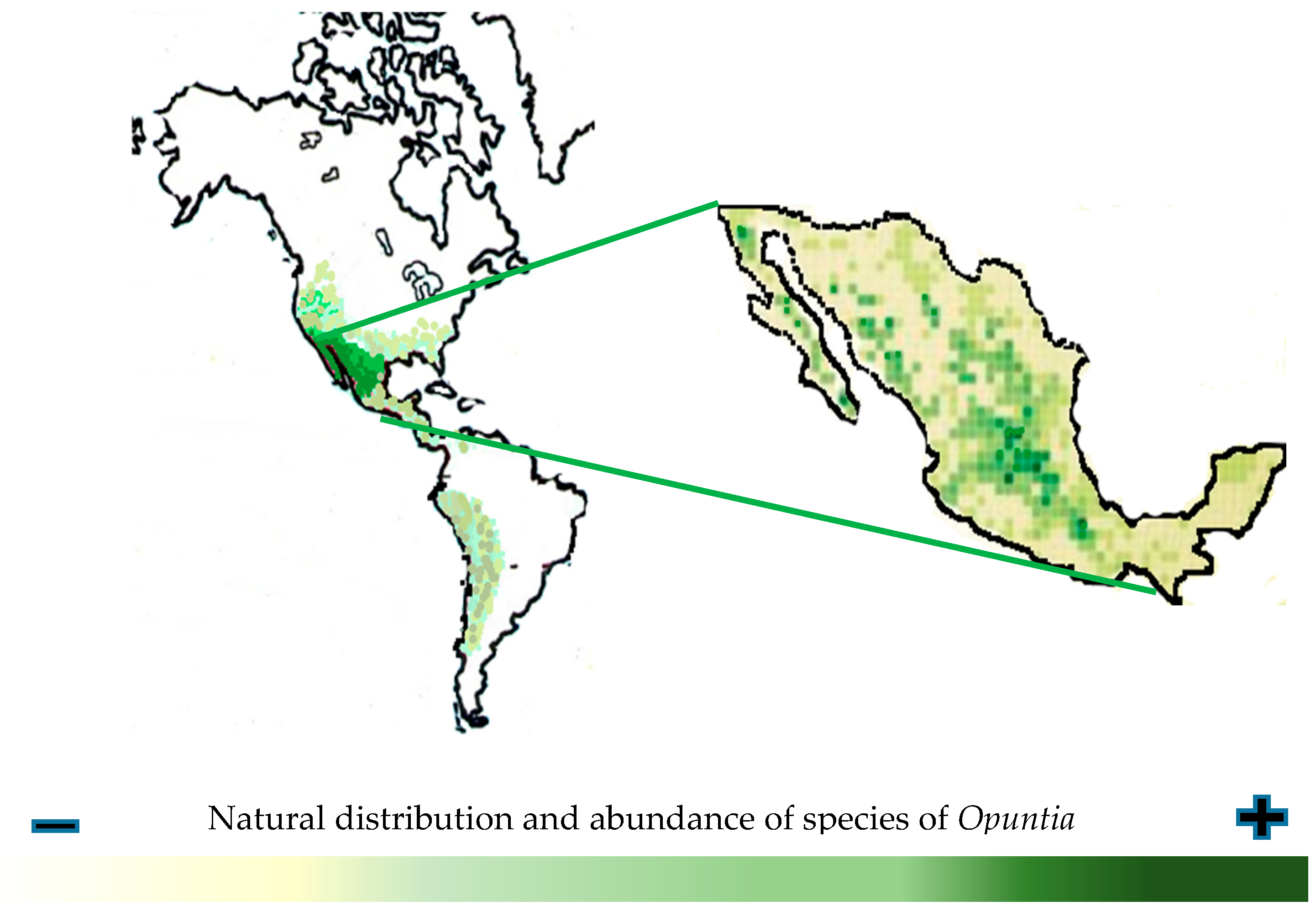
The genus Opuntia consists of about 300 species; its natural distribution is restricted to the American continent, from sea level to altitudes close to four thousand meters, and they dominate in plant communities called wild prickly pear cacti (Figure 1) [3]. The genus Opuntia is native to Mexico, where the highest richness of wild and semi-domesticated variants and cultivars of the world can be found [4]. Some species of this genus are worldwide cultivated for fruit and vegetable crops, forage and fodder for livestock, and ornamentals. In the arid and semi-arid regions of Mexico, one of the most important centers of biodiversity for Opuntia, various factors limit plant growth. Water is the primary limiting factor, but other characteristics such as strong winds, abrupt temperature changes, nutrient deficiencies in the soil, and the presence of salts and toxic substances also contribute [3]. The evolution of prickly pear cacti in these environments has favored the development of morphological, physiological, and biochemical characteristics in the different species of the genus Opuntia, enabling them to adapt to these conditions, which are adverse to other species. Species of Opuntia share morphological traits, including flattened photosynthetic stems (cladodes), ephemeral leaves, and seeds covered by a sclerified and funicular aril. The physiology and biochemistry of young cladodes of Opuntia spp. are related to their CAM; this extends during the 24 h day-night cycle, in four phases (i.e., phases I, II, III and IV), which depend on the species, age of the tissues, and are affected by environmental factors, such as water availability and ambient temperature [5,6].
In some species, the advantages of CAM have earned succulent plants cultural significance by offering provisions in extreme climatic conditions, and CAM research has provided profound insight into the plasticity of photosynthetic mechanisms. Opuntia species are complementary to others (e.g., Agave, Ananas, or Aloe) for understanding the adaptation of succulent plants to abiotic stress and the effects of the domestication process. However, although wild and domesticated forms are identified in most of these species, to our knowledge, no domestication gradient encompassing wild, semi-domesticated, and domesticated forms has been described. This is an essential requirement for the approach upon which our studies of Opuntia are based.

2. Methodology

This review was conducted using data from Google Scholar (https://scholar.google.com), ResearchGate (https://www.researchgate.net/), and scientific publications from our own research group. Despite the large number (several dozen) of articles found for each subtopic, only a few were selected based on their relevance and the availability of their data. The search of scientific articles was performed with the phrases Opuntia domestication gradient or nopal domestication gradient in combination with various topics in cactus biochemistry and physiology.

3. Results

3.1. Identification of the Domestication Level of Opuntia

Phenotypic variation has been manipulated by humans during crop domestication for millennia. The abundance of germplasm resources from the genus Opuntia has allowed for studies of a group of variants and cultivars from Mexico along a domestication gradient, including wild, semi-domesticated, and domesticated species. In this regard, López-Palacios et al. [1] and Reyes-Agüero et al. [7] recognized different degrees of domestication after comparing 10 physical characteristics of fruit and seeds of 114 samples and 42 morphological characteristics of cladodes, nopalitos, flowers, and fruits of 243 Opuntia samples, respectively. According to these studies, Opuntia species are on a domestication gradient, in which O. joconostle, O. streptacantha Lem., and other species are the wild extreme, O. hyptiacantha F.A.C. Weber is near this, O. megacantha Salm-Dyck is a semi-domesticated species, and O. albicarpa Scheinvar represents the other extreme, along with O. ficus-indica (L.) Miller, which has the highest degree of domestication (Table 1).
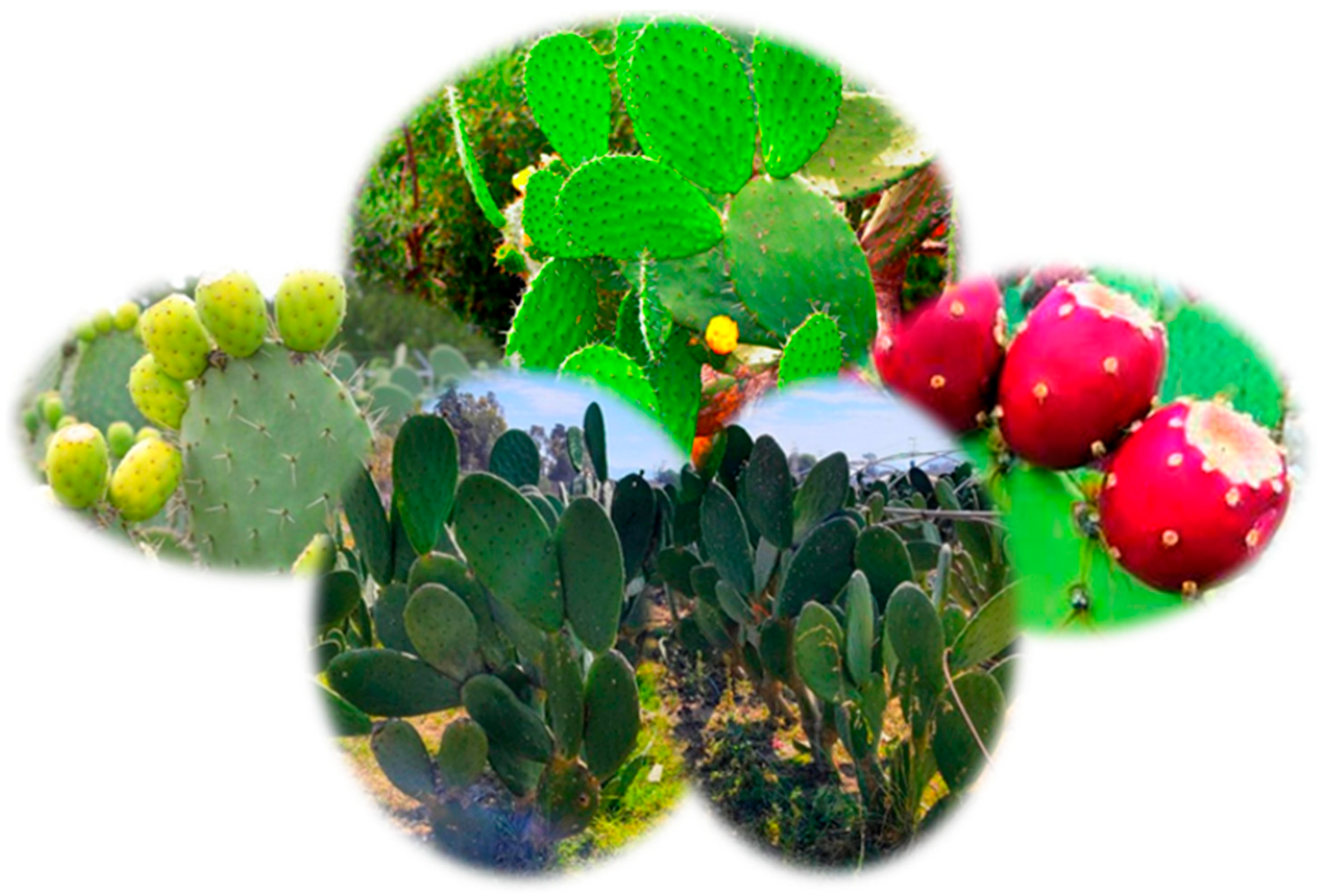
Among the morphological characteristics of the wild prickly pear cacti are small cladodes, high areole density—all of which had spines—and small, red fruits with thin rinds, less sweet pulp, and few seeds. The cultivated prickly pear cacti variants have large cladodes, low areole density, few spines, large, yellow fruits with thick rinds, sweet pulp, and abundant seeds [7]. In cultivated variants, the predominant colors are light green, yellow-brown, and red-purple; in contrast, wild varieties produce almost exclusively red-purple fruits. The pressures of artificial selection on vegetative organs differ between prickly pear pads and mature cladodes. Selection of prickly pear pads appears to favor color (light green), thinness, scant mucilage, low fiber content, few spines, and slow oxidation due to tissue cutting, among other factors. In mature cladodes, the trend has been toward greater length, width, and areole size [8] (Figure 2). The physiological and biochemical characteristics of species along the domestication gradient have scarcely been described.

3.2. Wild and Domesticated Opuntia as a Model for Evaluating Abiotic Stress

Crops and natural ecosystems are often subject to various types of simultaneous abiotic stress throughout their life cycle in the field, which negatively affects growth and productivity. However, global climate change, with its alterations in precipitation patterns, including floods and droughts, increased salinity, and extreme temperatures, is negatively impacting species distribution, plant growth and yield, and consequently, food security [5,6].
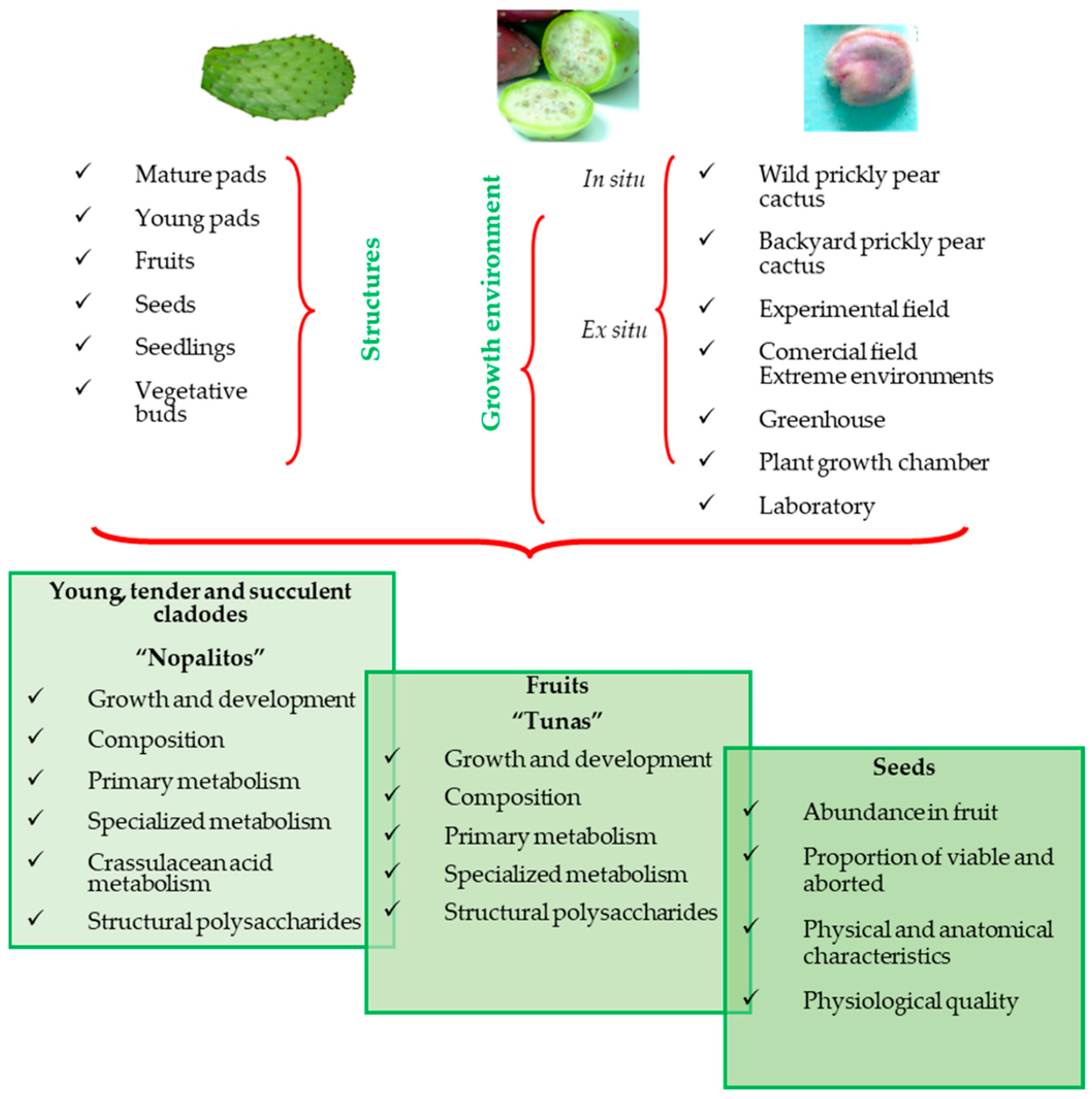
Metabolic adjustments in cacti and those related to the transition from wild to cultivated environments have only been briefly described. Therefore, our group’s research focuses on evaluating the physiology and biochemistry of the genus Opuntia along a domestication gradient and identifying differences in tolerance to environments with contrasting natural conditions. The hypothesis is that plant vulnerability to extreme environments is related to their level of domestication. That is, in less harsh environments, there is an increase in the size of fruits and pads, and the presence and distribution of photo assimilates are modified. This could be related to changes in the number of seeds per fruit, seed dormancy, and the exocarp-to-pulp ratio, along with modifications in the levels of certain primary metabolites, such as amino acids, soluble sugars, and starch, as well as changes in the presence and concentration of specialized metabolites, e.g., phenols, terpenoids, or non-starch polysaccharides, in cladodes (mature pads and young, tender, and succulent cladodes or “nopalitos”), fruits, and seeds. Therefore, fruits, seeds, and nopalitos are the structures of interest to identify changes throughout domestication, in addition to their response to abiotic stress (Figure 3).
Cladodes are modified stems with photosynthetic activity in Opuntia plants. Our studies have primarily included nopalitos (two to three weeks old cladodes), which have succulent cladodes, from the same production cycle, harvested from plants cultivated under similar environmental conditions (with or without abiotic stress) in experimental fields or greenhouses. The emphasis has been on the effects of the two main abiotic stress factors: humidity deficit and temperature. Furthermore, the studies have frequently included variants of wild, semi-domesticated, and domesticated species (Table 1).

3.3. Non-Starch Polysaccharides in Nopalitos

Cladodes are succulent structures with an outer cuticle and an inner layer of chlorenchyma, which is green due to the presence of chloroplasts containing photosynthetic pigments (chlorophylls). In the innermost region is a medullary parenchyma (hydrenchyma), which lacks photosynthetic pigments and is therefore white. Its function includes water storage [9]. The chlorenchyma and parenchyma contain mucilaginous cells, which are also found, in smaller quantities, in roots, flowers, and fruits [10]. Therefore, a distinctive characteristic of prickly pear cactus pads is their mucilage content, which gives them a viscous sensation when consumed. This is a heterogeneous and complex group of polysaccharides, identified as a hydrocolloid that contributes to maintaining cellular ionic balance, frost tolerance, water transport, tissue wound response, plant-host-pathogen interactions, and carbohydrate reserves [11].
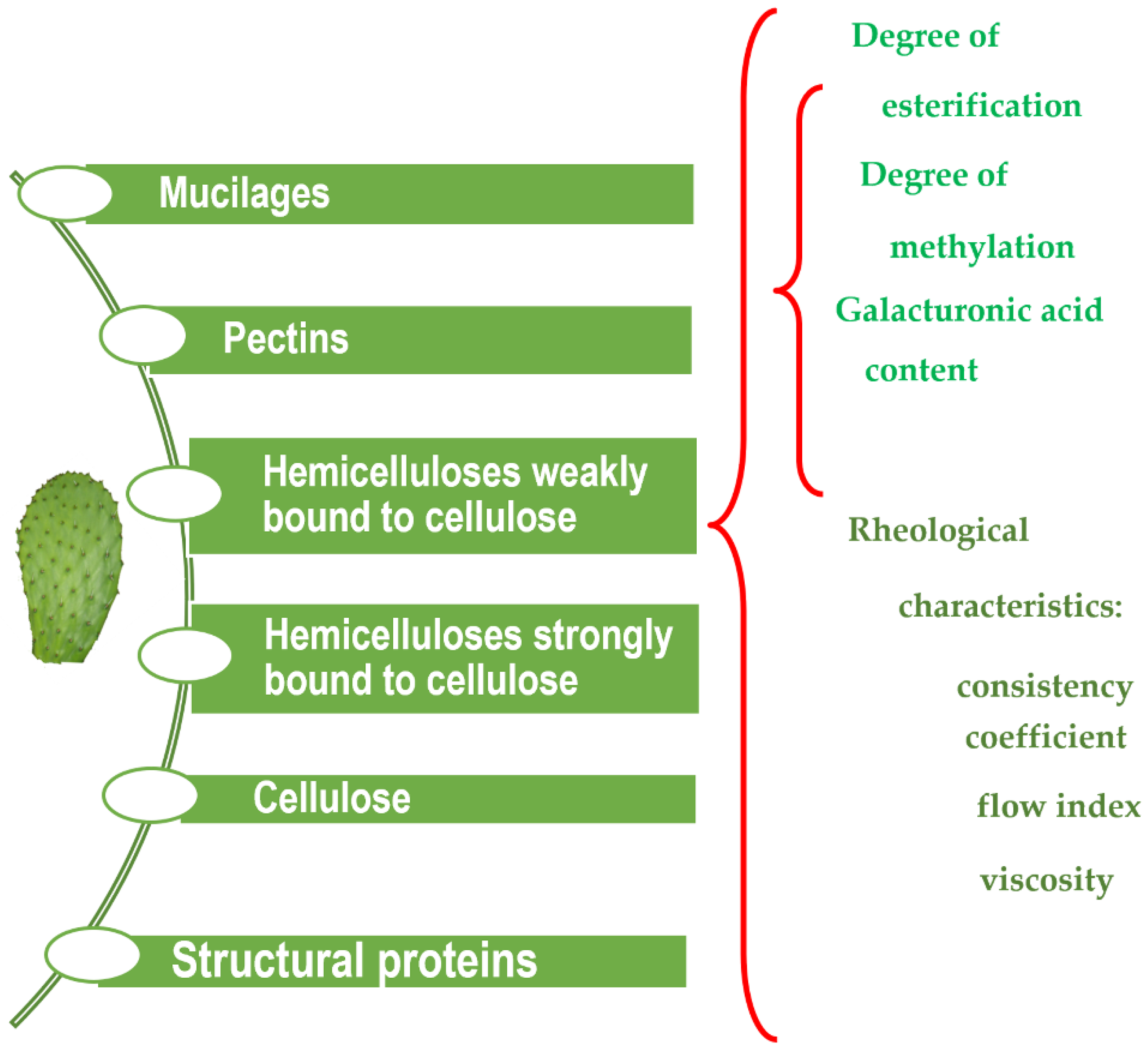
The composition and organization of cell walls in mature cladodes and nopalitos are crucial to reversible changes in organ volume during dehydration/rehydration cycles to prevent cell collapse and irreversible damage due to tissue dehydration during months of drought [12]. Furthermore, the cell walls of nopalitos are abundant in two other groups of polysaccharides, namely pectins and hemicelluloses, and one homopolysaccharide, cellulose. Therefore, nopalitos and mature prickly pear pads are rich in extracellular or non-starch polysaccharides [13,14]. The type and quantity of each polysaccharide differ among species, cultivars or variants, ages, and due to the growing environment (moisture availability and temperature). The cell wall biopolymers have physiological functions in plants, such as protection against environmental factors. The effect of abiotic and biotic stress produces alterations in the composition and organization of cell walls at different levels. Another characteristic of structural polysaccharides is that they are the main components of dietary fiber when consumed by humans and animals and have a positive impact on their physiology. In addition, the structural polysaccharides have a range of applications in the pharmaceutical and food industries. The concentration and chemical characteristics of non-starch polysaccharides in nopalitos have been studied to identify changes during domestication and due to abiotic stress (Figure 4) [1,10,13].
López-Palacios et al. [13] quantified non-starch polysaccharides and dietary fiber in nopalitos cultivated in an experimental field from 14 variants of Opuntia species along a domestication gradient. The hypothesis was that the concentration of non-starch polysaccharides in nopalitos decreases with the degree of domestication because cultivated plants have experienced less extreme environments compared to wild species. In that study, O. ficus-indica (domesticated species) contained 12% more mucilage than O. streptacantha (one of the wild species); however, in the latter, the concentration of pectins and hemicelluloses weakly and strongly bound to cellulose (2.5, 9.0, and 3.0% dry weight (dw), respectively) was significantly higher. Therefore, the wild species containing more dietary fiber could be related to their persistence in harsh environments. In this study, the 14 variants did not differ in cellulose content (5.1%). The authors concluded that Opuntia species, which have been organized along a domestication gradient based on morphological characteristics, can also be characterized by the variety and content of non-starch polysaccharides in the nopalitos.
The polysaccharides that show changes during domestication are soluble fiber. In contrast, cellulose is a remarkably stable extracellular component, unresponsive to selection pressures. Consumer preference for nopalitos with low mucilage in some Mexican regions was documented by Razo and Sánchez [15]. However, Peña-Valdivia et al. [14] emphasized the wide variation (from 3.8 to 8.6% dry weight) in mucilage concentration in nopalitos grown in the same cycle and experimental field, from ten cultivars of O. ficus-indica with the highest regional and national commercial value in Mexico. The results of López-Palacios et al. [13] and Peña-Valdivia et al. [14] contrasted in the concentration of polysaccharides among the cultivars; in the former case, the domesticated cultivars Atlixco and Copena V presented 3.3 times and more than double the mucilage, respectively, compared to the study by Peña-Valdivia et al. [14]. Furthermore, the pectin proportions were opposite between the studies; there were also differences in the two types of hemicellulose and cellulose. These differences may be due to the contrasting growing environment, since the nopalitos in the López-Palacios et al. [13] study were grown in a dry state (Zacatecas, Mexico; 22°44.7′ N, 102°36.4′ W), with a BS1kw (w) climate, and those from the study by Peña-Valdivia et al. (2012) [14] in a more raining area (Estado de Mexico; 19°29′ N, 98°53′ W and 2250 m a.s.l.), with a (Cb(wo)(w)(i’)g) climate.
The effect of the growing environment on the structural polysaccharide composition of nopalitos was evaluated (unpublished results from our own group) in four domesticated cultivars of O. ficus-indica and one wild variant of O. streptacantha. One-year-old plants, grown in a greenhouse, were kept without irrigation for 60 days, during which the soil water potential (ΨW) decreased from −0.39 to −3.27 MPa. The concentration of the five types of extracellular polysaccharides—mucilage, pectins, hemicelluloses—both weakly and strongly bound to cellulose—and cellulose—in the nopalitos that grew during the soil ΨW decline was altered among the domesticated cultivars and contrasted with those of the wild species. The concentration of polysaccharides increased significantly with decreasing ΨW (from 1.5 to 6.3% mucilage, from 3.8 to 15% pectin, from 5 to 19% weakly cellulose-bound hemicellulose, from 5 to 15% strongly cellulose-bound hemicellulose, and from 5 to 21% cellulose). Furthermore, under moisture-restricted conditions, O. streptacantha exhibited significantly higher total fiber content.
Changes in the concentrations of extracellular polysaccharides in nopalitos due to domestication could be related to consumer-relevant characteristics, such as succulence, post-harvest quality, shelf life, or others. The quality of fresh fruits and vegetables is related to the chemical and physicochemical characteristics of their cell walls. Therefore, if the cell wall of cladodes works as a “sensor” of the environment and abiotic stress in which the nopales plants grow, it will allow the identification of changes due to repeated cultivation. Extracellular polysaccharides change constantly during plant development and in response to environmental stress; these changes include composition, organization, and rheological characteristics (such as viscosity and mechanical properties). Therefore, López-Palacios et al. [1] and García et al. [10] hypothesized that, along with changes in the concentration of extracellular polysaccharides in cladodes of Opuntia during domestication, the physicochemical and chemical characteristics are affected by the cultivation environment in which the plants grow.
Thus, López-Palacios et al. [1] evaluated the content and rheological flow of extracellular polysaccharides from nopalitos of a wild variant (O. streptacantha), a semi-domesticated one (O. megacantha), and a cultivar (O. ficus-indica). In that study, the mucilage concentration was higher (4.93 to 12.43 g 100 g−1 dw) and the concentration of hemicelluloses strongly bound to cellulose was lower (3.32 to 1.81 g 100 g−1 dw) in the wild species compared to the domesticated one; the concentration of pectins, hemicelluloses weakly bound to cellulose, and cellulose was not different in the wild and domesticated species. Hydrocolloids of mucilages, pectins, hemicelluloses, and celluloses from three species showed non-Newtonian behavior, and the flow behavior was described using the Ostwald-de-Waele model. Hydrocolloids of pectins and mucilages exhibited the highest consistency indices (K values between 0.075 and 0.177 Pasn) and moderate thinning behavior (n values between 0.53 and 0.67). Cellulose dispersions exhibited the greatest shear thinning behavior (n values between 0.17 and 0.41), and hemicelluloses showed a tendency toward Newtonian flow (low viscosity close to that of water), with n values between 0.82 and 0.97. The authors observed that the K values of the mucilage hydrocolloids differed among the species. However, the differences did not reflect a domestication gradient. The authors also emphasized that the structural polysaccharides of nopalitos are distinguished by their viscosity, K values, and n values; although, probably due to their chemical composition and molecular structure, the mucilage behaved like pectins and the weakly bound hemicelluloses like tightly bound hemicelluloses. Cellulose, the only unbranched homopolysaccharide in the cell walls, contrasted sharply with the other polysaccharides in its rheological characteristics.
García et al. [10] evaluated the degree of esterification and methylation, galacturonic acid content of mucilage and pectins, as well as the protein content of extracellular polysaccharides in nopalitos from 14 variants of five Opuntia species, along the domestication gradient. The objective was to identify chemical differences in the structural polysaccharides of nopalitos along the domestication gradient, based on the hypothesis that these chemical characteristics of Opuntia nopalitos extracellular polysaccharides have changed in defined patterns during domestication. Furthermore, cell wall proteins, although representing only 5 to 10% of the cell wall mass, are embedded in the complex polysaccharide matrix and are relevant during plant development and adaptation to the environment [11]. These changes may help explain the alterations in structural polysaccharides due to abiotic stress in succulent plants. The results of that study showed that the degree of esterification of mucilage was lower in the domesticated species, O. albicarpa and O. ficus-indica, compared to the wild species, O. streptacantha and O. hyptiacantha (58.26–69.95%). In contrast, the degree of esterification of pectins (59.43–69.68%) increased with the degree of domestication; in this case, O. albicarpa was an outlier. Furthermore, the differences in the degree of methylation of the mucilages (25.24–28.66%) were not significant among the species, except in O. albicarca, which was lower than the rest of the species and decreased in the pectins (24.48–27.16%) with the domestication gradient. The galacturonic acid of mucilages (1.83–4.10 mMol 100 mg−1 bs) and pectins (6.46–10.33 mMol 100 mg−1 bs) increased with the level of domestication. Conversely, the protein content in mucilage, pectins, and hemicelluloses weakly bound to cellulose was significantly higher in the wild O. streptacantha compared to domesticated species.
In general, regardless of the type and characteristics of Opuntia hydrocolloids, all have been recognized as multifunctional components due to the wide range of physiological benefits they offer to consumers. Polysaccharides such as mucilages and pectins of nopalitos are responsible for the raw tissues’ viscosity and the cooking medium. Higher values of the degree of esterification of polysaccharides are related to their greater solubility in water [16]. Therefore, one of the outstanding results of the study by García et al. [10] indicates that, although more abundant than in wild nopales, the mucilage in domesticated species is less soluble and tends to be released in smaller quantities during cooking. Regarding pectins, the degree of methylation is one of the most relevant properties for characterizing them, and the values depend on the species, tissue type, and maturity. The firmness and cohesion of plant tissues depend on the degree of pectin methylation. In general, greater cohesion results from a low degree of methylation. The study by García et al. [10] showed that the degree of pectin methylation in nopales from 14 variants and five species of Opuntia was less than 30%. Therefore, the content of pectins in nopalitos with values less than 50% are considered low-methoxyl pectins, regardless of the level of domestication. Regarding proteins, these macromolecules can covalently bind to polysaccharides and form structural protein networks [11]. The concentrations of structural proteins in pectins in the study by García et al. [10] were consistent with those obtained by Pérez-Martínez et al. [17], ranging from 2.81 to 4.5% in cladode pectin from O. ficus-indica. They suggested that the protein-pectin complex may be a distinguishing characteristic of pectins with a high galacturonic acid content. García et al. [10] also showed that the protein content of pectins and other structural polysaccharides decreased in nopalitos along the domestication gradient and exhibited an inverse relationship between galacturonic acid and protein in pectins. This could indicate modifications in cell wall composition and function depending on whether the Opuntia species grows in a wild or cultivated environment. Similarly, the low but significant differences in protein content between loosely and tightly bound cellulose hemicelluloses suggest that Opuntia wild species, with higher structural protein content, are better adapted to harsh environments that generate abiotic and biotic stresses. Furthermore, protein may also be involved in wound healing, protecting plants from pathogen infection, and regulating the drought stress response. Pectins from all five Opuntia species contained more protein (2.62% on average) compared to the loosely and tightly bound cellulose hemicelluloses (0.24% and 0.58% on average, respectively). Although these hemicelluloses are considered an abundant source of xylose and xylooligosaccharides, their structural and physicochemical characteristics have been poorly characterized.
García et al. [10] indicated that the difference in protein content between pectins and weakly bound hemicelluloses may be due to cell wall architecture and the polymers that compose them, although the composition of hemicelluloses isolated from different tissues varies considerably. The multilayer model proposes that cellulose microfibrils are coated with a layer of xyloglucan and embedded in successive layers of hemicelluloses, each more tightly bound than the previous one, forming the cellulose-hemicellulose network. Pectins fill the spaces between the networks, with different types of bonds that keep them connected and linked to the cell wall components [18]. The proportion and type of cell wall polysaccharides that bind to proteins play a central role in the tissues of prickly pear cactus plants growing in the wild, but likely differ from those in cultivated plants. This suggests that domesticated variants obtained by natural and artificial selection, repeatedly multiplied in cultivation environments that were different from those in which the wild grew, as well as interaction between these factors, respond differently to abiotic stress compared to their wild counterparts.

3.4. Biophysical, Physiological, and Biochemical Characteristics of Nopalitos

3.4.1. Firmness, Total Soluble Solids, Water Potential, Osmotic Potential, and Turgor Potential

García-Nava et al. [19] evaluated changes in the biophysical and physiological characteristics of Opuntia spp. related to adaptation to wild and cultivated environments and their response to prolonged moisture deficit. Those authors hypothesized that nopalitos of domesticated species are more affected by moisture deficit than those of wild species. The study included the measurement of firmness, ΨW, osmotic potential (Ψπ), turgor potential (Ψτ), cell membrane permeability, total soluble solids (TSS), and total acidity (malic acid concentration) of 15 variants from five Opuntia species along the previously described domestication gradient. The nopalitos were harvested at dawn (5:00 h; CAM phase I) and in the afternoon (13:00 h; CAM phase III) from plants grown in a greenhouse without irrigation for 60 days, with soil moisture of only 4.5%. The variables fluctuated between species. On average, after 60 days without irrigation, firmness (4.6 to 6.8 kgf/cm2), total soluble solids (TSS; 5.2 to 5.8 and 4.8 to 6.4 °Brix in both CAM phases), cell membrane permeability (23.6–33.0 µS cm−1/g), and acidity (malic acid concentration) in CAM III phase (0.61 to 0.67 g 100 g−1) were higher in domesticated species than in wild species. Furthermore, ΨW and Ψπ were simultaneously lower (from −0.85 to −1.1 MPa and −1.01 to −1.15 MPa, respectively) in the domesticated species. The authors determined, through principal component analysis (PCA), that firmness, TSS, and Ψπ were the main characteristics that defined the response to prolonged moisture deficit among the species.
Tissue firmness functions on the structural nature of the cell walls, the proportion and organization of cellulose microfibrils, and tissue composition, including hemicelluloses, pectins, and lignin [16]. Wild and domesticated nopalitos lack lignin [13,14]. Trends in the proportion of cell wall polysaccharides in wild, semi-domesticated, and domesticated prickly pear cactus pads show that those of O. ficus-indica contain less pectin (1.83%) than those of O. streptacantha (2.53%). Conversely, the former are richer in hemicelluloses weakly and strongly bound to cellulose (8.7% and 3.7%, respectively). These differences confirm that changes in the firmness of nopalitos during domestication occur simultaneously with changes in cell wall composition. The results of García-Nava et al. [19] showed a firmness gradient among species, suggesting that this change is gradual. Also noteworthy was the decrease in tissue Ψw depending on the level of domestication, with the ΨW of O. ficus-indica tissue representing up to 21% less compared to O. streptacantha. This indicates less dehydration of the tissues of wild species and is consistent with the observation that O. ficus-indica does not thrive in the extreme environments with prolonged moisture deficits where wild species grow [8].
García-Nava et al. [19] also emphasized that the tissue ΨW, in terms of adaptation determined by natural selection among species and in terms of artificial selection among variants, was evident, as the variability among wild variants was wide (from −0.6 to −1.0 MPa) and there was no significant variation among cultivars (−1.07 to −1.12 MPa). The authors also highlighted the highly significant negative correlation between firmness and tissue ΨW and the possibility that selection for firmer tissue leads to a greater moisture demand. The highly significant positive correlation between firmness and TSS indicated that both characteristics could be modified simultaneously during domestication. Furthermore, firmness and TSS were negatively and significantly correlated with Ψπ. Osmotic adjustment in plants can occur through the accumulation of low-molecular-weight organic solutes, such as soluble carbohydrates, organic acids, and amino acids (i.e., TSS). The correlation between Ψπ and TSS was negative in Opuntia species along the domestication gradient. The significant decrease in Ψπ in the domestication gradient species was interpreted as differences in the type and tissue concentration of solutes among the species. This coincided with the results for TSS and electrolyte leakage, as nopalitos of O. streptacantha exhibited the lowest values for both variables compared to those of domesticated species. Despite the significantly higher tissue acidity in CAM I phase compared to CAM III phase, wild-type nopalitos accumulated lower amounts compared to the domesticated ones. The differences in acid concentration among species are closely dependent on the sampling time; however, acidity is associated with growth in CAM species. The trend toward increased acidity across species, except for O. ficus-indica, could be evidence of selection for higher productivity. In addition to water availability, other environmental factors, such as irradiation, temperature, and relative humidity, as well as ontogenetic and genotypic factors, regulate the expression of the CAM phases. Since experimental evidence shows significant intraspecific and interspecific differences in the maximum and minimum accumulation of acid in nopalitos in both CAM phases, García-Nava et al. [19] suggested that comparing variants and species would be appropriate based on the total daily acidity of the nopalitos.
Differences in membrane functionality in Opuntia prickly pear pads can also be used as markers to distinguish between species more tolerant to moisture deficit (wild varieties) and those less tolerant (domesticated varieties), based on their response to moisture restriction, as in other species [19]. Univariate analyses in that study indicated that Opuntia domestication reduces the variation in the traits studied, since differences in some interspecific biophysical and physiological variables of O. ficus-indica were not significant or showed minimal contrast. Furthermore, PCA indirectly confirmed that the biophysical and physiological characteristics of the prickly pear pad have become more homogenized during Opuntia domestication. A similar effect was observed with the morphological and agronomic traits of common bean plants (Phaseolus vulgaris L.) [20] and with the physical and chemical characteristics of wild and domesticated bean seeds. Therefore, the interpretation is that domestication reduces the morphological and phenological variation of plants and the physical characteristics and chemical composition of seeds in the case of common beans, or biophysical and physiological characteristics in the case of nopalitos; consequently, they will respond differently to stress. García-Nava et al. [19] concluded that Opuntia species along a domestication gradient based on morphological characteristics maintain this organization when the characterization includes certain biophysical and physiological characteristics of prickly pear cactus pads from plants growing under prolonged moisture restriction. The results of that study appear to be related to differences in adaptation to contrasting plant growth environments and to consumer preferences; thus, species on the domestication gradient can be a model for the study of abiotic stress in succulent plants.

3.4.2. Crassulacean Acid Metabolism

CO2 assimilation based on the activity of two carboxylases, i.e., ribulose bisphosphate carboxylase-oxygenase and phosphoenolpyruvate carboxylase, is biochemically well-described [21]. However, the physiology of Opuntia, related to its CAM, under contrasting growth conditions, has only been incipiently described. López et al. [5] evaluated the interaction between species, time of day, and soil ΨW on the biochemical and physiological characteristics of nopalitos. The study included the end of CAM phase I (7:00 a.m.) and CAM phase III (3:00 p.m.) in a 5 × 2 × 2 factorial experimental design (species, CAM phase, and soil ΨW). Nopalitos of five species of the previously described gradient (Table 1) were grown on plants with or without irrigation, for 30 days (soil ΨW of −0.17 or −5.72 MPa), in a greenhouse. Physiological responses were assessed using ten variables, including the concentrations of total acids, fructose, glucose, sucrose, starch, free amino acids, soluble proteins, and total phenolics, as well as the activities of acid and neutral invertases (β-fructofuranosidase, EC 3.2.1.26). The results showed that the interactions between species × soil ΨW and species × CAM phase (or time of day) were significant for all variables evaluated, with the exception of starch concentration. The biochemical and physiological characteristics were modified by the CAM phase and the soil ΨW interaction, but most characteristics were affected directly or inversely depending on the species. Wild and less domesticated species showed the greatest differences (up to 21%) between CAM phases, compared to the more domesticated species (13%). The concentration of acids (malic acid) in CAM phase III was 60% lower than at the end of CAM phase I in all five species, regardless of soil ΨW. However, acid concentration differences between CAM phases increased twofold and up to five times at soil ΨW of −5.72 MPa compared to soil ΨW of −0.17. This increase was interpreted as greater carbon assimilation in response to moisture restriction and is documented in constitutive CAM species, such as Opuntia [22]. Under both soil moisture conditions, the acidity of domesticated species was lower than that of semi-domesticated and wild species; the exception was the domesticated species O. albicarpa under moisture restriction (23% more acidity compared to O. streptacantha). This accumulation of acids may be a response to limited moisture and an osmotic adjustment mechanism in CAM species. The decrease in total acid concentration during CAM phase III compared to CAM phase I was previously documented in young cladodes of 15 variants from five Opuntia species after 60 days without irrigation [19]. Under these conditions, wild and less domesticated species showed the greatest differences (up to 21%) between phases, compared to more domesticated species (13%). These results show certain differences in the CAM of wild and domesticated Opuntia species that may represent natural contrasts in response to abiotic stress.

3.4.3. Sugars and Starch

In CAM plants, up to 20% of the total dry leaf biomass can be stored as reserves. In the study by López et al. [5], the fructose, glucose, and sucrose in nopalitos totaled between 13 and 20% of the dry biomass, but the lowest concentrations corresponded to domesticated species. Specifically, O. albicarpa and O. ficus-indica accumulated up to 31% and 34% less soluble sugars, respectively, compared to wild species. However, with irrigation, sucrose increased (from 24% to 38%) only in domesticated species. Furthermore, although starch concentration, with and without moisture restriction, tended to be higher in domesticated species, the concentration of available carbohydrates (soluble sugars plus starch) in nopalitos ranged from 20.74% in the wild species O. streptacantha to 14.86% in the highly domesticated O. ficus-indica. The higher concentrations of sucrose and starch in irrigated domesticated species are consistent with their greater accumulation of dry biomass (up to 11.34%) compared to wild species. This, in accordance with the adaptation of domesticated species to the cultivation environment, indicates that greater water availability promotes an increase in photosynthates in the source organs (young cladodes), used for growth and productivity, including larger cladodes and fruits with more pulp (sink organs), in domesticated species compared to wild ones [23]. These results indicate that carbon assimilation and its allocation to the molecular forms of photoassimilates are different in wild than in domesticated Opuntia, as is the response to moisture availability during growth. Sucrose metabolism can also be evaluated using the invertase (EC 3.2.1.26) activity. This enzyme catalyzes the hydrolysis of the disaccharide, producing glucose and fructose. In plants, several isoforms exist with diverse biochemical properties and subcellular localization. Acid invertase also participates in hexose accumulation and cell expansion by increasing osmolarity and water uptake [24]. The higher acid invertase activity at the end of CAM phase I in irrigated nopalitos and in both CAM phases with moisture restriction appears to be related to the greater cell expansion and growth capacity of domesticated Opuntia species. Furthermore, differences in neutral invertase activity were only observed between the CAM phases and species with moisture restriction, with significantly higher activity in wild species compared to domesticated ones and in phase III compared to the end of phase I. These results are consistent with the functions of neutral invertase in various plant growth and development processes, as well as in environmental and stress response.

3.4.4. Amino Acids and Proteins

Free amino acids are essential in nitrogen metabolism and play numerous roles in plant growth and development. The study by López et al. [5] showed that nopalitos de O. streptacantha had up to twice the amount of free amino acids compared to domesticated species, regardless of the CAM phase and soil ΨW. The accumulation of certain free amino acids may be associated with the intrinsic ability of plants to survive in natural environments under extreme growing conditions, which are frequently adverse for domesticated species. In this regard, increased concentrations of free amino acids, such as proline, glutamic acid, glutamine, and others, have been documented in response to abiotic stress. Osmotic compounds accumulated during drought include free amino acids, glycine betaine, sugars (hexoses and sucrose), and others. The higher concentration of free amino acids in O. streptacantha may be associated with its intrinsic ability to survive in natural environments under extreme growth conditions adverse to domesticated species.
The concentration of total or soluble proteins in plant tissues is directly associated with their overall metabolic activity during the daily light/dark cycle, along with their response to the environment, including temperature and water availability. Approximately half of the soluble proteins in Opuntia are related to metabolic processes. López et al. [5] observed that the average concentration of soluble proteins in CAM phase III of the five evaluated species was 55% higher compared to the end of CAM phase I. This indirectly indicates greater metabolic activity in the nopalitos during the day compared to dawn. Furthermore, the higher concentration of soluble protein (26%) in the nopalitos of irrigated plants indicates that metabolic activity is greater in areas with restricted soil moisture. However, the concentration of soluble protein in nopalitos increased significantly in semi-domesticated species and in domesticated species only in CAM phase III with moisture restriction. Plant protein expression is a function of intrinsic and extrinsic factors; the study by López et al. [5] showed that the interaction of factors such as species, level of domestication, CAM phase, and soil ΨW affects the concentration of soluble proteins in nopalitos.
López et al. [5] demonstrated that approximately 60–70% of the physiological and biochemical characteristics evaluated in nopalitos differed among wild, semi-domesticated, and domesticated species. Irrigation exacerbated the differences in acidity and in concentration of glucose, fructose, soluble phenols, and free amino acids, all of which decreased in domesticated species in both CAM phases and under both soil moisture conditions, with few exceptions. A similar relationship was observed in sucrose concentration and acid invertase activity in both CAM phases, but only with irrigation restriction. This enzymatic activity also showed a similar trend during CAM phase III with irrigation. Specifically, domesticated species accumulate more starch in both CAM phases regardless of soil ΨW, sucrose in both CAM phases with irrigation only, and soluble protein in CAM phase III with moisture restriction only. Plants selected during domestication are adapted to the environment for cultivation, which differs from the wild environments. Wild Opuntia species are more drought-resistant than domesticated ones, a phenomenon likely due to differences in metabolism [4,10,13,19]. Therefore, differences in the metabolism of sugars, such as fructose, glucose, and sucrose, and in starch, as part of carbon metabolism in wild and domesticated Opuntia species, may partially elucidate the domestication syndrome. CAM expression is constitutive in Opuntia, and environmental conditions such as water availability influence CO2 fixation rates. Similar to what was observed in O. ficus-indica, nocturnal carbon fixation in O. basilaris increased when exposed to irrigation. The results of López et al. [5] revealed that multifactorial assessments of biochemical and physiological processes in Opuntia are more suitable than univariate analyses for recognizing changes that occurred during the domestication of this genus. Furthermore, physiological and biochemical knowledge of the genus Opuntia could be expanded by evaluating changes in variables such as those in that study, or others, throughout the 24-h CAM cycle, in a greater number of variants and species. In addition, it was confirmed that Opuntia species with different degrees of domestication represent a model for studying water stress in cacti.
Opuntia spp. has also been used to evaluate the effect of heat on CAM. The research by Reyes et al. [6], titled “Acclimation of young plants of Opuntia spp. to the heightened night temperature” (included in this special issue “Recent Advances in the Ecophysiology, Biochemistry, and Stress Adaptation of Succulent Plants”) offers valuable insights into the physiological and biochemical responses of Opuntia spp. to elevated nighttime temperatures, particularly regarding crassulacean acid metabolism. The study explores how high nighttime temperatures affect the metabolism, growth, and stress tolerance of young Opuntia plants, a genus known for its adaptability to arid environments. By focusing on sugar metabolism, photosynthetic efficiency, and growth patterns, the authors present an interesting approach to understanding the resilience mechanisms in desert plants under climate change scenarios. The experimental design, which includes different plant ages and treatments, is robust. The use of a randomized design and two temperature treatments allows for meaningful comparisons between control and high nighttime temperature conditions. The biochemical analyses, particularly of sugars, starch, and free amino acids, provide a solid foundation for understanding the metabolic shifts in response to temperature stress. Furthermore, the incorporation of physiological parameters such as photosynthetic efficiency and plant growth adds depth to the findings.

3.5. Specialized Metabolism

Plant metabolism has been divided into primary and specialized metabolism. Primary metabolism involves the synthesis of those necessary for fundamental growth and development. Specialized metabolism includes metabolic reactions that produce biomolecules called secondary or specialized metabolites. The precise biochemical boundaries between primary and specialized metabolism are imprecise; therefore, an interface has been recognized between them. Thus, primary and specialized metabolism should be viewed as complex, integrated metabolic networks shaped by natural selection and, in the case of crops, also by human selection and interaction with plants. Inorganic elements (Ca, Fe, Mg, P, K, and others) are relevant in both groups of metabolic reactions, as some are enzymatic cofactors in overall metabolism. The biosynthesis, distribution, and mobilization of metabolites differ among plant structures. It is hypothesized that specialized metabolism has evolved in plants due to selective pressure favored by adaptation to environments during domestication, which is relevant to plant-environment interactions [25]. Multifunctional molecules have been identified among specialized metabolites in plants; for example, some can act as growth regulators, precursors of primary metabolites, and mediate plant-environment interactions. Regardless of the classification of metabolites produced in plants, their presence and concentration in edible plants are central to understanding the plant’s response to abiotic stress and to human nutrition due to their repercussions on human metabolism and physiology. The presence, or absence, and concentration of chemical compounds from both types of metabolism are related to the nutritional quality, flavor, aroma, and texture of plant structures [26].
Among the specialized plant metabolites involved in the protection system against stress caused by abiotic factors and pathogens are more than 50,000 compounds characterized by their specific chemical structure, which allows them to be organized into alkaloids, phenolic acids, steroids, flavonoids, glucosinolates, saponins, tannins, and terpenes [27]. Most specialized metabolites do not have physiological functions in plants; some of these functions are poorly understood or have not yet been identified. Furthermore, they are not present in all plant species, developmental stages, or plant tissues, and they are synthesized and accumulate in tissues, generally at low concentrations compared to primary metabolites [27,28]. However, they are of interest for their role as stress markers [26].
López-Palacios et al. [29] evaluated the presence or absence of specialized metabolism groups in Opuntia sp. and whether their presence is modified by the CAM phase. The study included nopalitos of Cardona and Tuna Loca variants of O. streptacantha (wild) and the Atlixco and Rojo Vigor cultivars of O. ficus-indica (highly domesticated), harvested during CAM phases I (5:00 h) and CAM phases III (12:00 h). The authors identified the presence of phenols, flavonoids, and terpenoids in pads of both species. They highlighted the novel presence of terpenoids, as this group had previously been documented only in flowers of O. ficus-indica. Furthermore, they detected alkaloids only in wild nopalitos and indicated the need for further study, as they had previously been documented in globular cacti. Flavonoids appeared to be absent or present in concentrations undetectable by the methods used. The authors emphasized that the presence or absence of the groups of specialized metabolic compounds, i.e., alkaloids, phenols, flavonoids, terpenes, and saponins, did not change in nopalitos of wild and domesticated Opuntia species throughout the day. According to the above, López-Palacios and Peña-Valdivia [30] analyzed specialized metabolites in nopalitos, harvested at the end of CAM phase I, from 15 variants of the species along the domestication gradient described above (Table 1). The objective was to identify and quantify phenolic acids, flavonoids, and terpenes in Opuntia and to further interpret the responses to change and adaptation from the wild environment to cultivation. The researchers observed that of the 13 phenolic and terpenoid molecules identified and quantified in the dry tissue, only caffeic (3–12 µg/g), ferulic (1.5–2.8 µg/g), and syringic (2–16 µg/g) acids, as well as the terpenoid β-amyrin (trases-8 µg/g), were present in all variants. Another common finding was the absence of the flavonoid luteolin in all five species. In that study, the phenolic acids gallic, valinic, p-hydroxybenzoic, chlorogenic, and p-coumaric were only present in 53 to 87% of the variants. Furthermore, the flavonoids quercetin, isorhamnetin, rutin, and apigenin were found only in 47 to 87% of the variants. Both oleanolic acid and peniocerol were identified in 60% of the variants. Isorhamnetin was absent in O. hyptiacantha, and quercetin was absent in O. streptacantha. The differences and similarities in the presence or concentration of these specialized metabolites did not show any recognizable trend related to the adaptation of the species to wild or cultivated environments. The results of the study allowed López-Palacios and Peña-Valdivia [30] to speculate and conclude that, during the domestication process, species of the genus Opuntia lose their ability to survive in the wild and that the presence and concentration of certain specialized metabolites, which regulate the interaction of plants with their environment, are modified without a recognizable pattern.
Higher concentrations of total phenolic compounds, regardless of absolute values, in cladodes of wild species compared to domesticated ones have also been documented by other authors. Guevara-Figueroa et al. [31] observed that the concentration of total phenols in cladodes of wild Opuntia species (17.8 to 19.9 mg g−1) was significantly higher than in domesticated species (5.25 to 11.7 mg g−1). Pichereaux et al. [32] also quantified more phenolic compounds (65.1 μmol g−1) in O. streptacantha compared to O. megacantha and O. ficus-indica (57.8 and 56.7 μmol g−1, respectively). Astello-García et al. [33] evaluated the concentration of phenolic compounds in the five species along the domestication gradient, like those evaluated by López-Palacios and Peña-Valdivia [30] and López et al. [5]. They observed the highest concentration of phenolic compounds in O. streptacantha (56.8 μmol g−1) and the lowest value (33.4 μmol g−1) in O. hyptiacantha. The differences in the concentrations of phenolic compounds between the studies may result from the effect of the natural variability of these compounds among the age of the cladodes, variants, and species analyzed [30].
Astello-García et al. [33] evaluated the concentration of minerals, total protein, titratable acidity, pH, and antioxidant activity, among other characteristics, of nopalitos from 15 variants of the five Opuntia species along the domestication gradient. The differences between species in the evaluated variables were not related to the wild or cultivated environment. Furthermore, PCA showed no relationships between molecular characteristics (eight SSR polymorphic loci) and cladode morphology. The authors concluded that the domestication gradient did not correlate as expected with the partial chemical composition of the nopalitos, since O. ficus-indica was found to be outside this domestication gradient.

3.6. Seeds

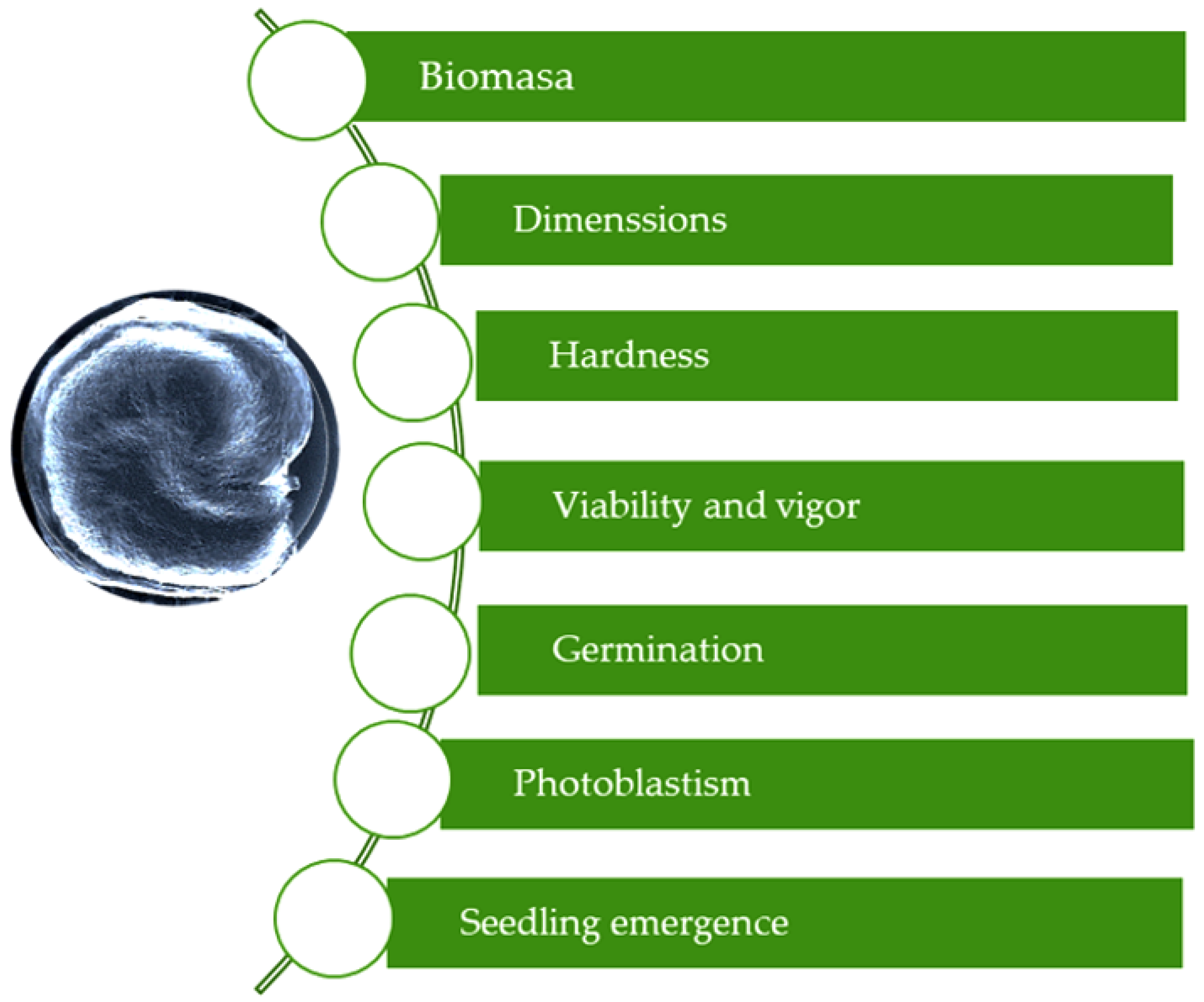
Among the attributes that define the domestication syndrome (modified traits in response to natural and artificial selection and repeated propagation of plants in cultivation) are certain changes in fruits and seeds, e.g., increased size, decreased dispersal capacity or number of viable seeds, and decreased seed dormancy, among other changes [2,20]. These characteristics frequently contrast between wild, semi-domesticated, and domesticated fruits and seeds and appear to be related to the environments in which they have developed. Therefore, these structures have been included in studies of wild and domesticated Opuntia as a model for evaluating abiotic stress in the physiology and biochemistry of succulent plants. Various characteristics of the seeds of wild species can contrast with those of semi-domesticated and domesticated species (Figure 5). However, some of these changes can be affected by reproductive physiological mechanisms (sexual, vegetative, or a combination thereof). This is the case with the genus Opuntia. Currently, there are some advances in the morphological and physiological characterization of the seeds of wild, semi-domesticated, and domesticated Opuntia (Figure 5). These include the abundance or frequency of viable and aborted seeds in the fruits, their biomass, dimensions, hardness [4,23], morphology and anatomy (unpublished results from our own group), and physiological characteristics such as viability, vigor, dormancy, and their modification by scarification and oxidizing agents, such as ozone, in the reduction of dormancy [4,23,34,35,36]. Furthermore, the evaluations have included the characterization of germination and its modification by the effects of ambient temperature and light [37]. Few studies have focused on evaluating seed quality by characterizing its potential for seedling emergence and initial plant development [37,38].

3.6.1. Proportion in the Fruits, Size, and Hardness

López-Palacios et al. [4] evaluated the inter- and intraspecific variation in fruit biomass, number of seeds, and physical characteristics of the seeds in the five species along the described gradient. They hypothesized that large fruits with fewer and softer seeds (normal and aborted) result from domestication, which reduces interspecific variation in fruit biomass and the number of seeds per fruit and alters their physical characteristics. This is independent of differences in reproductive physiological mechanisms (sexual, vegetative, or a combination thereof). The study included fruits from 89 variants, and the variables evaluated were the biomass of the fruit structures and the quantity, dimensions, and hardness of the seeds. The study showed that the mass of fruits, seeds, and pericarpel is greater in domesticated species compared to semi-domesticated and wild species. In contrast, differences in seed thickness or hardness among the species were not significant. However, fruit and pulp biomass were positively and significantly correlated with seed mass. In addition to their heavier fruits (120–130 g), species with a high degree of domestication had more normal and aborted seeds per fruit. But the relative proportion of seed biomass per fruit decreased with the level of domestication, from 3.62% in O. streptacantha to 3.07% in O. ficus-indica. That is, while there is a significant increase in the number of seeds with domestication, the number of aborted seeds also increases, but with a lower biomass per seed, which contributes little to the total seed and fruit biomass. These changes may also be due to the greater amount of pulp produced per seed in O. ficus-indica. Other differences included the width of normal seeds (0.32 cm in O. streptacantha and 0.36 cm in O. albicarpa and O. ficus-indica) and length (0.37 cm in O. streptacantha and 0.47 cm in O. albicarpa and O. ficus-indica). The authors concluded that Opuntia domestication modifies fruit size and biomass, as well as the proportion of its structures. These characteristics are less variable in domesticated seeds compared to wild seeds. In another study, López-Palacios et al. [23] also evaluated the physical characteristics of Opuntia fruits and seeds but increased the number of variants from 89 to 114, the number of species from five to 17, and the fruit types from one to four, i.e., (1) with thin skin and seeds surrounded by sweet and abundant pulp, (2) with thin skin and seeds surrounded by little or no pulp, known as dry fruits, (3) with thick, succulent, acidic and edible skin, with seeds surrounded by little pulp, known as sour prickly pear or “xoconostle”, and (4) with characteristics intermediate between types 1 and 2, called “xocotuna”. Among the significant positive correlations in the group of 17 species are fruit pulp mass with mass of normal seeds per fruit (r = 0.67***) and mass of aborted seeds per fruit (r = 0.52***), pulp mass with number of normal and aborted seeds per fruit (r = 0.62*** and 0.74***), and normal seed hardness with its length and width (r = 0.77*** and 0.75***). The results of López-Palacios et al. [4] were confirmed by López-Palacios et al. [23] using a significantly higher number of species. The results of both studies indirectly show differences in the resources (amount of photoassimilates) allocated to fruits and seeds by wild, semi-domesticated, and domesticated Opuntia species. This raises questions about possible differences in the morphological, physiological, or biochemical characteristics of the seeds, and, more importantly, their responses to the germination environment.

3.6.2. Physiological Quality of the Seed

Seed germination is a complex event due to the number of intrinsic and extrinsic factors that interact to achieve this outcome. Among the most relevant characteristics of the seed are viability, vigor, and the permeability of the seed coat to water and atmospheric gases. In Opuntia, vegetative propagation is common and the most successful method in wild populations, home gardens, and commercial plantations [36]. Seed germination and seedling establishment of Opuntia spp. under natural, greenhouse, and laboratory conditions are limited [36,38]. Seeds of Opuntia spp. frequently require a period of up to several years to germinate, and they exhibit a hard, lignified seed coat that hinders germination. Regarding seed coat hardness, it has been documented that 0.2 to 4.6 kN is required to fracture it [4]. In contrast, wild and domesticated common beans require 0.49 to 3.3 kN [20]. However, in various collections, even before the maturation period and despite their hardness, a proportion of seeds germinate [35]. Protocols for characterizing seed germination of the genus Opuntia are diverse. For example, biological, mechanical, chemical, and combined techniques have been applied to scarify and promote the germination of seeds of a few Opuntia species. These include seed coat rupture or abrasion, washing with water, immersion in hot water, immersion in concentrated acid (HCl, H2SO4) or in growth regulators (gibberellic acid), mechanical stratification, and thermoperiodization. However, these methods do not have the same effect on all species, as germination increases only in some collections and has a negative effect on others [35]. Furthermore, few studies that have evaluated the morphological and physiological characteristics of this genus include more than one species and do not focus on the contrasts between wild and domesticated species [23].
Monroy-Vázquez et al. [34] evaluated the imbibition, viability, and vigor of seeds from nine variants of species along the domestication gradient mentioned above. The hypothesis was that imbibition, viability, and vigor of seeds of O. streptacantha, O. hyptiacantha, O. megacantha, and O. ficus-indica are minimal and independent of the species and collection time. In that study, the four species absorbed water rapidly during the first 8 h, and maximum imbibition remained unchanged at 29% for 50 to 68 h. The correlation between maximum imbibition and seed biomass was positive and significant in wild O. hyptiacantha, semi-domesticated O. megacantha, and highly domesticated O. ficus-indica (r = 0.731 to 0.947); only in the wild species O. streptacantha was the correlation not significant. The seeds of the four species showed an average of 97.6% viability and 94.0% vigor, with no significant differences among them. The authors concluded that the maximum imbibition of the seeds of the four species was relatively homogeneous and synchronous, and their viability and vigor were significantly high and independent of the species and time of collection.
Ozone (O3) is a gas present in the troposphere; however, it is the most phytotoxic air pollutant due to its greater oxidizing capacity compared to O2. Exposure of plants for a few minutes to concentrations above 160 μg O3 m−3 causes chlorosis and necrosis of the leaves and accelerated tissue death [39]. Monroy et al. [35] hypothesized that Opuntia seed dormancy is broken by a combination of scarification and exposure to an oxidizing agent such as O3, since this could induce antioxidant and DNA repair mechanisms in hydrated seeds, similar to what has been observed in tomato seeds [40]. Therefore, Monroy et al. [35] conducted a study to evaluate the combined effects of mechanical and chemical scarification with concentrated acid and exposure to sublethal doses of O3 on seed germination and initial plant growth of O. streptacantha, O. megacantha, and O. ficus-indica. The study included seeds stored for five years from all three species and one recent collection of O. ficus-indica. The hypothesis was that O3 promotes germination in scarified seeds, and the magnitude of the effect depends on the species. Seeds from all four collections showed 96% viability. The total seed imbibition of the three species was one-third of their weight, regardless of seed age. Separate mechanical or chemical scarification partially eliminated seed dormancy when the seeds were kept under natural thermoperiod (30:15 °C) and photoperiod (12:12 h) conditions in a greenhouse. However, O. streptacantha showed increased germination from 3% to 16% and up to 38% with scarification; the increase in O. megacantha was only 3%, and O. ficus-indica did not respond to scarification. With an increased thermoperiod to 35:25 °C and a photoperiod of 12:12 h during germination, the germination of unscarified seeds of O. streptacantha, O. megacantha, and O. ficus-indica were 35%, 25%, and 10%, respectively; in contrast, fresh O. ficus-indica seeds reached up to 30% germination. Under these germination conditions, soaking, chemical scarification with sulfuric acid, mechanical scarification, and the presence of O3 modified germination to varying degrees among species and collections. For example, O3 partially inhibited (13%) the germination of unscarified O. streptacantha seeds, accelerated the onset of germination (from 3 to 18 days) of scarified seeds of all three species, and significantly increased germination, up to three times, of O. megacantha and O. ficus-indica seeds, compared to unscarified and unozoned seeds. Under the various conditions evaluated, the seeds of the wild species had the highest germination rate, which can be interpreted as their greater tolerance to the extreme environments they face in their natural habitat. The diversity of physiological responses of Opuntia seeds has also been documented during germination. Several authors have indicated that Opuntia spp. seeds exhibit physiological, physical, or mechanical dormancy, as they require a period after germination to break seed dormancy; they may be impermeable to water, or their embryos may have low growth potential [41].
Zúñiga et al. [36] evaluated the biomass, viability, and vigor of embryos and the effect of temperature (25, 30, 33, 36, 39, and 42 °C) on the germination of intact seeds from 16 Opuntia variants representing the previously described domestication gradient. The seeds in the study had been matured for up to nine years under laboratory conditions. Some variants exhibited 100% viability; however, average viability among the species ranged from 62% to 89%. High vigor in some variants also approached 100%, but varied between 15% and 53% among the species. In the 25–42 °C range, maximum imbibition of intact seeds from the six species ranged from 38% to 66% and was completed in less than 40 h. Though at 25 to 39 °C some variants reached up to 21–24% total germination, the average per species ranged from 0 to 9% and lasted from 5 to 17 days. The minimum dormancy among the variants was 65%, and among the species, it averaged 88–100%. In this study, the seed mass of the wild species was lower than that of the domesticated and semi-domesticated seeds. In contrast, initial and maximum imbibition, the percentage of seed germination (regardless of temperature), and dormancy for the genus Opuntia showed no relationship with the level of domestication. Within the 25–42 °C range, imbibition of unscarified Opuntia seeds was completed in less than 40 h. The optimal temperature range for Opuntia seed germination, independent of their level of domestication, is 30 to 36 °C and is inhibited at 42 °C.
The germination is often inhibited when seeds are imbibed at a temperature above optimum. The thermoinhibition varies widely between species. For example, seed germination in lettuce is inhibited at 28 °C [42], in Opuntia spp. 36 °C can promote seed germination [36], seeds of Agave americana var. Marginata, A. striata, and A. lechuguilla can maintain up to 60% germination at 35 °C [43]. In thermoinhibition, high temperatures increase cell membrane fluidity, altering its permeability, promoting solute leakage [44] and cell deterioration. Seed death can occur as a result of protein denaturation and metabolic abnormalities due to high temperatures [45]; since high temperature during seed imbibition can decrease the abundance of proteins that are involved in amino acid and lipid metabolism, protein folding, energy metabolism, detoxification, and reserve degradation [46,47]. The roles of ABA and GA in the regulation of thermoinhibition have also been revealed in several species [48]. GA content in imbibed seeds is decreased by high temperature and correlated with downregulation of GA biosynthetic genes (GA20ox1, GA20ox2, GA20ox3, GA3ox1, and GA3ox2) [49]. SOMNUS, a regulator of light-mediated seed germination, plays an important role in negatively regulating seed germination at high temperature; its expression is induced by high temperature in an ABA- and GA-dependent manner [50]. Undoubtedly, ABA and GA metabolism and signaling play a role in inhibiting seed germination at a supraoptimal temperature; however, ethylene and strigolactone are also involved in thermoinhibition [48]
Due to the diverse responses of Opuntia seeds to the germination environment, we consider them a model for evaluating abiotic stress on the physiology and biochemistry of seed germination. Examples include the study of the effect of O3, as an environmental pollutant involved in global climate change, and the effect of the increase in ambient temperature, resulting from climate change, on the physiology of seed germination.

4. Variability of Results Between Studies

The results of the investigations described here generally show differences in physiological and biochemical characteristics among wild, semi-domesticated, and domesticated species, and trends that are maintained by the effect of abiotic stress. However, some discrepancies have been identified among the studies. These may result from various individual factors and their interaction.
For example, the natural variability of some compounds is frequently related to the age of the tissues; even the same plant structure, such as the nopalitos, shows differences in its physical and physiological characteristics from the base to the apex; this is due to the age gradient of its tissues, as demonstrated in the firmness, TSS, and permeability of cell membranes [51]. There are also significant differences among variants of the same species and among species [30]. The growth and development environment affects the physiological characteristics of the tissues. Morphological, physiological, and chemical variability is common among individuals of wild species and variants and somewhat less so among semi-domesticated ones, which contrasts with the homogeneity in cultivars. This is because morphological, physiological, and biochemical homogeneity is common among individuals during domestication [2,20]. There are also differences in sensitivity and precision between methods for quantifying the same compound or group of compounds. All of the above is complemented by the wide and significant variation in the presence and concentration of numerous metabolites and enzymatic activity throughout the day. This is due to the CAM of these plants [5,6].

5. Evidence of Molecular Changes in Opuntia Species Through Domestication

Despite the importance of the Opuntia genus, advances in the knowledge of the molecular mechanisms that allow it to grow in extreme environmental conditions and how domestication processes have modified them are scarce [32].
Using comparative shotgun proteomic analysis, Pichereaux et al. [32] obtained evidence of some changes in the genus Opuntia during domestication. For this, they analyzed cladodes from a variant of five species in the gradient described above (Table 1). More than 1000 protein species were detected, and the differential protein accumulation among species was analyzed. This study revealed that domestication greatly influences the protein composition in Opuntia cladodes. It was evident that the wildest species (O. streptacantha) and the semi-domesticated O. megacantha contain specific proteins in excess of O. ficus-indica. Also, the results showed that proteins related to defense and responses to stimuli were more represented in these species (13.1% in O. streptacantha and 13.9% in O. hyptiacantha). In addition, almost half of the identified proteins corresponded to metabolic processes, and the wild and semi-domesticated species and O. megacantha contained higher percentages (47 to 48%) than the domesticated (O. albicarpa and O. ficus-indica; 44 and 46%). According to its molecular function, differences were observed in proteins related to catalytic roles (34.4 to 35.6%) and proteins with DNA, RNA, and nucleotide-binding functions (20.0 to 22.9%). Most of the changes in wild and domesticated species were observed in glucose, secondary, and 1C metabolism, which correlate with the observed protein, fiber, and phenolic compounds accumulation in Opuntia cladodes. Regulatory proteins, ribosomal proteins, and proteins related to stress response were also observed in differential accumulation [32].
Maleka et al. [52] noted the significant progress in sequencing non-model species compared to cacti; until 2014, nuclear sequencing had only been reported for three of them [53]. However, some studies have sequenced cacti plastomes to assess phylogenomics, or cacti transcriptomes to study the effect of various stresses [53]; also, genetic markers in cacti are well established [53,54]. Furthermore, they emphasized the lack of progress in decoding the extensive genomes of Opuntia species. Therefore, according to Maleka et al. [52], their study was the first to sequence and assemble a pan-genome of Opuntia using DNA from nine cultivars of O. ficus-indica and one of O. robusta. However, the sequence data obtained in that study, due to their low coverage relative to the predicted genome for O. ficus-indica, led to the conclusion that the assembled pan-genome remains largely incomplete, although it contains many genes correlated with actively growing tissues and survival under water stress. Among the latter were genes to the glycerophospholipids and glycerolipids pathway, whose metabolic products aid survival in water-stress environments [55]. Therefore, further sequencing using short- and long-read sequencers will allow for the assembly of a complete reference genome of Opuntia spp. and the validation of the identified genes.

6. Conclusions and Future Perspectives

Currently, cacti in general, and particularly species of the genus Opuntia, are of great interest due to their tolerance to drought and high temperatures; they are part of the biota that can successfully cope with global climate change. However, the physiology and biochemistry of the genus Opuntia have only been partially described. Due to its rich diversity of species with varying degrees of domestication and adaptation to diverse environments, from wild to cultivated, there is a wide range of responses that can be used to assess abiotic stress.
Understanding how wild plants have adapted to their environment allows us to identify the underlying physiological and biochemical mechanisms of adaptation and response to environmental conditions that are mostly stressful for domesticated plants. As a result of its richness, the genus Opuntia has emerged as a model for evaluating abiotic stress in succulent plants. Current advances in studies with this approach are undoubtedly in their early stages.
Opuntia spp. plants stand out among cacti due to several characteristics. These include the value of all their structures (cladodes, fruits, and flowers) as food, a source of bioactive compounds, fodder, and raw material for obtaining numerous products. Specifically, in the field of research as a model for studying the physiology and biochemistry of CAM plants, the genus Opuntia has enabled significant advances. This is because we currently have a wide variety of species with varying degrees of domestication, including numerous variants and cultivars, which respond differently to growing environments. However, looking ahead, several research directions deserve particular attention.
One promising aspect is expanding studies of this wealth of wild, semi-domesticated, and domesticated species. This represents a promising but still underutilized wealth of research material. This was partially demonstrated in the results described here, which frequently showed significant differences within and between species. Equally important will be evaluating the physiology and biochemistry of these CAM plants under more prolonged and intense water or heat stress than that assessed in the previously described studies. Furthermore, since plants frequently face combined abiotic stress, a deeper understanding of the effects of combined stress (moisture deficit and nighttime and daytime heat) will provide novel and relevant information on the mechanisms that allow these plants to respond to climate change.
In addition, metabolic responses to alterations in atmospheric CO2 and O3 and fluctuations in light intensity will complete our understanding of the effects of water deficit and extreme temperatures. Moreover, given that progress in deciphering the genomes of Opuntia species is still in its early stages, studies on genes responding to drought and heat, and their differences in expression across levels of domestication, will enhance the current theoretical understanding of the Opuntia genus.
This review shows high relevance, especially in the context of climate change, because Opuntia species are key to food security in arid zones.

Author Contributions

C.B.P.-V. and V.B.A.-P. conceived and designed the review. C.B.P.-V., V.B.A.-P., R.G.-N. and J.L.S.M. contributed to the original draft preparation, reviewing, and editing. All authors have read and agreed to the published version of the manuscript.

Funding

This research received no external funding.

Data Availability Statement

No new data were created or analyzed in this study. Data sharing is not applicable to this article.

Conflicts of Interest

The authors declare that the research was conducted in the absence of any commercial or financial relationships that could be construed as a potential conflict of interest.

References

  1. López-Palacios, C.; Peña-Valdivia, C.B.; Rodríguez-Hernández, A.I.; Reyes-Agüero, J.A. Rheological flow behavior of structural polysaccharides from edible tender cladodes of wild, semidomesticated and cultivated ‘nopal’ (Opuntia) of Mexican highlands. Plant Food Hum. Nutr. 2016, 71, 388–395. [Google Scholar] [CrossRef]
  2. Harlan, J.R. Origins and processes of domestication. In Grass Evolution and Domestication; Chapman, G.P., Ed.; Cambridge University Press: Cambridge, UK, 1992; pp. 159–175. [Google Scholar]
  3. CONABIO. Comisión Nacional para el Conocimiento y Uso de la Biodiversidad. Ciudad de México. Available online: https://www.biodiversidad.gob.mx/diversidad/alimentos/nopales (accessed on 2 January 2026).
  4. López-Palacios, C.; Peña-Valdivia, C.B.; Reyes, A.J.A.; Aguirre, R.J.R.; Ramírez-Tobías, H.M.; Soto-Hernández, R.M.; Jiménez-Bremont, J.F. Inter- and intraspecific variation in fruit biomass, number of seeds, and physical characteristics of seeds in Opuntia spp., Cactaceae. Genet. Resour. Crop Evol. 2015, 62, 1205–1223. [Google Scholar] [CrossRef]
  5. Lopez, N.M.C.; Pena-Valdivia, C.B.; Trejo, C.; Padilla, C.D.; Garcia, N.R.; Martinez, B.E. Interaction between species, time-of-day, and soil water potential on biochemical and physiological characteristics of cladodes of Opuntia. Plant Physiol. Biochem. 2021, 162, 185–195. [Google Scholar] [CrossRef] [PubMed]
  6. Reyes Buendía, C.; Peña-Valdivia, C.B.; Padilla-Chacon, D.; Santacruz Varela, A.; Vázquez Sánchez, M. Acclimation of young plants of Opuntia spp. to the heightened night temperature. Horticulturae 2026, 12, 167. [Google Scholar] [CrossRef]
  7. Reyes-Agüero, J.A.; Aguirre Rivera, J.R.; Flores Flores, J.L. Variación morfológica de Opuntia (Cactaceae) en relación con su domesticación en la altiplanicie meridional de México. Interciencia 2005, 30, 476–484. [Google Scholar]
  8. Colunga, G.M.P.; Hernández, X.E.; Castillo, A. Variación morfológica, manejo agrícola y grados de domesticación de Opuntia spp. en el Bajío guanajuatense. Agrociencia 1986, 65, 7–49. [Google Scholar]
  9. Aguilar, B.G.; Peña, V.C.B. Alteraciones fisiológicas provocadas por sequía en nopal (Opuntia ficus-indica). Rev. Fitotec. Mex. 2006, 29, 231–237. [Google Scholar] [CrossRef]
  10. García, N.F.; López, H.M.; Peña-Valdivia, C.B.; Romo, G.C.; Marmolejo, S.Y. Chemical characteristics of non-starch polysaccharides of Opuntia cladodes as evidence of changes through domestication. Food Biosci. 2018, 22, 69–77. [Google Scholar] [CrossRef]
  11. Fradera-Soler, M.; Grace, O.M.; Jorgensen, B.; Mravec, J. Elastic and collapsible: Current understanding of cell walls in succulent plants. J. Exp. Bot. 2022, 73, 2290–2307. [Google Scholar] [CrossRef]
  12. Bobich, E.G.; North, G.B. Structural implications of succulence: Architecture, anatomy, and mechanics of photosynthetic stem succulents, pachycauls, and leaf succulents. In Perspectives in Biophysical Plant Ecophysiology: A Tribute to Park S. Nobel; De la Barrera, E., Smith, W.K., Eds.; Universidad Nacional Autónoma de México: Mexico City, Mexico, 2009; pp. 3–37. [Google Scholar]
  13. López-Palacios, C.; Peña-Valdivia, C.B.; Reyes-Agüero, J.A.; Rodríguez-Hernández, A. Effects of domestication on structural polysaccharides and dietary fiber in nopalito (Opuntia spp.). Genet. Resour. Crop Evol. 2012, 59, 1015–1026. [Google Scholar] [CrossRef]
  14. Peña-Valdivia, C.B.; Trejo, L.C.; Arroyo-Peña, V.B.; Sánchez, U.A.; Balois, M.R. Diversity of unavailable polysaccharides and dietary fiber in domesticated nopalito and cactus pear fruit (Opuntia spp.). Chem. Biodivers. 2012, 9, 1599–1610. [Google Scholar] [CrossRef] [PubMed]
  15. Razo, M.Y.; Sánchez, H.M. Acidez de 10 Variantes de Nopalito (Opuntia spp.) y su Efecto en las Propiedades Químicas y Sensoriales. Ph.D. Thesis, Universidad Autónoma Chapingo, Texcoco, Mexico, 5 April 2002. [Google Scholar]
  16. Calvo-Arriaga, A.O.; Hernández–Montes, A.; Peña–Valdivia, C.B.; Corrales–García, J.; Aguirre–Mandujano, E. Preference mapping and rheological properties of four nopal (Opuntia spp.) cultivars. J. Prof. Assoc. Cactus Dev. 2010, 12, 127–142. [Google Scholar]
  17. Pérez-Martínez, J.D.; Sánchez-Becerril, M.; Ornelas-Paz, J.J.; González-Chávez, M.M.; Ibarra-Junquera, V.; Escalante-Minakata, P. The effect of extraction conditions on the chemical characteristics of pectin from Opuntia ficus indica cladode flour. J. Polym. Environ. 2013, 21, 1040–1051. [Google Scholar] [CrossRef]
  18. Cosgrove, D.J. Structure and growth of plant cell walls. Nat. Rev. Mol. Cell Biol. 2024, 25, 340–358. [Google Scholar] [CrossRef]
  19. García-Nava, F.; Peña-Valdivia, C.B.; Trejo, C.; García-Nava, R.; Reyes-Agüero, J.A.; Aguirre Rivera, J.R. Biophysical and physiological characteristics of nopalitos (Opuntia spp., Cactaceae) as influenced by domestication. Genet. Resour. Crop Evol. 2015, 62, 927–938. [Google Scholar] [CrossRef]
  20. Peña-Valdivia, C.B.; Garcia, N.J.R.; Aguirre, R.J.R.; Ybarra-Moncada, M.C.; López, H.M. Variation in physical and chemical characteristics of common bean (Phaseolus vulgaris L.) grain along a domestication gradient. Chem. Biodivers. 2011, 8, 2211–2225. [Google Scholar] [CrossRef]
  21. Osmond, C.B. Crassulacean acid metabolism: A curiosity in context. Annu. Rev. Plant Physiol. 1978, 29, 379–414. [Google Scholar] [CrossRef]
  22. Griffiths, H.; Robe, W.E.; Girnus, J.; Maxwell, K. Leaf succulence determines the interplay between carboxylase systems and light use during crassulacean acid metabolism species. J. Exp. Bot. 2008, 59, 1851–1861. [Google Scholar] [CrossRef]
  23. López-Palacios, C.; Reyes-Agüero, J.A.; Peña-Valdivia, C.B.; Aguirre-Rivera, J.R. Physical characteristics of fruits and seeds of Opuntia sp. as evidence of changes through domestication in the Southern Mexican Plateau. Genet. Resour. Crop Evol. 2019, 66, 349–362. [Google Scholar] [CrossRef]
  24. Ruan, Y.L.; Jin, Y.; Yang, Y.-J.; Li, G.-J.; Boyer, J.S. Sugar input, metabolism, and signaling mediated by invertase: Roles in development, yield potential, and response to drought and heat. Mol. Plant 2010, 3, 942–955. [Google Scholar] [CrossRef]
  25. Colinas, M.; Fitzpatrick, T.B. Coenzymes and the primary and specialized metabolism interface. Curr. Opin. Plant Biol. 2022, 66, 102170. [Google Scholar] [CrossRef]
  26. Rodrigues, C.; Paula, C.D.d.; Lahbouki, S.; Meddich, A.; Outzourhit, A.; Rashad, M.; Pari, L.; Coelhoso, I.; Fernando, A.L.; Souza, V.G.L. Opuntia spp.: An overview of the bioactive profile and food applications of this versatile crop adapted to arid lands. Foods 2023, 12, 1465. [Google Scholar] [CrossRef] [PubMed]
  27. Bai, Y.; Liu, X.; Baldwin, I.T. Using synthetic biology to understand the function of plant specialized metabolites. Annu. Rev. Plant Biol. 2024, 75, 629–653. [Google Scholar] [CrossRef]
  28. Perrot, T.; Marc, J.; Lezin, E.; Papon, N.; Besseau, V.C. Emerging trends in production of plant natural products and new-to-nature biopharmaceuticals in yeast. Curr. Opin. Biotechnol. 2024, 87, 103098. [Google Scholar] [CrossRef] [PubMed]
  29. López-Palacios, C.; Peña-Valdivia, C.B.; Soto-Hernández, M. Perfil fitoquímico de nopalitos cultivados y silvestres. Agro-Divulgación 2024, 4, 75–80. [Google Scholar] [CrossRef]
  30. López-Palacios, C.; Peña-Valdivia, C.B. Screening of secondary metabolites in cladodes to further decode the domestication process in the genus Opuntia (Cactaceae). Planta 2020, 251, 74. [Google Scholar] [CrossRef]
  31. Guevara-Figueroa, T.; Jiménez-Islas, H.; Reyes-Escogido, M.R.; Mortensen, A.G.; Laursen, B.B.; Lin, L.W.; de León-Rodríguez, A.; Fomsgaard, I.S.; Barba-de la Rosa, A.P. Proximate composition, phenolic acids, and flavonoids characterization of commercial and wild nopal (Opuntia spp.). J. Food Compos. Anal. 2010, 23, 525–532. [Google Scholar] [CrossRef]
  32. Pichereaux, C.; Hernández-Domínguez, E.E.; Santos-Díaz, M.S.; Reyes-Agüero, A.; Astello-García, M.; Gueraud, F.; Negre-Salvayre, A.; Schiltz, O.; Rossignol, M.; de la Rosa, A.P.B. Comparative shotgun proteomic analysis of wild and domesticated Opuntia spp. species shows a metabolic adaptation through domestication. J. Proteom. 2016, 143, 353–364. [Google Scholar] [CrossRef]
  33. Astello-García, M.G.; Cervantes, I.; Nair, V.; Santos-Días, M.S.; Reyes-Agüero, A.; Gueraud, F.; Negre-Salvayre, A.; Rossignol, M.; Cisneros-Zevallos, L.; Barba de la Rosa, A.P. Chemical composition and phenolic compounds profile of cladodes from Opuntia spp. cultivar with different domestication gradient. J. Food Compos. Anal. 2015, 43, 119–130. [Google Scholar] [CrossRef]
  34. Monroy, V.M.E.; Peña-Valdivia, C.B.; García, J.R.; Solano, E.; Campos, H.; García-Villanueva, E. Imbibición, viabilidad y vigor de semillas de cuatro especies de Opuntia con grado distinto de domesticación. Agrociencia 2017, 51, 27–42. [Google Scholar]
  35. Monroy, V.M.E.; Pena-Valdivia, C.B.; Garcia, J.R.; Solano, E.; Campos, H.; Garcia, E. Chemical scarification and ozone in seed dormancy alleviation and seedlings growth of wild and domesticated Opuntia, Cactaceae. Ozone Sci. Eng. 2017, 39, 104–114. [Google Scholar] [CrossRef]
  36. Zúñiga, R.C.; Peña-Valdivia, C.B.; Trejo, C.; Padilla, C.D.; Vaquera, H.H.; Portillo, M.L. Biomasa y características fisiológicas de semillas de especies silvestres y domesticadas del género Opuntia. Cact. Suc. Mex. 2023, 68, 36–60. [Google Scholar]
  37. Monroy, V.M.E. Procesos Fisiológicos de Plántulas de Cuatro Especies de Opuntia y Agave salmiana Otto ex Salm-Dick. Doctoral Thesis, Postgraduate College, Montecillo, Mexico, 17 October 2016. [Google Scholar]
  38. Zúñiga, R.C.A. Características Físicas y Fisiológicas de las Semillas, Fotoblastismo y Crecimiento Inicial de Plantas de ocho Especies de Cactáceas. Doctoral Thesis, Postgraduate College, Montecillo, Mexico, 31 October 2023. [Google Scholar]
  39. Vazquez-Ybarra, J.A.; Peña-Valdivia, C.B.; Trejo, C.; Villegas-Bastida, A.; Benedicto-Valdez, S.; Sánchez-García, P. Promoción del crecimiento de plantas de lechuga (Lactuca sativa L.) con dosis subletales de ozono aplicadas al medio de cultivo. Rev. Fitotec. Mex. 2015, 38, 405–413. [Google Scholar] [CrossRef]
  40. Sudhakar, N.; Nagendra-Prasad, D.; Mohan, N.; Hill, B.; Gunasekaran, M.; Murugesan, K. Assessing influence of ozone in tomato seed dormancy alleviation. Am. J. Plant Sci. 2011, 2, 443–448. [Google Scholar] [CrossRef]
  41. Romo-Campos, L.; Flores-Flores, J.L.; Flores, J.; Álvarez-Fuentes, G. Seed germination of Opuntia species from an aridity gradient in Central Mexico. J. Prof. Assoc. Cactus Dev. 2010, 12, 181–198. [Google Scholar]
  42. Gonai, T.; Kawahara, S.; Tougou, M.; Satoh, S.; Hashiba, T.; Hirai, N.; Kawaide, H.; Kamiya, Y.; Yoshioka, T. Abscisic acid in the thermoinhibition of lettuce seed germination and enhancement of its catabolism by gibberellin. J. Exp. Bot. 2004, 55, 111–118. [Google Scholar] [CrossRef]
  43. Ramírez-Tobías, H.M.; Peña-Valdivia, C.B.; Aguirre, R.J.R.; Reyes-Agüero, J.A.; Sánchez- Urdaneta, A.B.; Valle-Guadarrama, S. Seed germination temperatures of eight Mexican Agave species with economic importance. Plant Species Biol. 2012, 27, 124–137. [Google Scholar] [CrossRef]
  44. Murphy, J.B.; Noland, T.L. Temperature effects on seed imbibition and leakage mediated by viscosity and membranes. Plant Physiol. 1982, 69, 428–431. [Google Scholar] [CrossRef]
  45. Öpik, H.; Rolfe, S.A. The Physiology of Flowering Plants, 4th ed.; Cambridge University Press: Cambridge, UK, 2006; 404p. [Google Scholar]
  46. Liu, S.-J.; Xu, H.-H.; Wang, W.-Q.; Li, N.; Wang, W.-P.; Møller, I.M.; Song, S.-Q. A proteomic analysis of rice seed germination as affected by high temperature and ABA treatment. Physiol. Plant. 2015, 154, 142–161. [Google Scholar] [CrossRef]
  47. Wang, W.-Q.; Song, B.-Y.; Deng, Z.-J.; Wang, Y.; Liu, S.-J.; Møller, I.M.; Song, S.-Q. Proteomic analysis of Lettuce seed germination and thermoinhibition by sampling of individual seeds at germination and removal of storage proteins by polyethylene glycol fractionation. Plant Physiol. 2015, 167, 1332–1350. [Google Scholar] [CrossRef]
  48. Yan, A.; Chen, Z. The control of seed dormancy and germination by temperature, light and nitrate. Bot. Rev. 2020, 86, 39–75. [Google Scholar] [CrossRef]
  49. Toh, S.; Imamura, A.; Watanabe, A.; Nakabayashi, K.; Okamoto, M.; Jikumaru, Y.; Hanada, A.; Aso, Y.; Ishiyama, K.; Tamura, N.; et al. High temperature-induced abscisic acid biosynthesis and its role in the inhibition of gibberellin action in Arabidopsis seeds. Plant Physiol. 2008, 146, 1368–1385. [Google Scholar] [CrossRef]
  50. Lim, S.; Park, J.; Lee, N.; Jeong, J.; Toh, S.; Watanabe, A.; Kim, J.; Kang, H.; Kim, D.H.; Kawakami, N.; et al. ABA-INSENSITIVE3, ABA-INSENSITIVE5, and DELLAs interact to activate the expression of SOMNUS and other high-temperature-inducible genes in imbibed seeds in Arabidopsis. Plant Cell 2013, 25, 4863–4878. [Google Scholar] [CrossRef]
  51. García, N.F. Características Biofísicas y Químicas de Plantas MAC en Relación con la Domesticación, Especie y Humedad en el Suelo. Doctoral Thesis, Postgraduate College, Montecillo, Mexico, 24 January 2014. [Google Scholar]
  52. Maleka, M.F.; Modisea, T.J.; Du Plessisa, M.G.; Coetzer, G.M. Identification and characterization of sequence variants from a de novoassembled partial pan-genome of cactus pear (Opuntia L.). S. Afr. J. Bot. 2024, 175, 242–252. [Google Scholar] [CrossRef]
  53. Franco, F.F.; Amaral, D.T.; Bonatelli, I.A.S.; Romeiro-Brito, M.; Telhe, M.C.; Moraes, E.M. Evolutionary genetics of cacti: Research biases, advances and prospects. Genes 2022, 13, 452. [Google Scholar] [CrossRef] [PubMed]
  54. Omar, A.A.; ElSayed, A.I.; Mohamed, A.H. Genetic diversity and ecotypes of Opuntia spp. In Opuntia spp.: Chemistry, Bioactivity and Industrial Applications; Ramadan, M.F., Ayoub, T.E.M., Rohn, S., Eds.; Springer International Publishing: Cham, Switzerland, 2021; pp. 181–199. [Google Scholar] [CrossRef]
  55. Xu, H.; Li, Z.; Tong, Z.; He, F.; Li, X. Metabolomic analyses reveal substances that contribute to the increased freezing tolerance of alfalfa (Medicago sativa L.) after continuous water deficit. BMC Plant Biol. 2020, 20, 15. [Google Scholar] [CrossRef]
Figure 1. Opuntia (sensu stricto) in the Americas. The natural distribution of around 300 species ranges from Alberta, Canada, to Patagonia, Argentina, and the Caribbean islands to the Galapagos Islands, at 3400 m a.s.l. Mexico is a center of diversification.
Horticulturae 12 00471 g001
Figure 2. Plants of Opuntia spp. with old cladodes (nopales), young, tender, and succulent cladodes (nopalitos), red and “white” fruits (tunas), and yellow flowers.
Horticulturae 12 00471 g002
Figure 3. Plant structures and conditions for evaluating biophysical, physiological, and biochemical processes in wild and domesticated species of Opuntia in greenhouses, experimental and commercial fields, and plant growth chambers.
Horticulturae 12 00471 g003
Figure 4. Non-starch polysaccharides and structural proteins of Opuntia spp. nopalitos and some of their characteristics that may show changes during domestication and due to abiotic stress.
Horticulturae 12 00471 g004
Figure 5. Seed characteristics that show differences between wild, semi-domesticated, and domesticated species of Opuntia (Image: scanning electron microscope micrograph of Opuntia ficus-indica seed, cv. Copena V-1).
Horticulturae 12 00471 g005
Table 1. Species and variants of Opuntia frequently included in biophysical, physiological, and biochemical studies of abiotic stress.
SpeciesVariant
Horticulturae 12 00471 i001Opuntia joconostleJoconostle
O. streptacantha Lem.Cardona
Cardona de Castilla
Coloradita
Tuna Loca
O. hyptiacantha F.A.C. WeberAmarillo Olorosa
Amarilla Montesa
Memelo 1
San Pedreña
O. megacantha Salm DyckAmarilla Montesa
Amarillo Plátano
Chapea
Rojo Lirio
Rubí Reina
O. albicarpa ScheinvarCopena Z1
Naranjón Legitimo
Villanueva
O. ficus-indica (L.) MillerAtlixco
Copena V1
Rojo Vigor
Disclaimer/Publisher’s Note: The statements, opinions and data contained in all publications are solely those of the individual author(s) and contributor(s) and not of MDPI and/or the editor(s). MDPI and/or the editor(s) disclaim responsibility for any injury to people or property resulting from any ideas, methods, instructions or products referred to in the content.