
Article

Optimization of Juncao Substrate Formulation for Flammulina filiformis Cultivation: An Enzymatic and Transcriptomic Study

1
College of Life Science, Fujian Agriculture and Forestry University, Fuzhou 350002, China
2
National Engineering Research Center of Juncao Technology, International College of Juncao Science, Fujian Agriculture and Forestry University, Fuzhou 350002, China
*
Authors to whom correspondence should be addressed.
Horticulturae 2026, 12(4), 420; https://doi.org/10.3390/horticulturae12040420
Submission received: 9 February 2026 / Revised: 20 March 2026 / Accepted: 26 March 2026 / Published: 30 March 2026
(This article belongs to the Special Issue Advances in Propagation and Cultivation of Mushroom)

Abstract

Flammulina filiformis is a significant edible and medicinal fungus; however, its industrial expansion has been limited by traditional cultivation practices, highlighting an urgent need for resource-efficient and environmentally friendly alternative substrates. This study investigated the partial replacement of traditional substrates with Cenchrus fungigraminus. Utilizing the simplex-lattice method for optimization, we identified an optimal cultivation formulation, composed primarily of 20% C. fungigraminus and 28% corncobs. This formulation achieved a biological efficiency of 131.92% and enhanced the nutritional content of the fruiting bodies. Monitoring dynamic enzyme activity revealed that the yield was positively correlated with post-primordium cellulase activity, whereas mycelial growth was negatively correlated with cellulase activity during the vegetative stage. Transcriptomic analysis further indicated that key genes involved in carbohydrate metabolism and cellular processes were significantly upregulated in the optimized formulation. These results suggest that the addition of C. fungigraminus enhances nutrient conversion efficiency by regulating the expression of genes associated with carbon and nitrogen metabolism, ultimately leading to an approximately 15% increase in the biological efficiency of fruiting bodies, and a profit increase of 379.37 Chinese Yuan (CNY) per ton of cultivation substrate, demonstrating substantial economic benefits. In summary, this study provides a theoretical and technical foundation for cultivating F. filiformis using C. fungigraminus, contributing to the advancement of the industry toward resource conservation and environmental sustainability.

1. Introduction

Flammulina filiformis belongs to the class Agaricomycetes, order Agaricales, family Physalacriaceae, and genus Flammulina [1]. It is rich in proteins, amino acids, and polysaccharides [2,3,4]. The polysaccharides of F. filiformis exhibit various biological activities, including immune regulation [5], antitumor effects [6], antioxidant properties [7], and lipid-lowering functions [8], demonstrating significant potential in enhancing human immunity and disease prevention. As one of the four most widely cultivated edible fungi globally, it accounts for over 12% of the world’s total edible fungi production. Currently, the cultivation of F. filiformis primarily relies on raw materials such as corn cob and cottonseed hulls [9]. However, these conventional substrates face sustainability challenges: on one hand, the price of corn cob materials continues to rise, with an annual growth rate of 8% [10]. On the other hand, quality concerns exist regarding gossypol and pesticide residues in cottonseed hulls [11]. Therefore, identifying environmentally friendly and sustainable alternative substrates has become an urgent priority for industrial development.
Studies have shown that certain agricultural byproducts can serve as viable alternative substrates for F. filiformis cultivation. For instance, Sun [12] reported that when using a substrate containing 25% soybean straw, the yield of F. filiformis showed no significant difference compared to the control formulation, but the amino acid content, essential amino acids, and crude lipid content in the fruiting bodies were significantly increased. Zhang et al. [13] found that replacing 20% of cottonseed hulls with fermented Camellia oleifera seed shells as a substrate component effectively enhanced the protein, amino acids, linoleic acid, and linolenic acid content in the fruiting bodies, producing F. filiformis with higher nutritional quality.
Juncao technology, proposed by Professor Lin Zhanxi from Fujian Agriculture and Forestry University in 1986, serves as a green cultivation solution that “uses grass instead of wood,” effectively alleviating the “fungi–forest conflict” [14]. This technology utilizes fast-growing, high-biomass herbaceous plants such as Cenchrus fungigraminus, Arundo donax cv. Lvzhou No. 1, Miscanthus floridulus, and Dicranopteris dichotoma as cultivation substrates. These feature renewable raw materials, strong environmental adaptability, and remarkable ecological benefits. This technology represents an original Chinese achievement in this field. In recent years, the application of C. fungigraminus and similar plants as cultivation substrates has become widespread in edible fungi cultivation. For instance, Claude [15] cultivated Pleurotus ostreatus using different Juncao varieties and found that C. fungigraminus substrate yielded higher biological efficiency than other Juncao substrates, making it an excellent raw material for P. ostreatus cultivation. Lei [16] employed C. fungigraminus and spent fermented seafood mushroom substrate to cultivate Dictyophora indusiata, effectively improving microbial communities and promoting soil nutrient accumulation. However, the application potential of the high-yield Juncao resource (specifically C. fungigraminus) in F. filiformis cultivation, its optimized formulation, and the underlying physiological and molecular mechanisms remain insufficiently explored. This study aimed to (1) optimize Juncao-based cultivation formulations using the simplex-lattice method to reduce dependence on traditional substrates like corn cob and cottonseed hull in F. filiformis production; (2) investigate the intrinsic relationship between Juncao substrates and the extracellular enzyme activity and fruiting body quality formation in F. filiformis; and (3) combine transcriptome analysis to reveal key regulatory pathways governing F. filiformis growth and development at the gene expression level. The findings will provide theoretical foundations and technical support for the industrial application of Juncao-based F. filiformis cultivation.

2. Materials and Methods

2.1. Tested Strain and Materials

The cultivated strain used in this study was F. filiformis YH2303, provided by Shandong Youhe Co., Ltd., Jinan, Shandong, China. which also supplied all raw materials. The raw materials included corn cob, wheat bran, cottonseed hull, rice bran, soybean hull, soybean residue, soybean meal, shell powder, and light calcium carbonate, all selected for their freshness, dryness, and absence of mold contamination. C. fungigraminus and A. donax cv. Lvzhou No. 1 were provided by the National Engineering Research Center of Juncao Technology, Fuzhou, Fujian, China.

2.2. Mixture Design for F. filiformis YH2303

A simplex-lattice design model within the response surface methodology was employed to optimize the proportional formulation of three primary substrate components: C. fungigraminus, A. donax cv. Lvzhou No. 1, and corn cob [17]. The design constraints were set as follows: 0 ≤ A (C. fungigraminus) ≤ 100%, 0 ≤ B (A. donax cv. Lvzhou No. 1) ≤ 100%, 0 ≤ C (corn cob) ≤ 100%, with A + B + C = 100%. The theoretical proportions of the three main ingredients were then adjusted through conversion and then used in the cultivation experiments.
The total dry weight of the three primary components was fixed at 48% of the total dry weight of the culture medium. The remaining 52% consisted of supplementary materials (30% rice bran, and the remaining 22% included wheat bran, soybean hull, soybean residue, soybean meal, shell powder, and light calcium carbonate). The composition and proportions of the supplementary materials were kept consistent with those in the control formulation (CK). Based on the simplex-lattice mixture design, the actual proportions and quantities of raw materials for each experimental formulation were calculated (Table 1). Each treatment was replicated 15 times for biological repeatability to ensure the statistical reliability of the data.

2.3. Cultivation Experiments

According to the mixture formulation shown in Table 1, all raw materials were uniformly mixed, and water was added with stirring until the moisture content reached 60%. After thorough mixing, the mixture was packed into polypropylene bags (of size: 12 cm × 24 cm × 0.05 cm), with each bag containing 300 g wet mass. Each formulation was prepared with 15 replicates, totaling 330 bags. These bags were then sterilized in a high-pressure steam sterilizer at 121 °C for 4 h, and left to cool to room temperature before being aseptically inoculated with 5 mL of F. filiformis liquid spawn. The bags were incubated in a controllable chamber at 18–21 °C with 65–70% humidity until fully colonized. The temperature was adjusted to 18 °C to promote primordium formation. Subsequently, the bags were transferred into mushroom-growing boxes for fruiting under conditions of 12 °C, 90–95% humidity, ventilation, and intermittent lighting at 20%. The mycelial growth rate, period for complete bag colonization, inoculation to primordium differentiation, inoculation to harvest, yield, and biological efficiency were documented every 3 days [18]. Finally, through comprehensive comparison of the key performance indicators of all formulations, the optimal formulation was identified and designated as formulation Y.

2.4. Validation Experiment via Regression Analysis

Using the mixture design module of Design-Expert software (v8.0.6.1), the measured data from all 150 independent samples (10 formulations × 15 biological replicates) were incorporated into the analysis. Three influencing factors—C. fungigraminus (A), A. donax cv. Lvzhou No. 1 (B), and corn cob (C)—were selected as independent variables. The mycelial growth rate and yield of F. filiformis fruiting bodies were set as response values. Quadratic polynomial regression models were established between the mycelial growth rate (Y1) and the yield of F. filiformis fruiting bodies (Y2) with each component of the main substrates. By analyzing the ternary contour plots and three-dimensional response surface diagrams generated from this model, the effects of various main ingredients on the growth rate and yield of F. filiformis mycelium were clearly determined. Through the Optional function in the mixture module, response surface optimization analysis was conducted to predict the optimal culture medium formulation that would achieve both superior mycelium growth and yield performance. The best culture medium formulation predicted by the regression model was then experimentally validated [19].

2.5. Nutritional Composition Analysis

Mature fruiting bodies of formulation CK and Y were collected, washed, dried, and ground. The total sugar content was determined according to the method specified in GB/T 15672-2009 [20] “Determination of total sugar in edible mushrooms” with reference to the method of Yue, F. [21]; the crude protein content was measured following GB 5009.5-2016 [22] “National food safety standard—Determination of protein in foods” with reference to the method of Rexroad, P.R. [23]; the crude fiber content was analyzed based on GB/T 5009.10-2003 [24] “Determination of crude fiber in plant-based foods” with reference to the method of Flodman, H.R. [25]; the crude lipid content in fruiting bodies was determined according to GB 5009.6-2016 [26] “Determination of lipid in foods” with reference to the method of Gao, S [27]; and the contents of heavy metals (lead, cadmium, and chromium) in dried F. filiformis fruiting bodies were detected by following GB 5009.268-2016 [28] “Determination of multiple elements in foods” with reference to the method of Kosanić, M. [29].

2.6. Economic Benefit Assessment

To evaluate the economic feasibility of formulation Y, an economic benefit analysis was conducted, comparing it with formulation CK. The analysis was based on a standardized production scale of one ton of dry substrate. The costs were calculated including only the raw material expenses for substrate preparation; related costs such as labor, water, electricity, and facility depreciation were not included. The selling prices of F. filiformis and cultivation raw materials were obtained from the major agricultural commodity price platforms www.ymt.com and www.lvcaod.com, using the average wholesale prices from January 2026. Monetary values were expressed in Chinese Yuan (CNY) (for reference only, the exchange rate in January 2026 was approximately 1 USD (United States Dollar) ≈ 7.0 CNY). The profit was calculated using the following formula:
P   =   1000   ×   BE   ×   SP     SC
P: profit (CNY); BE: biological efficiency of fruiting bodies at the maturity stage (%); SP: selling price of fruiting bodies at the maturity stage (CNY/kg); SC: substrate cost (CNY/ton); and 1000: the conversion factor between tons and kilograms.

2.7. Determination of Extracellular Enzyme Activity in Cultivation Substrate

Sample Collection and Processing: Samples were collected from formulations CK and Y at five growth stages: half-colonization stage (mycelium covering approximately 50% of the substrate), full-colonization stage (complete mycelial coverage), primordium formation stage, young fruiting body stage, and maturity stage. For each formulation, three bags were sampled as biological replicates. Substrate was collected at two positions: 1 cm below the bag opening, and 1 cm above and below the mycelial growth front. The samples were thoroughly mixed, wrapped in aluminum foil, flash-frozen in liquid nitrogen, and stored at −80 °C. Crude Enzyme Extraction: A 20 g aliquot of cultivation substrate was placed in a 250 mL conical flask and extracted with shaking at 140 rpm for 8 h at 25 °C. The extract was filtered through four layers of gauze and centrifuged at 8000 rpm for 30 min at 25 °C. The supernatant was collected as the crude enzyme extract and stored temporarily at 4 °C.
The activities of cellulase, hemicellulase, and filter paper enzyme (FPase) were determined by the 3,5-Dinitrosalicylic Acid (DNS) method [30], while laccase activity was measured according to the method described by Zhang, C [31]. For cellulase activity determination, the mixture (0.5 mL diluted enzyme + 1.0 mL 1% Carboxymethylcellulose (CMC) in 0.05 M citrate buffer, pH 4.8) was incubated at 50 °C for 30 min. The reaction was terminated with 1.5 mL DNS, boiled for 5 min, and measured at 540 nm. One unit (U/mL) was defined as the amount of enzyme required to catalyze the production of 1 μg of glucose per minute under these assay conditions. For hemicellulase activity determination, a 0.5 mL aliquot of diluted enzyme was mixed with 0.5 mL 1% xylan (in 0.05 M citrate buffer, pH 5.0) and incubated at 50 °C for 30 min. After adding 1.5 mL of DNS reagent, the mixture was boiled for 5 min and measured at 540 nm. One unit (U/mL) was defined as the amount of enzyme required to release 1 nmol of xylose equivalent per minute. For FPase determination, a rolled filter paper strip (1 × 6 cm, 50 mg) was incubated with 1.0 mL citrate buffer (pH 4.8) and 0.5 mL diluted enzyme. After incubation at 50 °C for 60 min, the reaction was stopped by adding 3.0 mL DNS reagent, boiled for 5 min, and measured at 540 nm. One unit (U/mL) was defined as the amount of enzyme required to produce 1 mg of glucose from filter paper per minute. For laccase activity determination, the reaction mixture (1.0 mL) contained 0.1 mL diluted enzyme, 0.5 mL acetate buffer (0.1 M, pH 5.0), and 0.4 mL 2,2′-Azinobis-(3-ethylbenzthiazoline-6-sulphonate (ABTS) (0.5 mM). Oxidation was monitored by absorbance increase at 420 nm over 3 min at 30 °C. One unit (U/mL) was defined as the amount of enzyme required to oxidize 1 nmol of ABTS per minute. Three biological replicates were set up for each treatment.

2.8. Transcriptomic Analysis

Fruiting bodies of F. filiformis at the maturity stage cultivated with formulations Y and CK were separately harvested for transcriptomic analysis, with three biological replicates.
Library construction and sequencing were completed by Wuhan Seqhealth Technology Co., Ltd., Wuhan, China. Total RNA was extracted from F. filiformis samples using the TRIzol method. RNA quality and integrity were determined by optical density (OD), 28S/18S, and RNA Integrity Number (RIN). Qualified RNA was then fragmented into short fragments using fragmentation buffer. Using the fragmented mRNA as a template, first-strand cDNA was synthesized with random hexamer primers, followed by the synthesis of second-strand cDNA using buffer, dNTPs, and DNA polymerase I. The purified double-stranded cDNA was then subjected to end repair, A-tailing, and adapter ligation. Fragments of the target size were recovered by agarose gel electrophoresis and subsequently amplified by PCR to complete the library preparation process. PCR products ranging from 200 to 500 bp were enriched, quantified, and finally sequenced on the DNBSEQ-T7 sequencer (MGI Tech Co., Ltd., Shenzhen, China) using the PE150 model.
Differential expression analysis of gene expression levels between different samples was performed using edge R (Empirical Analysis of Digital Gene Expression in R v3.12.1). The screening thresholds for differentially expressed genes (DEGs) were set as |log2FC| ≥ 1 and p-value < 0.05, with a false discovery rate (FDR) ≤ 0.05. The identified DEGs were analyzed using the Gene Ontology (GO) and Kyoto Encyclopedia of Genes and Genomes (KEGG) enrichment analysis tools on the KCCloud platform, with the number of pathways set to 20 and p-value < 0.05.
To validate the reliability of the transcriptomic sequencing results, real-time quantitative PCR (RT-qPCR) was carried out using SYBR Green fluorescent dye (Vazyme, Nanjing, China) to analyze a subset of differentially expressed genes. The primer sequences used are listed in Table 2.

2.9. Statistical Analysis

Data analysis was performed using SPSS (v27.0), Microsoft Excel (v2016), and Design-Expert software (v8.0.6.1). Graphs were plotted with Origin (v2024). All data are presented as mean ± standard deviation. Different lowercase letters in the figures indicate significant differences among treatments (p < 0.05). Modeling, analysis of variance, and response surface optimization for the mixture design were conducted in Design-Expert (v8.0.6.1). Statistical significance was defined as p < 0.05 [32].

3. Results

3.1. Results of the Mixture Design Experiment

The mycelial growth rates and fruiting body yields of F. filiformis for the ten formulations derived from the mixture design are presented in Table 3. Across all formulations, the mycelial growth rate ranged from 2.03 to 3.04 mm/d, and the yield per bag ranged from 64.7 to 132.5 g/bag. Among all tested formulations, formulation 3 (48% corn cob) exhibited the fastest mycelial growth rate (3.04 mm/d), while formulation 5 (24% C. fungigraminus + 24% corn cob) achieved the highest yield (130.97 ± 0.99 g/bag).

3.2. Regression Model Establishment, Validation and Effect Analysis

3.2.1. Regression Model Establishment and Statistical Analysis

Based on the analysis using Design-Expert software (v8.0.6.1), regression models were established to predict the mycelial growth rate (Y1) and fruiting body yield (Y2) of F. filiformis as functions of the proportions of the three main substrate components: C. fungigraminus (A), A. donax cv. Lvzhou No. 1 (B), and corn cob (C). The predictive models are as follows:
Y 1   =   2.31 A   +   2.14 B   +   3.06 C     0.63 AB     0.58 AC   +   1.47 BC     10.76 ABC
Y 2 = 99.57 A + 74.64 B + 114.77 C + 16.56 AB + 108.16 AC + 115.38 BC 1072.76 ABC
To evaluate the effects of the three main substrate components—C. fungigraminus (A), A. donax cv. Lvzhou No. 1 (B), and corn cob (C)—and their interactions on the cultivation performance of F. filiformis, regression analysis was performed for mycelial growth rate and yield (Table 4). The overall mixture’s linear terms in both models were highly significant (p < 0.0001), indicating that the selected variables effectively explained the variation in the response values. For the mycelial growth rate model, the multiple correlation coefficient (R2) and adjusted correlation coefficient (R2Adj) were 0.9337 and 0.9031, respectively. This highlights that 93.37% of the variation in mycelial growth rate could be attributed to the variables (A, B, and C), reflecting a 93.37% fit of the model to the experimental data. The adjusted R2 value of 0.9031 further demonstrates a high degree of agreement between the model and the data, thereby strongly supporting the reliability of the model. Despite a significant lack-of-fit (p < 0.001), the mycelial growth rate model exhibited strong explanatory power (R2 = 0.9337), accounting for over 93.37% of the observed variance. The validity of the model was further corroborated by the high consistency between the predicted interaction trends and the empirical results from validation experiments, confirming its effectiveness as a tool for formulation screening despite the statistical limitation. Table 4 indicates that both the binary interaction term BC (A. donax cv. Lvzhou No. 1 × corn cob) and the ternary interaction term ABC (C. fungigraminus × A. donax cv. Lvzhou No. 1 × corn cob) exerted highly significant effects on the mycelial growth rate (p < 0.01), suggesting that the combination of A. donax cv. Lvzhou No. 1 and corn cob (BC) exhibited the strongest positive effect. For the fruiting body yield model, the R2 and R2Adj were 0.9390 and 0.9109, respectively. The binary interactions AC (C. fungigraminus × corn cob) and BC (A. donax cv. Lvzhou No. 1 × corn cob) both reached a highly significant level (p < 0.0001). The measured and predicted yield values for each formulation are presented in Table 4, confirming that the model fits the experimental data closely and possesses reliable predictive capability.

3.2.2. Main and Interaction Effects Analysis

The coefficient K of each linear term in the model indicates that the independent contribution of individual main components to both mycelial growth rate and yield follow the same order: corn cob (C) > C. fungigraminus (A) > A. donax cv. Lvzhou No. 1 (B).
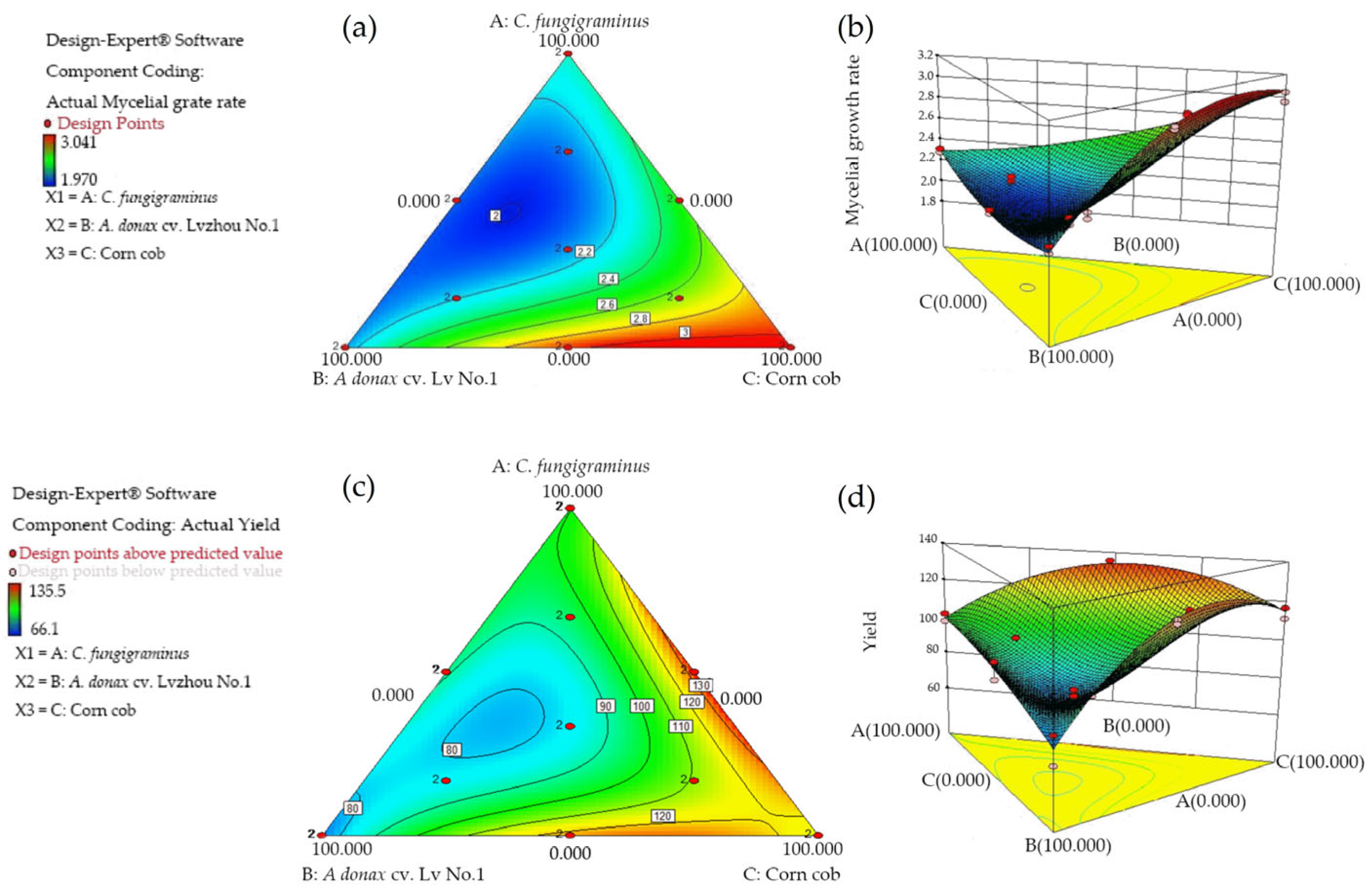
Interaction analysis revealed more complex effects. Regarding the mycelial growth rate, the coefficients of the mixed-term equation showed KBC(1.47) > KAC(−0.58) > KAB(−0.63) > KABC(−10.76), indicating the contribution order of BC (24% A. donax cv. Lvzhou No. 1 + 24% corn cob) > AC (24% C. fungigraminus + 24% corn cob) > AB (24% C. fungigraminus + 24% A. donax cv. Lvzhou No. 1) > ABC (33.3% C. fungigraminus + 33.3% A. donax cv. Lvzhou No. 1 + 33.3% corn cob). The interactive effects of the three main components on mycelial growth rate are illustrated in the ternary contour plot and three-dimensional response surface plot (Figure 1a,b). Colors closer to red indicate a stronger positive interaction, whereas colors approaching blue represent weaker effects. Response surface analysis further confirmed that the interactions between A. donax cv. Lvzhou No. 1 and corn cob, as well as between C. fungigraminus and corn cob, were stronger than those between C. fungigraminus and A. donax cv. Lvzhou No. 1. The mycelial growth rate peaked when a relatively high proportion of corn cob was combined with either A. donax cv. Lvzhou No. 1 or C. fungigraminus. Moreover, mycelial growth rate increased as the proportion of C. fungigraminus decreased, highlighting the critical role of the ratio between corn cob and grass-based materials in promoting mycelial growth.
For the fruiting body yield of F. filiformis, the coefficients of the mixed-term equation followed the order KBC(115.38) > KAC(108.16) > KAB(16.56) > KABC(−1072.76), indicating that the BC interaction contributed the most, followed by AC, while the AB interaction had a relatively weak effect. The negative coefficient of the ternary interaction term (ABC) suggests that simultaneously using high proportions of all three components is unfavorable for yield improvement. The contour plot and three-dimensional response surface plot further corroborated these findings (Figure 1c,d). Color gradients revealed that specific interaction zones combining corn cob with either grass-based material (shown in red) corresponded to higher response values, demonstrating that appropriately controlling the proportion of grass materials while including corn cob can effectively enhance the yield of F. filiformis.

3.3. Formulation Optimization and Cultivation Validation

Based on the target response value for yield and the regression equation analysis using Design-Expert 8.0.6.1, an optimized formulation (Y) was derived to enhance the yield of F. filiformis. This formulation consisted of 20% C. fungigraminus and 28% corn cob, with the remaining 52% composed of supplementary materials (including wheat bran, rice bran, etc.), whose composition and proportions were identical to those in the CK. Compared to formulation CK, formulation Y replaced 12% corn cob and 8% cottonseed hull with C. fungigraminus.
The mycelial growth rate of the optimized formulation Y showed a significant difference (p < 0.05) from that of the other formulations, although it was lower than that of formulations 3, 6, 9 and CK. Under the same cultivation conditions, the growth rates of treatments containing a moderate proportion of grass-based substrate were comparable to that of the control formulation, indicating that the appropriate addition of grass materials did not significantly inhibit mycelial growth. As shown in Table 5, different formulations significantly affected the cultivation cycle and biological efficiency of F. filiformis. The cultivation cycles of formulation 3 (48% corn cob, 42 days), formulation 6 (24% A. donax cv. Lvzhou No. 1 + 24% corn cob, 44 d), formulation 9 (12% C. fungigraminus + 12% A. donax cv. Lvzhou No. 1 + 16% corn cob, 44 d), and the optimized formulation Y (47 d) were similar to and among the shortest compared to that of formulation CK. Regarding biological efficiency, formulation Y performed best, reaching 131.96%, which represents an improvement of approximately 15% over the control. Significant differences in biological efficiency were observed between formulation Y and formulations 3, 5, 6, 9 and CK, as confirmed by multiple comparison analysis among formulations with biological efficiency above 90%. Overall analysis of biological efficiency across all formulations revealed no significant difference (p > 0.05). This was likely attributable to the considerable within-group variability among formulations with biological efficiency below 90% (formulations 1, 2, 4, 7, 8 and 10), which themselves exhibited no significant differences—a variability that probably arose from random bag-to-bag variation. These results demonstrate that formulation Y effectively maintained the yield of F. filiformis while substituting conventional cultivation materials, thereby achieving the primary objective of this study.

3.4. Analysis of Nutritional Components and Heavy Metal Content in F. filiformis

To evaluate the effect of substituting conventional substrate materials with C. fungigraminus on the nutritional composition of F. filiformis, this study compared the main nutritional components and heavy metal content of fruiting bodies cultivated using the optimized formulation Y and the control formulation CK. As shown in Table 6, compared with formulation CK, the fruiting bodies from formulation Y exhibited increases of 0.38%, 0.08%, and 2.30% in crude protein, crude lipid, and crude fiber content, respectively, while total sugar content decreased by 3.22%. Fruiting bodies from both formulations showed high protein and low lipid characteristics. Regarding heavy metals, the cadmium (Cd) and arsenic (As) contents in both formulations were below the maximum limits, and lead (Pb) was not detected, complying with the requirements of GB 2762-2022 (National Food Safety Standard: Maximum Levels of Contaminants in Food) [33]. These results indicate that partially replacing conventional cultivation materials with C. fungigraminus not only ensures the food safety of F. filiformis but also improves certain nutritional qualities, demonstrating potential for practical application.

3.5. Economic Benefit Analysis

According to the market prices in January 2026, the selling prices of F. filiformis, corn cob, cottonseed hull, and C. fungigraminus were 2600, 563.64, 972.45, and 1000 China Yuan (CNY)/ton, respectively, while the price of other cultivation materials was 1304.67 CNY/ton. Calculated based on the formulation proportions, the cost of cultivation substrate for formulation Y was 1036.25 CNY/ton, which was 54.57 CNY/ton higher than that of formulation CK (981.68 CNY/ton). However, formulation Y increased the biological efficiency of F. filiformis by 15% compared with formulation CK. The profits of formulations Y and CK were calculated to be 2394.71 CNY/ton and 2015.34 CNY/ton, respectively, with the profit of formulation Y being 379.37 CNY/ton higher than that of formulation CK, indicating that the increase in yield effectively offset the rise in raw material costs, demonstrating a significant economic benefit.

3.6. Changes in Enzyme Activity of F. filiformis at Different Developmental Stages

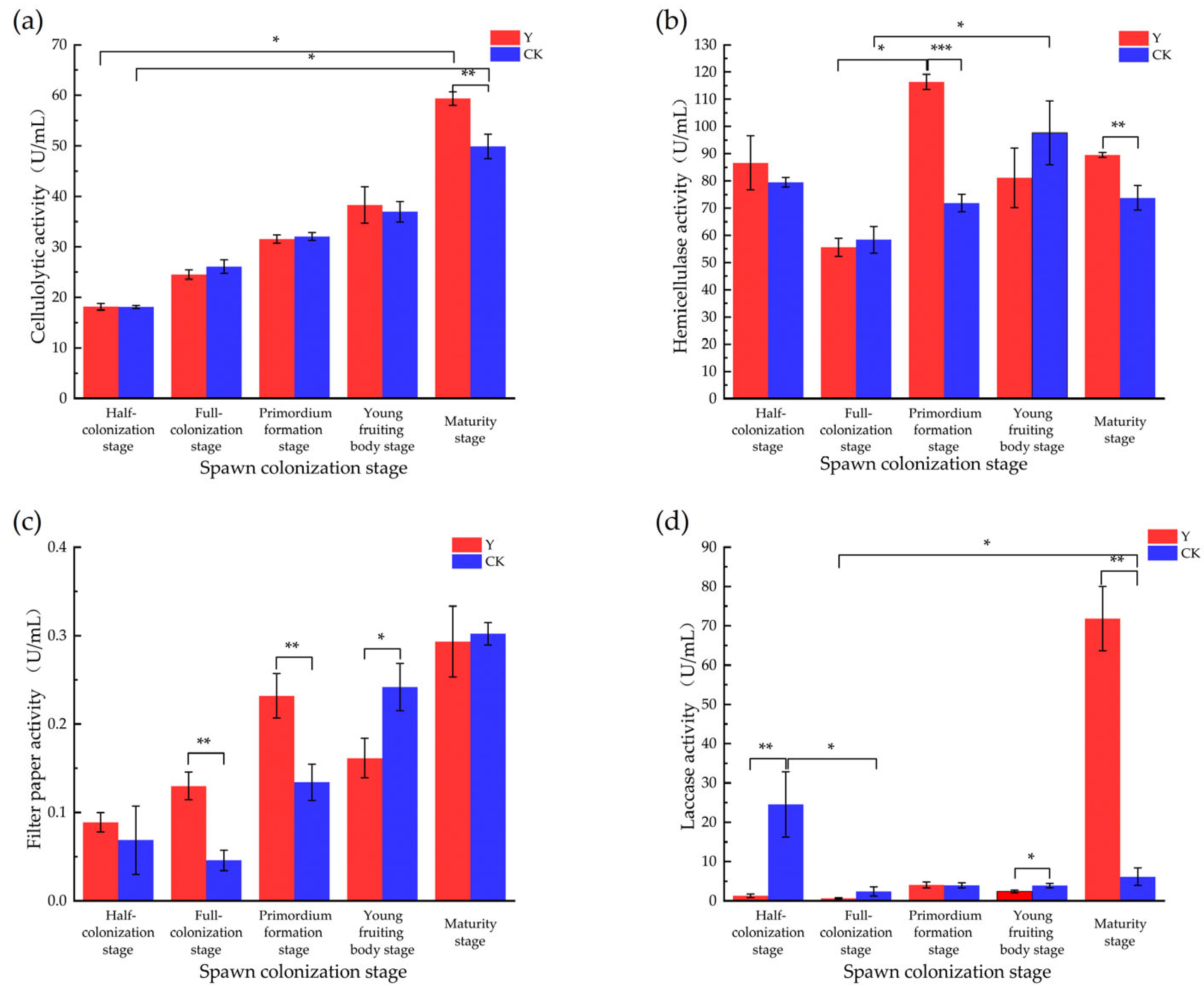
Figure 2 illustrates the changes in extracellular enzyme activities of F. filiformis at different developmental stages under two formulations. Cellulase activity increased significantly from the half-colonization stage to the maturity stage. In formulation Y, cellulase activity peaked at the maturity stage (59.35 U/mL) and remained higher throughout the cultivation stage compared to formulation CK. The dynamics of xylanase activity varied with substrate composition. In formulation Y, xylanase activity reached its maximum (116.00 U/mL) during the primordium formation stage, suggesting that the utilization of hemicellulose in the C. fungigraminus-based substrate was concentrated at the primordium formation stage, which may facilitate primordium formation. Filter paper enzyme activity fluctuated in formulation Y, exhibiting an initial rise followed by a decline and a subsequent increase, whereas in CK, it first decreased and then increased. Filter paper enzyme remained active throughout the entire developmental stage of F. filiformis, although its activity was relatively low during the vegetative growth stage and increased markedly during fruiting body development. The differences in filter paper enzyme activity trends between the two formulations reflect adjustments in nutrient utilization strategies induced by changes in substrate composition. Laccase activity remained at low levels in both formulations throughout the cultivation cycle. In formulation Y, laccase activity peaked at the maturity stage (71.83 U/mL), while in CK, it was relatively higher at the half-colonization stage (24.51 U/mL). This suggests that laccase-mediated lignin degradation was more pronounced in the corn cob-based substrate during the half-colonization stage, whereas in the C. fungigraminus-based substrate, its decomposition capability became more prominent at the maturity stage.

3.7. Correlation Analysis Among Yield, Mycelial Growth Rate, and Enzyme Activities of F. filiformis at Different Stages

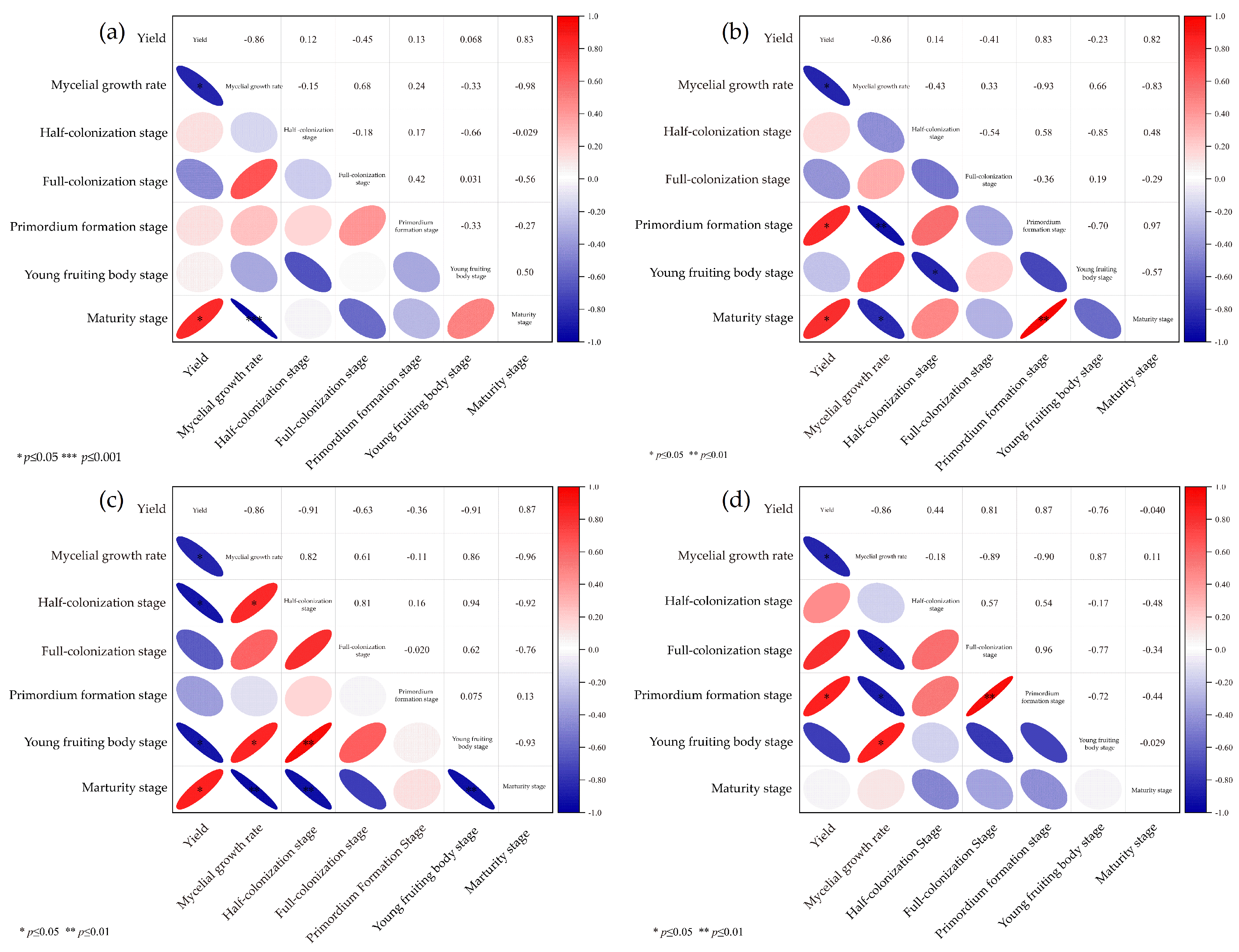
As shown in Figure 3, the yield of F. filiformis exhibited a significant negative correlation with the mycelial growth rate (r = −0.86, p < 0.05). Conversely, it demonstrated significant positive correlations with cellulase activity at the maturity stage (r = 0.83), hemicellulase activity at both the primordium formation stage (r = 0.83) and the maturity stage (r = 0.82), filter paper enzyme activity at the primordium formation stage (r = 0.87), and laccase activity at the maturity stage (r = 0.82; p < 0.05). These correlations point to a developmental shift in resource allocation. During vegetative growth, substrate decomposition appears coupled with mycelial expansion. As growth slows at maturity, lignocellulose degradation becomes more aligned with fruiting body formation. The positive associations of hemicellulase, cellulase, and laccase with yield during the reproductive stages implicate these enzymes in supporting fruiting body development. Similarly, the link between mycelial growth rate and laccase activity at the half-colonization stage suggests a role for laccase in nutrient mobilization during vegetative growth. As these interpretations stem from correlation analyses, they do not imply causation. Instead, they offer preliminary hypotheses for future functional studies—such as gene expression analysis or enzyme inhibition assays—to validate the specific roles of these enzymes in yield determination.

3.8. Effects of Grass-Based Cultivation on F. filiformis Fruiting Bodies Revealed by Transcriptomic Analysis

3.8.1. Evaluation of Total RNA Quality, Sequencing Data Yield, and Quality

The results of total RNA quality assessment for the samples are shown in Table 7. All six total RNA samples tested met the following criteria: 1.8 ≤ OD A260/A280 ≤ 2.1, 1.5 ≤ 28S/18S ≤ 2.5, and RIN ≥ 7. This indicates that the RNA integrity index is acceptable, the concentration meets requirements, and the samples are suitable for cDNA library construction.
The raw sequencing data underwent preprocessing and filtering, yielding the filtered data quality statistics in Table 8. The clean data and clean bases exceeded 43.39 million and 6.41 Gb, respectively. The Q20 base percentage ranged from 99.51% to 99.56% across all samples, while the Q30 base percentage ranged from 98.04% to 98.17%. This indicates that the RNA-seq data quality is reliable and suitable for subsequent data analysis. Transcriptome raw reads have been deposited in NCBI’s Sequence Read Archive (SRA), with accession numbers SAMN56417048 and SAMN56417049.
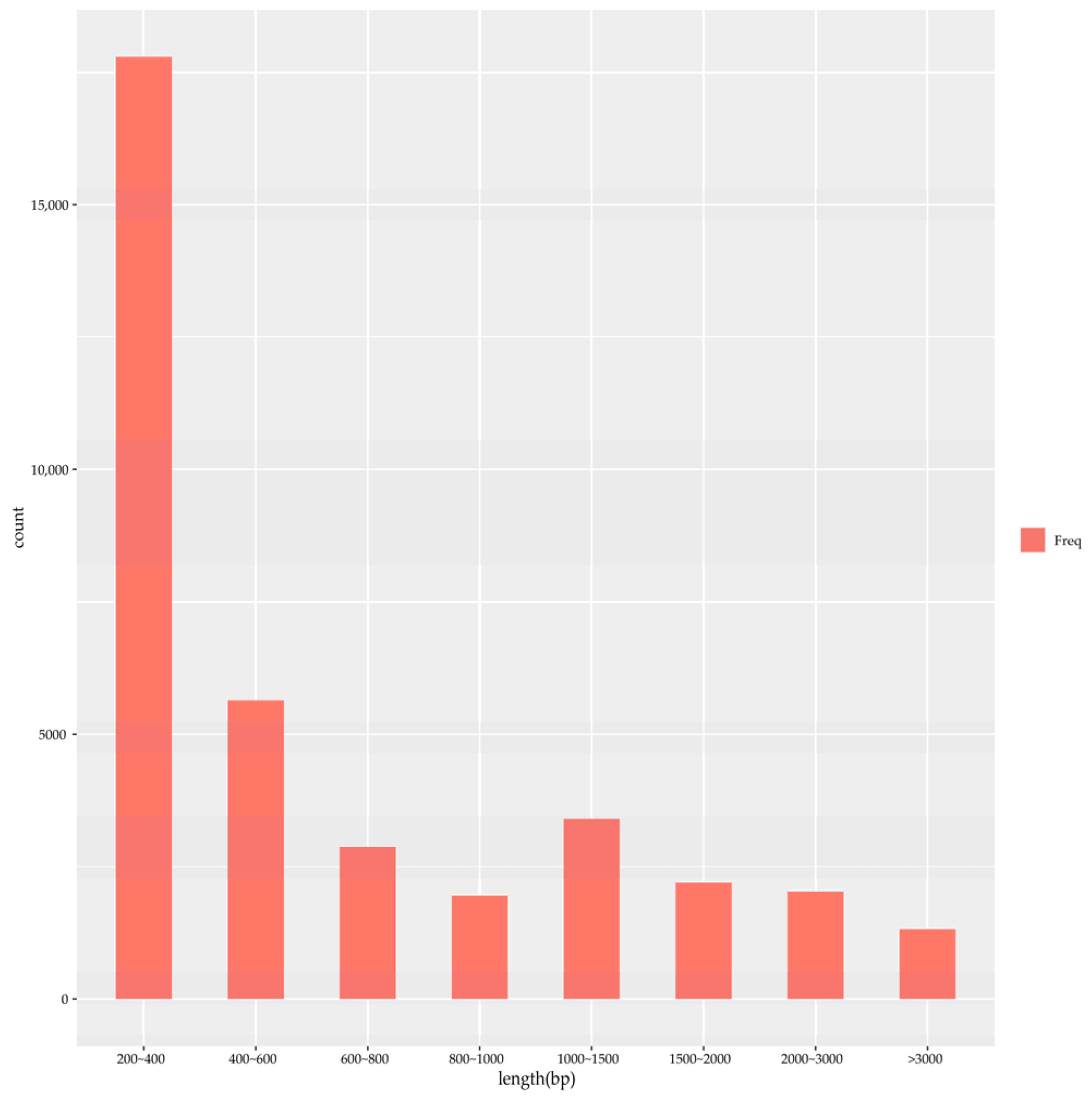
The clean reads from the six F. filiformis samples were assembled de novo using the short-read assembly software Trinity v2.15.1. The longest transcript was selected as the unigene. Assembly quality metrics are provided in Appendix A Table A3 and Figure A1. The unigenes were used for subsequent annotation, quantification, and differential expression analysis.

3.8.2. Screening Results of DEGs

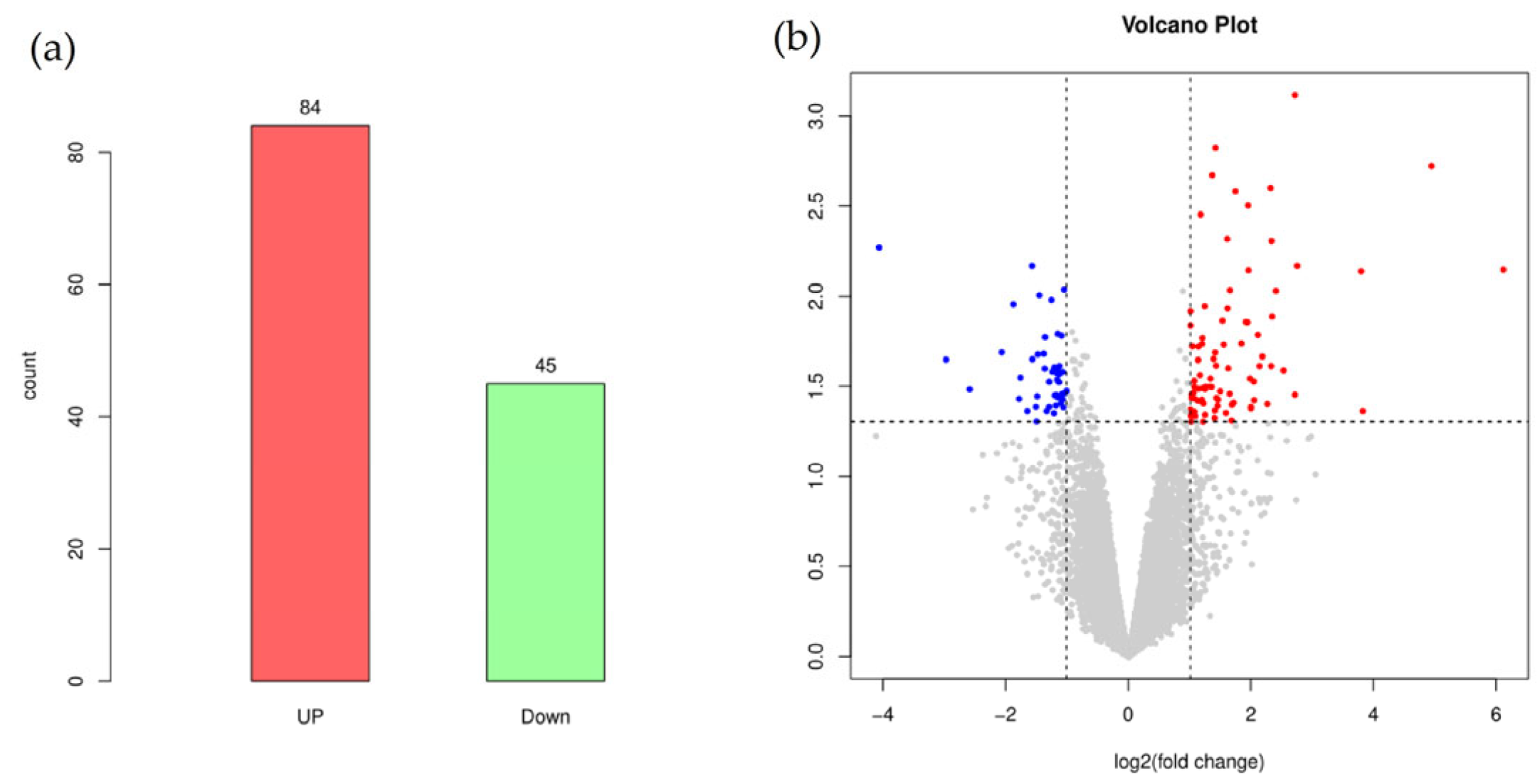
The analysis identified 84 significantly upregulated and 45 significantly downregulated genes in the fruiting bodies of F. filiformis (Attachments 1 and 2). A volcano plot was generated to visualize these DEGs, with data points arranged according to their p-values, as illustrated in Figure 4.

3.8.3. GO and KEGG Enrichment Analysis of DEGs

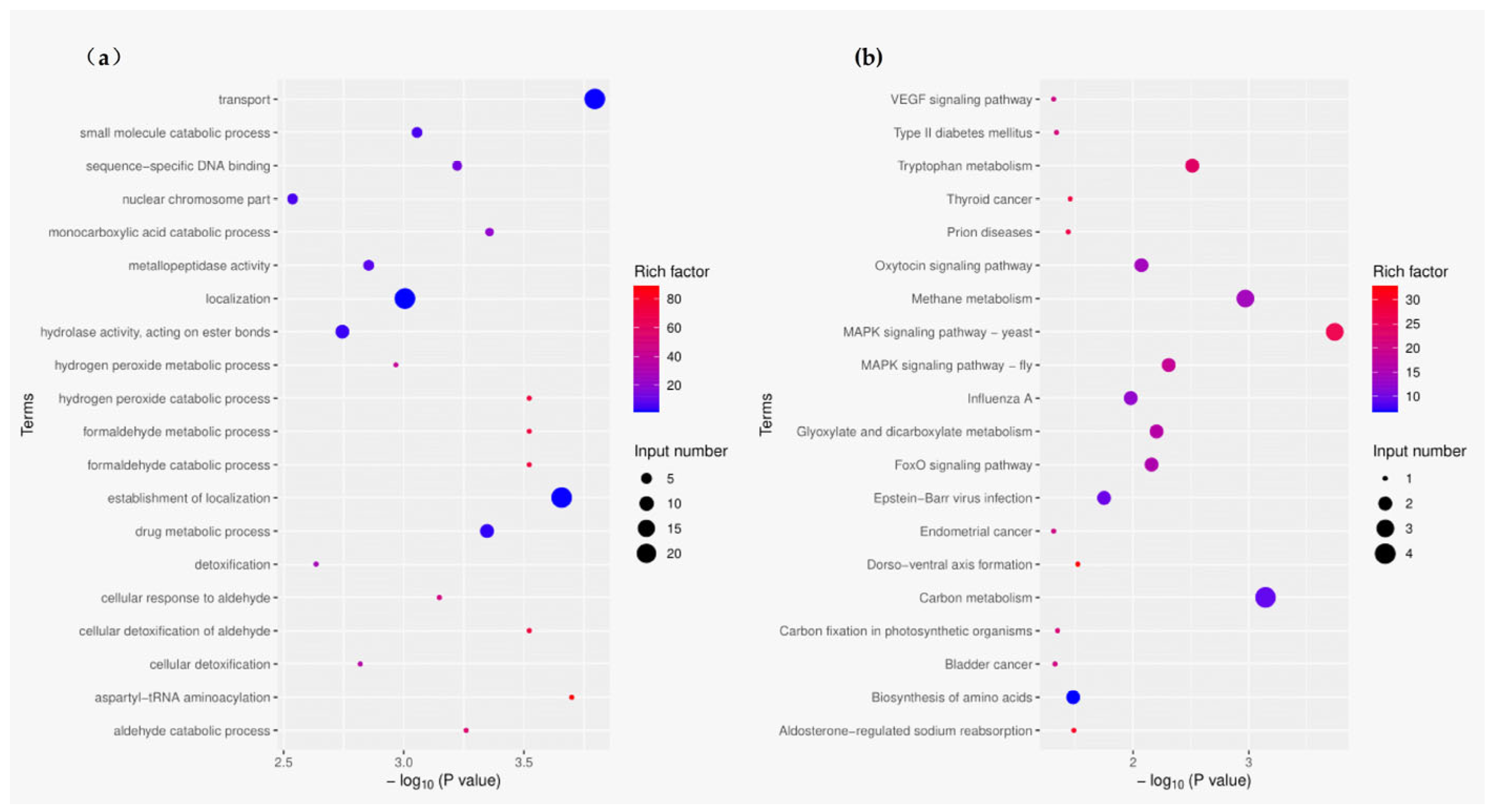
As shown in Figure 5a, there were 65 significantly enriched DEGs in the molecular function, primarily concentrated in functional terms such as hydrolase activity, transferase activity, and hydrolase activity acting on ester bonds. In the biological process, 50 DEGs were enriched, mainly involved in transport, establishment of localization, and carbohydrate metabolic processes. In the cellular component, five DEGs were enriched, predominantly distributed in the nuclear chromosome component. After adding C. fungigraminus cultivation substrate, significant changes occurred in the gene transcriptional regulation patterns of F. filiformis.
As shown in Figure 5b, the DEGs annotated to KEGG pathway categories are mainly enriched in Metabolism and Cellular Processes, specifically in pathways such as tryptophan metabolism, carbon metabolism, methane metabolism, and glyoxylate and dicarboxylate metabolism. These metabolic pathways may directly or indirectly regulate the utilization of carbon and nitrogen sources by hyphae through energy supply and precursor synthesis, thereby promoting the morphogenesis and quality formation of fruiting bodies. Compared with formulation CK, the addition of C. fungigraminus substrate cultivation resulted in more active transcriptional states of the related genes in these metabolic pathways. Based on transcriptomic data analysis, seven key genes that were significantly upregulated during C. fungigraminus substrate cultivation were screened from the above pathways: K01624, K10591, K03781, K01070, K04371, K00122, and K00264.

3.8.4. Validation of DEGs by RT-qPCR

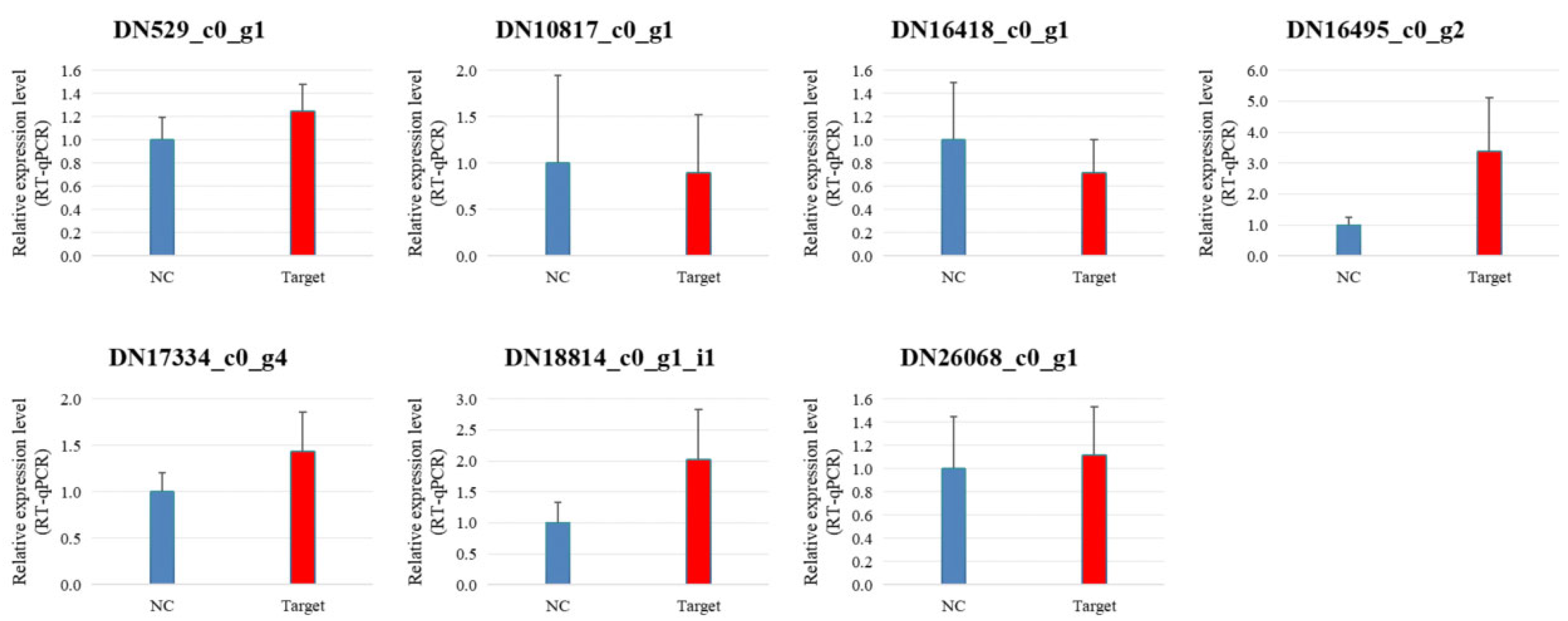
To assess the reliability of the transcriptomic sequencing data, seven differentially expressed unigenes with distinct expression levels were randomly selected for validation through RT-qPCR. As illustrated in Figure 6, the results from RT-qPCR exhibited a high degree of consistency with those obtained from RNA-Seq, thereby confirming the robustness of the transcriptomic dataset.

4. Discussion

4.1. Optimization of C. fungigraminus-Based Substrate via Mixture Design and Its Effects on the Nutritional Composition of F. filiformis

The simplex-lattice mixture design was used for mixture experiments featuring fewer experimental runs, sufficient information, and high prediction accuracy [34]. This method is effective in predicting the optimal proportion of mixtures and is commonly used in the development of food and pharmaceutical products [35,36].
In this study, a simplex-lattice design was employed within the framework of the response surface methodology of substrate formulation utilizing C. fungigraminus, A. donax cv. Lvzhou No. 1, and corn cob as the primary substrates. A quadratic polynomial regression model was constructed to analyze the effects of varying these substrate components and their interactions on yield. With yield as the response variable, we determined the optimal cultivation formulation (Formulation Y), which consisted of 20% C. fungigraminus and 28% corn cob. Validation experiments demonstrated that the biological efficiency of formulation Y was significantly higher than that of the CK formulation. Furthermore, the synergistic interaction between C. fungigraminus and corn cob effectively reduced the cultivation cycle and increased yield. Nutritional analysis revealed that fruiting bodies cultivated with formulation Y exhibited increased contents of crude protein, crude lipid, and crude fiber by 0.38%, 0.08%, and 2.30%, respectively, alongside a 3.22% decrease in total sugar content compared to the control. This indicates a nutritional profile characteristic of high protein and low lipid content, signifying the effectiveness of formula and substrate selection. Importantly, all tested heavy metal residues complied with food safety standards. In summary, the partial substitution of traditional substrates with C. fungigraminus can enhance the nutritional quality of F. filiformis while ensuring its safety for consumption.

4.2. Dynamic Effects of C. fungigraminus Substrate on Extracellular Enzyme Activities in F. filiformis

Extracellular enzymes serve as crucial functional factors during the growth and developmental stages of edible fungi. They are primarily responsible for degrading organic macromolecules in lignocellulosic substrates to supply nutrients to the mycelium during growth and development. Their activity leads to mycelial colonization, which signifies nutrient utilization [37]. The dynamic regulation of enzyme systems is intrinsically linked to the metabolic adaptability of edible fungi. By analyzing these dynamic enzyme systems, we can reveal their degradation capacity and utilization strategies for cultivation substrates [38,39].
This study investigated the relationship between substrate optimization and dynamic changes in extracellular enzyme activity by comparing the effects of C. fungigraminus substrate (formulation Y) and traditional corn cob substrate (formulation CK) on the extracellular enzyme activity dynamics of F. filiformis. The results showed that the cellulase, hemicellulase, and laccase activities of formulation Y during the maturity stage were significantly higher than those of formulation CK. This change helps enhance the degradation efficiency of lignocellulosic components, thereby providing a more abundant nutrient supply for fruiting body growth. This was proven by the achievement of a high yield in formulation Y. Correlation analysis further revealed that the mycelial growth rate was negatively correlated with fruiting body yield but positively correlated with filter paper enzyme activity during the young fruiting body stage. A certain negative correlation was observed between cellulase activity in the young fruiting body stage and mycelial growth rate, indicating that nutrients obtained from substrate decomposition by mycelia during this stage were primarily allocated to fruiting body development. Overall, through the synergistic action of hydrolytic enzymes such as cellulase, hemicellulase, and laccase, mycelia accelerate the bioconversion and release of lignocellulose, thereby effectively promoting material accumulation and yield enhancement in fruiting bodies.

4.3. Transcriptomic Mechanisms of F. filiformis Response to C. fungigraminus-Based Substrate

Transcriptomics involves the systematic analysis of all RNA molecules (especially mRNAs and non-coding RNAs) under specific conditions to uncover gene expression patterns and regulatory mechanisms and dynamic regulatory mechanisms [40]. In edible fungi research, transcriptomics identifies DEGs by comparing transcriptomic data under different conditions (strains, developmental stages, environments, substrates, etc.), conducts functional enrichment analysis of DEGs, and investigates significantly altered metabolic pathways or biological processes under varying conditions. This provides crucial molecular-level insights for elucidating the mechanisms underlying their growth and development, metabolic regulation, and environmental adaptation [41].
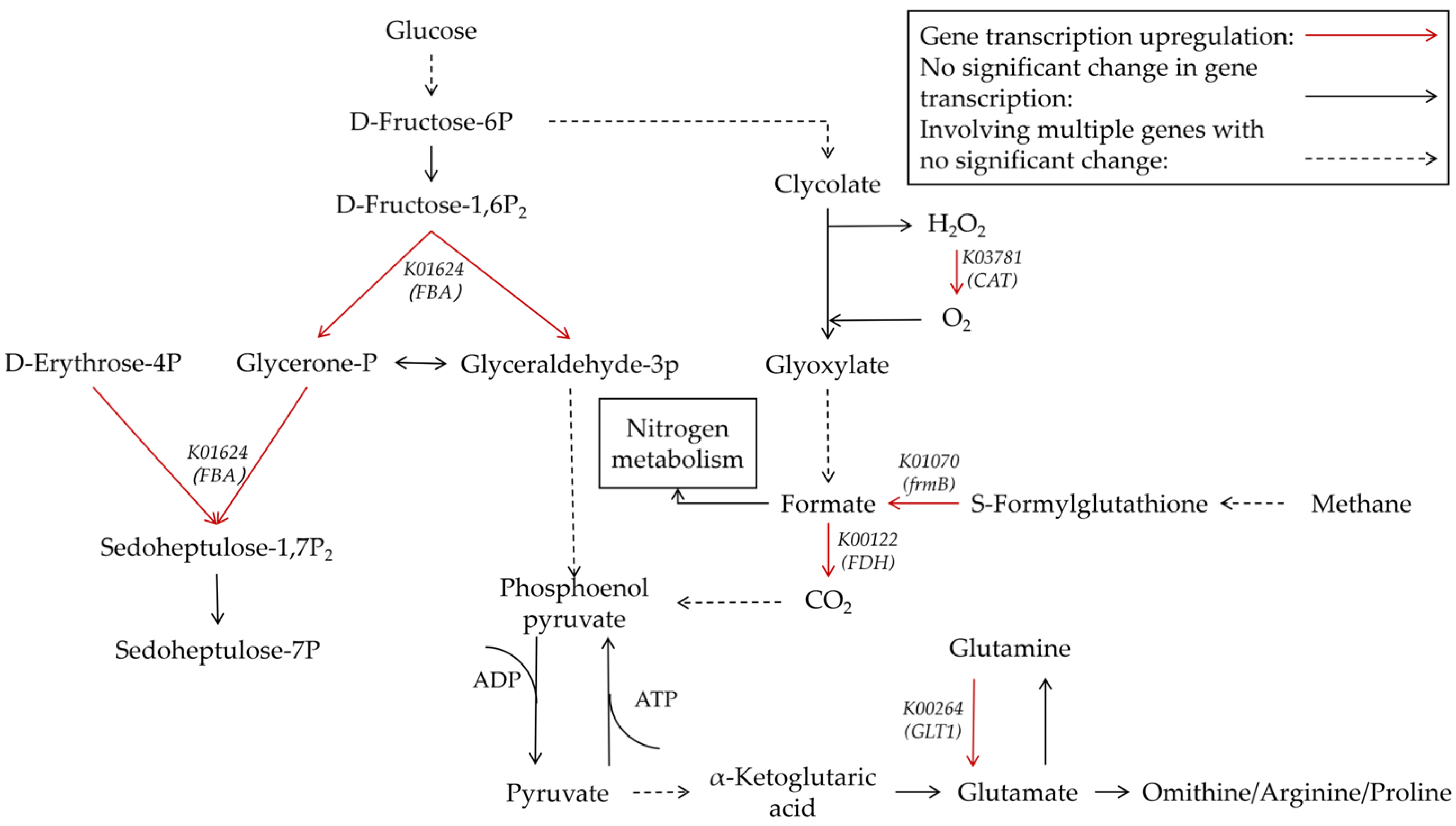
This study conducted transcriptome analysis on fresh fruiting bodies of F. filiformis from formulations CK and Y using high-throughput sequencing technology. A total of 37,210 unigenes were obtained through a de novo assembly strategy and annotated in the GO and KEGG databases, respectively. GO classification revealed that these unigenes were involved in 45 biological functions, covering three major categories: molecular function, cellular component, and biological process. Notably, the number of unigenes related to molecular function and bioengineering showed a significant increase, indicating their excellent performance in metabolism and enzyme activity regulation. Additionally, unigenes associated with transport functions and carbohydrate metabolic processes exhibited relatively high abundance, suggesting that the addition of C. fungigraminus as a cultivation substrate altered the substrate utilization pattern of F. filiformis. KEGG pathway analysis further revealed that genes associated with the efficient utilization of Juncao substrate were primarily enriched in pathways such as carbon metabolism, methane metabolism, glyoxylate and dicarboxylate metabolism, and amino acid biosynthesis. The coordinated expression of these genes not only supports fundamental energy metabolism and substance synthesis, but also reflects the unique substrate utilization strategy of F. filiformis towards Juncao. Precursor molecules for nutrient utilization originate from the glycolytic pathway (EMP pathway) and the reductive pentose phosphate cycle (CBB cycle). Analysis of the annotated data indicates that the cycle pathways are illustrated in Appendix A Figure A2. The glycolytic pathway enhances glycolysis through the action of fructose-bisphosphate aldolase (FBA, K01624) and catalase (CAT, K03781), thereby improving lignocellulose degradation efficiency and the accumulation rate of hyphal biomass. This process supplies formic acid for utilization in the ammonia metabolism pathway. FBA catalyzes the conversion of fructose-1,6-bisphosphate into glycerone phosphate and glyceraldehyde-3-phosphate; its upregulated expression suggests that hyphae preferentially decompose fructose-1,6-bisphosphate to form pyruvate, which subsequently enters the amino acid metabolism pathway within C. fungigraminus substrate. Formate dehydrogenase (FDH, K00122) is highly expressed during the hyphal maturity stage, indicating a shift in carbon metabolism towards nitrogen assimilation. When the carbon source from C. fungigraminus substrate is limited, catalase (CAT, K03781) is activated, converting glycolate to glyoxylate, thereby bypassing the decarboxylation steps of the TCA cycle, reducing carbon loss, and regenerating oxaloacetate. In the amino acid biosynthesis pathway, the upregulated gene glutamate synthase (GLT1, K00264) serves as a core enzyme in ammonia metabolism, catalyzing the conversion of glutamine to glutamate and ammonia. The transcript level of GLT1 is significantly upregulated in fruiting bodies cultivated with C. fungigraminus substrate, indicating that F. filiformis enhances GLT1 activity to recycle carbon and nitrogen released through hyphal autolysis or other degradation pathways. This pathway serves as the primary route for the synthesis of essential amino acids. The increased expression of GLT1 enhances lipid synthesis mediated by acetyl-CoA carboxylase, thereby optimizing the cell membrane structure of fruiting bodies and facilitating primordium differentiation. Furthermore, FBA may influence carbon utilization by regulating glycolytic intermediates. The CO2 produced by FDH may participate in formate oxidation, while FrmB enhances nucleic acid synthesis capacity and antioxidant stress tolerance through the provision of methyl groups and the glutathione cycle. In summary, the C. fungigraminus substrate induces significant transcriptional changes in F. filiformis, with genes related to carbon metabolism, glyoxylate, and amino acid synthesis being co-upregulated. This transcriptional reprogramming may be associated with a 15% increase in biological efficiency. This study elucidates the transcriptional response mechanism of F. filiformis to C. fungigraminus substrate, providing a theoretical basis for substrate improvement. While transcriptomic data reflect gene expression changes, metabolic flux alterations require further validation through metabolomics.

5. Conclusions

This study systematically demonstrates the feasibility of using C. fungigraminus as a sustainable alternative substrate for cultivating F. filiformis. Through formulation optimization, enzymatic activity analysis, and transcriptomic profiling, we identified the optimal formulation Y (20% C. fungigraminus, 28% corn cob). Notably, this formulation significantly increased biological efficiency by 15% compared to the control (131.92% vs. 115.27%), shifted fruiting body quality (higher protein and lower fat content), and aligned with food safety standards. Mechanistically, formulation Y promoted lignocellulose degradation by upregulating cellulase, hemicellulase, and laccase activities during the harvest stage. Transcriptomic analysis further revealed significant upregulation of key genes involved in carbon metabolism, the glyoxylate cycle, and amino acid synthesis (e.g., FBA, CAT, and GLT1), indicating a remodeled metabolic network that supports fruiting body development. Economically, although formulation Y increased raw material costs by 54.57 CNY, the 15% yield increase corresponds to an additional output value of 379.37 CNY per ton of cultivation substrate, thereby affirming its economic viability. In conclusion, C. fungigraminus represents a promising alternative substrate that simultaneously enhances yield, quality, and safety in F. filiformis cultivation. Future research should investigate the compositional variability of different C. fungigraminus sources and their impacts on large-scale production to facilitate industrial adoption.

Supplementary Materials

The following supporting information can be downloaded at: https://www.mdpi.com/article/10.3390/horticulturae12040420/s1.

Author Contributions

Conceptualization, Z.L., D.L. and J.W.; methodology, W.H. and J.W.; software, W.H., H.C. and J.L.; validation, H.C., W.H. and Y.W.; formal analysis, J.W., L.Z. and Y.L.; investigation, B.M.U. and W.H.; resources, L.Z. and D.L.; data curation, W.H., J.W. and H.C.; writing—original draft preparation, W.H., H.C. and J.L.; writing—review and editing, W.H., H.C. and B.M.U.; visualization, Y.W. and Y.L.; funding acquisition, L.Z. and D.L. All authors have read and agreed to the published version of the manuscript.

Funding

This research was funded by the National Key Research and Development Program Project: “Key Technologies for High-Efficiency Cultivation of Edible and Medicinal Fungi and Feed Conversion Using Juncao” (2023YFD1600502).

Data Availability Statement

The original contributions presented in this study are included in the article/Supplementary Materials. Further inquiries can be directed to the corresponding author.

Acknowledgments

The authors acknowledge the use of DeepSeek (v3.1), a language-model-based AI tool, for English language polishing under the full supervision of the authors.

Conflicts of Interest

The authors declare no conflicts of interest.

Abbreviations

The following abbreviations are used in this manuscript:
CKControl formulation
DNS3,5-Dinitrosalicylic Acid
CMCCarboxymethylcellulose
FPaseFilter Paper Enzyme
ABTS2,2′-Azinobis-(3-ethylbenzthiazoline-6-sulphonate)
ANOVAAnalysis of Variance
DEGsDifferentially Expressed Genes
GOGene Ontology
KEGGKyoto Encyclopedia of Genes and Genomes
RNARibonucleic Acid
mRNAMessenger RNA
RT-qPCRReverse Transcription Quantitative Polymerase Chain Reaction
RNA-SeqRibonucleic Acid Sequencing
TCATricarboxylic Acid Cycle
CNY
USD
OD
RIN
SRA
Chinese Yuan
United States Dollar
Optical Density
RNA Integrity Number
Sequence Read Archive

Appendix A

Table A1. ANOVA of binary polynomial regression model for mycelial growth rate.
SourceSum of SquaresdfMean SquareF-Valuep-Value
Model2.4460.4130.52<0.0001
Linear Mixture1.8220.9168.42<0.0001
AB0.03310.0332.490.1383
AC0.02810.0282.100.1710
BC0.1810.1813.730.0026
ABC0.2210.2216.90.0012
Residual0.17130.013
Lack of Fit0.1630.05340.88<0.001
Pure Error0.0013
Cor Total2.6119
Note: AB: C. fungigraminus × A. donax cv. Lvzhou No. 1; AC: C. fungigraminus × corn cob; BC: A. donax cv. Lvzhou No. 1 × corn cob; ABC: ternary interaction. Units: mycelial growth rate (mm/d).
Table A2. ANOVA of binary polynomial regression model for yield.
SourceSum of SquaresdfMean SquareF-Valuep-Value
Model6709.2861118.2133.35<0.0001
Linear Mixture3797.4221898.7156.64<0.0001
AB23.15123.150.690.4209
AC988.141988.1429.470.0001
BC1124.4311124.4333.54<0.0001
ABC2236.3812236.3866.71<0.0001
Residual435.821333.52
Lack of Fit229.48376.493.710.0500
Pure Error206.341020.63
Cor Total7145.1019
Note: AB: C. fungigraminus × A. donax cv. Lvzhou No. 1; AC: C. fungigraminus × corn cob; BC: A. donax cv. Lvzhou No. 1 × corn cob; ABC: ternary interaction. Units: yield (g/bag).
Table A3. Statistics of de novo assembly quality.
TypeTrinityUnigene
N5018771408
N90417304
Average length1083.69799.71
Max length1199011990
Min length201201
Total base6141533929757320
Total contigs5668337210
GC_content50.6450.62
GC_content_max83.683.6
GC_content_min9.059.05
Figure A1. Length distribution of unigenes.
Horticulturae 12 00420 g0a1
Figure A2. Regulatory performance of DEGs in KEGG pathways.
Horticulturae 12 00420 g0a2

References

  1. Wang, P.M.; Liu, X.B.; Dai, Y.C.; Horak, E.; Steffen, K.; Yang, Z.L. Phylogeny and Species Delimitation of Flammulina: Taxonomic Status of Winter Mushroom in East Asia and a New European Species Identified Using an Integrated Approach. Mycol. Progress 2018, 17, 1013–1030. [Google Scholar] [CrossRef]
  2. Tian, L.; Ma, Z.; Qiu, H.; Liu, X.; Wu, T.; Ge, F.; Liu, R.; Zhu, J.; Shi, L.; Jiang, A.; et al. Chitosan Increases Lysine Content through Amino Acid Transporters in Flammulina filiformis. Foods 2022, 11, 2163. [Google Scholar] [CrossRef] [PubMed]
  3. Chumroenphat, T.; Phuseerit, O. Comparative Study on Amino Acids, Polyphenols and Biological Activity of Coprinopsis radiata (a Mushroom) with Different Protein Extraction Methods. In Vegetos; 2025; prepublish. [Google Scholar] [CrossRef]
  4. Zhang, Y.; Zhong, C.; Liu, S.; Du, L.; Ma, H.; Zhang, H.; Li, Y.; He, C.; Guan, L. Ultrasonic Assisted Three-Phase Partitioning Extraction and Bioactivities Validation of Polysaccharides from Flammulina velutipes Residues. Food Chem. X 2025, 31, 103177. [Google Scholar] [CrossRef] [PubMed]
  5. Liang, Q.; Zhao, Q.; Hao, X.; Wang, J.; Ma, C.; Xi, X.; Kang, W. The Effect of Flammulina velutipes Polysaccharide on Immunization Analyzed by Intestinal Flora and Proteomics. Front. Nutr. 2022, 9, 841230. [Google Scholar] [CrossRef]
  6. Tang, C.; Hoo, P.C.-X.; Tan, L.T.-H.; Pusparajah, P.; Khan, T.M.; Lee, L.-H.; Goh, B.-H.; Chan, K.-G. Golden Needle Mushroom: A Culinary Medicine with Evidenced-Based Biological Activities and Health Promoting Properties. Front. Pharmacol. 2016, 7, 474. [Google Scholar] [CrossRef]
  7. Chen, W.; Li, Y.; Shao, Y.; Chen, H.; Gong, M.; Wang, L.; Li, N.; Wang, Y.; Zou, G. The Exploration of Cordyceps Militaris Extract as a Postharvest Preservative for Flammulina filiformis. Horticulturae 2025, 11, 472. [Google Scholar] [CrossRef]
  8. Jia, W.; Wang, H.; Feng, T.; Liu, X.; Liu, Z.; Li, Z.; Wang, W.; Zhang, J. Structural Characterization of Polysaccharide from Flammulina velutipes and Its Impact on Hyperlipidemia through Modulation of Hepatic Cholesterol Metabolism and Gut Microbiota. Foods 2025, 14, 3452. [Google Scholar] [CrossRef]
  9. Li, W.; Han, J.; Xie, H.; Sun, Y.; Li, F.; Gong, Z.; Zou, Y. Comparative Proteomic Analysis of Flammulina filiformis Reveals Substrate-Specific Enzymatic Strategies for Lignocellulose Degradation. Horticulturae 2025, 11, 912. [Google Scholar] [CrossRef]
  10. Liu, Y.; Feng, Z.; Li, H.; Li, Q.; Wang, Z.; Zhang, Q.; Ge, N. Feasibility Study on Reed Rods Applied in High-Yield Formula of Flammulina filiformis Factory Cultivation. J. Fungal Res. 2023, 21, 286–293. [Google Scholar] [CrossRef]
  11. Su, D.; Lin, X.; Zheng, Y.; Zeng, L.; Huang, M.; Chen, G.; Yao, Q. Determination of 11 Plant Growth Regulators in Cottonseed Hulls by HPLC-MS/MS. Chin. J. Pestic. Sci. 2025, 27, 947–957. [Google Scholar] [CrossRef]
  12. Sun, R.; Han, J.; Yang, P.; Yang, S.; Xie, H.; Li, J.; Huang, C.; Yao, Q.; Wang, Q.; Li, H.; et al. Formula Screening and Optimization of Physical and Chemical Properties for Cultivating Flammulina Filiformis Using Soybean Straw as Substrate. Horticulturae 2025, 11, 947. [Google Scholar] [CrossRef]
  13. Zhang, W.-R.; Liu, S.-R.; Su, G.-P.; Ma, L.-Y. Camellia oleifera Seed Shell: An Effective Substrate for Producing Flammulina velutipes Fruit Bodies with Improved Nutritional Value. Int. J. Agric. Biol. 2019, 21, 989–996. [Google Scholar] [CrossRef]
  14. Zhou, J.; Lin, X.; Lin, H.; Lin, D.; Yang, F.; Lin, Z. Advances on Juncao research and application. J. Fujian Agric. For. Univ. (Nat. Sci. Ed.) 2020, 49, 145–152. [Google Scholar] [CrossRef]
  15. Claude, I.; Aimable, N.; Mediatrice, H.; Zhou, H.; Lin, D.; Liu, P.; Lin, Z. Evaluation of the Influence of Varied Juncao Grass Substrates on Physiological and Enzymatic Reactions of Pleurotus ostreatus. Curr. Issues Mol. Biol. 2024, 46, 9493–9502. [Google Scholar] [CrossRef]
  16. Lei, Y.; Jiang, F.; Di, X.; Lin, D.; Ling, P.; Zhang, Y.; Sun, Y.; Lin, Z.; Li, J. Cultivating Dictyophora indusiata with Cenchrus fungigraminus and Seafood Mushroom Spent Substrate Enhanced Soil Nutrient Accumulation and Microbial Community Stabilisation. Environ. Technol. Innov. 2025, 38, 104200. [Google Scholar] [CrossRef]
  17. Liu, X.; Lu, Z.; Sossah, F.L.; Xu, L.; Cheng, H.; Li, Q.; Ding, Y.; Yang, Y.; Li, Y. Optimization of Agro-Residue Substrates for Sustainable Cultivation of Pleurotus giganteus in Hainan, China. Horticulturae 2025, 11, 1412. [Google Scholar] [CrossRef]
  18. Zervakis, G.I.; Koutrotsios, G.; Katsaris, P. Composted versus Raw Olive Mill Waste as Substrates for the Production of Medicinal Mushrooms: An Assessment of Selected Cultivation and Quality Parameters. BioMed Res. Int. 2013, 2013, 546830. [Google Scholar] [CrossRef]
  19. Kamarudin, N.B.; Sharma, S.; Gupta, A.; Kee, C.G.; Chik, S.M.S.B.T.; Gupta, R. Statistical Investigation of Extraction Parameters of Keratin from Chicken Feather Using Design-Expert. 3 Biotech 2017, 7, 127. [Google Scholar] [CrossRef]
  20. GB/T 15672; Determination of Total Sugar Content in Edible Fungi. Ministry of Agriculture and Rural Affairs of the People’s Republic of China: Shanghai, China, 2009.
  21. Yue, F.; Zhang, J.; Xu, J.; Niu, T.; Lü, X.; Liu, M. Effects of Monosaccharide Composition on Quantitative Analysis of Total Sugar Content by Phenol-Sulfuric Acid Method. Front. Nutr. 2022, 9, 963318. [Google Scholar] [CrossRef]
  22. GB 5009.5; Determination of Protein in Food. National Health and Family Planning Commission of the People’s Republic of China. China Food and Drug Administration: Beijing, China, 2016.
  23. Rexroad, P.R.; Cathey, R.D. Pollution-Reduced Kjeldahl Method for Crude Protein. J. Assoc. Off. Anal. Chem. 1976, 59, 1213–1217. [Google Scholar] [CrossRef]
  24. GB/T 5009.10; Determination of Crude Fiber in Plant-Based Foods. Standardization Administration of China: Beijing, China, 2003.
  25. Flodman, H.R.; Boyer, E.J.; Muthukumarappan, A.; Noureddini, H. Extraction of Soluble Fiber from Distillers’ Grains. Appl. Biochem. Biotechnol. 2012, 166, 1070–1081. [Google Scholar] [CrossRef]
  26. GB 5009.6; Determination of Fat in Food. China Food and Drug Administration. National Health and Family Planning Commission of the People’s Republic of China: Beijing, China, 2016.
  27. Gao, S.; Qian, Z.; He, Z.; Zhou, W.; Xu, H. Analysis of Nutrients in Apriona Germari and Treatment of Diarrhea in Mice Fed with Insect Powder. Biochem. Biophys. Rep. 2023, 33, 101368. [Google Scholar] [CrossRef]
  28. GB 5009.268; Determination of Multiple Elements in Food. State Administration for Market Regulation. National Health Commission of the People’s Republic of China: Beijing, China, 2016.
  29. Kosanić, M.; Ranković, B.; Rančić, A.; Stanojković, T. Evaluation of Metal Contents and Bioactivity of Two Edible Mushrooms Agaricus campestris and Boletus edulis. Emir. J. Food Agric. 2017, 29, 98–103. [Google Scholar] [CrossRef]
  30. Ding, C.; Li, M.; Hu, Y. High-Activity Production of Xylanase by Pichia stipitis: Purification, Characterization, Kinetic Evaluation and Xylooligosaccharides Production. Int. J. Biol. Macromol. 2018, 117, 72–77. [Google Scholar] [CrossRef]
  31. Zhang, C.; You, S.; Zhang, J.; Qi, W.; Su, R.; He, Z. An Effective In-Situ Method for Laccase Immobilization: Excellent Activity, Effective Antibiotic Removal Rate and Low Potential Ecological Risk for Degradation Products. Bioresour. Technol. 2020, 308, 123271. [Google Scholar] [CrossRef]
  32. Wu, J.; Mao, X.; Cai, T.; Luo, J.; Wei, L. KOBAS Server: A Web-Based Platform for Automated Annotation and Pathway Identification. Nucleic Acids Res. 2006, 34, W720–W724. [Google Scholar] [CrossRef] [PubMed]
  33. GB 2762; Limits of Contaminants in Food. National Health Commission of the People’s Republic of China, State Administration for Market Regulation: Beijing, China, 2022.
  34. Muteki, K.; MacGregor, J.F.; Ueda, T. Mixture Designs and Models for the Simultaneous Selection of Ingredients and Their Ratios. Chemom. Intell. Lab. Syst. 2007, 86, 17–25. [Google Scholar] [CrossRef]
  35. Harimurti, S.; Amalia, P.N.; Sukamdi, D.P.; Widada, H.; Nurul Makiyah, S.N.; Kesetyaningsih, T.W.; Ghozali, M.T.; Susanti, H. Optimization of Sago Starch and Sodium Alginate Crosslink, Including Calcium Chloride as a Capsule Alternative Using the Simplex Lattice Design. Pharmacia 2025, 72, 1–11. [Google Scholar] [CrossRef]
  36. Setyawan, E.I.; Rohman, A.; Setyowati, E.P.; Nugroho, A.K. The Combination of Simplex Lattice Design and Chemometrics in the Formulation of Green Tea Leaves as Transdermal Matrix Patch. Pharmacia 2021, 68, 275–282. [Google Scholar] [CrossRef]
  37. Petraglia, T.; Latronico, T.; Liuzzi, G.M.; Fanigliulo, A.; Crescenzi, A.; Rossano, R. Hydrolytic Enzymes in the Secretome of the Mushrooms, P. eryngii and P. ostreatus: A Comparison between the Two Species. Molecules 2025, 30, 2505. [Google Scholar] [CrossRef]
  38. Wang, Q.; Xiao, T.; Juan, J.; Qian, W.; Zhang, J.; Chen, H.; Shen, X.; Huang, J. Lignocellulose Degradation Efficiency of Agaricus bisporus Strains Grown on Wheat Straw-Based Compost. J. Agric. Food Chem. 2023, 71, 10607–10615. [Google Scholar] [CrossRef]
  39. Fang, M.; Sun, X.; Yao, F.; Lu, L.; Ma, X.; Shao, K.; Kaimoyo, E. A Combination of Transcriptome and Enzyme Activity Analysis Unveils Key Genes and Patterns of Corncob Lignocellulose Degradation by Auricularia heimuer under Cultivation Conditions. J. Fungi 2024, 10, 545. [Google Scholar] [CrossRef]
  40. Wang, R.; Ma, P.; Li, C.; Xiao, L.; Liang, Z.; Dong, J. Combining Transcriptomics and Metabolomics to Reveal the Underlying Molecular Mechanism of Ergosterol Biosynthesis during the Fruiting Process of Flammulina velutipes. BMC Genom. 2019, 20, 999. [Google Scholar] [CrossRef]
  41. Xie, M.; Wang, J.; Wang, F.; Wang, J.; Yan, Y.; Feng, K.; Chen, B. A Review of Genomic, Transcriptomic, and Proteomic Applications in Edible Fungi Biology: Current Status and Future Directions. J. Fungi 2025, 11, 422. [Google Scholar] [CrossRef]
Figure 1. Interactive effects of main substrates on mycelial growth rate (a): ternary contour plot; (b): 3D response surface plot; interactive effects of main substrates on yield; (c): ternary contour plot; (d): 3D response surface plot. Note: A represents C. fungigraminus; B represents A. donax cv. Lvzhou No. 1; and C represents corn cob.
Horticulturae 12 00420 g001
Figure 2. Changes in cellulase (a), hemicellulase (b), filter paper enzyme (c), and laccase (d) activities of F. filiformis at different developmental stages under formulations CK and Y. Note: * represents p < 0.05 for pairwise comparisons under non-parametric tests; ** represents p < 0.01 for two-by-two comparisons under non-parametric tests; and *** represents p < 0.001 for two-by-two comparisons under non-parametric tests.
Horticulturae 12 00420 g002
Figure 3. Correlation analysis of F. filiformis yield, mycelial growth rate, and activity changes of cellulase (a), hemicellulase (b), filter paper enzyme (c), and laccase (d) at different developmental stages. Note: * represents p ≤ 0.05; ** represents p ≤ 0.01, *** represents p ≤ 0.001.
Horticulturae 12 00420 g003
Figure 4. (a) Number of DEGs; (b) volcano plot of DEGs. Each dot in the plot represents a gene. Different colors indicate different differential expression statuses: Red dots: Significantly upregulated genes, meeting the threshold of |log2FC| ≥ 1 and p-value < 0.05. Blue dots: Significantly downregulated genes, meeting the same statistical threshold. Gray dots: Genes with no significant difference in expression (not meeting the above thresholds).
Horticulturae 12 00420 g004
Figure 5. (a) Scatter plot of GO functional classification; (b) scatter plot of KEGG pathway enrichment analysis.
Horticulturae 12 00420 g005
Figure 6. Validation of DEGs by RT-qPCR.
Horticulturae 12 00420 g006
Table 1. Substrate formulation compositions (% of total dry weight).
FormulationABCSupplementary Materials
1480052
2048052
3004852
42424052
52402452
60242452
7328852
8883252
9832852
1016161652
CK004052
Note: A: C. fungigraminus; B: A. donax cv. Lvzhou No. 1; C: corn cob. All proportions are expressed on a mass/mass basis (w/w).
Table 2. Primer information for RT-qPCR analysis.
Unigene IDPrimer-FPrimer-R
RPL19CAACGGGCCATTACATCGGTACAGTACATCCACAAGGCCAAG
DN18814_c0_g1_11GAGGCGTATGTCCAGAATGTTGTAACCGACTCAGCAGCAGAC
DN17334_c0_g4GCTCCTTCTATCGGCAACTTGCACTCTTCACGCACTCCTTG
DN529_c0_g1CCGTACCTGGAGGCATATCAGCGACTGATGTCATCCTTGTG
DN16418_c0_g1CTGTGCGGAAGAGGAGGTTTCAGTGATGCGGCTAACATTGTC
DN16495_c0_g2GTGCGTAGCCAGGAAGGATATGAACTGTCGTGGTGTGAGA
DN10817_c0_g1AGGATCTTACTTCGCTCTAATGGAGAACTCGCTGACAGGAATGG
DN26068_c0_g1CGGAATGAGCGGTGGTATTGCTGTGTAATGGCGATGGTCTTC
Table 3. Growth performance by formulation.
FormulationC. fungigraminus/%A. donax cv. Lvzhou No. 1/%Corn Cob/%Mycelial Growth Rate
(mm/d)
Yield
(Measured)/g
Yield
(Predicted)/g
1100002.32 ± 0.24 d101.87 ± 0.67 cd99.57
2010002.19 ± 0.32 e80.90 ± 7.41 ef74.64
3001003.04 ± 0.04 a110.80 ± 0.68 bc114.77
4505002.10 ± 0.05 f94.97 ± 4.59 d91.25
5500502.49 ± 0.03 c130.97 ± 0.99 a134.21
6050502.94 ± 0.03 b120.17 ± 0.47 ab123.55
766.716.616.62.20 ± 0.04 e96.77 ± 2.69 d95.14
816.616.666.72.21 ± 0.05 e90.40 ± 2.34 de83.28
933.333.333.32.89 ± 0.02 b117.40 ± 0.51 b110.98
1033.333.333.32.03 ± 0.06 f74.77 ± 11.92 f83.27
Note: Different lowercase letters indicate significant differences at (p < 0.05).
Table 4. Analysis of variance for the regression models of mycelial growth rate and yield.
ParameterMycelial Growth RateYield
Source of VarianceF-Valuep-ValueF-Valuep-Value
Model3.52<0.000133.35<0.0001
Linear Mixture68.42<0.000156.64<0.0001
AB2.490.13830.690.4209
AC2.100.171029.470.0001
BC13.730.002633.54<0.0001
ABC16.900.001266.71<0.0001
Lack of Fit40.88<0.0013.710.0500
R20.9337 0.9390
R2Adj0.9031 0.9109
Note: AB: C. fungigraminus × A. donax cv. Lvzhou No. 1; AC: C. fungigraminus × corn cob; BC: A. donax cv. Lvzhou No. 1 × corn cob; ABC: ternary interaction. R2: coefficient of determination. R2Adj: adjusted coefficient of determination. Sum of squares and mean squares are omitted for brevity; detailed ANOVA (Analysis of Variance) results are provided in Table A1 and Table A2.
Table 5. Analysis of cultivation performance.
FormulationMycelial Growth Rate
(mm/d)
Full Colonization Time (d)Inoculation to Maturity Stage
(d)
Biological Efficiency (%)
12.32 ± 0.24 e56.10 ± 0.59 c73.10 ± 0.49 bc75.23 ± 2.45
22.19 ± 0.32 ef59.33 ± 0.88 bc76.53 ± 0.87 a50.65 ± 12.95
33.04 ± 0.04 a42.77 ± 0.62 f61.97 ± 0.58 e113.05 ± 4.11 c
42.10 ± 0.03 fg61.97 ± 0.84 ab77.40 ± 0.71 a65.00 ± 7.22
52.49 ± 0.02 d52.20 ± 0.42 d71.40 ± 0.42 c101.4 ± 5.11 d
62.94 ± 0.01 ab44.17 ± 0.22 ef61.30 ± 0.51 e94.43 ± 3.15 e
72.20 ± 0.02 ef59.10 ± 0.67 bc75.40 ± 0.71 ab68.59 ± 10.4
82.21 ± 0.03 ef58.97 ± 0.82 bc76.07 ± 0.56 a62.34 ± 2.34
92.89 ± 0.01 b44.97 ± 0.20 ef62.87 ± 0.47 de98.74 ± 0.97 d
102.03 ± 0.04 g64.00 ± 1.15 a78.20 ± 0.59 a54.38 ± 10.53
CK2.94 ± 0.02 ab44.27 ± 0.64 ef62.33 ± 0.84 de115.27 ± 2.46 b
Y2.75 ± 0.01 c47.23 ± 0.32 e65.03 ± 0.35 d131.96 ± 2.77 a
Note: Different lowercase letters indicate significant differences at (p < 0.05). Duncan’s multiple range test (p < 0.05) was performed only on formulations with biological efficiency > 90%. Formulations with biological efficiency ≤ 90% showed no significant differences (p > 0.05) and were therefore not marked with letters.
Table 6. Nutritional components and heavy metal contents of dried F. filiformis from formulations CK and Y.
FormulationTotal Sugar
(g/100 g)
Crude Protein
(g/100 g)
Crude
Fiber
(g/100 g)
Crude
Lipid
(g/100 g)
Pb
(mg/kg)
Cd
(mg/kg)
As
(mg/kg)
CK37.64 ± 0.90 *19.6315.751.080.0850.064
Y34.42 ± 0.65 *20.0118.051.160.0210.047
Maximum Levels of Contaminants in Foods ≤0.5≤0.2≤0.5
Note:— represents that the level was too low to be detected; * represents p < 0.05.
Table 7. Quality control results of total RNA samples.
SampleConcentration (ng/µL)28S/18SRINOD260/280
CK192.501.737.32.06
CK279.351.586.72.10
CK388.911.867.72.11
Y178.751.778.72.11
Y269.151.747.82.11
Y387.181.598.62.14
Table 8. Quality statistics of filtered sequencing data.
SampleRaw ReadsRaw Bases
(G)
Clean ReadsClean Bases
(G)
Q20
(%)
Q30
(%)
Clean GC
(%)
CK146,545,3666.9845,863,4726.7499.5198.0452.46
CK247,413,8407.1146,748,7726.8999.5598.1652.59
CK347,997,8307.2047,335,9726.9799.5598.1752.55
Y148,629,9827.2947,960,9727.0899.5498.1252.58
Y248,537,2167.2847,846,9067.0599.5598.1452.61
Y343,935,5946.5943,395,9826.4199.5698.1652.58
Disclaimer/Publisher’s Note: The statements, opinions and data contained in all publications are solely those of the individual author(s) and contributor(s) and not of MDPI and/or the editor(s). MDPI and/or the editor(s) disclaim responsibility for any injury to people or property resulting from any ideas, methods, instructions or products referred to in the content.