Article

From Fruit Development to Harvest: Impact of Exogenous Sorbitol on Physico-Chemical Traits and Yield of Pomegranate Fruit


by
Ander Solana-Guilabert
,
Alberto Guirao
,
María Emma García-Pastor
,
Huertas María Díaz-Mula
,
María Serrano
,
Juan Miguel Valverde
* and
Domingo Martínez-Romero
*
Institute for Agro-Food and Agro-Environmental Research and Innovation (CIAGRO), Universidad Miguel Hernandez de Elche (UMH), Ctra. Beniel km. 3.2, 03312 Orihuela, Spain
*
Authors to whom correspondence should be addressed.
Horticulturae 2026, 12(4), 406; https://doi.org/10.3390/horticulturae12040406
Submission received: 18 February 2026 / Revised: 20 March 2026 / Accepted: 23 March 2026 / Published: 25 March 2026
(This article belongs to the Special Issue From Farm to Table in the Era of a New Horticulture in Spain)

Abstract

The ‘Mollar de Elche’ pomegranate cultivar is highly valued for its organoleptic properties, yet it often suffers from inadequate fruit pigmentation, reducing its commercial competitiveness. This study, carried out in a mature commercial orchard located in Spain (Alicante), evaluated the impact of preharvest applications of sorbitol at different concentrations (0, 0.1, 0.5, and 1% in 2023, and 2.5 and 5% in 2024) and three application periods: S1 (nine applications from fruit set), S2 (six applications from seed hardening), and S3 (three applications at the onset of colour change) over two consecutive growing seasons (2023 and 2024). Treatments were applied via foliar spraying from the time of fruit set until the onset of external colour change. The results showed that sorbitol acted as an effective metabolic ‘vector’, significantly increasing fruit weight and total yield, particularly at concentrations of 1 and 5%. Furthermore, sorbitol treatments enhanced fruit firmness by stabilizing cell wall structures and significantly improved exocarp red pigmentation by reducing the hue angle. While the highest doses (1, 2.5, and 5%) enhanced biomass accumulation, they also triggered a potential negative feedback loop in sugar sensing that could interfere with secondary metabolism at excessive thresholds. These findings suggest that preharvest sorbitol applications, particularly at concentrations between 1 and 5% starting from early application period (S1), serve as an effective strategy for improving yield and external pigmentation in ‘Mollar de Elche’ pomegranate fruit.

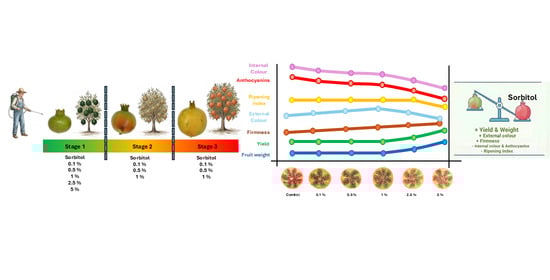
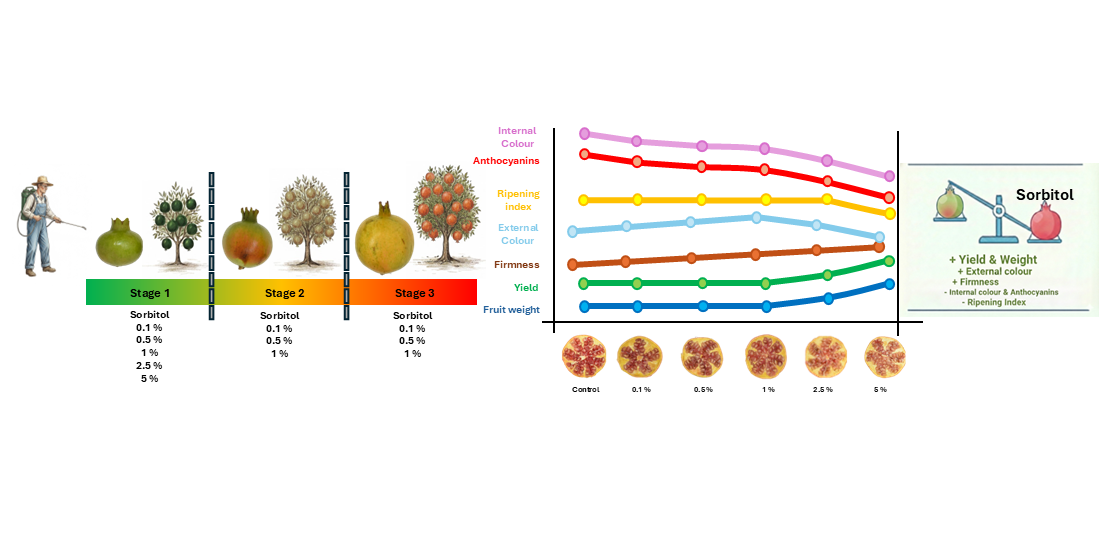
Graphical Abstract

1. Introduction

Pomegranate (Punica granatum L.), a deciduous fruit tree belonging to the Lythraceae family, is native to regions spanning from the Middle East to Northern India and is currently widely cultivated across Mediterranean and semi-arid regions [1,2,3,4]. The global pomegranate industry has experienced significant emergence in the economic market due to the fruit’s high nutritional value and its concentration of bioactive compounds with antioxidant properties [5,6,7]. Díaz-Mula et al. [8] demonstrated that the edible seeds and juice of pomegranate contain a diverse range of proanthocyanidins primarily composed of monomers and dimers, which may enhance their bioavailability and absorption, thereby contributing to the fruit’s protective effects against oxidative stress related diseases alongside its high content of ellagitannins and anthocyanins. Spain is a leading producer in the Mediterranean basin, where the ‘Mollar de Elche’ is the most economically important cultivar, representing 85% of its production under PDO status [9,10,11,12]. Its market value is primarily driven by superior organoleptic traits, including high sweetness, low acidity, and soft edible seeds [11]. Furthermore, this cultivar exhibits a remarkable climatic adaptation to Mediterranean conditions, characterized by high tolerance to drought and heat stress, positioning it as a resilient and promising crop under future agroclimatic change scenarios [9,11,13].
Even though this species is noted for its exceptional robustness against the stressors of changing agroclimatic conditions, the ‘Mollar de Elche’ cultivar frequently exhibits low fruit pigmentation, which significantly hinders its market value and international competitiveness [14]. This limitation in anthocyanin accumulation is primarily due to the dependence on specific climatic factors, such as significant day-night thermal fluctuations and low nighttime temperatures, which are required to activate biosynthetic pathways for optimal red colour development [15,16]. This physiological mechanism is analogous to that observed in Mediterranean blood oranges, where temperature variations are critical for the expression of transcription factors and enzymes like phenylalanine ammonia-lyase (PAL) essential for red colour acquisition [15,16]. Consequently, an incipient search for innovative tools has emerged, focusing on preharvest strategies, such as the application of exogenous elicitors like salicylates, methyl jasmonate (MeJa), oxalic acid (OA), melatonin (MEL), ϒ-aminobutyric acid (GABA) or polyol-calcium complexes, that can stimulate anthocyanin biosynthesis and counteract visual colouration deficiencies in the fruit [17,18,19].
Polyols, or sugar alcohols, are naturally occurring organic compounds that serve as primary photosynthetic products, essential carbon sources, and key osmoprotectants in numerous plant species [19,20,21]. Within this group, sorbitol, a six-carbon hexitol, plays a pivotal role as a metabolite transporter in the plant’s vascular system, facilitating the long-distance phloem translocation of photoassimilates and nutrients with limited mobility, such as calcium, toward sink organs like developing fruits [19,22,23]. The preharvest exogenous application of sorbitol, especially when utilized as a polyol–calcium complex, acts as a functional ‘vector’ that enhances the solubility, foliar absorption, and internal distribution of minerals [16,19,24]. Research has demonstrated that these treatments can significantly improve crop yield and fruit weight in species such as mango, potato, peanut and table grape [25,26,27,28], while markedly enhancing fruit firmness at harvest by stabilizing cell wall structures through increased pectin-bound calcium. Furthermore, foliar sorbitol applications have been reported to promote the accumulation of total soluble solids (TSS) and reducing sugars (glucose and fructose), while stimulating anthocyanin biosynthesis and total phenolic content by upregulating key enzymes in the phenylpropanoid pathway, such as PAL [16,19,23,28]. This approach has the potential to elevate the functional value and antioxidant capacity of the fruit but also helps preserve essential organic acids, such as malic and citric acid, ensuring superior sensory quality and commercial competitiveness at harvest [16,19,23].
Nevertheless, while preharvest exogenous sorbitol applications have been shown to modulate fruit metabolism and enhance quality in various species, their specific impact throughout the entire pomegranate crop cycle remains largely unexplored. Therefore, the primary objective of this study is to evaluate the effect of preharvest sorbitol treatments applied at different doses from three distinct fruit application periods over two consecutive growing seasons. Ultimately, the aim is to address a significant knowledge gap concerning the role of this polyol in the development of fruit quality from the early stages to optimal harvest.

2. Materials and Methods

2.1. Plant Material and Climate Data

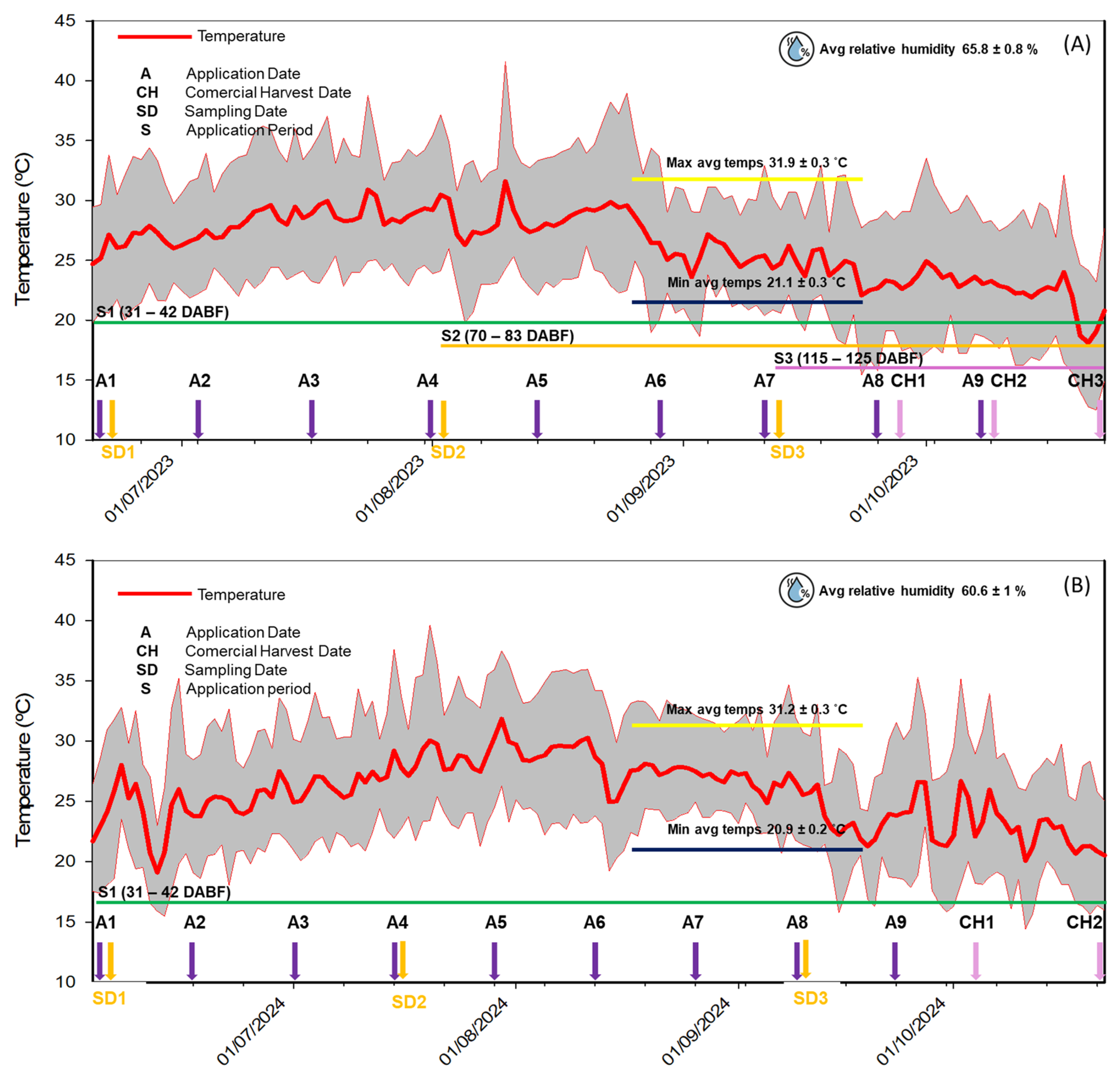
‘Mollar de Elche’ pomegranates (Punica granatum L.) were cultivated in a commercial orchard owned by the company ‘Hebegu S.L.’ and situated in Albatera, Alicante, Spain (38°11′44.6″ N, 0°51′13.1″ W). The region has a semi-arid Mediterranean climate with low annual rainfall, mild winters and high summer temperatures. Weather data for the experimental period were collected during the two growing seasons studied (2023 and 2024) by a weather station and located 10 km away from the orchard [29], as shown in Figure 1. The environmental conditions during the 2023 and 2024 growing seasons were monitored, and the detailed climatic profiles can be observed in Figure 1. According to the historical and experimental data (Figure 1), the area of Crevillente (Alicante, Spain) presents an average annual temperature of approximately 18 °C, with summer peaks frequently exceeding 30 °C during July and August. Rainfall is characteristically scarce and torrentially distributed, with a long-term annual average of 250–300 mm, concentrated mainly in autumn and spring. During the experimental years (2023–2024), summer precipitation was almost negligible, highlighting the reliance on programmed drip irrigation.
The orchard contained 12- and 13-year-old trees and was arranged in a 6 m × 5 m grid. The trees were trained using a single-stem system. All experimental trees exhibited optimal vegetative vigour, with no detectable symptoms of phytopathological infection or nutritional deficiencies. Standard agronomic practices, comprising scheduled irrigation and mineral fertilization, were administered. Trees were irrigated using a drip irrigation system to maintain soil water content at field capacity. The total volume of water applied during the experimental period was 4250 m3 ha−1 in the 2023 season and 4180 m3 ha−1 in the 2024 season. Irrigation scheduling was based on daily evapotranspiration (ETc) rates to satisfy the full water requirements of the pomegranate trees. The dates for the application of treatments (A1–A9), sampling dates (SD1–SD3), and the commercial harvest dates (CH1–CH3) were determined based on fruit maturity, which was influenced by these microclimatic variations, as shown in the time-series analysis.

2.2. Experimental Design and Preharvest Applications

The experimental design consisted of 0% (control; plain tap water), 0.1%, 0.5% and 1% sorbitol solutions (Barcelonesa Group SAU, Barcelona, Spain) in 2023, and 0%, 2.5% and 5% in 2024. A non-ionic surfactant (Polyglycol alkyl 20% w/v; Sipcam Iberia S.L., Valencia, Spain) was added to all solutions, including the control. Treatments were applied using a manual foliar sprayer (Sirfran S.L., Alicante, Spain). The total volume administered per treatment was 1.6 L per tree. Sorbitol treatments were applied throughout the 2023 growing season starting at three distinct phenological phases according to Kumar et al. [30] (BBCH 71 = “Young fruit”; 73 = “Fruit growth” and 81–85 = from “Beginning of fruit ripening” to “Mid-ripening stage”) and differently lasting [S1—31–42 Days After Full Bloom (DAFB) with 9 applications, S2—70–83 DAFB with 6 applications and S3—115–125 DAFB with 3 applications] (Figure 1A). Thus, in this experimental design, S1 comprises three key moments (fruit set, seed hardening, and external colour change), S2 involves the last two key moments (seed hardening and external colour change), and S3 consists of treating only during the last key moment (external colour change stage). To ensure consistency across the 2023 and 2024 seasons despite interannual climatic variations, the initiation of each application period (S1, S2, and S3) was standardized based on objective physical markers, including DAFB, percentage of final fruit size, and threshold values for external colour change, rather than fixed dates. A full description of the preharvest applications, including the timing and frequency of treatments across the different phenological stages, is provided in Table 1. As for 2024, based on the results obtained in the previous season, only the S1 sorbitol applications were tested (Figure 1B).
The commercial harvest dates (CH) were conducted in multiple stages to account for crop maturity, spanning from late September or beginning of October to late October in both years, according to ‘Mollar de Elche’ PDO guidelines [31]. The experimental design consisted of a randomized block design with three replicates (three-tree plots; n = 3) per treatment. During 2023, the treatments were applied in three application periods (S1–S3). In 2024, only the S1 application protocol was evaluated. Buffer trees were maintained between plots and excluded from the analysis. Fruit sampling was performed periodically, in line with the phenological stages of the ‘Mollar de Elche’ cultivar as defined by fruit size and external colouration. These stages ranged from early development (SD1; 31–42 DAF) to full physiological maturity at commercial harvest (CH; 139–165 DAF), as detailed in Table 1. The detailed experimental layout, tree distribution and sampling size specifications (number of trees and fruits) are provided in Table 2. In order to ensure the representativeness of the samples and to minimize variability within the canopy, two fruits were harvested from the north side of the tree, whilst a further two pomegranates were collected from the south, at a height of approximately 1.5–1.8 metres above ground level.

2.3. Physico-Chemical Quality Traits

Fruit physical characteristics were systematically quantified upon arrival at the laboratory. Individual fruit weight was determined using a high-precision WLC 2/A2 electronic scale (Radwag Balances and Scales, Radom, Poland) with an accuracy of 0.01 g. Subsequently, the equatorial diameter was measured using a digital calliper (Model ATM C200, Orientools Industrial Co., Ltd., Qingdao, China). Fruit firmness was evaluated through a non-destructive compression test using a TA-XT2i Texture Analyzer (Stable Micro Systems Ltd., Godalming, UK) equipped with a 100 mm diameter flat-surface probe. According to the experimental conditions described by Guirao et al. [23], each pomegranate was subjected to a 5% deformation relative to its equatorial diameter. Firmness was quantified as the resistance to this displacement and expressed as the deformation modulus in Newtons per millimetre (N mm−1).
External and internal colour profiles of ‘Mollar de Elche’ pomegranate fruit were characterized using a CR-200 tristimulus colourimeter (Konica Minolta, Tokyo, Japan), as in previous report [18]. External colour was recorded at three equidistant points along the equatorial plane of the intact fruit. For internal colour assessment, each pomegranate was bisected equatorially, and measurements were taken at three equidistant points on the seed surface, positioned between the central core and the rind. Results were recorded using the CIE L*a*b* colour space. From these coordinates, the chromatic parameter of hue angle () was derived using the following equation:
Hue angle (h°) = arctan (b*/a*)
For each pomegranate replicate (n = 3), a representative 50 g subsample of seeds was processed to extract juice via mechanical pressing and subsequent filtration through a double-layered cotton cloth. Total soluble solids (TSS) were determined in duplicate using a PR-101 digital refractometer (Atago Co., Ltd., Tokyo, Japan). Titratable acidity (TA) was quantified via potentiometric titration with 0.1 N NaOH using an automatic titrator (785 DMP Titrino, Metrohm, Herisau, Switzerland) [18]. The ripening index (RI) was subsequently calculated as the TSS/TA ratio. Finally, a 10 mL aliquot of the extracted juice was reserved and stored at −20 °C for later anthocyanin quantification and identification. All physico-chemical data are presented as the mean ± standard error (SE).

2.4. Crop Yield

The yield per tree was determined in each CH in both growing seasons. The average number of fruits per tree was recorded according to the commercial size categories of ‘Mollar de Elche’: large (>71 mm and >401 g), medium (61–70 mm and 301–400 g), and small (<60 mm and <300 g), in accordance with Codex Standard 310-2013 [32]. Both parameters, kg per tree and number of fruits per tree, were also expressed as the total quantity per application period (S1, S2, or S3) tested. Data are presented as the mean ± SE.

2.5. Final Anthocyanin Profile and Content

The anthocyanin extraction method of Rafique et al. [33] was employed. In brief, 5 mL of juice was homogenized with a methanol/formic acid/water solvent (80:0.1:19.9, v/v/v), then centrifuged and filtered (0.45 µm). Identification of the anthocyanins was conducted via LC-MS/MS (Shimadzu 8050, Kyoto, Japan) in positive ESI mode, while quantification was carried out by RP-HPLC-PAD (Agilent 1100 series, Agilent Technologies, Waldbronn, Germany) at 520 nm, following established protocols [8]. Compounds were identified by comparing retention times and UV-Vis/mass spectra with commercial standards (Sigma-Aldrich, Darmstadt, Germany). Quantification was based on a cyanidin 3-O-glucoside calibration curve, and results were expressed as mg L−1 of juice. Data are presented as mean ± SE. For the S2 and S3 periods, the analysis focused exclusively on the 2023 samples treated with 1% sorbitol, as these exhibited the most favourable physico-chemical and yield performance.

2.6. Statistical Analysis

Data were subjected to analysis of variance (ANOVA), with treatment and application period as sources of variation in 2023, and treatment alone in 2024. Differences between means were assessed using Tukey’s HSD test (p ≤ 0.05). Linear relationships between physico-chemical parameters and individual anthocyanins at harvest were determined using Pearson correlation coefficients. Results are expressed as the mean ± SE (standard error; n = 3), and all statistical analyses were performed using IBM SPSS Statistics for Windows, version 20 (SPSS Inc., Chicago, IL, USA).

3. Results

3.1. Environmental Conditions

Environmental conditions during the experimental periods of 2023 (Figure 1A) and 2024 (Figure 1B) were characterized by fluctuating temperature profiles and high relative humidity. In 2023, the average relative humidity was 65.8 ± 0.8%, with mean maximum and minimum temperatures of 31.9 ± 0.3 °C and 21.1 ± 0.3 °C, respectively. During the 2024, a slightly lower average relative humidity of 60.6 ± 1% was recorded, accompanied by mean maximum temperatures of 31.2 ± 0.3 °C and minimums of 20.9 ± 0.2 °C.

3.2. Effect of Exogenous Sorbitol Applications on Physico-Chemical Quality Traits from Fruit Development to Harvest

3.2.1. Preharvest Impact of Sorbitol on the Evolution of Fruit Weight

The application of exogenous sorbitol significantly (p ≤ 0.05) influenced fruit weight, although the magnitude of this effect varied depending on the concentration and application periods (Table 3). In 2023, the 1% sorbitol treatment in S1 resulted in the highest fruit weights by SD3, significantly outperforming the control and applications at S2 and S3. The 5% sorbitol treatment demonstrated a marked promotion of fruit growth, resulting in a significantly (p ≤ 0.05) higher weight (359.40 ± 14.95 g) at SD3 compared to both the control and the 2.5% sorbitol application.

3.2.2. Preharvest Impact of Sorbitol on the Evolution of Fruit Equatorial Diameter

The foliar application of sorbitol demonstrated a concentration-dependent influence on the equatorial diameter, though the effects varied significantly (p ≤ 0.05) across seasons and application periods (Table 4). In 2023, although a slight increase in fruit equatorial diameter was observed with the 1% sorbitol application, these differences were not statistically significant (p > 0.05) during the early-to-mid growth phases at SD2 (1 August) reaching 71.65 ± 1.26 mm compared to the 67.35 ± 1.18 mm of the control. In 2024, the experimental focus shifted to higher concentrations (up to 5%). Interestingly, the 5% sorbitol application significantly (p ≤ 0.05) enhanced fruit growth at SD3 (2 September), reaching a diameter of 89.24 ± 0.73 mm, outperforming the 2.5% concentration. Furthermore, the data indicates a clear interaction between the timing of application and application periods. Specifically, at SD3 in 2023, certain sorbitol treatments applied at S1, such as the 1% concentration, resulted in significantly (p ≤ 0.05) larger fruit compared to S2 or S3 (e.g., 85.88 ± 1.15 mm in S1 vs. 82.45 ± 0.81 mm in S3). However, this effect was not consistently observed across all concentrations, as reflected by the statistical grouping in Table 4.

3.2.3. Preharvest Impact of Sorbitol on the Evolution of Firmness

Exogenous sorbitol applications significantly (p ≤ 0.05) influenced the firmness, with effects varying by concentration and application periods (Table 5). During 2023, the 0.5% and 1% sorbitol treatments applied at S1 and S2, respectively, consistently yielded the highest firmness values at the SD3 (12 September), reaching 34.52 ± 1.88 N mm−1 and 33.32 ± 1.52 N mm−1, respectively. Statistical analysis reveals that while the control often experienced a decline in firmness during mid-season harvests, sorbitol-treated fruits maintained or increased structural integrity, particularly at higher concentrations. Furthermore, comparing application periods at SD3 in 2023 showed that only S3 had all sorbitol treatments that were effective in significantly increasing firmness (p ≤ 0.05). By contrast, no dose-dependent pattern was observed at S1 or S2. Specifically, the 0.5% concentration was the only effective treatment at S1, while the effective dose at S2 was the 1% concentration. In contrast, lower concentrations (0.1% and 0.5%) showed a significant (p ≤ 0.05) reduction in firmness as the fruit transitioned from S1 to S2 (Table 5). In 2024, this trend was reinforced by the 2.5% and 5% sorbitol application, which achieved the peak firmness of the entire study (34.16 ± 0.99 N mm−1 and 35.23 ± 1.19 N mm−1, respectively) at SD3, significantly (p ≤ 0.05) outperforming the control (31.59 ± 0.96 N mm−1).

3.2.4. Preharvest Impact of Sorbitol on the Evolution of Colour

The preharvest impact of foliar sorbitol application on colouration was recorded both externally (Table 6), regarding the exocarp colour, and internally (Table 7), in terms of seed colour. Sorbitol significantly improved external colour (), especially during late sampling (SD3) in both years (Table 6). In 2023, the 1% sorbitol treatment achieved the lowest hue angle (91.95 ± 1.23°) at SD3, indicating a significantly more intense red colouration compared to the control (96.26 ± 1.10°). Similarly, in 2024, high doses of sorbitol at 2.5 and 5% significantly accelerated colour development at SD3 compared to control (Table 6). Regarding the comparison between application periods at SD3 (12 September) in 2023, no significant differences were found between S1, S2, and S3 for any specific treatment, suggesting that external colour at this point is primarily governed by the treatment rather than the fruit’s specific application period. Overall, sorbitol treatments, particularly at concentrations of 1% and above, demonstrate a clear statistical capacity to improve the esthetic quality of the fruit by promoting a deeper red exocarp.
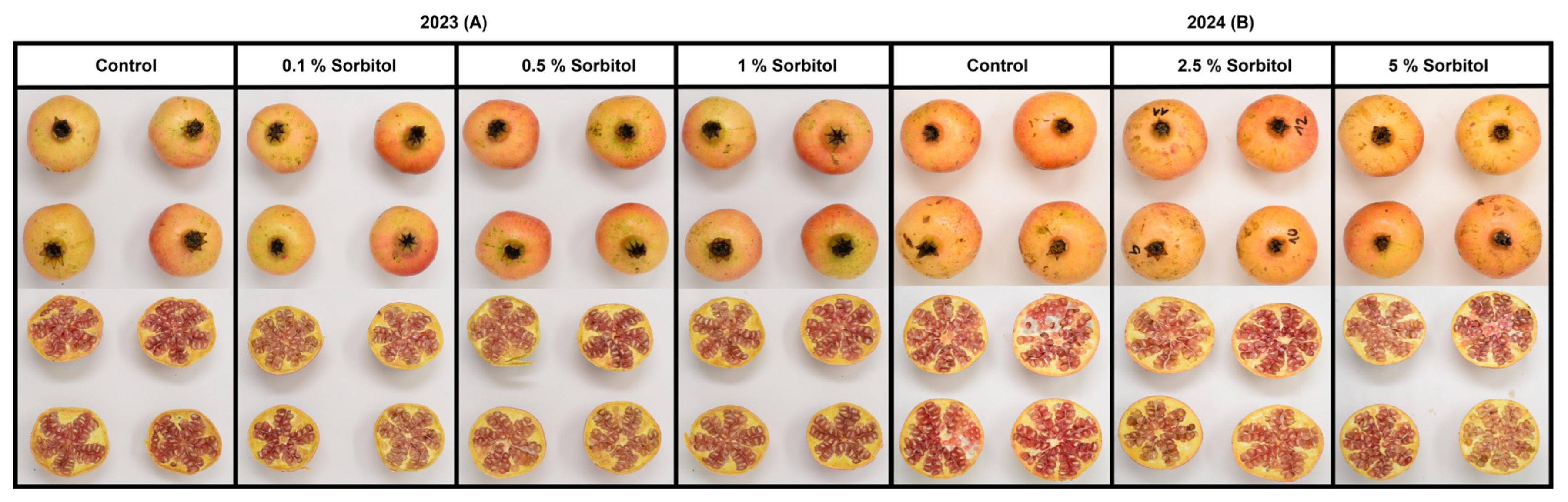
Regarding the internal colour, foliar applications of exogenous sorbitol significantly (p ≤ 0.05) influenced the internal colour evolution on seeds, with the most notable effects observed during the mid-to-late harvest periods (Table 7). During 2023 in S1, the 1% sorbitol treatment significantly (p ≤ 0.05) accelerated seed reddening at SD3 (12 September ), achieving a lower hue angle (56.80 ± 1.93°) compared to the control (63.22 ± 2.08°). In relation to the application periods at SD3, significant (p ≤ 0.05) differences were recorded for the 1% and 0.5% treatments; specifically, the 0.5% sorbitol dose determined the most intense colouration in S2 (56.71°), while the 1% sorbitol treatment showed significantly (p ≤ 0.05) higher hue values (less red) in S3 (71.68°) compared to S1 (56.80°) (Table 7). These findings demonstrate that preharvest foliar sorbitol application has a measurable impact on pomegranate colouration both externally and internally, though the intensity of the response is highly dependent on sorbitol concentration. Visual assessment revealed that while 1% sorbitol significantly stimulated anthocyanin accumulation in both the exocarp and seeds, higher concentrations (5%) conversely exerted an inhibitory effect, hindering colour development compared to the lower dose (Figure 2).

3.2.5. Preharvest Impact of Sorbitol on the Evolution of Ripening Index

The ripening index in 2023 showed that the 0.5% and 1% sorbitol treatments significantly (p ≤ 0.05) accelerated fruit maturation during mid-sampling date (SD3) at S1 compared to the control, with the 1% dose reaching a peak index of 68.15 ± 0.54 (Table 8). However, a clear dose–response inhibition was observed in 2024, where the 5% sorbitol application significantly (p ≤ 0.05) reduced the ripening index across all sampling dates compared to the control, indicating that excessive concentrations may delay maturation. In 2023, low-dose sorbitol applications (0.1, 0.5, and 1%) initiated at application period 1 effectively accelerated the ripening index. Early-stage intervention proved significantly more effective than applications during later application periods. Conversely, higher concentrations (2.5 and 5%) applied in 2024 resulted in a contrasting inhibitory effect, delaying the ripening index (Table 8).

3.3. Effect of Exogenous Sorbitol Applications on Crop Yield at Harvest

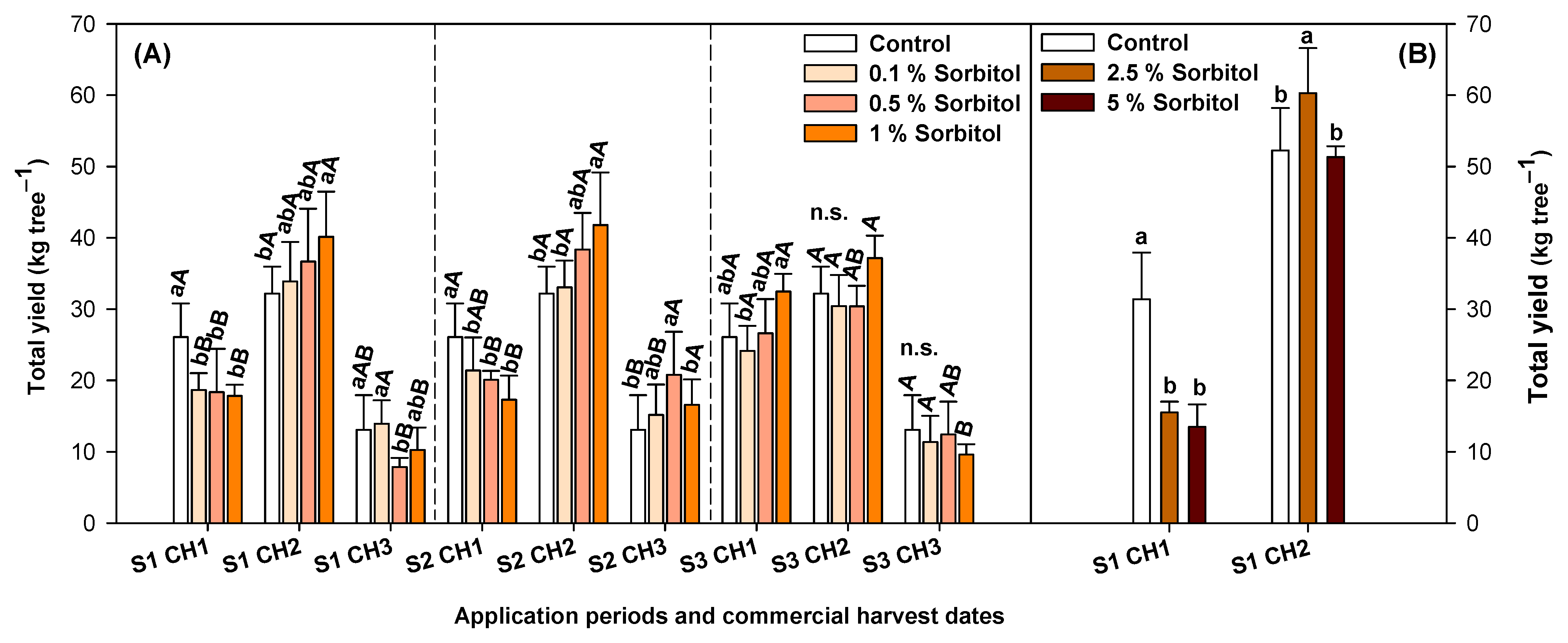
The exogenous application of sorbitol significantly (p ≤ 0.05) influenced the total yield (kg tree−1), with effects varying by concentration and application period (Figure 3). During 2023, the 1% sorbitol treatment generally led to the highest yields, particularly at the second commercial harvest (CH2), where it significantly (p ≤ 0.05) outperformed the control across all application periods (S1, S2, and S3), as indicated in Figure 3A. Specifically, within CH2, 1% sorbitol applied at S2 reached the peak yield for that season. Regarding the, applications at S1 and S2 typically resulted in higher yields at CH2 compared to CH1 or CH3 for the same treatment (Figure 3A). In 2024 (Figure 3B) at S1 CH1, 2.5 and 5% sorbitol treatments significantly reduced (p ≤ 0.05) production compared to controls. However, 2.5% sorbitol treatment significantly (p ≤ 0.05) increased yield at S1 CH2 compared to the control, while the 5% concentration did not demonstrate a significant (p > 0.05) yield increase at S1 CH2 compared to the control. These results suggest that sorbitol treatments at intermediate concentration (1%) and specific application periods (S1 and S2) are most effective at enhancing overall tree productivity.
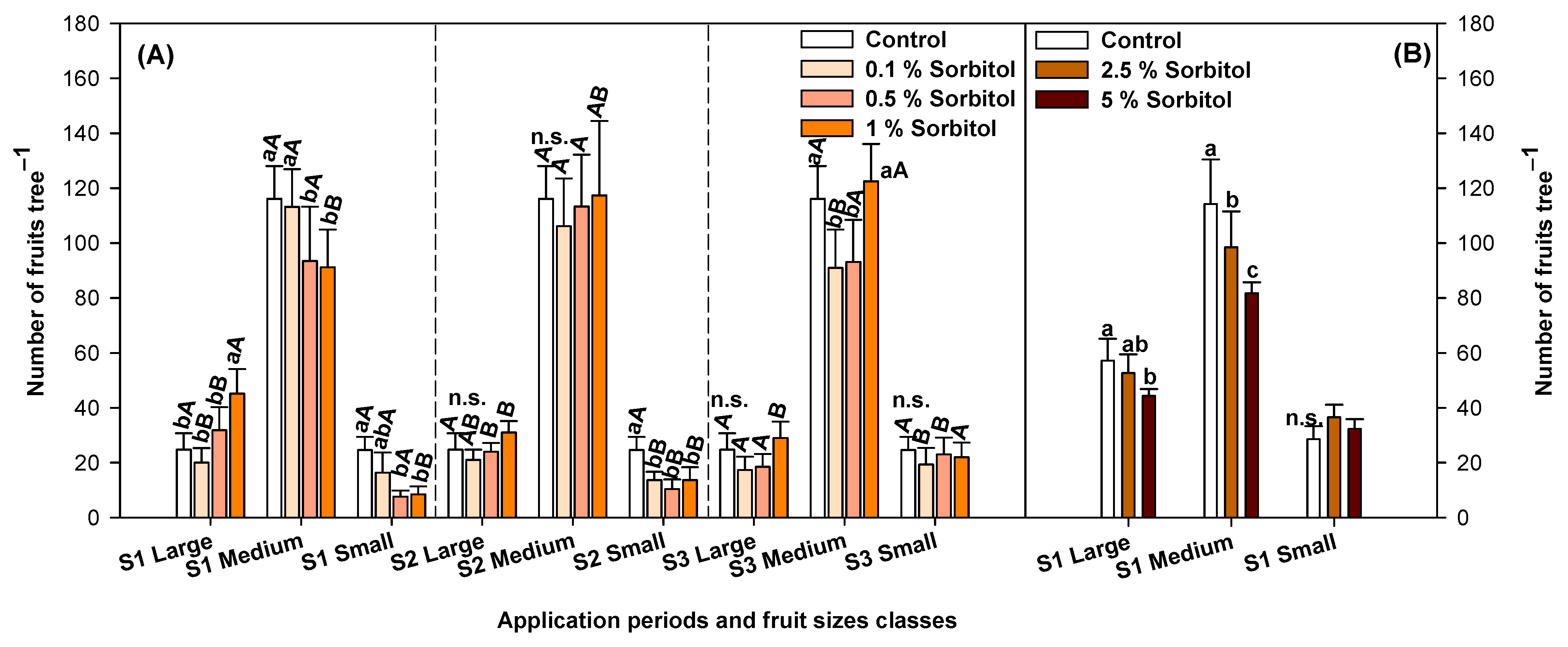
Regarding the distribution of the total number of fruits in commercial sizes classes (Figure 4), the results demonstrated that sorbitol applications significantly (p ≤ 0.05) influenced fruit distribution across commercial size categories depending on the application period. In the S1 application period, the 1% sorbitol treatment significantly (p ≤ 0.05) increased the number of large fruits compared to the control (Figure 4A). Conversely, higher concentrations in Figure 4B revealed a detrimental effect at S1; specifically, 5% sorbitol led to a significant (p ≤ 0.05) decrease in both large and medium fruit categories compared to the control. When comparing application periods for the same treatment, the 1% sorbitol application showed its maximum efficacy for producing large fruit when applied at S1, showing significant (p ≤ 0.05) differences against the later S2 and S3 (Figure 4A). For the medium size classes, the most representative in terms of volume, the control maintained statistical stability across all application periods (S1, S2, and S3), while the 0.1% and 0.5% treatments showed a significant (p ≤ 0.05) reduction in small fruit counts when applied at S2 or S3 compared to S1 (Figure 4A), suggesting a late-stage thinning effect or enhanced fruit expansion.

3.4. Effect of Exogenous Sorbitol Applications on Final Anthocyanin Profile at Harvest

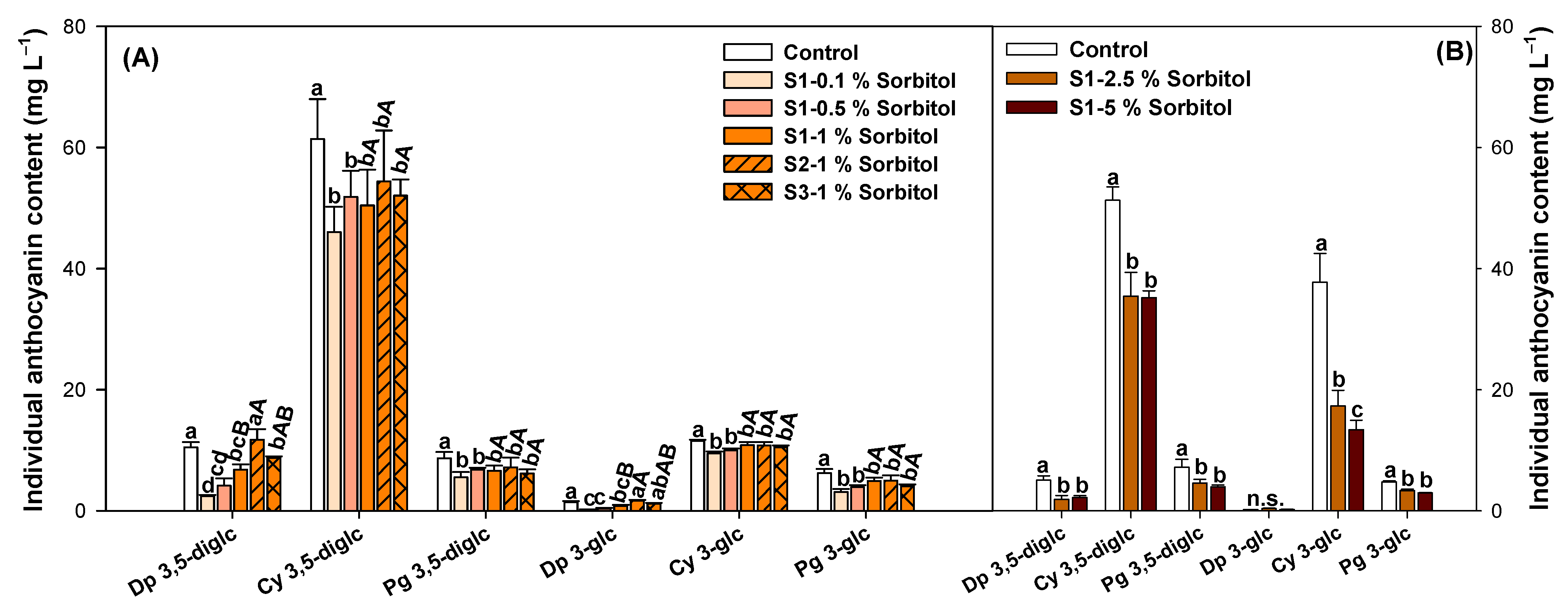
Sorbitol concentration and application period significantly (p ≤ 0.05) affected individual anthocyanin levels (Figure 5). All treatments initially inhibited concentrations compared to the control, with 0.1 to 1% sorbitol significantly (p ≤ 0.05) reducing the main compound, cyanidin 3,5-diglucoside (cy 3,5-diglc), at S1 (Figure 5A). However, the timing was crucial for delphinidin 3,5-diglucoside (dp 3,5-diglc) and delphinidin 3-glucoside (dp 3-glc); at 1% sorbitol, levels recovered significantly (p ≤ 0.05) during S2, even surpassing lower concentrations (Figure 5A). In contrast, other compounds like pelargonidin 3,5-diglucoside (pg 3,5-diglc), cyanidin 3-glucoside (cy 3-glc), and pelargonidin 3-glucoside (pg 3-glc) remained stable (p > 0.05) across application periods (Figure 5A). In Figure 5B, higher sorbitol concentrations (2.5 and 5%) drastically suppressed anthocyanin biosynthesis. Concentrations of cy 3,5-diglc, pg 3,5-diglc, and dp 3,5-diglc were significantly (p ≤ 0.05) lower than the control, showing no difference (p > 0.05) between the two doses (Figure 5B). Only cy 3-glc exhibited a dose–response relationship, with the 5% treatment causing a significantly (p ≤ 0.05) greater reduction. Conversely, dp 3-glc was so severely inhibited that no statistical (p > 0.05) differences were observed between any treatments and the control (Figure 5B).

4. Discussion

The preharvest exogenous application of sorbitol (Table 1), particularly when applied at S1 (Table 2), has been shown to positively influence the physical development of ‘Mollar de Elche’ pomegranates, although the magnitude of this effect varies by concentration, period of application and season. During 2023, the 1% sorbitol treatment consistently yielded the highest fruit weights (Table 3) and equatorial diameters (Table 4) at later harvest stages. In contrast, the 5% sorbitol treatment significantly enhanced both parameters, suggesting that higher concentrations of this polyol may be more effective in modulating fruit biomass and structural expansion. These findings are consistent with studies in ‘Sanguinelli’ blood oranges, where applications of 2.5% and 5% sorbitol led to a significantly larger equatorial diameter during the final stages of maturation [16,19]. The efficacy of sorbitol in increasing fruit weight and crop yield has also been documented in other species, such as mango, peanut, and potato [2526,27].
The physiological basis for this improvement lies in the role of sorbitol as a metabolic ‘vector.’ While calcium is typically phloem-immobile, the sorbitol application facilitates stable sorbitol-calcium complexes which enables the phloem mediated translocation of low mobility nutrients toward the fruit sinks, as well as photoassimilates [19,34]. This enhanced nutrient distribution optimizes fruit growth during the linear expansion phase. Probably for this reason, an increase in weight, size and yield of fruits treated with sorbitol is observed at all doses studied. Similar studies in pomegranate have shown that yield and size are highly dependent on climatic conditions and source-sink competition [12,35]. Therefore, while sorbitol acts as a robust tool to enhance fruit size and weight, its impact can be modulated by interannual agroclimatic variations. In our study, where the climate data resulted similar in both years (Figure 1), the variations in fruit size and weight are largely due to the different sorbitol applications.
Furthermore, our findings indicate that preharvest exogenous sorbitol applications significantly modulate the textural properties of ‘Mollar de Elche’ pomegranates. Results suggest that sorbitol acts as an effective agent for delaying fruit softening during the critical mid-harvest period (Table 5). This preservation of structural integrity likely results from sorbitol’s role as a metabolic ‘vector’ or ‘carrier’, which enhances the solubility and phloem translocation of essential minerals, particularly calcium, to developing fruit tissues [19,34]. Although mineral content was not directly quantified in this study, the observed improvements in fruit firmness could be linked to the role of sorbitol as a ligand for Ca2+. In many fruit species, exogenous sugar alcohols are known to form sorbitol-calcium complexes that enhance the mobility of this otherwise poorly mobile element through the phloem [19,22,23]. Therefore, the application of sorbitol might have optimized the distribution of endogenous calcium toward the fruit, thereby strengthening cell wall structures, even if total calcium concentrations were not the primary focus of our analytical framework. Increased calcium availability within the cell wall facilitates the formation of stable calcium-pectate complexes, thereby reinforcing the middle lamella and suppressing the activity of cell wall-degrading enzymes such as polygalacturonase (PG) and cellulase (Cx) [19].
These results are highly consistent with recent research on ‘Sanguinelli’ blood oranges and ‘Doña María’ table grapes, where sorbitol-based treatments significantly enhanced fruit firmness by stabilizing cell wall structures and maintaining membrane integrity [16,19]. Furthermore, the peak firmness observed with 2.5% and 5% sorbitol concentrations in the 2024 supports the dose-dependent efficacy of sugar alcohols in improving mechanical resistance, a phenomenon also documented in other horticultural species [16,19]. The stability of the 1% treatment across application periods (S1–S3) suggests that early and consistent application of this polyol may optimize nutrient partitioning before the natural decline in xylem functionality that occurs post-veraison in pomegranate [19].
The results regarding the chromatic evolution of ‘Mollar de Elche’ pomegranate indicate that foliar application of sorbitol significantly enhances the red pigmentation of the exocarp, particularly at concentrations of 1% and above (Table 6). This cultivar is noted for its naturally low anthocyanin content, which often results in a pale cream-pink appearance that limits its international market value [14]. These findings demonstrate that exogenous sorbitol can counteract these pigmentation deficiencies, yielding a significantly lower hue angle () and a more intense red colour at harvest (Figure 2). This observation is consistent with recent studies on ‘Sanguinelli’ blood oranges and wine grapes, where preharvest sorbitol applications promoted pigment accumulation by upregulating key enzymes in the phenylpropanoid and anthocyanin biosynthetic pathways, such as phenylalanine ammonia-lyase (PAL), dihydroflavonol 4-reductase (DFR), and UDP-glucose:flavonoid 3-O-glucosyltransferase (UFGT) [16,23,28]. This metabolic stimulation is likely driven by sorbitol’s role as a functional ‘vector’ or ‘carrier’, as discussed above, facilitating the long-distance translocation of photoassimilates and signalling molecules to the fruits, which serve as major sink organs during the maturation phase [19,34].
In the same way, the impact on internal colour was equally significant but highly dependent on the concentration and the application period studied (Table 7). While the 1% sorbitol treatment effectively accelerated seed reddening in 2023, higher doses (2.5% and 5%) in 2024 appeared to slightly delay late-stage internal pigment accumulation compared to control fruits. This suggests a dose-dependent response threshold or a possible saturation of the sugar-sensing mechanisms that regulate flavonoid pathways [23,36,37]. The observation that seeds colour at mid-season (SD3) varied across application periods (S1–S3) underscores the importance of application timing relative to fruit ontogeny (Table 7).
The sorbitol-induced modifications in fruit pigmentation were accompanied by significant alterations in the ripening index (Table 8), although the response was governed by a complex dose-dependent threshold. The dual effect of sorbitol on fruit maturation observed across seasons underscores the complexity of polyol-mediated metabolic regulation. Our findings align with previous reports [19,38] suggesting that moderate sorbitol concentrations act as a metabolic vector, enhancing soluble sugar translocation and accelerating ripening by stimulating primary metabolism. In contrast, the inhibitory effect observed at higher concentrations suggests a shift in physiological regulation, where excessive sorbitol levels may reduce respiration rates and delay organic acid degradation, effectively retarding senescence. This pattern is consistent with sugar-sensing and phloem mobility adjustments documented in other non-climacteric species [16,23,28], where excessive polyol availability may temporarily trigger cellular stability mechanisms that postpone the final ripening stages.
Our results indicate that moderate, early-stage sorbitol applications significantly enhance pomegranate yield, suggesting that the timing and concentration of treatment are critical for optimizing crop productivity (Figure 3 and Figure 4). The observed increase in fruit size and total yield aligns with the role of polyols as metabolic ‘vectors’ that facilitate the phloem-mediated translocation of photoassimilates to developing sink organs [19,34,39]. This mechanism, which prioritizes nutrient partitioning toward fruit development during critical expansion phases, is consistent with observations in other species where sorbitol-based treatments successfully improved biomass accumulation and overall crop weight [19,25,26,27]. Collectively, these findings support the hypothesis that exogenous polyol application during early application periods effectively alleviates sink-source limitations, thereby enhancing fruit growth potential.
Conversely, our results indicate that high-dose sorbitol applications can negatively impact yield, potentially due to the saturation of sugar-sensing mechanisms or a metabolic imbalance that disrupts source–sink relationships and triggers fruit abscission [40]. This suggests that there is a threshold beyond which polyol supplementation becomes counterproductive, likely due to an overstimulation of metabolic pathways. Furthermore, the varying responses observed across different application periods highlight the critical role of timing in polyol-based treatments. The superior efficacy of early-stage applications supports the hypothesis that the metabolic demand for nutrients is highest during initial expansion, prior to the natural decline in vascular functionality [19]. This temporal sensitivity suggests that exogenous sorbitol acts primarily by enhancing fruit expansion potential rather than through a traditional thinning effect, as seen in other species where late-stage applications have less impact on final fruit size [12].
The reduction in anthocyanins under 5% sorbitol (Figure 5) suggests a sugar-sensing negative feedback loop that prioritizes primary osmoregulation over secondary metabolism [36]. While polyols often stimulate the phenylpropanoid pathway in other species, the naturally low-pigment ‘Mollar de Elche’ cultivar appears susceptible to metabolic shifts when exogenous sugar alcohols exceed a critical threshold [16,19,28]. High osmotic levels likely saturate signalling pathways (e.g., MYB or bHLH families), downregulating structural genes such as PpDFR and PpUFGT. This inhibitory effect, particularly at S1, indicates a disruption in source-sink relationships where the plant allocates resources toward cellular stability rather than cyanidin 3,5-diglucoside synthesis [19,21]. Furthermore, this condition may compel the fruit to prioritize the production of protective compounds, such as hydrolysable tannins, over secondary pigments. This shift is regulated by shikimate dehydrogenase (SDH), which can divert precursors away from the anthocyanin pathway toward gallic acid synthesis to maintain cellular redox status (NADP+/NADPH ratio) [41]. Furthermore, such high osmotic signals are known to interact with ABA-mediated pathways [19,21,36]. In the case of ‘Mollar de Elche’, its inherent low-pigmentation trait may make it particularly sensitive to these metabolic redirections when exogenous sugar alcohols exceed a specific physiological threshold.
The recovery of delphinidin derivatives (dp 3,5-diglc and dp 3-glc) at S2 under 1% sorbitol (Figure 5A) highlights the importance of application timing relative to fruit ontogeny [21]. At this stage, the advanced phenological state of seeds and the vascular system may allow sorbitol to act as a metabolic vector for photoassimilates without triggering biosynthetic suppression [19,34,39]. Conversely, the drastic suppression at 5% sorbitol (Figure 5B) suggests that high osmotic levels saturate signalling pathways (e.g., MYB or bHLH families), downregulating structural genes like DFR or UFGT required for cyanidin 3,5-diglucoside accumulation [21,42,43]. These results indicate that sorbitol must be precisely calibrated in pomegranates with low pigmentation capacity to avoid crossing the inhibitory threshold of the anthocyanin pathway (Figure 2).
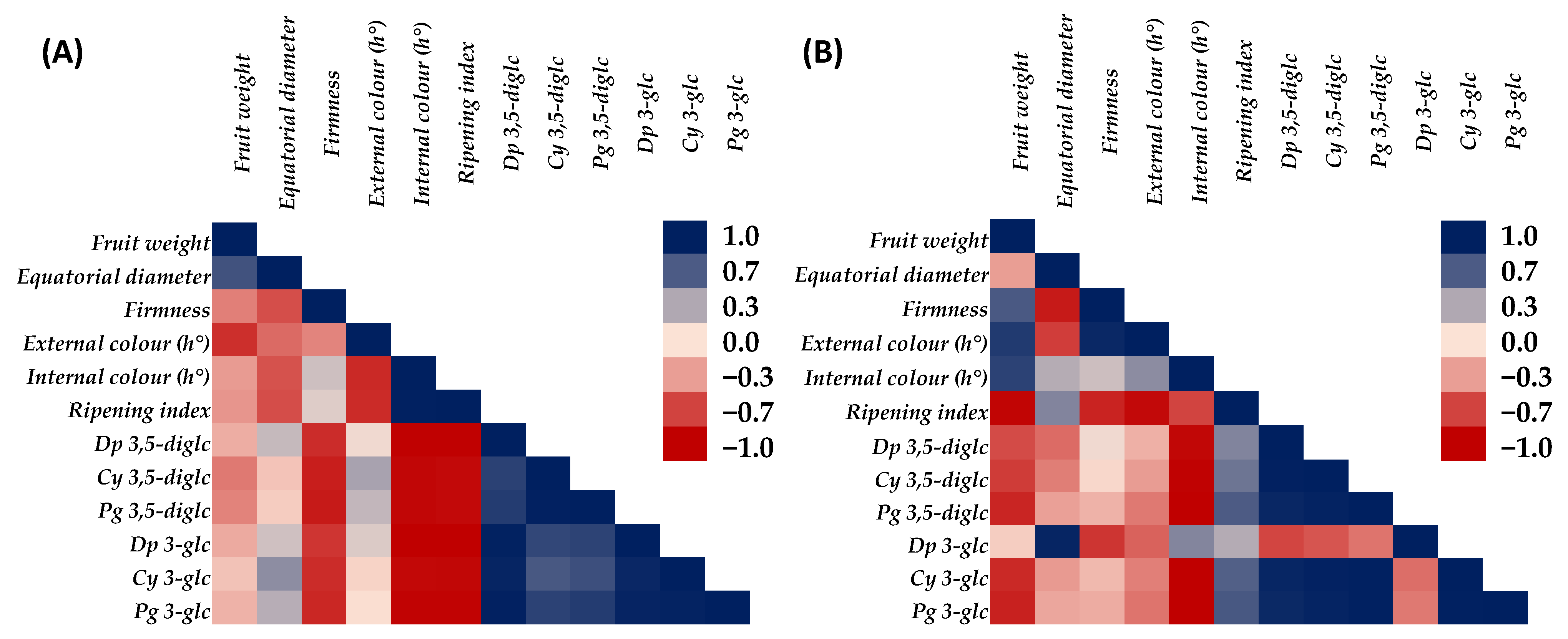
During the 2023 growing season, a robust positive correlation was observed among the different anthocyanin derivatives, particularly between the diglucoside forms (dp 3,5-diglc, cy 3,5-diglc and pg 3,5-diglc) and the monoglucosides (Figure 6A). This suggests that foliar sorbitol applications may stimulate uniform enhancement of the phenylpropanoid pathway. Interestingly, individual anthocyanin concentrations showed a strong negative correlation with internal fruit colour (); however, this is attributed to the use of the coordinate, where lower lightness values correspond to a higher accumulation of pigments and, consequently, a more intense red colouration of the seeds (Figure 6A). Similarly, fruit weight and equatorial diameter showed moderate negative correlations with firmness and colour intensity a common physiological trade-off whereby larger fruits undergo a relative ‘dilution’ of structural and pigment compounds (Figure 6A).
The 2024 revealed a shift in metabolic interrelationships (Figure 6B). While a strong positive synergy remains evident among the various anthocyanin derivatives, particularly within the diglucoside and monoglucoside groups, the increased intensity of negative correlations between ripening-related parameters and pigment profiles in 2024 (Figure 6B) supports the hypothesis of a dose-dependent response or a sugar sensing negative feedback loop. Specifically, the inverse relationship between the ripening index and total anthocyanins suggests that the excessive accumulation of exogenous polyols may have triggered metabolic interference, potentially prioritizing primary carbohydrate metabolism or osmotic adjustments over the secondary phenylpropanoid pathway. This interference likely established a physiological threshold where the expected stimulatory effect of sorbitol on fruit colouration was superseded by a downregulation of anthocyanin biosynthesis, as evidenced by the decoupling of colour intensity from traditional ripeness markers in the more concentrated treatment groups. The inverse relationship between the ripening index and total anthocyanins at higher concentrations suggests metabolic interference triggered by a sugar-sensing negative feedback loop [16,19,23,28]. This metabolic shift mirrors plant responses to abiotic stressors intensified by climate change, where carbon allocation is prioritized for primary metabolism and osmotic adjustments at the expense of the secondary phenylpropanoid pathway [16,19,28]. In ‘Mollar de Elche’, exceeding a critical osmotic threshold likely disrupts signalling pathways, retarding pigment accumulation despite the progression of other ripening markers [16,19,28]. These responses are heavily modulated by seasonal agroclimatic variations, such as heat accumulation and day-night temperature fluctuations, which are essential for activating master regulators of anthocyanin biosynthesis [15,16].
Seasonal variations significantly modulate the physiological and productive yield of pomegranate (Figure 6), influencing the efficacy of preharvest sorbitol treatments [11]. Our findings indicate that total yield and unit fruit weight are subject to interannual fluctuations linked to flowering intensity and heat accumulation (Growing Degree Hours, GDH), which govern biomass expansion [12]. Similarly, physico-chemical quality traits, such as the RI, are sensitive to the specific thermal and hygroscopic profiles of each season, which alter transpiration rates and primary metabolism [11]. Furthermore, anthocyanin accumulation in the exocarp and arils is strictly regulated by day-night thermal fluctuations required to activate master regulators, such as the Ruby transcription factor, and key biosynthetic enzymes like PAL [11]. Consequently, the successful application of sorbitol as a metabolic “carrier” depends on the interaction with specific agroclimatic conditions, requiring precise dosage and timing to ensure optimal commercial quality and antioxidant profiles.

5. Conclusions

Monitoring ‘Mollar de Elche’ pomegranates from early fruit development to harvest has demonstrated that sorbitol application can be effective in increasing their commercial value. The study shows that the timing and dosage of application are critical. Results showed that the 1% sorbitol application at S1 as the optimal protocol for pomegranates, providing a quantitative balance that maximizes yield while maintaining high anthocyanin levels. Statistical independence between these traits at moderate doses suggests that sorbitol acts as a dual-purpose elicitor, and only excessive concentrations (5%) trigger a metabolic trade-off. At higher concentrations (2.5 and 5%), the plant favours continuous biomass expansion and weight gain from the early stages, but this stalls secondary metabolism during the final maturation phase and significantly hinders colour development. Therefore, managing these applications throughout the phenological cycle is vital to balancing maximum crop yield with the superior organoleptic standards demanded by the international market. Furthermore, the integration of dynamic modelling frameworks as decision-support tools in fruit tree systems allows for the optimization of precise phenological timings. This precision is critical for the strategic scheduling of exogenous applications, which has been shown to significantly enhance both fruit yield and quality [44].
Consequently, while sorbitol represents a robust tool for enhancing the esthetic quality of ‘Mollar de Elche’ pomegranates, its application must be carefully calibrated to balance the stimulation of secondary metabolism with the natural progression of internal ripening. Future research should focus on elucidating the specific molecular mechanisms and signalling pathways by which exogenous sorbitol modulates anthocyanin biosynthesis, particularly identifying the metabolic thresholds that trigger negative feedback loops at high concentrations. Additionally, long-term studies are required to evaluate the cumulative effect of these treatments over multiple growing seasons and to explore their potential synergy with minerals or elicitors to further optimize fruit quality and pomegranate tree resilience under changing agroclimatic conditions.

Author Contributions

Conceptualization, J.M.V. and D.M.-R.; methodology, H.M.D.-M. and M.S.; validation, H.M.D.-M.; M.E.G.-P.; J.M.V. and D.M.-R.; formal analysis, A.S.-G. and A.G.; investigation, A.S.-G. and A.G.; resources, J.M.V. and D.M.-R.; data curation, D.M.-R. and M.S.; writing—original draft preparation, A.S.-G. and H.M.D.-M.; writing—review and editing, M.E.G.-P., J.M.V. and D.M.-R.; visualization, D.M.-R.; supervision, M.E.G.-P.; project administration, J.M.V. and D.M.-R.; funding acquisition, J.M.V. and D.M.-R. All authors have read and agreed to the published version of the manuscript.

Funding

This research was funded by MICIU/AEI/10.13039/501100011033 and by FEDER, UE grant number PID2022-137282OB-I00. The authors thank Generalitat Valenciana, the Conselleria of Education, Universities and Employment, for funding Alberto Guirao Carrascosa’s PhD-scholarships (CIACIF/2022/270), which enable him to undertake doctoral studies, and to the European Social Fund for co-financing these grants.

Data Availability Statement

The original contributions presented in this study are included in the article. Further inquiries can be directed to the corresponding author.

Acknowledgments

Authors would like to express their sincere gratitude to ‘Hegebu S.L.’ who provided the commercial field to perform the experiments. In addition, the authors would like to thank Google Gemini (Google LLC, Mountain View, CA, USA) for its assistance in generating the visual elements used in the Graphical Abstract.

Conflicts of Interest

The authors declare no conflicts of interest.

References

  1. Roopa Sowjanya, P.; Shilpa, P.; Patil, G.P.; Babu, D.K.; Sharma, J.; Sangnure, V.R.; Mundewadikar, D.M.; Natarajan, P.; Marathe, A.R.; Reddy, U.K.; et al. Reference quality genome sequence of Indian pomegranate cv. ‘Bhagawa’ (Punica granatum L.). Front. Plant Sci. 2022, 13, 947164. [Google Scholar] [CrossRef] [PubMed]
  2. Khadivi, A.; Ayenehkar, D.; Kazemi, M.; Khaleghi, A. Phenotypic and pomological characterization of a pomegranate (Punica granatum L.) germplasm collection and identification of the promising selections. Sci. Hortic. 2018, 238, 234–245. [Google Scholar] [CrossRef]
  3. Zhao, Y.; Liu, C.; Yan, M.; Zhao, X.; Baloch, A.M.; Baloch, A.W.; Yuan, Z. Variation of endobenous phytohormone in functional male and bisexual flowers of pomegranate (Punica granatum L.) during development. Pak. J. Bot. 2021, 53, 551–558. [Google Scholar] [CrossRef]
  4. Melgarejo, P.; Martínez, J.; Hernández, F.; Martínez, R.; Legua, P.; Oncina, R.; Martinez-Murcia, A. Cultivar identification using 18S–28S rDNA intergenic spacer-RFLP in pomegranate (Punica granatum L.). Sci. Hortic. 2009, 120, 500–503. [Google Scholar] [CrossRef]
  5. Tarantino, A.; Difonzo, G.; Lopriore, G.; Disciglio, G.; Paradiso, V.M.; Gambacorta, G.; Caponio, F. Bioactive compounds and quality evaluation of ‘Wonderful’ pomegranate fruit and juice as affected by deficit irrigation. J. Sci. Food Agric. 2020, 100, 5539–5545. [Google Scholar] [CrossRef]
  6. Kandylis, P.; Kokkinomagoulos, E. Food applications and potential health benefits of pomegranate and its derivatives. Foods 2020, 9, 122. [Google Scholar] [CrossRef]
  7. Galvez-Lopez, M.; Zemzmi, J.; Ilea, M.I.M.; Hernández, F.; Rodríguez, M.; Díaz, J.R.; Romero, G. Silage of the by-products of Mollar de Elche and Wonderful pomegranate varieties preserves nutritional value and antioxidant activity of ruminant feed. Fermentation 2025, 11, 392. [Google Scholar] [CrossRef]
  8. Díaz-Mula, H.M.; Tomás-Barberán, F.A.; García-Villalba, R. Pomegranate fruit and juice (cv. Mollar), rich in ellagitannins and anthocyanins, also provide a significant content of a wide range of proanthocyanidins. J. Agric. Food Chem. 2019, 67, 9160–9167. [Google Scholar] [CrossRef]
  9. Gómez-Bellot, M.J.; Parra, A.; Nortes, P.; Alarcón, J.J.; Ortuño, M.F. Searching for a deficit irrigation strategy to save water and improve fruit quality without compromising pomegranate production. Sci. Hortic. 2024, 324, 112631. [Google Scholar] [CrossRef]
  10. Regulatory Council of the Protected Designation of Origin ‘Granada Mollar de Elche’. Pliego de Condiciones de la Denominación de Origen Protegida ‘Granada Mollar de Elche/Granada de Elche’. Ministerio de Agricultura, Pesca y Alimentación de España. 2023. Available online: https://granadaselche.com/wp-content/uploads/2023/10/PLIEGO-DE-CONDICIONES.pdf (accessed on 15 February 2026).
  11. Morales, J.; Marzal, A.; Primo-Capella, A.; Peris-Costa, P.; Rodríguez-Carretero, I.; Pérez-Piqueres, A.; Pérez-Gago, B.; Quiñones, A. Unraveling the nutritional and storage factors behind internal browning in ‘Mollar de Elche’ pomegranate. Postharvest Biol. Technol. 2026, 233, 114051. [Google Scholar] [CrossRef]
  12. Porras-Jorge, R.; Aguilar, J.M.; Baixauli, C.; Bartual, J.; Pascual, B.; Pascual-Seva, N. The effect of deficit irrigation on the quality characteristics and physiological disorders of pomegranate fruits. Plants 2025, 14, 720. [Google Scholar] [CrossRef]
  13. Zahedi, S.M.; Hosseini, M.S.; Meybodi, N.D.H.; Abadía, J.; Germ, M.; Gholami, R.; Abdelrahman, M. Evaluation of drought tolerance in three commercial pomegranate cultivars using photosynthetic pigments, yield parameters and biochemical traits as biomarkers. Agric. Water Manag. 2022, 261, 107357. [Google Scholar] [CrossRef]
  14. Tozzi, F.; Legua, P.; Martínez-Nicolás, J.J.; Núñez-Gómez, D.; Giordani, E.; Melgarejo, P. Morphological and nutraceutical characterization of six pomegranate cultivars of global commercial interest. Sci. Hortic. 2020, 272, 109557. [Google Scholar] [CrossRef]
  15. Chen, Z.; Deng, H.; Xiong, B.; Li, S.; Yang, L.; Yang, Y.; Li, X.; Wang, Z. Rootstock effects on anthocyanin accumulation and associated biosynthetic gene expression and enzyme activity during fruit development and ripening of blood oranges. Agriculture 2022, 12, 342. [Google Scholar] [CrossRef]
  16. Guirao, A.; Martinez-Romero, D.; Solana-Guilabert, A.; Agulló, V.; Diaz-Mula, H.M.; Valverde, J.M. Influence of preharvest sorbitol and calcium-sorbitol applications on the ripening process and anthocyanin biosynthesis in blood orange (Citrus sinensis cv. Sanguinelli). Food Chem. 2025, 481, 144105. [Google Scholar] [CrossRef] [PubMed]
  17. García-Pastor, M.E.; Giménez, M.J.; Valverde, J.M.; Guillén, F.; Castillo, S.; Martínez-Romero, D.; Serrano, M.; Valero, D.; Zapata, P.J. Preharvest application of oxalic acid improved pomegranate fruit yield, quality, and bioactive compounds at harvest in a concentration-dependent manner. Agronomy 2020, 10, 1522. [Google Scholar] [CrossRef]
  18. Medina-Santamarina, J.; Serrano, M.; Lorente-Mento, J.M.; García-Pastor, M.E.; Zapata, P.J.; Valero, D.; Guillén, F. Melatonin treatment of pomegranate trees increases crop yield and quality parameters at harvest and during storage. Agronomy 2021, 11, 861. [Google Scholar] [CrossRef]
  19. Guirao, A.; García-Pastor, M.E.; Solana-Guilabert, A.; Valverde, J.M.; Martínez-Romero, D. Enhancing calcium transport in table grapes using sorbitol: A sustainable strategy for promoting fruit quality. Horticulturae 2025, 11, 1320. [Google Scholar] [CrossRef]
  20. Pleyerová, I.; Hamet, J.; Konrádová, H.; Lipavská, H. Versatile roles of sorbitol in higher plants: Luxury resource, effective defender or something else? Planta 2022, 256, 13. [Google Scholar] [CrossRef]
  21. Wu, J.; Lu, L.; Meng, Z.; Qin, Y.; Guo, L.; Ran, M.; Peng, P.; Tang, Y.; Huang, G.; Li, W.; et al. Advancements on the mechanism of soluble sugar metabolism in fruits. Horticulturae 2025, 11, 1001. [Google Scholar] [CrossRef]
  22. Conde, A.; Chaves, M.M.; Gerós, H. Membrane transport, sensing and signaling in plant adaptation to environmental stress. Plant Cell Physiol. 2011, 52, 1583–1602. [Google Scholar] [CrossRef] [PubMed]
  23. Guirao, A.; Valverde, J.M.; Solana-Guilabert, A.; Diaz-Mula, H.M.; Valero, D.; Martinez-Romero, D. Impact of pre-harvest sorbitol and sorbitol-Ca complex treatments on the quality of fresh blood oranges and their juice after storage at 8 °C. Postharvest Biol. Technol. 2025, 227, 113601. [Google Scholar] [CrossRef]
  24. Liu, C.; Li, Y.; Huo, W.; Xu, Z.; Yan, D. Effect of sorbitol calcium chelate on yield and calcium nutrient absorption of peanut. Am. J. Biochem. Biotechnol. 2021, 17, 160–173. [Google Scholar] [CrossRef]
  25. Talang, H.D.; Dutta, P.; Mukhim, C.; Patil, S. Effect of calcium, boron and sorbitol on fruit-set, yield and quality in mango cv. Himsagar. J. Hortic. Sci. 2016, 11, 166–169. [Google Scholar] [CrossRef]
  26. Al-Jburi, S.M.Y.; Alshammari, M.F. The effect of spraying zinc, calcium, and sorbitol on qualitative yield traits of potato Solanum tuberosum L. Bionatura 2023, 8. [Google Scholar] [CrossRef]
  27. Li, T.; Wei, Q.; Sun, W.; Tan, H.; Cui, Y.; Han, C.; Zhang, H.; Zeng, F.; Huang, M.; Yan, D. Spraying sorbitol-chelated calcium affected foliar calcium absorption and promoted the yield of peanut (Arachis hypogaea L.). Front. Plant Sci. 2022, 13, 1075488. [Google Scholar] [CrossRef]
  28. Conde, A.; Badim, H.; Dinis, L.T.; Moutinho-Pereira, J.; Ferrier, M.; Unlubayir, M.; Figueiredo, J.; Gerós, H. Stimulation of secondary metabolism in grape berry exocarps by a nature-based strategy of foliar application of polyols. OENO One 2024, 58. [Google Scholar] [CrossRef]
  29. IVIA. Meteorological Data. 2024. Available online: http://riegos.ivia.es/datos-meteorologicos (accessed on 15 January 2026).
  30. Kumar, R.; Krishna, H.; Rajan, S.; Alizadeh, M.; Barman, P. Understanding phenological stages of pomegranates vis-à-vis flowering and fruiting regulation. J. Hortic. Res. 2021, 29, 1–22. [Google Scholar] [CrossRef]
  31. European Commission. Publication of an Approved Standard Amendment to the Product Specification of a Protected Designation of Origin or Protected Geographical Indication [‘Granada Mollar de Elche’/’Granada de Elche’ (PDO)]. Official Journal of the European Union (OJEU), C 70/21. 2023. Available online: https://eur-lex.europa.eu/legal-content/EN/TXT/HTML/?uri=CELEX%3A52023XC0227%2802%29 (accessed on 20 January 2026).
  32. Food and Agriculture Organization of the United Nations; World Health Organization. Standard for pomegranate (Codex Stan 310-2013). In Codex Alimentarius: International Food Standards; Food and Agriculture Organization of the United Nations: Rome, Italy, 2013; Available online: https://www.fao.org/fao-who-codexalimentarius/sh-proxy/en/?lnk=1&url=https%253A%252F%252Fworkspace.fao.org%252Fsites%252Fcodex%252FStandards%252FCXS%2B310-2013%252FCXS_310e.pdf (accessed on 24 January 2026).
  33. Rafique, R.; Ahmad, T.; Khan, M.A.; Ahmad, M.; Ahmed, M. Temperature variability during the growing season affects the quality attributes of table grapes in the Pothwar—Insight from a new emerging viticulture region in South Asia. Int. J. Biometeorol. 2023, 67, 1881–1896. [Google Scholar] [CrossRef]
  34. Navarro-León, E.; López-Moreno, F.J.; Fernández, M.A.; Maldonado, J.J.; Yánez, J.; Blasco, B.; Ruiz, J.M. A new calcium vectoring technology: Concentration and distribution of ca and agronomic efficiency in pepper plants. Agronomy 2022, 12, 410. [Google Scholar] [CrossRef]
  35. Cano-Lamadrid, M.; Galindo, A.; Collado-González, J.; Rodríguez, P.; Cruz, Z.N.; Legua, P.; Burló, F.; Morales, D.; Carbonell-Barrachina, A.; Hernández, F. Influence of deficit irrigation and crop load on the yield and fruit quality in Wonderful and Mollar de Elche pomegranates. J. Sci. Food Agric. 2018, 98, 3098–3108. [Google Scholar] [CrossRef] [PubMed]
  36. Wang, J.; Cao, K.; Wang, L.; Dong, W.; Zhang, X.; Liu, W. Two MYB and three bHLH family genes participate in anthocyanin accumulation in the flesh of peach fruit treated with glucose, sucrose, sorbitol, and fructose in vitro. Plants 2022, 11, 507. [Google Scholar] [CrossRef] [PubMed]
  37. Liu, H.; Jin, Y.; Huang, L.; Miao, C.; Tang, J.; Zhang, H.; Yin, H.; Lu, X.; Li, N.; Dai, S.; et al. Transcriptomics and metabolomics reveal the underlying mechanism of drought treatment on anthocyanin accumulation in postharvest blood orange fruit. BMC Plant Biol. 2024, 24, 160. [Google Scholar] [CrossRef]
  38. Naeem, U.; Ullah, S.; Rajwana, I.A.; Razzaq, K.; Akhtar, G.; Faried, N.; Hussain, S.B.; Naz, A.; Khan, M.A.; Umair, M.; et al. Postharvest transport type influences fruit physiological, biochemical and antioxidative attributes of two cultivars of pomegranate. S. Afr. J. Bot. 2022, 150, 361–371. [Google Scholar] [CrossRef]
  39. Zhang, X.; Wang, S.; Ren, Y.; Gan, C.; Li, B.; Fan, Y.; Zhao, X.; Yuan, Z. Identification, Analysis and gene cloning of the sweet gene family provide insights into sugar transport in pomegranate (Punica granatum). Int. J. Mol. Sci. 2022, 23, 2471. [Google Scholar] [CrossRef]
  40. Yu, J.Q.; Gu, K.D.; Zhang, L.L.; Sun, C.H.; Zhang, Q.Y.; Wang, J.H.; Wang, C.K.; Wang, W.Y.; Du, M.C.; Hu, D.G. MdbHLH3 modulates apple soluble sugar content by activating phosphofructokinase gene expression. J. Integr. Plant Biol. 2022, 64, 884–900. [Google Scholar] [CrossRef]
  41. Habashi, R.; Hacham, Y.; Dhakarey, R.; Matityahu, I.; Holland, D.; Tian, L.; Amir, R. Elucidating the role of shikimate dehydrogenase in controlling the production of anthocyanins and hydrolysable tannins in the outer peels of pomegranate. BMC Plant Biol. 2019, 19, 476. [Google Scholar] [CrossRef]
  42. Zhou, K.; Cheng, Q.; Dai, J.; Liu, Y.; Liu, Q.; Li, R.; Wang, J.; Hu, R.; Lin, L. Effects of Exogenous melatonin on sugar and organic acid metabolism in early-ripening peach fruits. PLoS ONE 2023, 18, e0292959. [Google Scholar] [CrossRef]
  43. Feng, S.; Sun, J.; Sun, S.; Wang, Y.; Tian, C.; Sun, Q.; Chen, X. Transcriptional profiles underlying the effects of methyl jasmonate on apple ripening. J. Plant Growth Regul. 2017, 36, 271–280. [Google Scholar] [CrossRef]
  44. Rafique, R.; Ahmad, T.; Ahmed, M.; Khan, M.A. Adapting the process based STICS model to simulate phenology and yield of table grapes-a high value fruit crop in a new emerging viticulture zone of South Asia. Sci. Hortic. 2024, 336, 113419. [Google Scholar] [CrossRef]
Figure 1. Characterization of the agroclimatic environment and experimental timeline. Daily temperature oscillations (red boundaries) and mean relative humidity are presented for the 2023 (A) and 2024 (B) growing seasons. Vertical indicators correlate environmental fluctuations with specific field operations, including treatment application dates (A), commercial harvest dates (CH), sampling dates (SD), and application periods (S). Horizontal bars indicate the different application periods (S1; nine applications from fruit set, S2; six applications from seed hardening, and S3; three applications at the onset of colour change) expressed in DABF (Days After Bloom Flowering). Data were collected by the Instituto Valenciano de Investigaciones Agrarias (IVIA) weather station located in Crevillente (Alicante, Spain; 38°14′26.7″ N, 0°47′01.9″ W) from 20 June 2023 to 22 October 2024 [29].
Horticulturae 12 00406 g001
Figure 2. Visual impact of preharvest sorbitol applications on fruit pigmentation and seeds colour intensity during 2023 (A) and 2024 (B).
Horticulturae 12 00406 g002
Figure 3. Total yield (kg tree−1) on trees as affected by exogenous sorbitol applications at different application periods (S1; nine applications from fruit set, S2; six applications from seed hardening, and S3; three applications at the onset of colour change) and commercial harvest dates (CH1, CH2, or CH3) during 2023 (A) and 2024 (B). Different lowercase letters denote significant differences at p ≤ 0.05 among treatments for the same application periods (S1, S2, or S3) and commercial harvest date (CH1, CH2, or CH3) tested in each season; “n.s.” denotes not significant differences (p > 0.05). Different uppercase letters indicate significant differences at p ≤ 0.05 among the three application periods for the same treatment and commercial harvest date (CH1–CH3).
Horticulturae 12 00406 g003
Figure 4. Distribution of the total number of fruits in commercial sizes classes on trees as affected by exogenous sorbitol applications at different application periods (S1; nine applications from fruit set, S2; six applications from seed hardening, and S3; three applications at the onset of colour change) and fruit sizes classes (large; >71 mm and >401 g, medium; 61–70 mm and 301–400 g, or small; <60 mm and <300 g) during 2023 (A) and 2024 (B) growing seasons. Different lowercase letters denote significant differences at p ≤ 0.05 among treatments for the same application period (S1, S2, or S3) and fruit size category (large, medium, or small) tested in each season; “n.s.” denotes not significant differences (p > 0.05). Different uppercase letters indicate significant differences at p ≤ 0.05 among the three application periods for the same treatment and fruit size classes (large, medium, or small).
Horticulturae 12 00406 g004
Figure 5. Individual anthocyanin content (mg L−1) on juice at harvest as affected by exogenous sorbitol applications at S1 application period (S1; nine applications from fruit set) during 2023 (A) and 2024 (B) growing seasons. The 1% sorbitol dose was also analyzed at S2 and S3 (S2; six applications from seed hardening, and S3; three applications at the onset of colour change) in the 2023 season. Different lowercase letters denote significant differences at p ≤ 0.05 among treatments for the same application period (S1, S2, or S3) tested in each season; “n.s.” denotes not significant differences (p > 0.05). Different uppercase letters indicate significant differences at p ≤ 0.05 among the three application periods for the same treatment (1% sorbitol).
Horticulturae 12 00406 g005
Figure 6. Pearson correlation matrices of physico-chemical quality parameters and individual anthocyanin profiles were analyzed at the commercial harvest dates (CH1 on 26 September and CH2 on 22 October) that were treated with preharvest foliar sorbitol in the 2023 (A) and 2024 (B) growing seasons. The colour scale represents the Pearson correlation coefficient (r), ranging from blue (strong positive correlation, r = 1) to red (strong negative correlation, r = −1); neutral colours indicate a lack of significant linear relationship (r ≈ 0).
Horticulturae 12 00406 g006
Table 1. Timeline of phenological stages, application periods and dates, sampling dates and commercial harvest during the 2023 and 2024 pomegranate growing seasons.
20232024
Phenological Stages—DABFApplication
Periods
Application DatesSampling DatesCommercial Harvest Dates Application DatesSampling DatesCommercial
Harvest Dates
31–42
Young fruit
S1 A1 20 June SD1 21 June S1A1 3 JuneSD1 10 June
A2 4 July
A3 18 July A2 17 June
70–83
Growth fruit
S2 A4 31 July SD2 1 August A3 1 July
A4 15 July SD2 19 July
A5 14 August A5 29 July
A6 28 August A6 12 August
115–125
Ripening
S3 SD3 12 September A7 12 August
A7 11 September A8 9 September SD3 2 September
A9 23 September
139 A8 18 September SD4 26 September CH1 26 September
CH1 4 October
A9 9 October CH2 10 October
165 CH3 23 October SD4 22 October CH2 22 October
Table 2. Experimental design of sorbitol applications: concentrations, harvest replicates, application periods, commercial harvest traits, sampling replicates and sampling fruit traits during the 2023 and 2024 pomegranate growing seasons.
20232024
Concentrations0, 0.1, 0.5 and 1%0, 2.5 and 5%
Harvest replicates9 trees per treatment (n = 3) and 4 fruits per tree (36 fruits in total)
Application periodsS1: 31–42 DABF, 55–60% of final size and 0% of pink colouration
S2: 70–83 DABF, 75–80% of final size and ~25% of pink surface
S3: 115–125 DAFB, 95% of final size and ~75% of pink blush
Commercial harvest traitsAt 139–165 DAFB, 100% of final size and characteristic pink colour
Sampling replicates5 fruits per replicate (n = 3; 15 fruits in total)
Sampling fruit traitsFruit averaged ~360 g and ~9.0 cm diameter with pale pink colour and ≥15 °Brix
Table 3. Effects of exogenous sorbitol applications on the evolution of fruit weight (g) across different application periods (S1; nine applications from fruit set, S2; six applications from seed hardening, and S3; three applications at the onset of colour change) and sampling dates (SD1, SD2 and SD3) during 2023 and (SD2 and SD3) 2024. Mean values ± SE. 1.
Fruit Weight (g)
20232024
Application Period 1 (S1)
Sampling DatesSampling Dates
TreatmentsSD1–21 June SD2–1 AugustSD3–12 September TreatmentsSD2–19 July SD3–2 September
Control91.17 ± 3.30 n.s.157.37 ± 7.87 b275.93 ± 8.85 bControl208.57 ±10.25 n.s.337.47 ± 11.62 b
0.1% Sorbitol90.11 ± 2.31145.58 ± 8.61 c283.70 ± 8.47 bA2.5% Sorbitol211.93 ± 12.34302.33 ± 12.00 c
0.5% Sorbitol86.47 ± 2.50166.27 ± 5.36 ab311.55 ± 10.05 aA5% Sorbitol206.96 ± 11.61359.40 ± 14.95 a
1% Sorbitol89.79 ± 3.63172.24 ± 8.78 a313.93 ± 13.16 aA
Application period 2 (S2)
Treatments-SD2–1 AugustSD3–12 September -- -
Control-157.37 ± 7.87 b275.93 ± 8.85 b-- -
0.1% Sorbitol-179.89 ± 5.22 b274.23 ± 10.99 bA-- -
0.5% Sorbitol-185.47 ± 6.69 ab281.72 ± 8.88 bB-- -
1% Sorbitol-197.46 ± 5.41 a308.25 ± 9.90 aA-- -
Application period 3 (S3)
Treatments--SD3–12 September -- -
Control--275.93 ± 8.85 b-- -
0.1% Sorbitol--276.37 ± 6.98 aA-- -
0.5% Sorbitol--279.90 ± 6.06 aB-- -
1% Sorbitol--278.41 ± 8.36 aB-- -
1 Different lowercase letters denote significant differences at p ≤ 0.05 among treatments for the same application period and sampling date (SD) tested in each season; “n.s.” denotes not significant differences (p > 0.05). Different uppercase letters indicate significant differences at p ≤ 0.05 among the three application periods for the same treatment and sampling date SD3.
Table 4. Effects of exogenous sorbitol applications on the evolution of equatorial diameter (mm) across different application periods (S1; nine applications from fruit set, S2; six applications from seed hardening, and S3; three applications at the onset of colour change) and sampling dates (SD1, SD2 and SD3) during 2023 and (SD2 and SD3) 2024. Mean values ± SE. 1.
Fruit Equatorial Diameter (mm)
2023 2024
Application Period 1 (S1)
Sampling DatesSampling Dates
TreatmentsSD1–21 June SD2–1 AugustSD3–12 September TreatmentsSD2–19 July SD3–2 September
Control55.07 ± 0.62 n.s.67.35 ± 1.18 ab82.78 ± 0.99 bControl74.57 ± 0.83 n.s.87.89 ± 0.94 ab
0.1% Sorbitol55.48 ± 0.8066.01 ± 1.37 b83.27 ± 0.79 bA2.5% Sorbitol74.58 ± 0.7085.66 ± 1.23 b
0.5% Sorbitol55.09 ± 0.9163.08 ± 1.22 c86.74 ± 1.04 aA5% Sorbitol75.06 ± 1.0089.24 ± 0.73 a
1% Sorbitol55.74 ± 0.9871.65 ± 1.26 a85.88 ± 1.15 aA-
Application period 2 (S2)
Treatments-SD2–1 AugustSD3–12 September ---
Control-67.35 ± 1.18 ab82.78 ± 0.99 b---
0.1% Sorbitol-71.95 ± 0.51 a81.52 ± 1.19 bA---
0.5% Sorbitol-71.17 ± 0.94 a82.59 ± 0.94 abB---
1% Sorbitol-73.61 ± 0.87 a85.31 ± 0.94 aA---
Application period 3 (S3)
Treatments--SD3–12 September---
Control--82.78 ± 0.99 b---
0.1% Sorbitol--81.55 ± 0.97 aA---
0.5% Sorbitol--83.59 ± 0.70 aB---
1% Sorbitol--82.45 ± 0.81 aB---
1 Different lowercase letters denote significant differences at p ≤ 0.05 among treatments for the same application period and sampling date (SD) tested in each season; “n.s.” denotes not significant differences (p > 0.05). Different uppercase letters indicate significant differences at p ≤ 0.05 among the three application periods for the same treatment and sampling date SD3.
Table 5. Effects of exogenous sorbitol applications on the evolution of firmness (N mm−1) across different application periods (S1; nine applications from fruit set, S2; six applications from seed hardening, and S3; three applications at the onset of colour change) and sampling dates (SD1, SD2 and SD3) during the 2023 and (SD2 and SD3) 2024. Mean values ± SE. 1.
Firmness (N mm−1)
2023 2024
Application Period 1 (S1)
Sampling DatesSampling Dates
TreatmentsSD1–21 June SD2–1 AugustSD3–12 September TreatmentsSD2–19 July SD3–2 September
Control29.75 ± 1.45 a24.92 ± 1.51 b28.73 ± 1.16 bControl26.39 ± 1.04 b31.59 ± 0.96 b
0.1% Sorbitol29.51 ± 1.46 a30.25 ± 1.50 a31.70 ± 1.95 abA2.5% Sorbitol28.87 ± 0.82 a34.16 ± 0.99 a
0.5% Sorbitol26.98 ± 1.47 b27.69 ± 1.14 ab34.52 ± 1.88 aA5% Sorbitol28.35 ± 1.03 a35.23 ± 1.19 a
1% Sorbitol26.29 ± 1.38 b28.42 ± 0.97 a31.42 ± 0.82 abA
Application period 2 (S2)
Treatments-SD2–1 AugustSD3–12 September -- -
Control-24.92 ± 1.51 b28.73 ± 1.16 b-- -
0.1% Sorbitol-26.61 ± 1.12 a26.86 ± 1.92 bB-- -
0.5% Sorbitol-26.47 ± 1.36 a30.42 ± 1.08 abB-- -
1% Sorbitol-27.15 ± 1.73 a31.32 ± 1.12 aA-- -
Application period 3 (S3)
Treatments--SD3–12 September-- -
Control--28.73 ± 1.16 b-- -
0.1% Sorbitol--29.52 ± 1.43 aAB-- -
0.5% Sorbitol--30.41 ± 1.15 aB-- -
1% Sorbitol--30.59 ± 1.35 aA-- -
1 Different lowercase letters denote significant differences at p ≤ 0.05 among treatments for the same application period and sampling date (SD) tested in each season. Different uppercase letters indicate significant differences at p ≤ 0.05 among the three application periods for the same treatment and sampling date SD3.
Table 6. Effects of exogenous sorbitol applications on the evolution of external colour () across different application periods (S1; nine applications from fruit set, S2; six applications from seed hardening, and S3; three applications at the onset of colour change) and sampling dates (SD1, SD2 and SD3) during the 2023 and (SD2 and SD3) 2024. Mean values ± SE. 1.
External Colour ()
2023 2024
Application Period 1 (S1)
Sampling DatesSampling Dates
TreatmentsSD1–21 June SD2–1 AugustSD3–12 September TreatmentsSD2–19 July SD3–2 September
Control112.81 ± 0.73 n.s.102.02 ± 2.43 b96.26 ± 1.10 aControl104.72 ± 2.09 a92.53 ± 1.21 a
0.1% Sorbitol113.12 ± 0.51105.82 ± 1.02 a95.23 ± 1.43 aA2.5% Sorbitol101.29 ± 1.41 b81.88 ± 1.67 b
0.5% Sorbitol114.29 ± 0.77107.51 ± 1.18 a94.74 ± 1.21 aA5% Sorbitol100.95 ± 1.12 b83.74 ± 2.24 b
1% Sorbitol112.79 ± 0.57105.65 ± 1.37 a91.95 ± 1.23 bA
Application period 2 (S2)
Treatments-SD2–1 AugustSD3–12 September -- -
Control-102.02 ± 2.43 b96.26 ± 1.10 a-- -
0.1% Sorbitol-107.11 ± 0.70 a95.60 ± 1.11 aA-- -
0.5% Sorbitol-105.46 ± 1.15 a93.99 ± 1.16 abA-- -
1% Sorbitol-105.22 ± 1.57 a92.93 ± 1.42 bA-- -
Application period 3 (S3)
Treatments--SD3–12 September-- -
Control--96.26 ± 1.10 a-- -
0.1% Sorbitol--94.36 ± 0.97 aA-- -
0.5% Sorbitol--92.72 ± 1.17 aA-- -
1% Sorbitol--92.96 ± 1.29 aA-- -
1 Different lowercase letters denote significant differences at p ≤ 0.05 among treatments for the same application period and sampling date (SD) tested in each season; “n.s.” denotes not significant differences (p > 0.05). Different uppercase letters indicate significant differences at p ≤ 0.05 among the three application periods for the same treatment and sampling date SD3.
Table 7. Effects of exogenous sorbitol applications on the evolution of internal colour () across different application periods (S1; nine applications from fruit set, S2; six applications from seed hardening, and S3; three applications at the onset of colour change) and sampling dates (SD1, SD2 and SD3) during the 2023 and (SD2 and SD3) 2024. Mean values ± SE. 1.
Internal Colour ()
2023 2024
Application Period 1 (S1)
Sampling DatesSampling Dates
TreatmentsSD1–21 June SD2–1 AugustSD3–12 September TreatmentsSD2–19 July SD3–2 September
Control91.29 ± 2.53 n.s.79.21 ± 2.04 a63.22 ± 2.08 aControl71.43 ± 1.73 b73.59 ± 1.96 n.s.
0.1% Sorbitol87.94 ± 3.0880.87 ± 2.32 a61.83 ± 2.51 aA2.5% Sorbitol70.00 ± 2.29 b74.17 ± 1.61
0.5% Sorbitol90.78 ± 4.2981.59 ± 1.79 a64.69 ± 2.44 aA5% Sorbitol76.75 ± 2.37 a76.08 ± 1.44
1% Sorbitol92.61 ± 1.4378.54 ± 1.80 a56.80 ± 1.93 bB
Application period 2 (S2)
Treatments-SD2–1 AugustSD3–12 September -- -
Control-79.21 ± 2.04 a63.22 ± 2.08 a-- -
0.1% Sorbitol-74.34 ± 3.30 b57.01 ± 1.90 aA-- -
0.5% Sorbitol-82.03 ± 1.34 a56.71 ± 2.53 aB-- -
1% Sorbitol-79.94 ± 1.51 a59.74 ± 1.83 aAB-- -
Application period 3 (S3)
Treatments--SD3–12 September-- -
Control--63.22 ± 2.08 a-- -
0.1% Sorbitol--61.92 ± 2.77 bA-- -
0.5% Sorbitol--63.41 ± 2.36 bA-- -
1% Sorbitol--71.68 ± 2.51 aA-- -
1 Different lowercase letters denote significant differences at p ≤ 0.05 among treatments for the same application period and sampling date (SD) tested in each season; “n.s.” denotes not significant differences (p > 0.05). Different uppercase letters indicate significant differences at p ≤ 0.05 among the three application periods for the same treatment and sampling date SD3.
Table 8. Effects of exogenous sorbitol applications on the evolution of ripening index across different application periods (S1; nine applications from fruit set, S2; six applications from seed hardening, and S3; three applications at the onset of colour change) and sampling dates (SD1, SD2 and SD3) during the 2023 and (SD2 and SD3) 2024. Mean values ± SE. 1.
Ripening Index
2023 2024
Application Period 1 (S1)
Sampling DatesSampling Dates
TreatmentsSD1–21 June SD2–1 AugustSD3–12 September TreatmentsSD2–19 July SD3–2 September
Control32.13 ± 0.20 b43.65 ± 3.67 c61.57 ± 0.63 cControl63.64 ± 0.93 a73.28 ± 0.85 a
0.1% Sorbitol30.91 ± 0.06 c49.36 ± 0.43 b63.80 ± 1.11 bcA2.5% Sorbitol61.23 ± 0.77 a71.99 ± 1.24 a
0.5% Sorbitol32.89 ± 0.35 a51.59 ± 1.04 a66.78 ± 1.30 abA5% Sorbitol44.28 ± 1.18 b65.17 ± 2.43 b
1% Sorbitol32.69 ± 0.11 ab50.51 ± 0.97 ab68.15 ± 0.54 aA
Application Period 2 (S2)
Treatments-SD2–1 AugustSD3–12 September -- -
Control-43.65 ± 3.67 c61.57 ± 0.63 c-- -
0.1% Sorbitol-47.00 ± 0.47 b60.68 ± 1.77 bB-- -
0.5% Sorbitol-50.92 ± 0.29 a63.16 ± 0.60 aB-- -
1% Sorbitol-53.10 ± 0.83 a64.61 ± 0.13 aB-- -
Application period 3 (S3)
Treatments--SD3–12 September-- -
Control--61.57 ± 0.63 c-- -
0.1% Sorbitol--63.54 ± 0.45 aA-- -
0.5% Sorbitol--64.77 ± 0.50 aB-- -
1% Sorbitol--65.11 ± 0.76 aB-- -
1 Different lowercase letters denote significant differences at p ≤ 0.05 among treatments for the same application period and sampling date (SD) tested in each season. Different uppercase letters indicate significant differences at p ≤ 0.05 among the three application periods for the same treatment and sampling date SD3.
Disclaimer/Publisher’s Note: The statements, opinions and data contained in all publications are solely those of the individual author(s) and contributor(s) and not of MDPI and/or the editor(s). MDPI and/or the editor(s) disclaim responsibility for any injury to people or property resulting from any ideas, methods, instructions or products referred to in the content.