Article

Glucose as a Signaling Cue Reprograms Carbon–Nitrogen–Sulfur Metabolism in Cherry Rootstock Roots

1
Yantai Academy of Agricultural Sciences, Yantai 265500, China
2
College of Horticulture, Ludong University, Yantai 264025, China
3
College of Horticulture, Shenyang Agricultural University, Shenyang 110866, China
4
Shandong Agricultural Technology Extension Center, Jinan 250100, China
*
Authors to whom correspondence should be addressed.
These authors contributed equally to this work.
Horticulturae 2026, 12(4), 404; https://doi.org/10.3390/horticulturae12040404
Submission received: 14 February 2026 / Revised: 15 March 2026 / Accepted: 20 March 2026 / Published: 24 March 2026
(This article belongs to the Special Issue Emerging Insights into Horticultural Crop Ecophysiology)

Abstract

Exogenous glucose functions not only as a carbon source but also as a key signaling molecule involved in regulating root development and metabolism in plants. To elucidate the molecular mechanisms underlying this response in cherry rootstock (Prunus cerasus), we performed RNA-seq on lateral roots collected at 0, 6, 12, 24, 48, and 72 h after glucose treatment. Transcriptome profiling revealed a dynamic and sustained transcriptional reprogramming, with a total of 461 differentially expressed genes (DEGs) consistently altered across all post-treatment time points relative to the control (T0). Weighted gene co-expression network analysis identified five modules strongly correlated with glucose exposure, notably enriched for genes involved in nitrogen, carbon, and sulfur metabolism. Functional enrichment analyses further revealed a pronounced overrepresentation of pathways associated with nutrient utilization, as well as carbon fixation, glycolysis, amino acid biosynthesis, and stress-responsive processes such as glutathione metabolism and MAPK signaling. Intriguingly, key transcription factors and signaling components were consistently co-enriched across multiple functional categories, suggesting the presence of a tightly coordinated regulatory network that links sugar sensing to metabolic reprogramming, redox homeostasis, and developmental plasticity. Notably, glucose treatment induced both activation and repression of nitrogen-related genes in distinct co-expression modules, indicating fine-tuned modulation of nutrient uptake in response to carbon availability. Together, these findings suggest that exogenous glucose triggers a systems-level shift in root physiology, coordinating primary metabolism with stress adaptation and growth regulation through tightly interconnected carbon–nitrogen–sulfur metabolic circuits.

1. Introduction

The root system plays a crucial role, being essential for achieving optimal growth and overall adaptability. Root growth parameters are highly sensitive to the availability of carbon. Sugars not only serve as carbon sources and energy sources, but are also recognized as a signaling component [1]. In woody perennials like fruit trees, the rootstock forms the foundation of the entire grafted plant, and its root architecture—shaped by lateral root initiation and growth—directly influences scion vigor, nutrient uptake, and stress resilience [2,3]. Critically, the rootstock’s capacity to acquire carbon directly from the rhizosphere by absorbing available sugars reduces the grafted system’s dependence on photoassimilates translocated from the scion. This not only minimizes carbon losses during transport but also optimizes the overall partitioning of resources toward growth and adaptive responses [4]. Adding any type of sugar to the plant tissue will trigger response feedback. Adding a hexose sugar like glucose will induce changes in root-related parameters in a concentration-dependent manner [5]. Adding it to plant tissues can also trigger cell proliferation and delay differentiation [3,6,7]. Adding exogenous carbon substances to the soil can enhance the plant’s ability to absorb nutrients and its net photosynthetic efficiency [3,8]. Specifically, glucose modulates lateral root development, a key determinant of rootstock architecture, by maintaining root meristem activity, promoting lateral root primordia formation, and improving overall root system structure [3,9].
Glucose indeed plays a significant role in regulating lateral root formation and development, often mediated through phytohormones [10]. For example, the response of plant growth to auxin is remarkably increased by glucose addition [11]. The auxin influx carriers auxin resistant 1/like auxin resistant 1 (AUX1/LAX1) and the auxin efflux carrier pin-formed 1 (PIN1) mediate polar auxin transport, which is crucial for root formation and elongation growth [12,13]. Glucose combined with auxin can significantly influence root hair growth, root elongation, and lateral root development. In particular, the co-application of glucose and IAA alters the mRNA levels of genes involved in auxin transport and biosynthesis, promotes the redistribution of endogenous IAA within the root system, and improves root architecture and nitrogen metabolism [3]. Moreover, the interaction between glucose and auxin-like substances can regulate the formation of lateral roots in Arabidopsis [13]. The mechanism lies in the fact that the massive addition of glucose can alleviate the inhibitory effect of the growth-inhibiting substance biosynthesis inhibitor on the germination of lateral roots [13]. Adding glucose may control the auxin content by altering the expression of genes related to auxin synthesis and polar transport, thereby regulating root growth [14]. Therefore, glucose has a direct or indirect promoting effect on the development of lateral roots. However, the specific mechanism by which glucose influences lateral root formation is still relatively poorly understood, especially in woody fruit plants.
In addition to its hormone-mediated regulatory effects, glucose also contributes to root development by shaping primary metabolism. Nitrogen assimilation is of vital importance for the optimal growth and development of plant roots. The roots of plants absorb nitrogen from multiple sources: ammonium, nitrate, and organic nitrogen [15]. Glucose is crucial for the formation of amino acids, and glucose usually provides energy and a carbon skeleton for the absorption of ammonium nitrogen before amino acid biosynthesis [16]. Moreover, exogenous glucose can also regulate the expression of nitrate transporter 1.5 (NRT1.5) and nitrate transporter 2.1 (NRT2.1), and affect the nitrate absorption [17]. Therefore, when exposed to an exogenous glucose environment, the processes of nitrogen absorption and assimilation have multiple different mechanisms. Under nitrogen-limiting conditions, exogenous spraying of sugar sources can also promote plant growth, and the mechanism is achieved by upregulating the activity of N assimilation enzymes [18]. Glucose promotes root growth by interacting with auxin and enhancing nitrogen absorption in the roots, thereby facilitating the growth and development of plants.
Sweet cherry (Prunus avium) is a significant fruit crop worldwide, and the quality of its fruit is closely related to the organic carbon content in the soil. Previous studies have shown that sugar has a significant impact on its rootstock growth, thereby influencing the growth and development of the grafted varieties [4,19,20]. The application of exogenous carbon sources (such as glucose, an easily accessible form of organic carbon) is an effective method to increase the carbon input in the soil. The execution of the biological functions in root development of glucose depends on its role in signal transduction pathways [12,21,22]. However, the molecular mechanism of the response of sweet cherry rootstocks to glucose uptake remains unclear. While sugar signaling is known to intersect with various physiological processes such as hormone signaling and nutrient assimilation, the primary transcriptional targets and the core metabolic pathways directly modulated by glucose in cherry roots have yet to be identified. In this study, we performed transcriptome analysis on roots of sweet cherry rootstock (Gisela 5, a widely used rootstock variety, for which the plant materials used in this study were sourced from our laboratory stock) to identify the responsive genes associated with the application of exogenous glucose. Our results revealed that glucose triggers a coordinated transcriptional reprogramming of carbon, nitrogen, and sulfur metabolism, identifying these interconnected pathways as central hubs in the root response to exogenous glucose. This study holds considerable significance, as it provides critical insights into the molecular mechanisms underpinning how cherry rootstock roots perceive and respond to glucose at the transnational level. Understanding these regulatory networks not only clarifies the role of sugar signaling in root physiology but also lays a foundation for future studies aimed at modulating nutrient uptake through metabolic tuning.

2. Materials and Methods

2.1. The Plant Materials and Glucose Treatment

Gisela 5 (hybrids of P. cerasus and P. canescens) series are of great potential, and are largely known as a drought-susceptible species; owing to their good properties, such as early fruit bearing and dwarfing, they are an important rootstock for breeding sweet cherry (Prunus avium L.) seedlings and are popular with farmers throughout the world [23,24]. For the present study, Gisela 5 seedlings were initially cultured in a tissue culture room on Murashige and Skoog medium for four weeks at 25 °C. Upon reaching a uniform height of approximately 25 cm, they were carefully transplanted into vermiculite and nourished with Hoagland’s nutrient solution. Only seedlings exhibiting consistent growth rates were selected to ensure experimental homogeneity. These plants were subsequently maintained in a controlled-environment growth chamber set to a day/night temperature regime of 26 °C/18 °C under a 16 h light/8 h dark photoperiod. To investigate the temporal dynamics of root responses, seedlings were irrigated with a 0.27% glucose solution, after which lateral roots were harvested at six time points: 0, 6, 12, 24, 48, and 72 h (designated T0, T6, T12, T24, T48, and T72). Immediately after collection, samples were snap-frozen in liquid nitrogen and stored at −80 °C. Each biological sample consisted of pooled tissue from at least five seedlings, and the entire experiment was independently replicated three times to ensure statistical reliability.

2.2. Total RNA Extraction and Sequencing

Total RNA was isolated from 100 mg of frozen root tissues using a Plant Total RNA Isolation Kit (TIANGEN, Beijing, China). RNA quality was assessed using agarose gel electrophoresis (Solarbio, Beijing, China) to evaluate integrity and DNA contamination, a Nanodrop spectrophotometer to examine purity (OD260/280 and OD260/230 ratios), and an Agilent 2100 Bioanalyzer to precisely determine RNA integrity. mRNA was enriched via magnetic mRNA capture beads, followed by fragmentation under 70 °C. First-strand cDNA synthesis was carried out using a reverse transcription enzyme mix, while second-strand synthesis was coupled with end repair and A-tailing. Adapters were then ligated to the double-stranded cDNA fragments, and size selection was performed using Hieff NGS® DNA Selection Beads (Yeasen, Shanghai, China). The resulting libraries underwent PCR amplification and were sequenced on an Illumina NovaSeq X Plus platform, generating approximately 6 GB of raw data per sample.

2.3. Filtering of Raw Data

Raw sequencing reads often contain adapter sequences or low-quality bases that can compromise downstream analyses. To address this, raw reads were processed using fastp [25] with the following criteria: (1) removal of reads containing adapter contamination; (2) exclusion of reads with more than 10% undetermined nucleotides (N); and (3) discarding reads in which over 50% of bases had a Phred quality score ≤ 20. The resulting high-quality clean reads were retained for subsequent steps.

2.4. Alignment with Ribosome RNA

To eliminate ribosomal RNA (rRNA)-derived reads, Bowtie2 (v2.2.8) [26] was employed to align clean reads against a reference rRNA database. Reads mapping to rRNA were discarded, and the remaining non-rRNA reads were used for genome alignment and expression quantification.

2.5. Alignment to Reference Genome

A genome index was constructed for the Prunus cerasus cv. ‘Montmorency’ reference genome (available at https://www.rosaceae.org/Analysis/18356082; accessed on 11 October 2025). Clean paired-end reads were then aligned to this reference using HISAT2 (v2.1.0) [27] with default parameters.

2.6. The Systematic Re-Annotation of Expressed Genes

To address potential gaps in the genome annotation, RNA-seq data from six time points were reassembled to reconstruct transcripts using StringTie (v1.3.1) [28], enabling the identification of genes absent from the original genome annotation. Transcripts that were detected in our sequencing data but absent from the reference genome annotation were defined as novel genes. These novel genes were then merged with the known genes for all downstream analyses. The Venn diagram depicting both shared and time point–specific gene sets was generated using the plotrix package in R.

2.7. Quantification of Gene Abundance

Aligned reads from each sample were assembled using StringTie (v3.0.0) [28] in reference-guided mode. Gene expression levels were estimated as Transcripts Per Kilobase of exon model per Million mapped reads (TPM) using RSEM software (v1.3.3) [29], enabling both quantification and comparison of transcript abundance across time points. Based on the TPM expression profiles across different samples, we calculated the pairwise Pearson correlation coefficients using the stats package in R. The corresponding gene co-expression correlation heatmaps were then generated with the pheatmap package in R.

2.8. Principal Component Analysis

To assess overall similarity and variation among samples, principal component analysis was conducted using the gmodels package in R (v4.1.0, http://www.r-project.org/, accessed on 11 October 2025). The resulting PCA plot was generated using the ggpubr package in R. PCA reduces the dimensionality of high-dimensional gene expression data into a few principal components that capture the major sources of variation, thereby revealing underlying patterns or groupings among experimental conditions.

2.9. Identification of Differentially Expressed Genes

Differential expression genes (DEGs) between treatment groups was performed using DESeq (v1.20.0) [30]. Genes were considered significantly differentially expressed if they met two criteria: a false discovery rate (FDR) <0.05 and an absolute log2 fold change >1.

2.10. Weighted Gene Co-Expression Network Analysis

The relationships between the identified genes and the temporal response to glucose treatment were explored using Weighted Gene Co-expression Network Analysis (WGCNA) implemented in R, following established protocols [31]. WGCNA was performed using the expression matrix of all genes identified as differentially expressed across the six time points. To construct a biologically meaningful network adhering to scale-free topology criteria, a soft-thresholding power of 11 was selected (R2 > 0.8). Co-expression modules were subsequently identified using the blockwiseModules function with default parameters, enabling the grouping of genes into modules based on expression pattern similarity across the six time points (T0–T72).

2.11. GO Enrichment Analysis

Gene Ontology (GO) enrichment was carried out to interpret the biological relevance of DEGs within the framework of standardized functional categories [32]. To functionally characterize the target gene set, transcripts were mapped to GO terms across the three main categories, Molecular Function (MF), Cellular Component (CC), and Biological Process (BP), using the Gene Ontology database (http://www.geneontology.org/, accessed on 16 October 2025) based on the reference genome annotations (Supplementary Table S10). Significantly overrepresented GO terms were identified via hypergeometric testing, comparing the proportion of DEGs associated with each term against the genomic background. The resulting p-values were adjusted for multiple testing using the Benjamin & Hochberg method, and GO terms with a corrected p-value ≤ 0.05 were considered significantly enriched. The results were visualized using the ggplot2 package in R.

2.12. KEGG Pathway Enrichment Analysis

To uncover biologically meaningful pathways potentially modulated by glucose treatment, KEGG (Kyoto Encyclopedia of Genes and Genomes) pathway enrichment analysis was conducted [33]. All DEGs were mapped onto the KEGG pathway database and assigned to one or more known metabolic or signaling pathways. Enrichment was assessed by comparing the proportion of DEGs in each pathway against the expected proportion based on the entire annotated genome. Hypergeometric testing was used to identify significantly enriched pathways. To visualize these enrichment results, bubble plots were generated using the ggplot2 package in R.

2.13. DEGs Expression Analysis by qRT-PCR

DEGs were randomly selected for qRT-PCR validation. Approximately 0.1 g of roots from sweet cherry rootstock subjected to glucose treatments were rapidly ground to a fine powder in liquid nitrogen. Total RNA was extracted using the Plant RNA Kit (Tiangen, Beijing, China). First-strand cDNA synthesis was performed with the FastKing RT Kit (Tiangen, Beijing, China). For quantification of relative expression levels of DEGs, quantitative real-time PCR (qRT-PCR) was conducted using the SuperReal PreMix Plus Kit (Tiangen, Beijing, China). The β-tubulin gene (Pcer_023804) was used as an internal reference housekeeping gene. All primers employed in this study are listed in Table S18.

3. Results

3.1. Transcriptome Reveals Dynamic Transcriptional Responses to Glucose

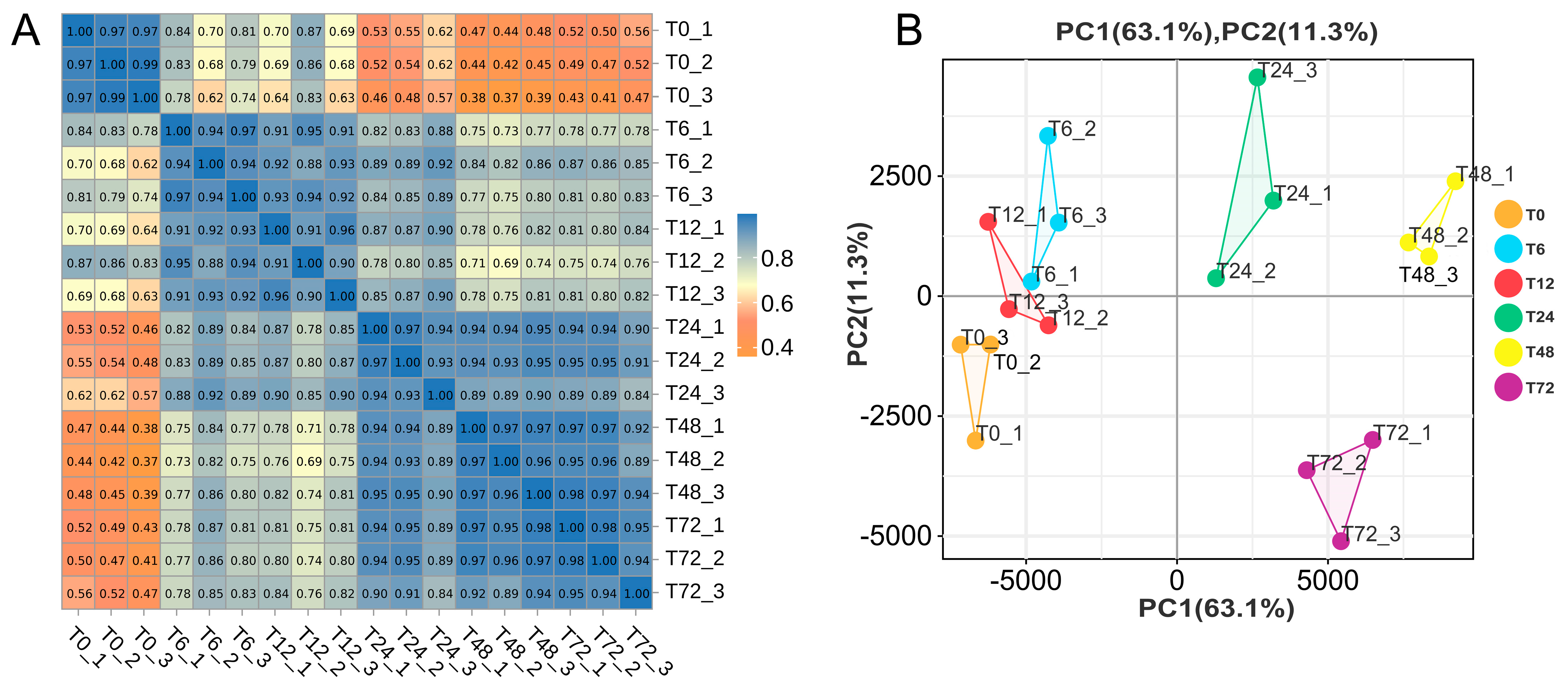
To investigate the molecular mechanisms underlying the response of cherry rootstock roots to exogenous glucose, lateral roots were harvested at six time points—0, 6, 12, 24, 48, and 72 h post-treatment (T0, T6, T12, T24, T48, and T72). A total of eighteen RNA-seq libraries (three biological replicates per time point) were constructed and subjected to high-throughput sequencing. Detailed sequencing and assembly statistics are provided in Supplementary Table S1. Each library yielded more than 5 Gb of raw reads, with individual read totals ranging from 5.24 to 7.28 Gb. After stringent quality filtering, a total of 113.41 Gb of high-quality clean reads was obtained, averaging 6.30 Gb per sample. The base quality was consistently high, with Q20 and Q30 values exceeding 96% and 91%, respectively, across all libraries. Following removal of ribosomal RNA (rRNA) reads—accounting for only 0.28% to 0.99% of total reads—the remaining clean reads were successfully aligned to the Prunus cerasus cv. ‘Montmorency’ reference genome (Supplementary Table S2). Assessment of biological reproducibility revealed strong within-group consistency: the Pearson correlation heatmap (Supplementary Table S3) showed high correlation coefficients among replicates at each time point, confirming reliable experimental replication. Interestingly, the correlation patterns naturally partitioned the samples into three distinct clusters, Group 1 (T0), Group 2 (T6 and T12), and Group 3 (T24, T48, and T72)—suggesting three temporally defined phases in the root’s transcriptional response to glucose. PCA further supported these observations, with samples clearly separating along the time course into six discrete groups corresponding precisely to the six sampling stages (Figure 1B). This temporal resolution, combined with tight clustering of biological replicates, underscores the high reproducibility and robustness of the dataset, providing a solid foundation for downstream differential expression and functional analyses.

3.2. Characterization of Glucose-Responsive Differentially Expressed Genes

As the sequencing volume (the number of reads) increases, the number of detected genes also rises. In this experiment, the sequencing volume reached the threshold (Supplementary Figure S1), and the growth rate of the detected genes began to level off, indicating that the number of detected genes has reached saturation. A total of 3226 novel genes were identified through transcriptome re-annotation, expanding the reference gene set to 100,608 for subsequent analysis (Supplementary Tables S4 and S5). Therefore, 100,608 genes were used for the next analysis. Based on the TPM values of each gene, the distribution of gene expression abundance across sample showed that the expression trends of genes or transcripts across different samples were consistent (Supplementary Figure S2), suggesting the stability and reliability of the gene TPM.
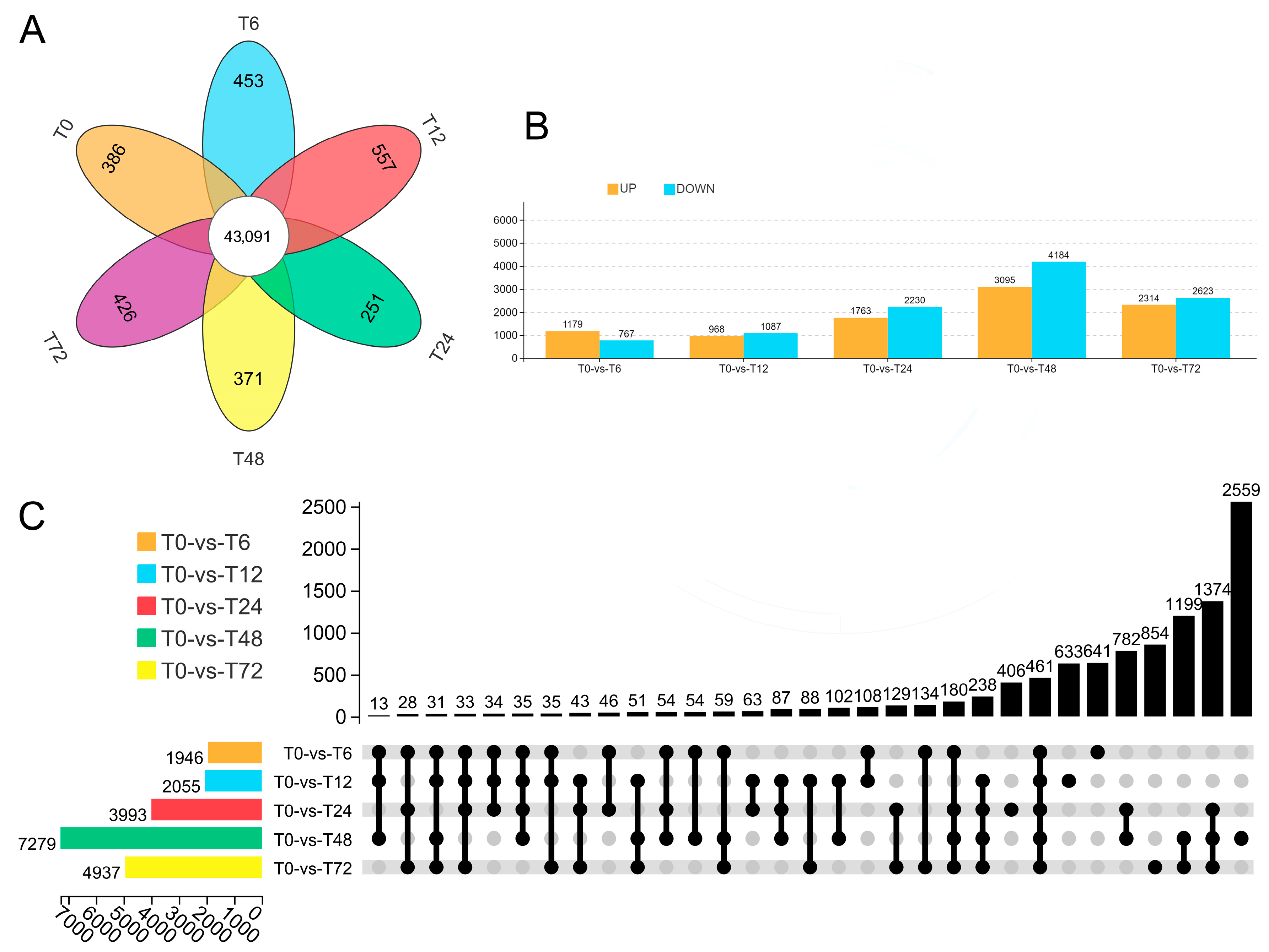
We conducted systematic re-annotation of transcriptionally expressed genes across six different treatment groups and visualized the overlapping and unique expression patterns of these six gene sets by constructing a Venn diagram (Figure 2A). The results revealed a core expression set of 43,091 genes shared among all treatment groups, indicating that these genes maintain stable transcription under varying treatment conditions. In addition to the shared genes, each treatment group exhibited a variable number of newly annotated genes, with the 12 h glucose treatment group showing the highest count, reaching 557 genes. Notably, under experimental conditions following glucose removal, the expression of 366 newly annotated genes was still detected, which may suggest a persistent influence of glucose treatment on transcriptional regulation or the existence of delayed gene response mechanisms.
To systematically investigate the dynamics of differentially expressed genes during glucose treatment, this study constructed a circular bar chart comparing T0 with T6, T12, T24, T48, and T72 (Figure 2B) to visualize the global transcriptional response patterns across different time points. The identification of DEGs revealed significant differences between each treatment group and T0. Specifically, 1946 DEGs were identified between T6 and T0 (1179 upregulated and 767 downregulated), 2055 DEGs between T12 and T0 (968 upregulated and 1687 downregulated), 3993 DEGs between T24 and T0 (1763 upregulated and 2230 downregulated), 7279 DEGs between T48 and T0 (3095 upregulated and 4184 downregulated), and 4937 DEGs between T72 and T0 (2314 upregulated and 2623 downregulated). In most comparisons, downregulated genes predominated, suggesting that glucose treatment may regulate cellular metabolism and signaling pathways by suppressing specific processes.
Further analysis of overlapping and unique DEG patterns across multiple comparisons using an UpSet plot revealed distinct temporal distribution characteristics of shared gene sets (Figure 2C and Supplementary Figures S3–S5). For instance, 34 core DEGs responded to glucose treatment during the early stages (T6 and T12), 1199 DEGs were consistently expressed during the later stages (T48 and T72), and 461 DEGs remained stable across all time points, indicating their potential core roles in glucose sensing and sustained regulatory networks. Simultaneously, stage-specific expression patterns were also notable: T6, T12, T24, T48, and T72 contained 641, 633, 406, 2559, and 854 unique DEGs, respectively. These genes may reflect stage-specific transcriptional reprogramming. For example, the substantial number of unique DEGs at T48 could signify a critical window for metabolic adaptation or cellular state transition. This comparative framework not only delineates the expression characteristics of glucose-responsive genes from a temporal perspective but also provides a screening basis for candidate gene sets for subsequent functional validation of core regulatory factors across different response stages.

3.3. Identification of DEGs Co-Expression Networks via WGCNA

The power value affects the correlation and connectivity between genes. Therefore, it is necessary to select the optimal power value by maximizing the correlation coefficient while ensuring that the connectivity does not fall too low. Therefore, we take the minimum power value of 11, which occurs when the correlation coefficient reaches 0.8, as the parameter for the subsequent analysis (Supplementary Figure S6). This tree diagram shows the hierarchical clustering of co-expression modules based on the similarity of their module eigengenes, reflecting how closely their expression patterns align during glucose treatment. The “grey” and “paleturquoise” modules exhibit relatively large branch heights, indicating lower correlation with other modules and suggesting distinct or independent regulatory dynamics (Supplementary Figure S7).
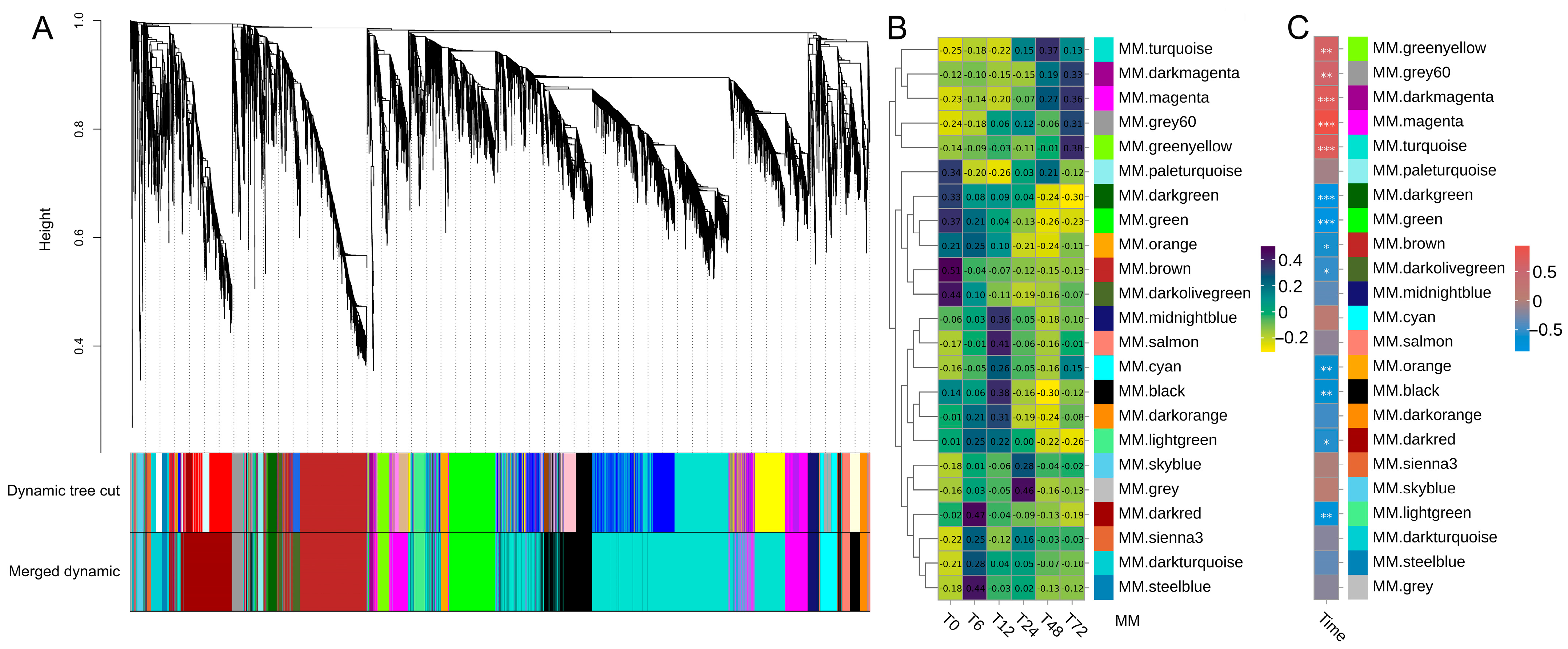
To further explore the genetic basis underlying the response to glucose treatment, weighted gene co-expression network analysis (WGCNA) was performed using the 10,554 DEGs. These DEGs were clustered into 23 distinct co-expression modules, each assigned a unique color for identification (Figure 3A). Comprehensive details of module composition, including gene counts and eigengene values, are provided in Supplementary Table S7. At each sampling time point, a strong and specific module–sample association was observed, indicating that distinct co-expression modules are preferentially activated or suppressed in correspondence with the progression of glucose treatment (Figure 3B). This tight module–sample relationship underscores the dynamic reprogramming of gene regulatory networks in cherry rootstock roots over time. Three co-expression modules (Darkmagenta, Magenta, and Turquoise) showed the strongest correlations with glucose treatment across the time course (Figure 3C). Correspondingly, analysis of Figure 3B revealed that genes within these three modules were progressively upregulated over the time course of glucose treatment, indicating a high responsiveness to exogenous glucose and a likely central role in mediating the transcriptional and physiological responses of cherry rootstock roots. Conversely, the Darkgreen and Green modules showed significant negative correlations with glucose treatment, and analysis of Figure 3B confirmed that their associated genes were consistently downregulated as the treatment progressed. Together, these five modules represent core transcriptional programs either activated or suppressed during the rootstock’s response to glucose.
The Magenta module contains 4 genes involved in nitrogen utilization, including glutamate synthase 1 (GLT1) and signaling components such as ethylene response 2 (ETR2), Arabidopsis response regulator 1 (ARR1), and Arabidopsis pseudo-response regulator 1 (APRR1), suggesting integration of nitrogen metabolism with hormone and circadian signaling (Supplementary Table S8). The Turquoise module, largest and most strongly positively correlated with treatment, harbors 18 genes linked to nitrogen utilization, along with 5 genes associated with carbon utilization (GO:0015976), reinforcing its role in coordinating carbon–nitrogen balance. Genes include glutamine synthetase 2 (GLN2), β-carbonic anhydrases (BCA2/5), and multiple APRR and SKOR-like regulators. The Darkmagenta module includes a single nitrogen utilization gene (AHK2, a histidine kinase involved in cytokinin signaling), potentially reflecting early signal perception. Conversely, the Green module (negatively correlated with glucose treatment) also shows significant enrichment in nitrogen utilization (9 genes), including GLN2, GLT1, and several APRR family transcription factors, indicating that these nitrogen-related processes are suppressed when external glucose is abundant.
Based on the WGCNA and KEGG pathway enrichment results, the Darkmagenta, Magenta, Turquoise, and Green modules, identified as most significantly correlated with glucose treatment (Supplementary Table S9). The founding showed distinct functional enrichments centered primarily around core metabolic processes. The Darkmagenta module (69 DEGs) is enriched in carbon metabolism (3 genes, ko01200) and nitrogen metabolism (1 gene, ko01200), suggesting a role in early metabolic adjustments. The Magenta module (854 DEGs) is significantly enriched in both sulfur metabolism (3 genes, ko00920) and nitrogen metabolism (3 genes, ko00910), implicating it in nutrient assimilation pathways responsive to glucose. The large Turquoise module shows strong enrichment in nitrogen metabolism (16 genes, ko00910), carbon metabolism (65 genes, ko01200), and sulfur metabolism (11 genes, ko00920), highlighting its central role in coordinating primary metabolism during prolonged glucose exposure. In contrast, the Green module (negatively correlated with treatment) contains 19 genes in nitrogen metabolism (ko00910) and 4 in sulfur metabolism (ko00920), many of which encode Nitrate Reductase 1(NIA1), Nitrite Reductase 1 (NIR1), and NRT2.1, indicating potential downregulation of inorganic nitrogen uptake and assimilation as carbon becomes abundant. Collectively, these WGCNA findings and underscore a transcriptional reprogramming where glucose availability modulates not only metabolic enzyme expression but also regulatory networks governing nitrogen acquisition and assimilation.

3.4. DEGs Enriched in Nitrogen, Carbon, and Sulfur Utilization

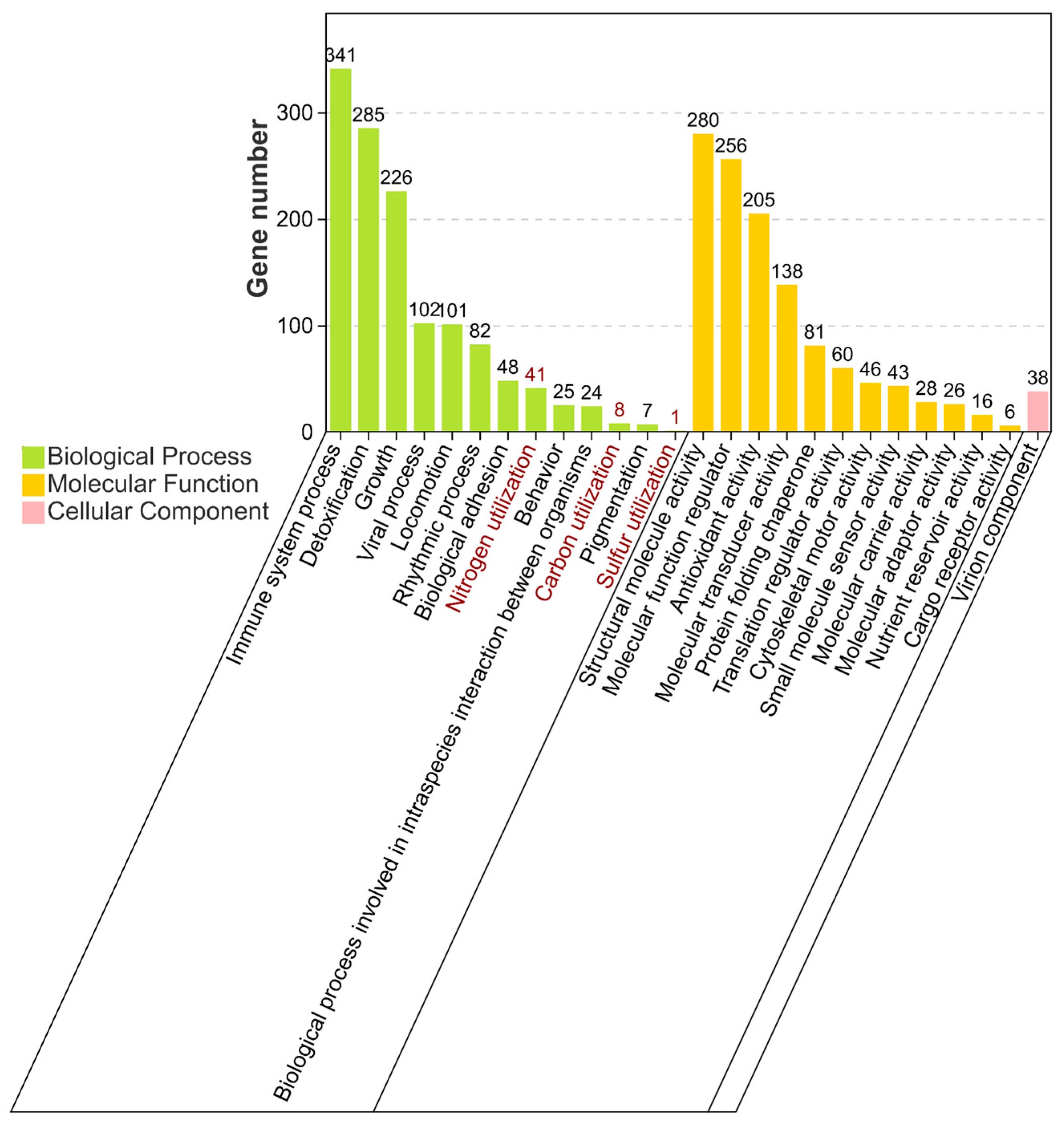
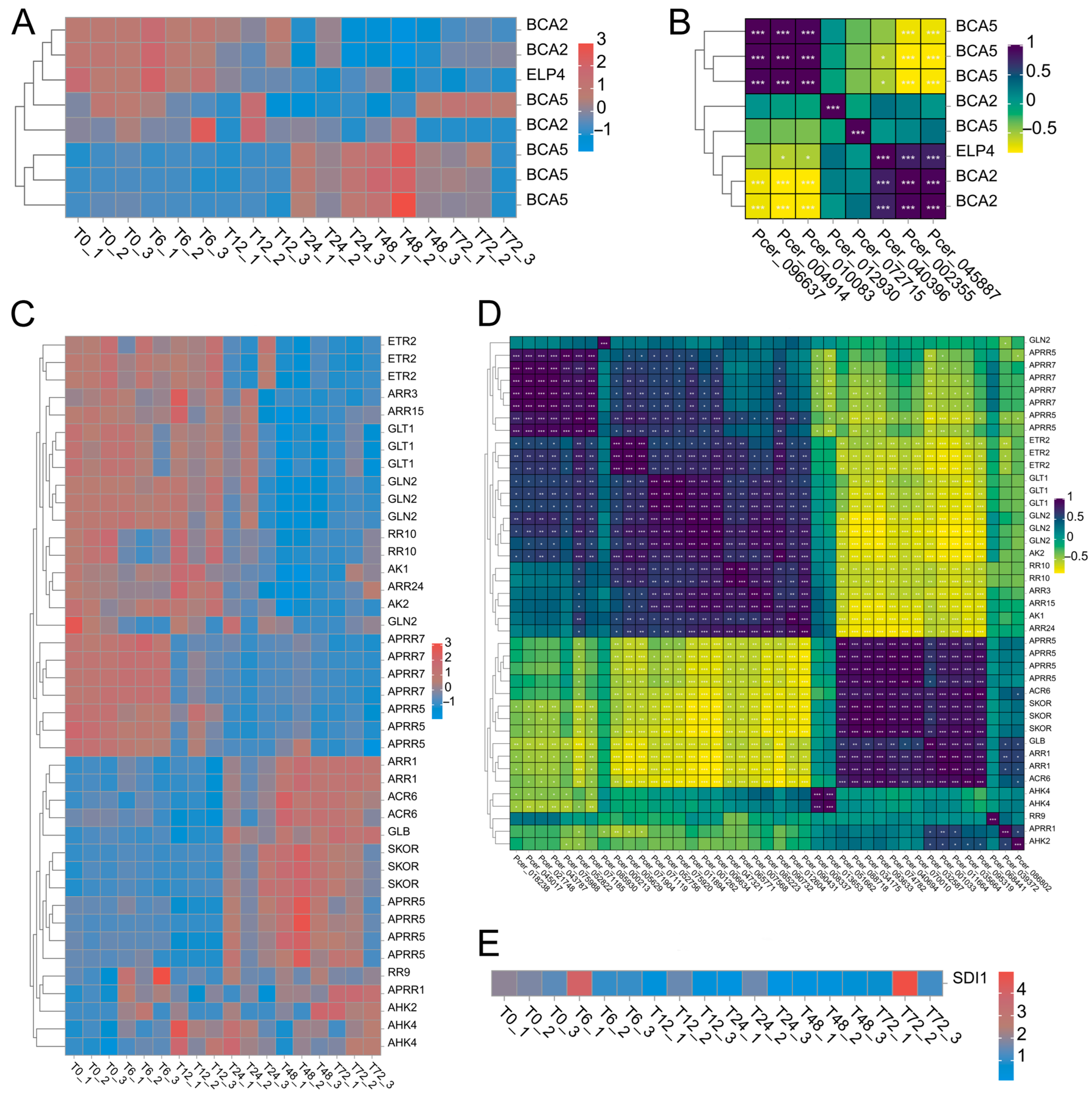
Based on GO enrichment analysis, the top 26 enriched GO terms were selected for further analysis (Figure 4 and Supplementary Table S10). According to the GO annotation, DEGs across all three comparison groups showed significant enrichment primarily in BP and MF, underscoring the central role these functional categories likely play in sweet cherry development. Within BP, three level-2 GO terms stood out: Nitrogen utilization, Carbon utilization, and Sulfur utilization (Figure 5 and Supplementary Table S11). The Nitrogen utilization term encompassed 41 annotated differentially expressed genes, a substantially larger set compared to other nutrient-related categories, suggesting it may play a central role in mediating root responses during development under glucose treatment. These genes are functionally linked to nitrogen assimilation, metabolic conversion, and signaling pathways, including key enzymes like GLN2 and GLT1, as well as components of two-component regulatory systems such as ARRs, APRRs, and AHKs. By contrast, the Carbon utilization category was represented by only eight DEGs, the majority of which encode beta-carbonic anhydrases (BCA2 and BCA5). Despite this smaller number, their consistent differential expression underscores their likely involvement in modulating inorganic carbon availability and pH homeostasis in response to glucose. Importantly, both gene sets displayed clear and significant differential expression across the time course, as visualized in Figure 5A (carbon) and Figure 5C (nitrogen). Moreover, correlation analyses revealed strong co-expression patterns among genes within each GO term, particularly within the nitrogen group, where multiple gene pairs showed statistically significant positive correlations (p < 0.05, marked with asterisks in Figure 5B,D). This coordinated expression behavior implies shared regulatory mechanisms or functional synergy, reinforcing the biological relevance of these enriched GO terms in the transcriptional response to glucose. The Sulfur utilization term was represented by just a single gene: sulfur deficiency-induced 1 (SDI1) (Figure 5E). While sparse in number, this finding is biologically meaningful. SDI1 is a well-established molecular marker induced specifically under sulfur-limited conditions, often triggering sulfur scavenging or reallocation strategies. Altogether, the enrichment of these nutrient-related GO terms paints a picture of tightly coordinated metabolic and signaling networks that adjust to internal and external cues during sweet cherry development. The prominence of nitrogen-related genes, in particular, suggests it may be a key driver of the observed transcriptional changes.

3.5. KEGG Analysis Reveals Rewiring of Carbon, Nitrogen, and Sulfur Metabolism

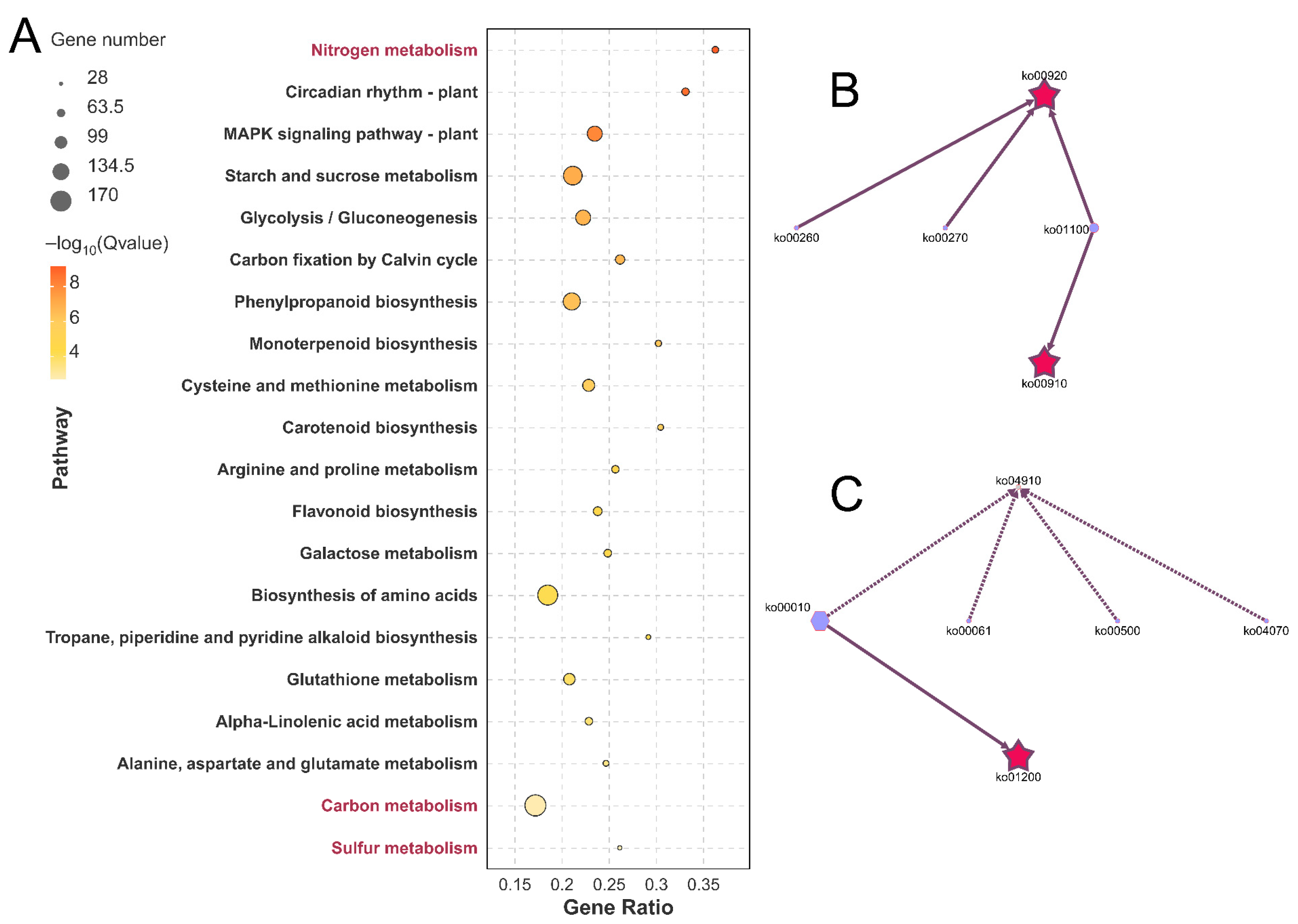
To explore the functional implications of transcriptional changes, we performed KEGG pathway enrichment analysis on 2863 DEGs. As shown in Figure 6 and detailed in Supplementary Table S12, this analysis revealed profound transcriptional reprogramming centered on primary and secondary metabolism in response to glucose treatment. The most significantly enriched pathways included nitrogen metabolism (ko00910), circadian rhythm–plant, MAPK signaling, starch and sucrose metabolism, glycolysis, carbon fixation, and phenylpropanoid biosynthesis, indicating coordinated adjustments in carbon-nitrogen balance, energy production, sugar signaling, and stress-related metabolite synthesis (Figure 6A). Notably, the strong enrichment of circadian rhythm alongside core metabolic pathways suggests glucose may interface with the biological clock to modulate physiological responses. The interconnected networks among sulfur metabolism, nitrogen metabolism, and carbon metabolism further highlight a tightly integrated nutrient management system (Figure 6B,C). Together, these results highlight that exogenous glucose triggers not only metabolic flux changes but also complex signaling and regulatory networks that reshape root physiology in cherry rootstock.
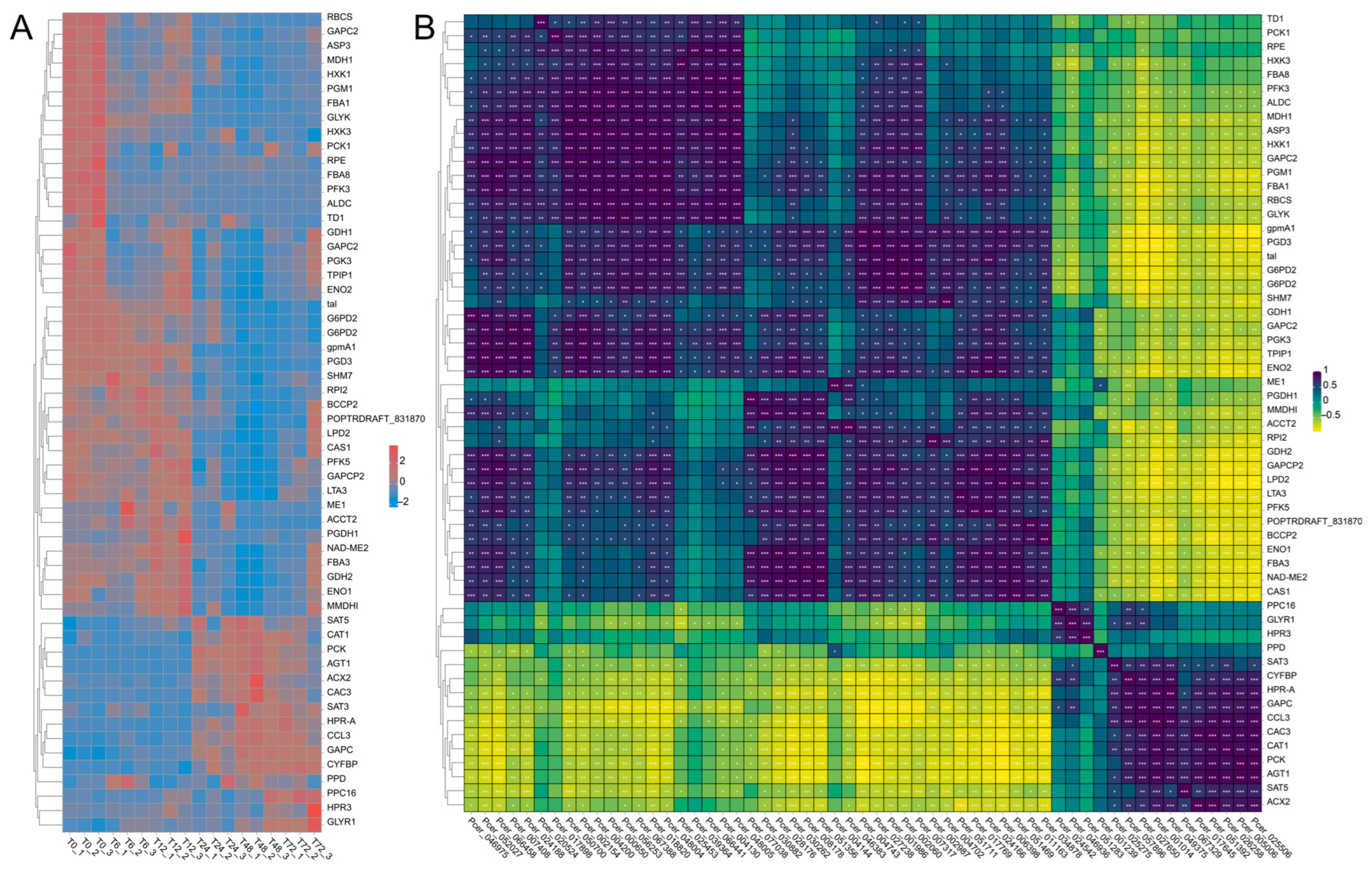
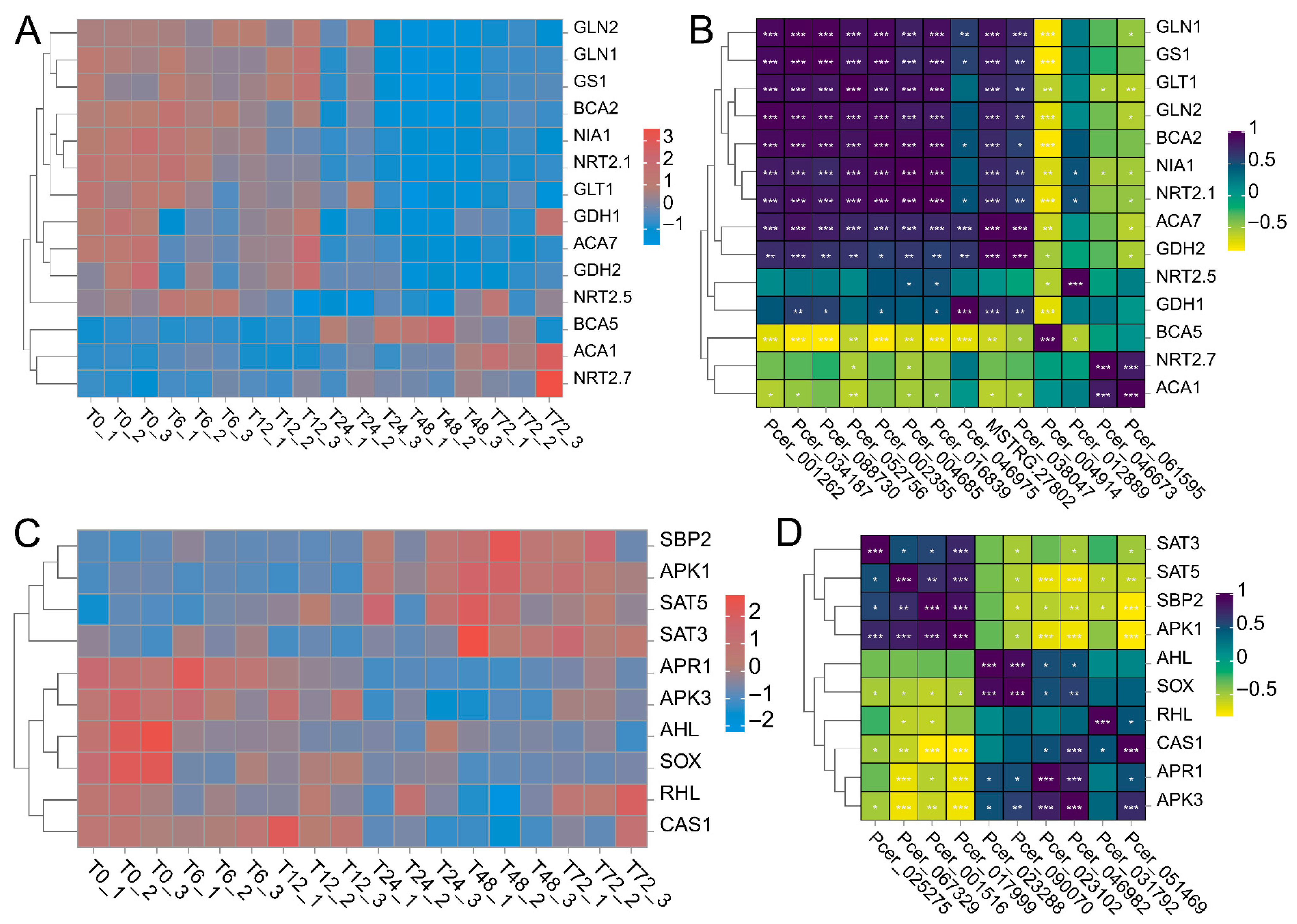
Notably, core metabolic pathways such as Carbon metabolism (ko01200, Figure 7), Nitrogen metabolism (ko00910, Figure 8A,B), and Sulfur metabolism (ko00920, Figure 8C,D) rank among the top hits, underscoring their central role in the transcriptional response to glucose. Carbon metabolism shows broad transcriptional modulation across central pathways including glycolysis, the TCA cycle, and pentose phosphate metabolism, reflecting dynamic carbon flux reallocation (Figure 7A,B). The exceptionally strong enrichment in nitrogen metabolism—featuring key genes such as GLN2, GLT1, NRT2.1/2.5/2.7, NIA1, NIR1, and carbonic anhydrases (alpha carbonic anhydrase ACA1/7, BCA2/5)—points to active reconfiguration of nitrogen uptake (Figure 8A,B). Meanwhile, sulfur metabolism, though less pronounced, includes the sulfur deficiency marker SDI1, suggesting activation of sulfur scavenging or homeostatic responses (Figure 8C,D). These three pathways collectively present a closely interconnected regulatory network that coordinates the assimilation processes of carbon, nitrogen and sulfur. This is likely a response to the glucose-mediated signal, aiming to maintain metabolic balance and support the adaptive physiological responses of the sweet cherry rootstock.

3.6. 461 DEGs Underlies Persistent Glucose-Responsive Reprogramming

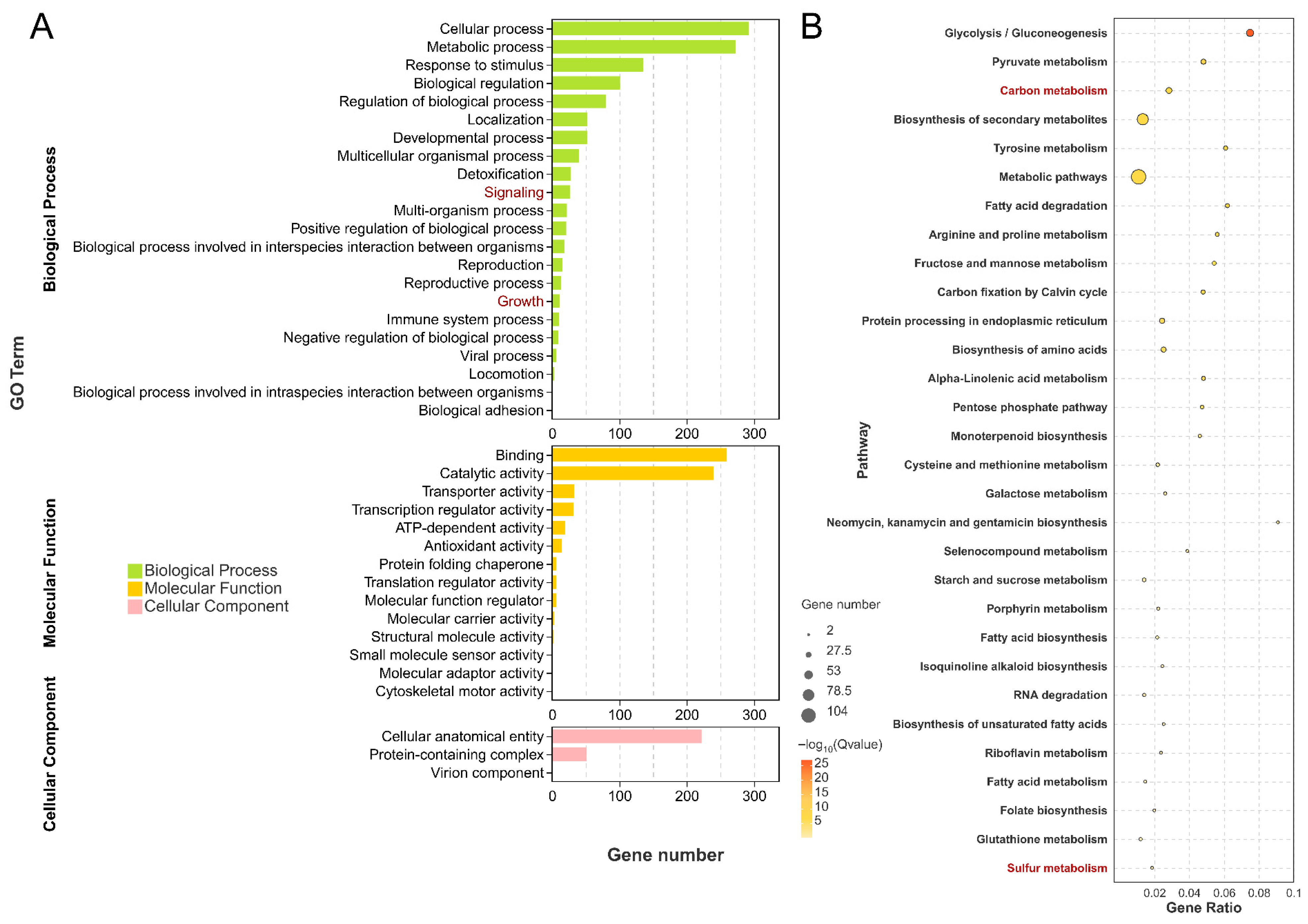
When comparing the T6–T72 time points collectively against the T0 control, we identified a total of 461 DEGs (Supplementary Table S14 and Figure S8), that suggests glucose treatment triggers a substantial and sustained transcriptional response in cherry rootstock roots over this time window. The related qRT-PCR experiments also confirmed the differential expression of the DEGs (Figure S10). GO enrichment analysis of DEGs in cherry rootstock under glucose treatment is presented in Figure 9A. The data highlight the significant overrepresentation of genes associated with core biological processes and molecular functions, particularly catalytic activity (GO:0003824; 240 genes) and cellular anatomical entity (GO:0110165; 222 genes), indicating widespread transcriptional modulation of metabolic enzymes and structural or organellar components (Supplementary Table S15). Notably, although only a single gene (Pcer_064437, annotated as HIPP20) is linked to cytoskeletal motor activity (GO:0003774), its presence may hint at cytoskeleton-mediated responses to sugar signaling. Additionally, the detection of Pcer_052934 (SIGA) under virion component (GO:0044423), a rare category in plant studies, likely reflects annotation artifacts or homology-based misassignment rather than true viral association. Overall, the enrichment profile underscores a glucose-driven reprogramming of primary metabolism, cellular organization, and stress-responsive pathways, consistent with the role of sugar as both a nutrient and a signaling molecule in root development and adaptation.
KEGG mapping reveals significant enrichment in core metabolic pathways, including carbon metabolism (ko01200), glycolysis/gluconeogenesis, amino acid biosynthesis, sulfur metabolism (ko00920), and nitrogen-related processes, alongside stress-responsive pathways such as glutathione metabolism and MAPK signaling (Figure 9B). Concurrently, GO enrichment highlights overrepresentation of genes involved in catalytic activity (GO:0003824), cellular anatomical entity (GO:0110165), biological regulation (GO:0065007), detoxification (GO:0098754), growth (GO:0040007), and developmental processes (GO:0032502). Notably, key transcription factors (Supplementary Table S16) and signaling components, including dehydration-responsive element-binding protein 2B (DREB2B), ethylene response factors (ERFs), C2H2-type zinc finger family protein 5 (ZAT5), multiprotein bridging factor 1C (MBF1C), and heat shock proteins (HSPs), are co-enriched across multiple functional categories, suggesting a coordinated transcriptional network that links sugar sensing to metabolic reconfiguration, redox homeostasis, and developmental plasticity. Together, these data indicate that exogenous glucose acts as a potent signal that orchestrates a systems-level shift in root physiology by simultaneously modulating nutrient assimilation, energy metabolism, and stress adaptation mechanisms.

4. Discussion

Lateral root formation represents a key adaptive trait, allowing the root system to dynamically adjust its architecture in response to fluctuating environmental conditions [3,9,23]. Yet, despite its physiological importance, the molecular underpinnings of how plant roots, particularly in woody species like cherry rootstocks, perceive and respond to exogenous glucose remain poorly understood. This gap underscores the need for deeper investigation into the signaling and regulatory networks that link sugar availability to root developmental plasticity.
WGCNA builds gene networks by leveraging the scale-free topology assumption, which helps prioritize biologically meaningful relationships. In practice, this means strong correlations between genes are retained, while weaker or negative associations are progressively downweighted [30]. The result is a network structure that more closely mirrors real biological systems, where a few highly connected hubs coordinate the behavior of less central nodes. When we applied this approach, four modules emerged as consistently responsive to glucose treatment, and strikingly, all showed significant enrichment for the GO term Nitrogen utilization (GO:0019740). This repeated signal across independent co-expression clusters strongly suggests that nitrogen metabolism may play a central role in the response of cherry rootstock roots to exogenous sugar [16,17]. However, further functional studies are needed to confirm the regulatory relationships suggested by these correlations.
These findings suggest that exogenous glucose triggers a major transcriptional shift toward carbon-centric metabolism while modulating nitrogen and sulfur assimilation—either by activating (in positively correlated modules) or repressing (in negatively correlated modules) key enzymatic and transport components. Taken together, the data might point to a model in which glucose initiates a broad transcriptional reorientation toward carbon metabolism, while simultaneously fine-tuning nitrogen and sulfur assimilation pathways. Depending on the module’s correlation sign, this modulation appears to involve either upregulation (in positively correlated modules) or suppression (in negatively correlated ones) of key transporters and metabolic enzymes.
Our transcriptomic analysis revealed distinct temporal phases in the root transcriptional response to glucose. In the initial hours post-treatment (T6–T12), DEGs were predominantly associated with signal perception and transient stress responses, including MAPK signaling and ethylene-related genes such as ETR2. As exposure continued, a pronounced shift toward metabolic reprogramming was evident, with strong upregulation of genes involved in carbon fixation, glycolysis, and amino acid biosynthesis. By the later time points (T48–T72), transcriptional changes converged on long-term adjustments in nutrient assimilation, particularly nitrogen and sulfur metabolism, alongside redox homeostasis pathways such as glutathione metabolism. This phased response suggests that glucose initially acts as a signaling cue, followed by a metabolic reconfiguration that prioritizes nutrient utilization and stress adaptation.
Further functional insight comes from GO enrichment analysis [34], which identifies biological processes, molecular functions, and cellular components that are overrepresented among module genes—offering clues about their collective role during glucose exposure. Within the nitrogen utilization category, we found notable representation of two-component signaling elements, including response regulators ARRs, APRRs [35,36], and AHKs [36]. Their co-enrichment hints at an active cytokinin signaling circuit that may be intertwined with circadian control of nitrogen sensing. Given that ARRs are canonical components of the cytokinin pathway—a hormone system deeply involved in growth regulation and developmental timing [35,36]. Consistent with this regulatory layer, core assimilatory enzymes including GLN2 and GLT1 were also enriched, further emphasizing that primary nitrogen metabolism remains a central component of the response [37]. Perhaps most intriguing was the presence of ethylene receptors like ETR2, which raises the possibility of cross-regulation between nitrogen status and ethylene signaling. If confirmed, such crosstalk could provide a mechanism for adjusting root architecture or resource allocation in response to both nutrient availability and hormonal cues [38]. Altogether, these findings paint a picture not of isolated metabolic shifts, but of a highly integrated response where sugar signals are interpreted through the lens of multiple interacting physiological systems.
These enzymes catalyze the reversible hydration of CO2 to bicarbonate and protons, a fundamental reaction that underpins multiple essential physiological processes [4]. This reaction is involved in inorganic carbon concentration, contributes to photosynthetic efficiency, and participates in intracellular pH homeostasis [8,15,39]. Their pronounced enrichment in our dataset suggests that the plant is actively remodeling its carbon acquisition and utilization systems, most likely in response to shifting metabolic demands or external cues such as sugar availability or light conditions. Given the central role of this reaction in both carbon metabolism and cellular homeostasis, it is reasonable to interpret this transcriptional shift as part of a coordinated physiological adaptation rather than an isolated enzymatic adjustment [40].
Regarding sulfur metabolism, our data indicate a specific but significant role in the glucose response. Although only one sulfur utilization gene, SDI1, was identified among the DEGs, its consistent upregulation across multiple time points suggests a targeted transcriptional adjustment to sulfur status. As a well-documented and specific marker of sulfur deficiency, SDI1 is involved in sulfur scavenging and reallocation [41]. Its induction under glucose treatment implies that increased carbon availability may trigger sulfur demand for the synthesis of sulfur-containing compounds such as cysteine and glutathione, which are critical for redox homeostasis and stress tolerance. Furthermore, the co-enrichment of sulfur metabolism with nitrogen and carbon pathways in KEGG networks highlights the integrated nature of nutrient management in response to glucose. This coordinated regulation likely supports root growth by balancing metabolic flux, maintaining cellular redox balance, and enhancing nutrient use efficiency under varying carbon availability.
KEGG pathways reveal extensive interconnectivity among Carbon metabolism (ko01200), Nitrogen metabolism (ko00910), and Sulfur metabolism (ko00920), underscoring the tight functional integration of these core metabolic modules. For example, carbon-derived intermediates such as 2-oxoglutarate serve as essential substrates for nitrogen assimilation [42], while the biosynthesis of sulfur-containing molecules like cysteine relies on both carbon backbones and reduced nitrogen compounds [42]. This interconnected architecture implies that glucose treatment does not perturb metabolic pathways in isolation; instead, it appears to induce a system-wide recalibration of central metabolism, with downstream consequences for energy generation, redox homeostasis, and nutrient signaling. Moreover, the interaction network linking sulfur, nitrogen, and carbon metabolism highlights a highly coordinated framework for nutrient management. Within this framework, metabolic fluxes are dynamically adjusted not only to fulfill immediate energetic and biosynthetic needs but also to mount protective responses [20,24]. These include the synthesis of antioxidants such as glutathione and the production of stress-responsive secondary metabolites, both of which are likely mobilized as part of the plant’s adaptive strategy to glucose-mediated signaling.
Based on our analyses revealing the significant upregulation of key nutrient utilization pathways (nitrogen, carbon, and sulfur) and associated signaling networks in response to glucose treatment, we cautiously propose that glucose may hold potential as a novel biostimulant or supplementary fertilizer component for cherry rootstocks. Theoretically, controlled glucose application could be developed to modulate root system architecture and enhance nutrient use efficiency, thereby supporting plant growth under specific conditions. However, we emphasize that these findings derive from controlled, short-term experiments, and their translation to field applications requires systematic validation. Future work should include field trials to determine optimal glucose concentrations, application methods, and timing, alongside comprehensive assessments of potential ecological impacts—such as effects on soil microbial communities and long-term soil health. Only through such rigorous evaluation can the practical feasibility and sustainability of glucose-based strategies be established.

5. Conclusions

Exogenous glucose application triggers a pronounced and coordinated response in cherry rootstock roots, centered on the integrated regulation of carbon, nitrogen, and sulfur metabolism. KEGG pathway enrichment clearly highlights Carbon metabolism (ko01200), Nitrogen metabolism (ko00910), and Sulfur metabolism (ko00920) as top hits, with consistent upregulation of functionally critical genes—such as NRT2s, GLN2, carbonic anhydrases, and the sulfur-deficiency marker SDI1. Rather than acting solely as an energy source, glucose appears to serve as a potent signaling molecule that reprograms primary metabolic networks. This transcriptional rewiring likely enables the plant to simultaneously meet biosynthetic and energetic demands while fine-tuning nutrient uptake and redistribution. Given the tight biochemical interdependence among these pathways—for instance, carbon skeletons fueling nitrogen assimilation and sulfur incorporation into cysteine—it seems plausible that glucose-induced shifts reflect a systemic adjustment rather than isolated pathway activation. The resulting metabolic realignment may also bolster redox buffering capacity through compounds like glutathione, thereby linking nutrient status to stress resilience in the root system.

Supplementary Materials

The following supporting information can be downloaded at: https://www.mdpi.com/article/10.3390/horticulturae12040404/s1. Supplementary Figure S1: The distribution of sequencing saturation for representative samples from 6 sampling points. Supplementary Figure S2: Distribution of gene expression abundance across samples. The horizontal axis shows log10(TPM), where higher values correspond to greater expression levels. The vertical axis represents relative gene abundance—calculated as the proportion of genes at a given expression level relative to the total number of expressed genes detected. Each color denotes a different sample. The peak of each distribution curve indicates the expression range in which the majority of genes are concentrated, reflecting the central tendency of transcript abundance within that sample. Supplementary Figure S3: The proportion distribution of sequenced-reference genes and novel genes. Supplementary Figure S4: Volcano plot of differentially expressed genes between the two groups. Genes closer to the ends of the horizontal axis have a greater degree of difference. The horizontal axis represents the logarithm of the fold difference between the two groups, and the vertical axis represents the -Log10 value of the FDR or p value of the difference between the two groups. Different colors represent the up-regulated and down-regulated genes that have been filtered based on the threshold and show a difference, while the blue dots indicate no difference. Supplementary Figure S5: The significantly enriched GO terms in the DEGs. Supplementary Figure S6: Assessment of network topology in WGCNA. Supplementary Figure S7: Cluster analysis of module eigengenes. The module eigengene (module feature value) is the value of the principal component 1 (PC1) obtained from the PCA analysis of all genes in the module. PC1 effectively captures the dominant co-expression trend and can be interpreted as a weighted average of the expression levels of all genes in the module. In the dendrogram, modules are hierarchically clustered based on the similarity of their eigengenes; a smaller branch height indicates higher correlation (i.e., greater similarity) between modules, reflecting shared regulatory dynamics or functional relatedness across the glucose treatment time course. Supplementary Figure S8: Analysis of the Venn diagram of DEGs. Supplementary Figure S9: TPM heatmap of 383 DEGs. Supplementary Figure S10: Expression levels of DEGs determined by qRT-PCR. Asterisks indicate significant differences as determined by ANOVA (* p < 0.05; ** p < 0.01; *** p < 0.001). Supplementary Table S1: The quality assessment of filtered data. Supplementary Table S2: Statistical information of rRNA alignment. Supplementary Table S3: The newly annotated gene information. Supplementary Table S4: The proportion distribution of sequenced-reference genes and novel genes. Supplementary Table S5 The proportion distribution of sequenced-reference genes and novel genes. Supplementary Table S6: TPM values of DEGs and log2 fold changes (log2FC) between comparison groups. The expression levels of DEGs were quantified using TPM, while the magnitude of differential expression between comparison groups was represented as log2 fold changes (log2FC). These values collectively provide a normalized measure of gene abundance and the direction and extent of transcriptional regulation in response to glucose treatment across the sampled time points. Supplementary Table S7: WGCNA modules of 10,554 DEGs. Supplementary Table S8: GO information of significantly correlated module in WGCNA. Supplementary Table S9: KEGG information of significantly correlated module in WGCNA. Supplementary Table S10: Top 26 of GO enrichment. Supplementary Table S11: Detailed information of genes in the Nitrogen utilization, Carbon utilization, and Sulfur utilization pathways in the GO Term. Supplementary Table S12: Top 29 of KEGG enrichment. Supplementary Table S13: Detailed information of genes in the Nitrogen metabolism, Carbon metabolism, and Sulfur metabolism pathways within the KEGG pathway. Supplementary Table S14: A list of 461 differentially expressed genes. Supplementary Table S15: Detailed GO term information for 461 genes. Supplementary Table S16: Detailed KEGG pathway information for 461 genes. Supplementary Table S17: Information on transcription factors of the 461 DEGs. Supplementary Table S18: Primers used in this study. Supplementary Table S19: Statistics of rRNA alignment. Supplementary Table S20: Alignment statistics to the reference genome.

Author Contributions

Conceptualization, F.L., Y.L., W.G. (Wenxian Gai), F.Y., S.Q. and Y.W.; methodology, S.Q., W.G. (Wenxian Gai), Y.W. and X.Z.; formal analysis, F.L., Y.L., W.G. (Wenxian Gai) and F.Y.; investigation, F.L., Y.L. and F.Y.; writing—original draft preparation, F.L., Y.L., Y.W. and X.Z.; figures and tables, F.Y., S.Q., W.G. (Wensheng Gao) and Y.W.; writing—review and editing, W.G. (Wensheng Gao), Y.W. and X.Z.; supervision and funding acquisition, F.L. and X.Z. All authors have read and agreed to the published version of the manuscript.

Funding

This research was funded by the Basic Research Project of Yantai Science and Technology Innovation Development Plan (2023JCYJ103), Earmarked Fund for China Agricultural Research System (CARS-30-ZY-24), Shandong Provincial Major Agricultural Technology Collaborative Extension Program (SDNYXTTG-2025-19), and Shandong Province Key R&D Program (2023TZXD059).

Data Availability Statement

The data presented in this study are openly available in China National Center for Bioinformation under BioProject at https://www.cncb.ac.cn/ (accessed on 28 February 2026), reference number PRJCA052669.

Conflicts of Interest

The authors declare no competing interests.

References

  1. Wingler, A. Transitioning to the Next Phase: The Role of Sugar Signaling throughout the Plant Life Cycle. Plant Physiol. 2018, 176, 1075–1084. [Google Scholar] [CrossRef]
  2. Willaume, M.; Pagès, L. How periodic growth pattern and source/sink relations affect root growth in oak tree seedlings. J. Exp. Bot. 2006, 57, 815–826. [Google Scholar] [CrossRef]
  3. Qi, B.B.; Zhang, X.; Mao, Z.Q.; Qin, S.J.; Lv, D.G. Integration of root architecture, root nitrogen metabolism, and photosynthesis of ‘Hanfu’ apple trees under the cross-talk between glucose and IAA. Hortic. Plant J. 2023, 9, 631–644. [Google Scholar] [CrossRef]
  4. Tian, X.C.; Zou, H.; Xiao, Q.; Xin, H.J.; Zhu, L.C.; Li, Y.X.; Ma, B.Q.; Cui, N.B.; Ruan, Y.L.; Ma, F.W.; et al. Uptake of glucose from the rhizosphere, mediated by apple MdHT1.2, regulates carbohydrate allocation. Plant Physiol. 2023, 193, 410–425. [Google Scholar] [CrossRef]
  5. Mudgil, Y.; Karve, A.; Teixeira, P.J.P.L.; Jiang, K.; Tunc-Ozdemir, M.; Jones, A.M. Photosynthate Regulation of the Root System Architecture Mediated by the Heterotrimeric G Protein Complex in Arabidopsis. Front. Plant Sci. 2016, 7, 1255. [Google Scholar] [CrossRef]
  6. Lara-Núñez, A.; García-Ayala, B.B.; Garza-Aguilar, S.M.; Flores-Sánchez, J.; Sánchez-Camargo, V.A.; Bravo-Alberto, C.E.; Vázquez-Santana, S.; Vázquez-Ramos, J.M. Glucose and sucrose differentially modify cell proliferation in maize during germination. Plant Physiol. Biochem. 2017, 113, 20–31. [Google Scholar] [CrossRef] [PubMed]
  7. Díaz-Granados, V.H.; López-López, J.M.; Flores-Sánchez, J.; Olguin-Alor, R.; Bedoya-López, A.; Dinkova, T.D.; Salazar-Díaz, K.; Vázquez-Santana, S.; Vázquez-Ramos, J.M.; Lara-Núñez, A. Glucose modulates proliferation in root apical meristems via TOR in maize during germination. Plant Physiol. Biochem. 2020, 155, 126–135. [Google Scholar] [CrossRef]
  8. Ji, Q.; Zhao, S.X.; Li, Z.H.; Ma, Y.Y.; Wang, X.D. Effects of Biochar-Straw on Soil Aggregation, Organic Carbon Distribution, and Wheat Growth. Agron. J. 2016, 108, 2129–2136. [Google Scholar] [CrossRef]
  9. González-Hernández, A.I.; Scalschi, L.; García-Agustín, P.; Camañes, G. Exogenous Carbon Compounds Modulate Tomato Root Development. Plants 2020, 9, 837. [Google Scholar] [CrossRef]
  10. Lavenus, J.; Goh, T.; Roberts, I.; Guyomarc’h, S.; Lucas, M.; De Smet, I.; Fukaki, H.; Beeckman, T.; Bennett, M.; Laplaze, L. Lateral root development in Arabidopsis: Fifty shades of auxin. Trends Plant Sci. 2013, 18, 455–463. [Google Scholar] [CrossRef] [PubMed]
  11. Sharma, M.; Sharma, M.; Jamsheer, K.M.; Laxmi, A. Jasmonic acid coordinates with light, glucose and auxin signalling in regulating branching angle of Arabidopsis lateral roots. Plant Cell Environ. 2024, 47, 1433. [Google Scholar] [CrossRef]
  12. Marhavy, P.; Vanstraelen, M.; De Rybel, B.; Ding, Z.J.; Bennett, M.J.; Beeckman, T.; Benková, E. Auxin reflux between the endodermis and pericycle promotes lateral root initiation. EMBO J. 2013, 32, 149–158. [Google Scholar] [CrossRef]
  13. Gupta, A.; Singh, M.; Laxmi, A. Interaction between Glucose and Brassinosteroid during the Regulation of Lateral Root Development in Arabidopsis. Plant Physiol. 2015, 168, 307–320. [Google Scholar] [CrossRef]
  14. Kushwah, S.; Laxmi, A. The interaction between glucose and cytokinin signaling in controlling seedling root growth and development. Plant Signal. Behav. 2017, 12, e1312241. [Google Scholar] [CrossRef]
  15. Krapp, A. Plant nitrogen assimilation and its regulation: A complex puzzle with missing pieces. Curr. Opin. Plant Biol. 2015, 25, 115–122. [Google Scholar] [CrossRef] [PubMed]
  16. Zheng, Z.-L. Carbon and nitrogen nutrient balance signaling in plants. Plant Signal. Behav. 2009, 4, 584–591. [Google Scholar] [CrossRef] [PubMed]
  17. de Jong, F.; Thodey, K.; Lejay, L.V.; Bevan, M.W. Glucose Elevates NITRATE TRANSPORTER2.1 Protein Levels and Nitrate Transport Activity Independently of Its HEXOKINASE1-Mediated Stimulation of Expression. Plant Physiol. 2014, 164, 308–320. [Google Scholar] [CrossRef]
  18. Lin, Y.C.; Zhang, J.; Gao, W.C.; Chen, Y.; Li, H.X.; Lawlor, D.W.; Paul, M.J.; Pan, W.J. Exogenous trehalose improves growth under limiting nitrogen through upregulation of nitrogen metabolism. BMC Plant Biol. 2017, 17, 247. [Google Scholar] [CrossRef]
  19. McGee, T.; Schaffer, B.; Shahid, M.A.; Chaparro, J.X.; Sarkhosh, A. Carbon and nitrogen metabolism in peach trees on different Prunus rootstocks in response to flooding. Plant Soil. 2022, 475, 427–441. [Google Scholar] [CrossRef]
  20. Usenik, V.; Fajt, N.; Mikulic-Petkovsek, M.; Slatnar, A.; Stampar, F.; Veberic, R. Sweet Cherry Pomological and Biochemical Characteristics Influenced by Rootstock. J. Agric. Food Chem. 2010, 58, 4928–4933. [Google Scholar] [CrossRef]
  21. Xiong, Y.; McCormack, M.; Li, L.; Hall, Q.; Xiang, C.B.; Sheen, J. Glucose-TOR signalling reprograms the transcriptome and activates meristems. Nature 2013, 496, 181–186. [Google Scholar] [CrossRef]
  22. Khandal, H.; Horev, G.; van den Herik, B.; Soroka, Y.; Lahav, T.; Avin-Wittenberg, T.; ten Tusscher, K.; Savaldi-Goldstein, S. Root growth and branching are enabled by brassinosteroid-regulated growth anisotropy and carbon allocation. Nat. Commun. 2025, 16, 3985. [Google Scholar] [CrossRef]
  23. Wan, T.; Feng, Y.; Liang, C.L.; Pan, L.Y.; He, L.; Cai, Y.L. Metabolomics and Transcriptomics Analyses of Two Contrasting Cherry Rootstocks in Response to Drought Stress. Biology 2021, 10, 201. [Google Scholar] [CrossRef]
  24. Aglar, E.; Yildiz, K.; Long, L.E. The Effects of Rootstocks and Training Systems on the Early Performance of ‘0900 Ziraat’ Sweet Cherry. Not. Bot. Horti Agrobot. Cluj-Napoca 2016, 44, 573–578. [Google Scholar] [CrossRef]
  25. Chen, S.F.; Zhou, Y.Q.; Chen, Y.R.; Gu, J. fastp: An ultra-fast all-in-one FASTQ preprocessor. Bioinformatics 2018, 34, 884–890. [Google Scholar] [CrossRef] [PubMed]
  26. Langmead, B.; Salzberg, S.L. Fast gapped-read alignment with Bowtie 2. Nat. Methods 2012, 9, 357–359. [Google Scholar] [CrossRef] [PubMed]
  27. Kim, D.; Langmead, B.; Salzberg, S.L. HISAT: A fast spliced aligner with low memory requirements. Nat. Methods 2015, 12, 357–360. [Google Scholar] [CrossRef] [PubMed]
  28. Pertea, M.; Kim, D.; Pertea, G.M.; Leek, J.T.; Salzberg, S.L. Transcript-level expression analysis of RNA-seq experiments with HISAT, StringTie and Ballgown. Nat. Protoc. 2016, 11, 1650–1667. [Google Scholar] [CrossRef]
  29. Dewey, C.N.; Bo, L. RSEM: Accurate transcript quantification from RNA-Seq data with or without a reference genome. BMC Bioinform. 2011, 12, 323. [Google Scholar] [CrossRef] [PubMed]
  30. Love, M.I.; Huber, W.; Anders, S. Moderated estimation of fold change and dispersion for RNA-seq data with DESeq2. Genome Biol. 2014, 15, 550. [Google Scholar] [CrossRef]
  31. Langfelder, P.; Horvath, S.J.B.B. WGCNA: An R package for weighted correlation network analysis. BMC Bioinform. 2008, 9, 559. [Google Scholar] [CrossRef]
  32. Ashburner, M.; Ball, C.A.; Blake, J.A.; Botstein, D.; Cherry, J.M. Gene ontology: Tool for the unification of biology. Nat. Genet. 2000, 25, 25–29. [Google Scholar] [CrossRef]
  33. Ogata, H.; Goto, S.; Sato, K.; Fujibuchi, W.; Kanehisa, M. KEGG: Kyoto Encyclopedia of Genes and Genomes. Nucleic Acids Res. 1999, 27, 29–34. [Google Scholar] [CrossRef] [PubMed]
  34. Li, N.; Wang, J.; Wang, B.K.; Huang, S.Y.; Hu, J.H.; Yang, T.; Asmutola, P.; Lan, H.Y.; Yu, Q.H. Identification of the Carbohydrate and Organic Acid Metabolism Genes Responsible for Brix in Tomato Fruit by Transcriptome and Metabolome Analysis. Front. Genet. 2021, 12, 714942. [Google Scholar] [CrossRef]
  35. Zhou, C.M.; Li, J.X.; Zhang, T.Q.; Xu, Z.G.; Ma, M.L.; Zhang, P.; Wang, J.W. The structure of B-ARR reveals the molecular basis of transcriptional activation by cytokinin. Proc. Natl. Acad. Sci. USA 2024, 121, e2319335121. [Google Scholar] [CrossRef]
  36. Kim, H.J.; Ryu, H.; Hong, S.H.; Woo, H.R.; Lim, P.O.; Lee, I.C.; Sheen, J.; Nam, H.G.; Hwang, I. Cytokinin-mediated control of leaf longevity by AHK3 through phosphorylation of ARR2 in Arabidopsis. Proc. Natl. Acad. Sci. USA 2006, 103, 814–819. [Google Scholar] [CrossRef]
  37. Lee, K.T.; Chung, Y.H.; Hsieh, M.H. The Arabidopsis glutamine synthetase2 mutants (gln2-1 and gln2-2) do not have abnormal phenotypes. Plant Physiol. 2022, 189, 1906–1910. [Google Scholar] [CrossRef]
  38. Wang, Y.; Diao, P.; Kong, L.; Yu, R.; Zhang, M.; Zuo, T.; Fan, Y.; Niu, Y.; Yan, F.; Wuriyanghan, H. Corrigendum: Ethylene Enhances Seed Germination and Seedling Growth Under Salinity by Reducing Oxidative Stress and Promoting Chlorophyll Content via ETR2 Pathway. Front. Plant Sci. 2021, 11, 639869. [Google Scholar] [CrossRef]
  39. Shang, X.M.; Zhao, Z.Q.; Xiao, W.; Zeng, Y.K.; Li, M.D.; Jiang, X.; Dahro, B.; Chu, L.L.; Wang, M.; Li, C.L.; et al. The CtrCBL1/CtrCIPK6 Complex of Citrus Phosphorylates CtrBBX32 to Regulate CtrSTP1-Mediated Sugar Accumulation and Cold Tolerance. Adv. Sci. 2025, 12, e08372. [Google Scholar] [CrossRef] [PubMed]
  40. Fan, S.H.; Huang, Z.H.; Liu, H.F.; Zhang, X.F.; Hua, W.; Fu, Z.W. Sucrose mediates moderate salinity-promoted primary root growth in rapeseed. Plant Physiol. Biochem. 2025, 227, 110133. [Google Scholar] [CrossRef] [PubMed]
  41. Rakpenthai, A.; Apodiakou, A.; Whitcomb, S.J.; Hoefgen, R. In silico analysis of cis-elements and identification of transcription factors putatively involved in the regulation of the OAS cluster genes SDI1 and SDI2. Plant J. 2022, 110, 1286–1304. [Google Scholar] [CrossRef] [PubMed]
  42. Homma, M.; Uchida, K.; Wakabayashi, T.; Mizutani, M.; Takikawa, H.; Sugimoto, Y. 2-oxoglutarate-dependent dioxygenases and BAHD acyltransferases drive the structural diversification of orobanchol in Fabaceae plants. Front. Plant Sci. 2024, 15, 1392212. [Google Scholar] [CrossRef] [PubMed]
Figure 1. Dynamic changes after the glucose treatment. (A) Sample correlation heatmap across the 18 samples (T0–T72). Each cell represents the Pearson correlation coefficient between two samples, with color intensity indicating the degree of similarity: orange denotes lower correlation, while blue indicates higher correlation. (B) PCA of gene expression profiles. PC1 (horizontal axis) and PC2 (vertical axis) represent the first and second principal components, respectively; the percentages in parentheses indicate the proportion of total variance explained by each component. Each colored dot corresponds to an individual biological replicate, with colors distinguishing different time points.
Horticulturae 12 00404 g001
Figure 2. Transcriptome annotation and differential gene expression analysis. (A) Re-annotation of expressed genes across the six time points (T0–T72). The Venn diagram depicts both shared and time point-specific gene sets, highlighting the dynamic nature of the transcriptome over the course of glucose treatment. While a core set of genes is consistently detected across all stages, each time point also contributes a unique subset—suggesting temporally regulated transcriptional activity. (B) Pairwise comparisons of DEGs among the six sampling points, with DEGs defined by |log2 fold change| > 1 and an adjusted false discovery rate (FDR) <0.05. (C) An UpSet plot illustrates the intersection patterns of DEGs across five treatment-versus-control contrasts (T6 vs. T0, T12 vs. T0, T24 vs. T0, T48 vs. T0, and T72 vs. T0). The left panel shows the total number of DEGs in each individual comparison. On the right, the matrix uses filled circles to denote which comparisons contribute to each intersection, while the accompanying vertical bars quantify the number of genes uniquely shared within that specific combination. This visualization reveals not only genes consistently responsive throughout the time course but also those activated or repressed only during particular windows—offering clues about transient versus sustained regulatory programs.
Horticulturae 12 00404 g002
Figure 3. WGCNA-based identification of the key genes associated with glucose treatment. (A) Hierarchical clustering tree indicated the co-expression modules identified using WGCNA at different stages. Different modules were identified by different colors. A gene was represented by each leaf of the cluster tree. (B) Heatmap illustrating module–sample relationships from WGCNA. Each row represents a co-expression module (labeled by color), and each column corresponds to a sampling stage (T0, T6, T12, T24, T48, T72). (C) Heatmap depicting the expression patterns of WGCNA-identified co-expression modules across samples over the course of glucose treatment. Values in each cell represent the correlation coefficient. The color scale reflects the Pearson correlation coefficient between module eigengenes and treatment stages. Asterisks indicate levels of statistical significance, with a higher number of asterisks denoting greater significance.
Horticulturae 12 00404 g003
Figure 4. GO enrichment analysis of DEGs in response to glucose treatment. Horizontal axis: GO term; Vertical axis: Number of target genes in the term. The key terms nitrogen utilization, carbon utilization, and sulfur utilization are highlighted in red.
Horticulturae 12 00404 g004
Figure 5. GO-based identification of key genes responsive to glucose treatment. (A,C,E) Heatmaps displaying DEG TPM values associated with carbon utilization (8 genes; (A)), nitrogen utilization (41 genes; (C)), and sulfur utilization (1 gene; (E)). Expression levels are shown across all six time points (T0–T72), with color intensity reflecting relative abundance, red indicating higher expression and blue lower expression. (B,D) Corresponding gene co-expression correlation heatmaps for the carbon- (B) and nitrogen-related (D) gene sets. Pairwise Pearson correlation coefficients were computed based on TPM profiles across samples. Significant correlations (adjusted p < 0.05) are marked with asterisks (*), where multiple asterisks denote increasing statistical confidence (**, p < 0.01; *** p < 0.001).
Horticulturae 12 00404 g005
Figure 6. DEG-based KEGG enrichment uncovers metabolism pathways. (A) KEGG enrichment analyses of DEGs. Horizontal axis: Gene ratio; Vertical axis: KEGG pathway. (B,C) Networks depicting the interaction relationships among different pathways. Pathway interaction networks were constructed based on DEG annotations provided in Supplementary Table S12. Nitrogen metabolism, ko00910; Sulfur metabolism, ko00920; Carbon metabolism, ko01200.
Horticulturae 12 00404 g006
Figure 7. KEGG-based identification of part of DEGs involved in the carbon metabolism pathway. (A) Heatmap showing TPM values for a subset of DEGs annotated to the carbon metabolism pathway (detailed in Supplementary Table S13). Expression profiles are displayed across all six time points (T0–T72), with red hues indicating relatively high expression and blue hues indicating lower expression. (B) Corresponding co-expression correlation heatmap for the same gene set. Pairwise Pearson correlation coefficients were computed based on TPM profiles across samples. Significant correlations (adjusted p < 0.05) are marked with asterisks (*), where multiple asterisks denote increasing statistical confidence (**, p < 0.01; *** p < 0.001).
Horticulturae 12 00404 g007
Figure 8. GO-based identification of some DEGs involved in the Nitrogen metabolism and Sulfur metabolism pathway. (A,C) Heatmap showing TPM values for a subset of DEGs annotated to the Nitrogen metabolism (A) and Sulfur metabolism (B) pathway (detailed in Supplementary Table S13). (B,D) Corresponding gene co-expression correlation heatmaps for the Nitrogen- (A) and Sulfur-related (C) gene sets. Asterisks indicate levels of statistical significance, with a higher number of asterisks denoting greater significance.
Horticulturae 12 00404 g008
Figure 9. Functional enrichment analysis of 461 glucose-responsive DEGs reveals coordinated shifts in biological processes and metabolic pathways. (A) GO enrichment analysis of DEGs in cherry rootstock under glucose treatment. (B) KEGG enrichment analyses of DEGs. The horizontal axis represents the enrichment factor, and the size of the points indicates the number of differentially expressed genes.
Horticulturae 12 00404 g009
Disclaimer/Publisher’s Note: The statements, opinions and data contained in all publications are solely those of the individual author(s) and contributor(s) and not of MDPI and/or the editor(s). MDPI and/or the editor(s) disclaim responsibility for any injury to people or property resulting from any ideas, methods, instructions or products referred to in the content.