Article

Adaptability and Resilience of Chaenomeles japonica (Thunb.) Lindl. ex Spach (Rosaceae) in Urban Landscape Design


1
Faculty of Forestry, University of Belgrade, Kneza Viseslava 1, 11030 Belgrade, Serbia
2
Faculty of Agriculture, University of Novi Sad, Trg Dositeja Obradovića 8, 21000 Novi Sad, Serbia
*
Author to whom correspondence should be addressed.
Horticulturae 2026, 12(3), 396; https://doi.org/10.3390/horticulturae12030396
Submission received: 21 February 2026 / Revised: 20 March 2026 / Accepted: 21 March 2026 / Published: 23 March 2026
(This article belongs to the Special Issue Sustainable Cultivation and Performance of Ornamental Plants)

Abstract

This research is interdisciplinary in nature and supports the process of selecting individual plants to achieve sustainable visual and ecological effects in the urban landscape. The importance of this study is further emphasised by climate change, which necessitates modifications to the existing selection of ornamental plants. These individuals must be capable of adapting to urban ecosystems in order to mitigate the impacts of climate change on humans and other organisms and to maintain a high level of biodiversity. Accordingly, this paper highlights, at the individual level, the significance of Japanese quince (Chaenomeles japonica (Thunb.) Lindl. ex Spach) as an element of urban green infrastructure in the Balkan Peninsula. Based on a real case study conducted over the period 2007–2025 and through an integrative approach involving 3841 phenological observations and climate parameters over 19 consecutive years, local phenological flowering patterns were identified, upon which the species’ functional potential depends. The key patterns and abundance of flowering are the result of interactions with daily maximum and minimum air temperatures and precipitation levels, as confirmed by correlations with percentile-based classifications of climatic variables for the study years. The statistical non-significance of the trends points to the influence of extreme climatic events but also to the adaptability of the selected genotype compared with other Japanese quince genotypes in the vicinity. Regression analysis determined the optimal daily air temperatures for continuous flowering during 2024 and 2025. The results confirm that the selected individual is sustainable, and it is, therefore, proposed for inclusion in the assortment of ornamental plants important for preserving ecosystem services in urban landscape design, particularly in view of its demonstrated utilitarian benefits.

1. Introduction

Intensive urbanisation is transforming the urban landscape and generating major ecological challenges, particularly under conditions of climate change, thereby calling into question the sustainability of the urban environment [1], in which plants play a crucial role. Monitoring the impact of climatic conditions on utilitarian plants has been the subject of extensive and continuous research, as they determine national and global food security and economic stability [2,3]. However, research on ornamental plants remains limited. The assortment of ornamental plants is characterised by a wide diversity of woody species, among which shrubs occupy an important position due to their multiple applications in urban landscape design [4].
In recent years, there has been growing interest in the conservation and study of cultivated shrub resources in order to identify local genotypes for the purposes of protection, preservation and enhancement of the biological diversity of local flora [5,6,7,8]. Attention has also been directed towards their principal ornamental characteristics: flowers, fruits, leaves and growth habit [9,10]. Among these traits, flowering and flower development are highlighted as key elements essential for further research and breeding [11]. Flowering represents a crucial phase of the plant life cycle that strongly influences plant fitness [12,13]. Flowering traits (e.g., flowering phenology and functional floral characteristics) determine reproductive efficiency and are necessary for assessing threats to biodiversity under changing environmental conditions [14,15]. It is well established that plant flowering is influenced by environmental factors [16], which give rise to different phenological flowering patterns [17,18,19]. The review by Chen et al. [20] summarises the role of environmental factors in regulating flowering time.
One of the shrub species commonly present in urban landscapes is Japanese quince (Chaenomeles japonica (Thunb.) Lindl. ex Spach), which was introduced into European gardens from East Asia at the end of the eighteenth century [21].
Previous research on C. japonica has included the characterisation of Chaenomeles sp. genotypes within the plantation collection of the Research Institute of Mountain Stockbreeding and Agriculture—Troyan (RIMSA) and the selection of samples suitable for cultivation under the conditions of the central Balkan mountains [22]; ecological plasticity [23]; and studies of adaptation and growth patterns of C. japonica in Uzbekistan in 2023 and 2024, with particular emphasis on pollen micromorphology and foliar epidermal characteristics in order to better understand its ecological adaptations in native and cultivated habitats. In addition, studies have examined morphological parameters for the purpose of identification and taxonomic classification of C. japonica through microscopic analysis [24], among others.
In Serbia, C. japonica is a common ornamental plant; however, it has not yet been introduced as a fruit crop. Given that shrubs represent one of the vital components of urban green infrastructure and considering that reconstruction projects in Belgrade over the past two decades have recorded a trend of declining shrub presence, Japanese quince was selected for this research.
The innovative nature of this study lies in the extensive research conducted at the individual level over 19 consecutive years. An integrative approach was applied to climatic variables and the phenological patterns of flowering in Chaenomeles japonica in order to determine its adaptability and enable a predictive understanding of sustainability at the individual level under conditions of climate change in the urban landscape. Moreover, urban landscape design must take into account specific local and regional conditions when selecting plant species. In light of the above, this paper analyses C. japonica on the Balkan Peninsula with regard to its potential application based on climatic similarity and its adaptability to extreme climatic events. The initial hypotheses were that climatic fluctuations affect the DOY values (day of the year for flowering pattern stages) and accumulated heat sums (GDD) for C. japonica in an urban landscape and that the predictive accuracy of weather-based GDD models for DOY changes under the influence of extreme climatic events.
The aim of this study is to investigate the flowering phenology of C. japonica at the individual level, based on nineteen years of observation, within the context of urban landscape design. As Japanese quince is an important ornamental as well as utilitarian plant providing multiple ecosystem services, the specific objectives were (a) to analyse the phenological patterns of primary flowering; (b) to evaluate continuous flowering during 2024 and 2025; (c) to determine the range of air temperatures associated with maximum flowering intensity; and (d) to assess the suitability of C. japonica as a sustainable element of urban landscapes under conditions of climatic fluctuations. In addition, this novel research approach advances knowledge regarding (a) the functioning of individual C. japonica plants in urban ecosystems exposed to stressors such as urbanisation and climate change; (b) implications for landscape design; and (c) strategies that support professionals in operationalising ecological knowledge in the planning and design of urban green infrastructure. This study emphasises the importance of individual variability of C. japonica under local conditions as a foundation for designing more resilient and culturally relevant urban green spaces.

2. Materials and Methods

2.1. Study Area

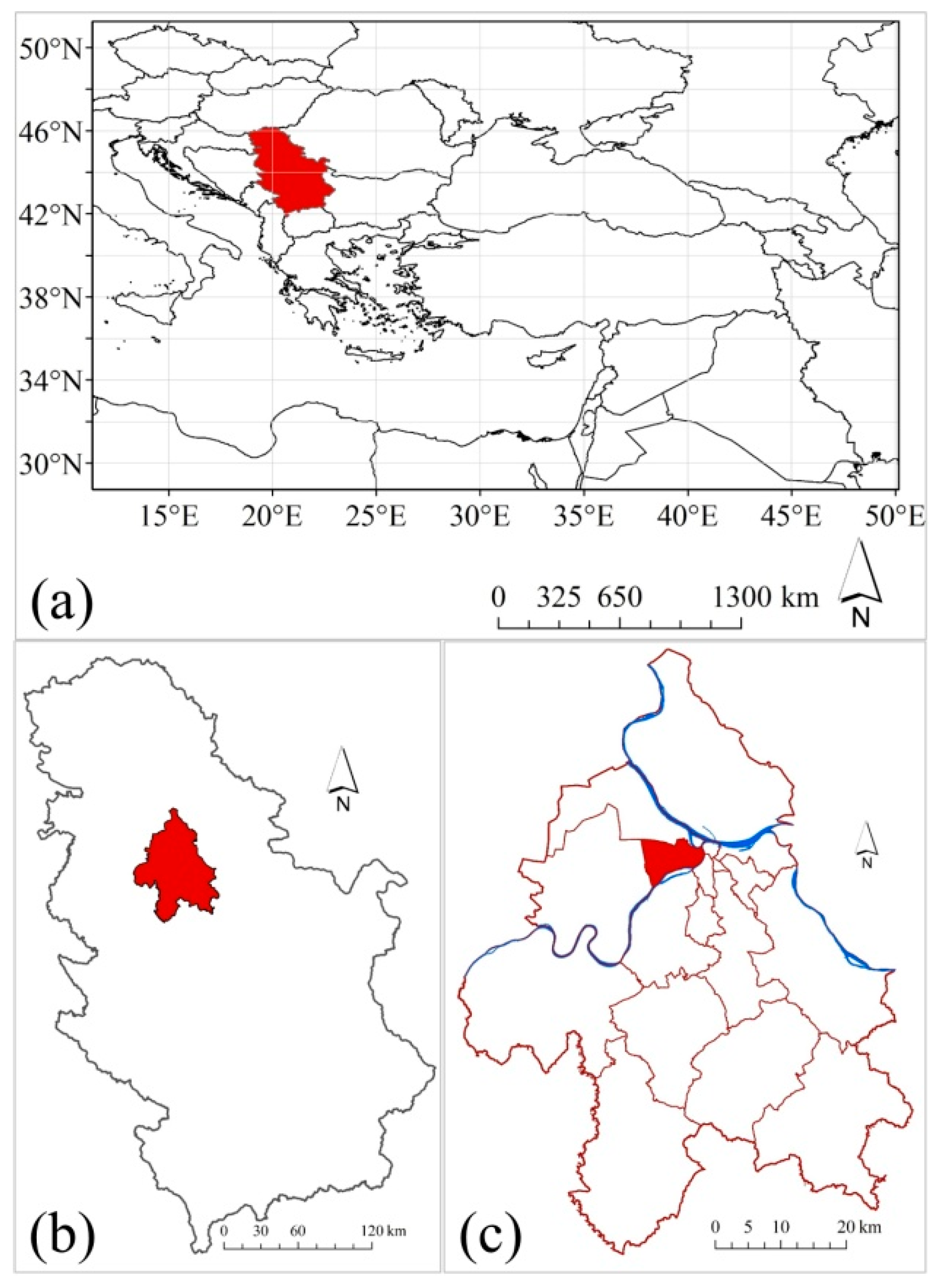
This research was conducted in Belgrade (Serbia), within the territory of the municipality of Novi Beograd (Figure 1). Owing to its highly urbanised character, favourable location, infrastructure development potential, and proximity to major transport routes, it is projected to become a regional administrative and business centre of Southern Europe, based on sustainable local economic conditions [25].
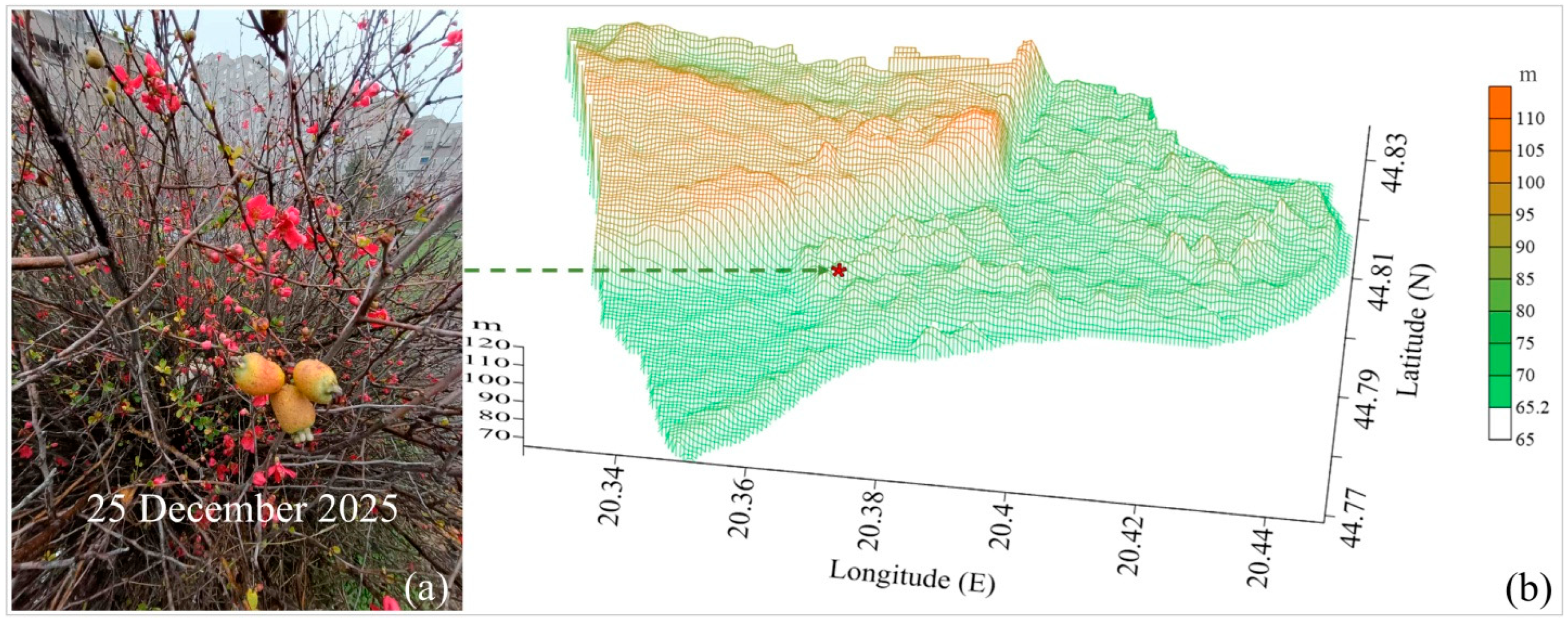
In 2006, within green spaces in Novi Beograd, specifically in Blocks 61, 62, 63 and 74 on the left bank of the Sava, the largest national river, ten individuals of Japanese quince (C. japonica) were recorded as multifunctional elements of green infrastructure. Over 17 consecutive years, all studied plants remained viable; however, during 2024, the globally warmest year on record [26], two plants withered. Genotype 1 (georeferenced at 44°47′55.96″ N, 20°22′16.24″ E; altitude 76 m a.s.l.) (Figure 2) was selected, as it flowered and fruited continuously, and these same phenophases persisted into the 2025 calendar year.
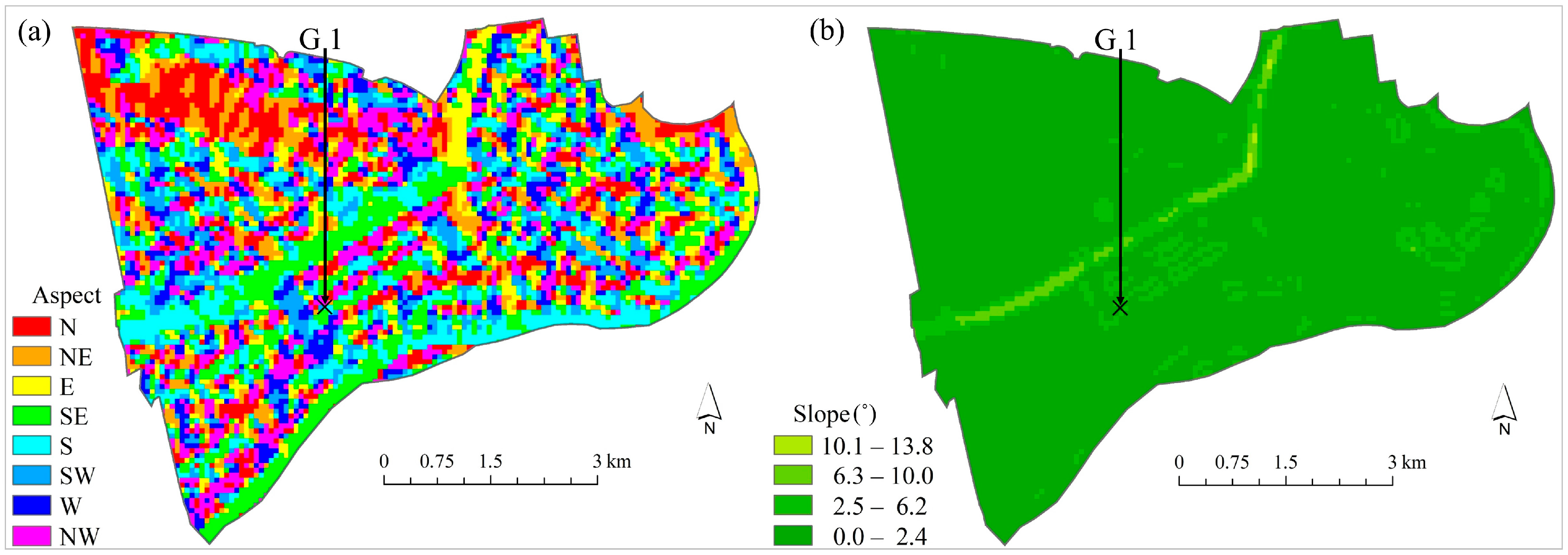
Genotype 1 is located on anthropogenically modified, poorly developed alluvial soil belonging to carbonate loamy–sandy soils [27]. The aspect (southern exposure) and slope (2.02°–very gently inclined terrain) of the G1 Japanese quince site are presented in Figure 3.

2.2. Processing of Data

The phenological data are the result of the authors’ own monitoring of the flowering phenophase within the study area over the period 2007–2025. Genotype 1 was observed every second day and, following the recording of the onset of flowering, on a daily basis. The extended Biologische Bundesanstalt, Bundessortenamt and CHemical industry (BBCH) scale of Meier [28] was applied: beginning of flowering—60 BBCH (more than 10% of flowers open), full flowering—65 BBCH (more than 50% of flowers open), and end of flowering—69 BBCH (more than 80% of flowers faded). The total number of phenological observations was 3841.
The dates of key flowering phenophases were converted using software into day of year (DOY), where 1 January corresponds to DOY 1, 2 January to DOY 2, and so forth. According to Lalić et al. [29], growing degree days (GDD) were calculated for the key phases on the basis of daily maximum (Tmax) and minimum (Tmin) air temperatures, applying the improved formulae presented in Ocokoljić et al. [18] and a temperature threshold (Tt = 5 °C) in accordance with the recommendation of the World Meteorological Organization (2021) [30] for temperate continental climate conditions. After establishing the appropriate series of active temperatures, they were accumulated from 1 January to the DOY corresponding to 60 BBCH, 65 BBCH and 69 BBCH for each of the 19 research years. By combining phenological and climatological data, the required heat sums were determined [29]. Due to the similar environmental conditions, such as altitude, soil type, terrain configuration, openness of the area, exposure to the prevailing southeast wind, and close proximity to the study site, climatic parameters from the main meteorological station (MMS) Surčin (44°47′54.44″ N; 20°27′53.35″ E; altitude 99 m) of the Republic Hydrometeorological Service of Serbia [31,32] were used. For the reference period (1991–2020), climatological standard normals for air temperature and precipitation were determined, while for the study period (2007–2025), statistical climatological methods of percentiles and corresponding terciles were applied. The RHMZ categorisation for maximum, minimum and mean daily and monthly air temperatures according to percentiles was adopted as follows: EW—Extremely warm (>98th percentile), VW—Very warm (>90th–≤98th), W—Warm (>75th–≤90th), N—Normal (≥25th–≤75th), C—Cold (≥10th–<25th), VC—Very cold (≥2nd–<10th), EC—Extremely cold (<2nd); according to terciles: 1—Warm (≥66th percentile), 0—Normal (>33rd–<66th), −1—Cold (≤33rd percentile). The categorisation of monthly precipitation totals according to percentiles [26] comprised the following classes: EW—Extremely wet (>98th percentile), VW—Very wet (>90th–≤98th), W—Wet (>75th–≤90th), N—Normal (≥25th–≤75th), D—Dry (≥10th–<25th), VD—Very dry (≥2nd–<10th), ED—Extremely dry (<2nd); according to terciles: 1—Wet (≥66th percentile), 0—Normal (>33rd–<66th), −1—Dry (≤33rd percentile).
Descriptive statistics, the Spearman rank test (ρ), and the non-parametric Mann–Kendall trend test in conjunction with Sen’s slope estimator were applied in this study, as recommended by the World Meteorological Organization [30] for assessing trends in environmental time series. The Spearman rank test indicates consistently increasing or decreasing correlations between variables. The direction of the relationship is determined by the value and sign of the coefficient (−1 to 1) according to Gilbert [33]. The strength of the correlation was interpreted following Horvat and Mijoč [34]: 0 (no correlation), 0–0.24 (very weak), 0.25–0.49 (weak), 0.50–0.74 (moderate), 0.75–0.99 (strong to very strong), and 1 (perfect). Continuous flowering and successive fruiting were recorded during the previous two years (2024 and 2025). Therefore, in order to determine the influence of air temperature and precipitation on flowering intensity, flowering abundance was assessed according to the Stilinović [35] scale: 0—no flowers (0% of branches with flowers); 1—very sparse (<20%); 2—sparse (>20–<40%); 3—moderate (>40–<60%); 4—abundant (>60–<90%); and 5—maximum (>90%). The relationships between air temperature and flowering abundance were analysed using correlation and linear regression. Data processing was performed using the software packages XLSTAT 2022 (Lumivero LLC, Denver, CO, USA) and PAST 4.11 (Øyvind Hammer, Oslo, Norway), while visualisation was conducted using ArcGIS 10.8/ArcMap 10.8 (Esri, Redlands, CA, USA) and Surfer 22 (Golden Software, LLC, Golden, CO, USA). This study includes the authors’ own photographs.

3. Results

3.1. Patterns of Primary Flowering in Japanese Quince

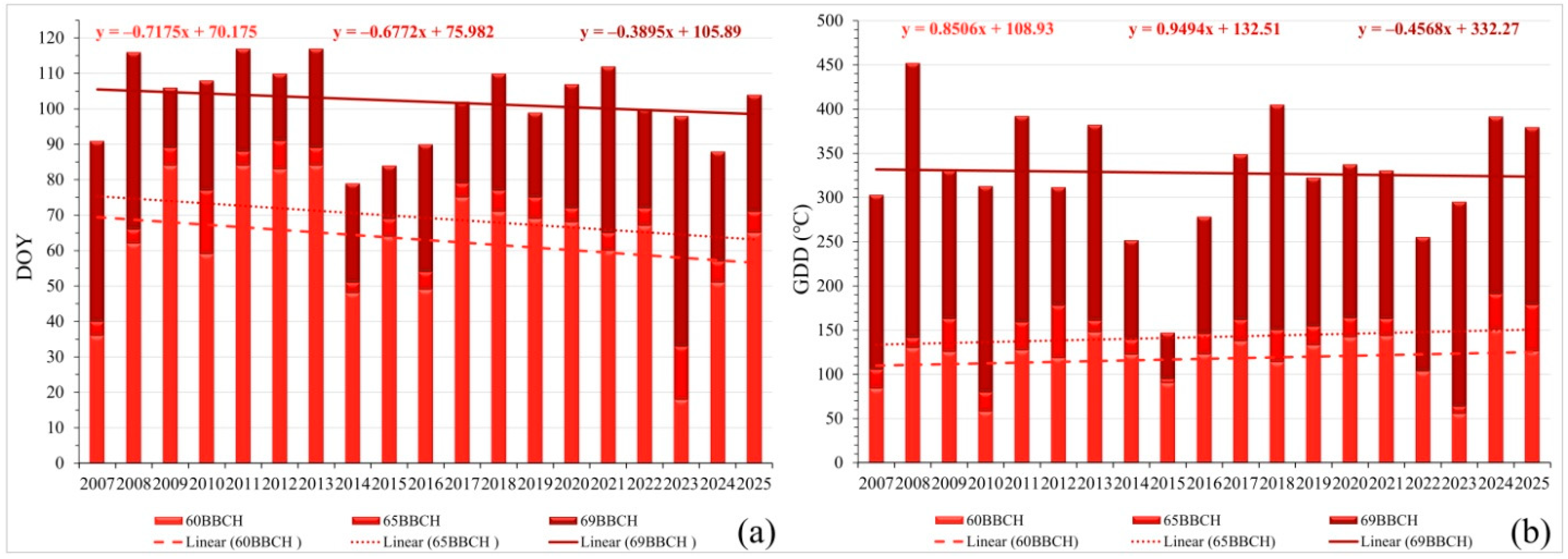
For all elements of the primary flowering pattern, decreasing trends in DOY values were observed, indicating a shift towards earlier key flowering phenophases over the 19 consecutive years of research (Figure 4a). The absolute differences between the earliest and latest key phases were 66 days (60 BBCH), 58 days (65 BBCH), and 38 days (69 BBCH), demonstrating that the flowering of C. japonica varied in accordance with changes in air temperature. The earliest onset (DOY 18) and full flowering (DOY 33) occurred in 2023, while the end of flowering (DOY 79) was recorded in 2014; compared with the mean values, these were earlier by 45, 36.2, and 23 days, respectively. The latest onset (DOY 84) and end of flowering (DOY 117) occurred in 2013, whereas full flowering (DOY 91) was recorded in 2012; compared with the mean values, these were later by 21 days (onset), 21.8 days (full flowering), and 15 days (end of flowering). These findings indicate the occurrence of extreme climatic events and highlight the importance of determining GDD values in flowering patterns. For the onset and full flowering stages, increasing GDD trends were observed, i.e., rising accumulated heat sums, whereas for the end of flowering, a decreasing trend in accumulated heat sums was recorded (Figure 4b). Stage 60 BBCH was registered after the accumulation of heat sums ranging from 55.6 °C (2023) to 150.5 °C (2024); 65 BBCH from 64.1 °C (2023) to 190.8 °C (2024); and 69 BBCH from 147.4 °C (2015) to 451.9 °C (2008). The mean accumulated heat sums for the period 2007–2025 were 117.4 °C (60 BBCH), 142.0 °C (65 BBCH), and 327.7 °C (69 BBCH). In relation to the mean GDD values of all key pattern elements, the minimum values were lower by 61.8 °C (onset), 77.9 °C (full flowering), and 180.3 °C (end of flowering), whereas the maximum values were higher by 33.1 °C (onset), 48.8 °C (full flowering), and 124.2 °C (end of flowering). This indicates considerable variability in GDD values under the influence of air temperature and other climatic parameters during the study years. Therefore, in order to assess the influence of climatic variables on the adaptability of C. japonica, descriptive statistics were applied (Table S1). Primarily the standard deviation, as well as other measures of dispersion, indicates shifts in the key phenological events of the primary flowering pattern.
The significance of the previously observed decreasing and increasing linear trends in the phenological patterns of primary flowering of Chaenomeles japonica during the period 2007–2025 was analysed using the Mann–Kendall test in conjunction with Sen’s slope tests. The results presented in Table 1 indicate that these trends are not statistically significant.
The results of the Spearman rank tests stand out, confirming that the correlation coefficients, at a significance level of p < 0.05, indicate a significant strong positive relationship between 60 BBCH DOY and 65 BBCH DOY (0.932) and between 60 BBCH DOY and 65 BBCH GDD (0.753). Moderate positive correlations were also observed between 69 BBCH GDD and 65 BBCH GDD (0.532), 69 BBCH GDD and 60 BBCH GDD (0.607), 69 BBCH GDD and 69 BBCH DOY (0.673), 65 BBCH DOY and 69 BBCH DOY (0.631), and 69 BBCH DOY and 60 BBCH DOY (0.617). A weak positive correlation was found between 60 BBCH DOY and 65 BBCH GDD (0.459), while the remaining correlations were not significant (Table 2).
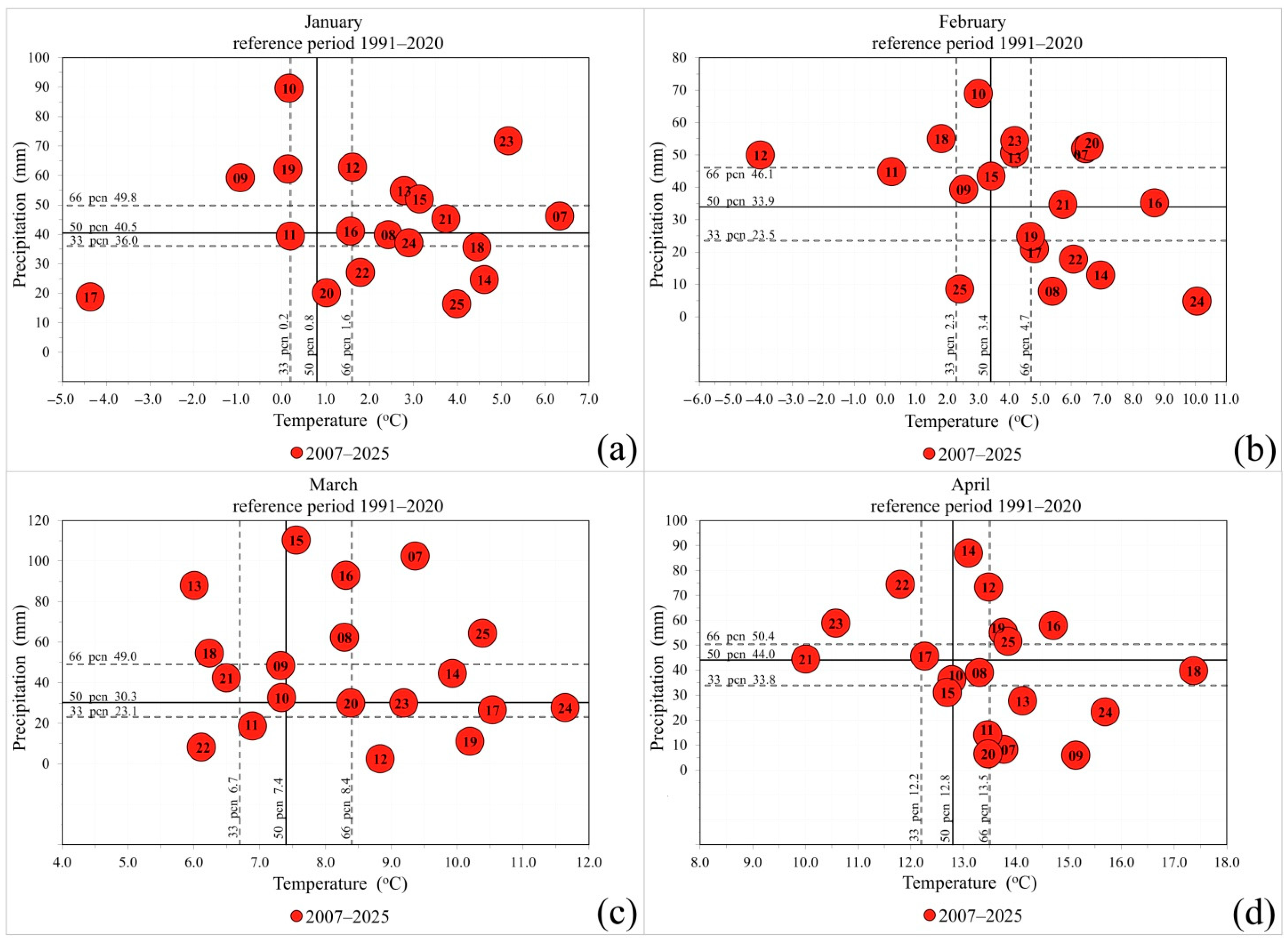
Considering that the key elements of the primary flowering patterns of C. japonica in New Belgrade varied over the years of this study, it is assumed that they were influenced by interactions between year and climatic variables. Therefore, for the study period (2007–2025), the mean monthly air temperatures and precipitation amounts for January, February, March, and April (the months during which primary flowering was recorded) are presented in relation to the reference period 1991–2020 (Figure 5).
The earliest 60 BBCH and 65 BBCH occurred in 2023, when air temperatures and precipitation in January (18 DOY) were well above the upper tertiles (Figure 5a), and in February (33 DOY), temperatures were above normal, while precipitation was above the upper tertile (Figure 5b). The earliest 69 BBCH was recorded in 2014, when in March (79 DOY), air temperatures were significantly above normal, and precipitation was at the upper tertile (Figure 5c). The latest 60 BBCH and 69 BBCH were observed in 2013 (84 DOY and 117 DOY), when April air temperatures were above the upper tertile, while precipitation was below the lower tertile (Figure 5d). The latest 65 BBCH occurred in 2012 (91 DOY), when April air temperatures were slightly above normal, and precipitation was significantly below the lower tertile (Figure 5d). The 2012 flowering phenophase was preceded by an extremely cold February, with air temperatures farthest below the lower tertile compared to all years of the reference period (1991–2020) and the study period (2007–2025) and precipitation above the upper tertile (Figure 5d). February 2012 was the coldest since measurements began at the Meteorological and Hydrological Station Surčin (from 1962), with mean minimum air temperatures in the “very cold” and “extremely cold” categories and snow cover lasting more than 20 days [26].
Considering all of the above, other elements of the primary flowering patterns were also analysed (Table S2). Statistical parameters indicate variation in the number of days for the elements of the primary flowering phenophases of C. japonica and in mean air temperatures during the respective periods. Notably, 2014 had the shortest period between the 60 and 65 BBCH phases, and 2015 had the shortest period between the 65 and 69 BBCH phases as well as the shortest total flowering duration (60–69 BBCH). Compared to the mean values for the period 2007–2025, the first phase was shorter by 3.2 days, the second phase was shorter by 17.8 days, and the total flowering phenophase was shorter by 19 days. In those years, mean air temperatures were 10.3 °C (60–65 BBCH), 7.4 °C (65–69 BBCH), and 6.5 °C (60–69 BBCH), which is higher by 2.4 °C or lower by 3.1 °C and 3.5 °C, respectively, compared to the 2007–2025 period. Similarly, 2010 had the longest period between the 60 and 65 BBCH phases, and 2023 had the longest period between the 65 and 69 BBCH phases and the total flowering duration (60–69 BBCH). Compared to the mean for 2007–2025, the first phase was longer by 11.8 days, the second phase was longer by 33.2 days, and the total flowering phenophase was longer by 41 days. In those years, mean air temperatures were 2.9 °C (60–65 BBCH), 6.7 °C (65–69 BBCH), and 6.1 °C (60–69 BBCH), which is lower by 5.0 °C, 3.8 °C, and 3.9 °C, respectively, compared to the mean values for the same dates during 2007–2025. The shortest total flowering phenophase occurred in the year when the mean air temperature during 65–69 BBCH was approximately equal to the mean air temperature for the entire primary flowering period.
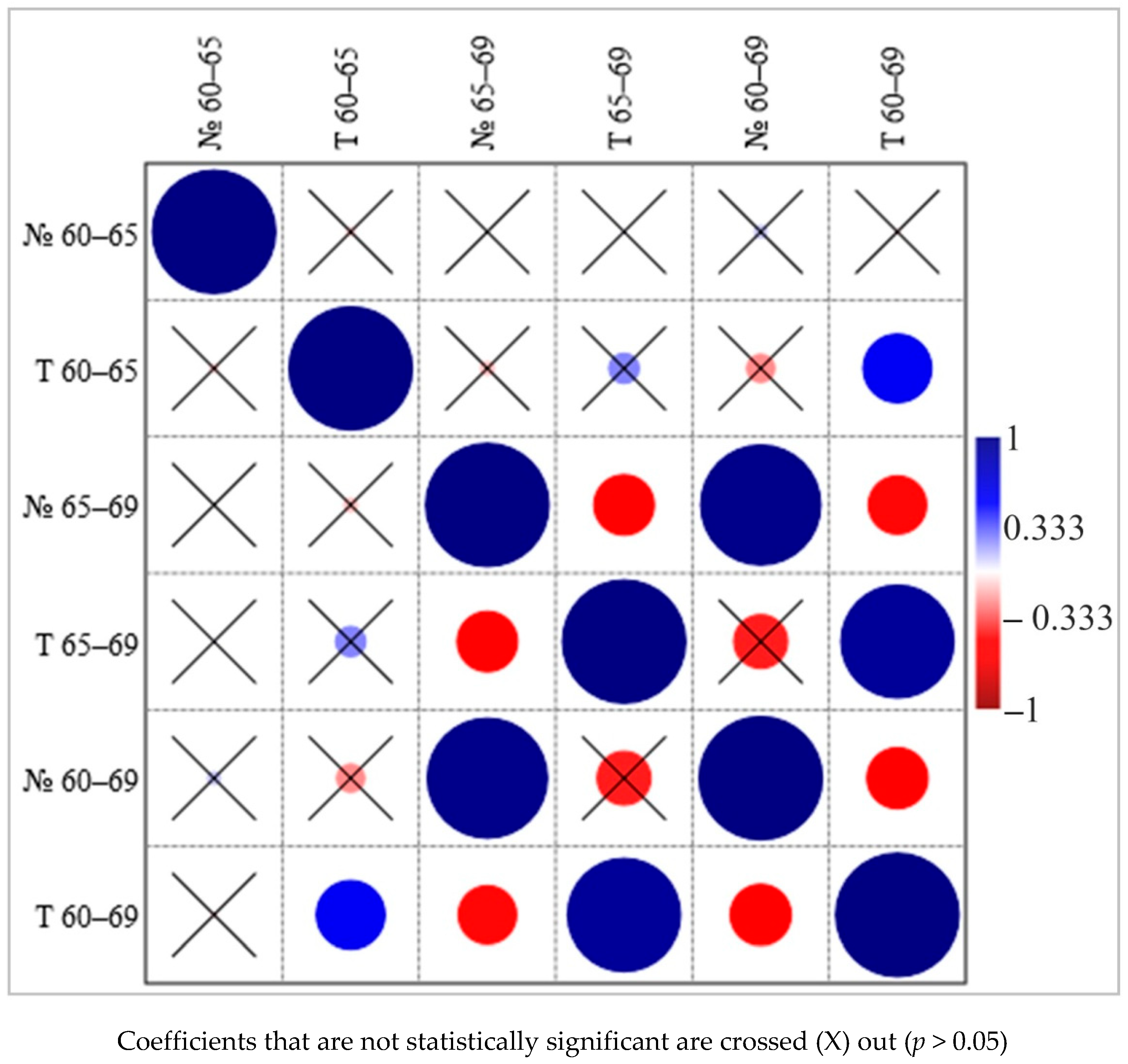
Considering the pronounced variability of the elements of primary flowering phenological patterns over the study period, Spearman rank correlation coefficients were determined (Figure 6). A positive relationship is observed between the number of days from 65 to 69 BBCH and the total flowering duration (0.973) as well as with the mean air temperatures for the same periods (0.907). A moderate positive correlation is also observed between mean air temperatures for the 60–65 BBCH period and the total flowering duration (0.574). Thus, the higher the mean daily air temperatures from the onset to full bloom and from full bloom to the end of flowering, the higher the mean air temperature for the entire primary flowering period. As the number of days from full bloom to the end of flowering increases, the total flowering duration also increases. On the other hand, a moderate negative correlation (−0.501) was recorded between the number of days from 65 to 69 BBCH and the mean air temperature during the same period, along with a weak negative correlation (−0.459) between the number of days from 65 to 69 BBCH and the mean air temperature for the entire 60–69 BBCH period. These negative correlations indicate that, the longer the period from full bloom to the end of flowering, the lower the mean daily air temperatures from full bloom to the end and for the total flowering phenophase, thus confirming the influence of air temperature on the phenological patterns of primary flowering.
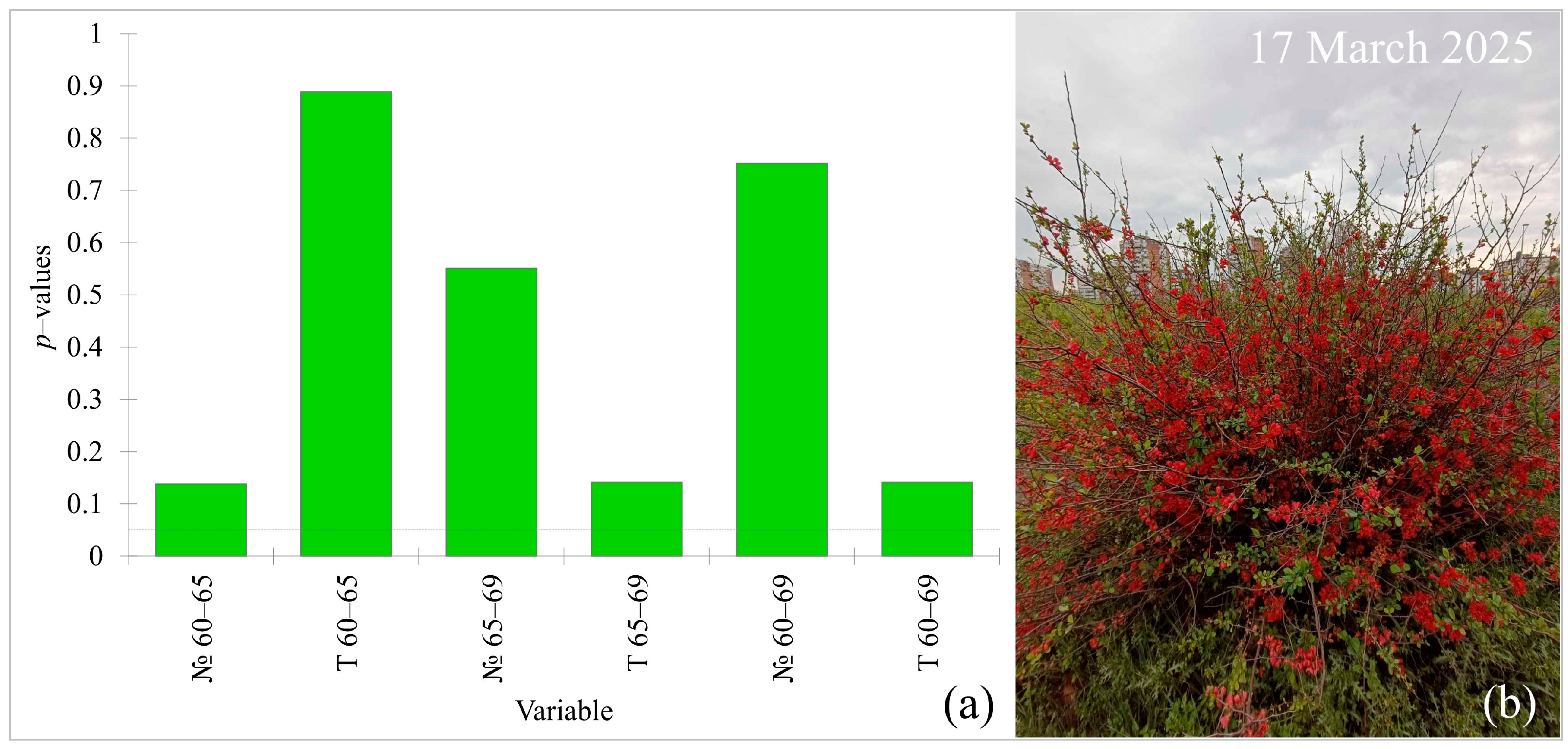
The Mann–Kendall test in conjunction with Sen’s slope tests for the same elements of the primary flowering phenological patterns of C. japonica in New Belgrade during the period 2007–2025 indicates that there are no statistically significant trends for the analysed elements (Figure 7).
During the period 2007–2025, yield was recorded, with abundance varying in accordance with the intensity of primary flowering and climatic parameters.

3.2. Evaluation of Flowering of Japanese Quince Genotype 1 During 2024 and 2025

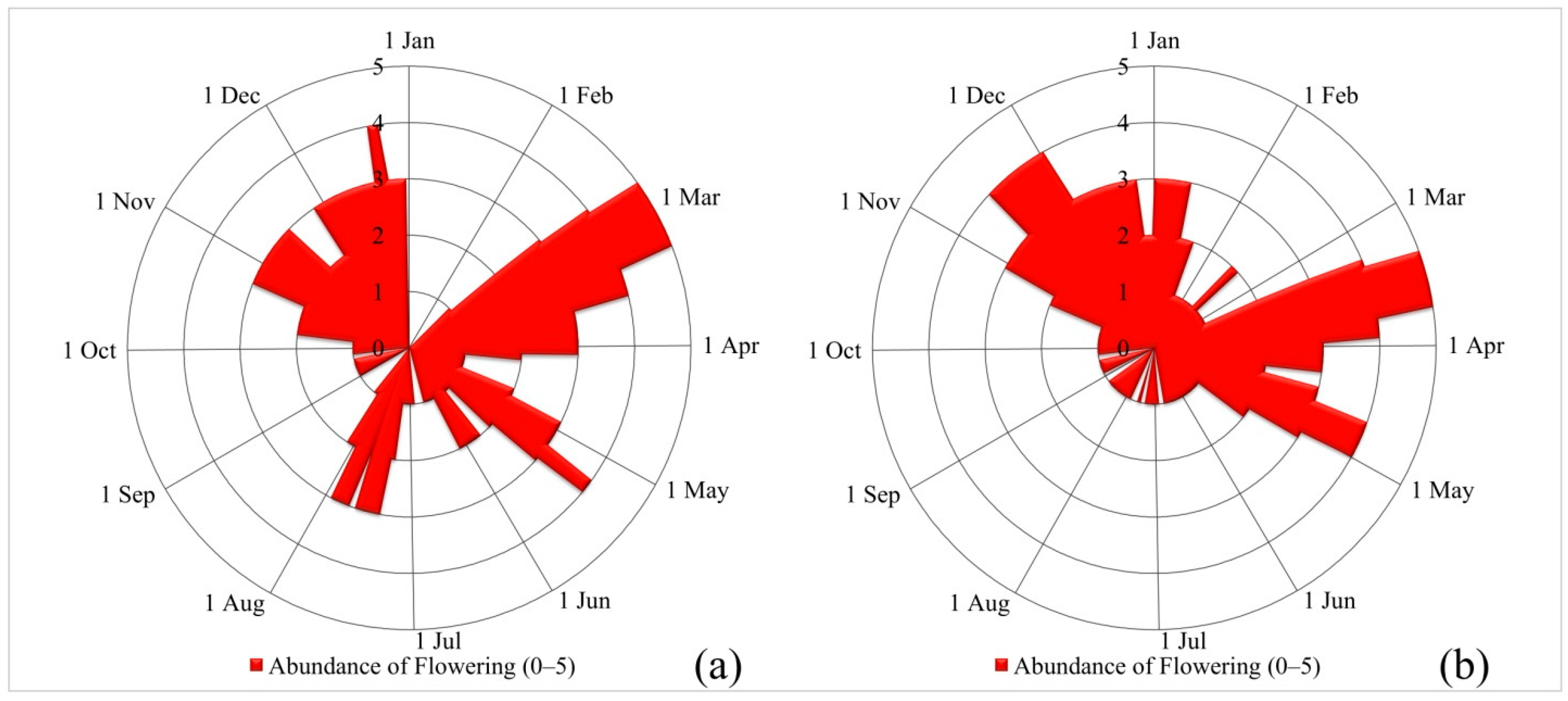
The average flowering abundance scores during 2024 and 2025 were 1.85 and 2.0, falling within the “low” category, while the average scores for primary flowering abundance in the same years were in the “full bloom” category: 4.72 and 4.80, respectively. In the previous two years, when extended flowering was recorded, abundance scores ranged from 0 to 5 (Figure 8).
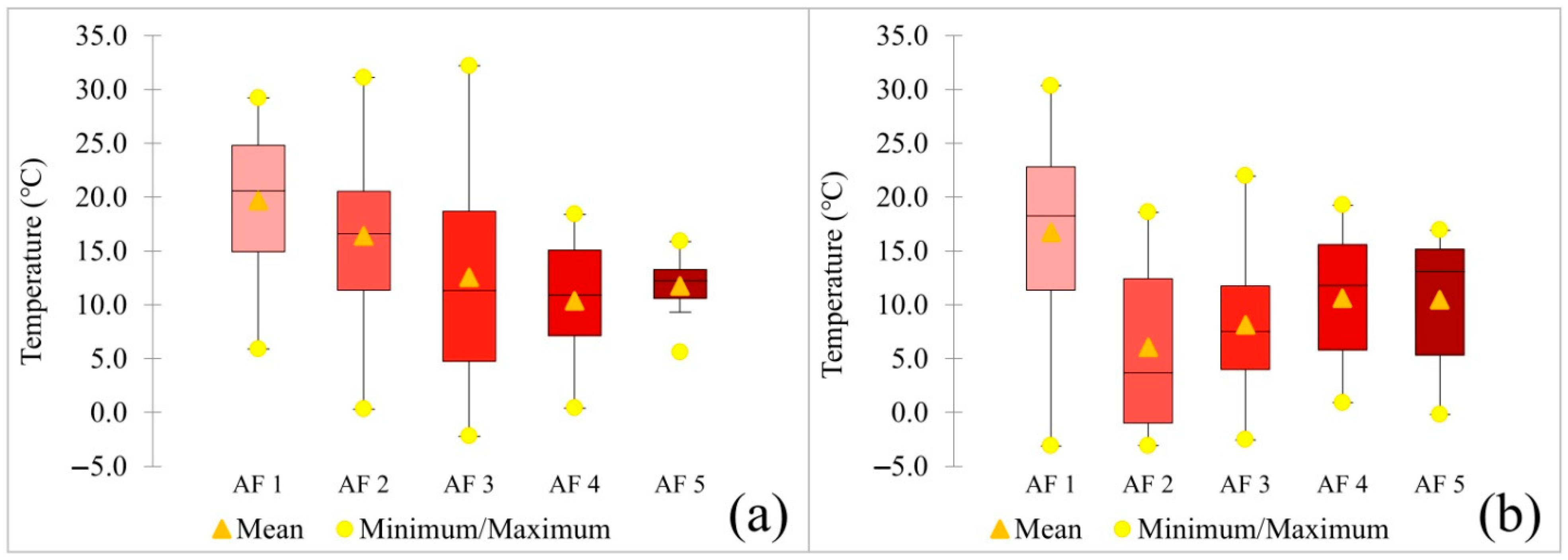
A comparative analysis of mean daily air temperatures and flowering abundance scores (AF) from 1 to 5 was conducted to determine the range of mean daily temperatures corresponding to each score, as shown in Figure 9. The ranges of mean daily temperatures for flowering abundance scores are consistent with their categorisation according to percentiles for the study years (Tables S3 and S4). The pronounced variability of mean daily air temperatures between abundance scores, as well as the temperature ranges for the same scores across the two previous calendar years, was confirmed by descriptive statistics (Table S5).
The relationship between flowering abundance and mean daily air temperatures was analysed using Spearman’s correlation coefficients (at a significance level of p < 0.05). In 2024, a very weak negative correlation was observed (ρ = −0.193, p = 0.000), while in 2025, a moderate negative correlation was found (ρ = −0.520, p < 0.0001), confirming that, in accordance with the strength of the correlations, flowering abundance decreases as mean daily temperatures increase. The influence of mean daily air temperatures on flowering abundance is further supported by the results of regression analysis (at a significance level of p < 0.05) for 2024 and 2025 (Figure S1 and Table 3).
The highest score (5) was recorded only during primary flowering, within ranges of mean daily air temperatures from 5.6 °C to 15.9 °C (2024) and −0.2 °C to 16.9 °C (2025). Full bloom was observed over 16 days in 2024 and 13 days in 2025. In 2025, during the consecutive days of maximum flowering abundance, one day with a mean daily temperature below 0 °C was recorded, followed by six more days with a score of 5.
Considering the observed variation in statistical parameters for mean daily air temperatures and flowering abundance (particularly the occurrence of mean daily temperatures below 0 °C during maximum flowering in 2025) and with the aim of a more precise analysis of the influence of air temperatures, a comparative analysis of daily maximum and minimum temperatures and flowering abundance of C. japonica was carried out. During 2024, the following maximums and minimums were recorded: for full bloom, 20.9 °C (max) and 2.4 °C (min); for abundant flowering, 23.8 °C (max) and −2.4 °C (min); for moderate flowering, 36.1 °C (max) and −4.4 °C (min); for low flowering, 36.1 °C (max) and −4.0 °C (min); and for very low flowering, 35.1 °C (max) and −1.1 °C (min). During 2025, the following maximums and minimums were recorded: for full bloom, 23.3 °C (max) and −4.0 °C (min); for abundant flowering, 26.8 °C (max) and −1.8 °C (min); for moderate flowering, 29.2 °C (max) and −5.1 °C (min); for low flowering, 25.1 °C (max) and −5.2 °C (min); and for very low flowering, 37.4 °C (max) and −9.5 °C (min). The selected temperatures are explained by the categorisation of daily maximum and minimum temperatures for the respective dates (DOY) in the evaluated years (Tables S6–S9). According to the percentile method, the highest maximum temperatures for score 5 occurred on days classified as “very warm” in 2024 and “extremely warm” in 2025, while the minimum temperatures occurred on days classified as “normal” in 2024 and “extremely cold” in 2025, but these were preceded by extremely warm and very warm days. Score 5 was recorded only during primary flowering. The highest maximum temperatures for score 4 were observed in the “normal” category in 2024, preceded by a sequence of warm, very warm, and extremely warm days, and in the “extremely warm” category in 2025, preceded by a sequence of very warm and warm days. For score 3, they were in the “extremely warm” category in 2024, preceded by a sequence of extremely warm days, and in the “very warm” category in 2025, preceded by a sequence of warm days. For score 2, the highest maximum temperatures were in the “very warm” category in both 2024 and 2025, preceded by a sequence of warm days, and for score 1, in the “extremely warm” category in 2024, preceded by a sequence of extremely warm and very warm days, and in the “very warm” category in 2025, preceded by a sequence of very warm days and days in the normal category. The lowest minimum temperatures were recorded as follows: for score 4, in the “normal” category in 2024, preceded by a sequence of normal days interrupted by very warm and warm days, and in the “warm” category in 2025, preceded by a sequence of warm days and days in the normal category; for score 3, in the “normal” category, preceded by a sequence of days of the same category in both 2024 and 2025; for score 2, in the “very cold” category in 2024, preceded by a sequence of normal days, and in the “normal” category in 2025, preceded by a sequence of days of the same category; for score 1, in the “normal” category in 2024, preceded since the beginning of February by a sequence of warm, very warm, extremely warm, and normal days, and in the “extremely cold” category in 2025, preceded by an extremely cold day but following a sequence of normal days.
The relationship between flowering abundance and maximum and minimum air temperatures (Table 4) is confirmed by Spearman’s correlation coefficients (significance level p < 0.05). Very strong positive correlations were observed between maximum and minimum temperatures for winter, spring, and autumn 2024 as well as autumn 2025, while for summer 2024 and for winter, spring, and summer 2025, the correlations were moderately positive, indicating that, as maximum temperatures increase, minimum daily temperatures also rise. A moderate positive correlation for winter 2024 indicates that an increase in maximum temperatures is associated with higher flowering abundance, whereas moderate negative correlations for autumn 2024 and 2025 and weak negative correlations for winter, spring, and summer in both years indicate that, as maximum temperatures increase, flowering abundance decreases. The exception was spring 2025, where correlations were not statistically significant.
The influence of minimum temperatures was variable and statistically non-significant for summer 2024, winter 2025, and spring 2025. Therefore, the increase in maximum temperatures led to a rise in minimum daily air temperatures, and their rise or fall had a variable impact on flowering abundance. The established correlations and findings are consistent with the categorisation based on the daily percentiles of maximum and minimum air (Tables S6–S9). A differing relationship between air temperature and total precipitation is also observed (Figure 5, Tables S11 and S12), confirming that precipitation as a climatic variable—particularly when occurring as extreme events (RHMS)—affects flowering intensity. An increase in maximum temperatures reduced flowering intensity during the long-day months, indicating that the influence of air temperature is also correlated with the photoperiod.
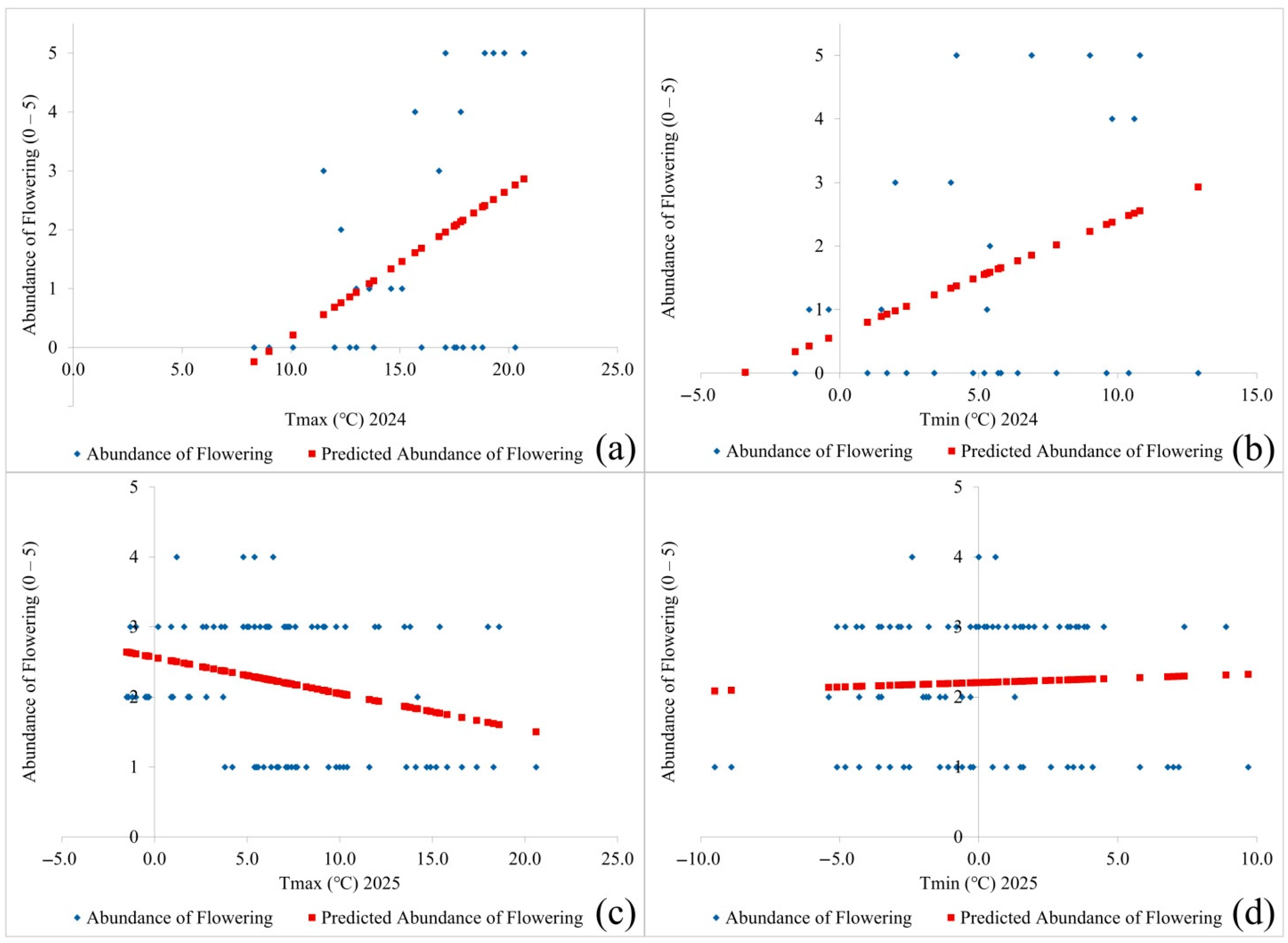
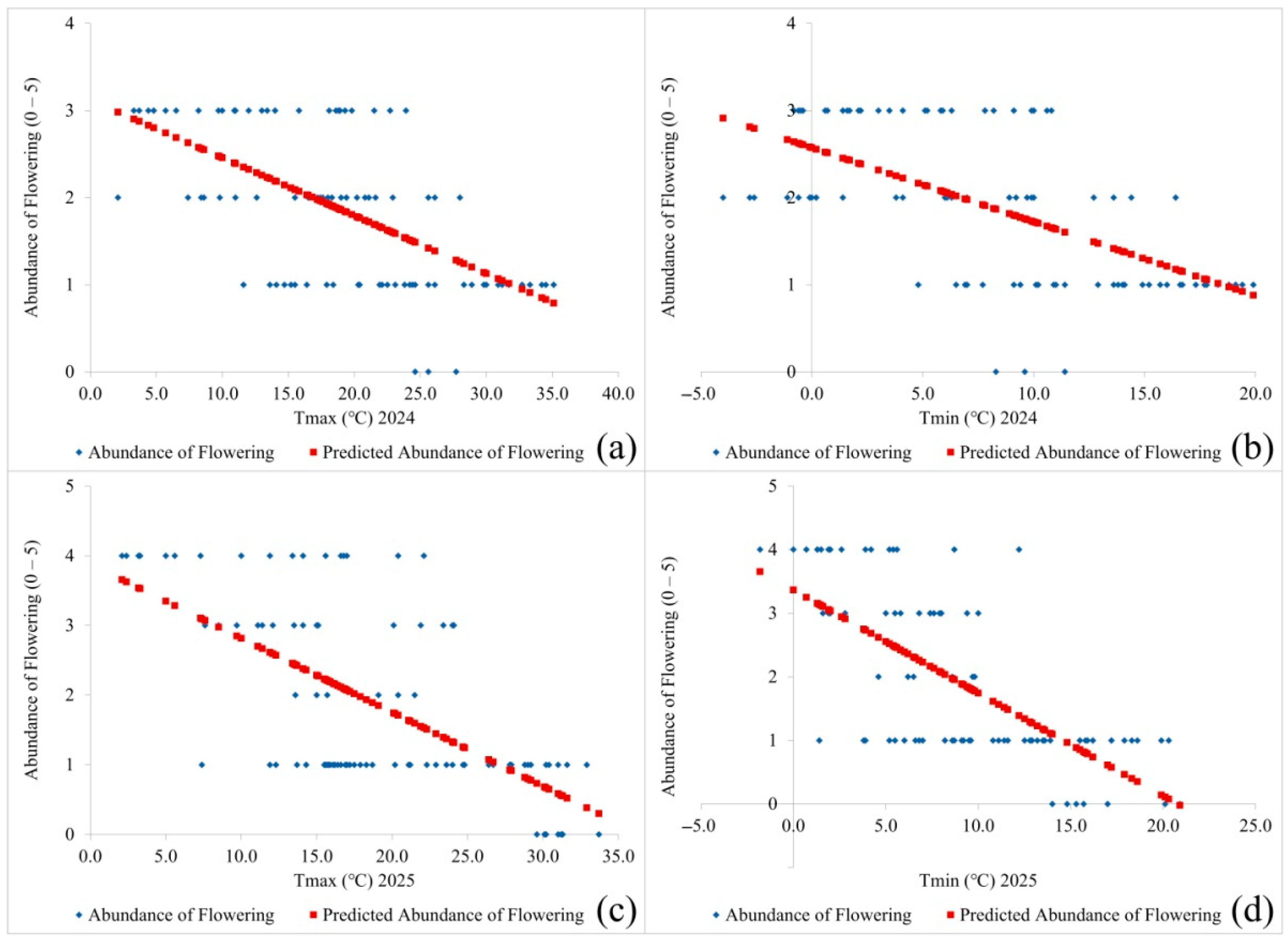
Therefore, based on daily maximum and minimum air temperatures, regression analyses were performed by season for 2024 and 2025 to determine their influence on flowering abundance (Figure 10, Figure 11, Figure 12 and Figure 13). Variable trends were observed for the variables after approximation of the selected data, i.e., after determining the regression lines. Statistical significance at p < 0.05 was confirmed by the results of the regression ANOVA analysis (Table S10). During winter 2024 (Figure 10a,b), a statistically significant increase in flowering abundance was observed with rising daily maximum and minimum air temperatures, whereas in 2025, an increase in maximum temperatures was associated with a decrease in flowering abundance (Figure 10c). This reflects the influence of different climatic parameters between the years but is also explained by Genotype 1 entering winter 2025 with a flowering abundance score of 4. Supporting this, a statistically non-significant trend of increasing minimum temperatures was observed during winter 2025 (Figure 10d).
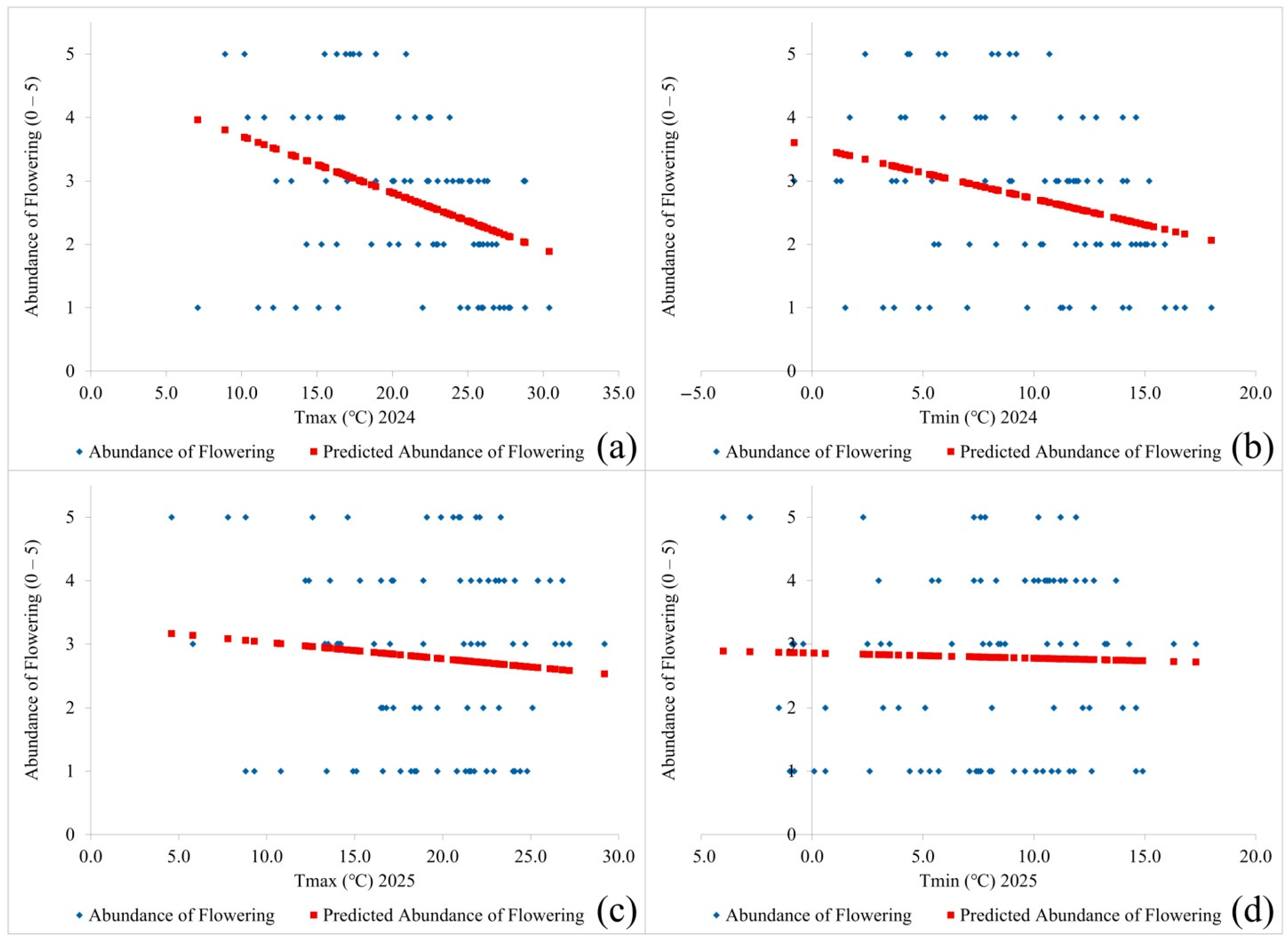
During spring in both study years (Figure 11a–d), declining trends were observed. However, a statistically significant decrease in flowering abundance with increasing daily maximum and minimum air temperatures was confirmed for 2024, whereas in 2025, statistical significance was not observed. The year factor explains this result, as in the globally warmest year, 2024 [26], Genotype 1 was in full bloom at the beginning of spring, while in 2025, all three key phases of primary flowering occurred during this season. Additionally, according to the percentile method, the spring months of 2025 were classified as “wet” and “normal” compared to 2024, when they were classified as “normal” and “dry” (Tables S9 and S10).
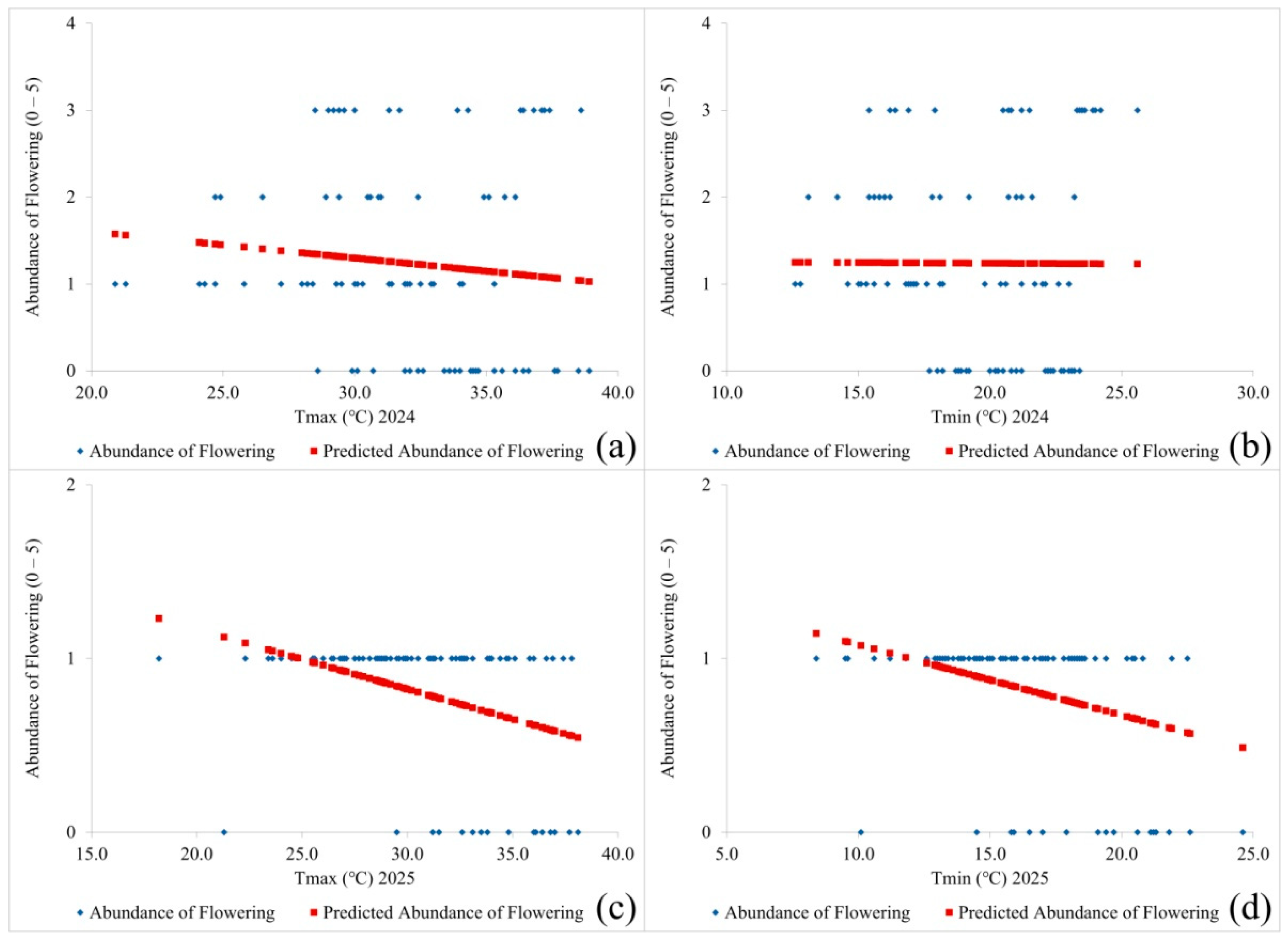
In contrast to the findings for spring, during summer 2025, a statistically significant decrease in flowering abundance was observed with increasing daily maximum and minimum air temperatures, whereas in 2024, the observed trends were not statistically significant (Figure 12a–d). These trends were influenced by extremely dry and dry months during summer 2025 compared to 2024, when the summer months were classified as “normal,” “wet,” and “dry” (Tables S11 and S12). During autumn in both study years (Figure 13a–d), declining trends were observed, all of which were statistically significant, confirming a decrease in flowering abundance with increasing daily maximum and minimum air temperatures. According to total precipitation, the autumn months were classified as “very wet” and “normal” in 2024 and as “normal” and “wet” in 2025 (Tables S11 and S12).
During 2024 and 2025, maximum yield was recorded along with successive fruit ripening, given that G1 Japanese quince flowered throughout the entire calendar year.

4. Discussion

4.1. Phenology, Seasonality and Climatic Variables

Phenological responses of woody plants to climate change remain a subject of ongoing discussion. Plant phenology observations are among the most sensitive indicators of the effects of climate change [36,37], and at the same time, phenological shifts influence ecosystem functioning. Climate change causes variations in the distribution of chilling hours and heat accumulation (GDD), both of which are necessary for flowering [38,39] and fruiting of fruit taxa under temperate continental climate conditions [38]. Phenological flowering patterns are determined by low temperatures during the preceding autumn and winter, followed by bud break and heat accumulation [40]. Previous research by Guo et al. [41], covering a 50-year period, indicates a significant increase in heat accumulation, whereas chilling hour accumulation remained relatively stable and did not negatively affect the dormancy period of temperate climate taxa. However, the same authors found that increased heat accumulation leads to earlier flowering, which may pose a risk for fruit taxa. Based on these findings, for this study of Japanese quince flowering in New Belgrade over 19 consecutive years, GDD values were determined for all elements of the primary phenological flowering patterns. Additionally, following Szot and Łysiak [42], most fruit species in temperate continental climates flower only once during the growing season. This process is preceded by several months of flower bud development, during which shoot growth weakens and ceases over the summer, followed by induction, initiation, differentiation, and further development of flower buds, a subsequent dormancy period, and, finally, the spring bud break and flower development phase [42].
Previous studies on the phenological flowering patterns of C. japonica have focused on short time intervals of 3 years [23,43] and 5 years [44], using only the BBCH scale without determining GDD values or converting dates into DOY. Andersone and Kaufmane [43] conducted a study in Latvia and found that the onset of Japanese quince flowering occurred from 8 to 15 May 1999, from 28 April to 1 May 2000, and from 9 to 30 May 2001. The flowering phenophase lasted 15–22 days, depending on the individual plant and air temperatures. The other studies mentioned covered the periods 2008–2010 and 2015–2019, which fall within the 2007–2025 range analysed in the present study. Mihova et al. [23] examined flowering phenology at the individual level in a plantation at 500 m above sea level under continental climate conditions in Bulgaria. According to their findings, flowering lasted approximately three weeks and occurred from early April to mid-May. The authors noted that two shrubs, due to higher temperatures in December and January, exhibited an earlier onset of flowering. Comparative analysis of their table with the results from this study showed that these two individuals had a flowering onset at 96 DOY in all three years, whereas in New Belgrade, the 60 BBCH phase began between 59 and 84 DOY, and flowering lasted from 23 to 55 days between February and the end of April. Mihova et al. [44], in a study on six individuals at the same RIMSA Troyan plantation (Bulgaria), reported that, in 2015, due to unusually warm weather, all plants began flowering simultaneously at the beginning of April, while in other years, variations were observed from early April to the middle of the third decade of April. Based on the onset range, they identified one individual as early-flowering. Compared with their results, in the present study at New Belgrade, the 60 BBCH phase began between 49 and 75 DOY, and flowering lasted from 21 to 42 days between February and the end of April for the period 2015–2019.
All findings highlight the importance of determining GDD using the improved method of Lalić et al. [29], which allows for the confirmation of the effects of extreme climatic events on flowering phenological patterns and also underscores the importance of local studies and the influence of climatic variables [45]. The results of this study were consistent with previous reports for 17 years (2007–2023), after which continuous flowering was observed. The observed differences in the flowering phenological patterns of C. japonica within the green infrastructure of New Belgrade over all 19 consecutive years of research correlate with climatic parameters. The occurrence of continuous flowering of Japanese quince over two consecutive climatically distinct years represents, according to the authors’ knowledge, a novel observation compared to previous studies, which indicate that high temperatures in fruit species stimulate vegetative growth and inhibit flower bud formation and flowering [46]. Specifically, Heide et al. [46], who studied apple, a member of the Rosaceae Juss. family and the same Malinae Reveal subtribe as Japanese quince, emphasise that the mechanisms by which temperature influences the initiation of flowering are difficult to disentangle, as other physiological processes occur simultaneously in the plant, such as photosynthesis, water and mineral uptake, and hormone levels are strictly temperature dependent. This is particularly relevant under temperate continental climate conditions, where flowering is reported to conclude only after flower buds have fully opened [47]. Similarly, Hassan et al. [48] reported that abundant flowering, followed by abundant fruiting in a given year, affects fruit yield in the subsequent year, potentially leading to alternate bearing. In previous studies, flowering abundance was assessed as abundant [49,50,51], or flower numbers exceeded 100 per shrub [23]. The present study confirms continuous flowering as well as maximal fruiting and successive fruit ripening of Genotype 1 Japanese quince in New Belgrade during 2024 and 2025. The significance of these findings is further supported by Van Huylenbroeck [52], who noted that, for selecting plants in urban landscapes, the duration of the period during which they remain visually attractive is an important consideration.
The analysis of flowering phenological patterns of Japanese quince, as a fruit plant from the Rosaceae family, is also important from an economic perspective, as it influences the diversification of commercially cultivated plants. Loss of utilitarian value during the flowering period of fruit species can be compensated for by genotypes that are resilient and adaptive [53]. The selected ornamental shrub, over a period of 19 years, demonstrated adaptability to stress conditions on urban green spaces, confirming the ecological suitability of cultivating its clones.

4.2. Predictors for the Use of Japanese Quince in Landscape Design and Practical Implications

Most changes in climatic parameters [54] pose a threat to biodiversity conservation [55], ecosystem services [56], and human well-being [57]. Conversely, plants could help mitigate the implications of climate change in urban agglomerations where the majority of the population resides [58]. This is particularly relevant for ornamental plants in anthropogenic environments. Flowering ornamental plants, especially those with long flowering phenophases and those belonging to fruit species, reduce anxiety and stress; shorten recovery time from mental fatigue; alleviate psychological discomfort, depressive symptoms, and mood disorders; and induce positive changes in neural activity and improved concentration [59].
Based on the results of this study, Genotype 1 Japanese quince is highlighted as a candidate for inclusion in the range of ornamental plants adaptable to stress conditions in urban environments. The most important traits of this selected individual are continuous flowering and successive fruiting throughout the year under altered temperate-continental climate conditions, representing a novel feature compared to previously established predictors such as attractive flowers, foliage, habitus architecture, and texture [52,60]. The length of the period during which plants remain visually appealing is an important factor for landscape design as well as for ecological reasons and ecosystem services, such as providing functional food. Ornamental plants in urbanised areas also serve a social function, including engaging people through horticultural therapy, educational activities, and ecological functions; filling ecological niches; and creating ecological corridors. Furthermore, the application of Genotype 1 Japanese quince is proposed for blue–green infrastructure in anthropised urban areas as well as for xeriscape gardens, eco-gardens, and pollinator-friendly gardens. The identified individual meets the characteristics described by Ochoa et al. [61] and Đurašinović et al. [62] for xeriscape design, which emphasises sustainability, biodiversity, low maintenance, and the use of native and endemic local species important for landscape design, while noting that this recommendation involves an allochthonous (non-native) species.
To recommend the use of allochthonous species alongside autochthonous plants, it is not sufficient to rely solely on estimates and modelling; real-world case studies are essential. The results of this 19-year study confirm the positive ecological values of integrated implementation of allochthonous individuals with native species. Furthermore, collaboration with local authorities is necessary to monitor the adaptability, sustainability, ornamental qualities, and utilitarian values of Japanese quince at the individual level in order to establish a taxon database for selection and planting models. For all these reasons, Genotype 1 Japanese quince is proposed for breeding and vegetative propagation in accordance with the relevant European Commission regulations [63,64] and the strategies of the European Green Deal and Biodiversity Strategy for 2030 [65].

5. Conclusions

Knowledge of the reproductive cycle enables cultivation strategies aimed at sustainability under climate change scenarios. In this context, there is growing interest in research to improve flowering synchronisation to promote uniform fruit ripening. Additionally, fluctuations in air temperature and their effects during fruit maturation highlight the value of phenological records for modelling the impacts of climate change. In all these cases, analysis of phenological descriptions serves as a predictor for defining response variables (e.g., flowering abundance, flowering duration), determining the timing of evaluations, and adjusting monitoring frequency.
During the study period from 2007 to 2025, the following were determined:
-
The key elements of the primary flowering patterns of Chaenomeles japonica in New Belgrade varied across the study years, reflecting the interactions between year and climatic variables.
-
Seasonal daily maximum and minimum air temperatures in 2024 and 2025 as well as varying monthly precipitation totals during the flowering seasons were the main factors influencing the flowering abundance of the selected individual.
-
The mean annual flowering abundance scores fell into the “low” category, while the primary flowering was classified in the “maximum flowering” category.
-
The ranges of mean daily temperatures for the flowering abundance scores correlate with the daily air temperature categories based on percentiles for the study years.
-
The ranges of mean daily air temperatures corresponding to the maximum flowering abundance scores varied from 5.6 °C to 15.9 °C in 2024 and from −0.2 °C to 16.9 °C in 2025.
-
The duration of maximum flowering during the primary flowering period was 16 days in 2024 and 13 days in 2025.
Multiple statistical analyses indicate the adaptability and sustainability of Genotype 1 compared to the other seven Chaenomeles japonica individuals within blocks 61, 62, 63, and 74 in New Belgrade, where no secondary flowering was observed in the previous two years.
As limitations, we note that, within the nineteen-year study, only during the last two years did the selected genotype exhibit continuous flowering and fruiting, which needs to be confirmed by future research. Further studies are also planned on propagation methods and the potential implementation of clones of the selected Chaenomeles japonica individual in ecosystems whose networks provide alternatives to traditional grey infrastructure in multifunctional urban landscapes.

Supplementary Materials

The following supporting information can be downloaded at: https://www.mdpi.com/article/10.3390/horticulturae12030396/s1, Figure S1: Scatter diagrams and predictions of the influence of average daily air temperatures on the abundance of flowering Japanese quince for 2024 (a) and 2025 (b), in New Belgrade, based on MMS Surčin data and own research; Table S1: Descriptive statistics for DOY (based on own research) and GDD (based on data from the Meteorological Station Surčin) of the primary flowering patterns of C. japonica in New Belgrade during the period 2007–2025; Table S2: Descriptive statistics for flowering duration (based on own research) and Tmean (mean of daily average air temperatures) for the elements of the primary flowering phenological patterns of C. japonica in New Belgrade, according to data from the Meteorological and Hydrological Station Surčin (2007–2025); Table S3: Scores of average daily air temperatures for 2024, for MMS Surčin, according to the corresponding percentiles relative to the reference period 1991–2020; Table S4: Scores of average daily air temperatures for 2025, for MMS Surčin, according to the corresponding percentiles relative to the reference period 1991–2020; Table S5: Descriptive statistics for mean daily air temperatures and AF—flowering abundance scores (1–5)—for 2024 and 2025, based on data from the Meteorological and Hydrological Station Surčin (RHMS) and own observations for Genotype 1 Japanese quince in New Belgrade; Table S6: Scores of maximum daily air temperatures for 2024, for MMS Surčin, according to the corresponding percentiles relative to the reference period 1991–2020; Table S7: Scores of maximum daily air temperatures for 2025, for MMS Surčin, according to the corresponding percentiles relative to the reference period 1991–2020; Table S8: Scores of minimum daily air temperatures for 2024, for MMS Surčin, according to the corresponding percentiles relative to the reference period 1991–2020; Table S9: Scores of minimum daily air temperatures for 2025, for MMS Surčin, according to the corresponding percentiles relative to the reference period 1991–2020; Table S10: ANOVA results (p < 0.05 level) for the influence of seasonal daily maximum and minimum air temperatures on the abundance of flowering C. japonica during 2024 and 2025 in New Belgrade; Table S11: Monthly precipitation totals with corresponding percentiles and terciles and their deviations for 2024 in relation to the reference period 1991–2020, based on data from the Meteorological and Hydrological Station Surčin; Table S12: Monthly precipitation totals with corresponding percentiles and terciles and their deviations for 2025 in relation to the reference period 1991–2020, based on data from the Meteorological and Hydrological Station Surčin.

Author Contributions

D.S.—Conceptualisation, Methodology, Formal analysis, Investigation, Resources, Data curation, Visualisation, Writing—review and editing; D.P.—Conceptualisation, Methodology, Formal analysis, Investigation, Resources, Data curation, Writing—review and editing; N.G.—Conceptualisation, Methodology, Investigation, Resources, Visualisation; J.Č.—Conceptualisation, Methodology, Formal analysis, Investigation, Resources, Data curation; R.K.—Formal analysis, Investigation, Resources; S.Đ.—Investigation, Resources, Visualisation; M.O.—Conceptualisation, Methodology, Formal analysis, Investigation, Resources, Visualisation, Data curation, Writing—original draft preparation, Writing—review and editing, Supervision. All authors have read and agreed to the published version of the manuscript.

Funding

The research funds were provided by the Ministry of Science, Technological Development and Innovation of the Republic of Serbia, contract no. 451-03-34/2026-03/200169, 451-03-34/2026-03/200117 and 451-03-33/2026-03/200117.

Data Availability Statement

The climatology data are freely available at https://www.hidmet.gov.rs/eng/meteorologija/klimatologija_produkti.php (accessed on 30 January 2026). The data from the Republic Hydrometeorological Service of Serbia, which cannot be published, was accessed multiple times.

Conflicts of Interest

The authors declare no conflicts of interest.

References

  1. Wang, J.; Han, S.; Lin, H.; Wu, P.; Yuan, J. New-Type Urbanization Ecologically Reshaping China. Heliyon 2023, 9, e12925. [Google Scholar] [CrossRef] [PubMed]
  2. Hendricks, J.; Briercliffe, T.; Oosterom, B.; Treer, A.; Kok, G.; Edwards, T.; Kong, H. Ornamental Horticulture, A Growing Industry. In International Vision Project Reports; AIPH Horticulture House: Didcot, UK, 2019. [Google Scholar]
  3. Gabellini, S.; Scaramuzzi, S. Evolving consumption trends, marketing strategies, and governance settings in ornamental horticulture: A grey literature review. Horticulturae 2022, 8, 234. [Google Scholar] [CrossRef]
  4. Arslan, M.; Yanmaz, R. Use of ornamental vegetables, medicinal and aromatic plants in urban landscape design. In II International Conference on Landscape and Urban Horticulture; ISHS Acta Horticulturae 881; International Society for Horticultural Science: Leuven, Belgium, 2009; pp. 207–211. [Google Scholar]
  5. Sæbø, A.; Borzan, Ž.; Ducatillion, C.; Hatzistathis, A.; Lagerström, T.; Supuka, J.; Garcia-Valdecanthos, J.L.; Rego, F.; Van Slycken, J. The selection of plant materials for street trees, park trees and urban woodland. In Urban Forests and Trees: A Reference Book; Springer: Berlin/Heidelberg, Germany, 2005; pp. 257–280. [Google Scholar]
  6. Harris, V.; Kendal, D.; Hahs, A.K.; Threlfall, C.G. Green space context and vegetation complexity shape people’s preferences for urban public parks and residential gardens. Landsc. Res. 2018, 43, 150–162. [Google Scholar] [CrossRef]
  7. Lis, A.; Pardela, Ł.; Iwankowski, P. Impact of vegetation on perceived safety and preference in city parks. Sustainability 2019, 11, 6324. [Google Scholar] [CrossRef]
  8. Čukanović, J.; Ðorđević, S.; Petrov, D.; Ocokoljić, M.; Kolarov, R.; Ćurčić, M.; Ljubojević, M. The Sustainability of Rosa rugosa Thunb. Under Climate Change Conditions: A Study of Morphological Variability in Urban Areas. Horticulturae 2025, 11, 684. [Google Scholar] [CrossRef]
  9. Ocokoljić, M.; Petrov, D. Decorative Dendrology [Dekorativna dendrologija]; Univerzitet u Beogradu-Šumarski Fakultet: Belgrade, Serbia, 2022; 409p. (In Serbian) [Google Scholar]
  10. Bugallo, V.; Facciuto, G. Selection process in ornamental plant breeding. Ornam. Hortic. 2023, 29, 68–75. [Google Scholar] [CrossRef]
  11. Chen, M.; Zhang, J.-Z. Flowering and Flower Development in Plants. Agronomy 2024, 14, 256. [Google Scholar] [CrossRef]
  12. Rathcke, B.; Lacey, E.P. Phenological patterns of terrestrial plants. Annu. Rev. Ecol. Syst. 1985, 16, 179–214. [Google Scholar] [CrossRef]
  13. Hafdahl, C.E.; Craig, T.P. Flowering phenology in Solidago altissima: Adaptive strategies against temporal variation in temperature. J. Plant Interact. 2014, 9, 122–127. [Google Scholar] [CrossRef]
  14. Ehrlen, J.; Münzbergova, Z. Timing of flowering: Opposed selection on different fitness components and trait covariation. Am. Nat. 2009, 173, 819–830. [Google Scholar] [CrossRef] [PubMed]
  15. Chuine, I. Why does phenology drive species distribution? Philos. Trans. R. Soc. B Biol. Sci. 2010, 365, 3149–3160. [Google Scholar] [CrossRef] [PubMed]
  16. Zhu, J.K. Abiotic stress signaling and responses in plants. Cell 2016, 167, 313–324. [Google Scholar] [CrossRef]
  17. Opler, P.A.; Frankie, G.W.; Baker, H.G. Comparative phenological studies of treelet and shrub species in tropical wet and dry forests in the lowlands of Costa Rica. J. Ecol. 1980, 68, 167–188. [Google Scholar] [CrossRef]
  18. Ocokoljić, M.; Petrov, D.; Galečić, N.; Skočajić, D.; Košanin, O.; Simović, I. Phenological Flowering Patterns of Woody Plants in the Function of Landscape Design: Case Study Belgrade. Land 2023, 12, 706. [Google Scholar] [CrossRef]
  19. Skočajić, D.; Čukanović, J.; Petrov, D.; Galečić, N.; Kolarov, R.; Đorđević, S.; Ocokoljić, M. Rose ‘Casino’ as an Element of Landscape Architectural Composition in the Courtyard of the Church of St George in Belgrade Under Changing Climate Conditions. Contemp. Agric. 2025, 74, 75–85. [Google Scholar] [CrossRef]
  20. Chen, M.; Zhang, T.-L.; Hu, C.-G.; Zhang, J.-Z. The role of drought and temperature stress in the regulation of flowering time in annuals and perennials. Agronomy 2023, 13, 3034. [Google Scholar] [CrossRef]
  21. Weber, C. Cultivars in the genus Chaenomeles. Bulletin of popular information of the Arnold Arboretum, Harvard University. Arnoldia 1963, 23, 17–75. [Google Scholar] [CrossRef]
  22. Ocokoljić, M.; Petrov, D.; Galečić, N.; Skočajić, D.; Vujičić, D.; Čukanović, J.; Simović, I. Chaenomeles japonica (Thunb.) Lindl. ex Spach in the design of urban parks: Learning from nature. In 31th International Conference Ecological Truth and Environmental Research—Ecoter’24, Sokobanja, Serbia, 18–21 June 2024; University of Belgrade—Technical Faculty: Bor, Serbia, 2024; pp. 113–118. [Google Scholar]
  23. Mihova, T.; Kpndakova, V.; Monfeskha, P. Investigations of Chaenomeles japonica (Thunb.) Lindl. in the Region of Central Balkans. Banat. J. Biotechnol. 2012, III, 43–48. [Google Scholar] [CrossRef] [PubMed]
  24. Samatova, S.; Berdiyev, M.; Baysunov, B.; Zafar, M.; Majeed, S.; Ramadan, M.F.; Makhkamov, T.; Khan, M.R.; Ahmad, K.S.; Abbas, Q.; et al. Phenological and morphological adaptations of Japanese quince (Chaenomeles japonica—(Thunb.) Lindl. ex Spach.) [Rosaceae]: Insights from palynology and leaf histology. Genet. Resour. Crop Evol. 2025, 72, 8405–8417. [Google Scholar] [CrossRef]
  25. Opština Novi Beograd i USAID. Strateški Plan Lokalnog Ekonomskog Razvoja Opštine Novi Beograd. 2008. Available online: https://novibeograd.rs/wp-content/uploads/2016/07/strateskiplannbg.pdf (accessed on 29 January 2026).
  26. RHMZ. Republic Hydrometeorological Institute of Serbia. Available online: https://www.hidmet.gov.rs/index_eng.php (accessed on 30 January 2026).
  27. Anjos, L.; Gaistardo, C.; Deckers, J.; Dondeyne, S.; Eberhardt, E.; Gerasimova, M.; Harms, B.; Jones, A.; Krasilnikov, P.; Reinsch, T.; et al. World Reference Base for Soil Resources 2014: International Soil Classification System for Naming Soils and Creating Legends for Soil Maps; Schad, P., Van Huyssteen, C., Micheli, E., Eds.; World Soil Resources Reports No. 106; FAO: Rome, Italy, 2015. [Google Scholar]
  28. Meier, U. BBCH-Monograph. Growth Stages of Plants–Entwicklungsstadien von Pflanzen–Estadios de las plantas–Développement des Plantes. Wissenschaftsverlag, Berlin, Wien: Blackwell; Blackwell Wissenschafts-Verla: Berlin, Germany; Vienna, Austria, 1997; 622p. [Google Scholar]
  29. Lalić, B.; Ejcinger, J.; Dalamarta, A.; Orlandini, S.; Firanj Sremac, A.; Paher, B. Meteorology and Climatology for Agronomists [Meteorologija i klimatologija za agronome]; Univerzitet u Novom Sadu-Poljoprivredni Fakultet: Novi Sad, Serbia, 2021; 219p. (In Serbian) [Google Scholar]
  30. WMO. State of the Global Climate 2021: WMO Provisional Report; World Meteorological Organization (WMO): Geneva, Switzerland, 2021; 47p, Available online: https://library.wmo.int/records/item/56300-state-of-the-global-climate-2021 (accessed on 7 January 2026).
  31. RHMZ. Meteorological Yearbooks of Republic Hydrometeorological Institute of Serbia. Available online: https://www.hidmet.gov.rs/ciril/meteorologija/klimatologija_godisnjaci.php (accessed on 30 January 2026).
  32. OGIMET. Available online: https://www.ogimet.com/synopsc.phtml.en (accessed on 30 January 2026).
  33. Gilbert, R.O. Statistical Methods for Environmental Pollution Monitoring; Van Nostrand Reinhold: New York, NY, USA, 1987; 336p. [Google Scholar]
  34. Horvat, J.; Mijoč, J. Osnove Statistike [Basics of Statistics]; Naklada Ljevak: Zagreb, Croatia, 2012; 482p. [Google Scholar]
  35. Stilinović, S. Seed Production of Forest and Ornamental Trees and Shrubs [Semenarstvo šumskog i ukrasnog drveća i žbunja]; University of Belgrade—Faculty of Forestry: Belgrade, Serbia, 1985; 399p. (In Serbian) [Google Scholar]
  36. Bakkenes, M.; Alkemade, J.R.M.; Ihle, F.; Leemans, R.; Latour, J.B. Assessing effects of forecasted climate change on the diversity and distribution of European higher plants for 2050. Glob. Change Biol. 2002, 8, 390–407. [Google Scholar] [CrossRef]
  37. Wang, H.; Wu, C.; Ciais, P.; Penuelas, J.; Dai, J.; Fu, Y.; Ge, Q. Overestimation of the effect of climatic warming on spring phenology due to misrepresentation of chilling. Nat. Commun. 2020, 11, 4945. [Google Scholar] [CrossRef] [PubMed]
  38. Lanzes, T.; Khenrab, S.; Sharma, P. Low Chilling Apples: Sustainable Orchards Amidst Climate Change. Agric. Food E-Newsl. 2024, 6, 357–360. [Google Scholar]
  39. Ocokoljić, M.; Petrov, D.; Košanin, O.; Galečić, N.; Skočajić, D.; Vujičić, D.; Simović, I. Phenological patterns of Fraxinus ornus L. flowering in the context of ecosystem services preservation in urban forests: A case study of Košutnjak, Belgrade, Serbia. Sylwan 2024, 168, 801–821. [Google Scholar] [CrossRef]
  40. Petrov, D.; Ocokoljić, M.; Galečić, N.; Skočajić, D.; Simović, I. Chaenomeles × superba ‘Pink Lady’ in designing private gardens in conditions of climate change. In 30th International Conference Ecological Truth and Environmental Research—EcoTER’23; University of Belgrade—Technical Faculty: Bor, Serbia, 2023; pp. 62–68. [Google Scholar]
  41. Guo, L.; Dai, J.; Ranjitkar, S.; Yu, H.; Xu, J.; Luedeling, E. Chilling and Heat Requirements for Flowering Temperate Fruit Trees. Int. J. Biometeorol. 2014, 58, 1195–1206. [Google Scholar] [CrossRef]
  42. Szot, I.; Łysiak, G.P. Factors Influencing the Formation, Development of Buds, and Flowering of Temperate Fruit Trees. Agriculture 2025, 15, 1304. [Google Scholar] [CrossRef]
  43. Andersone, D.; Kaufmane, E. Flowering and Fruit Set in Japanese Quince (Chaenomeles japonica). 2001. Available online: https://pub.epsilon.slu.se/5182/1/4Flowering.pdf (accessed on 15 February 2026).
  44. Mihova, T.; Minkov, P.; Popski, G.; Stefanova, B.; Todorova, S. Perspective Genotypes from Chaenomeles sp. Lindl. for Fruit Production. Sci. Pap. Ser. B Hortic. 2023, LXVII, 119–124. [Google Scholar]
  45. Ocokoljić, M.; Galečić, N.; Skočajić, D.; Čukanović, J.; Đorđević, S.; Kolarov, R.; Petrov, D. Flowering Patterns of Cornus mas L. in the Landscape Phenology of Roadside Green Infrastructure Under Climate Change Conditions in Serbia. Sustainability 2025, 17, 5334. [Google Scholar] [CrossRef]
  46. Heide, O.M.; Rivero, R.; Sønsteby, A. Temperature Control of Shoot Growth and Floral Initiation in Apple (Malus × domestica Borkh.). CABI Agric. Biosci. 2020, 1, 8. [Google Scholar] [CrossRef]
  47. Rutkowski, K.; Łysiak, G.P.; Zydlik, Z. Effect of Nitrogen Fertilization in the Sour Cherry Orchard on Soil Enzymatic Activities, Microbial Population, and Fruit Quality. Agriculture 2022, 12, 2069. [Google Scholar] [CrossRef]
  48. Hassan, G.I.; Wani, A.W.; Dar, S.Q.; Wani, M.Y.; Sofi, J.A.; Baba, T.R.; Parray, E.; Rasool, A. Physiology of Fruit Set and Development in Apple under Temperate Conditions: A Review. Int. J. Curr. Microbiol. Appl. Sci. 2020, 9, 618–638. [Google Scholar] [CrossRef]
  49. Byczkiewicz, S.; Kobus-Cisowska, J.; Szulc, P.; Telichowska, A.; Szczepaniak, O.; Dziedzinski, M. Japanese Quince (Chaenomeles japonica L.) as a row material about health properties—Current state of knowledge. Tech. Rol. Ogrod. Leśna 2019, 5, 22–25. [Google Scholar]
  50. Marat, N.; Danowska-Oziewicz, M.; Narwojsz, A. Chaenomeles Species—Characteristics of Plant, Fruit and Processed Products: A Review. Plants 2022, 11, 3036. [Google Scholar] [CrossRef]
  51. Lacis, G.; Kaufmane, E.; Ruisa, S. Development of Japanese quince (Chaenomeles japonica) as a fruit crop and involvement in horticultural practice in the Baltics. In EHC2024: International Symposium on the History of Horticulture in Europe; ISHS Acta Horticulturae 1438; International Society for Horticultural Science: Leuven, Belgium, 2024; pp. 275–282. [Google Scholar]
  52. Van Huylenbroeck, J. Ornamental Crops; Springer International Publishing: Cham, Switzerland, 2018. [Google Scholar]
  53. Yeler, O.; Satir, Y.N. Overview and suggestions for common production base planning in the outdoor ornamental plants sector. Int. J. Sci. Technol. Res. 2020, 6, 79–85. [Google Scholar]
  54. Zandalinas, S.I.; Fritschi, F.B.; Mittler, R. Global warming, climate change, and environmental pollution: Recipe for a multifactorial stress combination disaster. Trends Plant Sci. 2021, 26, 588–599. [Google Scholar] [CrossRef]
  55. Dudkiewicz, M.; Kopacki, M.; Iwanek, M.; Hortynska, P. Problemy zachowania bioróżnorodności na przykładzie wybranych miast Polski. Agron. Sci. 2021, 76, 67–84. [Google Scholar] [CrossRef]
  56. Galečić, N.; Petrov, D.; Skočajić, D.; Čukanović, J.; Kolarov, R.; Đorđević, S.; Ocokoljić, M. Diversity, Growth Parameters, and Ecosystem Services of Urban Trees Under Climate-Change Conditions: A Case Study of Topčider Park. Forests 2026, 17, 114. [Google Scholar] [CrossRef]
  57. Hall, C.; Knuth, M. An update of the literature supporting the well-being benefits of plants: A review of the emotional and mental health benefits of plants. J. Environ. Hortic. 2019, 37, 30–38. [Google Scholar] [CrossRef]
  58. Bibri, S.E.; Krogstie, J. Smart Eco-City Strategies and Solutions for Sustainability: The Cases of Royal Seaport, Stockholm, and Western Harbor, Malmo, Sweden. Urban Sci. 2020, 4, 11. [Google Scholar] [CrossRef]
  59. Barthel, S.; Isendahl, C. Urban gardens, agriculture, and water management: Sources of resilience for long-term food security in cities. Ecol. Econ. 2013, 86, 215–225. [Google Scholar] [CrossRef]
  60. Mitrović, S.Ž.; Veselinović, M.M.; Poduška, Z.B.; Stojanović, V.Ž.; Marković, M.Ž.; Opelka, J.M.; Milosavljević, M.D. Vitality as an Indicator of Aesthetic Quality: An Initial Assessment of Urban Trees in Akademski Park, Belgrade. South-East Eur. For. SEEFOR 2025, 16, 207–213. [Google Scholar] [CrossRef]
  61. Ochoa, J.; Munoz, M.; Vicente, M.J.; Martínez-Sánchez, J.J.; Franco, J.A. Native ornamental species for urban landscaping and xero-gardening in semi-arid environments. Acta Hortic. 2010, 881, 425–428. [Google Scholar] [CrossRef]
  62. Đurašinović, R.; Zeković, M.; Mitrović, S.; Konstantinović, D.; Pejić, S.; Vemić, A. Indeterminacy as a Framework for Sustainable Architecture: Lessons from Spens, a Socialist Megastructure. Sustainability 2025, 17, 8527. [Google Scholar] [CrossRef]
  63. European Commission. Communication from the Commission. In A Clean Planet for All: A European Strategic Long-Term Vision for a Prosperous, Modern, Competitive and Climate Neutral Economy; COM(2018) 773 Final; European Commission: Brussels, Belgium, 2018. [Google Scholar]
  64. European Commission. Communication from the Commission to the European Parliament, The Council, The European Economic and Social Committee and The Committee of the Regions. Farm to Fork Strategy for a Fair, Healthy and Environmentally-Friendly Food System; COM(2020) 381 Final; European Commission: Brussels, Belgium, 2020. [Google Scholar]
  65. Prandecki, K.; Wrzaszcz, W.; Zielinski, M. Environmental and climate challenges to agriculture in Poland in the context of objectives adopted in the European green deal strategy. Sustainability 2021, 13, 10318. [Google Scholar] [CrossRef]
Figure 1. Study area: (a) the location of Serbia in Europe and on the Balkan Peninsula; (b) the location of Belgrade in Serbia; and (c) the territory of the municipality of Novi Beograd in Belgrade.
Horticulturae 12 00396 g001
Figure 2. The selected Japanese quince individual (Genotype 1—G1) in the flowering, fruiting and early leaf emergence stages at the end of 2025 (a) and a three-dimensional surface plot of relative relief values derived for the municipality of Novi Beograd, indicating the location of G1 Japanese quince (b).
Horticulturae 12 00396 g002
Figure 3. Aspect (a) and slope (°) (b) of the territory of the municipality of Novi Beograd, indicating the location of Japanese quince Genotype 1 (G1).
Horticulturae 12 00396 g003
Figure 4. Representation of (a) DOY and (b) GDD (°C) of the phenological patterns of primary flowering of C. japonica in New Belgrade: at the onset (60 BBCH), full bloom (65 BBCH), and end of flowering (69 BBCH), with corresponding linear trends, during the period 2007–2025.
Horticulturae 12 00396 g004
Figure 5. Mean monthly air temperatures and total precipitation for the months (a) January, (b) February, (c) March, and (d) April, with the corresponding tertiles, in the reference period (1991–2020), based on data from the Meteorological and Hydrological Station Surčin (RHMS).
Horticulturae 12 00396 g005
Figure 6. Graphical representation of Spearman correlation coefficients, at a significance level of p > 0.05, for the number of days from 60 to 65 BBCH (No. 60–65), mean temperatures during 60–65 BBCH (T 60–65), number of days from 65 to 69 BBCH (No. 65–69), mean temperatures during 65–69 BBCH (T 65–69), number of days from 60 to 69 BBCH (No. 60–69), and mean temperatures during 60–69 BBCH (T 60–69), for 19 consecutive years of this study.
Horticulturae 12 00396 g006
Figure 7. Graphical representation of (a) p-values for the Mann–Kendall test in conjunction with Sen’s slope tests for the elements of the flowering phenological patterns of C. japonica for the period 2007–2025 and (b) visual aspect of Genotype 1 of C. japonica at full bloom (65 BBCH).
Horticulturae 12 00396 g007
Figure 8. Graphical representation of flowering abundance of Japanese quince during 2024 (a) and 2025 (b) in New Belgrade, based on own daily observations.
Horticulturae 12 00396 g008
Figure 9. Graphical representation of the ranges of mean daily temperatures corresponding to AF, i.e., flowering abundance scores (1–5), of Japanese quince for 2024 (a) and 2025 (b) for Genotype 1 Japanese quince in New Belgrade.
Horticulturae 12 00396 g009
Figure 10. Scatter plots and predicted effects of daily maximum and minimum air temperatures on flowering abundance of C. japonica for winter 2024 (a,b) and 2025 (c,d).
Horticulturae 12 00396 g010
Figure 11. Scatter plots and predicted effects of daily maximum and minimum air temperatures on flowering abundance of C. japonica for spring 2024 (a,b) and 2025 (c,d).
Horticulturae 12 00396 g011
Figure 12. Scatter plots and predicted effects of daily maximum and minimum air temperatures on flowering abundance of C. japonica for summer 2024 (a,b) and 2025 (c,d).
Horticulturae 12 00396 g012
Figure 13. Scatter plots and predicted effects of daily maximum and minimum air temperatures on flowering abundance of C. japonica for autumn 2024 (a,b) and 2025 (c,d).
Horticulturae 12 00396 g013
Table 1. Results of the Mann–Kendall test in conjunction with Sen’s slope tests for the elements of the primary flowering phenological patterns of C. japonica in New Belgrade over 19 years of research.
Parameter\TestKendall’s Taup-ValueSen’s Slope
60BBCH DOY−0.1770.309−1.000
65BBCH DOY−0.2240.195−1.214
69BBCH DOY−0.1470.401−0.462
60BBCH GDD0.1700.3271.037
65BBCH GDD0.2160.2081.396
69BBCH GDD−0.0061.000−0.046
As the computed p-value is greater than the significance level 0.05, there is no trend in the series.
Table 2. Spearman’s correlation coefficients (shown in black) and p-values (shown in red) for DOY and GDD of C. japonica during the period 2007–2025.
Variables60BBCH65BBCH69BBCH60BBCH65BBCH69BBCH
DOYGDD
60BBCH DOY 0.9320.6170.3740.4590.446
65BBCH DOY<0.0001 0.6310.2150.3660.362
69BBCH DOY0.0060.005 0.3120.2890.673
60BBCH GDD0.1150.3750.194 0.7530.607
65BBCH GDD0.0500.1240.2300.000 0.532
69BBCH GDD0.0570.1280.0020.0070.021
Table 3. ANOVA results (at a significance level of p < 0.05) for the effect of mean daily air temperatures on flowering abundance of Genotype 1 Japanese quince during 2024 and 2025 in New Belgrade.
ParameterdfSSMSFSignificance F
2024
Regression1106.4811106.481172.16810.0000
Residual365491.32791.475459
Total366597.809
2025
Regression1132.7676132.767698.662150.0000
Residual364488.48171.34568
Total365621.2493
Table 4. Spearman’s correlation coefficients (shown in black) and p-values (shown in red) for Tmax (daily maximum temperatures), Tmin (daily minimum temperatures), and daily AF (abundance of flowering) for C. japonica during the period 2024–2025.
VariablesTmaxTminAFTmaxTminAFTmaxTminAFTmaxTminAF
WinterSpringSummerAutumn
2024
Tmax 0.8230.494 0.753−0.404 0.683−0.208 0.820−0.604
Tmin<0.0001 0.392<0.0001 −0.287<0.0001 −0.058<0.0001 −0.622
AF<0.00010.002 <0.00010.006 0.0470.582 <0.0001<0.0001
2025
Tmax 0.560−0.278 0.598−0.065 0.508−0.389 0.818−0.633
Tmin<0.0001 0.091<0.0001 0.014<0.0001 −0.328<0.0001 −0.701
AF0.0080.395 0.5350.894 0.0000.001 <0.0001<0.0001
Disclaimer/Publisher’s Note: The statements, opinions and data contained in all publications are solely those of the individual author(s) and contributor(s) and not of MDPI and/or the editor(s). MDPI and/or the editor(s) disclaim responsibility for any injury to people or property resulting from any ideas, methods, instructions or products referred to in the content.