Review

Plant Ornithine Decarboxylase: A Key Regulator of Polyamine Biosynthesis and Its Roles in Growth, Stress Response, and Secondary Metabolism

1
Integrative Science Center of Germplasm Creation in Western China (CHONGQING) Science City, Engineering and Technology Research Center for Sweetpotato of Chongqing, School of Life Sciences, Southwest University, Chongqing 400715, China
2
Investment Department, Chongqing Municipal Development and Reform Commission, Chongqing 401121, China
*
Author to whom correspondence should be addressed.
Horticulturae 2026, 12(3), 389; https://doi.org/10.3390/horticulturae12030389
Submission received: 19 February 2026 / Revised: 15 March 2026 / Accepted: 19 March 2026 / Published: 21 March 2026

Abstract

Ornithine decarboxylase (ODC) functions as the rate-limiting enzyme in the polyamine (PA) biosynthetic pathway. It catalyzes the decarboxylation of L-ornithine to produce putrescine, thereby initiating the biosynthesis of polyamines. Polyamines are a class of widely distributed polycationic aliphatic compounds in living organisms, including putrescine, spermidine, and spermine. They serve not only as critical regulators of cell growth, proliferation, and differentiation, but also as important signaling molecules involved in plant responses to environmental stress and key precursors in the biosynthesis of diverse secondary metabolites. Focusing on recent advances in plant ODC research, this review summarizes the characteristics and evolutionary relationships of the ODC gene family, the biochemical properties and catalytic mechanism of the enzyme, and its multiple physiological roles in growth, development, secondary metabolism, and stress adaptation. Furthermore, we discuss the complex regulatory mechanisms governing ODC activity at both transcriptional and post-translational levels, with a critical gap in understanding the post-translational regulation of ODC in plants, particularly the mechanisms governing its degradation. Unlike in animals, where antizymes mediate ODC degradation, functional analogs of antizymes have not yet been identified in plants, leaving the degradation pathway largely unexplored. Finally, we review the applications of plant genetic modification targeting ODC in enhancing the production of valuable secondary metabolites in medicinal plants and improving stress tolerance in crops, along with perspectives on future research directions. This review illustrates the diversity of ODC functions and the complexity of its regulatory mechanisms in plant growth, development, stress responses, and secondary metabolism. It also provides a theoretical foundation and insights for exploring ODC as a target for plant genetic modification, which is promising for improving the economic traits and stress resistance of horticultural plants.

1. Introduction

Polyamines (PAs), primarily including putrescine, spermidine, and spermine, are a class of low-molecular-weight, aliphatic polycationic compounds widely present in both prokaryotes and eukaryotes [1]. Research has demonstrated that PAs can interact with macromolecules such as nucleic acids (DNA and RNA) and proteins within cells, stabilizing their structures and participating in various critical biological activities including gene transcription, translation, and the regulation of ion channel activity [2,3]. Meanwhile, the polyamines can interact with other hormones to collectively regulate cell proliferation and growth [4]. In both animals and plants, ornithine decarboxylase (ODC), as a core enzyme in polyamine biosynthesis, participates in the regulation of cell proliferation and differentiation [5], often in concert with hormonal signals in specific tissues or cell types [6]. In plants specifically, the complex interplay between polyamine metabolism and phytohormone signaling networks constitutes a core mechanism governing growth, development, and stress responses. Polyamines engage in extensive crosstalk with diverse hormones—including auxin, gibberellin, cytokinin, ethylene, abscisic acid, and jasmonic acid—forming a sophisticated regulatory network that integrates internal developmental cues with external environmental stimuli [4]. Therefore, PAs are not only essential organic cations supporting cell growth and proliferation, but also serve critical roles in regulating plant growth and development, programmed cell death, and responses to various environmental stresses [1,7]. Furthermore, within secondary metabolic pathways, PAs serve as key precursors for the biosynthesis of alkaloids and phenolamides [8,9].
In animal and microbial cells, the ODC pathway is the sole route for putrescine synthesis, positioning ODC as a key regulatory point in PA biosynthesis and a central player in cellular life processes [10]. In animals, the proper function of ODC is directly linked to cell proliferation, differentiation, and survival. In normal animal tissues, ODC activity is generally maintained at an extremely low level, except in a small number of highly proliferative cells such as those in the intestine, liver, and other regenerating tissues. Dysregulation of ODC is closely and causally associated with the development of various animal diseases, particularly cancer [11]. Given ODC’s central role in regulating cell proliferation, and its significantly elevated activity in rapidly proliferating cancer cells, ODC has become an important target for anti-cancer drug development [12]. Consequently, the functions of ODC in animals have been extensively studied and systematically reviewed [5].
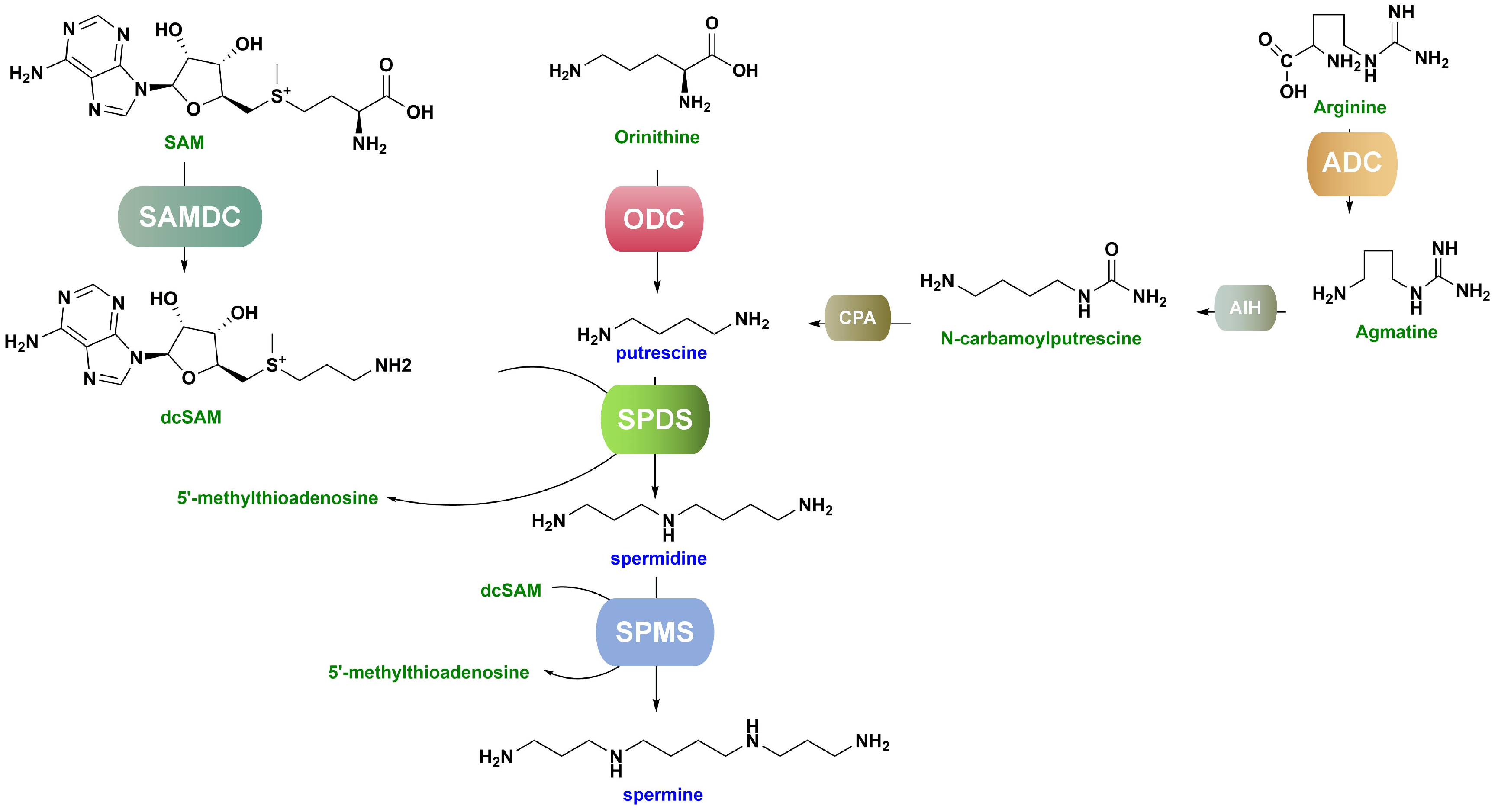
In plants, there exist two distinct pathways for putrescine biosynthesis, the ODC pathway and the arginine decarboxylase (ADC) pathway [13,14], which together constitute the upstream regulatory hub of the PA metabolic network (Figure 1). The ODC pathway directly converts ornithine into putrescine in a single step, whereas the ADC pathway involves three sequential enzymatic reactions catalyzed by ADC, agmatine iminohydrolase (AIH), and N-carbamoylputrescine amidohydrolase (CPA) [14]. Putrescine then serves as a common precursor and is subsequently aminopropylated by downstream enzymes such as S-adenosylmethionine decarboxylase (SAMDC), spermidine synthase (SPDS), and spermine synthase (SPMS) to form the triamine spermidine and the tetramine spermine [14].
As the initial enzymes of these two pathways, the activity, expression levels, and subcellular localization of ADC and ODC determine the types, levels, and dynamic equilibrium of PAs within plants [15,16,17]. This regulation endows plants with the flexibility to meet diverse physiological demands [1]. The ADC pathway is a classic and extensively studied route for putrescine biosynthesis in plants, with research showing that ADC plays a significant role in plant morphogenesis and stress adaptation [18,19,20]. Although the ODC-catalyzed decarboxylation of ornithine to putrescine is widely recognized as the key rate-limiting step in polyamine synthesis in animals and fungi, plant ODC was not cloned and functionally characterized until 1996, when it was first identified in the roots of Datura stramonium [21]. Recent studies have revealed that ODC also plays important roles in plant growth, development, and environmental adaptation. ODC activity directly influences intracellular putrescine levels and the subsequent balance of PAs, thereby broadly participating in various physiological processes such as plant growth and stress adaptation. Moreover, as a direct source of putrescine biosynthesis, ODC holds crucial and irreplaceable significance for producing putrescine, a key precursor for alkaloids such as nicotine and TAs in some specific plants [22,23]. Therefore, conducting in-depth and systematic research and summarization of plant ODC will not only help fundamentally elucidate the core role of PAs as important signaling molecules in plant life activities but also provide critical theoretical foundations and genetic resources for improving yield, enhancing stress tolerance, and optimizing metabolic engineering strategies in horticultural plants through plant genetic modification targeting ODC.

2. Methodology

To ensure the rigor, reproducibility, and comprehensiveness of this review, the literature screening and selection process was strictly performed in accordance with standardized review guidelines. Relevant literature was retrieved from international databases, including Web of Science, PubMed, and Google Scholar, as well as the domestic database China National Knowledge Infrastructure (CNKI). The retrieval period was set up to 2025 to fully cover the latest research progress in this field. A combination of keywords, including “ornithine decarboxylase”, “polyamine”, “plant growth”, “plant stress response”, “plant secondary metabolism”, “regulation”, and “plant genetic improvement”, was adopted to minimize the omission of studies related to the core theme of this review. The exclusion criteria were as follows: (1) non-peer-reviewed and unpublished literature, such as abstracts, conference proceedings, and dissertations; (2) studies with unclear experimental methods, incomplete data, or unreliable conclusions; and (3) studies irrelevant to the core theme of this review.

3. Plant ODC: Gene Family and Evolution

The identification of the plant ODC gene family primarily relies on highly conserved domains within its protein sequences. Researchers identified two core conserved domains through multiple sequence alignments of functionally characterized ODC and ADC protein sequences from animals, fungi, and plants: one is the pyridoxal 5′-phosphate (PLP)-binding domain, which is essential for catalytic activity; the other is the Orn/DAP/Arg decarboxylase family 2 domain, which is highly conserved within the decarboxylase superfamily [24,25]. The analysis revealed that all these decarboxylase genes could be clearly divided into three main subfamilies: ODC, ADC, and DapDc [25]. Interestingly, the ODC genes from humans, plants, and yeast formed an independent clade on the phylogenetic tree, which was distantly related to the clade containing plant ADC genes, suggesting that ODC is a relatively ancient gene family in the biosphere, possibly originating before the divergence of plants and animals [24,25]. Additionally, studies found that, compared to human ODC, all plant ODC amino acid sequences lacked a PEST sequence at their C-terminus [26]. The current research suggests that PEST sequences are associated with 26S proteasome-mediated degradation of ODC in animals, indicating that post-translational regulation of ODC in plants may differ from that in animals [27]. Furthermore, it was found that the divergence of ADC genes occurred after plants colonized land, which may be related to plants’ need for more flexible regulatory mechanisms for spermidine and spermine biosynthesis to adapt to the variable terrestrial environment [5].
From an evolutionary perspective, the distribution and conservation of ODC genes across plant lineages exhibit a complex pattern. Comparative genomic studies have revealed that ODC is widely present but not universally conserved across the plant kingdom. For instance, while ODC is retained in many dicots and monocots, such as Nicotiana tabacum [28], Solanum lycopersicum [29], and various Poaceae species [30], it was not present in the model plant Arabidopsis thaliana and in mosses [14], which indicates that the ODC gene may have undergone pseudogenization or complete loss during the divergence of these plant lineages. Despite the lack of an ODC gene, there is more than one ADC in A. thaliana. The previous study showed that AtADC1 and AtADC2 have a certain degree of functional redundancy. Under normal growth conditions, single adc1 or adc2 mutants can still produce fertile offspring, whereas the simultaneous knockout of both genes exhibits complete lethality [31]. Meanwhile, during stress conditions or key stages of growth and development, the expression levels of these two ADC genes are synergistically and significantly upregulated. This functional compensation and coordinated expression compensate for the loss of the ODC gene and its function in A. thaliana to a certain extent. However, due to the loss of the ODC gene, it relies entirely on the arginine decarboxylase (ADC) pathway for polyamine biosynthesis [32], which cannot fully represent the polyamine biosynthetic characteristics of all higher plants. Therefore, the loss of ODC in A. thaliana highlights the limitations of studying plant metabolic pathways using model plants alone. By systematically summarizing the research progress of ODC in non-model plants, we can more clearly clarify the metabolic diversity of polyamine biosynthetic pathways in higher plants and provide a more comprehensive theoretical basis for understanding the evolutionary and functional diversity of plant polyamine metabolism.
In species where ODC is retained, evidence points to possible gene duplication events and subsequent functional divergence among ODC homologs. Phylogenetic analyses of ODC sequences from diverse plant species have shown that ODC genes often cluster into distinct subclades corresponding to monocot and dicot lineages, indicating ancient divergence and potential subfunctionalization or neofunctionalization following duplication [33]. For example, in Solanaceous plants such as N. tabacum and TAs producing plants, ODC is not only retained but has also become specialized for roles in alkaloid biosynthesis, particularly in the production of nicotine and Tas [22,28]. This functional specialization in secondary metabolism may have provided a selective advantage, reinforcing the retention of ODC in these lineages. Furthermore, comparative genomic analyses have begun to uncover functional differences among ODC isoforms. In tomato and tobacco, multiple ODC-like sequences have been identified, some of which exhibit divergent expression patterns and regulatory motifs, suggesting potential subfunctionalization [33]. However, functional validation of these isoforms remains limited, and future studies leveraging gene editing and expression profiling will be essential to dissect their respective roles. Furthermore, at the subcellular level, the subcellular localization of polyamine biosynthetic genes, such as ODC, varies significantly across different plant species. Although ODC is generally considered a cytosolic enzyme, experimental evidence in species such as Atropa belladonna has confirmed its cytoplasmic localization [22]. However, predictive analyses by Sivakumar et al. across a broad range of plant species suggest that ODC may also localize to mitochondria and chloroplasts [33]. Notably, even within the same species, distinct subcellular localization patterns exist among members of polyamine synthesis gene families. For instance, in wheat, TaADC1~TaADC3 have been shown to localize to the cytosol, whereas TaADC4 is targeted to chloroplasts [30], indicating marked functional variability among family members. These findings suggest that genes involved in polyamine metabolism, including ODC, may have undergone complex evolutionary processes, potentially to meet specific environmental or metabolic demands in particular species.
In summary, the evolution of the plant ODC gene family is marked by ancient origin, lineage-specific loss and retention, and functional diversification linked to metabolic specialization. The contrast between ODC-dependent and ODC-independent species, exemplified by the complete reliance on ADC in Arabidopsis versus the dual-pathway strategy in nicotine-producing plants, highlights the plasticity of polyamine biosynthetic pathways in plants and underscores the importance of studying non-model organisms to fully understand plant metabolic diversity.

4. Biochemical Properties and Substrate Specificity of ODC

The biochemical properties of ODC form the basis for its physiological functions. In-depth studies of its catalytic mechanism and substrate specificity not only aid in understanding the details of polyamine biosynthesis regulation but also provide a theoretical foundation for modifying its function through enzyme engineering. In many eukaryotes, ODC typically exists as a homodimer, with its two monomers associated through weak interactions. The equilibrium between the dimer and monomer significantly influences enzyme activity. Under certain conditions, such as high ionic strength or substrate absence, the ODC dimer may dissociate into inactive monomers. ODC is a PLP-dependent decarboxylase belonging to the Orn/Lys/Arg decarboxylase class II family [34]. While the molecular weight of ODC varies across species, its core catalytic domain is highly conserved. The enzyme’s active site covalently binds the aldehyde group of PLP through the formation of an internal Schiff base [35]. This cofactor is essential for stabilizing the carboxylate anion intermediate of the substrate ornithine and for driving the decarboxylation reaction. The reaction catalyzed by ODC is an irreversible process, involving the removal of the α-carboxyl group from L-ornithine to produce putrescine and carbon dioxide [35]. This step constitutes a critical regulatory node in the polyamine biosynthetic pathway.
Enzymatic kinetic studies on plant ODCs from different sources help evaluate their catalytic efficiency and substrate preference. For instance, kinetic analyses of ODCs extracted or recombinantly expressed from Solanaceous plants such as A. belladonna [22], N. glutinosa [36], and Hyoscyamus niger [26] show high affinity for the substrate L-ornithine, with Km values typically in the micromolar range [37]. Comparing parameters like Km and Vmax among different ODCs reveals variations in their catalytic efficiency (kcat/Km). For example, AbODC from A. belladonna and AlODC from Anisodus luridus both exhibited relatively higher catalytic efficiencies [22,37], comparable to some typical ODCs reported, making them ideal candidate genes for metabolic engineering aimed at increasing TA yield [38]. However, a recent and surprising discovery is that many enzymes identified as ODCs, besides possessing robust ODC activity, also exhibit weak lysine decarboxylase (LDC) activity [37]. For instance, NgODC, as well as ODCs from TA-producing plants such as A. luridus and A. belladonna, can catalyze the decarboxylation of L-lysine to produce cadaverine [37].
Although ODCs from Solanaceae plants and L/ODCs from Leguminosae plants both possess dual ODC and LDC activities, share similar Km values for L-lysine and L-ornithine [37,39], and exhibit significant differences in their kinetic properties. Previous studies have shown that the optimal temperatures for ODC activity in Solanaceae plants are typically pH 8.0 and 30 °C [22]. More importantly, enzyme kinetic assays have revealed that the catalytic efficiency of Solanaceae ODCs for ODC activity is more than 100 times higher than that for LDC activity [37]. In sharp contrast, Leguminosae L/ODCs generally exhibit comparable catalytic efficiencies for both lysine and ornithine, indicating a functional balance between the two activities. Further evidence for functional differentiation comes from temperature-dependent activity assays: at room temperature (22~26 °C), ODCs from Solanaceae TA-producing plants, including AbODC, AlODC, DsODC, and HnODC, nearly lose the ability to catalyze the conversion of lysine to cadaverine. This weak LDC activity in Solanaceae ODCs, combined with their much higher catalytic efficiency for ODC activity, suggested that these ODCs primarily function in putrescine biosynthesis, an essential process for TA synthesis in Solanaceae plants, while their residual LDC activity may be retained as an evolutionary relic. Consistent with this conclusion, endogenous cadaverine (the product of LDC-catalyzed lysine decarboxylation) could not be detected in the whole plant of Brugmansia candida (syn. Datura candida), a Solanaceae plant that produces the tropane alkaloids scopolamine and hyoscyamine [40]. This dual activity possibly represents an intermediate stage in the functional differentiation between ODC and LDCs [37,39], providing new clues for understanding the origin and functional specialization of these two enzyme classes. It is noteworthy that ODC from Erythroxylum coca has been reported to lack LDC activity [41], a point worthy of attention, though it could also be related to the sensitivity of detection methods.

5. The Multiple Functions of ODC in Plants

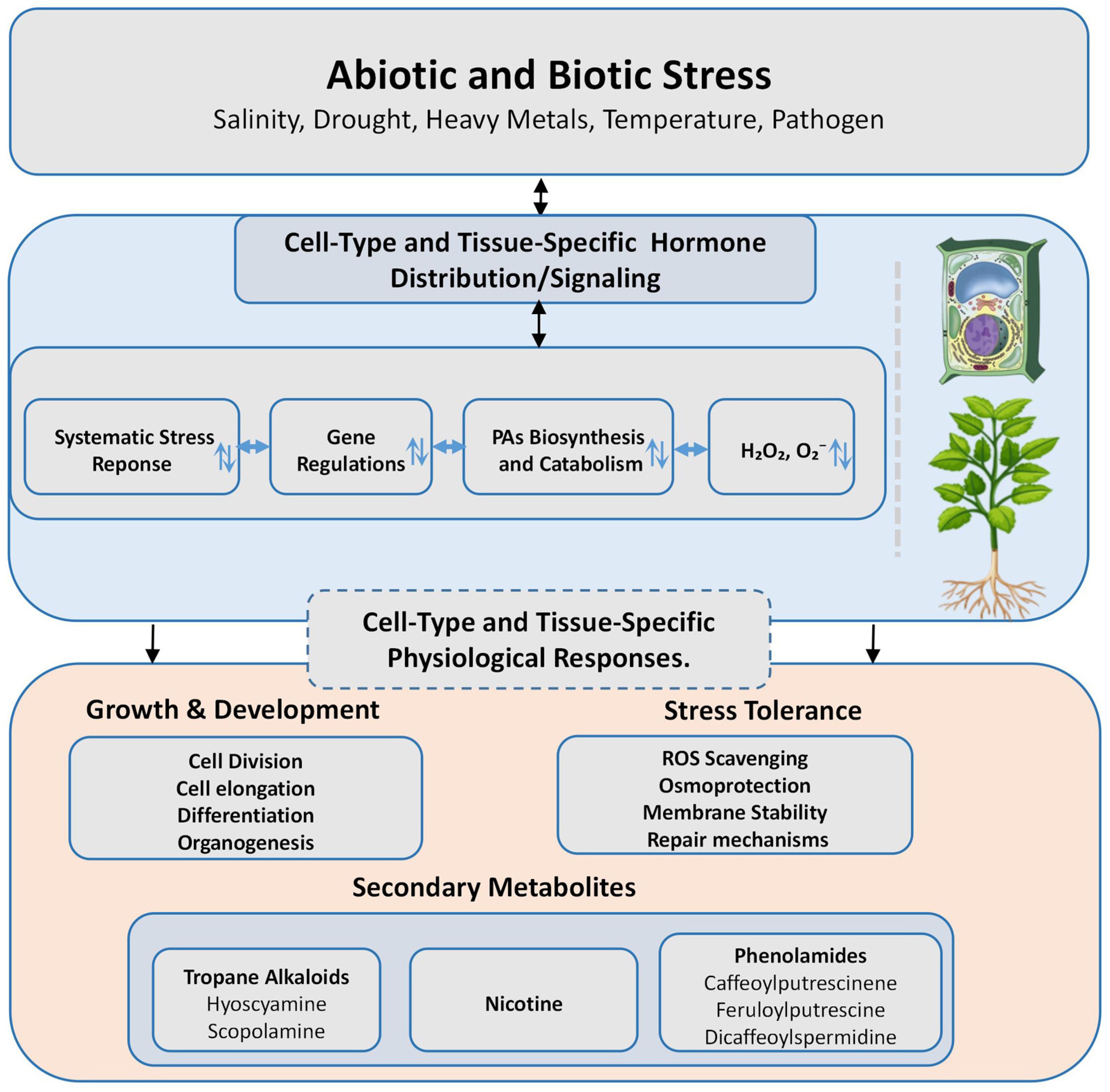
Polyamines play important roles in plant growth, stress response, and secondary metabolism (Figure 2). As a crucial node in the polyamine biosynthesis pathway, the function of ODC extends far beyond cell division the synthesis of a simple metabolic intermediate. It plays diverse and essential roles throughout the plant lifecycle, from fundamental growth and development to complex stress responses and secondary metabolism.

5.1. Involvement in Plant Growth and Development

The role of ODC in plant growth and development is primarily reflected in its impact on cell division and organogenesis [42]. Typically, both the expression levels and enzymatic activity of ODC were highest in actively dividing tissues (e.g., root tips, shoot apical meristems, young leaves, and flower buds), indicating a close association with cell proliferation and expansion [33,42]. During plant morphogenesis, cell division and cell elongation are two fundamental processes, which appear to be differentially regulated by the ADC and ODC pathways [42]. It is widely accepted that the ADC pathway is primarily associated with cell elongation. For instance, in Phaseolus vulgaris, the ADC gene (Pvadc) was highly expressed in elongating roots, stems, and young leaves, but was barely detectable in the root tips, strongly suggesting that ADC-derived putrescine mainly supported cell elongation growth [43]. In contrast, ODC expression is generally closely linked to cell division activity. The ODC gene from D. stramonium was highly expressed in rapidly growing, densely branched transformed roots, with its mRNA accumulation significantly higher than in leaves and stems with limited division activity [21]. Similarly, in tobacco, ODC activity was highest in rapidly dividing regions such as the shoot apical meristem and root tip, while ADC expression levels were relatively low in root tips [15,33]. This differential expression pattern suggests that plants may utilize the ADC and ODC pathways to meet the distinct polyamine demands of cell elongation and cell division, respectively. In tobacco, immunological modulation by expressing a single-chain antibody (scFv) targeting ODC resulted in a greater than 90% reduction in ODC activity, leading to a significant dwarfing phenotype alongside markedly decreased levels of putrescine, spermidine, and spermine [44]. In summary, ODC plays an indispensable role in plant growth and development by highly expressing in actively dividing tissues and providing the necessary polyamine source for cell proliferation. This forms a clear functional differentiation from the ADC pathway, which primarily supports cell elongation, and together they constitute the molecular basis for the precise regulation of plant growth processes.
During the reproductive growth phase, the regulatory roles of ADC and ODC also play a critical role in the entire process from floral bud differentiation to fruit maturation. Anther and pollen development are highly sensitive to polyamine levels. For example, at the stage of uninucleate microspore, the transcripts of ADC and ODC were both found in the pollen of the tobacco [45]. Additionally, exogenously applied polyamines have been shown to significantly influence pollen maturation, pollen tube emergence, and elongation [46]. In A. belladonna, ODC was highly expressed in the anthers of floral organs, and suppressing ODC expression led to abnormal pollen development in this species [17]. Conversely, the ADC pathway plays a central role during pollination and fertilization in tomato. In tomato, the activity of ADC markedly increased during the first two hours of pollen germination and remained elevated thereafter. While ADC activity rose significantly, ODC activity showed little to no change. Furthermore, treatment with a competitive inhibitor of ADC substantially inhibited pollen tube growth [47]. Crucially, a breakthrough study utilizing CRISPR/Cas9 technology to edit tomato ADC genes (SlADC1 and SlADC2) provided direct, definitive genetic evidence for the indispensability of ADC in floral organ development. The adc1/adc2 double mutant completely failed to produce flowers [48]. These studies demonstrate that during different stages of flowering and fruit development, plants dynamically regulate the expression of ADC and ODC in various tissues and organs across distinct developmental phases, thereby precisely controlling polyamine biosynthesis and metabolism to ensure the successful completion of the reproductive process.
The role of polyamines in plant senescence and fruit ripening exhibits a notable “duality”, acting either as promoters or inhibitors, with the activities of ADC and ODC serving as key regulatory points determining this dual nature [49]. On one hand, polyamines are often regarded as “anti-senescence hormones” that delay aging. Exogenous application of spermidine can effectively retard senescence in leaves and flowers of various plant species [49]. For example, in tobacco, low-alkaloid tobacco varieties exhibited a pronounced delay in leaf maturation, accompanied by extremely high ODC and ADC activities, as well as high levels of both free and conjugated polyamines (including putrescine and spermidine) [50]. Treating these plants with enzyme inhibitors can partially reverse the delayed maturation phenotype, directly demonstrating that high polyamine levels contribute to leaf maturation delay [50]. During fruit ripening and senescence, polyamine levels typically undergo changes. For instance, during tomato fruit ripening, the content of free putrescine first decreased from the early immature stage (ImG1) to the late immature stage (ImG4) and then increased gradually during maturation, reaching a peak at the red ripe (RR) stage. In contrast, the contents of spermidine and spermine continued to decrease throughout the entire ripening process, and the total polyamine content increased significantly during the maturation stage [29]. Additionally, the expression of CuAO and PAO was significantly upregulated. CuAO catalyzes the oxidative deamination of polyamines, producing aminoaldehydes, H2O2, and NH3, while PAO mediates the back-conversion of spermine to spermidine and spermidine to putrescine, yielding 3-aminopropanal and H2O2, thereby accelerating fruit ripening [51]. Meanwhile, the increase in putrescine content during fruit ripening may be related to the formation and development of seeds during fruit maturation [29]. Therefore, the roles of ADC and ODC in plant senescence and fruit ripening are important and complex, and they are closely related to the developmental stage of plants and the types of polyamines.

5.2. Mediation of Abiotic and Biotic Stress Responses

As sessile organisms, plants inevitably face various abiotic and biotic stresses (e.g., drought, high salinity, extreme temperatures, and heavy metals) during their lifecycle. To survive and reproduce, plants have evolved sophisticated and efficient stress response mechanisms, with the polyamine metabolic pathway playing a crucial role. As the origin of polyamine biosynthesis, the activity and expression of ADC and ODC are rapidly and strongly induced by stress signals, thereby regulating intracellular polyamine levels [52]. These polyamines participate in multiple processes, including scavenging reactive oxygen species (ROS), maintaining ion homeostasis, stabilizing macromolecular structures, and regulating the expression of stress-related genes [10]. Both biotic stresses like pathogen attack and abiotic stresses like drought and salinity involve ADC and ODC as key regulatory nodes, mediating the entire process from stress signal perception to the initiation of adaptive responses [10].
Under abiotic stress conditions such as drought, high salinity, and extreme temperatures, polyamine levels in plants typically increase sharply, a phenomenon closely associated with enhanced stress tolerance. The ADC pathway was considered the primary source of polyamine biosynthesis under stress. For example, in Poncirus trifoliata and Oryza sativa, drought stress induced ADC gene expression, increasing putrescine and spermidine content in roots, thereby improving water retention and drought resistance [53,54]. In wheat, drought-induced putrescine accumulation was mainly biosynthesized through the ADC pathway, not the ODC pathway [55]. In P. trifoliata, ICE1 (Inducer of CBF Expression 1) transcription factor directly bound to the promoter of an ADC gene, activating its expression to increase putrescine accumulation and enhance freezing tolerance [19].
Although extensive research has shown that the ADC pathway may play a significant role in plant stress responses, in some plants, ODC plays a more critical role in specific stress responses. In tobacco, the induction of both ODC and ADC expression under chilling stress indicated that polyamine biosynthesis in tobacco seedlings was mainly dependent on the ODC pathway under certain conditions [56]. In Cucumis sativus, the activity of ODC was also enhanced under chilling stress [57]. In rice, using the ODC inhibitor DFMO increased sensitivity to salt stress, while exogenous putrescine application partially alleviated the damage [58]. In tobacco, overexpression of ODC can significantly enhance the plant’s tolerance to salt stress [59]. Similarly, in A. belladonna, overexpression of ODC improved the plant’s tolerance to low temperatures [38]. In Paeonia ostii, PoDPBF4 is a negative regulatory transcription factor of ODC. PoPP2A can dephosphorylate PoDPBF4, relieving the repression of PoODC, thereby enhancing putrescine biosynthesis and tolerance to drought. Under different plant species and various stress responses, the differences in the responses of ODC and ADC reflect the functional specificity of these two pathways [60]. This specificity may be related to the evolutionary adaptation of different plant species to their respective habitats, which also explains the divergent roles of ODC and ADC in different stress responses. Of course, the intrinsic mechanisms underlying this specificity still require further research to be fully elucidated.
When plants are exposed to heavy metal stress, their polyamine metabolism undergoes significant changes. In many plant species, heavy metal stress rapidly induced the expression of ODC and/or ADC genes, causing a sharp short-term increase in the content of polyamines like putrescine, spermidine, and spermine [61,62]. This polyamine accumulation is an active defense strategy against heavy metal toxicity, with multiple underlying mechanisms. Firstly, polyamines can directly chelate heavy metal ions, reducing their biological toxicity [61,62]. Secondly, polyamines are key antioxidants against heavy metal-induced oxidative stress. Heavy metal stress can generate large amounts of ROS (e.g., O2 and H2O2) by disrupting electron transport chains (e.g., in chloroplasts and mitochondria), leading to severe oxidative damage. Polyamines can scavenge these ROS through enzymatic or non-enzymatic pathways and can also upregulate the activity of major antioxidant enzymes like SOD, CAT, and POD, synergistically enhancing the plant’s antioxidant defense system to protect cellular membranes, proteins, and DNA from oxidative injury [60].
Beyond abiotic stress, polyamines and their biosynthetic enzymes, ADC and ODC, play complex dual roles in plant-pathogen interactions [63]. On one hand, polyamines can act as direct defense compounds, interacting with pathogen cell membranes via their cationic properties or generating oxidative stress to inhibit pathogen growth. On the other hand, polyamines also serve as important signaling molecules, participating in the regulation of systemic acquired resistance (SAR) and the hypersensitive response (HR). Upon pathogen attack, ADC and ODC activities were typically rapidly induced. For instance, in tobacco, when plants were infected by Tobacco Mosaic Virus (TMV) and developed an HR, ODC activities increased significantly, suggesting that ODC may be involved in the hypersensitive cell death process that limited pathogen spread [64]. In grasses, hydroxycinnamoylputrescines, derived from the ODC pathway, have been confirmed as important substances involved in rice immune responses. When rice was infected by the fungus Magnaporthe oryzae, expression of the OsODC gene was significantly induced. The resulting putrescine was modified by hydroxycinnamoyl transferases (OsPHT3 and OsPHT4) to form hydroxycinnamoylputrescines. These compounds not only possessed antifungal activity themselves but also functioned during cell death, limiting nutrient supply to the pathogen and its further spread. Studies showed that rice overexpressing OsODC exhibited significantly enhanced resistance to M. oryzae, demonstrating the feasibility of strengthening the ODC pathway to boost plant defense capabilities [65]. These results clearly highlight the importance of ODC in plant stress responses and indicate that enhancing plant stress tolerance via the ODC–polyamine pathway is a promising molecular breeding strategy.
It should be noted that although enhancing ODC activity can promote putrescine synthesis, increased ODC expression does not always lead to improved stress tolerance in plants. First, downstream metabolic steps, such as the conversion of putrescine to spermidine and spermine, may be rate-limiting [5]. In the absence of coordinated upregulation along the entire pathway, the simple accumulation of putrescine alone may be insufficient to confer stress protection. Second, even when polyamine levels rise, the accumulation of putrescine may, in turn, activate its catabolic pathways, during which enzymes such as CuAOs and PAOs catalyze the oxidative breakdown of polyamines, directly generating H2O2 [52]. If catabolic activity becomes excessive, H2O2 accumulation may shift from serving as a beneficial signaling molecule to triggering oxidative stress, leading to lipid peroxidation, protein inactivation, and DNA damage [66], ultimately counteracting or even outweighing any potential benefits from increased ODC expression. Nonetheless, successful cases of plant genetic modification targeting ODC, whether for improving stress tolerance or enhancing the accumulation of high-value natural products in medicinal plants, underscore its continued applicational potential.
Meanwhile, it is important to emphasize that the signaling networks involving polyamines and their derived molecules, such as reactive oxygen species (ROS), operate with a high degree of spatial and temporal specificity [66,67]. For instance, H2O2 generated in the cytoplasm, plastids, or mitochondria can exert distinct physiological effects due to differences in local redox buffering capacities and downstream targets [66,67]. Similarly, polyamine levels and its biosynthetic pathway genes are not uniformly regulated across different cell types [68]. Under identical stress conditions, PA metabolism may be upregulated in one cell type while downregulated in another, reflecting the complexity and spatiotemporal specificity of polyamine functions. The overall stress response, therefore, emerges from the coordinated re-establishment of metabolic and signaling balance among diverse cell types, rather than from a uniform cellular reaction [69]. Acknowledging this complexity is crucial for interpreting bulk tissue data and for designing targeted interventions aimed at improving stress tolerance.
Collectively, the regulation of ODC expression in plants is a multilayered and network-governed process. ODC is not constitutively expressed but is precisely modulated by developmental cues, tissue/cell specificity, and environmental signals. However, relevant studies in plants remain limited, and further investigations are needed to dissect the detailed functions and dynamic regulatory mechanisms of ODC.

5.3. Involvement in Plant Alkaloid and Phenolamide Biosynthesis

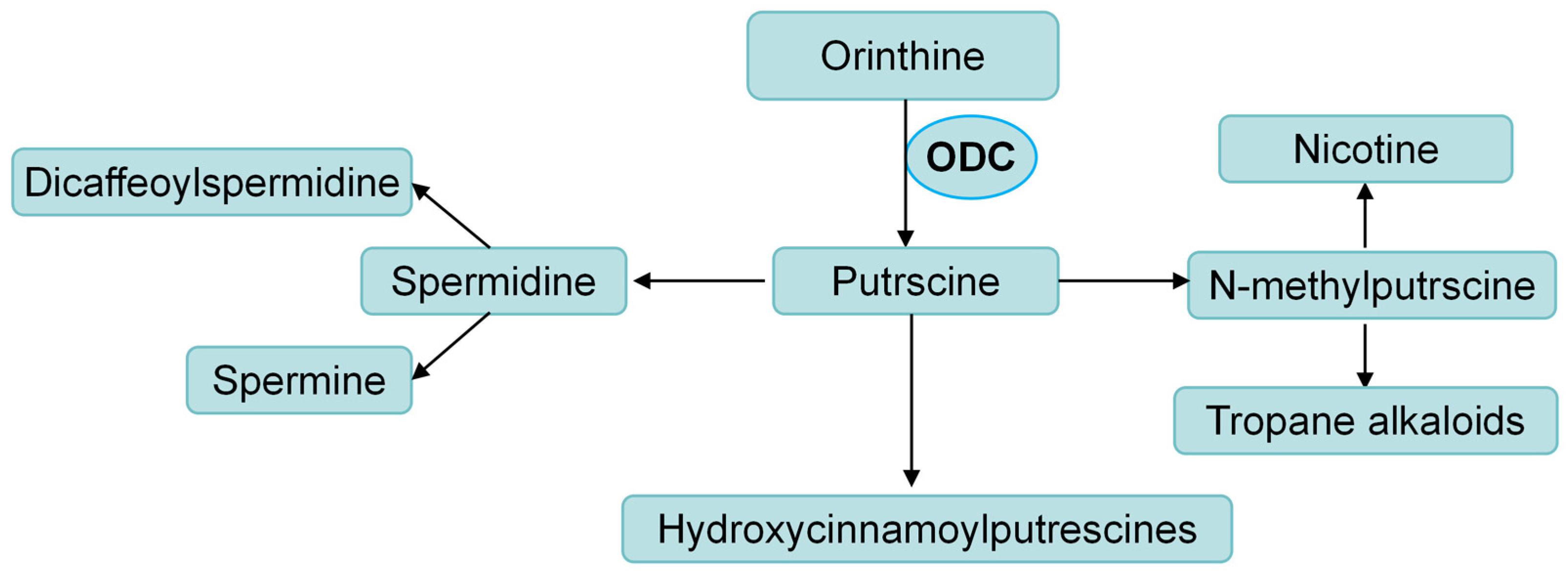
As a pivotal enzyme in polyamine biosynthesis, ODC not only modulates plant growth and stress responses but also directly or indirectly regulates the biosynthesis and accumulation of a wide range of plant secondary metabolites (Figure 3). These secondary metabolites hold significant importance for plant ecological adaptation and economic value. The most direct and core function of ODC in plant secondary metabolism is to provide the precursor, putrescine, for various physiologically active secondary metabolites.
Alkaloids are nitrogen-containing natural organic compounds widely present in plants, many of which possess significant physiological activity and are important medicinal components [70]. In the biosynthetic pathways of many plant alkaloids, polyamines, particularly putrescine, play an indispensable initiating role. Putrescine is methylated by putrescine N-methyltransferase (PMT) to form N-methylputrescine [71]. N-methylputrescine is further converted into nicotine or medicinally valuable TAs such as hyoscyamine and scopolamine Through a series of enzymatic reactions [71]. For instance, in the well-known medicinal plant A. belladonna, the biosynthesis of TAs like hyoscyamine and scopolamine begins with putrescine [72]. ADC and ODC together constitute the source of putrescine, but their functions show clear differentiation. Research by Zhao et al. in A. belladonna demonstrated that inhibiting ODC activity with the specific inhibitor DFMO, or knocking down AbODC expression via RNAi, led to a significant decrease in the levels of putrescine in plants, and consequently inhibited the biosynthesis of hyoscyamine and scopolamine [22]. This directly proved that ODC-mediated putrescine biosynthesis is a key rate-limiting step in the TA biosynthetic pathway, as it determines the flux of putrescine into TA production. In contrast, inhibiting ADC had only a slight inhibitory effect on alkaloid biosynthesis but significantly suppressed root growth [73], indicating that ODC is primarily responsible for supplying putrescine to secondary metabolism (TA biosynthesis) in A. belladonna, whereas ADC-derived putrescine is mainly allocated to root growth and development. In tobacco (Nicotiana tabacum), nicotine biosynthesis similarly relies on the polyamine pathway. Although early enzyme inhibitor experiments suggested ADC might be more important for nicotine biosynthesis in tobacco [74], later stable genetic transformation studies showed that suppressing ADC only causes minor alterations in the alkaloid profile [75], whereas knockdown of ODC by RNAi resulted in significantly reduced nicotine content [28]. These results underscored the critical role of ODC in the biosynthesis of putrescine-derived alkaloids.
Beyond serving as a direct precursor for alkaloids, polyamines also play significant roles in the metabolism of phenolic compounds, with ODC-derived putrescine contributing to the metabolic flux of phenolamide biosynthesis [9]. These compounds function in plant defense responses, cell wall reinforcement, and signal transduction. Phenolamides are a class of secondary metabolites widespread in the plant kingdom, formed by the conjugation of polyamines (e.g., putrescine, spermidine) with hydroxycinnamic acids (e.g., caffeic acid, ferulic acid) [76]. These compounds play a vital role in plant defense. Therefore, the availability of polyamines as substrates directly determines the potential for phenolamide biosynthesis. ADC and ODC, as the sources of polyamine biosynthesis, directly influence the polyamine pool available for phenolamide production. Upon pathogen attack or simulated damage, the expression of related genes was rapidly induced. In rice, infection by M. oryzae induced OsODC expression to produce putrescine, which was then modified by the hydroxycinnamoyl transferases OsPHT3 and OsPHT4 into hydroxycinnamoylputrescines [65]. In N. attenuata, the levels of major phenolamides, caffeoylputrescine and dicaffeoylspermidine, increased dramatically upon insect herbivory [77]. Research found that this accumulation was regulated by an R2R3-MYB transcription factor (NaMYB8), which regulated the expression of key genes in both polyamine (such as ODC and SPDS) and phenylpropanoid metabolic pathways [77]. This clearly illustrates how plants can rapidly mobilize defense resources by coordinately regulating polyamine and phenolic compound biosynthesis through an upstream regulator. Thus, ADC and ODC are not only the starting points of polyamine metabolism, but also key molecular switches connecting primary and secondary metabolism, balancing plant growth and defense (Table 1).

6. Multilayered Regulatory Mechanisms of Plant ODC Activity

To precisely execute its functions across diverse physiological processes, ODC activity is controlled by a multilayered, intricate regulatory network within the cell. Distinct from the prevalent polyamine-antizyme-mediated post-translational feedback inhibition in animals [78], the regulatory mechanisms for plant ODC exhibit unique features.

6.1. Transcriptional Level Regulation

The expression of ODC genes is precisely modulated by various internal and external environmental signals. Studies showed that the promoter regions of ODC genes contained multiple cis-acting elements associated with stress response and hormone regulation [33]. For example, promoters of many ODC genes contain abscisic acid (ABA)-responsive elements (ABREs), auxin-responsive elements (AuxREs), and elements responsive to abiotic stresses such as drought and high salinity [33]. This explains why the mRNA levels of many plant ODCs rapidly increased under chilling or drought/salt stress [56,57,59]. These cis-acting elements are binding sites for upstream transcription factors. Upon receiving specific signals, these transcription factors are activated and bind to the promoter region of ODC genes, initiating or enhancing their transcription. For instance, in Paeonia ostii, PoDPBF4 functions as a negative regulator of ODC, and its repression is relieved by PoPP2A-mediated dephosphorylation, thereby promoting putrescine biosynthesis and drought tolerance [60]. In tobacco, NaMYB8 regulates key genes in both polyamine (e.g., ODC, SPDS) and phenylpropanoid pathways [77]. Similarly, in tobacco, topping—an agricultural practice that removes apical dominance and strongly induced nicotine synthesis—altered JA and IAA signaling, consequently affecting the expression of ODC and other nicotine biosynthetic genes. The transcription factors, like NtNAC-R1 and NtWRKY-R1, are key regulators of this process [79,80,81]. These studies on transcriptional regulation will help enrich our understanding of the transcriptional regulatory mechanisms and physiological functions of plant ODCs.

6.2. Post-Translational and Protein Level Regulation

In eukaryotes, regulating protein stability is a key mechanism for rapidly altering enzyme activity. In animals, this process is mediated by antizyme: elevated intracellular polyamine concentrations induce antizyme expression [78]. Antizyme binds to ODC monomers, not only inhibiting enzyme activity but also targeting them for recognition and degradation by the 26S proteasome, rapidly reducing ODC levels and forming a negative feedback loop [78]. However, homologs of antizyme genes have not been identified in plant genomes. Although early reports suggested the detection of antizyme-like proteins (~9 kDa and ~16 kDa) in plants [82], subsequent research has questioned this. A study using a yeast two-hybrid system found that plant ODC could specifically interact with the C-terminal peptide of a cytosolic ribosomal protein S15 [83]. However, further experiments indicated that this interaction does not inhibit ODC activity or promote its degradation like animal antizyme does [83]. Therefore, the post-translational regulatory mechanisms for plant ODC may be fundamentally different from those in animals [83]. Currently, how the stability of plant ODC protein is regulated, and whether other unknown regulatory proteins or modifications (e.g., phosphorylation, ubiquitination) exist, remain important unresolved scientific questions in this field.

7. Applications in the Field of Plant Genetic Improvement and Synthetic Biology Research

With the ongoing cloning and identification of ODC genes and a growing understanding of the roles of polyamines in plant growth, development, stress response, and secondary metabolism, significant progress has been made in applying ODC to medicinal plant quality improvement and crop stress resistance breeding. Numerous studies have shown that overexpression of polyamine biosynthesis genes such as ODC, ADC, or SAMDC in plants can significantly enhance transgenic plant tolerance to abiotic stresses including drought, high salinity, and low temperature [1,5]. This strategy is essentially “open-source”, aiming to boost polyamine biosynthesis capacity by increasing the number of metabolic “engines”.
Substantial evidence supports the efficacy of this approach. For instance, overexpression of OsODC in rice enhanced resistance to M. oryzae [65]. In tobacco, overexpression of ODC significantly increased the plant’s salinity tolerance [59]. Similarly, in A. belladonna, overexpression of ODC improved cold tolerance [38]. In tomato, fruit-specific overexpression of a mouse ODC markedly enhanced fruit quality [84]. Furthermore, as ODC is a key upstream enzyme in the biosynthesis of various alkaloids, its overexpression is theorized to enhance carbon and nitrogen flux into the polyamine pathway. This would provide more precursors for secondary metabolism and promote the biosynthesis of downstream target compounds. For example, overexpression of a yeast ODC in tobacco promoted the biosynthesis of polyamines like putrescine and significantly increased nicotine content [85]. Overexpression of AbODC in A. belladonna hairy roots and plants substantially elevated the production of hyoscyamine [22].
However, metabolic engineering practice indicates that overexpression of a single rate-limiting enzyme gene does not always yield the expected outcome, as multiple rate-limiting steps often exist within a metabolic pathway. Co-expression strategies involving multiple genes frequently achieve more pronounced effects [86]. A common synergistic model combines “upstream enhancement” with “downstream utilization”. This involves overexpressing ODC to increase the supply of putrescine, a precursor for target compounds, while simultaneously overexpressing enzyme genes that catalyze the conversion of putrescine into downstream high-value products. A prime example is the co-expression of AbODC and HnH6H (hyoscyamine 6β-hydroxylase) in A. belladonna [38]. While overexpression of AbODC alone increased the content of upstream intermediates, the accumulation of the final product, scopolamine, was not significant due to limitations in downstream catalytic efficiency [38]. In contrast, when HnH6H was co-expressed, the accumulated intermediates were efficiently converted into the final product, leading to a marked increase in the medicinal compound scopolamine. Notably, these plants also exhibited significantly enhanced cold tolerance [38].
In addition, based on the cloning identification and enzymatic functional characterization of plant ODC, some plant ODCs have been utilized in synthetic biology studies for the production of putrescine and its derivatives. For instance, in Chlamydomonas reinhardtii, Robert A. Freudenberg and colleagues achieved efficient biosynthesis of putrescine, with a yield as high as 200 mg/L, by employing AbODC and modifying relevant metabolic pathways [87]. In yeast, Ping et al. accomplished the heterologous biosynthesis of tropine and pseudotropine using EcODC along with other metabolic pathway genes [88]. These studies demonstrate that ODC holds significant application value in plant genetic improvement and in the synthetic biology of putrescine and its derivatives (Table 2).

8. Conclusions

In summary, recent years have witnessed unprecedented progress in unraveling the complex functions and regulatory networks of ODC. As a key regulatory node in the polyamine biosynthetic pathway, plant ODC plays an indispensable role in various biological processes, including growth and development, secondary metabolism, and stress responses. It has also demonstrated unique potential in applications aimed at improving the quality of medicinal plants and enhancing stress resistance in crops. Despite significant advances in plant ODC research, several limitations remain. Current studies are largely confined to a few models or medicinal plant species, leaving the functions of ODC genes in the vast majority of crops and economically important plants unexplored. Moreover, the regulatory mechanisms governing ODC—especially its post-translational degradation pathways in the absence of identified antizyme-like functional proteins—are still not fully understood. These gaps constrain both our theoretical understanding of ODC and related genes and their practical application in plant genetic improvement. Moving forward, continued efforts should focus on elucidating the central roles of ODC in growth, stress adaptation, and secondary metabolism, as well as its post-translational regulation. Specifically, we can utilize CRISPR/Cas9-mediated gene editing technology to target key amino acid residues related to ODC protein stability or potential regulatory factors interacting with ODC, thereby precisely controlling the degradation rate of ODC and maintaining optimal intracellular ODC activity. Meanwhile, given that ODC has been well characterized, especially in some medicinal plants, and germplasm resources with high yield and stress tolerance have been successfully developed, we can carry out germplasm creation for major crops (such as wheat, rice, and corn) in the future based on the technical and theoretical achievements of the existing research. This approach will enhance crop tolerance to adverse environmental conditions (e.g., drought, high temperature, and salinity) caused by climate change and ensure stable crop yields.

Author Contributions

Conceptualization, T.Z. and P.M.; writing—original draft, T.Z. and P.M.; writing—review and editing, T.Z., C.L., A.M. and P.M.; visualization, A.M.; supervision, C.L. and T.Z.; project administration, T.Z.; funding acquisition, T.Z. All authors have read and agreed to the published version of the manuscript.

Funding

This research was funded by the National Natural Science Foundation of China (32300229) and the Fundamental Research Funds for the Central Universities (SWU-KQ24033).

Data Availability Statement

No new data were created or analyzed in this study. Data sharing is not applicable to this article.

Acknowledgments

During the preparation of this manuscript, the authors used DeepSeek (version 2024, DeepSeek Inc.) for the purposes of grammar correction, language refinement, and readability enhancement. The authors have reviewed and edited the output and take full responsibility for the content of this publication. Additionally, WPS Office (Version 12.1.0, Kingsoft Office Software Inc.) was used to create the schematic diagram of the plant cell and the plant in Figure 2.

Conflicts of Interest

The authors declare no conflicts of interest.

References

  1. Blázquez, M.A. Polyamines: Their Role in Plant Development and Stress. Annu. Rev. Plant Biol. 2024, 75, 95–117. [Google Scholar] [CrossRef]
  2. Acosta-Andrade, C.; Artetxe, I.; Lete, M.G.; Monasterio, B.G.; Ruiz-Mirazo, K.; Goñi, F.M.; Sánchez-Jiménez, F. Polyamine-RNA-Membrane Interactions: From the Past to the Future in Biology. Colloids Surf. B Biointerfaces 2017, 155, 173–181. [Google Scholar] [CrossRef] [PubMed]
  3. Bachrach, U. Naturally Occurring Polyamines: Interaction with Macromolecules. Curr. Protein Pept. Sci. 2005, 6, 559–566. [Google Scholar] [CrossRef] [PubMed]
  4. Tyagi, A.; Ali, S.; Ramakrishna, G.; Singh, A.; Park, S.; Mahmoudi, H.; Bae, H. Revisiting the Role of Polyamines in Plant Growth and Abiotic Stress Resilience: Mechanisms, Crosstalk, and Future Perspectives. J. Plant Growth Regul. 2023, 42, 5074–5098. [Google Scholar] [CrossRef]
  5. Kusano, T.; Suzuki, H. Polyamines; Kusano, T., Suzuki, H., Eds.; Springer: Tokyo, Japan, 2015; ISBN 978-4-431-55211-6. [Google Scholar]
  6. Minocha, R.; Majumdar, R.; Minocha, S.C. Polyamines and Abiotic Stress in Plants: A Complex Relationship1. Front. Plant Sci. 2014, 5, 175. [Google Scholar] [CrossRef]
  7. Kolesnikov, Y.S.; Kretynin, S.V.; Filepova, R.; Dobrev, P.I.; Martinec, J.; Kravets, V.S. Polyamines Metabolism and Their Biological Role in Plant Cells: What Do We Really Know? Phytochem. Rev. 2024, 23, 997–1026. [Google Scholar] [CrossRef]
  8. Mustafavi, S.H.; Naghdi Badi, H.; Sękara, A.; Mehrafarin, A.; Janda, T.; Ghorbanpour, M.; Rafiee, H. Polyamines and Their Possible Mechanisms Involved in Plant Physiological Processes and Elicitation of Secondary Metabolites. Acta Physiol. Plant. 2018, 40, 102. [Google Scholar] [CrossRef]
  9. Bassard, J.-E.; Ullmann, P.; Bernier, F.; Werck-Reichhart, D. Phenolamides: Bridging Polyamines to the Phenolic Metabolism. Phytochemistry 2010, 71, 1808–1824. [Google Scholar] [CrossRef]
  10. Kusano, T.; Berberich, T.; Tateda, C.; Takahashi, Y. Polyamines: Essential Factors for Growth and Survival. Planta 2008, 228, 367–381. [Google Scholar] [CrossRef]
  11. Casero, R.A.; Murray Stewart, T.; Pegg, A.E. Polyamine Metabolism and Cancer: Treatments, Challenges and Opportunities. Nat. Rev. Cancer 2018, 18, 681–695. [Google Scholar] [CrossRef]
  12. Sahu, P.N.; Sen, A. Preventing Cancer by Inhibiting Ornithine Decarboxylase: A Comparative Perspective on Synthetic vs. Natural Drugs. Chem. Biodivers. 2024, 21, e202302067. [Google Scholar] [CrossRef] [PubMed]
  13. Tiburcio, A.F.; Altabella, T.; Borrell, A.; Masgrau, C. Polyamine Metabolism and Its Regulation. Physiol. Plant. 1997, 100, 664–674. [Google Scholar] [CrossRef]
  14. Fuell, C.; Elliott, K.A.; Hanfrey, C.C.; Franceschetti, M.; Michael, A.J. Polyamine Biosynthetic Diversity in Plants and Algae. Plant Physiol. Biochem. 2010, 48, 513–520. [Google Scholar] [CrossRef] [PubMed]
  15. Bortolotti, C.; Cordeiro, A.; Alcázar, R.; Borrell, A.; Culiañez-Macià, F.A.; Tiburcio, A.F.; Altabella, T. Localization of Arginine Decarboxylase in Tobacco Plants. Physiol. Plant. 2004, 120, 84–92. [Google Scholar] [CrossRef]
  16. Delis, C.; Dimou, M.; Efrose, R.C.; Flemetakis, E.; Aivalakis, G.; Katinakis, P. Ornithine Decarboxylase and Arginine Decarboxylase Gene Transcripts Are Co-Localized in Developing Tissues of Glycine Max Etiolated Seedlings. Plant Physiol. Biochem. 2005, 43, 19–25. [Google Scholar] [CrossRef]
  17. Zhao, T.; Zeng, J.; Yang, M.; Qiu, F.; Tang, Y.; Zeng, L.; Yang, C.; He, P.; Lan, X.; Chen, M.; et al. Ornithine Decarboxylase Regulates Putrescine-Related Metabolism and Pollen Development in Atropa belladonna. Plant Physiol. Biochem. 2022, 192, 110–119. [Google Scholar] [CrossRef]
  18. Shi, H.-T.; Chan, Z.-L. In Vivo Role of Arabidopsis Arginase in Arginine Metabolism and Abiotic Stress Response. Plant Signal. Behav. 2013, 8, e24138. [Google Scholar] [CrossRef]
  19. Huang, X.-S.; Zhang, Q.; Zhu, D.; Fu, X.; Wang, M.; Zhang, Q.; Moriguchi, T.; Liu, J.-H. ICE1 of Poncirus Trifoliata Functions in Cold Tolerance by Modulating Polyamine Levels through Interacting with Arginine Decarboxylase. J. Exp. Bot. 2015, 66, 3259–3274. [Google Scholar] [CrossRef]
  20. Burrell, M.; Hanfrey, C.C.; Murray, E.J.; Stanley-Wall, N.R.; Michael, A.J. Evolution and Multiplicity of Arginine Decarboxylases in Polyamine Biosynthesis and Essential Role in Bacillus Subtilis Biofilm Formation. J. Biol. Chem. 2010, 285, 39224–39238. [Google Scholar] [CrossRef]
  21. Michael, A.J.; Furze, J.M.; Rhodes, M.J.C.; Burtin, D. Molecular Cloning and Functional Identification of a Plant Ornithine Decarboxylase CDNA. Biochem. J. 1996, 314, 241–248. [Google Scholar] [CrossRef]
  22. Zhao, T.; Li, S.; Wang, J.; Zhou, Q.; Yang, C.; Bai, F.; Lan, X.; Chen, M.; Liao, Z. Engineering Tropane Alkaloid Production Based on Metabolic Characterization of Ornithine Decarboxylase in Atropa belladonna. ACS Synth. Biol. 2020, 9, 437–448. [Google Scholar] [CrossRef] [PubMed]
  23. Deboer, K.D.; Dalton, H.L.; Edward, F.J.; Hamill, J.D. RNAi-Mediated down-Regulation of Ornithine Decarboxylase (ODC) Leads to Reduced Nicotine and Increased Anatabine Levels in Transgenic Nicotiana tabacum L. Phytochemistry 2011, 72, 344–355. [Google Scholar] [CrossRef] [PubMed]
  24. Kidron, H.; Repo, S.; Johnson, M.S.; Salminen, T.A. Functional Classification of Amino Acid Decarboxylases from the Alanine Racemase Structural Family by Phylogenetic Studies. Mol. Biol. Evol. 2006, 24, 79–89. [Google Scholar] [CrossRef] [PubMed]
  25. Lee, J.; Michael, A.J.; Martynowski, D.; Goldsmith, E.J.; Phillips, M.A. Phylogenetic Diversity and the Structural Basis of Substrate Specificity in the β/α-Barrel Fold Basic Amino Acid Decarboxylases. J. Biol. Chem. 2007, 282, 27115–27125. [Google Scholar] [CrossRef]
  26. Zhao, T.; Wang, C.; Bai, F.; Li, S.; Yang, C.; Zhang, F.; Bai, G.; Chen, M.; Lan, X.; Liao, Z. Metabolic Characterization of Hyoscyamus Niger Ornithine Decarboxylase. Front. Plant Sci. 2019, 10, 229. [Google Scholar] [CrossRef]
  27. Olmo, M.T.; Rodríguez-Agudo, D.; Medina, M.Á.; Sánchez-Jiménez, F. The Pest Regions Containing C-Termini of Mammalian Ornithine Decarboxylase and Histidine Decarboxylase Play Different Roles in Protein Degradation. Biochem. Biophys. Res. Commun. 1999, 257, 269–272. [Google Scholar] [CrossRef]
  28. Dalton, H.L.; Blomstedt, C.K.; Neale, A.D.; Gleadow, R.; Deboer, K.D.; Hamill, J.D. Effects of Down-Regulating Ornithine Decarboxylase upon Putrescine-Associated Metabolism and Growth in Nicotiana tabacum L. J. Exp. Bot. 2016, 67, 3367–3381. [Google Scholar] [CrossRef]
  29. Tsaniklidis, G.; Kotsiras, A.; Tsafouros, A.; Roussos, P.A.; Aivalakis, G.; Katinakis, P.; Delis, C. Spatial and Temporal Distribution of Genes Involved in Polyamine Metabolism during Tomato Fruit Development. Plant Physiol. Biochem. 2016, 100, 27–36. [Google Scholar] [CrossRef]
  30. Ebeed, H.T. Genome-Wide Analysis of Polyamine Biosynthesis Genes in Wheat Reveals Gene Expression Specificity and Involvement of STRE and MYB-Elements in Regulating Polyamines under Drought. BMC Genom. 2022, 23, 734. [Google Scholar] [CrossRef]
  31. Urano, K.; Hobo, T.; Shinozaki, K. Arabidopsis ADC Genes Involved in Polyamine Biosynthesis Areb Essential for Seed Development. FEBS Lett. 2005, 579, 1557–1564. [Google Scholar] [CrossRef]
  32. Hanfrey, C.; Sommer, S.; Mayer, M.J.; Burtin, D.; Michael, A.J. Arabidopsis Polyamine Biosynthesis: Absence of Ornithine Decarboxylase and the Mechanism of Arginine Decarboxylase Activity. Plant J. 2001, 27, 551–560. [Google Scholar] [CrossRef]
  33. Sivakumar, H.P.; Sundararajan, S.; Rajendran, V.; Ramalingam, S. Genome Wide Survey, and Expression Analysis of Ornithine Decarboxylase Gene Associated with Alkaloid Biosynthesis in Plants. Genomics 2022, 114, 84–94. [Google Scholar] [CrossRef] [PubMed]
  34. Kern, A.D.; Oliveira, M.A.; Coffino, P.; Hackert, M.L. Structure of Mammalian Ornithine Decarboxylase at 1.6 Å Resolution: Stereochemical Implications of PLP-Dependent Amino Acid Decarboxylases. Structure 1999, 7, 567–581. [Google Scholar] [CrossRef] [PubMed]
  35. Zhou, X.E.; Suino-Powell, K.; Schultz, C.R.; Aleiwi, B.; Brunzelle, J.S.; Lamp, J.; Vega, I.E.; Ellsworth, E.; Bachmann, A.S.; Melcher, K. Structural Basis of Binding and Inhibition of Ornithine Decarboxylase by 1-Amino-Oxy-3-Aminopropane. Biochem. J. 2021, 478, 4137–4149. [Google Scholar] [CrossRef] [PubMed]
  36. Lee, Y.-S.; Cho, Y.-D. Identification of Essential Active-Site Residues in Ornithine Decarboxylase of Nicotiana Glutinosa Decarboxylating Both l-Ornithine and l-Lysine. Biochem. J. 2001, 360, 657–665. [Google Scholar] [CrossRef]
  37. Zeng, L.; Zhao, T.; Wang, M.; Sun, Y.; Liu, C.; Lan, X.; Song, P.; Liao, Z. Biochemical Characterization of Ornithine Decarboxylases from Solanaceae Plants Producing Tropane Alkaloids. Horticulturae 2025, 11, 748. [Google Scholar] [CrossRef]
  38. Zhao, T.; Yang, M.; Htun, Z.L.L.; Zhou, J.; Zeng, J.; Qiu, F.; Zhang, H.; Lan, X.; Chen, M.; Liao, Z. Engineering the Production of Scopolamine and Cold Tolerance through Overexpressing ODC and H6H in Atropa belladonna. Ind. Crops Prod. 2024, 208, 117886. [Google Scholar] [CrossRef]
  39. Bunsupa, S.; Katayama, K.; Ikeura, E.; Oikawa, A.; Toyooka, K.; Saito, K.; Yamazaki, M. Lysine Decarboxylase Catalyzes the First Step of Quinolizidine Alkaloid Biosynthesis and Coevolved with Alkaloid Production in Leguminosae. Plant Cell 2012, 24, 1202–1216. [Google Scholar] [CrossRef]
  40. Carrizo, C.N.; Pitta-Alvarez, S.I.; Kogan, M.J.; Giulietti, A.M.; Tomaro, M.L. Occurrence of Cadaverine in Hairy Roots of Brugmansia candida. Phytochemistry 2001, 57, 759–763. [Google Scholar] [CrossRef]
  41. Docimo, T.; Reichelt, M.; Schneider, B.; Kai, M.; Kunert, G.; Gershenzon, J.; D’Auria, J.C. The First Step in the Biosynthesis of Cocaine in Erythroxylum Coca: The Characterization of Arginine and Ornithine Decarboxylases. Plant Mol. Biol. 2012, 78, 599–615. [Google Scholar] [CrossRef]
  42. Acosta, C.; Pérez-Amador, M.A.; Carbonell, J.; Granell, A. The Two Ways to Produce Putrescine in Tomato Are Cell-Specific during Normal Development. Plant Sci. 2005, 168, 1053–1057. [Google Scholar] [CrossRef]
  43. Jiménez-Bremont, J.F.; Hernández-Lucero, E.; Alpuche-Solís, A.G.; Casas-Flores, S.; De La Rosa, A.P.B. Differential Distribution of Transcripts from Genes Involved in Polyamine Biosynthesis in Bean Plants. Biol. Plant. 2006, 50, 551–558. [Google Scholar] [CrossRef]
  44. Nölke, G.; Schneider, B.; Fischer, R.; Schillberg, S. Immunomodulation of Polyamine Biosynthesis in Tobacco Plants Has a Significant Impact on Polyamine Levels and Generates a Dwarf Phenotype. Plant Biotechnol. J. 2005, 3, 237–247. [Google Scholar] [CrossRef] [PubMed]
  45. Aloisi, I.; Cai, G.; Serafini-Fracassini, D.; Del Duca, S. Polyamines in Pollen: From Microsporogenesis to Fertilization. Front. Plant Sci. 2016, 7, 155. [Google Scholar] [CrossRef]
  46. Benkő, P.; Jee, S.; Kaszler, N.; Fehér, A.; Gémes, K. Polyamines Treatment during Pollen Germination and Pollen Tube Elongation in Tobacco Modulate Reactive Oxygen Species and Nitric Oxide Homeostasis. J. Plant Physiol. 2020, 244, 153085. [Google Scholar] [CrossRef]
  47. Song, J.; Nada, K.; Tachibana, S. The Early Increase of S-Adenosylmethionine Decarboxylase Activity Is Essential for the Normal Germination and Tube Growth in Tomato (Lycopersicon esculentum Mill.) Pollen. Plant Sci. 2001, 161, 507–515. [Google Scholar] [CrossRef]
  48. Ritchie, E.S.; von Roepenack-Lahaye, E.; Perrett, D.; Wu, D.; Lahaye, T. Optimized LC-MS Method for Simultaneous Polyamine Profiling and ADC/ODC Activity Quantification and Evidence That ADCs Are Indispensable for Flower Development in Tomato. Front. Plant Sci. 2025, 16, 1636076. [Google Scholar] [CrossRef]
  49. Chen, D.; Shao, Q.; Yin, L.; Younis, A.; Zheng, B. Polyamine Function in Plants: Metabolism, Regulation on Development, and Roles in Abiotic Stress Responses. Front. Plant Sci. 2019, 9, 1945. [Google Scholar] [CrossRef]
  50. Nölke, G.; Volke, D.; Chudobová, I.; Houdelet, M.; Lusso, M.; Frederick, J.; Adams, A.; Kudithipudi, C.; Warek, U.; Strickland, J.A.; et al. Polyamines Delay Leaf Maturation in Low-Alkaloid Tobacco Varieties. Plant Direct 2018, 2, e00077. [Google Scholar] [CrossRef]
  51. Yang, L.; Zuo, D.-D.; Guo, D.-L. The Role of Hydrogen Peroxide in Fruit Ripening Regulation. J. Plant Growth Regul. 2025, 44, 3375–3387. [Google Scholar] [CrossRef]
  52. Wimalasekera, R.; Tebartz, F.; Scherer, G.F.E. Polyamines, Polyamine Oxidases and Nitric Oxide in Development, Abiotic and Biotic Stresses. Plant Sci. 2011, 181, 593–603. [Google Scholar] [CrossRef] [PubMed]
  53. Song, J.; Sun, P.; Kong, W.; Xie, Z.; Li, C.; Liu, J. SnRK2.4-Mediated Phosphorylation of ABF2 Regulates ARGININE DECARBOXYLASE Expression and Putrescineaccumulation under Drought Stress. New Phytol. 2023, 238, 216–236. [Google Scholar] [CrossRef] [PubMed]
  54. Yang, J.; Zhang, J.; Liu, K.; Wang, Z.; Liu, L. Involvement of Polyamines in the Drought Resistance of Rice. J. Exp. Bot. 2007, 58, 1545–1555. [Google Scholar] [CrossRef] [PubMed]
  55. Ebeed, H.T.; Hassan, N.M.; Aljarani, A.M. Exogenous Applications of Polyamines Modulate Drought Responses in Wheat through Osmolytes Accumulation, Increasing Free Polyamine Levels and Regulation of Polyamine Biosynthetic Genes. Plant Physiol. Biochem. 2017, 118, 438–448. [Google Scholar] [CrossRef]
  56. Wang, Y.; Wang, G.; Zheng, Y.; Zheng, Y.; Li, S.; Shao, J.; Luo, J.; Hu, J.; Xu, S. Polyamines Are Involved in Chilling Tolerance in Tobacco (Nicotiana tabacum) Seedlings. Plant Growth Regul. 2019, 89, 153–166. [Google Scholar] [CrossRef]
  57. Shen, W.; Nada, K.; Tachibana, S. Involvement of Polyamines in the Chilling Tolerance of Cucumber cultivars. Plant Physiol. 2000, 124, 431–440. [Google Scholar] [CrossRef]
  58. Yamamoto, A.; Shim, I.-S.; Fujihara, S. Inhibition of Putrescine Biosynthesis Enhanced Salt Stress Sensitivity and Decreased Spermidine Content in Rice Seedlings. Biol. Plant. 2017, 61, 385–388. [Google Scholar] [CrossRef]
  59. Kumria, R.; Rajam, M.V. Ornithine Decarboxylase Transgene in Tobacco Affects Polyamines, in Vitro-Morphogenesis and Response to Salt Stress. J. Plant Physiol. 2002, 159, 983–990. [Google Scholar] [CrossRef]
  60. Luan, Y.; Zhang, Y.; Zhao, X.; Tao, J.; Zhao, D. Dephosphorylation of DPBF4 by PP2A Promotes Drought Tolerance by Regulating Putrescine Biosynthesis in Tree Peony. New Phytol. 2026. Epub ahead of print. [Google Scholar] [CrossRef]
  61. Hasanuzzaman, M.; Alhaithloul, H.A.S.; Parvin, K.; Bhuyan, M.H.M.B.; Tanveer, M.; Mohsin, S.M.; Nahar, K.; Soliman, M.H.; Al Mahmud, J.; Fujita, M. Polyamine Action under Metal/Metalloid Stress: Regulation of Biosynthesis, Metabolism, and Molecular Interactions. Int. J. Mol. Sci. 2019, 20, 3215. [Google Scholar] [CrossRef]
  62. Malik, A.; Yadav, P.; Singh, S. Role of Polyamines in Heavy Metal Stressed Plants. Plant Physiol. Rep. 2022, 27, 680–694. [Google Scholar] [CrossRef]
  63. Yi, Q.; Park, M.-J.; Vo, K.T.X.; Jeon, J.-S. Polyamines in Plant–Pathogen Interactions: Roles in Defense Mechanisms and Pathogenicity with Applications in Fungicide Development. Int. J. Mol. Sci. 2024, 25, 10927. [Google Scholar] [CrossRef] [PubMed]
  64. Torrigiani, P.; Rabiti, A.L.; Bortolotti, C.; Betti, L.; Marani, F.; Canova, A.; Bagni, N. Polyamine Synthesis and Accumulation in the Hypersensitive Response to TMV in Nicotiana tabacum. New Phytol. 1997, 135, 467–473. [Google Scholar] [CrossRef]
  65. Fang, H.; Shen, S.; Wang, D.; Zhang, F.; Zhang, C.; Wang, Z.; Zhou, Q.; Wang, R.; Tao, H.; He, F.; et al. A Monocot-Specific Hydroxycinnamoylputrescine Gene Cluster Contributes to Immunity and Cell Death in Rice. Sci. Bull. 2021, 66, 2381–2393. [Google Scholar] [CrossRef]
  66. Zheng, C.; Chen, J.-P.; Wang, X.-W.; Li, P. Reactive Oxygen Species in Plants: Metabolism, Signaling, and Oxidative Modifications. Antioxidants 2025, 14, 617. [Google Scholar] [CrossRef]
  67. Mittler, R.; Zandalinas, S.I.; Fichman, Y.; Van Breusegem, F. Reactive Oxygen Species Signalling in Plant Stress Responses. Nat. Rev. Mol. Cell Biol. 2022, 23, 663–679. [Google Scholar] [CrossRef]
  68. Wang, M.; Liu, T.; Zhang, T.; Gao, R.; Gu, T.; Zhang, Y.; Chen, X.; Liu, J.; Wang, A.; Qiu, Y. Integrated Analysis of the Metabolome and Transcriptome Reveals the Effect of the Polyamine Biosynthesis Pathway on the Cold Resistance Regulation Mechanism in Solanum habrochaites. Hortic. Plant J. 2025, in press. [Google Scholar] [CrossRef]
  69. Pasternak, T.; Yaroshko, O. Molecular Biology Needs a Map: Spatial in Situ Approaches in Plant Science. Plant Biol. 2026, 28, 323–327. [Google Scholar] [CrossRef]
  70. Kaur, R.; Arora, S. Alkaloids-Important Therapeutic Secondary Metabolites of Plant Origin. J. Crit. Rev. 2015, 2, 1–8. [Google Scholar]
  71. Biastoff, S.; Brandt, W.; Dräger, B. Putrescine N-Methyltransferase—The Start for Alkaloids. Phytochemistry 2009, 70, 1708–1718. [Google Scholar] [CrossRef]
  72. Huang, J.-P.; Wang, Y.-J.; Tian, T.; Wang, L.; Yan, Y.; Huang, S.-X. Tropane Alkaloid Biosynthesis: A Centennial Review. Nat. Prod. Rep. 2021, 38, 1634–1658. [Google Scholar] [CrossRef] [PubMed]
  73. Liu, X.; Yang, M.; Zhu, J.; Zeng, J.; Qiu, F.; Zeng, L.; Yang, C.; Zhang, H.; Lan, X.; Chen, M.; et al. Functional Divergence of Two Arginine Decarboxylase Genes in Tropane Alkaloid Biosynthesis and Root Growth in Atropa belladonna. Plant Physiol. Biochem. 2024, 208, 108439. [Google Scholar] [CrossRef]
  74. Tiburcio, A.F.; Galston, A.W. Arginine Decarboxylase as the Source of Putrescine for Tobacco Alkaloids. Phytochemistry 1985, 25, 107–110. [Google Scholar] [CrossRef] [PubMed]
  75. Chintapakorn, Y.; Hamill, J.D. Antisense-Mediated Reduction in ADC Activity Causes Minor Alterations in the Alkaloid Profile of Cultured Hairy Roots and Regenerated Transgenic Plants of Nicotiana tabacum. Phytochemistry 2007, 68, 2465–2479. [Google Scholar] [CrossRef] [PubMed]
  76. Cao, P.; Shen, S.; Yang, J.; Fernie, A.R.; Luo, J.; Wang, S. Phenolamides: Metabolic Architects of Plant Adaptation. Trends Plant Sci. 2025, in press. [Google Scholar] [CrossRef]
  77. Kaur, H.; Heinzel, N.; Schöttner, M.; Baldwin, I.T.; GÁlis, I. R2R3-NaMYB8 Regulates the Accumulation of Phenylpropanoid-Polyamine Conjugates, Which Are Essential for Local and Systemic Defense against Insect Herbivores in Nicotiana attenuata. Plant Physiol. 2010, 152, 1731–1747. [Google Scholar] [CrossRef]
  78. Lin, L.-Y.; Lee, P.-Y.; Chen, S.-F.; Chan, N.-L.; Wang, Y.-H.; Hung, H.-C.; Lin, W.-T.; Yu, Y.-J.; Liu, G.-Y.; Tzeng, S.-R.; et al. Structural Basis of Antizyme-Mediated Regulation of Polyamine Homeostasis. Proc. Natl. Acad. Sci. USA 2015, 112, 11229–11234. [Google Scholar] [CrossRef]
  79. Jin, W.; Zhou, Q.; Wei, Y.; Yang, J.; Hao, F.; Cheng, Z.; Guo, H.; Liu, W. NtWRKY-R1, a Novel Transcription Factor, Integrates IAA and JA Signal Pathway under Topping Damage Stress in Nicotiana tabacum. Front. Plant Sci. 2018, 8, 2263. [Google Scholar] [CrossRef]
  80. Qin, Y.; Bai, S.; Li, W.; Sun, T.; Galbraith, D.W.; Yang, Z.; Zhou, Y.; Sun, G.; Wang, B. Transcriptome Analysis Reveals Key Genes Involved in the Regulation of Nicotine Biosynthesis at Early Time Points after Topping in Tobacco (Nicotiana tabacum L.). BMC Plant Biol. 2020, 20, 30. [Google Scholar] [CrossRef]
  81. Fu, Y.; Guo, H.; Cheng, Z.; Wang, R.; Li, G.; Huo, G.; Liu, W. NtNAC-R1, a Novel NAC Transcription Factor Gene in Tobacco Roots, Responds to Mechanical Damage of Shoot Meristem. Plant Physiol. Biochem. 2013, 69, 74–81. [Google Scholar] [CrossRef]
  82. Koromilas, A.E.; Kyriakidis, D.A. The Existence of Ornithine Decarboxylase-Antizyme Complex in Germinated Barley Seeds. Physiol. Plant. 1988, 72, 718–724. [Google Scholar] [CrossRef]
  83. Illingworth, C.; Michael, A.J. Plant Ornithine Decarboxylase Is Not Post-Transcriptionally Feedback Regulated by Polyamines but Can Interact with a Cytosolic Ribosomal Protein S15 Polypeptide. Amino Acids 2012, 42, 519–527. [Google Scholar] [CrossRef] [PubMed]
  84. Pandey, R.; Gupta, A.; Chowdhary, A.; Pal, R.K.; Rajam, M.V. Over-Expression of Mouse Ornithine Decarboxylase Gene under the Control of Fruit-Specific Promoter Enhances Fruit Quality in Tomato. Plant Mol. Biol. 2014, 87, 249–260. [Google Scholar] [CrossRef] [PubMed]
  85. Hamill, J.D.; Robins, R.J.; Parr, A.J.; Evans, D.M.; Furze, J.M.; Rhodes, M.J.C. Over-Expressing a Yeast Ornithine Decarboxylase Gene in Transgenic Roots of Nicotiana rustica Can Lead to Enhanced Nicotine Accumulation. Plant Mol. Biol. 1990, 15, 27–38. [Google Scholar] [CrossRef] [PubMed]
  86. Qiu, F.; Liao, S.; Zeng, J.; Zhao, T.; Zhang, F.; Song, S.; Tang, K.; Liao, Z. Medicinal Tropane Alkaloids: Biosynthesis, Evolution, and Engineering. Engineering 2025, in press. [Google Scholar] [CrossRef]
  87. Freudenberg, R.A.; Wittemeier, L.; Einhaus, A.; Baier, T.; Kruse, O. Advanced Pathway Engineering for Phototrophic Putrescine Production. Plant Biotechnol. J. 2022, 20, 1968–1982. [Google Scholar] [CrossRef]
  88. Ping, Y.; Li, X.; You, W.; Li, G.; Yang, M.; Wei, W.; Zhou, Z.; Xiao, Y. De Novo Production of the Plant-Derived Tropine and Pseudotropine in Yeast. ACS Synth. Biol. 2019, 8, 1257–1262. [Google Scholar] [CrossRef]
  89. Singh, A.; Nirala, N.K.; Das, S.; Narula, A.; Rajam, M.V.; Srivastava, P.S. Overexpression of Odc (Ornithine Decarboxylase) in Datura innoxia Enhances the Yield of Scopolamine. Acta Physiol. Plant. 2011, 33, 2453–2459. [Google Scholar] [CrossRef]
Figure 1. The biosynthetic pathway of polyamines in plants. ODC, ornithine decarboxylase; ADC, arginine decarboxylase; AIH, agmatine iminohydrolase; SPDS, spermidine synthase; SPMS, spermine synthase; SAMDC, S-adenosylmethionine decarboxylase; CPA, N-carbamoylputrescine amidohydrolase. It should be noted that the expression localization of these enzymes and the polyamine metabolism demonstrate both species-specific and spatiotemporal specificity. This diagram merely illustrates the polyamine biosynthesis pathway commonly found in plants.
Horticulturae 12 00389 g001
Figure 2. Roles of polyamines in plant growth, stress response, and secondary metabolism. Stress responses or plant hormones can induce the biosynthesis of endogenous polyamines. The elevation of endogenous polyamine levels contributes to promoting plant growth and development, enhancing stress tolerance, and stimulating the biosynthesis of related secondary metabolites. This diagram presents a simplified conceptual framework of the core pathway; it is important to note that the actual in vivo response is a spatiotemporally dynamic process involving cell type-specific hormone distribution/signaling (or hormonal gradients) and the re-establishment of metabolic equilibrium across different cell types. The blue arrows and their directions indicate whether the corresponding response is upregulated or downregulated.
Horticulturae 12 00389 g002
Figure 3. A simplified schematic overview of the metabolic pathways branching from ODC-derived putrescine into polyamines, phenolamides, and alkaloids.
Horticulturae 12 00389 g003
Table 1. Summary of reported ODC functions in plants (based on the verification methods of RNAi, enzyme inhibitor treatment or transcription factor regulation).
SpeciesODC Regulation/Verification MethodsAssociated PhenotypesCorresponding Functional CategoriesRef(s)
A. belladonnaRNAi silencing of AbODCDecreased putrescine content, inhibited tropane alkaloid biosynthesis, and abnormal pollen developmentInvolvement in secondary metabolism, growth and development[17]
A. belladonnaTreatment with enzyme inhibitor DFMODecreased putrescine content and inhibited tropane alkaloid biosynthesisInvolvement in secondary metabolism[22]
N. tabacumRNAi silencing of ODCSignificantly decreased nicotine contentInvolvement in secondary metabolism[28]
N. tabacumTreatment with enzyme inhibitor DFMOIncreased sensitivity to chilling stressMediation of abiotic stress responses[56]
N. tabacumInhibition of ODC activity by single-chain antibody (scFv)Dwarf phenotype and a sharp decrease in polyamine content (>90%)Involvement in growth and development[44]
O. sativaTreatment with enzyme inhibitor DFMOIncreased sensitivity to salt stress, which can be partially alleviated by exogenous putrescine applicationMediation of abiotic stress responses[58]
P. ostiiRegulation by transcription factors (PoPP2A relieves PoDPBF4-mediated inhibition of PoODC)Enhanced ODC expression improves plant drought toleranceMediation of abiotic stress responses[60]
N. attenuataRNAi silencing of NaMYB8 (regulates ODC expression)Lack of caffeoylputrescine (CP) and dicaffeoylspermidine; no change in reproductive parameters; increased insect herbivore performanceInvolvement in secondary metabolism, plant insect defense[77]
Table 2. Applications of ODC in the field of plant genetic improvement and synthetic biology research.
EnzymeSourceTransformed
Species
PhenotypeRef(s)
ODCA. belladonnaA. belladonnaEnhanced TAs biosynthesis
(Hyoscyamine: 94.6% increase in leaves, 171.7% increase in roots; anisodamine: 240% increase in leaves, 117.6% increase in roots), increased tolerance to cold stress
[22,38]
ODCMouseTomatoWith a concomitant reduction in ethylene levels (~40% reduction), rate of respiration (15–40% reduction), and physiological loss of water[49]
ODCYeastN. rusticaEnhanced nicotine accumulation (2-fold increase)[85]
ODCO. sativaOryza sativaEnhanced resistance to M. oryzae (>40% fungal biomass reduction)[65]
ODCMouseD. innoxiaincreased scopolamine yield (six times higher increase)[89]
ODCMouseN. tabacumIncreased tolerance to salt stress (seed germination rate of ODC lines ranged 33–45% on a medium containing 200 mmol/L NaCl)[59]
ODC, H6HA. belladonna (ODC), H. niger (H6H)A. belladonnaEnhanced scopolamine yield (the average content reached 6.67 mg/g DW), increased tolerance to cold stress[38]
ODC, other pathway genesE. coca (ODC), other species (other pathway genes)YeastHeterologous biosynthesis of tropine and pseudotropine (0.13 and 0.08 mg/L, respectively)[88]
ODCA. belladonnaC. reinhardtiiEfficient biosynthesis of putrescine, with a yield as high as 200 mg/L[87]
Disclaimer/Publisher’s Note: The statements, opinions and data contained in all publications are solely those of the individual author(s) and contributor(s) and not of MDPI and/or the editor(s). MDPI and/or the editor(s) disclaim responsibility for any injury to people or property resulting from any ideas, methods, instructions or products referred to in the content.