Article

Antioxidant Response of Sweet Cherry Cultivars with Contrastive Surface Pitting Susceptibility During Cold Storage


1
Escuela de Agronomía, Facultad de Ciencias Agronómicas y de los Alimentos, Pontificia Universidad Católica de Valparaíso, Quillota 2260000, Chile
2
Millennium Institute Center for Genome Regulation, Santiago 8320000, Chile
*
Author to whom correspondence should be addressed.
Horticulturae 2026, 12(3), 342; https://doi.org/10.3390/horticulturae12030342

Submission received: 9 February 2026 / Revised: 8 March 2026 / Accepted: 10 March 2026 / Published: 12 March 2026
(This article belongs to the Section Postharvest Biology, Quality, Safety, and Technology)

Abstract

Surface pitting is a physiological disorder characterized by depressions on the fruit surface, caused by subepidermal cell collapse and exacerbated during cold storage. This study evaluated antioxidant responses and cell wall disassembly in sweet cherry cultivars exhibiting contrasting susceptibility to surface pitting. Four cultivars were evaluated over two growing seasons under controlled cold storage and shelf-life conditions, with pitting experimentally induced. Surface pitting severity was strongly genotype-dependent. After 15 d at 1 °C in the first season, pitting severity was higher in ‘Sweetheart’ and ‘Lapins’ (2.4 and 1.9, respectively) than in ‘Regina’ (0.6), while in the second season, ‘Sweetheart’ reached the highest damage at shelf life (3.5) and ‘Santina’ remained low (0.8), confirming lower susceptibility in ‘Regina’ and ‘Santina’ than in ‘Sweetheart’ and ‘Lapins’. Cell wall-related traits and pectinolytic enzyme activities exhibited strong seasonal variability and were not consistently associated with pitting incidence. In contrast, resistant cultivars exhibited higher non-enzymatic antioxidant levels. Total phenolic content reached 4.1 ± 0.4 mg g−1 in ‘Regina’ at the end of storage, while antioxidant capacity reached 51.5 ± 3.3% DPPH inhibition, up to 2-fold higher than susceptible cultivars. Enzymatic antioxidant activities were influenced by cultivar and season and showed limited association with pitting development. These results indicate that phenolic-based non-enzymatic antioxidant capacity plays a central role in conferring tolerance to surface pitting in sweet cherry during cold storage.

1. Introduction

Chile is the leading producer and exporter of fresh sweet cherries (Prunus avium L.) in the Southern Hemisphere, with approximately 95% of its production destined for distant markets, particularly China. This export scenario requires strict postharvest management to deliver high-quality fruit that meets consumer expectations. Among postharvest disorders, surface pitting is a frequent and economically relevant visual defect, characterized by one or more localized depressions resulting from the collapse of subepidermal cells. Although surface pitting is primarily induced by mechanical compression during harvest, packing, and transport, its incidence and severity are commonly exacerbated during cold storage [1,2]. The prevalence of this disorder has been reported to increase progressively along the supply chain, from approximately 5% at packing to nearly 12% upon arrival at destination markets, leading to reduced consumer acceptance and significant economic losses [3]. Consequently, surface pitting is increasingly regarded not merely as a mechanical injury but as the outcome of complex physiological and postharvest processes that compromise cell integrity under low-temperature conditions [4].
Susceptibility to surface pitting has been associated with cultivar-dependent differences in fruit texture, which are closely related to cell wall composition and metabolism [5]. A negative correlation between alcohol-insoluble residue (AIR) content and pitting severity has been reported, indicating that fruit with higher AIR content generally exhibits greater resistance to tissue rupture (destructive firmness) and reduced pitting severity [6,7]. In addition, cherries harvested at more advanced color stages have been shown to display a lower incidence of surface pitting, an effect attributed to increased tissue deformability during ripening [8]. Consistently, pitting-resistant cultivars such as ‘Bing’ and ‘Kordia’ have been reported to exhibit enhanced tissue deformability under mechanical stress, a trait that correlates positively with AIR content [2,7]. However, when surface pitting has been experimentally induced, no significant differences in AIR content have been detected between pitted and non-pitted fruit within the same cultivar, suggesting that AIR content alone does not fully explain pitting development or severity [9].
The plant cell wall is mainly composed of polysaccharides, including cellulose, hemicelluloses, and pectins, and its structural modifications during fruit softening have traditionally been attributed to the activity of pectinolytic enzymes [10,11]. Pectin methylesterase (PME) catalyzes the demethylesterification of homogalacturonans (HG), facilitating calcium-mediated crosslink formation, whereas polygalacturonase (PG) depolymerizes de-esterified HG and pectate lyases (PL) preferentially cleave highly esterified pectins [10,11]. In the context of surface pitting in sweet cherries, however, the contribution of these enzymes remains unclear. Negative correlations between pitting severity and PME activity have been reported in susceptible cultivars, while no consistent differences in PG activity have been detected during cold storage or following pitting induction [9]. Moreover, variable responses of PG and PL activities have been observed in studies evaluating postharvest treatments aimed at reducing pitting incidence, suggesting a limited or indirect role of classical pectinolytic enzymes in disorder development [2,12].
During postharvest cold storage, sweet cherry fruit is exposed to low temperatures that promote the generation of reactive oxygen species (ROS) and disrupt cellular redox homeostasis. To mitigate oxidative damage, cherries rely on an integrated antioxidant defense system comprising enzymatic and non-enzymatic components. The enzymatic antioxidant system includes superoxide dismutase (SOD), which catalyzes the dismutation of superoxide radicals into hydrogen peroxide, as well as catalase (CAT) and peroxidases (POD), which further detoxify hydrogen peroxide and limit lipid peroxidation, protein oxidation, and membrane deterioration during storage [13,14]. In parallel, polyphenol oxidase (PPO), together with POD, participates in oxidative reactions involving phenolic substrates and has been closely associated with tissue browning and stress-induced cellular disruption under postharvest conditions [14,15]. Antioxidant responses are further linked to secondary metabolism through phenylalanine ammonia-lyase (PAL), a key regulatory enzyme of the phenylpropanoid pathway that controls the synthesis of phenolic compounds involved in antioxidant protection and stress acclimation [14].
The non-enzymatic antioxidant system is largely supported by low-molecular-weight antioxidants and phenolic compounds, including anthocyanins, which are abundant in sweet cherry fruit and contribute substantially to ROS scavenging capacity and redox buffering. Anthocyanins play a dual role by enhancing antioxidant capacity while remaining susceptible to oxidative degradation under stress conditions, potentially affecting color stability and tissue integrity during storage. Together with ascorbic acid, glutathione, and tocopherols, phenolics and anthocyanins operate in coordination with enzymatic defenses to maintain cellular redox balance through direct ROS scavenging and via the ascorbate–glutathione cycle [13,15].
Recent studies indicate that the activation of antioxidant-related pathways is closely associated with the development of surface pitting in sweet cherry fruit. Elevated levels of L-5-oxoproline and L-glutamate, metabolites involved in glutathione metabolism, have been detected in pitted fruit after cold storage, suggesting an intensified antioxidant response associated with surface pitting, particularly in cv. ‘Sweetheart’ [7,9]. In addition, higher concentrations of cyanidin-3-rutinoside and p-coumaric acid derivatives have been reported in pitted fruit compared with non-pitted fruit, supporting the involvement of phenolic metabolism in the oxidative stress response linked to surface pitting [7,9]. Similar responses have been described in other fruit species, such as blueberry and jujube, in which pitting-related disorders have been associated with cell wall and membrane alterations and with differential regulation of stress-related enzymes, including PAL and lipoxygenase (LOX) [16,17,18]. Collectively, these findings support the concept that cultivar- and tissue-specific modulation of antioxidant metabolism and phenylpropanoid-related pathways plays a central role in oxidative stress management and susceptibility to surface pitting during cold storage.
The aim of this study was to evaluate antioxidant responses to combined cold and mechanical stress, together with cell wall disassembly processes, in sweet cherry cultivars exhibiting contrasting susceptibility to surface pitting during cold storage.

2. Materials and Methods

2.1. Plant Material

The study was conducted in a commercial sweet cherry orchard located in central Chile (longitude: W 70°51′48.8″, latitude: S 34°24′59.9″), following standard industry practices. Four cultivars with differing susceptibilities to surface pitting were selected: ‘Sweetheart’ and ‘Lapins’ were classified as relatively susceptible, whereas ‘Regina’ and ‘Santina’ were considered relatively resistant. During the 2022/2023 and 2023/2024 growing seasons, four trees of each cultivar were randomly selected from a representative orchard area. Fruit was harvested with the stem attached and this condition was maintained throughout the entire experimental period. Harvested fruit was pooled by cultivar to align with standard industry procedures. Immediately after harvest and prior to pitting induction, all fruit were stored at 1 °C and 95% relative humidity (RH) for 16 h.
Pitting induction was performed following the protocol described by Ponce et al. [2], with slight modifications. A texture analyzer (TA-XT2 plus, Stable Micro Systems Ltd., Godalming, UK) equipped with a 12.7 mm hemispherical-end probe was used. Each fruit was subjected to a single impact on the equatorial region, on the side opposite the ventral suture. The probe was advanced to a penetration depth of 3 mm at a constant speed of 0.3 mm s−1, applying a force of 0.098 N to each fruit surface. After impact, the fruit was maintained at 1 °C for 0, 15, and 30 d and packed in microperforated plastic bags (Xtend® StePac, Empack, Santiago, Chile) to generate a passive modified atmosphere, thereby simulating export conditions. After cold storage, fruit was kept for 5 d at 20 °C in regular air (shelf life). Surface pitting was visually assessed only in fruit subjected to pitting induction using the following scale: 0 = no pitting, 1 = light pitting, 2 = moderate pitting, 3 = severe pitting, and 4 = very severe pitting [6]. Control samples (without pitting induction) were evaluated under identical conditions. Each replicate (n = 3) consisted of 100 fruits, with 50 fruits used for quality evaluations and 50 fruits used for cell wall and antioxidant analyses. All samples were ground in liquid nitrogen and stored at −80 °C.

2.2. Quality Parameters

Fifty fruits per treatment (pitted and non-pitted) were used to assess total soluble solids (TSS), total acidity (TA), color, firmness, deformation, and fruit diameter. TSS (g 100 g−1) and TA (%) were measured using a portable acidity meter (PAL BX=ACID, Atago, Japan), with TA expressed as malic acid equivalents. Skin color was measured at two equatorial points using a Hunter LAB colorimeter (CR-400 Chroma Meter, Konica Minolta, Chiyoda, Japan). Fruit diameter was measured in millimeters (mm) using a FirmPro texture meter (HappyVolt, Santiago, Chile). Firmness was evaluated using nondestructive and destructive approaches, employing the FirmPro texture meter and the TA-XT2 plus texture analyzer, respectively, as described by Ponce et al. [2]. Deformation was defined as the distance traveled by the probe until skin rupture and expressed as a percentage of the fruit cheek diameter.

2.3. Cell Wall Disassembly Analysis

Cell wall disassembly was assessed by quantifying the alcohol-insoluble residue (AIR) content and determining the activities of pectin methylesterase (PME), polygalacturonase (PG), and pectin lyase (PL). AIR extraction and quantification, as well as the PME and PG assays, were performed as described by Ponce et al. [2]. Pectin lyase activity was determined according to Zhi and Dong [12].

2.4. Analysis of Non-Enzymatic Antioxidant Defense System

For total phenolic compounds (TPC) and antioxidant capacity (AC), 50 mg of lyophilized tissue was mixed with 2 mL of acetone:water (70:30 v/v). Samples were vortexed at 120 rpm for 1 h at room temperature (RT) using a VorTemp 56TM Shaking Incubator (Thermo Fisher Scientific, Santiago, Chile), followed by centrifugation at 17,136× g for 20 min at 4 °C. A 200 μL aliquot of the supernatant was transferred to a new tube and evaporated to dryness under nitrogen. The residue was resuspended in 400 μL of methanol and diluted 1:10 with HPLC-grade water. TPC and AC were quantified using the Folin–Ciocalteu method and the 2,2-diphenyl-1-picrylhydrazyl (DPPH) assay, respectively, using a microplate spectrophotometer (Multiskan SkyHigh, Thermo Fisher Scientific, Santiago, Chile) as described by Fuentealba et al. [19]. TPC was expressed as mg of gallic acid equivalents (GAE) per g of dry weight (DW), whereas AC was expressed as percentage of DPPH radical inhibition.
Phenolic and anthocyanin profiles were determined following Ponce et al. [9] using an HPLC-DAD system (Jasco MD-4010, autosampler AS-4050, and quaternary pump PU-4180) equipped with a Kromasil 100-C18 column (5 μm, 4.6 × 250 mm). Chromatographic conditions are provided in Table S1. Individual compounds were expressed as mg g−1 DW.

2.5. Analysis of Enzymatic Antioxidant Defense System

The activities of phenylalanine ammonia-lyase (PAL), polyphenol oxidase (PPO), catalase (CAT), peroxidase (POD), and superoxide dismutase (SOD) were measured using a microplate spectrophotometer (Multiskan SkyHigh, Thermo Fisher Scientific, Chile). Protein content was quantified using the Bradford method. Enzyme assays were performed as follows:
PAL activity was determined based on Medda et al. [20] and Assis et al. [21], with modifications. For protein extraction, 0.1 g of frozen tissue was homogenized with 1 mL of 0.1 M sodium borate buffer (pH 8.8), containing 2% (w/v) polyvinylpyrrolidone (PVP), 2 mM ethylenediaminetetraacetic acid (EDTA), and 5 mM β-mercaptoethanol. After centrifugation at 17,000× g for 20 min at 4 °C, supernatants were kept on ice. The assay mixture contained 180 μL of 30 mM sodium borate buffer (pH 8.8) and 2.5 μL of the protein extract, incubated for 10 min at 40 °C prior to adding 90 μL of 30 mM L-phenylalanine. Absorbance at 270 nm was recorded every 5 min for 1 h at 40 °C.
CAT activity was measured following the method of Aebi [22], with modifications. The frozen tissue (0.1 g) was homogenized in 500 μL of 0.15 M potassium phosphate buffer (pH 7.0), containing 5 mM EDTA, 19.5 mM dithiothreitol (DTT), 2% PVP, 0.1% Triton X-100, and 20 μL of 125 mM phenylmethylsulfonyl fluoride (PMSF). After centrifugation at 10,000× g for 10 min at 4 °C, supernatants were collected. The assay mixture contained 250 μL of 50 mM phosphate buffer (pH 7.0), 22.5 μL of 0.11 M H2O2, and 2.5 μL of the extract, and absorbance at 240 nm was recorded every 10 s for 10 min.
PPO activity was measured as described by Wolf et al. [23] and Bi et al. [24], with modifications. Frozen tissue (0.1 g) was homogenized in 500 μL of 0.1 M sodium phosphate buffer (pH 6.5) containing 2% PVP and centrifuged at 10,000× g for 10 min at 4 °C. The assay included 240 μL of buffer, 20 μL of the extract, and 40 μL of 0.1 M catechol, and absorbance at 410 nm was recorded every 2 min for 30 min.
POD activity was analyzed following Woolf et al. [23] and Bi et al. [24], with some modifications. Frozen tissue (0.1 g) was homogenized in 0.5 mL of 75 mM sodium phosphate buffer (pH 7.0), containing 0.1 mM EDTA, 0.1% Triton X-100, 15 mg PVP, and 15 μL of 100 mM PMSF, and centrifuged at 13,000× g for 10 min at 4 °C. The assay consisted of 160 μL of 20 mM guaiacol and 40 μL of the extract, incubated for 5 min at 30 °C, followed by the addition of 80 μL of 50 mM H2O2. Absorbance was recorded at 460 nm every 30 s for 5 min.
SOD activity was determined as described by Zhang et al. [25], with modifications. Frozen tissue (0.1 g) was homogenized in 0.5 mL of 0.1 M phosphate buffer containing 0.1 mM EDTA. The reaction mixture contained 50 mM potassium phosphate buffer (pH 7.8), 13 mM methionine, 1.3 μM riboflavin, and 75 μM nitro blue tetrazolium (NBT). Under low light, 290 μL of the reaction solution and 10 μL of the extract were added to each well, followed by incubation for 15 min under fluorescent light. Absorbance was measured at 560 nm. One unit (U) of SOD activity was defined as the amount of enzyme required to inhibit 50% of NBT reduction.
All enzymatic activities, except SOD, were expressed as mmol of substrate catalyzed per minute per gram of protein. SOD activity was reported as units (U) per μg of protein. Equations are provided in Table S2.

2.6. Statistical Analysis

All data collected were analyzed using one-way and multiway analysis of variance (ANOVA) with Statgraphics Centurion 18 (Statgraphics Technologies, Inc., The Plains, VA, USA). For each growing season, data were analyzed using a three-factor fixed-effects ANOVA considering cultivar, storage time, and pitting condition (control vs. induced) as main factors. Analyses were performed independently for each season. When appropriate, one-way ANOVA was applied to evaluate differences within specific factors. Means were separated using Tukey’s test (p < 0.05). Results were expressed as mean ± standard deviation. Principal components analysis (PCA) and Partial least squares discriminant analysis (PLS-DA) was performed using Unscrambler® X version 10.4 (CAMO, Oslo, Norway). Predictors and categorical variables were mean-centered and scaled by their standard deviations.

3. Results and Discussion

3.1. Quality Parameters

During the first growing season (2022/2023), adverse weather conditions prevented sampling of ‘Santina’ due to reduced production and poor fruit quality; therefore, this cultivar was evaluated only in 2023/2024.
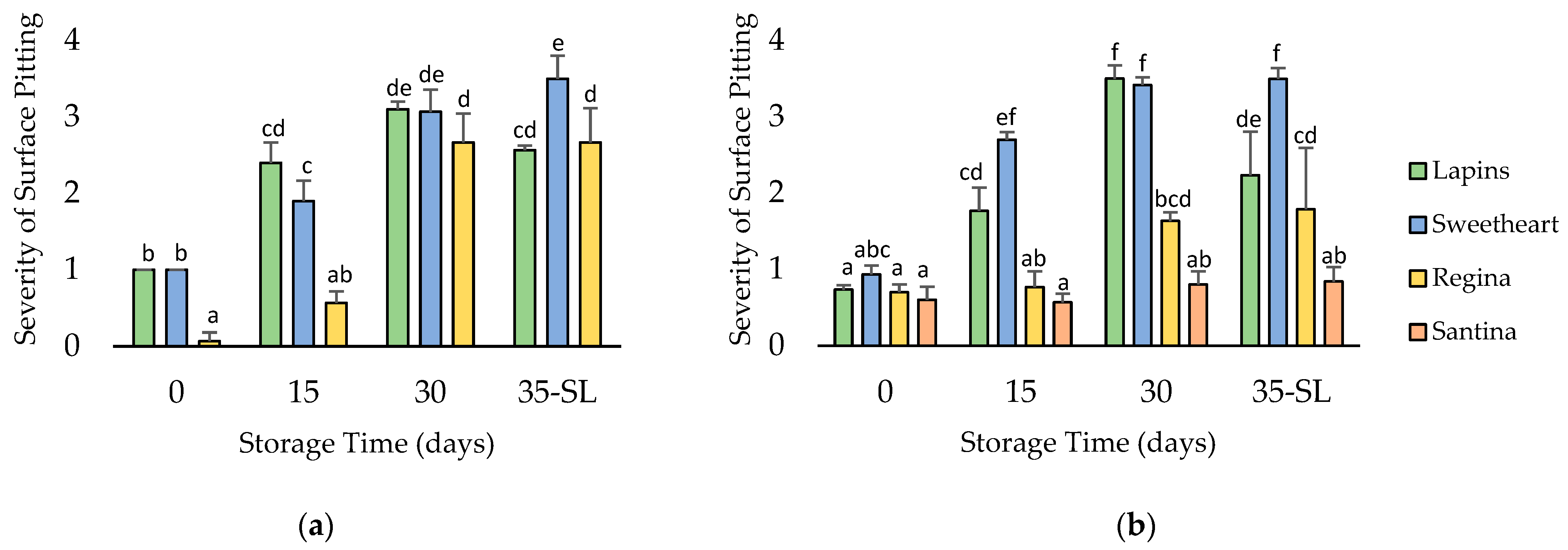
Surface pitting severity across seasons is presented in Figure 1. During the study, ‘Sweetheart’ and ‘Lapins’ were the most susceptible cultivars, whereas ‘Regina’ and ‘Santina’ exhibited greater resistance. In 2022/2023, ‘Sweetheart’ and ‘Lapins’ showed the highest severity after 15 d of cold storage (2.4 ± 0.3 and 1.9 ± 0.3, respectively), whereas ‘Regina’ reached 0.6 ± 0.2 at the same time point. After 30 d, differences among cultivars were not detected, and severity approached 3 in all cultivars. In 2023/2024, a comparable pattern was observed; however, differences between resistant and susceptible cultivars persisted through 30 d and shelf life. At the end of shelf life, ‘Sweetheart’ showed the most severe damage (3.5 ± 0.1), whereas ‘Santina’ maintained low severity without significant progression during storage (0.8 ± 0.1). Climatic stressors, including temperature fluctuations and rainfall, vary between seasons and influence overall fruit quality [26]. In the present study, although seasonal differences in pitting severity were observed, cultivar effects remained predominant.
Quality parameters (diameter, TSS, and color) are presented in Tables S3 and S4 for the 2022/2023 and 2023/2024 seasons, respectively. Fruit diameter ranged from 22.9 to 26.7 mm. During the first season, ‘Regina’ exhibited a slightly smaller size (23.7 ± 0.6 mm) than the other cultivars (p < 0.05). However, in the second season, ‘Lapins’ showed the largest size (26.7 ± 0.2 mm), whereas ‘Santina’ was the smallest (22.9 ± 0.2 mm). Storage time affected diameter only in the 2023/2024 season, with a reduction during the shelf-life period (p < 0.05). Pitting induction did not affect fruit size under any condition. Cultivar-dependent differences in TSS were observed in both seasons; TSS increased during storage only for ‘Santina’, and during the 2023/2024 season, higher TSS values were recorded in pitting-induced fruit of ‘Santina’ and ‘Regina’ than in control samples. The reduction in size with the increase in TSS was likely associated with water loss during storage. Previous studies have reported weight loss during storage; however, total water loss and TSS have not consistently differed between fruit with and without pitting symptoms, despite cultivar-specific responses [2,9].
Regarding color, ‘Sweetheart’ exhibited lighter fruit with higher L* values compared to ‘Lapins’ and ‘Regina’ during the first season, whereas in the second season ‘Lapins’ showed the lightest fruit and ‘Santina’ the darkest (p < 0.05). During cold storage, some cultivars exhibited increased L* values (lighter appearance) in 2022/2023, whereas the opposite trend was observed in 2023/2024. In both seasons, L* decreased during shelf life, indicating darkening. Notably, only ‘Lapins’ in 2023/2024 showed significant differences between pitted and non-pitted fruit, with controls exhibiting higher L* values. Significant cultivar effects were detected for a* and b* parameters in both seasons, and reductions in red (a*) and yellow (b*) intensity occurred during storage. In the first season, a* decreases were significant in pitted ‘Lapins’ and ‘Sweetheart’ relative to controls, whereas in 2023/2024 a* decreased in pitted fruit across all cultivars. A similar pattern was observed for b*, with significant decreases detected in pitted fruit of all cultivars only in 2023/2024. Skin color in sweet cherry is primarily determined by anthocyanins, particularly cyanidin-3-rutinoside, which confers red to dark-red hues [27]. In agreement with these patterns, susceptible cultivars exhibited higher hue angle values in both seasons, indicating a relatively less advanced red coloration compared with resistant cultivars. A decrease in hue angle during shelf life was observed only in the second season, suggesting continued pigment development after cold storage. Seasonal differences in color parameters suggest that climatic conditions modulated anthocyanin biosynthesis, while the stronger loss of redness and yellowness in pitted fruit was consistent with previous findings [7].
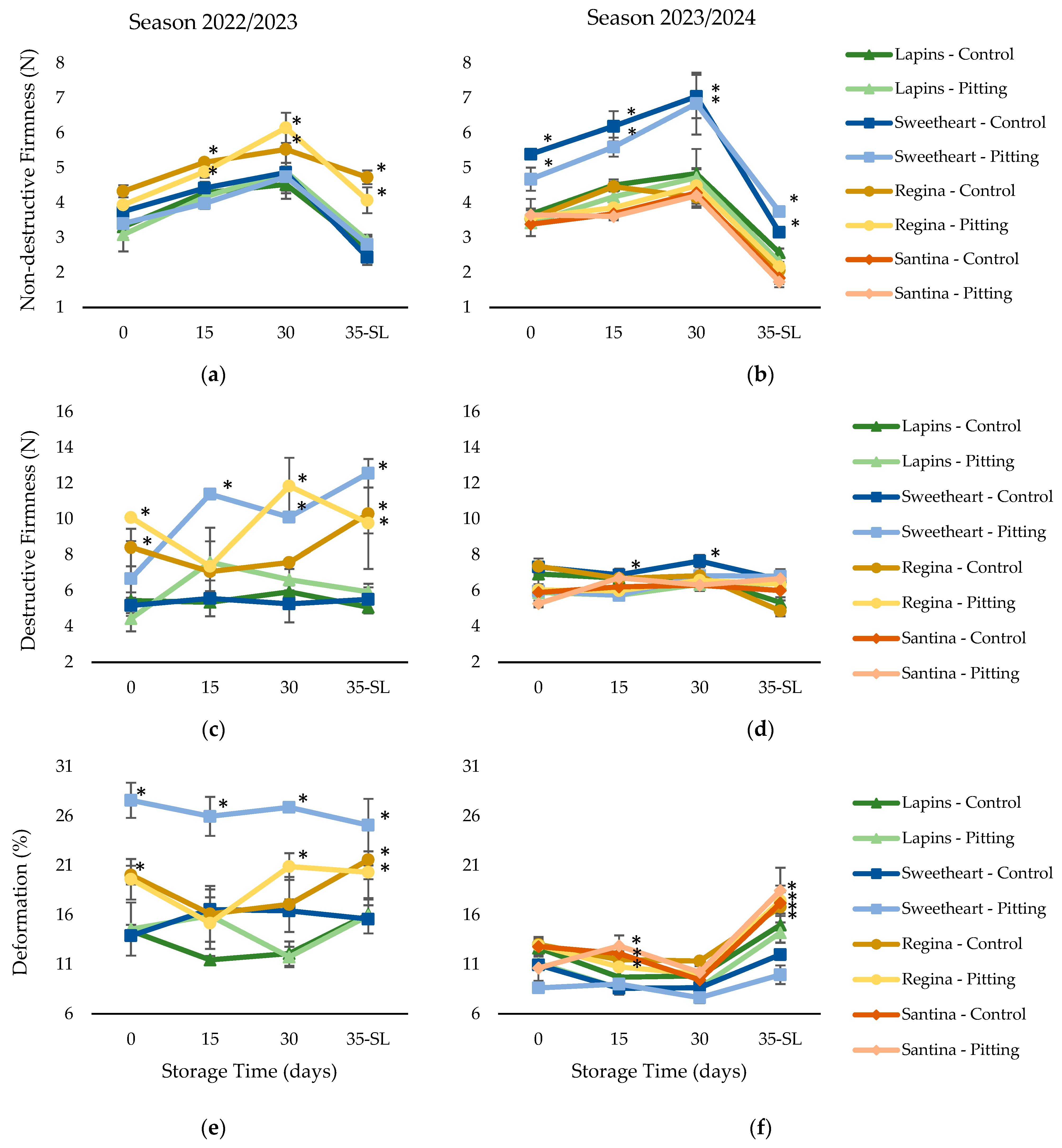
Destructive and non-destructive firmness, together with deformation, are presented in Figure 2. For both destructive and non-destructive firmness, ‘Regina’ (2022/2023) and ‘Sweetheart’ (2023/2024) exhibited the highest values. Pitting induction affected only destructive firmness in both seasons. A wider firmness range was observed in the first season (4.4–12.6 N) than in the second season (4.9–7.7 N). In 2022/2023, pitted fruit exhibited higher destructive firmness than controls during storage, particularly in the susceptible cultivar ‘Sweetheart’ (12.6 ± 0.8 N), whereas the opposite trend was observed in 2023/2024 (6.8 ± 0.3 N). Non-destructive firmness increased during cold storage and decreased after transfer to room temperature. A slight increase in destructive firmness was also detected during storage (p < 0.05) in both seasons, except in pitted fruit during shelf life in 2023/2024.
The deformation coefficient did not show consistent seasonal trends. Deformation ranged from 11.4 to 27.6% in 2022/2023 and from 7.6 to 18.5% in 2023/2024. In the first season, pitted ‘Sweetheart’ exhibited the highest deformation, consistent with its destructive firmness, whereas ‘Lapins’ showed the lowest deformation. Conversely, in the second season, the resistant cultivars ‘Regina’ and ‘Santina’ exhibited higher deformation than ‘Sweetheart’ and ‘Lapins’. The effect of pitting induction differed between seasons, with higher deformation in pitted fruit in 2022/2023 but lower deformation in 2023/2024. In the second season, deformation slightly decreased during cold storage and significantly increased in the resistant cultivars after transfer to room temperature (p < 0.05). As previously mentioned, seasonal variability in climatic conditions is known to influence firmness and deformation, contributing to differences between seasons [26]. Overall, firmness behaved as an inconsistent indicator of pitting susceptibility, supporting the view that pitting development is multifactorial and cannot be reliably predicted based on firmness alone [6,9].

3.2. Cell Wall Disassembly Analysis

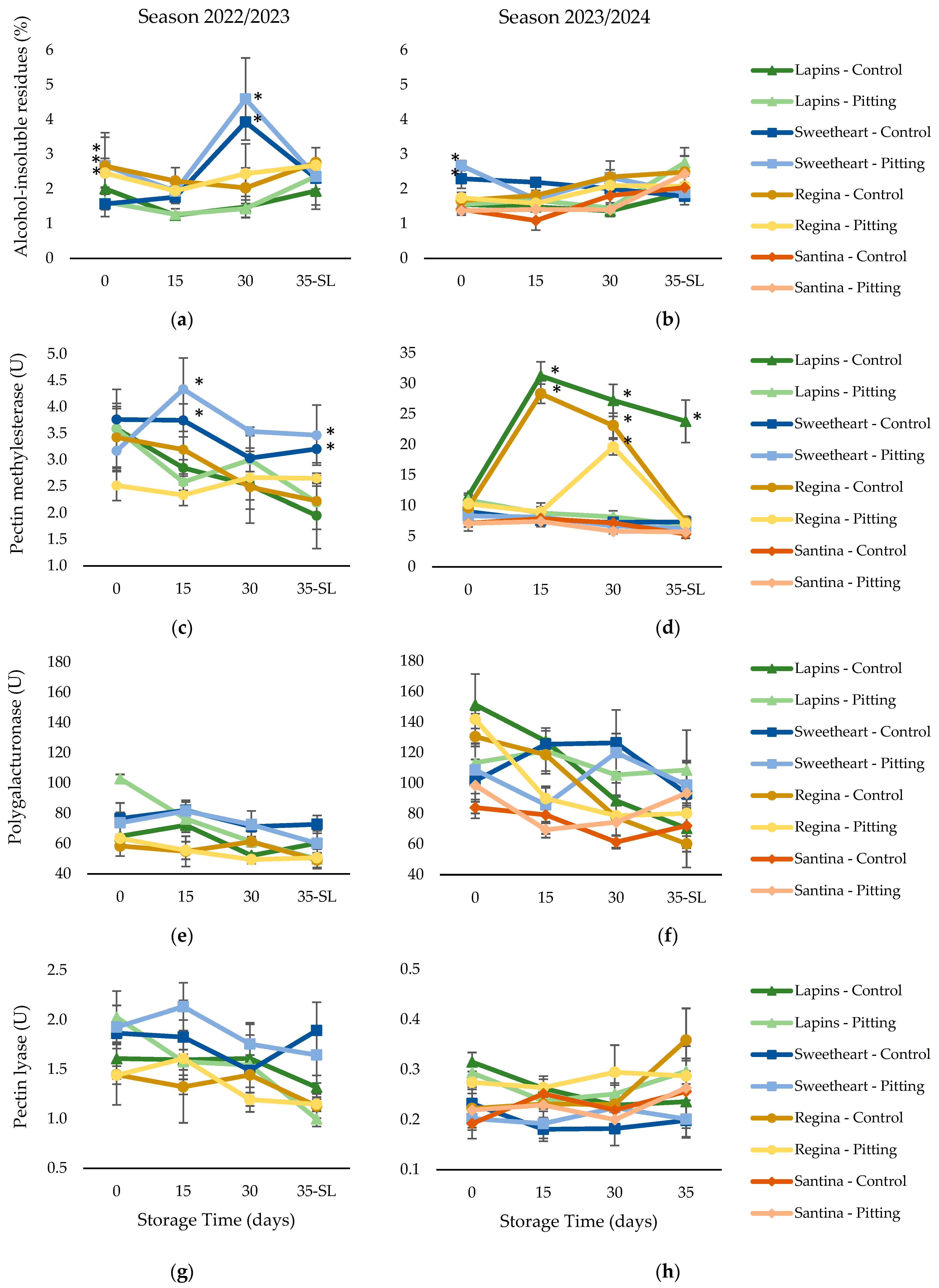
AIR content and cell wall disassembly-related enzymatic activities are presented in Figure 3. Across seasons, the highest AIR content was detected in ‘Sweetheart’ and ‘Regina’. In 2022/2023, AIR content in ‘Sweetheart’ increased by the end of cold storage (3.9 ± 0.1%) and decreased during shelf life (2.3 ± 0.5%). In 2023/2024, AIR content increased by the end of storage in all cultivars except ‘Sweetheart,’ in which a decrease was observed (p < 0.05). No differences in AIR content were detected between pitted and non-pitted fruit for any cultivar.
In the first season, PME activity was highest in ‘Sweetheart’ (3.8 ± 0.2 U), whereas in the second season the highest values were observed in non-pitted ‘Lapins’ and ‘Regina’ (31.2 ± 2.3 U and 28.3 ± 1.6 U, respectively). In both seasons, PME activity generally decreased during storage, except in ‘Lapins’ and ‘Regina’ during 2023/2024, in which PME increased during cold storage in control fruit. Notably, PME activity in 2022/2023 was up to sixfold higher than in 2023/2024. In contrast, PG and PL did not differ between pitted and non-pitted fruit. Nevertheless, PME activity was higher in pitted fruit of the susceptible cultivars ‘Lapins’ and ‘Sweetheart,’ suggesting that mechanical damage may have promoted PME activity in these genotypes.
Seasonal variability strongly influenced AIR and PME activity, indicating that environmental conditions during fruit development modulate cell wall composition and enzymatic activity. Although high AIR content has been associated with increased firmness and delayed softening, AIR variation did not show a consistent relationship with surface pitting incidence in the present study, consistent with previous reports [6,9]. Likewise, increased PME activity in pitted fruit of susceptible cultivars contrasted with Ponce et al. [9], who reported reduced PME activity in pitted samples, suggesting that the PME–pitting relationship is not uniform and may depend on season and/or genotype. In this context, a multi-year, multi-genotype analysis by Suran et al. [28] indicated that resistance to surface pitting is predominantly genotype-dependent, reinforcing the primary role of genetic background.

3.3. Analysis of Non-Enzymatic Antioxidant System

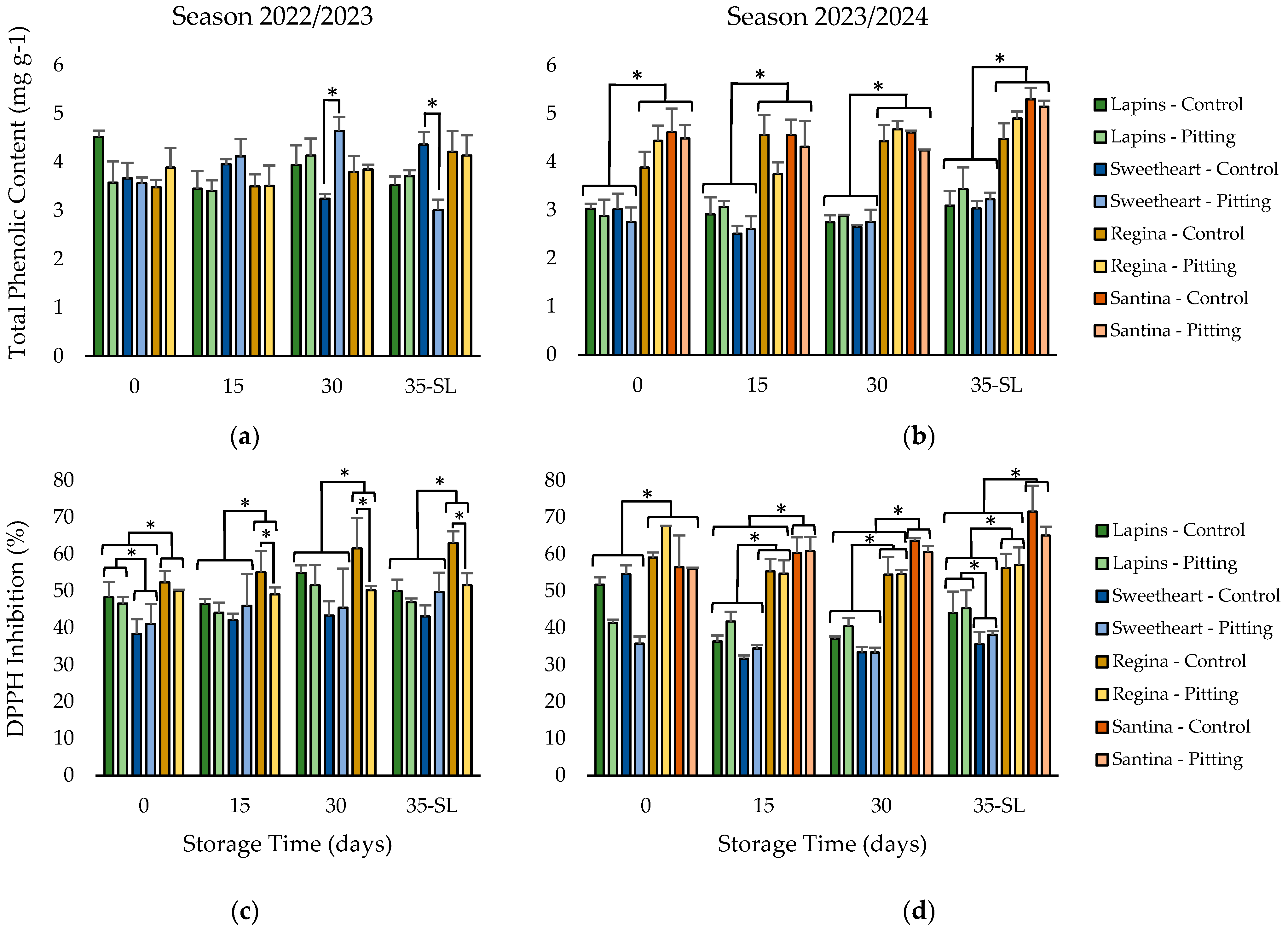
For the 2022/2023 season, multifactorial ANOVA did not reveal significant main effects of cultivar, pitting condition (control vs. pitted), or storage time on TPC (Figure 4). However, significant interactions were detected between storage time and cultivar, and between storage time and pitting condition. At the end of storage (35 d), the resistant cultivar ‘Regina’ exhibited higher TPC (4.1 ± 0.4 mg g−1) than susceptible cultivars (3.0–3.7 mg g−1). In ‘Sweetheart’, pitted fruit showed higher TPC than controls after 30 d of cold storage (4.6 ± 0.3 vs. 3.2 ± 0.1 mg g−1); however, at 35 d, TPC was lower in pitted fruit than in control samples (3.0 ± 0.2 vs. 4.4 ± 0.3 mg g−1; p < 0.05). In 2023/2024, significant main effects of cultivar and storage time were observed. The resistant cultivars ‘Santina’ and ‘Regina’ consistently exhibited higher TPC than susceptible cultivars at all time points, from 1.2-fold up to 1.8-fold. In agreement with 2022/2023, resistant cultivars exhibited increased TPC at the end of storage, indicating a more pronounced phenolic response during shelf life.
A similar pattern was observed for antioxidant capacity (AC). In 2022/2023, ‘Regina’ exhibited the highest DPPH radical scavenging activity (51.5 ± 3.3%), consistent with its higher TPC. Differences between ‘Lapins’ and ‘Sweetheart’ were detected at day 0, with ‘Sweetheart’ showing the lowest AC (38.2 ± 4.0%; p < 0.05). Differences between control and pitted fruit were detected only in ‘Regina’ from day 15 onward, with lower AC in pitted fruit (up to 1.2-fold). In 2023/2024, clearer cultivar separation was observed; ‘Santina’ and ‘Regina’ exhibited higher AC (up to 2-fold) than ‘Lapins’ and ‘Sweetheart’ at all time points (p < 0.05). Differences between control and pitted fruit were limited to the beginning of storage in susceptible cultivars, with lower AC in pitted fruit (33.4 ± 1.3%).
Phenolic and anthocyanin profiles are presented in Tables S5 and S6. In the first season, epicatechin-derivative 1 exhibited higher contents in ‘Regina’ (0.56 ± 0.01 mg g−1; p < 0.05). For p-coumaroylquinic acid, no differences were detected between ‘Regina’ and ‘Sweetheart’, although both exceeded ‘Lapins’. Cyanidin-3-rutinoside (C3R) increased in all cultivars during storage. In the second season, larger cultivar differences were observed, although patterns did not fully match those observed for TPC or AC. Neochlorogenic acid was the most abundant phenolic acid (0.52–1.74 mg g−1), followed by p-coumaroylquinic acid (0.08–1.21 mg g−1) and epicatechin derivatives 1 and 2 (0.24–0.86 and 0.31–0.78 mg g−1, respectively). These compounds decreased during storage and were higher in controls than in pitted fruit. In contrast, rutin and C3R were higher in resistant cultivars (‘Santina’ and ‘Regina’) than in susceptible cultivars and increased by the end of shelf life at 20 °C (p < 0.05). In addition, C3R was significantly higher in pitted fruit than in controls.
Overall, the non-enzymatic antioxidant response during cold storage was primarily genotype-dependent and modulated by season. The consistently higher TPC and AC in ‘Regina’ and ‘Santina’, particularly in 2023/2024, support the hypothesis that a stronger constitutive phenolic antioxidant system contributes to enhanced tolerance to surface pitting by facilitating the maintenance of redox homeostasis under prolonged low-temperature exposure. In contrast, differences between control and pitted fruit were generally limited and cultivar-specific, indicating that mechanical damage did not uniformly induce antioxidant accumulation. This behavior aligns with induced-pitting studies showing that biochemical differences between tolerant and susceptible cultivars are largely pre-existing and only partially modulated by mechanical stress [2,9]. Consistently, metabolomic and proteomic analyses have indicated that biochemical traits associated with pitting susceptibility are established at the cultivar level rather than being solely induced by pitting development [7,29].
The increase in TPC observed toward the end of cold storage and during subsequent shelf life, particularly in resistant cultivars, suggests delayed activation or sustained maintenance of phenylpropanoid metabolism in response to prolonged low-temperature stress. Similar temporal patterns have been reported in sweet cherry, where phenolic accumulation becomes more pronounced during advanced storage stages rather than immediately after harvest [14,15]. Under these conditions, ROS accumulation is promoted, which may result in lipid peroxidation, protein oxidation, and membrane destabilization when antioxidant defenses are insufficient. Phenolic compounds constitute a major component of the non-enzymatic antioxidant system in cherry fruit and contribute to ROS scavenging and membrane protection, thereby supporting preservation of subepidermal tissue integrity and potentially limiting the development of surface pitting [8,14,15,30]. The correspondence between TPC and antioxidant capacity across cultivars and seasons further supports the contribution of phenolic compounds to overall antioxidant performance. This interpretation is consistent with reports indicating that antioxidant capacity in cherry fruit is largely driven by phenolic acids, flavonols, and anthocyanins [15,30].
Profiling of individual phenolics indicated that neochlorogenic acid and p-coumaroylquinic acid were predominant, consistent with previous compositional studies [15,30]. Their decline during storage, particularly in pitted fruit, may reflect antioxidant consumption under sustained oxidative stress and/or their utilization in downstream metabolism. In contrast, rutin and C3R accumulated preferentially in resistant cultivars and during shelf life at 20 °C. Anthocyanins, particularly C3R, contribute substantially to antioxidant capacity and pigmentation in sweet cherry [27]. Transcriptomic evidence indicates that anthocyanin biosynthesis and transport are tightly regulated in a cultivar-dependent manner, with differential expression of key structural and regulatory genes influencing pigment accumulation [2,27]. Although higher C3R in pitted fruit suggests that anthocyanin accumulation may be stimulated by tissue disruption or oxidative signaling, the consistently high anthocyanin content in resistant cultivars in the absence of pitting indicates that this response alone does not explain susceptibility differences. Instead, anthocyanins likely operate as part of an integrated antioxidant network supporting tissue resilience under postharvest stress.

3.4. Analysis of Enzymatic Antioxidant System

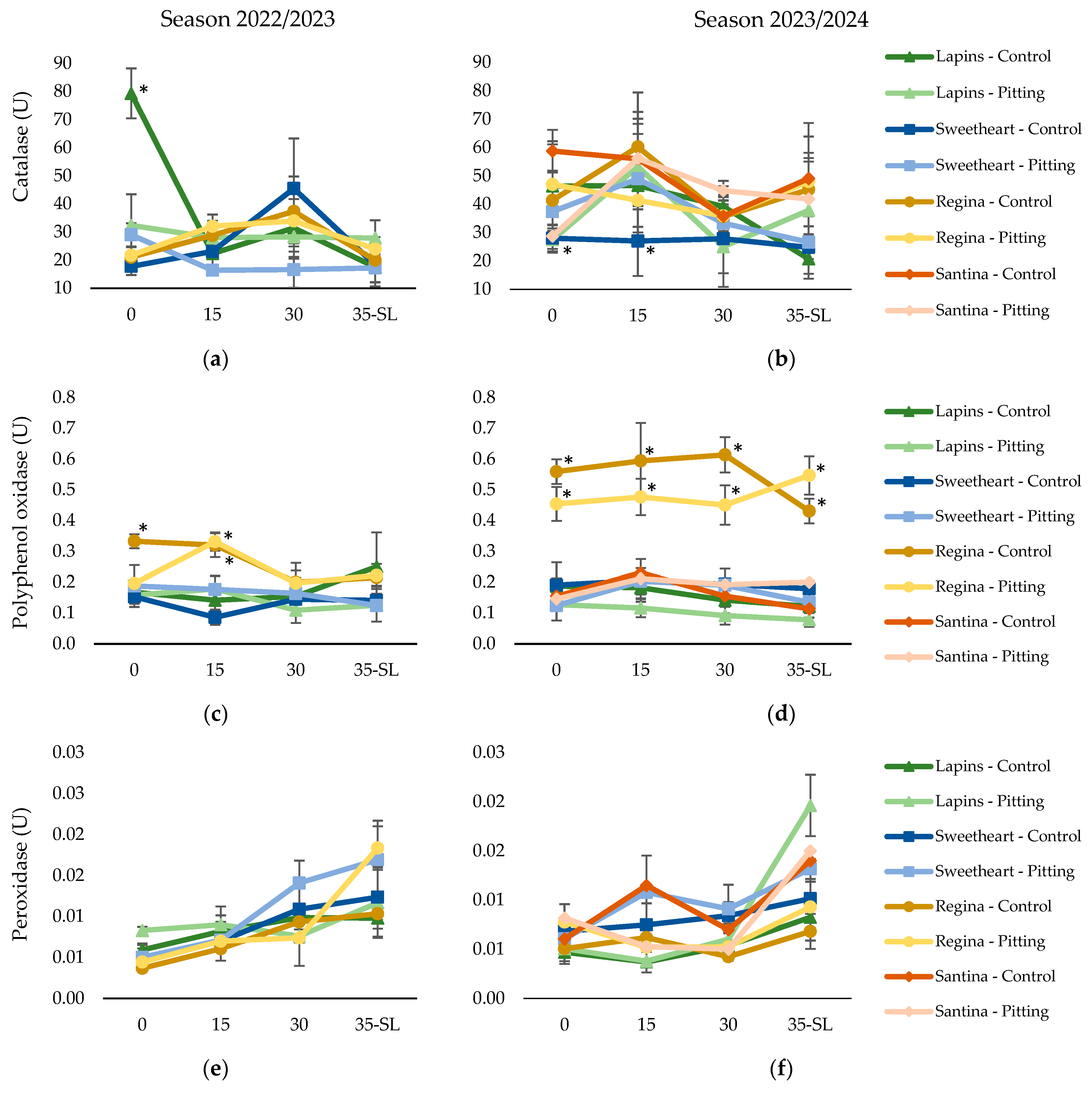
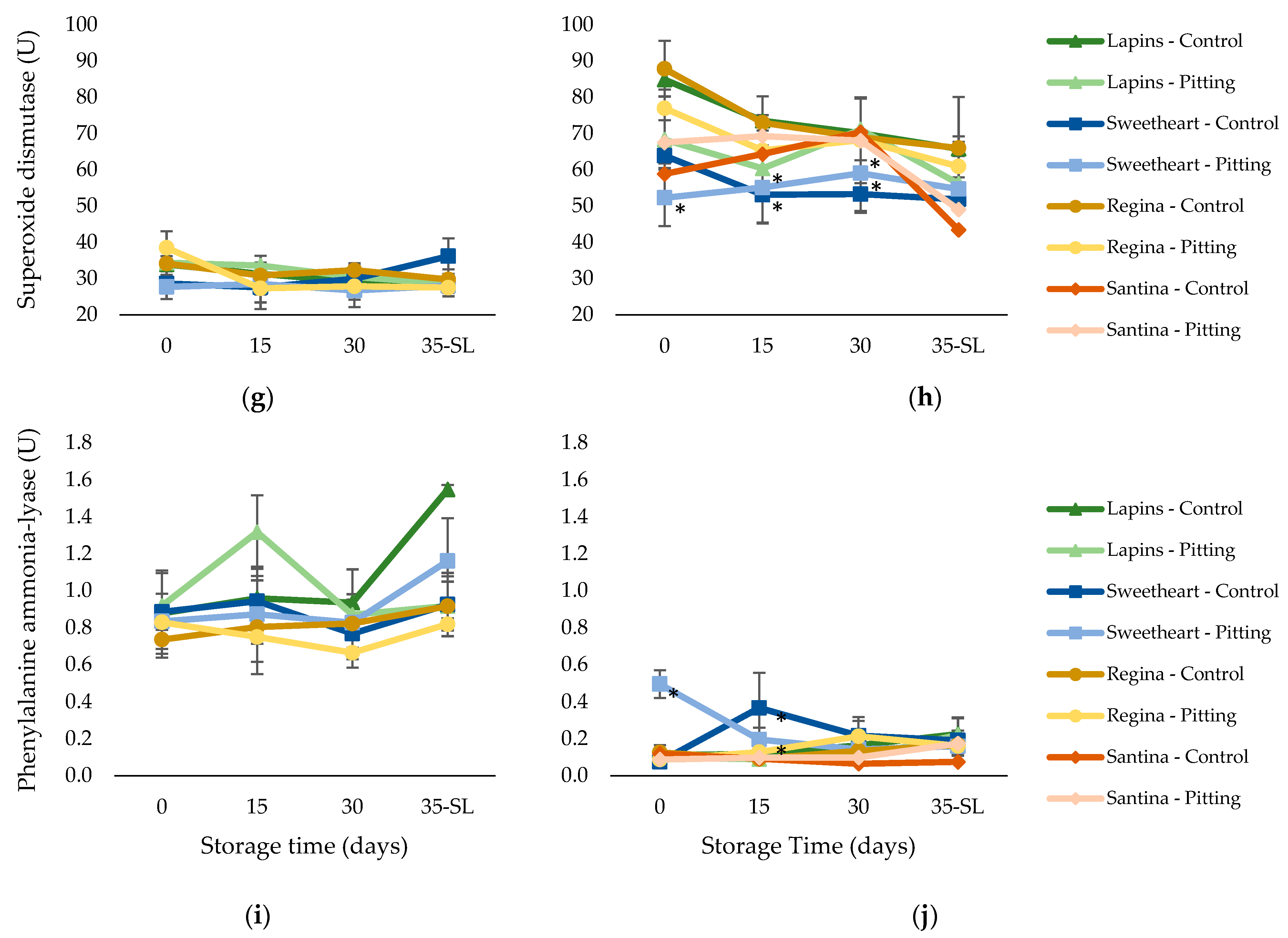
The enzymatic activities of CAT, PPO, POD, SOD, and PAL are presented in Figure 5. Multiway ANOVA indicated that cultivar effects were the main source of variation, while no consistent patterns were observed when cultivars were grouped by pitting susceptibility. In 2022/2023, higher CAT and PAL activities were detected in ‘Lapins’ (79.4 ± 8.9 U at 0 d and 1.55 ± 0.02 U at 35-SL d, respectively), whereas higher PPO activity was detected in ‘Regina’, particularly at the beginning of storage (0.33 ± 0.02 U). No enzyme showed significant differences between control and pitted fruit in this season.
In 2023/2024, CAT was the only enzymatic parameter that differentiated resistant from susceptible cultivars, with higher activity in ‘Santina’ and ‘Regina’. A slight increase in CAT activity was observed at 15 d of cold storage. PPO activity was highest in ‘Regina’ (up to 7-fold compared with the other cultivars); however, an additional physiological disorder consistent with internal browning, which is associated with elevated PPO activity [31], was observed at sampling. SOD activity was also highest in ‘Regina’ and ‘Lapins’ (87.9 ± 7.7 and 84.8 ± 2.8 U, respectively). For PPO and SOD, activity was generally higher in control fruit than in pitted fruit, particularly in ‘Regina’ and ‘Lapins’. PAL activity was consistently higher in ‘Sweetheart’, especially at the beginning of cold storage (0.50 ± 0.07 U). In both seasons, POD activity increased progressively throughout storage and reached maximum values at 35 d (up to 4-fold higher compared to 0 d); however, differences among cultivars or between control and pitted samples were not detected.
These results indicate that, although CAT, PPO, POD, SOD, and PAL activities were influenced by cultivar and season, their variation was not consistently associated with surface pitting development. This suggests that enzymatic antioxidant responses alone did not determine susceptibility. The predominance of cultivar effects over pitting condition is consistent with reports describing genotype-dependent regulation of antioxidant enzymes in sweet cherry fruit [15]. Variability in CAT, SOD, POD, and PPO is commonly attributed to intrinsic metabolic differences among cultivars rather than to specific responses to a single disorder. Similar conclusions have been drawn in reviews of postharvest oxidative stress, in which enzymatic antioxidant capacity was shown to respond to stress intensity and duration [13], but not necessarily to discriminate tolerant from susceptible phenotypes.
In the second season, CAT was the only enzyme showing higher activity in resistant cultivars. Catalase contributes to hydrogen peroxide detoxification, and increased CAT activity has been associated with improved tolerance to low-temperature stress in multiple species [13,14]. Therefore, higher CAT activity in resistant cultivars may reflect more efficient H2O2 regulation during cold storage. However, because differences between control and pitted fruit were not consistently observed, CAT activity likely contributed to generalized oxidative buffering rather than acting as a direct determinant of surface pitting resistance.
PPO and POD contribute to both antioxidant defense and enzymatic browning, catalyzing phenolic oxidation when cellular compartmentalization is disrupted [15]. Under such conditions, increased PPO activity is more likely linked to internal browning than to surface pitting per se. This functional overlap complicates the use of PPO and POD as indicators of pitting tolerance. Nevertheless, POD increased throughout cold storage in both seasons, consistent with generalized oxidative responses during prolonged storage reported in sweet cherry and other fruit species [8,13].
Higher SOD activity in ‘Regina’ and ‘Lapins’, together with higher activity in control fruit than in pitted fruit, suggests enhanced superoxide dismutation under cold-induced stress. SOD constitutes an early enzymatic barrier against ROS; however, its induction may reflect stress perception rather than effective mitigation, since H2O2 detoxification remains required by CAT or peroxidases [13,32]. PAL activity was consistently higher only in ‘Sweetheart’, particularly at the beginning of storage. Although PAL regulates phenylpropanoid metabolism and contributes to the synthesis of phenolics involved in non-enzymatic defense, PAL activity does not necessarily correlate with phenolic accumulation because downstream regulation and phenolic turnover strongly influence pool size and availability [20,33,34].

3.5. Multivariate Analysis

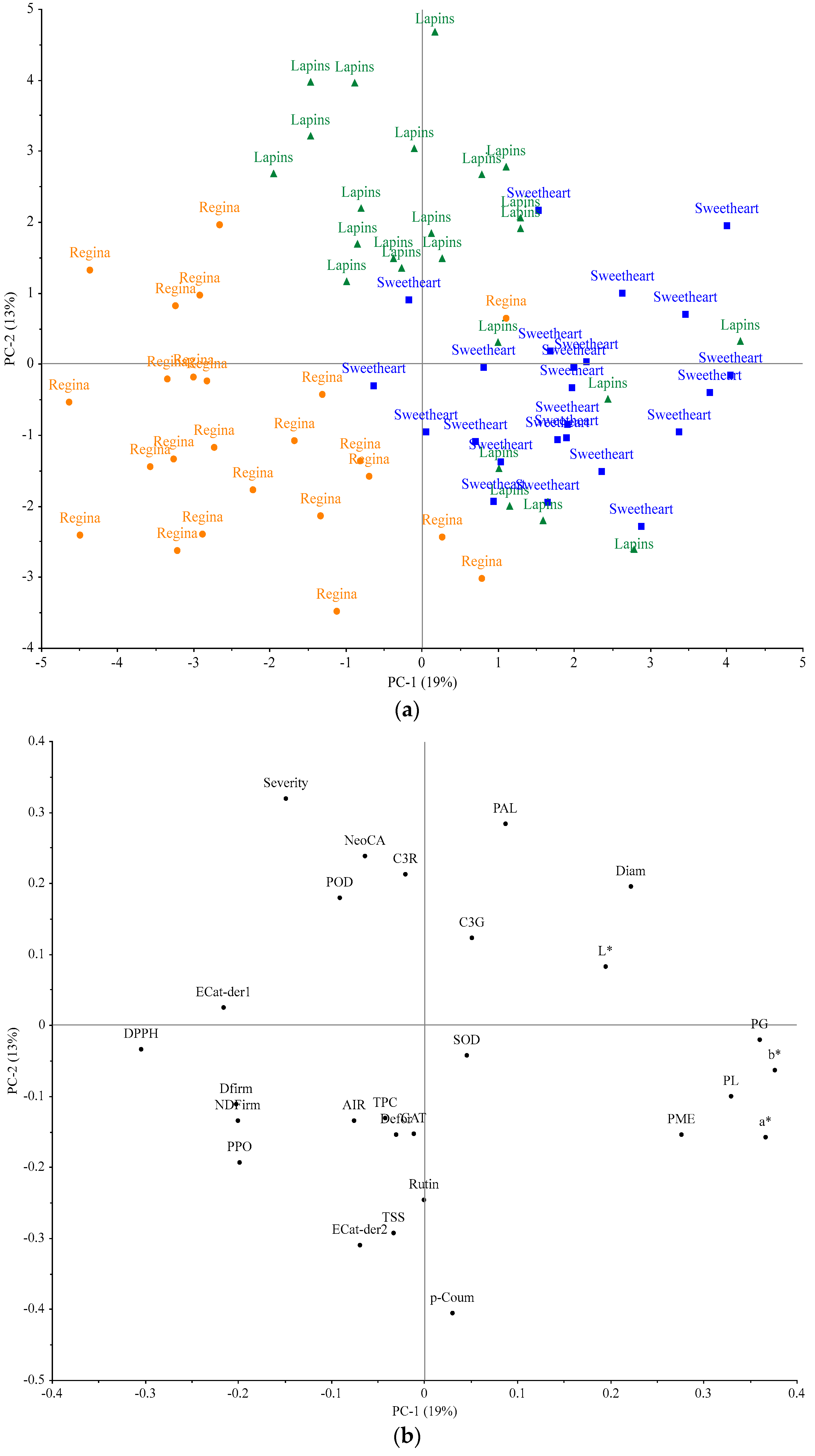
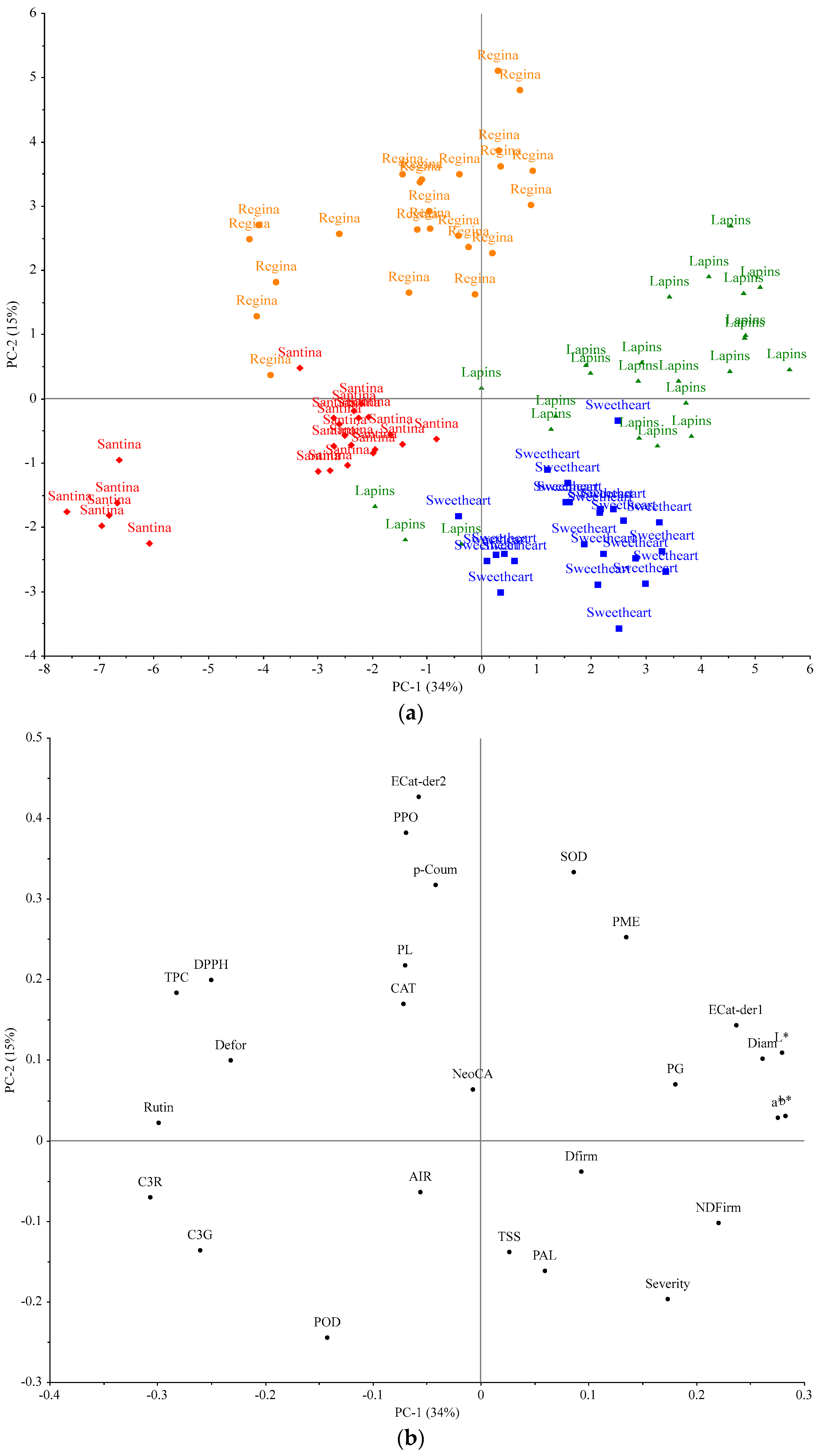
PCA results for both seasons are presented in Figure 6 and Figure 7. In both seasons, cultivar-dependent separation was observed, indicating a strong genotype effect on antioxidant status, quality attributes, and pitting response. In 2022/2023, PC1 and PC2 explained 19% and 13% of the variance, respectively, and ‘Regina’ was separated from the more susceptible cultivars ‘Sweetheart’ and ‘Lapins’. In 2023/2024, separation was stronger (49% cumulative explained variance), with ‘Santina’ and ‘Regina’ grouped on the left side of the score plot and ‘Lapins’ and ‘Sweetheart’ grouped on the right side.
The loading plots indicated that, in 2022/2023, ‘Regina’ was associated with higher antioxidant capacity (DPPH) and firmness-related traits, whereas ‘Lapins’ and ‘Sweetheart’ were associated with higher activities of cell wall-modifying enzymes (PME, PG, PL), color parameters (a*, b*), and variables aligned with pitting severity and stress- or secondary metabolism-related responses, including PAL and selected phenolic and anthocyanin markers. In 2023/2024, resistant cultivars were associated with higher TPC, AC, and specific phenolic and anthocyanin markers, whereas susceptible cultivars were closer to pitting severity and firmness-related descriptors (destructive and non-destructive), together with pectin-modifying enzymes (e.g., PME and PG).
Overall, PCA supported the concept that resistance to pitting was more strongly associated with coordinated antioxidant performance than with isolated traits. Cultivars with higher phenolic pools and antioxidant capacity tended to exhibit lower pitting severity, consistent with the role of phenolics as ROS scavengers and contributors to redox buffering under low temperature and handling stress, thereby limiting membrane damage and subepidermal tissue deterioration preceding pitting development [6,14,35]. In contrast, associations between pitting severity and firmness-related descriptors or pectin-modifying enzyme activities were inconsistent across seasons, in agreement with previous reports [2,9]. Loading patterns further suggested that oxidative stress responses were not uniformly expressed across genotypes or seasons.
In both seasons, PAL showed closer association with damage severity, although the phenolic and anthocyanin markers contributing to this association differed by season. This supports the view that phenylpropanoid pathways and antioxidant systems are dynamically modulated during postharvest storage in sweet cherries [34]. Higher activities of ROS-detoxifying enzymes, particularly SOD and CAT, were generally observed in the resistant cultivars. Consistently, Yang et al. [36] reported enhanced expression and activity of these enzymes following cold shock treatments, accompanied by reduced surface pitting incidence and severity. Nevertheless, the present results indicate that cold stress responses were genotype-dependent, which may partially explain differences in pitting severity among cultivars.
Finally, PLS-DA models constructed for each cultivar (Figure S1) revealed a consistent pattern in which discrimination was driven primarily by growing season and storage duration rather than by pitting incidence. The lack of separation between pitted and non-pitted samples indicates that, under the evaluated experimental conditions, pitting induction did not impose a dominant multivariate signature relative to seasonality and storage progression.

4. Conclusions

Susceptibility to surface pitting in sweet cherry during cold storage was predominantly genotype-dependent and modulated by seasonal conditions. Across two growing seasons, the cultivars ‘Regina’ and ‘Santina’ consistently exhibited lower pitting severity than the more susceptible ‘Sweetheart’ and ‘Lapins’, confirming genetic background as the main determinant of pitting tolerance. In contrast, fruit firmness, deformation, alcohol-insoluble residue content, and cell wall-related enzymatic activities displayed marked seasonal variability and showed no consistent relationship with pitting incidence, indicating that cell wall attributes alone do not reliably explain surface pitting development.
Antioxidant responses, particularly those associated with the non-enzymatic antioxidant system, were more closely linked to differences in pitting susceptibility. Pitting-resistant cultivars exhibited higher total phenolic content and antioxidant capacity, especially during late cold storage and subsequent shelf life, suggesting a greater ability to maintain redox homeostasis under prolonged low-temperature stress. Enzymatic antioxidant activities were largely influenced by cultivar and season and showed limited association with pitting development. Overall, these results highlight the central role of phenolic-based antioxidant capacity in conferring tolerance to surface pitting in sweet cherry during cold storage.

Supplementary Materials

The following supporting information can be downloaded at: https://www.mdpi.com/article/10.3390/horticulturae12030342/s1, Figure S1: Partial least square discriminant analysis (PLS-DA) biplots of sweet cherry fruit cv. (a) ‘Lapins’, (b) ‘Sweetheart’, (c) ‘Regina’, and (d) ‘Santina’ from the 2022/2023 and 2023/2024 growing seasons. Fruit with and without surface pitting (control) were stored at 1 °C for 0, 15, and 30 days under passive modified atmosphere conditions, followed by 5 days at 20 °C under regular air. Predictor variables are shown as black dots, and categorical response variables are shown as red dots; Table S1: Chromatographic conditions for the quantification of phenolic compounds and anthocyanins through HPLC-PAD; Table S2: Equations for quantifying the enzymatic activities (U) of catalase (CAT), phenylalanine ammonia-lyase (PAL), peroxidase (POD), polyphenol oxidase (PPO) and superoxide dismutase (SOD); Table S3: Quality parameters of sweet cherries of growing season 2022/2023, with and without (control) surface pitting, stored at 1 °C for 0, 15, and 30 days under passive modified atmosphere conditions, followed by 5 days at 20 °C under regular atmospheric conditions; Table S4: Quality parameters of sweet cherries of growing season 2023/2024, with and without (control) surface pitting, stored at 1 °C for 0, 15, and 30 days under passive modified atmosphere conditions, followed by 5 days at 20 °C under regular atmospheric conditions; Table S5: Phenolic compounds and anthocyanins (mg g−1 DW sample) of sweet cherries of growing season 2022/2023, with and without (control) surface pitting, stored at 1 °C for 0, 15, and 30 days under passive modified atmosphere conditions, followed by 5 days at 20 °C under regular atmospheric conditions; Table S6: Phenolic compounds and anthocyanins (mg g−1 DW sample) of sweet cherries of growing season 2023/2024, with and without (control) surface pitting, stored at 1 °C for 0, 15, and 30 days under passive modified atmosphere conditions, followed by 5 days at 20 °C under regular atmospheric conditions.

Author Contributions

Conceptualization, C.F.; methodology, C.F.; formal analysis, B.V., J.V., E.P. and M.C.; investigation, C.F. and B.V.; writing—original draft preparation, C.F.; writing—review and editing, R.P.; supervision, C.F.; project administration, C.F.; funding acquisition, C.F. All authors have read and agreed to the published version of the manuscript.

Funding

This research was funded by Agencia Nacional de Investigación y Desarrollo (ANID) Chile, Fondecyt Regular 1221616.

Data Availability Statement

The original contributions presented in this study are included in the article/Supplementary Material. Further inquiries can be directed to the corresponding author.

Acknowledgments

This study was supported by the Direction of Research and Innovation from the Pontificia Universidad Católica de Valparaíso (Chile) grant 039.771/2025. R. Pedreschi acknowledges ANID-MILENIO-ICN2021-044.

Conflicts of Interest

The authors declare no conflicts of interest.

Abbreviations

The following abbreviations are used in this manuscript:
AIRAlcohol-insoluble residue
ACAntioxidant capacity
ANOVAAnalysis of variance
CATCatalase
C3Rcyanidin-3-rutinoside
DPPH2,2-diphenyl-1-picrylhydrazyl
DTTDithiothreitol
DWDry weight
EDTAEthylenediaminetetraacetic acid
GAEGallic acid equivalents
HGHomogalacturonans
HPLC-DADHigh-performance liquid chromatography with diode array detector
LOXLipoxygenase
NBTNitro blue tetrazolium
PALPhenylalanine ammonia-lyase
PGPolygalacturonase
PLPectate lyase
PLS-DAPartial least square discriminant analysis
PMEPectin methylesterase
PMSFPhenylmethylsulfonyl fluoride
PODPeroxidase
PPOPolyphenol oxidase
PVPPolyvinylpyrrolidone
RHRelative humidity
ROSReactive oxygen species
RTRoom temperature
SODSuperoxide dismutase
TATotal acidity
TPCTotal phenolic compounds
TSSTotal soluble solids

References

  1. González, M.E.; Valderrama, N.F.; Bastías, R.M.; Baeza, R.; Valdebenito, A.M.; Díaz, G.; Shackel, K.A. Evaluation of induced pitting damage of late season cherries ‘Regina’ and ‘Sweetheart’ using an impact energy method. Chil. J. Agric. Res. 2016, 76, 471–478. [Google Scholar] [CrossRef][Green Version]
  2. Ponce, E.; Núñez-Lillo, G.; Bravo, C.; Vidal, J.; Tapia-Reyes, P.; Meneses, C.; Pedreschi, R.; Fuentealba, C. Cell wall disassembly, metabolome and transcriptome analysis in sweet cherry fruit with induced surface pitting. Postharvest Biol. Technol. 2023, 198, 112262. [Google Scholar] [CrossRef]
  3. Valenzuela, L. Visión general de los daños de calidad más importantes en las cerezas. Rev. Frutícola 2020, 42, 8–17. Available online: https://www.copefrut.com/wp-content/themes/copefrut/img/revistas/2020_N1.pdf (accessed on 28 January 2026).
  4. Leisso, R.; Turner, J.; McMurtrey, S.; Klarer, E.; Emmons, J.; Wiessner, J.; Wang, K.; Wang, E.; Imler, C. Postpacking sweet cherry stem and fruit quality attributes influenced by cultivar. HortTechnology 2025, 35, 258–266. [Google Scholar] [CrossRef]
  5. Basanta, M.F.; Ponce, N.M.A.; Salum, M.L.; Raffo, M.D.; Vicente, A.R.; Erra-Balsells, R.; Stortz, C.A. Compositional changes in cell wall polysaccharides from five sweet cherry (Prunus avium L.) cultivars during on-tree ripening. J. Agric. Food Chem. 2014, 62, 12418–12427. [Google Scholar] [CrossRef]
  6. Param, N.; Zoffoli, J.P. Genotypic differences in sweet cherries are associated with the susceptibility to mechanical damage. Sci. Hortic. 2016, 211, 410–419. [Google Scholar] [CrossRef]
  7. Fuentealba, C.; Ejsmentewicz, T.; Campos-Vargas, R.; Saa, S.; Aliaga, O.; Chirinos, R.; Campos, D.; Pedreschi, R. Cell wall and metabolite composition of sweet cherry fruits from two cultivars with contrasting susceptibility to surface pitting during storage. Food Chem. 2021, 342, 128307. [Google Scholar] [CrossRef] [PubMed]
  8. Carrión-Antolí, A.; Zoffoli, J.P.; Serrano, M.; Valero, D.; Naranjo, P. Preharvest gibberellic acid treatment increases both modulus of elasticity and resistance in sweet cherry fruit (cv. ‘Bing’ and ‘Lapins’) at harvest and postharvest during storage at 0 °C. Agronomy 2024, 14, 2738. [Google Scholar] [CrossRef]
  9. Ponce, E.; Alzola, B.; Cáceres, N.; Gas, M.; Ferreira, C.; Vidal, J.; Chirinos, R.; Campos, D.; Rubilar, M.; Campos-Vargas, R.; et al. Biochemical and phenotypic characterization of sweet cherry (Prunus avium L.) cultivars with induced surface pitting. Postharvest Biol. Technol. 2021, 175, 111494. [Google Scholar] [CrossRef]
  10. Belge, B.; Comabella, E.; Graell, J.; Lara, I. Post-storage cell wall metabolism in two sweet cherry (Prunus avium L.) cultivars displaying different postharvest performance. Food Sci. Technol. Int. 2014, 21, 416–427. [Google Scholar] [CrossRef]
  11. Wang, D.; Yeats, T.H.; Uluisik, S.; Rose, J.K.C.; Seymour, G.B. Fruit softening: Revisiting the role of pectin. Trends Plant Sci. 2018, 23, 302–310. [Google Scholar] [CrossRef]
  12. Zhi, H.; Dong, Y. Effect of hydrogen sulfide on surface pitting and related cell wall metabolism in sweet cherry during cold storage. J. Appl. Bot. Food Qual. 2018, 91, 109–113. [Google Scholar] [CrossRef]
  13. Meitha, K.; Pramesti, Y.; Suhandono, S. Reactive oxygen species and antioxidants in postharvest vegetables and fruits. Int. J. Food Sci. 2020, 2020, 8817778. [Google Scholar] [CrossRef]
  14. Hu, W.; Sarengaowa; Feng, K. Effect of edible coating on the quality and antioxidant enzymatic activity of postharvest sweet cherry (Prunus avium L.) during storage. Coatings 2022, 12, 581. [Google Scholar] [CrossRef]
  15. Mirto, A.; Iannuzzi, F.; Carillo, P.; Ciarmiello, L.F.; Woodrow, P.; Fuggi, A. Metabolic characterization and antioxidant activity in sweet cherry (Prunus avium L.) Campania accessions: Metabolic characterization of sweet cherry accessions. Food Chem. 2018, 240, 559–566. [Google Scholar] [CrossRef] [PubMed]
  16. Zhou, Q.; Zhang, C.; Cheng, S.; Wei, B.; Liu, X.; Ji, S. Changes in energy metabolism accompanying pitting in blueberries stored at low temperature. Food Chem. 2014, 164, 493–501. [Google Scholar] [CrossRef] [PubMed]
  17. Wang, Y.; Ji, S.; Dai, H.; Kong, X.; Hao, J.; Wang, S.; Zhou, X.; Zhao, Y.; Wei, B.; Cheng, S.; et al. Changes in membrane lipid metabolism accompany pitting in blueberry during refrigeration and subsequent storage at room temperature. Front. Plant Sci. 2019, 10, 829. [Google Scholar] [CrossRef]
  18. Liu, X.; Wang, T.; Chen, L.; Li, L.; Wang, Y.; Li, X.; Xing, Y. Transcriptomic and gene expression changes in response to postharvest surface pitting in ‘Lingwu Long’ jujube fruit. Hortic. Environ. Biotechnol. 2018, 59, 59–70. [Google Scholar] [CrossRef]
  19. Fuentealba, C.; Vidal, J.; Zulueta, C.; Ponce, E.; Uarrota, V.; Defilippi, B.G.; Pedreschi, R. Controlled atmosphere storage alleviates Hass avocado black spot disorder. Horticulturae 2022, 8, 369. [Google Scholar] [CrossRef]
  20. Medda, S.; Dessena, L.; Mulas, M. Monitoring of the PAL enzymatic activity and polyphenolic compounds in leaves and fruits of two myrtle cultivars during maturation. Agriculture 2020, 10, 389. [Google Scholar] [CrossRef]
  21. Assis, J.S.; Maldonado, R.; Muñoz, T.; Escribano, M.I.; Merodio, C. Effect of high carbon dioxide concentration on PAL activity and phenolic contents in ripening cherimoya fruit. Postharvest Biol. Technol. 2001, 23, 33–39. [Google Scholar] [CrossRef]
  22. Aebi, H. Catalase in vitro. Methods Enzymol. 1984, 105, 121–126. [Google Scholar] [CrossRef]
  23. Woolf, A.; Wibisono, R.; Farr, J.; Hallett, I.; Richter, L.; Oey, I.; Requejo-Jackman, C. Effect of high pressure processing on avocado slices. Innov. Food Sci. Emerg. Technol. 2013, 18, 65–73. [Google Scholar] [CrossRef]
  24. Bi, X.; Hemar, Y.; Balaban, M.; Liao, X. The effect of ultrasound on particle size, color, viscosity and polyphenol oxidase activity of diluted avocado puree. Ultrason. Sonochem. 2015, 27, 567–575. [Google Scholar] [CrossRef]
  25. Zhang, Z.; Huber, D.J.; Rao, J. Antioxidant systems of ripening avocado (Persea americana Mill.) fruit following treatment at the preclimacteric stage with aqueous 1-methylcyclopropene. Postharvest Biol. Technol. 2013, 76, 58–64. [Google Scholar] [CrossRef]
  26. Baji, M.E.; Nohaissi, Z.; En-Nahli, S.; Hanine, H.; Kodad, O. Year and genotype effects on the fruit physico-chemical traits of sweet cherry cultivated under Southern Mediterranean climate in Morocco. E3S Web Conf. 2020, 183, 03004. [Google Scholar] [CrossRef]
  27. Xu, Y.; Jing, Y.; Guo, Y.; Zhang, W. Quality characteristics and color formation mechanism of low chilling requirement sweet cherry (Prunus avium L.) cultivars in Southeast China. Horticulturae 2025, 11, 269. [Google Scholar] [CrossRef]
  28. Suran, P.; Danková, V.; Nečas, T.; Knapová, P.; Plecitá, L. The influence of storage conditions and fruit quality parameters on the minimization of surface pitting in sweet cherries. Horticulturae 2025, 11, 716. [Google Scholar] [CrossRef]
  29. Nuñez-Lillo, G.; Ponce, E.; Alvaro, J.E.; Campos, D.; Meneses, C.; Campos-Vargas, R.; Carpentier, S.; Fuentealba, C.; Pedreschi, R. Proteomics analysis reveals new insights into surface pitting of sweet cherry cultivars displaying contrasting susceptibility. J. Hortic. Sci. Biotechnol. 2022, 97, 615–625. [Google Scholar] [CrossRef]
  30. Nie, Y.; Huang, J.; Liu, R.; Wang, P.; Liu, P.; Lu, M.; Sun, J. Physicochemical properties of geographical indication (GI) sweet cherries in China and their influencing factors of cultivar, climate type, and soil condition. Horticulturae 2023, 9, 1118. [Google Scholar] [CrossRef]
  31. Palacios-Peralta, C.; Reyes-Díaz, M.; González-Villagra, J.; Ribera-Fonseca, A. The potential roles of the N and P supplies on the internal browning incidence in sweet cherries in the southern Chile. Horticulturae 2022, 8, 1209. [Google Scholar] [CrossRef]
  32. Alscher, R.G.; Erturk, N.; Heath, L.S. Role of superoxide dismutases (SODs) in controlling oxidative stress in plants. J. Exp. Bot. 2002, 53, 1331–1341. [Google Scholar] [CrossRef] [PubMed]
  33. Tsaniklidis, G.; Kafkaletou, M.; Delis, C.; Tsantili, E. The effect of postharvest storage temperature on sweet cherry (Prunus avium L.) phenolic metabolism and colour development. Sci. Hortic. 2017, 225, 751–756. [Google Scholar] [CrossRef]
  34. Zhang, Q.; Yang, W.; Liu, J.; Liu, H.; Lv, Z.; Zhang, C.; Chen, D.; Jiao, Z. Postharvest UV-C irradiation increased the flavonoids and anthocyanins accumulation, phenylpropanoid pathway gene expression, and antioxidant activity in sweet cherries (Prunus avium L.). Postharvest Biol. Technol. 2021, 175, 111490. [Google Scholar] [CrossRef]
  35. Correia, S.; Schouten, R.; Silva, A.P.; Gonçalves, B. Factors affecting quality and health promoting compounds during growth and postharvest life of sweet cherry (Prunus avium L.). Front. Plant Sci. 2017, 8, 2166. [Google Scholar] [CrossRef] [PubMed]
  36. Yang, Q.; Hou, J.; Wang, F.; Qi, Y.; Zhao, Q. Cold shock treatment alleviates pitting in sweet cherry fruit by enhancing antioxidant enzymes activity and regulating membrane lipid metabolism. J. Sci. Food Agric. 2025, 105, 54–64. [Google Scholar] [CrossRef]
Figure 1. Severity of surface pitting damage in sweet cherries subjected to pitting induction and stored at 1 °C for 0, 15, and 30 days under passive modified atmosphere conditions, followed by 5 days at 20 °C under regular air conditions. (a) Sweet cherries collected in the 2022/2023 season, and (b) sweet cherries collected in the 2023/2024 season. Different letters indicate statistically significant differences (p < 0.05) within the same growing season.
Horticulturae 12 00342 g001
Figure 2. Non-destructive firmness (a,b), destructive firmness (c,d) and deformation (e,f) in sweet cherries stored at 1 °C for 0, 15, and 30 days under passive modified atmosphere conditions, followed by 5 days at 20 °C under regular air conditions, collected during the 2022/2023 (a,c,e) and 2023/2024 (b,d,f) seasons. Asterisks indicate significant differences (p < 0.05) between cultivars at the same storage time.
Horticulturae 12 00342 g002
Figure 3. Alcohol-insoluble residue yield (a,b), pectin methylesterase activity (c,d), polygalacturonase activity (e,f), and pectin lyase activity (g,h) in sweet cherries stored at 1 °C for 0, 15, and 30 days under passive modified atmosphere conditions, followed by 5 days at 20 °C at regular air conditions, collected during the 2022/2023 (a,c,e,g) and 2023/2024 (b,d,f,h) seasons. Asterisks indicate significant differences (p < 0.05) between cultivars at the same storage time.
Horticulturae 12 00342 g003
Figure 4. Total phenolic content (TPC) and antioxidant capacity determined by DPPH radical inhibition in sweet cherries stored at 1 °C for 0, 15, and 30 days under passive modified atmosphere conditions, followed by 5 days at 20 °C under regular air conditions during the 2022/2023 (a,c) and 2023/2024 (b,d) seasons. Asterisks indicate statistically significant differences (p < 0.05) between cultivars at the same storage time.
Horticulturae 12 00342 g004
Figure 5. Enzymatic activities of catalase (a,b), polyphenol oxidase (c,d), peroxidase (e,f), superoxide dismutase (g,h), and phenylalanine ammonia-lyase (i,j) in sweet cherries stored at 1 °C for 0, 15, and 30 days under passive modified atmosphere conditions, followed by 5 days at 20 °C under regular air conditions, collected during the 2022/2023 (a,c,e,g,i) and 2023/2024 seasons (b,d,f,h,j). Asterisks indicate significant differences (p < 0.05) between cultivars at the same storage time.
Horticulturae 12 00342 g005aHorticulturae 12 00342 g005b
Figure 6. Principal component analysis (PCA) of sweet cherry fruit from the 2022/2023 growing season. The analysis includes score plot (a) and loading plot (b), with sweet cherry cultivars represented in different colors and the measured variables shown in black.
Horticulturae 12 00342 g006
Figure 7. Principal component analysis (PCA) of sweet cherry fruit from the 2023/2024 growing season. The analysis includes score plot (a) and loading plot (b), with sweet cherry cultivars represented in different colors and the measured variables shown in black.
Horticulturae 12 00342 g007
Disclaimer/Publisher’s Note: The statements, opinions and data contained in all publications are solely those of the individual author(s) and contributor(s) and not of MDPI and/or the editor(s). MDPI and/or the editor(s) disclaim responsibility for any injury to people or property resulting from any ideas, methods, instructions or products referred to in the content.