Article

Cauliflower Yield, Growth, and Physiological Responses to Environments, Fall Planting Dates, and Cultivars in North Dakota


by
Ajay Dhukuchhu
1,
Ozkan Kaya
1,2 and
Harlene Hatterman-Valenti
1,*
1
Department of Plant Sciences, North Dakota State University, Fargo, ND 58102, USA
2
Republic of Türkiye Ministry of Agriculture and Forestry, Erzincan Horticultural Research Institute, Erzincan 24060, Türkiye
*
Author to whom correspondence should be addressed.
Horticulturae 2026, 12(3), 318; https://doi.org/10.3390/horticulturae12030318
Submission received: 28 January 2026 / Revised: 26 February 2026 / Accepted: 3 March 2026 / Published: 6 March 2026
(This article belongs to the Special Issue Advances in Brassica Crop Development and Abiotic Stress Responses)

Highlights

What are the main findings?
  • Early July transplanting significantly increased yield, curd diameter, root growth, and photosynthetic performance, providing a higher yield advantage over delayed planting.
  • Open-field production outperformed high tunnels, demonstrating higher yields, faster maturity, and a greater water-use efficiency.
  • Cultivars Flame Star, Snow Crown, and Cheddar showed superior productivity, with Flame Star exhibiting exceptional yield and root development under early planting.
What are the implications of the main findings?
  • Optimal cauliflower productivity can be achieved through early-season planting in open-field conditions combined with high-performing cultivars.
  • Delayed planting substantially reduces yield and root biomass, highlighting planting time as a critical management decision.
  • Environment-adapted cultivar selection and strategic planting schedules offer effective tools for enhancing yield stability under variable climatic conditions.

Abstract
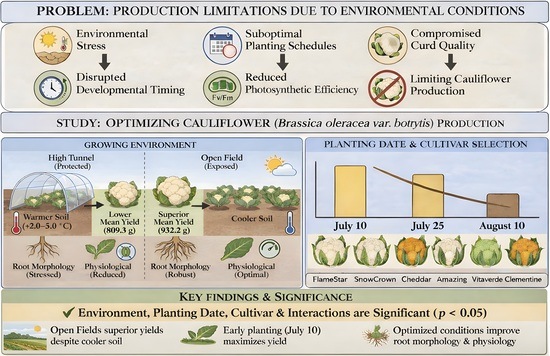
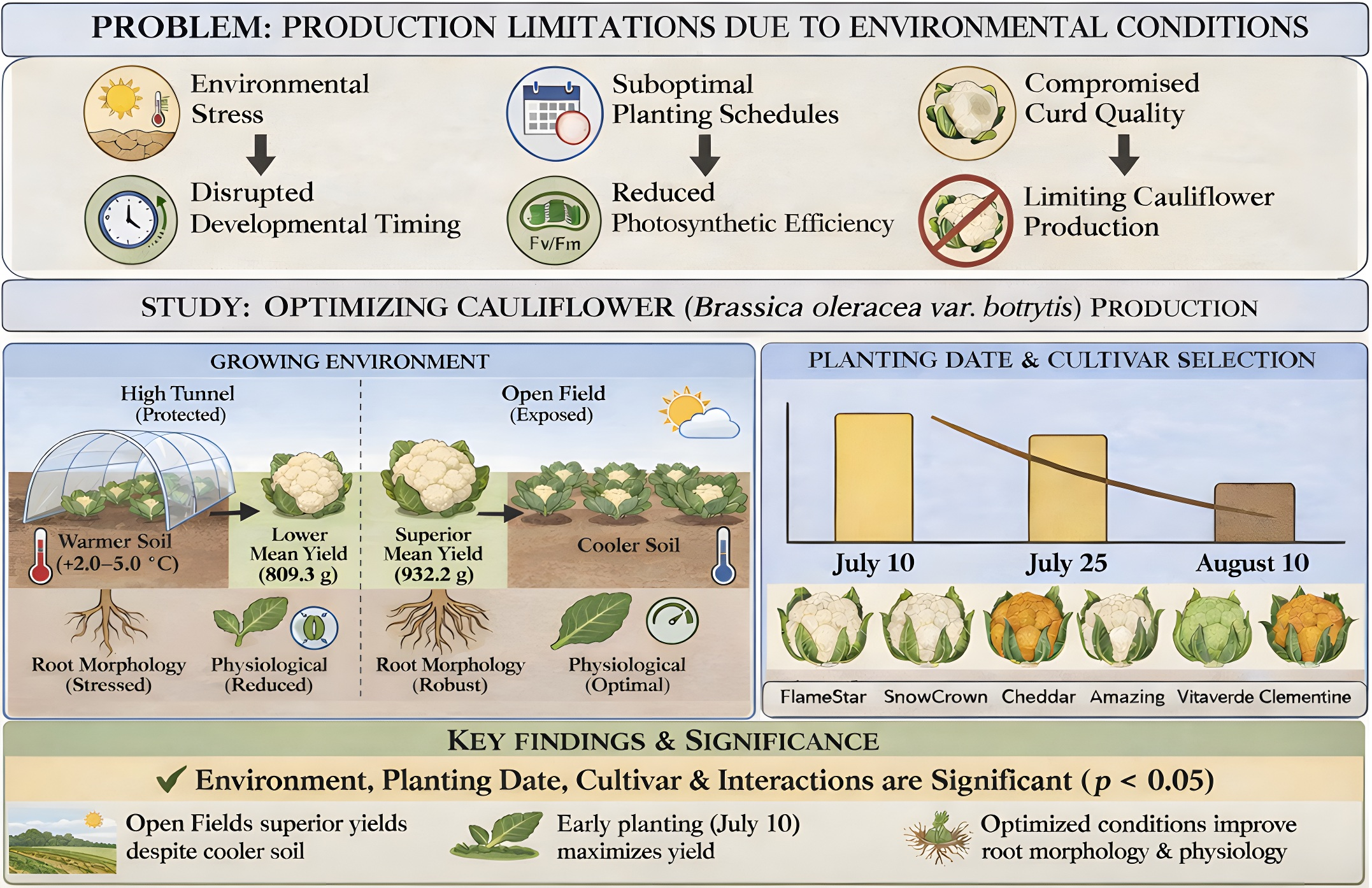
Environmental stress and suboptimal planting schedules are among the most significant factors limiting cauliflower production by disrupting developmental timing, reducing photosynthetic efficiency, and compromising curd quality. This study investigated the effects of growing environment (high tunnel vs. open field), planting date (10 July, 25 July, and 10 August), and cultivar selection (Amazing, Cheddar, Clementine, Flame Star, Snow Crown, and Vitaverde) on yield components, root morphology, vegetative growth, and physiological performance in cauliflower (Brassica oleracea var. botrytis) across two growing seasons. Field environment, planting date, cultivar, and their interactions were found to be significant for all parameters (p < 0.05). In general, open-field production achieved higher yields than high tunnels and shortened maturity, and early transplanting (10 July) maximized performance, producing a higher yield and larger curd size, while delaying to August 10 reduced the yield by ~49% and curd diameter by ~24%. Among cultivars, Flame Star, Snow Crown, and Cheddar were the highest-yielding cultivars overall, whereas Vitaverde performed the poorest. Under early planting, Flame Star showed exceptional productivity (1528 g), curd diameter (19.4 cm), and root development. Late planting decreased root biomass by ~38%. Physiological responses varied across environments and planting dates, with high tunnels showing greater stomatal conductance and transpiration, open-field plants exhibiting higher water-use efficiency, and early July plantings maintaining superior photosynthetic performance compared to later schedules. Correlation and hierarchical clustering analyses demonstrated strong integrated relationships among yield, curd diameter (r = 0.94), fresh root weight (r = 0.62), and root dimensions. Overall, it was concluded that open-field cultivation combined with early July planting using high-performing cultivars such as Flame Star, Snow Crown, and Cheddar significantly optimized cauliflower production by maximizing vegetative growth, enhancing resource acquisition, and ensuring optimal curd development. Early planting strategies emerged as the most effective approach, demonstrating up to 108% yield advantage over delayed schedules. These findings suggest that environment-adapted cultivar selection and strategic temporal management offer a viable approach to enhancing cauliflower productivity under variable climatic conditions.

Graphical Abstract

1. Introduction

Global climate change, characterized by rising temperatures and increasingly variable weather patterns, has emerged as one of the most significant environmental challenges threatening agricultural production worldwide. Climate projections indicate that global temperatures will rise by 1–2 °C during the 21st century, leading to more frequent extreme weather events, particularly in temperate regions where cool-season vegetables are cultivated [1]. These changes are expected to intensify heat stress occurrence, which poses a serious threat to the sustainability of vegetable production systems [2]. Consequently, identifying heat-tolerant cultivars and optimizing agronomic practices such as planting date selection have become essential strategies for maintaining crop productivity under changing climatic conditions. Heat stress exerts profound negative effects on plant growth and development, particularly in cool-season crops that are inherently sensitive to elevated temperatures. Extreme optimum temperatures can impair photosynthetic efficiency, accelerate leaf senescence, and shorten critical reproductive phases, ultimately compromising both yield and product quality [3,4,5]. In Brassica vegetables, these thermal injuries manifest as head deformations, reduced compactness, loss of firmness, and diminished market value, making the selection of appropriate cultivars and optimal planting dates a priority for sustainable production [6,7].
Among the crops vulnerable to these environmental challenges, vegetables from the Brassicaceae family, including cabbage, Brussels sprouts, broccoli, cauliflower, kale, and turnips, are particularly noteworthy due to their high nutritional value and elevated levels of secondary metabolites [8]. These vegetables are rich in bioactive compounds such as carotenoids, flavonoids, phenolics, and glucosinolates, along with essential vitamins C and E, which possess antioxidant properties known to lower the risk of chronic diseases, including cancer, cardiovascular issues, and type 2 diabetes [9,10,11]. Despite their considerable health benefits, the high sensitivity of Brassica vegetables to environmental stressors, particularly seasonal temperature fluctuations, complicates their cultivation, often resulting in lower yields and reduced quality [6]. The planting date plays a pivotal role in Brassica crop production, as it exposes crops to different thermal regimes and affects yield by altering growth duration while directly influencing plant stress responses [12,13]. When planted during higher temperature periods, crops become more vulnerable to heat stress, particularly during early growth stages that demand increased photosynthetic energy [14]. This stress can impair stomatal function, reduce carbon assimilation, cause early senescence, and shorten the reproductive phase [4,15]. Consequently, heat stress causes heat-induced curd deformation, loss of firmness, and lower market value [12,16]. To mitigate these adverse effects, a common approach is to initiate sowing or transplanting earlier in the season so that sensitive reproductive stages occur before peak seasonal temperatures. Timely planting can help synchronize reproductive development and maintain high-yielding quality within optimal temperature ranges [13,17].
North Dakota, situated in the upper Midwest United States, presents a unique challenge for Brassica crop cultivation due to its distinctive climate characterized by short, warm summers and long, cold winters, along with significant temperature swings during spring and fall planting periods [18]. These substantial temperature fluctuations require farmers and researchers to carefully select resilient cultivars, monitor weather conditions closely, and implement protective measures against temperature extremes. In this context, cool-season crops like broccoli and cauliflower can be strategically timed as fall plantings to avoid the hottest summer months, which can negatively affect head formation and quality [19]. This timing also creates a niche marketing opportunity for fall produce, allowing growers to target consumers seeking fresh, locally grown vegetables during a season when supply is typically limited. High-tunnel systems have emerged as an increasingly effective approach to extend the growing season and protect crops from early fall frosts and late spring freezes [20]. These structures create microclimates that shield plants from wind, temperature extremes, and precipitation, thereby enhancing crop survival and yield potential [21]. In North Dakota, high tunnels offer a promising strategy for fall production of Brassica crops by enabling transplanting in late summer and harvesting into the cooler months. This method helps mitigate risks associated with temperature fluctuations and supports the cultivation of high-quality cool-season vegetables within a limited frost-free window.
Given these considerations, there is an urgent need to identify cauliflower cultivars that can be profitably cultivated with high quality under North Dakota’s changing climate conditions. While the planting date × cultivar × growing environment framework has been established in Brassica research, the novelty of this study lies in its regional application to North Dakota’s unique short-season temperate climate, where limited empirical data currently exist for fall cauliflower production. Therefore, the objectives of this research are (i) to identify the most resilient cauliflower cultivars by comparing agronomic parameters, including yield, head quality, root morphology, and days to maturity; and (ii) to determine the optimal planting date for cauliflower cultivars grown as fall crops in different environments across North Dakota. By achieving these objectives, this study seeks to provide valuable data supporting crop diversification in North Dakota while ensuring a sustainable supply of nutritious vegetables to local consumers.

2. Materials and Methods

2.1. Site Description

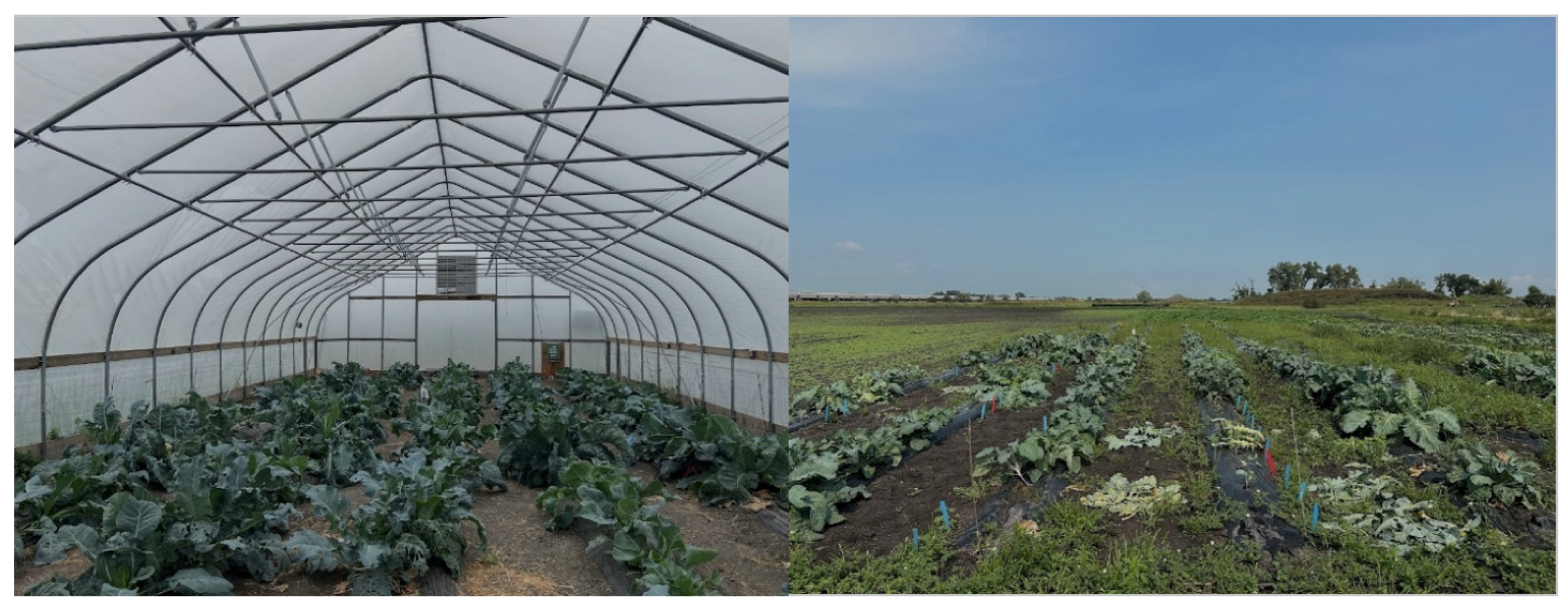
The experiment was conducted at North Dakota State University’s main Agriculture Experiment Station in Fargo, ND (46.900496, −96.813654 ) from late summer to fall in 2023 and 2024. This experimental location is in Plant Hardiness Zone 4A [22,23]. The study included two environments: open field and high tunnel (dimensions: 21.95 m × 9.14 m × 4.57 m) (Figure 1). The experimental site soil is classified as Fargo silty clay, a fine, smectite, frigid Typic Epiaquert [24].

2.2. Experimental Design

The experiment was designed as a three-factor randomized full block design with four replications. Factors consisted of two environments (open field and high tunnel), four planting dates (10 July, 25 July, 10 August, and 25 August), representing early-, mid-, and late fall planting periods, and six cauliflower cultivars (Amazing, Cheddar, Clementine, Flame Star, Snow Crown, and Vitaverde) (Table S1). These cultivars were selected based on preliminary trials conducted in previous years, where they showed better yield, maturity, and overall adaptability under local environmental conditions. One plant per cultivar was grown for each planting date in each replication, with a total of 24 plants per replication in each environment. The last planting date (25 August) was later excluded due to low plant survival.

2.3. Field Preparation and Soil Analysis

In July, a single pass with a field cultivator and a John Deere 655 rotary tiller (Horicon, WI, USA) prepared the field. Soil samples were collected using a typical tube auger and a zigzag collection pattern at 0–15 cm and 15–30 cm depths. The NDSU soil testing lab evaluated these samples for nutrients in 2023. The experimental locations had soil properties at 15 cm and 30 cm depths of pH 7.2 and 7.1, organic matter 7.2% and 7.3% for the open field, and pH 7.7 and 7.6, organic matter 4.4% and 4.7% for the high tunnel, respectively.

2.4. Planting and Crop Management

Six rows of 50 m × 0.6 m greenhouse-grown five-week-old transplants were planted on raised beds with drip irrigation installed beneath the black plastic mulch. Plants were spaced at 45 cm within rows, and rows were 90 cm apart. To maintain soil moisture, irrigation was applied three times. A 20:20:20 general-purpose water-soluble fertilizer (JR Peters Inc., Allentown, PA, USA) at 100 ppm was manually applied three times every 20 days, starting from the day of transplanting, for each planting date. The fertilizer application rate corresponded to approximately 24 kg N ha−1, 24 kg P2O5 ha−1, and 24 kg K2O ha−1 per application. Soil volumetric water content was monitored using the Watchdog 1000 series dataloggers (Spectrum Technologies, Inc., Aurora, IL, USA) to ensure consistent moisture availability across treatments throughout the growing season.

2.5. Environmental Monitoring

In both the high tunnel and open field, micro station dataloggers (Watchdog 1000 series, Spectrum Technologies, Inc., Aurora, IL, USA) were installed to record hourly air and soil temperatures (°C) during the growing season (Table 1).

2.6. Data Collection

The plant height (cm) and leaf number were observed every 10 days from 20 to 70 days after transplanting for each planting date. Yield parameters such as days to harvest, yield per plant (g), curd diameter (cm), marketable grade quality, curd defects, and root parameters like root fresh weight (g), root length (cm), and root width (cm) were recorded after harvesting. Root length was measured on the main taproot, while fresh weight and width were recorded for the entire root system. Roots were carefully dug out, and soil was gently removed to expose all primary, secondary, and tertiary roots before measurements were taken. Furthermore, the photosynthetic efficiency of each cultivar was evaluated by measuring transpiration rate (E), stomatal conductance (gs), water-use efficiency (WUE), and chlorophyll fluorescence (Fv′/Fm′) of the healthy mature leaf at the curd initiation stage (approximately 30–40 days after transplanting) between 10:00 AM and 3:00 PM using a CIRAS-3 portable open-flow gas exchange system (PP Systems, Amesbury, MA, USA). The device was set at 100 mL min−1 airflow, 1200 μmol m−2 s−1 photon flux density, 390 ± 5 μmol mol−1 CO2 concentration, and 99.9 kPa atmospheric pressure.

2.7. Statistical Analysis

The experiment was conducted using a factorial design. Data were analyzed using analysis of variance (ANOVA) in SPSS software version 21.0 (SPSS Inc., Chicago, IL, USA) to assess the effects of the field environment, cultivar, planting date, and interactions. Ad hoc mean separation was carried out using Tukey’s honest significant difference (HSD) test at p ≤ 0.05. Due to the limited data observations for the 25 August planting date treatment as most plants did not survive the freeze conditions, it was excluded from statistical analysis. Pearson correlation coefficients were calculated to examine relationships among the measured traits, and the results were presented using correlation matrices and heatmaps.

3. Results

All variable means for the four parameters statistically evaluated (environment, cultivar, planting date, and year) are provided as Supplementary Tables. Whenever three-way interactions were significant, the significant two-way interactions were discussed. Significant main factors were discussed only if the factor was not involved with a significant interaction.

3.1. Soil Temperature, Days to Harvest and Plant Yield

During both years, the mean soil temperature was consistently higher under high-tunnel (HT) conditions than under open-field (OF) conditions by about 2.0–5.0 °C, with the largest differences observed in October (2023: 14.6 vs. 6.3 °C; 2024: 20.4 vs. 12.2 °C). Minimum air temperatures were markedly higher in HT, exceeding OF by up to 11.8 °C in September 2023 (6.3 vs. −5.5 °C) and 4.3 °C in October 2024 (2.6 vs. −1.7 °C). Overall, HT increased the mean air temperature by approximately 2–4 °C compared with OF during the growing season (Table 1).
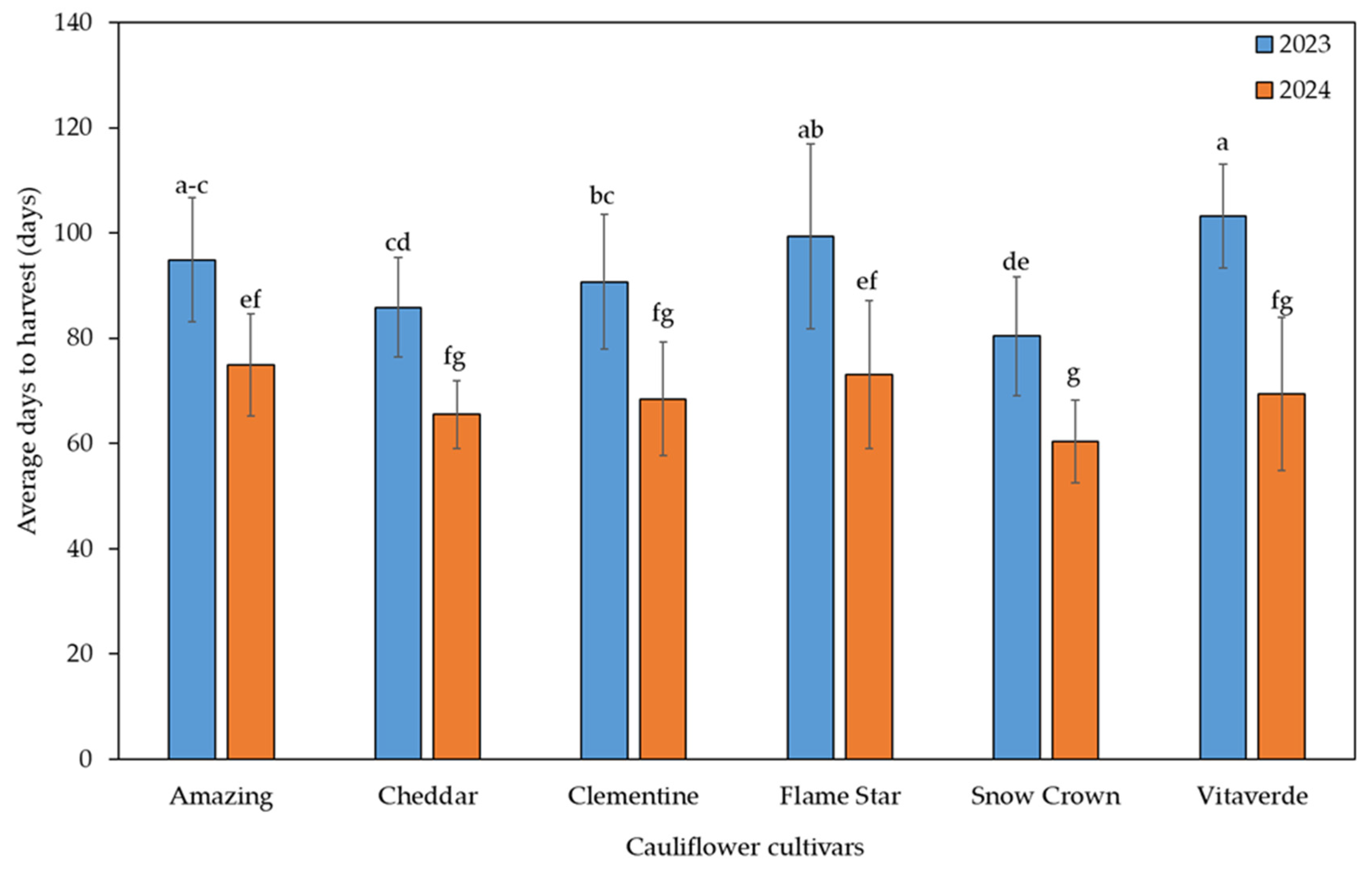
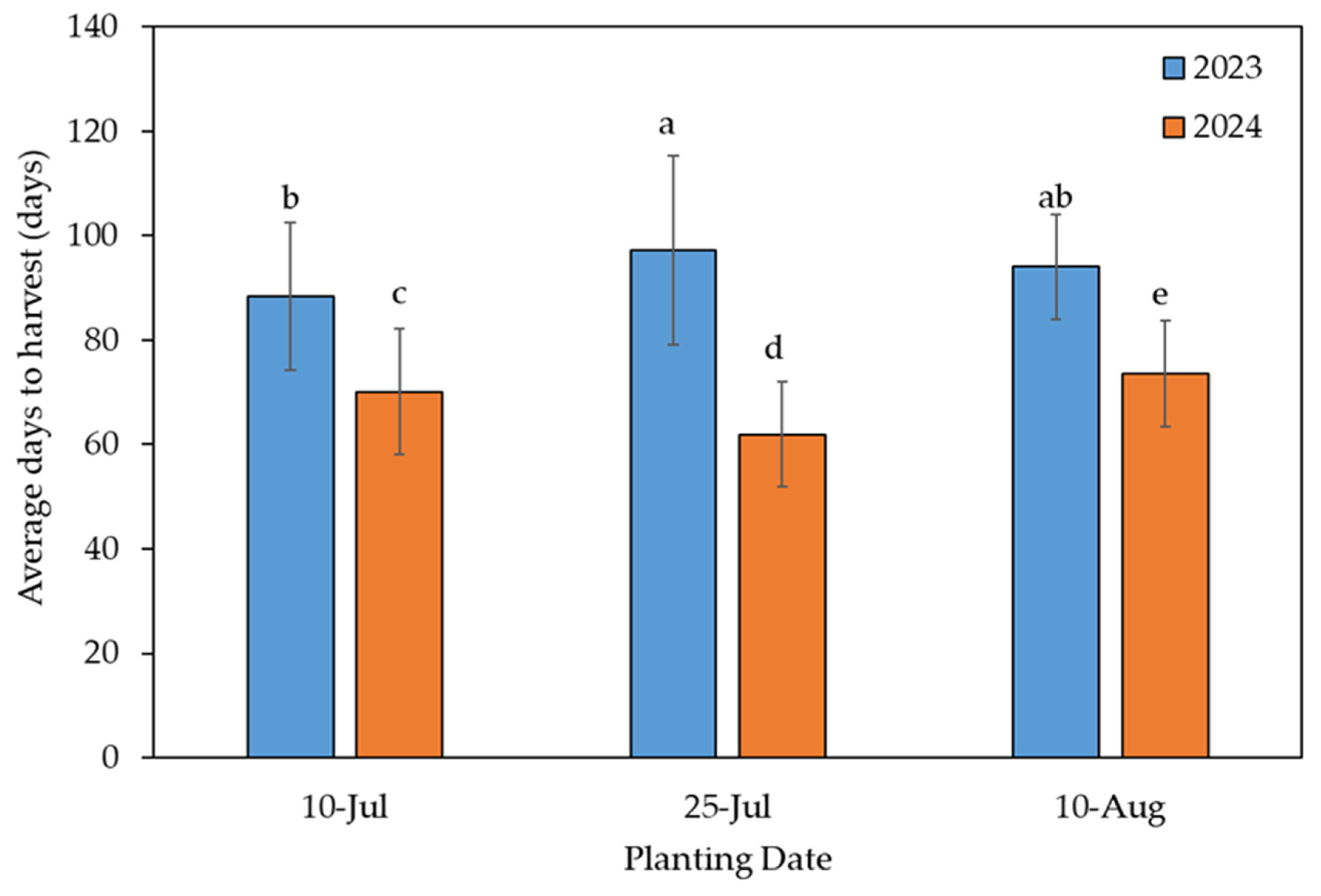
The three-way interaction of environment × planting date × year and environment × cultivar × planting date was significant for days to harvest. In addition, two-way interactions of cultivar × year and planting date × year were significant. Across cultivars under high-tunnel conditions, the days to harvest in 2023 were most delayed with the 25 July planting (103.0 days) even though all three planting dates took at least 93.2 days until harvest (Table 2). In contrast, the days to harvest for the open field in 2023 were much lower for the 25 July planting at 78.0 days. All days to harvest in both environments for the three planting dates in 2024 were fewer than 2023. Cultivars Amazing, Flame Star, and Vitaverde in 2023 had the longest days until harvest, requiring at least 95 days (Figure 2). However, in 2024, all of the cultivars except Amazing and Flame Star required fewer than 70 days, which was the fewest days until harvest. Similarly, planting on 25 July or 10 August in 2023 resulted in the most days until harvest at 97 and 94 days, respectively (Figure 3). In contrast, planting on 25 July 2024 resulted in the fewest days until harvest at approximately 62 days.
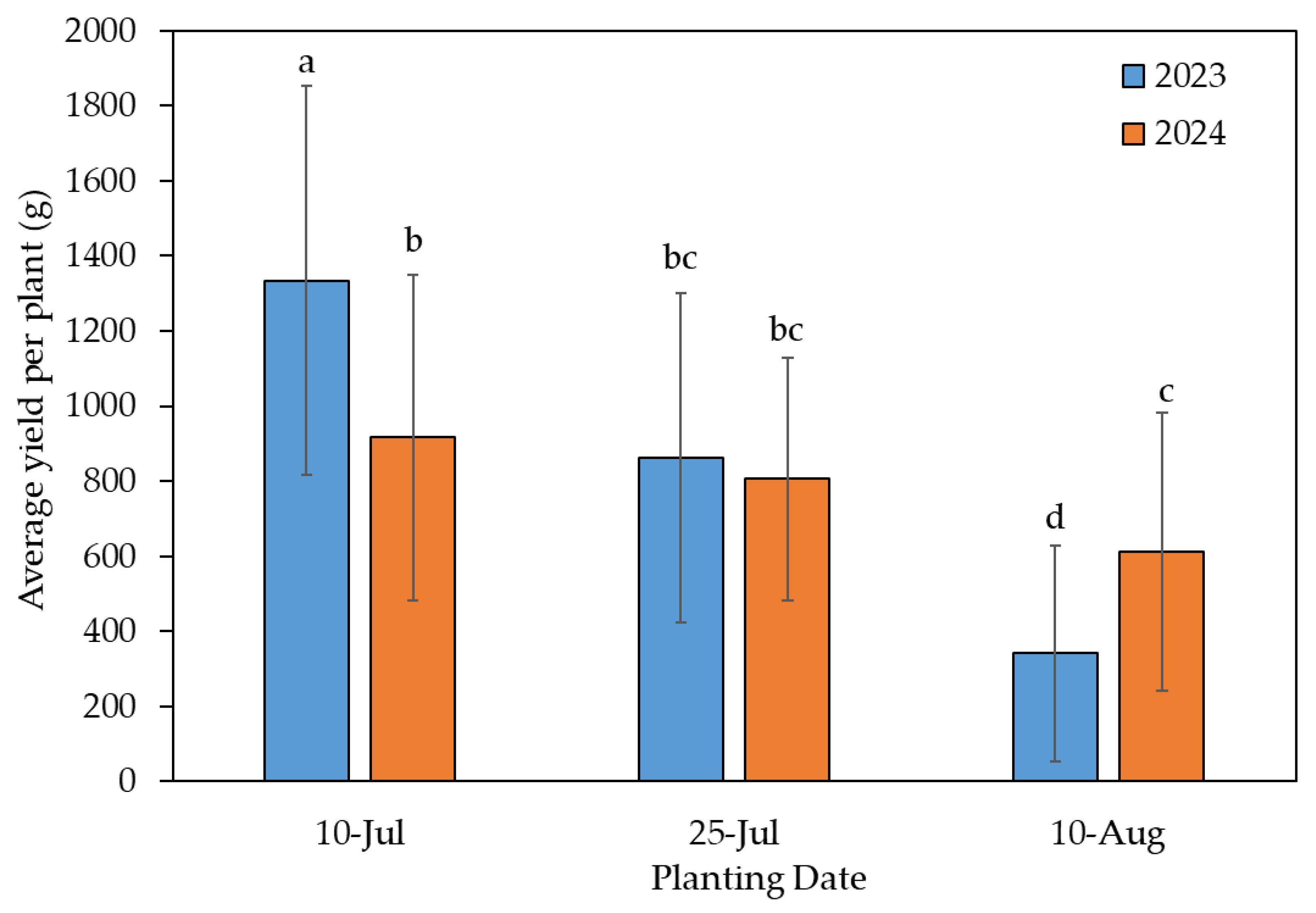
The three-way interaction of environment × planting date × year and two-way interactions of cultivar × planting date and planting date × year were significant for cauliflower yield. Across cultivars and for both environmental conditions, the mean yield per plant in 2023 was greatest when cauliflower was planted on 10 July and the lowest when planted in the high tunnel on 10 August (Table 2). In 2024, cauliflower planted in the high tunnel had similar yields regardless of when it was transplanted, while the open-field yields were similar to 2023, except for plants transplanted on 10 August, where curds were 43% less than the same planting date in 2023. The greatest curd yield occurred with cultivars Amazing, Cheddar, and Flame Star planted on 10 July (Table 3). In contrast, all cultivars planted on 10 August, along with Clementine and Flame Star planted on 25 July and Vitaverde for all three planting dates had the lowest curd yield. Curd yield was greatest when cauliflower was planted on 10 July 2023 and lowest when planted on 10 August 2023 (Figure 4). The significant interaction occurred from the 74% decrease in curd yield from the first planting date to the last planting date in 2023; while in 2024, this decrease was approximately 33%.

3.2. Curd Diameter, Root Fresh Weight, Root Length and Root Width

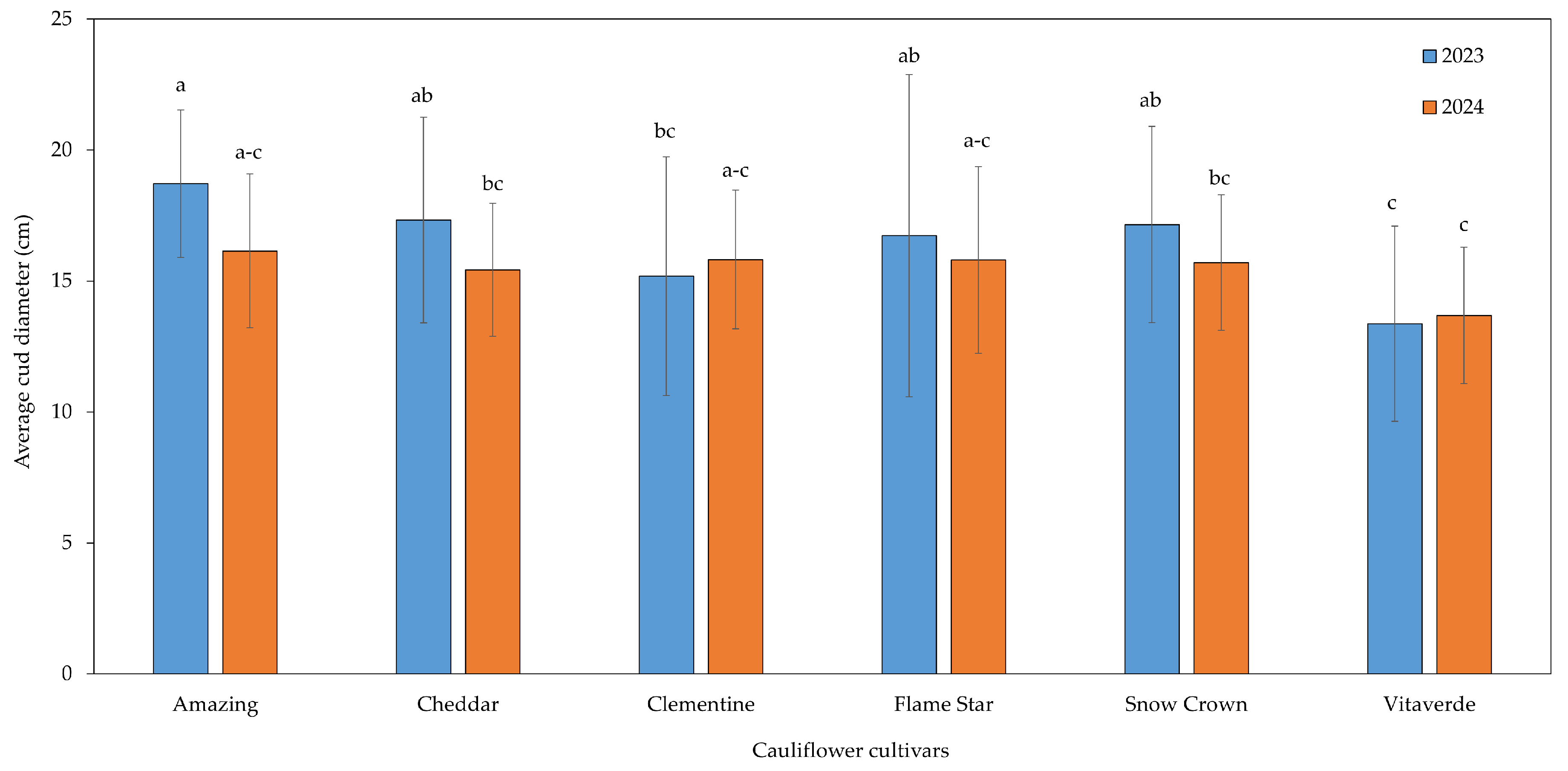
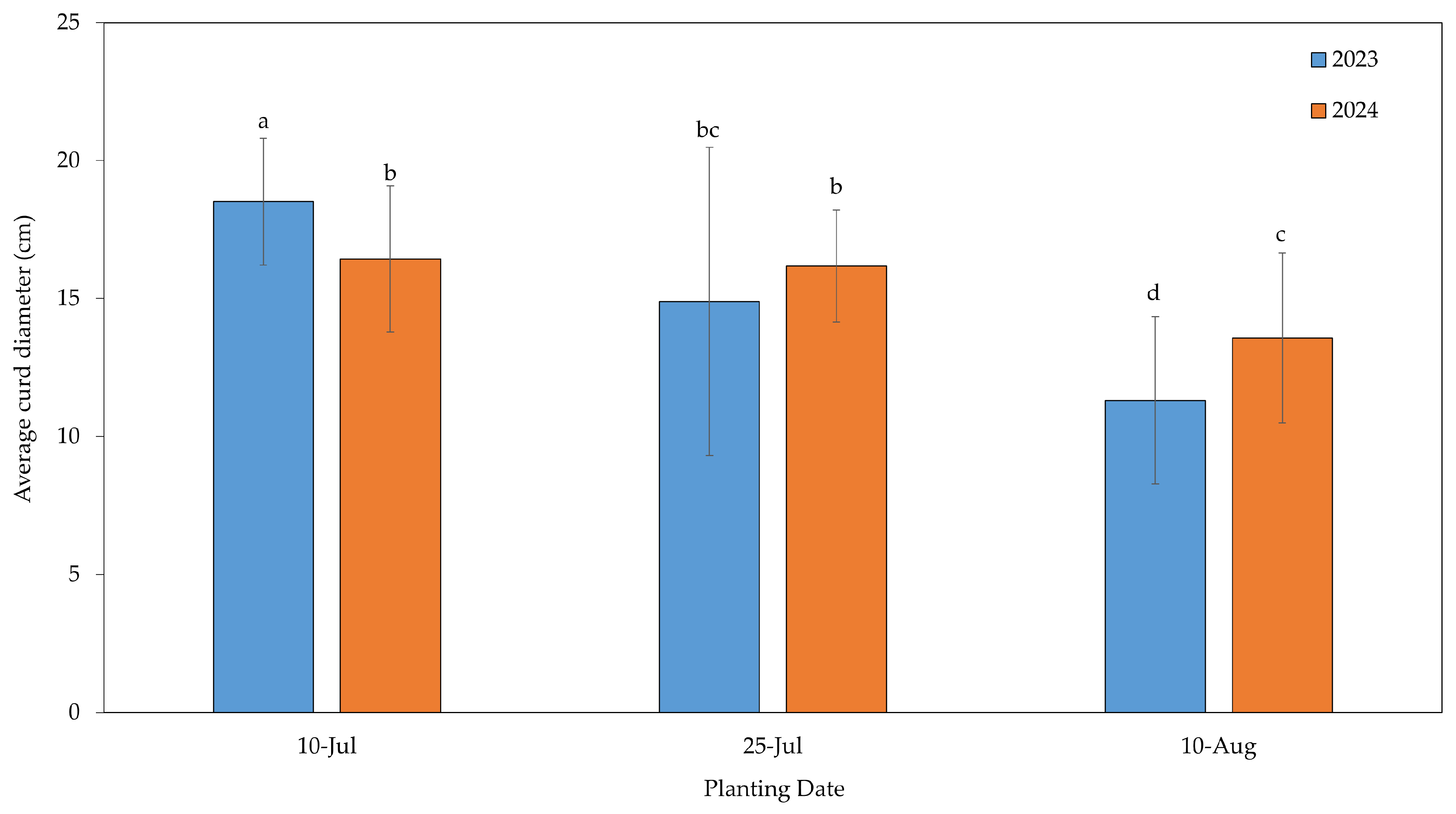
The three-way interaction of environment × planting date × year and two-way interactions of cultivar × planting date, cultivar × year, and planting date × year were significant for cauliflower curd diameter. Across cultivars, the largest curd diameter resulted under either environmental condition for the 10 July planting date in 2023 (Table 2). Likewise, cultivars under the open-field condition in 2024 and planted on 10 July had the largest curd diameter. The significant planting date × year interaction occurred because cultivars under high-tunnel conditions in 2024 had similar, smaller curd diameters regardless of the planting date. The largest curd diameter occurred when the cultivar Flame Star was planted on 10 July (Table 3). However, this curd diameter did not differ from the curd diameter for cultivars Amazing, Cheddar, and Clementine planted on 10 July or cultivars Amazing and Snow Crown planted on 25 July. In contrast, the smallest curd diameter occurred when cultivars Flame Star and Vitaverde were planted on 25 July or cultivars Clementine, Flame Star, and Vitaverde were planted on 10 August. Cultivars Amazing and Flame Star in 2023 or 2024 had the largest curd diameter (Figure 5). However, their curd diameters did not differ from that of Cheddar and Snow Crown planted in 2023, or Clementine planted in 2024. The significant cultivar × year interaction occurred because Snow Crown had larger curds in 2023 than in 2024, while Clementine had larger curds in 2024 than 2023. Vitaverde had the smallest curds both years, with an average curd diameter of less than 14 cm. The planting date × year interaction was similar to the observed curd diameter interaction, where cauliflower planted on 10 July 2023 had the largest curds, while the smallest curds occurred when planted on 10 August 2023 (Figure 6). The significant interaction occurred from the 39% decrease in curd diameter from the first planting date to the last planting date in 2023, while in 2024, this decrease was approximately 16%.
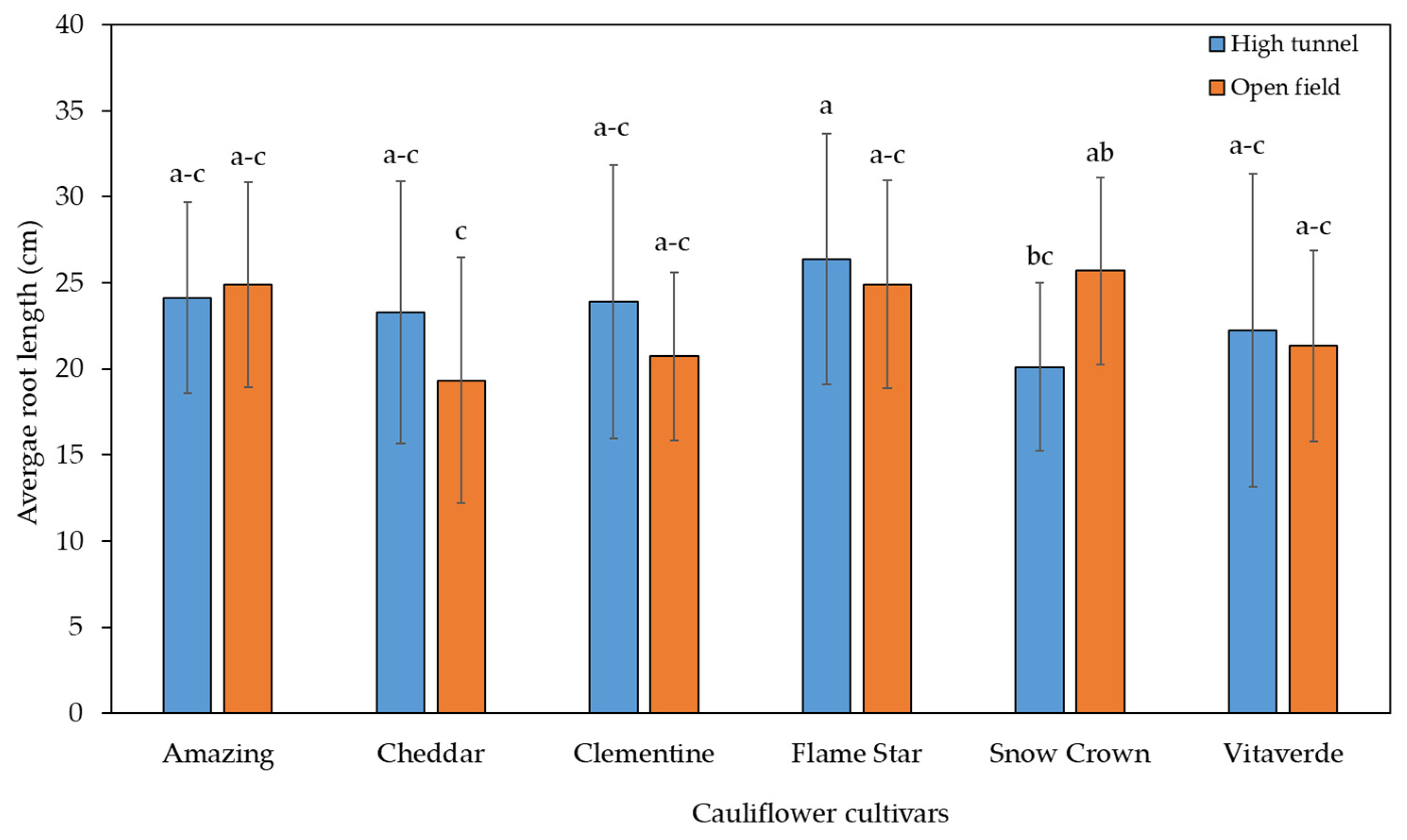
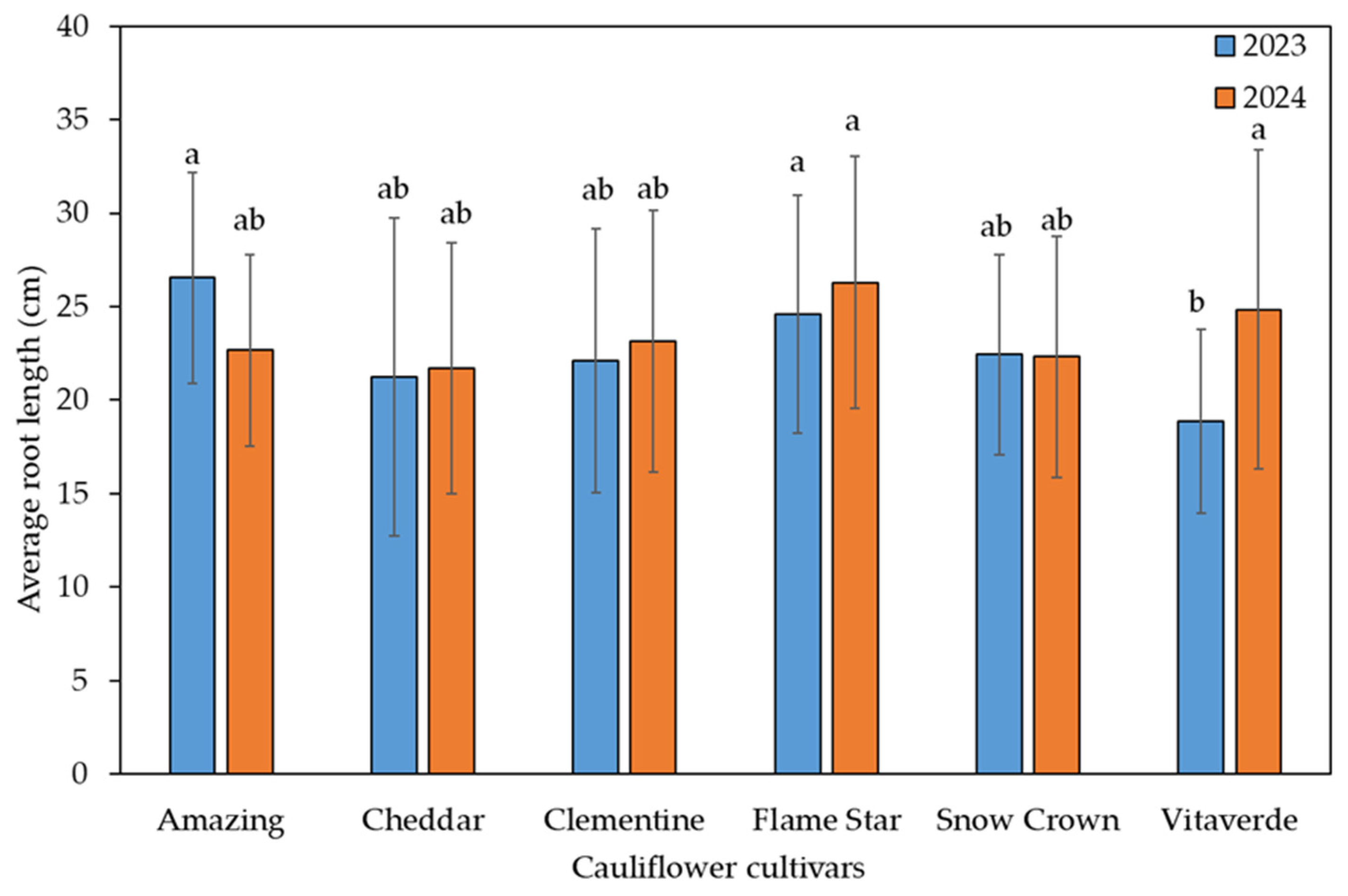
Only the two-way interaction of cultivar × planting date was significant for fresh root weight. Cultivars Amazing, Cheddar, and Flame Star had the greatest fresh root weight when planted on 10 July (Table 3). The significant interaction occurred because most cultivars had lower fresh root weights with later planting dates (37–53% decrease), with the exception of Clementine and Vitaverde, which only declined 21% and 15%, respectively, from the first planting date to the last planting date. Two-way interactions of environment × cultivar, cultivar × planting date, and cultivar × year were significant for root length. In the high tunnel, Flame Star had the longest roots, but this was only greater than the root length for Snow Crown (Figure 7). However, in the open field, Snow Crown had the longest roots, but this was only greater than the root length for Cheddar. Flame Star planted on 10 July had the longest roots, which was similar to the root length for all the cultivars planted on 10 July, with the exception of Cheddar (Table 3). Cultivars Amazing, Cheddar, and Flame Star, planted on 25 July also had similar root lengths as most cultivars planted on 10 July. Vitaverde planted on 25 July was the cause of the interaction as root length decreased to approximately 19 cm, which was the shortest root length, before increasing to approximately 22 cm when planted on 10 August. Vitaverde was also the cause of the cultivar by year interaction as root length went from approximately 19 cm in 2023 to approximately 25 cm in 2024 (Figure 8). All other cultivars had root lengths between 21 cm and 26 cm for the two years.

3.3. Growth Parameters: Plant Height and Leaf Number

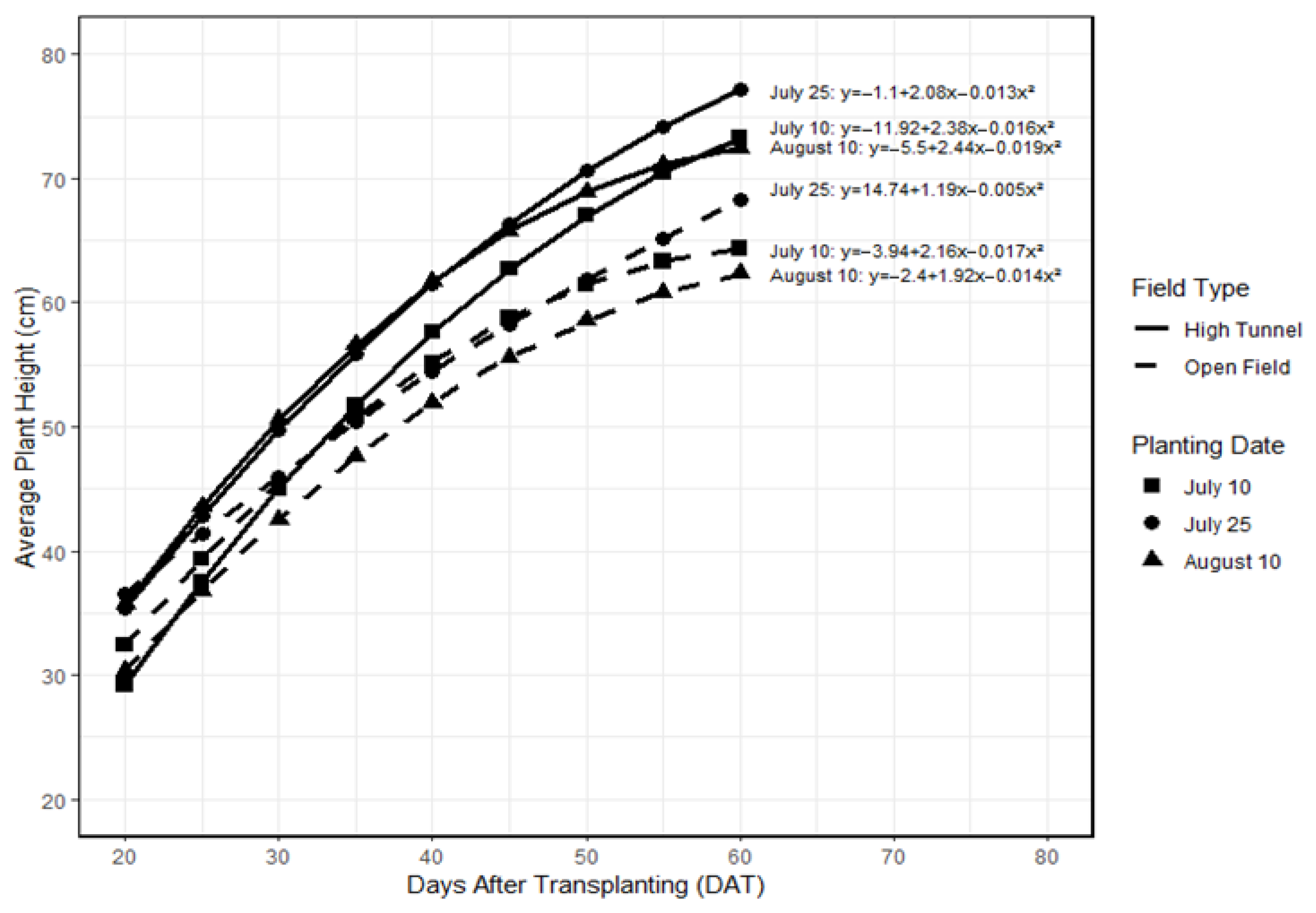
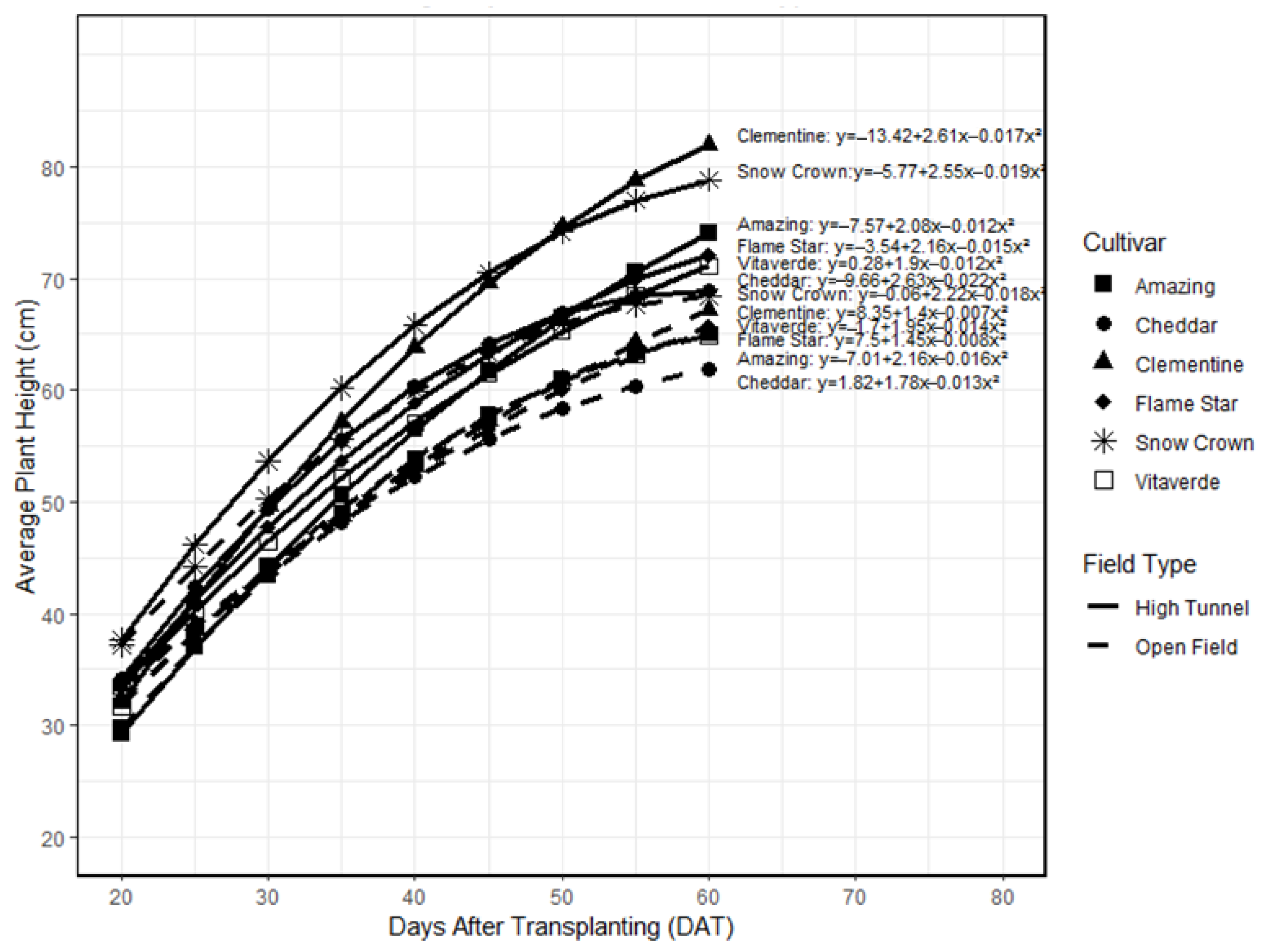
Regression analysis of average cauliflower plant height indicated a quadratic growth pattern in both high-tunnel and open-field environments, characterized by an initial acceleration followed by a slowdown as plants matured (Figure 9). Among planting dates, high-tunnel conditions generally supported stronger initial growth, with the highest linear coefficient observed on 10 August (2.44 cm·day−1) and the greatest deceleration (−0.019). In contrast, open-field plantings showed lower initial growth overall. Cultivar-specific models (Figure 10) revealed that Cheddar and Clementine had the largest linear coefficients in the high tunnel (2.63 and 2.61 cm·day−1) and substantial deceleration, whereas Vitaverde consistently exhibited the lowest initial growth (1.90 cm·day−1). In the open-field, Snow Crown achieved the highest initial growth tendency (2.22 cm·day−1), while cultivars such as Clementine and Flame Star recorded much lower values (<1.5 cm·day−1). These results indicate that high-tunnel conditions favor vigorous cultivars for rapid early growth, while open-field conditions result in slower but steadier development.
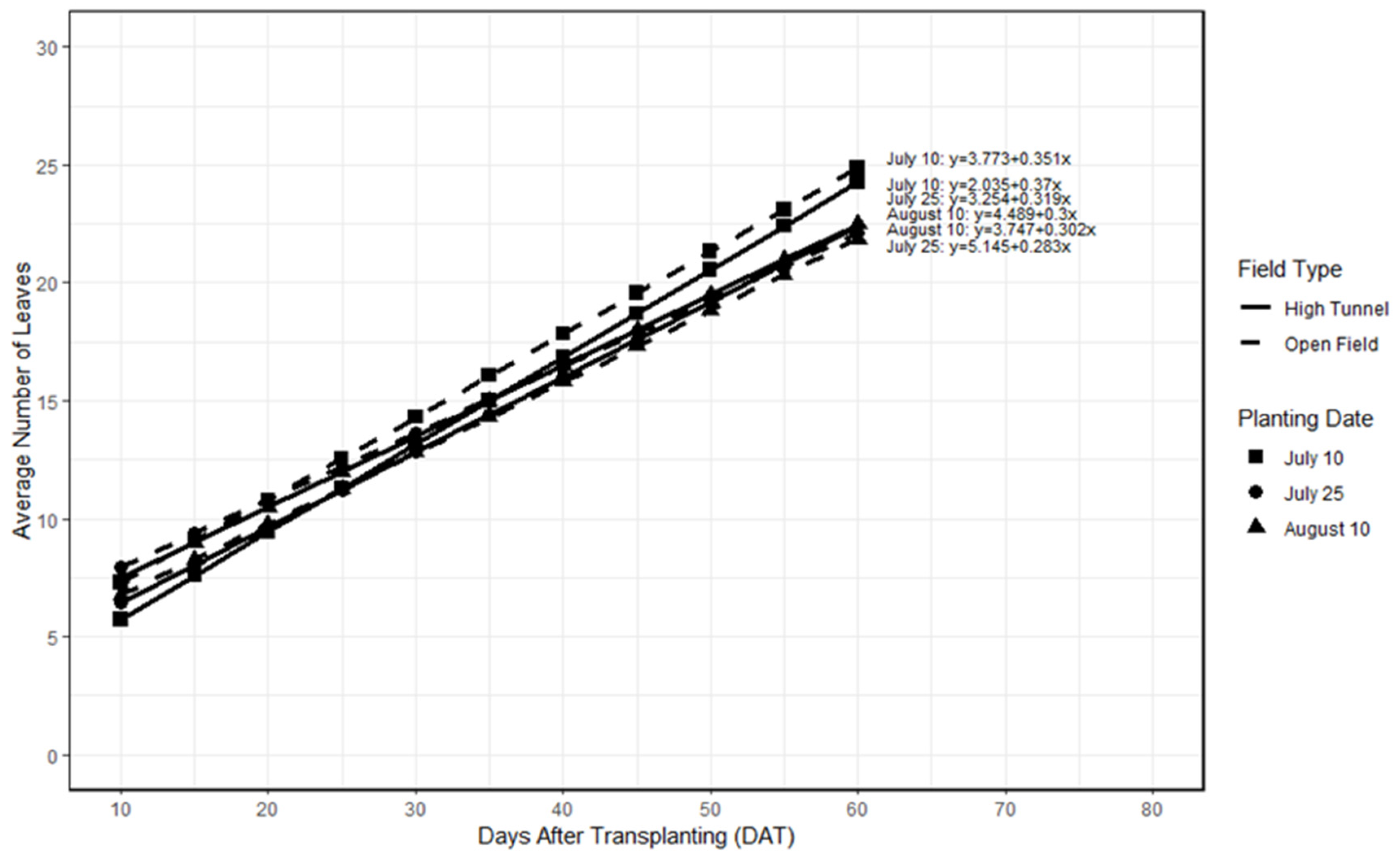
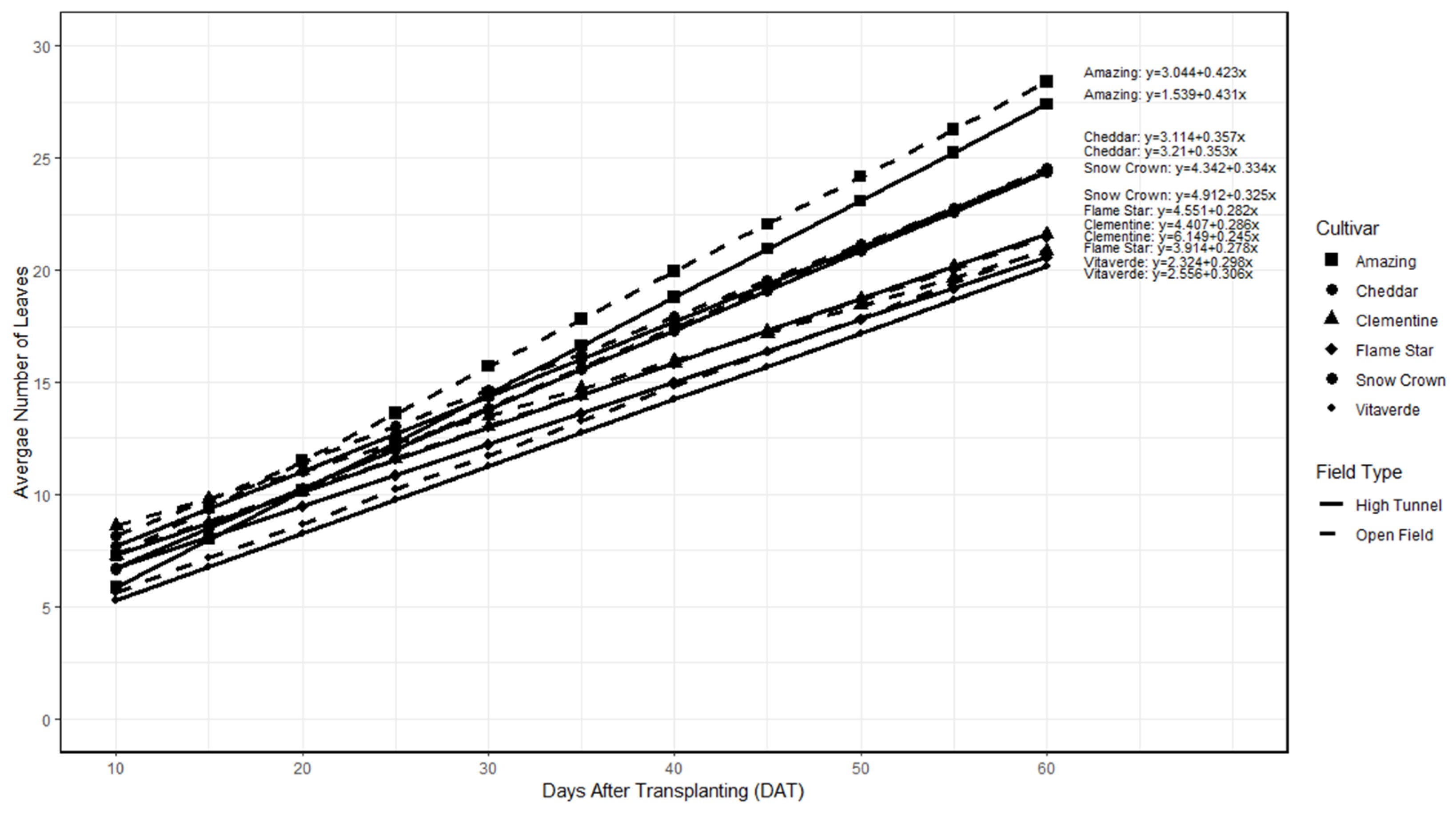
The number of plant leaves exhibited a quadratic growth pattern in both the high tunnel and open field for cauliflower, as indicated by the regression models on averaged data, with a decline in leaf production over time as the plants matured (Figure 11). The figure illustrates that leaf accumulation was faster in early plantings and generally higher under high-tunnel conditions, where initial leaf counts were greater and slopes steeper compared to the open field. Among cultivars, Amazing exhibited the highest leaf accumulation rate in both environments (0.43 leaves·day−1 in the high tunnel and 0.42 leaves·day−1 in the open field), followed by Cheddar and Snow Crown (Figure 12). Flame Star and Clementine recorded the lowest rates (<0.30 leaves·day−1), while initial leaf numbers were notably higher in the high tunnel, especially for Clementine, indicating an environmental advantage for early vegetative development. These results demonstrated that leaf production is significantly affected by both cultivar and environmental factors, with elevated tunnel conditions promoting early leaf development and robust cultivars such as Amazing attaining the highest rates of accumulation.

3.4. Physiological Parameters

Environmental conditions significantly affected transpiration (E), with higher values recorded in the high tunnel (6.83 mmol H2O m−2 s−1) compared to the open field (5.29 mmol H2O m−2 s−1) (Table 4). However, stomatal conductance (gs) did not differ significantly between environments (636.62 vs. 550.72 mmol H2O m−2 s−1). Similarly, water-use efficiency (WUE) and Fv′/Fm′ were not significantly influenced by environment, with mean values of 3.19–4.83 mmol CO2 mol−1 H2O and 0.58–0.59, respectively. Planting dates significantly influenced E and Fv′/Fm′. The highest E was observed on 10 July (6.55 mmol H2O m−2 s−1), followed by 25 July (5.75 mmol H2O m−2 s−1) and 10 August (5.76 mmol H2O m−2 s−1). Fv′/Fm′ declined from 0.60 in the July plantings to 0.55 in the August plantings. In contrast, gs and WUE were not significantly affected by planting date.
Significant cultivar differences were detected for gs and Fv/Fm. Snow Crown exhibited the highest gs (663.12 mmol H2O m−2 s−1), whereas Vitaverde showed the lowest (544.16 mmol H2O m−2 s−1). For Fv/Fm, Clementine had a higher value (0.61), while Amazing had a lower value (0.56). The environment × planting date interaction significantly influenced gs, with the highest value observed under high-tunnel conditions on 10 August (666.92 mmol H2O m−2 s−1) and the lowest under open-field conditions on the same date (507.42 mmol H2O m−2 s−1). The environment × cultivar interaction significantly affected WUE, with the highest value recorded in Clementine under open-field conditions (7.79 mmol CO2 mol−1 H2O) and the lowest in Vitaverde under high-tunnel conditions (2.11 mmol CO2 mol−1 H2O). Fv′/Fm′ values across interactions ranged between 0.54 and 0.61, indicating overall stability of PSII efficiency across treatments.

3.5. Multivariate Analysis of Agronomic Traits

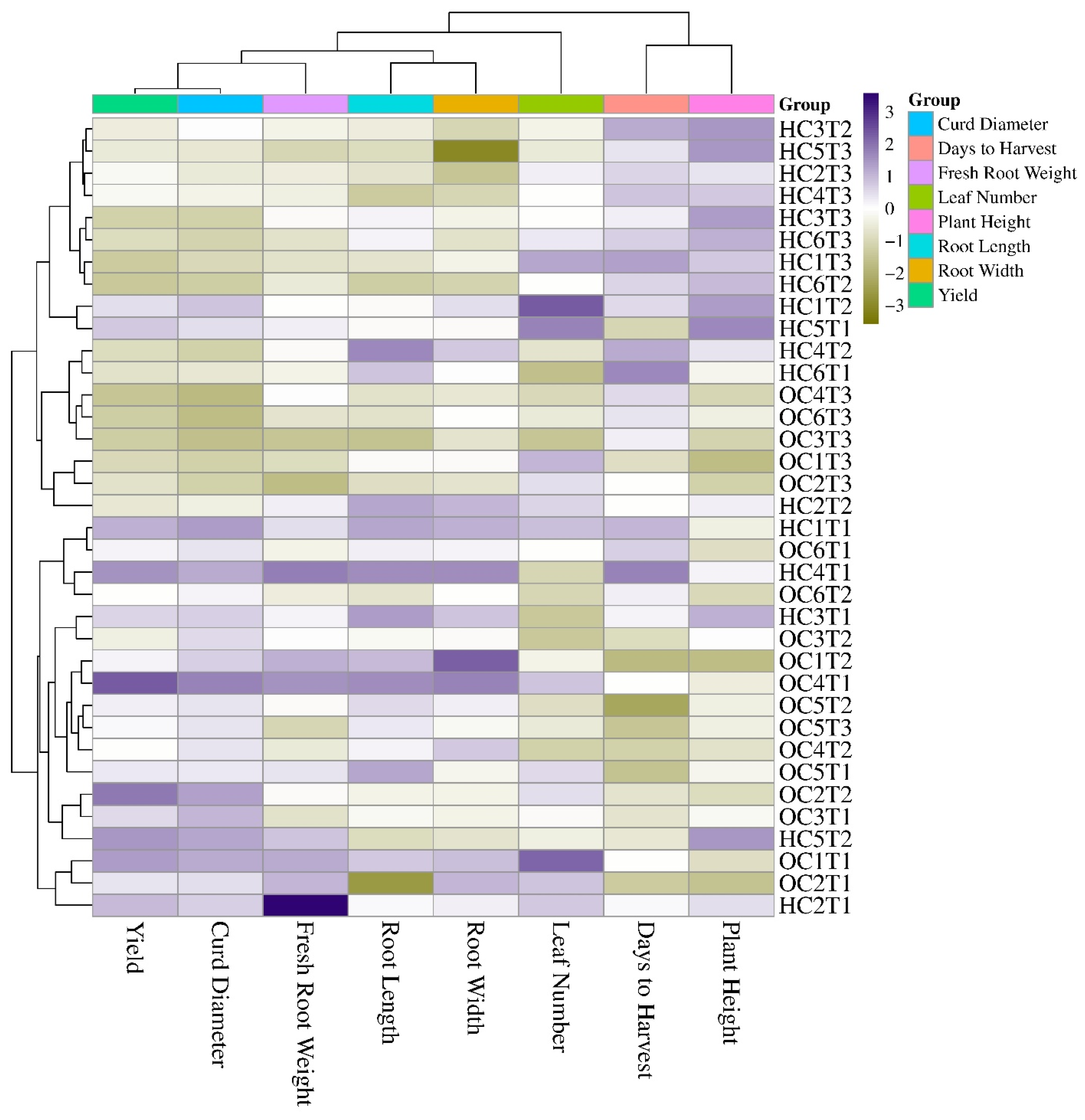
Hierarchical clustering heatmap analysis revealed clear variation among cauliflower treatment combinations based on agronomic traits, including yield, curd diameter, fresh root weight, root length, root width, leaf number, days to harvest, and plant height. The clustering separated treatments primarily according to growing environment and planting date, with high-tunnel and open-field combinations forming distinct subgroups. In general, high-tunnel treatments tended to cluster together, showing relatively higher standardized values for yield, fresh root weight, plant height, and root-related traits, whereas open-field treatments were more dispersed, reflecting greater variability across traits.
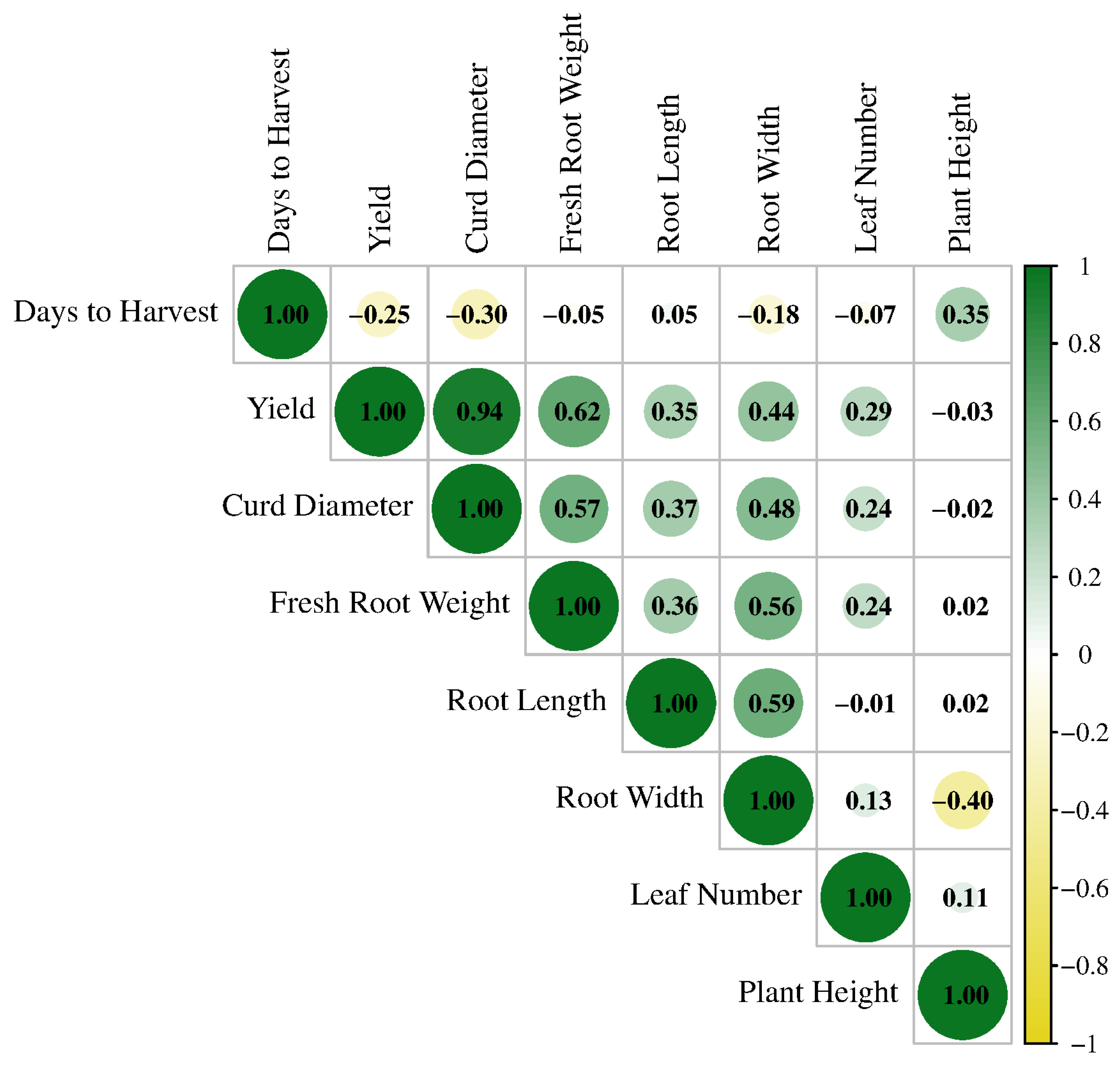
Trait-based clustering indicated that yield, curd diameter, and fresh root weight were closely associated, forming a common cluster, while root length and root width grouped, indicating similar response patterns across treatments. Leaf number and days to harvest formed separate clusters, showing independent variation from yield-related traits (Figure 13). On the other hand, Pearson correlation analysis showed varying degrees of association among agronomic traits in cauliflower cultivars (Figure 14). Yield exhibited a strong positive correlation with curd diameter (r = 0.94) and a moderate positive correlation with fresh root weight (r = 0.62). Positive correlations were also observed between yield and root width (r = 0.44), root length (r = 0.35), and leaf number (r = 0.29), while the relationship between yield and plant height was negligible (r = −0.03). Curd diameter was positively correlated with fresh root weight (r = 0.57), root width (r = 0.48), and root length (r = 0.37). Fresh root weight showed positive correlations with root width (r = 0.56) and root length (r = 0.36). Root length and root width were also positively correlated (r = 0.59). Days to harvest showed negative correlations with yield (r = −0.25) and curd diameter (r = −0.30), while a positive correlation was observed with plant height (r = 0.35). Leaf number exhibited low correlations with other traits. All reported correlation coefficients were statistically significant at p ≤ 0.05, except for yield–leaf number (r = 0.29, p = 0.08) and yield–plant height (r = −0.03, p = 0.85). To assess potential multicollinearity among yield-related predictors, variance inflation factors (VIF) were calculated; curd diameter and fresh root weight showed VIF values of 3.2 and 2.1, respectively, indicating acceptable levels of multicollinearity and supporting the independent interpretation of these trait associations.

4. Discussion

4.1. Growing System Effects on Yield and Maturation

The present study demonstrated that environmental conditions significantly influenced cauliflower performance, with high-tunnel and open-field systems producing distinct microclimatic effects on crop development. High-tunnel conditions provided consistently warmer soil temperatures (2.0–5.0 °C higher) and substantially elevated minimum air temperatures compared to open-field cultivation, particularly during critical late-season periods. Despite these protective advantages, open-field production yielded superior results in earlier planting compared to high-tunnel production. This unexpected outcome contradicts the conventional assumption that protected cultivation always enhances productivity. The longer maturation period observed in high tunnels suggests that the elevated temperatures may have disrupted optimal developmental patterns [25,26]. Warmer conditions can initially promote metabolic activity but may ultimately impose heat stress that compromises physiological efficiency and yield formation, as documented by Wahid et al. [27] in their comprehensive review of heat-tolerance mechanisms. The temperature fluctuations within high tunnels, particularly the extreme differences in minimum temperatures, likely created unstable growing conditions that prevented plants from establishing consistent developmental [28,29]. Bjorkman and Pearson [30] specifically noted that high-temperature arrest of inflorescence development in Brassica crops can severely impair curd formation and quality.
The pronounced effect of the planting date on yield, with early planting in 10 July producing higher yields compared to later planting dates underscores the critical importance of timing in cauliflower production systems. This pattern aligns with extensive research demonstrating that early sowing enables crops to avoid late-season environmental stresses that severely reduce productivity, Sarkar et al. [31]. The relatively stable days to harvest in different planting dates across the years suggest that while developmental duration remained fairly consistent, the environmental conditions encountered during specific growth phases dramatically affected biomass accumulation and curd development [25,32]. Rahman et al. [33] established that temperatures between 19 and 23 °C were optimal for cauliflower curd development, and deviations from this range can substantially reduce yield regardless of total growing duration. Among cultivars, when temperatures are favorable as in earlier planting date, i.e., 10 July, Flame Star demonstrated higher mean yield, followed closely by Cheddar, Amazing, and Snow Crown, while Vitaverde consistently underperformed. These substantial cultivar differences reflect inherent genetic variations in adaptation to regional growing conditions and stress-tolerance mechanisms [34]. Akhtar et al. [35] emphasized that genotypic selection plays a fundamental role in vegetable adaptation to specific climatic conditions, with certain cultivars possessing superior physiological and morphological traits that enhance performance under environmental challenges. The consistently poor performance of Vitaverde across both growing environments and all planting dates suggests limited adaptation to North Dakota’s growing conditions, possibly due to inadequate cold tolerance during early development or insufficient heat-stress resistance during curd-formation periods.

4.2. Curd and Root Responses to Environment, Cultivar, and Planting Date

Curd diameter and fresh root weight, as primary determinants of marketable yield, exhibited strong responses to field environment, cultivar selection, and planting timing. The superior performance of open-field conditions over high tunnels for higher mean curd diameter in all planting dates reinforce the observation that protected cultivation did not confer advantages under the specific conditions of this study. The elevated temperatures within high tunnels may have accelerated phenological development without providing adequate time for biomass accumulation, resulting in smaller curds and reduced root systems [25,32]. Wurr and Fellows [36] demonstrated that cauliflower curd initiation and subsequent development are highly temperature-sensitive processes, with suboptimal thermal regimes leading to compromised curd quality and reduced diameter. Among cultivars, Flame Star exhibited superior yield component traitsroot parameters like root weight and root length in early planting, substantially exceeded Vitaverde’s values. These cultivar-specific differences likely reflect variations in root architecture and resource acquisition efficiency that cascade into improved above-ground productivity. Lynch and Brown [37] emphasized that root phenotypic variation among crop genotypes directly influences nutrient- and water uptake capacity, which fundamentally determines plant vigor and yield potential. The robust root systems observed in Flame Star, Amazing, and Snow Crown enabled more efficient resource acquisition during critical developmental phases, supporting superior curd formation.
The dramatic impact of planting date on yield components, with 10 July plantings producing superior yield, curd diameter, and root parameters compared to 10 August plantings, represents reductions in late plantings. This progressive decline with delayed planting reflects the cumulative effects of increasingly suboptimal growing conditions as the season advances. Kumar et al. [38] reported similar patterns in cauliflower, where delayed planting resulted in significantly reduced growth parameters and yield components due to exposure to stress conditions during critical developmental stages. The shortened vegetative growth period associated with late planting limits both photosynthetic capacity and root system establishment, constraining the plant’s ability to accumulate the resources necessary for optimal curd development. Additionally, late-planted crops often encounter temperature extremes during sensitive reproductive phases, as noted by Hossain et al. [39], who observed that delayed sowing consistently decreased curd diameter in cauliflower across multiple growing environments. Root length followed similar patterns, with high-tunnel conditions producing slightly greater root compared to open-field systems. This suggests that the protected environment may have encouraged deeper root penetration while limiting lateral expansion, possibly due to modified soil moisture dynamics or reduced wind-induced mechanical stimulation that typically promotes lateral root branching [40]. Flame Star again demonstrated superior root architecture with the highest mean root length in earlier planting and progressive decline in root dimensions with delayed planting indicates that early season planting benefits from extended periods of favorable soil conditions that promote comprehensive root system development [41]. Thakur et al. [42] noted that cooler early-season soil temperatures can enhance root development in Brassica crops by extending the vegetative growth phase and allowing more thorough soil colonization before reproductive development begins.

4.3. Vegetative Growth Under Different Environments and Planting Dates

Vegetative growth parameters, including leaf number and plant height, responded significantly to field environment, planting date, and cultivar genetics, with complex interactions among these factors. Early plantings showed faster initial growth, with pronounced curvature in the regression models indicating rapid growth followed by early slowdown. Conversely, late plantings demonstrated more gradual, consistent linear growth, reflecting ongoing vegetative development in cooler temperatures. High tunnels enhanced these benefits by managing temperature fluctuations, reducing heat stress, and extending the growth period, while open-field plantings remained vulnerable to frost [29]. However, the minimal difference in the leaf number increase between environments suggests that leaf initiation rates were relatively unaffected by the protected growing conditions, with temperature primarily influencing stem elongation rather than fundamental developmental programming. Suseela and Rangaswami [43] observed similar patterns in greenhouse-grown cauliflower, where elevated temperatures within protected structures promoted vertical growth but did not substantially alter leaf production rates. Among cultivars, Cheddar and Clementine displayed significant initial growth in cauliflower but had limited adaptability to the later period. Amazing and Vitaverde grew at a modest pace with consistent leaf development, making them suitable options for late planting. Flame Star and Snow Crown are cultivars with consistent performance across various field conditions and planting dates, indicating they can be planted at different periods. These cultivar differences reflect genetic variation in growth patterns and resource allocation strategies, as documented by Chatterjee et al. [44], who found substantial variability in plant height and leaf production among cauliflower genotypes. The strong vegetative growth observed in Snow Crown, Flame Star, and Amazing likely contributed to their superior yield performance by maximizing photosynthetic capacity and assimilate production during critical curd formation stages. The fastest initial growth observed in June plantings, as noted in similar Brassica studies, reflects increased metabolic activity under warmer early-season conditions, but this rapid development often comes at the expense of optimal vegetative structure and subsequent productivity [27]. The longest growing period available to early plantings allows for more balanced vegetative development, with adequate time for both leaf production and structural growth before environmental conditions trigger reproductive transition [13,17].

4.4. Physiological Responses to Environmental Variation

The transpiration rate (E) demonstrated significant sensitivity to environmental conditions and planting date, confirming the dynamic regulation of gas exchange in response to the production system and seasonal timing. Transpiration was significantly higher in the high tunnel than in the open field. In contrast, gs did not differ significantly between environments. The planting date significantly influenced E, with the highest value observed on 10 July and lower values on 25 July and 10 August. Although gs was not significantly affected by planting date as a main factor, the environment × planting date interaction was significant. These findings are consistent with previous studies showing that plant–environment interactions strongly regulate stomatal behavior and gas exchange parameters in Brassica crops [45,46]. Water-use efficiency (WUE) was not significantly affected by main effects; however, the environment × cultivar interaction significantly influenced WUE, with the highest value recorded in Clementine under open field conditions. The higher WUE observed in earlier planting dates compared with the late planting suggests that appropriate seasonal timing enhances carbon assimilation relative to water loss, supporting findings that optimal establishment improves physiological efficiency under variable field conditions [47,48,49]. Cultivar differences were significant for gs and Fv′/Fm′. Snow Crown exhibited the highest gs, while Vitaverde had the lowest, indicating genetic variation in stomatal regulation and hydraulic characteristics that influence physiological performance [47]. Chlorophyll fluorescence (Fv′/Fm′) ranged from 0.56 (Amazing) to 0.61 (Clementine), and planting date significantly affected this parameter, with July plantings (0.60) exceeding the 10 August planting (0.55). The Fv′/Fm′ values (0.54–0.61 across interactions) indicate maintained PSII functionality, as values above 0.55 generally reflect non-stressed photosystems [50]. Similar reductions under delayed planting have been associated with exposure to less-favorable temperature regimes [51].

4.5. Trait Relationships and Clustering Patterns

The hierarchical clustering analysis revealed that growing environment and planting dates served as primary organizing factors for treatment differentiation, with high-tunnel and open-field combinations forming distinct groups based on their unique trait profiles. High-tunnel treatments generally clustered together and exhibited elevated standardized values for plant height and certain root parameters, reflecting the modified growing conditions within protected structures [29]. However, the greater dispersion of open-field treatments across the clustering dendrogram indicates higher variability in performance, likely reflecting direct exposure to ambient weather fluctuations. This pattern suggests that while high tunnels provided more uniform growing conditions, they did not consistently produce superior agronomic outcomes, as evidenced by the lower overall yields observed under protected cultivation. The trait-based clustering demonstrated strong associations among yield, curd diameter, and fresh root weight, confirming that these parameters function as an integrated productivity complex. This relationship aligns with findings from Kumar et al. [37], who noted that curd diameter serves as a primary determinant of broccoli yield in related Brassica crops. The separate grouping of root length and width into a distinct cluster indicates that these dimensional parameters share common regulatory mechanisms and respond similarly to environmental variation. Marschner [52] emphasized that root morphological traits in Brassica cultivars are closely coordinated, with genetic programs governing both vertical penetration and lateral expansion in response to soil conditions and nutrient availability.
The Pearson correlation analysis provided quantitative confirmation of trait relationships, with the exceptionally strong positive correlation between yield and curd diameter (r = 0.94) demonstrating that curd size overwhelmingly determines marketable productivity. The moderate positive correlation between yield and fresh root weight (r = 0.62) indicates that vigorous root systems support higher productivity, likely through enhanced resource acquisition capacity. These findings are consistent with Lynch and Brown [37], who demonstrated that root phenotype directly influences above-ground biomass accumulation and yield in agricultural systems. The positive correlations between fresh root weight and both root width (r = 0.56) and root length (r = 0.36) confirm that root biomass accumulation involves coordinated expansion in multiple dimensions rather than preferential growth in a single direction. The negative correlations observed between days to harvest and both yield (r = −0.25) and curd diameter (r = −0.30) suggest that longer maturation periods did not translate into larger or more productive plants under the conditions of this study. This pattern likely reflects the impact of suboptimal late-season conditions that prolonged development while simultaneously constraining growth and productivity. Pearson et al. [53] developed models demonstrating that temperature effects on cauliflower growth and development after curd initiation can create situations where extended maturation occurs under progressively deteriorating conditions, ultimately reducing rather than enhancing yield. The positive correlation between days to harvest and plant height (r = 0.35) indicates that taller plants generally required longer periods to reach maturity, possibly reflecting a trade-off between vegetative growth and reproductive development, as discussed by Kilbane et al. [54] in their modeling of carbon-allocation strategies in crop systems.

5. Conclusions

Based on our findings, this study demonstrated that the field environment, planting date, and cultivar selection exhibited significant variations in yield components, root architecture, vegetative development, and physiological performance across two growing seasons. Open-field cultivation consistently outperformed high-tunnel systems despite the protected environment’s warmer temperatures, suggesting that temperature moderation alone does not guarantee superior productivity in cauliflower production. According to our results, cultivars Flame Star, Snow Crown, Cheddar, and Amazing showed strong adaptation potential to North Dakota growing conditions and substantially outperformed Vitaverde in yield, curd quality, and stress-tolerance indicators. Early planting consistently provided superior outcomes across all measured parameters, demonstrating enhanced photosynthetic efficiency, improved water-use strategies, and optimized resource acquisition through robust root development. The strong correlations among yield, curd diameter, and root biomass indicate integrated physiological coordination, where vigorous root systems directly support above-ground productivity and marketable quality. Delayed planting resulted in compressed developmental windows, reduced vegetative growth periods, and compromised curd formation, highlighting the critical importance of strategic temporal management. Future research should focus on long-term validation across multiple locations to assess cultivar stability and adaptability under diverse climatic scenarios, while also investigating the molecular and hormonal mechanisms governing stress responses during critical curd initiation phases in variable thermal environments. For growers, the findings of this study emphasize the critical importance of selecting well-adapted cultivars and implementing early planting schedules tailored to regional conditions, as these decisions can significantly improve marketable yields, enhance curd quality, and optimize resource utilization in commercial cauliflower production systems.

Supplementary Materials

The following supporting information can be downloaded at: https://www.mdpi.com/article/10.3390/horticulturae12030318/s1, Tables S1–S4: Table S1: Days to harvest and yield performance of cauliflower cultivars across two growing seasons as affected by field environment and planting date. Table S2: Curd diameter and fresh root weight of cauliflower cultivars across two growing seasons as affected by field environment and planting date. Table S3: Root length and root width of cauliflower cultivars across two growing seasons as affected by field environment and planting date. Table S4: Leaf number and plant height of cauliflower cultivars across two growing seasons as affected by field environment and planting date.

Author Contributions

The study was collaboratively designed and executed by H.H.-V. and A.D., who shared equal responsibility for developing the experimental approach, establishing the methodological protocols, analyzing the data, conducting statistical evaluations, creating visual presentations, and composing the manuscript. The preparation and critical revision of the written content were overseen by H.H.-V., A.D. and O.K. All authors have read and agreed to the published version of the manuscript.

Funding

This investigation was partially funded through the North Dakota Specialty Crop Block Grant Program (Grant Number: NOGA 22-224).

Data Availability Statement

The original contributions presented in this study are included in the article/Supplementary Materials. Further inquiries can be directed to the corresponding author.

Acknowledgments

The authors express sincere gratitude to Collin Auwarter, Research Specialist for the High-value Crops Project, along with graduate student collaborators who provided essential technical and field support throughout the duration of this study.

Conflicts of Interest

The authors declare that they have no financial or personal conflicts of interest that could have influenced the objectivity of this research.

References

  1. Pachauri, R.K.; Allen, M.R.; Barros, V.R.; Broome, J.; Cramer, W.; Christ, R.; Church, J.A.; Clarke, L.; Dahe, Q.; Dasgupta, P.; et al. Climate Change 2014: Synthesis Report. Contribution of Working Groups I, II and III to the Fifth Assessment Report of the Intergovernmental Panel on Climate Change; EPIC3; IPCC: Geneva, Switzerland, 2014; 151p. [Google Scholar]
  2. Giordano, M.; Petropoulos, S.A.; Rouphael, Y. Response and Defense Mechanisms of Vegetable Crops against Drought, Heat and Salinity Stress. Agriculture 2021, 11, 463. [Google Scholar] [CrossRef]
  3. Zhao, J.; Lu, Z.; Wang, L.; Jin, B. Plant Responses to Heat Stress: Physiology, Transcription, Noncoding RNAs, and Epigenetics. Int. J. Mol. Sci. 2020, 22, 117. [Google Scholar] [CrossRef] [PubMed]
  4. Hatfield, J.L.; Prueger, J.H. Challenge for Future Agriculture. In Crop Wild Relatives and Climate Change; Wiley: Hoboken, NJ, USA, 2015; pp. 24–43. [Google Scholar] [CrossRef]
  5. Hasanuzzaman, M.; Nahar, K.; Alam, M.M.; Roychowdhury, R.; Fujita, M. Physiological, Biochemical, and Molecular Mechanisms of Heat Stress Tolerance in Plants. Int. J. Mol. Sci. 2013, 14, 9643–9684. [Google Scholar] [CrossRef]
  6. Siomos, A.S.; Koularmanis, K.; Tsouvaltzis, P. The Impacts of the Emerging Climate Change on Broccoli (Brassica oleracea L. Var. italica Plenck.) Crop. Horticulturae 2022, 8, 1032. [Google Scholar] [CrossRef]
  7. Batool, I.; Ayyaz, A.; Qin, T.; Wu, X.; Chen, W.; Hannan, F.; Zafar, Z.U.; Naeem, M.S.; Farooq, M.A.; Zhou, W. Morphological, Physiological, and Molecular Responses to Heat Stress in Brassicaceae. Plants 2025, 14, 152. [Google Scholar] [CrossRef]
  8. Kapusta-Duch, J.; Szeląg-Sikora, A.; Sikora, J.; Niemiec, M.; Gródek-Szostak, Z.; Kuboń, M.; Leszczyńska, T.; Borczak, B. Health-Promoting Properties of Fresh and Processed Purple Cauliflower. Sustainability 2019, 11, 4008. [Google Scholar] [CrossRef]
  9. Raiola, A.; Errico, A.; Petruk, G.; Monti, D.M.; Barone, A.; Rigano, M.M. Bioactive compounds in Brassicaceae vegetables with a role in the prevention of chronic diseases. Molecules 2018, 23, 15. [Google Scholar] [CrossRef]
  10. Favela-González, K.M.; Hernández-Almanza, A.Y.; De la Fuente-Salcido, N.M. The value of bioactive compounds of cruciferous vegetables (Brassica) as antimicrobials and antioxidants: A review. J. Food Biochem. 2020, 44, e13414. [Google Scholar] [CrossRef]
  11. Wang, C.; Xiao, Z.; Di Murro, V.; Osborne, J.; Friedman, M.; Li, Z. The Impact of Thermal–Hydraulic Variation on Tunnel Long-Term Performance: A Tale of Two Tunnels. Géotechnique 2025, 75, 858–874. [Google Scholar] [CrossRef]
  12. Dhukuchhu, A.; Ghimire, B.; Khan, A.; Hatterman-Valenti, H. Broccoli growth, physiology, and yield response to planting date and cultivar under North Dakota conditions. HortScience 2026, 61, 588–600. [Google Scholar] [CrossRef]
  13. Dhukuchhu, A.; Kaya, O.; Hatterman-Valenti, H. Planting Date and Cultivar Selection Effects on Cauliflower Growth, Physiology, and Yield Performance in North Dakota Growing Conditions. Horticulturae 2025, 11, 1314. [Google Scholar] [CrossRef]
  14. Brazel, A.J.; Ó’Maoiléidigh, D.S. Photosynthetic Activity of Reproductive Organs. J. Exp. Bot. 2019, 70, 1737–1754. [Google Scholar] [CrossRef]
  15. Hasanuzzaman, M.; Bhuyan, M.H.M.B.; Parvin, K.; Bhuiyan, T.F.; Anee, T.I.; Nahar, K.; Hossen, M.S.; Zulfiqar, F.; Alam, M.M.; Fujita, M. Regulation of ROS Metabolism in Plants under Environmental Stress: A Review of Recent Experimental Evidence. Int. J. Mol. Sci. 2020, 21, 8695. [Google Scholar] [CrossRef] [PubMed]
  16. Koularmanis, K.; Tsouvaltzis, P.; Siomos, A. Impact of Elevated Temperature and Solar Radiation on Broccoli (Brassica oleraceae Var. italica Plenck) Cultivation. Horticulturae 2025, 11, 187. [Google Scholar] [CrossRef]
  17. Brar, N.S.; Saini, D.K.; Kaushik, P.; Chauhan, J.; Kamboj, N.K. Directing for Higher Seed Production in Vegetables. Agron.-Clim. Change Food Secur. 2020, 55, 55–67. [Google Scholar]
  18. Dai, S.; Shulski, M.D.; Hubbard, K.G.; Takle, E.S. A Spatiotemporal Analysis of Midwest US Temperature and Precipitation Trends during the Growing Season from 1980 to 2013. Int. J. Climatol. 2016, 36, 517–525. [Google Scholar] [CrossRef]
  19. Guan, W. Fall Broccoli Production in High Tunnels|Purdue University Vegetable Crops Hotline. Available online: https://vegcropshotline.org/article/fall-broccoli-production-in-high-tunnels/ (accessed on 14 October 2025).
  20. Bruce, A.B.; Farmer, J.R.; Maynard, E.T.; Valliant, J.C.D. Using High Tunnels to Extend the Growing Season and Improve Crop Quality and Yield: Assessing Outcomes for Organic and Conventional Growers in the U.S. Midwest. Int. J. Agric. Manag. 2019, 8, 45–55. [Google Scholar] [CrossRef]
  21. O’Connell, S.; Tate, R. Winter Broccoli and Cauliflower under Organic High Tunnels in a Humid, Subtropical Climate. HortScience 2017, 52, 1511–1517. [Google Scholar] [CrossRef]
  22. Tollerud, H.; Brown, J.; Loveland, T.; Mahmood, R.; Bliss, N. Drought and Land-Cover Conditions in the Great Plains. Earth Interact. 2018, 22, 1–25. [Google Scholar] [CrossRef]
  23. USDA. USDA Plant Hardiness Zone Map. Available online: https://planthardiness.ars.usda.gov/ (accessed on 17 August 2025).
  24. USNRCS. Soil Survey of Cass County Area North Dakota: United States. Natural Resources Conservation Service: Free Download, Borrow, and Streaming: Internet Archive. Available online: https://archive.org/details/CassND1983 (accessed on 17 August 2025).
  25. Kumari, R.; Singh, V.K.; Kumar, S.; Shree, S.; Kherwa, R.S. Effect of Sowing Date and Plant Geometry on Seed Yield of Early Cauliflower (Brassica oleracea Var. botrytis L.) Cv. Sabour Agrim. Curr. J. Appl. Sci. Technol. 2019, 33, 1–7. [Google Scholar] [CrossRef]
  26. O’connell, S. Miniature Head Lettuce Yield and Anthocyanin Concentration under High Tunnels and the Field in Georgia. Horttechnology 2021, 31, 53–63. [Google Scholar] [CrossRef]
  27. Wahid, A.; Gelani, S.; Ashraf, M.; Foolad, M.R. Heat Tolerance in Plants: An Overview. Environ. Exp. Bot. 2007, 61, 199–223. [Google Scholar] [CrossRef]
  28. Kanase, V.J.; Bhosale, A.M.; Shinde, V.N. Studies on Effect of Planting Dates on Growth, Yield and Quality of Broccoli (Brassica oleracea L. Var. italica) Cv. Green Magic. Int. J. Microbiol. Appl. Sci. 2018, 6, 78–86. [Google Scholar]
  29. Carey, E.E.; Jett, L.; Lamont, W.J.; Nennich, T.T.; Orzolek, M.D.; Williams, K.A. Horticultural Crop Production in High Tunnels in the United States: A Snapshot. Horttechnology 2009, 19, 37–43. [Google Scholar] [CrossRef]
  30. Björkman, T.; Pearson, K.J. High Temperature Arrest of Inflorescence Development in Broccoli (Brassica oleracea Var. italica L.). J. Exp. Bot. 1998, 49, 101–106. [Google Scholar] [CrossRef]
  31. Sarkar, S.; Saha, S.; Ghosh, S.; Paul, S.K.; Dey, S.; Moulick, D.; Santra, S.C.; Brahmachari, K. Abiotic Stress Sensitivity and Adaptation in Field Crops. In Climate-Resilient Agriculture, Vol. 2: Agro-Biotechnological Advancement for Crop Production; Springer: Cham, Switzerland, 2023; pp. 319–362. [Google Scholar]
  32. Subramanian, K.S.; Keisar Lourdusamy, D.; Nandhini, D.; Arumugam, T.; Ganesan, K.N.; Lourdusamy, D.K. Determining the Contribution of Different Yield Components in Broccoli (Brassica oleracea Var. italica L.) through Character Association. J. Pharmacogn. Phytochem. 2019, 8, 1508–1512. [Google Scholar]
  33. Rahman, H.U.; Hadley, P.; Pearson, S. Relationship between Temperature and Cauliflower (Brassica oleracea L. Var. botrytis) Growth and Development after Curd Initiation. Plant Growth Regul. 2007, 52, 61–72. [Google Scholar] [CrossRef]
  34. Quezada-Martinez, D.; Addo Nyarko, C.P.; Schiessl, S.V.; Mason, A.S. Using Wild Relatives and Related Species to Build Climate Resilience in Brassica Crops. Theor. Appl. Genet. 2021, 134, 1711–1728. [Google Scholar] [CrossRef]
  35. Akhtar, S.; Naik, A.; Solankey, S.S. Genotypic Selection in Vegetables for Adaptation to Climate Change. In Advances in Research on Vegetable Production Under a Changing Climate Vol. 1; Springer: Cham, Switzerland, 2021; pp. 61–89. [Google Scholar]
  36. Wurr, D.C.E.; Fellows, J.R. Leaf Production and Curd Initiation of Winter Cauliflower in Response to Temperature. J. Hortic. Sci. Biotechnol. 1998, 73, 691–697. [Google Scholar] [CrossRef]
  37. Lynch, J.P.; Brown, K.M. New Roots for Agriculture: Exploiting the Root Phenome. Philos. Trans. R. Soc. B Biol. Sci. 2012, 367, 1598–1604. [Google Scholar] [CrossRef] [PubMed]
  38. Kumar, A.; Fatmi, U.; Deepanshu. Effect of Different Planting Dates on Growth, Yield and Quality of Cauliflower (Brassica oleracea Var. botrytis L.) Hybrids. Int. J. Res. Agron. 2024, 7, 351–355. [Google Scholar] [CrossRef]
  39. Hossain, M.F.; Ara, N.; Uddin, M.R.; Islam, M.R.; Azam, M.G. Effect of Sowing Date and Plant Spacing on Seed Production of Cauliflower. Bangladesh J. Agric. Res. 2015, 40, 491–500. [Google Scholar] [CrossRef]
  40. Balliu, A.; Zheng, Y.; Sallaku, G.; Fernández, J.A.; Gruda, N.S.; Tuzel, Y. Environmental and Cultivation Factors Affect the Morphology, Architecture and Performance of Root Systems in Soilless Grown Plants. Horticulturae 2021, 7, 243. [Google Scholar] [CrossRef]
  41. Sundar, S.; Petluru, R.; Chaitanya, K.; Lavanya, A.V.N.; Vani, V.S.; Syam, P.; Reddy, S.; Chaitanya, K. Root Yield of Radish as Affected by Sowing Dates and Spacing. Int. J. Pure Appl. Biosci. 2017, 5, 1780–1784. [Google Scholar] [CrossRef]
  42. Thakur, P.; Kumar, S.; Malik, J.A.; Berger, J.D.; Nayyar, H. Cold Stress Effects on Reproductive Development in Grain Crops: An Overview. Environ. Exp. Bot. 2010, 67, 429–443. [Google Scholar] [CrossRef]
  43. Suseela, P.; Rangaswami, M.V. Influence of Temperature inside the Greenhouse on Growth Attributes and Yield of Cauliflower. Karnataka J. Agric. Sci. 2012, 24, 706–708. [Google Scholar]
  44. Chatterjee, S.; Aralikatti, O.; Sharma, S.; Mukherjee, D.; Patil, S.; Kanwar, H.S.; Choudhuri, P. Studies of Genetic Variability, Heritability and Genetic Gain for Some Important Horticultural Traits in Cauliflower (Brassica oleracea Var. botrytis L.). Int. J. Curr. Microbiol. Appl. Sci. 2018, 7, 82–92. [Google Scholar] [CrossRef]
  45. Kleinhenz, M.D.; Wszelaki, A. Yield and Relationships among Head Traits in Cabbage as Influenced by Planting Date and Cultivar. I. Fresh Market. HortScience 2003, 38, 1349–1354. [Google Scholar] [CrossRef]
  46. Costa, J.M.; Grant, O.M.; Chaves, M.M. Thermography to Explore Plant–Environment Interactions. J. Exp. Bot. 2013, 64, 3937–3949. [Google Scholar] [CrossRef] [PubMed]
  47. Das, S.; Mitra, B.; Luthra, S.K.; Saha, A.; Hassan, M.M.; Hossain, A. Study on Morphological, Physiological Characteristics and Yields of Twenty-One Potato (Solanum tuberosum L.) Cultivars Grown in Eastern Sub-Himalayan Plains of India. Agronomy 2021, 11, 335. [Google Scholar] [CrossRef]
  48. Uzun, S.; Kar, H. Quantitative Effects of Planting Time on Vegetative Growth of Broccoli (Brassica oleracea Var. italica). Pak. J. Bot. 2004, 36, 769–777. [Google Scholar]
  49. Hatfield, J.L.; Dold, C. Water-Use Efficiency: Advances and Challenges in a Changing Climate. Front. Plant Sci. 2019, 10, 103. [Google Scholar] [CrossRef]
  50. Maxwell, K.; Johnson, G.N. Chlorophyll Fluorescence—A Practical Guide. J. Exp. Bot. 2000, 51, 659–668. [Google Scholar] [CrossRef] [PubMed]
  51. Redondo-Gómez, S. Abiotic and Biotic Stress Tolerance in Plants. In Molecular Stress Physiology of Plants; Springer: Pune, India, 2013; pp. 1–20. [Google Scholar]
  52. Marschner, H. Marschner’s Mineral Nutrition of Higher Plants; Academic Press: Cambridge, MA, USA, 2012. [Google Scholar]
  53. Pearson, S.; Hadley, P.; Wheldon, A.E. A Model of the Effects of Temperature on the Growth and Development of Cauliflower (Brassica oleracea L. botrytis). Sci. Hortic. 1994, 59, 91–106. [Google Scholar] [CrossRef]
  54. Kilbane, E.; Crews, T.; Dehaan, L.; Grillo, M.; Ohsowski, B.; Dybzinski, R. Modeling Carbon Allocation Strategies for High-Yielding Perennial Crops. Eur. J. Agron. 2025, 166, 127559. [Google Scholar] [CrossRef]
Figure 1. Experimental sites for fall planting: high tunnel (left) and open field (right) at NDSU main Agriculture Field Station, Fargo, ND.
Horticulturae 12 00318 g001
Figure 2. Influence of cultivar and year on the average days to cauliflower harvest across cultivars and environments at the North Dakota State University Agriculture Experiment Station, Fargo, ND. Mean values with different lowercase letters indicate statistically significant differences according to Tukey’s multiple range test at p ≤ 0.05.
Horticulturae 12 00318 g002
Figure 3. Influence of planting date and year on the average days to cauliflower harvest across cultivars and environments at the North Dakota State University Agriculture Experiment Station, Fargo, ND. Mean values with different lowercase letters indicate statistically significant differences according to Tukey’s multiple range test at p ≤ 0.05.
Horticulturae 12 00318 g003
Figure 4. Influence of planting date and year on the average curd yield per plant across cultivars and environments at the North Dakota State University Agriculture Experiment Station, Fargo, ND. Mean values with different lowercase letters indicate statistically significant differences according to Tukey’s multiple range test at p ≤ 0.05.
Horticulturae 12 00318 g004
Figure 5. Influence of cultivar and year on the average days to cauliflower curd diameter across cultivars and environments at the North Dakota State University Agriculture Experiment Station, Fargo, ND. Mean values with different lowercase letters indicate statistically significant differences according to Tukey’s multiple range test at p ≤ 0.05.
Horticulturae 12 00318 g005
Figure 6. Influence of planting date and year on the average curd diameter across cultivars and environments at the North Dakota State University Agriculture Experiment Station, Fargo, ND. Mean values with different lowercase letters indicate statistically significant differences according to Tukey’s multiple range test at p ≤ 0.05.
Horticulturae 12 00318 g006
Figure 7. Influence of cultivar and environment on the average root length per plant across planting dates and years at the North Dakota State University Agriculture Experiment Station, Fargo, ND. Mean values with different lowercase letters indicate statistically significant differences according to Tukey’s multiple range test at p ≤ 0.05.
Horticulturae 12 00318 g007
Figure 8. Influence of cultivar and year on the average root length per plant across planting dates and environments at the North Dakota State University Agriculture Experiment Station, Fargo, ND. Mean values with different lowercase letters indicate statistically significant differences according to Tukey’s multiple range test at p ≤ 0.05.
Horticulturae 12 00318 g008
Figure 9. Regression models for the relationship between average plant height and days after transplanting for different fall planting dates under open-field or high-tunnel environments, averaged across years and cauliflower cultivars.
Horticulturae 12 00318 g009
Figure 10. Regression models for the relationship between average plant height and days after transplanting for six cauliflower cultivars under open-field and high-tunnel environments, averaged across years and fall planting dates.
Horticulturae 12 00318 g010
Figure 11. Regression models for the relationship between the average number of leaves and days after transplanting for different fall planting dates under field conditions, averaged across years and cauliflower cultivars.
Horticulturae 12 00318 g011
Figure 12. Regression models for the relationship between the average number of leaves and days after transplanting for six cauliflower cultivars under field conditions, averaged across years and fall planting dates.
Horticulturae 12 00318 g012
Figure 13. Hierarchical clustering heatmap of cauliflower cultivars showing agronomic trait variations across growing environments and planting dates. HC3T2: High Tunnel Clementine 25 July, HC5T3: High Tunnel Snow Crown 10 August, HC2T3: High Tunnel Cheddar 10 August, HC4T3: High Tunnel Flame Star 10 August, HC3T3: High Tunnel Clementine 10 August, HC6T3: High Tunnel Vitaverde August, HC1T3: High Tunnel Amazing 10 August, HC6T2: High Tunnel Vitaverde 25 July, HC1T2: High Tunnel Amazing 25 July, HC5T1: High Tunnel Snow Crown 10 July, HC4T2: High Tunnel Flame Star 25 July, HC6T1: High Tunnel Vitaverde 10 July, OC4T3: Open Field Flame Star 10 August, OC6T3: Open Field Vitaverde 10 August, OC3T3: Open Field Clementine 10 August, OC1T3: Open Field Amazing 10 August, OC2T3: Open Field Cheddar 10 August, HC2T2: High Tunnel Cheddar 25 July, HC1T1: High Tunnel Amazing 10 July, OC6T1: Open Field Vitaverde 10 July, HC4T1: High Tunnel Flame Star 10 July, OC6T2: Open Field Vitaverde 25 July, HC3T1: High Tunnel Clementine 10 July, OC3T2: Open Field Clementine 25 July, OC1T2: Open Field Amazing 25 July, OC4T1: Open Field Flame Star 10 July, OC5T2: Open Field Snow Crown 25 July, OC5T3: Open Field Snow Crown 10 August, OC4T2: Open Field Flame Star 25 July, OC5T1: Open Field Snow Crown 10 July, OC2T2: Open Field Cheddar 25 July, OC3T1: Open Field Clementine 10 July, HC5T2: High Tunnel Snow Crown 25 July, OC1T1: Open Field Amazing 10 July, OC2T1: Open Field Cheddar 10 July, HC2T1: High Tunnel Cheddar 10 July.
Horticulturae 12 00318 g013
Figure 14. Correlation matrix of agronomic traits in cauliflower cultivars.
Horticulturae 12 00318 g014
Table 1. Air and soil temperatures at the NDSU Agriculture Experiment Station, Fargo, ND, for 2023 and 2024.
YearMonthSoil Temperature (°C)Air Temperature (°C)
MinimumMeanMaximumMinimumMeanMaximum
HTOFHTOFHTOFHTOFHTOFHTOF
2023Jul18.418.126.523.239.538.321.59.825.521.339.138.3
Aug21.714.124.120.526.928.512.12.423.520.938.844.9
Sep17.19.121.115.327.521.46.3−5.520.315.143.239.4
Oct5.31.914.66.324.813.7−8.3−10.810.63.336.329.0
2024Jul24.419.728.626.634.233.415.112.526.424.638.334.1
Aug20.114.425.222.233.730.911.29.823.921.845.833.4
Sep17.51423.120.329.425.611.77.122.521.334.832.9
Oct7.53.320.412.224.319.62.6−1.71813.431.130
HT = high tunnel, OF = open field.
Table 2. Influence of environment, planting date, and year on the average days to cauliflower harvest and curd yield performance across cultivars at the North Dakota State University Agriculture Experiment Station, Fargo, ND.
EnvironmentPlanting DateDays to Harvest (Day)Yield (g)Curd Diameter (cm)
202320242023202420232024
High Tunnel10 July93.2 ± 16.1 ab *75.0 ± 14.4 c–e1355.0 ± 488.2 a774.2 ± 390.5 bc18.64 ± 2.12 a15.39 ± 2.85 cd
25 July103.0 ± 15.9 a66.6 ± 11.8 ef853.6 ± 839.5 bc727.4 ± 302.9 bc14.05 ± 6.14 de15.73 ± 2.40 b–d
10 August98.1 ± 5.7 a75.3 ± 9.9 c–e221.1 ± 109.7 d749.2 ± 400.2 bc10.15 ± 1.68 f14.94 ± 2.37 cd
Open Field10 July84.0 ± 10.6 bc65.6 ± 7.3 ef1316.6 ± 555.8 a1039.0 ± 439.1 ab18.40 ± 2.48 ab17.34 ± 2.14 a–c
25 July78.0 ± 10.4 cd56.8 ± 3.3 f894.0 ± 313.3 bc891.7 ± 332.4 bc17.70 ± 1.40 a–c16.68 ± 1.42 a–d
10 August78.0 ± 6.9 cd72.0 ± 10.5 de827.0 ± 267.9 bc475.0 ± 289.2 cd15.98 ± 2.87 a–d12.20 ± 3.15 ef
* Values are presented as mean ± standard deviation. Data were analyzed using a factorial experimental design. Different lowercase letters for a measured variable indicate statistically significant differences according to Tukey’s multiple range test at p ≤ 0.05.
Table 3. Influence of cauliflower cultivar and planting date on yield per plant, curd diameter, fresh root weight, and root length averaged over environments and years at the North Dakota State University Agriculture Experiment Station, Fargo, ND.
Planting Date
Cultivar10 July25 July10 August
Yield per plant (g)
Amazing1257.9 ± 278.0 ab 1943.7 ± 315.1 b–f415.7 ± 238.6 g
Cheddar1170.3 ± 424.6 a–c1010.2 ± 484.8 b–e672.0 ± 427.1 d–g
Clementine1023.2 ± 511.3 b–e719.8 ± 231.8 d–g383.3 ± 266.9 g
Flame Star1528.4 ± 571.6 a633.4 ± 379.1 e–g524.8 ± 513.7 fg
Snow Crown1016.9 ± 580.6 b–e1110.6 ± 536.9 b–d738.5 ± 421.0 c–g
Vitaverde724.8 ± 384.1 d–g511.0 ± 393.0 fg457.3 ± 262.5 g
Curd diameter (cm)
Amazing18.72 ± 1.74 ab17.37 ± 1.52 a–c12.73 ± 2.39 e–g
Cheddar17.36 ± 1.94 a–c16.34 ± 2.38 b–d13.27 ± 3.32 e–g
Clementine17.66 ± 2.50 a–c16.42 ± 2.05 b–d11.84 ± 3.14 g
Flame Star19.35 ± 1.66 a14.12 ± 4.74 d–g12.33 ± 3.24 fg
Snow Crown16.45 ± 3.32 b–d17.43 ± 2.47 a–c15.01 ± 3.46 c–f
Vitaverde15.19 ± 2.48 c–e13.46 ± 2.92 e–g12.06 ± 2.92 g
Fresh root weight (g)
Amazing171.4 ± 60.8 ab142.0 ± 36.1 b–d92.9 ± 32.9 ef
Cheddar169.5 ± 57.2 ab125.0 ± 37.5 b–f79.5 ± 47.7 f
Clementine119.1 ± 41.9 c–f133.4 ± 61.7 b–e94.0 ± 39.1 d–f
Flame Star209.3 ± 53.3 a117.2 ± 40.6 c–f132.4 ± 37.6 b–e
Snow Crown144.3 ± 45.5 bc141.6 ± 52.5 b–d82.8 ± 35.2 f
Vitaverde116.1 ± 30.0 c–f106.7 ± 48.7 c–f99.3 ± 29.1 c–f
Root length (cm)
Amazing26.78 ± 5.43 ab23.37 ± 5.43 a–c21.23 ± 4.79 bc
Cheddar20.20 ± 7.92 bc26.46 ± 9.65 ab19.97 ± 4.95 bc
Clementine25.52 ± 6.34 a–c20.96 ± 8.11 bc21.91 ± 5.63 bc
Flame Star29.32 ± 4.21 a26.81 ± 7.76 ab19.81 ± 3.06 bc
Snow Crown24.24 ± 4.28 a–c20.96 ± 5.72 bc21.75 ± 7.48 bc
Vitaverde24.91 ± 10.06 a–c18.96 ± 6.67 c21.75 ± 4.66 bc
1 Values are presented as mean ± standard deviation. Data were analyzed using a factorial experimental design. Different lowercase letters for a measured variable indicate statistically significant differences according to Tukey’s multiple range test at p ≤ 0.05.
Table 4. Influence of environment, planting date, and cultivar on cauliflower physiological parameters averaged over growing seasons (2023 and 2024) at the NDSU main Agricultural Experiment Station, Fargo, ND.
EffectFactor Levelgs (mmol H2O m−2 s−1)E (mmol H2O m−2 s−1)WUE (mmol CO2 mol−1 H2O)Fv′/Fm
EnvironmentHigh tunnel636.62 ± 224.92 16.83 ± 2.91 a3.19 ± 5.040.58 ± 0.11
Open field550.72 ± 225.525.29 ± 2.41 b4.83 ± 15.230.59 ± 0.1
Planting Date10 July594.33 ± 215.676.55 ± 2.76 a4.14 ± 5.220.6 ± 0.09 a
25 July598.86 ± 225.655.75 ± 2.68 b2.89 ± 12.650.6 ± 0.09 a
10 August589.15 ± 251.735.76 ± 2.85 b4.86 ± 15.140.55 ± 0.13 b
CultivarAmazing588.21 ± 226.43 ab5.89 ± 2.744.83 ± 4.150.56 ± 0.11 b
Cheddar551.76 ± 230.78 ab6.05 ± 2.843.7 ± 5.050.59 ± 0.12 ab
Clementine623.97 ± 258.01 ab6.09 ± 2.885.53 ± 18.520.61 ± 0.1 a
Flame Star584.89 ± 215.98 ab5.95 ± 2.693.26 ± 15.410.6 ± 0.1 ab
Snow Crown663.12 ± 201.52 a6.44 ± 2.593.6 ± 3.470.57 ± 0.11 ab
Vitaverde544.16 ± 222.21 b6.05 ± 2.993.03 ± 9.180.59 ± 0.1 ab
Environment × Planting DateHigh tunnel × 10 July609.61 ± 243.99 ab7.41 ± 3.083.57 ± 3.840.6 ± 0.1
High tunnel × 25 July640.21 ± 219.62 ab6.3 ± 2.942.87 ± 6.810.6 ± 0.09
High tunnel × 10 August666.92 ± 204.01 a6.67 ± 2.523.07 ± 3.940.55 ± 0.14
Open field × 10 July581.49 ± 189.02 b5.78 ± 2.184.66 ± 6.190.61 ± 0.09
Open field × 25 July544.48 ± 223.87 bc4.99 ± 2.052.93 ± 17.930.61 ± 0.09
Open field × 10 August507.42 ± 272.16 c4.82 ± 2.896.71 ± 21.130.55 ± 0.12
Environment × CultivarHigh tunnel × Amazing649.44 ± 243.786.63 ± 3.083.62 ± 3.13 c–e0.54 ± 0.11
High tunnel × Cheddar622.88 ± 238.686.72 ± 3.033.78 ± 4.95 c–e0.6 ± 0.13
High tunnel × Clementine660.87 ± 255.386.88 ± 2.893.33 ± 2.6 e0.61 ± 0.09
High tunnel × Flame Star622.22 ± 198.636.84 ± 2.763.12 ± 2.3 c–e0.6 ± 0.12
High tunnel × Snow Crown684.89 ± 191.737.04 ± 2.683.3 ± 2.77 de0.56 ± 0.12
High tunnel × Vitaverde572.47 ± 215.166.82 ± 3.182.11 ± 9.89 a–d0.58 ± 0.09
Open field × Amazing520.66 ± 187.255.06 ± 2.036.2 ± 4.76 a–c0.58 ± 0.1
Open field × Cheddar465.39 ± 191.35.24 ± 2.43.61 ± 5.24 b–e0.58 ± 0.1
Open field × Clementine587.08 ± 258.695.29 ± 2.677.79 ± 26.2 ab0.61 ± 0.12
Open field × Flame Star547.56 ± 228.75.01 ± 2.33.42 ± 22.13 a–e0.6 ± 0.09
Open field × Snow Crown640.14 ± 211.635.8 ± 2.373.93 ± 4.12 b–e0.58 ± 0.11
Open field × Vitaverde520.1 ± 227.955.31 ± 2.633.9 ± 8.48 a–d0.6 ± 0.1
1 Values are presented as mean ± standard deviation. Data was analyzed using a factorial experimental design. Different lowercase letters within the same column indicate statistically significant differences among treatment combinations according to Tukey’s multiple range test at p ≤ 0.05. Means sharing the same letter are not significantly different. gs, stomatal conductance; E, transpiration; WUE, water-use efficiency; Fv′/Fm′, chlorophyll fluorescence.
Disclaimer/Publisher’s Note: The statements, opinions and data contained in all publications are solely those of the individual author(s) and contributor(s) and not of MDPI and/or the editor(s). MDPI and/or the editor(s) disclaim responsibility for any injury to people or property resulting from any ideas, methods, instructions or products referred to in the content.