Article

Arbuscular Mycorrhizal Fungi and Earthworms Interact to Increase Nitrogen Sequestration in Soil Glomalin Pools of Trifoliate Orange


1
Hubei Key Laboratory of Spices & Horticultural Plant Germplasm Innovation & Utilization, College of Horticulture and Gardening, Yangtze University, Jingzhou 434025, China
2
Sichuan Provincial Key Laboratory of Philosophy and Social Sciences for Monitoring and Evaluation of Rural Land Utilization, College of Chemistry and Life Sciences, Chengdu Normal University, Chengdu 611130, China
*
Authors to whom correspondence should be addressed.
Horticulturae 2026, 12(3), 298; https://doi.org/10.3390/horticulturae12030298
Submission received: 30 January 2026 / Revised: 1 March 2026 / Accepted: 2 March 2026 / Published: 3 March 2026

Abstract

The individual contributions of arbuscular mycorrhizal (AM) fungi and earthworms to soil nitrogen (N) cycling are well-established; however, their combined effects on N sequestration through glomalin-related soil proteins (GRSPs) are not elucidated. This study evaluated their individual and interactive impacts on plant–soil N dynamics, with an emphasis on GRSP-mediated mechanisms. Trifoliate orange (Poncirus trifoliata) plants were treated with an AM fungus (Funneliformis mosseae), earthworms (Pheretima guillelmi), and their co-inoculation. Measurements were conducted on plant biomass and N content, soil N fractions, GRSP levels, GRSP-sequestered N (NGRSP), contribution of NGRSP to soil total N, and N-metabolizing enzymes. Co-inoculation of F. mosseae and P. guillelmi demonstrated synergistic effects, significantly increasing leaf and root N by 26% and 77%, respectively, compared to individual treatments (14–21% increases). All inoculations significantly elevated levels of total N (by 102–405%), nitrate-N (by 24–62%), soluble organic N (by 35–73%), and total dissolved N (by 31–53%), while ammonium-N decreased only with F. mosseae, with the most pronounced effect in the co-inoculation. Individual and combined inoculations significantly increased difficultly extractable (DEG) and total GRSP (TG) levels and their sequestered N content, with co-inoculation showing superior efficacy (NDEG and NTG increased by 53% and 42%). Adding F. mosseae alone and co-inoculation enhanced all NGRSP contributions to soil total N (by 17–56%), whereas P. guillelmi alone only increased NDEG and NTG contributions (by 13–17%), with co-inoculation revealing greater effects on NEEG contribution to soil total N than individual inoculations. All inoculations elevated nitrate reductase (by 72–101%) and urease (by 29–80%) activity while diminishing catalase (by 42–58%) activity, with synergistic enhancement of urease and catalase activity under co-inoculation. The synergistic interaction between earthworms and AM fungi facilitates N sequestration within the rhizosphere and promotes plant uptake.

1. Introduction

Nitrogen (N) represents an indispensable nutrient that is vital for the growth and development of plants, with its availability and cycling processes exerting direct influences on the productivity and stability of terrestrial ecosystems [1]. In acidic soils characterized by low nutrient availability, N limitation imposes a more pronounced effect on plant growth and productivity [2]. Within agricultural systems, the effective utilization of N is crucial for the promotion of sustainable development [3]. However, the excessive application of N fertilizer in conventional agricultural practices not only results in resource wastage but also engenders significant environmental challenges [4]. Consequently, the exploration of N management strategies that balance ecological benefits has emerged as a prominent area of interest within soil science and agroecology. Soil biota play indispensable roles in N cycling [5,6]. Among these organisms, arbuscular mycorrhizal (AM) fungi constitute essential components of soil microbial communities, substantially enhancing the uptake of nutrients, including N, through their symbiotic relationships with plant roots [7,8]. Earthworms, as key decomposers and modifiers of soil, indirectly regulate N transformation and utilization by altering the physical properties of the soil and microbial activity [9,10]. However, interactions between earthworms and AM fungi are known to collectively influence N cycling [11,12], and a comprehensive understanding of earthworm-mediated effects on soil N cycling requires consideration of their interactions with microbial communities, including AM fungi [13]. Despite this, the combined effects of AM fungi, glomalin-related soil protein (GRSP), and earthworms on N sequestration in the rhizosphere remain poorly understood, particularly the stoichiometric relationships between GRSP-sequestered N and soil total N, and the dose–response effects of the earthworm and AM fungal colonization rate on GRSP-mediated N sequestration.
Earthworms act as “ecosystem engineers”, exerting significant influence over soil N cycling through their feeding, burrowing, and excretion activities, which modify the physical structure, chemical properties, and microbial communities in the soil [14]. These activities enhance soil aeration and water retention while accelerating organic matter decomposition and mineralization, ultimately resulting in improved soil fertility [15]. Chemically, enzymatic and microbial processes occurring within the digestive tract of earthworms facilitate the conversion of complex organic nitrogen into ammonium nitrogen (NH4+-N), but the typically anaerobic or microaerobic gut environment does not favor nitrification [16]. However, earthworm casts deposited in aerobic soil conditions become hotspots for nitrification, promoting the subsequent oxidation of NH4+ to nitrate (NO3) by nitrifying bacteria, thereby increasing the availability of plant-usable N forms [17,18,19]. Furthermore, earthworms improve the rhizosphere microenvironment by supplying bioavailable nutrients that stimulate root development and N uptake, ultimately facilitating a positive “soil–microbe–plant” feedback loop [20]. By modifying the soil’s physical, chemical, and biological properties, earthworms exert strong effects on microbial populations, especially those involved in N transformations [21]. However, the introduction of exotic earthworms can disrupt the native microbial community structure and impair N cycling in forest soils [22]. Furthermore, earthworms, as ecosystem engineers, can modulate GRSP dynamics through burrowing-induced aeration, microbial stimulation, and direct incorporation of organic matter [23,24,25,26]. Interactions between earthworms and AM fungi not only enhance soil phosphorus availability but also regulate soil bacterial communities and plant nutrient balance under salt stress [25]. Recent studies have further demonstrated that this synergistic interaction improves plant stress tolerance through modulation of symplastic pathways and antioxidant systems [26].
AM fungi establish symbiotic associations with the roots of the majority of terrestrial plants, and their extensive hyphal networks extend beyond the root absorption zone, effectively overcoming the physical constraints imposed by roots and significantly expanding the host’s nutrient acquisition space [27]. AM fungi absorb substantial amounts of nutrients, including N, from the soil through hyphal networks [11]. Studies have indicated that AM fungi possess the ability to directly absorb inorganic N from the soil, particularly diffusion-limited NH4+ [28]. Hyphae, with diameters ranging from 2 to 5 μm, penetrate soil micropores to efficiently capture N and transport it directly to the host plant via specialized transport mechanisms. This process diminishes the residence time of N in the soil, thereby minimizing the risk of competition from other microorganisms and enhancing N retention capacity [29]. Moreover, AM fungi secrete hydrolytic enzymes such as proteases and chitinases to degrade organic N compounds, converting insoluble N into plant-available forms [30,31]. Notably, GRSP, a distinctive glycoprotein secreted by AM fungi, plays a distinct role in the sequestration of N within the soil [32,33]. GRSP not only contains 3–5% N [34,35] but also promotes the formation of soil aggregates. The N within its structure can adsorb and exchange with other forms of soil N via electrostatic interactions, cation exchange and hydrophobic partitioning, thereby immobilizing soil N within stable soil aggregates and reducing N leaching by an estimated 30–50% through restricted solute transport in macropores [36]. Simultaneously, the stable carbon framework of GRSP provides microhabitats with distinct physicochemical conditions (e.g., pH, moisture, nutrient gradients) for N-cycling microorganisms, thereby facilitating microbe-mediated N transformation processes [12,34]. Recent evidence also indicates that GRSP can modulate denitrifying microbial communities, thereby influencing gaseous N losses and overall N cycling within soil aggregates [37]. Therefore, through the secretion of GRSP, AM fungi significantly enhance the soil’s capacity for N sequestration, as an increase in the proportion of GRSP is associated with elevated soil N levels, contributing substantially to the immobilization of N within the soil [34]. AM fungi play critical roles in key steps of the N cycling within agricultural ecosystems, such as soil N transformation and plant N uptake [17]. Similarly, AM fungi play a crucial role in regulating N dynamics during organic matter decomposition [37]. For instance, under different straw management practices, earthworm activity has been shown to modulate AM fungi-mediated N cycling processes [17].
The global citrus industry faces increasing demands for improved fruit quality, yet citrus plants possess sparse root hairs, relying heavily on AM symbiosis for nutrient and water uptake [38,39,40]. Trifoliate orange (Poncirus trifoliata L. Raf.), a commonly used rootstock, exhibits high mycorrhizal dependency, with studies showing that Funneliformis mosseae inoculation can increase plant growth and stress tolerance [13,38]. This pronounced mycorrhizal responsiveness makes trifoliate orange an ideal model for investigating soil biological interactions, as it maximizes the potential to detect treatment effects on nutrient dynamics [41,42]. Given the prevalence of earthworms in citrus orchards and their potential to influence nutrient uptake through multiple pathways, the trifoliate orange–AM fungi–earthworm system offers a compelling model for investigating soil biological interactions. This study employed trifoliate orange seedlings to examine how AM fungi and earthworms, individually and in combination, affect soil N transformation processes, GRSP-sequestered N content, plant N absorption, and N absorption efficiency in trifoliate orange seedlings. We hypothesized that co-inoculation with AM fungi and earthworms would synergistically enhance N sequestration through increased GRSP production and altered N-metabolizing enzyme activities.

2. Materials and Methods

2.1. Plant Culture and Inoculation Arrangement

Healthy five-leaf-stage trifoliate orange seedlings, pre-cultured in autoclaved sand, were transplanted into sterilized plastic pots (top diameter,16.0 cm; base diameter, 10.3 cm; height, 14.5 cm), each containing 2.2 kg of autoclaved (121 °C, 0.11 MPa, 2 h) soil. The soil was classified as Ferralsol according to the FAO classification system and had the following physicochemical properties: pH 6.1, organic carbon content 8.72 g/kg, Olsen-P 16.71 mg/kg, available K 27.36 mg/kg, total N 0.33 mg/g, ammonium-N 10.6 mg/kg, nitrate-N 8.8 mg/kg, soluble organic N 16.5 mg/kg, and total dissolved N 41 mg/kg (determined prior to the experiment). During transplantation, 80 g of AM fungal inoculum (approximately 1840 spores per pot) was applied to the root zones of the designated plants as the AM fungal inoculation. Control plants received an equivalent amount of autoclaved inoculum along with 2 mL of filtrated (<25 µm) live inoculum extract to standardize the non-AM microbial background while ensuring that any differences observed could be attributed specifically to the presence of viable AM fungi, as the filtration step (<25 µm) effectively removes AM fungal propagules (spores > 50 µm and hyphal fragments) while allowing passage of most bacteria and other microorganisms. The AM fungal strain Funneliformis mosseae (BGC XZ02A) was sourced from the Bank of Glomales in China (BGC). To propagate the fungus, spores and growth substrates were co-cultivated with white clover for a 3-month period, achieving a final spore density of 23 spores per gram [11].
After a 7-day acclimatization under laboratory conditions, plants were grown in a controlled-environment growth chamber with a 14 h photoperiod, photosynthetically active radiation of 350 μmol/m2/s, day/night temperatures of 28/22 °C, and relative humidity of 70%, as described by Meng et al. [43]. The soil moisture was consistently regulated at 75% of its maximum water-holding capacity. Seven weeks after AM fungal inoculation (i.e., 7 weeks post-transplantation), three individuals of the earthworm Pheretima guillemi (mean weight: 2.56 ± 0.16 g), acquired from a commercial farm in Jurong, Jiangsu Province, were introduced into the designated pots. Prior to introduction, earthworms were subjected to gut clearance by incubating them in moist filter paper for 48 h at 20 °C in darkness, with daily replacement of paper until excreta became colorless, indicating complete evacuation of gut contents [44]. Earthworm survival was monitored one week after introduction, and any dead or missing individuals were immediately replaced to maintain a consistent density. To prevent escape, the pots were partially covered with polyethylene film, leaving the top open. Earthworms remained in the pots for eight weeks, resulting in a total experiment duration of 15 weeks.

2.2. Experimental Design

The experiment incorporated four treatment groups: a control group without AM fungal inoculation or earthworm amendment (Control), sole inoculation with AM fungus F. mosseae (F.m), sole amendment with the earthworm species P. guillemi (P.g), and a combined application of both P. guillemi and F. mosseae (F.m+P.g). A completely randomized design was applied with five replicates per treatment. Pots were randomly arranged within the growth chamber and repositioned weekly to minimize positional effects. Each replicate consisted of one pot containing three seedlings, with measurements from the three seedlings per pot averaged to provide a single value per replicate, ensuring that the true experimental unit (the pot) (n = 5) was maintained for statistical analysis.

2.3. Assessment of Mycorrhizal Colonization and Plant Biomass

At harvest, the fresh weights of aboveground (leaves and stems) and belowground plant parts were accurately determined using a calibrated precision balance. For mycorrhizal analysis, randomly selected root samples were sectioned into 1 cm segments, and their mycorrhizal colonization was quantified by microscopic examination of trypan blue-stained root samples according to the standardized protocol of Phillips and Hayman [45]. The mycorrhizal colonization rate was calculated as the percentage of the length of colonized root segments relative to the total observed root length.

2.4. Soil Enzyme Activity Assay

Soil catalase, urease, and nitrate reductase activities were quantified using commercial ELISA kits with Cat# BC0120, BC0100, and BC3100 (Solarbio, Beijing, China), respectively, following the manufacturer’s instructions. Absorbance measurements were conducted using a microplate reader at the wavelengths specified for each enzyme–substrate system.

2.5. Leaf and Root N Level Analysis

Dried leaf and root tissues (0.2 g aliquots) underwent acid digestion with 5 mL H2SO4 after 12 h room-temperature hydration. Following 60 min digestion at 250 °C, 2 mL of 30% H2O2 was added with vortex mixing, followed by additional 30 min digestion until the solution was clarified. Digests were diluted to 500 mL with deionized water and analyzed using an automated chemical analyzer (SmartChem 200, AMS Alliance, Rome, Italy). The method followed the micro-Kjeldahl procedure described by Bremner [46].

2.6. Soil N Fraction Assays

For soil total soluble N determination, 10 g of freshly sieved soil (≤2 mm) underwent extraction with 50 mL of 2 M KCl via 1 h horizontal shaking at 250 rpm and 30 min standing. The resulting filtrates were oxidized with alkaline potassium persulfate in sealed tubes at 123 ± 1 °C for 30 min. After neutralization with 10% HCl (20% v/v), total oxidized N was quantified at 220 and 275 nm using the dual-wavelength UV spectrophotometric method. Soil total N content was assayed using micro-Kjeldahl digestion coupled with steam distillation titration [47]. Mineral N fractions (NH4+-N and NO3-N) were quantified using a soil nutrient analyzer (HM-TYD, Hengmei Electronics, Weifang, China) according to the user manual. Soil soluble organic N content was derived by subtracting inorganic N fractions from total soluble N.

2.7. GRSP-Sequestered N Assays

Easily extractable glomalin-related soil protein (EEG) and difficult-to-extract glomalin-related soil protein (DEG) were isolated using the citrate-based sequential extraction protocol established by Liu et al. [11]. Extractions were precipitated with HCl, resolubilized in NaOH, dialyzed (12–14 kDa MWCO), and lyophilized to obtain purified EEG and DEG solid-phase isolates. The N content sequestered within the purified fractions (denoted as NEEG and NDEG) was quantified using a TruSpec CN elemental analyzer (LECO Corporation, St. Joseph, MI, USA) according to the manufacturer’s specifications. Subsequently, the proportional contributions of GRSP-sequestered N to total soil N were calculated as (NGRSP/total soil N in the same soil sample used for GRSP extraction) × 100%.

2.8. Statistical Analysis

All data analyses were performed using SAS 9.1.3 (SAS Institute, Cary, NC, USA). Two-way analysis of variance (ANOVA) was conducted with AM fungi and earthworms as fixed factors to evaluate their main effects and interactions. Additionally, one-way ANOVA followed by Duncan’s multiple range test (α = 0.05) was used to compare differences among the four treatment combinations. Percentage data were arcsine square-root transformed prior to parametric testing to meet normality assumptions. Data visualization was performed using OriginPro 2021 (OriginLab Corporation, Northampton, MA, USA).

3. Results

3.1. Changes in Root Mycorrhizal Colonization Rate and Biomass Production

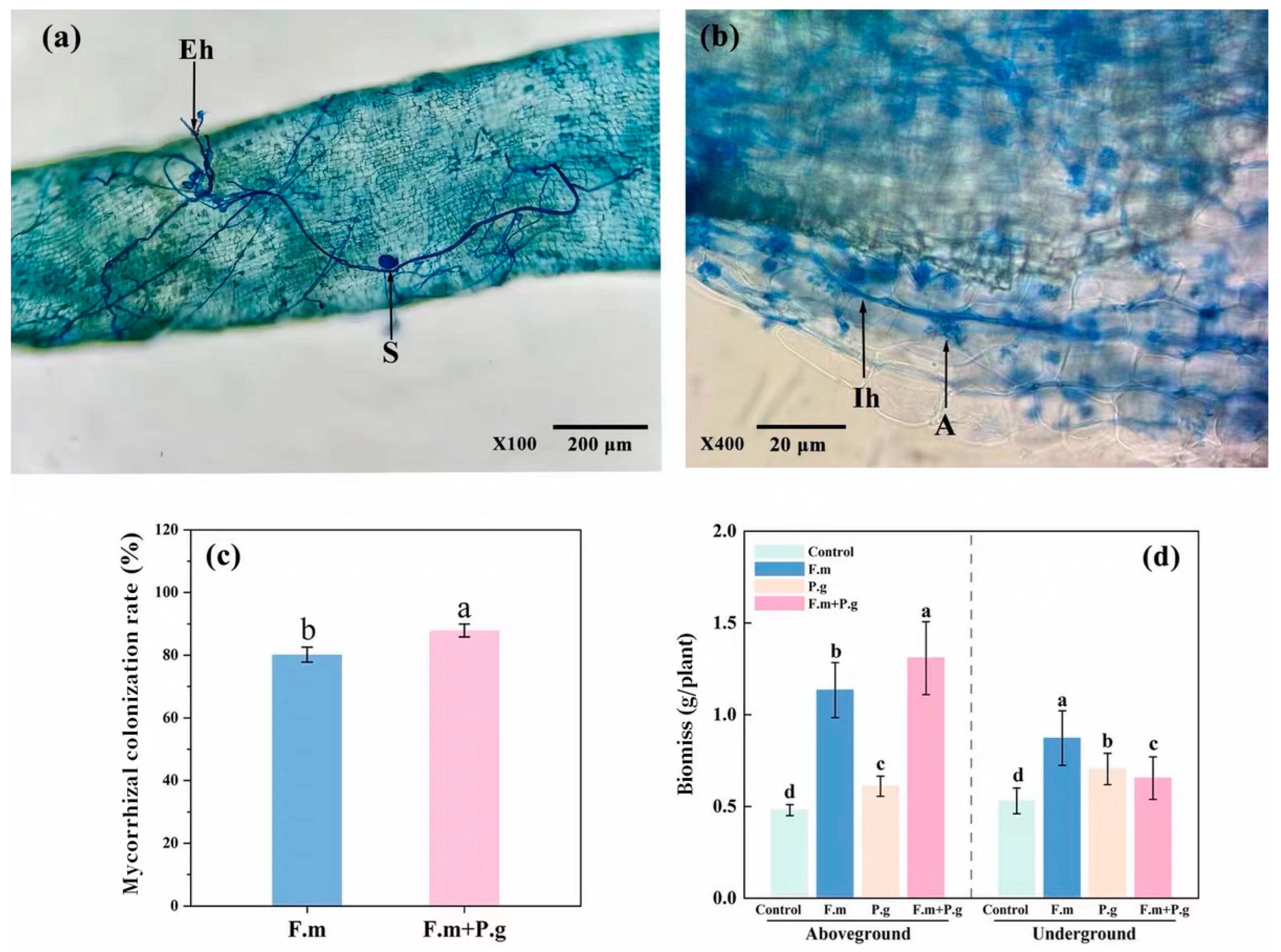
Control roots showed complete absence of mycorrhizal structures, while well-developed arbuscular mycorrhizal structures were clearly present in the F. mosseae-inoculated roots (Figure 1a,b). The combined application of F. mosseae and P. guillelmi resulted in a synergistical increase in mycorrhizal colonization rates (10%), demonstrating a significant increase over F. mosseae inoculation alone (Figure 1c). All treatments significantly enhanced plant biomass production relative to the controls, though with varying degrees. Inoculation with F. mosseae alone produced the most pronounced effects, increasing aboveground biomass by 136% and belowground biomass by 65%. Amendment with P. guillelmi alone resulted in more moderate increases of 27% in aboveground and 33% in belowground biomass (Figure 1d). Notably, the combined treatment showed synergistic effects on shoot growth (173% increase), while the enhancement of belowground biomass (65%) was comparable to that observed with F. mosseae alone. A significant interaction was observed for root mycorrhizal colonization rate and aboveground/underground biomass (Table 1). These results demonstrate that although both organisms independently promote plant biomass, their interaction specifically enhances aboveground productivity.

3.2. Changes in N Concentrations in Leaves and Roots

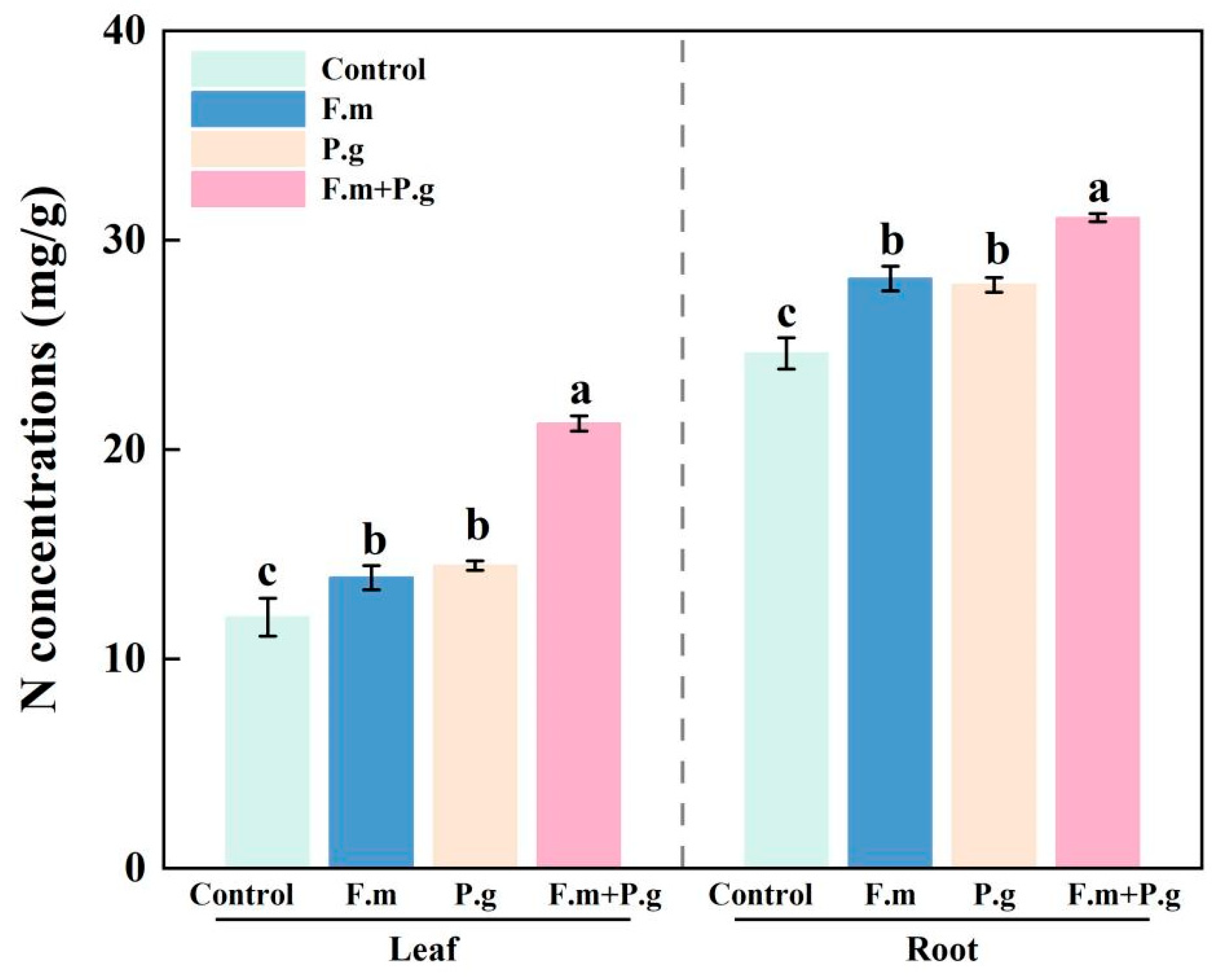
Compared to the untreated control group, individual applications of F. mosseae or P. guillelmi and their co-inoculation significantly increased N concentration in plant tissues (Figure 2). Individual F. mosseae and P. guillelmi treatments increased N concentration by 16% and 21% in roots and 14% and 13% in leaves, respectively, whereas the combined treatment resulted in a significant increase of 77% in roots and 26% in leaves.
Statistical analysis revealed no significant difference between the individual treatments in either tissue, while the combined treatment consistently outperformed both individual inoculations. Significant interactions were observed for leaf and root N concentrations (Table 1).

3.3. Changes in Soil Total N Content

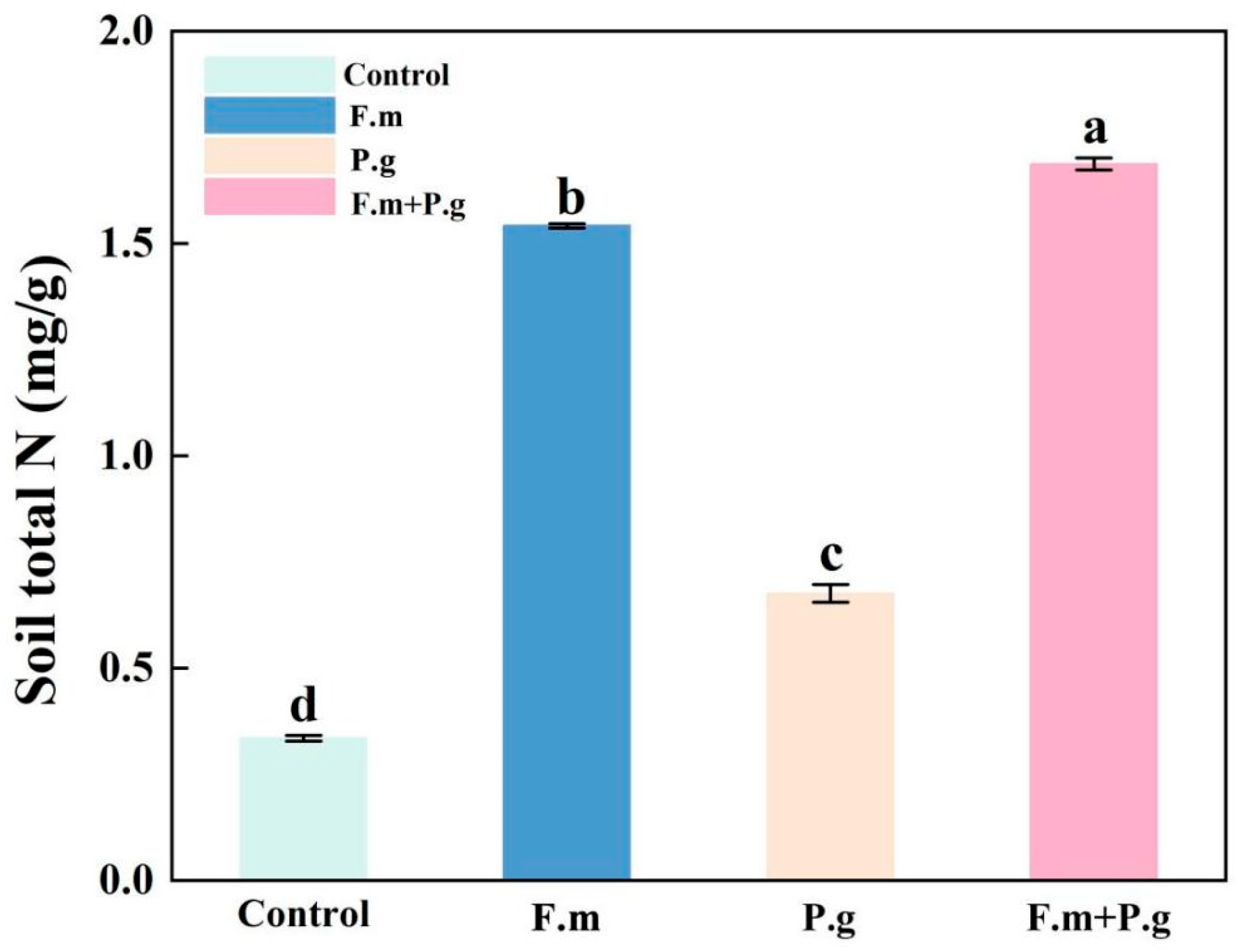
Compared to the Control, all treatments significantly increased the total soil N content (Figure 3). Specifically, F.m, P.g, and their co-inoculation (F.m+P.g) significantly increased the soil total N content by 361% (from 0.334 ± 0.007 mg/g in Control to 1.541 ± 0.005 mg/g in F.m), 102% (0.675 ± 0.021 mg/g in P.g), and 405% (to 1.687 ± 0.014 mg/g in F.m+P.g), respectively, with significant differences among all three treatments. Significant interactions were observed for soil total N (Table 1).

3.4. Changes in Soil N Fraction Content

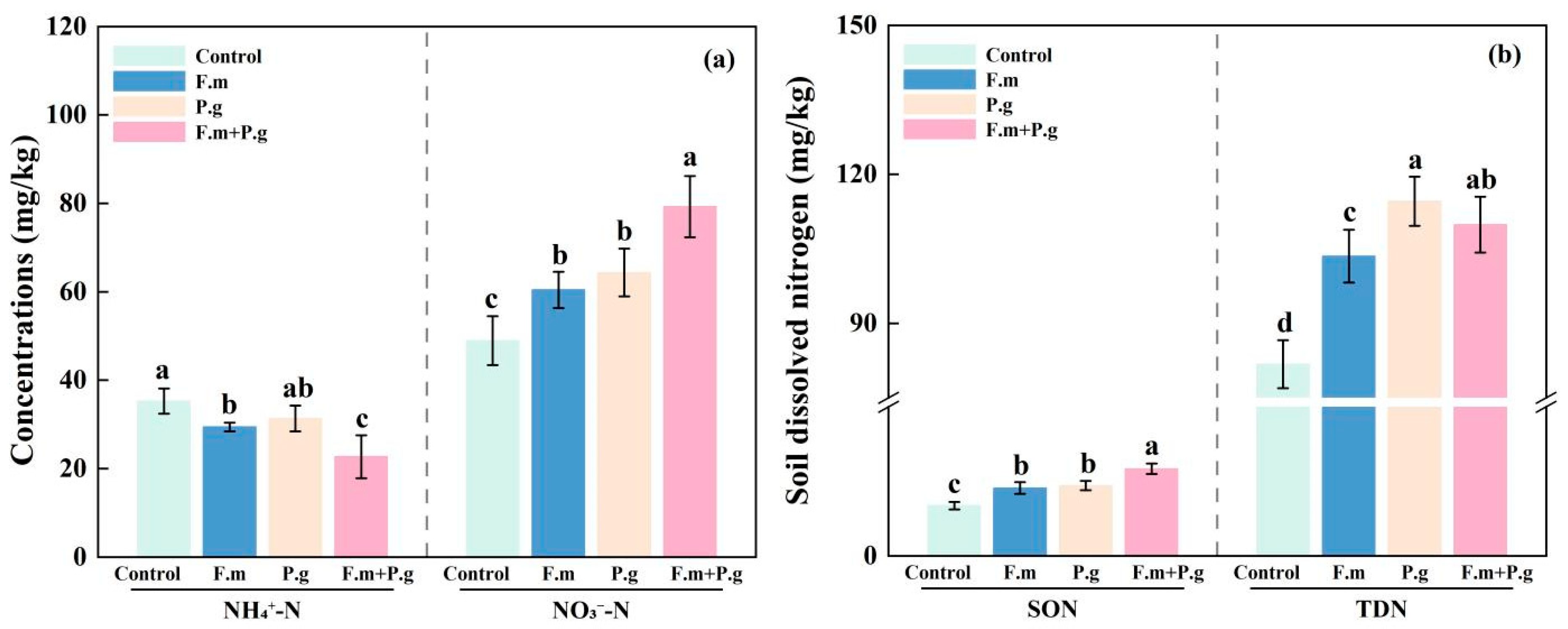
Significant alterations in soil N fraction content were induced by the inoculated treatments relative to the control (Figure 4a,b). For NH4+-N, P.g treatment did not exhibit any significant effect, whereas F.m and F.m+P.g treatments significantly decreased its content by 17% and 36%, respectively, compared with the Control (Figure 4a). All inoculated treatments markedly increased soil NO3-N content, with F.m, P.g, and F.m+P.g treatments elevating levels by 24%, 32%, and 62%, respectively. Co-inoculation resulted in a significantly greater NO3-N content than individual treatments. Soluble organic nitrogen (SON) was significantly enhanced by F.m (35%), P.g (40%), and F.m+P.g (73%) treatments compared with the Control. Regarding total dissolved nitrogen (TDN), individual F.m and P.g treatments increased its content by 31% and 53%, respectively, while co-inoculation yielded a significant 39% increase, a magnitude lower than that achieved by P.g treatment alone. Significant interactions were observed for soil NH4+-N, TDN, and SON (Table 1).

3.5. Changes in GRSP Content in Rhizosphere

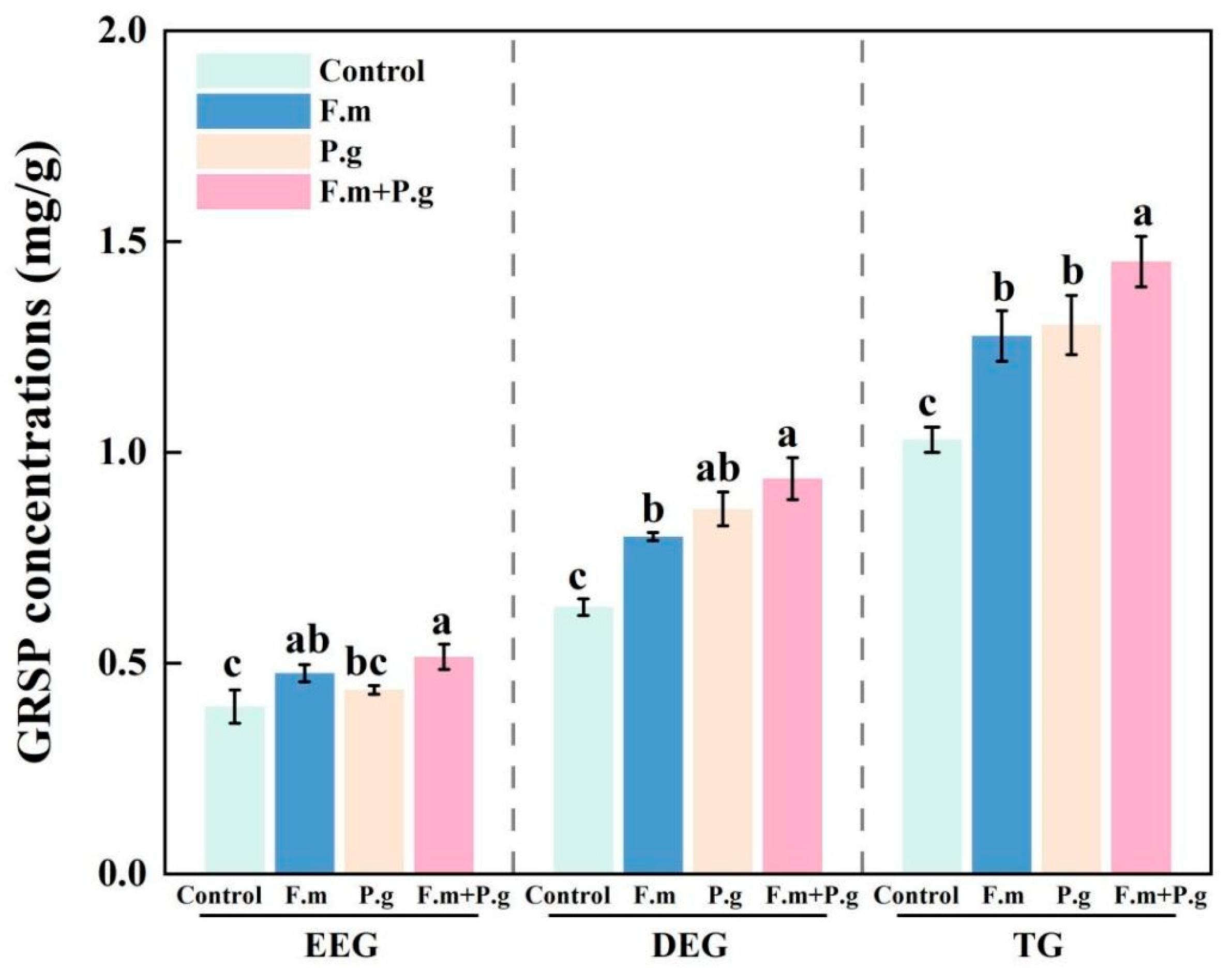
Compared to the Control, individual F. mosseae (F.m) and P. guillelmi (P.g) treatments and their co-inoculation distinctly elevated DEG content by 26%, 37%, and 48% and TG content by 24%, 26%, and 41%, respectively (Figure 5). In addition, F.m and F.m+P.g treatments significantly increased EEG content by 20% and 30%, along with no significant change between the P.g and Control treatments. Notably, the co-inoculation demonstrated a relatively higher increase in magnitudes across all GRSP fractions than individual treatments. Significant interactions were observed for all GRSP fractions (Table 1).

3.6. Changes in GRSP-Sequestered N Content

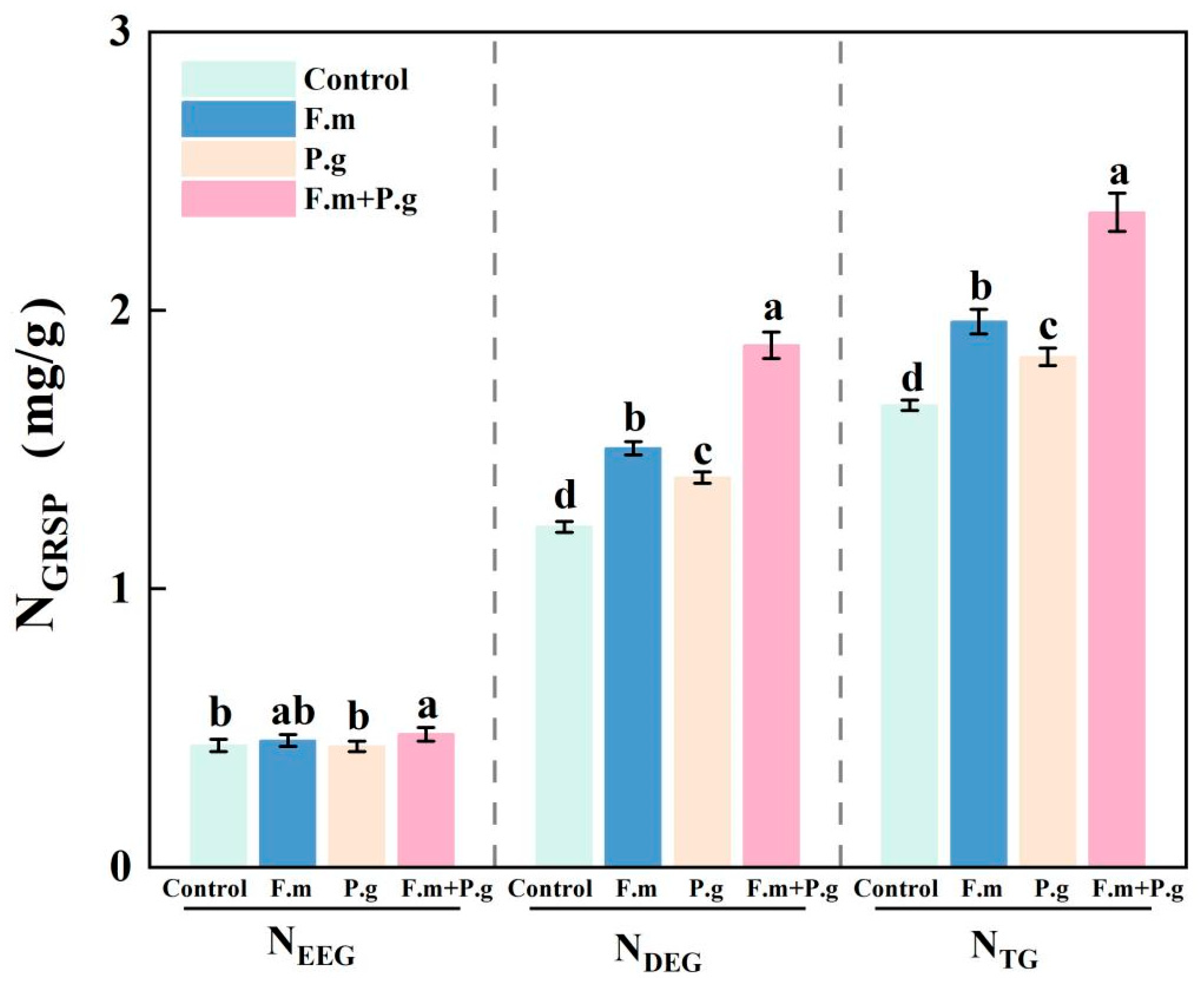
Inoculated treatments triggered different changes in GRSP-sequestered N content. Co-inoculation of F. mosseae and P. guillelmi (F.m+P.g) significantly enhanced NEEG, NDEG, and NTG content by 9%, 53%, and 42%, respectively, compared with the Control (Figure 6). In contrast, individual treatments exhibited distinct patterns: neither individual F. mosseae (F.m) nor P. guillelmi (P.g) significantly affected NEEG, while NDEG increased by 23% (F.m) and 15% (P.g), and NTG by 18% (F.m) and 10% (P.g). The co-inoculation demonstrated significantly greater enhancement across all GRSP-sequestered N content than individual treatments. Significant interactions were observed for all GRSP-sequestered N content (Table 1).

3.7. Changes in Contribution of GRSP-Sequestered N to Soil Total N

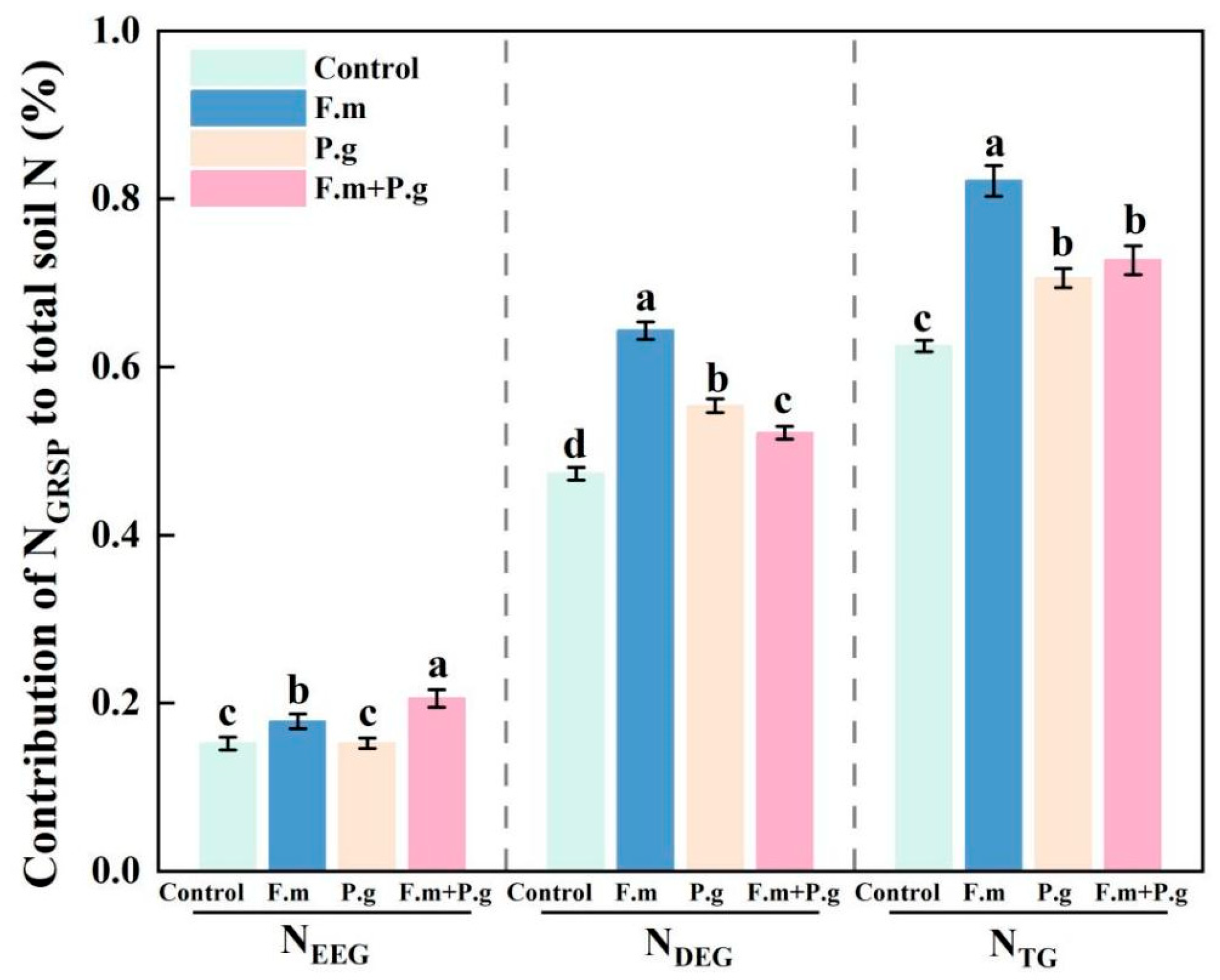
Compared to the Control, F.m treatment significantly enhanced the contribution of GRSP-sequestered N to soil total N, as evidenced by EEG, DEG, and TG increasing by 17%, 29%, and 26%, respectively (Figure 7). However, P.g treatment showed no significant effect on NEEG to soil total N but significantly increased the contribution of NDEG and NTG to soil total N by 17% and 13%, respectively. In addition, F.m+P.g treatment increased the contribution of NEEG, NDEG, and NTG to soil total N by 35%, 56%, and 51%, respectively. The increased effect of co-inoculation on the contribution of GRSP-sequestered N to soil total N was distinctly higher than the individual inoculations.
Compared to the Control, F.m treatment significantly enhanced the contribution of GRSP-sequestered N (NEEG 17%, NDEG 29%, NTG 26%) to soil total N; P.g increased only NDEG (17%) and NTG (13%); and F.m+P.g co-inoculation markedly increased all contributions (NEEG 35%, NDEG 56%, NTG 51%), demonstrating distinctly greater effects than either individual inoculation (Figure 7). Significant interactions were observed for the contribution of NDEG and NTG to soil total N (Table 1).

3.8. Changes in Soil Enzyme Activities

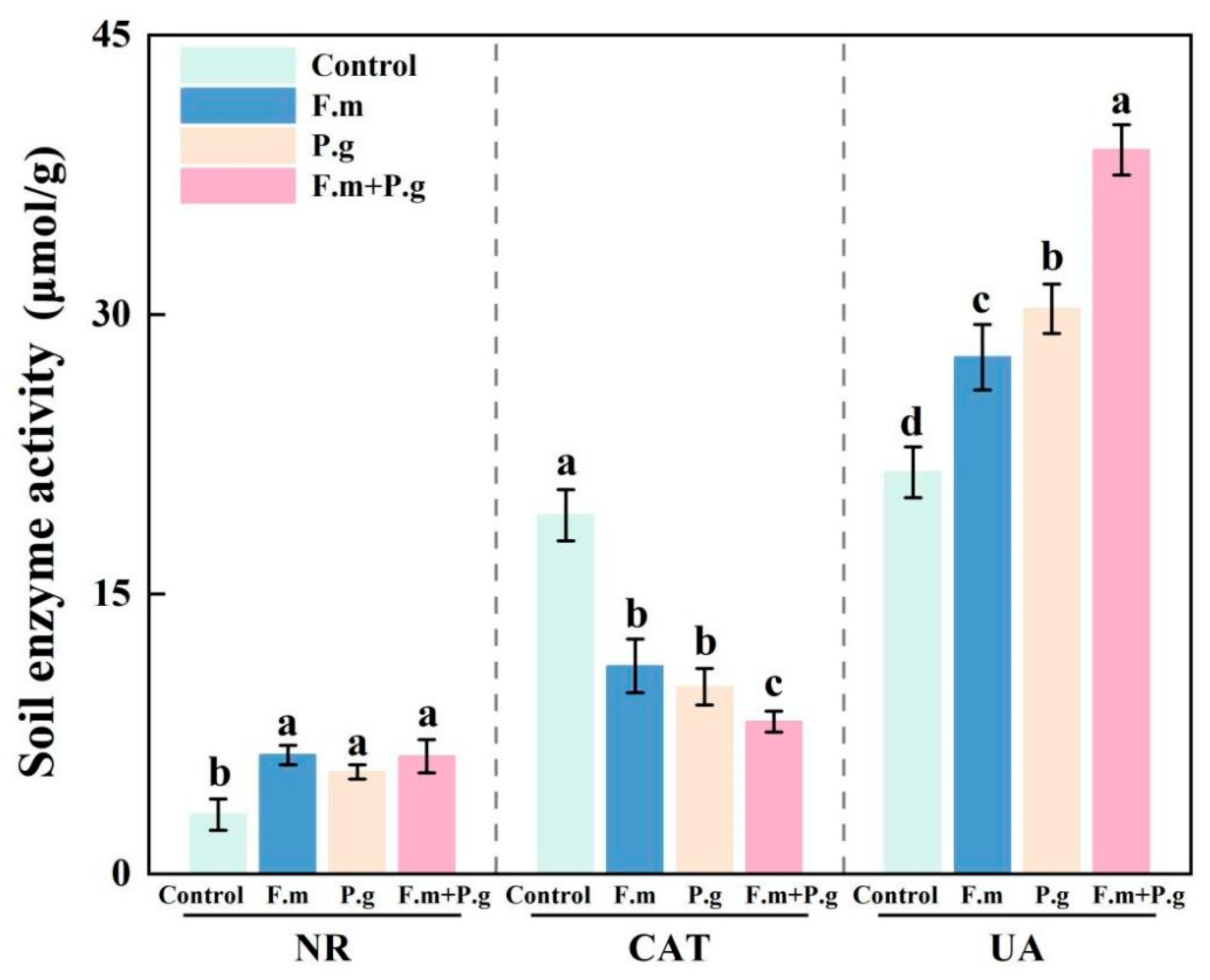
Compared to the Control, individual and co-inoculation treatments significantly influenced soil enzyme activities (Figure 8). Under F.m versus Control, NR activity increased by 101%, UA activity increased by 29%, and CAT activity decreased by 42%. Treatment with P. guillelmi (P.g) alone showed a similar trend: NR activity rose by 72%, UA rose by 41%, and CAT declined by 48%. Notably, co-inoculation (F.m+P.g) demonstrated synergistic effects, markedly enhancing NR activity by 99% and UA activity by 80%, while significantly suppressing CAT activity by 58%. Significant interactions were observed for soil NR and UA (Table 1).

4. Discussion

This study demonstrated that both individual inoculations of F. mosseae or P. guillelmi and their combined application significantly enhanced the biomass of trifoliate orange seedlings. The presence of well-developed arbuscular mycorrhizal structures in roots inoculated with F. mosseae verified successful fungal establishment [44,48,49]. Co-inoculation with F. mosseae and P. guillelmi increased mycorrhizal colonization rates by 10% compared to F. mosseae treatment alone [43], which may be attributed to earthworm-induced improvements in soil porosity, aeration, and organic matter distribution creating a more favorable environment for AM fungal hyphal proliferation and root colonization [11,50,51]. The dual treatment produced the greatest aboveground biomass increase (173%), indicating a strong synergistic effect. F. mosseae expanded the soil volume exploited by roots through its hyphal network, enhancing nutrient acquisition and translocation to the host plant [40], while simultaneously stimulating endogenous indole-3-acetic acid (IAA) synthesis and root proliferation [18]. In contrast, P. guillelmi decomposed organic matter into plant-available nutrients and enriched casts with soluble N and P [11,40]. Although P. guillelmi alone had a modest effect on aboveground biomass (27%), it significantly increased underground biomass (33%), likely due to improved soil structure, accelerated nutrient cycling, and stimulated root growth [43]. Thus, earthworms appear to facilitate AMF colonization in roots, and the two organisms complement each other to elevate nutrient availability and plant uptake, ultimately leading to great biomass production [44].
This study demonstrated that F. mosseae or P. guillelmi applied individually, as well as their combined treatment, significantly enhanced leaf and root N content. AM fungi directly promoted N assimilation by expanding the root absorptive surface area and extraradical hyphal network [52,53,54]. Its induction of ammonium transporter activation (e.g., ZmAMT3;1) can mediate direct N transport via the mycorrhizal pathway [55]. Earthworms, conversely, optimize the rhizosphere microenvironment through physical disturbance, enhance N mineralization rates and mineral availability, and regulate the hormonal balance to improve N utilization efficiency [56,57]. The two organisms synergistically promoted leaf and root N acquisition in trifoliate orange, leading to root N concentrations that were 1.27 times higher than those in single-inoculation treatments. This amplification of N acquisition is consistent with previous studies reporting the synergistic effects of earthworms and AMF on plant N accumulation [17,26]. Similarly, Wang et al. [26] demonstrated that combined earthworm and AMF application enhanced the expression of genes involved in N and phosphorus uptake in maize under stress conditions, supporting the concept of synergistic nutrient acquisition. Earthworm activities create favorable growth conditions for the mycorrhizal network (e.g., increased soil porosity), while mycorrhizal exudates reciprocally meet the nutritional demands of earthworms [56,58]. Such cooperative behavior accelerates the acquisition of N by the host plant.
N transformation is closely linked to soil enzyme activity [59]. This study found that the synergistic interaction between AM fungi and earthworms significantly reshaped the soil enzyme activity profile. Inoculation with F. mosseae alone significantly increased NR and UA activities while decreasing CAT activity, suggesting that the AM fungus optimized rhizosphere nutrient availability by promoting N transformation and organic matter decomposition [60]. The increase in NR activity may be attributed to the extension of the plant’s nitrate uptake range via the AM fungal hyphal network [61], while elevated UA activity reflects accelerated urea hydrolysis and ammonia release processes [62,63]. The reduction in CAT activity, rather than indicating a negative effect, likely reflects an improved rhizosphere redox environment with reduced oxidative stress, thereby lowering the plant’s demand for reactive oxygen species-scavenging enzymes [25,63,64]. However, it could also indicate a reduced oxidative defense capacity, potentially making plants more vulnerable to sudden stress episodes [26]. Given the overall growth enhancement observed, the former interpretation is more likely in this context. Mechanistically, AM fungi are known to enhance the expression of alternative antioxidant enzymes (e.g., superoxide dismutase, peroxidase) and to increase the accumulation of non-enzymatic antioxidants such as glutathione, which may compensate for reduced CAT activity [25,38]. Earthworms, by improving soil structure and aeration, reduce hypoxic conditions that trigger oxidative bursts, thus indirectly lowering the need for CAT [65]. The synergistic reduction of CAT under co-inoculation suggests that the combined treatment further alleviates oxidative pressure, possibly through complementary effects on soil microenvironments and plant physiological status. A similar trend was observed in the P. guillemi alone treatment. Earthworms, as vital ecosystem engineers, influence soil enzyme activity by improving soil structure and facilitating organic matter decomposition [15,43,64]. The vermicompost (pH 7.2–8.1) produced by earthworms can increase the pH of acidic soils, thereby creating a more favorable microenvironment for the activity of neutral-to-alkaline pH-dependent enzymes such as NR and UA [65]. Concurrently, their burrowing activities enhanced soil aeration and water infiltration, creating a more favorable environment for microbial growth, which consequently promoted the activities of enzymes like NR and UA. Notably, the combined treatment of AM fungi and earthworms exhibited a significant synergistic effect on UA activity, indicating complementary mechanisms in accelerating urea hydrolysis and ammonia release processes. Furthermore, the sustained reduction of CAT activity may reflect that the combined treatment further alleviated soil oxidative stress or altered phenolic compound dynamics [65].
Earthworms and AM fungi also markedly influenced soil N fraction contents. Earthworms enhance the physical fragmentation of organic matter and increase microbial contact through feeding and burrowing activities, generally promoting organic N mineralization and increasing inorganic N availability [66,67]. However, this study found that the addition of earthworms alone did not significantly affect NH4+-N content, suggesting that their influence operates mainly through physical mixing and organic matter mineralization rather than direct nitrification, consistent with the conclusion that soil fauna indirectly affect the N cycle via structural disturbance [22,68]. In contrast, inoculation with AM fungi (F. mosseae) alone and the combined treatment significantly reduced NH4+-N content, indicating direct uptake of NH4+-N via their hyphal network [28,29]. This process was coupled with an increase in NO3-N content, signifying that AM fungi predominantly drive the intensification of nitrification [29,68]. Earthworms improve soil structure (e.g., increased porosity) and oxygen diffusion, creating favorable habitats for nitrifying bacteria, indirectly promoting the conversion of NH4+-N to NO3-N [66]. The significant increase in NO3-N under the combined treatment confirms the synergistic interaction [28,35,67]. Additionally, all three treatments significantly increased SON content, because earthworms accelerate organic matter mineralization through gut-enzyme-mediated mineralization (e.g., proteases) [66], while AM fungi enhance the solubilization of organic-matter-bound N through the secretion of GRSP [28,29]. The further increase in SON under co-inoculation indicates complementary decomposition pathways—physical fragmentation by earthworms and biochemical modification by AM fungi—that synergistically expand N bioavailability [28,69]. This effect is directly linked to the elevated UA and NR activities, corroborating the intensification of N mineralization and turnover processes [30,70]. The smaller increase in TDN content under the combined treatment compared to earthworm treatment alone does not imply a contradiction between reducing N losses and increasing gaseous N losses. Instead, it reflects a trade-off in the N balance: the co-inoculation treatment sequesters a large amount of labile TDN into stable GRSP-sequestered N, leading to a relative reduction in the content of soluble TDN in the soil solution, while the minor gaseous N loss (e.g., N2O) is far offset by the significant reduction in N leaching and the increase in N sequestration via GRSP [36,71]. Overall, the co-inoculation treatment achieves a net reduction in total N loss in the plant–soil system [11,36]. This N balance trade-off is mediated by AM fungi through GRSP production and by earthworms through the physical protection of organic matter; their interaction optimizes the partitioning of N among plant uptake, microbial immobilization, and stable soil pools, thereby enhancing N use efficiency while minimizing environmental losses.
GRSP, secreted by AM fungi, plays a critical role in soil aggregate stability and N storage [72]. This study demonstrated that treatments with F. mosseae alone, P. guillelmi alone, and their combination increased the content of all GRSP fractions, with synergistic effects under co-inoculation. This synergy arose because AM fungi directly contributed to hyphal production of EEG and facilitated its transformation into more stable DEG [46,73], while earthworms accelerated root AM fungal colonization to potentially promote GRSP production [74]. These findings align with recent work by Meng et al. [44], who reported synergistic enhancement of GRSP and soil organic carbon sequestration in trifoliate orange under combined AM fungi and earthworm inoculation. This synergy resulted in a hierarchical pattern of NGRSP: F.m+P.g > F.m > P.g > Control. The superiority of the combined treatment can be attributed to: (i) increased TG providing more N binding sites; (ii) enhanced GRSP stability due to earthworm-improved soil pore formation [33]; and (iii) microbial community restructuring, boosting their efficiency [64]. Notably, NDEG was higher than NEEG, irrespective of inoculation status. This is associated with DEG’s higher hydrophobicity and its enhanced capacity to form stable organo-mineral complexes [28]. These findings confirm that the AM fungi–earthworm interaction constructs an efficient N sequestration system via the GRSP pathway, reducing N losses while supporting GRSP’s role as a key agent in maintaining soil N balance [11,74].
In this study, inoculation with AMF significantly increased the contribution rates of NEEG, NDEG, and NTG to total soil nitrogen. This enhancement primarily originated from GRSP secretion within the hyphal network and the promotion of organo-mineral complex formation [73]. AMF may also alter the chemical composition of GRSP (e.g., elevating C: N ratios), thereby improving N sequestration capacity and stabilizing the soil N pool [35,36]. Although P. guillelmi addition alone did not significantly affect the contribution rate of NEEG to total soil nitrogen, it did increase the contribution rate of NDEG to soil total nitrogen through elevated DEG content and physical mixing mechanisms that provide substrates for N accumulation. The co-inoculation with F. mosseae and P. guillelmi significantly enhanced the contribution rates of NEEG, NDEG, and NTG to total soil nitrogen, demonstrating a collaborative effect in stabilizing N via the GRSP pathway. This collaborative mechanism may achieve a balance between increasing N input and reducing N losses (enhancing N sequestration). These results demonstrate that AM fungi and earthworms individually and interactively enhance N availability, transformation, and sequestration in the plant–soil system. Their synergistic effects improve soil enzyme activities, promote N cycling, and increase organic N stabilization through GRSP. The substantial increases in soil total N content (102–405%) observed in this pot experiment reflect the amplified effects of biological interactions in a controlled system with low initial N levels and minimal leaching. Such relative increases are valuable for understanding mechanistic processes, but they are not expected to be directly transferable to field conditions where background N levels are higher and system losses are more dynamic.
This study has several limitations. First, the experiment was conducted under controlled pot conditions with a single soil type, which may not fully represent the complexity of field ecosystems. Second, only one species each of AM fungus (F. mosseae) and earthworm (P. guillelmi) was used, limiting the generalizability of the findings to other species. Third, the relatively short experimental duration (e.g., 12 weeks) does not capture the long-term dynamics of N cycling and GRSP turnover. Future research should validate these findings under field conditions across diverse soil types and climatic regions. Long-term studies are needed to assess the persistence of GRSP-sequestered N and the stability of the synergistic effects. Additionally, exploring the molecular mechanisms underlying the interaction, such as gene expression of N transporters and antioxidant enzymes, would provide deeper insights. Investigating the role of other soil biota (e.g., bacteria, protozoa) in modulating the AMF–earthworm synergy could also help optimize this biological strategy for sustainable N management.

5. Conclusions

The results of this study support our hypothesis that co-inoculation with AM fungi (F. mosseae) and earthworms (P. guillelmi) synergistically enhances N sequestration and plant N uptake in trifoliate orange. The synergy is mediated through a coordinated optimization of rhizosphere N cycling, involving three interlinked processes: (i) enhanced mineralization of organic N via UA activity and increased availability of NO3-N through stimulated NR activity in roots and microorganisms, reflecting greater N assimilation potential; (ii) increased production of GRSP, leading to the transformation and stabilization of labile N into stable GRSP pools, with DEG serving as the dominant N sink, confirming the role of GRSP in N sequestration; and (iii) alleviation of oxidative stress, facilitating efficient root N acquisition. These findings underscore the potential of combining AMF and earthworms as a biological strategy for sustainable N management.

Author Contributions

L.-L.M.; Writing—original draft, Visualization, Software, Methodology, Investigation. Y.W.; Writing, Data Curation, Formal Analysis, Validation. Y.-N.Z.; Writing—review and editing, Supervision, Conceptualization. Q.-S.W.; Writing—review and editing, Supervision, Resources, Conceptualization. H.-L.L.; Writing—review and editing, Supervision. All authors have read and agreed to the published version of the manuscript.

Funding

This work was supported by the Sichuan Provincial Natural Science Foundation Project (2025ZNSFSC0611).

Institutional Review Board Statement

Not applicable.

Informed Consent Statement

Not applicable.

Data Availability Statement

Data are contained within the article. The data presented in this study can be requested from the authors.

Conflicts of Interest

The authors declare no conflicts of interest.

References

  1. Soretire, A.A.; Adeyemi, N.O.; Atayese, M.O.; Olubode, A.A.; Adewunmi, A. Inoculation of arbuscular mycorrhizal fungi improve soil chemical properties, growth and symbiotic N. Acta Fytotech. Zootech. 2020, 23, 182–191. [Google Scholar] [CrossRef] [Scilit]
  2. Wang, C.; Zheng, M.M.; Song, W.F.; Chen, R.F.; Zhao, X.Q.; Wen, S.L.; Zheng, Z.S.; Shen, R.F. Biogeographic patterns and co-occurrence networks of diazotrophic and arbuscular mycorrhizal fungal communities in the acidic soil ecosystem of southern China. Appl. Soil Ecol. 2021, 158, 103798. [Google Scholar] [CrossRef] [Scilit]
  3. Fasusi, O.A.; Babalola, O.O.; Adejumo, T.O. Harnessing of plant growth-promoting rhizobacteria and arbuscular mycorrhizal fungi in agroecosystem sustainability. CABI Agric. Biosci. 2023, 4, 26. [Google Scholar] [CrossRef] [Scilit]
  4. Sharma, S.; Basu, S.; Shetti, N.P.; Aminabhavi, T.M. Waste-to-energy nexus for circular economy and environmental protection: Recent trends in hydrogen energy. Sci. Total Environ. 2020, 713, 136633. [Google Scholar] [CrossRef] [Scilit] [PubMed]
  5. Aguilar-Paredes, A.; Valdés, G.; Araneda, N.; Valdebenito, E.; Hansen, F.; Nuti, M. Microbial community in the composting process and its positive impact on the soil biota in sustainable agriculture. Agronomy 2023, 13, 542. [Google Scholar] [CrossRef] [Scilit]
  6. Li, F.Q.; Zi, H.Y.; Sonne, C.; Li, X.G. Microbiome sustains forest ecosystem functions across hierarchical scales. Eco-Environ. Health 2023, 2, 24–31. [Google Scholar] [CrossRef] [Scilit]
  7. Alshegaihi, R.M.; Alatawi, A.; Alenezi, M.A. Ameliorative effects of plant growth promoting rhizobacteria and arbuscular mycorrhizal fungi on cu stress in maize (Zea mays L.) with a focus on oxidative damage, antioxidant responses, and gene expression. J. Soil Sci. Plant Nutr. 2024, 24, 243–2455. [Google Scholar] [CrossRef] [Scilit]
  8. Mazumder, S.; Bhattacharya, D.; Lahiri, D.; Nag, M. Rhizobacteria and arbuscular mycorrhizal fungi (AMF) community in growth management and mitigating stress in millets: A plant-soil microbe symbiotic relationship. Curr. Microbiol. 2025, 82, 242. [Google Scholar] [CrossRef] [Scilit]
  9. Milleret, R.; Le Bayon, R.C.; Gobat, J.M. Root, mycorrhiza and earthworm interactions: Their effects on soil structuring processes, plant and soil nutrient concentration and plant biomass. Plant Soil 2008, 316, 1–12. [Google Scholar] [CrossRef] [Scilit]
  10. Wurst, S.; Forstreuter, M. Colonization of Tanacetum vulgare by aphids is reduced by earthworms. Entomol. Exp. Appl. 2010, 137, 86–92. [Google Scholar] [CrossRef] [Scilit]
  11. Liu, R.C.; Meng, L.L.; Zou, Y.N.; He, X.H.; Wu, Q.S. Introduction of earthworms into mycorrhizosphere of white clover facilitates N storage in glomalin-related soil protein and contribution to soil total N. Appl. Soil Ecol. 2022, 179, 104597. [Google Scholar] [CrossRef] [Scilit]
  12. Parihar, M.; Rakshit, A.; Meena, V.S.; Gupta, V.K.; Rana, K.; Choudhary, M.; Tiwari, G.; Mishra, P.K.; Pattanayak, A.; Bisht, J.K.; et al. The potential of arbuscular mycorrhizal fungi in C cycling: A review. Arch. Microbiol. 2020, 202, 1581–1596. [Google Scholar] [CrossRef] [Scilit]
  13. Lammel, D.R.; Meierhofer, D.; Johnston, P.; Mbedi, S.; Rillig, M.C. The effects of arbuscular mycorrhizal fungi (AMF) and Rhizophagus irregularis on soil microorganisms assessed by metatranscriptomics and metaproteomics. bioRxiv 2019, 860932. [Google Scholar] [CrossRef] [Scilit]
  14. Cao, J.; Wang, C.; Ji, D.G. Improvement of the soil nitrogen content and maize growth by earthworms and arbuscular mycorrhizal fungi in soils polluted by oxytetracycline. Sci. Total Environ. 2016, 571, 926–934. [Google Scholar] [CrossRef] [Scilit]
  15. Aghababaei, F.; Raiesi, F.; Hosseinpur, A. The combined effects of earthworms and arbuscular mycorrhizal fungi on microbial biomass and enzyme activities in a calcareous soil spiked with cadmium. Appl. Soil Ecol. 2014, 75, 33–42. [Google Scholar] [CrossRef] [Scilit]
  16. Suarez Castellanos, D.E.; Gigon, A.; Puga-Freitas, R.; Lavelle, P.; Velasquez, E.; Blouin, M. Combined effects of earthworms and iaa-producing rhizobacteria on plant growth and development. Appl. Soil Ecol. 2014, 80, 100–107. [Google Scholar] [CrossRef] [Scilit]
  17. Zhai, S.L.; Tong, Z.Y.; Xie, J.J.; Chen, W.P.; Yang, B.; Meng, Y.L.; Chen, C.Q.; Yang, H.S. Mycorrhiza-mediated nitrogen cycling depends on earthworm behavior under different straw management regimes. Catena 2023, 220, 106663. [Google Scholar] [CrossRef] [Scilit]
  18. Zhang, W.W.; Wang, C.; Liu, M.L.; Yu, Y.C. Integrated reclamation of saline soil nitrogen transformation in the hyphosphere by earthworms and arbuscular mycorrhizal fungus. Appl. Soil Ecol. 2019, 135, 137–146. [Google Scholar] [CrossRef] [Scilit]
  19. Yan, Z.F.; Chang, B.X.; Song, X.T.; Wang, G.S.; Shan, J.; Yang, L.Q.; Li, S.L.; Butterbach-Bahl, K.; Ju, X.T. A microbial-explicit model with comprehensive nitrogen processes to quantify gaseous nitrogen production from agricultural soils. Soil Biol. Biochem. 2024, 189, 109284. [Google Scholar] [CrossRef] [Scilit]
  20. He, M.Q.; Dai, S.Y.; Zhu, Q.Y.; Wang, W.J.; Chen, S.D.; Meng, L.; Dan, X.Q.; Huang, X.Q.; Cai, Z.C.; Zhang, J.B.; et al. Understanding the stimulation of microbial oxidation of organic n to nitrate in plant soil systems. Soil Biol. Biochem. 2024, 190, 109312. [Google Scholar] [CrossRef] [Scilit]
  21. Zaller, J.G.; Heigl, F.; Ruess, L.; Grabmaier, A. Glyphosate herbicide affects belowground interactions between earthworms and symbiotic mycorrhizal fungi in a model ecosystem. Sci. Rep. 2014, 4, 5634. [Google Scholar] [CrossRef] [Scilit]
  22. Jang, J.; Xiong, X.; Liu, C.; Yoo, K.; Ishii, S. Invasive earthworms alter forest soil microbiomes and nitrogen cycling. Soil Biol. Biochem. 2022, 171, 108724. [Google Scholar] [CrossRef] [Scilit]
  23. Han, S.; Lucas-Borja, M.E.; Chen, W.; Huang, Q. Soil glomalin-related protein affects aggregate N2O fluxes by modulating denitrifier communities in a fertilized soil. Sci. Total Environ. 2023, 880, 163147. [Google Scholar] [CrossRef] [Scilit]
  24. Wilson, G.W.T.; Rice, C.W.; Rillig, M.C.; Springer, A.; Hartnett, D.C. Soil aggregation and carbon sequestration are tightly correlated with the abundance of arbuscular mycorrhizal fungi: Results from long-term field experiments. Ecol. Lett. 2009, 12, 452–461. [Google Scholar] [CrossRef] [Scilit] [PubMed]
  25. Liu, Z.; Cao, M.A.; Kuča, K.; Alqahtani, M.D.; Muthuramalingam, P.; Wu, Q.S. Cloning of CAT genes in Satsuma mandarin and their expression characteristics in response to environmental stress and arbuscular mycorrhizal fungi. Plant Cell Rep. 2024, 43, 123. [Google Scholar] [CrossRef] [Scilit] [PubMed]
  26. Wang, B.; Xiao, M.; Cao, J.; Wang, C. Earthworms and arbuscular mycorrhizal fungi improve salt tolerance in maize through symplastic pathways. J. Exp. Bot. 2025, 76, 2373–2386. [Google Scholar] [CrossRef] [Scilit] [PubMed]
  27. Salvioli di Fossalunga, A.; Novero, M. To trade in the field: The molecular determinants of arbuscular mycorrhiza nutrient exchange. Chem. Biol. Technol. Agric. 2019, 6, 12. [Google Scholar] [CrossRef] [Scilit]
  28. Li, X.; Zhang, J.L. Uptake of ammonium and nitrate by external hyphae of arbuscular mycorrhizal fungi. J. Plant Nutr. Fert. 2009, 15, 683–689. [Google Scholar]
  29. Zhang, H.R.; Cheng, H.G.; Zhang, F.; Peng, S.Q.; Shi, Y.J.; Luo, C.B.; Tian, X.P.; Wang, Z.H.; Xing, D. Increased nitrogen accumulation in mulberry trees due to the secretion of glomalin-related soil protein induced by arbuscular mycorrhizal fungi. Eur. J. Soil Biol. 2024, 122, 103659. [Google Scholar] [CrossRef] [Scilit]
  30. Yuan, Y.G.; Li, J.M. Dodder parasitism limited the effect of arbuscular mycorrhizal fungi on litter decomposition. Soil Biol. Biochem. 2022, 174, 108837. [Google Scholar] [CrossRef] [Scilit]
  31. Chowdhury, S.; Lange, M.; Malik, A.A.; Goodall, T.; Huang, J.; Griffiths, R.I.; Gleixner, G. Plants with arbuscular mycorrhizal fungi efficiently acquire nitrogen from substrate additions by shaping the decomposer community composition and their net plant carbon demand. Plant Soil 2022, 475, 473–490. [Google Scholar] [CrossRef] [Scilit]
  32. Thomopoulos, S.; Elsgaard, L.; Munkholm, L.J.; Ravnskov, S. Evaluation of the relation between soil biomass of arbuscular mycorrhizal fungi and glomalin-related soil protein in conservation agriculture. Soil Biol. Biochem. 2023, 187, 109222. [Google Scholar] [CrossRef] [Scilit]
  33. Cheng, G.C.; Zhu, M.N.; Zhang, X.; Guo, Y.F.; Yang, Y.B.; Yun, C.L.; Wu, Y.; Wang, Q.; Wang, W.; Wang, H.M. Northeastern China shelterbelt-farmland glomalin differences depend on geo-climates, soil depth, and microbial interaction: Carbon sequestration, nutrient retention and implication. Appl. Soil Ecol. 2023, 191, 105068. [Google Scholar] [CrossRef] [Scilit]
  34. Son, Y.J.; Stott, K.; Manning, D.A.C.; Cooper, J.M. Carbon sequestration in artificial silicate soils facilitated by arbuscular mycorrhizal fungi and glomalin-related soil protein. Eur. J. Soil Sci. 2020, 72, 863–870. [Google Scholar] [CrossRef] [Scilit]
  35. Yang, H.B.; Cai, Z.J.; De Clerck, C.; Meersmans, J.; Colinet, G.; Zhang, W.J. Long-term manuring enhanced compositional stability of glomalin-related soil proteins through arbuscular mycorrhizal fungi regulation. Agriculture 2024, 14, 1510. [Google Scholar] [CrossRef] [Scilit]
  36. He, J.D.; Chi, G.G.; Zou, Y.N.; Shu, B.; Wu, Q.S.; Srivastava, A.K.; Kuča, K. Contribution of glomalin-related soil proteins to soil organic carbon in trifoliate orange. Appl. Soil Ecol. 2020, 154, 103592. [Google Scholar] [CrossRef] [Scilit]
  37. Nuccio, E.E.; Hodge, A.; Pett-Ridge, J.; Herman, D.J.; Weber, P.K.; Firestone, M.K. An arbuscular mycorrhizal fungus significantly modifies the soil bacterial community and nitrogen cycling during litter decomposition. Environ. Microbiol. 2013, 15, 1870–1881. [Google Scholar] [CrossRef] [Scilit]
  38. Zhang, F.; Zou, Y.N.; Wu, Q.S.; Kuča, K. Arbuscular mycorrhizas modulate root polyamine metabolism to enhance drought tolerance of trifoliate orange. Environ. Exp. Bot. 2020, 171, 103926. [Google Scholar] [CrossRef] [Scilit]
  39. Tan, X.P.; Li, C.Z.; Zou, Y.N.; Lei, A.Q.; Alqahtani, M.D.; Wu, Q.S. Cultivar-dependent effects of arbuscular mycorrhizal (AM) fungal inoculation on fruit quality and native AM fungal community in navel orange. Rhizosphere 2026, 37, 101269. [Google Scholar] [CrossRef] [Scilit]
  40. Zou, Y.N.; Wan, Y.X.; Zheng, F.L.; Cheng, X.F.; Hashem, A.; Wu, Q.S. Mycorrhizal trifoliate orange plants tolerate soil drought by enhancing photosynthetic physiological activities and reducing active GA3 levels. Tree Physiol. 2025, 45, tpaf073. [Google Scholar] [CrossRef] [Scilit] [PubMed]
  41. Sun, M.H.; Lu, X.P.; Cao, X.J.; Li, J.; Xiong, J.; Xie, S.X. Effect of different nitrogen forms on root growth and dynamic kinetics characteristics for Citrus sinensis × Poncirus trifoliata. Sci. Silvae Sin. 2015, 51, 113–120. [Google Scholar]
  42. Batool, A.; Li, S.S.; Dong, H.J.; Bahadur, A.; Tu, W.; Zhang, Y.; Xiao, Y.L. Battle of arbuscular mycorrhizal fungi against drought stress: A gateway to sustainable agriculture. J. Fungi 2025, 12, 20. [Google Scholar] [CrossRef] [Scilit]
  43. Meng, L.L.; Srivastava, A.K.; Kuča, K.; Wu, Q.S. Earthworm (Pheretima guillelmi)-mycorrhizal fungi (Funneliformis mosseae) association mediates rhizosphere responses in white clover. Appl. Soil Ecol. 2022, 172, 104371. [Google Scholar] [CrossRef] [Scilit]
  44. Meng, L.L.; Zou, Y.N.; Hashem, A.; Abd_Allah, E.F.; Wu, Q.S. Arbuscular mycorrhizal fungi and earthworms synergistically enhance trifoliate orange growth by regulating auxins and promote soil organic carbon sequestration through soil glomalin. Sci. Hortic. 2025, 349, 114253. [Google Scholar] [CrossRef] [Scilit]
  45. Phillips, J.M.; Hayman, D.S. Improved procedures for clearing roots and staining parasitic and vesicular-arbuscular mycorrhizal fungi for rapid assessment of infection. Trans. Br. Mycol. Soc. 1970, 55, 158–161. [Google Scholar] [CrossRef] [Scilit]
  46. Bremner, J.M. Total nitrogen. In Methods of Soil Analysis; Black, C.A., Ed.; American Society of Agronomy: Madison, WI, USA, 1965; pp. 1149–1178. [Google Scholar]
  47. Bao, S.D. Soil Agricultural Chemical Analysis, 3rd ed.; China Agriculture Press: Beijing, China, 2000. [Google Scholar]
  48. Rillig, M.C. Arbuscular mycorrhizae, glomalin, and soil aggregation. Can. J. Soil Sci. 2004, 84, 355–363. [Google Scholar] [CrossRef] [Scilit]
  49. Liang, S.M.; Hashem, A.; Abd_Allah, E.F.; Wu, Q.S. Transcriptomic analysis reveals potential roles of polyamine and proline metabolism in waterlogged peach roots inoculated with Funneliformis mosseae and Serendipita indica. Tree Physiol. 2025, 45, tpaf013. [Google Scholar] [CrossRef] [Scilit]
  50. Zheng, Y.; Chen, X.; Gong, X.; Bonkowski, M.; Wang, S.; Griffiths, B.; Hu, F.; Liu, M. The geophagous earthworm Metaphire guillelmi effects on rhizosphere microbial community structure and functioning vary with plant species. Geoderma 2020, 379, 114647. [Google Scholar] [CrossRef] [Scilit]
  51. Pelosi, C.; Taschen, E.; Redecker, D.; Blouin, M. Earthworms as conveyors of mycorrhizal fungi in soils. Soil Biol. Biochem. 2024, 189, 109283. [Google Scholar] [CrossRef] [Scilit]
  52. Li, H.; Wang, C.; Li, X.; Xiang, D. Inoculating maize fields with earthworms (Aporrectodea trapezoides) and an arbuscular mycorrhizal fungus (Rhizophagus intraradices) improves mycorrhizal community structure and increases plant nutrient uptake. Biol. Fertil. Soils 2013, 49, 1167–1178. [Google Scholar] [CrossRef] [Scilit]
  53. Verzeaux, J.; Hirel, B.; Dubois, F.; Lea, P.J.; Tétu, T. Agricultural practices to improve nitrogen use efficiency through the use of arbuscular mycorrhizae: Basic and agronomic aspects. Plant Sci. 2017, 264, 48–56. [Google Scholar] [CrossRef] [Scilit]
  54. Ortas, I.; Iqbal, T.; Yücel, Y.C. Mycorrhizae enhances horticultural plant yield and nutrient uptake under phosphorus deficient field soil condition. J. Plant Nutr. 2019, 42, 1152–1164. [Google Scholar] [CrossRef] [Scilit]
  55. Jing, J.; Zhang, F.; Rengel, Z.; Shen, J. Localized fertilization with P plus N elicits an ammonium-dependent enhancement of maize root growth and nutrient uptake. Field Crops Res. 2012, 133, 176–185. [Google Scholar] [CrossRef] [Scilit]
  56. He, X.X.; Chen, Y.Q.; Liu, S.J.; Gunina, A.; Wang, X.L.; Chen, W.L.; Shao, Y.H.; Shi, L.L.; Yao, Q.; Li, J.X. Cooperation of earthworm and arbuscular mycorrhizae enhanced plant n uptake by balancing absorption and supply of ammonia. Soil Biol. Biochem. 2018, 116, 351–359. [Google Scholar] [CrossRef] [Scilit]
  57. Chamkhi, I.; Cheto, S.; Geistlinger, J.; Zeroual, Y.; Kouisni, L.; Bargaz, A.; Ghoulam, C. Legume-based intercropping systems promote beneficial rhizobacterial community and crop yield under stressing conditions. Ind. Crops Prod. 2022, 183, 114958. [Google Scholar] [CrossRef] [Scilit]
  58. Gilarte, P.; Plett, J.; Pendall, E.; Carrillo, Y.; Nielsen, U.N. Direct and indirect trophic interactions of soil nematodes impact chickpea and oat nutrition. Plant Soil 2020, 457, 255–268. [Google Scholar] [CrossRef] [Scilit]
  59. Feng, J.; Wu, J.J.; Zhang, Q.; Zhang, D.D.; Li, Q.X.; Long, C.Y.; Yang, F.; Chen, Q.; Cheng, X.L. Stimulation of nitrogen-hydrolyzing enzymes in soil aggregates mitigates nitrogen constraint for carbon sequestration following afforestation in subtropical China. Soil Biol. Biochem. 2018, 123, 136–144. [Google Scholar] [CrossRef] [Scilit]
  60. Wu, Y.S.; Sun, Z.X.; Liu, R.L.; Cai, B.Y. Funneliformis mosseae enhances the function of C, N and P cycling bacteria in continuous soybean rhizosphere soil. J. Soil Sci. Plant Nutr. 2024, 24, 8263–8279. [Google Scholar] [CrossRef] [Scilit]
  61. Mi, W.H.; Hong, Y.; Gao, F.; Ma, Y.Y.; Sun, T.; Wu, L.H.; Wang, G.Z.; Chen, S.T. Effect of different form of n fertilization on yield sustainability and soil quality in double cropped rice system in a long-term experiment. J. Soil Sci. Plant Nutr. 2024, 24, 2815–2824. [Google Scholar] [CrossRef] [Scilit]
  62. Lomas, M.W. Nitrate reductase and urease enzyme activity in the marine diatom Thalassiosira weissflogii (Bacillariophyceae): Interactions among nitrogen substrates. Mar. Biol. 2004, 144, 37–44. [Google Scholar] [CrossRef] [Scilit]
  63. Gao, Y.H.; Zhang, Y.; Wang, H.D.; Wu, B.; Li, Y.; Yan, B.; Wang, Y.F.; Lu, P.N.; Wang, R.J.; Wen, M.; et al. Improving the key enzyme activity, conversion intensity, and nitrogen supply capacity of soil through optimization of long-term oilseed flax rotation planting patterns in dry areas of the Loess Plateau of China. Agronomy 2024, 14, 262. [Google Scholar] [CrossRef] [Scilit]
  64. Li, H.; Xiang, D.; Wang, C.; Li, X.L.; Lou, Y. Effects of epigeic earthworm (Eisenia fetida) and arbuscular mycorrhizal fungus (Glomus intraradices) on enzyme activities of a sterilized soil-sand mixture and nutrient uptake by maize. Biol. Fert. Soils 2012, 48, 879–887. [Google Scholar] [CrossRef] [Scilit]
  65. Xiao, R.; Ali, A.; Xu, Y.Q.; Abdelrahman, H.; Li, R.H.; Lin, Y.B.; Bolan, N.; Shaheen, S.M.; Rinklebe, J.; Zhang, Z.Q. Earthworms as candidates for remediation of potentially toxic elements contaminated soils and mitigating the environmental and human health risks: A review. Environ. Int. 2022, 158, 106924. [Google Scholar] [CrossRef] [Scilit]
  66. Gudeta, K.; Kumar, V.; Bhagat, A.; Julka, J.M.; Bhat, S.A.; Ameen, F.; Qadri, H.; Singh, S.; Amarowicz, R. Ecological adaptation of earthworms for coping with plant polyphenols, heavy metals, and microplastics in the soil: A review. Heliyon 2023, 9, e14572. [Google Scholar] [CrossRef] [Scilit]
  67. Wang, S.; Huo, J.S.; Wu, D.W.; Li, J.M.; Chen, X.Y.; Hu, F.; Liu, M.Q. Earthworms increase soil carbon dioxide emissions through changing microbial community structure and activity under high nitrogen addition. Appl. Soil Ecol. 2024, 196, 105297. [Google Scholar] [CrossRef] [Scilit]
  68. Seck-Mbengue, M.F.; Müller, A.; Ngwene, B.; Neumann, E.; George, E. Transport of nitrogen and zinc to rhodes grass by arbuscular mycorrhiza and roots as affected by different nitrogen sources (NH4+-N and NO3-N). Symbiosis 2017, 73, 191–200. [Google Scholar] [CrossRef] [Scilit]
  69. Li, H.; Li, X.L.; Dou, Z.X.; Zhang, J.L.; Wang, C. Earthworm (Aporrectodea trapezoides)–mycorrhiza (Glomus intraradices) interaction and nitrogen and phosphorus uptake by maize. Biol. Fert. Soils 2011, 48, 75–85. [Google Scholar] [CrossRef] [Scilit]
  70. Yuan, L.; Li, J.; Lei, N.B.; Xie, H.T.; Lu, C.Y.; Chen, X.; Ma, S.; Zhang, J.B.; Müller, C.; He, H.B.; et al. Stover mulching in no-tillage farming reduces ammonia volatilization in the Mollisol of Northeast China: Insights from gross N transformation dynamics. Soil Tillage Res. 2024, 240, 106068. [Google Scholar] [CrossRef] [Scilit]
  71. Rizhiya, E.; Bertora, C.; van Vliet, P.C.; Kuikman, P.J.; Faber, J.H.; van Groenigen, J.W. Earthworm activity as a determinant for N2O emission from crop residue. Soil Biol. Biochem. 2007, 39, 2058–2069. [Google Scholar] [CrossRef] [Scilit]
  72. Bedini, S.; Pellegrino, E.; Avio, L.; Pellegrini, S.; Bazzoffi, P.; Argese, E.; Giovannetti, M. Changes in soil aggregation and glomalin-related soil protein content as affected by the arbuscular mycorrhizal fungal species Glomus mosseae and Glomus intraradices. Soil Biol. Biochem. 2009, 41, 1491–1496. [Google Scholar] [CrossRef] [Scilit]
  73. Wu, Z.P.; McGrouther, K.; Huang, J.D.; Wu, P.B.; Wu, W.D.; Wang, H.L. Decomposition and the contribution of glomalin-related soil protein (GRSP) in heavy metal sequestration: Field experiment. Soil Biol. Biochem. 2014, 68, 283–290. [Google Scholar] [CrossRef] [Scilit]
  74. Liu, X.Q.; Xie, M.M.; Hashem, A.; Abd-Allah, E.F.; Wu, Q.S. Arbuscular mycorrhizal fungi and rhizobia synergistically promote root colonization, plant growth, and nitrogen acquisition. Plant Growth Regul. 2023, 100, 691–701. [Google Scholar] [CrossRef] [Scilit]
Figure 1. Mycorrhizal development and growth responses of trifoliate orange seedlings to Funneliformis mosseae and Pheretima guillemi inoculation. (a,b) Representative micrographs of root colonization structures: S = spores, Ih = intraradical hyphae, Eh = extraradical hyphae, A = arbuscule. (c) Changes in root colonization rate of mycorrhizal plants following introduction of P. guillemi. (d) Treatment effects on plant biomass production. Data are presented as mean ± SD (n = 5). Bars with different letters indicate statistically significant differences among treatments (p < 0.05). Treatment abbreviations: Control (uninoculated); F.m (F. mosseae only); P.g (P. guillemi only); F.m+P.g (dual inoculation).
Horticulturae 12 00298 g001
Figure 2. Changes in N concentration in leaves and roots of trifoliate orange seedlings following Funneliformis mosseae and Pheretima guillemi inoculation. Values are presented as mean ± SD (n = 5). Bars with different letters indicate statistically significant differences among treatments (p < 0.05). Treatment abbreviations follow the same convention as in Figure 1.
Horticulturae 12 00298 g002
Figure 3. Changes in soil total N content in trifoliate orange seedlings following Funneliformis mosseae and Pheretima guillemi inoculation. Values are presented as mean ± SD (n = 5). Bars with different letters indicate statistically significant differences among treatments (p < 0.05). Treatment abbreviations follow the same convention as in Figure 1.
Horticulturae 12 00298 g003
Figure 4. Changes in soil NH4+-N (ammonium nitrogen) (a), NO3-N (nitrate nitrogen) (a), SON (soluble organic nitrogen) (b), and TDN (total dissolved nitrogen) (b) content in trifoliate orange seedlings following Funneliformis mosseae and Pheretima guillemi inoculation. Values are presented as mean ± SD (n = 5). Bars with different letters indicate statistically significant differences among treatments (p < 0.05). Treatment abbreviations follow the same convention as in Figure 1.
Horticulturae 12 00298 g004
Figure 5. Changes in soil easily extractable glomalin-related soil protein (EEG), difficultly extractable glomalin-related soil protein (DEG), and total glomalin-related soil protein (TG) concentration in trifoliate orange seedlings following Funneliformis mosseae and Pheretima guillemi inoculation. Values are presented as mean ± SD (n = 5). Bars with different letters indicate statistically significant differences among treatments (p < 0.05). Treatment abbreviations follow the same convention as in Figure 1.
Horticulturae 12 00298 g005
Figure 6. Changes in contents of easily extractable GRSP-sequestered nitrogen (NEEG), difficultly extractable GRSP-sequestered nitrogen (NDEG), and total GRSP-sequestered nitrogen (NTG) in trifoliate orange seedlings following Funneliformis mosseae and Pheretima guillemi inoculation. Values are presented as mean ± SD (n = 5). Bars with different letters indicate statistically significant differences among treatments (p < 0.05). Treatment abbreviations follow the same convention as in Figure 1.
Horticulturae 12 00298 g006
Figure 7. Changes in the contribution of easily extractable GRSP-sequestered nitrogen (NEEG), difficultly extractable GRSP-sequestered nitrogen (NDEG), and total GRSP-sequestered nitrogen (NTG) to soil total N in trifoliate orange seedlings following Funneliformis mosseae and Pheretima guillemi inoculation. Values are presented as mean ± SD (n = 5). Bars with different letters indicate statistically significant differences among treatments (p < 0.05). Treatment abbreviations follow the same convention as in Figure 1.
Horticulturae 12 00298 g007
Figure 8. Changes in soil urease (UA), catalase (CAT), and nitrate reductase (NR) activities in trifoliate orange seedlings following Funneliformis mosseae and Pheretima guillemi inoculation. Values are presented as means ± SD (n = 5). Bars with different letters indicate statistically significant differences among treatments (p < 0.05). Treatment abbreviations follow the same convention as in Figure 1.
Horticulturae 12 00298 g008
Table 1. Significance of variables between arbuscular mycorrhizal fungi and earthworms.
VariablesAMFEwInteractionVariablesAMFEwInteraction
Mycorrhizal colonization rate**NS*DEG****
Aboveground biomass******TG****
Underground biomass******NEEG1*NS*
Leaf N ******NDEG1****
Root N ******NTG1****
Soil total N******NEEG2*NSNS
Soil NO3-N**NSNSNDEG2****
Soil NH4+-N**NS*NTG2****
SON****NR**NS*
TDN****UA**NS*
EEG**NS*CAT***NS
Abbreviations: AMF, inoculation with Funneliformis mosseae; Ew, inoculation with Pheretima guillemi; NO3-N, nitrate nitrogen; NH4+-N, ammonium nitrogen; SON, soluble organic nitrogen; TDN, total dissolved nitrogen; EEG, easily extractable glomalin-related soil protein; DEG, difficultly extractable glomalin-related soil protein; TG, total glomalin-related soil protein; NEEG1, nitrogen sequestered in easily extractable GRSP; NDEG1, nitrogen sequestered in difficultly extractable GRSP; NTG1, total nitrogen sequestered in GRSP; NEEG2, NDEG2, and NTG2, proportional representation of nitrogen sequestered in EEG, DEG, and TG relative to soil total nitrogen, respectively; NR, nitrate reductase; UA, urease; CAT, catalase; NS, not significant at p < 0.05; *, p < 0.05; **, p < 0.01.
Disclaimer/Publisher’s Note: The statements, opinions and data contained in all publications are solely those of the individual author(s) and contributor(s) and not of MDPI and/or the editor(s). MDPI and/or the editor(s) disclaim responsibility for any injury to people or property resulting from any ideas, methods, instructions or products referred to in the content.