Article

Screening the Optimal Concentration and Timing of Paclobutrazol for the Growth and Development of Container-Grown Blueberries

1
College of Horticulture, Jilin Agricultural University, Changchun 130118, China
2
Ziyue Agricultural Science and Technology Group Co., Ltd., Wuhu 238300, China
*
Authors to whom correspondence should be addressed.
These authors contributed equally to this work.
Horticulturae 2026, 12(3), 295; https://doi.org/10.3390/horticulturae12030295
Submission received: 15 December 2025 / Revised: 27 February 2026 / Accepted: 27 February 2026 / Published: 2 March 2026
(This article belongs to the Section Fruit Production Systems)

Abstract

The blueberry variety ‘Liberty’ shows excessive vegetative growth and difficulty in flower bud differentiation under container cultivation. Paclobutrazol (PBZ), a widely used plant growth regulator, effectively modulates the balance between vegetative and reproductive growth in plants; however, its application in container-cultivated blueberries remains understudied. This study systematically investigated the effects of different PBZ concentrations (0–200 mg·L−1) on the growth and development, physiological characteristics, and fruit quality of container-cultivated ‘Liberty’ blueberries and further clarified the optimal application time. Results showed that low-concentration treatments (≤75 mg·L−1) significantly enhanced root development, increased new shoot diameter, and elevated the root-to-shoot ratio. Concurrently, it induced the coordinated thickening of palisade and spongy tissues in leaves and significantly increased the maximum photochemical efficiency (Fv/Fm) and chlorophyll content. The contents of endogenous hormones indole-3-acetic acid (IAA) and gibberellin (GA3) in new shoots were significantly reduced, while the cytokinin-to-gibberellin ratio (CTK/GA3) in flower buds was markedly elevated. These changes effectively promoted flower bud differentiation, increased bud number, and advanced the flowering time by approximately 2 days. Fruit quality was significantly improved. Under high concentration treatments, the content of malondialdehyde (MDA) continuously accumulated, and the activities of antioxidant enzymes (CAT, POD, SOD) significantly decreased. Furthermore, the efficacy of paclobutrazol weakened with the delay of application time. Comprehensive analysis indicated that the 50 mg·L−1 concentration effectively suppressed excessive vegetative growth and maximally improved fruit quality, with its application at the mid-stage of secondary shoot growth exhibiting favorable coordination of plant growth and development. This provides a theoretical basis for the application of paclobutrazol in blueberry production.

1. Introduction

Blueberry (Vaccinium corymbosum L.), a genus belonging to the Ericaceae family, is characterized by its high content of phenolic acids [1,2], flavonoids, phenolic glycosides, triterpenoids, carotenoids, organic acids, carbohydrates, and higher fatty acids [3,4]. This fruit exhibits significant health-promoting effects and holds substantial economic value [5,6,7]. As a shallow-rooted plant without root hair structures, blueberry thrives in acidic soils with high organic matter content, good drainage, and adequate aeration [8,9,10]. So, blueberry cultivation typically necessitates soil amendment via the application of a specific proportion of sulfur powder and peat. This approach is not only time- and labor-intensive but also constrains the expansion of blueberry planting areas. Substrate-based cultivation is an innovative cropping system that employs solid substrates (e.g., coconut coir, rockwool, sphagnum moss) as alternatives to natural soil, with nutrient solutions delivered via drip irrigation. This system allows facile regulation of substrate physicochemical properties, overcomes the limitations of soil, and facilitates intensive, standardized management [11]. It has been widely adopted for crops including tomato [12,13], strawberry [14], and melon [15]. In the past 5 years, substrate cultivation has emerged as the dominant mode for blueberry production in China. In 2024, substrate-based cultivation accounted for 79.36% of the total area dedicated to blueberry facility production nationwide. Compared with the traditional cultivation mode, it exhibits distinct advantages in faster growth rate and earlier high yield (achieving high yield in the second year after planting), improved fruit quality, and effective suppression of fungal diseases [16].
Blueberry substrate cultivation offers notable advantages; however, it also presents several challenges, including high technical demands for production management, limited tolerance to variations in cultivation practices, inferior fruit quality compared to single-fertilizer soil cultivation, and progressive tree decline and yield reduction resulting from restricted root development under long-term cultivation conditions. Additionally, certain vigorous varieties exhibit excessive vegetative growth, which hinders flower bud formation and consequently affects yield. Paclobutrazol (PBZ) is a widely utilized plant growth regulator (PGR) in agricultural production, which has been applied to crops such as peach [17], olive [18], and mango [19]. It is characterized by its functions of inhibiting gibberellin (GA) biosynthesis, regulating plant growth status, and suppressing vegetative growth. Research findings indicate that PBZ application can induce plant tolerance to abiotic stresses such as drought and low light [20], effectively enhance chlorophyll content index (CCI) and gas exchange capacity [21], improve antioxidant capacity, and regulate endogenous hormone levels [22], as well as promote flower bud differentiation and advance flowering [23]. In fruit tree production (e.g., apple [24], pitaya [25]), PBZ has been utilized to regulate shoot growth, promote flowering, optimize canopy architecture, improve fruit quality, and extend postharvest shelf life [17]. Nevertheless, inaccurate application practices have resulted in several adverse effects, including excessive dwarfing, reduced fruit quality, and premature leaf abscission. Additionally, improper use of PBZ can lead to environmental contamination, such as its residual accumulation in soil and potential leaching into groundwater. Such residues can significantly alter the structure of soil microbial communities, thereby impairing soil fertility and disrupting nutrient cycling processes [26]. As a soil-substitute cultivation system and substrate-based cultivation—particularly when implemented in containerized systems—can effectively impede the migration of PBZ to environmental media (e.g., soil and groundwater), thus substantially mitigating its ecological risks. To date, no studies have been reported on the application of PBZ in container-cultivated blueberries. Therefore, determining the optimal concentration of PBZ for container cultivation of blueberries is an important issue worthy of in-depth exploration.
The blueberry cultivar ‘Liberty’ is widely favored among growers due to its vigorous growth habit, late maturity, large fruit size, excellent bloom, superior storage and transportability, high yield potential, and strong environmental adaptability. However, in the Changbai Mountain production region, where the frost-free period is relatively short, the challenges associated with flower bud formation in this cultivar may be exacerbated when grown in container cultivation systems. This study examined the effects of seven distinct concentrations and timings of PBZ treatments on the growth, physiological traits, and fruit quality of two-year-old ‘Liberty’ blueberry plants under container cultivation conditions. The objectives were to determine the optimal application concentration and timing of PBZ for container-cultivated blueberries, and to provide scientific evidence for its precise utilization in promoting flower bud formation, regulating tree architecture, and enhancing fruit quality.

2. Materials and Methods

2.1. Plant Materials

The experiment was conducted in a plastic greenhouse at the small berry resource nursery of Jilin Agricultural University, commencing in June 2021 and spanning a total duration of four years. Two-year-old plants of the blueberry cultivar ‘Liberty’ were selected as experimental material, with an average plant height of approximately 50 cm and 5 branches per plant (each branch bearing around 6 buds). The plants were cultivated in 30 L pots. The potting substrate consisted of coconut coir, peat moss, and perlite mixed at a volume ratio of 2:1:1, with a pH of approximately 4.5 and an electrical conductivity (EC) value of about 0.8 mS/cm. The experiment was conducted in a plastic greenhouse with three replications. In each replication, pots were arranged in 10 rows on soil covered with black ground fabric, with each row accommodating 7 experimental treatments, resulting in a total of 70 potted plants per replication. Row spacing and plant spacing were set at 0.8 m and 0.5 m, respectively. The plastic greenhouse featured good ventilation, with dimensions of 60 m in length, 12 m in width, and approximately 3 m in height. Diurnal temperatures were maintained at approximately 23 °C during the daytime and 16 °C at night. Specialized blueberry fertilizer was supplied by Galuku Pty Ltd., Sydney, Australia. Integrated water and fertilizer management was implemented using a drip irrigation system (Netafim, Kibbutz Hatzerim, Israel) from Netafim Israel, with the nutrient solution containing 1.6% trace elements, approximately 150 mmol/L NH4-N, and around 150 mmol/L P. The specialized blueberry fertilizer was sourced from Galuku Company in Australia. An integrated water and nutrient management system was implemented using drip irrigation equipment supplied by Netafim, Israel. Irrigation was initiated one hour post sunrise and terminated one hour prior to sunset, with intervals of 1 to 3 h between consecutive irrigation events. The total irrigation volume per plant was set at 2 L. Each irrigation cycle lasts between 3 and 5 min, and the system operates 5 to 15 times per day, ensuring that drainage constitutes approximately 20% of the total irrigation volume. During periods of sunny and high-temperature conditions, irrigation frequency may be increased; conversely, under cloudy or low-temperature conditions, the frequency should be correspondingly reduced.

2.2. Screening of Optimal Application Concentration of Paclobutrazol

A single-factor randomized block design was employed to establish seven concentrations of PBZ (produced by Shanghai Yuanye Biotechnology Co., Ltd., purity 95%): 0 mg·L−1 (CK), 25 mg·L−1 (A1), 50 mg·L−1 (A2), 75 mg·L−1 (A3), 100 mg·L−1 (A4), 150 mg·L−1 (A5), and 200 mg·L−1 (A6). Root irrigation was conducted in the morning during the new shoot growth stage of blueberry in mid-June. Each plant received 2 L of PBZ solution. For each treatment, 10 pots were arranged, with one blueberry plant per pot, and each pot was regarded as one biological replicate. The above-ground part growth, underground part growth, leaf structure, malondialdehyde (MDA) content, antioxidant enzyme activity, and endogenous hormones content were measured after the new shoots stopped growing in early October of that year. Chlorophyll content, leaf photosynthetic parameters, fluorescence parameters, and fruit quality were measured in the next year.

2.3. Screening of the Optimal Application Timing of Paclobutrazol

A single-factor randomized block design was employed, where seven distinct timings were set for PBZ application on two-year-old blueberries during the new shoot growth period in the third year: early stage of new shoot growth (B1), mid-stage of new shoot growth (B2), late stage of new shoot growth (B3), early stage of secondary shoot growth (B4), mid-stage of secondary shoot growth (B5), late stage of secondary shoot growth (B6), and shoot growth cessation stage (B7). Root irrigation was conducted in the morning during the new shoot growth stage of blueberry in mid-June. Each plant received 2 L of PBZ solution. For each treatment, 10 pots were arranged, with one blueberry plant per pot, and each pot was regarded as one biological replicate. The above-ground part growth, underground part growth, leaf structure, MDA content, and antioxidant enzyme activity were measured after the new shoots stopped growing in early October of that year. Chlorophyll content, leaf photosynthetic parameters, fluorescence parameters, and fruit quality were determined in the next year.

2.4. Determination of Above-Ground Index and Underground Index

In early October of the first and third years, three pots of blueberries were randomly selected from the treatments with different concentrations and different application timings for measurement. Each measurement was repeated three times, and the mean value of the three technical replicates was used as the final measured data. The length of new shoots was measured using a tape measure from the base to the apex. Stem diameter was determined at 2 cm above the base using a vernier caliper. Internode length was calculated by dividing the total shoot length by the number of internodes recorded along the shoot. Mature leaves from the middle section of the shoots were selected, and their leaf area was measured with a YMJ-B leaf area meter (Zhejiang Topyun Agricultural Science and Technology Co., Ltd., Hangzhou, China). Meanwhile, the total number of flower buds per whole blueberry plant was recorded. In early May of the second year, observations were initiated to record the timing of the initial flowering stage and full flowering stage for each treatment group.
In mid-October of the first and third years, three blueberry plants under each treatment were cut at a height of 2 cm from the surface of the substrate. Root systems were rinsed with distilled water to eliminate residual substrate and impurities, followed by blotting of surface moisture using filter paper. Root morphological traits, including total root length, total root surface area, and total projected area, were then quantified via scanning and analysis with an LA2400 root scanner (Zhejiang Topyun Agricultural Science and Technology Co., Ltd.) coupled to WinRHIZOTM (Pro 2012b) software. Fresh weights of the aboveground and belowground fractions were determined separately using a balance. Subsequently, both fractions were oven-dried, and their dry weights were re-measured and recorded. The root-shoot ratio was calculated as the quotient of belowground dry weight divided by aboveground dry weight.

2.5. Observation of Leaf Structure

Paraffin sections of blueberry leaves were prepared by the safranin-fast green staining method (with slight modifications). In early October of the first and third years, mature leaves were collected from the middle portion of the external shoots of all potted blueberry plants across each treatment group. For each treatment, leaves were pooled, and three leaves were randomly selected from the pooled sample. These leaves were then cut into 0.5 × 0.5 cm squares and fixed in FAA fixative. Subsequently, dehydration was performed using a graded ethanol series (50%, 70%, 85%, 95%, and 100%) for approximately 1.5 h. The samples were then treated for transparency using an equal-volume mixture of xylene and ethanol, followed by two treatments with pure xylene, each lasting 1 h. The material was immersed in high-temperature melted paraffin wax for 2 h and embedded in a fixed wax block for sectioning. Sections were cut at a thickness of 8–12 μm, spread in warm water (~50 °C), and mounted onto slides before being dried on a heated slide table at 40 °C. Dewaxing and rehydration were conducted using xylene and ethanol, followed by safranine staining. Leaf structures were observed and analyzed under a Nikon upright fluorescence microscope, and the thickness of palisade and sponge tissues was quantified using NIS-Elements Viewer 5.21 software. Three paraffin sections were designated as three biological replicates for measurement. Each section was subjected to three technical replicates, and the mean value of the three replicates was used as the final measured data.

2.6. Chlorophyll Content Measurement

In mid-June of the second and fourth years, mature leaves were harvested from the middle section of external new shoots of blueberry plants in each treatment group. The leaves collected from each treatment group were separately pooled, and three leaves were randomly selected for chlorophyll content determination. Each determination was conducted with three technical replicates, and the mean value was reported as the final measurement result. Chlorophyll was extracted from the blueberry leaves using a mixed solvent system (95% ethanol: acetone = 1:1), and the chlorophyll content was measured using a visible spectrophotometer (722 N).

2.7. Determination of Gas Exchange Parameters

In each treatment group, functional leaves located at the 6th to 8th nodes from the apex of peripheral new shoots of three blueberry plants were selected for measurement. Each measurement was performed with three technical replicates, and the mean value was used as the final result. Photosynthetic gas exchange parameters, including net photosynthetic rate (Pn), transpiration rate (Tr), stomatal conductance (Gs), and intercellular CO2 concentration (Ci), were measured using a CIRAS-3 portable photosynthesis system (PP Systemss, Amesbury, MA, USA) between 7:00 and 10:00 a.m. on sunny mornings in mid-June of the second and fourth years. Measurements were conducted with the system’s built-in light source set at a light intensity of 1200 μmol·m−2·s−1, ambient CO2 concentration set at 380 μmol·mol−1, and air temperature controlled within the range of 25–28 °C.

2.8. Determination of Chlorophyll Fluorescence Parameters

In mid- June of the second and fourth years, mature leaves from the mid-section of peripheral shoots were selected, with major veins avoided, and subjected to a 30 min period of dark adaptation using dark adaptation clips. Thereafter, chlorophyll fluorescence parameters—including initial fluorescence (Fo), maximum fluorescence (Fm), variable fluorescence (Fv), maximum photochemical efficiency of PSII (Fv/Fm), and PSII photochemical activity (Fv/Fo)—were measured using an M-PEA Plant Efficiency Analyzer (Hansatech Instruments Ltd., King’s Lynn, UK). Each measurement was repeated 20 times.

2.9. Determination of Malondialdehyde Content and Antioxidant Enzyme Activity

In June of the second and fourth years, mature leaves from the middle section of peripheral shoots were selected for the determination of malondialdehyde content and antioxidant enzyme activities. Three leaves were randomly selected from each distinct treatment group for measurement. Each measurement was performed in triplicate, and the mean value was recorded as the measurement data. The MDA content was quantified using the thiobarbituric acid reactive substances (TBARS) assay [27]. Superoxide dismutase (SOD) activity was measured using the nitroblue tetrazolium (NBT) reduction method under illumination [28]. Catalase (CAT) activity was measured using the ultraviolet absorption method [29]. The peroxidase (POD) activity was measured using the guaiacol oxidation method [30].

2.10. Determination of Plant Endogenous Hormones

In August of the second year, new shoots and flower buds were collected from blueberry plants for phytohormone analysis. Following the protocol described by Cao et al. [31], the hormone extraction method was slightly modified. Briefly, 0.5 g of fresh plant material was accurately weighed and extracted with 2 mL of 80% methanol. Homogenization was performed under ice-cold conditions, and the homogenate was transferred to a 10 mL test tube. The mortar was rinsed twice with 2 mL of the same extraction solvent, and the rinses were combined with the initial homogenate. After thorough mixing, the solution was incubated at 4 °C for 4 h. Subsequently, the mixture was centrifuged at 3500 rpm for 15 min, and the supernatant was collected. The pellet was re-extracted with 1 mL of 80% methanol, mixed thoroughly, and incubated at 4 °C for an additional 1 h. After a second centrifugation, the resulting supernatant was combined with the first, and the total volume was recorded. The residual pellet was discarded. Finally, the combined supernatant was purified using a C18 solid-phase extraction column, and the final volume of the purified extract was documented.
Indole-3-acetic acid (IAA) and abscisic acid (ABA) contents were quantified using enzyme-linked immunosorbent assay (ELISA) kits (Jiangsu Maisha Industrial Co., Ltd., Yancheng, China) following the manufacturer’s protocols, with the double-antibody sandwich assay employed for both analytes. Gibberellin (GA3) was measured via the one-step double-antibody sandwich assay, while zeatin riboside (ZR) was determined using the indirect assay. All measurements were performed with a microplate reader (Tecan, Männedorf, Switzerland; SPARK) at a wavelength of 450 nm.

2.11. Determination of Fruit Quality Index

For each treatment group, 20 mature fruits with uniformly deep-blue peel were randomly sampled from 3 distinct blueberry plants to determine the average fruit weight. The longitudinal and transverse diameters of the fruits were measured using a vernier caliper, and the fruit shape index (longitudinal diameter/transverse diameter) was calculated accordingly. Fruit hardness was determined using a non-destructive fruit hardness tester (FruitFirm, manufactured by TR Company, Umbria, Italy). Soluble sugar, organic acid, soluble protein, and vitamin C contents were analyzed using the anthrone colorimetric method [32], alkaline titration [33], Coomassie G-250 staining method [34], and 2,6-dichlorophenolindophenol method [35], respectively. The anthocyanin content in the fruit was determined using a modified pH differential method [36]. A representative portion of fruit tissue was homogenized and extracted with 60% ethanol containing 0.2% hydrochloric acid. The extraction mixture was subjected to ultrasonic treatment (100 W) at 50 °C for 50 min in a water bath, followed by cooling and centrifugation to collect the supernatant. Absorbance was then measured at 520 nm using two buffer solutions: pH 1.0 (prepared by mixing 0.2 mol·L−1 potassium chloride and 0.2 mol·L−1 hydrochloric acid in a 23:67 v/v ratio) and pH 4.5 (prepared by mixing 1 mol·L−1 sodium acetate, 1 mol·L−1 hydrochloric acid, and deionized water in a 100:60:70 v/v ratio). The anthocyanin concentration (mg/g) was calculated according to the following formula:
C (mg·g−1) = (A0 − A1) × V × n × M/(ε × m). In the equation, A0 is the absorbance at pH 1.0; A1 is the absorbance at pH 4.5; V is the total volume of the extract (mL); n is the dilution factor; M is the molecular weight of cyanidin-3-glucoside (449 g·mol−1); ε is the molar extinction coefficient (29,600 L·mol−1·cm−1); and m is the sample mass (g). All the above operations were conducted with three technical replicates.

2.12. Data Processing and Analysis

Data collation was performed using Excel. Shapiro–Wilk normality test, Levene’s test for homogeneity of variances, one-way analysis of variance (ANOVA), and Duncan’s test were conducted using IBM SPSS 23.0. Graphical representations were generated using GraphPad Prism 9.

3. Results

3.1. Effects of Different Concentrations of Paclobutrazol on Growth and Development of Blueberries

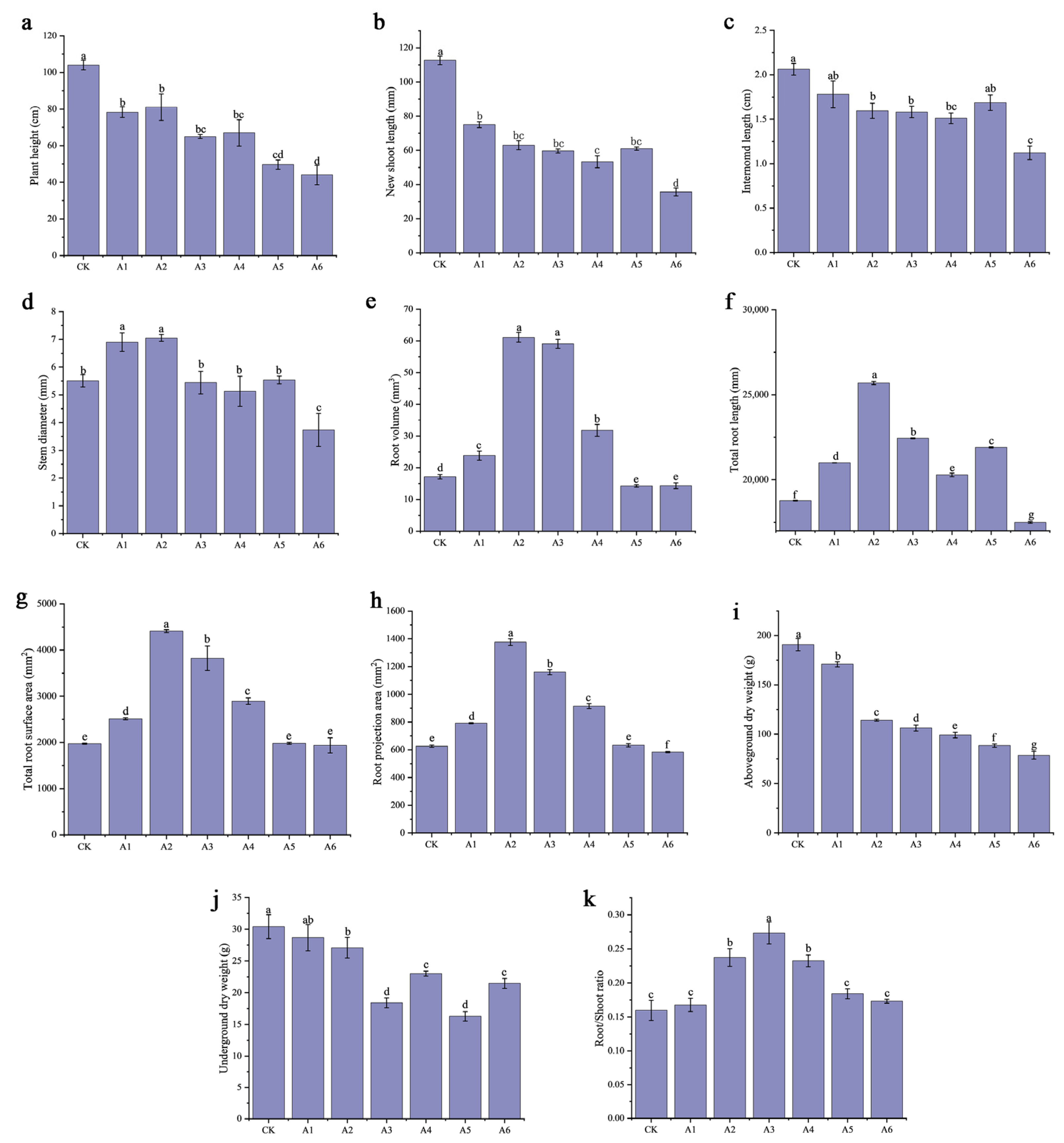
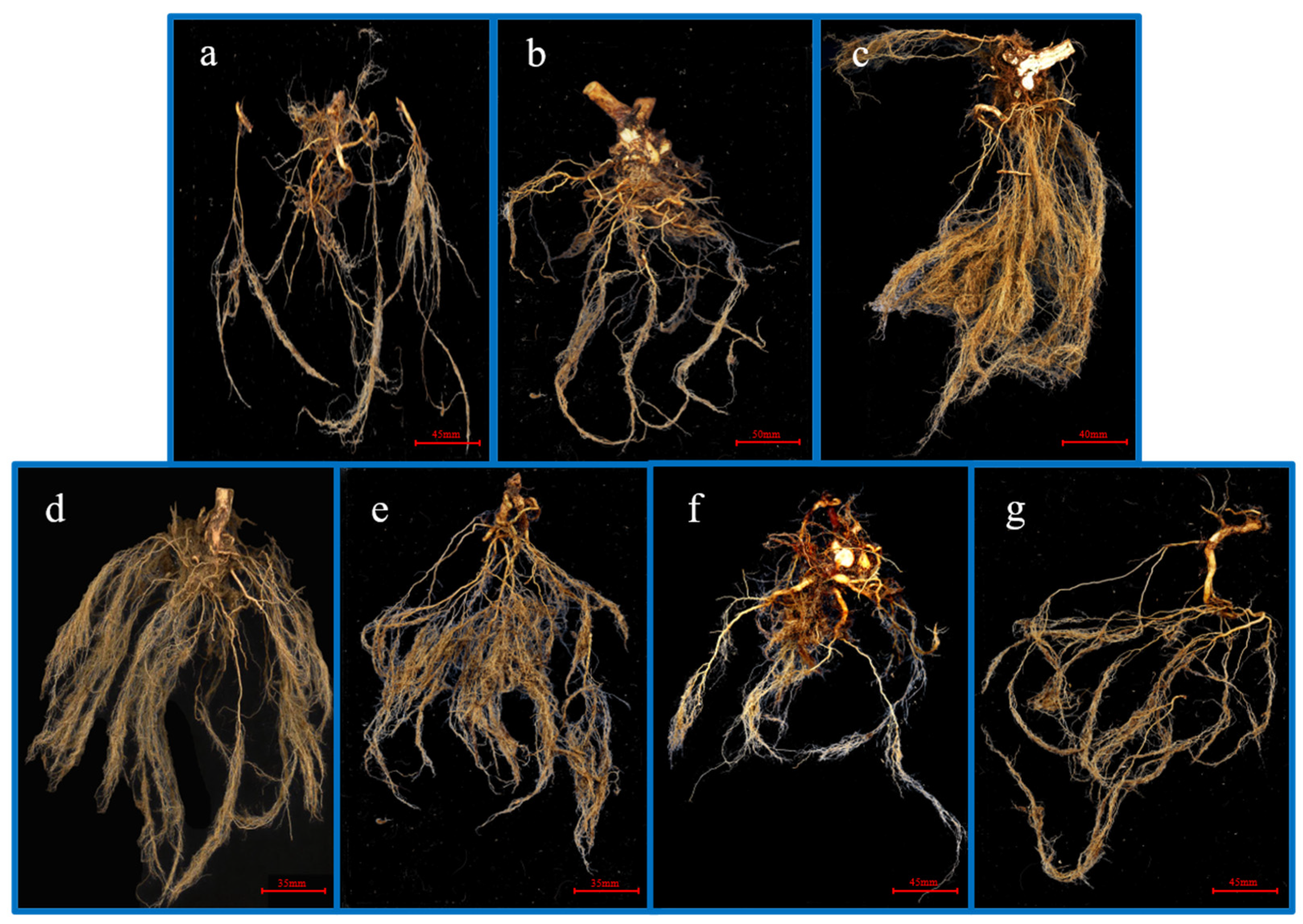
The application of PBZ significantly altered the morphological traits of blueberry plants (Figure 1a–d). Plant height exhibited a consistent downward trend with increasing PBZ concentration. The control group (CK) had the tallest plants (104.00 cm), which was significantly greater than all treatment groups. In contrast, plant heights in the A5 and A6 treatments decreased by 52.24% and 57.69%, respectively. Additionally, new shoot elongation and internode length were markedly suppressed: under the A6 treatment, new shoot length and internode distance were reduced by 68.34% and 45.63% compared to the control, indicating that high concentrations of PBZ strongly inhibited aboveground growth. Notably, the effect of PBZ on stem diameter followed a low-concentration promotion, high-concentration inhibition pattern—low concentrations enhanced stem thickening, while high concentrations exerted an inhibitory effect. PBZ also significantly regulated blueberry root morphogenesis, with its efficacy closely dependent on application concentration. As shown in Figure 1e–h, low-to-medium concentrations, particularly the A2 treatment (50 mg·L−1), most strongly promoted root growth relative to the control. Under A2 treatment, total root volume, total root length, total surface area, and projected area reached peak values of 61.14 mm3, 25,690 mm, 4407 mm2, and 1376 mm2, respectively, all significantly higher than in other treatments. This was further confirmed by root morphology images in Figure 2: the A2 treatment produced the most developed root system, characterized by dense fine roots and extensive branching (Figure 2c). The A3 and A4 treatments also showed significant stimulatory effects, with all root parameters significantly exceeding those of the control. These findings suggest that PBZ within an optimal concentration range effectively promotes blueberry root expansion and branching, optimizing root architecture. However, when concentrations increased to A5 and above, the promoting effect gradually diminished and shifted to inhibition. Root parameters in the A5 and A6 treatments decreased to or below control levels, with the A6 treatment showing the lowest values across all indicators. Visually, inhibited root development (sparse roots and simplified structure) was evident in Figure 2g.
The root-shoot ratio refers to the ratio of the fresh or dry weight of a plant’s belowground component to that of its aboveground portion. This metric serves as an indicator of the allocation balance between belowground and aboveground biomass and is widely regarded as a key parameter for evaluating plant growth and developmental status. As shown in Figure 1i–k, PBZ significantly influenced the root-shoot ratio by modulating biomass allocation between the aboveground and underground parts of blueberry plants. The control (CK) exhibited the highest aboveground dry weight but the lowest root-shoot ratio. With increasing PBZ concentration, aboveground dry weight was progressively and significantly reduced, whereas the reduction in underground dry weight was comparatively moderate. This differential inhibitory effect resulted in a marked increase in the root-shoot ratio, with the A3 treatment achieving the maximum value of 0.27, significantly higher than all other treatments. This suggests that at this concentration, PBZ most effectively redirected the plant’s growth priority from aboveground to belowground organs, thereby optimizing the partitioning of assimilated resources. However, when the concentration was further increased to 100 mg·L−1 and beyond, although the root-shoot ratio remained significantly higher than that of the control, its value declined relative to the A3 treatment. This decline was primarily attributed to the stronger suppression of root biomass accumulation under high-concentration treatments, which limited further enhancement of the root-shoot ratio.

3.2. Effects on the Size and Structure of Blueberry Leaves

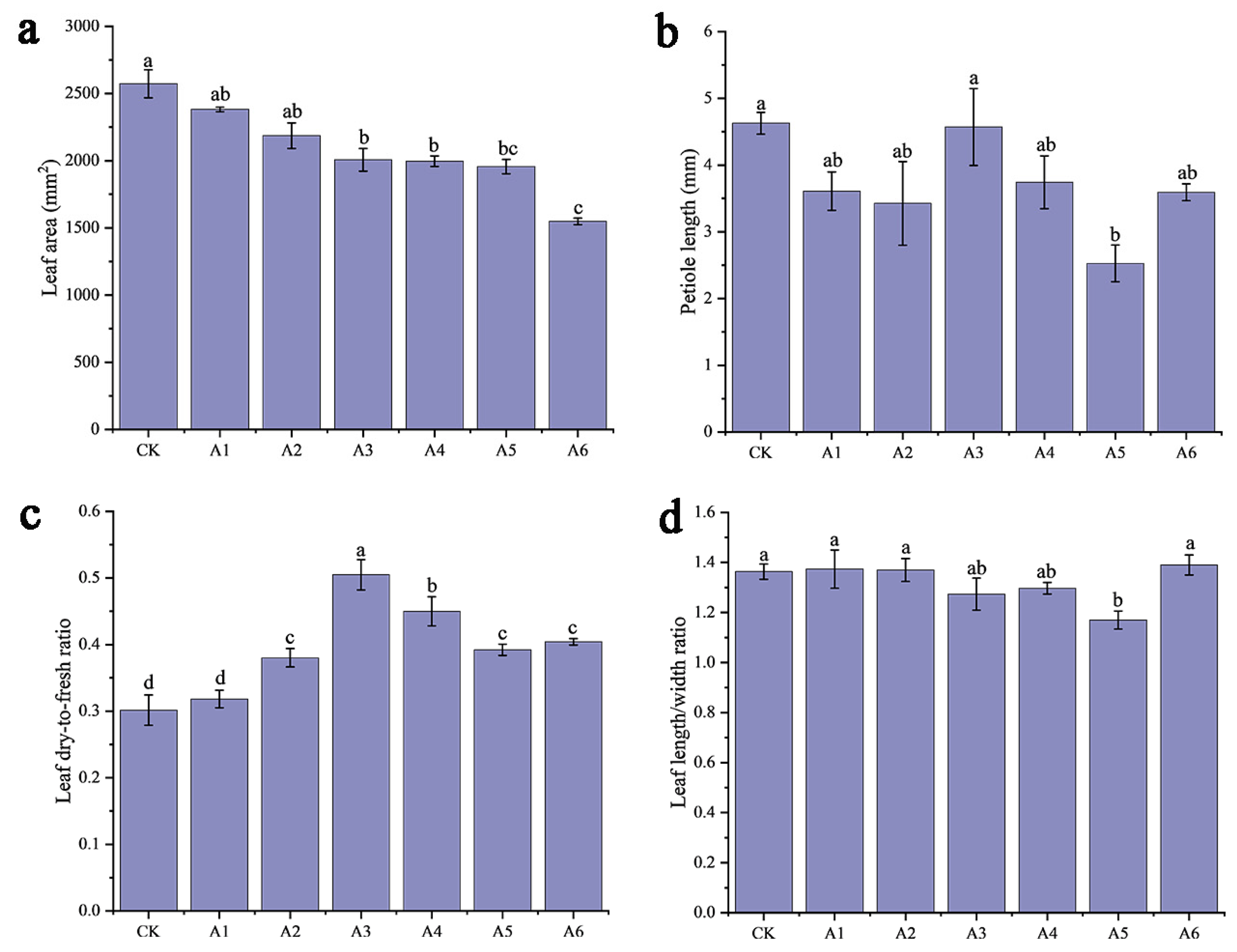
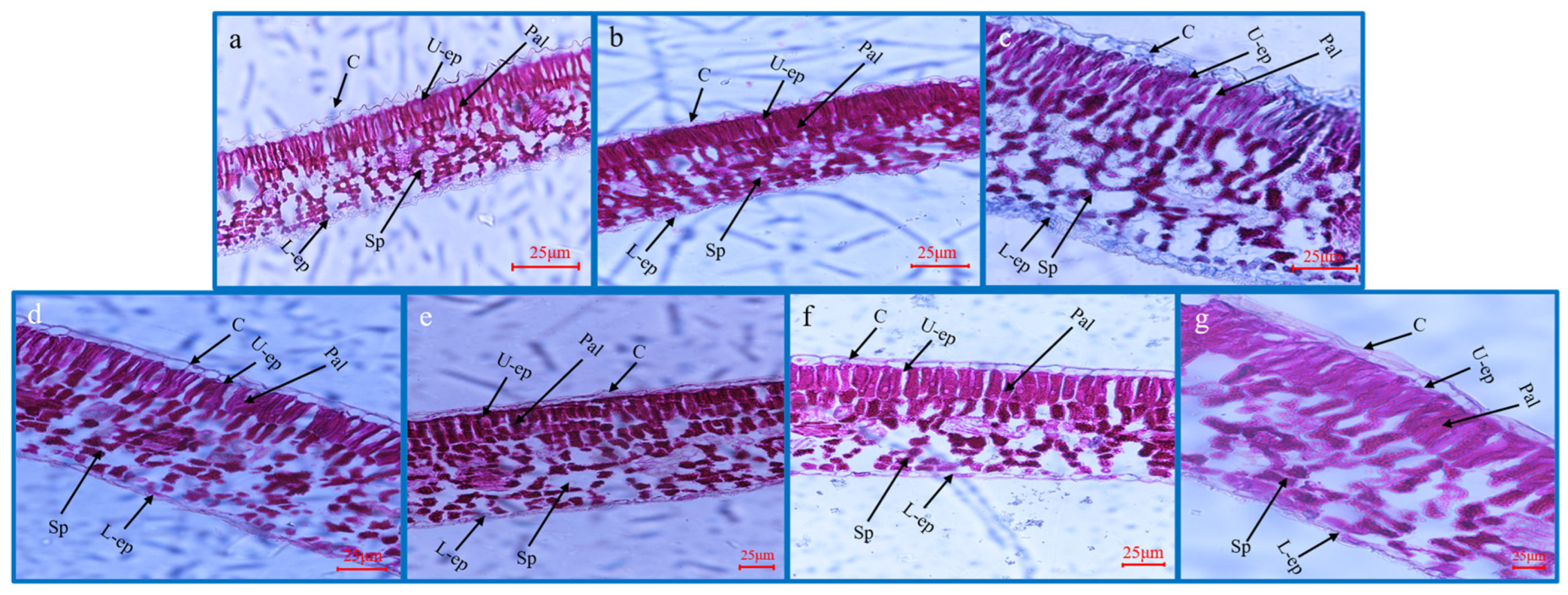
After being treated with different concentrations of PBZ, the leaf area, petiole length, and dry-to-fresh weight ratio of blueberry leaves all showed significant changes compared with the control group (CK) (Figure 3a–c). Leaf area showed a concentration-dependent decrease: no significant differences were observed between the A1/A2 treatments and CK, whereas the A6 treatment induced a marked reduction in leaf area. The petiole length showed no significant difference among the treatments, but it was significantly shortened by 2.1 mm under the A5 treatment. Additionally, leaf width increased without significant changes in leaf shape. Leaf fresh weight exhibited a gradual decrease with increasing PBZ concentration, whereas leaf dry weight remained relatively stable but displayed a trend of first increasing and then decreasing. The dry-to-fresh weight ratio followed an identical pattern to dry weight, peaking under the A3 treatment. The observed alterations in leaf area and dry-to-fresh weight ratio imply potential modifications to blade thickness and internal anatomical structure (Figure 4a–g; Table 1). To investigate the structural basis of this phenomenon, paraffin sectioning was used to observe the tissue and cells of the leaves. The results revealed that blueberry blade thickness increased significantly with rising PBZ concentration: all treatment groups displayed significantly greater blade thickness than CK (82.88 μm), with the A6 treatment reaching a maximum of 127.62 μm (a 54% increase relative to CK). This thickening was primarily driven by significant increases in both palisade and spongy mesophyll thickness. Notably, the palisade-to-spongy tissue ratio (P/S) was lower in treated groups than in CK, indicating more pronounced thickening of the spongy mesophyll compared to the palisade layer. While the cuticle thickness of both upper and lower epidermis tended to increase, these changes were relatively modest in most treatments compared to CK. In conclusion, PBZ treatment effectively reduced blueberry leaf area, shortened petiole length, and increased the dry-to-fresh weight ratio. It also promoted thickening of the upper/lower epidermis, spongy mesophyll, and palisade mesophyll, thereby enhancing overall blade thickness. However, this treatment concomitantly decreased the P/S ratio, reflecting a shift in mesophyll tissue allocation toward spongy mesophyll.

3.3. Effects on Photosynthesis of Blueberries

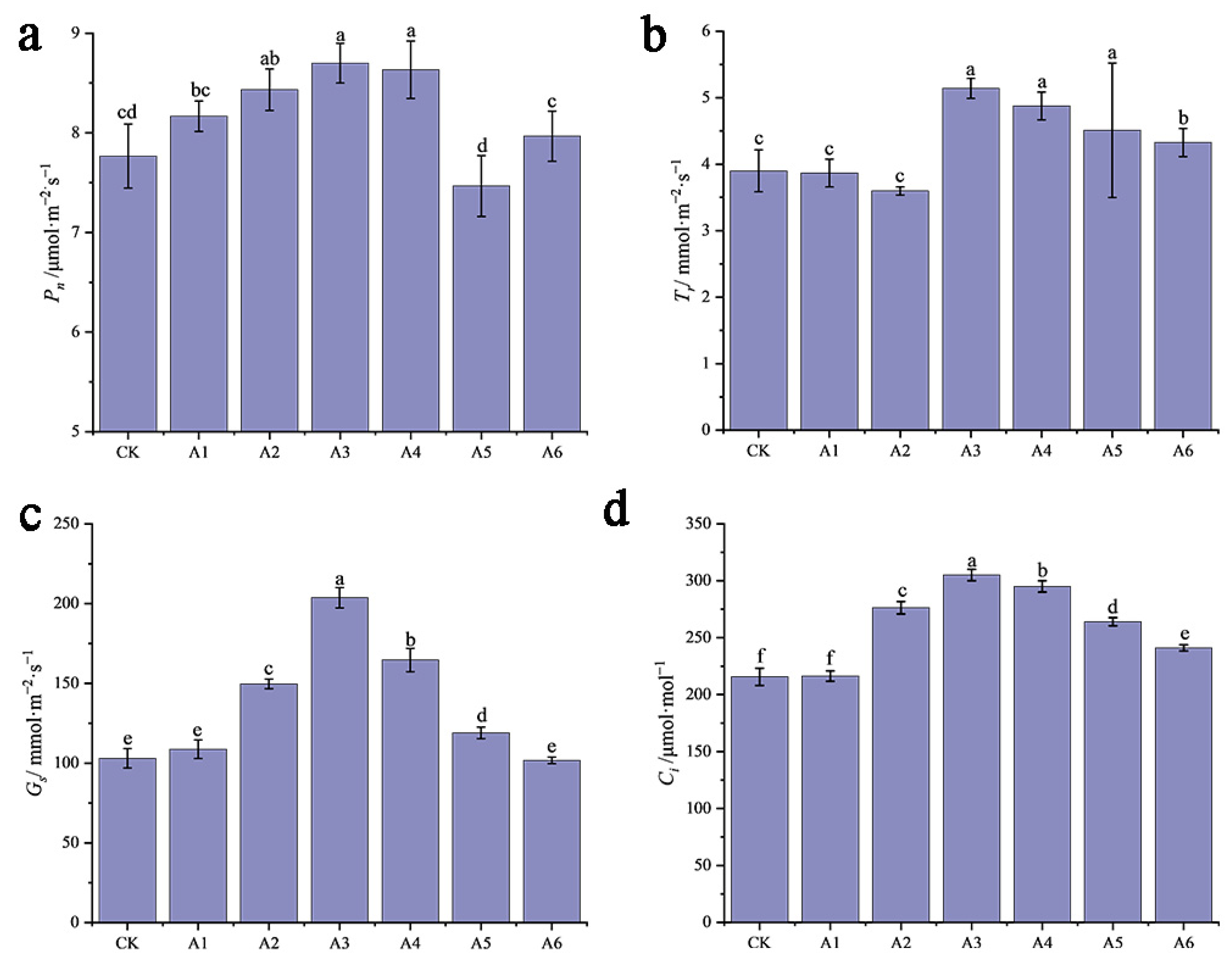
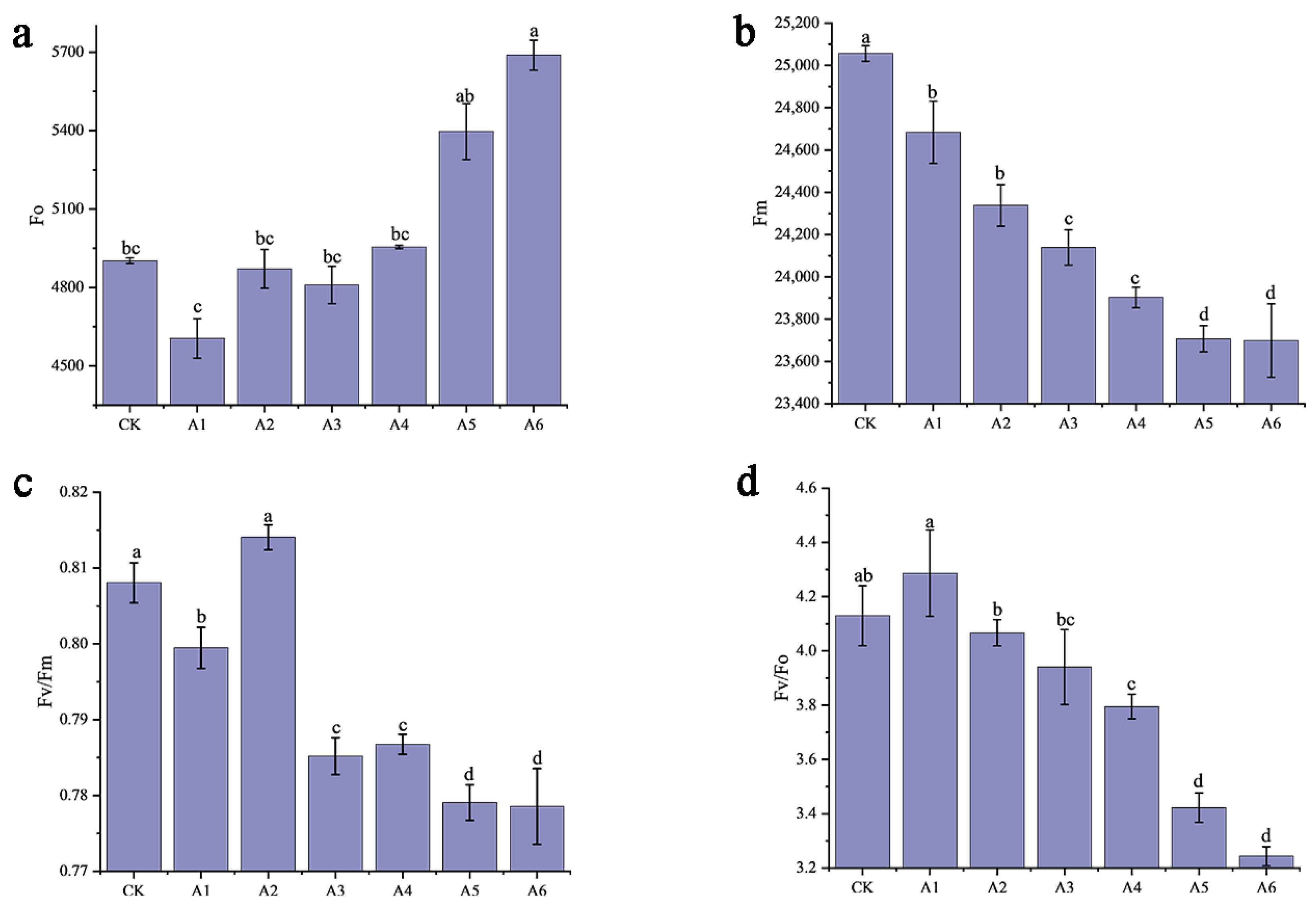
To investigate how leaf structural changes under varying treatments modulate plant photosynthesis, we measured Pn, Tr, Gs, Ci, and photosynthetic fluorescence traits of blueberry leaves (Figure 5 and Figure 6). Pn, Tr, Gs, and Ci exhibited a unimodal response to increasing PBZ concentrations, peaking at the A3 treatment with significant increases of 11.96%, 31.79%, 97.76%, and 41.40% relative to the control (CK), respectively. Notably, no significant difference in Pn was observed between the A2 and A3 treatments; however, Tr under A2 showed a non-significant slight reduction compared to CK. The Fo was elevated by 10.08% (A5) and 16.04% (A6) relative to CK. The Fm of blueberry leaves decreased with increasing PBZ concentration. The Fv/Fm and Fv/Fo were highest under A2 and A1 treatments, respectively, but displayed an overall downward trend with increasing PBZ concentration. These results indicate that the photosynthetic capacity of blueberry plants is concentration-dependent on PBZ. Under A2 and A3 treatments, enhanced leaf photosynthetic capacity promoted organic matter accumulation and increased leaf dry weight. Conversely, higher PBZ concentrations (≥A4) led to elevated leaf transpiration rate, reduced leaf fresh weight, and constrained photosynthetic performance (Figure 5, Supplementary Figure S1).
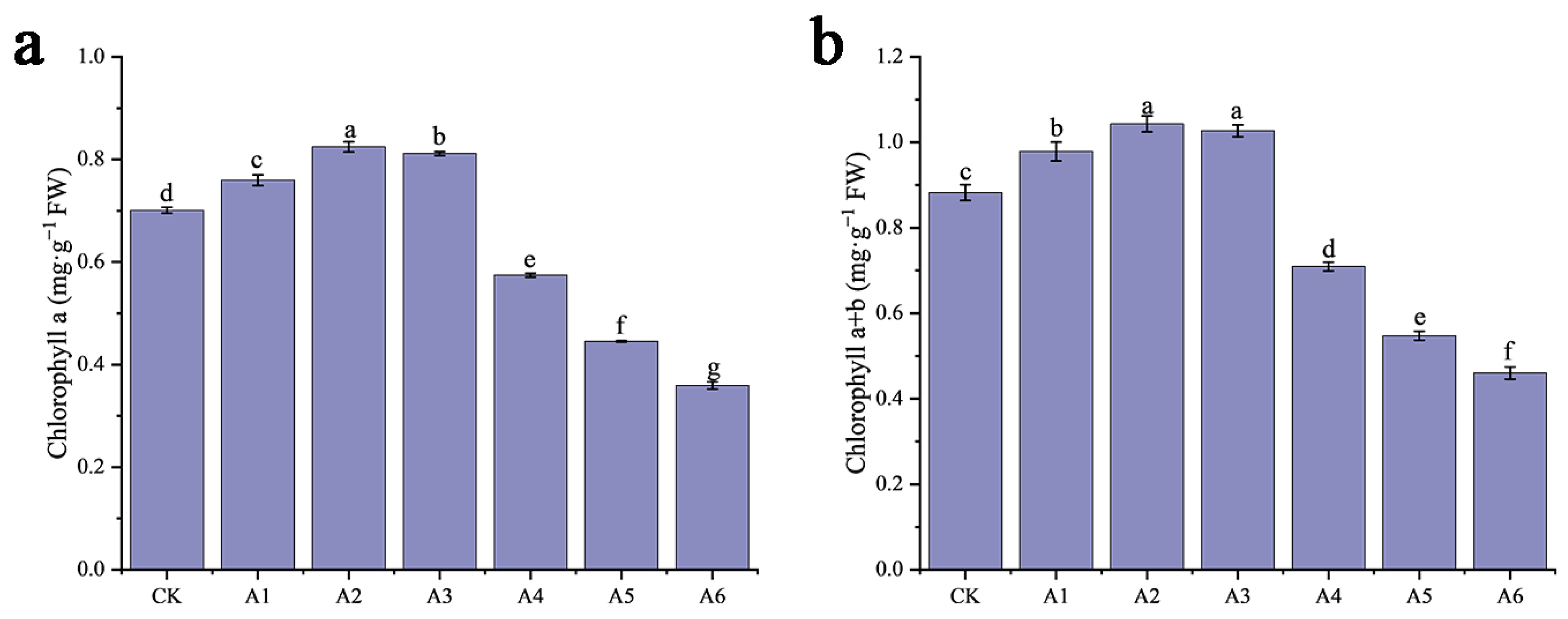
To identify the factors driving photosynthetic variations, we measured chlorophyll content in blueberry leaves. Chlorophyll content exhibited a unimodal response to increasing PBZ concentrations, with significant elevations under the A2 and A3 treatments. Specifically, Chlorophyll a content increased by 17.55% (A2) and 15.69% (A3) relative to the control, while Chlorophyll b content rose by 20.33% (A2) and 18.13% (A3) compared to the control. Under all other treatments, chlorophyll content was lower than that of the control (Figure 7a,b). These results reveal a biphasic effect of PBZ on chlorophyll content: it promoted chlorophyll synthesis at concentrations ≤A3, but inhibited synthesis at concentrations ≥A4 (A4, A5, A6), leading to reduced chlorophyll levels.

3.4. Effects on Malondialdehyde Content and Protective Enzyme Activity of Blueberries

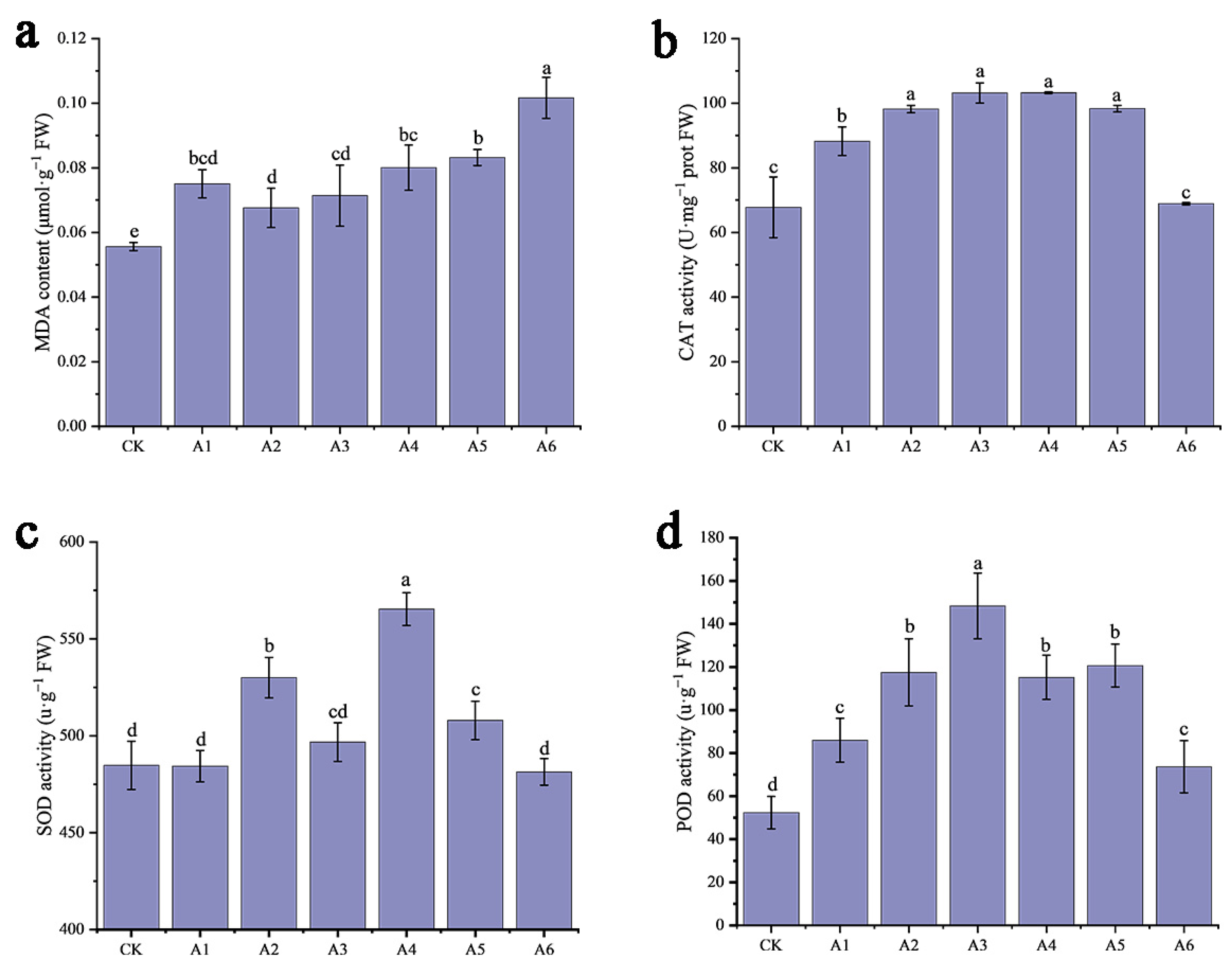
Malondialdehyde (MDA) content is an important indicator of the degree of peroxidation of plant cell membranes, reflecting the extent of damage to plant cell membranes. To investigate the damage caused by different concentrations of PBZ treatment on blueberry plants, we measured the MDA content in blueberry leaves. The MDA content in blueberry leaves increased with increasing PBZ concentration, and each treatment showed significant differences compared to CK. Under A6 treatment, the MDA content was the highest, increasing by 82.74% compared to CK. Although A2 and A3 treatments also showed significant increases, their changes were smaller than those of the A1 treatment, with increases of 21.58% and 28.41%, respectively (Figure 8a). These results indicate that MDA content is positively correlated with PBZ concentration. PBZ application induced oxidative stress in blueberry cell membranes, thereby affecting blueberry growth. Among the treatments, A2 had the lowest oxidative effect on cell membranes.
To investigate the effects of varying concentrations of PBZ treatment on the activities of plant protective enzymes, we assayed the protective enzyme activities in blueberry plants (Figure 8b–d). The protective enzyme activities exhibited a trend of first increasing and then decreasing with increasing PBZ concentration. Different concentrations of PBZ exerted a certain promotional effect on CAT activity in blueberries. The total CAT activity peaked at the A3 concentration; however, no significant differences in CAT activity were observed among the A2, A4, and A5 treatments. POD activity reached its maximum at the A3 treatment, with a value of 148.33 u·g−1 FW, which was 184.62% higher than that of the CK. In comparison to CK, SOD activity increased significantly by 45.28 u·g−1 FW and 80.58 u·g−1 FW under the A2 and A4 treatments, corresponding to increases of 9.34% and 16.62%, respectively. These results indicate that the extent of cell membrane oxidation in blueberries was elevated under PBZ treatment. The activities of CAT and SOD, which are responsible for scavenging hydrogen peroxide (H2O2) and superoxide anion radicals in plants, were enhanced. The antioxidant enzyme activity in blueberries was most pronounced under the A3 (75 mg·L−1) treatment, followed by the A2 (50 mg·L−1) treatment.

3.5. Effects on Endogenous Hormones of Blueberries

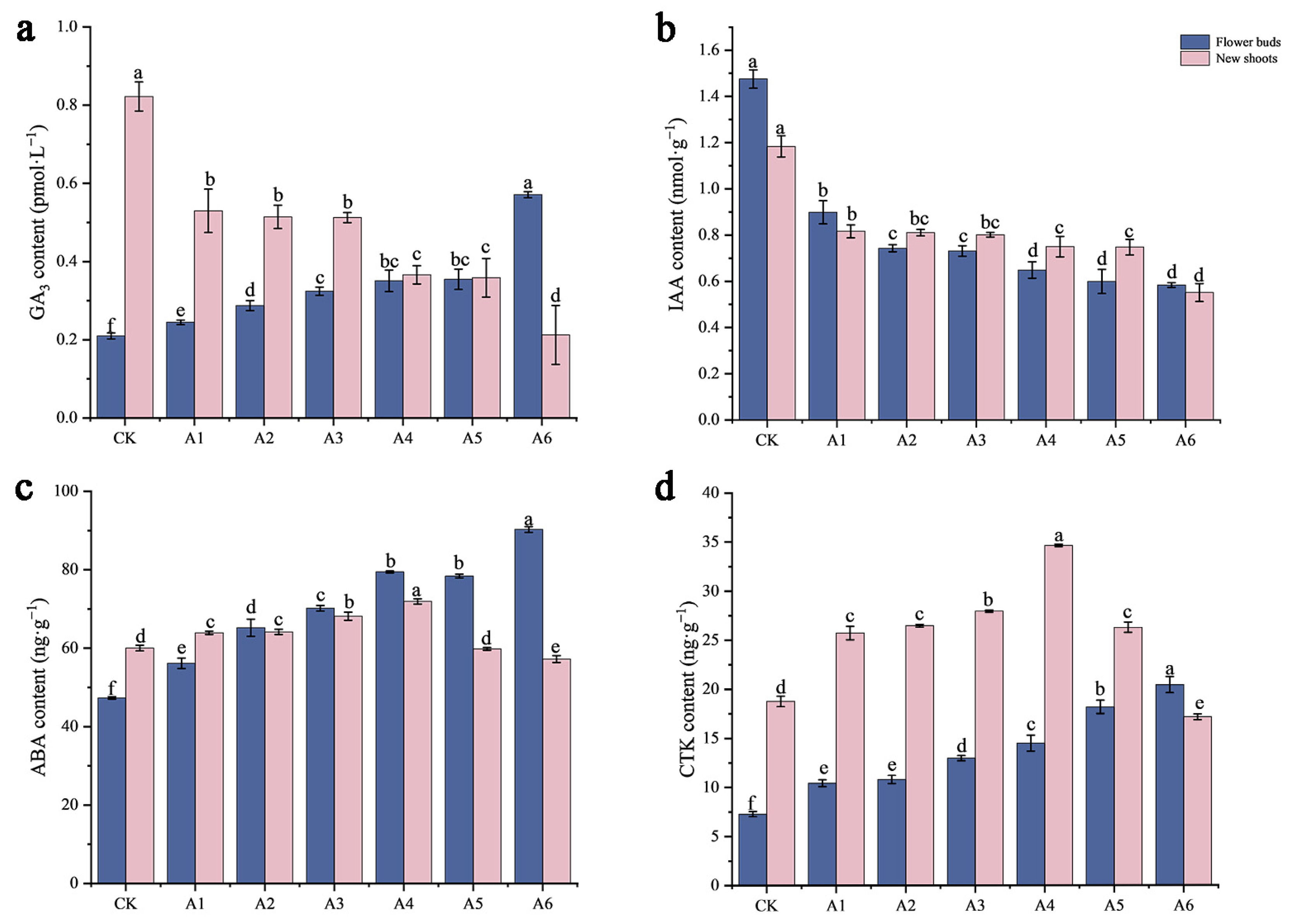
To investigate the effects of PBZ treatments at varying concentrations on endogenous hormones in new shoots and flower buds of blueberries, this study separately determined the contents of IAA, GA3, ABA, and CTK in these two tissues under different treatments (Figure 9a–d). The results revealed that PBZ treatment significantly altered the endogenous hormone balance of blueberries in a dose-dependent manner: The contents of IAA and GA3 in new shoots exhibited a significant downward trend with increasing treatment concentration. Specifically, under the A6 treatment, the IAA content was reduced by 53.42% compared to the CK, while the GA3 content decreased by 74.17% relative to CK. Notably, the contents of ABA and CTK in new shoots first increased and then decreased with rising PBZ concentration. The A4 treatment resulted in the highest ABA and CTK contents in stem segments, which were 19.80% and 84.50% higher than those of CK, respectively, implying a potential synergistic role of ABA and CTK in flower bud differentiation. Additionally, the CTK/GA3 ratio was significantly elevated under PBZ treatment, showing a positive correlation with the number of flower buds in new shoots. In flower buds, the IAA content decreased with increasing PBZ concentration, whereas the contents of ABA, GA3, and CTK increased. Field observations indicated that PBZ promoted reproductive growth by inhibiting vegetative growth: The significant reduction in GA3 content in new shoots and the dual inhibition of IAA in both new shoots and flower buds effectively suppressed the vegetative growth of blueberry plants, while the increase in CTK and ABA in new shoots and the elevation of GA3 in flower buds facilitated the formation of effective flower buds. These results demonstrated that the A2 treatment exerted the optimal regulatory effect, as it effectively promoted flower bud formation in blueberries and appropriately modulated the balance between vegetative and reproductive growth.

3.6. Effects on the Number of Flower Buds of Blueberry Plants

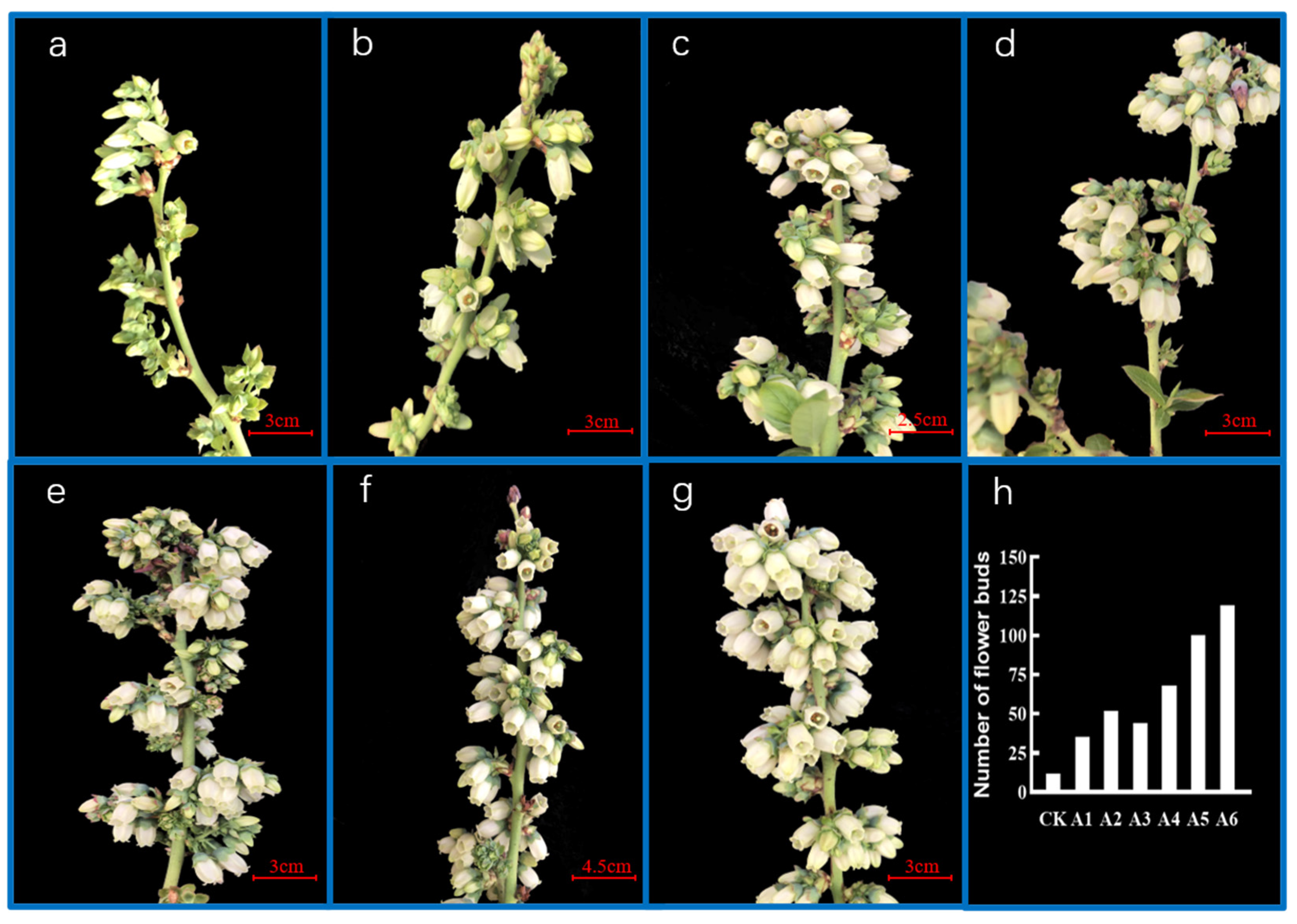
The number of blueberry flower buds changed significantly following PBZ treatments. Under CK treatment, the number of flower buds was only 12, indicating that this variety has difficulty flowering and forming buds under matrix cultivation in northern plastic greenhouses. After PBZ treatment, the number of flower buds increased significantly with increasing PBZ concentration (Figure 10h).
Subsequently, we investigated the flowering of blueberry flower buds following PBZ treatment and observed that different concentrations of PBZ significantly altered the flowering period of blueberry plants. Through real-time field observations, the initial flowering period occurred from 10 May to 14 May, while the full flowering period extended from 15 May to 25 May (Figure 10a–g). The sequence of blueberry plants entering the flowering period under varying PBZ concentrations was as follows: A6, A5, A4, A2, A3, A1, and CK (Supplement Table S1; Supplement Table S2). Analysis revealed a significant positive correlation between the flowering period of blueberry plants and PBZ concentration: the higher the concentration, the earlier the flowering, resulting in an approximate 2-day advancement of the flowering period. Additionally, at concentrations equal to or higher than A2, the flowering period became more concentrated, and the quality of flower buds was optimal under A2 treatment.

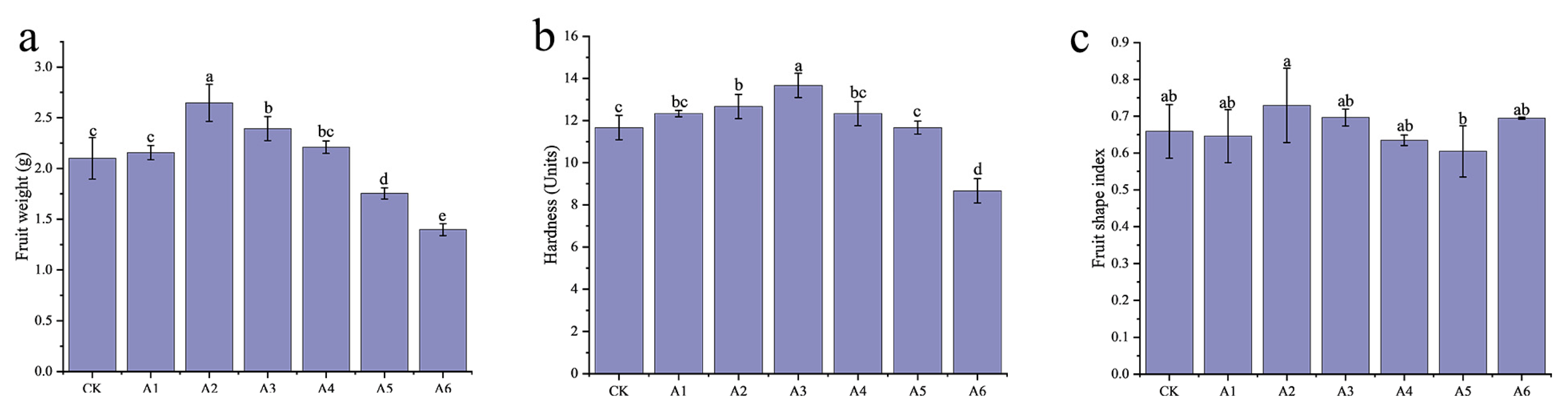
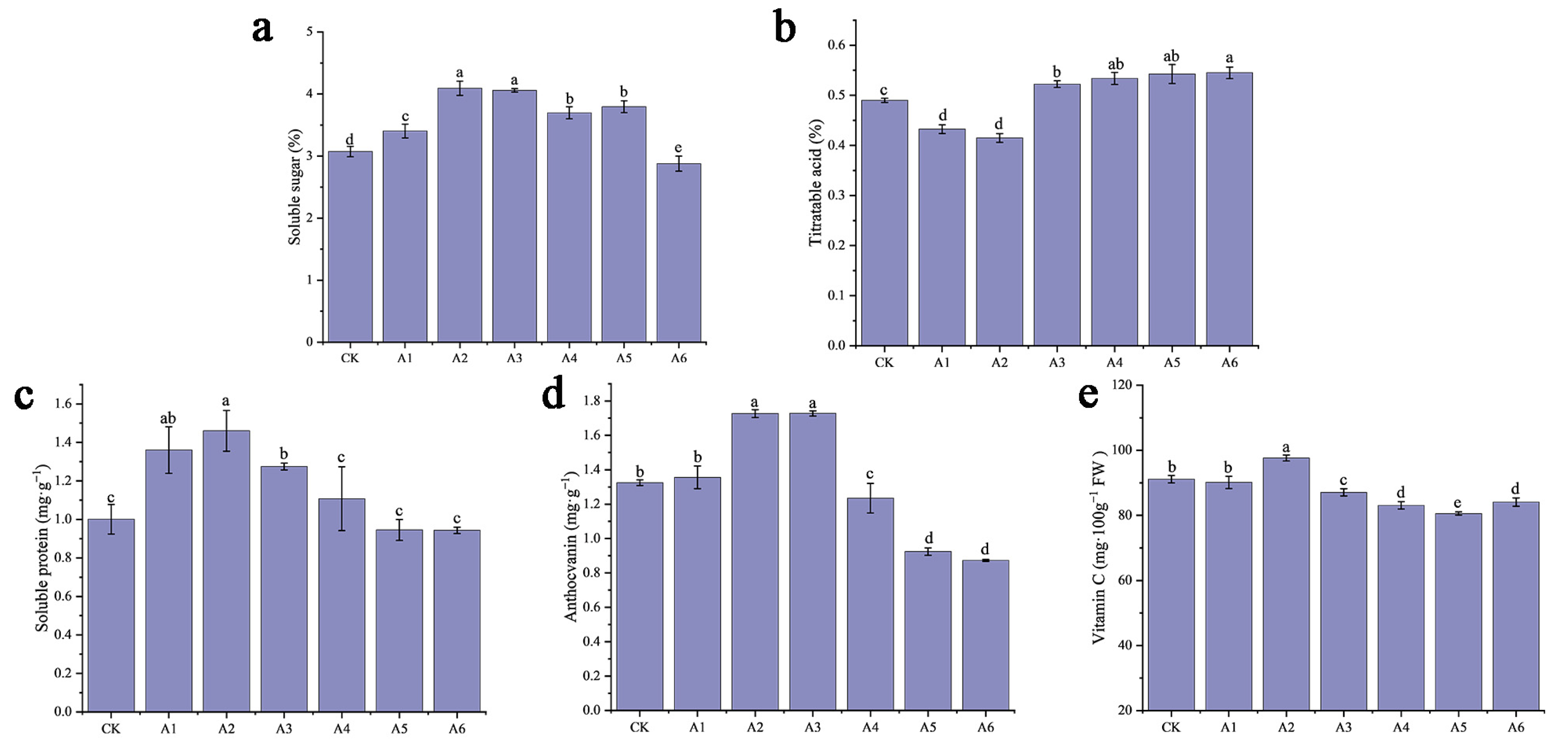
3.7. Effects on Fruit Quality of Blueberries

To clarify the regulatory effects of PBZ on blueberry fruit quality, we measured the appearance and internal quality indicators of the fruits (Figure 11 and Figure 12). The results revealed that PBZ treatment exhibited a typical unimodal response curve in blueberry fruit development: Fruit weight, transverse diameter, and longitudinal diameter peaked under the A2 treatment, with fruit weight showing a significant increase of 26.2% compared to the control. Fruit hardness reached its maximum under the A3 treatment, which was significantly higher than CK by 17.1%. Notably, no significant differences were observed in the fruit shape index (longitudinal diameter/transverse diameter) across all treatments, indicating that PBZ had a negligible effect on fruit shape. The contents of soluble sugar, soluble protein, and vitamin C in fruits were significantly elevated under PBZ treatment, with peaks at the A2 treatment, while anthocyanin content reached its maximum under the A3 treatment. Interestingly, these indicators followed a trend of first increasing and then decreasing with increasing PBZ concentration. The titratable acid content decreased significantly under the A1 and A2 treatments, reaching the lowest level under the A2 treatment (a significant reduction of 15.3% compared to the control), whereas it increased under high-concentration treatments (75 mg·L−1 and above). These results demonstrated that PBZ treatment affected fruit weight and hardness, perturbed the balance of sugar-acid metabolism in fruits, and exerted a dual effect on the contents of soluble sugar, titratable acid, soluble protein, anthocyanin, and vitamin C in blueberry fruits. The A2 treatment yielded the optimal effect, effectively enhancing the quality and flavor of blueberry fruits.

3.8. Effects of Paclobutrazol Application at Different Timings on the Growth and Development of Blueberries

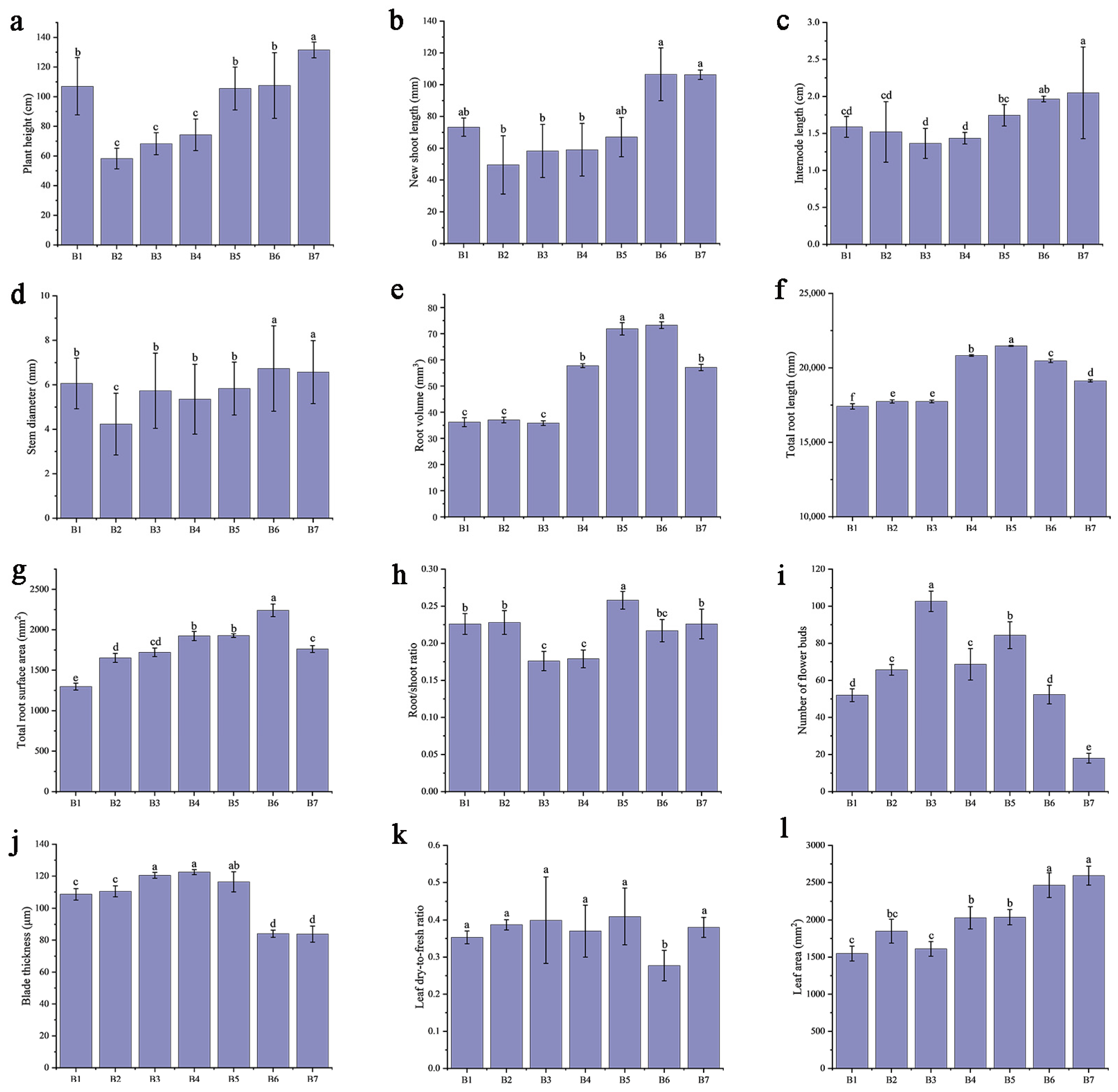
The above experimental results indicated that 50 mg·L−1 PBZ was the optimal concentration for coordinating the growth and development of blueberry plants. To further elucidate the effects of PBZ application at different timings during new shoot growth on blueberry plants, subsequent analyses were conducted. The results showed that with the delay of PBZ application time, plant height, new shoot length, stem diameter, and internode length all exhibited a trend of first decreasing and then increasing. Among the treatments, plant height, new shoot length, stem diameter, and internode length under B6 and B7 were significantly higher than those in other treatments. Additionally, there was no significant difference in plant height between B1, B5, and B6 (107.0 cm, 105.5 cm, and 107.5 cm, respectively), while B2, B3, and B4 showed significantly lower values compared to other treatments. New shoot length reached the maximum at B6, and stem diameter and internode length at B6 and B7 were significantly higher than those in other treatments (Figure 13a–d). The underground root system exhibited a trend of first increasing and then decreasing. The root system was relatively developed at B5 and B6, and the root-to-shoot ratio peaked at B5 (Figure 13e–h). Leaf area showed an increasing trend, while blade thickness and leaf dry-to-fresh ratio first increased and then decreased, reaching their maximum values at B4 and B5, respectively (Figure 13j–l). The palisade-to-spongy tissue ratio was the lowest at B4 (Supplementary Table S3). In addition, the application of PBZ at different timings had a significant effect on the number of flower buds formed. The number of flower buds at B3 was 102, which was significantly higher than that of the other treatments. The second highest was 84 at B5, while the number of flower buds at B7 was the lowest (only 18), which was 82.5% and 78.6% lower than that at B3 and B5, respectively (Figure 13i). The chlorophyll content, Pn, and fruit quality all exhibited a trend of first increasing and then decreasing, with maximum values recorded at B5. In contrast, Tr, Gs, and Ci showed a pattern of first decreasing, then increasing, and then decreasing again (Supplementary Figure S2a–f; Supplementary Tables S4 and S5). Additionally, Fv/Fm displayed an upward trend, whereas the MDA content and antioxidant enzyme activity exhibited unimodal patterns (Supplementary Figure S2g–j; Supplementary Table S6). In conclusion, the effect of PBZ on plant growth and development weakened with the delay of its application timing. Considering field production practices, the optimal application effect was achieved at B5 (mid-stage of secondary shoot growth).

4. Discussion

As a widely used plant growth regulator, PBZ modulates the balance between vegetative and reproductive growth in plants, thereby exerting regulatory effects on plant morphology, physiological traits, and fruit quality. In this study, we systematically investigated the regulatory impacts of different concentrations of PBZ on the growth, development, physiological characteristics, and fruit quality of blueberries under container cultivation, aiming to provide a theoretical foundation and technical reference for the intensive cultivation of blueberries.
The results of this study demonstrate that PBZ effectively inhibits the vertical growth of blueberry plants while increasing stem diameter. Similar findings have been reported in Dianthus chinensis [37] and Paeonia lactiflora [38], where PBZ suppresses gibberellin biosynthesis [39], attenuates apical dominance, and stimulates lateral branch initiation, thereby resulting in a more compact plant architecture. Notably, the inhibitory effect of PBZ on plant growth exhibits a concentration-dependent pattern [40]. Low concentrations of PBZ promote root development, which facilitates the optimization of the root-to-shoot ratio, whereas high-concentration treatments exert a significant inhibitory effect—consistent with observations in Tagetes erecta [41]. However, different plant species display varying sensitivities to PBZ. A concentration as low as 50 mg·L−1 induces significant growth inhibition in blueberries, while higher concentrations are required to achieve comparable effects in fruit trees such as banana (200 mg·L−1) [42] and citrus (500 mg·L−1) [40]. For apple trees (750 mg·L−1), an even higher concentration is necessary to attain the desired dwarfing effect [43]. PBZ treatment significantly alters the levels of endogenous hormones [44,45]. In the present study, the contents of cytokinin (CTK) and abscisic acid (ABA) increased in new shoots, while in flower buds, the contents of gibberellin (GA3), ABA, and CTK increased, and the indole-3-acetic acid (IAA) content decreased. These hormonal changes effectively suppressed the elongation of new shoots and promoted flower bud formation, leading to an increase in the number of effective flower buds in blueberries, as well as earlier and more synchronized flowering [23]. Importantly, the regulatory effect was most pronounced at the A2 concentration, indicating that a PBZ concentration of 50 mg·L−1 optimally balances the reproductive and vegetative growth of blueberries and promotes flower bud differentiation [46].
PBZ treatment altered the aerobic metabolism of blueberry plants. The content of MDA increased with escalating PBZ concentrations, indicating that reactive oxygen species (ROS) accumulation exacerbated membrane lipid peroxidation. At low concentrations, the accumulation of solutes such as soluble sugars maintained cell turgor pressure and sustained normal metabolic processes [47]. Concurrently, the synthesis of defense-related proteins was upregulated, leading to increased soluble protein levels; the antioxidant enzyme system was activated, with elevated activities of protective enzymes including SOD, CAT, and POD, thereby enhancing ROS scavenging capacity [48]. In contrast, high PBZ concentrations triggered a sharp rise in MDA content and a decline in antioxidant enzyme activities. This phenomenon may be attributed to two factors: high-concentration PBZ disrupts the structure of enzyme proteins, and excessive consumption of antioxidant substrates (e.g., reduced glutathione) leads to antioxidant system imbalance, ultimately exacerbating oxidative damage.
Chlorophyll, a core pigment mediating photosynthesis, directly modulates photosynthetic efficiency via its content dynamics. In the present study, PBZ treatment increased chlorophyll content in blueberry leaves [49]; however, chlorophyll content exhibited a trend of first increasing and then decreasing with increasing PBZ concentration, suggesting that PBZ exerts a bidirectional regulatory effect on Chlorophyll biosynthesis, promotional at low concentrations and inhibitory at high concentrations. Chlorophyll content determines the ability to capture light energy, thus Pn exhibits a parallel trend to that of chlorophyll content. In addition, the trends of Gs and Ci under PBZ treatment were similar to those of Pn, exhibiting an initial increase followed by a subsequent decrease. This observation suggests that appropriate PBZ application enhances stomatal conductance, enabling blueberry leaves to sustain a relatively high stomatal aperture over an extended duration. Such an effect ensures an adequate supply of CO2 as a substrate for photosynthesis, thereby providing a physiological foundation for the accumulation of photosynthates in blueberry plants [40,50]. Accordingly, leaf dry weight showed a marginal increase; however, the elevation in Tr induced leaf water loss, leading to reduced leaf fresh weight and an increased dry-to-fresh weight ratio [51]. Concurrently, the translocation efficiency of photosynthates to fruits was enhanced, resulting in elevated soluble sugar content in fruits. Meanwhile, the activities of enzymes associated with citric acid and malic acid metabolism may have been altered, contributing to a decrease in titratable acid content [52]. Furthermore, at low PBZ concentrations, the cell cycle may be modulated to prolong the duration of cell division, thereby promoting fruit enlargement and enhancing fruit firmness. This phenomenon is potentially associated with alterations in fruit cell size, arrangement density, and elevated POD activity [53,54]. Nevertheless, the underlying mechanism linking PBZ application to alterations in fruit firmness remains to be fully elucidated. At excessive PBZ concentrations, Gs, Ci, and Pn all exhibit a decrease. This phenomenon is potentially attributed to stomatal limitation induced by high-dose PBZ, which impairs CO2 diffusion into leaf tissues and consequently reduces photosynthetic efficiency. Furthermore, the reduction in photosynthate accumulation leads to a deterioration in fruit quality [55]. Leaf anatomical features provide indirect evidence that stomatal limitation is the primary factor underlying the reduction in photosynthetic performance in blueberry leaves following high-concentration PBZ application. This interpretation is supported by the observation that leaf thickening under such treatment arises solely from the elongation of palisade tissue cells, with no significant change in the number of palisade layers. The cells remain uniformly and densely arranged, in contrast to the disorganized palisade structure typically observed under other stress conditions, such as cold stress. Moreover, the thickening of palisade tissue and epidermal tissues likely functions to minimize water loss and sustain cellular turgor pressure [56,57,58].
The timing of PBZ application exerts a significant influence on its efficacy. Research findings indicate that the impact of PBZ on plant growth and development diminishes progressively as its application timing is delayed. The observed changes in plant growth may be associated with cell activity dynamics: During the rapid shoot elongation stage, meristematic tissues are highly active, with vigorous cell division and elongation. PBZ effectively inhibits gibberellin biosynthesis, thereby significantly arresting shoot apex growth and internode expansion. Once shoots enter the slow-growth phase, cell division activity declines, secondary metabolism is enhanced, and plant sensitivity to PBZ decreases—consequently, the inhibitory effect weakens [59]. Concurrently, the suppression of vegetative growth redirects a greater proportion of assimilates (e.g., photosynthates) to structural organs (stems, leaves), storage tissues, and reproductive organs, leading to increased stem diameter, elevated flower bud counts, and higher leaf area and leaf dry matter accumulation. Furthermore, as a synthetic plant growth regulator, PBZ not only effectively modulates the balance between vegetative and reproductive growth in plants and significantly enhances fruit quality, but also—owing to its favorable cost–benefit ratio—has been widely applied in fruit tree production across major cultivating countries, including Spain (citrus) [60], Brazil (avocado) [61], Tunisia (olive) [18], and Mexico (mango) [62], thus holding substantial economic value. However, long-term repeated application of PBZ tends to cause its persistent residue and accumulation in soil, which may exert adverse impacts on crop root development, soil microbial community structure, and nutrient cycling processes, thereby threatening crop productivity, ecosystem functional stability, and the quality and safety of agricultural products [26,63]. Although studies by Osuna-García et al. [62] have confirmed that PBZ residues in mango fruits following application at the recommended dosage fall within the safe threshold and pose no risk to human health, based on the precautionary principle, countries including South Korea (0.01 mg·kg−1), Japan (0.01 mg·kg−1), and Australia (0.01 mg·kg−1) have implemented strict regulations on its maximum residue limit (MRL) in fruits, with some countries (e.g., Sweden) having imposed a complete ban [64]. Thus, subsequent work of this study should further conduct a systematic assessment of the residue dynamics of PBZ in fruits, its persistence in soil, and its potential impacts on non-target organisms and the ecological environment. Additionally, while this study has clarified the optimal application concentration and timing of PBZ for container-grown blueberries under specific environmental conditions, the conclusions remain limited. Follow-up research is still needed to further explore its application effects across different ecological regions (e.g., cool mountainous areas, protected cultivation environments) and blueberry varieties.

5. Conclusions

PBZ treatment inhibited the elongation of new shoots and reduced plant height in blueberry, while simultaneously enhancing root system development—characterized by increased lateral root number, dense root hair distribution, and a significantly elevated root-shoot ratio. In leaves, both spongy and palisade tissues exhibited marked thickening, accompanied by increases in chlorophyll content, net photosynthetic rate (Pn), stomatal conductance (Gs), and intercellular CO2 concentration (Ci), which collectively enhanced photosynthetic capacity. For fruits, the application of PBZ significantly increased fruit weight, hardness, soluble solids content (SSC), soluble protein, anthocyanin, and vitamin C levels. Meanwhile, it exerted minimal impact on fruit shape, thereby improving fruit quality overall. Additionally, PBZ regulated endogenous hormone homeostasis, promoting flower bud differentiation, increasing flower bud number, and advancing flowering time, thereby laying a physiological foundation for subsequent yield formation. However, high-concentration PBZ treatment induced adverse effects: plant height was severely reduced, root development was inhibited, Gs and Pn declined, and photosynthetic efficiency weakened. Concurrently, MDA content accumulated continuously, and antioxidant enzyme activities (e.g., SOD, POD, and CAT) showed a trend of initial increase followed by decrease, indicating potential oxidative stress and subsequent physiological damage to plants, which ultimately resulted in reduced fruit quality. In addition, the application of PBZ at the mid-stage of secondary shoot growth exhibited excellent efficacy in regulating the growth and development of blueberry plants. In conclusion, under the conditions of this study, the 50 mg·L−1 PBZ treatment applied at the mid-stage of secondary shoot growth represents the optimal concentration for container-cultivated ‘Liberty’ blueberries cultivated in regions with relatively short frost-free periods. This concentration effectively suppresses excessive vegetative growth, promotes flower bud differentiation, enhances photosynthetic performance, and improves fruit quality, providing a scientific basis and technical reference for the chemical regulation of blueberries in container-cultivated production systems.

Supplementary Materials

The following supporting information can be downloaded at: https://www.mdpi.com/article/10.3390/horticulturae12030295/s1, Figure S1: Effects of different paclobutrazol concentrations on leaf fresh weight; Figure S2: Effects of different paclobutrazol application timings on photosynthetic characteristics, antioxidant enzymes, and membrane lipid peroxidation products in blueberry; Table S1: Time of entering the initial flowering stage under different concentrations of paclobutrazol treatment; Table S2: Time of entering full bloom under different concentrations of paclobutrazol treatment; Table S3: Effects of paclobutrazol applied at different timings on leaf structure of blueberry; Table S4: Effects of paclobutrazol on the size and hardness of blueberry fruit in different timings; Table S5: Effects of paclobutrazol on blueberry fruit quality in different timings; Table S6: Effects of paclobutrazol on fluorescence characteristics of blueberry in different timings.

Author Contributions

L.Y. (Lei Yang) and L.Y. (Liming Yan): Writing—Original draft preparation and conceptualization. L.C.: Writing—Review and editing. L.Y. (Lei Yang) and X.J.: Data analysis and visualization. F.C. and J.Y.: Investigation. Y.L.: Resources. H.S. and H.J.: Funding acquisition. All authors have read and agreed to the published version of the manuscript.

Funding

This study was supported by grants from the Jilin Provincial Science and Technology Development Program Project (20250202007NC) and National Natural Science Foundation of China (32472695).

Data Availability Statement

The original contributions presented in this study are included in the article/Supplementary Material. Further inquiries can be directed to the corresponding authors.

Acknowledgments

We would like to thank Jun Ai and Zhenxing Wang for their instrumentation and technical support during the study.

Conflicts of Interest

Liming Yan, Xin Jiang and Hongzhou Jiang were employed by the Ziyue Agricultural Science and Technology Group Co., Ltd. The remaining authors declare that the research was conducted in the absence of any commercial or financial relationships that could be construed as a potential conflict of interest.

References

  1. Vaneková, Z.; Vanek, M.; Škvarenina, J.; Nagy, M. The Influence of Local Habitat and Microclimate on the Levels of Secondary Metabolites in Slovak Bilberry (Vaccinium myrtillus L.) Fruits. Plants 2020, 9, 436. [Google Scholar] [CrossRef]
  2. Zheng, W.; Wang, S.Y. Oxygen Radical Absorbing Capacity of Phenolics in Blueberries, Cranberries, Chokeberries, and Lingonberries. J. Agric. Food Chem. 2003, 51, 502–509. [Google Scholar] [CrossRef]
  3. Viljanen, K.; Kylli, P.; Kivikari, R.; Heinonen, M. Inhibition of Protein and Lipid Oxidation in Liposomes by Berry Phenolics. J. Agric. Food Chem. 2004, 52, 7419–7424. [Google Scholar] [CrossRef] [PubMed]
  4. Puupponen-Pimia, R.; Nohynek, L.; Hartmann-Schmidlin, S.; Kahkonen, M.; Heinonen, M.; Maatta-Riihinen, K.; Oksman-Caldentey, K.-M. Berry Phenolics Selectively Inhibit the Growth of Intestinal Pathogens. J. Appl. Microbiol. 2005, 98, 991–1000. [Google Scholar] [CrossRef]
  5. Huang, H.; Luo, Y.; Wang, Q.; Zhang, Y.; Li, Z.; He, R.; Chen, X.; Dong, Z. Vaccinium as Potential Therapy for Diabetes and Microvascular Complications. Nutrients 2023, 15, 2031. [Google Scholar] [CrossRef] [PubMed]
  6. Serna-Jime, J.A.; Quintanill, M.X.; Rodriguez, J.M.; Uribe, M.A.; Klotz, B. Development of a Combined Temperature and pH Model and the Use of Bioprotectants to Control of Mucor Circinelloides. Am. J. Food Technol. 2015, 11, 21–28. [Google Scholar] [CrossRef][Green Version]
  7. Norberto, S.; Silva, S.; Meireles, M.; Faria, A.; Pintado, M.; Calhau, C. Blueberry Anthocyanins in Health Promotion: A Metabolic Overview. J. Funct. Foods 2013, 5, 1518–1528. [Google Scholar] [CrossRef]
  8. Taulavuori, E.; Tahkokorpi, M.; Laine, K.; Taulavuori, K. Drought Tolerance of Juvenile and Mature Leaves of a Deciduous Dwarf Shrub Vaccinium myrtillus L. in a Boreal Environment. Protoplasma 2010, 241, 19–27. [Google Scholar] [CrossRef]
  9. Qi, L.; Hou, Z.; Yu, J. First Report of Botrytis californica Causing Gray Mold on Blueberry in China. Plant Dis. 2023, 107, 3318. [Google Scholar] [CrossRef]
  10. Kandziora-Ciupa, M.; Nadgórska-Socha, A.; Barczyk, G. The Influence of Heavy Metals on Biological Soil Quality Assessments in the Vaccinium myrtillus L. Rhizosphere under Different Field Conditions. Ecotoxicology 2021, 30, 292–310. [Google Scholar] [CrossRef]
  11. Savvas, D.; Gruda, N. Application of Soilless Culture Technologies in the Modern Greenhouse Industry—A Review. Eur. J. Hortic. Sci. 2018, 83, 280–293. [Google Scholar] [CrossRef]
  12. Xiong, J.; Tian, Y.; Wang, J.; Liu, W.; Chen, Q. Comparison of Coconut Coir, Rockwool, and Peat Cultivations for Tomato Production: Nutrient Balance, Plant Growth and Fruit Quality. Front. Plant Sci. 2017, 8, 1327. [Google Scholar] [CrossRef]
  13. Meot-Duros, L.; Le Floch, G.; Meot, B.; Letousey, P.; Jacob, B.; Barbier, G. Eelgrass Slabs, a Soilless Culture Substrate That Inhibits Adhesion of Fungi and Oomycetes and Enhances Antioxidant Activity in Tomato. J. Agric. Food Chem. 2011, 59, 10913–10918. [Google Scholar] [CrossRef]
  14. Azizi Yeganeh, M.; Shahabi, A.A.; Ebadi, A.; Abdossi, V. Vermicompost as an Alternative Substrate to Peat Moss for Strawberry (Fragaria ananassa) in Soilles Culture. BMC Plant Biol. 2024, 24, 149. [Google Scholar] [CrossRef]
  15. Li, M.; Ning, X.; Gao, T.; Fazry, S.; Othman, B.A.; Najm, A.A.K.; Law, D. Rice Husk Ash Based Growing Media Impact on Cucumber and Melon Growth and Quality. Sci. Rep. 2024, 14, 5147. [Google Scholar] [CrossRef]
  16. Ochmian, I.; Oszmiański, J.; Jaśkiewicz, B.; Szczepanek, M. Soil and Highbush Blueberry Responses to Fertilization with Urea Phosphate. Folia Hortic. 2018, 30, 295–305. [Google Scholar] [CrossRef]
  17. Desta, B.; Amare, G. Paclobutrazol as a Plant Growth Regulator. Chem. Biol. Technol. Agric. 2021, 8, 1. [Google Scholar] [CrossRef]
  18. Ajmi, A.; Larbi, A.; Morales, M.; Fenollosa, E.; Chaari, A.; Munné-Bosch, S. Foliar Paclobutrazol Application Suppresses Olive Tree Growth While Promoting Fruit Set. J. Plant Growth Regul. 2020, 39, 1638–1646. [Google Scholar] [CrossRef]
  19. Sarker, B.; Rahim, M.; Archbold, D. Combined Effects of Fertilizer, Irrigation, and Paclobutrazol on Yield and Fruit Quality of Mango. Horticulturae 2016, 2, 14. [Google Scholar] [CrossRef]
  20. Pal, S.; Zhao, J.; Khan, A.; Yadav, N.S.; Batushansky, A.; Barak, S.; Rewald, B.; Fait, A.; Lazarovitch, N.; Rachmilevitch, S. Paclobutrazol Induces Tolerance in Tomato to Deficit Irrigation through Diversified Effects on Plant Morphology, Physiology and Metabolism. Sci. Rep. 2016, 6, 39321. [Google Scholar] [CrossRef] [PubMed]
  21. Santos Filho, F.B.; Silva, T.I.; Dias, M.G.; Alves, A.C.L.; Grossi, J.A.S. Paclobutrazol Reduces Growth and Increases Chlorophyll Indices and Gas Exchanges of Basil (Ocimum basilicum). Braz. J. Biol. 2022, 82, e262364. [Google Scholar] [CrossRef]
  22. Liu, B.; Long, S.; Liu, K.; Zhu, T.; Gong, J.; Gao, S.; Wang, R.; Zhang, L.; Liu, T.; Xu, Y. Paclobutrazol Ameliorates Low-Light-Induced Damage by Improving Photosynthesis, Antioxidant Defense System, and Regulating Hormone Levels in Tall Fescue. Int. J. Mol. Sci. 2022, 23, 9966. [Google Scholar] [CrossRef]
  23. Luo, S.; Sun, M.; Liang, W.; Zhang, W.; Wang, T.; Xie, Y. Morphological and Physiological Investigations Reveal the Regulatory Effect of Exogenous Paclobutrazol on Flowering Promotion by Winter Warming in Chaenomeles speciosa ‘Changshouguan’. Sci. Rep. 2024, 14, 17694. [Google Scholar] [CrossRef]
  24. Sha, J.; Ge, S.; Zhu, Z.; Du, X.; Zhang, X.; Xu, X.; Wang, F.; Chen, Q.; Tian, G.; Jiang, Y. Paclobutrazol Regulates Hormone and Carbon-Nitrogen Nutrition of Autumn Branches, Improves Fruit Quality and Enhances Storage Nutrition in ‘Fuji’ Apple. Sci. Hortic. 2021, 282, 110022. [Google Scholar] [CrossRef]
  25. Patel, S.K.; Pathak, S.; Mishra, D.; Kumar, V.; Singh, A.P. Effect of Paclobutrazol and GA4+7 on Post-Harvest Storage of Dragon Fruit [Hylocereus Costaricensis (Web.) Britton and Rose]. J. Adv. Biol. Biotechnol. 2024, 27, 1–8. [Google Scholar] [CrossRef]
  26. Wang, W.-D.; Wu, C.-Y.; Lonameo, B.K. Toxic Effects of Paclobutrazol on Developing Organs at Different Exposure Times in Zebrafish. Toxics 2019, 7, 62. [Google Scholar] [CrossRef]
  27. Aguilar Diaz De Leon, J.; Borges, C.R. Evaluation of Oxidative Stress in Biological Samples Using the Thiobarbituric Acid Reactive Substances Assay. J. Vis. Exp. 2020, 159, e61122. [Google Scholar] [CrossRef] [PubMed]
  28. Giannopolitis, C.N.; Ries, S.K. Superoxide Dismutases: I. Occurrence in Higher Plants. Plant Physiol. 1977, 59, 309–314. [Google Scholar] [CrossRef] [PubMed]
  29. Beers, R.F.; Sizer, I.W. A spectrophotometric method for measuring the breakdown of hydrogen peroxide by catalase. J. Biol. Chem. 1952, 195, 133–140. [Google Scholar] [CrossRef]
  30. Mughal, I.; Shah, Y.; Tahir, S.; Haider, W.; Fayyaz, M.; Yasmin, T.; Ilyas, M.; Farrakh, S. Protein Quantification and Enzyme Activity Estimation of Pakistani Wheat Landraces. PLoS ONE 2020, 15, e0239375. [Google Scholar] [CrossRef]
  31. Cao, D.; Lutz, A.; Hill, C.B.; Callahan, D.L.; Roessner, U. A Quantitative Profiling Method of Phytohormones and Other Metabolites Applied to Barley Roots Subjected to Salinity Stress. Front. Plant Sci. 2017, 7, 2070. [Google Scholar] [CrossRef] [PubMed]
  32. Lin, K.-H.; Huang, M.-Y.; Huang, W.-D.; Hsu, M.-H.; Yang, Z.-W.; Yang, C.-M. The Effects of Red, Blue, and White Light-Emitting Diodes on the Growth, Development, and Edible Quality of Hydroponically Grown Lettuce (Lactuca sativa L. var. capitata). Sci. Hortic. 2013, 150, 86–91. [Google Scholar] [CrossRef]
  33. Latimer, G.W. Official Methods of Analysis of AOAC INTERNATIONAL; Oxford University Press: Oxford, UK, 2023. [Google Scholar] [CrossRef]
  34. Bradford, M.M. A Rapid and Sensitive Method for the Quantitation of Microgram Quantities of Protein Utilizing the Principle of Protein-Dye Binding. Anal. Biochem. 1976, 72, 248–254. [Google Scholar] [CrossRef]
  35. Vissers, M.C.M.; Carr, A.C.; Pullar, J.M.; Bozonet, S.M. Chapter Seven—The Bioavailability of Vitamin C from Kiwifruit. In Advances in Food and Nutrition Research; Boland, M., Moughan, P.J., Eds.; Nutritional Benefits of Kiwifruit; Academic Press: Cambridge, MA, USA, 2013; Volume 68, pp. 125–147. [Google Scholar] [CrossRef]
  36. Jiang, X.; Lin, H.; Shi, J.; Neethirajan, S.; Lin, Y.; Chen, Y.; Wang, H.; Lin, Y. Effects of a Novel Chitosan Formulation Treatment on Quality Attributes and Storage Behavior of Harvested Litchi Fruit. Food Chem. 2018, 252, 134–141. [Google Scholar] [CrossRef]
  37. Lenzi, A.; Nannicini, M.; Mazzeo, P.; Baldi, A. Effect of Paclobutrazol in Potted Plants of Four Cultivars of Dianthus barbatus × chinensis. Eur. J. Hortic. Sci. 2015, 80, 87–93. [Google Scholar] [CrossRef]
  38. Zhao, D.; Gong, S.; Hao, Z.; Meng, J.; Tao, J. Quantitative Proteomics Analysis of Herbaceous Peony in Response to Paclobutrazol Inhibition of Lateral Branching. Int. J. Mol. Sci. 2015, 16, 24332–24352. [Google Scholar] [CrossRef] [PubMed]
  39. Nomo, S.D.; Shlebe, A.; Rachmilevitch, S.; Shalit-Kaneh, A. The Application of Paclobutrazol to GA3-Treated Seed Tuber Potato Fields Does Not Shorten the Growth Cycle or Mitigate Tuber Elongation. Plants 2024, 13, 2327. [Google Scholar] [CrossRef]
  40. Liu, W.; Tang, Y.; Xie, Z.; Zeng, G.; Wu, T.; Liu, J.; Lin, Z. Optimizing Paclobutrazol Application for Regulating Dwarfing in Ougan (Citrus reticulata cv. Suavissima): Comprehensive Insights from Growth, Photosynthesis, and Physiological Responses. Plants 2025, 14, 763. [Google Scholar] [CrossRef]
  41. Carver, S.T.; Arnold, M.A.; Byrne, D.H.; Armitage, A.R.; Lineberger, R.D.; King, A.R. Growth and Flowering Responses of Sea Marigold to Daminozide, Paclobutrazol, or Uniconazole Applied as Drenches or Sprays. J. Plant Growth Regul. 2014, 33, 626–631. [Google Scholar] [CrossRef]
  42. Chang, S.; Wu, Z.; Zeng, Q.; Zhang, J.; Sun, W.; Qiao, L.; Shu, H. The Effects for Delaying Banana Seedling Growth through Spraying Growing Retardants on Stem Apex. Am. J. Plant Sci. 2019, 10, 813–825. [Google Scholar] [CrossRef]
  43. Ashraf, N.; Bhat, M.Y.; Sharma, M.K.; Rather, G.H.; Ashraf, M.; Dar, M.A.; Ara, R. Effect of Paclobutrazol and Summer Pruning on Yield and Fruit Quality of Apple Cv. ‘Red Delicious’. Appl. Biol. Res. 2015, 17, 166–173. [Google Scholar] [CrossRef]
  44. Pant, R.; Dimri, D.C. Effect of Soil Applied Paclobutrazol on Flowering, Fruit Set and Fruit Yield of Litchi (Litchi chinensis Sonn.) cv. Rose Scented. Progress. Hortic. 2020, 52, 31–42. [Google Scholar] [CrossRef]
  45. Bhardwaj, S.H.; Thakur, P.; Dhiman, S.R.; Gupta, Y.C.; Dilta, B.S.; Thakur, A.; Chandel, R. Benzyl Adenine and Paclobutrazol Coupled with Shoot Decapitation Affects Growth and Flowering in Barleria cristata L. ‘Alba’. Int. J. Curr. Microbiol. App. Sci. 2020, 9, 2007–2017. [Google Scholar] [CrossRef]
  46. Gill, K.; Kumar, P.; Negi, S.; Sharma, R.; Joshi, A.K.; Suprun, I.I.; Al-Nakib, E.A. Physiological Perspective of Plant Growth Regulators in Flowering, Fruit Setting and Ripening Process in Citrus. Sci. Hortic. 2023, 309, 111628. [Google Scholar] [CrossRef]
  47. Hasanuzzaman, M.; Bhuyan, M.H.M.B.; Anee, T.I.; Parvin, K.; Nahar, K.; Mahmud, J.A.; Fujita, M. Regulation of Ascorbate-Glutathione Pathway in Mitigating Oxidative Damage in Plants under Abiotic Stress. Antioxidants 2019, 8, 384. [Google Scholar] [CrossRef]
  48. Zhang, X.; Zhang, L.; Sun, Y.; Zheng, S.; Wang, J.; Zhang, T. Hydrogen Peroxide Is Involved in Strigolactone Induced Low Temperature Stress Tolerance in Rape Seedlings (Brassica rapa L.). Plant Physiol. Biochem. 2020, 157, 402–415. [Google Scholar] [CrossRef]
  49. Zhang, J.; Cheng, K.; Liu, X.; Dai, Z.; Zheng, L.; Wang, Y. Exogenous Abscisic Acid and Sodium Nitroprusside Regulate Flavonoid Biosynthesis and Photosynthesis of Nitraria tangutorum Bobr in Alkali Stress. Front. Plant Sci. 2023, 14, 1118984. [Google Scholar] [CrossRef] [PubMed]
  50. Xia, X.; Tang, Y.; Wei, M.; Zhao, D. Effect of Paclobutrazol Application on Plant Photosynthetic Performance and Leaf Greenness of Herbaceous Peony. Horticulturae 2018, 4, 5. [Google Scholar] [CrossRef]
  51. Wu, G.-Q.; Feng, R.-J.; Shui, Q.-Z. Effect of Osmotic Stress on Growth and Osmolytes Accumulation in Sugar Beet (Beta vulgaris L.) Plants. Plant Soil Environ. 2016, 62, 189–194. [Google Scholar] [CrossRef]
  52. Jain, P.; Rai, R.; Pant, R.; Jat, R. Assessment of Residual Effect of Paclobutrazol on the Growth, Flowering, Yield and Quality of Litchi. Int. J. Curr. Microbiol. Appl. Sci. 2022, 11, 65–76. [Google Scholar] [CrossRef]
  53. Sanhueza, D.; Balic-Norambuena, I.; Sepúlveda-Orellana, P.; Siña-López, S.; Moreno, A.A.; Moya-León, M.A.; Saez-Aguayo, S. Unraveling Cell Wall Polysaccharides during Blueberry Ripening: Insights into the Roles of Rhamnogalacturonan-I and Arabinogalactan Proteins in Fruit Firmness. Front. Plant Sci. 2024, 15, 1422917. [Google Scholar] [CrossRef]
  54. Lin, S.; Zhang, X.; Li, M.; Zhang, N.; Dong, C.; Ji, H.; Zheng, P.; Ban, Z.; Mei, X.; Gu, C.; et al. Analysis of the Antioxidant Mechanism of Ozone Treatment to Extend the Shelf Life and Storage Quality of ‘Korla’ Fragrant Pears Based on Label-Free Proteomics. Horticulturae 2024, 10, 424. [Google Scholar] [CrossRef]
  55. Nan, X.; Li, W.; Shao, M.; Cui, Z.; Wang, H.; Huo, J.; Chen, L.; Chen, B.; Ma, Z. Shading Treatment Reduces Grape Sugar Content by Suppressing Photosynthesis-Antenna Protein Pathway Gene Expression in Grape Berries. Int. J. Mol. Sci. 2024, 25, 5029. [Google Scholar] [CrossRef] [PubMed]
  56. Liu, C.; Liu, Y.; Guo, K.; Fan, D.; Li, G.; Zheng, Y.; Yu, L.; Yang, R. Effect of Drought on Pigments, Osmotic Adjustment and Antioxidant Enzymes in Six Woody Plant Species in Karst Habitats of Southwestern China. Environ. Exp. Bot. 2011, 71, 174–183. [Google Scholar] [CrossRef]
  57. Yao, X.-C.; Meng, L.-F.; Zhao, W.-L.; Mao, G.-L. Changes in the Morphology Traits, Anatomical Structure of the Leaves and Transcriptome in Lycium barbarum L. under Salt Stress. Front. Plant Sci. 2023, 14, 1090366. [Google Scholar] [CrossRef]
  58. Karabourniotis, G.; Bornman, J.F.; Liakoura, V. Different Leaf Surface Characteristics of Three Grape Cultivars Affect Leaf Optical Properties as Measured with Fibre Optics: Possible Implication in Stress Tolerance. Aust. J. Plant Physiol. 1999, 26, 47–53. [Google Scholar] [CrossRef]
  59. Richardson, P.J.; Quinlan, J.D. Uptake and Translocation of Paclobutrazol by Shoots of M.26 Apple Rootstock. Plant Growth Regul. 1986, 4, 347–356. [Google Scholar] [CrossRef]
  60. Martínez-Fuentes, A.; Mesejo, C.; Muñoz-Fambuena, N.; Reig, C.; González-Mas, M.C.; Iglesias, D.J.; Primo-Millo, E.; Agustí, M. Fruit Load Restricts the Flowering Promotion Effect of Paclobutrazol in Alternate Bearing Citrus spp. Sci. Hortic. 2013, 151, 122–127. [Google Scholar] [CrossRef]
  61. Brogio, B.D.A.; Silva, S.R.D.; Cantuarias-Avilés, T.; Angolini, S.F.; Baptista, E.G.; Ribeiro, R.V. Influence of Gibberellin Inhibitors Applied during Flowering of Nonirrigated “Hass” Avocado Trees. Pesqui. Agropecuária Bras. 2018, 53, 918–923. [Google Scholar] [CrossRef]
  62. Osuna-García, J.A.; Báez-Sañudo, R.; Medina-Urrutia, V.M.; Chávez-Contreras, X. RESIDUALIDAD DE PACLOBUTRAZOL EN FRUTOS DE MANGO (Mangifera indica L.) ‘TOMMY ATKINS’. Rev. Chapingo Ser. Hortic. 2001, 7, 275–278. [Google Scholar] [CrossRef]
  63. Jiang, X.; Wang, Y.; Xie, H.; Li, R.; Wei, J.; Liu, Y. Environmental Behavior of Paclobutrazol in Soil and Its Toxicity on Potato and Taro Plants. Environ. Sci. Pollut. Res. 2019, 26, 27385–27395. [Google Scholar] [CrossRef] [PubMed]
  64. Orozco-Meléndez, L.R.; Hernández-Rodríguez, O.A.; Cruz-Álvarez, O.; Robles-Hernández, L.; Ávila-Quezada, G.D.; Chavez, E.S.; Porras-Flores, S.A.; Ojeda-Barrios, D.L. Paclobutrazol and Its Use in Fruit Production: A Review. Phyton 2022, 91, 1–12. [Google Scholar] [CrossRef]
Figure 1. The effects of paclobutrazol treatments at different concentrations on the aboveground and underground parts of blueberries. (a) Plant height; (b) new shoots length; (c) internode length; (d) stem diameter; (e) root volume; (f) total root length; (g) total root surface area; (h) root projection area; (i) aboveground dry weight; (j) underground dry weight; (k) root-to-shoot ratio. Note: CK (0 mg·L−1), A1 (25 mg·L−1), A2 (50 mg·L−1), A3 (75 mg·L−1), A4 (100 mg·L−1), A5 (150 mg·L−1), A6 (200 mg·L−1). The same applies to subsequent figures. Each value in the figure represents the mean ± standard deviation of three biological replicates. Based on Duncan’s multiple range test, p < 0.05, and different lowercase letters indicate significant differences among treatments.
Horticulturae 12 00295 g001
Figure 2. Blueberry root morphology under different paclobutrazol concentrations. (a) CK treatment; (b) 25 mg·L−1 treatment; (c) 50 mg·L−1 treatment; (d) 75 mg·L−1 treatment; (e) 100 mg·L−1 treatment; (f) 150 mg·L−1 treatment; (g) 200 mg·L−1 treatment.
Horticulturae 12 00295 g002
Figure 3. Effects of paclobutrazol treatments at different concentrations on blueberry leaves. (a) Leaf area; (b) petiole length; (c) leaf dry-to-fresh ratio; (d) leaf length/width ratio. Each value in (ad) represents the mean ± standard deviation of three replicates. According to Duncan’s multiple range test, p < 0.05, and different lowercase letters indicate significant differences among treatments.
Horticulturae 12 00295 g003
Figure 4. Structure of blueberry leaves under different paclobutrazol concentration treatments. (a) 0 mg·L−1; (b) 25 mg·L−1; (c) 50 mg·L−1; (d) 75 mg·L−1; (e) 100 mg·L−1; (f) 150 mg·L−1; (g) 200 mg·L−1. Note: C: Stratum Corneum; U-ep: Upper Epidermal Cells; Pal: Palisade Tissue; Sp: Spongy Tissue; L-ep: Lower Epidermal Cells.
Horticulturae 12 00295 g004
Figure 5. Effects of different paclobutrazol concentrations on photosynthetic characteristics of blueberry leaves. (a) Net photosynthetic rate (Pn); (b) transpiration rate (Tr); (c) stomatal conductance (Gs); (d) intercellular CO2 concentration (Ci). Based on Duncan’s test: p < 0.05, different letters indicate significant differences among treatments.
Horticulturae 12 00295 g005
Figure 6. Effects of different paclobutrazol concentrations on blueberry fluorescence characteristics. (a) Fo; (b) Fm; (c) Fv/Fm; (d) Fv/Fo. Each value in (ad) represents the mean ± standard deviation of t three biological replicates. Based on Duncan’s test: p < 0.05, different letters indicate significant differences among treatments.
Horticulturae 12 00295 g006
Figure 7. Effects of different paclobutrazol concentrations on chlorophyll content in blueberry. (a) chlorophyll a; (b) chlorophyll a + b. Each value in (a,b) represents the mean ± standard deviation of three biological replicates. Based on Duncan’s test: p < 0.05, different letters indicate significant differences among treatments.
Horticulturae 12 00295 g007
Figure 8. Effects of different paclobutrazol concentrations on antioxidant enzymes and membrane lipid peroxidation products in blueberry. (a) The malondialdehyde (MDA) content; (b) catalase (CAT) activity; (c) superoxide dismutase (SOD) activity; (d) the peroxidase (POD) activity. Each value in (ad) represents the mean ± standard deviation of three biological replicates. Based on Duncan’s test: p < 0.05, different letters indicate significant differences among treatments.
Horticulturae 12 00295 g008
Figure 9. Endogenous hormone contents in new shoots and flower buds of blueberries under different paclobutrazol concentration treatments. (a) GA3 content; (b) IAA content; (c) ABA content; (d) CTK content. Each value in (ad) represents the mean ± standard deviation of three biological replicates. Based on Duncan’s test: p < 0.05, different letters indicate significant differences among treatments.
Horticulturae 12 00295 g009
Figure 10. Flowering of blueberry plants under different paclobutrazol concentrations at the same time. (a) 0 mg·L−1 treatment; (b) 25 mg·L−1 treatment; (c) 50 mg·L−1 treatment; (d) 75 mg·L−1 treatment; (e) 100 mg·L−1 treatment; (f) 150 mg·L−1 treatment; (g) 200 mg·L−1 treatment; (h) effects of paclobutrazol concentration on the number of blueberry flower buds.
Horticulturae 12 00295 g010
Figure 11. The effects of paclobutrazol at different concentrations on the appearance quality of blueberry fruits. (a) Fruit weight; (b) fruit hardness; (c) fruit shape index. Each value in (ac) represents the mean ± standard deviation of three biological replicates. Based on Duncan’s test: p < 0.05, different letters indicate significant differences among treatments.
Horticulturae 12 00295 g011
Figure 12. The effects of different concentrations of paclobutrazol on bioactive substances in blueberry fruits. (a) Soluble sugar; (b) titratable acid; (c) soluble protein; (d) anthocyanin; (e) vitamin C. Each value in (ae) represents the mean ± standard deviation of three biological replicates. Based on Duncan’s test: p < 0.05, different letters indicate significant differences among treatments.
Horticulturae 12 00295 g012
Figure 13. Effects of paclobutrazol application at different timings on the growth and development of blueberries. (a) Plant height; (b) new shoot length; (c) internode length; (d) stem diameter; (e) root volume; (f) total root length; (g) total root surface area; (h) root-to-shoot ratio; (i) The number of flower buds; (j) blade thickness; (k) leaf dry-to-fresh ratio; (l) leaf area. Note: B1 (early stage of new shoot growth), B2 (mid-stage of new shoot growth), B3 (late stage of new shoot growth), B4 (early stage of secondary shoot growth), B5 (mid-stage of secondary shoot growth), B6 (late stage of secondary shoot growth), and B7 (shoot growth cessation stage). Each value in the figure represents the mean ± standard deviation of three biological replicates. Based on Duncan’s multiple range test, p < 0.05, and different lowercase letters indicate significant differences among treatments.
Horticulturae 12 00295 g013
Table 1. Effects of different paclobutrazol concentrations on blueberry leaf structure.
TreatmentsBlade Thickness (μm)Upper Epicuticle (μm)Lower Epidermis (μm)Spongy Tissue (μm)Palisade Tissue (μm)Ratio of Palisade and Spongy Tissue
CK82.88 ± 7.24 d6.26 ± 0.68 b5.11 ± 0.98 bc37.76 ± 1.53 c32.54 ± 4.95 d0.86 ± 0.13
A1103.31 ± 3.68 c6.81 ± 0.52 b4.77 ± 0.83 c49.78 ± 0.59 b42.72 ± 2.65 c0.86 ± 0.04
A2115.10 ± 4.83 b7.81 ± 0.53 ab5.55 ± 0.62 bc54.44 ± 4.92 a42.04 ± 1.29 c0.87 ± 0.06
A3121.05 ± 3.99 ab7.44 ± 0.47 ab6.51 ± 0.35 ab60.02 ± 2.29 a47.12 ± 1.61 b0.78 ± 0.01
A4120.58 ± 2.04 ab6.76 ± 1.24 b7.05 ± 0.80 a59.65 ± 1.29 a47.13 ± 0.83 b0.79 ± 0.02
A5122.95 ± 1.97 a8.54 ± 0.10 a6.52 ± 0.43 ab60.57 ± 1.30 a47.32 ± 0.95 b0.78 ± 0.01
A6127.62 ± 3.34 a7.14 ± 1.66 ab6.54 ± 0.39 ab62.11 ± 1.06 a51.59 ± 0.76 a0.83 ± 0.01
Note: CK (0 mg·L−1), A1 (25 mg·L−1), A2 (50 mg·L−1), A3 (75 mg·L−1), A4 (100 mg·L−1), A5 (150 mg·L−1), A6 (200 mg·L−1). Each value in the table represents the mean ± standard deviation of three biological replicates. According to Duncan’s multiple range test, p < 0.05, and different lowercase letters indicate significant differences among treatments.
Disclaimer/Publisher’s Note: The statements, opinions and data contained in all publications are solely those of the individual author(s) and contributor(s) and not of MDPI and/or the editor(s). MDPI and/or the editor(s) disclaim responsibility for any injury to people or property resulting from any ideas, methods, instructions or products referred to in the content.