


Abstract
Cold stress is a major limiting factor for growth and quality in chrysanthemum. Enhancing cold tolerance helps plants better cope with low-temperature stress, increase antioxidant enzyme activity, and effectively inhibit excessive accumulation of reactive oxygen species (ROS). This study identifies the transcription factor DgWRKY6 as a key positive regulator in chrysanthemum’s cold response. DgWRKY6 is localized in the nucleus and shows high expression levels in leaf tissue, which is strongly induced by cold stress. Cold treatment also activates its promoter region. Physiological assays demonstrate that overexpression of DgWRKY6 enhances ROS scavenging, reduces membrane damage, and improves cold tolerance by increasing the activities of glutathione S-transferase (GST) and peroxidase (POD), whereas DgWRKY6 knockout lines exhibit the opposite phenotype. Real-time quantitative PCR (RT-qPCR), yeast one-hybrid (Y1H), dual-luciferase reporter assays (Dual-LUC), and chromatin immunoprecipitation-qPCR (ChIP-qPCR) confirmed that DgWRKY6 directly binds to the W-box element and activates DgGST transcription. In conclusion, DgWRKY6 plays a positive regulatory role in enhancing cold tolerance in chrysanthemum by activating DgGST transcription in response to cold stress, ultimately increasing GST activity, reducing ROS accumulation, and enhancing antioxidant responses under low temperatures. This finding provides a valuable molecular target for cold tolerance breeding in chrysanthemum and other related horticultural crops.
1. Introduction
Chrysanthemum morifolium not only boasts high ornamental value but also holds substantial economic significance. Owing to its sessile growth habit, C. morifolium inevitably suffers from various environmental stresses, including drought, salinity, waterlogging, low temperature, and high temperature [1]. Low-temperature stress exerts profound impacts on plant structure and function [2]. To counteract these adverse effects, plants employ two adaptive mechanisms: passive adaptation and active adaptation. Passive adaptation involves increased cell membrane permeability, accumulation of osmotic regulators, and activation of the antioxidant system. Active adaptation refers to plants actively triggering cold-resistance mechanisms by perceiving low-temperature signals, regulating gene expression, and modulating hormone levels, thereby enhancing their stress tolerance [3].
Upon sensing low temperatures, plants activate stress signaling pathways, which induce the expression and activation of transcription factors. These transcription factors convert external stimuli into gene regulatory signals, bind to cis-acting elements in the promoter regions of target genes, and cooperate with RNA polymerase to regulate the expression of related genes, thus improving plant cold tolerance [4]. For example, in Capsicum annuum, CaSnRK2.4 phosphorylates CaNAC035 and modulates pepper cold tolerance by increasing endogenous abscisic acid (ABA) content [5]. CabHLH035 enhances pepper cold tolerance by maintaining cell membrane stability and scavenging ROS; in addition, CabHLH035 mediates pepper salt tolerance by preserving ion homeostasis and regulating proline biosynthesis [6]. PsnICE1 acts as a positive regulator of low-temperature tolerance, capable of binding to H-box and ABRE elements; more importantly, it predominantly binds to IBS1 (a newly identified cis-acting element) and E-box elements to regulate the expression of stress-related genes involved in ROS scavenging [7].
WRKY transcription factors contain a highly conserved WRKY domain, with the heptapeptide sequence WRKYGQK at the N-terminus and a zinc finger motif at the C-terminus [8]. The WRKY domain can bind to the W-box ([C/T]TGAC[T/C]) element in the promoter region of target genes [9]. The Arabidopsis thaliana WRKY6 transcription factor functions as a positive regulator in ABA signaling during seed germination and early seedling development [10]. Overexpression of MbWRKY63 in Malus baccata enhances cold tolerance by elevating the activity of antioxidant enzymes associated with ROS scavenging [11]. In Trifolium repens, TrWRKY41 may enhance the cold tolerance of A. thaliana by activating the ICE-CBF-COR signaling pathway [12]. In Malus baccata, the MbWRKY50 gene can activate the expression of genes such as LeABI3, LeDREB1, and LeCBF1 in tomato by binding to the C-repeat binding factor/dehydration-responsive element binding protein (CBF/DREB) or participating in the ABA synthesis pathway, thereby enhancing the resistance of transgenic tomato to low-temperature and drought stresses [13]. Overexpression of WRKY25 or WRKY33 can improve the NaCl tolerance of A. thaliana and increase its sensitivity to ABA. Furthermore, the upstream regions of most potential downstream targets of WRKY25 and WRKY33 contain W-boxes [14]. WRKY6 and WRKY42 are involved in the response of A. thaliana to low-phosphorus stress by regulating PHO1 expression [15], and WRKY6 can bind to two W-boxes in the PHO1 promoter. In Phyllostachys edulis, the PheWRKY86 protein can bind to the W-box element in the promoter region of the NCED1 gene and plays a positive role in regulating plant drought tolerance [16].
Extensive studies have confirmed that WRKY proteins are widely involved in regulating cold response processes across various plant species; however, systematic research on the functional characterization and mediated regulatory network of C. morifolium WRKY6 protein remains scarce to date. Based on current evidence, we hypothesize that DgWRKY6 plays an important regulatory role in the cold stress response of chrysanthemum, possibly by participating in ROS scavenging and transcriptional regulation of downstream stress-related genes. In this study, we determined the subcellular localization of DgWRKY6, clarified its regulatory mechanism, screened its DNA-binding elements, and identified its downstream target genes. Physiological and genetic transformation analyses demonstrated that DgWRKY6 acts as a positive regulator; its overexpression can enhance the activities of POD and GST, reduce ROS accumulation, and thereby significantly improve plant cold tolerance. DgWRKY6 can directly bind to the W-box element in the DgGST promoter and activate its expression. This study provides a molecular basis for understanding the cold tolerance of C. morifolium and offers potential resources for screening and utilizing key cold-responsive genes in molecular breeding.
2. Materials and Methods
2.1. Plant Materials and Low-Temperature Treatment
In this study, Dendranthema grandiflorum ‘Jinba’ seedlings cultivated at Sichuan Agricultural University were used as experimental materials. MS medium was prepared by dissolving 4.4 g of MS medium (PhytoTechnology, Lenexa, KS, USA) and 30 g of sucrose in 1000 mL of distilled water, and the pH was adjusted to 6.01–6.02. After boiling on an induction cooker, 7 g of agar was added, and the medium was mixed thoroughly and dispensed into tissue culture bottles. The medium was sterilized in an autoclave at 121 °C for 17 min. Chrysanthemum seedlings were cultured on MS medium for one month in a greenhouse with a light intensity of 200 μmol m−2 s−1, a photoperiod of 16 h light at 25 °C/8 h dark at 22 °C, and 70% relative humidity. Subsequently, healthy and uniform middle-upper leaves of seedlings were selected as explants, and transgenic regenerated plants were obtained via Agrobacterium-mediated genetic transformation. After the wild-type (WT) and transgenic plants were cultured on the medium for another month, they were transplanted into pots containing a mixed substrate of peat: vermiculite: perlite = 5:4:1, and placed in a growth chamber with a 12 h photoperiod, temperature of 23 ± 2 °C, and 70% relative humidity. For cold treatment analysis, leaf tissues were harvested at 0, 3, 6, 12, and 24 h after exposure to 4 °C for gene expression analysis and physiological index measurement. For survival rate analysis, seedlings were exposed to −6 °C in continuous darkness for 6 h, followed by recovery at 25 °C for 15 d, and the survival rate was then calculated [17].
Seedlings of Nicotiana benthamiana were used in this study. Seeds were soaked in water for 24 h, sown in plugs containing peat soil, and cultivated in a growth chamber at 25 ± 2 °C under a 16 h light/8 h dark photoperiod with 70% relative humidity for 30 d, with watering every three days. After germination and rooting, seedlings were transplanted into larger pots. Plants at the 6–7-leaf stage were used for transient expression assays, and bacterial suspension was infiltrated into the abaxial leaf surface using a needleless syringe.
2.2. Cloning and Sequence Characterization of Target Genes
The sequences used in this study were obtained from the RNA-seq in Chrysanthemum leaves (NCBI accession No. GSE117262). Protein BLAST (BLASTP 2.17.0) on the NCBI platform was used for homologous alignment, and homologous sequences were selected according to sequence coverage, similarity, and E-value. Sequence alignment and functional annotation of the target gene’s open reading frames (ORFs) and their corresponding amino acid sequences were performed. For sequence homology analysis and phylogenetic tree construction, three bioinformatics tools—DNAMAN9, ClustalX 2.1, and MEGA7—were used. Multiple sequence alignment was carried out with default parameters. The phylogenetic tree was constructed using the Neighbor-Joining (NJ) method based on the p-distance model, with 1000 bootstrap replicates, and an unrooted tree was generated. All sequences used for phylogenetic analysis were provided in the legend of Figure S1. Conserved protein motifs were identified and characterized using the online MEME suite (https://meme-suite.org/tools/meme accessed on 16 March 2025).
2.3. Subcellular Localization
The subcellular localization of the DgWRKY6 gene was examined using the recombinant fusion plasmid pSuper1300-DgWRKY6-GFP. The recombinant plasmid was constructed by Shanghai Sangon (Shanghai, China) via double enzyme digestion, and its correctness was verified by PCR detection of the positive Agrobacterium colonies. The recombinant plasmid pSuper1300-DgWRKY6-GFP, plasmid pSuper1300-REN, empty vector pSuper1300-GFP, and nuclear marker plasmid pSuper::NF-YA4-mCherry were separately transformed into Agrobacterium tumefaciens GV3101 competent cells. Subsequently, the Agrobacterium infiltration suspensions were prepared. The Agrobacterium suspensions of pSuper1300-GFP and pSuper::NF-YA4-mCherry, as well as pSuper1300-DgWRKY6-GFP and pSuper::NF-YA4-mCherry, were mixed at a ratio of 1:1 after standing for 3 h and then injected into epidermal cells of Nicotiana benthamiana leaves using the Agrobacterium infiltration method for transient expression. The leaves were cultured for 36–48 h before subsequent observation. Fluorescence signals were observed using a Zeiss laser scanning confocal microscope (Zeiss, Oberkochen, Germany). The default imaging settings provided by the manufacturer were used for image capture.
2.4. Promoter Analysis
In order to clarify the transcriptional regulatory mechanism of DgWRKY6, the promoter region (ProDgWRKY6) upstream of its coding sequence was isolated from the transcriptome dataset (NCBI accession No. GSE117262) and subjected to molecular cloning. The cis-acting elements within the promoter sequence were analyzed using the PlantCARE online platform (http://bioinformatics.psb.ugent.be/webtools/plantcare/html/ accessed on 30 July 2025). The parameters were set as default. The fragment was subsequently inserted into the pGreenII0800-LUC luciferase reporter vector. Transient expression experiments were carried out in tobacco through Agrobacterium infiltration, with luciferase fluorescence signals examined at 36 h post-transformation. Finally, the relative fluorescence activity was quantified after exposure to 4 °C cold stress under dark conditions for a duration of 4 h.
2.5. Expression Level Analysis of Target Genes
For tissue-specific expression detection, roots, stems, and leaves were collected from WT chrysanthemum plants with consistent growth. For cold-responsive expression analysis, WT seedlings were treated at 4 °C, and leaf samples were harvested at 0, 3, 6, 12, and 24 h post-treatment. All samples were immediately frozen in liquid nitrogen and stored at −80 °C. Total RNA was isolated using the RNA extraction kit (Huayueyang, Beijing, China; Cat No. 0416-50). RNA concentration and purity were measured using a NanoDrop spectrophotometer, and RNA integrity was verified by agarose gel electrophoresis. cDNA was synthesized using the One-Step All-in-One 5X RT MasterMix kit (abm, Shanghai, China; Cat No. G592). Reverse transcription reaction system was performed according to the programs shown in Table S1. qRT-PCR was performed to analyze the expression patterns of DgWRKY6, using the chrysanthemum EF1α gene as the internal reference for normalization. qRT-PCR was conducted using SYBR Green Pro Taq HS Premix qPCR Kit (Accurate, Changsha, China; Cat No. AG11701) on a Bio-Rad CFX Connect™ Real-Time PCR. The final reaction volume and amplification conditions are provided in Tables S2 and S3, respectively. The relative expression level of DgWRKY6 was calculated using the 2−ΔΔCt method.
2.6. Generation of DgWRKY6-Transgenic Chrysanthemum Plants
To investigate the biological function of DgWRKY6 in chrysanthemum, two recombinant vectors were constructed, including the overexpression vector pSuper1300-DgWRKY6-GFP and the CRISPR/Cas9-mediated gene knockout vector RGEB31-cas9-DgWRKY6. These constructs were transformed into Agrobacterium tumefaciens strain GV3101 and subsequently introduced into chrysanthemum via Agrobacterium-mediated genetic transformation. Genomic DNA was extracted from the regenerated transgenic plants, and PCR amplification was performed to screen and identify positive transgenic lines. For the gene-edited knockout lines, the amplified target DNA fragments were cloned into the pTOPO vector, and the mutation sites were verified by Sanger sequencing to obtain gene-edited mutants. The transcript levels of DgWRKY6 in different transgenic lines were quantified by RT-qPCR, with WT plants used as the control.
2.7. Determination of Physiological Indices Among Different Lines
To elucidate the biological function of DgWRKY6, uniform pre-treatment was conducted on all transgenic lines and WT plants. The selected plants were acclimatized in a growth chamber (25 °C, 16 h light/8 h dark) to stabilize their growth status. All plants were then exposed to −6 °C cold stress for 6 h, followed by recovery culture at 25 °C for 15 days under the same photoperiod. Survival was determined by the regrowth of apical leaves and the absence of complete withering. The survival rate of each treatment group was calculated and analyzed based on the number of surviving and total plants.
The contents of superoxide anion radical (O2−) and hydrogen peroxide (H2O2) in leaf tissues were quantitatively determined using commercial detection kits according to the manufacturer’s instructions. Meanwhile, histochemical localization was conducted via 3,3′-diaminobenzidine (DAB) staining and nitroblue tetrazolium (NBT) staining to visually observe and analyze the accumulation characteristics of ROS in leaves. The malondialdehyde (MDA) content and relative electrolyte leakage rate were separately measured to comprehensively evaluate the degree of cell membrane oxidative damage and integrity disruption induced by low-temperature stress. The activities of POD, GST, superoxide dismutase (SOD), and catalase (CAT) were separately determined using dedicated enzyme activity detection kits to systematically analyze the antioxidant defense responses of plants under low-temperature conditions. RT-qPCR was employed to detect the transcription levels of POD and GST genes, with the chrysanthemum EF1α gene used as the internal reference.
2.8. Y1H Assay
In this study, recombinant vector combinations were constructed based on the Y1H system. The DgGST promoter sequence was cloned into the pHIS2 vector, and DgWRKY6 was inserted into the pGADT7 vector, generating the recombinant vectors pHIS2-DgGST and pGADT7-DgWRKY6. After co-transformation of this vector combination into yeast competent cells, the successfully transformed yeast strains were spotted onto SD/-TL, SD/-TLH, and SD/-TLH selective media supplemented with 75 mM 3-aminotriazole (3-AT). The yeast strains were cultured inversely at a constant temperature of 30 °C, and the binding between the protein and the promoter was determined according to the growth status of the yeast.
2.9. Dual-Luc Assay
Dual-LUC assay was performed in Nicotiana benthamiana leaves. The CDS of DgWRKY6 was cloned into the pBin2 vector via restriction enzyme digestion and ligation, yielding the effector vector pBin2-DgWRKY6. Using the restriction enzymes KpnI and BamHI for double digestion, the promoter region of DgGST was directionally inserted into the pGreenII 0800-LUC reporter vector, generating the reporter vector pGreenII 0800-ProDgGST-LUC. After preparing the corresponding Agrobacterium infiltration solutions, transient co-transformation was conducted in Nicotiana benthamiana leaves separately, which provided materials for the subsequent detection of luciferase activity and analysis of transcriptional regulatory activity.
2.10. ChIP-qPCR Assay
The experimental materials used were the DgWRKY6 overexpression lines OE-39 and OE-106 (pSuper1300-DgWRKY6-GFP). Leaf samples were cross-linked and fixed with 1% formaldehyde, followed by ChIP and DNA purification using a GFP antibody. The specific operations were performed in accordance with the instructions of the SimpleChIP® Magnetic Beads Chromatin Immunoprecipitation Kit (Cell Signaling Technology, Danvers, MA, USA). The 0–2000 bp promoter region upstream of the translation initiation site of DgGST was divided into 3 fragments, and a pair of specific primers was designed for each fragment (Table S4). Among them, primer P2 targeted the W-box cis-acting element region, while primers P1/P3 targeted the flanking regions without this motif as controls. Using the purified immunoprecipitated DNA as the template, ChIP-qPCR analysis was conducted with the above primers, and the Actin gene was used as the internal reference. The data processing method for the quantitative results was referenced from previous studies [18].
2.11. Statistical Analysis
All experiments were performed with three biological replicates and three technical replicates. Data analysis was conducted using SPSS 27 software. T-test was used for comparisons between two groups, and ANOVA followed by post hoc comparisons was used for comparisons among multiple groups. Data are presented as mean ± standard deviation (SD). Differences were considered statistically significant at p < 0.05. Bar charts were constructed using GraphPad Prism 10 software.
3. Results
3.1. DgWRKY6 Responds to Low Temperature Stress
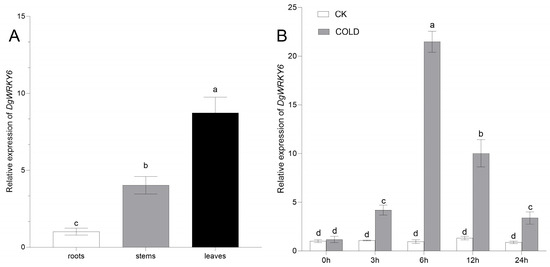
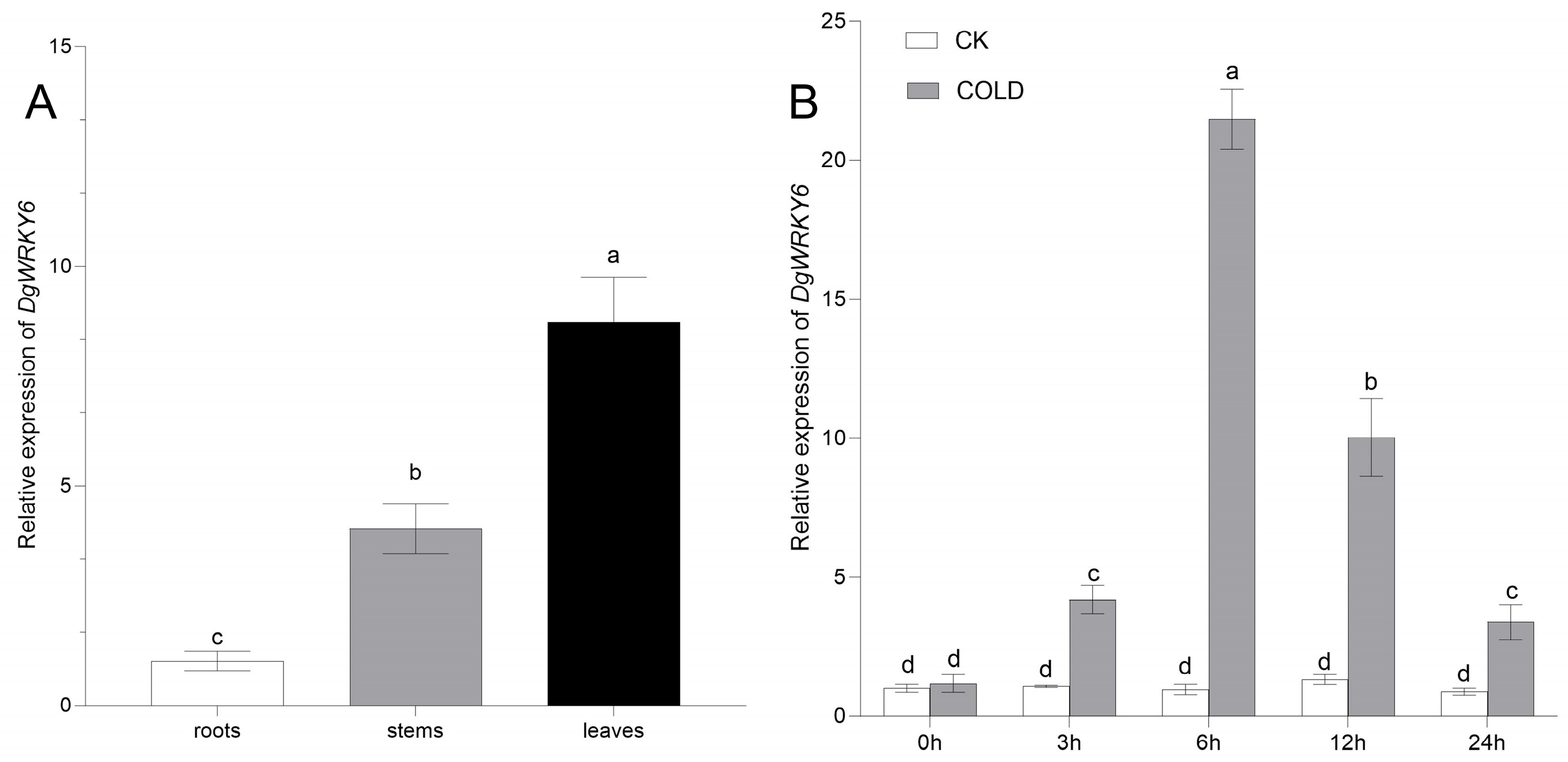
The GenBank accession ID for DgWRKY6 is assigned as PX890884.1. The full-length cDNA sequence of DgWRKY6 is 693 bp in length, which encodes a putative protein consisting of 231 amino acids with an estimated molecular weight of 26.0224 kDa (Figure S1A). Phylogenetic tree construction and analysis showed that DgWRKY6 shares the closest evolutionary relationship with the homologous WRKY gene from Artemisia annua (Figure S1B). Multiple sequence alignment analysis of WRKY family proteins from various plant species demonstrated that DgWRKY6 contains a conserved typical WRKY domain (Figure S1C). RT-qPCR was employed to determine the transcriptional expression patterns of DgWRKY6 in various tissues of WT chrysanthemum. In Figure 1A,B, the transcriptional abundance of DgWRKY6 in leaves was significantly higher than that in roots and stems (p < 0.05). Under different stress conditions, the expression level of DgWRKY6 reached its peak at 6 h post-treatment, and the differences among groups were statistically significant (p < 0.05).
Figure 1.
DgWRKY6 response to cold stress. (A) The relative expression levels of DgWRKY6 in roots, stems, and leaves of WT chrysanthemum were quantitatively analyzed by qRT-PCR, and the significance threshold was set at p < 0.05. (B) Using leaves without cold treatment as the control (25 °C/22 °C, day/night), the relative expression levels of DgWRKY6 in leaves of WT chrysanthemum were quantitatively analyzed after cold treatment at 4 °C for 0, 3, 6, 12 and 24 h.
3.2. Subcellular Localization of DgWRKY6
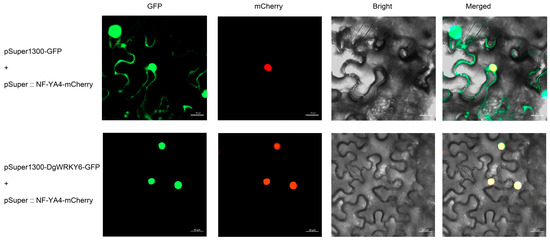
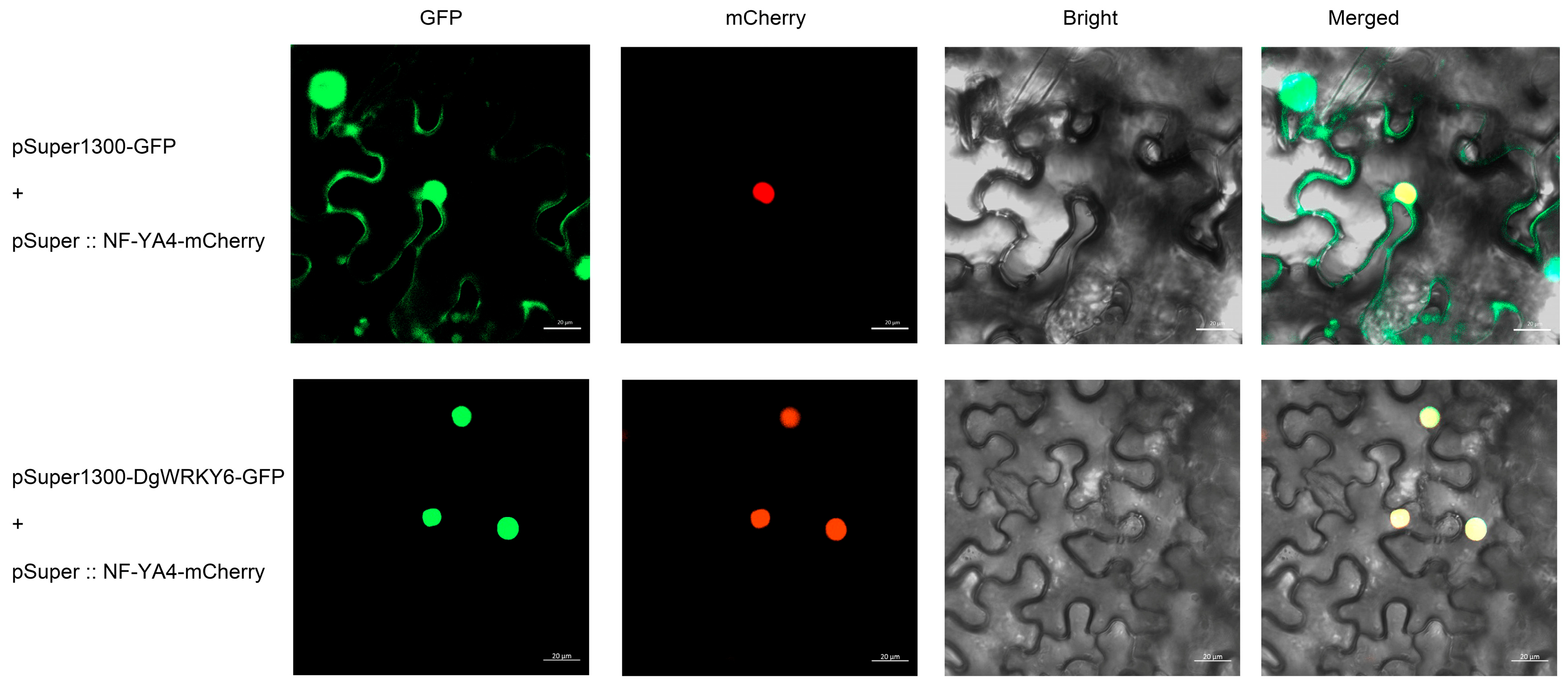
To verify the transcription factor identity of DgWRKY6 through subcellular localization analysis, the pSuper1300-DgWRKY6-GFP vector and the nuclear marker NF-YA4-mCherry vector were co-transiently expressed in Nicotiana benthamiana leaves. The results showed that the red fluorescent signal of NF-YA4-mCherry perfectly overlapped with the green fluorescent signal of DgWRKY6-GFP in the nucleus, exhibiting a distinct co-localization pattern (Figure 2).
Figure 2.
Subcellular localization. Note: GFP: Green fluorescent protein, used to indicate the expression of pSuper1300-GFP and pSuper1300-DgWRKY6-GFP. mCherry: Red fluorescent protein, used as a nuclear marker. Bright: Bright-field image showing cell morphology. Merged: Overlay of green and red fluorescence, with colocalization signals appearing in yellow. Scale bars = 20 μm.
3.3. Promoter Analysis of DgWRKY6
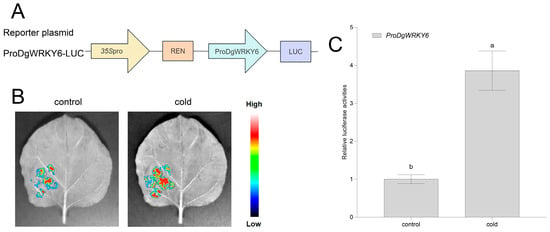
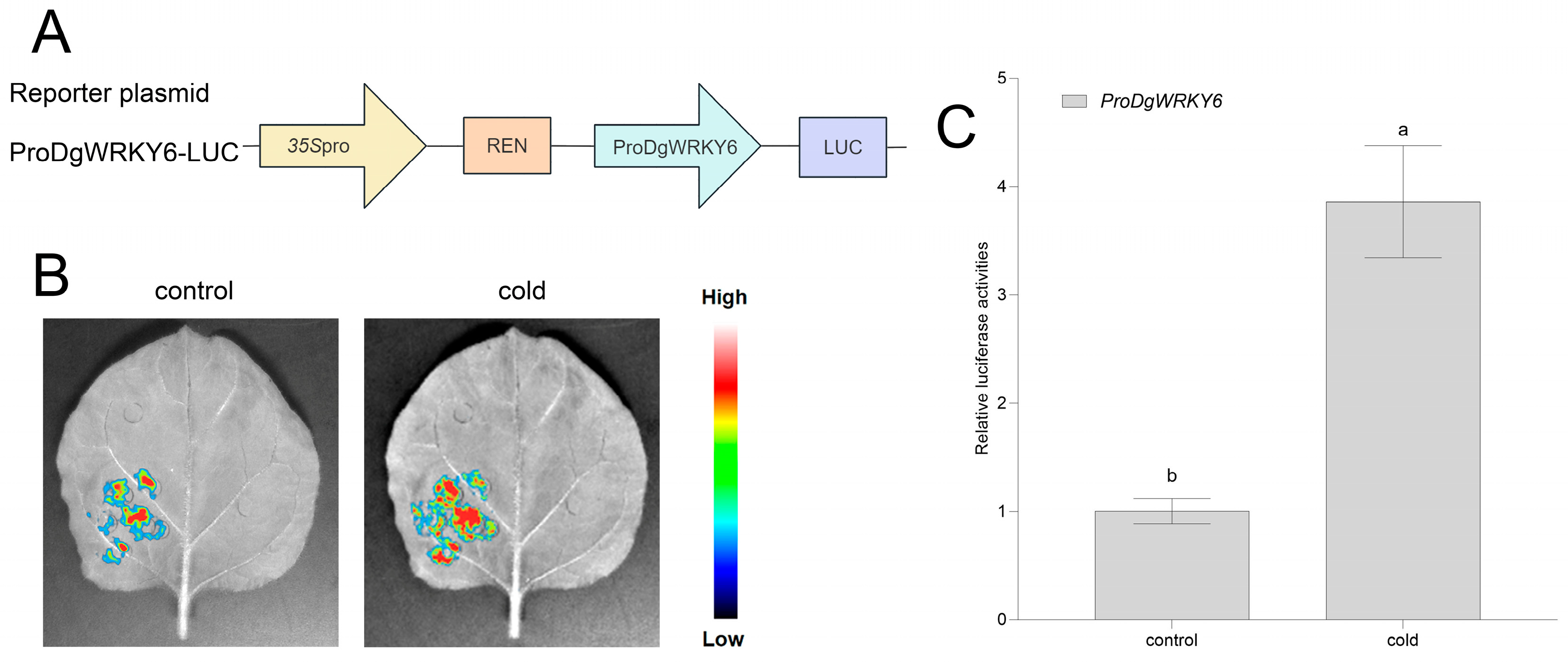
The DgWRKY6 promoter (ProDgWRKY6) harbors the low-temperature-responsive element DRE/CRT (CCGAC). The promoter fragment containing this element was cloned into the pGreenII 0800-LUC vector to construct the recombinant reporter vector pGreenII 0800-LUC-ProDgWRKY6. Following Agrobacterium-mediated transient expression in Nicotiana benthamiana leaves for 48 h, the promoter activity was assayed. The results showed that the LUC fluorescence signal driven by ProDgWRKY6 was weak under normal temperature, but was significantly enhanced after cold treatment. Quantitative fluorescence analysis indicated that the LUC/REN ratio in the cold treatment group was approximately 3.85-fold higher than that in the normal temperature group (Figure 3A–C).
Figure 3.
Promoter analysis (A) Schematic diagram of the reporter plasmid: The ProDgWRKY6 fragment was inserted into the pGreenII 0800-Luc vector. (B) Transient expression of pGreenII 0800-LUC-ProDgWRKY6 in Nicotiana benthamiana leaves; Control group (25 °C/22 °C, day/night), Cold treatment group (4 °C for 4 h). (C) Relative analysis of LUC activities (p < 0.05).
3.4. Identification and Phenotype Analysis of DgWRKY6 Transgenic Plants
In this study, the overexpression and CRISPR/Cas9 gene knockout vectors of DgWRKY6 were successfully constructed, and the corresponding transgenic lines were obtained via genetic transformation. Specifically, the gene knockout vector contained two specific target sites (Figure S2A,B). Following molecular identification and screening, two typical mutation types, namely base substitution mutation (Figure S2C) and base deletion mutation (Figure S2D), were detected in the obtained DgWRKY6 knockout mutant lines. Both mutation types resulted in the generation of premature stop codons in the coding sequence, which further led to premature termination of target protein translation, and ultimately enabled the functional knockout of DgWRKY6.
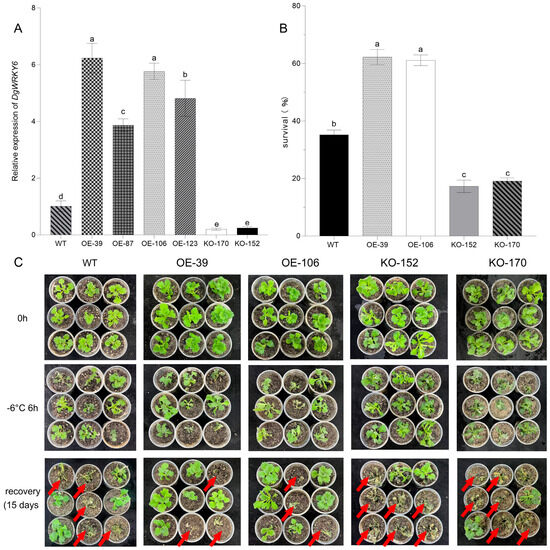
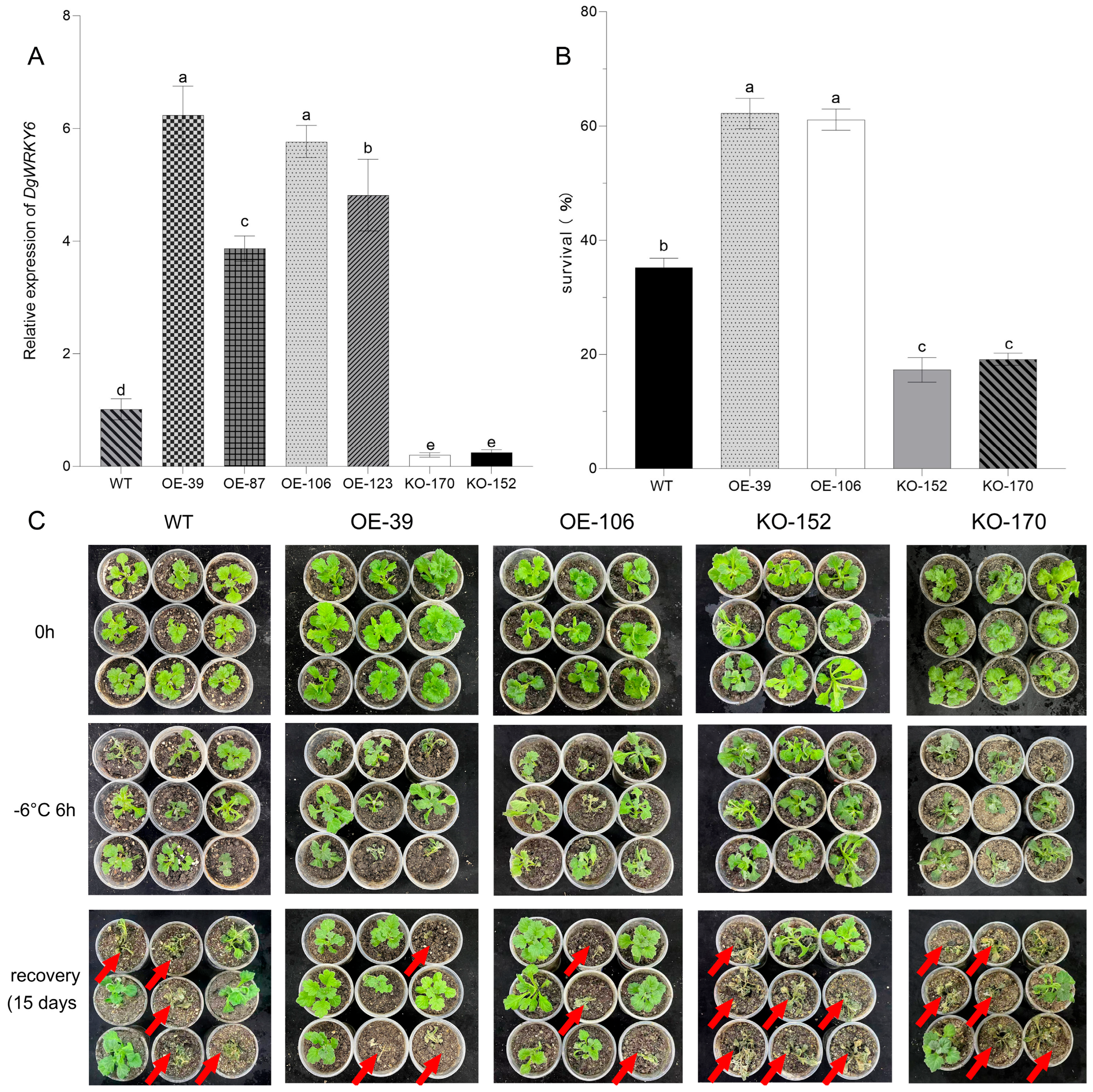
To examine the expression level, RT-qPCR analysis was performed on all transgenic lines using WT chrysanthemum as the control. As shown in Figure 4A, the transcriptional levels of DgWRKY6 were significantly upregulated in all three overexpression (OE) lines, but significantly downregulated in the two knockout (KO) lines (p < 0.05). Based on the above identification results, two representative OE lines (OE-39 and OE-106) and two KO lines (KO-152 and KO-170) were selected as materials for subsequent experiments. Phenotypic observation and statistical analysis of the survival rate under low-temperature stress were conducted (Figure 4B,C). The results demonstrated that, compared with WT chrysanthemum, the DgWRKY6 OE lines exhibited enhanced cold tolerance, whereas the KO lines showed the weakest cold tolerance.
Figure 4.
Transcriptional levels and cold stress phenotypes of DgWRKY6 transgenic and WT chrysanthemum. (A) Expression levels of DgWRKY6 in WT and transgenic chrysanthemum (p < 0.05). (B) Survival rates. (C) Phenotypes of chrysanthemum seedlings. Seedlings were treated at −6 °C for 6 h in a low-temperature incubator and then recovered at 25 °C for 15 d. Three biological replicates were performed, with 27 seedlings per replicate. Dead plants are clearly indicated with red arrows.
3.5. Analysis of ROS Content in DgWRKY6
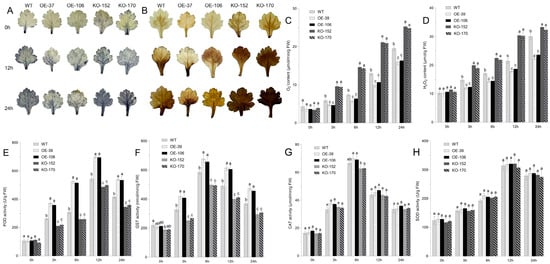
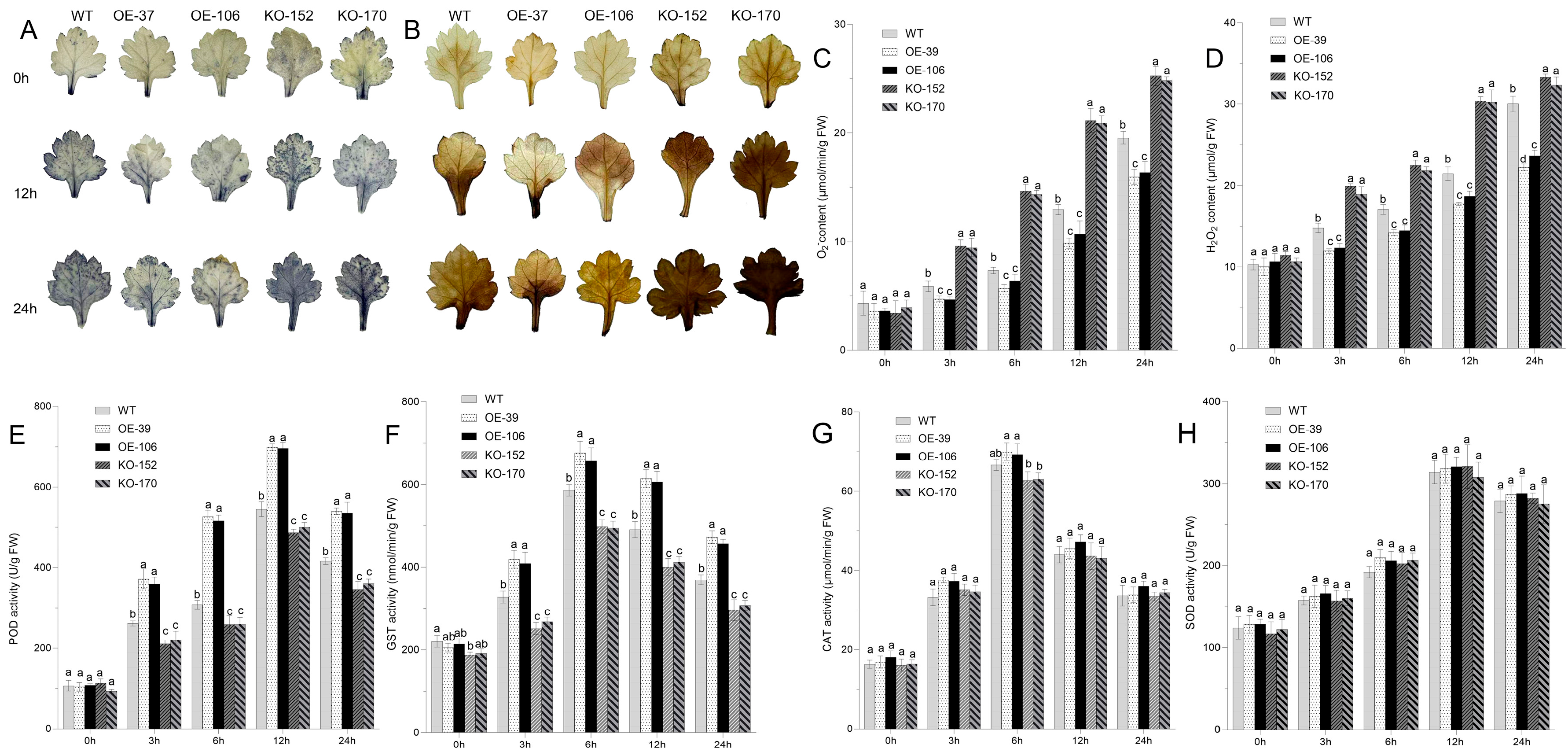
Histochemical staining with 3,3′-diaminobenzidine (DAB) and nitroblue tetrazolium (NBT) revealed that the overexpression lines OE-39 and OE-106 exhibited fewer staining spots, while the gene knockout lines KO-152 and KO-170 showed the most intense staining and accumulation compared with WT plants. Correspondingly, the contents of hydrogen peroxide (H2O2) and superoxide anion (O2−) were significantly lower in OE-39 and OE-106 than in WT plants, but markedly higher in KO-152 and KO-170, displaying an opposite trend. The OE lines accumulated less ROS and suffered milder oxidative stress, while the KO lines exhibited severe oxidative damage (Figure 5A–D).
Figure 5.
ROS accumulation and antioxidant enzyme activities in WT and DgWRKY6 transgenic chrysanthemum under low-temperature stress. (A) Histochemical NBT staining; (B) Histochemical DAB staining; (C) Content of O2−; (D) Content of H2O2; (E) POD activity; (F) GST activity; (G) CAT activity; (H) SOD activity. Significant differences were detected among different genotypes (p < 0.05).
Further analysis of the key enzyme activities in the antioxidant enzyme system revealed that the activities of GST and POD were significantly elevated in the DgWRKY6 overexpression lines, being remarkably higher than the level in WT plants, but decreased to the lowest in the knockout lines, showing a negative correlation with the change trend of ROS contents (Figure 5E,F). In contrast, the activities of superoxide dismutase (SOD) and catalase (CAT) showed no significant differences among the WT, overexpression and knockout lines (Figure 5G,H), indicating that DgWRKY6 exerts a selective regulation on the antioxidant enzyme system of chrysanthemum and maintains ROS homeostasis under low-temperature stress mainly by modulating the activities of GST and POD.
3.6. Plasma Membrane Integrity and Gene Expression Analysis
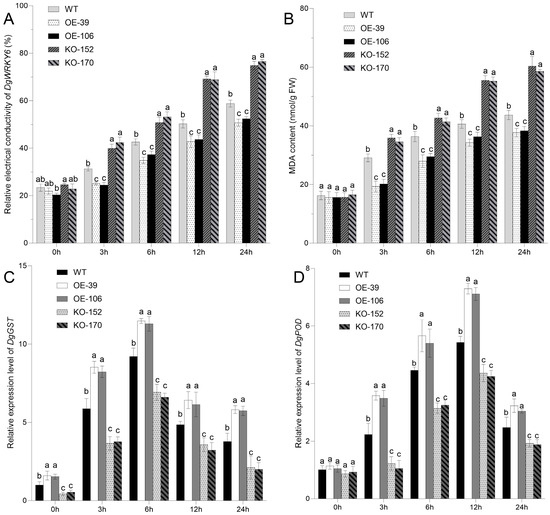
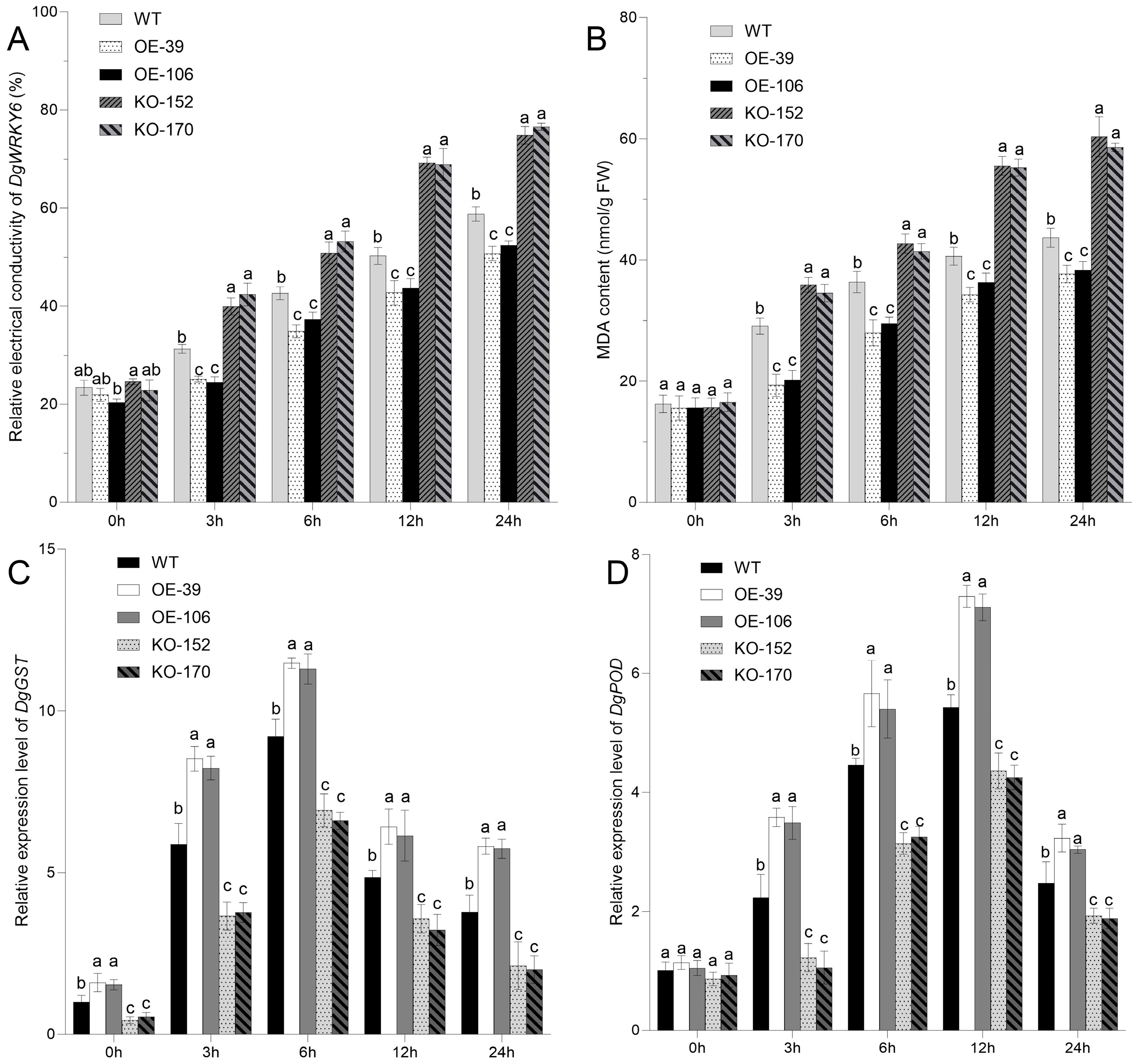
After low-temperature treatment, the malondialdehyde (MDA) content and relative electrolyte leakage (REC) level all exhibited an upward trend in WT, DgWRKY6 OE and KO chrysanthemum lines. Compared with WT, the increase amplitudes of MDA and REC in OE lines were remarkably smaller, and the structural integrity of the cell membrane was better maintained; conversely, the increase amplitudes of these two indicators in KO lines were significantly higher than those in WT, and the cell membrane damage was more severe (Figure 6A,B).
Figure 6.
Analysis of REC and MDA Contents and DgPOD/DgGST Gene Expression Levels. (A) REC; (B) Content of MDA; (C) Relative expression level of DgGST under low temperature stress; (D) Relative expression level of DgPOD under low temperature stress.
Transgenic and WT chrysanthemum plants were subjected to continuous low-temperature stress at 4 °C, and samples were collected at 0, 3, 6, 12, and 24 h of treatment. The expression levels of the key antioxidant genes DgPOD and DgGST were analyzed by qRT-PCR (Figure 6C,D). The results showed that in the OE lines, the transcript level of DgGST increased gradually with the extension of low-temperature treatment and reached a peak at 6 h. Similarly, the expression of DgPOD was rapidly upregulated after cold induction and peaked at 12 h. In contrast, the expression patterns of both genes in the KO lines exhibited an opposite trend to those in the OE lines (Figure 6C,D).
3.7. DgWRKY6 Directly Activates DgGST Expression
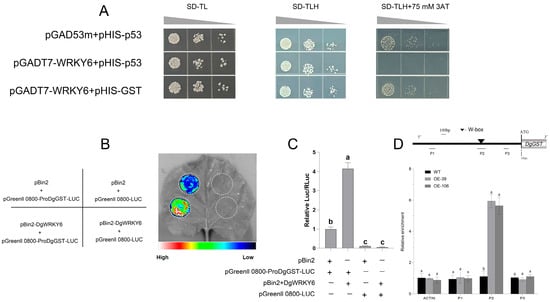
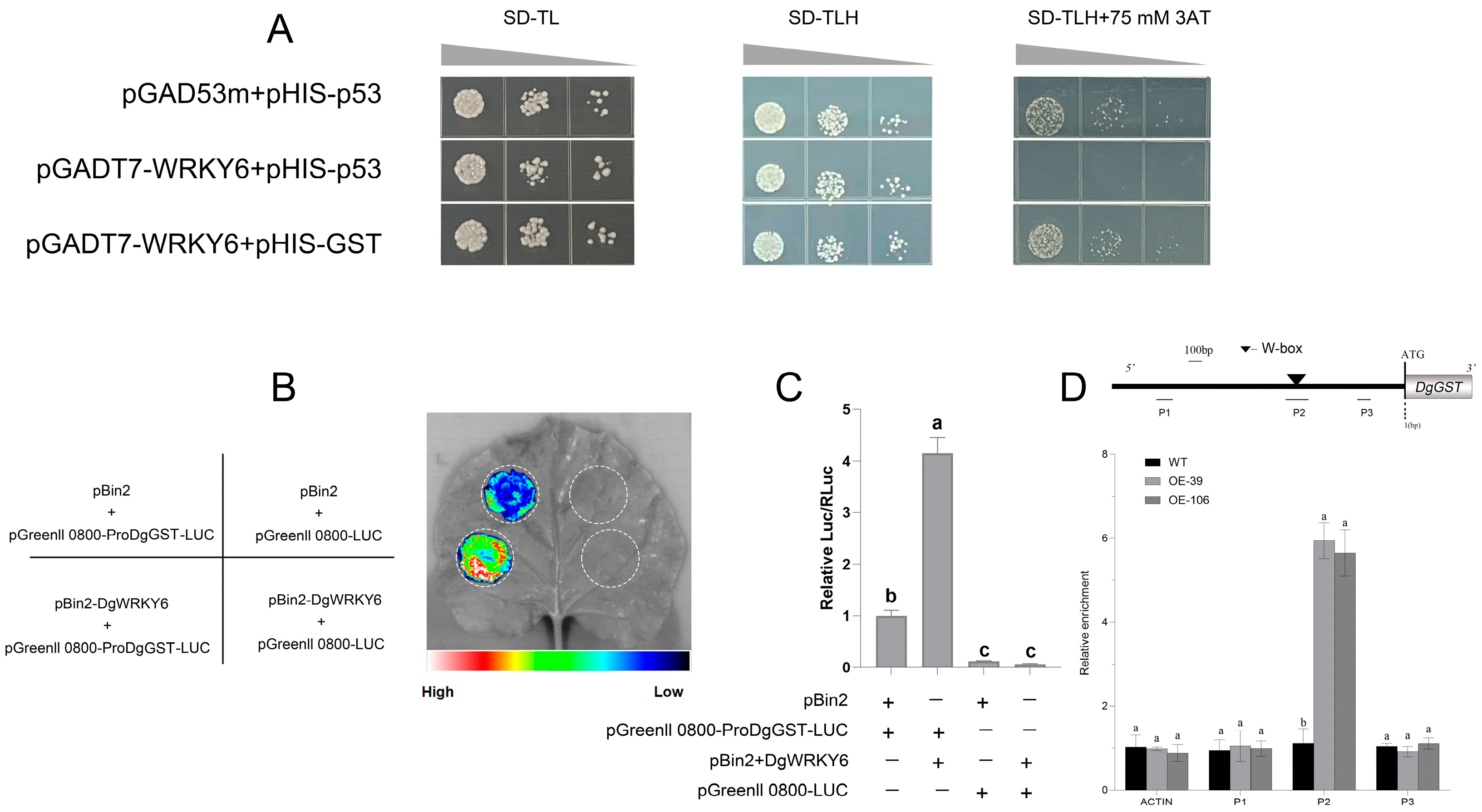
DgGST belongs to the tau-class glutathione S-transferase family. A predicted W-box cis-acting element with the core sequence of TTGACC was identified in the 1500 bp native promoter sequence of DgGST. The vector combinations for the Y1H assay were constructed, namely pGADT7-DgWRKY6 and pHIS-proDgGST. Meanwhile, a positive control (pGAD53m + pHIS2-p53) and a negative control (pHIS2-A + pGADT7) were set up in the assay. After transforming these vector combinations into yeast strains separately, the transformants were inoculated and cultured on the SD-TLH deficient medium supplemented with 75 mM 3AT. The results showed that the yeast in the experimental group grew with no significant difference from those in the positive control, whereas the yeast in the negative control failed to grow entirely. These findings demonstrated that DgWRKY6 could specifically bind to the W-box site on the DgGST promoter in vitro (Figure 7A).
Figure 7.
DgWRKY6 transcription factor targets and regulates the DgGST promoter. (A) Y1H analysis of the interaction between DgWRKY6 (prey, pGADT7-DgWRKY6) and the DgGST promoter (bait, pHIS-proDgGST). (B) Dual-LUC assays via transient expression in Nicotiana benthamiana leaves. Vector groups: pBin2 + pGreenII 0800-ProDgGST-LUC; pBin2-DgWRKY6 + pGreenII 0800-ProDgGST-LUC; pBin2 + pGreenII 0800-LUC; pBin2-DgWRKY6 + pGreenII 0800-LUC. (C) Relative LUC/RLuc ratio. (D) ChIP-qPCR confirming the binding of DgWRKY6 to the DgGST promoter.
The ProDgGST-LUC reporter vector was constructed and co-transformed with the DgWRKY6 expression vector into N. benthamiana leaves, with the group co-transformed with empty vectors set as the control. The LUC/RLuc ratio was then determined and calculated. The results showed that both the LUC/RLuc ratio and the luciferase luminescence intensity in leaves of the DgWRKY6 and ProDgGST-LUC co-expression group were significantly higher than those in the control group, demonstrating that DgWRKY6 can bind to the DgGST promoter and mediate its transcriptional activation (Figure 7B,C).
Using DgWRKY6 overexpression lines OE-39 and OE-106 as experimental materials, we directly verified the binding specificity of DgWRKY6 to the W-box of the DgGST promoter in planta via a ChIP-qPCR assay. Three detection fragments were designed for the DgGST promoter region, among which the P2 fragment contained the predicted W-box site, and the P1 and P3 fragments served as controls without the W-box. Chromatin fragments bound by DgWRKY6 were subjected to immunoprecipitation and quantitative PCR detection. The results showed that the P2 fragment containing the W-box was significantly enriched in the precipitated products, whereas no obvious enrichment was detected in the P1 and P3 regions. This confirmed that DgWRKY6 can specifically bind to the W-box region on the DgGST promoter (Figure 7D).
4. Discussion
Sequence analysis showed that DgWRKY6 contains the typical and highly conserved WRKYGQK motif, indicating that its DNA-binding ability is conserved and stable. Subcellular localization assays revealed that DgWRKY6 protein is localized to the nucleus, representing a typical nuclear-localized transcription factor of the WRKY family [19]. Expression analysis indicated that the promoter of DgWRKY6 exhibits low-temperature-responsive characteristics, and its transcriptional activity is significantly activated by low temperatures. This result is consistent with the function of WRKY transcription factors in plant cold stress responses [20], providing evidence for the involvement of DgWRKY6 in the regulation of cold resistance in chrysanthemum. It is speculated that DgWRKY6 is regulated by low-temperature signals and participates in plant responses to cold stress. DgWRKY6’s positive regulatory function, as well as its regulation of ROS, is highly consistent with the regulatory characteristics of WRKY genes in various plant species. For example, JrWRKY6 and JrWRKY53 from Juglans regia L. positively respond to abiotic stresses [21], the tomato transcription factor SlWRKY50 enhances plant cold tolerance by activating the jasmonic acid signaling pathway [22], reflecting the conserved role of WRKY family members in plant stress adaptation while implying species-specific regulatory details. On this basis, this study identified DgGST as a downstream target gene of DgWRKY6, and confirmed that DgWRKY6 can specifically bind to the W-box elements in the promoter of DgGST, further clarifying its species-specific regulatory pathway in chrysanthemum. The cold stress response in plants relies on a complex transcriptional cascade regulatory network of transcription factors. As key members of this network, WRKY family transcription factors often activate the expression of downstream cold-responsive genes by specifically binding to the W-box cis-acting elements in the promoter regions of target genes, thereby participating in the regulation of plant cold stress responses. For instance, VaWRKY65 was identified as an upstream transcriptional activator of VaBAM3, and it was confirmed that it can directly interact with the W-box region in the VaBAM3 promoter [23]. SlMYB71 and SlWRKY8 interact with each other and can directly bind to the promoter of SlGSTU43, activating its transcription either independently or in combination [24]. The MYB (TT2), bHLH (TT8), and WDR (TTG1) proteins form a stable ternary complex, which cooperatively regulates the expression of BANYULS and proanthocyanidin biosynthesis in Arabidopsis [25]. These findings collectively demonstrate that WRKY transcription factors, often in coordination with other transcription factor families, specifically recognize W-box elements to modulate the expression of downstream target genes, thus playing a critical role in plant cold stress responses. This cooperative regulatory pattern suggests that DgWRKY6 may also interact with other transcription factors to fine-tune cold stress adaptation in chrysanthemum, a direction worthy of further exploration.
Previous studies have demonstrated that the expression and function of GST genes are precisely regulated at multiple levels, including by transcription factors and protein kinases, and this regulatory mode is highly conserved in different plants in response to abiotic stresses. For instance, CsWRKY48 in Camellia sinensis, a typical transcriptional activator, is dually induced by drought stress. It can specifically activate the transcription of CsGSTU8 by directly binding to the W-box cis-acting elements in the promoter region of CsGSTU8, thereby participating in the drought stress response of tea plant [26]. Moreover, overexpression of PtrGSTF8 significantly promotes the growth of transgenic tobacco under salt stress and enhances plant salt tolerance by strengthening the ROS scavenging capacity [27]. This is consistent with the regulatory pattern of DgWRKY6-DgGST identified in this study, where DgWRKY6 regulates DgGST to mediate ROS scavenging. In addition to direct regulation at the transcriptional level, protein post-translational modifications are also an important way to regulate GST enzyme activity. For example, the transcript abundance of CsCIPK11 in tea plant is significantly upregulated at low temperatures, and this kinase can interact with and phosphorylate CsGSTU23, a tau class glutathione S-transferase, thereby regulating the functional activity of GST at the protein level [28]. Since DgGST identified in this study belongs to the same tau class as CsGSTU23, it will be worthwhile to explore in future work how kinases in chrysanthemum regulate the activity of tau-class GST through protein phosphorylation.
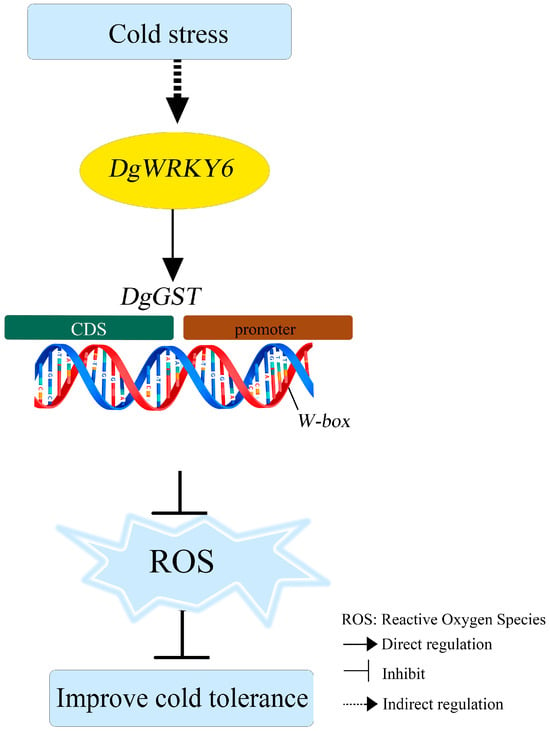
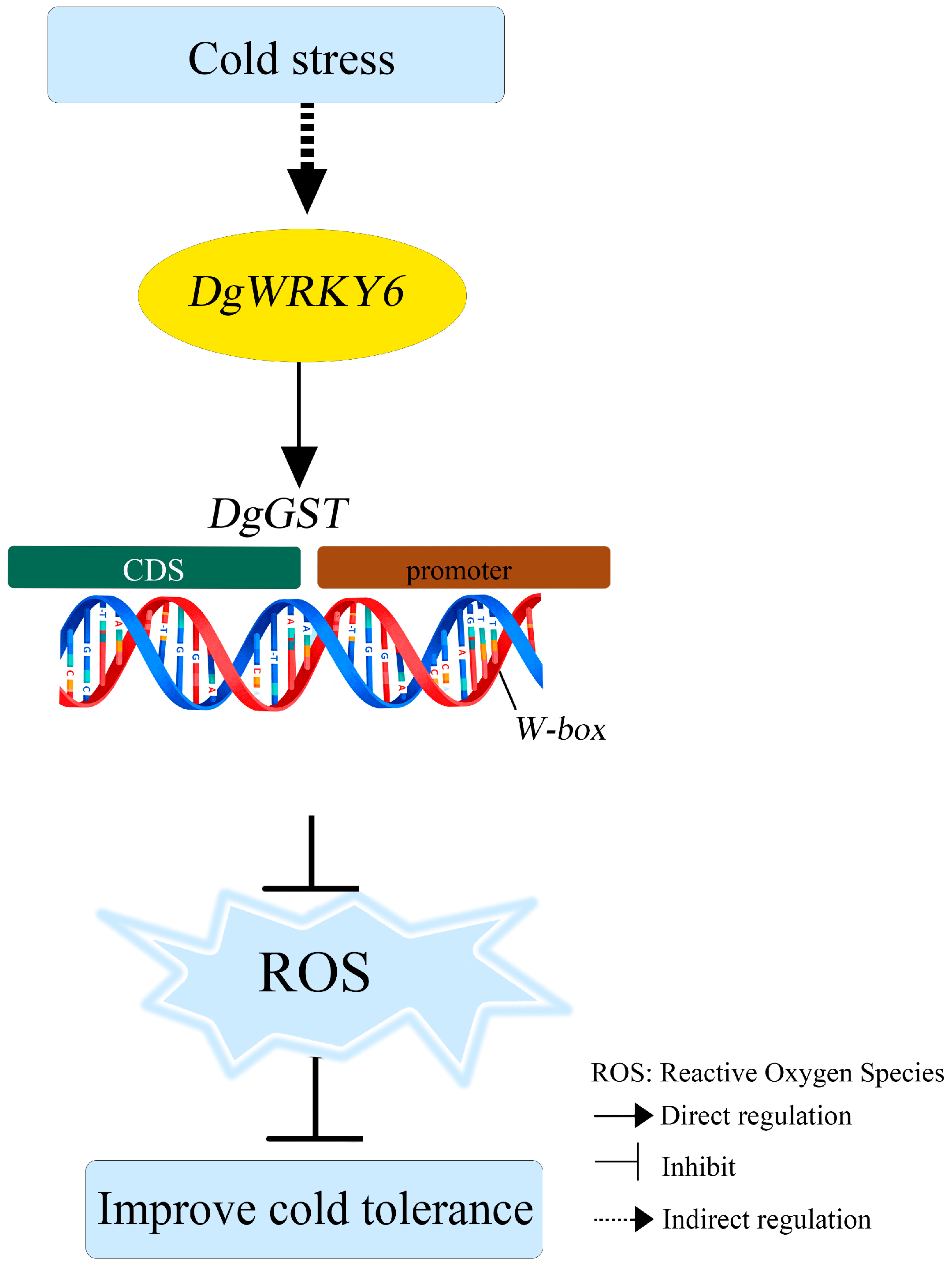
Y1H assay confirmed that DgWRKY6 can directly bind to the W-box cis-acting elements in the promoter region of DgGST; ChIP-qPCR assay further verified that DgWRKY6 protein specifically binds to the DgGST promoter in vivo under low-temperature stress; Dual-LUC assay results indicated that DgWRKY6 can directly activate the transcriptional activity of the DgGST promoter (Figure 8). These multi-dimensional experimental results collectively confirm the direct transcriptional regulatory relationship between DgWRKY6 and DgGST, providing a clear molecular basis for the role of DgWRKY6 in chrysanthemum cold tolerance.
Figure 8.
Schematic model of the DgWRKY6-mediated cold tolerance pathway in chrysanthemum. Note: DgWRKY6 binds to the W-box element in the DgGST promoter to activate its expression, thereby enhancing ROS scavenging and improving cold tolerance. This model illustrates one key regulatory module identified in this study.
It should be noted that the plant cold stress response is a sophisticated regulatory network involving multiple transcription factors, signaling pathways, and downstream genes. For example, the ICE-CBF-COR cascade represents the classic and central regulatory pathway in plant cold tolerance [29]. ABA, JA, SA, and IAA are critical phytohormones involved in stress tolerance [30,31,32], and accumulating evidence has linked WRKY transcription factors to ABA-mediated stress regulation. Specifically, the GhWRKY6 gene from Gossypium hirsutum improves plant salt tolerance by activating the ABA signaling pathway and scavenging ROS [33], while overexpression of SlWRKY6 in Solanum lycopersicum L. enhances antioxidant defense and promotes stomatal closure via the ABA signaling pathway, thereby increasing drought tolerance [34]. The regulatory model proposed in this study mainly highlights the DgWRKY6-DgGST module identified in the present work. However, DgWRKY6 may also have additional downstream target genes, and it is plausible that it crosstalks with the ICE-CBF-COR pathway or interacts with ABA/JA hormonal signaling. In addition, the regulatory specificity of DgWRKY6 toward other ROS-related genes requires systematic exploration in future studies.
5. Conclusions
This study focused on clarifying the molecular mechanism of chrysanthemum cold tolerance regulation, systematically identifying and functionally characterizing DgWRKY6, and confirming the existence and role of its downstream regulatory pathway. DgWRKY6 is a nuclear-localized WRKY transcription factor with conserved DNA-binding ability, whose transcriptional activity is significantly induced by low-temperature stress, serving as a key positive regulator in chrysanthemum cold stress response. DgGST is a direct downstream target of DgWRKY6; specifically, DgWRKY6 binds to the W-box elements in the DgGST promoter to activate its transcription, forming a DgWRKY6-DgGST transcriptional regulatory pathway in chrysanthemum. This DgWRKY6-DgGST pathway is the core mechanism by which DgWRKY6 enhances chrysanthemum cold tolerance, primarily functioning through mediating ROS scavenging. In summary, this study clarifies the core molecular mechanism underlying DgWRKY6-mediated chrysanthemum cold tolerance, enriches the genetic basis of chrysanthemum stress resistance, and provides important gene resources and theoretical support for molecular breeding of cold-tolerant chrysanthemum cultivars.
Supplementary Materials
The following supporting information can be downloaded at: https://www.mdpi.com/article/10.3390/horticulturae12030283/s1, Figure S1. Sequence analysis of DgWRKY6. (A) The nucleotide sequence and amino acid sequence of DgWRKY6. Note: ATG: start codon; TAA: stop codon. (B) Phylogenetic tree of DgWRKY6 and other species WRKY proteins. DgWRKY6 is highlight with a red frame. Sequence details are as follows: BhWRKY6 (Bidens hawaiensis XP_076896643.1); BhWRKY6 (Bidens hawaiensis XP_076948437.1); HaWRKY6 (Helianthus annuus KAJ0705345.1); CcsWRKY6 (Cynara cardunculus var. scolymus XP_024991487.1); AlWRKY6 (Atractylodes lancea XZP16159.1); AaWRKY6 (Artemisia annua PWA65018.1); DgWRKY6 (Dendranthema grandiflorum var. Jinba. PX890884.1); AaWRKY6 (Artemisia annua PWA98304.1); EcWRKY6 (Erigeron canadensis XP_043634609.1); RlWRKY (Rutidosis leptorrhynchoides XP_071734362.1). (C) The alignment of DgWRKY6 with related proteins from different species. Specific motifs in the protein sequence are highlighted in the figure, and the WRKY domain is clearly marked. Figure S2. CRISPR/Cas9-mediated mutation in DgWRKY6. (A) Construction of vector. (B) Diagram of the target site in the genomic region of DgWRKY6. The Black box indicate exons. Black fine lines indicate introns. (C) Target detection in dgwrky6 (KO152, KO-170) mutant lines. The target sequence is shown in red dashes indicate deletions, while red letters indicate substitution. Table S1. cDNA Reverse transcription reaction system. Table S2. qPCR reaction system. Table S3. qPCR reaction program. Table S4. Primers used in this study.
Author Contributions
Formal analysis, Writing—Original Draft Preparation, Y.F., Methodology, Q.Z., Software, J.Y., Resources, X.X. and Y.W., Supervision, L.Z. Conceptualization, Writing—Review & Editing, Q.L. All authors have read and agreed to the published version of the manuscript.
Funding
This work was supported by grants from the National Natural Science Foundation of China (No.32271942).
Data Availability Statement
The raw sequence data used in this study were obtained from the NCBI Gene Expression Omnibus (GEO) database under accession number GSE117262. The sequence information of DgWRKY6 has been submitted to GenBank under accession number PX890884.1. The datasets generated and analyzed during this study are available from the corresponding author upon reasonable request.
Conflicts of Interest
The authors declare no conflicts of interest.
References
- Ding, Y.; Shi, Y.; Yang, S. Advances and challenges in uncovering cold tolerance regulatory mechanisms in plants. New Phytol. 2019, 222, 1690–1704. [Google Scholar] [CrossRef] [Scilit]
- Chen, J.; Zhou, Q.; Wu, Q.; Yang, J.; Huang, B.; Mu, W.; Mei, Q.; Zhao, H.; Hu, H.; Liu, F.; et al. Research progress on exogenous substances and their mechanisms of action in alleviating low-temperature stress in plants. Planta 2026, 263, 45. [Google Scholar] [CrossRef] [Scilit]
- Baxter, B. Plant acclimation and adaptation to cold environments. In Temperature and Plant Development; John Wiley & Sons: Hoboken, NJ, USA, 2014; pp. 19–48. [Google Scholar] [CrossRef] [Scilit]
- Abdullah, S.N.A.; Azzeme, A.M.; Yousefi, K. Fine-tuning cold stress response through regulated cellular abundance and mechanistic actions of transcription factors. Front. Plant Sci. 2022, 13, 850216. [Google Scholar] [CrossRef] [Scilit] [PubMed]
- Zhang, H.; Pei, Y.; Zhu, F.; He, Q.; Zhou, Y.; Ma, B.; Chen, X.; Guo, J.; Khan, A.; Jahangir, M.; et al. CaSnRK2.4-mediated phosphorylation of CaNAC035 regulates abscisic acid synthesis in pepper (Capsicum annuum L.) responding to cold stress. Plant J. 2024, 117, 1377–1391. [Google Scholar] [CrossRef] [Scilit] [PubMed]
- Zhang, H.; Guo, J.; Chen, X.; Zhou, Y.; Pei, Y.; Chen, L.; Haq, S.U.; Zhang, M.; Gong, H.; Chen, R. Transcription factor CabHLH035 promotes cold resistance and homeostasis of reactive oxygen species in pepper. Hortic. Plant J. 2024, 10, 823–836. [Google Scholar] [CrossRef] [Scilit]
- Wang, Y.-M.; Zhang, Y.-M.; Zhang, X.; Zhao, X.; Zhang, Y.; Wang, C.; Wang, Y.-C.; Wang, L.-Q. Poplar PsnICE1 enhances cold tolerance by binding to different cis-acting elements to improve reactive oxygen species-scavenging capability. Tree Physiol. 2021, 41, 2424–2437. [Google Scholar] [CrossRef] [Scilit] [PubMed]
- Wang, H.; Cheng, X.; Yin, D.; Chen, D.; Luo, C.; Liu, H.; Huang, C. Advances in the research on plant WRKY transcription factors responsive to external stresses. Curr. Issues Mol. Biol. 2023, 45, 2861–2880. [Google Scholar] [CrossRef] [Scilit]
- Chen, X.; Zhang, T.; Wang, H.; Zhao, W.; Guo, Z. Transcription factor WRKY complexes in plant signaling pathways. Phytopathol. Res. 2025, 7, 54. [Google Scholar] [CrossRef] [Scilit]
- Huang, Y.; Feng, C.-Z.; Ye, Q.; Wu, W.-H.; Chen, Y.-F. Arabidopsis WRKY6 transcription factor acts as a positive regulator of abscisic acid signaling during seed germination and early seedling development. PLoS Genet. 2016, 12, e1005833. [Google Scholar] [CrossRef] [Scilit]
- Liu, W.; Wang, T.; Wang, X.; Wang, Z.; Guo, B.; Wang, Y.; Shen, X.; Han, J.; Li, W.; Han, D. Overexpression of Malus baccata WRKY63 Enhances Cold Tolerance by Increasing the Antioxidant Level Associated with ROS Scavenging. Int. J. Mol. Sci. 2025, 26, 11997. [Google Scholar] [CrossRef] [Scilit]
- Guo, M.; Li, S.; Tian, J.; Li, M.; Zhu, X.; Guo, C.; Shu, Y. TrWRKY41: A WRKY Transcription Factor from White Clover Improves Cold Tolerance in Transgenic Arabidopsis. Plants 2025, 14, 3493. [Google Scholar] [CrossRef] [Scilit]
- Wang, X.; Li, Y.; Chen, Z.; Li, L.; Li, Q.; Geng, Z.; Liu, W.; Hou, R.; Zhang, L.; Han, D. MbWRKY50 confers cold and drought tolerance through upregulating antioxidant capacity associated with ROS scavenging. J. Plant Physiol. 2025, 310, 154526. [Google Scholar] [CrossRef] [Scilit]
- Jiang, Y.; Deyholos, M.K. Functional characterization of Arabidopsis NaCl-inducible WRKY25 and WRKY33 transcription factors in abiotic stresses. Plant Mol. Biol. 2009, 69, 91–105. [Google Scholar] [CrossRef] [Scilit]
- Chen, Y.-F.; Li, L.-Q.; Xu, Q.; Kong, Y.-H.; Wong, H.; Wu, W.-H. The WRKY6 transcription factor modulates PHOSPHATE1 expression in response to low Pi stress in Arabidopsis. Plant Cell 2009, 21, 3554–3566. [Google Scholar] [CrossRef] [Scilit]
- Wu, M.; Zhang, K.; Xu, Y.; Wang, L.; Liu, H.; Qin, Z.; Xiang, Y. The moso bamboo WRKY transcription factor, PheWRKY86, regulates drought tolerance in transgenic plants. Plant Physiol. Biochem. 2022, 170, 180–191. [Google Scholar] [CrossRef] [Scilit] [PubMed]
- Zhang, X.; Feng, Y.; Wang, Y.; Xu, X.; Wang, Y.; Zhang, F.; Zhang, L.; Liu, Q. Genetic Modulation of ROS Scavenging by DgNAC3 Improves Cold Stress Tolerance in Chrysanthemum morifolium. Physiol. Plant. 2025, 177, e70593. [Google Scholar] [CrossRef] [Scilit] [PubMed]
- Liu, C.; Ou, S.; Mao, B.; Tang, J.; Wang, W.; Wang, H.; Cao, S.; Schläppi, M.R.; Zhao, B.; Xiao, G.; et al. Early selection of bZIP73 facilitated adaptation of japonica rice to cold climates. Nat. Commun. 2018, 9, 3302. [Google Scholar] [CrossRef] [Scilit]
- Wang, D.; Zhang, R.; Zou, W.; Zhang, Y.; Zhao, W.; Sun, T.; Wu, Q.; Fu, Z.Q.; Que, Y. WRKY Transcription Factors: Integral Regulators of Defence Responses to Biotic Stress in Crops. Plant Biotechnol. J. 2026. Online ahead of print. [Google Scholar] [CrossRef] [Scilit]
- Ma, Z.; Hu, L. WRKY transcription factor responses and tolerance to abiotic stresses in plants. Int. J. Mol. Sci. 2024, 25, 6845. [Google Scholar] [CrossRef] [Scilit]
- Yang, G.; Zhang, W.H.; Sun, Y.D.; Zhang, T.T.; Hu, D.; Zhai, M.Z. Two novel WRKY genes from Juglans regia, JrWRKY6 and JrWRKY53, are involved in abscisic acid-dependent stress responses. Biol. Plant. 2017, 61, 611–621. [Google Scholar] [CrossRef] [Scilit]
- Wang, L.; Chen, H.; Chen, G.; Luo, G.; Shen, X.; Ouyang, B.; Bie, Z. Transcription factor SlWRKY50 enhances cold tolerance in tomato by activating the jasmonic acid signaling. Plant Physiol. 2024, 194, 1075–1090. [Google Scholar] [CrossRef] [Scilit] [PubMed]
- Meng, L.; Zhou, H.; Tan, L.; Li, Q.; Hou, Y.; Li, W.; Kafle, S.; Liang, J.; Aryal, R.; Liang, Z.; et al. VaWRKY65 contributes to cold tolerance through dual regulation of soluble sugar accumulation and reactive oxygen species scavenging in Vitis amurensis. Hortic. Res. 2025, 12, uhae367. [Google Scholar] [CrossRef] [Scilit]
- Yuan, L.; Dang, J.; Zhang, J.; Wang, L.; Zheng, H.; Li, G.; Li, J.; Zhou, F.; Khan, A.; Zhang, Z.; et al. A glutathione S-transferase regulates lignin biosynthesis and enhances salt tolerance in tomato. Plant Physiol. 2024, 196, 2989–3006. [Google Scholar] [CrossRef] [Scilit]
- Baudry, A.; Heim, M.A.; Dubreucq, B.; Caboche, M.; Weisshaar, B.; Lepiniec, L. TT2, TT8, and TTG1 synergistically specify the expression of BANYULS and proanthocyanidin biosynthesis in Arabidopsis thaliana. Plant J. 2004, 39, 366–380. [Google Scholar] [CrossRef] [Scilit]
- Zhang, Y.; He, J.; Xiao, Y.; Zhang, Y.; Liu, Y.; Wan, S.; Liu, L.; Dong, Y.; Liu, H.; Yu, Y. CsGSTU8, a glutathione S-transferase from Camellia sinensis, is regulated by CsWRKY48 and plays a positive role in drought tolerance. Front. Plant Sci. 2021, 12, 795919. [Google Scholar] [CrossRef] [Scilit] [PubMed]
- Song, Y.; Yu, K.; Zhang, S.; Li, Y.; Xu, C.; Qian, H.; Cui, Y.; Guo, Y.; Zhang, X.; Li, R.; et al. Poplar glutathione S-transferase PtrGSTF8 contributes to reactive oxygen species scavenging and salt tolerance. Plant Physiol. Biochem. 2024, 212, 108766. [Google Scholar] [CrossRef] [Scilit]
- Di, T.; Wu, Y.; Feng, X.; He, M.; Lei, L.; Wang, J.; Li, N.; Hao, X.; Whelan, J.; Wang, X.; et al. CIPK11 phosphorylates GSTU23 to promote cold tolerance in Camellia sinensis. Plant Cell Environ. 2024, 47, 4786–4799. [Google Scholar] [CrossRef] [Scilit] [PubMed]
- Bailey, P.C.; Martin, C.; Toledo-Ortiz, G.; Quail, P.H.; Huq, E.; Heim, M.A.; Jakoby, M.; Werber, M.; Weisshaar, B. Update on the basic helix-loop-helix transcription factor gene family in Arabidopsis thaliana. Plant Cell 2003, 15, 2497–2502. [Google Scholar] [CrossRef] [Scilit]
- Santner, A.; Calderon-Villalobos, L.I.A.; Estelle, M. Plant hormones are versatile chemical regulators of plant growth. Nat. Chem. Biol. 2009, 5, 301–307. [Google Scholar] [CrossRef] [Scilit] [PubMed]
- Stone, J.M.; Walker, J.C. Plant protein kinase families and signal transduction. Plant Physiol. 1995, 108, 451–457. [Google Scholar] [CrossRef] [Scilit]
- Enders, T.A.; Strader, L.C. Auxin activity: Past, present, and future. Am. J. Bot. 2015, 102, 180–196. [Google Scholar] [CrossRef] [Scilit]
- Ullah, A.; Sun, H.; Hakim; Yang, X.; Zhang, X. A novel cotton WRKY gene, GhWRKY6-like, improves salt tolerance by activating the ABA signaling pathway and scavenging of reactive oxygen species. Physiol. Plant. 2018, 162, 439–454. [Google Scholar] [CrossRef] [Scilit] [PubMed]
- Chen, H.; Shi, Y.; An, L.; Yang, X.; Liu, J.; Dai, Z.; Zhang, Y.; Li, T.; Ahammed, G.J. Overexpression of SlWRKY6 enhances drought tolerance by strengthening antioxidant defense and stomatal closure via ABA signaling in Solanum lycopersicum L. Plant Physiol. Biochem. 2024, 213, 108855. [Google Scholar] [CrossRef] [Scilit] [PubMed]
Disclaimer/Publisher’s Note: The statements, opinions and data contained in all publications are solely those of the individual author(s) and contributor(s) and not of MDPI and/or the editor(s). MDPI and/or the editor(s) disclaim responsibility for any injury to people or property resulting from any ideas, methods, instructions or products referred to in the content. |
© 2026 by the authors. Licensee MDPI, Basel, Switzerland. This article is an open access article distributed under the terms and conditions of the Creative Commons Attribution (CC BY) license.