Article

Substrate pH and Fertilizer Rate Differentially Modulate Petunia × hybrida Responses to Biostimulants


by
Evili Martins
†,‡,
Juan Quijia-Pillajo
,
Laura J. Chapin
and
Michelle L. Jones
*
Department of Horticulture and Crop Science, College of Food, Agricultural and Environmental Sciences Wooster Campus, The Ohio State University, Wooster, OH 44691, USA
*
Author to whom correspondence should be addressed.
These authors contributed equally to this work.
Current address: Department of Biological Science, Bowling Green State University, Bowling Green, OH 43402, USA.
Horticulturae 2026, 12(3), 280; https://doi.org/10.3390/horticulturae12030280
Submission received: 29 January 2026 / Revised: 19 February 2026 / Accepted: 25 February 2026 / Published: 27 February 2026

Abstract

Biostimulants can promote healthy plant growth under reduced fertilization and abiotic stress. This study investigated how the efficacy of three commercial biostimulants was influenced by initial substrate pH and fertilizer rate. Biostimulants included Micromate (humic and fulvic acids), Cease (Bacillus subtilis QST 713), and Lalrise Vita (Bacillus velezensis). Petunia × hybrida (petunia) ‘Picobella Blue’ was grown in a peat-based soilless substrate with an initial pH of 5.5, 6.2, or 7.0 and fertilized with either 50 mg·L−1 N (low rate) or 150 mg·L−1 N (recommended rate). Growth and plant health were assessed at flowering using digital phenotyping. The effect of biostimulants on plant growth depended on initial substrate pH and fertilization rate, whereas the vegetation indices were influenced only by fertilization rate. Lalrise Vita increased plant size across all substrate pH levels and fertilizer rates, while improving canopy health indices across fertilization rates. Micromate resulted in the greatest increases in growth, flowering, and canopy health across all pH and fertilizer treatments, with especially strong responses under recommended fertility. Our findings demonstrate that biostimulant efficacy in petunia ‘Picobella Blue’ is context-dependent, varying with product, substrate pH, and fertility rate, demonstrating the need for species- and environment-specific evaluations before widespread greenhouse adoption.

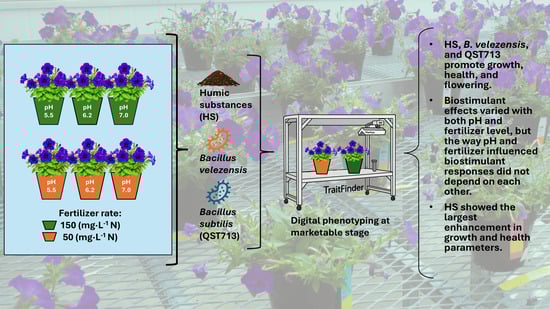
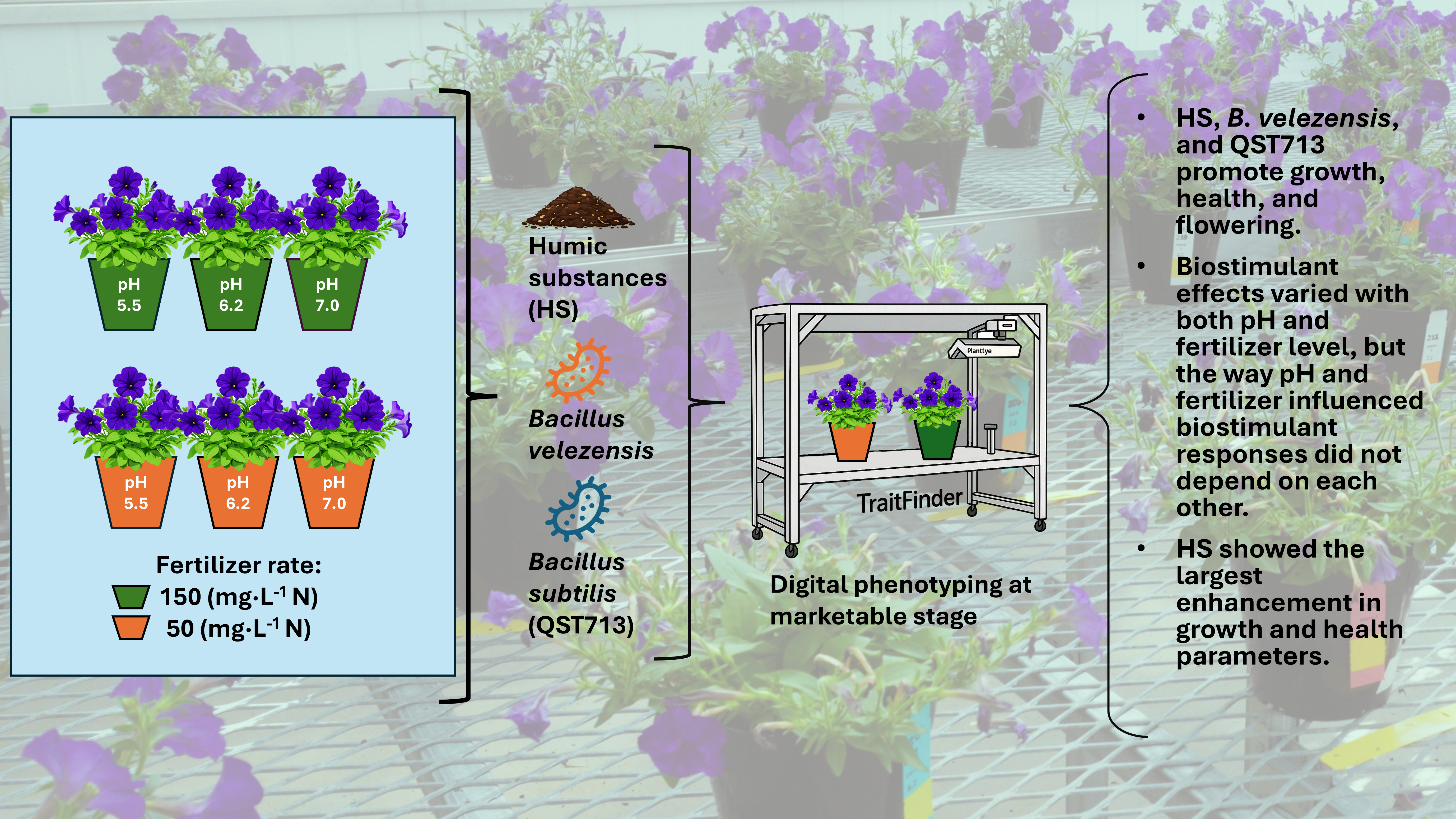
Graphical Abstract

1. Introduction

The marketability of ornamental plants depends on high plant quality. Vibrant colors, uniform size, healthy foliage, and well-developed blooms attract consumers. Crop quality depends on adequate plant nutrition, which is maintained through intensive fertilization [1]. However, substrate chemical properties (e.g., pH or cation exchange capacity) can influence the availability of applied nutrients for plant uptake. For instance, a more basic substrate pH would limit the availability of essential micronutrients such as iron. The optimal substrate pH for ornamental crop production ranges from 5.8 to 6.2, depending on plant species [2]. Soilless substrates have poor nutrient-holding capacity, so when fertilizers are applied in excess, nutrients can easily be leached from the containers [3]. Continuous nutrient leaching wastes fertilizer (reducing profit) and pollutes surface and ground waters [4].
Biostimulants are products that improve plant growth and enhance abiotic stress tolerance [5,6]. The ornamentals industry can use biostimulants to produce high-quality plants with lower fertilizer and chemical inputs. Biostimulants contain various microbial and non-microbial active ingredients that can improve crop quality and yield by enhancing nutrient uptake, stimulating plant growth, and improving abiotic stress tolerance [7]. Non-microbial components include humic substances (i.e., humic and fulvic acid), seaweed extracts, and protein hydrolysates. Individual strains of beneficial bacteria or fungi and complex consortia of plant growth-promoting microbes are also commonly found in biostimulants [7].
Humic substances are natural organic compounds that originate from the decomposition of soil organic matter and sediments and are classified as humins, humic acids, and fulvic acids according to their pH solubility, molecular size, and chemical composition [8,9]. Humic and fulvic acids positively affect soil quality and fertility by increasing water-holding capacity, stabilizing soil structure, and enhancing microbial activity [10]. In Gerbera jamesonii, humic acid treatments increased root growth, flower number, and cut flower vase life [11]. Similarly, we previously reported that a biostimulant (Micromate, Huma, Gilbert, AZ, USA) containing both humic and fulvic acids increases plant height, shoot biomass, nutrient uptake, and flower number and reduces the time to first flower in petunia (Petunia × hybrida) plants [12].
Microbial-based biostimulants can enhance ornamental crop quality by increasing leaf chlorophyll and nutrient content, shoot biomass, and flower and bud numbers under low-fertility conditions [13,14,15,16]. Plant growth-promoting bacteria (PGPB) from the genus Bacillus have been reported to mitigate the adverse effects of reduced fertilization on plant growth and health [16,17]. Bacillus subtilis strain QST713 promotes growth in petunias and pansies (Viola × wittrockiana) grown with reduced fertilizer rates [17,18]. Similarly, Bacillus velezensis, the active ingredient in Lalrise Vita (Lallemand, Milwaukee, WI, USA), improves growth and reduces nutrient deficiency symptoms in French marigolds (Tagetes patula) grown under phosphorus-limiting conditions [19,20]. Caballeronia, Pantoea, Serratia, Pseudomonas, Arthrobacter, Pseudarthrobacter, Leifsonia, and Herbaspirillum are other genera reported to contain PGPB strains tested in ornamentals [13,14,19,21,22,23,24,25]. For instance, application of Caballeronia zhejiangensis strain C7B12 promoted growth in petunia ‘Picobella Blue’ grown under reduced fertilization (50 mg·L−1 N) [14].
Biostimulants are increasingly promoted as a tool to reduce chemical fertilizer applications in crop production by enhancing nutrient availability and uptake [6]. However, their benefits may be missed when nutrients are already present in sufficient quantities and in forms readily available for plant uptake [17]. Among substrate chemical characteristics, pH is a key factor determining nutrient availability, and suboptimal pH (either too acidic or too basic) can reduced availability by promoting the formation of compounds that are not available for plant uptake [26,27]. For instance, Petunia × hybrida grows better in substrate with a pH ranging from 5.5 to 5.8 to avoid problems of iron deficiency [28]. In soilless ornamental production, fertility levels and substrate pH values outside the recommended range are common sources of suboptimal plant performance, but the interaction between these factors and biostimulant efficacy is poorly understood. We hypothesized that the efficacy of commercial biostimulants in petunia production would be greater under reduced fertilization and high initial substrate pH. Accordingly, the objective of this research was to investigate the efficacy of selected commercial biostimulants on plant growth and health of petunias across contrasting fertilizer rates and initial substrate pH levels in a controlled environment production system.

2. Materials and Methods

2.1. Plant Materials and Greenhouse Conditions

Petunia × hybrida (petunia) ‘Picobella Blue’ seeds were sown in 288-cell plug trays filled with soilless germination substrate (Pro-Mix PGX, Premier Tech Horticulture, Quakertown, PA, USA). Seeds were germinated under Arize Lynk2 LED lights (GE Current, Cleveland, OH, USA) with a 14 h photoperiod, high humidity was maintained by clear plastic propagation domes, and seedlings were irrigated with reverse osmosis (RO) water to keep the substrate moist.
Starting two weeks after seeds were sown, seedlings were fertilized twice weekly with 50 mg·L−1 N from 17N–1.74P–14.05K (Jack’s Professional Pure Water, J.R. Peters, Inc., Allentown, PA, USA) prepared in RO water. Three weeks after sowing, seedling trays were moved to the greenhouse. Experiments were conducted in glass-glazed greenhouses on The Ohio State University CFAES Wooster campus (Wooster, OH, USA). The greenhouse temperatures ranged from 21.1 °C to 24.4 °C during the day and 15.5 °C to 18.3 °C at night, with a 14 h photoperiod. Supplemental light averaged 266 μmol·m−2·s−1 from a 1:1 mix of metal halide and high-pressure sodium bulbs when the exterior photosynthetically active radiation (PAR) was below 250 μmol·m−2·s−1, and shade was provided when the exterior PAR was above 400 μmol·m−2·s−1.
Four weeks after sowing, petunia seedlings were transplanted into 11.4 cm diameter, round pots filled with soilless substrate containing 80% peat (Premier Tech Horticulture) and 20% coarse perlite (v/v) (PVP Industries Inc., North Bloomfield, OH, USA). A wetting agent (AquaGrowL, Aquatrols, Paulsboro, NJ, USA) was added at a rate of 7.72 mL per 100 L of substrate. The soilless substrate was amended with 5.10, 6.40, or 10.70 g·L−1 dolomitic limestone (Oldcastle Lawn & Garden, Atlanta, GA, USA) to reach an initial substrate pH of 5.5, 6.2, or 7.0, respectively. Two weeks after transplant, petunia plants were drenched with 2.4 g·L−1 MgSO4 to provide sulfur.

2.2. Experimental Design and Biostimulant Treatments

The efficacy of biostimulants on petunia was evaluated at three initial substrate pH levels (5.5, 6.2, and 7.0) under low (50 mg·L−1 N from a complete water-soluble fertilizer) or recommended (150 mg·L−1 N) fertility rates. Fertilization rates were selected according to the recommended range for petunia production (100 to 250 mg·L−1 N) [28]. Three biostimulants were evaluated and untreated plants were included as a control. Biostimulants included: Cease (BioWorks Inc., Victor, NY, USA), which is a liquid formulation containing Bacillus subtilis strain QST 713; Lalrise Vita (Lallemand Inc.), which is a powder containing Bacillus velezensis; and Micromate (Huma, Inc., Gilbert, AZ, USA), which is a powder containing 24% humic and fulvic acids. The experiment was a randomized complete block design with a split-plot arrangement and eight blocks (n = 8). Fertilizer was assigned to main plots, while biostimulant product and pH were arranged in a 4 × 3 factorial within subplots.
Biostimulant application methods were based on manufacturer recommendations to ensure practical relevance. Micromate was incorporated into the substrate prior to transplant at a rate of 20 g·L−1. Cease was drenched onto the substrate weekly at a rate of 15 mL·L−1, and Lalrise Vita was drenched onto the substrate every three weeks at a rate of 2 g·L−1. Cease and Lalrise Vita were suspended in RO water prior to drench application. Petunias were drenched with 100 mL of product. On the days the drench application of Cease or Lalrise Vita was conducted, all other pots were drenched with the same volume of RO water.
Plants were fertilized at each irrigation with either 50 mg·L−1 N or 150 mg·L−1 N from Jack’s Professional LX Pure Water fertilizer 17N–1.74P–14.05K (J.R. Peters, Inc.). The recommended fertilizer rate (150 mg·L−1 N) treatment had 3 times the concentration of all nutrients supplied by the fertilizer, compared to the low rate (50 mg·L−1 N). The growth period was defined as the time from transplant to finished plants (when the plants were considered marketable). Petunia plants were considered marketable when they had at least three open flowers. The growth period lasted 27 days.

2.3. Plant Growth and Health Evaluations

Plant growth and health parameters were evaluated at the end of the growth stage. Three-dimensional spectral images were obtained from TraitFinder, a digital phenotyping instrument with dual PlantEye F600 sensors (Phenospex, Heerlen, The Netherlands). The parameters calculated from these images included digital biomass, Normalized Difference Vegetation Index (NDVI), Normalized Pigment Chlorophyll Index (NPCI), and Plant Senescence Reflectance Index (PSRI). Further details about the calculation formulas of each vegetation index have been summarized in Bazhenov et al., 2023 [29]. Digital biomass measurements were based on scans of the entire plant (foliage and floral tissue), while health indices were calculated from scans excluding the floral tissue [18,30]. Digital biomass is calculated by multiplying leaf area and plant height [29]. Flower surface area was similarly obtained by omitting foliage from the scanned images. Digital phenotyping was conducted on all plants in the experiment and photographs were taken of representative plants for each treatment level at the end of the growth stage (4 weeks after transplant). Photographs were taken of plants from one representative replicate block.

2.4. Statistical Analysis

Data were analyzed using linear mixed-effects models in R (version 4.3.1) [31]. The experiment was analyzed as a split-plot design with block as a random effect. Fertilizer was assigned to main plots, while biostimulant product and pH were arranged in a 4 × 3 factorial within subplots. A linear mixed model was fitted with block and block × fertilizer as random effects to account for the split-plot structure. Estimated marginal means were calculated using the emmeans package (version 1.10.7), and pairwise comparisons among treatments were performed followed by Tukey’s adjustment for multiple testing. Effect sizes are presented as pairwise differences in estimated marginal means. When the three-way interaction was not significant, two-way interactions were evaluated using estimated marginal means averaged across the third factor. Analysis of deviance tables are provided in Supplementary File S1.

3. Results

3.1. Biostimulant Effects on Petunia Growth and Flower Area Depend on Initial Substrate pH and Fertilizer Level

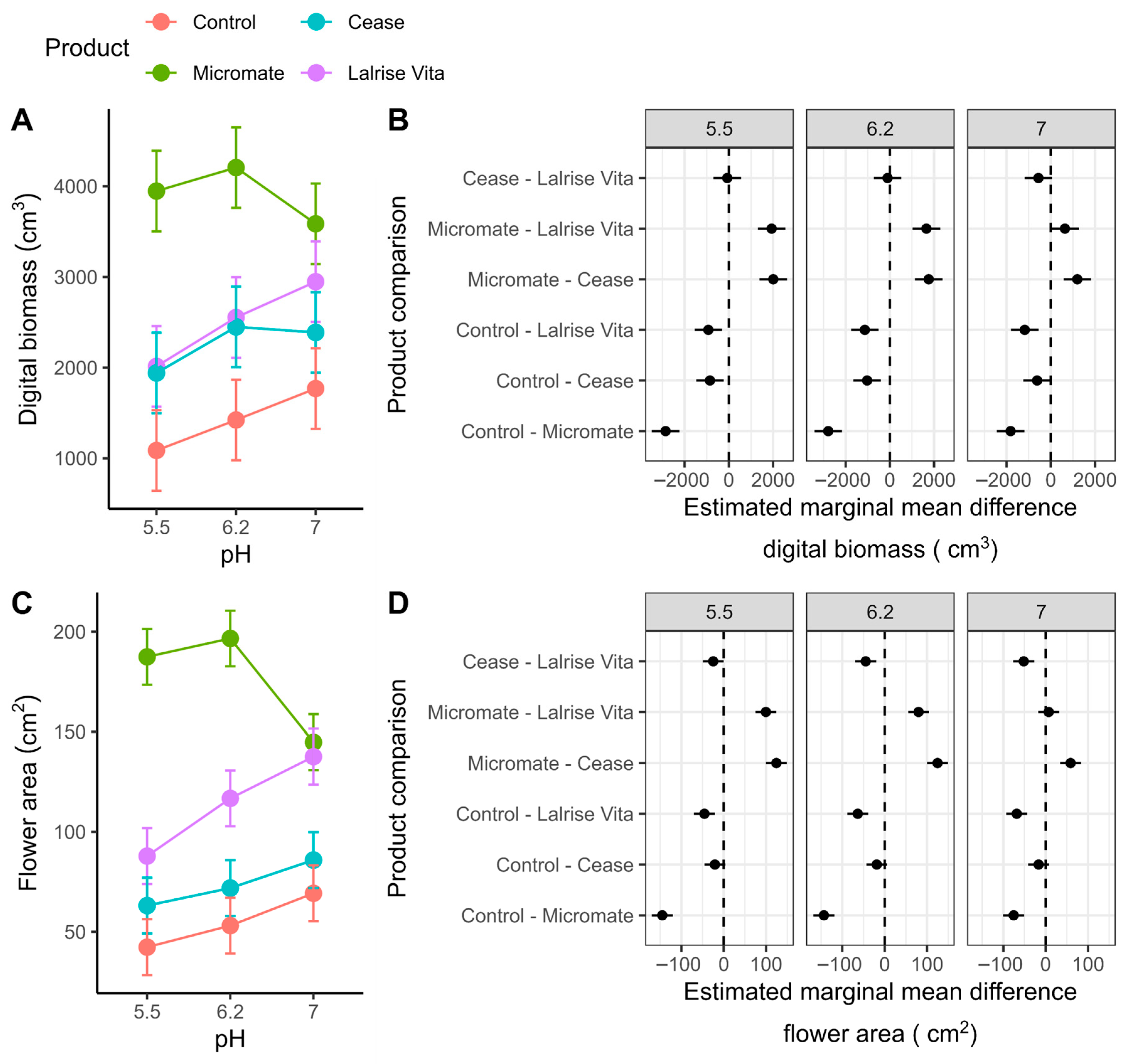
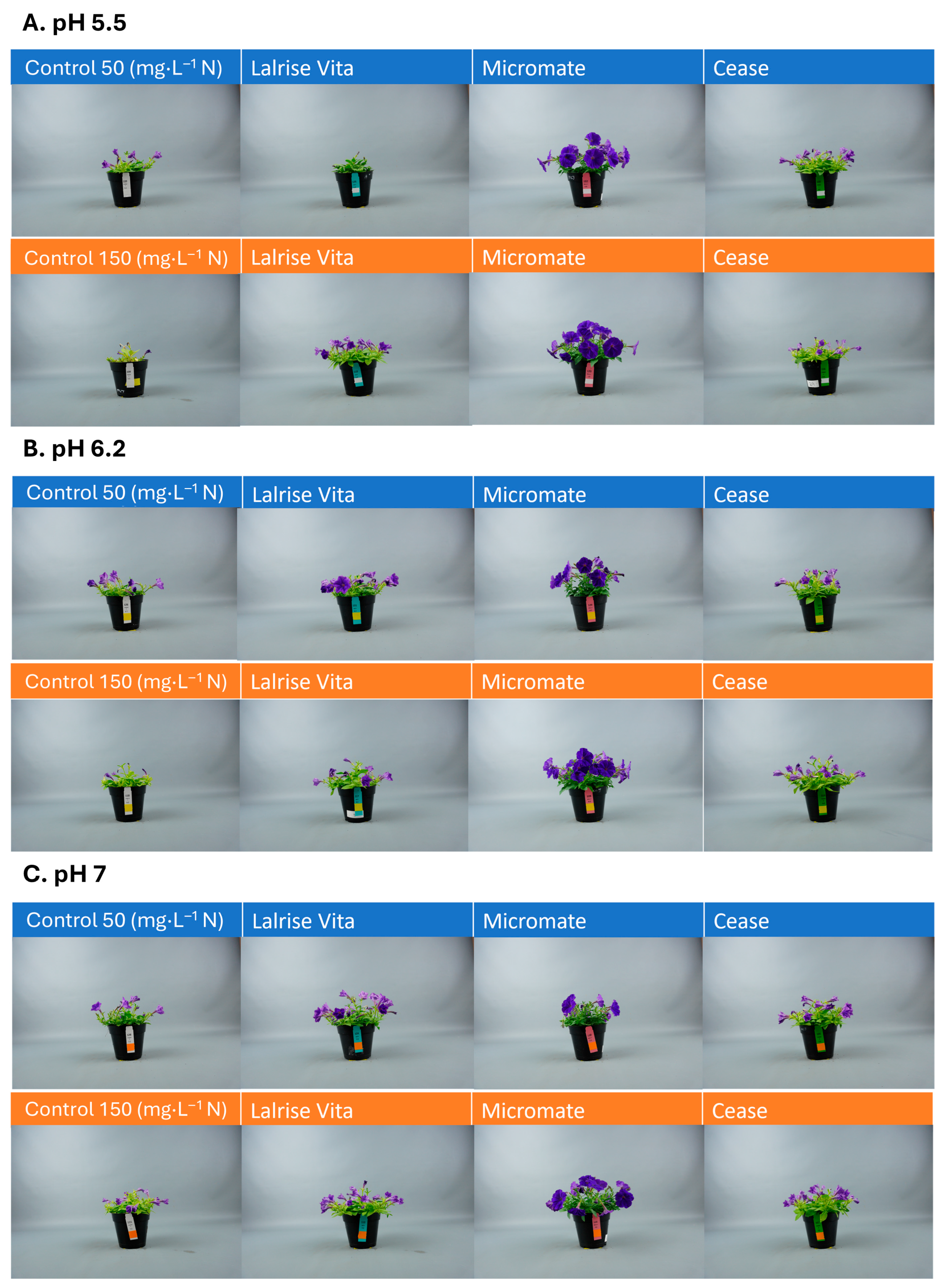
For both digital biomass and flower area, there was no significant three-way interaction among the fertilizer, product, and pH (p = 0.575 and p = 0.321, respectively), indicating that the product × pH interaction was consistent across fertilizer levels. The significant product × pH interaction indicated that the effect of product on digital biomass (p = 0.002) and flower area (p < 0.001) differed among pH levels. Thus, product effects were evaluated within each pH level using estimated marginal means averaged across fertilizer levels (Figure 1). Micromate- and Lalrise Vita-treated plants showed higher digital biomass than the non-treated control plants at all pH levels, while Cease-treated plants performed better than the control only at pH 5.5 and 6.2 (Figure 1A,B). On the other hand, only plants treated with Micromate or Lalrise Vita showed an increase in flower area at all pH levels (Figure 1C,D). Compared to the control, Micromate-treated plants showed the largest increase in digital biomass and flower area across pHs; however, the magnitudes of these increases were reduced at pH 7.0 (Figure 1). Representative pictures of the petunias at the end of the experiment are shown in Figure 2.
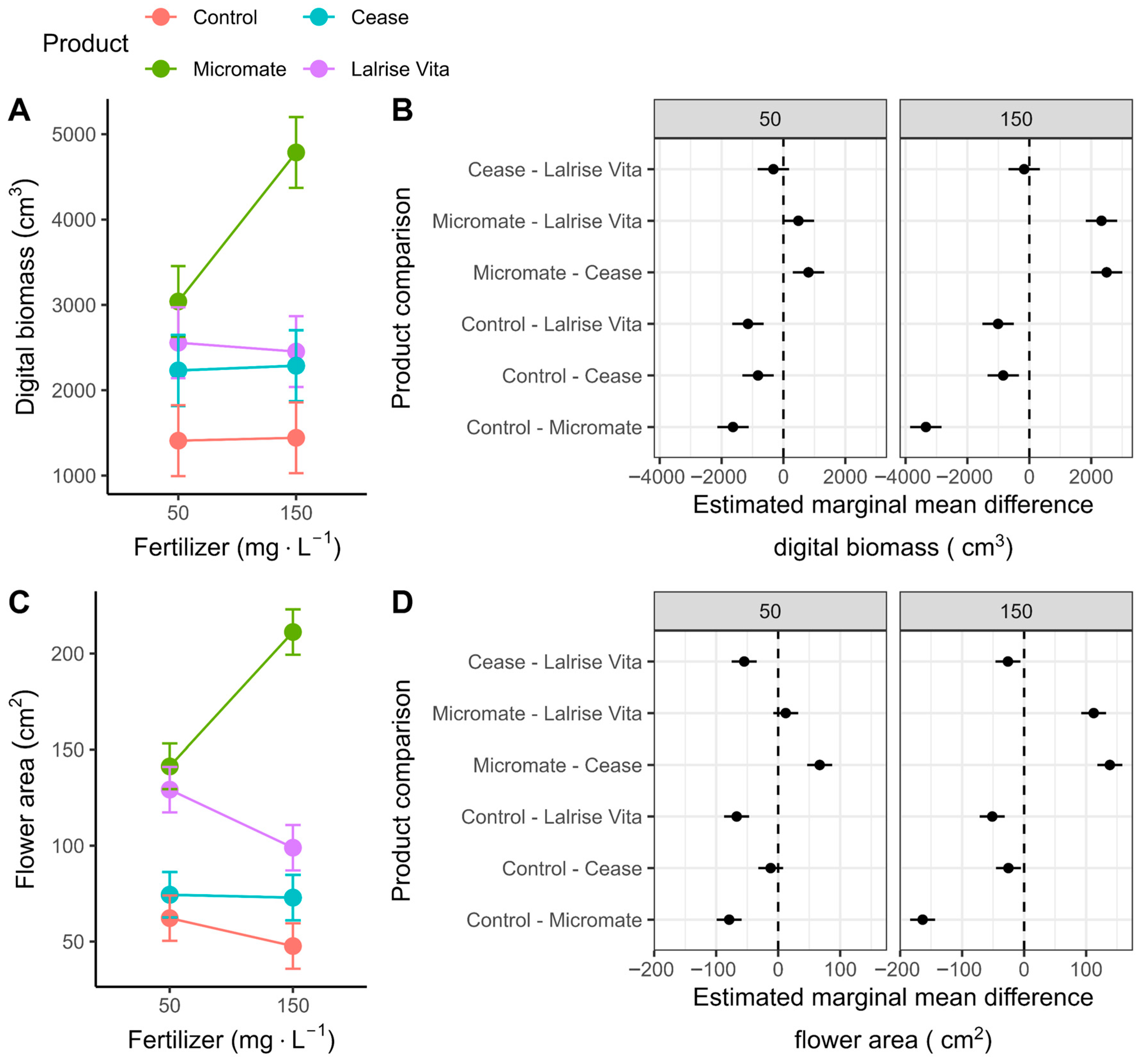
In addition, a significant product × fertilizer interaction was detected for both biomass and flower area (p < 0.001), indicating that product responses differed between fertilizer levels and that this pattern was consistent across pH levels (Figure 3A,C). Therefore, for both digital biomass and flower area, product effects were also evaluated within each fertilizer level using estimated marginal means averaged across pH levels (Figure 3). Independent of pH, all biostimulant products increased digital biomass compared with the non-treated control at both fertilizer levels (Figure 3A,B). Compared to the control, Micromate-treated plants showed the largest increase in digital biomass at recommended fertilization (Figure 3B). Under low fertility, Micromate, Lalrise Vita, and Cease application increased petunia digital biomass by 116, 81, and 58%, respectively (averaged over pH levels), whereas at recommended fertility, Micromate, Lalrise Vita, and Cease application increased digital biomass by 232, 70, and 59%, respectively (averaged over pH levels).
In contrast, only Micromate and Lalrise Vita treatments increased flower area compared with the non-treated control at both fertilizer levels (Figure 3C,D). Compared to the control, Micromate-treated plants showed the largest increase in flower area at recommended fertilization (Figure 3D). Under low fertility, Micromate and Lalrise Vita treatments increased petunia flower area by 127 and 108%, respectively (averaged over pH levels), whereas at recommended fertility, petunias treated with Micromate, Lalrise Vita, and Cease increased flower area by 343, 108, and 53% compared to the untreated control, respectively (averaged over pH levels).

3.2. Biostimulant Effects on Canopy Health Parameters Depend on Fertilizer Level

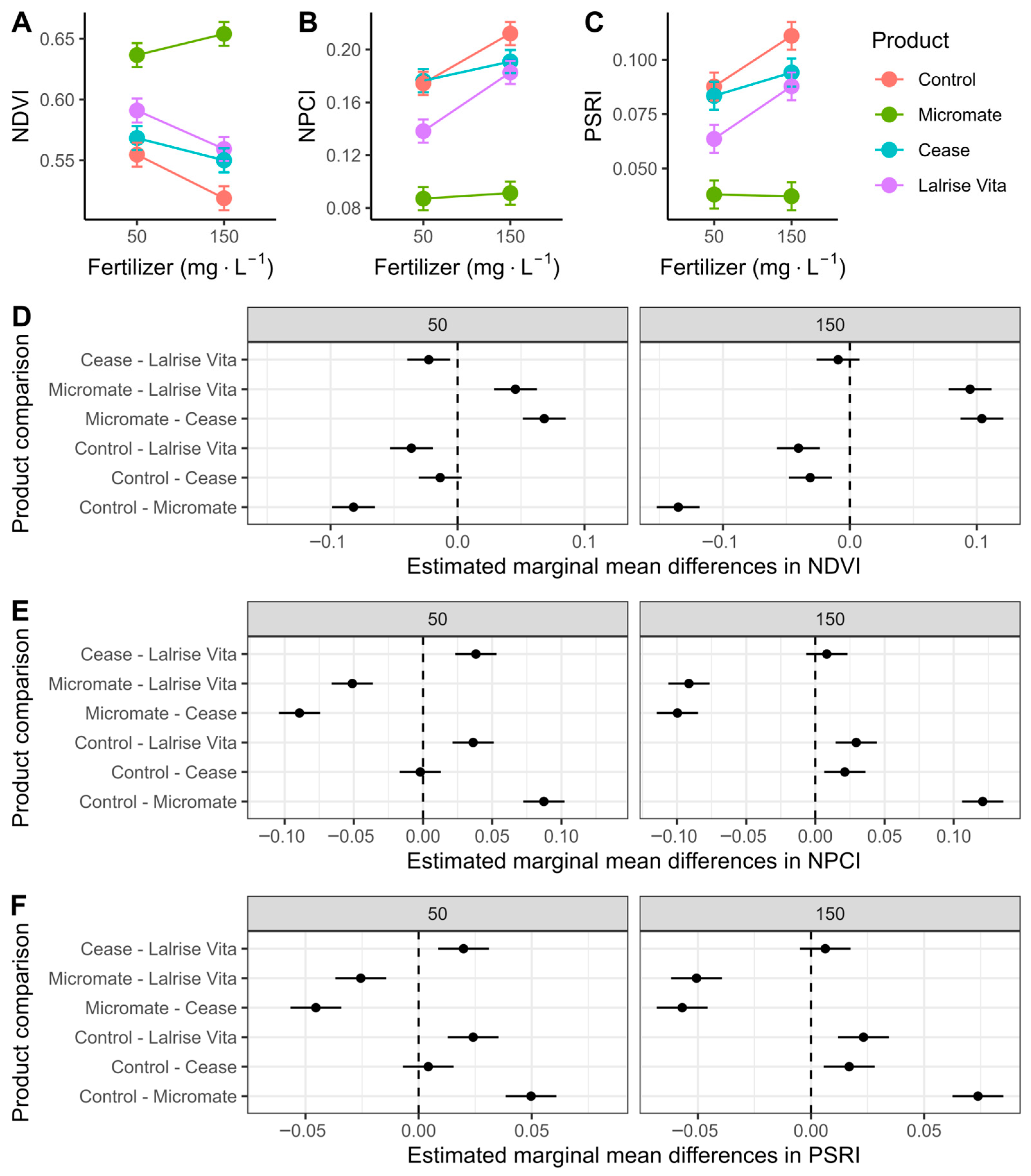
To avoid potential bias introduced by floral tissue, the vegetation indices (NDVI, NPCI, and PSRI), used to quantify changes in plant health, were calculated from scans that excluded floral tissue. For overall interpretation of results, higher NDVI values indicate healthier foliage, while higher NPCI or PSRI values reflect less healthy foliage [18]. For all canopy health parameters, there was no significant three-way interaction (p = 0.94; p = 0.99; and p = 0.99, respectively), indicating that for each variable, the product × fertilizer interaction was consistent across pH levels. The significant product × fertilizer interaction indicated that the effect of product on NDVI (p = 0.001), NPCI (p = 0.02), and PSRI (p = 0.02) differed among fertilizer levels. Thus, product effects were evaluated within each fertilizer level using estimated marginal means averaged across pH levels (Figure 4).
Independently of the pH, Micromate- and Lalrise Vita-treated plants showed higher NDVI values than the non-treated control at low fertility, while all biostimulant products increased NDVI at recommended fertility (Figure 4A,D). Under low fertility, Micromate- and Lalrise Vita-treated petunias had 15 and 7%, respectively, higher NDVI values than the control (averaged over pH levels), whereas at recommended fertility, Micromate, Lalrise Vita, and Cease treatment increased NDVI by 26, 8, and 6%, respectively (averaged over pH levels) (Figure 4A,D).
Micromate and Lalrise Vita showed lower NPCI and PSRI values than the non-treated control at low fertility, while all biostimulant products decreased PSRI at recommended fertility (Figure 4B,C,E,F). In particular, Micromate-treated petunias had a 51 and 57% lower NPCI than the non-treated control at low and recommended fertility (averaged over pH levels). Similarly, Micromate-treated petunias had a 57 and 66% lower PSRI than the non-treated control at low and recommended fertility (averaged over pH levels) (Figure 4B,C,E,F).

4. Discussion

Beneficial Effects of Biostimulant Application on Petunia × hybrida ‘Picobella Blue’ Independently Depend on Initial Substrate pH and Fertilizer Level

Plant species and fertilization influence substrate pH [32], and consequently, changes in substrate pH influence plant performance by regulating nutrient availability. Petunias grow better in substrate with a pH ranging from 5.5 to 5.8 [28] and are susceptible to nutrient deficiency when the substrate pH increases above the recommended pH range. Because substrate pH was not monitored over time, interpretation of pH effects in this study reflects differences associated with the initial substrate pH at transplant. The biostimulants tested in this study, Cease (active ingredient Bacillus subtilis strain QST 713), Lalrise Vita (active ingredient B. velezensis), and Micromate (active ingredients humic and fulvic acids), promoted petunia growth and flowering as indicated by the significant two-way interactions (product × pH and product × fertilizer). However, the lack of a significant three-way interaction indicated that these two-way interaction response patterns were consistent across the levels of the remaining factor. Micromate and Lalrise Vita promoted growth and flowering regardless of pH and fertility level, suggesting they can be used to grow petunias outside their recommended pH range under low or recommended fertility. However, Cease failed to promote growth at pH 7.0 and flowering at pH 6.2 and 7.0. Differences in biostimulant efficacy across pH and fertilizer levels likely reflect their distinct modes of action. Humic substance-based biostimulants, such as Micromate, improve nutrient availability and nutrient use efficiency by chelating nutrients, increasing cation exchange capacity, and enhancing root membrane activity [33]. In contrast, microbial-based biostimulants rely on biological processes (e.g., phytohormone production, siderophore production, and nutrient solubilization) and the ability of the microorganisms to colonize and persist. Microorganisms are sensitive to environmental conditions like alkaline pH [34,35], which might explain the reduced efficacy of Cease at high pH.
The recommended fertilization rate for petunia production ranges from 100 to 250 mg·L−1 N [28]. Biostimulant effects are context-dependent, and they can be missed in the absence of stress (i.e., high fertility levels) [36,37]. Micromate and Lalrise Vita promoted growth and flowering and enhanced canopy health regardless of fertilizer level, suggesting they can have a positive visual effect on petunia even when proper fertilization is provided. Changes in spectral indices further support these interpretations while remaining indirect indicators of physiological status. Three vegetation indices (NDVI, NPCI, and PSRI) were calculated from plant scans that excluded floral tissue to avoid potential bias introduced by colored flowers [18,30]. The NDVI primarily indicates canopy greenness and is strongly correlated with nitrogen content and overall plant vigor. Petunia NDVI typically decreases when the fertilization rate falls below the recommended range [27]. The NPCI is sensitive to shifts in chlorophyll content in the canopy and increases under nutrient limitation [29,38]. The PSRI is driven by changes in the carotenoid-to-chlorophyll ratio and values increase as chlorophyll degrades, indicating the onset of canopy senescence [29,39,40]. An increased NDVI, together with a reduced NPCI and PSRI, suggests improved canopy greenness, maintenance of chlorophyll, and delayed senescence, which are consistent with enhanced nutrient status or stress mitigation [27,39]. However, because these indices are imaging-derived proxies rather than direct physiological measurements, they should be interpreted as indicators of plant vigor rather than direct evidence of photosynthetic performance or nutrient concentration. Among all biostimulant treatments, Micromate resulted in the greatest increase in the NDVI and the greatest decrease in the NPCI and PSRI at both low and recommended fertility, and the magnitude of the increase was higher at recommended fertility than at low fertility. These results highlight the beneficial role of humic substance-based biostimulants in ornamental crop production, not only as a corrective tool under suboptimal conditions but also as a tool to improve plant quality (i.e., enhancing foliage greenness). As discussed above, differences in biostimulant efficacy may reflect their distinct modes of action, but product nutrient composition may also contribute to the observed responses. For instance, Micromate contains higher phosphorus levels than other humic substance-based biostimulants, which resulted in higher P concentration in petunia dry tissue [12]. Thus, in addition to its biostimulant activity, the nutritional contribution of Micromate at the investigated rate may explain the magnitude of its effects on petunia performance. In microbial-based biostimulants, nutrients included in the product formulations are meant to support microorganism survival but may also be taken up by the plant [41]. The lack of response in flower area and canopy health at reduced fertilization following Cease application suggests that Bacillus subtilis QST713 might not have had an adequate nutrient supply for establishment or biological activity.
Collectively, the increases in growth and flowering and improvements in canopy health indices indicated that certain biostimulants can improve petunia performance under both reduced fertilization and high pH, but responses remain product-dependent. The observed context-dependent biostimulant efficacy aligns with previously reported inconsistent efficacy in biostimulant trials. Our findings support the view that biostimulant efficacy is conditional rather than universal and highlights the importance of considering different environmental conditions, substrates, or fertilizers used in the different trials [5,42]. Given the significant effects of initial substrate pH and fertilizer level observed in this study, and the potential substrate pH drift over time due to fertilization and plant uptake, future studies would benefit from monitoring substrate pH and electrical conductivity to better understand biostimulant application effects and pH dynamics under these conditions. Moreover, due to the nutrient contributions of each biostimulant formulation, future research would benefit from nutrient analysis of the product, substrate solution, and plant tissue. In addition, in the case of microbial-based biostimulants, a negative control where cells have been killed would be beneficial to understand the contribution of nutrients in the product formulation. Although digital phenotyping variables served as proxies to evaluate plant health, future research could include physiological and biochemical measurements that more directly reflect plant health status.

5. Conclusions

Our research contributes to the current literature by providing applicable results that growers can use to enhance plant growth and health according to the biostimulant selection, initial substrate pH, and fertility rate. In addition, our results highlight that the magnitude of biostimulant effects are context-dependent (i.e., initial substrate pH and fertilization). Differences in plant growth promotion and health from biostimulants likely reflect differences in application method and mode of action. Humic and fulvic acids (Micromate) resulted in the greatest improvements in growth, flowering, and health regardless of pH and fertility rate in petunia ‘Picobella Blue’. This research also highlights the need for trialing biostimulants on ornamental species under various environmental conditions that are of interest before large-scale commercial applications can be adopted by the greenhouse industry.

Supplementary Materials

The following supporting information can be downloaded at: https://www.mdpi.com/article/10.3390/horticulturae12030280/s1, Supplementary File S1: Analysis of Deviance Tables.

Author Contributions

Conceptualization, E.M. and M.L.J.; methodology, E.M. and M.L.J.; software, E.M. and M.L.J.; validation, E.M. and M.L.J.; formal analysis, E.M. and J.Q.-P.; investigation, E.M. and L.J.C.; resources, M.L.J.; data curation E.M.; writing—original draft preparation, E.M., J.Q.-P., L.J.C. and M.L.J.; writing—review and editing, E.M., J.Q.-P., L.J.C. and M.L.J.; visualization, E.M., L.J.C. and J.Q.-P.; supervision, M.L.J.; project administration, M.L.J.; funding acquisition, M.L.J. All authors have read and agreed to the published version of the manuscript.

Funding

This work was supported, in part, by hatch funds from the USDA National Institute of Food and Agriculture (OHO01407) and it is article HCS 25-22. This work was supported by The Ohio State University D.C. Kiplinger Floriculture Endowment, USDA-ARS, and USDA Floriculture and Nursery Research Initiative (5082-2100-001-27S). Partial support for EM and JQP was provided by the OSU Department of Horticulture and Crop Science. Funding for the TraitFinder Greenhouse Phenotyping system was provided by The Ohio State University College of Food, Agricultural and Environmental Sciences Grant Program; the Department of Horticulture and Crop Science; the Department of Plant Pathology; the Department of Entomology; the Department of Food, Agricultural and Biological Engineering; the USDA Agricultural Research Service; the American Floral Endowment; Diefenbacher Greenhouses, BioWorks Inc.; Mycorrhizal Applications; and Smithers-Oasis Company. We thank Lallemand Inc., BioWorks Inc., Huma, and J.R. Peters for the products.

Data Availability Statement

Data are contained within the article.

Acknowledgments

The authors would like to thank David Barker for his advice on statistical analysis. Mentioning trade names does not imply a guarantee or warranty of the products or of others not named.

Conflicts of Interest

The authors declare no conflicts of interest.

Abbreviations

The following abbreviations are used in this manuscript:
PGPBPlant growth-promoting bacteria
NDVINormalized Difference Vegetation Index
NPCINormalized Pigment Chlorophyll Index
PSRIPlant Senescence Reflectance Index

References

  1. Daughtrey, M.L.; Benson, D.M. Principles of Plant Health Management for Ornamental Plants. Annu. Rev. Phytopathol. 2025, 43, 141–169. [Google Scholar] [CrossRef]
  2. Fisher, P.; Argo, W. Managing the pH of Container Media; University of New Hampshire Cooperative Extension: Durham, NH, USA, 2007; p. 4. [Google Scholar]
  3. Bunt, A.C. Media and Mixes for Container-Grown Plants; Unwin Hyman: London, UK, 1988. [Google Scholar]
  4. Carpenter, S.R.; Caraco, N.F.; Correll, D.L.; Howarth, R.W.; Sharpley, A.N.; Smith, V.H. Nonpoint Pollution of Surface Waters with Phosphorus and Nitrogen. Ecol. Appl. 1998, 8, 559–568. [Google Scholar] [CrossRef]
  5. Yakhin, O.I.; Lubyanov, A.A.; Yakhin, I.A.; Brown, P.H. Biostimulants in Plant Science: A Global Perspective. Front. Plant Sci. 2017, 7, 2049. [Google Scholar] [CrossRef]
  6. du Jardin, P.; Brown, P.H.; DeJong, T.M.; Cassán, F.; Ferrante, A.; Fotopoulos, V.; Manganaris, G.A.; Carillo, P. Unlocking the Black Box of Plant Biostimulants. Sci. Hortic. 2025, 350, 114281. [Google Scholar] [CrossRef]
  7. du Jardin, P. Plant Biostimulants: Definition, Concept, Main Categories and Regulation. Sci. Hortic. 2015, 196, 3–14. [Google Scholar] [CrossRef]
  8. de Melo, B.A.G.; Motta, F.L.; Santana, M.H.A. Humic Acids: Structural Properties and Multiple Functionalities for Novel Technological Developments. Mater. Sci. Eng. C 2016, 62, 967–974. [Google Scholar] [CrossRef]
  9. Ampong, K.; Thilakaranthna, M.S.; Gorim, L.Y. Understanding the Role of Humic Acids on Crop Performance and Soil Health. Front. Agron. 2022, 4, 848621. [Google Scholar] [CrossRef]
  10. Vikram, N.; Sagar, A.; Gangwar, C.; Husain, R.; Kewat, R.N. Properties of Humic Acid Substances and Their Effect in Soil Quality and Plant Health. In Humus and Humic Substances-Recent Advances; Makan, A., Ed.; IntechOpen: London, UK, 2022; p. 102. [Google Scholar]
  11. Nikbakht, A.; Kafi, M.; Babalar, M.; Xia, Y.P.; Luo, A.; Etemadi, N. Effect of Humic Acid on Plant Growth, Nutrient Uptake, and Postharvest Life of Gerbera. J. Plant Nutr. 2008, 31, 2155–2167. [Google Scholar] [CrossRef]
  12. Martins, E.M.; Quijia Pillajo, J.; Jones, M.L. Humic and Fulvic Acids Promote Growth and Flowering in Petunias at Low and Optimal Fertility. HortScience 2024, 59, 235–244. [Google Scholar] [CrossRef]
  13. Nordstedt, N.P.; Jones, M.L. Serratia plymuthica MBSA-MJ1 Increases Shoot Growth and Tissue Nutrient Concentration in Containerized Ornamentals Grown under Low-Nutrient Conditions. Front. Microbiol. 2021, 12, 788198. [Google Scholar] [CrossRef]
  14. South, K.A.; Nordstedt, N.P.; Jones, M.L. Identification of Plant Growth Promoting Rhizobacteria That Improve the Performance of Greenhouse-Grown Petunias under Low Fertility Conditions. Plants 2021, 10, 1410. [Google Scholar] [CrossRef]
  15. Poveda, J.; González-Andrés, F. Bacillus as a Source of Phytohormones for Use in Agriculture. Appl. Microbiol. Biotechnol. 2021, 105, 8629–8645. [Google Scholar] [CrossRef]
  16. Lin, Y.; Jones, M.L. Evaluating the Growth-Promoting Effects of Microbial Biostimulants on Greenhouse Floriculture Crops. HortScience 2022, 57, 97–109. [Google Scholar] [CrossRef]
  17. Chapin, L.J.; Jones, M.L. Microbial Biostimulants Promote the Growth of Greenhouse Pansies at Low Fertilizer Rates but Not under Optimal Fertility. HortTechnology 2025, 35, 821–823. [Google Scholar] [CrossRef]
  18. Quijia Pillajo, J.; Chapin, L.; Naik, S.; Jones, M.L. Sustainable Production of Greenhouse Ornamentals Using Plant Growth-Promoting Bacteria. Acta Hortic. 2023, 1383, 99–108. [Google Scholar] [CrossRef]
  19. Quijia-Pillajo, J.; Nordstedt, N.; Chapin, L.; Owen, J.S., Jr.; Altland, J.E.; Jones, M.L. Phosphate Solubilizing Bacteria Isolated from Greenhouse Ornamentals Improve Health and Promote Growth in French Marigold ‘Durango Yellow’ Grown in Soilless Substrate under Phosphate Limiting Conditions. BMC Plant Biol. 2025, 25, 1234. [Google Scholar] [CrossRef]
  20. Quijia-Pillajo, J.; Jones, M.L. Lalrise Vita Improves Performance of French Marigolds Grown at pH 7.0 and Fertilized with Calcium Phosphate. HortScience 2025, 60, 684–686. [Google Scholar] [CrossRef]
  21. Kumari, A.; Goyal, R.K.; Choudhary, M.; Sindhu, S.S. Effects of Some Plant Growth Promoting Rhizobacteria (PGPR) Strains on Growth and Flowering of Chrysanthemum. J. Crop Weed 2016, 12, 7–15. [Google Scholar]
  22. Nordstedt, N.P.; Chapin, L.J.; Taylor, C.G.; Jones, M.L. Identification of Pseudomonas spp. That Increase Ornamental Crop Quality during Abiotic Stress. Front. Plant Sci. 2020, 10, 1754. [Google Scholar] [CrossRef]
  23. Nordstedt, N.P.; Jones, M.L. Isolation of Rhizosphere Bacteria That Improve Quality and Water Stress Tolerance in Greenhouse Ornamentals. Front. Plant Sci. 2020, 11, 826. [Google Scholar] [CrossRef]
  24. Silveira, M.M.D.; Braga, A.C.; Lima, M.C.D.; Souza, A.M.B.D.; Campos, T.S.; Santos, C.H.B.; Rigobelo, E.C.; Pivetta, K.F.L. Sustainable Zinnia Cultivation: Influence of Rhizobacteria Inoculation on Emergence and Biometric Traits. Ornam. Hortic. 2025, 31, e312785. [Google Scholar] [CrossRef]
  25. Mahmood, T.; Moosa, A.; Zulfiqar, F.; Alharthy, O.M.; Hadadi, F.; Alhelaify, S.S.; Fayad, E.; Alqurashi, M.; Alsharari, S.F.; Alatawy, M.; et al. Bacillus velezensis JM11 and Bacillus Pumilus CPCF54 Ameliorate Cadmium-Induced Oxidative Stress in Gladiolus grandiflorus Cut Flower. Curr. Microbiol. 2025, 82, 167. [Google Scholar] [CrossRef]
  26. Huang, J.; Fisher, P.R.; Argo, W.R.; Jeong, K.Y.; Altland, J. Macronutrient Solubility in Response to the pH of Soilless Container Substrates. J. Soil Sci. Plant Nutr. 2025, 25, 3224–3240. [Google Scholar] [CrossRef]
  27. Wacker, K.; Kim, C.; Van Iersel, M.W.; Haidekker, M.; Seymour, L.; Ferrarezi, R.S. Validation of In-House Imaging System via Code Verification on Petunia Images Collected at Increasing Fertilizer Rates and pHs. Sensors 2024, 24, 5809. [Google Scholar] [CrossRef]
  28. Nau, J.; Calkins, B.; Westbrook, A. Ball RedBook: Crop Culture and Production, 19th ed.; Ball Publishing: West Chicago, IL, USA, 2021; Volume 2. [Google Scholar]
  29. Bazhenov, M.; Litvinov, D.; Karlov, G.; Divashuk, M. Evaluation of Phosphate Rock as the Only Source of Phosphorus for the Growth of Tall and Semi-Dwarf Durum Wheat and Rye Plants Using Digital Phenotyping. PeerJ 2023, 11, e15972. [Google Scholar] [CrossRef]
  30. Van Der Kooi, C.J.; Elzenga, J.T.M.; Staal, M.; Stavenga, D.G. How to Colour a Flower: On the Optical Principles of Flower Coloration. Proc. R. Soc. B Biol. Sci. 2016, 283, 20160429. [Google Scholar] [CrossRef]
  31. R Core Team. R: A Language and Environment for Statistical Computing; R Core Team: Vienna, Austria, 2022. [Google Scholar]
  32. Dickson, R.W.; Fisher, P.R.; Argo, W.R. Quantifying the Acidic and Basic Effects of Fifteen Floriculture Species Grown in Peat-Based Substrate. HortScience 2017, 52, 1065–1072. [Google Scholar] [CrossRef]
  33. Xu, J.; Mohamed, E.; Li, Q.; Lu, T.; Yu, H.; Jiang, W. Effect of Humic Acid Addition on Buffering Capacity and Nutrient Storage Capacity of Soilless Substrates. Front. Plant Sci. 2021, 12, 644229. [Google Scholar] [CrossRef]
  34. Russ, D.; Fitzpatrick, C.R.; Teixeira, P.J.P.L.; Dangl, J.L. Deep Discovery Informs Difficult Deployment in Plant Microbiome Science. Cell 2023, 186, 4496–4513. [Google Scholar] [CrossRef]
  35. Naveed, M.; Hafeez, S.; Rafique, M.; Mumtaz, M.Z.; Subhani, Z.; Holatko, J.; Hammerschmiedt, T.; Malicek, O.; Mustafa, A.; Kintl, A.; et al. Plant-Endophyte Mediated Improvement in Physiological and Bio-Protective Abilities of Marigold (Tagetes Patula). Front. Plant Sci. 2022, 13, 993130. [Google Scholar] [CrossRef]
  36. Espinoza-Ayala, A.; Quijia-Pillajo, J.; Owen, W.G.; Jones, M.L. Influence of a Bacillus velezensis Based Biostimulant on French Marigold Growth under Different Phosphorus Levels. HortTechnology 2026. [Google Scholar] [CrossRef]
  37. Ramos, A.; Qujia-Pillajo, J.; Owen, W.G. Plant Growth Promotion in Lalrise Vita Treated French Marigolds Is Influenced by Fertilizer Rate. HortTechnology 2026. [Google Scholar] [CrossRef]
  38. Peñuelas, J.; Gamon, J.A.; Fredeen, A.L.; Merino, J.; Field, C.B. Reflectance Indices Associated with Physiological Changes in Nitrogen- and Water-Limited Sunflower Leaves. Remote Sens. Environ. 1994, 48, 135–146. [Google Scholar] [CrossRef]
  39. Quijia-Pillajo, J.; Chapin, L.J.; Owen, J.S.; Altland, J.E.; Jones, M.L. Fertilization Influences the Substrate, Rhizosphere, and Endosphere Bacteriome of Petunia × hybrida. Front. Microbiol. 2025, 16, 1719754. [Google Scholar] [CrossRef]
  40. Merzlyak, M.N.; Gitelson, A.A.; Chivkunova, O.B.; Rakitin, V.Y. Non-Destructive Optical Detection of Pigment Changes during Leaf Senescence and Fruit Ripening. Physiol. Plant. 1999, 106, 135–141. [Google Scholar] [CrossRef]
  41. Bashan, Y.; de-Bashan, L.E.; Prabhu, S.R.; Hernandez, J.-P. Advances in Plant Growth-Promoting Bacterial Inoculant Technology: Formulations and Practical Perspectives (1998–2013). Plant Soil 2014, 378, 1–33. [Google Scholar] [CrossRef]
  42. Sible, C.N.; Seebauer, J.R.; Below, F.E. Plant Biostimulants: A Categorical Review, Their Implications for Row Crop Production, and Relation to Soil Health Indicators. Agronomy 2021, 11, 1297. [Google Scholar] [CrossRef]
Figure 1. Product × pH interaction and effect size plots for digital biomass (A,B) and flower area (C,D). Interaction plots show estimated marginal means ± 95% confidence intervals. The estimated marginal means were calculated for each product within each pH level, averaged over fertilizer. Effect sizes are presented as pairwise differences in estimated marginal means. Points represent model-estimated mean differences (effect sizes), and horizontal bars indicate 95% confidence intervals adjusted for multiple comparisons using Tukey’s method. The vertical dashed line at zero denotes no effect; confidence intervals that do not cross zero indicate statistically significant effects.
Horticulturae 12 00280 g001
Figure 2. Representative petunia (Petunia × hybrida) ‘Picobella Blue’ grown under initial substrate pH of 5.5 (A), 6.2 (B), or 7.0 (C), at low (50 mg·L−1 N) or recommended (150 mg·L−1 N) fertility levels with different biostimulant treatments (Control, Lalrise Vita, Micromate, or Cease), when the plants had reached the marketable stage.
Horticulturae 12 00280 g002
Figure 3. Product × fertilizer interaction and effect size plots for digital biomass (A,B) and flower area (C,D). Interaction plots show estimated marginal means ± 95% confidence intervals. The estimated marginal means were calculated for each product within each fertilizer level, averaged over pH. Effect sizes are presented as pairwise differences in estimated marginal means. Points represent model-estimated mean differences (effect sizes), and horizontal bars indicate 95% confidence intervals adjusted for multiple comparisons using Tukey’s method. The vertical dashed line at zero denotes no effect; confidence intervals that do not cross zero indicate statistically significant effects.
Horticulturae 12 00280 g003
Figure 4. Product × fertilizer interaction and effect size plots for Normalized Difference Vegetation Index (NDVI) (A,D), Normalized Pigment Chlorophyll Index (NPCI) (B,E), and Plant Senescence Reflectance Index (PSRI) (C,F). Interaction plots show estimated marginal means ± 95% confidence intervals. The estimated marginal means were calculated for each product within each fertilizer level, averaged over pH. Effect sizes are presented as pairwise differences in estimated marginal means. Points represent model-estimated mean differences (effect sizes), and horizontal bars indicate 95% confidence intervals adjusted for multiple comparisons using Tukey’s method. The vertical dashed line at zero denotes no effect; confidence intervals that do not cross zero indicate statistically significant effects.
Horticulturae 12 00280 g004
Disclaimer/Publisher’s Note: The statements, opinions and data contained in all publications are solely those of the individual author(s) and contributor(s) and not of MDPI and/or the editor(s). MDPI and/or the editor(s) disclaim responsibility for any injury to people or property resulting from any ideas, methods, instructions or products referred to in the content.