1. Introduction
Medicinal and aromatic plants (MAPs) are increasingly important in agricultural production, influencing the sector and playing a pivotal role in its future [
1]. In recent years, increasing attention has been given to sustainable propagation practices in horticulture, driven by growing concerns related to resource efficiency, environmental impact, and climate resilience. These considerations are particularly relevant within the context of urban agriculture and controlled-environment agriculture (CEA), where innovative production systems are being adopted to ensure consistent plant quality while minimizing inputs and production losses. Modern techniques such as aeroponics and hydroponics are increasingly incorporating ecological awareness while reducing production costs and optimizing water and nutrient use [
2,
3]. However, despite their significant growth potential, a lack of knowledge regarding the production of healthy and uniform propagating material continues to limit the further development of this sector [
4,
5,
6].
Technologies such as aeroponics and substrate-free hydroponics have been shown to be highly effective in producing high-quality propagating material, while simultaneously supporting more sustainable production models through reduced water consumption, improved nutrient-use efficiency, and minimized substrate waste [
7,
8]. Aeroponic root mist culture has also been explored in highly controlled experimental settings, including short-duration microgravity studies, highlighting its capacity for precise root-zone management under extreme conditions [
9]. Although aeroponics substantially reduces water and nutrient inputs compared to conventional systems, its overall sustainability performance depends on system design and energy requirements, particularly under CEA conditions [
10,
11]. Nevertheless, the ability of aeroponic systems to deliver targeted root-zone conditions positions them among the most advanced propagation methods currently available.
Beyond resource savings, aeroponics offers additional advantages, including enhanced oxygen availability in the root zone, improved nutrient uptake efficiency, accelerated plant growth and development, increased planting density, and reduced incidence of soil-borne pests and diseases [
12,
13]. These characteristics are particularly relevant for sustainable propagation systems, as they enable the production of uniform, high-quality plant material with reduced chemical inputs and lower production losses. For MAPs, where uniformity and phytochemical consistency are essential, such benefits are of considerable practical importance.
Vegetative propagation through cuttings is widely applied in MAP production, as it ensures genetic uniformity and rapid multiplication [
14]. Under conventional propagation conditions, rooting success is strongly influenced by seasonal factors and environmental variability. In contrast, controlled propagation systems can overcome these limitations by providing stable environmental conditions, enabling year-round production of propagating material with greater predictability and reduced resource inefficiency [
15]. The integration of propagation system design with appropriate growth regulator application is therefore critical for optimizing rooting performance under sustainable production frameworks.
Lavender (
Lavandula angustifolia), a Mediterranean species valued for its medicinal, aromatic, and ornamental attributes, is primarily cultivated for essential oil production but is also widely used in landscape and ornamental applications [
16,
17,
18,
19]. As demand for high-quality lavender planting material increases, interest in efficient and sustainable propagation strategies has grown among producers. Despite this interest, research focusing on lavender propagation remains limited, particularly with respect to comparative evaluations of different propagation systems under identical growth regulator regimes [
20]. Previous studies have shown that increasing concentrations of indole-3-butyric acid (IBA) can enhance root development and branching in lavender cuttings [
21]; however, systematic comparisons of aeroponic, mist, and float systems in combination with growth regulators are scarce. Recent factorial studies on aromatic species have demonstrated that propagation system, hormone formulation, and growth regulator concentration interactively influence rooting quality and subsequent plant performance in soilless environments; however, species-specific responses and direct comparisons among propagation systems under identical experimental conditions remain insufficiently explored [
22]. Therefore, the objective of the present study was to investigate the effects of different propagation systems and growth regulator treatments on the development of
Lavandula angustifolia cuttings, with the aim of supporting the production of uniform and healthy propagating material within sustainable horticultural production systems.
2. Materials and Methods
2.1. Greenhouse Conditions
The experiments were conducted from March to June 2023 at the Department of Agriculture of the University of Patras, in a fully automated greenhouse with a polyethylene cover. Experimental plants were selected for cuttings, while the mist and float systems were constructed and parameterized based on the soilless systems of the Department of Agriculture in a fully automated greenhouse facility equipped with high-precision climate control, allowing continuous regulation of temperature, relative humidity, and photoperiod according to predefined crop requirements. Environmental parameters were monitored at both the canopy and root-zone levels using digital sensors, with data recorded at regular intervals to ensure environmental consistency throughout the experimental period. Root-zone temperature in the aeroponic and float systems was maintained at 20 °C, while pH and EC of the nutrient solution were automatically controlled.
2.2. Plant Material and Cutting Preparation
Semi-hardwood cuttings of Lavandula angustifolia were prepared from healthy, disease-free mother plants during the active growing period, with plant health routinely screened by ELISA to confirm the absence of common pathogens.
2.3. Growth Regulator and Hormone Treatments
Two growth retardants were tested: daminozide (1000, 2500, 5000 µg/mL) and paclobutrazol (1, 2, 5 µg/mL), along with an untreated control. Two commercial rooting hormone formulations were used: an IBA-based powder (RootOn A 0.2 DP; 0.2% indole-3-butyric acid) and an IBA + vitamin B1 gel (Root !T). Prior to hormone application, cuttings were immersed in the corresponding growth regulator solutions for a standardized exposure period, after which rooting hormones were applied to the basal portion of the stem. Powder and gel formulations were applied using distinct handling procedures in order to ensure uniform coverage and minimize mechanical variability during treatment application. For each treatment combination, 30 cuttings were used (n = 30), resulting in 42 treatments and a total of 1260 experimental units (
Table 1). Cuttings were dipped in the respective growth retardant solution for 60 s and immediately treated with the rooting hormone formulation by immersing the basal 1.0–1.5 cm of each cutting. Control cuttings received the same handling without growth retardant exposure. All handling was performed under aseptic conditions. The multifactorial structure of the experimental design enabled the assessment of both main effects and interaction patterns among propagation system, growth regulator treatment, and hormone formulation, providing a comprehensive framework for evaluating rooting performance under contrasting propagation conditions.
Experimental plots were developed, and the rooted cuttings were transplanted from the three systems: aeroponics, float, and mist. The transplant shock of the plants and their adaptation to field conditions were studied by recording the plant height at day 0 and day 60 after establishment.
2.4. Description of Propagation Systems
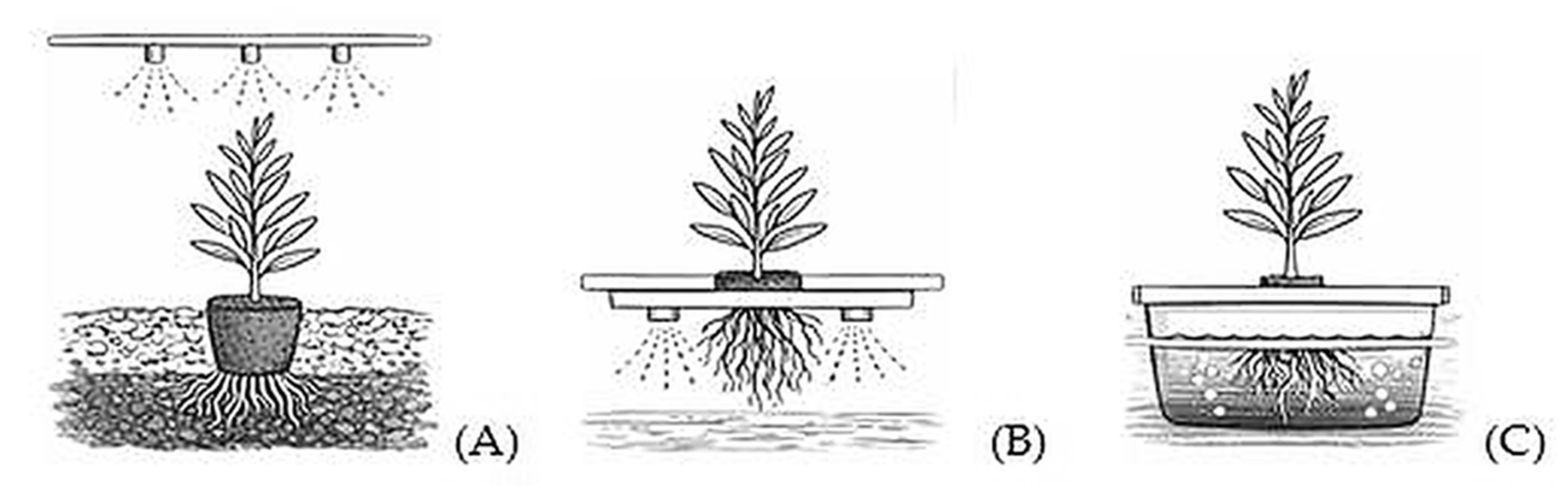
The setup of the mist system involved using an intermittent mist system mounted on a workbench. The mist propagation system was based on an intermittent misting approach designed to maintain high humidity around the cuttings while preventing excessive substrate saturation. Fine mist was delivered at regular intervals during the photoperiod, and the rooting frame was enclosed to stabilize relative humidity and minimize evaporative stress. The substrate consisted of enriched peat mixed with perlite and vermiculite in a ratio of 1:1:1. Three wooden frames covered with black nylon were created to keep the root system in the dark. An aeration system for the nutrient solution, operated by an electric pump, and a water replenishment system were installed to maintain the required humidity levels. The plant pots had holes for the roots, ensuring efficient absorption of nutrients.
In the aeroponic system, the nutrient solution spray systems were checked to ensure that the roots remained moist and effectively absorbed the nutrients. The final nutrient solution was a diluted aqueous mixture containing inorganic ions and soluble compounds. Environmental and misting parameters were controlled through integrated relays and monitored using embedded sensors. The nutrient solution used for irrigation had the following macronutrient composition, (mM): K+, 6.5; Ca2+, 3; Mg2+, 0.9; NO3−, 6.75; NH4+, 0.36; H2PO4−, 1.6 and micronutrient (μM): Fe2+, 30; Mn2+, 5; Zn2+, 4; Cu2+, 0.75; B, 30; Mo, 0.53. pH was adjusted to 5.6 by the use of HNO3− and the electrical conductivity was kept at 1.70 dS/m. The temperature of the nutrient solution was kept at 20 °C automatically. Preparation of the nutrient solution, adjustment of pH and electrical conductivity were controlled electronically. In the aeroponic system, nutrient solution misting was applied at short, regular intervals throughout the propagation period to ensure continuous root hydration while maintaining high oxygen availability in the root zone. The aeroponic structures had a rectangular shape with a height of 20–30 cm, adapted to the dimensions of the greenhouse.
The installation of the float system involved using three wooden frames covered with black nylon. These frames kept the root system in the dark and held the nutrient solution. In the float propagation system, cuttings were supported on floating trays that allowed continuous contact between the basal stem portion and an aerated nutrient solution. This configuration ensured stable moisture conditions and passive oxygenation of the rooting zone throughout the rooting period.
The production of new plants requires strict safety standards and specialized know-how to produce healthy propagating material. For the control of lavender plants, the biochemical ELISA method was used, confirming the absence of pathogens. The experimental design included a three-factorial complete randomization with 42 treatments and 30 replications per treatment, using cuttings that were 5–8 cm long. A schematic overview of the mist, aeroponic, and float propagation systems used in the experiment is provided in
Figure 1. Cuttings were placed in three different rooting systems, while environmental conditions were monitored using automatic recording equipment.
2.5. Experimental Design and Statistical Analysis
The experiment was arranged in a completely randomized, full factorial design (3 × 7 × 2), with cultivation system, growth regulator treatment, and hormone formulation as fixed factors. Data were analyzed using a general linear model (GLM).
Results are presented as estimated marginal means (±standard error, SE) derived from the fitted model. As the experimental design was fully balanced and standard errors were obtained from the same fitted model, SE values were comparable across treatments and figures. Due to the unavailability of replicate-level raw data, post hoc multiple comparison tests were not included. All statistical analyses were performed using IBM SPSS Statistics, version 29.0 (IBM Corp., Armonk, NY, USA). Estimated marginal means (EMMs) were used to facilitate the descriptive evaluation of treatment trends and interaction patterns within the factorial design, as they account for the influence of interacting factors and provide adjusted means that are more representative of biological responses under complex experimental conditions. The presentation of EMMs was therefore selected to emphasize treatment trends rather than exhaustive multiple comparison testing. Each treatment consisted of 30 independent cuttings, resulting in a total of 1260 experimental units. Each cutting represented an independent experimental unit, originating from multiple mother plants and randomly allocated across treatments. The homogeneous greenhouse environment justified the use of a completely randomized design without spatial blocking. The replicates corresponded to independent biological cuttings derived from multiple mother plants and randomly allocated to treatments under homogeneous greenhouse conditions. Estimated marginal means and associated standard errors were obtained from the fitted general linear model and therefore represent model-based variability rather than raw replicate dispersion. Interpretation focuses on comparative trends rather than formal hypothesis testing.
3. Results
3.1. Shoot Growth
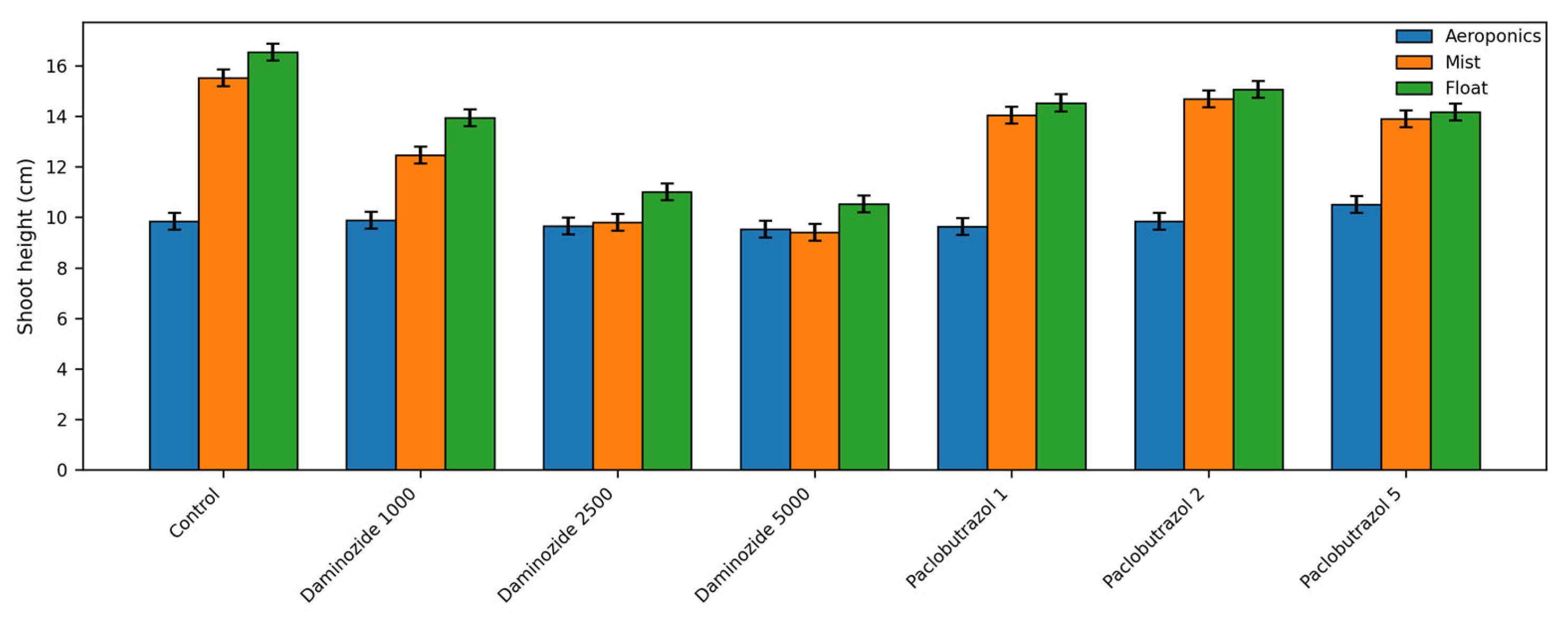
Shoot growth varied consistently among cultivation systems and growth regulator treatments (
Figure 2). The estimated marginal means and associated standard errors underlying the shoot height responses illustrated in
Figure 2 are summarized in
Table S1. Estimated marginal means indicated that the mist and float systems promoted greater shoot elongation compared to aeroponics, with the float system producing the tallest cuttings on average. In contrast, aeroponic propagation resulted in more compact plants, reflecting the intermittent exposure of roots to air and the distinct water–nutrient dynamics of the system. These responses highlight a clear association between propagation environment and early root system architecture, indicating a strong association between propagation environment and shoot development during the rooting phase.
Growth regulator application generally reduced shoot height relative to untreated controls. Daminozide at moderate concentrations partially alleviated this reduction under aeroponic and float conditions, indicating a concentration-dependent response influenced by the cultivation system. Paclobutrazol produced a more uniform suppression of shoot growth across systems.
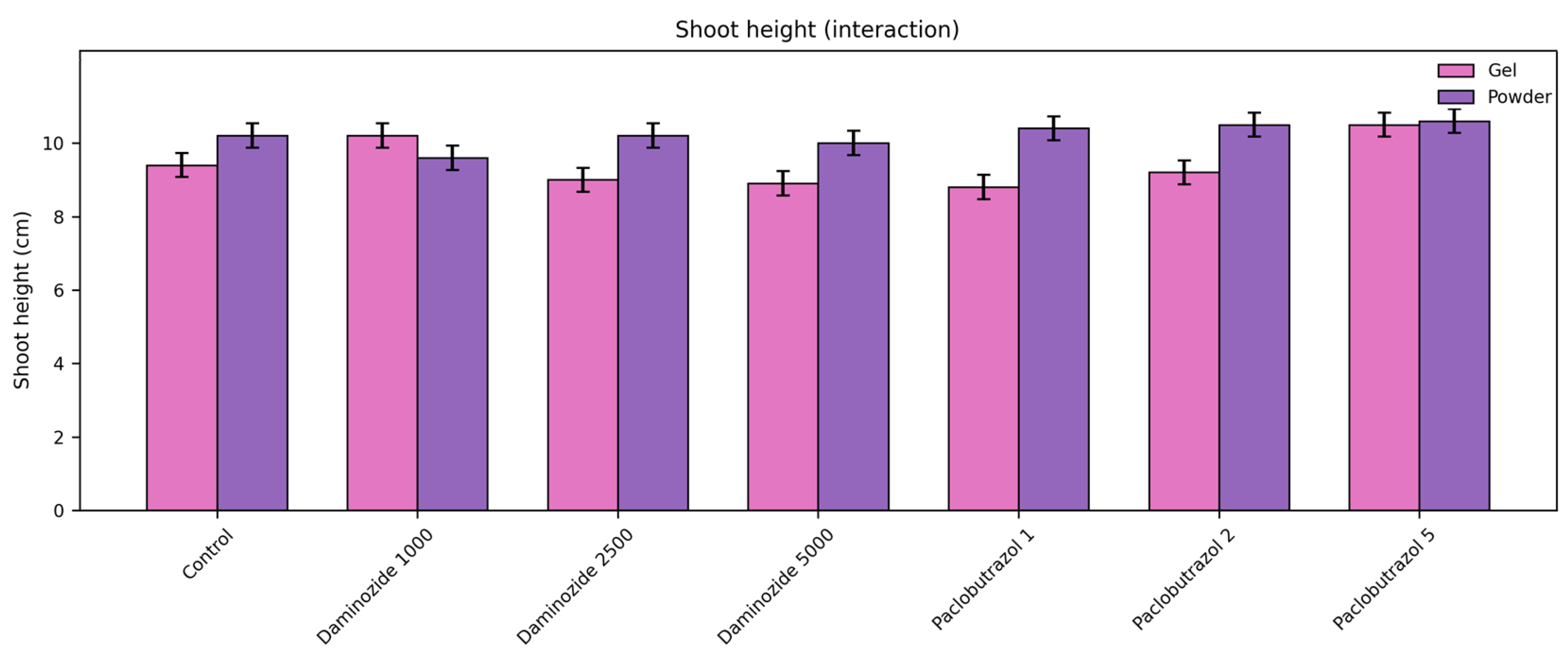
Hormone formulation also influenced shoot development, with gel-based formulations resulting in higher estimated shoot height compared to powder, particularly in mist and float systems. Interaction plots (
Figure 3) illustrate that the magnitude of growth regulator effects on shoot height depended strongly on the cultivation system, highlighting the importance of system × treatment interactions.
3.2. Root Length
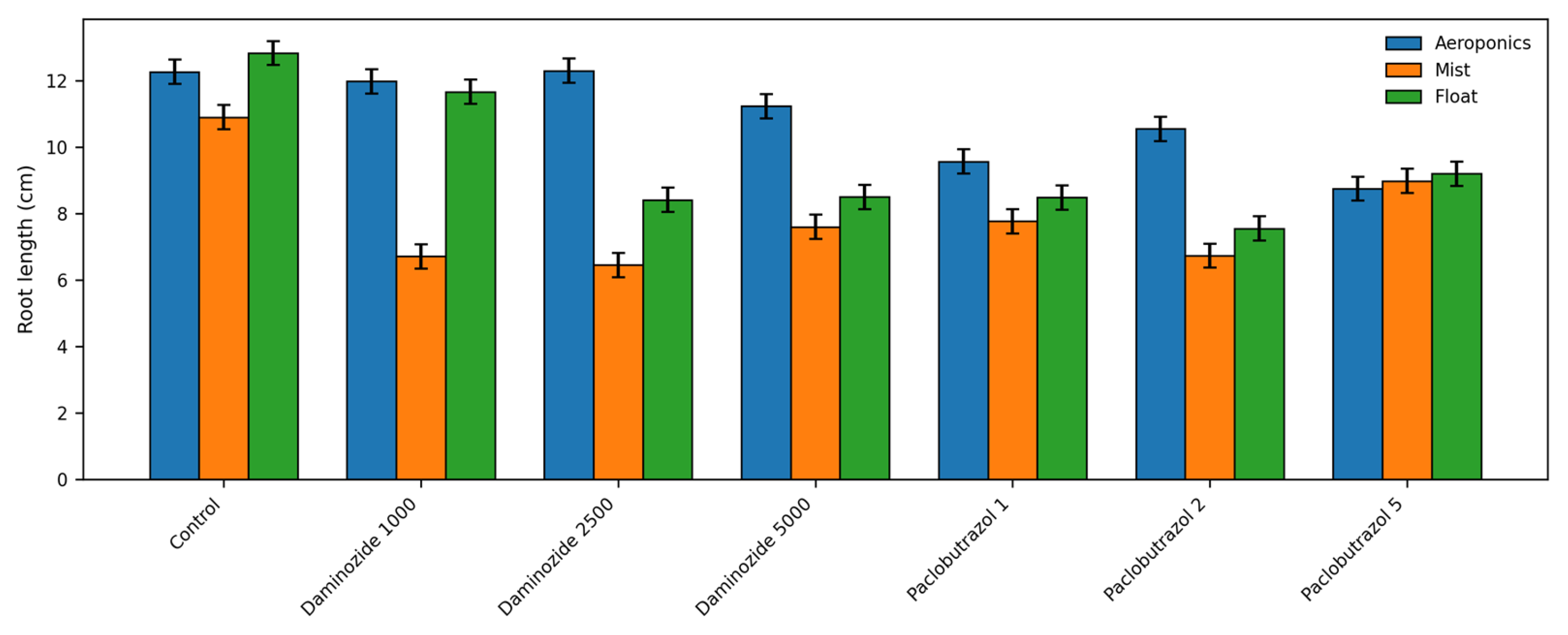
Root length was strongly influenced by cultivation system and growth regulator treatment (
Figure 4). The detailed estimated marginal means and associated 95% confidence intervals underlying these trends are provided in
Table S2. Estimated marginal means showed that aeroponics consistently promoted the development of longer root systems compared to mist and float systems. This response is attributable to enhanced oxygen availability and altered root architecture under aeroponic conditions [
23,
24,
25]. These responses reflect system-associated differences in rooting behavior rather than direct evidence of physiological or metabolic regulation.
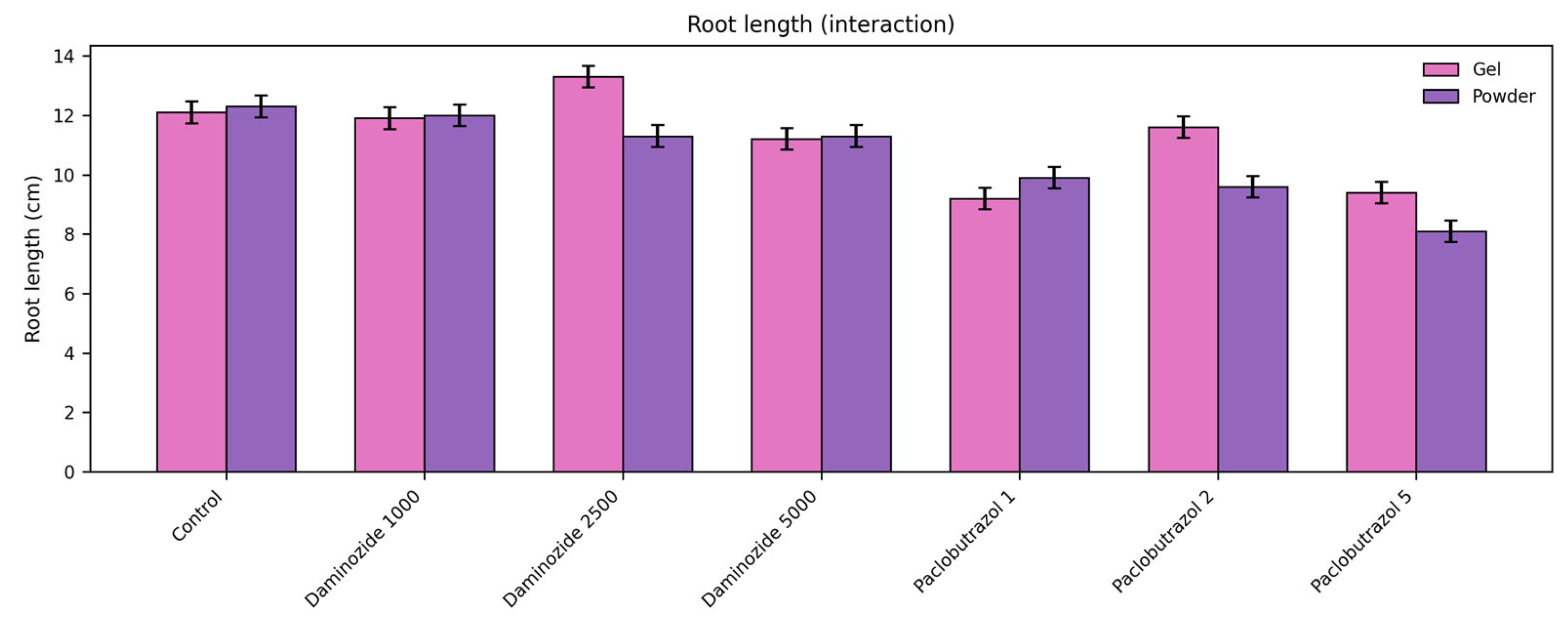
Daminozide application was associated with increased root length under aeroponic conditions, whereas its effect was less pronounced in mist and float systems, indicating a context-dependent response. The magnitude of these differences was consistent at the model-estimated level across treatment combinations, indicating a consistent system-driven trend rather than isolated treatment effects. Paclobutrazol resulted in shorter roots across all cultivation systems, reflecting its known inhibitory effect on vegetative growth.
Gel-based hormone formulations were associated with higher estimated root length than powder, particularly under aeroponic and mist conditions. Interaction plots (
Figure 5) demonstrate that the response of root length to growth regulators varied across cultivation systems.
3.3. Root Branching
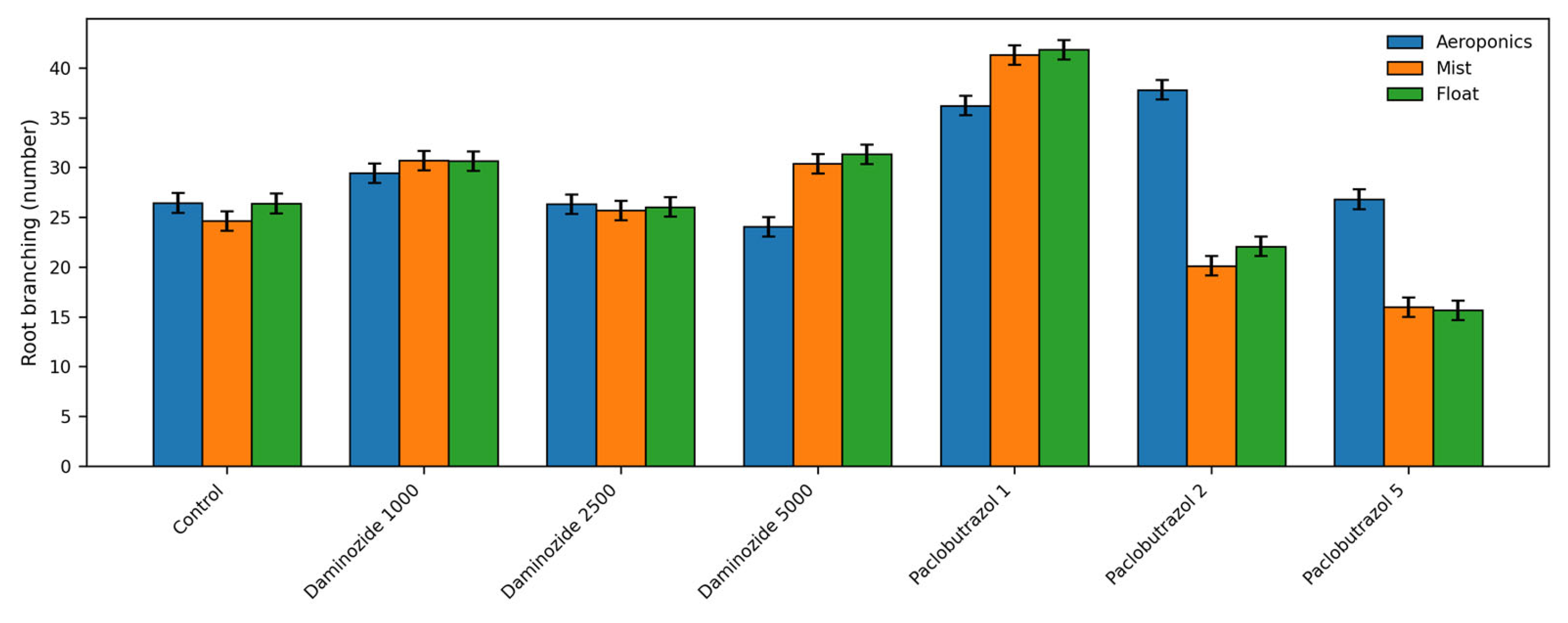
Root branching differed markedly among cultivation systems and treatments (
Figure 6). The estimated marginal means and corresponding 95% confidence intervals supporting these patterns of root branching are presented in
Table S3. Aeroponic propagation promoted the development of more highly branched root systems compared to mist and float systems, reflecting favorable oxygen and nutrient conditions for lateral root initiation.
Daminozide showed a clear tendency to enhance root branching, particularly at higher concentrations and under aeroponic and mist conditions. In contrast, paclobutrazol treatments were associated with reduced branching, suggesting a secondary role of growth regulators relative to environmental factors.
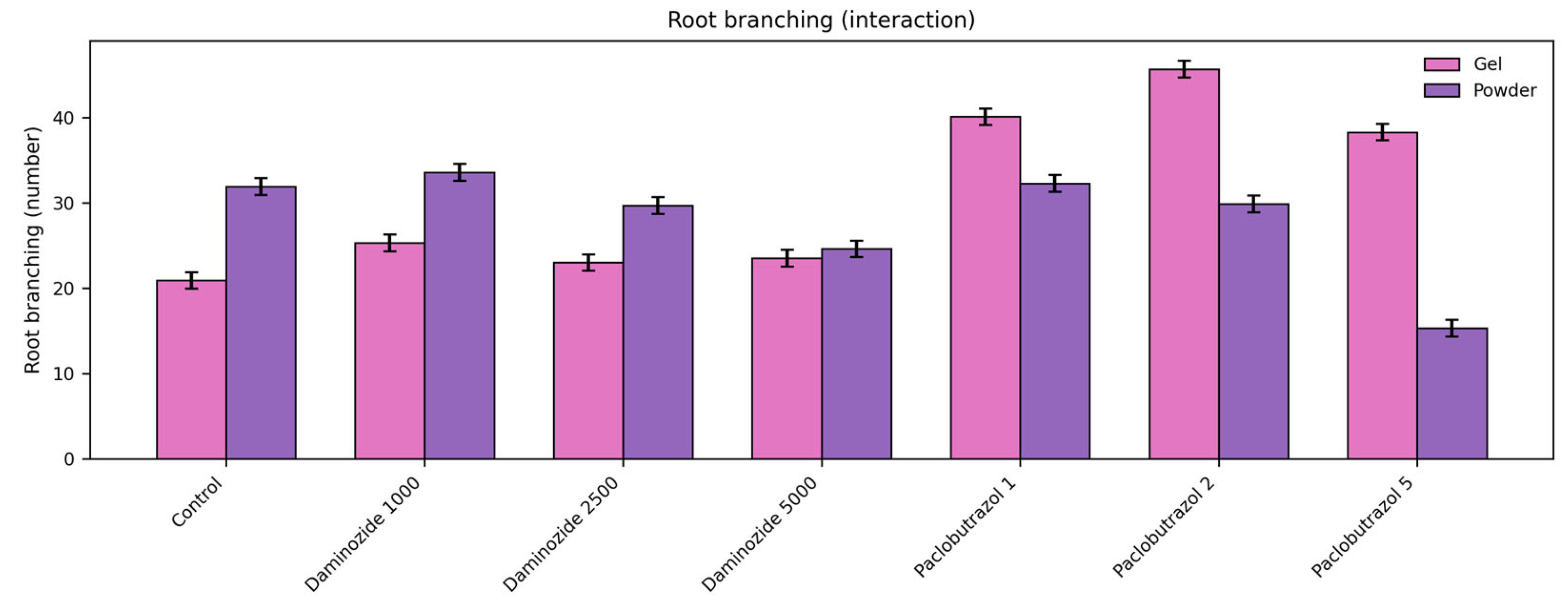
Gel-based formulations consistently supported greater root branching compared to powder. Interaction plots (
Figure 7) highlight that the magnitude of branching responses depended on the combination of cultivation system and growth regulator.
3.4. Field Performance After Establishment
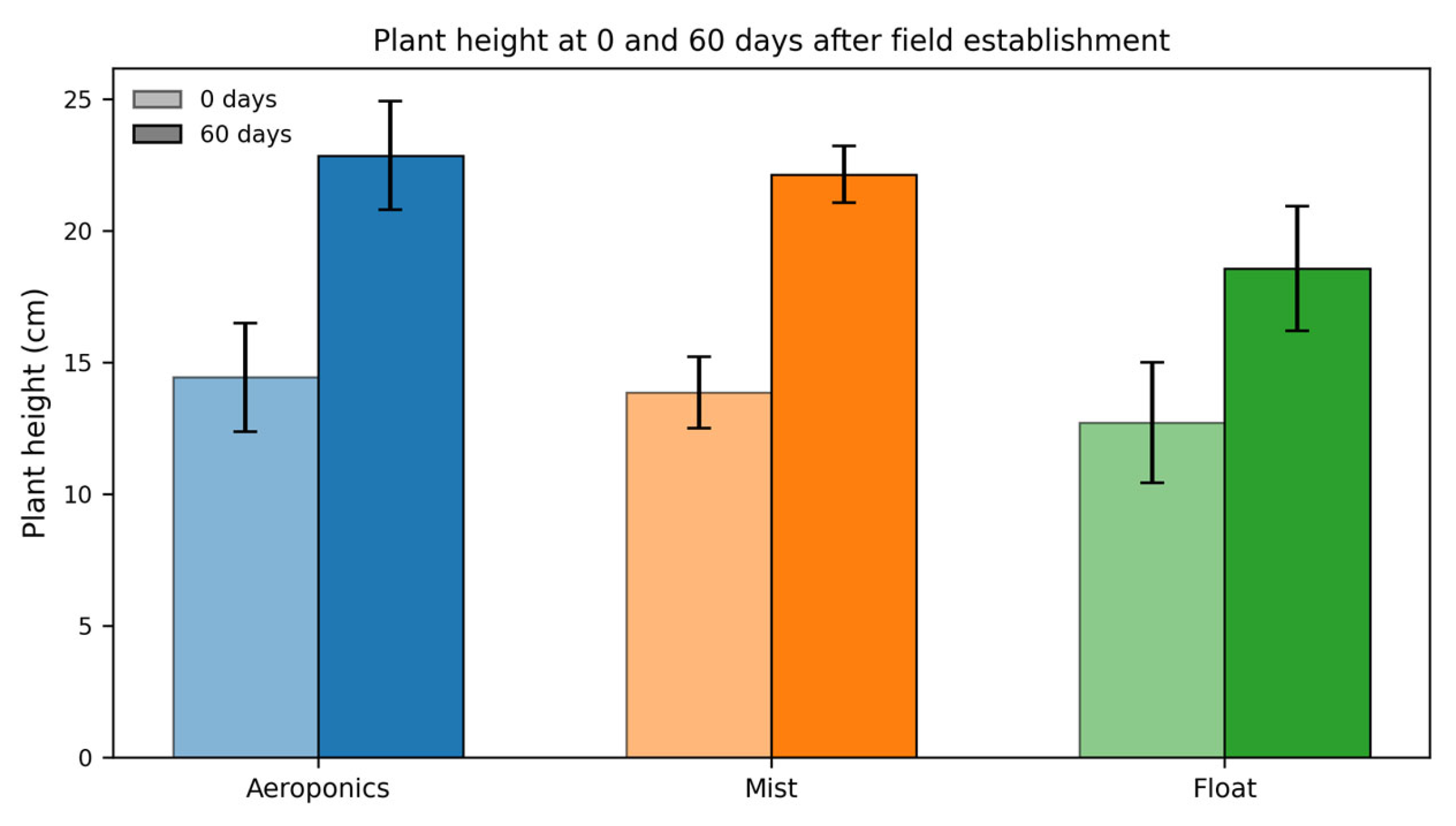
Sixty days after field establishment, differences in plant height were observed among propagation systems (
Figure 8). The observed differences in plant height at 60 days after establishment reflect the cumulative effects of propagation system on early plant vigor, indicating that rooting quality during the propagation phase exerts a lasting influence on post-transplant growth performance. Descriptive shoot height values recorded at transplanting (0 days) and 60 days after field establishment across propagation systems and growth regulator treatments are provided in
Table S4. Plants originating from aeroponic and mist propagation exhibited greater mean height compared to float-derived plants, indicating superior post-transplant performance.
Aeroponically propagated plants also displayed greater variability in height, suggesting increased developmental plasticity associated with enhanced root system quality. Growth regulator effects persisted after transplanting, with higher daminozide concentrations generally associated with reduced plant height.
These results indicate that propagation system influences early post-transplant growth, while longer-term performance requires further investigation, emphasizing the importance of aligning propagation strategy with intended production objectives. Plant height was selected as a primary indicator of early field performance, as it reflects initial establishment vigor and is commonly used as a rapid, non-destructive proxy for post-transplant adaptation in aromatic and ornamental species. However, survival rate, biomass accumulation, and root persistence after establishment were not assessed; therefore, field performance outcomes should be interpreted as indicative of early establishment vigor rather than comprehensive establishment success.
4. Discussion
The present study highlights the decisive role of propagation system, phytohormonal regulation, and substrate type in determining the morphological quality and post-establishment performance of
Lavandula angustifolia propagating material. Comparable system-driven effects on early vegetative growth have been reported in soilless and controlled-environment propagation, where the rooting environment strongly influences shoot elongation and biomass partitioning [
19,
26,
27]. In particular, soilless propagation approaches have been highlighted as key tools for uniform MAPs production under greenhouse conditions [
26,
27]. The observed superiority of mist and float systems in promoting shoot elongation aligns with previous findings indicating that continuous or near-continuous water availability favors cell expansion and internode elongation, particularly in herbaceous and semi-woody species [
28,
29]. In contrast, the reduced shoot height observed under aeroponic conditions corroborates reports suggesting that intermittent root exposure to air, while beneficial for root oxygenation, may constrain sustained shoot growth due to periodic limitations in water uptake [
30]. Although the observed morphological responses are consistent with known physiological principles, the present study does not directly assess mineral nutrition or metabolic processes, and interpretations should therefore be considered associative rather than mechanistic. As indicated by the field observations following establishment, differences among propagation systems extended beyond the rooting phase and were reflected in early post-transplant growth. These findings should be interpreted as descriptive, model-based trends rather than inferential comparisons, given the absence of accessible replicate-level raw data.
The growth-retarding effects of daminozide and paclobutrazol observed in the present study are consistent with their established modes of action. Similar growth-retarding patterns have been reported across ornamental and perennial crops, where daminozide and triazoles reduce shoot elongation and modify plant architecture under greenhouse production [
28,
31]. The present findings extend these observations to lavender propagation in contrasting soilless systems, indicating that the magnitude of retardant responses is mediated by the propagation environment. Daminozide interferes with gibberellin biosynthesis, leading to reduced cell elongation, while paclobutrazol inhibits ent-kaurene oxidation, resulting in compact plant architecture [
29,
32,
33]. Nevertheless, the stimulatory response of shoot height at moderate daminozide concentrations under specific systems suggests a dose-dependent and environment-mediated hormonal balance, a phenomenon previously documented in aromatic and ornamental crops [
34,
35]. This highlights that growth retardants do not act independently but interact strongly with cultivation conditions. The growth regulators examined in the present study were applied exclusively at the nursery propagation stage, prior to transplanting and field establishment. Their use is therefore intended to regulate early vegetative architecture and rooting behavior rather than to influence final crop production, substantially limiting potential concerns related to residues, environmental exposure, or consumer safety in medicinal and aromatic plant systems.
Differences observed among propagation systems can be attributed, at least in part, to qualitative variations in root system development, which play a critical role in post-transplant establishment and early growth under field conditions. Root system development responded markedly to aeroponic cultivation, confirming earlier studies that identify aeroponics as a highly efficient system for root elongation and architecture optimization due to enhanced oxygen diffusion and nutrient availability [
26,
36,
37]. Consistent outcomes have also been documented in comparative cultivation studies, where aeroponic systems promoted enhanced root development relative to other systems, largely attributed to improved oxygen diffusion and root-zone control [
20,
30]. Such responses are especially relevant for MAPs, where rapid and uniform rooting is essential for phytochemical consistency and subsequent field performance [
12,
14]. The promotion of root length and branching under aeroponic conditions, particularly when combined with daminozide, supports the hypothesis that moderated shoot growth reallocates assimilates toward root development, associated with enhanced root system development [
38]. This response may be attributed to an altered hormonal balance under growth-retardant application, where partial suppression of gibberellin biosynthesis may favor assimilate allocation toward root initiation and lateral root development, particularly under conditions of enhanced oxygen availability such as aeroponics. Conversely, the consistent reduction in root length under paclobutrazol application agrees with literature describing its restrictive effects on overall vegetative growth and root extension [
39].
The superiority of gel substrates over powder formulations in enhancing root length and branching is in agreement with previous work demonstrating improved hormone retention, uniform distribution, and sustained availability in gel-based carriers [
40,
41]. Comparable formulation-dependent differences in rooting success have been reported in stem cuttings of other horticultural species, where gel carriers improved auxin retention and uniformity at the basal zone relative to powders [
34,
41]. This supports the interpretation that formulation effects can interact with propagation microclimate, particularly under systems prone to rapid wetting–drying cycles. These properties create a more favorable rhizosphere microenvironment, particularly under aeroponic and mist systems, where rapid drying or leaching may otherwise limit hormone efficacy.
Post-transplant field performance further underscores the importance of propagation strategy. The greater height variability and plasticity observed in aeroponically propagated plants are indicative of enhanced physiological adaptability, a trait previously associated with well-developed root systems and improved water and nutrient uptake capacity after establishment [
42,
43]. In contrast, the limited growth potential of float-propagated plants supports earlier findings that excessive root submersion during propagation can negatively affect subsequent field performance [
44].
Overall, the results indicate favorable propagation trends of
Lavandula angustifolia require an integrated approach, where cultivation system, phytohormone type and concentration, and substrate selection are strategically combined according to production goals. Aeroponics, particularly when coupled with gel-based substrates and carefully regulated daminozide application, emerges as a propagation system consistently associated with favorable root-related traits and improved establishment potential with superior root architecture and enhanced establishment potential, in agreement with contemporary advances in sustainable propagation technologies [
27,
45,
46].
Although the present study provides a comprehensive comparison of propagation systems and growth regulator effects under controlled conditions, further research incorporating additional field performance parameters, such as survival rate and biomass accumulation, would strengthen the extrapolation of these findings to commercial-scale production.
From a sustainability perspective, the present findings highlight that propagation system selection represents a critical leverage point for reducing resource inputs while maintaining high-quality planting material. Aeroponic propagation, by promoting superior root system architecture with reduced water and substrate use, is consistent with current objectives of sustainable and resource-efficient horticulture. When combined with targeted growth regulator strategies, such systems enable the production of uniform, resilient propagating material with improved establishment potential, supporting sustainable production models for medicinal and aromatic crops under controlled-environment and urban agriculture frameworks. Future studies integrating physiological, nutritional, or metabolic indicators would strengthen the interpretation of system-specific responses and support broader extrapolation to commercial propagation.





 ,
,