Article

A New Method Facilitates Bermudagrass Growth During Spring Transition

1
Jiangsu Key Laboratory for Conservation and Utilization of Plant Resources, Institute of Botany, Jiangsu Province and Chinese Academy of Sciences (Nanjing Botanical Garden Mem. Sun Yat-Sen), Nanjing 210014, China
2
State Key Laboratory of Tree Genetics and Breeding, Ministry of Education of China, Co-Innovation Center for the Sustainable Forestry in Southern China, Nanjing Forestry University, Nanjing 210037, China
*
Author to whom correspondence should be addressed.
Horticulturae 2026, 12(2), 238; https://doi.org/10.3390/horticulturae12020238
Submission received: 13 January 2026 / Revised: 9 February 2026 / Accepted: 13 February 2026 / Published: 15 February 2026
(This article belongs to the Section Floriculture, Nursery and Landscape, and Turf)

Abstract

The spring transition in bermudagrass (Cynodon dactylon) overseeded with perennial ryegrass (Lolium perenne) remains a major challenge in turf management due to persistent competition from the cool-season species. Conventional practices such as core cultivation can damage bermudagrass stands and delay recovery. This study evaluated a novel, non-damaging approach using a yeast-based fertilizer to enhance bermudagrass regrowth during the transition period. The fertilizer consisted of Saccharomyces cerevisiae and glucose applied as a soil drench. A greenhouse experiment was conducted over two years (2023–2024) using “Yangjiang” bermudagrass overseeded with “Wintergame” perennial ryegrass. Five treatments were compared: control (0 g·m−2 yeast + 0 g·m−2 glucose), yeast alone (200 g·m−2), and yeast combined with glucose at 100, 200, or 400 g·m−2. Growth parameters were assessed at 7, 14, and 28 days after treatment. The application of 200 g·m−2 yeast + 200 g·m−2 glucose yielded the most significant improvements. At 14 days, bermudagrass shoot density and turf cover significantly (p < 0.05) increased by 45.81% and 129.51%, respectively, compared to the control. By 28 days, aboveground and belowground biomass significantly (p < 0.05) increased by 308.14% and 51.35%, respectively. Root system architecture was also significantly (p < 0.05) enhanced, with total root length, surface area, and volume rising by 62.05%, 40.59%, and 63.51%. These results demonstrate that yeast fertilizer strongly promotes bermudagrass shoot and root growth during spring transition, likely by generating CO2 to improve soil porosity without physical turf injury. This method provides a practical and complementary strategy for managing overseeded turfgrass systems.

1. Introduction

Lawns are the most common component of urban greenery [1]. Warm-season grasses, including bermudagrass (Cynodon dactylon), zoysiagrass (Zoysia japonica), and seashore paspalum (Paspalum vaginatum), are widely used as turfgrasses. However, these species enter dormancy during winter, losing their green appearance until spring in subtropical regions [2]. To maintain green cover during the dormant season, it is common practice to overseed warm-season species with cool-season turfgrasses such as perennial ryegrass (Lolium perenne), Kentucky bluegrass (Poa pratensis), annual ryegrass (Lolium multiflorum), red fescue (Festuca rubra), creeping bentgrass (Agrostis palustris), and colonial bentgrass (Agrostis tenuis) [3,4].
Among warm-season grasses, bermudagrass is one of the most widely used species due to its strong adaptability and extensive cultivation in tropical and subtropical regions worldwide [5]. Its heat and drought tolerance, resistance to trampling, strong disease resistance, and competitiveness against weeds make it popular for courtyard lawns, parks, golf courses, sports fields, and recreational areas, serving purposes such as rest areas, soil stabilization, and slope protection [6]. However, bermudagrass growth ceases below 15 °C and enters winter dormancy below 10 °C [7], limiting its use in subtropical regions.
Perennial ryegrass is commonly overseeded into bermudagrass turf. It germinates rapidly, displays a dark green color, and maintains desirable turf quality during winter months [8]. Although overseeding offers benefits, the spring transition from perennial ryegrass to bermudagrass can be problematic and inconsistent. Perennial ryegrass may persist longer into spring than desired under favorable conditions. Consequently, competition from ryegrass for light, water, and nutrients delays bermudagrass emergence, weakens rhizomes, and induces spring root decline [8]. To address these issues, various management practices have been employed, including vertical mowing [8], scalping during early spring to enhance bermudagrass green-up [9], cultivation of easily removable cool-season species via genetic engineering [10], selection of overseeded species and seeding rates [11], application of plant growth regulators [12] or herbicides [13] to inhibit cool-season turfgrass growth, core cultivation to reduce cool-season shoot density [14], and application of NH4NO3 to enhance bermudagrass shoot density during spring transition [8]. Collectively, these methods aim to increase bermudagrass shoot density while reducing that of cool-season grasses during spring transition.
Despite these efforts, bermudagrass recovery during spring transition remains unsatisfactory, warranting further research. Many methods, particularly core cultivation, can be physically disruptive, potentially damaging existing bermudagrass stolons and rhizomes and temporarily reducing their shoot density, thereby hindering recovery [8]. Herbicide use raises environmental and persistence concerns. Furthermore, these strategies often focus primarily on suppressing the competitor rather than directly and physiologically promoting the recuperative capacity of the bermudagrass plant itself. Successful spring regeneration in bermudagrass depends critically on the vigor of its subsurface organs—rhizomes—which must rapidly produce new shoots and roots. This process is highly dependent on soil conditions that favor root respiration and growth, as well as efficient translocation of carbohydrate reserves [15]. Consequently, a non-damaging method that directly improves the root zone environment to support these physiological processes is needed.
Recent research suggests a novel approach: using Saccharomyces cerevisiae yeast in combination with glucose. When applied to soil, yeast metabolizes the sugar, producing carbon dioxide (CO2) in situ. This gas generation is hypothesized to temporarily increase soil porosity and aeration in the root zone, alleviating physical constraints without mechanical disruption [16]. Improved soil aeration can enhance root respiration, nutrient uptake, and overall metabolic activity, potentially creating a more favorable environment for bermudagrass rhizome activation and shoot regeneration during the critical transition period [17]. However, the efficacy of this yeast-based treatment in specifically promoting bermudagrass growth during spring transition, and its subsequent effects on both shoot recovery and root system development, remains unverified.
Therefore, the objectives of this study were: (1) to evaluate the effects of a S. cerevisiae and glucose fertilizer on bermudagrass shoot re-establishment (density, cover, biomass) during spring transition; (2) to assess its impact on bermudagrass root system morphology (length, surface area, volume). We hypothesized that yeast fertilizer would significantly enhance both aboveground recovery and belowground root growth of bermudagrass by improving soil porosity and the root zone environment, thereby offering a viable non-destructive alternative to traditional transition management practices.

2. Materials and Methods

2.1. Study Site and Materials

The study was conducted in Nanjing City, located in eastern China (32.0524° N, 118.8359° E; elevation: 35 m). Nanjing receives an average annual precipitation of 1200 mm and has a mean annual temperature of 15.4 °C. Common bermudagrass (Cynodon dactylon) “Yangjiang” was obtained from the germplasm nursery of the Institute of Botany, Jiangsu Province, and Chinese Academy of Sciences, and perennial ryegrass (Lolium perenne) “Wintergame” was sourced from Beijing Bright Turf & Forage Co., Ltd. (Beijing, China). These were selected as the turfgrass species for this experiment. Yeast (Saccharomyces cerevisiae) powder was procured from Angel Yeast Co. Ltd., Yichang City, China. The composition of the yeast powder was as follows: 97.6% S. cerevisiae, 1.0% Span 60, 0.6% Acacia senegal, 0.2% soybean oil, and 0.6% vitamin C. Non-yeast components in the powder have no significant impact on soil porosity or turfgrass growth [16].

2.2. Study Design

Bermudagrass turf was established in an unenclosed solar greenhouse with natural light and ambient temperature in July 2022. The soil used was sandy (clay 1.53%, silt 31.23%, sand 67.24%), collected from an experimental field at the Institute of Botany, Jiangsu Province, Chinese Academy of Sciences. The soil had a pH of 6.8 and an organic matter content of 13.17 g/kg. The soil was sieved through a 2 mm mesh and homogenized. Each plastic pot, which lacked drainage holes at the bottom without drainage holes at the bottom (height = 0.255 m; inner diameter = 0.260 m; area = 0.053 m2), was filled with 11.0 kg of soil. Bermudagrass stolons were planted in these pots with about 20% cover, and after one month, a dense lawn was established. The turf was maintained regularly through sprinkler irrigation, watering twice per day. Compound fertilizer with an N:P2O5:K2O ratio of 15:15:15 was applied at 30 g·m−2 per month, procured from Jiangsu Huachang Chemical Co., Ltd. (Zhangjiagang, China). Bermudagrass was trimmed with scissors once per month until October 2022.
In October 2022, bermudagrass in all pots was mowed with scissors to a height of 1 cm above the soil surface. Clippings were removed. Subsequently, perennial ryegrass seeds were evenly overseeded on the mowed bermudagrass at a rate of 30 g·m−2 (1.5 g per pot) [18]. Approximately ten days later, perennial ryegrass formed a dense lawn. The ryegrass turf was maintained regularly by watering, fertilizing, and trimming as above until June 2023. In July 2023, perennial ryegrass was mowed to a height of 1 cm above the soil surface.
Immediately after mowing, the yeast fertilizer was applied once as a single treatment in this study. Yeast powder and glucose were dissolved separately in 500 mL of water in a 1 L plastic beaker, and then irrigated into the root system of the bermudagrass in sequence. Their effects on bermudagrass growth were then evaluated. Previous studies showed that the combined application of yeast and glucose significantly increased soil porosity and improved grass growth in compacted soil, with 200 g·m−2 yeast + 200 g·m−2 glucose being the optimal dose. It was further found that 200 g·m−2 is the best dose for yeast, while the glucose dose gradient determines the amount of carbon dioxide produced [16]. Therefore, five treatments were applied: 0 + 0 g·m−2 (control), 200 + 0 g·m−2, 200 + 100 g·m−2, 200 + 200 g·m−2, and 200 + 400 g·m−2 (yeast + glucose, respectively). Since the area of the pot was 0.053 m2, approximately 0.05 m2, in the actual operation of this experiment, 200 g·m−2 corresponds to 10 g per pot. Each treatment had three replicates. Turf height, density, cover, and total chlorophyll content were measured at 7, 14, and 28 days. Root morphology, aboveground biomass, and belowground biomass were assessed at 28 days. The entire experiment, including soil preparation, turf establishment, overseeding, treatment, and growth measurements, was repeated from 2023 to 2024.

2.3. Determination of Growth Indices of Bermudagrass

Five erect shoots were randomly selected per pot to measure turf height at 7, 14, and 28 days. Outliers with abnormally high or low heights were excluded. Turf density was determined by counting bermudagrass shoots within three randomly placed 5 cm × 5 cm quadrats at the same intervals. Cover was assessed using the point frame method, which involves systematic placement of a frame with evenly spaced pins within the vegetation [19]. At 28 days, aboveground biomass was harvested from the entire turf in each pot. The belowground portion was sampled using a 5 cm diameter soil drill to a depth of 15 cm. The soil core was washed to isolate roots and underground stems. Root morphology, including total root length, surface area, and volume, was analyzed using WinRHIZO software (Vision 5.0, Canada). Above- and belowground samples were oven-dried at 80 °C until constant weight before weighing. Total chlorophyll content was determined by summing chlorophyll a and b concentrations, extracted with 95% ethanol, and measured spectrophotometrically [20]. Fresh leaves, specifically the third leaf from the top, were sampled (0.50 g per replicate) for chlorophyll analysis.

2.4. Statistical Analysis

Data analyses were performed using GraphPad Prism version 9.5.0. Homogeneity of variances was assessed using the Brown-Forsythe test. One-way ANOVA followed by Tukey’s multiple comparison test was used to evaluate differences in all growth indices among treatments. Two-way ANOVA assessed the effects of yeast fertilizer and year on all bermudagrass growth indices.

3. Results

Application of the yeast fertilizer significantly enhanced bermudagrass recovery during spring transition across both experimental years. The treatment combining 200 g·m−2 Saccharomyces cerevisiae (SC) with 200 g·m−2 glucose (G) consistently yielded the most pronounced improvements in both aboveground and belowground growth parameters and was identified as the best formulation.

3.1. Turf Appearance: Height, Density, and Cover

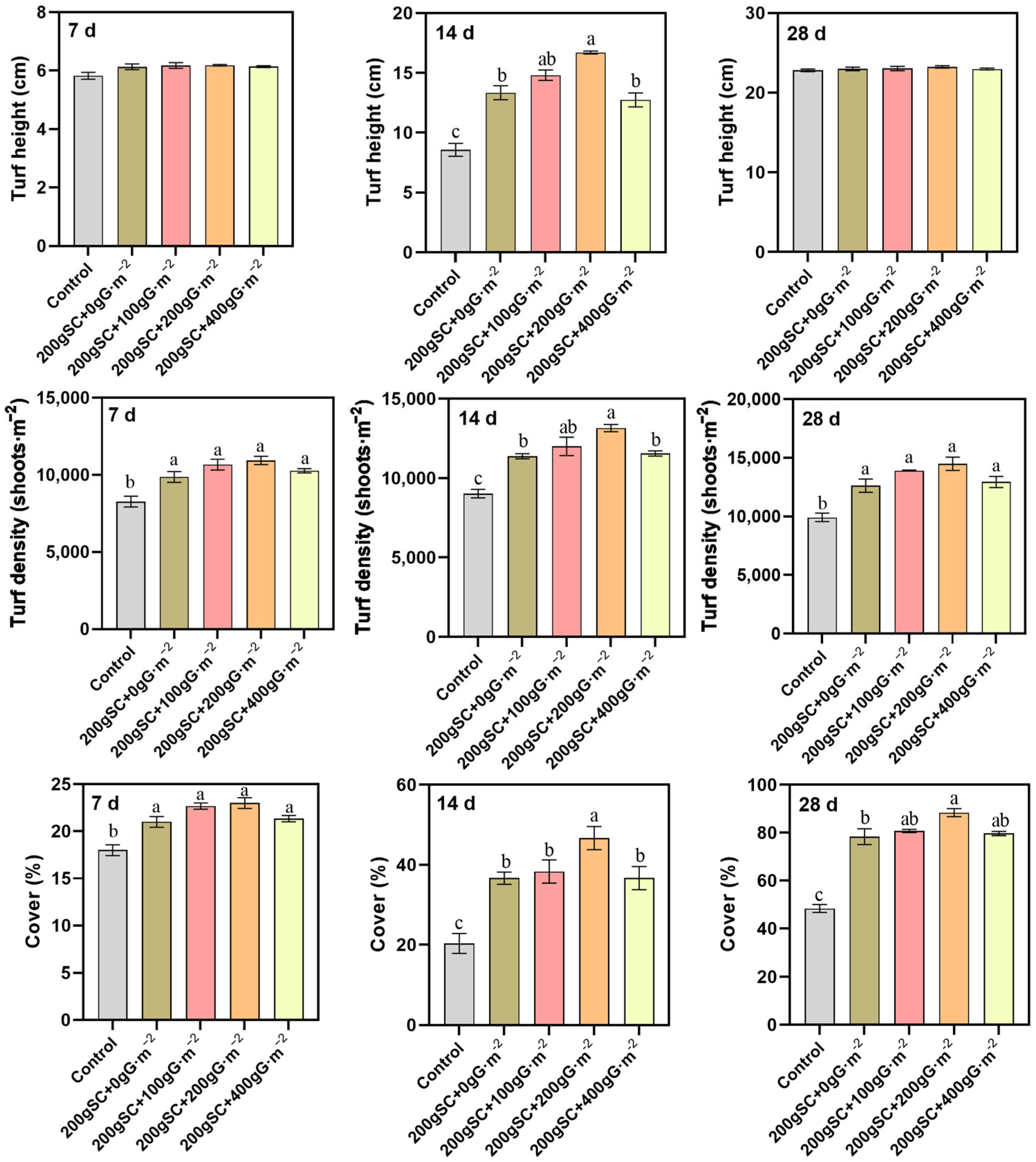
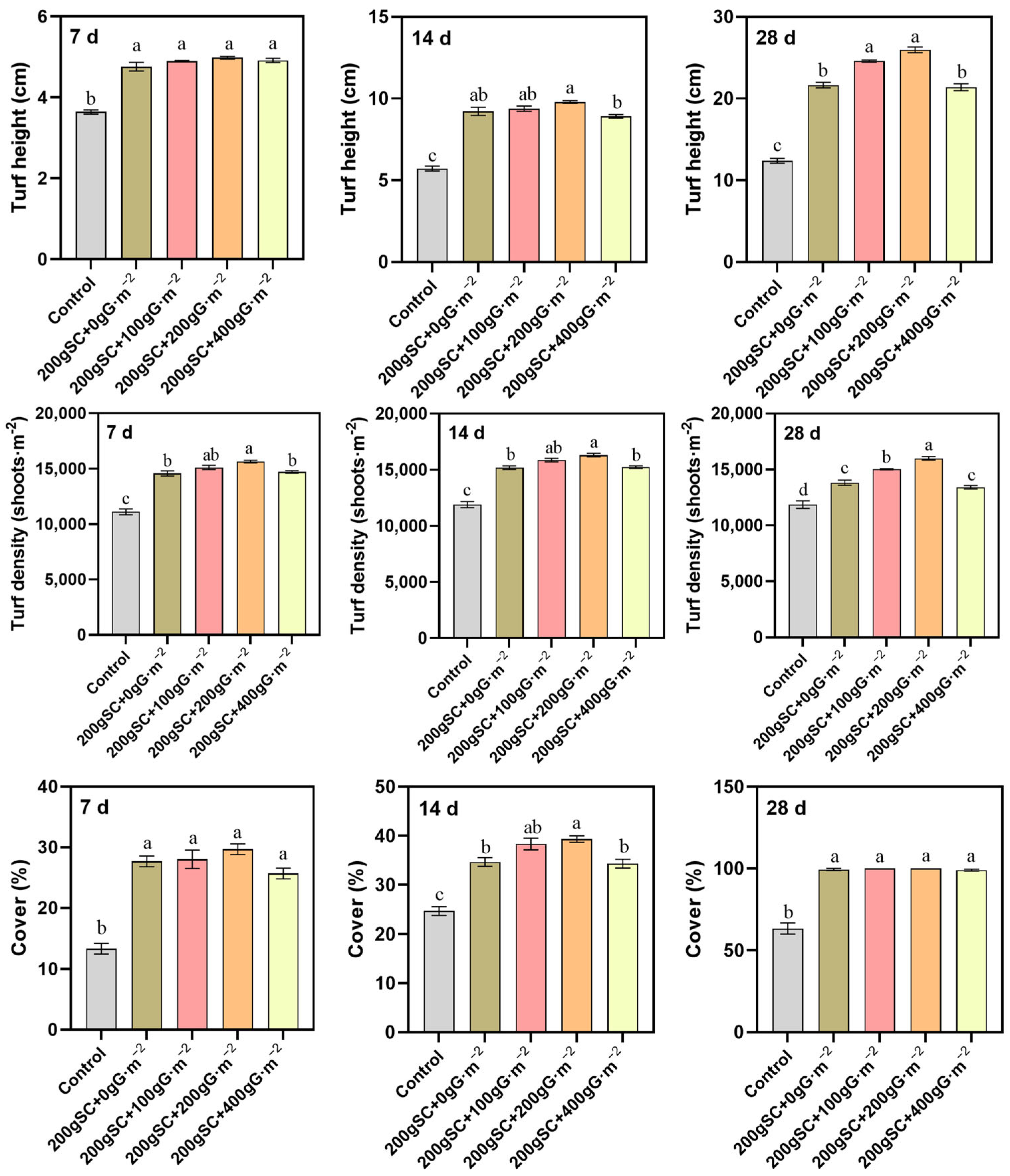
The yeast fertilizer had a significant main effect on all turf appearance parameters (p < 0.0001; Table 1). Compared to the control, all treatments containing 200 g·m−2 SC significantly increased turf density and cover at 7, 14, and 28 days after treatment (DAT). Turf height was significantly increased at 14 DAT.
The best treatment (200 g SC + 200 g G·m−2) produced the greatest enhancement, particularly at 14 DAT (Figure 1 and Figure 2). At this time point, it increased turf height, density, and cover by 94.94%, 45.81%, and 129.51%, respectively, compared to the control. This treatment group also showed significantly (p < 0.05) greater turf density and cover than the yeast—alone (200 g SC + 0 g G·m−2) and the highest—glucose (200 g SC + 400 g G·m−2) groups at 14 DAT, giving a clear indication of the most effective dose. Year and its interaction with treatment also showed significant effects for some parameters (Table 1), but the positive response pattern to the yeast fertilizer was consistent across both years.

3.2. Total Chlorophyll Content

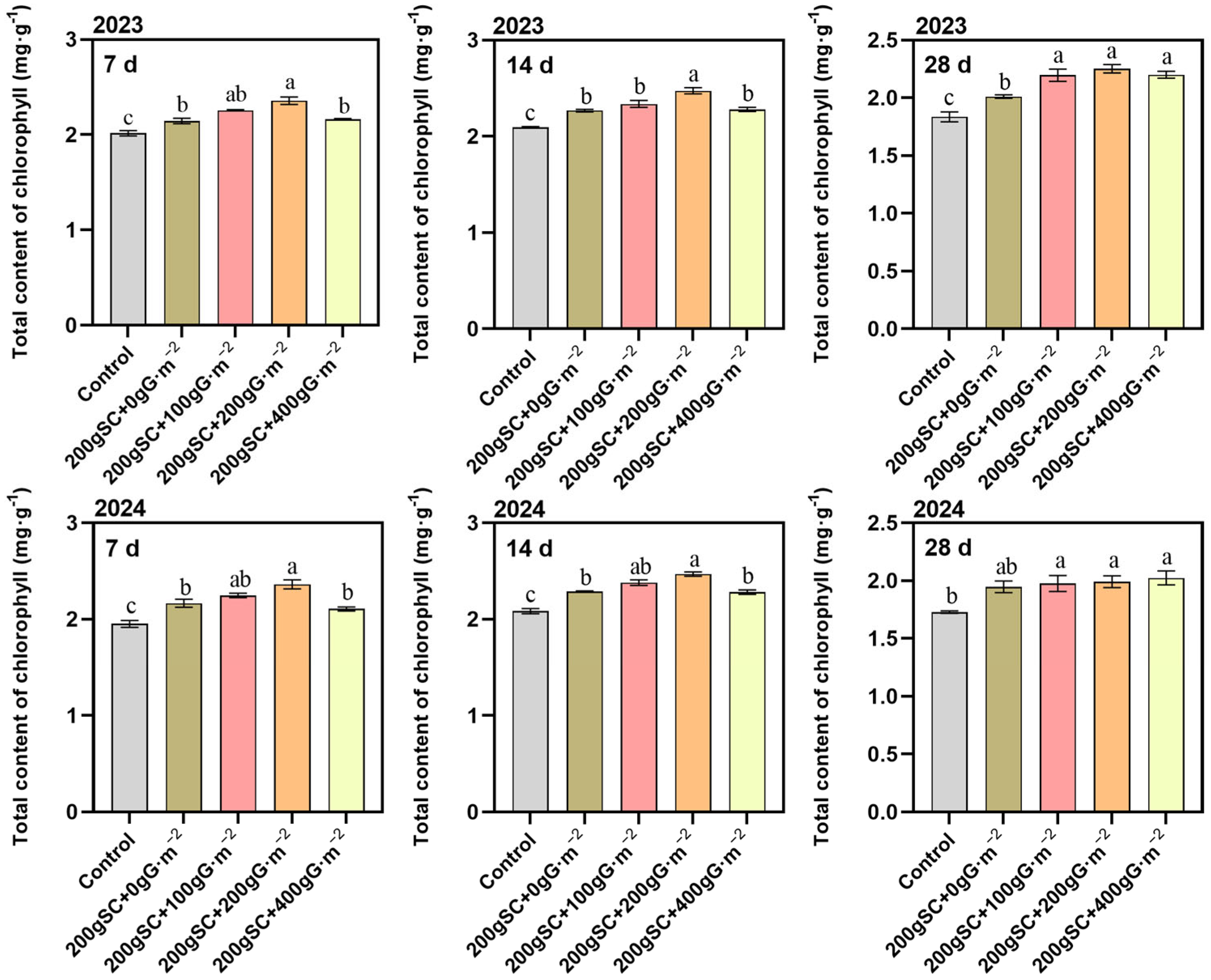
Total chlorophyll content was significantly increased by the yeast fertilizer at all measurement dates (p < 0.0001; Table 1). The best treatment (200 g SC + 200 g G·m−2) resulted in the highest chlorophyll levels (Figure 3). In 2023, this treatment increased chlorophyll content by 16.98%, 18.09%, and 22.67% at 7, 14, and 28 DAT, respectively. A similar trend was observed in 2024. The chlorophyll content in the best treatment group was significantly higher than in the yeast alone and the highest-glucose groups at early and mid-assessment points, reinforcing the identified best ratio.

3.3. Aboveground Biomass and Underground Biomass

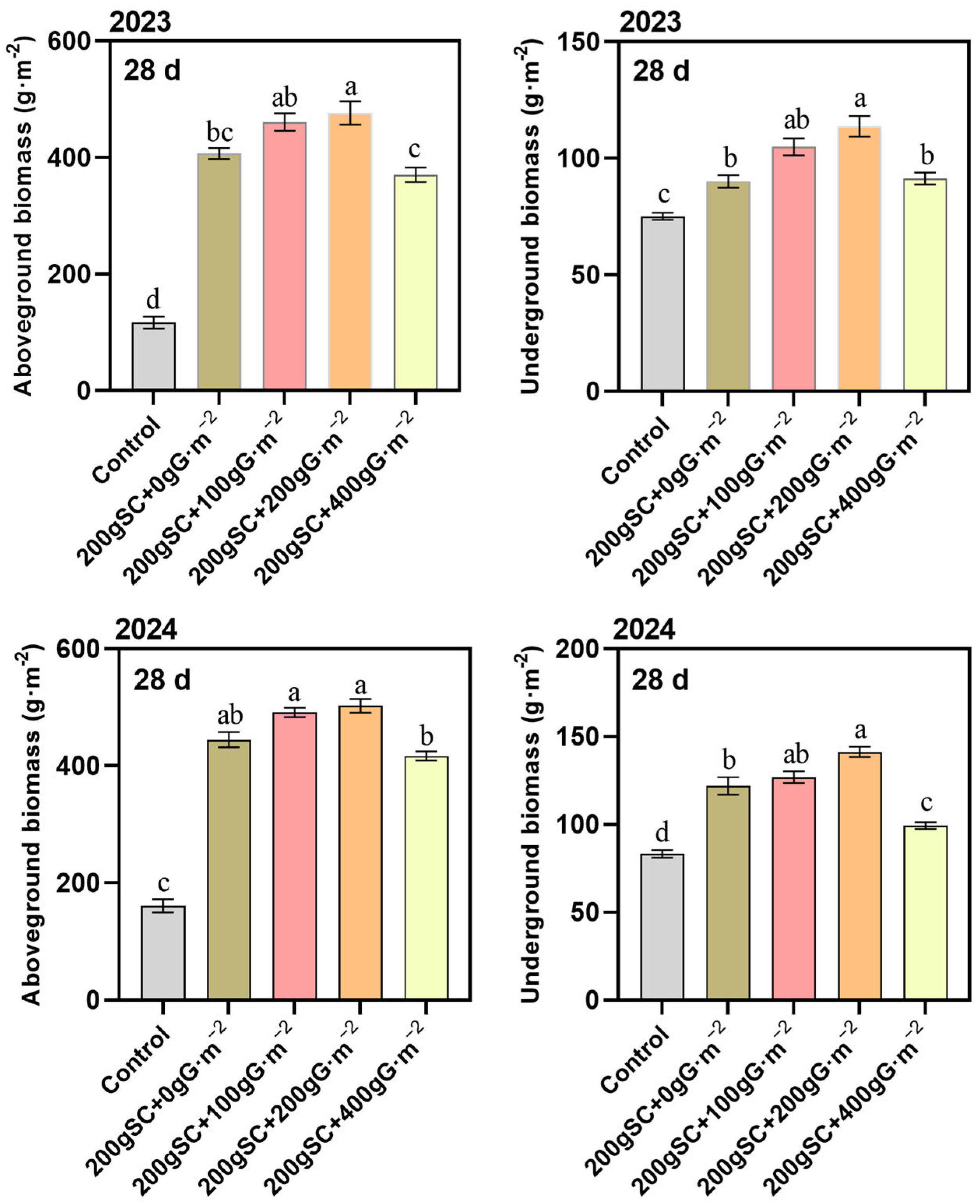
Both aboveground and belowground biomass at 28 DAT were significantly influenced by the yeast fertilizer (p < 0.0001; Table 1 and Figure 4). The best treatment (200 g SC + 200 g G·m−2) generated the highest biomass yield. In 2023, it increased aboveground and belowground biomass by 308.14% (from 116.67 to 476.16 g·m−2) and 51.35% (from 75.07 to 113.63 g m−2), respectively. In 2024, corresponding increases were 212.11% and 69.73%. The biomass in this group was significantly greater than in the yeast alone and the highest-glucose treatment groups.

3.4. Root System Morphology

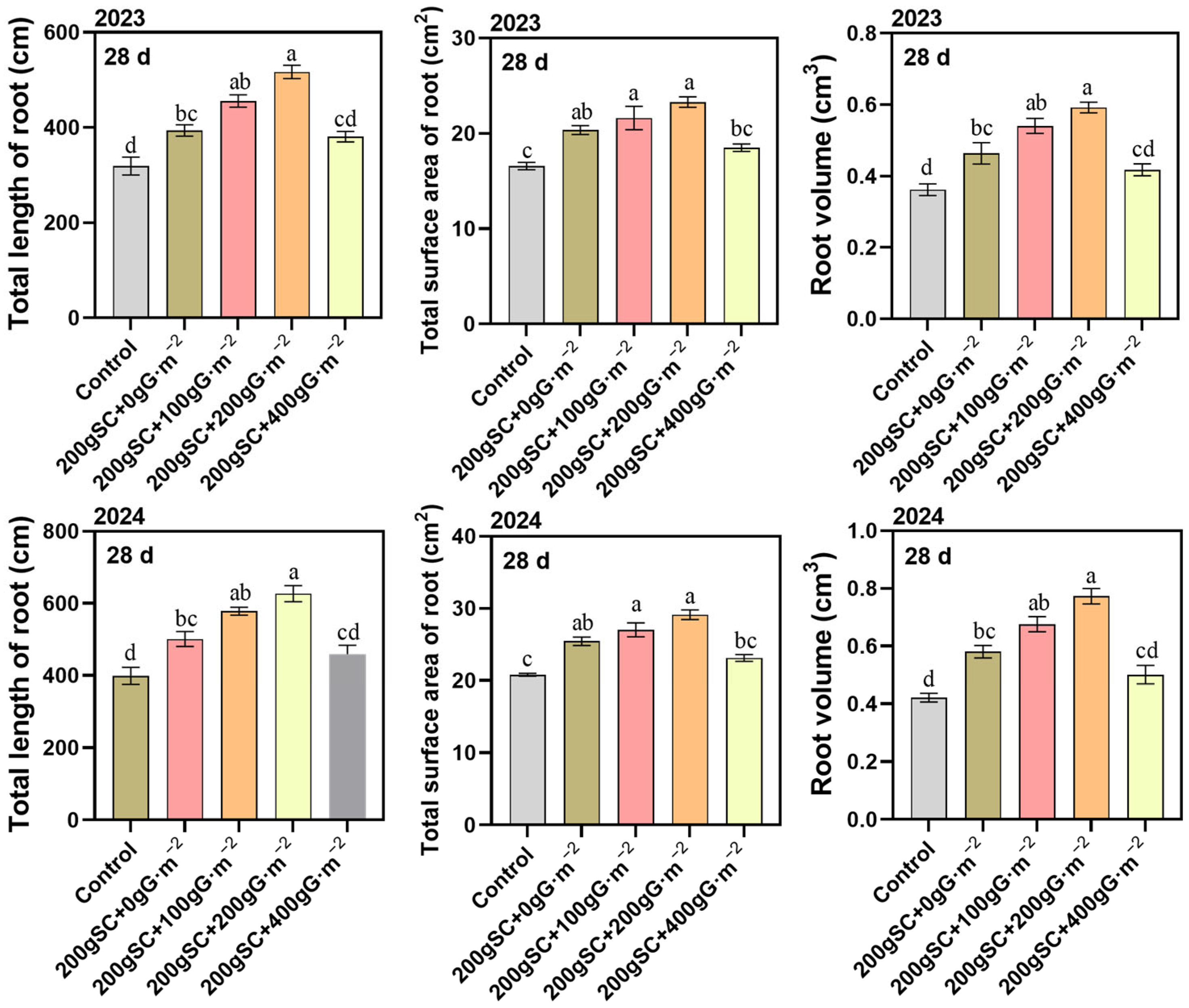
Root system development was significantly improved by the yeast fertilizer (p < 0.0001 for root length, surface area, and volume; Table 1). The best treatment (200 g SC + 200 g G·m−2) consistently promoted the most extensive root growth (Figure 5). At 28 DAT in 2023, this treatment increased total root length, root surface area, and root volume by 62.05%, 40.59%, and 63.51%, respectively, compared to the control. In 2024, the increases were 57.24%, 40.03%, and 83.31%. The best treatment resulted in significantly better root growth than the yeast alone and the highest-glucose treatments, particularly for root length and volume.

4. Discussion

The successful spring transition of overseeded bermudagrass is critical for turf quality, yet remains challenging due to persistent competition from cool-season species. This study demonstrates that a single application of a S. cerevisiae and glucose-based fertilizer significantly enhances the spring regrowth of “Yangjiang” bermudagrass, offering a novel, non-destructive management strategy.

4.1. Differences Between the Yeast Fertilizer and Other Measures for Spring Transition of Bermudagrass

Current transition strategies, such as core cultivation [14], vertical mowing [8], or herbicide use [13], primarily aim to suppress the competing ryegrass. However, many of these methods, particularly core cultivation, can be physically disruptive, potentially damaging existing bermudagrass stolons and rhizomes and temporarily reducing the shoot density, thereby hindering recovery [8,14]. Furthermore, these strategies often focus on inhibiting the competitor rather than directly promoting the recuperative capacity of the bermudagrass plant itself [8].
In contrast, the yeast fertilizer operates on a fundamentally different principle: enhancing the soil environment to actively stimulate bermudagrass growth [16]. Our results confirm that this approach successfully improves key indicators of spring transition—shoot density, cover, and biomass (Figure 1, Figure 2 and Figure 4; Table 1)—without physical turf injury. This positions yeast fertilization as a complementary tool that targets the growth capacity of bermudagrass rather than solely its competitor.
Furthermore, the application of chemical fertilizer significantly influences the spring transition of bermudagrass. For example, fertilization with nitrogen (urea) and phosphorus (superphosphate) increases turf density following ryegrass overseeding, which delays the spring transition of bermudagrass. In contrast, fertilization with potassium (potassium sulfate) accelerates the transition [21,22]. Application of NH4NO3 to replenish nitrogen nutrition has been shown to enhance bermudagrass shoot density during the spring transition [8,22]. Moreover, extending NH4NO3 applications until late in the season may improve bermudagrass quality without increasing the total annual nitrogen applied [23]. Therefore, rational use of chemical fertilizer supports the spring transition. Notably, chemical fertilizers and yeast fertilizers promote plant growth through different mechanisms. Thus, although previous research has highlighted various methods to promote bermudagrass spring transition from different perspectives, yeast fertilizer offers a novel mechanism and can be integrated with other strategies to enhance bermudagrass spring transition effectively.

4.2. Proposed Mechanism and Practical Implications

The primary mechanism is likely the in situ generation of CO2 from yeast metabolism, which temporarily increases soil porosity and aeration in the root zone [16]. Our previous research pointed out that moderate application of the yeast fertilizer (200 g yeast and 200 g glucose per square meter) increased soil pore space and reduced soil bulk density by 9.11%. This treatment also promoted the growth of bermudagrass roots and subterranean stems without causing physical damage to belowground tissues, and significantly raised underground biomass by 20.32% within one month [16]. Improved soil gas exchange can enhance root respiration and metabolic activity, potentially alleviating physical constraints and creating a more favorable environment for rhizome activation and shoot regeneration [17]. This aligns with our observations of concurrent improvements in both aboveground recovery (density, cover, chlorophyll; Figure 1, Figure 2 and Figure 3, Table 1) and belowground investment (biomass, root length, and volume; Figure 4 and Figure 5, Table 1). Practically, this method is cost-effective, uniformly treats the root zone, and is particularly suitable for areas where mechanical cultivation is impractical (e.g., courtyard lawns, complex landscapes), providing a novel option within the integrated turf management toolbox [6].

4.3. Advantages, Limitations, and Future Perspectives

The principal advantage of yeast fertilization is its ability to promote growth through biological soil conditioning, avoiding the damaging effects of physical interventions. Compared to core cultivation at fixed intervals, yeast fertilizer may loosen soil more uniformly, reaching all areas. Yeast cells are small, with individual Saccharomyces cerevisiae cells ranging from 7.94 μm to 10.2 μm in diameter [24]. The infusion of yeast suspension and glucose solution permeates soil pores, generating carbon dioxide that increases soil porosity and comprehensively alters soil structure. Core cultivation is unsuitable for areas such as courtyard lawns, bonsai soil, or locations with complex environmental conditions that require manual intervention. In these contexts, the yeast fertilizer method presented here is a viable alternative. Additionally, compared to core cultivation machinery, yeast fertilizer is more cost-effective and more accessible for lawn managers.
However, its limitations must be acknowledged. The best doses of yeast fertilizer increase soil porosity by approximately 9.11%, which may be less than that achieved by core cultivation [16]. Excessive glucose addition during yeast fertilizer application can cause osmotic stress in turfgrass [16]. Furthermore, S. cerevisiae has a pH adaptability range of 3.0 to 7.5, with an optimal pH of 4. It prefers acidic environments [25]. Thus, yeast activity may be reduced when applied to lawns in saline-alkaline soils. Therefore, yeast fertilizer has certain limitations that must be considered.
Future research should focus on several key areas to optimize and integrate this approach: (1) Timing and Environment: Defining the optimal soil temperature and moisture conditions for application, as temperature critically influences both bermudagrass growth [7,26] and microbial activity. (2) Comparative Efficacy: Directly comparing the transition speed, turf quality outcomes, and long-term effects of yeast fertilization versus standard core cultivation [14] or plant growth regulator protocols [12]. (3) Integrated Management: Exploring synergistic effects when yeast fertilizer is combined with other practices, such as modest nitrogen application (e.g., NH4NO3) [8,19,21] or selective herbicides [13], to develop comprehensive and efficient transition programs. (4) Formulation Science: Investigating advanced or encapsulated formulations to extend the duration of soil aeration benefits and ease of application.

5. Conclusions

This study demonstrates that a single application of a Saccharomyces cerevisiae-based yeast fertilizer significantly enhances the spring transition of overseeded bermudagrass. The formulation combining 200 g·m−2 yeast with 200 g·m−2 glucose was identified as the best formulation, consistently yielding the strongest effects across two experimental years.
This best treatment robustly promoted aboveground recovery, increasing turf density, cover, chlorophyll content, and ultimately boosting aboveground biomass by over 300% within 28 days. Concurrently, it substantially improved belowground growth, elevating underground biomass by 51–70% and enhancing root length, surface area, and volume by approximately 57–62%, 40%, and 64–83%, respectively.
These results confirm that yeast fertilizer facilitates spring transition by simultaneously improving shoot regeneration and root system development. The consistent two-year results validate the reliability of this non-destructive method. Enhancing soil conditions through in situ CO2 generation offers a viable alternative to traditional mechanical practices for managing overseeded turfgrass.

Author Contributions

Conceptualization, X.Y. and H.W.; Methodology, X.Y., D.H., D.L. and H.W.; Software, X.Y.; Validation, X.Y., D.H., J.W. and H.W.; Formal analysis, X.Y.; Investigation, X.Y., D.L., J.W. and H.W.; Resources, H.W.; Data curation, X.Y.; Writing—original draft, X.Y.; Writing—review and editing, X.Y., S.Z. and H.W.; Visualization, X.Y.; Supervision, H.W.; Project administration, H.W.; Funding acquisition, H.W. All authors have read and agreed to the published version of the manuscript.

Funding

This work was funded by the National Natural Science Foundation of China, Grant Nos. 32371767 and 31902046.

Data Availability Statement

The original contributions presented in this study are included in the article. Further inquiries can be directed to the corresponding author.

Conflicts of Interest

The authors declare no conflicts of interest.

Abbreviations

The following abbreviations are used in this manuscript:
SCSaccharomyces cerevisiae
Gglucose
DATdays after treatment

References

  1. Hedblom, M.; Lindberg, F.; Vogel, E.; Wissman, J.; Ahrné, K. Estimating urban lawn cover in space and time: Case studies in three Swedish cities. Urban Ecosyst. 2017, 20, 1109–1119. [Google Scholar] [CrossRef]
  2. Salman, A. The impact of turf colorants and overseeding practices on the dormant Bermuda grass (Cynodon dactylon L.). Appl. Ecol. Environ. Res. 2021, 19, 3979–3989. [Google Scholar] [CrossRef]
  3. McCauley, R.K.; Pinnix, G.D.; Miller, G.L. Fraise mowing as a spring transition aid. Crop Forage Turfgrass Manag. 2019, 5, 190025. [Google Scholar] [CrossRef]
  4. Ward, C.Y.; Mc Whirter, E.L.; Thompson, W.R., Jr. Evaluation of cool-season turf species and planting techniques for overseeding bermudagrass golf greens. In Proceedings of the Second International Turfgrass Research Conference; American Society of Agronomy, Crop Science Society of America: Madison, WI, USA, 1974; pp. 480–495. [Google Scholar]
  5. Shaver, B.R.; Richardson, M.D.; McCalla, J.H.; Karcher, D.E.; Berger, P.J. Dormant seeding bermudagrass cultivars in a transition-zone environment. Crop Sci. 2006, 46, 1787–1792. [Google Scholar] [CrossRef]
  6. Hanna, W.; Raymer, P.; Schwartz, B. Warm-season grasses: Biology and breeding. Turfgrass Biol. Use Manag. 2013, 56, 543–590. [Google Scholar]
  7. Yang, L.; Wu, Y.Q.; Shen, G.H. A summary of winter-hardiness and green-times research in bermudagrass turf. J. Sichuan Grassl. 2000, 4, 28–30. [Google Scholar]
  8. Horgan, B.P.; Yelverton, F.H. Removal of perennial ryegrass from overseeded bermudagrass using cultural methods. Crop Sci. 2001, 41, 118–126. [Google Scholar] [CrossRef]
  9. Rimi, F.; Macolino, S.; Leinauer, B.; Ziliotto, U. Green-up of seeded bermudagrass cultivars as influenced by spring scalping. HortTechnology 2011, 21, 230–235. [Google Scholar] [CrossRef]
  10. Chen, X.; Yang, W.; Sivamani, E.; Bruneau, A.H.; Wang, B.; Qu, R. Selective elimination of perennial ryegrass by activation of a pro-herbicide through engineering E. coli argE gene. Mol. Breed. 2005, 15, 339–347. [Google Scholar] [CrossRef]
  11. Serensits, T.; Cutulle, M.; Derr, J.F. Impact of overseeded grass species, seeding rate and seeding time on establishment and persistence in bermudagrass. J. Environ. Hortic. 2011, 29, 75–80. [Google Scholar] [CrossRef]
  12. DaCosta, M.; Ebdon, J.S.; Miele, K.; Bernstein, R.P.; Inguagiato, J.C. Plant growth regulator effects on winter hardiness of annual bluegrass putting green turf. Int. Turfgrass Soc. Res. J. 2022, 14, 225–235. [Google Scholar] [CrossRef]
  13. Johnson, B.J. Effects of pronamide on spring transition of a bermudagrass (Cynodon dactylon) green overseeded with perennial ryegrass (Lolium perenne). Weed Technol. 1990, 4, 322–326. [Google Scholar] [CrossRef]
  14. Mittlesteadt, T.L. Evaluation of Novel Techniques to Establish and Transition Overseeded Grasses on Bermudagrass Sports Turf. Ph.D. Thesis, Virginia Tech, Blacksburg, VA, USA, 2009. [Google Scholar]
  15. Ma, Z.; Chen, S.; Wang, Z.; Liu, J.; Zhang, B. Proteome analysis of bermudagrass stolons and rhizomes provides new insights into the adaptation of plant stems to aboveground and underground growth. J. Proteom. 2021, 241, 104245. [Google Scholar] [CrossRef]
  16. Yao, X.; Guo, H.; Li, D.; Zong, J.; Zhang, R.; Chen, J.; Hao, D.; Zhao, X.; Liu, J.; Wang, H. Novel approaches for alleviating shallow soil compaction using microbial fertilizers and their beneficial impacts on plant growth and soil physicochemical properties. Soil Tillage Res. 2025, 247, 106380. [Google Scholar] [CrossRef]
  17. Jin, C.; Lei, H.; Chen, J.; Xiao, Z.; Leghari, S.J.; Yuan, T.; Pan, H. Effect of soil aeration and root morphology on yield under aerated irrigation. Agronomy 2023, 13, 369. [Google Scholar] [CrossRef]
  18. Xi, J.B.; Li, Y. Study on winter-green technology for sports field turf in tropic and subtropic region of China. In Proceedings of the XXI International Grassland Congress & the VIII International Rangeland Congress; Guangdong People’s Publishing House: Guangzhou, China, 2008. [Google Scholar]
  19. Godínez-Alvarez, H.; Herrick, J.; Mattocks, M.; Toledo, D.; Van Zee, J. Comparison of three vegetation monitoring methods: Their relative utility for ecological assessment and monitoring. Ecol. Indic. 2009, 9, 1001–1008. [Google Scholar] [CrossRef]
  20. Arvola, L. Spectrophotometric determination of chlorophyll a and phaeopigments in ethanol extractions. Ann. Bot. Fenn. 1981, 18, 221–227. [Google Scholar]
  21. Ihtisham, M.; Fahad, S.; Luo, T.; Larkin, R.M.; Yin, S.; Chen, L. Optimization of nitrogen, phosphorus, and potassium fertilization rates for overseeded perennial ryegrass turf on dormant bermudagrass in a transitional climate. Front. Plant Sci. 2018, 9, 487. [Google Scholar] [CrossRef]
  22. Juska, F.; Murray, J. Performance of bermudagrasses in the transition zone as affected by potassium and nitrogen. In Proceedings of the Second International Turfgrass Research Conference; Wiley Online Library: Hoboken, NJ, USA, 1974; pp. 149–154. [Google Scholar]
  23. Rimi, F.; Macolino, S.; Richardson, M.D.; Karcher, D.E.; Leinauer, B. Influence of three nitrogen fertilization schedules on bermudagrass and seashore paspalum: I. Spring green-up and fall color retention. Crop Sci. 2013, 53, 1161–1167. [Google Scholar] [CrossRef]
  24. Zakhartsev, M.; Reuss, M. Cell size and morphological properties of yeast Saccharomyces cerevisiae in relation to growth temperature. FEMS Yeast Res. 2018, 18, foy052. [Google Scholar] [CrossRef] [PubMed]
  25. Salari, R.; Salari, R. Investigation of the best Saccharomyces cerevisiae growth condition. Electron. Physician 2017, 9, 3592–3597. [Google Scholar] [CrossRef] [PubMed]
  26. Yang, Y.; Lou, Y.H.; Yang, Z.J.; Xiang, Z.X.; Xu, Q.G.; Hu, L.X. Effect of low temperature on phytohormones and carbohydrates metabolism in Bermuda grass. Acta Prataculturea Sin. 2016, 25, 205–215. [Google Scholar]
Figure 1. Turf height, turf density, and cover in 2023. SC = Saccharomyces cerevisiae, G = glucose. 7 d, 14 d, and 28 d represent 7 days later, 14 days later, and 28 days later. Different lowercase letters indicate a significant difference (p < 0.05). Results are presented as means ± SE.
Horticulturae 12 00238 g001
Figure 2. Turf height, turf density, and cover in 2024. SC = Saccharomyces cerevisiae, G = glucose. 7 d, 14 d, and 28 d represent 7 days later, 14 days later, and 28 days later. Different lowercase letters indicate a significant difference (p < 0.05). Results are presented as means ± SE.
Horticulturae 12 00238 g002
Figure 3. Total bermudagrass chlorophyll content. SC = Saccharomyces cerevisiae, G = glucose. 7 d, 14 d, and 28 d represent 7 days later, 14 days later, and 28 days later. Different lowercase letters indicate a significant difference (p < 0.05). Results are presented as means ± SE.
Horticulturae 12 00238 g003
Figure 4. Aboveground biomass and underground biomass. SC = Saccharomyces cerevisiae, G = glucose. 28 d represents 28 days later. Different lowercase letters indicate a significant difference (p < 0.05). Results are presented as means ± SE.
Horticulturae 12 00238 g004
Figure 5. Total length of root, total surface area of root, and root volume. SC = Saccharomyces cerevisiae, G = glucose. 28 d represents 28 days later. Different lowercase letters indicate a significant difference (p < 0.05). Results are presented as means ± SE.
Horticulturae 12 00238 g005
Table 1. Two-way ANOVA analysis of growth indices of bermudagrass from 2023 to 2024.
Turf Height 7 dTurf Height 14 dTurf Height 28 d
VariationF-valuep-valueF-valuep-valueF-valuep-value
Year853.60<0.0001378.80<0.0001137.70<0.0001
Yeast fertilizer59.33<0.000188.10<0.0001179.90<0.0001
Year × Yeast fertilizer13.770.00048.7520.0026221.90<0.0001
Turf density 7 dTurf density 14 dTurf density 28 d
VariationF-valuep-valueF-valuep-valueF-valuep-value
Year467.20<0.0001510.50<0.000142.94<0.0001
Yeast fertilizer113.30<0.000169.47<0.000135.69<0.0001
Year × Yeast fertilizer3.230.06041.610.24691.600.2500
Cover 7 dCover 14 dCover 28 d
VariationF-valuep-valueF-valuep-valueF-valuep-value
Year46.54<0.00012.650.1349254.10<0.0001
Yeast fertilizer59.20<0.0001109.90<0.0001163.50<0.0001
Year × Yeast fertilizer15.690.00034.380.02652.510.1081
Total content of chlorophyll 7 dTotal content of chlorophyll 14 dTotal content of chlorophyll 28 d
VariationF-valuep-valueF-valuep-valueF-valuep-value
Year2.330.15820.470.508927.220.0004
Yeast fertilizer28.57<0.000159.98<0.000124.72<0.0001
Year × Yeast fertilizer1.390.30710.460.76701.270.3453
Aboveground biomassUnderground biomass
VariationF-valuep-valueF-valuep-value
Year25.530.000586.66<0.0001
Yeast fertilizer237.70<0.000175.21<0.0001
Year × Yeast fertilizer0.280.88215.470.0135
Total length of rootTotal surface area of rootRoot volume
VariationF-valuep-valueF-valuep-valueF-valuep-value
Year162.40<0.00014096.00<0.0001143.70<0.0001
Yeast fertilizer28.77<0.000120.57<0.000132.83<0.0001
Year × Yeast fertilizer1.250.352812.800.00064.810.0201
Note: d.f. = 1 for Year, d.f. = 4 for Yeast fertilizer.
Disclaimer/Publisher’s Note: The statements, opinions and data contained in all publications are solely those of the individual author(s) and contributor(s) and not of MDPI and/or the editor(s). MDPI and/or the editor(s) disclaim responsibility for any injury to people or property resulting from any ideas, methods, instructions or products referred to in the content.