
The Role of Biofilm Formation by Paracidovorax citrulli in the Infection Process of Hami Melon

Abstract
1. Introduction
2. Materials and Methods
2.1. Bacterial Strains and Growth Conditions
2.2. Plant Growth Conditions and Inoculation Methods
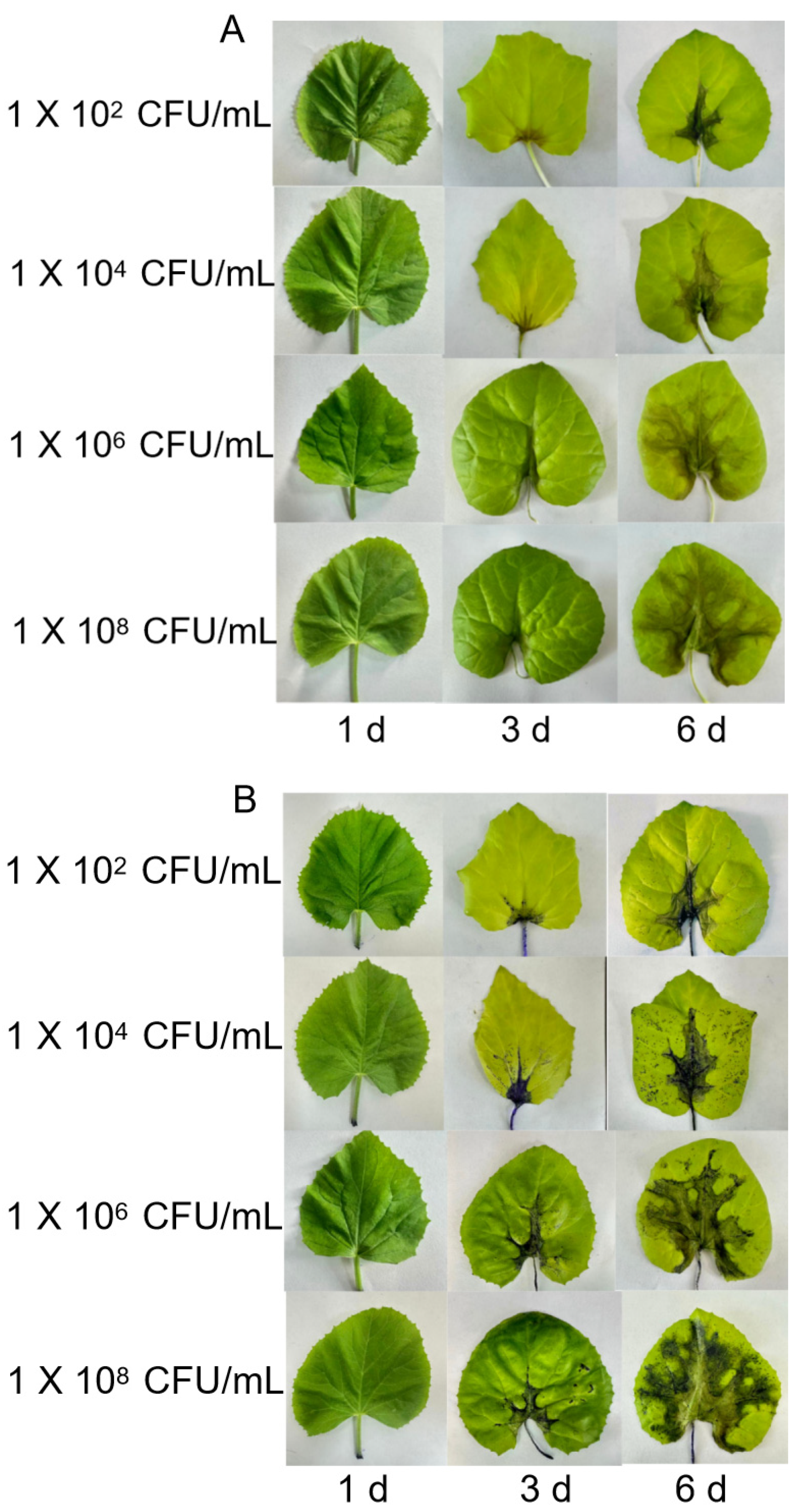
2.3. Relationship Between Pathogenic Bacterial Concentration and Disease Onset
2.4. Determination of Biofilm Formation in Infected Melon Leaves
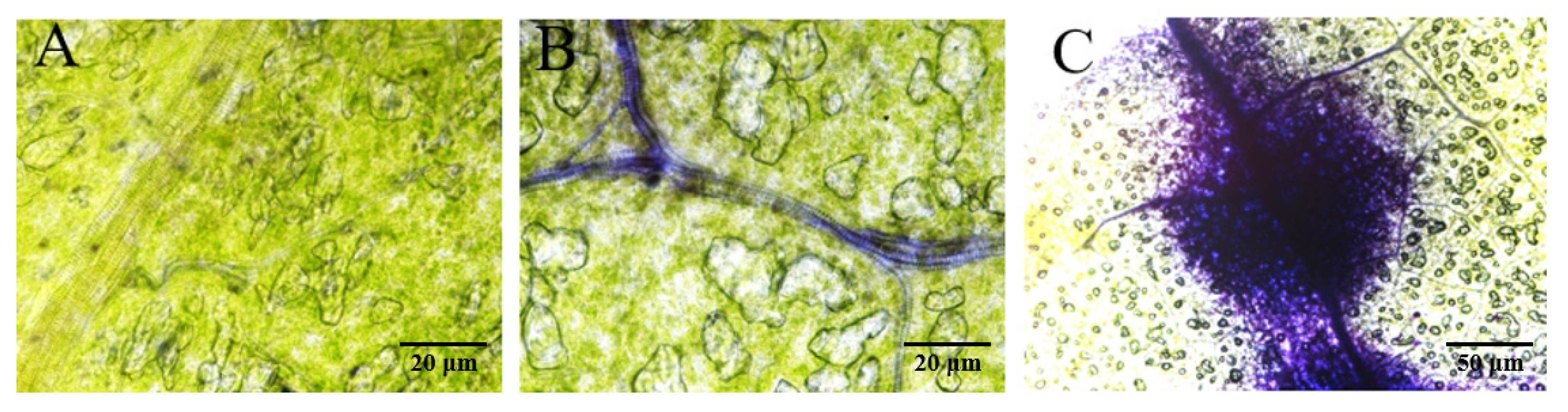
2.4.1. Preliminary Observation of Biofilm Formation on Diseased Leaves
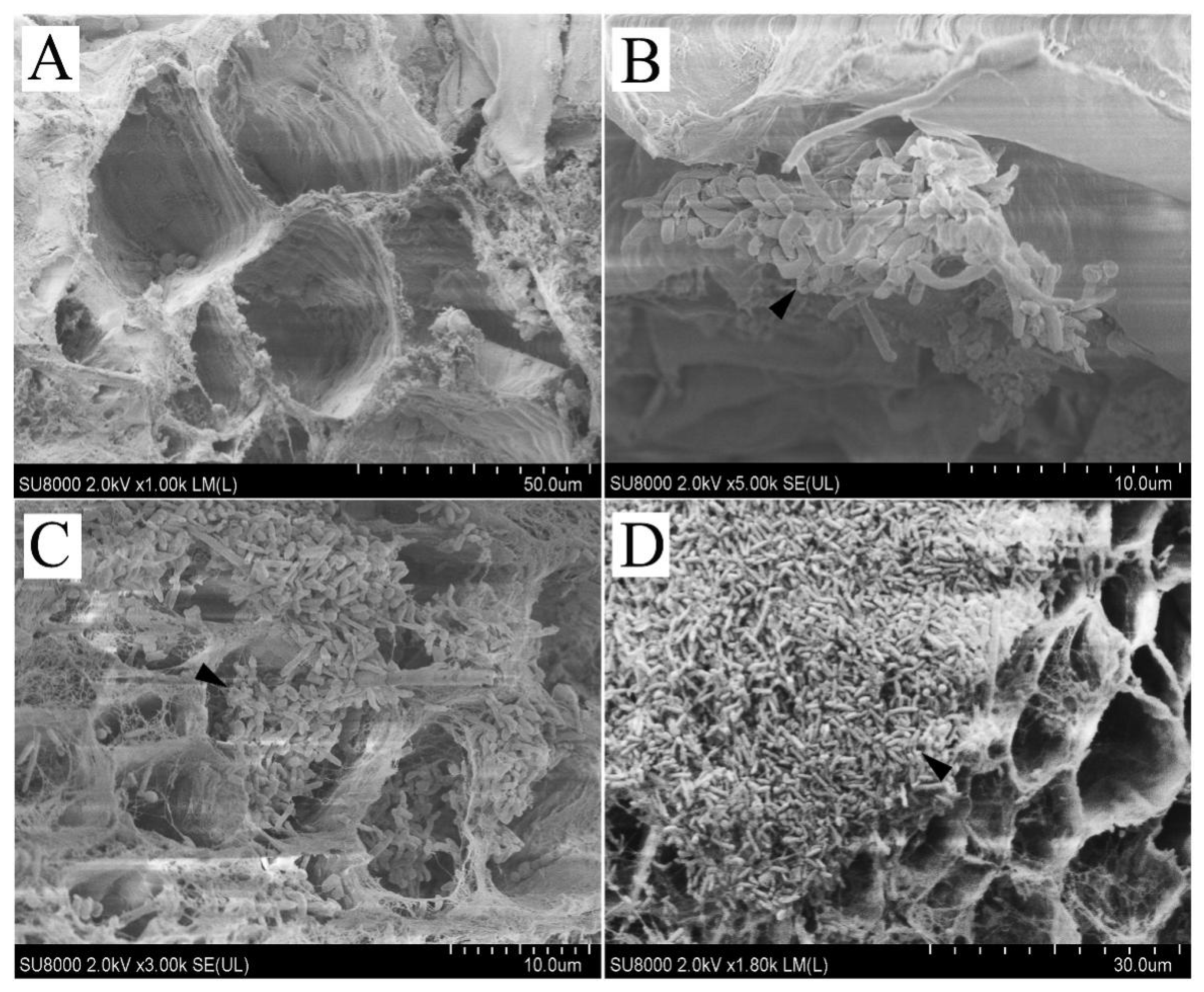
2.4.2. Scanning Electron Microscope Observation
2.4.3. Pathogen Verification from Symptomatic Leaves
2.5. Determination of Enzymes Activities
2.6. Measurement of Enzyme Activity in Diseased Leaf Tissues Following Inoculation
2.6.1. Cellulase Activity Assay
2.6.2. Pectinase Activity Assay
2.7. Statistical Analysis
3. Results
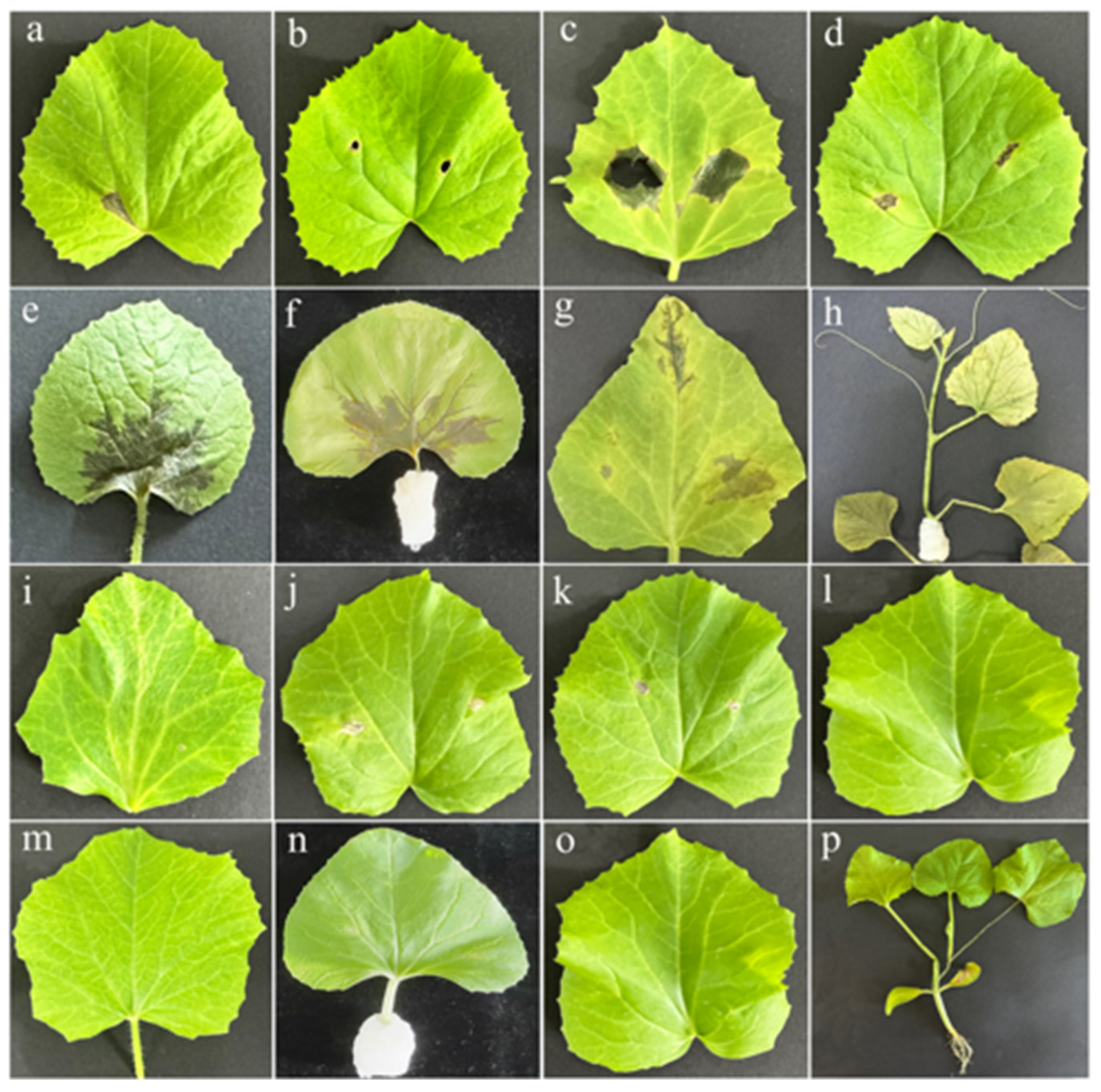
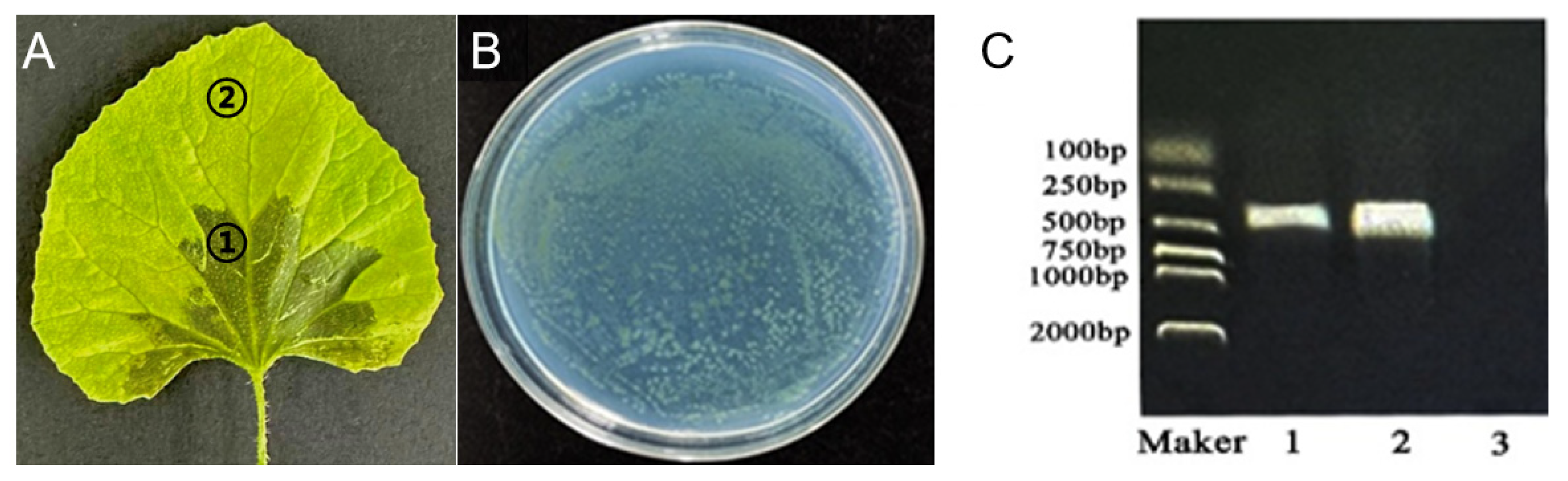
3.1. Inoculation Method and Symptom Manifestation
3.2. Effect of Inoculation Concentration on the Development of P. citrulli Disease
3.3. Biofilm Formation During Bacterial Invasion
3.4. Pathogen Verification in Diseased Leaves
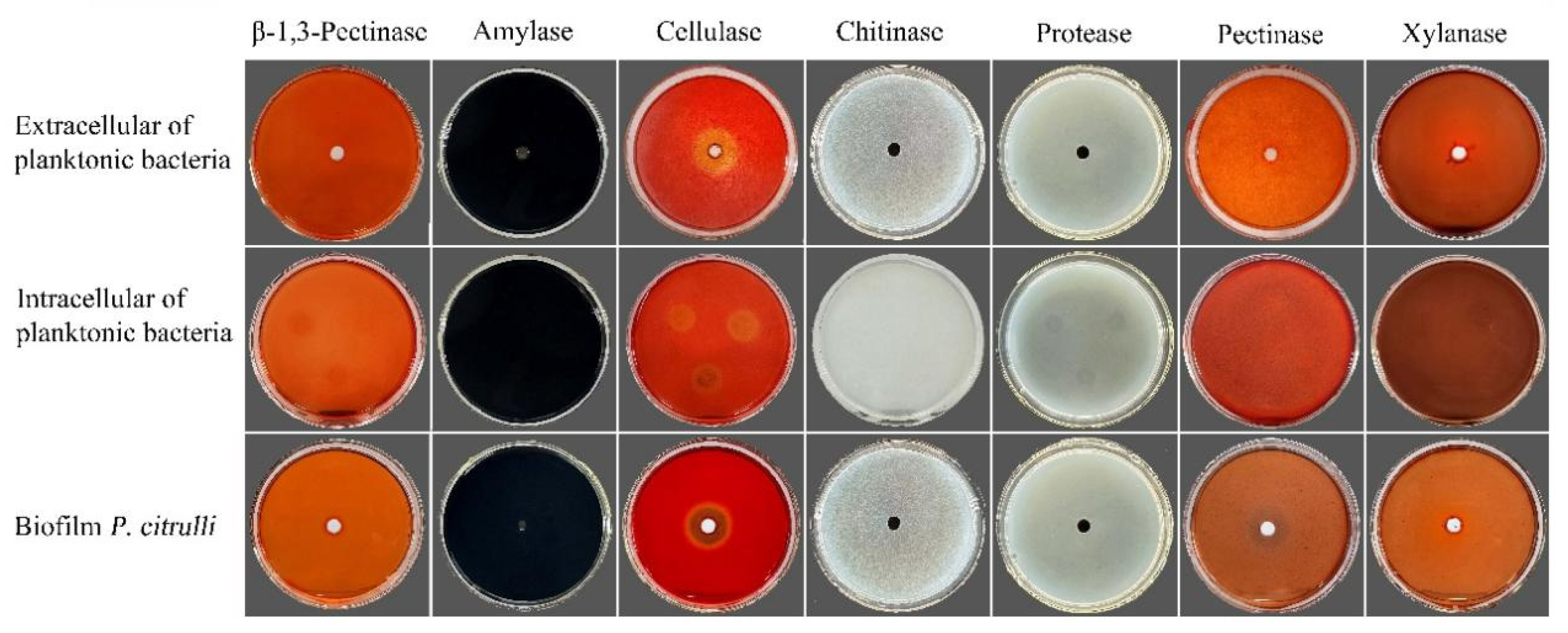
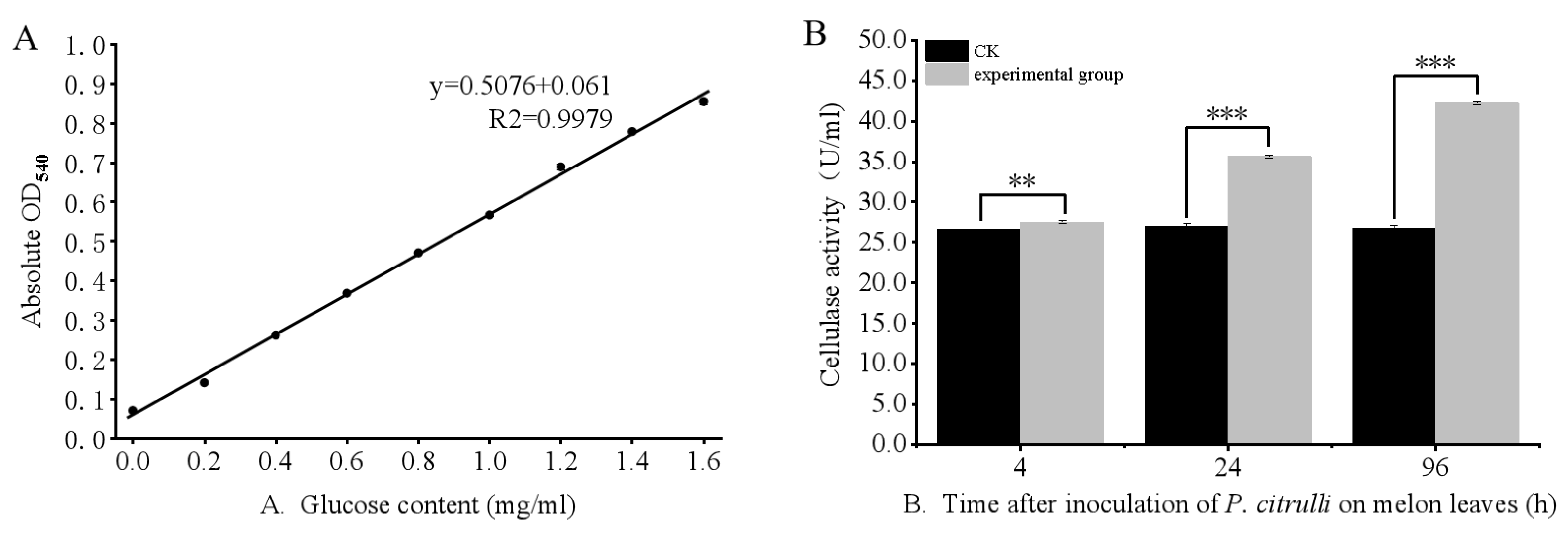
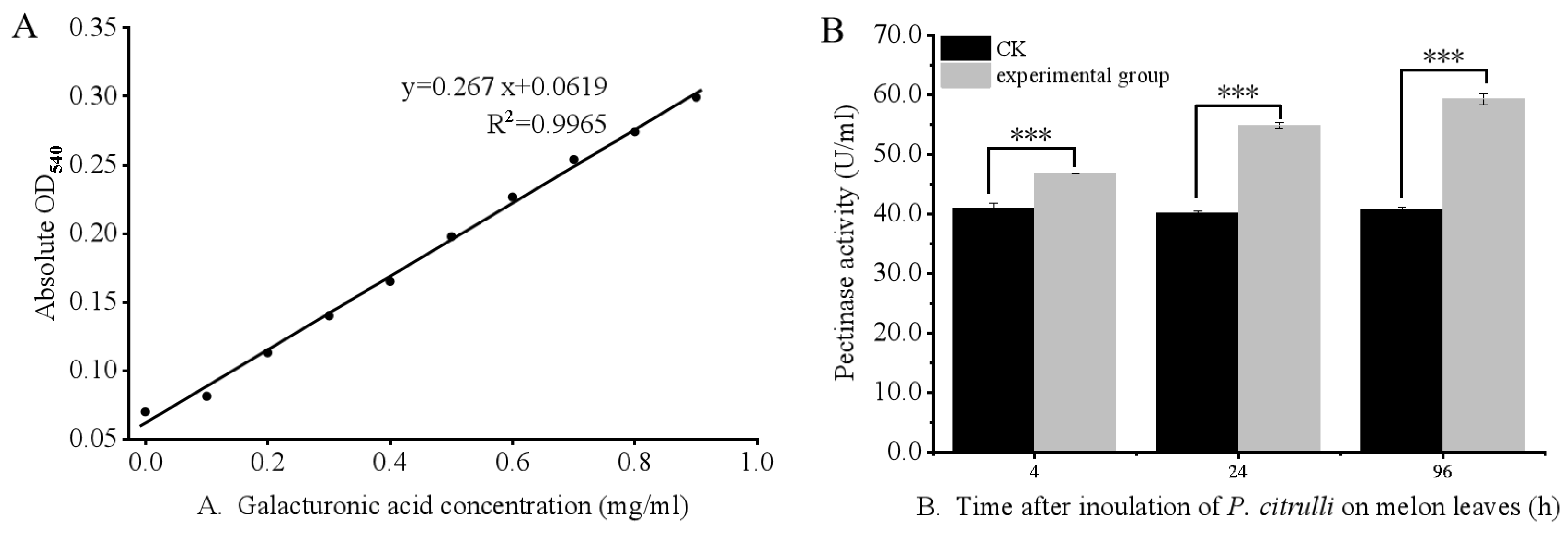
3.5. Enzyme Activity Detection
4. Discussion
5. Conclusions
Author Contributions
Funding
Data Availability Statement
Acknowledgments
Conflicts of Interest
References
- Sauer, K.; Stoodley, P.; Goeres, D.M.; Hall-Stoodley, L.; Burmølle, M.; Stewart, P.S.; Bjarnsholt, T. The biofilm life cycle: Expanding the conceptual model of biofilm formation. Nat. Rev. Microbiol. 2022, 20, 608–620. [Google Scholar] [CrossRef] [Scilit]
- Harimawan, A.; Ting, Y.P. Investigation of extracellular polymeric substances (EPS) properties of P. aeruginosa and B. subtilis and their role in bacterial adhesion. Colloids Surf. B Biointerfaces 2016, 24, 459–467. [Google Scholar] [CrossRef] [Scilit]
- Rabin, N.; Zheng, Y.; Opoku-Temeng, C.; Du, Y.; Bonsu, E.; Sintim, H.O. Biofilm formation mechanisms and targets for developing antibiofilm agents. Future Med. Chem. 2015, 7, 493–512. [Google Scholar] [CrossRef] [Scilit] [PubMed]
- Das, T.; Sharma, P.K.; Krom, B.P.; van der Mei, H.C.; Busscher, H.J. Role of eDNA on the adhesion forces between Streptococcus mutans and substratum surfaces: Influence of ionic strength and substratum hydrophobicity. Langmuir 2011, 27, 10113–10118. [Google Scholar] [CrossRef] [Scilit]
- Sahoo, S.; Pattajoshi, B.; Loi, M. Formation and function of biofilms in managing plant diseases. Vigyan Varta 2025, 6, 150–155. [Google Scholar]
- Carezzano, M.E.; Paletti Rovey, M.F.; Cappellari, L.D.R.; Gallarato, L.A.; Bogino, P.; Oliva, M.d.l.M.; Giordano, W. Biofilm-forming ability of phytopathogenic bacteria: A review of its involvement in Plant Stress. Plants 2023, 12, 2207. [Google Scholar] [CrossRef] [Scilit]
- Vrancken, K.; Holtappels, M.; Schoofs, H.; Deckers, T.; Valcke, R. Pathogenicity and infection strategies of the fire blight pathogen Erwinia amylovora in Rosaceae: State of the art. Microbiology 2013, 159, 823–832. [Google Scholar] [CrossRef] [Scilit]
- Koczan, J.M.; Lenneman, B.R.; McGrath, M.J.; Sundin, G.W. Cell surface attachment structures contribute to biofilm formation and xylem colonization by Erwinia amylovora. Appl. Environ. Microbiol. 2011, 77, 7031–7039. [Google Scholar] [CrossRef] [Scilit]
- Romanenko, A.S.; Lomovatskaya, L.A.; Shafikova, T.N.; Borovskii, G.B.; Krivolapova, N.V. Potato cell plasma membrane receptors to ring rot pathogen extracellular polysaccharides. J. Phytopathol. 2003, 151, 1–6. [Google Scholar] [CrossRef] [Scilit]
- Xu, X.; Rajashekara, G.; Paul, P.A.; Miller, S.A. Colonization of tomato seedlings by bioluminescent Clavibacter michiganensis subsp. michiganensis under different humidity regimes. Phytopathology 2012, 102, 177–184. [Google Scholar] [CrossRef] [Scilit]
- Yadeta, K.A.; Thomma, B.P.H.J. The xylem as battleground for plant hosts and vascular wilt pathogens. Front. Plant Sci. 2013, 4, 97. [Google Scholar] [CrossRef] [Scilit]
- Li, Y.; Chen, X.; Xu, X.L.; Yu, C.X.; Liu, Y.; Jiang, N.; Li, J.Q.; Luo, L.X. Deletion of pbpC enhances bacterial pathogenicity on tomato by affecting biofilm formation, exopolysaccharides production, and exoenzyme activities in Clavibacter michiganensis. Int. J. Mol. Sci. 2023, 24, 5324. [Google Scholar] [CrossRef] [Scilit]
- Castiblanco, L.F.; Sundin, G.W. New insights on molecular regulation of biofilm formation in plant-associated bacteria. Integr. Plant Biol. 2016, 58, 362–372. [Google Scholar] [CrossRef] [Scilit]
- Engl, C.; Waite, C.J.; McKenna, J.F.; Bennett, M.H.; Hamann, T.; Buck, M. Chp8, a diguanylate cyclase from Pseudomonas syringae pv. tomato DC3000, suppresses the pathogen-associated molecular pattern flagellin, increases extracellular polysaccharides, and promotes plant immune evasion. mBio 2014, 5, 10-1128. [Google Scholar] [CrossRef] [Scilit]
- Mole, B.M.; Baltrus, D.A.; Dangl, J.L.; Grant, S.R. Global virulence regulation networks in phytopathogenic bacteria. Trends Microbiol. 2007, 15, 363–371. [Google Scholar] [CrossRef] [Scilit] [PubMed]
- He, Y.W.; Wu, J.; Cha, J.S.; Zhang, L.H. Rice bacterial blight pathogen Xanthomonas oryzae pv. oryzae produces multiple DSF-family signals in regulation of virulence factor production. BMC Microbiol. 2010, 10, 187. [Google Scholar] [CrossRef] [Scilit] [PubMed]
- Willems, A.; Goor, M.; Thielemans, S.; Gillis, M.; Kersters, K.; De Ley, J. Transfer of several phytopathogenic Pseudomonas species to Acidovorax as Acidovorax avenae subsp. avenae subsp. nov., comb. nov., Acidovorax avenae subsp. citrulli, Acidovorax avenae subsp. cattleyae, and Acidovorax konjaci. Int. J. Syst. Bacteriol. 1992, 42, 107–119. [Google Scholar] [CrossRef] [Scilit]
- Schaad, N.W.; Postnikova, E.; Sechler, A.; Claflin, L.E.; Vidaver, A.K.; Jones, J.B.; Agarkova, I.; Ignatov, A.; Dickstein, E.; Ramundo, B.A. Reclassification of subspecies of Acidovorax avenae as A. avenae (Manns 1905) emend., A. cattleyae (Pavarino, 1911) comb. nov., A. citrulli (Schaad et al., 1978) comb. nov., and proposal of A. oryzae sp. nov. Syst. Appl. Microbiol. 2008, 31, 434–446. [Google Scholar] [CrossRef] [Scilit]
- Du, J.; Liu, Y.; Zhu, H. Genome-based analyses of the genus Acidovorax: Proposal of the two novel genera Paracidovorax gen. nov., Paenacidovorax gen. nov. and the reclassification of Acidovorax antarcticus as Comamonas antarctica comb. nov. and emended description of the genus Acidovorax. Arch. Microbiol. 2022, 205, 42. [Google Scholar] [CrossRef] [Scilit] [PubMed]
- Gajbhiye, S.; Gonzales, E.D.; Toso, D.B.; Kirk, N.A.; Hickey, W.J. Identification of NpdA as the protein forming the surface layer in Paracidovorax citrulli and evidence of its occurrence as a surface layer protein in diverse genera of the Betaproteobacteria and Gammaproteobacteria. Access Microbiol. 2023, 5, 000685-v3. [Google Scholar] [CrossRef] [Scilit] [PubMed]
- Ham, H.; Lee, B.W.; Kim, K.; Lee, W.; Lee, Y.H.; Park, D.S. A novel and advanced diagnostic approach toward Paracidovorax citrulli causing bacterial fruit blotch in watermelon by direct SYBR green real-time PCR assay. Plant Pathol. J. 2024, 40, 671–680. [Google Scholar] [CrossRef] [Scilit]
- Qin, T.; Liang, X.; Zhong, C.; Zhang, Z.; Wang, J.; Shi, J.; Huang, J.; Chen, D.; Zhao, W.; Wang, M.; et al. HrpW modulates Paracidovorax citrulli virulence and plant immunity via ClRAR1 Interaction in watermelon. Mol Plant Pathol. 2025, 26, e70108. [Google Scholar] [CrossRef] [Scilit]
- Burdman, S.; Walcott, R. Acidovorax citrulli: Generating basic and applied knowledge to tackle a global threat to the cucurbit industry. Mol. Plant Pathol. 2012, 13, 805–815. [Google Scholar] [CrossRef] [Scilit]
- Hugouvieux-Cotte-Pattat, N.; Condemine, G.; Shevchik, V.E. Bacterial pectate lyases, structural and functional diversity. Environ. Microbiol. Rep. 2014, 6, 427–440. [Google Scholar] [CrossRef] [Scilit]
- Ge, W.Z. Dynamic Study on the Occurrence Process of Konjac Soft Rot and Control Research Based on QS System. Master’s Thesis, Huazhong University of Science and Technology, Wuhan, China, 2013. [Google Scholar]
- Tayi, L.; Maku, R.; Patel, H.K.; Sonti, R.V. Action of multiple cell wall–degrading enzymes is required for elicitation of innate immune responses during Xanthomonas oryzae pv. oryzae infection in rice. Mol. Plant-Microbe Interact. 2016, 29, 599–608. [Google Scholar]
- Baltenneck, J.; Reverchon, S.; Hommais, F. Quorum sensing regulation in phytopathogenic bacteria. Microorganisms 2021, 9, 239. [Google Scholar] [CrossRef] [Scilit]
- Wang, C.L.; Qiao, P.; Liu, D.H.; Meng, Y.H.; Guan, W.; Yang, Y.W.; Zhao, T.C. Functional study of DeoR family transcription factor glpR in Acidovorax citrulli. China Cucurbits Veg. 2024, 37, 41–52. [Google Scholar]
- Bai, Q.R.; Fan, Z.H.; Guan, W.; Yang, L.L.; Yang, Y.W.; Zhao, T.C. Functional analysis of hrcS gene in type III secretion system of Acidovorax citrulli. Acta Phytophylacica Sin. 2023, 50, 350–358. [Google Scholar]
- Cai, F.Y.; Fei, N.Y.; Qiao, P.; Guan, W.; Yang, Y.W.; Ye, Y.F.; Zhao, T.C. Functional analysis of pstS gene in phosphate-specific transport system of Acidovorax citrulli. China Cucurbits Veg. 2022, 35, 16–25. [Google Scholar]
- Yang, Y.; Fei, N.; Ji, W.Q.; Qiao, P.; Yang, L.L.; Liu, D.H.; Guan, W.; Zhao, T.C. pilA gene contributes to virulence, motility, biofilm formation, and interspecific competition of bacteria in Acidovorax citrulli. Microorganisms 2023, 11, 1806. [Google Scholar] [CrossRef] [Scilit]
- Li, S.Q.; Zhao, Y.N.; Wang, X.D. Factors influencing the pathogenicity and biofilm formation of Acidovorax citrulli. China Plant Prot. 2022, 42, 10–15. [Google Scholar]
- Yang, J.C.; Mao, L.; Gulfam, Y.; Zeeshan, M.; Wang, X.D.; Fan, T. Effect of acetic acid on biofilm formation in Paracidovorax citrulli, causal agent of bacterial fruit blotch. J. Basic Microbiol. 2024, 64, e2400188. [Google Scholar] [CrossRef] [Scilit] [PubMed]
- Heo, L.; Han, Y.; Cho, Y.; Choi, J.; Lee, J.; Han, S.W. A putative glucose 6-phosphate isomerase has pleiotropic functions on virulence and other mechanisms in Acidovorax citrulli. Front. Plant Sci. 2023, 14, 1275438. [Google Scholar] [CrossRef] [Scilit]
- Walcott, R.R.; Langston, D.B., Jr.; Sanders, F.H.; Gitaitis, R.D.; Flanders, J.T. Natural outbreak of a bacterial fruit rot of cantaloupe in Georgia caused by Acidovorax avenae subsp. citrulli. Plant Dis. 2000, 84, 372. [Google Scholar] [CrossRef] [Scilit] [PubMed]
- Shirakawa, T. Development of semiselective medium for isolation and detection of Acidovorax avenae subsp. citrulli from seeds and plant materials. Ann. Phytopathol. Soc. Jpn. 2000, 66, 132. [Google Scholar]
- Mokale Kognou, A.L.; Chio, C.; Khatiwada, J.R.; Shrestha, S.; Chen, X.T.; Han, S.H.; Li, H.W.; Jiang, Z.H.; Xu, C.C.; Qin, W.S. Characterization of cellulose-degrading bacteria isolated from soil and the optimization of their culture conditions for cellulase production. Appl. Biochem. Biotechnol. 2022, 194, 5060–5082. [Google Scholar] [CrossRef] [Scilit]
- Liu, T.T. Breeding of Pectinase-High-Yielding Strains, Fermentation Optimization and Study on Enzymatic Properties. Master’s Thesis, Changzhou University, Changzhou, China, 2024. [Google Scholar]
- Tian, M.M.; Wai, A.; Guha, T.K.; Hausner, G.; Yuan, Q.Y. Production of endoglucanase and xylanase using food waste by solid-state fermentation. Waste Biomass Valoriz. 2018, 9, 2391–2398. [Google Scholar] [CrossRef] [Scilit]
- Lyu, X.H.; Cao, G.D. Isolation and screening of dextranase-high-yielding microorganisms. Tianjin Agric. Sci. 2022, 28, 24–28. [Google Scholar]
- Dhole, N.P.; Phuge, S.; Dar, M.A.; Pandit, R.S. Screening of chitin degrading bacteria from the gut of Asian common toad Duttaphrynus melanostictus: Implication for valorization of chitin rich seafood waste. Environ. Technol. Innov. 2022, 28, 102929. [Google Scholar] [CrossRef] [Scilit]
- Bandara, S.; Dharmasena, B.; Pathirana, L.; Jayasooriya, P.; Weerasooriya, A. Isolation and characterization of a Thermaerobacillus caldiproteolyticus-like strain producing extracellular amylase from the Nelumwewa Geothermal Spring, Sri Lanka. Fermentation 2025, 11, 397. [Google Scholar] [CrossRef] [Scilit]
- Miller, G.L. Use of dinitrosalicylic acid reagent for determination of reducing sugar. Anal. Chem. 1959, 31, 426–428. [Google Scholar] [CrossRef] [Scilit]
- Patwardhan, S.B.; Pandit, C.; Pandit, S.; Verma, D.; Lahiri, D.; Nag, M.; Ray, R.R.; Jha, P.; Prasad, R. Illuminating the signalomics of microbial biofilm on plant surfaces. Biocatal. Agric. Biotechnol. 2023, 47, 102537. [Google Scholar] [CrossRef] [Scilit]
- Song, L.; Fang, R.; Jia, Y. Function of biofilms in phytopathogenic bacterial-host interactions. Chin. J. Biotechnol. 2017, 33, 1640–1653. [Google Scholar]
- Han, S.; Yang, D.; Maimaiti, Y.; Li, C.Y.; Pan, J.H.; Li, Y.E.; Liu, T.Y. Occurrence and molecular identification of bacterial fruit blotch of seed watermelon in Xinjiang. Xinjiang Agric. Sci. 2015, 52, 1631–1639. [Google Scholar]
- Wei, Z.R. GFP Gene Labeling of Acidovorax citrulli and Its Colonization in Watermelon Plants. Master’s Thesis, Fujian Agriculture and Forestry University, Fuzhou, China, 2013. [Google Scholar]
- Sun, M.H.; Zhao, Y.Q.; Zhao, L.Y.; Wang, J.; Tian, Y.L.; Hu, B.S. RpoN1 (sigma factor 54) contributes to the virulence of Paracidovorax citrulli by regulating the expression of type IV pili pilA. Phytopathol. Res. 2025, 7, 22. [Google Scholar] [CrossRef] [Scilit]
- Liu, J.; Tian, Y.; Zhao, Y.Q.; Zeng, R.; Chen, B.H.; Hu, B.S.; Walcott, R.R. Ferric Uptake Regulator (FurA) is Required for Acidovorax citrulli virulence on watermelon. Phytopathology 2019, 109, 1997–2008. [Google Scholar] [CrossRef] [Scilit] [PubMed]
- Shang, Z.Y.; Zhao, Y.Q.; Wu, S.T.; Cai, L.; Sun, C.C.; Wang, J.; Gong, W.R.; Tian, Y.L.; Hu, B.S. ClpA affects the virulence of Paracidovorax citrulli on melon by regulating RepA. Front. Microbiol. 2024, 15, 1431029. [Google Scholar] [CrossRef] [Scilit]
- Choi, J.H.; Lee, S.H.; Kim, D.H.; Han, Y.B.; Rhyu, H.R.; Lee, J.H.J.; Han, S.W. A putative glucose-1-phosphate thymidylyltransferase is required for virulence, membrane-associated mechanisms, and tolerance to external stresses in Acidovorax citrulli. Front. Plant Sci. 2025, 16, 1556578. [Google Scholar] [CrossRef] [Scilit]
- Wang, Y.J.; Sun, C.C.; Cai, L.; Wu, S.T.; Chen, W.X.; Tian, Y.L.; Hu, B.S.; Walcott, R. Osmotic and pH stress-responsive two-component system, OmpR/EnvZ, modulates type III secretion, biofilm formation, swimming motility and virulence of Acidovorax citrulli xjL12. Mol. Plant Pathol. 2025, 26, e70107. [Google Scholar] [CrossRef] [Scilit]
- Feitosa-Junior, O.R.; Souza, A.P.S.; Zaini, P.A.; Baccari, C.; Ionescu, M.; Pierry, P.M.; Uceda-Campos, G.; Labroussaa, F.; Almeida, R.P.P.; Lindow, S.E.; et al. The XadA trimeric autotransporter adhesins in Xylella fastidiosa differentially contribute to cell aggregation, biofilm formation, insect transmission and virulence to plants. Mol. Plant-Microbe Interact. 2022, 35, 857–866. [Google Scholar] [CrossRef] [Scilit]
- Caldwell, D.; Kim, B.S.; Iyer-Pascuzzi, A.S. Ralstonia solanacearum differentially colonizes roots of resistant and susceptible tomato plants. Phytopathology 2017, 107, 528–536. [Google Scholar] [CrossRef] [Scilit] [PubMed]
- Roper, M.C. Pantoea stewartii subsp. stewartii: Lessons learned from a xylem-dwelling pathogen of sweet corn. Mol. Plant Pathol. 2011, 12, 628–637. [Google Scholar] [CrossRef] [Scilit] [PubMed]
- Ingel, B.; Jeske, D.R.; Sun, Q.; Grosskopf, J.; Roper, M.C. Xylella fastidiosa endoglucanases mediate the rate of Pierce’s disease development in Vitis vinifera in a cultivar-dependent manner. Mol. Plant Microbe Interact. 2019, 32, 1402–1414. [Google Scholar] [CrossRef] [Scilit]
- Nascimento, R.; Gouran, H.; Chakraborty, S.; Gillespie, H.W.; Almeida-Souza, H.O.; Tu, A.; Rao, B.J.; Feldstein, P.A.; Bruening, G.; Goulart, L.R.; et al. The type II secreted lipase/esterase LesA is a key virulence factor required for Xylella fastidiosa pathogenesis in grapevines. Sci. Rep. 2016, 6, 18598. [Google Scholar] [CrossRef] [Scilit] [PubMed]
- Liu, X.Y. Relationship Between Pathogenic Differentiation and Cell Wall-Degrading Enzyme Activity of Sclerotinia sclerotiorum on Rape. Master’s Thesis, Anhui Agricultural University, Hefei, China, 2009. [Google Scholar]
- Zhao, Q.L. Construction of a Mutant Library of Acidovorax citrulli and Screening of Cellulase Activity Mutants. Master’s Thesis, Fujian Agriculture and Forestry University, Fuzhou, China, 2013. [Google Scholar]


Disclaimer/Publisher’s Note: The statements, opinions and data contained in all publications are solely those of the individual author(s) and contributor(s) and not of MDPI and/or the editor(s). MDPI and/or the editor(s) disclaim responsibility for any injury to people or property resulting from any ideas, methods, instructions or products referred to in the content. |
© 2026 by the authors. Licensee MDPI, Basel, Switzerland. This article is an open access article distributed under the terms and conditions of the Creative Commons Attribution (CC BY) license.
Share and Cite
Tao, J.; Wang, X.; Fan, T. The Role of Biofilm Formation by Paracidovorax citrulli in the Infection Process of Hami Melon. Horticulturae 2026, 12, 187. https://doi.org/10.3390/horticulturae12020187
Tao J, Wang X, Fan T. The Role of Biofilm Formation by Paracidovorax citrulli in the Infection Process of Hami Melon. Horticulturae. 2026; 12(2):187. https://doi.org/10.3390/horticulturae12020187
Chicago/Turabian StyleTao, Jie, Xiaodong Wang, and Ting Fan. 2026. "The Role of Biofilm Formation by Paracidovorax citrulli in the Infection Process of Hami Melon" Horticulturae 12, no. 2: 187. https://doi.org/10.3390/horticulturae12020187
APA StyleTao, J., Wang, X., & Fan, T. (2026). The Role of Biofilm Formation by Paracidovorax citrulli in the Infection Process of Hami Melon. Horticulturae, 12(2), 187. https://doi.org/10.3390/horticulturae12020187