Article

Photosynthetic Performance and Physiological Assessment of Young Citrus limon L. Trees Grown After Seed Priming


1
Department of Plant Physiology, Faculty of Agriculture, University of Agricultural Sciences and Veterinary Medicine Cluj-Napoca, Calea Mănăştur 3-5, 400372 Cluj-Napoca, Romania
2
Department of Chemistry, Faculty of Animal Science and Biotechnologies, University of Agricultural Sciences and Veterinary Medicine Cluj-Napoca, Calea Mănăştur 3-5, 400372 Cluj-Napoca, Romania
3
Department of Microbiology, Faculty of Agriculture, University of Agricultural Sciences and Veterinary Medicine Cluj-Napoca, Calea Mănăştur 3-5, 400372 Cluj-Napoca, Romania
4
Department of Infectious Diseases, Faculty of Medicine, University of Medicine and Pharmacy Iuliu Haţieganu Cluj-Napoca, Babeş Street 8, 400012 Cluj-Napoca, Romania
*
Author to whom correspondence should be addressed.
Horticulturae 2026, 12(1), 99; https://doi.org/10.3390/horticulturae12010099
Submission received: 4 December 2025 / Revised: 12 January 2026 / Accepted: 15 January 2026 / Published: 17 January 2026
(This article belongs to the Special Issue Emerging Insights into Horticultural Crop Ecophysiology)

Abstract

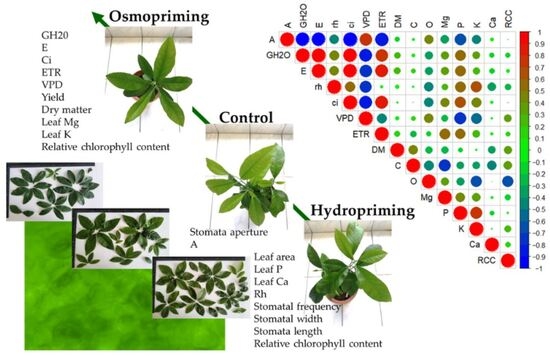
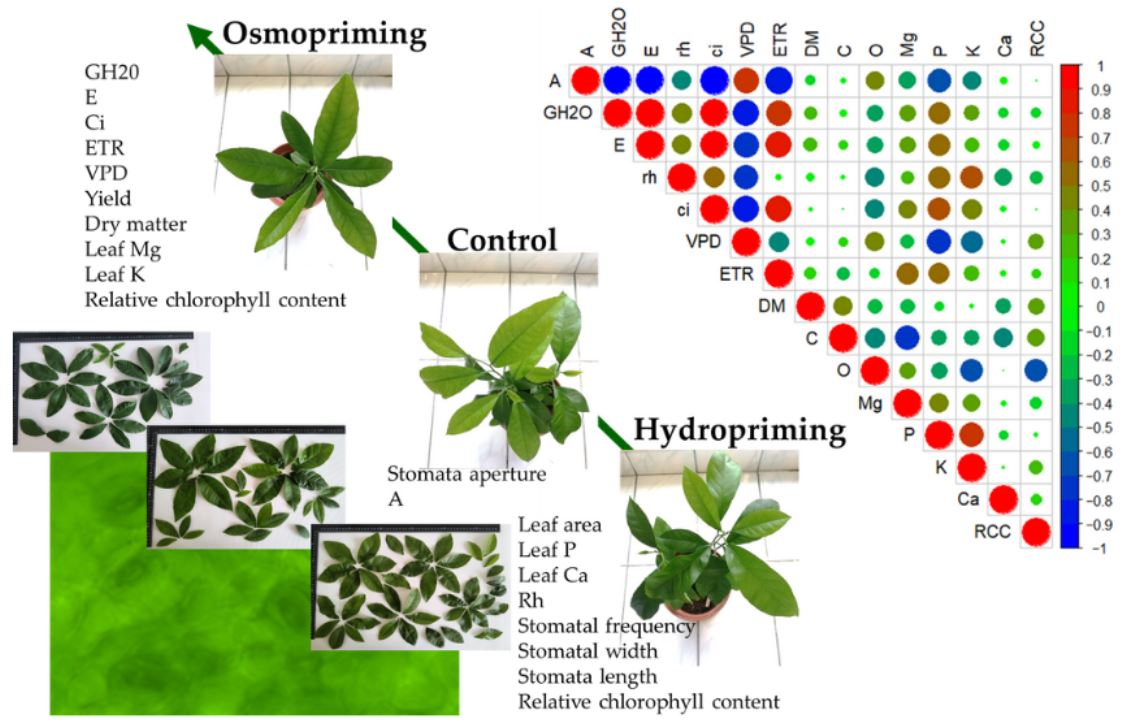
In the current context of climate change, special attention should be paid to assuring the security of food and fruits. Lemon trees struggle to keep their physiological traits stable in the context of all the cumulated challenges originating from climate stress. Therefore, our aim was to assess two seed priming methods’ long-term effects on some physiological parameters of young lemon trees. The relative chlorophyll content reveals that hydropriming shows 26% increases from E1 to E6, similar to the control, while osmopriming has a 31% higher value at the beginning and after three years. Leaf stomatal density has 80% lower values due to osmopriming compared to the control, while hydropriming show 15% lower values. Leaf area development was slightly similar between treatments, with more leaves being developed after hydropriming treatments. Guard cell width has similar values for priming, with both being with 40% higher than that of the control. Lemon trees grown after osmotic stress have the highest mass percentages of magnesium and potassium in the leaves. Hydropriming promotes calcium oxalate accumulation and a high mass percentage of phosphorus. The percentage allocation of carbon as dry matter is 32% for osmopriming, significantly higher than for the other treatments. The quantum yield of photosynthetic electron transport is the only significant photosynthetic parameter for osmoprimed lemon young trees. Physiological techniques successfully enhanced the overall growth of three-year-old lemon trees, especially osmopriming treatment.

Graphical Abstract

1. Introduction

The lemon is a key representative of the citrus generic group and is widely used worldwide in various forms [1]. The current legislative context in terms of ensuring UN and EU food security through the implementation of the SDGs—the Sustainable Development Goals—revolves around achieving objective 2, which is zero hunger [2]. To accomplish this second SDG in agriculture, it is recommended to find, test, and adapt different species in new environments using simple and on-hand methods [3]. Seed priming is a physiological method within this group of techniques, with versatile results [4]. Another aspect that needs to be taken into account is the need for physiological studies on this species in relation to specific daylight time in new potential cultivation areas that are emerging due to climate changes.
Lemon seeds have a reputation for slow germination, primarily due to the hard seed coat (tegument) and the dormancy period required for the embryo [5]. The thick seed coat contain oils and water absorption is drastically reduced, making it difficult to maintain moisture to penetrate and reach the embryo. Additionally, the dormancy period of the embryo can delay germination until the conditions are optimal [6].
Seed priming is an effective technique that can enhance the germination of lemon seeds, leading to better and more uniform seedling emergence [5]. This process involves pre-treating the seeds to initiate the early stages of germination, then drying them back before planting [7]. This pre-germination procedure can help to overcome dormancy and improve the overall success rate in terms of the germination percentage and seedling development [8]. Very good results have been reported regarding lemon seed germination after priming. Fast and uniform germination was obtained after lemon seed priming in [6,9], and improved stress tolerance was noted; however, long-term seedling vigor was not established for lemon, even though good results have already been obtained for other plant species [10].
The research on adapted priming techniques for lemon seeds is based on the need for viable solutions that ensure the optimal hydration of the seeds, uniformity of seed germination and increased vigor and root architecture of seedlings [10,11,12]. This approach shows multiple benefits and practical significance, but researchers also need to pay more attention to post-priming plant monitoring, and new research should be conducted to provide optimal solutions to different type of problems. Currently, one of the largest citrus-producing countries, Spain, is facing major problems owing to the adverse effects of climate change [13]. Spanish farmers have reported major losses in lemon harvests [14]. The fruits fall to the ground and accumulate physiological and phytopathological diseases that drastically reduce the quality of the fruit for sale [15]. This specific problem requires the production of more resilient plants, and priming can represent a promising solution, especially due to the improvements in the early development stages of plants.
Long-term studies assessing the physiological parameters of lemon plants after priming are lacking, with this absence of results being extended to other types of woody fruit trees. Another aspect that makes these types of studies necessary is based on the variable responses of different species to priming techniques and their performances in the field [16,17]. Therefore, after assessing the well-documented effect of seed priming on lemon seed germination, we decided to assess this effect further to obtain a deeper understanding of this procedure and its efficiency. This study’s aim was to assess the viability of hydropriming and osmopriming applied to citrus seeds and the persistence of treatments in the long-term monitoring of physiological parameters. The hypothesis proposed was to identify if beneficial evidence of the priming technique is still present in different important physiological stages after three years of growth.

2. Materials and Methods

2.1. Experimental Design

A total of 36 plants were analyzed, with three treatments in 12 repetitions. The treatments were represented by plants obtained using two different seed priming techniques, namely osmopriming and hydropriming [6], and a set of dry seeds (unprimed) served as the control. The osmopriming method for seed hardening was performed using polyethylene glycol and hot water, resulting a solution with a concentration of 2% PEG. The water temperature was maintained at 50 °C for 24 h in the osmotic solution. For hydropriming and seed hardening, the seeds were soaked in hot water at the same temperature as that used for osmopriming. All seeds were completely immersed under specific liquid priming agents in Petri dishes. Three phytocosms were created, one for each treatment, with a substrate designed for citric plants. The substrate used had a pH of 6.88, 40% organic matter, 0.3 g kg−1 of N, 0.1 g kg−1 of P2O5, and 0.1 g kg−1 of K2O, and the seeds were collected from a commercial Eureka variety. The experiment was performed in controlled conditions at a temperature of 22 °C, and light conditions followed the daylight period. The pots were wetted twice a week during the winter and four times a week during the summer and hot periods. The plants were assessed six times in the first 3 years and 3 months of growth from seeds (Figure 1). Each assessment responded to a research question and relevant parameters were assessed. Related chlorophyll content was recorded at every moment of assessment.

2.2. Photosynthetic Parameters

The gas-exchange system GFS-3000 (Waltz GmbH, Effeltrich, Germany) was used for assessing photosynthetic parameters from plant leaves [18]. The portable analyzer is a complex system with a controlled environment. The analysis cuvette of the Standard Measuring Head 3010-S has an area of 8 cm2 and was equipped with a full window leaf chamber fluorimeter for sample illumination and chlorophyll fluorescence measurements. For spectral sensitivity, a light sensor-type LS-A measured the photosynthetic photon flux density. The measurements were performed at an ambient CO2 concentration of 400 mmol mol−1 and a light intensity of 1000 mmol m−2 s−1. The leaf temperature was kept between 26.51 and 27.12. After leaves were placed in the system cuvette, the light was switched on and the leaf was stabilized until the stomata opened and steady-state values of the net photosynthetic rate (A) and stomatal conductance to water vapor (GH2O) were obtained, typically taking 20–30 min for each measurement. The other parameters calculated were the transpiration rate (E), relative humidity (rh), the vapor pressure deficit (VPD), the intracellular CO2 mole fraction (ci), electron transport (ETR) and the quantum yield of photosynthetic electron transport (yield).

2.3. The Relative Chlorophyll Content

This physiological parameter was assessed after one year, one year and three months, one year and four months, one year and five months, two years and two years and five months of growth and development. The parameter was determined directly in the SPAD units using the chlorophyll meter MC-100 sourced from Apogee Instruments (North Logan, UT, USA) [19].

2.4. Stomatal Aperture

For stomatal assessment, abaxial fresh leaves were studied under an Olympus CX43 microscope (Tokyo, Japan) with a 12 MP PROMICAM PRO4K camera (Prague, Czech Republic) [20]. All values for the opening of the stomata or the osteole size, guard cell length and width were obtained in the camera interface using PROMICRA 3.2 software and exported in Excel files for all recorded data.

2.5. SEM + EDX Analysis

To determine the chemical composition of the lemon leaves, the Scanning Electron Microscopy method was used with the Energy-Dispersive X-Ray detector, using the equipment provided by TermoFischer Scientific (Madison, WI, USA).
The samples were placed on an aluminum foil and then introduced in the analysis chamber. The analysis was performed using a Low-Vacuum Detector at different magnifications from 400 to 1000. The measurement was performed in the analysis chamber at a pressure of 100 Pa, and the acceleration voltage was 30.00 kV at a magnification of 800×. The integral counts were 20.459 CPS, with a spot size of 4.5–5. The chemical analysis was performed using the EDX detector together with the Pathfinder application. The specific spectra processing system and the EDX detector calibration were carried out according to the manufacturer protocols.

2.6. Leaf Area

Leaf area was obtained using Digimizer 6.4.3 software [21] following some essential steps. First, it was depicted in a picture, the entire background was removed in PPT (PowerPoint by the Microsoft Office suite) and the leaves were then formatted following artistic effects with plastic wrap. The image analysis started with the uploading of the leaf picture with a white background using Digimizer. The image was uploaded by selecting the Open image file, and a unit value was established and selected for use as the default calibration. The measurement unit was then cropped outside the image. From the software menu, we selected Image Contrast Auto Fix, then Binary and Binarization. After the cross-check was performed to determine if the entire leaf area was selected with the help of histogram bars, we selected Binary again and then Analyze Objects.

2.7. Dry Biomass

Leaf dry biomass was assessed to highlight the carbon allocation of each lemon tree after seeding with different pre-treatments. The standard method was used to determine this parameter, and the leaves were oven dried for 48 h at 105 °C until achieving constant weight [22]. The leaf dry biomass represents the average value of one lemon tree E5 moment of growth.

2.8. Data Analysis

Data analysis was performed using RStudio software [23], version 4.0.5. Basic statistics were determined using the “psych” package [24], and the average and standard error (SE) were displayed. The analysis of variance (ANOVA) table and LSD comparisons were generated using “agricolae” [25] and combined with “broom” [26] packages.
The chlorophyll content and photosynthetic parameter figures were made with the “ggplot2” package [27]. Therefore, for box plots, the inclusive quartile was set, and the median value appears in the figures along with the Fisher LSD test. Different letters present in the figures highlight differences between treatments at p < 0.05. Correlations were obtained using the “corrplot” package [28], and the coefficient and statistical significance of the correlations were determined using the “hmisc” package [29].

3. Results

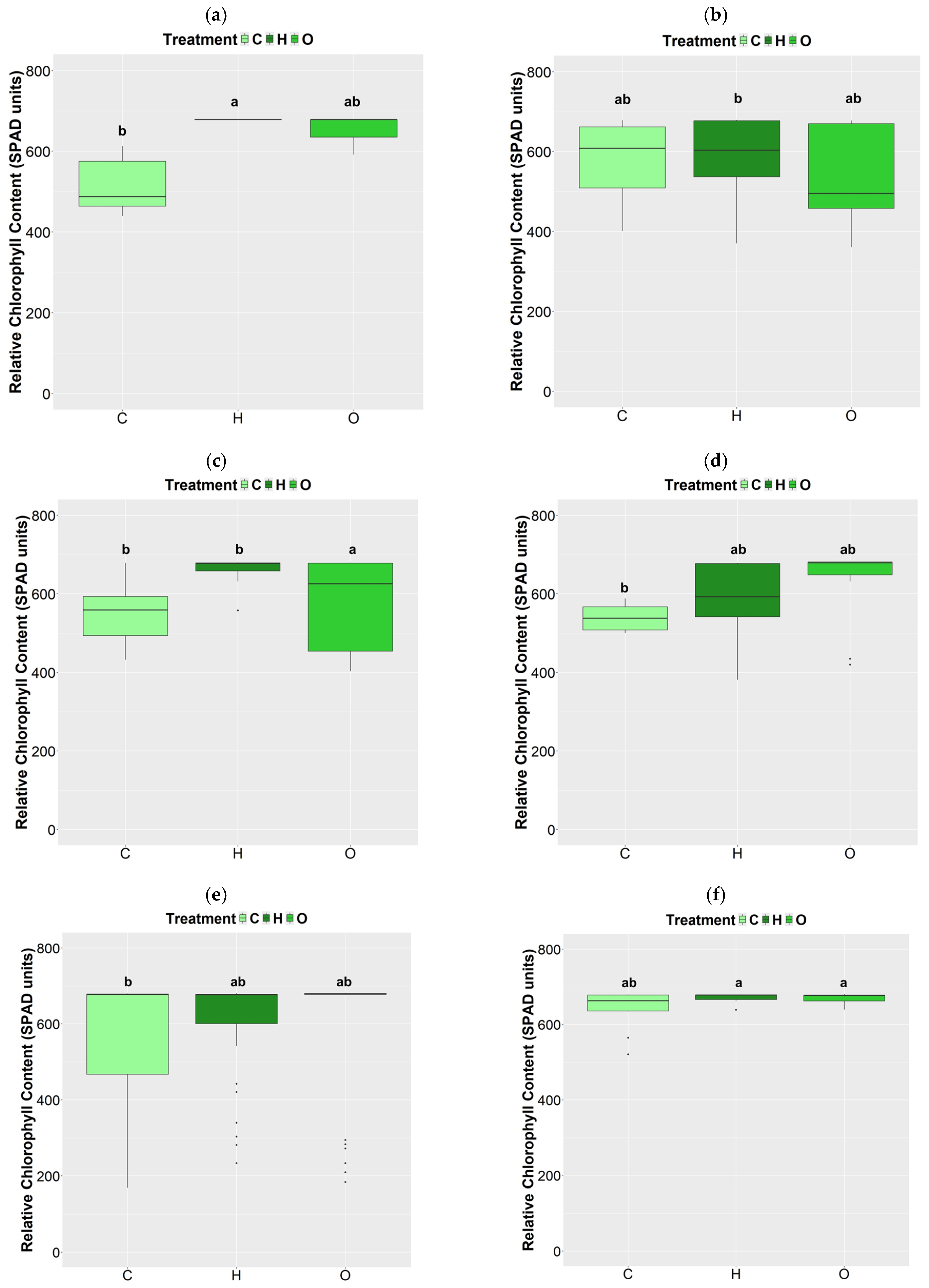
The relative chlorophyll content during experimentation varied greatly within an interval of 200–700 SPAD units (Figure 2a–f). At E1, this parameter was significantly higher in the hydropriming treatment compared with the control, but with osmopriming it had intermediate value (Figure 2a). E2 shows a similar value for all the treatments, in the range of 530–600 SPAD units, with a slightly lower one for hydropriming (Figure 2b). At E3, the assessments of the differences between SPAD values are clearly in favor of osmopriming, with this treatment outperforming the other two ones (Figure 2c). However, this treatment showed a larger variation between recorded values compared to hydropriming. SPAD values decreased in E4, and compared to the entire set of data, only priming treatments maintained the values for this parameter at a middle value (Figure 2d). A clear difference was observed between priming and the control. Both E5 and E6 show opposite images of variations, with E5 scoring intermediate values for priming treatments and showing a clear reduction for the average of the control, while E6 shows a reduced variation inside the values for each treatment, with maximum values for hydropriming and osmopriming (Figure 2e,f). In E5, the plants for all the treatments developed faster with a high range of relative chlorophyll content, albeit without statistically significant differences (Figure 2e). At the last assessment (E6), when plants started to develop new leaves and branches, the average relative chlorophyll maintained the previous trend for all the treatments, with the highest values recorded for osmopriming (668.29 SPAD) and hydropriming (670.36 SPAD) treatments (Figure 2f).
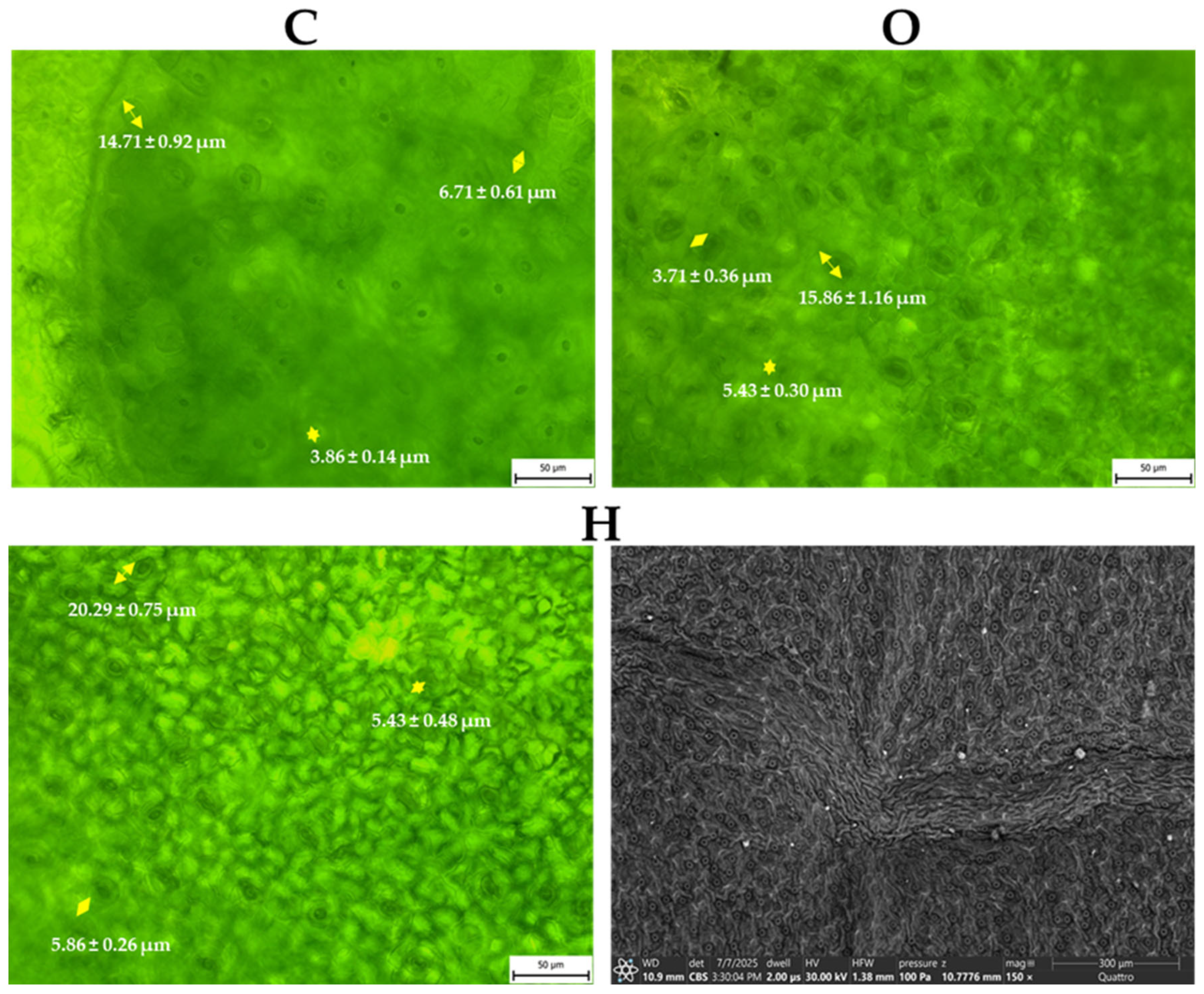
The analysis of variance highlighted that stomatal frequency and osteole opening were significantly influenced by the different seed priming treatments (p < 0.001), and the guard cells’ lengths and widths (p < 0.01) were different and dependent on the applied treatments (Table 1). The stomata frequency from plant leaves grown after hydropriming seed treatment was significantly higher compared with the control and osmopriming, with the difference between the last two not being significant. Osteole opening highlighted that the stomata functionality was highest for the control treatment, with the lowest value registered for osmotic stress. This difference was significant at about 3 µm, but when hydropriming and the control were compared, the difference of 1 µm was not significant. The guard cell lengths registered higher values under hydropriming treatments, and these differences were significant compared to the control and osmopriming treatment. The width of guard cells was lowest for the control treatment, and the two priming treatments showed similar values. For both priming treatments, the difference in leaf area was more than 90 mm2 in favor of hydropriming, although for the entire set of registered values, this difference was not considered significant and could be viewed only as a trend of variation.
An interesting result was observed only for the lemon leaves subjected to hydropriming treatment, where calcium oxalate crystals were present (Figure 3).
The analysis of lemon leaves’ chemical elements, measured as mass percentages, highlights the lack of significant differences between the priming techniques and the control treatment (Table 2), but it shows different trends in terms of element–treatment variation. Magnesium and potassium show higher values for osmopriming-treated plants, and this treatment led to low percentage accumulation in leaves only for calcium. Hydropriming promoted the increased accumulation of phosphorus in leaves compared to osmopriming and the control and more calcium accumulation compared to osmopriming. The lowest mass percentages were observed for carbon and oxygen for hydropriming treatment. The leaves from the control treatment were characterized by high mass percentages of carbon, oxygen and calcium. Low mass percentages were obtained for magnesium, phosphorus and potassium.
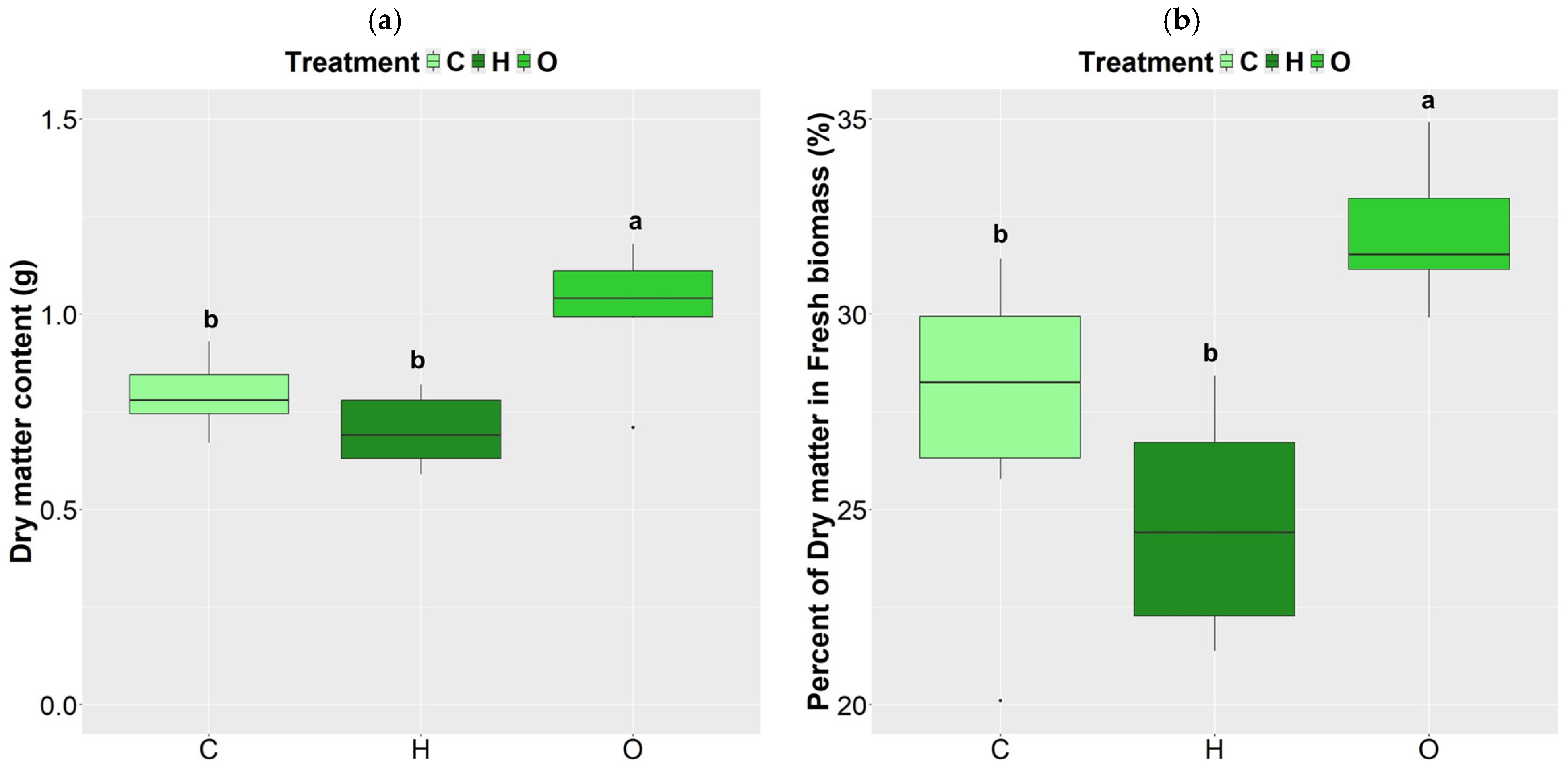
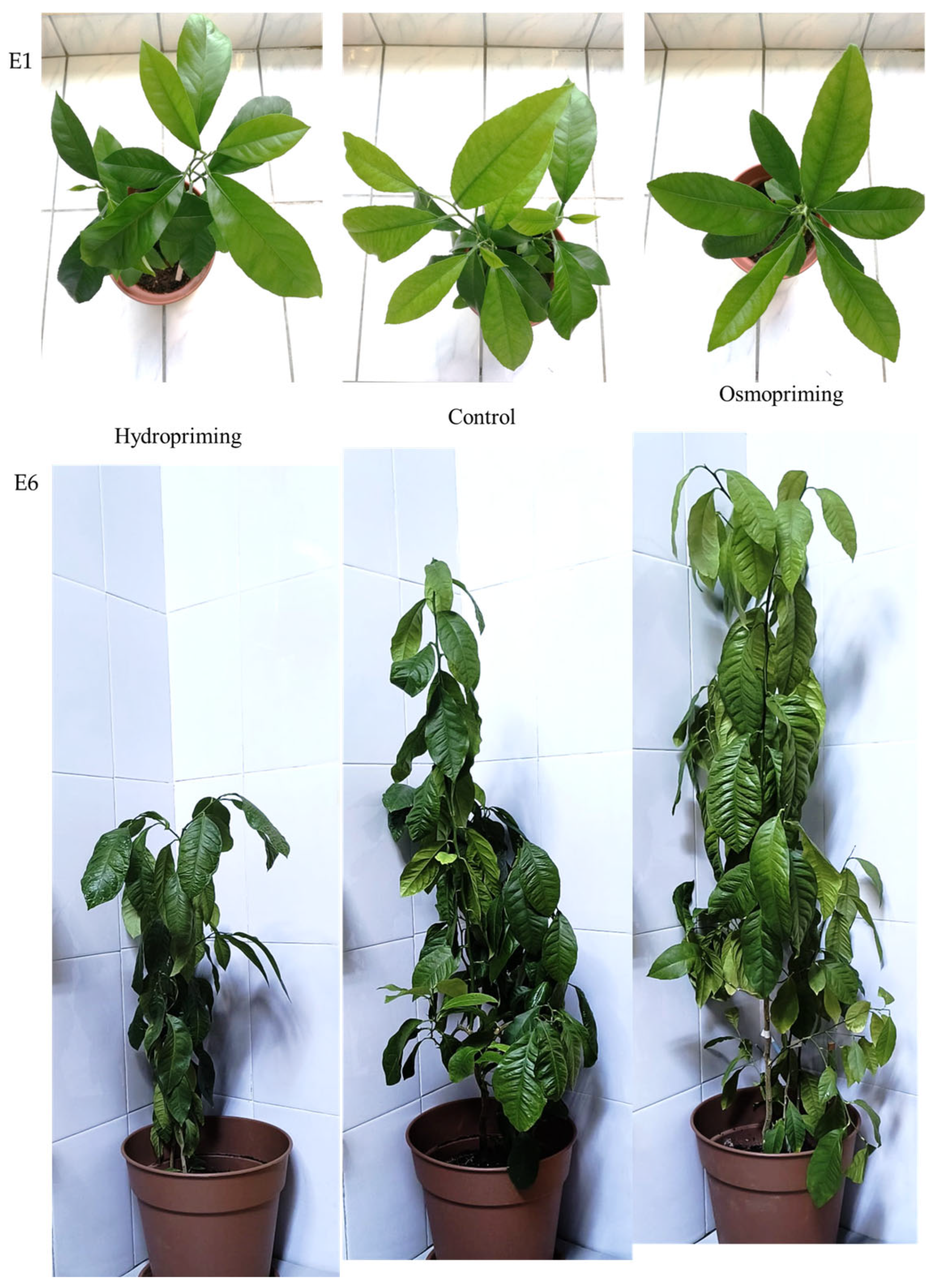
Carbon allocation in dry matter values was significantly higher for osmoprimed lemon leaves (Figure 4a) at E5 compared to the control and hydropriming treatment. The lowest carbon accumulation was observed for hydroprimed young lemon trees (Figure A1). The control intermediate value was also sustained by higher mass percentages. An interesting aspect was observed through the comparison of dry mass percentages from the entire biomass. Even though the significant differences remain identical, osmopriming showed more than 8% higher dry biomass than hydropriming, indicating higher accumulation for this treatment. The control led to 3% more dry biomass being present in the fresh biomass than hydropriming, indicating that this last treatment reduces potential biomass accumulation in favor of water.
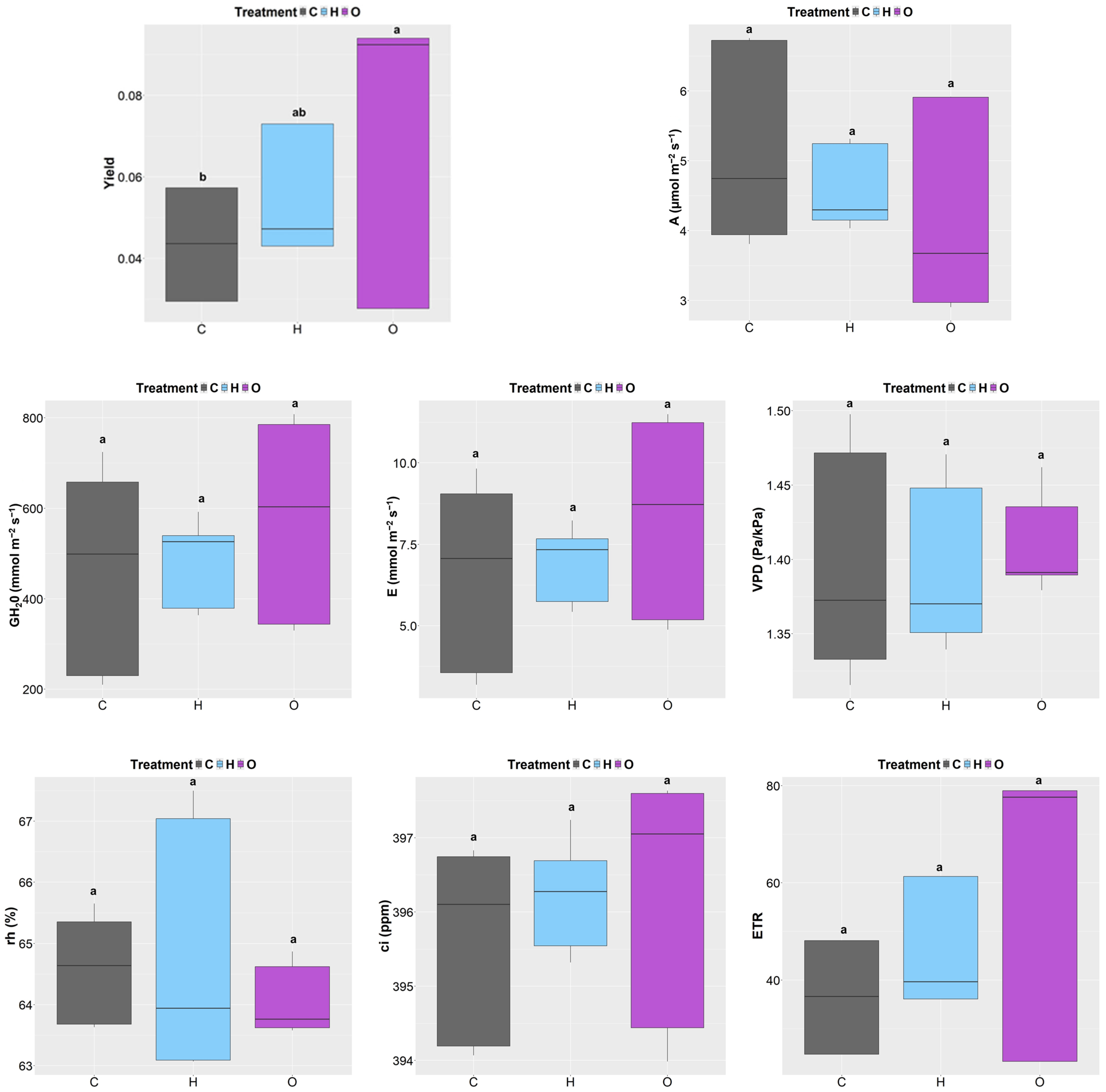
The photosynthetic parameters showed a tendency in favor of osmopriming treatment (Figure 5). The E6 assessment highlights that the overall parameters did not record statistically significant values, except for the quantum yield of photosynthetic electron transport when the value was 39% higher compared to the control. The net photosynthesis (assimilation rate) was higher in the control (5.10 μmol CO2 m−2 s−1) plants, being 12% higher compared to hydropriming and 18% higher compared to osmopriming. Stomatal conductance (577.98 μmol m−2 s−1), the transpiration rate (8.36 mmol H2O m−2 s−1), intracellular CO2 mole fraction and the electron transport rate through PSII showed a tendency to record the highest value for osmopriming treatment. The lowest average values for the same treatment were recorded for the net photosynthesis and relative humidity parameters. The hydroprimed young lemon trees registered the highest rh value. The average value of the vapor pressure deficit was slightly similar to those of the control and osmoprimed leaves (1.4–1.41 kPa).
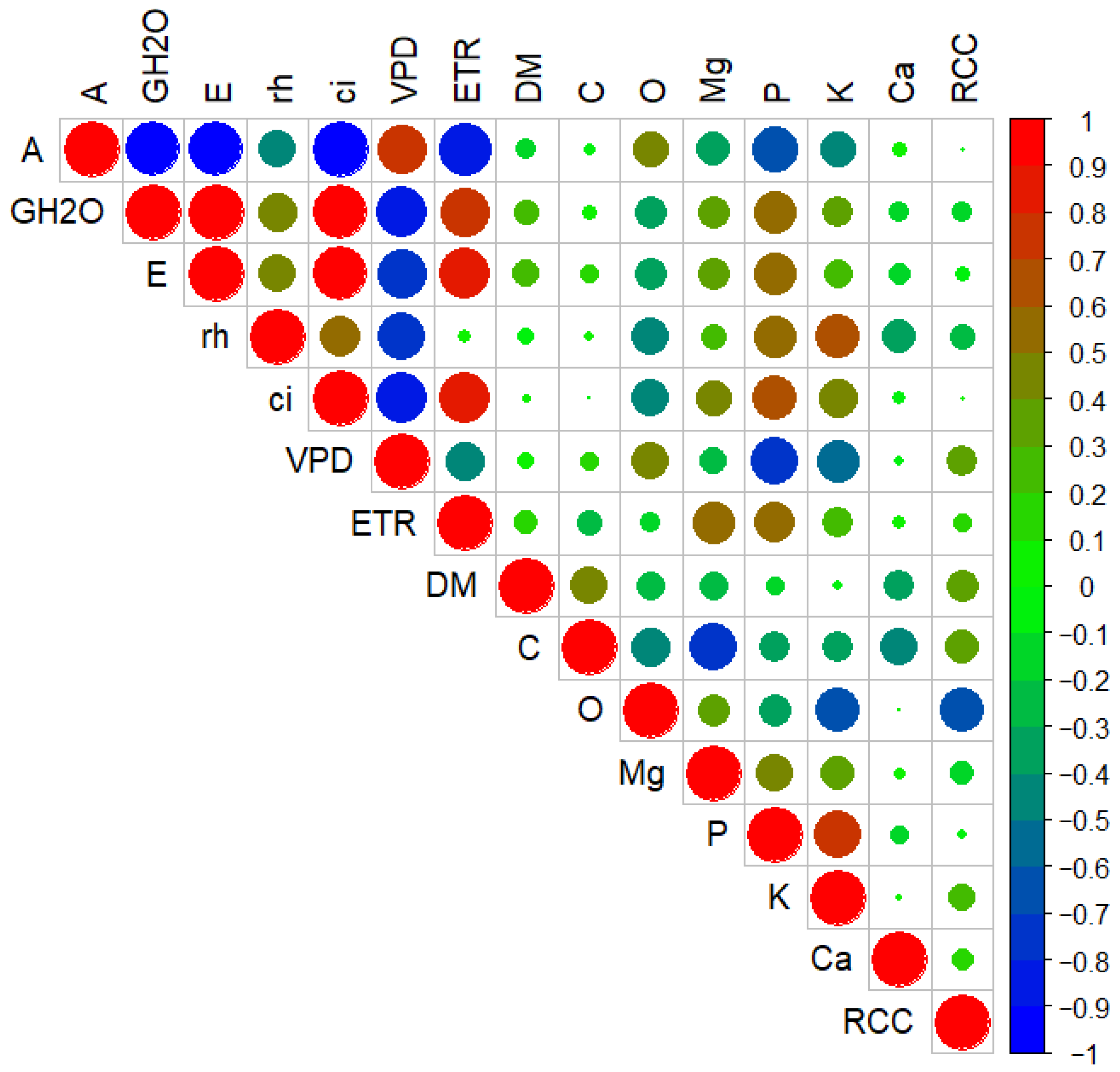
A positive correlation was registered between the VPD and the assimilation rate (0.79, p < 0.001) (Figure 6). A strong negative correlation was observed between the assimilation rate and stomatal conductance (−0.97, p < 0.001), the transpiration rate (−0.98, p < 0.001), intracellular CO2 (−0.98, p < 0.001) and ETR (−0.86, p < 0.01).
The maximum positive correlation (p < 0.001) was between stomatal conductance and the transpiration rate, followed by intracellular CO2 (0.94) and ETR (0.82, p < 0.01). When the transpiration rate is high, the VPD decreases (−0.77, p < 0.05). Vapor pressure deficit is negatively influenced by relative humidity (−0.74, p < 0.05) and ci (−0.82, p < 0.01). The ETR is positively correlated with GH2O (0.80, p < 0.01), E (0.82, p < 0.01) and ci (0.82, p < 0.01). Decreased carbon allocation determines increased Mg content in lemon leaves (−0.75, p < 0.05). Phosphorus content from leaves correlates positively with potassium (0.71, p < 0.05). The vapor pressure deficit is regulated by phosphorus content from the leaves (−0.72, p < 0.05). The other parameters are not significantly correlated.

4. Discussion

A priming memory is activated in plants when seed pre-treatments are applied [30]. Therefore, it triggers different defense mechanisms important for helping plants to thrive in stress conditions [30]. The application of stress during seed priming induces a regulated state in plants, with the potential return of genes to a basal level but a maintenance of protein and metabolite levels [31]. The application of a priming method on seeds can be viewed as the first stress applied on plants at a pre-vegetative stage, which activates a metabolic memory that ensures an improved response to secondary stress occurrence during vegetative stages [32]. A series of applications and benefits can be obtained through a well-defined priming technique, especially due to the ability of plants to transfer the improved responses and characteristics across multiple generations [33]. Osmotic stress applied as priming improved the photosynthetic rate, chlorophyll content and gas-exchange features. Also, the water regime was regulated by increased stomatal conductance and a balanced transpiration rate.
Both osmo- and hydropriming extend their influence above the application moment, being visible in a plant’s physiological changes until the end of the vegetation period [34]. This ability that plants gain after priming is associated with the internal processes during germination phases, when the antioxidant system and DNA repairing are pre-designed to show an improved response to future stresses and a faster recovery [35,36]. A study on model plants showed a metabolic shock absorber in plants that were exposed to controlled levels of drought, which acted as a training stress, maintaining the plant’s ability to recover after a stress event [37]. Citrus plants are considered unique cases in terms of seed priming due to their perennial character and because they are woody plants, which implies a long-term priming memory that persists across multiple seasons and increased photosynthetic performance [38,39,40]. In terms of woody plants, new studies show that combinations of different priming techniques act in synergy to create a specific metabolic memory that protects plants during multiple stress events across the seasons. In terms of differences, both osmopriming and hydropriming induce different pressures on seeds, with the acceleration of seed emergence and a high risk of membrane integrity due to water speed for hydropriming, whereas for osmopriming, slow hydration occurs due to negative water potential, complemented by an osmotic adjustment before germination, as well as higher accumulation of antioxidants and solute proteins [37,39].
Osmopriming treatment produced increased uptake of magnesium and potassium. The increased magnesium from the lemon leaf chemical composition correlates with increased greenness, as well as photosynthetic parameters such as the quantum yield of photosynthetic electron transport, stomatal conductance, the transpiration rate, intracellular carbon dioxide and electron transport [41]. This chemical element impacts photosynthesis, metabolism and overall growth and development [41]. Potassium plays a role in sustaining stomatal conductance, photosynthesis, metabolism and resistance to biotic and abiotic stressors [41]. The increase in intracellular CO2 due to the osmotic treatments means that nonstomatal limitations were present, even if the hydropriming treatments recorded the highest stomatal feature values [42,43]. Stomatal conductance and the transpiration rate were significantly correlated [44], an increase in stomatal conductance due to osmopriming treatment leads to an increased lemon transpiration rate and a reverse effect of reduction was also observed in the literature due to salinity stress [45]. In the case of osmopriming treatment, the simultaneous increases in ETR and yield suggest that plants have developed efficient mechanisms for energy capture and transfer; nevertheless, the assimilation rate of CO2 decreased [46]. This may indicate that although photochemical mechanisms were enhanced, biochemical enzymes such as Rubisco were limited [41].
Leaf greenness is linked directly to the plant health and physiological performance [47]. Hydropriming applied to lemon seeds produced increased growth and chlorophyll pigment accumulation in leaves from the first to the last assessment. This tendency has been observed in other plants such as canola [48], lettuce [49], quinoa [50] and sage [51]. Moreover, stomata frequency, and guard cell length and width were positively influenced by the hydropriming treatment. The chemical leaf composition reveals the uptake of phosphorus and calcium, as well as the deposits of calcium oxalate for strong cell walls. Phosphorus sustains plant metabolism, early development, cellular structures and root system development for nutrient absorption [52,53,54]. Together with phosphorus, calcium strengthens the cellular structure, stimulates cell division, regulates metabolic processes, develops fine roots and increases resistance to pest and diseases [55,56,57].
Leaf area increased with hydropriming treatment and was slightly similar between the control and osmopriming. This parameter is correlated with stomata features and photosynthetic performance, noted by the high degree of carbon allocation and dry biomass accumulation [41]. These priming physiological techniques were found to produce rapid and uniform seedlings and vigorous, fast-growing, abiotic stress-resilient, adaptation-prone and pest- and disease-resistant plants with high yielding potential [58,59]. Dry biomass (osmopriming) and leaf area (hydropriming) highlight the efficiency of different priming treatments. Dry matter is an important parameter for assessing the vigor indexes [60] of young seedlings and trees, and leaf area is proportional to the photosynthetic performance [61,62].
Generally, woody plants compensate for their slower activity with higher values for Rubisco activity [63,64,65]. Woody plants use a homeostasis strategy, with the maintenance of a low photosynthetic rate, correlated with low water and nitrogen demand and a high quantum yield adapted to lower intensities of light, allowing them to accumulate biomass. Citrus employs a conservative photosynthetic strategy, which implies the decoupling of the photosynthetic rate and quantum yield, enabling a low level of CO2 assimilation while maintaining its light use with high efficiency. These plants produce leaves with good longevity (up to 3 years), a high Rubisco content but a low level for its activation, and steady accumulation associated with the high quantum yield [66,67,68,69]. These traits assure a fast response from citrus when the environmental conditions are optimum based on the quantity of enzymes available, a strategy of carbon allocation prioritizing lignification and fruit, while in adverse conditions, the stomata close to prevent water losses.
Studies that perform SEM-EDX measurement are quite rare; however, this method could identify different chemical compositions in leaves due to a specific treatment, as well as carbon allocation and nutrient uptake. Pre-soaking lemon seeds in osmotic solution promotes the uptake of magnesium and potassium, and keeping them only in water increases the uptake of phosphorus. Other studies providing the elemental leaf composition of citrus after a specific seed priming treatment are missing, while the nutrition of citrus has been studied in multiple studies, such as [41]. Most of the studies evaluate the nanoparticles from lemon peel [70,71,72,73,74,75,76,77], leaf extract [78] and lemon juice [79,80].
Climate change gives such physiological research a different meaning, initially ranging from physiology to morphology, followed by chemical analysis, and ending with the vigor highlighted by photosynthetic assessment. The young vigorous lemon trees were grown in an original temperate–continental climate similar like that found in areas of central Europe. The continuous tendency toward a changing climate [81] allows researchers to validate exotic species like lemon trees potential for growth in these areas. It should be emphasized that this study fills a research gap because no other studies have focused on assessing the direct effects of osmo- and hydropriming on relative chlorophyll content in young lemon trees.
These findings could be a step forward in reshaping the lemon physiological metabolism to become acclimatized to other climates due to the current effects of climate change. Another aspect to consider is that seed priming sustains different metabolisms and development, even in the long term. This context is important in the development of new functional priming strategies that modify plant physiological parameters affecting their future growth. Based on these key actions, new and more adapted varieties could be grown worldwide in direct correlation with the changes in suitability areas due to climate changes.

5. Conclusions

The priming treatments induced clear long-term physiological changes, especially osmopriming, which resulted in a contrasting physiological profile. Both priming treatments determined increases in leaf greenness during the growth and development of young lemon trees. Overall leaf stomatal features and leaf area were promoted by hydropriming treatment, except aperture, which was higher in the control. Chemical uptake translated into a primarily elemental mass percentage, with the highest levels of Mg and K and low Ca for osmopriming. Lemon leaves showed the highest level of P and increased Ca following hydropriming treatment. The performance of carbon allocation was most efficient for the osmopriming treatment, as visible from the dry biomass differences. The osmopriming treatment also strongly stimulated stomatal opening and the transpiration process. By maintaining high stomatal conductance, young lemon trees generally benefit from an evaporative cooling mechanism that helps them to avoid lethal thermal damage, especially at high temperatures.

Author Contributions

Conceptualization, V.A.S. and S.D.V.; methodology, V.A.S. and S.D.V.; software, V.S. and A.T.; validation, V.S. and A.V.; formal analysis, A.T. and V.S.; investigation, F.C. and Ș.G.; resources, F.C. and A.T.; data curation, V.S. and V.A.S.; writing—original draft preparation, V.A.S.; writing—review and editing, V.A.S. and V.S.; visualization, Ș.G., M.H., and A.T.; supervision, V.A.S., S.D.V. and V.S.; project administration, A.V., F.C., M.H. and Ș.G.; funding acquisition, V.A.S. All authors have read and agreed to the published version of the manuscript.

Funding

This research received no external funding.

Data Availability Statement

The original contributions presented in this study are included in this article. Further inquiries can be directed to the corresponding author.

Acknowledgments

The authors have reviewed and edited the output and take full responsibility for the content of this publication.

Conflicts of Interest

The authors declare no conflicts of interest.

Appendix A

Figure A1. Images of lemon trees during the experimental period: E1 assessment period vs. E6 assessment period.
Horticulturae 12 00099 g0a1

References

  1. Kundu, D.; Das, M.; Mahle, R.; Biswas, P.; Karmakar, S.; Banerjee, R. Citrus Fruits. In Valorization of Fruit Processing by-Products; Elsevier: Amsterdam, The Netherlands, 2020; pp. 145–166. [Google Scholar]
  2. Kotykova, O.; Babych, M.; Yahodzinska, A.; Tabatskova, H. Global Initiatives on Implementation of Zero Hunger Policy. Agric. Resour. Econ. 2022, 8, 30–49. [Google Scholar] [CrossRef]
  3. Kimball, D.A. Citrus Processing: A Complete Guide; Springer Science & Business Media: Berlin/Heidelberg, Germany, 2012. [Google Scholar]
  4. Rhaman, M.S.; Rauf, F.; Tania, S.S.; Khatun, M. Seed Priming Methods: Application in Field Crops and Future Perspectives. Asian J. Res. Crop Sci. 2020, 5, 8–19. [Google Scholar] [CrossRef]
  5. Cerri, M.; Reale, L. Anatomical Traits of the Principal Fruits: An Overview. Sci. Hortic. 2020, 270, 109390. [Google Scholar] [CrossRef]
  6. Stoian, V.; Rișcou, D.; Gâdea, Ș.; Vâtcă, A.; Trușcă, M.; Vâtcă, S. Tested seed priming methods to stimulate the germination of Citrus limon L. Sci. Pap. Ser. B Hortic. 2023, 67, 854–859. [Google Scholar]
  7. Lutts, S.; Benincasa, P.; Wojtyla, L.; Kubala, S.; Pace, R.; Lechowska, K.; Quinet, M.; Garnczarska, M. Seed Priming: New Comprehensive Approaches for an Old Empirical Technique. In New Challenges in Seed Biology-Basic and Translational Research Driving Seed Technology; InTechOpen: London, UK, 2016; Volume 46, p. 64420. [Google Scholar]
  8. Adelani, D.O.; Ariyo, O.C.; Olorukooba, M.M.; Suleiman, R.; Balogun, O.S. Effects of Periods of Priming Methods and Organic Fertilizers on The Germination and Early Seedling Growth of Three Indigenous Agroforestry Tree Species. J. For. Res. Manag. 2021, 18, 11–23. [Google Scholar]
  9. Hussain, S.; Ali, B.; Saqib, M. Seed Priming to Enhance Salt and Drought Stress Tolerance in Plants: Advances and Prospects. In Climate Change and Crop Stress; Elsevier: Amsterdam, The Netherlands, 2022; pp. 441–464. [Google Scholar]
  10. Rhaman, M.S. Seed Priming Before the Sprout: Revisiting an Established Technique for Stress-Resilient Germination. Seeds 2025, 4, 29. [Google Scholar] [CrossRef]
  11. Cañizares, E.; Giovannini, L.; Gumus, B.O.; Fotopoulos, V.; Balestrini, R.; González-Guzmán, M.; Arbona, V. Seeds of Change: Exploring the Transformative Effects of Seed Priming in Sustainable Agriculture. Physiol. Plant. 2025, 177, e70226. [Google Scholar] [CrossRef]
  12. Chilembwe, E.H.; Castle, W.S.; Cantliffe, D.J. Grading, Hydrating, and Osmotically Priming Seed of Four Citrus Rootstock to Increase Germination Rate and Seedling Uniformity. J. Am. Soc. Hortic. Sci. 1992, 117, 368–372. [Google Scholar] [CrossRef]
  13. Nicolás, E.; Barradas, V.L.; Ortuño, M.F.; Navarro, A.; Torrecillas, A.; Alarcón, J.J. Environmental and Stomatal Control of Transpiration, Canopy Conductance and Decoupling Coefficient in Young Lemon Trees under Shading Net. Environ. Exp. Bot. 2008, 63, 200–206. [Google Scholar] [CrossRef]
  14. Fernandez-Zamudio, M.-A.; Barco, H.; Schneider, F. Direct Measurement of Mass and Economic Harvest and Post-Harvest Losses in Spanish Persimmon Primary Production. Agriculture 2020, 10, 581. [Google Scholar] [CrossRef]
  15. Jyothi, V.; Shilpa, M.E. Citrus Diseases and Their Management. In Diseases of Fruits and Vegetable Crops; Apple Academic Press: Palm Bay, FL, USA, 2020; pp. 41–63. [Google Scholar]
  16. Peraza-Villarreal, H.; Sánchez-Coronado, M.E.; Lindig-Cisneros, R.; Tinoco-Ojanguren, C.; Velázquez-Rosas, N.; Cámara-Cabrales, L.; Orozco-Segovia, A. Seed Priming Effects on Germination and Seedling Establishment of Useful Tropical Trees for Ecological Restoration. Trop. Conserv. Sci. 2018, 11, 1940082918817886. [Google Scholar] [CrossRef]
  17. Marthandan, V.; Geetha, R.; Kumutha, K.; Renganathan, V.G.; Karthikeyan, A.; Ramalingam, J. Seed Priming: A Feasible Strategy to Enhance Drought Tolerance in Crop Plants. Int. J. Mol. Sci. 2020, 21, 8258. [Google Scholar] [CrossRef] [PubMed]
  18. Copaciu, F.; Faur, C.-A.; Bunea, A.; Leopold, L.; Sima, R.M.; Lăcătuș, M.A.; Lupitu, A.; Moisa, C.; Copolovici, D.M.; Copolovici, L. Enhancing UV-B Protection and Abiotic Stress Tolerance in Tomato Plants: The Role of Silicon Nanoparticles in Photosynthetic Parameters, Pigments, and Secondary Metabolite Production. Plants 2025, 14, 2599. [Google Scholar] [CrossRef] [PubMed]
  19. Trușcă, M.; Stoian, V.; Gâdea, Ș.; Vâtcă, A.; Jug, I.; Brozović, B.; Beinșan, C.; Vâtcă, S. Chlorophyll Content, Phenology and Morphological Traits of Wheat Under Salinity Stress. Sci. Pap. Ser. A Agron. 2024, 67, 433–444. [Google Scholar]
  20. Trușcă, M.; Gâdea, Ș.; Vâtcă, A.; Stoian, V.; Racz, I.; Vâtcă, S. Morpho-Physiological Characteristics under Salinity Stress of Triticum aestivum L. Var. Alex. Bull. Univ. Agric. Sci. Vet. Med. Cluj-Napoca Agric. 2024, 81, 36–43. [Google Scholar] [CrossRef]
  21. Digimizer 6.4.3 Software Trial Version. Available online: https://www.digimizer.com/ (accessed on 8 October 2025).
  22. Stoian, V.A.; Vâtcă, A.; Trușcă, M.; Stoian, V.; Popa, A.L.; Toșa, A.; Gâdea, Ș.; Vidican, R.; Păcurar, F.; Vâtcă, S. Unveiling the Effects of Drought Stress on Maize Hybrids: Changes in Chlorophyll Content, Morphological Traits and Soil-Plant Water Dynamics. Sci. Pap. Ser. A Agron. 2025, 68, 599–607. [Google Scholar]
  23. R Core Team. R: A Language and Environment for Statistical Computing; R Foundation for Statistical Computing: Vienna, Austria, 2016; Available online: https://www.R-project.org/ (accessed on 8 October 2025).
  24. Revelle, W. Psych: Procedures for Personality and Psychological Research; Northwestern University: Evanston, IL, USA, 2017; Available online: https://cran.r-project.org/web/packages/psych/index.html (accessed on 8 October 2025).
  25. de Mendiburu, F. Agricolae: Statistical Procedures for Agricultural Research. R Package Version 1.3-5. 2019. Available online: https://CRAN.R-project.org/package=agricolae (accessed on 8 October 2025).
  26. Robinson, D.; Hayes, A.; Couch, S. Broom: Convert Statistical Objects into Tidy Tibbles. R Package Version 0.7. 2021. Available online: https://CRAN.R-project.org/package=broom (accessed on 1 December 2025).
  27. Wickham, H. ggplot2: Elegant Graphics for Data Analysis; Springer: New York, NY, USA, 2016. [Google Scholar]
  28. Taiyun, W.; Viliam, S. R Package “Corrplot”: Visualization of a Correlation Matrix (Version 0.84). Statistician 2017, 56, e24. [Google Scholar]
  29. Alzola, C.; Harrell, F. An Introduction to S and the Hmisc and Design Libraries. Online Manuscript. 2006. Available online: https://ftp.kaist.ac.kr/CRAN/doc/contrib/Alzola%2BHarrell-Hmisc-Design-Intro.pdf (accessed on 1 December 2025).
  30. Johnson, R.; Puthur, J.T. Seed Priming as a Cost Effective Technique for Developing Plants with Cross Tolerance to Salinity Stress. Plant Physiol. Biochem. 2021, 162, 247–257. [Google Scholar] [CrossRef]
  31. Hilker, M.; Schmülling, T. Stress Priming, Memory, and Signalling in Plants. Plant Cell Environ. 2019, 42, 753–761. [Google Scholar] [CrossRef]
  32. Gamir, J.; Sánchez-Bel, P.; Flors, V. Molecular and Physiological Stages of Priming: How Plants Prepare for Environmental Challenges. Plant Cell Rep. 2014, 33, 1935–1949. [Google Scholar] [CrossRef] [PubMed]
  33. Wang, W.-S.; Pan, Y.-J.; Zhao, X.-Q.; Dwivedi, D.; Zhu, L.-H.; Ali, J.; Fu, B.-Y.; Li, Z.-K. Drought-Induced Site-Specific DNA Methylation and Its Association with Drought Tolerance in Rice (Oryza sativa L.). J. Exp. Bot. 2011, 62, 1951–1960. [Google Scholar] [CrossRef]
  34. Kartika, K.; Lakitan, B.; Ria, R.P. Hydro-and Osmo-Priming Effects on Upland Rice Exposed to Drought Conditions at Vegetative and Reproductive Stages. CMUJ Nat. Sci. 2021, 20, e2021053. [Google Scholar] [CrossRef]
  35. Decsi, K.; Ahmed, M.; Abdul-Hamid, D.; Rizk, R.; Tóth, Z. Verification of Seed-Priming-Induced Stress Memory by Genome-Wide Transcriptomic Analysis in Wheat (Triticum aestivum L.). Agronomy 2025, 15, 1365. [Google Scholar] [CrossRef]
  36. Aswathi, K.P.R.; Kalaji, H.M.; Puthur, J.T. Seed Priming of Plants Aiding in Drought Stress Tolerance and Faster Recovery: A Review. Plant Growth Regul. 2022, 97, 235–253. [Google Scholar] [CrossRef]
  37. Lemmens, E.; Deleu, L.J.; De Brier, N.; De Man, W.L.; De Proft, M.; Prinsen, E.; Delcour, J.A. The Impact of Hydro-Priming and Osmo-Priming on Seedling Characteristics, Plant Hormone Concentrations, Activity of Selected Hydrolytic Enzymes, and Cell Wall and Phytate Hydrolysis in Sprouted Wheat (Triticum aestivum L.). ACS Omega 2019, 4, 22089–22100. [Google Scholar] [CrossRef]
  38. Lagiotis, G.; Madesis, P.; Stavridou, E. Echoes of a Stressful Past: Abiotic Stress Memory in Crop Plants towards Enhanced Adaptation. Agriculture 2023, 13, 2090. [Google Scholar] [CrossRef]
  39. Debta, H.; Kunhamu, T.K.; Petrík, P.; Fleischer, P., Jr.; Jisha, K.C. Effect of Hydropriming and Osmopriming on the Germination and Seedling Vigor of the East Indian Sandalwood (Santalum album L.). Forests 2023, 14, 1076. [Google Scholar] [CrossRef]
  40. Choudhary, B.; Sharma, T.R.; Pandey, S.K.; Singh, R.B. Effect of Seed Priming on Germination and Growth of Rough Lemon and Rangpur Lime Seedlings. Biol. Forum–Int. J. 2023, 15, 164–169. [Google Scholar]
  41. Papadakis, I.E.; Ladikou, E.-V.; Oikonomou, A.; Chatzistathis, T.; Chatziperou, G. Exploring the Impact of Potassium on Growth, Photosynthetic Performance, and Nutritional Status of Lemon Trees (Cv. Adamopoulou) Grafted onto Sour Orange and Volkamer Lemon Rootstocks. Sustainability 2023, 15, 15858. [Google Scholar] [CrossRef]
  42. Khoshbakht, D.; Ramin, A.A.; Baninasab, B. Effects of Sodium Chloride Stress on Gas Exchange, Chlorophyll Content and Nutrient Concentrations of Nine Citrus Rootstocks. Photosynthetica 2015, 53, 241–249. [Google Scholar] [CrossRef]
  43. Moya, J.L.; Tadeo, F.R.; Gómez-Cadenas, A.; Primo-Millo, E.; Talón, M. Transmissible Salt Tolerance Traits Identified through Reciprocal Grafts between Sensitive Carrizo and Tolerant Cleopatra Citrus Genotypes. J. Plant Physiol. 2002, 159, 991–998. [Google Scholar] [CrossRef]
  44. Barbosa, R.C.A.; Brito, M.E.B.; da Silva Sá, F.V.; dos Santos Soares Filho, W.; Fernandes, P.D.; de Andrade Silva, L. Gas Exchange of Citrus Rootstocks in Response to Intensity and Duration of Saline Stress. Semin. Ciências Agrárias 2017, 38, 725–738. [Google Scholar] [CrossRef]
  45. de Sousa, J.R.M.; Gheyi, H.R.; Brito, M.E.B.; Xavier, D.A.; Furtado, G.d.F. Impact of Saline Conditions and Nitrogen Fertilization on Citrus Production and Gas Exchanges. Rev. Caatinga 2016, 29, 415–424. [Google Scholar] [CrossRef]
  46. Lourkisti, R.; Froelicher, Y.; Morillon, R.; Berti, L.; Santini, J. Enhanced Photosynthetic Capacity, Osmotic Adjustment and Antioxidant Defenses Contribute to Improve Tolerance to Moderate Water Deficit and Recovery of Triploid Citrus Genotypes. Antioxidants 2022, 11, 562. [Google Scholar] [CrossRef] [PubMed]
  47. Schönbeck, L.; Arteaga, M.; Mirza, H.; Coleman, M.; Mitchell, D.; Huang, X.; Ortiz, H.; Santiago, L.S. Plant Physiological Indicators for Optimizing Conservation Outcomes. Conserv. Physiol. 2023, 11, coad073. [Google Scholar] [CrossRef]
  48. BiBi, R.; Elahi, N.N.; Danish, S.; Alahmadi, T.A.; Ansari, M.J. Enhancing Germination and Growth of Canola (Brassica napus L.) through Hydropriming and NaCl Priming. Sci. Rep. 2024, 14, 14026. [Google Scholar] [CrossRef] [PubMed]
  49. Selović, A.; Karalija, E.; Demir, A.; Parić, A.; Šamec, D. The Effect of Hydro-Priming and Proline Priming of Lettuce (Lactuca sativa L.) Seeds on Germination, Photosynthetic Pigments and Metal Metabolism under Cadmium Stress. Agriculture 2023, 13, 1472. [Google Scholar] [CrossRef]
  50. Nadali, F.; Asghari, H.R.; Abbasdokht, H.; Dorostkar, V.; Bagheri, M. Improved Quinoa Growth, Physiological Response, and Yield by Hydropriming Under Drought Stress Conditions. Gesunde Pflanz. 2021, 73, 53–66. [Google Scholar] [CrossRef]
  51. Ancuța, S.V.; Gâdea, Ș.; Vâtcă, A.; Vâtcă, S.D. Salvia officinalis L. Leaf Development and Chlorophyll Content on Seedlings Growth after Applied Seed Priming Treatments. ProEnviron. Promediu 2024, 17, 107. [Google Scholar]
  52. Shen, J.; Yuan, L.; Zhang, J.; Li, H.; Bai, Z.; Chen, X.; Zhang, W.; Zhang, F. Phosphorus Dynamics: From Soil to Plant. Plant Physiol. 2011, 156, 997–1005. [Google Scholar] [CrossRef]
  53. Malhotra, H.; Vandana; Sharma, S.; Pandey, R. Phosphorus Nutrition: Plant Growth in Response to Deficiency and Excess. In Plant Nutrients and Abiotic Stress Tolerance; Hasanuzzaman, M., Fujita, M., Oku, H., Nahar, K., Hawrylak-Nowak, B., Eds.; Springer: Singapore, 2018; pp. 171–190. ISBN 978-981-10-9043-1. [Google Scholar]
  54. Raghothama, K.G. Phosphorus and Plant Nutrition: An Overview. In Agronomy Monographs; Thomas Sims, J., Sharpley, A.N., Eds.; Wiley: Hoboken, NJ, USA, 2005; Volume 46, pp. 353–378. ISBN 978-0-89118-157-6. [Google Scholar]
  55. Tripathi, R.; Tewari, R.; Singh, K.P.; Keswani, C.; Minkina, T.; Srivastava, A.K.; De Corato, U.; Sansinenea, E. Plant Mineral Nutrition and Disease Resistance: A Significant Linkage for Sustainable Crop Protection. Front. Plant Sci. 2022, 13, 883970. [Google Scholar] [CrossRef]
  56. Nadeem, F.; Hanif, M.A.; Majeed, M.I.; Mushtaq, Z. Role of Macronutrients and Micronutrients in the Growth and Development of Plants and Prevention of Deleterious Plant Diseases-a Comprehensive Review. Int. J. Chem. Biochem. Sci. 2018, 13, 31–52. [Google Scholar]
  57. Kathpalia, R.; Bhatla, S.C. Plant Mineral Nutrition. In Plant Physiology, Development and Metabolism; Springer Nature: Singapore, 2018; pp. 37–81. ISBN 9789811320224. [Google Scholar]
  58. Nawaz, J.; Hussain, M.; Jabbar, A.; Nadeem, G.A.; Sajid, M.; Subtain, M.U.; Shabbir, I. Seed Priming a Technique. Int. J. Agric. Crop Sci. 2013, 6, 1373. [Google Scholar]
  59. Farooq, M.; Usman, M.; Nadeem, F.; Rehman, H.U.; Wahid, A.; Basra, S.M.; Siddique, K.H. Seed Priming in Field Crops: Potential Benefits, Adoption and Challenges. Crop Pasture Sci. 2019, 70, 731–771. [Google Scholar] [CrossRef]
  60. Snider, J.L.; Pilon, C.; Virk, G. Seed Characteristics and Seedling Vigor. In Cotton Seed and Seedlings; The Cotton Foundation: Cordova, TN, USA, 2020; pp. 9–23. [Google Scholar]
  61. Walker, A.P.; Beckerman, A.P.; Gu, L.; Kattge, J.; Cernusak, L.A.; Domingues, T.F.; Scales, J.C.; Wohlfahrt, G.; Wullschleger, S.D.; Woodward, F.I. The Relationship of Leaf Photosynthetic Traits—Vcmax and Jmax—To Leaf Nitrogen, Leaf Phosphorus, and Specific Leaf Area: A Meta-analysis and Modeling Study. Ecol. Evol. 2014, 4, 3218–3235. [Google Scholar] [CrossRef]
  62. Nikolopoulos, D.; Bresta, P.; Daliani, V.; Haghiou, V.; Darra, N.; Liati, M.; Mavrogianni, E.; Papanastasiou, A.; Porfyraki, T.; Psaroudi, V.; et al. Leaf Anatomy Affects Optical Properties and Enhances Photosynthetic Performance under Oblique Light. Plant Cell Environ. 2024, 47, 1471–1485. [Google Scholar] [CrossRef] [PubMed]
  63. Parry, M.A.; Andralojc, P.J.; Scales, J.C.; Salvucci, M.E.; Carmo-Silva, A.E.; Alonso, H.; Whitney, S.M. Rubisco Activity and Regulation as Targets for Crop Improvement. J. Exp. Bot. 2013, 64, 717–730. [Google Scholar] [CrossRef] [PubMed]
  64. Parry, M.A.; Keys, A.J.; Madgwick, P.J.; Carmo-Silva, A.E.; Andralojc, P.J. Rubisco Regulation: A Role for Inhibitors. J. Exp. Bot. 2008, 59, 1569–1580. [Google Scholar] [CrossRef]
  65. Erb, T.J.; Zarzycki, J. A Short History of RubisCO: The Rise and Fall (?) Of Nature’s Predominant CO2 Fixing Enzyme. Curr. Opin. Biotechnol. 2018, 49, 100–107. [Google Scholar] [CrossRef]
  66. Wright, I.J.; Reich, P.B.; Westoby, M.; Ackerly, D.D.; Baruch, Z.; Bongers, F.; Cavender-Bares, J.; Chapin, T.; Cornelissen, J.H.; Diemer, M. The Worldwide Leaf Economics Spectrum. Nature 2004, 428, 821–827. [Google Scholar] [CrossRef] [PubMed]
  67. Schaffer, B.; Andersen, P.C. Handbook of Environmental Physiology of Fruit Crops; CRC Press: Boca Raton, FL, USA, 2018. [Google Scholar]
  68. Ribeiro, R.V.; Machado, E.C.; Santos, M.G.; de Oliveira, R.F. Photosynthesis and Water Relations of Well-Watered Orange Plants as Affected by Winter and Summer Conditions. Photosynthetica 2009, 47, 215–222. [Google Scholar] [CrossRef]
  69. Jifon, J.L.; Syvertsen, J.P. Moderate Shade Can Increase Net Gas Exchange and Reduce Photoinhibition in Citrus Leaves. Tree Physiol. 2003, 23, 119–127. [Google Scholar] [CrossRef]
  70. Adams, I.; Adi-Dako, O.; Appiah-Opong, R.; Ofori-Attah, E.; Aning, A.; Ofori, E.K.; Nyankson, E.; Amponsah, S.K. In Vitro Anticancer Activities of Curcumin-Loaded Copper Oxide–Halloysite Nanotubes Composite. J. Nanotechnol. 2025, 2025, 7535486. [Google Scholar] [CrossRef]
  71. Batterjee, M.G.; Nabi, A.; Kamli, M.R.; Alzahrani, K.A.; Danish, E.Y.; Malik, M.A. Green Hydrothermal Synthesis of Zinc Oxide Nanoparticles for UV-Light-Induced Photocatalytic Degradation of Ciprofloxacin Antibiotic in an Aqueous Environment. Catalysts 2022, 12, 1347. [Google Scholar] [CrossRef]
  72. Alzahrani, E.; Alkhudaidy, A.T. Eco-Friendly Production of Metal Nanoparticles Immobilised on Organic Monolith for Pepsin Extraction. Pol. J. Chem. Technol. 2020, 22, 18–28. [Google Scholar] [CrossRef]
  73. Yadav, S.; Sharma, G.; Malik, S.; Khyalia, P.; Gupta, A. Lemon Peel-Extracted Recyclable Copper Oxide Nanoparticles for Methylene Blue Dye Adsorption: Optimization, Isotherms, Kinetics, Thermodynamics, and Reusability Study. ChemistrySelect 2024, 9, e202404178. [Google Scholar] [CrossRef]
  74. Tamam, N.; Mahadadalkar, M.A.; Aadil, M.; El-Aassar, M.R.; Rafea, M.A.; Zaki, M.E.; Park, N.; Elhadi, M.; Ahmad, Z. Unveiling the Visible-Light-Driven Photocatalytic Aptitude of Nanostructured MgO Semiconductor Synthesized Using Lemon Peel Extract. Ceram. Int. 2025, 51, 25487–25498. [Google Scholar] [CrossRef]
  75. Joga, S.B.; Korabandi, D.; Lakkaboyana, S.K.; Kumar, V. Synthesis of Iron Nanoparticles on Lemon Peel Carbon Dots (LP-CDs@ Fe3O4) Applied in Photo-Catalysis, Antioxidant, Antidiabetic, and Hemolytic Activity. Inorg. Chem. Commun. 2025, 174, 113960. [Google Scholar] [CrossRef]
  76. Reshma; Shaik, H.; Venkatesan, K.; Kadeer, M.D.; Somaiah, P.V. Green Synthesis, Characterization, Biological Activities of CuO Nanoparticles and Their Photocatalytic Degradative Mechanistic Study of Methylene Blue Dye Using Mass Spectroscopy. Russ. J. Gen. Chem. 2024, 94, 220–233. [Google Scholar] [CrossRef]
  77. Almalki, A.S.; Alhadhrami, A.; Alsanie, W.F.; Kamarudin, S.K.; Pugazhendhi, A. Characteristic Studies on Sustainable Upgraded Bio-Oil Produced Using Green TiO2/AlSBA-15 Nano Composite. Fuel 2024, 356, 129645. [Google Scholar] [CrossRef]
  78. Deogaonkar-Baride, S.; Tandel, T.; Chandel, A. A Green Method of Developing Copper Nanoparticle-Based Antiviral Textiles. Fibers Polym. 2025, 26, 5465–5474. [Google Scholar] [CrossRef]
  79. Hammood, A.Y.; Albehadili, M.H.; AL-Tememi, M.K.; Majed, A.A.; Radhi, W.A. Use of Nano-Magnetic Materials for Removal of Congo Red Dye from Aqueous Solutions. Adv. Nat. Sci. Nanosci. Nanotechnol. 2025, 16, 025014. [Google Scholar] [CrossRef]
  80. Hammood, A.Y.; AL-Tememi, M.K.; Abdulnabi, Z.A.; Majed, A.A. Synthesis of Magnetic Spinal Ferrite CrFe2O4 Nanoparticles and Uses Them to Remove Lead and Cadmium Ions from Aqueous Solutions. Adv. Nat. Sci. Nanosci. Nanotechnol. 2024, 15, 045015. [Google Scholar] [CrossRef]
  81. Horvath, C.; Croitoru, A.-E. Analysis of Precipitation Extremes Related to Agriculture and Water Resources Sectors Based on Gridded Daily Data in Romania. Theor. Appl. Climatol. 2023, 151, 355–373. [Google Scholar] [CrossRef]
Figure 1. Assessment dates, photoperiod and registered parameters.
Horticulturae 12 00099 g001
Figure 2. Relative chlorophyll content of lemon trees leaves during experimentation: E1 (a), E2 (b), E3 (c), E4 (d), E5 (e), and E6 (f). Treatment legend: C—control; O—osmopriming; H—hydropriming. ANOVA values for treatment impact: F = 12.69, p < 0.001, date: F = 8.51, p < 0.001; treatment × assessment date F = 2.94, p = 0.022. Different letters above the averages indicate significant differences between treatments based on the LSD test at p < 0.05.
Horticulturae 12 00099 g002
Figure 3. The stomata abaxial features in E5 at the moments of growth and development, depending on the applied seed priming. Treatment legend: C—control; O—osmopriming; H—hydropriming.
Horticulturae 12 00099 g003
Figure 4. Dry biomass (a) and the percentage (b) of this parameter in the fresh biomass of lemon seedlings in E5 during growth and development, depending on the seed priming applied. Treatment legend: C—control; O—osmopriming; H—hydropriming. Different letters indicate significant differences between treatments based on the LSD test at p < 0.05.
Horticulturae 12 00099 g004
Figure 5. Photosynthetic parameters at E6 during growth and development depending on seed priming applied. Treatment legend: C—control; O—osmopriming; H—hydropriming. Parameter legend: A—net photosynthetic rate; GH2O—stomatal conductance to water vapor; E—transpiration rate; rh—relative humidity; ci—intracellular CO2 mole fraction; VPD—vapor pressure deficit; ETR—electron transport. Different letters indicate significant differences between treatments based on the LSD test at p < 0.05.
Horticulturae 12 00099 g005
Figure 6. Correlation chart for photosynthetic parameters and leaf chemical composition. Legend: A—net photosynthetic rate; GH2O—stomatal conductance to water vapor; E—transpiration rate; rh—relative humidity; ci—intracellular CO2 mole fraction; VPD—vapor pressure deficit; ETR—electron transport; DM—dry matter; C—carbon content; O—oxygen content; Mg—magnesium content; P—phosphorus content; K—potassium content; Ca—calcium content; RCC—relative chlorophyll content.
Horticulturae 12 00099 g006
Table 1. Lower epidermis stomatal feature frequency, osteole opening and guard cell lengths and widths for all lemon trees obtained from seed priming treatments.
Stomatal
Frequency (mm2)
Osteole
Opening (µm)
Guard Cells
Length (µm)
Guard Cells
Width (µm)
Leaf Area
(mm2)
C59.67 ± 0.88 b6.71 ± 0.61 a14.71 ± 0.92 b3.86 ± 0.14 b408.67 ± 13.86 a
H75.67 ± 1.45 a5.86 ± 0.26 a20.29 ± 0.75 a5.43 ± 0.48 a496.33 ± 48.22 a
O64.00 ± 2.08 b3.71 ± 0.36 b15.86 ± 1.16 b5.43 ± 0.30 a404.00 ± 48.22 a
F28.4512.699.437.263.17
p valuep < 0.001p < 0.0010.0020.0050.115
Note: The analysis of variance (ANOVA) table F-test, p value, was applied for the detection of significant differences within the results database; different letters near to averages ± s.e. indicate significant differences between treatments at p < 0.05 based on the LSD multiple comparison test.
Table 2. Lemon leaf trends for chemical composition determined by SEM and EDX in E5 for growth and development, depending on seed priming applied.
Carbon (%)Oxygen (%)Magnesium (%)Phosphorus (%)Potassium (%)Calcium (%)
C45.66 ± 0.83 a45.44 ± 1.00 a0.40 ± 0.03 a0.33 ± 0.05 a4.73 ± 0.42 a3.43 ± 0.41 a
H45.82 ± 1.15 a44.27 ± 0.64 a0.42 ± 0.04 a0.47 ± 0.08 a5.69 ± 0.97 a3.31 ± 0.32 a
O46.61 ± 0.54 a44.6 ± 0.57 a0.40 ± 0.05 a0.4 ± 0.03 a5.09 ± 0.47 a2.87 ± 0.21 a
F0.330.620.051.410.510.51
p value0.720.5520.9550.2760.6080.608
Note: The analysis of variance (ANOVA) table F-test, p value, was applied for the detection of significant differences within the results database; different letters near to averages ± s.e. indicate significant differences between treatments at p < 0.05 based on the LSD multiple comparison test.
Disclaimer/Publisher’s Note: The statements, opinions and data contained in all publications are solely those of the individual author(s) and contributor(s) and not of MDPI and/or the editor(s). MDPI and/or the editor(s) disclaim responsibility for any injury to people or property resulting from any ideas, methods, instructions or products referred to in the content.