1. Introduction
In recent years, global temperature fluctuations have intensified and extreme high-temperature events have become more frequent [
1,
2], representing significant environmental factors affecting the growth and development of plants. Ginseng (
Panax ginseng C.A. Meyer) is a perennial medicinal plant [
3], rich in various bioactive components such as saponins [
4], polysaccharides, alkaloids, and flavonoids [
5]. It also has multiple functions, such as anti-inflammation [
6], antioxidation [
7], and anti-aging [
8] effects, giving it high medicinal and economic value. Ginseng prefers a cool and moist growing environment with a temperature range of 21–25 °C, and it is extremely sensitive to high-temperature stress. Photosynthesis is a key process in its growth, and prolonged exposure to high temperatures in summer can damage the photosynthetic system of ginseng leaves [
9,
10], thereby affecting the overall growth and development of the plant and its medicinal quality. Therefore, systematically studying the response mechanism of ginseng leaf photosynthesis under high-temperature stress is of great significance for formulating targeted cultivation measures and ensuring good ginseng yield and quality.
Photosynthesis is the foundation for the growth and production of higher plants [
11]. Temperature can directly regulate physiological processes such as carbon assimilation, transpiration, and respiratory metabolism [
12]. Leaves, as the primary organ for photosynthesis, are highly sensitive to temperature changes. Existing studies have shown that under high-temperature stress, the net photosynthetic rate, stomatal conductance, and transpiration rate of rapeseed leaves gradually decrease [
13]. Chlorophyll, as the core pigment for photosynthesis in higher plants, has a complex biosynthetic process involving multiple enzymes. High-temperature stress affects the biosynthesis of chlorophyll, leading to a decrease in the chlorophyll content, which weakens the plant’s photosynthetic capacity [
14] and slows its growth. Siddhartha et al. [
15] have shown that heat stress inhibits the synthesis of chlorophyll in pea plants, leading to a decline in photosynthetic process and suppressed growth. In addition, under high-temperature conditions, the ultrastructure of chloroplasts in plant leaves and the morphology and function of stomata will also change. Therefore, high-temperature stress affects the physiological metabolic balance of plants by interfering with key links in their photosynthetic physiology.
Existing studies on the effects of high-temperature stress on plants mainly assess wheat, rice, corn, and other crops, focusing on the impact of high-temperature stress on the stability of the cell membrane structure, oxidative damage, and other physiological processes. However, high-value and environment-sensitive medicinal plants such as ginseng still lack systematic research on the effects of high temperature on their leaf photosynthetic performance, chlorophyll synthesis, and changes in chloroplast ultrastructure. This study systematically investigates the effects of high-temperature stress on the photosynthetic characteristics, chlorophyll synthesis, and tissue structure changes in ginseng leaves, and it is the first to integrate physiological and ultrastructural features for research. High temperature may reduce the photosynthetic efficiency of ginseng leaves, inhibit chlorophyll synthesis, and damage the structure of chloroplasts. This study provides a theoretical basis for elucidating the heat tolerance-related physiological mechanisms of ginseng and offers practical support for optimizing temperature control strategies in its cultivation management.
2. Materials and Methods
2.1. Plant Material
Three-year-old ginseng plants (Fushun County Ginseng Plantation Base, Baishan, China) were used in the experiment. The experimental site was located in the greenhouse of Jilin Agricultural University in Changchun City, Jilin Province (longitude 125.4238° E, latitude 43.8136° N). The plants were placed in pots with a diameter of 11.5 cm and a height of 14.2 cm using a mixture of turf/vermiculite/soil/perlite (1:1:1:0.5) as the substrate. The average ambient temperature was in the range of 20–25 °C, and the relative humidity was in the range of 40–60%, representing the suitable growth environment for ginseng.
2.2. Methods
The ginseng plants were put into an artificial climate intelligent incubator (Shanghai Wanbai Biotechnology Co., Ltd., Shanghai, China), and the plants were grown in four different high-temperature environments: 25/16 °C (CK), 30/20 °C, 35/24 °C, and 40/28 °C (day/night). The illumination was 4500 Lx, the relative humidity was controlled at 40–60%, and a 14/10 h cycle was used (day/night). During the experiment, soil moisture was monitored daily using a soil moisture detector (QS-SFY-I soil moisture rapid measuring instrument, Shanghai, China), with the moisture level maintained between 40 and 50% and water administered as needed. Thirty ginseng plants were used in each high-temperature treatment group, and different growth chambers were used. Samples were randomly collected 12 h, 24 h, 36 h, and 48 h after high-temperature treatment and stored at −80 °C for subsequent use. Considering that the physiological performance and structural characteristics of leaves may change with different leaf development stages, we selected mature leaves (about 30 days after full expansion) and healthy plants with consistent growth for experimental treatment to study the changes in physiological and structural characteristics of leaves under high-temperature conditions. Three independent biological replicates were performed at each time point, and each biological replicate underwent three technical replicate determinations.
2.3. Determination of Leaf Relative Water Content
The plant samples were collected after the heat stress treatment. Five plants of the same size and moderate growth were randomly selected from each treatment group. Their leaves were taken, and their surfaces were washed clean with distilled water and weigh the fresh weight. Then, the leaf samples were immersed in distilled water for 8 h to ensure hydration and achieve tissue saturation. After removal, the surface moisture was blotted with absorbent paper, and the saturated fresh weight of the leaves was recorded. Then, the tested samples were dried in an oven (Shanghai Longyue Instrument & Equipment Co., Ltd., DHG-9203A, Shanghai, China) at 105 °C for 30 min to remove the water, and weighed for 24 h or until a constant weight was achieved. We determined the dry weight of the samples and calculated the relative water content (RWC) of the leaves as follows: RWC (%) = [(W
f − W
d)/(W
t − W
d)] × 100%. RWC is the leaf relative water content, W
f is the fresh weight of the leaf, W
d is the dry weight of the leaf, and W
t is the saturated fresh weight of the leaf [
16].
2.4. Determination of Leaf Gas Exchange Parameters and Chlorophyll Fluorescence Parameters
A portable photosynthetic instrument (ADC BioScientific Ltd., Li-6400, Hoddesdon, UK) was used to measure the intercellular CO
2 concentration (Ci), transpiration rate (Tr), net photosynthetic rate (Pn), and stomatal conductance (Gs) of leaves from plants under different treatments. The temperature of the leaf chamber was controlled at 25 °C, the CO
2 concentration was 400 μmol·mol
−1, and the photosynthetically active radiation (PAR) was 0–2000 μmol·m
−2·s
−1. After completing the measurements, we covered the test ginseng leaves with a specially made dark adaptation clip and placed them in a dark environment, allowing for full dark adaptation for 1 h. We used a handheld chlorophyll fluorometer (PSI, spol. s r. o., Drásov, FluorPen FP 110, Drásov, Czech Republic) to measure key parameters, including initial fluorescence (F
0), maximum fluorescence (F
m), maximum quantum yield of photosystem II (PSII) (F
v/F
m), and non-photochemical quenching (NPQ). The values of F
0, F
m and NPQ were directly determined by the instrument. F
v/F
m is calculated using the following formula: F
v/F
m = (F
m − F
0)/F
m [
17]. Three ginseng plants from each treatment group were randomly selected for measurement, with three fully expanded, disease-free mature leaves from each plant being used for three replicate measurements.
2.5. Activity Indicators of Key Enzyme Substances in Chlorophyll Precursors
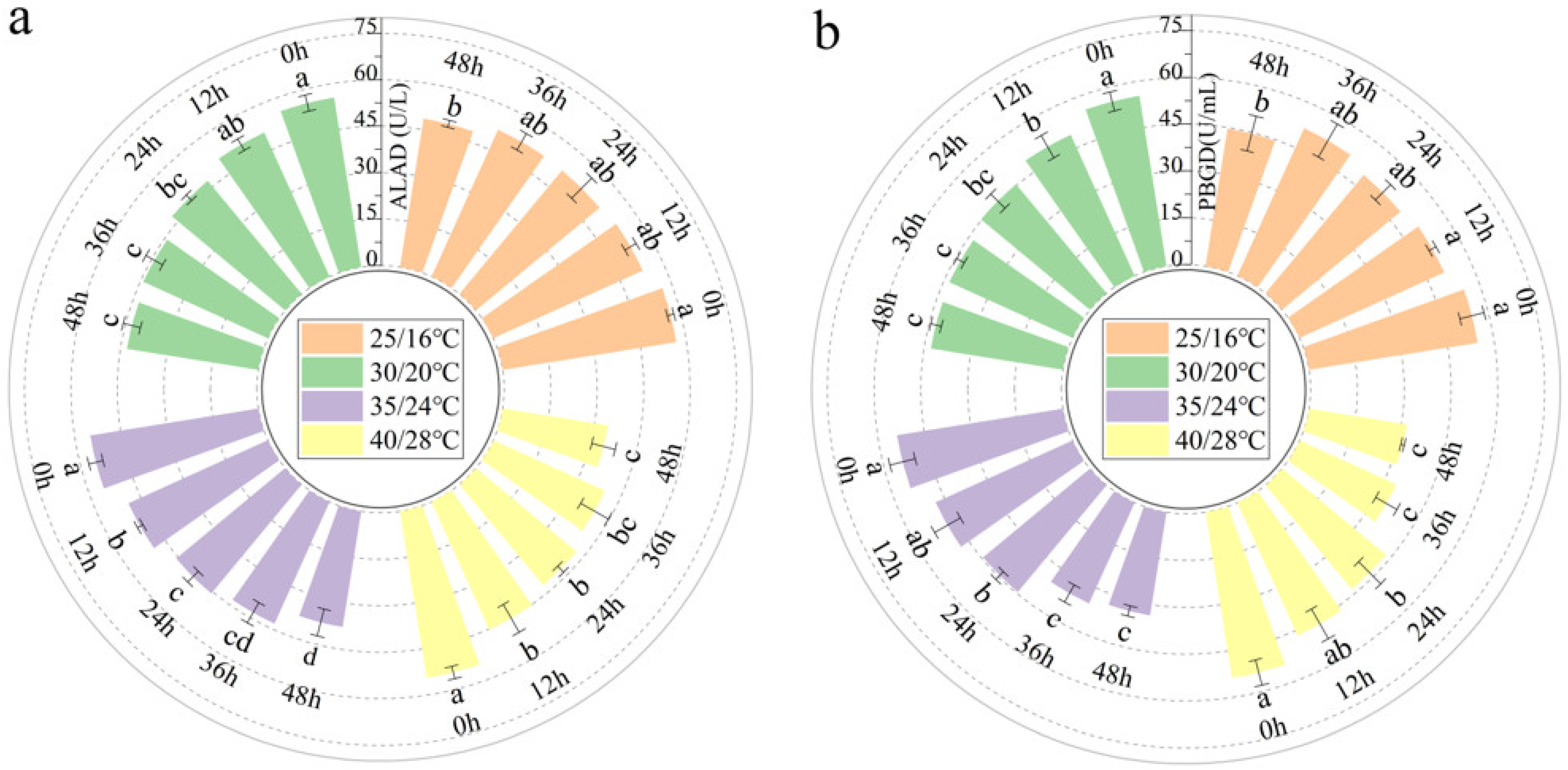
The activity of delta-aminolevulinate dehydratase (ALAD) was determined using a kit (Shanghai Enzyme-Linked Biological Technology, YJ6352581, Shanghai, China) as follows: We set up standard wells and sample wells, adding 50 μL of standard solutions of different concentrations to each standard well. We first added 10 μL of the sample to be tested to the wells and then added 40 μL of sample diluent. No addition was made to the blank wells, and 100 μL of horseradish peroxidase (HRP)-labeled detection antibody was added to each standard well and sample well. The reaction wells were sealed with a sealing film and incubated in a 37 °C water bath for 60 min. We discarded the liquid, patted the samples dry using absorbent paper, filled each well with washing solution, let them stand for 1 min, and then discarded the liquid. We added 50 μL of Substrate A and 50 μL of Substrate B to each well and incubated the mixtures at 37 °C away from light for 15 min. Then, we measured the absorbance value at 450 nm. The concentration (x) of ALAD standard products (0–48 U/L) is linearly related to the absorbance value (y), with the linear equation being y = 0.0466x + 0.0882 (R2 = 0.9991).
The activity of porphobilinogen deaminase (PBGD) was determined using a kit (Shanghai Enzyme-Linked Biological Technology, YJ3680821, Shanghai, China) as follows: We set up standard wells and sample wells, adding 50 μL of standard solutions of different concentrations to each standard well. We added 10 μL of the sample to be tested to the sample wells and then added 40 μL of sample diluent. The blank wells were left unadded, and 100 μL of horseradish peroxidase (HRP)-labeled detection antibody was added to each standard well and sample well. The reaction wells were sealed with a plate sealer and incubated in a 37 °C water bath for 60 min. We discarded the liquid, patted the samples dry using absorbent paper, filled each well with washing solution, let the mixtures stand for 1 min, and then discarded the liquid. We added 50 μL of Substrate A and 50 μL of Substrate B to each well and incubated the mixtures at 37 °C away from light for 15 min. We then measured the absorbance value at 450 nm. The concentration (x) of PBGD standard (0–80 U/mL) is linearly related to the absorbance value (y), with the linear equation being y = 0.0176x + 0.0607 (R2 = 0.9992).
2.6. Content Index of Chlorophyll Precursor Substances
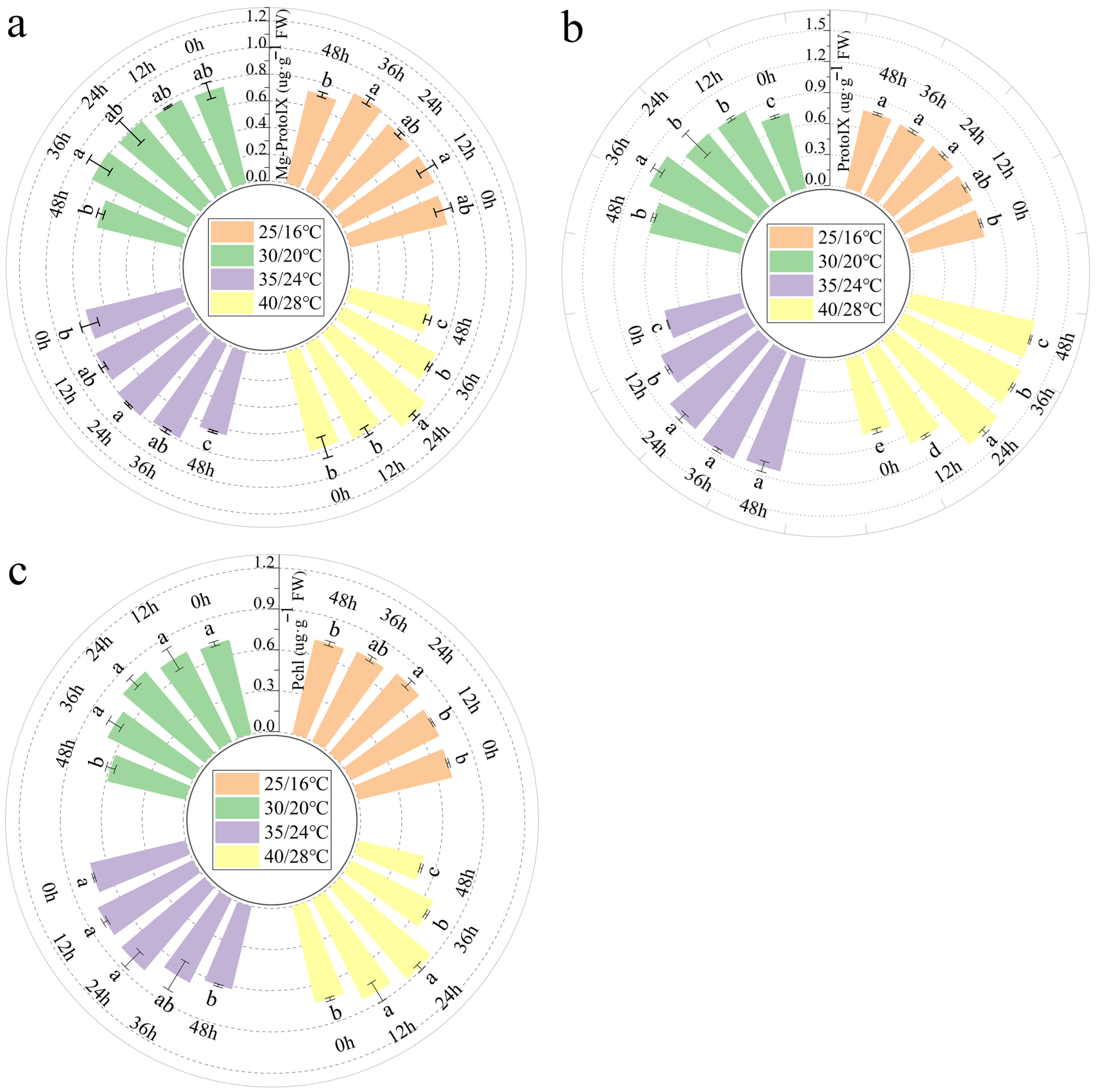
The contents of protoporphyrinIX (ProtoIX), Mg-protoporphyrinIX (Mg-ProtoIX), and protochlorophyll (Pchl) were determined using the Hodgins and Zhou method [
18,
19] with slight modifications. An amount of 0.1 g of fresh sample was weighed, and 1 mL of 80% alkaline acetone (Tianjin Xintong Fine Chemical Co., Ltd., Tianjin, Chain) was added. The mixture was ground, and its volume was adjusted to 5 mL. Centrifugation was carried out at 12,000
g for 10 min at 4 °C. The supernatant was used to measure the absorbance at 575 nm, 590 nm, and 628 nm, and the contents of ProtoIX, Mg-protoIX, and Pchl were calculated.
2.7. Determination of Photosynthetic Pigment Content
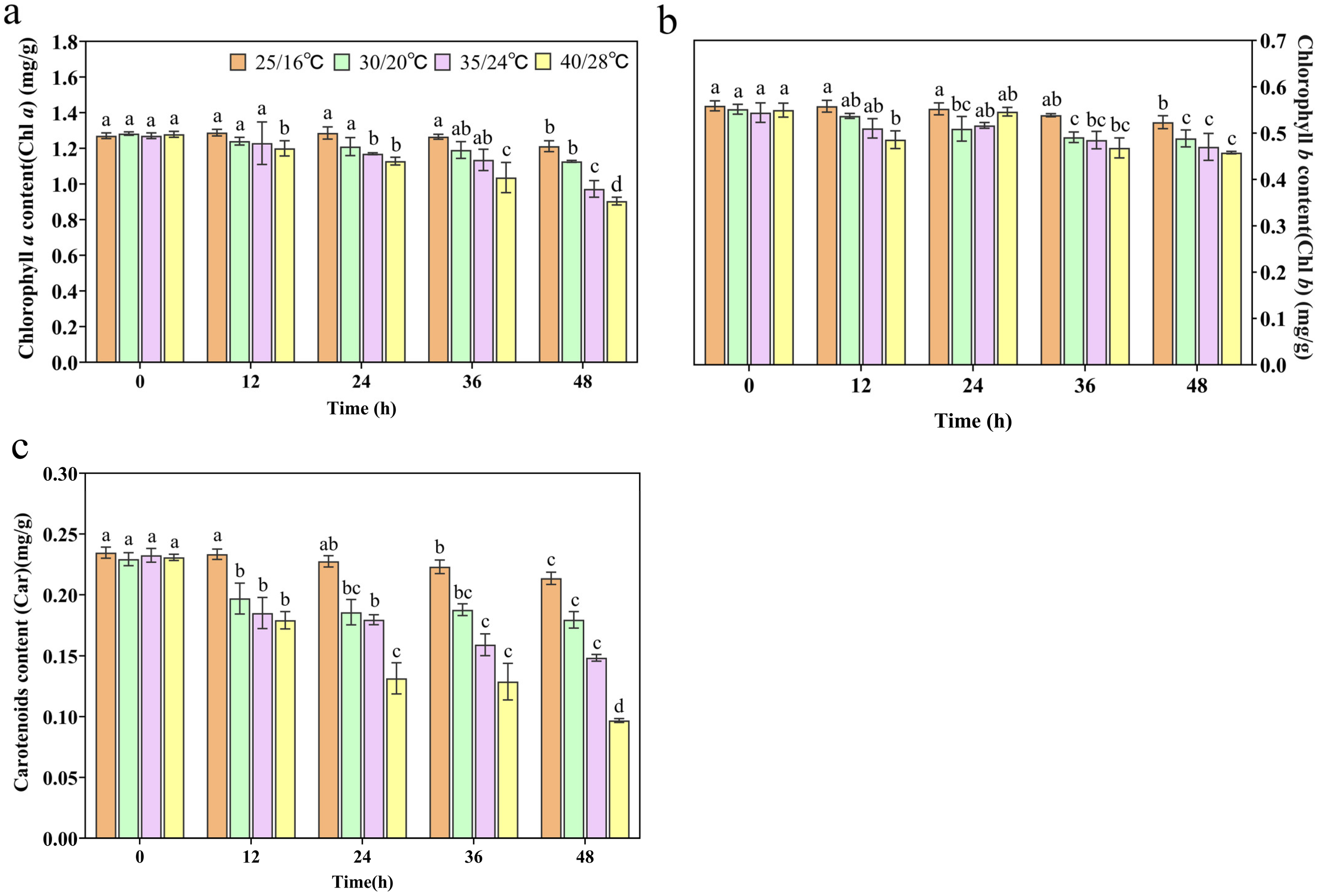
Fresh ginseng leaves (0.1 g) that underwent high-temperature treatment were placed in a test tube containing 10 mL of ethanol (Sinopharm Chemical Reagent Co. Ltd., Shanghai, China)—acetone (Tianjin Xintong Fine Chemical Co., Ltd., Tianjin, Chain) mixture (1:1,
v/
v) to determine the content of photosynthetic pigments. The test tube was sealed and left in the dark overnight (48 h) until the leaf sample was completely decolorized and turned white. The absorbance of the supernatant at 663 nm, 646 nm, and 470 nm was measured using an Ultraviolet–Visible Spectrophotometer (UV-Vis, Shanghai Metashinstruments Co., Ltd., Shanghai, China), and the chlorophyll
a (Chl
a), chlorophyll
b (Chl
b), and carotenoid (Car) contents were calculated [
20].
2.8. Detection of Stomatal Characteristics on Leaves
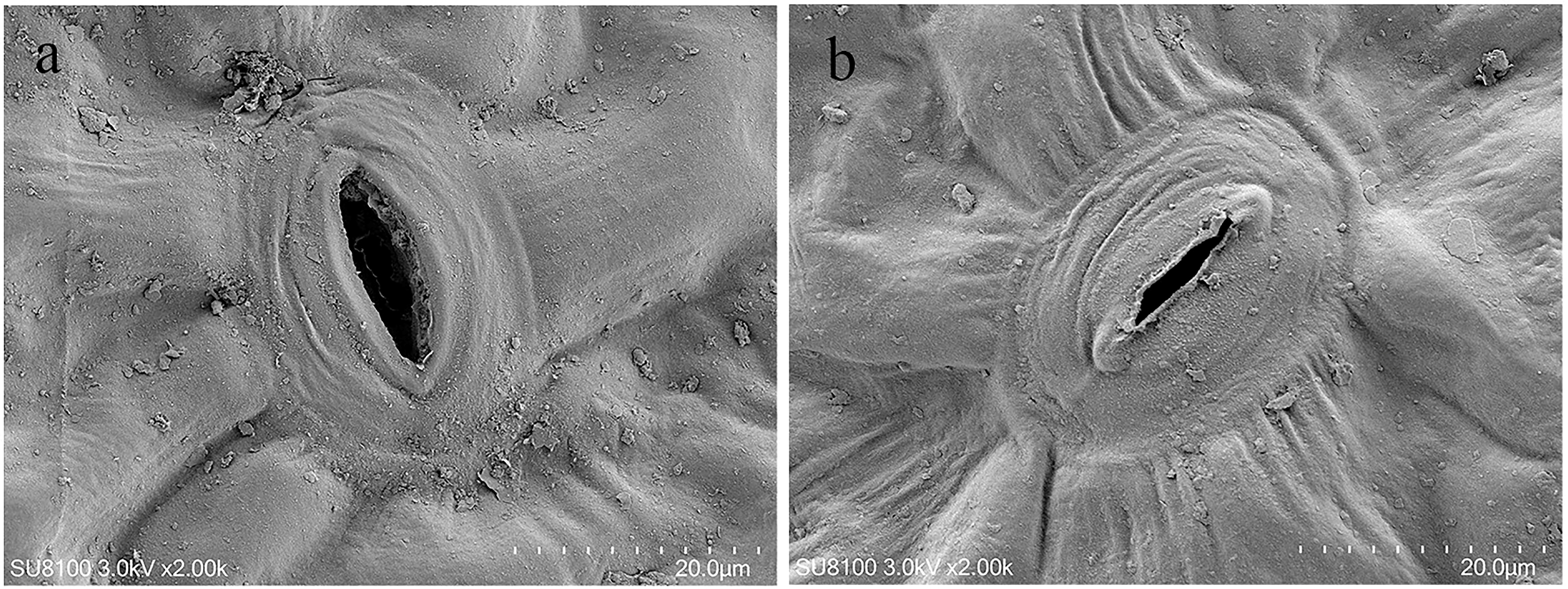
Electron micrographs of stomata were obtained using a scanning electron microscope to compare the differences in individual stomata under different high-temperature treatments. The specific operation was as follows: We selected tissue from both sides of the main vein in the middle part of the ginseng leaf and cut it into small pieces of (1 mm × 3 mm), quickly placed the pieces in the electron microscope fixative (2.5% glutaraldehyde, Servicebio, Wuhan, China), and left them at room temperature for 2 h before storing them at 4 °C. The fixed samples were washed for 15 min three times with 0.1 M phosphate buffer (PH 7.4) (Servicebio, Wuhan, China). The tissues were successively placed in 30%, 50%, 70%, 80%, 90%, 95%, and 100% alcohol (Sinopharm Chemical Reagent Co. Ltd., Shanghai, China) for 15 min each and placed in isopentyl acetate (Sinopharm Chemical Reagent Co. Ltd., Shanghai, China) for 15 min. The samples were placed in a critical point dryer (Quorum, K850, East Sussex, UK) for drying, adhered to the conductive carbon film double-sided tape, and placed on the sample stage of the ion-sputtering instrument (HITACHI, MC1000, Tokyo, Japan) for gold spraying. The morphology of the stomata was observed through a scanning electron microscope (HITACHI, SU8100, Tokyo, Japan). Three ginseng plants were randomly selected for measurement in each treatment group. Three leaves were selected from each plant, and six stomata were chosen from each leaf for observation and statistical analysis.
2.9. Detection of Chloroplast Ultrastructure
The ultrastructural changes in organelles were observed by transmission electron microscopy. Tissue from both sides of the main vein in the middle part of ginseng leaves was taken and cut into small pieces (1 mm × 3 mm), immediately fixed with electron microscopy fixative (2.5% glutaraldehyde, Servicebio, Wuhan, China), and stored in a 4 °C refrigerator for later use. The samples were washed for 15 min three times with 0.1 M phosphate buffer (PH 7.4) (Servicebio, Wuhan, China). The tissues were successively dehydrated in 30%, 50%, 70%, 80%, 95%, and 100% ethanol (Sinopharm Chemical Reagent Co. Ltd., Shanghai, China) for 20 min each and dehydrated twice in 100% acetone (Sinopharm Chemical Reagent Co. Ltd., Shanghai, China) for 15 min each. The tissues were then embedded in acetone/812 embedding agent (SPI, West Chester, PA, USA) at a 1:1 ratio at 37 °C for 2–4 h, followed by acetone/812 embedding agent at a 1:2 ratio at 37 °C overnight and finally in pure 812 embedding agent at 37 °C for 5–8 h. The pure 812 embedding agent was poured into the embedding plate, and the samples were inserted into the embedding plate and placed in a 37 °C oven overnight. The embedding plate was placed in a 60 °C oven for polymerization for 48 h, and the resin blocks were taken out for later use. The resin blocks were sectioned into 1.5 μm semi-thin sections using a semi-thin sectioning machine (Daitome, Ultra 45°, George Town, Japan), stained with toluidine blue, and located under a light microscope. The resin blocks were sectioned into 60–80 nm ultrathin sections using an Ultra microtome (Leica UC7, Wetzlar, Germany), and the sections were collected on 150 mesh copper grids. The copper grids were stained with 2% uranyl acetate (SPI, West Chester, PA, USA) saturated alcohol solution in the dark for 8 min, washed three times with 70% alcohol, washed three times with ultrapure water, stained with 2.6% lead citrate (Sigma, Saint Louis, MO, USA) solution in the absence of CO2 for 8 min, washed three times with ultrapure water, and slightly dried with filter paper. The copper grids with sections were placed in a copper grid box and dried at room temperature overnight. The ultrastructure of chloroplasts was observed by transmission electron microscopy (HITACHI, HT7800/HT7700, Tokyo, Japan). Three ginseng plants were randomly selected for measurement in each treatment group. Three leaves were selected from each plant, and six chloroplasts were chosen from each leaf for observation and statistical analysis.
2.10. Statistical Analysis
Data analysis was performed using SPSS 19.0 (IBM Corporation, 19.0, Chicago, IL, USA). The results are expressed as the means of three independent measurements. Statistical evaluation of the experimental data was performed using a one-way ANOVA followed by Duncan’s multiple range test. A difference was considered statistically significant when p < 0.05. The results were graphically depicted using the Prism 8.0 (GraphPad Software, San Diego, 8.0, CA, USA) and Origin Pro 2021 (OriginLab Corporation, 2021, Northampton, MA, USA) software.
4. Discussion
4.1. Effects of High-Temperature Stress on Relative Water Content and Stoma in Ginseng Leaves
Leaves are the main organs through which plants sense environmental changes. High-temperature stress can cause leaf wrinkling and wilting, with a large loss of water inside the cells [
21], and accelerate leaf senescence or even death [
22]. A decrease in the relative water content of leaves reflects an imbalance in the plant’s water mechanism under adverse conditions [
23]. In this study, as the degree of high-temperature stress (40/28 °C) increased, the relative water content of ginseng leaves gradually decreased compared to the CK, which is consistent with the research results of Bu et al. [
24]. The results indicate that the high-temperature environment intensifies transpiration of water in leaf tissues, causing to a decrease in leaf relative water content. In addition, as water deficiency accumulates, stomata are forced to close to prevent further water loss [
25], which is an important protective mechanism against high temperatures [
26]. Stomata are the main channels through which plants exchange water and gases with the external environment [
27], and their morphological parameters, such as length, width, and area, all affect transpiration and photosynthetic efficiency [
28]. An increase in the duration of high-temperature stress causes the guard cells to lose excessive water, thereby leading to stomatal closure [
29]. Zhu et al. [
30] found that moderate high temperature (35 °C) can significantly reduce the stomatal aperture width, length, and stomatal area of leaves in two blueberry varieties. In this study, under a high-temperature environment of 40/28 °C, the length, width, and area of ginseng leaf stomata were all lower than those at 25/16 °C. The results show that high-temperature stress may elevate the osmotic potential of guard cells, thereby increasing the vapor pressure deficit between the leaf and air and intensifying water loss through transpiration. This triggers a protective response in plants—stomatal closure—to prevent excessive dehydration. Consequently, photosynthetic gas exchange is impaired, leading to inhibited plant growth.
4.2. Effects of High-Temperature Stress on the Content of Photosynthetic Pigments in Ginseng Leaves
The content of photosynthetic pigments is an important indicator of a plant’s photosynthetic capacity, and its dynamic changes are regulated by environmental conditions, directly affecting the photosynthetic rate and overall photosynthetic performance [
31]. This study revealed that under high-temperature stress, the contents of chlorophyll
a and
b in ginseng leaves both significantly decreased, a result similar to that of Peng et al. [
32]. It is particularly noteworthy that the content of carotenoids decreases most significantly under high-temperature conditions. Studies have demonstrated that carotenoids are significantly affected by temperature. Under high-temperature conditions, carotenoids were degraded by heat, leading to the destruction of their chromophores and loss of viability [
33]. Carotenoids are important component of photosynthetic, the reduced content diminishes plants capacity to dissipate excess light energy via NPQ, increasing PSII susceptibility to photoinhibition (manifested as decreased F
v/F
m ratios). This ultimately results in a decline of Pn and compromised photosynthetic performance. The decrease in the chlorophyll content may be due to the destruction of the chloroplast biosynthesis process caused by high temperature, which weakens the efficiency of light energy capture and transfer. This study further revealed that under high-temperature stress, the ALAD enzyme activity in ginseng leaves was significantly reduced at 48 h compared to the CK. PBGD enzyme activity also showed a gradually decreasing trend under high-temperature stress, which is consistent with previous research results [
34]. A decrease in chlorophyllase activity will affect the synthesis of chlorophyll by interfering with the accumulation of intermediate products. This study revealed a reduction in the synthesis of Mg-ProtoIX. This result confirms that high temperature inhibits the activity of ALAD and PBGD, blocking the conversion of ProtoIX to Mg-ProtoIX and leading to the accumulation of ProtoIX in the body. Due to the inhibition of ALAD and PBGD activities, the synthesis of Pchl precursors is reduced, ultimately leading to a significant decrease in the Pchl content during the later stages of high-temperature stress, which is consistent with previous research findings [
35]. In conclusion, the results show that high-temperature stress inhibits the activity of ALAD and PBGD enzymes in the chlorophyll biosynthesis pathway, which interferes with the normal accumulation of Mg-ProtoIX and Pchl intermediates, affects chlorophyll synthesis, reduces photosynthetic capacity, and ultimately hinders ginseng plant growth.
4.3. Effects of High-Temperature Stress on Photosynthetic Characteristics of Ginseng Leaves
Photosynthesis is the main energy source for plant growth and development, and its process is jointly regulated by the plant’s own physiological characteristics and external environmental conditions. High-temperature stress disrupts the coordination between energy supply and utilization, leading to significant changes in photosynthetic function. Studies have shown [
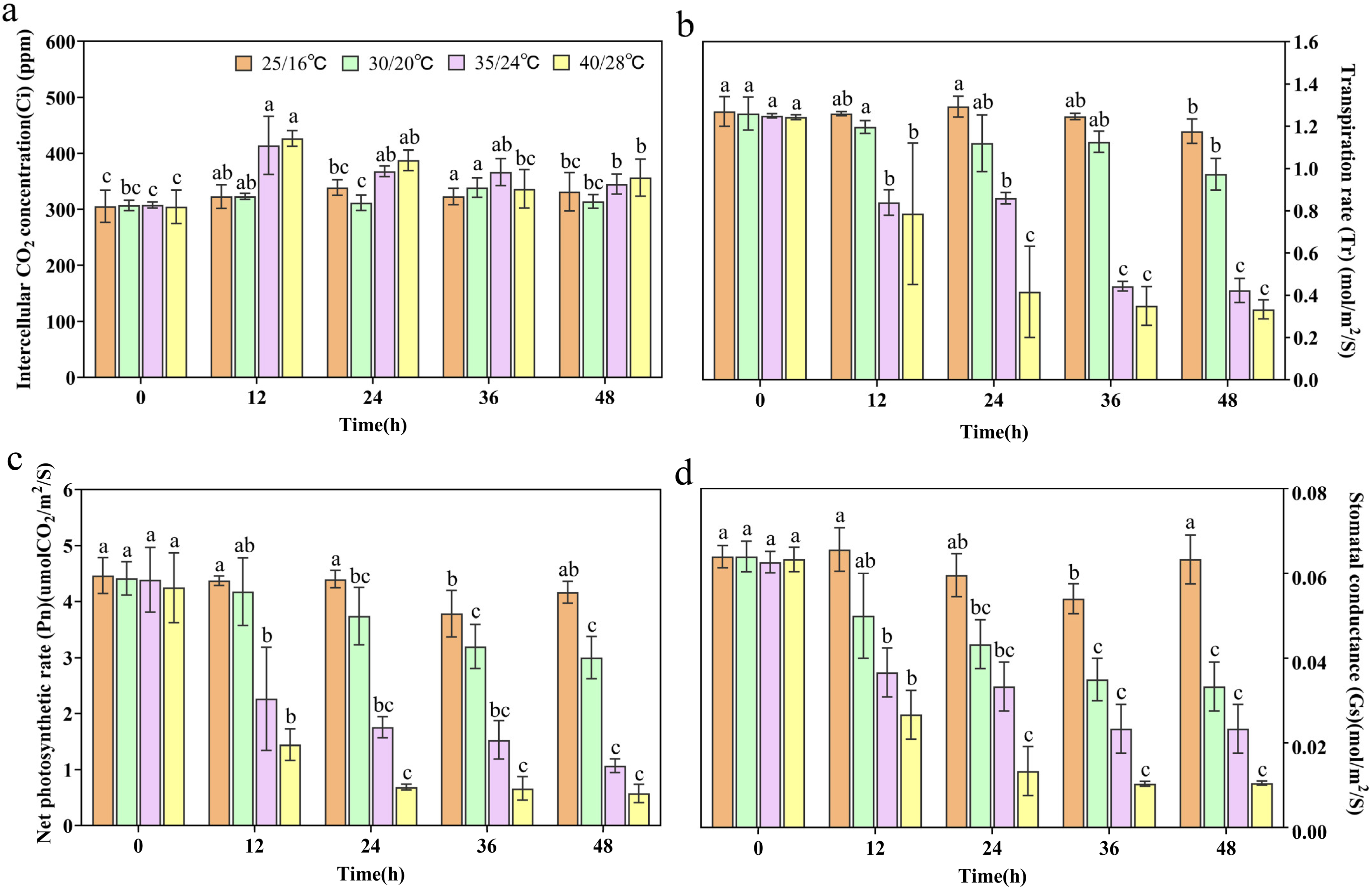
36] that as the duration of high-temperature stress increases, the Pn, Tr, and Gs of two self-pollinating lines of watermelon all show a downward trend, while Ci increases. The reasons for the weakening of photosynthesis can be attributed to two categories: stomatal factors and non-stomatal factors [
37]. In gas exchange analysis, when Ci and Gs decrease simultaneously, the decline in Pn is mainly caused by stomatal limitation, while when Pn decreases accompanied by an increase in Ci, it indicates that non-stomatal factors play a dominant role. Relevant research has found [
38] that after more than 3 days of high-temperature treatment, Gs decreases while Ci increases, indicating that the inhibition of Pn is mainly constrained by non-stomatal factors. In this study, high-temperature stress at 40/28 °C inhibited the photosynthesis of ginseng leaves. Ci increased as Gs decreased, and Pn was reduced, which is consistent with previous studies. This trend of change may be caused by the decrease in photosynthetic activity of mesophyll cells, driven by non-stomatal factors [
39].
Chlorophyll fluorescence is closely related to photosynthesis, and its parameters can characterize the photosynthetic potential, light energy conversion efficiency, and overall photosynthetic activity of plants [
40], effectively reflecting the functional state of the photosynthetic apparatus and the degree of damage to the plant’s photosystem under adverse conditions. High-temperature can disrupt the structural stability of the chlorophyll fluorescence reaction center, impede the normal operation of the electron transport chain, and lead to an increase in F
0 and a fluctuating decrease in F
m. F
v/F
m, as an indicator of the maximum photochemical efficiency of PSII, significantly decreases under stress, indicating irreversible damage to the leaf photosynthetic apparatus [
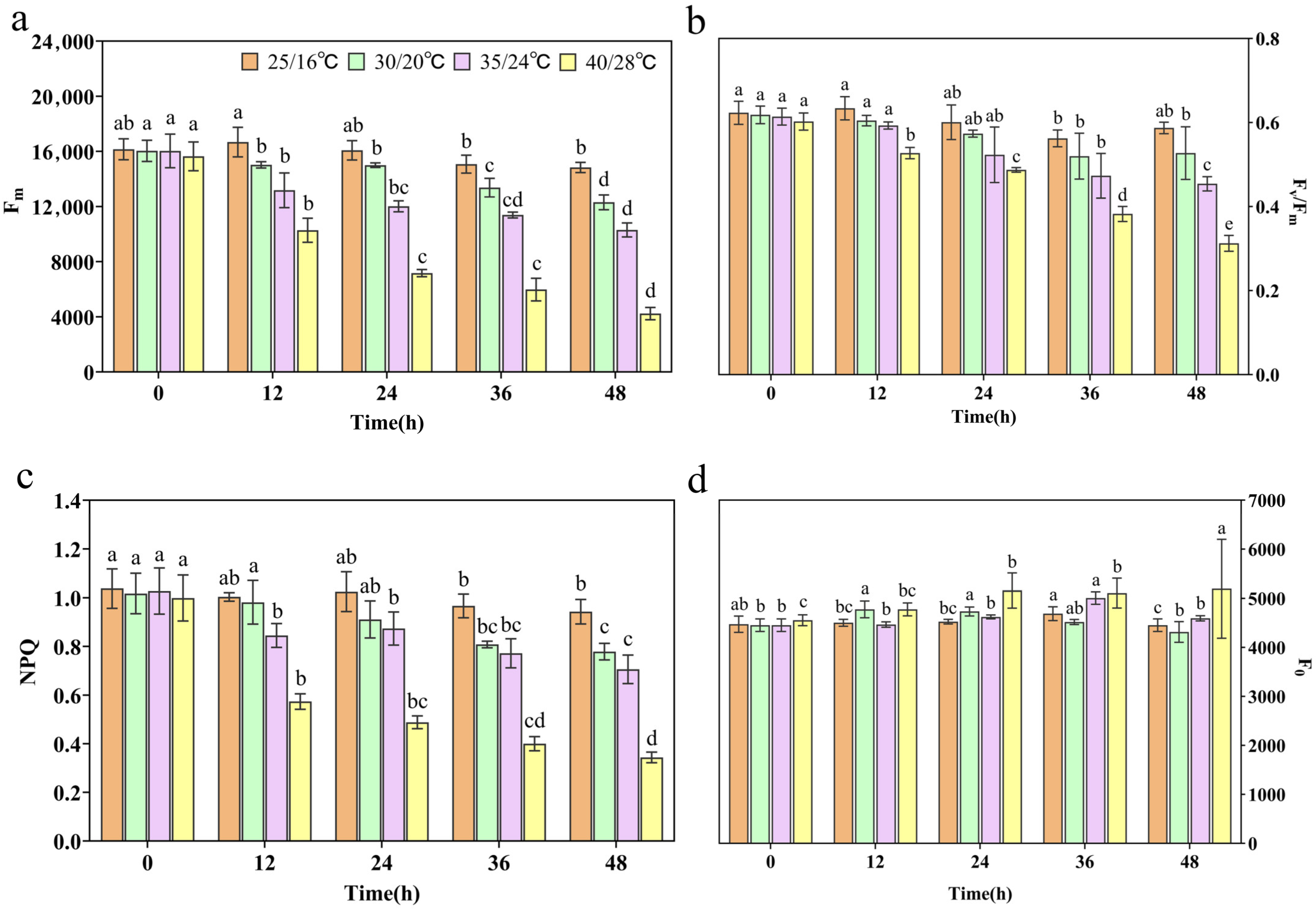
41]. In this study, high-temperature stress caused a downward trend in F
m, F
v/F
m, and NPQ in ginseng leaves, while F
0 showed an overall upward trend, which is consistent with the aforementioned research results. A decrease in F
v/F
m values indicates that high temperature may have caused damage to the leaf PSII. High temperature leads to the decoupling of the PSII antenna pigment system and inactivation of the reaction center, thereby causing an increase in F
0 values. NPQ reflects the ability of PSII to dissipate excess excitation energy through the thermal dissipation pathway. Its decline indicates that this protective mechanism gradually fails under high-temperature stress, which may ultimately lead to severe damage to the photosynthetic apparatus and trigger leaf death.
4.4. Effects of High-Temperature Stress on Ultrastructure of Ginseng Leaves
As the main organ of photosynthesis, the chloroplasts of leaves are highly vulnerable to damage from environmental stress. Under abiotic stress conditions, chloroplasts often undergo early ultrastructural changes [
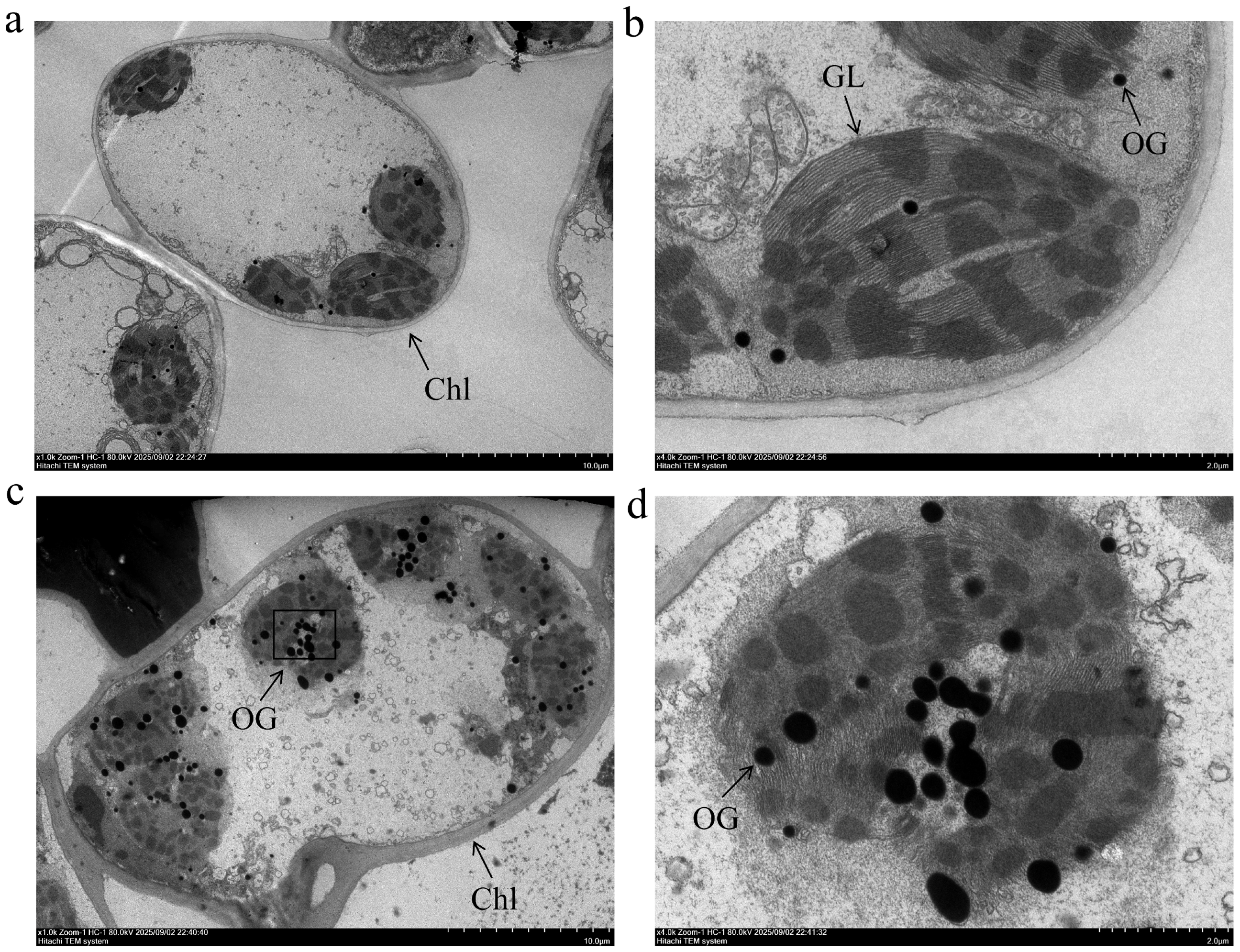
42], making the observation of chloroplast ultrastructure crucial for understanding the mechanism of photosynthesis and its response to adverse conditions. In this study, under 40/28 °C high-temperature conditions, the chloroplast structure of ginseng leaves was damaged, the double-layer membrane structure was destroyed, and many osmium-loving particles appeared, which was similar to the results of previous studies [
43,
44]. The results indicate that high-temperature stress forced RWC to decrease, leading to cellular dehydration and disrupting the integrity of chloroplast structure, causing damage to the photosynthetic machinery, and severely affecting the plant’s photosynthesis.
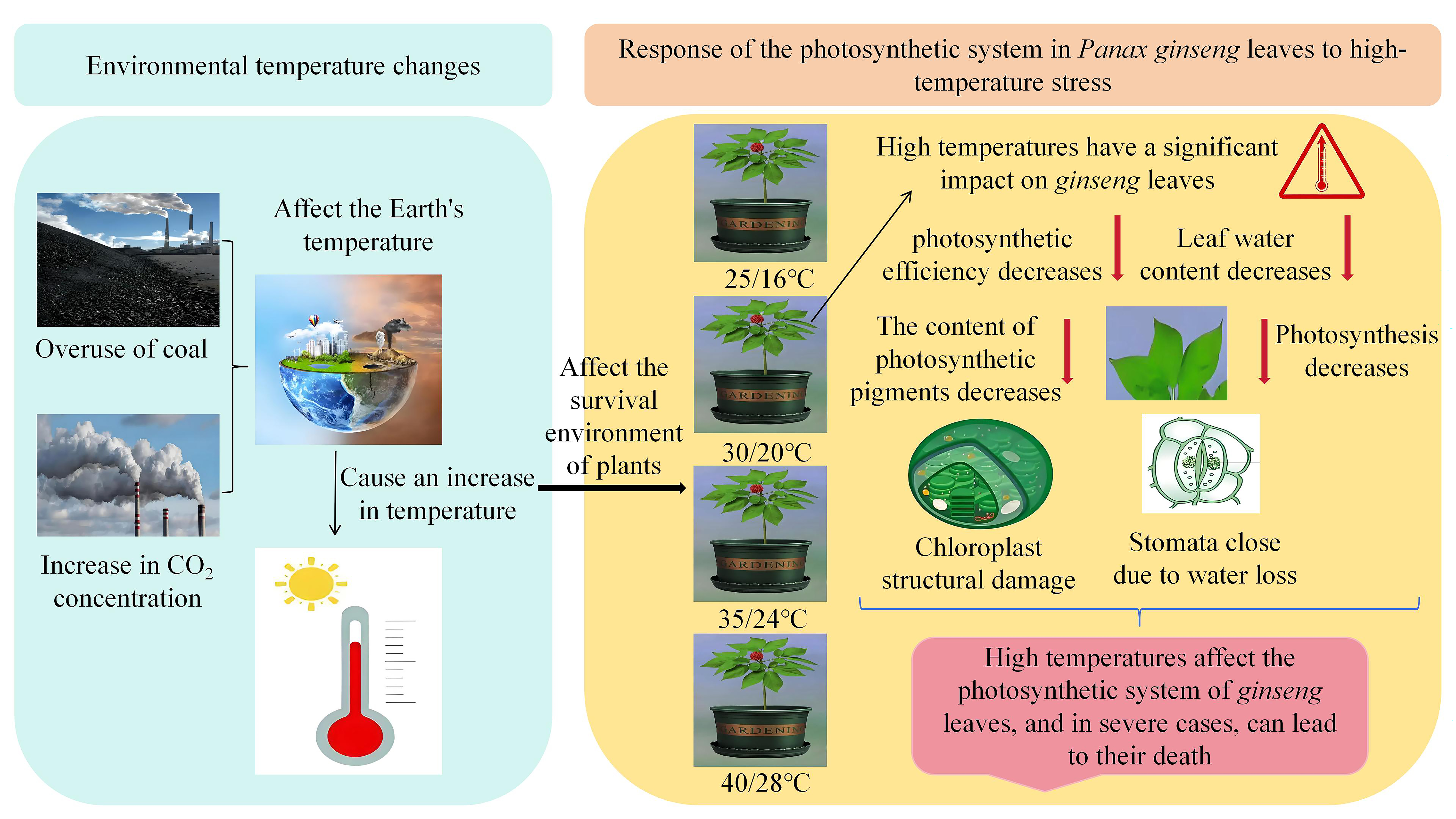
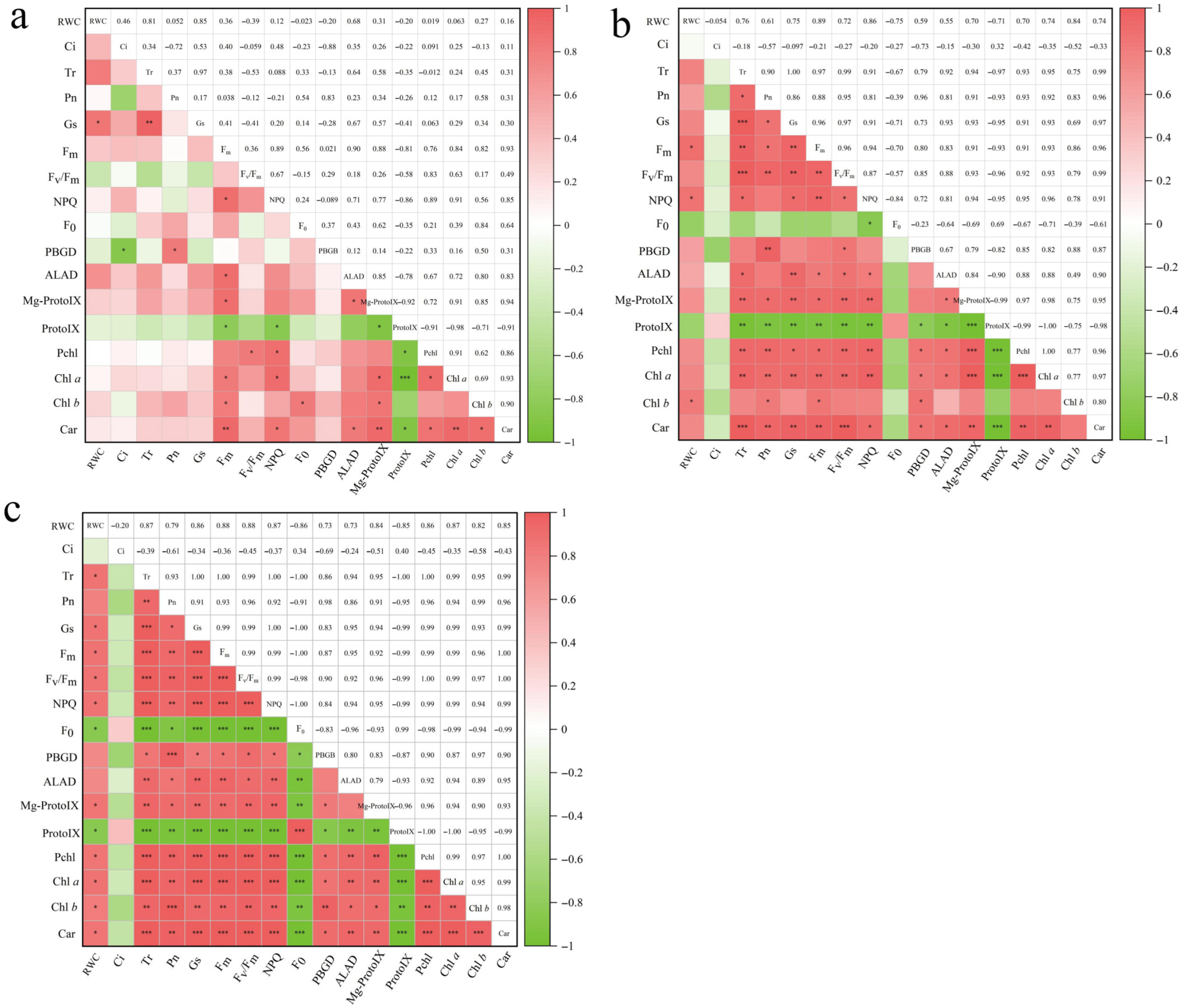
In summary, the research results show that under high-temperature stress, the RWC of ginseng leaves decreases and the turgor pressure of guard cells drops, leading to stomatal closure, which limits the supply of CO2 and reduces the Pn parameter. Meanwhile, RWC reduces the occurrence of cellular dehydration, which damages chloroplast ultrastructure. It inhibits chlorophyll biosynthetic enzymes ALAD and PBGD, disrupting the normal accumulation of chlorophyll precursors and leading to photosynthetic pigment degradation. The chlorophyll loss further compromises membrane structural integrity, ultimately impairing PSII (for example, a decrease in Fv/Fm values). The correlation analysis showed that the photosynthetic characteristics were positively correlated, which supported the notion that the photosynthetic decline of ginseng leaves was the result of multi-process damage rather than single-factor influence.
In this study, we systematically investigated the effects of high-temperature stress on the photosynthetic characteristics, chlorophyll synthesis, and tissue structure of ginseng leaves. However, there are still some aspects requiring further research. Firstly, the key structural parameters, such as stomatal density, thylakoid membrane thickness, and number of granum stacks, need to be quantitatively analyzed. Secondly, the activities of other key enzymes in the chlorophyll biosynthesis pathway, except ALAD and PBGD, were not detected. Thirdly, the expression regulation network of photosynthesis-related genes in response to high temperature has not been fully elucidated at the molecular level. In the future, we intend to further deepen the quantitative characterization of the organization structure, improve the chlorophyllase detection system in the chlorophyll synthesis pathway, and focus on the molecular mechanism of the related gene expression. On this basis, the heat resistance of ginseng may be improved by combining the practice of heat-resistant germplasm screening and genetic improvement, providing support for the stress-resistant breeding of ginseng and the sustainable development of the industry.
5. Conclusions
This study revealed the effects of high-temperature stress on the dynamic water balance, chlorophyll biosynthesis, photosynthetic physiological functions, and ultrastructure of ginseng leaves. The results show that high-temperature increased the water transpiration rate of ginseng leaves, causing the relative water content of leaves to decrease to 67.04%, and triggering the active closure of stomata to reduce water loss and maintain basic survival needs. At the same time, high-temperature inhibits the biosynthetic pathway of chlorophyll, leading in reduced in pigment content, weakening the light energy capture efficiency, and reducing the photosynthetic capacity. It is even more concerning that the ultrastructure of chloroplasts also suffered damage, interfering with the normal progress of light reactions and undermining the stability and functionality of the photosynthetic system. The above research reveals the mechanisms of photosynthetic physiological responses in ginseng leaves under high-temperature stress, which provides a scientific basis for coping with climate change, improving stress resistance, formulating cultivation measures to reduce high-temperature damage, and achieving high quality and yield.




 ,
,