Article

Functional Identification of the RiPFK2 Gene in Raspberry (Rubus idaeus L.) Demonstrates That It Enhances Fructose Content Inside Fruits


1
College of Horticulture and Landscape Architecture, Northeast Agricultural University, Harbin 150030, China
2
National-Local Joint Engineering Research Center for Development and Utilization of Small Fruits in Cole Regions, Northeast Agricultural University, Harbin 150030, China
3
Key Laboratory of Biology and Genetic Improvement of Horticultural Crops (Northeast Region), Ministry of Agriculture, Northeast Agricultural University, Harbin 150030, China
*
Authors to whom correspondence should be addressed.
Horticulturae 2026, 12(1), 79; https://doi.org/10.3390/horticulturae12010079
Submission received: 6 November 2025 / Revised: 2 January 2026 / Accepted: 4 January 2026 / Published: 9 January 2026
(This article belongs to the Special Issue Advances in Developmental Biology and Quality Control of Berry Crops)

Abstract

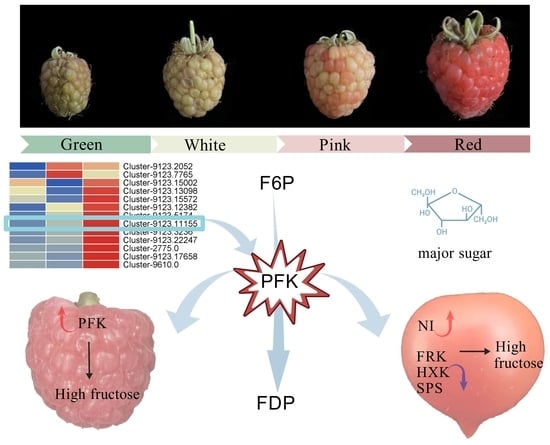
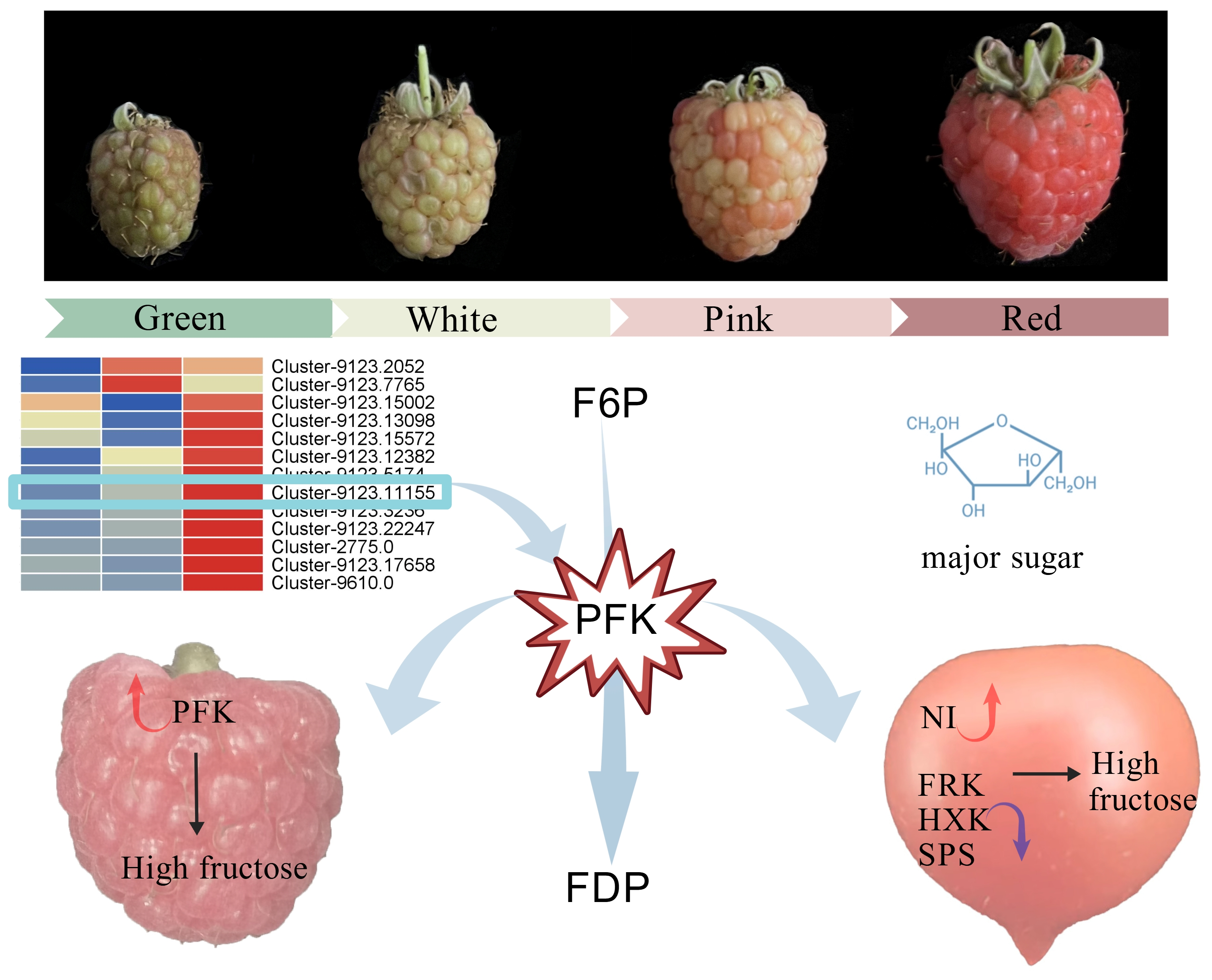
Fruit sweetness is a key trait that determines the quality of fresh raspberries and meets processing requirements. It is mainly regulated by the content of soluble sugars and organic acids. However, there is still a lack of systematic research on the molecular mechanisms of sugar accumulation during the development of raspberry fruits. This study used the raspberry variety ‘Caroline’ as material. By detecting changes in sugar content during fruit development and ripening, combined with transcriptomic analysis of related differentially expressed genes, it was found that the differentially expressed gene RiPFK2 was significantly upregulated during the period of rapid sugar accumulation in the fruit. We constructed an RiPFK2 overexpression vector and found that fructose content significantly increased in transgenic tomatoes and raspberries, indicating that this gene positively regulates fructose accumulation. This study is the first to reveal the positive regulatory role of PFK family members in fructose accumulation in raspberry fruits, providing a theoretical basis for improving raspberry fruit quality.

Graphical Abstract

1. Introduction

In plants, soluble sugars—products of photosynthesis in leaves—accumulate within fruits through a series of transport and metabolic processes [1]. Both the content and distribution of soluble sugars depend on the regulation of activities such as glycolysis. Phosphorylation of fructose-6-phosphate to fructose-1,6-bisphosphate represents a key rate-limiting step of the glycolytic pathway. This reaction is predominantly regulated by ATP-dependent phosphofructokinase (PFK, EC: 2.7.1.11) and pyrophosphate-dependent phosphofructokinase (PFP, EC: 2.7.1.90). PFK and PFP react synergistically in the cytoplasmic solution, but the reaction catalyzed by PFK is irreversible, while the reaction catalyzed by PFP is reversible [2]. PFK expression is up-regulated during the maturation of various fruit species, including Mandarin (Citrus reticulata Blanco.), litchi (Litchi chinensis Sonn.), apple (Malus domestica Borkh.) and banana (Musa cavendishii L.) [3,4,5,6]. This up-regulation is closely correlated with the accumulation of soluble sugars in the fruit. The PFK family of genes comprises multiple members exhibiting functional redundancy or specificity. The PFK family genes play a central role in plant growth and development, precisely regulating photosynthetic products and coordinating their distribution across different tissues and organs to meet the energy and carbon demands of processes such as growth, flowering, and fruiting. Multiple PFK family genes have been identified in Arabidopsis thaliana, among which AtPFK2 is localized to the cytoplasm and, unlike other PFK members, possesses only two exons [2]. AtPFK2 showed no significant enhancement of PFK activity following transient tobacco transformation, but significantly increased soluble sugar levels when stably overexpressed in Arabidopsis thaliana [7,8]. Upregulation of the PFK2 gene in high-yielding Miscanthus may lead to increased fructose content compared to low-yielding varieties characterized by high starch and sucrose content [9]. Under low-temperature conditions, PFK2 activity increases in corn seeds during germination, promoting the conversion of stored starch into sucrose and glucose to supply the sprouting process [10].
Raspberry (Rubus idaeus L.), which belongs to the Rosaceae family (Rosaceae Juss.), is an important temperate fruit tree widely cultivated in Europe, North America and Asia. Its fruits are rich in anthocyanins, ellagic acid, raspberry ketones, and other high-nutritional-value components [11]. The main soluble sugars in ripe raspberries are fructose and glucose, accounting for approximately 48–54% and 15–20% of total sugars [12]. Fruit quality and flavor, as key factors influencing consumer preferences, are largely determined by the content of soluble sugars and organic acids within the fruit [13]. Raspberries with a moderate sugar-acid ratio and higher sugar content tend to be more favored by consumers, making research on raspberry sugar content particularly necessary [14].
The accumulation of sugar in raspberry fruits primarily occurs through the mobilization of starch stored in roots and floricane canes, as well as the direct transfer of sugars synthesized in adjacent leaves [15,16]. The sugar content within the fruit is influenced by both internal and external factors. For example, Yu et al. (2022) found significant variations in total sugar content among 24 different raspberry cultivars, and the sugar content of raspberry fruits was also influenced by different stages of ripeness [17,18,19,20]. Different growing temperatures and precipitation levels significantly influence the sugar content of ‘Glen Ample’ raspberry fruit [21], while shorter photoperiods exert a positive effect on internal sucrose content and sugar-acid ratio [22]. However, research on genes associated with differences in sugar accumulation during fruit development remains scarce.
Rubus idaeus ‘Carlione’ is a commercially cultivated fresh-market variety prized for its superior flavor, widely grown in the USA [23]. Previous studies indicate that fully ripe ‘Carlione’ berries exhibit slightly higher fructose and total sugar content compared to other varieties, reaching up to 32 mg/g fresh weight (FW) at peak maturity [24]. This makes it an excellent variety for raspberry research. This study identified a differentially expressed gene, RiPFK2, which exhibited high expression levels during the phase of rapid sugar accumulation in developing raspberry fruits, based on integrated transcriptomic analysis and measurements of sugar content throughout fruit development. Subsequently, stable overexpression of RiPFK2 in tomatoes and transient transformation of raspberries were attempted to elucidate the functional role of RiPFK2 in sugar metabolism during fruit ripening and to lay the foundation for further utilization of genetic engineering techniques to breed high-quality raspberry varieties.

2. Materials and Methods

2.1. Raspberry Tissue Collection

This study used raspberries (Rubus idaeus ‘Carlione’) as the experimental material. The plants were grown at the Xiangyang Base of Northeast Agricultural University in Harbin City, Heilongjiang Province (126.93° E, 45.76° N). Raspberry fruits and roots, stems, and leaves were collected at 18 DAB (green fruit stage, Green), 22 DAB (white fruit stage, White), 27 DAB (color change stage, Pink), and 32 DAB (maturity stage, Red) after flowering. Collect 150 g of vegetatively propagated raspberry material from each phenological stage. Immediately place 50 g of the collected material into liquid nitrogen and store it in an ultra-low temperature freezer (−80 °C) for transcriptomic sequencing and qRT-PCR. Use the remaining 100 g of fruit for transient transformation.

2.2. Transcriptome Library Construction and Data Processing

After detecting the concentration of RNA samples from raspberries, high-throughput sequencing was performed (Novogene, Beijing, China). The raw data was filtered to obtain clean data, which was then assembled using Trinity (v2.6.6) software. RSEM software (v1.3.3) was used to screen for data with padj < 0.05 and |log2FC| values greater than 1, resulting in differentially expressed genes (DEGs). Referring to the method described by Benjamini et al., enrichment analysis was performed on the differentially expressed genes [25].

2.3. RiPFK2 Identification and Bioinformatics Analysis

Based on the differential gene enrichment analysis, the candidate nucleotide sequences were translated into amino acid sequences using DNAMAN. Subsequently, the PFK protein domain (IPR035966) was retrieved from the Pfam database (http://pfam.sanger.ac.uk/). The amino acid sequence of RiPFK2 was subjected to homology matching using the Protein Blast function on the NCBI online website (https://www.ncbi.nlm.nih.gov/). Referring to the software and websites used in the bioinformatics analysis by Li et al. (2024) [26], we completed multi-sequence alignment, construction of a homology evolution tree, and prediction of the primary, secondary, and tertiary structures and domains of the RiPFK2 protein. The subcellular localization of the PFK protein was analyzed using the WoLF PSORT website (https://wolfpsort.hgc.jp/) [26].

2.4. RNA Extraction and First-Strand cDNA Synthesis

This study employed three raspberry tissues (roots, stems, and leaves) and raspberries at four developmental stages for RNA extraction. Three vegetatively propagated cultivars were selected for each tissue and stage. Samples were rapidly frozen in liquid nitrogen and stored at −80 °C. All samples were immediately snap-frozen in liquid nitrogen and stored at −80 °C for subsequent analysis. Total RNA was extracted using the E.Z.N.A.® Plant RNA Kit (Omega Bio-tek, Norcross, GA, USA) according to the manufacturer’s protocol. RNA quality and integrity were assessed by 1% agarose gel electrophoresis and spectrophotometry (A260/A280 ratio). cDNA was synthesized using rnasScript One-step gDNA Removal and cDNA Synthesis SuperMix (TransGen Biotech, Beijing, China).

2.5. Quantitative Real-Time PCR Analysis for Phosphofructokinase Gene Expression RNA Extraction and First-Strand cDNA Synthesis

All primers used in this study are supplemented in Supplement Table S1, and relevant specific primers were designed using NCBI Primer-BLAST (https://www.ncbi.nlm.nih.gov). Employing 18S rRNA as the internal reference, each quantitative PCR reaction was prepared with 10 μL of THUNDERBIRD® NextSYBR® qPCR Mix (TOYOBO, Shanghai, China), 0.8 μL each of forward and reverse specific primers, 2 μL of diluted cDNA, and 6.4 μL of nuclease-free water. qRT-PCR conditions: Pre-incubation at 95 °C for 30 s, followed by 40 PCR cycles. Each cycle consists of denaturation at 95 °C for 5 s, extension at 55 °C for 10 s, and annealing at 72 °C for 15 s. Fluorescence data collection was performed at 60 °C using a dual-color plate reader. Melting curves were performed at temperatures ranging from 60 to 95 °C and were used to check the specificity of the amplification products. Relative expression was calculated using the 2−ΔΔct method.

2.6. Construction of RiPFK2 Gene Overexpression Vector

The amplification system consists of 1.5 μL of first-strand cDNA, 1.0 μL of each amplification primer, 12.5 μL of 2× Easy Taq® PCR SuperMix, and 9.0 μL of nuclease-free water. PCR conditions are as follows: 94 °C pre-denaturation for 3 min, followed by 34 cycles of 94 °C denaturation for 3 min, 55 °C annealing for 30 s, and 72 °C extension for 30 s. A final extension was performed at 72 °C for 5 min. Amplified products were verified by 1.25% agarose gel electrophoresis, and target fragments were recovered using the DNA Clean-up Kit (CWBIO, Beijing, China). The recovered gel fragment was ligated with the pEASY®-T5 Zero Cloning Kit (TransGen Biotech, Beijing, China) and transformed into Trans-T1 Phage Resistant Chemically Competent Cells (TransGen Biotech, China). The obtained RiPFK2 sequence lacking stop codons was used as the cDNA template. Amplification was performed using designed homologous recombination primers to obtain the insertion fragment. Plasmid was extracted from activated pCAMBIA1300s cells using the EasyPure® Plasmid MiniPrep Kit (TransGen Biotech, China). The linearized vector was obtained by digesting with restriction enzymes BamHI and SalI, followed by agarose gel electrophoresis and gel recovery. Ligate the insert fragment into the linearized vector using the ClonExpress II One Step Cloning Kit (Vazyme, Nanjing, China). Transform the recombinant product into Trans5α Chemically Competent Cells (TransGen Biotech, China). Extract the culture from the successful cloning strain. Transform GV3101 Chemically Competent Cells (WEIDI, Shanghai, China) stored at −80 °C using the heat shock method. Plate the cells on YEP solid medium containing kanamycin. Pick positive colonies and inoculate them into the YEB liquid medium. Store the clones at −80 °C in an ultra-low temperature freezer. The primers are listed in Table S2.

2.7. RiPFK2 Subcellular Localization Analysis of RiPFK2 in Tobacco (Nicotiana benthamiana)

The successfully sequenced recombinant plasmid was transformed into Agrobacterium GV3101 using the heat shock method. The transformed cells were inoculated into YEB medium and cultured at 28 °C on a 200 rpm shaker for 18 h. Collected by centrifugation at 5000 rpm for 10 min, cells were resuspended to OD600 = 0.5 and injected onto the abaxial surface of 5–6 week-old Nicotiana benthamiana leaves. Cultured in the dark for 1 day, then transferred to light for 2 days. Puncture holes for sectioning using a punch. Observe and photograph using a laser confocal microscope (Nikon, Tokoyo, Japan). Employ a 20×/0.75 W objective lens and detect GFP protein signals via a photomultiplier tube (PMT) with a 525 nm emission light source [27].

2.8. Transformation of Tomato (Solanum lycopersicum L.)

To generate transgenic tomato plants, a 35S::RiPFK2–GFP expression vector was constructed and introduced into tomato (Solanum lycopersicum ‘MicroTom’) via Agrobacterium-mediated transformation [28]. The three lines were then screened with high RiPFK2 expression and grown under normal conditions with the WT as a control. 35S::RiPFK2–GFP transgenic tomatoes (T2) were used for further studies. This study tested a total of seven transgenic lines.

2.9. Transient Transformation of Raspberry Fruits

Raspberry fruits were instantly converted using the vacuum immersion method at 32 DAB (RR stage) and treated for 15 min. The converted fruits were placed in dark conditions at 25 °C for 3 days, and changes in fruit phenotype were observed. Soluble sugar content and RiPFK2 gene expression levels were measured.

2.10. Determination of Soluble Sugar Content

The fruit extract was filtered through a 0.22 μm polyethersulfone (PES) filter cartridge. The filtered sample was subsequently analyzed using a high-performance liquid chromatography (HPLC) system (1260 series; Agilent, Beijing, China) equipped with a refractive index detector (RID), a temperature-controlled autosampler maintained at 4 °C, and a column oven set to 35 °C. OpenLab ChemStation software (Agilent Technologies) was used as the system controller and for data processing. An NH2 column (Anhui Chromatography, Hefei, China) (250 mm × 4.6 mm, 5 μm) was used. The mobile phase consists of a 75% acetonitrile solution (A) and 25% water (B), with a flow rate of 1 mL·min−1, and the column is flushed continuously for 30 min. The injection volume is 10 μL. RID temperature is 40 °C. Supplementary standard curves and spectra are provided in Table S4 and Figures S1–S5.

2.11. Enzyme Activity Detection

Phosphofructokinase, hexokinase, fructokinase, neutral transaminase, and sucrose phosphate synthase were all measured using enzyme activity assay kits (Mlbio, Shanghai, China). Sample solutions were prepared at a ratio of tissue mass (g) to extraction volume (mL) of 1:5–10, centrifuged at 8000 g at 4 °C for 10 min, and the supernatant was placed on ice. Phosphofructokinase, hexokinase, fructokinase assay kit Buffer composition, tissue mass, pH, reaction time: Tris-HCl buffer, 0.1 g, ph = 7.6, 5 min. Neutral transaminase: HEPES buffer, MgCl2, EDTA and PVP, 0.1 g tissue, ph = 7.0, 30 min. Sucrose phosphate: Tris-HCl buffer, MgCl2 and mercaptoethanol, 0.1 g, ph = 7.5, 3 min.

2.12. Statistical Analysis

All data presented are the means ± standard error (SE) from three biologically independent experiments. For each experiment, measurements were performed in triplicate (technical replicates), and the mean value of these technical replicates was used as a single data point for subsequent statistical analysis. Thus, the final sample size for each treatment group was n = 3 (biological replicates). Treatment effects on each measured variable were assessed separately using one-way analysis of variance (ANOVA). Prior to ANOVA, the assumptions of normality (assessed by the Shapiro–Wilk test) and homogeneity of variances (assessed by Levene’s test) were confirmed for all datasets. Where a significant overall F-value was obtained (p < 0.05), Duncan’s new multiple range test was applied for post hoc pairwise comparisons among the five treatment groups. Differences between groups were considered statistically significant at p < 0.05.
In the figure, groups labeled with different letters indicate significant differences. Significance analysis of differences was performed using R studio (v. 4.3.3), and graphs were plotted using Python (v.3.11.x), and graphs were plotted using Python (v.3.11.x). Draw graphical summaries using BioGDP (https://biogdp.com/) [29].

3. Results

3.1. Variation in Soluble Sugar Content During Raspberry Fruit Ripening Stages

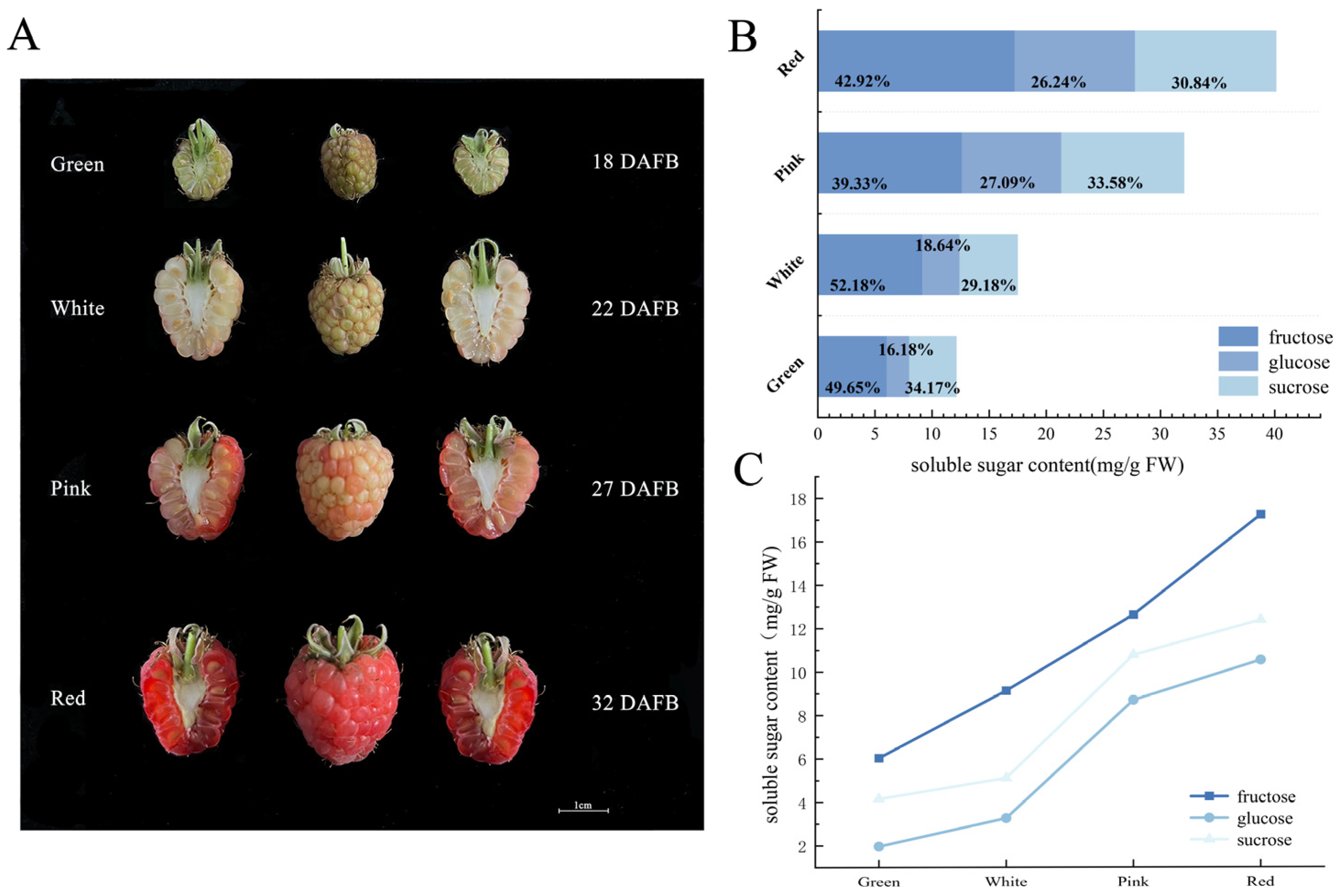
During post-anthesis development, raspberry fruits undergo a series of characteristic changes: the coloration deepens, the fruit size increases, and the receptacle progressively separates from the aggregate drupelets, culminating in full ripening (Figure 1A). As shown in Figure 1B, the fructose content in raspberry fruits at different ripening stages is significantly higher than that of glucose and sucrose, accounting for 40–50% of the total sugar content. As fruit maturation progressed, the contents of three major soluble sugars—fructose, sucrose, and glucose—significantly increased. Notably, glucose and sucrose exhibited the most pronounced accumulation from the White to Pink stages (2.66 and 2.11 times increase) (Figure 1C). Based on the dynamic changes in soluble sugar content described above, this study selected fruit samples from three key developmental stages (White, Pink, and RR) for transcriptomic sequencing analysis.

3.2. The Raspberry Fruit Transcripts

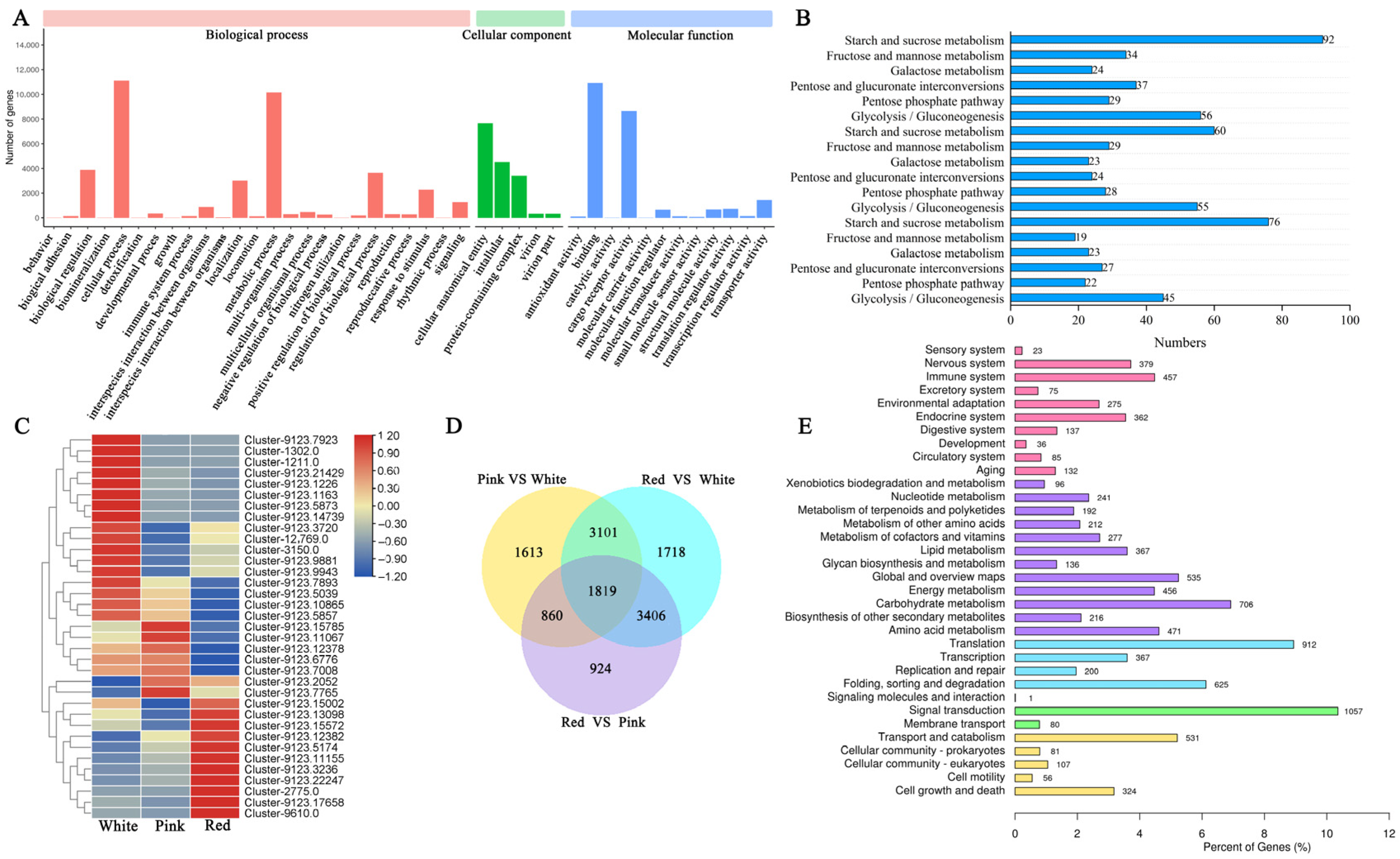
To understand the genetic differences affecting soluble sugar content during raspberry fruit ripening, we did transcriptomics sequencing on samples from the White, Pink, and Red stages. Analysis revealed a total of 19,026 differentially expressed genes (DEGs). A total of 7393 DEGs were identified between the White and Pink stage fruit libraries, while 10,044 DEGs were observed between the White and Red stage fruit libraries. A total of 7009 DEGs were identified between the Red and Pink stage fruits. Among these, 1819 transcripts were identified as differentially expressed genes that were consistently expressed across the three libraries (Figure 2D).
All differentially expressed genes (DEGs) in raspberry fruits at different stages of maturity were classified according to their GO functions, and all DEGs were annotated into three major categories: biological process, cellular component, and molecular function (Figure 2A). Among these, biological processes can be further divided into 25 subcategories, with the most significant gene enrichment observed in cellular processes (GO: 0009987) and metabolic processes (GO: 0008152), containing 11,129 and 10,165 genes, respectively. In the molecular function category, DEGs are primarily enriched in binding functions (GO: 0005488) and catalytic activity (GO: 0003824), involving 10,928 and 8651 genes, respectively. Cell component analysis showed that cell anatomical entities (GO: 0110165) had the highest number of genes (7657).
KEGG pathway enrichment analysis showed that DEGs were mainly distributed in five major categories: cellular processes, environmental information processing, genetic information processing, metabolism, and organism systems (Figure 2E). Cheng et al. identified KEGG pathways enriched in melon genes showing differential expression during sugar metabolism at different developmental stages, primarily including ‘starch and sucrose metabolism’, ‘amino sugar and nucleotide sugar metabolism’, ‘pentose and glucuronate interconversions’, and ‘glycolysis/gluconeogenesis’ [30]. Luo et al. enriched pomegranate-related differentially expressed genes into ‘fructose and mannose metabolism’ and ‘pentose phosphate pathway’ [31]. We thus identified six common KEGG pathways related to sugar metabolism and screened these six pathways across the three comparison groups (Figure 2B). The results showed that as the fruit matured, the gene enrichment levels of the glycolysis/gluconeogenesis and starch and sucrose metabolism pathways increased, while the number of genes involved in starch and sucrose metabolism decreased. In contrast, gene expression levels in the fructose and mannose metabolic pathways increased significantly, and genes in the glycolysis/gluconeogenesis and pentose phosphate pathways showed similar trends. Notably, genes in the galactose metabolic pathway did not undergo significant changes in the Pink vs. White and Red vs. Pink comparison groups, suggesting that later stages of fruit development may favor fructose accumulation over sucrose metabolism.
From these metabolic pathways, 35 key genes involved in soluble sugar metabolism were identified, including 7 FRK genes (Cluster-1302.0, Cluster-9123.13098, Cluster-9123.12382, Cluster-9123.5873, Cluster-9123.7923, Cluster-9123.12378, Cluster-9123.5039), 7 PFK genes (Cluster-2775.0, Cluster-9123.11155, Cluster-9123.3720, Cluster-9123.6776, Cluster-9123.3236, Cluster-9123.5174, Cluster-9123.22247), 4 HXK genes (Cluster-9123.9881, Cluster-9123.2052, Cluster-9123.17658, Cluster-9123.15002), 2 NI genes (Cluster-9123.15572, Cluster-9123.7893), 4 SPS genes (Cluster-9123.15785, Cluster-9123.10865, Cluster-9123.7765, Cluster-9123.21429), 5 SuS genes (Cluster-9123.9943, Cluster-9610.0, Cluster-3150.0, Cluster-9123.14739, Cluster-9123.11067), 2 SDH genes (Cluster-9123.7008, Cluster-9123.5857), 4 CWINV1 genes (Cluster-1211.0, Cluster-12769.0, Cluster-9123.1226, Cluster-9123.1163). Hierarchical clustering analysis based on FPKM values showed (Figure 2C) that 5 out of 7 PFK genes were continuously upregulated during fruit development, and their expression trends were consistent with changes in fructose content, indicating that these genes may play a key role in sugar metabolism regulation. Among these, the expression level of Cluster-9123.11155 was significantly higher than that of other PFK genes (FPKM values were 5–20 times higher), so we selected this gene for cloning and further validated its function through transient transformation and genetic transformation.

3.3. Gene Structure of RiPFK2

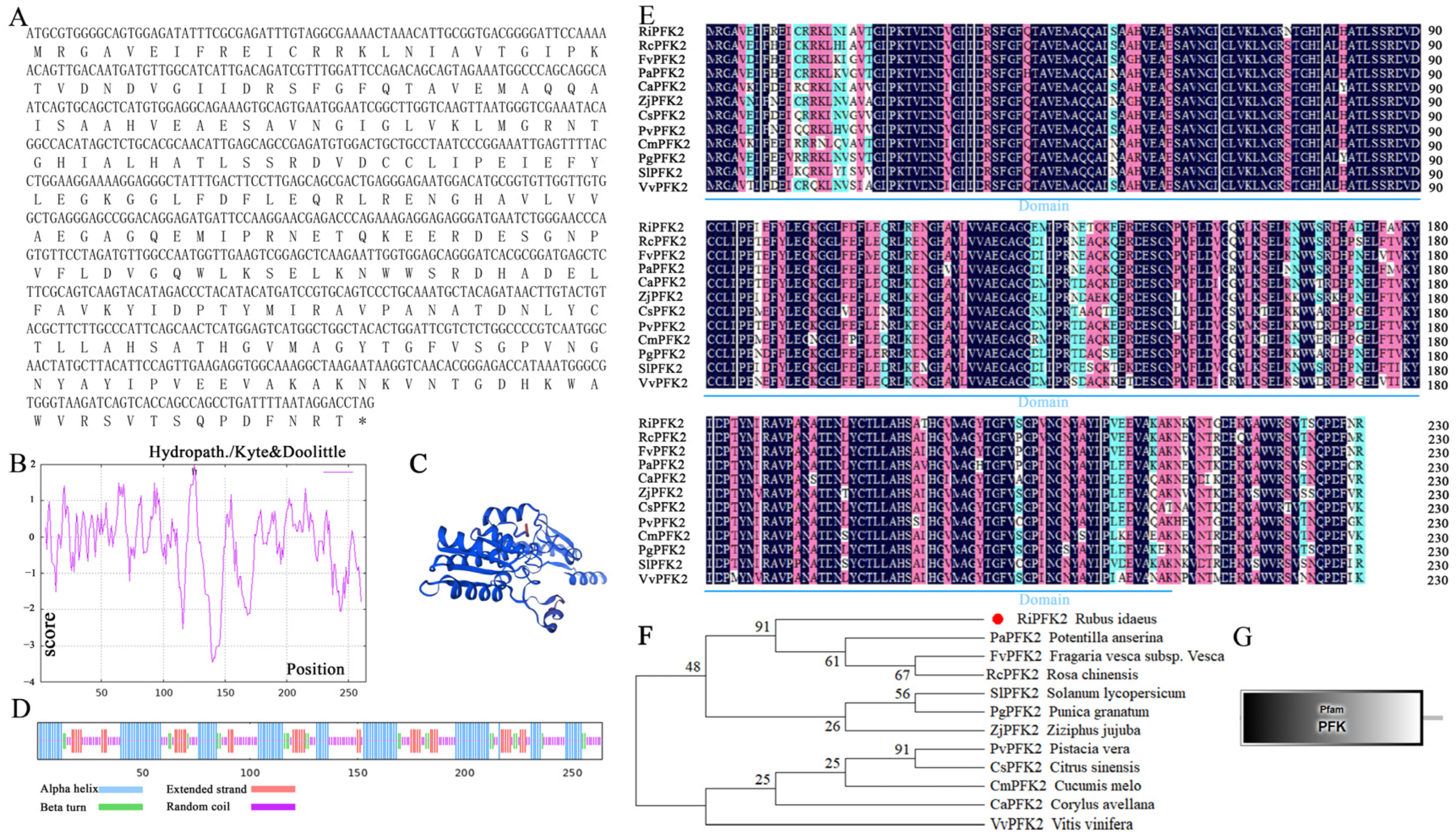
The coding sequence (CDS) of RiPFK2 is 870 nucleotides long and encodes 264 amino acids (Figure 3A). Its physicochemical properties are summarized in Table S3. RiPFK2 is a hydrophilic protein, with the most hydrophilic and hydrophobic sites located at amino acids 140 and 125, respectively (Figure 3B). The secondary structure of the protein consists of 39.77% α-helices, 8.71% β-turns, 35.61% random coils, and 15.91% extended chains (Figure 3D). Analysis of the domains and tertiary structure prediction of the RiPFK2 protein revealed that it possesses the characteristic domains and tertiary structure of the PFK family (Figure 3C,G). Multiple sequence alignment results indicate that the RiPFK2 protein is highly conserved with other PFK2 amino acid sequences (Figure 3E). Phylogenetic tree analysis shows that RiPFK2 is most closely related to PaPFK2 (Figure 3F).

3.4. Expression Levels and Subcellular Localization Within Different Tissues of the RiPFK2 Gene

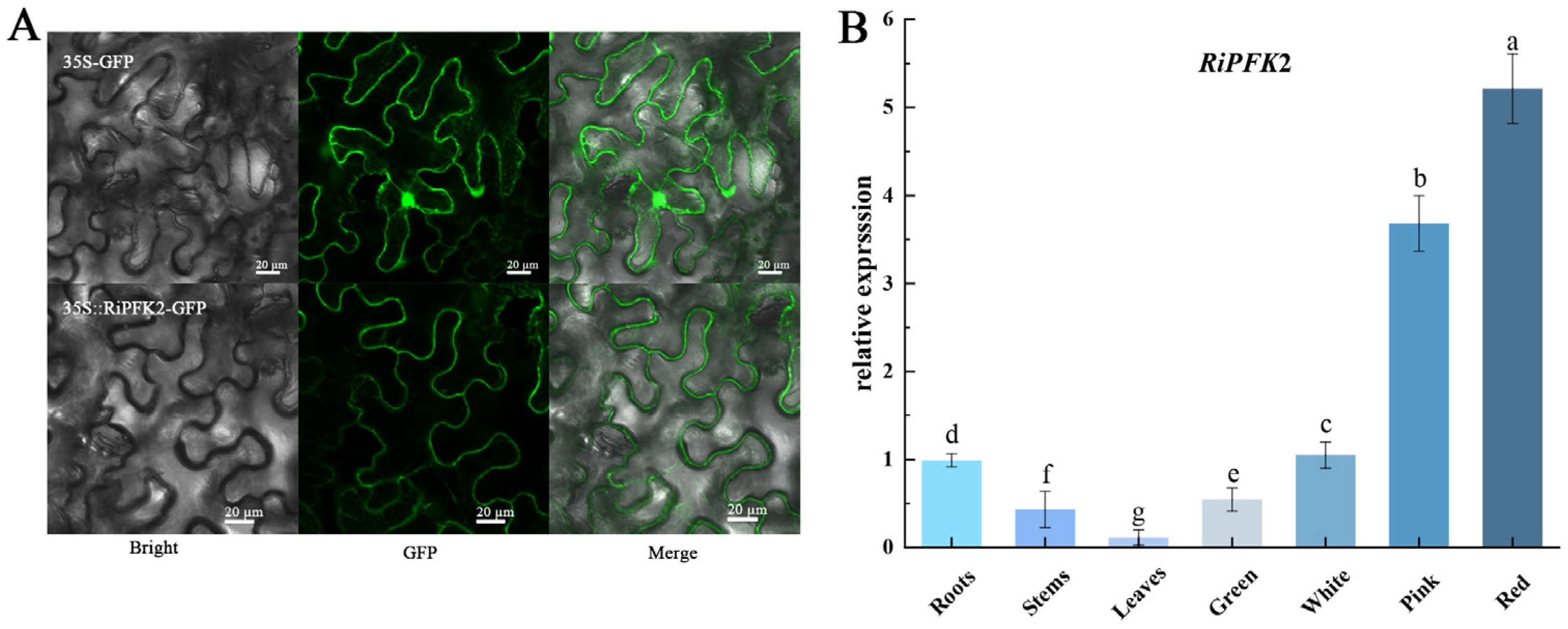
To investigate the expression pattern of the RiPFK2 gene in raspberry plants, qRT-PCR analysis was used to evaluate the expression levels of the RiPFK2 gene in whole plants at the Root, Stem, Leaf, Flower, Green, White, Pink, and Red stages (Figure 4B). The expression levels of the RiPFK2 gene varied significantly across different tissues, with the highest expression observed in RR stage fruits. The expression of this gene increased with fruit maturity, consistent with the trend of soluble sugar content changes within the fruit. These results suggest that it may play a crucial role in the accumulation of sugar content during raspberry fruit maturation.
The coding sequence of RiPFK2 was fused with GFP and transiently expressed in tobacco leaves. Microscopic observation of tobacco epidermal cells showed that GFP was expressed only in the cytoplasm and nucleus, while the RiPFK2-GFP signal was detected only in the cytoplasm (Figure 4A). Based on these results, it is suggested that the RiPFK2 gene is a cytoplasm-localized structural gene.

3.5. Functional Validation of RiPFK2 in Enhancing Sugar Content in Tomato Fruits

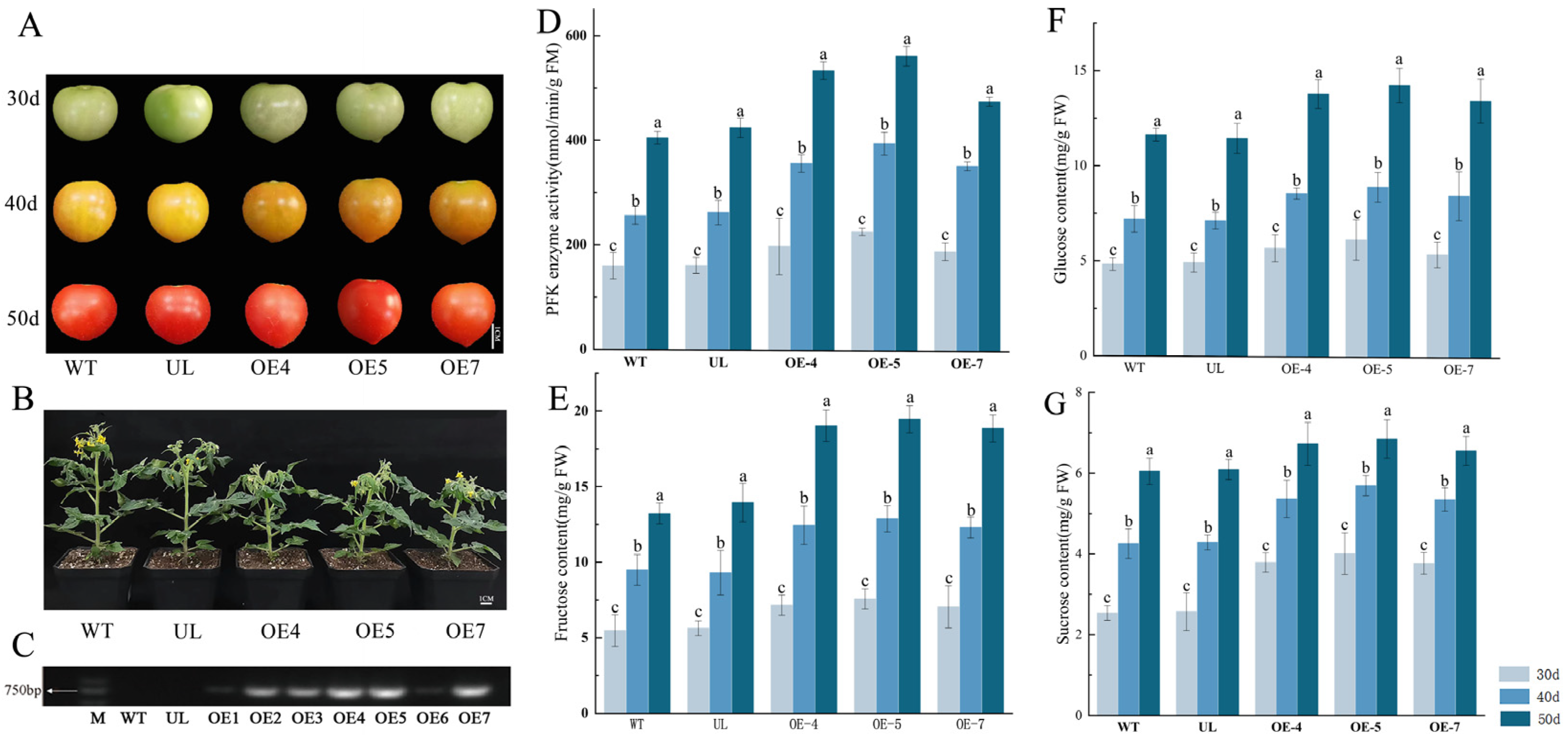
To investigate the role of RiPFK2 in regulating soluble sugar accumulation in fruits, an overexpression vector, pCAMBIA1300-35S-RiPFK2, was constructed and transformed into tomato plants. Seven independent transgenic tomato lines overexpressing RiPFK2 (designated OE-1 to OE-7) were confirmed via kanamycin resistance screening and agarose gel electrophoresis (Figure 5C). Lines OE-4, OE-5, and OE-7 were selected for further analysis, with wild-type (WT) and empty vector-transformed (UL) plants used as controls (Figure 5A,B).
Through observation of fruit phenotypes, it was found that there were no significant differences in the size and color of transgenic tomato fruits at three stages compared with the control groups WT and UL (Figure 5A,B). Intra-group comparisons of PFK enzyme activity in fruits at 30, 40, and 50 days showed that PFK enzyme activity increased with fruit maturity (Figure 5D).
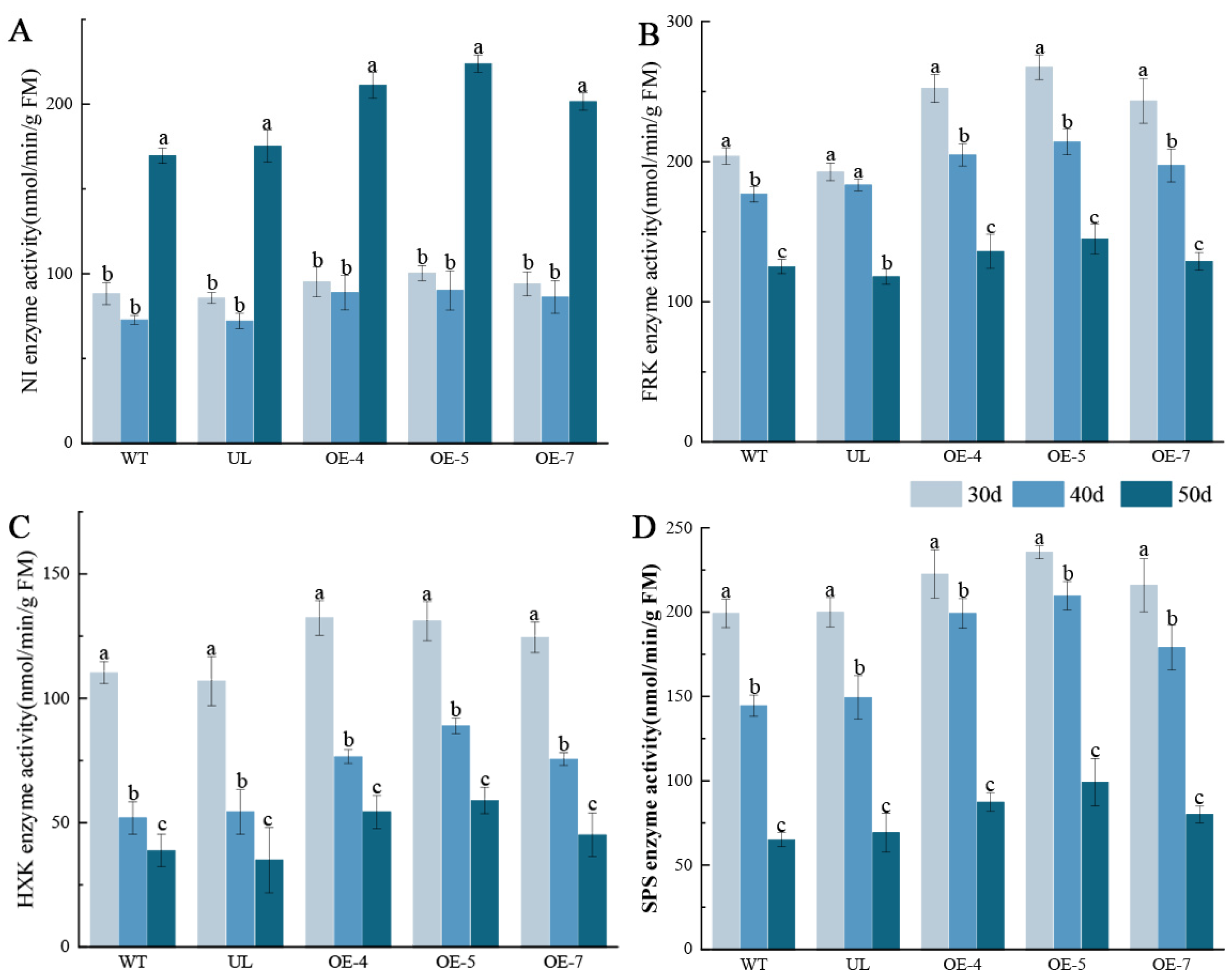
Additionally, the content of fructose, sucrose, and glucose, as well as changes in the expression levels of related sugar metabolism genes, were analyzed in fruits at three stages (30 d, 40 d, and 50 d) in both control and transgenic lines. The results showed that, compared with the control group, the internal fructose, glucose, and sucrose content in transgenic tomato fruits increased continuously with fruit maturation (Figure 5E–G). The fructose content in the overexpressing line’s fruit showed the greatest difference from the wild type at 50 days, increasing significantly by 1.44 times. The activity of the NI enzyme remained relatively stable in the early stages but increased rapidly at the 50-day stage, while the activity of FRK, HXK, and SPS gradually decreased with fruit maturation (Figure 6A–D). The expression levels of genes related to sugar accumulation in fruits were also measured in the transgenic lines.
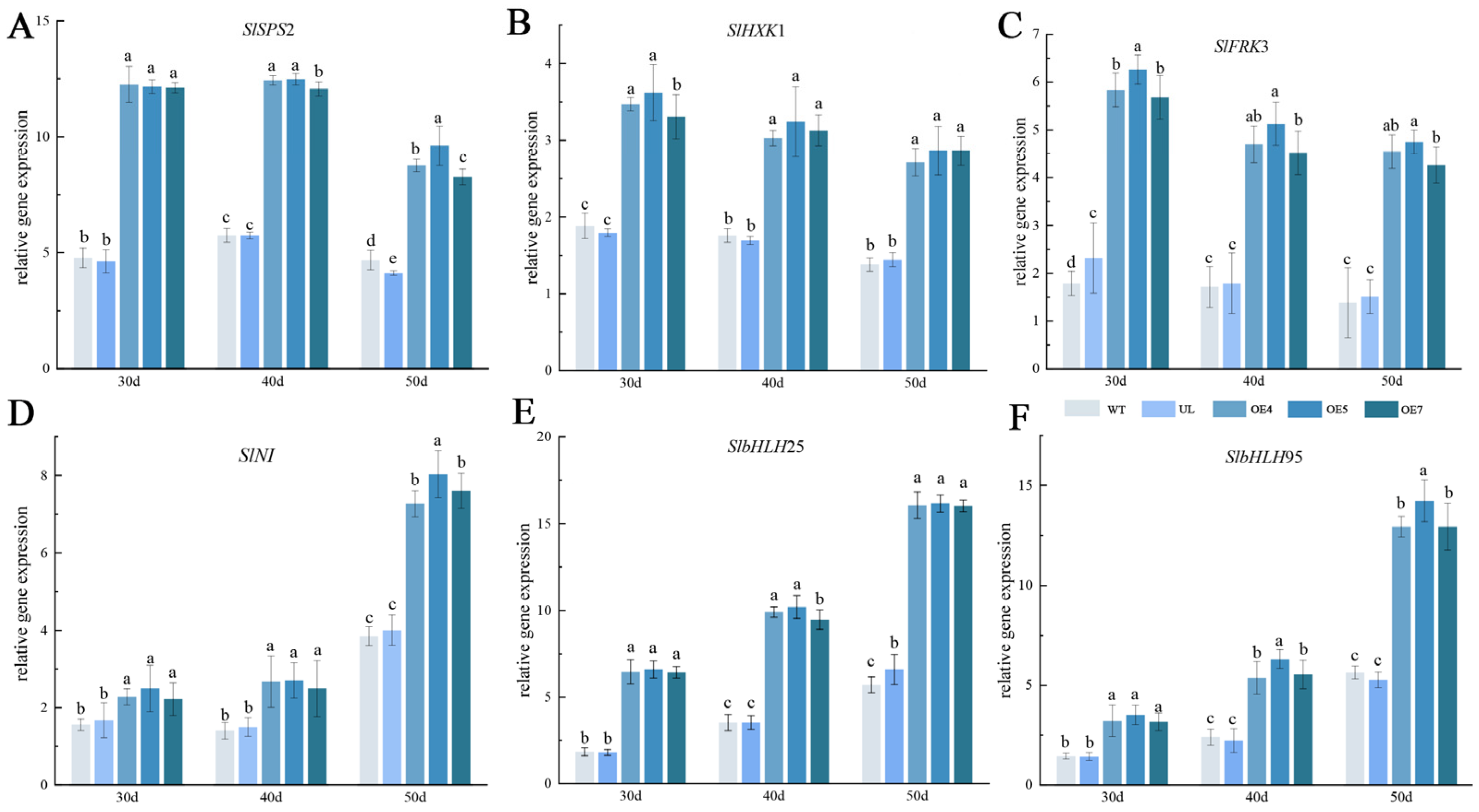
The data showed that the trends in the transcriptional levels of the SlNI, SlFRK3, and SlSPS2 genes were generally consistent with the trends in the enzymatic activities they encode, with the overexpression group significantly higher than the control group (Figure 7D). The expression level of SlNI was low at 30 and 40 days and showed no significant changes, but rapidly increased at 50 days. The expression levels of SlFRK3 and SlHXK1 both gradually decreased as the fruit matured, while the expression level of SlSPS2 first increased and then decreased (Figure 7A–C). The expression levels of transcription factors SlbHLH025 and SlbHLH095 both showed an upward trend, with significant differences between the transgenic lines and the control group (Figure 7E,F). Among these, the expression level of SlbHLH025 gradually increased, while the trend of SlbHLH095 was more pronounced during the later stages of fruit development. These results indicate that genes encoding neutral transaminase, fructose kinase, hexokinase, and sucrose phosphate synthase can regulate their activity, and that overexpression of the RiPFK2 gene can regulate the accumulation of soluble sugars by influencing the expression of other key enzyme genes. Additionally, the expression levels of SlbHLH025 and SlbHLH095 increase with fruit maturation, consistent with the trend in RiPFK2 gene expression, suggesting their involvement in sugar metabolism.

3.6. Functional Validation of RiPFK2 in Enhancing Soluble Sugar Content in Raspberry Fruits

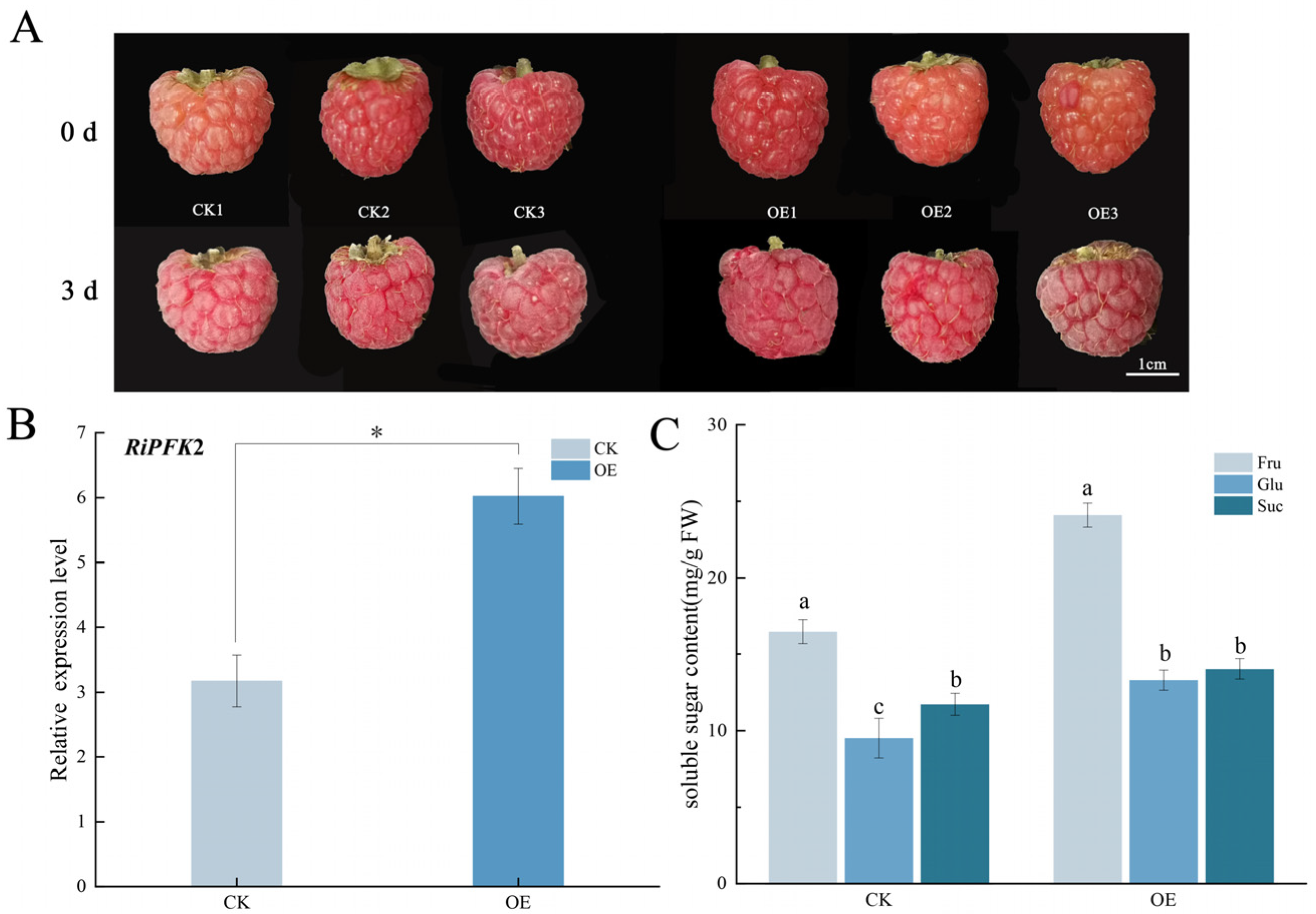
To further clarify the molecular mechanism by which RiPFK2 regulates sugar accumulation in raspberry, we transiently expressed this gene in Red stage fruits of Rubus idaeus ‘Caroline’ via vacuum-mediated infiltration. As shown in Figure 8A, three days after transient overexpression of the RiPFK2 gene in raspberry fruits, the fruits showed varying degrees of shrinkage, with certain drupelets appearing wrinkled. However, the overall structure of the fruits remained intact, and no signs of softening or decay were observed. Overexpression of RiPFK2 significantly increased the levels of fructose, glucose, and sucrose in raspberry fruits relative to the control group (1.45, 1.40 and 1.19 times increase) (Figure 8B,C). These findings align with the predicted biological function of RiPFK2, indicating that its successful overexpression promotes the accumulation of soluble sugars in fruit tissues.

4. Discussion

Soluble sugars, as the primary components of carbohydrates, are key factors influencing fruit flavor [32]. The content and composition ratio of soluble sugars (such as fructose, glucose, and sucrose) directly affect the sweetness characteristics of fruits. This study found that during the development of raspberry (Rubus idaeus L.) fruits, the content of fructose, glucose, and sucrose all showed a significant increasing trend, with fructose accumulation being the most pronounced and reaching the maximum accumulation rate during the ripening stage. This phenomenon is consistent with reports from multiple major raspberry varieties [33], indicating that the rapid accumulation of fructose and glucose is a primary characteristic of raspberry fruit ripening. Studies have shown that the rapid accumulation of fructose and glucose is closely related to fruit maturation. Similar findings have been reported in Rubus idaeus ‘Bulgarin Rubin’, Rubus fruticosus, and Citrus reticulata Blanco [34,35,36]. However, Ziziphus jujuba Mill. exhibits a different sugar accumulation dynamic: the internal glucose and fructose content first increase and then gradually decrease [37]. This trend suggests that changes in sugar accumulation may be regulated by species-specific genetic characteristics.
Transcriptomic analysis revealed that the significantly enriched differentially expressed genes (DEGs) in raspberry fruits were primarily associated with “glycolysis/gluconeogenesis”, “starch and sucrose metabolism”, and “fructose and mannose metabolism” pathways. This finding is in agreement with the existing research consensus [38,39]. The transcriptional activity of SDH, CWINV1, and SPS exhibited a progressive decline throughout raspberry maturation. This trend is consistent with the fruit’s sucrose accumulation pattern, which is marked by a primary phase in early development [40,41,42], and corroborates the well-documented role of these enzymes in facilitating sucrose storage. The consistent enrichment of galactose metabolism genes across successive developmental transitions underscores its metabolic continuity. Given its established role in promoting sucrose unloading, the sustained activity of this pathway in late stages—alongside declining sucrose accumulation rates and elevated expression of fructose biosynthesis genes—collectively indicates that the metabolic program shifts to prioritize fructose accumulation during the final phase of fruit maturation [43]. The elevated expression of FRK and HXK during early fruit development implies their involvement in foundational hexose activation. However, the persistent upregulation of PFK points to its role as a central driver of glycolytic flux, indicating its paramount importance in the regulation of sugar metabolism across the entire developmental continuum of raspberry fruit.
Both fructose and glucose within plants originate from starch and sucrose metabolism and are further metabolized through glycolysis. PFK, as a key rate-limiting enzyme in the glycolytic pathway, influences fruit sugar accumulation and ripening through the glycolytic/gluconeogenic pathways and significantly upregulates fructose and glucose synthesis [44,45]. Research indicates that the fructose-6-phosphate kinase gene exhibits different expression patterns in different parts of raspberries and at different stages of fruit development. It is speculated that this gene not only participates in the sugar accumulation process but also plays an important role in responding to biotic and abiotic stresses. qRT-PCR detection of RiPFK2 expression levels in different parts and tissues revealed that it was consistent with the accumulation trends of fructose and total sugar in raspberry fruits, reaching the highest expression level during the Red stage. This phenomenon is similar to the results of a study on the Chinese white pear (Pyrus bretschneideri) [46]. Studies have shown that overexpression of the RiPFK2 gene significantly increases the accumulation of fructose and glucose. Interestingly, sucrose content increased in transgenic tomatoes compared to wild-type tomatoes, but the difference was not significant in raspberry fruits, which may be related to compensatory supplementation of PFP [47]. The activity of glycolytic pathway enzymes directly affects the balance between sugar and acid content. The upregulation of HXK enzyme activity and SlHXK1 proves that glycolysis still exists. Similarly, although AtPFK inhibition reduced enzyme activity, it did not significantly affect sucrose levels [48,49,50]. The compensatory PFP may have partially compensated for the function of PFK, but the specific regulatory mechanism still needs further study.
The rapid accumulation of fructose in plant cell vacuoles is influenced by a variety of factors. Firstly, fructose is mainly synthesized from sucrose and sorbitol. NI serves as the basis for the decomposition, synthesis, and interconversion of three soluble sugars in the cytoplasm, and it can promote the conversion of sucrose into hexose [51,52,53]. The consistent trend in NI activity and fructose content as the fruit ripens proves this point. Secondly, free fructose in the cytoplasm is phosphorylated by HXK or FRK before entering the vacuole. FRK has a much higher affinity for fructose than HXK and plays a major negative regulatory role in fructose accumulation [54]. In the late stage of transgenic tomato fruit ripening, the decrease in FRK expression levels and activity leads to reduced fructose metabolism, ultimately allowing more fructose to be accumulated, consistent with the results of Cao et al. (2018) [55].
Sugar metabolism is not determined by a single enzyme or gene but rather is the result of the joint regulation of multiple key sugar metabolism enzymes and genes. Wang et al. proposed a new hypothesis that the expression of soluble sugar key metabolic enzyme genes leads to an increase in hexose levels, which in turn feedback regulates other key metabolic enzyme genes [56]. Studies have shown that tomatoes overexpressing RiPFK2 exhibit significantly higher enzyme activity in the internal Suc-Suc system pathway than wild-type tomatoes. NI enzyme activity and its transcription factor SlNI1 expression gradually increase, while SPS enzyme activity and transcription factor SlSPS2 expression gradually decrease, resulting in a smaller difference in sucrose content compared to wild-type tomatoes. VvHXK1 and VvHXK2 in grapes regulate cell wall invertase CWINV and SUS [57]. During the later stages of fruit maturation in Litchi chinensis ‘Feizixiao’, the expression of PFK family genes is upregulated, which may enhance FRK enzyme activity and promote the EMP pathway to accelerate the degradation of soluble sugars in the fruit pulp, further supporting this view [58]. PFK catalyzes the phosphorylation of F6P to FDP. F6P is the main substrate for SPS in sucrose synthesis, and SPS activity can indirectly reflect the role of PFK in fruit sugar accumulation [59]. The findings are consistent with those of Apple: the gene expression levels and activity of SPS are closely related to sucrose concentration, and this view is well supported by the latest research [60,61]. Based on this, it is speculated that overexpression of RiPFK2 may indirectly affect sucrose concentration and related enzymes.
Basic helix-loop-helix (bHLH) transcription factors are widely responsive to environmental stimuli and developmental events, influencing anthocyanin accumulation, vacuolar acidification, and fruit sugar accumulation [62,63,64]. In apples, MdbHLH033 promotes the activity of MdMYB305 and increases the content of soluble sugars [65]. FabHLH09 activates FRK activity through ABA signaling, promoting increased sweetness in strawberries [66]. During tomato fruit maturation, overexpression of SlbHLH095 and SlbHLH025 promotes early fruit ripening and increases soluble sugar content [67]. Overexpression of RiPFK2 in tomato fruits was accompanied by significant upregulation of the related regulatory transcription factors bHLH025 and bHLH095, which are involved in sugar accumulation during fruit ripening. This finding is consistent with previous studies; however, whether these factors directly regulate sugar accumulation in raspberry fruits requires further investigation.

5. Conclusions

In summary, RiPFK2 was found to play an important role in regulating sugar accumulation in raspberry fruits. The results showed that RiPFK2 gene expression was positively correlated with PFK activity and was significantly highly expressed during the ripening period when the fructose content in the fruit was highest. In addition, the RiPFK2 gene was cloned and overexpressed in tomatoes and raspberries. Compared with the wild type, the expression level of the internal PFK gene was significantly upregulated; the contents of fructose, glucose, and sucrose were significantly increased, with fructose having the highest content. The RiPFK2 gene increases the activity of enzymes positively correlated with other key genes involved in sugar metabolism by influencing the expression levels of these genes, thereby accelerating the entire sugar metabolism pathway and increasing the soluble sugar content of the fruit. However, it has no significant effect on the phenotype of the fruit after ripening. Analysis of the above results demonstrates the key role of the RiPFK2 gene in promoting sugar accumulation.

Supplementary Materials

The following supporting information can be downloaded at: https://www.mdpi.com/article/10.3390/horticulturae12010079/s1, Table S1: Primer details used for quantitative real-time PCR analysis. Table S2: Primer sequences of gene cloning. Table S3: Physiological and biochemical properties of test proteins. CDS, coding sequence; MW, molecular weight of the amino acid sequence; GRAVY, grand average of hydropathicity; pI, theoretical isoelectric point. Table S4: Linear regression equation and correlation coefficient for sugar components, where the regression equation X represents peak area and y represents concentration. Figure S1: Representative HPLC chromatograms of samples at 8 mg/mL concentration. Figure S2: Representative HPLC chromatograms of samples at 6 mg/mL concentration. Figure S3: Representative HPLC chromatograms of samples at 4 mg/mL concentration. Figure S4: Representative HPLC chromatograms of samples at 2 mg/mL concentration. Figure S5: Representative HPLC chromatograms of samples at 0 mg/mL concentration.

Author Contributions

Conceptualization, B.X. and G.Y.; software, T.Z.; validation, B.X. and X.L.; formal analysis, F.Y.; investigation, Y.W.; resources, F.Y.; data curation, B.X. and Y.W.; writing—original draft preparation, B.X.; writing—review and editing, G.Y. and T.L.; visualization, T.L.; supervision, G.Y.; project administration, G.Y.; funding acquisition, T.L. All authors have read and agreed to the published version of the manuscript.

Funding

This research was funded by the Opening Project of National-local Joint Engineering Research Center for Development and Utilization of Small Fruits in Cold Regions, grant number 2024GCXZ001.

Data Availability Statement

The original contributions presented in this study are included in the article/Supplementary Material. Further inquiries can be directed to the corresponding author(s).

Acknowledgments

During the preparation of this manuscript, the authors used Deepseek V3.2 for the purposes of language polish and translation, but the overall structure and writing of the paper did not involve the use of GenAI.

Conflicts of Interest

The authors declare no conflicts of interest.

Abbreviations

The following abbreviations are used in this manuscript:
WGDWhole-genome duplication
qRT-PCRQuantitative real-time PCR
HMMhidden Markov model
SMARTsimple modular architecture research tool
NCBINational Center for Biotechnology Information
CTABcetyltrimethyl ammonium bromide
MEMEmultiple EM for motif elicitation
HPLChigh pressure liquid chromatography
GFPgreen fluorescent protein
CDScoding sequence
NINeutral Invertase
SPSSucrose Phosphate Synthase
CWINVCell wall acid converting enzyme
SDHSorbitol dehydrogenase
SUSSucrose synthase
FRKFructokinase
HXKHexokinase
VINVVacuolar acid converting enzyme
PFPpyrophosphate-dependent fructose-6-phosphate phosphotransferase
bHLHBasic helix-loop-helix
FPKMFragments Per Kilobase per Million
PFKATP-dependent phosphofructokinase

References

  1. Ruan, Y.L.; Jin, Y.; Yang, Y.J.; Li, G.J.; Boyer, J.S. Sugar input, metabolism, and signaling mediated by invertase: Roles in development, yield potential, and response to drought and heat. Mol. Plant 2010, 3, 942–955. [Google Scholar] [CrossRef]
  2. Mustroph, A.; Sonnewald, U.; Biemelt, S. Characterisation of the ATP-dependent phosphofructokinase gene family from Arabidopsis thaliana. FEBS Lett. 2007, 581, 2401–2410. [Google Scholar] [CrossRef]
  3. Ochiki, S.N.; Chen, T.; Meng, Z.; Zhou, J.; Gao, Z.; Deng, Y.; Luan, M. Characterization of ATP-dependent phosphofructokinase genes during ripening and their modulation by phytohormones during postharvest storage of citrus fruits (Citrus reticulata Blanco.). Plant Physiol. Biochem. 2024, 217, 109235. [Google Scholar] [CrossRef]
  4. Wu, Q.; Ma, X.; Chen, Q.; Yuan, Y.; Wang, H.; He, X.; Zhao, M.; Li, J. Dynamics of energy metabolism in carbon starvation-induced fruitlet abscission in litchi. Horticulturae 2021, 7, 576. [Google Scholar] [CrossRef]
  5. Yu, J.Q.; Gu, K.D.; Zhang, L.L.; Sun, C.H.; Zhang, Q.Y.; Wang, J.H.; Wang, C.K.; Wang, W.Y.; Du, M.C.; Hu, D.G. MdbHLH3 modulates apple soluble sugar content by activating phosphofructokinase gene expression. J. Integr. Plant Biol. 2022, 64, 884–900. [Google Scholar] [CrossRef] [PubMed]
  6. Turner, W.L.; Plaxton, W.C. Purification and characterization of pyrophosphate- and ATP-dependent phosphofructokinases from banana fruit. Planta 2003, 217, 113–121. [Google Scholar] [CrossRef]
  7. Hess, N.; Richter, S.; Liebthal, M.; Dietz, K.J.; Mustroph, A. The Phosphofructokinase Isoform AtPFK5 Is a Novel Target of Plastidic Thioredoxin-f-Dependent Redox Regulation. Antioxidants 2021, 10, 401. [Google Scholar] [CrossRef] [PubMed]
  8. Liu, S.; Gou, J.; Tang, Y.; Wei, Y.; Zhang, R. Genome-Wide Characterization of the Phosphofructokinase Gene Family in Arabidopsis thaliana and Functional Analysis of AtPFK2 in Stress Tolerance. Int. J. Mol. Sci. 2025, 26, 6828. [Google Scholar] [CrossRef] [PubMed]
  9. De Vega, J.J.; Peel, N.; Purdy, S.J.; Hawkins, S.; Donnison, L.; Dyer, S.; Farrar, K. Differential expression of starch and sucrose metabolic genes linked to varying biomass yield in Miscanthus hybrids. Biotechnol. Biofuels 2021, 14, 98. [Google Scholar] [CrossRef]
  10. Wang, C.; Hao, N.; Li, Y.; Sun, N.; Wang, L.; Ye, Y. Cold-Tolerance Candidate Gene Identification in Maize Germination Using BSA, Transcriptome and Metabolome Profiling. Agronomy 2025, 15, 1067. [Google Scholar] [CrossRef]
  11. Teng, H.; Fang, T.; Lin, Q.; Song, H.; Liu, B.; Chen, L. Red raspberry and its anthocyanins: Bioactivity beyond antioxidant capacity. Trends Food Sci. Technol. 2017, 66, 153–165. [Google Scholar] [CrossRef]
  12. Ponder, A.; Hallmann, E. The nutritional value and vitamin C content of different raspberry cultivars from organic and conventional production. J. Food Compos. Anal. 2020, 87, 103429. [Google Scholar] [CrossRef]
  13. Blando, F.; Oomah, B.D. Sweet and sour cherries: Origin, distribution, nutritional composition and health benefits. Trends Food Sci. Technol. 2019, 86, 517–529. [Google Scholar] [CrossRef]
  14. Stavang, J.A.; Freitag, S.; Foito, A.; Verrall, S.; Heide, O.M.; Stewart, D.; Sønsteby, A. Raspberry fruit quality changes during ripening and storage as assessed by colour, sensory evaluation and chemical analyses. Sci. Hortic. 2015, 195, 216–225. [Google Scholar] [CrossRef]
  15. Alvarado-Raya, H.E.; Darnell, R.L.; Williamson, J.G. Root to Shoot Relations in an Annual Raspberry (Rubus idaeus L.) Production System. HortScience 2007, 42, 1559–1562. [Google Scholar] [CrossRef]
  16. de Oliveira, P.B.; Silva, M.J.; Ferreira, R.B.; Oliveira, C.M.; Monteiro, A.A. Dry Matter Partitioning, Carbohydrate Composition, Protein Reserves, and Fruiting in ‘Autumn Bliss’ Red Raspberry Vary in Response to Pruning Date and Cane Density. HortScience 2007, 42, 77–82. [Google Scholar] [CrossRef]
  17. Yu, Y.; Yang, G.; Sun, L.; Song, X.; Bao, Y.; Luo, T.; Wang, J. Comprehensive Evaluation of 24 Red Raspberry Varieties in Northeast China Based on Nutrition and Taste. Foods 2022, 11, 3232. [Google Scholar] [CrossRef] [PubMed]
  18. Rambaran, T.F.; Bowen-Forbes, C.S. Chemical and Sensory Characterisation of Two Rubus rosifolius (Red Raspberry) Varieties. Int. J. Food Sci. 2020, 2020, 6879460. [Google Scholar] [CrossRef]
  19. Mikulic-Petkovsek, M.; Schmitzer, V.; Slatnar, A.; Stampar, F.; Veberic, R. Composition of sugars, organic acids, and total phenolics in 25 wild or cultivated berry species. J. Food Sci. 2012, 77, C1064–C1070. [Google Scholar] [CrossRef] [PubMed]
  20. Krüger, E.; Dietrich, H.; Schöpplein, E.; Rasim, S.; Kürbel, P. Cultivar, storage conditions and ripening effects on physical and chemical qualities of red raspberry fruit. Postharvest Biol. Technol. 2011, 60, 31–37. [Google Scholar] [CrossRef]
  21. Mazur, S.P.; Sønsteby, A.; Nes, A.; Wold, A.B.; Foito, A.; Freitag, S.; Verrall, S.; Stewart, D.; Heide, O.M. Effects of Post-Flowering Environmental Variation along an Altitudinal Gradient on Chemical Composition of ‘Glen Ample’ Red Raspberry (Rubus idaeus L.). Eur. J. Hortic. Sci. 2014, 79, 267–277. [Google Scholar] [CrossRef]
  22. Mazur, S.P.; Sønsteby, A.; Wold, A.B.; Foito, A.; Freitag, S.; Verrall, S.; Conner, S.; Stewart, D.; Heide, O.M. Post-flowering photoperiod has marked effects on fruit chemical composition in red raspberry (Rubus idaeus). Ann. Appl. Biol. 2014, 165, 454–465. [Google Scholar] [CrossRef]
  23. Carew, R.; Kempler, C.; Moore, P.; Walters, T. Developments in Raspberry Production, Cultivar Releases, and Intellectual Property Rights: A Comparative Study of British Columbia and Washington State. Int. J. Fruit Sci. 2009, 9, 54–77. [Google Scholar] [CrossRef]
  24. Wang, S.Y.; Chen, C.-T.; Wang, C.Y. The influence of light and maturity on fruit quality and flavonoid content of red raspberries. Food Chem. 2009, 112, 676–684. [Google Scholar] [CrossRef]
  25. Buchfink, B.; Xie, C.; Huson, D.H. Fast and sensitive protein alignment using DIAMOND. Nat. Methods 2015, 12, 59–60. [Google Scholar] [CrossRef] [PubMed]
  26. Li, T.; Guo, X.; Chen, Y.; Li, J.; Yu, C.; Guo, Z.; Yang, G. Overexpression of the Rubus idaeus Polygalacturonases Gene RiPG2 Accelerates Fruit Softening in Solanum lycopersicum. Agronomy 2024, 14, 160. [Google Scholar] [CrossRef]
  27. Sparkes, I.A.; Runions, J.; Kearns, A.; Hawes, C. Rapid, transient expression of fluorescent fusion proteins in tobacco plants and generation of stably transformed plants. Nat. Protoc. 2006, 1, 2019–2025. [Google Scholar] [CrossRef] [PubMed]
  28. Park, S.H.; Morris, J.L.; Park, J.E.; Hirschi, K.D.; Smith, R.H. Efficient and genotype-independent Agrobacterium-mediated tomato transformation. J. Plant Physiol. 2003, 160, 1253–1257. [Google Scholar] [CrossRef]
  29. Jiang, S.; Li, H.; Zhang, L.; Mu, W.; Zhang, Y.; Chen, T.; Wu, J.; Tang, H.; Zheng, S.; Liu, Y.; et al. Generic Diagramming Platform (GDP): A comprehensive database of high-quality biomedical graphics. Nucleic Acids Res. 2025, 53, D1670–D1676. [Google Scholar] [CrossRef]
  30. Cheng, H.; Kong, W.; Tang, T.; Ren, K.; Zhang, K.; Wei, H.; Lin, T. Identification of Key Gene Networks Controlling Soluble Sugar and Organic Acid Metabolism During Oriental Melon Fruit Development by Integrated Analysis of Metabolic and Transcriptomic Analyses. Front. Plant Sci. 2022, 13, 830517. [Google Scholar] [CrossRef]
  31. Luo, J.; Hu, K.; Qu, F.; Ni, D.; Zhang, H.; Liu, S.; Chen, Y. Metabolomics Analysis Reveals Major Differential Metabolites and Metabolic Alterations in Tea Plant Leaves (Camellia sinensis L.) Under Different Fluorine Conditions. J. Plant Growth Regul. 2021, 40, 798–810. [Google Scholar] [CrossRef]
  32. Yu, L.; Liu, H.; Shao, X.; Yu, F.; Wei, Y.; Ni, Z.; Xu, F.; Wang, H. Effects of hot air and methyl jasmonate treatment on the metabolism of soluble sugars in peach fruit during cold storage. Postharvest Biol. Technol. 2016, 113, 8–16. [Google Scholar] [CrossRef]
  33. Kafkas, E.; Özgen, M.; Özoğul, Y.; Türemiş, N. Phytochemical and fatty acid profile of selected red raspberry cultivars: A comparative study. J. Food Qual. 2008, 31, 67–78. [Google Scholar] [CrossRef]
  34. Dincheva, I.; Badjakov, I.; Kondakova, V.; Batchvarova, R. Metabolic profiling of red raspberry (Rubus idaeus) during fruit development and ripening. Int. J. Agric. Sci. Res. 2013, 3, 81–88. [Google Scholar]
  35. Tosun, I.; Ustun, N.S.; Tekguler, B. Physical and chemical changes during ripening of blackberry fruits. Sci. Agric. 2008, 65, 87–90. [Google Scholar] [CrossRef]
  36. Qin, Y.; Li, G.; Wang, L.; Teixeira, J.A.; Ye, Z.; Feng, Q.; Hu, G. A comparative study between a late-ripening mutant of citrus and its original line in fruit coloration, sugar and acid metabolism at all fruit maturation stage. Fruits 2015, 70, 5–11. [Google Scholar] [CrossRef]
  37. Song, J.; Bi, J.; Chen, Q.; Wu, X.; Lyu, Y.; Meng, X. Assessment of sugar content, fatty acids, free amino acids, and volatile profiles in jujube fruits at different ripening stages. Food Chem. 2019, 270, 344–352. [Google Scholar] [CrossRef] [PubMed]
  38. Min, D.; Li, Z.; Fu, X.; Wang, J.; Li, F.; Li, X.; Zhang, X. Integration of transcriptomic and metabonomic reveals molecular differences of sweetness and aroma between postharvest and vine ripened tomato fruit. Food Control 2022, 139, 109102. [Google Scholar] [CrossRef]
  39. Jiang, C.-C.; Lyu, K.-L.; Zeng, S.-M.; Wang, X.-A. Integrated metabonomics and transcriptomics analysis of fruit sugar biosynthesis in two pear cultivars with different sugar contents. Sci. Hortic. 2025, 345, 114135. [Google Scholar] [CrossRef]
  40. Gao, Y.; Yao, Y.; Chen, X.; Wu, J.; Wu, Q.; Liu, S.; Guo, A.; Zhang, X. Metabolomic and transcriptomic analyses reveal the mechanism of sweet-acidic taste formation during pineapple fruit development. Front. Plant Sci. 2022, 13, 971506. [Google Scholar] [CrossRef]
  41. Walker, R.P.; Bonghi, C.; Varotto, S.; Battistelli, A.; Burbidge, C.A.; Castellarin, S.D.; Chen, Z.H.; Darriet, P.; Moscatello, S.; Rienth, M.; et al. Sucrose Metabolism and Transport in Grapevines, with Emphasis on Berries and Leaves, and Insights Gained from a Cross-Species Comparison. Int. J. Mol. Sci. 2021, 22, 7794. [Google Scholar] [CrossRef]
  42. Minami, A.; Kang, X.; Carter, C.J. A cell wall invertase controls nectar volume and sugar composition. Plant J. 2021, 107, 1016–1028. [Google Scholar] [CrossRef]
  43. Ren, Y.; Liao, S.; Xu, Y. An update on sugar allocation and accumulation in fruits. Plant Physiol. 2023, 193, 888–899. [Google Scholar] [CrossRef] [PubMed]
  44. Desnoues, E.; Gibon, Y.; Baldazzi, V.; Signoret, V.; Génard, M.; Quilot-Turion, B. Profiling sugar metabolism during fruit development in a peach progeny with different fructose-to-glucose ratios. BMC Plant Biol. 2014, 14, 336. [Google Scholar] [CrossRef]
  45. Jiang, S.; Li, S.; Luo, J.; Wang, X.; Shi, C. QTL mapping and transcriptome analysis of sugar content during fruit ripening of Pyrus pyrifolia. Front. Plant Sci. 2023, 14, 1137104. [Google Scholar] [CrossRef]
  46. Lü, H.; Li, J.; Huang, Y.; Zhang, M.; Zhang, S.; Wu, J. Genome-wide identification, expression and functional analysis of the phosphofructokinase gene family in Chinese white pear (Pyrus bretschneideri). Gene 2019, 702, 133–142. [Google Scholar] [CrossRef]
  47. van der Merwe, M.J.; Groenewald, J.H.; Stitt, M.; Kossmann, J.; Botha, F.C. Downregulation of pyrophosphate: D-fructose-6-phosphate 1-phosphotransferase activity in sugarcane culms enhances sucrose accumulation due to elevated hexose-phosphate levels. Planta 2010, 231, 595–608. [Google Scholar] [CrossRef]
  48. Perby, L.K.; Richter, S.; Weber, K.; Hieber, A.J.; Hess, N.; Crocoll, C.; Mogensen, H.K.; Pribil, M.; Burow, M.; Nielsen, T.H.; et al. Cytosolic phosphofructokinases are important for sugar homeostasis in leaves of Arabidopsis thaliana. Ann. Bot. 2022, 129, 37–52. [Google Scholar] [CrossRef] [PubMed]
  49. Li, J.; Liu, Y.; Zhang, J.; Cao, L.; Xie, Q.; Chen, G.; Chen, X.; Hu, Z. Suppression of a hexokinase gene SlHXK1 in tomato affects fruit setting and seed quality. Plant Physiol. Biochem. 2023, 205, 108160. [Google Scholar] [CrossRef]
  50. Li, J.; Yao, X.; Zhang, J.; Li, M.; Xie, Q.; Yang, Y.; Chen, G.; Zhang, X.; Hu, Z. Genome-Wide Identification and Expression Analysis of Hexokinase Gene Family Under Abiotic Stress in Tomato. Plants 2025, 14, 441. [Google Scholar] [CrossRef] [PubMed]
  51. Li, M.; Li, P.; Ma, F.; Dandekar, A.M.; Cheng, L. Sugar metabolism and accumulation in the fruit of transgenic apple trees with decreased sorbitol synthesis. Hortic. Res. 2018, 5, 60. [Google Scholar] [CrossRef]
  52. Topcu, H.; Degirmenci, I.; Sonmez, D.A.; Paizila, A.; Karci, H.; Kafkas, S.; Kafkas, E.; Ercisli, S.; Alatawi, A. Sugar, Invertase Enzyme Activities and Invertase Gene Expression in Different Developmental Stages of Strawberry Fruits. Plants 2022, 11, 509. [Google Scholar] [CrossRef]
  53. Zhang, X.M.; Liu, S.H.; Du, L.Q.; Yao, Y.L.; Wu, J.Y. Activities, transcript levels, and subcellular localizations of sucrose phosphate synthase, sucrose synthase, and neutral invertase and change in sucrose content during fruit development in pineapple (Ananas comosus). J. Hortic. Sci. Biotechnol. 2019, 94, 573–579. [Google Scholar] [CrossRef]
  54. Granot, D.; David-Schwartz, R.; Kelly, G. Hexose Kinases and Their Role in Sugar-Sensing and Plant Development. Front. Plant Sci. 2013, 4, 44. [Google Scholar] [CrossRef]
  55. Cao, Y.; Li, S.; Han, Y.; Meng, D.; Jiao, C.; Abdullah, M.; Li, D.; Jin, Q.; Lin, Y.; Cai, Y. A new insight into the evolution and functional divergence of FRK genes in Pyrus bretschneideri. R. Soc. Open Sci. 2018, 5, 171463. [Google Scholar] [CrossRef] [PubMed]
  56. Wang, N.; Li, X.; Xu, C.; Lian, R.; Pan, T.; Guo, Z.; Yu, Y.; She, W. Gene expression in the sugar metabolism between ‘Guanxi’pummelo and its early-ripening mutant ‘Liuyuezao’. Sci. Hortic. 2022, 305, 111435. [Google Scholar] [CrossRef]
  57. Yu, F.; Li, L.M.; Yang, P.P.; Wang, X.Q. Hexokinase from grape berries: Its prokaryotic expression, polyclonal antibody preparation and biochemical property analyses. J. Plant Biochem. Biotechnol. 2013, 22, 324–334. [Google Scholar] [CrossRef]
  58. Peng, J.; Du, J.; Wuqiang, M.; Chen, T.; Shui, X.; Liao, H.; Lin, X.; Zhou, K. Transcriptomics-based analysis of the causes of sugar receding in Feizixiao litchi (Litchi chinensis Sonn.) pulp. Front. Plant Sci. 2022, 13, 1083753. [Google Scholar] [CrossRef]
  59. Wan, H.; Wu, L.; Yang, Y.; Zhou, G.; Ruan, Y.L. Evolution of Sucrose Metabolism: The Dichotomy of Invertases and Beyond. Trends Plant Sci. 2018, 23, 163–177. [Google Scholar] [CrossRef]
  60. Li, M.; Li, D.; Feng, F.; Zhang, S.; Ma, F.; Cheng, L. Proteomic analysis reveals dynamic regulation of fruit development and sugar and acid accumulation in apple. J. Exp. Bot. 2016, 67, 5145–5157. [Google Scholar] [CrossRef]
  61. Lu, W.; Hao, W.; Liu, K.; Liu, J.; Yin, C.; Su, Y.; Hang, Z.; Peng, B.; Liu, H.; Xiong, B.; et al. Analysis of sugar components and identification of SPS genes in citrus fruit development. Front. Plant Sci. 2024, 15, 1372809. [Google Scholar] [CrossRef]
  62. Li, H.; Yang, Z.; Zeng, Q.; Wang, S.; Luo, Y.; Huang, Y.; Xin, Y.; He, N. Abnormal expression of bHLH3 disrupts a flavonoid homeostasis network, causing differences in pigment composition among mulberry fruits. Hortic. Res. 2020, 7, 83. [Google Scholar] [CrossRef]
  63. Huang, X.Y.; Wang, C.K.; Zhao, Y.W.; Sun, C.H.; Hu, D.G. Mechanisms and regulation of organic acid accumulation in plant vacuoles. Hortic. Res. 2021, 8, 227. [Google Scholar] [CrossRef]
  64. Wang, J.; Cao, K.; Wang, L.; Dong, W.; Zhang, X.; Liu, W. Two MYB and Three bHLH Family Genes Participate in Anthocyanin Accumulation in the Flesh of Peach Fruit Treated with Glucose, Sucrose, Sorbitol, and Fructose In Vitro. Plants 2022, 11, 507. [Google Scholar] [CrossRef]
  65. Zhang, S.; Wang, H.; Wang, T.; Liu, W.; Zhang, J.; Fang, H.; Zhang, Z.; Peng, F.; Chen, X.; Wang, N. MdMYB305-MdbHLH33-MdMYB10 regulates sugar and anthocyanin balance in red-fleshed apple fruits. Plant J. 2023, 113, 1062–1079. [Google Scholar] [CrossRef] [PubMed]
  66. Jia, H.; Wang, Y.; Sun, M.; Li, B.; Han, Y.; Zhao, Y.; Li, X.; Ding, N.; Li, C.; Ji, W.; et al. Sucrose functions as a signal involved in the regulation of strawberry fruit development and ripening. New Phytol. 2013, 198, 453–465. [Google Scholar] [CrossRef] [PubMed]
  67. Zhang, L.; Kang, J.; Xie, Q.; Gong, J.; Shen, H.; Chen, Y.; Chen, G.; Hu, Z. The basic helix-loop-helix transcription factor bHLH95 affects fruit ripening and multiple metabolisms in tomato. J. Exp. Bot. 2020, 71, 6311–6327. [Google Scholar] [CrossRef] [PubMed]
Figure 1. Color change during different ripening stages of R. idaeus ‘Caroline’ (A), fructose, sucrose, and glucose content and percentage of total soluble sugars at different stages (B), and trend chart (C).
Horticulturae 12 00079 g001
Figure 2. GO function classification (A), transcriptome analysis of KEGG pathways related to sugar metabolism (B), clustered Heatmap Analysis of Genes Enriched in Sugar Metabolism (C), common Difference Gene Venn Diagram (D) and KEGG metabolic pathway analysis (E) during the development process of raspberry fruit.
Horticulturae 12 00079 g002
Figure 3. The bioinformatic characterization of RiPFK2 included gene and amino acid sequence alignment (A), hydrophilicity prediction (B), tertiary structure prediction (C), secondary structure prediction (D), multiple sequence alignment (E) and phylogenetic analysis (F) and functional domain prediction (G) with homologous proteins from other species. The asterisk (*) denotes the stop codon.
Horticulturae 12 00079 g003
Figure 4. Subcellular localization of RiPFK2 in the tobacco leaves (A) and expression of RiPFK2 in various tissues (B). Different lowercase letters above the error bars indicate statistically significant differences among groups at p < 0.05.
Horticulturae 12 00079 g004
Figure 5. Tomato fruits from wild-type (WT) and RiPFK2-overexpressing (OE) lines (A), representative plants of WT and OE genotypes (B), agarose gel electrophoresis detection of positive strains (C), PFK enzyme activity (D), and contents of fructose (E), glucose (F), and sucrose (G) in ripe fruits of WT and OE plants. Different lowercase letters above the error bars indicate statistically significant differences among groups at p < 0.05.
Horticulturae 12 00079 g005
Figure 6. The activity of neutral invertase (A), fructose kinase (B), hexokinase (C), and sucrose phosphate synthase (D) in fresh mature transgenic and wild-type tomato fruits. Different lowercase letters above the error bars indicate statistically significant differences among groups at p < 0.05.
Horticulturae 12 00079 g006
Figure 7. Relative expression levels of SlSPS2 (A), SlHXK1 (B), SlFRK3 (C), SlNI (D), SlbHLH025 (E), and SlbHLH095 (F) in transgenic and wild-type tomato fruits. Different lowercase letters above the error bars indicate statistically significant differences among groups at p < 0.05.
Horticulturae 12 00079 g007
Figure 8. Overexpressing (OE) RiPFK2 in ‘Caroline’ red raspberry fruits (A), relative expression levels of RiPFK2 (B), and fructose, glucose, and sucrose content in fresh mature transgenic and wild-type raspberry fruits (C). The asterisk (*) indicates a statistically significant difference between the two groups (p < 0.05, Student’s t-test). Different lowercase letters above bars indicate significant differences (p < 0.05, one-way ANOVA followed by Tukey’s HSD test).
Horticulturae 12 00079 g008
Disclaimer/Publisher’s Note: The statements, opinions and data contained in all publications are solely those of the individual author(s) and contributor(s) and not of MDPI and/or the editor(s). MDPI and/or the editor(s) disclaim responsibility for any injury to people or property resulting from any ideas, methods, instructions or products referred to in the content.