Article

Variations in Nutritional Composition of Walnut Kernels Across Different Elevations in Chongqing Region, China


1
Research Institute of Forestry, Chinese Academy of Forestry, Beijing 100091, China
2
Chongqing Academy of Forestry, Chongqing 400036, China
3
Chongqing Key Laboratory of Forest Ecological Restoration and Utilization in the Three Gorges Reservoir Area, Chongqing 400036, China
4
College of Forestry, Northwest A&F University, Yangling 712100, China
*
Authors to whom correspondence should be addressed.
Horticulturae 2026, 12(1), 16; https://doi.org/10.3390/horticulturae12010016
Submission received: 20 November 2025 / Revised: 21 December 2025 / Accepted: 22 December 2025 / Published: 24 December 2025
(This article belongs to the Section Plant Nutrition)

Abstract

Walnut (Juglans regia L.) is an important economic and oil-bearing tree species, and the nutritional quality of its kernels is influenced by multiple environmental factors. Elevation is an ecological gradient that integratively reflects variations in environmental conditions such as temperature and light availability and shows a certain degree of correlation with kernel nutritional quality. The aim of this study was to clarify the regulatory effect of elevation on the nutritional quality of walnut kernels in Chongqing and to optimize the layout of high-quality walnut production areas. This study used 181 walnut germplasm resources collected from 16 natural populations (production areas) in Chongqing. Six elevation ranges were defined (I: 200–600 m, II: 600–900 m, III: 900–1200 m, IV: 1200–1400 m, V: 1400–1600 m, VI: 1600–1800 m), and twelve nutritional traits of walnut kernels were systematically analyzed, including total fat, protein, soluble sugar, tannin, saturated fatty acids (stearic acid, palmitic acid, arachidic acid), and unsaturated fatty acids (oleic acid, palmitoleic acid, cis-11-eicosenoic acid, linoleic acid, α-linolenic acid). The results showed that the fat content of walnut kernels was generally higher than 60%, with the highest value in zone VI (62.93%). The protein content was the highest in zone III (17.71%) and the lowest in zone VI (16.06%). Soluble sugar and tannin contents were relatively low, both peaking in zone II (3.10% and 10.85%, respectively). The overall content of saturated fatty acids was low, being slightly higher in zone II, with little variation among components across elevations. Among monounsaturated fatty acids, oleic acid was dominant, showing a decreasing–increasing trend with rising elevation, with the lowest value in zone II (20.98%) and the highest in zone VI (26.93%), while palmitoleic acid and cis-11-eicosenoic acid were maintained at low levels. Polyunsaturated fatty acids were dominated by linoleic acid, ranging from 51.22% to 61.04%, with the highest content in zone II and the lowest in zone VI. Comprehensive evaluation and cluster analysis grouped the six elevation zones into three categories, with zone II showing the best nutritional quality, particularly in terms of soluble sugar, stearic acid, and linoleic acid, while zone I had the lowest score. These findings provide a theoretical basis for the selection of high-quality walnut production areas and the precision cultivation of nutrient-rich walnut fruits, as well as important data support for the scientific planning and high-quality development of the walnut industry in Chongqing.

1. Introduction

Walnut, also known as common walnut, is a deciduous tree belonging to the genus Juglans in the family Juglandaceae and is one of the four major nuts in the world [1]. Walnut kernels are characterized by their unique flavor and rich nutritional value, making them highly favored by consumers. In addition to their dietary benefits, walnuts possess significant economic and ecological value and are widely cultivated across the globe with a large and growing consumer market. China, as one of the centers of origin of walnuts, has a long history of walnut cultivation, with prominent industrial advantages, particularly in regions such as Xinjiang and Yunnan [2,3]. China is the world’s largest producer of walnuts in terms of both cultivation area and output. According to the 2022/2023 harvest statistics from the International Nut and Dried Fruit Council (INC/NF), the global production of shelled walnuts was approximately 1.2 million tons, with China accounting for 53%. As a woody oil crop of strategic importance, walnut not only provides humans with highly nutritious food but also plays a vital role in ecological conservation, rural revitalization, and agricultural economic development [4]. Walnuts exhibit strong adaptability, with high tolerance to cold and drought, and can grow under diverse climatic and soil conditions, particularly thriving in temperate and subtropical regions [5,6]. These characteristics have established walnut as one of the most important woody oil crops worldwide [7,8].
The nutritional value of walnut kernels is the primary reason for their widespread attention. Studies have shown that walnut kernels are rich in fat, protein, carbohydrates, and tannin, among which fat content is particularly prominent, accounting for 60–70% of dry weight [9,10]. Walnut fat is dominated by unsaturated fatty acids, including linoleic acid (approximately 50–60%), oleic acid (about 15–25%), and α-linolenic acid (around 5–15%), while saturated fatty acids (such as palmitic acid and stearic acid) are present at relatively low levels, constituting only about 10% of total fat [11,12,13]. Unsaturated fatty acids, especially polyunsaturated fatty acids (PUFA), confer significant cardiovascular benefits by reducing low-density lipoprotein cholesterol (LDL-C) and improving lipid metabolism [14]. The protein content of walnut kernels is about 15–20% [15], with a relatively balanced amino acid composition, and essential amino acids accounting for 30–41% of total amino acids [16], although lysine (Lys) is often considered the first limiting amino acid [17]. In addition, walnut kernels contain approximately 5–10% carbohydrates, mainly monosaccharides and oligosaccharides, which provide energy for the human body [18]. Tannin, an important phenolic compound, accounts for about 0.5–2% of the kernel content and exhibits antioxidant and anti-inflammatory properties [19,20]. These nutritional characteristics highlight the significant application value of walnut kernels in the food industry, nutraceutical development, and daily diets.
Elevation, as a key environmental factor, has a significant impact on the nutritional quality of woody economic tree species such as walnut, chestnut, and tea-oil camellia [21,22,23]. Recent studies have shown that elevation affects plant metabolic pathways by altering light intensity, diurnal temperature variation, precipitation, and soil characteristics, thereby influencing the synthesis and accumulation of nutrients [24,25]. For instance, in Mangifera indica L., the total soluble solids and total sugar contents gradually decrease with increasing elevation, whereas total acidity significantly increases, which is closely related to changes in photosynthetic efficiency and organic acid metabolism [26]. In walnut, the linoleic acid content ranged from 58.82% to 62.44% at 500 m but decreased to 57.33–59.38% at 1200 m, possibly due to the influence of temperature reduction and oxygen variation on fatty acid synthase activity [21]. Moreover, Citrus reticulata Blanco grown at higher elevations exhibited significantly increased concentrations of amino acids, succinic acid, and 4-aminobutyrate esters, while sugar and limonin glucoside contents were relatively reduced. These changes may be closely associated with enhanced nitrogen metabolism and altered carbon allocation under high-elevation environments [27]. Collectively, these findings reflect the complex regulatory effects of elevation gradients on fruit chemical composition.
Chongqing, located in Southwest China, belongs to the subtropical monsoon climate zone. The region is dominated by hilly and mountainous terrain, with hills and mountains accounting for 90.93% of the total area. To the north lie the Daba and Wushan Mountains, to the east the Wuling Mountains, and to the south the Dalou Mountains. The complex topography, distinct vertical climate, and strong altitudinal differentiation provide favorable environmental conditions for walnut cultivation due to its unique ecological and geographical features [28]. At the same time, the wide altitudinal range of this region makes it a natural experimental field for studying the effects of elevation on the nutritional quality of walnuts. In recent years, Chongqing has vigorously developed the walnut industry, relying on its unique geographical advantages and resource endowment, gradually forming a characteristic economic forest industry centered on walnut. This industry not only promotes farmers’ income growth and rural revitalization in mountainous areas but also plays an important role in ecological protection, such as preventing soil erosion and improving the ecological environment. We infer that the nutritional composition of walnut kernels may fluctuate to some extent across different elevations. The present study aims to investigate the relationship between elevation and the nutritional quality of walnut kernels in Chongqing, with particular emphasis on the variation patterns and underlying mechanisms of saturated fatty acids, unsaturated fatty acids, protein, soluble sugar, and tannin in kernels under different altitudinal conditions. The findings will provide a scientific basis for optimizing the spatial layout of walnut cultivation in Chongqing.

2. Materials and Methods

2.1. Plant Materials

The plant materials used in this study were collected from 16 districts (counties) of Chongqing. The names of the natural walnut populations, sampling sites, and sample numbers are listed in Table 1. Corresponding temperature and precipitation data were obtained from the Chongqing Meteorological Service Center, Chongqing Meteorological Service. The sampling process consisted of four steps: (1) Based on information provided by local forestry departments, basic data on walnut resources were obtained in resource-concentrated areas through community recommendations, field visits, and on-site surveys; (2) A total of 310 seedling-grown walnut trees older than 30 years were selected for preliminary observation; (3) According to the preliminary measurements, 181 trees with superior or distinctive agronomic traits were further selected; (4) At walnut maturity (when the green husk turned yellow or slightly cracked), 30 green fruits were collected from the outer and upper sunny side of the canopy of each tree. The samples were brought back to the laboratory, dehusked, and oven-dried to constant weight for subsequent determination.

2.2. Determination of Nutrient Content

A total of 181 walnut trees were categorized into six altitudinal gradients (I: 200–600 m; II: 600–900 m; III: 900–1200 m; IV: 1200–1400 m; V: 1400–1600 m; VI: 1600–1800 m). From the dried walnut samples collected at different elevations, 1 kg was randomly selected and dehulled, and the kernels were used for the determination of protein, fat, soluble sugar, tannin, and fatty acid composition.
The determination of fat content was performed using the Soxhlet extraction method according to the national standard Determination of Fat in Foods (GB 5009.6-2016). Approximately 2.0 g of walnut powder was placed in a filter paper bag and extracted with 150 mL of petroleum ether for 4 h. After extraction, the solvent was evaporated, and the residual fat was dried at 105 °C to a constant weight. Fat content (%) was calculated as the ratio of fat weight to sample weight.
Protein content was measured by the Kjeldahl method following the standard Determination of Protein in Foods (GB 5009.5-2016). Approximately 0.5 g of walnut powder was digested with 0.1 g copper sulfate, 1 g potassium sulfate, and 5 mL concentrated sulfuric acid until the solution became clear blue-green, and then heated for 0.5 h. After cooling and dilution, the sample was distilled under alkaline conditions, and ammonia was absorbed and titrated with HCl. Protein content was calculated using a nitrogen-to-protein conversion factor of 6.25.
Soluble sugar content was determined according to the standard Determination of Soluble Sugar in Vegetables and Their Products—Copper Reduction and Iodometric Method (NY/T 1278-2007). Approximately 0.5 g of walnut powder was extracted twice with 25 mL of 80% ethanol at 80 °C for 30 min each time. The combined filtrates were adjusted to 50 mL, and soluble sugar content was measured using the copper reduction iodometric method and expressed as a percentage of the sample weight.
Tannin content was analyzed according to Determination of Tannin Content in Fruits, Vegetables and Their Products—Spectrophotometric Method (NY/T 1600-2008) using the phosphotungstic–phosphomolybdic acid reduction colorimetric assay. Approximately 2.0 g of walnut powder was extracted in a 100 mL volumetric flask in a boiling water bath for 30 min and then cooled to volume. After centrifugation, 1 mL of the supernatant was mixed with sodium tungstate–molybdate solution and sodium carbonate solution. After 2 h of color development, absorbance was measured at 765 nm to calculate tannin content.
Fatty acid composition was determined with reference to the national standard Determination of Fatty Acids in Foods (GB 5009.168-2016) using a gas chromatograph (YLSZJ-SB-201). All analyses were commissioned by the Economic Forest Product Quality Inspection and Testing Center of the National Forestry and Grassland Administration (Hangzhou).

2.3. Statistical Analysis

Data were processed using Microsoft Excel 2019 and SPSS 26. The final data were expressed as mean ± standard error (SE). One-way ANOVA was performed, followed by post hoc comparisons using the LSD test. The data were tested for homogeneity of variance and approximate normality (|Skewness| < 3, |Kurtosis| < 10). Bar charts, principal component analysis (PCA), and cluster analysis were performed using Origin 2024, while the Mantel test was conducted in R 4.5.1.
The comprehensive evaluation of walnut kernel nutritional quality from different regions was performed using the membership function method. The procedure was as follows:
(1) Data dimensionality reduction: PCA was applied to extract principal components with a cumulative variance contribution rate greater than 90%. (2) Standardization: Based on the principles of fuzzy mathematics, the scores of each principal component were normalized using the membership function:
μ(Xij) = (Xij − Xmin)/(Xmax − Xmin)
(3) Weight calculation: The variance contribution rate of each principal component (Vj) was used as the weight. The weight of each principal component (Wj) was calculated as:
Wj = Vj/ΣVj
(4) Comprehensive evaluation value: The comprehensive evaluation value (D) was obtained according to the formula:
D = Σ(Xij × Wj)
where μ(Xij) is the membership degree of the i-th treatment for the j-th indicator, and Xmax and Xmin represent the maximum and minimum values of the j-th indicator, respectively.

3. Results

3.1. Total Nutritional Quality Evaluation of Walnuts in Chongqing

Statistical analysis of the main nutrients and fatty acid composition of nuts from 181 walnut trees revealed considerable variation in the nutritional quality of walnuts in Chongqing (Table 2). For nutrient components, the average fat content was 61.15%, with a range of 22.5% and a coefficient of variation (CV) of 0.067, indicating relatively stable fat levels. The average protein content was 17.20% with a CV of 0.123, showing a moderate degree of variation among samples. The average soluble sugar content was 2.22%, but its coefficient of variation reached 0.579, much higher than that of other nutrients, suggesting uneven distribution and large individual differences. Tannin content averaged 9.997 g/kg with a CV of 0.21, indicating a medium level of variation. Regarding fatty acid composition, linoleic acid and oleic acid were the main unsaturated fatty acids in walnut kernels, with average contents of 59.28% and 23.40%, respectively. Linoleic acid was relatively stable (CV = 0.097), while oleic acid showed substantial variation (CV = 0.285), with the maximum content reaching 51% and the minimum only 10.9%. The average α-linolenic acid content was 8.55%, with a CV of 0.20, indicating some fluctuation among different samples. Palmitic acid and stearic acid were the dominant saturated fatty acids, with average contents of 5.69% and 2.72% and coefficients of variation of 0.091 and 0.193, respectively, suggesting higher stability of the former compared with the latter. In addition, some minor fatty acids, such as arachidic acid and palmitoleic acid, had low levels (<0.2%), but their coefficients of variation were 0.101 and 0.31, respectively, with the latter indicating relatively significant individual differences. Cis-11-eicosenoic acid also showed a relatively high coefficient of variation (CV = 0.165), suggesting that its content may be more susceptible to environmental conditions.

3.2. Changes in Nutrient Composition of Walnuts at Different Elevations

As shown in Figure 1, elevation had varying effects on the fat, protein, soluble sugar, and tannin contents of walnut kernels. The fat content across all elevation levels remained above 60% (60.38–62.93%), consistent with the characteristic high oil content of walnuts. The highest fat content was observed at elevation level VI (62.93%), which was significantly higher than that of the other levels, suggesting that higher elevations may favor fat accumulation in walnut kernels. In contrast, the lowest fat content appeared at level III (60.38%), while the differences among the remaining levels were relatively small. The protein content of walnut kernels showed an inverse trend compared with fat content. The lowest protein content occurred in the highest-elevation level VI (16.06%), which was significantly lower than that of all other elevation levels, while the highest protein content was recorded at level III (17.71%). Levels II, I, IV, and V ranged between 17.05% and 17.43%. This pattern of high fat accompanied by low protein was particularly evident in level VI. In the mid-elevation level II (600–900 m), the soluble sugar content (3.10%) and tannin content (10.85 g/kg) reached the highest values. By contrast, the lowest values for both soluble sugar (1.81%) and tannins (9.40 g/kg) were found in the lowest-elevation level I (200–600 m). In higher-elevation levels IV, V, and VI (1200–1800 m), the contents of soluble sugar and tannins were at moderate levels, with relatively small differences among them.

3.3. Changes in Saturated Fatty Acid (SFA) of Walnuts at Different Elevations

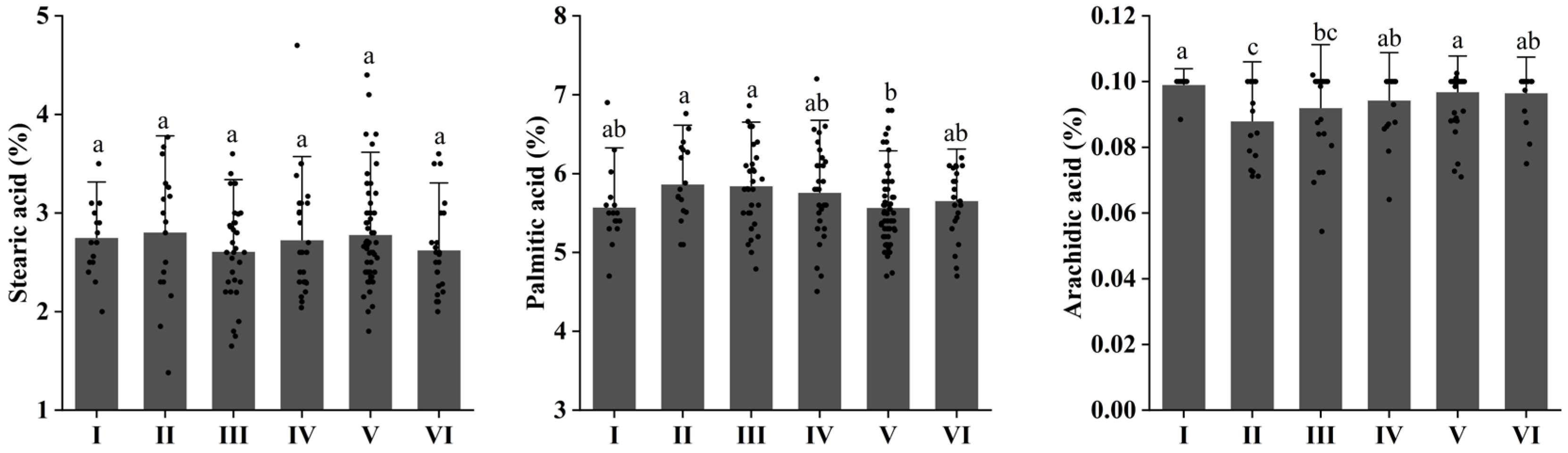
The saturated fatty acids (SFAs) in walnut kernels are mainly composed of palmitic acid, stearic acid, and trace amounts of arachidic acid. As shown in Figure 2, the contents of these three SFAs varied across different elevation zones. The stearic acid content showed relatively small fluctuations, with the highest value observed in zone II (2.81%) and the lowest in zone III (2.61%), indicating that low to mid-elevations (e.g., zone II) may be more favorable for its accumulation. In contrast, the stearic acid content in zone VI (2.63%) was also relatively low, suggesting that high elevations may not be conducive to its synthesis. As the predominant SFA, palmitic acid showed minor variation across elevation zones, remaining within the range of 5.57% to 5.87%. The highest level occurred in zone II (5.87%), while the lowest was in zone V (5.57%), indicating that palmitic acid responds relatively weakly to changes in elevation. Arachidic acid, present only in trace amounts, reached its maximum in zone I (0.099%) and its minimum in zone II (0.088%), with limited variation overall. Taken together, the total SFA content in walnut kernels tended to be higher in low- to mid-elevation regions (particularly zone II), whereas lower levels were generally observed in high-elevation and some mid-elevation zones.

3.4. Changes in Monounsaturated Fatty Acids (MUFA) and Polyunsaturated Fatty Acids (PUFA) of Walnuts at Different Elevations

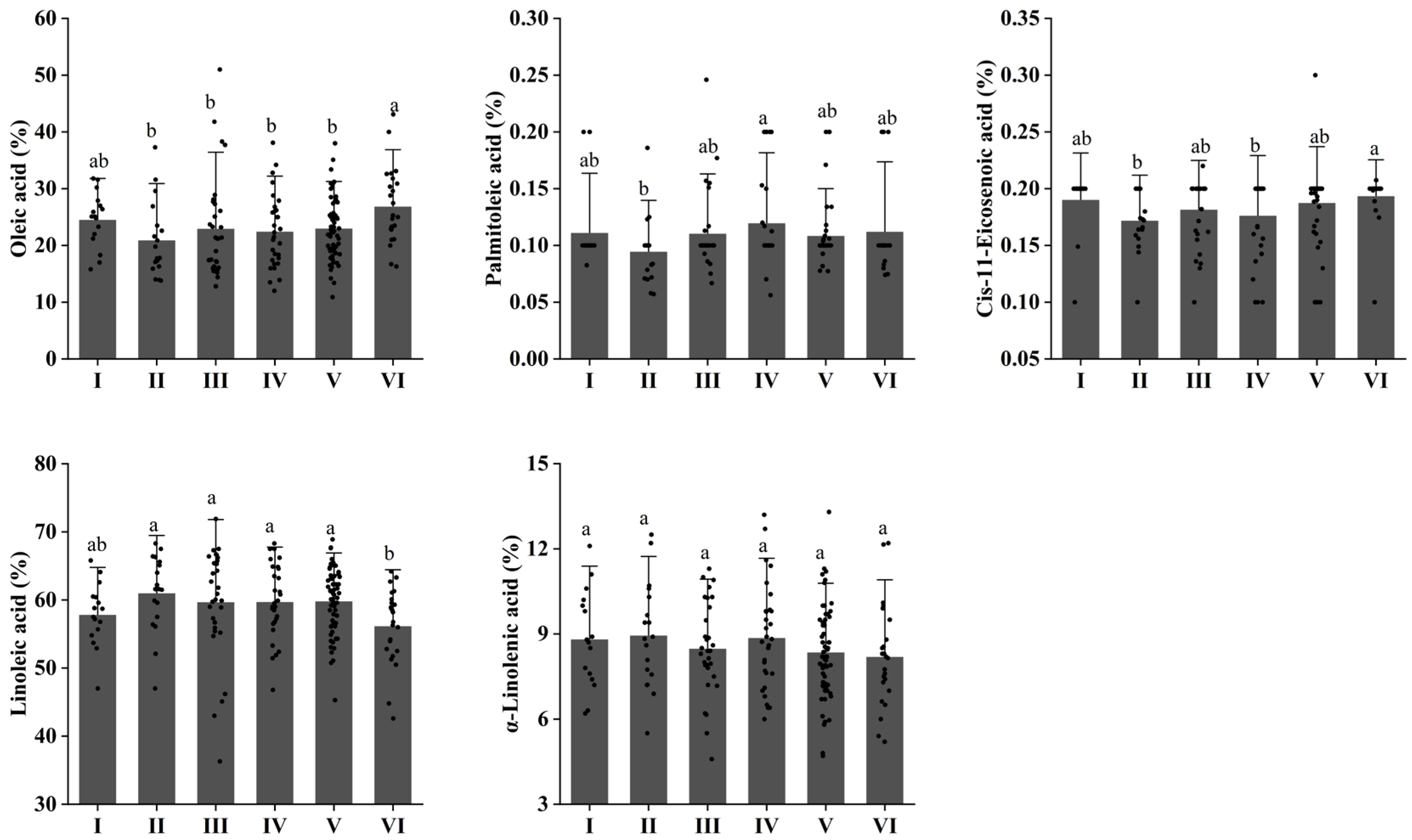
As shown in Figure 3, the monounsaturated fatty acids (MUFAs) in walnut kernels are dominated by oleic acid, accompanied by trace amounts of palmitoleic acid and cis-11-eicosenoic acid. The oleic acid content reached its maximum in zone VI (26.93%), followed by zone I (24.59%), while the lowest value was recorded in zone II (20.98%). Overall, the oleic acid content in zone VI was 5.95% higher than that in zone II, showing a clear difference. Both palmitoleic acid and cis-11-eicosenoic acid were present at very low levels (<0.20%). Palmitoleic acid was relatively highest in zone IV (0.12%) and lowest in zone II (0.095%). Cis-11-eicosenoic acid was relatively highest in zone VI (0.194%) and lowest in zone II (0.172%), with a maximum difference of 0.022%. In summary, the MUFA composition of walnut kernels was strongly determined by oleic acid content, with the highest MUFA levels found at the highest elevation (zone VI, 1600–1800 m). In contrast, PUFAs were maximized in zone II (600–900 m), whereas zone VI exhibited the lowest PUFA levels, with both linoleic and α-linolenic acid contents being the lowest among all elevation zones.

3.5. Visualization Analysis of Mantel Test for Walnut Nutritional Quality at Different Elevations

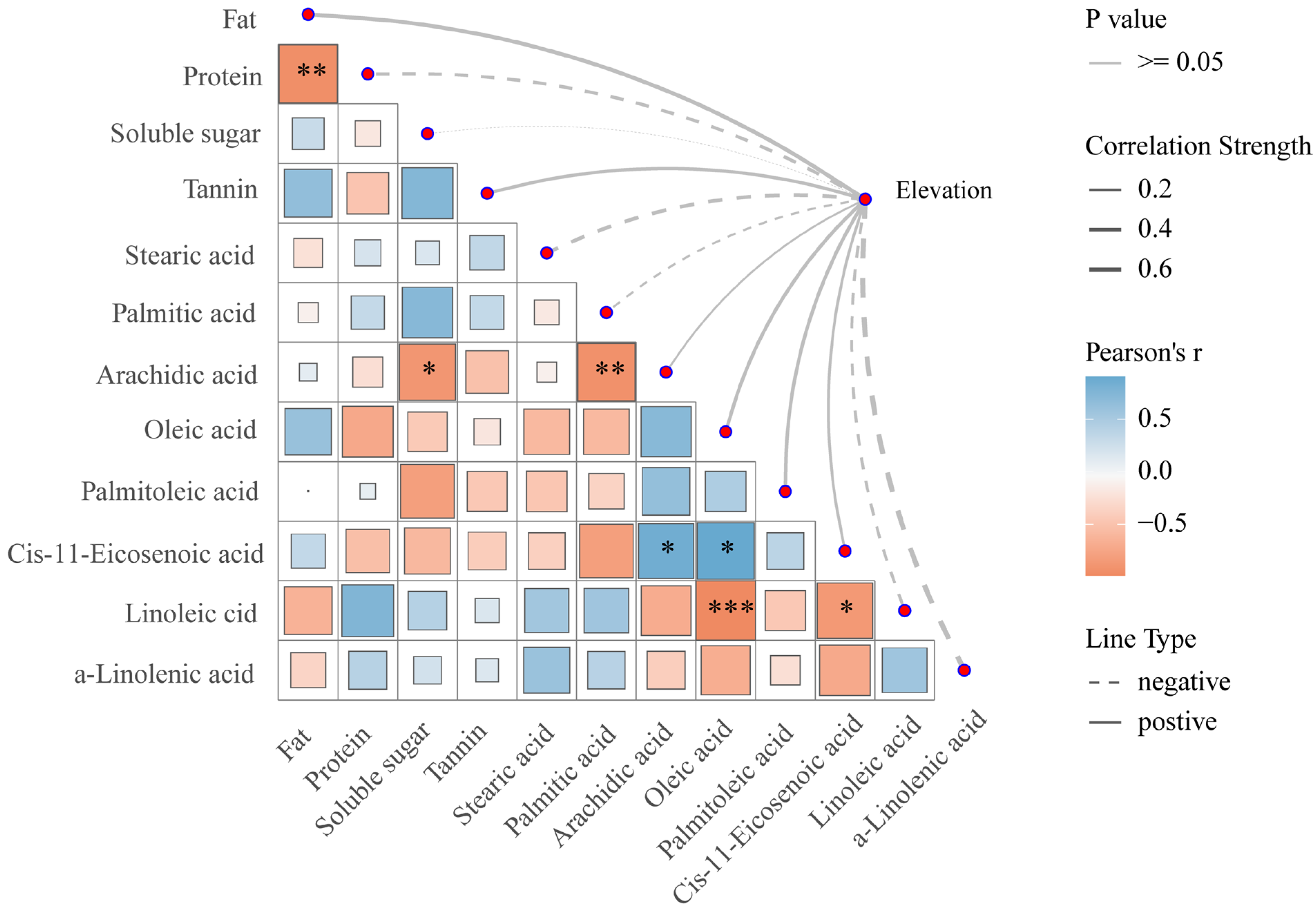
To further analyze the impact of elevation on the nutritional quality of walnut kernels and the correlations among different nutritional components, a Mantel test was conducted across multiple indices (Figure 4). The results revealed several strong associations among the components. Protein content of walnut kernels was significantly negatively correlated with fat content (r = −0.95), suggesting a potential trade-off in their accumulation across samples. Arachidic acid was significantly negatively correlated with both soluble sugar (r = −0.88) and palmitic acid (r = −0.93), indicating that its synthesis or accumulation may be antagonistic to other lipids or carbohydrates. Cis-11-eicosenoic acid exhibited significant positive correlations with arachidic acid (r = 0.85) and oleic acid (r = 0.90). Moreover, oleic acid and linoleic acid were extremely negatively correlated (r = −0.99), and linoleic acid showed a significant negative correlation with cis-11-eicosenoic acid (r = −0.86), reflecting possible metabolic branching or interconversion among major unsaturated fatty acids.
Regarding environmental factors, the analysis indicated that elevation was moderately correlated with certain nutritional components of walnut kernels. Specifically, elevation was positively correlated with fat content (r = 0.53) and oleic acid content (r = 0.46), but negatively correlated with protein (r = −0.42), stearic acid (r = −0.39), linoleic acid (r = −0.36), and α-linolenic acid (r = −0.78). Although these correlations were not statistically significant, the overall trend suggested that with increasing elevation, lipid accumulation in walnut kernels may increase, whereas protein and some unsaturated fatty acids tend to decrease. These results partially reflect the potential influence of altitudinal gradients on the distribution of walnut nutritional components.

3.6. Analysis of PCA for Walnut Nutritional Quality at Different Elevations

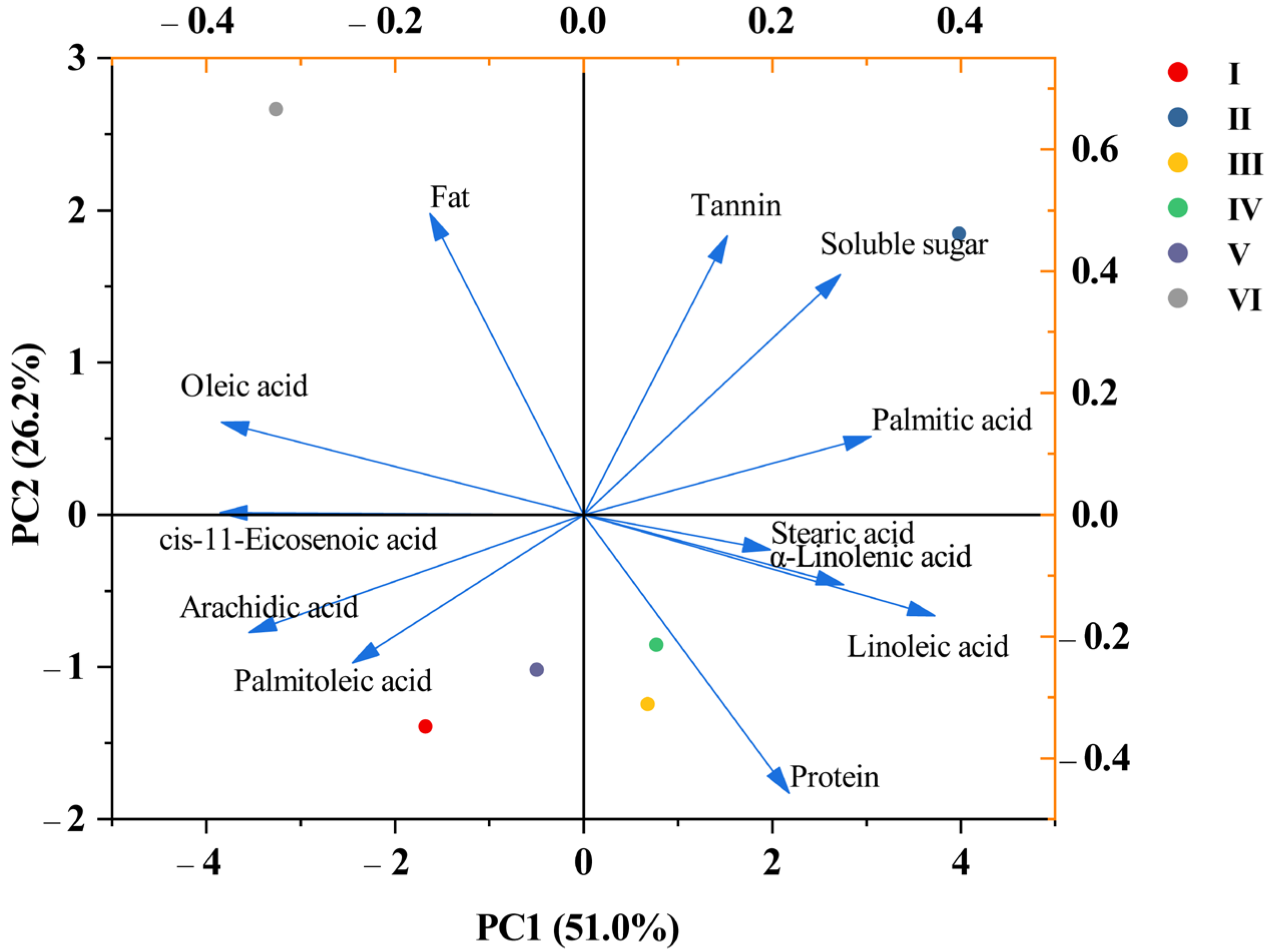
For all the nutritional components mentioned above, significant differences were observed across altitudinal gradients (Table 3). To further elucidate the relationships between the variables and elevation, principal component analysis (PCA) was conducted to reduce data dimensionality, and six principal components were extracted. Among them, PC1 had an eigenvalue of 6.122 with a contribution rate of 51.021%, while PC2 had an eigenvalue of 3.150 with a contribution rate of 26.249%. Together, PC1 and PC2 explained 77.27% of the total variance, indicating that these two components predominantly accounted for the variation in walnut nutritional traits along the altitudinal gradient. In PC1, linoleic acid (0.372), palmitic acid (0.305), and soluble sugar (0.272) showed positive loadings, whereas oleic acid (−0.384), cis-11-eicosenoic acid (−0.385), and arachidic acid (−0.355) exhibited negative loadings. In PC2, fat (0.495) and tannin (0.458) had positive loadings, while protein (−0.458) displayed a negative loading. The PCA biplot (Figure 5) indicated that PC1 was primarily composed of oleic acid, linoleic acid, and cis-11-eicosenoic acid, while PC2 was mainly determined by fat and tannin.

3.7. Subordinate Function Analysis

Based on principal component analysis (PCA), walnut nutritional components were dimensionally reduced, and the first four principal components (cumulative contribution rate 96.416%) were used to construct a comprehensive index. In order to compare the nutritional quality of walnut kernels at different elevations. The membership function method was applied to standardize each comprehensive indicator. The comprehensive evaluation value (D-value) was calculated as the weighted product of the standardized indicator values and Wj. As shown in Table 4, results showed that the ranking of D-values across altitudinal zones was II (600–900 m) > IV (1200–1400 m) > VI (1600–1800 m) > V (1400–1600 m) > III (900–1200 m) > I (200–600 m). This indicated that 600–900 m (Zone II) was the optimal elevation range for nutritional quality, with D = 0.875 significantly higher than other zones (p < 0.01). Mid-to-high elevation zones (IV/VI/V) were of secondary quality, with D-values ranging from 0.355 to 0.479, whereas low-elevation Zone I exhibited significantly restricted quality (D = 0.273).
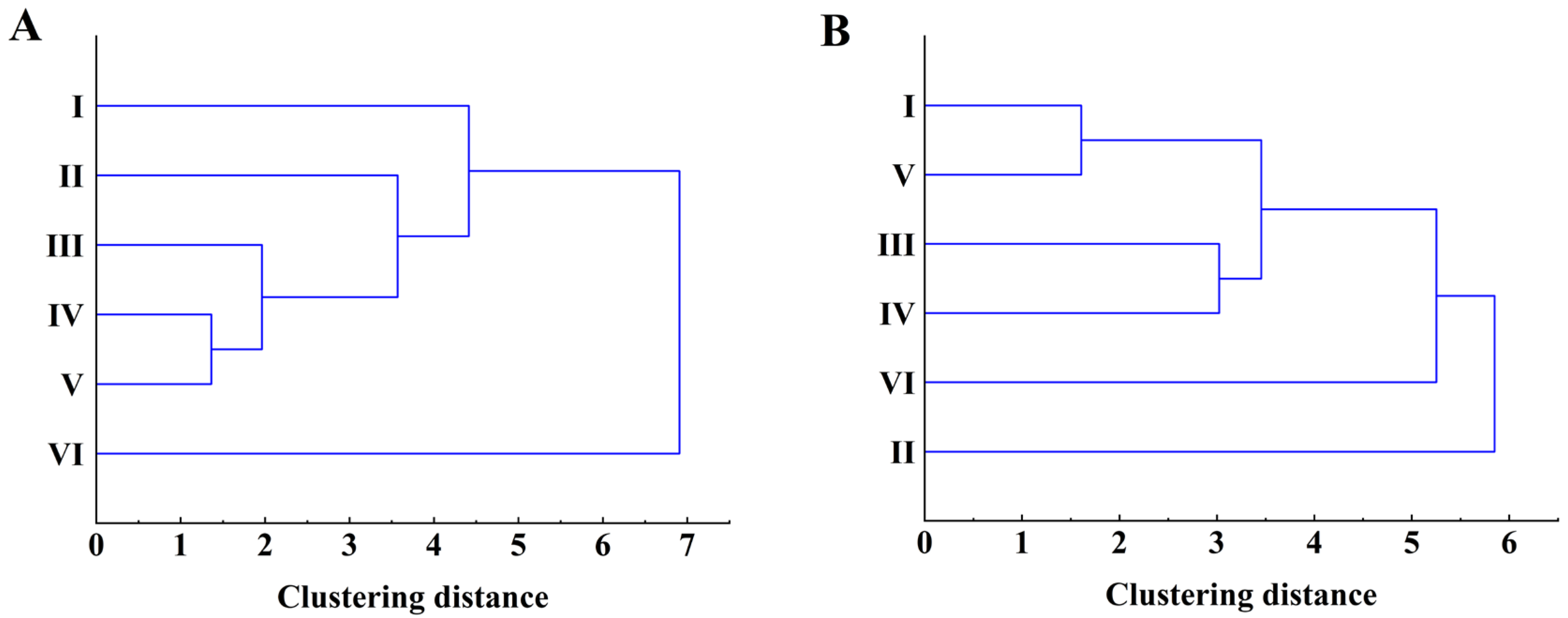
In order to classify the nutritional quality of walnut kernels across the six elevation zones. Cluster analysis of the six elevation zones revealed distinct grouping patterns. As shown in Figure 6A, 200–600 m (I) and 600–900 m (II) clustered first, suggesting a relatively high similarity in their nutritional composition. Subsequently, 900–1200 m (III), 1200–1400 m (IV), and 1400–1600 m (V) formed a closer cluster, while 1600–1800 m (VI) remained more distant, indicating a degree of convergence in walnut nutritional composition among adjacent altitudinal belts. In contrast, Figure 6B displayed a different trend: 200–600 m (I) and 1400–1600 m (V) clustered first, followed by 900–1200 m (III) and 1200–1400 m (IV). Notably, 600–900 m (II) merged last with 1600–1800 m (VI), highlighting the remarkable distinctiveness of Zone II in terms of nutritional composition.

4. Discussion

Elevation is associated with multiple environmental factors, such as temperature, light, and humidity, which may influence plant growth, thereby playing an important role in elucidating ecological adaptation mechanisms and optimizing agricultural cultivation practices [29,30]. In recent years, studies on the effects of altitudinal gradients on fruit nutritional and biochemical characteristics have increased, providing both theoretical foundations and practical guidance for improving fruit quality and economic value [31,32].
Naryal et al. (2019) reported that the total sugar content of Prunus armeniaca L. showed a linear relationship with increasing elevation [33]. Similarly, Jin et al. (2023) found that turnips grown under high-elevation conditions had higher protein content, reflecting the metabolic adaptations of plants to environmental stress [34]. Moreover, Gündesli et al. (2023) observed significant changes in the nutritional composition of walnuts cultivated between 500 and 1200 m, highlighting the crucial role of elevation in quality differentiation [21]. In contrast, Dhartwalla et al. (2024) demonstrated that the fatty acid profile of raspberries displayed elevation-specific characteristics, reflecting interspecific differences in responses to altitudinal variation [35]. Against this background, the present study aims to systematically investigate the influence of elevation on walnut kernel quality, with a particular focus on the nutritional composition and fatty acid profiles across different altitudinal zones.
Analysis of the nutritional composition of walnut kernels revealed that fat content reached its peak (62.93%) at the highest elevation (1600–1800 m). This trend is consistent with findings in other oil-bearing crops. For instance, in the Italian olive cultivar ‘Ortice,’ fruits at 500 m exhibited significantly higher oil content compared with those at 50 m, with elevated levels of oleic acid and stearic acid, which was attributed to the effect of temperature gradients in high-elevation regions on lipid metabolism [36]. Similarly, studies on walnut seed embryos from the Qinghai–Tibet Plateau suggested that the low-temperature environment at high elevations may promote oil accumulation by upregulating the expression of key lipid biosynthesis enzymes such as glycerol-3-phosphate acyltransferase (GPAT) and diacylglycerol acyltransferase (DGAT) [37]. Büyüksolak et al. (2020) also reported an increasing trend in protein and oil content with rising elevation in the ‘Chandler’ walnut [38]. In the present study, protein content showed a rise-then-fall pattern, with the highest value observed at 900–1200 m. Gündesli et al. (2023) proposed that enhanced low temperature and ultraviolet radiation at high elevations may induce the expression of protective proteins [21]. Soluble sugar content was highest at 600–900 m, followed by 1600–1800 m. A study on Prunus armeniaca L. demonstrated that total sugar content increased by 64.8 mg/g for every 100 m rise in elevation [33]. Similarly, in 20 Malus cultivars, malic acid, sucrose, and total sugar content were positively correlated with elevation, whereas glucose was negatively correlated [39]. In this study, tannin content was relatively high in high-elevation regions (1200–1800 m), but reached its maximum at 600–900 m. As a natural antioxidant, tannin levels may increase in response to higher biodiversity and greater insect pressure at mid-elevation zones, reflecting a protective response of plants to environmental stress [40].
The fatty acid composition of walnuts is of great significance for evaluating their potential health benefits, particularly unsaturated fatty acids, which play a critical role in regulating blood lipids, protecting cardiovascular and cerebrovascular health, and improving neurological function [10,41]. In this study, the contents of palmitic acid and stearic acid in walnut kernels were generally low (approximately 8–9% of total fatty acids), with minimal variation across different elevation zones. Research indicates that higher SFA content enhances plant tolerance to low-temperature stress. In high-elevation, low-temperature regions, unsaturated fatty acids primarily maintain cell membrane fluidity, while the relatively stable content of saturated fatty acids reflects their adaptive value in maintaining membrane structural stability [42,43]. In contrast, UFA exhibited a more complex variation pattern. The monounsaturated fatty acid oleic acid reached its highest content (26.93%) in the highest-elevation zone VI (1600–1800 m), significantly higher than in the lowest zone II (20.98%). Similarly, the total UFA composition in Sivri and Karayaglı hazelnut (Coryllus avellana L.) varieties also increased significantly with elevation [44]. Among polyunsaturated fatty acids, linoleic acid remained the most abundant fatty acid in walnut kernels (57.88–61.04%), but its content was lowest in zone VI and highest in zone II, showing an inverse trend to oleic acid. This “trade-off” metabolic relationship was further validated in this study’s Mantel test analysis (r = −0.99), supporting a competitive conversion relationship between oleic acid and linoleic acid. Such an “antagonistic mechanism” has been widely confirmed in the fatty acid biosynthesis process of plant seeds [45,46]. Additionally, α-linolenic acid content remained relatively stable at around 8% but slightly decreased in the high-elevation zone VI, possibly due to reduced FAD3 activity, as FAD3 is the key enzyme catalyzing the conversion of linoleic acid to α-linolenic acid [47,48]. Similar findings were reported by Shi et al. (2022) in their transcriptomic analysis of walnut seed fatty acids on the Qinghai–Tibet Plateau, where they observed that high elevation led to the reconfiguration of GPAT, DGAT, and FAD gene expression, redirecting the fatty acid metabolic pathway [37].

5. Conclusions

This study aims to investigate how the elevation gradient (200–1800 m) in Chongqing correlates with the nutritional components of walnut kernels. Analysis of 181 genetically diverse walnut trees revealed that the fat content of kernels was highest in zone VI, while the protein content was lowest in this zone. In contrast, soluble sugar and tannin contents peaked in zone II. Regarding fatty acid composition, saturated fatty acid content remained relatively stable, with palmitic acid and stearic acid being predominant, but showed a slight decreasing trend with increasing elevation. Among monounsaturated fatty acids, oleic acid was predominant and reached its highest content in zone VI. Among polyunsaturated fatty acids, linoleic acid was predominant, with its highest content in zone II, while α-linolenic acid content showed minimal variation. Through principal component analysis (PCA) combined with membership function analysis, a comprehensive evaluation of 12 quality indicators showed that the 600–900 m elevation range exhibited the highest overall quality score. The nutritional component variations caused by elevation provide important insights for selecting optimal planting regions and improving kernel quality while also laying a foundation for further research into the impact of elevation on plant metabolic pathways.

Author Contributions

J.T.: Writing—original draft. A.L.: Data curation, Formal analysis. L.T.: Investigation. Y.S. and L.S.: Methodology. X.J., R.N. and C.W.: Resources, Validation. X.L.: Funding acquisition. J.Z.: Writing—review and editing. All authors have read and agreed to the published version of the manuscript.

Funding

Chongqing Science and Technology Forestry Project (grant no. ZD2023-1); Special Project for Technological Innovation and Application Development of Chongqing Municipality (grant no. CSTB2025TIAD-qykjggX0267).

Data Availability Statement

Data are contained within the article.

Conflicts of Interest

The authors declare no conflicts of interest.

References

  1. Ji, X.; Tang, J.; Fan, W.; Li, B.; Bai, Y.; He, J.; Pei, D.; Zhang, J. Phenotypic Differences and Physiological Responses of Salt Resistance of Walnut with Four Rootstock Types. Plants 2022, 11, 1557. [Google Scholar] [CrossRef] [PubMed]
  2. Zhao, Y.; He, W.; Zhao, S.; Jiao, T.; Hu, H.; Li, J.; Zhang, L.; Zang, J. Advanced insights into walnut protein: Structure, physiochemical properties and applications. Foods 2023, 12, 3603. [Google Scholar] [CrossRef] [PubMed]
  3. Vuppalapati, C. Specialty Crops: Walnuts. In Specialty Crops for Climate Change Adaptation: Strategies for Enhanced Food Security by Using Machine Learning and Artificial Intelligence; Springer: Berlin/Heidelberg, Germany, 2023; pp. 515–625. [Google Scholar]
  4. Li, A.; Wu, C.; Zheng, X.; Nie, R.; Tang, J.; Ji, X.; Zhang, J. Physiological and biochemical responses of arbuscular mycorrhizal fungi in symbiosis with Juglans nigra L. seedlings to alleviate salt stress. Rhizosphere 2024, 31, 100928. [Google Scholar] [CrossRef]
  5. Bernard, A.; Lheureux, F.; Dirlewanger, E. Walnut: Past and future of genetic improvement. Tree Genet. Genomes 2017, 14, 1. [Google Scholar] [CrossRef]
  6. Ni, Z.; Hu, H.; Xu, G. Cold Hardiness and Physio-Biochemical Responses of Annual Branches in Five Early-Fruiting Walnut Varieties (Juglans regia L.) Under Simulated Low-Temperature Stress. Horticulturae 2025, 11, 72. [Google Scholar] [CrossRef]
  7. Mohamed, A.; Stokes, A.; Mao, Z.; Jourdan, C.; Sabatier, S.; Pailler, F.; Fourtier, S.; Dufour, L.; Monnier, Y. Linking above-and belowground phenology of hybrid walnut growing along a climatic gradient in temperate agroforestry systems. Plant Soil 2018, 424, 103–122. [Google Scholar] [CrossRef]
  8. Song, D.; Pan, K.; Zhang, A.; Wu, X.; Tariq, A.; Chen, W.; Li, Z.; Sun, F.; Sun, X.; Olatunji, O.A. Optimization of growth and production parameters of walnut (Juglans regia) saplings with response surface methodology. Sci. Rep. 2018, 8, 9992. [Google Scholar] [CrossRef]
  9. Ni, Z.-J.; Zhang, Y.-G.; Chen, S.-X.; Thakur, K.; Wang, S.; Zhang, J.-G.; Shang, Y.-F.; Wei, Z.-J. Exploration of walnut components and their association with health effects. Crit. Rev. Food Sci. Nutr. 2022, 62, 5113–5129. [Google Scholar] [CrossRef]
  10. Hayes, D.; Angove, M.J.; Tucci, J.; Dennis, C. Walnuts (Juglans regia) chemical composition and research in human health. Crit. Rev. Food Sci. Nutr. 2016, 56, 1231–1241. [Google Scholar] [CrossRef]
  11. Beyhan, O.; Ozcan, A.; Ozcan, H.; Kafkas, E.; Kafkas, S.; Sutyemez, M.; Ercisli, S. Fat, fatty acids and tocopherol content of several walnut genotypes. Not. Bot. Horti Agrobot. Cluj-Napoca 2017, 45, 437–441. [Google Scholar] [CrossRef]
  12. Hama, J.R.; Fitzsimmons-Thoss, V. Determination of unsaturated fatty acids composition in walnut (Juglans regia L.) oil using NMR spectroscopy. Food Anal. Methods 2022, 15, 1226–1236. [Google Scholar] [CrossRef]
  13. Kafkas, E.; Attar, S.H.; Gundesli, M.A.; Ozcan, A.; Ergun, M. Phenolic and fatty acid profile, and protein content of different walnut cultivars and genotypes (Juglans regia L.) grown in the USA. Int. J. Fruit Sci. 2020, 20, S1711–S1720. [Google Scholar] [CrossRef]
  14. Ros, E.; Mataix, J. Fatty acid composition of nuts–implications for cardiovascular health. Br. J. Nutr. 2006, 96, S29–S35. [Google Scholar] [CrossRef]
  15. Sun, Q.; Ma, Z.F.; Zhang, H.; Ma, S.; Kong, L. Structural characteristics and functional properties of walnut glutelin as hydrolyzed: Effect of enzymatic modification. Int. J. Food Prop. 2019, 22, 265–279. [Google Scholar] [CrossRef]
  16. Sze-Tao, K.W.C.; Sathe, S.K. Walnuts (Juglans regia L): Proximate composition, protein solubility, protein amino acid composition and protein in vitro digestibility. J. Sci. Food Agric. 2000, 80, 1393–1401. [Google Scholar] [CrossRef]
  17. World Health Organization. Protein Quality Evaluation: Report of the Joint FAO/WHO Expert Consultation, Bethesda, Md., USA 4-8 December 1989; Food & Agriculture Organization: Rome, Italy, 1991. [Google Scholar]
  18. Kazankaya, A.; Balta, M.F.; Yörük, I.; Balta, F.; Battal, P. Analysis of sugar composition in nut crops. Asian J. Chem. 2008, 20, 1519–1525. [Google Scholar]
  19. Wang, P.; Zhong, L.; Yang, H.; Hou, X.; Wu, C.; Zhang, R.; Yu, J.; Cheng, Y. Systematic transcriptomic and metabolomic analysis of walnut (Juglans regia L.) fruit to trace variations in antioxidant activity during ripening. Sci. Hortic. 2022, 295, 110849. [Google Scholar] [CrossRef]
  20. Wang, P.; Zhong, L.; Yang, H.; Zhu, F.; Hou, X.; Wu, C.; Zhang, R.; Cheng, Y. Comparative analysis of antioxidant activities between dried and fresh walnut kernels by metabolomic approaches. LWT 2022, 155, 112875. [Google Scholar] [CrossRef]
  21. Gündeşli, M.A.; Uğur, R.; Yaman, M. The Effects of Altitude on Fruit Characteristics, Nutrient Chemicals, and Biochemical Properties of Walnut Fruits (Juglans regia L.). Horticulturae 2023, 9, 1086. [Google Scholar] [CrossRef]
  22. Wen, Y.; Su, S.; Zhang, H. Effects of canopy microclimate on Chinese chestnut (Castanea mollissima Blume) nut yield and quality. Forests 2020, 11, 97. [Google Scholar] [CrossRef]
  23. Lu, Y.; Si, Y.; Zhang, L.; Sun, Y.; Su, S. Effects of canopy position and microclimate on fruit development and quality of Camellia oleifera. Agronomy 2022, 12, 2158. [Google Scholar] [CrossRef]
  24. Kumar, N.; Kumar, A.; Jeena, N.; Singh, R.; Singh, H. Factors influencing soil ecosystem and agricultural productivity at higher altitudes. In Microbiological Advancements for Higher Altitude Agro-Ecosystems & Sustainability; Springer: Berlin/Heidelberg, Germany, 2020; pp. 55–70. [Google Scholar]
  25. Jeyakumar, S.P.; Dash, B.; Singh, A.K.; Suyal, D.C.; Soni, R. Nutrient cycling at higher altitudes. In Microbiological Advancements for Higher Altitude Agro-Ecosystems & Sustainability; Springer: Berlin/Heidelberg, Germany, 2020; pp. 293–305. [Google Scholar]
  26. Zhang, C.; Yi, H.; Gao, X.; Bai, T.; Ni, Z.; Chen, Y.; Wang, M.; Zhang, Y.; Pan, J.; Yu, W.; et al. Effect of Different Altitudes on Morpho-Physiological Attributes Associated with Mango Quality. Diversity 2022, 14, 876. [Google Scholar] [CrossRef]
  27. Zhang, X.; Breksa, A.P., III; Mishchuk, D.O.; Slupsky, C.M. Elevation, Rootstock, and Soil Depth Affect the Nutritional Quality of Mandarin Oranges. J. Agric. Food Chem. 2011, 59, 2672–2679. [Google Scholar] [CrossRef]
  28. Huang, X.-H.; Wang, Y.-S.; Wei, L.-B.; Feng, D.-L.; Li, X.-Z.; Xia, Y. Soil nutrient status and fertility evaluation in major producing areas of walnut, Chongqing. J. Northeast. For. Univ. 2023, 51, 88–93, 105. [Google Scholar]
  29. Medda, S.; Fadda, A.; Mulas, M. Influence of climate change on metabolism and biological characteristics in perennial woody fruit crops in the Mediterranean environment. Horticulturae 2022, 8, 273. [Google Scholar] [CrossRef]
  30. Koyuncu, M.A.; Ekinci, K.; Gun, A. The effects of altitude on fruit quality and compression load for cracking of walnuts (Juglans regia L.). J. Food Qual. 2004, 27, 407–417. [Google Scholar] [CrossRef]
  31. Naryal, A.; Dolkar, D.; Bhardwaj, A.K.; Kant, A.; Chaurasia, O.; Stobdan, T. Effect of altitude on the phenology and fruit quality attributes of apricot (Prunus armeniaca L.) fruits. Def. Life Sci. J. 2020, 5, 18–24. [Google Scholar] [CrossRef]
  32. Trad, M.; Gaaliche, B.; Renard, C.M.; Mars, M. Inter-and intra-tree variability in quality of figs. Influence of altitude, leaf area and fruit position in the canopy. Sci. Hortic. 2013, 162, 49–54. [Google Scholar] [CrossRef]
  33. Naryal, A.; Acharya, S.; Bhardwaj, A.K.; Kant, A.; Chaurasia, O.P.; Stobdan, T. Altitudinal effect on sugar contents and sugar profiles in dried apricot (Prunus armeniaca L.) fruit. J. Food Compos. Anal. 2019, 76, 27–32. [Google Scholar] [CrossRef]
  34. Jin, P.; Liu, M.; Chen, M.; Zhao, W.; Zhang, X.; Mou, T.; Wang, A.; Wang, Z.; Xu, X.; Jiang, L. The Effect of Different Altitude Conditions on the Quality Characteristics of Turnips (Brassica rapa). Agronomy 2025, 15, 750. [Google Scholar] [CrossRef]
  35. Dhatwalia, J.; Kumari, A.; Guleria, I.; Kumar Shukla, R.; Saleh, N.i.; El-Nashar, H.A.; El-Shazly, M. Effect of altitude and harvest year on nutraceutical characteristics of Rubus ellipticus fruits. Front. Nutr. 2024, 11, 1419862. [Google Scholar] [CrossRef]
  36. Di Vaio, C.; Nocerino, S.; Paduano, A.; Sacchi, R. Influence of some environmental factors on drupe maturation and olive oil composition. J. Sci. Food Agric. 2013, 93, 1134–1139. [Google Scholar] [CrossRef]
  37. Shi, W.; Zhang, D.; Ma, Z. Transcriptome Analysis of Genes Involved in Fatty Acid and Lipid Biosynthesis in Developing Walnut (Juglans regia L.) Seed Kernels from Qinghai Plateau. Plants 2022, 11, 3207. [Google Scholar] [CrossRef]
  38. Büyüksolak, Z.N.; Akn, M.A.; Kahramanolu, B.; Okatan, V. Effects of Altitude on the Pomological Characteristics and Chemical Properties of ‘Chandler’ Walnuts: A Case Study in Uak Province. Acta Agrobot. 2020, 73, 7333. [Google Scholar] [CrossRef]
  39. Li, Y.; Sun, H.; Li, J.; Qin, S.; Yang, W.; Ma, X.; Qiao, X.; Yang, B. Effects of Genetic Background and Altitude on Sugars, Malic Acid and Ascorbic Acid in Fruits of Wild and Cultivated Apples (Malus sp.). Foods 2021, 10, 2950. [Google Scholar] [CrossRef]
  40. Hashim, A.M.; Alharbi, B.M.; Abdulmajeed, A.M.; Elkelish, A.; Hozzein, W.N.; Hassan, H.M. Oxidative stress responses of some endemic plants to high altitudes by intensifying antioxidants and secondary metabolites content. Plants 2020, 9, 869. [Google Scholar] [CrossRef] [PubMed]
  41. Song, H.; Cong, Z.; Wang, C.; He, M.; Liu, C.; Gao, P. Research progress on Walnut oil: Bioactive compounds, health benefits, extraction methods, and medicinal uses. J. Food Biochem. 2022, 46, e14504. [Google Scholar] [CrossRef]
  42. He, M.; Ding, N.-Z. Plant unsaturated fatty acids: Multiple roles in stress response. Front. Plant Sci. 2020, 11, 562785. [Google Scholar] [CrossRef]
  43. Bhattacharya, A. Lipid metabolism in plants under low-temperature stress: A review. In Physiological Processes in Plants Under Low Temperature Stress; Springer: Berlin/Heidelberg, Germany, 2022; pp. 409–516. [Google Scholar]
  44. Beyhan, O.; Elmastas, M.; Genc, N.; Aksit, H. Effect of altitude on fatty acid composition in Turkish hazelnut (Coryllus avellana L.) varieties. Afr. J. Biotechnol. 2011, 10, 16064–16068. [Google Scholar] [CrossRef]
  45. Park, H.G.; Kothapalli, K.S.; Park, W.J.; DeAllie, C.; Liu, L.; Liang, A.; Lawrence, P.; Brenna, J.T. Palmitic acid (16:0) competes with omega-6 linoleic and omega-3 ɑ-linolenic acids for FADS2 mediated Δ6-desaturation. Biochim. Biophys. Acta 2016, 1861, 91–97. [Google Scholar] [CrossRef]
  46. Do, P.T.; Nguyen, C.X.; Bui, H.T.; Tran, L.T.; Stacey, G.; Gillman, J.D.; Zhang, Z.J.; Stacey, M.G. Demonstration of highly efficient dual gRNA CRISPR/Cas9 editing of the homeologous GmFAD2–1A and GmFAD2–1B genes to yield a high oleic, low linoleic and α-linolenic acid phenotype in soybean. BMC Plant Biol. 2019, 19, 311. [Google Scholar] [CrossRef] [PubMed]
  47. Zhang, Z.; Jin, X.; Liu, Z.; Zhang, J.; Liu, W. Genome-wide identification of FAD gene family and functional analysis of MsFAD3. 1 involved in the accumulation of α-linolenic acid in alfalfa. Crop Sci. 2021, 61, 566–579. [Google Scholar] [CrossRef]
  48. Choudhary, A.K.; Mishra, G. Functional characterization and expression profile of microsomal FAD2 and FAD3 genes involved in linoleic and α-linolenic acid production in Leucas cephalotes. Physiol. Mol. Biol. Plants 2021, 27, 1233–1244. [Google Scholar] [CrossRef] [PubMed]
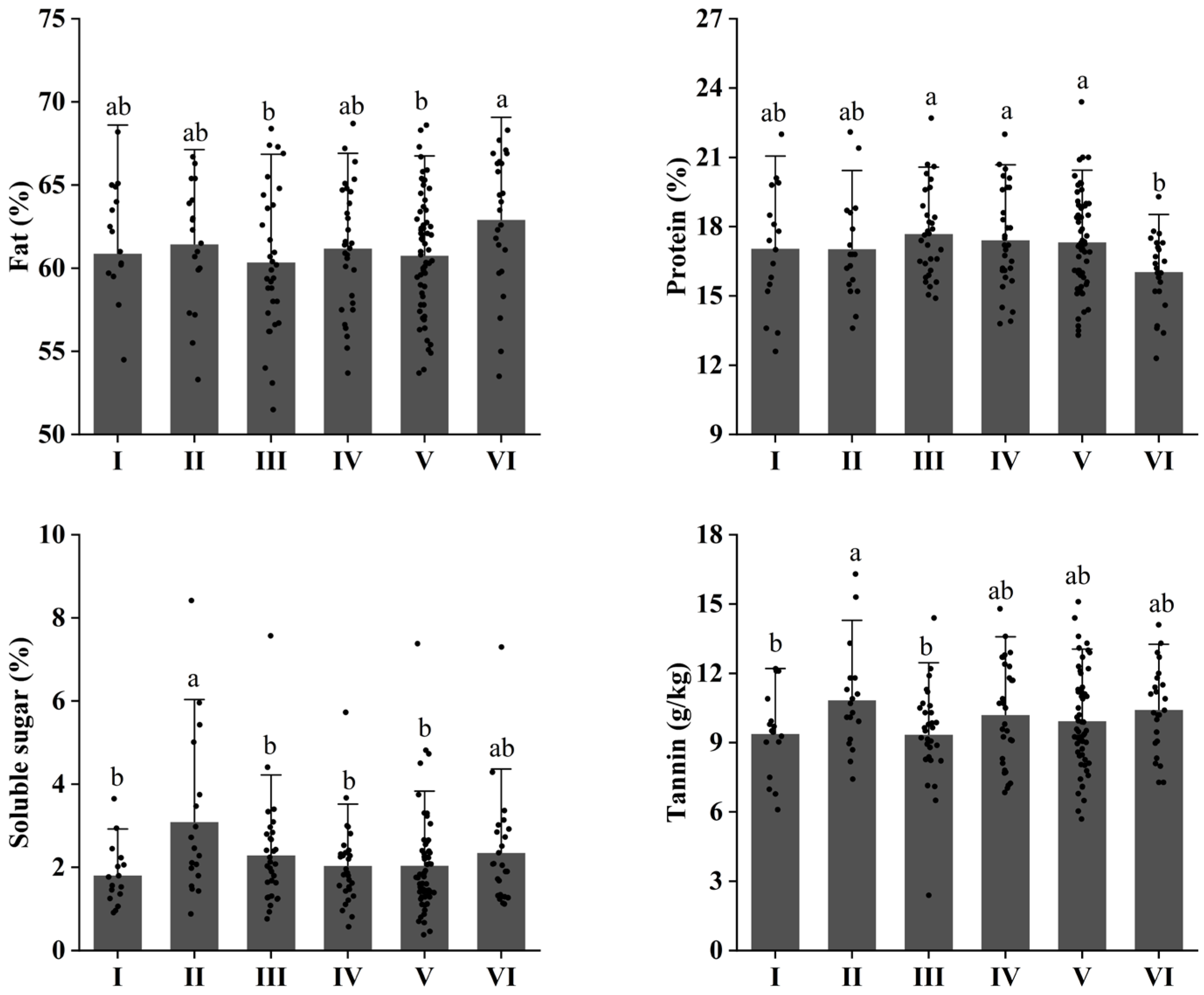
Figure 1. Nutritional composition analysis of walnuts in different elevation areas. In the bar chart, each scatter point represents a sampling site. Different lowercase letters indicate significant differences.
Horticulturae 12 00016 g001
Figure 2. Analysis of saturated fatty acids in walnut nuts at different elevations. In the bar chart, each scatter point represents a sampling site. Different lowercase letters indicate significant differences.
Horticulturae 12 00016 g002
Figure 3. Analysis of unsaturated fatty acids in walnut nuts at different elevations. In the bar chart, each scatter point represents a sampling site. Different lowercase letters indicate significant differences.
Horticulturae 12 00016 g003
Figure 4. Correlation analysis between elevation and nutritional indexes of walnut nuts. *: p < 0.05, **: p < 0.01, ***: p < 0.001. The square size indicates the magnitude of the correlation.
Horticulturae 12 00016 g004
Figure 5. PCA biplot showing the relationships between samples and variables. The left and bottom axes represent the coordinates of the samples (points), while the right and top axes represent the coordinates of the variables (arrows).
Horticulturae 12 00016 g005
Figure 6. Cluster analysis of the average value of each indicator (A) and the membership function value (B).
Horticulturae 12 00016 g006
Table 1. Information on samples.
RegionSample Size (Sample)Elevation Range (m)Annual Temperature (°C)Annual Precipitation (mm)
Beibei3497~51618.21156.8
Qianjiang8556~94815.41200.3
Liangping3474~52416.61262
Chengkou671064~179213.81261.4
Fengdu10905~140518.51200
Wulong5865~134014.51258
Zhongxian3710~890171167
Kaizhou71457~161018.51200
Yunyang6910~142020950
Fengjie101200~1478161132
Wushan14600~1600141200
Wuxi28616~179014.81350
Shizhu3810~110012.41200
Xiushan4615~980161341.1
Youyang6910~97715.21353
Pengshui4820~983151104.2
Table 2. Nutritional quality analysis of 181 walnut kernels.
MeanStandard DeviationMaximumMinimumRangeCoefficient of
Variation
Fat (%)61.154.12268.746.222.50.067
Protein (%)17.1962.10823.412.311.10.123
Soluble sugar (%)2.2181.2848.420.388.040.579
Tannin (g/kg)9.9972.09916.32.3913.910.21
Stearic acid (%)2.7230.5264.71.383.320.193
Palmitic acid (%)5.6920.5177.24.5052.6950.091
Arachidic acid (%)0.0950.010.1030.0540.0480.101
Oleic acid (%)23.3966.6665110.940.10.285
Palmitoleic acid (%)0.110.0340.2460.0560.190.31
cis-11-Eicosenoic acid (%)0.1840.030.30.10.20.165
Linoleic acid (%)59.2845.76571.936.335.60.097
α-Linolenic acid (%)8.5481.70913.34.598.710.2
Table 3. Principal component analysis of quality indicators.
Principal Component NumberPC1PC2PC3PC4PC5
Eigenvalue6.1223.151.5030.7940.43
Percentage of Variance (%)51.02126.24912.5276.6193.584
Cumulative (%)51.02177.26989.79696.416100
Fat−0.1630.4950.0490.2740.077
Protein0.218−0.458−0.152−0.0580.171
Soluble sugar0.2720.395−0.092−0.223−0.089
Tannin0.1520.4580.2060.250.444
Stearic acid0.198−0.0570.705−0.0080.087
Palmitic acid0.3050.129−0.4820.153−0.164
Arachidic acid−0.355−0.1930.2670.0710.013
Oleic acid−0.3840.152−0.0790.008−0.186
Palmitoleic acid −0.245−0.244−0.210.6350.365
cis-11-Eicosenoic acid−0.3850.0030.083−0.309−0.102
Linoleic acid0.372−0.1660.046−0.1150.345
α-Linolenic acid0.275−0.1150.2530.518−0.655
Table 4. Hierarchical function and comprehensive evaluation.
Elevationμ (1)μ (2)μ (3)μ (4)D-ValueRank
I0.218010.3980.2736
II10.7990.8450.2760.8751
III0.5450.03600.1240.3075
IV0.5570.1320.61210.4792
V0.3820.0920.98700.3554
VI010.5110.3950.3663
Wj0.5290.2720.130.069
Disclaimer/Publisher’s Note: The statements, opinions and data contained in all publications are solely those of the individual author(s) and contributor(s) and not of MDPI and/or the editor(s). MDPI and/or the editor(s) disclaim responsibility for any injury to people or property resulting from any ideas, methods, instructions or products referred to in the content.