Abstract
Black pepper (Piper nigrum L.) is an important crop in Pará, Brazil; however, irrigation management remains one of the main constraints to achieving stable productivity and high essential oil yield. By determining soil water tension for rational irrigation management that ensures high agronomic performance of black pepper, it is possible to optimize irrigation water use efficiency through monitoring critical soil moisture with the aid of tensiometers. This study evaluated yield, water use efficiency (WUE) and essential oil yield of two black pepper genotypes under five soil water tensions (15–55 kPa) using a split-plot experimental design. The Uthirankotta genotype showed higher yield and WUE, reaching maximum values at 35 kPa, whereas the highest essential oil extraction yield occurred at 15 kPa. Positive correlations were observed between essential oil yield and the main productive traits. Therefore, cultivation of the Uthirankotta genotype under tensiometer-based irrigation management is recommended under the edaphoclimatic conditions of Pará, using a critical tension of 35 kPa as a reference to increase productivity and optimize irrigation water use efficiency, considering the differential genotype response to irrigation management under humid tropical conditions.
1. Introduction
Currently, Brazil occupies the second position in world Piper nigrum production and export, with 128,331 tons [1], mainly in the form of black pepper. The main production centers are concentrated in Southeast Brazil and Pará (North Brazil) under different cultivation patterns; that is, in the Southeast, pepper cultivation is developed in a business-rural manner, while in the North region it is carried out through family farming [2].
Several factors contribute to the decline in production in the areas cultivated by pepper growers from Pará (North Brazil) compared to the systems practiced by producers from southeast Brazil, among which the low adoption of agronomic technologies and the decline in recent years of rural credit lines linked to the crop stand out [3,4].
In contrast, the cultivation of high-yielding black pepper genotypes, combined with the seasonality of harvest and the use of technologies in the production system, such as irrigation, contribute to the significant yields achieved by Espírito Santo (Southeast Brazil) producers in recent years [5,6]. Although irrigated agriculture is associated with a high technological level, inadequate technical management of irrigation in some regions of Brazil generates great water waste, with estimates that only 50% of all water withdrawn is effectively used by plants [7,8].
Through rational irrigation management, it is possible to reduce water use by up to 30% and achieve increases in crop productivity ranging from 10% to 30% [9]. In irrigation managed by tensiometry, measurements of soil water tension are used to indirectly determine the crop’s water demand. The readings are obtained through the tensiometer, which establishes when and how much to irrigate, without the need for meteorological data, which are commonly unavailable and costly to farmers [10], and minimizes the risks of water stress, whether due to deficit or excess.
Water deficiency presents a direct correlation with the concentration of substances belonging to the secondary metabolism of plants [11]. The combination of these classes of substances (volatile and lipophilic) constitutes essential oils, which may have their composition and yield influenced by genetic, edaphic and climatic factors [12]. The essential oil obtained from black pepper is widely used in the food, cosmetics and perfume industries and contains several compounds, among which piperine stands out as the main compound responsible for pungency, while the characteristic aroma derives from volatile terpenes present in the essential oil [5,13].
Given the above, in aromatic plants, in addition to productive performance, essential oil production may also be influenced by biotic and abiotic factors. In this context, although new studies related to the use of tensiometers in the irrigation management of black pepper are emerging, the definition of the ideal soil water tension for applying the appropriate irrigation depth for each black pepper genotype under humid tropical conditions—by comparing and evaluating their different productive responses and fruit essential oil yields—remains poorly addressed, thereby limiting practical recommendations for the agronomic performance of the crop.
Thus, to analyze the influence of irrigation management in black pepper crops under the edaphoclimatic conditions of Pará, Brazil, the present study aimed to evaluate the productive performance and essential oil yield of black pepper genotypes subjected to different critical soil water tensions.
Therefore, this study was designed to evaluate how black pepper genotypes respond to different critical soil water tensions under tensiometer-based irrigation management. We hypothesized that genotype × tension interactions would significantly influence both productive performance and essential oil yield, allowing the identification of an optimal irrigation threshold for the edaphoclimatic conditions of Pará. By integrating agronomic and phytochemical responses, this work aims to provide a science-based recommendation for improving irrigation efficiency, maximizing yield and supporting sustainable water use in black pepper cultivation in the Brazilian Amazon region.
2. Materials and Methods
2.1. Location and Environmental Conditions of the Experiment
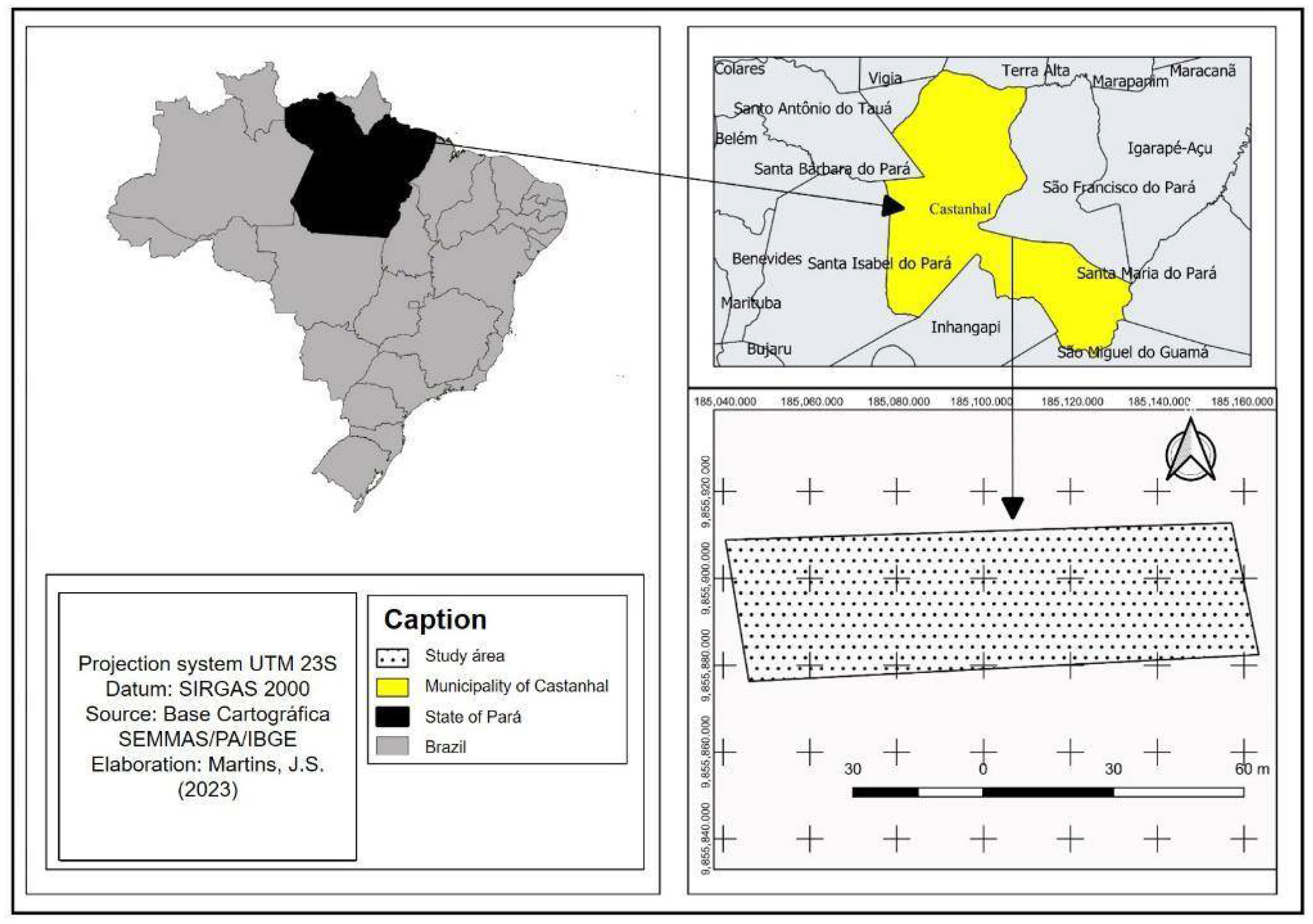
The experiment was carried out in situ from December 2022 to December 2023, in the experimental field of the company: Empresa de Produtos Tropicais de Castanhal LTDA—TROPOC, located in the municipality of Castanhal (1°17′50″ S and 47°55′20″ W), Pará State, Brazil (Figure 1).
Figure 1.
Location map of the area used for conducting the experiment in the state of Pará, Brazil. Source: The author (2024).
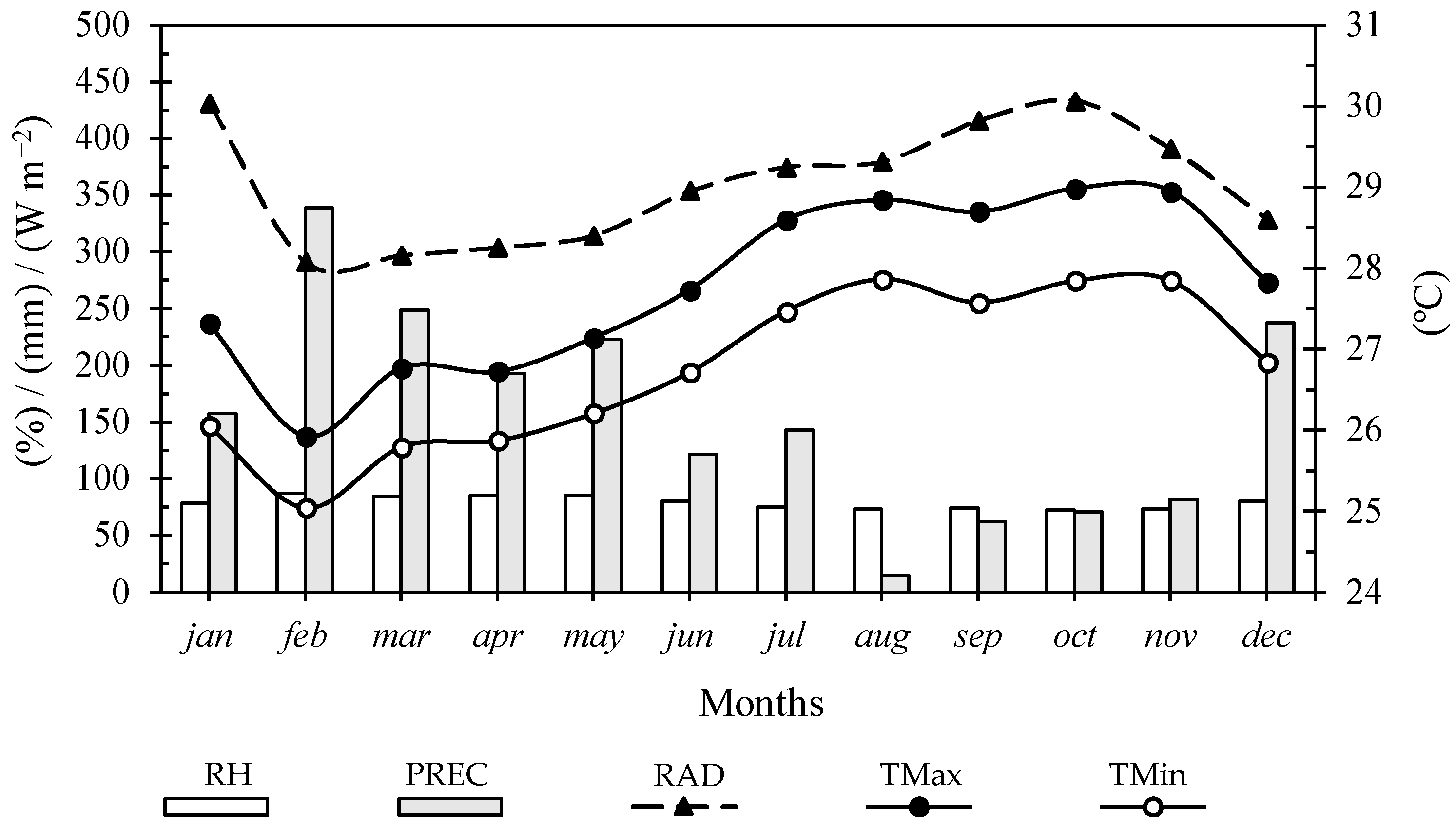
The climate of the region, according to the Köppen classification, is type Ami, with an average annual temperature of 26 °C and annual rainfall of 2571.6 [14]. Figure 2 illustrates the behavior of the meteorological variables air temperature, global radiation, relative humidity and rainfall throughout the experiment, based on data from the automatic station A202 (Castanhal-PA) of the National Institute of Meteorology (INMET), located approximately 20 km from the experimental area.
Figure 2.
Monthly means of maximum (TMax) and minimum (TMin) temperatures, global radiation (RAD), relative humidity (RH) and precipitation (PREC) recorded during the experimental period. Adapted from INMET [15]. Source: The author (2024).
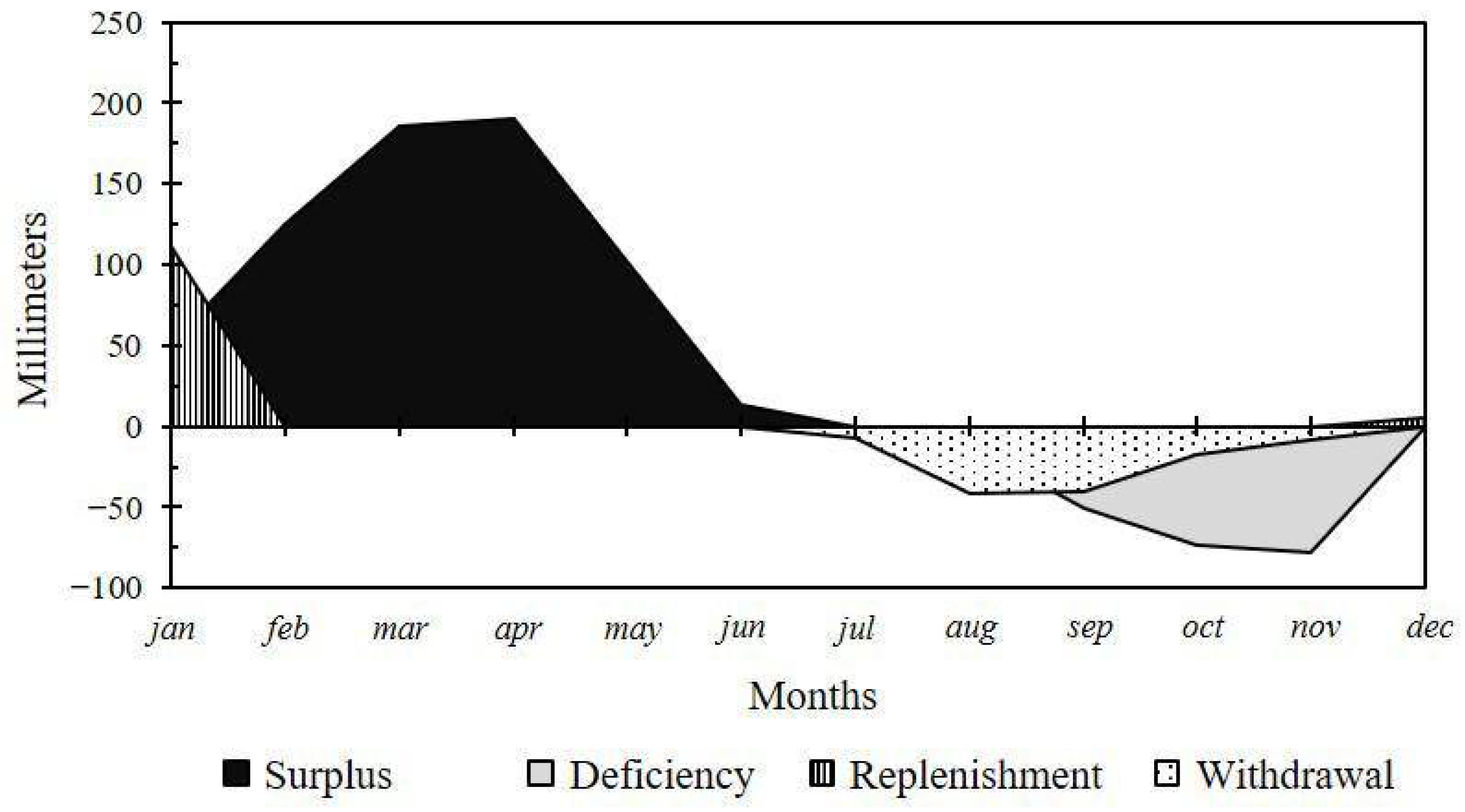
According to the climatological water balance of the municipality of Castanhal, conducted by Santos [16], it is observed that from February to May there is a water surplus in the region, while from July to November there is a water deficit. Between December and January, soil water replenishment occurs with the onset of the rainy season, whereas the maximum water deficiency, due to soil water withdrawal during the dry season, is recorded in August and September (Figure 3).
Figure 3.
Periods of surplus, deficiency, withdrawal and replenishment of water in the municipality of Castanhal between 2003 and 2022.
The direct relationship between local climatic variability, shown in Figure 3, and the decision-making process of how much and when to irrigate, conditions the use of irrigation management methods based on monitoring the soil water status, rather than just relying on climatic averages, as in methods based on local evapotranspirative conditions, which are often used in the irrigation management of other Amazonian tropical crops.
According to the Brazilian Soil Classification System—SiBCS [17], the soil in the experimental area is classified as a dystrophic Yellow Latosol, with a medium textural class. Soil samples were collected annually from the 0–20 cm layer between the end of harvest and the beginning of the annual fertilization period, for chemical and physical analyses conducted at the Soil Laboratory of EMBRAPA Eastern Amazon. These evaluations correspond to the third productive year of the crop (fourth year after planting). The results of the soil physicochemical properties, presented in Table 1, were used to determine the fertilizer rates applied to the black pepper plants.
Table 1.
Physical–chemical characterization of the soil used in experimental planting. Data collected EMBRAPA (2023).
2.2. Agronomic Management of Black Pepper Plants
Wooden stakes are used as support structures for training black pepper vines in the field, since the crop requires a trellising system; in this case, the plants were supported by wooden stakes (non-living or “dead” tutors). The data presented in this study are part of a long-term research project initiated in 2019 and concluded with the execution of the present experiment.
The subplots (2.2 m × 8.8 m) consisted of eight plants of the Uthirankotta and Clonada genotypes, acquired from the ProMudas nursery (Castanhal-PA). The useful subplot area (4.84 m2) was composed of the four central plants, while two plants at the front and two at the end of each subplot were considered border plants and therefore excluded from the evaluations. The subdivision of the plots allowed the combination of the experimental factors—soil water tension and genotype—where each main plot contained 16 plants (8 of each genotype), forming two subplots per treatment. The experiment was arranged in three blocks, with treatments distributed using the restricted randomization method within each block.
Production fertilization for the fourth year of planting (phenological stage during the experiment) was carried out according to the results of the soil chemical analysis and following the recommendations for liming and fertilization for the state of Pará [18]. In early January 2023, during the rainy season, organic and mineral fertilization was applied in a semicircle in front of the plant stems: 1.5 L plant−1 of castor cake; 109.8 g plant−1 of triple superphosphate—41% P2O5 and 10% Ca (equivalent to the total phosphorus dose); 148.1 g plant−1 of urea—45% N; and 161.1 g plant−1 of potassium chloride—60% K2O (one-third of the total nitrogen (144.4 g plant−1) and potassium (483.3 g plant−1) doses, respectively). After application, the fertilizer mixture was covered with soil. According to Brasil et al. [18], at 45 and 90 days after the first fertilization, the remaining two-thirds of the total nitrogen and potassium doses were applied in a similar manner. Fifteen days after the first fertilization of the fourth planting year, 0.1 g L−1 of Complex 151 was applied via foliar fertilization to improve plant recovery and development [19].
Crop protection practices consisted of applications of neem oil (20 mL L H2O−1) for the eventual control of insect pests [20], mowing between and along planting rows and manual weeding around the base of black pepper plants for weed control. Mulching was also applied around the plants using Urochloa decumbens biomass (also used as a live cover crop) removed from the inter-rows, to maintain soil moisture in the rhizosphere.
A drip micro-irrigation system was used for soil moisture and irrigation management. The system operated at a flow rate of 3.55 L h−1, with emitters spaced at 30 cm intervals. The drip line, with a nominal diameter (DN) of 16 mm, contained pressure-compensating flat emitters (drip-tech PC/AS) and was installed on the soil surface of the experimental area with a service pressure of 10 m.w.c. (meters of water column) at the end of the drip tube. Seven emitters were used per plant, with two drip lines positioned within each experimental plot due to the double-row planting system of black pepper.
2.3. Irrigation Management by Tensiometry
Irrigation management was carried out through soil monitoring, based on the critical matric potential for the crop. For this purpose, sets of three puncture tensiometers were used to measure soil water tension, which determined when and how much to irrigate. Two tensiometers were installed at a depth of 20 cm and one at 40 cm from the soil surface to monitor water percolation. The instruments were placed parallel to the crop rows at 15 cm from the emitters [21]. For reading the matric potential (tension) in the digital needle tensiometer, a digital puncture tensimeter was used. Measurements were taken daily at 08:30 a.m.
Irrigation events were performed when the average value of the tensions measured by the tensiometers installed at 20 cm depth reached the critical tension defined for each treatment, aiming to raise the soil moisture content to field capacity [22]. The volume of water applied per plant and the irrigation time for each treatment were calculated by first determining the soil water matric potential using Equation (1) [21]
in which,
Ψm—Soil water matric potential (kPa);
L—Average tension measured in puncture tensiometers (kPa);
0.098—Moisture adjustment factor (dimensionless) and;
c—Tensiometer length (cm).
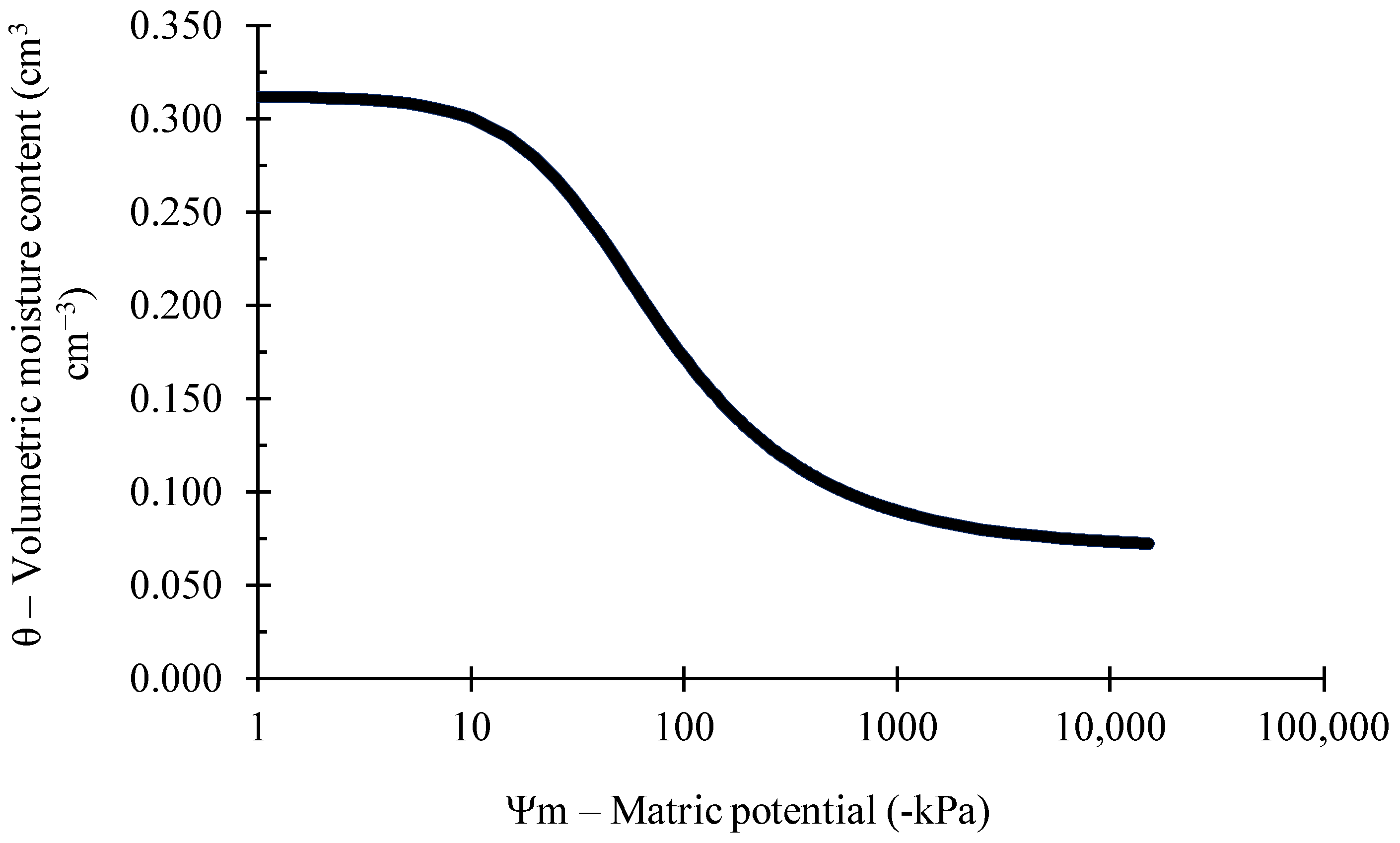
Based on the soil water retention curve (Figure 4), fitted by the van Genuchten mathematical model [23] as proposed by Santos [16] for the 0–20 cm soil layer, the range of tensions used as treatments was defined according to the soil physical-hydric principles of the experimental area (sandy texture). In other words, the 15 to 55 kPa range encompasses the interval of greatest dynamic relevance for plant-available water in this type of soil.
Figure 4.
Soil water retention curve for the experimental area. Source: [16].
Based on the soil water retention curve, fitted by the mathematical model of van Genuchten [23] by Santos [16] for the 0–20 cm soil layer, the current soil moisture content (θ) was estimated as a function of soil water tension (Ψm), using Equation (2).
in which,
θ—Volume-based soil moisture (cm3 cm−3) and;
Ψm—Soil water matric potential (kPa).
From the current soil moisture value (θ), estimated by Equation (2), the net irrigation depth for each treatment was calculated using Equation (3) [24], considering the effective rooting depth of black pepper plants as 20 cm [20] and the volumetric water content equivalent to field capacity at a tension of 10 kPa [25], which, according to the model fitted in Equation (3), corresponds to 0.3003 cm3 cm−3
in which,
LL—Net irrigation depth (mm);
θcc—Soil moisture at field capacity (cm3 cm−3);
θ—Current soil moisture (cm3 cm−3) and;
Z—Effective depth of the root system (mm).
Once the net irrigation depth was obtained, the gross irrigation depth was calculated using Equation (4), and finally, the operating time of the system for each irrigation event was determined using Equation (5) [24].
in which,
LB—Gross irrigation depth (mm);
LL—Net irrigation depth (mm);
CUD—Distribution Uniformity Coefficient (%) equal to 97% and;
k—Efficient water application constant of the irrigation system [26].
in which,
Ti—Irrigation time for each treatment (hours);
LB—Gross irrigation depth (mm);
A—Area occupied per plot (m2);
qm—Average flow rate of emitters (L h−1) and;
e—Number of emitters per experimental plot (unit).
2.4. Data Processing and Collection
For the field plots, a randomized block design (RBD) was used, in a split-plot factorial scheme (5 × 2), totaling ten treatments and three blocks (replications). The factors that comprised the treatments were five critical soil water tensions (15, 25, 35, 45 and 55 kPa), evaluated in the main plots, and two black pepper genotypes (Clonada and Uthirankotta), analyzed in the subplots. Four repetitions per treatment were considered within each block. One sample was collected from each central plant, resulting in four replicate samples per treatment, and these same plants were used for all other evaluated parameters, including pepper grain analyses.
Harvests were carried out between July and November 2023, with fruits of the Clonada genotype harvested from July to September, and those of the Uthirankotta genotype from September to November. Berries were manually harvested when 1/3 of the fruits were at the mature stage (yellow and/or red coloration) from the four central plants of each cultivar analyzed in the experimental subplots. The fresh weight of the fruits per spike per plant was then measured using a digital scale, and subsequently, the spikes were threshed (separation of the Berries).
After threshing, the green fruits were weighed and subsequently subjected to natural drying in an oven for an average duration of three days, aiming to obtain a grain moisture content of approximately 13% [27]. The dried fruit samples were then placed in a manual blower to remove plant residues and separate empty grains (winnowing). Finally, the black peppers (dried) were weighed, packed in polypropylene bags and stored in the company’s facilities.
2.5. Production Parameters Evaluated
The determination of the average green pepper yield, in kg per plant, was obtained through the ratio between the total weight of the fruits after harvest (fresh fruits) and the number of plants evaluated per cultivar (Equation (6)). The average yield of green pepper fruit was defined by the grain weight measured after threshing, following the same quantification method as for Ppv (Equation (7)).
in which
Ppv—Green pepper production (kg plant−1) and;
PFF—Weight of fresh fruit (kg).
in which
PFpv—Green pepper fruit production (kg plant−1) and;
PFD—Fruit weight after threshing (kg).
The average black pepper yield, in kg per plant, was obtained by the mathematical ratio between the total weight recorded after the winnowing process and the number of black pepper plants evaluated in each experimental subplot, using Equation (8).
in which
Ppp—Black pepper production (kg plant−1) and;
PFV—Fruit weight after ventilation (kg).
The average black pepper productivity obtained from the experiment was calculated by the ratio between the total weight of black pepper and the area occupied by the four plants evaluated for each cultivar, according to Equation (9):
in which
PROD—Black pepper productivity (kg ha−1);
PFV—Fruit weight after ventilation (kg);
A—Area (ha).
The productivity per unit of applied water depth, defined in irrigated agriculture as water use efficiency, was estimated according to Equation (10) [28]:
in which
WUE—Water use efficiency (kg ha−1 mm−1);
PROD—Black pepper productivity (kg ha−1);
w—Applied irrigation blade (mm).
2.6. Determination of Essential Oil Yield
The black pepper samples used for laboratory analyses were collected in September 2023, a period of greatest water deficit in Castanhal-PA. After the natural drying process of the grains (black pepper), 30 g of pepper were collected from each of the four plants evaluated in the productive subplot, to form a composite sample of 120 g of each treatment per subplot, with three repetitions (blocks).
The grains were ground using a knife mill, and then 100 g of each sample were weighed. The weighed portions were placed in 2000 mL round-bottom volumetric flasks and combined with 1000 mL of distilled water. The hydrodistillation method was employed for essential oil extraction using a Clevenger-type apparatus for 3 h at 100 °C. Afterwards, the volume of the extracted oil was quantified with the aid of a micropipette [21].
The essential oil contents extracted were calculated using the standardized moisture-free basis (MFB) method. For this purpose, during the natural drying process, a biomass moisture content of around 13% was adopted, according to the quality standard established for black pepper commercialization [27]. The extraction yields were determined using Equation (11) [29].
in which
Re—Extraction yield (%);
Vo—Volume of oil extracted (mL);
Bm—Plant biomass (g);
U%—Moisture content (%).
2.7. Statistical Analysis
After verifying the homoscedasticity and normality of the data, analysis of variance (Shapiro–Wilk test) was performed using the F-test (p ≤ 0.05). When significant differences were observed among treatments, regression analysis was applied to the variables obtained, testing both linear and second-degree polynomial models [30]. The criteria for model selection were the significance of the regression coefficients at the 5% probability level (F-test) and the highest R2 value. The means of the analyzed variables were also compared using Tukey’s test at the 5% significance level. The analyses were performed using the SISVAR 5.8 statistical software [31].
In addition, Pearson correlation studies were carried out between essential oil yield and the following parameters: green and black pepper production, productivity and water use efficiency for the Clonada and Uthirankotta cultivars. The interpretation of the Pearson correlation coefficient (r) considered in this study followed the classification proposed by Hinkle et al. [32], as shown in Table 2.
Table 2.
Interpretation of Pearson’s correlation coefficients (r).
3. Results
3.1. Irrigation Management
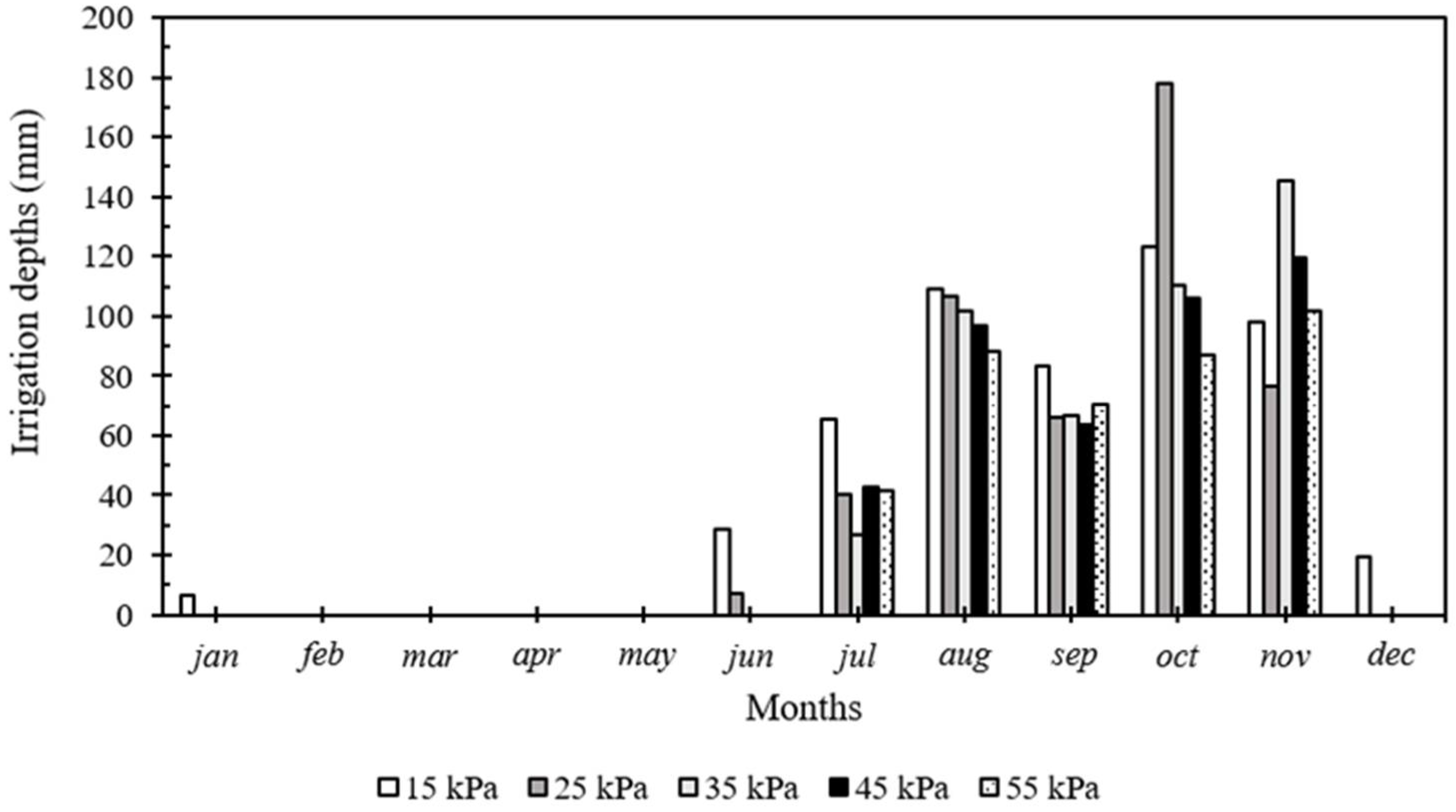
Figure 5 shows the amounts of irrigation water applied as a function of the evaluated soil water tensions (15, 25, 35, 45 and 55 kPa) in black pepper cultivation during the year 2023, in the municipality of Castanhal, Pará, Brazil.
Figure 5.
Irrigation depths applied as a function of critical soil water tensions.
The differentiation of treatments related to soil water tensions began at the end of June and extended until the end of November, totaling 157 days. The highest irrigation depths were applied in October and November under soil water tensions of 25 kPa (177.9 mm) and 35 kPa (145.45 mm), respectively. In the remaining months, treatments subjected to the 15 kPa tension received the highest irrigation depths.
Table 3 presents the gross (LB) applied during the experiment (157 days) as a function of critical soil water tensions, as well as the mean depths (Lm) and the total applied in each tension treatment (w), rainfall during the evaluation period (PREC), the number of irrigation events per control tension (NI), the irrigation interval (TR) and the daily water demand (DH).
Table 3.
Gross water depth (LB), average water depth (Lm), irrigation volume per plant (VI), total water depth applied (w), rainfall (PREC), number of irrigations (NI), irrigation shift (TR) and water demand (DH) of irrigation management in black pepper crops in Castanhal, PA.
As the percentage of wetted area was 11.6% of the total area occupied by each plant (6.8 m2), the conversion of Lm values from millimeters to liters per plant (VI) was performed by multiplying the value in mm by the effective wetted area per plant [32,33,34]. The irrigation management information shows that black pepper plants subjected to 15 kPa tension received more than 23.4% more irrigation water (w) than plants cultivated under 55 kPa tension (349.53 mm) and 11.3% more than plants subjected to 35 kPa tension (450.88 mm).
At 15 kPa, a shorter irrigation interval (TR = 2 days) was associated with 2 days. At 15 kPa tension, higher irrigation frequency (80 events) and greater daily water demand (3.24 mm day−1) were observed for this critical soil water tension during the 157 days of treatment differentiation. In contrast, black pepper plants subjected to 35 kPa tension with a TR of 5 days and 55 kPa tension with a TR of 8 days received, respectively, 62.5% and 75% fewer irrigation events (NI) than plants under 15 kPa water conditions.
3.2. Productive Performance
Table 4 presents the F-test values at the 5% significance level for the productive variables (Ppv, PFpv, Ppp, PROD and WUE) and the essential oil extraction yield of black pepper (Re). It can be observed that all the evaluated parameters were influenced both by the black pepper genotype factor (Clonada and Uthirankotta) and by the soil water tension factor (15, 25, 35, 45 and 55 kPa), as well as by the interaction between both factors.
Table 4.
Summary of analysis of variance for green pepper production (Ppv), green pepper fruit production (PFpv), black pepper production (Ppp), productivity (PROD), water use efficiency (WUE) and essential oil extraction yield (Re) in black pepper genotypes subjected to soil water tensions in Castanhal, Pará, Brazil.
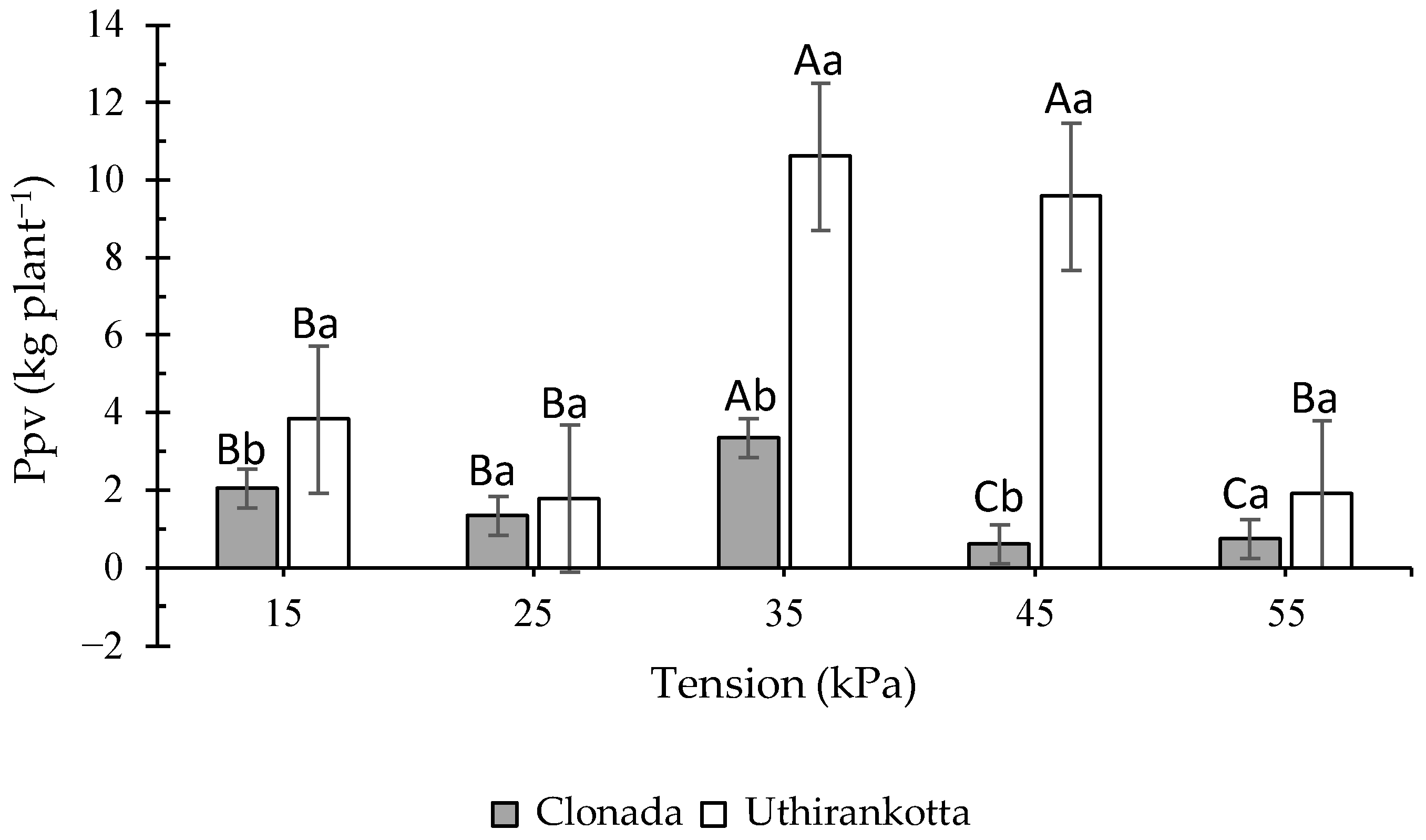
The result of the interaction between soil water tensions and black pepper genotypes for the variable green pepper production is graphically shown in Figure 6.
Figure 6.
Green pepper (Ppv) production between Clonada and Uthirankotta genotypes under different critical soil water tensions. Note: Mean values followed by the same letter do not differ from each other in the Tukey test (p ≤ 0.05). Capital letters compare the effect of stress and lowercase letters compare the effect of genotypes.
The highest average Ppv values for both genotypes were observed at the 35 kPa soil water tension, reaching 3.36 kg plant−1 for Clonada and 10.62 kg plant−1 for Uthirankotta. At this tension, Uthirankotta exceeded Clonada by approximately 68%. The lowest average Ppv for Clonada (0.61 kg plant−1) was recorded at 45 kPa, not differing from values observed at 25 and 55 kPa. For Uthirankotta, the lowest Ppv values were observed at 25 and 55 kPa, with averages of 1.79 and 1.91 kg plant−1, respectively.
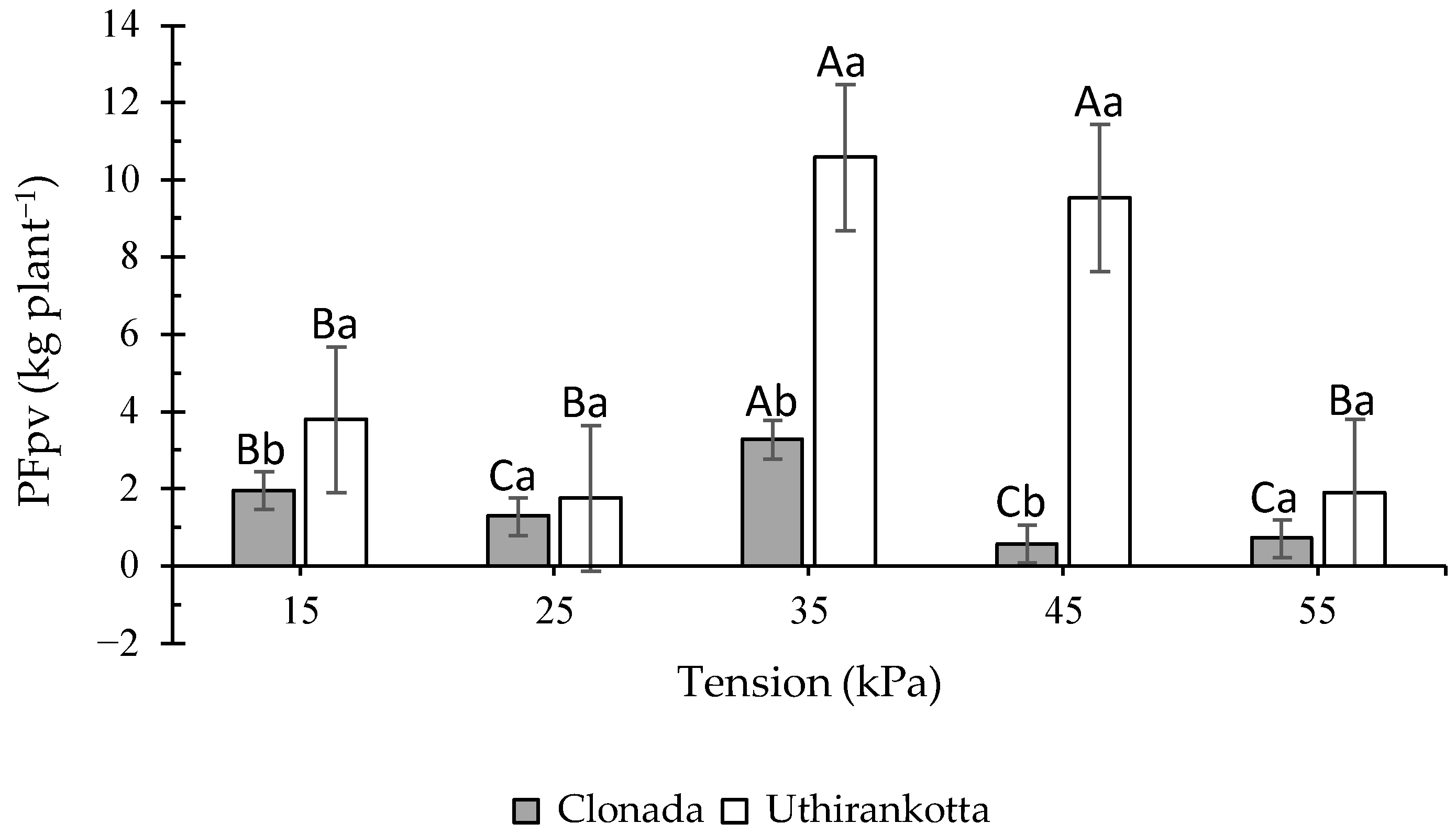
As shown in Figure 7, the fruit production performance of green pepper by the two evaluated black pepper genotypes in relation to soil water tensions.
Figure 7.
Green pepper fruit production (PFpv) between Clonada and Uthirankotta genotypes under different critical soil water tensions. Note: Mean values followed by the same letter do not differ from each other in the Tukey test (p ≤ 0.05). Capital letters compare the effect of stress and lowercase letters compare the effect of genotypes.
The highest PFpv mean was recorded for the Uthirankotta genotype at the soil water tension of 35 kPa, reaching 10.58 kg plant−1, which was approximately 69% higher than the value observed for Clonada under the same tension. The lowest PFpv values followed the same pattern observed for Ppv, with the lowest means recorded under the soil water tensions of 45 and 25 kPa for the evaluated genotypes, resulting in a difference of approximately 67% between the lowest values.
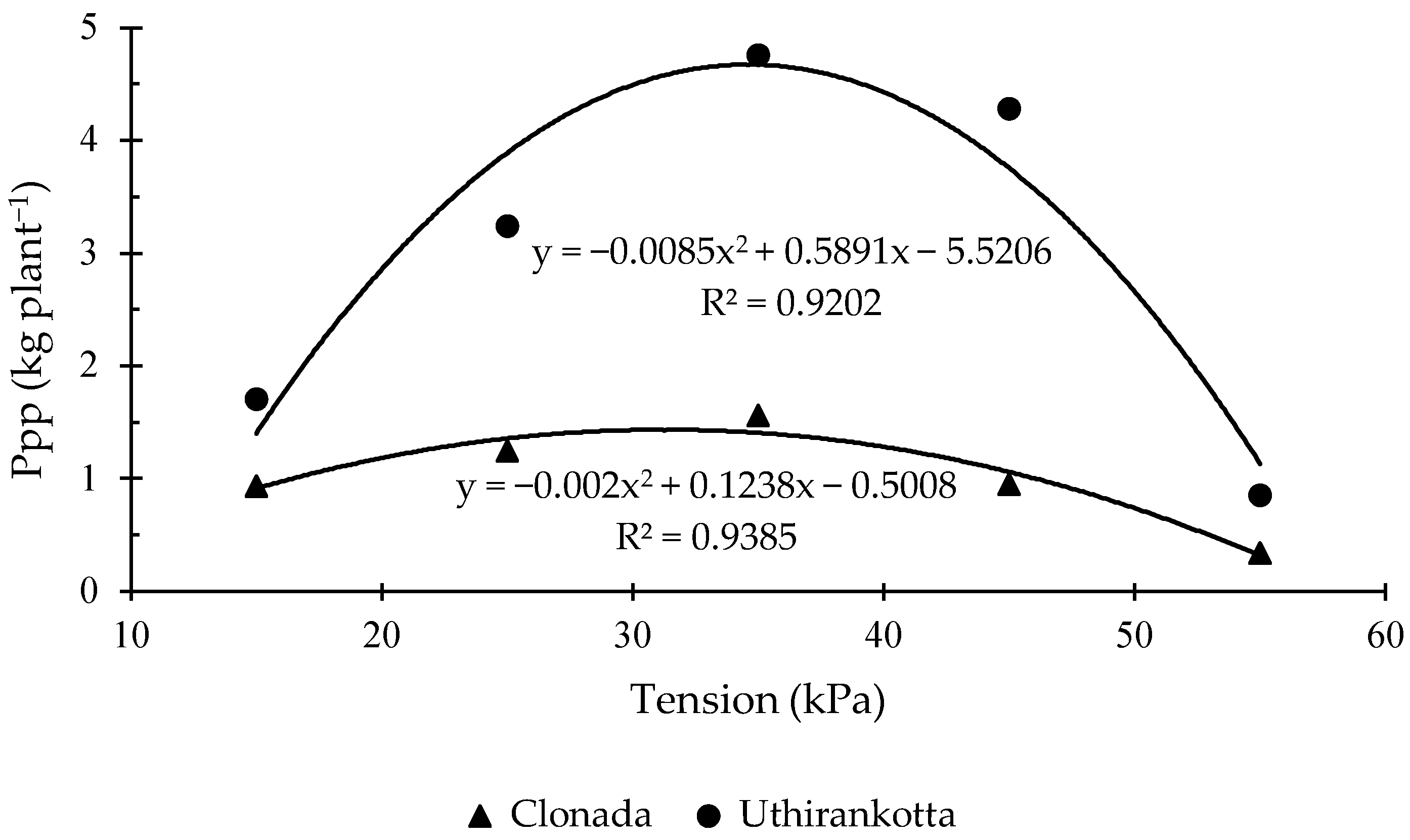
A significant interaction between soil water tension and genotype for green pepper fruit production, with a second-degree polynomial adjustment. These results are presented in Figure 8. To demonstrate the effects of the soil water tension factor on the black pepper production of the Clonada and Uthirankotta genotypes, regression analysis (p ≤ 0.05) was performed, revealing a significant interaction between the evaluated factors, with a second-degree polynomial behavior (quadratic function). These results are presented in Figure 8.
Figure 8.
Black pepper (Ppp) production of Clonada and Uthirankotta genotypes as a function of critical soil water tensions.
An increase in Ppp was observed with increasing soil water tension, with the highest production values recorded at the 35 kPa tension for both genotypes. At this tension, black pepper production reached 4.76 kg plant−1 for the Uthirankotta genotype and 1.57 kg plant−1 for the Clonada genotype.
Regression analysis indicated a significant effect of soil water tension on Ppp, with a quadratic response for both genotypes. Based on the fitted models, the estimated maximum black pepper production for Clonada was 2.42 kg plant−1 at a soil water tension of 31.0 kPa, whereas for Uthirankotta, the estimated maximum was 4.69 kg plant−1 at 34.7 kPa, representing a difference of approximately 48% between genotypes under these conditions.
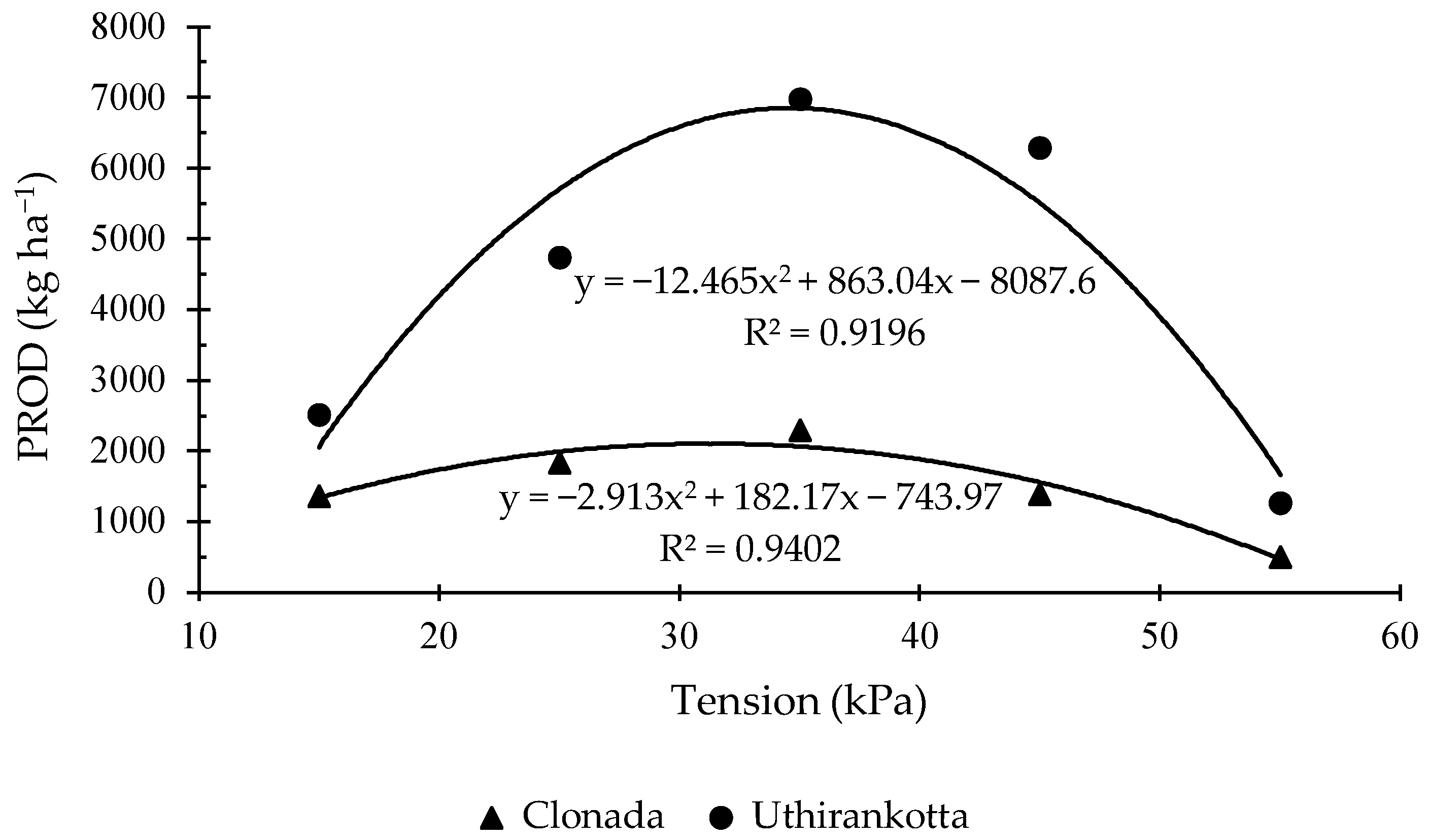
Black pepper productivity as a function of soil water tension is shown in Figure 9. Regression analysis for the productivity variable was also significant, with a second-degree polynomial adjustment and coefficients of determination (R2) above 0.90 for both Clonada and Uthirankotta.
Figure 9.
Productivity (PROD) of black pepper from the Clonada and Uthirankotta genotypes as a function of critical soil water tensions.
Figure 9 shows that black pepper productivity (PROD) increased with soil water tension up to 35 kPa for both genotypes. At this tension, maximum observed productivity values were 2296.76 kg ha−1 for Clonada and 6979.29 kg ha−1 for Uthirankotta.
Regression analysis revealed a significant quadratic response of productivity to soil water tension for both genotypes. Based on the fitted models, the estimated maximum productivity for Clonada was 3592.06 kg ha−1 at a soil water tension of 31.3 kPa, whereas for Uthirankotta the estimated maximum was 6850.99 kg ha−1 at 34.6 kPa.
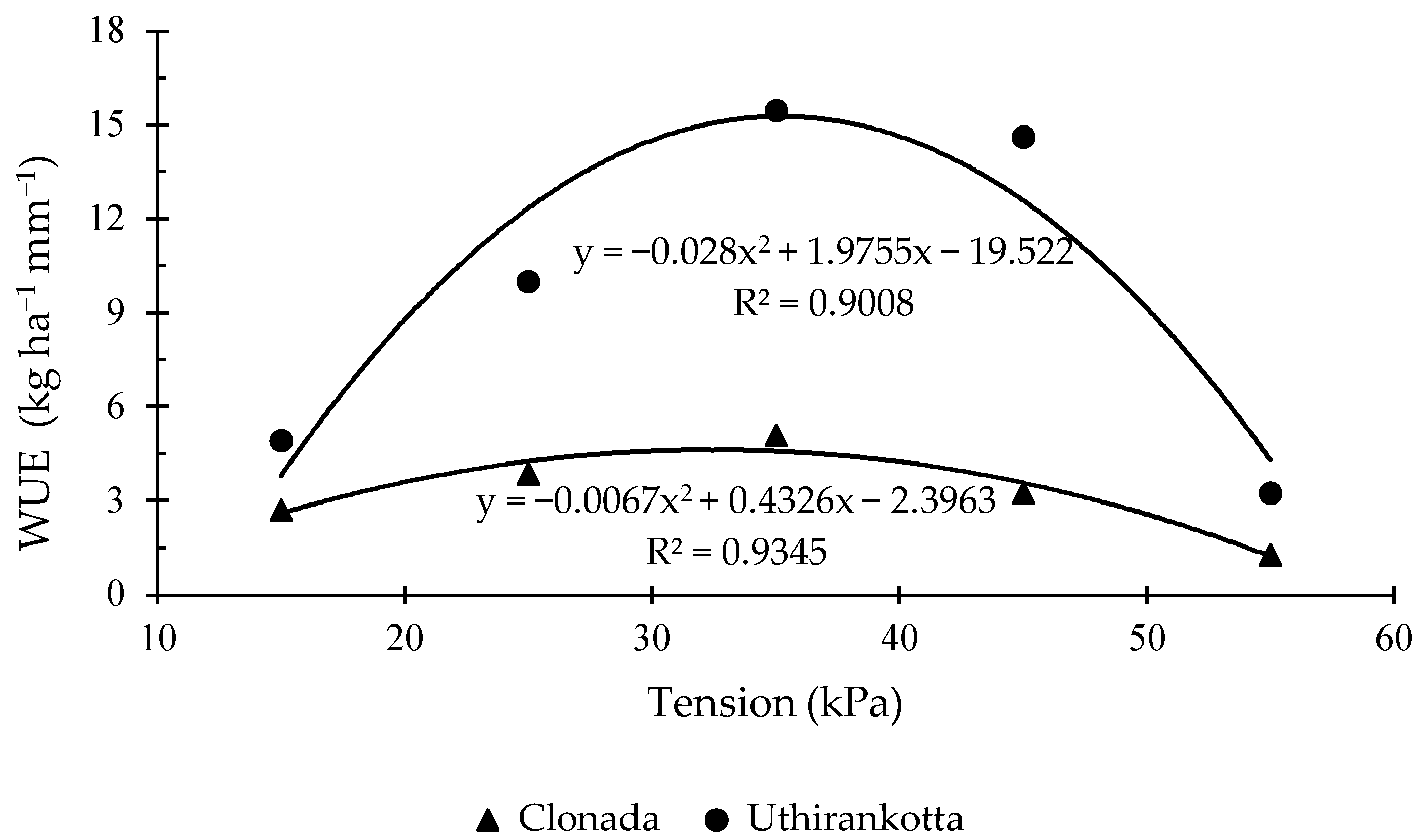
Water use efficiency (WUE) also showed a significant quadratic adjustment in response to soil water tension. The dispersion of WUE values for the black pepper genotypes as a function of the evaluated soil water tensions is presented in Figure 10.
Figure 10.
Water use efficiency (WUE) of the Clonada and Uthirankotta genotypes as a function of critical soil water tensions.
Figure 10 shows that water use efficiency (WUE) varied markedly among soil water tensions, with a range of approximately 67% between the maximum (15.48 kg ha−1 mm−1) and minimum (5.09 kg ha−1 mm−1) values. The highest WUE values were observed at the soil water tension of 35 kPa for both genotypes.
When comparing soil water tensions, differences in WUE were observed between 35 kPa (w = 450.88 mm) and the tensions of 15 kPa (w = 508.49 mm) and 55 kPa (w = 389.53 mm). For the Uthirankotta genotype, these differences were approximately 68% and 79%, respectively, whereas for the Clonada genotype the corresponding differences were 47% and 75%.
Regression analysis revealed a significant quadratic response of WUE to soil water tension for both genotypes. Based on the fitted second-degree polynomial models, the estimated maximum WUE was 9.38 kg ha−1 mm−1 for Clonada at a soil water tension of 32.3 kPa and 15.32 kg ha−1 mm−1 for Uthirankotta at 35.3 kPa, representing a difference of approximately 39% between genotypes under these conditions.
3.3. Essential Oil Yield and Pearson Correlation
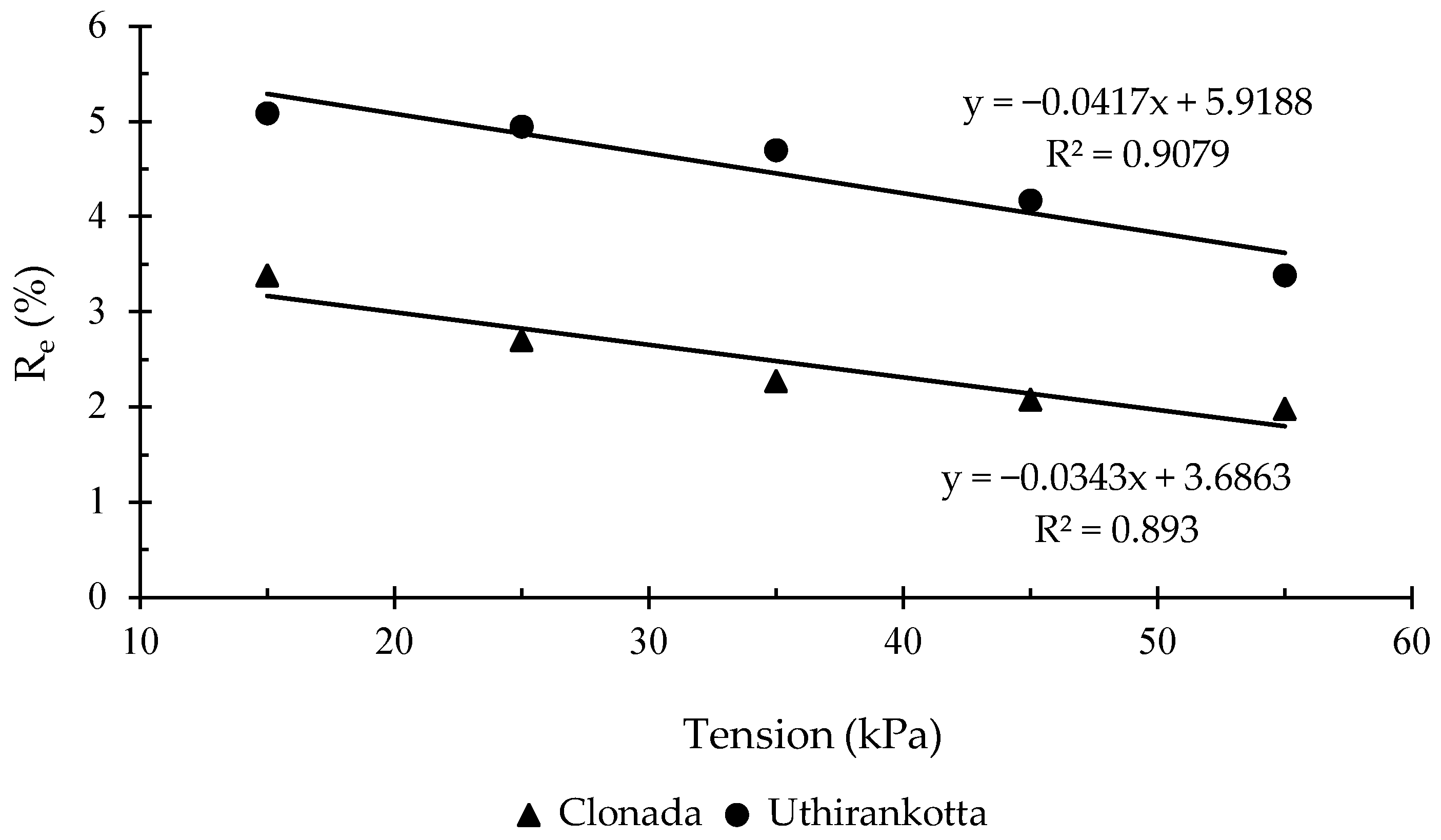
Figure 11 graphically presents the result of the regression analysis of essential oil extraction yields (Re) obtained from black pepper genotypes as a function of irrigation management by tensiometry, under the edaphoclimatic conditions of the municipality of Castanhal, Pará, Brazil.
Figure 11.
Extraction yield (Re) of black pepper essential oil from Clonada and Uthirankotta genotypes as a function of critical soil water tensions.
Regression analysis for essential oil extraction yield (Re) indicated that the linear model was significant at the 5% probability level for both genotypes. Re values decreased with increasing soil water tension, with the lowest extraction yields observed at the 55 kPa tension.
At the soil water tension of 15 kPa (w = 508.49 mm), the highest Re value was recorded for the Uthirankotta genotype (5.09%), which was approximately 34% higher than the value observed for Clonada under the same condition. For Uthirankotta, Re decreased from 5.09% at 15 kPa to 3.39% at 55 kPa, corresponding to a reduction of approximately 34%. The Re value recorded for Clonada at 15 kPa (3.38%) was similar to that observed for Uthirankotta at 55 kPa (3.39%).
The Pearson linear correlation coefficients obtained from the association between essential oil extraction yield and the response variables—green pepper production (Ppv), black pepper production (Ppp), productivity (PROD) and water use efficiency (WUE)—are presented in Table 5.
Table 5.
Pearson correlation coefficients (r) between the extraction yield (Re) of essential oil and the production response variables (Ppv, Ppp and PROD) and water use efficiency (WUE) of black pepper under tensiometric irrigation management in Castanhal, PA.
Pearson correlation analysis revealed a significant positive linear correlation between essential oil extraction yield (Re) and black pepper production (Ppp), productivity (PROD) and water use efficiency (WUE). No significant correlation was observed between Re and green pepper production (Ppv). The Pearson correlation coefficients obtained for Re in relation to Ppp, PROD and WUE ranged between 0.5 and 0.7, indicating moderate correlation strength.
4. Discussion
Black pepper cultivation plays a strategic role in Brazilian agriculture, particularly in the state of Pará, which concentrates a substantial share of national production but still exhibits marked productivity gaps when compared with more technologically advanced regions [1,2,6]. These gaps are largely associated with climatic seasonality, limited adoption of irrigation technologies and insufficient technical management of water resources, especially under humid tropical conditions [4,13].
The results obtained in this study demonstrate that irrigation management based on soil water tension plays a key role in optimizing black pepper productivity and water use efficiency. The superior agronomic performance observed under intermediate soil water tensions, particularly around 35 kPa, indicates that this threshold provides a favorable balance between soil water availability and soil aeration in medium-textured Amazonian soils [8,9,17]. Such balance is essential to sustain root metabolic activity and nutrient uptake without inducing hypoxic stress, which may occur under excessively frequent irrigation events [8,35], as evidenced by the quadratic responses observed for yield, productivity and water use efficiency.
The climatic context of Castanhal, characterized by pronounced intra-annual variability in rainfall distribution and a well-defined dry season during the second semester, reinforces the importance of soil-based irrigation scheduling [14,15]. Under these conditions, tensiometry emerges as an efficient and practical tool for irrigation control, as it directly reflects soil water status and reduces dependence on meteorological indicators that may not adequately represent field-scale variability [9,21]. The consistency between the optimal soil water tension identified in this study and thresholds reported for other irrigated crops supports the broader applicability of tensiometer-based irrigation management to improve agricultural water use efficiency [24,25].
The quadratic response of yield and productivity to increasing soil water tension highlights the sensitivity of black pepper to both water deficit and excess. Under low soil water tensions (15 kPa), higher irrigation frequency resulted in increased water application without proportional yield gains, indicating diminishing returns associated with excessive soil moisture. Such conditions may impair gas exchange in the root zone and compromise root functionality, limiting biomass accumulation despite adequate water supply [8,35]. Conversely, higher soil water tensions (45–55 kPa) imposed water stress conditions that restricted vegetative growth and reproductive development, a response commonly observed in perennial crops subjected to prolonged reductions in soil moisture [36,37].
Genotypic differences in response to irrigation management were evident throughout the study, with the Uthirankotta genotype consistently outperforming Clonada in terms of yield, productivity and water use efficiency. This behavior corroborates previous evaluations conducted in Pará, which reported superior agronomic performance of Uthirankotta under favorable management conditions [16,19,38]. These differences reflect intrinsic genetic variability related to traits such as root system efficiency, water uptake capacity and physiological regulation under fluctuating soil moisture conditions [3,20]. From a practical standpoint, these results reinforce the importance of integrating genotype selection with irrigation management strategies to maximize production efficiency in black pepper cultivation systems.
Water use efficiency followed a pattern closely associated with productivity, reaching maximum values at intermediate soil water tensions. This response aligns with the conceptual framework that defines water use efficiency as a function of biomass accumulation relative to water consumption, in which excessive irrigation reduces efficiency by increasing water input without proportional yield gains [35,39,40]. Similar responses have been reported for other irrigated crops, where optimal irrigation thresholds maximize carbon assimilation while minimizing non-productive water losses [41,42,43]. The consistently higher water use efficiency observed for the Uthirankotta genotype further emphasizes its suitability for irrigated systems aiming at sustainable water use.
In contrast to productive variables, essential oil extraction yield exhibited a distinct response pattern to soil water tension, with higher yields observed under lower tension levels. This behavior reflects the influence of water availability on secondary metabolism, whereby changes in plant water status alter the synthesis and accumulation of volatile compounds [44,45,46]. However, severe water stress tends to reduce essential oil yield due to limitations in biomass production, as reported for aromatic and medicinal plants [47]. This pattern is consistent with the linear decrease in essential oil extraction yield observed with increasing soil water tension in the present study, in contrast to the quadratic responses observed for productive variables.
The higher essential oil yields obtained for the Uthirankotta genotype across irrigation treatments suggest a genetic predisposition for greater accumulation or extraction efficiency of volatile compounds, consistent with reports on variability in essential oil yield among Piper nigrum genotypes [29,48]. Nevertheless, the inverse relationship between optimal conditions for productivity and essential oil extraction highlights a trade-off that must be considered when defining irrigation strategies, particularly when production goals differ between grain yield and phytochemical exploitation [49,50].
The positive correlations observed between essential oil extraction yield and black pepper production, productivity and water use efficiency indicate that, within the range of conditions evaluated, improved agronomic performance tends to favor oil extraction yield. It is important to emphasize that these relationships are based on correlation analysis and do not imply causality, as essential oil yield may also be influenced by unmeasured physiological and biochemical factors [51,52]. However, the absence of correlation between essential oil extraction yield and green pepper production suggests that post-harvest processing, moisture content and extraction methodology also play a critical role in determining oil extraction efficiency [49,53].
Because only essential oil extraction yield was evaluated, without chemical compositional analysis, conclusions regarding oil quality or specific industrial applications should be interpreted with caution. Overall, the findings of this study provide robust evidence that tensiometer-based irrigation management is an effective strategy for optimizing black pepper production under humid tropical conditions. By integrating soil water monitoring with genotype-specific responses, it is possible to define irrigation thresholds that maximize productivity and water use efficiency while maintaining satisfactory essential oil yields. These results advance irrigation management practices for black pepper cultivation in the Brazilian Amazon and provide a science-based irrigation threshold that integrates productivity, water use efficiency and essential oil yield, contributing to greater sustainability and resilience of regional production systems.
5. Conclusions
The highest black pepper production and productivity for both Clonada and Uthirankotta genotypes were obtained at a soil water tension of 35 kPa, indicating this value as an appropriate reference for irrigation management under the edaphoclimatic conditions of northern Pará, Brazil. The Uthirankotta genotype showed superior productive performance and higher water use efficiency compared to Clonada under tensiometer-based irrigation management. The highest essential oil extraction yield was observed for Uthirankotta at 15 kPa. Positive correlations were identified between essential oil yield and production-related variables; however, these relationships are based on correlation analysis and do not imply causality. Furthermore, as only extraction yield was evaluated, without chemical compositional analysis, conclusions regarding essential oil quality should be interpreted with caution.
Author Contributions
Conceptualization, J.d.S.M., J.A.D.L.J. and O.F.d.L.; methodology, M.D.d.A.G., H.C.A.S. and J.A.D.L.J.; statistical analysis O.F.d.L., H.L.M., A.N.C. and M.C.P.; writing—original draft preparation, J.d.S.M., M.A.d.S.G. and J.A.D.L.J.; writing—review and editing, H.C.A.S., A.N.C., H.L.M. and M.C.P. All authors have read and agreed to the published version of the manuscript.
Funding
This research received no external funding.
Data Availability Statement
The original contributions presented in this study are included in the article. Further inquiries can be directed to the corresponding author.
Conflicts of Interest
Author Oriel Filgueira de Lemos was employed by the company Brazilian Agricultural Research Corporation (EMBRAPA). The remaining authors declare that the research was conducted in the absence of any commercial or financial relationships that could be construed as a potential conflict of interest.
References
- IBGE (Brazilian Institute of Geography and Statistics). Systematic Survey of Agricultural Production (SIDRA); IBGE: Rio de Janeiro, Brazil, 2023. Available online: https://sidra.ibge.gov.br (accessed on 21 October 2025).
- Paes, R.L.; Cruz, B.E.V. Geographical situation of black pepper production in Brazil. Univ. Commun. J. 2022, 1, 14. Available online: https://periodicos.uepa.br/index.php/comun/article/view/5441 (accessed on 21 October 2025).
- Albuquerque, F.C.; Duarte, M.L.R.; Nunes, A.M.L.; Stein, R.L.B.; Oliveira, R.P. Behavior of black pepper germplasm in areas with Fusarium occurrence in the state of Pará. In Proceedings of the International Seminar on Black Pepper and Cupuaçu; Document No. 89; Embrapa-CPATU: Belém, Brazil, 1997; pp. 269–276. [Google Scholar]
- Ribeiro, L.L.O.; Cunha, L.S.; Rego, F.C.; Oliveira, F.L.S.; Rego, F.R.C. Production and productivity of black pepper in the municipality of Capitão Poço, Pará, Brazil. Cad. Ciência Tecnol. 2019, 36, e26518. [Google Scholar] [CrossRef]
- Embrapa (Brazilian Agricultural Research Corporation). Safety and Quality Manual for Black Pepper Cultivation; Embrapa Headquarters (Food Quality and Safety): Brasília, Brazil, 2004; 65p, Available online: http://www.infoteca.cnptia.embrapa.br/infoteca/handle/doc/111893 (accessed on 21 October 2025).
- Vidal, F. Evolution of black pepper cultivation in the area of operation of Banco do Nordeste do Brasil. Sect. Rep. ETENE 2020, 5, 146. Available online: https://www.bnb.gov.br/revista/cse/article/view/2908 (accessed on 21 October 2025).
- Christofidis, D.; Assumpção, R.S.F.V.; Kligerman, D.C. The historical evolution of urban drainage: From traditional drainage to harmony with nature. Saúde Debate 2019, 43, 94–108. [Google Scholar] [CrossRef]
- Mantovani, E.C.; Bernardo, S.; Palaretti, L.F. Irrigation: Principles and Practices; UFV Press: Viçosa, Brazil, 2006; 318p. [Google Scholar]
- Marouelli, W.A. Tensiometers for Irrigation Control in Vegetables; Technical Circular No. 57; Embrapa Vegetables: Brasília, Brazil, 2008; 15p. [Google Scholar]
- Cunha, P.C.; Silveira, P.M.; Nascimento, J.L.; Alves Júnior, J. Irrigation management in bean crop cultivated under a no-tillage system. Rev. Bras. Eng. Agrícola Ambient. 2013, 17, 735–742. [Google Scholar] [CrossRef]
- Morais, L.A.S. Influence of abiotic factors on the chemical composition of essential oils. Hortic. Bras. 2009, 27, S4050–S4063. Available online: https://www.embrapa.br/busca-de-publicacoes/-/publicacao/577686/influencia-dos-fatores-abioticos-na-composicao-quimica-dos-oleos-essenciais (accessed on 21 October 2025).
- Costa, M.A.; Dias, A.G.; Guimarães, P.I.C. Practical Guide to Organic Chemistry. Volume I: Techniques and Procedures; Interciência: Rio de Janeiro, Brazil, 2004; 127p. [Google Scholar]
- Duarte, M.L.R.; Poltronieri, M.C.; Chu, E.Y.; Oliveira, R.F.; Lemos, O.F.; Benchimol, R.L.; Conceição, H.E.O.; Souza, G.F. Black Pepper Cultivation, 2nd ed.; Embrapa Informação Tecnológica: Brasília, Brazil, 2006; 73p. [Google Scholar]
- Albuquerque, J.; Galvão, J.R.; Moraes, M.H.; Carvalho Santana, M.A.; Almeida Oliveira, L.; Lima, M.C. Rainfall erosivity: Sustainable agricultural land management in the municipality of Castanhal, Pará State, Brazil. Biodiversidade Bras. (BioBrasil) 2021, 11, 12–20. [Google Scholar] [CrossRef]
- INMET (National Institute of Meteorology). Catalogue of Automatic Stations: Automatic Station of Castanhal (A202); Ministry of Agriculture, Livestock and Supply: Brasília, Brazil, 2023. Available online: https://portal.inmet.gov.br/paginas/catalogoaut (accessed on 21 October 2025).
- Santos, H.A. Productive Performance of Black Pepper Cultivars Under Irrigation Management Conditions in the North-Eastern Region of Pará. Ph.D. Thesis, Federal Rural University of the Amazon (UFRA), Belém, Brazil, 2023. [Google Scholar]
- Embrapa (Brazilian Agricultural Research Corporation). Brazilian Soil Classification System, 6th ed.; Embrapa: Brasília, Brazil, 2022; 442p, Available online: https://www.embrapa.br/solos/sibcs (accessed on 21 October 2025).
- Brasil, E.C.; Cravo, M.S.; Viegas, I. Liming and Fertilization Recommendations for the State of Pará, 2nd ed.; Embrapa Eastern Amazon: Belém, Brazil, 2020; 419p. [Google Scholar]
- Rodrigues, S.D.M.; Poltronieri, M.C.; Lemos, O.F.; Araújo, S.M.B.; Both, J.P.C.L. Evaluation of Black Pepper (Piper Nigrum) Cultivars Using Two Types of Supports in the Municipality of Igarapé-Açu, Pará State, Brazil; Embrapa Eastern Amazon: Belém, Brazil, 2019; 20p, Available online: https://www.infoteca.cnptia.embrapa.br/infoteca/handle/doc/1108805 (accessed on 21 October 2025).
- Lemos, O.F.; Tremacoldi, C.R.; Poltronieri, M.C. Good Agricultural Practices for Increasing the Productivity and Quality of Black Pepper in the State of Pará; Embrapa: Brasília, Brazil, 2014; 52p, Available online: https://www.infoteca.cnptia.embrapa.br/bitstream/doc/994882/1/CartilhaPimenta.pdf (accessed on 21 October 2025).
- Braga, M.B.; Calgaro, M. Use of Tensiometry in Irrigation Management; Embrapa Semi-Arid: Petrolina, Brazil, 2010; 30p, Available online: https://www.infoteca.cnptia.embrapa.br/bitstream/doc/884330/1/Documentos235.pdf (accessed on 21 October 2025).
- Silva, P.F.; Lima, C.J.G.S.; Barros, A.C.; Silva, E.M.; Duarte, S.N. Fertilizer salts and fertigation management in tomato cultivation in greenhouse. Rev. Bras. Eng. Agrícola Ambient. 2013, 17, 1173–1180. [Google Scholar] [CrossRef]
- van Genuchten, M.T. A closed-form equation for predicting the hydraulic conductivity of unsaturated soils. Soil Sci. Soc. Am. J. 1980, 44, 892–898. [Google Scholar] [CrossRef]
- Miranda, J.R.; Pereira, G.M. Beet cultivation under different soil water tensions. Irriga 2019, 24, 220–235. [Google Scholar] [CrossRef]
- Incrocci, L.; Thompson, R.B.; Fernandez-Fernandez, M.D.; De Pascale, S.; Pardossi, A.; Stanghellini, C.; Rouphael, Y.; Gallardo, M. Irrigation management of European greenhouse vegetable crops: Methods and tools for optimizing water use. Agricultural Water Manag. 2020, 242, 106393. [Google Scholar] [CrossRef]
- Nikolaou, G.; Neocleous, D.; Katsoulas, N.; Kittas, C. Irrigation of greenhouse crops: Approaches for scheduling and precision control. Horticulturae 2019, 5, 7. [Google Scholar] [CrossRef]
- Liu, J.; Chang, F.; Wang, X.; Kang, M.; Lu, C.; Wang, C.; Hu, S.; Li, Y.; Ma, L.; Su, H. Smart irrigation scheduling for crop production using a crop model and improved deep reinforcement learning. Agriculture 2025, 15, 2569. [Google Scholar] [CrossRef]
- Sousa, V.F.; Coêlho, E.F.; Andrade Júnior, A.S.; Folegatti, M.V.; Frizzone, J.A. Water use efficiency of the melon crop under different irrigation frequencies. Rev. Bras. Eng. Agrícola Ambient. 2000, 4, 183–188. [Google Scholar] [CrossRef]
- Costa, K.P.; Fonseca, E.S.; Andrade, R.E.S.; Ferreira, G.S.; Rodrigues, L.I.T.; Fonseca, F.S.A.; Martins, E.R. Antioxidant activity of ethanolic extracts and essential oils of Xylopia aromatica and Piper nigrum. Braz. J. Dev. 2021, 7, 27904–27912. [Google Scholar] [CrossRef]
- Santos, A.S.; Alves, S.D.M.; Figueiredo, F.J.C.; Rocha Neto, O.G. Description of the System and Methods for Essential Oil Extraction and Biomass Moisture Determination in the Laboratory; Technical Communication No. 99; Embrapa Eastern Amazon: Belém, Brazil, 2004; 6p. [Google Scholar]
- Ferreira, D.F. SISVAR: A computer analysis system for fixed effects split-plot type designs. Rev. Bras. Biom. 2019, 37, 529–535. [Google Scholar] [CrossRef]
- Hinkle, D.E.; Wiersma, W.; Jurs, S.G. Applied Statistics for the Behavioral Sciences, 5th ed.; Houghton Mifflin: Boston, MA, USA, 2003; 663p. [Google Scholar]
- Rua, M.L.; Lisboa, S.P.P.; Souza, P.J.O.P.; Santos, M.G.M.; Ribeiro, L.R.T.; Navarro, L.M.; Silva, C.R.F.; Oliveira, A.A.; Souza, R.B. Soil water evaporation in the cultivation of green dwarf coconut palms in the Eastern Amazon. Rev. Bras. Eng. Agrícola Ambient. 2025, 29, e293004. [Google Scholar] [CrossRef]
- Bastos, T.X.; Pacheco, N.A.; Figueiredo, R.O.; Silva, G.F.G. Agroclimatic Characteristics of the Municipality of Paragominas; Document No. 228; Embrapa Eastern Amazon: Belém, Brazil, 2005; 21p. [Google Scholar]
- Mauri, R.; Coelho, R.D.; Fraga Júnior, E.F.; Barbosa, F.S.; Leal, D.P. Water relations in the initial growth phase of sugarcane under variable water deficit. Eng. Agrícola 2017, 37, 268–276. [Google Scholar] [CrossRef]
- Silva, V.D.P.R.; Azevedo, P.V.; Silva, B.B.; Bassoi, L.H.; Teixeira, A.H.C.; Soares, J.M.; Silva, J.A. Estimation of mango tree evapotranspiration based on soil water balance. Rev. Bras. Eng. Agrícola Ambient. 2001, 5, 456–462. [Google Scholar] [CrossRef]
- Lima Júnior, J.A.; Pereira, G.M.; Geisenhoff, L.O.; Silva, W.G.; Vilas Boas, R.C.; Souza, R.J. Performance of carrot cultivars as a function of soil water availability. Rev. Bras. Eng. Agrícola Ambient. 2012, 16, 514–520. [Google Scholar] [CrossRef]
- Rasanjali, K.G.A.I.; De Silva, C.S.; Priyadarshani, K.D.N. Influence of super absorbent polymers (SAPs) on irrigation interval and growth of black pepper (Piper nigrum L.) in nursery management. OUSL J. 2019, 14, 7. [Google Scholar] [CrossRef]
- Padilla-Nates, J.P.; Torres-Sánchez, R.; López-Martínez, A.; Pérez-Ruiz, M.; Aguilera, J.; Rodríguez-Díaz, J.A. Greenhouse irrigation control based on reinforcement learning: Experimental evaluation and performance benchmarking. Agronomy 2025, 15, 2781. [Google Scholar] [CrossRef]
- Pacheco, L.B.; Both, J.P.C.; Lemos, O.F. Performance of black pepper cultivars in production using dead supports. In Proceedings of the 23rd Scientific Initiation Seminar of Eastern Amazon; Embrapa Amazônia Oriental: Belém, Brazil, 2019; pp. 247–252. [Google Scholar]
- Thompson, R.B.; Gallardo, M.; Valdez, L.C.; Fernández, M.D. Using plant water status to define thresholds for irrigation management of vegetable crops. Agric. Water Manag. 2010, 98, 239–246. [Google Scholar] [CrossRef]
- Sreelakshmi, K.S.; Ajithkumar, B.; Arjun, V.; Lincy, D.; Vikram, H.C.; Radhakrishnan, G.; Riya, K.R.; Sarath, R. Assessing the impact of climate change on black pepper (Piper nigrum L.) distribution in Kerala through MaxEnt modelling. Int. J. Environ. Clim. Change 2025, 15, 649–660. [Google Scholar] [CrossRef]
- Silva, J.M.; Ferreira, R.S.; Melo, A.S.; Suassuna, J.F.; Dutra, A.F.; Gomes, J.P. Cultivation of tomato in greenhouse under different replenishment rates of evapotranspiration. Rev. Bras. Eng. Agrícola Ambient. 2013, 17, 40–46. [Google Scholar] [CrossRef]
- Santos, H.C.A.; Lima Júnior, J.A.; Silva, A.L.P.; Castro, G.L.S.; Gomes, R.F. Yield of fertigated bell pepper under different soil water tensions and nitrogen fertilization. Rev. Caatinga 2020, 33, 172–183. [Google Scholar] [CrossRef]
- Peloso, A.D.F.; Tatagiba, S.D.; Reis, E.F.; Pezzopane, J.E.M.; Amaral, J.F.T. Photosynthetic limitations in Arabica coffee leaves induced by water deficit. Coffee Sci. 2017, 12, 389–399. [Google Scholar] [CrossRef]
- Carvalho, L.M.; Casali, V.W.D. Medicinal and Aromatic Plants: Relationships with Light, Stress and Insects; Federal University of Viçosa: Viçosa, Brazil, 1999; 114p. [Google Scholar]
- Silva, S.R.; Demuner, A.J.; Almeida Barbosa, L.C.; Casali, V.W.D.; Nascimento, E.A.; Pinheiro, A.L. Effect of water stress on growth characteristics and essential oil production of Melaleuca alternifolia Cheel. Acta Scientiarum. Agronomy 2008, 24, 1363–1368. [Google Scholar] [CrossRef]
- Melo, A.M.; Silva, E.O.; Marques, D.I.; Quirino, M.R.; Sousa, S. Extraction, identification, and study of the antimicrobial potential of black pepper (Piper nigrum L.) essential oil, biomonitored by Artemia salina Leach. Holos 2021, 1, e10663. [Google Scholar]
- Costa, J.G.M.; Santos, P.F.; Brito, S.A.; Rodrigues, F.G.G.; Coutinho, H.D.M.; Botelho, M.A.; Lima, S.G. Chemical composition and toxicity of essential oils from Piper species against Aedes aegypti L. larvae. Lat. Am. J. Pharm. 2010, 29, 463–467. [Google Scholar]
- Moura, R.C.S.; Amaral, B.D.O.; Lima, N.K.; Lopes, A.D.S.N.; Carmo, D.F.D.M.; Guesdon, I.R.; Bardales-Lozano, R.M.; Schwartz, G.; Dionisio, L.F.S.; Ávila, M.D.S.N. Phytotoxicity of Piper marginatum Jacq. essential oil on detached leaves and post-emergence of plants. Rev. Bras. Eng. Agrícola Ambient. 2025, 29, e284276. [Google Scholar] [CrossRef]
- Souza, L.P.; Zocoler, J.L.; Bergo, C.L. Effect of soil water tensions on the vegetative and productive development of monkey pepper. Irriga 2018, 23, 143–153. [Google Scholar] [CrossRef]
- Luiz, J.M.Q.; Morais, T.P.S.; Blank, A.F.; Sodré, A.C.B.; Oliveira, G.S. Content, yield and chemical composition of essential basil oil under chicken manure levels. Hortic. Bras. 2009, 27, 349–353. [Google Scholar] [CrossRef]
- Ferhat, M.A.; Meklati, B.Y.; Smadja, J.; Chemat, F. An improved microwave Clevenger apparatus for distillation of essential oils from orange peel. J. Chromatogr. A 2006, 1112, 121–126. [Google Scholar] [CrossRef] [PubMed]
Disclaimer/Publisher’s Note: The statements, opinions and data contained in all publications are solely those of the individual author(s) and contributor(s) and not of MDPI and/or the editor(s). MDPI and/or the editor(s) disclaim responsibility for any injury to people or property resulting from any ideas, methods, instructions or products referred to in the content. |
© 2026 by the authors. Licensee MDPI, Basel, Switzerland. This article is an open access article distributed under the terms and conditions of the Creative Commons Attribution (CC BY) license.