Article

Modulation of the Genetic Response in Vitis vinifera L. Against the Oomycete Plasmopara viticola, Causing Grapevine Downy Mildew, Through the Action of Different Basic Substances

by
Diego Llamazares De Miguel
1,
Amaia Mena-Petite
2,
Marie-France Corio-Costet
3,
Juan Nieto
4,
José R. Fernández-Navarro
4 and
Ana M. Díez-Navajas
1,*
1
NEIKER-Basque Institute of Agricultural Research and Development, Department of Plant Production and Protection, Basque Research and Technology Alliance (BRTA), Campus Agroalimentario de Arkaute, E-01192 Arkaute, Spain
2
Faculty of Pharmacy, Department of Plant Biology and Ecology, University of the Basque Country Universidad del País Vasco/Euskal Herriko Unibertsitatea (UPV/EHU), E-01006 Vitoria-Gasteiz, Spain
3
French National Institute for Agriculture, Food, and Environment-INRAE, Department of Plant Health and Environment, UMR Santé et Agroécologie du Vignoble, (SAVE-1065), F-33882 Villenave d’Ornon, France
4
Biopharma Research, E-14100 La Carlota, Spain
*
Author to whom correspondence should be addressed.
Horticulturae 2026, 12(1), 112; https://doi.org/10.3390/horticulturae12010112
Submission received: 18 December 2025 / Revised: 14 January 2026 / Accepted: 16 January 2026 / Published: 20 January 2026

Abstract

Grapevine downy mildew is a major disease in vineyards all around the world, caused by the oomycete Plasmopara viticola (Berk. & M. A. Curtis) Berl. & De Toni. Normally, its control depends almost exclusively on chemical and copper-based fungicides, especially in high-incidence areas with high relative humidity and mild temperatures. However, the European Union is determined to reduce the application of these phytochemicals by at least 50% by 2030, forcing winegrowers to seek alternative low-input strategies for proper sanitary maintenance. Basic substances (BSs), described in European Regulation (EC) 1107/2009, stand out as promising alternatives, but their molecular mechanism of action remains mostly unknown. In this context, this study analyzed the genetic effect in grapevine plants of several commercial products composed of BSs (chitosan, soy lecithin, Equisetum arvense and Salix cortex). All products exhibited promising results, triggering the induction of similar defence mechanisms, which included pathogenesis-related proteins (PRs), involved in direct pathogen repression; stilbenes, capable of producing antimicrobial compounds such as resveratrol and pterostilbene; several hormones, including oxylipins, ethylene, salicylic acid and terpenes, mediating immune signalling; and genes related to structural features of the plant, such as lignin, callose, cellulose and cuticular wax, constituting a first physiological barrier against P. viticola. Disease severity reduction differed among treatments, with Salix cortex showing the highest efficacy (58%), followed by BABA (38%) and LESOY (35%), while LECI and CHIT had minor effects (<9%). Gene expression analyses revealed that Salix cortex modulated the highest percentage of genes (41%), followed by natural infection without treatment (32%), LESOY (27%), BABA (26%), LECI (23%) and CHIT (23%). In terms of defence mechanisms, Salix cortex promoted the most pathways, LESOY induced eight, BABA and LECI seven and CHIT five. Overall, these results indicate that BSs can modulate several defence pathways in grapevine, supporting their potential use as sustainable alternatives for controlling downy mildew.

Graphical Abstract

1. Introduction

Plasmopara viticola (Berk. & M. A. Curtis) Berl. & De Toni is an oomycete and obligate biotroph which causes downy mildew disease in grapevine, Vitis vinifera L. subsp. Vinifera [1]. Common symptoms of this disease include oil spots in the adaxial side of the leaf and white sporulation on the abaxial side [2,3]. However, the most critical point is its ability to infect grape bunches until veraison, reducing the yield [1,4]. Therefore, it is of upmost importance to keep good sanitary control of the vineyard throughout the growing season [5,6]. At the moment, available plant protection products to control P. viticola include chemical compounds and copper, low-risk active substances and basic substances (BSs), which are all included in Regulation (EC) 1107/2009 [7].
Chemical fungicides are the most efficient way to control P. viticola, but they pose an environmental risk, as they can contaminate both terrestrial and aquatic environments [8,9,10,11] or induce the development of fungicide-resistant P. viticola strains [12,13]. Moreover, copper-based products, which are often used as an alternative to these chemicals (especially in organic vineyards) or in combination with them, can accumulate in soils, leading to plant phytotoxicity [14,15]. Under these circumstances, the European Commission is determined to reduce the use of both conventional and copper-based formulations in the following years. For this, a new legal framework for plant protection products was developed under the Farm to Fork strategy of the European Green Deal [16], which will replace the previous Directive 2009/128/EC on the sustainable use of phytosanitary products [17]. The Farm to Fork strategy intends to achieve “a 50% reduction in the overall use of and risk from chemical plant protection products, and a 50% reduction in the use of more hazardous ones by 2030” [18].
In this context, BSs appear as very promising candidates to substitute conventional fungicides and copper-based products. These substances are included in article 23 of Regulation (EC) 1107/2009 [7]. Interestingly, the European Commission categorizes the different BSs as elicitors or fungicides [19]. For instance, chitosan (SANCO/12388/2013-rev. 5) is considered an elicitor, while E. arvense (SANCO/12386/2013-rev. 7), soy lecithin (SANCO/12798/2014-rev. 3) and Salix cortex (SANCO/12173/2014-rev. 4) are considered fungicides. However, these statements are not supported by any scientific study, and only chitosan is a well-known elicitor [20,21,22]. In contrast, E. arvense, soy lecithin and Salix cortex BSs remain understudied at the molecular level, with no work reporting their elicitor function against P. viticola nor any other pathogen. Nonetheless, their molecular composition might indicate a potential elicitation or PDS capacity.
For instance, soy lecithin is a rich source of phospholipids, including phosphatidylcholine [23], which can be part of the defence signalling of plants [24], being the substrate for defence-involved phospholipases [25]. Interestingly, phosphatidylcholine and its catabolite phosphatidic acid were reported as putative defence markers in grapevine against P. viticola infection, as they were expressed to a higher extent in a resistant genotype [26]. Moreover, fatty acids (FAs) such as palmitic acid (16:0), stearic acid (18:0), linoleic acid (18:1) and linolenic acid (18:2) are also common in soy lecithin composition [23], which could induce defence responses in grapevine. In fact, linolenic acid and its precursor linoleic acid are used as substrates to synthesize a wide variety of oxylipins and the plant hormone jasmonic acid (JA), which actively participate in plant defence [27]. Interestingly, JA might be important during P. viticola infection in resistant genotypes, where an early production is observed [28,29,30]. Thus, soy lecithin could boost plant immunity by providing external precursors of JA-related immunity.
In the case of Salix spp. cortex, the presence of salicylic acid (SA) and derivatives in its composition could be determinant [31,32], as this hormone is a common plant defence stimulator (PDS) thanks to its role in plant defence [33]. Unsurprisingly, SA application stimulates glucanase and chitinase activities in grapevine [34,35,36] and its chemical analogue BTH induces several defence mechanisms [37,38,39]. However, Salix spp. cortex is richer and more diverse, containing other molecules [31,32], so a wider defence spectrum than that of SA alone could be expected for this product.
Finally, E. arvense has a rich composition of phenolic compounds such as flavonoids, which happen to display antifungal capacities [40,41,42,43]. Interestingly, we previously reported that soy lecithin and Equisetum arvense-based products were more toxic against P. viticola than that based exclusively on soy lecithin, while both products displayed the same preventive activity. Moreover, it was also shown that an E. arvense-based product could not prevent P. viticola infection in vitro [44]. This implies that E. arvense might be more effective against downy mildew thanks to its toxicity than to its stimulation capacity, reducing the probability of PDS behaviour under these circumstances.
To decipher if a substance behaves as an elicitor or a PDS, several molecular approaches can be implemented, including genetic [38,39,45,46], enzymatic [20] or metabolic approaches [39,47,48]. These analyses should be enough to confirm the stimulation potential of a product, ensuring that its efficacy derives from a defence stimulation capacity and not from a direct toxicity against the pathogen, although sometimes both mechanisms can happen at the same time [49]. Thanks to different studies, several PDSs have been identified in grapevine, such as COS-OGA, laminarin, chitosan, the SA analogue benzothiadiazole (BTH), β-aminobutyric acid (BABA), methyl jasmonate (MeJA) or SA [34,39,50,51,52,53,54,55,56]. The main objective of this study was to evaluate the ability of different products based on E. arvense, soy lecithin and Salix spp. cortex to enhance vine defences and analyze gene expression. The latter is uncommon for these compounds compared to other PDSs, and it has never been addressed in grapevine. According to the European Commission, these products are intended to protect plant against P. viticola [19], and the research suggests that they behave similarly to PDSs.
In this study, we demonstrated that all tested BSs induced multiple grapevine defence mechanisms—including pathogenesis-related proteins, stilbenes, hormones such as oxylipins, ethylene and salicylic acid and structural genes involved in lignin, callose, cellulose and cuticular wax biosynthesis—leading to reductions in downy mildew severity of up to 58%. Among the products, Salix cortex was the most effective, modulating the highest percentage of genes and the greatest number of defence pathways, highlighting the potential of these compounds as sustainable alternatives for disease management in vineyards.

2. Materials and Methods

2.1. Plant Material and Pathogen Inoculum

For this study, ungrafted plants of Vitis vinifera cv. Tempranillo RJ-78 were used, obtained from pruning branches from ICVV (Logroño, Spain). These branches were immersed in a fungicide solution [0.04% boscalid 20% + kresoxim methyl 10% (Collis, BASF, Ludwigshafen am Rhein, Germany), 0.03% tetraconazole 12.5% (Domark Evo, SIPCAM IBERIA S.A., Valencia, Spain), 0.1% cyprodinil 37.5% + fludioxonil 25% (Switch, SYNGENTA Crop Protection, Basel, Switzerland)] and stored in humidity conditions at 10 °C for at least 10 days. Thereafter, they were excised into smaller pieces containing one or two buds. Sprouting was induced by placing them in water until the emergence of roots. Three plants were grown in 5 L pots, with enriched nutrient substrate (organic matter 90%, Sphagnum peat (160 g/L), calcium carbonate (7 g/L), NPK fertilizer (1.5 g/L) and trace elements, an electrical conductivity of 40 mS/m, at pH 5.5–6.5; PotgrondH, Klasmann-Deilmann GmbH, Germany), with a 16 h day/8 h night photoperiod (350 umol/m2/s; 0.51 W/m2) and at 18–25 °C room temperature in a greenhouse compartment with biological containment level 2 and irrigated to field capacity when necessary.
P. viticola sporangia (sp.), considered as the inoculum, were isolated from downy mildew infection spots of different grapevine leaves from a vineyard in Etxano (E-48340, Bizkaia, Spain, 43.227865, −2.719396) in May 2020 and regularly propagated in laboratory over detached leaves of Vitis vinifera cv. Tempranillo until use. For every inoculation, sporangia were suspended in commercial mineral water and their concentration adjusted to 2 × 10⁴ sp/mL, using a Thoma haemocytometer (BRAND GMBH + CO KG, Wertheim, Germany). Detached leaves were inoculated by spraying a sporangial dilution on the abaxial side of the leaf with a hand sprayer and incubated at 20 °C in Petri dishes with saturated humidity.

2.2. Commercial Products

For this study, a total of four commercial products composed of BSs were evaluated. Distilled water (dH2O) was used as the negative control and β-aminobutyric acid or BABA (Sigma-Aldrich, Steinheim, Germany), a well-known PDS [57], as the positive one. The information regarding these products is described in Table 1.

2.3. Experimental Assay

To minimize the intra-chamber effects, plants were randomly relocated within the chamber each week before the experiment. Three pots per product and three plants per pot (nine plants in total) were used for each treatment. Each pot was considered a separate biological replicate, giving a total of three biological replicates per treatment. Briefly, three-month-old plants were sprayed with the products (Table 1) at the recommended commercial dose until run-off. Twenty-four hours after the treatment, the 3rd, 4th and 5th fully expanded leaves were detached, and sections of them were flash-frozen. Thereafter, discs were excised on the remaining fresh leaf of each plant and randomly mixed, and they were inoculated with P. viticola sporangia solution at a concentration of 2 × 10⁴ sp/mL. Discs were maintained at 18–22 °C and saturated humidity in Petri dishes, with a photoperiod of 16:8 (light–darkness). Four discs per leaf were flash-frozen during the infection process at different timepoints, 1, 3 and 7 days post-infection (dpi), and stored at −80 °C for further molecular analyses. At 7 dpi, the percentage of sporulated surface was measured for the remaining tissue of each leaf. A graphical representation of the experimental design is shown in Figure 1.
For each timepoint, two control groups were established. First, the non-treated infected control (NT-INF) was compared to the non-treated non-infected control (NT-NOINF) to identify the gene modulation exclusively induced by the pathogen. Secondly, the NT-INF samples were used as a control for treated infected samples (T-INF) to determine the gene modulation produced exclusively by the treatments in the presence of P. viticola.

2.4. RNA Extraction and Reverse Transcription

RNA was extracted from the frozen leaves using a Spectrum™ Plant Total RNA Kit (Sigma-Aldrich, Steinheim, Germany), following the manufacturer’s instructions. The procedure included an intermediate on-column DNase treatment, which was performed for 15 min at room temperature, following the recommended protocol. The quality of the RNA was inspected in a 1.2% agarose gel electrophoresis and the purity and concentration of RNA in a NanoDrop 1000 spectrophotometer (NanoDrop Technologies, Inc., Waltham, MA, USA). RNA samples with good purity and concentration were reverse-transcribed to obtain the complementary DNA (cDNA) using GoScript™ Reverse Transcriptase (Promega, Madison, WI, USA), as indicated by the manufacturer.

2.5. Gene Expression

Gene expression was analyzed by high-throughput quantitative polymerase chain reaction (qPCR), as described by [58], using a 96.96 Dynamic Array™ IFC for Gene Expression (Standard BioTools Inc., CA, USA), which enables the qPCR analysis of 96 genes in 96 samples. One technical replicate was performed for each biological replicate. The analysis included 4 reference genes and 91 defence-related genes. The defence genes were grouped according to different categories (the number of genes for each group is detailed between brackets): (i) primary metabolism (n = 10), (ii) cell/wall reinforcement (n = 14), (iii) pathogenesis-related (PR) proteins (n = 16), (iv) phenylpropanoid biosynthesis (n = 19), (v) hormones (n = 14), (vi) metal transport (n = 3), (vii) redox status (n = 7), (viii) indole pathway (n = 5) and (ix) oxylipins (n = 2). Further details on the analyzed genes are available in the Supplementary Material (Table S1).
As the PCR efficiencies for each primer set ranged between 0.8 and 1.2, Pfaffl’s model formula was simplified, and the relative expression was calculated using the 2−ΔΔCt formula. This model is the standard for RT-qPCR analysis [59,60]. For these calculations, two controls were established for each timepoint: a non-treated non-infected control (NT-NOINF) and a non-treated infected control (NT-INF). First, the NT-INF was compared to the NT-NOINF to identify the gene modulation exclusively induced by the pathogen (NT-INF vs. NT-NOINF). Secondly, the NT-INF samples were used as a control for treated infected samples (T-INF) to determine the gene modulation produced exclusively by the treatments in the presence of P. viticola (T-INF vs. NT-INF).

2.6. Data Analysis

The relative gene expression values were then statistically analyzed, where the threshold of 5% (p-value < 0.05) indicated a significant difference. This was carried out on RStudio version 2022.07.2. with a rank-based nonparametric multiple comparisons test (Dunnett_test, nparcom function {nparcomp}). The gene expression data was also subjected to a multiple factor analysis (MFA) for each timepoint using the “FactoMineR” and “factoextra” packages in RStudio 2022.07.2. Factor maps displaying individuals and their coordinates with 95% confidence ellipses were produced, as well as a correlation circle showing the 20 variables with the highest COS2. In the case of sporulation data, a one-way analysis of variance (ANOVA) (α= 0.05) followed by Tukey’s post hoc test with the Holm correction was performed in JASP version 0.16.3.0.

3. Results

3.1. Disease Severity After Product Application

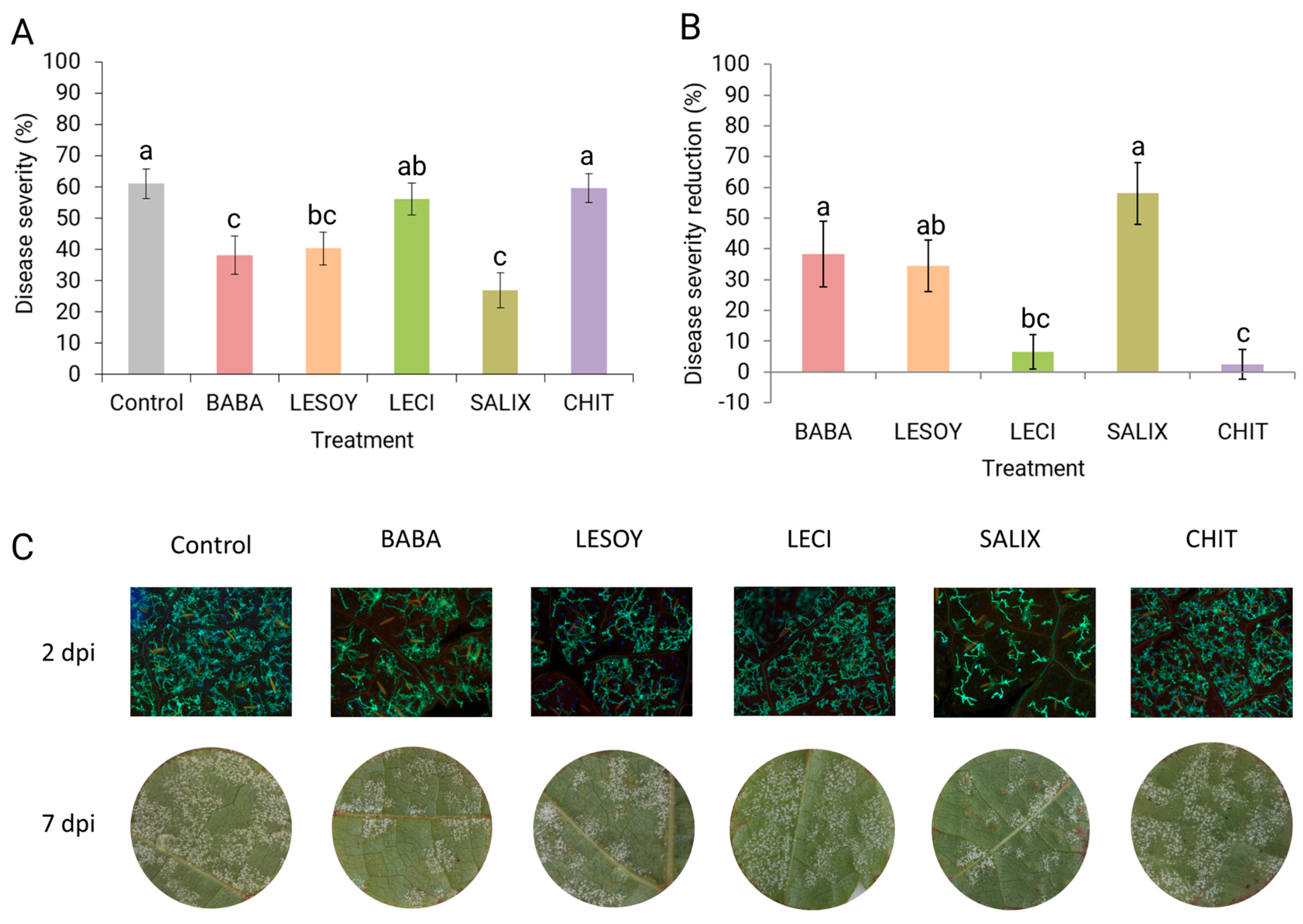
Twenty-four hours after treatment, detached leaves were infected with P. viticola sporangia and incubated for seven days. Thereafter, the percentage of sporulated surface was evaluated for the negative control, for BABA and for the products, revealing that only BABA, LESOY and SALIX significantly reduced the sporulation (Figure 2A). SALIX was the most efficient product with an overall reduction close to 60%. After a transformation of data to a percentage of disease severity reduction, BABA, LESOY, LECI, SALIX and CHIT reduced the sporulation by 38.38, 34.59, 8.56, 58.01 and 2.46%, respectively. BABA, LESOY and SALIX produced a reduction significantly higher than those of LECI and CHIT (Figure 2B). Figure 2C shows the intratissue area occupied by P. viticola mycelium for each treatment at 2 dpi and the sporulation at 7 dpi. Both mycelium development and sporulation were reduced in plants treated with BABA, LESOY and SALIX compared to the control.

3.2. General Gene Modulation

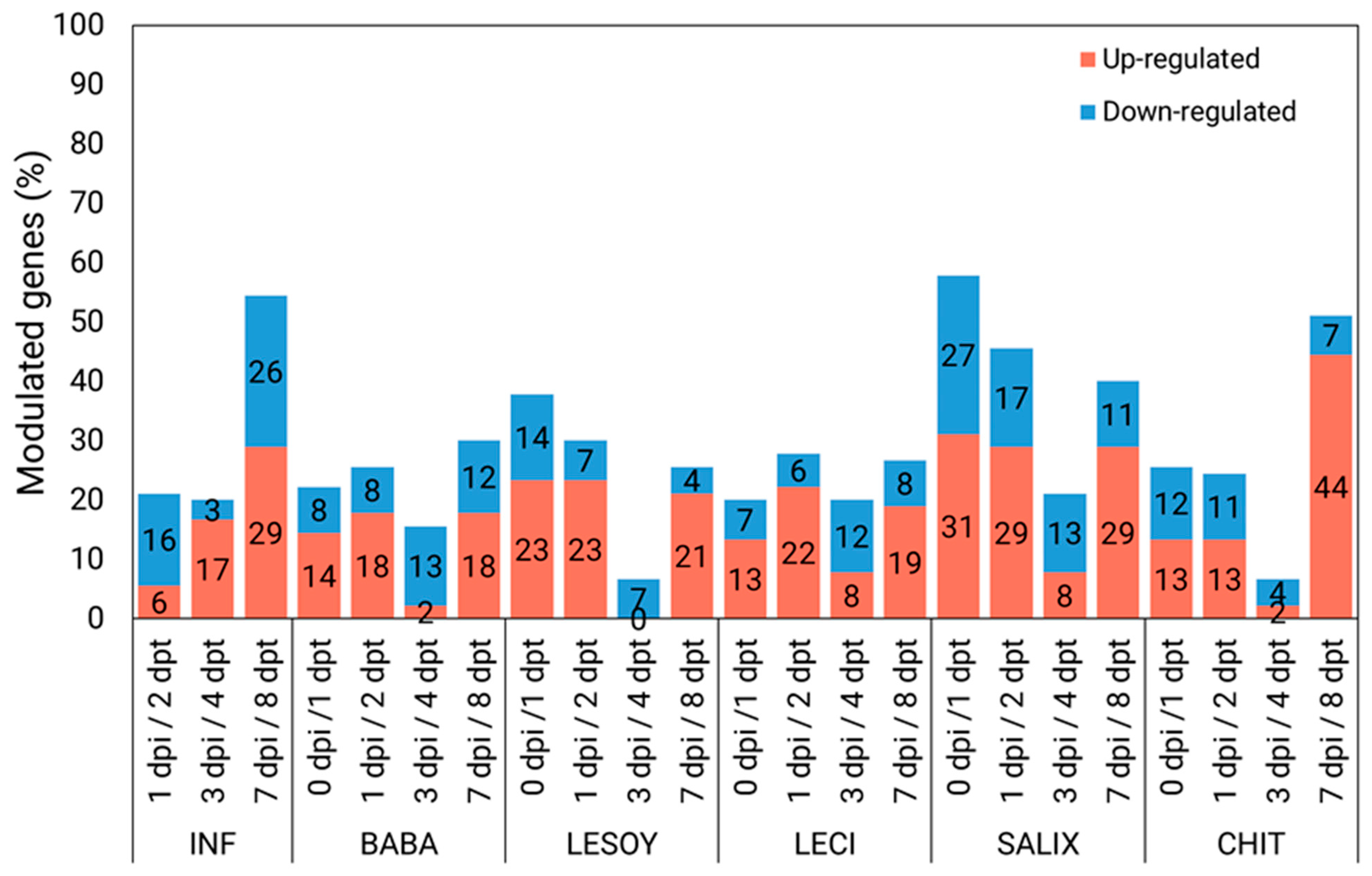
The percentage of significantly modulated genes was calculated at all timepoints for each condition (Figure 3), including both the natural infection without any treatment and with treatments. The natural infection process displayed an increasing modulation over time, going from 20–22% of modulated genes at 1 and 3 dpi to a total of 55% at 7 dpi. Among the treatments, three gene modulation trends were observed: (1) BABA (15–30%) and LECI (20–28%) had stable modulation over time, with slight decreases at 3 dpi. (2) LESOY and SALIX displayed stable behaviour as well, but with a higher modulation at 0 dpi and a sharp decrease at 3 dpi. Although the pattern was similar, SALIX (21–58%) modulated more genes than LESOY (7–37%) for every timepoint. CHIT (6–51%) showed a similar trend to the natural infection process, with an increase at 7 dpi but with a very low 3 dpi value. Furthermore, the percentage of total modulated genes per treatment, including all timepoints, was analyzed. This revealed that SALIX was the product that impacted the most on the plant defence, with 41% of genes significantly modulated, followed by the natural infection process (32%) and, finally, the rest of the treatments (23–27%). In addition, the total percentage of modulated genes per timepoint, including all treatments and the infection process, revealed that the gene modulation was very similar at 0, 1 and 7 dpi (30–38%) and that 3 dpi was the least affected timepoint with only 15% of the genes significantly altered.

3.3. Gene Expression During P. viticola Infection

3.3.1. Up-Regulated Genes in Untreated Plants During Infection

The next step of this study was to identify key genes modulated in Tempranillo sensitive genotype at 1, 3 and 7 dpi during P. viticola infection process. This was achieved by comparing the gene expression of the NT-INF control to that of the NT-NOINF control. Genes that were significantly up- or down-regulated by the infection process in at least one of the timepoints were considered. All significantly up-regulated and down-regulated genes are shown in Figure 4 and Figure 5, respectively.
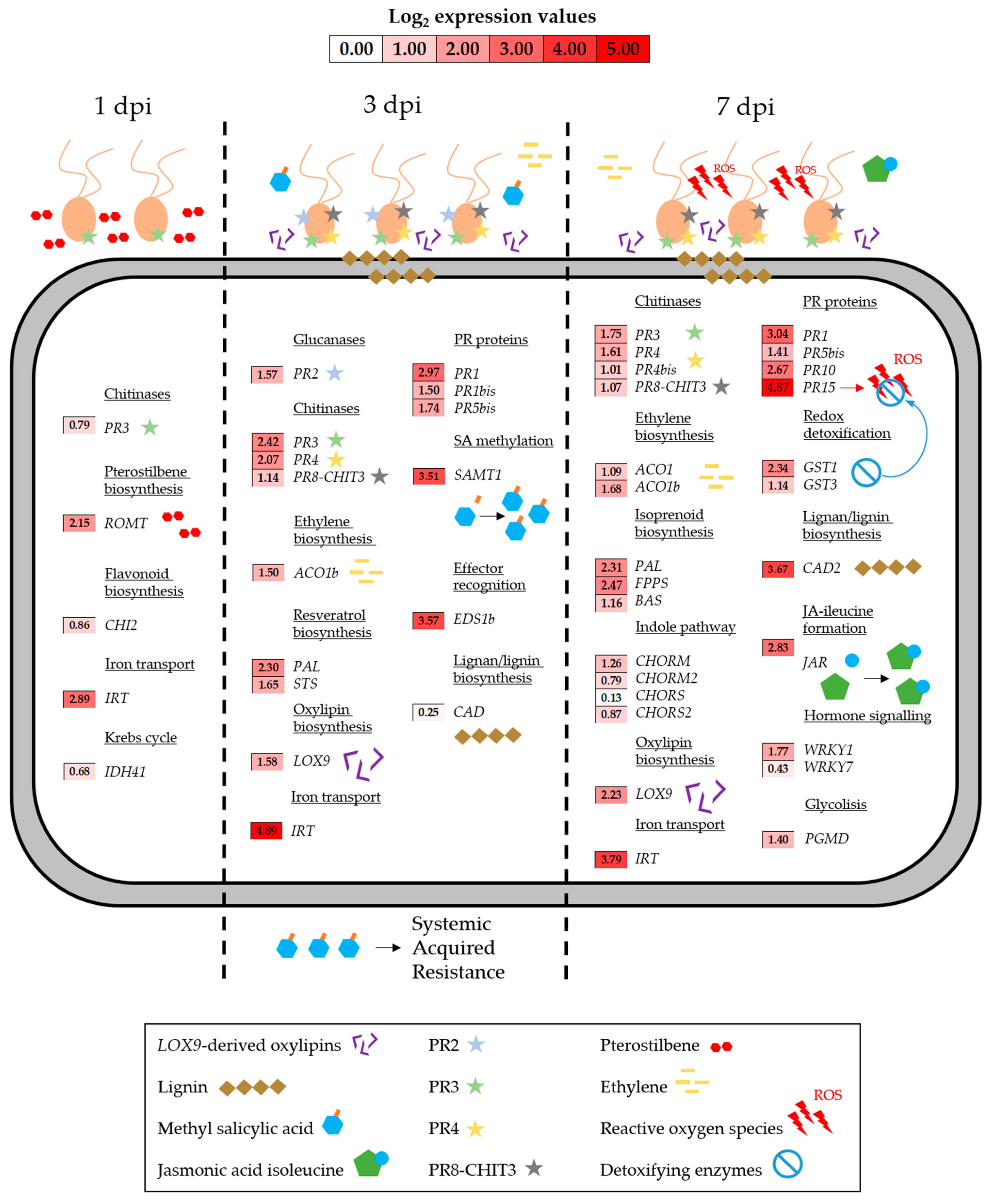
Regarding the up-regulated genes (Figure 4), five transcripts were increased by the natural infection at 1 dpi. First, in relation to the primary metabolism, an enzyme involved in the Krebs cycle (VvIDH41) was slightly overexpressed. As for the defence-related genes, a type IV endochitinase (VvPR3) was up-regulated, with the ability to degrade chitin. Moreover, the expression of VvROMT, which is involved in production of pterostilbene, was clearly increased. The expression of VvCHI2, involved in flavonoid biosynthesis, was also increased. Finally, the gene (VvIRT), in charge of iron transport and iron homeostasis, was strongly induced.
At 3 dpi, the infection triggered the up-regulation of many more genes (Figure 4), especially PR proteins. A total of seven PR proteins expression were increased: VvPR1, VvPR1bis, VvPR2 (type I glucanase), VvPR3 (type IV endochitinase), VvPR4 (type I endochitinase), VvPR5bis (thaumatin-like protein) and VvPR8-CHIT3 (type III chitinase), which displayed a variety of molecular functions directed towards the repression of the infection process. Regarding secondary metabolism, the gene of the first enzyme of the phenylpropanoid pathway (VvPAL) and the biosynthetic gene coding for resveratrol synthase (VvSTS) were up-regulated. Moreover, an increase in an oxylipin biosynthesis gene (VvLOX9) was detected. In the case of hormones, both ET- and SA-related genes were up-regulated, such as VvACO1b, the biosynthesisenzyme of ET, and VvSAMT1, the gene in charge of SA methylation to form methyl-SA, a mobile signal involved in systemic acquired resistance [62]. In this regard, VvEDS1b, a gene involved in pathogen effector recognition and SA-mediated immunity [63,64], was also overexpressed.
At 7 dpi, the infection generated the highest gene modulation (Figure 3), and several gene categories were up-regulated. The general activation of PR proteins continued at this timepoint, with VvPR1, VvPR3, VvPR4, VvPR4bis, VvPR5bis and VvPR8-CHIT3 and two new PR proteins, more concretely, VvPR10 with ribonuclease activity, and VvPR15, with oxalate oxidase activity. Interestingly, VvPR15 was 29 times more present in NT-INF compared to NT-NOINF. Two protective detoxifying enzymes were also induced involved in the oxide-reduction system, namely, VvGST1 and VvGST3 [65].
Regarding the secondary metabolite production at 7 dpi, the phenylpropanoid pathway was not further directed towards the production of resveratrol and derivatives, as in 1 and 3 dpi, except for VvPAL. Instead, overexpression of VvFPPS and VvBAS was observed, involved in isoprenoid biosynthesis. Overexpression of VvCAD2 was also reported, which participates in one of the branches of the phenylpropanoid pathway to produce lignin [66]. Moreover, the indole pathway was also induced towards the synthesis of phenylalanine and tyrosine (VvCHORM, VvCHORS), which are the precursors of the phenylpropanoid pathway. No expression of VvANTS was detected, so the route was not directed towards tryptophan, which is the starting point for auxin and terpene indole alkaloid biosynthesis [67].
As for the hormones involved at 7 dpi, the ET biosynthesis genes were still induced (VvACO1 and VvACO1b). In addition, the overexpression of VvJAR was reported, which conjugates JA with isoleucine to start the JA signalling pathway [30]. Finally, the overexpression of two transcription factors involved in hormone signalling was reported, namely, VvWRKY1 and VvWRKY7. The expression of SA-related enzymes remained unaffected at this timepoint.

3.3.2. Down-Regulated Genes in Untreated Plants During Infection

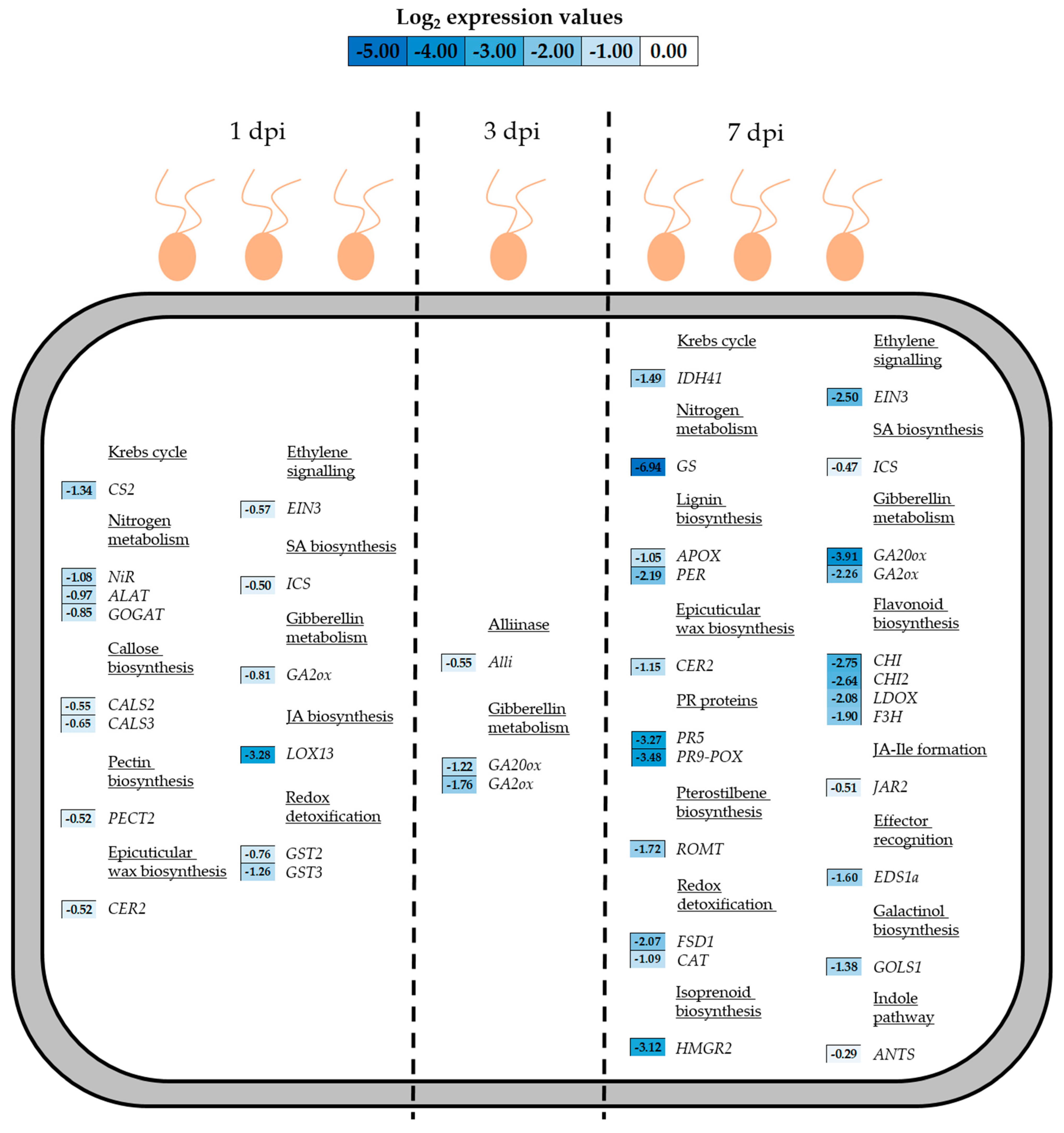
Opposed to up-regulated genes, some others displayed an expression decrease (Figure 5). At 1 dpi, genes involved in nitrogen assimilation (VvNiR, VvALAT and VvGOGAT) and the Krebs cycle (VvCS2) were down-regulated. Moreover, genes involved in the biosynthesis of callose (VvCALS2 and VvCALS3), regulation of cuticular wax (VvCER2) and pectin (VvPECT2) were also down-regulated. Interestingly, some hormone-related genes were also affected. For instance, the expression of a negative regulator of ethylene biosynthesis (VvEIN3) was decreased, such as VvICS, which participates in the biosynthesis of SA.
The metabolism of other hormones such as gibberellins was further affected by reducing the expression of the catabolic enzyme VvGA2ox, involved in the deactivation of bioactive gibberellins. Other genes to be repressed by the pathogen were VvGST2 and VvGST3, involved in detoxification [65], and VvLOX13, in charge of JA biosynthesis. At 3 dpi, the infection was less active, and only three genes were down-regulated: VvAlli and catabolism (VvGA2ox) and biosynthesis (VvGA20ox) genes of gibberellins were also decreased.
Finally, at 7 dpi, many genes were down-regulated, which, together with the high number of significantly overexpressed genes, made this timepoint the most active during the infection process, as observed in Figure 3. Regarding primary metabolism, a very acute decrease was observed for VvGS, which assimilates ammonia into glutamate [68]. Moreover, genes related to the cell wall were repressed, such as peroxidase enzymes related to lignin (VvPER) and regulation of cuticular wax (VvCER2).
Concerning PR proteins, only two were down-regulated, VvPR5 (thaumatin-like protein) and VvPR9-POX (class III peroxidase). The metabolism of SA and ethylene were also influenced at this timepoint by the decrease in VvEIN3 and VvICS expression, as at 1 dpi. VvEDS1a expression also decreased, and it participates in the mobilization of SA-dependent pathways during pathogen infection [69]. Finally, the metabolism of gibberellins (VvGA20ox and VvGA2ox) and some secondary metabolites such as flavonoids (VvCHI, VvF3H and VvLDOX), isoprenoids (VvHMGR2) and galactinol (VvGOLS1) were repressed, as well as the indole pathway.

3.4. Gene Expression During P. viticola Infection in Grapevine Plants Previously Treated with the Products

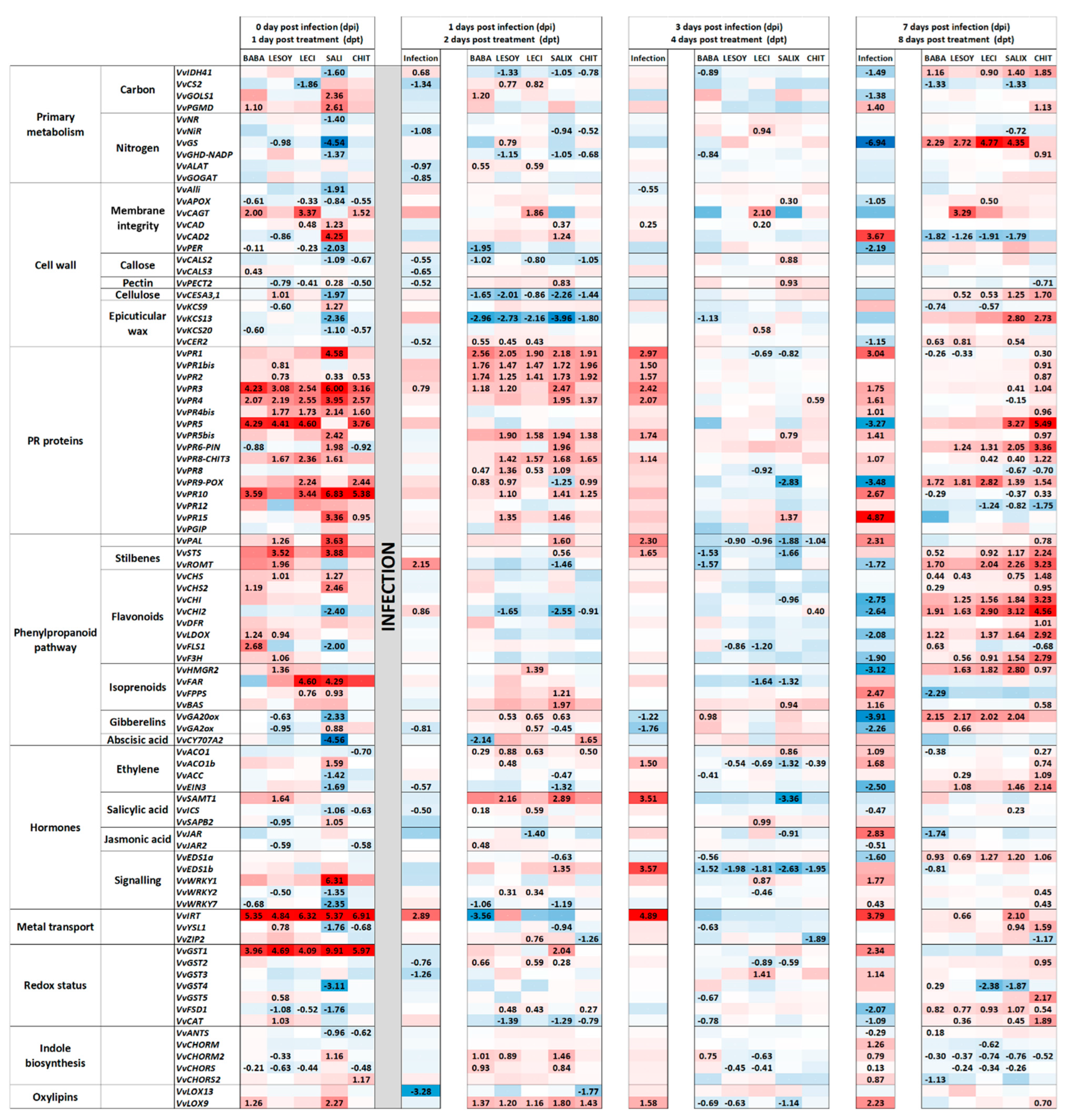
After identifying the genes involved in the infection, gene expression was studied in plants previously treated with the commercial products (Table 1). The primary objective was to determine whether the increase or decrease in expressions of these genes occurred more rapidly in treated plants compared to untreated ones, indicating a possible anticipated expression. Gene expression data of all the analyzed genes is displayed in Figure 6.

3.4.1. Up-Regulated Genes in Treated Plants During Infection

Some genes displayed an anticipated up-regulation in the treated plants. This phenomenon was especially evident for PR proteins for most of the used products. In the case of VvPR1, expressed by the natural infection at 3 and 7 dpi, all products had already overexpressed it at 1 dpi. Interestingly, only LECI and SALIX significantly activated this gene at 0 dpi, in the absence of infection, while all the products induced it at 1 dpi, once the pathogen appeared. This pattern was also observed with VvPR5bis, where no significant overexpression was detected at 0 dpi, except in SALIX.
Regarding cell-wall-degrading PR proteins, VvPR2 was expressed in all treated plants at 1 dpi and in LESOY-, SALIX- and CHIT-treated ones at 0 dpi too, whereas the non-treated plants significantly activated it only at 3 dpi. As for chitinases (VvPR3 and VvPR4), the expression was induced at 0 dpi in most cases, anticipating the natural infection process by three days. VvPR8 and VvCHIT3 were also induced at 0 dpi in LESOY, LECI and SALIX and at 1 dpi by the same products plus CHIT. VvPR10 and VvPR15 followed a different pattern, being expressed by the natural infection at 7 dpi. In the case of VvPR10, most products expressed it at 0 or 1 dpi only, anticipating the expression by six days in comparison to the infection. VvPR15, however, was only clearly induced by SALIX at 0, 1 and 3 dpi. LESOY and CHIT slightly induced it too. Overall, BABA, LESOY, LECI, SALIX and CHIT anticipated the expression of a total of six, nine, eight, nine and eight PR proteins involved in pathogen infection, respectively.
Regarding the phenylpropanoid biosynthesis pathway, several modulations of key genes were anticipated in treated leaves. The most evident was the overexpression of VvPAL and VvSTS by LESOY and SALIX at 0 dpi, while the natural infection induced it at 3 and 7 dpi. Regarding the VvROMT gene, coding for pterostilbene synthesis, only LESOY was able to overexpress it at 0 dpi, prior to the infection at 1 dpi. At later timepoints, the expression of these genes was maintained in treated plants in comparison to NT-INF ones, where its expression dropped.
As for isoprenoid biosynthesis (VvFAR, VvFPPS and VvBAS), the natural infection induced the expression of VvFPPS at 7 dpi, which produces farnesyl-PP, the starting metabolite for producing sesquiterpenoids [70]. The expression of this gene was only anticipated by LECI (0 dpi) and SALIX (0 and 1 dpi). Further in the biosynthetic route of sesquiterpenoids BAS, in charge of β-amyrine production, was induced by the natural infection at 7 dpi. The expression of this gene was only up-regulated by SALIX, at 1 and 3 dpi. Finally, VvFAR, which produces farnesene sesquiterpenoid [71], was significantly induced in LECI- and SALIX-treated plants at 0 dpi. All this production of phenylpropanoids was supported by the activation of the indole pathway (VvCHORM2) at 7 dpi by the natural infection, whose expression was advanced by BABA (1 and 3 dpi), LESOY (1 dpi) and SALIX (0 and 1 dpi), respectively.
Some other secondary metabolite genes were not induced by the infection, such as VvCHS2, whose corresponding enzyme catalyzes the first step of flavonoid biosynthesis [72], but they were important in plants treated with some of the analyzed products. Such is the case with BABA and SALIX, which overexpressed VvCHS2 at 0 dpi, and CHIT, at 7 dpi.
Some genes related to defence hormone regulation were also involved during the infection of P. viticola in Tempranillo. Thus, the expression of VvACO1b was anticipated by SALIX at 0 dpi and LESOY at 1 dpi. CHIT increased its expression at 7 dpi, in contrast with the NT-INF control. Meanwhile, for SAMT1, its expression was triggered at 0 dpi only by LESOY and at 1 dpi by LESOY and SALIX, prior to the significant up-regulation at 3 dpi by the infection. VvWRKY1 followed a distinct pattern and was especially induced by SALIX at 0 dpi and, to a lesser extent, by LECI at 3 dpi, anticipating its expression in both cases.
The expression of other key genes involved in pathogen infection was also increased in treated leaves. For instance, VvIRT and VvGST1, which were significantly induced by the infection at 1, 3 and 7 dpi, respectively, were expressed to very high levels by all products at 0 dpi. In the case of VvLOX9, involved in oxylipin metabolism, all treatments overexpressed it at 1 dpi, prior to its overexpression at 3 dpi by the natural infection. Moreover, BABA and SALIX had already increased their expression by 0 dpi too, at the moment of inoculation.
Finally, another interesting example was that of VvCAD2, involved in lignin biosynthesis [66], which was strongly induced during the natural infection at 7 dpi. Among the products, SALIX was the only treatment that anticipated its expression at 0 and 1 dpi, with the rest of the products not overexpressing it at any timepoint.

3.4.2. Down-Regulated Genes in Treated Plants During Infection

Concerning genes that were significantly repressed during infection (Figure 5), two trends were observed. First, some genes were down-regulated in the control but up-regulated in the treated plants. Secondly, other genes were down-regulated both in the control and the treated plants, magnifying the expression decrease.
For instance, VvGS and VvGA20ox followed the first pattern. In fact, although the infection intensely decreased the expression, the products were able to maintain it or even overexpress it, especially at 7 dpi, when the infection repressed it. The rest of the genes followed either the second trend or a mixture of both. In particular, VvCALS2 and VvPECT2, in charge of callose and pectin formation, were decreased by the natural infection at all timepoints (significant only at 1 dpi). Interestingly, the treatments decreased their expression prior to or at the same time as the infection in most cases. BABA, LECI, SALIX and CHIT significantly repressed VvCALS2 at least at 0 or 1 dpi, while LESOY, LECI and CHIT repressed VvPECT2 at 0 dpi. SALIX was able to increase the expression of VvCALS2 at 3 dpi and of VvPECT2 at 0, 1 and 3 dpi.
Regarding hormone-related genes, such as VvGA20ox and VvGA2ox, which were intensely repressed by the infection, the products were able to counterbalance this and maintained a higher expression than in control leaves. This was especially relevant with BABA, LESOY, LECI and SALIX at 7 dpi for the VvGA20ox gene. For VvGA2ox, the repression observed in the control was not counterbalanced by the treatments. Finally, ethylene-related genes VvEIN3 and VvICS were repressed by SALIX already before infection.

3.5. Multiple Factor Analysis

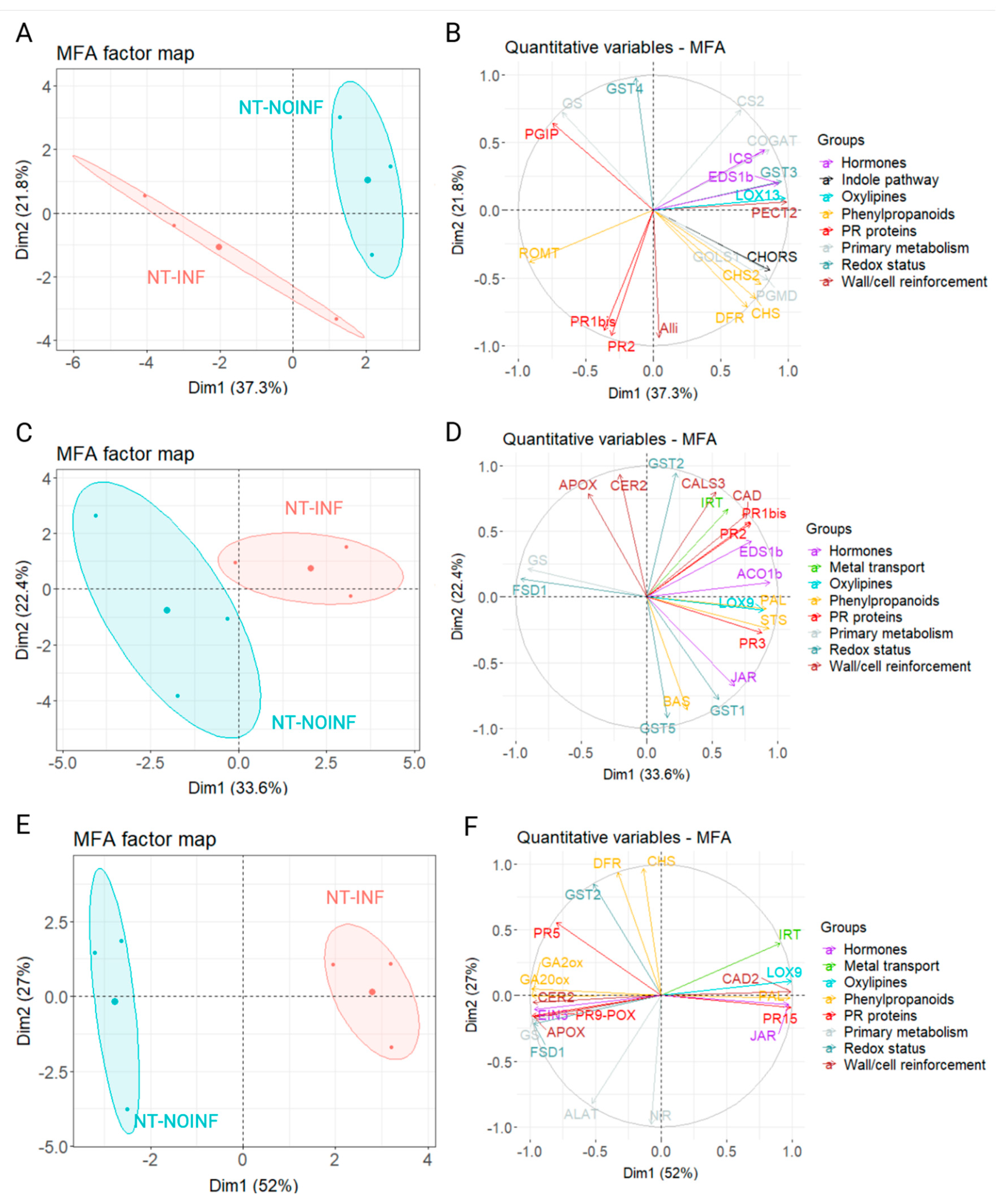
To reduce the complexity of the dataset, multiple factor analyses (MFAs) were performed, allowing for identifying the genes that better explained the gene expression difference across treatments. Overall, two independent MFAs were performed. The first one compared the genetic expression of the two controls (NT-NOINF and NT-INF), which highlighted the main genes involved in P. viticola infection (Figure 7). A second MFA compared the T-INF samples against the NT-INF control, allowing for identifying the main genes dealing with the infection in product-treated plants (Figure 8). During these analyses, the 20 best-represented variables (highest COS2 values) were selected for graphical representation at each timepoint. To facilitate the interpretation of Figure 7 and Figure 8, these variables are listed in Tables S2 and S3, ranked from 1 to 20 according to their COS2 values.
Thus, the first MFA (Figure 7) revealed a clear differentiation between NT-INF and NT-NOINF at all timepoints. The first and second dimensions explained 59.1, 56.0 and 79.0% of the total variability at 1, 3 and 7 dpi, respectively. Confidence ellipses were fully separated in every timepoint, indicating a very different gene expression between both controls. At 1 dpi (Figure 7A,B), the most explanatory variables were PR protein genes (VvPR1bis and VvPR2) and VvROMT, which were up-regulated in the infected samples. On the contrary, some genes such as VvPECT2, VvGST3 and VvLOX13 were more expressed in the non-infected sample. At 3 dpi (Figure 7C,D), the most explanatory variables were again PR proteins (VvPR1bis, VvPR2 and VvPR3), resveratrol biosynthesis genes (VvSTS and VvPAL) and VvLOX9 that were more expressed in the infected samples. Finally, at 7 dpi (Figure 7E,F), the ellipse separation was clearer than in the previous timepoints, with two clear gene groups correlated with infected samples (right) and non-infected samples (left).
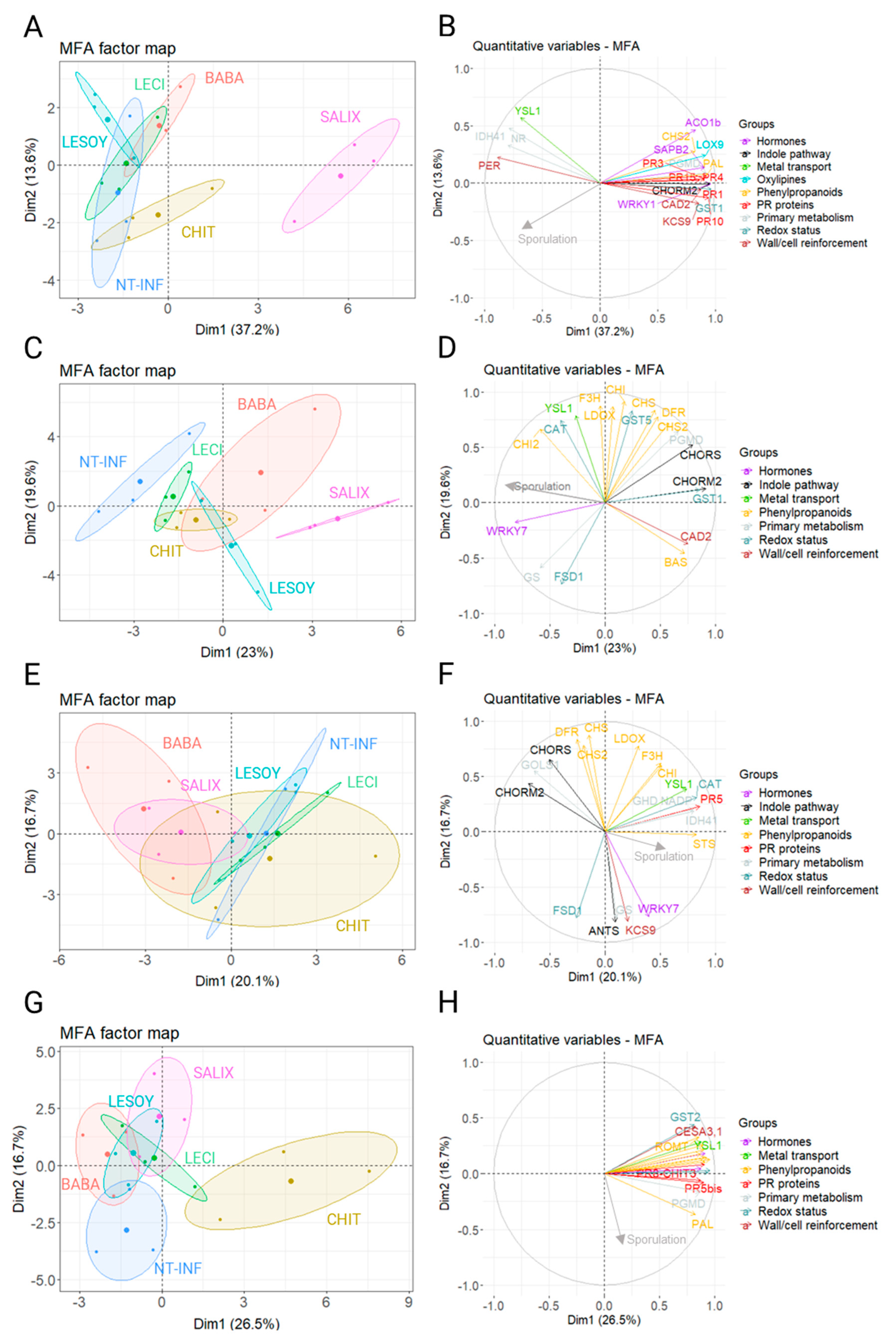
Thereafter, the second set of MFAs were performed, which included the NT-INF control and the rest of the treatments (Figure 8). In addition to gene expression data, the sporulation data from Figure 2 was included in the analysis. In this case, the first and second dimensions explained 50.8, 42.6, 36.8 and 43.2% of the total variability at 0, 1, 3 and 7 dpi, respectively. However, conditions were not clearly separated from each other in the factor maps at most timepoints, except for SALIX at 0 dpi and 1 dpi, of NT-INF at 1 dpi and of CHIT at 7 dpi.
The correlation circles allowed for seeing which genes accounted for treatment differentiation the most. At 0 dpi (Figure 8A,B), for instance, two gene groups were negatively correlated to each other and explained the differentiation of SALIX from the rest of the treatments. Thus, the PR genes, those involved in phenylpropanoid biosynthesis, oxylipins (VvLOX9) or ethylene biosynthesis (VvACO1b), SA remobilization and signalling (VvSAPB2 and VvWRKY1), lignin biosynthesis (VvCAD2) and in the cuticle biosynthesis (VvKCS9) were more expressed in SALIX. All these genes were at the same time negatively correlated to the sporulation intensity. At 1 dpi (Figure 8C,D), the correlation circle did not show any group as clear as at 0 dpi. However, some genes explained the differentiation between SALIX and the rest: VvCAD2, VvGST1, VvCHORS, VvCHORM2 and VvBAS. These genes were at the same time negatively correlated to the sporulation intensity.
Meanwhile, at 3 dpi (Figure 8E,F), the correlation circle did not reveal any variable that was good for treatment discrimination, although VvCHORM2 as well as VvCHORS and VvGOLS1 were negatively correlated to sporulation intensity. Finally, at 7 dpi (Figure 8G,H), the correlation circle showed genes clearly correlated with CHIT, including phenylpropanoid biosynthesis genes (VvPAL, VvSTS, VvROMT, VvCHI, VvCHI2, VvCHS, VvCHS2, VvF3H and VvLDOX), PR-protein-encoding genes (VvPR5bis, VvCHIT3 and VvPIN/PR6) or redox status genes (VvGST5 and VvCAT), which were not exclusively activated in CHIT, but their activation was more intense than in the other treatments. In this case, no negative correlation was found between sporulation intensity and any of the genes represented.

4. Discussion

According to Aranega-Bou et al. [73], “priming is a mechanism which leads to a physiological state that enables plants to respond more rapidly and/or more robustly after an exposure to biotic or abiotic stress”. This state can be achieved in several ways, like treating plants with various chemicals or inoculating the roots with certain beneficial microbes [74].
The main objective of this study was to determine whether plants treated with different commercial products based on BSs (LESOY, LECI, SALIX and CHIT) exhibited a faster and more robust activation of key genes compared to non-treated plants during the P. viticola infection process, indicating a possible priming state. However, as the molecular mechanisms underlying the priming process were not specifically addressed, instead of “priming”, the term “anticipation” is used preferably. An anticipation event was considered when a gene was significantly expressed earlier in a treated plant than in a non-treated control plant.
In this work, several gene categories were modulated during P. viticola infection in cv. Tempranillo, and some of them were anticipated by the applied commercial products. These genes presented in Section 3 will be further discussed, focusing on their relevance in plant defence and on their contribution to P. viticola resistance. For clarity, the genes will be analyzed in two different groups, depending on their expression during the infection in V. vinifera cv. Tempranillo: up-regulated genes and down-regulated genes.

4.1. Up-Regulated Genes

4.1.1. Pathogenesis-Related Proteins (PR Proteins) Are Induced Early and Strongly by Infection and Treatments

One of the main gene groups activated during the infection were those coding for PR proteins. In fact, the infection triggered the activation of VvPR1, VvPR1bis, VvPR2, VvPR3, VvPR4, VvPR4bis, VvPR5bis, VvPR8-VvCHIT3, VvPR10 and VvPR15 at some point (Figure 4). Unsurprisingly, most of these genes have been previously reported in response to P. viticola attack in other sensitive grapevine genotypes, such as VvPR1, VvPR2, VvPR8 and VvPR17 in Chasselas [75], VvPR10 in Riesling and Pinot noir [76,77] and VvPR1, VvPR2, VvPR3, VvPR6, VvPR8, VvPR10 and VvPGIP in Cabernet Sauvignon [37]. In our case, an up-regulation of all these genes plus VvPR5bis and VvPR15 was reported in Tempranillo genotype, except for VvPIN, VvPGIP and Vv PR17, which were not induced.
These PR protein genes expressed in Tempranillo display several biological functions. First, VvPR1/PR1bis is involved in SA-mediated defence response and is correlated with a higher grapevine downy mildew resistance, where the gene is induced earlier in a resistant genotype (2 hpi) than in a sensitive one (24 hpi) [78]. Its strong activation at 3 and 7 dpi suggests SA participation at these timepoints. In another vein, other PR protein genes display cell-wall-degrading catalytic activity, such as VvPR2 (type I glucanase), VvPR3 (type IV endochitinase), PR4 (type I endochitinase) and PR8-CHIT3 (type III chitinase), which have β-1,3 glucan or chitin as targets. Interestingly, these proteins have been linked to P. viticola resistance, such as VvPR2 glucanase, which displays a direct antigerminative activity against its spores [79], or VvPR4, whose depletion increases the susceptibility against P. viticola [80]. In the case of the VvPR8 gene, a positive correlation between this gene and decreased P. viticola infection was found [38]. In our study, the activation of chitinases came as a surprise, as oomycete cell walls consist mainly of β-1,3-glucans, β-1,6-glucans and cellulose rather than chitin [81]. The activation of chitinases might be related to JA, as PR3, PR4 and PR12 chitinases are linked to JA pathway activation in Arabidopsis [82].
The overexpression of a thaumatin-like protein (VvPR5bis) and a ribonuclease (VvPR10) were also detected in Tempranillo cultivar. The first one can permeabilize the plasma membrane of the pathogen thanks to its osmotin activity [83], and its overexpression in transgenic grapevine leads to grapevine downy mildew resistance [84], the same as the overexpression of VvPR10 [85]. Interestingly, a transcriptomic analysis of P. viticola infection in a resistant hybrid grapevine genotype revealed that two gene clusters associated with VvPR5 and VvPR10 proteins were induced [86]. Moreover, the expression of VvPR5 after P. viticola infection was associated with resistant grapevine genotypes [87].
Finally, the infection highly induced the expression of VvPR15 at 7 dpi, which codes for a protein that can produce hydrogen peroxide to neutralize the pathogen [88]. This gene is correlated with high resistance to a necrotrophic pathogen in barley and is able to induce defence responses [89,90]. The activation of this gene could generate an oxidative stress for the plant that needs to be neutralized [65], which could explain the overexpression of two protective detoxifying enzymes during the infection process at the same time, namely, VvGST1 and VvGST3 (Figure 4).
The overexpression of these PR proteins in the Tempranillo genotype could imply a potential increase in the resistance to P. viticola oomycete. However, the infection is still able to progress, indicating that the timing of the expression might play a critical role in the resistance. In this context, the commercial products could make a difference. In fact, the control BABA and the selected products (LESOY, LECI, SALIX and CHIT) not only increased the gene expression of PR proteins compared to the control but also anticipated their induction. Specifically, six PR proteins were activated earlier with BABA, ten with both LESOY and SALIX and eight and ten with LECI and CHIT, respectively. This suggests that under the conditions of this study, the pathogen could have encountered higher levels of several PR proteins in the treated plants at the moment of infection, with their subsequent antimicrobial activities, leading to an increased resistance in product-treated plants.

4.1.2. Stilbene Biosynthesis Is Anticipatively Activated in LESOY- and SALIX-Treated Plants

Besides PR proteins, stilbenes seemed to play a pivotal role during the infection in Tempranillo too. This metabolic group is part of the bigger phenolic group and is produced in grapevine in response to different stresses, including P. viticola infection [91,92]. The first gene of the metabolic route is the stilbene synthase (VvSTS), which catalyzes resveratrol biosynthesis [93]. This molecule is used as the building block for the rest of the stilbenes and can be dimerized and oxidized to form viniferins, glycosylated to produce piceid or methylated to produce pterostilbene [93,94]. A total of 78 stilbenes have been identified so far in grapevine [95].
Several previous works by other authors have highlighted the connection between stilbenes and the level of resistance against P. viticola. In fact, Pezet et al. [96] demonstrated that the most toxic stilbenes against P. viticola were trans-δ-viniferin (oxidized dimer) and trans-pterostilbene (methylated resveratrol) and that these were induced much more in response to the pathogen in a resistant genotype than in a sensitive genotype. Further evidence of this correlation was found in another study of several genotypes with varying resistance to downy mildew, showing a clear higher production of viniferins in the resistant varieties [97,98]. Another study [99] also demonstrated that the resistance level against P. viticola is positively correlated to resveratrol and its oxidized dimers ε- and δ-viniferin and negatively correlated to piceid, which was mainly produced by sensitive genotypes. Therefore, as Tempranillo is a sensitive genotype, we could expect a higher production of piceid in contrast to other stilbenes, which was confirmed by [94].
Remarkably, the higher production of certain stilbenes in more resistant genotypes seems to be caused by a faster constitutive expression of genes involved in stilbene biosynthesis [94] and a longer transcriptional activation [100]. Therefore, a higher resistance to P. viticola could be achieved by altering the expression of these genes, for example, by using PDSs.
In this study, the Tempranillo genotype responded to the pathogen by activating VvSTS (the resveratrol biosynthesis gene) and VvROMT (the pterostilbene biosynthesis gene) at 3 or 1 dpi, respectively. Interestingly, some of the commercial products were able to modify this expression in a beneficial way. For instance, LESOY induced VvPAL, VvSTS and VvROMT at 0 dpi and SALIX VvPAL and VvSTS at 0 and 1 dpi, anticipating in every case the expression of these genes in comparison to the non-treated plants. The rest of the products also induced the expression of STS, although not significantly. In any case, as with PR proteins, a higher concentration of resveratrol and stilbenes could be expected in plants treated with these products in the moment of infection, especially in the case of LESOY and SALIX.
Another aspect to consider in relation to stilbenes is the overexpression of several H2O2-detoxifying genes such as VvAPOX, VvPR9-POX or VvGST1, which suggests the presence of high oxidative pressure in the plant. This oxidizing environment could be promoting the oxidation and dimerization of resveratrol to form other more toxic viniferins, reducing pathogen progression. In fact, some plant peroxidases from grapevine [101] or horseradish [102] have the capacity to transform resveratrol into viniferins, and even the sole addition of H2O2 in vitro can trigger that reaction [103].

4.1.3. BABA and SALIX Enhance Oxylipin-Related Gene Expression Prior to Infection

Oxylipin-related genes were also important during the infection, with the VvLOX9 gene being activated at 3 and 7 dpi. This gene participates in plant defence responses [104,105]. In Arabidopsis thaliana, an oxylipin produced by this gene (9-HOT) is related to the defence response against Pseudomonas [106], and in maize, the 10-OPEA and 10-OPDA genes, also produced via LOX9, seem to play a role in local defence against some fungi [104]. Moreover, the application of oomycete elicitors from Phytophthora infestans were able to activate the LOX9 pathway in potato [107] and tobacco [108] cell cultures, indicating that this route could be involved in the defence response against oomycetes. [39]. In this study, all products activated the VvLOX9 gene at 1 dpi, but only BABA and SALIX induced it prior to the infection, at 0 dpi. Therefore, only BABA- and SALIX-treated plants could have had a higher level of oxylipins before the infection. Regarding the rest of the products, the activation of the VvLOX9 gene was also faster in the product-treated plants than in the non-treated plants but only once the infection started.

4.1.4. LECI and SALIX Accelerate Terpene Biosynthesis During Early Infection

Terpenes also played an important role during the late infection process, given the overexpression of several related genes such as VvFPPS and VvBAS at 7 dpi. Terpenes are thought to participate in several plant responses, including defence [109], and are divided into sesquiterpenes, diterpenoids, triterpenoids or carotenoids [110]. The VvFPPS gene codes for the farnesyl pyrophosphatesynthase, which is the starting point for sesquiterpenoids and triterpenoid biosynthesis, while VvBAS forms β-amyrin, a triterpenoid with antifungal activity [111]. Considering this, when plants were not treated with any product, the Tempranillo genotype relied on triterpenoid biosynthesis at late timepoints to fight P. viticola.
Regarding the analyzed products, LECI and SALIX favored VvFPPS expression at 0, and 0 and 1 dpi, respectively. In addition to that, SALIX also overexpressed the VvBAS gene at 1 and 3 dpi. In every case, both products anticipated the expression of terpenes in comparison to the infection. The same two products also increased the expression of VvFAR at 0 dpi, a gene responsible for the synthesis of the sesquiterpenoid α-farnesene [71]. Interestingly, a higher emission of sesquiterpenoids has been detected in resistant plants upon P. viticola infection [112]. These observations suggest that LECI- and SALIX-treated plants might have had a higher presence of triterpenoids or sesquiterpenoids at the moment of infection, similar to the overexpression of VvFAR in the presence of downy mildew and treatment with salicylic acid analog (BTH) [39].

4.1.5. Salicylic Acid (SA)-Mediated Defence Is Promoted Earlier by LE SOY and SALIX

Regarding the hormones involved in response to the infection, two seemed to be participating in the process, SA and ET. In relation to SA, a high expression of VvSAMT1 and VvEDS1b was detected at 3 dpi during the infection in the Tempranillo genotype. VvSAMT1 gene transforms SA to methyl-SA, forming a mobile signal necessary for systemic acquired resistance [62], and it participates in P. viticola infection [113]. EDS1b is involved in pathogen effector recognition [63,64] and related to SA by activating its biosynthesis via the VvICS pathway [33]. In our case, although we reported a high expression of VvEDS1b, we could not observe the activation of VvICS, but we observed its repression, which could be explained if the activation occurred at a different timepoint than those selected.
In addition, SA can also be synthesized inside the phenylpropanoid pathway via the VvPAL gene [114]. Therefore, SA could be produced via this route and not via the VvICS gene or even both pathways, although not necessarily at the same time. Interestingly, SA is produced during P. viticola infection in resistant genotypes such as Regent [30] or resistant Vitis species such as V. amurensis [78] but not in sensitive genotypes. In fact, Liu et al. [78] showed that neither of the SA-producing pathways were activated in V. vinifera sensitive cultivars and that they were only induced in resistant ones. Moreover, no correlation between VvEDS1 induction and disease resistance was found in the same study. These observations agree in part with our results, where the sensitive Tempranillo genotype did not overexpress VvICS. Nonetheless, the overexpression of VvPAL, VvPR1, VvEDS1b and VvSAMT1 at 3 dpi clearly indicates that SA could be participating in the process at that timepoint. Some of these genes are also significantly overexpressed after induction with BTH, especially VvSAMT, linked to Vvlox9, VvPAL, VvSTS, VvPR8, VvPR4 and VvPR5, and a tendency for VvEDS1, and even also after P. viticola inoculation and 8 days after treatment [34].
Regarding the analyzed products, all of them increased the expression of the VvSAMT1 gene compared to the non-treated control, but only LESOY (at 0 and 1 dpi) and SALIX (at 1 dpi) increased it significantly, anticipating its expression. As for VvEDS1b, the induction was not as intense, and only SALIX was able to induce it at 1 dpi, also anticipating the expression. Interestingly, PR1, which is considered a good indicator of SA-mediated response [115], was strongly activated in SALIX at 0 dpi in the absence of pathogen. Therefore, SALIX could have activated the SA-mediated response prior to pathogen infection, whereas the rest of the products might have induced it once the pathogen appeared, but always faster than the non-treated control plants. Altogether, these results indicate that all products, especially LESOY and SALIX, might rely on SA to limit the pathogen development, as resistant V. vinifera genotypes or other resistant Vitis species show [30,78].

4.1.6. Ethylene (ET) Pathway Shows Limited Activation but Is Partially Modulated by Treatments

The other important hormone was ET, whose biosynthesis genes (VvACO1 and ACO1b) were induced by the infection at 3 and 7 dpi. As a consequence, we should expect the activation of its signalling route, where VvEIN3 plays an important role [116]. However, this gene was not induced, and it was even down-regulated, which came as a surprising fact. Interestingly, VvEIN3 behaves as a negative regulator of SA biosynthesis by repressing the expression of VvICS [33]. In this case, the decreased level of VvEIN3 expression would allow for the expression of ICS and the synthesis of SA. However, VvICS was not activated either, suggesting that SA could be mainly produced via the VvPAL pathway, as VvPAL was consistently expressed by the infection at 3 and 7 dpi (Figure 4). In fact, Lefevere et al. [114] suggested that some species might rely on this pathway to produce this important hormone, rather than on the ICS pathway.
Interestingly, [117] showed that ET orchestrates natural resistance against grapevine downy mildew in a Georgian V. vinifera genotype naturally resistant to P. viticola, the white Mgaloblishvili variety. Our results indicate that the effect of ET might be low during P. viticola infection in the Tempranillo sensitive genotype, which is a red variety. As for the products, the overexpression of VvACO1 or VvACO1b was reported by all of them, at 0 dpi for SALIX and 1 dpi for the rest. Moreover, the repression of VvEIN3 was detected only in SALIX, with the rest of the products not affecting this gene. The same happened with VvICS, which remained unaffected, except for its repression at 0 dpi by SALIX and CHIT and its induction at 1 dpi by LECI. Considering all the previous information, the importance of ET in defence induced by the products does not seem to play a central role, although it may participate somehow.

4.1.7. Jasmonic Acid (JA)-Related Genes Show Late Induction, Minimally Affected by Products

Finally, the last hormone to be considered was JA. During the infection in the Tempranillo genotype, a significant induction of VvJAR and VvWRKY1 expression was observed at 7 dpi, but no activation of the biosynthetic gene LOX13 was detected. The first gene conjugates JA with isoleucine to start the JA signalling pathway [30], while VvLOX13 participates in its biosynthesis via linolenic acid. In this regard, it has been shown that resistant genotypes might rely on a faster activation of linolenic acid and JA to form an incompatible interaction with the pathogen [28,29,30]. Moreover, VvWRKY1 overexpression in grapevine has been observed to increase JA signalling genes (JAZ1 and JAZ2), causing an increased tolerance against P. viticola in grapevine [118]. Altogether, evidence suggests that this hormone might be important to fight P. viticola in resistant varieties.
In the case of the Tempranillo genotype, the obtained results could not clearly demonstrate JA participation, although it could play some role at the final steps of the infection process considering the overexpression of VvJAR and VvWRKY1. The commercial products analyzed did not clearly activate JA-mediated resistance either, as neither the VvJAR nor VvLOX13 genes were significantly induced at any timepoint. As an exception, SALIX was able to strongly induce VvWRKY1 at 0 dpi. This gene has been demonstrated to be induced by SA, MeJA (JA-related) and ethephon (ET-related) in strawberry, indicating that this gene might participate in several hormone pathways [119].

4.1.8. LECI and SALIX Induce Lignin Biosynthesis, with a Potential Enhancement on Physical Defence

Another important point to consider in plant defence is the cell wall, which acts as the first physical barrier against invading pathogens in plants. This wall is composed of a primary cell wall, containing cellulose, hemicellulose and pectin, and a secondary cell wall, containing cellulose, hemicellulose and lignin [120]. In our study, during P. viticola infection in the Tempranillo genotype, only the VvCAD and VvCAD2 genes, involved in lignin biosynthesis [66], were induced at 3 and 7 dpi, while most of the other genes remained unaffected or were even down-regulated. Interestingly, [118] showed that a transgenic genotype overexpressing VvWRKY1 had a higher expression of a putative VvCAD gene. This correlation was also found in our case, where VvWRKY1 and VvCAD2 were both strongly induced at 7 dpi.
CAD genes are an essential part of defence response against several pathogens in several plant species [121,122,123]. In the case of P. viticola infection, several references support the idea that lignin biosynthesis is activated during pathogen development in both sensitive and resistant genotypes [75,124]. Interestingly, the analyzed products could not alter the expression of the VvCAD or VvCAD2 genes, with the exception of SALIX, which displayed a very interesting behaviour by significantly inducing both genes at 0 and 1 dpi. In the rest of the treatments, a significant induction of another gene involved in lignin biosynthesis (VvCAGT) was observed in BABA at 0 dpi, after LESOY treatment at 7 dpi, after LECI at 0, 1 and 3 dpi and at 0 dpi after CHIT application. This gene is in charge of the glycosylation of lignin monomers, which favors their transport to the cell wall, where they polymerize [125]. Altogether, these findings indicate that all products induce lignification, especially LECI and SALIX, although activating different genes (VvCAGT or VvCAD2).

4.2. Down-Regulated Genes During P. viticola Infection in Tempranillo Genotype

In addition to up-regulated genes, some of them were down-regulated during the infection in the Tempranillo genotype. Among those, a decreased expression of genes coding for cellulose synthase (VvCESA3,1) and genes involved in cuticular wax (VvCER2), in callose synthase (VvCALS2 and CALS3) and in gibberellin metabolism (VvGA20ox and VvGA2ox) was reported.

4.2.1. Reduced Cellulose Biosynthesis by SALIX and Other Treatments Could Enhance Lignin Accumulation to Restrict P. viticola

Regarding cellulose, the pathogen down-regulated VvCESA3,1 expression, but not significantly. The literature suggests that a decrease in cellulose biosynthetic genes and cellulose concentration is beneficial against certain pathogens in Arabidopsis thaliana and that this reduction promotes the production of lignin [126,127,128]. Moreover, the VvCESA6 gene, which codes for a different subunit of cellulose synthase, was transiently down-regulated in the resistant V. amurensis upon P. viticola infection [124]. Interestingly, both P. viticola and P. infestans cellulose synthases seem to be crucial for the infection of the plant tissue and the formation of the appressorium [129,130].
The analyzed treatments in this study were very efficient in down-regulation of the cellulose biosynthetic gene VvCESA3,1 at 1 dpi, once the infection started, with SALIX even repressing it at 0 dpi. Considering all the previous information, this decrease and the subsequent increase in lignin could effectively limit pathogen development.

4.2.2. BABA, LESOY, LECI and SALIX Could Moderately Increase Cuticular Wax, Potentially Reinforcing the Physical Barrier

In the case of cuticular wax, the infection reduced the expression of the VvCER2 gene at 1 and 7 dpi, a gene required for the elongation of C28 fatty acids to C30 [131]. This component is often considered as part of the first physical barrier against pathogen invasion [132], and its importance against B. cinerea in berry infection has been proven [133]. BABA, LESOY and LECI (at 1 dpi) and BABA, LESOY and SALIX (at 7 dpi) were able to weakly activate this gene, which could favor physical protection against the pathogen as compared to the control.

4.2.3. BABA and SALIX Might Slightly Promote Callose Deposition, Although This Effect Could Be Limited in Tempranillo

The absence of up-regulation of genes involved in callose biosynthesis after infection came as a surprising fact, as the synthesis of callose in stomata is a common defence mechanism against P. viticola in many genotypes, mainly in resistant varieties. In fact, a clear correlation was found between callose deposition and resistance to P. viticola [97]. Another study [134] reported that the absence of callose deposition was an important characteristic of sensitive genotypes, which explains why the Tempranillo cultivar was not able to activate this mechanism. The tested products could not revert this trend either, as for most of the timepoints, the VvCALS2 and VvCALS3 genes were down-regulated or not affected. As an exception, BABA at 0 dpi and SALIX at 3 dpi induced the expression of VvCALS2 and VvCALS3, respectively, but very weakly.

4.2.4. Transient Reduction in Gibberellin Activity by LESOY and SALIX May Redirect Metabolism Toward Defence

While gibberellin genes were involved in the maintenance of GA homeostasis: VvGA20ox activating metabolism, and VvGA2ox inactivating metabolism, the biological GAs were the only hormones to be down-regulated by the infection at most timepoints. This repression occurred at all timepoints for the inactivating enzyme and at 3 and 7 dpi for the activating one.
Traditionally, these hormones are believed to regulate shoot and root elongation and flowering [135], but a role in plant defence might be also possible. In fact, GAs degrade DELLA proteins, which at the same time repress plant growth. A down-regulation of GAs would allow for an increase in DELLAs, which repress growth, thus directing the metabolism towards plant defence. Moreover, both ET and JA, which are present in our case due to the overexpression of VvACO1 and VvJAR, promote DELLA accumulation [136], so an accumulation of DELLA proteins could be hypothesized. Interestingly, in the V. vinifera cv. Mgaloblishvili genotype, which is partially resistant to P. viticola, an overexpression of the VvGA2ox catabolic gene was detected upon pathogen infection, suggesting that GAs might not participate in the infection process in a partially resistant genotype [117]. Otherwise, Corio-Costet et al. [137] reported that potassium phosphonate and MeJA underwent modulations of genes related to the ABA pathway (VvAAO1, VvABCG40) and gibberellin regulation (VvGA2ox). Even MeJA and Triton elicitation treatments produced down-regulation of VvGA2ox. So, depending on the tolerance to the pathogen, the VvGA2ox genes and others related to GA might have different behaviour.
In our study, LESOY and SALIX down-regulated both the VvGA20ox and VvGA2ox genes at 0 dpi, but at later timepoints, the genes remained unaffected. At 7 dpi, the overexpression of GA20ox was very clear in every treatment. Probably, once the infection was over, the plant could have switched again to plant growth in product-treated plants, where the disease severity was proportionally lower. This could be because the GA pathway is decreased, as the terpenoid pathway (triterpenoids) appears to be activated. It may be that metabolic flux is redirected towards triterpenoids, to the detriment of GA.

4.3. Comparison Between LESOY, LECI, SALIX and CHIT and Other PDSs

When we compare our results with other PDSs, it becomes evident that most of the mechanisms are shared. For instance, BTH (an analogue of SA) is able to induce PR proteins, oxylipins, SA-mediated response or the synthesis of stilbenes [37,38,39,58]. MeJA is also capable of promoting the expression PR proteins, SA-mediated defence and the formation of stilbenes [39]. Sulfated laminarin induces defence against downy mildew via SA-mediated defence response [113], LOX9-derived oxylipins and callose deposition [138]. Moreover, it is able to activate several PR proteins and to produce active oxygen species [52]. Other less common PDSs such as riboflavin provide resistance via callose deposition [139], or thiamine, by producing H2O2, LOX9-derived oxylipins and several PR proteins [140].
As for the products applied in this study, very little research is available, and it is mostly related to BABA and chitosan. The first one, BABA, is a very common defence stimulator, which has proven efficacy against P. viticola, coming mainly from the expression of defence-related genes, as this molecule is not toxic against the pathogen [44,140]. It relies on a wide variety of mechanisms to cope with P. viticola, such as callose accumulation, PR4, LOX9-derived oxylipins, JA signalling, ROS production via an NADPH oxidase and polyphenol oxidase and glucanase activities [53,141,142]. Moreover, it can prime the production of resveratrol, piceid, viniferins and pterostilbene in a sensitive genotype, producing them to a higher extent than non-treated plants, especially in the case of pterostilbene [143]. In our case, we mainly observed the induction of several PR proteins, including PR4, flavonoid biosynthesis, lignin biosynthesis and LOX9-derived oxylipins.
Regarding chitosan, it promotes the induction of several defence-related genes, such as VvGST1, VvACO, VvLOX9, VvLOX13, VvWRKY1, VvPR5 or VvPAL [22]. Some of them coincide with those reported in this study, such as VvPR5, but some others like LOX13 or WRKY1 were absent in our case. Chitosan also increases stilbenes such as resveratrol, piceid and viniferin and chitinase and β-1,3-glucanase activities [20,21,54]. Interestingly, we report an increase in PR2 glucanase and PR3 and PR4 chitinases.
For the rest of the products, no defence-related genetic or metabolic analyses are available in the literature. However, SALIX is rich in SA due to the presence of this hormone in Salix cortex extract [31,32], so an approximation could be made with BTH, an analogue of SA [144]. Both SALIX and BTH rely on many common plant defence mechanisms such as PR proteins, stilbenes, LOX9-derived oxylipins, terpenes and SA-mediated response.
The molecular structure of the compounds such as SA (aromatic phenol) or phospholipidic lipids (glycerol with fatty acids and polar groups) is crucial for their recognition by specific receptors and the activation of internal signalling pathways—including kinase cascades, ROS generation and interconnected hormonal regulation—that culminate in complex defensive responses such as SAR or the production of antimicrobial metabolites in plants [145].
At the molecular level, plant defence elicitors are compounds whose specific chemical structure allows them to interact with endogenous signalling systems in plants, triggering immune defence cascades analogous to responses against pathogen attacks [146]. Salicylic acid (SA, 2-hydroxybenzoic acid) is a phenolic molecule with an aromatic ring and a hydroxyl group, which not only forms part of secondary metabolites in plants but also functions as a key signalling phytohormone in defence against biotrophic infections and in the activation of systemic acquired resistance (SAR) through the accumulation of reactive oxygen species (ROS), activation of resistance genes and pathogenesis-related (PR) proteins and the propagation of defensive signals to uninfected tissues [147]. The molecular composition of SA allows it to interact with specific signalling proteins, alter gene transcription and mediate systemic responses that enhance resistance to fungi, bacteria and viruses. In contrast, phospholipids and their derivatives, such as those present in lecithin (a mixture of phosphatidylcholine, phosphatidylethanolamine and other membrane lipids) and other membrane lipids, possess a structure based on a glycerol backbone with fatty acid tails and polar head groups, making them essential components of cellular bilayers but also precursors of signalling molecules when transformed by phospholipases [147]. The enzymatic hydrolysis of phospholipids generates second messengers such as phosphatidic acid (PA) and inositol phosphate lipids, which participate in the modulation of plant defence signalling by activating kinase cascades, altering cytosolic Ca2+ levels and amplifying hormonal signals such as that of salicylic acid, thereby boosting the expression of defensive genes and ROS production [148].
In this study it can be appreciated that different basic substances can induce distinct gene expression patterns. The reason is the nature of the molecules that compound each treatment product. The effect of the same substance can be different in every combination case. Paasela et al. [149] showed that the same substance can trigger the same effect in different species, showing that the stilbene pathway is activated in pine in response to phosphatase inhibitors and plant hormones, the same as in grapevine. Even in different varieties of the same species, the effect could be different. Corio-Costet et al. [150] reported that three grapevine genes (VvCHORM, VvGST3, VvCS2) were consistent and differently down-regulated in two different grape varieties infected by Flavescence dorée. Wiesel et al. [151] reviewed biological elicitors and placed their activity into a molecular context. Their analysis highlighted the complexity of priming and plant immune responses and the sophisticated interactions with pathogen effectors, showing that the plant response to elicitor compounds does not only involve genes that are annotated as defence-related but that other metabolic pathways are also involved. Recently, Sozoniuk et al. [152] identified two reference genes stably expressed in Arnica under methyl jasmonate, salicylic acid and yeast extract treatment to provide the basis for gene expression to understand the secondary metabolism regulation.
Substances of a different nature can trigger gene expression in plants by acting as ligands for receptors, activating signalling cascades or directly modifying chromatin by DNA methylation or histone changes. These actions lead to the binding of transcription factors to promoters to initiate or repress gene transcription for adaptation and development. This relationship is crucial for different responses, nutrient use and controlling growth, often involving complex epigenetic mechanisms like histone modification and non-coding RNAs. Different plant processes, such as germination, growth, flowering and fruit development, are impacted by DNA methylation, histone modifications and small RNAs in gene expression, which subsequently influence crop productivity, yields and quality [153].
In general, the products analyzed in this study relied mostly on the same defence mechanisms, with a total of 12 gene groups being analyzed in this discussion: PR proteins, stilbenes, LOX9-derived oxylipins, terpenes, SA, ET, JA, lignin, cellulose, cuticular wax, callose and gibberellins. Some of these mechanisms were common to all treatments, such as PR proteins, LOX9-derived oxylipins, the decrease in cellulose, lignin biosynthesis or the activation of gibberellins at later timepoints. Other mechanisms, however, such as those based on JA or ET pathway modulations, did not seem particularly important in any of the products. In general, the most effective treatment was SALIX, which promoted eleven out of twelve defence mechanisms. Secondly, LESOY induced eight of these categories, and it was the only one, together with SALIX, that promoted stilbene-related genes and SA-mediated response. BABA and LECI were the third most effective treatments promoting seven categories in total. As for LECI, it was the only one together with SALIX to induce the synthesis of terpenes. Finally, CHIT was the least effective treatment and relied only on five categories, those common to all treatments.

5. Conclusions

In conclusion, this study provides new insights into the molecular mechanism of BSs as defence-anticipating products and demonstrates their ability to reduce P. viticola infection on detached V. vinifera cv. Tempranillo leaves. In particular, the application of these products prior to the infection causes an earlier transcriptional activation of genes involved in several defence-related processes, such as PR proteins, stilbenes or SA. In general, all BSs exhibit strong potential and induce many different defence mechanisms. However, Salix cortex is the most effective and induces the highest number of defence-related genes. To our knowledge, this is the first report of the genetic effect of lecithins and Salix cortex in the expression of defence-related genes in grapevines. For BABA and chitosan, our results complement and increase previous knowledge of the genetic modulation of these molecules in grapevine.
Furthermore, the findings highlight the efficacy of these BSs for sustainable disease management strategies in organic viticulture, especially Salix-cortex-based products. In this regard, future studies should consider incorporating these BSs into vineyard management programs and assess their performances in field conditions and across different grape varieties, as well as their effectiveness in controlling other diseases besides downy mildew. Additionally, combining BSs at different phenological stages could have a synergistic effect on the plant, enhancing long-term protection. Extending the molecular characterization of these treatments to the metabolomic level and applying it to other crops would enhance their relevance in plant pathology and encourage their use in the transition to a more sustainable agriculture or in organic management.

Supplementary Materials

The following supporting information can be downloaded at: https://www.mdpi.com/article/10.3390/horticulturae12010112/s1, Table S1. List of defence-related genes analysed in this study, including their abbreviations, function, accession number and PCR primer efficiencies. Table S2. List of the top 20 best represented variables (highest cos2) at each timepoint for the first set of MFA (Figure 7). Table S3. List of the top 20 best represented variables (highest cos2) at each timepoint for the second set of MFA (Figure 8).

Author Contributions

D.L.D.M.: conceptualization, formal analysis, investigation, methodology, software, writing—original draft. A.M.-P.: conceptualization, methodology, supervision, writing—review and editing. M.-F.C.-C.: methodology, writing—review and editing. J.N.: resources, writing—review and editing. J.R.F.-N.: resources, writing—review and editing. A.M.D.-N.: conceptualization, funding acquisition, methodology, project administration, supervision, writing—review and editing. Both A.M.D.-N. and A.M.-P. contributed equally to the conceptualization, editing, supervision and review of the manuscript. All authors have read and agreed to the published version of the manuscript.

Funding

This research was funded by the Department of Economic Development, Sustainability and Environment of the Basque Government aid program for the training of young researchers and technologists in the scientific–technological and business environment of the Basque agricultural, fisheries and food sector, regulated by Decree 115/2021, BOPV with funding number 00012-PIT2019-22. AMP is part of the consolidated research group IT1682-22 of the University of the Basque Country (UPV/EHU).

Data Availability Statement

The original contributions presented in this study are included in the article/Supplementary Material. Further inquiries can be directed to the corresponding author.

Acknowledgments

The authors acknowledge Enora Bodin for her contribution in the gene expression and data analysis. The content of this article is part of the doctoral dissertation of Diego Llamazares de Miguel, which has not yet been publicly released.

Conflicts of Interest

Author José R. Fernández-Navarro was employed by the company Biopharma Research. The remaining authors declare that the research was conducted in the absence of any commercial or financial relationships that could be construed as a potential conflict of interest.

Abbreviations

The following abbreviations are used in this manuscript:
BABAβ-aminobutyric acid
BSsubstances
BTHbenzothiadiazole or acibenzolar-S-methyl
CHITchitosan hydrochloride 1%
dpidays post-inoculation
dptdays post-treatment
JAjasmonic acid
LECIsoy lecithin 25% + E. arvense extract 15%
LESOYsoy lecithin 20%
MeJAmethyl jasmonate
MFAmultiple factor analysis
n/anot applicable
NT-INFnon-treated infected
NT-NOINFnon-treated non-infected
PDSplant defence stimulator
PRpathogenesis-related
SAsalicylic acid
SALIXSalix cortex extract 42% + chitosan hydrochloride 0.5%
spsporangia
T-INFtreated infected

References

  1. Gessler, C.; Pertot, I.; Perazzolli, M. Plasmopara viticola: A Review of Knowledge on Downy Mildew of Grapevine and Effective Disease Management. Phytopathol. Mediterr. 2011, 50, 3–44. [Google Scholar]
  2. Boso, S.; Santiago, J.L.; Martínez, M.C. Resistance of Eight Different Clones of the Grape Cultivar Albariño to Plasmopara viticola. Plant Dis. 2004, 88, 741–744. [Google Scholar] [CrossRef] [PubMed]
  3. Unger, S.; Büche, C.; Boso, S.; Kassemeyer, H.-H. The Course of Colonization of Two Different Vitis Genotypes by Plasmopara viticola Indicates Compatible and Incompatible Host-Pathogen Interactions. Phytopathology 2007, 97, 780–786. [Google Scholar] [CrossRef] [PubMed]
  4. Buonassisi, D.; Colombo, M.; Migliaro, D.; Dolzani, C.; Peressotti, E.; Mizzotti, C.; Velasco, R.; Masiero, S.; Perazzolli, M.; Vezzulli, S. Breeding for Grapevine Downy Mildew Resistance: A Review of “Omics” Approaches. Euphytica 2017, 213, 103. [Google Scholar] [CrossRef]
  5. Peng, J.; Wang, X.; Wang, H.; Li, X.; Zhang, Q.; Wang, M.; Yan, J. Advances in Understanding Grapevine Downy Mildew: From Pathogen Infection to Disease Management. Mol. Plant Pathol. 2024, 25, e13401. [Google Scholar] [CrossRef]
  6. Koledenkova, K.; Esmaeel, Q.; Jacquard, C.; Nowak, J.; Clément, C.; Ait Barka, E. Plasmopara viticola the Causal Agent of Downy Mildew of Grapevine: From Its Taxonomy to Disease Management. Front. Microbiol. 2022, 13, 889472. [Google Scholar] [CrossRef]
  7. European Parliament and the Council of the European Union Regulation (EC) No 1107/2009 of the European Parliament and of the Council of 21 October 2009 Concerning the Placing of Plant Protection Products on the Market and Repealing Council Directives 79/117/EEC and 91/414/EEC. Off. J. Eur. Union 2009, 309, 1–50.
  8. Kookana, R.S.; Baskaran, S.; Naidu, R. Pesticide Fate and Behaviour in Australian Soils in Relation to Contamination and Management of Soil and Water: A Review. Soil Res. 1998, 36, 715–764. [Google Scholar] [CrossRef]
  9. Komárek, M.; Čadková, E.; Chrastný, V.; Bordas, F.; Bollinger, J.-C. Contamination of Vineyard Soils with Fungicides: A Review of Environmental and Toxicological Aspects. Environ. Int. 2010, 36, 138–151. [Google Scholar] [CrossRef]
  10. Bora, F.-D.; Bunea, C.-I.; Rusu, T.; Pop, N. Vertical Distribution and Analysis of Micro-, Macroelements and Heavy Metals in the System Soil-Grapevine-Wine in Vineyard from North-West Romania. Chem. Cent. J. 2015, 9, 19. [Google Scholar] [CrossRef]
  11. Karimi, B.; Masson, V.; Guilland, C.; Leroy, E.; Pellegrinelli, S.; Giboulot, E.; Maron, P.-A.; Ranjard, L. Ecotoxicity of Copper Input and Accumulation for Soil Biodiversity in Vineyards. Environ. Chem. Lett. 2021, 19, 2013–2030. [Google Scholar] [CrossRef]
  12. Corio-Costet, M.F. Fungicide Resistance in Plasmopara viticola in France and Anti-Resistance Measures. In Fungicide Resistance in Crop Protection: Risk and Management; Thind, T.S., Ed.; CABI: Wallingford, UK, 2012; pp. 157–171. [Google Scholar]
  13. Sánchez-Zelaia, H.; Nanni, I.M.; Oggiano, I.; Hernández, M.; Díez-Navajas, A.M.; Collina, M. Droplet Digital PCR: A New Molecular Method to Detect G1105S/V Mutations in Plasmopara viticola CesA3 Gene. Biology 2024, 13, 919. [Google Scholar] [CrossRef] [PubMed]
  14. Wightwick, A.M.; Mollah, M.R.; Partington, D.L.; Allinson, G. Copper Fungicide Residues in Australian Vineyard Soils. J. Agric. Food Chem. 2008, 56, 2457–2464. [Google Scholar] [CrossRef] [PubMed]
  15. Garde-Cerdán, T.; Mancini, V.; Carrasco-Quiroz, M.; Servili, A.; Gutiérrez-Gamboa, G.; Foglia, R.; Pérez-Álvarez, E.P.; Romanazzi, G. Chitosan and Laminarin as Alternatives to Copper for Plasmopara viticola Control: Effect on Grape Amino Acid. J. Agric. Food Chem. 2017, 65, 7379–7386. [Google Scholar] [CrossRef] [PubMed]
  16. European Commission a European Green Deal. Striving to Be the First Climate-Neutral Continent. Available online: https://commission.europa.eu/strategy-and-policy/priorities-2019-2024/european-green-deal_en (accessed on 26 August 2022).
  17. European Parliament and the Council of the European Union Directive 2009/128/EC of the European Parliament and of the Council of 21 October 2009 Establishing a Framework for Community Action to Achieve the Sustainable Use of Pesticides. Off. J. Eur. Union 2009, 309, 71–86.
  18. Halleux, V. Sustainable Use of Plant Protection Products; European Parliamentary Research Service: Brussels, Belgium, 2023. [Google Scholar]
  19. European Commission EU Pesticides Database. Available online: https://ec.europa.eu/food/plant/pesticides/eu-pesticides-database/start/screen/active-substances (accessed on 5 October 2022).
  20. Aziz, A.; Trotel-Aziz, P.; Dhuicq, L.; Jeandet, P.; Couderchet, M.; Vernet, G. Chitosan Oligomers and Copper Sulfate Induce Grapevine Defense Reactions and Resistance to Gray Mold and Downy Mildew. Phytopathology 2006, 96, 1188–1194. [Google Scholar] [CrossRef]
  21. Aziz, A.; Gauthier, A.; Bezier, A.; Poinssot, B.; Joubert, J.-M.; Pugin, A.; Heyraud, A.; Baillieul, F. Elicitor and Resistance-Inducing Activities of β-1,4 Cellodextrins in Grapevine, Comparison with β-1,3 Glucans and α-1,4 Oligogalacturonides. J. Exp. Bot. 2007, 58, 1463–1472. [Google Scholar] [CrossRef]
  22. De Bona, G.S.; Vincenzi, S.; De Marchi, F.; Angelini, E.; Bertazzon, N. Chitosan Induces Delayed Grapevine Defense Mechanisms and Protects Grapevine against Botrytis cinerea. J. Plant Dis. Prot. 2021, 128, 715–724. [Google Scholar] [CrossRef]
  23. Scholfield, C.R. Composition of Soybean Lecithin. J. Am. Oil Chem. Soc. 1981, 58, 889–892. [Google Scholar] [CrossRef]
  24. Laxalt, A.M.; Munnik, T. Phospholipid Signalling in Plant Defence. Curr. Opin. Plant Biol. 2002, 5, 332–338. [Google Scholar] [CrossRef]
  25. Canonne, J.; Froidure-Nicolas, S.; Rivas, S. Phospholipases in Action during Plant Defense Signaling. Plant Signal. Behav. 2011, 6, 13–18. [Google Scholar] [CrossRef] [PubMed]
  26. Cavaco, A.R.; Laureano, G.; Duarte, B.; Marques da Silva, J.; Gameiro, C.; Cunha, J.; Eiras Dias, J.; Matos, A.R.; Figueiredo, A. First Assessment of Leaf Lipids and Fatty Acids as Biomarkers of Grapevine Tolerance/Susceptibility to Plasmopara viticola. Physiol. Mol. Plant Pathol. 2023, 124, 101948. [Google Scholar] [CrossRef]
  27. Wasternack, C.; Feussner, I. The Oxylipin Pathways: Biochemistry and Function. Annu. Rev. Plant Biol. 2018, 69, 363–386. [Google Scholar] [CrossRef] [PubMed]
  28. Ali, K.; Maltese, F.; Figueiredo, A.; Rex, M.; Fortes, A.M.; Zyprian, E.; Pais, M.S.; Verpoorte, R.; Choi, Y.H. Alterations in Grapevine Leaf Metabolism upon Inoculation with Plasmopara viticola in Different Time-Points. Plant Sci. 2012, 191–192, 100–107. [Google Scholar] [CrossRef]
  29. Figueiredo, A.; Monteiro, F.; Sebastiana, M. First Clues on a Jasmonic Acid Role in Grapevine Resistance against the Biotrophic Fungus Plasmopara viticola. Eur. J. Plant Pathol. 2015, 142, 645–652. [Google Scholar] [CrossRef]
  30. Guerreiro, A.; Figueiredo, J.; Sousa Silva, M.; Figueiredo, A. Linking Jasmonic Acid to Grapevine Resistance against the Biotrophic Oomycete Plasmopara viticola. Front. Plant Sci. 2016, 7, 565. [Google Scholar] [CrossRef]
  31. Kammerer, B.; Kahlich, R.; Biegert, C.; Gleiter, C.H.; Heide, L. HPLC-MS/MS Analysis of Willow Bark Extracts Contained in Pharmaceutical Preparations. Phytochem. Anal. 2005, 16, 470–478. [Google Scholar] [CrossRef]
  32. Ramos, P.A.B.; Moreirinha, C.; Santos, S.A.O.; Almeida, A.; Freire, C.S.R.; Silva, A.M.S.; Silvestre, A.J.D. Valorisation of Bark Lipophilic Fractions from Three Portuguese Salix Species: A Systematic Study of the Chemical Composition and Inhibitory Activity on Escherichia coli. Ind. Crops Prod. 2019, 132, 245–252. [Google Scholar] [CrossRef]
  33. Zhang, Y.; Li, X. Salicylic Acid: Biosynthesis, Perception, and Contributions to Plant Immunity. Curr. Opin. Plant Biol. 2019, 50, 29–36. [Google Scholar] [CrossRef]
  34. Derckel, J.-P.; Legendre, L.; Audran, J.-C.; Haye, B.; Lambert, B. Chitinases of the Grapevine (Vitis vinifera L.): Five Isoforms Induced in Leaves by Salicylic Acid Are Constitutively Expressed in Other Tissues. Plant Sci. 1996, 119, 31–37. [Google Scholar] [CrossRef]
  35. Derckel, J.-P.; Audran, J.-C.; Haye, B.; Lambert, B.; Legendre, L. Characterization, Induction by Wounding and Salicylic Acid, and Activity against Botrytis cinerea of Chitinases and β-1,3-Glucanases of Ripening Grape Berries. Physiol. Plant. 1998, 104, 56–64. [Google Scholar] [CrossRef]
  36. Renault, A.-S.; Deloire, A.; Bierne, J. Pathogenesis-Related Proteins in Grapevines Induced by Salicylic Acid and Botrytis cinerea. Vitis 1996, 35, 49–52. [Google Scholar] [CrossRef]
  37. Dufour, M.C.; Lambert, C.; Bouscaut, J.; Mérillon, J.M.; Corio-Costet, M.F. Benzothiadiazole-Primed Defence Responses and Enhanced Differential Expression of Defence Genes in Vitis vinifera Infected with Biotrophic Pathogens Erysiphe necator and Plasmopara viticola: Elicitation and Grapevine Responses to Mildews. Plant Pathol. 2013, 62, 370–382. [Google Scholar] [CrossRef]
  38. Bodin, E.; Bellée, A.; Dufour, M.-C.; André, O.; Corio-Costet, M.-F. Grapevine Stimulation: A Multidisciplinary Approach to Investigate the Effects of Biostimulants and a Plant Defense Stimulator. J. Agric. Food Chem. 2020, 68, 15085–15096. [Google Scholar] [CrossRef] [PubMed]
  39. Burdziej, A.; Bellée, A.; Bodin, E.; Valls Fonayet, J.; Magnin, N.; Szakiel, A.; Richard, T.; Cluzet, S.; Corio-Costet, M.-F. Three Types of Elicitors Induce Grapevine Resistance against Downy Mildew via Common and Specific Immune Responses. J. Agric. Food Chem. 2021, 69, 1781–1795. [Google Scholar] [CrossRef]
  40. Mimica-Dukic, N.; Simin, N.; Cvejic, J.; Jovin, E.; Orcic, D.; Bozin, B. Phenolic Compounds in Field Horsetail (Equisetum arvense L.) as Natural Antioxidants. Molecules 2008, 13, 1455–1464. [Google Scholar] [CrossRef] [PubMed]
  41. Kolomiets, N.E.; Yusubov, M.S.; Kalinkina, G.I. Flavonoid Composition of Equisetum Arvense and E. x litorale Studied by High-Performance Liquid Chromatography–Mass Spectrometry. Chem. Nat. Compd. 2012, 48, 135–136. [Google Scholar] [CrossRef]
  42. Garcia, D.; Ramos, A.J.; Sanchis, V.; Marín, S. Equisetum arvense Hydro-Alcoholic Extract: Phenolic Composition and Antifungal and Antimycotoxigenic Effect against Aspergillus flavus and Fusarium verticillioides in Stored Maize: Equisetum arvense Hydro-Alcoholic Extract. J. Sci. Food Agric. 2013, 93, 2248–2253. [Google Scholar] [CrossRef]
  43. Langa-Lomba, N.; Buzón-Durán, L.; Martín-Ramos, P.; Casanova-Gascón, J.; Martín-Gil, J.; Sánchez-Hernández, E.; González-García, V. Assessment of Conjugate Complexes of Chitosan and Urtica dioica or Equisetum arvense Extracts for the Control of Grapevine Trunk Pathogens. Agronomy 2021, 11, 976. [Google Scholar] [CrossRef]
  44. Llamazares De Miguel, D.; Mena-Petite, A.; Díez-Navajas, A.M. Toxicity and Preventive Activity of Chitosan, Equisetum arvense, Lecithin and Salix Cortex against Plasmopara viticola, the Causal Agent of Downy Mildew in Grapevine. Agronomy 2022, 12, 3139. [Google Scholar] [CrossRef]
  45. De Miccolis Angelini, R.M.; Rotolo, C.; Gerin, D.; Abate, D.; Pollastro, S.; Faretra, F. Global Transcriptome Analysis and Differentially Expressed Genes in Grapevine after Application of the Yeast-derived Defense Inducer Cerevisane. Pest. Manag. Sci. 2019, 75, 2020–2033. [Google Scholar] [CrossRef] [PubMed]
  46. Pagliarani, C.; Moine, A.; Chitarra, W.; Meloni, G.R.; Abbà, S.; Nerva, L.; Pugliese, M.; Gullino, M.L.; Gambino, G. The Molecular Priming of Defense Responses Is Differently Regulated in Grapevine Genotypes Following Elicitor Application against Powdery Mildew. Int. J. Mol. Sci. 2020, 21, 6776. [Google Scholar] [CrossRef] [PubMed]
  47. Adrian, M.; Lucio, M.; Roullier-Gall, C.; Héloir, M.-C.; Trouvelot, S.; Daire, X.; Kanawati, B.; Lemaître-Guillier, C.; Poinssot, B.; Gougeon, R.; et al. Metabolic Fingerprint of PS3-Induced Resistance of Grapevine Leaves against Plasmopara viticola Revealed Differences in Elicitor-Triggered Defenses. Front. Plant Sci. 2017, 8, 101. [Google Scholar] [CrossRef] [PubMed]
  48. Lemaître-Guillier, C.; Hovasse, A.; Schaeffer-Reiss, C.; Recorbet, G.; Poinssot, B.; Trouvelot, S.; Daire, X.; Adrian, M.; Héloir, M.-C. Proteomics towards the Understanding of Elicitor Induced Resistance of Grapevine against Downy Mildew. J. Proteom. 2017, 156, 113–125. [Google Scholar] [CrossRef]
  49. Krzyzaniak, Y.; Trouvelot, S.; Negrel, J.; Cluzet, S.; Valls, J.; Richard, T.; Bougaud, A.; Jacquens, L.; Klinguer, A.; Chiltz, A.; et al. A Plant Extract Acts Both as a Resistance Inducer and an Oomycide Against Grapevine Downy Mildew. Front. Plant Sci. 2018, 9, 1085. [Google Scholar] [CrossRef]
  50. Reuveni, M.; Zahavi, T.; Cohen, Y. Controlling Downy Mildew (Plasmopara viticola) in Field-Grown Grapevine with β-Aminobutyric Acid (BABA). Phytopamsitica 2001, 29, 125–133. [Google Scholar] [CrossRef]
  51. Cohen, Y.; Reuveni, M.; Baider, A. Local and Systemic Activity of Baba (DL-3-Aminobutyric Acid) Against Plasmopara viticola in Grapevines. In Advances in Downy Mildew Research; Spencer-Phillips, P.T.N., Gisi, U., Lebeda, A., Eds.; Kluwer Academic Publishers: Dordrecht, The Netherlands, 2002; pp. 207–224. [Google Scholar]
  52. Aziz, A.; Poinssot, B.; Daire, X.; Adrian, M.; Bézier, A.; Lambert, B.; Joubert, J.-M.; Pugin, A. Laminarin Elicits Defense Responses in Grapevine and Induces Protection Against Botrytis cinerea and Plasmopara viticola. Mol. Plant-Microbe Interact. 2003, 16, 1118–1128. [Google Scholar] [CrossRef]
  53. Hamiduzzaman, M.M.; Jakab, G.; Barnavon, L.; Neuhaus, J.-M.; Mauch-Mani, B. β-Aminobutyric Acid-Induced Resistance Against Downy Mildew in Grapevine Acts Through the Potentiation of Callose Formation and Jasmonic Acid Signaling. Mol. Plant-Microbe Interact. 2005, 18, 819–829. [Google Scholar] [CrossRef]
  54. Trotel-Aziz, P.; Couderchet, M.; Vernet, G.; Aziz, A. Chitosan Stimulates Defense Reactions in Grapevine Leaves and Inhibits Development of Botrytis cinerea. Eur. J. Plant Pathol. 2006, 114, 405–413. [Google Scholar] [CrossRef]
  55. Delaunois, B.; Farace, G.; Jeandet, P.; Clément, C.; Baillieul, F.; Dorey, S.; Cordelier, S. Elicitors as Alternative Strategy to Pesticides in Grapevine? Current Knowledge on Their Mode of Action from Controlled Conditions to Vineyard. Environ. Sci. Pollut. Res. 2014, 21, 4837–4846. [Google Scholar] [CrossRef]
  56. van Aubel, G.; Buonatesta, R.; Van Cutsem, P. COS-OGA: A Novel Oligosaccharidic Elicitor That Protects Grapes and Cucumbers against Powdery Mildew. Crop Prot. 2014, 65, 129–137. [Google Scholar] [CrossRef]
  57. Baccelli, I.; Mauch-Mani, B. Beta-Aminobutyric Acid Priming of Plant Defense: The Role of ABA and Other Hormones. Plant Mol. Biol. 2016, 91, 703–711. [Google Scholar] [CrossRef] [PubMed]
  58. Dufour, M.-C.; Magnin, N.; Dumas, B.; Vergnes, S.; Corio-Costet, M.-F. High-Throughput Gene-Expression Quantification of Grapevine Defense Responses in the Field Using Microfluidic Dynamic Arrays. BMC Genom. 2016, 17, 957. [Google Scholar] [CrossRef] [PubMed]
  59. Livak, K.J.; Schmittgen, T.D. Analysis of Relative Gene Expression Data Using Real-Time Quantitative PCR and the 2−ΔΔCT Method. Methods 2001, 25, 402–408. [Google Scholar] [CrossRef] [PubMed]
  60. Pfaffl, M.W. A New Mathematical Model for Relative Quantification in Real-Time RT-PCR. Nucleic Acids Res. 2001, 29, e45. [Google Scholar] [CrossRef]
  61. Díez-Navajas, A.M.; Greif, C.; Poutaraud, A.; Merdinoglu, D. Two Simplified Fluorescent Staining Techniques to Observe Infection Structures of the Oomycete Plasmopara viticola in Grapevine Leaf Tissues. Micron 2007, 38, 680–683. [Google Scholar] [CrossRef]
  62. Chen, L.; Wang, W.-S.; Wang, T.; Meng, X.-F.; Chen, T.; Huang, X.-X.; Li, Y.; Hou, B.-K. Methyl Salicylate Glucosylation Regulates Plant Defense Signaling and Systemic Acquired Resistance. Plant Physiol. 2019, 180, 2167–2181. [Google Scholar] [CrossRef]
  63. Sun, X.; Lapin, D.; Feehan, J.M.; Stolze, S.C.; Kramer, K.; Dongus, J.A.; Rzemieniewski, J.; Blanvillain-Baufumé, S.; Harzen, A.; Bautor, J.; et al. Pathogen Effector Recognition-Dependent Association of NRG1 with EDS1 and SAG101 in TNL Receptor Immunity. Nat. Commun. 2021, 12, 3335. [Google Scholar] [CrossRef]
  64. Tian, H.; Wu, Z.; Chen, S.; Ao, K.; Huang, W.; Yaghmaiean, H.; Sun, T.; Xu, F.; Zhang, Y.; Wang, S.; et al. Activation of TIR Signalling Boosts Pattern-Triggered Immunity. Nature 2021, 598, 500–503. [Google Scholar] [CrossRef]
  65. Gullner, G.; Komives, T.; Király, L.; Schröder, P. Glutathione S-Transferase Enzymes in Plant-Pathogen Interactions. Front. Plant Sci. 2018, 9, 1836. [Google Scholar] [CrossRef]
  66. Yao, T.; Feng, K.; Xie, M.; Barros, J.; Tschaplinski, T.J.; Tuskan, G.A.; Muchero, W.; Chen, J.-G. Phylogenetic Occurrence of the Phenylpropanoid Pathway and Lignin Biosynthesis in Plants. Front. Plant Sci. 2021, 12, 704697. [Google Scholar] [CrossRef]
  67. Barros, J.; Dixon, R.A. Plant Phenylalanine/Tyrosine Ammonia-Lyases. Trends Plant Sci. 2020, 25, 66–79. [Google Scholar] [CrossRef] [PubMed]
  68. Bernard, S.M.; Habash, D.Z. The Importance of Cytosolic Glutamine Synthetase in Nitrogen Assimilation and Recycling. New Phytol. 2009, 182, 608–620. [Google Scholar] [CrossRef] [PubMed]
  69. Joglekar, S.; Suliman, M.; Bartsch, M.; Halder, V.; Maintz, J.; Bautor, J.; Zeier, J.; Parker, J.E.; Kombrink, E. Chemical Activation of EDS1/PAD4 Signaling Leading to Pathogen Resistance in Arabidopsis. Plant Cell Physiol. 2018, 59, 1592–1607. [Google Scholar] [CrossRef] [PubMed]
  70. Yu, F.; Utsumi, R. Diversity, Regulation, and Genetic Manipulation of Plant Mono- and Sesquiterpenoid Biosynthesis. Cell. Mol. Life Sci. 2009, 66, 3043–3052. [Google Scholar] [CrossRef] [PubMed]
  71. Liu, Y.; Wang, Z.; Cui, Z.; Qi, Q.; Hou, J. Progress and Perspectives for Microbial Production of Farnesene. Bioresour. Technol. 2022, 347, 126682. [Google Scholar] [CrossRef]
  72. Falcone Ferreyra, M.L.; Rius, S.P.; Casati, P. Flavonoids: Biosynthesis, Biological Functions, and Biotechnological Applications. Front. Plant Sci. 2012, 3, 222. [Google Scholar] [CrossRef]
  73. Aranega-Bou, P.; De La O Leyva, M.; Finiti, I.; García-Agustín, P.; González-Bosch, C. Priming of Plant Resistance by Natural Compounds. Hexanoic Acid as a Model. Front. Plant Sci. 2014, 5, 488. [Google Scholar] [CrossRef]
  74. Conrath, U. Chapter 9 Priming of Induced Plant Defense Responses. In Advances in Botanical Research; Elsevier: Amsterdam, The Netherlands, 2009; Volume 51, pp. 361–395. [Google Scholar]
  75. Legay, G.; Marouf, E.; Berger, D.; Neuhaus, J.-M.; Mauch-Mani, B.; Slaughter, A. Identification of Genes Expressed during the Compatible Interaction of Grapevine with Plasmopara viticola through Suppression Subtractive Hybridization (SSH). Eur. J. Plant Pathol. 2011, 129, 281–301. [Google Scholar] [CrossRef]
  76. Kortekamp, A. Expression Analysis of Defence-Related Genes in Grapevine Leaves after Inoculation with a Host and a Non-Host Pathogen. Plant Physiol. Biochem. 2006, 44, 58–67. [Google Scholar] [CrossRef]
  77. Milli, A.; Cecconi, D.; Bortesi, L.; Persi, A.; Rinalducci, S.; Zamboni, A.; Zoccatelli, G.; Lovato, A.; Zolla, L.; Polverari, A. Proteomic Analysis of the Compatible Interaction between Vitis Vinifera and Plasmopara viticola. J. Proteom. 2012, 75, 1284–1302. [Google Scholar] [CrossRef]
  78. Liu, S.; Wu, J.; Zhang, P.; Hasi, G.; Huang, Y.; Lu, J.; Zhang, Y. Response of Phytohormones and Correlation of SAR Signal Pathway Genes to the Different Resistance Levels of Grapevine against Plasmopara viticola Infection. Plant Physiol. Biochem. 2016, 107, 56–66. [Google Scholar] [CrossRef] [PubMed]
  79. Mestre, P.; Arista, G.; Piron, M.-C.; Rustenholz, C.; Ritzenthaler, C.; Merdinoglu, D.; Chich, J.-F. Identification of a Vitis vinifera Endo-β-1,3-Glucanase with Antimicrobial Activity against Plasmopara viticola: Antimicrobial Activity of a Vitis Endoglucanase. Mol. Plant Pathol. 2017, 18, 708–719. [Google Scholar] [CrossRef] [PubMed]
  80. Li, M.-Y.; Jiao, Y.-T.; Wang, Y.-T.; Zhang, N.; Wang, B.-B.; Liu, R.-Q.; Yin, X.; Xu, Y.; Liu, G.-T. CRISPR/Cas9-Mediated VvPR4b Editing Decreases Downy Mildew Resistance in Grapevine (Vitis vinifera L.). Hortic. Res. 2020, 7, 149. [Google Scholar] [CrossRef] [PubMed]
  81. Werner, S.; Steiner, U.; Becher, R.; Kortekamp, A.; Zyprian, E.; Deising, H.B. Chitin Synthesis during in Planta Growth and Asexual Propagation of the Cellulosic Oomycete and Obligate Biotrophic Grapevine Pathogen Plasmopara viticola. FEMS Microbiol. Lett. 2002, 208, 169–173. [Google Scholar] [CrossRef]
  82. Ali, S.; Ganai, B.A.; Kamili, A.N.; Bhat, A.A.; Mir, Z.A.; Bhat, J.A.; Tyagi, A.; Islam, S.T.; Mushtaq, M.; Yadav, P.; et al. Pathogenesis-Related Proteins and Peptides as Promising Tools for Engineering Plants with Multiple Stress Tolerance. Microbiol. Res. 2018, 212–213, 29–37. [Google Scholar] [CrossRef]
  83. Manghwar, H.; Hussain, A. Mechanism of Tobacco Osmotin Gene in Plant Responses to Biotic and Abiotic Stress Tolerance: A Brief History. Biocell 2022, 46, 623–632. [Google Scholar] [CrossRef]
  84. He, R.; Wu, J.; Zhang, Y.; Agüero, C.B.; Li, X.; Liu, S.; Wang, C.; Walker, M.A.; Lu, J. Overexpression of a Thaumatin-like Protein Gene from Vitis amurensis Improves Downy Mildew Resistance in Vitis vinifera Grapevine. Protoplasma 2017, 254, 1579–1589. [Google Scholar] [CrossRef]
  85. He, M.; Xu, Y.; Cao, J.; Zhu, Z.; Jiao, Y.; Wang, Y.; Guan, X.; Yang, Y.; Xu, W.; Fu, Z. Subcellular Localization and Functional Analyses of a PR10 Protein Gene from Vitis pseudoreticulata in Response to Plasmopara viticola Infection. Protoplasma 2013, 250, 129–140. [Google Scholar] [CrossRef]
  86. Shimizu, T.; Suzaki, K. Multiple Gene Clusters Responsive to Plasmopara viticola Infection in Grapevines. Eur. J. Plant Pathol. 2020, 158, 681–691. [Google Scholar] [CrossRef]
  87. Corio-Costet, M.F.; Bellée, A.; Dufour, M.C.; Merdinoglu, D.; Coppin, C. Use of the NeoViGen96 Chip to Understand the Defense Status of Cultivars and Resistant Genotypes of Vitis vinifera. Acta Hortic. 2019, 1248, 555–560. [Google Scholar] [CrossRef]
  88. Bernier, F.; Berna, A. Germins and Germin-like Proteins: Plant Do-All Proteins. But What Do They Do Exactly? Plant Physiol. Biochem. 2001, 39, 545–554. [Google Scholar] [CrossRef]
  89. Hu, X.; Bidney, D.L.; Yalpani, N.; Duvick, J.P.; Crasta, O.; Folkerts, O.; Lu, G. Overexpression of a Gene Encoding Hydrogen Peroxide-Generating Oxalate Oxidase Evokes Defense Responses in Sunflower. Plant Physiol. 2003, 133, 170–181. [Google Scholar] [CrossRef] [PubMed]
  90. Verma, R.; Kaur, J. Expression of Barley Oxalate Oxidase Confers Resistance against Sclerotinia sclerotiorum in Transgenic Brassica juncea cv Varuna. Transgenic Res. 2021, 30, 143–154. [Google Scholar] [CrossRef]
  91. Vannozzi, A.; Dry, I.B.; Fasoli, M.; Zenoni, S.; Lucchin, M. Genome-Wide Analysis of the Grapevine Stilbene Synthase Multigenic Family: Genomic Organization and Expression Profiles upon Biotic and Abiotic Stresses. BMC Plant Biol. 2012, 12, 130. [Google Scholar] [CrossRef] [PubMed]
  92. Valletta, A.; Iozia, L.M.; Leonelli, F. Impact of Environmental Factors on Stilbene Biosynthesis. Plants 2021, 10, 90. [Google Scholar] [CrossRef]
  93. Dubrovina, A.S.; Kiselev, K.V. Regulation of Stilbene Biosynthesis in Plants. Planta 2017, 246, 597–623. [Google Scholar] [CrossRef]
  94. Boso, S.; Alonso-Villaverde, V.; Martínez, M.-C.; Kassemeyer, H.-H. Quantification of Stilbenes in Vitis Genotypes with Different Levels of Resistance to Plasmopara viticola Infection. Am. J. Enol. Vitic. 2012, 63, 419–423. [Google Scholar] [CrossRef]
  95. Goufo, P.; Singh, R.K.; Cortez, I. A Reference List of Phenolic Compounds (Including Stilbenes) in Grapevine (Vitis vinifera L.) Roots, Woods, Canes, Stems, and Leaves. Antioxidants 2020, 9, 398. [Google Scholar] [CrossRef]
  96. Pezet, R.; Gindro, K.; Viret, O.; Richter, H. Effects of Resveratrol, Viniferins and Pterostilbene on Plasmopara viticola Zoospore Mobility and Disease Development. Vitis 2004, 43, 145–148. [Google Scholar]
  97. Gindro, K.; Spring, J.L.; Pezet, R.; Richter, H.; Viret, O. Histological and Biochemical Criteria for Objective and Early Selection of Grapevine Cultivars Resistant to Plasmopara viticola. Vitis 2006, 45, 191–196. [Google Scholar]
  98. Malacarne, G.; Vrhovsek, U.; Zulini, L.; Cestaro, A.; Stefanini, M.; Mattivi, F.; Delledonne, M.; Velasco, R.; Moser, C. Resistance to Plasmopara viticola in a Grapevine Segregating Population Is Associated with Stilbenoid Accumulation and with Specific Host Transcriptional Responses. BMC Plant Biol. 2011, 11, 114. [Google Scholar] [CrossRef] [PubMed]
  99. Pezet, R.; Gindro, K.; Viret, O.; Spring, J.-L. Glycosylation and Oxidative Dimerization of Resveratrol Are Respectively Associated to Sensitivity and Resistance of Grapevine Cultivars to Downy Mildew. Physiol. Mol. Plant Pathol. 2004, 65, 297–303. [Google Scholar] [CrossRef]
  100. Ciaffi, M.; Paolacci, A.R.; Paolocci, M.; Alicandri, E.; Bigini, V.; Badiani, M.; Muganu, M. Transcriptional Regulation of Stilbene Synthases in Grapevine Germplasm Differentially Susceptible to Downy Mildew. BMC Plant Biol. 2019, 19, 404. [Google Scholar] [CrossRef]
  101. Morales, M.; Ros Barceló, A. A Basic Peroxidase Isoenzyme from Vacuoles and Cell Walls of Vitis vinifera. Phytochemistry 1997, 45, 229–232. [Google Scholar] [CrossRef]
  102. Wilkens, A.; Paulsen, J.; Wray, V.; Winterhalter, P. Structures of Two Novel Trimeric Stilbenes Obtained by Horseradish Peroxidase Catalyzed Biotransformation of Trans-Resveratrol and (−)-ε-Viniferin. J. Agric. Food Chem. 2010, 58, 6754–6761. [Google Scholar] [CrossRef]
  103. Park, S.H.; Jeong, Y.J.; Park, S.-C.; Kim, S.; Kim, Y.-G.; Shin, G.; Jeong, H.J.; Ryu, Y.B.; Lee, J.; Lee, O.R.; et al. Highly Efficient Bioconversion of trans-Resveratrol to δ-Viniferin Using Conditioned Medium of Grapevine Callus Suspension Cultures. Int. J. Mol. Sci. 2022, 23, 4403. [Google Scholar] [CrossRef]
  104. Christensen, S.A.; Huffaker, A.; Kaplan, F.; Sims, J.; Ziemann, S.; Doehlemann, G.; Ji, L.; Schmitz, R.J.; Kolomiets, M.V.; Alborn, H.T.; et al. Maize Death Acids, 9-Lipoxygenase–Derived Cyclopente(a)Nones, Display Activity as Cytotoxic Phytoalexins and Transcriptional Mediators. Proc. Natl. Acad. Sci. USA 2015, 112, 11407–11412. [Google Scholar] [CrossRef]
  105. Thakur, M.; Udayashankar, A.C. Lipoxygenases and Their Function in Plant Innate Mechanism. In Bioactive Molecules in Plant Defense: Signaling in Growth and Stress; Jogaiah, S., Abdelrahman, M., Eds.; Springer International Publishing: Cham, Switzerland, 2019. [Google Scholar]
  106. Vellosillo, T.; Martínez, M.; López, M.A.; Vicente, J.; Cascón, T.; Dolan, L.; Hamberg, M.; Castresana, C. Oxylipins Produced by the 9-Lipoxygenase Pathway in Arabidopsis Regulate Lateral Root Development and Defense Responses through a Specific Signaling Cascade. Plant Cell 2007, 19, 831–846. [Google Scholar] [CrossRef]
  107. Göbel, C.; Feussner, I.; Schmidt, A.; Scheel, D.; Sanchez-Serrano, J.; Hamberg, M.; Rosahl, S. Oxylipin Profiling Reveals the Preferential Stimulation of the 9-Lipoxygenase Pathway in Elicitor-Treated Potato Cells. J. Biol. Chem. 2001, 276, 6267–6273. [Google Scholar] [CrossRef]
  108. Saubeau, G.; Goulitquer, S.; Barloy, D.; Potin, P.; Andrivon, D.; Val, F. Differential Induction of Oxylipin Pathway in Potato and Tobacco Cells by Bacterial and Oomycete Elicitors. Plant Cell Rep. 2013, 32, 579–589. [Google Scholar] [CrossRef] [PubMed]
  109. Ninkuu, V.; Zhang, L.; Yan, J.; Fu, Z.; Yang, T.; Zeng, H. Biochemistry of Terpenes and Recent Advances in Plant Protection. Int. J. Mol. Sci. 2021, 22, 5710. [Google Scholar] [CrossRef] [PubMed]
  110. Nagegowda, D.A.; Gupta, P. Advances in Biosynthesis, Regulation, and Metabolic Engineering of Plant Specialized Terpenoids. Plant Sci. 2020, 294, 110457. [Google Scholar] [CrossRef] [PubMed]
  111. Kwun, M.S.; Lee, H.J.; Lee, D.G. β-Amyrin-Induced Apoptosis in Candida albicans Triggered by Calcium. Fungal Biol. 2021, 125, 630–636. [Google Scholar] [CrossRef]
  112. Algarra Alarcon, A.; Lazazzara, V.; Cappellin, L.; Bianchedi, P.L.; Schuhmacher, R.; Wohlfahrt, G.; Pertot, I.; Biasioli, F.; Perazzolli, M. Emission of Volatile Sesquiterpenes and Monoterpenes in Grapevine Genotypes Following Plasmopara viticola Inoculation in vitro: VOCs of Grapevines with Plasmopara viticola. J. Mass Spectrom. 2015, 50, 1013–1022. [Google Scholar] [CrossRef]
  113. Steimetz, E.; Trouvelot, S.; Gindro, K.; Bordier, A.; Poinssot, B.; Adrian, M.; Daire, X. Influence of Leaf Age on Induced Resistance in Grapevine against Plasmopara viticola. Physiol. Mol. Plant Pathol. 2012, 79, 89–96. [Google Scholar] [CrossRef]
  114. Lefevere, H.; Bauters, L.; Gheysen, G. Salicylic Acid Biosynthesis in Plants. Front. Plant Sci. 2020, 11, 338. [Google Scholar] [CrossRef]
  115. Zhang, Y.; Fan, W.; Kinkema, M.; Li, X.; Dong, X. Interaction of NPR1 with Basic Leucine Zipper Protein Transcription Factors That Bind Sequences Required for Salicylic Acid Induction of the PR-1 Gene. Proc. Natl. Acad. Sci. USA 1999, 96, 6523–6528. [Google Scholar] [CrossRef]
  116. Binder, B.M. Ethylene Signaling in Plants. J. Biol. Chem. 2020, 295, 7710–7725. [Google Scholar] [CrossRef]
  117. Toffolatti, S.L.; De Lorenzis, G.; Costa, A.; Maddalena, G.; Passera, A.; Bonza, M.C.; Pindo, M.; Stefani, E.; Cestaro, A.; Casati, P.; et al. Unique Resistance Traits against Downy Mildew from the Center of Origin of Grapevine (Vitis vinifera). Sci. Rep. 2018, 8, 12523. [Google Scholar] [CrossRef]
  118. Marchive, C.; Léon, C.; Kappel, C.; Coutos-Thévenot, P.; Corio-Costet, M.-F.; Delrot, S.; Lauvergeat, V. Over-Expression of VvWRKY1 in Grapevines Induces Expression of Jasmonic Acid Pathway-Related Genes and Confers Higher Tolerance to the Downy Mildew. PLoS ONE 2013, 8, e54185. [Google Scholar] [CrossRef] [PubMed]
  119. Encinas-Villarejo, S.; Maldonado, A.M.; Amil-Ruiz, F.; de los Santos, B.; Romero, F.; Pliego-Alfaro, F.; Muñoz-Blanco, J.; Caballero, J.L. Evidence for a Positive Regulatory Role of Strawberry (Fragaria × Ananassa) Fa WRKY1 and Arabidopsis At WRKY75 Proteins in Resistance. J. Exp. Bot. 2009, 60, 3043–3065. [Google Scholar] [CrossRef] [PubMed]
  120. Miedes, E.; Vanholme, R.; Boerjan, W.; Molina, A. The Role of the Secondary Cell Wall in Plant Resistance to Pathogens. Front. Plant Sci. 2014, 5, 358. [Google Scholar] [CrossRef] [PubMed]
  121. Wróbel-Kwiatkowska, M.; Starzycki, M.; Zebrowski, J.; Oszmiański, J.; Szopa, J. Lignin Deficiency in Transgenic Flax Resulted in Plants with Improved Mechanical Properties. J. Biotechnol. 2007, 128, 919–934. [Google Scholar] [CrossRef]
  122. Bhuiyan, N.H.; Selvaraj, G.; Wei, Y.; King, J. Gene Expression Profiling and Silencing Reveal That Monolignol Biosynthesis Plays a Critical Role in Penetration Defence in Wheat against Powdery Mildew Invasion. J. Exp. Bot. 2009, 60, 509–521. [Google Scholar] [CrossRef]
  123. Tronchet, M.; Balagué, C.; Kroj, T.; Jouanin, L.; Roby, D. Cinnamyl Alcohol Dehydrogenases-C and D, Key Enzymes in Lignin Biosynthesis, Play an Essential Role in Disease Resistance in Arabidopsis. Mol. Plant Pathol. 2010, 11, 83–92. [Google Scholar] [CrossRef]
  124. Liu, R.; Weng, K.; Dou, M.; Chen, T.; Yin, X.; Li, Z.; Li, T.; Zhang, C.; Xiang, G.; Liu, G.; et al. Transcriptomic Analysis of Chinese Wild Vitis pseudoreticulata in Response to Plasmopara viticola. Protoplasma 2019, 256, 1409–1424. [Google Scholar] [CrossRef]
  125. Xie, D.; Yang, X.; He, R.; Huo, H.; Ye, Z.; Ren, X.; Yuan, H.; Dai, Z.; Sun, J.; Su, J. Comprehensive Analysis of the UDP-glycosyltransferase Gene Family in Flax [Linum usitatissimum L.] and Functional Verification of the Role of LuUGT175 in the Regulation of Lignin Biosynthesis. Ind. Crops Prod. 2022, 188, 115720. [Google Scholar] [CrossRef]
  126. Cano-Delgado, A.; Penfield, S.; Smith, C.; Catley, M.; Bevan, M. Reduced Cellulose Synthesis Invokes Lignification and Defense Responses in Arabidopsis Thaliana. Plant J. 2003, 34, 351–362. [Google Scholar] [CrossRef]
  127. Hernández-Blanco, C.; Feng, D.X.; Hu, J.; Sánchez-Vallet, A.; Deslandes, L.; Llorente, F.; Berrocal-Lobo, M.; Keller, H.; Barlet, X.; Sánchez-Rodríguez, C.; et al. Impairment of Cellulose Synthases Required for Arabidopsis Secondary Cell Wall Formation Enhances Disease Resistance. Plant Cell 2007, 19, 890–903. [Google Scholar] [CrossRef]
  128. Menna, A.; Dora, S.; Sancho-Andrés, G.; Kashyap, A.; Meena, M.K.; Sklodowski, K.; Gasperini, D.; Coll, N.S.; Sánchez-Rodríguez, C. A Primary Cell Wall Cellulose-Dependent Defense Mechanism against Vascular Pathogens Revealed by Time-Resolved Dual Transcriptomics. BMC Biol. 2021, 19, 161. [Google Scholar] [CrossRef] [PubMed]
  129. Grenville-Briggs, L.J.; Anderson, V.L.; Fugelstad, J.; Avrova, A.O.; Bouzenzana, J.; Williams, A.; Wawra, S.; Whisson, S.C.; Birch, P.R.J.; Bulone, V.; et al. Cellulose Synthesis in Phytophthora infestans Is Required for Normal Appressorium Formation and Successful Infection of Potato. Plant Cell 2008, 20, 720–738. [Google Scholar] [CrossRef] [PubMed]
  130. Blum, M.; Waldner, M.; Gisi, U. A Single Point Mutation in the Novel PvCesA3 Gene Confers Resistance to the Carboxylic Acid Amide Fungicide Mandipropamid in Plasmopara viticola. Fungal Genet. Biol. 2010, 47, 499–510. [Google Scholar] [CrossRef] [PubMed]
  131. Haslam, T.M.; Mañas-Fernández, A.; Zhao, L.; Kunst, L. Arabidopsis ECERIFERUM2 Is a Component of the Fatty Acid Elongation Machinery Required for Fatty Acid Extension to Exceptional Lengths. Plant Physiol. 2012, 160, 1164–1174. [Google Scholar] [CrossRef]
  132. Keller, M. The Science of Grapevines, 3rd ed.; Academic Press: London, UK, 2020. [Google Scholar]
  133. Marois, J.J.; Nelson, J.K.; Morrison, J.C.; Lile, L.S.; Bledsoe, A.M. The Influence of Berry Contact within Grape Clusters on the Development of Botrytis cinerea and Epicuticular Wax. Am. J. Enol. Vitic. 1986, 37, 293–296. [Google Scholar] [CrossRef]
  134. Yu, Y.; Zhang, Y.; Yin, L.; Lu, J. The Mode of Host Resistance to Plasmopara viticola Infection of Grapevines. Phytopathology 2012, 102, 1094–1101. [Google Scholar] [CrossRef]
  135. Regnault, T.; Davière, J.-M.; Wild, M.; Sakvarelidze-Achard, L.; Heintz, D.; Carrera Bergua, E.; Lopez Diaz, I.; Gong, F.; Hedden, P.; Achard, P. The Gibberellin Precursor GA12 Acts as a Long-Distance Growth Signal in Arabidopsis. Nat. Plants 2015, 1, 15073. [Google Scholar] [CrossRef]
  136. De Bruyne, L.; Höfte, M.; De Vleesschauwer, D. Connecting Growth and Defense: The Emerging Roles of Brassinosteroids and Gibberellins in Plant Innate Immunity. Mol. Plant 2014, 7, 943–959. [Google Scholar] [CrossRef]
  137. Corio-Costet, M.-F.; Burdziej, A.; Laurens, M.; Bodin, E.; Bellée, A.; Da Costa, G.; Le Mao, I.; Cluzet, S. Effects of Three Elicitors on Primary Metabolism Six Days after Treatment in Healthy Vitis vinifera Leaves and Eight Days after Treatment in Healthy and Downy Mildew-Inoculated Leaves. OENO One 2024, 58. [Google Scholar] [CrossRef]
  138. Trouvelot, S.; Varnier, A.-L.; Allègre, M.; Mercier, L.; Baillieul, F.; Arnould, C.; Gianinazzi-Pearson, V.; Klarzynski, O.; Joubert, J.-M.; Pugin, A.; et al. A β-1,3 Glucan Sulfate Induces Resistance in Grapevine against Plasmopara viticola Through Priming of Defense Responses, Including HR-like Cell Death. Mol. Plant-Microbe Interact. 2008, 21, 232–243. [Google Scholar] [CrossRef]
  139. Boubakri, H.; Chong, J.; Poutaraud, A.; Schmitt, C.; Bertsch, C.; Mliki, A.; Masson, J.E.; Soustre-Gacougnolle, I. Riboflavin (Vitamin B2) Induces Defence Responses and Resistance to Plasmopara viticola in Grapevine. Eur. J. Plant Pathol. 2013, 136, 837–855. [Google Scholar] [CrossRef]
  140. Boubakri, H.; Wahab, M.A.; Chong, J.; Bertsch, C.; Mliki, A.; Soustre-Gacougnolle, I. Thiamine Induced Resistance to Plasmopara viticola in Grapevine and Elicited Host–Defense Responses, Including HR like-Cell Death. Plant Physiol. Biochem. 2012, 57, 120–133. [Google Scholar] [CrossRef]
  141. Dubreuil-Maurizi, C.; Trouvelot, S.; Frettinger, P.; Pugin, A.; Wendehenne, D.; Poinssot, B. β-Aminobutyric Acid Primes an NADPH Oxidase–Dependent Reactive Oxygen Species Production During Grapevine-Triggered Immunity. Mol. Plant-Microbe Interact. 2010, 23, 1012–1021. [Google Scholar] [CrossRef] [PubMed]
  142. Harm, A.; Kassemeyer, H.-H.; Seibicke, T.; Regner, F. Evaluation of Chemical and Natural Resistance Inducers against Downy Mildew (Plasmopara viticola) in Grapevine. Am. J. Enol. Vitic. 2011, 62, 184–192. [Google Scholar] [CrossRef]
  143. Slaughter, A.R.; Hamiduzzaman, M.M.; Gindro, K.; Neuhaus, J.-M.; Mauch-Mani, B. Beta-Aminobutyric Acid-Induced Resistance in Grapevine against Downy Mildew: Involvement of Pterostilbene. Eur. J. Plant Pathol. 2008, 122, 185–195. [Google Scholar] [CrossRef]
  144. Wendehenne, D.; Durner, J.; Chen, Z.; Klessig, D.F. Benzothiadiazole, an Inducer of Plant Defenses, Inhibits Catalase and Ascorbate Peroxidase. Phytochemistry 1998, 47, 651–657. [Google Scholar] [CrossRef]
  145. Scheel, D.; Parker, J.E. Elicitor Recognition and Signal Transduction in Plant Defense Gene Activation. Z. Naturforschung C 1990, 45, 569–575. [Google Scholar] [CrossRef]
  146. Jones, J.D.G.; Dangl, J.L. The Plant Immune System. Nature 2006, 444, 323–329. [Google Scholar] [CrossRef]
  147. Testerink, C.; Munnik, T. Molecular, Cellular, and Physiological Responses to Phosphatidic Acid Formation in Plants. J. Exp. Bot. 2011, 62, 2349–2361. [Google Scholar] [CrossRef]
  148. Zhang, Q.; Xiao, S. Lipids in Salicylic Acid-Mediated Defense in Plants: Focusing on the Roles of Phosphatidic Acid and Phosphatidylinositol 4-Phosphate. Front. Plant Sci. 2015, 6, 387. [Google Scholar] [CrossRef]
  149. Paasela, T.; Lim, K.-J.; Pavicic, M.; Harju, A.; Venäläinen, M.; Paulin, L.; Auvinen, P.; Kärkkäinen, K.; Teeri, T.H. Transcriptomic Analysis Reveals Novel Regulators of the Scots Pine Stilbene Pathway. Plant Cell Physiol. 2023, 64, 1204–1219. [Google Scholar] [CrossRef]
  150. Corio-Costet, M.-F.; Bodin, E.; Laurens, M.; Dubois, L.; Malembic-Maher, S.; Eveillard, S. Year and Flavescence Dorée Phytoplasma Infection: Impact on Gene Expression in Two Grapevine Varieties. Sci. Hortic. 2025, 347, 114190. [Google Scholar] [CrossRef]
  151. Wiesel, L.; Newton, A.C.; Elliott, I.; Booty, D.; Gilroy, E.M.; Birch, P.R.J.; Hein, I. Molecular Effects of Resistance Elicitors from Biological Origin and Their Potential for Crop Protection. Front. Plant Sci. 2014, 5, 655. [Google Scholar] [CrossRef]
  152. Sozoniuk, M.; Petrova, M.; Mishev, K.; Miladinova-Georgieva, K.; Geneva, M. Identification and Validation of Reference Genes with Stable Expression under Elicitor Treatments of the Medicinal Plant Arnica montana L. BMC Plant Biol. 2025, 25, 546. [Google Scholar] [CrossRef]
  153. Tresas, T.; Isaioglou, I.; Roussis, A.; Haralampidis, K. A Brief Overview of the Epigenetic Regulatory Mechanisms in Plants. Int. J. Mol. Sci. 2025, 26, 4700. [Google Scholar] [CrossRef]
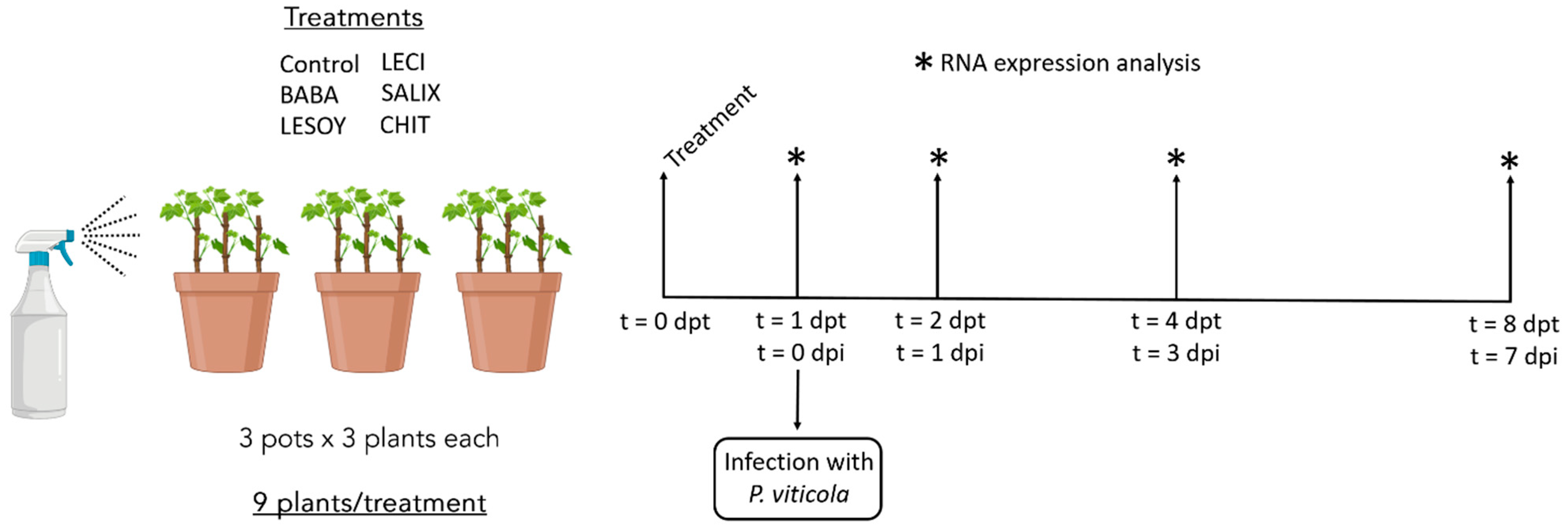
Figure 1. Experimental design of the infection assay.
Horticulturae 12 00112 g001
Figure 2. (A) Disease severity observed in plants at 7 days post-infection (dpi) after the treatments. (B) Disease severity reduction provided by the treatments. Tukey’s post hoc test (α = 0.05) was performed to determine statistical differences between commercial products, denoted by different lowercase letters in the graph bars. (C) Representative examples for each treatment condition of mycelium progression in leaf disc tissue at 2 dpi and sporulation at 7 dpi. The staining protocol is described in [61].
Horticulturae 12 00112 g002
Figure 3. Percentage of significantly modulated genes for natural infection process (INF) and the treatments with BABA, LESOY, LECI, SALIX and CHIT at each timepoint. The numbers inside the bars indicate the percentage of significantly down-regulated (blue) or up-regulated (red) genes.
Horticulturae 12 00112 g003
Figure 4. Significantly up-regulated genes during the natural infection process at 1, 3 and 7 dpi. All genes are expressed in log2 values, which were obtained by comparing the NT-INF control to the NT-NOINF control.
Horticulturae 12 00112 g004
Figure 5. Significantly down-regulated genes during the natural infection process at 1, 3 and 7 dpi. All genes are expressed as log2 values, which were obtained by comparing the NT-INF control to the NT-NOINF control.
Horticulturae 12 00112 g005
Figure 6. Relative expression (log2) of defence-related genes after the application of the commercial products at 0 dpi/1 dpt, 1 dpi/2 dpt, 3 dpi/4 dpt and 7 dpi/8 dpt. Genes significantly modulated are expressed in bold. The expression level is indicated by a color scale bar, with up-regulated genes represented in red and down-regulated ones in blue. A higher color intensity indicates a stronger modulation. For the infection-exclusive genes, the fold change was calculated by comparing NT-INF samples against the reference NT-NOINF samples. For the genes activated by the treatments, the fold change was calculated by comparing T-INF samples with the reference NT-INF.
Horticulturae 12 00112 g006
Figure 7. MFA of gene expression during the infection at (A,B) 1 dpi/2 dpt, (C,D) 3 dpi/ 4 dpt and (E,F) 7 dpi/8 dpt, distributed on the first two axes (dimensions 1 and 2). Thin points represent each biological replicate and ellipses the 95% confidence interval for each condition, with the thick point representing the center of the ellipse. In addition, the projection of the top 20 best represented variables (highest COS2), colored by biological function, is presented for (B) 1 dpi/2 dpt, (D) 3 dpi/4 dpt and (F) 7 dpi/8 dpt timepoints.
Horticulturae 12 00112 g007
Figure 8. MFA of gene expression after treatment application at (A,B) 0 dpi/1 dpt, (C,D) 1 dpi/2 dpt, (E,F) 3 dpi/4 dpt and (G,H) 7 dpi/8 dpt, distributed on the first two axes (dimensions 1 and 2). Thin points represent each biological replicate and ellipses the 95% confidence interval for each condition, with the thick point representing the center of the ellipse. In addition, the projection of the top 20 best represented variables (highest COS2), colored by biological function, is presented for (B) 0 dpi/1 dpt, (D) 1 dpi/2 dpt, (F) 3 dpi/4 dpt and (H) 7 dpi/8 dpt timepoints.
Horticulturae 12 00112 g008
Table 1. Commercial products used in this study, with their content, type of extraction, doses and chemical composition.
Abbr.CompanyContentType of ExtractionChemical CompositionDose
(in 1 L)
Category
BABASigma-Aldrich (Steinheim, Germany)β-aminobutyric acidn/an/a0.20624 gPositive control
LESOYIdai Nature SL (La pobla de Vallbona, Spain)Soy lecithin 20%AqueousPhosphatidylcholine and phosphatidylethanolamine3.75 mLBS
LECIEconatur (La Carlota, Spain)Soy lecithin 25% +
E. arvense extract 15%
AqueousPhosphatidylcholine, phosphatidylethanolamine and polyphenols such as flavonoids (quercetin, kaempferol, apigenin), phenolic acids (ferulic and caffeic acids). Presence of saponins and free amino acids (proline and glutamine)2.5 mLMixture of BS
SALIXEconatur (La Carlota, Spain)Salix cortex extract 42% + chitosan hydrochloride 0.5%AqueousPhenolic extract including flavonoids (isorhamnetin and luteolin), hydrolysable tannins and SA and related salicylates3.33 mLMixture of BS
CHITEconatur (La Carlota, Spain)Chitosan hydrochloride 1%n/aβ-(1→4)-D-glucosamine and N-acetyl-D-glucosamine with a high degree of deacetylation4.16 mLBS
Note. Abbr. = abbreviation. n/a = not applicable. BS = basic substance. SA = salicylic acid.
Disclaimer/Publisher’s Note: The statements, opinions and data contained in all publications are solely those of the individual author(s) and contributor(s) and not of MDPI and/or the editor(s). MDPI and/or the editor(s) disclaim responsibility for any injury to people or property resulting from any ideas, methods, instructions or products referred to in the content.