You are currently viewing a new version of our website. To view the old version click .
Horticulturae
  • Article
  • Open Access

11 December 2025

Vacuum Infusion of High-Intensity Sweeteners Enhances Quality Attributes of Cherry Tomato

,
,
,
,
,
,
,
and
1
Interdisciplinary Program in Smart Agriculture, Kangwon National University, Chuncheon 24341, Republic of Korea
2
Department of Horticulture, Kangwon National University, Chuncheon 24341, Republic of Korea
3
Department of Horticulture, Hongcheon Agriculture High School, Hongcheon 25126, Republic of Korea
4
Agriculture and Life Science Research Institute, Kangwon National University, Chuncheon 24341, Republic of Korea
This article belongs to the Special Issue Biotechnological Approaches and Technology Processes Used in the Agro-Industry to Create Value-Added Products

Abstract

Excessive sugar consumption has emerged as a significant public health concern, leading to growing interest in non-caloric, high-intensity sweeteners (HIS) as alternatives to conventional sugars. Cherry tomatoes, although inherently rich in lycopene, vitamin C, organic acids, and other health-promoting metabolites, are nonetheless perceived as insufficiently sweet by some consumers, particularly younger ones. Hence, sweeter fresh tomato options such as “stevia tomato” have recently gained popularity in Korea. Despite this trend, the effects of infusing HIS into fresh tomatoes on postharvest quality attributes, physiological responses, and sensory perception remain largely unexplored. To address this gap, this study investigated the effects of vacuum infusion of four HIS (glucosyl steviol glycosides (GSG), sucralose (SUC), acesulfame potassium (ACE), and sodium saccharin (SAC)) on the postharvest quality and ripening behavior of ‘TY Nonari’ cherry tomatoes. Fruits were infused under vacuum (0.2 bar, 23 °C) and analyzed for firmness, weight loss, ethylene production and respiration rates, colorimetric attributes, physico-chemical properties (TSS, TA, pH, TSS/TA), sensory quality, and microstructural characteristics using field emission scanning electron microscope (FE-SEM) coupled with energy-dispersive X-ray spectroscopy (EDS). Sweetener type significantly influenced tomato performance after vacuum infusion. GSG- and SAC-treated tomatoes exhibited the most rapid softening, with firmness decreasing from 10.25 to 5.66 N and from 9.97 to 5.53 N, respectively, by day 4. In contrast, ACE-treated fruit retained the highest firmness, decreasing from 9.62 to 7.89 N, followed by SUC, which declined from 10.00 to 6.67 N. Weight loss was also the highest in GSG (9.59%) and ACE (7.32%), whereas SUC (2.97%) and SAC (2.36%) showed markedly better water retention. Microstructural analysis corroborated these results: SAC-treated tomatoes exhibited severe cell wall degradation, with thickness decreasing from 8.22 to 4.24 μm, while GSG-treated fruit showed noticeable thinning from 8.33 to 6.39 μm. ACE maintained the thickest cell wall, decreasing from 8.83 to 7.19 μm, with SUC displaying intermediate preservation from 8.43 to 6.63 μm. Overall, ACE was the most effective treatment for preserving sensory quality, micro-structural integrity, and physicochemical attributes. These findings provide a scientific basis for selecting appropriate HIS to develop low-sugar, high-quality fruit products tailored to evolving consumer preferences.

1. Introduction

Recently, excessive sugar intake has been recognized as a major contributor to chronic health conditions such as obesity, type 2 diabetes, and cardiovascular diseases, driving a growing demand for reduced-sugar and low-calorie foods [1,2,3]. This growing emphasis on health-conscious eating has driven the food industry to create and utilize non-caloric or low-caloric sweeteners [2]. Alternative sweeteners are classified based on their caloric content and sweetness intensity. Based on caloric content, they are grouped as caloric, low-caloric, and non-caloric categories [3]. According to sweetness intensity, they are further categorized into high-intensity sweeteners (HIS) and low-intensity sweeteners (LIS) [3].
Commonly used non-caloric high-intensity sweeteners in the food industry include sucralose (SUC), acesulfame potassium (ACE), sodium saccharin (SAC), and glucosyl steviol glycosides (GSG) [3]. SUC is a synthetic derivative of sucrose that is approximately 600 times sweeter. It is known for its clean taste without bitterness, as well as its high thermal and pH stability [4,5]. ACE, which is approximately 200 times sweeter than sucrose, is a stable white crystalline solid that demonstrates excellent solid-state stability [6]. SAC, the first synthetic sweetener created in 1879, is about 300 times sweeter than sucrose and is highly heat-stable [7]. GSG, sourced from stevia leaves, are approximately 300 times sweeter than sugar and are preferred by consumers for their natural origin [8]. Generally, these sweeteners have unique strengths and weaknesses regarding their sweetness profile, stability under heat or acidic conditions, and aftertaste. Therefore, it is crucial to conduct a comprehensive assessment of their impact on sensory quality and consumer acceptability.
Cherry tomato (Solanum lycopersicum) is widely consumed not only for its rich content of lycopene, vitamin C, and organic acids, but also for its abundance of health-promoting primary and secondary metabolites, including amino acids, phenolics, flavonoids, and vitamins, all of which contribute synergistically to its flavor, nutritional value, and antioxidant capacity [9,10,11]. However, some consumers, particularly younger individuals, perceive fresh tomatoes as insufficiently sweet. To meet this preferences, fresh tomato products like “stevia tomato” which utilize steviol glycosides, have been introduced to the Korean market and have received positive consumer responses [12]. Despite their commercial popularity, these products have been developed without sufficient scientific evidence regarding how different HIS objectively affect fruit quality, ripening behavior, or sensory attributes.
Various techniques have been developed to infuse sweeteners into fruit tissues, including osmotic treatment, pressure impregnation, and vacuum infusion (VI) [13,14]. Among these, VI is a valuable technique for quickly introducing external liquids into the porous structures of plant tissues by utilizing pressure differentials [15]. This process entails immersing the sample in an impregnation solution under vacuum, then restoring atmospheric pressure to induce hydrodynamic mechanisms (HDM) that facilitate mass transfer between internal voids and the external solution [16].
In this study, ‘TY Nonari’ cherry tomatoes were infused with SUC, ACE, SAC, and GSG using a VI method to investigate how different sweeteners affect comprehensive quality attributes, including texture, physiological responses, microstructural integrity, color development, and physicochemical and sensory properties, immediately after treatment and throughout a four-day storage period at 23 °C. The findings provide objective insights into how different HIS interact with fruit tissues, thereby supporting a scientific basis for evidence-based assessment of their potential applications in consumer-oriented product development.

2. Materials and Methods

2.1. Plant Material and Vacuum-Infusion Treatment

For this study, we obtained cherry tomato fruits of the ‘TY Nonari’ cultivar from Namnong Horticulture Co., Ltd. in Namnong, Republic of Korea. The plants were grown in a climate-controlled greenhouse in Cheorwon, Gangwon Province (38.1927568° N, 127.2516385° E). The plants were cultivated in a climate-controlled greenhouse in Cheorwon, Gangwon Province (38.1927568° N, 127.2516385° E), and fruits were harvested on 20 July 2025, at the full red maturity stage using tomato color chart [11]. At harvest, fruit color values were within the following ranges: a* (17.05–18.24), b* (18.84–19.63), L* (35.93–36.70), and hue angle (46.99–48.04). Only blemish-free, uniformly sized fruits were selected for the study. The average fruit weight of the ‘TY Nonari’ cultivar is about 14 g. Immediately after harvest, the fruits were transported to the postharvest management laboratory at the Department of Horticultural Science, Kangwon National University. Uniform-sized cherry tomatoes that were free from defects were carefully selected for treatment.
The fruits were vacuum-infused with aqueous solutions that contained one of the following food-grade, high-intensity sweeteners: GSG (Daepyung Co., Ltd., Seongnam, Republic of Korea), SUC (Newtrend Technology Co., Ltd., Shenzhen, China), ACE (Anhui Jinhe Industrial Co., Ltd., Chuzhou, China), or SAC (JMC Co., Ltd., Ulsan, Republic of Korea). All sweeteners included in this study were certified food-grade and approved for use in food products by the relevant food safety authorities [17]. Their relative sweetness compared to sucrose was approximately 300 times for GSG, 600 times for SUC, 200 times for ACE, and 300 times for SAC, depending on the concentration and food matrix (Table S1).
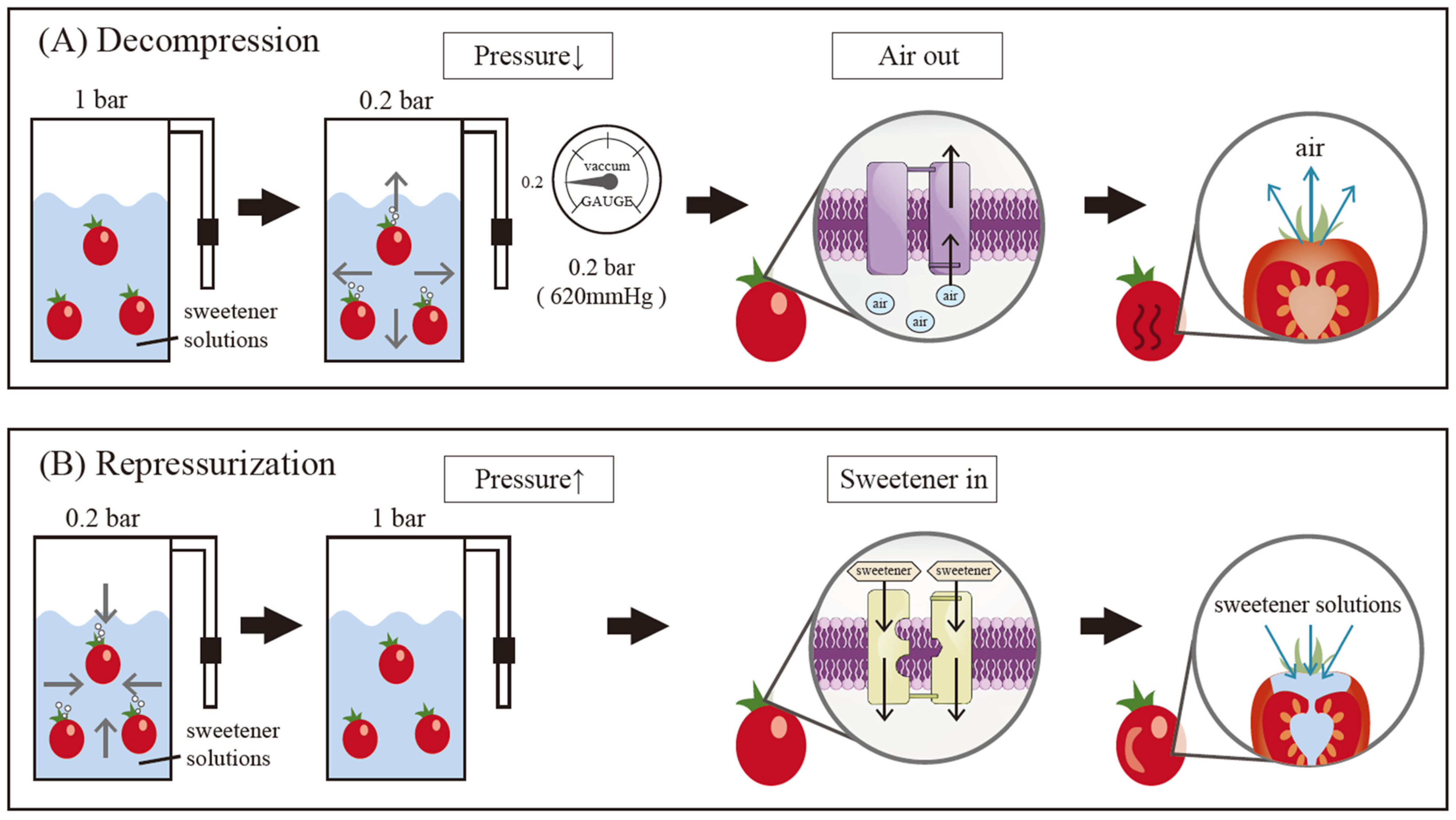
Each treatment solution was prepared at a total volume of 1 L, and the actual quantities of sweeteners added were calculated accordingly to achieve the target ASV level. Cherry tomatoes were washed using an air-bubble cleaning method before vacuum treatment [18]. The treatments were performed in a vacuum oven (VO-64, Hanyang Science Lab Co., Ltd., Seoul, Republic of Korea) at 0.2 bar and 22 °C using an oil rotary high vacuum pump (W2V20, WSA Co., Ltd., Gunpo-si, Republic of Korea), based on the procedure described by Ha et al. [19] with minor modifications to adapt to the present study. Briefly, cherry tomatoes were immersed in each sweetener solution and placed inside a vacuum chamber with a total capacity of 64 L. Approximately 20 L of sample volume was introduced into the chamber, and a vacuum was applied for 50–60 s until the internal pressure reached 0.2 bar. Following the vacuum phase, the pressure was immediately returned to atmospheric conditions without a separate holding step, which took approximately 160–180 s for complete repressurization (Figure 1A,B).
Figure 1. Vacuum infusion process used to infuse sweetener solutions into fresh tomatoes: (A) decompression and (B) repressurization.
After treatment, the cherry tomatoes in each solution were rinsed with water and dried with a fan to eliminate all surface moisture [20]. A total of 440 ‘TY Nonari’ cherry tomato fruits were used in the experiment, with 110 fruits assigned to each treatment group (GSG, SUC, ACE, and SAC) for analysis at the initial stage (day 0) and throughout the four-day storage period at 23 °C. Firmness, total soluble solids (TSS), titratable acidity (TA), pH, and color were measured using ten biological replicates per treatment. Sensory evaluation and microstructural analysis were performed on the same set of ten fruits, using half of each fruit for sensory evaluation and the other half for microstructural analysis, with three replicates prepared from ten fruits. The remaining ten fruits per treatment were used to measure ethylene production and respiration rates from day 0 to day 4 of storage. These samples were prepared for analysis using a field emission scanning electron microscope. They were frozen and stored in a −80 °C deep freezer until further analysis.

2.2. Weight of Infused Sweetener Solutions into Cherry Tomatoes

The weight of cherry tomatoes (n = 10 for each treatment) was measured before and after vacuum infusion with GSG, SUC, ACE, or SAC, using an analytical balance (ME204, Mettler Toledo, Greifensee, Switzerland). The net weight of infused solution was calculated by subtracting the pre-treatment weights from the post-treatment weights.

2.3. Firmness and Microstructural Observation

The firmness of cherry tomatoes was measured using a rheometer (Sun Scientific Co., Ltd., Tokyo, Japan). Two measurements were taken around the equatorial region of each fruit. Measurements were performed with a 3 mm diameter flat-ended stainless-steel probe at a speed of 1.0 mm/s, applying a maximum force of 10 kg; results were expressed in Newtons (N) using the method described by [9].
For microstructural observation and elemental analysis, tissue samples were collected from the equatorial pericarp and cut into cross-sectional slices (approximately 10 × 3 × 3 mm). The sliced samples were rapidly frozen in liquid nitrogen, stored at −80 °C, and subsequently lyophilized using a freeze dryer. Dried samples were then sputter-coated with platinum for 60 s to create a conductive layer ~6–8 nm thick [21].
Surface morphology and microstructure of tomato tissues were examined using FE-SEM (SU8600, Hitachi High-Technologies, Ltd., Tokyo, Japan) equipped with low-angle backscattered and SDD-EDS detectors. SEM imaging was performed at 5.0 kV [22], while elemental mapping and analysis were conducted at 10 kV. Lyophilized samples were platinum- or carbon-coated as required, and elemental line scans across cell wall regions were used to determine Ca, K, and Mg distribution. All samples were taken from equatorial pericarp tissue. For each treatment, three line scans were averaged for comparison [21]. FE-SEM images acquired at identical magnification were further analyzed in ImageJ v1.54 (National Institutes of Health, Bethesda, MD, USA) to quantify cell wall thickness and pore area, using calibrated pixel size and the MorphoLibJ plugin [23]. Three replicates per treatment were evaluated, and mean values were used for statistical analysis.

2.4. Physiological Changes

Cherry tomatoes were weighed both before and after treatment to calculate the percentage weight loss during storage [24]. The ethylene production rate and respiration rate of the cherry tomatoes were measured by sealing the fruit in 0.95 L airtight containers and incubating them for 3 h, following the methodology described by [25]. A 1 mL gas sample was collected from the headspace of each container using a gas-tight syringe and injected into a gas chromatograph (Shimadzu Corporation, Kyoto, Japan) for analysis. The gas chromatograph was fitted with a BP20 wax column (30 m × 0.25 mm × 0.25 μm; SGE Analytical Science, Melrose Park, Australia) and a flame ionization detector. The injector and detector temperatures were set at 250 °C, while the oven temperature was maintained at 160 °C. Nitrogen was used as the carrier gas at a flow rate of 0.67 mL s−1. Ethylene production rate was expressed as μL C2H4 kg−1 h−1. The respiration rate of the sealed fruits was measured by analyzing CO2 concentration at the beginning and again after 3 h of incubation, using a gas analyzer (PBI Dan-sensor, CheckMate 9900, Ringsted, Denmark). The results were expressed as mL CO2 per kg per hour (mL CO2 kg−1 h−1).

2.5. Physicochemical and Sensory Qualities

TSS was measured at 20 °C using a digital refractometer (Atago Co., Ltd., Tokyo, Japan). The pH was measured at the same temperature with S20 SevenEasy pH meter (Mettler Toledo Ltd., Zurich, Switzerland). TA was measured using a Titrator Compact G10s (Mettler Toledo Ltd., Zurich, Switzerland) after diluting tomato juice with distilled water at a ratio of 1:19 (v/v). The diluted samples were titrated with 0.1 N NaOH to an endpoint of pH 8.1, as described by [9]. The TA values were quantified as mg of citric acid per 100 g of fresh tomato. The TSS/TA ratio was then calculated by dividing TSS by TA.
Color attributes such as lightness (L*), redness (a*), yellowness (b*), and hue angle (h°) were measured using a CR-400 Chroma Meter (Minolta, Tokyo, Japan). A colorimeter was calibrated against a standard white calibration plate (L* = 92.54, a* = 0.35, b* = 3.36) before each measurement session, following the procedures outlined by [24,26].
Sensory evaluation was conducted using a nine-point hedonic scale following the method described by [27]. Six attributes, sweetness, sourness, aroma, texture, flavor and overall acceptability, were assessed by trained panel of ten participants who rated each attribute from 1 (dislike extremely) to 9 (like extremely). All samples were anonymized to minimize bias.

2.6. Experimental Design and Statistical Analysis

The experiment was conducted following a completely randomized design to evaluate the influence of vacuum-infusion treatments on the quality attributes of ‘TY Nonari’ cherry tomato fruits during storage. All data were expressed as means ± standard errors, and a two-way analysis of variance (ANOVA) using SAS statistical software (SAS/STAT® 9.4; SAS Institute Inc., Cary, NC, USA) was used to evaluate the effects of infusion treatment and storage period, with the significance level set at p < 0.05. When significant differences were observed, Duncan’s multiple range test was performed for post hoc comparisons.

3. Results and Discussion

3.1. Weight Response of Cherry Tomatoes to Vacuum Infusion of the Sweetener Solutions

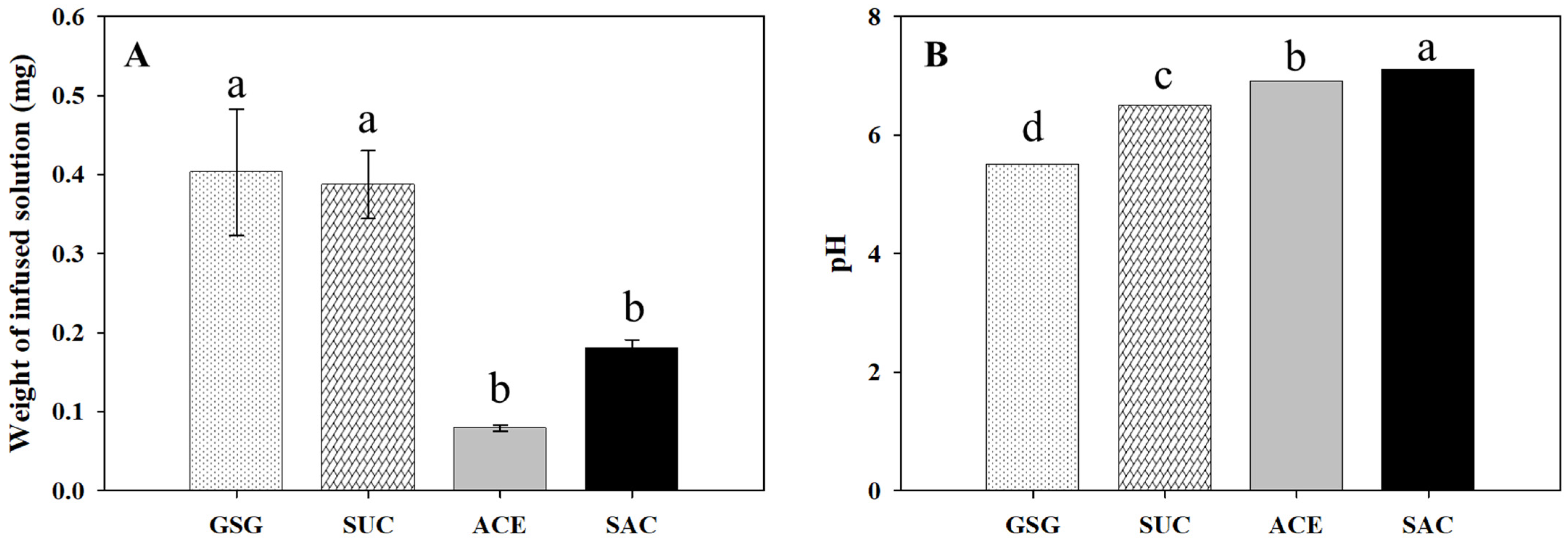
In this study, no fruit cracking was observed following the vacuum treatment, indicating that the process was well-tolerated by the cherry tomato fruits. The degree of vacuum infusion was then evaluated by measuring the weight difference in individual fruits before and after treatment. The GSG-treated fruits showed the highest increase in fresh weight per fruit (0.403 mg), followed by SUC-treated fruits (0.387 mg), indicating relatively efficient solution uptake. In contrast, ACE- and SAC-treated fruits exhibited lower infiltration amounts (0.079 mg and 0.180 mg, respectively) (Figure 2A). As shown in Figure 2B, the pH values of the sweetener solutions differed significantly. GSG and SUC exhibited mildly acidic pH levels, whereas ACE and SAC maintained nearly neutral pH. As noted by Zhao and Xie [15], most fruits exhibit a net liquid gain during vacuum infusion because the external solution infiltrates gas-filled intercellular spaces that are partially evacuated during the vacuum phase. The present findings indicate that the extent of infiltration depends not only on the applied vacuum conditions but also on the pH of the infusion solution, although the exact mechanisms remain to be fully elucidated.
Figure 2. Weight of the infused sweetener solution per single cherry tomato fruit (A), and pH values of the sweetener solutions (B). Data for sweetener infusion and pH are presented as a mean of ten replicates ± standard error. Different letters indicate a significant difference between treatments with Duncan’s multiple range test at p < 0.05. GSG, SUC, ACE, and SAC stand for glucosyl steviol glycosides, sucralose, acesulfame potassium, and sodium saccharin, respectively.

3.2. Texture and Physiological Changes of Sweeteners Infused Cherry Tomatoes During Storage

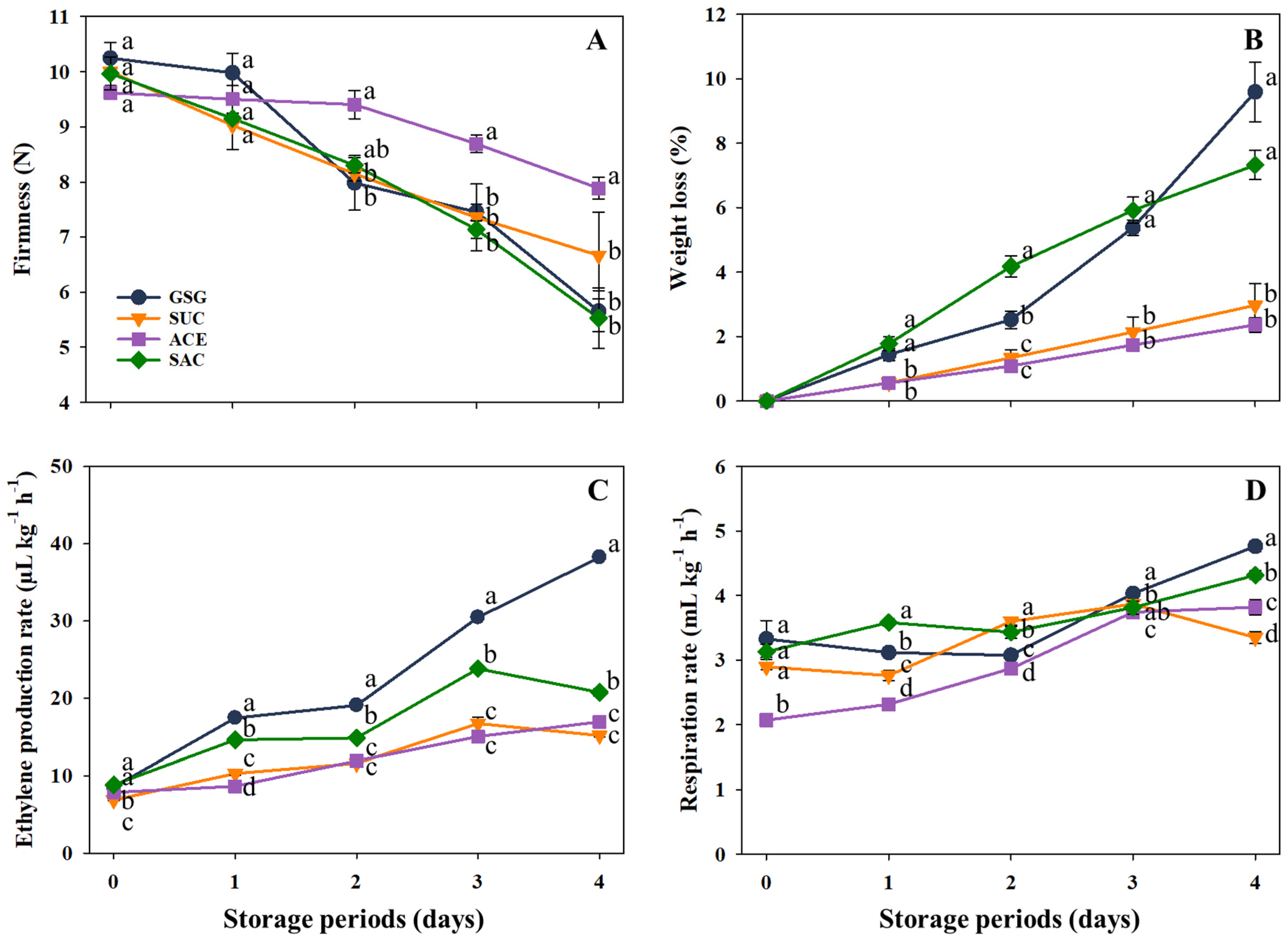
The quality attributes of cherry tomatoes during storage exhibited distinct variations depending on the type of high-intensity sweeteners applied through vacuum infusion (Figure 3A–D). The firmness of cherry tomatoes declined over storage period in all sweeteners, but the rate and extent of softening varied significantly depending on the type of sweetener applied via vacuum infusion (Figure 3A). Notably, GSG-, SUC- and SAC-treated fruits exhibited a pronounced firmness reduction by day 4, suggesting accelerated tissue softening, whereas ACE-treated tomatoes retained greater firmness throughout storage. This variation could be attributed to differences in the chemical environment during infusion, particularly the ionic composition and potential interactions with cell wall components. According to previous studies, tomato fruit undergoes natural apoplastic acidification during ripening, shifting from near neutral (~pH 6.0) to a more acidic state (~pH 4.0–5.0), which facilitates cell wall disassembly [28]. In this context, vacuum infusion of mildly acidic GSG and SUC sweetener solutions could mimic or exacerbate this natural acidification process, leading to accelerated cell wall loosening (Figure 2B). First, acidic pH enhances the activity of wall-loosening proteins such as expansins, which promote non-enzymatic relaxation of cellulose-matrix [29]. Second, polygalacturonase (PG), a key enzyme responsible for pectin depolymerization, exhibits optimal activity at pH 4.0–5.0, where tomato PG2 most effectively releases low-molecular-weight oligouronides [30]. Third, acidification can disrupt Ca2+-pectin crosslinking by protonating carboxyl groups (pKa ≈ 3.5–4.5), thereby weakening electrostatic interactions critical for the stability of the ‘egg-box’ network [31].
Figure 3. Firmness (A), weight loss (B), ethylene production (C), and respiration rate (D) of ‘TY Nonari’ cherry tomatoes during 4 days of storage at 23 °C following vacuum infusion with high-intensity sweeteners. Data are presented as a mean of ten replicates ± standard error. Different letters indicate a significant difference between treatments with Duncan’s multiple range test at p < 0.05. GSG, SUC, ACE, and SAC stand for glucosyl steviol glycosides, sucralose, acesulfame potassium, and sodium saccharin, respectively.
In addition, SAC may accelerate softening through ionic disruption of cell wall integrity. In fruit tissues, the middle lamella is stabilized by Ca2+-mediated crosslinking of low-methoxyl pectins, forming the characterstic ‘egg-box’ structure [32,33]. The influx of Na+ from SAC treatment could partially displace Ca2+, weakening intercellular adhesion and thereby enhancing tissue softening. This hypothesis is supported by previous findings in tomatoes, where calcium supplementation restored firmness under salinity stress [34]. Moreover, pectolytic enzyme activity is known to increase in NaCl environments, accelerating pectin solubilization [35]. Therefore, the rapid softening observed in SAC-treated fruit likely results from a synergistic effect of Na+-mediated crosslink disruption and enhanced pectin degradation. Supporting this, Pinheiro and Almeida [36] reported that cherry tomato pericarp discs infused with a pH 4.5 buffer exhibited greater pectin solubilization and more rapid softening compared to neutral pH. Consistent with these findings, GSG- and SUC-treated fruits in the present study exhibited more rapid softening (Figure 3A), likely due to acid-induced modifications in the cell wall environment, as lower pH is known to promote wall loosening and pectin solubilization [29,30]. In contrast, ACE-treated fruits maintained higher firmness, possibly due to their relatively neutral pH.
Furthermore, the presence of K+ in ACE may have contributed to osmotic balance and cell turgor, thereby supporting fruit firmness. This hypothesis is consistent with the general physiological role of potassium in plants: K+ contributes to osmotic balance and turgor pressure regulation while also influencing membrane potential and enzymatic functions [37], and in fruit crops, potassium nutrition has been correlated with improved firmness and postharvest quality [38]. Moreover, recent experiments have shown that exogenous potassium application can increase fruit firmness in various species [39]. However, this effect has not been directly confirmed in tomato tissues under vacuum infusion conditions. Therefore, further studies measuring K+ fluxes, osmotic potential, and cell turgor in treated fruits is necessary to verify this mechanism.
Weight loss progressively increased across all treatments during storage, with the greatest losses observed in GSG- and SAC-treated fruits (Figure 3B). In contrast, SUC and ACE treatments resulted in significantly lower weight loss, implying superior water retention and suppressed transpiration. This difference may be attributed to changes in membrane permeability or the formation of barrier-like layers by sweetener infiltration or deposition within intercellular spaces, as similarly observed in edible coating systems [40]. Ethylene production showed a marked and time-dependent increase, with GSG-treated fruits exhibiting the highest levels by day 4 (Figure 3C). This result suggests accelerated ripening, consistent with the rapid decline in firmness, and indicates faster progression toward senescence. By contrast, ACE- and SUC-treated fruits maintained lower ethylene production, supporting their potential role in delaying climacteric peaks and extending shelf life [41]. SAC-treated fruit also exhibited moderately elevated ethylene levels, supporting the hypothesis that Na+-induced stress may stimulate ethylene biosynthesis, thereby accelerating ripening [42,43]. Ethylene production is known to activate downstream genes regulating cell wall disassembly and respiration, which may explain the faster quality degradation observed in SAC-treated tomatoes [44,45,46].
A similar trend was observed in respiration rate (Figure 3D), which increased throughout storage, reaching the highest levels in GSG-treated fruits. Among the treatments, GSG-treated fruits exhibited the highest respiration rate on day 4, reaching 4.76 mL kg−1 h−1, indicating accelerated metabolic activity and ripening. This pattern was closely aligned with elevated ethylene production (Figure 3C), suggesting a climacteric behavior typical of ripening tomato fruit. The concurrent rise in ethylene and respiration is consistent with the well-established hormonal regulation of respiration bursts in climacteric fruits [41]. The SUC and ACE treatments effectively suppressed this respiratory surge, maintaining respiration rates below 3.87 mL kg−1 h−1 throughout storage. Notably, ACE-treated tomatoes exhibited the lowest respiration level (3.82 mL kg−1 h−1) on day 4, which was accompanied by the lowest ethylene output and highest firmness retention. This coordination supports the model in which reduced ethylene biosynthesis mitigates downstream metabolic acceleration, preserving primary metabolites and structural integrity [47,48]. These findings collectively indicate that the type of vacuum-infused sweetener exerts multifactorial effects on postharvest behavior, influencing moisture dynamics, hormonal activity, and respiratory metabolism. GSG and SAC treatments appear to promote faster ripening and quality degradation, whereas ACE and SUC exhibit quality-stabilizing effects, with ACE showing the most promising profile for extending the storage life of cherry tomatoes.

3.3. Storage-Related Microstructure of Sweeteners Infused Cherry Tomatoes

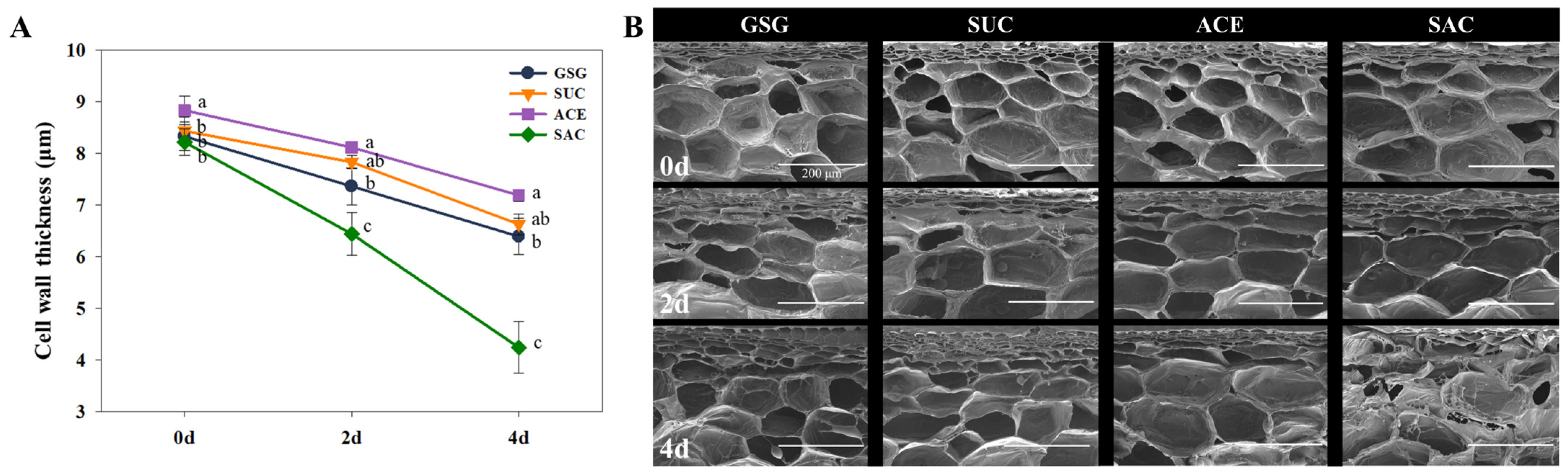
To further elucidate the structural basis of textural differences observed among vacuum-infused cherry tomatoes, microscopic examination of cell wall morphology and elemental composition was performed using field emission scanning electron microscopy (FE-SEM) combined with energy-dispersive X-ray spectroscopy (EDS). By day 4 of storage, clear differences in cell wall integrity were observed among the treatments (Figure 4 and Supplementary Figures S1–S3). GSG- and SAC-treated fruits exhibited more collapsed and wrinkled cell walls, with disrupted intercellular adhesion and widened intercellular spaces, indicating advanced cell wall loosening and loss of tissue turgor. In contrast, SUC- and ACE-treated samples retained more compact and intact cell walls, with closely aligned cell boundaries and preserved middle lamella structures (Figure 4), supporting their superior firmness retention as previously shown in Figure 3A.
Figure 4. Cell wall thickness (A) and morphology (B) through scanning electron microscopy (SEM) analysis of ‘TY Nonari’ cherry tomatoes during 4 days of storage at 23 °C following vacuum infusion with high-intensity sweeteners. Different letters on the bars indicate significant differences between treatments with Duncan’s multiple range test at p < 0.05. GSG, SUC, ACE, and SAC stand for glucosyl steviol glycosides, sucralose, acesulfame potassium, and sodium saccharin, respectively.
These microscopic patterns were consistent with the percentage elemental distribution of calcium (Ca), potassium (K), and magnesium (Mg), which are essential for maintaining cell wall rigidity and turgor pressure. Table 1 shows that GSG-, ACE-, and SUC-treated fruits maintained the proportion of K, Ca, and Mg across the cell wall region, implying a more stable pectin Ca2+ network (‘egg-box’ structure) (Figure 4B). On the other hand, SAC-treated fruit exhibited lower Mg levels on the 2nd and 4th day, suggesting ionic displacement, probably by Na+ during infusion, which may have weakened the pectin matrix and facilitated intercellular separation (Figure 4B).
Table 1. Relative elemental distribution percentage of calcium (Ca), potassium (K), and magnesium (Mg) in the cell wall of ‘TY Nonari’ cherry tomatoes during 4 days of storage at 23 °C following vacuum infusion with high-intensity sweeteners.
These findings are aligned with the physiological data: SAC-treated fruit showed greater firmness loss, higher ethylene production, and increased respiration (Figure 3A–D). The introduction of Na+ ions from sodium saccharin may have not only disrupted the Ca2+-pectin framework but also induced oxidative and ionic stress, stimulating ethylene biosynthesis and PG activation. Meanwhile, ACE treatment preserved elemental homeostasis and structural integrity, which is consistent with its low respiration (3.82 mL kg−1 h−1), low ethylene production, and minimal softening by day 4.
Quantitative measurements of cell wall thickness and morphology of SEM analysis further supported these structural trends during storage (Figure 4). The cell wall thickness in SAC-treated fruits declined sharply from 8.22 μm at day 0 to 4.24 μm at day 4, showing the greatest reduction among treatments. By contrast, ACE-treated fruits retained thicker cell walls throughout storage, decreasing only slightly from 8.83 μm to 7.19 μm, followed by SUC-treated samples with intermediate values. GSG treatment also resulted in a gradual decline, though less pronounced than SAC. These quantitative results confirm that the ACE treatment, by promoting ionic stability and alleviating acid stress, was the most effective in reducing cell wall degradation.
Collectively, the FE-SEM and EDS data provide a microstructural explanation for the divergent postharvest behaviors induced by sweetener-specific vacuum infusion (Table 1; Figures S1–S3). The results suggest that both the pH and ionic composition of the infused solution critically influence cell wall stability, water retention, and the overall ripening trajectory. Treatments that maintained elemental stability and minimized acidic or ionic disruption, especially ACE demonstrated clear advantages in preserving tissue firmness and visual quality during shelf life.

3.4. Color Changes of Sweeteners Infused Cherry Tomatoes During Storage

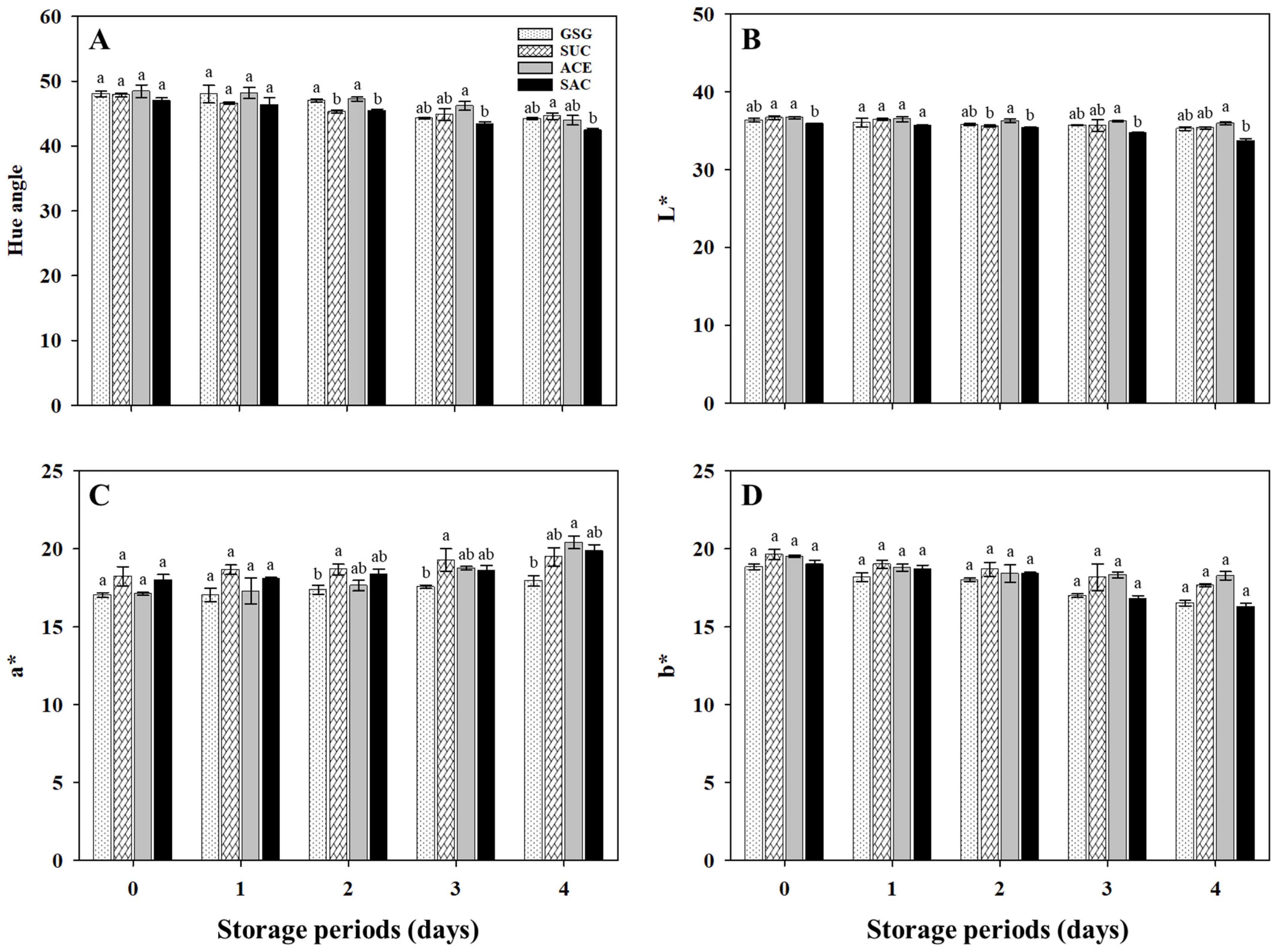
The hue angle gradually decreased during storage of cherry tomatoes infused with high intensity sweeteners, indicating ripening-associated pigmentation (Figure 5). Specifically, the hue angle in SAC-treated fruit decreased from 46.99° at day 0 to 42.45° at day 4, reflecting a more advanced transition in to red hues, typically linked to chlorophyll degradation and carotenoid biosynthesis in ripening climacteric fruits [49,50]. In contrast, SUC and ACE treatments maintained more stable hue angle values, with ACE-treated fruits showing only a slight reduction from 48.44° to 43.99°, indicating delayed pigmentation and slower ripening progression. These findings agree with the ethylene production and respiration rate patterns observed earlier, implying that sweeteners may indirectly modulate physiological pathways involved in ripening and pigment metabolism.
Figure 5. Color values (Hue angle (A), L* (B), a* (C), and b* (D)) of ‘TY Nonari’ cherry tomatoes during 4 days of storage at 23 °C following vacuum infusion with high-intensity sweeteners. Data are presented as a mean of ten replicates ± standard error. Different letters on the bars indicate significant differences between treatments with Duncan’s multiple range test at p < 0.05. GSG, SUC, ACE, and SAC stand for glucosyl steviol glycosides, sucralose, acesulfame potassium, and sodium saccharin, respectively.
The L* value (lightness) remained relatively stable across treatments and storage periods, consistent with previous reports that L* changes are often limited in tomatoes due to their dense pigmentation and waxy epidermis [51,52]. However, a slight decrease in L* was observed in the SAC group, from 35.93 at day 0 to 33.74 at day 4, possibly due to cuticular water loss, pigment concentration, or surface structure alterations during advanced ripening.
The a* value (redness) tended to increase over time, especially in SAC-treated fruits, indicating enhanced accumulation of red pigments such as lycopene and some carotenoids during storage [53,54]. For instance, the value in SAC-treated fruit increased from 17.99 at day 0 to 19.86 at day 4, whereas ACE- and SUC-treated fruits exhibited more gradual increases (17.12 to 20.41), suggesting moderated pigment biosynthesis.
In contrast, the b* value (yellowness) did not show significant variation throughout storage, implying relatively stable levels of yellow pigments such as lutein and β-carotene [55,56]. This may be due to the simultaneous accumulation of red pigments and the partial degradation or dilution of yellow pigments, resulting in compensatory effects on b* values. Therefore, the observed color development likely reflects a complex interaction between different classes of pigments rather than a uniform increase in all carotenoids.
Collectively, GSG and SAC treatments accelerated color development, as indicated by a rapid decrease in hue angle and an increase in a* values during storage, reflecting enhanced carotenoid accumulation and ripening. On day 4, fruits treated with SAC exhibited the lowest hue angle of 42.45° and the second highest a* value at 19.86, indicating the most advanced stage of coloration. In contrast, ACE-treated fruits exhibited some changes in color during storage, with the hue angle decreasing from approximately 48.44° to 43.99° and the a* value increasing from around 17.11 to 20.41. However, these changes were relatively moderate compared to those observed in the SAC- or GSG-treated groups. This pattern corresponds with the superior retention of firmness, lower ethylene production, and reduced respiration rates seen in ACE-treated tomatoes. Therefore, the ACE treatment appears effective in regulating the ripening process while maintaining an acceptable visual quality. Instead of ensuring complete color stability, the moderate pigment accumulation noted under ACE treatment likely helped to sustain a consumer-appealing appearance. This highlights its practical value in extending shelf life and marketability without triggering excessive ripening.

3.5. Physicochemical and Sensory Qualities of Sweeteners Infused Cherry Tomatoes During Storage

The physicochemical properties of cherry tomatoes subjected to vacuum infusion with different high-intensity sweeteners (GSG, SUC, ACE, SAC) exhibited significant changes during the 4th day storage period (Table 2). These variations were closely associated with the compositional characteristics of the sweeteners, which potentially influenced osmotic behavior, acid-base balance, and sugar-acid metabolism in the fruit tissues. TSS showed a general decreasing trend across all treatments, which may be attributed to the dilution effect or sugar consumption during storage [57]. Notably, SAC-treated fruit exhibited the highest initial TSS (7.20 ± 0.06%) but declined markedly to 6.23 ± 0.09% by day 4. In contrast, ACE treatment demonstrated the greatest stability, with values maintained from 7.00 ± 0.06% to 6.67 ± 0.09%, suggesting that ACE may help retain soluble solids through osmotic reinforcement or reduced catabolic activity. These findings align with those of [13], who reported that the concentration and type of sweetener used in osmotic dehydration significantly affected solid retention and quality parameters in tomato tissues. Titratable acidity (TA) decreased over time in all treatments, reflecting natural ripening and acid metabolism [40]. Among them, GSG-treated fruit showed the most pronounced decline, from 0.85 ± 0.03 to 0.66 ± 0.02 mg 100 g−1, whereas ACE-treated samples retained the highest acidity, remaining at 0.78 ± 0.04 mg 100 g−1 on day 4. This suggests that ACE may have better buffering capacity or may interfere less with organic acid pools, possibly by limiting respiration-associated acid degradation [57]. The TSS/TA ratio, an important index of flavor balance, exhibited divergent trends depending on treatment. SAC-treated tomatoes displayed the highest ratio throughout storage (from 9.67 ± 0.27 to 8.97 ± 0.14), suggesting enhanced sweetness perception. However, this increase likely resulted more from acid loss than sugar retention, as SAC also exhibited one of the sharpest TSS declines. In contrast, ACE treatment maintained a more stable TSS/TA ratio (8.13 ± 0.49 to 8.17 ± 0.45), indicating a better maintained sweet–sour equilibrium, which is considered desirable for consumer acceptance [58]. All treatments exhibited a gradual increase in pH, a change commonly linked to the degradation of organic acids such as malate and citrate, and the decline in acidity during fruit ripening [59,60]. However, the extent of pH change varied with sweetener type. GSG-treated fruit showed the most substantial rise from 4.31 ± 0.01 to 4.64 ± 0.05, while ACE treatment had the smallest increase (4.30 ± 0.04 to 4.39 ± 0.03). This suggests that ACE may confer greater control over pH stabilization, which is crucial for microbiological safety and flavor integrity during storage.
Table 2. Total soluble solids (TSS), titratable acidity (TA), TSS/TA, and pH of ‘TY Nonari’ cherry tomatoes during 4 days of storage at 23 °C following vacuum infusion with high-intensity sweeteners.
Statistical analysis further validated the observed trends. Both day (A) and treatment (B) had highly significant effects (p < 0.001) on TSS, indicating that storage duration and sweetener type independently influenced the soluble solid concentration in cherry tomatoes. However, the interaction effect (A × B) was not significant, suggesting that the rate or direction of TSS change over time was consistent across treatments.
Similarly, TA was significantly affected by both day (p < 0.01) and treatment (p < 0.001), but not by their interaction. This implies that while overall acidity declined during storage and differed among sweeteners, the pattern of decline was parallel across all treatments. TSS/TA ratio, which is a derived index of sweetness-to-sourness balance, was primarily influenced by treatment effect (p < 0.01), reinforcing that perceived flavor is highly dependent on the type of sweetener used, rather than storage time.
In contrast, pH exhibited significant effects from all three factors: day (p < 0.001), treatment (p < 0.001), and their interaction (p < 0.05). This suggests that the degree and direction of pH shifts over time differed among treatments, possibly due to differential buffering capacities, osmotic effects, or the sweeteners’ influence on proton leakage or acid metabolism. These statistical outcomes reinforce the physiological interpretations made earlier and highlight the need to consider both temporal and treatment-specific effects when evaluating postharvest quality under vacuum infusion conditions.
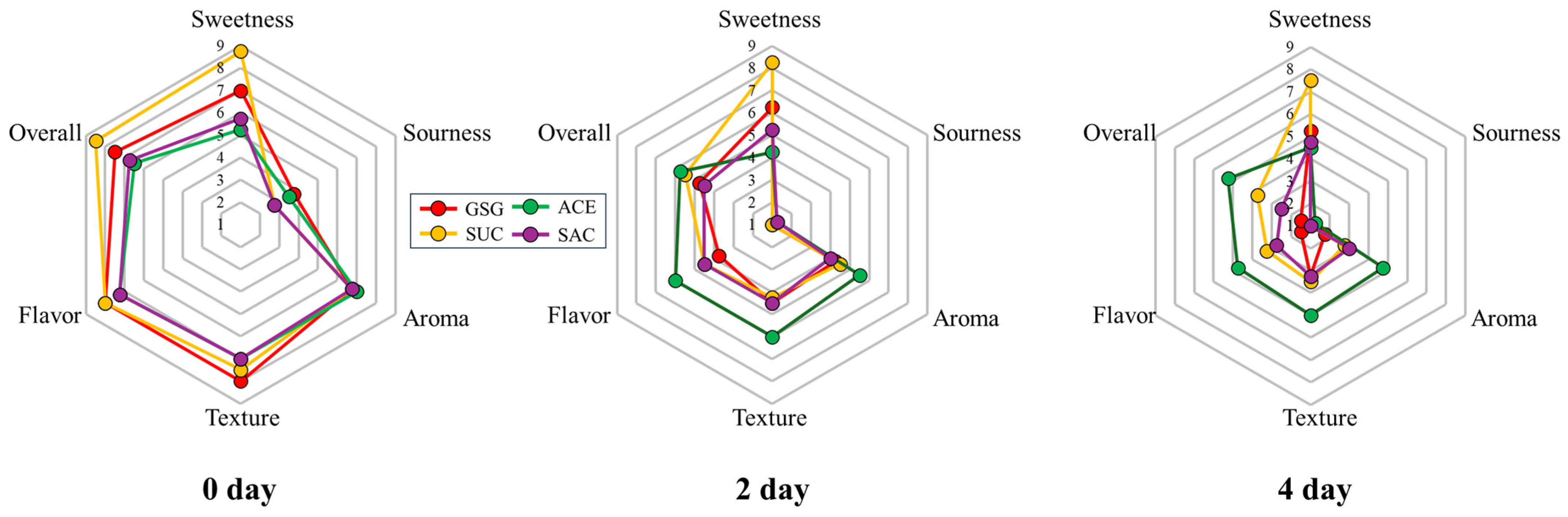
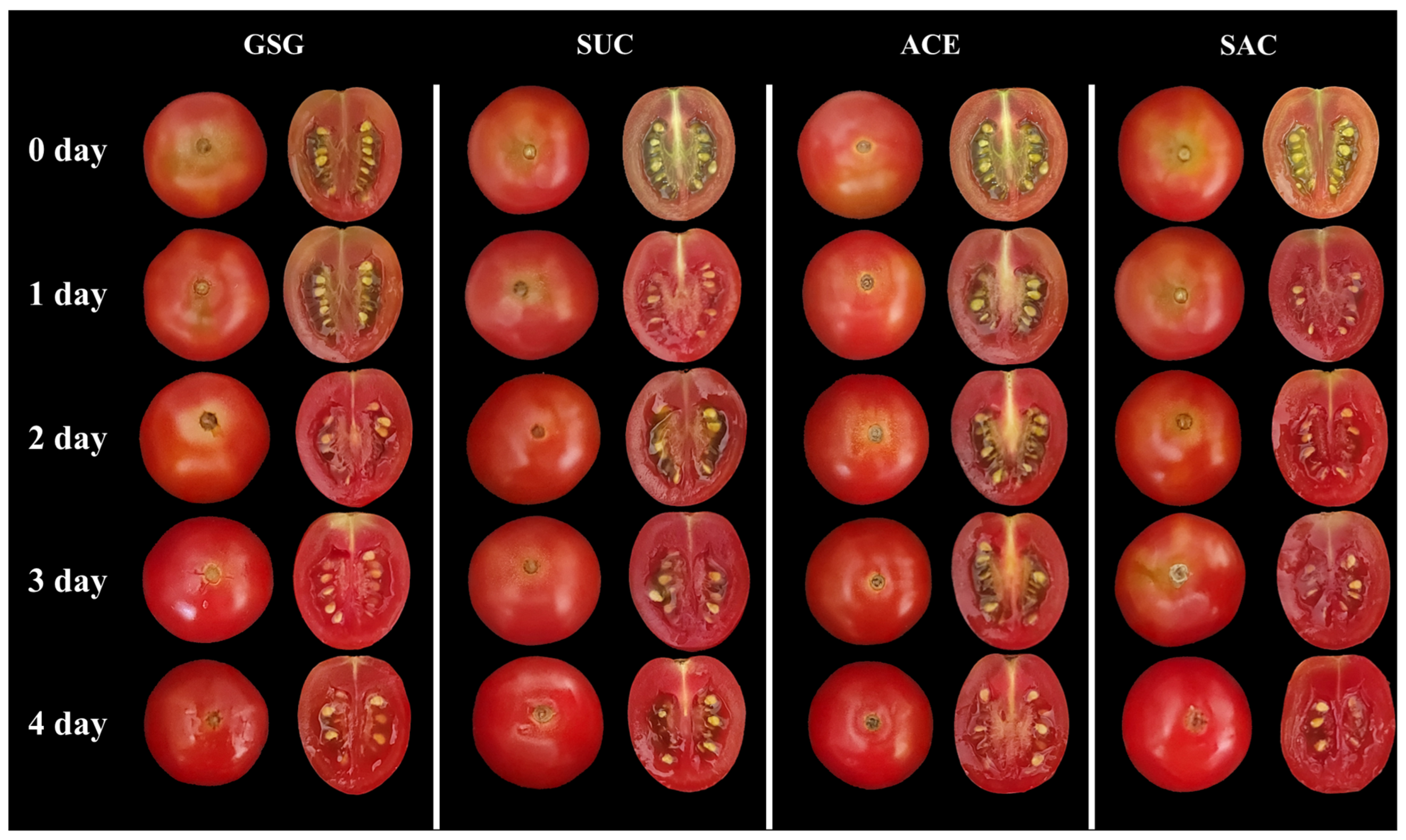
Sensory evaluation revealed clear differences among treatments during 4 days of storage at 23 °C (Figure 6; Table S2). At the beginning, SUC-treated fruits exhibited the highest sweetness (8.75) and overall acceptability (8.5), followed by ACE and GSG. At day 2, SAC-treated samples showed a marked decline in sweetness (5.25) and texture (4), whereas SUC and ACE maintained favorable sensory profiles. GSG showed the most pronounced decline in both texture and flavor. After 4 days, SUC-treated fruits maintained balanced sweetness scores (7.5), indicating good flavor retention, while ACE-treated fruits achieved relatively higher overall acceptability (5.25), due to their better firmness and texture retention. In contrast, GSG and SAC treatments continued to decline in texture (3.25) and overall scores (1.5–2.5), indicating reduced sensory quality. These results are consistent with firmness and microstructural data, confirming ACE as the most effective sweetener for preserving sensory quality during storage. External and internal pictures during 4 days of storage also supports the overall sensory quality (Figure 7).
Figure 6. Sensory evaluation of ‘TY Nonari’ cherry tomatoes during 4 days of storage at 23 °C following vacuum infusion with high-intensity sweeteners. GSG, SUC, ACE, and SAC stand for glucosyl steviol glycosides, sucralose, acesulfame potassium, and sodium saccharin, respectively.
Figure 7. External and internal pictures of ‘TY Nonari’ cherry tomatoes during 4 days of storage at 23 °C following vacuum infusion with high-intensity sweeteners. GSG, SUC, ACE, and SAC stand for glucosyl steviol glycosides, sucralose, acesulfame potassium, and sodium saccharin, respectively.

4. Conclusions

This study demonstrates that vacuum infusion of high-intensity sweeteners distinctly affects the postharvest quality and ripening behavior of cherry tomatoes, depending on the physicochemical properties of each treatment solution. Among the tested sweeteners, ACE was the most effective in preserving firmness, minimizing weight loss, and suppressing ethylene production and respiration rates during storage. These effects were closely associated with moderated color development, stable TSS/TA ratios, and relatively controlled pH progression, indicating that ACE delayed the ripening process while maintaining firmness and sensory appeal.
In contrast, GSG and SAC treatments accelerated softening, respiration, and color development, likely due to enhanced acid-induced cell wall disassembly and pectin degradation, in GSG-treated fruits, and Na+-mediated disruption of calcium crosslinking in SAC-treated fruits. These treatments also triggered elevated ethylene biosynthesis, promoting rapid metabolic activity and shortening shelf life. While SUC exhibited intermediate behavior, it was generally more aligned with ACE in terms of quality retention. Furthermore, the weight gain observed during vacuum infusion differed significantly among treatments, with GSG and SUC demonstrating higher solution uptake compared to ACE and SAC. These differences suggest treatment-specific interactions between fruit tissue and solution properties, although the underlying mechanisms warrant further investigation. Collectively, these findings indicate that the choice of sweetener used in vacuum infusion plays a pivotal role in determining postharvest performance and consumer-relevant quality traits. Specifically, ACE emerges as a promising candidate for extending the storage life of cherry tomatoes without compromising visual or physicochemical attributes. Future studies should investigate the molecular and structural changes in fruit tissues in response to different sweetener compositions to optimize vacuum infusion strategies for broader postharvest applications.

Supplementary Materials

The following supporting information can be downloaded at: https://www.mdpi.com/article/10.3390/horticulturae11121503/s1, Figure S1: Cell wall morphology and relative elemental distribution of calcium (Ca), potassium (K), and magnesium (Mg) in ‘TY Nonari’ cherry tomatoes at the beginning (day 0) after vacuum infusion with high-intensity sweeteners. GSG, SUC, ACE, and SAC stand for glucosyl steviol glycosides, sucralose, acesulfame potassium, and sodium saccharin, respectively. Figure S2: Cell wall morphology and relative elemental distribution of calcium (Ca), potassium (K), and magnesium (Mg) in ‘TY Nonari’ cherry tomatoes after 2 days of storage at 23 °C following vacuum infusion with high-intensity sweeteners. GSG, SUC, ACE, and SAC stand for glucosyl steviol glycosides, sucralose, acesulfame potassium, and sodium saccharin, respectively. Figure S3: Cell wall morphology and relative elemental distribution of calcium (Ca), potassium (K), and magnesium (Mg) in ‘TY Nonari’ cherry tomatoes after 4 days of storage at 23 °C following vacuum infusion with high-intensity sweeteners. GSG, SUC, ACE, and SAC stand for glucosyl steviol glycosides, sucralose, acesulfame potassium, and sodium saccharin, respectively. Table S1: Physicochemical properties of four high-intensity sweeteners used in this study. Table S2: Sensory evaluation of ‘TY Nonari’ cherry tomatoes during 4 days of storage at 23 °C following vacuum infusion with high-intensity sweeteners.

Author Contributions

Conceptualization, M.W.B., S.M.C., S.T. and C.S.J.; investigation, M.W.B., S.M.C., J.H.L. (Ju Hyeon Lee), J.H.L. (Jin Hee Lee), A.Y.K., J.I.C., M.J.K., S.T. and C.S.J.; data curation, M.W.B., S.M.C., J.H.L. (Ju Hyeon Lee), J.H.L. (Jin Hee Lee), A.Y.K., J.I.C. and M.J.K.; writing—original draft preparation, M.W.B. and S.M.C.; writing—review and editing, S.T. and C.S.J.; supervision, S.T. and C.S.J. All authors have read and agreed to the published version of the manuscript.

Funding

This research was supported by the Regional Innovation System & Education (RISE) Glocal University 30 Project program, funded by the Ministry of Education (MOE) and the Gangwon State (G.S.), Republic of Korea (2025-RISE-10-002), and was also funded by the National Research Foundation of Korea (NRF) through the BK21 FOUR project.

Data Availability Statement

The original contributions presented in this study are included in the article/Supplementary Material. Further inquiries can be directed to the corresponding authors.

Conflicts of Interest

The authors declare no conflicts of interest.

References

  1. Bellisle, F.; Drewnowski, A. Intense Sweeteners, Energy Intake and the Control of Body Weight. Eur. J. Clin. Nutr. 2007, 61, 691–700. [Google Scholar] [CrossRef] [PubMed]
  2. Han, S.Y.; Kim, T.H. The Effect of Food Consumption Value on Attitude towards Alternative Sweetened Foods and Purchase Intention: Focusing on the Moderating Effect of Subjective Body Image. Culi. Sci. Hos. Res. 2022, 28, 124–135. [Google Scholar]
  3. Kim, Y.H.; Kim, S.B.; Kim, S.J.; Park, S.W. Market and Trend of Alternative Sweeteners. FSI 2016, 49, 17–28. [Google Scholar]
  4. Wiet, S.G.; Beyts, P.K. Sensory Characteristics of Sucralose and Other High Intensity Sweeteners. J. Food Sci. 1992, 57, 1014–1019. [Google Scholar] [CrossRef]
  5. Grotz, V.L.; Munro, I.C. An Overview of the Safety of Sucralose. Regul. Toxicol. Pharmacol. 2009, 55, 1–5. [Google Scholar] [CrossRef]
  6. von Rymon Lipinski, G.W. The New Intense Sweetener Acesulfame K. Food Chem. 1985, 16, 259–269. [Google Scholar] [CrossRef]
  7. Suh, H.J.; Choi, S. Use of Sodium Saccharin and Sucralose in Foodstuffs and the Estimated Daily Intakes of Both Products in Korea. Korean J. Food Sci. Technol. 2013, 45, 642–651. [Google Scholar] [CrossRef]
  8. Ha, M.S.; Ha, S.D.; Choi, S.H.; Bae, D.H. Assessment of Korean Consumer Exposure to Sodium Saccharin, Aspartame and Stevioside. Food Addit. Contam. 2013, 30, 1238–1247. [Google Scholar] [CrossRef]
  9. Baek, M.W.; Lee, J.H.; Yeo, C.E.; Tae, S.H.; Chang, S.M.; Choi, H.R.; Park, D.S.; Tilahun, S.; Jeong, C.S. Antioxidant Profile, Amino Acids Composition, and Physicochemical Characteristics of Cherry Tomatoes Are Associated with Their Color. Antioxidants 2024, 13, 785. [Google Scholar] [CrossRef]
  10. Wang, D.; Wang, Y.; Lv, Z.; Pan, Z.; Wei, Y.; Shu, C.; Zeng, Q.; Chen, Y.; Zhang, W. Analysis of Nutrients and Volatile Compounds in Cherry Tomatoes Stored at Different Temperatures. Foods 2023, 12, 6. [Google Scholar] [CrossRef]
  11. Tilahun, S.; Choi, H.R.; Baek, M.W.; Cheol, L.H.; Kwak, K.W.; Park, D.S.; Solomon, T.; Jeong, C.S. Antioxidant Properties, γ-Aminobutyric Acid (GABA) Content, and Physicochemical Characteristics of Tomato Cultivars. Agronomy 2021, 11, 1204. [Google Scholar] [CrossRef]
  12. KREI. Korea Rural Economic Institute. Consumption Behavior of Major Fruits and Vegetables in Summer and Purchase Intentions for 2025; Technical Report; Korea Rural Economic Institute: Naju-si, Republic of Korea, 2025; pp. 1–28. (In Korean)
  13. Giannakourou, M.C.; Lazou, A.E.; Dermesonlouoglou, E.K. Optimization of Osmotic Dehydration of Tomatoes in Solutions of Non-Conventional Sweeteners by Response Surface Methodology and Desirability Approach. Foods 2020, 9, 1393. [Google Scholar] [CrossRef] [PubMed]
  14. Sulistyawati, I.; Dekker, M.; Verkerk, R.; Shen, Y. Effect of Vacuum Impregnation and High Pressure in Osmotic Dehydration and Air Drying on Physicochemical Properties of Mango (Mangifera indica L.) Cubes-Maturity Stage 1; Wageningen University and Research: Wageningen, The Netherlands, 2017; p. 9203. [Google Scholar]
  15. Zhao, Y.; Xie, J. Practical Applications of Vacuum Impregnation in Fruit and Vegetable Processing. Trends Food Sci. Technol. 2004, 15, 434–451. [Google Scholar] [CrossRef]
  16. Guillemin, A.; Guillon, F.; Degraeve, P.; Rondeau, C.; Devaux, M.-F.; Huber, F.; Badel, E.; Saurel, R.; Lahaye, M. Firming of Fruit Tissues by Vacuum-Infusion of Pectin Methylesterase: Visualisation of Enzyme Action. Food Chem. 2008, 109, 368–378. [Google Scholar] [CrossRef]
  17. FDA U.S. Food and Drug Administration. Available online: https://www.ecfr.gov (accessed on 14 October 2025).
  18. Zhang, H.; Tikekar, R.V. Air Microbubble Assisted Washing of Fresh Produce: Effect on Microbial Detachment and Inactivation. Postharvest Biol. Technol. 2021, 181, 111687. [Google Scholar] [CrossRef]
  19. Ha, H.T.N.; Thuy, N.M. Optimization of Vacuum Infiltration before Blanching of Black Cherry Tomatoes (Solanum lycopersicum Cv. Og) Using Response Surface Methodology. Food Res. 2020, 4, 1317–1325. [Google Scholar] [CrossRef] [PubMed]
  20. Vinod, B.R.; Asrey, R.; Sethi, S.; Menaka, M.; Meena, N.K.; Shivaswamy, G. Recent Advances in Vacuum Impregnation of Fruits and Vegetables Processing: A Concise Review. Heliyon 2024, 10, e28023. [Google Scholar] [CrossRef]
  21. Newbury, D.E.; Ritchie, N.W.M. Performing Elemental Microanalysis with High Accuracy and High Precision by Scanning Electron Microscopy/Silicon Drift Detector Energy-Dispersive X-Ray Spectrometry (SEM/SDD-EDS). J. Mater. Sci. 2014, 50, 493–518. [Google Scholar] [CrossRef]
  22. Hayden, L.; Strausborger, S.; Lewin-Smith, M. Automated Particle Analysis Using Field-Emission Scanning Electron Microscopy (FE-SEM) and Energy Dispersive X-Ray Spectroscopy (EDS) to Characterize Inhaled Particulate Matter (PM) in Biopsied Lung Tissue. Microsc. Microanal. 2023, 29, 235–243. [Google Scholar] [CrossRef]
  23. Legland, D.; Arganda-Carreras, I. MorphoLibJ User Manual; Institut National de la Recherche Agronomique: Nantes, France, 2016; pp. 1–93.
  24. Tilahun, S.; Park, D.S.; Taye, A.M.; Jeong, C.S. Effect of Ripening Conditions on the Physicochemical and Antioxidant Properties of Tomato (Lycopersicon esculentum Mill.). Food Sci. Biotechnol. 2017, 26, 473–479. [Google Scholar] [CrossRef]
  25. Choi, H.R.; Tilahun, S.; Park, D.S.; Lee, Y.M.; Choi, J.H.; Baek, M.W.; Jeong, C.S. Harvest Time Affects Quality and Storability of Kiwifruit (Actinidia Spp.): Cultivars during Long-Term Cool Storage. Sci. Hortic. 2019, 256, 108523. [Google Scholar] [CrossRef]
  26. Cervera-Chiner, L.; Vilhena, N.Q.; Larrea, V.; Moraga, G.; Salvador, A. Influence of Temperature on ‘Rojo Brillante’ Persimmon Drying. Quality Characteristics and Drying Kinetics. LWT 2024, 197, 115902. [Google Scholar] [CrossRef]
  27. Wichchukit, S.; O’Mahony, M. The 9-point hedonic scale and hedonic ranking in food science: Some reappraisals and alternatives. J. Sci. Food Agric. 2015, 95, 2167–2178. [Google Scholar] [CrossRef]
  28. Almeida, D.P.F.; Huber, D.J. Apoplastic PH and Inorganic Ion Levels in Tomato Fruit: A Potential Means for Regulation of Cell Wall Metabolism during Ripening. Physiol. Plant 1999, 105, 506–512. [Google Scholar] [CrossRef]
  29. Sampedro, J.; Cosgrove, D.J. The Expansin Superfamily. Genome Biol. 2005, 6, 242. [Google Scholar] [CrossRef] [PubMed]
  30. Chun, J.-P.; Huber, D.J. Polygalacturonase-Mediated Solubilization and Depolymerization of Pectic Polymers in Tomato Fruit Cell Walls: Regulation by PH and Ionic Conditions. Plant Physiol. 1998, 117, 1293–1299. [Google Scholar] [CrossRef] [PubMed]
  31. Gawkowska, D.; Cybulska, J.; Zdunek, A. Structure-Related Gelling of Pectins and Linking with Other Natural Compounds: A Review. Polymers 2018, 10, 762. [Google Scholar] [CrossRef]
  32. Morris, E.R.; Powell, D.A.; Giiiley, M.J.; Rees, A. Conformations and interactions of pectins: I. Polymorphism between gel and solid states of calcium polygalacturonate. J. Mol. Biol. 1982, 155, 507–516. [Google Scholar] [CrossRef]
  33. Hocking, B.; Tyerman, S.D.; Burton, R.A.; Gilliham, M. Fruit Calcium: Transport and Physiology. Front. Plant Sci. 2016, 7, 569. [Google Scholar] [CrossRef]
  34. Al Hosni, A.; Joyce, D.C.; Hunter, M.; Perkins, M.; Al Yahyai, R. Altered Calcium and Potassium Distribution Maps in Tomato Tissues Cultivated under Salinity: Studies Using X-Ray Fluorescence (XFM) Microscopy. Irrig. Sci. 2025, 43, 613–636. [Google Scholar] [CrossRef]
  35. Mizrahi, Y.; Zohar, R.; Malis-Arad, S. Effect of sodium chloride on fruit ripening of the nonripening tomato mutants nor and rin. Plant Physiol. 1982, 69, 497–501. [Google Scholar] [CrossRef]
  36. Pinheiro, S.C.F.; Almeida, D.P.F. Modulation of Tomato Pericarp Firmness through PH and Calcium: Implications for the Texture of Fresh-Cut Fruit. Postharvest Biol. Technol. 2008, 47, 119–125. [Google Scholar] [CrossRef]
  37. Ragel, P.; Raddatz, N.; Leidi, E.O.; Quintero, F.J.; Pardo, J.M. Regulation of K + Nutrition in Plants. Front. Plant Sci. 2019, 10, 281. [Google Scholar] [CrossRef]
  38. Kumar, A.R.; Kumar, N.; Kavino, M. Role of potassium in fruit crops-a review. Agric. Rev. 2016, 27, 284–291. [Google Scholar]
  39. Thu, A.M.; Alam, S.M.; Khan, M.A.; Han, H.; Liu, D.H.; Tahir, R.; Ateeq, M.; Liu, Y.Z. Foliar Spraying of Potassium Sulfate during Fruit Development Comprehensively Improves the Quality of Citrus Fruits. Sci. Hortic. 2024, 338, 113696. [Google Scholar] [CrossRef]
  40. Baldwin, E.A.; Nisperos-Carriedo, M.O.; Baker, R.A. Edible Coatings for Lightly Processed Fruits and Vegetables. HortScience 1995, 30, 35–38. [Google Scholar] [CrossRef]
  41. Barry, C.S.; Giovannoni, J.J. Ethylene and Fruit Ripening. J. Plant Growth Regul. 2007, 26, 143–159. [Google Scholar] [CrossRef]
  42. Fatma, M.; Asgher, M.; Iqbal, N.; Rasheed, F.; Sehar, Z.; Sofo, A.; Khan, N.A. Ethylene Signaling under Stressful Environments: Analyzing Collaborative Knowledge. Plants 2022, 11, 2211. [Google Scholar] [CrossRef]
  43. Yadav, P.; Rao, Y.R.; Kaula, B.C.; Siddiqui, Z.H.; Al Messelmani, M.; Sahoo, R.K.; Ansari, M.W.; Pongiya, U.; Rakwal, R.; Tuteja, N.; et al. Ethylene Inhibitors Improve Crop Productivity by Modulating Gene Expression, Antioxidant Defense Machinery and Photosynthetic Efficiency of Solanum lycopersicum L. Cv. Pusa Ruby Grown in Controlled Salinity Stress Conditions. S. Afr. J. Bot. 2023, 161, 66–77. [Google Scholar] [CrossRef]
  44. Alexander, L.; Grierson, D. Ethylene Biosynthesis and Action in Tomato: A Model for Climacteric Fruit Ripening. J. Exp. Bot. 2002, 53, 2039–2055. [Google Scholar] [CrossRef] [PubMed]
  45. Zhu, Y.; Wang, K.; Wu, C.; Zhao, Y.; Yin, X.; Zhang, B.; Grierson, D.; Chen, K.; Xu, C. Effect of Ethylene on Cell Wall and Lipid Metabolism during Alleviation of Postharvest Chilling Injury in Peach. Cells 2019, 8, 1612. [Google Scholar] [CrossRef]
  46. Huang, W.; Hu, N.; Xiao, Z.; Qiu, Y.; Yang, Y.; Yang, J.; Mao, X.; Wang, Y.; Li, Z.; Guo, H. A Molecular Framework of Ethylene-Mediated Fruit Growth and Ripening Processes in Tomato. Plant Cell 2022, 34, 3280–3300. [Google Scholar] [CrossRef]
  47. Blanco-Ulate, B.; Vincenti, E.; Cantu, D.; Powell, A.L.T. Ripening of Tomato Fruit and Susceptibility to Botrytis cinerea. In Botrytis–the Fungus, the Pathogen and Its Management in Agricultural Systems; Springer International Publishing: Cham, Switzerland, 2015; pp. 387–412. [Google Scholar]
  48. Li, D.; Zeng, S.; Dai, R.; Chen, K. Slow and Steady Wins the Race: The Negative Regulators of Ethylene Biosynthesis in Horticultural Plants. Hortic. Res. 2025, 12, uhaf108. [Google Scholar] [CrossRef]
  49. Paull, R.E. Effect of temperature and relative humidity on fresh commodity quality. Postharvest Biol. Technol. 1999, 15, 263–277. [Google Scholar] [CrossRef]
  50. Horváth-Mezőfi, Z.; Baranyai, L.; Nguyen, L.L.P.; Dam, M.S.; Ha, N.T.T.; Göb, M.; Sasvár, Z.; Csurka, T.; Zsom, T.; Hitka, G. Evaluation of Color and Pigment Changes in Tomato after 1-Methylcyclopropene (1-MCP) Treatment. Sensors 2024, 24, 2426. [Google Scholar] [CrossRef]
  51. Athmaselvi, K.A.; Sumitha, P.; Revathy, B. Development of Aloe Vera Based Edible Coating for Tomato. Int. Agrophys. 2013, 27, 369. [Google Scholar] [CrossRef]
  52. Harker, F.R.; Redgwell, R.J.; Hallett, I.C.; Murray, S.H.; Carter, G. Texture of Fresh Fruit. In Horticultural Reviews; Wiley: Hoboken, NJ, USA, 1997; pp. 121–224. [Google Scholar]
  53. Fraser, P.D.; Truesdale, M.R.; Bird, C.R.; Schuch, W.; Bramley, P.M. Carotenoid Biosynthesis during Tomato Fruit Development (Evidence for Tissue-Specific Gene Expression). Plant Physiol. 1994, 105, 405–413. [Google Scholar] [CrossRef] [PubMed]
  54. Su, L.; Diretto, G.; Purgatto, E.; Danoun, S.; Zouine, M.; Li, Z.; Roustan, J.P.; Bouzayen, M.; Giuliano, G.; Chervin, C. Carotenoid Accumulation during Tomato Fruit Ripening Is Modulated by the Auxin-Ethylene Balance. BMC Plant Biol. 2015, 15, 114. [Google Scholar] [CrossRef] [PubMed]
  55. D’evoli, L.; Lombardi-Boccia, G.; Lucarini, M. Influence of Heat Treatments on Carotenoid Content of Cherry Tomatoes. Foods 2013, 2, 352–363. [Google Scholar] [CrossRef] [PubMed]
  56. Lin, C.H.; Chen, B.H. Stability of Carotenoids in Tomato Juice during Processing. Eur. Food Res. Technol. 2005, 221, 274–280. [Google Scholar] [CrossRef]
  57. Wills, R.; McGlasson, B.; Graham, D.; Joyce, D. Postharvest-An Introduction to the Physiology and Handling of Fruit, Vegetables and Ornamentals. Cabi Publ. 2007, 44, 1–252. [Google Scholar]
  58. Mattheis, J.P.; Fellman, J.K. Preharvest Factors Influencing Flavor of Fresh Fruit and Vegetables. Postharvest Biol. Technol. 1999, 15, 227–232. [Google Scholar] [CrossRef]
  59. Etienne, A.; Génard, M.; Lobit, P.; Mbeguié-A-Mbéguié, D.; Bugaud, C. What Controls Fleshy Fruit Acidity? A Review of Malate and Citrate Accumulation in Fruit Cells. J. Exp. Bot. 2013, 64, 1451–1469. [Google Scholar] [CrossRef] [PubMed]
  60. Batista-Silva, W.; Nascimento, V.L.; Medeiros, D.B.; Nunes-Nesi, A.; Ribeiro, D.M.; Zsögön, A.; Araújo, W.L. Modifications in Organic Acid Profiles during Fruit Development and Ripening: Correlation or Causation? Front. Plant Sci. 2018, 9, 1689. [Google Scholar] [CrossRef] [PubMed]
Disclaimer/Publisher’s Note: The statements, opinions and data contained in all publications are solely those of the individual author(s) and contributor(s) and not of MDPI and/or the editor(s). MDPI and/or the editor(s) disclaim responsibility for any injury to people or property resulting from any ideas, methods, instructions or products referred to in the content.

Article Metrics

Citations

Article Access Statistics

Multiple requests from the same IP address are counted as one view.