Article

In Situ Diversity of Native Cherimoya in Southern Ecuador: Phenotypic and Ecological Insights
by
Santiago C. Vásquez
1,2,*,
Santiago Erazo-Hurtado
1,
Mirian Capa-Morocho
1,2,
Fernando Granja
1,2,
Marlene Molina-Müller
1,2,
Luis O. Viteri
1,3,
Melissa A. Romero
1,4 and
Diego Chamba-Zaragocin
5
1
Agronomy Department, Faculty of Agricultural Sciences and Renewable Natural Resources, National University of Loja, Guillermo Falconí University Campus, Loja 110103, Ecuador
2
Research Group in Ecophysiology and Agricultural Production (AgroPHYS), National University of Loja, Guillermo Falconí University Campus, Loja 110103, Ecuador
3
Graduate Program in Plant Production, Federal University of Tocantins, Gurupi 77402-970, Brazil
4
Agricultura Engineering, Pontifical Catholic University of Ecuador, Amazonas Campus, Quito Way km 12 ½ Right Margin-Second Line, Santa Cecilia, Nueva Loja 210205, Ecuador
5
Department of Agricultural Engineering, Faculty of Agricultural Sciences and Renewable Natural Resources, National University of Loja, Guillermo Falconí University Campus, Loja 110103, Ecuador
*
Author to whom correspondence should be addressed.
Horticulturae 2025, 11(12), 1505; https://doi.org/10.3390/horticulturae11121505
Submission received: 13 August 2025 / Revised: 7 September 2025 / Accepted: 8 September 2025 / Published: 12 December 2025

Abstract

Cherimoya is a fruit tree native to the Andean regions of South America, also in Central America, prized for its flavor, nutritional properties, and medicinal potential. Despite its economic relevance, in situ assessments of phenotypic diversity are limited, particularly in southern Ecuador, a key center of domestication. This study evaluated the morphological and ecogeographic diversity of 270 native trees across eight cantons in Loja province, Ecuador, using 34 qualitative and quantitative descriptors of leaves, flowers, fruits, and seeds. High phenotypic variability was observed, with coefficients of variation exceeding 40% for key traits, including mature fruit weight (48.15%), pulp weight (55.33%) and pulp-to-seed ratio (64.23%). Principal component analysis revealed three major axes of variation associated with productivity, floral morphology, and organoleptic quality. Cluster analysis identified four groups, with one distinguished by a favorable pulp-to-seed ratio and sugar–acid content. Species distribution modeling, which included bioclimatic and soil variables, showed that Gonzanamá, Quilanga and Espíndola possess the highest ecological suitability for cherimoya. These findings highlight priority areas for in situ conservation and phenotype selection, providing a foundation for sustainable use, genetic improvement, and the preservation of locally adapted germplasm to support climate-resilient agricultural systems.

1. Introduction

Cherimoya (Annona cherimola Mill.) is a diploid species with 2n = 14 chromosomes [1]. Native to subtropical regions of South America, it an underutilized fruit tree [2,3]. The fruit is highly valued for its exceptional flavor, marked by a high sugar content and low acidity. It also offers significant nutritional benefits, being rich in vitamins B1, B2, B3, C, and E, as well as sugars, and essential minerals like iron, calcium, zinc and phosphorus [4,5]. In addition, cherimoya has been used in traditional medicine for its antimicrobial properties and for treating pancreatic ulcers [6].
The species is believed to have originated in Mesoamerica, with its germplasm spreading across Central and South America during the pre-Columbian period [3,7,8]. Southern Ecuador and northern Peru are considered natural distribution zones [9,10]. Evidence suggests that the Incas were cultivating cherimoya as early as 1200 B.C. [6,8], and today, southern Ecuador is recognized as one of the primary centers of its domestication [11].
In Ecuador, cherimoya is primarily cultivated in inter-Andean valleys with semi-humid climates. National production covers approximately 700 hectares, with average yields rarely exceeding 3 t ha−1 [12]. The Loja province in southern Ecuador is a key region for cherimoya, as it forms part of the species’ native range [13,14]. However, commercial-scale production in the area is virtually nonexistent. Instead, smallholder farmers harvest fruits from naturally growing trees, which bear during the rainy season, typically from February to May, depending on local conditions and annual water availability. These local farmers play a vital role in the in situ conservation of cherimoya’s genetic diversity, with the harvested fresh fruit primarily sold in local markets.
Although cherimoya was classified as a species of least concern in a 2018 conservation assessment [15], recent environmental pressures, including wildfires, droughts, excessive rainfall, and the expansion of the agricultural frontier in southern Ecuador, may be contributing to its genetic erosion [16,17,18]. Despite this risk, there is a lack of studies evaluating cherimoya biodiversity across different areas of Loja, and no research has yet examined the ecogeographic characteristics of its natural habitats in the region. Notably, previous studies have identified several phenotypes with outstanding fruit quality traits in Loja [14]. Additionally, the Ecuadorian National Institute for Agricultural Research (INIAP) maintains a collection of 126 cherimoya accessions [12,14].
Characterizing cherimoya diversity is essential for identifying valuable phenotypes with potential for use in breeding programs and for informing conservation strategies. Ecogeographic studies offer insight into the environmental conditions that support the species’ growth, aiding in effective in situ conservation efforts [19,20]. To address existing knowledge gaps and contribute to the preservation of cherimoya as a valuable genetic resource, this study aimed to conduct a morphological characterization of native populations in Loja Province using both qualitative and quantitative descriptors, along with an ecogeographic analysis to determine the environmental conditions under which the species naturally occurs.

2. Materials and Methods

2.1. Location and Plant Material

An initial exploratory survey identified 70 farms where farmers reported the presence of naturally growing cherimoya trees. As the trees originated from natural populations, their exact ages could not be determined. Therefore, selection criteria focused on specimens that had already produced fruit during previous growing seasons.
As a result, a total of 270 cherimoya trees were identified across eight cantons in the province of Loja: Calvas, Celica, Espíndola, Gonzanamá, Loja, Paltas, Quilanga, and Saraguro (a canton is a second-level administrative division in the Province of Loja). The trees were located at elevations ranging from 1100 to 2300 m above sea level (m.a.s.l.) (Figure 1). All trees were labeled and georeferenced using a handheld GPS device (Garmin GPSMAP 66s, Garmin Ltd., Olathe, KS, USA). Trees were morphologically characterized in situ, except for fruit quality traits. For this purpose, fruits were harvested prior to physiological maturity, transported to the Bromatology Laboratory at the Universidad Nacional de Loja, and stored under controlled conditions until full ripeness for subsequent evaluation.

2.2. Characterization of Quantitative and Qualitative Traits

Morphological characterization was conducted using a standardized cherimoya descriptor [21]. For each tree, a minimum of five samples were collected and analyzed for fruits, leaves, branches, and flowers. In cases where specific organs were unavailable (e.g., some trees were not in the flowering stage at the time of sampling), data collection for those traits was excluded
Qualitative traits were assessed beginning at the tree level and included plant architecture (PArq) [22], growth habit (GroH) [23], trunk ramification (TrkR), and suckering tendency (STend). For the leaves, only leaf blade shape (LBS) was evaluated. Fruit traits included fruit shape (FruS), fruit symmetry (FruSym), exocarp type (ExoT), exocarp color (ExoC), pulp color (PulC), pulp texture (PulT), pulp fiber content (PFC), pulp taste (PulTas), and pulp oxidation (PulOx). Quantitative traits evaluated at the tree level included crown diameter (CD), tree height (TH), trunk cross-sectional area (TCSA), main trunk height (MTH), branch length (BL), number of leaves per branch (#LxB), number of nodes per meter of branch (#NxmB), and number of flowers per meter of previous year’s branch growth (#FxmB). For the leaves, the following were measured: leaf length (LL), leaf width (LW), leaf thickness (LT), petiole length (PetL), petiole thickness (PetT), and the number of primary veins in the leaf blade (#PVLB).
For fruits and seeds, the traits evaluated included fruit length (FruL), fruit diameter (FruD), fruit weight (FruWei), exocarp thickness (ExoT), exocarp weight (ExoW), pulp weight (PulWei), total fresh seed weight per fruit (TSWxF), number of seeds (NS), pulp-to-seed ratio (P/S), resistance to penetration (Rstnc), soluble solid content in the pulp (°Brix), titratable acidity (TA), and the °Brix/TA ratio (SS/TA). Seed traits assessed were fresh seed weight (WFS), seed length (SL), and seed width (SW). For flowers, the evaluated traits included flower weight (FloW), petal length (PetlL), petal width (PetlWid), petal weight (PetlWei), flower peduncle length (LFP), weight of the stigmatic cone (WSC), and peduncle diameter (PD).

2.3. Ecogeographic Characterization

To model the current distribution of cherimoya, we used the R software (version 4.3.2, R Core Team, Vienna, Austria) environment [24], and implemented a Species Distribution Modeling (SDM) approach using the biomod2 package (version 4.3-4) [25]. The analysis followed a structured workflow that included data preparation, exploratory analysis, variable selection, multivariate analysis, pseudo-absence generation, cross-validation, and modeling. Data preparation involved stablishing a working directory and importing species occurrence data from an Excel spreadsheet (.xlsx), which included geographic coordinates (latitude and longitude) and presence/absence records. A total of 19 bioclimatic variables were obtained from the CHELSA database—Climatologies at High Resolution for the Earth’s Land Surface [26,27,28,29]. In addition, four topo-edaphic variables (hillshade, slope, aspect, and a digital elevation model) were sourced from WorldClim (https://www.worldclim.org/data/index.html, accessed on 30 July 2025). To explore environmental structure and detect outliers, a Principal Component Analysis (PCA) was conducted using the ade4 package [30,31,32,33,34]. Species occurrence data were projected onto the first two principal components to visualize the ecological niche space. To reduce multicollinearity among variables, we computed Pearson’s correlation matrices and applied the Variance Inflation Factor (VIF) to select non-redundant variables. Since the dataset primarily consisted of presence records, pseudo-absences were generated using the Surface Range Envelope (SRE) method. Multiple pseudo-absence datasets were created (n = 500, 1000, 5000, and 10,000) to assess model sensitivity to varying ratios of simulated absences. Model validation employed several cross-validation strategies, including random split, k-fold partitioning, and presence-stratified validation. These approaches allowed for assessment of model robustness against variation in training and test datasets. Species distribution models were fitted using the BIOMOD_Modeling() function, which supports the integration of multiple algorithms. In this study, we applied logistic regression, Support Vector Machines (SVMs), Artificial Neural Networks, and Maximum Entropy (MaxEnt). Model performance was evaluated using the True Skill Statistic (TSS) and the Area Under the Receiver Operating Characteristic Curve (AUC), with the best-performing models selected for final prediction. The relative importance of each environmental variable was quantified, and final suitability maps were generated in GeoTIFF format (.tif). These were processed in ArcMap 10.8 [35] and reclassified using the Natural Breaks (Jenks) method, which maximizes between-class variance while minimizing within-class variance. Final maps were produced using QGIS Desktop 3.28.6 [36].

2.4. Phenotypic Characterization

Phenotypic characterization of cherimoya was carried out by integrating morphological traits previously identified as discriminative among accessions, based on modeling performed using biomod2. Unlike traditional species distribution models that rely on climatic or topographic variables, this analysis utilized 35 quantitative morphological descriptors of cherimoya fruits, leaves, flowers, and seeds (Supplementary Table S1). These variables were converted into raster layers with a spatial resolution of 1 km2. Three algorithms were applied to a dataset of georeferenced cherimoya occurrences: Generalized Linear Models (GLMs), Maximum Entropy (MaxEnt), and Random Forest (RF). To ensure model stability and avoid overfitting, random pseudo-absences were generated. Model performance was evaluated using the Area Under Curve (AUC) and the True Skill Statistic (TSS), with only models meeting satisfactory predictive thresholds retained for further analysis. The suitability values generated by BIOMOD2 represent continuous probably scores, indicating the likelihood of favorable conditions for the expression of desirable cherimoya phenotypes. These scores were reclassified using the Natural Breaks method, converting continuous habitat suitability values into a 5-class ordinal scale ranging from 1 (very low suitability) to 5 (very high suitability). This standardization allowed for the integration of all variables into a composite suitability map. The standardized layers were aggregated through a weighted sum approach, assigning equal weight to each variable, to identify areas with the highest concentration of a favorable phenotype. The resulting composite mosaic was further reclassified into nine ecological suitability classes using the same method. The final map was generated using QGIS Desktop 3.28.6.

2.5. Statistical Analysis

Descriptive analysis of the quantitative variables was conducted in R using the readr [37], dplyr [38], and writexl [39] packages to obtain the minimum, maximum, mean, standard deviation, and coefficient of variation for each trait. A Pearson correlation analysis was also conducted, and the resulting correlation matrix was visualized using the corrplot package [40], which integrates numerical values with circular graphical elements. Principal Component Analysis (PCA) was performed on the mean values of quantitative traits from 270 accessions. Prior to the analysis, variables with zero variance were excluded, and the remaining data were standardized using Z-score normalization (i.e., centering to a mean of zero and scaling to unit variance) to ensure comparability among traits with different scales. PCA was conducted using the prcomp() function. The first three principal components were selected based on the proportion of total variance explained. The contribution percentages of each trait to these components was calculated, and the results were visualized using a biplot with 95% confidence ellipses, generated with the factoextra [41], dplyr, and readxl [42] packages. A hierarchical clustering analysis (HCA) was also performed on quantitative variables using Ward’s method based on a Euclidean distance matrix, which optimizes intra-cluster homogeneity. The readr, dplyr, cluster [43], and factoextra packages were used for data processing and visualization. To analyze the structure of qualitative traits, Multiple Correspondence Analysis (MCA) was conducted using the FactoMineR [44] and factoextra packages. Categorical variables were converted into factor format, and the analysis was performed using the MCA() function. A screen plot was used to visualize the variance explained by each MCA dimension, and a biplot was generated to display the joint distribution of individuals and variables, highlighting their contributions to the principal dimensions

3. Results

3.1. Description of Characteristics

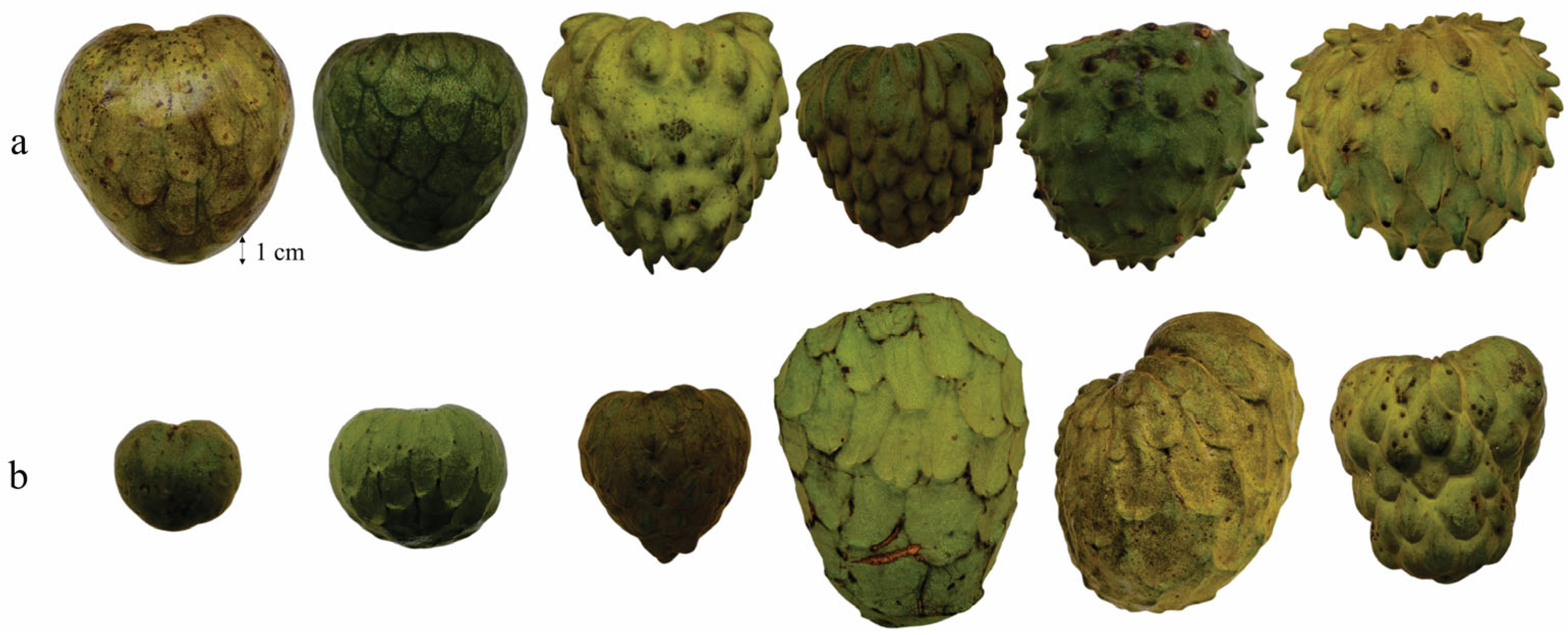
For each quantitative trait, the minimum and maximum values, mean, standard deviation (SD), and coefficient of variation (CV) are presented in Table 1. Within the tree category, substantial variability was observed in traits such as trunk cross-sectional area (CV = 120.75%), main trunk height (CV = 146.02%), and the number of flowers per meter of branch from the previous year (CV = 80.32%). These results suggest pronounced differences in tree architecture and reproductive phenology among individuals. In the leaf category, the number of primary veins was constant across all accessions, indicating no variation for this trait. The highest variability was recorded for the leaf thickness (CV = 53.03%), while leaf length and width showed relatively low variability (CV = 15.11% and 16.95%, respectively), suggesting a degree of morphological stability in the leaf size. Among fruit and seed traits, high variation was observed in ripe fruit weight (CV = 48.15%), pulp weight (CV = 55.33%), number of seeds per fruit (CV = 40.05%), and the pulp-to-seed ratio (CV = 64.23%). These results indicate significant diversity in fruit size and composition. Figure 2 illustrates the wide range of fruit shapes and size observed across the studied accessions, highlighting the considerable morphological variability among cherimoya fruits. The ratio of soluble solids to titratable acidity also showed notable variation (CV = 47.48%), indicating differences in organoleptic quality among fruits, which are important for consumer preference and selection in breeding programs. Finally, in the inflorescence category, traits such as petal weight (CV = 137.57%), stigmatic cone weight (CV = 116.67%), and flower weight (CV = 83.74%) exhibited high variability, suggesting considerable diversity in floral morphology. This variation may be associated with differences in reproductive strategies or underlying genotypic differences.

3.2. Correlation Between Traits

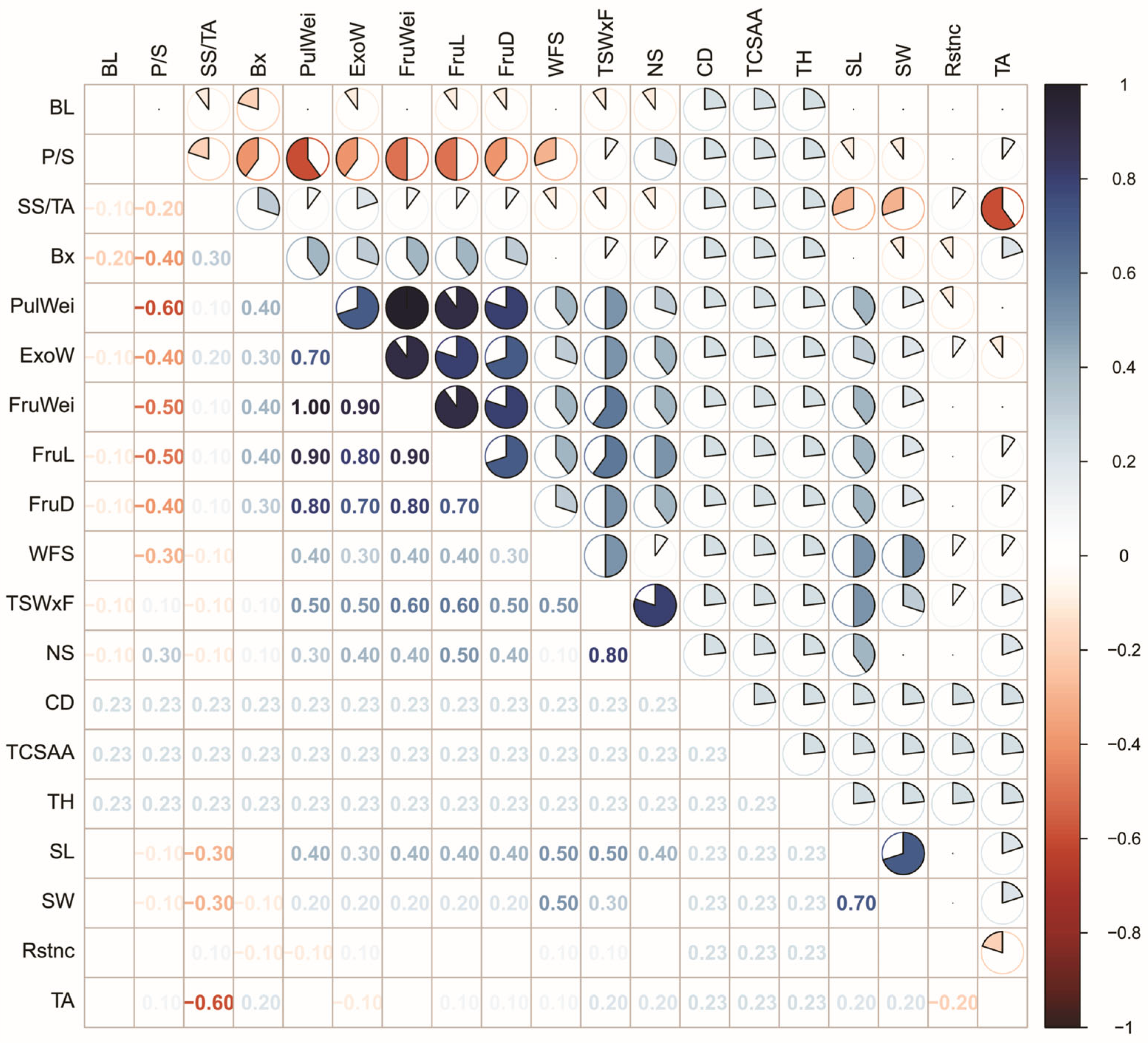
Fruit weight (FruWei) exhibited a very strong positive correlation with pulp weight (PulWei, r = 1.00) and was also highly correlated with fruit length (FruL, r = 0.90) and fruit diameter (FruD, r = 0.80). These results indicate that larger fruits tend to have a greater pulp mass and overall size. In contrast, the pulp-to-seed ratio (P/S) had a moderate negative correlation with PulWei (r = −0.60), suggesting that a higher proportion of pulp relative to seeds does not necessarily correspond to a greater absolute pulp mass. Meanwhile, soluble solid content (°Bx) and the soluble-solids-to-titratable-acidity ratio (SS/TA) exhibited only weak correlations with physical fruit traits. This implies that fruit sweetness and organoleptic quality are not strongly linked to size- or weight-related parameters (Figure 3).

3.3. Multivariate Analysis

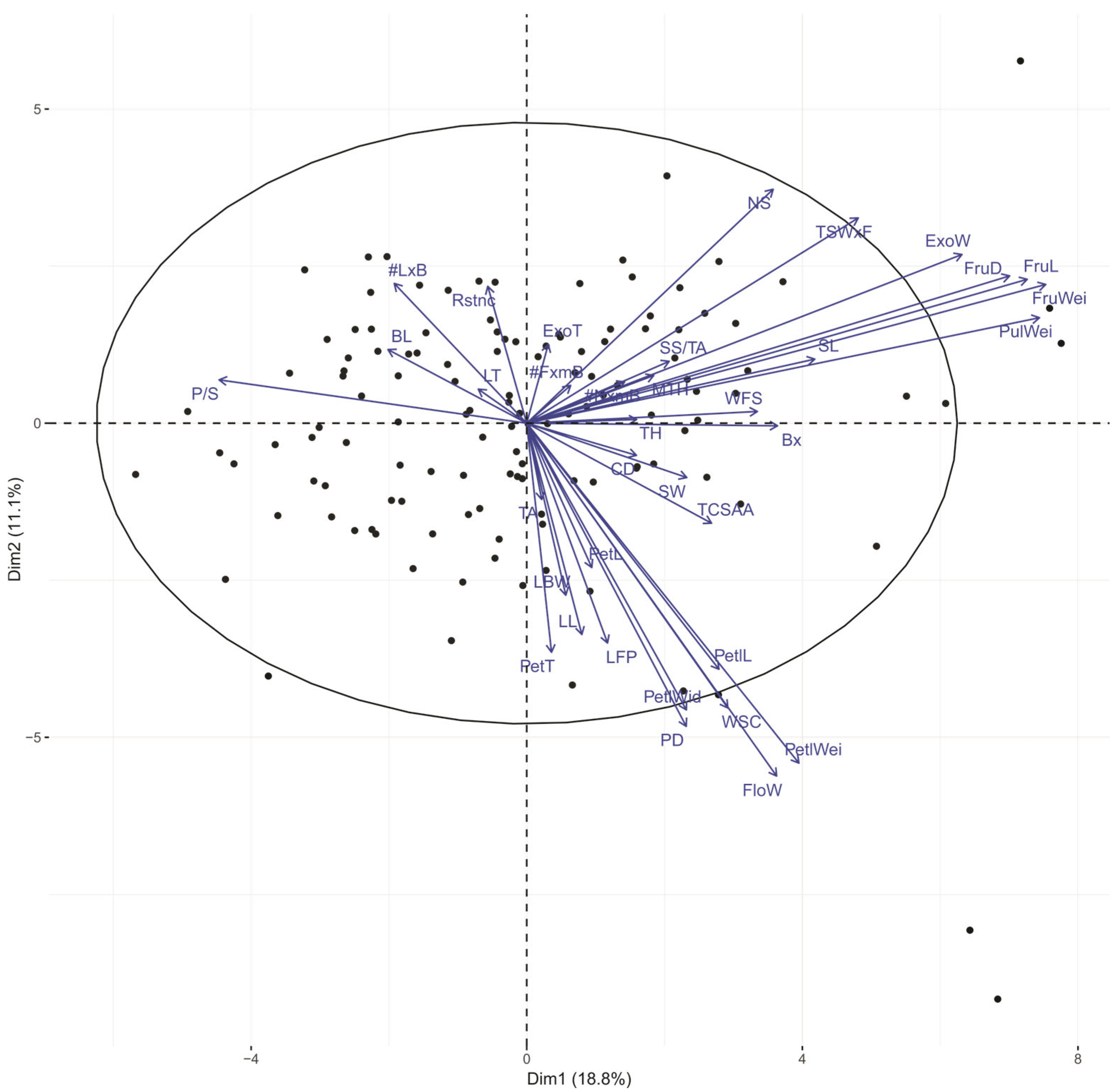
Principal Component Analysis (PCA) revealed structural patterns in the morphological variability in the cherimoya trees and fruits (Table S1). The first two principal components together accounted for 29.91% of the total variance (PC1 = 18.85%, PC2 = 11.06%). Variability along PC1 was primarily associated with fruit size-related traits, including ripe fruit weight (12.68), pulp weight (12.38), fruit length (11.80), fruit diameter (10.98), and exocarp weight (8.92). This axis largely represents the productive dimension of the fruit, with mass and size traits serving as key differentiators among the evaluated individuals. In contrast, PC2 was dominated by floral and foliar traits such as flower weight (12.02), petal weight (11.15), petal width (7.94), and stigmatic cone weight (7.83). This separation is visually evident in the biplot (Figure 4), where fruit size variables cluster and project strongly along the PC1 axis, while floral traits are distributed along PC2, indicating their greater contribution to variation in that dimension. The variable SS/TA, an important indicator of fruit palatability, contributed most strongly to PC3 (13.82), followed by titratable acidity (8.64). These results indicate that organoleptic attributes constitute an independent axis of variation and may play a critical role in phenotype differentiation based on sensory quality.
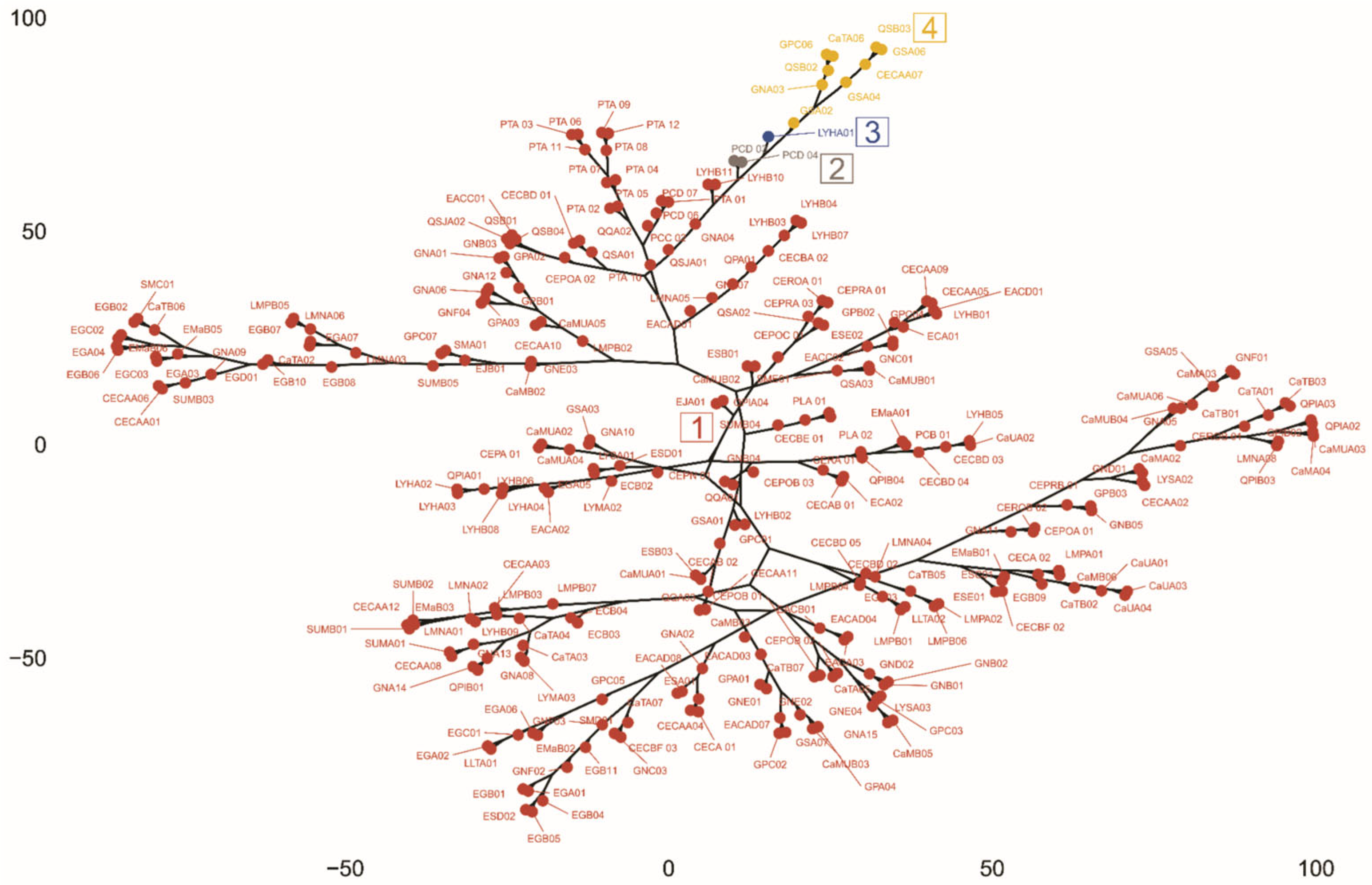
The hierarchical clustering analysis revealed the multivariate relationships among cherimoya accessions, identifying a well-defined branching structure with four main clusters (Figure 5). Group 1, the largest cluster, includes accessions with high morphological variability, predominantly characterized by a larger fruit size and weight. These traits correspond to the strong contributors to PC1 identified in the Principal Component Analysis (Figure 4). Group 2, the smallest cluster, includes accessions distinguished by floral characteristics, particularly petal and stigmatic cone weight and size, closely aligned with PC2. Group 3 is composed of accessions with mixed morphological profiles, lacking dominance by any specific trait category. Group 4, although small, is notable for accessions with a high pulp-to-seed ratio and favorable organoleptic traits. This group aligns with PC3, driven mainly by the SS/TA ratio and titratable acidity. The integration of the PCA and hierarchical clustering provides robust evidence of the structured phenotypic diversity within the cherimoya collection. These findings are valuable for identifying promising accessions for conservation and breeding, and they clarify the primary axes of phenotypic differentiation: yield potential, fruit quality, and floral architecture.
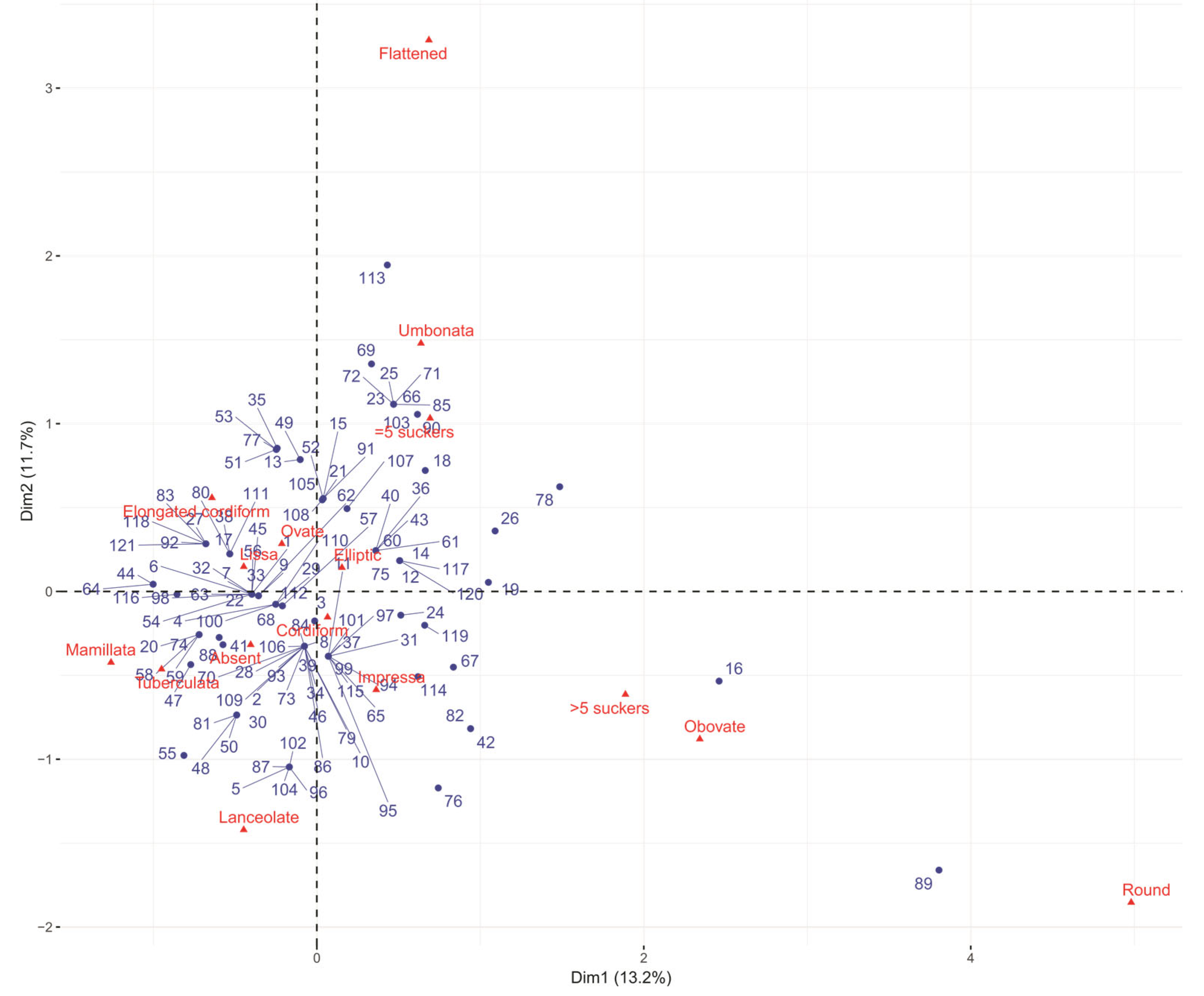
Multiple correspondence analysis (MCA) revealed that the first two dimensions explained 24.9% of the total variance (Dim1 = 13.2%, Dim2 = 11.7%). Although this proportion is relatively low, the biplot (Figure 6) displays an interpretable structure that supports the patterns previously described. The biplot facilitated the visualization of the relationships between morpho-productive traits and accessions. Dim1 was strongly influenced by fruit-related variables such as fruit weight (FruWei), pulp weight (PulWei), fruit length (FruL), and fruit diameter (FruD), suggesting that this dimension reflects a productivity axis. In contrast, Dim2 was driven by traits like fruit shape (Flattened) and exocarp type (Umbonate), which reflect floral and foliar morphology and are less directly related to productivity. This differentiation supports the observed independence between the two axes. An orthogonal distribution was observed between vectors representing fruit size and those associated with pulp-to-seed ratio and floral traits, indicating functional separation between productivity-related traits and reproductive organ architecture.

3.4. Ecogeographic and Phenotypic Diversity

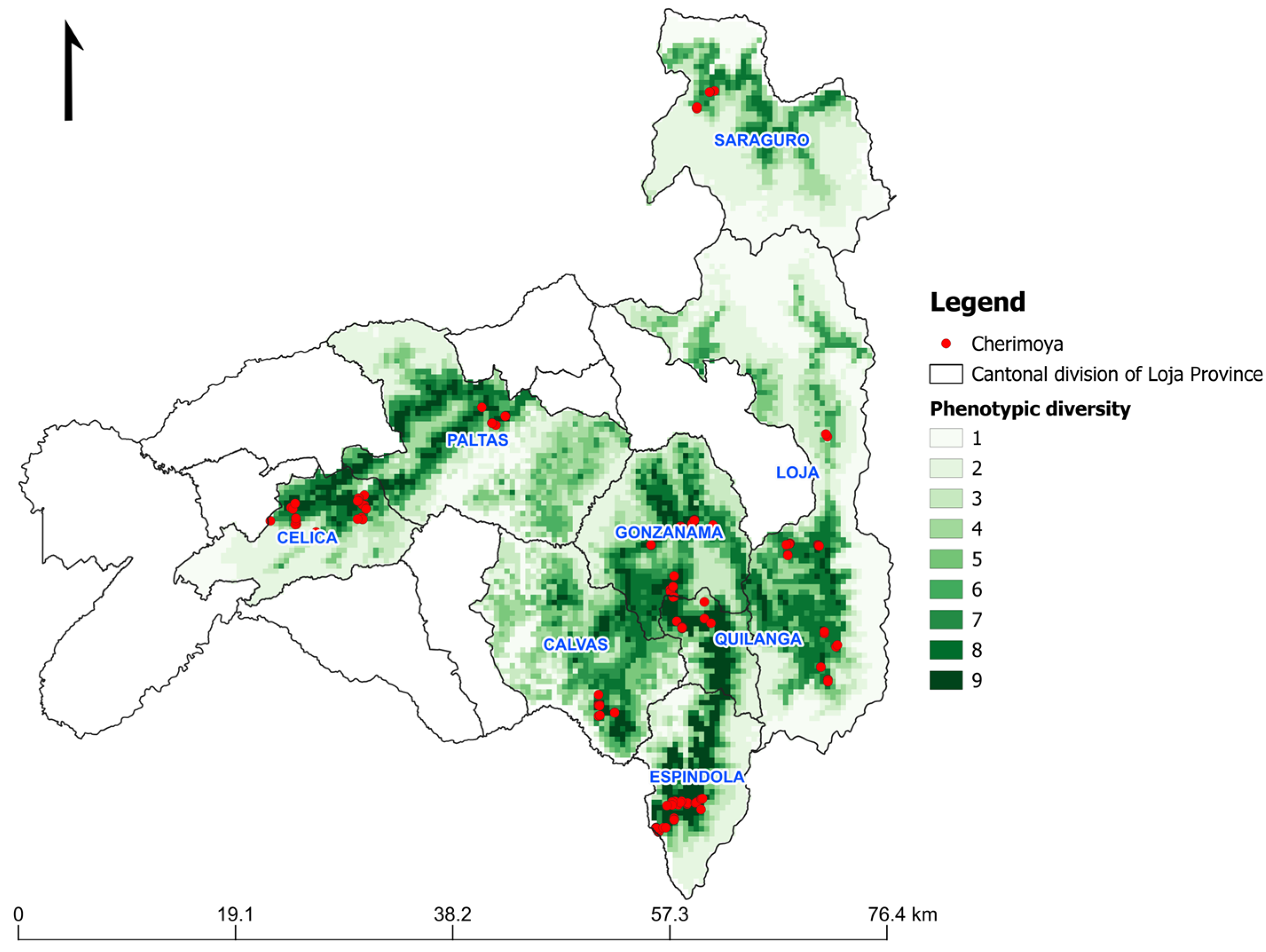
Ecogeographic characterization of cherimoya indicates that areas with high suitability values align with optimal environmental conditions for this species’ development. These areas closely match the documented collection sites, suggesting a strong correspondence between the presence of locally adapted individuals and favorable ecological conditions (Figure 7). This pattern is particularly evident in the cantons of Gonzanamá, Quilanga, and Espíndola. Conversely, areas with low suitability scores reflect regions with poor environmental conditions for cherimoya cultivation. In these zones, the species is unlikely to stablish successfully, and cultivation is therefore not recommended. Between these extremes, intermediate suitability values represent areas with moderate adaptability. In these regions, the successful establishment of cherimoya plantations may be feasible if supported by appropriate agronomic practices.
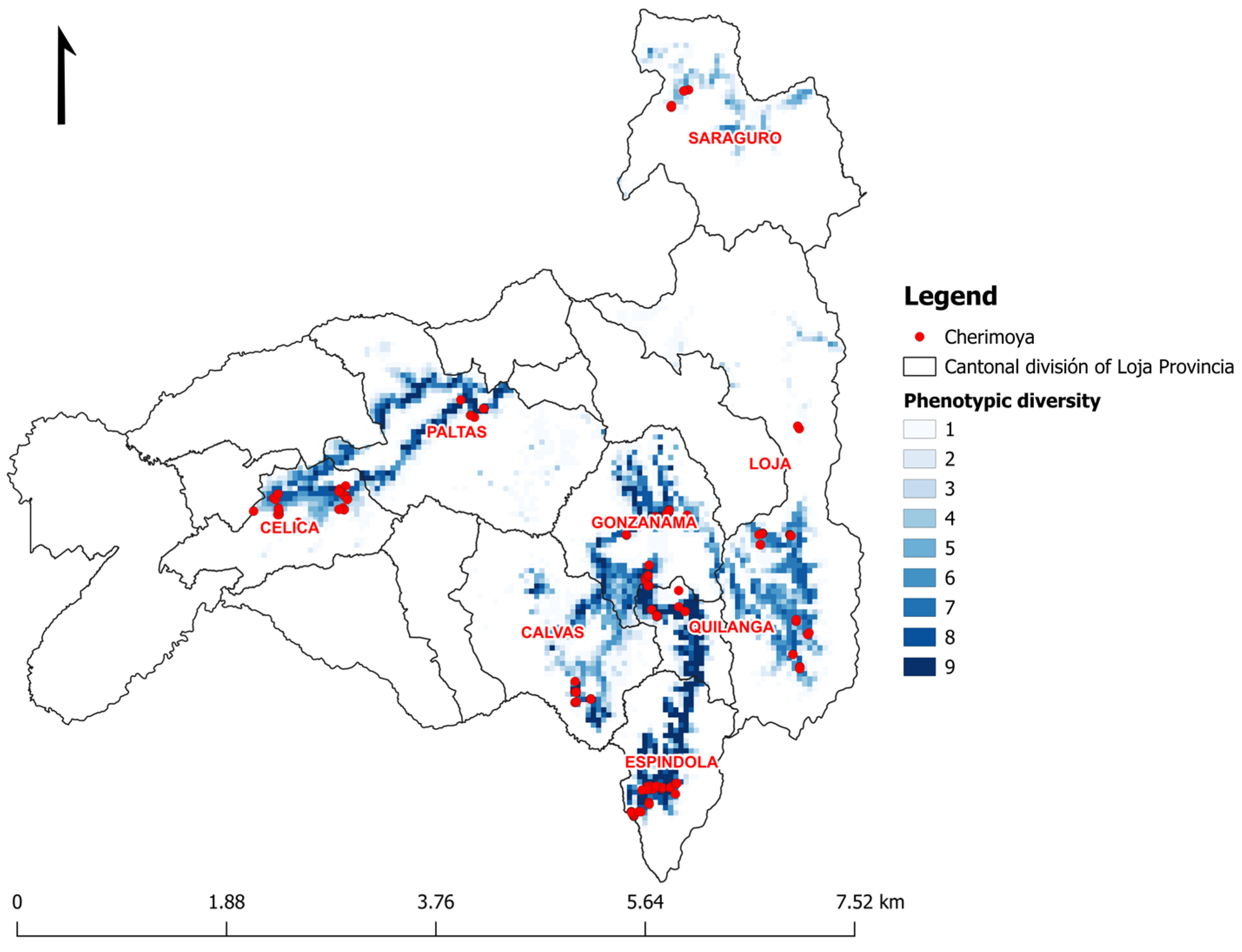
The phenotypic characterization of cherimoya is presented in Figure 8. Areas with the highest suitability values correspond to zones with a greater convergence of phenotypic traits and thus potential hotspots of high morphological diversity. These zones, which largely coincide with the collection sites, may be considered key areas for in situ conservation, the selection of promising phenotypes, and the evaluation of morphotypes with high variability potential. In contrast, areas with low suitability values exhibit limited phenotypic variation, suggesting low levels of morphological diversity. Regions with intermediate values represent areas of moderate diversity, where phenotypic combinations, although not highly variable, may still provide valuable material for conservation and breeding programs.

4. Discussion

This study presents the first comprehensive in situ characterization of the morphological and ecological diversity of Annona cherimola in southern Ecuador, with particular emphasis on the province of Loja, a recognized center of domestication for this underutilized fruit species [11,12,45]. Our findings reveal significant phenotypic variability across multiple traits, including tree architecture, leaf morphology, floral structure, and, most notably, fruit quality attributes. These results provide critical insights into the current state of cherimoya diversity and offer a robust foundation for the development of targeted conservation strategies, breeding programs, and sustainable management practices.
The high coefficients of variation observed (>48%) in key quantitative traits such as ripe fruit weight (CV = 48.15 %), pulp weight (CV = 55.33%), and pulp-to-seed ratio (CV = 64.23%) indicate substantial within-species variability. This level of heterogeneity supports previous observations [9,14] that reported similar patterns of diversity in Ecuadorian cherimoya populations. However, our study expands upon these findings by incorporating multivariate analyses that reveal three major axes of variation: productivity-related traits (fruit size and weight), reproductive morphology (flower structure), and organoleptic quality (soluble-solids-to-titratable-acidity ratio). Interestingly, while some qualitative traits, such as the number of primary veins in the leaf blade, remained constant across individuals, others, like fruit shape, exocarp type, and pulp texture, showed marked variability. This pattern of both stable and variable traits suggests that certain morphological features may serve as reliable taxonomic markers, while others reflect adaptive responses to environmental conditions or underlying genetic differences [46,47,48]. Genetic variability is essential for the success of plant breeding programs, as the efficiency of selection directly depends on it. Together with the phenotype × environment interaction, this variability determines the potential of germplasm to identify superior phenotypes [49]. In this study, individuals showed substantial phenotypic variability, particularly in tree architecture, where low-growing types are of interest for easier management in production systems. Significant variation was also observed in fruit traits, including shape, size, and color, as well as in quality parameters such as fruit weight, pulp weight, seed number, titratable acidity, and soluble solids. This diversity reflects high phenotypic plasticity, likely influenced by both genetic factors and environmental conditions, including temperature, rainfall, and soil heterogeneity across sites [46]. These results highlight the potential of the evaluated germplasm as a basis for breeding programs focused on improving fruit quality, tree morphology, and plant productivity [50].
Strong positive correlations between fruit weight, pulp weight, and size-related variables confirm their role as primary drivers of yield potential [49,50]. Conversely, the negative correlation between pulp-to-seed ratio and fruit size implies an evolutionary trade-off between seed production and edible tissue allocation, an important factor which should be considered in the selection criteria for commercial cultivars [51,52]. The independence of °Brix and the °Brix/TA ratio from structural traits further highlights the importance of direct chemical analysis when evaluating flavor profiles [53], as these parameters cannot be reliably predicted based solely on morphological data.
Species distribution modeling identified Gonzanamá, Quilanga, and Espíndola as cantons with the highest ecological suitability for cherimoya. These areas largely coincide with known collection sites, suggesting that local populations are well adapted to prevailing environmental conditions and evidencing significant spatial congruence in three areas of the greatest ecological suitability and maximum phenotypic diversity, which suggests independent validation of the integrative approach and delineates hotspots that should be prioritized for in situ conservation and the establishment/strengthening of germplasm banks. Also, recent anthropogenic threats, including deforestation, agricultural expansion, and extreme climatic events, pose significant risks to the long-term persistence of native cherimoya populations [17,18]. Therefore, prioritizing these zones for in situ conservation is crucial [54]. Our phenotypic suitability map revealed spatial congruence between high-diversity zones and regions of elevated ecological fitness. This overlap indicates that areas with favorable environmental conditions also harbor greater convergence of distinct morphotypes, making them ideal candidates for targeted conservation and sampling efforts [55]. Conversely, areas with low ecological suitability exhibited limited phenotypic variation, indicating a lower priority for conservation. However, these zones may still offer opportunities for cultivation under specific phenotype–environment combinations.
In the principal component analysis, the first two PCs explained 29.91% of the total variance (Table S1), which is typical in highly diverse biological datasets; the remaining variance was distributed among the other additional components, reflecting the large multidimensional diversity of the population. It should be noted that the categorical trait “exocarp type” showed reduced dispersion in PC1-PC2, which decreased the proportion of variance captured by the principal PCs for this trait. Group 4, although small, was notable for its high pulp-to-seed ratio and favorable sugar-to-acid balance, traits that aligned with PC3, which was dominated by Brix/TA and titratable acidity. These accessions represent promising candidates for breeding programs aiming to develop elite cultivars with enhanced consumer appeal and agronomic performance [56]. Furthermore, Multiple Correspondence Analysis (MCA) confirmed the independence of productivity and organoleptic dimensions, reinforcing the need for a multidisciplinary approach in phenotype selection [57]. Integrating both morphological and chemical traits will enhance the efficiency of breeding pipelines and ensure the development of cultivars that meet both agronomic and market demands [58].
While this study provides a detailed characterization of cherimoya diversity, it does not include molecular data, which would allow for a deeper understanding of genetic structuring and population dynamics [55,59,60,61]. Future research integrating genomic tools with the phenotypic framework established here will strengthen the accuracy of trait mapping and improve selection strategies.
The strength of this work lies in its integrative approach, combining morphological characterization, ecogeographic modeling, and multivariate statistical techniques to assess cherimoya diversity comprehensively. The participatory methodology involving smallholder farmers ensures the inclusion of locally adapted phenotypes and enhances the practical applicability of the results. Moreover, the use of advanced modeling tools and standardized descriptors allows for replicability in studies of other underutilized crops. Given the growing interest in neglected and underutilized species (NUS) as climate-resilient alternatives to staple crops, this study provides valuable baseline information for promoting cherimoya beyond its traditional niche. The identification of high-yielding, high-quality phenotypes and suitable growing zones offers a solid basis for scaling up sustainable cultivation and supporting rural livelihoods in southern Ecuador.

5. Conclusions

In conclusion, this study demonstrates that Loja province harbors rich and structured phenotypic diversity in cherimoya, with clear ecological and agronomic implications. By identifying key diversity hotspots and promising phenotypes, we provide actionable data for conservation planning, breeding initiatives, and sustainable horticultural development. As global attention turns toward resilient and nutritious food systems, cherimoya emerges as a species with untapped potential, deserving of increased scientific and economic investment.

Supplementary Materials

The following supporting information can be downloaded at https://www.mdpi.com/article/10.3390/horticulturae11121505/s1, Table S1: First three components from the PCA of thirty-six quantitative traits in cherimoya accessions. Table S2: Raw qualitative, quantitative, and geographic data for cherimoya (Annona cherimola Mill.) phenotypes from Loja Province, Ecuador.

Author Contributions

Conceptualization, S.C.V., F.G., M.C.-M. and M.M.-M.; methodology, S.C.V., F.G., M.C.-M. and M.M.-M.; formal analysis, S.C.V. and S.E.-H.; investigation, S.C.V., F.G., M.C.-M., M.M.-M., S.E.-H., L.O.V., M.A.R. and D.C.-Z.; writing—original draft preparation: S.C.V. and S.E.-H.; writing—review and editing: S.E.-H. and S.C.V. All authors have read and agreed to the published version of the manuscript.

Funding

This work was supported by grants from the FIASA Program (Fondo de Investigación para la Agrobiodiversidad, Semillas y Agricultura Sustentable, Ecuador), under Grant No. FIASA-CA-2023-011, and by the Research Directorate (Dirección de Investigación) of the Universidad Nacional de Loja, Ecuador, under Project 02-DI-FARNR-2023-E.

Data Availability Statement

The original contributions presented in this study are included in the article. Further inquiries can be directed to the corresponding author.

Acknowledgments

The authors would like to thank the small farmers in the province of Loja for allowing them access to the native cherimoya trees and for sharing their valuable knowledge during field visits. We are grateful to the agronomy students at the National University of Loja (UNL) who participated in collecting the plant material. Special thanks to Beatriz Guerrero-León, from UNL, for her help in analyzing fruit quality. We also appreciate the technical support provided by the staff of the National Institute for Agricultural Research (INIAP), particularly César Tapia, Marilú Valverde, and Franklin Sigcha. We extend our gratitude to the technical staff of the Ministry of Agriculture and Livestock (MAG) and the Decentralized Autonomous Government of Espíndola, Loja, Ecuador, for their logistical support during the fieldwork. Thanks also to César Benavidez, from UNL, for his technical support during the ecogeographic and phenotypic characterization.

Conflicts of Interest

The authors declare no conflicts of interest.

References

  1. Martin, C.; Viruel, M.A.; Lora, J.; Hormaza, J.I. Polyploidy in Fruit Tree Crops of the Genus Annona (Annonaceae). Front. Plant Sci. 2019, 10, 99. [Google Scholar] [CrossRef]
  2. Gupta, U.C.; Kening, W.; Liang, S. Micronutrients in Soils, Crops, and Livestock. Earth Sci. Front. 2008, 15, 110–125. [Google Scholar] [CrossRef]
  3. Larranaga, N.; Albertazzi, F.J.; Fontecha, G.; Palmieri, M.; Rainer, H.; van Zonneveld, M.; Hormaza, J.I. A Mesoamerican Origin of Cherimoya (Annona cherimola Mill.): Implications for the Conservation of Plant Genetic Resources. Mol. Ecol. 2017, 26, 4116–4130. [Google Scholar] [CrossRef]
  4. Gentile, C.; Mannino, G.; Palazzolo, E.; Gianguzzi, G.; Perrone, A.; Serio, G.; Farina, V. Pomological, Sensorial, Nutritional and Nutraceutical Profile of Seven Cultivars of Cherimoya (Annona cherimola Mill). Foods 2020, 10, 35. [Google Scholar] [CrossRef]
  5. Scheldeman, X. Distribution and Potential of Cherimoya (Annona cherimola Mill.) and Highland Papayas (Vasconcellea spp.) in Ecuador. Ph.D. Thesis, Ghent University, Ghent, Belgium, 2002. [Google Scholar]
  6. Perrone, A.; Yousefi, S.; Salami, A.; Papini, A.; Martinelli, F. Botanical, Genetic, Phytochemical and Pharmaceutical Aspects of Annona cherimola Mill. Sci. Hortic. 2022, 296, 110896. [Google Scholar] [CrossRef]
  7. Larranaga, N.; van Zonneveld, M.; Hormaza, J.I. Holocene Land and Sea-trade Routes Explain Complex Patterns of pre-Columbian Crop Dispersion. New Phytol. 2021, 229, 1768–1781. [Google Scholar] [CrossRef] [PubMed]
  8. Larranaga, N.; Albertazzi, F.J.; Hormaza, J.I. Phylogenetics of Annona cherimola (Annonaceae) and Some of Its Closest Relatives. J. Syst. Evol. 2019, 57, 211–221. [Google Scholar] [CrossRef]
  9. Van Damme, P.; Van Damme, V.; Scheldeman, X. Ecology and Cropping of Cherimoya (Annona cherimola Mill.) in Latin America. New Data from Ecuador. Fruits 2000, 55, 195–206. [Google Scholar]
  10. van Zonneveld, M.; Scheldeman, X.; Escribano, P.; Viruel, M.A.; Van Damme, P.; Garcia, W.; Hormaza, J.I. Mapping Genetic Diversity of Cherimoya (Annona cherimola Mill.): Application of Spatial Analysis for Conservation and Use of Plant Genetic Resources. PLoS ONE 2012, 7, e29845. [Google Scholar] [CrossRef]
  11. Veasey, E.A.; Costa, F.M.; do Nascimento, W.F.; Ramos, S.L.F.; Clement, C.R. What Can We Say About Plant Domestication in the Neotropics? In Population Genetics in the Neotropics; Springer: Cham, Switzerland, 2025; pp. 317–351. [Google Scholar] [CrossRef]
  12. Larranaga, N.; Agustín, J.A.; Albertazzi, F.; Fontecha, G.; Vásquez-Castillo, W.; Cautín, R.; Quiroz, E.; Ragonezi, C.; Hormaza, J.I. Underutilized Fruit Crops at a Crossroads: The Case of Annona cherimola—From Pre-Columbian to Present Times. Horticulturae 2024, 10, 531. [Google Scholar] [CrossRef]
  13. González, M. Chirimoya (Annona cherimola Miller), Frutal Tropical y Sub-Tropical de Valores Promisorios. Cultiv. Trop. 2013, 34, 52–63. [Google Scholar]
  14. Scheldeman, X.; Van Damme, P.; Motoche, J.R.; Alvarez, J.U. Germplasm Collection and Fruit Characterisation of Cherimoya (Annona cherimola) in Loja Province, Ecuador, an Important Centre of Biodiversity. Belg. J. Bot. 2006, 139, 27–38. [Google Scholar]
  15. Bachman, S.P.; Brown, M.J.; Leão, T.C.; Nic Lughadha, E.; Walker, B.E. Extinction Risk Predictions for the World’s Flowering Plants to Support Their Conservation. New Phytol. 2024, 242, 797–808. [Google Scholar] [CrossRef] [PubMed]
  16. Campuzano, L.; Angel, N.T.; Burkart, S. Cattle Ranching in Colombia: A Monolithic Industry? Hist. Ambient. Latinoam. Caribeña HALAC Rev. Solcha 2022, 12, 81–106. [Google Scholar] [CrossRef]
  17. Curatola Fernández, G.F.; Obermeier, W.A.; Gerique, A.; Lopez Sandoval, M.F.; Lehnert, L.W.; Thies, B.; Bendix, J. Land Cover Change in the Andes of Southern Ecuador—Patterns and Drivers. Remote Sens. 2015, 7, 2509–2542. [Google Scholar] [CrossRef]
  18. Tapia-Armijos, M.F.; Homeier, J.; Munt, D.D. Spatio-Temporal Analysis of the Human Footprint in South Ecuador: Influence of Human Pressure on Ecosystems and Effectiveness of Protected Areas. Appl. Geogr. 2017, 78, 22–32. [Google Scholar] [CrossRef]
  19. Monteros-Altamirano, Á.; Tapia, C.; Paredes, N.; Alulema, V.; Tacán, M.; Roura, A.; Lima, L.; Sørensen, M. Morphological and Ecogeographic Study of the Diversity of Cassava (Manihot esculenta Crantz) in Ecuador. Agronomy 2021, 11, 1844. [Google Scholar] [CrossRef]
  20. Parra Quijano, M.; Iriondo, J.M.; Torres, M.E.; López, F.; Phillips, J.; Kell, S. Capfitogen 3: Una Caja de Herramientas Para la Conservación y Promoción del Uso de La Biodiversidad Agrícola; Ministerio de Ciencia Tecnología e Innovación: Bogotá, Colombia, 2020. [Google Scholar]
  21. Biodiversity International; CHERLA. Descriptores Para Chirimoyo (Annona cherimola Mill.); Bioversity International: Rome, Italy, 2008. [Google Scholar]
  22. Tourn, G.M.; Barthélémy, D.; Grosfeld, J. Una Aproximación a La Arquitectura Vegetal: Conceptos, Objetivos y Metodología. Bol. Soc. Argent. Botánica 1999, 34, 85–99. [Google Scholar]
  23. Castel, T.; Beaudoin, A.; Barczi, J.; Caraglio, Y.; Floury, N.; Le Toan, T.; Castagnas, L. On the Coupling of Backscatter Models with Tree Growth Models. 1. A Realistic Description of the Canopy Using the AMAP Tree Growth Model. In Proceedings of the IGARSS’97, 1997 IEEE International Geoscience and Remote Sensing Symposium Proceedings. Remote Sensing—A Scientific Vision for Sustainable Development, Singapore, 3–8 August 1997; IEEE: New York, NY, USA, 1997; Volume 2, pp. 784–786. [Google Scholar]
  24. Posit team. RStudio: Integrated Development Environment for R. 2025. Available online: http://www.posit.co/ (accessed on 9 June 2025).
  25. Thuiller, W.; Georges, D.; Engler, R.; Breiner, F. Biomod2: Ensemble Platform for Species Distribution Modeling. R Package Version 2016, 3, r539. [Google Scholar]
  26. Brun, P.; Zimmermann, N.E.; Hari, C.; Pellissier, L.; Karger, D.N. Global Climate-Related Predictors at Kilometer Resolution for the Past and Future. Earth Syst. Sci. Data 2022, 14, 5573–5603. [Google Scholar] [CrossRef]
  27. Karger, D.N.; Schmatz, D.R.; Dettling, G.; Zimmermann, N.E. High-Resolution Monthly Precipitation and Temperature Time Series from 2006 to 2100. Sci. Data 2020, 7, 248. [Google Scholar] [CrossRef]
  28. Karger, D.N.; Wilson, A.M.; Mahony, C.; Zimmermann, N.E.; Jetz, W. Global Daily 1 Km Land Surface Precipitation Based on Cloud Cover-Informed Downscaling. Sci. Data 2021, 8, 307. [Google Scholar] [CrossRef] [PubMed]
  29. Karger, D.N.; Lange, S.; Hari, C.; Reyer, C.P.; Conrad, O.; Zimmermann, N.E.; Frieler, K. CHELSA-W5E5: Daily 1 Km Meteorological Forcing Data for Climate Impact Studies. Earth Syst. Sci. Data 2023, 15, 2445–2464. [Google Scholar] [CrossRef]
  30. Bougeard, S.; Dray, S. Supervised Multiblock Analysis in R with the Ade4 Package. J. Stat. Softw. 2018, 86, 1–17. [Google Scholar] [CrossRef]
  31. Chessel, D.; Dufour, A.B.; Thioulouse, J. The Ade4 Package-I-One-Table Methods. R News 2004, 4, 5–10. [Google Scholar]
  32. Dray, S.; Dufour, A.B.; Chessel, D. The Ade4 Package-II: Two-Table and K-Table Methods. R News 2007, 7, 47–52. [Google Scholar]
  33. Dray, S.; Dufour, A.-B. The Ade4 Package: Implementing the Duality Diagram for Ecologists. J. Stat. Softw. 2007, 22, 1–20. [Google Scholar] [CrossRef]
  34. Thioulouse, J.; Dray, S.; Dufour, A.-B.; Siberchicot, A.; Jombart, T.; Pavoine, S. Multivariate Analysis of Ecological Data with Ade4; Springer: Berlin/Heidelberg, Germany, 2018. [Google Scholar]
  35. ESRI. ArcMap 10.8; Environmental Systems Research Institute: Redlands, CA, USA, 2020; Available online: https://desktop.arcgis.com/ (accessed on 9 June 2025).
  36. Qgis Association. QGIS Geographic Information System; Qgis Association: Geneva, Switzerland, 2021. [Google Scholar]
  37. Wickham, H.; Hester, J.; Francois, R. Readr: Read Rectangular Text Data; R Core Team: Vienna, Austria, 2018. [Google Scholar]
  38. Wickham, H. Dplyr: A Grammar of Data Manipulation, R Package Version 04; R Core Team: Vienna, Austria, 2015; Volume 3, p. 156.
  39. Ooms, J.; McNamara, J. Writexl: Export Data Frames to Excel’xlsx’format, Version 1.4. 2; R Core Team: Vienna, Austria, 2023.
  40. Wei, T.; Simko, V.; Levy, M.; Xie, Y.; Jin, Y.; Zemla, J. Package “Corrplot”: Visualization of a Correlation Matrix; R Core Team: Vienna, Austria, 2017. [Google Scholar]
  41. Kassambara, A.; Mundt, F. Factoextra: Extract and Visualize the Results of Multivariate Data Analyses; CRAN: Contributed Packages; R Core Team: Vienna, Austria, 2016. [Google Scholar]
  42. Wickham, H.; Bryan, J. Readxl: Read Excel Files, R Package Version 1.4.5; R Core Team: Vienna, Austria, 2019; Volume 1, p. 785.
  43. Maechler, M. Cluster: Cluster Analysis Basics and Extensions, R Package Version 20 7–1; R Core Team: Vienna, Austria, 2018.
  44. Lê, S.; Josse, J.; Husson, F. FactoMineR: An R Package for Multivariate Analysis. J. Stat. Softw. 2008, 25, 1–18. [Google Scholar] [CrossRef]
  45. Perfectti, F.; Pascual, L. Genetic Diversity in a Worldwide Collection of Cherimoya Cultivars. Genet. Resour. Crop Evol. 2005, 52, 959–966. [Google Scholar] [CrossRef]
  46. Donhouedé, J.C.F.; Marques, I.; Salako, K.V.; Assogbadjo, A.E.; Ribeiro, N.; Ribeiro-Barros, A.I. Genetic and Morphological Diversity in Populations of Annona Senegalensis Pers. Occurring in Western (Benin) and Southern (Mozambique) Africa. PeerJ 2023, 11, e15767. [Google Scholar] [CrossRef] [PubMed]
  47. Nwosisi, S.; Dhakal, K.; Nandwani, D.; Raji, J.I.; Krishnan, S.; Beovides-García, Y. Genetic Diversity in Vegetable and Fruit Crops. In Genetic Diversity in Horticultural Plants; Springer: Cham, Switzerland, 2019; pp. 87–125. [Google Scholar] [CrossRef]
  48. Santos-Pelaez, J.C.; Saravia-Navarro, D.; Cruz-Delgado, J.H.; del Carpio-Salas, M.A.; Barboza, E.; Casanova Nuñez Melgar, D.P. Phenotypic Diversity of Morphological Traits of Pitahaya (Hylocereus spp.) and Its Agronomic Potential in the Amazonas Region, Peru. Agriculture 2024, 14, 1968. [Google Scholar] [CrossRef]
  49. Mourão Filho, F.d.A.A.; Espinoza-Núñez, E.; Stuchi, E.S.; Ortega, E.M.M. Plant Growth, Yield, and Fruit Quality of ‘Fallglo’and ‘Sunburst’Mandarins on Four Rootstocks. Sci. Hortic. 2007, 114, 45–49. [Google Scholar] [CrossRef]
  50. Penzel, M.; Kröling, C. Thinning Efficacy of Metamitron on Young’RoHo 3615’(Evelina®) Apple. Sci. Hortic. 2020, 272, 109586. [Google Scholar] [CrossRef]
  51. Andrés-Agustín, J.; González-Andrés, F.; Nieto-Ángel, R.; Barrientos-Priego, A. Morphometry of the Organs of Cherimoya (Annona cherimola Mill.) and Analysis of Fruit Parameters for the Characterization of Cultivars, and Mexican Germplasm Selections. Sci. Hortic. 2006, 107, 337–346. [Google Scholar] [CrossRef]
  52. Prudent, M.; Dai, Z.W.; Génard, M.; Bertin, N.; Causse, M.; Vivin, P. Resource Competition Modulates the Seed Number–Fruit Size Relationship in a Genotype-Dependent Manner: A Modeling Approach in Grape and Tomato. Ecol. Model. 2014, 290, 54–64. [Google Scholar] [CrossRef]
  53. García-Carmona, M.; Márquez-San Emeterio, L.; Reyes-Martín, M.; Ortiz-Bernad, I.; Sierra, M.; Fernández-Ondoño, E. Changes in Nutrient Contents in Peel, Pulp, and Seed of Cherimoya (Annona cherimola Mill.) in Relation to Organic Mulching on the Andalusian Tropical Coast (Spain). Sci. Hortic. 2020, 263, 109120. [Google Scholar] [CrossRef]
  54. Raes, L.; D’Haese, M.; Aguirre, N.; Knoke, T. A Portfolio Analysis of Incentive Programmes for Conservation, Restoration and Timber Plantations in Southern Ecuador. Land Use Policy 2016, 51, 244–259. [Google Scholar] [CrossRef]
  55. Kassa, A.; Alcaraz, L.; Larranaga, N.; De Meyer, E.; Hormaza, I.; de la Peña, E. Evaluation of Genetic Diversity of Ethiopian Mango Genotypes and Comparison with a Worldwide Germplasm Collection. Sci. Hortic. 2025, 348, 114211. [Google Scholar] [CrossRef]
  56. Lora, J.; Larranaga, N.; Hormaza, J.I. Genetics and Breeding of Fruit Crops in the Annonaceae Family: Annona spp. and Asimina app. Adv. Plant Breed. Strateg. Fruits 2018, 3, 651–672. [Google Scholar] [CrossRef]
  57. Akdemir, D.; Beavis, W.; Fritsche-Neto, R.; Singh, A.K.; Isidro-Sánchez, J. Multi-Objective Optimized Genomic Breeding Strategies for Sustainable Food Improvement. Heredity 2019, 122, 672–683. [Google Scholar] [CrossRef]
  58. Laurens, F.; Aranzana, M.J.; Arus, P.; Bassi, D.; Bink, M.; Bonany, J.; Caprera, A.; Corelli-Grappadelli, L.; Costes, E.; Durel, C.-E. An Integrated Approach for Increasing Breeding Efficiency in Apple and Peach in Europe. Hortic. Res. 2018, 5, 11. [Google Scholar] [CrossRef] [PubMed]
  59. Behán, T.; Kovács, S.; Tóth, E.G.; György, Z. Genetic Diversity of Cornelian Cherry (Cornus Mas L.) Cultivars from Eastern Europe Based on SSR Markers. Sci. Hortic. 2025, 349, 114232. [Google Scholar] [CrossRef]
  60. Duan, X.; Hayat, F.; Lei, Z.; Ruan, H.; Lin, W.; Tu, P.; Li, C.; Song, W.; Li, Y.; Li, J. Genetic Diversity Analysis of Pomelo Germplasm Resources Based on Leaf Phenotype and SCoT Markers. Sci. Hortic. 2025, 346, 114174. [Google Scholar] [CrossRef]
  61. Singh, A.K.; Ram, C.; Meena, R.; Yadav, L.P.; Kaldappa, G.; Gora, J.S.; Berwal, M.K.; Rane, J. Morpho-Biochemical Characterization and Molecular Diversity Analysis of Bael [Aegle Marmelos (L.) Correa.] Germplasm Using Gene-Targeted Molecular Markers. Sci. Hortic. 2025, 339, 113900. [Google Scholar] [CrossRef]
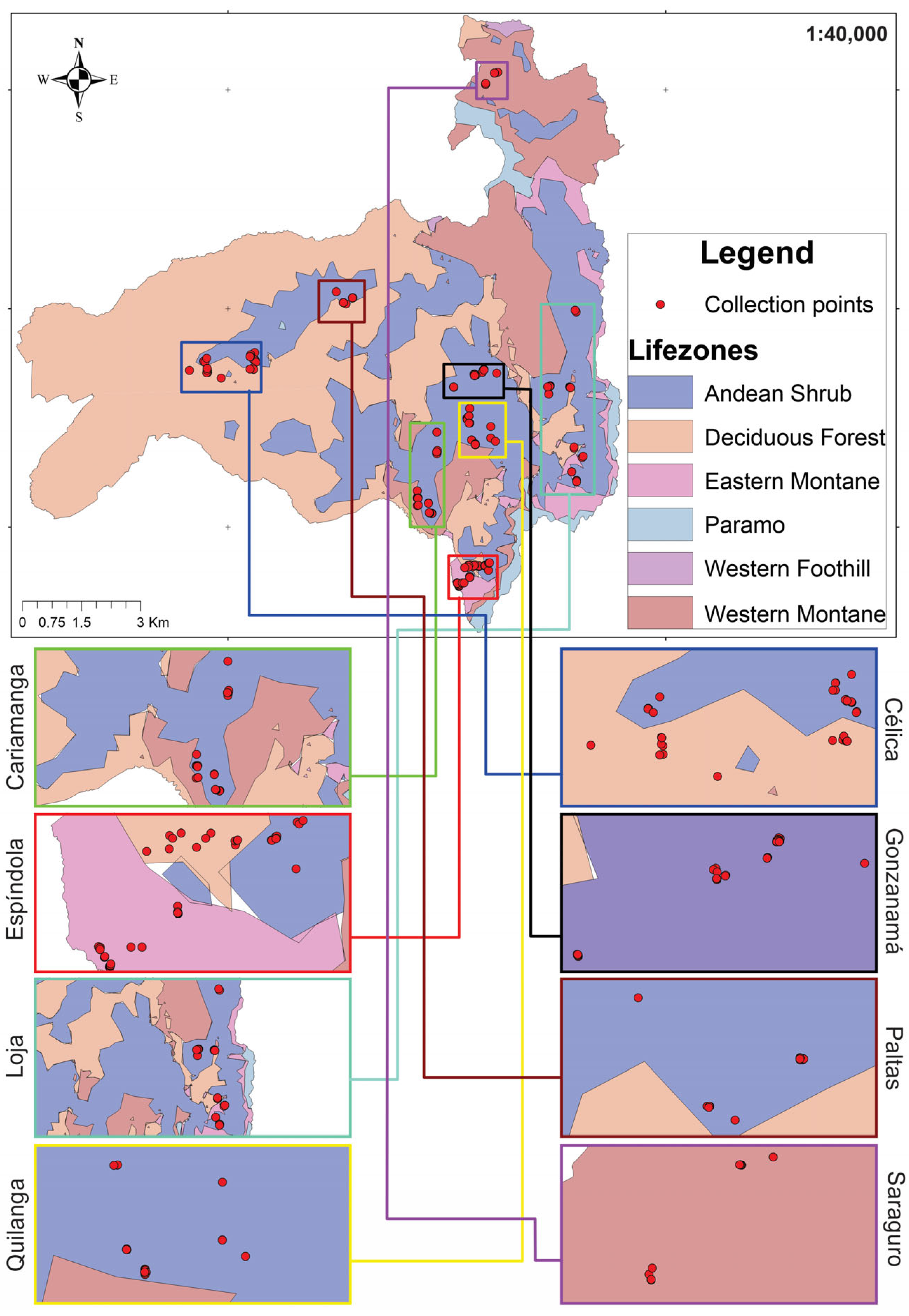
Figure 1. Geographic distribution of native Annona cherimola trees across different agro-ecological zones in Loja, Ecuador.
Horticulturae 11 01505 g001
Figure 2. Morphological variability in Annona cherimola fruit showing the exocarp type (a) and the fruit form (b).
Horticulturae 11 01505 g002
Figure 3. Bivariate Pearson correlation matrix of quantitative morphological traits in Annona cherimola accessions. Blue tones indicate positive (directly proportional) correlations, while red tones represent negative (inversely proportional) correlations between pairs of variables. For a detailed description of the trait abbreviations, refer to Section 2.2 (Characterization of Quantitative and Qualitative Traits).
Horticulturae 11 01505 g003
Figure 4. Principal Component Analysis (PCA) biplot showing the distribution of Annona cherimola accessions and the contribution of morphological variables to the first two principal components (PC1 and PC2). Vectors represents the direction and strength of each variable’s contribution, while individual points correspond to the 270 evaluated accessions.
Horticulturae 11 01505 g004
Figure 5. A dendrogram of Annona cherimola accessions based on 15 quantitative and 18 qualitative morphological traits, constructed using Ward’s hierarchical clustering method and the Euclidean distance metric. The numbers 1–4 indicate the main clusters identified in the analysis.
Horticulturae 11 01505 g005
Figure 6. A biplot of the Multiple Correspondence Analysis (MCA) showing the simultaneous representation of qualitative trait categories and the evaluated Annona cherimola accessions.
Horticulturae 11 01505 g006
Figure 7. A map of the ecogeographic diversity of Annona cherimola in Loja Province. The scale from 1 (low or no adaptability) to 9 (high adaptability) is indicated by a color gradient, where lighter colors represent lower adaptability, and more pronounced green indicates higher adaptability. Red dots mark the collection sites where cherimoya samples were obtained for the ecogeographic analysis.
Horticulturae 11 01505 g007
Figure 8. A map of the phenotypic diversity of Annona cherimola in Loja Province. The scale from 1 (low or no variability) to 9 (high variability) is indicated by a color gradient, where lighter colors represent lower variability, and more pronounced green indicates higher variability. Red dots represent collection sites where cherimoya samples were gathered for the phenotypic analysis.
Horticulturae 11 01505 g008
Table 1. Minimum, maximum, mean, standard deviation and coefficient of variation (CV) of 270 Annona cherimola morphotypes characterized in southern Ecuador.
TraitsMin 1Max 2MeanSD 3CV 4
Tree
Crown diameter2.0822.907.662.6634.69
Tree height1.9013.187.031.8025.61
Trunk cross-sectional area0.008930.591182.981428.41120.75
Main trunk height1.001700.0093.17136.05146.02
Branch length5.6772.7818.5110.9359.07
Number of leaves per branch3.3339.008.784.9756.54
Number of nodes per meter of branch15.0069.0038.089.7625.63
Number of flowers per meter on the branch of the previous year1.0063.0013.4910.8480.32
Leaves
Leaf length30.60177.90122.0318.4415.11
Leaf width43.81113.9276.5312.9716.95
Leaf thickness0.021.940.240.1353.03
Petiole length5.7526.431.222.3519.26
Petiole thickness0.234.102.300.4519.34
Number of primary veins in the leaf blade1.001.001.000.000.00
Fruit and seeds
Fruit length45.00147.0091.8418.6020.25
Fruit diameter48.85204.7391.2518.3020.05
Fruit weight61.961266.66418.02201.2648.15
Exocarp thickness0.404.601.660.7142.92
Exocarp weight11.95445.57114.0952.1645.72
Pulp weight33.90786.44275.60152.4955.33
Total weight seeds per fruit3.1883.1931.0815.5450.00
Number of seeds6.0098.0044.0917.6640.05
Pulp-to-seed ratio2.5396.8120.2813.0264.23
Resistance to penetration0.8583.7522.1810.0845.45
Soluble solids7.1035.7021.813.9418.07
Titratable acidity0.060.740.360.1129.43
Soluble solids/titratable acidity ratio25.22427.0065.9731.3247.48
Fresh seed weight0.281.770.700.1926.48
Seed length11.9423.5017.511.8610.61
Seed width7.3812.529.980.929.22
Inflorescence
Flower weight0.469.951.331.1183.74
Petal length16.7842.3827.514.6316.81
Petal width4.5210.706.951.1716.79
Petal weight0.0518.761.261.73137.57
Flower peduncle length3.4319.8010.252.6926.26
Weight of the stigmatic cone0.030.790.090.11116.67
1 Minimums, 2 Maximums, 3 Standard Deviation, 4 Coefficient of Variation.
Disclaimer/Publisher’s Note: The statements, opinions and data contained in all publications are solely those of the individual author(s) and contributor(s) and not of MDPI and/or the editor(s). MDPI and/or the editor(s) disclaim responsibility for any injury to people or property resulting from any ideas, methods, instructions or products referred to in the content.