Article

Plastic-Free Packaging in the German Potted Herb Supply Chain: An Interdisciplinary Assessment of Plant Quality and Consumer Behavior


1
Hochschule Geisenheim, Professorship for Horticultural Economics, 65366 Geisenheim, Germany
2
Hochschule Osnabrück, Faculty of Agricultural Sciences and Landscape Architecture, 49090 Osnabrück, Germany
*
Author to whom correspondence should be addressed.
Horticulturae 2025, 11(12), 1484; https://doi.org/10.3390/horticulturae11121484
Submission received: 26 September 2025 / Revised: 26 November 2025 / Accepted: 4 December 2025 / Published: 8 December 2025

Abstract

Plastic packaging has severe environmental consequences but remains dominant in the German potted herb sector. This interdisciplinary study examined both plant physiological performance and consumer behavior to assess the viability of plastic-free packaging for basil, parsley, and mint. We investigated (i) how plastic and plastic-free pots and wraps perform under real production, transportation, and household environmental conditions and (ii) how consumers perceive, use, and dispose of these packaging types in everyday life. Quantitative measurements of temperature, humidity, plant quality, and pot degradation were collected along two supply chains and in 25 households using data loggers and standardized quality assessments. Qualitative insights into consumer practices were obtained through interviews, diaries, photographs, and voice messages during two-week winter and summer household studies. Results show that suboptimal transport temperatures fall below species-specific thresholds, compromising herb quality regardless of packaging type, while plantable pots degrade prematurely under certain cultivation conditions. Although consumers perceive plastic-free alternatives positively, plantable pots were rarely planted and were often disposed of incorrectly. The findings reveal both technical and behavioral barriers that limit the adoption of plastic-free packaging. By integrating upstream supply chain performance with downstream consumer behavior, this study provides insights to guide the development of sustainable, consumer-centric packaging solutions.

1. Introduction

Since the early 2000s, plastic production has escalated, reaching nearly 400 million tons per year by 2021 [1], with significant environmental impacts, contributing 3.4% of total global greenhouse gas emissions [2]. Despite the longevity of plastics, there is a low recycling rate of 9%, and the advantages of plastics—such as durability and cost-effectiveness—keep them in use, particularly in food packaging, where they improve hygiene and shelf life [3].
Although the packaging of fresh kitchen herbs may not appear to be a major contributor to plastic waste, its role in driving sales is notable, particularly as it is one of the top items in the German vegetable selection, with an estimated annual turnover of €120 million [4]. This makes fresh herbs the fourth most important product in German vegetable production. Household spending on fresh herbs reached €207 million in 2019 [4].
To understand how packaging functions within the potted herb sector, it is necessary to consider the specific characteristics of this sector and the conditions under which herbs are produced, transported, and sold. Therefore, the following section outlines the potted herb supply chain and the role packaging plays along its different stages.

1.1. The Supply Chain of Potted Herbs and Their Packaging

The supply chain of potted herbs begins with cultivation in greenhouses, from which the herbs are packaged and transported, often through cooperatives, to central warehouses and on to points of sale, and from there to consumers’ homes. Herbs are frequently stored and transported at cool temperatures along with other food products. However, herbs, which are sensitive to temperature, can suffer from cold stress, affecting freshness [5,6]. Throughout the entire lifecycle, optimal management of climatic conditions is crucial to maintain product quality [7]. Packaging for potted herbs is as follows: plastic pots, plastic foil bags and plastic trays are commonly used, with pots being key to herb development and quality due to their impact on root growth [8]. Plastic pots are preferred for their hygiene and cost-effectiveness, with production and logistics processes tailored to their use, such as automated planting systems. While foil bags provide protection and information to the consumer, trays prevent water spillage. Secondary packaging during transportation is often made of cardboard, but primary packaging remains plastic-driven.
Addressing the plastic problem necessitates the development and exploration of plastic-free alternatives. There are generally two main types of packaging alternatives to plastic: bio-based and biodegradable. Bio-based packaging is derived from renewable resources such as plants or microorganisms, rather than fossil fuels. However, bio-based does not necessarily mean biodegradable—some bio-based plastics are chemically similar to conventional plastics and may persist in the environment [9]. Biodegradable packaging breaks down into water, carbon dioxide, methane, and biomass, ideally decomposing within a few months [10]. A subset of biodegradable materials is compostable and breaks down under specific composting conditions into nutrient-rich compost without leaving toxic residues. There are home compostable materials that can degrade in a home compost environment, and industrial compostable materials that require the controlled conditions of an industrial facility, often with higher temperatures [11].
Alternative options to virgin plastic for potted herbs packaging include paper bags as a biodegradable option, or paper-plastic combinations instead of plastic foil, post-consumer recycled (PCR) plastic pots, bio-based plastic pots for industrial composting, home compostable, and plantable pots. Plantable pots are made of home compostable materials, but in addition they are designed to be planted directly in the soil with the herbs, where they decompose [11]. However, the market transition to biodegradable pots is slow and costly [12]: Switching to alternative packaging could require adapting production lines and packaging machinery to handle the new materials. Additionally, effective adoption may require adjustments to herb cultivation practices to prevent premature decomposition and ensure plant quality. Moreover, many alternative materials are more expensive than conventional packaging.
Horticultural research has examined alternative growing containers and packaging materials from a plant-physiological and production perspective. Studies comparing plastic pots with biodegradable or bio-based containers show that container material can affect substrate properties, water dynamics and plant growth: some biodegradable pots perform similarly to plastics, while others can restrict growth or alter nutrient uptake, depending on their composition and production system [8,13,14,15,16,17,18,19,20]. Research on bio-based planting pots made from agricultural residues or fiber-based materials emphasizes their potential to reduce plastic waste, but also reports challenges regarding pot stability, moisture sensitivity and handling during production and transport [11,16,17,21]. Market-oriented work further indicates that the adoption of biodegradable containers in horticultural supply chains is progressing slowly, partly due to technical constraints and cost considerations, but also because production systems and logistics have been optimized around conventional plastic pots [12,20]. For edible plants and fresh herbs, empirical evidence on how plantable or biodegradable pots perform under commercial supply-chain conditions, and how they affect product quality, remains scarce [11,15,16,17,18,19,20,21].
While understanding the material properties and supply chain requirements of potted herb packaging is essential, the success of sustainable alternatives also depends on how consumers perceive, use, and value these materials. Therefore, the following subsection shifts focus from the production and logistics perspective to the consumer perspective.

1.2. Consumer Perception of Plastic and Plastic Alternative Packaging

Consumer rejection of plastic packaging is rising due to increased environmental awareness and concerns about pollution [22]. Although public attitudes have shifted towards disliking plastic [23], convenience and product protection still hamper efforts to reduce its use [24,25], prioritizing immediate benefits over long-term environmental impacts [26]. Complex socio-economic and personal factors play a role in consumers’ reluctance to reduce plastic packaging [27].
Consumers actively seek sustainable alternatives that balance practicality and environmental impact [28]. Positive perceptions of bio-based and biodegradable packaging are influenced by factors such as environmental benefits and product familiarity [10,29,30]. This positive perception is also reflected in consumers’ willingness to pay a premium for plastic alternatives [28,31,32]. However, there are discrepancies between consumer perceptions and scientific facts regarding the sustainability of packaging. Consumers often misjudge sustainability based on visual cues and emotional responses [26,33,34]. Lack of knowledge about alternative packaging further complicates the issue [26,35]. Improper disposal of biodegradable packaging and lack of concern about its release into the environment underline the risks of increasing the proportion of waste that is not properly managed [31,36].
Research on consumer behavior specific to potted herbs is limited. Studies show higher consumer interest in sustainable plant containers, with a preference for biodegradable over recycled pots [23,37]. Consumers are willing to pay more for biodegradable pots for edible plants, including herbs [38]. Existing consumer research in this field often relies primarily on questionnaires, which capture attitudes and self-reported intentions but provide limited insights into actual handling and practices.
Although previous studies shed light on both the technical challenges of sustainable packaging in the potted herb sector and consumer responses to different packaging, these perspectives are rarely considered together. Building on the insights from the preceding sections, the following subsection outlines the remaining research gaps and the aim of this study.

1.3. Research Gap and Aim

Research into sustainable packaging in the food sector remains limited in several respects. First, on the production side, horticultural research has focused on the technical performance of alternative containers under greenhouse conditions, showing that container material can affect substrate properties, pot stability and plant growth, but rarely along full commercial supply chains [8,11,15,16,17,18,19,20,21]. To this point, we have not found a study that considers the environmental conditions along the entire supply chain including the consumption phase in the households and how different packaging solutions affect the quality of the herbs under these realistic conditions. Second, consumer studies provide important insights into perceptions and preferences of packaging, but only a few contributions analyze consumer preferences for plants in biodegradable pots and find substantial willingness to pay for more sustainable options [37,38]. Furthermore, these studies are largely based on hypothetical scenarios and rarely observe how packaging is handled, used and disposed of in real households. Third, plant-physiological and consumer-behavioral perspectives are usually treated separately. Consumer studies typically do not link preferences to measured plant performance or to environmental conditions along the supply chain. Therefore, an integrated approach that links supply chain performance with real-world consumer practices is needed to better inform the design of sustainable packaging solutions and combine environmental sustainability with business viability and market acceptance.
To contribute to the environmental goal of transitioning toward plastic-free or plastic-reduced packaging, it is essential to understand whether alternative materials can maintain product quality and be accepted and used appropriately by consumers. Against this background, the aim of this study is to assess the viability of plastic-free packaging solutions for basil, parsley, and mint by examining their performance across the supply chain and consumer behavior in households. To this end, the study design integrated plant and consumer science: First, data on temperature, humidity, plant quality, and pot condition were collected using data loggers. The quantitative data were collected during production in two different nurseries, during transport from nursery to grocery store within two different supply chains, and during consumption in 25 consumer households. Second, consumers’ perceptions of the different types of packaging, as well as how the potted herbs and their packaging are used, handled, and disposed of within these 25 households were assessed. The qualitative data were collected over a two-week period using semi-structured interviews, as well as diaries, photos and voice messages. This was done twice, once during a winter cycle and once during a summer cycle. Paper bags and plantable pots were selected as plastic-free packaging.
The study identified five key findings: (1) Plantable pots require handling adaptions or material improvements to prevent premature decomposition; (2) Transportation temperatures are too low, and humidity is too high, impacting herb quality, however no differences between plastic and plastic-free packaging; (3) Varied consumer consumption patterns place different demands on packaging; (4) Plastic-free alternatives were positively perceived despite limited functionality; (5) Consumers did not plant plantable pots due to habit, ignorance or misconception.
Through these insights, our study contributes to a comprehensive understanding of the trade-offs across the fresh produce supply chain in order to promote sustainable practices in the industry.

2. Materials and Methods

This study combines experimental plant physiology research with qualitative consumer behavior research to assess the viability of plastic-free packaging solutions for potted herbs along the entire value chain. The following subsections first outline the joint study design and then describe the specific methods applied in the plant-quality assessment and the household consumer study. This integrated approach ensures that technical performance and consumer practices can be examined in a coherent, complementary framework.

2.1. Joint Plant and Consumer Research Study Design

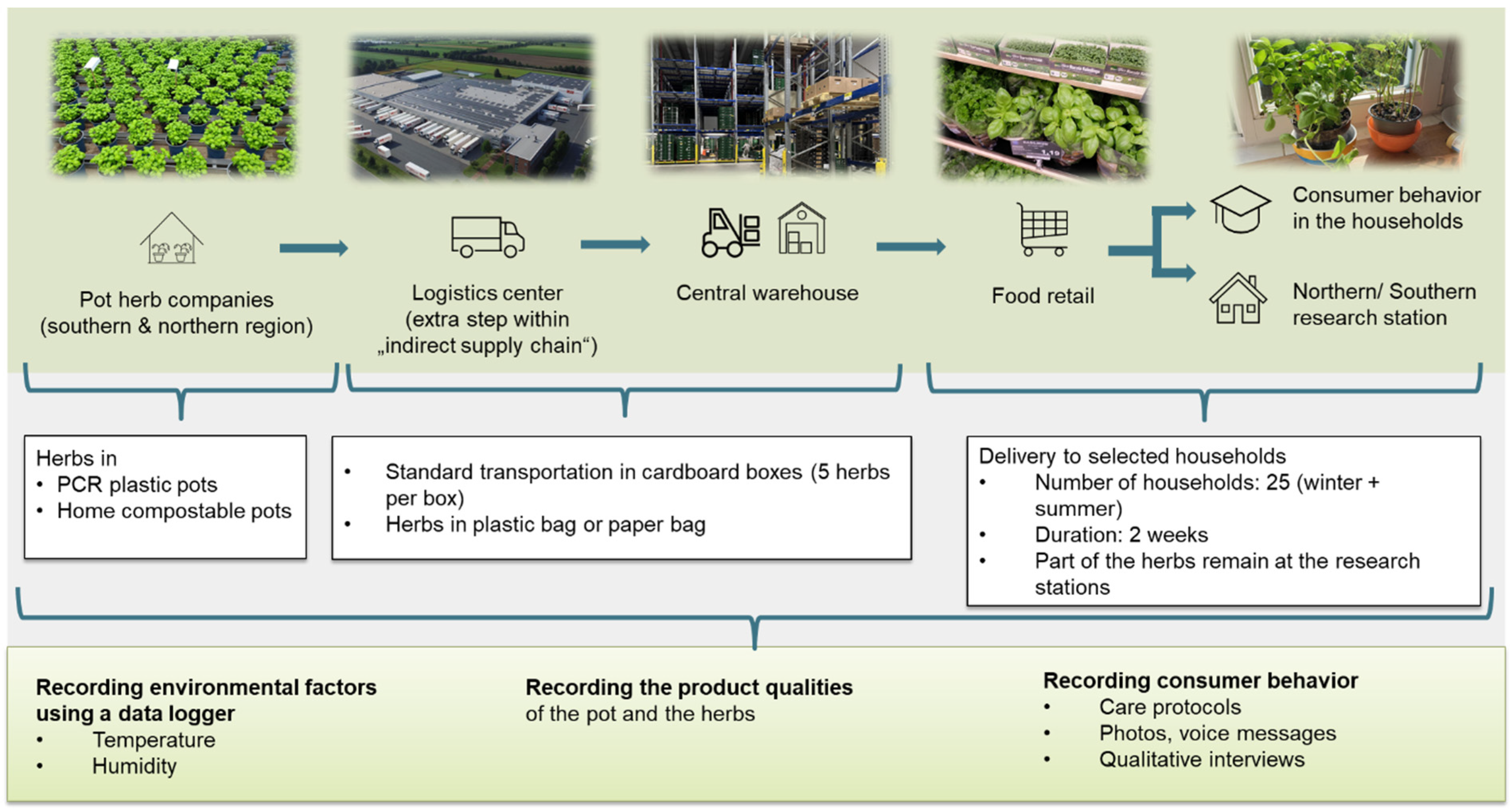
The integrated plant and consumer research study design is depicted in Figure 1.
Two German supply chains were examined to represent diverse logistical models. The “direct supply chain” in southern Germany involved transporting herbs from growers directly to a central warehouse and grocery store. The “indirect supply chain” in northern Germany included an additional step via a producer organization before reaching the central warehouse. This study focused on basil, parsley, and mint, which are key herbs grown in varying temperatures, chosen for their market significance [4]. Basil and parsley accounted for 45% of fresh herb spending in 2019, while the market share of mint grew 22% between 2012 and 2019, driven by its use in cocktails [4]. The herbs were packaged in both plastic and plastic-free materials to assess packaging impact along the supply chain, with households receiving both packaging types. Data on environmental factors, product quality, and consumer behavior were collected. The detailed experimental design is described below.

2.2. Materials and Methods of the Physiological Plant Assessment

The aim of the first part of the study was to investigate the environmental conditions (temperature and humidity) along the value chain of potted herbs in two supply chains and their effects on plant quality. Furthermore, we examined how plastic and plastic-free packaging methods influence overall plant quality. Additionally, the durability of plantable pots and their impact on plant quality were investigated.

2.2.1. Production and Plant Material

During the winter of 2022/2023 (experimental period I) and the summer of 2023 (experimental period II), basil (Ocimum basilicum), parsley (Petroselinum crispum), and mint (Mentha × piperita) were grown as part of the regular production process of growers in greenhouses in the two supply chains (crop-specific experimental periods, Appendix A). Plants were placed in two different 12-cm pots—a PCR pot and a commercially available plantable pot made of compressed sunflower seed shells. Due to the porous structure, the plantable pots allow limited air and water exchange through the pot walls and exhibit a different water retention behavior than impermeable PCR plastic pots. All plants were grown in a specially mixed substrate (Klassmann-Deilmann, Geeste, Germany).
In the direct supply chain parsley and mint were irrigated via drip irrigation four times a day, while basil was watered manually on ebb–flow tables up to three times per day. Fertilization was done manually with a (7-0-2) N-P-K fertilizer (Biofa AG, Münsingen, Germany). The temperature for parsley and mint was set to 21/18 °C (day/night) during seeding and adjusted to 18 °C after three weeks. Basil was maintained at 21/20 °C (day/night) throughout cultivation. Energy screens were used for all herbs between 4 pm to 9 am. Plants were grown under natural light. In winter Ceramic Discharge Metal-halide lamps (CDM Philipps 315 Watt) were used for 4 h.
In the indirect supply chain, the plants were placed in a gutter system with recirculating sub-irrigation and fertilized with an (8-3-2) N-P-K fertilizer (Phytosolution and Phytogreen from Gramoflor GmbH & Co. KG, Vechta, Germany). Parsley temperature was adjusted to 17/16 °C (day/night) during seeding in winter and adjusted after three weeks to 12/10 °C (day/night). Mint and basil were kept at 18/17 °C (day/night) throughout cultivation. Energy screens were used manually depending on the weather. In summer the temperature for parsley was adjusted to 20 °C during seeding, then reduced to 12 °C; mint was maintained at 17/15 °C (day/night), and basil at 19/18 °C (day/night). Plants were grown under natural light, except in winter when additional sodium halogen lamps were used between 3 pm and 7 pm.
All cultivation regimes applied in both nurseries are in line with standard commercial horticultural practice for basil, parsley, and mint and reflect typical production conditions rather than experimentally optimized settings.

2.2.2. Experimental Setup and Logistical Procedure

In the pot herb companies, for each variety, 24 plants were randomly distributed in a block design (Appendix A) and grown to a saleable size. Once saleable, the herbs were transported to the food retailers. For this purpose, the herbs were wrapped in paper foil (direct supply chain), or plastic foil (indirect supply chain) and 5 herbs each were placed in a cardboard box.
After production and transport to the grocery store, plants were taken to the research stations. A small number of the herbs were then delivered to selected households for two weeks. The rest of the herbs remained at their respective research stations (Figure 1). The final evaluation took place in winter after an experimental period of 11 weeks for basil, 12 weeks for parsley, and 8 weeks for mint, as well as in summer after a cultivation period of 5 weeks for basil and mint and 6 weeks for parsley.

2.2.3. Collected Measures and Data Analysis

Data about the environmental conditions and product qualities of the herbs and pots were collected and analyzed.
Temperature and humidity along the supply chain were recorded using data loggers, which were integrated into the plant with an adapted holder. The loggers recorded data hourly at the grower and households, and every minute during transport.
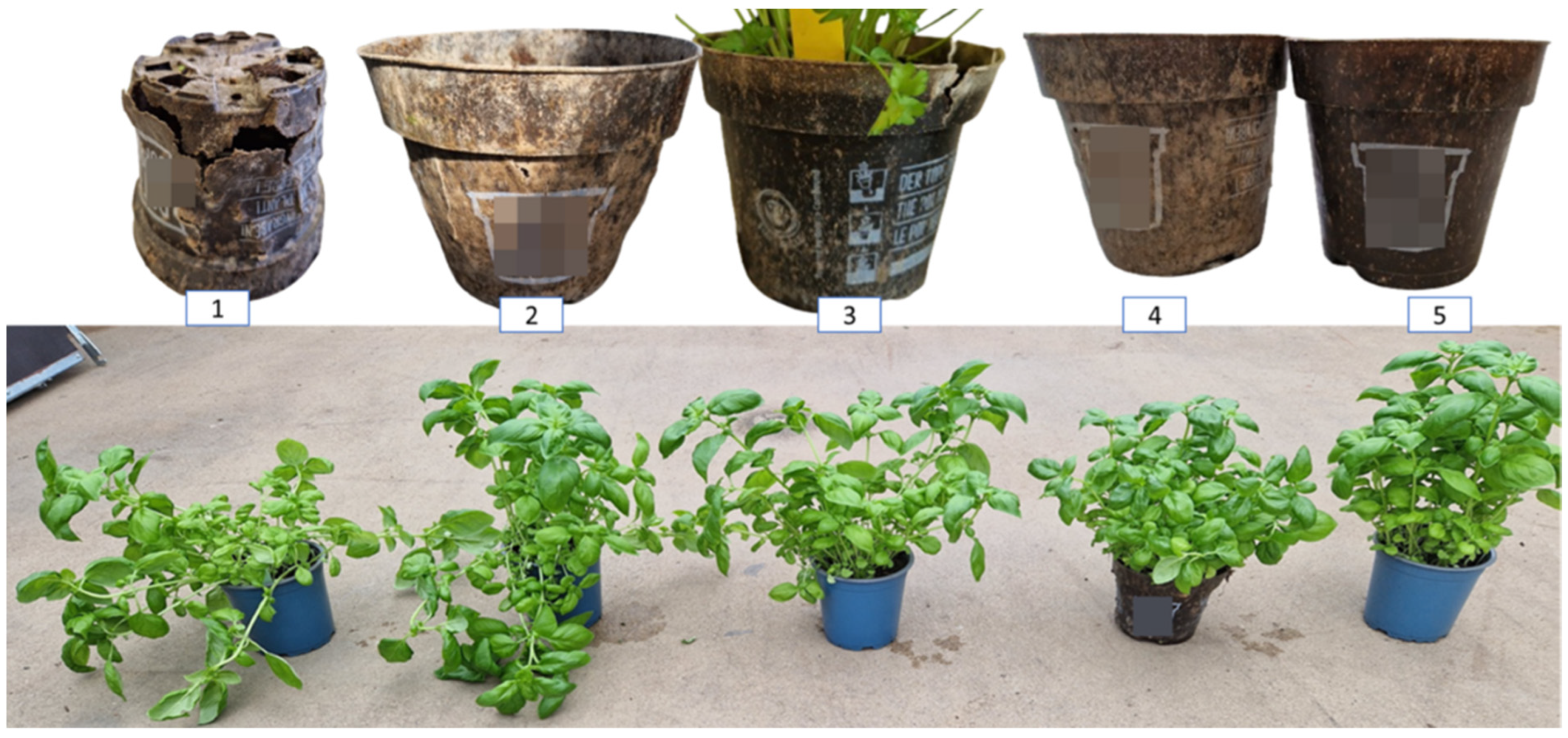
The fresh and dry mass, vitality of the herbs and the quality and stability of the pots, and the substrate moisture were recorded along the supply chain. Measurements occurred before transportation at the production site, after arrival at research stations and after a two-week period in the households or research stations. Plant vitality and pot stability were assessed on a scale from 1 (poor) to 5 (very good) (Figure 2).
Temperature and humidity data were summarized and evaluated using pivot tables. Mean values and standard deviations were calculated for the data collected as part of the plant physiology study on the vitality of the herbs and the quality and stability (shelf life) of the pots. The Kruskal–Wallis test and the Mann–Whitney U-test were used in SPSS Version 29.0.2 to evaluate significant differences in the influence of the pots on the vitality of the herbs, as well as the stability of the pots across different herbs during the experimental periods.

2.3. Materials and Methods of the Consumer Behavioral Assessment

The second part of the study aimed to evaluate the practical viability of the packaging by understanding consumers’ perceptions of plastic and plastic-free packaging for potted herbs, as well as how they are actually used, handled and disposed of. This was examined through a qualitative household study, which allowed us to observe consumer practices directly within their real-life contexts. Only by examining consumer practices under natural household conditions can it be determined whether sustainable packaging solutions meet not only ecological and technical requirements but also everyday usability and acceptance requirements.

2.3.1. Sample

A theory-driven sampling approach was used to select cases relevant to the research question. Sampling criteria included life stage, environmental concern, gender, and pot herb consumption. Life stages were adapted from Arndt [39] and are detailed in Table 1. To estimate the level of environmental concern the environmental self-identity scale from van der Werff et al. [40] was used. These criteria were chosen because they are expected to be significant characteristics that influence consumption behavior. For example, it is well known that there are gender differences in dietary behavior [41,42]. Different life stages are characterized by different consumption patterns. What is eaten or consumed is not only an individual decision, but also depends on other household members, the availability of time and budget, the division of labor, and environmental concerns etc. [43]. In Germany, recruitment of participants involved press releases, social media, supermarket notices and online ads, targeting consumers who had used potted herbs in the last six months. Households completed an online questionnaire based on these criteria, resulting in 25 selected households—72% women and 28% men. In line with qualitative methodological standards, a purposive sample of 25 households provides adequate informational depth to address the study aim through multi-method data collection [44,45]. The study was conducted in accordance with the Declaration of Helsinki, and an ethics and data-protection procedure was developed together with the university’s Data Protection Officer and Legal Department. During an individual online meeting, all households received detailed information about the study purpose, procedures, data collection, and data processing, after which participants could ask questions. All participants were informed that participation was voluntary and they could withdraw their participation at any time. Written informed consent was obtained from all participants during a subsequent in-person visit, using a Privacy Notice and Consent Form compliant with GDPR requirements. The study included winter and summer surveys to assess seasonal variations in consumer behavior and packaging use.

2.3.2. Study Procedure

Each household received basil, mint, and parsley in both PCR plastic and plantable pots. They were uninformed about pot types, though the plantable pots were labeled. Thirteen households received plastic foil-wrapped herbs and twelve received paper foil. Participants were instructed to use the herbs as they normally would and to document care activities over two weeks through written protocols, photographs, and voice recordings. Qualitative guideline-based interviews were conducted to explore participants’ perceptions, behaviors, and experiences with the herbs and packaging. The guideline was developed based on relevant literature on packaging perception [46,47], sustainability-related decision making [48,49], and food consumption routines and everyday practices [8], and was designed to capture the full consumer journey of purchasing, using, and disposing of potted herbs and their packaging. It was iteratively refined during data collection to ensure clarity and depth [50]. The complete interview guideline is provided in Appendix B.

2.3.3. Data Analysis

Recorded interviews were transcribed verbatim, and a qualitative content analysis, based on Kuckartz and Rädiker [51], was employed to identify key themes and patterns within the data. Initial text analysis involved paraphrasing two interview transcripts. Main category development occurred through a two-fold process: deductive coding based on predetermined interview questions and inductive coding, integrating insights from paraphrased texts. This coding process was validated through testing on two interview transcripts. Subsequently, all interview transcripts were coded using the developed main categories. Subcategories and subthemes emerged through an inductive approach, scrutinizing all main categories across interviews and highlighting commonalities. The research team engaged in collaborative discussions to refine and validate the coding framework, ensuring consensus in data interpretation. Data were recoded with identified subcategories and subthemes. In the final phase a category-based analysis was conducted to summarize key insights, providing a comprehensive understanding of emergent topics, subcategories, and overarching themes from the interviews. The identification of consumption patterns followed an established qualitative typology-building approach [48,49]. We first conducted open coding of all qualitative materials (interviews, diaries, voice messages) to capture participants’ practices and meanings related to purchasing, using, and disposing of potted herbs and their packaging. In a second step, we applied constant comparison across cases to identify similarities and contrasts in purchase, plant care, harvesting, handling of packaging, showing different motivations, routines, and valuations. Participants were then clustered into groups that showed internally consistent and externally distinct patterns of herb consumption. The results provide a deeper understanding of the participants’ experiences and perspectives.
Protocols and photographs were utilized to assess the actual use of potted herbs and their packaging. Voice messages were transcribed and analyzed alongside the written protocol, employing qualitative content analysis techniques such as those described above. Photographs served as additional sources, e.g., to ascertain the placement and usage of potted herbs within households.

3. Results

In this section, we present the findings of both the plant-physiological assessments and the consumer household study, followed by an integrated discussion of their implications.

3.1. Results of the Physiological Plant Assessment

3.1.1. Results of the Environmental Conditions—Temperature and Relative Humidity

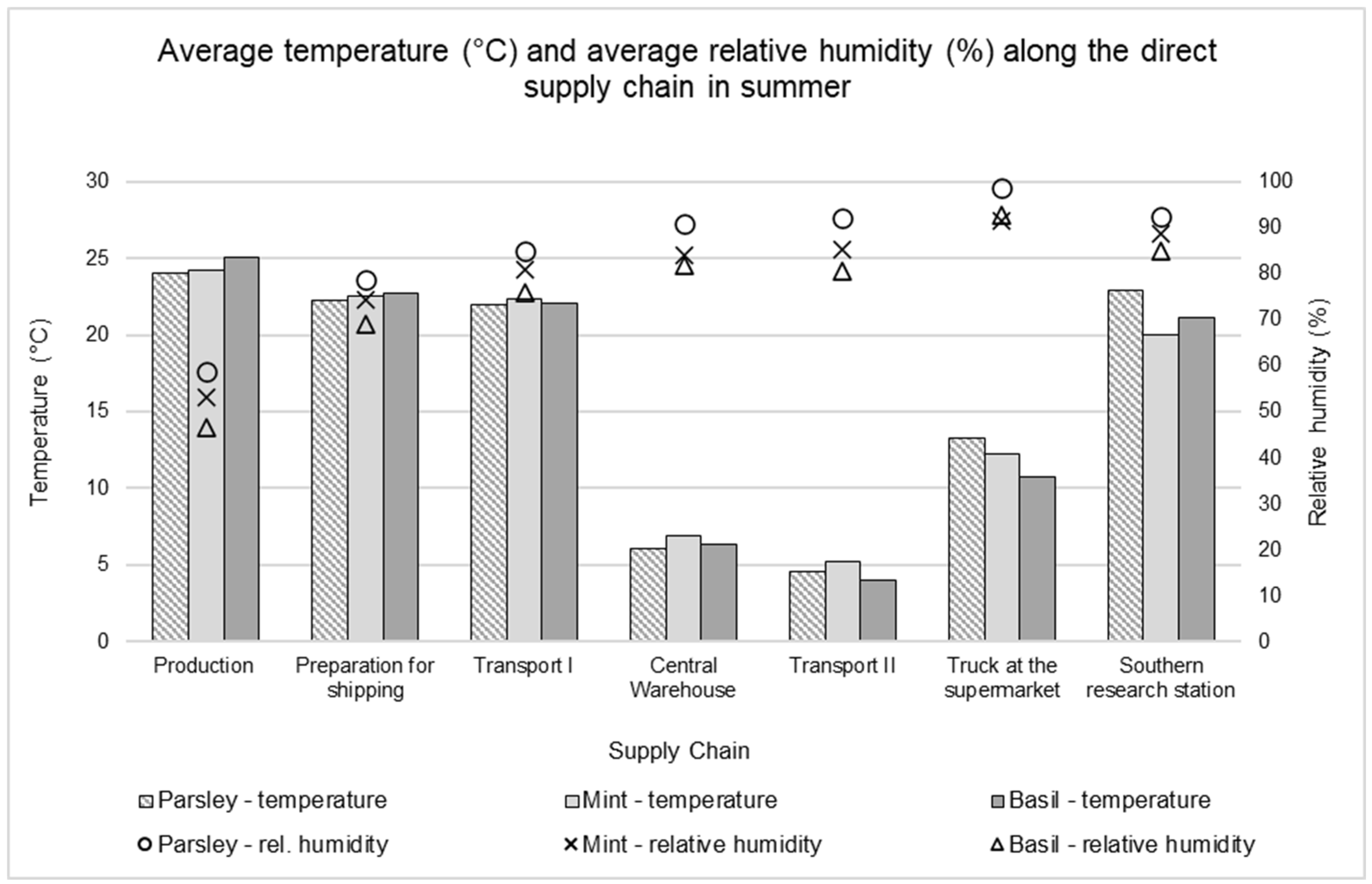
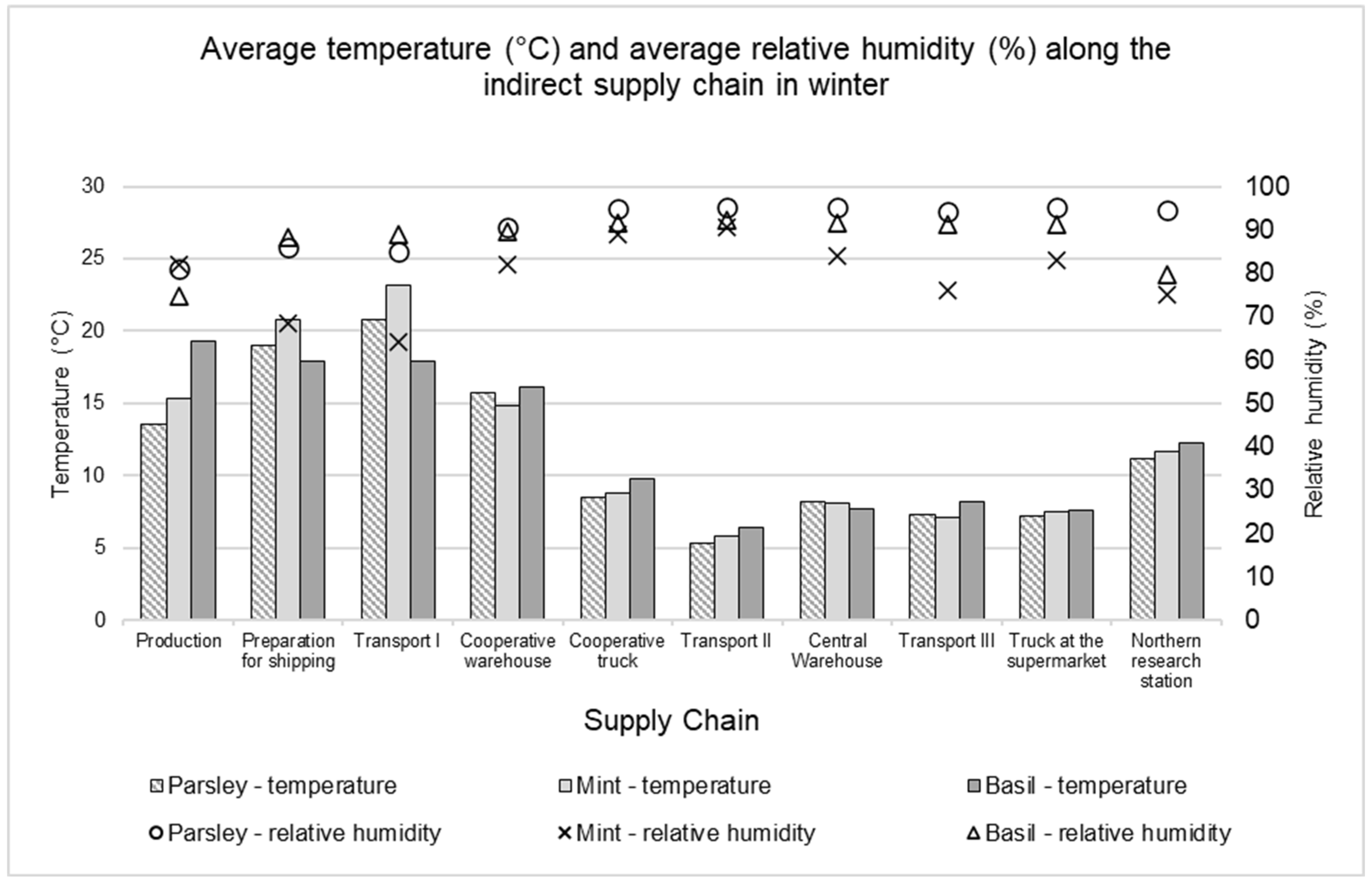
The study results show that during storage and transport in both supply chains, there are significant temperature fluctuations and a continuous increase in humidity, regardless of the season (Figure 3 and Figure 4).
Temperature—Direct and Indirect Supply Chain
Examining the temperatures across production, transport, and storage, we found that in both supply chains, summer measurements showed a significant drop during warehouse storage and transport, whereas the highest temperatures occurred during production. In the direct supply chain, average temperatures were around 24 °C, while in the indirect supply chain they were around 21 °C in summer and around 16 to 19 °C in winter. After a slight decrease during transport preparation, temperatures remained almost constant during transport to the repository, then dropped significantly: from about 22 to 6 °C in the direct supply chain and to about 12 °C in the indirect supply chain in summer and about 5.5 to 8.5 °C in winter. During transport to the grocery store (Transport II, Figure 3), the temperature dropped further to 4 °C. At the research stations, where the herbs were stored briefly before being delivered to the households, temperatures rose again until they approached ambient temperatures.
Relative Humidity—Direct and Indirect Supply Chain
Throughout the supply chains, relative humidity showed a relatively constant increase. At the beginning of the direct supply chain, the relative humidity ranged from 46–58%, while at the indirect supply chain it was approximately 59–64% in summer and 75–81% in winter. During shipment preparation it continued to increase to 88%. This increase may be due to consolidation and packaging of the plants and may indicate reduced air exchange. As the supply chain progressed, the relative humidity continued to increase, reaching up to 98% in the truck at the grocery store, which can be explained by plant transpiration. A decrease was only observed at the research stations. The general trends demonstrate a substantial accumulation of moisture in closed environments during transport and storage.
Conditions in the Households
Average household temperatures did not differ significantly between locations in summer, with room temperatures ranging from 22 to 25 °C in both the southern (direct supply chain) and northern (indirect supply chain) region. In winter, there was more variability in the northern region, with three households having room temperatures of 15 °C, three others between 17 and 18 °C, and one exceeding 20 °C. This variation may be due to different heating habits or energy efficiency levels. Overall, there is a range in winter temperatures, while summer temperatures are consistent.

3.1.2. Results of the Quality of Herbs and Durability of the Plantable Pot

In the following, the growth and quality of the herbs will be described for two different pot types (PCR pot and plantable pot) during summer and winter. The consistency of the plantable pots is also presented.
Quality of Herbs Along the Indirect Supply Chain in Winter and Summer
The results show that herb vitality decreases during the indirect supply chain both in winter and summer. A possible explanation for the observed decline in quality could be the temperature and humidity conditions during transportation. This supports the findings of Rodeo and Mitcham [6]), after which inadequate temperature and humidity conditions lead to a loss of freshness. Each herb showed a specific response to seasonal conditions: Basil had a significantly higher quality score of 4.6 (out of 5, see Figure 2) in summer versus 3.7 in winter, while mint had a rating of 4.2 compared to 3.8 in winter. Parsley, on the other hand, had consistently lower ratings in summer because the entire stock was infected with mildew by the experiment’s end.
Comparison of the Plantable and PCR Pots and Their Influence on the Quality of Herbs
The comparison between the PCR pot and the plantable pot regarding their influence on the quality of the herbs showed no significant differences in fresh biomass, dry mass or plant quality in summer or winter. This indicates that the material of the plantable pot had no influence on plant growth and quality. The results do not align with findings from Li et al. [15], Mwangi et al. [16], Beeks and Evans [17], or the negative effects found by Flax et al. [18], Li et al. [19]. Instead, the results support the findings of Li et al. [15] and Nambuthiri et al. [20] that the effects of biodegradable pots on plant quality depend on material composition.
Durability of the Plantable Pot
The study on the durability of plantable pots under different herb cultivation conditions yielded crop-specific results (Table 2). Basil pots were significantly more stable in summer (rating 4.9) than in winter (rating 2.6), where signs of decomposition were already observed during production. Mint pots largely disintegrated during winter production and had to be completely replaced, possibly due to higher soil moisture contributing to decomposition. These results confirmed the correlations described in the study by [21] that moisture affects pot integrity and accelerates decomposition. In summer the pots for mint scored 4.1. Parsley pots showed no significant stability differences between seasons, but disintegrated faster in summer: In winter, at 80% humidity and 13.7 °C, over 12 weeks, they scored 4.5, whereas in summer, at 62% humidity and 22.1 °C, over six weeks, they scored 4.0.

3.2. Results of the Consumer Behavioral Assessment

In the following, we first present the category system of how consumers perceived and handled the plastic and the plastic-free packaging, and secondly, we present the identified consumption patterns of potted herbs.

3.2.1. Consumer Perception and Handling of Plastic and Plastic-Free Packaging

The main categories are PCR plastic pot, Plantable pot, Plastic foil bag, and Paper foil bag, each divided into Perception, Handling and Disposal. The category Plantable pot contains not only the mentioned elements but also includes Condition and Recognition. Condition refers to the perceived state of the plantable pots, while Recognition refers to whether they were recognized as plantable.
The PCR plastic pot. Perception: The pots were either not rated or rated negatively. This is consistent with previous research showing that consumers are dissatisfied with plastic packaging [26]. Handling: Pots were typically placed on saucers or cachepots; some were left in plastic foil. Plastic pots are often collected for reuse, such as planting tomatoes and peppers, until they become unusable. Disposal: They were discarded either in the plastic or residual waste, the latter showing misconceptions about proper disposal and thus counteracting the closed product cycle. For example: “You shouldn’t put them in the plastic waste. I’ve read that. Now I always put them in the residual waste”.
The plantable pot. Perception: Participants perceived them as ‘eco-friendly’ and appreciated it, which aligns with findings from previous studies [38]. This positive perception held true even against functional limitations due to decomposition: “It is broken, one corner is broken. But it didn’t spoil the effect or anything.” However, concerns arose about the practical aspects of the pots: durability, reusability, waterproofing, and disposal methods, suitability for planting, root penetration, and herb spacing. These uncertainties highlight a potential barrier to consumer adoption. For example: “I think that’s [the pots] more fake. […] The way these plants are, they are not really designed for this.” Handling: Difficulty when handling or watering the herbs, as plantable pots showed cracks or signs of degradation. Only three households planted their herbs, and despite the pots being plantable, only one household actually planted them directly in the pot. The other two either did not realize that the pots were plantable or broke them up and worked the pieces into the soil. Thus, most missed out on the benefit of plantability, possibly due to habitual indoor storage. Whether pots would be used differently for ornamental plants remains an open question. Disposal: Only a few participants disposed of the pots during the study period, and those who did placed them in the organic waste bin due to a misunderstanding about the correct disposal method. The organic waste is not the correct disposal due to the current waste management in many German districts. The two-week period likely did not capture full disposal practices, as participants extended herb use for the study. Condition: Participants reported observations indicating the onset of decomposition in the pots, such as cracks, broken corners, and instability, while others noted that their pots remained in good condition. One household stated: “When you pick it up, you get the feeling that this pot is relatively unstable, i.e., that it is already becoming rather porous.” Recognition: Although labelled as “plantable”, some consumers did not recognize the difference between plantable and plastic pots. This echoes the findings of Findrik and Meixner [52], who identified uncertainty about the recognition of bioplastics versus traditional plastics as a barrier to purchase decisions.
The plastic foil bag. Perception: Plastic was generally viewed negatively as unnecessary, though some understood its transport utility: “I have already said that the plastic bag could almost be omitted from my point of view if it wasn’t too much of a hindrance during transportation.” A few prioritized plant appearances over packaging material and did not express issues with plastic. Handling: Most households immediately removed the plastic bags. Some left them in place to maintain stability, while others rolled them down to contain irrigation water. Disposal: Plastic bags were primarily discarded as plastic waste, in rare cases in the residual waste.
The paper foil bag. Perception: Paper bags were positively viewed. “I think that’s good. It’s paper. […] And I find the paper packaging much more appealing.” Some expressed skepticism about their sustainability, but nevertheless the material was preferred. The transport utility of paper foil bags was acknowledged. Handling: Similar to plastic bags, paper bags were often removed or adjusted for plant display or protection. Disposal: Paper bags were typically discarded as paper waste.

3.2.2. Consumption Patterns

Three consumption patterns were identified: the utilitarian, the everyday and the emotional (Table 3). It is possible that the same household shows different consumption patterns at different times or occasions. Varied behaviors linked to these patterns create distinct demands on packaging, suggesting optimal sustainable packaging differs by consumption type.
In the utilitarian consumption pattern herbs are bought for a specific purpose, used quickly, and sometimes not unpacked. Care is minimal, and plants are discarded if issues arise. The aim of the utilitarian use is to have fresh herbs for a specific purpose without any effort. Expectations for both herbs and packaging are low, with a preference for environmentally friendly packaging due to fast-paced lifestyles.
In the everyday consumption pattern potted herbs are bought spontaneously or with some planning. They are cared for within the limits of daily routines, often with uncertainty in care and limited knowledge. While fresh herbs are seen as special, they may be neglected due to busy lives and the care runs on the side, leading to disappointment if they do not last. The aim is to have fresh herbs over some time with manageable effort. Packaging should be environmentally friendly, easy to handle and care for, and visually appealing.
In the emotional consumption pattern potted herbs are treated like companions—well cared for, often replanted, and integrated into the household’s lifestyle. These users are typically more experienced in plant care and value the process of nurturing plants. Their aim is to enjoy fresh food and to have a connection with nature. Packaging should be eco-friendly, informative, aesthetically attractive, and ideally reusable.

4. Discussion

Building on the research gaps identified in the Introduction, this study provides an integrated assessment of plastic and plastic-free packaging for potted herbs across the German value chain. We followed herbs in PCR plastic and plantable pots through two commercial supply chains and into consumer households, documenting the environmental conditions encountered during production, transport, storage and use, and their effects on herb quality and pot stability. Further, we analyzed how consumers perceive, handle and dispose of the different packaging solutions in everyday life. The study addresses three key gaps: the lack of empirical data on real supply-chain conditions for plastic-free packaging, limited evidence on real-life household handling of such packaging, and the absence of combined analyses that link technical performance with consumer practices.
First, we observed that suboptimal transport temperatures, often dropping below 10 °C, adversely affect herb quality, especially basil, which is sensitive to cold [5]. Our findings that potted herbs frequently experience suboptimal temperatures during transport and retailing are consistent with previous studies documenting similar issues for fresh produce, where temperature deviations significantly accelerate quality loss and reduce shelf life [53,54]. Herbs are fragile products whose quality is highly dependent on maintaining specific temperature ranges. Further research should investigate how different herb species react differently to temperature changes and which measures are most effective for each species. Possible causes and solutions include improved temperature monitoring through real-time monitoring systems, improved insulation, or the use of temperature-regulating packaging to protect herbs from extreme temperatures.
Second, plantable pots present practical implementation challenges, as they degrade under some conditions, leading to reduced functionality. In particular, our findings on mint during winter illustrate that plantable pots may begin to disintegrate prematurely under high soil moisture, compromising both handling and marketability. The premature degradation and reduced stability observed in some plantable pots align with horticultural research showing that fiber-based or biodegradable containers vary widely in structural integrity, water retention, and decomposition rates, depending on material composition and cultivation conditions [55,56]. Such unintended degradation emphasizes that the technical robustness of alternative materials must be carefully matched with crop-specific cultivation and environmental conditions. Premature pot breakdown can further interact with plant growth, for example by altering soil moisture or root stability, thereby indirectly influencing herb vitality and quality. This makes it crucial to evaluate degradation dynamics not only as a material issue but also as a factor shaping overall plant performance. These results align with earlier findings showing that suboptimal temperature and humidity conditions during storage and transport can negatively affect herb quality [5,6,7]. Although no significant differences were observed in fresh or dry mass between pot types, visual growth characteristics such as height and bushiness varied and may influence consumer perception.
The results of the household study showed that the suboptimal conditions and handling of the plantable pots during production and transportation which led to degradation, also caused challenges during the consumption phase. Cracks and instability of the plantable pots complicated the plant care. Nevertheless, the plantable pots (and paper wrap) were viewed positively, despite their functional limitations, in contrast to the PCR pots (and plastic wrap). Our results support the findings from Granato et al. [57] who found that positive associations with e.g., biodegradable and compostable materials absorb and filter out negative experiences, which prevents consumers from perceiving certain drawbacks. Furthermore, we found that consumers treated the plastic-free packaging (plantable pot, paper foil) and the plastic packaging (PCR pot and plastic foil) similarly, e.g., by placing the potted herbs on the windowsill. The plantable pots were almost never planted out, so their main benefit, plantability and compostability, was not utilized. Our results suggest that consumers have a specific habit of consuming herbs, and the new packaging material did not induce a change in behavior. Other reasons for not planting the potted herbs in the plantable pots included a lack of trust in the innovation, such as concerns about whether the pots were suitable for planting or the spacing of the herbs within the pot. Furthermore, some households lacked the space for planting, such as a garden, as well as the motivation and involvement, as seen in the utilitarian consumption pattern.
The various packaging was usually disposed of correctly. However, most people mistakenly assume that compostable pots can be disposed of in organic waste. This finding is consistent with previous studies that have found that consumers dispose of biodegradable packaging improperly or are less concerned about proper disposal [31,36].
Therefore, in addition to the challenges of production and transportation, consumer behavior does not suggest a favorable use of plantable pots for potted herbs in households. The following are starting points for advancing plantable pots in the future: First, marketing plantable pots only to specific consumer groups, such as those who display emotional consumption patterns, as they are more likely to utilize the pots’ plantability. Second, increase trust in the functionality of plantable pots by providing informational videos showing root penetration and pot degradation in soil. Third, consumers may have different consumption patterns for other potted plants, such as perennial plants, making plantable pots more suitable for them than for potted herbs.
However, the adoption of plastic-free packaging for potted herbs will also depend on broader contextual factors. The speed of innovation in biodegradable and bio-based materials [23], stricter regulations such as the Packaging and Packaging Waste Regulation (PPWR) of the European Union [58], and consumer incentives for sustainable choices [59]. These factors may accelerate the market diffusion of plastic-free packaging, underscoring the need to consider policy, technological, and behavioral developments in future research.
This study makes several significant contributions to the literature on transitioning to plastic-free packaging in the fresh produce supply chain. By adopting an interdisciplinary approach, it uniquely combines insights from plant physiology, cultivation, environmental analysis, and consumer behavior. Unlike many previous studies, which rely on hypothetical scenarios or focus on isolated stages of the supply chain, our research analyzed an existing supply chain from production to household consumption. This comprehensive perspective allowed us to uncover interactions and challenges that arise across the entire supply chain. Our study is among the first to empirically examine the environmental conditions and consumer behavior simultaneously in the context of implementing plastic-free packaging. Unlike many studies relying on surveys, we assessed actual consumer behavior in real household environments, providing more reliable and applicable insights into consumer practices and preferences. This study also answers the call for empirical research in this field, identifying critical weaknesses and opportunities within the potted herb supply chain. Additionally, we highlight the necessity for collaboration across stakeholders—growers, logistics companies, retailers, and packaging producers—to overcome these challenges. Finally, our findings underscore the importance of integrating consumer behavior into the development of innovative plastic-free packaging. While efforts to influence behavior through information and nudging remain valuable, this study shows that designing packaging aligned with existing consumer practices may be more effective for ensuring environmental and commercial success.
The limitations of our study may have implications for future research. First, given our small sample size for both the horticultural assessment and household study, our results should be viewed as preliminary and exploratory, providing insights for future research rather than generalizable conclusions. Although we selected a typical production and logistics process type, verification on a larger scale with a larger sample is needed to confirm these results across different contexts. While the focus and nature of the qualitative household study was to understand consumer perceptions and actual use in a realistic setting, quantitative verification of our findings would be useful. Second, as the recruitment of households was voluntary, there may be a self-selection bias that includes participants who are particularly interested in packaging or plastic-free alternatives. However, this potential bias was reduced by not revealing the specific focus of the study at the outset. Furthermore, as the recruitment was not based on random selection and was restricted to certain channels, unknown sampling biases cannot be ruled out. Third, our study focused on fresh potted herbs. Future research could test whether our findings also apply to other fresh food products such as tomatoes or strawberries, or potted ornamental plants that are also part of the German supermarket range.

5. Conclusions

This interdisciplinary study examined the viability of plastic-free packaging solutions for potted herbs along the entire supply chain, including consumer use at home. The research found that current transport temperatures are too low, potentially compromising product quality. In addition, plantable pots require supply chain adjustments and material improvements to prevent quality degradation. Therefore, it is essential to implement systematic improvements and innovative solutions to better control temperature conditions throughout the transportation process to ensure the quality and freshness of the herbs. Effective packaging solutions should protect herbs from extreme temperatures and moisture buildup. Close collaboration between stakeholders throughout the supply chain (growers, logistics companies, retailers, and packaging producers) will be crucial to overcoming these challenges. Considering consumer behavior when developing new solutions could increase their effectiveness and environmental benefits. Along with the standard methods of influencing consumer behavior (information, nudging, and labeling), our results indicate that typical consumer patterns should be incorporated into the design of plastic-free packaging because behavioral change is challenging to implement.

Author Contributions

Conceptualization, A.-K.K.; Data curation, A.-K.K.; Formal analysis, A.-K.K. and C.S.; Investigation, A.-K.K. and C.S.; Methodology, A.-K.K. and C.S.; Project administration, A.-K.K., A.U. and K.S.; Writing—original draft, A.-K.K. and C.S.; Writing—review & editing, A.-K.K., C.S., A.R., A.U. and K.S. All authors have read and agreed to the published version of the manuscript.

Funding

The project was supported by funds of the Federal Ministry of Food and Agriculture (BMEL) based on a decision of the Parliament of the Federal Republic of Germany via the Federal Office for Agriculture and Food (BLE) under the innovation support programme.

Institutional Review Board Statement

The study was conducted in accordance with the Declaration of Helsinki, and an ethics and data-protection procedure was developed together with the university’s Data Protection Officer and Legal Department.

Informed Consent Statement

Written informed consent was obtained from all participants using a Privacy Notice and Consent Form compliant with GDPR requirements.

Data Availability Statement

The data presented in this study are available on request from the corresponding author due to privacy reasons.

Acknowledgments

During the preparation of this manuscript, the authors used ChatGPT Model 5.1 in order to assist in the writing process (e.g., phrasing, better readability and language correction). The authors have reviewed and edited the output and take full responsibility for the content of this publication. We acknowledge support by the Open Access Publishing Fund of Geisenheim University.

Conflicts of Interest

The authors declare no conflicts of interest.

Abbreviations

The following abbreviations are used in this manuscript:
PCRPost consumer recycling

Appendix A

Table A1. Cultivation-specific experimental periods and cultivation data at the different locations.
LocationNorthern TerritorySouthern Territory
CropParsleyMintBasilParsleyMintBasil
VarietyInesPeppermintMarianKatinkaSpanish mintPiamia
Experimental period I10.12.22–24.02.2315.12.22–24.02.2313.12.22–24.02.2315.12.22–10.03.2305.01.23–10.03.2305.01.23–10.03.23
Experimental period II28.04.23–02.06.2304.05.23–02.06.2306.05.23–02.06.2309.05.23–17.06.2326.05.23–17.06.2326.05.23–17.06.23
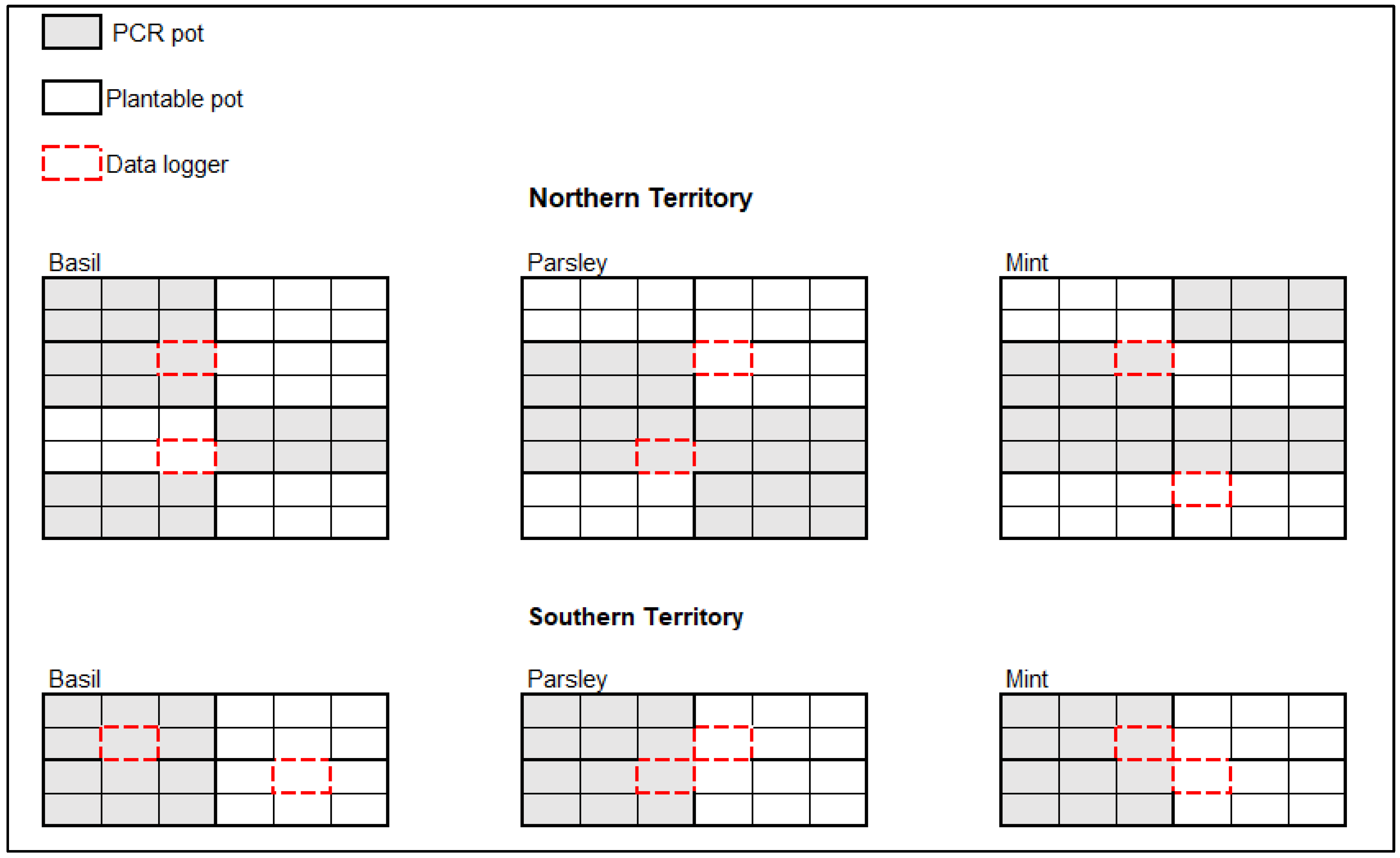
Figure A1. Experimental design of the model potted herbs basil, parsley, and mint in plantable and PCR pots in Northern Territory (n = 24) and in Southern Territory (n = 12) during summer and winter.
Horticulturae 11 01484 g0a1

Appendix B

  • Interview Guideline (Household Study)—Translated from German
  • This semi-structured interview guideline was used to explore participants’ everyday experiences with potted herbs and their packaging. It ensures that all relevant topics are covered while allowing for flexible, narrative responses.
  • Introduction
  • Before we begin the interview, I would like to briefly explain the purpose of our conversation. There are no “right” or “wrong” answers—what matters is your personal experience. I would like to record our conversation to ensure accurate documentation. The recording will be anonymized afterwards. Is this okay for you?
  • Then I will start the recording now.
  • Main Topic: Experiences with Potted Herbs and Their Packaging
*
How did you get on with the potted herbs?
1.
Purchasing and Use of Potted Herbs
*
Tell me how you usually buy potted herbs.
*
How often do you buy potted herbs, and for what purposes do you typically use them?
*
Where do you usually buy them (e.g., supermarket, discounter, farmer’s market)?
*
How do you decide which potted herb to purchase (e.g., freshness, price, appearance, packaging, brand)?
*
Do you compare different packaging types when choosing a potted herb?
*
How do you transport the purchased potted herbs?
*
What are high-quality potted herbs for you?
2.
Handling and Storage at Home
*
What do you usually do with the herb once you get home (e.g., unpacking, watering, repotting, using immediately)?
*
How do you store potted herbs in your household?
*
Which challenges do you encounter with keeping potted herbs fresh?
3.
Experiences with Packaging Types
*
When you received the different packaging types as part of the study, what were your first impressions?
*
What did you like or dislike about the plastic-free and plastic packaging?
*
How easy or difficult was it to handle the pot or wrap (e.g., stability, watering, placement, portability)?
*
Did the packaging influence how long the herbs stayed fresh or usable?
4.
Understanding and Perception of Sustainability
*
What comes to your mind when you think of “sustainable packaging” for potted herbs?
*
How would you describe your general attitude toward reducing plastic use?
*
In your view, what makes packaging environmentally friendly—or not?
*
Did the packaging material affect your perception of the product’s sustainability?
5.
Plant Care, Use, and Disposal Practices
*
How did you care for the herbs during the study period?
*
How often did you water the herbs (if they were watered)
*
How did you cope with the care?/How did you integrate the care into your everyday life?
*
How long do you normally keep the potted herbs? (Shelf life)
*
Did the pots degrade, become unstable, or show any other changes over time?
*
What did you do with the packaging after use (e.g., disposal, recycling, composting, planting)?
*
Was disposal easy or complicated for you?
  • Targeted Follow-Up Questions
  • Towards the end of the interview, I have a few specific follow-up questions:
*
Were there situations in which the packaging helped—or hindered—you when using the herbs?
*
Did you notice differences between the packaging types we provided? If yes, which ones?
*
Did your perception of the herbs or their packaging change during the study?
*
What is your motivation to use potted herbs?
  • Closing Phase
  • To conclude, I have a few questions about your participation in the study:
*
How did you experience taking part in this study overall?
*
How did you manage taking photographs during the two weeks?
*
How did you find documenting your experiences (e.g., diary, voice messages)?
  • Is there anything we forgot to address that you would like to mention?
  • Thank you very much for your time and participation!

References

  1. PlasticsEurope. Annual Production of Plastics Worldwide from 1950 to 2022 (in Million Metric Tons) [Graph]. Available online: https://www.statista.com/statistics/282732/global-production-of-plastics-since-1950/ (accessed on 12 April 2024).[Green Version]
  2. OECD. Global Plastics Outlook: Economic Drivers, Environmental Impacts and Policy Options; OECD Publishing: Paris, France, 2022; ISBN 9789264654945. [Google Scholar][Green Version]
  3. Rundh, B. The multi-faceted dimension of packaging. Br. Food J. 2005, 107, 670–684. [Google Scholar] [CrossRef]
  4. AMI. AMI Markt Report Kräuter 2020; Agrarmarkt Informations-Gesellschaft mbH: Bonn, Germany, 2020; Available online: https://www.ami-informiert.de/ami-shop/shop/detail?ai%5Baction%5D=detail&ai%5Bcontroller%5D=Catalog&ai%5Bd_name%5D=markt-report-der-markt-fur-frische-krauter-in-deutschland&ai%5Bd_pos%5D (accessed on 12 April 2024).
  5. Fratianni, F.; Cefola, M.; Pace, B.; Cozzolino, R.; De Giulio, B.; Cozzolino, A.; d’Acierno, A.; Coppola, R.; Logrieco, A.F.; Nazzaro, F. Changes in visual quality, physiological and biochemical parameters assessed during the postharvest storage at chilling or non-chilling temperatures of three sweet basil (Ocimum basilicum L.) cultivars. Food Chem. 2017, 229, 752–760. [Google Scholar] [CrossRef] [PubMed]
  6. Rodeo, A.J.D.; Mitcham, E.J. Basil postharvest chilling sensitivity is modulated by the dynamics between antioxidant enzymes and metabolites. Postharvest Biol. Technol. 2024, 211, 112805. [Google Scholar] [CrossRef]
  7. Chang, X.; Alderson, P.; Wright, C. Effect of temperature integration on the growth and volatile oil content of basil (Ocimum basilicum L.). J. Hortic. Sci. Biotechnol. 2005, 80, 593–598. [Google Scholar] [CrossRef]
  8. Evans, M.R.; Hensley, D.L. Plant Growth in Plastic, Peat, and Processed Poultry Feather Fiber Growing Containers. HortScience 2004, 39, 1012–1014. [Google Scholar] [CrossRef]
  9. Mehta, N.; Cunningham, E.; Roy, D.; Cathcart, A.; Dempster, M.; Berry, E.; Smyth, B.M. Exploring perceptions of environmental professionals, plastic processors, students and consumers of bio-based plastics: Informing the development of the sector. Sustain. Prod. Consum. 2021, 26, 574–587. [Google Scholar] [CrossRef]
  10. Cheng, J.; Gao, R.; Zhu, Y.; Lin, Q. Applications of biodegradable materials in food packaging: A review. Alex. Eng. J. 2024, 91, 70–83. [Google Scholar] [CrossRef]
  11. Gupta, A.; Urahn, N.; Dey, A.; Yodo, N.; Grewell, D.; Lee, C.W. Sustainable bio-based planting pots as an approach to reduce plastic waste in the agriculture industry. Int. J. Agric. Innov. Technol. Glob. 2023, 3, 215–244. [Google Scholar] [CrossRef]
  12. Harris, B.A.; Florkowski, W.J.; Pennisi, S.V. Horticulture Industry Adoption of Biodegradable Containers. HortTechnology 2020, 30, 372–384. [Google Scholar] [CrossRef]
  13. Mészáros, E.; Bodor, A.; Kovács, E.; Papp, S.; Kovács, K.; Perei, K.; Feigl, G. Impacts of Plastics on Plant Development: Recent Advances and Future Research Directions. Plants 2023, 12, 3282. [Google Scholar] [CrossRef]
  14. Stamm, E.R.; Hill, M.C.; Bartley, P.C.; Adhikari, S.; Peresin, M.S. Cultivating Sustainability: Biodegradable Containers in Horticultural Production. HortScience 2025, 60, 1699–1711. [Google Scholar] [CrossRef]
  15. Li, T.; Bi, G.; Harkess, R.L. Seasonal Growth and Nitrogen Uptake of Encore Azalea ‘Chiffon’ Affected by Nitrogen Availability and Containers. HortScience 2019, 54, 948–954. [Google Scholar] [CrossRef]
  16. Mwangi, W.; Kariuki, S.; Wagara, N. Substitution of Plastics with Organic Pots in Tree Seedlings Production for Sustainable Environmental Conservation. East Afr. J. Sci. Technol. Innov. 2021, 2. [Google Scholar] [CrossRef]
  17. Beeks, S.A.; Evans, M.R. Growth of Cyclamen in Biocontainers on an Ebb-and-Flood Subirrigation System. HortTechnology 2013, 23, 173–176. [Google Scholar] [CrossRef]
  18. Flax, N.J.; Currey, C.J.; Schrader, J.A.; Grewell, D.; Graves, W.R. Coconut Coir and Peat Biocontainers Influence Plant Growth Retardant Drench Efficacy. HortTechnology 2018, 28, 370–377. [Google Scholar] [CrossRef]
  19. Li, T.; Bi, G.; Harkess, R.L.; Denny, G.C.; Scagel, C. Nitrogen Fertilization and Irrigation Frequency Affect Hydrangea Growth and Nutrient Uptake in Two Container Types. HortScience 2019, 54, 167–174. [Google Scholar] [CrossRef]
  20. Nambuthiri, S.; Fulcher, A.; Koeser, A.K.; Geneve, R.; Niu, G. Moving Toward Sustainability with Alternative Containers for Greenhouse and Nursery Crop Production: A Review and Research Update. HortTechnology 2015, 25, 8–16. [Google Scholar] [CrossRef]
  21. Lopez, R.G.; Camberato, D.M. Growth and Development of ‘Eckespoint Classic Red’ Poinsettia in Biodegradable and Compostable Containers. HortTechnology 2011, 21, 419–423. [Google Scholar] [CrossRef]
  22. Heidbreder, L.M.; Bablok, I.; Drews, S.; Menzel, C. Tackling the plastic problem: A review on perceptions, behaviors, and interventions. Sci. Total Environ. 2019, 668, 1077–1093. [Google Scholar] [CrossRef] [PubMed]
  23. Dilkes-Hoffman, L.S.; Pratt, S.; Laycock, B.; Ashworth, P.; Lant, P.A. Public attitudes towards plastics. Resour. Conserv. Recycl. 2019, 147, 227–235. [Google Scholar] [CrossRef]
  24. Fogt Jacobsen, L.; Pedersen, S.; Thøgersen, J. Drivers of and barriers to consumers’ plastic packaging waste avoidance and recycling—A systematic literature review. Waste Manag. 2022, 141, 63–78. [Google Scholar] [CrossRef]
  25. Rhein, S.; Schmid, M. Consumers’ awareness of plastic packaging: More than just environmental concerns. Resour. Conserv. Recycl. 2020, 162, 105063. [Google Scholar] [CrossRef]
  26. Ketelsen, M.; Janssen, M.; Hamm, U. Consumers’ response to environmentally-friendly food packaging—A systematic review. J. Clean. Prod. 2020, 254, 120123. [Google Scholar] [CrossRef]
  27. Siddiqui, S.A.; Profeta, A.; Decker, T.; Smetana, S.; Menrad, K. Influencing Factors for Consumers’ Intention to Reduce Plastic Packaging in Different Groups of Fast-Moving Consumer Goods in Germany. Sustainability 2023, 15, 7625. [Google Scholar] [CrossRef]
  28. Herrmann, C.; Rhein, S.; Sträter, K.F. Consumers’ sustainability-related perception of and willingness-to-pay for food packaging alternatives. Resour. Conserv. Recycl. 2022, 181, 106219. [Google Scholar] [CrossRef]
  29. Allison, A.L.; Lorencatto, F.; Michie, S.; Miodownik, M. Barriers and Enablers to Buying Biodegradable and Compostable Plastic Packaging. Sustainability 2021, 13, 1463. [Google Scholar] [CrossRef]
  30. Mendes, A.C.; Pedersen, G.A. Perspectives on sustainable food packaging:– is bio-based plastics a solution? Trends Food Sci. Technol. 2021, 112, 839–846. [Google Scholar] [CrossRef]
  31. Nuojua, S.; Pahl, S.; Thompson, R.C. Plastic alternatives and substitutes in the packaging sector—A UK consumer perspective. Sustain. Prod. Consum. 2024, 46, 68–81. [Google Scholar] [CrossRef]
  32. Wensing, J.; Caputo, V.; Carraresi, L.; Bröring, S. The effects of green nudges on consumer valuation of bio-based plastic packaging. Ecol. Econ. 2020, 178, 106783. [Google Scholar] [CrossRef]
  33. Herbes, C.; Beuthner, C.; Ramme, I. How green is your packaging—A comparative international study of cues consumers use to recognize environmentally friendly packaging. Int J Consum. Stud. 2020, 44, 258–271. [Google Scholar] [CrossRef]
  34. Otto, S.; Strenger, M.; Maier-Nöth, A.; Schmid, M. Food packaging and sustainability—Consumer perception vs. correlated scientific facts: A review. J. Clean. Prod. 2021, 298, 126733. [Google Scholar] [CrossRef]
  35. Lehberger, M.; Kleih, A.-K.; Sparke, K. “Bio-based Plastic? Hm, I’ve Never Seen It!”—A mixed-methods investigation into consumer preferences for different packaging material of fresh apples and tomatoes. Agribusiness 2024, 1–19. [Google Scholar] [CrossRef]
  36. Taufik, D.; Reinders, M.J.; Molenveld, K.; Onwezen, M.C. The paradox between the environmental appeal of bio-based plastic packaging for consumers and their disposal behaviour. Sci. Total Environ. 2020, 705, 135820. [Google Scholar] [CrossRef]
  37. Yue, C.; Hall, C.R.; Behe, B.K.; Campbell, B.L. Investigating Consumer Preference for Biodegradable Containers. J. Environ. Hortic. 2010, 28, 239–243. [Google Scholar] [CrossRef]
  38. Gabriel, A.; Menrad, K. Market Acceptance and Consumers’ Willingness-To-Pay For Plants In Biodegradable Pots. Acta Hortic. 2015, 297–305. [Google Scholar] [CrossRef]
  39. Du, R.Y.; Kamakura, W.A. Household Life Cycles and Lifestyles in the United States. J. Mark. Res. 2006, 43, 121–132. [Google Scholar] [CrossRef]
  40. van der Werff, E.; Steg, L.; Keizer, K. The value of environmental self-identity: The relationship between biospheric values, environmental self-identity and environmental preferences, intentions and behaviour. J. Environ. Psychol. 2013, 34, 55–63. [Google Scholar] [CrossRef]
  41. Jacob, J.S.; Panwar, N. Effect of age and gender on dietary patterns, mindful eating, body image and confidence. BMC Psychol. 2023, 11, 264. [Google Scholar] [CrossRef]
  42. Otsuka, Y.; Kaneita, Y.; Itani, O.; Jike, M.; Osaki, Y.; Higuchi, S.; Kanda, H. Gender differences in dietary behaviors among Japanese adolescents. Prev. Med. Rep. 2020, 20, 101203. [Google Scholar] [CrossRef]
  43. Neulinger, A.; Simon, J. Food consumption patterns and healthy eating across the household life cycle in Hungary. Int. J. Consum. Stud. 2011, 35, 538–544. [Google Scholar] [CrossRef]
  44. Patton, M.Q. Qualitative Research & Evaluation Methods: Integrating Theory and Practice, 4th ed.; SAGE: Los Angeles, CA, USA; London, UK; New Delhi, India; Singapore; Washington, DC, USA, 2015; ISBN 9781412972123. [Google Scholar]
  45. Malterud, K.; Siersma, V.D.; Guassora, A.D. Sample Size in Qualitative Interview Studies: Guided by Information Power. Qual. Health Res. 2016, 26, 1753–1760. [Google Scholar] [CrossRef]
  46. Lindh, H.; Olsson, A.; Williams, H. Consumer Perceptions of Food Packaging: Contributing to or Counteracting Environmentally Sustainable Development? Packag. Technol. Sci. 2015, 29, 3–23. [Google Scholar] [CrossRef]
  47. Magnier, L.; Crié, D. Communicating packaging eco-friendliness. Int. J. Retail Distrib. Manag. 2015, 43, 350–366. [Google Scholar] [CrossRef]
  48. Grunert, K.G. Sustainability in the food sector: A consumer behaviour perspective. Int. J. Food Syst. Dyn. 2011, 2, 207. [Google Scholar] [CrossRef]
  49. Steenis, N.D.; Van Herpen, E.; Van Der Lans, I.A.; Ligthart, T.N.; Van Trijp, H.C. Consumer response to packaging design: The role of packaging materials and graphics in sustainability perceptions and product evaluations. J. Clean. Prod. 2017, 162, 286–298. [Google Scholar] [CrossRef]
  50. Miles, M.B.; Huberman, A.M.; Saldaña, J. Qualitative Data Analysis: A Methods Sourcebook, 3rd ed.; Miles, M.B., Huberman, A.M., Saldaña, J., Eds.; Arizona State University; SAGE Publications, Inc: Thousand Oaks, CA, USA, 2013; ISBN 9781483323794. [Google Scholar]
  51. Kuckartz, U.; Rädiker, S. Qualitative Inhaltsanalyse Methoden, Praxis, Computerunterstützung: Methoden, Praxis, Computerunterstützung: Grundlagentexte Methoden, 5. [überarbeitete] Auflage; Beltz Juventa: Weinheim, Germany, 2022; ISBN 9783779962311. [Google Scholar]
  52. Findrik, E.; Meixner, O. Drivers and barriers for consumers purchasing bioplastics—A systematic literature review. J. Clean. Prod. 2023, 410, 137311. [Google Scholar] [CrossRef]
  53. Jedermann, R.; Nicometo, M.; Uysal, I.; Lang, W. Reducing food losses by intelligent food logistics. Philos. Trans. A Math. Phys. Eng. Sci. 2014, 372, 20130302. [Google Scholar] [CrossRef]
  54. Mercier, S.; Villeneuve, S.; Mondor, M.; Uysal, I. Time-Temperature Management Along the Food Cold Chain: A Review of Recent Developments. Compr. Rev. Food Sci. Food Saf. 2017, 16, 647–667. [Google Scholar] [CrossRef]
  55. Evans, M.R.; Karcher, D. Properties of Plastic, Peat, and Processed Poultry Feather Fiber Growing Containers. HortScience 2004, 39, 1008–1011. [Google Scholar] [CrossRef]
  56. Evans, M.R.; Taylor, M.; Kuehny, J. Physical Properties of Biocontainers for Greenhouse Crops Production. HortTechnology 2010, 20, 549–555. [Google Scholar] [CrossRef]
  57. Granato, G.; Fischer, A.R.; van Trijp, H.C. The price of sustainability: How consumers trade-off conventional packaging benefits against sustainability. J. Clean. Prod. 2022, 365, 132739. [Google Scholar] [CrossRef]
  58. European Commission. Proposal for a Regulation of the European Parliament and of the Council on Packaging and Packaging Waste, Amending Regulation (EU) 2019/1020 and Directive (EU) 2019/904, and Repealing Directive 94/62/EC (COM(2022) 677 Final); European Commission: Brussels, Belgium, 2022. [Google Scholar]
  59. White, K.; Habib, R.; Hardisty, D.J. How to SHIFT Consumer Behaviors to be More Sustainable: A Literature Review and Guiding Framework. J. Mark. 2019, 83, 22–49. [Google Scholar] [CrossRef]
Figure 1. Study design and data collection from pot herb companies to consumer households.
Horticulturae 11 01484 g001
Figure 2. Scoring scale for the stability of the pots and for the vitality of the herbs.
Horticulturae 11 01484 g002
Figure 3. Average temperature (°C) and average relative humidity (%) along the direct supply chain in summer (mean values from six data loggers, data recorded every 60 s).
Horticulturae 11 01484 g003
Figure 4. Average temperature (°C) and average relative humidity (%) along the indirect supply chain in winter (mean values from six data loggers, data recorded every 60 s).
Horticulturae 11 01484 g004
Table 1. Definition of life stages and sample (n = 25).
Type Nr.Life Stage
(Household Type)
Number of Households for Winter Run (n)Number of Households for Summer Run (n)
Type 1“Bachelor”: Young (under 40 years old), living alone22
Type 2“Newly Married”: Young (under 40 years old), living with a partner, no children22
Type 3“Full Nest I”: Young (under 40 years old), living with a partner, small children living in the household (until 10 years)22
Type 4“Full Nest II”: middle age (40 years old or older), living with a partner, children living in the household (11 years and older)22
Type 5“Empty Nest”: middle-aged or older household (40 years old or older), living with a partner, children moved out24
Type 6“Soletary Survivor”: older household (at least 40 years old), living alone20
Type 7“Single parent”: living with children10
Table 2. Stability of the plantable pot at the individual stages of the supply chain in summer and winter.
CropSeasonProduction Period (Weeks)Rating of the Pots
ProductionGrocery StoreHouse-HoldsResearch StationOverall Grade
BasilWinter113.673.192.6712.6
Summer554.944.6754.9
MintWinter8-----
Summer5552.753.64.1
ParsleyWinter12553.754.24.5
Summer64.884.8833.24.0
Table 3. Characteristics of the different consumption patterns.
CategoriesUtilitarian Consumption PatternEveryday Consumption PatternEmotional Consumption Pattern
Example citations“If you don’t eat them, you’ll soon have dead plants.”; “I don’t really give any special importance or effort or attention to the care of potted herbs.”“It’s mainly this everyday life. Then you forget to water.”“It’s a kind of friendly togetherness”; “By asking myself what connects me to the parsley on my windowsill?”
PCR pot
  • Pots are placed without cover pots, on saucers, “naked” or within a bag
  • Disposed of after use
  • Placed in saucers, cachepots, sometimes left in the bag
  • Disposed of after use or collected & reused
  • Placed in (beautiful) planters, planted into larger pots, planted out
  • Collected after use & reused; only disposed of if they broke
Plantable pot
  • Same use as PCR pot
  • Mostly same use as PCR pots
  • Sometimes planted out if there is motivation, time and means
  • Interest in planting out, especially with an existing garden or balcony
(Plastic and paper) foil bag
  • May be left on the plant
  • Directly removed and disposed of
  • Easy removal without tools is desired
  • In individual cases, the bags are left on completely or just rolled down
  • Removed and disposed of immediately
Purchase
  • Purposive
  • Appearance of the herbs decisive
  • Alternatives: frozen/cut herbs or no purchase
  • Irregularly, spontaneously, planned
  • Appearance of the herbs decisive
  • Disappointing experiences can lead to no purchase
  • “Compassionate” purchases of “sad” looking herbs
  • Regurlarly, spontaneously, planned, seasonal
  • “Compassionate” purchases of “sad” looking herbs
Plant care
  • No/minimalist care
  • No special importance/no effort/little attention
  • Motivation: freshness, better taste
  • Shelf life: a few days to 2 weeks
  • Location: windowsill in the kitchen or living/dining room.
  • Mainly watering
  • Problems: shelf life too short, uncertainties in care, fungus gnats, moldy soil, waterlogging, extra effort
  • Motivation: freshness, better taste, smell, appearance
  • Shelf life: usually 2–4 weeks
  • Prominent location
  • Beautiful planter or repotted
  • Garden/balcony: Planting out
  • Plenty of time spent
  • Watering and other care measures
  • Problems: short lifespan, fungus gnats, moldy soil, waterlogging
  • Motivation: Freshness, better taste, smell, experience, nature
  • Shelf life: 4–12 weeks
Harvesting
  • Harvested completely, bought for a specific purpose; not concerned about further growth
  • Harvesting in such a way that the herbs continue to grow and last long.
  • Herbs are treated “respectfully”. They are harvested carefully, e.g., only thinned out.
Disclaimer/Publisher’s Note: The statements, opinions and data contained in all publications are solely those of the individual author(s) and contributor(s) and not of MDPI and/or the editor(s). MDPI and/or the editor(s) disclaim responsibility for any injury to people or property resulting from any ideas, methods, instructions or products referred to in the content.