Article

Seasonal Changes in Physiological Responses and Yield of Citrus latifolia Under High-Density Planting and Different Soil Moisture Tensions


by
Benigno Rivera-Hernández
1,
René Garruña
2,*,
José Luis Andrade
3,
Wilmer Tezara
4,5,
Roberth Us Santamaría
3,
Rubén H. Andueza-Noh
2,
Vianey González-Jiménez
1 and
Eugenio Carrillo-Ávila
6,*
1
Universidad Popular de la Chontalpa, Carretera Cárdenas-Huimanguillo, km 2.0, Ranchería Invitab Paso y Playa, Heroica Cárdenas C.P. 86556, Tabasco, Mexico
2
SECIHTI-Instituto Tecnológico de Conkal, Av. Tecnológico S/N, Conkal C.P. 97345, Yucatán, Mexico
3
Unidad de Recursos Naturales, Centro de Investigación Científica de Yucatán, Calle 43 No. 130, Col. Chuburná de Hidalgo, Mérida C.P. 97205, Yucatán, Mexico
4
Instituto de Biología Experimental, Universidad Central de Venezuela, Caracas 1041-A 47114, Venezuela
5
Facultad de Ciencias Agropecuarias, Universidad Técnica Luis Vargas Torres, Estación Experimental Mutile, Esmeraldas 080102, Ecuador
6
Colegio de Postgraduados Campus Campeche, Carretera Federal Haltunchén-Edzna, km 17.5, Sihochac, Municipio de Champotón C.P. 24450, Campeche, Mexico
*
Authors to whom correspondence should be addressed.
Horticulturae 2025, 11(12), 1472; https://doi.org/10.3390/horticulturae11121472
Submission received: 27 October 2025 / Revised: 1 December 2025 / Accepted: 3 December 2025 / Published: 5 December 2025
(This article belongs to the Section Fruit Production Systems)

Abstract

This study aimed to evaluate the physiological responses and yield of Tahiti lime (Citrus latifolia) cultivated at high density under three soil moisture tension (SMT) levels: low (L = −0.010 MPa), medium (M = −0.035 MPa), and high (H = −0.085 MPa). Measurements included water status, sap flow, photochemical activity, gas exchange, and fruit yield during the dry and early rainy seasons. The leaf water potential (ΨL) and relative water content (RWC) were higher in the L and M treatments than in H, with an overall improvement at the onset of the rainy season. From the dry to the rainy season, sap flow decreased by 25.3, 16.0, and 1.9 L day−1 in L, M, and H plants, respectively. Plants with higher soil water availability (L and M) maintained better water status during the dry season, which favored photochemistry and gas exchange, reflected in a greater shoot growth and fruit yield (54.5 and 53.4 kg plant−1, respectively). In contrast, H SMT significantly reduced water relations and photosynthetic activity, leading to yield loss. Short-term rainfall (six days) was insufficient to restore physiological performance. Maintaining SMT around −0.035 MPa during the dry season optimizes yield while reducing water use.

1. Introduction

Global food production is increasingly threatened by climate change, which alters temperature and rainfall patterns and directly affects crop yield [1]. Water scarcity for irrigation and plant water deficit are among the main challenges to be addressed in agricultural systems. Water deficit reduces the net photosynthetic rate (AN), mainly due to decreased stomatal conductance (gs) or limitations in metabolic activity [2,3]. However, some species exhibit adaptive mechanisms such as reduced leaf area, increased root growth, osmotic adjustment, improved carbon balance, and enhanced water use efficiency (WUE), which allow them to tolerate drought conditions [3]. Understanding how major food crops respond physiologically to limited water availability is therefore essential to improve their management and resilience under future climate scenarios.
Citrus fruits are among the most widely cultivated crops worldwide and are valued for their contribution of vitamin C and citric acid to the human diet. The ‘Tahiti’ lime (Citrus latifolia Tan.) is an economically important citrus species, particularly in tropical regions such as Mexico. Physiological responses to drought in the Citrus genus vary widely depending on genotype and environmental conditions [4]. Although several studies have explored the physiological responses of species such as C. unshiu, C. limon, C. sinensis, C. reticulata, and C. paradisi [5,6,7], research on C. latifolia remains limited [5,8]. This lack of information restricts the development of efficient agronomic management strategies for C. latifolia under current and future climatic conditions [1,6,9].
Mexico is the second-largest producer of C. latifolia worldwide. More than 90% of its cultivated area lies in tropical regions [10], characterized by a pronounced dry season (DS, February to May) with high solar radiation and vapor pressure deficit (VPD), followed by a rainy season (RS) with lower radiation and VPD [11]. During the DS, soil water depletion generates high tension in the rhizosphere, which negatively affects water uptake and plant metabolism [12].
High-density planting systems have been proposed as a strategy to optimize light interception and productivity per unit area while reducing water requirements through improved canopy structure [13,14]. However, information on how C. latifolia trees respond physiologically to different soil moisture tensions (SMT) under high-density planting remains scarce.
We hypothesized that maintaining C. latifolia under medium SMT during the dry season would sustain adequate physiological activity and yield compared with plants under high SMT. This study, therefore, aimed to evaluate the seasonal physiological responses and fruit yield of C. latifolia cultivated in a high-density planting system under different SMT during the dry and early rainy seasons.

2. Materials and Methods

2.1. Site Location and Orchard Characteristics

The experiment was conducted from February to June 2019 in the experimental field of the Colegio de Postgraduados, Campeche Campus, Mexico (19°49′ N, 90°30′ W, 30 m a.s.l.). A 17-year-old Tahiti lime (Citrus latifolia Tan.) orchard grafted on sour orange (C. aurantium L.) was used. The trees were planted under a high-density scheme (666 trees ha−1) and irrigated by drip irrigation. The soil was classified as a calcium vertisol according to the World Reference Base for Soil Resources [15], with a clay texture (72–82%), bulk density of 1.25 g cm−3, 1.7% organic matter, and pH 6.6. Each plant received 450, 380, and 170 g of N, P, and K, respectively, during the study period. Trees were spaced 1.5 m within rows and 10 m between rows. The canopy height averaged 2.2 m, and the canopy width was 3.0 m (Figure 1A).
The phenological development of Tahiti lime during the experimental period was characterized using the BBCH scale [16]. Bud development occurred from 1 February to 12 March, followed by flower development from 13 March to 10 April, and full flowering from 11 April to 29 April. Fruit development extended from 30 April to 14 May, and fruit maturation and harvest took place from 15 May to 25 June. The SMT treatments were imposed shortly before the onset of the dry season, when trees were transitioning from the end of fruit development to the beginning of harvest (BBCH 72–85). LAI was measured two days before the DS gas exchange campaign, on 20 April, when trees were in late fruit development and early harvest. Dry season physiological measurements were conducted during this same harvest phase. A second LAI measurement was obtained on June 6, during the second harvest, coinciding with the assessment of photosynthetic and photochemical recovery. The rainy season began with intense rainfall after 30 June, and thus the June 6 measurements correspond to the early post-harvest vegetative flush (BBCH 01–09). Linking these sampling dates with their respective phenological stages provides a clearer framework for interpreting the water status, gas exchange responses, and canopy development under the SMT treatments.

2.2. Evaluated Treatments

Before the onset of the dry season (DS), three soil moisture tension (SMT) treatments were established: low tension (L, −0.01 MPa), medium tension (M, −0.035 MPa), and high tension (H, −0.085 MPa). Each tension level represented one treatment. SMT was monitored using tensiometers (Model R, Irrometer Company, Riverside, CA, USA) installed 30 cm deep next to the drip lines (Figure 1B). The irrigation volume was controlled with valves. Two drip lines per tree row were placed parallel to each other, 50 cm from the trunk, with emitters every 30 cm (1.41 L h−1). Treatments covered the entire DS and ended one week after the beginning of the rainy season (RS, June).
Irrigation during the dry season was regulated by SMT, as measured by tensiometers installed in each plot. Since irrigation was applied whenever the corresponding tension threshold was reached, both the frequency of events and the volume delivered per tree varied among treatments. On average, trees in the L, M and H treatments received approximately 10, 4 and 2.1 L per irrigation event, respectively. Over the season, this resulted in 60, 36 and 22 irrigation events, yielding total volumes of 0.60 m3 per tree in L, 0.143 m3 per tree in M, and 0.047 m3 per tree in H, in accordance with the intended gradient of water availability. At the beginning of the rainy season, accumulated rainfall during the first six days reached 218.4 mm.
Lateral movement of water between treatments was considered negligible because the alleyways separating plots were 10 m wide and the soil’s unsaturated hydraulic conductivity is extremely low in this vertisol (0.2160 m d−1; [17]). Measurements were taken only from the two central trees of each replicate to avoid border effects.

2.3. Evaluated Variables

2.3.1. Microclimate Data and Water Status

Throughout the experiment, a portable weather station (Onset HOBO U30, Bourne, MA, USA) recorded global solar radiation (Rg), air temperature (°C), and relative humidity (RH, %), which were used to calculate vapor pressure deficit (VPD). Sensors were installed at canopy height.
Leaf (ΨL) and stem (Ψstem) water potentials were measured at 6:00 a.m. and 1:00 p.m., using a Scholander-type pressure chamber (Model 600-EXP, Albany, OR, USA) [9].
Relative water content (RWC) was determined according to García-Sánchez et al. [18] using the following equation:
RWC = F W D W T W D W × 100
where FW = fresh weight, TW = turgid weight, and DW = dry weight.

2.3.2. Sap Flow Measurements

Sap flow (SF) was measured using the heat dissipation probe method [19,20,21]. The calibration equation for Citrus sinensis validated by Coelho et al. [22] was applied, using parameter b = 1.231. SF density (m3 m−2 h−1) was multiplied by the sapwood area to obtain total flow.
Probes were installed on the sapwood of branches averaging 6.7 cm in diameter and 1.2 m above the ground, on the north side. Thermocouples were positioned 10 cm apart, inserted 30 mm deep, and dissipated 0.2 W. Data were recorded every 10 min using data loggers (CR10X and CR21X, Campbell Scientific Inc., Logan, UT, USA) equipped with a 32-channel multiplexer (Figure 1B,C).
SF was measured in four trees per treatment for seven consecutive days during both seasons. Data from the first and last two days were excluded to minimize edge effects.

2.3.3. Leaf Photochemistry and Gas Exchange Measurements

Chlorophyll fluorescence parameters, maximum quantum yield of photosystem II (Fv/Fm), photochemical quenching (qP), non-photochemical quenching (NPQ), relative electron transport rate (ETR), and effective quantum yield (ΦPSII), were measured using a pulse amplitude modulated fluorometer (PAM, Walz, Effeltrich, Germany) [23]. Measurements were taken at 2:00 a.m. using nine light intensities (0–1500 μmol photons m−2 s−1).
Gas exchange parameters: net photosynthetic rate (AN), stomatal conductance (gs), transpiration rate (E), and water use efficiency (WUE = AN/E), were recorded with an infrared gas analyzer (LI-6400XT, LI-COR Biosciences, Lincoln, NE, USA) at five times during the day (7:00, 9:30, 12:00, 14:30, and 17:00 h). Measurements were conducted on six trees per treatment, using north-facing, four-month-old leaves located in the middle canopy (three leaves per tree), and five consecutive readings were taken per leaf. During all evaluations, the CO2 concentration in the reference cell was fixed at 400 ppm.
To avoid interference from variable ambient radiation or cloudiness, the system was equipped with a red/blue LED light source (6400-02B LED Light Source, LI-COR Biosciences, Lincoln, NE, USA), providing a stable photon flux inside the chamber. The photosynthetic photon flux density (PPFD) was programmed according to the typical irradiance at each evaluation time: 100 μmol m−2 s−1 at 7:00 h, 500 μmol m−2 s−1 at 9:30 h, 1500 μmol m−2 s−1 at 12:00 h, 1200 μmol m−2 s−1 at 14:30 h, and 300 μmol m−2 s−1 at 17:00 h. These PPFD values were determined from an environmental characterization conducted at the study site, which included at least seven consecutive days of radiation measurements obtained with the weather station (Onset HOBO U30, MA, USA). On each measurement day, the programmed irradiance levels were verified in the field using the external quantum PAR sensor (LI-190R Quantum Sensor, LI-COR Biosciences, Lincoln, NE, USA) attached to the infrared gas analyzer (LI-6400XT, LI-COR Biosciences, Lincoln, NE, USA) to ensure that the chamber PPFD accurately reflected the typical irradiance at each evaluation hour.

2.3.4. Leaf Area Index, Shoot Growth, and Yield Measurements

Leaf area index (LAI) was measured with a canopy analyzer (LAI-2000 Plant Canopy Analyzer, LI-COR, Lincoln, NE, USA). Due to the high planting density and the formation of a compact canopy, ten measurements per experimental unit were taken above and below the canopy, maintaining a constant distance of 30 cm between the sensor and the foliage, following the manufacturer’s recommendations. The first LAI measurement was conducted on 20 April, two days before the dry-season gas exchange campaign. The second measurement was taken on 6 June, during the second harvest, coinciding with the evaluation of photosynthetic and photochemical recovery. A pre-treatment LAI measurement was not obtained because the orchard had recently undergone standardized pruning, resulting in a uniform canopy structure across all trees. This ensured equivalent initial conditions among treatments at the onset of the trial.
Shoot growth was evaluated on six trees per treatment. Ten lateral branches per tree (mean diameter 10.7 mm; length 1.6 m) were monitored every 14 days, recording vegetative and flower bud formation. Before the experiment, all trees were pruned for shape and uniformity.
Fruit yield (kg tree−1) was obtained from four harvests between 15 May and 25 June. Six trees per treatment were harvested. Production per hectare was estimated based on the planting density (666 trees ha−1).

2.4. Experimental Design and Statistical Analysis

A completely randomized design with three treatments and three replicates (six trees per replicate) was used. Data were analyzed for normality and subjected to ANOVA followed by Tukey’s test (p ≤ 0.05). Statistical analyses were performed using SAS v9.1.3 (SAS Institute, Cary, NC, USA).

3. Results

3.1. Microclimate Data, Water Potential, and Relative Water Content

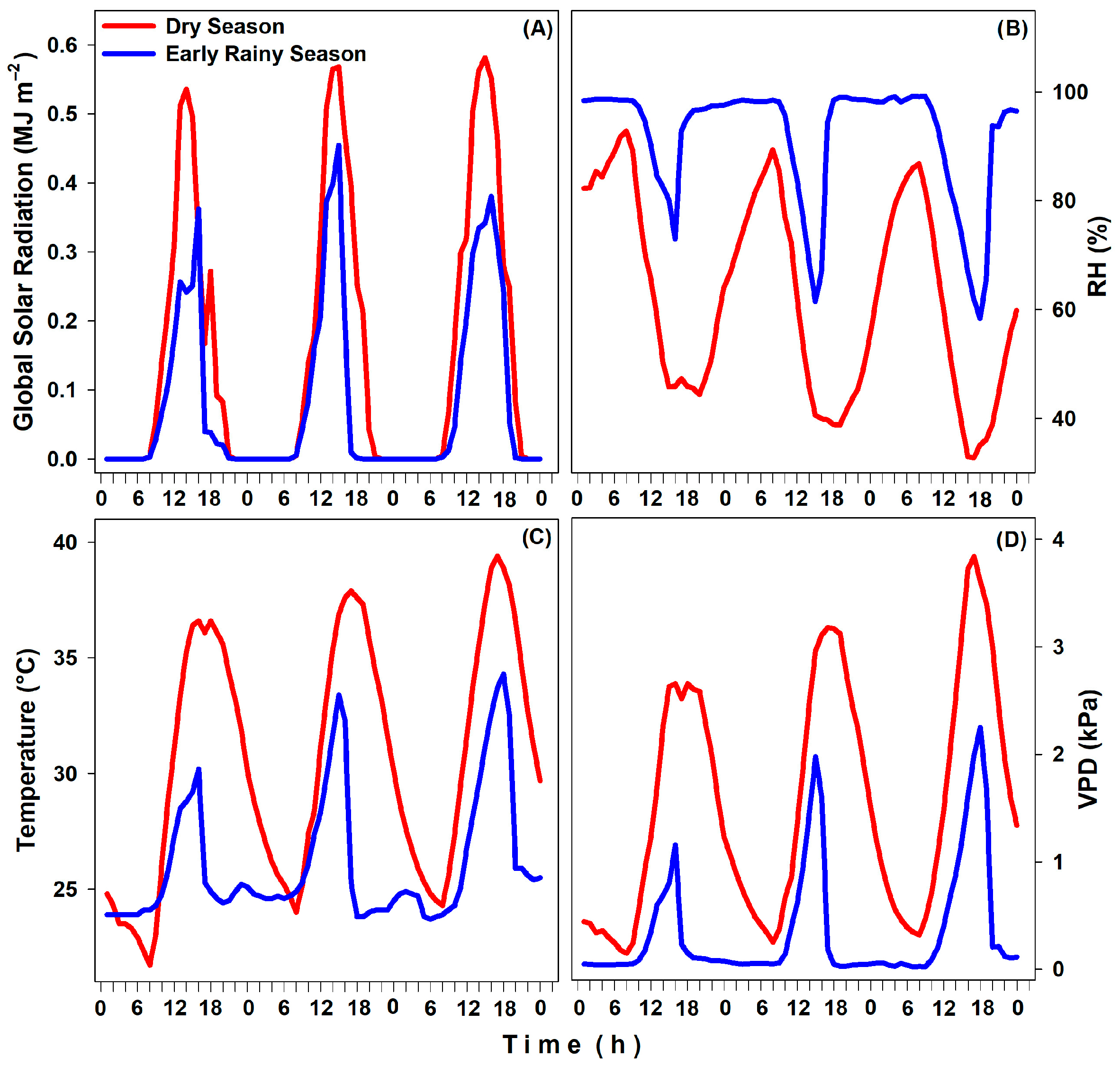
During the dry season (DS), both global radiation (Rg) and temperature increased markedly (Figure 2A,C), reaching afternoon peaks of 0.58 MJ m−2 and 38.5 °C, respectively. As a result, relative humidity (RH) dropped to 38.5% (Figure 2B), and the vapor pressure deficit (VPD) rose to 3.8 kPa (Figure 2D). With the onset of rainfall, RH increased to 98.6%, while Rg decreased by 29.3% (0.41 MJ m−2) compared with DS. Consequently, maximum temperature and VPD declined to 34.3 °C and 2.24 kPa, respectively.
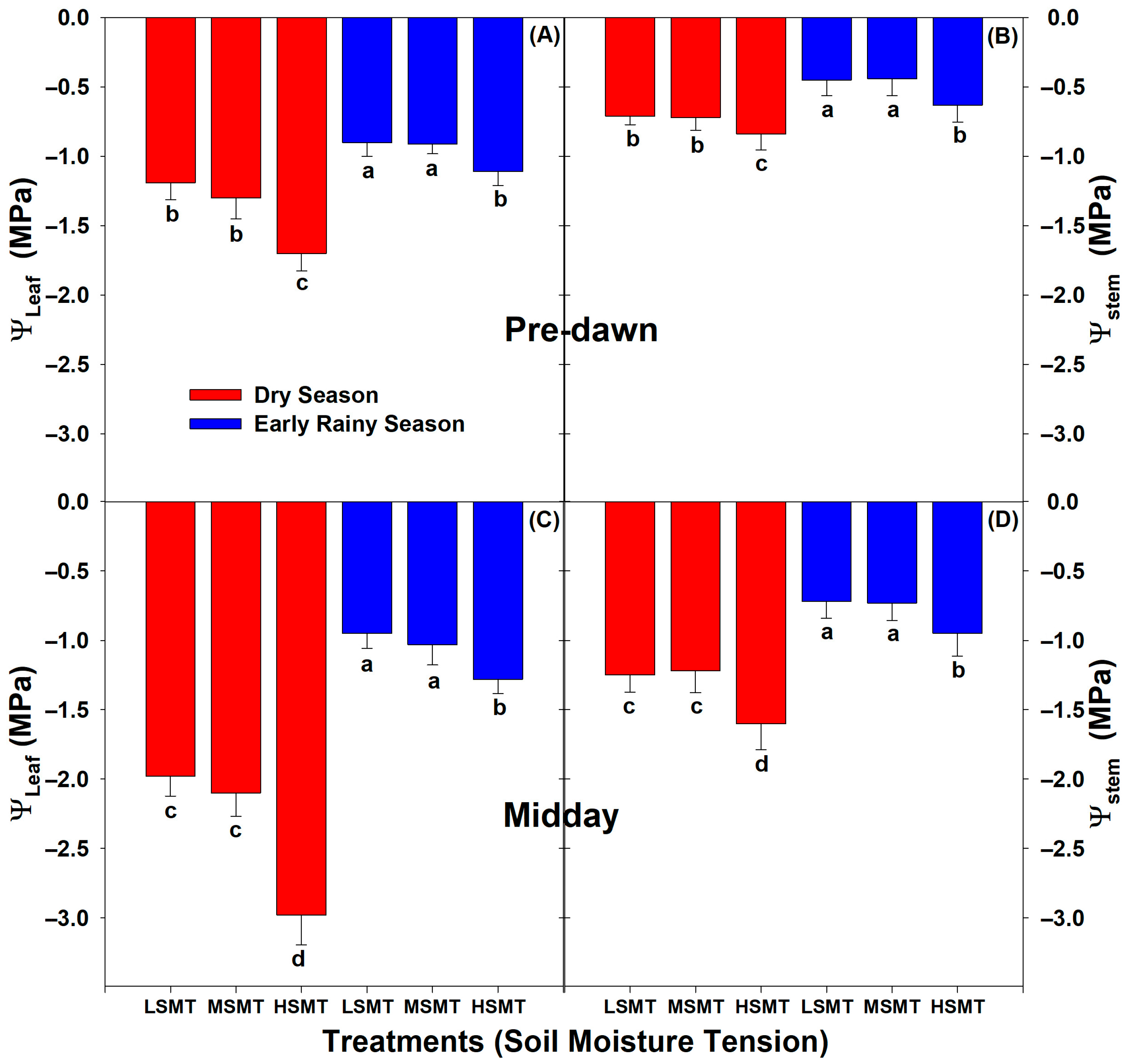
Pre-dawn leaf water potential (ΨL) during DS was significantly higher (p ≤ 0.05) in L (−1.19 MPa) and M (−1.29 MPa) plants than in H plants (−1.70 MPa). In the rainy season (RS), pre-dawn ΨL also remained higher in L (−0.90 MPa) and M (−0.91 MPa) than in H (−1.11 MPa). Although ΨL in H plants increased from DS to the RS, the values did not match those of plants that had greater water availability during DS (Figure 3A).
A similar pattern was observed for noon ΨL, but the decline from pre-dawn to midday was more pronounced during DS than during the RS (Figure 3C). Stem water potential (Ψstem) followed the same seasonal trend as ΨL, both pre-dawn and at noon (Figure 3B,D), but with consistently higher values.
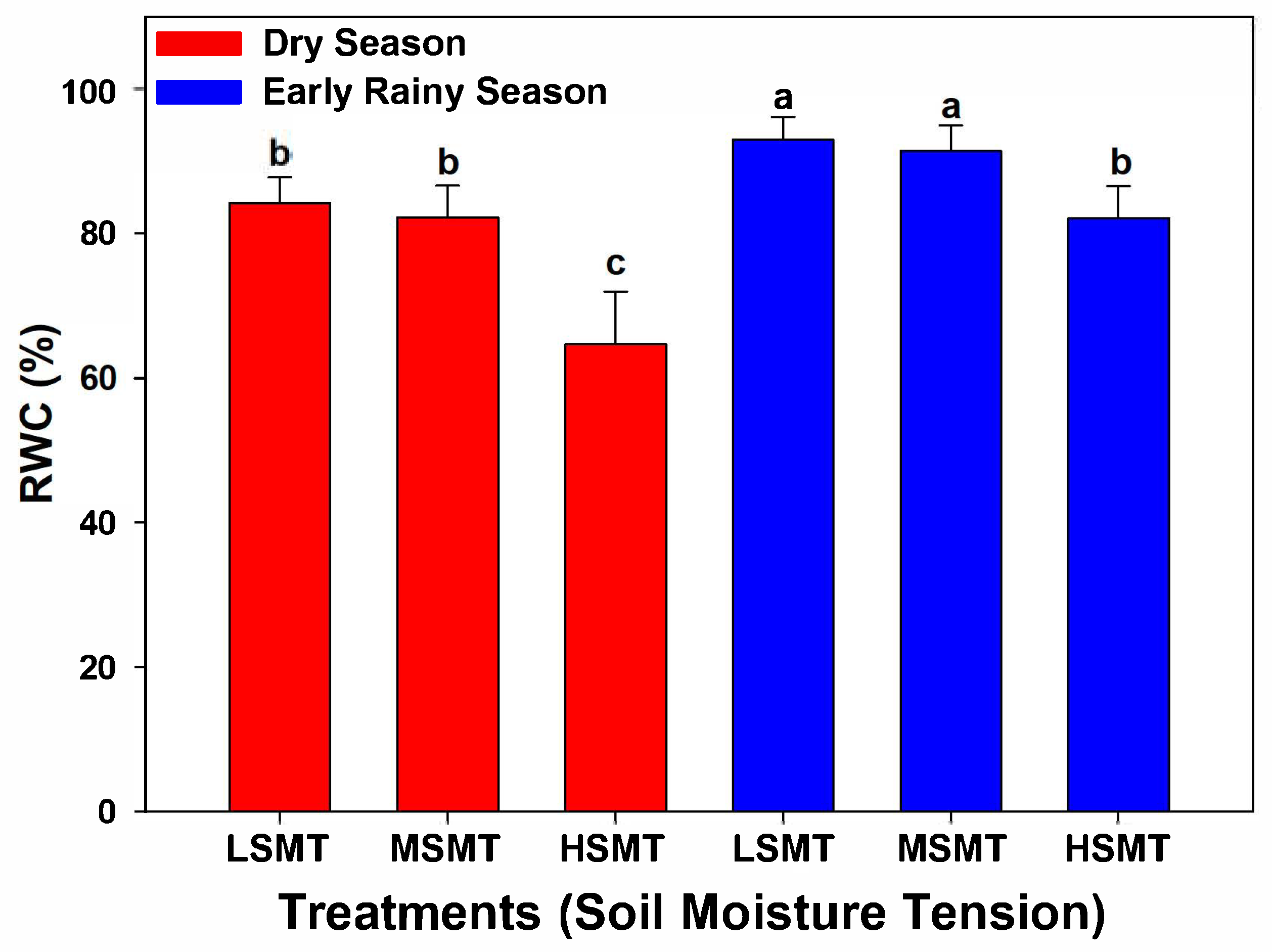
Relative water content (RWC) during DS was comparable between L and M treatments (87.3% and 85.1%) and significantly higher than in H plants (64.6%). With the onset of rain, RWC increased by 5.6%, 6.2%, and 17.4% in L, M, and H plants, respectively. However, RWC in H plants did not fully recover to the levels observed in treatments with higher soil water availability during DS (Figure 4).

3.2. Sap Flow

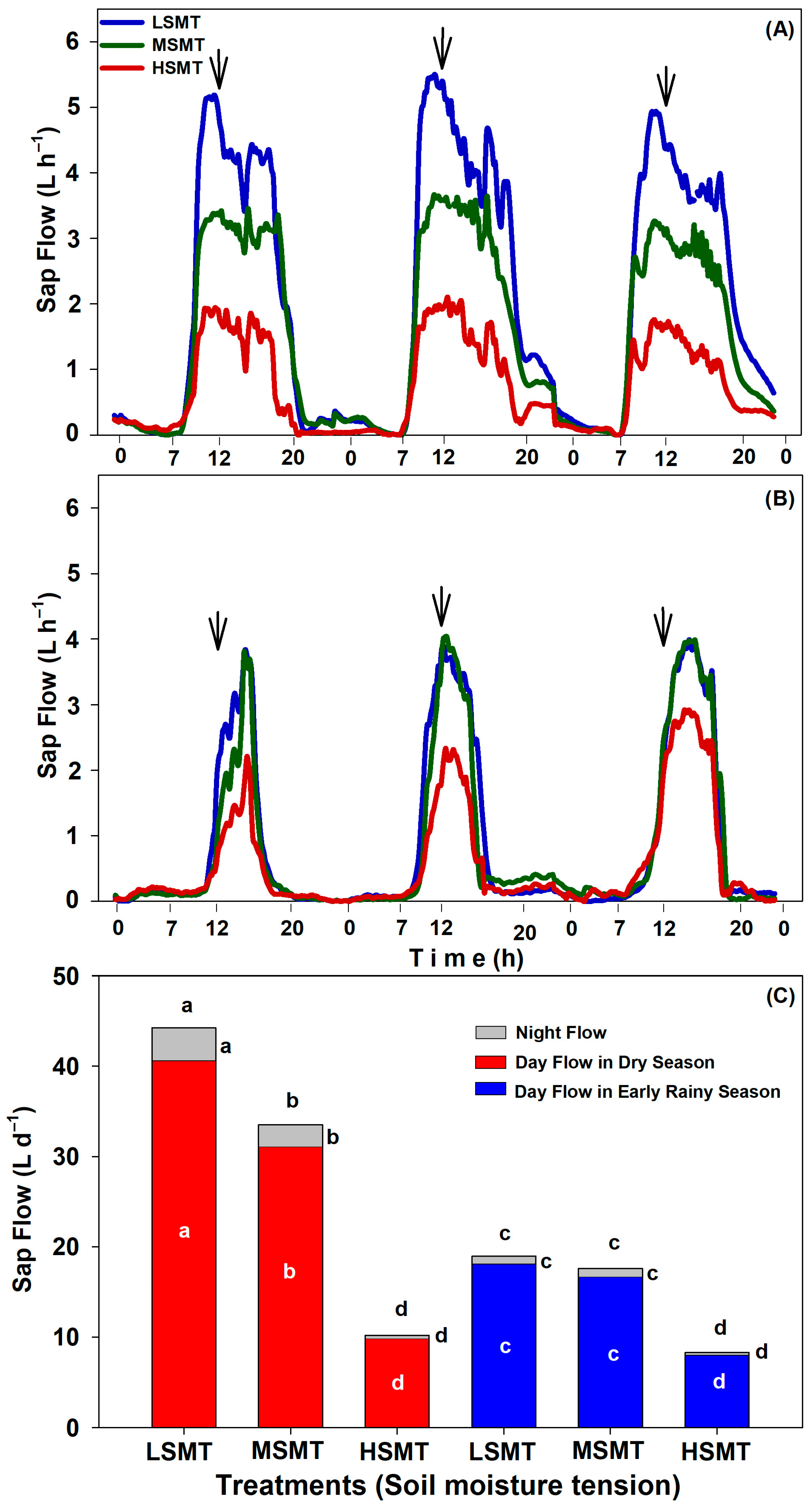
During the DS, sap flow (SF) followed a diurnal pattern characterized by a rapid increase after dawn that extended until approximately 8:00 p.m. (Figure 5A). At the beginning of the RS, flow rates were generally lower around midday (Figure 5B). In both seasons, maximum SF occurred around noon to early afternoon, coinciding with the highest Rg values.
Marked differences in SF were observed among treatments during DS, with the highest values in L plants (5.56 L h−1; Figure 5A). After the onset of rainfall, SF in L plants decreased to 4.05 L h−1, reaching values similar to those in the M treatment, while both L and M plants maintained higher SF than H plants (Figure 5B). Although M and H trees showed similar peak SF between DS and the early RS, significant seasonal differences were evident.
Daily accumulated SF per tree decreased from DS to the RS, from 44.2 to 18.9 L day−1 in the L treatment, from 33.5 to 17.5 L day−1 in M, and from 10.2 to 8.3 L day−1 in H (Figure 5C). This decline was likely related to the reduced VPD, as reported by [24], who noted that VPD stimulates transpiration in citrus genotypes. The observed decrease in VPD from the dry to the rainy season, associated with lower temperature and higher RH, likely contributed to the reduction in sap flow.
During DS, significant differences were observed in nocturnal water use, with L, M, and H plants using 3.62, 2.41, and 0.34 L, respectively. Nocturnal water use represented 8.14%, 7.19%, and 3.33% of total daily water use for L, M, and H treatments. In the rainy season, nocturnal water use decreased slightly to 4.86%, 5.14%, and 3.25% for L, M, and H, respectively.

3.3. Leaf Photochemistry and Gas Exchange

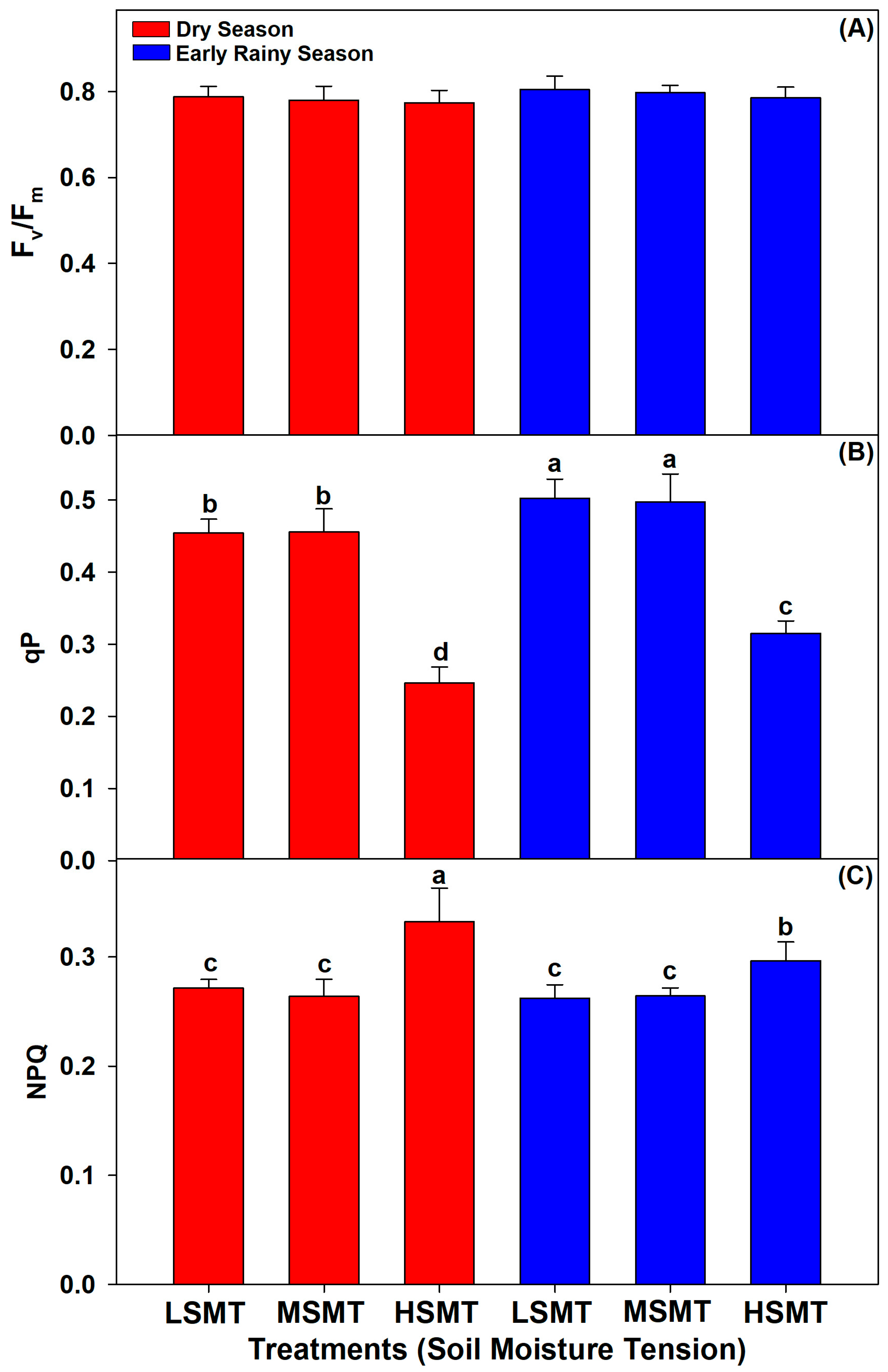
Soil moisture tension (SMT) treatments did not significantly affect Fv/Fm in either season, with all values remaining close to 0.80 (Figure 6A). During DS, the photochemical quenching coefficient (qP) was 54.2% higher in L and M than in H plants. At the beginning of the rainy season, qP values increased to 0.53, 0.52, and 0.31 in L, M, and H, respectively, representing increases of 15.1% in L and M, and 22.6% in H compared with DS (Figure 6B). Non-photochemical quenching (NPQ) decreased from DS to the onset of rains in all treatments, with the highest NPQ observed in H plants (0.90) during DS and the lowest in L (0.65) and M (0.64) at the early RS (Figure 6C).
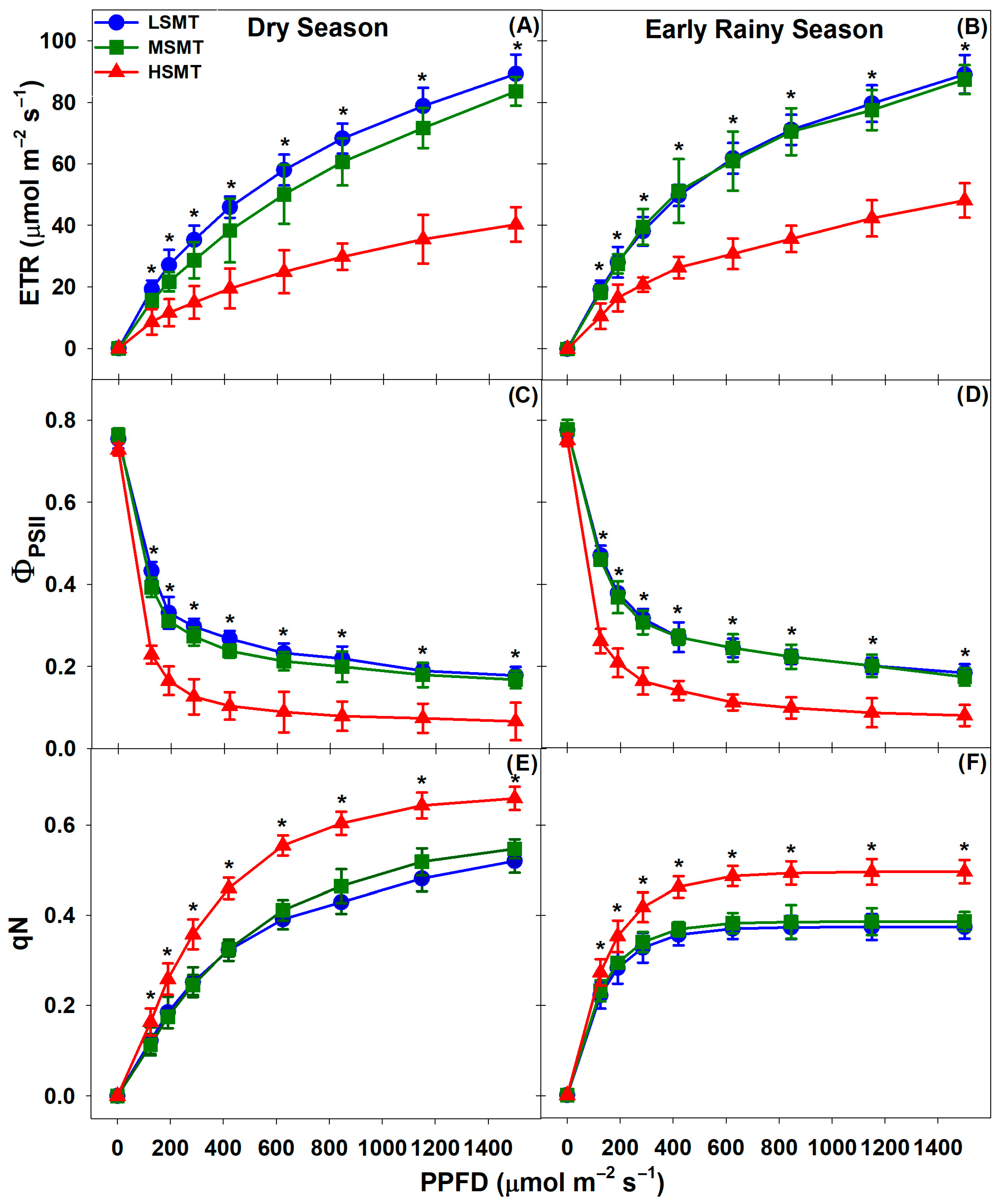
Significant differences among treatments (p ≤ 0.05) were found in ETR, ΦPSII, and qN. In both seasons, plants under H tension showed lower ETR and ΦPSII, and higher qN than those in L and M (Figure 7A–F). Although M plants were exposed to slightly lower soil moisture than L, their photochemical performance remained similar across both seasons.
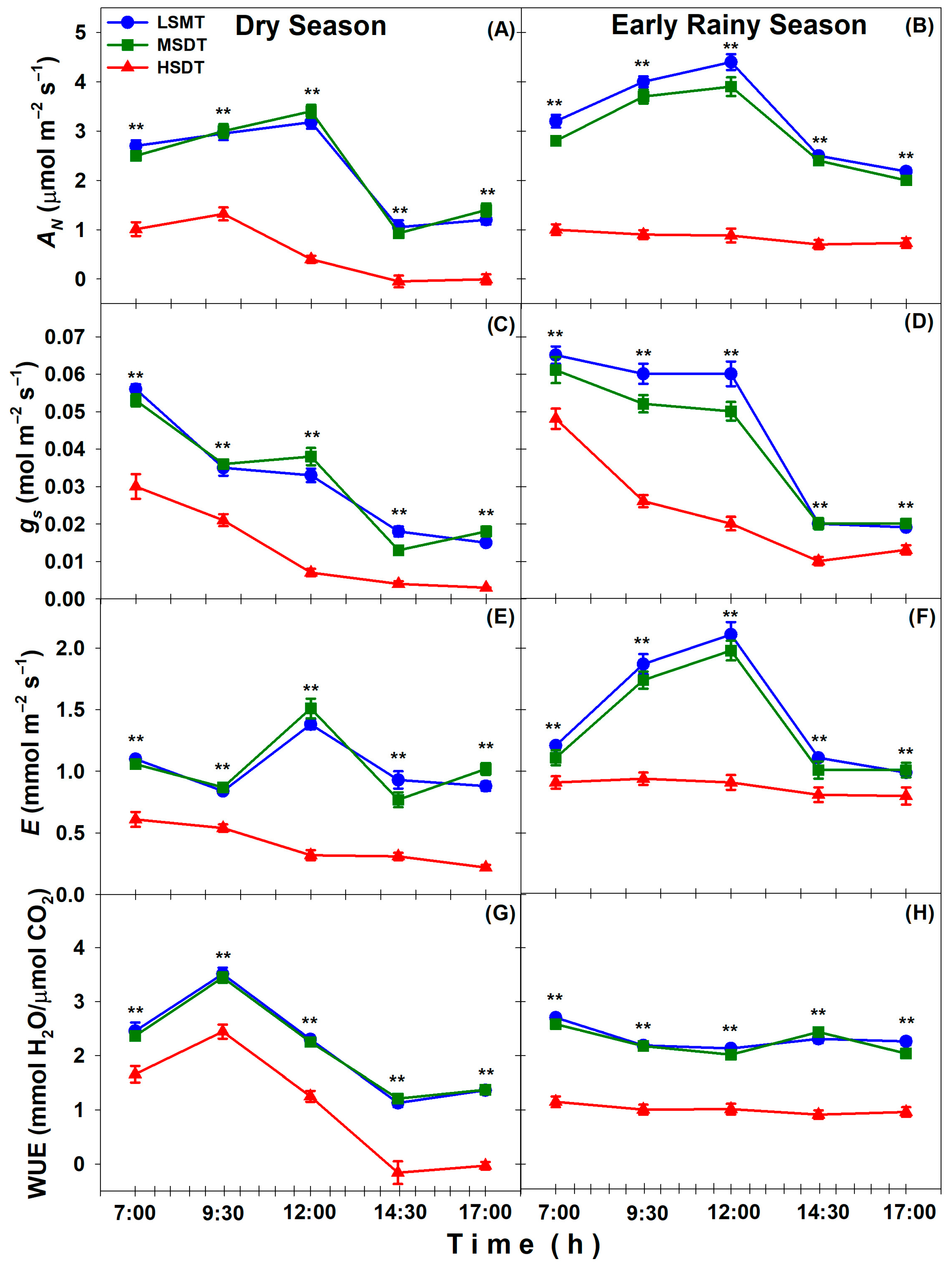
Regarding gas exchange, significant differences among treatments (p ≤ 0.05) in net photosynthesis (AN) were recorded during DS. At noon, maximum AN occurred in L (3.18 μmol m−2 s−1) and M (3.4 μmol m−2 s−1) plants, exceeding the values of H plants (0.4 μmol m−2 s−1). The AN of H plants was consistently lower throughout the day (Figure 8A). With the onset of rainfall, AN in H plants increased by 54.5% compared with DS; however, it did not reach the values observed in L and M plants, which peaked at 4.4 and 3.9 μmol m−2 s−1, respectively (Figure 8B).
During DS, stomatal conductance (gs) was highest in L (0.056 mmol m−2 s−1) and M (0.053 mmol m−2 s−1), exceeding that of H plants (0.03 mmol m−2 s−1) by 46.4% and 43.3% (Figure 8C). With rainfall, gs in H plants increased by 37.5% compared with DS but remained below L and M values (Figure 8D).
Transpiration (E) followed a similar trend, peaking at noon. During DS, L (1.38 mmol m−2 s−1) and M (1.51 mmol m−2 s−1) transpired 76.8% and 78.8% more than H plants (0.32 mmol m−2 s−1) (Figure 8E). At the beginning of the RS, E in H plants increased by 64.4% compared with DS, but values in L and M remained higher (1.22 and 1.12 mmol m−2 s−1, respectively) (Figure 8F).
Water use efficiency (WUE) was similar between L and M plants in both seasons. During DS, WUE was highest in L (3.51 mmol mol−1) and M (3.44 mmol mol−1), exceeding that of H (2.44 mmol mol−1) by 30.9% and 29.1% (Figure 8G). At the onset of the RS, WUE in H plants decreased by 39.5% compared with DS (Figure 8H).

3.4. Leaf Area Index, Shoot Growth, and Yield

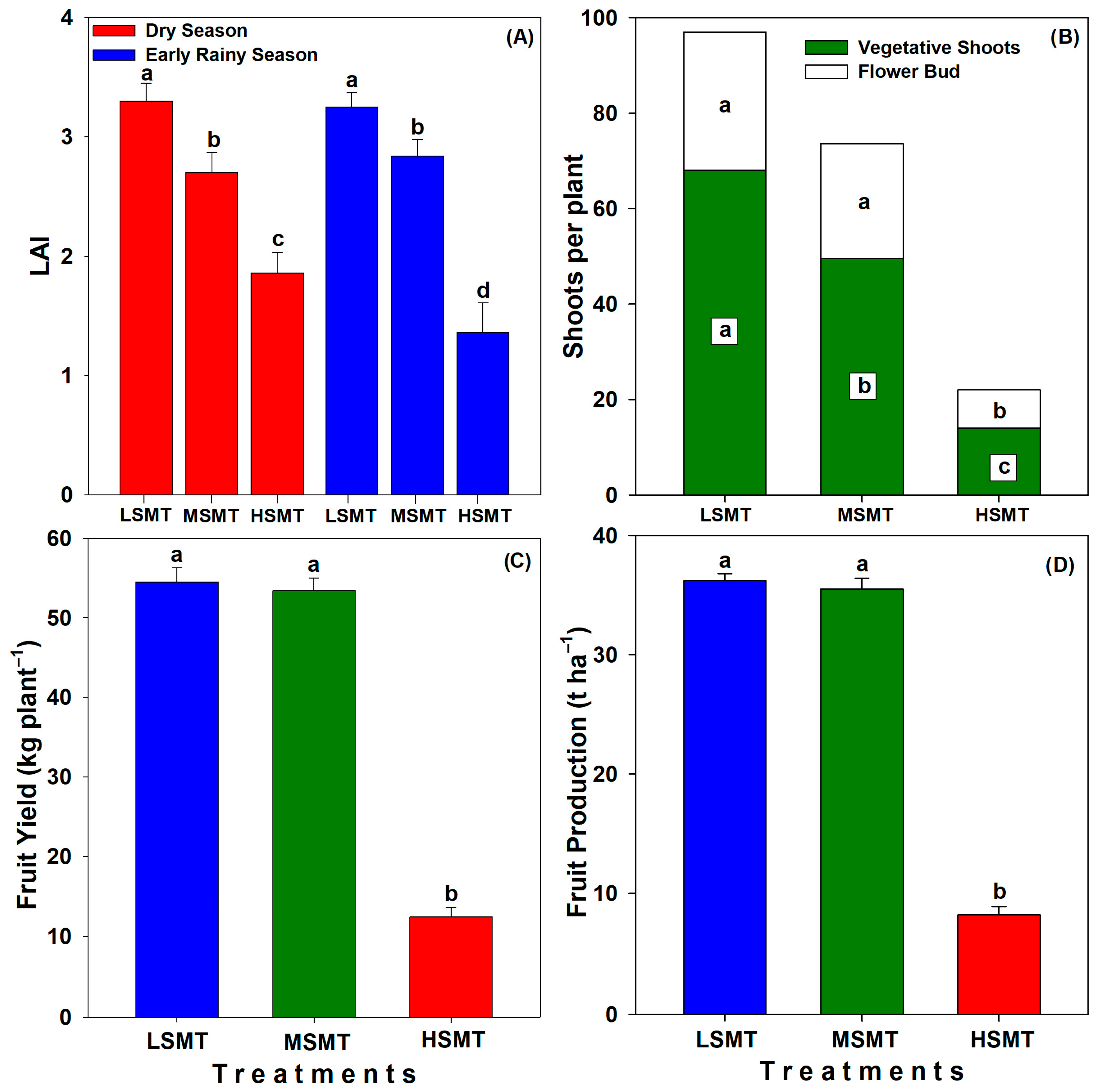
During the DS, the leaf area index (LAI) was significantly higher in L (3.31) than in M (2.72) and H (1.82), by 18.1% and 31.1%, respectively. With the onset of rainfall, LAI in M increased by 5.2% but did not reach L values (3.25), while LAI in H decreased by 26.8% from DS to early rains (Figure 9A).
The number of vegetative shoots per plant was highest in L (68 ± 8.16), followed by M (49.64) and H (14.12). No significant differences were found in the number of flower buds between L (29.11) and M (24.52), which were 72.4% and 66.6% higher than in H (8.31), respectively (Figure 9B).
Fruit yield per plant showed no significant differences between L (54.5 kg) and M (53.4 kg), both of which produced significantly more than H (12.2 kg) (Figure 9C). A similar trend was observed for fruit production per hectare, with L (36.2 t ha−1) and M (35.5 t ha−1) not differing significantly, while H reached only 8.2 t ha−1 (Figure 9D).

4. Discussion

High soil moisture tension (H treatment), regardless of the season, considerably reduced all evaluated physiological parameters (ΨL, Ψstem, sap flow, AN, E, gs, WUE, ETR, qP, and ΦPSII), resulting in a marked decline in C. latifolia yield. These findings indicate that water deficit strongly limits both photosynthetic performance and water transport in Tahiti lime plants. Six consecutive rainy days were insufficient to restore their physiological activity, suggesting that recovery from water stress in this species requires a longer rehydration period. Since no significant differences were observed between the low (L) and medium (M) SMT treatments in terms of gas exchange, photochemical efficiency, or yield, we suggest that maintaining a medium SMT (M treatment) provides the most efficient use of irrigation water without compromising productivity.
The environmental conditions of the tropics can be extreme for some crop species, especially during the dry season (DS). In the case of Tahiti lime, irrigation is required to withstand the DS [6]. According to the environmental records of the study site, radiation was highest during the DS, which led to an increase in daytime temperature. Combined with low relative humidity due to a lack of water, this increased the vapor pressure deficit. However, only a week of rain was enough to cause noticeable environmental changes at the site: cloudiness decreased radiation, which in turn affected all climatic factors evaluated.
The greater sap flow in the DS was a consequence of higher global radiation, a longer photoperiod, and higher temperatures compared with the rainy season (RS), as well as the higher soil water content in the L (−0.01 MPa) and M (−0.04 MPa) treatments. Although the rains had started, no recovery in sap flow was observed in the H treatment (−0.09 MPa). The sap flow rate was determined by the gradient between the water potential of the rhizosphere and the air [12], as well as by the leaf area [25]. Consequently, plants cultivated under high SMT (−0.09 MPa) had lower sap flow.
The results show that H plants had very low gs during the DS, with only a slight increase at the onset of rains. In this case, environmental conditions and soil water availability influenced gs and sap flow in Tahiti lime trees. According to [26], high concentrations of ABA in the leaves keep stomata closed even after plants are rehydrated. In some citrus crops, stomatal opening remains limited under water stress [27].
Sap flow at night is likely associated with the recharge of depleted water reserves within trees [28]. This nocturnal flow was greater in L and M plants. These values were higher than those reported for other citrus species [29], likely because hydraulic conductance differs among citrus genotypes [24].
Plants in the L treatment had the highest sap flow during the DS, but their ΨL, Ψstem, and RWC values were statistically similar to those of plants in the M treatment. No significant differences were observed between these treatments in E, although plants in the L treatment had higher LAI. This suggests that Tahiti lime plants with an SMT of −0.04 MPa can maintain a similar water status to plants with higher soil water availability, without extracting as much water as plants under −0.01 MPa.
The maximum quantum yield of photosystem II (Fv/Fm) was not affected by SMT. In all treatments, the values were close to 0.83, considered optimal for chlorophyll fluorescence in healthy plants [30], indicating that photosystem II (PSII) was not damaged and suggesting an efficient photoprotective mechanism, which in most cases correlates with high NPQ values [31]. This supports the idea that primary photochemical events (i.e., Fv/Fm) are only slightly affected by water stress [32], likely due to some drought tolerance in citrus species [4,7].
The increase in NPQ in the H treatment indicates greater dissipation of energy as heat [33], particularly in the DS, where radiation and temperature were higher. NPQ is a mechanism that prevents light-induced damage to plant tissues, being related to the xanthophyll cycle and the development of a trans-thylakoid ΔpH [34]. Similarly, qN, another indicator of non-photochemical dissipation, was greater in the H treatment, suggesting conformational changes in the PSII antenna complex that induce quenching of excitation energy [35].
The qP values suggest that Tahiti lime plants direct a greater number of photons toward photochemical processes when soil water availability is higher. However, considering that the qP of the L and M plants was statistically similar, it would be more accurate to relate qP to the plant’s water status rather than SMT. In photosynthesis, the light-dependent reactions operate as a sequential chain, where changes at the primary reaction sites propagate through subsequent steps of the electron transport chain. Thus, plants with favorable water status ensure the greater availability of water molecules for photolysis, requiring a higher number of photons. Accordingly, L and M plants, which maintained good water status, exhibited higher ETR values. In contrast, H treatment plants negatively affected by high SMT showed reduced ETR and ΦPSII due to the faster saturation of photosystems [4]. A decrease in ETR is a common stress indicator [36]; under stress, plants may close PSII reaction centers, directly affecting electron flow between PSII and PSI [4,37].
Although environmental conditions changed markedly at the onset of the rainy season, the increased cloudiness did not mask or reduce the photosynthetic values recorded, because all gas-exchange and fluorescence measurements were conducted under controlled light conditions inside the IRGA chamber using a red/blue LED source that supplied a constant PPFD independent of ambient radiation. The elevated RWC observed in H plants during the early rainy season (similar to the values of L and M during the dry season) indicates that leaf hydration recovered rapidly after the first rains. However, the restoration of photosynthetic capacity requires more than the re-establishment of water status. Processes such as the regeneration of photosynthetic pigments, the repair of photoinhibited PSII reaction centers, and the reactivation of biochemical machinery typically require more than one week after drought release. Thus, even though H plants rehydrated quickly, their photochemical and biochemical systems had not yet fully recovered, explaining the limited improvement in AN and photochemical efficiency during the early rainy season.
In both seasons, L and M plants reached their maximum AN at noon. However, in H plants during the DS, AN peaked in the morning (9:00 a.m.) and decreased toward the afternoon. During the early RS, AN showed slight variation throughout the day. Moreover, in the DS, photorespiration in H plants during the afternoon (4:30–5:00 p.m.) was accompanied by a drastic decrease in gs. An increased AN and E may result from high leaf water potential, which enhances ETR, stomatal opening, and gas exchange [38]. Conversely, a stomatal closure decreases AN in Tahiti lime, leading to reduced CO2 availability for carboxylation but preventing dehydration during the DS [9,37]. Therefore, it is likely that during the DS, Tahiti lime plants photosynthesize mainly in the morning before environmental conditions become limiting, and that the observed increase in AN and E at the beginning of the RS resulted from lower air temperature and VPD.
The LAI varied according to SMT, with lower LAI observed in the H treatment. The decrease in LAI in H plants is related to the reduction in the evaporative surface, and the leaf curling observed is a transient morphological response to reduced turgor [39]. Some authors mention that leaf wilting is an accelerated senescence of older leaves induced by stress-promoted ABA signaling [7,40]. This leads to early leaf senescence and abscission, contributing to smaller canopies and reduced water loss [6].
The decrease in LAI in H plants during the RS was due to the mechanical action of rain, causing the loss of leaves previously damaged by DS stress. A higher LAI can promote more carbohydrate production, which in turn stimulates vegetative and floral bud growth [41]. In this sense, the vegetative shoot number paralleled LAI behavior, increasing with greater soil moisture. However, for floral buds, the M treatment reached values statistically like the L treatment. AN probably influenced carbohydrate availability, essential for flowering, fruiting, and fruit growth [42].
Beyond the photochemical responses, the lack of significant differences between L (−0.010 MPa) and M (−0.035 MPa) in most physiological variables and in fruit yield can be explained by the fact that both treatments maintained a favorable plant water status throughout the dry season. Leaf water potential, stem water potential, and relative water content remained well above thresholds associated with actual water stress, which indicates that the relatively narrow difference in SMT between L and M did not impose substantial hydraulic limitations on mature Tahiti lime trees. Similar patterns have been reported for Citrus latifolia exposed to comparable SMT levels, where Ψ, gs, AN, E, and fruit yield were statistically indistinguishable between −10 and −35 kPa [43]. Other authors have also observed no significant physiological differences between −10 and −50 kPa in citrus, reinforcing the broad buffering capacity of this crop under moderate soil drying [44]. In addition, vertisols in this region retain high water availability and maintain considerable hydraulic conductivity at soil tensions above −40 kPa, ensuring adequate water supply to the roots even when soil moisture begins to decline [17].
Although plant water status and gas exchange were broadly similar between L and M, some structural traits such as LAI and shoot production showed statistically significant differences, with L exhibiting slightly greater canopy development. However, these structural differences were not large enough to modify whole-tree carbon assimilation or to produce detectable changes in fruit yield. Consequently, despite minor structural variation, the overall physiological performance remained stable across L and M, which explains the absence of significant yield differences between these treatments.
Although the M treatment produced fewer shoots than L, this difference did not affect gas exchange, photochemical performance, or yield during the study period. While longer-term evaluations would be needed to determine whether reduced shoot production influences subsequent cycles, commercial Tahiti lime orchards undergo structural pruning in late October, a practice that standardizes canopy architecture and LAI. Under this management context, and given that M maintained physiological performance comparable to L while using considerably less irrigation water, identifying M as an efficient short-term irrigation strategy is justified.
In Tahiti lime, fruit yield is positively associated with high AN [45,46]. In Mexico, yields of up to 72.7 kg plant−1 have been reported in conventional orchards [47], which are higher than those obtained in the L and M treatments. However, when yield is expressed on a per-hectare basis, the high-density arrangement used in this study (666 trees ha−1) produced substantially greater total production than traditional low-density systems (123 trees ha−1). As expected, individual-tree yield was lower under high-density planting, but the cumulative yield per hectare in both L and M clearly surpassed values typically achieved in conventional orchards. High-density planting can increase production by up to 60% [13]. Nevertheless, the yields obtained in this study are still below those reported (48.62 t ha−1) by [48]. These differences may be due, among other factors, to the rootstock (Morton citrange) and clone (Flying dragon) used. In a previous study conducted under comparable SMT regimes, the high-tension treatment (H) reduced fruit yield but increased both juice percentage and total soluble solids relative to the L and M treatments, while no differences were detected in titratable acidity expressed as citric acid [49]. These findings indicate that the tension differential between −10 and −35 kPa is insufficient to generate statistically significant effects; however, applying a higher tension can depress both yield and key fruit quality attributes.

5. Conclusions

Six days of rainfall were insufficient to promote physiological recovery in water-stressed plants (−0.085 MPa). Consequently, plant growth and fruit production were negatively affected under this irrigation treatment. Considering that no significant differences in yield were observed between plants cultivated at soil moisture tensions (SMT) of −0.01 and −0.035 MPa, maintaining a mild SMT of −0.035 MPa in Tahiti lime orchards established at high planting density under tropical conditions could be a suitable strategy to reduce irrigation water use without impairing plant physiology or productivity.
Furthermore, since gas exchange parameters did not differ significantly between the low (L) and medium (M) treatments, while a considerable difference in SMT was observed between M and H, future research should evaluate additional intermediate SMT levels to determine the threshold that maximizes irrigation water use efficiency. As the aim of this study was to assess the seasonal trajectory of physiological responses, the early rainy season provided a contrasting physiological state under non-limiting water availability, which allowed us to confirm that the effects imposed by SMT during the dry season were not sustained once water availability increased.
Finally, because this study encompassed a single growing season, the responses observed here should be interpreted as short-term adjustments. Multi-year evaluations will be necessary to determine whether the effects of SMT accumulate over time and to assess potential impacts on canopy vigor, alternate bearing, and long-term yield stability.

Author Contributions

Conceptualization, B.R.-H. and R.G.; methodology, B.R.-H., E.C.-Á., W.T., J.L.A. and R.G.; software, R.U.S. and V.G.-J.; validation, R.G., W.T., R.H.A.-N. and B.R.-H.; formal analysis, E.C.-Á. and V.G.-J.; investigation, R.H.A.-N., R.U.S. and J.L.A.; resources, R.G. and B.R.-H.; data curation, B.R.-H.; writing—original draft preparation, B.R.-H.; writing—review and editing, W.T., J.L.A. and R.G.; visualization, E.C.-Á. and R.H.A.-N.; supervision, V.G.-J.; project administration, R.G.; funding acquisition, E.C.-Á. and R.G. All authors have read and agreed to the published version of the manuscript.

Funding

This research was self-funded by the authors. The graduate studies of the first author were supported by PRODEP. The APC was funded by Colegio de Postgraduados.

Data Availability Statement

The original contributions presented in this study are included in the article. Further inquiries can be directed to the corresponding authors.

Acknowledgments

The authors thank the Instituto Tecnológico de Conkal, the Colegio de Postgraduados, Campus Campeche, and the Universidad Popular de la Chontalpa for the facilities provided during the study.

Conflicts of Interest

The authors declare no conflicts of interest.

Abbreviations

The following abbreviations are used in this manuscript:
ANNet photosynthetic rate
DSDry season
ETranspiration rate
ETRElectron transport rate
FWFresh weight
gsStomatal conductance
HHigh soil moisture tension (−0.085 MPa)
LAILeaf area index
LLow soil moisture tension (−0.010 MPa)
MMedium soil moisture tension (−0.035 MPa)
MPaMegapascal
NPQNon-photochemical quenching
PAMPulse amplitude modulated (fluorometer)
qNNon-photochemical quenching coefficient
qPPhotochemical quenching coefficient
RgGlobal solar radiation
RHRelative humidity
RSRainy season
RWCRelative water content
SFSap flow
SMTSoil moisture tension
VPDVapor pressure deficit
ΨLLeaf water potential
ΨstemStem water potential
WUEWater use efficiency
ΦPSIIEffective quantum yield of photosystem II
Fv/FmMaximum quantum yield of photosystem II

References

  1. De Ollas, C.; Morillón, R.; Fotopoulos, V.; Puértolas, J.; Ollitrault, P.; Gómez-Cadenas, A.; Arbona, V. Facing climate change: Biotechnology of iconic Mediterranean woody crops. Front. Plant Sci. 2019, 10, 427. [Google Scholar] [CrossRef]
  2. Lawlor, D.W.; Tezara, W. Causes of decreased photosynthetic rate and metabolic capacity in water-deficient leaf cells: A critical evaluation of mechanisms and integration of processes. Ann. Bot. 2009, 103, 561–579. [Google Scholar] [CrossRef] [PubMed]
  3. Tezara, W.; Urich, R.; Coronel, I.; Marín, O.; Herrera, A. Asimilación de carbono, eficiencia de uso de agua y actividad fotoquímica en xerófitas de ecosistemas semiáridos de Venezuela. Ecosistemas 2010, 19, 67–78. Available online: https://www.revistaecosistemas.net/index.php/ecosistemas/article/view/37 (accessed on 1 December 2025).
  4. Zandalinas, S.I.; Rivero, R.M.; Martínez, V.; Gómez-Cadenas, A.; Arbona, V. Tolerance of citrus plants to the combination of high temperatures and drought is associated with increased transpiration modulated by a reduction in abscisic acid levels. BMC Plant Biol. 2016, 16, 105. [Google Scholar] [CrossRef]
  5. Ribeiro, R.V.; Machado, E.C. Some aspects of citrus ecophysiology in subtropical climates: Revisiting photosynthesis under natural conditions. Braz. J. Plant Physiol. 2007, 19, 393–411. [Google Scholar] [CrossRef]
  6. Ribeiro, R.V.; Machado, E.C.; Santos, M.G.; Oliveira, R.F. Photosynthesis and water relations of well-watered orange plants as affected by winter and summer conditions. Photosynthetica 2009, 47, 215–222. [Google Scholar] [CrossRef]
  7. Ávila, C.; Guardiola, J.L.; Nebauer, S.G. Response of the photosynthetic apparatus to a flowering-inductive period by water stress in Citrus. Trees 2012, 26, 833–840. [Google Scholar] [CrossRef][Green Version]
  8. Santos, M.R.; Donato, S.L.R.; Coelho, E.F.; Arantes, A.M.; Coelho-Filho, M.A. Irrigação lateralmente alternada em lima ácida ‘Tahiti’ na região norte de Minas Gerais. Irrigação 2016, 1, 71–88. [Google Scholar] [CrossRef][Green Version]
  9. da Silva, C.R.; Folegatti, M.V.; Araújo, S.T.J.; Alves, J.J.; Fonseca, S.C.; Vasconcelos, R.R. Water relations and photosynthesis as criteria for adequate irrigation management in ‘Tahiti’ lime trees. Sci. Agric. 2005, 62, 415–422. [Google Scholar] [CrossRef]
  10. SIAP-SAGARPA. Atlas Agroalimentario 2019; Secretaría de Agricultura y Desarrollo Rural: Mexico City, Mexico, 2019; pp. 140–141. Available online: https://www.gob.mx/siap (accessed on 18 August 2025).
  11. Quej, V.H.; Almorox, J.; Arnaldo, J.A.; Moratiel, R. Evaluation of temperature-based methods for the estimation of reference evapotranspiration in the Yucatán Peninsula, Mexico. J. Hydrol. Eng. 2018, 24, 05018029. [Google Scholar] [CrossRef]
  12. Bodner, G.; Nakhforoosh, A.; Kaul, H.P. Management of crop water under drought: A review. Agron. Sustain. Dev. 2015, 35, 401–442. [Google Scholar] [CrossRef]
  13. Menzel, C.M.; Lagadec, M.D.L. Increasing the productivity of avocado orchards using high density plantings: A review. Sci. Hortic. 2014, 177, 21–36. [Google Scholar] [CrossRef]
  14. Mishra, D.S.; Goswami, A.K. High density planting in fruit crops. HortFlora Res. Spectr. 2016, 5, 261–264. Available online: https://hortflorajournal.com/AbstractInfo.aspx?ContentId=442 (accessed on 1 December 2025).
  15. IUSS Working Group WRB. World Reference Base for Soil Resources 2014, Update 2015: International Soil Classification System for Naming Soils and Creating Legends for Soil Maps; World Soil Resources Reports No. 106; FAO: Rome, Italy, 2015. [Google Scholar]
  16. Agustí, M.; Zaragoza, S.; Bleiholder, H.; Hack, H.; Klose, R. Escalas Fenológicas BBCH de los Cítricos; Conselleria d’Agricultura, Pesca i Alimentació, Generalitat Valenciana: Valencia, Spain, 1995. [Google Scholar]
  17. Rivera-Hernández, B.; Garruña-Hernández, R.; Carrillo-Ávila, E.; Quej-Chi, V.H.; Andrade, J.L.; Andueza-Noh, R.H.; Arreola-Enríquez, J. Using splines in the application of the instantaneous profile method for the hydrodynamic characterization of a tropical agricultural Vertisol. Rev. Bras. Cienc. Solo 2022, 46, e0210086. [Google Scholar] [CrossRef]
  18. García-Sánchez, F.; Syvertsen, J.P.; Gimeno, V.; Botía, P.; Perez-Perez, J.G. Responses to flooding and drought stress by two citrus rootstock seedlings with different water-use efficiency. Physiol. Plant. 2007, 130, 532–542. [Google Scholar] [CrossRef]
  19. Granier, A. Une nouvelle méthode pour la mesure flux de séve brute dans le tronc des arbres. Ann. Sci. For. 1985, 42, 193–200. [Google Scholar] [CrossRef]
  20. Granier, A. Evaluation of transpiration in a Douglas-fir stand by means of sap flow measurements. Tree Physiol. 1987, 3, 309–319. [Google Scholar] [CrossRef]
  21. Lu, P.; Urban, L.; Zhao, P. Granier’s Thermal Dissipation Probe (TDP) method for measuring sap flow in trees: Theory and practice. Acta Bot. Sin. 2004, 46, 631–646. Available online: https://www.ishs.org/sites/default/files/documents/lu2004.pdf (accessed on 1 December 2025).
  22. Coelho, R.D.; Vellame, L.M.; Júnior, E.F. Estimation of transpiration of the ‘Valencia’ orange young plant using thermal dissipation probe method. Eng. Agríc. 2012, 32, 573–581. [Google Scholar] [CrossRef]
  23. Samaniego-Gámez, B.Y.; Garrúna, R.; Tun-Suárez, J.M.; Kantun-Can, J.; Reyes-Ramírez, A.; Cervantes-Díaz, L. Bacillus spp. inoculation improves photosystem II efficiency and enhances photosynthesis in pepper plants. Chil. J. Agric. Res. 2016, 76, 409–416. [Google Scholar] [CrossRef]
  24. Rodríguez-Gamir, J.; Primo-Millo, E.; Forner-Giner, M.A. An integrated view of whole-tree hydraulic architecture: Does stomatal or hydraulic conductance determine whole tree transpiration? PLoS ONE 2016, 11, e0155246. [Google Scholar] [CrossRef]
  25. Miserere, A.; Searles, P.S.; Manchó, G.; Maseda, P.H.; Rousseaux, M.C. Sap flow responses to warming and fruit load in young olive trees. Front. Plant Sci. 2019, 10, 1199. [Google Scholar] [CrossRef]
  26. Zenes, N.; Kerr, K.L.; Trugman, A.T.; Anderegg, W.R.L. Competition and drought alter optimal stomatal strategy in tree seedlings. Front. Plant Sci. 2020, 11, 478. [Google Scholar] [CrossRef] [PubMed]
  27. Ortuño, M.F.; Conejero, W.; Moreno, F.; Moriana, A.; Intrigliolo, D.S.; Biel, C.; Mellisho, C.D.; Pérez-Pastor, A.; Domingo, R.; Ruiz-Sánchez, M.C.; et al. Could trunk diameter sensors be used in woody crops for irrigation scheduling? A review of current knowledge and future perspectives. Agric. Water Manag. 2010, 97, 1–11. [Google Scholar] [CrossRef]
  28. Dalley, M.J.; Phillips, N. Interspecific variation in nighttime transpiration and stomatal conductance in a mixed New England deciduous forest. Tree Physiol. 2006, 26, 411–419. [Google Scholar] [CrossRef] [PubMed]
  29. Ballester, C.; Castel, J.; Testi, L.; Intrigliolo, D.S.; Castel, J.R. Can heat-pulse sap flow measurements be used as continuous water stress indicators of citrus trees? Irrig. Sci. 2013, 31, 1053–1061. [Google Scholar] [CrossRef]
  30. Baker, N.R. Chlorophyll fluorescence: A probe of photosynthesis in vivo. Annu. Rev. Plant Biol. 2008, 59, 89–113. [Google Scholar] [CrossRef]
  31. Murchie, E.H.; Lawson, T. Chlorophyll fluorescence analysis: A guide to good practice and understanding some new applications. J. Exp. Bot. 2013, 64, 3983–3998. [Google Scholar] [CrossRef]
  32. Lawlor, D.W. Limitation to photosynthesis in water-stressed leaves: Stomata vs. metabolism and the role of ATP. Ann. Bot. 2002, 89, 871–885. [Google Scholar] [CrossRef]
  33. Nilkens, M.; Kress, E.; Lambrev, P.; Miloslavina, Y.; Müller, M.; Holzwarth, A.R.; Jahns, P. Identification of a slowly inducible zeaxanthin-dependent component of non-photochemical quenching of chlorophyll fluorescence generated under steady-state conditions in Arabidopsis. Biochim. Biophys. Acta 2010, 1797, 466–475. [Google Scholar] [CrossRef]
  34. Gilmore, A.M.; Ball, M.C. Protection and storage of chlorophyll in overwintering evergreens. Proc. Natl. Acad. Sci. USA 2000, 97, 11098–11101. [Google Scholar] [CrossRef]
  35. Ruban, A.V.; Johnson, M.P.; Duffy, C.D.P. The photoprotective molecular switch in the photosystem II antenna. Biochim. Biophys. Acta 2012, 1817, 167–181. [Google Scholar] [CrossRef]
  36. Krause, G.H.; Weis, E. Chlorophyll fluorescence and photosynthesis: The basics. Annu. Rev. Plant Physiol. Plant Mol. Biol. 1991, 42, 313–349. [Google Scholar] [CrossRef]
  37. Maxwell, K.; Johnson, G.N. Chlorophyll fluorescence—A practical guide. J. Exp. Bot. 2000, 51, 659–668. [Google Scholar] [CrossRef] [PubMed]
  38. Jifon, J.L.; Syvertsen, J.P. Moderate shade can increase net gas exchange and reduce photoinhibition in citrus leaves. Tree Physiol. 2003, 23, 119–127. [Google Scholar] [CrossRef]
  39. Kadioglu, A.; Terzi, R.; Saruhan, N.; Saglam, A. Current advances in the investigation of leaf rolling caused by biotic and abiotic stress factors. Plant Sci. 2012, 182, 42–48. [Google Scholar] [CrossRef]
  40. Munné-Bosch, S.; Alegre, L. Die and let live: Leaf senescence contributes to plant survival under drought stress. Funct. Plant Biol. 2004, 31, 203–216. [Google Scholar] [CrossRef] [PubMed]
  41. Bueno, A.C.R.; Prudente, D.A.; Machado, E.C.; Ribeiro, R.V. Daily temperature amplitude affects the vegetative growth and carbon metabolism of orange trees in a rootstock-dependent manner. J. Plant Growth Regul. 2012, 31, 309–319. [Google Scholar] [CrossRef]
  42. Iglesias, D.J.; Tadeo, F.R.; Primo-Millo, E.; Talon, M. Fruit set dependence on carbohydrate availability in citrus trees. Tree Physiol. 2003, 23, 199–204. [Google Scholar] [CrossRef]
  43. Rivera-Hernández, B.; González-Jiménez, V.; Carrillo-Ávila, E.; Garruña-Hernández, R.; Andrade, J.L.; Quej-Chi, V.H.; Arreola-Enríquez, J. Yield, Physiology, Fruit Quality and Water Footprint in Persian Lime (Citrus latifolia Tan.) in Response to Soil Moisture Tension in Two Phenological Stages in Campeche, México. Water 2022, 14, 1011. [Google Scholar] [CrossRef]
  44. Chartzoulakis, K.; Michelakis, N.; Stefanoudaki, E. Water use, growth, yield and fruit quality of ‘Bonanza’ oranges under different soil water regimes. Adv. Hortic. Sci. 1999, 13, 6–11. Available online: https://www.jstor.org/stable/42881974?utm_source=chatgpt.com&seq=1 (accessed on 1 December 2025).
  45. Alves, J.J.; Silva, C.R.; Ribeiro, R.V.; Silva, T.J.A.; Folegatti, M.V. Growth of young ‘Tahiti’ lime trees under irrigation levels. Eng. Agríc. 2005, 25, 170–178. [Google Scholar] [CrossRef]
  46. Neto, H.B.; Mourão, F.D.A.A.; Stuchi, E.S.; Espinoza-Nuñez, E.; Cantuarias-Avilés, T. The horticultural performance of five ‘Tahiti’ lime selections grafted onto ‘Swingle’ citrumelo under irrigated and non-irrigated conditions. Sci. Hortic. 2013, 150, 181–186. [Google Scholar] [CrossRef]
  47. Medina-Urrutia, V.M.; Robles-González, M.M.; Rocha-Peña, M.A.; Virgen-Calleros, G.; Reyes-Hernández, J.; Fernández-Rivera, E. Growth, yield and fruit quality of Tahiti lime on eight standard rootstocks affected by soil depth. J. Agric. Sci. Technol. B 2014, 4, 793–803. [Google Scholar]
  48. Espinoza-Nuñez, E.; Mourão Filho, F.A.A.; Stuchi, E.S.; Cantuarias-Avilés, T.; Santos-Dias, C.T. Performance of ‘Tahiti’ lime on twelve rootstocks under irrigated and non-irrigated conditions. Sci. Hortic. 2011, 129, 227–231. [Google Scholar] [CrossRef]
  49. Rivera-Hernández, B.; Garruña-Hernández, R.; Santamaría-Basulto, F.; Andrade-Torres, J.L.; Carrillo-Ávila, E.; Andueza-Noh, R.H. Lime yield (Citrus × latifolia Tanaka ex Q. Jiménez) and fruit quality in the winter season from orchards maintained with different soil moisture tension. Agroproductividad 2020, 13, 83–88. [Google Scholar] [CrossRef]
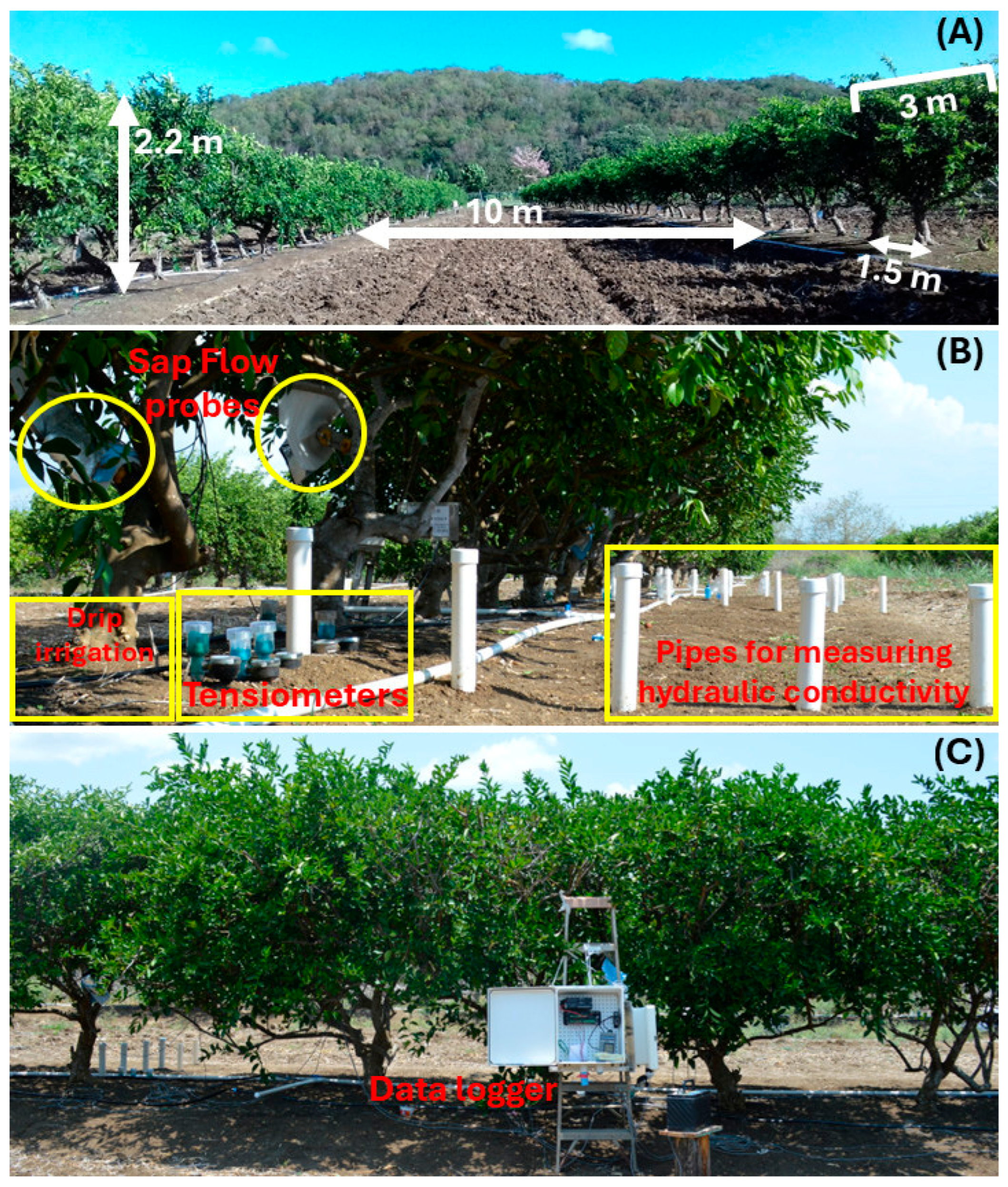
Figure 1. (A) Spatial layout of the orchard, (B) instruments used for sap flow, soil moisture, and hydraulic conductivity measurements, and (C) data logger setup. All images were taken in a Tahiti lime (Citrus latifolia) orchard in Sihochac, Campeche, Mexico.
Horticulturae 11 01472 g001
Figure 2. (A) Global solar radiation, (B) relative humidity, (C) temperature, and (D) vapor pressure deficit (VPD) measured on three typical days during the dry season (red lines) and early rainy season (blue lines) in a Tahiti lime (Citrus latifolia) orchard located in Sihochac, Campeche, Mexico. The data cover the main period of physiological assessments.
Horticulturae 11 01472 g002
Figure 3. Leaf (ΨL) and stem (Ψstem) water potentials measured at pre-dawn (A,B) and at midday (C,D) during the dry season (red bars) and early rainy season (blue bars) in Tahiti lime trees subjected to different soil moisture tension treatments (L = −0.010 MPa, M = −0.035 MPa, and H = −0.085 MPa). Different letters between treatments indicate statistically significant differences (Tukey test, p ≤ 0.05). Data are means ± standard error (n = 18).
Horticulturae 11 01472 g003
Figure 4. Relative leaf water content (RWC) during the dry season (red bars) and early rainy season (blue bars) in Tahiti lime trees subjected to different soil moisture tension treatments (L = −0.010 MPa, M = −0.035 MPa, and H = −0.085 MPa). Different letters indicate statistically significant differences among treatments (Tukey test, p ≤ 0.05). Data are means ± standard error (n = 18).
Horticulturae 11 01472 g004
Figure 5. (A) Sap flow rate during the dry season, (B) early rainy season, and (C) daily accumulated sap flow in Tahiti lime trees subjected to different soil moisture tension treatments (L = −0.010 MPa, M = −0.035 MPa, and H = −0.085 MPa). Different letters indicate statistically significant differences among treatments (Tukey test, p ≤ 0.05). Data are means ± standard error (n = 4). Black arrows indicate noon.
Horticulturae 11 01472 g005
Figure 6. (A) Maximum quantum yield of photosystem II (Fv/Fm), (B) photochemical quenching coefficient (qP), and (C) non-photochemical quenching coefficient (NPQ) during the dry season (red bars) and early rainy season (blue bars) in Tahiti lime trees subjected to different soil moisture tension treatments (L = −0.010 MPa, M = −0.035 MPa, and H = −0.085 MPa). Different letters indicate statistically significant differences among treatments (Tukey test, p ≤ 0.05). Data are means ± standard error (n = 18).
Horticulturae 11 01472 g006
Figure 7. Electron transport rate (ETR) (A,B), effective quantum yield of photosystem II (ΦPSII) (C,D), and non-photochemical quenching (qN) (E,F) during the dry season (left panels) and early rainy season (right panels), respectively, in Tahiti lime trees subjected to different soil moisture tension treatments (L = −0.010 MPa, blue line; M = −0.035 MPa, green line; and H = −0.085 MPa, red line). Asterisks (*) indicate statistically significant differences among treatments (Tukey test, p ≤ 0.05). Data are means ± standard error (n = 18).
Horticulturae 11 01472 g007
Figure 8. Net photosynthetic rate (AN) (A,B), stomatal conductance (gs) (C,D), transpiration rate (E) (E,F), and water use efficiency (WUE) (G,H), respectively, during the dry season (left panels) and early rainy season (right panels) in Tahiti lime trees subjected to different soil moisture tension treatments (L = −0.010 MPa, blue line; M = −0.035 MPa, green line; and H = −0.085 MPa, red line). Asterisks (**) indicate statistically significant differences among treatments (Tukey test, p ≤ 0.05). Data are means ± standard error (n = 18).
Horticulturae 11 01472 g008
Figure 9. (A) Leaf area index (LAI) (during the dry and early rainy seasons), (B) number of shoots (vegetative and floral), (C) fruit yield, and (D) fruit production in Tahiti lime trees subjected to different soil moisture tension treatments (L = −0.010 MPa, blue line; M = −0.035 MPa, green line; and H = −0.085 MPa, red line). Different letters indicate statistically significant differences among treatments (Tukey test, p ≤ 0.05). Data are means ± standard error.
Horticulturae 11 01472 g009
Disclaimer/Publisher’s Note: The statements, opinions and data contained in all publications are solely those of the individual author(s) and contributor(s) and not of MDPI and/or the editor(s). MDPI and/or the editor(s) disclaim responsibility for any injury to people or property resulting from any ideas, methods, instructions or products referred to in the content.