Article

Effect of Plant Growth-Promoting Rhizobacteria Inoculation on Sweet Potato Yield and Nutritional Quality in Northeast Thailand

by
Naruebet Ruangsuriya
,
Kiriya Sungthongwises
* and
Anoma Dongsansuk
Agronomy Section, Faculty of Agriculture, Khon Kaen University, Khon Kaen 40002, Thailand
*
Author to whom correspondence should be addressed.
Horticulturae 2025, 11(12), 1442; https://doi.org/10.3390/horticulturae11121442
Submission received: 12 October 2025 / Revised: 26 November 2025 / Accepted: 26 November 2025 / Published: 28 November 2025
(This article belongs to the Section Vegetable Production Systems)

Abstract

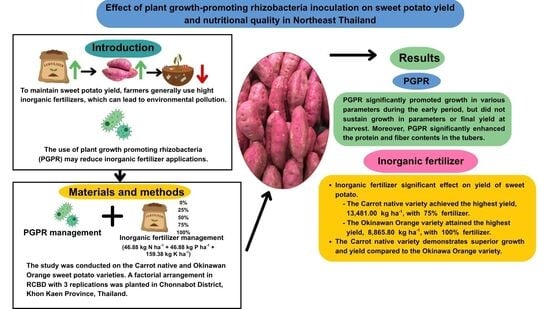
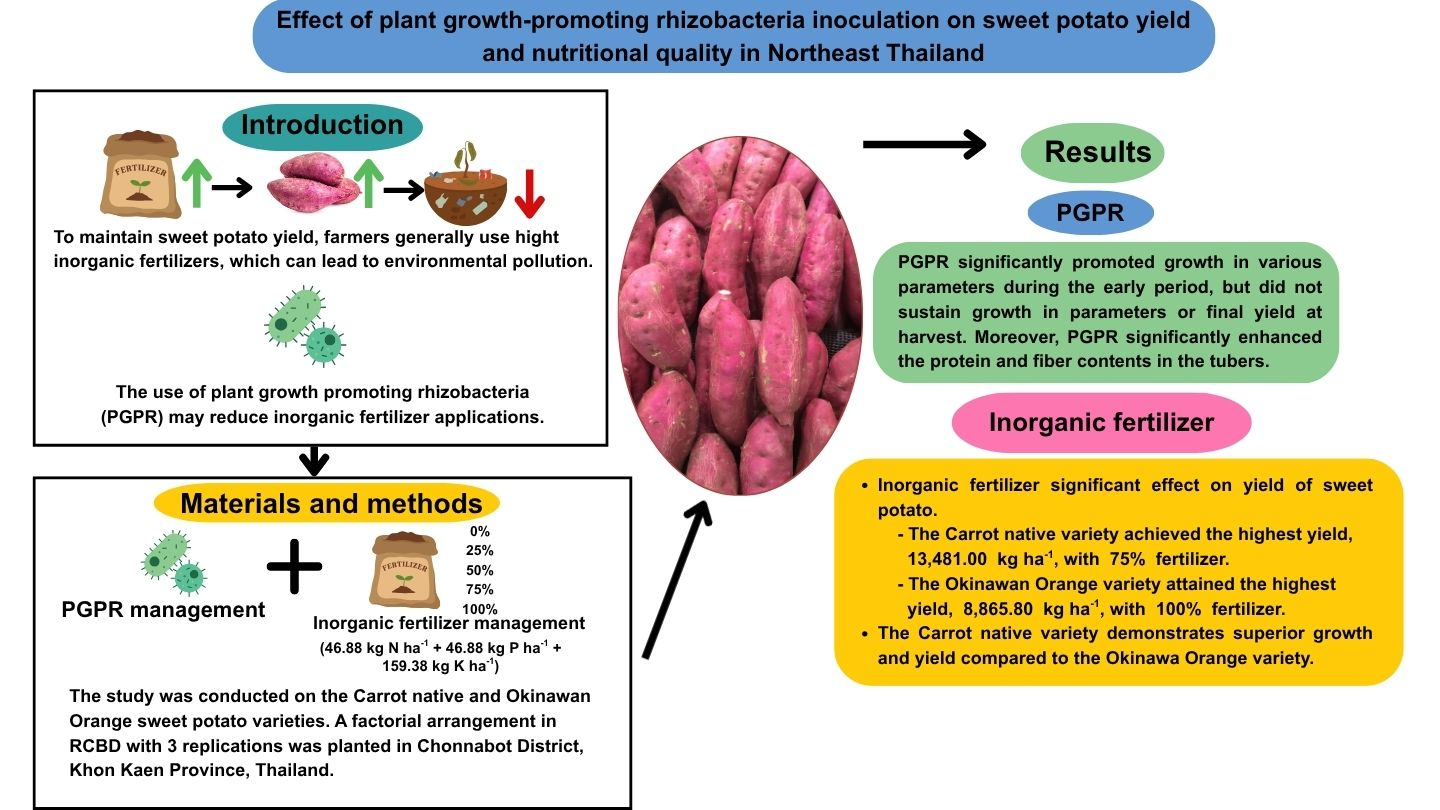
Excessive fertilizer use poses environmental risks in the long term. Thus, plant growth-promoting rhizobacteria (PGPR) have been proposed as a complementary approach to reduce fertilizer use and prevent nutrient stress. Moreover, PGPR’s efficacy in sandy soil for sweet potato production in Northeast Thailand has not yet been reported. This study tested the hypothesis that PGPR inoculation could reduce fertilizer dependency while maintaining yield in nutrient-poor sandy soils. In this research, a field study was conducted from 2023 to 2024 in Chonnabot District, Khon Kaen, Thailand, to evaluate the effects of Azospirillum brasilense, Azotobacter vinelandii, Beijerinckia mobilis, and inorganic fertilizer on the Okinawan Orange and Carrot native sweet potato varieties. Treatments followed a factorial randomized complete block design with two factors, PGPR inoculation and fertilizer level (0%, 25%, 50%, 75%, and 100%), and were replicated three times. The results showed that PGPR dipping had no statistically detectable effect on sweet potato growth and yield (p > 0.05). However, a notable finding was that PGPR significantly increased the protein and fiber content of tubers (p < 0.01) while reducing carbohydrate content, which may have implications for the taste and the nutritional quality of sweet potatoes. In addition, the application of inorganic fertilizer had a significant effect on yield. The Carrot native variety achieved the highest yield (13,481.00 kg ha−1) with 75% fertilizer, while the Okinawan Orange variety attained the highest yield (8866.00 kg ha−1) with 100% fertilizer. These data could be used to assist farmers in determining their fertilizer usage.

Graphical Abstract

1. Introduction

As the global population continues to grow and climate change intensifies, tuber crops like the sweet potato, known for their resilience and adaptability, are increasingly recognized as a cornerstone of future food security, particularly in vulnerable tropical and subtropical regions. Sweet potato (Ipomoea batatas L.) is the seventh most important economic crop in the world, after rice, wheat, potato, maize, barley, and cassava [1]. It is a fast-growing tuberous crop. It also has high nutritional value, being rich in carbohydrates; protein; fiber; beta carotene; anthocyanins; and vitamins A, B, C, and E, along with various minerals such as potassium (K), copper (Cu), manganese (Mn), iron (Fe), and zinc (Zn), particularly in the orange- and purple-fleshed sweet potatoes [2]. In addition, the aboveground biomass of sweet potatoes is a useful food source for fish farming due to its high protein and carbohydrate content [3]. Currently, sweet potato cultivation covers approximately 9.39 million ha distributed across various continents worldwide, producing about 133.2 million tons of sweet potato. In Thailand, sweet potato cultivation is increasing, covering a total area of 3300 ha and yielding an average of 15,893.75 kg ha−1 due to consumption demand. However, Thailand’s sweet potato yield remains lower than major producers being 6286 kg ha−1, particularly China, where the average yield is 22,000 kg ha−1 [4]. Originally, native sweet potatoes in Thailand had moderate yields, but they were not colorful, and they were less sweet and soft compared to Japanese varieties. In 2022, the Okinawan Orange variety provided the highest tuber fresh weights of 15,500 kg ha−1 in Phu Wiang district and 8080 kg ha−1 in Nong Ruea district, with a higher return than other Japanese varieties in Northeast Thailand [3]. The agricultural areas in the northeast region are generally characterized by sandy soil, which is suitable for the growth of tuberous plants. This specific soil type presents challenges in farming other types of crops due to its inherently low fertility and high susceptibility to rapid leaching of essential nutrients, especially nitrogen (N) and phosphorus (P) [5].
Enhancing the nutritional quality and productivity of crucial staple crops under resource-limited conditions is paramount to achieving Zero Hunger while limiting ongoing environmental stress. To maintain good sweet potato growth and yield for commercial production, high levels of inorganic and organic fertilizers are often needed. Inorganic fertilizers improve the growth of plants and increase yields in a relatively short period; however, they are costly and can lead to environmental pollution [6,7]. The reliance on high levels of synthetic inorganic fertilizers globally contributes substantially to greenhouse gas emissions and water pollution, necessitating an urgent pivot toward climate-smart agricultural practices. Biological fertilization methods, such as the application of plant growth-promoting rhizobacteria (PGPR), offer an alternative approach, thereby reducing the environmental footprint of commercial crop production systems worldwide. PGPR are a group of bacteria that colonize the rhizosphere and enhance crop performance. Direct mechanisms include facilitating nutrient cycling, such as N fixation, solubilization of P and K [8], and promoting root uptake of N and P [9]. Their secondary function involves stimulating plant growth through the production of various phytohormones, including auxins [10], gibberellins [11], and cytokinins [12], which specifically promote root elongation and branching, essential for maximizing nutrient uptake and crucial tuber initiation in sweet potato. Furthermore, PGPR modulate plant physiology to mitigate hormone stress responses [13,14,15,16]. Notably, high ethylene concentrations [13] often inhibit root growth and limit tuber yield. However, effective PGPR strains possessing ACC deaminase minimize this stress-induced damage, ensuring sustained root elongation and efficient energy partitioning toward the storage root [17]. Additionally, PGPR modulate abscisic acid [14], the primary signal for drought response and stomatal closure. Finally, PGPR bolster systemic defense mechanisms by modulating salicylic acid [15] against biotrophic pathogens and jasmonic acid [16] against herbivores and necrotrophic pathogens, improving overall crop resilience. Yu et al. [18] reported that the application of PGPR increased their yield of purple sweet potato by 26%, increased the product’s nutritive quality of soluble sugar by 8%, increased vitamin C content by 14%, and increased anthocyanin content by 11%. Using PGPR significantly retarded the depletion of P and K elements during crop cultivation, promoted soil bacterial diversity, and altered the bacterial community structure. Thus, developing methods to preserve crop yield and reduce environmental impact while limiting inorganic fertilizer use is an urgent necessity.
For this study, the Department of Agriculture, Bangkok Province, Thailand, suggested the PGPR strains Azospirillum brasilense, Azotobacter vinelandii, and Beijerinckia mobilis based on their demonstrated capabilities in N fixation [19,20], P solubilization [21], and cytokinin synthesis [22,23], which are critical for nutrient availability and crop growth. This experiment aimed to reduce inorganic fertilizer use in sweet potato production based on the hypothesis that the application of PGPR would synergistically interact with reduced inorganic fertilization to sustain or improve sweet potato yield and quality under nutrient-poor conditions. The objective was to evaluate the synergistic effects of PGPR and inorganic fertilizer application on sweet potato growth, yield performance, and tuber nutritional quality. Two sweet potato cultivars, the Okinawan Orange and the Carrot (native variety), were used as model crops to assess the impact of PGPR and inorganic fertilizer under field conditions. The findings from this experiment may reduce the use of inorganic fertilizers and increase productivity, thereby contributing to the development of sustainable and environmentally friendly agriculture.

2. Materials and Methods

2.1. Site and Environmental Conditions

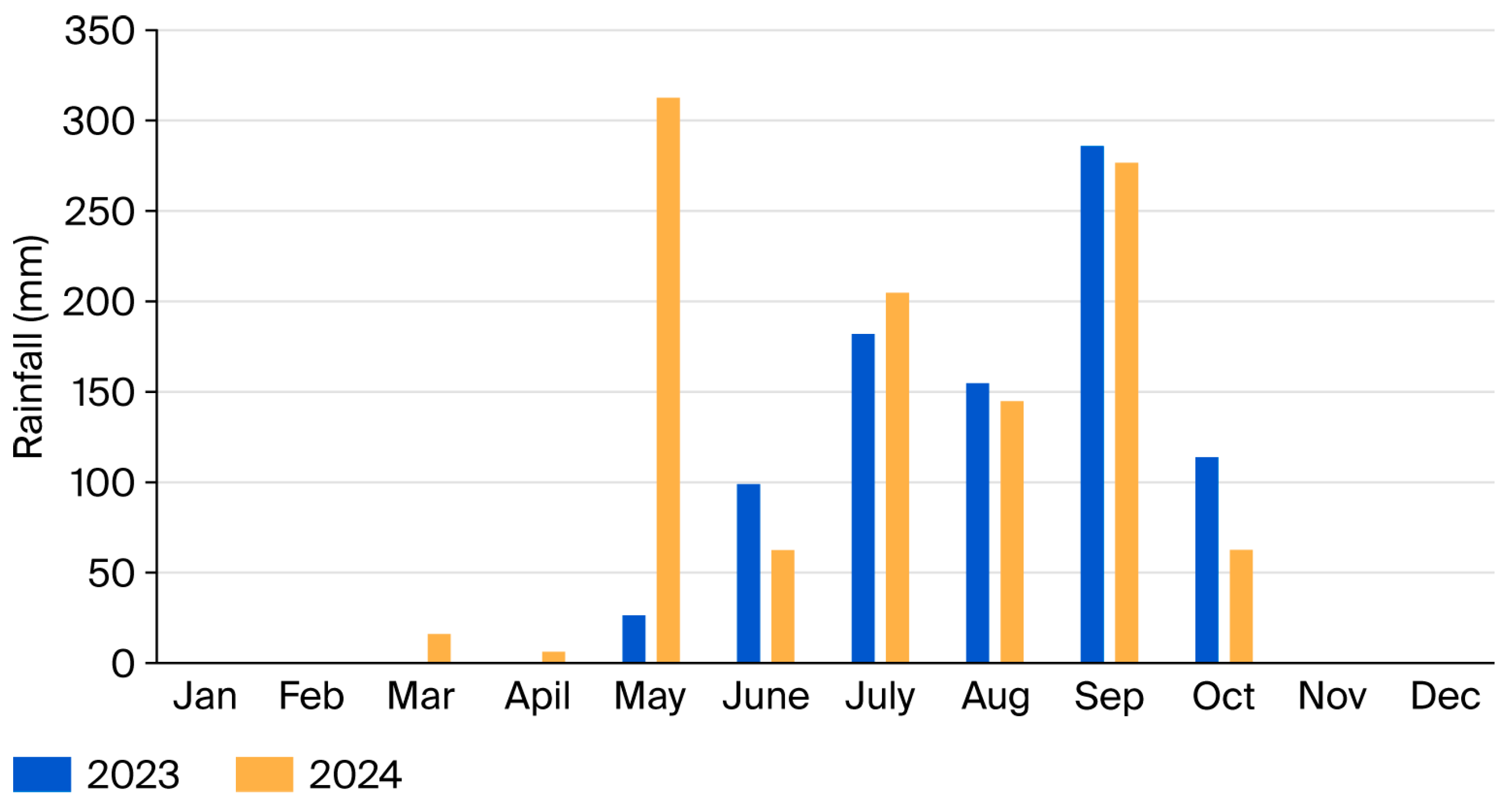
A field study was conducted from 2023 to 2024 for two cropping seasons in Chonnabot district, Khon Kaen province, Northeast Thailand. The study site was located at an elevation of 168 m, 16.098813° N latitude, and 102.600195° E longitude. The annual precipitation recorded was 861.30 mm in 2023 and 1087.10 mm in 2024, and the average maximum and minimum temperatures were 33.33 °C and 23.08 °C in 2023 and 34.73 °C and 25.70 °C in 2024, respectively. The distribution of rainfall during 2023 and 2024 in Chonnabot district, Khon Kaen province, Thailand, is shown in Figure 1. Soil samples were collected from the experimental site before the start of the experiment. Samples were taken to a depth of 0–30 cm from three points per plot. After collection, the samples were air-dried, ground, passed through a 2 mm sieve, and then packed in plastic bags for laboratory analysis at the Northeast Agriculture Research and Development Center, Faculty of Agriculture, Khon Kaen University. Soil chemical analyses assessed soil pH at a 1:1 ratio [24]; organic matter (OM) [25]; electrical conductivity (EC) using a 1:5 slurry [26]; total nitrogen (N) via the Kjeldahl method; and available phosphorus (P) via Bray II extraction and the molybdenum blue method [27]. Exchangeable potassium (K), calcium (Ca), and magnesium (Mg) were extracted with 1 N NH4OAc (pH 7) and the concentration in the extraction was determined using a flame photometer. The micronutrients Fe, Mn, Cu, and Zn were extracted using DTPA (pH 7.3) and measured via atomic absorption spectrophotometry. Total heavy metals (Cr, Cd, and Pb) and metalloids (As) were measured using wet digestion (nitric perchloric acid) and ICP-OES.

2.2. Experimental Design

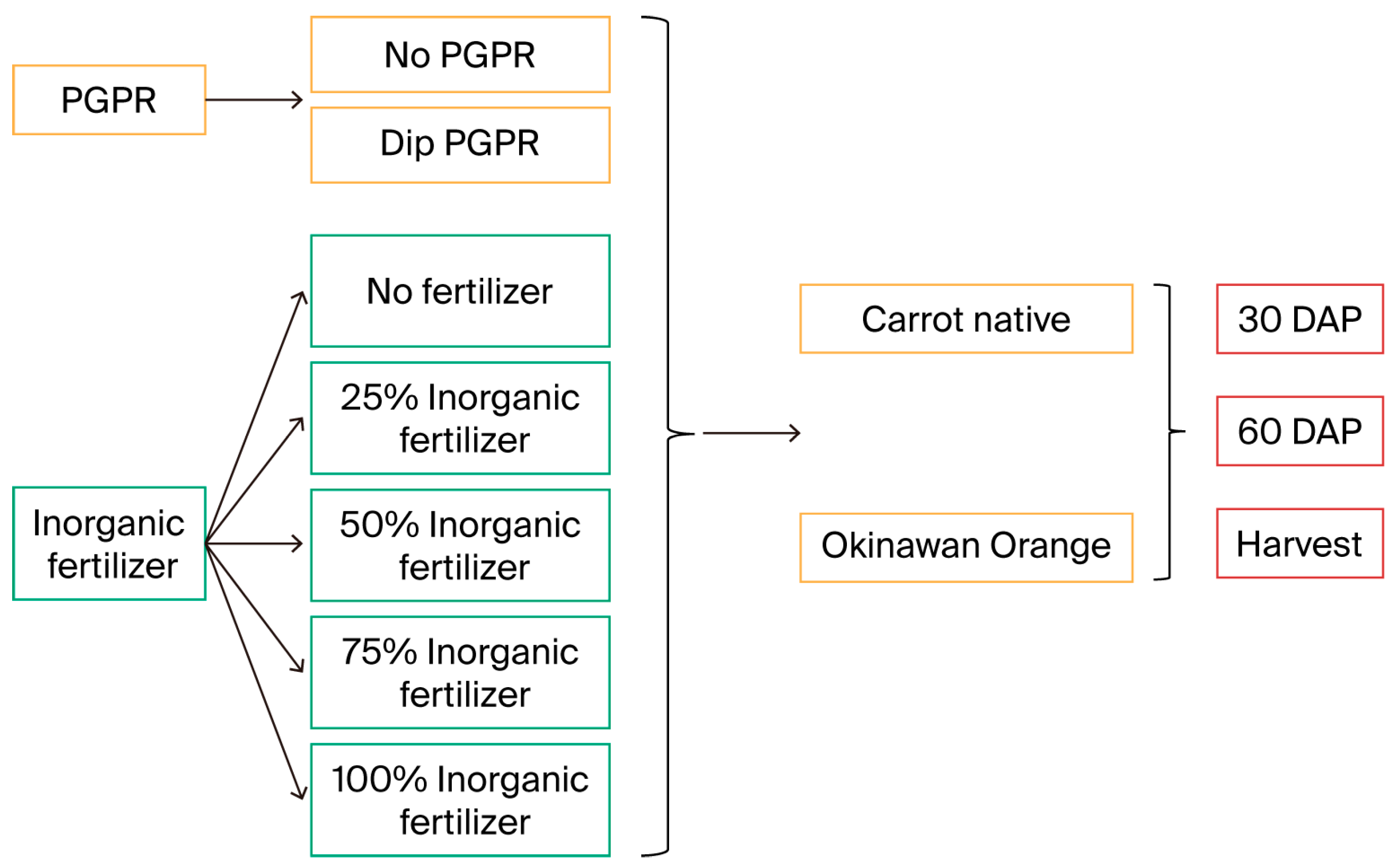
Carrot and Okinawan Orange sweet potato slips were used to evaluate the effects of PGPR produced by the Department of Agriculture, Bangkok Province, Thailand. The PGPR product contained 3 types of bacteria (Azospirillum brasilense, Azotobacter vinelandii, and Beijerinckia mobilis) [28] and was combined with different percentages of the commercial NPK fertilizer (46.88 kg N ha−1 + 46.88 kg P ha−1 + 159.38 kg K ha−1) recommended by the Department of Agriculture, Bangkok Province, Thailand. Two components, PGPR (No PGPR, D1 and Dip PGPR, D2) and recommended inorganic fertilizer levels (0% (T1), 25% (T2), 50% (T3), 75% (T4), and 100% (T5)) were used in the treatments and are detailed in Table 1. The experiment had a factorial randomized complete block design (RCBD) with three replications to investigate the effects of two main factors on sweet potatoes, as shown by the red arrows in Figure 2. Furthermore, the figure clearly specifies the time points for data collection and harvest, including measurements at 30 days after planting (30 DAP), 60 days after planting (60 DAP), and the final harvest stage (Harvest). This experimental design enables researchers to compare the effectiveness of various management methods and monitor plant growth throughout the cultivation period. The resulting data will be valuable for developing sustainable and efficient sweet potato production systems.

2.3. Field Management

The soil was prepared with cattle manure at a rate of 4.38 t ha−1 for two weeks before the sweet potatoes were planted. The plot size was 2 × 10 m, and raised beds of 50 cm with 30 plots per variety were maintained under rainy conditions and with sufficient water supply to maintain field capacity. The supplemental irrigation was applied as needed based on routine visual and tactile assessments of soil moisture in the surface zone. When plots appeared dry, irrigation was supplied for 30–45 min per event, resulting in an average single event application of 39–59 m3 ha−1. Irrigation was managed to maintain soils near field capacity without causing waterlogging. Raised beds helped sweet potatoes grow and develop tubers, facilitated drainage, and contributed to ease of harvesting [29]. Carrot and Okinawan Orange slips (25–30 cm) were soaked in a solution recommended by the Department of Agriculture containing 1 kg of PGPR per 20 L of water with an approximate bacterial population of 106 CFU g−1 for 30 min in shade before planting. In this study, the PGPR included A. brasilense, A. vinelandii, and B. mobilis. A. brasilense is characterized by its capacity for efficient N fixation [19] and the synthesis of cytokinin hormones [22]. This specific strain has previously demonstrated successful survival and growth-promoting effects when applied to sweet potato [30]. A. vinelandii is a versatile strain, contributing significantly to N fixation [31], P solubilization [21], and cytokinin biosynthesis [23]. Finally, B. mobilis is primarily utilized for its robust nitrogen-fixing capabilities within the rhizosphere environment of the crop [20]. The plant spacing was 50 cm between rows and 50 cm between plants. The sweet potato slips were planted at an angle of 45 degrees at a depth of 10–15 cm in the soil. Weed control was performed manually for 1 month after planting and then regularly every month. At 30 and 45 days after the planting of the sweet potatoes, fertilizer was applied via the drilling method according to the experimental design.

2.4. Data Collection

Vine length, node length, number of nodes per plant, SPAD chlorophyll meter reading (SCMR), total chlorophyll, chlorophyll A, chlorophyll B, carotenoids, and leaf area were measured from 5 plants per plot at 30 and 60 days after planting and at the harvest stage. The vine length was measured from the base of the stem to the tip of the shoot. SCMRs were taken in the middle of the vine with the fully grown leaves of 5 randomized plants per plot, and the average was calculated. Chlorophyll measurement was modified according to the method of Arnon [32] in 2.5. The leaf area (LA) was estimated using the LI-Cor 3100 leaf area meter (LI-COR Inc, Lincoln, NE, USA). At the harvest stage, several parameters were recorded: the number of tubers per plant, tuber length, tuber diameter, tuber fresh weight, fresh and dry weight of aboveground biomass, and harvest index (HI). Additionally, total N was determined according to Bremner and Mulvaney’s method [33], total P using wet digestion and the spectrophotometer method [34,35], and total K using wet digestion (nitric perchloric) and an atomic absorption spectrophotometer [35]. Aboveground biomass, ash, and fiber were determined using the Weende method [36]; the nutritional content of the tuber, such as protein, was determined via combustion (AOAC official method 990.03), and carbohydrates were determined via calculation by subtracting the sum of the percentage moisture, crude protein, ether extract, crude fiber, and ash content from 100 [37].

2.5. Chlorophyll and Carotenoid Analysis

The sample leaves of the sweet potatoes growing in field conditions were taken from leaf position numbers 3–4. The collected leaves were cut into small 100 mg pieces, leaving the mid-ribs, and ground with 10 mL of 80% acetone (v/v). The sample solution was filtered through Whatman No. 1 filter paper, and the final volume was collected. The absorption of the carotenoids, chlorophyll a, and chlorophyll b was read at 440, 645, and 663 nm with a UV-Vis spectrophotometer (Model i3, Hanon, Jinan, China) using 80% acetone as a blank. The following formulas were used to calculate total chlorophyll content, chlorophyll a, chlorophyll b, and carotenoids [38], with all the photosynthetic pigment contents expressed in mg gFW−1:
Chlorophyll a (mg gFW−1) = [(12.7 × OD663) − (2.69 × OD645)] × [V/(1000 × W)]
Chlorophyll b (mg gFW−1) = [(22.9 × OD645) − (4.68 × OD663)] × [V/(1000 × W)]
Total chlorophyll (mg gFW−1) = [(20.2 × OD645) + (8.02 × OD663)] × [V/(1000 × W)]
Carotenoid (mg gFW−1) = (4.69 × OD440) − [0.268(20.2 × OD645) + (8.02 × OD663)] × [V/(1000 × W)]
where
OD440 = Absorbance at 440 nm;
OD645 = Absorbance at 645 nm;
OD663 = Absorbance at 663 nm;
V = Final volume of 80% acetone in chlorophyll extract;
W = Fresh weight of leaf materials used (mg).

2.6. Statistical Analysis

The data were analyzed via two-way Analysis of Variance (ANOVA) using the Statistix 10 software. The correlation coefficients of the sweet potatoes’ agronomic traits and economic yield were analyzed using Pearson correlation. Comparative analysis of the results was carried out using Fisher’s least significant difference (LSD) at a 5% level of significance; that is, a p-value ≤ 0.05 was considered statistically significant. Microsoft Excel 2021was used to plot the graphs.

3. Results

3.1. Soil Chemical Properties Before Planting Sweet Potatoes

The nutritional content of the soil samples collected before planting sweet potatoes is shown in Table 2. The soil was classified as sandy loam, with a neutral pH of 6.39. Furthermore, the non-saline EC was measured at 0.031 dS m−1. Several essential fertility nutrients, such as OM, total N, and available P, were found to be low. Conversely, exchangeable K, Ca, and Mg were found to be sufficiently high, measuring 119.66, 159.72, and 32.40 mg kg−1, respectively. Micronutrients were present at a critical level. However, the total concentration of heavy metals in this experimental site was within the normal range for plant growth [39].

3.2. Growth and Chlorophyll Content of Sweet Potatoes

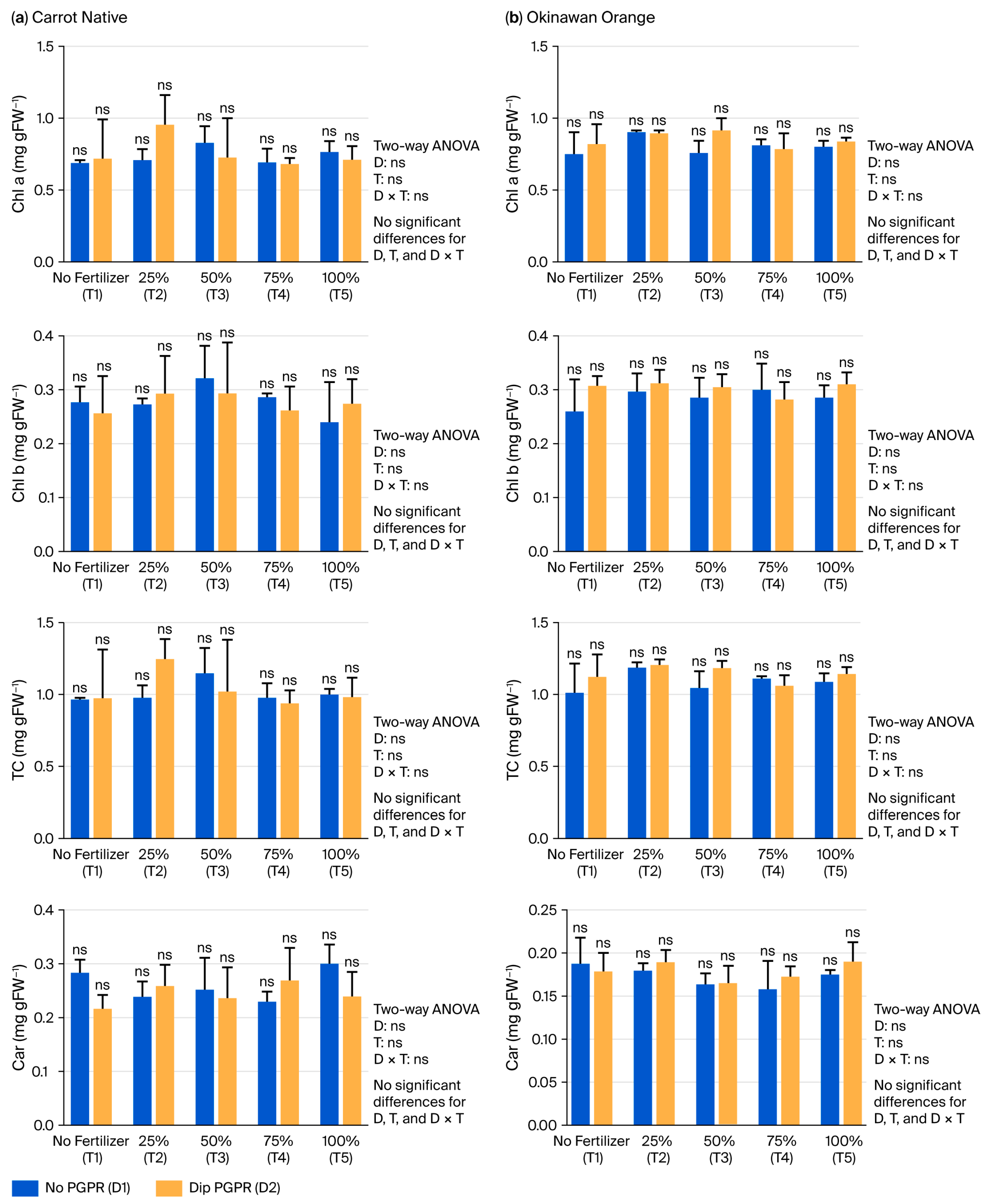
During the initial 30 DAP, the Carrot native sweet potato variety exhibited a significant response to PGPR dipping, showing an increase in node length (Table 3). In contrast, PGPR dipping showed no statistically significant effects on the Okinawan Orange sweet potato variety during this period (Table 4). Inorganic fertilizer application significantly affected the leaf area per plant−1 of the Carrot native variety, particularly at the 25%, 50%, and 100% application levels, while the Okinawan Orange sweet potato variety required 100% inorganic fertilizer to achieve optimal growth, especially in terms of vine length, no. of nodes per plant−1, and leaf area per plant−1, achieving 35.65 cm, 14, and 933 cm2 per plant, respectively; however, these values were not significantly different compared to those achieved with the application of 75% inorganic fertilizer. At 30 DAP, neither sweet potato variety showed any interaction between PGPR and the inorganic fertilizer in their growth parameters or photosynthetic pigments (Table 3 and Table 4, Figure 3a,b).
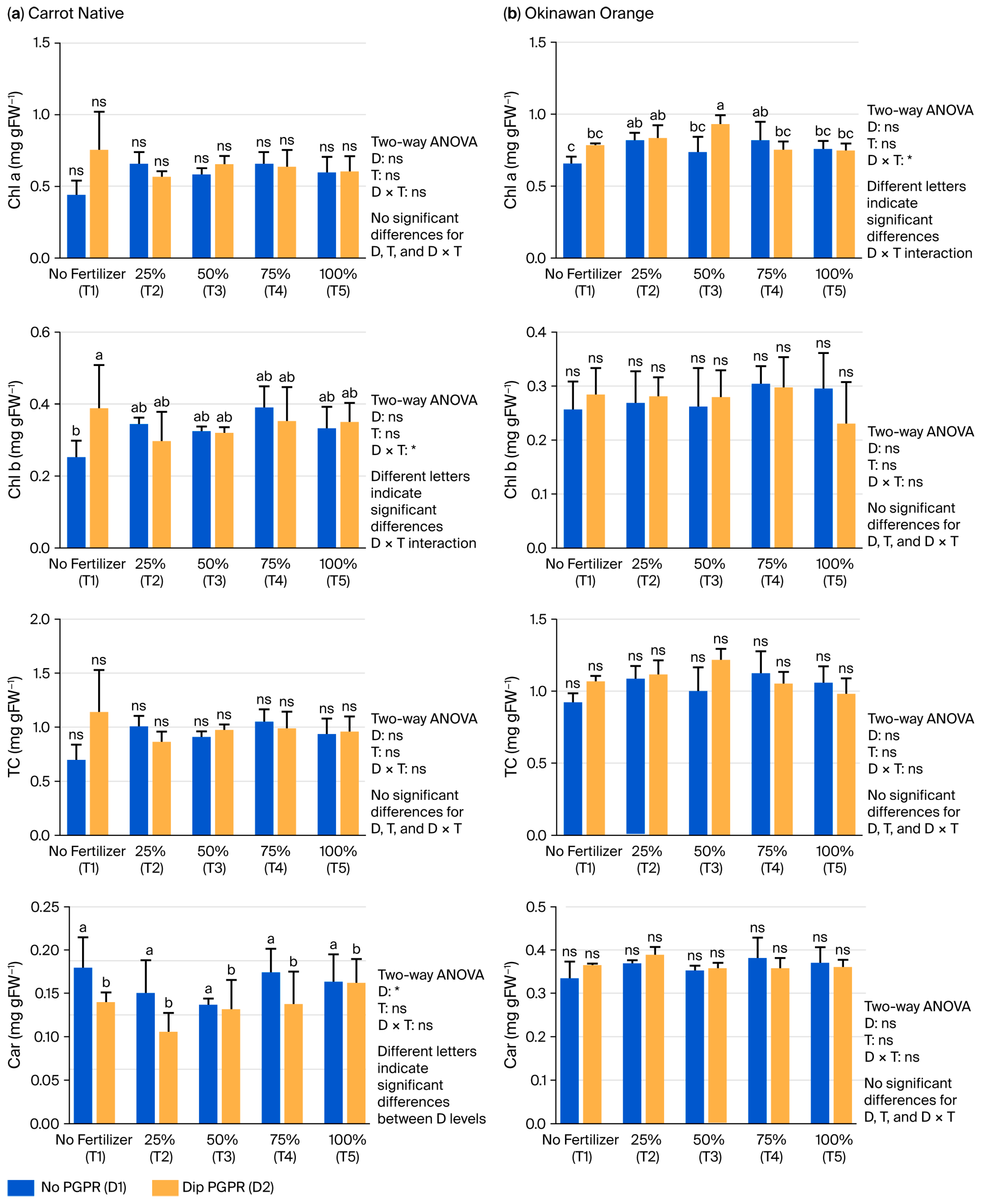
By 60 DAP, PGPR dipping had significantly boosted the leaf area per plant to 3155 cm2 in the Carrot native variety and 2277 cm2 in the Okinawan Orange variety (Table 3 and Table 4). Also, PGPR dipping had significantly increased the number of nodes and significantly reduced the carotenoid content in the leaves of the Carrot native variety (Figure 4a). In terms of inorganic fertilizer management for the Carrot native variety, the 50% inorganic fertilizer application resulted in the highest no. of nodes per plant−1 and the largest leaf area per plant−1, but the values were not significantly different from those achieved with the 25%, 75%, and 100% inorganic fertilizer applications (Table 3). The Okinawan Orange variety continued to show a higher nutrient demand than the Carrot native variety, and the 100% inorganic fertilizer application still provided the best results in terms of vine length and leaf area per plant−1, though, again, they did not differ significantly from those achieved with the 75% inorganic fertilizer application (Table 4). At 60 DAP, a significant interaction was observed between PGPR dipping and the 50% inorganic fertilizer application in the Carrot native variety, leading to a maximum leaf area of 3849 cm2 per plant, whereas, in the Okinawan Orange variety, no interaction between PGPR and inorganic fertilizer application was detected for any growth parameter except chlorophyll a content (Figure 4b).
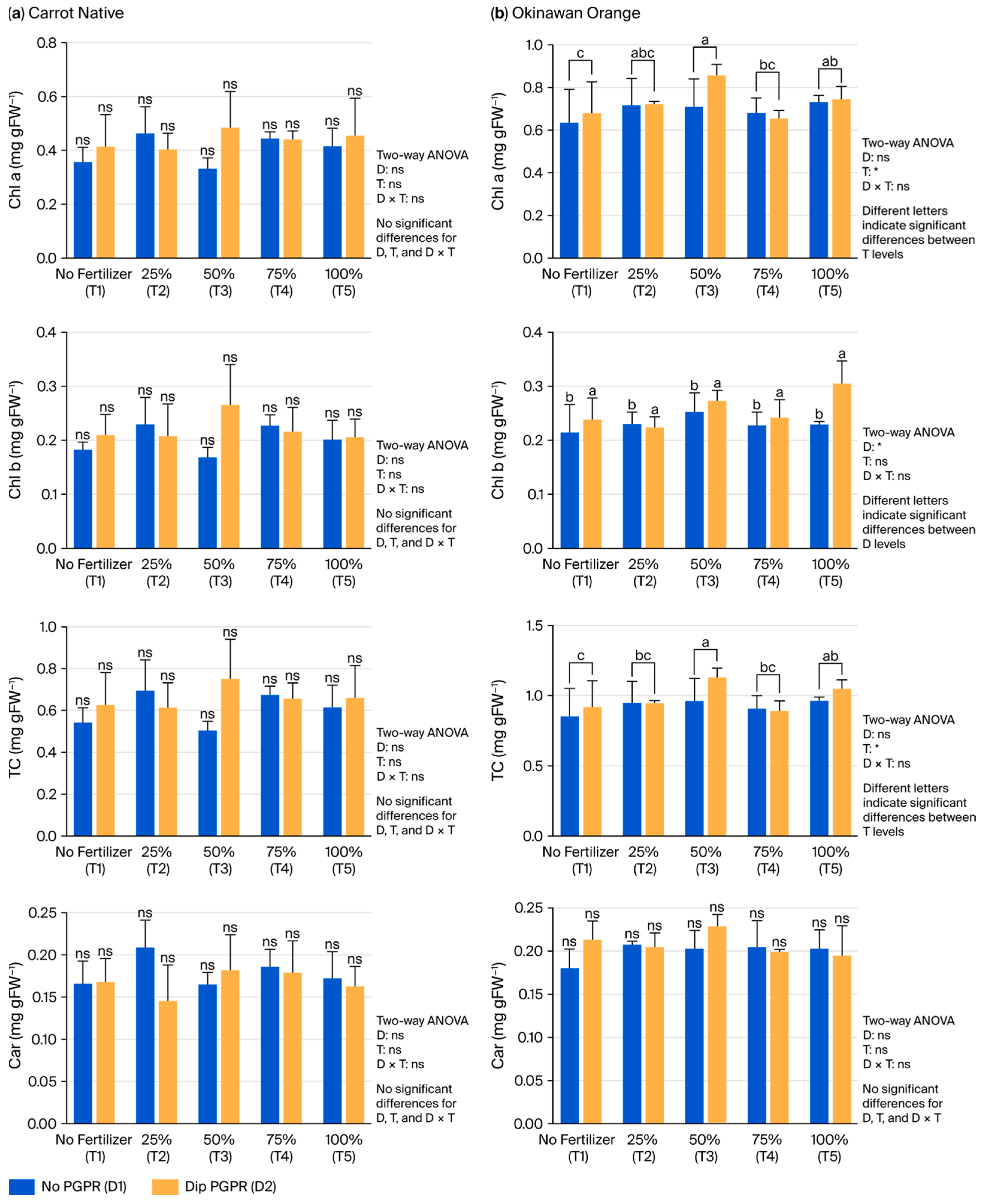
At harvest, PGPR dipping resulted in only a slight increase in the growth parameters of both sweet potato varieties. The pigment content in the Carrot native variety did not differ (Figure 5a), and only the chlorophyll b content in the leaves of the Okinawan Orange variety significantly increased (Figure 5b). In terms of inorganic fertilizer management, the Carrot native variety did not show significant differences among fertilizer treatments (Table 3), whereas, in the Okinawan Orange variety, a significant response in terms of growth was still observed. Specifically, the 100% inorganic fertilizer application provided the best vine length and leaf area per plant (Table 4), and the 50% inorganic fertilizer maximized chlorophyll a and total chlorophyll content (Figure 5b). Neither sweet potato variety showed a significant interaction between PGPR dipping and inorganic fertilizer management.

3.3. Yield Components, Economic Yields, and Aboveground Biomass

Yield components and economic yield, including the number of tubers per plant, tuber length, tuber diameter, tuber fresh weight, and harvest index (HI), were measured at the harvest stage. The results showed that PGPR application did not significantly affect the yield components of either variety (Table 5 and Table 6), while inorganic fertilizer management had significant effects on both varieties. In the Carrot native variety, the 75% inorganic fertilizer application resulted in the highest number of tubers per plant (4.82), tuber fresh weight (13,481.00 kg ha−1), fresh and dry aboveground biomass (14,291.00 and 2181.60 kg ha−1), and HI (0.50), though these values were not significantly different from the values achieved with the 50% inorganic fertilizer application. The interaction between PGPR dipping and 50% inorganic fertilizer application produced the highest tuber length and diameter of 11.35 and 3.56 cm, respectively (Table 5). In the Okinawan Orange variety, the 100% inorganic fertilizer yielded the highest tuber fresh weight (8866 kg ha−1) and fresh and dry aboveground biomass (11,287 and 2222 kg ha−1), though these values were not significantly different from the values achieved with the 75% inorganic fertilizer application. No significant interaction was found between PGPR and inorganic fertilizer in yield components, economic yields, or aboveground biomass (Table 6).

3.4. Nutritional Content in the Tubers of Sweet Potatoes

Next, we considered the effect of PGPR and inorganic fertilizer on the nutritional value of the sweet potatoes. The results showed that PGPR dipping significantly increased protein, fiber, and ash content in the Carrot native variety. Similar results were obtained in the Okinawan Orange variety, except in the case of ash. In both varieties, 100% inorganic fertilizer provided the highest carbohydrate content: 85.21% and 86.87%, respectively. The highest protein (4.47%) and ash (1.16%) contents were found for 50% inorganic fertilizer application in the Carrot variety, while the 75% inorganic fertilizer application produced the highest protein (5.91%) and ash (1.38%) contents in the Okinawan Orange variety. The interaction between PGPR and inorganic fertilizer was found to be significant for all nutritional values for both varieties (Table 7).

3.5. Macronutrient Content in Aboveground Biomass of Sweet Potatoes

Measurement of the macronutrient content in the aboveground parts of both sweet potato varieties showed that PGPR dipping tended to significantly enhance the accumulation of P and K in the Okinawan Orange variety. Conversely, in the Carrot native variety, the accumulation of P and K was significantly enhanced without PGPR dipping. In both sweet potato varieties, the application of inorganic fertilizer significantly increased the accumulation of N, P, and K compared to no fertilizer application. The application of 100% inorganic fertilizer produced the highest accumulation of N in the Carrot native variety and the highest accumulation of P and K in the Okinawan Orange variety, while the application of 50 and 75% inorganic fertilizer produced the highest accumulation of K and P, respectively, in the Carrot native variety. In addition, there was an interaction between the use of PGPR and inorganic fertilizer management. PGPR dipping with 50% inorganic fertilizer application produced the highest accumulation of N at 1.99% in the Carrot native variety, while no PGPR dipping with 75% and 25% inorganic fertilizer produced the highest accumulations of P and K (0.099% and 1.65%), respectively. For the Okinawan Orange variety, no PGPR dipping with the application of 75% inorganic fertilizer produced the highest accumulation of N (1.87%), and PGPR dipping with 100% inorganic fertilizer application produced the highest accumulation of P and K (0.152% and 2.73%, respectively) (Table 8).

3.6. The Correlation Coefficients of the Sweet Potatoes’ Agronomic Traits and Economic Yield

3.6.1. Carrot Native Variety

Through Pearson correlation analysis involving 17 agronomic traits of the Carrot native variety (Table 9), 136 significant correlations were identified, comprising 80 positive and 56 negative relationships. According to the classification criteria of [40], these included 54 weak (r ≤ 0.359), 24 moderate (r = 0.360–0.709), and 2 strong correlations (r ≥ 0.710). Specifically, strong correlations were observed primarily between the fresh and dry weights of aboveground biomass ha−1 (r = 0.819 **, p < 0.01). Furthermore, tuber carbohydrate content showed strong negative correlations with protein (r = −0.831 **, p < 0.01) and fiber (r = −0.923 **, p < 0.01) content. Regarding key yield-related traits, tuber fresh weight ha−1 exhibited moderate positive correlations with the number of tubers per plant−1 (r = 0.656 **, p < 0.01), nitrogen content in aboveground biomass (r = 0.427 *, p < 0.05), protein content in tubers (r = 0.445 *, p < 0.05), the fresh weight of aboveground biomass ha−1 (r = 0.436 *, p < 0.05), and the dry weight of aboveground biomass ha−1 (r = 0.424 *, p < 0.05). In terms of vegetative growth relationships, vine length showed moderate positive correlations with the SCMR (r = 0.587 **, p < 0.01), the fresh weight of aboveground biomass ha−1 (r = 0.455 *, p < 0.05), and the dry weight of aboveground biomass ha−1 (r = 0.471 **, p < 0.01) and a negative correlation with harvest index (r = −0.551 **, p < 0.01). Supporting this, the harvest index also exhibited a strong negative correlation with the fresh weight of aboveground biomass ha−1 (r = −0.829 **, p < 0.01) and a moderate negative correlation with the dry weight of aboveground biomass ha−1 (r = −0.695 **, p < 0.01). In terms of nutritional quality, the strong negative correlations between carbohydrate, protein, and fiber contents suggest a metabolic trade-off in nutrient composition. In addition, protein content showed a strong positive correlation with ash content (r = 0.772 **, p < 0.01). In terms of nutrient accumulation, nitrogen and potassium contents in aboveground biomass were moderately correlated (r = 0.484 **, p < 0.01). These findings indicate that maximizing tuber yield in the Carrot native variety requires balanced aboveground biomass development. This is consistent with the nitrogen accumulation in aboveground biomass, demonstrating the importance of strategic nitrogen management for sweet potato production.

3.6.2. Okinawan Orange Variety

Through Pearson correlation analysis of 17 agronomic traits of the Okinawan Orange variety (Table 10), 136 significant correlations were identified, comprising 99 positive and 37 negative relationships. Initially, strong correlations were observed primarily between the fresh and dry weights of aboveground biomass ha−1 (r = 0.859 **, p < 0.01), but additional strong relationships were found between phosphorus and potassium contents in aboveground biomass (r = 0.774 **, p < 0.01), as well as between tuber fresh weight ha−1 and dry weight of aboveground biomass ha−1 (r = 0.720 **, p < 0.01). Regarding key yield-related aspects, tuber fresh weight ha−1 exhibited moderate-to-strong positive correlations with dry weight of aboveground biomass ha−1 (r = 0.720 **, p < 0.01), fresh weight of aboveground biomass ha−1 (r = 0.618 **, p < 0.01), and vine length (r = 0.576 **, p < 0.01). In terms of vegetative growth relationships, vine length demonstrated moderate positive correlations with dry weight of aboveground biomass ha−1 (r = 0.700 **, p < 0.01), fresh weight of aboveground biomass ha−1 (r = 0.619 **, p < 0.01), and leaf area per plant−1 (r = 0.575 **, p < 0.01), while leaf area per plant−1 displayed moderate positive correlations with the dry weight of aboveground biomass ha−1 (r = 0.638 **, p < 0.01) and the nitrogen content in aboveground biomass (r = 0.615 **, p < 0.01). In terms of nutritional quality, carbohydrate content showed a moderate negative correlation with protein content (r = −0.625 **, p < 0.01), while fiber content displayed moderate positive correlations with ash content (r = 0.612 **, p < 0.01). Concerning nutrient accumulation, the strong positive correlation between phosphorus and potassium contents in the aboveground biomass (r = 0.774 **, p < 0.01) indicates synchronized uptake and accumulation of these macronutrients. These findings indicate that tuber yield improvement in the Okinawan Orange variety is strongly associated with enhanced aboveground biomass production, particularly dry matter accumulation and vigorous vine growth.

4. Discussion

4.1. Response of Sweet Potatoes to PGPR and Inorganic Fertilizer Management

Optimizing nutrient use efficiency (NUE) in highly demanding tuber crops is critical for global sustainability. Our findings indicate that PGPR can significantly improve early vegetative growth, highlighting a viable strategy for precision nutrient management in the early growth stage. During the 30–60 DAP period, the results of this experiment showed that PGPR significantly promoted internode length at 30 DAP in the Carrot native variety and the no. of nodes per plant−1 and leaf area at 60 DAP in both varieties. This physiological enhancement aligns with the known functions of the selected PGPR strains. The observed increase in aboveground biomass, reflected by improved leaf area, is partly attributable to the nitrogen-fixing capabilities of A. brasilense [19] and B. mobilis [20]. Furthermore, some PGPR strains, such as A. brasilense [22] and A. vinelandii [23], can synthesize the hormone cytokinin, which stimulates cell division and vine elongation [41]. These effects likely contributed to the increased number of nodes per plant and internode length observed in the Carrot native variety during the early growth phase. Several studies have suggested that the use of PGPR in cropping systems can promote plant growth and increase crop yield. For example, Yasmin et al. [42] found that PGPR can significantly increase the growth and yield of sweet potato.
Ultimately, although PGPR significantly promoted growth in various parameters during the early period, this advantage was not sustained and did not translate into continued positive effects on growth parameters or final yield at harvest. This was evident in the fresh and dry weights of aboveground biomass and total yield, which showed an upward trend but did not differ significantly from the results for crops grown with no PGPR dipping. These findings are similar to the results of Ollio et al. [43], who found that the use of Azospirillum, Pseudomonas, Azotobacter, and Bacillus did not promote broccoli yield. Moreover, a relevant limitation of the experimental design was the reliance on a single, brief inoculation protocol: 30 min slip soaking without reinoculation. This method is likely insufficient to ensure a robust and persistent bacterial presence in the rhizosphere throughout the growth cycle, especially considering the rapid nutrient leaching and potential runoff in a rainy field environment [44]. This study also lacked any confirmation of viable PGPR cell density post-soaking or, more importantly, confirmation of successful colonization and survival in the field rhizosphere. In addition, the application of cattle manure to all experimental plots prior to planting introduced native microbial communities and additional nutrient sources [45]. This microbial abundance likely resulted in strong competition for niche and resources, making it exceedingly difficult for the low-density inoculum to establish and maintain dominance in the rhizosphere. The lack of a significant response may be attributable to the competitive advantage of native soil microflora over the introduced PGPR [46].
Furthermore, the specificity of the PGPR used may not have been suitable for these two sweet potato varieties, as different root exudates affect microbial responses to the plants [47,48]. The lack of host specificity between the PGPR and the crop might explain the absence of distinct growth promotion results, as other studies have successfully stimulated sweet potato growth using different PGPR strains. For instance, Yu et al. [18] utilized Bacillus cereus AR156, Bacillus subtilis SM21, and Serratia sp. XY21, while Sadeq et al. [49] employed Bacillus tequilensis UPMRB9 and Bacillus subtilis UPMB10. These strains demonstrated statistically significant potential for sweet potato growth. Consequently, the differences in microbial species suggest that the PGPR used in this experiment are not as effective in associating with the two sweet potato cultivars. Additionally, methodological differences in the application may have contributed to the reduced efficacy. Notably, Sadeq et al. [49] soaked cuttings for 48 h and reinoculated biweekly, whereas our protocol involved only 30 min of soaking in shade before planting, with no subsequent inoculation. Ahemad and Kibret [50] reported that environmental conditions during soaking may affect the efficacy of microorganisms, such as in shade or dark conditions. Although soaking was performed in the shade, without direct sunlight, there is a higher probability of a temperature increase, which is a critical factor that reduces PGPR effectiveness. In contrast, soaking under dark conditions helps to maintain a more stable solution temperature, which aligns with the fundamental principles of microbial inoculant storage necessary to preserve maximum viability before true application [51]. However, the sensitivity of PGPR strains to temperature and light stressors varies. Therefore, the reduced efficacy in our experiment highlights the methodological challenge of single inoculation under competitive field conditions.
Overall, the trial showed that there was a linear relationship between the amount of inorganic fertilizer applied and the gain in productivity, and data were available to quantify that effect. The experimental results showed that the 75% and 100% inorganic fertilizer applications had positive effects on the growth and yield of the Carrot native and Okinawan Orange sweet potatoes, reflected in the vine length, leaf area, and tuber fresh weight. In the case of the Carrot native variety, increasing inorganic fertilizer from 75% to 100% did not make a significant difference to the tuber fresh weight, reflecting the potential to reduce the use of inorganic fertilizers without affecting the growth and yield. This result is consistent with those of Kumar et al. [52], who found that, when nitrogen fertilizer was applied at a rate of 80%, sweet potatoes grew and yielded no less than when nitrogen fertilizer was applied at a rate of 100%. On the other hand, the 100% inorganic fertilizer application tended to more significantly increase the Okinawan Orange tuber fresh weight. In addition, genetic variation plays a significant role in the nutrient requirements of plants [53]. This difference in response underscores the necessity of cultivar-specific nutrient management strategies, particularly in nutrient-poor environments like the sandy soils of Northeast Thailand. This indicates that, if farmers are interested in growing Japanese sweet potatoes in rural areas, they should apply 100% inorganic fertilizers.
Lastly, the study confirmed the potential for inorganic fertilizer in the Carrot native variety and underscored the varying nutrient needs of different varieties. The hypothesis concerning the synergistic effect of PGPR and reduced fertilization on final yield was not supported under the conditions tested. The results reinforce the view that applying biofertilizers in real-world agricultural systems remains challenging, as external factors and methodological limitations significantly influence efficacy. To advance the integration of PGPR technology in sweet potato production, future research should focus on (1) the colonization and survival of PGPR in the rhizosphere under diverse environmental conditions, (2) the selection of PGPR with specific characteristics and suitability for sweet potato and local soil types, (3) the investigation of cultivar and host specific mechanisms using molecular methods, (4) the exploration of integrated nutrient management strategies combining biofertilizers with inorganic fertilizers, and (5) controlled environment testing including proper control plots (e.g., without manure application) to accurately separate the effects of the inoculated strains from those of the native microbial community and organic inputs.

4.2. Effect of PGPR and Inorganic Fertilizer on Nutritional Composition of Sweet Potatoes

Although PGPR exerted limited influence on growth and yield, it significantly enhanced the protein and fiber contents in the tubers. Generally, sweet potatoes contain two types of fiber: soluble fiber and insoluble fiber. Soluble fiber absorbs water in the digestive tract, thus softening stool, preventing constipation and, when both types are mixed with a group of good bacteria in the intestines, stimulating the production of short-chain fatty acid compounds as a source of energy in the intestines, consequently strengthening the intestines, supporting digestion, and improving nutrient absorption [54]. At the same time, there was a noticeable decrease in carbohydrate content, contrary to the results of Yasmin et al. [30]. It is noted that the use of PGPR strains containing A. brasilense [19], which involves nitrogen fixation, enhances a plant’s nitrogen uptake for protein synthesis. Furthermore, PGPR strains such as A. brasilense [22] and A. vinelandii [23] can synthesize cytokinin hormones, which stimulate cell division in various plant organs, including roots, stems, and lateral buds [41]. This may contribute to the plant utilizing sugars produced via photosynthesis to synthesize fiber components such as lignin, hemicellulose, and cellulose, which are key constituents of the cell wall required for tuber development. Additionally, the sugars from photosynthesis can serve as precursors for protein synthesis and accumulation in sink organs such as tubers, resulting in an increase in protein and fiber and contributing to the reduction in carbohydrates in sweet potato tubers. This is consistent with the correlation analysis in Table 9 and Table 10, where there is a negative correlation between carbohydrates, protein, and fiber in both varieties. The reduction in carbohydrates could negatively affect taste and overall nutritional value for those who primarily consume plant-based carbohydrates. These changes in nutritional composition were observed with both PGPR and inorganic fertilizer management.
The 50% inorganic fertilizer produced low carbohydrate and high protein contents, which was explained by the optimization of nitrogen for metabolic processes. At moderate nitrogen supply, plants achieved optimal nitrogen use efficiency through balanced carbon-nitrogen metabolism [55]. The reduced carbohydrate content indicates that photosynthetic products were channeled toward protein synthesis under optimal nitrogen conditions. In contrast, high inorganic fertilizer (75% and 100%) may result in plant luxury nitrogen consumption, promoting vegetative growth and biomass accumulation (Table 5 and Table 6). Excess nitrogen may likely be stored as nitrate, free amino acids, or protein in aboveground biomass [3] rather than incorporated into tuber storage. On the other hand, low inorganic fertilizer (0% and 25%) limited protein synthesis. Under nitrogen deficiency, plants shifted carbon partitioning toward carbohydrate and starch accumulation rather than nitrogen-demanding compounds [56]. This compensatory mechanism redirects carbon toward carbohydrate storage when nitrogen deficiency limits protein synthesis. Since inorganic fertilizer influences not only nutritional composition but also overall productivity, optimal fertilizer recommendations should balance protein enhancement against carbohydrate content and economic yield.

5. Conclusions

This study confirms the crucial roles of inorganic fertilizer management and the sweet potato variety in sweet potato production in Northeast Thailand. Adequate inorganic fertilizer management and sweet potato varieties are the main factors in increasing economic yield. For instance, the Carrot native variety with 75% inorganic fertilizer application produced higher yields than the Okinawan Orange variety, which required up to 100% inorganic fertilizer application. Although PGPR dipping tended to increase the growth and yield, the response was inconsistent and did not result in statistically significant differences under the tested experimental conditions. However, PGPR dipping significantly enhanced tuber quality, particularly the protein and fiber contents, but concurrently decreased carbohydrate levels, which may affect the taste and the nutritional quality of sweet potatoes. The limited growth response could be attributed to several factors. First, the tested PGPR strains (A. brasilense, A. vinelandii, and B. mobilis) may not have been fully compatible with the sweet potato genotypes used, as host–microbe specificity strongly influences colonization efficiency and growth promotion. Second, the inoculation protocol consisting of 30 min of slip soaking without subsequent reapplication may have been insufficient to maintain effective bacterial populations in the rhizosphere throughout the growing period. These methodological constraints could explain the conditional ineffectiveness of the PGPR treatments observed in this study. Future research should focus on selecting PGPR with specific characteristics and suitability for sweet potato and local soil types, and exploring the concentration and inoculation times of biofertilizers.

Author Contributions

Conceptualization, K.S.; methodology, N.R., K.S. and A.D.; data curation, N.R. and K.S.; formal analysis, N.R. and K.S.; resource, K.S. and A.D.; investigation, N.R. and K.S.; software, N.R.; visualization, N.R.; validation, K.S.; supervision, K.S. and A.D.; writing—original draft, N.R.; writing—review and editing, K.S. and A.D. All authors have read and agreed to the published version of the manuscript.

Funding

This study was funded by Khon Kaen University and received funding support from the National Science Research and Innovation Fund (NSRF) in 2023–2024.

Data Availability Statement

The original contributions presented in this study are included in the article. Further inquiries can be directed to the corresponding author.

Acknowledgments

The research titled “Effect of plant growth-promoting rhizobacteria inoculation on sweet potato yield and nutritional quality in Northeast Thailand” by Khon Kaen University received funding support from the National Science Research and Innovation Fund (NSRF) in 2023–2024. We would like to express our gratitude to the Northeast Agriculture Research and Development Center in the Faculty of Agriculture at Khon Kaen University, Thailand, for participating in the experimental work, and to the Agronomy Section, Faculty of Agriculture, Khon Kaen University, for providing laboratory facilities and equipment for this experiment.

Conflicts of Interest

The authors declare that they have no known competing financial interests or personal relationships that could have influenced the work reported in this paper.

Abbreviations

The following abbreviations are used in this manuscript:
ANOVAAnalysis of Variance
AsArsenic
CaCalcium
CarCarotenoid
CdCadmium
Chl aChlorophyll A
Chl bChlorophyll B
CrChromium
CVCoefficient of variation
CuCopper
DAPDays after planting
DTPADiethylenetriaminepentaacetic acid
ECElectrical conductivity
FeIron
HIHarvest index
KPotassium
LALeaf area
LSDFisher’s least significant difference
MgMagnesium
MnManganese
NNitrogen
ODOptical density
OMOrganic matter
PPhosphorus
PbLead
PGPRPlant growth-promoting rhizobacteria
RCBDRandomized complete block design
SCMRSPAD chlorophyll meter reading
TCTotal chlorophyll
VVolume
WWeight
ZnZinc

References

  1. Sawicka, B.; Pszczółkowski, P.; Krochmal-Marczak, B.; Barbaś, P.; Özdemir, F.A. The effects of variable nitrogen fertilization on amino acid content in sweet potato tubers (Ipomoea batatas L.) cultivated in central and eastern Europe. J. Sci. Food Agric. 2020, 100, 4132–4138. [Google Scholar] [CrossRef]
  2. Brandenberger, L.; Hu, B.; Rebek, E.; Damicone, J. Sweet Potato Production. Division of Agricultural Sciences and Natural Resources; Oklahoma State University: Stillwater, OK, USA, 2022; p. 7. [Google Scholar]
  3. Ruangsuriya, N.; Sungthongwises, S. Growth and yield response of sweet potato (Ipomoea batatas var. babatas) under acid sandy soil, northeast of Thailand. Agron. Res. 2023, 21, 1541–1554. [Google Scholar] [CrossRef]
  4. FAO. FAOSTAT Statistical Database. Available online: https://www.fao.org/faostat/en/#data (accessed on 27 March 2024).
  5. Silva, L.I.D.; Pereira, M.C.; Carvalho, A.M.X.; Buttrós, V.H.; Pasqual, M.; Dória, J. Phosphorus-solubilizing microorganisms: A key to sustainable agriculture. Agriculture 2023, 13, 462. [Google Scholar] [CrossRef]
  6. Hemalatha, S.; Radhika, K.; Maragatham, S.; Katharine, P. Influence of long term fertilization on soil fertility—A review. RRJAAS 2013, 2, 30–36. [Google Scholar]
  7. Mehmood, U.; Inam-ul-Haq, M.; Saeed, M.; Altaf, A.; Azam, F.; Hayat, S. A brief review on plant growth promoting rhizobacteria (PGPR): A key role in plant growth promotion. Plant Prot. 2018, 2, 77–82. [Google Scholar]
  8. Erturk, Y.; Ercisli, S.; Haznedar, A.; Cakmakci, R. Effects of plant growth promoting rhizobacteria (PGPR) on rooting and root growth of kiwifruit (Actinidia deliciosa) stem cutting. Biol. Res. 2010, 43, 91–98. [Google Scholar] [CrossRef]
  9. Hayat, R.; Ali, S.; Amara, U.; Khalid, R.; Ahmed, I. Soil beneficial bacteria and their role in plant growth promotion: A review. Ann. Microbiol. 2010, 60, 579–598. [Google Scholar] [CrossRef]
  10. Yousef, N.M.H. Capability of plant growth-promoting rhizobacteria (PGPR) for producing indole acetic acid (IAA) under extreme conditions. EJBR 2018, 8, 174–182. [Google Scholar] [CrossRef]
  11. Joo, G.J.; Kim, Y.M.; Kim, J.T.; Rhee, I.K.; Kim, J.H.; Lee, I.J. Gibberellins-producing rhizobacteria increase endogenous gibberellins content and promote growth of red peppers. J. Microbiol. 2005, 43, 510–515. [Google Scholar] [PubMed]
  12. Liu, F.; Xiang, S.; Ma, H.; Du, H.Z.; Ma, B. Cytokinin-producing, plant growth-promoting rhizobacteria that confer resistance to drought stress in Platycladus orientalis container seedlings. Appl. Microbiol. Biotechnol. 2013, 97, 9155–9164. [Google Scholar] [CrossRef]
  13. Saleem, M.; Arshad, M.; Hussain, S.; Bhatti, A.S. Perspective of plant growth promoting rhizobacteria (PGPR) containing ACC deaminase in stress agriculture. JIMB 2007, 34, 635–648. [Google Scholar] [CrossRef]
  14. Kang, S.M.; Khan, A.L.; Waqas, M.; Asaf, S.; Lee, K.E.; Park, Y.G.; Kim, A.Y.; Khan, M.A.; You, Y.H.; Lee, I.J. Integrated phytohormone production by the plant growth-promoting rhizobacterium Bacillus tequilensis SSB07 induced thermotolerance in soybean. J. Plant. Interact. 2019, 14, 416–423. [Google Scholar] [CrossRef]
  15. Zhang, S.; Moyne, A.L.; Reddy, M.S.; Kloepper, J.W. The role of salicylic acid in induced systemic resistance elicited by plant growth-promoting rhizobacteria against blue mold of tobacco. Biol. Control. 2002, 25, 288–296. [Google Scholar] [CrossRef]
  16. Ryu, C.M.; Murphy, J.F.; Mysore, K.S.; Kloepper, J.W. Plant growth-promoting rhizobacteria systemically protect Arabidopsis thaliana against Cucumber mosaic virus by a salicylic acid and NPR1-independent and jasmonic acid-dependent signaling pathway. TPJ 2004, 393, 381–392. [Google Scholar] [CrossRef]
  17. Qin, H.; Huang, R. Auxin controlled by ethylene steers root development. Int. J. Mol. Sci. 2018, 19, 3656. [Google Scholar] [CrossRef] [PubMed]
  18. Yu, Y.Y.; Xu, J.D.; Gao, M.Z.; Huang, T.X.; Zheng, Y.; Zhang, Y.Y.; Wang, Y.P.; Luo, Y.M.; Zhang, Y.; Hu, Y.H.; et al. Exploring plant growth promoting rhizobacteria potential for green agriculture system to optimize sweet potato productivity and soil sustainability in northern Jiangsu, China. Eur. J. Agron. 2023, 142, 126661. [Google Scholar] [CrossRef]
  19. Maria, I.S.; Fatta, N.; Barneix, A.J. The effect of inoculation with Azospirillum brasilense on growth and nitrogen utilization by wheat plants. Plant Soil. 2002, 245, 215–222. [Google Scholar] [CrossRef]
  20. Dedysh, S.N.; Smirnova, K.V.; Khmelenina, V.N.; Suzina, N.E.; Liesack, W.; Trotsenko, Y.A. Methylotrophic autotrophy in Beijerinckia mobilis. J. Bacteriol. 2005, 187, 3884–3888. [Google Scholar] [CrossRef]
  21. Hafez, M.; Elbarbary, T.A.; Ibrahim, I.; Abdel-Fatah, Y. Azotobacter vinelandii evaluation and optimization of Abu Tartur Egyptian phosphate ore dissolution. Saudi J. Pathol. Microbiol. 2016, 1, 80–93. [Google Scholar]
  22. Zaheer, M.S.; Ali, H.H.; Iqbal, M.A.; Erinle, K.O.; Javed, T.; Iqbal, J.; Hashmi, M.I.U.; Mumtaz, M.Z.; Salama, E.A.A.; Kalaji, H.M.; et al. Cytokinin production by Azospirillum brasilense contributes to increase in growth, yield, antioxidant, and physiological systems of wheat (Triticum aestivum L.). Front. Microbiol. 2022, 13, 886041. [Google Scholar] [CrossRef]
  23. Taller, T.; Wong, T.Y. Cytokinins in Azotobacter vinelandii culture medium. Appl. Environ. Microbiol. 1989, 55, 266–267. [Google Scholar] [CrossRef]
  24. Peech, M. Hydrogen-Ion Activity; Cornell University: Ithaca, NY, USA, 1965; pp. 914–916. [Google Scholar] [CrossRef]
  25. Walkley, A.; Black, I.A. An examination of the degtjareff method for determining soil organic matter and a proposed modification of the chromic acid titration method. Soil Sci. 1934, 37, 29–38. [Google Scholar] [CrossRef]
  26. Bower, C.A.; Wilcox, L.V. Soluble salts in methods of soil analysis part 2. Chemical and biological properties. Amer. Soc. Agro. 1965, 62, 933–951. [Google Scholar] [CrossRef]
  27. Bray, R.H.; Kurtz, L.T. Determination of total organic and available forms of phosphorus in soils. Soil Sci. 1945, 59, 39–45. [Google Scholar] [CrossRef]
  28. Department of Agriculture Thailand. Production and Use of PGPR Biofertilizer. Available online: http://www.oard4.org/region4/images/Document/25-0962/%E0%B8%81%E0%B8%B2%E0%B8%A3%E0%B8%9C%E0%B8%A5%E0%B8%B4%E0%B8%95%E0%B8%9B%E0%B8%B8%E0%B9%8B%E0%B8%A2%E0%B9%81%E0%B8%A5%E0%B8%B0%E0%B8%81%E0%B8%B2%E0%B8%A3%E0%B9%83%E0%B8%8A%E0%B9%89%E0%B8%9B%E0%B8%B8%E0%B9%8B%E0%B8%A2%E0%B8%8A%E0%B8%B5%E0%B8%A7%E0%B8%A0%E0%B8%B2%E0%B8%9E%E0%B8%9E%E0%B8%B5%E0%B8%88%E0%B8%B5%E0%B8%9E%E0%B8%B5%E0%B8%AD%E0%B8%B2%E0%B8%A3.pdf (accessed on 8 August 2025). (In Thai).
  29. Schulz, L.; Moulton, L.; Grieger, S.; White, J.; Shrestha, S.; Miles, C. Growing Sweet Potatoes in Western Washington Production Practices; Washington State University: Pullman, WA, USA, 2025; p. 5. [Google Scholar]
  30. Yasmin, F.; Othman, R.; Maziz, M.N.H. Yield and nutrient content of sweet potato in response of plant growth-promoting rhizobacteria (PGPR) inoculation and N fertilization. JJBS 2020, 13, 117–122. [Google Scholar]
  31. Sun, W.; Shahrajabian, M.H.; Wang, N. A study of the different strains of the genus Azospirillum spp. on Increasing productivity and stress resilience in plants. Plants 2025, 14, 267. [Google Scholar] [CrossRef]
  32. Arnon, D.I. Copper enzymes in isolated chloroplasts. Polyphenoloxidase in Beta vulgaris. Plant Physiol. 1949, 24, 1–15. [Google Scholar] [CrossRef]
  33. Bremner, J.M.; Mulvaney, C.S. Nitrogen-total. In Methods of Soil Analysis. Part 2. Chemical and Microbio Logical Properties; Page, A.L., Miller, R.H., Keeney, D.R., Eds.; American Society of Agronomy, Soil Science Society of America: Madison, WI, USA, 1982; pp. 595–624. [Google Scholar] [CrossRef]
  34. Barton, C.J. Photometric analysis of phosphate rock. Anal. Chem. 1948, 20, 1068–1073. [Google Scholar] [CrossRef]
  35. Hesse, P.R. Total elemental analysis and some trace elements. In A Textbook of Soil Chemical Analysis; John Murray: London, UK, 1971; p. 519. [Google Scholar]
  36. AOAC. Official Methods of Analysis, 15th ed.; Association of Official Analytical Chemists Inc.: Arlington, VA, USA, 1990. [Google Scholar]
  37. AOAC. Official Methods of Analysis, 17th ed.; Methods 955.04, 922.06, 973.18, 930.15; The Association of Official Analytical Chemists: Gaithersburg, MD, USA, 2000. [Google Scholar]
  38. Bajrachaya, D. Experiments in Plant Physiology; Narosa Publishing House: New Delhi, India, 1999; p. 17. [Google Scholar]
  39. Singh, B.R.; Steinnes, E. Soil and water contamination by heavy metals. In Soil Processes and Water Quality, Advances in Soil Science; Lal, R., Stewart, B.A., Eds.; Lewis Publishers: Boca Raton, FL, USA, 1994; pp. 233–271. [Google Scholar]
  40. Barreto, F.Z.; Balsalobre, T.W.A.; Chapola, R.G.; Garcia, A.A.F.; Souza, A.P.; Hoffmann, H.P.; Gazaffi, R.; Carneiro, M.S. Genetic variability, correlation among agronomic traits, and genetic progress in a sugarcane diversity panel. Agriculture 2021, 11, 533. [Google Scholar] [CrossRef]
  41. Geem, K.R.; Lim, Y.; Hong, J.; Bae, W.; Lee, J.; Han, S.; Gil, J.; Cho, H.; Ryu, H. Cytokinin signaling promotes root secondary growth and bud formation in Panax ginseng. J. Ginseng Res. 2024, 48, 220–228. [Google Scholar] [CrossRef] [PubMed]
  42. Yasmin, F.; Othman, R.; Sijam, K.; Saad, M.S. Effect of PGPR inoculation on growth and yield of sweet potato. J. Biol. Sci. 2007, 7, 421–424. [Google Scholar] [CrossRef][Green Version]
  43. Ollio, I.; Santás-Miguel, V.; Gómez, D.S.; Lloret, E.; Sánchez-Navarro, V.; Martínez-Martínez, S.; Egea-Gilabert, C.; Fernández, J.A.; Calviño, D.F.; Zornoza, R. Effect of biofertilizers on broccoli yield and soil quality indicators. Horticulturae 2024, 10, 42. [Google Scholar] [CrossRef]
  44. Aioub, A.A.A.; Elesawy, A.E.; Ammar, E.E. Plant growth promoting rhizobacteria (PGPR) and their role in plant parasitic nematodes control: A fresh look at an old issue. J. Plant Dis. Prot. 2022, 129, 1305–1321. [Google Scholar] [CrossRef]
  45. Manyi-Loh, C.; Mamphweli, N.; Meyer, E.; Makaka, G.; Simon, M.; Okoh, A. An overview of the control of bacterial pathogens in cattle manure. Int. J. Environ. Res. Public Health 2016, 13, 843. [Google Scholar] [CrossRef]
  46. Bhattacharyya, P.N.; Jha, D.K. Plant growth-promoting rhizobacteria (PGPR): Emergence in agriculture. World J. Microbiol. Biotechnol. 2012, 28, 1327–1350. [Google Scholar] [CrossRef]
  47. Fiorentino, N.; Ventorino, V.; Woo, S.L.; Pepe, O.; De Rosa, A.; Gioia, L.; Romano, I.; Lombardi, N.; Napolitano, M.; Colla, G.; et al. Trichoderma-based biostimulants modulate rhizosphere microbial populations and improve N uptake efficiency, yield, and nutritional quality of leafy vegetables. Front. Plant Sci. 2018, 9, 743. [Google Scholar] [CrossRef]
  48. Siebers, M.; Rohr, T.; Ventura, M.; Schütz, V.; Thies, S.; Kovacic, F.; Jaeger, K.-E.; Berg, M.; Dörmann, P.; Schulz, M. Disruption of microbial community composition and identification of plant growth promoting microorganisms after exposure of soil to rapeseed-derived glucosinolates. PLoS ONE 2018, 13, e0200160. [Google Scholar] [CrossRef]
  49. Sadeq, B.; Tan, A.; Othman, T.N.M.; Othman, I.; Alkooranee, J.; Wong, M.Y.; Kasim, S.; Akter, A.; Chompa, S.; Rahman, M.E. Plant growth-promoting rhizobacteria (PGPR) and humic acid amendment improves N-use efficiency in sweet potato. MJSS 2023, 27, 111–124. [Google Scholar]
  50. Ahemad, M.; Kibret, M. Mechanisms and applications of plant growth promoting rhizobacteria: Current perspective. J. King Saud Univ.-Sci. 2014, 26, 1–20. [Google Scholar] [CrossRef]
  51. Bashan, Y.; de-Bashan, L.E.; Prabhu, S.R.; Hernandez, J.-P. Advances in plant growth-promoting bacterial inoculant technology: Formulations and practical perspectives (1998–2013). Plant Soil 2014, 378, 1–33. [Google Scholar] [CrossRef]
  52. Kumar, J.S.; Niwas, N.; Jose, S.; Sunitha, S. Study on effect of various levels of nitrogen on growth, yield and quality of sweet potato varieties [Ipomoea batatas (L) Lam.]. J. Crop Weed 2023, 19, 16–21. [Google Scholar] [CrossRef]
  53. Biradar, S.S.; Patil, M.K.; DesaiI, S.A.; Singh, S.K.; Lamani, K.; Joshi, A.K. Nitrogen use efficiency in bread wheat: Genetic variation and prospects for improvement. PLoS ONE 2024, 4, e0294755. [Google Scholar] [CrossRef] [PubMed]
  54. Madhu, C.; Krishna, K.M.; Reddy, K.R.; Ramanji, K.; Lakshmi, P.J.; Kelari, E.K. Estimation of crude fibre content from natural foodstuffs and its laxative activity induced in rats. Int. J. Pharm. Res. Health Sci. 2017, 5, 1703–1706. [Google Scholar] [CrossRef]
  55. Dong, H.T.; Li, Y.; Brown, P.; Akbar, D.; Xu, C.Y. Effects of nitrogen application on soluble sugar and starch accumulation during sweet potato storage root formation. Horticulturae 2025, 11, 837. [Google Scholar] [CrossRef]
  56. Zhang, L.; Sun, S.; Liang, Y.; Li, B.; Ma, S.; Wang, Z.; Ma, B.; Li, M. Nitrogen levels regulate sugar metabolism and transport in the shoot tips of crabapple plants. Front. Plant Sci. 2021, 12, 1–10. [Google Scholar] [CrossRef]
Figure 1. Distribution of rainfall during 2023 and 2024 in Chonnabot district, Khon Kaen province, Thailand.
Horticulturae 11 01442 g001
Figure 2. Schematic diagram of the study.
Horticulturae 11 01442 g002
Figure 3. Chlorophyll and carotenoid contents in the leaves of Carrot native variety (a) and Okinawan Orange variety (b) at 30 DAP. Error bars represent the standard deviation; ns indicates no significant differences among treatments.
Horticulturae 11 01442 g003
Figure 4. Chlorophyll and carotenoid contents in the leaves of Carrot native variety (a) and Okinawan Orange variety (b) at 60 DAP. Error bars represent the standard deviation; ns indicates no significant differences among treatments. Different letters indicate significant differences based on the least significant difference (LSD) test at p < 0.05. D: * indicate significant differences of PGPR; D × T: * indicate significant differences of D × T interaction.
Horticulturae 11 01442 g004
Figure 5. Chlorophyll and carotenoid contents in the leaves of Carrot native variety (a) and Okinawan Orange variety (b) at harvest stage. Error bars represent the standard deviation; ns indicates no significant differences among treatments. Different letters indicate significant differences based on the least significant difference (LSD) test at p < 0.05. D: * indicate significant differences of PGPR; T: * indicate significant differences of inorganic fertilizer.
Horticulturae 11 01442 g005
Table 1. Grouping of experimental treatments.
PGPR (D)Inorganic Fertilizer (T)Treatment Combinations
No PGPR dipping (D1)No fertilizer (T1, Control)No PGPR dipping + No fertilizer (D1 × T1)
25% inorganic fertilizer (T2)No PGPR dipping + 25% inorganic fertilizer (D1 × T2)
50% inorganic fertilizer (T3)No PGPR dipping + 50% inorganic fertilizer (D1 × T3)
75% inorganic fertilizer (T4)No PGPR dipping + 75% inorganic fertilizer (D1 × T4)
100% inorganic fertilizer (T5)No PGPR dipping + 100% inorganic fertilizer (D1 × T5)
PGPR dipping (D2)No fertilizer (T1, Control)PGPR dipping + No fertilizer (D2 × T1)
25% inorganic fertilizer (T2)PGPR dipping + 25% inorganic fertilizer (D2 × T2)
50% inorganic fertilizer (T3)PGPR dipping + 50% inorganic fertilizer (D2 × T3)
75% inorganic fertilizer (T4)PGPR dipping + 75% inorganic fertilizer (D2 × T4)
100% inorganic fertilizer (T5)PGPR dipping + 100% inorganic fertilizer (D2 × T5)
T1 = no fertilizer (control); T2 = 11.72 kg N ha−1 + 11.72 kg P ha−1 + 39.85 kg K ha−1; T3 = 23.44 kg N ha−1 + 23.44 kg P ha−1 + 79.69 kg K ha−1; T4 = 35.16 kg N ha−1 + 35.16 kg P ha−1 + 118.69 kg K ha−1; T5 = 46.88 kg N ha−1 + 46.88 kg P ha−1 + 159.38 kg K ha−1.
Table 2. Soil chemical properties before planting sweet potatoes.
TreatmentpHEC
(dS·m−1)
OM
(g·kg−1)
N
(g·kg−1)
PKCaMgFeMnZnCuAsCrCdPb
(mg·kg−1)
Soil before planting6.390.0314.500.249.00119.66159.7232.4065.255.050.370.4019.4512.600.6105.46
Table 3. Growth parameters of the Carrot native sweet potato.
Treatment30 DAP60 DAPHarvest
Vine Length
(cm)
Node Length
(cm)
No. of Nodes per Plant−1SCMRLeaf Area per Plant−1
(cm3)
Vine Length
(cm)
Node Length
(cm)
No. of Nodes per Plant−1SCMRLeaf Area per Plant−1
(cm3)
Vine Length
(cm)
Node Length
(cm)
No. of
Nodes per Plant−1
SCMRLeaf Area per Plant−1
(cm3)
PGPR (D)
No PGPR (D1)18.171.28 b8.0040.84267.0052.383.8941.00 b43.322519.00 b66.833.4871.0035.973053.00
Dip PGPR (D2)20.391.44 a9.0041.66307.0052.093.7748.00 a44.643155.10 a68.983.6866.0039.123246.00
F-test (D)ns*nsnsnsnsns*ns**nsnsnsnsns
Fertilizer (T)
No fertilizer (T1, Control)17.761.398.0039.82203.00 c52.673.8134.00 b45.052466.00 b64.293.3766.0039.623595.00
25% fertilizer (T2)18.581.388.0043.59335.00 a49.163.5944.00 a42.372528.00 ab62.973.5462.0034.032932.00
50% fertilizer (T3)21.351.478.0043.00327.00 ab51.954.0249.00 a46.043182.00 a68.683.7974.0037.923126.00
75% fertilizer (T4)18.211.388.0039.21257.00 bc55.333.8248.00 a41.802853.00 ab65.873.5173.0036.573069.00
100% fertilizer (T5)20.511.198.0040.62315.00 ab52.053.9248.00 a44.633156.00 a77.733.6870.0039.583027.90
F-test (T)nsnsnsns**nsns*ns*nsnsnsnsns
D × T
D1 × T118.831.238.0036.57205.0053.663.8332.0043.552659.00 cde59.983.4271.0036.203356.00
D1 × T214.971.417.0042.95279.0052.223.7742.0043.272336.00 de63.523.3863.0034.082761.00
D1 × T319.211.478.0043.96271.0047.234.1145.0045.112516.00 de64.113.4476.0034.342907.00
D1 × T418.261.338.0040.52273.0056.333.6543.0040.882136.00 e66.883.7271.0035.702854.00
D1 × T519.570.967.0040.19309.0052.444.0844.0043.762949.00 bcd79.663.4276.0039.533391.00
D2 × T116.691.548.0043.06201.0051.683.7936.0046.552272.00 de68.603.3160.0043.043835.00
D2 × T222.181.349.0044.23391.0046.113.4046.0041.472721.00 cde62.413.7061.0033.973104.00
D2 × T323.491.469.0042.04384.0056.663.9253.0046.963849.00 a73.244.1572.0041.513345.00
D2 × T418.161.428.0037.91240.0054.334.0053.0042.723571.00 ab64.853.3174.0037.433283.00
D2 × T521.451.429.0041.05321.0051.663.7651.0045.493363.00 abc75.813.9464.0039.622665.00
F-test (D × T)nsnsnsnsnsnsnsnsns*nsnsnsnsns
CV (%)15.8014.1411.6715.1120.6812.1813.0217.337.2116.6314.0311.3220.9512.0217.58
CV = coefficient of variation; ns = not significant; * = significant difference at p < 0.05; ** = significant difference at p < 0.01. Different letters within the same column indicate significant differences based on the least significant difference (LSD) test at p < 0.05. T1 = no fertilizer (control); T2 = 11.72 kg N ha−1 + 11.72 kg P ha−1 + 39.85 kg K ha−1; T3 = 23.44 kg N ha−1 + 23.44 kg P ha−1 + 79.69 kg K ha−1; T4 = 35.16 kg N ha−1 + 35.16 kg P ha−1 + 118.69 kg K ha−1; T5 = 46.88 kg N ha−1 + 46.88 kg P ha−1 + 159.38 kg K ha−1.
Table 4. Growth parameters of the Okinawan Orange sweet potatoes.
Treatment30 DAP60 DAPHarvest
Vine Length
(cm)
Node Length
(cm)
No. of Nodes per Plant−1SCMRLeaf Area per Plant−1
(cm3)
Vine Length
(cm)
Node Length
(cm)
No. of Nodes per Plant−1SCMRLeaf Area per Plant−1
(cm3)
Vine Length
(cm)
Node Length
(cm)
No. of Nodes per Plant−1SCMRLeaf Area per Plant−1
(cm3)
PGPR (D)
No PGPR (D1)31.411.8612.0043.35744.0052.182.5633.0044.611961.00 b57.542.4457.0039.982363.00
Dip PGPR (D2)29.361.9112.0042.09708.0053.432.4733.0044.082277.00 a57.792.4764.0039.902240.00
F-test (D)nsnsnsnsnsnsnsnsns*nsnsnsnsns
Fertilizer (T)
No fertilizer (T1, Control)25.95 c1.929.00 c41.24485.53 b45.99 c2.4026.00 c43.771458.00 d49.07 c2.4154.0040.001634.00 b
25% fertilizer (T2)29.96 bc1.8413.00 ab44.53684.00 ab55.60 ab2.7338.00 a44.562031.00 bc56.35 bc2.4765.0039.602388.00 a
50% fertilizer (T3)27.97 bc1.8312.00 b42.08703.00 ab50.31 bc2.4429.00 bc43.931928.00 c55.97 bc2.4854.0040.672427.00 a
75% fertilizer (T4)32.38 ab1.7812.00 ab42.98824.00 a53.43 ab2.4034.00 ab44.982401.00 ab61.13 ab2.3365.0039.752469.00 a
100% fertilizer (T5)35.65 a2.0414.00 a42.78933.00 a58.71 a2.6037.00 a44.502777.00 a65.81 a2.5765.0039.692606.00 a
F-test (T)**ns**ns****ns**ns****nsnsns**
D × T
D1 × T127.301.909.0041.64500.0045.762.5527.0044.521290.0048.892.4453.6339.451618.00
D1 × T229.391.8212.0044.53734.0056.502.6838.0044.111922.0059.192.4759.0039.412624.00
D1 × T330.191.7513.0043.30721.0050.002.5332.0045.022049.0056.862.4655.0040.652510.00
D1 × T432.191.7113.0044.00819.0050.532.3635.0045.512115.0060.392.3364.0041.142515.00
D1 × T537.942.1114.0043.30943.0058.112.6634.0043.902429.0062.392.4856.0039.262580.00
D2 × T124.601.9410.0040.85471.0046.222.2526.0043.021625.0049.242.3755.0040.561649.00
D2 × T230.531.8613.0044.53634.0054.692.7838.0045.012140.0053.502.4771.0039.782152.00
D2 × T325.751.9011.0040.86684.0050.612.3626.0042.831807.0055.082.5054.0040.682345.00
D2 × T432.561.8511.0041.95828.0056.332.4433.0044.462686.0061.882.3365.0038.362423.00
D2 × T533.361.9714.0042.27923.0059.302.5341.0045.113125.0069.232.6574.0040.112632.00
F-test (D × T)nsnsnsnsnsnsnsnsnsnsnsnsnsnsns
CV (%)11.6713.4210.936.7724.6110.0510.7416.755.0816.7210.097.6717.053.4418.09
CV = coefficient of variation; ns = not significant; * = significant difference at p < 0.05; ** = significant difference at p < 0.01. Different letters within the same column indicate significant differences based on the least significant difference (LSD) test at p < 0.05. T1 = no fertilizer (control); T2 = 11.72 kg N ha−1 + 11.72 kg P ha−1 + 39.85 kg K ha−1; T3 = 23.44 kg N ha−1 + 23.44 kg P ha−1 + 79.69 kg K ha−1; T4 = 35.16 kg N ha−1 + 35.16 kg P ha−1 + 118.69 kg K ha−1; T5 = 46.88 kg N ha−1 + 46.88 kg P ha−1 + 159.38 kg K ha−1.
Table 5. Yield components, economic yield, and aboveground biomass of Carrot native sweet potatoes.
TreatmentNo. of
Tubers per
Plant−1
Tuber Length
(cm)
Tuber
Diameter
(cm)
Tuber Fresh Weight
(kg·ha−1)
Fresh Weight of Aboveground
Biomass
(kg·ha−1)
Dry Weight of Aboveground
Biomass
(kg·ha−1)
HI
PGPR (D)
No PGPR (D1)4.319.833.069812.7011,815.001889.200.48
Dip PGPR (D2)4.0510.393.179925.5012,502.001768.200.46
F-test (D)nsnsnsnsnsnsns
Fertilizer (T)
No fertilizer (T1, Control)3.79 b10.113.007665.00 c9399.00 b1388.90 b0.47 a
25% fertilizer (T2)3.77 b10.553.198709.00 bc8233.00 b1382.30 b0.52 a
50% fertilizer (T3)4.70 a10.253.3610,518.00 ab12,734.00 ab1756.30 b0.49 a
75% fertilizer (T4)4.82 a9.663.1413,481.00 a14,291.00 a2181.60 a0.50 a
100% fertilizer (T5)3.82 b10.002.898972.00 bc16,134.00 a2434.40 a0.36 b
F-test (T)**nsns*******
D × T
D1 × T14.009.48 abc2.92 c6973.007472.00 d1292.00 cd0.51
D1 × T23.8110.07 abc2.88 c8125.007295.00 d1220.30 d0.53
D1 × T35.039.15 bc3.15 abc10,350.008820.00 d1662.90 cd0.55
D1 × T44.4210.90 ab3.55 a13,913.0018,716.00 a2743.30 a0.42
D1 × T54.309.54 abc2.80 c9703.0016,771.00 ab2527.70 a0.37
D2 × T13.5910.73 ab3.08 abc8357.0011,327.00 bcd1485.80 cd0.44
D2 × T23.7211.02 ab3.50 ab9293.009170.00 cd1544.30 cd0.50
D2 × T34.3611.35 a3.56 a10,687.0016,649.00 ab1849.80 bc0.43
D2 × T45.238.43 c2.73 c13,050.009867.00 cd1619.90 cd0.57
D2 × T53.3310.45 ab2.98 bc8241.0015,496.00 abc2341.10 ab0.35
F-test (D × T)ns***ns***ns
CV (%)14.4810.859.7718.1731.6817.9315.74
HI = harvest index; CV = coefficient of variation; ns = not significant; * = significant difference at p < 0.05; ** = significant difference at p < 0.01. Different letters within the same column indicate significant differences based on the least significant difference (LSD) test at p < 0.05. T1 = no fertilizer (control); T2 = 11.72 kg N ha−1 + 11.72 kg P ha−1 + 39.85 kg K ha−1; T3 = 23.44 kg N ha−1 + 23.44 kg P ha−1 + 79.69 kg K ha−1; T4 = 35.16 kg N ha−1 + 35.16 kg P ha−1 + 118.69 kg K ha−1; T5 = 46.88 kg N ha−1 + 46.88 kg P ha−1 + 159.38 kg K ha−1.
Table 6. Yield components, economic yield, and aboveground biomass of Okinawan Orange sweet potatoes.
TreatmentNo. of
Tubers per
Plant−1
Tuber Length
(cm)
Tuber
Diameter
(cm)
Tuber Fresh Weight
(kg·ha−1)
Fresh Weight of Aboveground
Biomass
(kg·ha−1)
Dry Weight of Aboveground
Biomass
(kg·ha−1)
HI
PGPR (D)
No PGPR (D1)3.749.432.787040.109314.801548.200.46
Dip PGPR (D2)3.609.253.117374.909649.301702.400.45
F-test (D)nsnsnsnsnsnsns
Fertilizer (T)
No fertilizer (T1, Control)3.379.113.005215.80 c7413.00 b1025.40 c0.46
25% fertilizer (T2)3.229.173.136304.60 bc8546.00 b1437.40 bc0.43
50% fertilizer (T3)4.039.172.747531.10 ab8686.00 b1581.30 b0.50
75% fertilizer (T4)4.049.983.078120.10 a11,478.00 a1861.10 ab0.45
100% fertilizer (T5)3.699.252.788866.00 a11,287.00 a2222.00 a0.46
F-test (T)nsnsns******ns
D × T
D1 × T13.079.352.895042.107873.001002.300.44
D1 × T23.119.282.886036.908699.001569.100.42
D1 × T34.4410.172.907905.208401.001436.600.53
D1 × T43.829.412.707877.8011,214.001700.300.46
D1 × T54.268.932.528338.4010,387.002032.900.46
D2 × T13.668.883.115389.606952.001048.600.47
D2 × T23.339.063.396572.208394.001305.600.45
D2 × T33.628.182.597157.108970.001725.900.46
D2 × T44.2610.563.448362.3011,743.002021.800.43
D2 × T53.139.583.049393.2012,188.002410.100.46
F-test (D × T)nsnsnsnsnsnsns
CV (%)17.1312.2317.5217.9720.1422.6511.47
HI = harvest index; CV = coefficient of variation; ns = not significant; ** = significant difference at p < 0.01. Different letters within the same column indicate significant differences based on the least significant difference (LSD) test at p < 0.05. T1 = no fertilizer (control); T2 = 11.72 kg N ha−1 + 11.72 kg P ha−1 + 39.85 kg K ha−1; T3 = 23.44 kg N ha−1 + 23.44 kg P ha−1 + 79.69 kg K ha−1; T4 = 35.16 kg N ha−1 + 35.16 kg P ha−1 + 118.69 kg K ha−1; T5 = 46.88 kg N ha−1 + 46.88 kg P ha−1 + 159.38 kg K ha−1.
Table 7. Nutritional content in the tubers of the sweet potatoes.
TreatmentCarrot Native VarietyOkinawan Orange Variety
Carbohydrate
(%)
Protein
(%)
Fiber
(%)
Ash
(%)
Carbohydrate
(%)
Protein
(%)
Fiber
(%)
Ash
(%)
PGPR (D)
No PGPR (D1)85.45 a3.70 b4.02 b0.99 b86.62 a5.57 b2.19 a1.35 a
Dip PGPR (D2)82.10 b4.26 a6.22 a1.09 a86.21 b5.81 a2.11 b1.32 b
F-test (D)****************
Fertilizer (T)
No fertilizer (T1, Control)84.37 b3.54 d5.25 c0.94 e86.39 c5.55 c2.09 c1.23 d
25% fertilizer (T2)83.22 c4.00 c5.72 a1.12 b86.32 c5.52 c2.14 b1.33 c
50% fertilizer (T3)82.80 d4.47 a5.41 b1.16 a85.93 d5.73 b2.32 a1.39 a
75% fertilizer (T4)83.26 c4.41 b4.93 d1.01 c86.56 b5.91 a2.10 bc1.38 a
100% fertilizer (T5)85.21 a3.50 d4.28 e0.96 d86.87 a5.75 b2.12 bc1.36 b
F-test (T)****************
D × T
D1 × T186.18 a3.42 e3.71 g0.88 f87.11 b4.99 d2.09 e1.18 g
D1 × T284.75 b3.62 d4.72 e0.99 d86.57 d5.49 c2.11 de1.36 d
D1 × T384.18 c4.43 bc4.23 f1.24 a86.46 de5.50 c2.44 a1.50 a
D1 × T485.98 a3.68 d3.69 g0.88 f86.70 c5.92 b2.10 e1.31 e
D1 × T586.15 a3.37 e3.73 g0.94 e86.25 f5.97 b2.23 b1.42 c
D2 × T182.57 d3.65 d6.79 a1.00 d85.66 h6.12 a2.08 e1.28 f
D2 × T281.70 e4.38 c6.72 a1.26 a86.07 g5.55 c2.16 cd1.30 ef
D2 × T381.42 f4.51 b6.59 b1.07 c85.40 i5.96 b2.21 bc1.27 f
D2 × T480.54 g5.13 a6.17 c1.14 b86.42 e5.89 b2.10 e1.46 b
D2 × T584.27 c3.64 d4.84 d0.98 d87.49 a5.52 c2.00 f1.29 ef
F-test (D × T)****************
CV (%)0.181.291.301.470.081.111.551.11
CV = coefficient of variation; ** = significant difference at p < 0.01. Different letters within the same column indicate significant differences based on the least significant difference (LSD) test at p < 0.05. T1 = no fertilizer (control); T2 = 11.72 kg N ha−1 + 11.72 kg P ha−1 + 39.85 kg K ha−1; T3 = 23.44 kg N ha−1 + 23.44 kg P ha−1 + 79.69 kg K ha−1; T4 = 35.16 kg N ha−1 + 35.16 kg P ha−1 + 118.69 kg K ha−1; T5 = 46.88 kg N ha−1 + 46.88 kg P ha−1 + 159.38 kg K ha−1.
Table 8. Macronutrient content in aboveground biomass of sweet potatoes.
TreatmentCarrot Native VarietyOkinawan Orange Variety
N
(%)
P
(%)
K
(%)
N
(%)
P
(%)
K
(%)
PGPR (D)
No PGPR (D1)1.73 b0.078 a1.36 a1.78 a0.087 b1.87 b
Dip PGPR (D2)1.80 a0.077 b1.34 b1.65 b0.097 a2.04 a
F-test (D)************
Fertilizer (T)
No fertilizer (T1, Control)1.61 d0.076 c1.06 e1.45 d0.081 d1.52 d
25% fertilizer (T2)1.73 c0.080 b1.49 b1.82 a0.980 b2.18 a
50% fertilizer (T3)1.83 a0.076 c1.54 a1.79 b0.077 d2.08 b
75% fertilizer (T4)1.81 b0.085 a1.27 d1.74 c0.084 c1.82 c
100% fertilizer (T5)1.84 a0.073 d1.41 c1.78 b0.119 a2.18 a
F-test (T)************
D × T
D1 × T11.58 i0.074 f0.93 h1.54 f0.077 g1.46 i
D1 × T21.65 h0.081 c1.65 a1.85 ab0.105 b2.38 b
D1 × T31.67 g0.070 gh1.47 c1.84 b0.077 g1.92 e
D1 × T41.86 c0.099 a1.30 e1.87 a0.088 cd1.94 de
D1 × T51.89 b0.069 h1.46 c1.80 c0.086 de1.64 g
D2 × T11.65 gh0.079 d1.18 g1.36 g0.085 e1.57 h
D2 × T21.81 d0.078 d1.32 e1.80 c0.090 c1.98 d
D2 × T31.99 a0.083 b1.61 b1.74 d0.077 g2.24 c
D2 × T41.76 f0.071 g1.23 f1.60 e0.080 f1.69 f
D2 × T51.79 e0.077 e1.36 d1.76 d0.152 a2.73 a
F-test (D × T)************
CV (%)0.680.811.260.901.841.37
CV = coefficient of variation; ** = significant difference at p < 0.01. Different letters within the same column indicate significant differences based on the least significant difference (LSD) test at p < 0.05. T1 = no fertilizer (control); T2 = 11.72 kg N ha−1 + 11.72 kg P ha−1 + 39.85 kg K ha−1; T3 = 23.44 kg N ha−1 + 23.44 kg P ha−1 + 79.69 kg K ha−1; T4 = 35.16 kg N ha−1 + 35.16 kg P ha−1 + 118.69 kg K ha−1; T5 = 46.88 kg N ha−1 + 46.88 kg P ha−1 + 159.38 kg K ha−1.
Table 9. The matrix correlation coefficients of agronomic traits in the Carrot native sweet potato.
Agronomic TraitsVine LengthSCMRLeaf Area per Plant−1No. of
Tubers per Plant−1
Tuber LengthTuber DiameterTuber Fresh Weight Ha−1Aboveground Fresh Weight ha−1Aboveground Dry Weight ha−1HICarbohydrateProteinFiberAshNPK
Vine Length1
SCMR0.587 **1
Leaf Area per Plant−10.203 ns0.393 *1
No. of Tubers per Plant−1−0.091 ns−0.119 ns−0.115 ns1
Tuber Length0.074 ns0.047 ns0.123 ns−0.012 ns1
Tuber Diameter−0.168 ns0.041 ns0.048 ns0.015 ns0.549 **1
Tuber Fresh Weight Ha−1−0.066 ns−0.074 ns−0.235 ns0.65 6 **0.052 ns0.206 ns1
Fresh Weight of
Aboveground Biomass ha−1
0.455 *0.277 ns−0.226 ns0.233 ns0.295 ns0.162 ns0.436 *1
Dry Weight of Aboveground Biomass ha−10.471 **0.209 ns−0.342 ns0.199 ns0.087 ns0.117 ns0.424 *0.819 **1
HI−0.551 **−0.457 *0.098 ns0.091 ns−0.323 ns−0.058 ns0.070 ns−0.829 **−0.695 **1
Carbohydrate0.063 ns−0.146 ns−0.185 ns−0.128 ns−0.054 ns−0.141 ns−0.189 ns0.158 ns0.329 ns−0.270 ns1
Protein−0.163 ns−0.099 ns−0.001 ns0.447 *−0.177 ns0.119 ns0.445 *−0.158 ns−0.209 ns0.43 9 *−0.831 **1
Fiber−0.018 ns0.235 ns0.245 ns−0.088 ns0.233 ns0.191 ns0.013 ns−0.101 ns−0.340 ns0.107 ns−0.923 **0.572 **1
Ash−0.166 ns−0.199 ns−0.022 ns0.223 ns−0.100 ns0.155 ns0.098 ns−0.324 ns−0.320 ns0.405 *−0.686 **0.772 **0.543 **1
N0.416 *0.190 ns−0.022 ns0.084 ns0.312 ns0.384 *0.427 *0.609 **0.576 **−0.387 *−0.223 ns0.230 ns0.183 ns0.054 ns1
P−0.056 ns−0.034 ns−0.160 ns−0.138 ns0.478 **0.502 **0.328 ns0.360 *0.313 *−0.196 ns0.149 ns−0.188 ns−0.038 ns−0.377 ns0.295 ns1
K0.230 ns−0.041 ns−0.224 ns0.045 ns0.161 ns0.148 ns0.114 ns0.176 ns0.130 ns−0.085 ns−0.115 ns0.149 ns0.077 ns0.264 ns0.484 **0.116 ns1
ns = not significant; * = significant difference at p < 0.05; ** = significant difference at p < 0.01. The value of correlation: low (r ≤ 0.359), moderate (r ≥ 0.360–0.709), and strong (r ≥ 0.710). HI = harvest index; SCMR = SPAD chlorophyll meter reading; N, P, K = nitrogen, phosphorus, potassium content in aboveground biomass. The color coding in this table represents the following correlation types: Horticulturae 11 01442 i001 = significant moderate positive correlation; Horticulturae 11 01442 i002 = significant strong positive correlation; Horticulturae 11 01442 i003 = significant moderate negative correlation; Horticulturae 11 01442 i004 = significant strong negative correlation.
Table 10. The matrix correlation coefficients of agronomic traits in the Okinawan Orange sweet potato.
Agronomic TraitsVine LengthSCMRLeaf Area per
Plant−1
No. of
Tubers per
Plant−1
Tuber LengthTuber
Diameter
Tuber Fresh Weight ha−1Aboveground
Fresh Weight ha−1
Aboveground Dry Weight ha−1HICarbohydrateProteinFiberAshNPK
Vine Length1
SCMR−0.121 ns1
Leaf Area per Plant−10.575 **0.076 ns1
No. of Tubers per Plant−10.029 ns0.150 ns0.134 ns1
Tuber Length0.419 *−0.085 ns0.090 ns0.030 ns1
Tuber Diameter0.275 ns−0.187 ns−0.141 ns−0.115 ns0.664 **1
Tuber Fresh Weight ha−10.576 **0.139 ns0.449 *0.482 **0.281 ns0.171 ns1
Fresh Weight of
Aboveground Biomass ha−1
0.619 **0.024 ns0.479 **0.132 ns0.243 ns0.245 ns0.618 **1
Dry Weight of
Aboveground Biomass ha−1
0.700 **0.034 ns0.638 **0.218 ns0.196 ns0.046 ns0.720 **0.859 **1
HI−0.208 ns0.271 ns−0.166 ns0.426 *0.025 ns−0.083 ns0.313 ns−0.485 **−0.324 ns1
Carbohydrate0.398 *−0.097 ns0.170 ns−0.196 ns0.330 ns0.067 ns0.259 ns0.368 *0.303 ns−0.092 ns1
Protein0.147 ns0.169 ns0.189 ns0.376 *−0.115 ns−0.028 ns0.289 ns0.211 ns0.300 ns0.026 ns−0.625 **1
Fiber−0.090 ns0.170 ns0.229 ns0.474 **0.097 ns−0.133 ns0.129 ns−0.112 ns−0.029 ns0.290 ns−0.327 ns0.051 ns1
Ash0.356 ns−0.108 ns0.495 **0.542 **0.361 *0.081 ns0.454 *0.265 ns0.370 *0.125 ns−0.073 ns0.305 ns0.612 **1
N0.427 *0.109 ns0.615 **0.080 ns0.007 ns−0.226 ns0.396 *0.253 ns0.354 ns0.059 ns0.216 ns−0.122 ns0.352 ns0.341 ns1
P0.545 **0.026 ns0.292 ns−0.343 ns0.042 ns0.058 ns0.340 ns0.322 ns0.474 **−0.114 ns0.593 **−0.158 ns−0.507 **−0.143 ns0.224 ns1
K0.497 **0.118 ns0.461 *−0.281 ns−0.040 ns−0.017 ns0.350 ns0.255 ns0.454 *−0.055 ns0.264 ns−0.075 ns−0.183 ns−0.020 ns0.544 **0.774 **1
ns = not significant; * = significant difference at p < 0.05; ** = significant difference at p < 0.01. The value of correlation: low (r ≤ 0.359), moderate (r ≥ 0.360–0.709), and strong (r ≥ 0.710). HI = harvest index; SCMR = SPAD chlorophyll meter reading; N, P, K = nitrogen, phosphorus, potassium content in aboveground biomass. The color coding in this table represents the following correlation types: Horticulturae 11 01442 i005 = significant moderate positive correlation; Horticulturae 11 01442 i006 = significant strong positive correlation; Horticulturae 11 01442 i007 = significant moderate negative correlation.
Disclaimer/Publisher’s Note: The statements, opinions and data contained in all publications are solely those of the individual author(s) and contributor(s) and not of MDPI and/or the editor(s). MDPI and/or the editor(s) disclaim responsibility for any injury to people or property resulting from any ideas, methods, instructions or products referred to in the content.