Article

There Is Some Data on Our Plate! Discovering Insights of the LCCA Method

by
Tudor Stanciu
1,
Ionela Mițuko Vlad
2,* and
Gina Fîntîneru
1
1
Department of Economy, Accounting and Agri-Tourism, Faculty of Management and Rural Development, University of Agronomic Sciences and Veterinary Medicine of Bucharest, 011464 Bucharest, Romania
2
Department of Management and Marketing, Faculty of Management and Rural Development, University of Agronomic Sciences and Veterinary Medicine of Bucharest, 011464 Bucharest, Romania
*
Author to whom correspondence should be addressed.
Horticulturae 2025, 11(11), 1338; https://doi.org/10.3390/horticulturae11111338
Submission received: 25 September 2025 / Revised: 30 October 2025 / Accepted: 1 November 2025 / Published: 6 November 2025

Abstract

In the context of increasing economic pressures on global food systems, employing a comprehensive analytical method is crucial for ensuring both efficiency and sustainability in the agriculture sector. Aiming to evaluate cost structures, compare ecological and conventional production systems and identify cost-intensive “hotspots” to support more-efficient practices, the study applies the Life Cycle Cost Analysis (LCCA) methodology to assess the economic performance of the sweet potato (Ipomoea batatas) crop. The primary data were collected from the accounting records and operational documents of an eco-certified vegetable farm in southern Romania. The findings revealed the main cost contributors in the capital cost category—seedling production (5.68%) and selling production (1.39% of the total lifespan cost)—and in the operational cost category—field cultivation (40.81%) and post-harvest costs (32.10% of the total LCC)—which are major cost drivers, highlighting the need for targeted adaptations to enhance cost efficiency and overall sustainability.

1. Introduction

Food—particularly nutritious and sustainable food—remains a significant research priority due to rising global demand, food security concerns and pressures on agriculture. The vegetable sector faces multiple challenges, including higher production costs, limited resources, environmental stress and the need for sustainable practices. Consequently, analytical tools that address both economic and environmental dimensions, such as Life Cycle Cost Analysis (LCCA), are becoming increasingly relevant.
LCCA provides a systematic method to assess total production costs across a product’s entire life cycle. While extensively applied in infrastructure and construction, its use in the agriculture sector remains limited. The method supports decision-making by identifying cost drivers, evaluating efficiency and comparing alternative scenarios over time. This study applies LCCA to sweet potato production, analysing key cost components—inputs, labour, energy, irrigation, packaging and transport—and identifying cost-intensive “hotspots” to improve resource use and sustainability. Such evaluations are crucial in horticulture, in which even slight input changes can have a high impact on profitability.
LCCA was initially developed for industrial and infrastructure applications but has expanded to fields such as agriculture and environmental management due to its analytical rigor. As a recent approach, a growing trend involves integrating Building Information Modelling (BIM) with LCCA to improve data accuracy and scenario simulation. Further research demonstrates the integration of BIM–LCCA in industry, including sustainable building design and maintenance, as well as energy efficiency optimization [1,2,3,4]. Applications also extend to energy storage systems [5], techno-economic assessments under uncertainty [6], real estate [7] and also wastewater treatment analysis [8] with studies that have applied LCCA to waste-to-compost management [9]. In agriculture, LCCA has evaluated costs and sustainability in various crops. Examples include apple orchard systems comparing conventional and organic management in Romania [10] and cooperative versus smallholder models in China [11]. Other studies focus on tomato [12], assessing the technical and economic viability of using a macro-tunnel system, and another evaluates the effects of conservation agriculture practices on tomato yield and economic performance [13]. Meanwhile, the specific literature indicates studies on apple orchards comparing conventional versus organic systems [14] and also on pear orchards studied for their compost use in both conventional and organic systems [15]. The consumption of fruit was specifically noted by researchers in some papers, with apple being among the most popular fruits in the conducted survey [16,17]. In line with the comparison of the production systems, some papers investigated a comparative cost–benefit analysis of conventional and organic hazelnut production systems in Central Italy [18], as well as the environmental and economic impacts on strawberry, olive oil and fennel production [19,20,21]. Staying further on the side of the evaluation of the environmental and economic impacts in agriculture using a life cycle perspective, there are underlined papers that explore the environmental and economic impact of the agricultural productions in the Mediterranean area, with specifications on olive oil or on the sustainability of livestock farms [22,23,24,25,26]. Another LCCA research direction has focused on production within a covered area. Accordingly, several papers have evaluated the thermal behaviour and LCCA of greenhouses with bio-phase change materials [27], and others [28] compared the environmental and economic performance of greenhouse cropping in the Mediterranean basin through LCA and LCCA. A more general approach has been drawn in studies on a systematic review LCCA of agri-food products [29] that identify methodologies and applications, point out current practices and future directions [30] or underline the role of the economic metrics in agri-food systems [31]. More specifically, in the horticulture field, we highlight the contribution of papers on urban landscapes [32,33] and another one exploring indoor vertical farming [34].
To further emphasize the relevance of the comparison between the organic and conventional production systems, we found studies that indicated that organic farming can match [35] or exceed the profitability of conventional systems, often reducing environmental impacts and increasing financial sustainability through public subsidies, premium pricing and lower labour requirements, while also using environmentally friendly practices [36,37].
Regarding the specific approach of ecological crops, one of the main differences compared with conventional farming is the lack of chemical synthetic inputs. Then, in organic production, smaller quantities are harvested, but they are of higher nutritional quality, due to the fact that the level of pesticide residues is zero. The third main difference is that, in organic production, great importance is given to soil quality and the preservation of biodiversity, avoiding a series of external costs (e.g., low level of use of chemical fertilizers and herbicides), compared with the conventional system, by not using pesticides but rather by using plant protection substances, with selective action produced from natural elements, through biodiversity, that is, benefits due to eco-system services (pollination, the presence of natural predators of pests) and, last but not least, the impact on human health.
Overall, the literature reveals LCCA’s versatility across diverse economic and production contexts. Despite its data intensity, it provides a rigorous framework for identifying cost structures, improving efficiency and guiding sustainable decision-making in agriculture and horticulture.

2. Materials and Methods

LCCA is an analytical method used for the long-term evaluation of the economic efficiency and production practices used in an agricultural system (product or service), considering all the costs associated with operating the respective system throughout the entire period of life (from the establishment to the elimination of the product), providing a complex perspective on the sustainable options of the analysed system. Unlike other traditional analysis methods, LCCA focuses on all costs (capital, operational, maintenance and repair, costs of dismantling the process, etc.) and regards all relevant expenses to identify hot points.

2.1. Description of the Analysed System

The analysis of the sweet potato production involves several stages and requires detailed knowledge of all the components. Usually, it starts with defining the main and specific objectives and is followed by data collection, that is, identifying all the expenses associated with the process; then, these are corrected (adjusted) with a discount rate to consider the influence of time on future costs.
When there are several alternatives, with similar benefits and analysis periods, the Net Present Value (NPV) for each option is compared in order to establish the most profitable one, while ensuring the same level of performance. For a project to be economically accepted, the NPV must be positive (>0), meaning that the long-term gain must exceed the initial and subsequent costs. The NPV will provide a present value of future cash flows, if the Discount Rate is applied, which actually reflects the opportunity cost of capital, that is, the return that an investor could obtain if he invested in other projects. In our study, the discount rate used was 5%. The total discounted cost is calculated over the entire operating period considered and for each alternative. Finally, the alternatives considered will be compared, retaining the one with the lowest cost but also regarding other qualitative factors (durability, associated risks, etc.). This can sometimes lead to choosing a solution that, although it has a higher initial cost, can generate significant savings in the long term. This suggests that the life expectancy and consequently the associated inflation and discount rate require a rigorous and well-founded approach.

2.2. Data Inventory

An important step in the LCCA process is the required detailed list of all cost-related data associated with each stage of the production system. For this study, the system boundaries were defined from input acquisition and crop establishment, through the cultivation, harvesting, post-harvesting, storage and transportation stages. The primary data came from an eco-certified farm situated in the southern part of Romania (the records started from the year 2018, when the farmer established the cultivation system) through farmer interviews and other financial reports, while the secondary data were sourced from different reports, the dedicated literature and agricultural statistics.
We started with collecting information on the capital and operational structure of the sweet potato production, as presented in the table below (Table 1).
The inventory data included both capital (investment) costs (e.g., machinery, land rent, irrigation pumps, covered tunnels) and operational costs, such as seeds, fertilizers, pesticides, irrigation water, labour, energy use. In addition, post-harvest operations, including packaging and cold storage, were considered. Data were recorded in physical and monetary terms (e.g., kilograms, working hours and local currency) to allow for subsequent cost allocation. A structured inventory table was developed to summarize the inputs, outputs, measurement units and data for the life cycle stages.
Data inventory (Life Cycle Inventory—LCI) refers to the identification of the inputs (resources, costs, energy, etc.) and the outputs (yields) across the sweet potato’s life cycle. It follows the system boundaries, which means the entire production cycle from crop establishment to cultivation, harvesting, transport and storage. The type of data collected pointed out the capital costs and the operational costs covering the entire lifespan.

2.3. Data Analysis

The collected inventory data were processed using the LCCA methodology in order to evaluate the economic performance of sweet potato production. Costs were allocated to each stage and standardized on per-hectare cost and per-Functional Unit Cost (FUC; 100 kg of marketable fresh sweet potato was considered as a functional unit). Comparative scenarios have been conducted, highlighting the relative contribution of each life cycle stage to the overall cost. As part of the method, a sensitivity analysis is needed to examine the influence of key variables such as input prices and yield fluctuations on the final results. The sensitivity analysis is a technique used to determine the impact of significant differences in the LCCA input parameters and is recommended when testing different scenarios to answer “what if” questions, for which growth and decrease simulations will be made for the input data. Such an analysis allows one to perceive the impact of the variability of individual inputs on the overall LCCA results and can be performed using applications such as Microsoft Excel 2019 (as used in this research) or also with dedicated applications such as Lotus or Quattro Pro [38].

3. Results

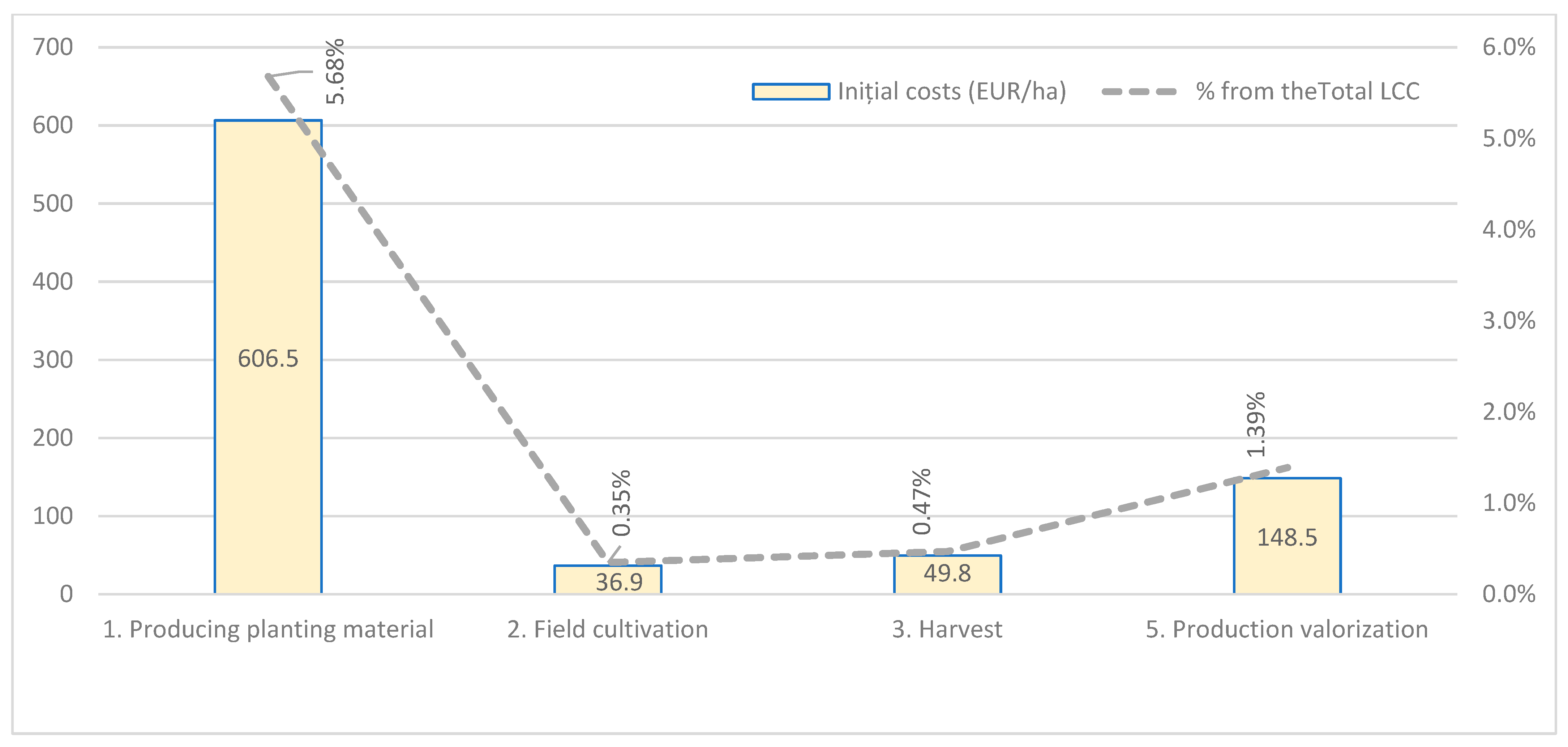
The total computed costs for the sweet potato production with the LCC methodology were 10,678 EUR/ha, with the main financial component being represented by operational costs (92.1%) and the capital costs making a much smaller contribution (7.9%) to the total cost. This finding leads to the idea that this is an intensive culture in terms of current resources and with relatively low investments in equipment. The table below (Table 2) presents a summary of the capital costs, accounting for 7.88% of the total costs recorded during the production process. The largest share (about 72% of the total capital costs) comprised the cost of producing planting material, which included the costs of solariums and the irrigation system. That is why it has been considered a specific investment dependent on access to very good quality planting material. In second place, approximately four times less (about 18%), were the costs of selling production.
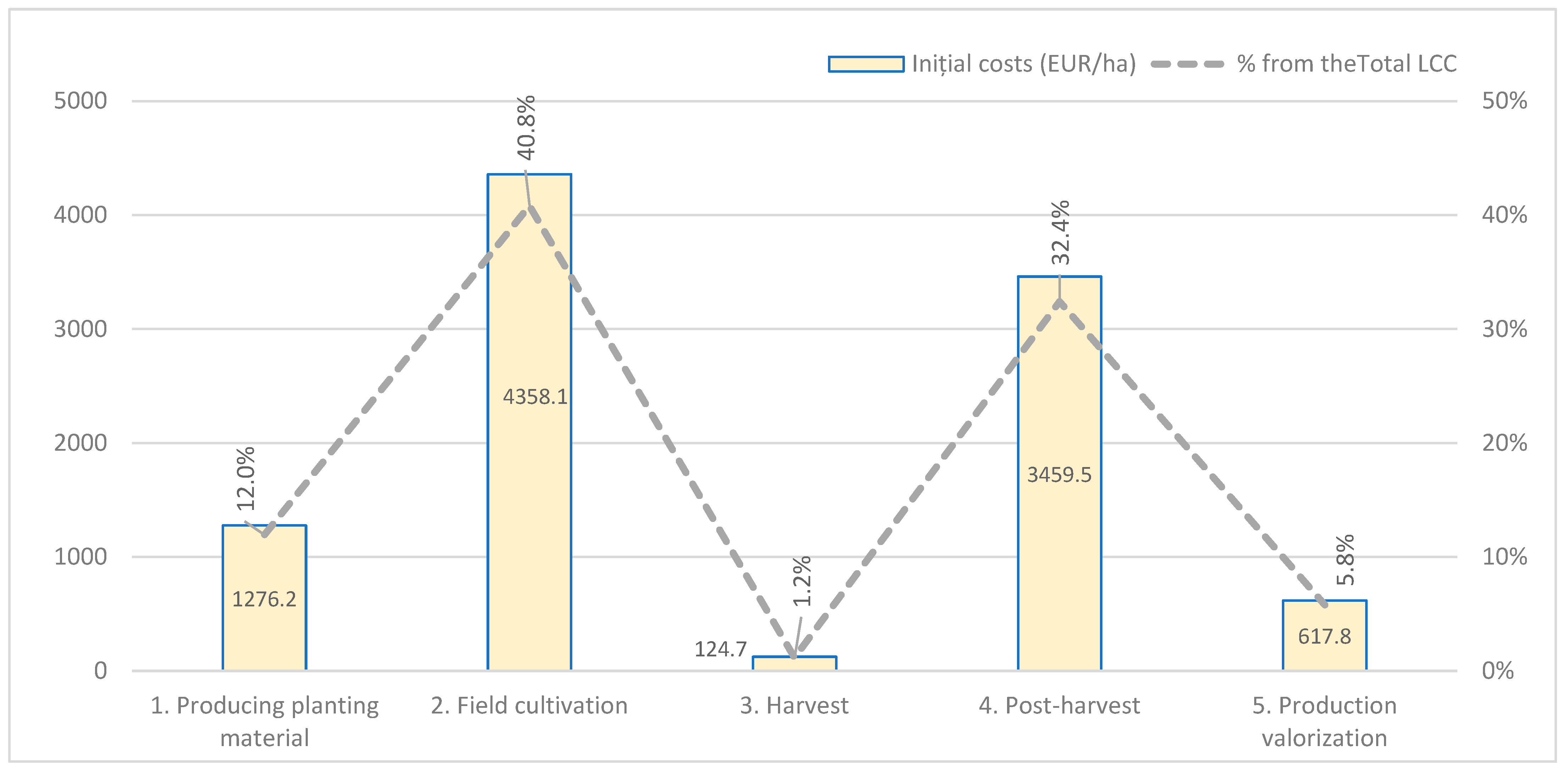
The total cost of the categories “Field Cultivation” and “Harvesting” is just over 10% of capital costs, which indicates a low use of specialized equipment in these stages (see Figure 1 below). At the same time, the lack of capital costs in the post-harvest stage suggests a shortage of storage and packaging infrastructure, which is a limiting factor in capitalizing on production.
Last but not least, the capital costs related to the “production valorisation” stage (17.64%) indicate a moderate concern for the promotion or distribution of production, which may become insufficient in shaping a competitive advantage.
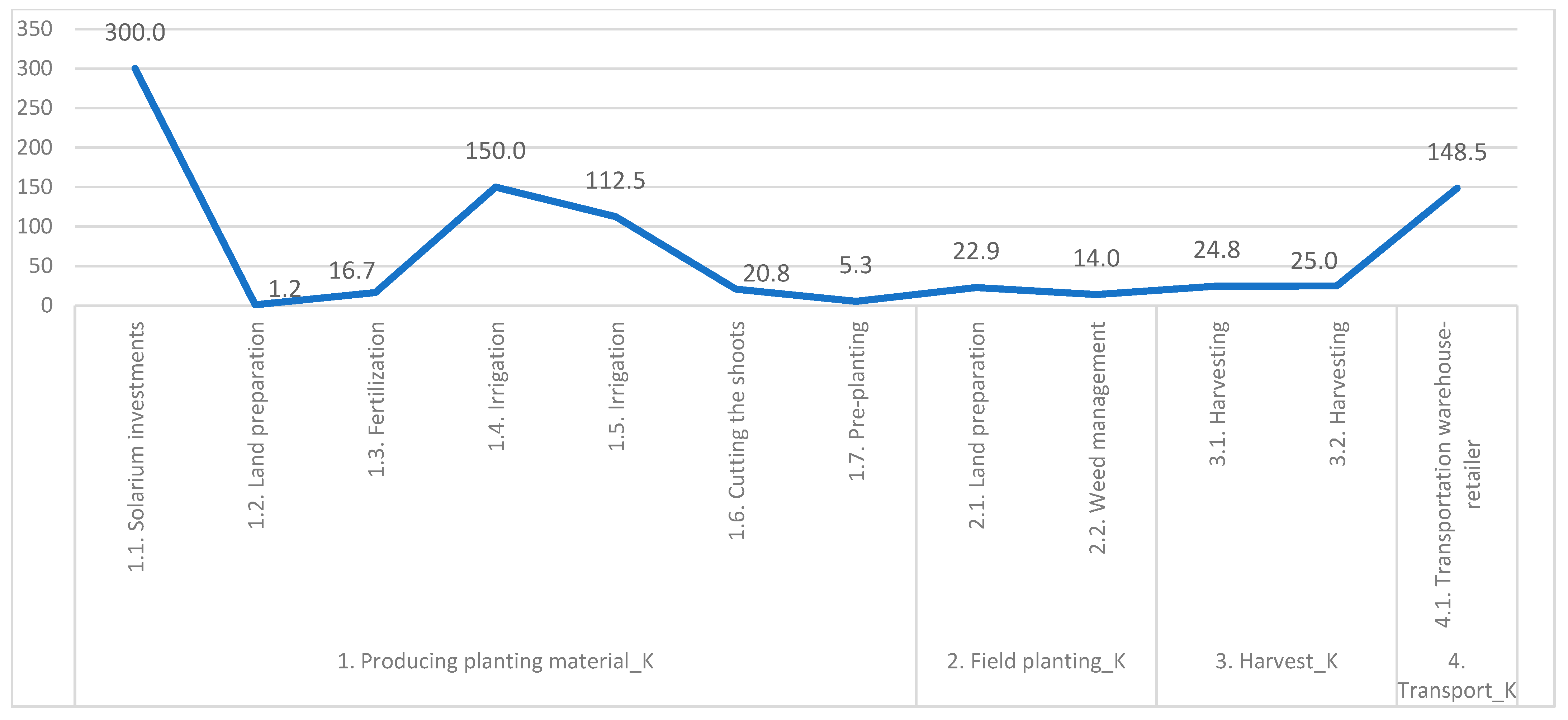
More specifically, in Figure 2, the sub-categories and the appropriate capital costs were identified.
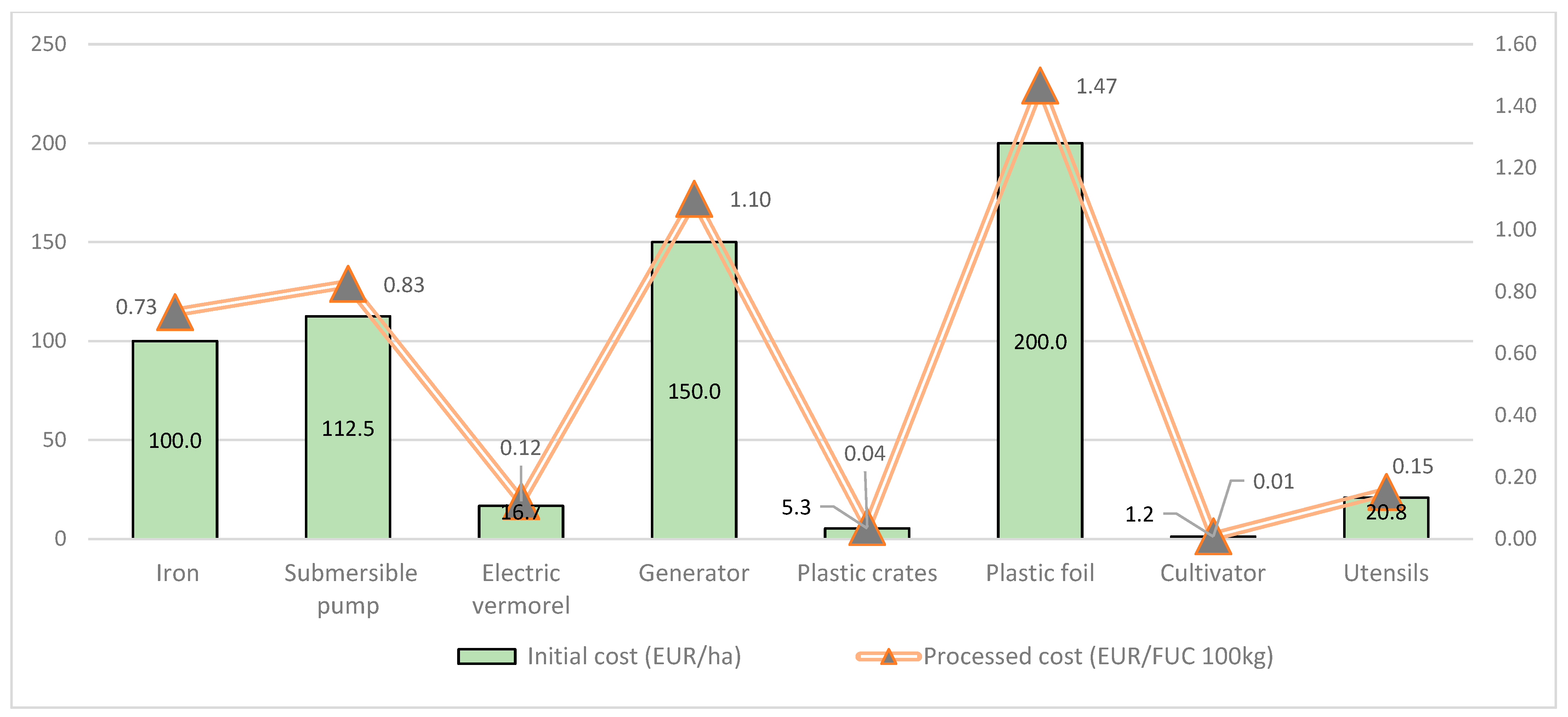
In the table below (Table 3), all registered elements from the capital costs used in the production stage are indicated, including the initial costs (EUR/ha) and the processed costs of fresh marketable sweet potato.
The second stage, presented below in Figure 3, underlines in a single picture the capital costs of producing planting materials. The higher values included plastic foil (200 EUR/FUC) for the covered tunnels, the generator (150 EUR/FUC) and the pump used in the process (112.5 EUR/FUC).
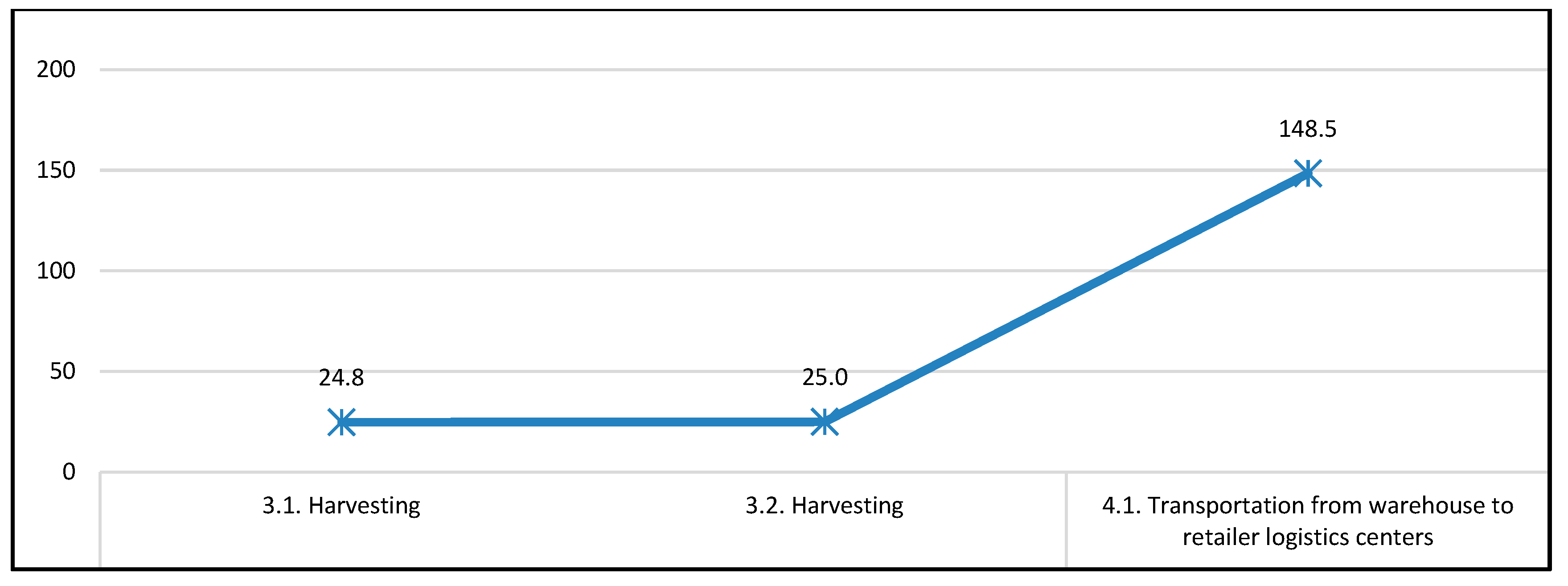
The third and the fourth stages (see Figure 4 below)—harvest and transportation—indicated values that were quite large, suggesting that the harvesting cost is six times lower (around EUR 25) than the transportation costs (EUR 148.5). This could imply a complex infrastructure for transportation, indicating high costs for vans and fuel or other costs.
Next, the operational costs of sweet potato cultivation, in an organic production system, were analysed. It was found that these costs had the highest share, 92.12% of the total LCCA cost (see Table 4, below). From the data inventory on the cultivated area, the most expensive sub-categories came from field cultivation operations (44.31%, of total operational costs), followed by the costs of the post-harvest sub-category (35.17%). Of the total operational costs, the harvesting sub-stage incurred the lowest cost, i.e., 1.27%, of the total costs inventoried in the Life Cycle Cost Analysis.
A visual presentation of the cost in the operational area can be found in Figure 5 below.
Focusing in detail on the entire structure of the operational costs, we found that the land preparation (4358 EUR/ha) and post-harvest stages (3460 EUR/ha) accounted for the highest part of the expenses, while the operational transportation costs were the lowest (see Figure 5 above).
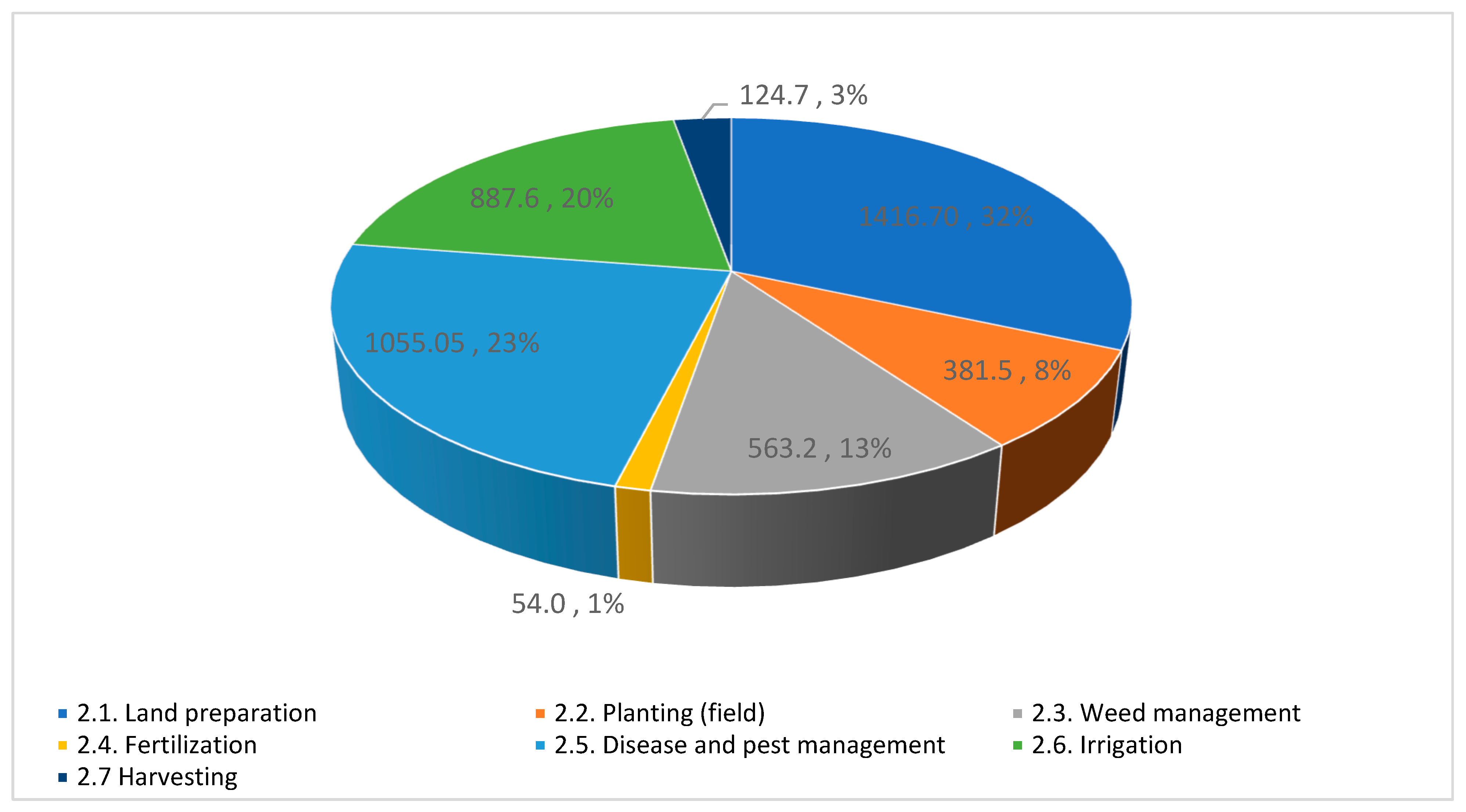
The second sub-stage of the operational costs, land preparation, required a significant amount of expenditure on its seven operations, especially for preparation and disease and pest management, which covered around 50% of the total costs in this stage (see Figure 6). The minor parts were indicated as the fertilization (1%) and harvesting sub-stages (3%).
The two last sections, post-harvest and transportation have been presented in the table below (Table 5). The operational costs seem to be much higher for the post-harvest actions (3460 EUR/ha), with the labour at the top of the hierarchy, followed by the sorting and packaging operations (with 2685 EUR/ha).
From the table above, the total cost covering the post-harvest and transportation operational costs was 4077 EUR/ha, with the post-harvest operational costs having a significant share in this category.

Sensitivity Analysis

The importance of sensitivity analysis is revealed by the results of different scenarios allowing comparisons based on certain specific elements in the production cycle of a product, identified as major contributors (hotspots) in the total cost efficiency. Following the below figure, we noticed that two categories from the capital costs (which account for 7.88% of the total LCC)—seedling production (72.05%) and sold production (17.64%)—are the main contributors to the lifespan cost. In case of the operational costs (which stand for 92.12% of the total LCC), field cultivation (44.31%) and post-harvest costs (35.17%) were the main vectors in the whole cost of the sweet potato crop.
Linking with the total LCC, for the capital cost categories in the case of the valorization stage (costs of 1.39% of LCC) and 5.68% for the seedling production, there is room for improvement, by creating direct sales channels or local processing. Last but not least, the preponderance of operational costs indicates a crop that is very sensitive to input price fluctuations. The field cultivation stage (40.81% of LCC) requires a reassessment of inputs (for example, through precision irrigation and fertilization), which can significantly impact profitability; meanwhile, optimization of the post-harvest stage (32.40% of LCC) is required, by reducing losses and adapting logistics (see Table 6 below).
For the sensitivity analysis, assumptions were made on the variation in production and costs (those that mainly affect the total LCC cost). Thus, the change in certain costs will also intervene in the production dynamics (for example, harvesting costs and packaging costs—bags and boxes, labels, labour and transportation costs—which are directly proportional to the production volume). At the same time, the scenario with a decrease in major costs contributing to the total cost is also feasible, because it can be an option for cost optimization.
In this regard, we investigate the impact of the conventional and ecological systems on potato production. In the table below (Table 7) are presented the results of the profit changes for the base scenario, according to the data recorded in the data inventory for an average potato production of 15 tons organic vs. 30 tons in the conventional system, sold at a price of 1.45 EUR/kg in the organic system vs. 1.00 EUR/kg in the conventional system.
Although, the sale of second-quality products or by-products represents about 10–15% of the total production, it was not considered in the present study.
In Scenario 2, the mentioned parameters were increased by 15% (in production and in major costs drivers), while Scenario 3, considered a 15% decrease in the same above-mentioned parameters. In Scenario 4, the same production was maintained (as in the baseline scenario), with the variation being set only at the major contributing cost level (+15%).
Comparing the results presented in the table above (Table 7), there are some remarks that deserve to be noted: for the ecological production—a cumulative and simultaneous 15% increase in the production and the major cost contributors (Scenario 2) will lead to a 21% higher profit, while in case of a decrease in production and major cost contributors (Scenario 3), it will be a decrease in profit by 18.6%. At the same time, keeping the production level unchanged but reducing the costs (Scenario 4), the profit will go up by only 7%. The second case, conventional production, under the same scenarios, registered profits have been 15% higher, 13% lower and 31.2% higher in Scenarios 2, 3 and 4, respectively.

4. Discussion and Conclusions

This study applied Life Cycle Cost Analysis (LCCA) to the vegetable production sector, more specifically to sweet potatoes, providing a comprehensive evaluation of the economic dimension. The findings highlight critical cost structures and production hotspots, respectively, in two sub-stages in the capital and operational cost structures (production of planting material and transportation vs. field cultivation and post-harvest), offering clear evidence of where interventions and innovations can improve efficiency and reduce overall expenditures. Scenarios built on these major contributing costs indicated that the variation in the production level is more critical than the fluctuation of the costs, and these results were more pronounced for conventional production than for the ecological one.
The sensitivity analysis must be carried out at an early stage of the production process, so that the reduction of possible costs that burden the overall cost is anticipated and operated efficiently and on time. For the sweet potato crop, capital costs were noted as the lowest level of field cultivation expenses (4.39%), followed by the harvest costs (5.92%). Under operational costs, these expenses recorded the highest level (44%), followed by the field cultivation and post-harvest (35%). A look at the structure of operational costs indicated that, for the harvest, post-harvest and transport stages, higher costs were recorded (42.55%). As also shown in other studies [36,37], the analysis of potential risks indicated that, although it may seem unsafe (with a specific demand and limited niche markets, strict standards and dependence on certification), an organic crop is more profitable than a conventional one (which has high input costs, energy volatility, high competition, etc.), thus recovering the initial investments in a much shorter period. However, a variation in production, without an adjustment to costs, will considerably impact these indicators. Therefore, the financial profitability of a farm considers different budgeting and capital allocation techniques, and, in this sense, the figures presented are essential benchmarks in the analysis and management of investment decisions. The organic system can thus become more financially attractive in markets with a demand for organic products, mainly if it is supported by subsidies and environmental policies. On the opposite side, the conventional system requires large production volumes, inputs and mechanized efficiency to remain competitive.
Building on the results of this research, several options for further exploration can be identified as future directions. Future studies could extend the application of LCCA to other agricultural crops, allowing for a comparative analysis across different production systems and regions. Meanwhile, the integration of LCCA with Life Cycle Assessment (LCA), together with other statistical methods (correlation, regressions) would provide a more holistic evaluation by linking cost analysis with environmental impact assessments and the development of practical decision-support tools for farmers and agribusinesses.
The paper’s contribution to the research field lies in its ability to demonstrate how LCCA can be adapted to agricultural systems to inform farmers, consumers and decision-makers at both farm and policy levels. The results also provide a foundation for policymakers to design more-effective and sustainable standards and support schemes for the agricultural sector. Ultimately, the study reinforces the role of LCCA as a valuable framework for guiding the vegetable sector toward greater competitiveness and long-term sustainability.

Author Contributions

Conceptualization, T.S., I.M.V. and G.F.; methodology, I.M.V.; validation, G.F. and I.M.V.; formal analysis, I.M.V.; investigation, T.S.; resources, T.S.; data curation, G.F.; writing—original draft preparation, I.M.V. and T.S.; writing—review and editing, T.S., I.M.V. and G.F.; visualization, G.F.; supervision, G.F.; project administration, I.M.V.; funding acquisition, I.M.V. All authors have read and agreed to the published version of the manuscript.

Funding

The APC of this paper was supported by the funds of the project CNFIS-FDI-2025-F-0667, project title: Consolidating Resources for Scientific Excellence and Cooperation (CRESC).

Data Availability Statement

The data used in the paper is unavailable due to privacy restrictions.

Conflicts of Interest

The authors declare no conflicts of interest.

References

  1. Rostamiasl, V.; Jrade, A. Integrating Building Information Modeling (BIM) and Life Cycle Cost Analysis (LCCA) to Evaluate the Economic Benefits of Designing Aging-In-Place Homes at the Conceptual Stage. Sustainability 2024, 16, 5743. [Google Scholar] [CrossRef]
  2. AlJaber, A.; Alasmari, E.; Martinez-Vazquez, P.; Baniotopoulos, C. Life Cycle Cost in Circular Economy of Buildings by Applying Building Information Modeling (BIM): A State of the Art. Buildings 2023, 13, 1858. [Google Scholar] [CrossRef]
  3. McNeil-Ayuk, N.; Jrade, A. A Building Information Modeling-Life Cycle Cost Analysis Integrated Model to Enhance Decisions Related to the Selection of Construction Methods at the Conceptual Design Stage of Buildings. Open J. Civ. Eng. 2024, 14, 277–304. [Google Scholar] [CrossRef]
  4. Hromada, R.; Macek, J.; Schneiderová Heralová, R.; Brožová, M.; Střelcová, K. Integrating Life Cycle Cost Analysis for Sustainable Maintenance of Historic Buildings. Buildings 2024, 14, 1479. [Google Scholar] [CrossRef]
  5. Huo, H.; Li, P.; Xin, C.; Wang, Y.; Zhou, Y.; Li, W.; Lu, Y.; Chen, T.; Wang, J. Life Cycle Cost Modeling and Multi-Dimensional Decision-Making of Multi-Energy Storage System in Different Source-Grid-Load Scenarios. Processes 2025, 13, 2400. [Google Scholar] [CrossRef]
  6. Barahmand, Z.; Eikeland, M.S. Techno-Economic and Life Cycle Cost Analysis through the Lens of Uncertainty: A Scoping Review. Sustainability 2022, 14, 12191. [Google Scholar] [CrossRef]
  7. Domínguez Gil, S.; Ramírez Pacheco, G.; Alonso de los Ríos, S. Life-Cycle Cost Assessment in Real Estate Decision-Making Processes: Scope, Limits and Shortages of Current Practices—An Integrative Review. Sustainability 2025, 17, 5577. [Google Scholar] [CrossRef]
  8. Ilyas, M.; Kassa, F.M.; Darun, M.R. Life cycle cost analysis of wastewater treatment: A systematic review of literature. J. Clean. Prod. 2021, 310, 127549. [Google Scholar] [CrossRef]
  9. Ashraf, A.I.; Mohareb, E.; Vahdati, M. Evaluation of life cycle cost for the comparison of decentralized waste to composting and landfilling of municipal solid waste. Discov. Sustain. 2024, 5, 202. [Google Scholar] [CrossRef]
  10. Vlad, I.M.; Butcaru, A.C.; Fîntîneru, G.; Bădulescu, L.A.; Stănică, F.; Mihai, C.A. A Life Cycle Cost Analysis—Relevant Method Supporting the Decision to Establish an Apple Orchard in an Organic System. Horticulturae 2023, 9, 1263. [Google Scholar] [CrossRef]
  11. Wang, Q.; Li, D.; Yu, J. Comparative Analysis of Environmental and Economic Performance of Agricultural Cooperatives and Smallholder Farmers for Apple Production in China. Agriculture 2022, 12, 1281. [Google Scholar] [CrossRef]
  12. Ceballos-Aguirre, N.; Hurtado-Salazar, A.; Restrepo, G.M.; Sánchez, Ó.J.; Hernández, M.C.; Montoya, M. Technical and Economic Assessment of Tomato Cultivation Through a Macro-Tunnel Production System with the Application of Gluconacetobacter diazotrophicus. Horticulturae 2024, 10, 1110. [Google Scholar] [CrossRef]
  13. Gagliardi, L.; Sportelli, M.; Fontanelli, M.; Sbrana, M.; Luglio, S.M.; Raffaelli, M.; Peruzzi, A. Effects of Conservation Agriculture Practices on Tomato Yield and Economic Performance. Agronomy 2023, 13, 1704. [Google Scholar] [CrossRef]
  14. Vlad, I.M.; Fîntîneru, G.; Burcea, M.; Butcaru, A.C.; Certan, I.; Stanciu, T. LCCA + LCA Methods in Apple Orchard Management, Conventional and Organic. Bulletin of University of Agricultural Sciences and Veterinary Medicine Cluj-Napoca. Horticulture 2021, 78. [Google Scholar] [CrossRef]
  15. Butcaru, A.C.; Vlad, I.M.; Mihai, C.A.; Bădulescu, L.A.; Fîntîneru, G.; Stănică, F. Modelling Life Cycle Cost Analysis (LCCA) Scenarios on the Use of Compost in Organic Pear Orchard in Romania. Sci. Papers Ser. Manag. Econ. Eng. Agric. Rural. Dev. 2023, 23, 139–147. [Google Scholar]
  16. Iordănescu, O.A.; Radulov, I.; Dascălu, I.; Berbecea, A.; Camen, D.; Orboi, M.D.; Călin, C.C.; Gal, T.E. Comparative Study on the Behavior of Some Old Apple Varieties before and after Their Grafting, with Potential for Use in Urban Horticulture. Horticulturae 2023, 9, 353. [Google Scholar] [CrossRef]
  17. Vlad, I.M.; Butcaru, A.C.; Fîntîneru, G.; Bădulescu, L.; Stănică, F.; Toma, E. Mapping the Preferences of Apple Consumption in Romania. Horticulturae 2023, 9, 35. [Google Scholar] [CrossRef]
  18. Coppola, G.; Costantini, M.; Orsi, L.; Facchinetti, D.; Santoro, F.; Pessina, D.; Bacenetti, J. A Comparative Cost-Benefit Analysis of Conventional and Organic Hazelnuts Production Systems in Center Italy. Agriculture 2020, 10, 409. [Google Scholar] [CrossRef]
  19. Pergola, M.; Maffia, A.; Carlucci, G.; Persiani, A.; Palese, A.M.; Zaccardelli, M.; Altieri, G.; Celano, G. An Environmental and Economic Analysis of Strawberry Production in Southern Italy. Agriculture 2023, 13, 1705. [Google Scholar] [CrossRef]
  20. Ruiz-Carrasco, B.; Fernández-Lobato, L.; López-Sánchez, Y.; Vera, D. Life Cycle Assessment of Olive Oil Production in Turkey, a Territory with an Intensive Production Project. Agriculture 2023, 13, 1192. [Google Scholar] [CrossRef]
  21. Diacono, M.; Persiani, A.; Alfano, V.; Monteforte, A.; Montemurro, F. Fertilization Strategies on Fennel Crop in the Mediterranean Environment: Agronomic Performance, Costs and Sustainability Assessment. Agriculture 2023, 13, 1048. [Google Scholar] [CrossRef]
  22. Tamburini, E.; Pedrini, P.; Marchetti, M.G.; Fano, E.A.; Castaldelli, G. Life Cycle Based Evaluation of Environmental and Economic Impacts of Agricultural Productions in the Mediterranean Area. Sustainability 2015, 7, 2915–2935. [Google Scholar] [CrossRef]
  23. Arenas, C.N.; Bello, A.P.; Molina, N.F.; Botero, J.L.; Betancur, M. Life Cycle Assessment and Life Cycle Costing for the Production of Hydrangeas in Antioquia—Colombia. Agronomy 2024, 14, 1408. [Google Scholar] [CrossRef]
  24. Stillitano, T.; Falcone, G.; De Luca, A.I.; Piga, A.; Conte, P.; Strano, A.; Gulisano, G. A Life Cycle Perspective to Assess the Environmental and Economic Impacts of Innovative Technologies in Extra Virgin Olive Oil Extraction. Foods 2019, 8, 209. [Google Scholar] [CrossRef] [PubMed]
  25. Cerrato, M.; Iasi, A.; Di Bennardo, F.; Pergola, M. Evaluation of the Economic and Environmental Sustainability of Livestock Farms in Inland Areas. Agriculture 2023, 13, 1708. [Google Scholar] [CrossRef]
  26. Ramírez-Cando, L.J.; Mora-Ochoa, Y.I.; Freire-Sanchez, A.S.; Medina-Rodriguez, B.X. Life Cycle Sustainability Assessment of Agriproducts in Latin America: Overview Based on Latent Dirichlet Allocation. Sustainability 2025, 17, 4954. [Google Scholar] [CrossRef]
  27. Jahangir, M.H.; Ziyaei, M.; Kargarzadeh, A. Evaluation of Thermal Behavior and Life Cycle Cost Analysis of Greenhouses with Bio-Phase Change Materials in Multiple Locations. Appl. Sci. 2022, 14, 5952. [Google Scholar] [CrossRef]
  28. Sturiale, S.; Gava, O.; Gallardo, M.; Buendía Guerrero, D.; Buyuktas, D.; Aslan, G.E.; Laarif, A.; Bouslama, T.; Navarro, A.; Incrocci, L.; et al. Environmental and Economic Performance of Greenhouse Cropping in the Mediterranean Basin: Lessons Learnt from a Cross-Country Comparison. Sustainability 2024, 16, 4491. [Google Scholar] [CrossRef]
  29. Degieter, M.; Gellynck, X.; Goyal, S.; Ott, D.; De Steur, H. Life Cycle Cost Analysis of Agri-Food Products: A Systematic Review. Sci. Total Environ. 2022, 850, 158012. [Google Scholar] [CrossRef]
  30. Villagrán, E.; Romero-Perdomo, F.; Numa-Vergel, S.; Galindo-Pacheco, J.R.; Salinas-Velandia, D.A. Life Cycle Assessment in Protected Agriculture: Where Are We Now, and Where Should We Go Next? Horticulturae 2024, 10, 15. [Google Scholar] [CrossRef]
  31. Marques, C.; Güneş, S.; Vilela, A.; Gomes, R. Life-Cycle Assessment in Agri-Food Systems and the Wine Industry—A Circular Economy Perspective. Foods 2025, 14, 1553. [Google Scholar] [CrossRef]
  32. Ljubojević, M. Integrating Horticulture into 21st-Century Urban Landscapes. Horticulturae 2024, 10, 1366. [Google Scholar] [CrossRef]
  33. Narandžić, T.; Ružičić, S.; Grubač, M.; Pušić, M.; Ostojić, J.; Šarac, V.; Ljubojević, M. Landscaping with Fruits: Citizens’ Perceptions toward Urban Horticulture and Design of Urban Gardens. Horticulturae 2023, 9, 1152. [Google Scholar] [CrossRef]
  34. Cavallo, A.C.; Parkes, M.; Teixeira, R.F.M.; Righi, S. Life cycle assessment of land use trade-offs in indoor vertical farming. Appl. Sci. 2025, 15, 8429. [Google Scholar] [CrossRef]
  35. Iofrida, N.; Stillitano, T.; Falcone, G.; Gulisano, G.; Nicolò, B.; De Luca, A. The Socio-Economic Impacts of Organic and Conventional Olive Growing in Italy. New Medit 2020, 19, 117–131. [Google Scholar] [CrossRef]
  36. Mohamad, R.S.; Verrastro, V.; Cardone, G.; Bteich, M.R.; Favia, M.; Moretti, M.; Roma, R. Optimization of Organic and Conventional Olive Agricultural Practices from a Life Cycle Assessment and Life Cycle Costing Perspectives. J. Clean. Prod. 2014, 70, 78–89. [Google Scholar] [CrossRef]
  37. Sgroi, F.; Candela, M.; Trapani, A.M.D.; Foderà, M.; Squatrito, R.; Testa, R.; Tudisca, S. Economic and Financial Comparison between Organic and Conventional Farming in Sicilian Lemon Orchards. Sustainability 2015, 7, 947–961. [Google Scholar] [CrossRef]
  38. Diependaele, M. A Guide on the Basic Principles of Life-Cycle Cost Analysis (LCCA) of Pavements; EUPAVE European Concrete Paving Association: Brussels, Belgium, 2018; Available online: https://www.eupave.eu/wp-content/uploads/EUPAVE-Guide-on-LCCA-2018-2.pdf (accessed on 2 September 2025).
Figure 1. Capital cost categories with initial costs (EUR/ha).
Horticulturae 11 01338 g001
Figure 2. Categories and sub-categories of the capital costs of sweet potato (EUR/ha).
Horticulturae 11 01338 g002
Figure 3. Capital costs of producing planting materials.
Horticulturae 11 01338 g003
Figure 4. The capital costs of the harvest and transportation stages (EUR/ha).
Horticulturae 11 01338 g004
Figure 5. Operational costs of the 4 sub-stages in sweet potato production.
Horticulturae 11 01338 g005
Figure 6. LCCA—operational costs on Land preparation sub-stage (sweet potato).
Horticulturae 11 01338 g006
Table 1. LCCA—data inventory with cost structure in sweet potato production.
1. Producing planting material
1.1. Solarium investments
1.2. Land preparation
1.3. Planting
1.4. Fertilization
1.5. Irrigation
1.6. Weed management
1.7. Cutting the shoots
1.8. Pre-planting
2. Field cultivation
2.1. Land preparation
2.2. Planting in the field
2.3. Weed management
2.4. Fertilization
2.5. Disease and pest management
2.6. Irrigation
3. Harvest
4. Post-harvest
4.1. Treatment
4.2. Sorting
4.3. Packaging
5. Production valorization
5.1. Transport from field to warehouse
5.2. Transportation from warehouse to retailer logistics points
Table 2. LCCA—capital cost categories for sweet potato crop.
Capital Cost CategoriesInitial Costs (EUR/ha)% of the Total Capital Cost
1. Producing planting material60772%
2. Field cultivation374.39%
3. Harvest505.92%
4. Production valorization14918%
Total capital costs8427.88%
Total LCC10,678
Data source: accounting records and operational documents of the farm.
Table 3. Materials and equipment costs used in the production stage.
Producing MaterialInitial Costs (EUR/ha)Processed Costs (EUR/FUC 100 kg)
Iron bars (solariums)100.00.73
Submersible pump112.50.83
Electric vermorel16.70.12
Generator150.01.10
Plastic crates5.30.04
Plastic foil200.01.47
Cultivator1.20.01
Utensils20.80.15
Grand Total606.54.45
Data source: accounting records and operational documents of the farm.
Table 4. LCCA—structure of the operational costs (sweet potatoes).
Operational Cost CategoriesInitial Costs (EUR/ha)% of the Total Operational Costs
1. Producing planting material127612.97%
2. Field cultivation435844%
3. Harvest1251.27%
4. Post-harvest346035%
5. Production valorization6186.28%
Total operational costs983692.1%
Total LCC 10,678
Data source: accounting records and operational documents of the farm.
Table 5. LCCA—operational costs (sweet potato) in the post-harvest and transport stages.
Post-Harvest and Transportation—Operational CostsCost (EUR/ha)
3. Post-harvest  3460
3.1. Washing775
Labour cost (September–October)774.40
Water (September–October)0.21
3.2. Sorting and packaging2685
Plastic bags (polypropylene)280.00
Cardboard boxes1174.50
Labour cost (September–October)950.40
Tags280.00
4. Transport  618
4.1. Transportation from warehouse to retailer logistics centres618
Diesel refrigerated van 3.5 t (2970 km)427.68
Labour cost190.08
TOTAL post-harvest and transportation   4077
Data source: accounting records and operational documents of the farm.
Table 6. The hot points in sweet potato production.
Hot pointsI. Capital costs
(7.88%)
Seedling production 5.68%Of the Total
cost (LCC)
72.05%Of the cost
category
Selling production1.39%17.64%
II. Operational costs (92.12%)Field cultivation40.81%44.31%
Post-harvest32.40%35.17%
Table 7. Four scenarios, based on the variation of the hot point levels and the average production of the sweet potatoes.
IndicatorsScenario 1 (Baseline)Scenario 2 (Production and Major Contributing Costs: 15% Higher)Scenario 3 (Production and Major Contributing Costs: 15% Lower)Scenario 4 (Baseline Production, Major Contributing Costs: 15% Lower)
Ecological Production; Price: 1.45 EUR/kg
Production: 15 tProduction: 17.25 tProduction: 13.04 tProduction: 15 t
Total LCC10,678 11,568 9904 9904
Revenue from sold production21,750 25,012 18,913 21,750
Profit/Ha 11,072 13,444 9009 11,846
% of the baseline scenario-121.0%81.4%107.0%
IndicatorsConventional Production; Price: 1.00 EUR/kg
Production: 30 tProduction: 34.5 tProduction: 26.08 tProduction: 30 t
Total LCC12,69614,60011,04011,040
Revenue from sold production18,00020,70015,65218,000
Profit/Ha 5304610046126960
% of the baseline scenario-115.0%87.0%131.2%
Data source: accounting records and operational documents of the farm.
Disclaimer/Publisher’s Note: The statements, opinions and data contained in all publications are solely those of the individual author(s) and contributor(s) and not of MDPI and/or the editor(s). MDPI and/or the editor(s) disclaim responsibility for any injury to people or property resulting from any ideas, methods, instructions or products referred to in the content.