1. Introduction
The United Nations has highlighted a pressing global food crisis, exacerbated by factors such as rapid population growth, diminishing arable land, and the impacts of climate change and poverty, particularly in regions like Africa [
1,
2].
As stated by the United Nations [
1], there is an ongoing food crisis in which the world is not capable of producing enough food, and in conjunction with the growth in the world’s population, there is an overcapacity problem. This implies that better methods and techniques are needed to improve the efficiency and productivity of farming systems [
2].
To address this looming challenge, it is imperative to develop and implement innovative farming techniques and policies. Presently, the two predominant solutions being explored are traditional soil-based systems and the more modern hydroponics [
3].
Hydroponics has the potential to enhance food production due to its ability to minimize energy consumption, reduce reliance on human labor, and optimize resource utilization, as previously mentioned. Every hydroponics variation offers advantages compared to conventional agriculture; however, to successfully apply any hydroponics system, it is essential to comprehend its underlying processes [
3]. Users typically provide inputs and manage the system, making automation or self-regulation essential for transforming traditional hydroponics [
4].
To achieve this, hydroponic systems are increasingly incorporating Internet of Things (IoT) capabilities to improve monitoring and management. However, most existing hydroponic setups rely solely on sensors to measure individual variables and alert the user, requiring manual intervention for correction. In contrast, this work advances the field by introducing a fully integrated approach. Specifically, the study (i) implemented an IoT-enabled hydroponic tomato system based on the Nutrient Film Technique and a proportional–integral controller to enhance growth rates compared with conventional hydroponics; (ii) achieved precise regulation of temperature and light conditions through sensor-driven automation, ensuring consistent plant quality within shorter cultivation cycles; (iii) integrated continuous environmental monitoring and data analytics to assess the performance of IoT and non-IoT systems under controlled experiments; and (iv) demonstrated how the convergence of Internet of Things and Industry 4.0 principles can improve sustainability, system optimization, and resilience in hydroponic farming.
By using IoT capabilities with hydroponics, the study estimates that control over environmental conditions can be improved, continuous data collection achieved, light spectra regulated by a timer, and disease burdens reduced in order to shorten the ripening time of tomatoes compared to conventional agriculture. In line with the objectives outlined earlier, this paper presents a series of experiments designed to compare traditional hydroponic systems with IoT-enhanced hydroponic systems. The primary objective of this study is to present a modular hydroponics system capable of controlling water temperature and exposure to artificial light to accelerate the germination of tomato seeds. The system includes IoT features that allow for real-time monitoring and enable users to interact with the system through a web application, ensuring optimal conditions are maintained to preserve system integrity.
The main challenge with many hydroponic systems is their inability to autonomously manage and regulate critical factors that affect crop quality, yield, and efficient resource utilization. The proposed solution emphasizes the development of a next-generation hydroponic system. This system, integrating industry 4.0 technologies, aims to address these challenges by offering features such as managing multiple pods and focusing on autonomous regulation, thereby promoting sustainable and efficient agriculture.
The integration of Internet of Things (IoT) technologies in agriculture has primarily focused on monitoring tasks, such as environmental sensing, data visualization, and alert systems. However, in most reported hydroponic implementations, IoT platforms only collect information without actively controlling the process variables. This limitation restricts the capacity to maintain stable growing conditions and to evaluate control performance under variable scenarios.
In this work, IoT technologies are not merely used as a monitoring layer but as an active control mechanism that regulates water temperature through a closed-loop feedback system. By embedding a proportional–integral (PI) controller within each IoT node, the system autonomously adjusts actuators based on real-time measurements. This approach demonstrates that IoT can extend beyond passive observation toward the active management of hydroponic environments, reducing human intervention while enabling precise and reproducible control. Such functionality is particularly relevant for modular hydroponic architectures, where multiple independent pods require simultaneous yet coordinated regulation.
The innovation of this work lies in combining a classical control strategy with a modular IoT hydroponic architecture, allowing each pod to operate independently while remaining connected to a shared data and water infrastructure. Most existing hydroponic IoT systems are designed as large-scale, centralized installations, which limit scalability, maintenance, and comparative experimentation. In contrast, the proposed system demonstrates that distributed and low-cost modules can achieve precise control of environmental variables such as water temperature, offering a flexible platform for comparative analysis between IoT-assisted and non-IoT environments.
Furthermore, this integration highlights a necessary step in hydroponic automation research: bridging traditional control engineering with scalable IoT-based agriculture. By doing so, intelligent cultivation systems become more accessible, reproducible, and adaptable to small- and medium-scale applications, while also generating valuable experimental datasets for the development of advanced or data-driven control algorithms.
2. Related Work
Hydroponics is a method in which plants are cultivated in a nutrient-rich water solution, eliminating the need for soil [
5]. There are several hydroponic systems, each designed to cater to specific crops, environmental conditions, and available resources [
1]. These include liquid/water culture, sand culture, gravel culture, and aeroponics.
Each system has its unique advantages, such as faster growth rates, efficient water usage, and the possibility of year-round indoor cultivation [
3]. However, they are not without challenges, including high setup costs, technical complexities, and potential system failures [
6]. While no single farming method can be deemed universally superior [
7], the integration of the Internet of Things (IoT) with hydroponics presents a promising solution.
According to Jeffry Winterborne [
8], hydroponics presents several limitations compared with traditional agriculture. Although this cultivation method offers many advantages, certain drawbacks must be acknowledged. For instance, hydroponic systems involve greater setup costs and require growers to possess specialized knowledge and technical competence to maintain optimal productivity. Furthermore, because plants share the same nutrient solution, viruses and pests can easily spread and infect multiple crops simultaneously. Plants in hydroponic environments also respond more rapidly to environmental changes; however, negative fluctuations can quickly lead to nutrient deficiencies. In addition, inadequate oxygenation and elevated temperatures may reduce productivity and, in severe cases, lead to crop loss.
Additionally, when using rockwool or agar-based plugs in a hydroponics system, the use of a hydroponic liquid tank has an impact on the roots and shoots of plants. By using a phosphorous-rich medium that isn’t sterile and exposing these components to light, this result is obtained. The presence of algae can impair plant development, interfere with nutritional and potential hydrogen balance in the growth solution, and cause major alterations in the transcriptome and proteome of the entire plant. Algae can also interfere with the efficiency of nutrient absorption by the roots [
8]. While hydroponic systems may provide faster yield times for the crops, it all depends on the conditions under which the system operates [
8]. In order to achieve those faster yields, hydroponic systems require high energy requirements, dependency on their environment, and expensive initial expenditures [
9].
The substantial amount of energy needed to maintain the regulated environmental conditions necessary for year-round production in hydroponic greenhouses is one key barrier [
9]. The necessity for heating and cooling systems, as well as additional artificial lighting to maximize crop productivity and guarantee constant output, is what essentially fuels the energy consumption. In consequence, commercial hydroponics may not be a practical substitute for conventional agriculture in harsh environments [
9].
Greenhouses located in more temperate regions that are closer to the target temperature range experience lower energy requirements. Passive ventilation systems can take on the role of heating and cooling systems in such settings, drastically lowering total energy usage. Hydroponics’ application in areas with harsh climatic circumstances is, however, constrained by the fact that it continues to be mostly dependent on favorable temperatures [
10].
The installation of hydroponic systems often requires considerable financial investment and modifications to existing facilities. These costs include the construction of specialized infrastructure and the purchase of equipment for nutrient delivery, monitoring, and environmental control. Although hydroponics offers the potential for higher yields and resource efficiency, the high initial setup cost can limit its adoption among small-scale farmers and emerging agricultural enterprises [
6,
11].
The term “simplified hydroponics” or “popular hydroponics” is one of the latest variants of hydroponics. This method substitutes less complex setups for the energy-intensive features of sophisticated and commercial hydroponic systems [
12]. Simplified hydroponics compromises overall output but still outperforms conventional systems in terms of area efficiency by a ratio of three to four. This suggests that simplified hydroponics might offer a potential option for agricultural production, particularly in resource-constrained environments, while decreasing energy needs and upfront expenditures [
12]. While hydroponics offers higher yields and more efficient water use, the high energy demand and upfront costs are significant limitations [
8]. However, with improvements in energy efficiency and/or cost-effective renewables, hydroponics could become a more sustainable alternative for food production [
12].
Hydroponic systems have emerged as a promising alternative to traditional soil-based farming. These systems, which cultivate plants in nutrient-rich solutions rather than soil, have seen various iterations in an attempt to optimize cost-efficiency and production rates [
12]. The overarching goal is to strike a balance between energy consumption and yield, ensuring that hydroponics can viably replace conventional agriculture [
9]. In a previous work [
13] sheds light on the necessary upgrades for a hydroponic system to achieve this balance. Key components include optimized water containers, dual pumps for nutrient delivery, and comprehensive control over environmental factors like pH, temperature, and light exposure. Moreover, integrating IoT capabilities can automate and enhance the system’s management.
Soilless Culture Management provides an in-depth exploration of the various hydroponic systems available. Each system has its unique advantages, disadvantages, and potential for IoT integration [
2]. Among these systems, four main approaches are commonly distinguished. The first is the Liquid Tank System, in which plants grow in containers filled with nutrient solutions. This configuration can employ the NFT technique and requires careful management of aeration and light exposure to prevent issues such as algae growth [
8,
12,
14]. The second approach corresponds to Sand Systems, where plants develop in a porous medium—typically sand—with above-ground watering. This method provides benefits such as reduced soil-borne diseases and precise nutrient management, though it demands greater energy input [
2,
15]. A third variant is the Gravel Culture, which resembles sand systems but uses gravel as the support medium. It allows efficient water usage and minimizes the risk of soil-borne infections [
16]. Finally, the Aeroponics System represents an advanced technique in which plant roots are suspended in air and periodically misted with nutrient-rich solutions. This system enhances root oxygenation and nutrient uptake, resulting in improved plant growth [
17,
18].
A comparative analysis (
Table 1) shows distinct advantages and limitations across the different hydroponic systems. The liquid tank system provides continuous nutrient delivery through a recirculating flow, making it one of the most reliable options for water supply. Nevertheless, it is prone to algae development and potential hydrogen instability, requiring constant monitoring and preventive measures [
8,
14]. Sand and gravel cultures, while simpler and cost-effective, face challenges related to clogging, salt accumulation, and the need for frequent cleaning [
15,
16]. Aeroponics, in contrast, maximizes oxygenation by exposing roots directly to air and delivering nutrients through fine misting, a method that enhances plant growth but demands precise control of misting equipment and nozzle maintenance [
17,
18]. Despite these trade-offs, the integration of IoT solutions can address many of the operational drawbacks, automating processes such as nutrient balance, aeration, and mist regulation, thus enhancing the long-term viability and scalability of these systems [
7,
12,
13].
Agriculture is a cornerstone of many economies, significantly influencing Gross Domestic Product, employment, and the socioeconomic structure, especially in developing countries [
19]. It also lays the groundwork for other sectors, creating a complex economic network. Evidence from Afghanistan reinforces this dynamic. In [
20], an empirical study on agricultural entrepreneurship in Bamyan Province identified six key determinants—knowledge and awareness, infrastructure, self-confidence, government support, economic factors, and educational or human support. The study concluded that agricultural entrepreneurship is a crucial strategy for rural development and economic advancement, emphasizing that knowledge, infrastructure, and institutional support are essential to sustain growth. These findings underscore that investment in infrastructure, human capital, and supportive policies is fundamental for agricultural innovation and socioeconomic progress in developing regions.
In [
21], research in Tanzania examined 400 smallholder farmers under the national Agenda 10/30, targeting a 10% agricultural growth and a 30% Gross Domestic Product contribution by 2030. The study demonstrated that digital transformation fosters inclusive growth, poverty reduction, and food security through improved access to credit, education, and extension services. It also highlighted that successful digitalization requires a supportive ecosystem encompassing financial inclusion, digital literacy, and strong public–private partnerships. These insights indicate that digital transformation, when backed by education and institutional policies, can drive sustainable agricultural development across developing regions.
Research in Nigeria further links digitalization to food security. In [
11], a qualitative assessment found that e-agriculture enhances food production, strengthens value chains, and improves land-use efficiency, though constrained by limited infrastructure and awareness. The authors underscored the importance of assessing national readiness before implementing digital systems. With adequate investment, awareness programs, and policy support, e-agriculture can become a key strategy to overcome food insecurity and promote sustainable agricultural growth in developing countries.
Hydroponics, an innovative method in agriculture, has the potential to revolutionize food production by requiring less energy, human capital, and resources [
3]. However, many existing hydroponic systems, even those integrated with Internet of Things features, have limitations. Some merely monitor variables like humidity, temperature, and water level without autonomously regulating them [
4,
12]. The study by Charumathi et al. [
4] underscores this limitation, presenting a system that, while monitoring various parameters, lacks comprehensive automation. In [
22], the authors introduce a system that, although advanced with Deep Neural Networks for data analysis, does not regulate the critical potential hydrogen factor for plant growth. A summary can be found in
Table 2.
One notable effort in space-compatible hydroponic systems is presented in the work by Jae Hyeon et al. [
23] have designed and developed a modular hydroponic system that meets NASA’s requirements to be integrated as part of the equipment installed in a spacecraft. This system is capable of growing potatoes, tomatoes, and other leafy vegetables without the need for soil. However, it is stated that it uses a nutrient mix of nitrogen, phosphorus, and potassium to maximize the growth of the plants.
The main frame of the system is PVC tubes that interconnect to a water tank where nutrients are supplied. This system has artificial lights to ensure the growth of plants. The system is set with sensors that are capable of measuring dissolved oxygen, electrical conductivity, water temperature, and a camera to track the growth of the plants.
This system is well-built for monitoring the progress of seeds while germinating and the overall conditions of the environment for plants. However, this system does not control nor manipulate a specific variable to accelerate seeds’ germination or plant growth. Therefore, this system’s capabilities are focused on registering progress in a traditional hydroponic system but not so to control nor expedite the germination or growth process.
A similar yet differently implemented approach is presented by Md. Abdul Awal et al. [
24]. They developed a hydroponic system based on PVC tubes that allows water to flow naturally to a water tank equipped with a water pump to redistribute water and an acid solution to ensure plants get the most nutrients possible.
The system is equipped with a handful of sensors: pH, temperature, electric conductivity, and total dissolved solids. These sensors gather the data and send it all to Google - Firebase. Once the data is received, it is presented in a web interface.
The system controls pH levels by having a threshold previously set, and it is not possible to modify the desired value. The pH value is controlled by a pump that mixes an acid solution with the water distribution. The control of this variable is not stated, but it is implied that it works with a threshold, and once the expected value is reached, then the pump stops the exposure to this acid solution.
This system is capable of monitoring a set of variables and even controlling one. The arrangement of the system resembles a traditional hydroponic system and does not allow any extra modules to be added.
A NFT aquaponic with IoT and automated power supply is presented by Tresna Dewi et al. [
25]. They developed a system that is capable of harnessing solar energy by including solar panels to power the complete system. It also includes a forecasting built with a neural network to predict PV output; this is key for providing enough artificial light to the vertical and horizontal arrangement of PVC pipes that contain the plants.
This system controls pH levels by including a tank with fish in it. This method allows one to reduce turbidity and total dissolved solids in the water tank.
This system has the ability to capture pH levels, total dissolved solids, and turbidity, and send them to a repository in the cloud for further processing and to create a dashboard.
However, even though the system uses Neural Networks for PV output values, it does not actively control any variable to increase the growth rate of plants. The IoT integration allows for monitoring, but there is no input nor any way to impact the system’s configuration.
In [
26] the authors developed a system with variable control capabilities using a closed-loop PID controller for light intensity. In this approach, they used water level, temperature, light, and humidity sensors and shared that data using an MQTT Node-Red broker to share real-time values for users to interact with in the Node-Red dashboard. This study highlights the use of IoT to control a variable to increase the growth rate of plants. The PID is managed in Node-Red as it is constantly evaluating the light intensity. The system allows the light to be fully controlled by the PID and does allow manual input to overwrite the PID; this feature is key as it allows human expertise to be applied in managing a hydroponic system. However, the system is mainly used for plants already germinated, as they used a germinator before using the hydroponic system.
The system has no modular capabilities, meaning it is not possible to add more modules if needed, and it is tied to the initial configuration.
For this approach, data is not being stored in any repository but rather consumed in real time by the Node-Red broker; hence historical data can’t be harnessed in the future for fine-tuning the model or even implementing a Machine Learning model.
In [
27] the authors proposed and designed an nutrient film technique based system capable of regulating Potential of hydrogen and Electrical conductivity using a fuzzy control paired with an ESP32. This approach allows the system to quickly response to changes of Potential of hydrogen and Electrical conductivity to ensure optimal conditions for plants. The system is a robust, not modular and allows a limited amount of 2 plants to grow simultaneously. All monitoring occurs with a Low-code platform for Internet of Thing integration which restricts the leverage of Internet of Things and also generates a dependency of continuous connection to internet, whereas having a MQTT Broker could solve this issue.
In [
28], the authors developed a hydroponic monitoring system that tracks total dissolved solids, pH level, water level, and temperature via a low-code platform. The system self-regulates through ‘if’ conditions, assessing the water level, total dissolved solids, and potential hydrogen to operate water pumps accordingly. The system uses a ESP32 to communicate the results of the sensors to the IoT platform. Users can control the water and salt pumps via IoT. This system relies solely on ‘if’ logic for control and lacks modularity, not supporting multiple cultivations to be added to the system.
3. Methodology and System Description
The development of this project followed an iterative process based on mechatronic systems, which helped move from concept to implementation while continuously improving the design. Although the project is not purely mechanical, it integrates mechanical, electronic, and software components that must work together seamlessly.
The design process started by reworking the hydroponic pod developed in a previous version [
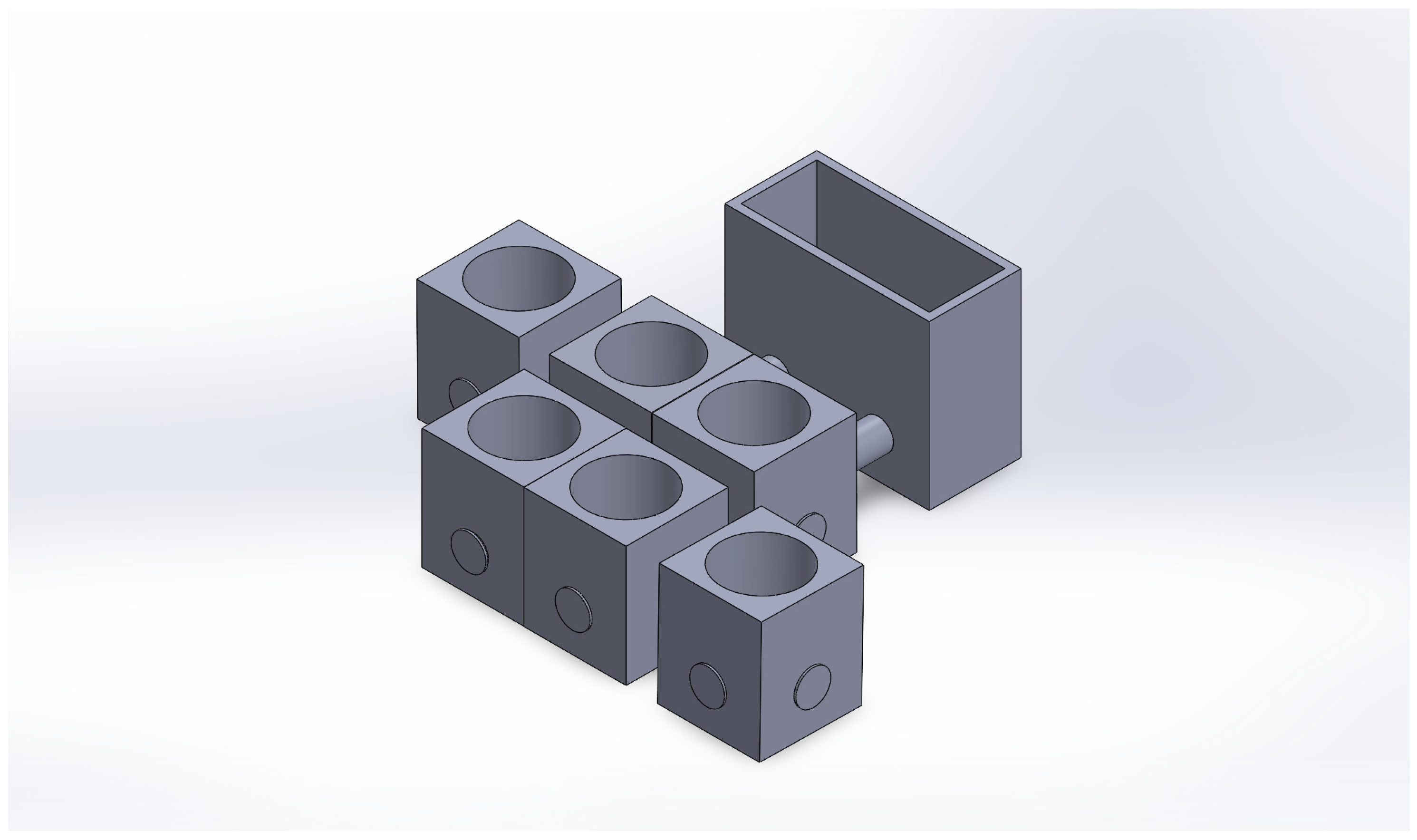
13]. The new structure offers more space for plant growth, easier assembly, and improved modularity. The mechanical model, showcased in
Figure 1, was designed in SolidWorks 2024 and printed in PLA using.
Each pod is designed to function independently, but it can also connect to other pods to form a larger system. This means that temperature and water levels can vary between pods, so each one must be monitored and controlled separately.
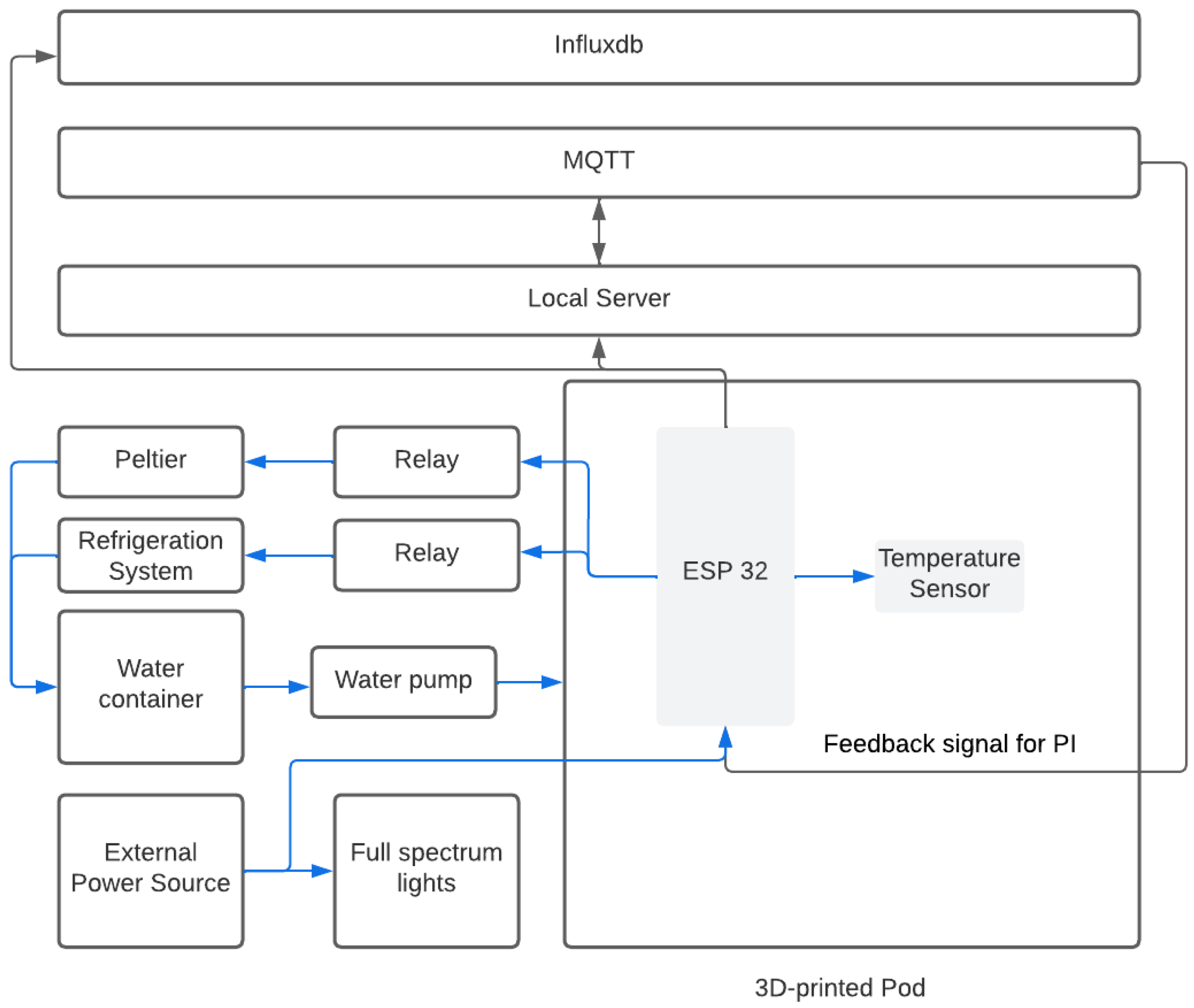
To achieve this, the electronics were designed around three functional areas: environmental monitoring, pest control, and remote automation. Temperature sensors were used to monitor the water; full-spectrum lights were implemented for plant health and pest control; and an ESP32 module was integrated to transmit data wirelessly. A Raspberry Pi acts as a local server to manage processing and data storage, transmitting all data to Message Queuing Telemetry Transport (MQTT) for processing and simultaneously to InfluxDB.for data storage. This arrangement is detailed in
Figure 2.
The IoT integration for each hydroponic pod is initiated with the deployment of a temperature sensor. Temperature data is acquired by the thermocouple at a frequency of one sample per second. For each acquired sample, the ESP32 microcontroller executes a proportional–integral control algorithm to compare the measured temperature against a predefined setpoint. Based on the control output, the system determines whether to engage the Peltier plate for heating or the refrigeration system for cooling.
The water temperature readings, together with the proportional-integral controller’s calculated response, are transmitted every minute to both the InfluxDB database and the Node-RED platform via the Message Queuing Telemetry Transport communication protocol. Upon reception, Node-RED executes a predefined sequence of functions that interpret the proportional-integral controller’s output. These functions generate actuation commands to either: (i) activate the Peltier plate and deactivate the refrigeration system, or (ii) activate the refrigeration system and deactivate the Peltier plate, depending on the thermal correction required. The commands are sent directly from Node-RED to the ESP32, which controls a series of relays managing both subsystems. This feedback and actuation loop operates automatically once the target temperature is defined through the Node-RED web-based interface.
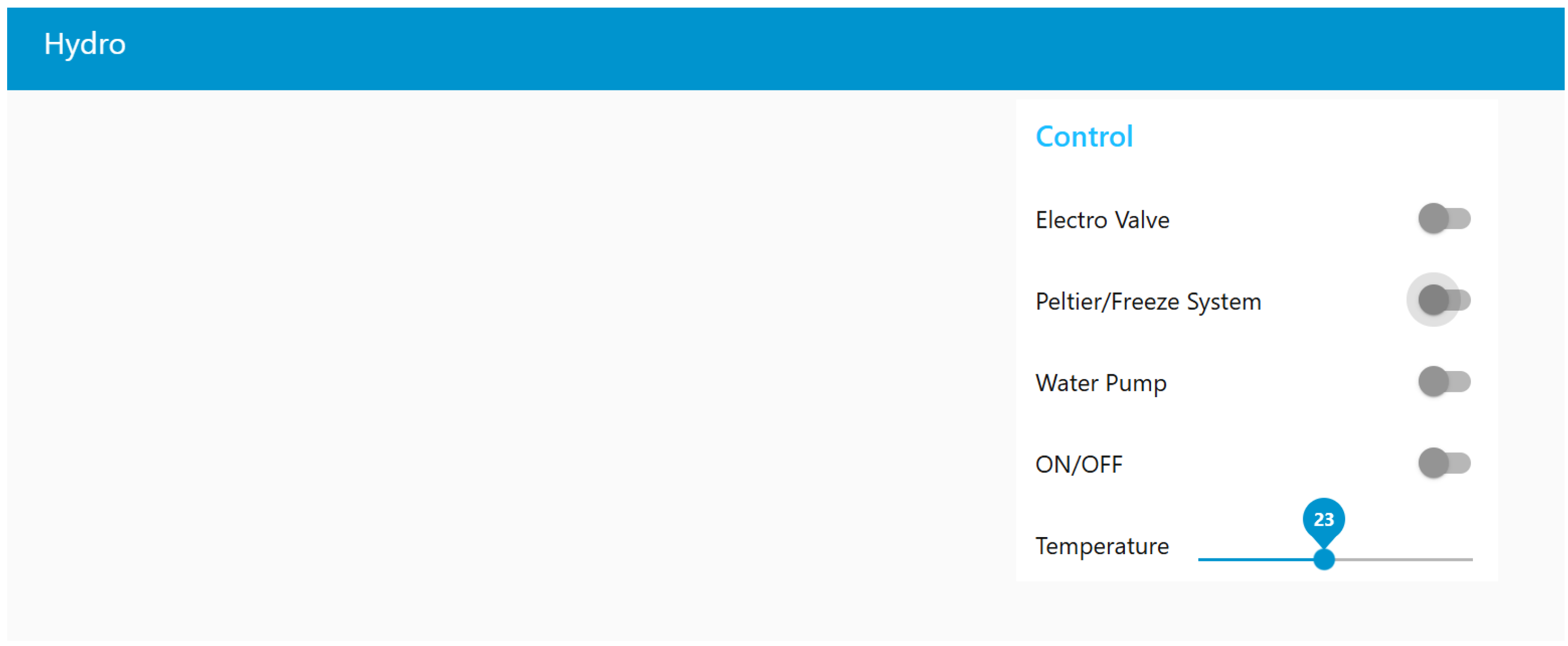
A digital interface, detailed in
Figure 3 provides manual override capabilities for the water pump. While the pump operates in a default “always-on” mode to ensure continuous water circulation, users can manually enable or disable it at any time, with commands relayed through Node-RED to the ESP32.
Full-spectrum lighting operates independently of the ESP32 and the IoT control architecture. These lights follow a fixed nine-hour illumination cycle designed to simulate natural daylight conditions, thereby supporting optimal plant growth.
To control environmental variables, proportional-integral-based controllers were employed. Although both proportional and proportional–integral-derivative controllers were tested, the proportional-integral configuration provided better stability and fewer fluctuations. The controller was designed using experimental data gathered from the system’s temperature sensors, with the Peltier and cooling system being activated and deactivated at different intervals to record temperature variations. Based on this data, the characterization of the plant was developed.
where
represents the transfer function of the hydroponic thermal subsystem, which models the relationship between the control input applied to the Peltier element and the resulting variation in water temperature. This model was obtained through experimental system identification using temperature data collected from the hydroponic pods. The variable
s denotes the Laplace operator, and the coefficients of the numerator and denominator correspond to the dynamic response of the system derived from empirical fitting. In this representation, the numerator
captures the transient gain and delay characteristics of the heating–cooling process, while the denominator
defines its damping and natural frequency components.
It can be concluded that the system has one zero and two poles located at:
These values correspond to the dynamic characteristics of the identified thermal model of the plant. The single zero at reflects a small transient component caused by the Peltier’s inherent thermal delay. The two real negative poles ( and ) indicate that, under nominal conditions, the modeled dynamics are overdamped and locally stable, exhibiting a slow but monotonic return to steady state without oscillations. The relative magnitudes of the poles suggest that the water temperature dynamics include a dominant slow mode governed by heat transfer between the fluid and the Peltier surface, and a faster mode associated with localized temperature diffusion.
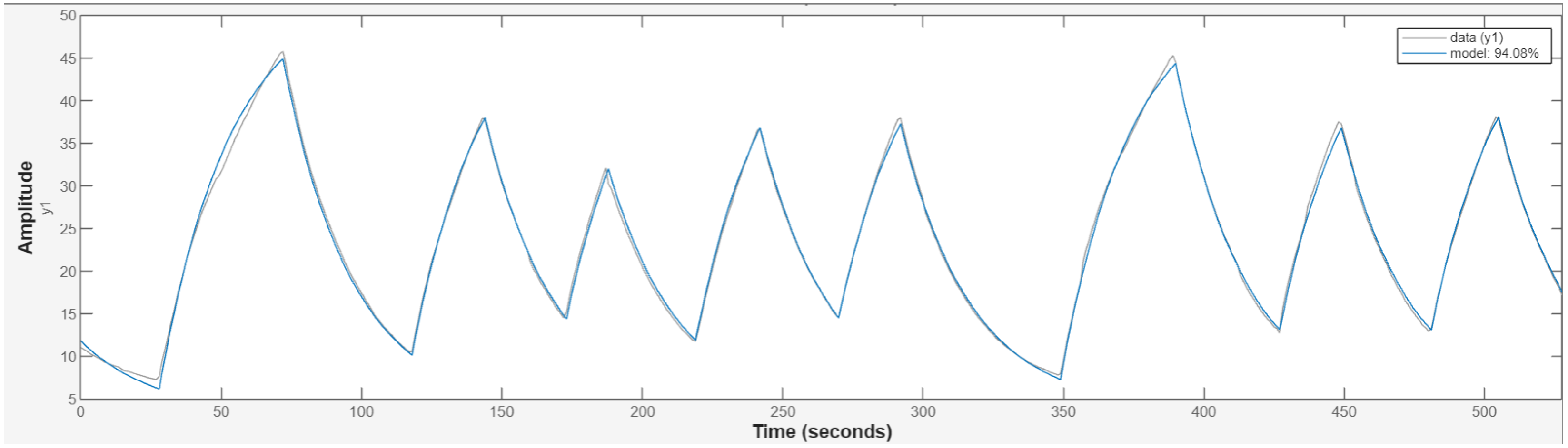
The accuracy of the model was subsequently tested by simulating a response comparison and measuring the results against actual data. The test achieved a 94% accuracy, as shown in
Figure 4.
Although the identified model is mathematically stable, the real system operating in open loop remains sensitive to environmental disturbances, which justifies the need for implementing closed-loop control. These results validate the adequacy of the second-order model for representing the hydroponic system’s intrinsic thermal behavior.
The proportional-integral controller was tuned to improve the closed-loop performance of the system. The resulting controller has the following gains:
where
represents the transfer function of the proportional–integral controller implemented in the ESP32 microcontroller. This controller regulates the water temperature by minimizing the error signal between the measured temperature and the reference setpoint. The proportional gain
determines the immediate response to temperature deviations, while the integral gain
corrects steady-state errors by accumulating past deviations. Both parameters were tuned based on the system’s step response to achieve minimal overshoot and an adequately damped transient behavior.
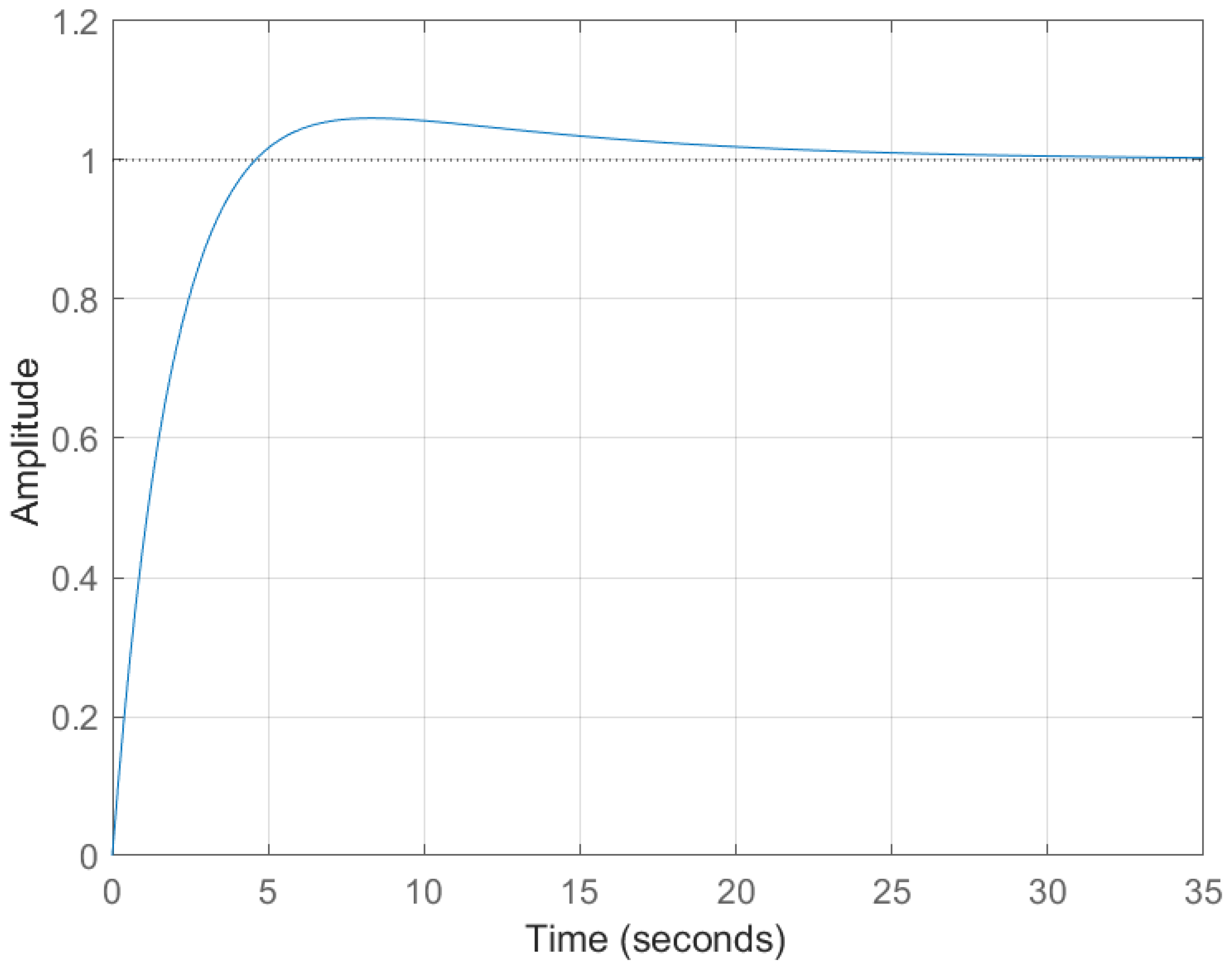
These gains yielded a rise time of 3.03 s, a settling time of 19.6 s, and an overshoot of 6.03%, resulting in a stable and well-damped response, as shown in
Figure 5.
The resulting system is described by the following equations:
Closed-Loop Transfer Function with PI Controller
The PI controller is defined as:
where
represents the proportional–integral controller implemented in the ESP32 microcontroller. The numerator coefficients correspond to the proportional and integral gains (
and
), and the denominator term
s accounts for the integrative action in the frequency domain.
The plant transfer function is:
where
represents the experimentally identified transfer function of the hydroponic system’s water temperature dynamics. The numerator models the transient gain of the heating–cooling process, while the denominator defines the damping and natural frequency of the system.
Open-loop transfer function:
where
is the open-loop transfer function obtained by cascading the controller and the plant. This equation describes the system behavior before feedback is applied.
Closed-loop transfer function:
where
represents the closed-loop transfer function of the temperature control system, capturing the complete dynamic response once feedback is applied. This formulation quantifies how the output temperature follows the reference setpoint under proportional-integral controller regulation.
The coefficients in the final form of result from substituting the tuned gains and identified plant parameters. The cubic denominator reflects a third-order closed-loop system, where the additional pole introduced by the integrative action enhances steady-state accuracy while maintaining stability. The small constant term in the numerator represents the steady-state gain, confirming that the controller effectively regulates temperature around the desired setpoint.
The proportional-integral controller logic is deployed on the ESP32, which continuously monitors sensor feedback in real time and adjusts the actuator output accordingly. This closed-loop implementation enables the system to react dynamically to environmental changes, ensuring faster response times, reduced steady-state error, and improved stability compared to the uncontrolled open-loop configuration.
Although the proportional-integral controller is a classical control approach, its implementation in this study was not intended as a theoretical contribution but as a practical demonstration of control integration within a modular Internet of Things hydroponic framework. The controller was selected after testing proportional, proportional–integral, and proportional–integral-derivative structures, where the proportional-integral configuration provided the most stable thermal regulation with minimal overshoot. This choice ensures reproducibility in low-cost microcontroller environments, allowing the system to serve as a benchmark for future research involving adaptive or predictive control algorithms within distributed Internet of Things architectures.
Once the physical and electronic systems were ready, a month-long test was conducted using four pods: two integrated with Internet of Things and two employing a traditional hydroponic setup. The goal was to evaluate the impact of the proposed design on tomato seed germination. Temperature data were logged in a database and analyzed to identify areas for improvement in future iterations.
4. Experiments
This section describes in a high level of detail the experiments designed and planned for this study. The main goal of the experiments is to underscore the benefits of integrating Internet of Things into a hydroponic system and analyzing the impact of such integration.
4.1. Experimental Setup
Four 3D-printed pods were utilized to compare traditional hydroponic systems with Internet of Things-enhanced configurations. Two pods operated as conventional hydroponic systems without Internet of Things capabilities, serving as the control group. The remaining two pods were equipped with Internet of Things features that allowed real-time monitoring and automatic control of water temperature. Artificial lighting in these Internet of Things pods operated independently through a timer configured for 9-h cycles to ensure consistent light exposure. All pods were identical in size and shape to maintain uniform experimental conditions and comparability across groups.
Each group of pods (IoT and non-IoT) generated approximately 1214 records per day, corresponding to one temperature measurement every 71 s. Measurements were continuously collected for 19 days, resulting in roughly 23,000 data points per group throughout the experimental period. All readings were stored in InfluxDB and were used for validation and comparative analysis between IoT-assisted and conventional hydroponic configurations.
4.2. Plant Material and Growth Conditions
Tomato seeds (Solanum lycopersicum L., Saladette type) were selected as the plant material due to their sensitivity to temperature and light, which makes them suitable for evaluating environmental control systems in hydroponic environments. The seeds were obtained from Rancho Los Molinos (Tepoztlan, Mexico) and correspond to a commercial variety commonly cultivated under warm conditions. According to the supplier, germination occurs within 10–14 days, with an average maturation period of 90–120 days. Each pod contained three seeds placed on a rockwool substrate and irrigated.
4.3. IoT Integration
The IoT-enhanced pods will be fitted with sensors and actuators to control and monitor environmental variables. Data from these sensors will be transmitted to a central cloud server for analysis. The IoT system will allow for real-time adjustments to optimize plant growth conditions.
Regarding the traditional hydroponic pods, these were equipped with temperature sensors. Data from both systems (traditional hydroponics and IoT-based) were collected to enable comparison and to demonstrate the differences in growth rates.
The IoT integration in the experimental setup focused primarily on the regulation and monitoring of the water temperature within the hydroponic pods.
Temperature data were collected through digital sensors and processed by a PI-based feedback loop to maintain stability around the target value of 23 °C.
In contrast, the LED lighting system operated on an independent 9-h timer, providing a consistent photoperiod across all trials.
Because light intensity was not dynamically adjusted through the IoT system, it remained constant during the experiment and was therefore excluded from the temporal curve analysis.
4.4. Data Collection
Each pod was configured to monitor and record temperature to facilitate a direct comparison. The data were stored in a cloud-based system for real-time analysis and subsequent review. This review included growth rate and average water temperature. Through this approach, a common ground between both groups (IoT-based and traditional hydroponics) was established, allowing for accurate measurement of the effectiveness and efficiency of the IoT-based hydroponic system compared with traditional methods. For the IoT pods, artificial light was provided at 9-h intervals, whereas the non-IoT pods received natural light and were positioned in an area ensuring adequate light exposure.
4.5. Objectives
The experiment aims to determine the benefits of integrating Internet of Things (IoT) technology into hydroponic systems. By comparing seed growth rates in IoT-equipped hydroponic pods with those in conventional hydroponic setups, the study seeks to identify potential improvements in efficiency, monitoring, and plant development offered by IoT solutions.
4.6. Duration and Evaluation
The experiment will span 20 days. Post experimentation, we will evaluate the plant height, the growth rate per pod and the average water temperature.
4.7. Control Measures
To ensure the validity of the experiment, all pods will be placed in the same environmental conditions to minimize external variables, and all pods shall use the same type of seeds.
4.8. Expected Outcomes
It is hypothesized that the IoT-enhanced hydroponics systems will demonstrate increased efficiency in plant growth and resource utilization when compared to the traditional systems. The experiment aims to provide quantifiable data to support the integration of IoT technologies in hydroponic farming.
One of the key advantages of IoT-enabled hydroponic systems is the precise monitoring and control of environmental variables. With sensors and connected devices, these systems can constantly measure and adjust factors like temperature, humidity, ensuring optimal growing conditions for plants. This level of precision can result in significantly improved plant growth rates and overall resource utilization. Additionally, IoT-enabled systems can provide real-time data and insights, allowing growers to make informed decisions and adjustments to maximize efficiency and productivity.
In comparison, traditional hydroponic systems often rely on manual monitoring and adjustments, which can be time-consuming and prone to human error. By integrating IoT technology, many of these tasks can be automated, ensuring that plants receive the precise amount of water and nutrients required. This approach not only saves time and reduces the risk of errors but also enables scalability, as multiple hydroponic systems can be remotely monitored and controlled from a single interface. Ultimately, the use of IoT in hydroponics has the potential to revolutionize crop cultivation, making it more efficient, sustainable, and accessible for growers of all scales. Through Internet of Things technology, real-time data and analytics on plant growth and health can be obtained, supporting informed decisions and system adjustments to optimize yield and quality. Furthermore, the integration of Internet of Things in hydroponics creates new opportunities for automation, including automated nutrient dosing and potential hydrogen balancing, thereby further streamlining the growing process.
5. Results and Discussions
This section presents a qualitative and quantitative analysis of the results obtained during the experimentation described in the previous section.
5.1. Early Germination Patterns and Synchronization
The onset of germination serves as a critical milestone in plant development, influenced by environmental conditions such as temperature and humidity.
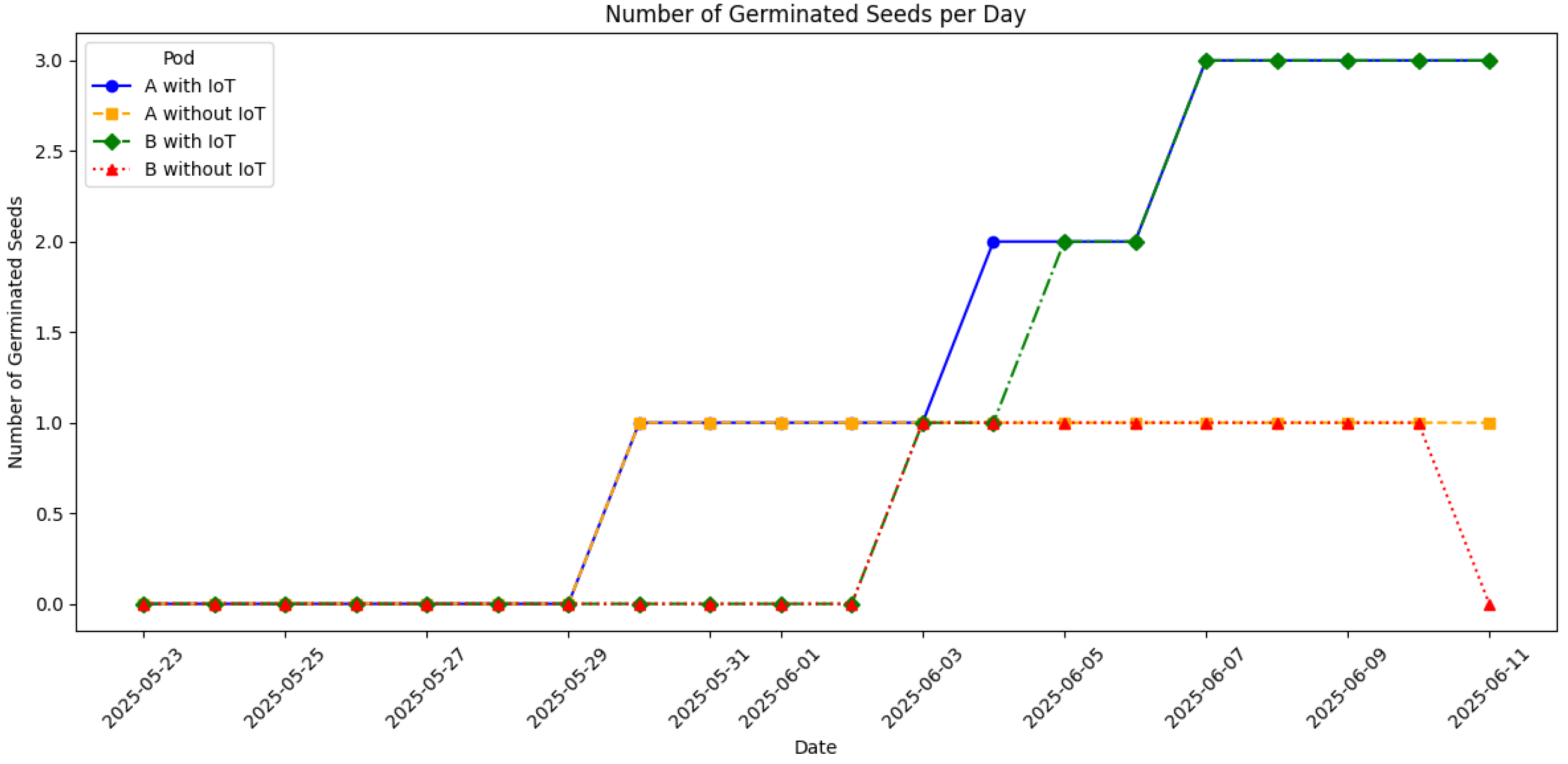
Figure 6 illustrates the number of germinated seeds per day across the four experimental pods.
In pod A with IoT, germination was initiated on 1 June and completed by 4 June, indicating not only a fast response but also a synchronized progression among the seeds. Pod B with IoT followed closely behind, with its first seed sprouting on 3 June and reaching full germination by 6 June. This rapid and clustered germination under IoT management suggests that optimal and stable conditions—likely precise temperature control—may act as a catalyst for seed activation.
Conversely, Pod A without IoT showed an isolated germination event on 30 May with no further germination, implying that while a seed may sporadically respond to environmental cues, the lack of consistent support hampers further activity. Pod B without IoT, which experienced its first (and only) germination on 2 June, later demonstrated a decrease—possibly a misreading or early plant death. The erratic germination patterns in non-IoT environments reflect an unstable growing context, inhibiting uniform development.
5.2. Water Temperature Dynamics During the Experimental Period
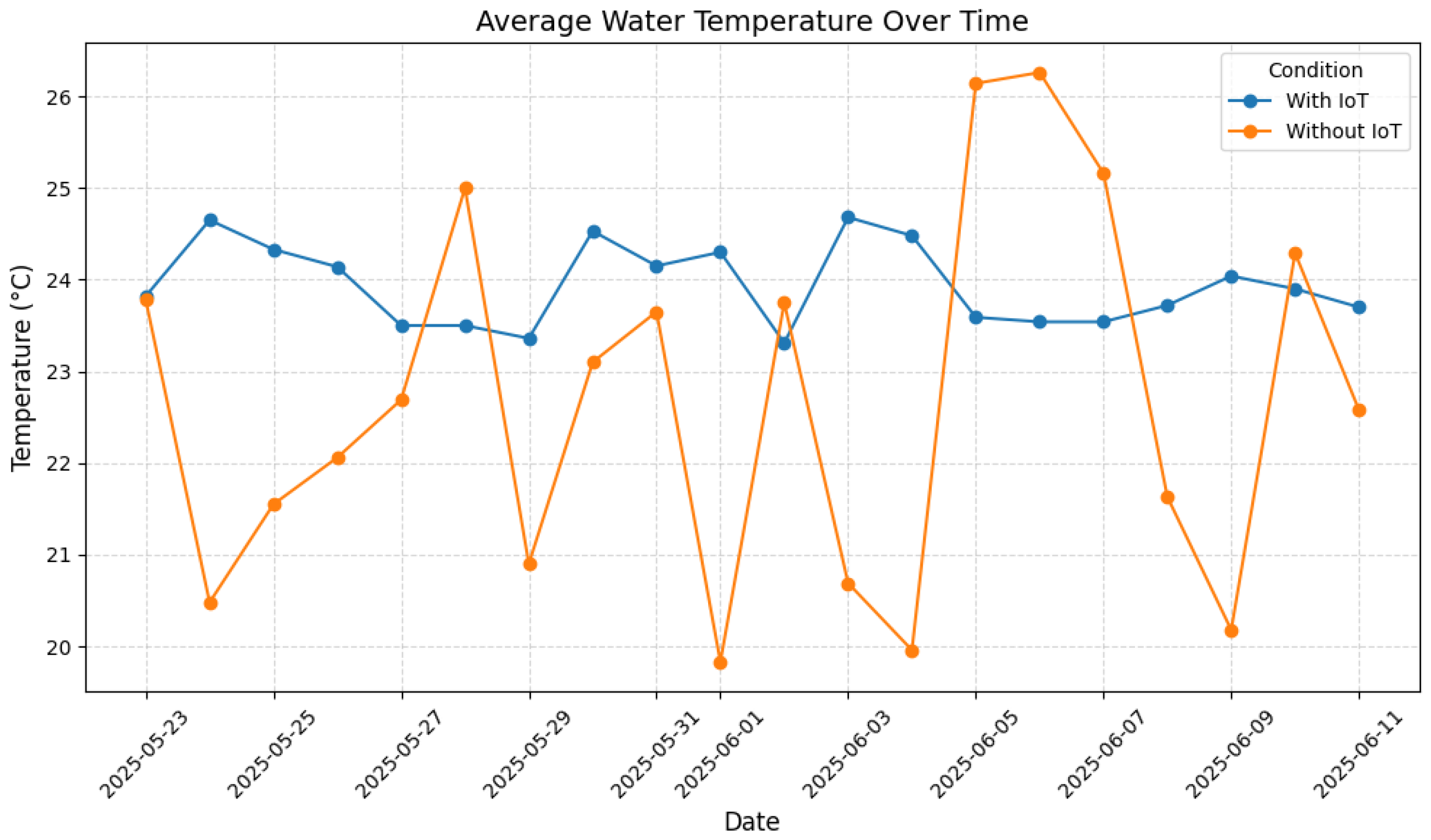
Figure 7 presents the evolution of water temperature in both IoT-enabled and non-IoT hydroponic systems throughout the experimental period. The IoT system maintained a more stable thermal profile, with minor fluctuations around the target value of 23 °C. In contrast, the non-IoT system exhibited pronounced variability, reaching deviations of more than ±3 °C on several days. These oscillations can be attributed to the absence of active control and real-time monitoring, which makes the system more sensitive to changes in ambient conditions and heat exchange with the environment.
This stability in the IoT configuration reflects the effectiveness of automated sensing and feedback mechanisms. Overall, the results demonstrate that the integration of IoT control reduces thermal stress by keeping the water temperature close to a specific target temperature. This enhanced temperature stability aligns with the system’s objective of promoting faster ripening and healthier plant development compared to traditional, manually regulated hydroponic setups.
5.3. Vegetative Development Under Varying Environmental Controls
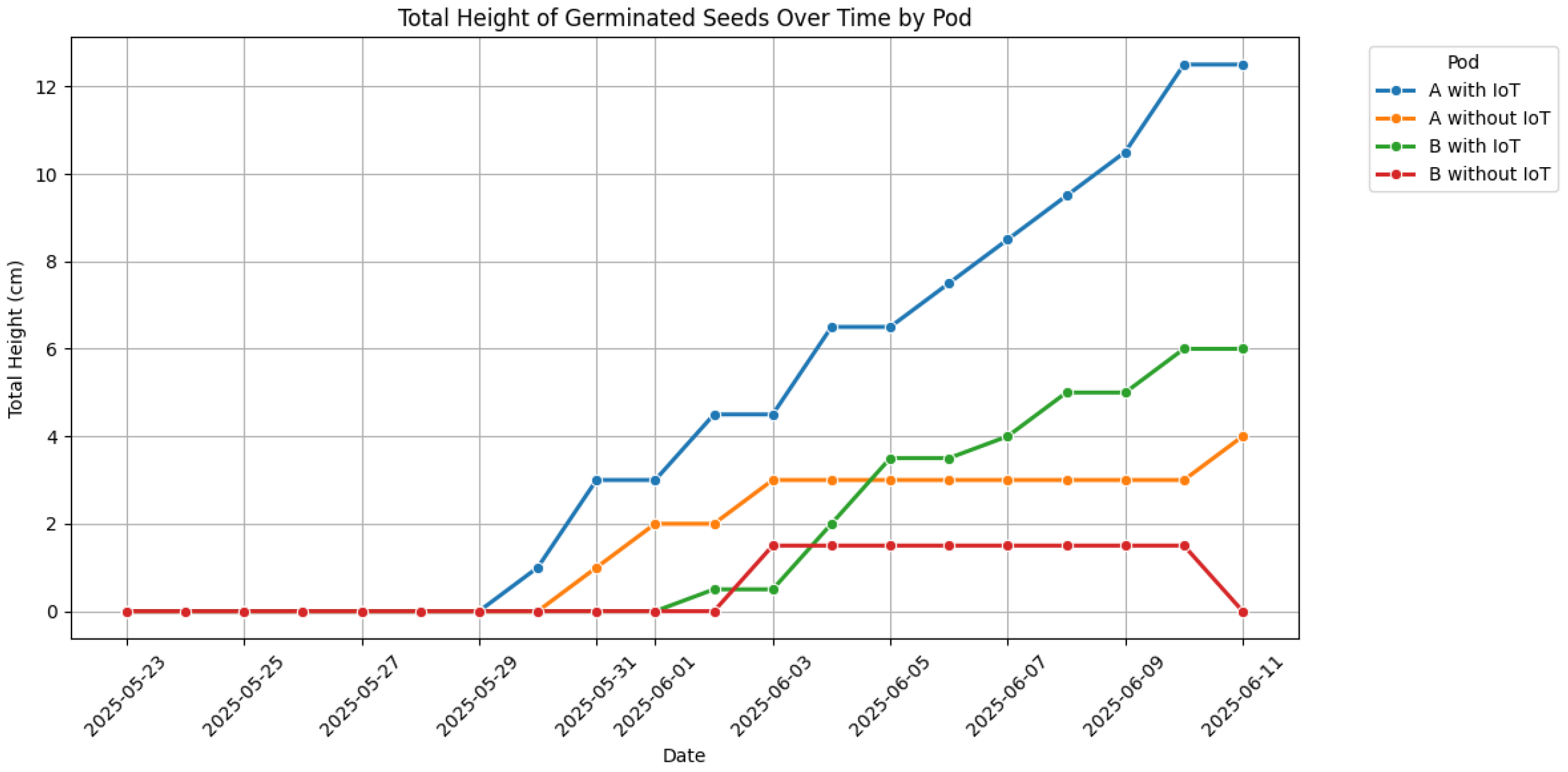
Figure 8 presents the average height of germinated seeds over time. Pod A with IoT not only achieved early germination but also sustained a steep upward trajectory, reaching an average height of 4.5 cm by 3 June and continuing to grow consistently thereafter. Pod B with IoT displayed a more moderate but stable increase in height.
By contrast, pod A without IoT exhibited early growth followed by stagnation, suggesting that while initial cues may have spurred development, the subsequent lack of environmental regulation stalled progress. Pod B, without IoT, barely exceeded 1.5 cm and remained flat, suggesting minimal physiological activity.
This comparative view highlights the crucial role of stable environmental control in not only triggering but also sustaining healthy growth.
5.4. Intra-Pod Growth Dynamics: Individual Seed Analysis
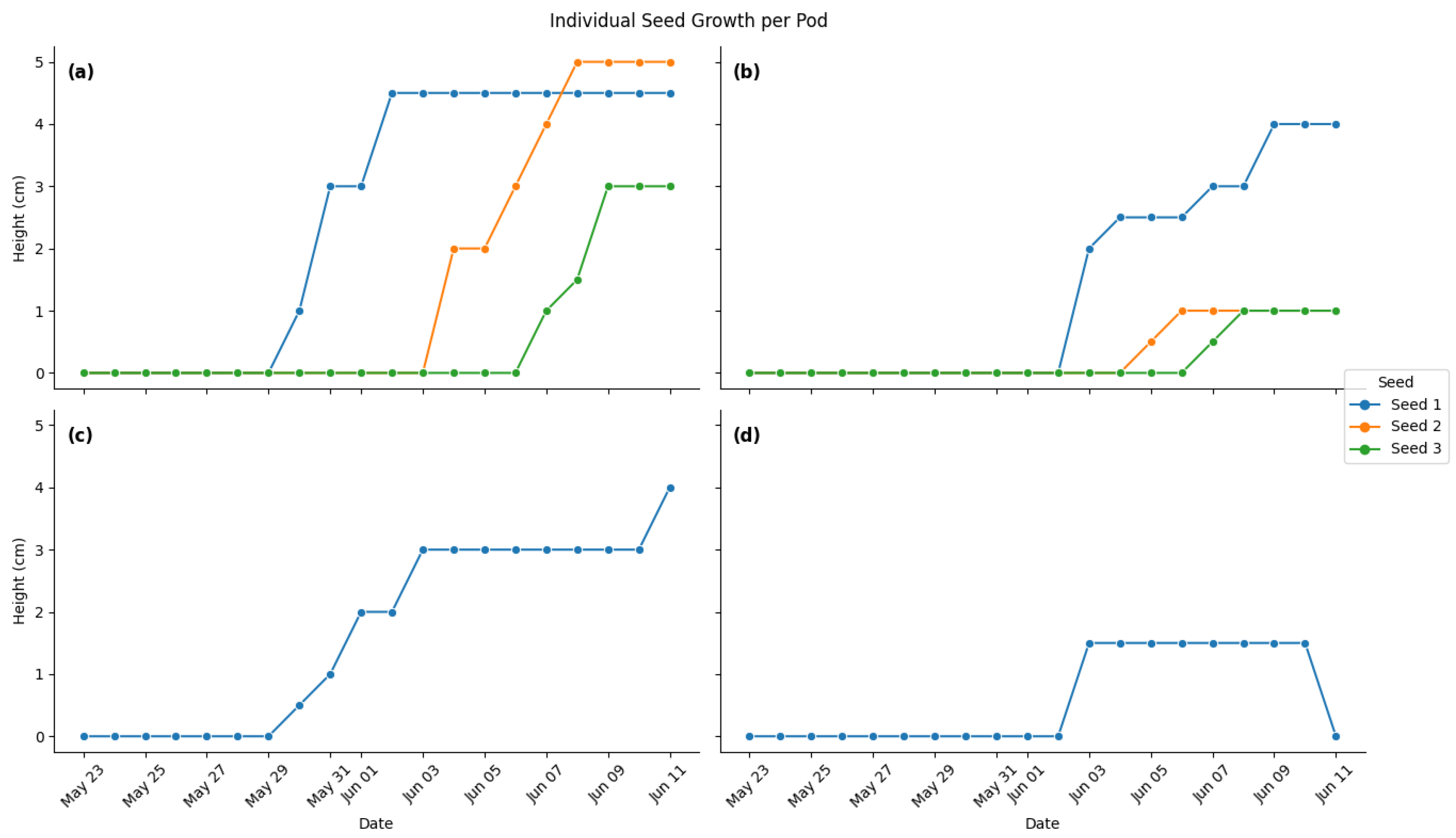
To better understand variability within each pod,
Figure 9 tracks the trajectory of each seed’s height. In both IoT-enabled pods, individual growth curves are aligned, steep, and culminate in relatively uniform final heights, reflecting an environment that fosters not only growth but also consistency.
Pod A without IoT reveals disparate patterns: one seed grows quickly and then stagnates, while others never catch up. Pod B without IoT is even more illustrative of suboptimal conditions, with nearly flat lines representing negligible development across all seeds.
This fine-grained perspective reinforces the reliability advantage provided by IoT—a critical factor when scaling up production systems that require predictable outcomes.
5.5. Leaf Growth Dynamics
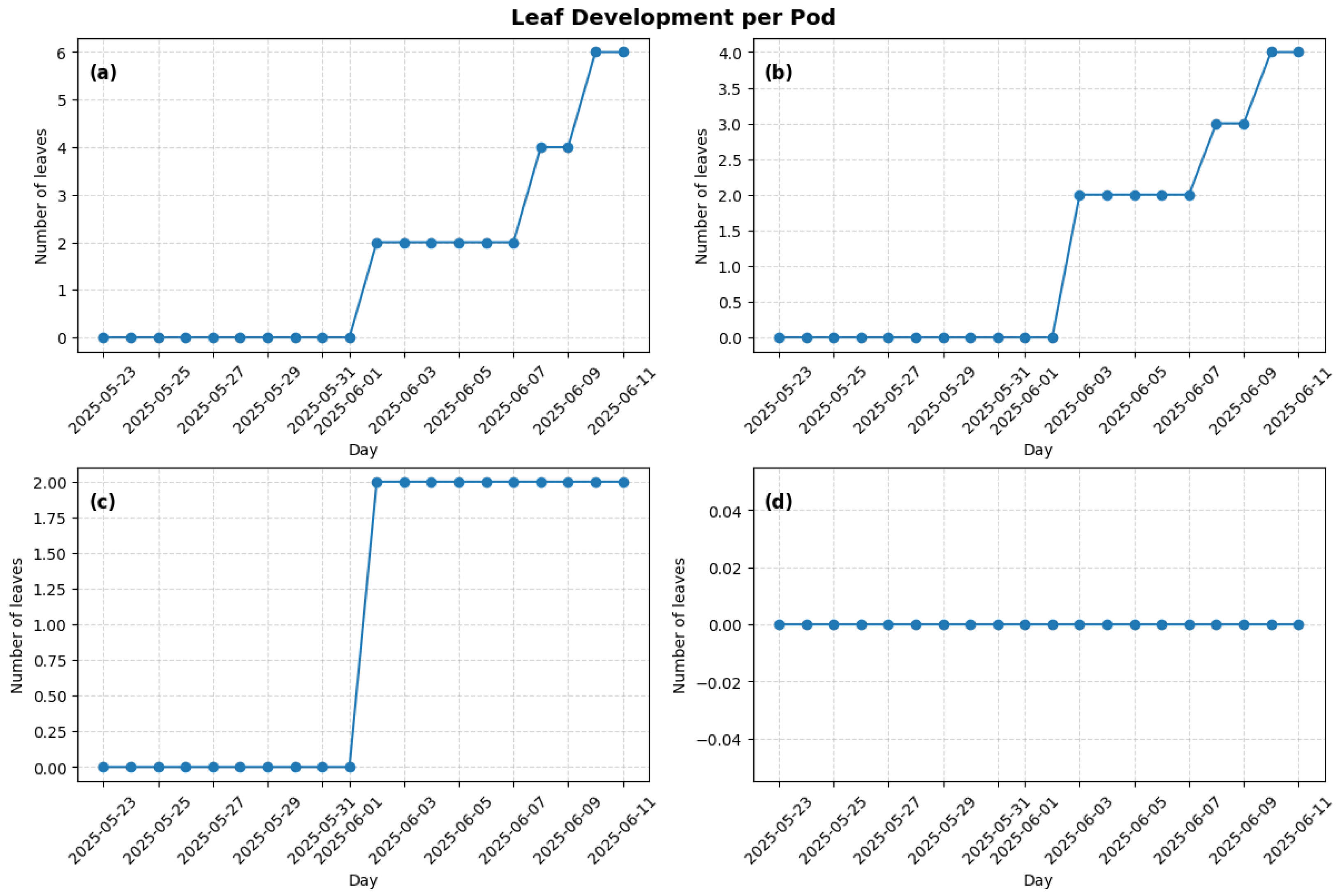
To complement the height measurements, the number of leaves was recorded daily for each pod during the experimental period.
Figure 10 shows the evolution of leaf count for both IoT and non-IoT systems.
As illustrated in
Figure 10, the pods A and B with IoT demonstrated a progressive increase in the number of leaves, reaching approximately six and four leaves, respectively, by 11 June. In contrast, A without IoT maintained two leaves throughout the same period, while B without IoT exhibited no visible leaf development. This trend aligns with the previously discussed temperature stability in the IoT-assisted system, indicating that controlled environmental conditions favored more consistent vegetative growth.
5.6. Growth Rate and Model Fit Comparison
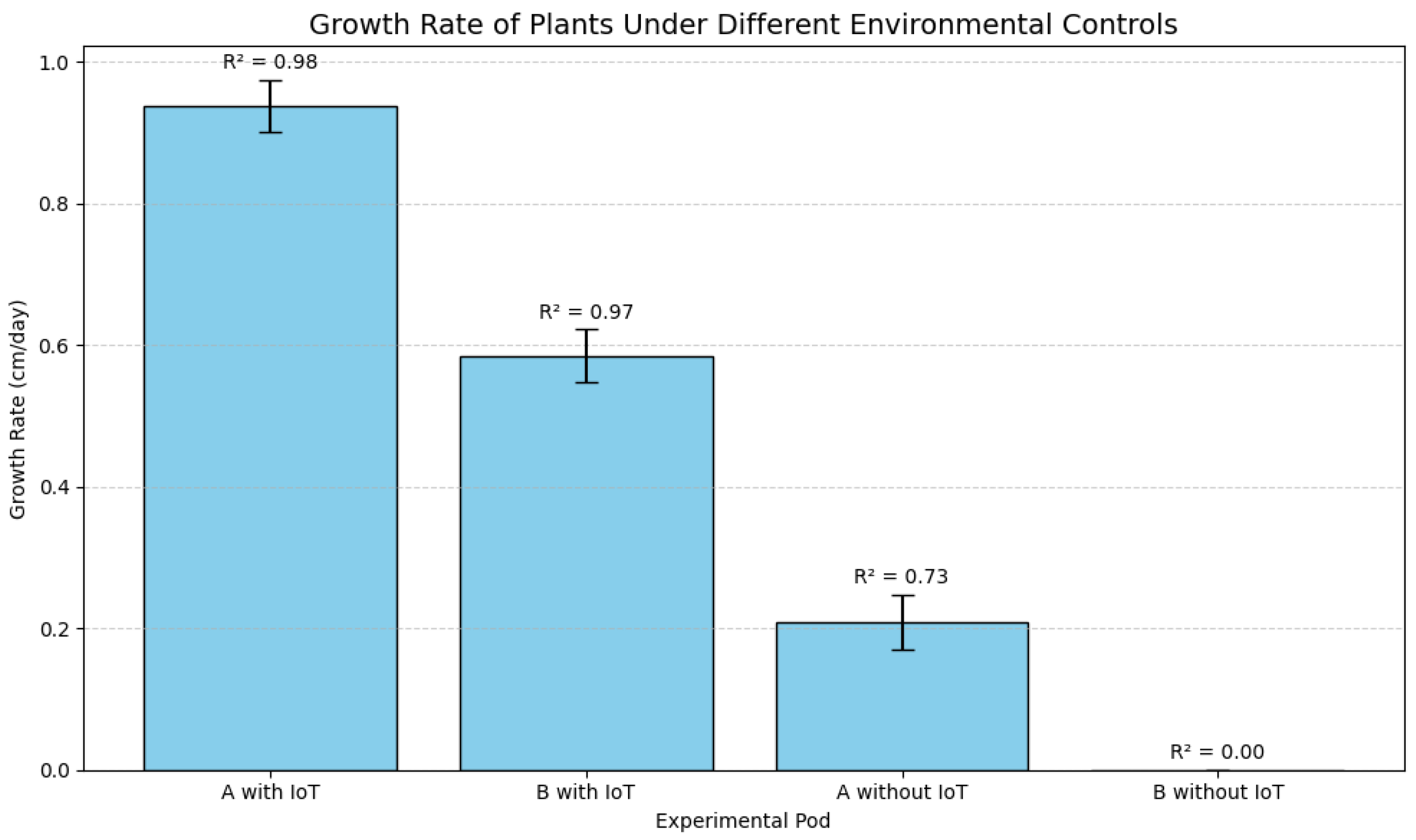
Quantitative assessment of growth velocity is captured in
Figure 11. Pod A with IoT showed the highest average growth rate (0.94 cm/day) with a near-perfect linear fit (R
2 = 0.98), indicating a consistent environment that enables sustained development. Pod B with IoT, while lower in magnitude (0.58 cm/day), also followed a reliable trend.
In sharp contrast, pod A without IoT presented a flatter trend (0.16 cm/day), and pod B without IoT essentially exhibited no growth (0 cm/day). The low R2 values in non-IoT pods underscore the noisy, irregular nature of development in uncontrolled environments.
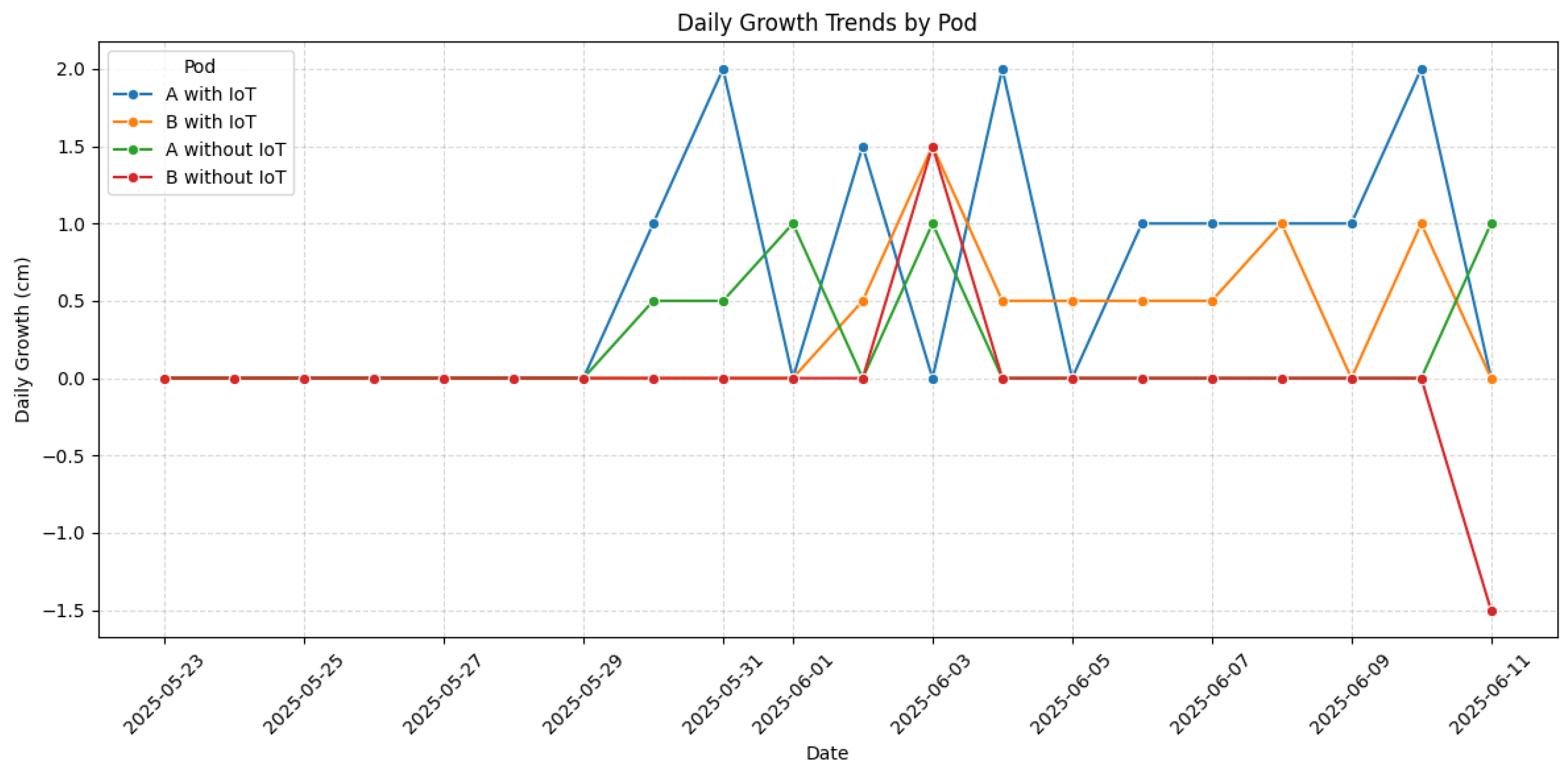
5.7. Daily Growth Trends: Stability vs. Stress
Figure 12 highlights the daily change in height, providing insight into growth stability. IoT pods show mostly positive and steady gains. Notably, pod A with IoT displayed sharp yet regular growth spurts aligned with environmental support. Pod B with IoT followed a gentler, but still upward trend.
Non-IoT pods presented an erratic picture—flat lines, occasional spikes, and even a negative value—on the final day for pod B without IoT. These fluctuations may be symptomatic of stress, further substantiating the advantages of controlled systems.
5.8. Understanding Growth Acceleration Through Polynomial Modeling
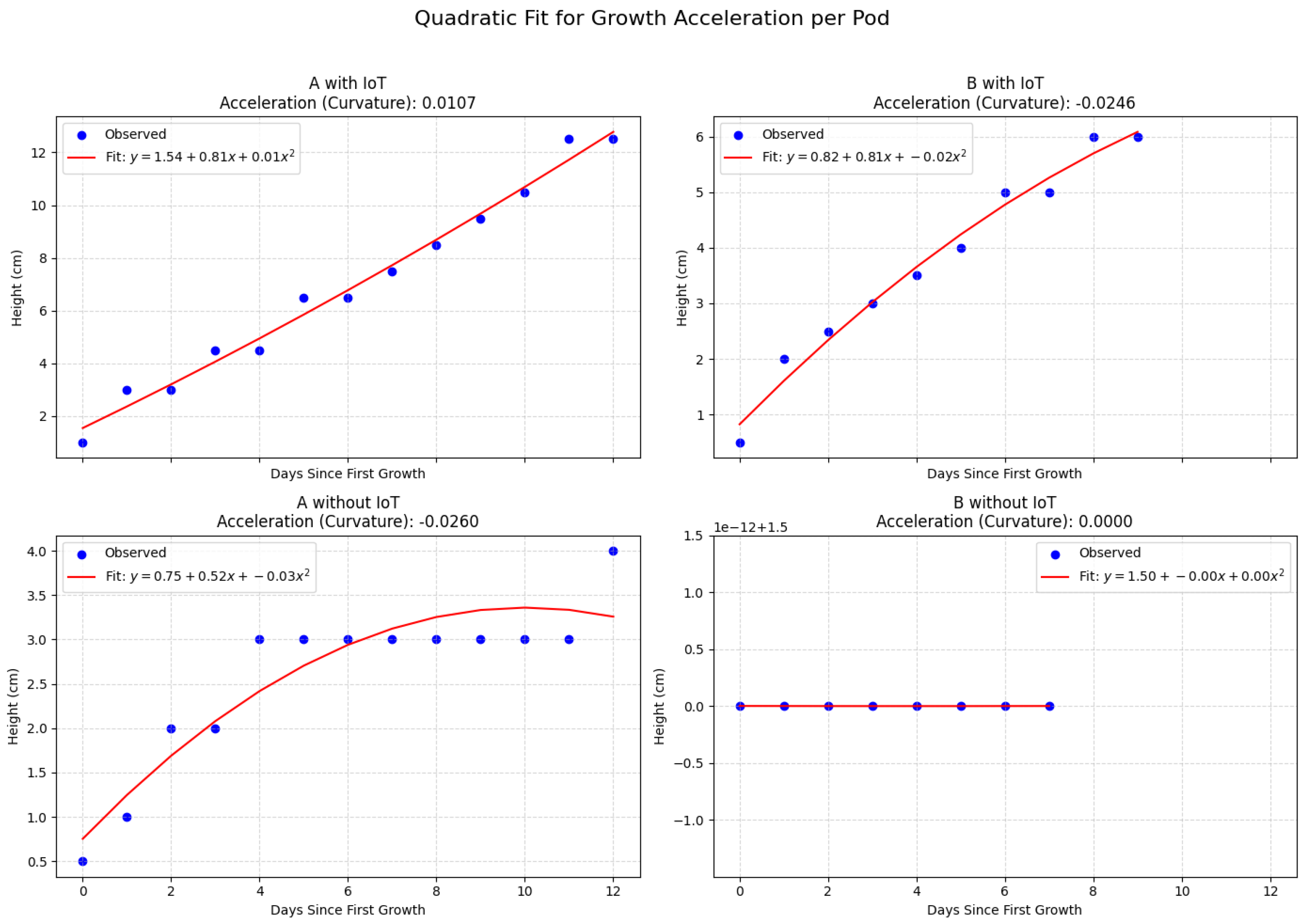
To explore dynamic changes in growth,
Figure 13 applies a second-degree polynomial fit. The curvature of the fit provides insights into acceleration. Pod A with IoT displayed a pronounced upward curvature, indicating accelerating growth over time. Pod B with IoT showed a flatter, slightly concave fit, suggesting a steady but slowing pace.
Meanwhile, the non-IoT pods exhibited negative or neutral curvature, reflective of early stagnation or plant stress. This modeling underscores that early interventions through IoT not only initiate growth but also compound its effect over time.
5.9. Statistical Validation of Growth Differences
To confirm the significance of the observed differences, a one-way ANOVA test was conducted. The results, summarized in
Table 3, revealed an F-statistic of 7.8358 with a
p-value of 0.00013. These results strongly reject the null hypothesis, indicating that not all pods performed equally.
This statistical validation reinforces earlier visual findings: IoT-enhanced environments led to significantly superior plant growth.
5.10. Visual Progression of Plant Growth
To complement the quantitative results, the progress of each pod was recorded throughout the experiment. The germination process was monitored from the initial stages to the conclusion of the experiment, with all observable changes and developments in growth patterns documented.
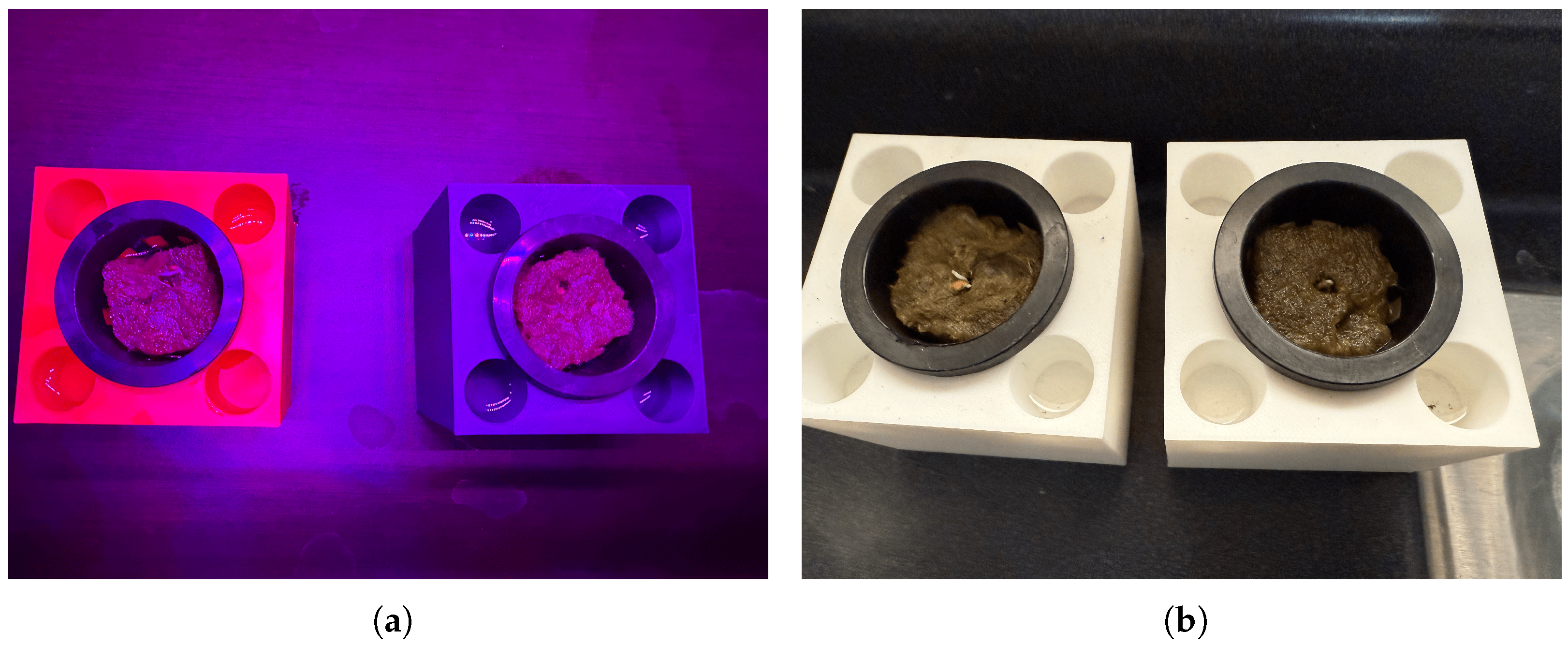
At the beginning of the experimentation, on 23 May,
Figure 14a shows that pods with and without IoT
Figure 14b showed no progress in germination. There is a base of rockwool for both groups, as it provides a foundation for the seeds.
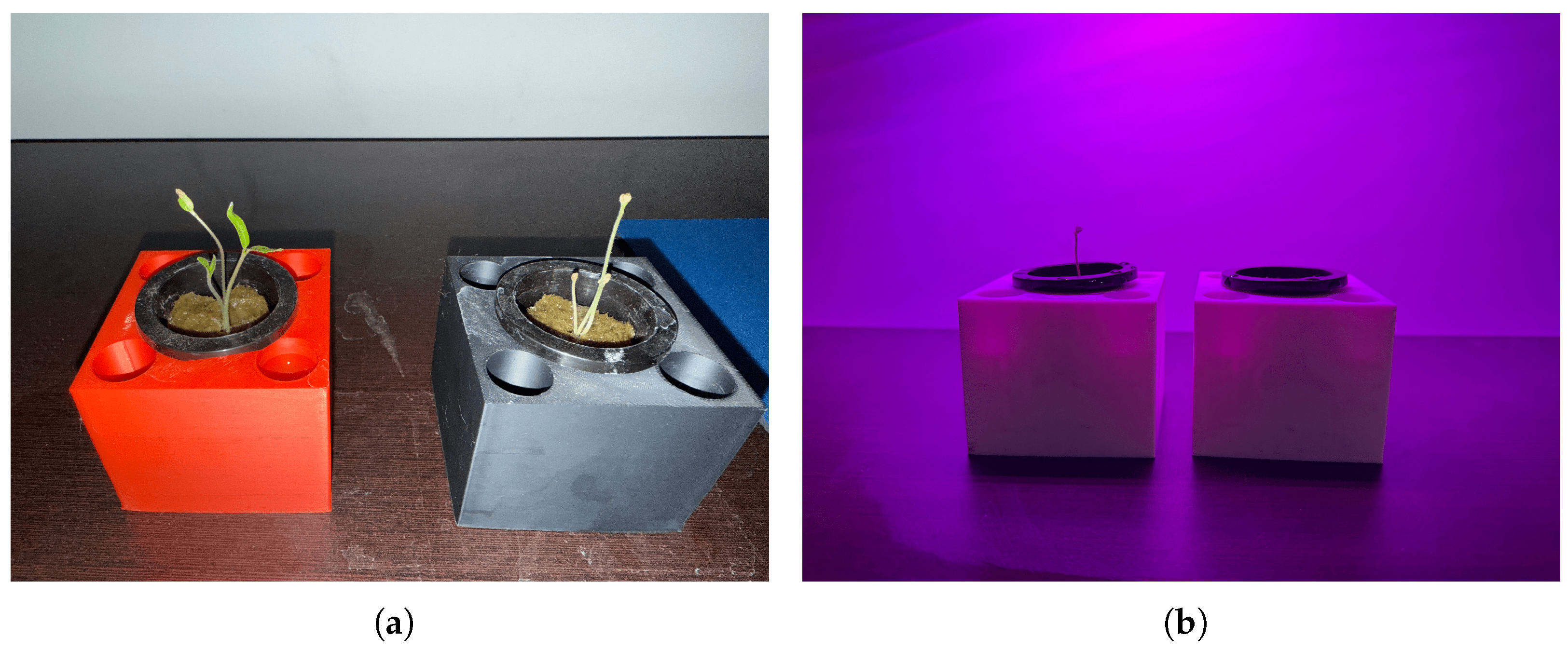
As showcased in
Figure 15a, in Pod A with IoT, germination began on 30 May, and all three seeds had sprouted by 4 June. In Pod B with IoT, germination occurred progressively on 2 June, 3 June, and 7 June. Both IoT pods have presented remarkable growth in terms of their size and health, showing the benefits of using IoT technology for monitoring and optimizing plant development.
Whereas the non-IoT pods in
Figure 15b showed limited germination, Pod A without IoT had its only seed sprout on 30 May, while Pod B without IoT germinated a single seed on 2 June. Beyond these isolated events, both pods remained stagnant, showing no visible signs of further growth compared to their IoT-equipped counterparts. This lack of improvement underlines the importance of technology in enhancing plant growth management and efficiency.
The IoT pods showed varied growth patterns over the 9-day period. The first IoT pod reached its maximum height quickly and was in great health, indicating optimal growth conditions. However, the second IoT pod only reached half the height of the first pod and did not develop leaves, suggesting some deficiencies or issues in the growth process.
In contrast, the non-IoT pods also displayed differing results. One of the non-IoT pods managed to reach a similar height to the first IoT pod, suggesting it benefited from favorable conditions as well. However, the second non-IoT pod failed to show any progress; the seeds did not germinate at all, indicating possible issues in seed quality or environmental conditions.
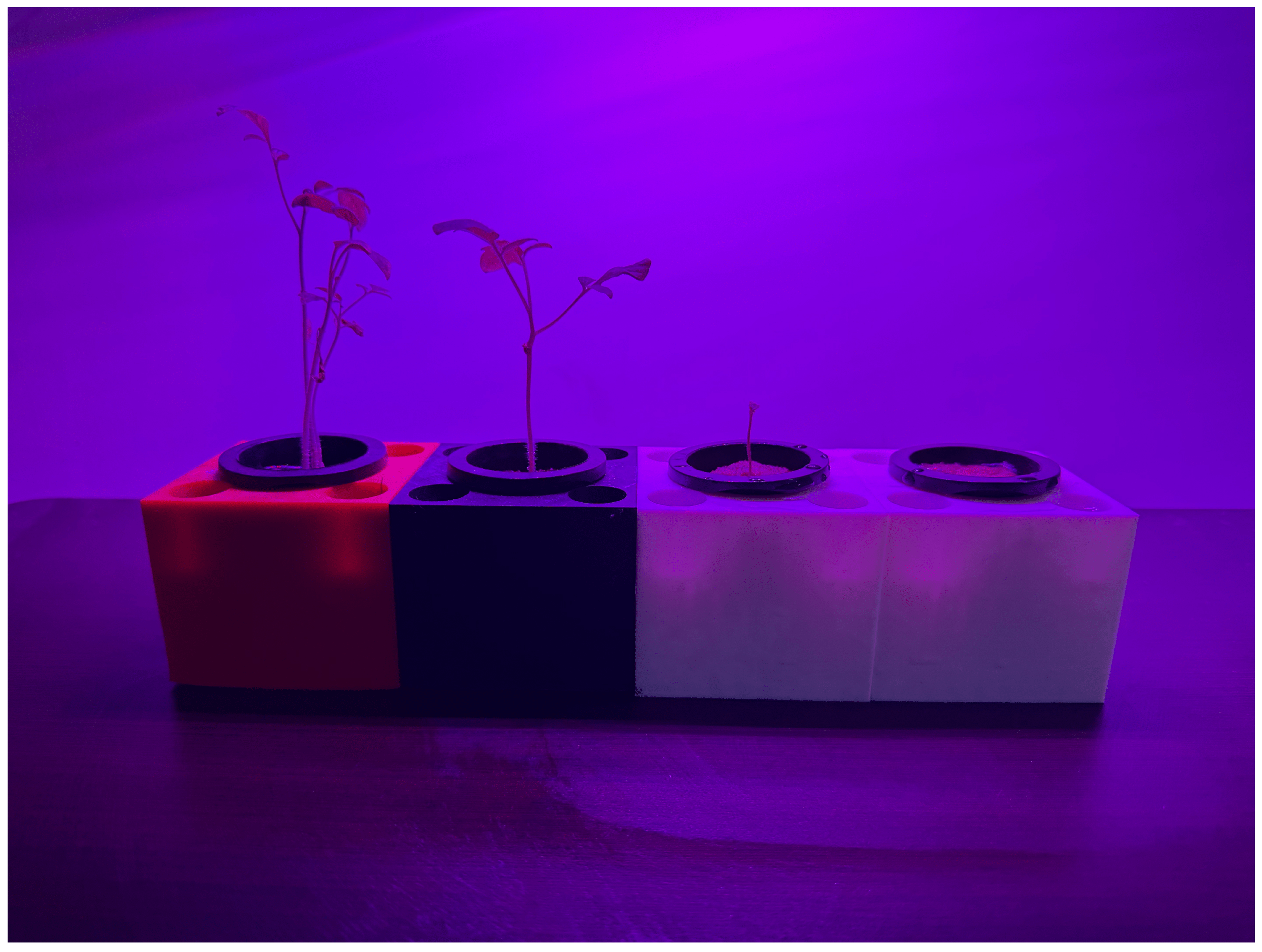
By the end of the experiment, the non-IoT pods demonstrated no discernible alterations, as depicted in
Figure 16. Alternatively, the IoT-controlled pods manifested significant advancements, evidenced by increases in both plant height and leaf quantity. A comprehensive comparison of each pod group is provided in
Figure 16, showcasing the concluding phase of the experiment and vividly illustrating the distinction between IoT and non-IoT systems.
5.11. Discussion
Although the proportional–integral controller is a mature technique, its implementation within a modular IoT hydroponic system represents a meaningful contribution in terms of integration and applicability. The aim was not to propose a new control algorithm but to demonstrate that classical control methods can be effectively deployed in distributed and low-cost architectures, ensuring reliable regulation of environmental variables through IoT-based communication. This implementation validates the feasibility of closed-loop control in modular hydroponic environments and establishes a benchmark for future studies exploring advanced control strategies, such as adaptive or machine learning-based approaches.
From a horticultural productivity standpoint, the observed improvements in temperature stability and light exposure achieved through the IoT-based control directly influence the performance of tomato plants during germination and early growth. Temperature uniformity is critical for enzymatic activation and root development, particularly in hydroponic environments where small fluctuations can inhibit nutrient uptake [
28]. In this study, the IoT-enhanced pods maintained an average temperature of 23 °C, providing a more consistent microenvironment that favored uniform germination compared with non-IoT systems. Similar findings have been reported in previous research, where stable environmental control resulted in higher biomass accumulation and growth efficiency in hydroponically grown crops [
3]. Additionally, Kitole et al. [
21] emphasized that digitalization and precision management of microclimate conditions contribute to sustainable productivity and quality improvements in developing agricultural systems. Consequently, the increased germination uniformity and faster early-stage development observed in the IoT-assisted pods demonstrate not only the system’s control effectiveness but also its agronomic potential to enhance resource-use efficiency and yield in controlled-environment horticulture.
The modular design of each pod allows for the conduction of simultaneous experiments under the same environmental conditions, enabling a thorough examination of the advantages of an IoT hydroponic system. Furthermore, having a system that is 3D printed allows for the correction of design flaws and adjustments to the overall model when introducing new features such as the temperature sensor, the Peltier plate, and the heat exchanger. The modular design also facilitated the testing of different arrangements to ensure optimal performance.
With its modular design, multiple pods can be added at any given point, providing new data entries, as the server and database support multiple data inputs. This configuration increases the volume of data collected, ultimately enabling a clearer understanding of the experiment’s performance at any given point in time.
The experimental design was primarily concentrated on the pod’s mechanical configuration and its capacity to utilize artificial lighting, as opposed to the traditional hydroponic system relying on natural light. This approach faced challenges due to numerous iterations in modifying the arrangement of electronic components and their interaction with other elements, such as the water tank and the artificial lighting system. A significant oversight in the initial designs was the inclusion of a roof intended for storing electronics and facilitating necessary connections; however, this design choice impeded adequate light distribution to the seeds, which adversely affected seed germination.
During the experimental phase, several technical challenges were encountered while implementing the IoT communication and control infrastructure. The most frequent issues included intermittent Wi-Fi connectivity, MQTT reconnection delays, and electrical noise affecting the temperature sensor readings. These challenges, although typical in low-cost IoT systems, significantly affected the data acquisition stability and the responsiveness of the control loop.
To mitigate these problems, a series of engineering adjustments were implemented. The electrical noise was reduced by replacing flexible cables with solid-core wiring to improve signal stability. Communication reliability was improved by assigning a unique MQTT client to each ESP32 node and introducing a 30-s transmission delay, allowing sufficient time for data buffering and synchronization before each publishing cycle. These measures effectively stabilized the system, minimized data loss, and ensured the accuracy of temperature regulation across the modular network.
The experience highlights that the main difficulty of IoT-based control systems lies not in the algorithmic design but in maintaining consistent data integrity and network reliability across distributed devices. Overcoming these limitations is crucial for achieving long-term autonomous operation in modular agricultural systems.
Furthermore, the temperature sensor presented additional challenges related to its sampling rate and data synchronization. The frequency at which temperature readings were collected was insufficient to match the database write speed and the real-time feedback required by the control loop. This mismatch occasionally caused delays between data acquisition and actuation, compromising the controller’s responsiveness. Once the communication and electrical issues were mitigated, these timing inconsistencies became the primary source of inaccuracy during long-term experiments. To address this, the sampling and publishing intervals were re-calibrated to ensure synchronization between the sensor, the control algorithm, and the InfluxDB storage process, resulting in improved consistency and reduced latency throughout the experimental period.
It is important to clarify that the connectivity issues experienced during the experiments were intermittent and short in duration, typically caused by brief Wi-Fi drops or MQTT reconnection events. These interruptions did not persist for long periods and were resolved automatically through the system’s reconnection and data buffering mechanisms. As a result, the integrity of the recorded data was maintained throughout the experimental phase.
As systems like the one built continue to evolve through iterations, they will include more sensors for data collection and a robust data architecture to avoid data loss and noise throughout the system. Additionally, the use of the data will shift from descriptive to predictive; in other words, this type of system will not only collect data from the crops/pods for monitoring but will also use the data to act upon the system by correcting variables and adjusting the system to increase the growth rate, ensuring the quality of the crops, and maintaining the health of the plants at an optimal level.