Next Article in Journal
Virus-Induced Gene Silencing (VIGS) in Functional Genomics: Advances and Applications in Capsicum annuum L.
Previous Article in Journal
Field Validation of OTR-Modified Atmosphere Packaging Under Controlled Atmosphere Storage for Korean Melon Export to Vietnam
 
 
Retraction published on 11 March 2026, see Horticulturae 2026, 12(3), 335.
Article

RETRACTED: Enhancing the Shelf Life of Firm-Fleshed Honey Peaches Using 1-MCP and Laser Microporous Film Packaging

1
College of Agricultural and Biological Engineering (College of Tree Peony), Heze University, Heze 274015, China
2
School of Food Science and Pharmaceutical Engineering, Nanjing Normal University, Nanjing 210023, China
3
Agro-Products Processing Research Institute, Yunnan Academy of Agricultural Sciences, Kunming 650221, China
*
Authors to whom correspondence should be addressed.
These authors contributed equally to this work.
Horticulturae 2025, 11(11), 1296; https://doi.org/10.3390/horticulturae11111296
Submission received: 11 September 2025 / Revised: 21 October 2025 / Accepted: 21 October 2025 / Published: 29 October 2025 / Retracted: 11 March 2026
(This article belongs to the Section Postharvest Biology, Quality, Safety, and Technology)

Abstract

Peach trees (Prunus persica L. Batsch) produce climacteric fruits that are prone to senescence and softening after harvesting, and they are susceptible to external pathogens that cause rot and deterioration. This study investigated the effects of 1-methylcyclopropene (1-MCP) treatment combined with laser microporous film (LMF) packaging on the preservation of firm-fleshed honey peaches (‘Xiahui No. 8’ variety) during refrigerated storage at 5 ± 1 °C. The combined 1-MCP + LMF treatment significantly reduced respiration and rot rates and preserved the levels of reducing sugar and titratable acid after 35 days more effectively compared to the control and LMF groups. The 1-MCP + LMF packaging suppressed cell-wall-degrading enzymes (polygalacturonase, β-glucosidase, and cellulase) and maintained high contents of original pectin, cellulose, and hemicellulose. The treatment also reduced the accumulation of superoxide anions and malondialdehyde, maintained cell-wall structural integrity and fruit hardness, and delayed fruit browning by inhibiting polyphenol oxidase and peroxidase activity. Together, our results demonstrate that the combination of 1-MCP treatment and LMF packaging effectively preserved the hardness and quality of firm-fleshed honey peaches during refrigerated storage, extending their shelf life to 28 days while maintaining good sensory and nutritional qualities.

1. Introduction

The peach (Prunus persica L.) is a widely cultivated fruit. It is rich in various nutrients, proteins, amino acids, vitamins, and minerals and is highly valued for its rich nutritional profile, appealing flavor, and health-promoting bioactive compounds [1]. Catechins, anthocyanins, and procyanidins are the key antioxidants. Italy, Spain, and China are the world’s leading producers [2]. However, the climacteric nature of peach, characterized by rapid ethylene production, leads to accelerated ripening, softening, and quality loss after harvest, which ultimately results in significant economic losses [3].
The rapid postharvest deterioration of peaches is closely linked to cell-wall disassembly, a process driven by enzymes such as polygalacturonase (PG) that cause pectin depolymerization and subsequent softening [4,5]. The activity of PG is promoted by ethylene; therefore, treatments with the ethylene inhibitor 1-methylcyclopropene (1-MCP) can effectively reduce PG expression, delay softening, and extend shelf life [6,7,8].
1-MCP is often used to increase shelf life, as it slows ripening, reduces respiration, and preserves fruit hardness and antioxidant activity [9,10]. In white-fleshed peaches, combining 1-MCP with edible coatings and modified atmosphere packaging helps to stabilize phenolic content, maintain antioxidant systems, and preserve sensory qualities [11]. Among packaging innovations, the laser microporous film (LMF) has emerged as a promising modified atmosphere packaging (MAP) technology for regulating gas composition (O2 and CO2 levels) to slow respiration and delay senescence in various fruits [12,13,14,15]. The LMF is designed to control gas exchange while maintaining humidity, and it can potentially enhance 1-MCP treatments by creating an optimized microenvironment that further inhibits ethylene action [16,17].
The individual effects of 1-MCP or MAP are well documented [18], while research on their synergistic application is limited. 1-MCP inhibits the process of ripening through binding to ethylene receptors. However, as the storage time progresses, synthesis of new ethylene receptors can occur [19]. Supplementary technologies are required to enhance its effect during the later storage period, such as packaging and refrigeration. Therefore, it is necessary to evaluate comprehensively the synergistic effects of 1-MCP and LMF on the quality, physiology, and cell-wall metabolism of firm-fleshed peaches.
In this study, we examined the combined effects of 1-MCP treatment and LMF packaging on the storage quality of firm-fleshed honey peaches. Integrating insights from molecular studies on PG regulation [20], ethylene inhibition [21], and advanced packaging systems [22], we developed a comprehensive strategy to delay ripening, maintain texture, and preserve the nutritional and sensory properties of peaches.
We used the ‘Xiahui No. 8’ late-maturing peach variety developed by the Institute of Horticulture, Jiangsu Academy of Agricultural Sciences. This firm-fleshed honey peach variety has white, delicate flesh and a sweet, fragrant taste. We investigated the effects of 1-MCP treatment combined with LMF packaging on the quality, physiology, biochemistry, and cell-wall metabolism of the fruit. The results provide theoretical reference data for practical applications of 1-MCP with LMF packaging.

2. Materials and Methods

2.1. Materials

Honey peaches (variety Xiahui No. 8) at Beishan Peach Orchard in Liyang, Changzhou, Jiangsu Province, China, were hand-harvested at a commercial maturity stage of approximately 80%, as determined by hardness (11.0 ± 0.5 kg cm−2) and soluble solid (80.0 ± 5.0 g kg−1). Peaches of similar size, color, and maturity that were free of pests, disease, and mechanical damage were selected and precooled in a 5 ± 1 °C refrigerator before processing.
The peaches were packaged in LMF bags composed of polyolefin and a 300 g L−1 potato starch material (Danpuke Packaging Technology, Beijing, China). The material had a pore size of 30 μm, a thickness of 10 μm, and a pore count of 80,000 m−2. The bags were 80 cm long and 70 cm wide and were designed to allow controlled transmission of water vapor, O2, and CO2 at rates of 1, 1.6, and 8 L m−2 day−1, respectively. 1-MCP (powder, 1.0% active ingredient) was purchased from Xianyang Xiqin Biotechnology (Xianyang, Shanxi, China).

2.2. Sample Processing

The 945 peaches were randomly divided into three treatment groups: Control, LMF, and 1-MCP + LMF. The experiment was conducted with three independent biological replicates (n = 3). Each replicate consisted of 105 fruits per treatment group, for a total of 315 fruits per replicate. The first group was placed in a sealed polystyrene box and fumigated with 2 μL L−1 1-MCP for 24 h at 5 ± 1 °C. After fumigation, the peaches were placed in plastic baskets (58 × 39 × 13 cm) and packaged into an LMF bag (1-MCP + LMF). The second group was packaged in LMF without fumigation treatment (LMF only). The third group was used as the control and was packaged directly in single-corrugated cardboard boxes under similar conditions to the other groups. The suitable concentration of 1-MCP was determined based on preliminary experiments (Figure S1). Three independent biological replicates were used for each treatment (105 fruits × 3 replicates × 3 treatments). All samples were stored at 5 ± 1 °C with a relative humidity of 85–90%; every 7 days, 15 fruits were randomly collected for index measurements. The results of these assays are expressed on a fresh weight basis.

2.3. Determination of Quality Indices

2.3.1. Sensory Analysis

A trained panel of 10 assessors (5 male and 5 female, aged 21–45 years) evaluated key sensory attributes, including appearance, color, odor, flavor, and texture. Prior to assessment, the panelists were familiarized with the characteristic sensory profile of honey peaches and the standardized evaluation protocols. A standardized five-point hedonic scale was employed; very good quality corresponded to a score of 5, good quality to 4, acceptable quality to 3, poor quality to 2, and very poor quality to 1, allowing for a quantitative measure of sensory acceptability. The threshold for consumer acceptability was set at an average score of ≥3.0 (acceptable quality), with shelf life determined as the time taken for the samples to fall below this benchmark. Three peaches per treatment were placed on individual white enamel plates for visual assessment under normal lighting at room temperature. Additionally, one washed, ready-to-eat peach sample per treatment was presented on a separate white enamel plate for tasting. A glass of water was provided to restore taste sensitivity. The panelists evaluated three samples at each time.

2.3.2. Rot Rate and Hardness

The rot rate was determined as the percentage of fruits showing visible rot or disease lesions among all stored fruits. Hardness was measured using a GY-1 hardness tester (Mudanjiang Machinery Research Institute, Mudanjiang, China), and the results were expressed in kg cm−2.

2.3.3. Levels of Reducing Sugar (RS) and Titratable Acid (TA)

RS and TA levels were determined using the 3,5-dinitrosalicylic acid [23] and acid-base titration [24] methods, respectively. RS content was calculated based on the glucose standard curve (y = 3.454x − 0.0384, R2 = 0.9995), and the TA content was expressed as grams tartaric acid per kilogram fresh weight.

2.3.4. Other Parameters

We measured pH values using a FE28 pH meter (Mettler Toledo Instruments, Shanghai, China). Pectin and soluble pectin contents were determined via carbazole colorimetry [1] and those of cellulose and hemicellulose were determined using the method of He et al. (2025) [25]. The results were expressed as g kg−1.

2.4. Determination of Physiological Indices

2.4.1. Respiration Rate

The respiration rate was measured using a respiration meter (SYS-GH30A; Liaoning Saiyasi Technology, Dandong, Liaoning, China), and the result was expressed as mg CO2 kg−1 h−1.

2.4.2. Superoxide Anion (O2·−) Production Rate and Malondialdehyde (MDA) Content

The O2·− production rate and MDA content were based on the method proposed by Kong et al. [16]. The water phase was removed and the A530 value was measured. The rate of O2·− production was calculated using a nitrite standard curve, and the results were expressed in μmol kg−1 min−1. The MDA content was expressed in mmol kg−1.

2.5. Enzyme Activity Assays

Polyphenol oxidase (PPO) and peroxidase (POD) activity levels were measured according to Cai et al. [26]. Polygalacturonase (PG), β-glucosidase (β-Glu), and cellulase (Cx) activity levels were measured following Tang et al. [27].

2.6. Ultrastructure

For each treatment group and at each sampling time, tissue samples were collected from three individual fruits (biological replicates). From each fruit, three small chunks of flesh tissue (approximately 1 mm3) were excised from the equatorial region using a sharp blade and fixed in a 25 g L−1 glutaraldehyde solution for 12 h. After fixation, samples were rinsed with a 0.1 M phosphate-buffered solution (pH 7.0) and dehydrated using a graded ethanol series (30%, 50%, 70%, 80%, 90%, and 95%), with each step lasting 15 min. Subsequently, samples were treated twice with 100% ethanol, followed by a 30-min treatment in a mixture of ethanol and isoamyl acetate (1:1). Then, the samples were treated with pure isoamyl acetate, dried at the critical point, and observed under a microscope. Electron microscope images were captured for further analysis.

2.7. Statistical Analysis

Data are presented as the mean ± standard deviation (SD) of three independent biological replicates. Before analysis, the normality of data distribution was verified using the Shapiro–Wilk test, and the homogeneity of variances was confirmed using Levene’s test. SPSS 26.0 software (SPSS Inc., Chicago, IL, USA) was used for data analysis, and two-way analysis of variance was used to analyze significant differences. Significance was determined at a level of p < 0.05. Relationships between measured indices were analyzed using Pearson’s correlation analysis. Origin 2021 software (Origin Laboratories Inc., Northampton, MA, USA) was used to create graphs.

3. Results

3.1. Changes in Appearance

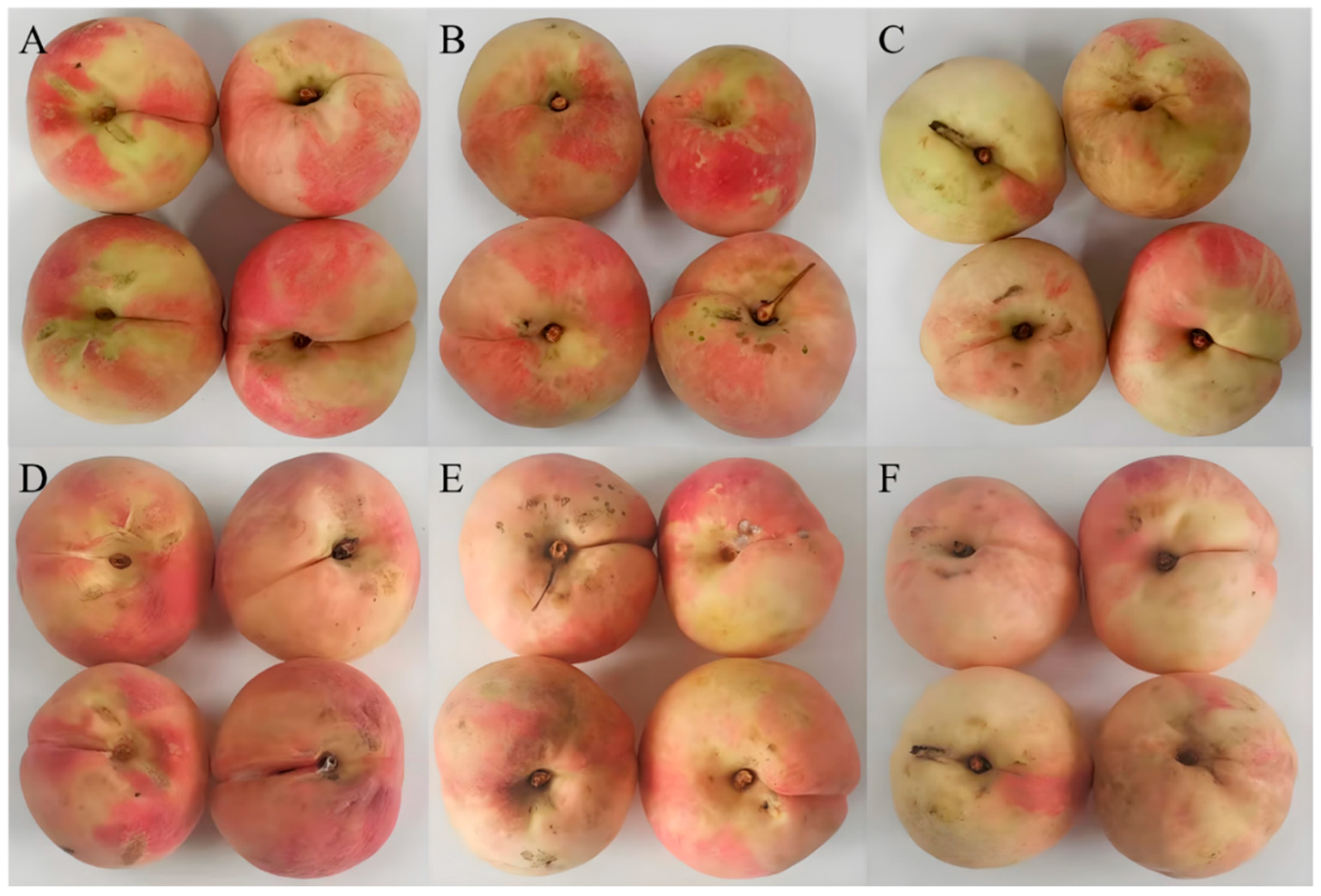
At the start of the storage period, the fruits were plump, with a red peel covering one third to one half of the surface, red tips, and some remaining green skin (Figure 1). The flesh was white, with a faint fruity aroma. After 35 days of storage at 5 ± 1 °C, the control group exhibited significant deterioration, with the red hue around the fruit stem fading and signs of dehydration, wrinkling, and rot. An unpleasant odor developed, marking a loss in commercial value.
Fruits stored in LMF packaging maintained a slightly better appearance than the control group, although rot and odor formation were still observed. In contrast, fruits treated with 1-MCP combined with LMF packaging retained a fuller appearance, with the peel turning uniformly red and minimal external changes. However, the aroma was noticeably reduced.
Based on assessments of color, aroma, and texture, the control group, LMF treatment group, and combined treatment group maintained acceptable storage quality for 14, 21, and 28 days, respectively, at 5 ± 1 °C.

3.2. Changes in Ultrastructure

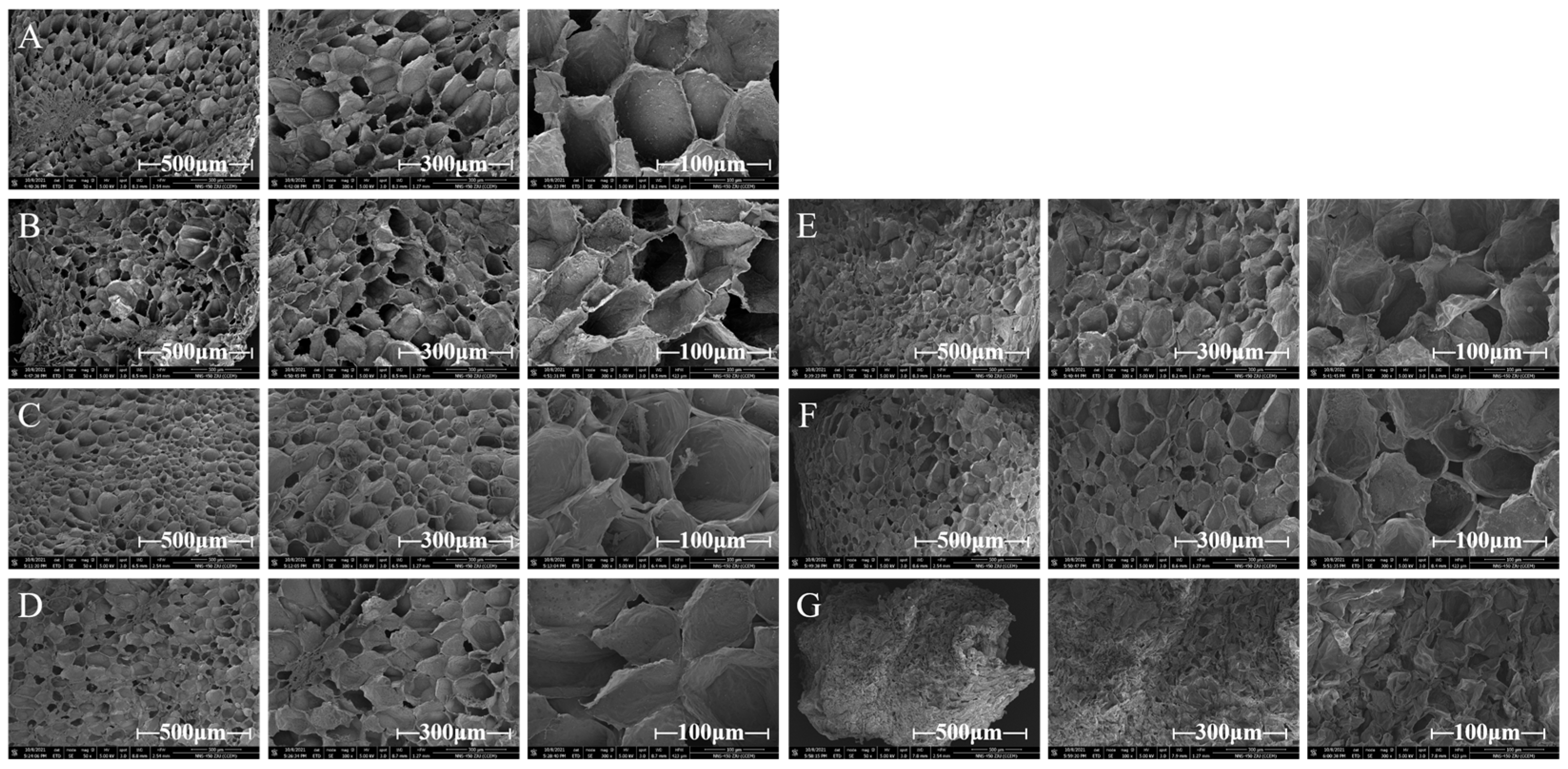
Scanning electron microscopy revealed that the cellular integrity of peach fruit’s flesh deteriorated during storage, but this was significantly mitigated by the treatments (Figure 2). After 14 days, the control fruit exhibited severe deformation and dissolution of the cell-wall honeycomb structure. The LMF-only group showed moderate damage, while the 1-MCP + LMF treatment effectively preserved the structural integrity, with a largely intact honeycomb network.
This protective effect of the combined treatment was still evident after 28 days of storage. Although some structural irregularities were present, the 1-MCP + LMF group maintained a noticeably more organized cellular framework compared to the extensive breakdown observed in the control and LMF-only groups. These visual findings are consistent with the measured retention of fruit hardness and cell-wall components, confirming that the 1-MCP + LMF combination best maintained tissue microstructure.

3.3. Changes in Rot Rate and Hardness

The fruit rot rate is a key indicator of freshness and commercial value. Due to their high moisture content, peaches are highly susceptible to microbial infection and rot during storage. Both treatments significantly reduced peach rot rates. After 35 days of storage, the rot rate in the control group reached 37.50%, rendering the fruit inedible (Table 1). The combined 1-MCP + LMF treatment was the most effective, resulting in a final rot rate (16.67%) that was significantly lower than both the control (37.50%) and the LMF-only (31.25%) groups (p < 0.05).
Hardness is another important indicator of fruit quality. The hardness of peach fruits decreased over time during storage (Table 1). Within the first 7 days after harvesting, hardness remained relatively stable but declined rapidly between days 7 and 14. After 14 days of storage, hardness decreased by 47.35% in controls, 28.46% in LMF fruits, and 20.71% in 1-MCP + LMF fruits. After 35 days, 1-MCP + LMF peaches had an average value of 4.98 kg cm−2, significantly higher than that of the controls at 2.85 kg cm−2; that of LMF fruits was intermediate between the other two groups.

3.4. Changes in pH and TA, and RS Contents

The pH values of peach fruits gradually increased during storage, showing an opposite trend to TA content (Table 1). The pH of the 1-MCP + LMF group remained between 4.89 and 5.36 throughout storage.
TA content declined over time in all groups, but peaches treated with 1-MCP + LMF consistently retained higher TA levels compared to the other two groups (Table 1). After 14 days of storage, TA decreased by 28.45% in controls, 25.86% in LMF fruits, and 24.14% in 1-MCP + LMF fruits, with the rate of decline slowing in the later stages of storage. These results indicate that 1-MCP treatment combined with LMF packaging effectively preserved TA levels and helped to stabilize fruit flavor during storage.
RS is a key component influencing fruit flavor and nutrition. RS levels increased over time in all groups; however, after 35 days, those of the 1-MCP + LMF fruits were significantly lower than those of the other groups (Table 1), implying that this treatment effectively maintained RS levels in peach fruits, preserving their overall quality.

3.5. Changes in Pectin, Soluble Pectin, Cellulose, and Hemicellulose Levels

Pectin plays a crucial role in the intermolecular interactions of cell-wall molecules and is found in the intercellular layer of plant cells. As fruits ripen and soften, original pectin undergoes hydrolysis, converting into soluble pectin and contributing to softening.
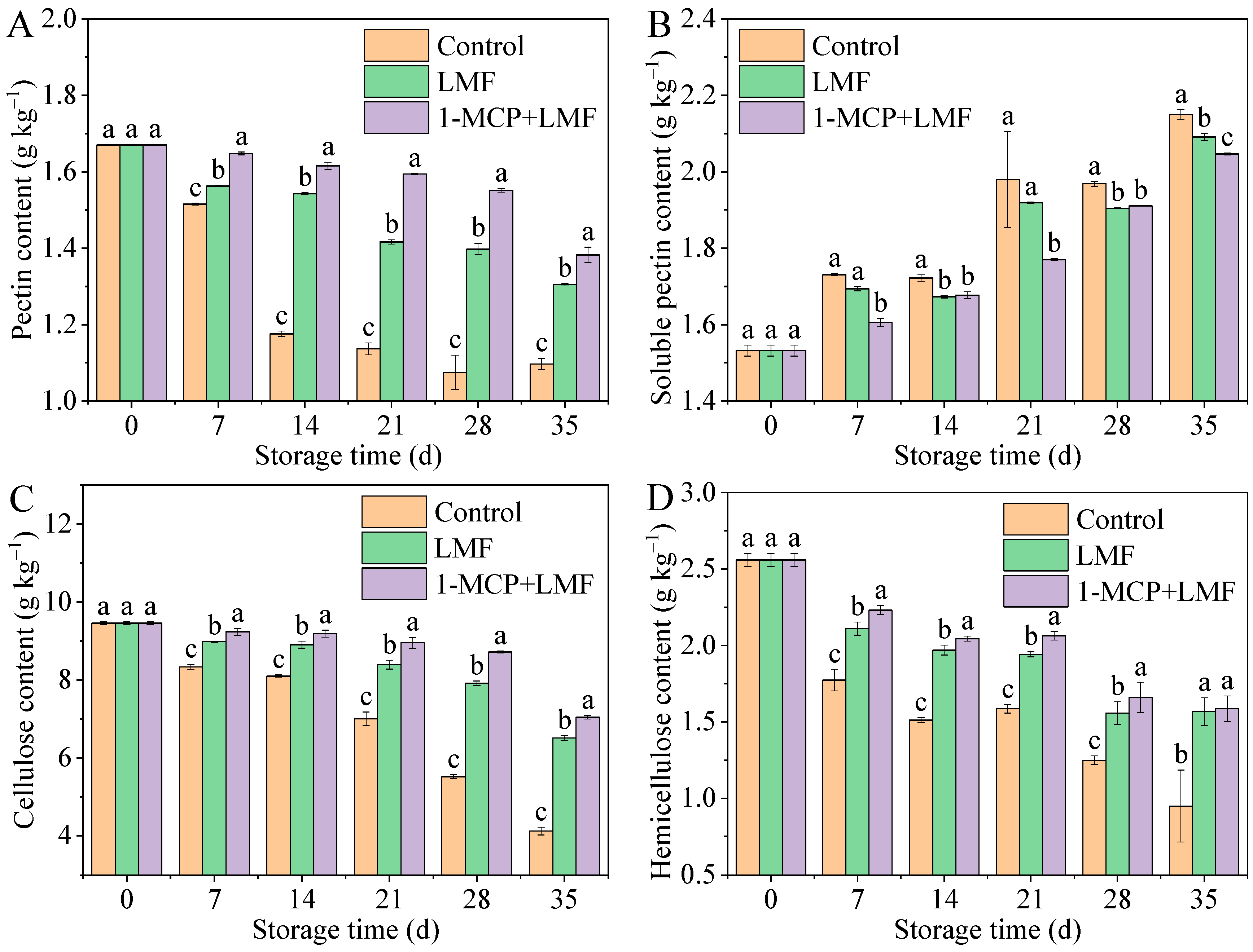
Pectin levels decreased over time during storage. Between days 7 and 14, pectin levels rapidly declined from 1.52% to 1.18% in controls, whereas the other groups exhibited a more gradual downward trend (Figure 3A). After 35 days, pectin levels had decreased by 34.32%, 21.91%, and 17.24% in controls, LMF fruits, and 1-MCP + LMF fruits, respectively. The latter group consistently maintained significantly higher levels than the other two groups.
Soluble pectin levels followed an overall upward trend during storage (Figure 3B). The 1-MCP + LMF treatment group exhibited a slower increase compared to the other groups, with controls displaying the highest levels. There were no significant differences between the 1-MCP + LMF and LMF treatment groups except on day 21 of the storage period.
These results imply that LMF packaging can inhibit the degradation of original pectin into soluble pectin, and when combined with 1-MCP treatment, it effectively preserves the initial pectin levels. However, its effect on preventing the increase in soluble pectin levels is relatively limited.
The cellulose content of the peach fruit generally showed a downward trend during storage across all treatment groups (Figure 3C). In controls, it steadily decreased; in LMF fruits, it also showed a decrease but appeared to remain slightly higher than in controls at later storage times. The 1-MCP + LMF treatment group maintained higher cellulose content compared to the other groups throughout most of the storage period. Significant differences were observed between the treatment groups at various time points, with the 1-MCP + LMF group often showing significantly higher levels than controls, particularly after 7 days of storage. This finding implies that both LMF and the combined treatment help to mitigate cellulose loss during storage, with the combined treatment having the greatest effect.
Hemicellulose levels also decreased over the storage duration for all treatment groups; however, levels were lowest in the controls, followed by LMF fruits and the combined treatment group (Figure 3D). These results indicate that both LMF and the combined 1-MCP + LMF treatment effectively slowed the decrease in hemicellulose content, with the combined treatment being the most effective.

3.6. Changes in Respiration Rate, O2·− Production Rate, and MDA Content

The overall respiration rates of fruits increased during storage (Table 2). For the first 14 days after harvest, respiration rates remained relatively stable but increased sharply between days 14 and 21. The first respiratory peak occurred at day 21, with respiratory rates of 80.21, 72.35, and 64.47 mg CO2 kg−1 h−1 in the control, LMF treatment, and 1-MCP + LMF treatment groups, respectively. The second peak appeared at day 35, with the 1-MCP + LMF treatment group exhibiting the lowest rate at 60.00 mg CO2 kg−1 h−1, significantly lower than in the other groups. In the later stages of storage, respiration rates remained lower in both treatment groups compared with controls, indicating that LMF packaging effectively inhibited respiration and worked synergistically with 1-MCP to reduce metabolic activity.
Superoxide anions (O2·−) are a key reactive oxygen species (ROS) associated with fruit and vegetable aging. As shown in Table 2, peach fruits exhibited O2·− production peaks on days 7 and 21. However, the 1-MCP + LMF treatment group consistently maintained lower levels, indicating that LMF packaging significantly inhibited the rapid accumulation of oxidative stress, with the combined treatment having the strongest effect.
MDA is the main product of cell membrane lipid peroxidation. Its levels in controls increased and then decreased in the early stages of storage, increased and then decreased again after 21 days, and peaked at 14 and 28 days. These peaks imply intensified membrane lipid oxidation damage during both the early and late storage periods. Compared to controls, both treatments significantly inhibited MDA production. In the early stages of storage, MDA levels gradually declined, with no significant differences among treatment groups, followed by a slow increase after 28 days. By day 35, MDA levels had increased by 20% and 43% in the LMF and control groups, respectively, both being significantly higher than those of the 1-MCP + LMF group. These results indicate that combining 1-MCP treatment with LMF packaging effectively slowed lipid peroxidation in peach fruit, contributing to better preservation.

3.7. Changes in PPO and POD Activity

PPO is a plastid enzyme that is closely associated with enzymatic browning in fruits and vegetables. PPO activity initially increased during storage and later declined (Table 3). Between days 0 and 21, it remained significantly lower in the combined treatment group than in the other groups. In the later stages of storage, differences among groups became minimal. These results imply that LMF treatment effectively inhibited increases in PPO activity, delaying fruit browning.
POD is a key enzyme linked to plant senescence, promoting lignin formation and accelerating tissue aging. In the presence of hydrogen peroxide, POD also catalyzes phenols, contributing to browning. Throughout storage, POD enzyme activity exhibited a continuous upward trend. Between days 14 and 35, 1-MCP combined with LMF packaging significantly inhibited the rate of POD activity increase.

3.8. Changes in PG, β-Glu, and Cx Activity

Polygalacturonase is a key cell-wall-degrading enzyme that hydrolyzes the α-1,4-galactoside bond in galacturonic acid, leading to fruit softening. As shown in Table 3, PG activity increased throughout storage. For the first 14 days, it gradually increased in all groups. Between days 14 and 21, it surged in controls, but in the treatment groups, this increase was delayed until after day 21. By days 28–35, PG levels stabilized, peaking on day 35, at which point they had increased 4.49-, 2.29-, and 2.22-fold in the control, LMF, and 1-MCP + LMF groups, respectively.
β-Glucosidase plays a role in cell-wall degradation by breaking down galactose residues in pectin polyuronic acid. Its activity also increased during storage. The control group exhibited a consistent increase in β-Glu activity, whereas in the treatment groups, significant increases occurred only between days 7 and 14. By day 28, β-Glu activity peaked, with 1.54-, 0.74-, and 0.71-fold increases in the control, LMF, and 1-MCP + LMF groups, respectively. Throughout storage, β-Glu activity remained lower in the treatment groups than in the control. However, differences between the two treatment groups diminished in the later stages, mirroring the trends observed for PG activity. These results imply that the combined treatment effectively limited the activity of PG and β-Glu, reducing cell-wall degradation and delaying fruit softening.
Cellulose forms the structural framework of the cell wall, and Cx is a key enzyme responsible for its degradation. Cx activity increased throughout storage, following a pattern similar to that of β-Glu activity. Between days 14 and 35, Cx activity remained lower in the treatment groups than in the controls. These results indicate that LMF treatment effectively suppressed the increase in Cx enzyme activity, slowing cellulose degradation, with the combined treatment yielding the strongest effect.

3.9. Correlation Analyses

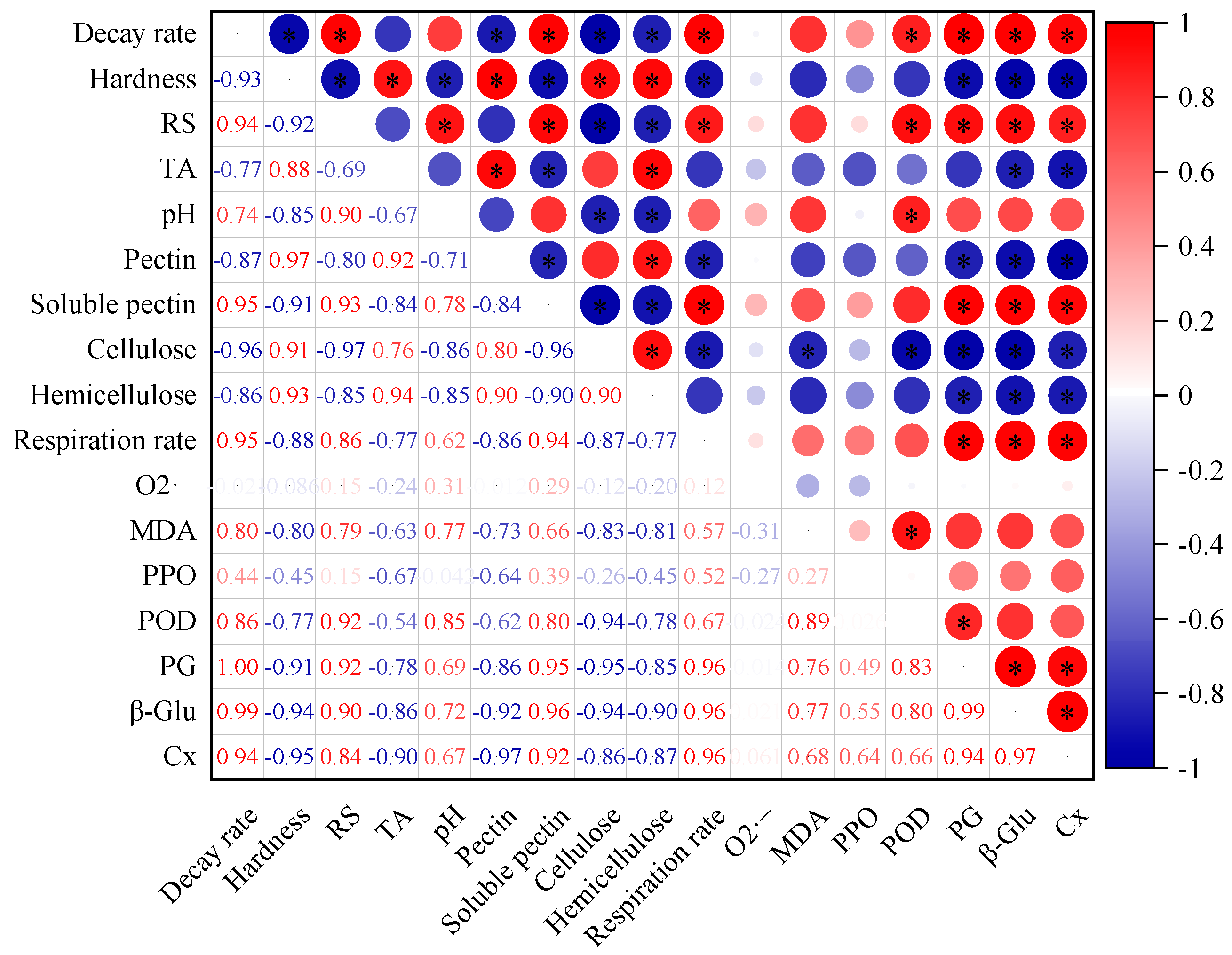
Rot rate was strongly negatively correlated with hardness and pectin, cellulose, and hemicellulose content. Fruit hardness was positively correlated with pectin, cellulose, and hemicellulose content, but negatively correlated with soluble pectin content and PG, β-Glu, and Cx activity (Figure 4), indicating that hardness is closely linked to cell-wall degradation. Hardness also showed strong positive and negative correlations with TA and RS contents, respectively.
RS was negatively correlated with TA, pectin, cellulose, and hemicellulose content but positively correlated with soluble pectin content, respiration rates, MDA content and PPO, POD, PG, β-Glu, and Cx activity, with varying degrees of correlation strength.
Strong positive correlations were observed among PG, β-Glu, and Cx activity levels, which were also strongly negatively correlated with hardness and pectin, cellulose, and hemicellulose content; they were positively correlated with rot and respiration rates, and soluble pectin, and MDA content.
Respiration rates were positively correlated with rot rate, soluble pectin, and MDA content, and negatively correlated with hardness and pectin, cellulose, and hemicellulose content. MDA levels, which are indicators of oxidative stress, were strongly positively correlated with rot and respiration rates, RS and soluble pectin contents, and the activity of cell-wall-degrading enzymes; they were negatively correlated with hardness and pectin, cellulose, hemicellulose, and TA contents.

4. Discussion

The gas composition of the storage environment plays a crucial role in the preservation of peaches [1]. Respiratory climacteric fruits such as peaches experience a sharp increase in their respiration rate at physiological maturity, triggering metabolic changes that lead to rapid quality loss [28]. Controlling the respiration rate is essential to prolong shelf life. The ethylene inhibitor 1-MCP effectively suppresses respiration by binding irreversibly to ethylene receptors, while microporous packaging such as LMF can regulate the internal atmosphere, slowing post-harvest physiological processes and reducing water loss [16,29]. The interplay between respiration and oxidative stress is a cornerstone of postharvest senescence. Our results demonstrate that the 1-MCP + LMF treatment created a dual barrier against this deterioration. First, by significantly suppressing the respiration rate (Table 2), the treatment reduced the primary metabolic driver of ROS generation. This is directly confirmed by the consistently lower production of the superoxide anion (O2·−) in the treated fruit.
Our findings align with and extend the principles observed in other fruits. For instance, modified-atmosphere packaging has been shown to maintain the quality of table grapes [12] and persimmons [14] by balancing O2 and CO2 levels. Similarly, Cliff et al. (2010) reported that fresh-cut apples stored with microporous membranes retained better hardness [30]. However, the response to such treatments is highly species-specific. Firm-fleshed honey peaches, such as Xiahui No. 8, represent a distinct challenge due to their specific texture and susceptibility to internal browning from ethylene inhibition if not carefully managed [19]. The present study demonstrates that the synergistic application of 1-MCP and LMF is not only effective but also particularly suitable for this valuable peach type. Our results demonstrate that this combined approach successfully decelerated the metabolic processes driving ripening. The observed changes in reducing sugars (RSs) and titratable acidity (TA) are key indicators of this effect. In climacteric fruit, the increase in RSs is typically driven by accelerated hydrolysis of starch and other carbohydrates to meet the high energy demands of ripening and respiration [1]. The significantly lower accumulation of RSs in the 1-MCP + LMF group (22.44 g kg−1 vs. 37.70 g kg−1 in the control at day 35) indicates substantial downregulation of this metabolic activity. Similarly, the decline in TA is a result of organic acids being used as substrates in respiration. The combined treatment’s ability to preserve TA content better implies a more conservative metabolic rate, whereby acids are consumed more slowly due to suppressed respiration.
Respiratory metabolism is the primary pathway for ROS production [16]. The suppressed respiration rate observed in the 1-MCP + LMF group (Table 2) consequently led to reduced generation of ROS, as evidenced by the significantly lower O2·− production rate in this treatment compared to the control throughout storage. After harvest, the ability of fruits to clear ROS declines, disrupting the balance between ROS generation and removal [24]. Our data on MDA, a key marker of oxidative damage to cell membranes, directly demonstrates the physiological consequence of this reduced oxidative stress. The 1-MCP + LMF treatment effectively limited the accumulation of MDA, maintaining levels at 1.80 mmol kg−1 on day 35, which was 36% lower than in the control (2.81 mmol kg−1). This indicates a significant mitigation of membrane lipid peroxidation. The increased activity of these enzymes helps fruits to maintain ROS homeostasis and reduce cell membrane damage [31]. Combining 1-MCP with LMF packaging inhibited declines in CAT and SOD activity in water bamboo shoots, extending their shelf life [32]. Similarly, the use of LMF coupled with 1-MCP treatment preserved high SOD, APX, and CAT activity levels in Shine Muscat grapes, limiting membrane lipid peroxidation and delaying ripening [16]. In our study of peach fruit, 1-MCP combined with LMF packaging suppressed respiration rates, and reduced O2·− production and MDA levels. These effects indicate that the combined treatment helped to regulate ROS metabolism in refrigerated peaches, likely due to the selective air and water permeability of LMF packaging. Therefore, the reduction in oxidative stress is a key mechanism through which the combined treatment preserved membrane integrity and delayed senescence in peach fruit.
ROS metabolism and water loss contribute to fruit softening, impacting post-harvest storage and shelf life by accelerating rot and deterioration. Cell-wall degradation is a key factor in this process, with protopectin, a structural pectin component, gradually breaking down into soluble pectin during storage [33]. Polygalacturonase (PG), β-glucosidase (β-Glu), and cellulase (Cx) are critical enzymes that degrade pectin and cellulose, destabilizing cell wall integrity and leading to softening and rotting [16]. 1-MCP treatment can effectively slow enzymatic degradation. Qian et al. (2021) showed that the use of 1.2 μL L−1 1-MCP on ‘Yuhualu’ peaches inhibited PG, β-Glu, Cx, and β-galactosidase activity, slowing the decline in covalently bound pectin, ion-bound pectin, cellulose, and hemicellulose contents [34]. This effect contributed to maintaining fruit hardness and delayed post-ripening softening. In our study, 1-MCP + LMF packaging significantly suppressed PG, β-Glu, and Cx activity, preserving a higher proportion of original pectin while limiting the formation of soluble pectin. This effect resulted in greater fruit hardness, aligning with previous sensory evaluation findings [35,36].
Additionally, ROS metabolism plays a significant role in the browning of fruits and vegetables after harvest [37]. In the presence of hydrogen peroxide, POD catalyzes the formation of quinone compounds from phenols and flavonoids, contributing to browning. PPO further oxidizes phenolic substances into hydroxyquinones, which generate melanin compounds and darken fruit [38]. In our study, 1-MCP combined with LMF packaging inhibited the increase in PPO and POD activity in peach fruit, effectively delaying browning.
While this study demonstrated the strong efficacy of combining 1-MCP with LMF packaging, its limitations should be considered. First, the findings are based on a single cultivar, and the firm-fleshed Xiahui No. 8. Peach varieties significantly differ in their ripening physiology and cell-wall structure; thus, the response to this combined treatment may vary in other cultivars, especially those with melting flesh or different genetic backgrounds. Second, the experiments were performed under stable, controlled laboratory conditions (5 ± 1 °C). Furthermore, the simulated storage conditions, while reflective of commercial cold storage, did not fully capture the dynamic temperature fluctuations and physical stresses encountered during actual transport and logistics. Future research should validate these findings in pilot-scale trials that mimic real-world supply chain conditions. Additionally, investigating the molecular mechanisms behind the observed synergy, such as the expression patterns of key genes related to ethylene signaling and cell-wall degradation, would provide deeper insight into the mode of action.

5. Conclusions

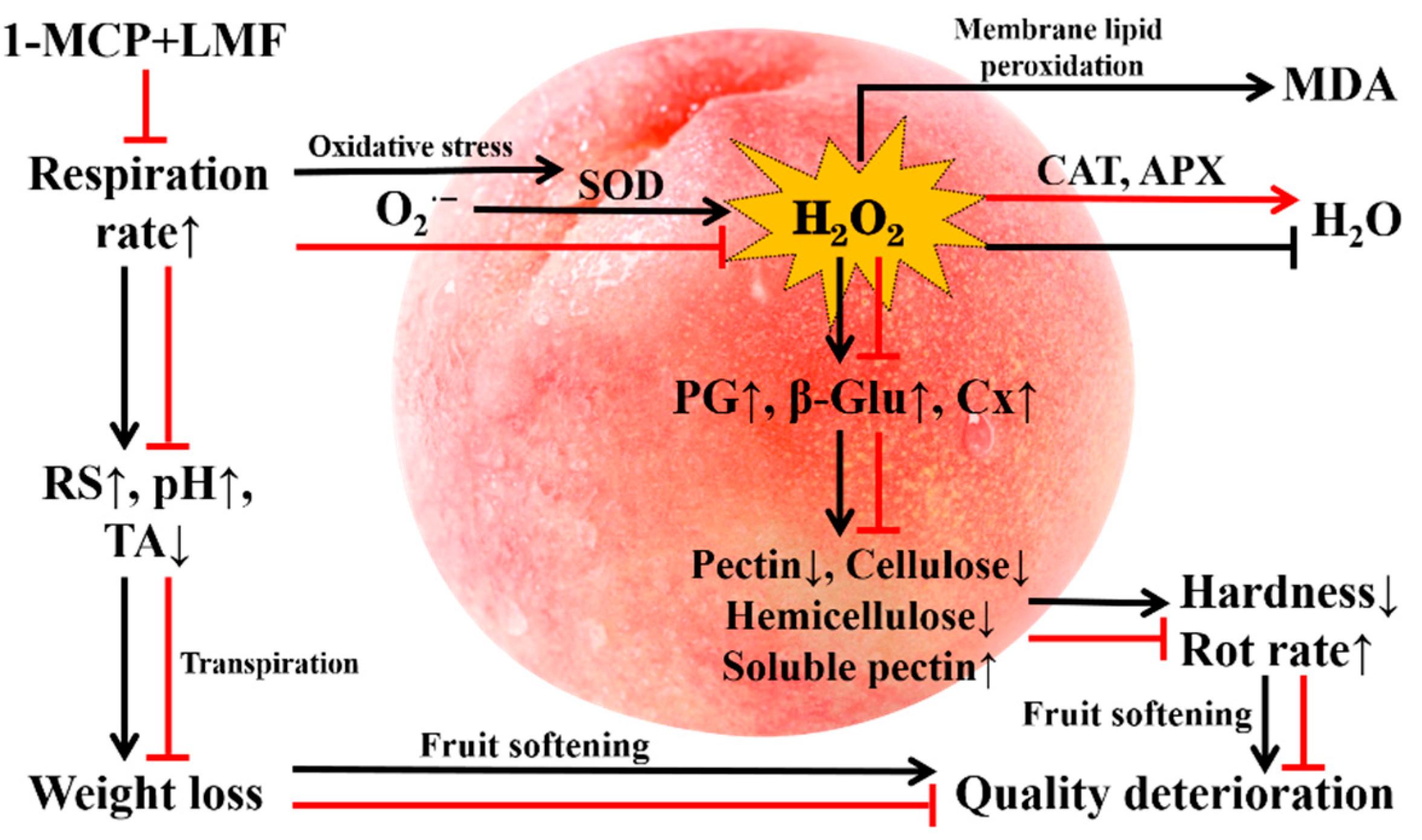
In summary, the combination of 1-MCP and LMF packaging significantly suppressed respiration and ethylene-mediated ripening processes of Xiahui No. 8 honey peaches during refrigerated storage. This led to a notable reduction in oxidative stress and a marked inhibition of cell-wall-degrading enzymes, which effectively delayed softening and structural breakdown. Consequently, the 1-MCP + LMF combination successfully maintained sensory and nutritional quality, reducing rot incidence and extending the shelf life of the peaches to 28 days, while the control fruit deteriorated after 14 days (Figure 5). This approach demonstrates significant potential for commercial application in extending the marketability of firm-fleshed peach varieties.

Supplementary Materials

The following supporting information can be downloaded at https://www.mdpi.com/article/10.3390/horticulturae11111296/s1, Figure S1: The effects of 1-methylcyclopropene treatment on sensory score of peach fruits during storage at ambient temperature for 6 d.

Author Contributions

Conceptualization, H.L. and H.S.; data curation, H.L. and A.M.; formal analysis, A.M.; funding acquisition, H.S.; investigation and methodology, N.A., M.F. and S.P.; methodology, N.A. and L.Y.; project administration, H.L.; resources, L.Y.; supervision, H.L.; writing—original draft, N.A.; writing—review & editing, H.L. and H.S. All authors have read and agreed to the published version of the manuscript.

Funding

This work was supported by the Special Science and Technology Foundation for Supporting Modern Agricultural Products Processing (Yunnan Province), and the Academician Expert Workstation in Yunnan Province (202405AF140080).

Data Availability Statement

The original contributions presented in this study are included in the article and Supplementary Material. Further inquiries can be directed to the corresponding authors.

Conflicts of Interest

The authors declare no conflicts of interest.

References

  1. Li, X.; Peng, S.; Yu, R.; Li, P.; Zhou, C.; Qu, Y.; Li, H.; Luo, H.; Yu, L. Co-application of 1-MCP and laser microporous plastic bag packaging maintains postharvest quality and extends the shelf-life of honey peach fruit. Foods 2022, 11, 1733. [Google Scholar] [CrossRef]
  2. Su, Z.; Yan, J.; Zhang, B.; Sun, M.; Cai, Z.; Shen, Z.; Ma, R.; Yu, M. Effects of paper pouches of different light transmittance on the phenolic synthesis and related gene expression in peach fruit. Sci. Hortic. 2024, 326, 112698. [Google Scholar] [CrossRef]
  3. Cheng, C.; Liang, X.; Wei, W.; Zhang, N.; Yao, G.; Yan, R. Enhanced shelf life quality of peaches (Prunus persica L.) using ethylene manipulating active packaging in e-commerce logistics. Sci. Hortic. 2024, 326, 112701. [Google Scholar] [CrossRef]
  4. Zhang, G.; Zhang, Y.; Yang, T.; Luo, D.; Zhao, Z.; Ba, L.; Xu, S.; Li, J.; Cao, S. Physiological and transcriptomic analysis of salicylic acid on membrane lipid metabolism and cell wall metabolism in postharvest peach fruit. Postharvest Biol. Technol. 2025, 229, 113683. [Google Scholar] [CrossRef]
  5. Li, Q.; Wei, Y.; Jiang, S.; Ye, J.; Chen, Y.; Xu, F.; Lou, Y.; Ding, P.; Shao, X. Jasmonic acid signaling pathway is involved in agaro-oligosaccharides-induced disease resistance of peach fruit through PpMYC2-activated transcription of PpPGIP1. Postharvest Biol. Technol. 2025, 224, 113477. [Google Scholar] [CrossRef]
  6. Dai, J.; Xu, Z.; Zhang, X.; Fang, Z.; Zhu, J.; Kang, T.; Xu, Y.; Hu, L.; Cao, L.; Zhao, C. PpNAP4 and ethylene act in a regulatory loop to modulate peach fruit ripening and softening. Int. J. Biol. Macromol. 2025, 291, 138791. [Google Scholar] [CrossRef] [PubMed]
  7. Xu, Z.; Dai, J.; Liang, L.; Shi, P.; Shah, K.; Liu, H.; Ma, J.; Xing, L.; Hu, Y.; Zhang, D.; et al. A peach ethylene response factor PpERF61 is involved in fruit ripening by modulating ripening-related genes and PpSEP1. Postharvest Biol. Technol. 2023, 206, 112584. [Google Scholar] [CrossRef]
  8. Li, J.; Guo, T.; Guo, M.; Dai, X.; Xu, X.; Li, Y.; Song, Z.; Liang, M. Exogenous BR delayed peach fruit softening by inhibiting pectin degradation enzyme genes. Front. Plant Sci. 2023, 14, 1226921. [Google Scholar] [CrossRef]
  9. Wu, X.; Shan, Z.; Wang, L.; Shi, W.; Li, Y.; Cai, H.; Zhou, L.; Huan, C. Transcriptional analysis reveals that 1-methylcyclopropene treatment promotes anthocyanin synthesis in peach fruit. LWT-Food Sci. Technol. 2025, 223, 117773. [Google Scholar] [CrossRef]
  10. Zhao, Y.; Zhu, D.; Zhao, L.; Luo, Y.; Li, J.; Xie, B.; Liu, Y.; Bao, Y.; Wu, Z.; Zheng, Y.; et al. Hydrogen sulfide retards fruit softening and prevents flesh browning in cold-stored peaches by regulating cell wall-modifying enzymes, phenolic, and proline metabolism. Postharvest Biol. Technol. 2024, 207, 112620. [Google Scholar] [CrossRef]
  11. Sun, Z.; Xie, X.; Wu, B.; Jia, W.; Song, F. Effect of low-temperature conditioning using 1-methylcyclopropene versus preservative paper treatment on the aroma volatiles derived from fatty acid metabolism in flat peaches. Food Chem. 2025, 474, 143219. [Google Scholar] [CrossRef]
  12. Sun, T.; Yi, W.; Wang, Y.; Cheng, P.; Dong, T.; Yun, X. Application of poly (L-lactic acid)-based films for equilibrium modified atmosphere packaging of “Kyoho” grapes and its favorable protection for anthocyanins. Food Chem. 2024, 452, 139573. [Google Scholar] [CrossRef]
  13. Faisal, S.; Moshe, D.; Steven, A.S.; Jeffrey, K.B. Development and feasibility of an approach utilizing modified atmosphere packaging (MAP) and ethylene scrubbing to allow extended international transport and marketing of tree-ripe mangos. Postharvest Biol. Technol. 2025, 225, 113488. [Google Scholar] [CrossRef]
  14. Mahmood, U.H.; Zora, S.; Hafiz, M.S.S.; Andrew, W.; Eben, A.Y. Modified atmosphere packaging and melatonin application alleviates chilling injury in ‘Fuyu’ persimmon fruit by reducing ethylene production, mitigating ROS accumulation, and maintaining antioxidant system. Food Packag. Shelf. 2025, 48, 101458. [Google Scholar] [CrossRef]
  15. Qu, P.; Zhang, M.; Fan, K.; Guo, Z. Microporous modified atmosphere packaging to extend shelf life of fresh foods: A review. Crit. Rev. Food Sci. 2022, 62, 1811635. [Google Scholar] [CrossRef] [PubMed]
  16. Kong, X.; Su, H.; Shen, H.; Chen, Y.; Yang, F.; Zhang, J.; Tong, X.; Guo, Y.; Luo, H.; Yu, L. The combined use of 1-MCP and laser microporous film packaging maintains the quality of Shine Muscat grapes by inhibiting oxidative stress and cell wall catabolism. LWT-Food Sci. Technol. 2025, 225, 117958. [Google Scholar] [CrossRef]
  17. Jia, X.; Li, J.; Du, M.; Zhao, Z.; Song, J.; Yang, W.; Zheng, Y.; Chen, L.; Li, X. Combination of low fluctuation of temperature with TiO2 photocatalytic/ozone for the quality maintenance of postharvest peach. Foods 2020, 9, 234. [Google Scholar] [CrossRef] [PubMed]
  18. Li, X.; Rahman, F.U.; Zhao, Y.; Lei, Q.; Chen, W.; Li, X.; Hu, H.; Zhu, X. 1-MCP and MAP treatments reduce the finger drop of banana during the shelf-life after high temperatures storage by regulating cell-wall metabolism. Postharvest Biol. Technol. 2025, 229, 113692. [Google Scholar] [CrossRef]
  19. Zhu, X.; Ye, L.; Ding, X.; Gao, Q.; Xiao, S.; Tan, Q.; Huang, J.; Chen, W.; Li, X. Transcriptomic analysis reveals key factors in fruit ripening and rubbery texture caused by 1-MCP in papaya. BMC Plant Biol. 2019, 19, 309. [Google Scholar] [CrossRef]
  20. Wang, J.; Xu, M.; Zhao, Y.; Lv, H.; Xin, Y.; Li, Y. 2,4-Epibrassinolide enhances disease defense by suppressing the disassembly of cell wall polysaccharides in peach fruit. Food Biosci. 2025, 64, 105906. [Google Scholar] [CrossRef]
  21. Zheng, Y.; Jia, X.; Duan, L.; Li, X.; Zhao, Z. Synergistic effects of 1-MCP fumigation and ε-poly-l-lysine treatments on delaying softening and enhancing disease resistance of flat peach fruit. Foods 2023, 12, 3683. [Google Scholar] [CrossRef]
  22. Hong, S.J.; Khan, A.; Riahi, Z.; Shin, G.H.; Kim, J.T. A versatile smart packaging film functionalized with zinc/curcumin-based metal-organic frameworks for maintaining and monitoring peach (Prunus persica) freshness. Food Packag. Shelf. 2024, 46, 101408. [Google Scholar] [CrossRef]
  23. Yu, R.; Song, H.; Chen, Y.; Shi, N.; Shen, H.; Shi, P.; Shu, H.; Kong, X.; Yu, L.; Luo, H. Incorporation of ascorbic acid and L-cysteine in sodium carboxymethyl cellulose coating delays color deterioration and extends the shelf-life of fresh-cut asparagus lettuce (Lactuca sativa var. angustata). Postharvest Biol. Technol. 2023, 204, 112419. [Google Scholar] [CrossRef]
  24. Gouda, M.H.B.; Zhang, C.; Peng, S.; Kong, X.; Chen, Y.; Li, H.; Li, X.; Luo, H.; Yu, L. Combination of sodium alginate-based coating with L-cysteine and citric acid extends the shelf-life of fresh-cut lotus root slices by inhibiting browning and microbial growth. Postharvest Biol. Technol. 2021, 175, 111502. [Google Scholar] [CrossRef]
  25. He, J.; Liu, J.; Su, Y.; Yin, C.; Ren, Y.; Liu, K.; Yang, X.; Xiong, B.; Liao, L.; Zhang, M.; et al. Transcriptomic and physiological analysis reveals the effect of exogenous sucrose on fruit quality of ‘Fengtang’ plum (Prunus salicina Lindl.) during postharvest. LWT-Food Sci. Technol. 2025, 215, 117167. [Google Scholar] [CrossRef]
  26. Cai, S.; Zhang, Z.; Wang, J.; Fu, Y.; Zhang, Z.; Mohammad, R.K.; Cong, X. Effect of exogenous melatonin on postharvest storage quality of passion fruit through antioxidant metabolism. LWT-Food Sci. Technol. 2024, 194, 115835. [Google Scholar] [CrossRef]
  27. Tang, Q.; Li, C.; Ge, Y.; Li, X.; Cheng, Y.; Hou, J.; Li, J. Exogenous application of melatonin maintains storage quality of jujubes by enhancing anti-oxidative ability and suppressing the activity of cell wall-degrading enzymes. LWT-Food Sci. Technol. 2020, 127, 109431. [Google Scholar] [CrossRef]
  28. Li, Y.; Li, L.; Zhang, X.; Mu, Q.; Tian, J.; Yan, J.; Guo, L.; Wang, Y.; Song, L.; Yu, X. Differences in total phenolics, antioxidant activity and metabolic characteristics in peach fruits at different stages of ripening. LWT-Food Sci. Technol. 2023, 178, 114586. [Google Scholar] [CrossRef]
  29. Chiara, M.L.V.D.; Castagnini, J.M.; Capozzi, V. Cutting-edge physical techniques in postharvest for fruits and vegetables: Unveiling their power, inclusion in ‘hurdle’ approach, and latest applications. Trends Food Sci. Technol. 2024, 151, 104619. [Google Scholar] [CrossRef]
  30. Cliff, M.A.; Toivonen, P.M.A.; Forney, C.F.; Liu, P.; Lu, C. Quality of fresh-cut apple slices stored in solid and micro-perforated film packages having contrasting O2 headspace atmospheres. Postharvest Biol. Technol. 2010, 58, 254–261. [Google Scholar] [CrossRef]
  31. Xin, Q.; Zhou, X.; Jiang, W.; Zhang, M.; Sun, J.; Cui, K.; Liu, Y.; Jiao, W.; Zhao, H.; Liu, B. Effects of reactive oxygen levels on chilling injury and storability in 21 apricot varieties from different production areas in China. Foods 2023, 12, 2378. [Google Scholar] [CrossRef] [PubMed]
  32. Yao, W.; Kong, X.; Yu, J.; Wang, H.; Zhang, S.; Guo, Y.; Luo, H.; Yu, L. Laser microporous film packaging combined with 1-methylcyclopropene treatment delays lignification in water bamboo shoots during storage by regulating calcium and reactive oxygen species signaling. LWT-Food Sci. Technol. 2025, 225, 118422. [Google Scholar] [CrossRef]
  33. Chen, X.; Ma, C.; He, H.; Tu, K.; Lan, W.; Pan, L. Effects of Changes in pectin constitution on optical properties and firmness of peach flesh during storage. Foods 2024, 13, 3042. [Google Scholar] [CrossRef]
  34. Qian, C.; Ji, Z.; Zhu, Q.; Qi, X.; Li, Q.; Yin, J.; Liu, J.; Kan, J.; Zhang, M.; Jin, C.; et al. Effects of 1-MCP on proline, polyamine, and nitric oxide metabolism in postharvest peach fruit under chilling stress. Hortic. Plant J. 2021, 7, 188–196. [Google Scholar] [CrossRef]
  35. Qin, K.; Ge, S.; Xiao, G.; Chen, F.; Ding, S.; Wang, R. 1-MCP treatment improves the postharvest quality of Jinxiu yellow peach by regulating cuticular wax composition and gene expression during cold storage. J. Food Sci. 2024, 89, 2787–2802. [Google Scholar] [CrossRef]
  36. Li, X.; Xiong, T.; Zhu, Q.; Zhou, Y.; Lei, Q.; Lu, H.; Chen, W.; Li, X.; Zhu, X. Combination of 1-MCP and modified atmosphere packaging (MAP) maintains banana fruit quality under high temperature storage by improving antioxidant system and cell wall structure. Postharvest Biol. Technol. 2023, 198, 112265. [Google Scholar] [CrossRef]
  37. Liu, X.; Xiao, K.; Zhang, A.; Zhu, W.; Zhang, H.; Tan, F.; Huang, Q.; Wu, X.; Zha, D. Metabolomic analysis, combined with enzymatic and transcriptome assays, to reveal the browning resistance mechanism of fresh-cut eggplant. Foods 2022, 11, 1174. [Google Scholar] [CrossRef]
  38. Zhang, F.; Jiang, S.; Jia, S.; Gui, B.; Wei, Y.; Chen, Y.; Ye, J.; Xu, F.; Ding, P.; Shao, X. Broccoli stem extract enhances browning inhibition in fresh-cut peach fruit by inhibiting polyphenol oxidase activity and improving antioxidant capacity. Postharvest Biol. Technol. 2025, 222, 113399. [Google Scholar] [CrossRef]
Figure 1. Visual appearance of peach fruits before and after storage for 28 d at 5 ± 1 °C. (A), Control 0 d; (B), LMF 0 d; (C), 1-MCP + LMF, 0 d; (D), Control 28 d; (E), LMF 28 d; (F), 1-MCP + LMF, 28 d. After 28 days, the control group exhibited severe dehydration, wrinkling, and rot, while the 1-MCP + LMF group maintained a visibly superior appearance with a uniform red peel and minimal deterioration.
Horticulturae 11 01296 g001
Figure 2. Changes in the cellular ultrastructure of peach fruit flesh during storage at 5 ± 1 °C. (A), Control 0 d; (B), Control 14 d; (C), LMF 14 d; (D), 1-MCP + LMF 14 d; (E), Control 28 d; (F), LMF 28 d; (G), 1-MCP + LMF 28 d. The control group showed severe deformation and dissolution of the cell-wall honey-comb structure over time. In contrast, the 1-MCP + LMF treatment effectively preserved cellular integrity, with minimal structural damage observed even after 28 days.
Horticulturae 11 01296 g002
Figure 3. Changes in original pectin (A), soluble pectin (B), cellulose (C), and hemicellulose (D) contents of peach fruits during storage at 5 ± 1 °C. Data are expressed as means ± SD (n = 3). Different lowercase letters at the same storage time indicate significant differences (p < 0.05). The combined 1-MCP + LMF treatment most effectively slowed the degradation of original pectin, cellulose, and hemicellulose, and limited the increase in soluble pectin.
Horticulturae 11 01296 g003
Figure 4. Correlation analysis of quality and physiological-biochemical parameters. The heatmap displays Pearson correlation coefficients between measured indices during storage. Red indicates a positive correlation, blue a negative correlation. Asterisks (*) denote a significant correlation (p < 0.05).
Horticulturae 11 01296 g004
Figure 5. Proposed mechanism for the synergistic effect of 1-MCP and LMF packaging in preserving peach quality. The model illustrates how 1-MCP (by blocking ethylene receptors) and LMF (by creating a modified atmosphere) work together to suppress respiration and oxidative stress, leading to the inhibition of cell-wall-degrading enzymes (PG, β-Glu, Cx) and browning enzymes (PPO, POD). This synergy ultimately delays softening, rotting, and browning, thereby extending the shelf life of peach fruit.
Horticulturae 11 01296 g005
Table 1. Changes in quality indexes of peach fruits during storage at 5 ± 1 °C.
IndicesTreatmentStorage Time (Days)
0714212835
Rot rate (%)Control0.00 ± 0.00 Fa4.17 ± 0.21 Ea10.42 ± 0.52 Da25.00 ± 1.25 Ca35.42 ± 1.77 Ba37.50 ± 1.88 Aa
LMF0.00 ± 0.00 Ea0.00 ± 0.00 Eb2.08 ± 0.10 Db8.33 ± 0.42 Cb20.83 ± 1.04 Bb31.25 ± 1.56 Ab
1-MCP + LMF0.00 ± 0.00 Ea0.00 ± 0.00 Eb2.06 ± 0.10 Db6.25 ± 0.31 Cc10.42 ± 0.52 Bc16.67 ± 0.83 Ac
Hardness (kg cm−1)Control11.60 ± 0.35 Aa10.16 ± 0.36 Bc6.11 ± 0.48 Cc5.60 ± 0.43 Dc4.42 ± 0.20 Ec2.85 ± 0.17 Fc
LMF11.60 ± 0.35 Aa10.58 ± 0.35 Bb8.30 ± 0.51 Cb7.93 ± 0.71 Cb7.28 ± 0.53 Db3.36 ± 0.20 Eb
1-MCP + LMF11.60 ± 0.35 Aa11.35 ± 0.34 Aa9.20 ± 0.25 Ba9.08 ± 0.35 Ba8.47 ± 0.38 Ca4.98 ± 0.34 Da
Reducing sugar content (g kg−1)Control13.55 ± 0.09 Ea13.49 ± 0.16 Ea19.19 ± 0.61 Db23.71 ± 0.54 Cc27.94 ± 0.73 Ba37.70 ± 0.13 Aa
LMF13.55 ± 0.09 Da12.34 ± 0.95 Db20.86 ± 0.51 Ca28.69 ± 0.99 Aa24.14 ± 0.91 Bb27.39 ± 0.53 Ab
1-MCP + LMF13.55 ± 0.09 Ca9.37 ± 0.49 Dc19.97 ± 1.37 Bab24.89 ± 0.28 Ab25.20 ± 0.88 Ab22.44 ± 0.92 Bc
Titratable acid content (g kg−1)Control1.30 ± 0.04 Aa1.02 ± 0.02 Bb0.93 ± 0.05 Ca0.89 ± 0.02 Db0.89 ± 0.04 CDa0.87 ± 0.01 Da
LMF1.30 ± 0.04 Aa1.07 ± 0.03 Bb0.96 ± 0.02 Ca0.91 ± 0.03 Db0.90 ± 0.03 Da0.88 ± 0.05 Da
1-MCP + LMF1.30 ± 0.04 Aa1.17 ± 0.03 Ba0.98 ± 0.04 Ca0.97 ± 0.06 CDa0.94 ± 0.03 Da0.92 ± 0.02 Da
pHControl4.89 ± 0.02 Ea4.99 ± 0.02 Eb5.25 ± 0.04 Ba5.08 ± 0.01 Db5.19 ± 0.02 Cb5.66 ± 0.02 Aa
LMF4.89 ± 0.02 Fa5.20 ± 0.02 Da5.14 ± 0.01 Eb5.25 ± 0.02 Ca5.49 ± 0.02 Ba5.70 ± 0.01 Aa
1-MCP + LMF4.89 ± 0.02 Ea5.02 ± 0.01 Db5.05 ± 0.01 Cc5.06 ± 0.02 Cb5.21 ± 0.01 Bb5.36 ± 0.03 Ab
Note: Data are expressed as means of triplicate samples ± standard deviation. For each parameter, different lowercase letters within a column indicate significant differences between treatments at the same storage time (p < 0.05). Different uppercase letters within a row indicate significant differences across storage times for the same treatment (p < 0.05).
Table 2. Changes in physiological indexes of peach fruits during storage at 5 ± 1 °C.
IndicesTreatmentStorage Time (Days)
0714212835
Respiration rate (mg CO2 kg−1 h−1)Control20.52 ± 0.97 Da28.00 ± 1.19 Ca36.40 ± 5.13 Ca80.21 ± 6.00 Aa72.85 ± 5.51 Ba78.85 ± 3.91 Aa
LMF20.52 ± 0.97 Ea24.89 ± 1.58 Db26.97 ± 2.25 Cb72.35 ± 8.20 ABb65.63 ± 3.44 Bb73.17 ± 4.88 Ab
1-MCP + LMF20.52 ± 0.97 Ea23.50 ± 1.91 Dc26.32 ± 2.05 Cb64.47 ± 4.56 Ac58.61 ± 2.73 Bc60.00 ± 2.42 Ac
Superoxide anion production rate (μmol kg−1 min−1)Control1.48 ± 0.05 Da1.71 ± 0.03 Ba1.57 ± 0.08 Ca1.71 ± 0.03 Ba1.30 ± 0.03 Ea1.77 ± 0.03 Aa
LMF1.48 ± 0.05 Da1.68 ± 0.03 Ba1.53 ± 0.05 Ca1.68 ± 0.02 Ba1.32 ± 0.11 Ea1.86 ± 0.05 Aa
1-MCP + LMF1.48 ± 0.05 Ba1.66 ± 0.03 Aa1.32 ± 0.11 Cb1.68 ± 0.03 Aa1.14 ± 0.08 Db1.50 ± 0.08 Bb
Malondialdehyde content (mmol kg−1)Control1.97 ± 0.07 Da2.08 ± 0.01 Da2.44 ± 0.06 Ca2.05 ± 0.02 Da2.91 ± 0.02 Aa2.81 ± 0.01 Ba
LMF1.97 ± 0.07 Ba1.88 ± 0.06 Cb1.80 ± 0.01 CDb1.80 ± 0.04 Db1.74 ± 0.03 Eb2.36 ± 0.01 Ab
1-MCP + LMF1.97 ± 0.07 ABa1.97 ± 0.09 Aa1.85 ± 0.04 Bb1.55 ± 0.01 Ec1.72 ± 0.03 Db1.80 ± 0.03 Cc
Note: Data are expressed as means of triplicate samples ± standard deviation. For each parameter, different lowercase letters within a column indicate significant differences between treatments at the same storage time (p < 0.05). Different uppercase letters within a row indicate significant differences across storage times for the same treatment (p < 0.05).
Table 3. Changes in enzyme activity of peach fruits during storage at 5 ± 1 °C.
IndicesTreatmentStorage Time (Days)
0714212835
PPO activity (U kg−1)Control99.38 ± 2.39 Ca107.69 ± 0.68 Ba109.56 ± 1.47 Ba114.40 ± 0.93 Aa115.87 ± 1.70 Aa102.80 ± 0.23 Ca
LMF99.38 ± 2.39 Ca108.76 ± 3.33 Ba108.53 ± 3.59 Ba115.87 ± 2.53 Aa117.29 ± 0.34 Aa103.24 ± 0.91 Ba
1-MCP + LMF99.38 ± 2.39 Da99.78 ± 1.12 Db103.42 ± 2.02 Cb105.42 ± 1.60 Bb115.78 ± 2.00 Aa103.64 ± 2.28 Ca
POD activity (U kg−1)Control63.33 ± 1.33 Ea69.78 ± 3.42 CDb71.33 ± 4.81 Ca69.78 ± 4.44 Db122.00 ± 3.71 Bb147.56 ± 7.13 Aa
LMF63.33 ± 1.33 Da75.56 ± 3.67 Ca66.67 ± 2.91 Db95.33 ± 5.46 Ba137.11 ± 7.19 Aa141.56 ± 5.39 Ab
1-MCP + LMF63.33 ± 1.33 Ca67.11 ± 3.59 Cc47.11 ± 3.48 Dc51.78 ± 2.14 Dc103.56 ± 1.68 Bc125.11 ± 8.60 Ac
PG activity (mg kg−1 h−1)Control33.12 ± 1.04 Ea60.81 ± 1.81 Da71.04 ± 2.76 Ca143.28 ± 1.24 Ba181.80 ± 1.83 Aa181.80 ± 7.87 Aa
LMF33.12 ± 1.04 Ea47.57 ± 4.54 Db65.63 ± 2.09 Cb68.64 ± 0.96 Bb106.26 ± 0.52 Ab108.97 ± 2.76 Ab
1-MCP + LMF33.12 ± 1.04 Ea37.94 ± 2.09 Dc50.58 ± 4.53 Cc68.03 ± 1.81 Bb104.15 ± 3.61 Ab106.56 ± 1.02 Ab
β-Glu activity (mg kg−1 h−1)Control46.83 ± 0.97 Ea66.34 ± 2.21 Da76.93 ± 3.85 Ca103.68 ± 5.18 Ba118.73 ± 5.94 Aa118.73 ± 2.97 Aa
LMF46.83 ± 0.97 Ea48.50 ± 1.93 Eb78.04 ± 1.67 Ca70.80 ± 4.83 Db88.63 ± 0.99 Ab81.39 ± 1.66 Bb
1-MCP + LMF46.83 ± 0.97 Da45.72 ± 2.29 Dc74.70 ± 1.58 Bb69.13 ± 3.46 Cb85.29 ± 4.26 Ab80.27 ± 4.01 Bb
Cx activity (mg kg−1 h−1)Control38.47 ± 2.55 Ea64.67 ± 1.65 Da100.34 ± 1.07 Ca141.03 ± 2.55 ABa142.14 ± 0.94 Aa140.47 ± 1.01 Ba
LMF38.47 ± 2.55 Ea55.75 ± 0.98 Db96.99 ± 0.95 Cb96.99 ± 3.48 Cb104.80 ± 3.34 Bb117.62 ± 2.55 Ab
1-MCP + LMF38.47 ± 2.55 Fa50.73 ± 0.91 Ec94.76 ± 1.63 Cc90.86 ± 0.86 Dc98.67 ± 0.88 Bc115.94 ± 1.06 Ab
Note: Data are expressed as means of triplicate samples ± standard deviation. For each parameter, different lowercase letters within a column indicate significant differences between treatments at the same storage time (p < 0.05). Different uppercase letters within a row indicate significant differences across storage times for the same treatment (p < 0.05).
Disclaimer/Publisher’s Note: The statements, opinions and data contained in all publications are solely those of the individual author(s) and contributor(s) and not of MDPI and/or the editor(s). MDPI and/or the editor(s) disclaim responsibility for any injury to people or property resulting from any ideas, methods, instructions or products referred to in the content.