Review

Fermentative Production of Poly(β-L-malic Acid) from Renewable Feedstocks: Process Advances and Bamboo Shoot Shell Hydrolysate as an Emerging Case Study

Key Laboratory of National Forestry and Grassland Administration on Bamboo & Rattan Science and Technology, International Center for Bamboo & Rattan, Beijing 100102, China
*
Author to whom correspondence should be addressed.
These authors contributed equally to this work.
Fermentation 2026, 12(9), 397; https://doi.org/10.3390/fermentation12090397
Submission received: 25 July 2026 / Revised: 20 August 2026 / Accepted: 21 August 2026 / Published: 24 August 2026
(This article belongs to the Section Microbial Metabolism, Physiology & Genetics)

Abstract

Poly(β-L-malic acid) (PMLA) is a water-soluble, biodegradable aliphatic polyester whose pendant carboxyl groups support chemical functionalization for biomedical, packaging, and materials applications. Microbial fermentation can use pure sugars and biomass-derived carbon sources under mild conditions, but industrial translation remains constrained by feedstock cost and variability, strain performance, oxygen and pH control, pretreatment-derived inhibitors, and downstream recovery. This review therefore focuses on the fermentative production of PMLA from refined and renewable carbon sources, the microorganisms and metabolic routes involved, and the process variables that govern titer, yield, productivity, molecular weight, and purification. Agricultural and forestry feedstocks are compared according to their actual carbohydrate class and processing requirements. Bamboo shoot shell hydrolysate is treated as an emerging case study rather than an established production platform: one accepted shake-flask study directly demonstrated PMLA production by Aureobasidium pullulans NRRL Y-2311-1, but controlled bioreactor validation, reproducibility, techno-economic analysis, and application-specific product qualification remain to be further investigated. The review also examines autohydrolysis, low-molecular-weight PMLA for biomedical use, furan inhibition, membrane and ion-exchange purification, and the limits of current economic comparisons. This evidence-based framing identifies where bamboo-processing residues may contribute to renewable PMLA production while distinguishing laboratory feasibility from industrial readiness.

1. Introduction

The global economy is gradually shifting from a linear model dependent on fossil fuels toward a more sustainable circular bioeconomy. Transitioning from a petroleum-based economy to a bio-based economy is considered an important pathway for developing a sustainable industrial society [1]. Globally, the agricultural sector produces approximately 140 billion metric tons of biomass each year [2]. Forestry and other biomass-based industries also generate substantial quantities of residues [3]. Improper management of these residues can contribute to environmental problems, including greenhouse gas emissions, soil degradation, and water pollution. Nevertheless, they also represent important renewable feedstocks for the production of energy and high-value chemicals [4].
Lignocellulosic materials derived from agricultural, industrial, and forestry activities constitute a major proportion of global biomass resources [5]. These materials are inexpensive and abundant and can be converted into high-value products, such as organic acids, biofuels, and bio-based polymers, through microbial fermentation [6]. However, when lignocellulosic substrates such as barley straw, wheat straw, corncobs, soybean hulls, and sugarcane bagasse are used in microbial bioprocesses, they generally require pretreatment and enzymatic hydrolysis. These processes may generate inhibitory by-products, including furfural, 5-hydroxymethylfurfural, and acetic acid, which can adversely affect microbial growth and product synthesis [7]. Therefore, improving sugar release while limiting inhibitor formation remains a major challenge in the bioconversion of lignocellulosic biomass.
Bamboo plants are widely distributed in tropical and subtropical regions [8]. China is a major center of bamboo diversity and production [8,9]. Residues arise from culm harvesting and processing as well as from bamboo shoot preparation, and include tops, branches, leaves, stumps, chips, nodes, outer and inner culm layers, shoot bases, and the protective leaf-like layers surrounding edible shoots [10]. In this review, the latter layers are termed bamboo shoot shells (BSSs); ‘bamboo shoot sheath’ is treated as a synonymous term used in parts of the literature. A published survey reported approximately 2.17 million metric tons of fresh bamboo shoots produced annually in China [11], while a later review estimated that processing can discard up to 70% of harvested shoot mass as outer sheaths, basal sections, and other residues [12]. These figures describe different system boundaries and should not be multiplied to infer a national waste inventory. The Food and Agriculture Organization also notes that harmonized global bamboo-production data are unavailable because national classifications and units differ [13]. Thus, BSS availability is clearly substantial and locally concentrated at processing facilities, but neither a current China-wide annual inventory nor a directly comparable worldwide estimate has been established.
Yang et al. reported a BSS composition of 41.12% cellulose, 34.10% hemicellulose, 15.50% lignin, and 7.14% pectin [14]. These study-specific values indicate that BSSs can supply C6 and C5 sugars after pretreatment and enzymatic hydrolysis [15,16], but composition varies with species, tissue, maturity, and analytical method. The case for reviewing this feedstock is therefore not that BSS fermentation is already mature. Rather, BSSs represent a concentrated bamboo-processing residue whose carbohydrate potential is supported by compositional studies, while direct PMLA evidence is currently limited to one accepted shake-flask investigation [17]. This scarcity defines a research gap: other bamboo residues have been investigated mainly for fuels, fibers, adsorbents, or other biorefinery products, whereas systematic PMLA pretreatment, fermentation, and scale-up studies remain largely absent [10,12]. Accordingly, the broader review emphasizes PMLA production from pure and biomass-derived sugars and uses BSS hydrolysate as an early-stage case study for testing whether bamboo-processing residues can enter this platform.

2. Structural Properties, Production Methods, and Applications of PMLA

Poly(β-L-malic acid) (PMLA) is a biodegradable, water-soluble aliphatic polyester. It commonly exists in its acid or metal-salt form and is typically obtained as a white, powdery solid [18,19]. Structurally, PMLA is composed of L-malic acid (L-MA) units linked by ester bonds. In β-PMLA, the hydroxyl group of one L-MA unit forms an ester bond with the β-carboxyl group of an adjacent unit, leaving the α-carboxyl groups pendant along the polyester backbone [18,19,20]. The carboxyl groups confer favorable hydrophilicity and water solubility. Because L-MA contains two carboxyl groups, poly(malic acid) can occur in α-, β-, and γ-type structures (Figure 1) [19]. The pendant α-carboxyl groups of β-PMLA can be chemically modified to introduce bioactive molecules or targeting moieties [18,19]. Among these structural forms, β-PMLA is the naturally occurring configuration found in living organisms.
β-PMLA has attracted interest because of its chemical modifiability, biocompatibility, water solubility, bioabsorbability, non-immunogenicity, biodegradability, and relatively regular structure. PMLA undergoes acid-catalyzed, enzymatic, and self-catalytic hydrolysis in aqueous media, ultimately yielding L-MA [18,19]. Hydrolysis is accelerated by heat and by strongly acidic or alkaline conditions; under physiologically relevant aqueous conditions (pH 7.4 and 37 °C), a half-life of approximately 10 h has been reported for unmodified PMLA [21]. Autohydrolysis is advantageous for biodegradation but can complicate broth holding, aqueous purification, storage, and drug-formulation stability if molecular weight must be preserved. Low temperature, short residence times, conversion to suitable salts or dry forms, and chemical derivatization are therefore practical control strategies. In the solid state, PMLA begins thermal decomposition at approximately 185 °C [18]. Its L-MA degradation product is a tricarboxylic-acid-cycle intermediate that can enter normal cellular metabolism [19,22].
The principal approaches used to prepare poly(malic acid) include direct polycondensation, ring-opening polymerization, and microbial fermentation. Direct polycondensation is generally achieved through dehydration esterification under vacuum. Kajiyama et al. synthesized poly(α,β-malic acid) through the direct polycondensation of molten L-MA using tin-based catalysts, including tin(II) chloride, at 110–140 °C under vacuum and identified 120–130 °C as the optimal reaction temperature range [22]. Although this method involves relatively simple procedures, the resulting products generally have relatively low molecular weights. In addition, catalyst toxicity, complex product composition, and difficulties in product separation limit its large-scale application [19,23]. β-PMLA can be prepared through the anionic ring-opening polymerization of benzyl malolactonate to form poly(benzyl β-malate), followed by hydrogenolytic debenzylation [22,23]. Related synthetic routes have also been used to obtain optically active poly(malic acid) derivatives [24]. Ring-opening polymerization can produce PMLA with a relatively high molecular weight; however, the procedure is complicated and costly, and product purification remains challenging [23].
Compared with direct polycondensation and ring-opening polymerization, microbial fermentation offers broader feedstock selection, milder conditions, and direct access to optically pure β-PMLA. Chemical routes can offer tighter control of architecture but require protected monomers, catalysts, multiple reaction steps, and product purification [19,22,23]. Fermentation, by contrast, must manage variable media, by-products, viscosity, neutralizer consumption, oxygen transfer, and recovery from complex broths. Published economic advantages for soy molasses and sugarcane juice are process-specific [25,26]; no harmonized techno-economic or life-cycle assessment currently compares complete PMLA fermentation and chemical-synthesis trains on an equivalent basis. Feedstock savings should therefore not be equated with total manufacturing-cost savings. Among producers, Aureobasidium pullulans remains the principal fermentation organism. Wang et al. reported 152.52 g/L Ca2+-PMA in a 10 L batch with strain MCW [27], but the calcium-salt product basis is not directly comparable with acid-form PMLA titers and yields.
PMLA and its derivatives have been used as multivalent platforms for conjugating or loading anticancer agents, targeting ligands, imaging agents, and antibodies [19,21,28]. Molecular weight is application-dependent rather than intrinsically ‘high is good’ or ‘low is good’. High-molecular-weight PMLA provides more pendant carboxyl groups per chain and is commonly selected for multicomponent nanoconjugates, whereas low-molecular-weight material may hydrolyze and clear more rapidly and provides fewer attachment sites. The BSS-derived product reported at Mw 9.162 kDa [17] is therefore not yet validated as a drug carrier. Its suitability would require fractionation, purity and endotoxin assessment, conjugation-capacity measurements, degradation and release kinetics, pharmacokinetics, cytocompatibility, and in vivo evaluation. Low molecular weight may be useful for rapidly degradable constructs or as a starting fraction for derivatization, but biomedical claims should remain prospective until these tests are completed [21,28]. PMLA derivatives have also been investigated in pH-sensitive liposomes, tissue-related biomaterials, hydrophilic materials, and functional packaging [29,30,31,32].

3. PMLA-Producing Microorganisms and the Advantages of Aureobasidium pullulans

Microorganisms reported to be capable of PMLA biosynthesis include Penicillium cyclopium, Physarum polycephalum, Aureobasidium melanogenum, and Aureobasidium pullulans [19,33,34,35,36]. Differences in microbial species, strains, and fermentation conditions can substantially affect PMLA titer, molecular weight, and product characteristics.
Penicillium cyclopium was among the first microorganisms investigated for PMLA production. Shimada et al. isolated PMLA from P. cyclopium and identified it as a non-protein protease inhibitor. However, its fermentation titer was only 2.7 g/L [33]. Physarum polycephalum can also produce PMLA, and Fischer et al. reported a titer of 3.3 g/L [34]. Lee et al. further found that PMLA was produced primarily during the plasmodial stage of P. polycephalum. Although CaCO3 increased PMLA production by buffering the culture pH, the maximum titer remained only 2.7 g/L [37]. The relatively low titers obtained with these microorganisms limit their suitability for industrial production.
Although Myceliophthora thermophila has not been reported as a PMLA-producing microorganism, its ability to directly convert lignocellulosic biomass into L-malic acid provides a relevant reference for the biomass-based production of PMLA precursors. Myceliophthora thermophila is a thermophilic filamentous ascomycete with an optimal growth temperature of approximately 45 °C. It secretes thermostable cellulases and hemicellulases, degrades various forms of biomass, and utilizes both pentose and hexose sugars [15,38,39]. Through metabolic engineering, strains capable of directly producing L-malic acid from lignocellulosic biomass without the addition of external hydrolytic enzymes have been developed. Further metabolic flux rewiring and elimination of succinate accumulation resulted in an improved strain that produced 115.8 g/L L-malic acid directly from raw corncob in a 5 L fermenter [40]. These studies provide an important basis for the direct fermentative production of organic acids from lignocellulosic biomass. Nevertheless, challenges remain regarding by-product formation, metabolic flux distribution, fermentation condition optimization, genetic stability, and downstream processing [41].
Aureobasidium melanogenum shares several physiological characteristics with A. pullulans but produces melanin during fermentation and generally exhibits greater tolerance to elevated temperatures [36,42]. Corn-steep-liquor supplementation and fermentation optimization yielded 69.73 ± 1.2 g L−1 PMLA in A. melanogenum BCSW-001 [36]. In a separate A. melanogenum ipe-1 study, integrating nitrate addition with electrolytic stimulation increased PMLA production by 22.9% relative to the unstimulated, nitrate-free case [35]. In addition, PMLA produced by A. melanogenum ipe-1 was fractionated using ultrafiltration membranes with different molecular-weight cutoffs, demonstrating that membrane separation can support product fractionation and characterization [43].
Among the known PMLA-producing microorganisms, A. pullulans is one of the most widely investigated species. It is broadly distributed in soil, freshwater, plant surfaces, wood, and rocks [42,44]. Related Aureobasidium species have also been isolated from plant-associated habitats such as pine needles [45], while genomic studies of A. pullulans varieties have highlighted their adaptation to hypersaline and other stressful environments [46]. A. pullulans can utilize a wide range of carbon sources, including glucose, sucrose, galactose, xylose, and maltose [47]. The species also produces xylanolytic enzymes, including extracellular β-xylanase and periplasmic β-xylosidase, illustrating its capacity to process hemicellulose-derived substrates [48].
Aureobasidium pullulans also exhibits pronounced morphological polymorphism and can occur as yeast-like cells, hyphae, blastoconidia, and chlamydospores under different culture conditions [44,49,50,51,52]. Morphological transitions are influenced by medium composition, temperature, and pH [52,53]. Filamentous growth is favored under relatively acidic conditions, whereas yeast-like cells are more readily formed at higher pH values [53]. This morphological plasticity facilitates adaptation to different fermentation environments. However, it also means that culture conditions can substantially influence cellular metabolism and product formation.
Aureobasidium pullulans has gradually become an important industrial microorganism for fermentative PMLA production [27]. Considerable differences in PMLA production capacity and product molecular weight have been observed among strains (Table 1), indicating that strain screening and process optimization remain essential for improving PMLA production efficiency [54]. In addition to PMLA, A. pullulans and related Aureobasidium species can produce pullulan, polyol lipids, laccases, and melanin [44,55,56,57]. Jiang et al. optimized pullulan production by A. pullulans using response surface methodology and achieved a titer of 30.28 g/L [55]. Nagata et al. reported that some Aureobasidium strains produced extracellular arabitol- and mannitol-based lipids, historically described as “heavy oils” and now generally referred to as liamocins [56]. C-10 Massoia lactone derived from liamocins has also been reported to exhibit moderate cytotoxic activity against several cancer cell lines, with relatively high activity against NCI-H292 and HL-60 cells [58]. These findings illustrate the metabolic diversity of Aureobasidium species and their potential for the production of value-added metabolites in addition to PMLA.

4. Factors Affecting PMLA Production by Aureobasidium pullulans Fermentation

PMLA fermentation requires coordinated control of carbon and nitrogen supply, growth factors, inorganic salts, pH, dissolved oxygen (DO), morphology, and mass transfer. These variables affect not only titer but also yield, productivity, molecular weight, and broth properties. DO is particularly important because it influences cell growth, precursor supply, and extracellular product formation [68,69].
Carbon sources are essential for microbial growth and product synthesis. They provide both energy and the carbon skeletons required for the synthesis of cellular components and fermentation products. Glucose, fructose, xylose, galactose, maltose, sucrose, lactose, soluble starch, and glycerol can all be used as fermentation carbon sources, although their effects on PMLA production differ among strains and cultivation conditions [65,70]. Amino acids can also contribute carbon and nitrogen and promote microbial growth. Yin et al. found that supplementation with aspartic acid, leucine, valine, and threonine enhanced the growth and PMLA production of A. pullulans CGMCC 3337. Under the optimal amino acid combination, the PMLA titer increased by 40.92% compared with that obtained without amino acid supplementation [71].
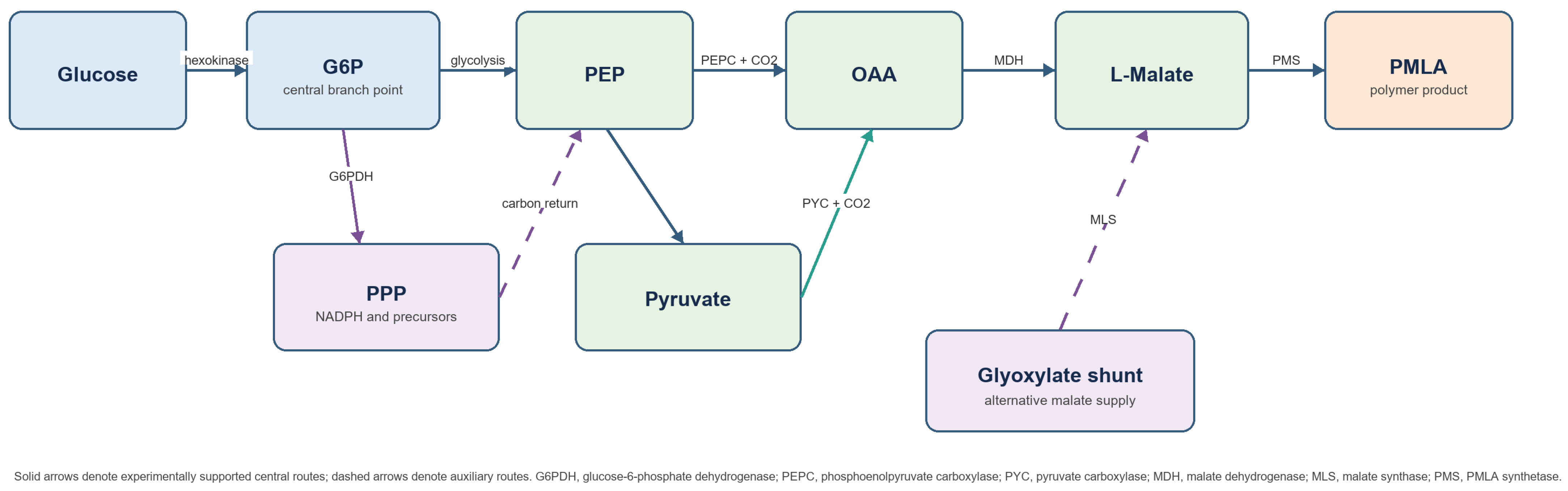
Glucose is phosphorylated to glucose-6-phosphate (G6P), which branches between glycolysis and the pentose phosphate pathway (PPP). Enzyme-activity studies in A. pullulans ipe-1 linked high DO, glucose-6-phosphate dehydrogenase activity, and phosphoenolpyruvate carboxylase (PEPC) activity with PMLA production, supporting a route from phosphoenolpyruvate (PEP) to oxaloacetate (OAA) and then to L-malate [69]. A parallel pyruvate-carboxylase (PYC) route into the reductive tricarboxylic acid pathway has been validated by metabolic engineering: co-expression of malate dehydrogenase and PYC produced 96.7 g/L PMLA at 0.90 g/(L·h) and 0.68 g g−1 glucose [62]. PMLA synthetase then polymerizes the malate-derived precursor. The resulting carbon-flow framework is summarized in Figure 2; it is a synthesis of experimentally supported routes, not a complete stoichiometric map.
The high cost of refined carbon sources is an important constraint on the large-scale production of PMLA. To reduce production costs, renewable biomass hydrolysates have been investigated as substitutes for refined sugars. Yegin et al. used barley straw hydrolysate as the substrate and replaced commercial CaCO3 with egg shell powder with a particle size below 1 mm. The addition of 40 g/L egg shell powder enabled PMLA production without a separate detoxification step, resulting in a titer of 43.54 g/L, a productivity of 0.30 g/(L·h), and a yield of 0.48 g/g [6].
Cheng et al. investigated PMLA fermentation from soybean hull hydrolysate and soy molasses using A. pullulans ZX-10. In fed-batch fermentation with soy molasses, the PMLA titer reached 62.6 g/L, corresponding to 71.9 g/L L-malic acid after hydrolysis, with a yield of 0.69 g/g and a productivity of 0.29 g/(L·h). Repeated-batch fermentation with cell recycle and corn steep liquor supplementation further increased productivity to 0.64 g/(L·h). Economic analysis indicated that soy molasses was a competitive feedstock for industrial bio-based L-malic acid production through PMLA fermentation followed by hydrolysis [25].
Cao et al. used sugarcane bagasse hydrolysate and applied an integrated membrane process combining ultrafiltration, nanofiltration, and reverse osmosis to concentrate fermentable sugars and regulate the acetic acid concentration, thereby improving PMLA production [72]. Zeng et al. used rubberwood hydrolysate as the substrate and optimized dilute-acid pretreatment, enzymatic hydrolysis, and co-substrate fermentation. In a 5 L scale-up fermentation, the PMLA titer reached 50.37 g/L, with a productivity of 0.35 g/(L·h) and a 24% reduction in medium costs [66]. These findings demonstrate the potential of inexpensive renewable biomass as a substrate for PMLA fermentation [73].
Nitrogen availability affects both the growth of A. pullulans and PMLA biosynthesis. Protein-rich biomass-derived materials, such as soybean meal, peanut meal, dried distillers’ grains, and fish meal, can serve as low-cost organic nitrogen sources for microbial growth. Defined nitrogen sources include ammonium salts, whereas yeast extract and peptone are commonly used complex supplements. Rice flour is starch-rich and is therefore not classified here as a nitrogen source. Wang et al. found that nitrogen limitation altered growth and PMLA-associated metabolism, whereas excess nitrogen favored biomass formation [74]. Consequently, the nitrogen optimum for cell propagation can differ from that for product accumulation.
Corn steep liquor, a by-product of the corn wet-milling industry, is rich in amino acids, vitamins, minerals, and other nutrients and represents a potentially useful low-cost nutrient source [75]. In the related species A. melanogenum, supplementation with 3 g/L corn steep liquor increased PMLA production by 32.76%, cell growth by 41.82%, and the product-to-biomass yield by 47.43% [36]. These results indicate that corn steep liquor can support both cell growth and PMLA biosynthesis, although its optimal concentration may vary among species and strains.
Culture pH affects both biomass formation and PMLA biosynthesis, although the pH optima for these two responses should not be assumed to be identical or universal. Ambient pH is also a well-established regulatory signal in filamentous fungi and yeasts, affecting gene expression and cellular physiology [76]. In controlled fermentation of A. pullulans ipe-1, maintaining the culture pH at approximately 6.0 and the dissolved oxygen concentration above 70% supported high PMLA production, with yeast-like cells identified as the principal PMLA-producing morphology [77]. In that study, early biomass formation and subsequent PMLA accumulation were regulated mainly through stage-dependent dissolved-oxygen and agitation control while the pH was maintained near 6.0. Thus, pH 6.0 should be regarded as a production-compatible set point for this strain rather than as a separately established universal optimum for fungal growth. The optimal pH may vary with the strain, medium composition, neutralizing agent, and cultivation stage.
In addition to conventional CaCO3, shell waste has potential as a biogenic calcium carbonate material. Large quantities of oyster, clam, scallop, mussel, and other mollusk shells are generated by fisheries and aquaculture activities [78]. Some seashells exhibit a layered structure comprising an outer proteinaceous layer, an intermediate calcite layer, and an inner layer of platy calcium carbonate crystals [79]. Shell materials consist predominantly of CaCO3, together with small amounts of organic matrix and minor inorganic constituents [80,81]. Depending on the species, CaCO3 may occur mainly as calcite or aragonite. Their hierarchical layered structures and organic–inorganic composite organization distinguish them from conventional mineral-derived CaCO3 [78,81,82] and may affect their dissolution and alkalinity-release behavior.
Previous studies have shown that crushed oyster shells can act as solid-phase buffers by gradually dissolving and releasing alkalinity in autotrophic denitrification systems [83]. Seashell waste can also serve as an acid-neutralizing agent during lactic acid fermentation. Fine shell powders generally exhibit more effective neutralization than larger shell particles because of their greater surface area and faster dissolution [84]. Therefore, replacing conventional CaCO3 with shell powder as a pH-buffering material in PMLA fermentation is technically plausible and is consistent with the principles of waste valorization and green manufacturing.
Tween 80, a nonionic surfactant, has been reported to increase PMLA production by A. pullulans [85,86]. Rather than acting as a transcriptional enhancer, its most direct effect is likely physicochemical. Tween 80 can interact with membrane lipids and increase membrane fluidity and permeability, thereby facilitating nutrient and oxygen uptake as well as the extracellular release of PMLA. This interpretation is supported by changes in membrane fatty-acid composition, increased propidium-iodide uptake, and altered membrane morphology observed after Tween 80 treatment [86]. Proteomic changes in PMLA-biosynthetic, energy-metabolism, and stress-response pathways should therefore be interpreted as downstream cellular responses to Tween 80 treatment rather than evidence that Tween 80 directly enhances transcription. Exogenous ethanol stress and glyoxylate-shunt engineering have also enhanced PMLA production [87], while vitamin B6 supplementation improved rubberwood-hydrolysate fermentation [66].
Process intensification strategies, including cell-recycle fermentation and immobilized-cell fermentation, can also improve PMLA productivity and yield. Repeated-batch fermentation with cell recycle has been used to enhance PMLA productivity [25]. Zan and Zou used immobilized cells in an aerobic fibrous-bed bioreactor and achieved efficient PMLA production from raw sweet potato hydrolysate [64].

5. Advances in PMLA Production from Fermentable Sugars Derived from Agricultural and Forestry Residues

Renewable PMLA feedstocks span chemically distinct classes rather than a single category. Lignocellulosic residues require pretreatment and saccharification; starch-rich tubers require liquefaction or hydrolysis; inulin-rich Jerusalem artichoke requires inulin hydrolysis; and juices or molasses already contain soluble sugars. These distinctions determine inhibitor formation, nutrient supplementation, sugar composition, viscosity, and process cost. Lignocellulosic hydrolysates commonly contain both glucose and xylose, while woody biomass itself typically contains approximately 29–47% cellulose, 25–35% hemicellulose, and 16–31% lignin [88].
In recent years, the feasibility of using lignocellulosic feedstocks for organic acid fermentation has been increasingly demonstrated. Engineered M. thermophila strains have directly utilized raw corncob biomass to produce more than 100 g/L L-malic acid in 5 L fermenters [15,40,89]. These findings show that lignocellulosic biomass can not only release glucose and xylose through saccharification but can also be incorporated into relatively large-scale biomanufacturing systems for organic acids.
PMLA has been produced from sugarcane bagasse [72], sweet potato residue and wheat bran in solid-state fermentation [90], raw sweet potato hydrolysate [64], concentrated sugarcane juice [26], corn fiber and wheat straw [67], barley straw [6], rubberwood [66], Jerusalem artichoke tubers [60,91], soy molasses [25], raw cassava hydrolysate [61], and BSS hydrolysate [17]. Table 2 classifies these feedstocks by carbohydrate type and processing route rather than applying lignocellulosic composition values to non-lignocellulosic tubers.
Jerusalem artichoke and sweet potato are included as biomass-derived carbohydrate feedstocks, not as lignocellulosic materials. Bamboo shoot shell enzymatic hydrolysate (BSSH) was prepared from washed, oven-dried, milled, and 80-mesh-sieved shells. The biomass was pretreated with 0.75% (v/v) H2SO4 at a solid-to-liquid ratio of 1:4 at 160 °C for 10 min. After adjustment to pH 4.8 with NaOH, enzymatic hydrolysis was performed with cellulase at 3 FPU/g dry biomass and 45 °C for 72 h. Enzymes were inactivated at 95 °C for 30 min; the hydrolysate was recovered by centrifugation and vacuum filtration and concentrated under vacuum at 45 °C. No additional detoxification was applied before fermentation [17]. In the thesis row [92], 120 g/L denotes initial total reducing sugars supplied by BSSH, not wet hydrolysate mass. The reported yield was 54.54/120 = 0.4545 and is rounded to 0.45 g/g. Values are not directly comparable without considering strain, product basis, fermentation mode, neutralizer, culture time, and analytical definition.
Bamboo-derived residues are also rich in cellulose and hemicellulose and can be converted into fermentable sugars through appropriate pretreatment and hydrolysis. As a lignocellulosic resource, bamboo has long fibers and favorable pulping properties, making it an important raw material for the pulp and paper industry [93]. Bamboo plants grow rapidly and exhibit high productivity, while bamboo shoots have considerable nutritional value [9]. However, residues generated by the bamboo industry originate from diverse sources and occur in various forms. Harvesting residues are often dispersed, bulky, and difficult to store and comminute and are therefore frequently discarded, resulting in environmental pollution and resource waste [10]. Converting bamboo-processing residues into fermentation substrates could contribute to both environmental management and the production of bio-based materials.
Bamboo-derived residues are lignocellulosic materials composed primarily of cellulose, hemicellulose, and lignin, which together account for a substantial proportion of their dry matter. These residues may also contain proteins, amino acids, lipids, soluble sugars, and mineral elements. Their concentrations vary depending on the bamboo species, age, tissue, harvest season, and growing environment [94]. Bamboo generally contains cellulose, hemicellulose, and lignin as its major structural components, although their proportions vary considerably among species, tissue types, and maturity stages [10,93]. This lignocellulosic composition indicates favorable potential for hydrolytic sugar production and biorefining.
Among bamboo-derived residues, BSSs are attractive because they are generated at processing sites and can be collected more readily than dispersed harvesting residues. Their compositional potential and the broader biorefinery rationale are described in the Introduction [12,14]. BSS has also been investigated for thermochemical conversion to biochar [95], while rice straw, rice husk, and corncob have been compared as fast-pyrolysis feedstocks [96]; these studies illustrate alternative valorization routes against which fermentation should be evaluated. However, the PMLA literature remains narrow: the available direct evidence is one accepted shake-flask study using BSS enzymatic hydrolysate [17]. No comparable PMLA fermentation studies were located for bamboo culm chips, branches, leaves, bamboo green, bamboo yellow, or aged shoot bases. Research on these materials has instead emphasized fibers, thermochemical conversion, adsorbents, fuels, and other biorefinery products [10,12,93,94]. BSSs should therefore be viewed as an emerging test case, not as a representative of all bamboo residues.
Furfural and 5-hydroxymethylfurfural (5-HMF) arise mainly from pentose and hexose dehydration during acid and thermal pretreatment. Furan aldehydes can impose carbonyl and oxidative stress, inhibit key central-metabolic enzymes, prolong lag phases, and reduce sugar uptake and PMLA accumulation. The selected BSS hydrolysate contained 0.325 g L−1 furfural and 0.140 g L−1 5-HMF [17]. These concentrations were below adverse levels cited for one A. pullulans system (approximately 0.5 g L−1 furfural and 2 g L−1 5-HMF), but thresholds depend on strain, inoculum, medium composition, oxygen transfer, and combined inhibitor exposure. The absence of a detoxification step in the reported shake-flask experiment is therefore encouraging but does not establish universal tolerance. Controlled dose–response and mixed-inhibitor studies are needed before scale-up.
Song et al. directly demonstrated PMLA production from BSS enzymatic hydrolysate by A. pullulans NRRL Y-2311-1 in shake flasks. With 125 g/L initial total reducing sugars and 6% inoculum, the PMLA titer reached 42.63 g/L after 144 h, corresponding to a recalculated QP,avg of 0.30 g/(L·h); the source-reported yield was 0.35 g/g on the initial-total-reducing-sugar basis [17]. FT-IR, 1H NMR, 13C NMR, and gel-permeation chromatography supported product identity. The recovered PMLA had Mn 5.172 kDa, Mw 9.162 kDa, and dispersity 1.771. This low molecular weight requires application-specific evaluation rather than constituting evidence of biomedical suitability by itself [21,28].
A complementary optimization dataset in Song’s master’s thesis [92] used a 17-run Box–Behnken design to evaluate initial BSSH total reducing sugar concentration (A), CaCO3 addition (B), and inoculum (C). An English summary of the experimental methods and response-surface results is provided in Supplementary Material S1. For PMLA titer, the quadratic model was significant (F = 78.27, p < 0.0001), with R2 = 0.9902 and adjusted R2 = 0.9775; lack of fit was not significant (F = 0.0029, p = 0.9997). The model predicted 53.57 g/L at 121.2 g/L initial total reducing sugars, 40.3 g/L CaCO3, and 5.8% inoculum. After practical rounding to 120 g/L, 40 g/L, and 6.0%, three validation experiments yielded a reported mean of 54.54 g/L and a yield of 0.45 g/g on the initial-sugar basis. The source did not report the three individual validation values or their standard deviation; accordingly, no SD can be calculated. The highest single titer in the 17-run design was 56.45 g/L at 125 g/L initial sugar, 40 g/L CaCO3, and 6% inoculum, and should not be confused with the validation mean.
The two Jerusalem artichoke entries in Table 2 illustrate why feedstock identity alone does not determine titer. A. pullulans ipe-1 immobilized in luffa sponge produced 24.9 g L−1 from nitric-acid hydrolysate in a repeated-batch configuration [91], whereas A. pullulans HA-4D produced 114.4 g L−1 while co-producing pullulan from a hydrolysate containing 100 g L−1 reducing sugar [60]. The studies differ in strain, hydrolysis conditions, nutrient formulation, immobilization, fermentation mode, product spectrum, and harvest time. The approximately fivefold titer difference cannot therefore be attributed to Jerusalem artichoke composition alone.
Downstream recovery is a major but underreported contributor to PMLA cost and product quality. A complete train may require cell removal, decolorization, separation from pullulan and proteins, conversion of polymalate salts, concentration, molecular-weight fractionation, and drying. Conventional acidification after CaCO3-buffered fermentation can generate CaSO4, while solvent precipitation increases solvent use and recovery demand. Ultrafiltration can fractionate PMLA, but membrane fouling and the imperfect relationship between nominal molecular-weight cutoff and PMLA retention require empirical optimization [43]. An integrated ion-exchange and membrane process avoided organic solvent and CaSO4 waste, recycled generated CaCO3 and eluate, and obtained 98.89% PMLA purity [97]. For low-molecular-weight BSS-derived PMLA, recovery yield, purity, color, residual protein, molecular-weight distribution, water and energy use, and membrane fouling should be reported together.
Economic comparisons must use consistent system boundaries. Low-cost or waste-derived feedstocks can reduce purchased-sugar expense, and case studies have reported favorable economics for soy molasses, sugarcane juice, and Jerusalem artichoke [25,26,91]. However, collection, drying, size reduction, pretreatment chemicals, enzymes, detoxification, concentration, neutralizer demand, oxygen transfer, and downstream purification can offset feedstock savings. Chemical synthesis incurs protected-monomer, catalyst, reaction, and purification costs, but the literature does not yet provide a harmonized side-by-side assessment against biomass-based fermentation. A credible comparison for BSSs therefore requires pilot-scale mass and energy balances, co-product allocation, local residue logistics, recovery yield, and sensitivity analysis rather than a feedstock-price claim alone.

6. Challenges and Future Perspectives

The accumulated literature supports fermentative PMLA production from pure sugars and several renewable feedstocks. The BSS case is supported by one accepted journal study [17] and a complementary master’s thesis containing the response-surface optimization dataset [92]; together they establish laboratory shake-flask feasibility, not a mature production platform. Four connected tasks remain: representative feedstock inventories and compositional sampling, reproducible hydrolysate preparation, controlled bioreactor validation, and quantitative downstream and economic assessment.
First, substrate preparation must balance sugar release and fermentability. More severe pretreatment can improve polysaccharide accessibility but can also increase furfural, 5-HMF, organic acids, salts, and phenolic compounds. Because inhibitor thresholds are conditional, BSS studies should report full hydrolysate composition, batch variability, detoxification losses, enzyme loading, sugar recovery, and the combined effects of furans and organic acids.
Second, the process must move from shake flasks to controlled bioreactors. Carbon concentration, intrinsic and supplemented nitrogen, pH buffering, inoculum, morphology, DO, mixing, viscosity, and gas–liquid mass transfer can change with scale. The journal study and thesis identify useful starting conditions, but batch-to-batch reproducibility, oxygen-transfer requirements, feeding strategies, and performance at 5 L and larger scales have not been demonstrated [17,92].
Third, green manufacturing should be evaluated as an integrated system rather than inferred from the use of two wastes. Biorefinery analysis supports the valorization of concentrated bamboo-shoot-processing residues [12]. In the BSS case, hydrolysate supplied sugars and intrinsic nitrogen, while seashell powder acted as a biogenic buffer and outperformed conventional CaCO3 at matched additions in shake flasks [17]. Future studies must determine whether these benefits persist in controlled reactors and whether pretreatment chemicals, energy, shell preparation, separation, and wastewater treatment produce a net environmental advantage.
Fourth, product recovery and application qualification must be integrated with fermentation. Low-molecular-weight material may require different membrane cutoffs and concentration strategies from high-molecular-weight PMLA [43,97]. Biomedical use additionally requires application-specific purity, degradation, conjugation, pharmacokinetic, and safety evidence [21,28]. The available results establish laboratory feasibility, not industrial or biomedical readiness. At future stages, a full techno-economic analysis (TEA) based on pilot-scale mass and energy balances should quantify feedstock logistics, pretreatment, fermentation, downstream recovery, waste treatment, and sensitivity to major cost drivers; this analysis should be complemented by life-cycle assessment.

7. Conclusions

PMLA is a water-soluble, biodegradable, and functionalizable polyester with potential in biomedical, packaging, and materials applications. Fermentation by Aureobasidium spp. can use both refined sugars and renewable carbohydrate streams, but comparisons across studies require attention to product form, strain, substrate class, fermentation mode, harvest time, yield definition, molecular weight, and downstream recovery. Fermentation offers process and stereochemical advantages, yet its total cost and environmental performance cannot be inferred from feedstock price alone.
Published work supports PMLA production from juices, molasses, starch- and inulin-rich tubers, and lignocellulosic hydrolysates. The revised comparisons distinguish these feedstock classes and show that high titers can arise from both soluble-sugar and hydrolysate systems. For BSS enzymatic hydrolysate, the accepted study reported 42.63 g/L PMLA after 144 h (QP,avg = 0.30 g/(L·h)), a source-reported yield of 0.35 g/g, and Mw 9.162 kDa [17]. The complementary thesis reported a response-surface validation mean of 54.54 g/L (n = 3; SD not reported) and a yield rounded to 0.45 g/g at 120 g/L initial total reducing sugars [92].
This result establishes BSS hydrolysate as an emerging, evidence-based case study, but the literature is not yet sufficient to support claims of industrial competitiveness or biomedical suitability. Priorities are a current residue inventory, representative compositional sampling, controlled bioreactor scale-up, inhibitor and mixed-sugar studies, reproducibility, recovery and purity benchmarks, molecular-weight-specific application testing, and full techno-economic and life-cycle assessment. The most defensible role of bamboo-processing residues in the present evidence base is therefore as a promising research direction within the broader development of renewable-feedstock PMLA fermentation.

Supplementary Materials

The following supporting information can be downloaded at: https://www.mdpi.com/article/10.3390/fermentation12090397/s1. Supplementary File S1, English Summary of the Master’s Thesis, Study on the Fermentative Production of Poly(β-L-malic Acid) from Bamboo Shoot Processing Waste.

Author Contributions

Y.F. and W.S. contributed equally to this work. Conceptualization, W.S. and X.G.; methodology, Y.F. and W.S.; investigation, Y.F. and W.S.; resources, X.G.; data curation, Y.F. and W.S.; writing—original draft preparation, Y.F. and W.S.; writing—review and editing, Y.F., W.S. and X.G.; visualization, Y.F. and W.S.; supervision, X.G.; project administration, X.G.; funding acquisition, X.G. All authors have read and agreed to the published version of the manuscript.

Funding

This research was supported by the National Natural Science Foundation of China (No. 31570345), the National Key Research and Development Program of China (2022YFD2200905), and the Fundamental Research Funds of the International Centre for Bamboo and Rattan (1632024012).

Institutional Review Board Statement

Not applicable.

Informed Consent Statement

Not applicable.

Data Availability Statement

No new data were created or analyzed in this study. Data sharing is not applicable to this article.

Conflicts of Interest

The authors declare no conflicts of interest.

Abbreviations

The following abbreviations are used in this manuscript:
PMLAPoly(β-L-malic acid)
PMAPolymalic acid
L-MAL-malic acid
BSSBamboo shoot shell
BSSHBamboo shoot shell enzymatic hydrolysate
DODissolved oxygen
5-HMF5-Hydroxymethylfurfural
G6PGlucose-6-phosphate
PPPPentose phosphate pathway
PEPPhosphoenolpyruvate
OAAOxaloacetate
PEPCPhosphoenolpyruvate carboxylase
PYCPyruvate carboxylase
MDHMalate dehydrogenase
PMS PMLA synthetase
rTCAReductive tricarboxylic acid pathway

References

  1. Yadav, S.; Pal, D.B. A Sustainable Perspective on Biowaste-to-Biofuel for a Bio-based Economy. In Biomass-Based Clean Technologies for Sustainable Development; Springer Nature: Singapore, 2024; pp. 51–70. [Google Scholar] [CrossRef] [Scilit]
  2. Kumar, S.; Lohan, S.K.; Parihar, D.S. Biomass Energy from Agriculture. In Handbook of Energy Management in Agriculture; Springer: Singapore, 2023; pp. 181–199. [Google Scholar] [CrossRef] [Scilit]
  3. Wijerathna, P.A.K.C.; Udayagee, K.P.P.; Idroos, F.S.; Manage, P.M. Waste Biomass Valorization and Its Application in the Environment. In Sustainable Valorization of Agriculture & Food Waste Biomass; Springer: Singapore, 2023; pp. 1–28. [Google Scholar] [CrossRef] [Scilit]
  4. Tuck, C.O.; Pérez, E.; Horváth, I.T.; Sheldon, R.A.; Poliakoff, M. Valorization of Biomass: Deriving More Value from Waste. Science 2012, 337, 695–699. [Google Scholar] [CrossRef] [Scilit]
  5. Agnihotri, S.; Heggset, E.B.; de Lima, J.A.; Horváth, I.S.; Tanase-Opedal, M. Cascade Processing of Agricultural, Forest, and Marine Waste Biomass for Sustainable Production of Food, Feed, Biopolymers, and Bioenergy. Energies 2025, 18, 4093. [Google Scholar] [CrossRef] [Scilit]
  6. Yegin, S.; Saha, B.C.; Kennedy, G.J.; Leathers, T.D. Valorization of egg shell as a detoxifying and buffering agent for efficient polymalic acid production by Aureobasidium pullulans NRRL Y-2311-1 from barley straw hydrolysate. Bioresour. Technol. 2019, 278, 130–137. [Google Scholar] [CrossRef] [Scilit]
  7. Zou, X.; Li, S.; Wang, P.; Li, B.; Feng, Y.; Yang, S.T. Sustainable production and biomedical application of polymalic acid from renewable biomass and food processing wastes. Crit. Rev. Biotechnol. 2021, 41, 216–228. [Google Scholar] [CrossRef] [Scilit]
  8. Bystriakova, N.; Kapos, V.; Lysenko, I.; Stapleton, C.M.A. Distribution and conservation status of forest bamboo biodiversity in the Asia-Pacific Region. Biodivers. Conserv. 2003, 12, 1833–1841. [Google Scholar] [CrossRef] [Scilit]
  9. Satya, S.; Bal, L.M.; Singhal, P.; Naik, S.N. Bamboo shoot processing: Food quality and safety aspect (a review). Trends Food Sci. Technol. 2010, 21, 181–189. [Google Scholar] [CrossRef] [Scilit]
  10. Scurlock, J.M.O.; Dayton, D.C.; Hames, B. Bamboo: An overlooked biomass resource? Biomass Bioenergy 2000, 19, 229–244. [Google Scholar] [CrossRef] [Scilit]
  11. Liu, T.-H. Surveys of harvest technology of winter bamboo shoots. J. For. Res. 2011, 22, 487–490. [Google Scholar] [CrossRef] [Scilit]
  12. Lin, Z.; Chen, J.; Zhang, J.; Brooks, M.S.-L. Potential for value-added utilization of bamboo shoot processing waste: Recommendations for a biorefinery approach. Food Bioprocess Technol. 2018, 11, 901–912. [Google Scholar] [CrossRef] [Scilit]
  13. Food and Agriculture Organization of the United Nations. Bamboo: Statistics. Available online: https://www.fao.org/forestry/nwfp/statistics/bamboo/en (accessed on 14 August 2026).
  14. Yang, Y.; Fan, F.; Xie, J.; Fang, K.; Zhang, Q.; Chen, Y.; Cao, X.; Deng, Z. Isolation and characterization of cellulosic fibers from bamboo shoot shell. Polym. Bull. 2023, 80, 1817–1829. [Google Scholar] [CrossRef] [Scilit]
  15. Li, J.; Lin, L.; Sun, T.; Xu, J.; Ji, J.; Liu, Q.; Tian, C. Direct production of commodity chemicals from lignocellulose using Myceliophthora thermophila. Metab. Eng. 2020, 61, 416–426. [Google Scholar] [CrossRef] [Scilit]
  16. Yan, X.; Li, D.; Ma, X.; Li, J. Bioconversion of renewable lignocellulosic biomass into multicomponent substrate via pressurized hot water pretreatment for bioplastic polyhydroxyalkanoate accumulation. Bioresour. Technol. 2021, 339, 125667. [Google Scholar] [CrossRef] [Scilit]
  17. Song, W.; Wang, J.; Fang, Y.; Yao, X.; Guo, X. Synergistic valorization of agricultural and marine waste: Enhanced production of poly(malic acid) by Aureobasidium pullulans using bamboo shoot shells and seashell powder. Molecules 2026, in press. [Google Scholar]
  18. Nagata, N.; Nakahara, T.; Tabuchi, T.; Morita, R.; Brewer, J.R.; Fujishige, S. Characterization of Poly(β-L-malic acid) Produced by Aureobasidium sp. A-91. Polym. J. 1993, 25, 585–592. [Google Scholar] [CrossRef] [Scilit]
  19. Chi, Z.; Liu, G.L.; Liu, C.G.; Chi, Z.M. Poly(β-l-malic acid) (PMLA) from Aureobasidium spp. and its current proceedings. Appl. Microbiol. Biotechnol. 2016, 100, 3841–3851. [Google Scholar] [CrossRef] [Scilit]
  20. Doerhoefer, S.; Windisch, C.; Angerer, B.; Lavrik, O.I.; Lee, B.S.; Holler, E. The DNA-polymerase inhibiting activity of poly(β-l-malic acid) in nuclear extract during the cell cycle of Physarum polycephalum. Eur. J. Biochem. 2002, 269, 1253–1258. [Google Scholar] [CrossRef] [Scilit]
  21. Zhang, J.; Chen, D.; Liang, G.; Xu, W.; Tao, Z. Biosynthetic Polymalic Acid as a Delivery Nanoplatform for Translational Cancer Medicine. Trends Biochem. Sci. 2021, 46, 213–224. [Google Scholar] [CrossRef] [Scilit]
  22. Kajiyama, T.; Taguchi, T.; Kobayashi, H.; Kataoka, K.; Tanaka, J. Synthesis of high molecular weight poly(α,β-malic acid) for biomedical use by direct polycondensation. Polym. Degrad. Stab. 2003, 81, 525–530. [Google Scholar] [CrossRef] [Scilit]
  23. Coulembier, O.; Degée, P.; Hedrick, J.L.; Dubois, P. From controlled ring-opening polymerization to biodegradable aliphatic polyester: Especially poly(β-malic acid) derivatives. Prog. Polym. Sci. 2006, 31, 723–747. [Google Scholar] [CrossRef] [Scilit]
  24. Guerin, P.; Vert, M.; Braud, C.; Lenz, R.W. Optically active poly(β-L-malic acid). Polym. Bull. 1985, 14, 187–192. [Google Scholar] [CrossRef] [Scilit]
  25. Cheng, C.; Zhou, Y.; Lin, M.; Wei, P.; Yang, S.T. Polymalic acid fermentation by Aureobasidium pullulans for malic acid production from soybean hull and soy molasses: Fermentation kinetics and economic analysis. Bioresour. Technol. 2017, 223, 166–174. [Google Scholar] [CrossRef] [Scilit]
  26. Wei, P.; Cheng, C.; Lin, M.; Zhou, Y.; Yang, S.-T. Production of poly(malic acid) from sugarcane juice in fermentation by Aureobasidium pullulans: Kinetics and process economics. Bioresour. Technol. 2017, 224, 581–589. [Google Scholar] [CrossRef] [Scilit]
  27. Wang, Y.K.; Chi, Z.; Zhou, H.X.; Liu, G.L.; Chi, Z.M. Enhanced production of Ca2+-polymalate (PMA) with high molecular mass by Aureobasidium pullulans var. pullulans MCW. Microb. Cell Factories 2015, 14, 115. [Google Scholar] [CrossRef] [Scilit]
  28. Huang, X.; Xu, L.; Qian, H.; Wang, X.; Tao, Z. Polymalic acid for translational nanomedicine. J. Nanobiotechnol. 2022, 20, 295. [Google Scholar] [CrossRef] [Scilit]
  29. Osanai, S.; Nakamura, K. Effects of complexation between liposome and poly(malic acid) on aggregation and leakage behaviour. Biomaterials 2000, 21, 867–876. [Google Scholar] [CrossRef] [Scilit]
  30. Ulery, B.D.; Nair, L.S.; Laurencin, C.T. Biomedical applications of biodegradable polymers. J. Polym. Sci. Part B Polym. Phys. 2011, 49, 832–864. [Google Scholar] [CrossRef] [Scilit]
  31. Caruelle, J.P.; Barritault, D.; Jeanbat-Mimaud, V.; Cammas-Marion, S.; Langlois, V.; Guerin, P.; Barbaud, C. Bioactive functionalized polymer of malic acid for bone repair and muscle regeneration. J. Biomater. Sci. Polym. Ed. 2000, 11, 979–991. [Google Scholar] [CrossRef] [Scilit]
  32. Loyer, P.; Cammas-Marion, S. Natural and synthetic poly(malic acid)-based derivatives: A family of versatile biopolymers for the design of drug nanocarriers. J. Drug Target. 2014, 22, 556–575. [Google Scholar] [CrossRef] [Scilit]
  33. Shimada, K.; Matsushima, K.; Fukumoto, J.; Yamamoto, T. Poly-(L)-malic acid: A new protease inhibitor from Penicillium cyclopium. Biochem. Biophys. Res. Commun. 1969, 35, 619–624. [Google Scholar] [CrossRef] [Scilit]
  34. Fischer, H.; Erdmann, S.; Holler, E. An unusual polyanion from Physarum polycephalum that inhibits homologous DNA polymerase α in vitro. Biochemistry 1989, 28, 5219–5226. [Google Scholar] [CrossRef] [Scilit]
  35. Cao, W.; Deng, T.; Shen, F.; Rong, F.; Qiao, C.; Wan, Y. Electrolytic stimulation in aid of poly(β-L-malic acid) production by Aureobasidium melanogenum ipe-1. Int. J. Biol. Macromol. 2022, 223, 722–731. [Google Scholar] [CrossRef] [Scilit]
  36. Wang, G.; Shi, B.; Zhang, P.; Zhao, T.; Yin, H.; Qiao, C. Effects of corn steep liquor on β-poly(l-malic acid) production in Aureobasidium melanogenum. AMB Express 2020, 10, 211. [Google Scholar] [CrossRef] [Scilit]
  37. Lee, B.-S.; Holler, E. β-Poly(L-malate) production by non-growing microplasmodia of Physarum polycephalum: Effects of metabolic intermediates and inhibitors. FEMS Microbiol. Lett. 2000, 193, 69–74. [Google Scholar] [CrossRef] [Scilit]
  38. Berka, R.M.; Grigoriev, I.V.; Otillar, R.; Salamov, A.; Grimwood, J.; Reid, I.; Ishmael, N.; John, T.; Darmond, C.; Moisan, M.C.; et al. Comparative genomic analysis of the thermophilic biomass-degrading fungi Myceliophthora thermophila and Thielavia terrestris. Nat. Biotechnol. 2011, 29, 922–927. [Google Scholar] [CrossRef] [Scilit]
  39. Liu, J.; Chen, M.; Gu, S.; Fan, R.; Zhao, Z.; Sun, W.; Yao, Y.; Li, J.; Tian, C. Independent metabolism of oligosaccharides is the keystone of synchronous utilization of cellulose and hemicellulose in Myceliophthora. PNAS Nexus 2024, 3, pgae053. [Google Scholar] [CrossRef] [Scilit]
  40. Gu, S.; Wu, T.; Zhao, J.; Sun, T.; Zhao, Z.; Zhang, L.; Li, J.; Tian, C. Rewiring metabolic flux to simultaneously improve malate production and eliminate by-product succinate accumulation by Myceliophthora thermophila. Microb. Biotechnol. 2024, 17, e14410. [Google Scholar] [CrossRef] [Scilit]
  41. Zhang, Y.; Fan, R.; Wu, T.; Gu, S.; Liu, D.; Lin, L.; Wang, M.; Li, J.; Tian, C. Redox engineering of thermophilic fungus Myceliophthora thermophila enhances production of L-malic acid by consolidated bioprocessing. Mycology 2026, 17, 217–232. [Google Scholar] [CrossRef] [Scilit]
  42. Zalar, P.; Gostinčar, C.; de Hoog, G.S.; Uršič, V.; Sudhadham, M.; Gunde-Cimerman, N. Redefinition of Aureobasidium pullulans and its varieties. Stud. Mycol. 2008, 61, 21–38. [Google Scholar] [CrossRef] [Scilit]
  43. Qiao, C.; Sun, G.; Li, H.; Cao, W.; Shen, F.; Fan, R.; Wan, Y. Fractionation and characterization of poly(β-L-malic acid) produced by Aureobasidium melanogenum ipe-1. Int. J. Biol. Macromol. 2023, 242, 124720. [Google Scholar] [CrossRef] [Scilit]
  44. Xiao, D.; Driller, M.; Dielentheis-Frenken, M.; Haala, F.; Kohl, P.; Stein, K.; Blank, L.M.; Tiso, T. Advances in Aureobasidium research: Paving the path to industrial utilization. Microb. Biotechnol. 2024, 17, e14535. [Google Scholar] [CrossRef] [Scilit]
  45. Jiang, N.; Liang, Y.M.; Tian, C.M. Aureobasidium pini sp. nov. from pine needle in China. Phytotaxa 2019, 402, 199–206. [Google Scholar] [CrossRef] [Scilit]
  46. Gostinčar, C.; Ohm, R.A.; Kogej, T.; Sonjak, S.; Turk, M.; Zajc, J.; Zalar, P.; Grube, M.; Sun, H.; Han, J.; et al. Genome sequencing of four Aureobasidium pullulans varieties: Biotechnological potential, stress tolerance, and description of new species. BMC Genom. 2014, 15, 549. [Google Scholar] [CrossRef] [Scilit]
  47. Feng, J.; Li, T.; Zhang, X.; Chen, J.; Zhao, T.; Zou, X. Efficient production of polymalic acid from xylose mother liquor, an environmental waste from the xylitol industry, by a T-DNA-based mutant of Aureobasidium pullulans. Appl. Microbiol. Biotechnol. 2019, 103, 6519–6527. [Google Scholar] [CrossRef] [Scilit]
  48. Christov, L.P.; Myburgh, J.; O’Neill, F.H.; Van Tonder, A.; Prior, B.A. Modification of the Carbohydrate Composition of Sulfite Pulp by Purified and Characterized β-Xylanase and β-Xylosidase of Aureobasidium pullulans. Biotechnol. Prog. 1999, 15, 196–200. [Google Scholar] [CrossRef] [Scilit]
  49. Thambugala, K.M.; Ariyawansa, H.A.; Li, Y.M.; Boonmee, S.; Hongsanan, S.; Tian, Q.; Singtripop, C.; Bhat, D.J.; Camporesi, E.; Jayawardena, R.; et al. Dothideales . Fungal Divers. 2014, 68, 105–158. [Google Scholar] [CrossRef] [Scilit]
  50. Wang, C.B.; Jiang, N.; Tu, Y.; Zhu, Y.Q.; Xue, H.; Li, Y. Aureobasidium aerium (Saccotheciaceae, Dothideales), a new yeast-like fungus from the air in Beijing, China. Phytotaxa 2022, 544, 185–192. [Google Scholar] [CrossRef] [Scilit]
  51. Humphries, Z.; Seifert, K.A.; Hirooka, Y.; Visagie, C.M. A new family and genus in Dothideales for Aureobasidium-like species isolated from house dust. IMA Fungus 2017, 8, 299–315. [Google Scholar] [CrossRef] [Scilit]
  52. Petrucco, C.A.; Crocker, A.W.; D’Alessandro, A.; Medina, E.M.; Gorman, O.; McNeill, J.; Gladfelter, A.S.; Lew, D.J. Tools for live-cell imaging of cytoskeletal and nuclear behavior in the unconventional yeast, Aureobasidium pullulans. Mol. Biol. Cell 2024, 35, br10. [Google Scholar] [CrossRef] [Scilit]
  53. Li, B.X.; Zhang, N.; Peng, Q.; Yin, T.; Guan, F.F.; Wang, G.L.; Li, Y. Production of pigment-free pullulan by swollen cell in Aureobasidium pullulans NG which cell differentiation was affected by pH and nutrition. Appl. Microbiol. Biotechnol. 2009, 84, 293–300. [Google Scholar] [CrossRef] [Scilit]
  54. Zhang, H.; Cai, J.; Dong, J.; Zhang, D.; Huang, L.; Xu, Z.; Cen, P. High-level production of poly (β-l-malic acid) with a new isolated Aureobasidium pullulans strain. Appl. Microbiol. Biotechnol. 2011, 92, 295–303. [Google Scholar] [CrossRef] [Scilit]
  55. Jiang, L. Optimization of fermentation conditions for pullulan production by Aureobasidium pullulan using response surface methodology. Carbohydr. Polym. 2010, 79, 414–417. [Google Scholar] [CrossRef] [Scilit]
  56. Nagata, N.; Nakahara, T.; Tabuchi, T. Fermentative Production of Poly(β-L-malic acid), a Polyelectrolytic Biopolyester, by Aureobasidium sp. Biosci. Biotechnol. Biochem. 1993, 57, 638–642. [Google Scholar] [CrossRef] [Scilit]
  57. Liu, F.; Zhang, J.; Zhang, L.; Diao, M.; Ling, P.; Wang, F. Correlation between the synthesis of pullulan and melanin in Aureobasidium pullulans. Int. J. Biol. Macromol. 2021, 177, 252–260. [Google Scholar] [CrossRef] [Scilit]
  58. Zhang, H.Q.; Chi, Z.; Liu, G.L.; Zhang, M.; Hu, Z.; Chi, Z.M. Metschnikowia bicuspidata associated with a milky disease in Eriocheir sinensis and its effective treatment by Massoia lactone. Microbiol. Res. 2021, 242, 126641. [Google Scholar] [CrossRef] [Scilit]
  59. Ma, Y.; Wang, G.-Y.; Liu, G.-L.; Wang, Z.-P.; Chi, Z.-M. Overproduction of poly(β-malic acid) (PMA) from glucose by a novel Aureobasidium sp. P6 strain isolated from mangrove system. Appl. Microbiol. Biotechnol. 2013, 97, 8931–8939. [Google Scholar] [CrossRef] [Scilit]
  60. Xia, J.; Xu, J.; Liu, X.; Xu, J.; Wang, X.; Li, X. Economic co-production of poly(malic acid) and pullulan from Jerusalem artichoke tuber by Aureobasidium pullulans HA-4D. BMC Biotechnol. 2017, 17, 20. [Google Scholar] [CrossRef] [Scilit]
  61. Liu, W.; Si, Z.; Zhang, H.; Wei, P.; Xu, Z. Efficient poly(β-L-malic acid) production from cassava hydrolysate by cell recycle of Aureobasidium pullulans. Appl. Microbiol. Biotechnol. 2022, 106, 2855–2868. [Google Scholar] [CrossRef] [Scilit]
  62. Qin, Z.; Feng, J.; Li, Y.; Zheng, Y.; Moore, C.; Yang, S.-T. Engineering the reductive tricarboxylic acid pathway in Aureobasidium pullulans for enhanced biosynthesis of poly-L-malic acid. Bioresour. Technol. 2024, 393, 130122. [Google Scholar] [CrossRef] [Scilit]
  63. Feng, J.; Yang, J.; Yang, W.; Chen, J.; Jiang, M.; Zou, X. Metabolome- and genome-scale model analyses for engineering of Aureobasidium pullulans to enhance polymalic acid and malic acid production from sugarcane molasses. Biotechnol. Biofuels 2018, 11, 94. [Google Scholar] [CrossRef] [Scilit]
  64. Zan, Z.; Zou, X. Efficient production of polymalic acid from raw sweet potato hydrolysate with immobilized cells of Aureobasidium pullulans CCTCC M2012223 in aerobic fibrous bed bioreactor. J. Chem. Technol. Biotechnol. 2013, 88, 1822–1827. [Google Scholar] [CrossRef] [Scilit]
  65. Cao, W.; Luo, J.; Qi, B.; Zhao, J.; Qiao, C.; Ding, L.; Su, Y.; Wan, Y. β-poly(l-malic acid) production by fed-batch culture of Aureobasidium pullulans ipe-1 with mixed sugars. Eng. Life Sci. 2014, 14, 180–189. [Google Scholar] [CrossRef] [Scilit]
  66. Zeng, D.; Zhang, Y.; Ma, X.; Li, J.; Yin, F.; Li, D.; Bie, W. Biosynthesis of poly(β-L-malic acid) from rubberwood enzymatic hydrolysates in co-fermentation by Aureobasidium pullulans. Int. J. Biol. Macromol. 2024, 257, 128605. [Google Scholar] [CrossRef] [Scilit]
  67. Leathers, T.D.; Manitchotpisit, P. Production of poly(β-l-malic acid) (PMA) from agricultural biomass substrates by Aureobasidium pullulans. Biotechnol. Lett. 2013, 35, 83–89. [Google Scholar] [CrossRef] [Scilit]
  68. Wecker, A.; Onken, U. Influence of dissolved oxygen concentration and shear rate on the production of pullulan by Aureobasidium pullulans. Biotechnol. Lett. 1991, 13, 155–160. [Google Scholar] [CrossRef] [Scilit]
  69. Yu, H.; Liu, B.; Luo, J.; Cao, W.; Qiao, C.; Wan, Y. Toward understanding the key enzymes involved in β-poly(L-malic acid) biosynthesis by Aureobasidium pullulans ipe-1. Eng. Life Sci. 2018, 18, 379–386. [Google Scholar] [CrossRef] [Scilit]
  70. Liu, S.J.; Steinbüchel, A. Production of poly(malic acid) from different carbon sources and its regulation in Aureobasidium pullulans. Biotechnol. Lett. 1997, 19, 11–14. [Google Scholar] [CrossRef] [Scilit]
  71. Yin, H.; Fan, X.; Tang, W.; Bian, Y.; Chen, S.; Qiao, C. Effects of amino acids on polymalic acid fermentation by Aureobasidium pullulans. Sci. Technol. Food Ind. 2016, 37, 242–246. (In Chinese) [Google Scholar] [CrossRef]
  72. Cao, W.; Cao, W.; Shen, F.; Luo, J.; Yin, J.; Qiao, C.; Wan, Y. Membrane-assisted β-poly(L-malic acid) production from bagasse hydrolysates by Aureobasidium pullulans ipe-1. Bioresour. Technol. 2020, 295, 122260. [Google Scholar] [CrossRef] [Scilit]
  73. Zou, X.; Cheng, C.; Feng, J.; Song, X.; Lin, M.; Yang, S.T. Biosynthesis of polymalic acid in fermentation: Advances and prospects for industrial application. Crit. Rev. Biotechnol. 2019, 39, 408–421. [Google Scholar] [CrossRef] [Scilit]
  74. Wang, Y.; Song, X.; Zhang, Y.; Wang, B.; Zou, X. Effects of nitrogen availability on polymalic acid biosynthesis in the yeast-like fungus Aureobasidium pullulans. Microb. Cell Factories 2016, 15, 146. [Google Scholar] [CrossRef] [Scilit]
  75. Chang, Y.; Zhao, X.Q.; Zhang, X.; Jiao, Y. Corn Steep Liquor as an Efficient Bioresource for Functional Components Production by Biotransformation Technology. Foods 2025, 14, 2158. [Google Scholar] [CrossRef] [Scilit]
  76. Peñalva, M.A.; Arst, H.N. Regulation of Gene Expression by Ambient pH in Filamentous Fungi and Yeasts. Microbiol. Mol. Biol. Rev. 2002, 66, 426–446. [Google Scholar] [CrossRef] [Scilit]
  77. Cao, W.; Qi, B.; Zhao, J.; Qiao, C.; Su, Y.; Wan, Y. Control strategy of pH, dissolved oxygen concentration and stirring speed for enhancing β-poly(malic acid) production by Aureobasidium pullulans ipe-1. J. Chem. Technol. Biotechnol. 2013, 88, 808–817. [Google Scholar] [CrossRef] [Scilit]
  78. Topić Popović, N.; Lorencin, V.; Strunjak-Perović, I.I.; Čož-Rakovac, R. Shell Waste Management and Utilization: Mitigating Organic Pollution and Enhancing Sustainability. Appl. Sci. 2023, 13, 623. [Google Scholar] [CrossRef] [Scilit]
  79. Narayanan, R.; Dutta, S.; Seshadri, S.K. Hydroxy apatite coatings on Ti-6Al-4V from seashell. Surf. Coat. Technol. 2006, 200, 4720–4730. [Google Scholar] [CrossRef] [Scilit]
  80. Ulagesan, S.; Krishnan, S.; Nam, T.J.; Choi, Y.H. A Review of Bioactive Compounds in Oyster Shell and Tissues. Front. Bioeng. Biotechnol. 2022, 10, 913839. [Google Scholar] [CrossRef] [Scilit]
  81. Li, H.Y.; Tan, Y.Q.; Zhang, L.; Zhang, Y.X.; Song, Y.H.; Ye, Y.; Xia, M.S. Bio-filler from waste shellfish shell: Preparation, characterization, and its effect on the mechanical properties on polypropylene composites. J. Hazard. Mater. 2012, 217–218, 256–262. [Google Scholar] [CrossRef] [Scilit]
  82. Raut, H.K.; Schwartzman, A.F.; Das, R.; Liu, F.; Wang, L.; Ross, C.A.; Fernandez, J.G. Tough and Strong: Cross-Lamella Design Imparts Multifunctionality to Biomimetic Nacre. ACS Nano 2020, 14, 9771–9779. [Google Scholar] [CrossRef] [Scilit]
  83. Sengupta, S.; Ergas, S.J.; Lopez-Luna, E. Investigation of Solid-Phase Buffers for Sulfur-Oxidizing Autotrophic Denitrification. Water Environ. Res. 2007, 79, 2519–2526. [Google Scholar] [CrossRef] [Scilit]
  84. Mou, J.H.; Ouyang, L.F.; Qin, Z.H.; Miao, Y.H.; Jiang, X.T.; Jong, M.C.; Tang, M.C.; Du, C.; Chen, S.S.; Lin, C.S.K. Green synthesis of lactic acid and carbon dots using food waste and seashell waste. Green Chem. 2024, 26, 8282–8297. [Google Scholar] [CrossRef] [Scilit]
  85. Tu, G.; Wang, Y.; Ji, Y.; Zou, X. The effect of Tween 80 on the polymalic acid and pullulan production by Aureobasidium pullulans CCTCC M2012223. World J. Microbiol. Biotechnol. 2015, 31, 219–226. [Google Scholar] [CrossRef] [Scilit]
  86. Yin, H.; Gao, C.; Ye, K.; Zhao, T.; Sun, A.; Qiao, C. Evaluation of surfactant effect on β-poly(L-malic acid) production by Aureobasidium pullulans. Biotechnol. Biotechnol. Equip. 2019, 33, 954–966. [Google Scholar] [CrossRef] [Scilit]
  87. Yang, J.; Yang, W.; Feng, J.; Chen, J.; Jiang, M.; Zou, X. Enhanced polymalic acid production from the glyoxylate shunt pathway under exogenous alcohol stress. J. Biotechnol. 2018, 275, 24–30. [Google Scholar] [CrossRef] [Scilit]
  88. Gallezot, P. Conversion of biomass to selected chemical products. Chem. Soc. Rev. 2012, 41, 1538–1558. [Google Scholar] [CrossRef] [Scilit]
  89. Li, J.; Chen, B.; Gu, S.; Zhao, Z.; Liu, Q.; Sun, T.; Zhang, Y.; Wu, T.; Liu, D.; Sun, W.; et al. Coordination of consolidated bioprocessing technology and carbon dioxide fixation to produce malic acid directly from plant biomass in Myceliophthora thermophila. Biotechnol. Biofuels 2021, 14, 186. [Google Scholar] [CrossRef] [Scilit]
  90. Xia, J.; Li, R.; He, A.; Xu, J.; Liu, X.; Li, X.; Xu, J. Production of poly(β-l-malic acid) by Aureobasidium pullulans HA-4D under solid-state fermentation. Bioresour. Technol. 2017, 244, 289–295. [Google Scholar] [CrossRef] [Scilit]
  91. Cao, W.; Wang, Y.; Shen, F.; Luo, J.; Yin, J.; Qiao, C.; Wan, Y. Efficient β-poly(l-malic acid) production from Jerusalem artichoke by Aureobasidium pullulans ipe-1 immobilized in luffa sponge matrices. Bioresour. Technol. 2019, 288, 121497. [Google Scholar] [CrossRef] [Scilit]
  92. Song, W. Study on the Fermentative Production of Poly(β-L-malic Acid) from Bamboo Shoot Processing Waste. Master’s Thesis, Chinese Academy of Forestry, Beijing, China, 2026. (In Chinese) [Google Scholar]
  93. Sharma, A.K.; Dutt, D.; Upadhyaya, J.S.; Roy, T.K. Anatomical, morphological, and chemical characterization of Bambusa tulda, Dendrocalamus hamiltonii, Bambusa balcooa, Malocana baccifera, Bambusa arundinacea, and Eucalyptus tereticornis. BioResources 2011, 6, 5062–5073. [Google Scholar] [CrossRef] [Scilit]
  94. Chongtham, N.; Bisht, M.S.; Haorongbam, S. Nutritional Properties of Bamboo Shoots: Potential and Prospects for Utilization as a Health Food. Compr. Rev. Food Sci. Food Saf. 2011, 10, 153–168. [Google Scholar] [CrossRef] [Scilit]
  95. Ye, L.; Zhang, J.; Zhao, J.; Luo, Z.; Tu, S.; Yin, Y. Properties of biochar obtained from pyrolysis of bamboo shoot shell. J. Anal. Appl. Pyrolysis 2015, 114, 172–178. [Google Scholar] [CrossRef] [Scilit]
  96. Wannapeera, J.; Worasuwannarak, N.; Pipatmanomai, S. Product yields and characteristics of rice husk, rice straw and corncob during fast pyrolysis in a drop-tube/fixed-bed reactor. Songklanakarin J. Sci. Technol. 2008, 30, 393–404. [Google Scholar]
  97. Qiao, C.; Sun, G.; Cao, W.; Shen, F.; Fan, R.; Wan, Y. Green process for isolation and purification of poly(β-L-malic acid) from Aureobasidium spp. by an integrated ion exchange and membrane separation. Int. J. Biol. Macromol. 2023, 253, 126505. [Google Scholar] [CrossRef] [Scilit]
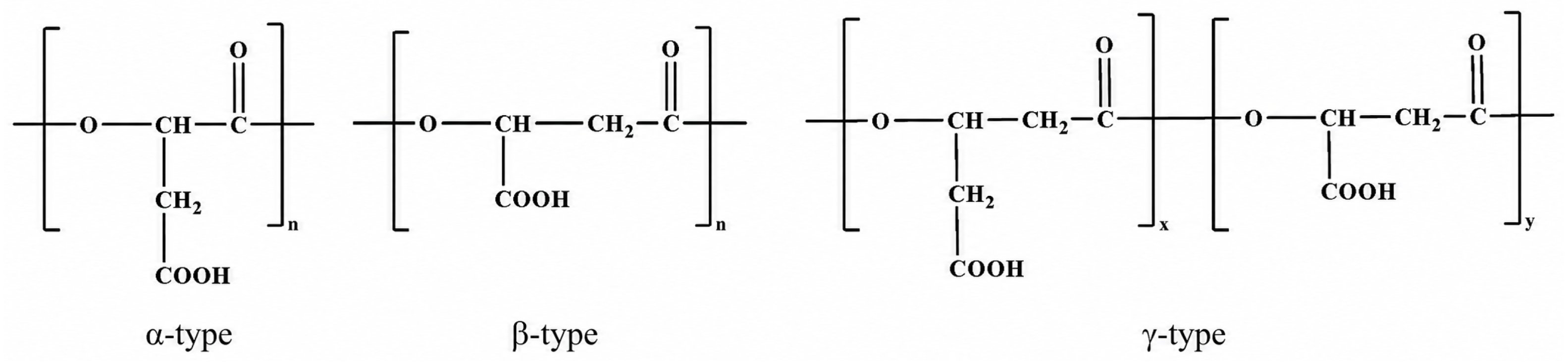
Figure 1. Representative α-, β-, and γ-type structures of poly(malic acid).
Fermentation 12 00397 g001
Figure 2. Simplified carbon-flow framework from glucose to PMLA in A. pullulans. PPP, pentose phosphate pathway; G6PDH, glucose-6-phosphate dehydrogenase; PEP, phosphoenolpyruvate; OAA, oxaloacetate; PEPC, phosphoenolpyruvate carboxylase; PYC, pyruvate carboxylase; MDH, malate dehydrogenase; MLS, malate synthase; PMS, PMLA synthetase [62,69]. Blue, green, purple, and orange boxes denote glycolytic inputs, malate-forming intermediates, auxiliary pathways, and PMLA, respectively; solid and dashed arrows indicate the main and aux-iliary routes, respectively.
Fermentation 12 00397 g002
Table 1. Representative PMLA fermentations by Aureobasidium strains, sorted from highest to lowest reported PMLA titer.
StrainCarbon SourcePMLA
Titer
(g/L)
Time to
Reported Titer
(h)
Average
Volumetric Productivity,
QP, avg
[g/(L·h)]
Reported Yield
(g/g)
Molecular Weight
(kDa)
A. pullulans MCW [27]Glucose152.5 a961.591.13 a205.4
Aureobasidium sp. P6 [59]Glucose118.3 a1680.700.87 a81.37
A. pullulans HA-4D [60]Jerusalem artichoke hydrolysate114.41680.680.74 b
A. pullulans ZD-3d [61]Raw cassava hydrolysate101.91320.770.40 b
Engineered A. pullulans ZX-10 [62]Glucose96.71080.900.68 b
A. pullulans FJ-PYC [63]Sugarcane molasses81.51200.680.62 d
A. pullulans ZX-10 [25]Soy molasses62.62160.290.69 d
A. pullulans CCTCC M2012223 [64]Raw sweet potato hydrolysate57.5NRNRNR
A. pullulans ipe-1 [65]Glucose/xylose mixture56.31481.17NR19.32
A. pullulans NRRL Y-2311-1 [66]Rubberwood hydrolysate50.371440.35NR
A. pullulans NRRL Y-2311-1 [6]Barley straw hydrolysate43.541440.300.48 b
A. pullulans NRRL Y-2311-1 [17]Bamboo shoot shell hydrolysate42.631440.300.35 c9.162
A. pullulans NRRL 50383 [67]Wheat straw hydrolysate23.51440.16NR
NR, not reported or not reliably verifiable from the primary source. QP,avg is the average volumetric productivity calculated as the reported titer divided by the reported cultivation time. Yield bases: a g Ca2+-PMA per g consumed glucose; b g PMLA per g sugar or glucose as reported; c g acid-form PMLA per g initial total reducing sugars; d g malic-acid equivalent per g consumed sugar. Because the product and denominator bases differ, these yields are not directly comparable.
Table 2. PMLA production from carbohydrate-rich biomass feedstocks and lignocellulosic hydrolysates.
StrainFeedstockFeedstock Class and Principal Fermentable CarbohydrateProcessing or Fermentation BasisPMLA Titer
(g/L)
A. pullulans ZX-10 [26]Sugarcane juiceSucrose-rich juiceConcentrated juice; fed-batch116.3
A. pullulans HA-4D [60]Jerusalem artichoke tuberNon-lignocellulosic, inulin-rich tuber; mainly fructose and glucose after hydrolysisHydrolysate with 100 g/L reducing sugar; PMLA/pullulan co-production114.4
A. pullulans ZD-3d [61]Raw cassavaNon-lignocellulosic, starch-rich root; glucose after hydrolysisRaw cassava hydrolysate; fed-batch cell recycle101.9
A. pullulans ZX-10 [25]Soy molassesSoluble-sugar processing by-productFed-batch62.6
A. pullulans CCTCC M2012223 [64]Raw sweet potatoNon-lignocellulosic, starch-rich tuber; glucose after hydrolysisHydrolysate; immobilized cells in fibrous-bed bioreactor57.5
A. pullulans NRRL Y-2311-1 [92]Bamboo shoot shellLignocellulosic processing residue; mixed reducing sugars after hydrolysisBSSH adjusted to 120 g/L initial total reducing sugars; CaCO3 40 g/L; inoculum 6.0% (v/v)54.54 (validation mean, n = 3; SD NR)
A. pullulans NRRL Y-2311-1 [66]RubberwoodWoody lignocellulose; glucose/xylose after hydrolysisDilute-acid pretreatment, enzymatic hydrolysis, and co-fermentation50.37
A. pullulans NRRL Y-2311-1 [6]Barley strawLignocellulosic residue; mixed sugars after hydrolysisDilute-acid hydrolysate; eggshell detoxification and buffering43.54
A. pullulans NRRL Y-2311-1 [17]Bamboo shoot shellLignocellulosic processing residue; mixed reducing sugars after hydrolysisBSSH at 125 g/L initial total reducing sugars; 6% inoculum; no external nitrogen42.63
A. pullulans ipe-1 [91]Jerusalem artichoke tuberNon-lignocellulosic, inulin-rich tuber; mainly fructose/glucose after hydrolysis0.06 M HNO3 hydrolysate; luffa immobilization; repeated batch24.9
A. pullulans ipe-1 [72]Sugarcane bagasseLignocellulosic residue; mixed sugars after hydrolysisAcid/enzyme hydrolysate; 120 g/L sugar in selected hydrolysate23.2
Disclaimer/Publisher’s Note: The statements, opinions and data contained in all publications are solely those of the individual author(s) and contributor(s) and not of MDPI and/or the editor(s). MDPI and/or the editor(s) disclaim responsibility for any injury to people or property resulting from any ideas, methods, instructions or products referred to in the content.