


Fermentative Production of Poly(β-L-malic Acid) from Renewable Feedstocks: Process Advances and Bamboo Shoot Shell Hydrolysate as an Emerging Case Study

Abstract
1. Introduction
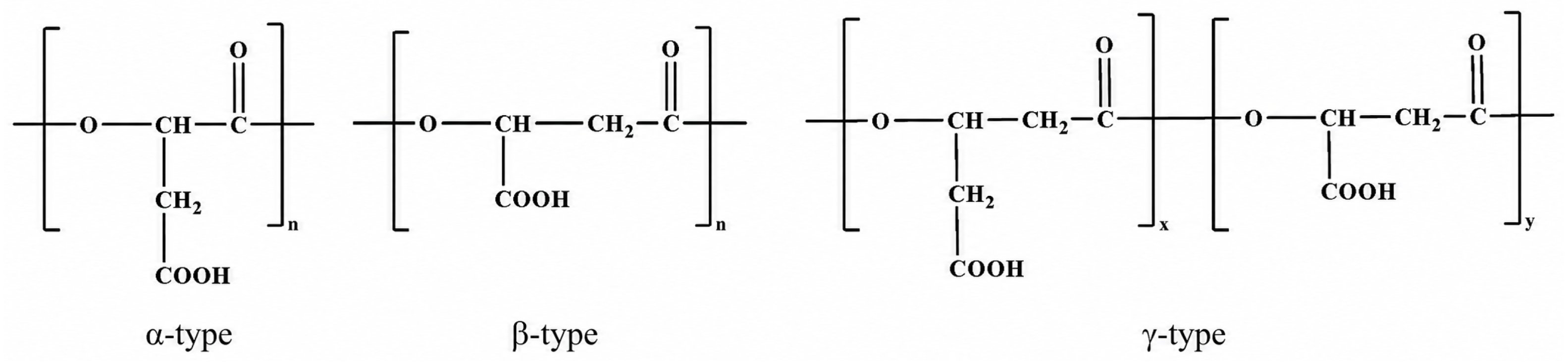
2. Structural Properties, Production Methods, and Applications of PMLA
3. PMLA-Producing Microorganisms and the Advantages of Aureobasidium pullulans
4. Factors Affecting PMLA Production by Aureobasidium pullulans Fermentation
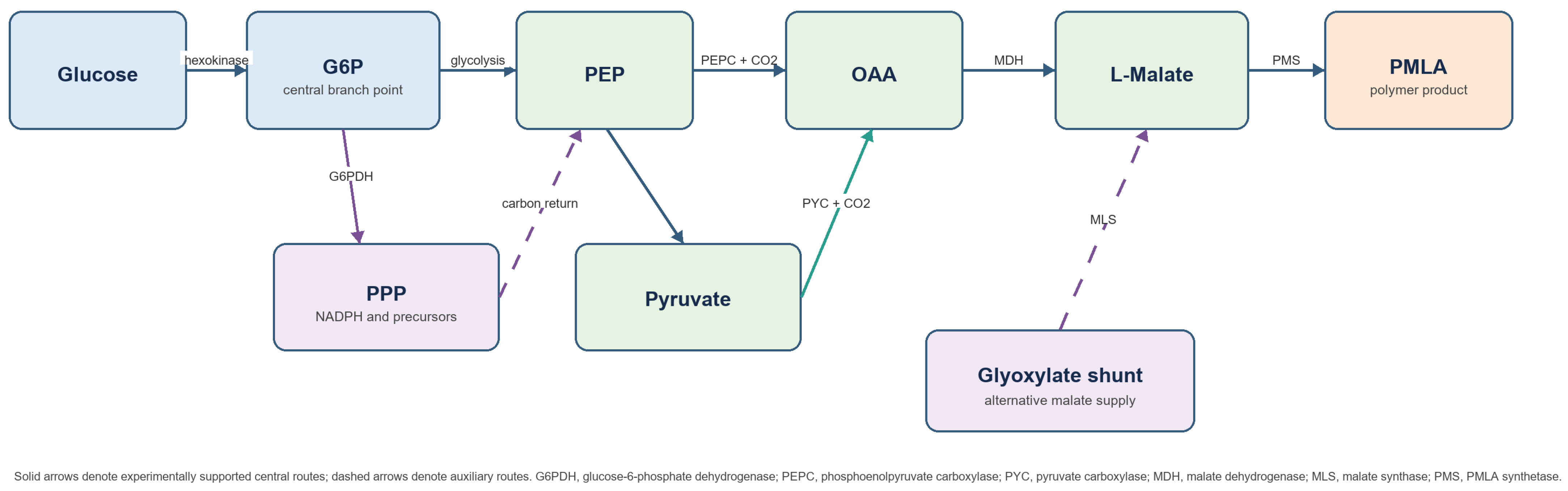
5. Advances in PMLA Production from Fermentable Sugars Derived from Agricultural and Forestry Residues
6. Challenges and Future Perspectives
7. Conclusions
Supplementary Materials
Author Contributions
Funding
Institutional Review Board Statement
Informed Consent Statement
Data Availability Statement
Conflicts of Interest
Abbreviations
| PMLA | Poly(β-L-malic acid) |
| PMA | Polymalic acid |
| L-MA | L-malic acid |
| BSS | Bamboo shoot shell |
| BSSH | Bamboo shoot shell enzymatic hydrolysate |
| DO | Dissolved oxygen |
| 5-HMF | 5-Hydroxymethylfurfural |
| G6P | Glucose-6-phosphate |
| PPP | Pentose phosphate pathway |
| PEP | Phosphoenolpyruvate |
| OAA | Oxaloacetate |
| PEPC | Phosphoenolpyruvate carboxylase |
| PYC | Pyruvate carboxylase |
| MDH | Malate dehydrogenase |
| PMS | PMLA synthetase |
| rTCA | Reductive tricarboxylic acid pathway |
References
- Yadav, S.; Pal, D.B. A Sustainable Perspective on Biowaste-to-Biofuel for a Bio-based Economy. In Biomass-Based Clean Technologies for Sustainable Development; Springer Nature: Singapore, 2024; pp. 51–70. [Google Scholar] [CrossRef] [Scilit]
- Kumar, S.; Lohan, S.K.; Parihar, D.S. Biomass Energy from Agriculture. In Handbook of Energy Management in Agriculture; Springer: Singapore, 2023; pp. 181–199. [Google Scholar] [CrossRef] [Scilit]
- Wijerathna, P.A.K.C.; Udayagee, K.P.P.; Idroos, F.S.; Manage, P.M. Waste Biomass Valorization and Its Application in the Environment. In Sustainable Valorization of Agriculture & Food Waste Biomass; Springer: Singapore, 2023; pp. 1–28. [Google Scholar] [CrossRef] [Scilit]
- Tuck, C.O.; Pérez, E.; Horváth, I.T.; Sheldon, R.A.; Poliakoff, M. Valorization of Biomass: Deriving More Value from Waste. Science 2012, 337, 695–699. [Google Scholar] [CrossRef] [Scilit]
- Agnihotri, S.; Heggset, E.B.; de Lima, J.A.; Horváth, I.S.; Tanase-Opedal, M. Cascade Processing of Agricultural, Forest, and Marine Waste Biomass for Sustainable Production of Food, Feed, Biopolymers, and Bioenergy. Energies 2025, 18, 4093. [Google Scholar] [CrossRef] [Scilit]
- Yegin, S.; Saha, B.C.; Kennedy, G.J.; Leathers, T.D. Valorization of egg shell as a detoxifying and buffering agent for efficient polymalic acid production by Aureobasidium pullulans NRRL Y-2311-1 from barley straw hydrolysate. Bioresour. Technol. 2019, 278, 130–137. [Google Scholar] [CrossRef] [Scilit]
- Zou, X.; Li, S.; Wang, P.; Li, B.; Feng, Y.; Yang, S.T. Sustainable production and biomedical application of polymalic acid from renewable biomass and food processing wastes. Crit. Rev. Biotechnol. 2021, 41, 216–228. [Google Scholar] [CrossRef] [Scilit]
- Bystriakova, N.; Kapos, V.; Lysenko, I.; Stapleton, C.M.A. Distribution and conservation status of forest bamboo biodiversity in the Asia-Pacific Region. Biodivers. Conserv. 2003, 12, 1833–1841. [Google Scholar] [CrossRef] [Scilit]
- Satya, S.; Bal, L.M.; Singhal, P.; Naik, S.N. Bamboo shoot processing: Food quality and safety aspect (a review). Trends Food Sci. Technol. 2010, 21, 181–189. [Google Scholar] [CrossRef] [Scilit]
- Scurlock, J.M.O.; Dayton, D.C.; Hames, B. Bamboo: An overlooked biomass resource? Biomass Bioenergy 2000, 19, 229–244. [Google Scholar] [CrossRef] [Scilit]
- Liu, T.-H. Surveys of harvest technology of winter bamboo shoots. J. For. Res. 2011, 22, 487–490. [Google Scholar] [CrossRef] [Scilit]
- Lin, Z.; Chen, J.; Zhang, J.; Brooks, M.S.-L. Potential for value-added utilization of bamboo shoot processing waste: Recommendations for a biorefinery approach. Food Bioprocess Technol. 2018, 11, 901–912. [Google Scholar] [CrossRef] [Scilit]
- Food and Agriculture Organization of the United Nations. Bamboo: Statistics. Available online: https://www.fao.org/forestry/nwfp/statistics/bamboo/en (accessed on 14 August 2026).
- Yang, Y.; Fan, F.; Xie, J.; Fang, K.; Zhang, Q.; Chen, Y.; Cao, X.; Deng, Z. Isolation and characterization of cellulosic fibers from bamboo shoot shell. Polym. Bull. 2023, 80, 1817–1829. [Google Scholar] [CrossRef] [Scilit]
- Li, J.; Lin, L.; Sun, T.; Xu, J.; Ji, J.; Liu, Q.; Tian, C. Direct production of commodity chemicals from lignocellulose using Myceliophthora thermophila. Metab. Eng. 2020, 61, 416–426. [Google Scholar] [CrossRef] [Scilit]
- Yan, X.; Li, D.; Ma, X.; Li, J. Bioconversion of renewable lignocellulosic biomass into multicomponent substrate via pressurized hot water pretreatment for bioplastic polyhydroxyalkanoate accumulation. Bioresour. Technol. 2021, 339, 125667. [Google Scholar] [CrossRef] [Scilit]
- Song, W.; Wang, J.; Fang, Y.; Yao, X.; Guo, X. Synergistic valorization of agricultural and marine waste: Enhanced production of poly(malic acid) by Aureobasidium pullulans using bamboo shoot shells and seashell powder. Molecules 2026, in press. [Google Scholar]
- Nagata, N.; Nakahara, T.; Tabuchi, T.; Morita, R.; Brewer, J.R.; Fujishige, S. Characterization of Poly(β-L-malic acid) Produced by Aureobasidium sp. A-91. Polym. J. 1993, 25, 585–592. [Google Scholar] [CrossRef] [Scilit]
- Chi, Z.; Liu, G.L.; Liu, C.G.; Chi, Z.M. Poly(β-l-malic acid) (PMLA) from Aureobasidium spp. and its current proceedings. Appl. Microbiol. Biotechnol. 2016, 100, 3841–3851. [Google Scholar] [CrossRef] [Scilit]
- Doerhoefer, S.; Windisch, C.; Angerer, B.; Lavrik, O.I.; Lee, B.S.; Holler, E. The DNA-polymerase inhibiting activity of poly(β-l-malic acid) in nuclear extract during the cell cycle of Physarum polycephalum. Eur. J. Biochem. 2002, 269, 1253–1258. [Google Scholar] [CrossRef] [Scilit]
- Zhang, J.; Chen, D.; Liang, G.; Xu, W.; Tao, Z. Biosynthetic Polymalic Acid as a Delivery Nanoplatform for Translational Cancer Medicine. Trends Biochem. Sci. 2021, 46, 213–224. [Google Scholar] [CrossRef] [Scilit]
- Kajiyama, T.; Taguchi, T.; Kobayashi, H.; Kataoka, K.; Tanaka, J. Synthesis of high molecular weight poly(α,β-malic acid) for biomedical use by direct polycondensation. Polym. Degrad. Stab. 2003, 81, 525–530. [Google Scholar] [CrossRef] [Scilit]
- Coulembier, O.; Degée, P.; Hedrick, J.L.; Dubois, P. From controlled ring-opening polymerization to biodegradable aliphatic polyester: Especially poly(β-malic acid) derivatives. Prog. Polym. Sci. 2006, 31, 723–747. [Google Scholar] [CrossRef] [Scilit]
- Guerin, P.; Vert, M.; Braud, C.; Lenz, R.W. Optically active poly(β-L-malic acid). Polym. Bull. 1985, 14, 187–192. [Google Scholar] [CrossRef] [Scilit]
- Cheng, C.; Zhou, Y.; Lin, M.; Wei, P.; Yang, S.T. Polymalic acid fermentation by Aureobasidium pullulans for malic acid production from soybean hull and soy molasses: Fermentation kinetics and economic analysis. Bioresour. Technol. 2017, 223, 166–174. [Google Scholar] [CrossRef] [Scilit]
- Wei, P.; Cheng, C.; Lin, M.; Zhou, Y.; Yang, S.-T. Production of poly(malic acid) from sugarcane juice in fermentation by Aureobasidium pullulans: Kinetics and process economics. Bioresour. Technol. 2017, 224, 581–589. [Google Scholar] [CrossRef] [Scilit]
- Wang, Y.K.; Chi, Z.; Zhou, H.X.; Liu, G.L.; Chi, Z.M. Enhanced production of Ca2+-polymalate (PMA) with high molecular mass by Aureobasidium pullulans var. pullulans MCW. Microb. Cell Factories 2015, 14, 115. [Google Scholar] [CrossRef] [Scilit]
- Huang, X.; Xu, L.; Qian, H.; Wang, X.; Tao, Z. Polymalic acid for translational nanomedicine. J. Nanobiotechnol. 2022, 20, 295. [Google Scholar] [CrossRef] [Scilit]
- Osanai, S.; Nakamura, K. Effects of complexation between liposome and poly(malic acid) on aggregation and leakage behaviour. Biomaterials 2000, 21, 867–876. [Google Scholar] [CrossRef] [Scilit]
- Ulery, B.D.; Nair, L.S.; Laurencin, C.T. Biomedical applications of biodegradable polymers. J. Polym. Sci. Part B Polym. Phys. 2011, 49, 832–864. [Google Scholar] [CrossRef] [Scilit]
- Caruelle, J.P.; Barritault, D.; Jeanbat-Mimaud, V.; Cammas-Marion, S.; Langlois, V.; Guerin, P.; Barbaud, C. Bioactive functionalized polymer of malic acid for bone repair and muscle regeneration. J. Biomater. Sci. Polym. Ed. 2000, 11, 979–991. [Google Scholar] [CrossRef] [Scilit]
- Loyer, P.; Cammas-Marion, S. Natural and synthetic poly(malic acid)-based derivatives: A family of versatile biopolymers for the design of drug nanocarriers. J. Drug Target. 2014, 22, 556–575. [Google Scholar] [CrossRef] [Scilit]
- Shimada, K.; Matsushima, K.; Fukumoto, J.; Yamamoto, T. Poly-(L)-malic acid: A new protease inhibitor from Penicillium cyclopium. Biochem. Biophys. Res. Commun. 1969, 35, 619–624. [Google Scholar] [CrossRef] [Scilit]
- Fischer, H.; Erdmann, S.; Holler, E. An unusual polyanion from Physarum polycephalum that inhibits homologous DNA polymerase α in vitro. Biochemistry 1989, 28, 5219–5226. [Google Scholar] [CrossRef] [Scilit]
- Cao, W.; Deng, T.; Shen, F.; Rong, F.; Qiao, C.; Wan, Y. Electrolytic stimulation in aid of poly(β-L-malic acid) production by Aureobasidium melanogenum ipe-1. Int. J. Biol. Macromol. 2022, 223, 722–731. [Google Scholar] [CrossRef] [Scilit]
- Wang, G.; Shi, B.; Zhang, P.; Zhao, T.; Yin, H.; Qiao, C. Effects of corn steep liquor on β-poly(l-malic acid) production in Aureobasidium melanogenum. AMB Express 2020, 10, 211. [Google Scholar] [CrossRef] [Scilit]
- Lee, B.-S.; Holler, E. β-Poly(L-malate) production by non-growing microplasmodia of Physarum polycephalum: Effects of metabolic intermediates and inhibitors. FEMS Microbiol. Lett. 2000, 193, 69–74. [Google Scholar] [CrossRef] [Scilit]
- Berka, R.M.; Grigoriev, I.V.; Otillar, R.; Salamov, A.; Grimwood, J.; Reid, I.; Ishmael, N.; John, T.; Darmond, C.; Moisan, M.C.; et al. Comparative genomic analysis of the thermophilic biomass-degrading fungi Myceliophthora thermophila and Thielavia terrestris. Nat. Biotechnol. 2011, 29, 922–927. [Google Scholar] [CrossRef] [Scilit]
- Liu, J.; Chen, M.; Gu, S.; Fan, R.; Zhao, Z.; Sun, W.; Yao, Y.; Li, J.; Tian, C. Independent metabolism of oligosaccharides is the keystone of synchronous utilization of cellulose and hemicellulose in Myceliophthora. PNAS Nexus 2024, 3, pgae053. [Google Scholar] [CrossRef] [Scilit]
- Gu, S.; Wu, T.; Zhao, J.; Sun, T.; Zhao, Z.; Zhang, L.; Li, J.; Tian, C. Rewiring metabolic flux to simultaneously improve malate production and eliminate by-product succinate accumulation by Myceliophthora thermophila. Microb. Biotechnol. 2024, 17, e14410. [Google Scholar] [CrossRef] [Scilit]
- Zhang, Y.; Fan, R.; Wu, T.; Gu, S.; Liu, D.; Lin, L.; Wang, M.; Li, J.; Tian, C. Redox engineering of thermophilic fungus Myceliophthora thermophila enhances production of L-malic acid by consolidated bioprocessing. Mycology 2026, 17, 217–232. [Google Scholar] [CrossRef] [Scilit]
- Zalar, P.; Gostinčar, C.; de Hoog, G.S.; Uršič, V.; Sudhadham, M.; Gunde-Cimerman, N. Redefinition of Aureobasidium pullulans and its varieties. Stud. Mycol. 2008, 61, 21–38. [Google Scholar] [CrossRef] [Scilit]
- Qiao, C.; Sun, G.; Li, H.; Cao, W.; Shen, F.; Fan, R.; Wan, Y. Fractionation and characterization of poly(β-L-malic acid) produced by Aureobasidium melanogenum ipe-1. Int. J. Biol. Macromol. 2023, 242, 124720. [Google Scholar] [CrossRef] [Scilit]
- Xiao, D.; Driller, M.; Dielentheis-Frenken, M.; Haala, F.; Kohl, P.; Stein, K.; Blank, L.M.; Tiso, T. Advances in Aureobasidium research: Paving the path to industrial utilization. Microb. Biotechnol. 2024, 17, e14535. [Google Scholar] [CrossRef] [Scilit]
- Jiang, N.; Liang, Y.M.; Tian, C.M. Aureobasidium pini sp. nov. from pine needle in China. Phytotaxa 2019, 402, 199–206. [Google Scholar] [CrossRef] [Scilit]
- Gostinčar, C.; Ohm, R.A.; Kogej, T.; Sonjak, S.; Turk, M.; Zajc, J.; Zalar, P.; Grube, M.; Sun, H.; Han, J.; et al. Genome sequencing of four Aureobasidium pullulans varieties: Biotechnological potential, stress tolerance, and description of new species. BMC Genom. 2014, 15, 549. [Google Scholar] [CrossRef] [Scilit]
- Feng, J.; Li, T.; Zhang, X.; Chen, J.; Zhao, T.; Zou, X. Efficient production of polymalic acid from xylose mother liquor, an environmental waste from the xylitol industry, by a T-DNA-based mutant of Aureobasidium pullulans. Appl. Microbiol. Biotechnol. 2019, 103, 6519–6527. [Google Scholar] [CrossRef] [Scilit]
- Christov, L.P.; Myburgh, J.; O’Neill, F.H.; Van Tonder, A.; Prior, B.A. Modification of the Carbohydrate Composition of Sulfite Pulp by Purified and Characterized β-Xylanase and β-Xylosidase of Aureobasidium pullulans. Biotechnol. Prog. 1999, 15, 196–200. [Google Scholar] [CrossRef] [Scilit]
- Thambugala, K.M.; Ariyawansa, H.A.; Li, Y.M.; Boonmee, S.; Hongsanan, S.; Tian, Q.; Singtripop, C.; Bhat, D.J.; Camporesi, E.; Jayawardena, R.; et al. Dothideales . Fungal Divers. 2014, 68, 105–158. [Google Scholar] [CrossRef] [Scilit]
- Wang, C.B.; Jiang, N.; Tu, Y.; Zhu, Y.Q.; Xue, H.; Li, Y. Aureobasidium aerium (Saccotheciaceae, Dothideales), a new yeast-like fungus from the air in Beijing, China. Phytotaxa 2022, 544, 185–192. [Google Scholar] [CrossRef] [Scilit]
- Humphries, Z.; Seifert, K.A.; Hirooka, Y.; Visagie, C.M. A new family and genus in Dothideales for Aureobasidium-like species isolated from house dust. IMA Fungus 2017, 8, 299–315. [Google Scholar] [CrossRef] [Scilit]
- Petrucco, C.A.; Crocker, A.W.; D’Alessandro, A.; Medina, E.M.; Gorman, O.; McNeill, J.; Gladfelter, A.S.; Lew, D.J. Tools for live-cell imaging of cytoskeletal and nuclear behavior in the unconventional yeast, Aureobasidium pullulans. Mol. Biol. Cell 2024, 35, br10. [Google Scholar] [CrossRef] [Scilit]
- Li, B.X.; Zhang, N.; Peng, Q.; Yin, T.; Guan, F.F.; Wang, G.L.; Li, Y. Production of pigment-free pullulan by swollen cell in Aureobasidium pullulans NG which cell differentiation was affected by pH and nutrition. Appl. Microbiol. Biotechnol. 2009, 84, 293–300. [Google Scholar] [CrossRef] [Scilit]
- Zhang, H.; Cai, J.; Dong, J.; Zhang, D.; Huang, L.; Xu, Z.; Cen, P. High-level production of poly (β-l-malic acid) with a new isolated Aureobasidium pullulans strain. Appl. Microbiol. Biotechnol. 2011, 92, 295–303. [Google Scholar] [CrossRef] [Scilit]
- Jiang, L. Optimization of fermentation conditions for pullulan production by Aureobasidium pullulan using response surface methodology. Carbohydr. Polym. 2010, 79, 414–417. [Google Scholar] [CrossRef] [Scilit]
- Nagata, N.; Nakahara, T.; Tabuchi, T. Fermentative Production of Poly(β-L-malic acid), a Polyelectrolytic Biopolyester, by Aureobasidium sp. Biosci. Biotechnol. Biochem. 1993, 57, 638–642. [Google Scholar] [CrossRef] [Scilit]
- Liu, F.; Zhang, J.; Zhang, L.; Diao, M.; Ling, P.; Wang, F. Correlation between the synthesis of pullulan and melanin in Aureobasidium pullulans. Int. J. Biol. Macromol. 2021, 177, 252–260. [Google Scholar] [CrossRef] [Scilit]
- Zhang, H.Q.; Chi, Z.; Liu, G.L.; Zhang, M.; Hu, Z.; Chi, Z.M. Metschnikowia bicuspidata associated with a milky disease in Eriocheir sinensis and its effective treatment by Massoia lactone. Microbiol. Res. 2021, 242, 126641. [Google Scholar] [CrossRef] [Scilit]
- Ma, Y.; Wang, G.-Y.; Liu, G.-L.; Wang, Z.-P.; Chi, Z.-M. Overproduction of poly(β-malic acid) (PMA) from glucose by a novel Aureobasidium sp. P6 strain isolated from mangrove system. Appl. Microbiol. Biotechnol. 2013, 97, 8931–8939. [Google Scholar] [CrossRef] [Scilit]
- Xia, J.; Xu, J.; Liu, X.; Xu, J.; Wang, X.; Li, X. Economic co-production of poly(malic acid) and pullulan from Jerusalem artichoke tuber by Aureobasidium pullulans HA-4D. BMC Biotechnol. 2017, 17, 20. [Google Scholar] [CrossRef] [Scilit]
- Liu, W.; Si, Z.; Zhang, H.; Wei, P.; Xu, Z. Efficient poly(β-L-malic acid) production from cassava hydrolysate by cell recycle of Aureobasidium pullulans. Appl. Microbiol. Biotechnol. 2022, 106, 2855–2868. [Google Scholar] [CrossRef] [Scilit]
- Qin, Z.; Feng, J.; Li, Y.; Zheng, Y.; Moore, C.; Yang, S.-T. Engineering the reductive tricarboxylic acid pathway in Aureobasidium pullulans for enhanced biosynthesis of poly-L-malic acid. Bioresour. Technol. 2024, 393, 130122. [Google Scholar] [CrossRef] [Scilit]
- Feng, J.; Yang, J.; Yang, W.; Chen, J.; Jiang, M.; Zou, X. Metabolome- and genome-scale model analyses for engineering of Aureobasidium pullulans to enhance polymalic acid and malic acid production from sugarcane molasses. Biotechnol. Biofuels 2018, 11, 94. [Google Scholar] [CrossRef] [Scilit]
- Zan, Z.; Zou, X. Efficient production of polymalic acid from raw sweet potato hydrolysate with immobilized cells of Aureobasidium pullulans CCTCC M2012223 in aerobic fibrous bed bioreactor. J. Chem. Technol. Biotechnol. 2013, 88, 1822–1827. [Google Scholar] [CrossRef] [Scilit]
- Cao, W.; Luo, J.; Qi, B.; Zhao, J.; Qiao, C.; Ding, L.; Su, Y.; Wan, Y. β-poly(l-malic acid) production by fed-batch culture of Aureobasidium pullulans ipe-1 with mixed sugars. Eng. Life Sci. 2014, 14, 180–189. [Google Scholar] [CrossRef] [Scilit]
- Zeng, D.; Zhang, Y.; Ma, X.; Li, J.; Yin, F.; Li, D.; Bie, W. Biosynthesis of poly(β-L-malic acid) from rubberwood enzymatic hydrolysates in co-fermentation by Aureobasidium pullulans. Int. J. Biol. Macromol. 2024, 257, 128605. [Google Scholar] [CrossRef] [Scilit]
- Leathers, T.D.; Manitchotpisit, P. Production of poly(β-l-malic acid) (PMA) from agricultural biomass substrates by Aureobasidium pullulans. Biotechnol. Lett. 2013, 35, 83–89. [Google Scholar] [CrossRef] [Scilit]
- Wecker, A.; Onken, U. Influence of dissolved oxygen concentration and shear rate on the production of pullulan by Aureobasidium pullulans. Biotechnol. Lett. 1991, 13, 155–160. [Google Scholar] [CrossRef] [Scilit]
- Yu, H.; Liu, B.; Luo, J.; Cao, W.; Qiao, C.; Wan, Y. Toward understanding the key enzymes involved in β-poly(L-malic acid) biosynthesis by Aureobasidium pullulans ipe-1. Eng. Life Sci. 2018, 18, 379–386. [Google Scholar] [CrossRef] [Scilit]
- Liu, S.J.; Steinbüchel, A. Production of poly(malic acid) from different carbon sources and its regulation in Aureobasidium pullulans. Biotechnol. Lett. 1997, 19, 11–14. [Google Scholar] [CrossRef] [Scilit]
- Yin, H.; Fan, X.; Tang, W.; Bian, Y.; Chen, S.; Qiao, C. Effects of amino acids on polymalic acid fermentation by Aureobasidium pullulans. Sci. Technol. Food Ind. 2016, 37, 242–246. (In Chinese) [Google Scholar] [CrossRef]
- Cao, W.; Cao, W.; Shen, F.; Luo, J.; Yin, J.; Qiao, C.; Wan, Y. Membrane-assisted β-poly(L-malic acid) production from bagasse hydrolysates by Aureobasidium pullulans ipe-1. Bioresour. Technol. 2020, 295, 122260. [Google Scholar] [CrossRef] [Scilit]
- Zou, X.; Cheng, C.; Feng, J.; Song, X.; Lin, M.; Yang, S.T. Biosynthesis of polymalic acid in fermentation: Advances and prospects for industrial application. Crit. Rev. Biotechnol. 2019, 39, 408–421. [Google Scholar] [CrossRef] [Scilit]
- Wang, Y.; Song, X.; Zhang, Y.; Wang, B.; Zou, X. Effects of nitrogen availability on polymalic acid biosynthesis in the yeast-like fungus Aureobasidium pullulans. Microb. Cell Factories 2016, 15, 146. [Google Scholar] [CrossRef] [Scilit]
- Chang, Y.; Zhao, X.Q.; Zhang, X.; Jiao, Y. Corn Steep Liquor as an Efficient Bioresource for Functional Components Production by Biotransformation Technology. Foods 2025, 14, 2158. [Google Scholar] [CrossRef] [Scilit]
- Peñalva, M.A.; Arst, H.N. Regulation of Gene Expression by Ambient pH in Filamentous Fungi and Yeasts. Microbiol. Mol. Biol. Rev. 2002, 66, 426–446. [Google Scholar] [CrossRef] [Scilit]
- Cao, W.; Qi, B.; Zhao, J.; Qiao, C.; Su, Y.; Wan, Y. Control strategy of pH, dissolved oxygen concentration and stirring speed for enhancing β-poly(malic acid) production by Aureobasidium pullulans ipe-1. J. Chem. Technol. Biotechnol. 2013, 88, 808–817. [Google Scholar] [CrossRef] [Scilit]
- Topić Popović, N.; Lorencin, V.; Strunjak-Perović, I.I.; Čož-Rakovac, R. Shell Waste Management and Utilization: Mitigating Organic Pollution and Enhancing Sustainability. Appl. Sci. 2023, 13, 623. [Google Scholar] [CrossRef] [Scilit]
- Narayanan, R.; Dutta, S.; Seshadri, S.K. Hydroxy apatite coatings on Ti-6Al-4V from seashell. Surf. Coat. Technol. 2006, 200, 4720–4730. [Google Scholar] [CrossRef] [Scilit]
- Ulagesan, S.; Krishnan, S.; Nam, T.J.; Choi, Y.H. A Review of Bioactive Compounds in Oyster Shell and Tissues. Front. Bioeng. Biotechnol. 2022, 10, 913839. [Google Scholar] [CrossRef] [Scilit]
- Li, H.Y.; Tan, Y.Q.; Zhang, L.; Zhang, Y.X.; Song, Y.H.; Ye, Y.; Xia, M.S. Bio-filler from waste shellfish shell: Preparation, characterization, and its effect on the mechanical properties on polypropylene composites. J. Hazard. Mater. 2012, 217–218, 256–262. [Google Scholar] [CrossRef] [Scilit]
- Raut, H.K.; Schwartzman, A.F.; Das, R.; Liu, F.; Wang, L.; Ross, C.A.; Fernandez, J.G. Tough and Strong: Cross-Lamella Design Imparts Multifunctionality to Biomimetic Nacre. ACS Nano 2020, 14, 9771–9779. [Google Scholar] [CrossRef] [Scilit]
- Sengupta, S.; Ergas, S.J.; Lopez-Luna, E. Investigation of Solid-Phase Buffers for Sulfur-Oxidizing Autotrophic Denitrification. Water Environ. Res. 2007, 79, 2519–2526. [Google Scholar] [CrossRef] [Scilit]
- Mou, J.H.; Ouyang, L.F.; Qin, Z.H.; Miao, Y.H.; Jiang, X.T.; Jong, M.C.; Tang, M.C.; Du, C.; Chen, S.S.; Lin, C.S.K. Green synthesis of lactic acid and carbon dots using food waste and seashell waste. Green Chem. 2024, 26, 8282–8297. [Google Scholar] [CrossRef] [Scilit]
- Tu, G.; Wang, Y.; Ji, Y.; Zou, X. The effect of Tween 80 on the polymalic acid and pullulan production by Aureobasidium pullulans CCTCC M2012223. World J. Microbiol. Biotechnol. 2015, 31, 219–226. [Google Scholar] [CrossRef] [Scilit]
- Yin, H.; Gao, C.; Ye, K.; Zhao, T.; Sun, A.; Qiao, C. Evaluation of surfactant effect on β-poly(L-malic acid) production by Aureobasidium pullulans. Biotechnol. Biotechnol. Equip. 2019, 33, 954–966. [Google Scholar] [CrossRef] [Scilit]
- Yang, J.; Yang, W.; Feng, J.; Chen, J.; Jiang, M.; Zou, X. Enhanced polymalic acid production from the glyoxylate shunt pathway under exogenous alcohol stress. J. Biotechnol. 2018, 275, 24–30. [Google Scholar] [CrossRef] [Scilit]
- Gallezot, P. Conversion of biomass to selected chemical products. Chem. Soc. Rev. 2012, 41, 1538–1558. [Google Scholar] [CrossRef] [Scilit]
- Li, J.; Chen, B.; Gu, S.; Zhao, Z.; Liu, Q.; Sun, T.; Zhang, Y.; Wu, T.; Liu, D.; Sun, W.; et al. Coordination of consolidated bioprocessing technology and carbon dioxide fixation to produce malic acid directly from plant biomass in Myceliophthora thermophila. Biotechnol. Biofuels 2021, 14, 186. [Google Scholar] [CrossRef] [Scilit]
- Xia, J.; Li, R.; He, A.; Xu, J.; Liu, X.; Li, X.; Xu, J. Production of poly(β-l-malic acid) by Aureobasidium pullulans HA-4D under solid-state fermentation. Bioresour. Technol. 2017, 244, 289–295. [Google Scholar] [CrossRef] [Scilit]
- Cao, W.; Wang, Y.; Shen, F.; Luo, J.; Yin, J.; Qiao, C.; Wan, Y. Efficient β-poly(l-malic acid) production from Jerusalem artichoke by Aureobasidium pullulans ipe-1 immobilized in luffa sponge matrices. Bioresour. Technol. 2019, 288, 121497. [Google Scholar] [CrossRef] [Scilit]
- Song, W. Study on the Fermentative Production of Poly(β-L-malic Acid) from Bamboo Shoot Processing Waste. Master’s Thesis, Chinese Academy of Forestry, Beijing, China, 2026. (In Chinese) [Google Scholar]
- Sharma, A.K.; Dutt, D.; Upadhyaya, J.S.; Roy, T.K. Anatomical, morphological, and chemical characterization of Bambusa tulda, Dendrocalamus hamiltonii, Bambusa balcooa, Malocana baccifera, Bambusa arundinacea, and Eucalyptus tereticornis. BioResources 2011, 6, 5062–5073. [Google Scholar] [CrossRef] [Scilit]
- Chongtham, N.; Bisht, M.S.; Haorongbam, S. Nutritional Properties of Bamboo Shoots: Potential and Prospects for Utilization as a Health Food. Compr. Rev. Food Sci. Food Saf. 2011, 10, 153–168. [Google Scholar] [CrossRef] [Scilit]
- Ye, L.; Zhang, J.; Zhao, J.; Luo, Z.; Tu, S.; Yin, Y. Properties of biochar obtained from pyrolysis of bamboo shoot shell. J. Anal. Appl. Pyrolysis 2015, 114, 172–178. [Google Scholar] [CrossRef] [Scilit]
- Wannapeera, J.; Worasuwannarak, N.; Pipatmanomai, S. Product yields and characteristics of rice husk, rice straw and corncob during fast pyrolysis in a drop-tube/fixed-bed reactor. Songklanakarin J. Sci. Technol. 2008, 30, 393–404. [Google Scholar]
- Qiao, C.; Sun, G.; Cao, W.; Shen, F.; Fan, R.; Wan, Y. Green process for isolation and purification of poly(β-L-malic acid) from Aureobasidium spp. by an integrated ion exchange and membrane separation. Int. J. Biol. Macromol. 2023, 253, 126505. [Google Scholar] [CrossRef] [Scilit]

| Strain | Carbon Source | PMLA Titer (g/L) | Time to Reported Titer (h) | Average Volumetric Productivity, QP, avg [g/(L·h)] | Reported Yield (g/g) | Molecular Weight (kDa) |
|---|---|---|---|---|---|---|
| A. pullulans MCW [27] | Glucose | 152.5 a | 96 | 1.59 | 1.13 a | 205.4 |
| Aureobasidium sp. P6 [59] | Glucose | 118.3 a | 168 | 0.70 | 0.87 a | 81.37 |
| A. pullulans HA-4D [60] | Jerusalem artichoke hydrolysate | 114.4 | 168 | 0.68 | 0.74 b | — |
| A. pullulans ZD-3d [61] | Raw cassava hydrolysate | 101.9 | 132 | 0.77 | 0.40 b | — |
| Engineered A. pullulans ZX-10 [62] | Glucose | 96.7 | 108 | 0.90 | 0.68 b | — |
| A. pullulans FJ-PYC [63] | Sugarcane molasses | 81.5 | 120 | 0.68 | 0.62 d | — |
| A. pullulans ZX-10 [25] | Soy molasses | 62.6 | 216 | 0.29 | 0.69 d | — |
| A. pullulans CCTCC M2012223 [64] | Raw sweet potato hydrolysate | 57.5 | NR | NR | NR | — |
| A. pullulans ipe-1 [65] | Glucose/xylose mixture | 56.31 | 48 | 1.17 | NR | 19.32 |
| A. pullulans NRRL Y-2311-1 [66] | Rubberwood hydrolysate | 50.37 | 144 | 0.35 | NR | — |
| A. pullulans NRRL Y-2311-1 [6] | Barley straw hydrolysate | 43.54 | 144 | 0.30 | 0.48 b | — |
| A. pullulans NRRL Y-2311-1 [17] | Bamboo shoot shell hydrolysate | 42.63 | 144 | 0.30 | 0.35 c | 9.162 |
| A. pullulans NRRL 50383 [67] | Wheat straw hydrolysate | 23.5 | 144 | 0.16 | NR | — |
| Strain | Feedstock | Feedstock Class and Principal Fermentable Carbohydrate | Processing or Fermentation Basis | PMLA Titer (g/L) |
|---|---|---|---|---|
| A. pullulans ZX-10 [26] | Sugarcane juice | Sucrose-rich juice | Concentrated juice; fed-batch | 116.3 |
| A. pullulans HA-4D [60] | Jerusalem artichoke tuber | Non-lignocellulosic, inulin-rich tuber; mainly fructose and glucose after hydrolysis | Hydrolysate with 100 g/L reducing sugar; PMLA/pullulan co-production | 114.4 |
| A. pullulans ZD-3d [61] | Raw cassava | Non-lignocellulosic, starch-rich root; glucose after hydrolysis | Raw cassava hydrolysate; fed-batch cell recycle | 101.9 |
| A. pullulans ZX-10 [25] | Soy molasses | Soluble-sugar processing by-product | Fed-batch | 62.6 |
| A. pullulans CCTCC M2012223 [64] | Raw sweet potato | Non-lignocellulosic, starch-rich tuber; glucose after hydrolysis | Hydrolysate; immobilized cells in fibrous-bed bioreactor | 57.5 |
| A. pullulans NRRL Y-2311-1 [92] | Bamboo shoot shell | Lignocellulosic processing residue; mixed reducing sugars after hydrolysis | BSSH adjusted to 120 g/L initial total reducing sugars; CaCO3 40 g/L; inoculum 6.0% (v/v) | 54.54 (validation mean, n = 3; SD NR) |
| A. pullulans NRRL Y-2311-1 [66] | Rubberwood | Woody lignocellulose; glucose/xylose after hydrolysis | Dilute-acid pretreatment, enzymatic hydrolysis, and co-fermentation | 50.37 |
| A. pullulans NRRL Y-2311-1 [6] | Barley straw | Lignocellulosic residue; mixed sugars after hydrolysis | Dilute-acid hydrolysate; eggshell detoxification and buffering | 43.54 |
| A. pullulans NRRL Y-2311-1 [17] | Bamboo shoot shell | Lignocellulosic processing residue; mixed reducing sugars after hydrolysis | BSSH at 125 g/L initial total reducing sugars; 6% inoculum; no external nitrogen | 42.63 |
| A. pullulans ipe-1 [91] | Jerusalem artichoke tuber | Non-lignocellulosic, inulin-rich tuber; mainly fructose/glucose after hydrolysis | 0.06 M HNO3 hydrolysate; luffa immobilization; repeated batch | 24.9 |
| A. pullulans ipe-1 [72] | Sugarcane bagasse | Lignocellulosic residue; mixed sugars after hydrolysis | Acid/enzyme hydrolysate; 120 g/L sugar in selected hydrolysate | 23.2 |
Disclaimer/Publisher’s Note: The statements, opinions and data contained in all publications are solely those of the individual author(s) and contributor(s) and not of MDPI and/or the editor(s). MDPI and/or the editor(s) disclaim responsibility for any injury to people or property resulting from any ideas, methods, instructions or products referred to in the content. |
© 2026 by the authors. Licensee MDPI, Basel, Switzerland. This article is an open access article distributed under the terms and conditions of the Creative Commons Attribution (CC BY) license.
Share and Cite
Fang, Y.; Song, W.; Guo, X. Fermentative Production of Poly(β-L-malic Acid) from Renewable Feedstocks: Process Advances and Bamboo Shoot Shell Hydrolysate as an Emerging Case Study. Fermentation 2026, 12, 397. https://doi.org/10.3390/fermentation12090397
Fang Y, Song W, Guo X. Fermentative Production of Poly(β-L-malic Acid) from Renewable Feedstocks: Process Advances and Bamboo Shoot Shell Hydrolysate as an Emerging Case Study. Fermentation. 2026; 12(9):397. https://doi.org/10.3390/fermentation12090397
Chicago/Turabian StyleFang, Yuan, Wenting Song, and Xuefeng Guo. 2026. "Fermentative Production of Poly(β-L-malic Acid) from Renewable Feedstocks: Process Advances and Bamboo Shoot Shell Hydrolysate as an Emerging Case Study" Fermentation 12, no. 9: 397. https://doi.org/10.3390/fermentation12090397
APA StyleFang, Y., Song, W., & Guo, X. (2026). Fermentative Production of Poly(β-L-malic Acid) from Renewable Feedstocks: Process Advances and Bamboo Shoot Shell Hydrolysate as an Emerging Case Study. Fermentation, 12(9), 397. https://doi.org/10.3390/fermentation12090397

