
Article

Enhancing Vin Santo Quality Using a Saccharomyces cerevisiae/Zygosaccharomyces rouxii Mixed Starter Culture


1
FoodMicroTeam s.r.l., ex Academic Spin-Off of the University of Florence, Via Santo Spirito, 14-50125 Florence, Italy
2
Department of Agriculture, Food, Environment and Forestry (DAGRI), Via San Bonaventura, 13-50145 Florence, Italy
*
Author to whom correspondence should be addressed.
Fermentation 2026, 12(8), 364; https://doi.org/10.3390/fermentation12080364

Submission received: 8 July 2026 / Revised: 30 July 2026 / Accepted: 31 July 2026 / Published: 4 August 2026
(This article belongs to the Section Fermentation for Food and Beverages)

Abstract

The principal critical issue in the production of Vin Santo passito wine is the high likelihood of fermentation arrests or sluggish fermentation, resulting in low sensory quality. A potential solution is to select indigenous yeasts from well-conducted spontaneous fermentations. In this study, a novel mixed starter culture consisting of two indigenous strains, Saccharomyces cerevisiae Ris III and Zygosaccharomyces rouxii Zr186, was evaluated. After selecting the strains and testing their compatibility, the mixed culture was used as a starter in the winemaking process of dried grapes, which was conducted in barrels of various sizes. The fermentations were monitored microbiologically for a period of 100 days to verify the ability of the inoculated strains to dominate and thus facilitate the fermentation process. Both strains dominated the fermentations: S. cerevisiae showed a 100% isolation rate immediately, while Z. rouxii achieved dominance within a month. The mixed starter demonstrated a 25% improvement in fermentation purity for the same barrel size. Sensory analyses revealed that the wines produced with the mixed starter were very consistent with one another, contrasting with those obtained through spontaneous fermentations, and received the highest scores for gustatory descriptors. In conclusion, this mixed culture represents an effective strategy for standardizing fermentation and improving the sensory quality of Vin Santo.

1. Introduction

Vin Santo is a traditional passito wine made from dried grapes produced in central and northern Italy and on the Greek island of Santorini [1,2]. The traditional production process of Italian Vin Santo consists of alcoholic fermentation of must from dried grapes, followed by ageing in wooden barrels (caratelli) for almost 3–4 years in a traditional room (vinsantaia) [3]. The EU regulates Italian Vin Santo as a Quality Wine Produced in Specific Regions under the specific Protected Designation of Origin (PDO) [4,5].
The principal critical point in the Vin Santo production is the fermentation due to the high probability of having interruptions or slowdowns because of the high sugar content (over 300 g/L) associated with high concentrations of various chemicals that can compromise the growth kinetics and/or metabolism of yeasts (organic acids, polyphenols, copper, by-products from the Maillard reaction, etc.) [6,7,8]. In the traditional production of Vin Santo, the fermentation usually does not involve starter yeasts, occurring naturally thanks to the yeast populations present on the dried grapes, in the cellar, and in some cases in the “madre”, a sediment collected from the barrels at the end of the ageing of the previous Vin Santo vintage [2,8,9]. The few studies conducted on this sediment demonstrated the absence of a metabolically active population of Saccharomyces cerevisiae, but in some cases, non-Saccharomyces yeasts, mostly belonging to the genus Zygosaccharomyces, were found [3]. However, Domizio et al. [2] showed the positive influence of Vin Santo madre on growth, persistence during fermentation, and the fermentative activities of the wine yeasts.
Given the limited availability of commercial starter strains for producing passito wines such as Vin Santo, one solution could be to select indigenous yeasts from optimally conducted spontaneous fermentations. A recent study on the microbial ecology of Vin Santo demonstrated that no single strain of S. cerevisiae dominated the entire spontaneous fermentation process, as commonly observed in spontaneous wine fermentations using non-dried grapes [8]. The absence of dominant strains during Vin Santo fermentation might be characteristic of passito wines, as a consequence of the long alcoholic fermentation duration [8]. This phenomenon complicates the commonly used approach in winemaking, which in the first instance relies on isolating the dominant S cerevisiae strains for their fitness advantage over others [10,11]. In the case of Vin Santo, using a mixed inoculum comprising several strains could be the solution. In a recent study, the authors proposed that a more effective strategy in passito wine production might be the co-inoculation of S. cerevisiae with osmotolerant non-Saccharomyces yeasts [1]. Moreover, non-Saccharomyces yeasts might modulate and enrich the sensory properties of wines by releasing volatile compounds from non-volatile precursors, thus making the bouquet of the Vin Santo more complex [12,13]. However, the choice of S. cerevisiae and non-Saccharomyces strains should be based on their metabolic compatibility to avoid competition and stress conditions, which can lead to fermentative arrests or wines with high acetic acid content and consequently characterised by low fermentative purity [8].
This study aimed to develop a mixed starter culture to ferment dried grapes for Vin Santo production. The goal was to reduce the risk of stuck fermentations and to produce wine with adequate sensorial characteristics. The yeast strains were isolated from traditional spontaneous fermentations for Vin Santo production, which were carried out without issues or defects. S. cerevisiae strain was selected for its robust fermentative capacity and adequate technological characteristics. The non-Saccharomyces strain was chosen for its ability to grow and survive for long periods in Vin Santo. Initially, the compatibility and winemaking performance of the two strains were tested as a mixed starter culture in laboratory-scale fermentations, and this was later verified in actual cellar vinifications.

2. Materials and Methods

2.1. Saccharomyces cerevisiae Strains Technological Characterisation

Six S. cerevisiae indigenous strains belonging to the yeast culture collection of the Department of Agriculture, Food, Environment and Forestry (DAGRI, University of Florence, Florence, Italy) and a commercial strain (AMR1, Enartis s.r.l., Novara, Italia), chosen for its osmotolerant properties, were tested for their fermentative capacity on the Trebbiano dried grape must (glucose 228 g/L, fructose 172 g/L, malic acid 1.95 g/L, tartaric acid 2.07 g/L, lactic acid < 0.1 g/L, free amino nitrogen (FAN) 202 mg/L, ammonia nitrogen (NH3) 98 mg/L, Cu2+ 2.34 mg/L, pH 3.3) obtained in the 2023 harvest and stored frozen at −20 °C until use. Some 250 mL Erlenmeyer flasks, sealed with a Müller valve, filled with sulfuric acid and containing 160 mL of grape must, were inoculated with the S. cerevisiae indigenous strains as axenic cultures, to achieve an initial cell concentration of approximately 2 × 10⁶ CFU/mL. The fermentations were carried out in duplicate at 25 °C. The progress of the fermentations was monitored daily by recording weight loss until stable values were observed for three to five consecutive days. The maximum fermentation rate μ (h−1) of each assayed strain was estimated by interpolating the data to the Gompertz function. Substrates and products of the main metabolism of yeasts were detected at the end of the fermentations by HPLC, as reported below.
To evaluate the osmotolerance capacity and copper resistance of yeasts, we conducted plate tests. The yeasts were grown in liquid YPD medium (which consists of 2% w/v glucose, 1% w/v yeast extract, 2% w/v tryptone, and 2% w/v agar) at 30 °C with shaking at 200 rpm until they reached the early stationary phase. We standardized the cell concentration for inoculation using a cell counting chamber, which allowed us to consistently inoculate the plates with the same concentration of cells (5 × 10⁵ cells/mL). The inoculum was a spot of 5 μL. For testing osmotolerance, we used YPD agar integrated with different concentrations of sucrose: 300 g/L, 400 g/L, and 500 g/L. The plates were incubated at 25 °C for 4–7 days. After incubation, the results were expressed based on spot development in plates containing different sucrose concentrations.
Copper tolerance was assessed using cells that were grown overnight in 3 mL of liquid YPD at 30 °C. The cells were subjected to serial dilutions in a physiological solution of 0.9% (w/v) NaCl. Then, 5 µL aliquots were spotted onto either YPD broth or YPD agar plates, which contained varying concentrations of copper sulfate (CuSO4): 0.5 g/L, 1.0 g/L, 1.5 g/L, 2.0 g/L, and 2.5 g/L. The plates were incubated at 30 °C for 2 days. After incubation, the results were evaluated based on the development of spots on the plates with different copper sulfate concentrations.

2.2. Isolation of Zygosaccharomyces rouxii Strain ZR186 from Vin Santo Spontaneous Fermentation

The Zygosaccharomyces rouxii strain was isolated during the ageing process of a Vin Santo, which underwent spontaneous fermentation using Trebbiano and Malvasia del Chianti grapes. This wine was vinified in 2023 in a 100 L oak barrel filled to 80% capacity. The strain was isolated after 270, 320, 410, and 460 days of fermentation. Microbial analysis was conducted to isolate the strain, while molecular analysis was performed to identify and classify it. Additionally, chemical analysis was carried out to determine the conditions for isolation, as outlined below.

2.3. Cellar Fermentation to Test the Mixed Culture

500 kg of grapes from the Trebbiano and Malvasia del Chianti varieties were handpicked from a vineyard in the Chianti Classico region. The grapes were dried after harvesting in a well-ventilated room (fruttaio). The grapes were hung for about 60 days. Following this drying period, the grapes were pressed as whole clusters, and the resulting juice (must) was moved to a steel tank for natural clarification by gravity. The clarified must was immediately transferred to four oak barrels of two sizes (50 and 100 L), filled to 80% capacity, inoculated with the mixed culture, or left to ferment spontaneously, and sealed tightly. The chemical composition of the grape must was glucose 138 g/L, fructose 125 g/L, malic acid 1.9 g/L, tartaric acid 2.7 g/L, lactic acid < 0.1 g/L, free amino nitrogen (FAN) 42 mg/L, ammonia nitrogen (NH3) 9 mg/L, Cu2+ 3.7 mg/L, pH 3.6.

2.4. Chemical Analysis

The substrates and products of microbial metabolism, such as glucose, fructose, ethanol, glycerol, acetic acid, and lactic acid, present in must and wine were analyzed using High-Performance Liquid Chromatography (HPLC). This analysis was performed with a Rezex ROA-Organic Acid H+ (8%) column (8 μm particle size, 300 × 7.8 mm; Phenomenex, Torrance, CA, USA) and a ProStar 210 chromatograph equipped with a Diode Array Detector (DAD) operating at 210 nm, along with a Refractive Index Detector in series (Varian Inc., Palo Alto, CA, USA). The concentrations of malic acid, tartaric acid, free amino nitrogen (FAN), ammonia (NH3), potassium ions (K+), and copper ions (Cu2+) were determined enzymatically using an automatic multi-parameter analyzer (Hyperlab, Steroglass, San Martino). The degree of browning was measured by assessing absorbance at 420 nm using a V-730 spectrophotometer (Jasco International Co., Ltd., Tokyo, Japan).

2.5. Microbial Analysis

Yeasts were quantified on WL Nutrient Agar medium (Oxoid Ltd., Basingstoke, Hampshire, UK), which contained sodium propionate (VWR International Srl, Milan, Italy) at a concentration of 2 g/L and streptomycin (VWR International Srl, Milan, Italy) at 30 mg/L to inhibit the growth of moulds and Gram-negative bacteria, respectively. The plates were incubated for 48 h at 30 °C under aerobic conditions. Lactic acid bacteria were quantified on MRS Agar medium (Oxoid Ltd., Basingstoke, Hampshire, UK), which was incubated for seven to ten days at 30 °C under anaerobic conditions. Acetic acid bacteria were quantified using Lafon–Lafourcade medium, which included glucose (10 g/L), yeast extract (5 g/L), peptone (5 g/L), tomato juice broth (2 g/L), agar (20 g/L), and a pH of 5.00. Pimaricin, at a concentration of 50 mg/L, was added to both the MRS and Lafon–Lafourcade media to inhibit yeast growth.

2.6. Microbial Identification and Typing of Yeast Strains

After purification through successive streaking, yeast isolates were identified using PCR-RFLP (Polymerase Chain Reaction—Restriction Fragment Length Polymorphism) methods, as described by Esteve-Zarzoso et al. (1999) [14]. The 5.8S rRNA gene and the two ribosomal internal transcribed spacers (ITS) were amplified with the primer pair ITS1 and ITS4. The resulting amplicons were then digested with the restriction enzymes HinfI, HaeIII, and DraI (Life Technologies Italia, Monza, Italy). To confirm the identifications made by PCR-RFLP, the D1-D2 rDNA region products were purified using the Nucleo Spin Extract II (Macherey-Nagel GmbH & Co. KG, Düren, Germany) and sent to BMR Genomics (Padua, Italy) for sequencing.
The Saccharomyces cerevisiae isolates were further characterised at the strain level by inter-δ PCR typing using the primer pair δ12/δ21 (Thermo Fisher Diagnostics S.p.A., Rodano, Milan, Italy), following the protocol described by Legras and Karst (2003) [15]. The genomic patterns obtained were submitted for pairwise comparison using the Dice coefficient and cluster analysis with the unweighted pair group method (UPGMA) through Gel Compare 4.0 software (Applied Math, Kortrijk, Belgium).
Non-Saccharomyces isolates were characterized at the strain level using Randomly Amplified Polymorphic DNA (RAPD) analysis with the primer M13 (5′-GAGGGTGGCGGTTCT-3′), as reported by Mari et al. (2016) [16]. All PCR reactions included both negative (DNA-free) and positive controls. Amplicons were analyzed on 1.4% (w/v) agarose gel (Lonza) stained with ethidium bromide (Sigma-Aldrich, St Louis, MO, USA) in TEB buffer for 4 h at 80 V and observed by UV transillumination. Gel images were captured as TIFF format files with a CCD camera (UVItec Gel Documentation System, Cambridge, UK). The reproducibility of RAPD-PCR patterns was assessed by comparing the PCR products obtained and DNA prepared from two separate cultures of the same strains.
The relative frequencies of isolation, which represent yeast species density, were calculated as the number of isolates belonging to each species divided by the total number of isolates, expressed as a percentage.

2.7. Sensory Analysis

The sensory analysis of the wines was conducted in accordance with Resolution OIV/CONCOURS 332A–2009 [17]. A panel of fifteen evaluators (adult volunteers) was recruited, and they used various descriptors to assess the wines, including limpidity, appearance, olfactory frankness, olfactory intensity, olfactory quality, gustatory frankness, gustatory intensity, gustatory quality, gustatory persistence, and overall judgment. The results were recorded as a point scale ranging from excellent to inadequate. No sensitive data were collected during the sensory analysis, and no health risk was expected for the evaluators.

2.8. Statistical Analysis

The genomic patterns were analyzed for pairwise comparisons using the Dice coefficient, and cluster analysis was conducted using the UPGMA method via Gel Compare 4.0 software (Applied Math, Kortrijk, Belgium). The analytical determinations, performed in duplicate, were processed according to ANOVA followed by Tukey’s Test, with differences reported at a significance level of p < 0.05. The technological traits of S. cerevisiae were examined using single linkage cluster analysis with Euclidean distance. Principal Component Analysis (PCA) was employed to classify the sensory attributes of the wines. The maximum fermentation rate was estimated by interpolating the data to the Gompertz function. The statistical analyses were carried out using the Statistica 7.0 software package (StatSoft GmbH, Hamburg, Germany) and/or GraphPad Prism 8.

3. Results

3.1. Selection of a S. cerevisiae Strain for Vin Santo Production

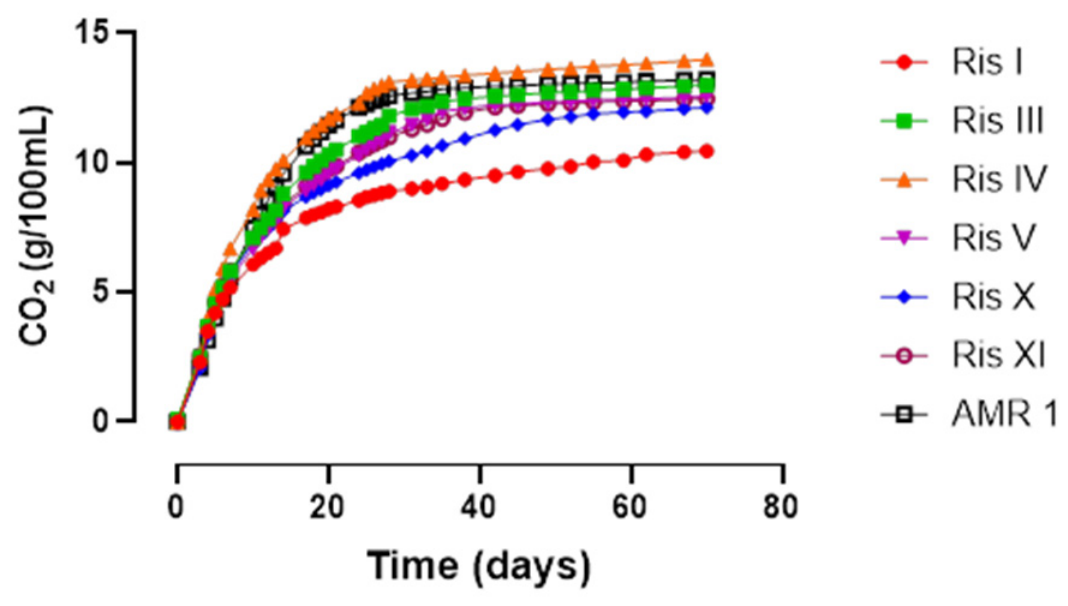
Six indigenous S. cerevisiae strains were isolated from spontaneous fermentations of dried grapes for Vin Santo production that had reached 12% ethanol and a low fermentative purity (ratio of acetic acid to ethanol produced). The closer the fermentation purity values are to zero, the better the yeast performance during fermentation. The spontaneous fermentations from which the strains originate were described by Barbato et al., 2025 [8]. These strains were tested as axenic cultures for their fermentative capacity on dried Trebbiano grape must. As a comparison, a commercial strain (AMR1, Enartis) was included in the trials because of its osmotolerant properties. The progress of the fermentations was monitored daily by recording the weight loss for 70 days (Figure 1). The specific growth rate μ (h−1) of each assayed strain, estimated by interpolating the data to the Gompertz function, showed that Ris IV and AMR1 strains had the fastest growth rates (Table 1). Concerning substrates and products of the main metabolism of yeasts detected after 70 days of fermentation, the strains with the best fermentative purity were Ris III, Ris IV, Ris X and AMR1 (Table 1).
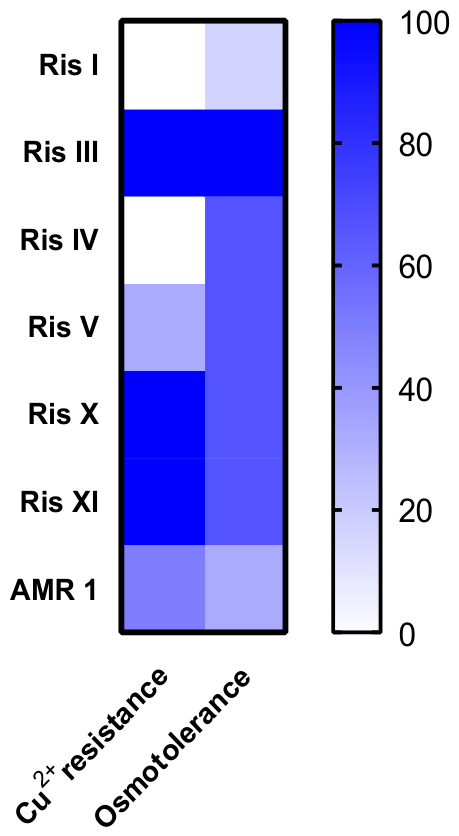
The strains were also tested for copper resistance and osmotolerance (Figure 2); indeed, copper and high sugar concentrations are two parameters often responsible for stuck fermentations in Vin Santo production. Ris III was the only strain that showed the highest resistance capacity to both parameters.
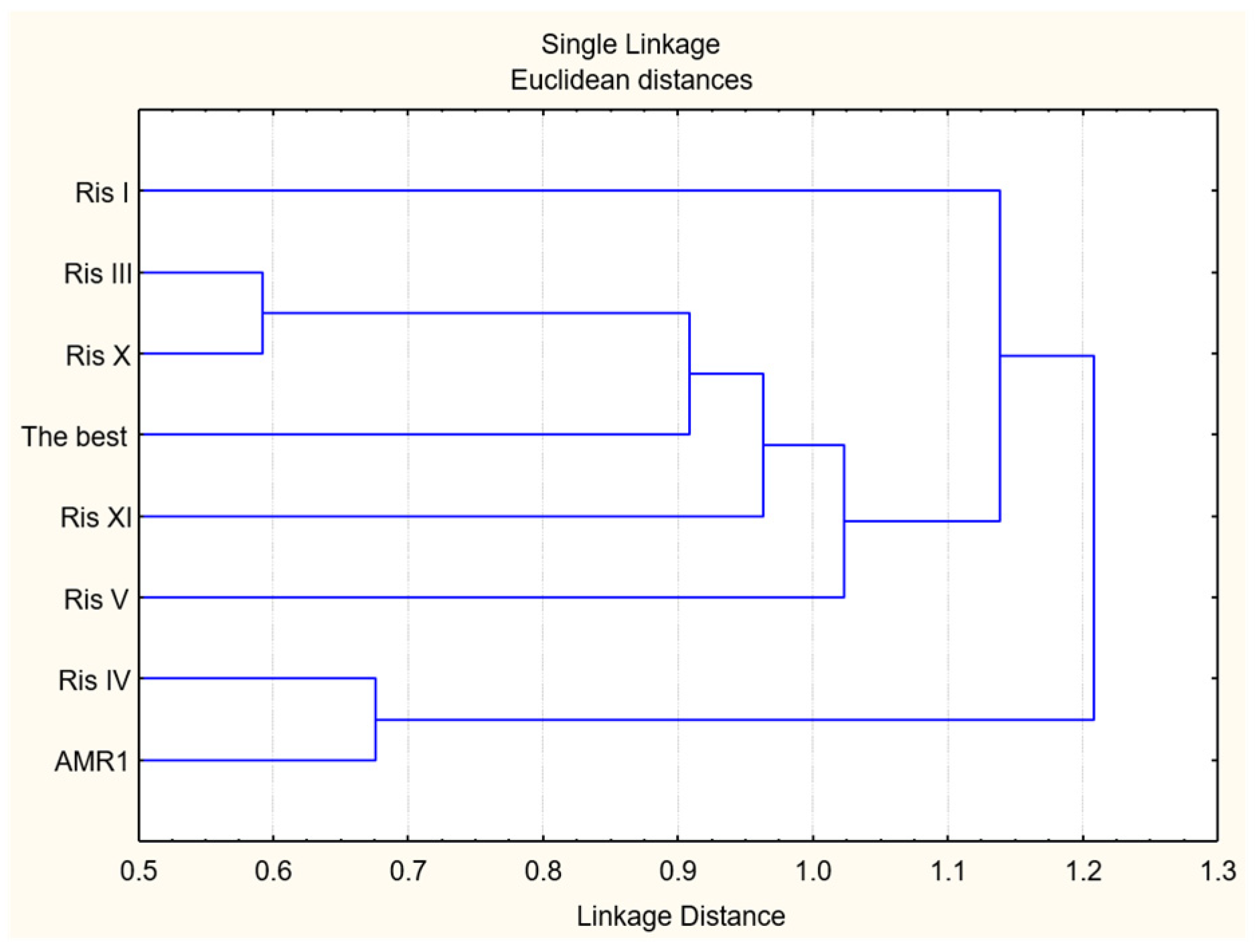
Data for each strain regarding CO2 production rate, fermentative purity, residual sugar content, ethanol produced, ability to grow in the presence of copper and high sugar concentrations (Table 1 and Figure 2) were processed with cluster analysis to select a strain to further test as a Vin Santo starter (Figure 3). To carry out the selection of indigenous S. cerevisiae strains based on their properties, one virtual strain, called “The best”, was included in the experimental data. The virtual results ascribed to “The best” strain were as follows: high CO2 production rate, optimal fermentation purity, and high ethanol production with low residual sugar, high ability to grow in the presence of copper and high sugar concentrations. The strains that clustered with the “The best” strain were those that most closely resembled the ideal starter (Figure 3). Hence, the S. cerevisiae strains Ris III and Ris X were the strains most similar to the ideal strain. The choice of Ris III is due to this strain’s greater persistence compared to Ris X in spontaneous fermentations of dehydrated grapes from which these two strains were isolated, as reported by Barbato et al., 2025 [8].

3.2. Isolation of Zygosaccharomyces rouxii ZR186 Strain and Evaluation of Compatibility with S. cerevisiae Ris III Strain

The same Vin Santo from which the S. cerevisiae Ris III strain was isolated during the first phases of the alcoholic fermentation was analysed microbiologically and chemically (Table 2) during ageing in a 100 L barrel. The Non-Saccharomyces yeast population was composed exclusively of Zygosaccharomyces rouxi after 320 days of ageing, attaining 104 CFU/mL, despite the difficult environmental conditions, due to the presence of ethanol and high concentrations of sugars and copper, and the increasing degree of browning over time, which is an indirect measure of the Maillard reaction, whose by-products negatively affect yeast viability. The Zygosaccharomyces population did not cause excessive acetaldehyde production, reaching the concentration of 13.50 +/− 3.54 mg/L after 460 days of ageing. After 410 days, the Non-Saccharomyces population included Z. rouxii and several other yeast species, such as Zygosaccharomyces bisporus, Citeromyces matritensis, Starmerella apicola, and Candida oleophila (isolation frequencies of 10%, 55%, 22%, 12%, and 1%, respectively). Regarding the Z. rouxi population, a single strain (ZR186) dominated at all the sampling points with an isolation percentage of 97–100%. Therefore, the Z. rouxi ZR186 strain was chosen and tested in co-culture with the S. cerevisiae Ris III strain.
The two chosen strains, S. cerevisiae Ris III and Z. rouxii ZR186, were tested for their fermentative capacity in co-culture on Trebbiano dried grape must. The progress of the fermentations was monitored daily, with weight loss recorded (data not shown). At the end of the fermentation activity, the concentrations of residual sugars, ethanol and acetic acid were 118 +/− 20 g/L, 15.9 +/− 0.8% (v/v), and 0.8 +/− 0.1 g/L, respectively. When comparing the results obtained with those from the axenic culture of S. cerevisiae RisIII, a fermentative purity of 0.050 was observed, in contrast to 0.092 for the axenic culture (Table 1). This represents an improvement of 54%. Therefore, these two strains could be compatible for use as a mixed starter culture in the production of Vin Santo.

3.3. Use of Mixed Starter Culture for the Vin Santo Production in the Winery

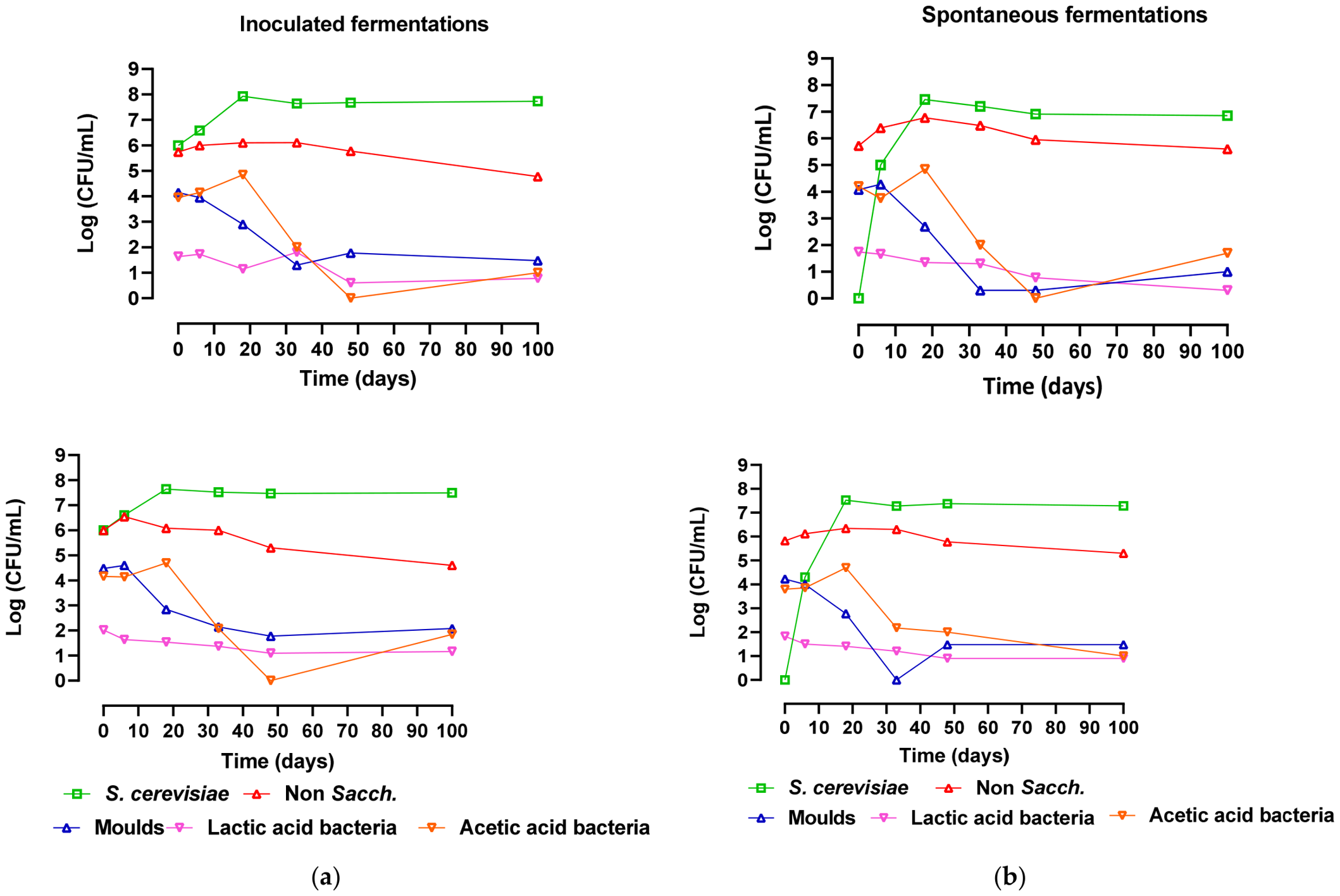
The must from dried Trebbiano grapes was promptly divided between four barrels of two different capacities (50 and 100 L). One 50 L barrel and one 100 L barrel were inoculated with the mixed starter culture to obtain 106 CFU/mL of both yeasts. The remaining barrels were left to ferment spontaneously. The fermentation process in all four barrels was microbiologically monitored for 100 days, and the fermentation time courses are reported in Figure 4. The inoculated fermentations, regardless of the barrel size, showed the immediate dominance of S. cerevisiae, which remained as such for the 100 days of fermentation. As for spontaneous fermentations, S. cerevisiae prevailed over the non-Saccharomyces population after almost 20 days of fermentation, reaching a concentration comparable to that achieved in inoculated fermentations. Whether the fermentation was inoculated or spontaneous, the non-Saccharomyces population remained present at concentrations between 105 and 106 CFU/mL throughout the monitored period. No substantial difference in the kinetics of the other microbial populations between inoculated and spontaneous fermentation was found.
To assess the dominance of the inoculated yeast strains, intraspecific characterisation of both S. cerevisiae and non-Saccharomyces populations was performed in inoculated fermentations in comparison to spontaneous fermentations.
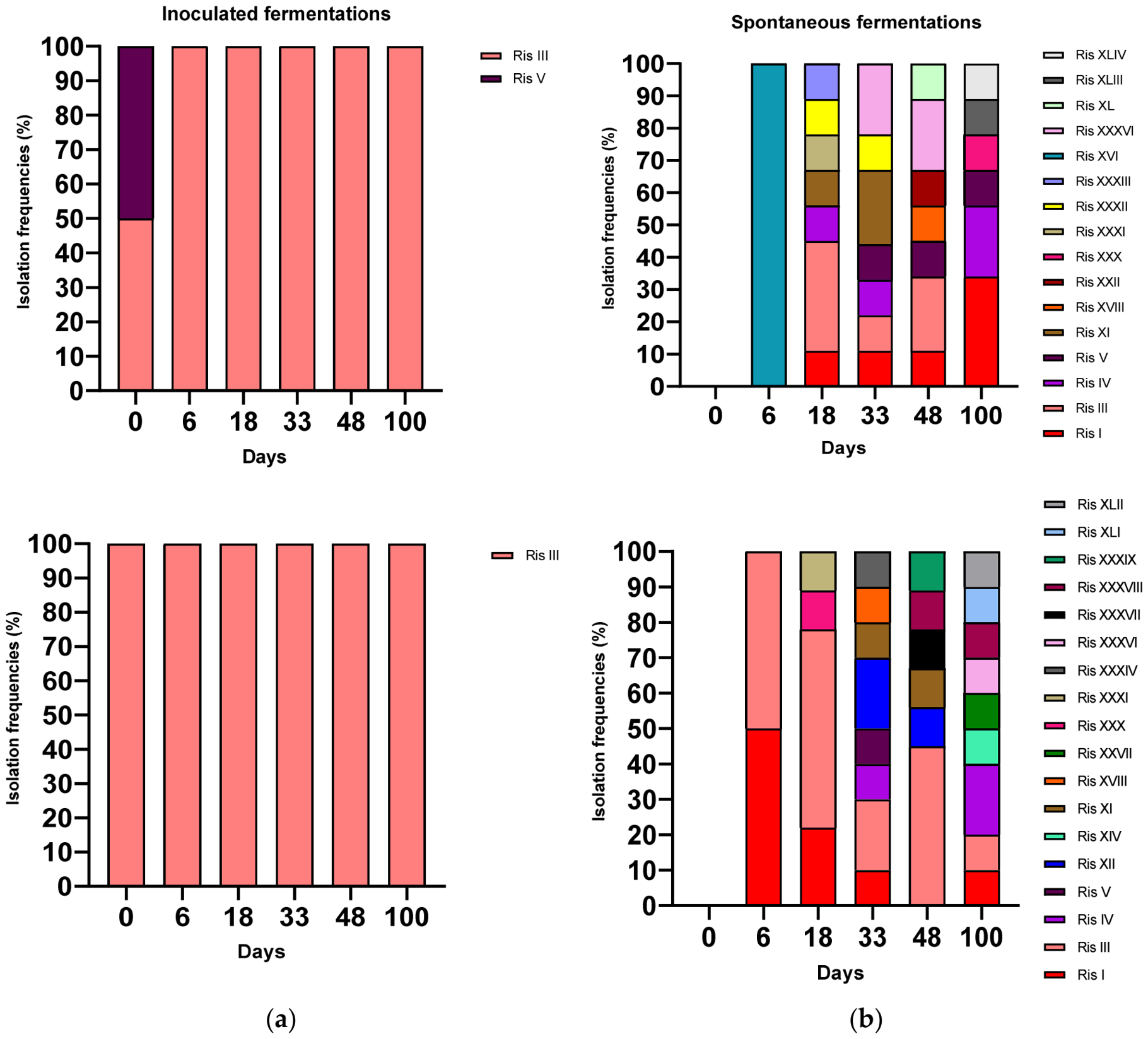
Therefore, 300 S. cerevisiae isolates from each vinification were analysed to detect genetically different strains using the PCR amplification of the inter-δ regions. The isolation frequencies of the culturable S. cerevisiae strains, calculated for each winemaking and each sampling point, are reported in Figure 5. As expected, the Ris III strain dominated both the inoculated fermentations. Ris III was also present in spontaneous vinifications, although with lower isolation percentages. This presence could be due to the indigenous Ris III strain of the winery, given that the experiment was conducted in the same winery from which this strain was isolated [8]. In addition, the possibility of environmental contamination by the mixed starter culture could explain the presence of this strain in spontaneous fermentations. In any case, the presence/persistence of the Ris III strain even in spontaneous fermentations demonstrates the high fitness advantage of this strain in vinifications for the production of Vin Santo.
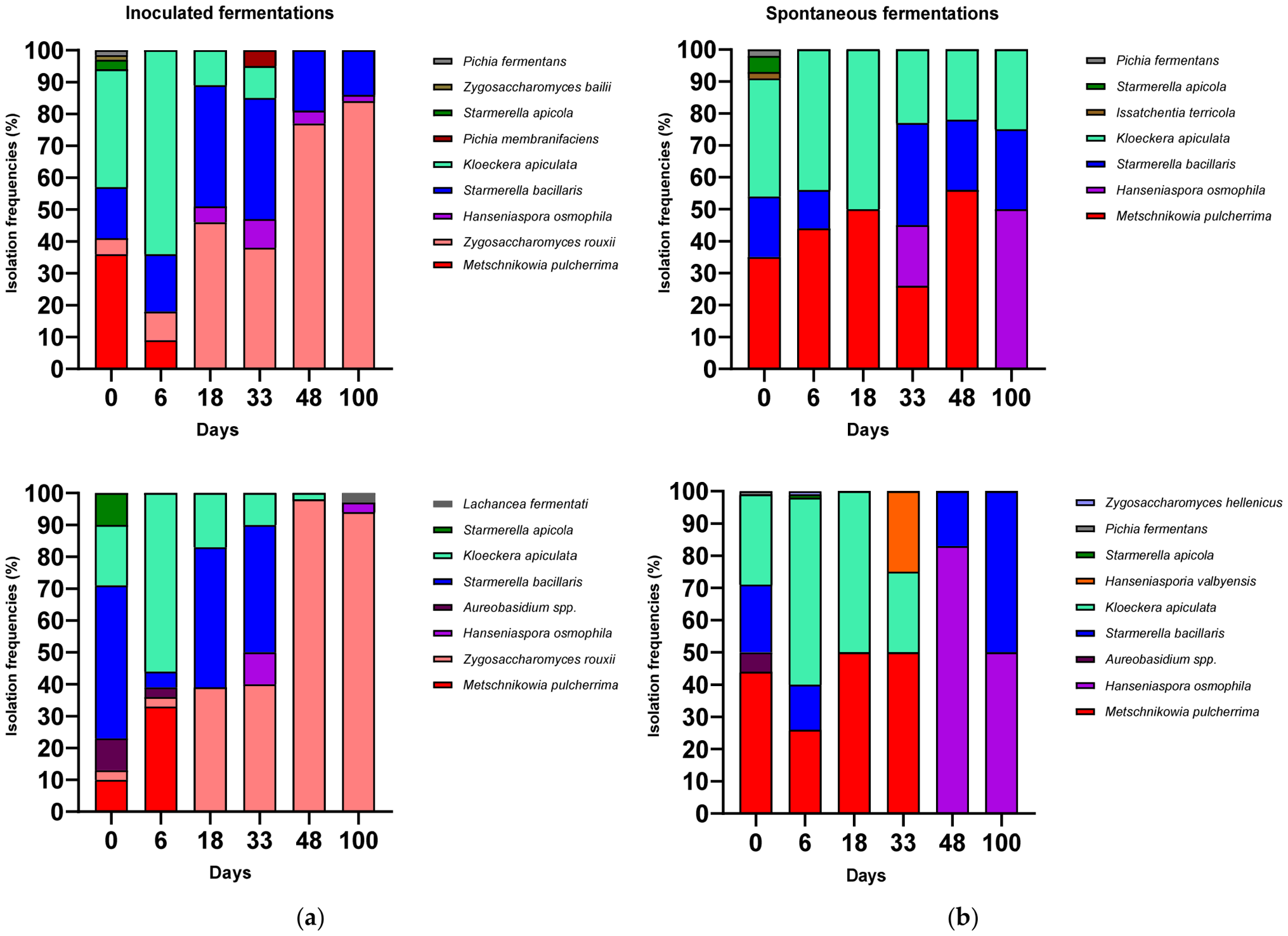
Almost 200 non-Saccharomyces isolates from each vinification were initially identified by sequencing the D1/D2 region, and the results were reported as isolation frequencies of the culturable yeast population in Figure 6. The dominant yeast species present at the start of fermentation in the four winemaking processes were almost the same; indeed, the dominant populations at isolation percentages greater than 10% were Kloeckera apiculata, Starmerella bacillaris, Metschnikowia pulcherrima, and Starmerella apicola. Z. rouxii was present only in the winemaking processes inoculated with the mixed starter culture at isolation percentages between 3–5% during the first six days of fermentation, approximately 40% after 18 days from inoculation, and 80–90% after 48 days. The intraspecific characterisation of the Z. rouxii isolates by RAPD-PCR demonstrated 100% dominance of the inoculated ZR186 strain.
After 100 days of fermentation, chemical analyses were conducted to quantify substrates and products of the main microorganisms’ metabolism (Table 3). All the vinifications reached 12% (v/v) ethanol. The highest residual glucose concentration was found in the spontaneous fermentation conducted in the 50 L barrel, which also showed a higher acetic acid concentration than the inoculated fermentations, regardless of the barrel size. Considering the same barrel size, fermentation purity was improved in inoculated vinifications, with a 25% reduction compared to the spontaneous ones.

3.4. Sensorial Analysis

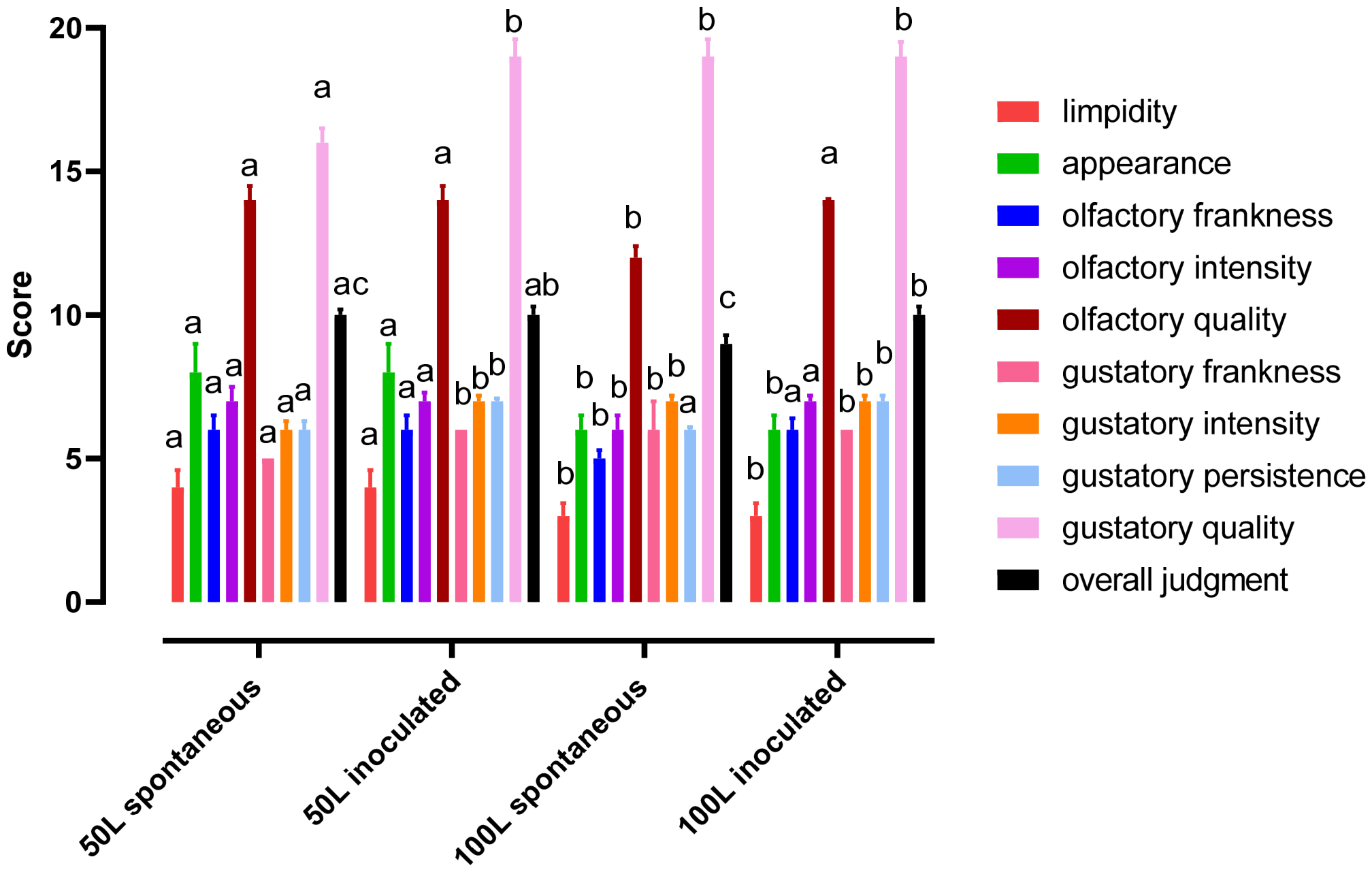
The experimental wines were subjected to sensorial analysis, according to the OIV method (Resolution OIV/CONCOURS 332A–2009) [18]. The mean scores obtained for each descriptor are reported in Figure 7. Different letters indicated statistically significant differences in the mean scores measured for each descriptor of the four wines. The wines produced with the smaller-sized barrels (50 L) showed higher scores for the sight descriptors (limpidity and appearance) than the larger-sized barrels (100 L), regardless of the type of fermentation. The 100 L spontaneous and 50 L spontaneous wines showed the lowest scores for the olfactory and gustatory descriptors, respectively. Finally, the 100 L inoculated wine received a higher overall judgment score than the 100 L spontaneous wine, while no difference between the wines produced in 50 L barrels was found for this descriptor.
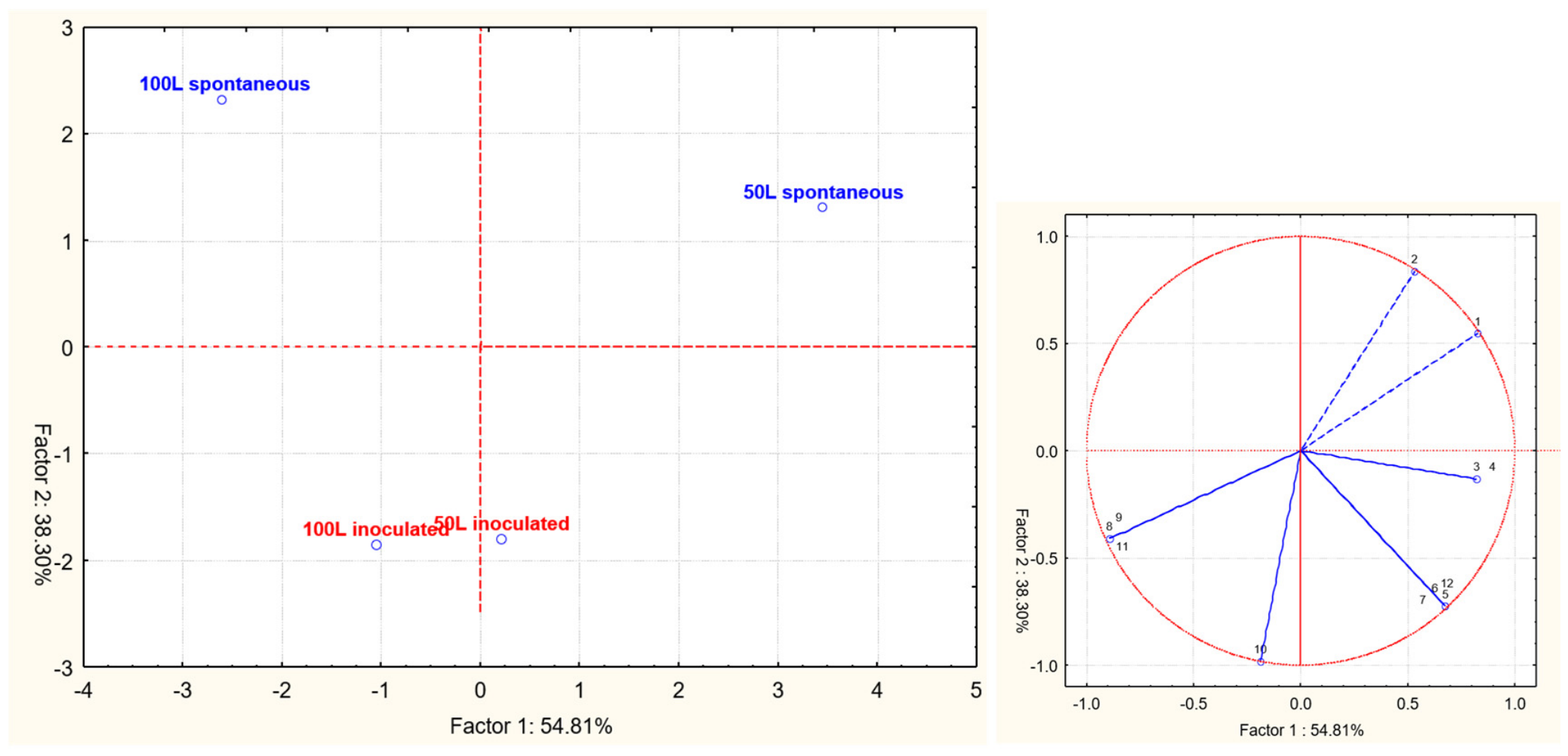
The PCA-based Perceptual Map, applied to chemical and sensorial analysis scores that showed statistically significant differences between the experimental wines, is shown in Figure 8. The first two significant dimensions explained 93% of the total variance, with PC1 and PC2 accounting for 54.8% and 38.3%, respectively. Wines obtained from inoculated fermentations were found to be much more similar to each other, both showing low association with glucose and acetic acid/ethanol ratio (fermentation purity). Conversely, high associations were observed for gustatory intensity, gustatory persistence, gustatory quality and overall judgment descriptors. On the contrary, the two spontaneous fermentations were very different not only from each other, but also from the inoculated fermentations. The one performed in 100 L was weakly associated with various gustatory and olfactory attributes; the one performed in 50 L was highly associated with visual attributes as well as glucose and the acetic acid/ethanol ratio.

4. Discussion

Mixed starter cultures of S. cerevisiae and non-Saccharomyces yeasts can modulate and enrich the sensory properties of wines, releasing volatile compounds from non-volatile precursors, but also can lead to various interactions between the yeasts involved, significantly influencing fermentation performance [12,13,18]. Among these interactions, the most notable involve competition for the less abundant nutrients in grape juice, such as amino acids and vitamins, as well as the production of toxic molecules, like killer factors [19,20]. The use of starter mixed cultures has been proposed as an effective strategy to improve the quality of passito wines by several authors [1,8]. However, Barbato et al. 2025 [8] emphasised the importance of investigating strains’ compatibility to avoid competition, which can lead to incomplete fermentations or excessive acetic acid production. This is particularly relevant for Vin Santo, where several intrinsic factors, such as high sugar concentrations, the presence of copper, and Maillard reactions, create an extreme environment for yeasts.
In this study, the selected mixed starter culture for Vin Santo production consisted of two strains: one from the species Saccharomyces cerevisiae and another from Zygosaccharomyces rouxii. S. cerevisiae was chosen because it is the primary yeast responsible for the alcoholic fermentation of passito wines. In contrast, Z. rouxii was selected for its ability to thrive in osmotic conditions, as well as its capacity to release flavour compounds such as fusel alcohols and 4-hydroxyfuranone derivatives, which could contribute to fragrant and smoky aromas [21]. Additionally, some strains of Z. rouxii have shown significant antioxidant activity [22], which could be beneficial in oenology, particularly during lengthy vinification processes like those of Vin Santo. Notably, Z. rouxii is not commonly associated with wine fermentation [23]; the use of this species as a starter makes this study the first attempt to use Z. rouxii for Vin Santo production. While the use of Z. rouxii is not widespread in wine fermentations, Li et al. 2023 [24] explored a novel productive strategy to enhance the antioxidant activity and aroma of low-ethanol kiwi wine through sequential inoculation of Z. rouxii and S. cerevisiae strains, with success. Similarly, the co-fermentation of S. cerevisiae and high-yield ester Z. rouxii strain also demonstrated the capability to enhance the quality and aroma in liquid rice wine [25]. The above studies suggest that a mixed culture of S. cerevisiae and Z. rouxii could be a suitable strategy for a better standardisation of the Vin Santo production process, without reducing the sensory complexity characteristic of this type of product.
The S. cerevisiae Ris III strain used in this study was isolated from spontaneous fermentations for Vin Santo production conducted in a Tuscan winery, as described by Barbato et al. 2025 [8], and was selected for its oenological performance. The Z. rouxii Zr186 strain was chosen because it dominated the non-Saccharomyces population during the Vin Santo ageing phase, indicating its strong ability to persist under extreme winemaking conditions.
After confirming the fermentative compatibility between the two strains in a laboratory-scale winemaking process, the mixed culture also exhibited effective starter capabilities when inoculated in real cellar fermentations using dried Trebbiano grapes. Both strains dominated the inoculated fermentation processes, but with two different kinetics: the S. cerevisiae strain maintained an isolation rate close to 100% from the moment of inoculation; conversely, the Z. rouxii strain took about a month to achieve similar isolation percentages within the non-Saccharomyces population. As a consequence, the fermentation purity was significantly better (i.e., lower) in the inoculated vinifications than in the spontaneous ones, when the barrels compared were of the same size. The influence of barrel size on the oenological characteristics of wine has also been noted by Guerrini et al. 2021 [26], showing that the fermentation vat size affects the chemical properties of wines produced with the same grapes and starter strain.
Sensory analyses were performed and statistically elaborated using a principal component analysis. The goal was to verify any differences between spontaneous and inoculated fermentations only as a preliminary assessment, considering that the ageing of these wines will continue for at least 3–4 years. The wines obtained with the mixed starter were much more similar to each other than those obtained through spontaneous fermentations and were characterised by higher scores for the gustatory descriptors. The wine that received the highest overall judgment was produced using the mixed starter culture and the 100-litre barrel (100 L inoculated).
In conclusion, employing the mixed starter selected in this study, composed of S. cerevisiae and Z. rouxii indigenous strains, was an effective strategy in increasing standardisation of the Vin Santo fermentation phase. However, to fully validate this approach, it will be important to continue monitoring the ageing phase, given its long duration, and assess the effectiveness of the mixed starter in different vintages and with barrels of different sizes.

5. Conclusions

Vin Santo is a passito wine made from dried grapes, typically fermented spontaneously and aged in oak barrels for at least 3–4 years. This type of wine often experiences challenges during fermentation, such as stuck fermentations or excessive acetic acid production, due to the difficult conditions faced by the yeasts involved. This study reports the successful application of a mixed starter culture derived from indigenous Vin Santo yeasts, consisting of Saccharomyces cerevisiae and Zygosaccharomyces rouxii, and it represents the first attempt to use Z. rouxii as a starter in the production of Vin Santo. In the future, it will be intriguing to explore the potential of using this mixed culture for winemaking across different vintages. Additionally, it may be equally important to identify other strains of Z. rouxii able to enhance the performance of the mixed culture.

Author Contributions

Conceptualization. V.G., D.B., S.G. and G.B.; formal analysis. S.M., D.B., E.M., and G.B.; investigation. D.B., S.G. and S.M.; writing—original draft preparation. S.G. and L.G.; writing—review and editing. L.G. and V.G.; supervision. S.G. and L.G.; project administration. S.G. and L.G.; funding acquisition. S.G. All authors have read and agreed to the published version of the manuscript.

Funding

This research was funded by the PSR 2014–2022 (PROGETTO SOTTOMISURA 16.2) contribution of Regione Toscana. Project title “Selezione di lieviti autoctoni per la produzione di vini passiti”. This research was also funded by Bando FABER 4 di Fondazione CR Firenze, Confindustria Firenze e Fondazione per la Ricerca e l’Innovazione, promossa dall’Università degli Studi di Firenze e dalla Città Metropolitana di Firenze.

Institutional Review Board Statement

The University of Florence (Italy) regulation does not establish a general requirement for prior ethical approval for every non-clinical study involving human participants. The present study consisted exclusively of a sensory evaluation of food products and did not constitute a clinical trial, medical intervention or health-related experimentation. Therefore, prior approval by an ethics committee was not mandatory under the institutional rules applicable at the time the study was conducted.

Informed Consent Statement

Informed consent was obtained from all subjects involved in the study.

Data Availability Statement

Dataset available on request from the authors.

Acknowledgments

The authors would like to thank Tenuta Riseccoli for their technical support during the trials.

Conflicts of Interest

The authors, Damiano Barbato, Viola Galli, Silvia Mangani and Giacomo Buscioni, were employed by the company FoodMicroTeam s.r.l. The remaining authors declare that the research was conducted in the absence of any commercial or financial relationships that could be construed as a potential conflict of interest.

References

  1. De Filippis, F.; Aponte, M.; Piombino, P.; Lisanti, M.T.; Moio, L.; Ercolini, D.; Blaiotta, G. Influence of microbial communities on the chemical and sensory features of Falanghina sweet passito wines. Food Res. Int. 2019, 120, 740–747. [Google Scholar] [CrossRef] [PubMed]
  2. Domizio, P.; Lencioni, L. Vin Santo. In Advances in Food and Nutrition Research; Jackson, R.S., Ed.; Academic Press: Waltham, MA, USA, 2011; Volume 63, pp. 41–100. [Google Scholar]
  3. Domizio, P.; Lencioni, L.; Ciani, M.; Di Biasi, S.; Pontremolesi, C.; Sabatelli, M.P. Spontaneous and inoculated yeast population dynamics and their effect on organoleptic characters of Vinsanto wine under different process conditions. Int. J. Food Microbiol. 2007, 115, 281–289. [Google Scholar] [CrossRef] [PubMed]
  4. European Commission. Commission Regulation (EU) No 401/2010 of 7 May 2010 amending and correcting Regulation (EC) No 607/2009 laying down certain detailed rules for the implementation of Council Regulation (EC) No 479/2008 as regards protected designations of origin and geographical indications. Traditional terms. Labelling and presentation of certain wine sector products. Off. J. Eur. Union 2010, 53, 13–59. [Google Scholar]
  5. Laureati, M.; Cattaneo, C.; Tateo, F.; Bononi, M. Identification of the Volatile Compounds and Sensory Attributes of Long-Term Ageing Vin Santo Wine from Malvasia di Candia Aromatic Grapes. Foods 2020, 9, 1736. [Google Scholar] [CrossRef] [PubMed]
  6. Tofalo, R.; Chaves-Lopez, C.; Di Fabio, F.; Schirone, M.; Felis, G.E.; Torriani, S.; Paparella, A.; Suzzi, G. Molecular identification and osmotolerant profile of wine yeasts that ferment a high sugar grape must. Int. J. Food Microbiol. 2009, 130, 179–187. [Google Scholar] [CrossRef] [PubMed]
  7. Kertsch, A.L.; Wagner, J.; Henle, T. Selected Maillard Reaction Products and Their Yeast Metabolites in Commercial Wines. J. Agric. Food Chem. 2023, 71, 12300. [Google Scholar] [CrossRef] [PubMed]
  8. Barbato, D.; Galli, V.; Mangani, S.; Mari, E.; Buscioni, G.; Granchi, L.; Guerrini, S. Microbiota Diversity During Grape Drying and Spontaneous Fermentations of Vin Santo. Fermentation 2025, 11, 310. [Google Scholar] [CrossRef]
  9. Rantsiou, K.; Campolongo, S.; Alessandria, V.; Rolle, L.; Torchio, F.; Cocolin, L. Yeast populations associated with grapes during withering and their fate during alcoholic fermentation of high-sugar must. Aust. J. Grape Wine Res. 2013, 19, 40–46. [Google Scholar] [CrossRef]
  10. Granchi, L.; Ganucci, D.; Buscioni, G.; Mangani, S.; Guerrini, S. The Biodiversity of Saccharomyces cerevisiae in Spontaneous Wine Fermentation: The Occurrence and Persistence of Winery-Strains. Fermentation 2019, 5, 86. [Google Scholar] [CrossRef]
  11. Ganucci, D.; Guerrini, S.; Mangani, S.; Vincenzini, M.; Granchi, L. Quantifying the Effects of Ethanol and Temperature on the Fitness Advantage of Predominant Saccharomyces cerevisiae Strains Occurring in Spontaneous Wine Fermentations. Front. Microbiol. 2018, 9, 1563. [Google Scholar] [CrossRef] [PubMed]
  12. Berbegal, C.; Spano, G.; Tristezza, M.; Grieco, F.; Capozzi, V. Microbial Resources and Innovation in the Wine Production Sector. S. Afr. J. Enol. Vitic. 2017, 38, 156–166. [Google Scholar] [CrossRef]
  13. Tufariello, M.; Fragasso, M.; Pico, J.; Panighel, A.; Castellarin, S.D.; Flamini, R.; Grieco, F. Influence of Non-Saccharomyces on Wine Chemistry: A Focus on Aroma-Related Compounds. Molecules 2021, 26, 644. [Google Scholar] [CrossRef] [PubMed]
  14. Esteve-Zarzoso, B.; Belloch, C.; Uruburu, F.; Querol, A. Identification of yeasts by RFLP analysis of the 5.8S rRNA gene and the two ribosomal internal transcribed spacers. Int. J. Syst. Bacteriol. 1999, 49, 329–337. [Google Scholar] [CrossRef] [PubMed]
  15. Legras, J.L.; Karst, F. Optimisation of interdelta analysis for Saccharomyces cerevisiae strain characterisation. FEMS Microbiol. Lett. 2003, 221, 249–255. [Google Scholar] [CrossRef] [PubMed]
  16. Mari, E.; Guerrini, S.; Granchi, L.; Vincenzini, M. Enumeration and rapid identification of yeasts during extraction processes of extra virgin olive oil in Tuscany. World J. Microbiol. Biotechnol. 2016, 32, 93–103. [Google Scholar] [CrossRef] [PubMed]
  17. OIV/CONCOURS 332A/2009; OIV Standard for International Wine and Spirituous Beverages of Vitivinicultural Origin Competitions Resolution. International Organisation of Vine and Wine General Assembly (OIV): Zagreb, Croatia, 2009.
  18. Ciani, M.; Capece, A.; Comitini, F.; Canonico, L.; Siesto, G.; Romano, P. Yeast Interactions in Inoculated Wine Fermentation. Front. Microbiol. 2016, 7, 555. [Google Scholar] [CrossRef] [PubMed]
  19. Medina, K.; Boido, E.; Dellacassa, E.; Carrau, F. Growth of non-Saccharomyces yeasts affects nutrient availability for Saccharomyces cerevisiae during wine fermentation. Int. J. Food Microbiol. 2012, 157, 245–250. [Google Scholar] [CrossRef] [PubMed]
  20. Capece, A.; Pietrafesa, A.; Pietrafesa, R.; Garrigós, V.; Tedesco, F.; Romano, P.; Matallana, E.; Siesto, G.; Aranda, A. Impact of Starmerella bacillaris and Zygosaccharomyces bailii on ethanol reduction and Saccharomyces cerevisiae metabolism during mixed wine fermentations. Food Res. Int. 2022, 159, 111649. [Google Scholar] [CrossRef] [PubMed]
  21. Solieri, L. The revenge of Zygosaccharomyces yeasts in food biotechnology and applied microbiology. World J. Microbiol. Biotechnol. 2021, 37, 96. [Google Scholar] [CrossRef] [PubMed]
  22. Perpetuini, G.; Rossetti, A.P.; Rapagnetta, A.; Arfelli, G.; Prete, R.; Tofalo, R. Wine Barrel Biofilm as a Source of Yeasts with Non-Conventional Properties. Microorganisms 2024, 12, 880. [Google Scholar] [CrossRef] [PubMed]
  23. Silva, A.; Esteve Zarzoso, B.; García Serrano, P.; García Parrilla, M.C.; Beltran, G.; Torija, M.J. Tailoring Yeast and Bacterial Consortia to Modulate Wine Fermentation Profiles. Food Res. Int. 2026, 229, 118486. [Google Scholar] [CrossRef] [PubMed]
  24. Li, S.; Chen, X.; Gao, Z.; Zhang, Z.; Pengfei, B.; Guo, J. Enhancing antioxidant activity and fragrant profile of low-ethanol kiwi wine via sequential culture of indigenous Zygosaccharomyces rouxii and Saccharomyces cerevisiae. Food Biosci. 2023, 51, 102210. [Google Scholar] [CrossRef]
  25. Cui, R.; Liu, X.; Wang, Q.; Wang, S.; He, J.; Zhou, S.; Zhao, G.; Yao, Y. Effects of co-fermentation of high-yield ester Zygosaccharomyces rouxii and Saccharomyces cerevisiae on the quality of rice wine. JSFA Rep. 2024, 4, 78–91. [Google Scholar] [CrossRef]
  26. Guerrini, S.; Barbato, D.; Guerrini, L.; Mari, E.; Buscioni, G.; Mangani, S.; Romboli, R.; Galli, V.; Parenti, A.; Granchi, L. Selection of indigenous Saccharomyces cerevisiae strains and exploitation of a pilot-plant to produce fresh yeast starter cultures in a winery. Fermentation 2021, 7, 99. [Google Scholar] [CrossRef]
Figure 1. Dynamics of CO2 production by the selected S. cerevisiae strains.
Fermentation 12 00364 g001
Figure 2. Heat map of copper resistance and osmotolerance of S. cerevisiae strains.
Fermentation 12 00364 g002
Figure 3. Cluster analysis of the following S. cerevisiae strain features: CO2 production rate, fermentation purity, residual sugar content, ethanol produced, ability to grow in the presence of copper and high sugar concentrations.
Fermentation 12 00364 g003
Figure 4. Microbial population monitoring of inoculated (a) and spontaneous fermentations (b) carried out using oak wooden barrels of different capacities (50 L barrel at the top and 100 L barrel at the bottom).
Fermentation 12 00364 g004
Figure 5. Isolation frequency expressed as a percentage of the S. cerevisiae strains found during inoculated (a) and spontaneous (b) fermentations carried out using oak wooden barrels of different capacities (in a 50 L barrel at the top and a 100 L barrel at the bottom).
Fermentation 12 00364 g005
Figure 6. Isolation frequency expressed as a percentage of the non-Saccharomyces species found during inoculated (a) and spontaneous (b) fermentations carried out using oak wooden barrels of different capacities (in a 50 L barrel at the top and a 100 L barrel at the bottom).
Fermentation 12 00364 g006
Figure 7. Scores obtained by subjecting the four experimental wines to sensory analysis according to the OIV method (Resolution OIV/CONCOURS 332A–2009 [18]). Different letters indicate statistically significant differences in the mean scores measured for each descriptor of the four wines (ANOVA, Tukey’s test at p < 0.05).
Fermentation 12 00364 g007
Figure 8. Principal component analysis (PCA). Score plot (left): projection of the samples on the factor plane. Loading plot (right): projection of the variables on the factor plane. Variables: glucose (1), fermentative purity (2), limpidity (3), appearance (4), olfactory frankness (5), olfactory intensity (6), olfactory quality (7), gustatory frankness (8), gustatory intensity (9), gustatory persistence (10), gustatory quality (11), overall judgment (12).
Fermentation 12 00364 g008
Table 1. Chemical analyses of the experimental wines obtained with S. cerevisiae strains and their fermentative performance in terms of Maximum CO2 production rate estimated with the Gompertz model. Different letters in the same row indicate statistically significant differences (ANOVA and Tukey’s test, p < 0.05).
Ris IRis IIIRis IVRis VRis XRis XIAMR 1
MeanSDMeanSDMeanSDMeanSDMeanSDMeanSDMeanSD
Maximum CO2 production rate, μ (h−1) 0.4463 a0.030840.5591 a0.022130.7317 b0.029760.493 a0.022060.4673 a0.032590.5067 a0.025710.746 b0.01599
Acetic acid (g/L)1.81 a0.071.37 b0.011.31 b0.041.72 a0.011.06 c0.082.05 d0.011.37 b0.01
Ethanol (%, v/v)11.50 a0.4214.95 b0.2116.40 c0.0114.30 b0.4214.70 b0.0115.15 b0.3516.60 d0.28
Residual sugars (g/L)188.30 a13.86134.00 b3.82107.00 b1.56139.75 b9.26137.70 b2.02119.80 b1.5098.95 c1.48
Fermentation purity *0.157 a0.0010.092 b0.0020.080 c0.0020.120 d0.0050.077 c0.0010.135 f0.0030.082 bc0.002
Final cell concentration (Cells/mL)9.34 × 106 a0.30 × 1063.13 × 107 b0.18 × 1071.39 × 107 c0.16 × 1071.55 × 107 c0.29 × 1073.55 × 107 b0.33 × 1073.39 × 107 b0.07 × 1079.65 × 106 a0.92 × 106
* acetic acid (g/L)/ethanol (% v/v).
Table 2. Microbiological and chemical composition during Vin Santo ageing in a 100 L barrel, from which the Zygosaccharomyces rouxii ZR186 strain was isolated.
Days of Ageing270320410460
MeanSDMeanSDMeanSDMeanSD
S. cerevisiae (CFU/mL)5.5 × 1047.0 × 1031.1 × 1041.3 × 1031.0 × 10214<10-
Non-Saccharomyces (CFU/mL)1.0 × 1031.4 × 1023.6 × 1042.8 × 1037.9 × 1041.4 × 1035.6 × 1041.0 × 103
Z. rouxii (%)100 100 1.4 0.2
Glucose (g/L)54.850.7855.150.0757.050.0758.651.20
Fructose (g/L)134.850.78134.001.41137.500.71139.502.12
Acetic acid (g/L)1.370.011.450.041.560.081.660.08
Malic acid (g/L)2.050.071.880.251.200.061.050.04
Lactic acid (g/L)<0.10-0.120.130.410.060.560.04
Ethanol (v/v %)12.00.112.250.2112.250.2112.200.28
Glycerol (g/L)8.140.077.860.117.980.217.630.24
Cu2+ (mg/L)1.740.551.300.711.300.711.900.27
Degree of browning (Abs 420)0.540.050.820.030.860.031.000.17
Table 3. Chemical compositions of the wines after 100 days of fermentation in wooden barrels of different capacities (50 L and 100 L). Concentrations are expressed as mean and standard deviation. Means displaying different superscript letters (a, b, c) within the same row are significantly different (ANOVA, p < 0.05).
50 L Spontaneous
Fermentation
50 L Inoculated
Fermentation
100 L Spontaneous
Fermentation
100 L Inoculated
Fermentation
MeanSDMeanSDMeanSDMeanSD
Glucose (g/L)26.0 a1.318.1 b0.919.2 b1.017.7 b0.9
Fructose (g/L)83.54.275.73.880.34.074.43.7
Acetic acid (g/L)0.85 a0.040.66 b0.030.74 ab0.030.61 b0.03
Malic acid (g/L)1.560.071.350.061.560.081.460.07
Ethanol (% v/v)12.30.612.50.612.00.612.90.7
Glycerol (g/L)6.810.346.290.317.410.276.500.33
Fermentative purity0.070 a0.0030.053 b0.0030.062 b0.0030.047 c0.002
Disclaimer/Publisher’s Note: The statements, opinions and data contained in all publications are solely those of the individual author(s) and contributor(s) and not of MDPI and/or the editor(s). MDPI and/or the editor(s) disclaim responsibility for any injury to people or property resulting from any ideas, methods, instructions or products referred to in the content.