
Article

An Evaluation of the Effectiveness of a Chemical Additive on the Fermentation Quality, Aerobic Stability and Microbial Communities of High-Moisture Corn at 35 °C and 5 °C

1
College of Animal Science and Veterinary Medicine, Heilongjiang Bayi Agricultural University, Daqing 163319, China
2
College of Animal Science and Veterinary Medicine, Xinjiang Yili Vocational and Technical College, Yili 835000, China
3
Key Laboratory of Low-Carbon Green Agriculture in Northeastern China, Ministry of Agriculture and Rural Affairs, Heilongjiang Bayi Agricultural University, Daqing 163319, China
4
Key Laboratory of Efficient Utilization of Feed Resources and Nutrition Manipulation in Cold Region of Heilongjiang Province, Daqing 163319, China
*
Author to whom correspondence should be addressed.
These authors contributed equally to this work.
Fermentation 2026, 12(8), 349; https://doi.org/10.3390/fermentation12080349
Submission received: 17 June 2026 / Revised: 21 July 2026 / Accepted: 24 July 2026 / Published: 28 July 2026
(This article belongs to the Section Animal and Feed Fermentation)

Abstract

This study evaluated a compound chemical additive (CA) composed of potassium sorbate, sodium benzoate, and sodium nitrite. Potassium sorbate is suitable for high-temperature ensiling, while sodium nitrite functions well under low-temperature conditions, and sodium benzoate inhibits bacterial energy metabolism. This compound theoretically provides stable antibacterial effects across variable storage temperatures. The effects of CA on fermentation quality, aerobic stability, and microbial communities of high-moisture corn (HMC) silage were investigated at 35 °C and 5 °C, including the control group (CON) and CA group. After 28 days of fermentation and 7 days of aerobic exposure, microbial communities were analyzed via high-throughput sequencing. CA significantly improved silage quality at both temperatures, increasing lactic acid and crude protein content, reducing pH, NH3-N and neutral detergent fiber, and suppressing yeasts and enterobacteria to enhance aerobic stability. Storage temperature dominated microbial community composition, while CA further optimized microbial structure. At 35 °C, CA eliminated spoilage yeast Nakaseomyces glabratus and enriched Levilactobacillus brevis and Aspergillus spp. with elevated relative abundance. At 5 °C, CA inhibited cold-resistant spoilage microbes, promoted the accumulation of Latilactobacillus curvatus, and restricted cyanobacteria growth. Metabolic prediction indicated that CA was correlated with pathways related to enhanced lactic acid synthesis and inhibited proteolysis and silage spoilage. In conclusion, CA effectively stabilizes HMC silage by regulating microbial and metabolic characteristics under different temperatures, serving as a promising temperature-adaptive preservative.

1. Introduction

High-moisture corn (HMC) is widely used as livestock feed worldwide. Storage temperature restricts large-scale preservation of HMC silage across different regions. The Huang–Huai–Hai Plain encounters continuous temperatures of 32–38 °C during summer harvesting and ensiling. In comparison, late autumn harvests in Northeast China often experience ambient temperatures below 8 °C. These extreme temperature conditions significantly impair the quality of silage produced in such hot or cold environments. High temperatures accelerate the proliferation of yeasts and molds attached to fresh HMC. These microbes degrade organic acids and cause severe aerobic spoilage once silos are opened. Low temperatures suppress enzyme activity of lactic acid bacteria (LAB). Less lactic acid is synthesized, leading to excessively high silage pH [1]. Individual chemical additives have specific antimicrobial spectra and limited temperature adaptability [2]. Compound additives can sustain stable antibacterial effects and aerobic stability under both high and low storage temperatures [3]. Sodium nitrite was previously mixed with hexamine for silage preservation, but hexamine decomposes to formaldehyde in acidic environments, endangering human and animal health, while excessive nitrite leads to environmental risks. Combining reduced-dose sodium nitrite with sodium benzoate and potassium sorbate still effectively optimizes silage fermentation [4].
Potassium sorbate inhibits fungi by blocking lipid synthesis in fungal cell membranes. Its excellent thermal stability makes it suitable for high-temperature ensiling on the central plains [2]. Sodium benzoate penetrates bacterial cell membranes as free molecules and disrupts intracellular energy metabolism [5]. Sodium nitrite inhibits respiratory enzyme systems of clostridia and Gram-negative bacteria. It maintains good stability under low temperatures, which favors ensiling in cold regions [6]. Previous research confirmed that a compound mixture shows great ability to improve fermentation quality of both high and low dry matter (DM) silages. The formula contained 50 g sodium nitrite, 200 g sodium benzoate, and 100 g potassium sorbate per liter of solvent [7]. The antimicrobial properties of sodium benzoate, potassium sorbate, and sodium nitrite are well known and, as such, they are used as additives in the conservation of a variety of feeds and foods [8]. Post-opening spraying of sodium benzoate or potassium sorbate improved aerobic stability in a dose-dependent manner, with the optimal dosage of 0.45 g/kg, and their 1:1 mixture exhibited superior antifungal efficacy compared with single application of either preservative [9]. Combining these three preservatives generates synergistic antimicrobial activity, which enables broad-spectrum suppression of fungi and diverse spoilage bacteria [10]. Theoretically, it can exert stable antibacterial effects at both high and low storage temperatures.
Most existing silage trials are conducted at room temperature. Systematic research exploring silage responses to both high and low storage temperatures remains scarce. The core hypothesis of this study is as follows: The ternary compound chemical additive (CA, consisting of sodium benzoate, potassium sorbate and sodium nitrite) produces synergistic temperature-adaptive antibacterial effects. CA can selectively regulate the microbial community structure of high-moisture corn silage under both high-temperature (35 °C) and low-temperature (5 °C) storage conditions, inhibit spoilage microorganisms, improve fermentation quality, reduce nutrient loss and enhance aerobic stability.

2. Materials and Methods

2.1. Experimental Design and Statistical Analysis

The raw material, HMC, was harvested from Baotian Village, Longfeng District, Daqing City, Heilongjiang Province (125.12° E, 46.51° N). The initial moisture content of the raw materials was measured to be 35% before silage was made. After the mid-maturity corn ears had been threshed, the grains were ground into particles with a size ranging from 1.0 mm to 4.0 mm. Two experimental treatments were set up: the control group (CON, no additive applied) and the chemical additive group (CA, additive applied). The compound additive solution was prepared by dissolving 200 g sodium benzoate, 100 g potassium sorbate and 50 g sodium nitrite in 1 L distilled water. For the CA treatment group, the CA solution was mixed with fresh HMC at an application rate of 3 mL per kilogram of fresh weight. CON group was treated with an equal volume of distilled water instead of the CA solution. Silages of the two treatments (control and CA group) were preserved in darkness, using incubators maintained at 35 °C (LY13-500, Longyue Instrument Equipment Co., Ltd., Shanghai, China) and refrigerators set at 5 °C (SC-300, Haier Special Refrigerator Co., Ltd., Qingdao, China), respectively. Each treatment included three biological replicates with approximately 300 g of material per replicate, and a total of 36 polyethylene silage bags were prepared in the present experiment. At each designated ensiling time point (3, 7, and 28 days of storage), twelve separate vacuum-sealed bags were opened to investigate the temporal shifts in nutritional composition, silage fermentation characteristics and bacterial communities. To strictly sustain the anaerobic fermentation environment, each bag was opened only once throughout the whole trial. Every detection and subsequent statistical analysis was conducted separately on the three replicates to ensure statistical reliability.

2.2. Determination of Fermentation Quality

Measured fermentation indicators included full names: DM content, pH value, organic acid concentrations (lactic acid, acetic acid), ethanol, and colony counts of LAB, yeasts and Enterobacter (ENB). Upon opening the high-moisture corn silage bags after the targeted ensiling duration (3, 7, and 28 days), samples were collected for subsequent analyses. Subsamples of 150 g silage were collected. Samples were dried in a forced-air oven at 65 °C for 48 h to constant weight, and dry matter (DM) content was calculated from weight loss [8]. Ten grams of fermented silage sample were placed into a sterile plastic bag, followed by addition of 90 mL of sterile purified water. The mixture was homogenized for 5 min using a stomacher, then extracted at 4 °C for 24 h. The suspension was filtered through qualitative filter paper, and the filtrate was used for pH measurement with a precision pH electrode (LE438, Mettler Toledo Instruments Co., Ltd., Shanghai, China).
After pH determination, the sample suspension was filtered through two layers of gauze. The collected filtrate was transferred into numbered sterile test tubes. High-performance liquid chromatography (HPLC) was adopted to determine the concentrations of lactic acid, acetic acid, and ethanol [11]. An Agilent 1200 HPLC system was used for analysis, equipped with an organic acid column (7.8 mm × 300 mm, 5 μm) and a refractive index detector. The detector cell temperature was set at 30 °C with positive signal polarity. The mobile phase consisted of 2.5 mM sulfuric acid aqueous solution containing 5% acetonitrile (v/v) at a flow rate of 0.50 mL/min, and the column temperature was maintained at 60 °C.
Ten grams of fresh high-moisture corn sample were transferred into a sterile plastic bag and diluted with 90 g of sterilized 8.5% saline solution. The mixture was shaken for 5 min. Subsequently, 1 mL of the suspension was transferred into 9 mL of sterile saline for serial dilution. Under aseptic conditions, the suspension was diluted by the 10-fold dilution method to dilutions of 10−5, 10−6 and 10−7. Microbial populations were enumerated using the plate counting method [12]. For yeast enumeration, 100 μL of diluted suspension was spread evenly onto potato dextrose agar (PDA) with a sterile spreader. For lactic acid bacteria (LAB), 100 μL of suspension was spread onto solidified de Man, Rogosa and Sharpe (MRS) medium. For coliform bacteria, 1000 μL of suspension was used for double-layer pouring plating on violet red bile agar (VRBA). All plates were incubated at 37 °C in an electrothermal constant-temperature incubator for 48 h before colony counting.

2.3. Determination of Nutritional Quality

Nutritional quality indicators were only determined for silages fermented for 28 days. Nutritional indices tested included crude protein (CP), neutral detergent fiber (NDF), acid detergent fiber (ADF), ammonia nitrogen (NH3-N) and water-soluble carbohydrates (WSC). Total nitrogen was quantified using the Kjeldahl method, with CP content calculated by multiplying total nitrogen by 6.25 [13]. NDF and ADF were quantified via the Van Soest sequential fiber extraction method [14]. WSC was measured using the anthrone colorimetric method [15]. NH3-N concentration was determined by the phenol–sodium hypochlorite colorimetric assay [16].

2.4. Aerobic Stability Test

Following 28 days of ensiling, 100 g of silage samples were taken and exposed to aerobic conditions at room temperature for 7 days to evaluate aerobic stability by determining pH dynamics and fermentation quality. On day 0 and day 7 of aerobic exposure, water extracts were prepared at a silage-to-water ratio of 1:10, shaken for 30 min and filtered, after which the pH values of filtrates were measured [17].

2.5. Microbial Diversity Analysis

Alpha diversity indices, including observed species, Chao1, Shannon, Simpson, Pielou’s evenness (Pielou-e), and Good’s coverage, were calculated to evaluate microbial community richness, diversity, evenness, and sequencing coverage. Observed species: the actual number of species detected in each sample; Chao1 index: estimator of community species richness; Shannon index: reflects community species diversity, considering both richness and evenness; Simpson index: reflects community dominance and diversity; Pielou-e (Pielou’s evenness): measures the evenness of species distribution; Good’s coverage: reflects sequencing coverage, representing the proportion of detected species relative to the total species in the sample.
Total genomic DNA was extracted from HMC silage samples. Full-length 16S rRNA gene fragments were amplified by two-step barcoded PCR for PacBio Sequel single-molecule real-time sequencing. First-round PCR used universal fusion primers matching PacBio library requirements. Thermal cycling parameters were as follows: initial denaturation at 98 °C for 2 min; 25 cycles of 98 °C for 30 s, 50 °C for 30 s, 72 °C for 1.5 min; and final extension at 72 °C for 5 min. Purified amplicons were quantified and diluted to a working concentration of 2 ng μL−1 for second-round barcoding PCR. Second-round PCR conditions: initial denaturation at 98 °C for 2 min; 15 cycles of 98 °C for 30 s, 62 °C for 30 s, 72 °C for 1.5 min; final extension at 72 °C for 5 min. Purified second-round PCR products were pooled at equal molar ratios (fragment length variation < 15%) to construct SMRTbell sequencing libraries for the PacBio Sequel platform. Raw sequencing reads were processed to obtain circular consensus sequencing (CCS) reads. Sequences were clustered into operational taxonomic units (OTUs) at a 97% identity threshold. OTU taxonomic classification was annotated against the SILVA reference database. Alpha and beta diversity metrics were calculated in QIIME2 to describe microbial community composition and structural differences in HMC silage. Spearman’s rank correlation analysis was performed to quantify and visualize correlations between dominant bacterial taxa and silage fermentation characteristics [18]. The Phylogenetic Investigation of Communities by Reconstruction of Unobserved States 2 (PICRUSt2, version 2.4.2) software was used to predict functional metabolic pathways of bacterial communities, based on KEGG database reference profiles [19]. The Kruskal–Wallis H test was applied to identify significant differences in the relative abundance of predicted KEGG pathways. Statistical significance was set at p < 0.05.

2.6. Statistical Analysis

All raw experimental data were compiled using Microsoft Excel. Microbial counts were log10-transformed prior to statistical analysis. Data were analyzed according to a 2 × 2 × 3 factorial arrangement of treatments in a completely randomized design. Fixed effects in the model included storage temperature (T), additive treatment (A), ensiling day (D), and all possible two-way and three-way interactions (T × A, T × D, A × D, T × A × D).
Univariate general linear model ANOVA was performed using IBM SPSS Statistics 27.0. When the overall F-test was significant (p < 0.05), Duncan’s multiple range test was used for mean separation. Paired t-tests were applied to compare pH values before and after aerobic exposure. Significance thresholds were defined as p > 0.05 (not significant), p < 0.05 (significant), and p < 0.001 (highly significant).

3. Results

3.1. Characteristics of Fresh HMC Prior to Ensiling

The initial physicochemical properties and baseline epiphytic microbial populations of fresh high-moisture corn kernels prior to ensiling are summarized in Table 1. The DM content of the raw material was 65.57%, and the initial pH was 6.18, indicating a neutral to slightly acidic state without fermentation, which aligns with the characteristics of HMC silage raw materials. On a DM basis, the concentrations of CP, NDF, and ADF were 6.98%, 10.96%, and 3.32%, respectively, while the WSC content was only 2.00%. Microbial enumeration revealed that the epiphytic populations of LAB and yeasts on fresh corn were 6.71 and 5.88 log10 CFU/g fresh weight (FW), respectively, whereas the initial count of ENB was the highest at 6.72 log10 CFU/g FW.

3.2. Silage Fermentation Quality

Table 2 presents the effects of temperature, additives, fermentation duration, and their interactions on the fermentation characteristics and microbial communities of silages fermented for 3, 7, and 28 days. Significant three-way interactions among temperature, additive, and fermentation day were observed for most fermentation and microbial indices, indicating that the efficacy of the CA was context-dependent and varied with storage temperature and ensiling time. Accordingly, the following results are interpreted based on interactive treatment combinations rather than simple main effect averages to avoid biased conclusions. The pH, lactic acid, acetic acid, and ethanol contents were significantly influenced by temperature, additives, fermentation duration, and their interactions (p < 0.05).
At a high temperature of 35 °C, the CA exerted consistent beneficial effects across the entire fermentation period due to the positive interaction between additive and high temperature. The DM content of the CA group ranged from 64.96% to 65.04% throughout fermentation, which was significantly higher than that of the CON group (p < 0.05). The CA additive significantly reduced the silage pH, reaching its lowest level (4.02) in the CA group by 28 days (p < 0.05). Additionally, CA markedly increased lactic acid content, with lactic acid concentrations in the CA group at days 3, 7, and 28 being 2.30%, 2.37%, and 2.35% on a DM basis, respectively, which were significantly higher than the corresponding values in the CON group (p < 0.05). Furthermore, CA inhibited ethanol production, with the ethanol content in the CA group being significantly lower than that in the CON group throughout the entire fermentation period (p < 0.05). Yeasts proliferated extensively in the CON group under high temperatures, whereas yeast populations in all CA-treated silages remained below the detection limit.
At a low temperature of 5 °C, the production of natural acids in silage was significantly inhibited (p < 0.05), and the interactive effect of temperature × additive × day dominated the microbial and fermentation performance. On day 3 of fermentation, the pH of the CON group reached 6.16, with a lactic acid content of only 0.82%. The CA group did not effectively lower the pH during the early fermentation stage at this low temperature; however, it consistently suppressed the growth of ENB and other spoilage microorganisms. On day 3, the ENB count in the CA group was 6.92 log10 CFU/g FW, significantly lower than the 8.78 log10 CFU/g FW observed in the CON group (p < 0.05). This inhibitory effect gradually weakened with fermentation progression. By day 28, there was little difference in pH and lactic acid content between the CA and CON groups under low temperature conditions.
Although significant main effects of temperature, additive, and fermentation day were detected, these averaged values cannot fully represent the actual fermentation responses due to prominent interactive effects. Considering the overall mean values throughout the fermentation period, the average lactic acid content at 35 °C was significantly higher than that at 5 °C (p < 0.05). Furthermore, the mean lactic acid content of the CA group (1.66% DM) was highly significantly greater than that of the CON group (1.32% DM, p < 0.001). Additionally, the average DM content of the CA group (65.00%) was also highly significantly higher than that of the CON group (64.13%, p < 0.001). Such main effect differences were dependent on specific temperature and fermentation time conditions and were not universal across all fermentation stages.

3.3. Conventional Nutritional Components and Ammonia Nitrogen

Table 3 presents the effects of storage temperature, additive CA, and their interaction on the nutritional components of silages. Significant temperature × additive interactions were detected for CP, WSC, and NH3-N (p < 0.05), demonstrating that the effects of CA varied with storage temperature. Thus, results for these variables should be interpreted based on individual treatment combinations rather than generalized across temperatures.
The beneficial effects of CA on preserving CP and WSC and lowering NH3-N were inconsistent between the two storage temperatures. At 35 °C, the CP and WSC contents in the CA group were 6.98% and 0.65% on a DM basis, respectively, surpassing those of the CON group, which were 6.31% and 0.37%. Concurrently, the NH3-N content decreased from 0.18% in the CON group to 0.14% in the CA group. At 5 °C, CP content was numerically higher in the CA group (7.07%) compared with the CON group (6.95%), while NH3-N declined to 0.14% in both treatments; notably, WSC concentration was lower in CA silage than in CON silage under low-temperature conditions. The NDF was unaffected by temperature (p > 0.05), whereas CA treatment significantly decreased NDF content (p < 0.001). ADF was significantly influenced by temperature (p < 0.05), and no significant differences in ADF were observed between additive treatments (p > 0.05). When averaged across additive treatments, the WSC content in silages stored at elevated temperatures was significantly greater than that at lower temperatures (p < 0.05), indicating that low temperatures tend to cause a greater loss of water-soluble carbohydrates.

3.4. Aerobic Stability

Table 4 evaluates the effects of storage temperature and the chemical additive on the aerobic stability of HMC silage, based on changes in pH, microbial populations, and nutritional components during a 7-day aerobic period. Four treatment groups were defined for subsequent description: HCK (35 °C control), HCA (35 °C chemical additive), DCK (5 °C control), and DCA (5 °C chemical additive).
Aerobic exposure significantly altered DM, fermentation parameters, nutritional composition, and microbial counts across all silage groups. Due to water loss during aerobic exposure, the DM content of all groups increased significantly compared to the samples collected on day 28 of anaerobic fermentation (p < 0.05).
At a storage temperature of 35 °C, HCK exhibited notable aerobic deterioration. After 7 days of aerobic exposure, the pH increased from 4.10 to 4.48, lactic acid content decreased from 2.22% to 1.67%, ethanol content rose from 0.11% to 0.23%, yeast populations increased from 4.59 log10 CFU/g FW to 5.78 log10 CFU/g FW, and CP content declined from 6.31% to 6.01%. All these changes were highly significant (p < 0.001). In contrast, HCA maintained yeast counts below the detection limit throughout the aerobic stage. On day 7 of aerobic exposure, the lactic acid content was 2.30%, which was not significantly different from the initial value of 2.32% (p > 0.05). Only the ethanol content increased slightly, while LAB populations decreased markedly (p < 0.001). In HCA, CP and NH3-N remained stable throughout the entire period, while NDF increased slightly (p < 0.05). The acetic acid concentration in HCA consistently exceeded that of HCK and was not affected by aerobic exposure (p > 0.05). Additionally, ENB levels in HCK and HCA were below the detection limit throughout the experiment.
Under a storage temperature of 5 °C, DCK suffered more severe aerobic deterioration. After 7 days of aerobic exposure, the pH increased sharply from 4.46 to 7.34, while the lactic acid content decreased significantly from 1.33% to 0.34%. The concentrations of ethanol, along with the populations of yeasts and ENB, rose significantly (p < 0.001). Concurrently, CP decreased from 6.95% to 5.46%, and NH3-N increased from 0.15% to 0.30% (p < 0.01). In DCA, the pH only slightly decreased to 4.38 after aerobic exposure (p < 0.05). Rather than degrading, the lactic acid content increased significantly to 1.50% (p < 0.001). Initially, both yeasts and ENB in DCA were below the detection limit. On day 7 of aerobic exposure, the yeast count was measured at 5.20 log10 CFU/g FW, while ENB remained undetectable; both indicators were significantly lower than those in DCK at the same time point. No significant differences in CP, NH3-N, WSC, and ADF were observed in DCA before and after aerobic exposure (p > 0.05), and the NDF content in DCA was consistently significantly lower than that in DCK (p < 0.05).
Considering the divergent performance across temperature conditions, CA exerted consistent beneficial effects on aerobic stability in both temperature environments. The additive CA effectively inhibited the proliferation of harmful yeasts and ENB, alleviated organic acid degradation and crude protein hydrolysis, thereby significantly enhancing the aerobic stability of HMC silage.

3.5. Effects of Temperature and Additives on Microbial Communities of HMC Silage After 28 Days of Fermentation

Principal coordinate analysis (PCoA) based on the weighted UniFrac distance was conducted to investigate the differences in bacterial and fungal community compositions of HMC silages after 28 days of fermentation. Figure 1 illustrates the PCoA plots of silage samples with and without the additive CA under varying temperature treatments. Four groups were established for this study: high-temperature control (HCK), high-temperature CA group (HCA), low-temperature control (DCK), and low-temperature CA group (DCA).
For the bacterial communities (Figure 1A), the contribution rates of the first principal coordinate (PC1) and the second principal coordinate (PC2) were 52.3% and 7.6%, respectively, yielding a total cumulative contribution of 59.9%. This effectively elucidates the primary variations among microbial communities. Notable spatial separation was observed across all groups. Both HCK and HCA samples were positioned on the left side of the coordinate axis, with their clusters distinctly differentiated from one another. Conversely, DCK and DCA samples were concentrated on the right side, with a clear boundary delineating the two groups.
For the fungal communities (Figure 1B), PC1 and PC2 accounted for 42.4% and 28.0% of the total variation, respectively, resulting in a cumulative contribution rate of 70.4%, which highlights the principal differences in fungal communities. All samples exhibited complete separation. HCK and HCA were situated on the negative axis of PC1, forming independent clusters. In contrast, DCK and DCA were located on the positive axis of PC1, with DCK samples positioned above DCA samples, showing no overlap between the two groups. Overall, the clustering pattern of fungal communities exhibited a high degree of consistency with that of bacterial communities.
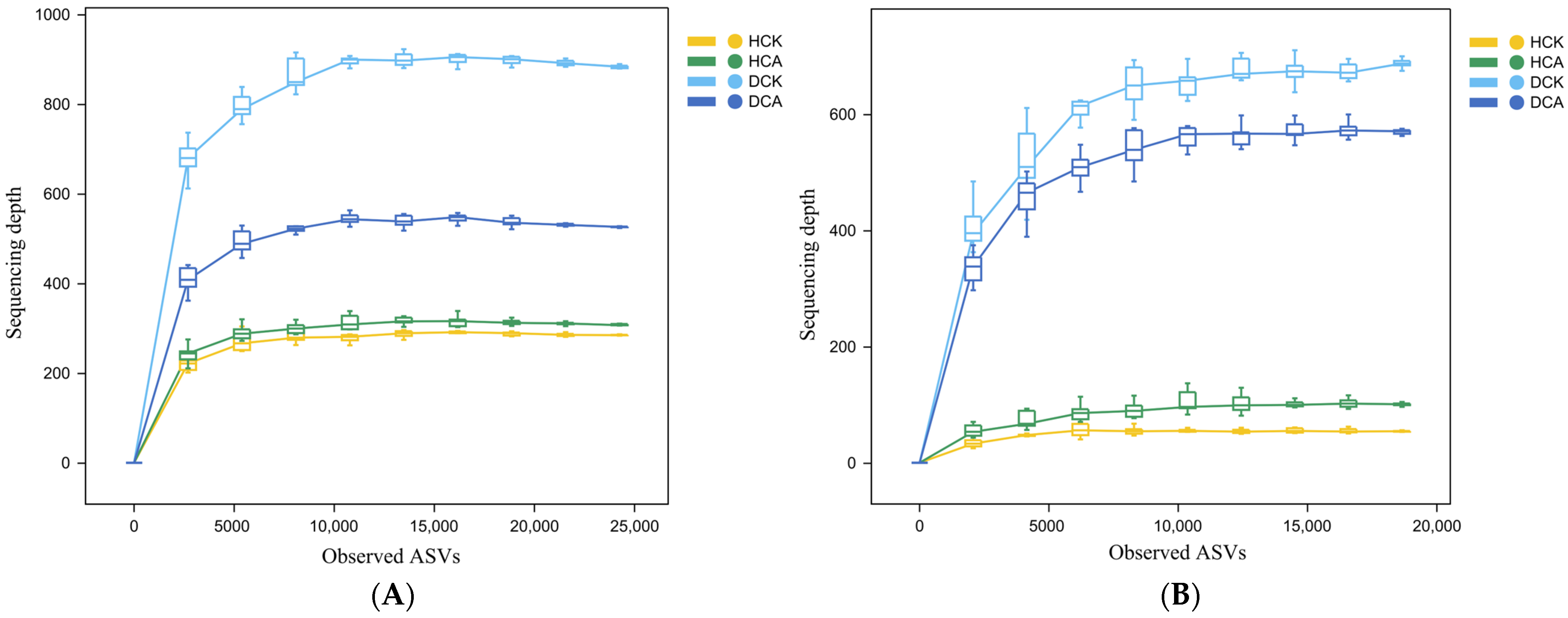
Figure 2 illustrates the rarefaction curves of bacterial (A) and fungal (B) communities in HMC silage across four groups: HCK, HCA, DCK, and DCA groups. The horizontal axis represents sequencing depth, while the vertical axis indicates the Alpha diversity index calculated through repeated sampling. All curves gradually flattened, indicating that the sequencing depth was sufficient to encompass the vast majority of microbial species present in the samples. Consequently, the sequencing data were deemed reliable and appropriate for subsequent microbial community analyses.
In Figure 2A (bacterial communities), all curves exhibited a rapid increase when the sequencing depth was less than 10,000 reads, with numerous bacterial OTUs/ASVs being continuously detected. Once the sequencing depth surpassed 10,000 reads, the curves stabilized, and the dispersion in the box plots diminished. This trend suggests that the detection of bacterial species approached saturation, with few new species likely to be identified with further increases in sequencing depth. Comparative analysis indicated that the Alpha diversity of bacteria in the low-temperature groups (DCK, DCA) was significantly higher than that in the high-temperature groups (HCK). The median value of the DCK group was the highest, remaining at approximately 900, followed by the DCA group (520–550). In the high-temperature groups, bacterial diversity in HCA was slightly greater than in HCK, with median values consistently ranging from 300 to 320 and 280 to 300, respectively.
The variation trend of fungal rarefaction curves (Figure 2B) closely mirrored that of bacterial communities. However, the fungal communities necessitated a greater sequencing depth to achieve the plateau phase, with stability observed only when the sequencing depth reached 10,000 to 15,000 reads. This indicates that a higher sequencing volume is essential for comprehensive coverage of fungal species. The intergroup differences in fungal diversity exhibited a pattern highly consistent with that of bacteria. Notably, the fungal diversity in low-temperature groups was significantly greater than that in high-temperature groups. The median value for the DCK group was maintained between 680 and 720, while the DCA group ranged from 560 to 580. In contrast, under high-temperature conditions, both the HCA and HCK groups displayed extremely low levels of fungal diversity, with median values falling below 100 and 60, respectively, and the difference between these two groups was minimal.
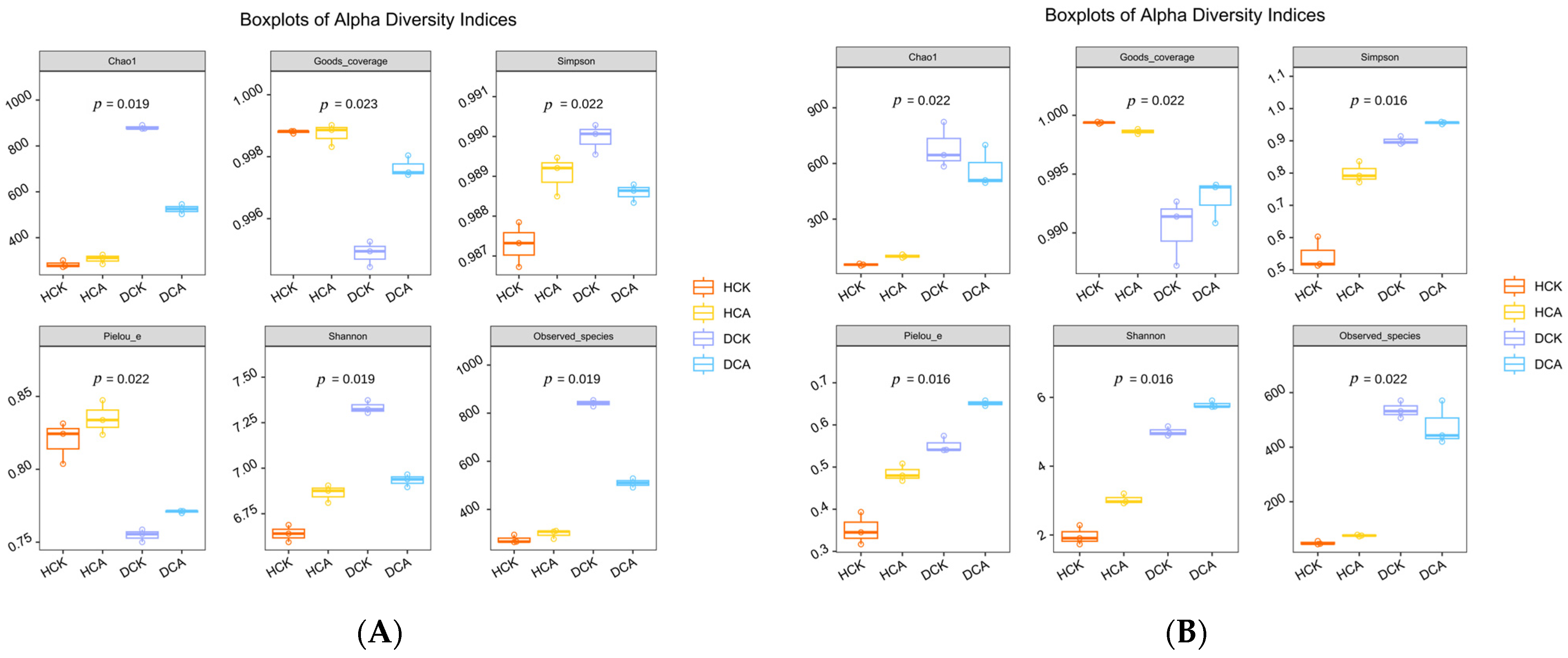
The additive CA exerted a highly significant effect on the microbial community structure of HMC silage under varying temperature conditions (p < 0.01). As illustrated in Figure 3 and Table 5, both temperature and additive treatments significantly altered the alpha diversity of bacterial and fungal communities (p < 0.01).
For bacterial communities (Figure 3A), the Chao1, Shannon, and Observed_species indices of the DCK group were significantly higher than those of the HCK group, indicating that indigenous microbial richness was greater at lower temperatures. Following the application of CA, the bacterial richness in the DCA group decreased significantly compared to the DCK group, suggesting that CA effectively eliminated a substantial number of undesirable microbes. Under high temperatures, the bacterial diversity in the HCA group increased slightly relative to the HCK group, implying that CA selectively enriched lactic acid bacteria.
The fungal communities (Figure 3B) exhibited similar trends to the bacterial communities. The fungal diversity in the DCK group was significantly higher than that of the HCK group. After CA treatment, the fungal richness and evenness in the HCA group increased markedly, while the Simpson and Pielou_e indices of the DCA group were higher than those of the DCK group. This indicates that CA could optimize the fungal community structure and effectively inhibit the excessive proliferation of harmful molds. The Good’s coverage values for all samples were above 0.99, confirming that the sequencing coverage was sufficient and that the analytical results were credible.
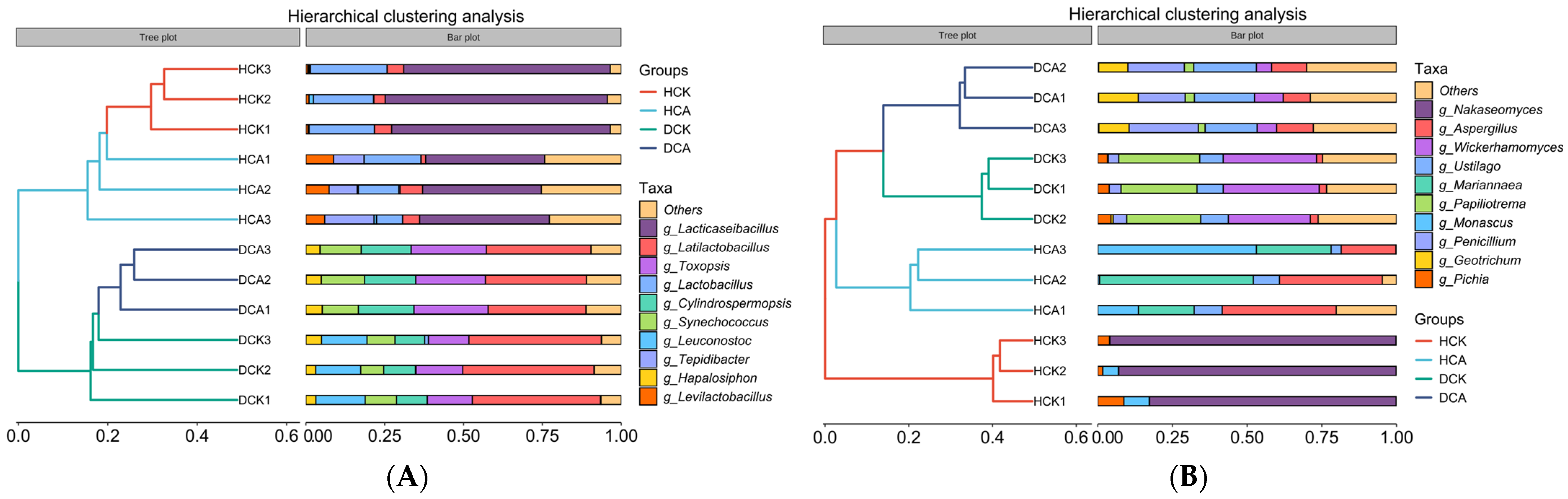
Hierarchical cluster analysis was conducted on the microbial communities of silage samples subjected to different treatments. The results revealed highly significant differences in the clustering patterns between bacterial and fungal communities (p < 0.01).
Bacterial communities, as illustrated in the cluster tree (Figure 4A), were categorized into two major branches: high-temperature groups (HCK, HCA) and low-temperature groups (DCK, DCA). Within the high-temperature branch, HCK and HCA formed distinct subclusters. Similarly, DCK and DCA were identified as two independent subclusters within the low-temperature branch. Samples within each cluster exhibited high similarity in community composition, while marked differences were observed between groups. This finding aligns with the results of the β-diversity analysis based on PCoA. The stacked bar chart on the right demonstrates significant differences in the dominant bacterial genera across treatments. Lacticaseibacillus was the predominant genus in the HCK group, with a relative abundance exceeding 70%. In the HCA group, the abundance of Lacticaseibacillus markedly decreased, leading to a more dispersed bacterial community. Concurrently, the relative abundances of Lacticaseibacillus and Tepidibacter increased significantly. In the DCK and DCA groups, Latilactobacillus emerged as the predominant genus, accompanied by Toxopsis and Cylindrospermopsis. These two low-temperature groups exhibited higher bacterial diversity.
Fungal communities (Figure 4B) are illustrated in the left cluster tree, where HCK samples form a distinct cluster, completely separated from the other three groups. The HCA group is classified into a single subcluster, while DCK and DCA are grouped into another major branch, which is further divided into two subclusters. The clear intra-group aggregation and inter-group separation indicate that both temperature and the additive CA are key factors driving the differentiation of fungal communities. The stacked bar chart on the right reveals significant variations in fungal composition among the groups. Nakaseomyces is overwhelmingly dominant in the HCK group, exhibiting an extremely high relative abundance, which is a primary potential cause of silage spoilage at high temperatures. The growth of Nakaseomyces is strongly inhibited in the HCA group, where Aspergillus and Mariannaea become the dominant fungi, leading to a substantial reconstruction of the fungal community. In the low-temperature DCK and DCA groups, multiple fungal genera, including Wickerhamomyces, Papiliotrema, and Penicillium, coexist. No single genus occupies a dominant position, resulting in a fungal diversity that is significantly higher than that observed in the high-temperature groups.

3.6. Microbial Community Composition

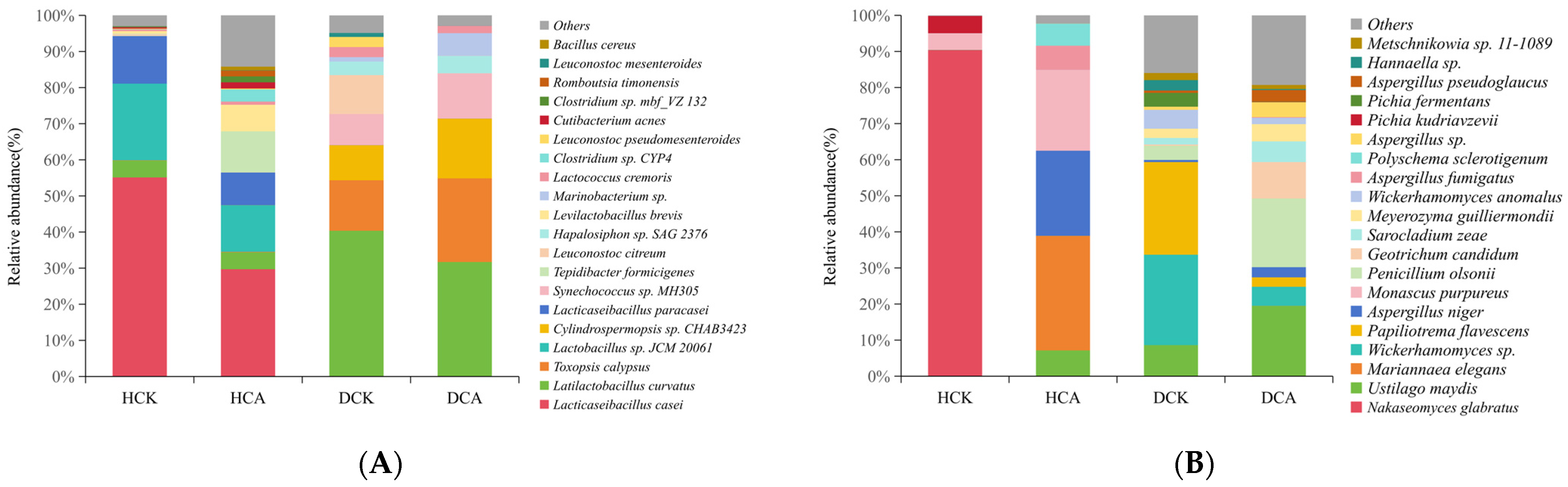
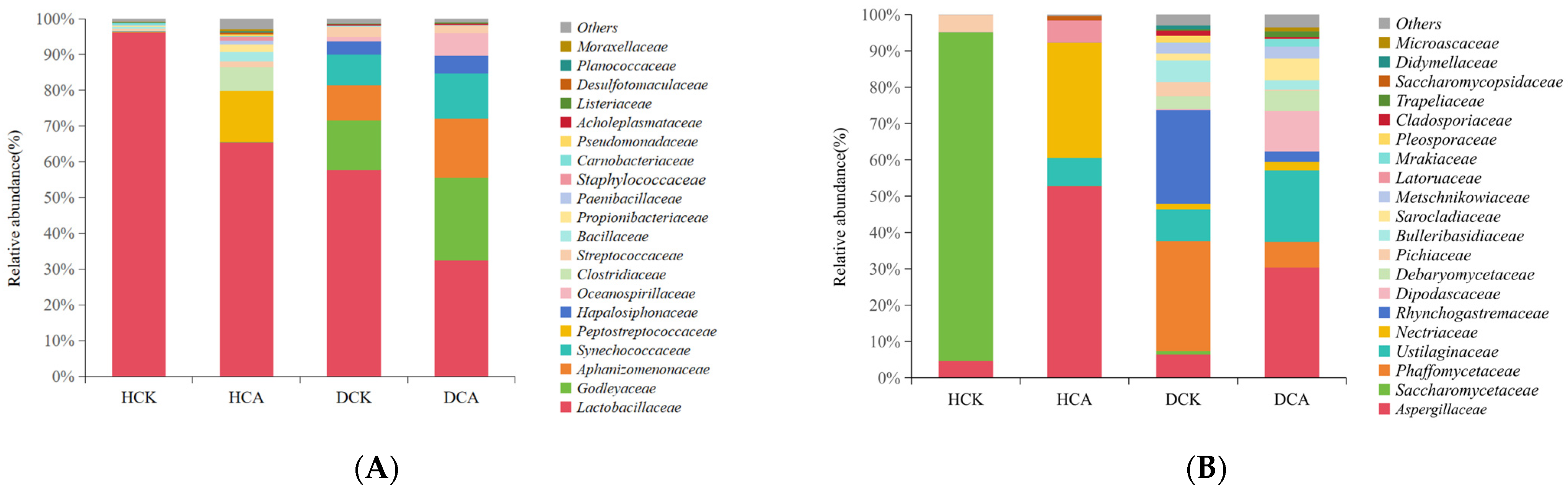
At the family level (Figure 5A), Lactobacillaceae overwhelmingly dominated the bacterial community in the HCK group, with a relative abundance close to 100%. After CA addition under HCA, the proportion of Lactobacillaceae declined markedly, accompanied by sharp increases in Pediococcaceae and other minor bacterial families. For low-temperature treatments, the relative abundance of Lactobacillaceae further decreased in both DCK and DCA groups. Notably, DCA exhibited remarkably enriched beneficial Lactobacillaceae and Levilactobacillaceae compared with DCK, while cold-resistant spoilage-related bacterial taxa were substantially suppressed by CA.
For fungal communities (Figure 5B), the high-temperature control HCK was almost exclusively dominated by Saccharomycetaceae (spoilage yeast family). Supplementation with CA drastically reduced the relative abundance of spoilage yeast Saccharomycetaceae in HCA and elevated the proportion of Aspergillaceae. Under low-temperature conditions, the fungal microbiota of DCK was dominated by cold-tolerant harmful fungal families such as Phaffomycetaceae and Metschnikowiaceae. In contrast, DCA showed obvious shifts in fungal composition: CA markedly inhibited cold-resistant spoilage fungi and increased the relative abundance of Aspergillaceae, demonstrating that CA could reshape both bacterial and fungal community structures of HMC silage regardless of storage temperature.
The bacterial species depicted in Figure 6A indicate that Lacticaseibacillus casei was the dominant species in the HCK group, with a relative abundance of approximately 55%. The subdominant species included Lactobacillus sp. JCM 20061 and Lacticaseibacillus paracasei, resulting in a bacterial community predominantly composed of the Latilactobacillus genus. Although LAB maintained a high abundance, they were unable to completely inhibit the growth of undesirable microbes. Notably, Latilactobacillus curvatus and a small number of opportunistic pathogens persisted in this group. Following the application of CA, the relative abundance of Lacticaseibacillus casei in the HCA group decreased to around 30%. Concurrently, Tepidibacter formicigenes, Lacticaseibacillus paracasei, and Lactobacillus sp. JCM 20061 were enriched, leading to a significant increase in bacterial diversity. In the DCK group, Latilactobacillus curvatus emerged as the most dominant species, accounting for approximately 40%. The relative abundances of non-Latilactobacillus bacteria, including Toxopsis calypsus, Cylindrospermopsis sp. CHAB3423, and Leuconostoc citreum, increased markedly. In the DCA group, the relative abundance of Latilactobacillus curvatus was approximately 32%. Species such as Toxopsis calypsus, Cylindrospermopsis sp. CHAB3423, and Lactococcus cremoris were evenly distributed, and this group exhibited the highest bacterial diversity among all treatments.
Fungal species (Figure 6B) revealed that the pathogenic yeast Nakaseomyces glabratus dominated the fungal community in the HCK group, exhibiting a relative abundance as high as 90%. This pathogenic fungus was completely eliminated in the HCA group following CA treatment (p < 0.001), leading to the emergence of Mariannaea elegans and Aspergillus niger as the predominant fungi. In the DCK group, cold-tolerant pathogenic yeasts Wickerhamomyces sp. and Papiliotrema flavescens were prevalent. After the addition of CA in the DCA group, the abundances of these two yeasts declined sharply, while the relative abundances of Ustilago maydis, Penicillium olsonii, and Geotrichum candidum increased significantly (p < 0.001). Pichia kudriavzevii was exclusively enriched in the HCK group, whereas Pichia fermentans was solely detected in the DCK group. Both spoilage yeasts were completely inhibited by CA. The species of Aspergillus exhibited distinct distribution characteristics: Aspergillus niger was enriched in the HCA group, while Aspergillus pseudoglaucus prevailed in the DCA group. No significant differences in the relative abundances of Monascus purpureus, Aspergillus fumigatus, and Polyschema sclerotigenum were observed across all groups (p > 0.05). The detailed relative abundance data of all detected bacterial and fungal species across treatments are summarised in Table 6. In conclusion, storage temperature determined the indigenous dominant microbial species in silage. The additive CA regulated microbial communities through selective bacteriostasis, which replaced dominant species and eliminated spoilage microbes. This mechanism underlies the improvement of silage fermentation quality and aerobic stability.

3.7. Prediction of Microbial Functions and Environmental Correlation

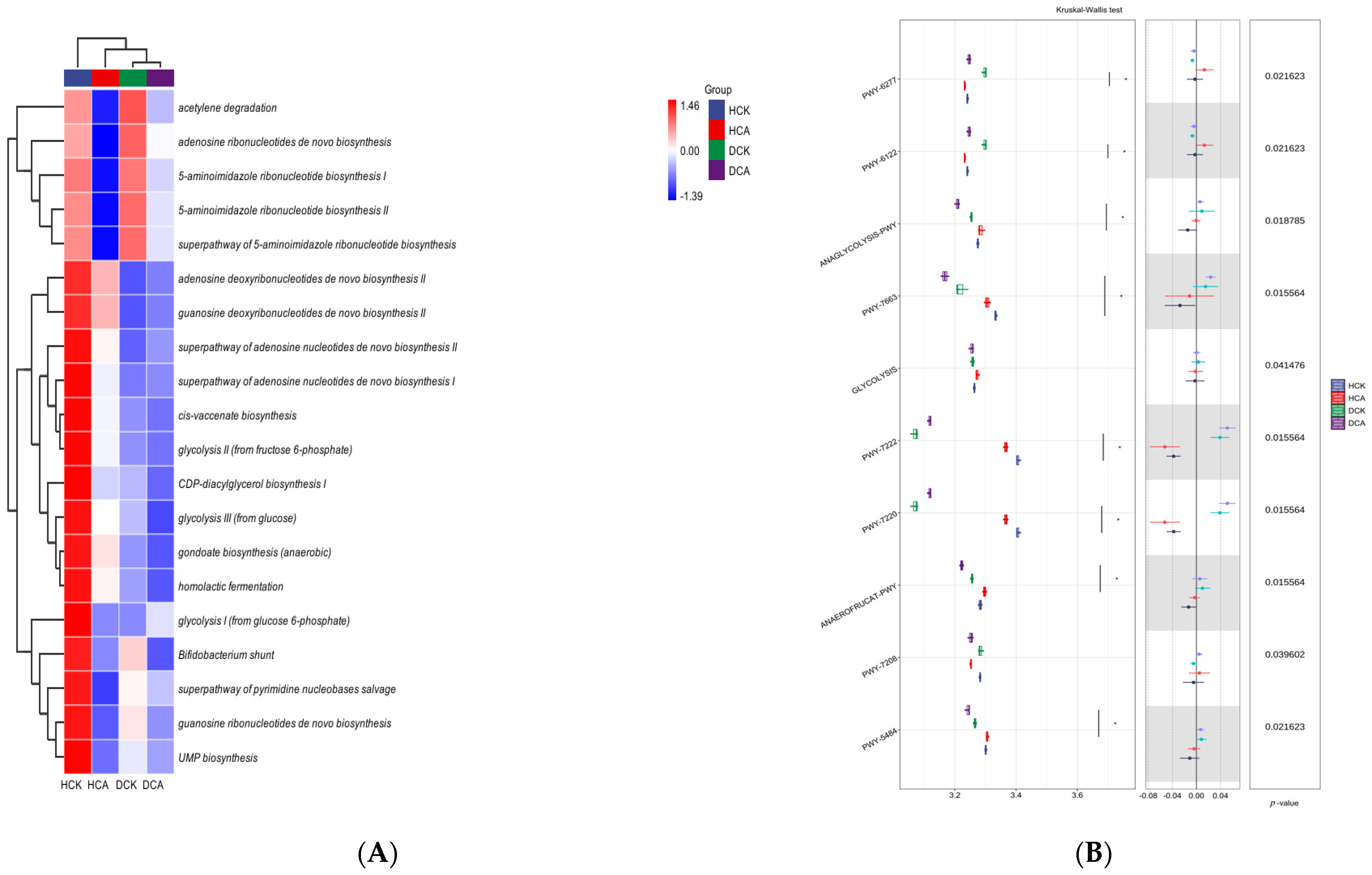
This heatmap clustered core KEGG metabolic pathways. The results revealed that both storage temperature and compound chemical additive (CA) exerted significant regulatory effects on predicted bacterial metabolic pathways, which may be associated with shifts in bacterial functional profiles, with obvious discrepancies in bacterial functional profiles observed among all treatments (Figure 7A). Under high-temperature conditions, the enrichment levels of glycolysis and homolactic fermentation pathways were relatively high in the HCK group; supplementation with CA markedly downregulated these acid-producing pathways in the HCA group, which may contribute to altered acid accumulation. Under low-temperature stress, the enrichment of lipid metabolism and glycolysis pathways was suppressed in the DCK group. The addition of CA altered predicted pathways related to spoilage bacteria-mediated nucleic acid synthesis and heterotrophic amino acid degradation pathways, and these pathway shifts may be associated with changes in spoilage potential.
A Kruskal–Wallis test was performed to analyze the differences in core metabolic pathways among the groups (Figure 7B). Significant differences were identified in key pathways, including glycolysis, nucleotide synthesis (PWY-6277, PWY-6122), and homolactic fermentation across all treatments (p < 0.05). Under high temperature, the enrichment levels of glycolysis and homolactic fermentation pathways peaked in the HCK group. The introduction of CA altered the metabolic pattern of microbial communities in the HCA group, which was accompanied by a slight decrease in glycolysis pathway enrichment. In contrast, at low temperatures, the activities of glycolysis and lactic acid fermentation pathways in the DCK and DCA groups were significantly lower than those in the high-temperature groups, with no notable differences observed between the two low-temperature groups. The nucleotide synthesis pathways were significantly enriched in the HCK and HCA groups, which is consistent with the functional enrichment heatmap and may be linked to elevated microbial proliferation.
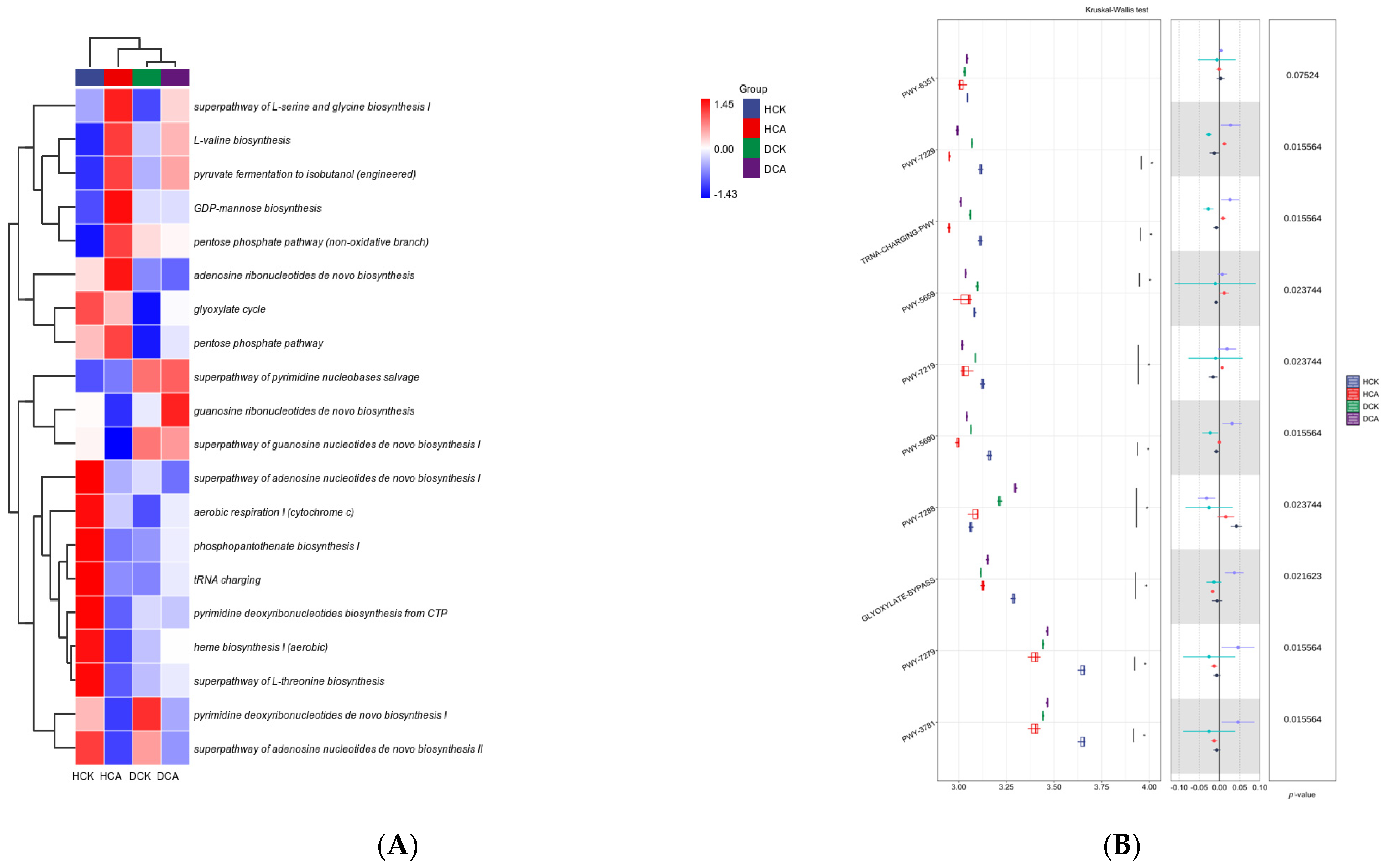
This heatmap clustered core KEGG metabolic pathways. In Figure 8A, the byproduct-related metabolic pathways were markedly enriched in the control groups (HCK and DCK), while their abundances decreased sharply in CA-supplemented groups (HCA and DCA). Multiple de novo biosynthesis pathways for purine and pyrimidine nucleotides reached the highest enrichment in the high-temperature control HCK. Oxygen-consuming metabolic pathways, including aerobic respiration I, heme biosynthesis and the glyoxylate cycle, were highly abundant in HCK and DCK, and their enrichment was significantly suppressed after CA application; this pathway suppression may contribute to reduced aerobic spoilage.
The Kruskal–Wallis test was employed to analyze the differences in core fungal metabolic pathways among the groups (Figure 8B). The results indicated that key pathways, including amino acid synthesis, aerobic respiration, tRNA charging, and the glyoxylate cycle, exhibited significant differences among treatments (p < 0.05). Under high-temperature conditions, the activities of aerobic respiration and the glyoxylate cycle were highest in the HCK group, and this pathway enrichment may be associated with vigorous aerobic metabolism of spoilage yeasts, which could correlate with secondary fermentation observed in this group. The CA treatment altered the enrichment levels of certain metabolic pathways in the HCA group, and such pathway shifts may contribute to suppressed fungal proliferation and spoilage-related metabolic potential. Conversely, under low-temperature conditions, the overall enrichment levels of fungal metabolic pathways in the DCK and DCA groups were markedly lower than those in the high-temperature groups, with minimal differences observed between the two low-temperature groups. This finding suggests that low temperature may exert a strong inhibitory effect on fungal growth and spoilage metabolism, which could weaken the measurable regulatory signal of the additive based on predicted fungal functional profiles. Additionally, the pathways of nucleotide synthesis and tRNA charging were highly enriched in the HCK group, which may be associated with elevated fungal biomass synthesis and protein translation, and this functional signature could be linked to dominant colonization of spoilage yeasts in this treatment.

3.8. Correlation Between Microbial Species and Fermentation Indices

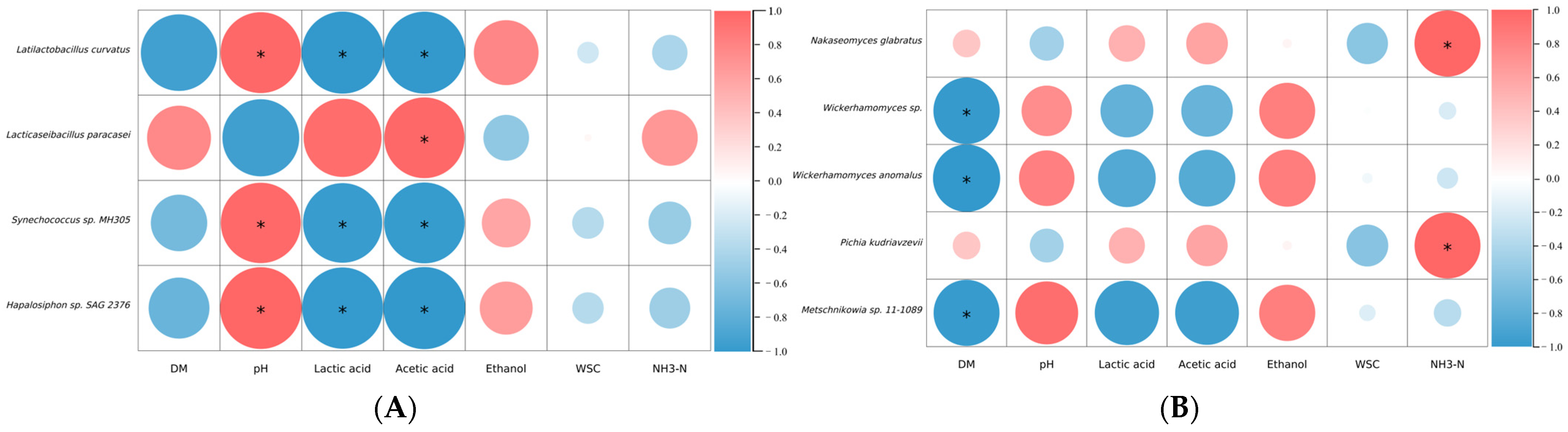
Figure 9A illustrates the correlation between dominant bacterial species and silage fermentation indices, revealing significant associations between predominant bacteria and fermentation quality parameters. Notably, Latilactobacillus curvatus exhibited a significant positive correlation with pH (p < 0.05) and a significant negative correlation with both lactic acid and acetic acid contents (p < 0.05). It also demonstrated a positive trend with ethanol and weak correlations with WSC and NH3-N. In contrast, Lacticaseibacillus paracasei showed a significant positive correlation with lactic acid and acetic acid (p < 0.05), while presenting a negative trend with pH. Furthermore, it tended to be positively associated with DM and NH3-N. The species Synechococcus sp. MH305 and Hapalosiphon sp. SAG 2376 exhibited highly consistent correlation patterns, both showing significant positive correlations with pH (p < 0.05) and significant negative correlations with lactic acid and acetic acid (p < 0.05). The correlations between dominant fungal species and fermentation indices exhibited more pronounced variability, with spoilage yeasts being strongly associated with indicators of silage deterioration (Figure 9B). Nakaseomyces glabratus demonstrated a significant positive correlation with NH3-N (p < 0.05) and tended to show positive correlations with DM, lactic acid, pH, and acetic acid, while negatively correlating with WSC. Wickerhamomyces sp., Wickerham anomalus, and Metschnikowia sp. 11-089 displayed highly similar correlation characteristics, with all three fungi exhibiting a significant negative correlation with DM (p < 0.05), a positive trend with pH and ethanol, and a negative trend with lactic acid and acetic acid. Lastly, Pichia kudriavzevii was significantly positively correlated with NH3-N (p < 0.05), and its correlation patterns with other indices were highly analogous to those of Nakaseomyces glabratus, indicating a close association with protein spoilage in silage.

4. Discussion

4.1. Components Differentiated Antibacterial Mechanisms of CA at High and Low Temperatures and Solutions to Regional Silage Production Bottlenecks

From a practical production perspective, the constant-temperature incubation adopted in this trial simulates typical extreme storage environments. Continuous temperatures ranging from 32 to 38 °C often appear during summer ensiling on the Huang–Huai–Hai Plain, whereas temperatures frequently drop below 8 °C in late autumn in Northeast China; these field conditions are comparable to the 35 °C and 5 °C treatments set in our experiment. Therefore, the present results provide theoretical guidance for applying CA for high-moisture corn silage under both hot and cold climatic regions. In field implementation, CA can be dissolved and evenly sprayed onto raw materials during the chopping process before silo filling. It should be noted that on commercial farms, temperature fluctuation, variable humidity and complex indigenous microbial communities exist, which differ from stable laboratory incubation conditions and may cause deviations in fermentation performance. Therefore, further on-farm trials are required to validate the efficacy of CA under practical variable environmental conditions. Most previous relevant investigations only evaluated single preservatives including sodium benzoate, potassium sorbate or sodium nitrite under constant ambient temperature, and few reports simultaneously compared their combined application effects across extremely high and low storage temperatures. Knicky et al. separately tested binary mixtures of these three compounds at moderate temperature and verified their synergistic antibacterial performance, yet their research failed to cover extreme 5 °C and 35 °C storage environments and ignored temperature-driven succession of spoilage microorganisms [7,8]. Our ternary compound CA specially matches the formula for high-moisture corn and realizes targeted inhibition of temperature-specific spoilage flora at dual extreme temperatures, which distinguishes the present work from prior single or binary additive trials.
Ensiling temperature is one key factor affecting silage fermentation characteristics; fermentation processes are also jointly regulated by multiple variables including particle size, buffering capacity, moisture level, dry matter content, air content within ensiled materials, silo filling time, compaction degree and sealing performance. These factors modulate microbial proliferation and further determine whether fermentation proceeds favourably or undesirably. Consistent with previous studies, high temperature exacerbates fungal spoilage, while low temperature commonly induces bacterial proteolysis in silage [1]; however, most previous chemical preservatives only exert stable antibacterial effects under single temperature conditions and fail to cope with temperature-dependent spoilage flora succession. Bernardes et al. only applied potassium sorbate and sodium benzoate in maize silage under moderate temperature and confirmed their benefits for aerobic stability, while Knicky et al. explored the mixed use of the three chemical agents at room temperature [2,7]. None of the above studies simultaneously discussed the differential functional advantages of each component under cold and hot storage conditions, and lacked systematic verification on high-moisture corn, which the current CA formula complements. This study adopted CA containing sodium benzoate, potassium sorbate and sodium nitrite. Each component has distinct physicochemical traits. They endow CA with strong adaptability to high and low storage temperatures for high-moisture corn silage. The obtained results reveal that CA has the potential to mitigate prominent fermentation obstacles of high-moisture corn silage under corresponding temperature conditions within the tested scenario. A temperature of 35 °C simulated the hot climate of the Huang–Huai–Hai Plain. Potassium sorbate features excellent heat resistance. It blocks lipid synthesis inside fungal cell membranes and suppresses the reproduction of yeasts and molds [20]. In the CA group, yeast counts stayed under the detection limit during the whole fermentation stage. This treatment greatly improved silage aerobic stability. Under natural high-temperature ensiling, yeasts consume massive organic acids. Lactic acid content declines sharply, and silage deteriorates quickly after silo opening [21]. CA inhibits fungal metabolism efficiently. It promotes lactic acid accumulation, reduces the loss of WSC, and restrains protein decomposition. Thus, NH3-N concentrations dropped significantly. This result contrasts with the CON group, which had low organic acid contents and high NH3-N levels. Consistent with the results of Bernardes et al., independent supplementation of potassium sorbate could suppress yeast reproduction and improve aerobic stability in maize silage, but single sorbate treatment could not simultaneously control cold-resistant enterobacteria under low-temperature storage [2]. The ternary CA in this study retains the excellent heat-resistant antifungal property of potassium sorbate and supplements the cold-adapted antibacterial activity of sodium nitrite, achieving a better comprehensive preservation effect than single-component additives. Low temperatures restrict the ensiling of forage in cold areas. The 5 °C treatment simulated cold and alpine growing zones. Low temperature suppresses the enzyme activity of native LAB. LAB produce less acid, and silage pH remains high. Meanwhile, ENB and proteolytic bacteria multiply rapidly. This causes heavy CP loss and excessive NH3-N in low-temperature silage [22]. Sodium nitrite maintains stable antibacterial activity at low temperatures. It blocks the respiratory chain of clostridia and Gram-negative ENB to restrain their proliferation. CA cannot rapidly reduce silage pH in the early phase of low-temperature fermentation. But its antibacterial capacity prevents protein spoilage and degradation effectively. This study showed that CA failed to lower initial pH under cold storage. However, ENB populations in the CA group were far lower than those in the CON group. The CA group retained more nutrients on day 28 of ensiling. This verified the unique cold-resistant antibacterial function of sodium nitrite. In addition, sodium benzoate penetrates bacterial cell membranes and disrupts intracellular energy metabolism. It provides auxiliary broad-spectrum antibacterial effects. The three ingredients generate synergistic antibacterial activity after compounding. Single chemical additives cannot adapt to both high-temperature and low-temperature silage environments. These findings enrich the theoretical understanding regarding temperature adaptability and functional mechanisms of chemical additives applied to high-moisture corn silage.

4.2. CA Improves Fermentation and Aerobic Stability via Remodeling Microbial Community and Regulating Metabolic Potential

Temperature is a key environmental factor that shapes the assembly of silage microbial communities [23]. Raw forage harvested in cold environments contains far richer native microbes, and alpha-diversity indices also prove that low-temperature control silage has higher community diversity than high-temperature control silage. Natural ensiling environments select distinct harmful microbes at different temperatures; the heat-resistant spoilage yeast Nakaseomyces glabratus multiplies rapidly under high temperatures, while ENB, pathogenic clostridia and microalgae dominate silage flora under low temperatures, and these harmful microorganisms are the core cause of silage quality loss under different storage temperatures [24]. Compared with previous reports focusing on room-temperature ensiling, the present study further confirms that temperature-driven fungal and bacterial succession leads to completely different spoilage mechanisms, and conventional preservatives cannot simultaneously inhibit high-temperature yeast proliferation and low-temperature bacterial spoilage [25]. Early research separately applied sodium benzoate or potassium sorbate for silage preservation; potassium sorbate shows prominent antifungal capacity at moderate temperature but loses efficacy under cold stress, while sodium benzoate only weakly inhibits enterobacteria and cannot control mass propagation of heat-resistant yeasts [2]. The compound CA proposed here achieves dual-temperature targeted regulation of spoilage taxa, which cannot be realized by any single chemical additive recorded in existing silage research. CA reshapes silage microbiota through targeted selective bacteriostasis. It fully inhibits mass reproduction of dominant spoilage yeasts and moderately accumulates heterofermentative LAB at high temperatures, and suppresses the proliferation of ENB and saprophytic bacilli at low temperatures to optimize the community structure of Latilactobacillus.
From the perspective of microbial metabolic functions, PICRUSt2 functional prediction suggests that CA is associated with altered relative abundance of predicted pathways related to glycolysis and homolactic fermentation. This process promotes directional conversion of WSC to lactic acid and increases lactic acid content in CA-treated silage. Meanwhile, predicted proteolytic pathways of spoilage bacteria, together with fungal aerobic respiration and glyoxylate cycle pathways, exhibited reduced relative abundance following CA addition. Such shifts in predicted functional profiles may simultaneously slow CP decomposition and organic acid consumption. Such shifts in predicted functional profiles may simultaneously slow CP decomposition and organic acid consumption. Existing silage functional prediction research mainly focused on lactic acid bacteria inoculants or single organic acid additives under room temperature, while studies adopting the ternary mixture of sodium benzoate, potassium sorbate and sodium nitrite to analyze microbial metabolic pathways at two extreme temperatures are still scarce [12]. This study reveals the synergistic metabolic regulation mechanism of the three composite components via PICRUSt2 prediction results, and supplements molecular functional evidence for compound chemical preservatives applied in high-moisture corn silage. The aerobic stability test results in Table 4 showed that yeasts and ENB multiply quickly in high- and low-temperature CON groups after silo opening; these microbes rapidly decompose lactic acid to cause sharp pH rise and large nutrient loss, and low-temperature CON silage suffers more serious aerobic deterioration with pH exceeding 7.0. Consistent with previous aerobic stability studies, spoilage yeasts are the dominant drivers of aerobic deterioration; notably, our results further demonstrate that dual-temperature-adapted CA achieves longer aerobic preservation efficacy than single organic acid preservatives reported previously [25]. CA retains lasting residual antibacterial effects, so it continuously inhibits the growth of spoilage flora during aerobic exposure. Lactic acid barely degrades in high-temperature CA silage, and low-temperature CA groups even show slight lactic acid accumulation. Spearman correlation analysis of microbial taxa and fermentation indicators further confirms that enriched beneficial microbes and reduced spoilage populations jointly improve the overall fermentation quality of silage. In summary, these results supply reliable theoretical support and experimental data for quality control of farm-scale HMC silage during outdoor storage and feeding under variable temperature environments. It should be noted that this study only evaluated aerobic stability by detecting pH, nutrient composition and microbial counts after aerobic exposure. Conventional aerobic stability tests usually record real-time temperature variation, CO2 emission, and the time point when silage temperature increases by 2 °C over ambient temperature. Real-time dynamic monitoring of temperature and CO2 was not implemented in the current trial, which represents a limitation of the present research. Subsequent trials will integrate complete real-time monitoring indicators to achieve a more comprehensive evaluation of aerobic deterioration.

4.3. Mechanism of CA in Inhibiting Nutrient Degradation

In natural silage systems, saprophytic microbes such as Clostridium spp. and ENB secrete extracellular proteases. These enzymes are the main factors triggering CP decomposition and subsequent NH3-N accumulation [26]. Elevated ammonia-nitrogen reflects inferior silage quality, which is a marker of intense metabolic activity of spoilage microorganisms that degrade crude protein, water-soluble carbohydrates and organic acids simultaneously. Native yeasts quickly consume WSC in high-temperature CON silage. This forces resident microbes to decompose CP as a substitute energy source. For low-temperature CON silage, high pH and massive reproduction of spoilage bacteria work together to speed up proteolysis. We speculate that CA suppresses protease synthesis within harmful microbial communities, which could explain the decreased NH3-N and improved CP retention observed under both high and low temperatures. It is hypothesized that selectively enriched LAB populations can secrete extracellular fibrolytic enzymes, which may trigger slight degradation of structural carbohydrates and lead to mild NDF decline in CA silage. As the core goal of ensiling is to preserve feed resources for periods of feed shortage, suppressing nutrient breakdown and lowering NH3-N represents a critical target to maintain feed supply capacity.
Improved crude protein preservation and lower NH3-N concentration reduce nitrogen waste in the rumen, which is beneficial to ruminant nitrogen utilization; meanwhile, changes in organic acid profiles further affect feed palatability and voluntary feed intake of animals. CA selectively enriches LAB populations. These LAB produce extracellular fibrolytic enzymes, which slightly degrade structural carbohydrates and lead to mild NDF decline in CA silage. Moderate fiber degradation raises nutrient digestibility and feeding value for ruminants. Storage temperature imposes strong impacts on ADF levels, while CA has no obvious regulatory effect on ADF. This result proves that ADF mainly depends on the inherent cell wall structure of fresh raw forage. Chemical preservatives cannot effectively degrade this hard fibrous component. Collectively, the optimized fermentation characteristics and nutritional composition driven by CA ultimately produce higher-quality feed raw materials for ruminant production.

4.4. Analysis of Correlation Mechanisms Between Microbial Species and Functions

The HCK group was dominated by Lactobacillaceae, Lacticaseibacillus casei, a typical homofermentative LAB (Figure 5 and Figure 6, Table 6). This strain only produces lactic acid with little acetic acid synthesis. Without natural antifungal acetic acid in silage, the spoilage yeast Nakaseomyces glabratus multiplied freely and weakened aerobic stability [27]. We infer that with sufficient carbon substrates, CA slightly reduces homofermentative LAB and enriches heterofermentative Levilactobacillus brevis [28]. Acetic acid produced by heterofermentation raises silage buffering capacity and creates synergistic antibacterial effects with residual additives, which matches Table 4 data that the HCA group kept high acetic acid and great aerobic stability. Small amounts of Clostridia and Bacillus cereus still existed in HCA because the additive dosage could not fully clear these microbes, yet their abundance stayed too low to trigger severe protein breakdown. Therefore, the NH3-N content of HCA was markedly lower than HCK. Low temperatures slow the growth of thermophilic strains such as Lacticaseibacillus casei, which is consistent with previous low-temperature silage studies. Latilactobacillus curvatus dominated cold-stored silage flora, which exhibits weaker acid-producing capacity than thermophilic LAB [29]. This strain cannot efficiently utilize WSC when it grows alone. Sodium nitrite in CA strongly inhibits cold-resistant ENB and Clostridia at 5 °C and reduces their competition for carbon nutrients. It is hypothesized that extra available carbon sources then boost the growth of cyanobacteria, including Toxopsis calypsus and Cylindrospermopsis. These cyanobacteria may take up trace inorganic nitrogen and small molecular polysaccharides, cut invalid substrate consumption, and retain more WSC and CP [21]. This explains why the low-temperature CA group held higher WSC and CP levels than DCK. In addition, massive proliferation of Leuconostoc caused high ethanol content in DCK, and CA restrained Leuconostoc growth to lower ethanol concentration, consistent with ethanol data shown in Table 2 and Table 4. At high storage temperature, the dominant pathogen Nakaseomyces glabratus consumes lactic acid during anaerobic preservation and reproduces sharply after silo opening. This directly leads to declined lactic acid and an elevated pH in the HCK group, as yeasts can utilize lactic acid and trigger aerobic spoilage under aerobic conditions [30]. Potassium sorbate in CA blocks lipid synthesis of fungal membranes and eradicates this spoilage yeast [31]. Meanwhile, CA allows the growth of Mariannaea elegans and Aspergillus niger. These Aspergillus strains were detected with relatively high abundance under anaerobic conditions but barely degrade organic acids and only mildly decompose NDF, which accounts for slight NDF loss and stable lactic acid levels of CA groups listed in Table 3 and Table 4. Cold-tolerant facultative anaerobic yeasts Wickerhamomyces and Papiliotrema dominated the fungal community of DCK. They metabolize organic acids slowly under low-temperature anaerobic conditions, but multiply rapidly after 7 days of aerobic exposure and push silage pH above 7.0 (Table 4). CA inhibits these cold-resistant yeasts, making Penicillium and Ustilago the main fungal genera instead. These molds rely heavily on oxygen and stay dormant in sealed anaerobic silage environments. After seven days of aerobic incubation, the yeast abundance of the DCA group was far lower than that of the DCK group, and its lactic acid content even increased rather than decreased. Previous trials adopting single sodium nitrite only realized inhibition of clostridia under low temperature, but could not control mass reproduction of cold facultative anaerobic yeasts during aerobic exposure [8]. The composite CA combines the antibacterial characteristic of sodium nitrite and the antifungal property of potassium sorbate, simultaneously restricting cold-adapted bacteria and yeasts, forming an obvious innovation compared with former single-agent low-temperature silage experiments. Table 4 quantitative data further verified this trend: at the 5 °C aerobic stage, yeast counts of DCK jumped from 6.56 log10 CFU/g FW to 8.27 log10 CFU/g FW, and ENB counts rose from 4.21 log10 CFU/g FW to 5.74 log10 CFU/g FW. CA treatment maintained lasting inhibition of spoilage microbes throughout the test. All these phenotypic results prove that reshaped fungal community structure is the core factor causing distinct aerobic stability between different silage treatments.

4.5. Regulatory Effects of Additive CA on Bacterial Metabolic Networks and Silage Fermentation Quality

Under high storage temperatures, potassium sorbate in CA limits fungi’s competitive consumption of soluble carbohydrates. Sodium benzoate blocks inefficient metabolic activities of ENB. More carbon substrates are available for LAB, and PICRUSt2 prediction shows that predicted glycolysis and homolactic fermentation pathways exhibit higher relative abundance, which may be associated with directional conversion of WSC into lactic acid [32]. At low storage temperatures, sodium nitrite inhibits respiratory enzyme activity of Clostridia and Gram-negative bacteria. It cuts invalid carbon source consumption from miscellaneous microbes. Different from previous additives that only improve fermentation at ambient temperature, CA remodels bacterial metabolic patterns under cold conditions by regulating the predicted pentose phosphate pathway, which may compensate for low-temperature inhibition of LAB metabolism [33].
Control groups showed high enrichment of the dissimilatory pyruvate pathway, which may correlate with excessive ethanol accumulation in silage. We infer that CA may reduce ethanol accumulation by shifting the relative abundance of predicted fermentation by-product synthesis pathways via broad-spectrum antibacterial effects. Mass reproduction of spoilage bacteria drives enrichment of de novo purine, pyrimidine synthesis and dissimilatory amino acid degradation pathways. These functional signatures may contribute to accelerated CP hydrolysis and NH3-N generation. After CA inhibits spoilage microbes, proteolysis-related predicted pathways are downregulated, a shift that may help retain more CP and lower NH3-N levels. Aerobic respiration pathways were enriched in all untreated CON groups at two temperatures, and this predicted metabolic signature may be linked to severe aerobic spoilage after silo opening. Residual antibacterial ingredients of CA continuously restrain aerobic metabolism throughout storage. These predicted pathway shifts may partially explain the potential molecular associations through which CA improves silage aerobic stability based on PICRUSt2-inferred microbial metabolic profiles.

4.6. Analysis of the Linkage Mechanism Between Microbial Communities and Silage Quality Based on Correlations Between Species and Physicochemical Indices

Spearman correlation analysis at the species level verified that beneficial LAB are core microbes. They drive silage acidification, WSC retention and CP preservation [34]. By contrast, spoilage microbes such as clostridia and pathogenic yeasts raise pH, boost NH3-N accumulation and trigger aerobic spoilage [35]. Consistent with previous microbiome studies, microbial community succession is the decisive factor determining silage fermentation quality; nevertheless, few studies have compared fungal and bacterial succession rules under dual high/low temperature conditions or explored targeted regulation strategies for temperature-specific spoilage microbes [29]. Three ingredients inside CA exert distinct antibacterial effects at different storage temperatures. They adjust the relative abundance of dominant species and control the expression of microbial metabolic pathways. Such comprehensive regulation is proposed to improve silage fermentation performance, nutrient retention and aerobic stability. Correlation results reveal the full hierarchical regulatory mechanism of chemical additives on microbial flora, metabolic functions and silage quality under different temperature environments. This research supplies microbiome-based theoretical evidence for large-scale use of CA in HMC silage production across warm and cold regions of northern and southern China.

5. Conclusions

This study was based on the hypothesis that compound chemical additive CA exerts temperature-adaptive synergistic antibacterial effects to improve the fermentation performance of high-moisture corn silage under divergent storage conditions. By simulating two typical storage temperatures corresponding to distinct climatic zones in China, this work verified how CA modulates microbial communities and further enhances silage quality. Storage temperature acted as a core driver reshaping microbial assemblages: high temperatures favoured rapid proliferation of spoilage yeasts, whereas low temperatures restricted the growth of Lactobacilli and facilitated excessive multiplication of ENB and Clostridium spp. Such temperature-related fermentative deficiencies cannot be fully resolved by single-component preservatives. Consistent with our hypothesis, the three functional ingredients within CA generated synergistic antibacterial effects suited to the two tested thermal conditions. At 35 °C, CA completely suppressed dominant spoilage yeasts and elevated lactic and acetic acid concentrations. At 5 °C, CA inhibited Gram-negative bacteria and clostridia to mitigate nutrient degradation. Species-level correlation analysis and predicted microbial metabolic profiles further supported that CA selectively enriched Lactobacilli and restrained multiple spoilage-associated pathways, including proteolysis, ethanol synthesis and fungal aerobic respiration. Subsequent aerobic stability assays validated the sustained antibacterial activity of CA, which substantially reduced the risk of aerobic deterioration during feed-out. In summary, CA shows good adaptability to the two tested high- and low-temperature storage conditions (5 °C and 35 °C) and can comprehensively optimise fermentation profiles, nutrient preservation and aerobic stability of HMC silage. These findings support our core hypothesis and provide theoretical reference for the application of CA in high-moisture corn silage under similar constant-temperature storage conditions. Further field verification is required before extending such technical guidance to diversified on-farm production scenarios across different regions.

Author Contributions

Z.W.: Conceptualization, methodology, validation, formal analysis, writing—original draft, and investigation; Y.Y.: Conceptualization, methodology, validation, formal analysis, and writing—original draft; L.K.: Resources, validation, and investigation; Y.Z.: Formal analysis and data curation; Z.Z.: Formal analysis and visualization; K.X.: Resources and investigation; M.L.: Resources and investigation; L.Z.: Resources and investigation; F.Z.: Resources and investigation; Y.L.: Conceptualization, supervision, funding acquisition, and writing—review and editing. All authors have read and agreed to the published version of the manuscript.

Funding

This study received partial funding from the Natural Science Foundation of Heilongjiang Province of China (Grant No. LH2023C082) and the National Natural Science Foundation of China (Grant No. 32371787).

Institutional Review Board Statement

Not applicable.

Informed Consent Statement

Not applicable.

Data Availability Statement

The original contributions presented in this study are included in the article. Further inquiries can be directed to the corresponding author.

Acknowledgments

This study was completed at the Key Laboratory of Efficient Utilization of Feed Resources and Nutrition Manipulation in the Cold Region of Heilongjiang Province and Key Laboratory of Green and Low Carbon Agriculture in Northeast Plains (Daqing, Heilongjiang province, China). The authors thank Yanbing Li and the team members for their input to this study.

Conflicts of Interest

We have no known competing financial interests or personal relationships that could have appeared to influence the work reported in this paper.

Abbreviations

The following abbreviations are used in this manuscript:
HMCHigh-moisture corn
CONControl group
CAChemical additive
HCKThe control group at high temperature
HCAThe chemical additive group at high temperature
DCKThe control group at low temperature
DCAThe chemical additive group at low temperature
LABLactic acid bacteria
ENBEnterobacter
DMDry matter
CPCrude protein
NH3-NAmmonia nitrogen
WSCWater-soluble carbohydrates
NDFNeutral detergent fiber
ADFAcid detergent fiber
PDAPotato dextrose agar
MRSde Man, Rogosa and Sharpe
VRBAViolet red bile agar

References

  1. Zhu, L.; Yan, Y.; Bao, J.; Zhao, M.; Wang, Z.; Sun, P.; Yan, X.; Liu, M.; Su, R.; Ge, G. Effects of ensiling temperature on fermentation quality, enzyme activities, and metabolomic profiles in Pediococcus acidilactici L10-inoculated native grass silage. BMC Plant Biol. 2026, 26, 1155. [Google Scholar] [CrossRef] [Scilit]
  2. Bernardes, T.F.; De Oliveira, I.L.; Lara, M.A.S.; Casagrande, D.R.; Ávila, C.L.S.; Pereira, O.G. Effects of potassium sorbate and sodium benzoate at two application rates on fermentation and aerobic stability of maize silage. Grass Forage Sci. 2015, 70, 491–498. [Google Scholar] [CrossRef] [Scilit]
  3. Seppälä, A.; Heikkilä, T.; Mäki, M.; Rinne, M. Effects of additives on the fermentation and aerobic stability of grass silages and total mixed rations. Grass Forage Sci. 2016, 71, 458–471. [Google Scholar] [CrossRef] [Scilit]
  4. Kwella, M.; Haaker, K.; Reuter, B. About investigations on the efficiency of silage additives. In Proceedings of the 10th International Conference on Silage Research, Dublin, Ireland, 6–8 September 1993; pp. 99–100. [Google Scholar]
  5. Woolford, M.K. Microbiological screening of food preservatives, cold sterilants and specific antimicrobial agents as potential silage additives. J. Sci. Food Agric. 1975, 26, 229–237. [Google Scholar] [CrossRef] [Scilit]
  6. Wang, J.; Zhao, D. Effects of different additives on chemical composition, fermentation quality and aerobic stability of Leymus chinensis silage. Chin. Feed 2021, 22, 19–22. [Google Scholar] [CrossRef]
  7. Knicky, M.; Spörndly, R. Sodium benzoate, potassium sorbate and sodium nitrite as silage additives. J. Sci. Food Agric. 2009, 89, 2659–2667. [Google Scholar] [CrossRef] [Scilit]
  8. Knicky, M.; Spörndly, R. The ensiling capability of a mixture of sodium benzoate, potassium sorbate, and sodium nitrite. J. Dairy Sci. 2011, 94, 824–831. [Google Scholar] [CrossRef] [Scilit] [PubMed]
  9. Saarisalo, E.; Jalava, T.; Skyttä, E.; Haikara, A.; Jaakkola, S. Effect of lactic acid bacteria inoculants, formic acid, potassium sorbate and sodium benzoate on fermentation quality and aerobic stability of wilted grass silage. Agric. Food Sci. 2006, 15, 185–199. [Google Scholar] [CrossRef] [Scilit]
  10. Wang, Y.H.; Zhang, Y.W.; Wu, H.; Meng, Q.X. Effects of different compound additives on fermentation quality, aerobic stability and bacterial community of whole-plant corn silage. Chin. Feed 2023, 13, 142–151. [Google Scholar] [CrossRef]
  11. Sun, R.; Jia, P.Y.; Wu, R.; Zhou, X.; Han, Y.Q.; Feng, N.J. Rapid determination of four organic acids in silage by high performance liquid chromatography. Feed Res. 2019, 42, 77–80. [Google Scholar] [CrossRef]
  12. Kung, L., Jr.; Smith, M.L.; da Silva, E.B.; Windle, M.C.; da Silva, T.C.; Polukis, S.A. An evaluation of the effectiveness of a chemical additive based on sodium benzoate, potassium sorbate, and sodium nitrite on the fermentation and aerobic stability of corn silage. J. Dairy Sci. 2018, 101, 5949–5960. [Google Scholar] [CrossRef] [Scilit] [PubMed]
  13. Krishnamoorthy, U.; Muscato, T.V.; Sniffen, C.J.; Van Soest, P.J. Nitrogen fractions in selected feedstuffs. J. Dairy Sci. 1982, 65, 217–225. [Google Scholar] [CrossRef] [Scilit]
  14. Van Soest, P.J.; Robertson, J.B.; Lewis, B.A. Methods for dietary fiber, neutral detergent fiber, and nonstarch polysaccharides in relation to animal nutrition. J. Dairy Sci. 1991, 74, 3583–3597. [Google Scholar] [CrossRef] [Scilit] [PubMed]
  15. DuBois, M.; Gilles, K.A.; Hamilton, J.K.; Rebers, P.A.; Smith, F. Colorimetric method for determination of sugars and related substances. Anal. Chem. 2002, 28, 350–356. [Google Scholar] [CrossRef] [Scilit]
  16. Bai, C.S.; Pan, G.; Leng, R.X.; Ni, W.H.; Yang, J.Y.; Sun, J.J.; Yu, Z.; Liu, Z.G.; Xue, Y.L. Effect of ensiling density and storage temperature on fermentation quality, bacterial community, and nitrate concentration of sorghum–sudangrass silage. Front. Microbiol. 2022, 13, 828320. [Google Scholar] [CrossRef] [Scilit] [PubMed]
  17. Guo, X.; Zhao, J.X.; Li, J.Y.; Feng, Y.Y.; Wei, Y.; Zhang, Y.; Li, Y.B. Effects of different additives on nutritional components, fermentation quality and microbial diversity of high-moisture corn grains under low temperature. Chin. J. Anim. Sci. 2026, Online First. [Google Scholar] [CrossRef]
  18. Sheng, P.; Bai, B.; Liu, M.; Ma, W.; Liu, J.; Song, C.; Du, S.; Ge, G.; Jia, Y.; Wang, Z. Effects of different additives and ratios on broom sorghum straw silage characteristics and bacterial communities. Microorganisms 2024, 12, 2062. [Google Scholar] [CrossRef] [Scilit] [PubMed]
  19. Douglas, G.M.; Maffei, V.J.; Zaneveld, J.R.; Yurgel, S.N.; Brown, J.R.; Taylor, C.M.; Huttenhower, C.; Langille, M.G.I. PICRUSt2 for prediction of metagenome functions. Nat. Biotechnol. 2020, 38, 685–688. [Google Scholar] [CrossRef] [Scilit] [PubMed]
  20. Liu, J.; Lu, Z.H.; Liu, C.; Wang, J.; Li, M.; Wu, F.J.; Peng, X. Improvement Study on Pre-treatment Methods for Determination of Benzoic Acid and Sorbic Acid in Fermented Milk. China Dairy Ind. 2026, 4, 80–85. [Google Scholar] [CrossRef]
  21. Li, Y.F.; Wang, L.L.; Jeong, E.C.; Kim, H.J.; Ahmadi, F.; Kim, J.G. Effects of sodium diacetate or microbial inoculants on aerobic stability of wilted rye silage. Anim. Biosci. 2022, 35, 1871–1880. [Google Scholar] [CrossRef] [Scilit] [PubMed]
  22. Yang, D.; Yin, H.X.; Zhang, Q. Impacts of phenyllactic acid and temperature on the fermentation quality and antibiotic resistance genes of corn straw silage. Acta Agrestia Sin. 2024, 32, 2290–2296. [Google Scholar] [CrossRef]
  23. Bai, J.; Ding, Z.; Su, R.; Wang, M.; Cheng, M.; Xie, D.; Guo, X. Storage temperature is more effective than lactic acid bacteria inoculations in manipulating fermentation and bacterial community diversity, co-occurrence and functionality of the whole-plant corn silage. Microbiol. Spectr. 2022, 10, e00101-22. [Google Scholar] [CrossRef] [Scilit] [PubMed]
  24. Liu, X.; Zhang, X.; Dong, T.; Bao, Y.; Xu, B.; Shen, Y.; Yuan, X. Sustainable use of agricultural residues to improve corn silage quality: Co-ensiling with oregano oil residues. J. Environ. Manag. 2024, 371, 123172. [Google Scholar] [CrossRef] [Scilit] [PubMed]
  25. Taylor, C.C.; Kung, L., Jr. The effect of Lactobacillus buchneri 40788 on the fermentation and aerobic stability of high moisture corn in laboratory silos. J. Dairy Sci. 2002, 85, 1526–1532. [Google Scholar] [CrossRef] [Scilit] [PubMed]
  26. Zheng, M.; Niu, D.; Jiang, D.; Li, R.; Meng, L.; Xu, C. Metagenome analyses reveal the role of Clostridium perfringens in alfalfa silage anaerobic deterioration. FEMS Microbiol. Lett. 2020, 367, fnaa052. [Google Scholar] [CrossRef] [Scilit] [PubMed]
  27. Zhang, X.H.; Zhang, Y.G.; He, Y.F. The effect of adding two type of sodium acetate compounds on corn silage quality and aerobic stability. Sci. Agric. Sin. 2008, 6, 1810–1815. [Google Scholar] [CrossRef]
  28. Wei, R.H. Isolation and Identification of Heterofermentative Lactic Acid Bacteria from Gramineous Forages and Their Effects on Silage Fermentation Quality and Aerobic Stability. Master’s Thesis, Inner Mongolia Agricultural University, Hohhot, China, 2010. [Google Scholar]
  29. Wang, S.; Zhang, W.; Cheng, Y.; Xu, N.; Ding, C.; Wang, X.; Tian, J.; Nazar, M.; Liu, B. Separating chemical and microbial effects on ensiling characteristics and microbial community assembly during Italian ryegrass silage fermentation. Ind. Crops Prod. 2026, 247, 123498. [Google Scholar] [CrossRef] [Scilit]
  30. Kaewpila, C.; Gunun, P.; Tongkasee, P.; Puangploy, P.; Khota, W. Ensiling characteristics and in vitro rumen fermentation of Sesbania grandiflora pods prepared with inhibitory and stimulatory additives. Sci. Rep. 2025, 15, 22758. [Google Scholar] [CrossRef] [Scilit] [PubMed]
  31. Stratford, M.; Plumridge, A.; Nebe-von-Caron, G.; Archer, D.B. Inhibition of spoilage mould conidia by acetic acid and sorbic acid involves different modes of action, requiring modification of the classical weak-acid theory. Int. J. Food Microbiol. 2009, 136, 37–43. [Google Scholar] [CrossRef] [Scilit] [PubMed]
  32. Ahmadi, F.; Lee, W.H.; Kwak, W.S. A novel combination of sodium metabisulfite and a chemical mixture based on sodium benzoate, potassium sorbate, and sodium nitrite for aerobic preservation of fruit and vegetable discards and lactic acid fermentation in a total mixed ration for ruminants. Anim. Biosci. 2021, 34, 1479–1490. [Google Scholar] [CrossRef] [Scilit] [PubMed]
  33. Ma, J.; Zi, X.; Wu, S.; Ma, Y.; Liang, R.; Yang, J.; Yao, J.; Li, M.; Li, Z. Multi-omics insights into the regulatory mechanism of citric acid in silage fermentation. Bioresour. Technol. 2025, 436, 133025. [Google Scholar] [CrossRef] [Scilit] [PubMed]
  34. Feng, Q.; Zhang, J.; Ling, W.; Degen, A.A.; Zhou, Y.; Ge, C.; Yang, F.; Zhou, J. Ensiling hybrid Pennisetum with lactic acid bacteria or organic acids improved the fermentation quality and bacterial community. Front. Microbiol. 2023, 14, 1216722. [Google Scholar] [CrossRef] [Scilit] [PubMed]
  35. Zhang, S.; Chang, J.; Hu, Z.F. Harmful microorganisms in silage and their inhibition measures. Acta Nutr. Anim. 2017, 29, 4308–4314. [Google Scholar]
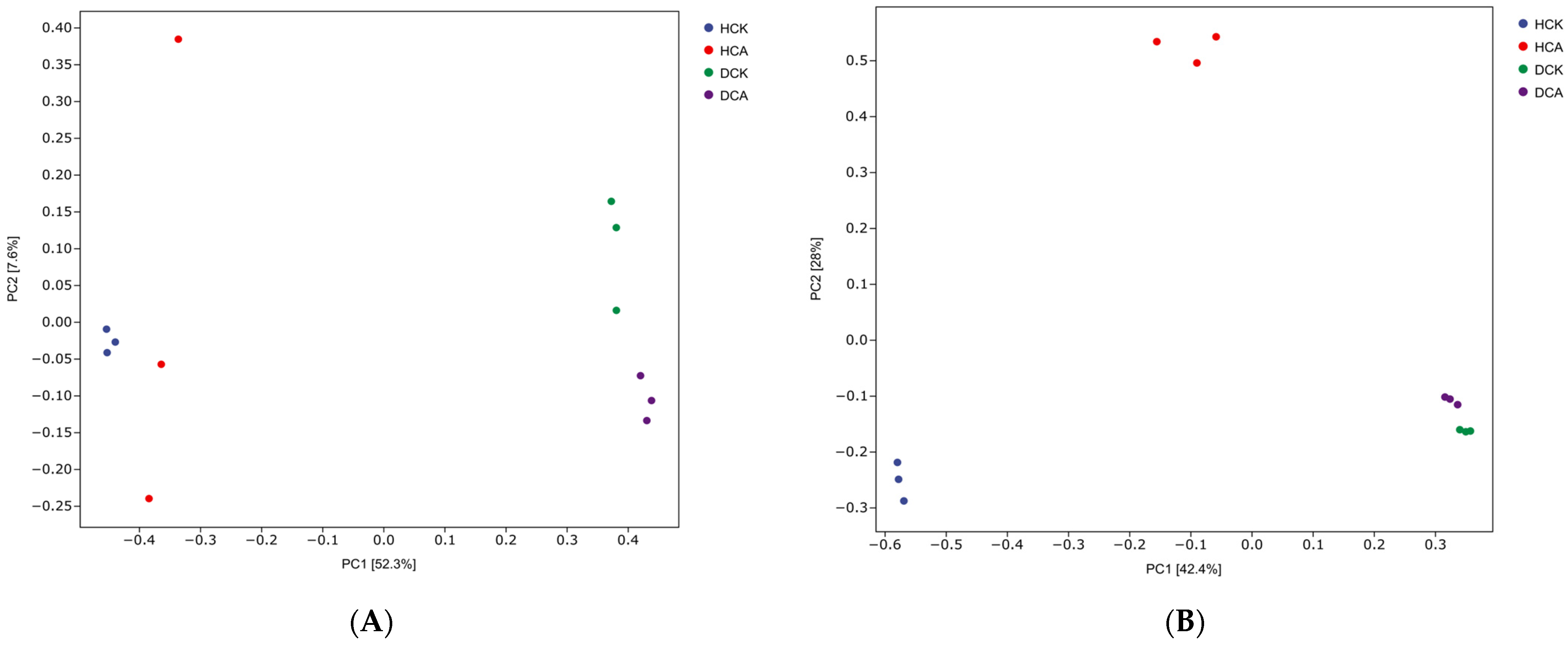
Figure 1. Principal coordinates (PC) analysis plots using weighted Unifrac dissimilarity to compare the microbial community in silage across different groups: the control group at high temperature (HCK, blue), the chemical additive group at high temperature (HCA, red), the control group at low temperature (DCK, green), the chemical additive group at low temperature (DCA, purple) for both bacteria (A) and fungi (B) of 28 days.
Fermentation 12 00349 g001
Figure 2. The rarefaction curves of microbial communities, specifically bacteria (A) and fungi (B), in HMC silage after 28 days of storage. The horizontal axis represents the sequencing depth (number of randomly sampled sequences), and the vertical axis shows the number of observed ASVs. HCK, control group of high temperature; HCA, chemical additive group of high temperature; DCK, control group of low temperature; DCA, chemical additive group of low temperature.
Fermentation 12 00349 g002
Figure 3. The influence of chemical additives on the diversity of bacterial (A) and fungal (B) communities in high moisture corn silage after 28 days under both high and low temperature conditions. HCK, control group of high temperature; HCA, chemical additive group of high temperature; DCK, control group of low temperature; DCA, chemical additive group of low temperature.
Fermentation 12 00349 g003
Figure 4. Hierarchical clustering analysis of bacteria (A) and fungi (B). HCK, control group of high temperature; HCA, chemical additive group of high temperature; DCK, control group of low temperature; DCA, chemical additive group of low temperature.
Fermentation 12 00349 g004
Figure 5. Relative abundance of the family of bacteria (A) and fungi (B) of HMC. HCK, control of high temperature; HCA, chemical additive of high temperature; DCK, control of low temperature; DCA, chemical additive of low temperature.
Fermentation 12 00349 g005
Figure 6. Relative abundance of the species of bacteria (A) and fungi (B) of HMC. HCK, control group of high temperature; HCA, chemical additive group of high temperature; DCK, control group of low temperature; DCA, chemical additive group of low temperature.
Fermentation 12 00349 g006
Figure 7. (A) The KEGG functional prediction and functional differences in bacteria present in HMC silage. HCK: control group of high temperature; HCA: chemical additive group of high temperature; DCK: control group of low temperature; DCA: chemical additive group of low temperature. (B) PWY-6277: superpathway of 5-aminoimidazole; PWY-6122:5-aminoimidazole ribonucleotide; ANAGLYCOLYSIS-PWY: glycolysis III (from glucose); PWY-7663: gondoate biosynthesis (anaerobic); GLYCOLYSIS: glycolysis I (from glucose 6-phosphate); PWY-7222: guanosine deoxyribonucleotides de; PWY-7220: adenosine deoxyribonucleotides de; ANAEROFRUCAT-PWY: homolactic fermentation; PWY-7208: superpathway of pyrimidine; PWY-5484: glycolysis II (from fructose 6-phosphate); * indicates significant difference between treatments (p < 0.05).
Fermentation 12 00349 g007
Figure 8. (A). The MetaCyc functional prediction and functional differences in fungi in HMC silage. HCK: control group of high temperature; HCA: chemical additive group of high temperature; DCK: control group of low temperature; DCA: chemical additive group of low temperature. (B). PWY-6351: D-myo-inositol (1,4,5)-trisphosphate biosynthesis; PWY-7229: superpathway of adenosine; TRNA-CHARGING-PWY: tRNA charging; PWY-5659: GDP-mannose biosynthesis; PWY-7219: adenosine ribonucleotides de novo; PWY-5690: TCA cycle II (plants and fungi); PWY-7288: fatty acid &beta;-oxidation (peroxisome, yeast); GLYOXYLATE-BYPASS: glyoxylate cycle; PWY-7279: aerobic respiration II (cytochrome c) (yeast); PWY-3781: aerobic respiration I (cytochrome c); * indicates significant difference between treatments (p < 0.05).
Fermentation 12 00349 g008
Figure 9. The correlation analysis between the bacterial (A) and fungal (B) communities at the species level, as well as their relationship with chemical composition and fermentation characteristics. The values presented in the heatmap represent the Spearman correlation coefficient (r), ranging from −1 to 1. A coefficient greater than 0 indicates a positive correlation (depicted in red), while a coefficient less than 0 indicates a negative correlation (depicted in blue). The size of each dot corresponds to the relative abundance of each taxon. Asterisks denote statistical significance, with * (p < 0.05).
Fermentation 12 00349 g009
Table 1. Chemical composition and microbial populations of fresh high-moisture corn kernels before ensiling.
ItemMeanSE
DM%65.570.54
pH6.180.03
CP% DM6.980.06
NDF% DM10.960.07
ADF% DM3.320.18
WSC% DM2.000.14
LAB log10 CFU/g FW6.710.18
Yeasts log10 CFU/g FW5.880.13
ENB log10 CFU/g FW6.720.17
n = 3 biological replicates. SE: standard error; DM: dry matter; CP: crude protein; NDF: neutral detergent fiber; ADF: acid detergent fiber; WSC: water-soluble carbohydrates; LAB: lactic acid bacteria; ENB: enterobacteria; FW: fresh weight.
Table 2. Chemical and microbiological compositions of silages fermented at two storage temperatures (35 °C and 5 °C) over different ensiling durations.
ItemDM
%
pHLactic Acid
% DM
Acetic Acid
% DM
Ethanol
% DM
LAB
log10 CFU/g FW
Yeasts
log10 CFU/g FW
ENB
log10 CFU/g FW
35 °C3 dCON63.57 c4.22 f1.33 c0.32 b0.15 c8.88 bc5.85 a4.06 e
CA65.04 ab4.09 fg2.30 ab0.35 ab0.09 de8.62 cBDL dBDL f
7 dCON64.06 bc4.15 fg1.36 c0.34 ab0.12 cd7.42 de5.46 abBDL f
CA64.70 abc4.08 fg2.37 a0.38 a0.09 de7.82 dBDL dBDL f
28 dCON64.85 abc4.10 fg2.22 b0.38 a0.11 cd5.80 f4.59 bBDL f
CA64.96 ab4.02 g2.35 a0.38 a0.07 e4.95 gBDL dBDL f
5 °C3 dCON63.90 bc6.16 b0.82 d0.20 c0.23 ab9.40 aBDL d8.78 a
CA65.74 a6.52 a0.73 e0.20 c0.25 a8.80 bcBDL d6.92 b
7 dCON64.12 bc5.11 d0.87 d0.22 c0.20 b9.21 ab5.96 a6.38 c
CA64.88 abc5.76 c0.82 d0.22 c0.22 ab9.19 ab1.33 c4.93 d
28 dCON64.30 bc4.46 e1.33 c0.30 b0.14 c7.04 e6.56 a4.22 e
CA64.68 abc4.47 e1.38 c0.30 b0.11 cd7.22 eBDL dBDL f
SEM0.140.150.110.010.010.230.480.54
Temperature means35 °C64.534.11 b2.00 a0.38 a0.11 b7.25 b2.65 a0.68 b
5 °C64.65.41 a1.00 b0.27 b0.19 a8.48 a2.31 b5.21 a
SEM0.160.020.010.010.010.070.160.04
Day means3 d64.565.25 a1.29 c0.28 b0.18 a8.93 a1.46 c4.94 a
7 d64.444.78 b1.35 b0.39 a0.16 a8.41 b3.19 a2.83 b
28 d64.74.26 c1.82 a0.37 a0.11 b6.26 c2.79 b1.05 c
SEM0.200.020.010.010.010.080.190.05
Additive meansCON64.13 b4.70 b1.32 b0.290.16 a7.964.74 a3.91 a
CA65.00 a4.82 a1.66 a0.310.14 b7.770.22 b1.97 b
SEM0.160.020.010.010.010.070.160.03
p-valueTNS***************NS***
DNS*********************
A*********NS**NS******
T × DNS*****************
T × ANS******NS**NS*****
D × ANS******NSNS*******
T × D × ANS******NSNS********
a–g Means in columns within a category with unlike superscripts differ (p < 0.05). No letter means no differ; CON: control group; CA: chemical additive composed of sodium benzoate, potassium sorbate and sodium nitrite; DM, dry matter; LAB: Lactic acid bacteria; ENB: Enterobacter; CFU, colony-forming unit; FW, fresh weight; SEM, standard error of the mean; Temperature means: effect of temperature differ; Day means: effect of fermentation days; Additive means: effect of additive treatment; BDL: below detection limit (<2.00 log10 CFU/g FW); T: effect of temperature; D: effect of fermentation days; A: effect of additive; T × D: interaction of temperature and day; T × A: interaction of temperature and additive; D × A: interaction of day and additive; T × D × A: interaction of temperature, day and additive; NS: not significant (p ≥ 0.05), *** (p < 0.001), ** (p < 0.01), * (p < 0.05).
Table 3. The nutritional components of silage at the end of storage.
ItemCP
%DM
NDF
%DM
ADF
%DM
WSC
%DM
NH3-N
%DM
35 °CCON6.31 c13.93 a3.53 ab0.37 c0.18 a
CA6.98 ab10.57 b3.39 b0.65 a0.14 bc
5 °CCON6.95 b14.09 a3.71 a0.49 b0.15 b
CA7.07 a11.00 b3.57 ab0.40 c0.14 c
SEM0.090.500.080.050
Temperature means35 °C6.65 b12.253.46 b0.50 a0.16 a
5 °C7.00 a12.553.64 a0.45 b0.15 b
SEM0.030.170.060.010
Additive meansCON6.62 b14.01 a3.620.43 b0.17 a
CA7.03 a10.79 b3.480.53 a0.14 b
SEM0.030.170.060.010
p-valueT***NS****
A******NS******
T × A***NSNS****
a–c Means in columns within a category with unlike superscripts differ (p < 0.05). No letter means no differ; CON: control group; CA: chemical additive group; CP, crude protein; NDF, neutral detergent fiber; ADF, acid detergent fiber; WSC, water-soluble carbohydrates; NH3-N, ammonia nitrogen; DM, dry matter; SEM, standard error of the mean; Temperature means: effect of temperature differ; Additive means: effect of additive treatment; T: effect of temperature; A: effect of additive; T × A: interaction of temperature and additive; NS: not significant (p ≥ 0.05), *** (p < 0.001), ** (p < 0.01), * (p < 0.05).
Table 4. Chemical and microbiological compositions reflecting aerobic storage stability of silages with or without chemical additive after aerobic exposure.
ItemAS + 0 dAS + 7 dSEMTTEST
CONCACONCACONCA
35 °C
DM%64.85 b64.44 b71.05 a71.36 a0.95<0.01<0.01
pH4.10 b4.02 c4.28 a4.11 b0.03<0.01<0.01
Lactic acid% DM2.22 b2.35 a1.50 d1.62 c0.11<0.01<0.01
Acetic acid% DM0.38 a0.38 a0.28 b0.29 b0.02<0.010.01
Ethanol% DM0.11 a0.07 b0.13 a0.11 a0.010.010.03
LAB log10 CFU/g FW5.8 b4.95 c5.41 bc7.17 a0.260.06<0.01
Yeasts log10 CFU/g FW4.59 bBDL5.65 aBDL0.78<0.01<0.01
ENB log10 CFU/g FWBDLBDLBDLBDL0<0.01<0.01
CP% DM6.31 c6.98 a6.23 c6.62 b0.090.070.01
NH3-N% DM0.18 a0.14 b0.19 a0.15 b0.010.200.26
WSC% DM0.37 c0.65 a0.33 d0.43 b0.040.03<0.01
NDF% DM13.93 a10.57 b14.75 a10.58 b0.600.140.49
ADF% DM3.39 b3.53 b3.91 a3.58 b0.07<0.010.14
5 °C
DM%64.3 c64.68 c69.05 b71.57 a0.92<0.01<0.01
pH4.46 b4.47 b7.34 a4.38 c0.38<0.010.05
Lactic acid% DM1.33 b1.38 b0.34 c1.50 a0.14<0.010.01
Acetic acid% DM0.30 a0.30 a0.14 b0.30 a0.02<0.010.49
Ethanol% DM0.14 b0.11 b0.30 a0.16 b0.02<0.010.06
LAB
log10 CFU/g FW
7.04 b7.22 a5.24 c5.38 c0.28<0.01<0.01
Yeasts
log10 CFU/g FW
6.56 bBDL8.27 a5.20 c0.93<0.01<0.01
ENB
log10 CFU/g FW
4.22 bBDL5.74 a3.08 c0.64<0.01<0.01
CP% DM6.95 a7.07 a5.46 c6.76 b0.19<0.010.01
NH3-N% DM0.15 b0.14 b0.30 a0.15 b0.02<0.010.05
WSC% DM0.49 a0.40 ab0.30 b0.28 b0.030.010.04
NDF% DM14.09 b11.00 c15.07 a11.62 c0.52<0.010.08
ADF% DM3.71 b3.57 b3.97 a3.80 ab0.050.020.06
a–d Means in columns within a category with unlike superscripts differ (p < 0.05). No letter means no difference. AS + 0 d: silage after 28 days of ensiling. AS + 7 d: after 28 days of silage storage, it was exposed to air for 7 days; CON: control group; CA: chemical additive group. BDL: below detection limit (<2.00 log10 CFU/g FW); DM, dry matter; CP, crude protein; WSC, water-soluble carbohydrates; NH3-N, ammonia nitrogen; NDF, neutral detergent fiber; ADF, acid detergent fiber; LAB, lactic acid bacteria; ENB, enterobacteria; CFU, colony-forming unit; FW, fresh weight; SEM, standard error of the mean; TTEST, p-value from t-test comparing AS + 0 d vs. AS + 7 d within the same treatment.
Table 5. The influence of chemical additives on the diversity of bacterial and fungal communities in HMC silage after 28 days under both high and low temperature conditions.
ItemChao1Good’s_CoverageSimpsonPielou_EShannonObserved_Species
Bacteria
HCK283.66 c1.00 a0.99 c0.82 a6.64 c275.00 c
HCA307.55 c1.00 a0.99 b0.84 a6.86 b298.67 c
DCK880.60 a1.00 c0.99 a0.75 b7.33 a841.67 a
DCA524.65 b1.00 b0.99 b0.77 b6.93 b510.00 b
SEM72.32000.010.0868.65
p-value******************
Fungi
HCK54.94 b1.00 a0.55 c0.35 d1.97 d48.67 b
HCA100.62 b1.00 a0.80 b0.49 c3.03 c76.00 b
DCK684.48 a0.99 b0.90 a0.55 b5.00 b536.67 a
DCA568.51 a0.99 b0.96 a0.65 a5.79 a478.00 a
SEM86.3300.050.030.4668.3
p-value*****************
a–d Means within the same column followed by different lowercase letters differ significantly according to Duncan’s multiple range test (p < 0.05). No letter means no difference; HCK: control group of high temperature; HCA: chemical additive group of high temperature; DCK: control group of low temperature; DCA: chemical additive group of low temperature. ** (p < 0.01), *** (p < 0.001).
Table 6. Relative abundance of the species of bacteria and fungi of HMC.
ItemHCKHCADCKDCASEMp-Value
Bacteria
Lacticaseibacillus casei0.55 a0.30 b0.00 c0.00 c0.07***
Latilactobacillus curvatus0.05 c0.05 c0.40 a0.32 b0.05***
Toxopsis calypsus0.00 c0.00 c0.14 b0.23 a0.03***
Lactobacillus sp. JCM 200610.21 a0.13 b0.00 c0.00 c0.03***
Cylindrospermopsis sp. CHAB34230.00 c0.00 c0.10 b0.17 a0.02***
Lacticaseibacillus paracasei0.13 a0.09 b0.00 c0.00 c0***
Synechococcus sp. MH3050.00 c0.00 c0.09 b0.13 a0.01***
Tepidibacter formicigenes0.00 b0.11 a0.00 b0.00 b0.02***
Leuconostoc citreum0.00 b0.00 b0.11 a0.00 b0.01***
Hapalosiphon sp. SAG 23760.00 c0.00 c0.04 b0.05 a0.01***
Levilactobacillus brevis0.00 b0.07 a0.00 b0.00 b0***
Marinobacterium sp.0.00 c0.00 c0.01 b0.06 a0.01***
Lactococcus cremoris0.00 c0.01 c0.03 a0.02 ab0*
Clostridium sp. CYP40.00 b0.03 a0.00 b0.00 b0***
Leuconostoc pseudomesenteroides0.00 b0.00 b0.03 a0.00 b0***
Cutibacterium acnes00.02000NS
Clostridium sp. mbf_VZ 1320.00 b0.02 a0.00 b0.00 b0***
Romboutsia timonensis0.00 b0.02 a0.00 b0.00 b0NS
Leuconostoc mesenteroides0.00 b0.00 b0.01 a0.00 b0***
Bacillus cereus0.00 b0.01 a0.00 b0.00 b0*
Others0.03 c0.14 a0.05 b0.03 c0.01***
Fungi
Nakaseomyces glabratus0.90 a0.00 b0.00 b0.00 b0.12***
Ustilago maydis0.00 c0.07 b0.09 b0.19 a0.02***
Mariannaea elegans0.00 b0.32 a0.00 b0.00 b0.05*
Wickerhamomyces sp.0.00 c0.00 c0.25 a0.05 b0.03***
Papiliotrema flavescens0.00 c0.00 c0.26 a0.03 b0.03***
Aspergillus niger0.00 b0.24 a0.01 b0.03 b0.03*
Monascus purpureus0.050.220.000.000.04NS
Penicillium olsonii0.00 c0.00 c0.04 b0.19 a0.02***
Geotrichum candidum0.00 b0.00 b0.00 b0.10 a0.01***
Sarocladium zeae0.00 c0.00 c0.02 b0.06 a0.01***
Meyerozyma guilliermondii0.00 c0.00 c0.03 b0.05 a0.01***
Wickerhamomyces anomalus0.00 c0.00 c0.05 a0.02 b0.01***
Aspergillus fumigatus0.000.070.000.000.01NS
Polyschema sclerotigenum0.000.060.000.000.02NS
Aspergillus sp.0.00 c0.00 c0.01 b0.04 a0.01***
Pichia kudriavzevii0.05 a0.00 b0.00 b0.00 b0.01*
Pichia fermentans0.00 b0.00 b0.04 a0.00 b0***
Aspergillus pseudoglaucus0.00 c0.00 c0.01 b0.03 a0***
Hannaella sp.0.00 b0.00 b0.03 a0.00 b0**
Metschnikowia sp. 11-10890.00 c0.00 c0.02 a0.01 ab0NS
Others0.00 c0.02 c0.16 b0.19 a0.03***
a–c Means in columns within a category with unlike superscripts differ (p < 0.05). No letter means no difference; HCK: control group of high temperature; HCA: chemical additive group of high temperature; DCK: control group of low temperature; DCA: chemical additive group of low temperature; NS (p > 0.05), * (p < 0.05), ** (p < 0.01), *** (p < 0.001).
Disclaimer/Publisher’s Note: The statements, opinions and data contained in all publications are solely those of the individual author(s) and contributor(s) and not of MDPI and/or the editor(s). MDPI and/or the editor(s) disclaim responsibility for any injury to people or property resulting from any ideas, methods, instructions or products referred to in the content.