Article

Differential Analysis of Metabolites of Musalais New Product Based on Non-Targeted Metabolomics

1
College of Food Science and Engineering, Tarim University, Alar 843300, China
2
Production & Construction Group Key Laboratory of Special Agricultural Products Further Processing in Southern Xinjiang, Tarim University, Alar 843300, China
3
College of Biosystems Engineering and Food Science, Zhejiang University, Hangzhou 310058, China
4
College of Food Science and Engineering, Jilin University, Changchun 130062, China
*
Author to whom correspondence should be addressed.
Fermentation 2026, 12(6), 277; https://doi.org/10.3390/fermentation12060277
Submission received: 16 April 2026 / Revised: 3 June 2026 / Accepted: 5 June 2026 / Published: 8 June 2026
(This article belongs to the Section Fermentation for Food and Beverages)

Abstract

Musalais is a traditional fermented beverage of the Uyghur people in Xinjiang, China. Its production involves boiling grape juice at high temperatures to concentrate it and enhance its sugar content, followed by natural fermentation. However, this high-temperature concentration process leads to a significant loss of bioactive and flavor compounds, adversely affecting the quality of the final product. Adding composite ingredients may help mitigate this quality decline. This study compares Musalais new product with traditional Musalais. Phenolic analysis showed that total monomeric phenols were 182.36 mg·L−1 in the new product versus 14.76 mg·L−1 in traditional Musalais. Headspace solid-phase microextraction/gas chromatography–mass spectrometry (HS-SPME/GC-MS) identified 72 volatile compounds in the new product (total content of 569,848.88 μg·L−1) compared to 58 compounds (total content of 362,774.17 μg·L−1) in traditional Musalais. Compared to traditional Musalais, the new product exhibits a 24.14% increase in volatile compound variety and a 57.09% increase in total concentration, with more pronounced floral, fruity, and vinous aromas, as well as higher sensory scores. Non-targeted metabolomics suggests that the new product may have superior phenolic and volatile profiles.

1. Introduction

Musalais is a traditional fermented alcoholic beverage of the Uyghur people in Awati County, Xinjiang, China. Its brewing process has been included in the first batch of intangible cultural heritage lists in Xinjiang. This brewing process differs from conventional wine production. It uses Xinjiang-native ‘Hetian Red’ grapes as raw material. Hetian Red Grape is a regional specialty variety of Xinjiang, China. The region is characterized by abundant sunlight, a long frost-free period, and a large diurnal temperature range. Under such conditions, this variety exhibits purplish-red skin, tender flesh, a relatively high juice yield, and a distinctive flavor. Additionally, it contains various phenolic compounds and thereby possesses certain nutritional value [1]. After juice extraction, the juice is heated and concentrated to increase its sugar content and then naturally fermented by environmental microorganisms [2]. Recent investigations have progressively focused on the chemical composition, physiological functions, and process optimization of Musalais. For instance, Li [3] confirmed that it inhibits the increase in blood lipids, alleviates lipid accumulation in the liver, and prevents atherosclerosis. Wang et al. [4], using high-performance liquid chromatography–mass spectrometry (LC-MS), detected various non-volatile components in Musalais, including catechins, gallic acid, tartaric acid, and p-hydroxybenzoic acid.
Corresponding progress has also been made in research on process improvement and new product development. For example, Huang et al. [5] found that adding sucrose to grape juice can shorten the boiling time, significantly increase the alcohol content and clarity of the final product, reduce burnt and bitter flavors, and enhance fruity aroma, thereby improving overall quality. Gao et al. [6] soaked the base liquor with four auxiliary materials—wolfberry, rose, Agastache rugosa, and dried apricot—which significantly increased the flavonoid content and clarity of the product. Hou et al. [7] developed a low-alcohol sparkling Musalais with a refreshing taste and well-balanced sweetness and acidity using a dual-strain mixed fermentation method. Nevertheless, there is still a lack of systematic research on Musalais from a holistic metabolomic perspective, and non-targeted metabolomics studies focusing on its differential metabolites are relatively scarce.
In addition, the high-temperature concentration process used in traditional Musalais production may lead to a considerable loss of inherent active compounds in grape juice. To address this limitation and further enhance the functional properties of the product, four characteristic resources with dual medicinal and edible value from Xinjiang—medicinal mulberry, jujube, Hetian pomegranate, and Hetian rose—were selected for co-fermentation. These raw materials each possess distinct functional advantages: medicinal mulberry is rich in polyphenols, anthocyanins, and organic acids, exhibiting notable antioxidant and anti-inflammatory activities [8,9]; jujube contains abundant flavonoids and saponins, which may contribute to a positive regulatory effect on the cardiovascular system [10]; Hetian pomegranate is rich in anthocyanins and hydrolyzable tannins, demonstrating various functions including antioxidant and antimicrobial activities [11,12,13]; and Hetian rose, as a nationally certified organic rose variety in China, contains tannins, proanthocyanidins, flavonoids, and other phenolic compounds, and has been shown to possess anti-tumor, antimicrobial, anti-obesity, and anti-aging effects [14,15,16]. These raw materials are abundant in bioactive compounds with potential health benefits. The complex fermentation substrate can not only supply sufficient nutrients for the growth and metabolism of yeast but also may further diversify flavor substances during fermentation [17].
Overall, these raw materials are associated with antioxidant, anti-inflammatory, and cardioprotective effects. Without altering the traditional processing workflow, a novel co-formulated Musalais product was developed by blending these ingredients with conventional Musalais raw materials to improve the functional efficacy of the final product through the co-fermentation of the added ingredients.

2. Materials and Methods

2.1. Materials and Reagents

Fresh Hotan red grapes were harvested from farms in Aksu Prefecture, Xinjiang, China, and promptly delivered to the Key Laboratory of Agricultural Products Deep Processing, Southern Xinjiang Corps, at Tarim University (Alar, Xinjiang, China). Fresh medicinal mulberries and pomegranates, sourced from Hotan Prefecture, Xinjiang, China, were transported under a 4 °C cold chain to the laboratory post-harvest. Dried jujubes and rose flowers were procured from a local market in Alar City, Xinjiang, China.
Phenol (analytical grade) from Shandong Xiya Chemical Industry Co., Ltd., Linyi, China. Concentrated sulfuric acid, Sodium Chloride and anhydrous ethanol (both analytical grade) from Sinopharm Chemical Reagent Co., Ltd., Xian, China. Folin–Ciocalteu reagent (biotechnology grade) and aluminum nitrate (analytical grade) from Shanghai Macklin Biochemical Technology Co., Ltd., Shanghai, China. Sodium carbonate (analytical grade) from Tianjin Shengao Chemical Reagent Co., Ltd., Tianjin, China. Sodium nitrite (analytical grade) from Tianjin Zhiyuan Chemical Reagent Co., Ltd., Tianjin, China. Sodium hydroxide (analytical grade) from Tianjin Xinbote Chemical Co., Ltd., Tianjin, China. Methanol, acetonitrile, ammonium acetate, 2-Propanol and ammonium hydroxide (all chromatographic grade) from Shanghai Anpel Laboratory Technologies Inc., Shanghai, China. DPPH free radical scavenging assay kit and ABTS total antioxidant capacity (TAOC) kit were obtained from Shanghai Jingkang Bioengineering Co., Ltd. and Shanghai Jining Industrial Co., Ltd., Shanghai, China, respectively. Phosphoric acid and ethyl acetate (both analytical grade), acetic acid and cyclohexanone (both chromatographic grade) from Sigma-Aldrich, St. Louis, MO, USA. Gallic acid, chlorogenic acid, rutin, ellagic acid, quercitrin, resveratrol, quercetin, phloretin, kaempferol and ferulic acid (all chromatographic grade) from Shanghai Aladdin Biochemical Technology Co., Ltd., Shanghai, China; EC1118 Saccharomyces cerevisiae from Lallemand Inc., Montreal, QC, Canada.

2.2. Instruments and Equipment

A 3 t·h−1 fruit washing machine, a 1 t·h−1 juicer, and a 50 L sugar dissolving pot (all from Shandong Dehui Fermentation Intelligent Equipment Co., Ltd., Jinan, China); a NK-55T digital refractometer (Tianjin Lookout Photoelectric Technology Co., Ltd., Tianjin, China); a FE28-Standard pH meter (Mettler-Toledo Shanghai Co., Ltd., Shanghai, China); a GC-2014 gas chromatograph (Shimadzu Corporation, Kyoto, Japan); a Talboys digital heating magnetic stirrer (Shanghai Anpu Experimental Technology Co., Ltd., Shanghai, China); a J6 UV-visible spectrophotometer (Shanghai Jinghua Technology Instrument Co., Ltd., Shanghai, China); a Synergy H1 microplate reader (BioTek Instruments, Inc., Winooski, VT, USA); an Agilent LC 1260 Infinity II high-performance liquid chromatography system (Agilent Technologies, Inc., Santa Clara, CA, USA); a TSQ 900 Gas chromatography-tandem triple quadrupole mass spectrometer, a Heraeus Fresco 17 centrifuge, a Vanquish ultra-high-performance liquid chromatography system, and an Orbitrap Exploris 120 high-resolution mass spectrometer (all from Thermo Fisher Scientific Inc., Waltham, MA, USA); a MTN-2800W-24 nitrogen blowing concentration device (from Tianjin Automatic Science Instrument Co., Ltd., Tianjin, China).

2.3. Test Method

2.3.1. Preparation Process of the New Product

Raw material pretreatment: Raw materials with plump grains and no mechanical damage were selected. They were rinsed with water using the fruit washing machine to remove impurities, drained, and then juiced separately using the juice extractor for grapes, medicinal mulberries, and jujubes. Pomegranates were manually peeled and pressed through fine cotton cloth for filtration. All juices were stored at −20 °C for later use.
Heating concentration: Grape juice was boiled and concentrated in the sugar dissolving kettle under atmospheric pressure until the soluble solids content reached 28.2 ± 0.17 °Brix, then cooled to room temperature. Jujube juice was concentrated to 54.0 ± 0.22 °Brix and cooled.
Component adjustment: The total volume of mixed juice remained constant, with concentrated grape juice comprising 60% and mixed juice (medicinal mulberry juice, jujube juice, pomegranate juice = 3:2:5) accounting for 40%.
Inoculation and fermentation: Dry yeast S. cerevisiae EC1118 was activated in a 5% (v/v) sugar solution at 37 °C for 20 min at an inoculation amount of 0.02% (w/v, relative to the total volume of mixed juice) to obtain a yeast activation solution, which was then inoculated into the mixed juice. Based on the process descriptions from previous studies [18], the main fermentation was carried out for 7 days. After the soluble solids content stabilized, racking was performed, followed by a 7-day post-fermentation stage, resulting in a total fermentation period of 14 days. The whole fermentation was carried out anaerobically at 26 °C in 30 L fermentation tanks with three independent biological replicates. At the end of the main fermentation (7 days) and the beginning of the post-fermentation stage (7 days), dried rose flowers were added at a dosage of 12 g/L and soaked for 7 days. Meanwhile, three parallel control groups (traditional Musalais, CK) were established, which also adopted dry yeast EC1118, used only concentrated grape juice as the raw material, and were fermented. After fermentation, the product was filtered and clarified using a 0.22 μm food-grade filter membrane.
Sterilization and bottling: After bottling, the samples were sterilized using pasteurization (75 °C, 15 s). Once cooled to room temperature, the new product (A01) was obtained. Three independent fermentation batches were prepared under identical conditions. A flowchart summarizing the entire production process of the new product is presented in Figure 1.

2.3.2. Physicochemical Analysis

A digital refractometer was utilized to assess the soluble solids content of the juice [19].
Potentiometric titration [20] was employed to quantify the total acid content in Musalais, with results reported as tartaric acid (in g·L−1). Initially, 50.0 mL of distilled water was added to a beaker, followed by the addition of 10.0 mL of the sample. A pH electrode was inserted, a rotor was positioned in the beaker, and the beaker was placed on an electromagnetic stirrer for mixing. Titration was conducted using a 0.05 mol·L−1 sodium hydroxide standard solution, with the titration endpoint established at pH 8.2. A blank test was performed concurrently, and the volume of sodium hydroxide standard solution utilized was recorded.
The total sugar content was quantified using the phenol-sulfuric acid method [21] with glucose as the standard. A precise volume of 2.0 mL of the sample solution was pipetted into a test tube, followed by the addition of 1.0 mL of 5% (w/v) phenol solution and 5.0 mL of concentrated sulfuric acid. The mixture was thoroughly mixed and allowed to stand at room temperature for 30 min before measuring the absorbance at a wavelength of 490 nm.
Gas chromatography determined the alcohol content of the Musalais [22]. A volume of 10.0 mL was taken and transferred into a test tube, where it was combined with 0.1 mL of isopropanol, followed by filtration through a 0.22 μm filter. Chromatographic analysis was conducted using a KB-PLOT Q capillary column (30 m × 0.32 mm, 10 μm), with both the injection port and the detector maintained at 250 °C. Nitrogen served as the carrier gas at a flow rate of 1.0 mL·min−1, with an injection volume of 1 μL and a split ratio of 50:1. The temperature program began at 120 °C, held for 2 min, then increased by 10 °C·min−1 to 170 °C, where it remained for 3 min.

2.3.3. Microbiological Analysis

The total viable count and Escherichia coli were determined in accordance with GB 4789.2-2022 [23]. Pathogenic bacteria were detected, referring to GB 29921-2021 [24].

2.3.4. Total Bioactive Content and Antioxidant Activity Determination

The total phenolic content was assessed following slight adjustments to the method described by Hou [25]. The experimental procedure is as follows: Initially, 10.0 mL of distilled water is introduced into a test tube, then 0.3 mL of folin phenol reagent is added, followed by 0.2 mL of the sample solution. After thorough mixing, the mixture is left to stand for 5 min. Subsequently, 1.0 mL of 15% (w/v) sodium carbonate solution is added, and the mixture is mixed again. The test tube is then placed in darkness at room temperature for 2 h to allow the reaction to proceed. Finally, the absorbance of the solution is measured at a wavelength of 745 nm.
The determination of total flavonoid content was performed with slight modifications to the method described by Cha [26]. Take 1.0 mL of the sample solution and mix thoroughly with 4.0 mL of anhydrous ethanol, then subject the mixture to ultrasonic extraction for 30 min at 40 °C. Take 1 mL of the extract and dilute it to 6.0 mL with 30% (v/v) ethanol. Add 1 mL of 5% (w/v) NaNO2, 1 mL of 10% (w/v) Al(NO3)3 solution, and 10 mL of 10% (w/v) NaOH solution in sequence. After each addition of a reagent, the mixture must be thoroughly mixed; allow it to stand for 6 min before adding the next reagent. Finally, dilute to 25.0 mL with 30% ethanol, mix well, and let stand for 15 min. Measure the absorbance at a wavelength of 510 nm using a microplate reader.
Phenolic compounds were detected by Beijing Research Dog Technology Co., Ltd., (Beijing, China) The sample pretreatment procedure was as follows. A 1 mL aliquot of the vortex-mixed sample was combined with 1 mL of ethyl acetate and subjected to three extraction steps. The organic phase was concentrated to dryness with a nitrogen blow-down, after which 1 mL of methanol was added for redissolution. The solution was vortex-mixed again and filtered through a 0.22 μm membrane prior to analysis. In this study, according to Myrtsi [27] et al.’s selection strategy for phenolic compounds in grapes, wine, etc., gallic acid, chlorogenic acid, rutin, ellagic acid, quercitrin, resveratrol, quercetin, phloretin, kaempferol and ferulic acid were selected as the target compounds. The selected substances are representative components that are more common, stable in nature, and have certain biological activities in grapes and wines, and cover core categories such as phenolic acids and flavonoids. In addition, phloretin and ellagic acid, as unique functional phenols in pomegranate, help to more fully reflect the polyphenol composition characteristics and potential functional value of Musalais. For chromatographic parameters, a high-performance liquid chromatograph coupled with an Agilent ZORBAX SB-Aq (Agilent Technologies, Santa Clara, CA, USA) column (2.1 mm × 150 mm, 3.5 μm) was used for compound separation. The mobile phase consisted of a 0.1% (v/v) aqueous phosphoric acid solution (phase A) and acetonitrile (phase B). The flow rate was 0.4 mL·min−1, the injection volume was 10 μL, and the column temperature was maintained at 40 °C. A gradient elution mode was adopted. For ferulic acid, the gradient pattern was set as 0–5 min, 0–30% B; 5–9 min, 30–40% B; 9–15 min, 40–10% B, with the detection wavelength established at 254 nm. For the remaining nine phenolic compounds, the gradient protocol was 0–20 min, 0–5% B; 20–35 min, 5–15% B; 35–50 min, 15–30% B (held for 15 min); 65–75 min, 30–3% B, and the detection wavelength was established at 280 nm.
The scavenging activity against 1,1-diphenyl-2-picrylhydrazyl (DPPH) and 2,2′-azinobis-(3-ethylbenzothiazoline-6-sulfonic acid) (ABTS) was assayed using commercial assay kits. According to the manufacturer’s instructions, the in vitro antioxidant activity of the samples was measured.

2.3.5. Volatile Organic Compound (VOC) Analysis

HS-SPME/GC-MS technology was utilized for the qualitative and quantitative analysis of volatile organic compounds (VOCs) in Musalais samples. The methodology outlined by Zhang [28] was adapted with suitable modifications. The acquired mass spectrometry data were compared against the NIST 21 standard library. Because the production of Musalais involves a concentration process that differs from that of conventional wines, its chemical composition may be more complex. Therefore, to balance the reliability of compound identification with the breadth of detection and to minimize the risk of omitting characteristic aromatic compounds that could result from overly stringent filtration, a 70% matching threshold was adopted in this study. Meanwhile, cyclohexanone served as the internal standard, and the internal standard method was employed to quantify each volatile component. The concentrations of the volatile components were calculated based on the concentrations of the standard substances and their corresponding peak areas.
Using the odor activity value (OAV) methodology—defined as the ratio of the mass concentration of an aroma compound to its sensory threshold in an odor system—this study evaluates the olfactory contribution of key aroma compounds in two types of Musalais. It is generally believed that compounds with an OAV of 1 or higher are the aroma-contributing components in Musalais.

2.3.6. Non-Targeted Metabolomics Analysis

Following the conclusion of fermentation, samples were obtained from both the new product and the traditional Musalais, frozen at −80 °C, and dispatched to Shanghai Baiqu Biomedical Technology Co., Ltd. (Shanghai, China) for untargeted metabolomics analysis.
Sample pretreatment involved thawing the sample followed by the addition of 400 μL of extraction solution (MeOH:ACN, 1:1 (v/v)) containing an isotopically labeled internal standard to 100 μL of the sample. The mixture was vortexed for 30 s, then sonicated for 10 min in an ice-water bath, and left at −40 °C for 1 h. Subsequently, the sample was centrifuged at 4 °C, 12,000 rpm (13,800× g, 8.6 cm radius) for 15 min, and the supernatant was transferred to a sample vial for analysis.
This study utilized a Vanquish ultra-high-performance liquid chromatography system coupled to an Orbitrap Exploris 120 mass spectrometer (Thermo Fisher Scientific, Waltham, MA, USA) to perform liquid chromatography-tandem mass spectrometry (LC-MS/MS) analysis, with separate chromatographic conditions employed for polar and nonpolar metabolites. Polar metabolites were analyzed using a Waters ACQUITY UPLC BEH Amide column (2.1 mm × 100 mm, 1.7 μm, Waters, Milford, MA, USA) with mobile phases A (an aqueous solution of 25 mmol·L−1 ammonium acetate and 25 mmol·L−1 ammonium, pH = 9.75) and B (acetonitrile). Nonpolar metabolites were analyzed using a Phenomenex Kinetex C18 column (2.1 mm × 100 mm, 2.6 μm) with mobile phases A (0.01% acetic acid aqueous solution, Phenomenex, Torrance, CA, USA) and B (isopropanol-acetonitrile, 1:1, v/v). The injection volume was 2 μL for both, and the sample tray temperature was maintained at 4 °C.
The Orbitrap Exploris 120 mass spectrometer was operated in information-dependent acquisition (IDA) mode, controlled by the acquisition software (Xcalibur, Version 4.4, Thermo), to acquire MS/MS spectra. In this mode, the software continuously evaluates the full-scan MS spectrum. The electrospray ionization (ESI) source conditions were set as follows: sheath gas flow rate at 50 Arb, auxiliary gas flow rate at 15 Arb, capillary temperature at 320 °C, sweep gas flow rate at 1 Arb, vaporizer temperature at 350 °C, full MS resolution at 60,000, MS/MS resolution at 15,000, stepped normalized collision energy (SNCE) at 20, 30, and 40 eV, and spray voltage at 3.8 kV (positive) or –3.4 kV (negative).
In this data analysis, the total ion current normalization method was employed. The final dataset, containing feature number, sample name, and normalized feature area, was imported into the SIMCA 18.0.1 software package (Sartorius Stedim Data Analytics AB, Umea, Sweden) for multivariate analysis. Data were scaled and logarithmically transformed to minimize the influence of noise and high variance among variables. Following these preprocessing steps, principal component analysis (PCA), an unsupervised method for dimensionality reduction, was performed to visualize sample distribution and grouping. A 95% confidence interval in the PCA score plot was used as the threshold to identify potential outliers in the dataset.
To examine group separation and identify significantly altered metabolites, supervised orthogonal projections to latent structures-discriminant analysis (OPLS-DA) was applied. A 7-fold cross-validation was then conducted to calculate R2 and Q2 values. R2 indicates the proportion of variance explained by the model, while Q2 reflects the predictive ability of the model. To assess the robustness and predictive performance of the OPLS-DA model, a permutation test with 200 iterations was further performed, from which the intercept values of R2 and Q2 were obtained. Here, the Q2 intercept reflects model robustness, risk of overfitting, and overall reliability, with lower values indicating better model quality.
Variable importance in projection (VIP) scores, extracted from the first principal component of the OPLS-DA model, were used to evaluate each metabolite’s contribution. Significance thresholds were set at VIP > 1 and p < 0.05 (Student’s t-test) for identifying substantially changed metabolites. Enrichment analysis of metabolic pathways was subsequently carried out against the KEGG (http://www.genome.jp/kegg/ (accessed on 5 September 2025)) and MetaboAnalyst (http://www.metaboanalyst.ca/ (accessed on 5 September 2025)) databases.

2.3.7. Sensory Scoring Criteria

Referring to the sensory evaluation method specified in the national standard of the People’s Republic of China GB/T 15038-2006 [20], appropriate modifications were made according to the characteristics of the raw materials. The sensory evaluation panel in this study consisted of 10 members, all of whom were food science students who had received systematic sensory analysis training. The age range of the panelists was 22 to 26 years, with a male-to-female ratio of 1:1. The specific scoring method used for sensory evaluation is presented in Table 1.

2.3.8. Data Analysis

Data were systematically organized using Microsoft Excel 2021. Data visualization was carried out using Origin 2021 software (OriginLab Corporation, Northampton, MA, USA). Student’s t-test was used to compare differences between two groups. All experiments were performed with three biological replicates.

3. Results and Discussion

3.1. Detection and Quantification of the Phenolic Compounds from Musalais

Phenolic molecules are significant secondary metabolites in fruit wine. They confer distinctive aromas and colors to fruit wine while also demonstrating multiple biological functions, including antioxidant and anti-inflammatory benefits, as well as the capacity to neutralize free radicals. They are the primary determinants influencing wine quality [29]. This analysis detected 10 monomer phenols in two Musalais wines, as presented in Table 2. Overall, the total monomer phenol content of A01 is 182.36 mg·L−1, while the total monomer phenol content of CK is only 14.76 mg·L−1. Except for gallic acid, the contents of the other nine monomeric phenols in A01 were significantly higher than those in CK (p < 0.05). This difference may be mainly attributable to the relatively high content of bioactive substances in the composite raw materials. The complex substrates of the new product may also contribute, to a lesser extent, to creating favorable nutritional conditions for microbial growth and promoting the synthesis and transformation of phenolic compounds during fermentation [30]. Zhao [31] produced low-alcohol rosé fruit wine using the combined fermentation of Zaosu pears and Merlot grapes. The findings indicated that the bioactive constituents in the compound fruit wine were markedly elevated compared to those in pure pear wine, suggesting that the fermentation substrates could influence the accumulation of phenolic compounds during fermentation. Moreover, phenolic compounds play a key role in stabilizing wine color and enriching its flavor complexity and have been suggested to possess potential health-promoting properties [25]. This suggests that, compared to traditional Musalais, the new product may increase the content of compounds associated with antioxidant potential.

3.2. Physical and Chemical Index Determination of Product Quality

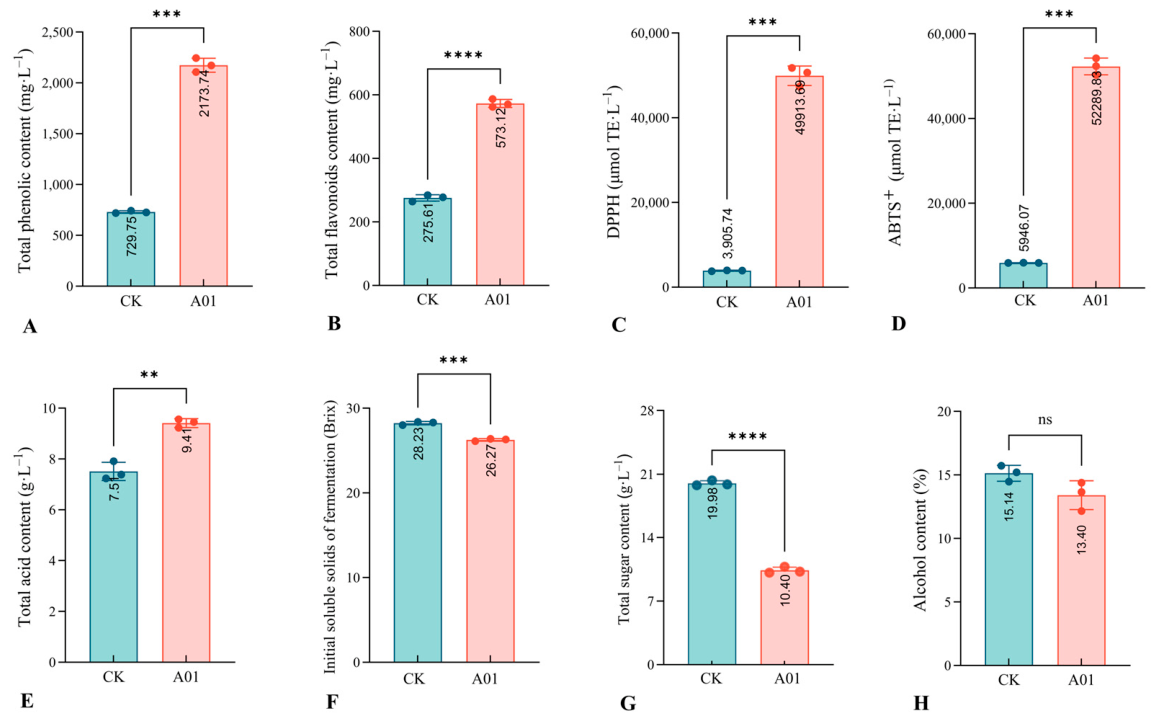
As shown in Figure 2A–E, compared with the traditional process, the composite Musalais fermented with both edible and medicinal raw materials showed significant increases in total phenol, total flavonoid, and total acid contents. Consequently, the DPPH and ABTS radical scavenging abilities were enhanced. These improvements primarily arise from the composite raw materials, which supply abundant active compounds, including polyphenols, flavonoids, and organic acids. Such constituents help offset the potential loss of bioactive substances typically caused by traditional high-temperature concentration methods, thereby enhancing the nutritional and functional value of the Musalais.
Figure 2F–H show that the initial fermentation soluble solids and residual sugar contents of A01 were significantly lower than those of CK, while the alcohol contents of the two products were comparable. This may be because the composite medicinal-edible raw materials provided additional nitrogen sources and minerals to A01, improving the yeast’s nutritional environment and promoting more efficient and thorough sugar utilization. Consequently, the fermentation of A01 proceeded more completely compared to CK [32].

3.3. Microbiological Test Results

The total number of colonies for both types of Musalais was less than 50 CFU/mL, the coliform counts were less than 3 MPN/100 mL, and pathogenic bacteria including Salmonella, Staphylococcus aureus, and Shigella were not detected.

3.4. Volatile Components Results

The aroma of fruit wine is collectively shaped by a variety of volatile compounds, whose concentrations, polarities, and boiling points differ significantly among different fruit wines. Compounds such as alcohols, esters, acids, ketones, and aldehydes jointly contribute to the formation of aroma, and this complex aromatic composition is the key determinant of fruit wine quality and uniqueness.
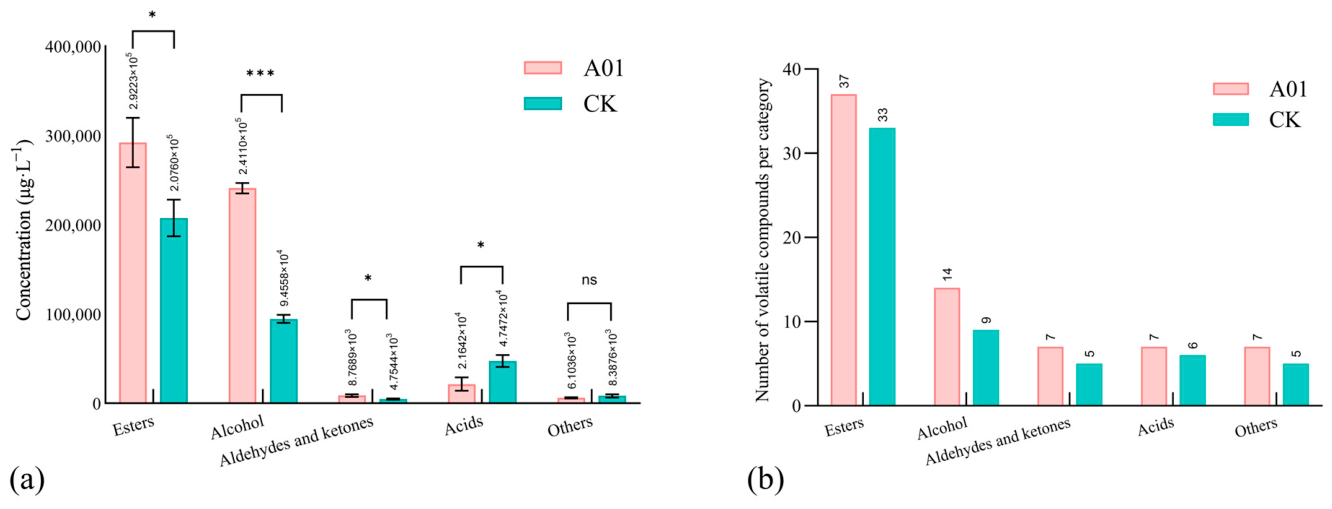
Volatile flavor compounds in CK and A01 were analyzed using HS-SPME/GC-MS, and the results are presented in Table S1 and Figure 3. A total of 93 volatile compounds were detected across the two Musalais products, including 49 esters, 16 alcohols, 10 aldehydes and ketones, 9 acids, and 9 other compounds. In A01, 72 volatile compounds were identified with a total concentration of 569,848.88 μg·L−1, whereas CK contained 58 compounds with a total concentration of 362,774.17 μg·L−1. Overall, compared to CK, A01 exhibited a 24.14% higher number of aroma compounds and a 57.09% higher total aroma concentration. For further details, please refer to Table S1 in the Supplementary Materials.
Esters are primarily derived from yeast biosynthesis or the esterification condensation of acids and alcohols [33]. They impart floral and fruity aromas to the wine and represent one of the key volatile aroma components contributing to the aroma of Musalais. In both Musalais products, esters made up the greatest fraction of the aroma compounds, and 49 ester species were detected in total. Among these, 33 esters were identified in CK and 37 in A01. In CK, the most abundant ester was phenethyl acetate, which imparts a pleasant floral aroma, at a concentration of 65,613.62 μg·L−1, followed by ethyl caprate, contributing a coconut-like aroma, at 20,435.65 μg·L−1, and isoamyl acetate, which confers a banana-like flavor to the wine, at 15,389.76 μg·L−1. A01 exhibited a greater variety and higher concentrations of esters compared to CK. The most abundant ester in A01 was ethyl caprylate, which possesses a brandy-like aroma, at 67,064.02 μg·L−1, followed by ethyl caprate, which imparts a coconut aroma, at 58,599.38 μg·L−1, and ethyl laurate, characterized by floral and fruity notes, at 36,969.20 μg·L−1. These findings suggest that the two Musalais products differ notably from each other in the variety and amount of volatile flavor compounds they contain, a consequence of using different fermentation raw materials. Additionally, it is worth noting that in A01, ethyl caprylate exhibited an OAV of 33,532.01, followed by ethyl caprate with an OAV of 11,719.88, suggesting that brandy-like and coconut aromas may be more readily perceived in A01 compared to CK.
Alcohols primarily originate from carbohydrate catabolism and the decarboxylation and deamination of amino acids [34]. In addition to serving as precursors for ester compounds, alcohols are key components of the Musalais flavor profile, playing an important role in enriching the fruity and floral notes of the Musalais and enhancing its overall flavor quality. A total of 16 alcohol compounds were detected across the two Musalais wines, with 9 identified in CK and 14 in A01. The most abundant alcohols in both wines were 2-phenylethanol, isopentanol, and 2-Methyl-1-butanol. 2-phenylethanol, known for its mild, pleasant, and persistent aroma, is widely used in various food flavorings and is often added to alcoholic beverages such as sake and wine to enhance their flavor [35]. Notably, compared with CK, A01 exhibited substantially higher levels of 2-phenylethanol and isopentanol, reaching 113,264.53 μg·L−1 and 83,293.21 μg·L−1, respectively, whereas the corresponding levels in CK were only 22,656.73 μg·L−1 and 44,517.37 μg·L−1. This increase endows A01 with a more intense floral and vinous aroma. Meanwhile, we found that 2-phenylethanol and isopentanol exhibited the highest OAVs in both Musalais products, with values in A01 much higher than those in CK. This suggests that both floral and wine-like aromas may be more readily perceived in A01 relative to CK.
Aldehydes arise mainly from the catabolism of amino acids and the process of lipid peroxidation. While high levels of aldehydes may impart off-flavors, their interactions with other organic compounds can potentially enhance the aromatic complexity of wine [36]. In this study, a total of 10 aldehydes and ketones were detected. Among them, seven compounds were identified in A01 with a total concentration of 8768.89 μg·L−1, while five compounds were found in CK with a total concentration of 4754.34 μg·L−1. In A01, the most abundant compounds were 2-phenyl-2-butenal, benzaldehyde, and beta-damascenone, which imparted floral and grassy notes to the Musalais. In contrast, the relatively higher levels of benzaldehyde, hexadecanal, and 2,5-dimethylbenzaldehyde in CK contributed grassy, fatty, and a distinctive almond-like aroma [37,38,39,40]. Additionally, beta-damascenone exhibited the highest OAV in both Musalais products, with a higher value in A01 than in CK. This suggests that a more intense floral aroma may be perceived in A01 compared to CK.
Acids are important precursors for the synthesis of esters. Appropriate levels of volatile acids can balance the wine body and harmonize the aroma; however, excessive amounts may generate unpleasant odors such as vinegar-like notes, negatively affecting the flavor quality of fruit wines [30]. In CK, octanoic acid (29,129.41 μg·L−1), lauric acid (7254.15 μg·L−1), and decanoic acid (7235.51 μg·L−1) were the predominant acids. In contrast, the major acid components in A01 were octanoic acid (12,652.41 μg·L−1), decanoic acid (6600.01 μg·L−1), and oleic acid (762.90 μg·L−1). Compared with CK, which was fermented from single grape juice, A01 exhibited lower levels of acid compounds. This reduction may be attributed to the greater involvement of acids in esterification reactions during fermentation, thereby facilitating their conversion into ester compounds.
Overall, esters and alcohols constitute the predominant flavor compounds shared by the two types of Musalais products. Compared with traditional Musalais, the new product potentially contains a more diverse array of volatile flavor constituents and exhibits intensified floral, fruity and vinous aroma attributes. Such compositional improvement may enrich the abundance and complexity of the aroma profile, thereby exerting a favorable influence on the overall sensory flavor of the finished product.

3.5. Sensory Scoring Analysis

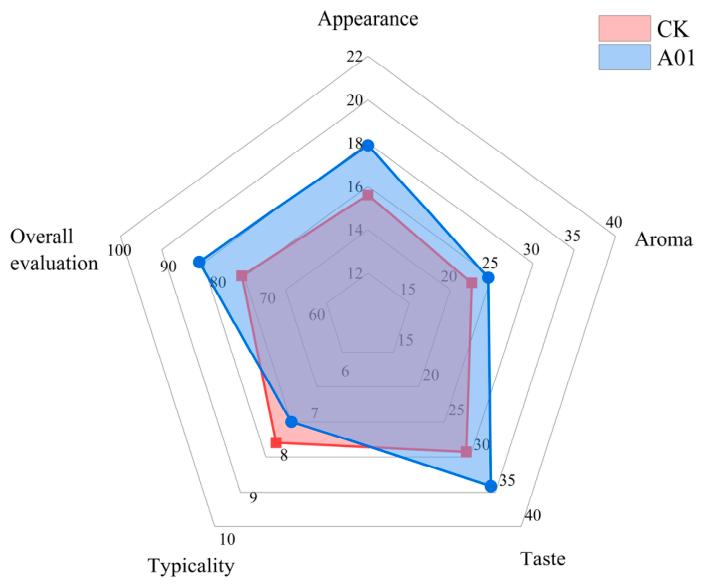
The radar plot (Figure 4) presents the sensory evaluation scores of traditional Musalais (CK) and the new product (A01) samples. In terms of appearance, A01 received a higher score than CK, possibly due to the abundance of anthocyanins derived from mulberry and pomegranate medicine, which contribute to a more vibrant and enriched wine color. As the first visual impression of the wine body, color may influence consumer purchasing intention to a certain extent. The higher appearance score of A01 suggests improvements in color intensity and visual appeal. Additionally, A01 showed a slightly higher score in aroma, which may imply a more balanced combination of fruit and wine notes. A difference was also observed in taste. The A01 sample exhibited a fuller body, smoother mouthfeel, and better flavor integration. Moreover, A01 displayed a more lingering aftertaste, which may be attributed to its abundant phenolic compounds, particularly tannins. Based on the above, the overall evaluation score of A01 was higher than that of CK. Taken together, these results indicate that the new product (A01) exhibits improved sensory quality compared to the traditional Musalais (CK), particularly in terms of taste and appearance.

3.6. Non-Targeted Metabolomics Analysis of Differential Metabolites

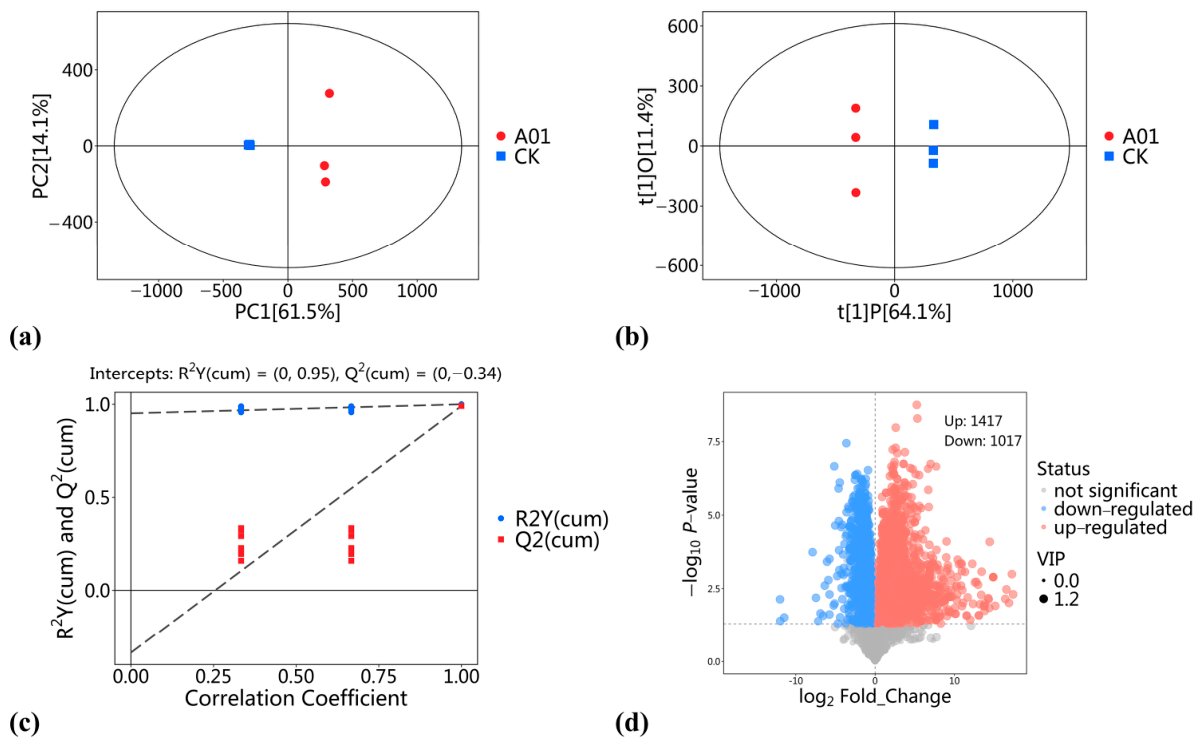
Metabolomic analysis unveiled the impact of fermenting diverse mixed substrates on Musalais’ metabolites. Principal component analysis (PCA), a linear dimension-reduction technique, projects high-dimensional data into a low-dimensional space through linear projection to maximize variance preservation, thus emphasizing sample distinctions and data structure [41]. The PCA score plot of metabolomic data among all groups (Figure 5a) displays two distinct clusters along the first and second principal components (PC1 and PC2), which collectively explain 75.6% of the total variance. Samples within each group exhibited tight clustering, while noticeable segregation between groups was observed. This suggests that the metabolic profiles of samples within the traditional Musalais and the new product groups remained relatively consistent, whereas significant differences were noted in the metabolic profiles between the groups. This implies that mixed fermentation induced substantial alterations in the overall metabolic profile of Musalais compared to single fermentation.
To minimize interference from intra-group variation and other irrelevant noise, orthogonal partial least squares-discriminant analysis (OPLS-DA) was applied to the CK versus A01 comparison. OPLS-DA (Figure 5b) further confirmed the distinct separation, with a robust model (R2Y > 0.9, Q2Y > 0.9), indicating excellent explanatory and predictive power. Subsequently, the stability and reliability of the model were further validated through 200 permutation tests. The results (Figure 5c) indicated that the original R2Y and Q2Y values of the model were higher than those of the permuted models, and the intercept of Q2 was below 0.05, confirming the absence of overfitting.

3.6.1. Screening of Differential Metabolites Between Groups

Differential metabolites were identified using VIP > 1 and p < 0.05, and visualized in a volcano plot (Figure 5d). Compared with the CK group, the A01 group exhibited a greater number of up-regulated than down-regulated differential metabolites, indicating that composite fermentation enhanced overall metabolic activity and increased metabolite complexity. Specifically, in group A01, the contents of lapachol, hexahydrocurcumin, usaramine, indole-3-butyric acid, benzoylcholine, (Z)-5,8,11-trihydroxyoctadec-9-enoic acid, and apiosylskimmin were significantly increased. In contrast, the contents of H-Val-Ala-OH, glycylleucine, pumilaisoflavone-C, USF-19A, reserpine, homoarginine, and trimethylamine N-oxide were significantly decreased.
Microorganisms respond to substrate changes in the fermentation environment by finely restructuring their metabolic networks, which is reflected in dynamic shifts in their metabolic profiles [42]. The elevated levels of hexahydrocurcumin in the samples from Group A01 may result from the reductive biotransformation of curcuminoids within the juice matrix by yeast. Studies have shown that carbonyl reductases, short-chain dehydrogenases, or enone reductases present in microbial cells can saturate the unsaturated double bonds in curcumin molecules [43,44]. As a major metabolite of curcumin, hexahydrocurcumin exhibits superior biological activity and higher chemical stability than curcumin and demonstrates notable antioxidant, anti-inflammatory, anti-tumor, and cardiovascular protective effects [44].
Lapachol, a naturally occurring naphthoquinone in plants, showed increased content in the composite fermentation system. This may be because raw materials containing lapachol or its biosynthetic precursors, such as medicinal mulberry, jujube or pomegranate juice and so on [45,46,47].
These results suggest that mixed fermentation may enhance the health and functional value of Musalais by activating the specific secondary metabolic pathways of yeast and directional enrichment of functional factors with significant biological activity.
In addition, as a structural analog of arginine, the down-regulation of homoarginine may show a state where yeast cells may grow or proliferate more vigorously in the fermentation substrate made of multiple juices. Since yeast needs to meet the requirements of rapid biosynthesis, the demand for nitrogen sources increases greatly, which accelerates the assimilation or utilization of nitrogen compounds [48,49,50].
Trimethylamine N-oxide (the final product of choline and trimethylamine metabolism) also showed a down-regulated status in A01, which indicates that the substrate choline is abundantly utilized by yeast [51,52]. Choline metabolism is associated with one-carbon units and the methyl cycle, directly providing precursors for the synthesis of purines and pyrimidines, also helping to maintain intracellular redox balance, and affecting cellular energy status and biosynthetic efficiency [52,53].
These findings may indicate that the new product may improve yeast efficiency in utilizing complex substrates by synergistically activating nitrogen and energy metabolism networks. This metabolic remodeling can supply adequate materials and energy to support robust yeast proliferation but also promotes the synthesis and accumulation of functionally active compounds, thereby enhancing the overall quality and value of the fermented product.

3.6.2. Differential Metabolite Analysis

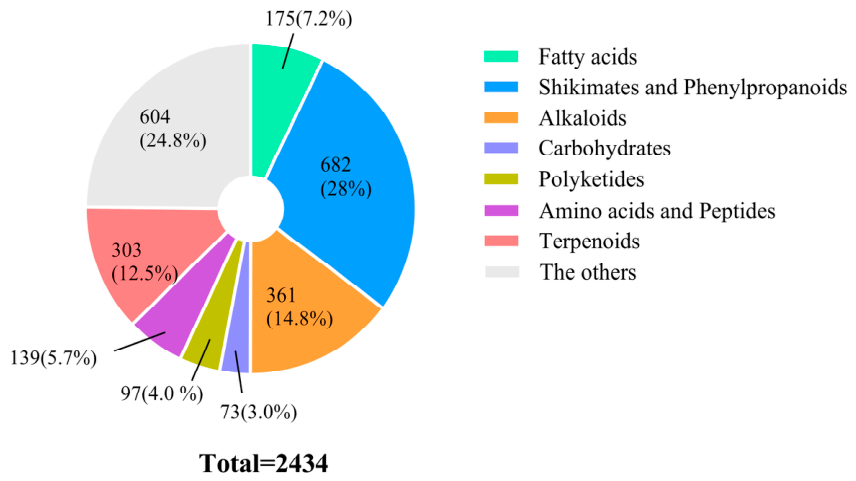
The distribution of 2434 differential metabolites by category is presented in Figure 6. These metabolites mainly comprised shikimic acid and phenylpropionic acid derivatives (28%, n = 682), alkaloids (14.8%, n = 361), terpenoids (12.5%, n = 303), fatty acids (7.2%, n = 175), and amino acid/short peptide derivatives (5.7%, n = 139). The proportion of total differential metabolites of these five types of substances is 65%. The rest include miscellaneous compounds (accounting for 24.8%, with a quantity of 604), polyketides (accounting for 4.0%, with a quantity of 97), and carbohydrates (accounting for 3.0%, with a quantity of 73). For further details, please refer to Table S2 in the Supplementary Materials.
The 682 compounds of shikimic acid and phenylpropionic acid exhibited distinct trends within the A01 group. Among them, 433 compounds demonstrated a significant increase, including cacticin, leucoside, rhodiosin, quercetin, and ethyl 4-hydroxybenzoate. Conversely, 249 compounds exhibited a notable decrease, such as phenylacetic acid, 5,7-dihydroxycoumarin, hydroxytyrosol, 5,7-dihydroxy-4-methylcoumarin, and cichoriin. In the A01, the shikimic acid and phenylpropane metabolic pathways are significantly activated. The levels of flavonoids (such as quercetin, kaempferol, luteolin, and their various glycoside derivatives) and lignans (such as gomisin J and licarin A) increased significantly in A01. This may be attributed to two factors. First, these polyphenols come from the juices of medicinal mulberry, jujube, and pomegranate. They are naturally rich in them and get added to the fermentation system as outside substrates [54,55,56]. Specifically, endogenously expressed UDP-glucosyltransferases in yeast can utilize UDP-glucose produced from fermentation as a glycosyl donor to specifically catalyze the glycosylation of phenolic compounds, such as flavonoids [57,58]. In contrast, the levels of a series of simple phenolic acids and their derivatives (such as coumaric acid, phenylacetic acid, salicylic acid, and shikimic acid) have decreased significantly. This observation indicates that these compounds, serving as essential precursors, are more efficiently utilized by yeast cells during mixed fermentation. Their metabolic flux is redirected toward the synthesis of more complex secondary metabolites, such as flavonoids and lignans, which exhibit enhanced biological activities, including antioxidant and antibacterial properties. This process ultimately increases the functional value of the fermentation products.
Alkaloids represent a group of nitrogen-bearing organic substances that occur widely in natural environments, with a particular prevalence in plant species. They exhibit diverse structures and biological activities, which make some alkaloids important sources of therapeutic agents. Compared with CK, A01 significantly altered the alkaloid profile of the final product by reshaping the metabolic pathways of the fermenting microorganisms. Out of the 361 alkaloids identified, 193 showed notable increases in A01, such as lycorine (anti-inflammatory) [59] and indole-3-butyric acid (associated with gut health) [60], while 168 exhibited decreases, including ephedrine (linked to cardiovascular risks) [61] and rutaecarpine (hepatotoxic) [62]. These findings suggest that composite juice fermentation enhances alkaloid diversity and, through biotransformation processes, more effectively enriches beneficial functional alkaloids while diminishing potentially harmful ones.
The sensory characteristics of wine, particularly its intricate floral and fruity aromas, are closely linked to the composition and concentration of terpenoids, which are pivotal in defining the varietal and aging aromas of wine [63,64]. Studies have found that in the A01, the contents of monoterpenoids such as geraniol (showing rose-like flavor) and β-myrcene (showing tropical fruit-like flavor) are significantly increased [63,65]. Previous studies have shown that yeast can synthesize GPP, a precursor to monoterpenes, by catalyzing the reaction between isopentenyl pyrophosphate and dimethylallyl diphosphate via the GPP/FPP synthase (ERG20) [66,67]. This indicates that the mixed juice matrix may provide a unique fermentation microenvironment or additional enzymatic substrates for yeast and jointly promote the enrichment of pleasant monoterpenoids. Furthermore, terpenoids offer more than just aroma generation; numerous studies have demonstrated their notable biological functions, including anti-inflammatory, anti-tumor, and antioxidant properties. The analysis revealed a marked increase in the levels of pharmacologically active terpenoids like andrographolide, ginkgolide C, and euscaphic acid in the A01 group. Previous studies have demonstrated that these compounds exert anti-inflammatory effects by regulating signaling pathways such as NF-κB, inhibit tumor cell proliferation by inducing apoptosis, and exhibit strong antioxidant activity by scavenging free radicals [68,69,70]. In summary, the blended fermentation strategy not only enhances the concentration of monoterpenes responsible for the characteristic floral and fruity aromas in Musalais through the synergistic stimulation of yeast metabolism, but it also concurrently elevates the levels of various functional terpenes that possess health-promoting properties.
Fatty acids serve a dual function in wine production. They are essential precursors that contribute to the flavor and aroma of wine, while their content and composition significantly influence yeast fermentation activities. For instance, medium- and short-chain fatty acids, such as caproic acid, octanoic acid, and decanoic acid, are typically produced through yeast metabolism during alcoholic fermentation. However, excessive accumulation of these acids can lead to the development of undesirable odors, including those reminiscent of cheese and sweat. Yeast can further metabolize these medium- and short-chain fatty acids into ethyl hexanoate, ethyl caprylate, acetate, and other ester compounds that impart a fruity aroma, thereby enhancing the overall pleasant fragrance of the wine [71]. In this study, the levels of oleic acid, linoleic acid, and α-linolenic acid in group A01 increased significantly, while the concentrations of caproic acid and octanoic acid decreased markedly. This is consistent with the volatile results. This trend reveals the underlying mechanisms by which mixed fermentation strategies enhance Musalais quality at the level of fatty acid metabolism. The substantial increase in long-chain unsaturated fatty acids like oleic acid, linoleic acid, and α-linolenic acid benefits yeast by providing ample membrane lipid components and energy sources. This ensures fermentation stability and enhances the synthesis of a broader range of fruit-flavored esters by boosting the activity of ester synthase enzymes [72]. Conversely, the notable reduction in medium- and short-chain fatty acids such as caproic acid and octanoic acid diminishes potential sources of undesirable odors, like cheese and sweat, thereby enhancing the aromatic purity of the Musalais. Thus, the precise regulation of fatty acid metabolism elucidates that employing a mixed fermentation approach yields a more diverse, pure, and harmonious floral and fruity aroma profile, significantly elevating the sensory quality.
Amino acids, as the fundamental units of protein synthesis, play a crucial role in the nutritional value of Musalais. Additionally, they significantly contribute to the wine’s flavor profile. Through the metabolic activity of yeast, they can be transformed into a series of substances that affect the aroma and taste of Musalais. In the mixed fermented Musalais, marked elevations were observed in the levels of phenylalanine, tyrosine, leucine, and valine. Phenylalanine, an essential amino acid, is vital for synthesizing crucial substances in the human body and serves as a key precursor for yeast to produce phenylethanol, imparting a floral fragrance [73]. Meanwhile, volatile component analysis suggests that the content of phenylethanol in A01 is increased compared to CK. Similarly, tyrosine plays a significant role in human metabolic processes and, like phenylalanine, can act as a precursor for synthesizing volatile phenols, esters, and other aromatic compounds [74]. Leucine, another essential amino acid, is indispensable for human protein synthesis and is primarily metabolized into isopentyl alcohol through the Ehrlich pathway in yeast [75]. Additionally, valine can be transformed into isobutyl alcohol via yeast metabolism, leading to the formation of compounds like ethyl isobutyrate, contributing to the apple-like sweetness in Musalais’ pleasant fermented fruit aroma [76]. Together, these compounds contribute to the delightful fermented fruit aromas found in Musalais.

3.6.3. KEGG Annotation and Enrichment Analysis of Differential Metabolites

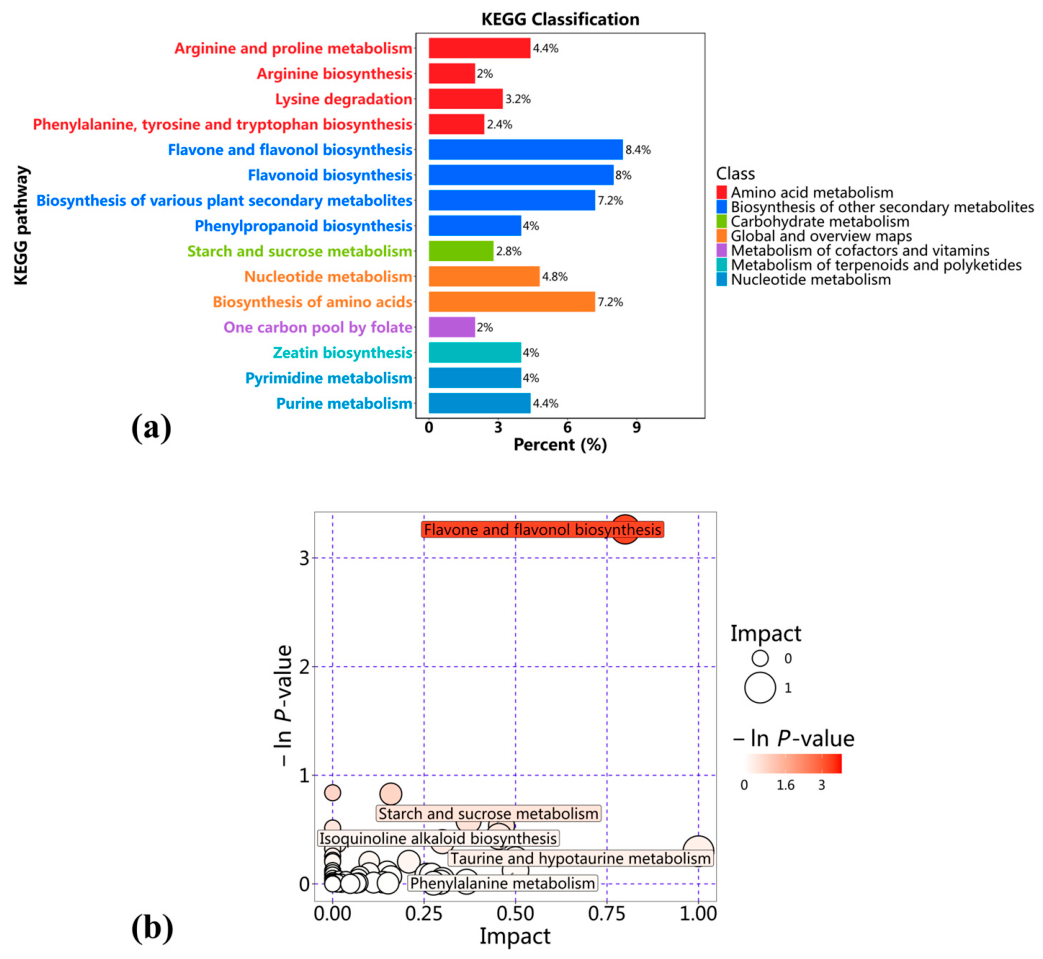
Based on the KEGG public database, the pathway enrichment analysis of mixed juice fermentation is carried out. The results show that the largest number of annotations are related to the biosynthetic pathways of amino acid metabolism and secondary metabolites (Figure 7a). Through the enrichment analysis of differential metabolites, a total of 50 metabolic pathways have been identified (Figure 7b).
Flavonoids and flavanols are significant bioactive compounds found in wine, exhibiting physiological functions such as antioxidant and anti-inflammatory properties. Moderate consumption of these compounds may provide potential benefits in preventing cardiovascular and neurodegenerative diseases [77,78]. Additionally, flavanols serve as auxiliary pigments, enhancing and stabilizing the color of wine by forming molecular complexes with anthocyanins; they particularly enhance red hues [78]. In this study, the contents of five key flavonoids—kaempferol, apigenin, quercetin, luteolin, and rutin—were all significantly increased in the A01 group. This result suggests that the co-fermentation process promoted the transformation and release of flavonoid compounds from the raw materials. Studies have shown that microbial metabolic processes can generate specific enzymes that can break down naturally occurring flavonoid glycosides in fruits, converting them into more bioactive aglycone forms like quercetin and kaempferol, which are easier for the human body to absorb [79]. Quercetin is also capable of forming stable complexes with anthocyanins through intermolecular forces, resulting in a color-enhancing effect and a red shift. This interaction significantly improves and stabilizes the color of the product, enhancing its vibrancy and longevity and mitigating color fading that may happen during storage or subsequent processing [80]. Additionally, these compounds, serving as natural antioxidants, collaborate to neutralize free radicals, reduce oxidative stress, and demonstrate anti-inflammatory properties, thereby enhancing the functional characteristics of fermented products [81,82,83].
Amino acids serve as crucial flavor precursors and nutritional constituents in wine, primarily influencing its aromatic profile through yeast metabolism while also contributing to its nutritional value [84]. In A01, the notable reduction in ornithine, citrulline, N-acetylornithine, proline, and glutamine—five compounds integral to the arginine and proline metabolic pathways—collectively suggests active nitrogen metabolism by fermenting microorganisms to fulfill their growth requirements. As vital nitrogen sources and flavor precursors, these amino acids can be utilized by microorganisms and transformed into higher alcohols and esters, thereby potentially enhancing the aromatic complexity of the final product. For instance, microorganisms can transaminate glutamine to produce α-ketoglutarate, which subsequently undergoes a series of intricate reactions leading to the production of volatile aromatic compounds like higher alcohols and esters [85].
The starch and sucrose metabolic pathways serve as the foundation for yeast energy metabolism by facilitating the breakdown of various carbohydrates to supply energy and small-molecule precursors for yeast growth. In fermentation, yeast primarily metabolizes monosaccharides or disaccharides [86]. Upon undergoing enzymatic hydrolysis or conversion, carbohydrates such as starch and sucrose yield fermentable sugars—including glucose, fructose, and maltose—that can be directly metabolized by yeast. These sugars undergo glycolysis to form pyruvate, leading to the production of ethanol and the release of energy (ATP) under anaerobic conditions. Alternatively, they are fully oxidized to generate CO2 and H2O under aerobic conditions, thus fueling yeast growth and fermentation. In A01, the levels of cellobiose, β-D-fructose, glucose-1-phosphate, trehalose, and D-maltose decreased significantly, while the content of uridine diphosphate glucose increased notably. These alterations imply vigorous energy metabolism and carbon flux redistribution in fermenting yeast under specific conditions. The decline in various disaccharides and monosaccharides indicates efficient breakdown and uptake of carbon sources by yeast cells through the secretion of relevant glycosidases, utilizing these substrates as the primary fuel for glycolysis to generate energy and precursors for their growth and fermentation [87,88,89]. Among these metabolites, 1-phosphoglucose serves as a crucial intermediate in the catabolism of glycogen and starch, exhibiting a decline in levels that indicates its rapid utilization in downstream metabolic pathways. This dynamic process aligns with the highly flexible mechanisms regulating glycolytic flux within yeast cells [89]. Concurrently, the consumption of trehalose—an essential stress-protective agent and energy-storage molecule in yeast—suggests that yeast may have mobilized reserve carbon sources to sustain energy homeostasis during fermentation [90]. Notably, UDP-glucose, a central hub molecule linking carbohydrate catabolism and anabolism, demonstrated an upward trend, indicating that yeast cells redirected a portion of the carbon source toward anabolic pathways, utilizing UDP-glucose as a direct donor. This process supports extensive glycogen production for energy reserves and contributes to the construction of structural components, such as cell wall polysaccharides, thereby preparing the cells for sustained proliferation and enabling them to cope with the stresses of the fermentation environment [87]. An in-depth analysis of carbon flux dynamics not only reveals the energy metabolism strategies employed by yeast in a mixed fruit juice fermentation environment but, more importantly, provides critical metabolic insights for understanding and optimizing the kinetic processes of wine fermentation, as well as the flavor profile and sensory balance of the final Musalais.
The difference between the new product (A01) and traditional Musalais (CK) may primarily lie in raw material composition. The addition of medicinal mulberry, jujube, pomegranate, and rose likely enriches phenolic compounds, thereby potentially increasing total phenols, total flavonoids, and antioxidant capacity in A01. These substrates may also provide more precursors for the biosynthesis of esters and higher alcohols, possibly leading to a greater variety and higher concentration of floral and fruity volatiles. Although microbial metabolism during fermentation may further modulate certain metabolites, the observed differences in phenolic and volatile profiles between the two products could be largely driven by the initial raw materials.

4. Conclusions

This study compared the quality of the new product with traditional Musalais and found that the new product had higher levels of phenolic compounds and flavonoids, stronger antioxidant activity, and a greater variety and concentration of volatile flavor compounds. Non-targeted metabolomics analysis showed that the new product, as opposed to traditional Musalais, may enhance the synthesis and transformation of bioactive compounds like flavonoids, terpenoids, and alkaloids by modifying the yeast metabolic network. It also optimized fatty acid composition and aromatic characteristics, resulting in a new product with more intense floral and fruity aromas and a more harmonious flavor profile. These findings suggest that the new product offers multiple advantages for Musalais, including improved antioxidant capacity, better mouthfeel and flavor, and higher levels of compounds with antioxidant activity.
Nevertheless, the absence of microbiological data in this study partially impedes clarification of the underlying mechanisms. Current results only verify that substrate differences serve as the predominant contributor to discrepancies in product quality, whereas the role of microbial fermentation is only hypothesized. Importantly, owing to the lack of functional microbial characterization, all metabolic interpretations related to microorganisms presented in this work remain speculative. Hence, further targeted research is warranted to validate these inferences.

Supplementary Materials

The following supporting information can be downloaded at https://www.mdpi.com/article/10.3390/fermentation12060277/s1, Table S1: Volatile components in compound Musalais and traditional Musalais; Table S2: Differentially Expressed Metabdites.

Author Contributions

Y.W.: writing—original draft and data curation. S.C.: software, data curation. K.L.: visualization, investigation. Y.P.: visualization, investigation. Y.L.: visualization, investigation. B.L.: visualization, investigation. X.H.: writing—review and editing, funding acquisition. All authors have read and agreed to the published version of the manuscript.

Funding

This research was supported by the Xinjiang Uygur Autonomous Region Key Research and Development Program (Research on New Product Development of Musalais and Comprehensive Utilization Technology of By-products, 2022B02024-3) from the Department of Science and Technology of Xinjiang Uygur Autonomous Region.

Institutional Review Board Statement

The study was conducted in accordance with the Declaration of Helsinki and approved by the Institutional Review Board of Tarim University (protocol code PB20260112001 and date of approval 12 January 2026).

Informed Consent Statement

Informed consent was obtained from all subjects involved in the study.

Data Availability Statement

The original contributions presented in this study are included in the article/Supplementary Materials. Further inquiries can be directed to the corresponding author.

Conflicts of Interest

The authors declare no conflicts of interest.

References

  1. Cheng, G. The Interaction Between Monascus and Yeast and the Study of Mixed Fermentation. Master’s Thesis, Tarim University, Alar, China, 2024. [Google Scholar] [CrossRef]
  2. Qiao, T.; Zhu, L. Development Status of Ancient Msalais Wine. Liquor-Mak. Sci. Technol. 2020, 11, 98–104+109. [Google Scholar] [CrossRef]
  3. Li, H. The Optimization of Musalaisi Clarification Process and Its Protective Effect on Cardiovascular and Cerebrovascular System. Master’s Thesis, Tarim University, Alar, China, 2015. Available online: https://kns.cnki.net/kcms2/article/abstract?v=Omth-A4cfW_POsCEP9DMp4FVg7GGdH343NFDbP1pv4YxkGKWZVL07zTay-xnB-VkD2qSyx1XcoOYQN7crARwOCkHmc8llxv7bikuPOP38LvCltUThkgfFY6_kUWLVLJ7aNpBAW98Zxlxlzb9sV2V2xdIAxSMEMPIgH8uhN7eeqo=&uniplatform=NZKPT (accessed on 15 April 2025).
  4. Wang, Z.; Han, A.; Zhang, L.; Xi, Q.; Huang, Y.; Li, Y.; Ma, G.; Jia, Q.; Li, L.; Hou, X. Application of LC-MS/MS Technology in the Detection of Non-volatile Components in Musalaisi Wine. Food Res. Dev. 2019, 40, 165–171. [Google Scholar] [CrossRef]
  5. Huang, Y.; Liu, Z.; Niu, X.; Hou, X. Musalais Grape Wine Chaptalization Brewing Process and Wine Quality Inspection from Xinjiang. Food Ind. 2018, 39, 89–92. [Google Scholar]
  6. Gao, X.; Duan, J.; Zhou, S.; Fan, S.; Bai, Y.; Feng, Z. Optimization of Musalais Formulation by Response Surface Methodology. Storage Process 2020, 20, 91–97. [Google Scholar] [CrossRef]
  7. Hou, X.; Zhao, Y.; Gong, H.; Hou, X. Research and Development of Low-Alcohol Bubbly Musalais Products with Mixed Fermentation of Double Yeast. Food Sci. Technol. 2021, 46, 100–105. [Google Scholar] [CrossRef]
  8. Wan, J.; Wang, J.; Liu, P.; Ding, Z.; Li, F. Comparative study on the main functional components of different mulberry varieties in Xinjiang. J. Gansu Sci. 2025, 37, 97–101. [Google Scholar] [CrossRef]
  9. Adalaiti, A.; Guzhalinuer, A.; Jiana, J.; Abulizi, A.; Zhong, Y.; Ma, X. Inhibitory effects of extracts from Morus nigra L., Coreopsis tinctoria Nutt., and Capparis spinosa L. on α-glucosidase. China Food Addit. 2024, 35, 15–22. [Google Scholar] [CrossRef]
  10. Reza, M.; Kosar, B.; Maryam, R.; Hasan, R.; Abolfazl, K.R.; Naser, S.M. Protective effects of long-term administration of Ziziphus jujuba fruit extract on cardiovascular responses in L-NAME hypertensive rats. Avicenna J. Phytomed. 2018, 8, 143–151. [Google Scholar] [CrossRef]
  11. Mobasheri, F.; Khajeh, M.; Ghaffari-Moghaddam, M.; Piri, J.; Bohlooli, M. Machine learning optimization of microwave-assisted extraction of phenolics and tannins from pomegranate peel. Sci. Rep. 2025, 15, 19439. [Google Scholar] [CrossRef]
  12. D’Agostino, S.; Ugolini, T.; Freschini, D.; Khatib, M.; Cecchi, L.; Zanoni, B.; Zonfrillo, B.; Innocenti, M.; Bellumori, M.; Mulinacci, N. Bicarbonate-assisted extraction of pomegranate peel (Punica granatum L.) to obtain extracts with new low molecular weight phenols and enriched in total tannins and ellagic acid. Ital. J. Food Sci. 2025, 37, 47–73. [Google Scholar] [CrossRef]
  13. Duzguner, V.; Erbil, N. An integrative assessment of bioactive components, antioxidant capacity, and antibiofilm properties of pomegranate vinegar. Nat. Prod. Res. 2025, 1–4. [Google Scholar] [CrossRef]
  14. Gao, Y. Study on the Antifungal Activity and Antifungal Mechanism of Rose Petal on Malassezia. Master’s Thesis, Henan University, Zhengzhou, China, 2024. [Google Scholar]
  15. Guan, Y.; Zhang, Y.; Li, L.; Zhao, S.; Dong, H.; Pan, H.; Zang, Z.; Chen, L. Research Progress on Anti-Aging Mechanism of Meiguihua (Rose rugosae Flos). Chin. Arch. Tradit. Chin. Med. 2025, 43, 1–6. [Google Scholar] [CrossRef]
  16. Jung, J.; Lee, M.; Park, H.S.; Cho, W.; Kim, J.; Eun, S.; Lee, J. Rose Petal Extract Ameliorates Obesity in High Fat Diet-Induced Obese Mice. Prev. Nutr. Food Sci. 2024, 29, 125–134. [Google Scholar] [CrossRef] [PubMed]
  17. Li, L.; Yuan, C.; Zhang, L.; Chu, R.; Yu, Q.; Cai, J.; Yang, T.; Zhang, M. The impact of simultaneous inoculation with Torulaspora delbrueckii and Hanseniaspora uvarum combined with Saccharomyces cerevisiae on chemical and sensory quality of Sauvignon blanc wines. Front. Microbiol. 2024, 15, 1413650. [Google Scholar] [CrossRef]
  18. Li, Z. Research on New Product Development and Quality of Musalais. Master’s Thesis, Tarim University, Alar, China, 2024. [Google Scholar] [CrossRef]
  19. Rachana, M.N.; Ramappa, K.T.; Udaykumar, N.; Sharanagouda, H.; Nagaraj, N. Effect of Yeast Concentration on Quality Parameters of Ber (Ziziphus mauritiana) Fruit (cv. Umran) Wine during Ageing. Int. J. Plant Soil Sci. 2023, 35, 28–40. [Google Scholar] [CrossRef]
  20. GB/T 15038-2006; General Methods of Analysis for Wine and Fruit Wine. Standards Press of China: Beijing, China, 2006. Available online: https://openstd.samr.gov.cn/bzgk/std/newGbInfo?hcno=4CFF012592D9DE362A765DD3ED1F9C26 (accessed on 16 April 2026).
  21. Guo, C.; Gao, T.; Zhao, E. Determination of total sugar from wine by phenol-sulfuric acid coloration method. China Brew. 2008, 22, 84–85. [Google Scholar]
  22. Chen, S.; Hou, X.; Qiao, T.; Pu, Y.; Hou, X. Simultaneous Determination of Methyl Alcohol and Ethanol in Musalais by Gas Chromatography. Food Res. Dev. 2022, 43, 146–151. [Google Scholar] [CrossRef]
  23. GB 4789.2-2022; National Food Safety Standard Food Microbiology Test Determination of Total Number of Colonies. Standards Press of China: Beijing, China, 2022. Available online: https://sppt.cfsa.net.cn:8086/db?type=2&guid=40D6F1C1-5EBF-48D6-B876-11308B0F4687 (accessed on 19 April 2025).
  24. GB 29921-2021; National Food Safety Standards Limit of Pathogenic Bacteria in Pre-Packaged Food. Standards Press of China: Beijing, China, 2021. Available online: https://sppt.cfsa.net.cn:8086/db?type=2&guid=C88562AC-FCCC-4FAE-9021-BF9179E005A3 (accessed on 19 April 2025).
  25. Hou, X. Study of Brewing Making of Low-Alcohol Bubbly Musalais. Master’s Thesis, Tarim University, Alar, China, 2021. [Google Scholar] [CrossRef]
  26. Cha, M. Study on the Technology and Aroma Change of Jujube Juice Fermented by Lactobacillus plantarum. Master’s Thesis, Zhengzhou University of Light Industry, Zhengzhou, China, 2022. [Google Scholar] [CrossRef]
  27. Myrtsi, E.; Koulocheri, S.; Iliopoulos, V.; Haroutounian, S. High-Throughput Quantification of 32 Bioactive Antioxidant Phenolic Compounds in Grapes, Wines and Vinification Byproducts by LC-MS/MS. Antioxidants 2021, 10, 1174. [Google Scholar] [CrossRef]
  28. Zhang, L. Study on Characteristic Flavor of Musalais by Electronic-Nose Electronic-Tongue and GC-MS Analysis. Master’s Thesis, Tarim University, Alar, China, 2018. Available online: https://kns.cnki.net/kcms2/article/abstract?v=Omth-A4cfW_fq-uXZzIgMnQuplv7tekC0RdomnGdbo2RyTqMi6zHS-wTUEFRhWGKgKXhuMvIdhvE_4EG_dPbYCjDh-1NEjLzrEsx7any0MgBz88ayowKDROv0k-0CVqv038HlXLYc3rfF3PhIE22EAbm9uUglOWig-mOALBOvng=&uniplatform=NZKPT (accessed on 17 September 2025).
  29. Xv, W.; Zhang, J.; Huang, Y.; Wang, Y.; Zhang, H. Influence of Natural Fermentation and Aging in Ceramic Pots on Cabernet Sauvignon Wine. Food Res. Dev. 2025, 46, 7–16. [Google Scholar] [CrossRef]
  30. Cao, Y. Preparation and Quality Evaluation of Complex Jiaosu for Red-Flesh Apple and Medicinal Mulberry in Xinjiang. Master’s Thesis, Tarim University, Alar, China, 2024. [Google Scholar] [CrossRef]
  31. Zhao, J.; Yuan, Q.; Zhang, X.; Yang, X.; Zhu, X. Effect of mixed fermentation on the quality of Zaosu pear-Merlot low-alcohol rose fruit wine. Food Ferment. Ind. 2022, 48, 119–127. [Google Scholar] [CrossRef]
  32. Yuan, M.; Li, J.; Li, H.; Sun, B. Research progress on effect of nitrogen sources on fermentation performance of wine yeast. China Brew. 2023, 42, 1–9. [Google Scholar] [CrossRef]
  33. Liu, G.; Huanng, L.; Lian, J. Alcohol acyltransferases for the biosynthesis of esters. Biotechnol. Biofuels Bioprod. 2023, 16, 93. [Google Scholar] [CrossRef]
  34. Chen, L.; Ren, X.; Wang, Y.; Hao, D.; Liang, Y.; Qin, Y. Transcriptomic Identification of Core Regulatory Genes for Higher Alcohol Production in Saccharomyces cerevisiae at Different Sugar Concentrations in Wine Fermentation. Foods 2025, 14, 1476. [Google Scholar] [CrossRef]
  35. Song, Y. Preparation of Supported Cu Catalyst and Itscatalytic Performance for Hydrogenation of Acetophenone to 1-Phenylethanol. Master’s Thesis, Shenyang University of Chemical Technology, Shenyang, China, 2022. [Google Scholar] [CrossRef]
  36. Perestrelo, R.; Silva, C.; Gonçalves, C.; Castillo, M.; Câmara, J.S. An Approach of the Madeira Wine Chemistry. Beverages 2020, 6, 12. [Google Scholar] [CrossRef]
  37. Li, W.; Zi, L.; Xu, N.; Yang, H.; Dong, S.; Qin, F.; Guo, L. Identification of characteristic flavor compounds of Boletus edulis from different regions based on E-nose, HS-GC-IMS and HS-SPME-GC–MS. Food Chem. X 2024, 23, 101601. [Google Scholar] [CrossRef]
  38. Tomasino, E.; Bolman, S. The Potential Effect of β-Ionone and β-Damascenone on Sensory Perception of Pinot Noir Wine Aroma. Molecules 2021, 26, 1288. [Google Scholar] [CrossRef]
  39. Villalobos-Delgado, L.H.; Martínez-Martínez, Y.Y.; Nevárez-Moorillón, G.V.; Santiago-Castro, J.T.; Soto-Simental, S.; Juárez-Palomo, C.I.; Guadarrama-Mendoza, P.C. Physicochemical Properties and Volatile Profile of Chito: A Traditional Dry-Cured Goat Meat Product. Foods 2025, 14, 2341. [Google Scholar] [CrossRef] [PubMed]
  40. Wang, S.; Li, C.; Wang, Y.; Wang, S.; Zou, Y.; Sun, Z.; Yuan, L. Changes on physiochemical properties and volatile compounds of Chinese kombucha during fermentation. Food Biosci. 2023, 55, 103029. [Google Scholar] [CrossRef]
  41. Markus, R. What is principal component analysis? Nat. Biotechnol. 2008, 26, 303–304. [Google Scholar] [CrossRef]
  42. Yuan, H.; Bai, Y.; Li, X.; Fu, X. Cross-regulation between proteome reallocation and metabolic flux redistribution governs bacterial growth transition kinetics. Metab. Eng. 2024, 82, 60–68. [Google Scholar] [CrossRef] [PubMed]
  43. Zhao, C. Study on the Conversion of Curcumin to Hydrogenated Derivatives by Endophytic Fungi of Curcuma longa. Master’s Thesis, Huaqiao University, Xiamen, China, 2022. [Google Scholar]
  44. Huang, Y.; Cao, S.; Zhang, Q.; Zhang, H.; Fan, Y.; Qiu, F.; Kang, N. Biological and pharmacological effects of hexahydrocurcumin, a metabolite of curcumin. Arch. Biochem. Biophys. 2018, 646, 31–37. [Google Scholar] [CrossRef]
  45. Almeida, Z.L.; Cruz, P.F.; Costa, T.; Netto-Ferreira, J.C.; Lima, M.E.F.; Silva, M.B.; Serpa, C.; Chaves, O.A. Lapachol, a natural food component, interacts with human serum albumin: Insights of its impact on the pharmacokinetics of clinically used drugs. Int. J. Biol. Macromol. 2024, 282, 137520. [Google Scholar] [CrossRef]
  46. Endang, R.; Youngmin, K. Yeast metabolic engineering for the production of pharmaceutically important secondary metabolites. Appl. Microbiol. Biotechnol. 2020, 104, 4659–4674. [Google Scholar] [CrossRef]
  47. Dinglasan, J.L.N.; Otani, H.; Doering, D.T.; Udwary, D.; Mouncey, N.J. Microbial secondary metabolites: Advancements to accelerate discovery towards application. Nat. Rev. Microbiol. 2025, 23, 338–354. [Google Scholar] [CrossRef] [PubMed]
  48. Crépin, L.; Truong, N.M.; Bloem, A.; Sanchez, I.; Dequin, S.; Camarasa, C. Management of Multiple Nitrogen Sources during Wine Fermentation by Saccharomyces cerevisiae. Appl. Environ. Microbiol. 2017, 83, e02617-16. [Google Scholar] [CrossRef]
  49. Ruiz, J.; Celis, M.D.; Toro, M.; Mendes-Ferreira, A.; Rauhut, D.; Santos, A.; Belda, L. Phenotypic and transcriptional analysis of Saccharomyces cerevisiae during wine fermentation in response to nitrogen nutrition and co-inoculation with Torulaspora delbrueckii. Food Res. Int. 2020, 137, 109663. [Google Scholar] [CrossRef] [PubMed]
  50. Su, Y.; Heras, J.M.; Gamero, A.; Querol, A.; Guillamón, J.M. Impact of Nitrogen Addition on Wine Fermentation by S. cerevisiae Strains with Different Nitrogen Requirements. J. Agric. Food Chem. 2021, 69, 6022–6031. [Google Scholar] [CrossRef] [PubMed]
  51. Wang, Z.; Elizabeth, K.; Klipfell, E.; Bennett, B.J.; Koeth, R.; Levison, B.S.; DuGar, B.; Feldstein, A.E.; Britt, E.B.; Fu, X.; et al. Gut flora metabolism of phosphatidylcholine promotes cardiovascular disease. Nature 2011, 472, 57–63. [Google Scholar] [CrossRef]
  52. Wischer, D.; Kumaresan, D.; Johnston, A.; El Khawand, M.; Stephenson, J.; Hillebrand-Voiculescu, A.M.; Chen, Y.; Colin Murrell, J. Bacterial metabolism of methylated amines and identification of novel methylotrophs in Movile Cave. ISME J. 2015, 9, 195–206. [Google Scholar] [CrossRef]
  53. Dowd, S.R.; Bier, M.E.; Patton-Vogt, J.L. Turnover of phosphatidylcholine in Saccharomyces cerevisiae. The role of the CDP-choline pathway. J. Biol. Chem. 2001, 276, 3756–3763. [Google Scholar] [CrossRef]
  54. Liu, D.; Chen, H.; Pu, J.; Xiang, Z.; Yang, G. Extraction Process Optimization and Antioxidant Activity Analysis of Total Polyphenols from Medicinal Mulberry Fruit. Acta Sericologica Sin. 2016, 42, 1068–1076. [Google Scholar] [CrossRef]
  55. Hu, Y.; Wang, X.; Tan, Y.; Li, X.; Xiang, Q.; Wen, X.; Chen, A. Optimization of Ultrasound-Assisted Enzymatic Extraction of Polyphenols from Pomegranate Peel and Evaluation of Its Antioxidant Activity. Food Sci. Technol. 2025, 50, 187–196. [Google Scholar] [CrossRef]
  56. Ma, N.; Liu, H.; Fang, H.; Hu, H.; Xin, S.; Yang, X.; Liu, H. Optimization of Polyphenol Extraction Process, Analysis of Components and Antioxidant Activity of Jujube. Sci. Technol. Food Ind. 2022, 43, 246–254. [Google Scholar] [CrossRef]
  57. Zhang, Z.; Chen, J.; Liang, Z.; Shao, W.; Gao, Z.; Wu, B.; He, B.; Schenk, G. Tailoring Regioselectivity-Controlled UDP-Glycosyltransferase for Bidirectional Glycosylation of Tyrosol via Free Energy-Driven Pocket Reshaping and Tunnel Engineering. Adv. Sci. (Weinh. Baden-Wurtt. Ger.) 2025, 12, e09814. [Google Scholar] [CrossRef] [PubMed]
  58. Kang, Y.; Qian, Z.; Yu, H.; Lu, J.; Zhao, Q.; Qiao, X.; Ye, M.; Zhou, X.; Cai, M. Programmable Biosynthesis of Plant-Derived 4′-Deoxyflavone Glycosides by an Unconventional Yeast Consortium. Small Methods 2024, 8, e2301371. [Google Scholar] [CrossRef] [PubMed]
  59. Zhao, H.; Chen, Y.; Qian, L.; Du, L.; Wu, X.; Tian, Y.; Deng, C.; Liu, S.; Yang, W.; Lu, C.; et al. Lycorine protects against septic myocardial injury by activating AMPK-related pathways. Free Radic. Biol. Med. 2023, 197, 1–14. [Google Scholar] [CrossRef]
  60. Lopes, R.D.C.S.O.; Theodoro, J.M.V.; Silva, B.P.D.; Queiroz, V.A.B.; Moreira, M.E.D.C.; Mantovani, H.C.; Hermsdorff, H.H.; Martino, H.S.D. Synbiotic meal decreases uremic toxins in hemodialysis individuals: A placebo-controlled trial. Food Res. Int. 2019, 116, 241–248. [Google Scholar] [CrossRef]
  61. Gad, M.Z.; Azab, S.S.; Khattab, A.R.; Farag, M.A. Over a century since ephedrine discovery: An updated revisit to its pharmacological aspects, functionality and toxicity in comparison to its herbal extracts. Food Funct. 2021, 12, 9563–9582. [Google Scholar] [CrossRef]
  62. Zhu, Y.; Zhou, M.; Tang, L.; Wu, M.; Xu, Z.; Chen, Y.; Dou, Z.; Yao, Y. Research progress on hepatotoxicity of Euodiae Fructus. Drug Eval. Res. 2025, 48, 221–230. [Google Scholar]
  63. Yang, Y. Molecular Rearrangement and Polyphenolic Matrix Effects on Volatile Aroma Presentation of Terpene in Winemaking. Doctoral Thesis, Northwest A&F University, Xianyang, China, 2023. [Google Scholar] [CrossRef]
  64. Wu, G.; Xin, Y.; Ren, R.; Chen, H.; Yang, B.; Ge, M.; Xie, S. Comprehensive aroma profiles and the underlying molecular mechanisms in six grape varieties with different flavors. Front. Plant Sci. 2025, 16, 1544593. [Google Scholar] [CrossRef]
  65. Lyu, J.; Tian, X.; Ma, Y.; Xu, Y.; Tang, K. Characterization of Odorants Causing the Hawthorn Aroma in Cabernet Sauvignon Wine by Gas Chromatography-Olfactometry, Quantitation, Aroma Recombination, Omission, and Addition Studies. J. Agric. Food Chem. 2025, 73, 3016–3024. [Google Scholar] [CrossRef]
  66. Li, D.; Guo, Q.; Yang, Y.; Jiang, S.; Ji, X.; Ye, C.; Wang, Y.; Shi, T. Recent Advances and Multiple Strategies of Monoterpenoid Overproduction in Saccharomyces cerevisiae and Yarrowia lipolytica. ACS Synth. Biol. 2024, 13, 1647–1662. [Google Scholar] [CrossRef]
  67. Wang, Y.; Wei, Y.; Li, X.; Zhang, H.; Meng, X.; Duan, C.; Pan, Q. Ethylene-responsive VviERF003 modulates glycosylated monoterpenoid synthesis by upregulating VviGT14 in grapes. Hortic. Res. 2024, 11, uhae065. [Google Scholar] [CrossRef]
  68. Qu, J.; Liu, Q.; You, G.; Ye, L.; Jin, Y.; Kong, L.; Guo, W.; Xu, Q.; Sun, Y. Advances in ameliorating inflammatory diseases and cancers by andrographolide: Pharmacokinetics, pharmacodynamics, and perspective. Med. Res. Rev. 2022, 42, 1147–1178. [Google Scholar] [CrossRef]
  69. Gao, X.; Fu, S.; Wen, J.; Yan, A.; Yang, S.; Zhang, Y.; Liu, D.; He, D. Orally Administered Ginkgolide C Alleviates MPTP-Induced Neurodegeneration by Suppressing Neuroinflammation and Oxidative Stress through Microbiota-Gut-Brain Axis in Mice. J. Agric. Food Chem. 2024, 72, 22115–22131. [Google Scholar] [CrossRef]
  70. Kim, H.Y.; Jung, H.; Kweon, M.; Kim, J.; Choi, S.; Ahn, H.; Park, C.; Kim, H.; Jeong, H. Euscaphic acid relieves fatigue by enhancing anti-oxidative and anti-inflammatory effects. Immunopharmacol. Immunotoxicol. 2023, 45, 114–121. [Google Scholar] [CrossRef]
  71. Hu, W.; Yao, B.; Chen, M.; Zhu, Y.; Wo, X.; Qiu, L. Discussion on Production Mechanism and Regulation Strategies of Medium-chain Fatty Acid Ethyl Ester in Wine Fermentation. Sino-Overseas Grapevine Wine 2023, 3, 73–79. [Google Scholar] [CrossRef]
  72. Liu, P.; Duan, C.; Yan, G. Effect of Adding Oleic Acid or α-Linolenic Acid on Yeast Fermentation Activity and Volatile Compounds of Wine. J. Chin. Inst. Food Sci. Technol. 2020, 20, 154–161. [Google Scholar] [CrossRef]
  73. Wang, Q.; Mao, Y.; Zhao, Y.; Deng, Y. Research on synthesis of 2-phenylethanol by a wild-type aroma-producing yeast through biotransformation method. Food Ferment. Ind. 2025, 51, 22–28. [Google Scholar] [CrossRef]
  74. Chen, H.; Yue, X.; Zhang, Z. Analysis of physical and chemical indicators and amino acids contents during the growth and development process of Sauvignon Blanc. China Brew. 2021, 40, 33–37. [Google Scholar] [CrossRef]
  75. Ren, Y.; Qiao, M.; Sun, Z.; Zhang, G.; Mandlaa; Chen, Z. Formation law of higher alcohols during the fermentation of light-flavor Baijiu. Food Ferment. Ind. 2023, 49, 38–44. [Google Scholar] [CrossRef]
  76. Hernández-Orte, P.; Ibarz, M.J.; Cacho, J.; Ferreira, V. Addition of amino acids to grape juice of the Merlot variety: Effect on amino acid uptake and aroma generation during alcoholic fermentation. Food Chem. 2006, 98, 300–310. [Google Scholar] [CrossRef]
  77. Shen, N.; Wang, T.; Gan, Q.; Liu, S.; Wang, L.; Jin, B. Plant flavonoids: Classification, distribution, biosynthesis, and antioxidant activity. Food Chem. 2022, 383, 132531. [Google Scholar] [CrossRef]
  78. Parmenter, B.H.; Dalgaard, F.; Murray, K.; Marquis-Gravel, G.; Cassidy, A.; Bondonno, C.P.; Lewis, J.R.; Croft, K.D.; Kyrø, C.; Gislason, G.; et al. Intake of dietary flavonoids and incidence of ischemic heart disease in the Danish Diet, Cancer, and Health cohort. Eur. J. Clin. Nutr. 2023, 77, 270–277. [Google Scholar] [CrossRef]
  79. Escott, C.; Fresno, J.M.D.; Loira, I.; Morata, A.; Tesfaye, W.; González, M.D.C.; Suárez-Lepe, J.A. Formation of polymeric pigments in red wines through sequential fermentation of flavanol-enriched musts with non-Saccharomyces yeasts. Food Chem. 2018, 239, 975–983. [Google Scholar] [CrossRef]
  80. Lyu, J.; Li, J.; Jiang, W.; Liu, T.; Xu, Y.; Tang, K. Copigmentation effects of different phenolics on color stability of three basic anthocyanins in wines: Chromaticity, thermodynamics and molecular dynamics simulation. Food Chem. 2025, 476, 143499. [Google Scholar] [CrossRef]
  81. Zhou, Y.; Qian, C.; Tang, Y.; Song, M.; Zhang, T.; Dong, G.; Zheng, W.; Yang, C.; Zhong, C.; Wang, A.; et al. Advance in the pharmacological effects of quercetin in modulating oxidative stress and inflammation related disorders. Phytother. Res. 2023, 37, 4999–5016. [Google Scholar] [CrossRef]
  82. Herrera, T.E.S.; Tello, I.P.S.; Mustafa, M.A.; Jamil, N.Y.; Alaraj, M.; Altameem, K.K.A.; Alasheqi, M.Q.; Hamoody, A.H.H.; Alkhafaji, A.T.; Shakir, M.N.; et al. Kaempferol: Unveiling its anti-inflammatory properties for therapeutic innovation. Cytokine 2025, 186, 156846. [Google Scholar] [CrossRef]
  83. Xie, Y.; Liang, D.; Wu, Q.; Chen, X.; Buabeud, M.A.; Wang, Y. A System-Level Investigation into the Mechanisms of Apigenin Against Inflammation. Nat. Prod. Commun. 2019, 14, 1934578–1987860. [Google Scholar] [CrossRef]
  84. Sun, N.; Zhao, L.; Liu, A.; Su, L.; Shi, K.; Zhao, H.; Liu, S. Role of amino acids in flavor profiles and foam characteristics of sparkling wines during aging. J. Food Compos. Anal. 2024, 126, 105903. [Google Scholar] [CrossRef]
  85. Liu, P.; Wang, Y.; Yan, G. Effects of Adding Branched-chain Amino Acids on Major Volatile Compounds in Cabernet sauvignon Wines. J. Chin. Inst. Food Sci. Technol. 2018, 18, 174–182. [Google Scholar] [CrossRef]
  86. Fan, C.; Fan, J.; Chen, H.; Lin, S.; Zhang, D.; Song, J.; Wang, J.; Wang, Y.; Han, X.; Yuan, J. Switching the yeast metabolism via manipulation of sugar phosphorylation. Metab. Eng. 2025, 89, 76–85. [Google Scholar] [CrossRef]
  87. François, J.; Parrou, J.L. Reserve carbohydrates metabolism in the yeast Saccharomyces cerevisiae. FEMS Microbiol. Rev. 2001, 25, 125–145. [Google Scholar] [CrossRef]
  88. Walker, G.M.; Stewart, G.G. Saccharomyces cerevisiae in the Production of Fermented Beverages. Beverages 2016, 2, 30. [Google Scholar] [CrossRef]
  89. Daran-Lapujade, P.; Rossell, S.; van Gulik, W.M.; Luttik, M.A.H.; de Groot, M.J.; Slijper, M.; Heck, A.J.R.; Daran, J.; de Winde, J.H.; Westerhoff, H.V.; et al. The fluxes through glycolytic enzymes in Saccharomyces cerevisiae are predominantly regulated at posttranscriptional levels. Proc. Natl. Acad. Sci. USA 2007, 104, 15753–15758. [Google Scholar] [CrossRef]
  90. Xie, D.; Sun, Y.; Lei, Y. Effect of glucose levels on carbon flow rate, antioxidant status, and enzyme activity of yeast during fermentation. J. Sci. Food Agric. 2022, 102, 5333–5347. [Google Scholar] [CrossRef]
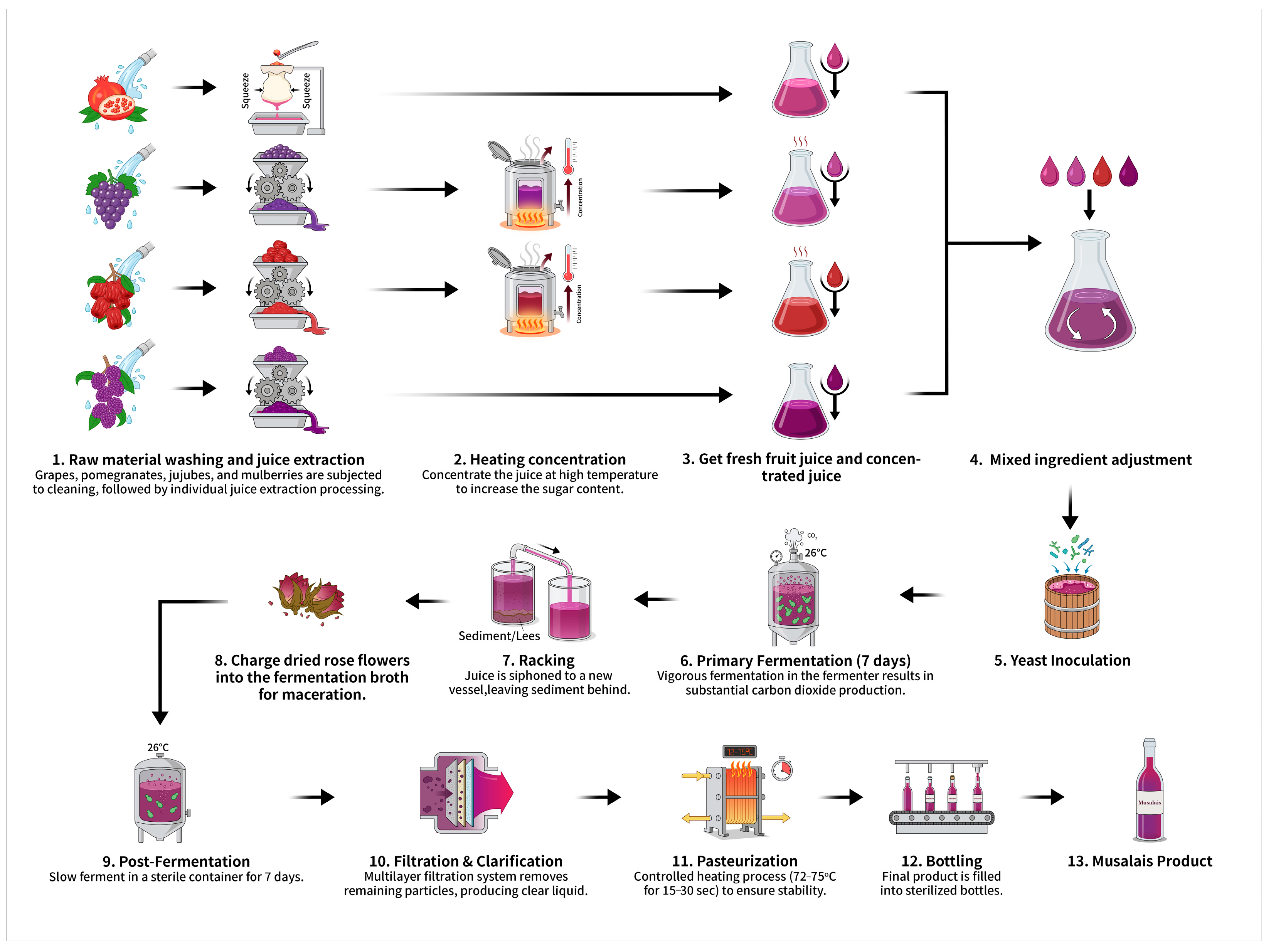
Figure 1. Flowchart of the production process of the new product.
Fermentation 12 00277 g001
Figure 2. Comparison of quality parameters between the traditional (CK) and optimized new product (A01). (A) Total phenolic content; (B) total flavonoid content; (C) DPPH radical scavenging activity; (D) ABTS radical scavenging activity; (E) total acid content; (F) initial soluble solids of fermentation; (G) total sugar content; (H) alcohol content. Significance levels: ** p < 0.01, *** p < 0.001, **** p < 0.0001; ns, not significant. Three independent biological replicates were conducted.
Fermentation 12 00277 g002
Figure 3. Volatile compounds in CK and A01 by category: (a) concentration comparison, (b) count comparison. Three independent biological replicates were conducted. Significance levels: * p < 0.05, *** p < 0.001; ns, not significant.
Fermentation 12 00277 g003
Figure 4. Radar chart of sensory evaluation of CK and A01.
Fermentation 12 00277 g004
Figure 5. (a) Scatter plot of the PCA model for groups CK and A01. (b) Scatter plot of the OPLS-DA model for groups CK and A01. (c) Dot plot of the permutation test results from the OPLS-DA model, the horizontal axis represents the retention rate of permutation in the permutation test, and the vertical axis denotes the values of R2Y and Q2. The blue dots stand for the R2Y values obtained from the permutation test, while the red squares represent the Q2 values. The two dashed lines are the regression lines for R2Y and Q2, respectively. (d) Volcano plot showing differential metabolite screening between CK and A01 groups.
Fermentation 12 00277 g005
Figure 6. Category proportions of differential metabolites.
Fermentation 12 00277 g006
Figure 7. CK group vs. A01 group: (a) KEGG classification diagram of differential metabolites, (b) bubble diagram of pathway analysis, where each bubble represents a metabolic pathway. Bubble size and x-axis position indicate the topological impact factor (larger = higher impact), while bubble color and y-axis position represent −ln(p) of enrichment analysis (darker = smaller p-value = greater significance).
Fermentation 12 00277 g007
Table 1. Sensory evaluation scoring criteria.
ProjectSensory Evaluation Scoring CriteriaSensory Score
AppearanceAttractive color, clear and bright, glossy, with no obvious suspended matter.15–20
Normal color, slightly weak in clarity and luster, with no foreign matter.10–14
Dull color, poor clarity and luster, with obvious impurities.<10
AromaPure, rich, elegant and harmonious fruity and wine aromas.20–30
Weak fruity and wine aromas, or poor balance.10–19
No distinct aroma, accompanied by unpleasant odors.<10
TasteSmooth mouthfeel, pure and elegant taste, pleasant aroma, full and mellow body, harmonious and lingering finish.30–40
Relatively pure taste, harmonious body, with a slight aftertaste.20–29
Thin mouthfeel, insufficient fruity aroma, weak and unbalanced body, short aftertaste, and poor taste.<20
TypicalityFull-bodied, rich and harmonious layers, distinctive aroma.8–10
Harmonious body, well-layered, with slight floral and fruity aromas.5–7
Rough body, lack of layering, with no distinctive aroma.<5
Table 2. Phenolic compounds profiles of the new product and traditional Musalais.
Phenolic CompoundsSample Groups/(mg·L−1)tp
A01CK
Gallic acid3.57 ± 0.213.10 ± 0.232.6390.058
Chlorogenic acid1.83 ± 0.180.46 ± 0.0412.593<0.001 ***
Rutin15.20 ± 3.310.12 ± 0.027.9020.016 *
Ellagic acid14.07 ± 1.663.97 ± 0.0210.559<0.001 ***
Quercitrin23.81 ± 0.980.23 ± 0.0441.586<0.001 ***
Resveratrol1.47 ± 0.210.56 ± 0.007.6020.017 *
Quercetin5.99 ± 0.322.65 ± 0.0117.821<0.001 ***
Phloretin1.15 ± 0.050.10 ± 0.0037.198<0.001 ***
Kaempferol1.86 ± 0.021.71 ± 0.0018.3720.003 **
Ferulic acid113.41 ± 1.801.86 ± 0.17106.679<0.001 ***
Total182.36 ± 5.2314.76 ± 0.0855.466<0.001 ***
Significance levels: * p < 0.05, ** p < 0.01, *** p < 0.001. Three independent biological replicates were conducted.
Disclaimer/Publisher’s Note: The statements, opinions and data contained in all publications are solely those of the individual author(s) and contributor(s) and not of MDPI and/or the editor(s). MDPI and/or the editor(s) disclaim responsibility for any injury to people or property resulting from any ideas, methods, instructions or products referred to in the content.