Article

Ruminal Microbe Consortia for Biogas Production from Lignocellulosic Substrate

1
Department of Biotechnology and Microbiology, TTIK, University of Szeged, H-6726 Szeged, Hungary
2
Institute of Plant Biology, HUN-REN Biological Research Centre, H-6726 Szeged, Hungary
*
Authors to whom correspondence should be addressed.
Fermentation 2026, 12(5), 247; https://doi.org/10.3390/fermentation12050247
Submission received: 23 March 2026 / Revised: 4 May 2026 / Accepted: 12 May 2026 / Published: 19 May 2026
(This article belongs to the Section Industrial Fermentation)

Abstract

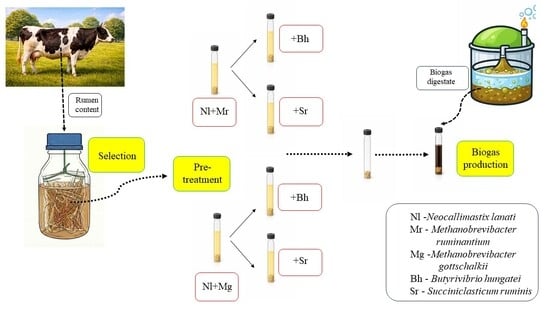
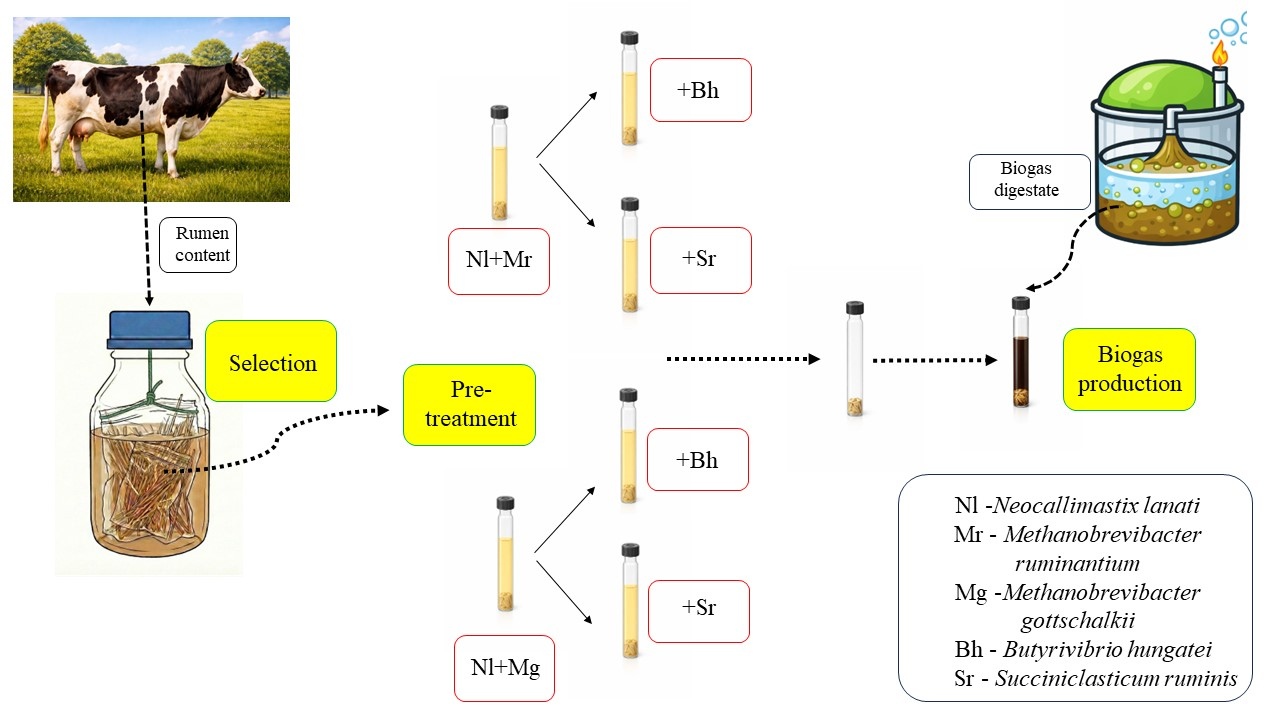
Lignocellulose is degraded in the rumen by diverse microorganisms. This study aimed to select the top ruminal microbes associated with an anaerobic fungus (AF) capable of forming consortia that facilitate biogas production from wheat straw. The workflow included the following steps: (1) batch reactors, divided into three compartments with porous membrane bags containing wheat straw, were assembled. The outermost compartment was inoculated with freshly collected rumen content. The first microbes colonizing the wheat straw in the innermost compartment within 72 h were identified. (2) Synthetic consortia were assembled comprising the following identified microbes: an anaerobic fungus (AF) (Neocallimastix lanati); methanogenic archaea (M) (Methanobrevibacter ruminantium or Methanobrevibacter gottschalkii); bacteria (B) (Butyrivibrio hungatei or Succinoclasticum ruminis). (3) Wheat straw was subjected to 7-day pretreatments with these synthetic consortia. (4) The pretreated straw served as substrate in biochemical methane potential (BMP) tests that used a biogas reactor digestate as the inoculum. The pretreated straw produced elevated biomethane yields; nonetheless, this process needs further optimization. The cross-kingdom AF + M + B consortia increased methane production by 35–70%, and superior volatile fatty acid production was confirmed via HPLC. The results suggest novel strategies for advanced practical biogas/biomethane technologies.

Graphical Abstract

1. Introduction

Global lignocellulosic resources, including agricultural residues (corn stover, wheat straw, etc.), forestry waste, and dedicated energy crops, represent an abundant and renewable feedstock for biogas production, with an estimated 1.3 billion tons generated annually [1]. These materials primarily comprise cellulose, hemicellulose, and lignin, forming a recalcitrant structure that requires advanced pretreatment to unlock its full methane potential [2]. In the European Union, the REPowerEU plan has set an ambitious target to reach 35 billion m3 of biomethane production by 2030, specifically prioritizing waste and residues over food crops to ensure energy security and decarbonization [3]. Europe is still the leading actor; however, the global market for lignocellulosic biomass is projected to grow, driven by major investments in China, India, and North America. These regions are increasingly adopting “circular economy” models, integrating anaerobic digestion into rural infrastructure to convert massive agro-waste streams into biogas, a renewable, sustainable, and weather-independent energy carrier [4,5,6].
Approximately 65% of plant biomass is lignocellulosic in nature; therefore, the efficient conversion of diverse biomass feedstocks into energy and value-added products is essential for reducing dependence on fossil fuels and mitigating greenhouse gas emissions associated with climate change [7,8,9].
Less than two-thirds of total crop production (on a mass basis) is used for direct human consumption, whereas approximately 35% and 3% are allocated to animal feed and bioenergy production or other industrial applications, respectively [10,11]. Livestock populations worldwide are estimated to comprise several billion animals, including approximately 2.5 billion cattle and 2.5 billion sheep and goats [12,13]. Projections further suggest that, by 2050, the amount of arable crop production used for livestock feeding may surpass that directly consumed by humans. Consequently, the increasing demand for animal feed may create significant opportunities to develop lignocellulosic-based feedstocks and bioenergy resources [12,14].
Lignocellulose structure and decomposition have been the subject of many original studies and recent reviews [15,16,17,18,19,20,21,22,23,24,25,26,27,28,29,30,31,32]. In real-life systems, typical lignocellulose-degrading microbial communities are found in the gut of herbivorous animals and in biogas reactors treating lignocellulose-rich biomasses. There are numerous similarities in the “core microbiome” of these communities, but there are also distinctions as they evolved according to environmental influences [33,34,35,36]. A noteworthy difference between the ruminal and biogas reactor microbial communities is the abundance and apparent physiological roles of anaerobic fungi (AF). Microorganisms inhabiting the ruminant digestive tract play a central role in the degradation of complex plant carbohydrates, a process that is mutually beneficial for both the host animal and the microbial community [32,37,38,39]. To replicate this complex microbial ecosystem in biogas reactors and improve anaerobic digestion efficiency, it is essential to account for both synergistic and antagonistic interactions among the participating microorganisms [40]. Although low in relative abundance (2–6%), AF are responsible for about one-third of lignocellulosic feed utilization in herbivores [41,42,43,44]. In contrast, AF are barely detectable in the biogas reactor community, and their sustainable contribution to the hydrolysis and utilization of the lignocellulosic biomass in the biogas reactor is negligible [27,40].
In their classic work, Bauchop and Mountfort demonstrated that co-cultivation of AF with methanogenic archaea (M) markedly shifted fermentation profiles, including enhanced acetate and methane production and the elimination of hydrogen accumulation, providing one of the earliest demonstrations of interspecies hydrogen transfer [45]. Available evidence indicates that AF and M can be co-cultivated under in vitro conditions to achieve efficient lignocellulose degradation and methane production [45,46,47,48,49,50,51,52]. Collectively, these studies highlight the considerable biotechnological potential of AF + M consortia for the conversion of lignocellulose-rich biomass into methane [50,53].
Within the rumen, AF are also typically found in close spatial association with fibrolytic bacteria (B) involved in plant cell wall degradation, as well as with bacteria that metabolize degradation products released by other rumen microorganisms [54]. In vitro co-cultivation studies have demonstrated that AF + B interactions are highly species-specific, ranging from synergistic to neutral or inhibitory [38,54,55,56,57,58,59], underscoring the functional complementarity of rumen microbial communities [60].
Based on the knowledge briefly outlined above, the present study focused on interactions between AF and their potential M and B partners to enhance biogas production in anaerobic lignocellulose degradation. The strategy for selecting the intimate partners of AF from a rumen community was based on the AF life cycle, which involves attachment to the lignocellulose surface and sporangium development. In the next phase, the sporangium releases flagellated zoospores.
An anaerobic batch reactor was divided into three compartments. Rumen content, which contained AF and associated microbial partners, was added to the outermost compartment, and the other compartments were loaded with wheat straw. The zoospores actively migrated towards and colonized new lignocellulosic surfaces in the inner compartments [53,55,61]. We assumed that the M and B partners followed the AF migration route. In this way, the primary colonizing microorganisms involved in straw degradation travelled through the polymeric barrier toward the innermost substrate, driven by chemoattractant gradients derived from plant phenolic compounds. The fungal zoospores and associated archaea/bacteria were thus partially enriched in the inner compartments. This migration path and speed are uncharted; therefore, the empirical optimization of the frontline of the invading members of the original rumen community had to be determined under the particular experimental conditions. After forerunner identification—partially enriched species—their active syntrophic collaboration was scrutinized using “synthetic” (i.e., rationally assembled) consortia of the corresponding pure strains. Two representatives of each Bacteria and methanogenic Archaea were selected to accompany Neocallimastix lanati in various combinations. Wheat straw decomposition by the synthetic consortia, as a pretreatment, and subsequent biogas production from the pretreated straw indicated the efficiency of the mutualistic inter-kingdom collaboration.

2. Materials and Methods

2.1. Enrichment of AF-Associated Rumen Consortia-Decomposing Straw

2.1.1. Sample Collection

Rumen contents were collected at a commercial slaughterhouse in Maroslele, Csongrád County, Hungary. Samples were obtained from the rumen sac of a clinically healthy adult bovine immediately after slaughter. The material was transferred into an anaerobic container and transported under oxygen-free conditions. Samples were maintained at 39 °C for 1–2 h until inoculation.

2.1.2. Double-Bag Enrichment System and Cultivation Conditions

Anaerobic enrichment cultures were established in 500 mL ISO glass bottles (blue cap type) (Merck KGaA, Darmstadt, Germany) containing 350 mL of Medium C, previously described as suitable for both AF and M cultivation [62]. Each vessel was equipped with a custom-designed double-bag system constructed from polymeric textile material (average pore size approximately 100 μm) (Filter-Tech Víztechnika Kft, Debrecen, Hungary). The outer (height: 4.5 cm; diameter: 2.5 cm) and inner (height: 3.0 cm; diameter: 1.5 cm) bags were cylindrical. This arrangement divided the reactor into three compartments. The inert, porous boundaries allowed the migration of AF and other microbes across compartments but presented barriers to the fibrous material and thus directed the microbes towards the straw in the innermost compartment (Figure 1). The outermost compartment was inoculated with 20 g (wet weight) of fresh rumen content, including the particulate fraction. The inner compartments contained sterile wheat straw cut into 2 mm particles. Microorganisms involved in straw degradation were driven by chemoattractant gradients derived from plant phenolic compounds. Along the path, the flagellated zoospores could anchor themselves to the new lignocellulose surface and develop, through their life cycle, at least one generation of zoospores before the next invasion wave towards the straw placed in the innermost bag [44]. The innermost compartment contained 0.5 g of similarly prepared sterile straw. The reactors were incubated at 39 °C with mild shaking at 75 rpm. To facilitate microbe detachment from fibrous particles, 5 g of sterile glass beads were added to each vessel. Gentle mixing was expected to facilitate the release of zoospores from the sessile sporangia, with associated microbial partners, in the free-swimming planktonic form for the next segment of their journey. At the same time, we wanted to avoid mechanically demolishing the delicate microbial aggregates. The fungal zoospores and associated archaea/bacteria were partially enriched in the inner compartments. During cultivation, pH was continuously monitored to avoid excessive acidification. All experiments were performed in triplicate, and the entire series was independently repeated, resulting in six biological duplications (n = 6).

2.2. Pretreatment of Wheat Straw Using Synthetic Consortia

2.2.1. Inoculum Standardization and Cell Enumeration

For pretreatment experiments, pure strains obtained from the German Collection of Microorganisms and Cell cultures GmbH (DSMZ, Braunschweig, Germany) were used (Table 1). Methanobrevibacter gottschalkii and Neocallimastix lanati were isolated in our laboratory. Each bacterial and methanogenic strain was cultivated in its respective recommended growth medium. Bacterial and methanogenic cell densities were determined via direct microscopic counting using a Bürker counting chamber (BRAND GMBH + CO KG, Wertheim, Germany) under strictly anaerobic conditions. All cultures were adjusted to the desired cell densities prior to consortium assembly to ensure reproducible microbial ratios.

2.2.2. Pretreatment Experiments

The pretreatment experiments were carried out in anaerobic Hungate tubes with a total volume of 15 mL. Then, 12 mL of anaerobic Medium C [62] was dispensed into each Hungate tube while maintaining strict anaerobic conditions; for this purpose, the headspace was flushed with ~99% CO2 during the operations. The tubes received 0.2 g of sterilized wheat straw (~2 mm), 0.1 mL of each bacterial culture, 1.5 mL of each archaeal culture, and 1 mL of the N. lanati zoospore culture, completing the initial synthetic consortium assembly.
Table 2. Composition of microbial consortia used in the pretreatment experiments.
N. lanati (Nl)M. gottschalkii (Mg)M. ruminantium (Mr)B. hungatei (Bh)S. ruminis (Sr)
NlX----
Nl + MgXX---
Nl + MrX-X--
Nl + Mg + BhXX-X-
Nl + Mr + BhX-XX-
Nl + BhX--X-
Bh---X-
Nl + Mg + SrXX--X
Nl + Mr + SrX-X-X
Nl + SrX---X
Sr----X
“X” indicates the presence of the corresponding microorganism in the consortia.
Daily gas production was determined via gas chromatography (GC) (see below), followed by thorough flushing of the Hungate tubes’ headspace with CO2. The pretreatment stage lasted for 7 days at 39 °C without mixing the contents.

2.3. Biogas Production from Wheat Straw Pretreated with Synthetic Consortia

2.3.1. Experimental Set-Up

Following the pretreatment stage, the liquid Medium C, together with all suspended microbes growing in the medium, was carefully removed from the Hungate tubes, leaving only the pretreated wheat straw in the tubes. Subsequently, 10 mL of biogas digester sludge was added to each tube as inoculum. The headspace was flushed with nitrogen to establish anaerobic conditions, and the tubes were incubated at 37 °C.
Methane production was monitored daily by gas chromatography (GC). After each measurement, the headspace was thoroughly flushed with ultra-pure nitrogen gas to maintain anaerobic conditions. This stage lasted for 15 days or until gas production ceased. All experiments were performed in triplicate, and the entire set of experiments was repeated twice.

2.3.2. Inoculum Sludge

The inoculum sludge—i.e., the fermentation effluent or “biogas manure”—was obtained from an industrial-scale mesophilic biogas plant fed with a pig slurry and maize silage mix (Zöldforrás Biogas Plant, Szeged, Hungary) [63]. The sludge was incubated at 37 °C for two weeks to exhaust the residual biogas production capacity of the digestate.

2.4. Scanning Electron Microscopy (SEM)

Straw-associated biofilm samples were rinsed in phosphate-buffered saline (PBS) and fixed overnight at 4 °C in 2.5% (v/v) glutaraldehyde prepared in 0.05 M cacodylate buffer (pH 7.2). Samples were washed twice with PBS and dehydrated through a graded ethanol series (30%, 50%, 70%, 80%, and 100% (v/v)) at 4 °C. Dehydrated samples were dried using a critical point dryer and sputter-coated with a 12 nm gold layer (Quorum Technologies, Laughton, East Sussex, UK). Imaging was performed using a JEOL JSM-7100F/LV scanning electron microscope (JEOL Ltd., Tokyo, Japan).

2.5. Gas Chromatography

Headspace methane concentrations were measured using an Agilent 7880 gas chromatograph (Agilent Technologies Inc., Santa Clara, CA, USA) equipped with an HP Molesieve column (30 m × 0.53 mm) and a thermal conductivity detector (TCD). Argon was used as the carrier gas. The column temperature was maintained at 37 °C, the flow rate was 1.2 mL/min, and the detector temperature was 160 °C. Gas samples (25 μL) were injected using a 100 μL Hamilton syringe [63].

2.6. Determination of Organic Acids by HPLC

For organic acid analysis, liquid-phase samples were centrifuged at 13,000 rpm for 10 min. The supernatant was filtered through a polyethersulfone centrifugal filter (PES 516-0228, VWR, Debrecen, Hungary) at 13,000 rpm for 20 min. Volatile fatty acid concentrations were measured using a Chromaster 5450 HPLC system equipped with a refractive index detector (Hitachi Chromaster, Debrecen, Hungary). Separation was performed on an Agilent Hi-Plex H column (Agilent Technologies Inc., Santa Clara, CA, USA). Column and detector temperatures were maintained at 50 °C and 41 °C, respectively. The mobile phase consisted of 0.02 M H2SO4 at a flow rate of 0.6 mL/min [64].

2.7. pH Determination

Culture pH was measured using a calibrated digital pH meter (HI4522, Hanna Instruments, Woonsocket, RI, USA). The instrument was calibrated prior to measurements using standard buffer solutions (pH 4.0, 7.0, and 10.0).

2.8. DNA Extraction and Next-Generation Sequencing

Total community DNA was extracted from straw-associated rumen microbial biomass recovered from the inner bag compartment. Approximately 200 mg of straw-associated material was processed using the Zymo Research Fecal DNA Kit (D6010, Zymo Research, Irvine, CA, USA) according to the manufacturer’s protocol. Mechanical lysis was performed using a Vortex Genie 2 instrument (OHAUS Europe GmbH, Nänikon, Switzerland) with 0.1 mm beads for 15 min at maximum speed. DNA concentration and purity were assessed using a NanoDrop ND-1000 spectrophotometer (NanoDrop Technologies, Wilmington, DE, USA) and a Qubit 2.0 fluorometer (Life Technologies, Carlsbad, CA, USA). Libraries were prepared using the NEBNext Ultra II Library Prep Kit (New England Biolabs, Ipswich, MA, USA) following the manufacturer’s instructions and Illumina recommendations (Illumina Inc., San Diego, CA, USA). Metagenomic sequencing was carried out on an Illumina MiSeq platform using MiSeq Reagent Kit v2 (Illumina Inc., San Diego, CA, USA) chemistry [65].

2.9. Metagenomic Data Processing

Raw sequence quality was assessed using FastQC (v0.12.1). Low-quality reads were filtered using fastp (v0.23.4; minimum read length: 150 bp; automatic adapter detection) ([33,63] and references therein). Taxonomic classification was performed using Kaiju (v1.8.2) against the NCBI nr database ([65,66] and references therein). Kaiju was executed in default greedy mode with parameters -E 0.01, -m 11, and -s 65. Raw sequencing data have been uploaded to PRJNA1436202.

2.10. Enrichment and Identification of Anaerobic Fungi and Methanogenic Partners

2.10.1. Sample Collection

Fresh manure samples of chamois (Rupicapra rupicapra), living in the Zoo of Szeged, Hungary (https://zooszeged.hu/hu/kezdolap/ (accessed on 12 April 2026), were collected. The samples were transferred in anaerobic jars to the laboratory for further processing within 1 h. Anaerobic fungal cultures were enriched in Medium C, as described previously [62], including cellobiose (2.5 g L−1) as the sole carbon source. Cultures were incubated under strictly anaerobic conditions at 39 °C without agitation. Co-cultures containing associated methanogens were grown for 60 h prior to DNA extraction. Serial dilution and cultivation in the presence of antibiotics resulted in a homogeneous culture of an AF and M partners.

2.10.2. Genomic DNA Extraction and PCR

Total genomic DNA was isolated from fungal–methanogen co-cultures. Biomass from 60 h cultures grown on cellobiose was harvested via centrifugation at 2000× g for 5 min. DNA extraction was performed using the QIAamp DNA Kit (Qiagen, Venlo, The Netherlands) according to the manufacturer’s instructions. The extracted DNA was used as template for PCR amplification of fungal and methanogenic marker genes.
PCR was used to amplify the fungal ribosomal ITS1 region and the methanogen-specific mcrA gene. PCR reactions were carried out in 50 μL reaction mixtures containing
1× DreamTaq PCR buffer (Thermo Fisher Scientific, Waltham, MA, USA);
0.2 mM of each dNTP;
0.2 μM of each primer;
~2 mM MgCl2;
1.25 U DreamTaq DNA polymerase;
Approximately 50 ng genomic DNA template.
Thermal cycling conditions comprised an initial denaturation at 95 °C for 3 min, followed by 40 denaturation cycles at 95 °C for 30 s, annealing at 48 °C for 30 s, and extension at 72 °C for 1 min, with a final extension at 72 °C for 5 min.

2.10.3. Identification of AF and M Isolated from Chamois

The ribosomal ITS1 region of anaerobic fungi was amplified using primers GM1 (5′-TGTACACACCGCCCGTC-3′) and GM2 (5′-CTGCGTTCTTCATCGAT-3′), as described in [67]. Amplification of the ITS1 region yielded fragments ranging from approximately 412 to 479 bp. Methanogenic archaea associated with the fungal cultures were identified by amplification of the methyl-coenzyme M reductase alpha subunit gene (mcrA), a functional marker gene specific to methanogens. PCR amplification was performed using the primer pair, which generates an amplicon of approximately 470 bp: mcrA-F (5′-GGTGGTGTMGGATTCACACARTAYGCWACAGC-3′) and mcrA-R (5′-TTCATTGCRTAGTTWGGRTAGTT-3′).
PCR products were analyzed via electrophoresis on 1% agarose gels to confirm successful amplification and expected fragment sizes.
For anaerobic fungal identification, ITS1 PCR products were purified using the QIAquick PCR Purification Kit (Qiagen) and cloned into the pJET vector using blunt-end ligation with T4 DNA ligase. Recombinant plasmids were transformed into competent Escherichia coli cells, and insert sequences were determined with Sanger sequencing using the dideoxy chain-termination method through a commercial sequencing service.
In contrast, PCR products obtained by amplifying the methanogenic mcrA gene yielded single, specific bands and were, therefore, purified and subjected directly to Sanger sequencing without prior cloning.

2.11. Data Presentation/Statistical Analysis

All experiments were performed in triplicate, and the entire experiment was independently repeated once. The resulting six measurements were treated as biological replicates for statistical analysis (n = 6). Quantitative data are presented as mean ± standard deviation (SD). Normality of data distribution and homogeneity of variances were assessed using the Shapiro–Wilk and Levene tests, respectively. When the assumptions of normality and homogeneity of variance were met, differences between treatments were analyzed using one-way analysis of variance (one-way ANOVA). When significant effects were detected, means were compared using Tukey’s honestly significant difference test (Tukey HSD test). Statistical significance was accepted at p < 0.05. The results are presented as mean values ± standard deviation (SD). Treatments sharing the same letter are not significantly different according to Tukey’s test. When these assumptions were not satisfied, the non-parametric Kruskal–Wallis test followed by Dunn’s multiple comparison test was applied. All statistical analyses were performed using JASP (version 0.96.0 University of Amsterdam, Amsterdam, The Netherlands).

3. Results and Discussion

3.1. Selection of Syntrophic Microbial Associations

3.1.1. Methane Production Monitored the Race Toward the Straw

In the experimental set-up described in Section 2.1, a microbial “racecourse” was created for the microbial associations moving together with the N. lanati zoospores towards the wheat straw in the innermost compartment. The double-bag inert boundary layers separated the particulate fraction of the rumen sample from the interior compartments, while the aggregated N. lanati zoospores and associated microbial partners could cross the 100 μm pores.
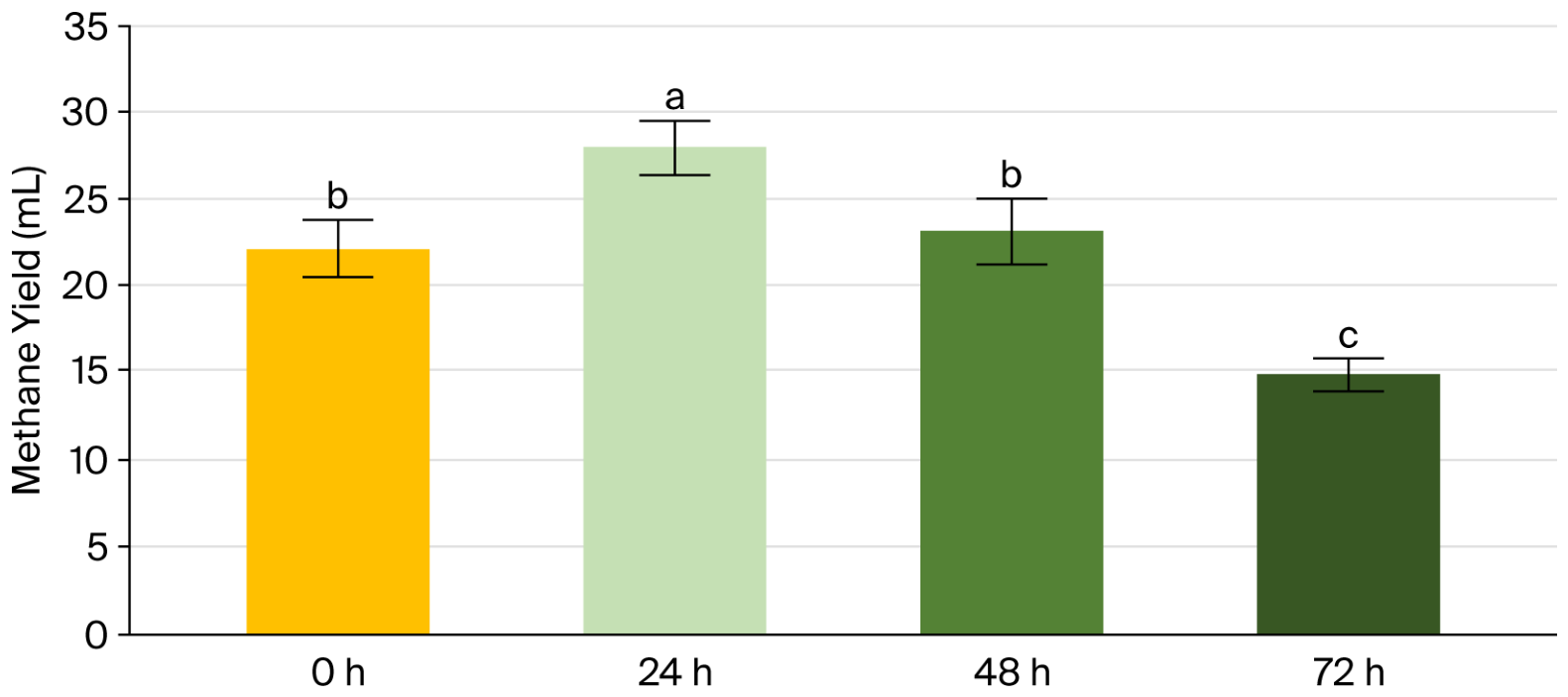
Daily methane production changed significantly during the incubation period (Kruskal–Wallis test, p < 0.05). The first column (orange-colored and marked as 0 h) indicates the residual methane-producing activity, confirming the presence of an active, methanogenic community. Methane production increased from 0 h to 24 h, when the highest values were detected. Methane production decreased at 48 h to levels similar to those observed at 0 h and declined further by 72 h (Figure 2).
Precise quantitative determination of the migrating AF zoospores and associated M and B partner cells is not possible in this experimental arrangement. The contributions of colonizing microbial cell numbers and/or biological activities cannot be estimated. Therefore, only qualitative, “proof of principle” conclusions can be made. Nevertheless, Figure 2 confirms a partial enrichment in methanogenic activity in the first 24–48 h. The life cycle in the genus Neocallimastix is around 26–32 h [61]; thus, at least the second or third generation of zoospores departing from the rumen lignocellulosic particles were the likely first colonizers of the straw in the internal compartment of the experimental set-up outlined in Section 2.1.2, after crossing the 5–6 cm long distance. Polyflagellated microbes, such as the zoospores, do not swim in a straight line and change their speed frequently. Nevertheless, it can be safely assumed that they do not approach the target straw particles aimlessly. The growing AF sporangia release about 80–100 propagules; i.e., flagellated zoospores, in each lifecycle. The growth rate of the methanogenic syntrophic partner Methanobrevibacter depends strongly on the dissolved hydrogen concentration, pH, and other process parameters. These are difficult to measure precisely, but GC confirmed the absence of detectable H2 or O2 in the reactor headspace. Therefore, hydrogenotrophic methanogen growth was expected to be severely limited by the sparingly soluble H2. Under similar conditions, the doubling time of the M partner can increase to 30–60 h and beyond [68]. An unbalanced abundance ratio and growth kinetics of AF and M counterparts may explain the methane production results (Figure 2). Detailed cultivation studies, involving the AF, M, and B species and combinations thereof, are needed to precisely uncover the effects of the microbial consortia partners’ contribution to effective action by their relative abundance and biological activity. Despite the uncertainties, the most important outcome from these experiments is the detectable elevation in methane production, indicating that AF and M partners, together with possible bacterial partners, successfully completed the journey across the reactor compartments in a strong syntrophic association.

3.1.2. Organic Acid Production

Organic acids and soluble metabolites were analyzed by HPLC to characterize metabolic activity during the travel through the “microbial racecourse.” Acetic acid, propionic acid, ethanol, glucose, and cellobiose were monitored. Cellobiose and ethanol were not detected at any sampling point. Glucose (0.07–0.12 g/L) and xylose (0.01–0.3 g/L) were present only in low concentrations.
Acetate
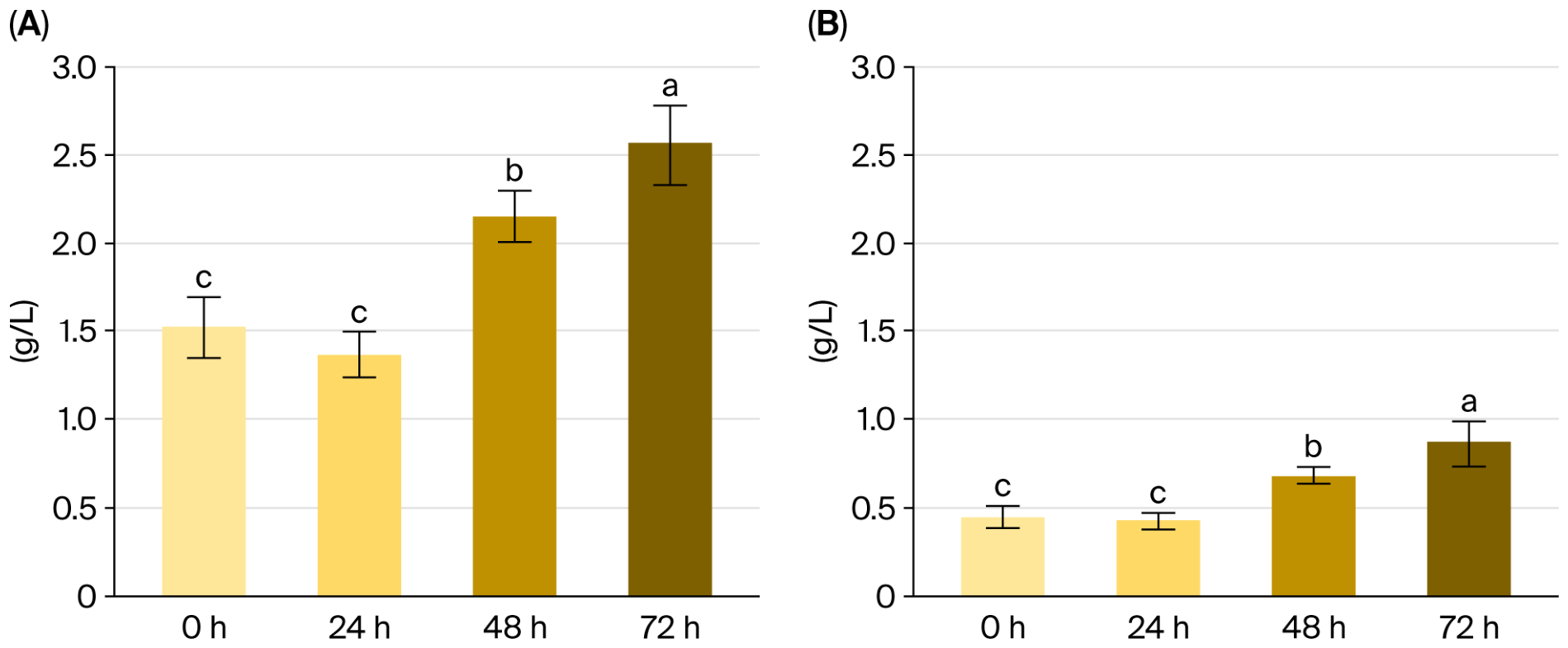
Acetic acid concentrations changed significantly during the incubation period (Kruskal–Wallis test, p < 0.05). The lowest concentrations were observed at 0 h and 24 h, which did not differ significantly from each other. Acetic acid levels increased significantly at 48 h and reached the highest values at 72 h. Both N. lanati [69] and acetogenic bacteria could be the source of volatile fatty acids (VFAs). Bacteria multiply at a much higher rate than AF; therefore, their contribution to VFA production increases over time. The observed tendency (Figure 3) indicates that bacterial partners followed the AF-M associations at a slower rate initially (see 0 h and 24 h data). However, by the 2nd day, they caught up with the other members of the lignocellulose-degrading AF-M-B consortium and contributed to increasing acetate production from then on.
The cattle rumen usually harbors hydrogenotrophic methanogens (see, e.g., [66]). Volatile fatty acids accumulated in the absence of acetotrophic methanogens [32].
Propionate
Propionic acid is usually produced at lower concentrations by the ruminal microbiota [70]. Nevertheless, the highly significant (Kruskal–Wallis test, p < 0.05) trend is very similar to acetate production (Figure 3B).

3.1.3. Scanning Electron Microscopy (SEM)

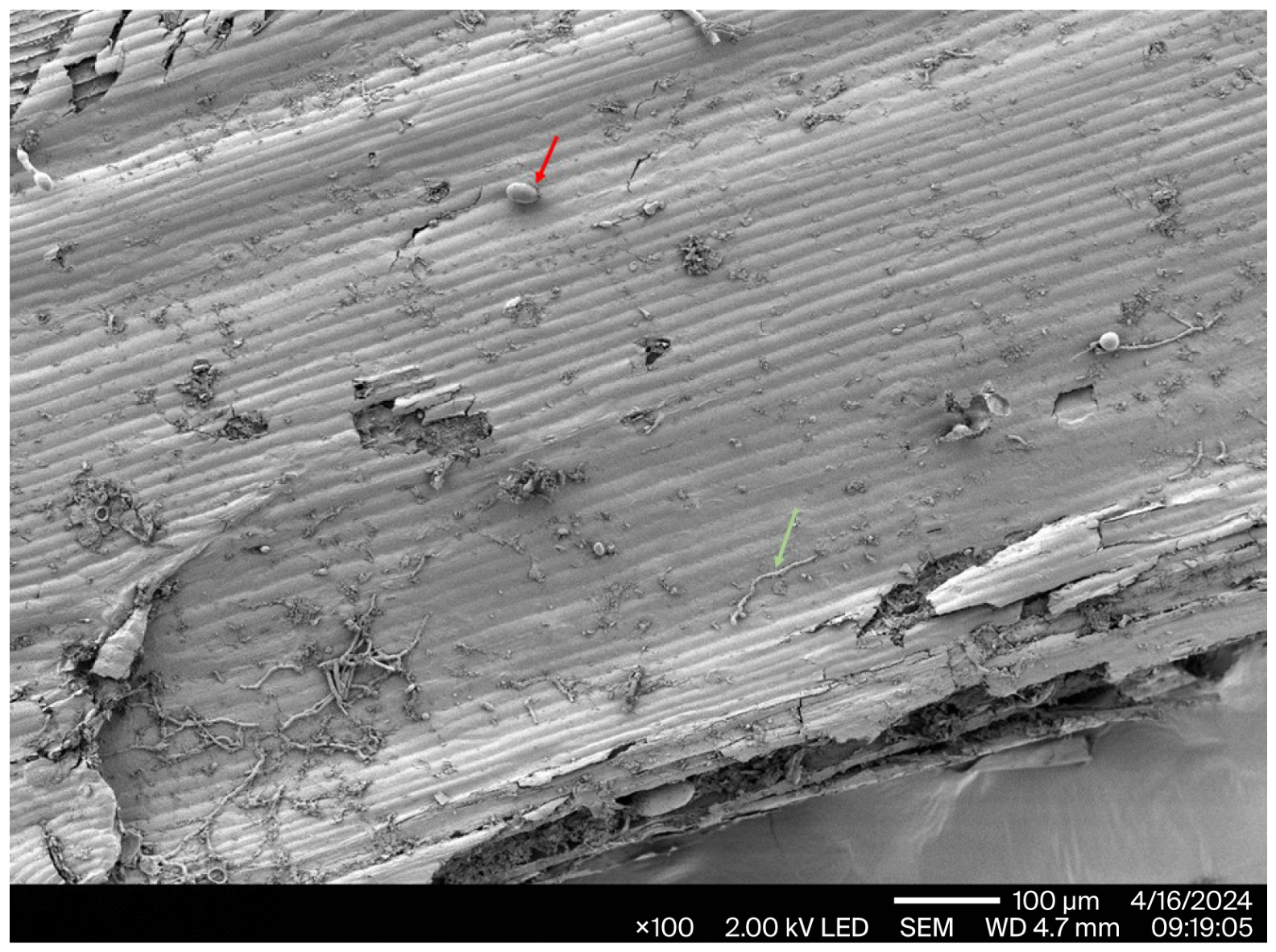
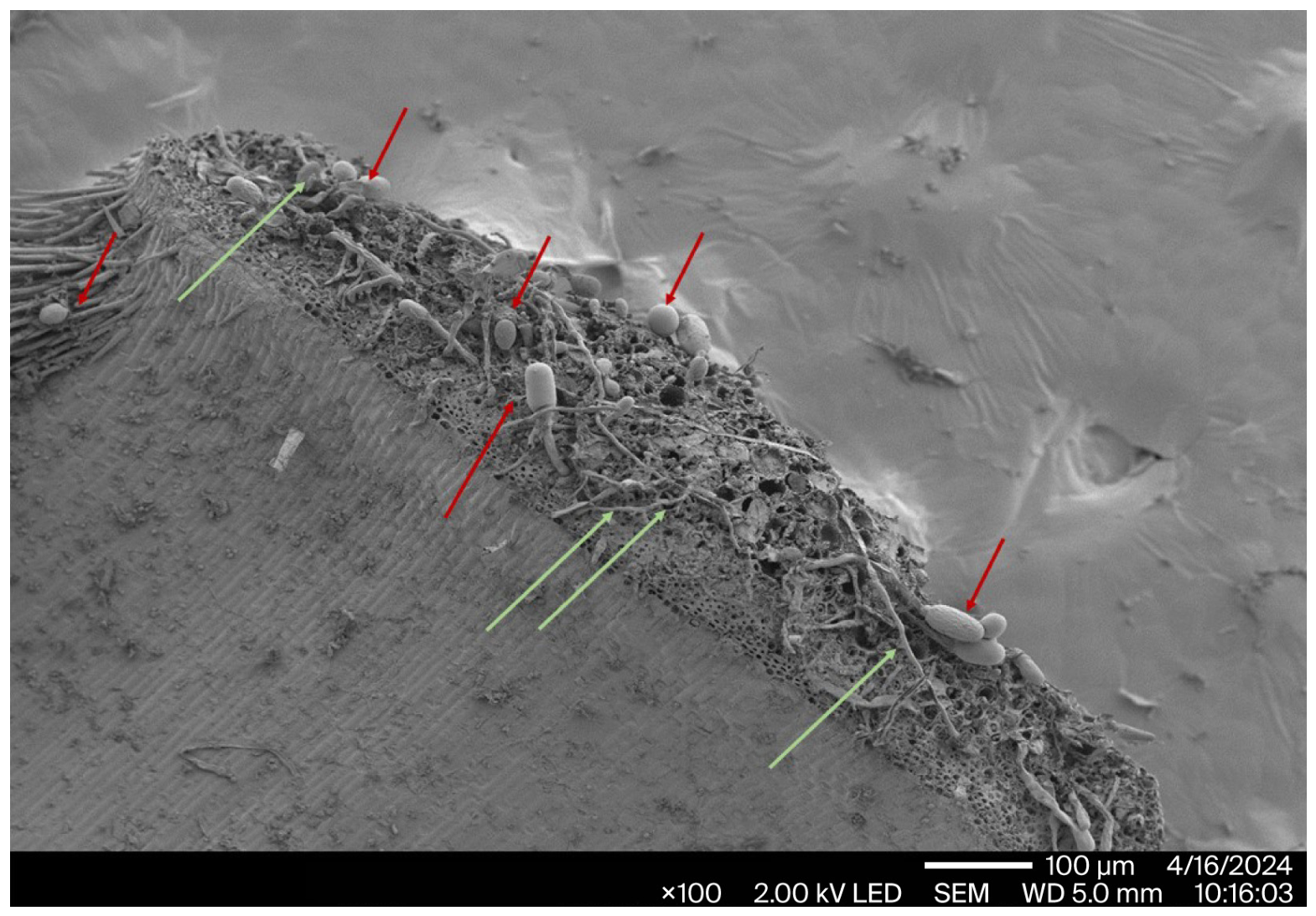
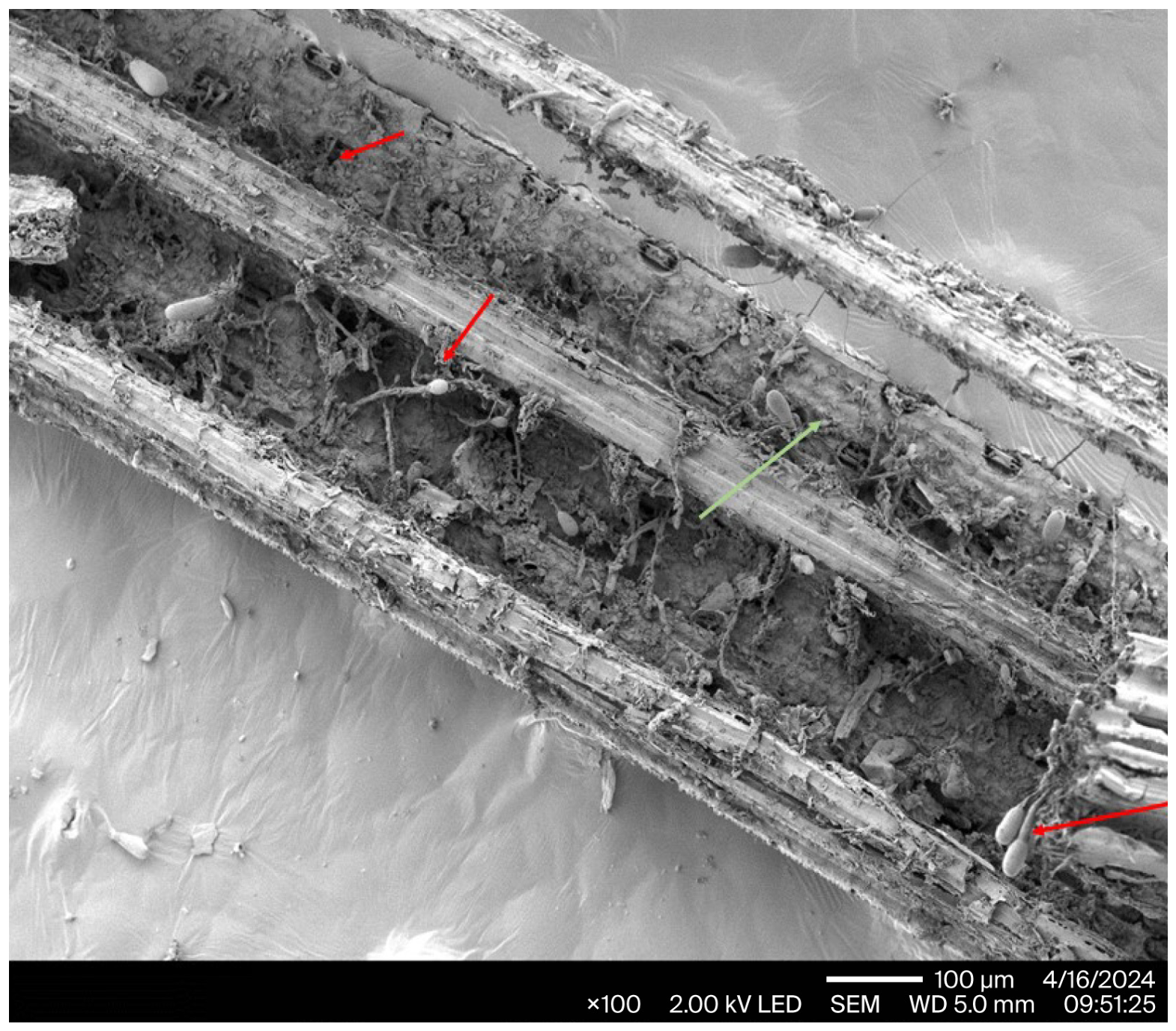
SEM analysis was performed to observe microbial colonization and structural changes in the wheat straw substrate at 24, 48, and 72 h (Figure 4, Figure 5 and Figure 6). Microorganisms were clearly visible on the substrate surface at each time point. At 24 h, limited colonization was detected, with clearly recognizable AF structures being predominant (Figure 4). Bacterial and archaeal cells were present in apparently lower abundance, which qualitatively corroborates the results presented in Section 3.1. The straw surface became populated by 48 h (Figure 5). Bacterial and archaeal cells were more frequently detected, and structural alterations of the substrate surface became visible. Highly advanced microbial colonization was apparent at 72 h. AF structures appeared more abundant, and pronounced surface degradation of the substrate was observed (Figure 6).

3.1.4. Metagenomic Community Composition Changes During the Race

The relative abundance of selected microbial groups changed during the incubation period. The abundance of AF belonging to the class Neocallimastigomycetes remained low throughout the incubation period but slightly increased from 0.1% at 24 h to 0.2% at 72 h. Methanogenic archaea classified as class Methanobacteria were also detected at low relative abundance and showed a small decrease from 0.9% at 24 h to 0.7% at 72 h. Overall, the most pronounced shift between the two sampling points was the increase in Fibrobacteria, accompanied by a decrease in Clostridia, while fungal and archaeal groups remained present at low relative abundance.
Higher-Resolution Metagenomic Community Alterations
Metagenomic sequencing was performed to characterize the microbial community structure. Community composition was similar across the three sampling points. All samples were dominated by Bacteria. Archaea and Eukaryotes accounted for approximately 0.7–0.8% and 0.6% of the community, respectively. The bacterial community consisted primarily of members of the Fibrobacteres–Chlorobi–Bacteroidetes superphylum (FCB) (39–45%) and Terrabacteria (39–44%) groups. Spirochaetes (6–10%) and Proteobacteria (3–5%) were detected at lower relative abundances. The most abundant phylum was Firmicutes (34–39%), particularly the class Clostridia (28–32%). Several species were consistently detected across all samples, including Fibrobacter succinogenes, Butyrivibrio hungatei, Lachnospiraceae bacterium G11, Succiniclasticum ruminis, Schwartzia succinivorans, Methanobrevibacter olleyae, and Methanobrevibacter ruminantium.
Microbe Selection for Pretreatment Experiments
In the next phase of this study, AF, M, and B partners were selected to assemble synthetic consortia to test their contribution to lignocellulose degradation and biomethane generation.
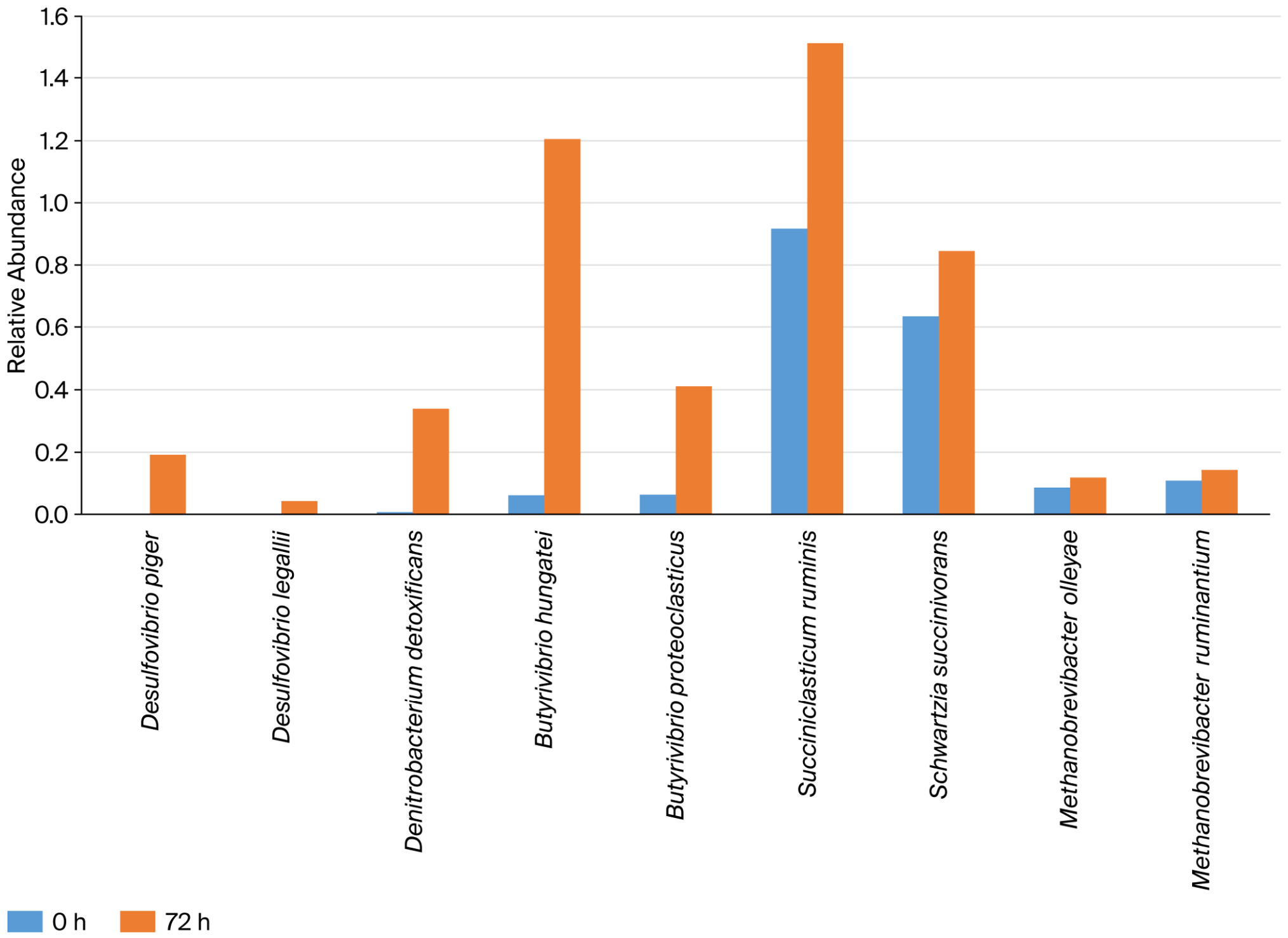
Only one AF species, Neocallimastix lanati [69], was found in the cattle rumen sample used in this study. The microbiologically pure N. lanati was successfully isolated, identified (see Section 2.10), and cultured in our laboratory with Methanobrevibacter gottschalkii [71]. Two methanogenic Archaea, Methanobrevibacter olleyae and Methanobrevibacter ruminantium, were identified as having the most vigorous growth during the enrichment phase of this study. The bar chart (Figure 7) illustrates the microbial species that showed the largest relative abundance changes between 24 h and 72 h of incubation.
A pronounced increase was observed in the abundance of Fibrobacter succinogenes among Bacteria, indicating substantial enrichment of this cellulose-degrading bacterium during the enrichment/incubation period. However, the relationship between AF and Fibrobacter species is often considered antagonistic [38,56], complementary, or neutral, depending on the environmental context [72]. F. succinogenes follows the succinate–propionate fermentation pathway, while the main fermentation products of N. lanati are acetate, formate, lactate, H2, and CO2. Taken together, F. succinogenes was excluded from the subsequent work in the present study, which instead focuses on uncovering and exploiting cross-kingdom interactions between N. lanati and its syntrophic partners.
Considerable proliferations in relative abundance were also detected for Butyrivibrio hungatei and Succiniclasticum ruminis during the 3-day “race” experiment (Figure 7). In addition, several taxa exhibited minor abundance alterations between the two sampling time points, including Schwartzia succinivorans and the archaea Methanobrevibacter olleyae and M. ruminantium. Archaeal species remained present at relatively low abundance throughout the incubation period. Other detected taxa, such as Alistipes senegalensis, Desulfovibrio piger, Desulfovibrio legallii, Denitrobacterium detoxificans, and Butyrivibrio proteoclasticus, showed only small variations in relative abundance between the 24 h and 72 h time points.

3.2. Wheat Straw Pretreatment via Synthetic Anaerobic Consortia

Methane Production During the Pretreatment Phase

Based on the results obtained in the previous sections, synthetic consortia comprising pure cultures of 1 AF (N. lanati), 2 M (M. gottschalkii and M. ruminantium), and 2 B (B. hungatei and S. ruminis) strains were selected for the next stage of this study in combinations summarized in Table 2. M. gottschalkii was included because this species had been identified as the predominant methanogenic partner of N. lanati in prior investigations. The straw-degrading biological activity of the synthetic consortia was followed by methane production during the pretreatment stage.
The consortia lacking hydrogenotrophic methanogen partners M. gottschalkii or M. ruminantium did not yield detectable methane. These samples served as negative controls, indicating the microbial purity of the synthetic consortia and validating the experimental set-up.
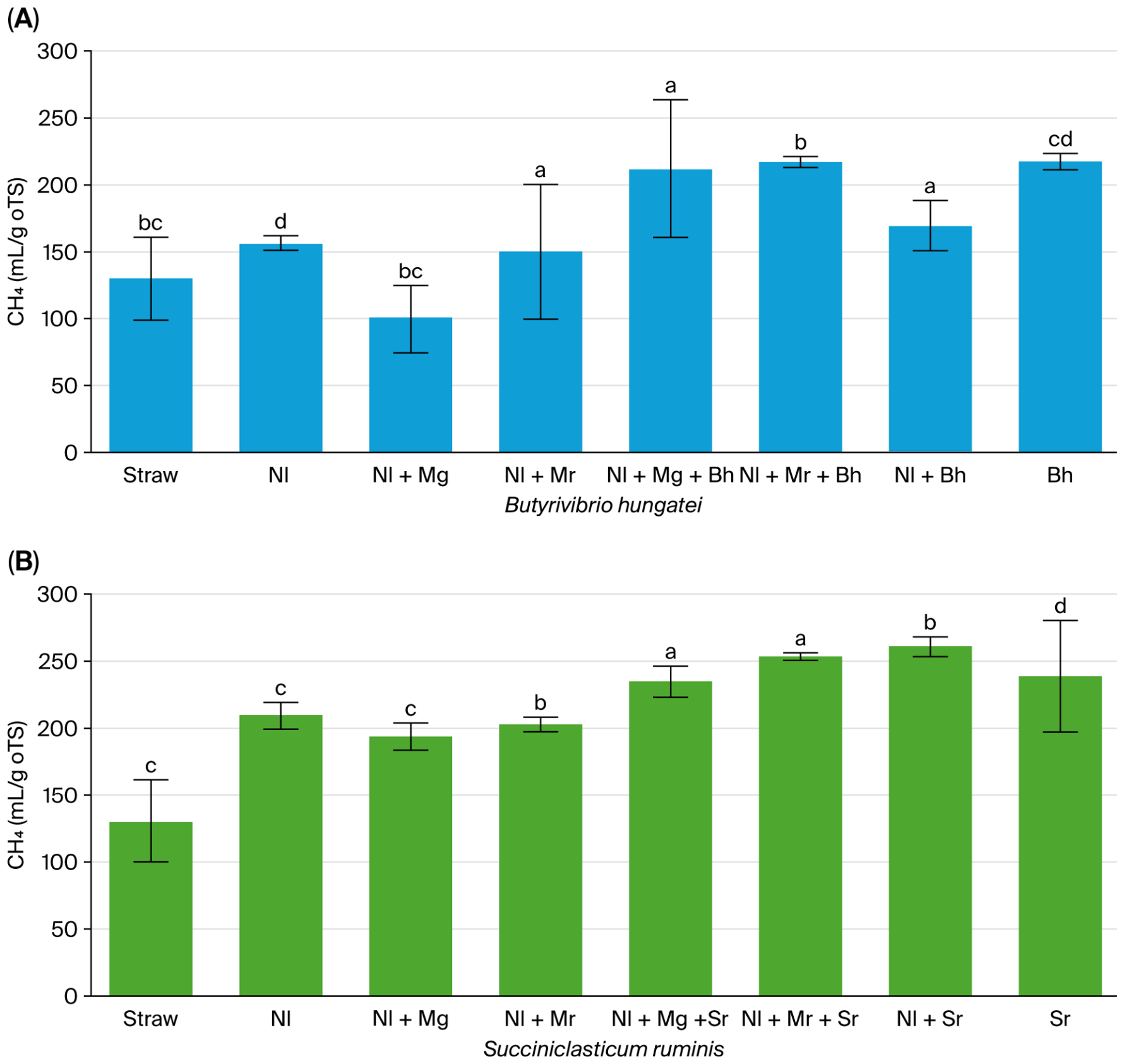
The difference between the two methanogenic strains is noteworthy. The syntrophic interaction, as displayed in AF + M joint methane production, was more efficient between N. lanati and its natural methanogenic partner M. gottschalkii than with M. ruminantium. Both M. gottschalkii and M. ruminantium are widely spread rumen hydrogenotrophic methanogens [32,35,73]. The observation suggests a highly specialized and intimate interaction between AF and M (Figure 8); alternatively, a slightly more vigorous growth rate or transcriptional activity enhancement could also explain this finding.
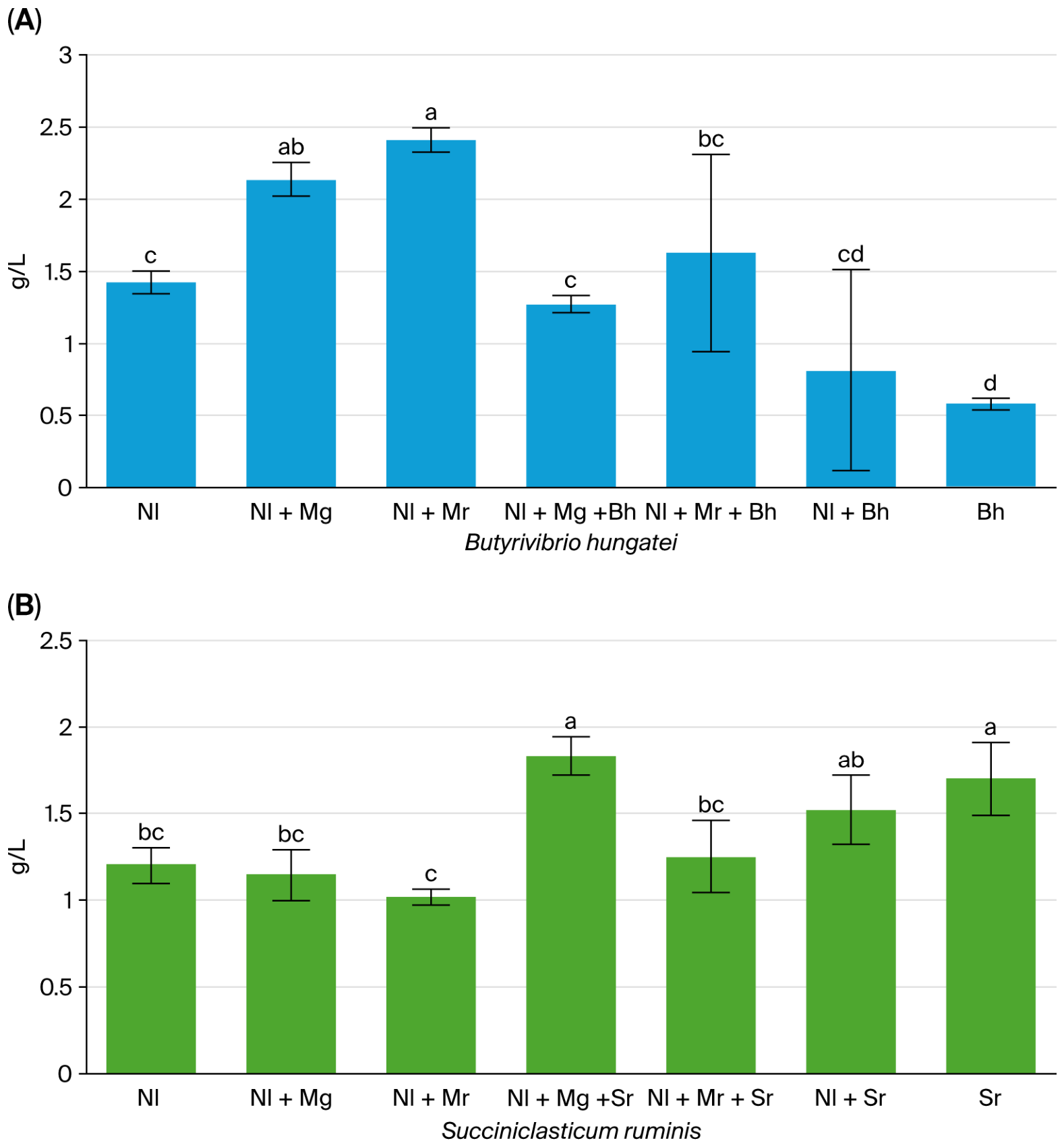
The addition of the selected bacteria to the cross-kingdom consortia considerably altered methane productivity. In the consortium containing B. hungatei, methane production was reduced (Figure 8A). B. hungatei is an abundant hemicellulose and oligosaccharide degrader with an extensive carbohydrate-active enzyme (CAZymes) collection in the rumen. Its metabolic products are primarily butyrate and hydrogen, as well as lactate and formate under special conditions [73,74]. Apparently, B. hungatei acted as a competitor in methane production, diverting the metabolic network away from methanogenesis under the pretreatment conditions employed (Figure 8A). We note that the pretreatment experiments were carried out in Medium C [62], which is the established co-culturing medium for anaerobic fungi and their hydrogenotrophic methanogen archaeon partners. Medium C is rich in protein and peptides but lacks monomeric and polymeric sugar components. In contrast, B. hungatei is a typical saccharolytic bacterium [75], preferring a carbohydrate-rich environment for growth. We anticipate that the distinct and suboptimal cultivation environment is responsible for the unexpected attribute of B. hungatei in the pretreatment experiment [56], which calls for an additional in-depth study of interactions in the threesome synthetic consortium.
The S. ruminis-containing consortia exhibited dissimilar behavior (Figure 8B). Methane production was overall low relative to the B. hungatei-containing pretreatment systems. This is likely due to the very narrow substrate specificity of S. ruminis [76], which gains energy almost exclusively from succinate in the fumarate–succinate–propionate pathway. N. lanati releases only small amounts of succinate under the pretreatment conditions [69]. Methane production was detected in pretreatment systems involving methanogenic archaea (Figure 8B). The Nl + Mg consortium produced the highest methane volumes, while moderate methane production was observed in Nl + Mg + Sr. Lower methane production was detected in Nl + Mr and Nl + Mr + Sr samples. This supports the potential strain-specific preference in the Nl + Mg symbiotic pair compared with the Nl + Mr artificial consortium. As expected, no methane production was observed in the Nl + Sr co-culture and in the Nl or Sr monoculture controls.

3.3. Biogas Production from the Pretreated Wheat Straw

3.3.1. Biomethane Production

Methane yields during the biogas fermentation stage are important parameters for both fundamental research on symbiotic interactions and potential practical applications. It should be emphasized that, in these experiments, only the solid, pretreated straw particles were used as biogas production substrate. The digestate from the biogas industrial reactor contained an efficient biogas-producing complex microbiota [33]. Furthermore, the overwhelming majority of the synthetic microbial community that participated in the pretreatment experiments was removed prior to the biogas tests, and the diverse biogas digester community outnumbered any leftover pretreatment synthetic community member by several orders of magnitude. It should be noted that the results presented in Figure 8 are the sum of two separate consecutive experiments carried out about two months apart. The conditions and parameters were the same, but the biogas reactor digestate came from the same biogas reactor at different times, which may explain the relatively large error bars. Consequently, the general trend is to be considered rather than the actual, varied biogas yields.
Accounting for these considerations, the largest biomethane production was recorded when all three cross-kingdom partners (i.e., AF, M, and B) participated in the straw pretreatment stage (Figure 8). The biogas reactor digestate is rich in genus Methanosarcina, a methanogenic taxon using all three methanogenesis pathways [33]. It is noteworthy that the enriched communities predominantly contained the Methanobrevibacter species, which are hydrogenotrophic methanogens. The increase in biomethane production after the pretreatment of straw with AF + M + B synthetic consortium was 35–70% relative to the untreated straw. Interestingly, the contribution of the bacterial partners was pronounced for the subsequent biogas generation. This is in line with the assumed distinct strategies of attacking and handling the lignocellulosic material. Anaerobic fungi possess rhizoids to penetrate deeply into the lignocellulosic structure, whereas hydrolytic bacteria anchor their enzymes or cellulosomes to the surface of the straw matrix [32,44]. N. lanati alone cannot evolve methane (Figure 8), although high methane levels were detected in the samples inoculated with the biogas reactor digestate. There is no clear explanation for the relatively low, outlier methane production by the Nl + Mg sample (Figure 8A).

3.3.2. Acetate Production

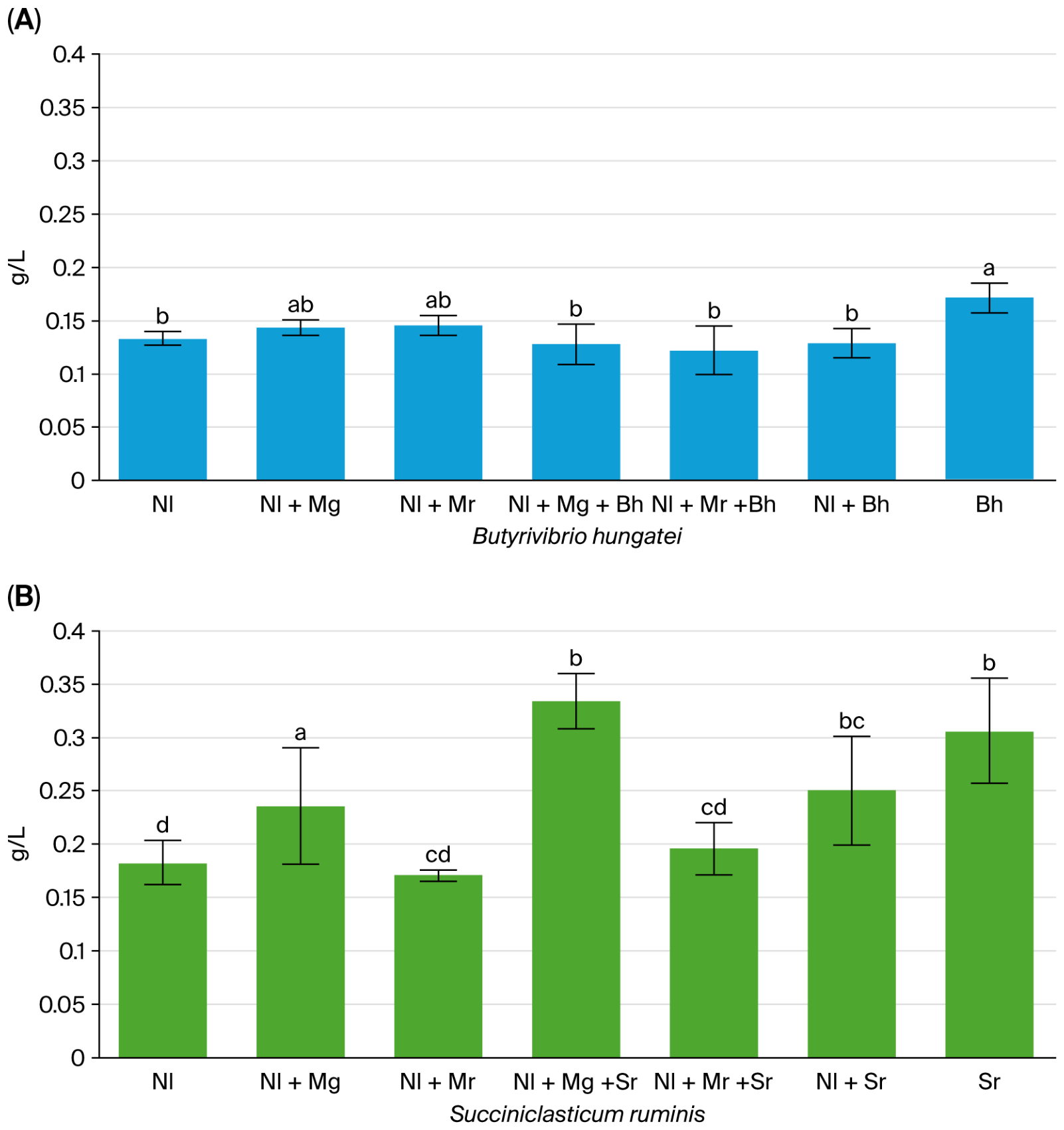
Significant differences were observed between samples subjected to the former treatment involving either of the bacterial partners. Acetate production was higher in the consortia containing only the anaerobic fungus and methanogenic partners (Nl + Mg and Nl + Mr) than in the corresponding consortia supplemented with B. hungatei (Nl + Mg + Bh and Nl + Mr + Bh). This may be related to the diverse metabolic pathways operating in B. hungatei [56,75]. In contrast, the acetate yield was elevated from wheat straw pretreated in the presence of S. ruminis (Figure 9). This suggests dissimilar digestibility of straw remaining after the various pretreatments.

3.3.3. Propionate Production

Propionic acid production yields varied significantly among differently pretreated wheat straw degradation tests using the same biogas reactor-derived microbial consortium.
The straw samples treated only with B. hungatei in the pretreatment stage yielded elevated propionate production. Other combinations of pretreatment synthetic consortia produced similar propionate levels (Figure 10A).
Interestingly, the samples inoculated with S. ruminis in the pretreatment process showed elevated propionate production compared to the B. hungatei counterparts. S. ruminis is a sessile bacterium [76] that metabolizes primarily fumarate and succinate to produce propionate. If a large number of highly active S. ruminis cells remained attached to the pretreated straw, a very intimate syntrophic relationship between the biofilm members should be assumed (Figure 10B).

4. Conclusions

The workflow of the reported study comprised three interconnected sets of experiments. First, microbial partners physically associated with the anaerobic fungus N. lanati were separated from the cow rumen microbiota in a microbial “racecourse” built using double-porous membrane bags. A defined team of hydrogenotrophic methanogen archaea and prokaryotic bacteria moved with the zoospores of the eukaryote N. lanati. We assumed that this cross-kingdom selection of anaerobic microbes participates in the deconstruction of the lignocellulosic matrix of wheat straw and biogas production. A substantial enrichment of the most important contributors was achieved. In the following experiments, synthetic consortia were assembled using selected pure strains belonging to the three taxonomic groups. These minimal consortia were tested to verify their cooperation with N. lanati in the biogas-evolving complex metabolic network. Moderate methane evolution confirmed the cross-kingdom syntrophic collaboration between the eukaryotic and archaeal partners [62]. In the pretreatment experiments, the minimal synthetic consortia were sufficient, but not outstandingly efficient in straw digestion and concomitant methane production. We conclude that more than one bacterial partner is needed to build a highly effective lignocellulose-utilizing cross-kingdom microbial community around the anaerobic fungi.
In the third set of experiments, the pretreated straw was tested as substrate for bioconversion by a complex microbial community from an industrial biogas reactor. Depending on the pretreatment history, the partially degraded straw yielded up to a 50–60% increase in biomethane production. The advantageous contribution of the bacterial partners to more efficient lignocellulose degradation was apparent in the biogas production experiments.
Overall, the data indicate that maximal methane yield is not solely determined by the individual fermentative capacity of the microorganisms involved but, rather, by the stability of the metabolic network established among them and the maintenance of redox balance. The performance of the three-member consortium clearly illustrates the biotechnological potential of cross-kingdom syntrophic systems for efficient biogas production.

Author Contributions

Conceptualization, E.K. and K.L.K.; methodology, A.J.-E., E.K., R.W., A.F. and M.S.; validation, G.M. and Z.B.; formal analysis, A.J.-E., M.H. and E.K.; resources, Z.B. and K.L.K.; writing—original draft preparation, A.J.-E., E.K. and K.L.K.; writing—review and editing, E.K. and K.L.K.; visualization, E.K. and A.J.-E.; supervision, Z.B., G.M. and K.L.K.; project administration, Z.B.; funding acquisition, Z.B. and K.L.K. All authors have read and agreed to the published version of the manuscript.

Funding

This study was supported in part by the Hungarian National Research, Development, and Innovation Fund project 2020-3.1.2-ZFR-KVG-2020-00009 and 2020-1.1.2-PIACI-KFI-2020-00117. EK, ZB, and KLK received support from the Hungarian NRDIF fund projects PD 128345, PD132145, K143198, FK123902, and 2019-2.1.13-TÉT_IN-2020-00016.

Institutional Review Board Statement

Not applicable.

Informed Consent Statement

Not applicable.

Data Availability Statement

The data presented in this study are openly available in SRA at https://www.ncbi.nlm.nih.gov/sra (accessed on 12 April 2026), reference number: PRJNA1436202.

Acknowledgments

During the preparation of this manuscript, the authors used ChatGPT (OpenAI, GPT-5.3) for the purposes of generating a graphical illustration (Figure 1). The authors have reviewed and edited the output and take full responsibility for the content of this publication.

Conflicts of Interest

The authors declare no conflicts of interest.

References

  1. Lignocellulosic Biomass Market 2024–2034: Trends and Growth. 2024. Available online: https://marketmindsadvisory.com/lignocellulosic-biomass-market-trends/ (accessed on 12 April 2026).
  2. Tong, X.; Smith, L.H.; McCarty, P.L. Methane fermentation of selected lignocellulosic materials. Biomass 1990, 21, 239–255. [Google Scholar] [CrossRef] [Scilit]
  3. European Commission. REPowerEU Plan: Joint European Action for More Affordable, Secure and Sustainable Energy; European Commission: Brussels, Belgium, 2022; Volume 230. [Google Scholar]
  4. Sun, Y.; Cheng, J. Hydrolysis of lignocellulosic materials for ethanol production: A review. Bioresour. Technol. 2002, 83, 1–11. [Google Scholar] [CrossRef] [Scilit]
  5. Mosier, N.; Wyman, C.; Dale, B.; Elander, R.; Lee, Y.Y.; Holtzapple, M.; Ladisch, M. Features of promising technologies for pretreatment of lignocellulosic biomass. Bioresour. Technol. 2005, 96, 673–686. [Google Scholar] [CrossRef] [Scilit] [PubMed]
  6. WBA. Global Bioenergy Statistics 2025; World Bioenergy Association: Stockholm, Sweden, 2025; Available online: https://bioenergyinternational.com/wba-launches-2025-global-bioenergy-statistics-report/ (accessed on 12 April 2026).
  7. Ren, F.; Wu, F.; Wu, X.; Bao, T.; Jie, Y.; Gao, L. Fungal systems for lignocellulose deconstruction: From enzymatic mechanisms to hydrolysis optimization. GCB Bioenergy 2024, 16, e13130. [Google Scholar] [CrossRef] [Scilit]
  8. Periyasamy, S.; Subrahmaniyan, V.; Mallick, S.; Santhalavan, S.; Kim, S.C.; Kim, S.W.; Sivakumar, S.; Varalakshmi, P. Recent advances in consolidated bioprocessing for conversion of lignocellulosic biomass into bioethanol—A review. Chem. Eng. J. 2023, 453, 139783. [Google Scholar] [CrossRef] [Scilit]
  9. Nurika, I.; Shabrina, E.N.; Azizah, N.; Suhartini, S.; Bugg, T.D.H.; Barker, G.C. Application of ligninolytic bacteria to the enhancement of lignocellulose breakdown and methane production from oil palm empty fruit bunches (OPEFB). Bioresour. Technol. Rep. 2022, 17, 100951. [Google Scholar] [CrossRef] [Scilit]
  10. Teletchea, F. Animal domestication: A brief overview. In Animal Domestication; Teletchea, F., Ed.; IntechOpen: London, UK, 2019. [Google Scholar] [CrossRef] [Scilit]
  11. Foley, J.A.; Ramankutty, N.; Brauman, K.A.; Cassidy, E.S.; Gerber, J.S.; Johnston, M.; Mueller, N.D.; O’Connell, C.; Ray, D.K.; West, P.C.; et al. Solutions for a cultivated planet. Nature 2011, 478, 337–342. [Google Scholar] [CrossRef] [Scilit]
  12. Wilkinson, J.M.; Lee, M.R.F. Review: Use of human-edible animal feeds by ruminant livestock. Animal 2018, 12, 1735–1743. [Google Scholar] [CrossRef] [Scilit]
  13. Thornton, P.K. Livestock production: Recent trends, future prospects. Philos. Trans. R. Soc. B 2010, 365, 2853–2867. [Google Scholar] [CrossRef] [Scilit]
  14. Bailey, R.; Froggatt, A.; Wellesley, L. Livestock—Climate Change’s Forgotten Sector: Global Public Opinion on Meat and Dairy Consumption; Chatham House: London, UK, 2014. [Google Scholar]
  15. Sha, Y.; Zhang, C.; Xu, Z.; Zhai, R.; Jin, M. Quantitative assessment of ash effects on densifying lignocellulosic biomass with chemicals followed by autoclave (DLCA) pretreatment. Ind. Crops Prod. 2024, 216, 118767. [Google Scholar] [CrossRef] [Scilit]
  16. Gurovic, M.S.V.; Viceconte, F.R.; Bidegain, M.A.; Dietrich, J. Regulation of lignocellulose degradation in microorganisms. J. Appl. Microbiol. 2023, 134, lxac002. [Google Scholar] [CrossRef] [Scilit]
  17. Agustina, S.; Wiryawan, K.G.; Suharti, S.; Meryandini, A. The addition of anaerobic fungi isolates from buffalo rumen to increase fiber digestibility, fermentation, and microbial population in ruminants. Biodiversitas 2024, 25, 107–115. [Google Scholar] [CrossRef] [Scilit]
  18. Stabel, M.; Haack, K.; Lübbert, H.; Greif, M.; Gorenflo, P.; Aliyu, H.; Ochsenreither, K. Metabolic shift towards increased biohydrogen production during dark fermentation in the anaerobic fungus Neocallimastix cameroonii G341. Biotechnol. Biofuels Bioprod. 2022, 15, 96. [Google Scholar] [CrossRef] [Scilit] [PubMed]
  19. Abdel-Aziz, N.A.; Salem, A.Z.M.; El-Adawy, M.M.; Camacho, L.M.; Kholif, A.E.; Elghandour, M.M.Y.; Borhami, B.E. Biological treatments as a mean to improve feed utilization in agricultural animals—An overview. J. Integr. Agric. 2015, 14, 534–543. [Google Scholar] [CrossRef] [Scilit]
  20. McKendry, P. Energy production from biomass (part 1): Overview of biomass. Bioresour. Technol. 2002, 83, 37–46. [Google Scholar] [CrossRef] [Scilit]
  21. Seppälä, S.; Wilken, S.E.; Knop, D.; Solomon, K.V.; O’Malley, M.A. Importance of sourcing enzymes from non-conventional fungi. Metab. Eng. 2017, 44, 45–59. [Google Scholar] [CrossRef] [Scilit]
  22. Malherbe, S.; Cloete, T.E. Lignocellulose biodegradation: Fundamentals and applications. Rev. Environ. Sci. Biotechnol. 2002, 1, 105–114. [Google Scholar] [CrossRef] [Scilit]
  23. Sun, S.; Sun, S.; Cao, X.; Sun, R. The role of pretreatment in improving enzymatic hydrolysis of lignocellulosic materials. Bioresour. Technol. 2016, 199, 49–58. [Google Scholar] [CrossRef] [Scilit]
  24. Sun, X.-F.; Sun, R.; Fowler, P.; Baird, M.S. Extraction and characterization of lignin and hemicelluloses from wheat straw. J. Agric. Food Chem. 2005, 53, 860–870. [Google Scholar] [CrossRef] [Scilit] [PubMed]
  25. Chen, H. Chemical composition and structure of natural lignocellulose. In Biotechnology of Lignocellulose; Springer: Dordrecht, The Netherlands, 2014; pp. 25–71. [Google Scholar]
  26. Cullen, D.; Kersten, P. Fungal enzymes for lignocellulose degradation. In Applied Molecular Genetics of Filamentous Fungi; Kinghorn, J.R., Turner, G., Eds.; Springer: Dordrecht, The Netherlands, 1992; pp. 100–131. [Google Scholar]
  27. Dollhofer, V.; Podmirseg, S.M.; Callaghan, T.M.; Griffith, G.W.; Fliegerová, K. Anaerobic fungi and their potential for biogas production. Adv. Biochem. Eng. Biotechnol. 2015, 151, 41–61. [Google Scholar] [CrossRef] [Scilit] [PubMed]
  28. Howard, R.L.; Abotsi, E.; Jansen van Rensburg, E.L.; Howard, S. Lignocellulose biotechnology: Issues of bioconversion and enzyme production. Afr. J. Biotechnol. 2003, 2, 602–619. [Google Scholar] [CrossRef] [Scilit]
  29. Lombard, V.; Golaconda Ramulu, H.; Drula, E.; Coutinho, P.M.; Henrissat, B. The carbohydrate-active enzymes database (CAZy) in 2013. Nucleic Acids Res. 2014, 42, D490–D495. [Google Scholar] [CrossRef] [Scilit]
  30. Solomon, K.V.; Haitjema, C.H.; Henske, J.K.; Gilmore, S.P.; Borges-Rivera, D.; Lipzen, A.; Brewer, H.M.; Purvine, S.O.; Wright, A.T.; Theodorou, M.K.; et al. Early-branching gut fungi possess a comprehensive array of biomass-degrading enzymes. Science 2016, 351, 1192–1195. [Google Scholar] [CrossRef] [Scilit]
  31. Himmel, M.E.; Ding, S.-Y.; Johnson, D.K.; Adney, W.S.; Nimlos, M.R.; Brady, J.W.; Foust, T.D. Biomass recalcitrance: Engineering plants and enzymes for biofuels production. Science 2007, 315, 804–807. [Google Scholar] [CrossRef] [Scilit]
  32. Han, Y.; Chang, X.; Xiang, H.; Fang, Y.; Hao, L.; Gu, Y.; Han, X.; Zhao, B.; Zhao, Z.; Zhao, C.; et al. Exploring biomimetic potential of ruminant digestion strategies for lignocellulosic biomass utilization: A comprehensive review. Renew. Sustain. Energy Rev. 2023, 188, 113887. [Google Scholar] [CrossRef] [Scilit]
  33. Wirth, R.; Kovács, E.; Maróti, G.; Bagi, Z.; Rákhely, G.; Kovács, K.L. Characterization of a biogas-producing microbial community by short-read next generation DNA sequencing. Biotechnol. Biofuels 2012, 5, 41. [Google Scholar] [CrossRef] [Scilit] [PubMed]
  34. Campanaro, S.; Treu, L.; Kougias, P.G.; Luo, G.; Angelidaki, I. Metagenomic binning reveals the functional roles of core abundant microorganisms in twelve full-scale biogas plants. Water Res. 2018, 140, 123–134. [Google Scholar] [CrossRef] [Scilit]
  35. Belanche, A.; Belzecki, G.; Hernandez-Sanabria, E.; Martínez-Fernandez, G.; Ramos-Morales, E.; de la Fuente, G. Editorial: Unravelling the unknown of the rumen microbiome: Implications for animal health, productivity, and beyond. Front. Microbiol. 2023, 14, 1251977. [Google Scholar] [CrossRef] [Scilit]
  36. Tovar-Herrera, O.E.; Grinshpan, I.; Sorek, G.; Lybovits, I.; Levin, L.; Moraïs, S.; Mizrahi, I. Core rumen microbes are functional generalists that sustain host metabolism and gut ecosystem function. Nat. Ecol. Evol. 2025, 15, 2458. [Google Scholar] [CrossRef] [Scilit] [PubMed]
  37. Knapp, J.R.; Laur, G.L.; Vadas, P.A.; Weiss, W.P.; Tricarico, J.M. Invited review: Enteric methane in dairy cattle production: Quantifying the opportunities and impact of reducing emissions. J. Dairy Sci. 2014, 97, 3231–3261. [Google Scholar] [CrossRef] [Scilit] [PubMed]
  38. Swift, C.L.; Louie, K.B.; Bowen, B.P.; Hooker, C.A.; Solomon, K.V.; Singan, V.; Daum, C.; Pennacchio, C.P.; Barry, K.; Shutthanandan, V.; et al. Cocultivation of anaerobic fungi with rumen bacteria establishes an antagonistic relationship. mBio 2021, 12, e01442-21. [Google Scholar] [CrossRef] [Scilit]
  39. Hooker, C.A.; Lee, K.Z.; Solomon, K.V. Leveraging anaerobic fungi for biotechnology. Curr. Opin. Biotechnol. 2019, 59, 103–110. [Google Scholar] [CrossRef] [Scilit]
  40. Vinzelj, J.; Joshi, A.; Insam, H.; Podmirseg, S.M. Employing anaerobic fungi in biogas production: Challenges and opportunities. Bioresour. Technol. 2020, 300, 122687. [Google Scholar] [CrossRef] [Scilit] [PubMed]
  41. Theodorou, M.K.; Mennim, G.; Davies, D.R.; Zhu, W.-Y.; Trinci, A.P.J.; Brookman, J.L. Anaerobic fungi in the digestive tract of mammalian herbivores and their potential for exploitation. Microbiology 1996, 142, 1573–1590. [Google Scholar] [CrossRef] [Scilit] [PubMed]
  42. Hartinger, T.; Zebeli, Q. The Present Role and New Potentials of Anaerobic Fungi in Ruminant Nutrition. Animals 2021, 11, 3127. [Google Scholar] [CrossRef] [Scilit] [PubMed]
  43. Liang, J.; Liu, S.; Du, Z.; Zhang, R.; Lv, L.; Sun, L.; Nabi, M.; Zhang, G.; Zhang, P. Recent advances in methane and hydrogen production from lignocellulosic degradation with anaerobic fungi. Bioresour. Technol. 2024, 413, 131544. [Google Scholar] [CrossRef] [Scilit]
  44. Kovács, E.; Szűcs, C.; Juhász-Erdélyi, A.; Bagi, Z.; Kovács, K.L. Anaerobic fungi: Effective warriors in lignocellulosic biomass degradation and fermentation. FEMS Microbiol. Ecol. 2025, 101, fiaf108. [Google Scholar] [CrossRef] [Scilit]
  45. Bauchop, T.; Mountfort, D.O. Cellulose fermentation by a rumen anaerobic fungus in both the absence and the presence of rumen methanogens. Appl. Environ. Microbiol. 1981, 42, 1103–1110. [Google Scholar] [CrossRef] [Scilit]
  46. Li, Y.; Meng, Z.; Xu, Y.; Shi, Q.; Ma, Y.; Aung, M.; Cheng, Y.; Zhu, W. Interactions between anaerobic fungi and methanogens in the rumen. Microorganisms 2021, 9, 190. [Google Scholar] [CrossRef] [Scilit]
  47. Mountfort, D.O.; Asher, R.A.; Bauchop, T. Fermentation of cellulose to methane and carbon dioxide by a rumen anaerobic fungus in a triculture with Methanobrevibacter sp. strain RA1 and Methanosarcina barkeri. Appl. Environ. Microbiol. 1982, 44, 128–134. [Google Scholar] [CrossRef] [Scilit]
  48. Hess, M.; Paul, S.S.; Puniya, A.K.; Van der Giezen, M.; Shaw, C.; Edwards, J.E.; Fliegerová, K. Anaerobic fungi: Past, present, and future. Front. Microbiol. 2020, 11, 584893. [Google Scholar] [CrossRef] [Scilit] [PubMed]
  49. Teunissen, M.J.; Kets, E.P.W.; Camp, H.J.M.O.D.; Veld, J.H.J.H.I.; Vogels, G.D. Effect of coculture of anaerobic fungi isolated from ruminants and non-ruminants with methanogenic bacteria on cellulolytic and xylanolytic enzyme activities. Arch. Microbiol. 1992, 157, 176–182. [Google Scholar] [CrossRef] [Scilit]
  50. Jin, W.; Cheng, Y.F.; Mao, S.Y.; Zhu, W.Y. Isolation of natural cultures of anaerobic fungi and indigenously associated methanogens from herbivores and their bioconversion of lignocellulosic materials to methane. Bioresour. Technol. 2011, 102, 7925–7931. [Google Scholar] [CrossRef] [Scilit] [PubMed]
  51. Comtet-Marre, S.; Parisot, N.; Lepercq, P.; Chaucheyras-Durand, F.; Mosoni, P.; Peyretaillade, E.; Bayat, A.R.; Shingfield, K.J.; Peyret, P.; Forano, E. Metatranscriptomics reveals the active bacterial and eukaryotic fibrolytic communities in the rumen of dairy cow fed a mixed diet. Front. Microbiol. 2017, 8, 67. [Google Scholar] [CrossRef] [Scilit] [PubMed]
  52. Jo, Y.; Rhee, C.; Choi, H.; Shin, J.; Shin, S.G.; Lee, C. Long-term effectiveness of bioaugmentation with rumen culture in continuous anaerobic digestion of food and vegetable wastes under feed composition fluctuations. Waste Manag. 2021, 121, 255–265. [Google Scholar] [CrossRef] [Scilit] [PubMed]
  53. Cheng, Y.F.; Edwards, J.E.; Allison, G.G.; Zhu, W.-Y.; Theodorou, M.K. Diversity and activity of enriched ruminal cultures of anaerobic fungi and methanogens grown together on lignocellulose in consecutive batch culture. Bioresour. Technol. 2009, 100, 4821–4828. [Google Scholar] [CrossRef] [Scilit] [PubMed]
  54. Hobson, P.N.; Stewart, C.S. The Rumen Microbial Ecosystem; Springer: Berlin/Heidelberg, Germany, 1988. [Google Scholar]
  55. Fonty, G.; Joblin, K.N. Rumen anaerobic fungi: Their role and interactions with other rumen microorganisms in relation to fiber digestion. In Physiological Aspects of Digestion and Metabolism in Ruminants; Elsevier: Amsterdam, The Netherlands, 1991; pp. 655–680. [Google Scholar]
  56. Joblin, K.N.; Naylor, G.E.; Williams, A.G. Effect of Methanobrevibacter smithii on xylanolytic activity of anaerobic ruminal fungi. Appl. Environ. Microbiol. 1990, 56, 2287–2295. [Google Scholar] [CrossRef] [Scilit]
  57. Roger, V.; Bernalier, A.; Grenet, E.; Fonty, G.; Jamot, J.; Gouet, P. Degradation of wheat straw and maize stem by a monocentric and a polycentric rumen fungi, alone or in association with rumen cellulolytic bacteria. Anim. Feed Sci. Technol. 1993, 42, 69–82. [Google Scholar] [CrossRef] [Scilit]
  58. Paul, S.S.; Deb, S.M.; Punia, B.S.; Singh, D.; Kumar, R. Fibrolytic potential of anaerobic fungi (Piromyces sp.) isolated from wild cattle and blue bulls and effect of their addition on in vitro fermentation of wheat straw and methane emission by rumen fluid of buffaloes. J. Sci. Food Agric. 2010, 90, 1218–1226. [Google Scholar] [CrossRef] [Scilit]
  59. Paul, S.S.; Kamra, D.N.; Sastry, V.R.B.; Sahu, N.P.; Agarwal, N. Effect of administration of an anaerobic gut fungus isolated from wild blue bull (Boselaphus tragocamelus) to buffaloes (Bubalus bubalis) on in vivo ruminal fermentation and digestion of nutrients. Anim. Feed Sci. Technol. 2004, 115, 143–157. [Google Scholar] [CrossRef] [Scilit]
  60. Lee, S.S.; Ha, J.K.; Cheng, K.-J. Relative contributions of bacteria, protozoa, and fungi to in vitro degradation of orchard grass cell walls and their interactions. Appl. Environ. Microbiol. 2000, 66, 3807–3813. [Google Scholar] [CrossRef] [Scilit] [PubMed]
  61. Lowe, S.E.; Griffith, G.W.; Milne, A.; Theodorou, M.K.; Trinci, A.P.J. The life cycle and growth kinetics of an anaerobic rumen fungus. J. Gen. Microbiol. 1987, 133, 1815–1827. [Google Scholar] [CrossRef] [Scilit]
  62. Peng, X.; Swift, C.L.; Theodorou, M.K.; O’Malley, M.A. Methods for Genomic Characterization and Maintenance of Anaerobic Fungi. Methods Mol. Biol. 2018, 1775, 259–275. [Google Scholar] [CrossRef] [Scilit]
  63. Kovács, E.; Szűcs, C.; Farkas, A.; Bagi, Z.; Rákhely, G.; Szabó, A.; Wirth, R.; Kovács, K.L. Pretreatment of lignocellulosic biogas substrates by filamentous fungi. J. Biotechnol. 2022, 360, 144–154. [Google Scholar] [CrossRef] [Scilit]
  64. Szűcs, C.; Kovács, E.; Bagi, Z.; Wirth, R.; Rákhely, G.; Kovács, K.L. Enhancing biogas production from agroindustrial waste pre-treated with filamentous fungi. Biol. Futur. 2021, 72, 353–361. [Google Scholar] [CrossRef] [Scilit]
  65. Wirth, R.; Lakatos, G.; Böjti, T.; Maróti, G.; Bagi, Z.; Rákhely, G.; Kovács, K.L. Anaerobic gaseous biofuel production using microalgal biomass—A review. Bioresour. Technol. 2018, 259, 447–457. [Google Scholar] [CrossRef] [Scilit]
  66. Wirth, R.; Bagi, Z.; Shetty, P.; Szuhaj, M.; Cheung, T.T.S.; Kovács, K.L.; Maróti, G. Inter-kingdom interactions and stability of methanogens revealed by machine-learning guided multi-omics analysis of industrial-scale biogas plants. ISME J. 2023, 17, 1251–1263. [Google Scholar] [CrossRef] [Scilit]
  67. Li, J.; Heath, I.B.; Packer, L. The phylogenetic relationships of the anaerobic chytridiomycetes gut fungi (Neocallimasticaceae) and the Chytridiomycota. II. Cladistic analysis of structural data and description of Neocallimasticales ord. nov. Can. J. Bot. 1993, 71, 393–407. [Google Scholar] [CrossRef] [Scilit]
  68. Khairunisa, B.H.; Heryakusuma, C.; Ike, K.; Mukhopadhyay, B.; Susanti, D. Evolving understanding of rumen methanogen ecophysiology. Front. Microbiol. 2023, 12, 704140. [Google Scholar] [CrossRef] [Scilit] [PubMed]
  69. Wilken, S.E.; Monk, J.M.; Leggieri, P.A.; Lawson, C.E.; Lankiewicz, T.S.; Seppälä, S.; Daum, C.G.; Jenkins, J.; Lipzen, A.M.; Mondo, S.J.; et al. Experimentally validated reconstruction and analysis of a genome-scale metabolic model of an anaerobic Neocallimastigomycota fungus. mSystems 2021, 6, e00002-21. [Google Scholar] [CrossRef] [Scilit] [PubMed]
  70. Ungerfeld, E.M. Shifts in metabolic hydrogen sinks in the methanogenesis-inhibited ruminal fermentation: A meta-analysis. Front. Microbiol. 2015, 11, 588. [Google Scholar] [CrossRef] [Scilit] [PubMed]
  71. Wallace, R.J.; Snelling, T.J.; McCartney, C.A.; Tapio, I.; Strozzi, F. Application of meta-omics techniques to understand greenhouse gas emissions originating from ruminal metabolism. Genes 2017, 8, 359. [Google Scholar] [CrossRef] [Scilit]
  72. Gruninger, R.J.; Puniya, A.K.; Callaghan, T.M.; Edwards, J.E.; Youssef, N.; Dagar, S.S.; Fliegerova, K.; Griffith, G.W.; Forster, R.; Tsang, A.; et al. Anaerobic fungi (phylum Neocallimastigomycota): Advances in understanding their taxonomy, life cycle, ecology, role and biotechnological potential. FEMS Microbiol. Ecol. 2014, 90, 1–17. [Google Scholar] [CrossRef] [Scilit]
  73. Kopecný, J.; Zorec, M.; Mrázek, J.; Kobayashi, Y.; Marinšek-Logar, R. Butyrivibrio hungatei sp. nov. and Pseudobutyrivibrio xylanivorans sp. nov., butyrate-producing bacteria from the rumen. Int. J. Syst. Evol. Microbiol. 2003, 53, 201–209. [Google Scholar] [CrossRef] [Scilit] [PubMed]
  74. Palevich, N.; Maclean, P.H.; Kelly, W.J.; Leahy, S.C.; Rakonjac, J.; Attwood, G.T. Complete genome sequence of the polysaccharide-degrading rumen bacterium Pseudobutyrivibrio xylanivorans MA3014 reveals an incomplete glycolytic pathway. Genome Biol. Evol. 2020, 12, 1475–1481. [Google Scholar] [CrossRef] [Scilit] [PubMed]
  75. Flint, H.J.; Bayer, E.A. Plant cell wall breakdown by anaerobic microorganisms from the mammalian digestive tract. Ann. N. Y. Acad. Sci. 2008, 1125, 280–288. [Google Scholar] [CrossRef] [Scilit]
  76. Van Gylswyk, N.O. Succiniclasticum ruminis gen. nov., sp. nov., a ruminal bacterium converting succinate to propionate as the sole energy-yielding mechanism. Int. J. Syst. Bacteriol. 1995, 45, 297–300. [Google Scholar] [CrossRef] [Scilit]
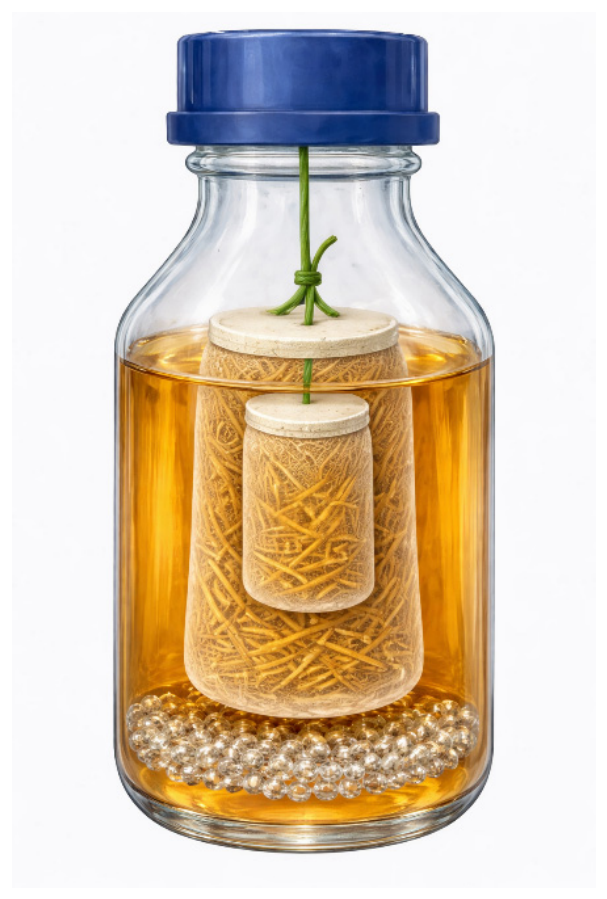
Figure 1. Schematic illustration of the double-bag system applied for enrichment of straw-associated rumen microbial consortia. The nested cylindrical mesh bags were suspended in anaerobic medium to allow microbial migration and selective colonization of fresh lignocellulosic substrate. Figure generated using ChatGPT (OpenAI, GPT-5.3).
Fermentation 12 00247 g001
Figure 2. Changes in daily methane production during the enrichment of rumen-derived microbial consortia through the “microbial racecourse.” Values represent mean ± SD (n = 3). Different letters indicate statistically significant differences between sampling times (Kruskal–Wallis test followed by Dunn’s multiple comparison test, p < 0.05).
Fermentation 12 00247 g002
Figure 3. VFA changes during the enrichment of rumen-derived microbial consortia. (A): Acetate. (B): Propionate Values represent mean ± SD (n = 3). Different letters indicate statistically significant differences between sampling times (Kruskal–Wallis test followed by Dunn’s multiple comparison test, p < 0.05).
Fermentation 12 00247 g003
Figure 4. SEM picture of the wheat straw surface after 24 h of incubation with rumen microbiome in the experimental set-up outlined in Section 2.1.2. Red and green arrows indicate the AF sporangium and putative bacterial partner, respectively.
Fermentation 12 00247 g004
Figure 5. SEM picture of the wheat straw surface after 48 h of incubation with rumen microbiome in the experimental set-up outlined in Section 2.1.2. Red and green arrows indicate AF sporangia and putative bacterial/archaeal partners, respectively.
Fermentation 12 00247 g005
Figure 6. SEM picture of the wheat straw surface after 72 h of incubation with rumen microbiome in the experimental set-up outlined in Section 2.1.2. Red and green arrows indicate AF sporangia and putative bacterial/archaeal partners, respectively.
Fermentation 12 00247 g006
Figure 7. The overall relative abundance changes during the enrichment stage.
Fermentation 12 00247 g007
Figure 8. Methane yields obtained during the biogas fermentation stage from wheat straw pretreated with different microbial consortia. (A): bacterial partner Butyrivibrio hungatei. (B): bacterial partner Succiniclasticum ruminis. Values represent mean ± SD (n = 6). Different letters above the bars indicate statistically significant differences between treatments (one-way ANOVA followed by Tukey’s post hoc test, p < 0.05).
Fermentation 12 00247 g008
Figure 9. Acetate concentrations measured in microbial consortia containing (A): Butyrivibrio hungatei, and (B): Succiniclasticum ruminis. Values represent mean ± SD (n = 3). Different letters above the bars indicate statistically significant differences between treatments (Kruskal–Wallis test followed by Dunn’s multiple comparison test, p < 0.05).
Fermentation 12 00247 g009
Figure 10. Propionic acid concentrations measured in microbial consortia containing (A): Butyrivibrio hungatei or (B): Succiniclasticum ruminis. Values represent mean ± SD (n = 3). Different letters above the bars indicate statistically significant differences between treatments (Kruskal–Wallis test followed by Dunn’s multiple comparison test, p < 0.05).
Fermentation 12 00247 g010
Table 1. Strains used in the pretreatment experiments. B, M, and AF indicate Bacteria, Methanogenic archaea, and Anaerobic fungi, respectively.
SpeciesKingdomCell/mL
Butyrivibrio hungatei
DSM 14810
B7.2 × 107
Succiniclasticum ruminis
DSM 9236
B3.5 × 107
Methanobrevibacter ruminantium
DSM 1093
M4.2 × 106
Methanobrevibacter gottschalkii
to be published
M3.5 × 106
Neocallimastix lanate #
to be published
AF4 × 106
# The N. lanati fungal inoculum was standardized to 4.0 × 10⁶ thallus-forming units (TFU)/mL. TFU represents viable fungal propagules capable of thallus development under anaerobic cultivation conditions [62].
Disclaimer/Publisher’s Note: The statements, opinions and data contained in all publications are solely those of the individual author(s) and contributor(s) and not of MDPI and/or the editor(s). MDPI and/or the editor(s) disclaim responsibility for any injury to people or property resulting from any ideas, methods, instructions or products referred to in the content.