Article

Valorization of Grape Seed By-Products by Lactiplantibacillus plantarum FBL002 Fermentation: Multi-Omics Insights into β-Glucosidase-Mediated Polyphenol Biotransformation and Antioxidant Enhancement

1
The Key Laboratory of Pollution Control and Ecosystem Restoration in Industrial Clusters, The Ministry of Education, College of Environment and Energy, South China University of Technology, Guangzhou 510006, China
2
Institute of Future Food Technology, Jiangsu Industrial Technology Research Institute, Yixing 214203, China
3
The Science Center for Future Foods, Jiangnan University, Wuxi 214122, China
4
Guangdong 3ins Technology Co., Ltd., Qingyuan 511500, China
5
Guangdong DC EXPORT Technology Co., Ltd., Shenzhen 518000, China
*
Authors to whom correspondence should be addressed.
Fermentation 2026, 12(5), 246; https://doi.org/10.3390/fermentation12050246
Submission received: 5 April 2026 / Revised: 14 May 2026 / Accepted: 15 May 2026 / Published: 19 May 2026
(This article belongs to the Section Microbial Metabolism, Physiology & Genetics)

Abstract

Grape seeds are a major by-product of grape processing and a rich source of polyphenolic compounds, yet their value remains underutilized. In this study, 12 lactic acid bacteria (LAB) strains were evaluated in a grape seed-based fermentation system to compare their tolerance, metabolic performance, and ability to promote polyphenol release. Among them, Lactiplantibacillus plantarum FBL002 showed the best overall performance. The strain maintained strong viability and metabolic activity at 5% grape seed concentration and released polyphenols more effectively than the other tested strains. The resulting fermentation broth also showed pronounced intracellular antioxidant activity. To clarify the basis of this phenotype, we further combined metabolomic, genomic, and transcriptomic analyses. Fermentation caused substantial shifts in phenolic metabolites, characterized by a decrease in glycosylated forms and an increase in more bioactive aglycones. Genome annotation revealed an enrichment of β-glucosidase-related genes in FBL002, and transcriptomic analysis showed that these genes were markedly upregulated during fermentation. This pattern was closely associated with the enhanced release of polyphenols. Together, these findings identify β-glucosidase as a key driver of grape seed polyphenol biotransformation by FBL002 and support the sustainable, high-value use of grape seeds in functional foods and cosmetic applications.

1. Introduction

Grape seeds are the main by-product of the grape processing industry. Consumers value grapes for their sweet-tart flavor and their rich content of bioactive compounds, especially polyphenolic flavonoids [1]. However, grape seeds are often discarded after fresh consumption or winemaking. In some cases, industries use them only for low-value purposes, such as fertilizer, fuel, or animal feed. In this study, the grape seeds came from winery pomace in Australia and were derived from the common wine grape (Vitis vinifera L.). Even so, their potential for high-value use remains largely untapped [2].
Grape seeds contain abundant polyphenolic compounds. These compounds mainly include gallic acid, catechins, oligomeric proanthocyanidins, and polymeric proanthocyanidins [3]. These polyphenols show strong antioxidant [4], coloring [5], and preservative [6] properties. As a result, they have broad potential in food [7], health supplements [8], and cosmetics [9]. Biological fermentation offers a promising alternative. This method uses microbial activity to increase polyphenol extraction, improve bioactivity and bioavailability, and enhance product safety [10,11]. The process does not rely on harmful organic solvents. Compared with some physicochemical extraction methods, the fermentation stage is generally conducted under relatively mild conditions, which may help reduce damage to heat-sensitive compounds during biotransformation. Although biological fermentation still faces challenges, such as long production cycles and complex process control, its overall advantages are clear [12].
Several methods are currently used to extract grape seed polyphenols. Common approaches include solvent extraction, ultrasonic-assisted extraction [13], enzyme-assisted extraction [14], supercritical fluid extraction [15], and microwave-assisted extraction [16]. However, each method has clear limitations. Solvent extraction often requires large amounts of organic solvents. These solvents can leave residues that are difficult to remove and can also create environmental concerns [17,18].
Ultrasonic-assisted and microwave-assisted methods can improve extraction efficiency, but high temperatures may damage heat-sensitive compounds [19]. Supercritical fluid extraction requires expensive equipment, which limits its large-scale use. Enzyme-assisted extraction also has drawbacks. This method depends on strict reaction conditions and costly enzyme preparations, which reduces its economic practicality [1].
In recent years, Lactic acid bacteria (LAB) have garnered significant interest owing to their potential to enhance product value in functional food production significantly [20]. Fermenting grape seeds with LAB not only guarantees high safety but also facilitates their functional and high-value utilization [21]. LAB exhibits highly efficient bioconversion capabilities. The β-glucosidase produced by them transforms the less bioavailable polyphenolic glycosides in grape seeds into more active and easily absorbable aglycone forms, substantially enhancing the system’s antioxidant capacity [22].
Notably, β-glucosidase secreted by LAB contributes to the biotransformation of plant polyphenols [23]. This enzyme cleaves β-glycosidic bonds explicitly in polyphenolic glycosides, transforming poorly bioavailable glycoside forms into highly active aglycone forms, such as quercetin and catechin. This substantially enhances their antioxidant, anti-inflammatory, and other biological activities. There are substantial variations in β-glucosidase activity among different LAB [24].
Based on this background, we considered that differences in β-glucosidase activity among LAB strains might strongly influence both the conversion of grape seed polyphenols and the functional properties of the resulting fermentation broth (FBGS). Previous studies have mainly described phenotypic changes before and after fermentation, while the molecular basis of polyphenol transformation has remained less well characterized [25]. In the present work, we therefore examined LAB fermentation of grape seeds using an integrated strategy that combined genome, transcriptome, metabolome, enzyme activity, and cell-based antioxidant analyses. We first compared 12 LAB strains from five species for their tolerance to the grape seed matrix, their metabolic performance, and their ability to improve the functional properties of FBGS. We then focused on the superior strain and examined the molecular basis of its polyphenol-converting capacity, with particular attention to β-glucosidase-related pathways. In this way, the study was designed not only to identify an effective strain for grape seed fermentation, but also to clarify the enzymatic and regulatory basis of polyphenol biotransformation. These results provide a mechanistic basis for the value-added utilization of grape seed by-products.

2. Materials and Methods

2.1. Materials and Strains

In this work, a total of 12 LAB strains belonging to 5 species were used, namely Lactiplantibacillus plantarum LP001, LP002, and LP003, as well as FBL002; Lactobacillus casei LC001; Lactobacillus fermentum LF001 and LF002; Lactobacillus rhamnosus LR001; and Bifidobacterium LB001, LB002, LB003, and LB004. All these strains were isolated at Jiangnan University in Wuxi City, Jiangsu Province, China. Grape seeds (from the typical wine grape, Vitis vinifera L.) were obtained from winery pomace in Australia. De Man, Rogosa, and Sharp medium (MRS), Folin phenol, aluminum chloride, and vanillin were procured from Sinopharm Chemical Reagent Co., Ltd. (Shanghai, China). Gallic acid, rutin, procyanidins, and catechin reference standards were all obtained from Shanghai Macklin Biochemical Co., Ltd. (Shanghai, China).

2.2. Overall Experimental Design

This study followed a stepwise screening and validation strategy. All 12 LAB strains were first screened for grape seed tolerance, fermentation performance, and DPPH radical scavenging activity. Three strains with superior overall performance, FBL002, LF001, and LF002, were then selected to compare their effects on polyphenol release, including total phenolics, total flavonoids, catechins, and proanthocyanidins. Based on these results, FBL002 was selected for subsequent growth curve analysis, intracellular ROS assay, metabolomic analysis, whole-genome analysis, and transcriptomic analysis. β-Glucosidase activity was finally measured in all 12 strains for enzymatic validation, and its correlation with polyphenol release and antioxidant activity was analyzed using FBL002 fermentation data. High-pressure steam sterilization was used to reduce background microbial contamination from grape seed powder and to ensure that the subsequent fermentation process was mainly driven by the inoculated LAB strains.

2.3. Grape Seed Pretreatment

Initially, the grape seeds were washed with pure water to remove surface dust, and then they were air-dried. Subsequently, the dried grape seeds were ground to a 60-mesh consistency. Finally, they were sterilized in a high-pressure steam sterilizer before fermentation and reserved for later use [26].

2.4. Strain Screening System

A multi-gradient stress screening system was established to systematically assess the tolerance of LAB strains to the grape seed matrix, as well as their growth and metabolic performance. Modified MRS medium containing five concentrations of grape seed powder, namely 0%, 1.0%, 2.0%, 5.0%, and 10.0% (w/v), was prepared. All 12 LAB strains were inoculated into the modified media and cultivated under static conditions. Strain performance was evaluated using a three-dimensional assessment system, including optical density at 600 nm (OD600), lactic acid production, and pH changes [27]. For OD600 measurement, samples were appropriately diluted to ensure that the absorbance readings were within the linear detection range of the instrument. Uninoculated medium containing the same concentration of grape seed powder was used as the blank control to correct for background absorbance. OD600 was measured at 600 nm using a multifunctional microplate reader (Agilent Technologies Co., Ltd., Beijing, China).

2.5. Strain Cultivation and Fermentation

The strain was removed from the cryovial and streaked onto MRS agar by using the streak plate method. The plates were then incubated at 37 °C for 12 h until single colonies formed [28]. Under aseptic conditions, one single colony was transferred into liquid medium for activation. This activation step was repeated three consecutive times. After activation, a 2% inoculum was added to 30 mL of MRS liquid medium. The MRS medium supplied the carbon sources, such as glucose, and other nutrients required for LAB growth. The grape seed powder, which was added later, served as the main substrate for biotransformation. After 12 h of incubation, sterilized grape seed powder was added to the culture. The culture was then incubated for another 24 h. Samples were collected at 12, 16, 20, 24, 28, 32, and 36 h during incubation for analysis [29]. The researchers measured lactic acid content and pH at each sampling point. For comparative analysis, the 12 h samples were used as the control group, and the 36 h samples were used as the fermented group. The fermentation was carried out under static and facultative anaerobic conditions, without agitation or aeration. This environment supported the homolactic fermentation of LAB and promoted rapid acidification. It also helped prevent the oxidative degradation of polyphenolic compounds in grape seeds. As a result, the observed increase in bioactive compounds could be attributed mainly to microbial biotransformation [30].

2.6. Total Phenolic Content Determination

Total phenolic content (TPC) was determined using the Folin–Ciocalteu method [31]. Briefly, 100 μL of sample was diluted with 900 μL of 60% ethanol, sonicated for 10 min, and centrifuged at 8000 rpm for 5 min. Then, 1.00 mL of the supernatant was mixed with 1.00 mL of Folin–Ciocalteu reagent and 2.00 mL of 12% Na2CO3 solution, and the mixture was diluted to 10.0 mL with distilled water. After incubation in the dark at room temperature for 1 h, the absorbance was measured at 765 nm using a UV spectrophotometer (U-2910, HITACHI, Tokyo, Japan). Gallic acid was used as the standard.
TPC was calculated as follows: TPC (mg GAE/mL) = C × D/1000, where C is the gallic acid-equivalent concentration calculated from the standard curve (μg/mL), and D is the dilution factor. All measurements were performed in triplicate.

2.7. Total Flavonoid Content Determination

Total flavonoid content (TFC) in the grape seed fermentation broth was determined using a colorimetric method with rutin as the standard [32]. Briefly, the fermentation broth was extracted with anhydrous ethanol by sonication, filtered, and appropriately diluted. Then, 1.0 mL of the sample solution was mixed with 0.2 mL of 5% NaNO2 solution and kept for 6 min. Next, 0.2 mL of 10% Al(NO3)3 solution was added and the mixture was kept for another 6 min. After adding 2.0 mL of 4% NaOH solution, the mixture was allowed to react for 15 min, diluted to 10 mL with distilled water, and mixed thoroughly. The absorbance was measured at 510 nm.
TFC was calculated as follows: TFC (mg RE/mL) = C × D, where C is the rutin-equivalent concentration calculated from the standard curve (mg/mL), and D is the dilution factor. All measurements were performed in triplicate [33].

2.8. Assay for Proanthocyanidin Content

The experiment was measured using the hydrochloric acid-vanillin method [34]. After aspirating 0.5 mL of the extract, 3 mL of a 10 g/L vanillin-methanol solution and 3 mL of an 8% hydrochloric acid-methanol solution were added. The mixture was thoroughly mixed and reacted in the dark at 30 °C in a water bath for 30 min. After the reaction was complete, the absorbance was measured at 500 nm, and the proanthocyanidin concentration was calculated based on the standard curve.

2.9. Determination of Catechin Content

Catechin content was measured by high-performance liquid chromatography (SHIMADZU, Tokyo, Japan) [35]. Mobile phase A was composed of 0.5% glacial acetic acid, 3% acetonitrile, and 96.5% ultrapure water, while mobile phase B consisted of 0.5% glacial acetic acid, 30% acetonitrile, and 69.5% ultrapure water. The elution gradient was programmed as follows: the proportion of mobile phase B increased linearly from 30% to 85% over 35 min, followed by a 5 min isocratic hold at 30% B [36].

2.10. In Vitro Antioxidant Activity

The in vitro antioxidant activity was determined using the DPPH radical scavenging assay. Briefly, 3.94 mg of DPPH was dissolved in anhydrous ethanol and diluted to 100 mL to obtain a 0.1 mmol/L DPPH working solution. Then, 100 μL of diluted sample was mixed with 3.9 mL of DPPH working solution, while 100 μL of diluted sample mixed with 3.9 mL of anhydrous ethanol was used as the sample blank. The negative control consisted of 100 μL of distilled water and 3.9 mL of DPPH working solution. After incubation in the dark for 60 min, the absorbance was measured at 517 nm.
DPPH radical scavenging activity was calculated as follows: DPPH radical scavenging activity (%) = [1 − (sample − blank)/negative] × 100, where sample, blank, and negative represent the absorbance values of the sample group, sample blank, and negative control, respectively. No standard curve was used, and all measurements were performed in triplicate [37].

2.11. Intracellular Reactive Oxygen Species (ROS) Level Detection

HaCat (Procell Life Science & Technology Co., Ltd., Wuhan, China) was exposed to H2O2 at concentrations ranging from 0 to 800 μmol/L for 24 h to screen for the optimal concentration that induced cellular senescence. Concurrently, the antioxidant repair capacity of grape seed powder on HaCat cells was evaluated to determine the optimal concentrations for low, medium, and high intervention. Subsequently, Hacat was replated into 96-well plates and treated for 24 h in five groups: control, H2O2-induced model, and low-, medium-, and high-dose FBGS groups before and after fermentation [38]. After treatment, the cells were maintained at 37 °C under dark conditions for 20 min and then stained with a fluorescent probe (DCFH-DA, Beyotime Biotech Inc., Shanghai, China). The intracellular fluorescence intensity was finally detected using an inverted microscope (Olympus Corporation, Tokyo, Japan). By comparing the fluorescence intensities across groups, the oxidative stress levels and antioxidant repair capacity of the samples were assessed [39].

2.12. Metabolomics Analysis

The precipitation plate was incorporated into the sample to be assayed, after which a mixed solvent of methanol and acetonitrile was added to the system [40]. The supernatant fraction was subsequently collected via filtration through a filter membrane. For the qualitative and quantitative analysis of polar metabolites, mobile phase A was prepared as an aqueous solution supplemented with ammonium acetate and ammonia water. In contrast, mobile phase B was composed of pure acetonitrile. Throughout the experimental process, the temperature of the sample compartment was maintained at 4 °C, and an injection volume of 2 μL was applied to each sample [41].

2.13. Whole-Genome Analysis

After quantitative and qualitative screening, dual-platform sequencing was conducted via Illumina and PacBio technologies. Illumina sequencing included DNA fragmentation to ~400 bp, library preparation, and 150 bp paired-end sequencing. PacBio sequencing involved DNA shearing to ~10 kb, SMRTbell library construction, and long-read sequencing [42].

2.14. Transcriptome Analysis

To investigate the transcriptional response of Lactiplantibacillus plantarum FBL002 under grape seed fermentation conditions, RNA-seq was performed on mid-logarithmic phase cells from the experimental group (MRS + 5% grape seed powder) and control group (MRS alone, three biological replicates per group). After RNA verification, quantification, library construction and sequencing, clean reads were aligned to the reference genome, gene expression was quantified as FPKM, differentially expressed genes were identified via DESeq2(v1.52.0), and functional enrichment analysis was conducted using GO (https://geneontology.org/) and KEGG (https://www.kegg.jp/) databases.

2.15. β-Glucosidase Activity Assay

β-Glucosidase activity was determined using p-nitrophenyl-β-D-glucopyranoside (pNPG) as the substrate [43]. Briefly, bacterial pellets were collected by centrifugation and resuspended in an equal volume of sodium phosphate buffer to prepare the crude enzyme solution. The crude enzyme solution was reacted with pNPG, and the released p-nitrophenol (pNP) was quantified using a pNP standard curve.
β-Glucosidase activity was calculated as follows: β-glucosidase activity (U/mL) = (C × Vt)/(t × Ve), where C is the pNP concentration calculated from the standard curve (μmol/mL), Vt is the total reaction volume (mL), t is the reaction time (min), and Ve is the volume of enzyme solution added to the reaction system (mL). One unit of enzyme activity was defined as the amount of enzyme required to release 1 μmol of pNP per minute under the assay conditions. All measurements were performed in triplicate.

2.16. Statistical Analysis

Each experiment was conducted three times, and the outcomes are displayed as the mean value along with the standard deviation (Mean ± SD). The data analysis was performed using Origin 2024 and GraphPad Prism (version 10.1.2). Statistical assessments used ANOVA and t-tests in SPSS (IBM SPSS Statistics 26); p < 0.05 indicated significance.
The graphs utilize two distinct notations to denote statistical significance. Letter notation is used for comparisons among all groups within an experiment, with Tukey’s HSD test employed. Asterisk notation: For comparisons against a single control group, Dunnett’s test was applied. Significance levels are denoted as * p < 0.05, ** p < 0.01, *** p < 0.001, and **** p < 0.0001. Letter-based comparisons are valid only within the same experimental panel.

3. Results

3.1. Comprehensive Screening of LAB for Grape Seed Tolerance, Antioxidant Properties and Polyphenol Release

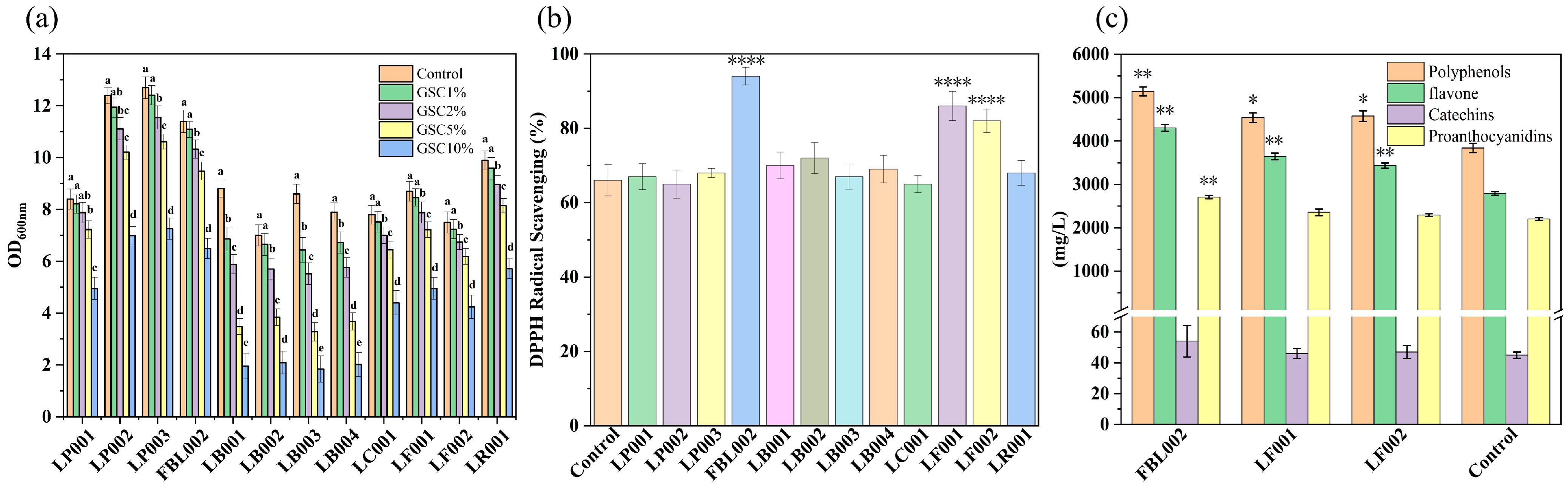
The tolerance profiles of the 12 LAB strains are shown in Figure 1a. At grape seed concentrations of 1% and 2%, growth inhibition remained limited, and the inhibition rate stayed below 20% for most strains. When the concentration increased to 5%, differences among strains became more obvious. LP001, LP002, LP003, FBL002, LC001, LF001, LF002, and LR001 maintained maximum OD600 values above 80% of the control, whereas LB001-LB004 fell below this level. At 10% grape seed concentration, growth was suppressed in all strains, and the maximum biomass dropped to about 60% of the control.
At lower concentrations, some strains may still have been able to metabolize these compounds, whereas at higher concentrations, the inhibitory effect dominated. The variation observed among strains may therefore reflect differences in their capacity to tolerate or metabolize grape seed polyphenols. On this basis, 5% grape seed powder was selected for the subsequent fermentation experiments because it supported growth in most strains while still providing sufficient substrate for polyphenol conversion.
After the tolerance screening, the study further evaluated the biotransformation performance of Lactobacillus strains on grape seeds by examining changes in antioxidant activity after fermentation. For this experiment, the researchers used modified MRS medium containing 5% grape seed powder as the fermentation substrate. They then inoculated the medium with 12 Lactobacillus strains that had passed the tolerance screening and carried out static fermentation for 36 h. DPPH radical scavenging assays disclosed strain-specific variations in the antioxidant activity of the FBGS (Figure 1b). Specifically, strains FBL002, LF001, and LF002 exhibited significant advantages, as their fermentation products achieved DPPH radical scavenging rates of 94%, 86%, and 82%, respectively, representing increases of 28%, 20%, and 16% compared to those of the unfermented control. The antioxidant activity of the remaining nine strains showed an increase of less than 10%. The organic acid environment generated during fermentation promoted the stable existence of polyphenolic compounds. These biotransformation processes significantly enhanced the bioavailability of soluble free polyphenols, thereby strengthening the antioxidant capacity of the system.
Based on the tolerance of the 12 selected LAB strains to grape seeds and the enhancement of antioxidant activity in the FBGS, each strain exhibited unique tolerance to grape seeds and distinct conversion efficiency. Therefore, after preliminary screening, three LAB strains, namely FBL002, LF001, and LF002, were selected for subsequent studies on polyphenol conversion and release rates. All three strains increased the contents of polyphenols, flavonoids, catechins, and proanthocyanidins after fermentation. The elevated total phenolic content in the FBGS was indeed associated with LAB activity, indicating their role in enhancing polyphenol release. Figure 1c should be interpreted as a secondary screening result for the three selected strains, FBL002, LF001, and LF002. The four indicators shown in this panel were combined to compare the overall ability of these strains to promote grape seed polyphenol release, rather than to represent separate screening experiments. As presented in Figure 1c, the most significant effect was observed in the FBGS produced by FBL002, in which the total phenolic content increased by 34%. The growth trends of flavonoids, catechins, and proanthocyanidins largely corresponded to that of the total phenolic content, increasing by 54%, 20%, and 23%, respectively. This further demonstrated that LAB fermentation promoted the dissolution and release of polyphenolic compounds from grape seeds. Simultaneously, through enzymatic action, LAB strains effectively broke down the grape seed cell wall structure, enhancing the bioavailability of high-value-added antioxidant components. Based on a comprehensive evaluation of LAB tolerance, antioxidant capacity, and ability to promote polyphenol release, strain FBL002 was ultimately selected. To further clarify its tolerance in grape seed substrates and the combined antioxidant potential of the grape seed-strain system, subsequent analyses focused on the growth and metabolic characteristics of this strain, specifically examining its effects on lactic acid production capacity, pH regulation, and cellular oxidative stress repair functions.

3.2. Metabolic Characteristics of FBL002 in Grape Seed Matrix and Antioxidant Repair Capacity of FBGS

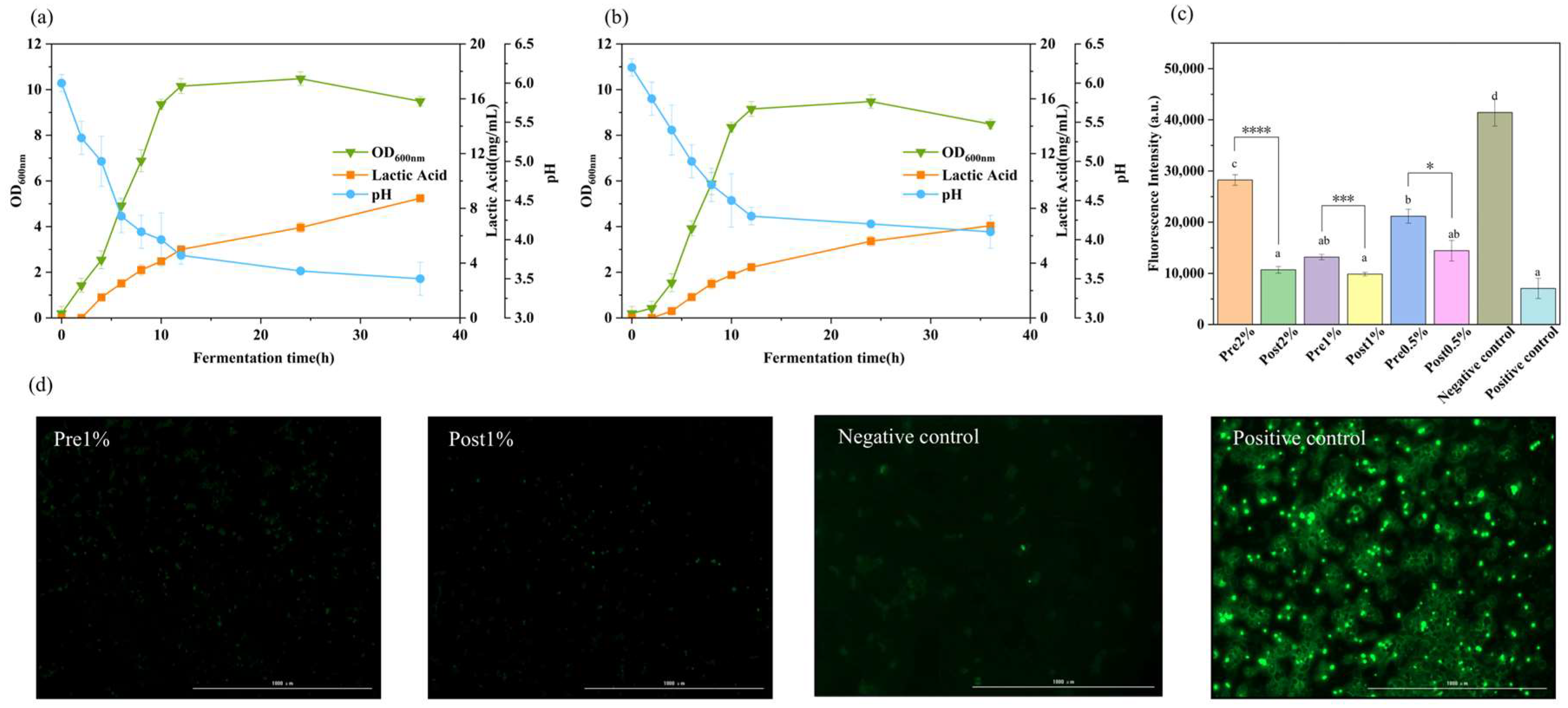
To elucidate the impact of the grape seed matrix on the acid-producing metabolism of strain FBL002, shake flask fermentation experiments were conducted at a 5% grape seed concentration in this study. Samples were collected at 0, 2, 4, 6, 8, 10, 12, 24, and 36 h to measure bacterial growth, lactic acid production, and pH variations. As depicted in Figure 2b, FBL002 demonstrated vigorous growth in the medium containing 5% grape seeds. Its acid-producing metabolism closely resembled that of the control group without grape seeds (Figure 2a). Lactic acid production increased steadily over the incubation period, accompanied by a corresponding decline in pH, eventually stabilizing within the pH range of 3.5–4 at the end of fermentation. No significant difference in the lactic acid accumulation rate or final production was detected between the two groups, suggesting that the 5% grape seed concentration did not significantly suppress the acid-producing metabolic capacity of FBL002. These findings imply that at this concentration, potential inhibitory substances, such as polyphenols in grape seeds, did not disrupt the normal fermentation metabolism of the strain, thereby providing evidence for the feasibility of the process for further applications.
To examine the protective effect of FBGS against oxidative stress, we used an H2O2-induced HaCat cell model [44]. Intracellular ROS levels were measured with the DCFH-DA fluorescent probe, and epigallocatechol gallate was used as a positive control. As shown in Figure 2d, fluorescence intensity increased markedly in the H2O2-treated negative control group, reaching 3.14 times the normal baseline, which indicates substantial ROS accumulation. Pretreatment with both pre-fermented and post-fermented FBGS reduced intracellular ROS levels. At the same concentration, the post-fermented sample showed a stronger effect than the pre-fermented sample. The 1% pre-fermented FBGS group showed a fluorescence intensity of 13,173 A.U., corresponding to 68.2% inhibition relative to the negative control, whereas the 1% post-fermented FBGS group decreased to 9849 A.U., corresponding to 76.2% inhibition. The antioxidant effect of the post-fermented sample was also close to that of the vitamin C positive control (7053 A.U., 83.0% inhibition), and no significant difference was observed between the two groups (Figure 2c). These results indicate that fermentation enhanced the antioxidant activity of grape seed extract, and that FBGS produced by FBL002 effectively reduced H2O2-induced oxidative stress in HaCat cells in a dose-dependent manner.

3.3. Metabolomics-Based Analysis of β-Glucosidase-Mediated Polyphenol Conversion Capacity

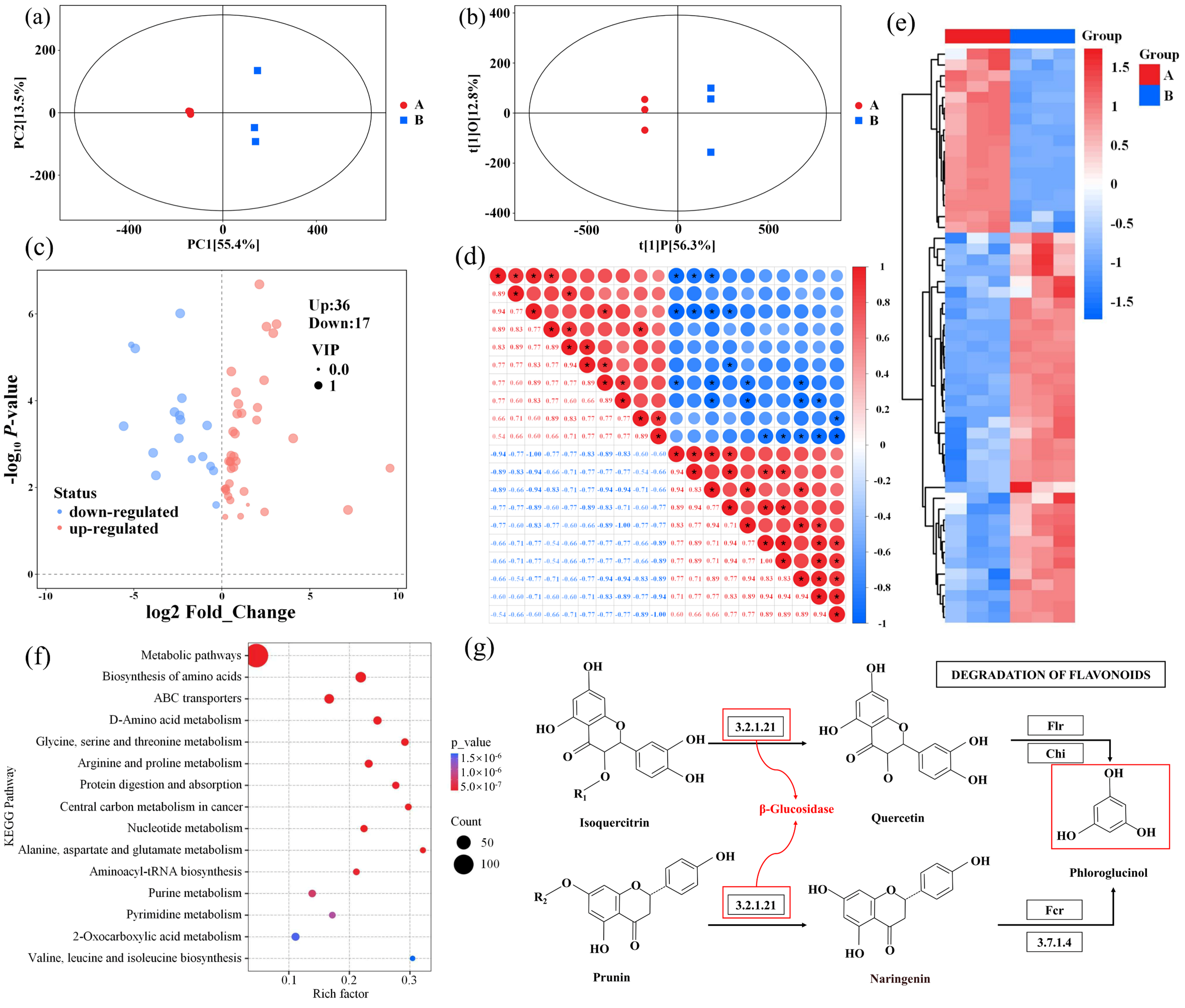
To elucidate the transformation effects of LAB fermentation on grape seed polyphenols, we conducted metabolomic analysis. Principal component analysis (PCA) showed a clear distinction between pre-fermentation and post-fermentation samples in the score plot, with good intra-group reproducibility, indicating that fermentation induced systematic changes in metabolites (Figure 3a). To further focus on intergroup differences, we employed orthogonal partial least squares discriminant analysis (OPLS-DA). This model clearly separated the samples collected before fermentation from those collected after fermentation (Figure 3b). The model also showed excellent performance, with R2Y = 0.999 and Q2 = 0.996. These results provided a strong basis for identifying key differential metabolites.
Based on this analysis, the study identified 53 phenolic compounds that changed significantly after fermentation (VIP > 1, p < 0.05). Among these compounds, 36 increased, while 17 decreased (Figure 3c) (Table 1). Most of the increased metabolites were free aglycones with higher biological activity and phenolic acids. In contrast, most of the decreased metabolites were their corresponding glycosylated forms, including several flavonoid glycosides.
To better understand the relationships among these metabolites, the study further constructed a correlation network of key differential compounds (Figure 3d). The results showed that several important aglycones, such as quercetin and naringenin, were strongly positively correlated with one another. At the same time, some aglycones showed significant negative correlations with their corresponding glycoside precursors.
The study then performed hierarchical cluster analysis to examine the overall pattern of metabolic changes. The heatmap results clearly supported the systematic nature of these changes (Figure 3e). All samples were divided into two main clusters according to fermentation status. In addition, most upregulated aglycones and downregulated glycosides formed distinct subclusters. Together, these findings indicate that LAB fermentation drives a coordinated and directional metabolic transformation process. They also provide direct evidence for a dynamic relationship between glycoside reduction and aglycone accumulation during fermentation.
To explain these changes at the biological level, the study next carried out KEGG pathway enrichment analysis. The results showed significant enrichment in the core category of metabolic processes (Figure 3f). The researchers then focused on the global metabolic network (ko01100) and found that these metabolites were concentrated in regions related to flavonoid metabolism. Further analysis identified the flavonoid degradation pathway (ko00946) as one of the key hubs. Within this pathway, β-glucosidase (EC 3.2.1.21) emerged as the key enzyme (Figure 3g).
Taken together, the metabolomic and pathway data point to a consistent shift in phenolic composition after fermentation. Flavonoid glycosides decreased, whereas the corresponding aglycones increased. This pattern agrees well with the reaction direction catalyzed by β-glucosidase (EC 3.2.1.21) in the flavonoid degradation pathway. These results suggest that the conversion of glycosylated polyphenols into more bioactive aglycones is an important feature of grape seed fermentation by FBL002 and may contribute directly to the enhanced antioxidant activity observed after fermentation.

3.4. Genome-Wide Identification of β-Glucosidase Gene Enrichment Potential in FBL002 Strain

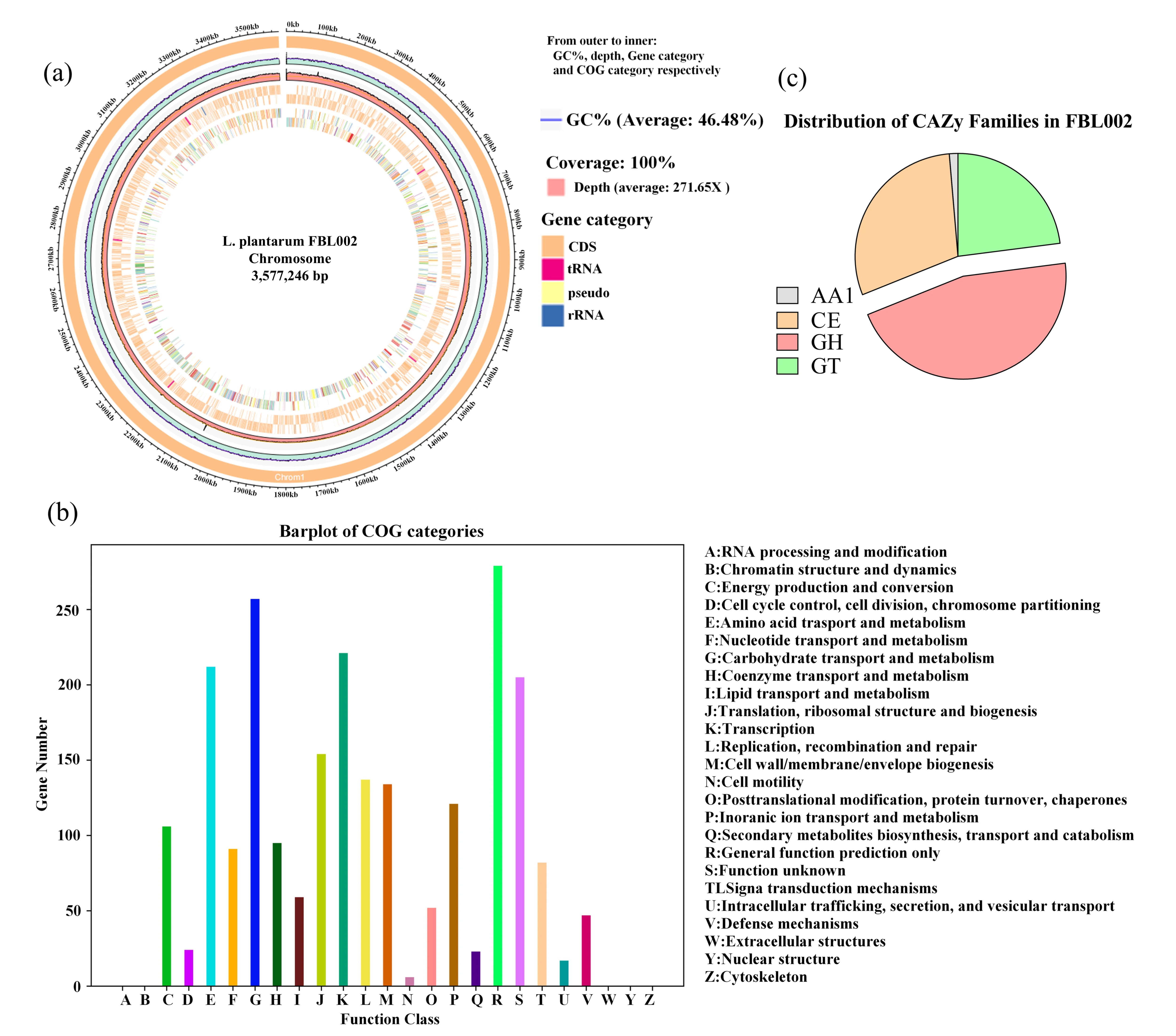
To analyze the genetic functional characteristics of strain FBL002, we first performed COG classification of its genome. Results indicate that genes associated with carbohydrate transport and metabolism (Category G) are most abundant (Figure 4a). This significant enrichment indicates that the strain possesses a metabolic potential at the genomic level for efficiently utilizing complex plant-derived carbohydrates, such as cell wall polysaccharides and glycosides. This genetic background likely underpins its colonization of grape seed substrates and potential action on polyphenolic glycosides.
Sequencing generated the complete circular chromosome map of FBL002 (Figure 4b). This map clearly shows the distribution of genomic elements, including coding genes, non-coding genes, and GC bias. Notably, genes classified by COG as related to carbohydrate metabolism were distributed in clusters rather than scattered randomly across the chromosome. This arrangement may support the co-regulation and coordinated expression of functionally related genes.
To further identify the enzyme systems involved in carbohydrate degradation and modification, the study performed Carbohydrate-Active Enzymes (CAZy) annotation of the FBL002 genome. The results showed that glycoside hydrolases (GHs) were the most abundant enzyme category (Figure 4c) (Table 2). Importantly, the GH family included several gene copies annotated as β-glucosidases (EC 3.2.1.21). This finding provides genetic evidence that FBL002 has a complete β-glucosidase-encoding capacity. It also offers direct genotypic support for the observed phenotype of releasing active aglycones through the hydrolysis of glycosidic bonds in polysaccharides.

3.5. Transcriptomic Exploration of Differential Expression Patterns in β-Glucosidase-Related Genes

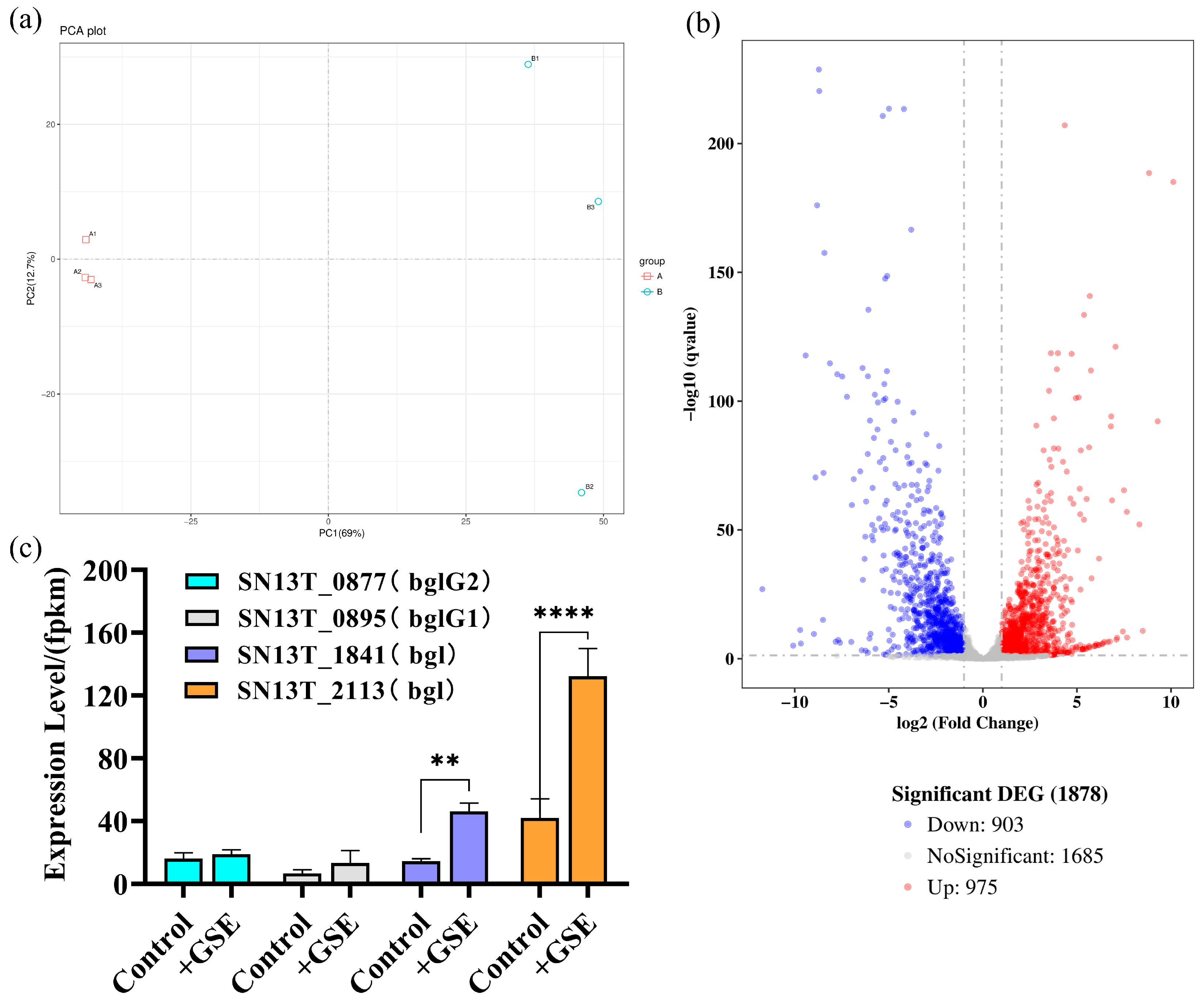
To verify whether strain FBL002 actually activated its genome-predicted glycoside hydrolysis potential during grape seed fermentation, we performed transcriptomic analysis. Principal Component Analysis (PCA) showed that there was a marked difference in the transcriptome before and after fermentation, suggesting that the whole gene expression (Figure 5a) was conditioned by fermentation. Differential gene expression analysis further identified numerous significantly up- and down-regulated genes (Figure 5b).
Notably, among these differentially expressed genes, multiple genes annotated as belonging to the glycoside hydrolase (GH) family exhibited a consistent and significant upregulation trend (Figure 5c). These upregulated GH genes include several homologs annotated as β-glucosidases (EC 3.2.1.21). This expression pattern strongly correlates with the metabolomics-observed phenotypes of polyphenolic glycoside hydrolysis and accumulation of active aglycones.
The transcriptomic data indicate that FBL002 not only carries β-glucosidase-related genes, but also actively induces their expression during grape seed fermentation. This expression pattern is consistent with the metabolomic results, which showed enhanced conversion of glycosylated phenolics into aglycones. In combination, these observations support the view that β-glucosidase plays an important role in the polyphenol biotransformation capacity of FBL002. To examine this relationship more directly, we next measured β-glucosidase activity and evaluated its association with polyphenol release and antioxidant performance in FBGS.

3.6. Validation of β-Glucosidase Activity and Its Relationship with Polyphenol Release and Antioxidant Activity

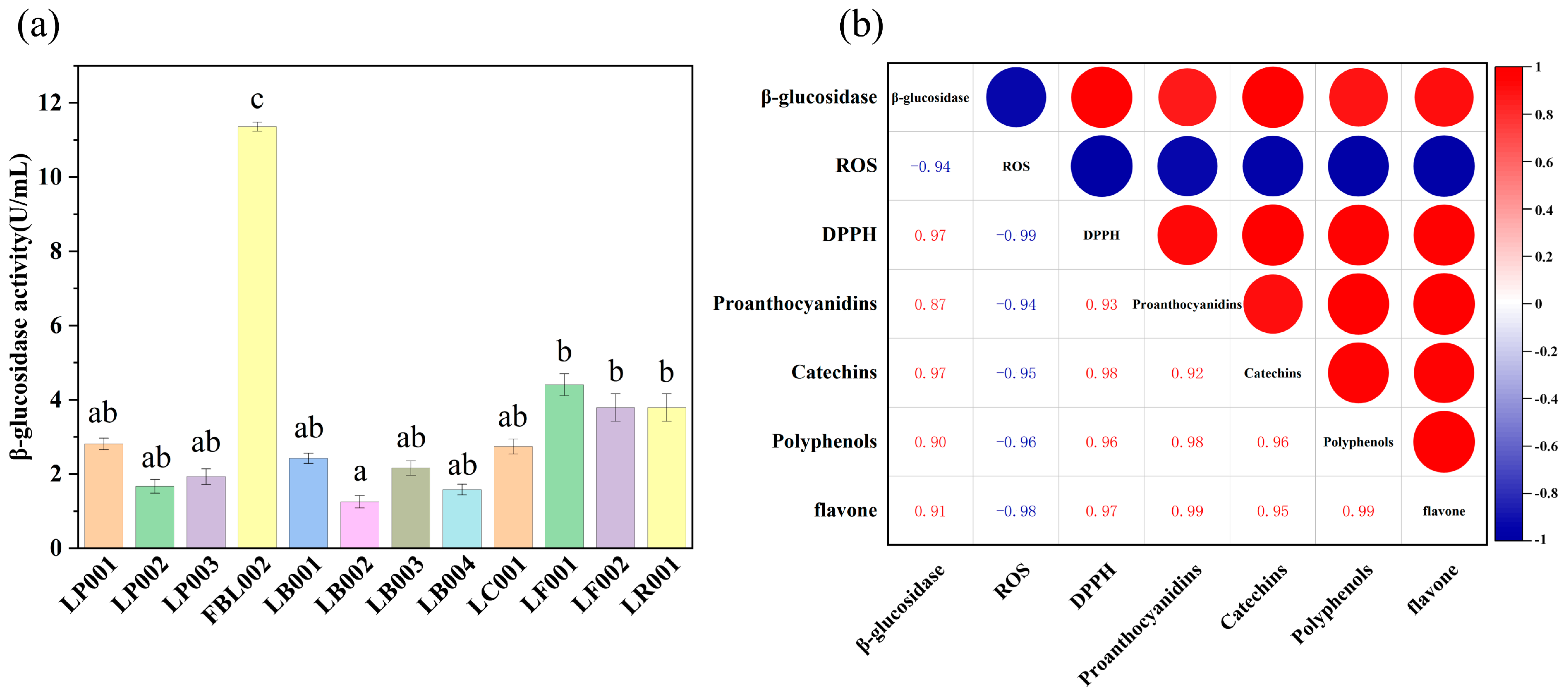
We next measured the extracellular β-glucosidase activity of the 12 LAB strains. As shown in Figure 6a, enzyme activity differed substantially among strains. FBL002 showed the highest activity, reaching approximately 11 U/mL, which was 3- to 10-fold higher than that of the other tested strains. This result is consistent with its stronger performance in the earlier tolerance and polyphenol release assays and further supports its superior biotransformation capacity in the grape seed system. The genome data provide a possible explanation for this phenotype. FBL002 contained multiple glycoside hydrolase-related genes, including several annotated as β-glucosidases. It may also contribute to the disruption of plant cell wall-associated structures, which would favor the release of intracellular polyphenolic compounds into the fermentation medium. These effects together are consistent with the higher levels of free and extractable polyphenols observed in the FBL002 fermentation samples.
First, the enzyme can efficiently hydrolyze polyphenols that are mainly present in glycoside-bound forms in plant foods, such as fruits and vegetables. These compounds include flavonoid glycosides and phenolic acid glycosides. Through hydrolysis, the enzyme converts them into more bioactive aglycone forms, such as flavonoids and phenolic acids. Second, β-glucosidase can also act on certain glycosidic bonds in plant cell wall components, such as cellulose. This activity helps disrupt the cell wall structure and promotes the release of more intracellularly bound polyphenolic compounds into the fermentation system. Together, these two mechanisms explain the marked increase in free and extractable polyphenols in the FBL002 fermentation samples.
To further clarify the role of β-glucosidase in FBL002, we examined its relationship with polyphenol release and antioxidant activity as shown in Figure 6b. β-Glucosidase activity was positively associated with both total phenolic content and DPPH radical scavenging activity, suggesting that this enzyme contributed to the improved functional performance of FBGS. One likely explanation is that β-glucosidase promoted the hydrolysis of bound phenolic glycosides, thereby increasing the levels of free and more bioactive aglycones such as quercetin and catechin. In addition, the enzyme may have facilitated the release of polyphenols by acting on glycosidic linkages associated with plant cell wall structures. These observations support a close relationship between β-glucosidase activity and the enhanced antioxidant capacity of the FBL002 fermentation system.

4. Discussion

The strain-dependent differences observed in this study indicate that the performance of LAB in grape seed fermentation is influenced not only by general growth and acid-producing capacity, but also by their tolerance to the phenolic-rich grape seed matrix and their ability to modify plant-derived compounds. Grape seed polyphenols, especially tannins and proanthocyanidins, may impose stress on bacterial cells by interacting with cell envelope structures and affecting membrane integrity [23,45,46,47,48]. Similar inhibitory effects of phenolic-rich plant substrates on microbial growth have been reported in other fermentation systems, suggesting that phenolic tolerance is an important prerequisite for efficient fermentation of plant by-products. Therefore, the superior performance of FBL002 may reflect a better balance between substrate tolerance, metabolic activity, and enzymatic biotransformation capacity [49,50].
The increase in phenolic-related components after LAB fermentation is consistent with previous studies showing that microbial fermentation can improve the release and bioavailability of plant polyphenols. In plant materials, many phenolics are present in bound or glycosylated forms, which limits their solubility and biological accessibility. LAB fermentation may promote their release through acidification, matrix disruption, and enzyme-mediated hydrolysis [51]. Therefore, the enhanced antioxidant activity observed after fermentation is likely associated not only with an increase in total phenolic content, but also with changes in phenolic composition. The accumulation of more active aglycone forms may contribute more directly to antioxidant performance than total phenolic content alone [52,53,54].
The integrated metabolomic, genomic, transcriptomic, and enzyme activity results support an important role of β-glucosidase in the biotransformation of grape seed polyphenols. β-Glucosidase can hydrolyze β-glycosidic bonds in flavonoid glycosides and promote the formation of aglycones, which is consistent with the observed decrease in glycosylated phenolics and increase in free phenolic forms. However, β-glucosidase should not be regarded as the only possible contributor. CAZy annotation also revealed other glycoside hydrolase families in FBL002, such as GH2, GH13, and GH31, which may participate in the degradation of plant cell wall components or other glycosidic substrates. Thus, the enhanced polyphenol release observed during FBL002 fermentation may result from the combined action of β-glucosidase and other carbohydrate-active enzymes. In the present study, β-glucosidase was emphasized because enzyme activity, genome annotation, transcriptomic upregulation, and metabolomic changes all converged on this function. Nevertheless, further enzyme inhibition or gene-level validation will be required to determine its relative contribution more precisely [55,56,57,58,59]. Although β-glucosidase was emphasized, grape seed polyphenol deglycosylation may also involve other glycoside hydrolases, such as GH2, GH13, and GH31 identified by CAZy annotation. β-Glucosidase was highlighted because the metabolomic, genomic, transcriptomic, and enzyme activity results consistently supported its role in phenolic glycoside conversion. Thus, it should be considered a major candidate contributor rather than the sole enzyme responsible for this process.
Compared with previous studies that mainly described phenotypic changes before and after plant substrate fermentation, this work provides a more integrated explanation by linking strain screening, phenolic metabolite transformation, genetic potential, transcriptional activation, enzyme activity, and cell-based antioxidant effects within the same grape seed fermentation system. This integrated framework strengthens the mechanistic interpretation of LAB-mediated grape seed biotransformation and supports the potential use of FBL002 for the value-added utilization of grape seed by-products.
Despite the promising laboratory results, several issues remain before this strategy can be translated into practical production. The current process relies on static fermentation with a 36 h cycle, which may limit industrial competitiveness. In addition, strain stability in larger bioreactors, batch-to-batch consistency, and production cost all require further assessment. Future studies should therefore focus on process optimization at the pilot scale, with the aim of shortening fermentation time, improving conversion efficiency, and establishing a more robust basis for industrial application. Addressing these challenges will be essential for the broader use of this green biotransformation strategy.

5. Conclusions

This work established an integrated framework for evaluating LAB-mediated grape seed biotransformation, including strain tolerance, metabolic performance, antioxidant activity, and molecular mechanism. Among the 12 tested strains, Lactiplantibacillus plantarum FBL002 showed the strongest overall performance in the grape seed fermentation system. The strain maintained stable growth at 5% grape seed concentration, promoted polyphenol release, and produced fermentation broth with clear intracellular antioxidant activity.
Multi-omics analysis further showed that this phenotype was closely associated with β-glucosidase. Fermentation induced clear shifts in phenolic composition, especially the conversion of glycosylated flavonoids into more bioactive aglycones. Genome and transcriptome analyses consistently indicated that FBL002 possessed enriched β-glucosidase-related genes and strongly upregulated their expression during fermentation. Together with the enzyme activity data, these findings identify β-glucosidase as a key factor underlying grape seed polyphenol conversion by FBL002.
Overall, the present study provides both mechanistic insight and practical support for the value-added utilization of grape seed by-products. By linking LAB strain screening, polyphenol biotransformation, antioxidant enhancement, and multi-omics evidence, this work identifies FBL002 as a promising candidate for developing fermented grape seed ingredients with potential applications in functional foods, nutraceuticals, and cosmetic products. More broadly, the strategy established here may provide a transferable approach for the green bioprocessing of other polyphenol-rich plant residues.

Author Contributions

Writing—original draft, Visualization, Methodology, Investigation, Data curation, Conceptualization, Y.S.; Validation, Investigation, L.H.; Writing—review and editing, Supervision, Resources, Project administration, Funding acquisition, Conceptualization, J.C.; Writing—review and editing, J.L.; Writing—review and editing, Formal analysis, Data curation, Y.W.; Writing—review and editing, H.H. (Hao Huang); Validation, Formal analysis, Z.Y.; Validation, Investigation, C.H.; Writing—review and editing, Formal analysis, W.X.; Validation, Formal analysis, W.C. (Wuxia Chen); Validation, Investigation, Y.F.; Writing—review and editing, Formal analysis, W.C. (Weikang Cui); Validation, Formal analysis, Y.B.; Writing—review and editing, S.C.; Funding acquisition, Validation, Writing—review and editing, H.Y.; Funding acquisition, Validation, H.H. (Haifeng Huang). All authors have read and agreed to the published version of the manuscript.

Funding

This research was funded by Guangdong S&T Program [2024B1111160002] and the Pilot Research Program of WIIRI [XD24006]. The APC was funded by [2024B1111160002].

Institutional Review Board Statement

Not applicable.

Informed Consent Statement

Not applicable.

Data Availability Statement

The original contributions presented in this study are included in the article. Further inquiries can be directed to the corresponding authors.

Conflicts of Interest

Shaonian Chang is employed by Guangdong 3INS Technology Company Limited; Yuan Ban has equity in 3INS, and serves on its board of directors; Haifeng Huang is employed by Guangdong DC EXPORT Technology Company Limited; Haiyang Ye, founder of DC Export, has equity in DC EXPORT. The remaining authors declare that the research was conducted in the absence of any commercial or financial relationships that could be construed as a potential conflict of interest.

References

  1. Gómez-Mejía, E.; Vicente-Zurdo, D.; Rosales-Conrado, N.; León-González, M.E.; Madrid, Y. Screening the extraction process of phenolic compounds from pressed grape seed residue: Towards an integrated and sustainable management of viticultural waste. LWT—Food Sci. Technol. 2022, 169, 113988. [Google Scholar] [CrossRef]
  2. Potijun, S.; Pattarapipatkul, N.; Boonma, P.; Pewlong, P.; Pathtubtim, I.; Muangman, T.; Meksiriporn, B.; Schaller, H.; Sirikantaramas, S. Insights from dual-platform metabolomics on durian flowers: An alternative source of procyanidins from agricultural waste with bioactivities. Food Chem. X 2025, 29, 102719. [Google Scholar] [CrossRef]
  3. Zhang, L.; Han, Z.; Granato, D. Polyphenols in foods: Classification, methods of identification, and nutritional aspects in human health. Adv. Food Nutr. Res. 2021, 98, 1–33. [Google Scholar] [CrossRef]
  4. Plaskova, A.; Mlcek, J. New insights of the application of water or ethanol-water plant extract rich in active compounds in food. Front. Nutr. 2023, 10, 1118761. [Google Scholar] [CrossRef] [PubMed]
  5. Sha, D.; Sun, Y.; Xing, L.; Chen, X.; Wang, X.; Wan, B.; Wang, X.; Li, Y.; Chen, G.; Zhou, S.; et al. Preparation of polyphenol-structural colored silk fabrics with bright colors. Int. J. Biol. Macromol. 2024, 266, 131140. [Google Scholar] [CrossRef]
  6. Kamal, G.M.; Uddin, J.; Asmari, M.; Noreen, A.; Liaqat, A.; Sabir, A.; Khan, J.; Iqbal, R.; Sharma, A.; Nayik, G.A.; et al. Natural polyphenols as a promising aquatic food preservative: A concurrent review. J. Agric. Food Res. 2025, 22, 102046. [Google Scholar] [CrossRef]
  7. Le Bloch, J.; Rouault, M.; Iriantsoa, V.; Michelet, O. Polyphenols in Human Nutrition: European Regulations and Potential Classification as a Novel Food or Food Additive. J. Agric. Food Chem. 2024, 72, 26936–26942. [Google Scholar] [CrossRef] [PubMed]
  8. Obeme-Nmom, J.I.; Abioye, R.O.; Reyes Flores, S.S.; Udenigwe, C.C. Regulation of redox enzymes by nutraceuticals: A review of the roles of antioxidant polyphenols and peptides. Food Funct. 2024, 15, 10956–10980. [Google Scholar] [CrossRef]
  9. Radulescu, C.; Olteanu, R.L.; Buruleanu, C.L.; Stirbescu, R.M.; Banica, A.L.; Pavaloiu, R.D.; Sha’at, F.; Petrescu, M.M.; Stanciu, G. Development and Characterization of Liposome-Based Dermocosmetic Formulations with Red Grape Pomace and Polygonum cuspidatum Extracts. Antioxidants 2025, 14, 1182. [Google Scholar] [CrossRef]
  10. Aloo, O.S.; Kim, D.-G.; Vijayalakshmi, S.; Aloo, D.O.; Ochola, C.O.; Oh, D.-H. Polyphenol constituents and impacts of fermented teas (Camellia sinensis) in human wellness. Food Biosci. 2024, 60, 104389. [Google Scholar] [CrossRef]
  11. Xiao, Y.; Li, X.; Zhang, H.; Zhu, Y.; Gao, W.; Jiang, S.; Ru, G.; Sun, A. Efficient release and possible mechanism of polyphenols in the pomace of chokeberry (Aronia melanocarpa L.) through solid-state fermentation using Trichoderma viride. Food Biosci. 2025, 68, 106783. [Google Scholar] [CrossRef]
  12. Bautista-Hernández, I.; Aguilar, C.N.; Martínez-Ávila, G.C.G.; Ilina, A.; Torres-León, C.; Verma, D.K.; Chávez-González, M.L. Phenolic compounds and antioxidant activity of Lippia graveolens Kunth residual leaves fermented by two filamentous fungal strains in solid-state process. Food Bioprod. Process. 2022, 136, 24–35. [Google Scholar] [CrossRef]
  13. Zhang, S.; Tan, T.; Wang, J.; Ma, T.; Li, T. Green extraction of polyphenols from pomegranate seeds by ultrasound-assisted deep eutectic solvent extraction: Optimization and bioactivity. Sustain. Chem. Pharm. 2024, 41, 101710. [Google Scholar] [CrossRef]
  14. Shao, J.; Xiao, X.; Li, Y.; Chen, B.; Xing, L.; Zhu, Z.; Qi, C. Ultrasound-assisted enzymatic extraction of dark tea total polyphenols. Front. Nutr. 2025, 12, 1548103. [Google Scholar] [CrossRef]
  15. Le Tan, H.; Ferrentino, G.; Morozova, K.; Tenuta, M.C.; Scampicchio, M. Supercritical CO2 extraction and fractionation of turmeric polyphenols: Antioxidant capacity and inhibition of lipid oxidation in sunflower oil. Food Biosci. 2025, 69, 106906. [Google Scholar] [CrossRef]
  16. Qin, Z.; Fang, X.; Fei, J.L.; Fan, W.; Chen, Z.M.; Liao, W.J.; Gu, L.B.; Liu, H.M.; Qin, Z.; Zhu, X.L.; et al. Impact of microwave treatment on polyphenols in safflower seeds and oil. Food Chem. 2025, 474, 143116. [Google Scholar] [CrossRef]
  17. Sahu, S.; Kumari, D.; Kusam; Kuila, A.; Gurjar, R.S.; Sharma, K.; Verma, R. Deep eutectic solvent extraction of polyphenol from plant materials: Current status and future prospects in food applications. Food Chem. 2025, 482, 144125. [Google Scholar] [CrossRef] [PubMed]
  18. Zannou, O.; Mubaiwa, J.; Pashazadeh, H.; Ali Redha, A.; Koca, I. Deep eutectic solvent (DES) extraction and aqueous two-phase system (ATPS) purification of black rosehip berry bioactive compounds. J. Mol. Liq. 2025, 440, 128960. [Google Scholar] [CrossRef]
  19. Chaji, S.; Capaldi, G.; Gallina, L.; Grillo, G.; Boffa, L.; Cravotto, G. Semi-industrial ultrasound-assisted extraction of grape-seed proteins. J. Sci. Food Agric. 2024, 104, 5689–5697. [Google Scholar] [CrossRef] [PubMed]
  20. Wang, H.; Li, L. Comprehensive Evaluation of Probiotic Property, Hypoglycemic Ability and Antioxidant Activity of Lactic Acid Bacteria. Foods 2022, 11, 1363. [Google Scholar] [CrossRef]
  21. Ran, J.; Tang, Y.; Mao, W.; Meng, X.; Jiao, L.; Li, Y.; Zhao, R.; Zhou, H. Optimization of the fermentation process and antioxidant activity of mixed lactic acid bacteria for honeysuckle beverage. Front. Microbiol. 2024, 15, 1364448. [Google Scholar] [CrossRef]
  22. Ozturk, T.; Avila-Galvez, M.A.; Mercier, S.; Vallejo, F.; Bred, A.; Fraisse, D.; Morand, C.; Pelvan, E.; Monfoulet, L.E.; Gonzalez-Sarrias, A. Impact of Lactic Acid Bacteria Fermentation on (Poly)Phenolic Profile and In Vitro Antioxidant and Anti-Inflammatory Properties of Herbal Infusions. Antioxidants 2024, 13, 562. [Google Scholar] [CrossRef] [PubMed]
  23. Tang, F.; Wei, B.; Qin, C.; Huang, L.; Xia, N.; Teng, J. Enhancing the inhibitory activities of polyphenols in passion fruit peel on α-Amylase and α-Glucosidase via β-Glucosidase-producing Lactobacillus fermentation. Food Biosci. 2024, 62, 105005. [Google Scholar] [CrossRef]
  24. Zhang, J.; Xia, N.; Teng, J.; Wei, B.; Huang, L. Effect of lactic acid bacteria fermentation on extractable and non-extractable polyphenols of soybean milk: Influence of β-glucosidase and okara. Food Biosci. 2023, 56, 103326. [Google Scholar] [CrossRef]
  25. Liu, S.; Peng, Y.J.; He, W.W.; Song, X.X.; He, Y.X.; Hu, X.Y.; Bian, S.G.; Li, Y.H.; Yin, J.Y.; Nie, S.P.; et al. Metabolomics-based mechanistic insights into antioxidant enhancement in mango juice fermented by various lactic acid bacteria. Food Chem. 2025, 466, 142078. [Google Scholar] [CrossRef]
  26. Xu, J.; Zhu, S.; Zhang, M.; Cao, P.; Adhikari, B. Combined radio frequency and hot water pasteurization of Nostoc sphaeroides: Effect on temperature uniformity, nutrients content, and phycocyanin stability. LWT—Food Sci. Technol. 2021, 141, 110880. [Google Scholar] [CrossRef]
  27. Wei, B.; Peng, Z.; Xiao, M.; Huang, T.; Zheng, W.; Xie, M.; Xiong, T. Three lactic acid bacteria with anti-obesity properties: In vitro screening and probiotic assessment. Food Biosci. 2022, 47, 101724. [Google Scholar] [CrossRef]
  28. Liang, B.; Bai, X.; Wang, Y.; Li, X.; Kong, Y.; Li, X.; Zeng, X.; Liu, W.; Li, H.; Sun, S.; et al. Effect of five lactic acid bacteria on the flavor quality of fermented sweet potato juice. Food Chem. X 2024, 24, 102023. [Google Scholar] [CrossRef]
  29. Shi, H.; Zhao, Y.; Wang, W.; Zhou, Y.; Liang, Y.; Wu, R.; Wu, J. The potential of lactic acid bacteria in fermented herbs-derived food products. Food Biosci. 2024, 61, 104714. [Google Scholar] [CrossRef]
  30. Yan, M.; Wang, B.-H.; Sang, J.; Zhou, Y.; Wang, G.; Tabrac, H.-T.; der Meister, T., Jr.; Yu, Y.; Miao, J.; Liu, Z.; et al. Potential of Changchong pear (Pyrus pyrifolia Nakai cv. Changchong) to improve the growth and survival of probiotic Lactobacilli strains. LWT—Food Sci. Technol. 2021, 139, 110615. [Google Scholar] [CrossRef]
  31. Wang, Q.; Xu, F.; Deng, M.; Ren, M.; Wang, T.; Wu, D. Antioxidant activity of Euryale ferox seed shell extract and its therapeutic effects on oral ulcer in rats. J. South. Med. Univ. 2024, 44, 787–794. [Google Scholar] [CrossRef]
  32. Chileh-Chelh, T.; Carmona-Fernández, M.; Ezzaitouni, M.; Rincón-Cervera, M.Á.; López-Ruiz, R.; Gómez-Mercado, F.; Guil-Guerrero, J.L. Bioactive compounds and bioactivity of the heads of wild artichokes. Food Biosci. 2024, 59, 104134. [Google Scholar] [CrossRef]
  33. Nilofar; Zengin, G.; Uba, A.I.; Abul, N.; Gulcin, I.; Koyuncu, I.; Yuksekdag, O.; Kumar M Ponnaiya, S.; Tessappan, S.; Nazzaro, F.; et al. A multifunctional natural treasure based on a “one stone, many birds” strategy for designing health-promoting applications: Tordylium apulum. Food Biosci. 2024, 62, 105088. [Google Scholar] [CrossRef]
  34. Jiang, T.; Zhu, T.; Teng, F.; Yang, D.; Zhu, J.J.; Wang, Z.M.; Liu, Z.G.; Liu, J.Y. Purification and component identification of total proanthocyanidins in Choerospondias axillaris pericarp. Zhongguo Zhong Yao Za Zhi 2021, 46, 2923–2930. [Google Scholar] [CrossRef]
  35. Akter, S.; Satter, M.A.; Shahin Ahmed, K.; Biswas, S.; Abdul Bari, M.; Das, A.; Ahsanul Karim, M.; Saha, N.; Hossain, H.; Islam, S.; et al. Nutritional composition, bioactive compounds, and pharmacological activities of tossa jute sprout (Corchorus olitorius L.): A potential functional food. Food Biosci. 2024, 60, 104324. [Google Scholar] [CrossRef]
  36. Lv, J.-M.; Gouda, M.; El-Din Bekhit, A.; He, Y.-K.; Ye, X.-Q.; Chen, J.-C. Identification of novel bioactive proanthocyanidins with potent antioxidant and anti-proliferative activities from kiwifruit leaves. Food Biosci. 2022, 46, 101554. [Google Scholar] [CrossRef]
  37. Zhan, J.; Li, G.; Dang, Y.; Pan, D. Study on the antioxidant activity of peptide isolated from porcine plasma during in vitro digestion. Food Biosci. 2021, 42, 101069. [Google Scholar] [CrossRef]
  38. Qin, D.; Yang, F.; Hu, Z.; Liu, J.; Wu, Q.; Luo, Y.; Yang, L.; Han, S.; Luo, F. Peptide T8 isolated from yak milk residue ameliorates H2O2-induced oxidative stress through Nrf2 signaling pathway in HUVEC cells. Food Biosci. 2021, 44, 101408. [Google Scholar] [CrossRef]
  39. Xu, Q.; Wang, M.-M.; Li, X.; Ding, Y.-R.; Wei, X.-Y.; Zhou, T. Antioxidant and anti-inflammatory activities and action mechanisms of exopolysaccharides from Lactiplantibacillus plantarum Z-1. Food Biosci. 2024, 62, 105247. [Google Scholar] [CrossRef]
  40. Ran, J.; Su, Y.; Wang, P.; Yang, W.; Li, R.; Jiao, L.; Zhao, R. Effect of Lactobacillus acidophilus fermentation on bioaccessibility: The relationship between biotransformation and antioxidant activity of apple polyphenols based on metabolomics. LWT—Food Sci. Technol. 2023, 190, 115360. [Google Scholar] [CrossRef]
  41. Ran, J.; Wang, M.; Su, Y.; Tang, Y.; Jiao, L.; Li, Y.; Zhao, R. Comprehensive metabolomics based exploration of in vitro digestive characteristics of Lacticaseibacillus rhamnosus biotransformed apple polyphenols. Food Chem. X 2025, 28, 102539. [Google Scholar] [CrossRef]
  42. You, L.; Jin, H.; Kwok, L.Y.; Lv, R.; Zhao, Z.; Bilige, M.; Sun, Z.; Liu, W.; Zhang, H. Intraspecific microdiversity and ecological drivers of lactic acid bacteria in naturally fermented milk ecosystem. Sci. Bull. 2023, 68, 2405–2417. [Google Scholar] [CrossRef] [PubMed]
  43. Wang, R.; Chen, Y.C.; Lai, Y.J.; Lu, T.J.; Huang, S.T.; Lo, Y.C. Dekkera bruxellensis, a beer yeast that specifically bioconverts mogroside extracts into the intense natural sweetener siamenoside I. Food Chem. 2019, 276, 43–49. [Google Scholar] [CrossRef]
  44. Kim, S.M.; Suh, H.J.; Lee, W.; Kim, B.; Han, S.H.; Jung, E.Y.; Chang, Y.B. Anti-fatigue and antioxidative effects of amino acid (Leu, Gln, Cys)-EGCG complex via NRF2 and PGC-1alpha pathways: Insights from cellular, animal, and pilot clinical studies. Nutr. Res. Pract. 2025, 19, 664–681. [Google Scholar] [CrossRef]
  45. He, X.; Cui, Y.; Jia, Q.; Zhuang, Y.; Gu, Y.; Fan, X.; Ding, Y. Response mechanisms of lactic acid bacteria under environmental stress and their application in the food industry. Food Biosci. 2025, 64, 105938. [Google Scholar] [CrossRef]
  46. Viola, E.; Garofalo, G.; Busetta, G.; Supper, M.; Alfonzo, A.; Tolone, M.; Francesca, N.; Moschetti, G.; Sottile, F.; Gaglio, R.; et al. Selection of lactic acid bacteria from home-made sourdoughs for resistance to the main almond skin polyphenols. J. Agric. Food Res. 2024, 15, 100951. [Google Scholar] [CrossRef]
  47. Huang, Y.; Deng, M.; Chen, Y.; Cai, W.; Liu, N.; Wan, Y.; Wu, X.; Fu, G. Transcriptomic reveals the effect of tannic acid stress on the cellular structure and growth of Saccharomyces cerevisiae. Food Biosci. 2024, 62, 105372. [Google Scholar] [CrossRef]
  48. Liu, S.; Yu, Q.; Huang, H.; Hou, K.; Dong, R.; Chen, Y.; Xie, J.; Nie, S.; Xie, M. The effect of bound polyphenols on the fermentation and antioxidant properties of carrot dietary fiber in vivo and in vitro. Food Funct. 2020, 11, 748–758. [Google Scholar] [CrossRef]
  49. Tian, Z.X.; Li, Y.F.; Long, M.X.; Liang, Q.; Chen, X.; Huang, D.M.; Ran, Y.Q. Effects of six different microbial strains on polyphenol profiles, antioxidant activity, and bioaccessibility of blueberry pomace with solid-state fermentation. Front. Nutr. 2023, 10, 1282438. [Google Scholar] [CrossRef] [PubMed]
  50. Khosravi, A.; Razavi, S.H.; Castangia, I.; Manca, M.L. Valorization of Date By-Products: Enhancement of Antioxidant and Antimicrobial Potentials through Fermentation. Antioxidants 2024, 13, 1102. [Google Scholar] [CrossRef]
  51. Guaita, M.; Motta, S.; Messina, S.; Casini, F.; Bosso, A. Polyphenolic Profile and Antioxidant Activity of Green Extracts from Grape Pomace Skins and Seeds of Italian Cultivars. Foods 2023, 12, 3880. [Google Scholar] [CrossRef]
  52. Liu, S.; He, Y.; He, W.; Song, X.; Peng, Y.; Hu, X.; Bian, S.; Li, Y.; Nie, S.; Yin, J.; et al. Exploring the Biogenic Transformation Mechanism of Polyphenols by Lactobacillus plantarum NCU137 Fermentation and Its Enhancement of Antioxidant Properties in Wolfberry Juice. J. Agric. Food Chem. 2024, 72, 12752–12761. [Google Scholar] [CrossRef] [PubMed]
  53. Li, J.; Zhao, W.; Pan, X.; Lao, F.; Liao, X.; Shi, Y.; Wu, J. Improvement of antioxidant properties of jujube puree by biotransformation of polyphenols via Streptococcus thermophilus fermentation. Food Chem. X 2022, 13, 100214. [Google Scholar] [CrossRef]
  54. Qin, X.; Wang, W.; Zheng, Y.; Wang, X.; Chen, Z.; Zhao, J.; Li, S. Effects of non-thermal processing techniques on cereal bran: Focus on changes in bran structure and polyphenol release. Food Chem. X 2025, 29, 102875. [Google Scholar] [CrossRef]
  55. Kafeenah, H.; Eze, M.O. Trends in volatile organic compound-based metabolomics for biomarker discovery. Microchem. J. 2025, 213, 113700. [Google Scholar] [CrossRef]
  56. Wang, L.; Qin, Y.; Wang, Y.; Zhou, Y. Changes of anthocyanin and amino acid metabolites in saffron petals (Crocus sativus L.) during fermentation based on untargeted metabolomics. LWT—Food Sci. Technol. 2024, 192, 115724. [Google Scholar] [CrossRef]
  57. Kim, Y.S.; Na, C.S.; Shin, K.C. Enhanced Antioxidant and Anti-Inflammatory Activities of Diospyros lotus Leaf Extract via Enzymatic Conversion of Rutin to Isoquercitrin. Antioxidants 2025, 14, 950. [Google Scholar] [CrossRef] [PubMed]
  58. Zhu, X.; Huang, Y.; Ding, J.; Liu, J.; Cui, C.; Han, G. Investigating the Impact of SN-38 on Mouse Brain Metabolism Based on Metabolomics. Drug Des. Dev. Ther. 2024, 18, 2435–2447. [Google Scholar] [CrossRef]
  59. Yu, Y.; Liang, Z.; Zhang, L.; Chen, Z.; Zhao, Y.; Chen, Q.; Ye, N.; Yang, R. Widely Targeted Metabolomics Reveals the Quality Characteristics of a New Tea Cultivar, ‘Baiyun 0492’. Foods 2025, 14, 2206. [Google Scholar] [CrossRef]
Figure 1. Screening of LAB strains for grape seed tolerance, antioxidant activity, and polyphenol release. (a) Growth tolerance of LAB strains at different grape seed concentrations, with medium without grape seeds used as the control. (b) DPPH radical scavenging activity after 36 h of grape seed fermentation, with pre-fermentation samples used as the control. (c) Changes in polyphenol release after fermentation by the selected strains FBL002, LF001, and LF002, relative to the corresponding pre-fermentation samples. * indicates p < 0.05; ** indicates p < 0.01; **** indicates p < 0.0001. Different letters indicate statistically significant differences between groups (post-hoc test, p < 0.05).
Fermentation 12 00246 g001
Figure 2. Growth and metabolic behavior of FBL002 in the grape seed matrix and antioxidant effects of its fermentation broth. (a) Growth, lactic acid production, and pH changes of FBL002 in medium without grape seeds. (b) Growth, lactic acid production, and pH changes of FBL002 in medium containing 5% grape seed powder. (c) Intracellular ROS levels in HaCat cells after treatment with FBGS. (d) Representative fluorescence images showing the effects of FBGS on H2O2-induced oxidative stress in HaCat cells. * indicates p < 0.05; *** indicates p < 0.001; **** indicates p < 0.0001. Different letters indicate statistically significant differences between groups (post-hoc test, p < 0.05 ).
Fermentation 12 00246 g002
Figure 3. Metabolomic profiling of grape seed samples before and after fermentation. (a) PCA score plot of pre- and post-fermentation samples. (b) OPLS-DA model distinguishing pre- and post-fermentation groups. (c) Volcano plot of differential phenolic metabolites. (d) Correlation network of key differential metabolites. (e) Hierarchical clustering heatmap of differential metabolites. (f) KEGG enrichment analysis of differential metabolites. (g) Schematic diagram of the flavonoid degradation pathway associated with β-glucosidase activity. * indicates p < 0.05.
Fermentation 12 00246 g003
Figure 4. Genome features and functional annotation of Lactiplantibacillus plantarum FBL002. (a) Circular genome map of FBL002. The scale bar indicates the genome size (3,577,246 bp). Genome coverage is 100%. (b) Distribution of COG functional categories in the predicted genes of FBL002. The horizontal axis shows the number of genes assigned to each COG category. The letters A–W, Y, Z on the vertical axis represent the COG functional classes. (c) Distribution of carbohydrate-active enzyme (CAZy) families in FBL002. The CAZy families are abbreviated as follows: AA1, Auxiliary Activity family 1; CE, Carbohydrate Esterase; GH, Glycoside Hydrolase; GT, Glycosyl Transferase.
Fermentation 12 00246 g004
Figure 5. Transcriptomic analysis of FBL002 under grape seed fermentation conditions. (a) PCA score plot of transcriptomic samples from the control and grape seed fermentation groups. (b) Relative expression of selected β-glucosidase-related genes in FBL002 under fermentation conditions. (c) Volcano plot of differentially expressed genes. ** indicates p < 0.01; **** indicates p < 0.0001.
Fermentation 12 00246 g005
Figure 6. Relationship between β-glucosidase activity, grape seed polyphenol release, and antioxidant activity in LAB fermentation. (a) Extracellular β-glucosidase activity of different LAB strains after grape seed fermentation. (b) Correlation of β-glucosidase activity in strain FBL002 with total phenolic content and DPPH radical scavenging activity. Different letters indicate statistically significant differences between groups (post-hoc test, p < 0.05).
Fermentation 12 00246 g006
Table 1. Composition Changes and Classification of Metabolites Differentiated by Metabolomics.
No.CompoundsrtMeanAMeanBmzClassII
1Pyrocatechol19.60.0002401430.000337465109.0295Phenols
2Hydroquinone19.60.0002401430.000337465109.0295Phenols
3Phloroglucinol24.60.0027359080.004795881125.0244Phenols
43,5-Dihydroxybenzyl alcohol25.51.39205 × 10−53.34466 × 10−5139.04Phenols
5Hydroxytyrosol24.34.06664 × 10−55.33994 × 10−5153.0556Phenols
6Paracetamol (Drug)37.90.0001066320.000137045152.0703Phenols
74-Hydroxyphenylglycolic acid19.24.3264 × 10−52.04821 × 10−5167.0348Phenols
8Vanillylmandelic acid33.12.28893 × 10−53.09397 × 10−5197.0454Phenols
9Norepinephrine64.80.0001849970.000217802170.0809Phenols
104-Nitrobenzene-1,3-diol16.51.6484 × 10−55.04951 × 10−6154.0145Phenols
11Dihydroferuloylglycine138.64.30859 × 10−62.50557 × 10−5254.1019Phenols
124-[2-(2-Pyrimidinylamino)-1,3-thiazol-4-yl]-1,2-benzenediol268.27.86068 × 10−50.000151547285.0494Phenols
13Kukoamine_C55.40.0005559864.15231 × 10−5531.3241Phenols
14CAPSAICIN145.67.85251 × 10−58.99134 × 10−5328.1863Phenols
152-(3-Bromo-5-ethoxy-4-hydroxybenzylidene)malononitrile241.87.28615 × 10−62.06645 × 10−7290.9763Phenol ethers
162-[2-(2-Aminoethoxy)phenoxy]ethanamine1411.60509 × 10−58.49451 × 10−5197.1281Phenol ethers
175-[(2-Chlorophenoxy)methyl]-1H-tetrazole152.94.14556 × 10−66.90167 × 10−5211.0387Phenol ethers
18Ranolazine157.71.67041 × 10−53.24469 × 10−6428.2497Phenol ethers
19Eupatorin41.11.1717 × 10−58.90111 × 10−5345.0963Flavonoids
205′-Hydroxy-3′,4′,7-trimethoxyflavan63.24.56304 × 10−50.000200739317.1372Flavonoids
21Glabrol250.42.70227 × 10−53.04195 × 10−5415.1933Flavonoids
22Norartocarpanone105.82.24029 × 10−56.25802 × 10−5287.0561Flavonoids
234-Chloro-6-(6-chloro-7-hydroxy-2,4,4-trimethylchroman-2-yl)benzene-1,3-diol2603.71031 × 10−67.27292 × 10−7367.0514Flavonoids
24Bavachin119.78.80862 × 10−50.000126601325.139Flavonoids
25Heterophyllin276.31.05948 × 10−51.48204 × 10−5505.2247Flavonoids
26Cedrin250.92.10634 × 10−53.2801 × 10−5335.0735Flavonoids
27Farrerol81.33.3598 × 10−55.41886 × 10−5299.0886Flavonoids
28Hexamethylquercetagetin232.10.0001509011.01063 × 10−5401.1296Flavonoids
295-Demethylnobiletin166.57.5232 × 10−62.96668 × 10−5387.1138Flavonoids
30ETOPOSIDE168.31.62167 × 10−56.6206 × 10−5606.2086Lignan lactones
31.beta.-D-Glucopyranoside, 4-[(1R, 3aR, 4S, 6aS)-6a-(acetyloxy)tetrahydro-4-(4-hydroxy-3-methoxyphenyl)-1H, 3H-furo [3,4-c]furan-1-yl]-2-methoxyphenyl86.72.41529 × 10−54.58203 × 10−6577.1879Lignan glycosides
32Methyl 6,7-dihydroxycoumarin-4-acetate25.95.11301 × 10−68.98418 × 10−6249.0405Coumarins and derivatives
33Coumatetralyl152.84.67357 × 10−60.000673445291.1029Coumarins and derivatives
347-Hydroxy-6-methoxy-3-methyl-5-(propan-2-ylidene)furo[2,3,4-de]chromen-2(5H)-one25.53.22912 × 10−52.58522 × 10−5273.0768Coumarins and derivatives
35Pimpinellin206.12.00615 × 10−53.37821 × 10−5269.0392Coumarins and derivatives
36Clausenidin252.72.58874 × 10−53.07367 × 10−5327.1256Coumarins and derivatives
377-(Ethylamino)-6-methyl-4-(trifluoromethyl)-2H-chromen-2-one231.41.62934 × 10−52.37352 × 10−5272.0872Coumarins and derivatives
382-(2-Hydroxypropan-2-yl)-2,3-dihydro-7H-furo[3,2-g]chromen-7-one269.11.09472 × 10−52.27649 × 10−6247.0934Coumarins and derivatives
392H-1-Benzopyran-2-one, 7-mercapto-4-methyl-268.30.0078229830.004394804191.0196Coumarins and derivatives
40Toddalolactone156.25.32625 × 10−84.00978 × 10−5309.1375Coumarins and derivatives
41Butanoic acid, 3-methyl-, 2-hydroxy-1-[hydroxy(7-methoxy-2-oxo-2H-1-benzopyran-6-yl)methyl]-2-methylpropyl ester23.44.70019 × 10−56.79576 × 10−5377.1598Coumarins and derivatives
425-Hydroxy-6, 8-dimethoxy-2-oxo-2H-chromen-7-yl .beta.-D-glucopyranoside1829.89543 × 10−61.8131 × 10−5399.0946Coumarins and derivatives
43Umbelliferyl arachidonate127.33.17578 × 10−56.65132 × 10−7449.2726Coumarins and derivatives
44columbianetin142.61.10987 × 10−53.67211 × 10−7285.0539Coumarins and derivatives
454-Methylumbelliferyl sulfate268.41.43032 × 10−52.64487 × 10−6254.9998Coumarins and derivatives
46Melilotocarpan_D58.16.29751 × 10−50.000339847317.1015Isoflavonoids
47Erythraddison II56.32.74367 × 10−54.37923 × 10−5407.1882Isoflavonoids
485,7-Dihydroxy-3′,4′-dimethoxy-8-(3-hydroxy-3-methylbutyl)-isoflavone_7-glucoside88.63.23309 × 10−55.02198 × 10−6563.2096Isoflavonoids
49Flavanone base + 4O, 1Prenyl58.75.71489 × 10−50.000124899355.1222Isoflavonoids
50pomiferin65.58.90571 × 10−50.00018676419.149Isoflavonoids
51Orientanol E90.31.62442 × 10−50.000140357423.1804Isoflavonoids
52Glyasperin D96.93.30699 × 10−52.12798 × 10−5369.1662Isoflavonoids
53Isomucronulatol44.67.25036 × 10−55.24424 × 10−5301.1059Isoflavonoids
Table 2. Analysis of the CAZy (Carbohydrate-Active Enzymes) Gene Database.
CAzyGeneIDCAZy_ClassCAZy_ActivitiesGene_Count
GH1Chrom1_002930; Chrom1_002686; Chrom1_002491; Chrom1_003102; Chrom1_002786; Chrom1_003101; Chrom1_000821; Chrom1_002490; Chrom1_000390; Chrom1_003176GHbeta-glucosidase (EC 3.2.1.21); beta-galactosidase (EC 3.2.1.23); beta-mannosidase (EC 3.2.1.25); beta-glucuronidase (EC 3.2.1.31); beta-xylosidase (EC 3.2.1.37); beta-D-fucosidase (EC 3.2.1.38)10
GH13Chrom1_000167; Chrom1_002864; Chrom1_000231; Chrom1_000170; Chrom1_003188; Chrom1_000152; Chrom1_000157; Chrom1_000023; Chrom1_002465GHalpha-amylase (EC 3.2.1.1); pullulanase (EC 3.2.1.41); cyclomaltodextrin glucanotransferase (EC 2.4.1.19); cyclomaltodextrinase (EC 3.2.1.54); trehalose-6-phosphate hydrolase (EC 3.2.1.93);9
GT2Chrom1_001099; Chrom1_001098; Chrom1_000693; Chrom1_001087; Chrom1_001373; Chrom1_002850; Chrom1_001873; Chrom1_002495; Chrom1_001843GTcellulose synthase (EC 2.4.1.12); chitin synthase (EC 2.4.1.16); dolichyl-phosphate beta-D-mannosyltransferase (EC 2.4.1.83); dolichyl-phosphate beta-glucosyltransferase (EC 2.4.1.117);9
CE10Chrom1_001177; Chrom1_000899; Chrom1_000880; Chrom1_003136; Chrom1_003139; Chrom1_002630; Chrom1_002611CEarylesterase (EC 3.1.1.-); carboxyl esterase (EC 3.1.1.3); acetylcholinesterase (EC 3.1.1.7); cholinesterase (EC 3.1.1.8); sterol esterase (EC 3.1.1.13); brefeldin A esterase (EC 3.1.1.-).7
CE1Chrom1_003081; Chrom1_001737; Chrom1_002350; Chrom1_002287; Chrom1_003095; Chrom1_002358CEacetyl xylan esterase (EC 3.1.1.72); cinnamoyl esterase (EC 3.1.1.-); feruloyl esterase (EC 3.1.1.73); carboxylesterase (EC 3.1.1.1); S-formylglutathione hydrolase (EC 3.1.2.12); diacylglycerol O-acyltransferase (EC 2.3.1.20); trehalose 6-O-mycolyltransferase (EC 2.3.1.122)6
CE7Chrom1_002280; Chrom1_000417; Chrom1_002894; Chrom1_002994; Chrom1_001738CEacetyl xylan esterase (EC 3.1.1.72); cephalosporin-C deacetylase (EC 3.1.1.41).5
GH2Chrom1_003066; Chrom1_003067; Chrom1_003075GHbeta-galactosidase (EC 3.2.1.23); beta-mannosidase (EC 3.2.1.25); beta-glucuronidase (EC 3.2.1.31); alpha-L-arabinofuranosidase (EC 3.2.1.55); mannosylglycoprotein endo-beta-mannosidase (EC 3.2.1.152); exo-beta-glucosaminidase (EC 3.2.1.165)3
GT4Chrom1_001147; Chrom1_001876; Chrom1_001146GTsucrose synthase (EC 2.4.1.13); sucrose-phosphate synthase (EC 2.4.1.14); alpha-glucosyltransferase (EC 2.4.1.52);3
CE3Chrom1_001675; Chrom1_002836CEacetyl xylan esterase (EC 3.1.1.72).2
GH31Chrom1_003209; Chrom1_003109GHalpha-glucosidase (EC 3.2.1.20); alpha-galactosidase (EC 3.2.1.22); alpha-mannosidase (EC 3.2.1.24);2
Disclaimer/Publisher’s Note: The statements, opinions and data contained in all publications are solely those of the individual author(s) and contributor(s) and not of MDPI and/or the editor(s). MDPI and/or the editor(s) disclaim responsibility for any injury to people or property resulting from any ideas, methods, instructions or products referred to in the content.