
Production of Polyhydroxybutyrate from Lignocellulosic Hydrolysates Using Mixed Microbial Cultures


Abstract
1. Introduction
2. Materials and Methods
2.1. Materials
2.2. Use of Lignocellulose Hydrolysate for PHA Production by Activated Sludge
2.3. Analytical Methods
2.4. Microbial Community Analysis Methods
3. Results and Discussion
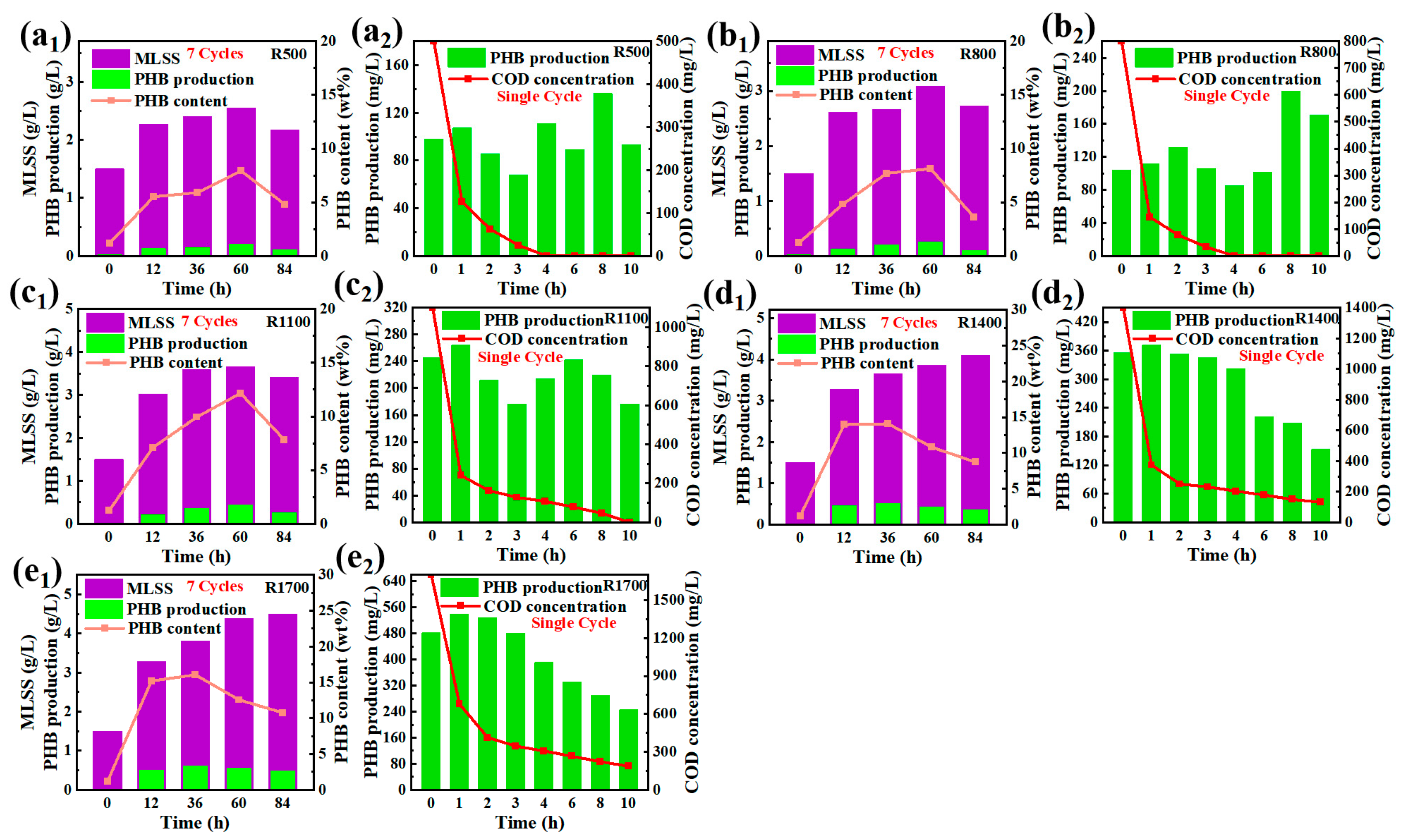
3.1. Effects of Substrate Concentration on PHB Production
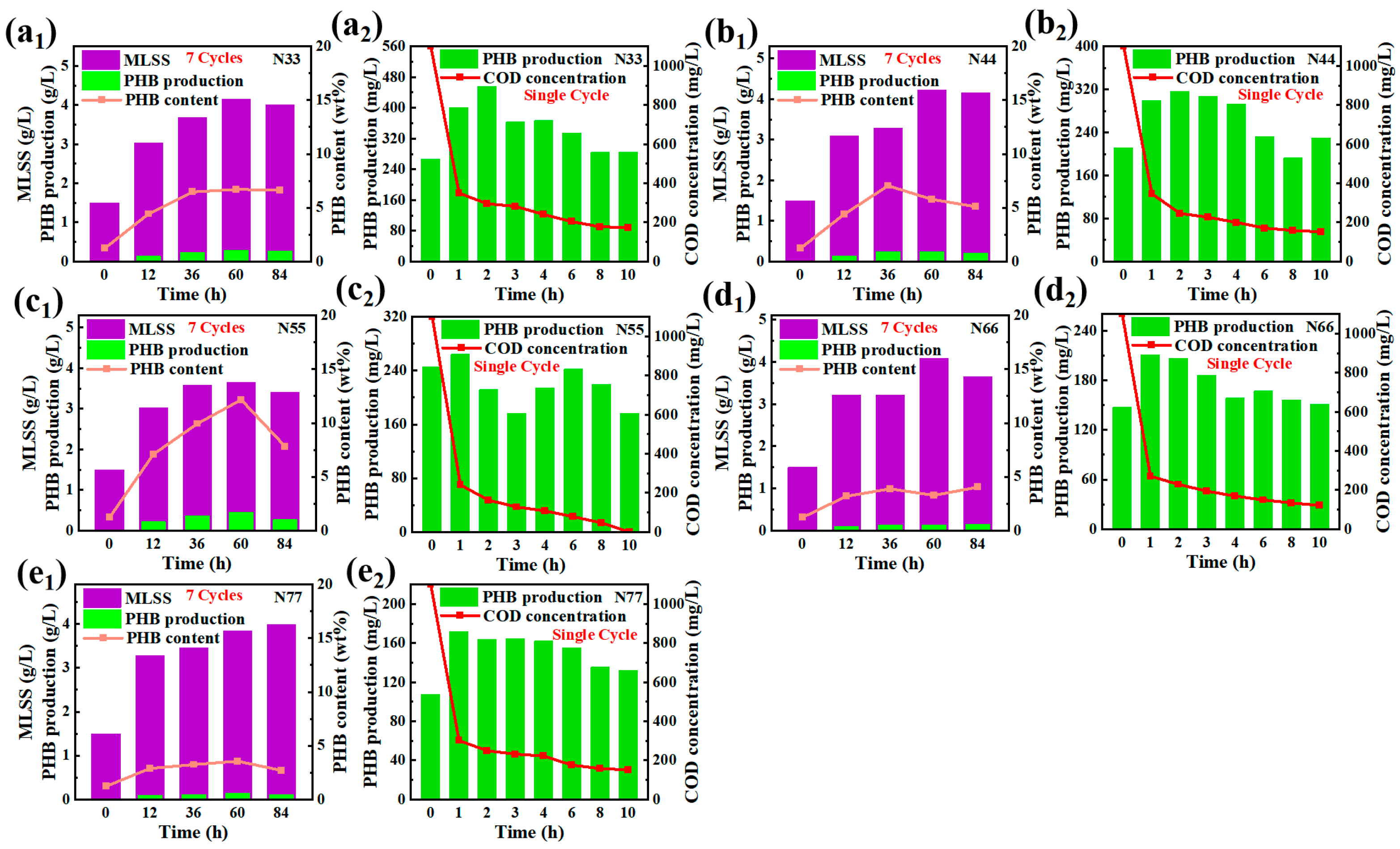
3.2. Effects of C/N Ratio on PHB Production
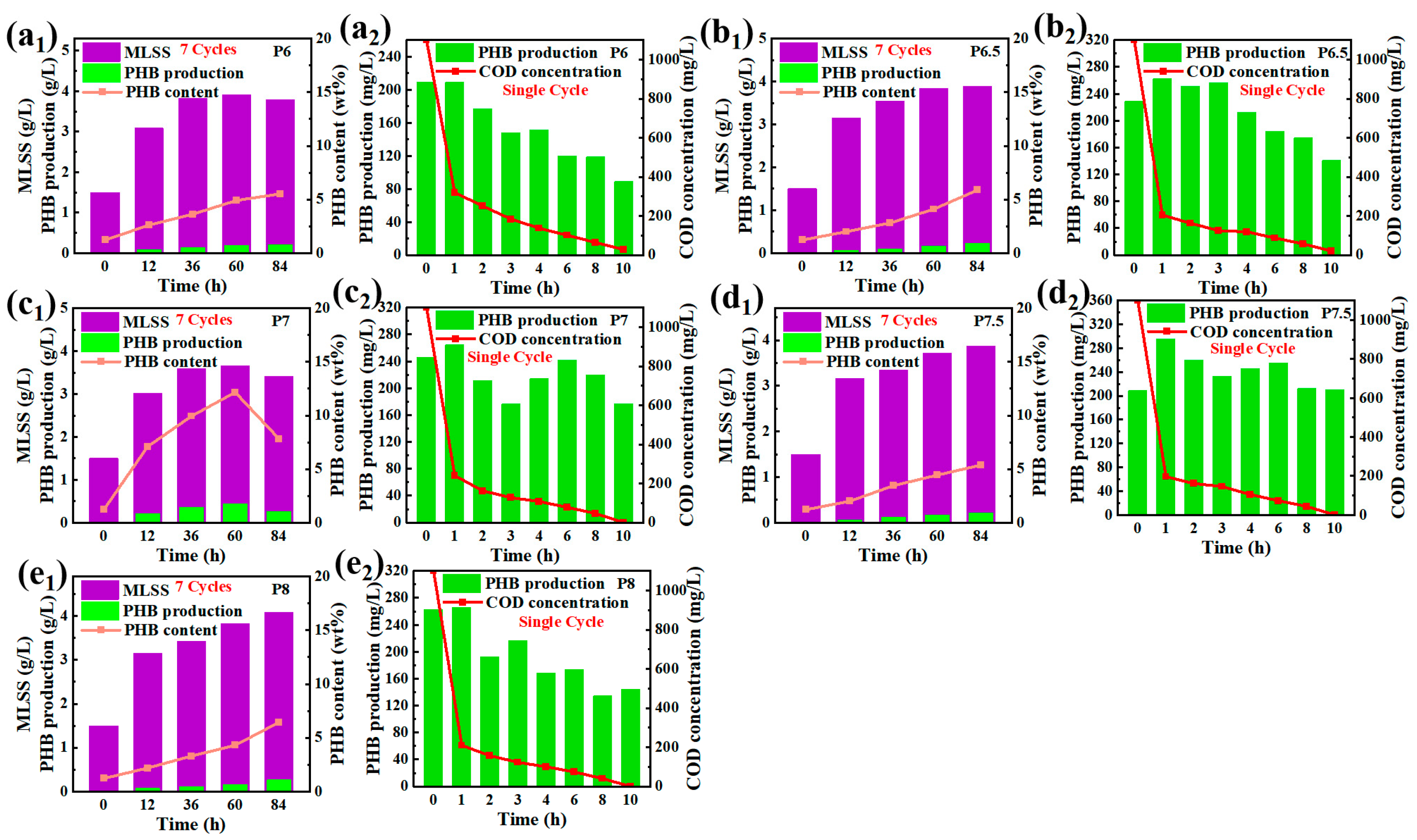
3.3. Effects of pH on PHA Production
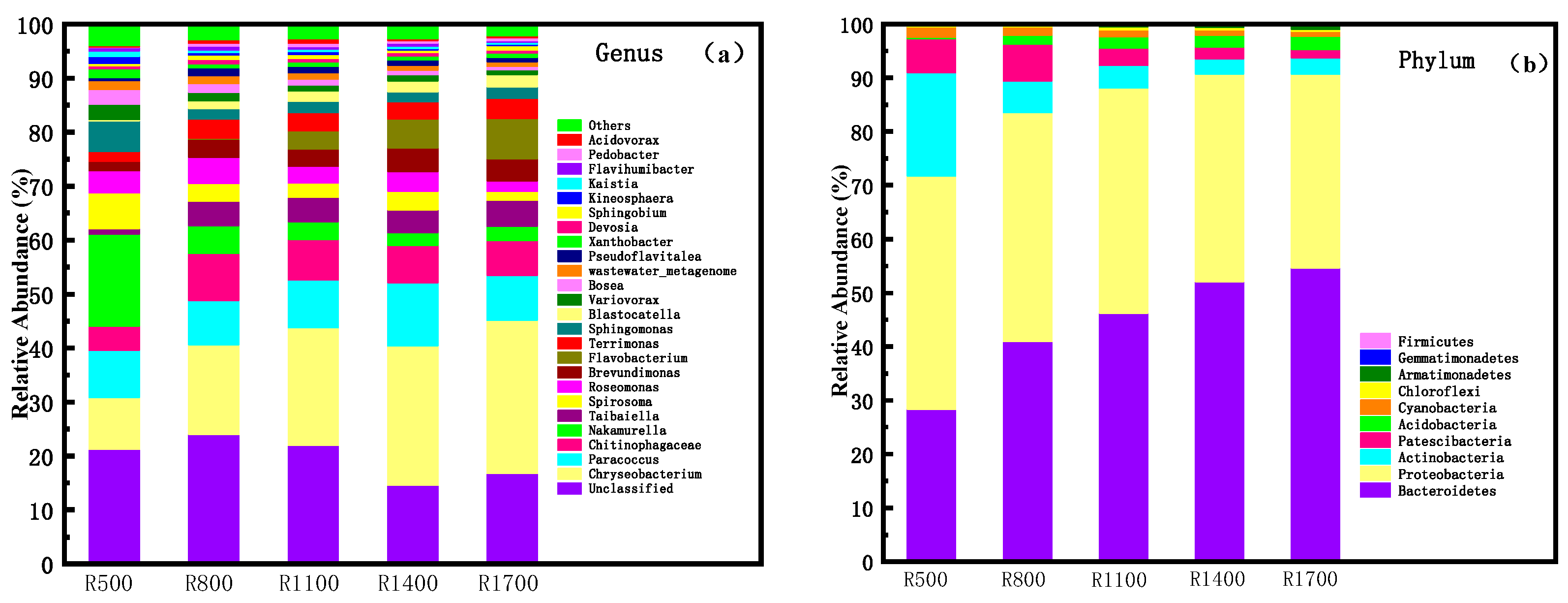
3.4. Microbial Community Analysis
4. Conclusions
Author Contributions
Funding
Institutional Review Board Statement
Informed Consent Statement
Data Availability Statement
Conflicts of Interest
References
- Li, J.; Li, D.; Su, Y.; Yan, X.; Wang, F.; Yu, L.; Ma, X. Efficient and economical production of polyhydroxyalkanoate from sustainable rubber wood hydrolysate and xylose as co-substrate by mixed microbial cultures. Bioresour. Technol. 2022, 355, 127238. [Google Scholar] [CrossRef] [PubMed]
- Zhang, Z.; Wang, Y.; Wang, X.; Zhang, Y.; Zhu, T.; Peng, L.; Xu, Y.; Chen, X.; Wang, D.; Ni, B.-J.; et al. Towards scaling-up implementation of polyhydroxyalkanoate (PHA) production from activated sludge: Progress and challenges. J. Clean. Prod. 2024, 447, 141542. [Google Scholar] [CrossRef]
- Li, D.; Ma, X.; Li, J.; Sun, B. Insights into enhanced polyhydroxyalkanoate production by the synergistic use of waste wood hydrolysate and volatile fatty acids by mixed microbial cultures. Bioresour. Technol. 2021, 337, 125488. [Google Scholar] [CrossRef]
- Li, D.; Yan, X.; Li, Y.; Ma, X.; Li, J. Achieving polyhydroxyalkanoate production from rubber wood waste using mixed microbial cultures and anaerobic–aerobic feeding regime. Int. J. Biol. Macromol. 2022, 199, 162–171. [Google Scholar] [CrossRef]
- Koller, M. Advances in polyhydroxyalkanoate (PHA) production: Current developments and future prospects. Bioengineering 2026, 13, 269. [Google Scholar] [CrossRef]
- Pei, R.; Vicente-Venegas, G.; Tomaszewska-Porada, A.; Van Loosdrecht, M.-C.-M.; Kleerebezem, R.; Werker, A. Visualization of Polyhydroxyalkanoate Accumulated in Waste Activated Sludge. Environ. Sci. Technol. 2023, 57, 11108–11121. [Google Scholar] [CrossRef]
- Yin, F.; Li, D.; Ma, X.; Zhang, C. Pretreatment of lignocellulosic feedstock to produce fermentable sugars for poly(3-hydroxybutyrate-co-3- hydroxyvalerate) production using activated sludge. Bioresour. Technol. 2019, 290, 121773. [Google Scholar] [CrossRef]
- Peng, Z.; Zhang, L.; Li, P.; Li, J.; Shen, C.; Tian, X.; Liu, S. Functional biochar and catalytic sustainable biosynthesis of PHA derived from waste activated sludge. Bioresour. Technol. 2025, 432, 132613. [Google Scholar] [CrossRef]
- Guo, R.; Cen, X.; Ni, B.-J.; Zheng, M. Bioplastic polyhydroxyalkanoate conversion in waste activated sludge. J. Environ. Manag. 2024, 370, 122866. [Google Scholar] [CrossRef] [PubMed]
- Chen, Z.; Huang, L.; Wen, Q.; Zhang, H.; Guo, Z. Effects of sludge retention time, carbon and initial biomass concentrations on selection process: From activated sludge to polyhydroxyalkanoate accumulating cultures. J. Environ. Sci. 2017, 52, 76–84. [Google Scholar] [CrossRef] [PubMed]
- Xiong, B.; Fang, Q.; Wei, T.; Wang, Z.; Shen, R.; Cheng, M.; Zhou, W. Chemical digestion method to promote activated sludge cell wall breaking and optimize the polyhydroxyalkanoate (PHA) extraction process. Int. J. Biol. Macromol. 2023, 240, 124369. [Google Scholar] [CrossRef] [PubMed]
- Al-Battashi, H.; Annamalai, N.; Al-Kindi, S.; Nair, A.-S.; Al-Bahry, S.; Verma, J.-P.; Sivakumar, N. Production of bioplastic (poly-3-hydroxybutyrate) using waste paper as a feedstock: Optimization of enzymatic hydrolysis and fermentation employing burkholderia sacchari-sciencedirect. J. Clean. Prod. 2019, 214, 236–247. [Google Scholar] [CrossRef]
- Okajima, I.; Muto, M.; Morimoto, S.; Nauchi, K.; Kodama, Y.; Park, E.-Y.; Sako, T. Bioethanol Production from Paper Sludge by Subcritical Water Pretreatment and Semi-simultaneous Saccharification and Fermentation. BioEnergy Res. 2024, 17, 1662–1673. [Google Scholar] [CrossRef]
- Wang, S.; You, X.; Gui, Z.; Wang, J.; Kang, S.; Cao, J.; Xie, F.; Yang, R.; Luo, H. Efficient Production of Fermentable Sugars from Common Reed Biomass Through Hydrothermal and Citric Acid Pretreatment Processes. BioEnergy Res. 2024, 17, 2177–2189. [Google Scholar] [CrossRef]
- Ding, K.; Liu, D.; Chen, X.; Zhang, H.; Shi, S.; Guo, X.; Zhou, L.; Han, L.; Xiao, W. Scalable lignocellulosic biorefineries: Technoeconomic review for efficient fermentable sugars production. Renew. Sustain. Energy Rev. 2024, 202, 114692. [Google Scholar] [CrossRef]
- Sabapathy, P.-C.; Devaraj, S.; Parthiban, A.; Kathirvel, P. Bioprocess optimization of PHB homopolymer and copolymer P3 (HB-co-HV) by Acinetobacter junii BP25 utilizing rice mill effluent as sustainable substrate. Environ. Technol. 2018, 39, 1430–1441. [Google Scholar] [CrossRef]
- Saratale, R.-G.; Saratale, G.-D.; Cho, S.-K.; Kim, D.-S.; Ghodake, G.S.; Kadam, A.; Kumar, G.; Bharagava, R.-N.; Banu, R.; Shin, H.-S. Pretreatment of kenaf (Hibiscus cannabinus L.) biomass feedstock for polyhydroxybutyrate (PHB) production and characterization. Bioresour. Technol. 2019, 282, 75–80. [Google Scholar] [CrossRef]
- Mussatto, S.I.; Roberto, I.C. Alternatives for detoxification of diluted-acid lignocellulosic hydrolyzates for use in fermentative processes: A review. Bioresour. Technol. 2004, 93, 1–10. [Google Scholar] [CrossRef]
- Follonier, S.; Riesen, R.; Zinn, M. Pilot-scale production of functionalized mcl-PHA from grape pomace supplemented with fatty acids. Chem. Biochem. Eng. Q. 2015, 29, 113–121. [Google Scholar] [CrossRef]
- Zhang, Z.; Lin, Y.; Wu, S.; Li, X.; Cheng, J.; Yang, C. Effect of composition of volatile fatty acids on yield of polyhydroxyalkanoates and mechanisms of bioconversion from activated sludge. Bioresour. Technol. 2023, 385, 129445. [Google Scholar] [CrossRef]
- Wang, Z.; Wen, Q.; Chen, Z. Betaine-Enhanced Mixed Culture Production of Polyhydroxyalkanoates from Saline Organic Waste: Overcoming Osmotic Stress for Sustainable Bioplastics. ACS Sustain. Chem. Eng. 2026, 14, 4115–4126. [Google Scholar] [CrossRef]
- Yin, F.; Li, D.; Ma, X.; Li, J.; Qiu, Y. Poly(3-hydroxybutyrate-3-hydroxyvalerate) production from pretreated waste lignocellulosic hydrolysates and acetate co-substrate. Bioresour. Technol. 2020, 316, 123911. [Google Scholar] [CrossRef]
- Montiel-Jarillo, G.; Carrera, J.; Suárez-Ojeda, M.-E. Enrichment of a mixed microbial culture for polyhydroxyalkanoates production: Effect of pH and N and P concentrations. Sci. Total Environ. 2017, 583, 300–307. [Google Scholar] [CrossRef]
- Villano, M.; Valentino, F.; Barbetta, A.; Martino, L.; Scandola, M.; Majone, M. Polyhydroxyalkanoates production with mixed microbial cultures: From culture selection to polymer recovery in a high-rate continuous process. New Biotechnol. 2014, 31, 289–296. [Google Scholar] [CrossRef]
- Zhou, T.; Wang, S.; Zhang, W.; Yin, F.; Cao, Q.; Lian, T.; Dong, H. Polyhydroxyalkanoates production from lactic acid fermentation broth of agricultural waste without extra purification: The effect of concentrations. Environ. Technol. Innov. 2023, 32, 103311. [Google Scholar] [CrossRef]
- Wijeyekoon, S.; Carere, C.R.; West, M.; Nath, S.; Gapes, D. Mixed culture polyhydroxyalkanoate (pha) synthesis from nutrient rich wet oxidation liquors. Water Res. 2018, 140, 1–11. [Google Scholar] [CrossRef] [PubMed]
- Kora, E.; Mpatsouli, K.; Ntaikou, I.; Tekerlekopoulou, A. Yields and microbial response in polyhydroxyalkanoate and glycogen biosynthesis by mixed cultures during one-step aerobic conversion of sugary wastewater under nutrient stress. J. Water Process Eng. 2025, 78, 108660. [Google Scholar] [CrossRef]
- Ren, Y.; Inoue, D.; Ike, M. Potential of activated sludge-derived mixed microbial culture enriched on acetate to produce polyhydroxyalkanoates from various substrates. J. Mater. Cycles Waste Manag. 2024, 26, 2355–2365. [Google Scholar] [CrossRef]
- Wang, Y.; Li, Y.; Wang, M.; Luo, C. Non-sterilized conversion of whole lignocellulosic components into polyhydroxybutyrate by Halomonas sp. Y3 with a dual anti-microbial contamination system. Int. J. Biol. Macromol. 2023, 241, 124606. [Google Scholar] [CrossRef]
- Zeng, B.Z.; Yu, T.; Wu, L.Y.; Wang, R.H.; Liu, J.; Zhao, J.Y.; Rene, E.R.; Zhu, H.T. Insight into enrichment of mixed microbial cultures from activated sludge for polyhydroxyalkanoates production under different carbon to nitrogen ratios. J. Environ. Chem. Eng. 2025, 13, 119006. [Google Scholar] [CrossRef]
- Verdini, E.; Bianchi, F.; Calabro, P.S.; Pugliesi, I.; Gori, R. From Agri-Food Wastes to Polyhydroxyalkanoates through a Sustainable Process. Fermentation 2022, 8, 556. [Google Scholar] [CrossRef]
- Di Leto, Y.; Mineo, A.; Capri, F.; Puccio, G.; Mercati, F.; Alduina, R.; Gallo, G.; Mannina, G. The role of carbon and nitrogen ratio on sewage sludge microbiota for producing polyhydroxyalkanoates. J. Environ. Manag. 2025, 375, 124240. [Google Scholar] [CrossRef] [PubMed]
- Lee, S.Y. Bacterial polyhydroxyalkanoates. Biotechnol. Bioeng. 1996, 49, 1–14. [Google Scholar] [CrossRef]
- Chen, Y.; Chen, X.Y.; Du, H.T.; Zhang, X.; Ma, Y.M.; Chen, J.C.; Ye, J.W.; Jiang, X.R.; Chen, G.Q. Chromosome engineering of the TCA cycle in Halomonas bluephagenesis for production of copolymers of 3-hydroxybutyrate and 3-hydroxyvalerate (PHBV). Metab. Eng. 2019, 54, 69–82. [Google Scholar] [CrossRef] [PubMed]
- Fu, X.; Xu, H.; Zhang, Q.; Xi, J.; Zhang, H.; Zheng, M.; Xi, B.; Hou, L. A review on polyhydroxyalkanoates production from various organic waste streams: Feedstocks, strains, and production strategy. Resour. Conserv. Recycl. 2023, 198, 107166. [Google Scholar] [CrossRef]
- Mineo, A.; Isern-Cazorla, L.; Rizzo, C.; Piccionello, A.P.; Suarez-Ojeda, M.E.; Mannina, G. Polyhydroxyalkanoates production by an advanced food-on-demand strategy: The effect of operational conditions. Chem. Eng. J. 2023, 472, 145007. [Google Scholar] [CrossRef]
- Albuquerque, M.G.E.; Torres, C.A.V.; Reis, M.A.M. Polyhydroxyalkanoate (PHA) production by a mixed microbial culture using sugar molasses: Effect of the influent substrate concentration on culture selection. Water Res. 2010, 44, 3419–3433. [Google Scholar] [CrossRef]
- Mohammed, S.; Behera, H.T.; Dekebo, A.; Ray, L. Optimization of the culture conditions for production of Polyhydroxyalkanoate and its characterization from a new Bacillus cereus sp. BNPI-92 strain, isolated from plastic waste dumping yard. Int. J. Biol. Macromol. 2020, 156, 1064–1080. [Google Scholar] [CrossRef] [PubMed]
- Tripathi, A.D.; Mishra, P.K.; Darani, K.K.; Agarwal, A.; Paul, V. Hydrothermal treatment of lignocellulose waste for the production of polyhydroxyalkanoates copolymer with potential application in food packaging. Trends Food Sci. Technol. 2022, 123, 233–250. [Google Scholar] [CrossRef]
- Tan, H.; Miao, R.; Liu, T.; Yang, L.; Yang, Y.; Chen, C.; Lei, J.; Li, Y.; He, J.; Sun, Q.; et al. A bifunctional cellulase–xylanase of a new Chryseobacterium strain isolated from the dung of a straw-fed cattle. Microb. Biotechnol. 2018, 11, 381–398. [Google Scholar] [CrossRef]
- Odeniyi, O.A.; Onilude, A.A.; Ayodele, M.A. Endoglucanase and xylanase production by Chryseobacterium species isolated from decaying sawdust. Pol. J. Environ. Stud. 2017, 26, 2737–2745. [Google Scholar] [CrossRef]
- Pinto-Ibieta, F.; Cea, M.; Cabrera, F.; Abanto, M.; Felissia, F.E.; Area, M.C.; Ciudad, G. Strategy for biological co-production of levulinic acid and polyhydroxyalkanoates by using mixed microbial cultures fed with synthetic hemicellulose hydrolysate. Bioresour. Technol. 2020, 309, 123323. [Google Scholar] [CrossRef] [PubMed]
- Lapebie, P.; Lombard, V.; Drula, E.; Terrapon, N.; Henrissat, B. Bacteroidetes use thousands of enzyme combinations to break down glycans. Nat. Commun. 2019, 10, 2043. [Google Scholar] [CrossRef]
- McKee, L.S.; La Rosa, S.L.; Westereng, B.; Eijsink, V.G.H.; Pope, P.B.; Larsbrink, J. Polysaccharide degradation by the Bacteroidetes: Mechanisms and nomenclature. Environ. Microbiol. Rep. 2021, 13, 559–581. [Google Scholar] [CrossRef]
- Wang, Y.P.; Cai, J.Y.; Lan, J.H.; Liu, Z.G.; He, N.; Shen, L.; Li, Q.B. Biosynthesis of poly(hydroxybutyrate-hydroxyvalerate) from the acclimated activated sludge and microbial characterization in this process. Bioresour. Technol. 2013, 148, 61–69. [Google Scholar] [CrossRef] [PubMed]




| Experiment No. | Substrate (Lignocellulose Hydrolysate mg/L) | Nitrogen Source (NH4Cl mg/L) | pH Value | C/N Ratio |
|---|---|---|---|---|
| R500 | 500 | 55 | 7 | 9 |
| R800 | 800 | 55 | 7 | 15 |
| R1100 (N55/P7) | 1100 | 55 | 7 | 20 |
| R1400 | 1400 | 55 | 7 | 26 |
| R1700 | 1700 | 55 | 7 | 31 |
| N33 | 1100 | 33 | 7 | 33 |
| N44 | 1100 | 44 | 7 | 25 |
| N66 | 1100 | 66 | 7 | 17 |
| N77 | 1100 | 77 | 7 | 14 |
| P6 | 1100 | 55 | 6 | 20 |
| P6.5 | 1100 | 55 | 6.5 | 20 |
| P7.5 | 1100 | 55 | 7.5 | 20 |
| P8 | 1100 | 55 | 8 | 20 |
Disclaimer/Publisher’s Note: The statements, opinions and data contained in all publications are solely those of the individual author(s) and contributor(s) and not of MDPI and/or the editor(s). MDPI and/or the editor(s) disclaim responsibility for any injury to people or property resulting from any ideas, methods, instructions or products referred to in the content. |
© 2026 by the authors. Licensee MDPI, Basel, Switzerland. This article is an open access article distributed under the terms and conditions of the Creative Commons Attribution (CC BY) license.
Share and Cite
Yuan, H.; Yin, F.; Liu, B.; Yang, J.; Nan, J. Production of Polyhydroxybutyrate from Lignocellulosic Hydrolysates Using Mixed Microbial Cultures. Fermentation 2026, 12, 242. https://doi.org/10.3390/fermentation12050242
Yuan H, Yin F, Liu B, Yang J, Nan J. Production of Polyhydroxybutyrate from Lignocellulosic Hydrolysates Using Mixed Microbial Cultures. Fermentation. 2026; 12(5):242. https://doi.org/10.3390/fermentation12050242
Chicago/Turabian StyleYuan, Huanjun, Fen Yin, Bingxin Liu, Jingjing Yang, and Jieru Nan. 2026. "Production of Polyhydroxybutyrate from Lignocellulosic Hydrolysates Using Mixed Microbial Cultures" Fermentation 12, no. 5: 242. https://doi.org/10.3390/fermentation12050242
APA StyleYuan, H., Yin, F., Liu, B., Yang, J., & Nan, J. (2026). Production of Polyhydroxybutyrate from Lignocellulosic Hydrolysates Using Mixed Microbial Cultures. Fermentation, 12(5), 242. https://doi.org/10.3390/fermentation12050242