1. Introduction
L-carnitine is a naturally occurring small quaternary ammonium molecule that plays a pivotal role in the transmembrane transport of long-chain fatty acids across the mitochondrial membrane and their subsequent β-oxidation. It also participates in intracellular acyl transport and the maintenance of energy metabolism homeostasis [
1,
2]. Consequently, it holds significant application value in fields such as clinical nutrition, functional foods, sports nutrition, and animal feed [
1,
3,
4]. Current industrial production primarily encompasses two routes: chemical synthesis and bioconversion. Although chemical synthesis has long maintained a dominant position, this route typically suffers from multiple process steps, harsh reaction conditions, significant environmental burdens, and complex chiral control. In particular, traditional chemical routes often involve the preparation and subsequent resolution of DL-carnitine, which increases production costs and the pressure of by-product disposal [
5,
6,
7]. In contrast, microbial bioconversion can produce L-isomer products with higher optical purity under mild conditions, fully leveraging the stereoselectivity of biocatalysis. Therefore, it is considered a crucial technical route aligned with the direction of green manufacturing.
Synthesizing L-carnitine using γBB as a substrate presents distinct advantages. γBB is the immediate precursor in the natural biosynthesis of L-carnitine, making the bioconversion step closer to the terminal point of natural metabolism; in eukaryotes, this reaction is catalyzed by γ-butyrobetaine hydroxylase (BBOX) [
8,
9]. Additionally, γBB itself lacks a chiral center, thereby circumventing the issue of racemate resolution at the substrate level [
7]. Previous studies have demonstrated the feasibility of this route in terms of product stereoselectivity and process development [
7,
10,
11]. However, reported highly efficient γBB-converting strains remain relatively scarce [
5,
11,
12]. So far, there are mainly two ways for the conversion of γBB to L-carnitine. One is the direct conversion of γBB to L-carnitine via a hydroxylation reaction, and the other is a coenzyme A (CoA)-dependent multi-step bioconversion mode, wherein γBB is first activated into its corresponding CoA ester and subsequently enters the L-carnitine and its downstream metabolic network through sequential enzymatic reactions. For instance, a γ-butyrobetainyl-CoA synthetase and a complete multi-step bioconversion system have been reported in
Agrobacterium sp. 525a and
Sinorhizobium meliloti, respectively [
12,
13]. These studies suggest that the bioconversion process of γBB to L-carnitine exhibits significant strain specificity and metabolic diversity [
11,
12,
13].
Bacteria belonging to the genus
Ensifer possess robust environmental adaptability and metabolic diversity [
14,
15,
16]. Previous studies suggest that their genomes may harbor functional modules related to compatible solute transport and carnitine-associated metabolism [
17,
18,
19]. Nevertheless, there are few reports on the biotransformation of γBB to L-carnitine by
Ensifer strains. In our previous study, we screened a strain WQ-1, which used betaine as a carbon source and can convert γBB to L-carnitine [
20], but studies on its fermentation performance and metabolic pathways are still lacking. This study first classified and identified the strain based on morphological characteristics, physiological and biochemical tests, along with phylogenetic analyses of the 16S rRNA gene and housekeeping genes. Its L-carnitine bioconversion performance was subsequently evaluated in both shake-flask and 5 L fed-batch systems. At the same time, integrated genomic and transcriptomic analyses elucidated the genetic basis and inductive responses associated with γBB transformation. This work contributes to enriching the microbial resources for L-carnitine biomanufacturing and provides a foundation for subsequent metabolic engineering and industrial fermentation.
2. Materials and Methods
2.1. Strains, Media, Main Reagents, and Primers
The strain used in this study,
Ensifer sp. WQ-1 (CCTCC M 20252114), was stored as a glycerol stock at −80 °C and activated on Luria–Bertani (LB) agar plates or in LB liquid medium prior to the experiments. The LB agar medium consisted of 10 g/L peptone, 10 g/L NaCl, 5 g/L yeast extract, and 10 g/L agar. The fermentation medium used for the biotransformation experiments consisted of 10 g/L betaine, 5 g/L Na
2HPO
4, 6 g/L KH
2PO
4, 0.5 g/L MgSO
4, 0.01 g/L FeSO
4, 0.2 g/L yeast extract, and 6 g/L γBB hydrochloride, supplemented with 1 mL/L trace element solution. The main reagents used in this study included an L-carnitine standard, γBB hydrochloride, sodium 1-octanesulfonate and acetonitrile, which were purchased from Adamas (Titan
®, Shanghai, China). The primers used for RT-qPCR are listed in
Table 1.
2.2. Strain Identification and Phylogenetic Analysis
Strain WQ-1 was inoculated onto LB solid medium to observe colony morphology. The microscopic morphology and internal structures of the cells were examined using a transmission electron microscope (TEM). The physiological and biochemical characteristics of the strain were determined using the BoJian Gram-negative bacterial identification system (Hopebio, Qingdao, China) to analyze its substrate utilization profiles and basic physiological and biochemical responses. The genomic DNA of strain WQ-1 was extracted using a bacterial genomic DNA extraction kit (Sangon Biotech, Shanghai, China). The 16S rRNA gene was amplified using the universal primers 27F (5′-AGAGTTTGATCCTGGCTCAG-3′) and 1492R (5′-TACGGCTACCTTGTTACGACTT-3′) and subsequently sequenced. The nucleotide sequences of four housekeeping genes (
atpD,
gltA,
gyrB, and
rpoB) were extracted from the genomic sequence of strain WQ-1 for multilocus phylogenetic analysis. The obtained 16S rRNA gene sequence and the individual housekeeping gene sequences were subjected to BLAST (
https://blast.ncbi.nlm.nih.gov/, accessed on 12 April 2026) homology searches against the NCBI GenBank database. Phylogenetic trees were constructed using MEGA12 v12.0.11 software. Based on the 16S rRNA gene sequence and the concatenated sequence of the four housekeeping genes, phylogenetic trees were respectively generated using the maximum-likelihood (ML) method, with 1000 bootstrap replicates performed to evaluate branch stability. To further refine the taxonomic assignment of strain WQ-1 at the genome level, genome-based taxonomic analyses were performed using the draft genome assembly of strain WQ-1 and closely related representative
Ensifer genomes. Average nucleotide identity (ANI) values were calculated using JSpeciesWS (
https://jspecies.ribohost.com/jspeciesws/, accessed on 4 May 2026) [
21], and digital DNA-DNA hybridization (dDDH) values were estimated using the Genome-to-Genome Distance Calculator (GGDC) 3.0 (
https://ggdc.dsmz.de/ggdc.php, accessed on 4 May 2026) [
22]. In addition, whole-genome phylogenomic analysis was performed using the Type (Strain) Genome Server (TYGS) (
https://tygs.dsmz.de/, accessed on 4 May 2026) [
23]. The draft genome assembly of strain WQ-1 was uploaded to TYGS, and closely related type-strain genomes were automatically selected for genome-based phylogenomic analysis. The generally accepted bacterial species delineation thresholds of approximately 95–96% ANI and 70% dDDH were used for taxonomic interpretation.
2.3. Fermentation in Shake-Flask and 5 L Fed-Batch Fermentation
The effects of cultivation temperature, initial pH, initial γBB concentration, and inoculum size on biomass and product formation were investigated at the shake-flask level in order to optimize the fermentation conditions. The shake-flask fermentations were conducted in 250 mL Erlenmeyer flasks with a working volume of 30 mL, an agitation speed of 220 rpm, and a fermentation time of 48 h. The temperatures were set at 25, 30, 35, and 37 °C, and the initial pH was set across a range of 5.0–10.5. Furthermore, initial γBB concentration and inoculum size were compared according to predefined gradients. Samples were taken periodically during the fermentation process to measure cell growth (OD600) and L-carnitine.
In a 5 L bioreactor scaled-up cultivation, the working volume was 3 L with an agitation speed of 500 rpm and an aeration rate of 1 NL/min. γBB was supplemented at 31 h and at 55 h during the fed-batch fermentation, with a cumulative substrate addition of 20 g/L. Samples were taken regularly throughout the fermentation to monitor cell growth, substrate consumption, and L-carnitine accumulation.
The concentrations of γBB and L-carnitine in the fermentation broth were determined using reversed-phase high-performance liquid chromatography (HPLC). The fermentation broth samples were mixed with 0.5 mol/L hydrochloric acid at a 1:1 (v/v) ratio. After thorough vortexing, the mixture was centrifuged at 8000 rpm for 10 min. The resulting supernatant was filtered through a 0.22 μm membrane filter prior to HPLC analysis. Chromatographic separation was performed on an Amethyst C18-H column (4.6 mm × 250 mm, 5 μm). The mobile phase consisted of 92% 2 mmol/L sodium 1-octanesulfonate solution and 8% acetonitrile. The aqueous phase contained 0.125% KH2PO4 and 0.125% K2HPO4, with the pH adjusted to 3.0 using phosphoric acid. The flow rate was set at 1.0 mL/min, the column temperature was maintained at 35 °C, the detection wavelength was 210 nm, and the injection volume was 10 μL.
2.4. Genomic Sequencing and Functional Annotation
Cells of Ensifer sp. WQ-1 cultured for 24 h were harvested, and genomic DNA was extracted using a bacterial genomic DNA extraction kit (Sangon Biotech, Shanghai, China). After quality inspection, the DNA samples were sent to Jiyin Biotechnology Co., Ltd. (Shanghai, China) for sequencing library construction. Paired-end sequencing was subsequently performed on an Illumina high-throughput sequencing platform to obtain the raw sequencing data. The raw sequencing data were subjected to quality control to remove adapter sequences, low-quality sequences, and reads containing a high number of ambiguous bases (N), yielding clean reads. To evaluate the sequencing data quality, statistical analyses were performed on metrics including data volume, GC content, and base quality scores (Q20 and Q30) of the clean reads. De novo assembly of the clean reads was performed using SPAdes v3.15.0, and the assembly quality was evaluated based on metrics such as total genome length, number of scaffolds, and N50. Subsequently, open reading frames (ORFs) and non-coding RNAs within the assembled results were predicted and annotated. Protein-coding genes were predicted using Prodigal v2.6.2, while rRNA and tRNA genes were annotated using RNAmmer v1.2 and tRNAscan-SE v2.0, respectively. The protein-coding genes were aligned and functionally annotated against multiple databases, including Nr, Swiss-Prot, GO, eggNOG, KEGG, Pfam, CAZy, SignalP, and TMHMM. The genome sequencing data of Ensifer sp. WQ-1 has been deposited in the NCBI BioSample database under accession number SAMN54895507.
2.5. Transcriptome Sequencing, Differential Expression Analysis, and RT-qPCR Validation
The strain was inoculated into shake-flask fermentation with and without 1 g/L γBB. After 48 h of cultivation, the cells were harvested for total RNA extraction using a bacterial RNA extraction kit (Sangon Biotech, Shanghai, China). After quality inspection, the samples were sent to Shanghai Biotechnology Corporation (Shanghai, China) for sequencing library construction, followed by transcriptome sequencing on an Illumina platform. The raw sequencing data were processed to remove adapter sequences, low-quality reads, and rRNA reads, yielding clean reads. The clean reads were subsequently mapped to the reference genome using Bowtie2 v2.2.0.5, and differential expression analysis was performed using edgeR v3.2.0. The thresholds for identifying differentially expressed genes (DEGs) were set at a q-value ≤ 0.05 and an absolute log2Fold Change ≥ 1 (|log2Fold Change| ≥ 1). The identified DEGs were further subjected to GO and KEGG functional enrichment analyses to elucidate the functional characteristics of the metabolic responses induced by γBB.
To verify the reliability of the RNA-seq results, six significantly upregulated DEGs (
G96_01853,
G96_01854,
G96_01856,
G96_01857,
G96_01858, and
G96_00277) were selected for quantitative reverse transcription PCR (RT-qPCR) validation. Cells cultured for 48 h in the presence and absence of 1 g/L γBB were harvested, and their total RNA was extracted using an RNA extraction kit (Sangon Biotech, Shanghai, China). The RNA was reverse-transcribed to synthesize cDNA using a PrimeScript RT reagent Kit with gDNA Eraser (Takara Bio, Kusatsu, Japan). Subsequently, amplification reactions were performed on a StepOnePlus Real-Time PCR System using the TB Green Premix Ex Taq II kit (Takara Bio, Japan), with the 16S rRNA gene serving as the internal reference gene. The primers used for RT-qPCR are listed in
Table 1. Three biological replicates were performed for each experimental group.
2.6. Statistical Analysis
With the exception of the transcriptome sequencing data (analyzed using dedicated bioinformatic pipelines) and the 5 L bioreactor fermentation data (conducted as a single representative process validation), all other experiments were performed in at least three independent biological replicates. The results are expressed as the mean ± standard deviation (SD). In the optimization of the shake-flask fermentation conditions, statistical differences among multiple groups were evaluated using a one-way analysis of variance (ANOVA). The consistency of expression fold changes between the RNA-seq and RT-qPCR data was evaluated using linear regression analysis. Data organization was performed using Microsoft Excel, and data visualization was conducted using GraphPad Prism v10.1.2.
3. Results
3.1. Identification of WQ-1 as an Ensifer Strain
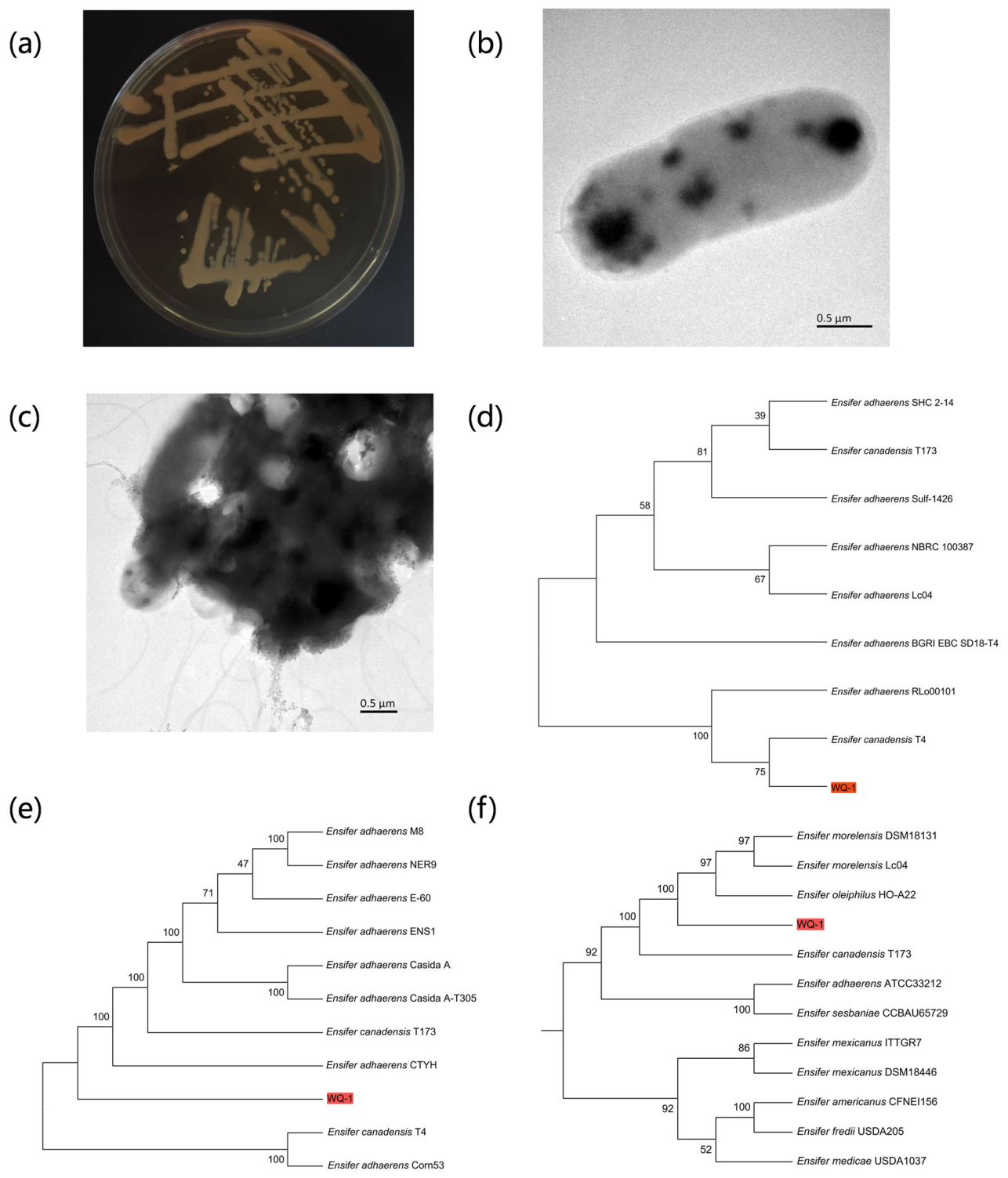
Morphological observations indicated that strain WQ-1 formed translucent colonies on LB agar plates (
Figure 1a). Transmission electron microscopy (TEM) revealed that the cells were short rod-shaped, approximately 0.5–0.9 × 1.2–3.2 μm in size (
Figure 1b), and motile with distinct peritrichous flagella (
Figure 1c). No endospores or spore structures were observed, and Gram staining was negative.
Physiological and biochemical characterization demonstrated that WQ-1 was positive for oxidase, catalase, ONPG, and urease, but negative for indole, methyl red, and Voges-Proskauer (V-P) reactions. Additionally, the strain exhibited a certain degree of salt tolerance. These phenotypic characteristics indicate that the strain possesses typical physiological features of Gram-negative bacteria.
The maximum-likelihood (ML) phylogenetic trees, constructed based on the 16S rRNA gene (
Figure 1d) and the concatenated sequences of four housekeeping genes (atpD, gltA, gyrB, and rpoB) (
Figure 1e), consistently demonstrated that strain WQ-1 clustered tightly with members of the genus
Ensifer and showed a close phylogenetic relationship with strains of
Ensifer canadensis and
Ensifer adhaerens (e.g., strain T4 and Corn53). These results, together with the morphological, physiological, and biochemical characteristics, supported the assignment of strain WQ-1 to the genus
Ensifer.
To further resolve its species-level taxonomic position, genome-based ANI and dDDH analyses were performed using closely related representative Ensifer genomes (
Table 2). Strain WQ-1 showed the highest ANI value with
Ensifer canadensis T4, reaching 89.61%, followed by
Ensifer canadensis T173 with an ANI value of 89.58%. The highest dDDH value was observed between WQ-1 and
Ensifer canadensis T173, reaching 52.9%, while the dDDH value between WQ-1 and
Ensifer canadensis T4 was 50.9%. In comparison, the ANI values between WQ-1 and representative
Ensifer adhaerens strains ranged from 85.79% to 85.96%, with corresponding dDDH values of 34.2–36.5%. All of these ANI and dDDH values were below the generally accepted bacterial species delineation thresholds of approximately 95–96% ANI and 70% dDDH.
Consistently, the whole-genome phylogenomic tree further placed strain WQ-1 within the genus
Ensifer, while WQ-1 formed a distinct branch separate from the closely related reference strains (
Figure 1f). Therefore, although the 16S rRNA gene phylogeny, multilocus phylogenetic analysis, and whole-genome phylogenomic analysis consistently supported the genus-level assignment of WQ-1 as an
Ensifer strain, the ANI and dDDH results did not support its confident assignment to any of the currently compared known
Ensifer species. Based on these combined taxonomic results, strain WQ-1 was conservatively designated as
Ensifer sp. WQ-1.
3.2. Optimization of Shake-Flask Fermentation Conditions
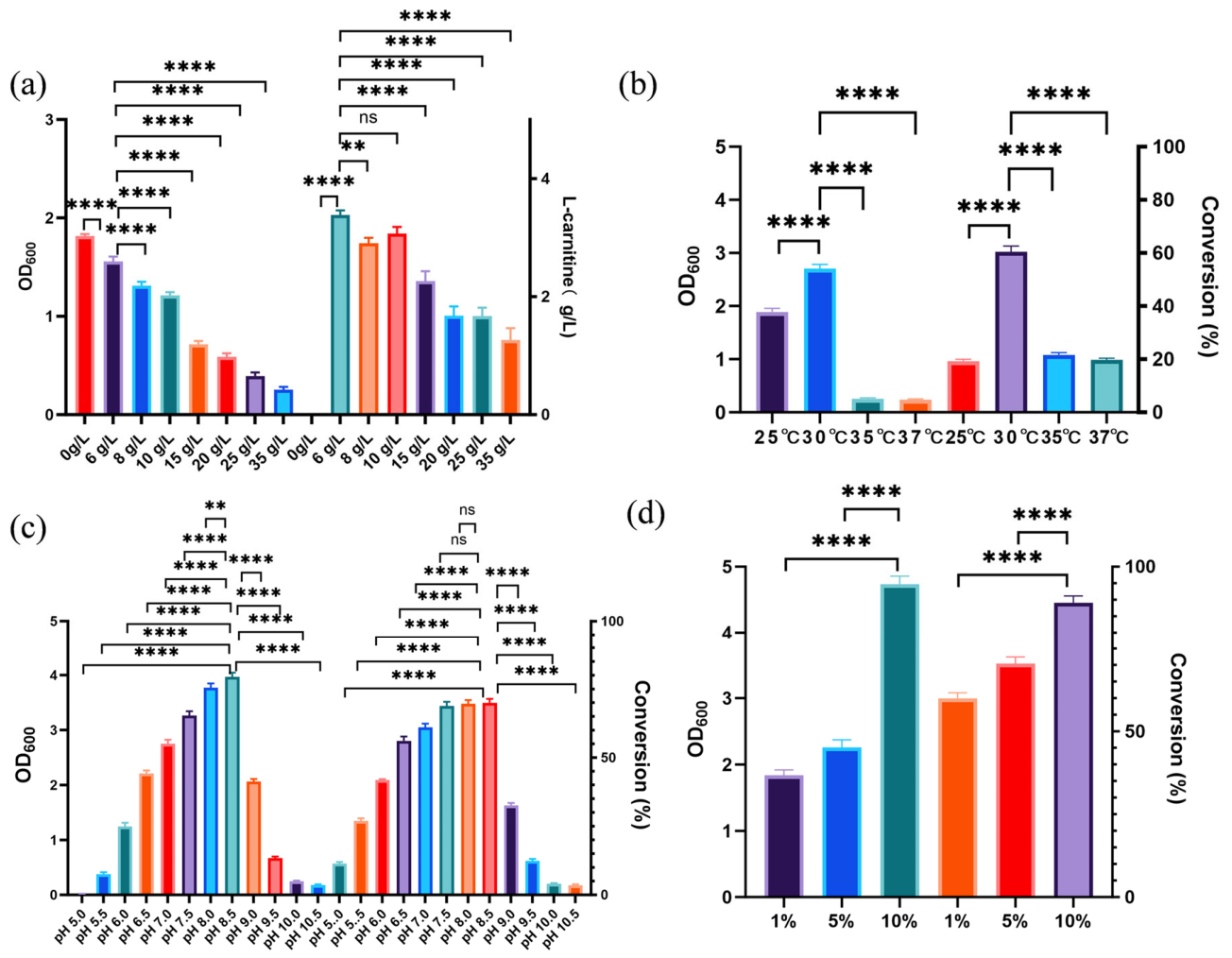
The initial γBB concentration also played a crucial role in cell growth and conversion efficiency. When γBB was not added, the cell grew well with the highest final OD
600, but no L-carnitine was produced (
Figure 2a). With the increase in initial γBB concentration from 6 g/L to 35 g/L, the final OD
600 and γBB molar conversion rate generally showed a downward trend, suggesting that a higher concentration of γBB might exert a certain inhibitory effect on the cells. In the subsequent optimization condition, 6 g/L γBB was added to the medium as a suitable initial substrate concentration.
The shake-flask fermentation results demonstrated that different cultivation conditions significantly affected the growth status of
Ensifer sp. WQ-1 and its bioconversion efficiency of γBB to L-carnitine. Within the investigated temperature range from 25 °C to 37 °C, cell growth (as reflected by OD
600) and the molar conversion rate of γBB were optimal at 30 °C. Under this condition, the titer of L-carnitine reached 3.70 g/L. When the temperature was increased to 35 °C and 37 °C, the final OD
600 values were 0.256 and 0.236, respectively, and the γBB conversion efficiency also decreased (
Figure 2b), indicating that higher temperatures are unfavorable for final biomass accumulation and the bioconversion performance of this strain.
The initial pH also exhibited a distinct impact on the bioconversion performance (
Figure 2c). As the initial pH increased from 5.0 to 8.5, final OD
600 and the γBB molar conversion rate showed an overall upward trend reaching an optimal level at pH 8.5. When the pH was further increased, the bioconversion performance did not improve further. Under pH 8.5 conditions, the L-carnitine titer, product per biomass, and γBB molar conversion rate were 3.72 g/L, 1.96 g/g CDW and 70%, respectively, which was the most suitable initial pH under the tested conditions. These results suggest that a slightly alkaline environment is more conducive to the γBB bioconversion by
Ensifer sp. WQ-1, which may be related to a more suitable physiological state of the cells and the optimal activity of relevant enzyme systems under these conditions. The optimization of inoculum size revealed that increasing the inoculum size from 1% to 10% improved both the OD
600 and the γBB conversion rate (
Figure 2d). This indicates that a larger initial microbial biomass helps shorten the lag phase and enhances the biocatalytic capacity of the system.
Based on the comprehensive optimization results, the optimal fermentation conditions at the shake-flask level were determined as follows: 30 °C, initial pH 8.5, 6 g/L initial γBB concentration, and 10% inoculum size. Under these conditions, the molar conversion rate of γBB to L-carnitine in the shake-flask system reached 88%. These findings indicate that the rational regulation of fermentation conditions can significantly improve the bioconversion performance of Ensifer sp. WQ-1, providing a solid process foundation for the subsequent 5 L fed-batch fermentation.
3.3. Fed-Batch Fermentation Enhanced L-Carnitine Production by Ensifer sp. WQ-1
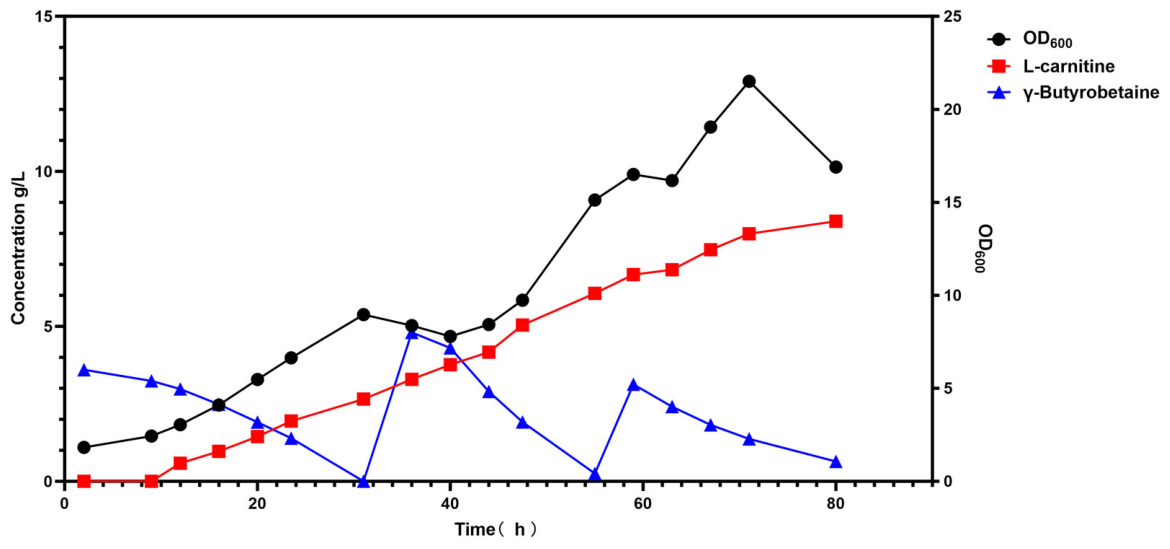
Based on the shake-flask optimization results, fed-batch fermentation was further conducted in a 5 L apparatus to evaluate the L-carnitine production capacity of
Ensifer sp. WQ-1 under scaled-up conditions (
Figure 3). During the fermentation process, the initially added γBB was nearly depleted at approximately 31 h, at which point the L-carnitine concentration reached 4.42 g/L. Subsequently, based on substrate consumption, the first feeding was performed at 31 h by adding 9 g/L γBB, bringing the cumulative substrate dosage in the system to 15 g/L. Following this supplementation, the cells continued to utilize the substrate, and the L-carnitine concentration increased continuously. When the fermentation proceeded to 55 h, an additional 5 g/L γBB was supplemented, reaching a cumulative substrate dosage of 20 g/L. After the second feeding, the system maintained a robust substrate bioconversion capacity, and L-carnitine continued to accumulate. This indicates that the fed-batch strategy can effectively prolong the effective bioconversion period of the strain and, to some extent, alleviate the inhibitory effects caused by a one-time addition of a high-concentration substrate. At 80 h of fermentation, the final L-carnitine titer reached 13.98 g/L, with a molar conversion rate of 78.7%. Based on the final L-carnitine titer and the total fermentation time, the overall volumetric productivity reached 0.175 g·L
−1·h
−1, with a specific productivity of 0.145 g·g
−1·h
−1. Compared with the shake-flask fermentation results, the final molar conversion rate in the 5 L bioreactor system slightly decreased, but the final L-carnitine titer significantly increased. This suggests that fed-batch fermentation is more conducive to product accumulation, whereas the longer fermentation cycle and higher substrate load might exert a certain impact on the overall conversion efficiency.
Overall, the 5 L fed-batch fermentation results reveal that Ensifer sp. WQ-1 maintains robust γBB utilization and L-carnitine production capabilities under scaled-up cultivation conditions, demonstrating promising potential for process scale-up. These findings provide a solid basis for further optimizing the feeding strategy, improving fermentation efficiency, and conducting larger-scale scale-up studies.
3.4. Genomic Analysis Reveals the Carnitine Metabolic Potential of Ensifer sp. WQ-1
To systematically evaluate the metabolic potential of strain WQ-1, whole-genome sequencing and functional annotation analyses were performed. Sequencing yielded a total of 7,630,568 raw reads. After quality control, 7,556,482 clean reads were obtained, with a total clean data volume of 1106 Mb. The GC content was 60.99%, and the Q20 and Q30 scores reached 98.01% and 93.74%, respectively, indicating high-quality sequencing data. Subsequent assembly produced a genome sequence with a total length of 6,968,278 bp, consisting of 93 scaffolds, with an N50 of 224,505 bp and an average sequencing depth of approximately 162×. This demonstrates the excellent completeness and reliability of the genome assembly.
Gene prediction results showed that 6568 protein-coding genes, 4 rRNA genes, and 51 tRNA genes were identified in the
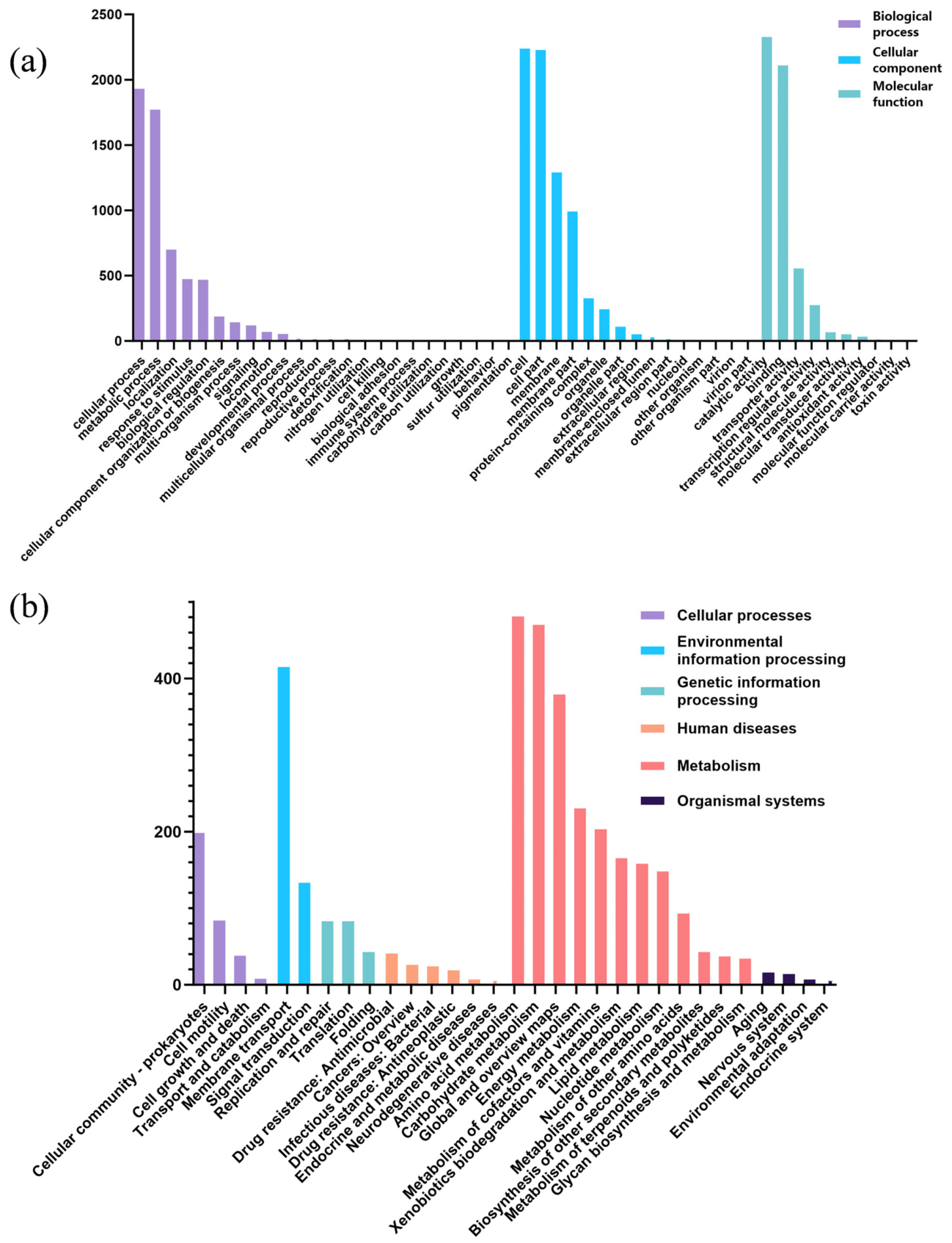
Ensifer sp. WQ-1 genome. Gene Ontology (GO) functional classification indicated that the annotated genes were primarily distributed across categories such as metabolic process, cellular process, catalytic activity, binding, and membrane and membrane part (
Figure 4a), suggesting that the strain possesses robust basal metabolic and substance transport capabilities. Kyoto Encyclopedia of Genes and Genomes (KEGG) functional classification further revealed that the annotated genes were mainly concentrated in categories including metabolism, environmental information processing, and cellular processes. Within the secondary classifications, pathways related to amino acid metabolism, carbohydrate metabolism, membrane transport, and energy metabolism were predominant (
Figure 4b), reflecting the strain’s extensive metabolic network and its potential to respond to environmental changes.
Further screening based on the functional annotation results revealed the presence of multiple classes of candidate genes related to quaternary ammonium compound uptake, transmembrane transport, and carnitine-related metabolic processes in the WQ-1 genome (
Table 3). These included several candidate genes likely involved in carnitine-related oxidation reactions, such as the carnitine monooxygenase subunit-encoding genes
G96_00260,
G96_01088, and
G96_03422, the candidate carnitine 3-dehydrogenase-encoding gene
G96_01857, and the candidate gene G96_01999, which may participate in the crotonobetaine/carnitine-CoA ligase reaction. In addition, multiple sets of genes associated with the Opu/Ous-type ABC transport system and several CdhR family transcriptional regulators were detected in the genome, indicating that the strain likely possesses the capacities for transmembrane uptake, intracellular bioconversion, and regulatory responses to quaternary ammonium compounds.
Overall, Ensifer sp. WQ-1 harbors a relatively complete genetic foundation for quaternary ammonium compound transport and carnitine-related metabolism, providing genomic-level support for its conversion of γBB to L-carnitine. These results also establish a solid foundation for further elucidating the γBB-induced responses and potential metabolic pathways in conjunction with transcriptomic analyses.
3.5. Transcriptome Analysis Suggests γBB Induction Triggers the Expression Response of a CoA-Dependent Metabolic Module
To analyze the transcriptional response of Ensifer sp. WQ-1 under γBB induction, transcriptome sequencing was performed on cells cultivated for 48 h in the absence and presence of 1 g/L γBB. The sequencing results revealed that Sample 0 (without γBB) and Sample 1 (with 1 g/L γBB) yielded 28,109,945 and 48,295,568 clean reads, accounting for 91.43% and 94.41% of the raw reads, respectively. The GC content for both sample groups was 61%, and the mapping rates to the reference genome were 69.90% and 68.27%.
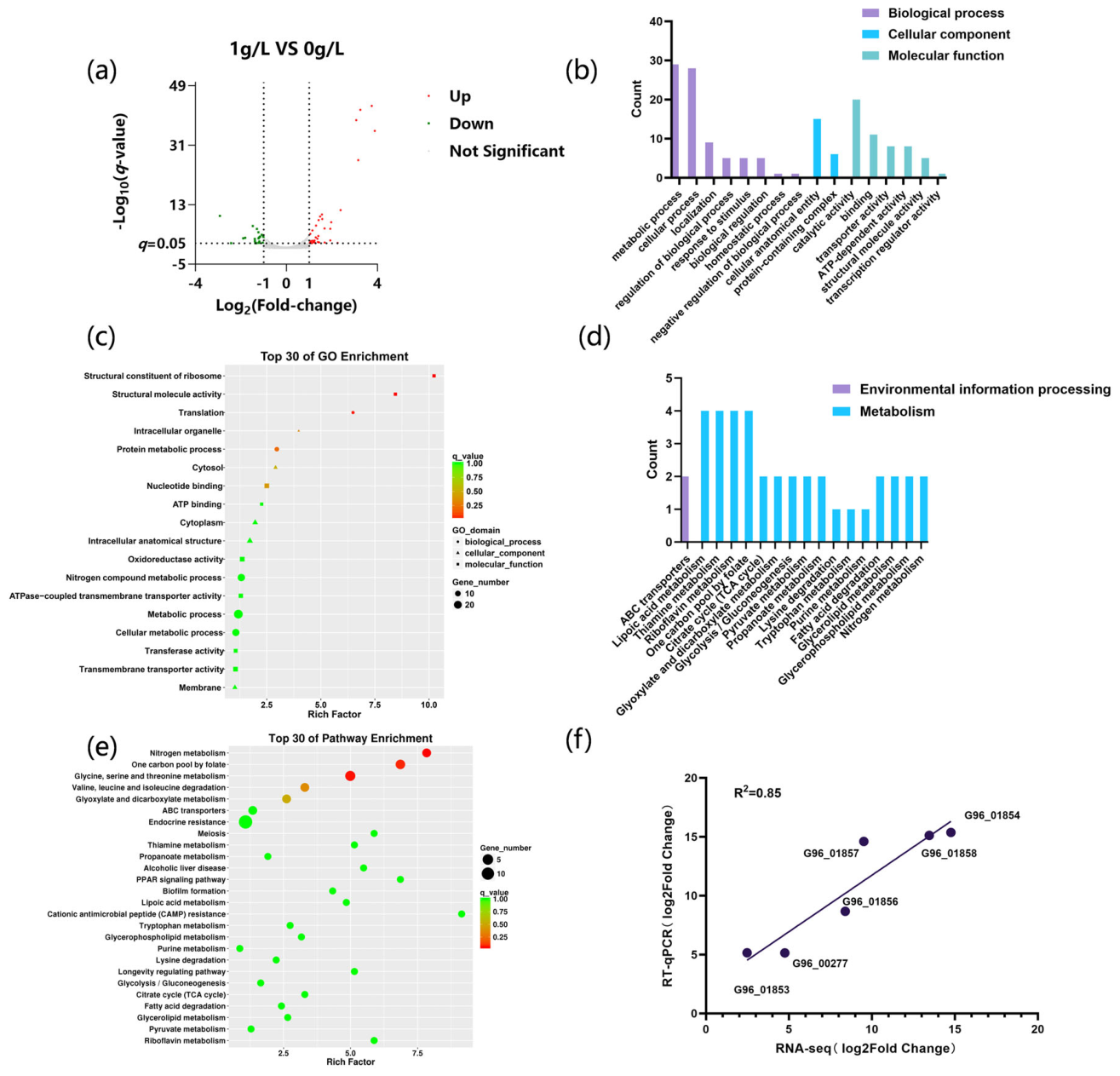
Under the screening criteria of a q-value ≤ 0.05 and an absolute log2Fold Change ≥ 1 (|log2Fold Change| ≥ 1), a total of 58 DEGs were identified, comprising 33 upregulated and 25 downregulated genes (
Figure 5a). Among the significantly upregulated genes,
G96_01854 (acyl-CoA synthetase, log2FC = 3.88),
G96_01858 (3-dehydrocarnitine lyase, log2FC = 3.75), and
G96_01857 (carnitine 3-dehydrogenase, log2FC = 3.25) exhibited the most pronounced upregulation. Conversely, the downregulated genes included
G96_01846, which encodes an ABC transporter substrate-binding protein (log2FC = −2.92). These findings demonstrate that the transcript levels of WQ-1 underwent distinct changes in the presence of γBB, with several DEGs being closely associated with acyl-CoA-dependent metabolic processes and carnitine-related bioconversion reactions.
GO and KEGG enrichment analyses of the DEGs revealed that the enriched GO terms were primarily concentrated in functional categories such as the structural constituent of ribosome, structural molecule activity, translation, and protein metabolic processes (
Figure 5b,c). The KEGG enrichment results mainly involved pathways related to nitrogen metabolism, one-carbon pool by folate, and glycine, serine, and threonine metabolism (
Figure 5d,e). These results indicate that the addition of γBB not only induced the expression of metabolic genes directly related to substrate bioconversion but was also accompanied by a synergistic response in basal physiological processes such as protein synthesis, nitrogen metabolism, and amino acid metabolism. This suggests that extensive metabolic reprogramming likely occurred during the γBB bioconversion by WQ-1.
To verify the reliability of the RNA-seq results, six significantly upregulated DEGs (
G96_01853,
G96_01854,
G96_01856,
G96_01857,
G96_01858, and
G96_00277) were further selected for RT-qPCR validation. Linear regression analysis revealed a strong linear correlation between the expression fold changes measured via RT-qPCR and those obtained from the RNA-seq data (
Figure 5f), thereby supporting the reliability of the major transcriptional trends identified by RNA-seq.
The transcriptome analysis demonstrates that the presence of γBB can significantly induce the expression of genes associated with acyl-CoA activation, dehydrogenation, and carnitine-related metabolism in Ensifer sp. WQ-1, supporting the conclusion that the strain activates a metabolic module linked to CoA-dependent bioconversion upon substrate stimulation. These findings provide important evidence for proposing a potential γBB bioconversion pathway in combination with the genomic information.
3.6. Multi-Omics Analysis Supports the Existence of a Potential CoA-Dependent Bioconversion Pathway in WQ-1
To further elucidate the potential mechanism underlying the bioconversion of γBB to L-carnitine catalyzed by Ensifer sp. WQ-1, a comprehensive analysis of candidate genes related to substrate transport, coenzyme A (CoA) activation, and subsequent metabolic bioconversion was conducted by integrating genomic functional annotation and transcriptomic differential expression results.
Genomic annotation revealed the presence of multiple transport systems associated with the uptake of betaine/carnitine-like quaternary ammonium compounds in WQ-1. These include the Opu/Ous-type ABC transport system and proW-like permease-encoding genes, such as G96_00519, G96_01673, and G96_03467. These genes were associated with transmembrane transport functions in both GO and KEGG annotations, suggesting that the strain likely possesses the ability to uptake quaternary ammonium compounds such as γBB and transport them intracellularly.
In addition to the transport-related genes, various candidate genes involved in carnitine-related metabolic processes were detected in the WQ-1 genome. These included carnitine monooxygenase subunit-encoding genes (G96_00260, G96_01088, and G96_03422), a candidate carnitine 3-dehydrogenase-encoding gene (G96_01857), and a candidate gene (G96_01999) potentially participating in the crotonobetaine/carnitine-CoA ligase reaction. These results indicate that WQ-1 possesses a relatively complete genetic foundation for quaternary ammonium compound transport and carnitine-related metabolism, providing genomic-level support for its conversion of γBB to L-carnitine.
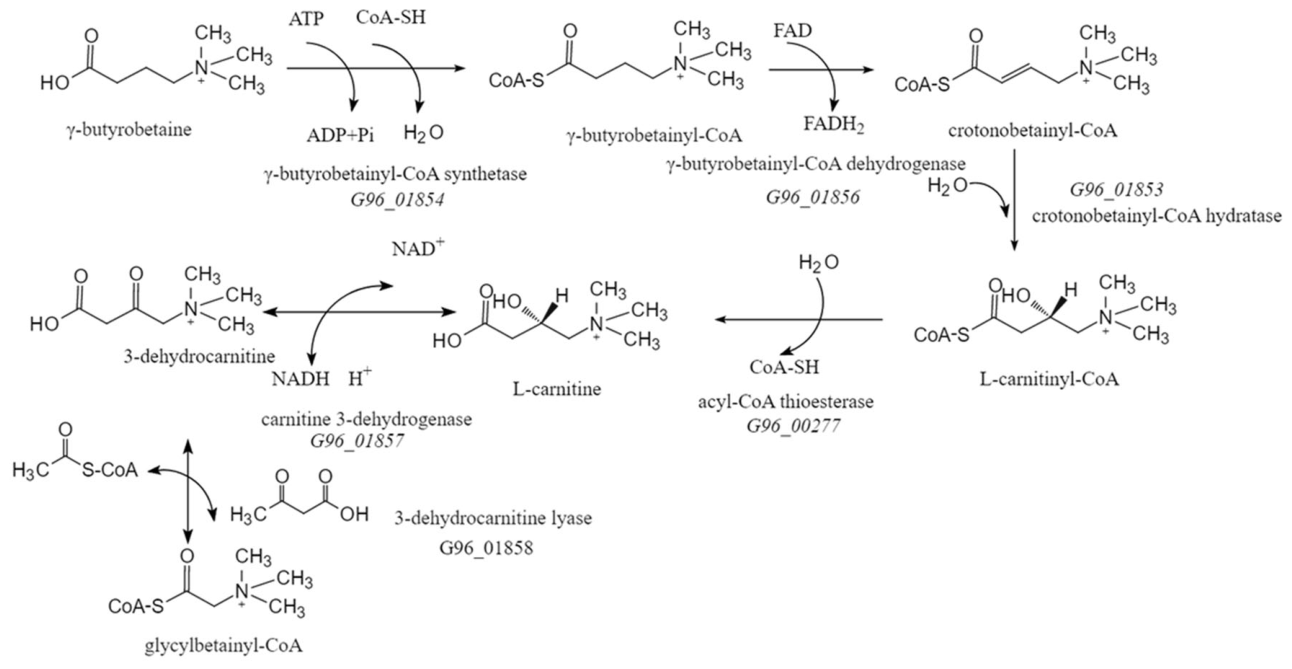
Further transcriptomic analysis demonstrated that under γBB induction, multiple genes associated with CoA-dependent metabolic processes were significantly upregulated. These included genes encoding acyl-CoA synthetase (G96_01854), acyl-CoA dehydrogenase (G96_01856), crotonobetainyl-CoA hydratase (G96_01853), acyl-CoA thioesterase (G96_00277), carnitine 3-dehydrogenase (G96_01857), and 3-dehydrocarnitine lyase (G96_01858). Notably, the significant upregulation of G96_01854 and G96_01856 is particularly noteworthy, suggesting that intracellular γBB may first undergo CoA activation, followed by sequential dehydrogenation and hydration processes. Concurrently, the upregulation of G96_01857 and G96_01858 indicates that the generated L-carnitine might further enter the downstream metabolic network.
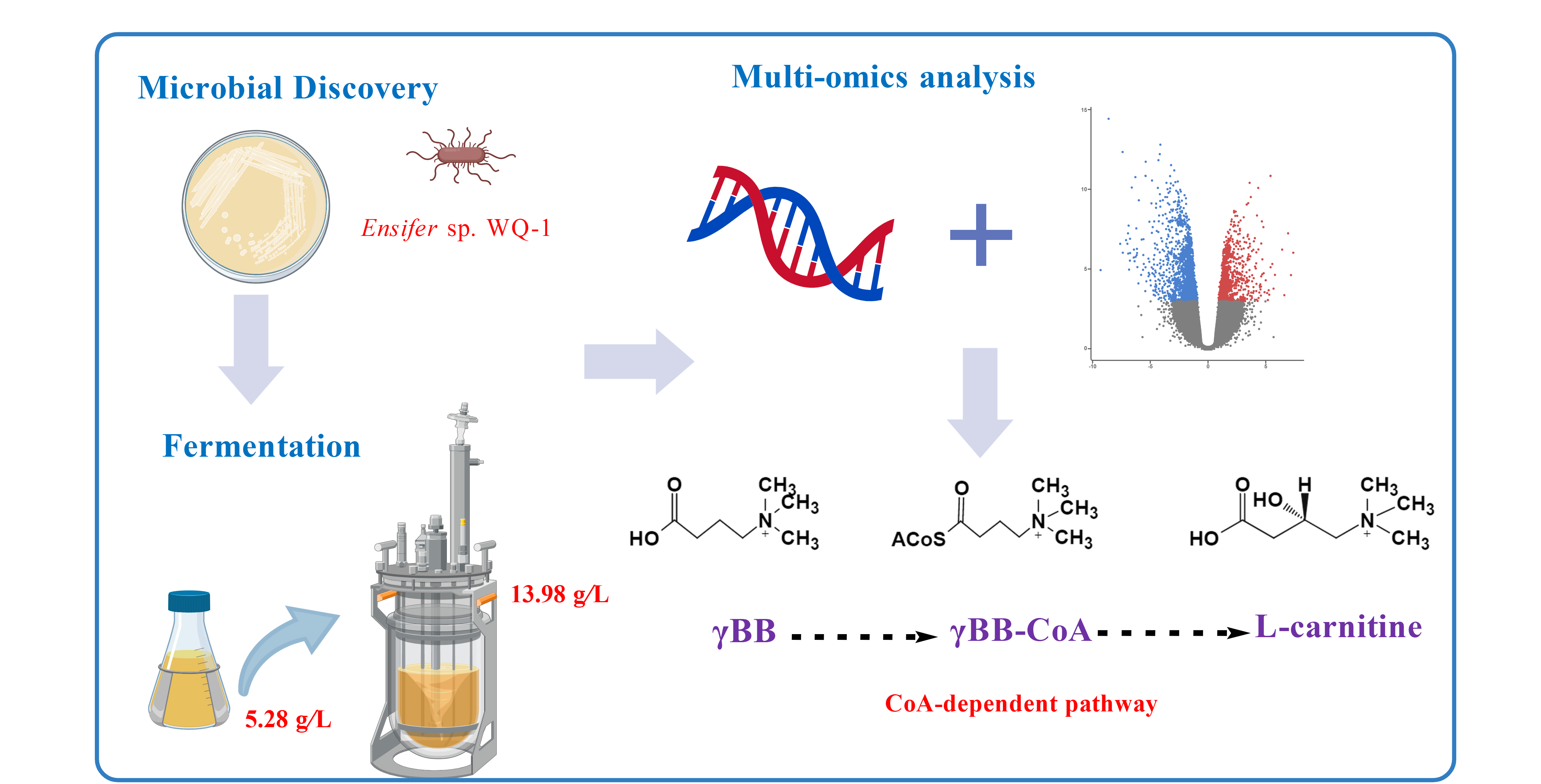
Based on the integrated genomic and transcriptomic evidence, the γBB bioconversion process in WQ-1 is hypothesized to involve the following steps (
Figure 6): initially, γBB enters the cell via the ABC transport system; subsequently, it is activated into γ-butyrobetainyl-CoA by γ-butyrobetainyl-CoA synthetase (
G96_01854); it is then dehydrogenated into crotonobetainyl-CoA catalyzed by γ-butyrobetainyl-CoA dehydrogenase (
G96_01856), followed by hydration to form L-carnitinyl-CoA under the action of crotonobetainyl-CoA hydratase (
G96_01853); finally, L-carnitine is released via hydrolysis catalyzed by acyl-CoA thioesterase(
G96_00277). The generated L-carnitine may also enter subsequent metabolic processes catalyzed by carnitine 3-dehydrogenase and 3-dehydrocarnitine lyase. Overall, the available evidence suggests that this process may exhibit the characteristics of a stepwise CoA-dependent bioconversion pathway.
It is worth noting that the γBB bioconversion pathway proposed in this study is primarily deduced based on genomic annotation information, transcriptomic responses under γBB induction, and RT-qPCR validation results. It currently remains a potential metabolic model rather than a fully verified metabolic pathway. Although the multi-omics evidence suggests that WQ-1 is more likely to employ a CoA-dependent mode rather than a one-step hydroxylation mode for the bioconversion of γBB to L-carnitine, further investigations, including the direct detection of key intermediates, in vitro enzymatic characterization of key enzymes, and genetic validation of key genes, are still required. Therefore, a more cautious conclusion would be that the multi-omics results support the existence of a potential CoA-dependent γBB bioconversion pathway in Ensifer sp. WQ-1.
4. Discussion
This study identified WQ-1 as belonging to the genus
Ensifer for the first time. Genome-based ANI and dDDH analyses, together with whole-genome phylogenomic analysis, further supported the genus-level assignment of WQ-1 to
Ensifer, while indicating that it could not be confidently assigned to any of the currently compared known
Ensifer species. Under optimized conditions, it exhibited high γBB biotransformation capability, suggesting its potential for further development as an L-carnitine biocatalytic strain. Previous studies on microbial L-carnitine production have primarily focused on
Escherichia coli and
Proteus sp. systems, predominantly utilizing crotonobetaine or D-carnitine for whole-cell biotransformation. These studies have demonstrated the feasibility of microbial L-carnitine preparation but also indicate that current systems mainly rely on the crotonobetaine/D-carnitine route [
5,
6,
24,
25,
26]. In contrast, research on microbial resources and mechanisms capable of directly converting γBB to efficiently produce L-carnitine remains relatively limited [
6,
10,
11,
27]. In the present study, γBB was supplied as an exogenous precursor for L-carnitine formation rather than evaluated as the sole carbon source for cell growth. Therefore, further exploring highly efficient strains capable of directly converting γBB based on existing enterobacterial transformation systems, and systematically elucidating their metabolic foundation, holds clear research value and practical significance.
From an industrialization perspective, the γBB bioconversion route inherently possesses high application potential. Meyer and Robins reported Lonza’s industrial process for producing optically pure L-carnitine based on the biotransformation of 4-butyrobetaine and noted the economic and operational advantages of a fed-batch process [
7]. However, existing public reports mainly focus on process performance and production, with relatively limited disclosure regarding the systematic identification, genetic background, and molecular mechanisms of the core production strains [
6,
7,
28]. Here, we not only obtained an
Ensifer strain capable of directly biotransforming γBB but also revealed its potential application basis and metabolic characteristics across three levels: strain taxonomy, fermentation behavior, and multi-omics responses. This provides new experimental evidence for expanding microbial resources and mechanistic understanding of the γBB route.
Fermentation optimization results demonstrated that cultivation temperature, initial pH, inoculum size, and substrate concentration significantly influenced the final biomass accumulation and L-carnitine production of WQ-1. Conditions of 30 °C and an initial pH of 8.5 were more conducive to γBB bioconversion, suggesting that the strain maintains a more suitable catalytic state in a mild, slightly alkaline environment. The lower final OD
600 and γBB conversion efficiency observed at 35–37 °C suggest that elevated temperature was unfavorable for maintaining both biomass accumulation and cellular biotransformation activity. This may be related to reduced physiological fitness of WQ-1 under elevated temperature conditions. Increasing the inoculum size to 10% simultaneously improved cell growth and conversion efficiency, indicating that a higher initial biomass helps shorten the lag phase and enhances the effective biocatalytic capacity of the system. Conversely, increased initial γBB concentrations led to decreased cell growth and conversion rates, suggesting that a high substrate load may induce certain substrate inhibition or metabolic stress. These phenomena are broadly consistent with previous studies showing that bacterial L-carnitine bioconversion is strongly influenced by cell physiological state, induction regime, oxygen supply, and process conditions [
5,
6,
25,
26,
29,
30]. Thus, the optimal conditions determined in this study essentially reflect a balance among cell viability, substrate supply intensity, and target product formation.
In the 5 L fed-batch fermentation, WQ-1 ultimately accumulated 13.98 g/L of L-carnitine, with an overall volumetric productivity of 0.175 g·L
−1·h
−1 and a specific productivity of 0.145 g·g
−1·h
−1, demonstrating that the strain maintains robust γBB conversion and product synthesis capabilities under scaled-up conditions. Compared to the shake-flask system, the fed-batch strategy significantly increased the final titer, although the molar conversion rate decreased slightly. This indicates that fed-batch feeding helps mitigate substrate inhibition caused by a one-time addition of a high-concentration substrate and extends the effective bioconversion period. It also suggests that under a higher total substrate load and prolonged cultivation cycle, the system might still be affected by factors such as oxygen transfer limitations, declined cell viability, or enhanced side metabolism. In the present fed-batch process, γBB was supplied through intermittent relatively high-dose additions, including the initial substrate addition followed by two feeding steps. Such a feeding mode may lead to transiently high substrate concentrations after each addition, which could impose substrate stress on the cells and negatively affect cell activity and conversion efficiency. This may partly explain why the final L-carnitine titer increased in the 5 L fed-batch fermentation, whereas the molar conversion rate was lower than that obtained under the optimized shake-flask condition. Notably, Lonza’s public process also identified fed-batch as a more economical operational mode, which is consistent with the trend observed during the scaled-up cultivation in this study [
7]. Therefore, the fermentation results of WQ-1 not only validate its cultivability and scalability as a γBB-transforming strain but also indicate that further optimizations can be pursued regarding feeding timing, substrate concentration windows, and process control. Future process optimization should focus on maintaining γBB within a suitable concentration range, for example through continuous feeding, multiple small-dose additions, or feedback-controlled feeding based on residual substrate levels. In addition, optimization of dissolved oxygen supply, pH control, and cultivation duration may help maintain cell activity, reduce substrate stress, and further improve L-carnitine productivity and conversion efficiency. Future studies should also include cell dry weight measurement or establish an OD
600-to-cell-dry-weight correlation to enable calculation of strict biomass-specific productivity.
Another key finding of this study is that multi-omics results support the potential existence of a CoA-dependent γBB bioconversion pathway in WQ-1. A γ-butyrobetainyl-CoA synthetase has been reported in
Agrobacterium sp. 525a, indicating that in certain bacteria, γBB may first undergo CoA activation before entering subsequent bioconversion processes [
13]. In
Sinorhizobium meliloti, Bazire et al. systematically characterized the enzymes related to L-carnitine biosynthesis and degradation and demonstrated a multistep γBB/L-carnitine/glycine betaine metabolic network [
12]. Consistent with these reported systems, this study not only identified candidate genes related to quaternary ammonium compound uptake, transmembrane transport, and carnitine metabolism in WQ-1, but also detected the significant upregulation of multiple genes associated with acyl-CoA activation, dehydrogenation, and thioester hydrolysis under γBB induction. Taken together, these results support the view that WQ-1 may complete γBB-to-L-carnitine conversion via a route involving substrate transport, CoA activation, sequential dehydrogenation/bioconversion, and product release, rather than relying solely on a one-step hydroxylation reaction [
13,
14]. This finding is consistent with the hypothesis proposed in the Introduction and suggests that WQ-1 may represent a class of γBB-utilizing strains characterized by CoA-dependent bioconversion.
However, the metabolic pathway proposed in this study currently remains a putative model based on genomic annotation, transcriptional responses, and RT-qPCR validation, rather than a fully verified pathway. Direct detection of key intermediates, in vitro enzymatic characterization of candidate enzymes, and functional validation of key genes are still required. Therefore, a more cautious conclusion is that the multi-omics results support the existence of a potential CoA-dependent γBB bioconversion pathway in Ensifer sp. WQ-1, whereas the specific enzymatic steps and regulatory mechanisms of this pathway require further experimental verification.