Review

Probiotics and Prebiotics in Dairy: Enhancing Health, Quality, and Sensorial Properties

by
Alan Portal D’Almeida
1,
Aida Aguilera Infante-Neta
2,
Maria Rosiene Antunes Arcanjo
1 and
Tiago Lima de Albuquerque
2,*
1
Technology Center, Department of Chemical Engineering, Federal University of Ceará, Fortaleza 60455-760, CE, Brazil
2
Center for Agricultural Sciences, Department of Food Engineering, Federal University of Ceará, Fortaleza 60020-181, CE, Brazil
*
Author to whom correspondence should be addressed.
Fermentation 2026, 12(5), 239; https://doi.org/10.3390/fermentation12050239
Submission received: 16 April 2026 / Revised: 7 May 2026 / Accepted: 9 May 2026 / Published: 14 May 2026

Abstract

Probiotics and prebiotics in dairy products have gained increasing attention due to their potential health benefits and functional properties. Probiotics are beneficial microorganisms that help maintain intestinal microbiota balance, while prebiotics are non-digestible compounds that stimulate the growth of beneficial gut bacteria. Their incorporation into dairy foods has been associated with improved digestive health, nutrient absorption, and product functionality. However, challenges related to microbial survival during processing and storage, interactions with the dairy matrix, and strain-specific limitations remain significant. This review presents a bibliometric analysis of recent scientific advances involving probiotics and prebiotics in dairy products. The bibliometric analysis revealed a marked increase in publications over the last decade, with research concentrated on gut microbiota modulation, functional dairy foods, fermentation technologies, and health-promoting effects. The results also indicate the relevance of bacterial groups such as lactic acid bacilli and Bifidobacterium, as well as the growing interest in synbiotics and bioactive compounds. Additionally, emerging technologies, including microencapsulation, ohmic heating, and ultrasound, are discussed as promising strategies to improve probiotic stability, functionality, and industrial application in dairy systems. Overall, the findings highlight that the successful development of probiotic and prebiotic dairy products depends on the integration of strain selection, matrix compatibility, and emerging technologies to ensure stability, functionality, and industrial applicability.

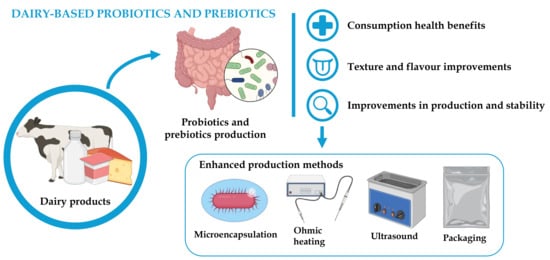
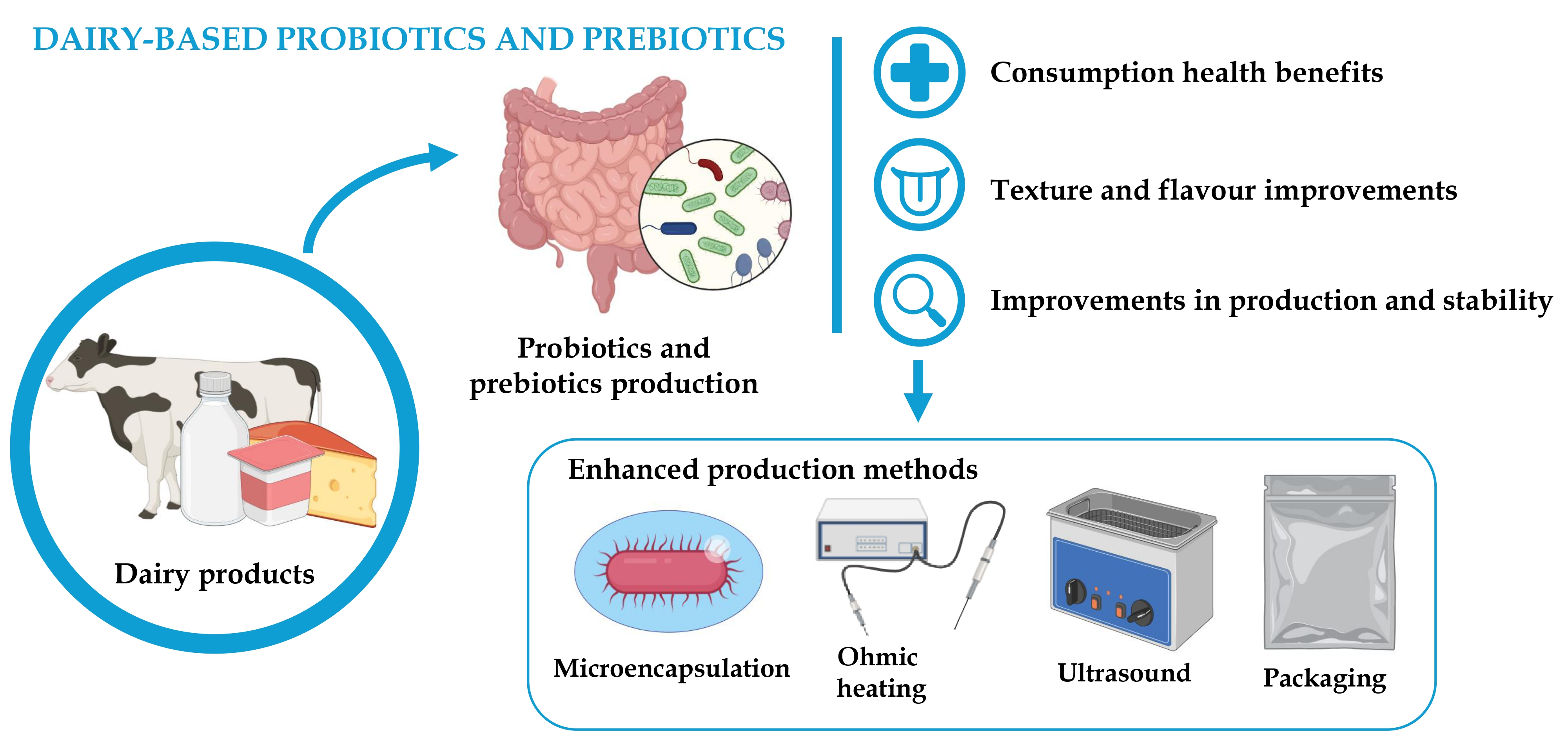
Graphical Abstract

1. Probiotics and Prebiotics in the Dairy Industry

There is a widely accepted consensus that diet and lifestyle significantly influence population health, with diet being a primary driver of alterations in the intestinal microbiota. The microbiota is necessary for maintaining physiological homeostasis and promoting disease prevention [1]. Consequently, there is increasing interest in interventions regulating microbiota and its interactions with the host. The exploration of probiotics and prebiotics in the dairy industry is critical, given their substantial potential to enhance digestive health and the nutritional value of dairy foods (DFs) [2].
Probiotics are living microorganisms that confer health benefits to the host when consumed in adequate amounts. They are primarily associated with bacterial groups such as lactic acid bacteria (LAB) and Bifidobacterium, playing an essential role in regulating intestinal microbiota balance and promoting healthy gut flora [3]. In contrast, prebiotics are non-digestible substances that selectively stimulate the growth of beneficial bacteria in the intestine. Prebiotic ingredients, such as inulin, are frequently incorporated into DF to foster the growth of probiotics, thereby providing numerous benefits to digestive health [4].
Including probiotics and prebiotics in DF significantly impacts digestive health by facilitating nutrient absorption and digestion [5]. Additionally, these components enhance dairy products’ nutritional profiles, making them a more nutritious option for consumers. Incorporating probiotics and prebiotics also drives innovation, enabling the development of functional products that cater to the growing demand for healthy and functional foods. Dairy products enriched with these components diversify the market, catering to consumers seeking healthier and more functional options [6].
Producing probiotics in dairy foods has significant benefits. However, technical challenges persist in ensuring the stability and viability of these beneficial microorganisms [7]. Research is ongoing to optimize formulations and production processes to ensure the effective delivery of these ingredients to consumers. Challenges include survival during processing, storage stability, interaction with the dairy matrix, strain-specific challenges, and achieving homogeneity [8].
Concerning potential side effects of consuming DF enriched with probiotics and prebiotics, individuals may initially experience gastrointestinal distress, including bloating, gas, or abdominal discomfort, as the gut microbiota adjusts to these additions. Allergic reactions to components in dairy or specific probiotic strains can also lead to adverse effects, and caution is necessary for individuals on medications, as interactions may impact drug effectiveness [9].
In the dairy industry, current trends reflect a growing interest in diversifying products enriched with probiotics and prebiotics. Manufacturers are introducing a variety of options, including yogurts, drinks, and cheeses, with a focus on specific strains tailored to promote immune support or digestive health [10,11]. Clean-label products with minimal processing are gaining popularity among consumers seeking natural options. Research on the synergistic effects of combining probiotics and prebiotics for enhanced health benefits is underway [12], and there is a notable emphasis on promoting dairy as a functional food for gut health and overall well-being. Technological advancements, particularly in encapsulation and delivery systems, continue to be explored to improve the survival and efficacy of probiotics [8]. As the industry evolves, addressing these challenges and aligning with consumer preferences will play a fundamental role in successfully integrating probiotics and prebiotics into dairy offerings [13].
This review addresses the fundamental aspects of probiotics and prebiotics in dairy foods, highlighting their health benefits and their impact on product quality. In addition, a bibliometric analysis of scientific studies published over the past decade was conducted to provide an overview of research trends and recent advancements in this field.

2. Benefits of Ingesting Probiotics and Prebiotics for Consumer Health

Fermented dairy foods conveniently incorporate probiotics into daily diets [14]. However, not all dairy foods naturally contain probiotics; their quantity can vary depending on the production process. Opting for products labeled with live, active cultures ensures optimal probiotic intake, potentially enhancing gastrointestinal health [15].
DFs are preferred as probiotic media due to their rich nutrient profile, including proteins, lactose, and lipids, which support the growth and activity of probiotic bacteria. In fermented dairy products, such as yogurt and cheese, the acidic environment exerts selective pressure that favors the survival and persistence of acid-tolerant beneficial bacteria, including lactic acid bacteria (LAB) and Bifidobacterium [16]. During fermentation, these bacteria multiply, leading to a higher concentration of probiotics in the final product. Moreover, dairy products may protect probiotic bacteria as they pass through the digestive system [9].
The health benefits of probiotics and prebiotics are well-documented. Probiotics such as lactic acid bacteria (LAB) and Bifidobacterium improve gut health, boost immunity, and aid digestion and nutrient absorption [15,17]. For instance, Lactobacillus acidophilus (currently classified within the genus Lacticaseibacillus), commonly found in probiotic yogurts, helps maintain intestinal microbial balance, supporting digestion and immune function [18]. Prebiotics, such as oligosaccharides, nourish beneficial gut bacteria, promoting a diverse and healthy microbiota [19,20,21].
Understanding the interplay between probiotics, prebiotics, and the intestinal microbiota is crucial for maintaining overall health. A balanced microbiota supports optimal digestion, metabolism, and immune function [22]. Early colonization of the human intestinal microbiota begins before birth, challenging the traditional notion that the infant’s gut is sterile at birth. Evidence suggests microbial presence in the placenta, umbilical cord, and meconium, though the full implications of fetal–microbial interactions remain under study [23].
The establishment of the intestinal microbial community progresses through staged colonization, influenced by factors like maternal vaginal secretions and early feeding practices. Initial exposure to oxygen supports the growth of facultative anaerobes, followed by a shift towards obligate anaerobes like Bifidobacterium [24]. This sequential process contributes to the complexity and diversity of the gut microbiota, which is essential for health.
Research shows that probiotics and prebiotics significantly impact mental health through the gut–brain axis. This axis enables communication between the gut microbiota and the brain, influencing neurotransmitter production and signaling pathways that can affect mood and emotional regulation. Probiotics have been found to regulate these pathways, potentially reducing the risk of anxiety and depression. By promoting a healthy gut microbiota composition, probiotics boost the production of neurotransmitters such as serotonin, essential for regulating mood [25].
Moreover, maintaining a balanced gut microbiota is critical for strong immune function, especially in vulnerable populations like children. The gut constitutes a significant part of the body’s immune system, and a diverse microbial community supports immune development and response. Probiotics help maintain this balance by improving the integrity of the gut barrier, reducing inflammation, and stimulating the activity of immune cells. For children whose immune systems are still developing, ensuring a healthy gut microbiota through probiotics and prebiotics can promote overall health and resilience against infections [26].
In the present review, an analysis was also conducted on the recent scientific literature related to research focused on the production of probiotic and prebiotic dairy foods. To this end, a bibliometric analysis was conducted using sets of keywords (“Dairy Probiotic Health”; “Dairy Probiotic Microencapsulation”; “Dairy Probiotic Ohmic Heating”; “Dairy Probiotic Ultrasound”; “Dairy Probiotic Packaging”; “Dairy Prebiotic Health”; “Dairy Prebiotic Microencapsulation”; “Dairy Prebiotic Ohmic Heating”; “Dairy Prebiotic Ultrasound”; “Dairy Prebiotic Packaging”) for searches on the Scopus (scopus.com) and Web of Science (webofknowledge.com) platforms. The generated files were inspected, and duplicates were removed. For factor analyses and graph plotting of the collected data, the Bibliometrix 2.2.1 package was used, and a keyword map was produced using VOSviewer (1.6.20).
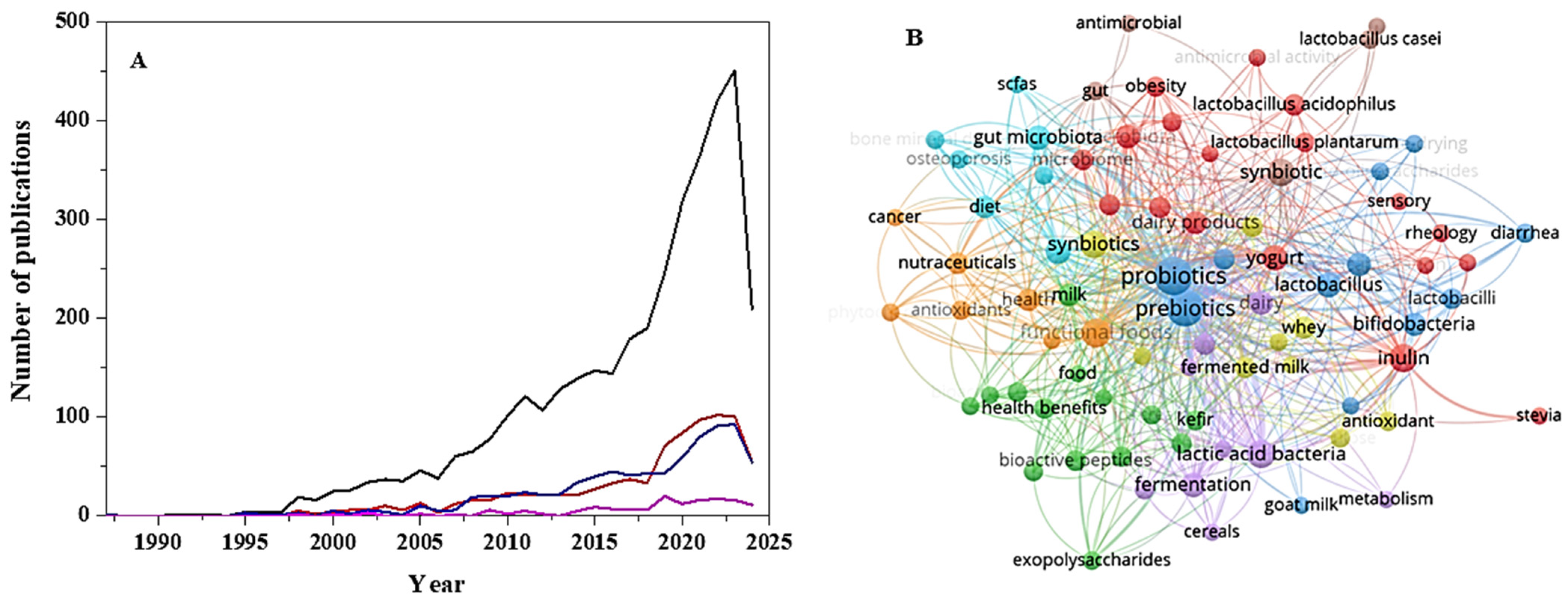
In the past 10 years (Figure 1A), there has been a notable increase in research and publications on probiotics and prebiotics applied to dairy products. The number of articles on probiotics in health has grown from 139 in 2014 to 451 in 2023, reflecting sustained interest in the benefits of these microorganisms for intestinal microbiota and overall health. Concurrently, studies on prebiotics in health have increased, from 21 articles in 2014 to 101 in 2023. Moreover, significant advancements have been observed in probiotic and prebiotic technology for dairy, with publications increasing from 34 and 5 articles in 2014 to 93 and 16 articles in 2023, respectively. These findings underscore the growth of research and the importance of these functional ingredients in the dairy industry and promoting intestinal and metabolic health.
Figure 1B presents a keyword co-occurrence network highlighting the main thematic relationships in studies involving probiotics, prebiotics, synbiotics, and fermented dairy products. Central terms such as “probiotics”, “prebiotics”, “synbiotics”, and “fermented milk” demonstrate strong interconnections with bacterial genera including Lactobacillus (as indexed in the literature prior to its recent reclassification) and Bifidobacterium, as well as with dairy matrices such as yogurt, kefir, and whey. The network also reveals the growing association between dairy functional foods and health-related topics, including gut microbiota modulation, antimicrobial activity, obesity, diarrhea, antioxidant activity, and bioactive compounds. Additionally, technological and sensory aspects such as rheology, fermentation, and exopolysaccharides are closely linked to the development of functional dairy products, reinforcing the multidisciplinary nature and expanding scientific interest in this research field.
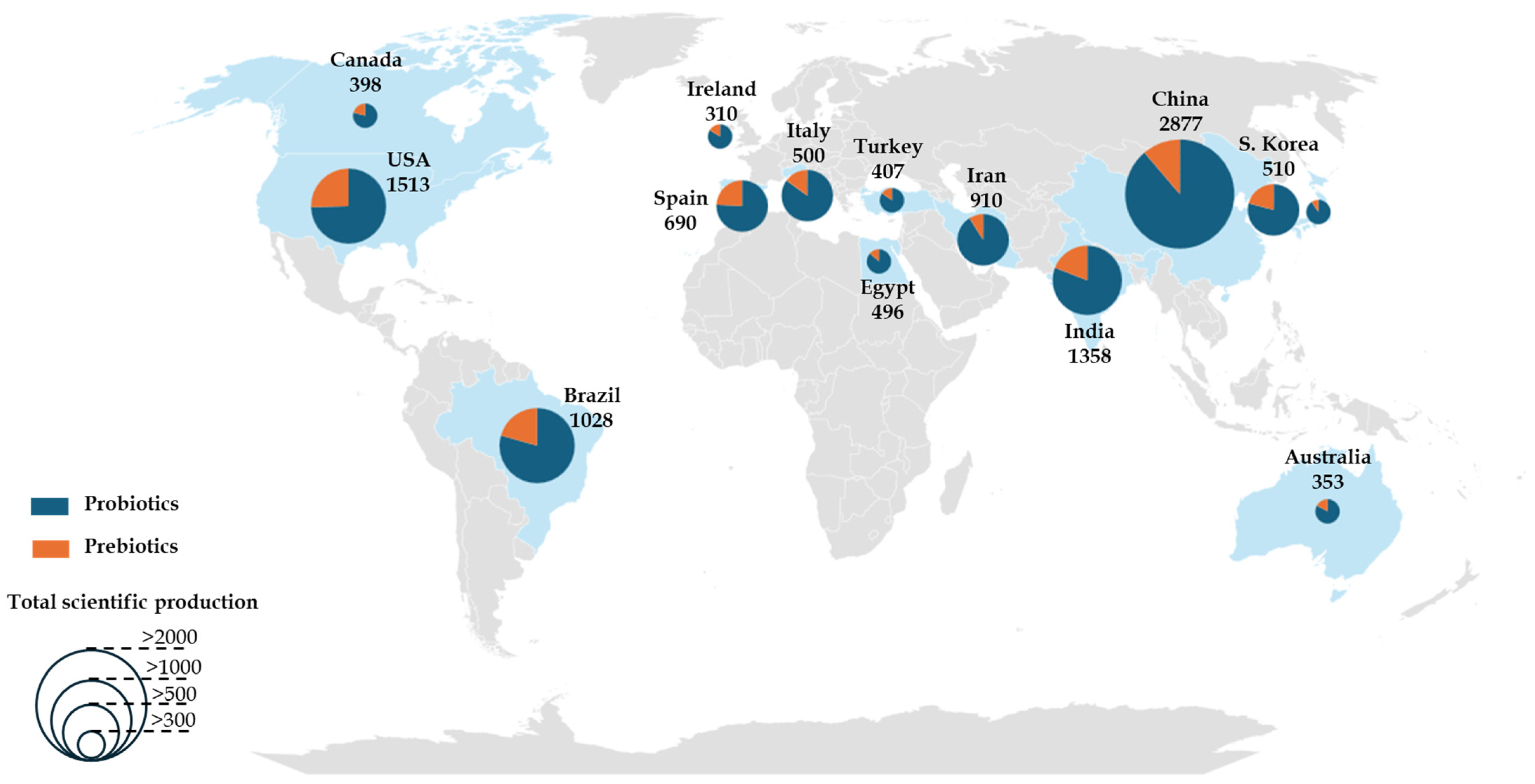
Several key points can be highlighted based on the top 15 countries with the highest scientific production related to probiotics and prebiotics (Figure 2). China leads with 2877 publications, underscoring its extensive involvement and strong research focus on probiotics and prebiotics. The United States follows with 1513 publications, indicating its significant contribution to research in this field. India and Brazil also show substantial outputs, with 1358 and 1028 publications, respectively, reflecting growing research interest in these countries. European countries such as Italy, Spain, and Ireland demonstrate active research contributions, with outputs ranging from 310 to 690 publications. These figures suggest a global interest and investment in understanding the health benefits and technological advancements of probiotics and prebiotics, spanning diverse geographical regions and scientific communities.
The analysis of the collected terms reveals a growing interest in research on probiotics and prebiotics, with “probiotics” standing out for their high occurrence and link strength, reflecting their centrality in the field (Table 1). “Prebiotics” follows closely, indicating significant relevance, while “functional foods” and “inulin” underline the search for specific ingredients with additional health benefits. The mention of “synbiotics” suggests an increasing trend in combining probiotics and prebiotics to enhance their beneficial effects. Terms related to bacteria, such as “lactic acid bacteria” and “Lactobacillus,” indicate a detailed focus on identifying and utilizing beneficial strains. Additionally, terms like “yogurt,” “dairy,” and “fermentation” highlight the practical application of these concepts in common food products that serve as vehicles for delivering probiotics. The connection between “microbiota” and “health” emphasizes the importance of gut microbiota for overall health, suggesting that diet plays a fundamental role in maintaining well-being through probiotics and prebiotics.
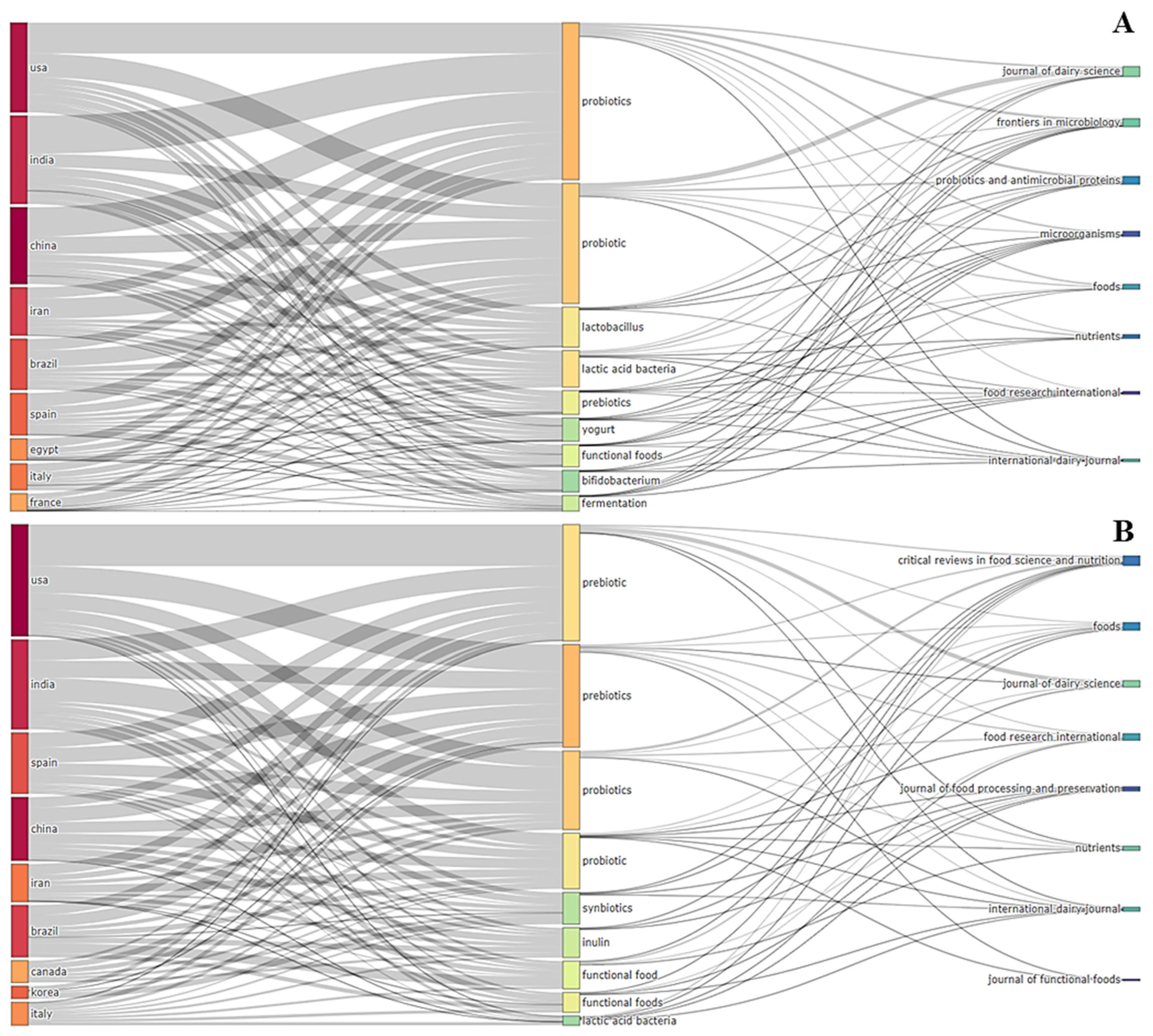
Figure 3 presents a three-way relationship between countries of origin, dominant research keywords, and publication outlets, offering a clear overview of how scientific production on dairy-related health topics is structured globally. In Figure 3A, the United States, India, and China appear as leading contributors, with substantial flows connecting them to central keywords such as “probiotics”, “probiotic”, and “Lactobacillus”. This indicates a strong research emphasis on microbial strains and their functional roles. Secondary terms like “yogurt”, “fermentation”, and “Bifidobacterium” suggest a focus on applied and food-based probiotic systems. These topics are primarily published in journals such as Journal of Dairy Science, Frontiers in Microbiology, and Probiotics and Antimicrobial Proteins, reflecting both food science and microbiology orientations.
In contrast, Figure 3B shows a similar geographic distribution, again led by the United States and India, but with a slightly broader spread across countries like Spain, China, and Iran. The keyword network shifts toward “prebiotic”, “prebiotics”, and related terms such as “inulin” and “synbiotics”, highlighting a focus on non-digestible compounds that modulate gut microbiota. Compared to probiotics, the keyword structure here appears somewhat more consolidated around fewer dominant terms, suggesting a more specialized or emerging research niche. The associated journals—such as Critical Reviews in Food Science and Nutrition, Foods, and Journal of Food Processing and Preservation—indicate a stronger emphasis on nutrition, food processing, and functional ingredient development.
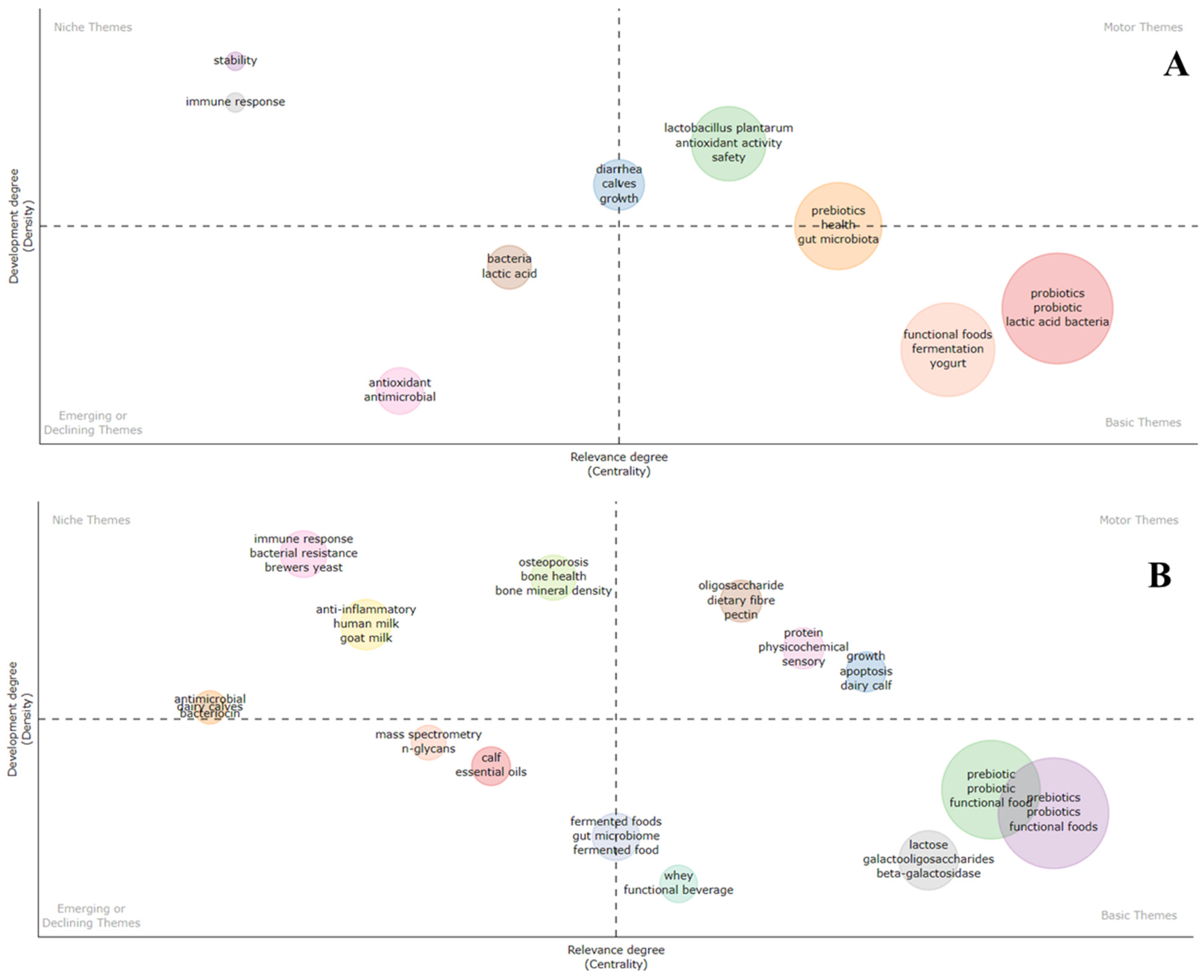
Figure 4 presents a comprehensive overview of probiotics and prebiotics research, organizing topics into quadrants based on centrality and density. These quadrants make it easier to identify the relevance and development of each theme within these fields of study. In Figure 4A, which refers to probiotics, the themes in the upper right quadrant, such as “Lactobacillus plantarum”, “antioxidant activity,” and “safety,” are highly developed and central, indicating their crucial importance to the field. These themes are well connected and have high density, reflecting deep and significant development. It is important to note that Lactobacillus plantarum has been reclassified as Lactiplantibacillus plantarum following the taxonomic revision of the genus Lactobacillus recently proposed [27,28], based on phylogenomic and comparative genomic analyses. In the present bibliometric analysis, the term “Lactobacillus plantarum” was used in Figure 4A because it reflects the original nomenclature indexed in the analyzed databases and publications. Therefore, throughout this manuscript, references to Lactobacillus in bibliometric outputs may correspond to the currently accepted genus Lactiplantibacillus. In the lower right quadrant, we find themes such as “probiotics”, “probiotic”, “lactic acid bacteria”, “prebiotics”, “health”, “gut microbiota”, “functional foods”, “fermentation” and “yogurt”. These terms are fundamental and central to probiotic research, but still require more detailed development. The presence of these terms highlights the practical importance of functional foods as vehicles for the delivery of probiotics.
In the upper left quadrant, themes such as “stability” and “immune response” are well developed, but are not strongly connected to other central themes, indicating specialized niches. In the lower left quadrant, themes such as “antioxidant” and “antimicrobial” appear less developed and poorly connected, suggesting emerging or declining areas.
In Figure 4B, which deals with prebiotics, the themes in the upper right quadrant, such as “oligosaccharide”, “dietary fiber”, “pectin”, “protein”, “physicochemical”, “sensory”, “growth”, “apoptosis” and “dairy calf”, are highly developed and central, reflecting their crucial importance. “Oligosaccharide” and “dietary fiber” are well-studied types of prebiotics, and the terms related to cell growth and physicochemical properties show the breadth of prebiotic research. In the lower right quadrant, topics such as “prebiotic,” “probiotic,” “prebiotics,” “functional foods,” “fermented foods,” “gut microbiome,” and “fermented food” are fundamental but require more detailed development. This suggests that the interaction between prebiotics and probiotics and the importance of gut microbiota and fermented foods are core areas that still have room for growth. In the upper left quadrant, themes such as “immune response,” “bacterial resistance,” “brewers yeast,” “anti-inflammatory,” “human milk,” and “goat milk” are well developed but with little connection to other themes representing important niches. Finally, in the lower left quadrant, topics such as “antimicrobial,” “pathogen,” “mass spectrometry,” “n-glycans,” “calf,” and “essential oils” have low centrality and density, indicating that they are emerging or possibly declining.
Thus, probiotics and prebiotics are essential, with several highly developed topics central to current research. There are areas of notable growth, such as “Lactobacillus plantarum” for probiotics and “oligosaccharide” for prebiotics, showing fields of great activity. Despite being central, some basic themes still need further development, representing opportunities for detailed future research. There are well-developed areas, but with little connection to other themes, indicating important specialized niches. Several emerging or declining themes were identified, suggesting new areas of investigation or the need to reassess the relevance of certain topics.
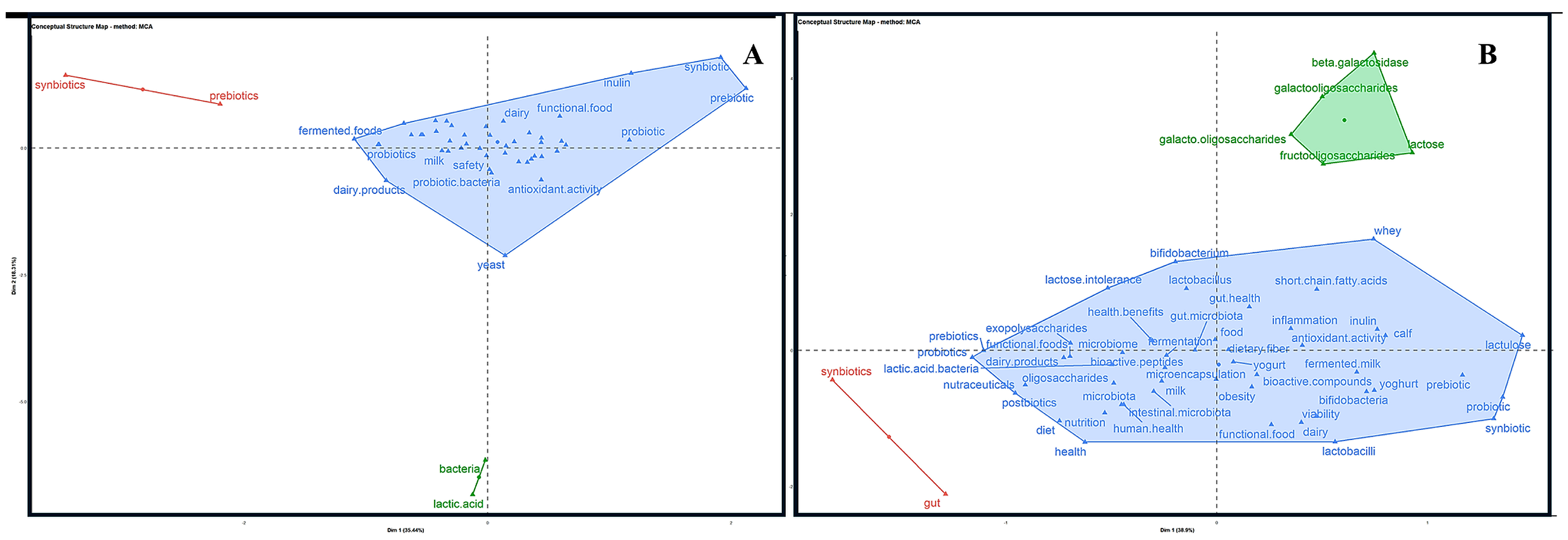
Figure 5 presents a factor analysis of the main themes related to the health benefits of probiotic (A) and prebiotic (B) dairy products using the Multiple Correspondence Analysis (MCA) methodology. This analysis allows for identifying term clusters and their correlations in the context of these products’ health benefits.
In Figure 5A, which focuses on the health benefits of probiotic dairy products, we observe that terms such as “probiotics,” “probiotic bacteria,” “fermented foods,” “dairy products,” “milk,” “safety,” and “functional food” are concentrated at the center of the chart. This suggests that these concepts are strongly interrelated and central to the theme of probiotic dairy health. Clusters of terms such as “synbiotics,” “prebiotics,” and “inulin” in the upper right quadrant indicate a significant correlation between these concepts, reflecting the integration of probiotics and prebiotics in synbiotics. Additionally, terms such as “yeast,” “antioxidant activity,” and “dairy” form other clusters, highlighting specific sub-themes.
The dimensions in the chart represent different aspects of the theme. Dimension 1, on the X-axis, can be interpreted as a continuum between specific dairy products (such as milk and fermented products) and functional components (such as probiotics and synbiotics). Dimension 2, on the Y-axis, may differentiate between the safety aspects and the antioxidant benefits of probiotic products.
In Figure 5B, which addresses prebiotic dairy products, terms such as “prebiotics,” “functional foods,” “microbiome,” “dairy products,” “gut microbiota,” “health benefits,” and “lactose intolerance” are centralized, indicating their interconnection and central relevance. Clusters of terms like “galacto-oligosaccharides,” “fructo-oligosaccharides,” and “beta-galactosidase” in the upper right quadrant suggest a strong correlation between these specific types of prebiotics and enzymes. Terms such as “synbiotics,” “lactic acid bacteria,” and “nutraceuticals” also form distinct clusters, reflecting the interrelation of these concepts.
The dimensions in Figure 5B represent different aspects of prebiotics. Dimension 1 can be interpreted as a continuum between specific components of prebiotics (such as oligosaccharides and enzymes) and functional health benefits. Dimension 2 may differentiate between types of prebiotics and their specific applications in intestinal health and the microbiome.

3. Impact on the Quality and Characteristics of Dairy Products

Adding prebiotics and probiotics to dairy products can boost their nutritional value, protecting the product as it passes through the gastrointestinal tract. Their inclusion can significantly impact the sensory properties, texture, and composition of dairy products. For example, prebiotics promote gut health by selectively stimulating the growth and activity of beneficial microbes in the colon. This can be achieved by adding fibers and using substitutes for sugars and fats, which serve as a source of nutrition for these microbes.
The impact of including prebiotics and probiotics in DF depends on the specific food composition and the quantity and type of these components. However, enhancements in the quality characteristics of ice cream, cheese, yogurt, processed cheeses, and dairy desserts are noticeable [13].
It is important to understand that the effectiveness of probiotics or prebiotics can be influenced by various factors such as the composition of the food, the type of prebiotic used, and its concentration. Studies [29,30] have indicated that these effects may differ based on the complexity of the food and the specific prebiotic utilized. Furthermore, the concentration of prebiotics/probiotics can impact their effectiveness, as higher concentrations can lead to increased gut microbial activity and improved overall health.

3.1. Texture

When prebiotic compounds or probiotic microorganisms are added to DF, texture is one of the most critical parameters affected. Thus, fructooligosaccharides, galactooligosaccharides, and inulin are common prebiotics that, when incorporated into food systems, can impart functional properties [31]. Thus, the use of inulin in the food industry is associated with fat replacement and the incorporation of a prebiotic ingredient, contributing to improving the structure, viscosity, emulsion, and water retention parameters of food products [32]. In this context, replacing fat in low-fat processed cheeses by adding inulin can impact their rheological properties, increasing cheese adhesiveness [33]. Moreover, this modification can positively affect the sensory acceptance of these products.
Several studies have shown the influence of these components in probiotic or prebiotic functional foods. Inulin, for example, in the formulation of natural yogurt, had favorable impacts on the increase in firmness, adherence, viscosity, and elasticity. In addition, a reduction in acidity and syneresis was also observed, as emphasized by [34]. Prebiotic dietary oligosaccharides in food products like sheep ice cream can significantly enhance their texture, sensory characteristics, and durability. These oligosaccharides’ ability to retain water and form a gel-like substance results in a superior anti-adhesion capacity and fat-mimetic effects. As a result, adding such compounds can be a practical approach to improving the overall quality of food products [35].
Adding probiotics to DFs alters their texture and impacts consumers’ sensory experience [36,37]. Changes in food texture due to probiotics result from various factors such as specific strains, the food matrix, and the processing conditions during production. These changes are usually caused by the growth of microorganisms or the generation of specific products such as lactic acid [38,39,40,41].
Lactic acid is present in all acidified milk, and it is produced by the fermentation of lactose through the action of mesophilic and thermophilic bacteria. As a result, milk protein coagulates and undergoes a texture change [42]. Thus, to produce yogurts and other mesophilic bacteria derivative products, a final lactic acid concentration of ~1 g/100 mL is usually required, causing the coagulation of casein due to the destabilization of its isoelectric point, forming a jellified product. These textural changes in dairy products are expected to influence the quality standards of products such as yogurts, which must be thin and smooth without lumps, granules, or cracks [42].
Probiotics can change the thickness and texture of fermented foods. These microorganisms create acids and metabolites through fermentation, similar to the process used in yogurt production [40]. A higher acidity in a food product can result in a thicker texture that is detectable in the mouth. When probiotic bacteria generate lactic acid, the food becomes more acidic. This change in acidity can affect the texture of the food by influencing the way proteins interact and how gels form [39]. Additionally, proteolysis activity, which is the breakdown of proteins into peptides and amino acids by enzymes produced by probiotic bacteria, can also impact the texture of fermented foods during storage, especially under heat [39].
The fermentation process of lactic acid bacteria, which is observed in lactic products, results in a gel-like structure. This change in texture has a significant effect on the overall consistency of the final product, which is what gives yogurt its creamy texture. This is due to these bacteria secreting lactic acid [43].
Lactic acid bacteria, such as Lactobacillus kefiranofaciens and Lactobacillus kefiri, are known to produce a specific type of polysaccharide called kefiran, which contributes to the thick and viscous texture of kefir [44]. This polysaccharide determines the gel-like texture of kefir, which imparts a creamy and slightly thick consistency.
Greek yogurt exhibits heightened thickness and a creamier mouthfeel than its non-fermented counterparts [45]. Similarly, incorporating probiotics into cream cheese imparts a unique smoothness, potentially altering its spreadability [39]. Fermented dairy drinks like lassi or cultured buttermilk enriched with probiotics offer a unique, heavy, and consistent texture [42,46].
Also, exopolysaccharides produced by probiotic and lactic acid bacteria have gained considerable attention because of their important role in improving the texture, stability, and overall quality of dairy products. These extracellular biopolymers are synthesized during fermentation and can significantly enhance viscosity, water-holding capacity, creaminess, cohesiveness, and gel firmness while simultaneously reducing syneresis in fermented dairy matrices such as yogurt, kefir, and fermented milk beverages [47,48]. The production of exopolysaccharides by bacterial cultures contributes to the formation of a more stable protein network, improving the rheological and microstructural characteristics of dairy products during storage [49].
In addition to their technological advantages, exopolysaccharides may improve the sensory acceptance of low-fat dairy products by partially mimicking the mouthfeel and texture commonly provided by milk fat [50]. This characteristic is particularly relevant for the development of healthier dairy formulations with reduced fat content while maintaining desirable sensory properties. Strains belonging to genera such as Lactiplantibacillus, Streptococcus thermophilus, Lacticaseibacillus, and Bifidobacterium are frequently associated with enhanced rheological behavior, increased viscosity, and improved product stability in fermented dairy systems [51,52].
Probiotics play a crucial role in producing high-quality dairy products, especially cheese. Lactic acid bacteria (LAB) and Bifidobacterium are frequently involved in the fermentation process of cheese. These microorganisms metabolize lactose and produce lactic acid, contributing to flavor development and influencing texture [53,54]. The acidification caused by probiotics is essential for coagulating milk proteins, ultimately leading to the formation of curds [43].
According to recent reports, specific plant-derived components possess prebiotic or probiotic properties that can be utilized to enhance the texture and functional quality of dairy products. For instance, inulin extracted from “cupuaçu” (Theobroma grandiflorum) pulp, when combined with Lactobacillus acidophilus, has been associated with improvements in the texture, viscosity, and consistency of goat milk yogurts, contributing to greater consumer acceptance [55]. Inulin is widely recognized for its ability to improve water retention, viscosity, creaminess, and gel structure in fermented dairy products due to its fat-mimetic and stabilizing properties. Several studies have demonstrated that inulin supplementation enhances the rheological and textural properties of yogurt by increasing firmness and reducing syneresis [56,57]. Another study revealed that extracting polyphenols from apple peel can increase the count of viable probiotic cells in yogurts made with this substance, highlighting the advantages of incorporating vegetable extracts [58].

3.2. Flavor and Smell

The taste and aroma of fermented foods are linked to the specific probiotic microorganisms employed during fermentation. Different strains can impart distinct sensory characteristics, ranging from fruity or buttery notes to traditional lactic or yogurt flavors [59]. Understanding these nuances is essential for innovating new fermented products that appeal to consumer preferences and sensory experiences.
Probiotic metabolic processes generate volatile compounds that enhance the aroma complexity of fermented foods, contributing to their unique flavors [60]. For instance, bacteria like Lactobacillus species are known to produce various aromatic and flavor compounds such as acetic acid (giving a pungent, vinegar-like taste), 2-heptanol (imparting a fruity flavor often found in Roquefort cheese), pentane-2-ol (contributing sweetness and fruitiness), and 2-octanol (adding fatty and oily notes) [59,60].
Enriched with probiotics, Greek yogurt exhibits a distinctive tanginess, firm texture, and moderate sweetness, setting it apart from other dairy products [45]. Aldehydes like acetaldehyde and benzaldehyde play crucial roles in yogurt flavors’ grassy and almond-like aroma [61]. Moreover, varying concentrations of ketones, alcohols, citrate organic acids, and acetoin contributes to the diverse flavors and aromas found in fermented dairy products, where higher levels of acetic acid, for example, can intensify the yogurt’s pungency [59,61].
Cream cheese infused with probiotics may exhibit a subtle tanginess that enhances its creamy and smooth characteristics [39]. This flavor enhancement is part of the broader exploration into how probiotics influence the taste profiles of fermented dairy products.
The incorporation of prebiotics and probiotics into dairy products further enriches their taste profiles, influenced by factors such as the specific probiotic strains used, fermentation techniques, and the food matrix [32]. Fructooligosaccharides (FOSs), for example, are used widely due to their neutral taste and stability across varying pH and temperature ranges, making them suitable alternatives to sucrose in dairy formulations [32].
Inulin, another prebiotic agent derived from fructan-type polysaccharides, not only acts as a sugar substitute but also enhances texture and sensory properties in food products, including low-fat yogurts [62]. Its inclusion intensifies sweet aromas, improves flavor acceptability, and impacts color lightness, contributing to overall sensory satisfaction in yogurt formulations [62].
Probiotic microorganisms like Lactobacillus, Leuconostoc, and Streptococcus contribute significantly to fermented dairy products’ tangy and sour flavors by producing organic acids during fermentation [63]. This acidity enhances taste and refreshes and invigorates the consumer’s palate.

3.3. Shelf Life

Incorporating prebiotics or probiotics into fermented foods has proven effective in enhancing shelf life by creating a conducive environment supporting beneficial microorganisms’ growth and activity [7,64]. This strategy improves the microbiological quality of these products and extends their shelf stability.
During fermentation, lactic-acid-producing bacteria play a crucial role by producing organic acids that lower the pH, creating an environment hostile to spoilage bacteria [54]. Specific probiotic strains further enhance this preservation effect through pH reduction and the production of antimicrobial agents like bacteriocins, which inhibit the growth of competing bacterial strains [65]. Bacteriocins act as natural preservatives, contributing to the extended shelf life of probiotic-enriched fermented foods.
However, despite these benefits, proper storage conditions such as refrigeration are essential to maintain probiotic viability and extend shelf life, particularly for products like yogurt [66]. Storage conditions can also impact product flavor, influencing factors like fat degradation into long-chain fatty acids (C4–C20), which may impart a cheese-like flavor to yogurt [61]. Encapsulation or microencapsulation has been employed to protect probiotics during storage, ensuring their viability and extending shelf life [67].
Probiotic-enriched fermented foods, such as probiotic yogurt, fermented milk drinks, and cheeses, demonstrate prolonged shelf life due to mechanisms including microbial competition, acidification, and the production of antimicrobial compounds [68,69]. These mechanisms collectively contribute to preserving product quality and safety over time.

4. Production and Stability Technologies

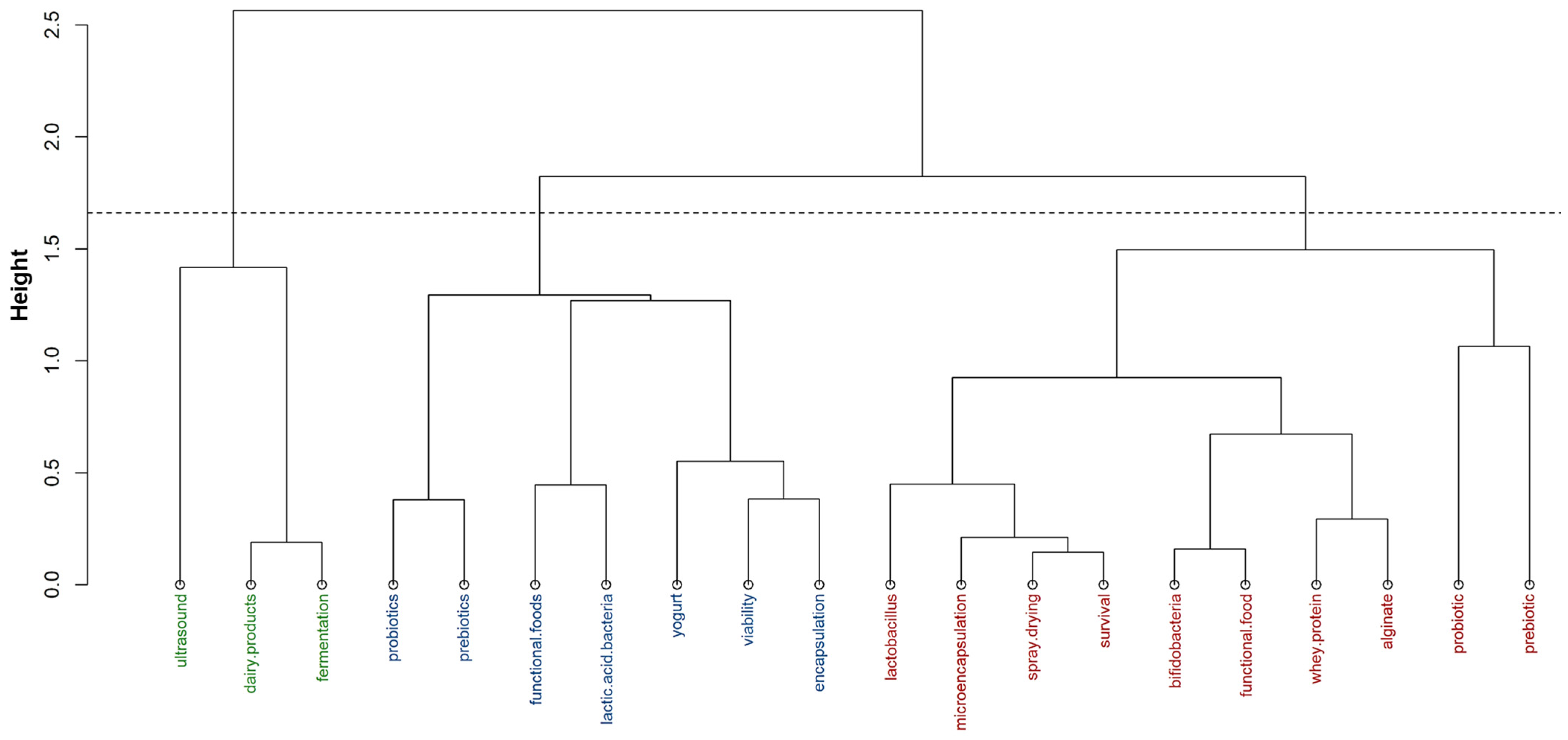
This section discusses technological advances used to improve the production, stability, and functionality of probiotic and prebiotic dairy products, including microencapsulation, ohmic heating, ultrasound, and packaging technologies. Figure 6 represents a dendrogram that visually analyzes how different terms related to the production and stability of probiotic and prebiotic dairy products are grouped based on their similarity. The terms “ultrasound,” “dairy products,” and “fermentation” are grouped, suggesting that ultrasound is frequently associated with dairy products and fermentation processes. Ultrasound has been associated with improvements in fermentation efficiency and sensory properties of fermented foods. The terms “probiotics,” “probiotic bacteria,” “yogurt,” “viability,” and “encapsulation” are closely related, indicating a strong link between probiotics, probiotic bacteria, yogurt, viability, and encapsulation techniques. Microencapsulation is essential for protecting probiotic cells during processing and storage.
The terms “prebiotics,” “functional foods,” “bifidobacteria,” “whey protein,” and “alginate” are grouped, suggesting a connection between prebiotics, functional foods, bifidobacteria, whey protein, and alginate. Prebiotics, such as inulin and oligosaccharides, are often incorporated into functional foods to promote the growth of beneficial bacteria in the intestine. The terms “spray drying,” “microencapsulation,” “Lactobacillus,” “viability,” and “survival” are grouped, highlighting the importance of encapsulation and spray drying techniques in the viability and survival of probiotics. Microencapsulation with polymers such as alginate and carrageenan can significantly improve the survival of Lactobacillus and Bifidobacterium in products like yogurt and ice cream.
Advanced technologies such as microencapsulation, ohmic heating, ultrasound, and appropriate packaging are essential for producing and stabilizing probiotic and prebiotic dairy products. These technologies, discussed below, ensure that the final products maintain their functional and sensory properties, offering health benefits to consumers.

4.1. Microencapsulation

Microencapsulation is a critical technology for ensuring the viability of probiotic cells during production, storage, and consumption. It creates spherical particles with semi-permeable membranes, effectively protecting probiotic bacteria. This process helps maintain the stability and functionality of probiotics under various environmental conditions, enhancing their overall efficacy [70].
When this technique is applied, using polymers such as alginate, carrageenan, and others, probiotic bacteria are surrounded by a protective barrier, significantly improving their survival. Studies have shown that microencapsulation increases the viability of probiotic bacteria under gastrointestinal conditions [70], enabling probiotic microorganisms to be incorporated into dairy products such as yogurt, cheese, and frozen milk. When entrapped in calcium alginate spheres, about 40% of Lactobacilli survive in ice cream, compared to free cells. Encapsulating Bifidobacteria significantly improves their survival, compared to free cells, throughout storage, increasing survival rates from 43–44% to 50–60% in frozen dairy products [71]. Furthermore, a microencapsulated form of Bifidobacterium pseudolongum improves survival in a simulated gastric environment, compared to free viable microorganisms [71].
Furthermore, microencapsulation provides sensory benefits to final products, such as yogurts. The controlled release of probiotic bacteria over time maintains desirable quality and properties, allowing the production of functional foods with an extended shelf life [72].
This innovative technology offers an effective solution for delivering probiotics, ensuring their stability and effectiveness. Microencapsulation in probiotic foods has emerged as a promising approach to improving these products’ quality and shelf life.
The main probiotic microencapsulation techniques include electrospinning, fluidized bed drying, and layer-by-layer schemes. Electrospinning is based on the principle of electrohydrodynamics and involves applying a high-voltage electric field to the core material, which is sprayed towards a charged collector. Solidification occurs by evaporation of the solvent or chemical hardening. The layer-by-layer technique works based on the electrostatic attraction of positive and negative charges, producing microcapsules by electrostatic adsorption of positive and negative materials onto the surface of the core material. The fluidized bed drying technique involves mixing fine droplets of the coating material with the core material in the gas phase. These techniques help protect probiotic organisms, as the microcapsules act as a physical barrier that protects them against environmental factors, such as temperature, humidity, and pH, that can affect their viability. Furthermore, microcapsules can improve the survival of probiotics during processing, storage, and gastrointestinal transit, ensuring that a significant amount of probiotics reaches the intestine, where they exert their beneficial effects [73].

4.2. Ohmic Heating (OH)

Ohmic heating, or Joule heating, represents a less impactful heat treatment alternative for biologically active food compounds than traditional thermal methods. This time- and energy-efficient technique adapts to the specific properties of foods, preserving quality without compromising texture [74]. Ohmic heating stands out in dairy processing, especially in producing probiotic yogurts. This approach uses direct electrical current in the food, promoting instantaneous and uniform heating by rapidly converting electrical energy into thermal energy [75]. This effectiveness results in shorter heating times and temperatures than conventional methods and better maintains nutrients and sensory characteristics.
Ohmic heating (OH) is an emerging technology that can be applied to produce para-probiotics, using alternating electrical currents to heat the material [76]. Microbial inactivation in OH occurs due to the combination of thermal and non-thermal effects, known as electroporation, resulting from the electric field present [77]. The internal generation of volumetric energy during ohmic heating leads to a rapid and uniform temperature increase, resulting in shorter process times and less thermal damage to the product than conventional methods [78]. Dairy foods treated with ohmic heating exhibited increased generation of bioactive peptides and beneficial effects in clinical trials with healthy Wistar rats, reducing uric acid content [79].
This approach may contribute to maintaining probiotic viability and functionality by promoting more uniform heating and reducing excessive thermal damage during processing. Studies indicate that this technique can improve the survival of probiotic cells in the gastrointestinal tract, enhancing the generation of bioactive compounds and the antioxidant capacity of probiotic fermented milk [80]. Furthermore, ohmic heating appears to be a promising alternative to minimize contamination by pathogens, such as Listeria monocytogenes, after fermentation, guaranteeing product safety and functionality [80].
Silva et al. [80] investigated the impact of ohmic (OH) heating on probiotic fermented milk, specifically on the survival of Listeria monocytogenes as a post-fermentation contaminant. They tested different OH conditions (0, 4, 6, and 8 V/cm; CONV, OH4, OH6, OH8, 90–95 °C/5 min) and used a predictive model to analyze bacterial survival. The results showed that OH reduced the viability of L. monocytogenes, maintained adequate Lactobacillus acidophilus counts, and improved survival in the gastrointestinal tract. The Weibull model fitted well, with lower values of δ (217–298 vs. 665 h, CONV) and higher values of R2 (0.99 vs. 0.98, CONV) for samples treated with OH, highlighting the effectiveness of OH. Furthermore, OH improved the generation of bioactive compounds and sensory acceptance, suggesting that ohmic heating is an exciting technology for producing probiotic fermented milk, considering functionality and safety.
Another study [76] evaluated the effect of paraprobiotic Lacticaseibacillus casei cells obtained by ohmic heating inactivation (8 V/cm, 95 °C/7 min, 60 Hz) in a whey drink and grape juice on postprandial glycemia. In vitro, hypoglycemic activity was assessed through the inhibition of α-glucosidase and α-amylase, while in vivo activity was determined with 15 healthy individuals who consumed bread + probiotic whey drink, bread + paraprobiotic whey drink, and only bread as control.
Also, grape-flavored whey beverages containing both the probiotic and paraprobiotic demonstrated similar inhibition of α-glucosidase and α-amylase (51.2 vs. 51.8% and 43.2 vs. 44.2%, respectively) [76]. Due to the sugar in their composition, the consumption of both drinks increased the incremental glucose rate compared to the control without changes in the other parameters evaluated (maximum glucose value, incremental glucose percentage, and glucose peak time in the blood), demonstrating a reduced glycemic response.
Studies on the use of OH in sublethal conditions and its impact on growth rates and bacteriocin activity are limited, meaning that future research should explore the effects on the metabolism and viability of various probiotics to assist in developing probiotic dairy products using this emerging technology. Recent findings suggest that OH treatments can personalize whey protein networks, offering synergistic potential for incorporating probiotics. Whey systems, with inherent biological and nutritional benefits, can serve as matrices to transport, protect, and release probiotics during gastrointestinal digestion. However, more fundamental knowledge is essential to understand the interactions between electrical fields and serum protein structures. OH presents new perspectives for developing fermented probiotic products, requiring further investigation. Key questions include whether electric fields can control biological responses, the optimal combinations of electric field and frequency to apply, and whether different probiotics respond similarly to the electric field, with comparable effects on viability. The interaction between alternating electric fields and microorganisms has yet to be understood entirely [75].
Regarding prebiotics, the influence of OH on dairy prebiotics stands out as a promising approach to enhancing the bioactive properties of prebiotic dairy drinks. Studies examined flavored prebiotic dairy drinks subjected to different Ohmic Heating conditions [80,81,82]. Treatments with higher voltage and increased frequency showed a notable increase in the number and variety of bioactive peptides, contributing to a more robust bioactive profile in the prebiotic dairy drink. Thus, the application of Ohmic Heating in dairy prebiotics emerges as an effective strategy to optimize the functional characteristics of these products, offering promising perspectives in the development of prebiotic dairy foods with improved health benefits.

4.3. Ultrasound

Ultrasound has also been investigated in dairy systems as a strategy to improve probiotic viability and fermentation performance. Studies have shown that ultrasound treatment can enhance mass transfer, stimulate microbial activity, and improve the physicochemical and sensory properties of fermented dairy products such as yogurt [83,84]. In addition, ultrasound has been associated with an improved distribution and stability of probiotic cells, contributing to increased viability during storage and gastrointestinal conditions [84].
For instance, Brito et al. [84] demonstrated that the application of high-intensity ultrasound in fermented milk significantly improved fermentation performance, reducing fermentation time while maintaining probiotic viability above 107 CFU/mL during storage. The authors also reported enhanced growth kinetics of lactic acid bacteria and improved stability of probiotic cultures compared to conventional treatments. Additionally, ultrasound-treated samples exhibited improved physicochemical properties, indicating that this technology can simultaneously enhance processing efficiency and product quality in probiotic dairy systems.
Low-frequency ultrasound (20–100 kHz) is primarily used to improve substances’ heat and mass transfer during food fermentation. It promotes the metabolization of microorganisms without destroying microbial cells [85]. The study found that ultrasound-assisted multilayer Pickering double-emulsion capsules can effectively encapsulate probiotics, specifically Lactiplantibacillus plantarum strain liquid. The use of ultrasonic homogenization was shown to significantly impact the morphology of the double emulsions, resulting in the formation of a single and narrow distribution with the smallest droplet size at an ultrasonic intensity of 285 W. This suggests that ultrasound can be a promising technology for creating stable and uniform double-emulsion capsules for probiotics.
Considering the potential implications of employing ultrasound-assisted multilayer Pickering double-emulsion capsules to encapsulate probiotics for oral application in granular foods and pharmaceutical products, this technology holds promise for enhancing stability and viability. The efficient encapsulation provided by this technique could improve probiotics’ resilience against adverse conditions in the gastrointestinal tract, extending product shelf life. Moreover, incorporating encapsulated probiotics into granular foods and pharmaceuticals may enable controlled and targeted release, enhancing their efficacy and facilitating the development of novel functional products with enhanced health benefits [86].
Furthermore, the study demonstrated that the double-emulsion particles, when coated with multiple layers of biopolymers such as chitosan, alginate, and calcium chloride, exhibited enhanced stability and increased capacity for encapsulating probiotic strains. The formation of multilayer emulsions was quantitatively proved by ζ-potentials, morphology, and FTIR measurements, indicating the successful coating of the emulsion particles with multiple layers of biopolymers [86].
The key findings suggest that ultrasound-assisted multilayer Pickering double-emulsion capsules can be a promising strategy for encapsulating probiotics, potentially offering improved stability and viability for oral application in granular food and pharmaceutical products [86].
Although not conducted in a dairy matrix, studies on non-dairy probiotic systems can provide useful comparative insights into the application of high-intensity ultrasound (HIUS) in fermented beverages. Dos Santos Rocha et al. [87] investigated HIUS as an alternative to pasteurization in a water-soluble extract from Baru almonds. The results demonstrated that HIUS, when applied after probiotic addition, reduced contamination risks and improved technological, sensory, and biological properties. Additionally, positive effects on physicochemical and microbial quality were observed, indicating enhanced stability of probiotic systems. Although these findings cannot be directly extrapolated to dairy products, they highlight the potential of HIUS as a non-thermal processing technology and support its applicability in probiotic food systems.

4.4. Packaging

Packaging plays a critical role in maintaining the viability, stability, and functional properties of probiotic dairy products during storage. Factors such as oxygen permeability, moisture transfer, light exposure, and storage temperature can directly influence probiotic survival and the physicochemical characteristics of fermented dairy foods. Therefore, selecting appropriate packaging materials is essential to preserve product quality, extend shelf life, and ensure the delivery of viable probiotic microorganisms to consumers. Studies involving probiotic yogurts and fermented dairy beverages have demonstrated that packaging materials such as polyethylene terephthalate (PET), high-density polyethylene (HDPE), and glass can differently affect probiotic stability and sensory properties during refrigerated storage. Materials with lower oxygen permeability are generally associated with improved probiotic viability, since reduced oxygen exposure limits oxidative stress and helps preserve the metabolic activity of oxygen-sensitive probiotic microorganisms, such as lactic acid bacteria. This effect contributes to enhanced microbial stability and better preservation of physicochemical and sensory properties throughout storage [88].
A previous study [88] reported that packaging type did not significantly affect the product’s chemical composition, quality parameters, antioxidant activity, or probiotic survival. However, products stored in PET and HDPE packaging exhibited a lower consistency index, higher dissolved oxygen concentration, improved probiotic survival under simulated gastrointestinal conditions, and better sensory acceptance. Malted S. bicolor has been explored in probiotic beverage formulations, although not within dairy systems. Studies have shown that such beverages can achieve adequate probiotic survival, maintain desirable physicochemical properties, and present acceptable sensory characteristics for up to 28 days of refrigerated storage [88].
Kumar et al. [89] evaluated the effect of different packaging materials on the quality and shelf life of an acidified probiotic dairy beverage stored at 5 ± 1 °C for 30 days. The study demonstrated that oxygen permeability of the packaging material significantly influenced probiotic survival and product stability. Samples packaged in high-barrier materials, particularly ethylene vinyl alcohol copolymer (EVOH) and glass bottles, exhibited improved probiotic viability, higher viscosity, and better sensory acceptance compared to those stored in materials with higher oxygen permeability. Notably, products packaged in EVOH and glass remained acceptable for up to 25 days while maintaining probiotic counts above 106 CFU/mL. These results highlight the critical role of packaging in preserving the microbiological quality, stability, and shelf life of probiotic dairy products.

5. Conclusions, Future Challenges and Opportunities

This review demonstrated the growing scientific and industrial relevance of probiotics and prebiotics in dairy products, particularly due to their potential to promote gut health, improve nutrient absorption, and support the development of functional foods. The bibliometric analysis revealed a substantial increase in global scientific production over the last decade, highlighting strong research interest in probiotic and prebiotic dairy applications, gut microbiota modulation, and emerging processing technologies.
The incorporation of probiotic microorganisms such as Lactiplantibacillus and Bifidobacterium, as well as prebiotic compounds including inulin and oligosaccharides, has shown promising effects on the technological, sensory, and functional properties of dairy foods. However, maintaining probiotic viability during processing, storage, and gastrointestinal transit remains one of the major technological challenges for the dairy industry. In this context, emerging technologies such as microencapsulation, ohmic heating, and ultrasound have demonstrated significant potential to improve microbial stability, functionality, and shelf life while preserving product quality.
From an industrial perspective, the development of stable and consumer-acceptable probiotic and prebiotic dairy products represents an important opportunity for innovation in the functional food market. Advances in packaging systems, controlled processing technologies, and targeted formulation strategies may contribute to improving product stability, scalability, and commercial applicability.
Future research should focus on understanding the interactions between probiotic strains, prebiotic compounds, and dairy matrices under industrial processing conditions. Additional studies are also needed to evaluate the mechanisms involved in probiotic survival, electroporation effects during ohmic heating, and the impact of ultrasound on microbial functionality and bioactive compound generation. Furthermore, the exploration of novel probiotic strains, exopolysaccharide-producing cultures, and synbiotic formulations may support the development of next-generation dairy products with enhanced health benefits and technological performance.

Author Contributions

Conceptualization, M.R.A.A. and T.L.d.A.; methodology, A.P.D.; software, A.P.D.; investigation, A.P.D., A.A.I.-N., M.R.A.A. and T.L.d.A.; resources, A.P.D. and A.A.I.-N.; data curation, A.P.D.; writing—original draft preparation, T.L.d.A.; writing—review and editing, A.P.D., A.A.I.-N., M.R.A.A. and T.L.d.A.; visualization, M.R.A.A.; supervision, T.L.d.A.; project administration, T.L.d.A. All authors have read and agreed to the published version of the manuscript.

Funding

This research received no external funding.

Institutional Review Board Statement

Not applicable.

Informed Consent Statement

Not applicable.

Data Availability Statement

The data presented in this study are available on request.

Conflicts of Interest

The authors declare no conflicts of interest.

References

  1. Hou, K.; Wu, Z.-X.; Chen, X.-Y.; Wang, J.-Q.; Zhang, D.; Xiao, C.; Zhu, D.; Koya, J.B.; Wei, L.; Li, J.; et al. Microbiota in Health and Diseases. Signal Transduct. Target. Ther. 2022, 7, 135. [Google Scholar] [CrossRef]
  2. Rochette, C.; Michallet, A.S.; Malartre-Sapienza, S.; Rodier, S. Telephone Follow-up of Oncology Patients: The Contribution of the Nurse Specialist for a Service-Dominant Logic in Hospital. BMC Health Serv. Res. 2021, 21, 580. [Google Scholar] [CrossRef]
  3. Plaza-Diaz, J.; Ruiz-Ojeda, F.J.; Gil-Campos, M.; Gil, A. Mechanisms of Action of Probiotics. Adv. Nutr. 2019, 10, S49–S66. [Google Scholar] [CrossRef]
  4. You, S.; Ma, Y.; Yan, B.; Pei, W.; Wu, Q.; Ding, C.; Huang, C. The Promotion Mechanism of Prebiotics for Probiotics: A Review. Front. Nutr. 2022, 9, 1000517. [Google Scholar] [CrossRef]
  5. Nalla, K.; Manda, N.K.; Dhillon, H.S.; Kanade, S.R.; Rokana, N.; Hess, M.; Puniya, A.K. Impact of Probiotics on Dairy Production Efficiency. Front. Microbiol. 2022, 13, 805963. [Google Scholar] [CrossRef]
  6. Ballini, A.; Charitos, I.A.; Cantore, S.; Topi, S.; Bottalico, L.; Santacroce, L. About Functional Foods: The Probiotics and Prebiotics State of Art. Antibiotics 2023, 12, 635. [Google Scholar] [CrossRef]
  7. Terpou, A.; Papadaki, A.; Lappa, I.; Kachrimanidou, V.; Bosnea, L.; Kopsahelis, N. Probiotics in Food Systems: Significance and Emerging Strategies Towards Improved Viability and Delivery of Enhanced Beneficial Value. Nutrients 2019, 11, 1591. [Google Scholar] [CrossRef] [PubMed]
  8. Iravani, S.; Korbekandi, H.; Mirmohammadi, S.V. Technology and Potential Applications of Probiotic Encapsulation in Fermented Milk Products. J. Food Sci. Technol. 2015, 52, 4679–4696. [Google Scholar] [CrossRef]
  9. Kaur, H.; Kaur, G.; Ali, S.A. Dairy-Based Probiotic-Fermented Functional Foods: An Update on Their Health-Promoting Properties. Fermentation 2022, 8, 425. [Google Scholar] [CrossRef]
  10. Koirala, S.; Anal, A.K. Probiotics-Based Foods and Beverages as Future Foods and Their Overall Safety and Regulatory Claims. Futur. Foods 2021, 3, 100013. [Google Scholar] [CrossRef]
  11. Shori, A.B. The Potential Applications of Probiotics on Dairy and Non-Dairy Foods Focusing on Viability during Storage. Biocatal. Agric. Biotechnol. 2015, 4, 423–431. [Google Scholar] [CrossRef]
  12. Simon, E.; Călinoiu, L.F.; Mitrea, L.; Vodnar, D.C. Probiotics, Prebiotics, and Synbiotics: Implications and Beneficial Effects against Irritable Bowel Syndrome. Nutrients 2021, 13, 2112. [Google Scholar] [CrossRef]
  13. Rosa, M.C.; Carmo, M.R.S.; Balthazar, C.F.; Guimarães, J.T.; Esmerino, E.A.; Freitas, M.Q.; Silva, M.C.; Pimentel, T.C.; Cruz, A.G. Dairy Products with Prebiotics: An Overview of the Health Benefits, Technological and Sensory Properties. Int. Dairy J. 2021, 117, 105009. [Google Scholar] [CrossRef]
  14. Kariyawasam, K.M.G.M.; Lee, N.-K.; Paik, H.-D. Fermented Dairy Products as Delivery Vehicles of Novel Probiotic Strains Isolated from Traditional Fermented Asian Foods. J. Food Sci. Technol. 2021, 58, 2467–2478. [Google Scholar] [CrossRef]
  15. Kechagia, M.; Basoulis, D.; Konstantopoulou, S.; Dimitriadi, D.; Gyftopoulou, K.; Skarmoutsou, N.; Fakiri, E.M. Health Benefits of Probiotics: A Review. Int. Sch. Res. Not. 2013, 2013, 481651. [Google Scholar] [CrossRef]
  16. Appanna, V.D. Dysbiosis, Probiotics, and Prebiotics: In Diseases and Health. In Human Microbes—The Power Within; Springer: Singapore, 2018; pp. 81–122. [Google Scholar]
  17. Hemarajata, P.; Versalovic, J. Effects of Probiotics on Gut Microbiota: Mechanisms of Intestinal Immunomodulation and Neuromodulation. Ther. Adv. Gastroenterol. 2013, 6, 39–51. [Google Scholar] [CrossRef] [PubMed]
  18. Gao, H.; Li, X.; Chen, X.; Hai, D.; Wei, C.; Zhang, L.; Li, P. The Functional Roles of Lactobacillus acidophilus in Different Physiological and Pathological Processes. J. Microbiol. Biotechnol. 2022, 32, 1226–1233. [Google Scholar] [CrossRef] [PubMed]
  19. Bedu-Ferrari, C.; Biscarrat, P.; Langella, P.; Cherbuy, C. Prebiotics and the Human Gut Microbiota: From Breakdown Mechanisms to the Impact on Metabolic Health. Nutrients 2022, 14, 2096. [Google Scholar] [CrossRef]
  20. Cheong, K.-L.; Chen, S.; Teng, B.; Veeraperumal, S.; Zhong, S.; Tan, K. Oligosaccharides as Potential Regulators of Gut Microbiota and Intestinal Health in Post-COVID-19 Management. Pharmaceuticals 2023, 16, 860. [Google Scholar] [CrossRef]
  21. Kumar Singh, A.; Cabral, C.; Kumar, R.; Ganguly, R.; Kumar Rana, H.; Gupta, A.; Rosaria Lauro, M.; Carbone, C.; Reis, F.; Pandey, A.K. Beneficial Effects of Dietary Polyphenols on Gut Microbiota and Strategies to Improve Delivery Efficiency. Nutrients 2019, 11, 2216. [Google Scholar] [CrossRef] [PubMed]
  22. García-Burgos, M.; Moreno-Fernández, J.; Alférez, M.J.M.; Díaz-Castro, J.; López-Aliaga, I. New Perspectives in Fermented Dairy Products and Their Health Relevance. J. Funct. Foods 2020, 72, 104059. [Google Scholar] [CrossRef]
  23. Coscia, A.; Bardanzellu, F.; Caboni, E.; Fanos, V.; Peroni, D.G. When a Neonate Is Born, So Is a Microbiota. Life 2021, 11, 148. [Google Scholar] [CrossRef] [PubMed]
  24. Milani, C.; Duranti, S.; Bottacini, F.; Casey, E.; Turroni, F.; Mahony, J.; Belzer, C.; Delgado Palacio, S.; Arboleya Montes, S.; Mancabelli, L.; et al. The First Microbial Colonizers of the Human Gut: Composition, Activities, and Health Implications of the Infant Gut Microbiota. Microbiol. Mol. Biol. Rev. 2017, 81, e00036-17. [Google Scholar] [CrossRef]
  25. Merkouris, E.; Mavroudi, T.; Miliotas, D.; Tsiptsios, D.; Serdari, A.; Christidi, F.; Doskas, T.K.; Mueller, C.; Tsamakis, K. Probiotics’ Effects in the Treatment of Anxiety and Depression: A Comprehensive Review of 2014–2023 Clinical Trials. Microorganisms 2024, 12, 411. [Google Scholar] [CrossRef]
  26. Mazziotta, C.; Tognon, M.; Martini, F.; Torreggiani, E.; Rotondo, J.C. Probiotics Mechanism of Action on Immune Cells and Beneficial Effects on Human Health. Cells 2023, 12, 184. [Google Scholar] [CrossRef]
  27. Liu, D.D.; Gu, C.T. Proposal to Reclassify Reclassify Lactobacillus zhaodongensis, Lactobacillus zeae, Lactobacillus argentoratensis and Lactobacillus buchneri Subsp. silagei as Lacticaseibacillus zhaodongensis Comb. Nov., Lacticaseibacillus zeae Comb. Nov., Lactiplantibacillus argentoratensis Argentoratensis Comb. Nov. and Lentilactobacillus Buchneri Subsp. Silagei Comb. Nov., Respectively and Apilactobacillus Kosoi as a Later Heterotypic Synonym of Apilactobacillus Micheneri. Int. J. Syst. Evol. Microbiol. 2020, 70, 6414–6417. [Google Scholar] [CrossRef] [PubMed]
  28. Zheng, J.; Wittouck, S.; Salvetti, E.; Franz, C.M.A.P.; Harris, H.M.B.; Mattarelli, P.; Toole, W.O.; Pot, B.; Vandamme, P.; Walter, J.; et al. A Taxonomic Note on the Genus Lactobacillus: Description of 23 Novel Genera, Emended Description of the Genus Lactobacillus Beijerinck 1901, and Union of Lactobacillaceae and Leuconostocaceae. Int. J. Syst. Evol. Microbiol. 2020, 70, 2782–2858. [Google Scholar] [CrossRef]
  29. Farias, D.d.P.; de Araújo, F.F.; Neri-Numa, I.A.; Pastore, G.M. Prebiotics: Trends in Food, Health and Technological Applications. Trends Food Sci. Technol. 2019, 93, 23–35. [Google Scholar] [CrossRef]
  30. Speranza, B.; Campaniello, D.; Monacis, N.; Bevilacqua, A.; Sinigaglia, M.; Corbo, M.R. Functional Cream Cheese Supplemented with Bifidobacterium animalis Subsp. Lactis DSM 10140 and Lactobacillus reuteri DSM 20016 and Prebiotics. Food Microbiol. 2018, 72, 16–22. [Google Scholar] [CrossRef]
  31. Li, D.; Lai, M.; Wang, P.; Ma, H.; Li, H.; Wang, R.; Wu, X. Effects of Different Prebiotics on the Gel Properties of Milk Protein and the Structural Features of Yogurt. Gels 2023, 9, 863. [Google Scholar] [CrossRef]
  32. Correa, A.d.C.; Lopes, M.S.; Perna, R.F.; Silva, E.K. Fructan-Type Prebiotic Dietary Fibers: Clinical Studies Reporting Health Impacts and Recent Advances in Their Technological Application in Bakery, Dairy, Meat Products and Beverages. Carbohydr. Polym. 2024, 323, 121396. [Google Scholar] [CrossRef]
  33. Salvatore, E.; Pes, M.; Mazzarello, V.; Pirisi, A. Replacement of Fat with Long-Chain Inulin in a Fresh Cheese Made from Caprine Milk. Int. Dairy J. 2014, 34, 1–5. [Google Scholar] [CrossRef]
  34. Żbikowska, A.; Szymańska, I.; Kowalska, M. Impact of Inulin Addition on Properties of Natural Yogurt. Appl. Sci. 2020, 10, 4317. [Google Scholar] [CrossRef]
  35. Balthazar, C.F.; Silva, H.L.A.; Vieira, A.H.; Neto, R.P.C.; Cappato, L.P.; Coimbra, P.T.; Moraes, J.; Andrade, M.M.; Calado, V.M.A.; Granato, D.; et al. Assessing the Effects of Different Prebiotic Dietary Oligosaccharides in Sheep Milk Ice Cream. Food Res. Int. 2017, 91, 38–46. [Google Scholar] [CrossRef]
  36. Moradi, M.; Guimarães, J.T.; Sahin, S. Current Applications of Exopolysaccharides from Lactic Acid Bacteria in the Development of Food Active Edible Packaging. Curr. Opin. Food Sci. 2021, 40, 33–39. [Google Scholar] [CrossRef]
  37. Zhou, Y.; Cui, Y.; Qu, X. Exopolysaccharides of Lactic Acid Bacteria: Structure, Bioactivity and Associations: A Review. Carbohydr. Polym. 2019, 207, 317–332. [Google Scholar] [CrossRef]
  38. Mousa, A.; Liu, X.; Chen, Y.; Zhang, H.; Chen, W. Evaluation of Physiochemical, Textural, Microbiological and Sensory Characteristics in Set Yogurt Reinforced by Microencapsulated Bifidobacterium bifidum F-35. Int. J. Food Sci. Technol. 2014, 49, 1673–1679. [Google Scholar] [CrossRef]
  39. Ningtyas, D.W.; Bhandari, B.; Bansal, N.; Prakash, S. The Viability of Probiotic Lactobacillus rhamnosus (Non-Encapsulated and Encapsulated) in Functional Reduced-Fat Cream Cheese and Its Textural Properties during Storage. Food Control 2019, 100, 8–16. [Google Scholar] [CrossRef]
  40. Sandoval-Castilla, O.; Lobato-Calleros, C.; García-Galindo, H.S.; Alvarez-Ramírez, J.; Vernon-Carter, E.J. Textural Properties of Alginate–Pectin Beads and Survivability of Entrapped Lb. Casei in Simulated Gastrointestinal Conditions and in Yoghurt. Food Res. Int. 2010, 43, 111–117. [Google Scholar] [CrossRef]
  41. Trabelsi, I.; Ben Slima, S.; Ktari, N.; Triki, M.; Abdehedi, R.; Abaza, W.; Moussa, H.; Abdeslam, A.; Ben Salah, R. Incorporation of Probiotic Strain in Raw Minced Beef Meat: Study of Textural Modification, Lipid and Protein Oxidation and Color Parameters during Refrigerated Storage. Meat Sci. 2019, 154, 29–36. [Google Scholar] [CrossRef]
  42. de Oliveira, M.N. Fermented Milks|Fermented Milks and Yogurt. In Encyclopedia of Food Microbiology; Elsevier: Amsterdam, The Netherlands, 2014; pp. 908–922. [Google Scholar]
  43. Sfakianakis, P.; Tzia, C. Conventional and Innovative Processing of Milk for Yogurt Manufacture; Development of Texture and Flavor: A Review. Foods 2014, 3, 176–193. [Google Scholar] [CrossRef]
  44. Prado, M.R.; Blandón, L.M.; Vandenberghe, L.P.S.; Rodrigues, C.; Castro, G.R.; Thomaz-Soccol, V.; Soccol, C.R. Milk Kefir: Composition, Microbial Cultures, Biological Activities, and Related Products. Front. Microbiol. 2015, 6, 1177. [Google Scholar] [CrossRef]
  45. Yang, S.-Y.; Yoon, K.-S. Effect of Probiotic Lactic Acid Bacteria (LAB) on the Quality and Safety of Greek Yogurt. Foods 2022, 11, 3799. [Google Scholar] [CrossRef] [PubMed]
  46. McKevith, B.; Shortt, C. Fermented Milks|Other Relevant Products. In Encyclopedia of Food Sciences and Nutrition; Elsevier: Amsterdam, The Netherlands, 2003; pp. 2383–2389. [Google Scholar]
  47. Ruas-Madiedo, P.; de los Reyes-Gavilán, C.G. Invited Review: Methods for the Screening, Isolation, and Characterization of Exopolysaccharides Produced by Lactic Acid Bacteria. J. Dairy Sci. 2005, 88, 843–856. [Google Scholar] [CrossRef] [PubMed]
  48. Torino, M.I.; Valdez, G.F.D.; Mozzi, F. Biopolymers from Lactic Acid Bacteria. Novel Applications in Foods and Beverages. Front. Microbiol. 2015, 6, 834. [Google Scholar] [CrossRef]
  49. Patel, A.; Prajapati, J.B. Food and Health Applications of Exopolysaccharides Produced by Lactic Acid Bacteria. Adv. Dairy Res. 2013, 1, 1000107. [Google Scholar] [CrossRef]
  50. Hassan, A.N.; Ipsen, R.; Janzen, T.; Qvist, K.B. Microstructure and Rheology of Yogurt Made with Cultures Differing Only in Their Ability to Produce Exopolysaccharides. J. Dairy Sci. 2003, 86, 1632–1638. [Google Scholar] [CrossRef]
  51. Lynch, K.M.; Zannini, E.; Coffey, A.; Arendt, E.K. Lactic Acid Bacteria Exopolysaccharides in Foods and Beverages: Isolation, Properties, Characterization, and Health Benefits. Annu. Rev. Food Sci. Technol. 2018, 9, 155–176. [Google Scholar] [CrossRef]
  52. Oleksy, M.; Klewicka, E. Exopolysaccharides Produced by Lactobacillus sp.: Biosynthesis and Applications. Crit. Rev. Food Sci. Nutr. 2018, 58, 450–462. [Google Scholar] [CrossRef]
  53. Ahansaz, N.; Tarrah, A.; Pakroo, S.; Corich, V.; Giacomini, A. Lactic Acid Bacteria in Dairy Foods: Prime Sources of Antimicrobial Compounds. Fermentation 2023, 9, 964. [Google Scholar] [CrossRef]
  54. Sionek, B.; Szydłowska, A.; Küçükgöz, K.; Kołożyn-Krajewska, D. Traditional and New Microorganisms in Lactic Acid Fermentation of Food. Fermentation 2023, 9, 1019. [Google Scholar] [CrossRef]
  55. Costa, M.P.; Frasao, B.S.; Silva, A.C.O.; Freitas, M.Q.; Franco, R.M.; Conte-Junior, C.A. Cupuassu (Theobroma grandiflorum) Pulp, Probiotic, and Prebiotic: Influence on Color, Apparent Viscosity, and Texture of Goat Milk Yogurts. J. Dairy Sci. 2015, 98, 5995–6003. [Google Scholar] [CrossRef]
  56. Aryana, K.J.; Mcgrew, P. Quality Attributes of Yogurt with Lactobacillus Casei and Various Prebiotics. LWT—Food Sci. Technol. 2007, 40, 1808–1814. [Google Scholar] [CrossRef]
  57. Guggisberg, D.; Cuthbert-Steven, J.; Piccinali, P.; Bütikofer, U.; Eberhard, P. Rheological, Microstructural and Sensory Characterization of Low-Fat and Whole Milk Set Yoghurt as Influenced by Inulin Addition. Int. Dairy J. 2009, 19, 107–115. [Google Scholar] [CrossRef]
  58. Ahmad, I.; Khalique, A.; Shahid, M.Q.; Ahid Rashid, A.; Faiz, F.; Ikram, M.A.; Ahmed, S.; Imran, M.; Khan, M.A.; Nadeem, M.; et al. Studying the Influence of Apple Peel Polyphenol Extract Fortification on the Characteristics of Probiotic Yoghurt. Plants 2020, 9, 77. [Google Scholar] [CrossRef]
  59. Tian, H.; Shen, Y.; Yu, H.; He, Y.; Chen, C. Effects of 4 Probiotic Strains in Coculture with Traditional Starters on the Flavor Profile of Yogurt. J. Food Sci. 2017, 82, 1693–1701. [Google Scholar] [CrossRef]
  60. Kovacs, Z.; Bodor, Z.; Zinia Zaukuu, J.-L.; Kaszab, T.; Bazar, G.; Tóth, T.; Mohácsi-Farkas, C. Electronic Nose for Monitoring Odor Changes of Lactobacillus Species during Milk Fermentation and Rapid Selection of Probiotic Candidates. Foods 2020, 9, 1539. [Google Scholar] [CrossRef]
  61. Zhao, M.; Li, H.; Zhang, D.; Li, J.; Wen, R.; Ma, H.; Zou, T.; Hou, Y.; Song, H. Variation of Aroma Components of Pasteurized Yogurt with Different Process Combination before and after Aging by DHS/GC-O-MS. Molecules 2023, 28, 1975. [Google Scholar] [CrossRef] [PubMed]
  62. Świąder, K.; Florowska, A.; Konisiewicz, Z. The Sensory Quality and the Textural Properties of Functional Oolong Tea-Infused Set Type Yoghurt with Inulin. Foods 2021, 10, 1242. [Google Scholar] [CrossRef] [PubMed]
  63. Abdul Hakim, B.N.; Xuan, N.J.; Oslan, S.N.H. A Comprehensive Review of Bioactive Compounds from Lactic Acid Bacteria: Potential Functions as Functional Food in Dietetics and the Food Industry. Foods 2023, 12, 2850. [Google Scholar] [CrossRef]
  64. Davani-Davari, D.; Negahdaripour, M.; Karimzadeh, I.; Seifan, M.; Mohkam, M.; Masoumi, S.; Berenjian, A.; Ghasemi, Y. Prebiotics: Definition, Types, Sources, Mechanisms, and Clinical Applications. Foods 2019, 8, 92. [Google Scholar] [CrossRef]
  65. Udayakumar, S.; Rasika, D.M.D.; Priyashantha, H.; Vidanarachchi, J.K.; Ranadheera, C.S. Probiotics and Beneficial Microorganisms in Biopreservation of Plant-Based Foods and Beverages. Appl. Sci. 2022, 12, 11737. [Google Scholar] [CrossRef]
  66. Nag, A.; Das, S. Improving Ambient Temperature Stability of Probiotics with Stress Adaptation and Fluidized Bed Drying. J. Funct. Foods 2013, 5, 170–177. [Google Scholar] [CrossRef]
  67. Sun, Q.; Yin, S.; He, Y.; Cao, Y.; Jiang, C. Biomaterials and Encapsulation Techniques for Probiotics: Current Status and Future Prospects in Biomedical Applications. Nanomaterials 2023, 13, 2185. [Google Scholar] [CrossRef] [PubMed]
  68. Hadjimbei, E.; Botsaris, G.; Chrysostomou, S. Beneficial Effects of Yoghurts and Probiotic Fermented Milks and Their Functional Food Potential. Foods 2022, 11, 2691. [Google Scholar] [CrossRef]
  69. Ibrahim, S.A.; Ayivi, R.D.; Zimmerman, T.; Siddiqui, S.A.; Altemimi, A.B.; Fidan, H.; Esatbeyoglu, T.; Bakhshayesh, R.V. Lactic Acid Bacteria as Antimicrobial Agents: Food Safety and Microbial Food Spoilage Prevention. Foods 2021, 10, 3131. [Google Scholar] [CrossRef]
  70. Solanki, H.K.; Pawar, D.D.; Shah, D.A.; Prajapati, V.D.; Jani, G.K.; Mulla, A.M.; Thakar, P.M. Development of Microencapsulation Delivery System for Long-Term Preservation of Probiotics as Biotherapeutics Agent. BioMed Res. Int. 2013, 2013, 620719. [Google Scholar] [CrossRef]
  71. Hansen, L.T.; Allan-Wojtas, P.; Jin, Y.-L.; Paulson, A. Survival of Ca-Alginate Microencapsulated Bifidobacterium spp. in Milk and Simulated Gastrointestinal Conditions. Food Microbiol. 2002, 19, 35–45. [Google Scholar] [CrossRef]
  72. Vivek, K.; Mishra, S.; Pradhan, R.C.; Nagarajan, M.; Kumar, P.K.; Singh, S.S.; Manvi, D.; Gowda, N.N. A Comprehensive Review on Microencapsulation of Probiotics: Technology, Carriers and Current Trends. Appl. Food Res. 2023, 3, 100248. [Google Scholar] [CrossRef]
  73. Subramaniyan, V.; Anitha, D.P.M.; Sellamuthu, P.S.; Emmanuel Rotimi, S. Probiotic Incorporation into Edible Packaging: A Recent Trend in Food Packaging. Biocatal. Agric. Biotechnol. 2023, 51, 102803. [Google Scholar] [CrossRef]
  74. Silva, V.L.M.; Santos, L.M.N.B.F.; Silva, A.M.S. Ohmic Heating: An Emerging Concept in Organic Synthesis. Chem.—A Eur. J. 2017, 23, 7853–7865. [Google Scholar] [CrossRef]
  75. Pereira, R.N.; Teixeira, J.A.; Vicente, A.A.; Cappato, L.P.; da Silva Ferreira, M.V.; da Silva Rocha, R.; da Cruz, A.G. Ohmic Heating for the Dairy Industry: A Potential Technology to Develop Probiotic Dairy Foods in Association with Modifications of Whey Protein Structure. Curr. Opin. Food Sci. 2018, 22, 95–101. [Google Scholar] [CrossRef]
  76. Barros, C.P.; Grom, L.C.; Guimarães, J.T.; Balthazar, C.F.; Rocha, R.S.; Silva, R.; Almada, C.N.; Pimentel, T.C.; Venâncio, E.L.; Collopy Junior, I.; et al. Paraprobiotic Obtained by Ohmic Heating Added in Whey-Grape Juice Drink Is Effective to Control Postprandial Glycemia in Healthy Adults. Food Res. Int. 2021, 140, 109905. [Google Scholar] [CrossRef] [PubMed]
  77. Park, I.-K.; Kang, D.-H. Effect of Electropermeabilization by Ohmic Heating for Inactivation of Escherichia coli O157:H7, Salmonella enterica Serovar Typhimurium, and Listeria monocytogenes in Buffered Peptone Water and Apple Juice. Appl. Environ. Microbiol. 2013, 79, 7122–7129. [Google Scholar] [CrossRef] [PubMed]
  78. Varghese, K.S.; Pandey, M.C.; Radhakrishna, K.; Bawa, A.S. Technology, Applications and Modelling of Ohmic Heating: A Review. J. Food Sci. Technol. 2014, 51, 2304–2317. [Google Scholar] [CrossRef]
  79. Rocha, R.S.; Silva, R.; Guimarães, J.T.; Balhtazar, C.F.; Silveira, M.R.; Martins, A.A.; Rojas, V.P.; Graça, J.S.; Pimentel, T.C.; Esmerino, E.A.; et al. Ohmic Heating Does Not Influence the Biochemical Properties of Minas Frescal Cheese but Decreases Uric Acid Levels in Healthy Wistar Rats. J. Dairy Sci. 2020, 103, 4929–4934. [Google Scholar] [CrossRef]
  80. Silva, A.B.; Scudini, H.; Ramos, G.L.P.A.; Pires, R.P.S.; Guimarães, J.T.; Balthazar, C.F.; Rocha, R.S.; Margalho, L.P.; Pimentel, T.C.; Siva, M.C.; et al. Ohmic Heating Processing of Milk for Probiotic Fermented Milk Production: Survival Kinetics of Listeria Monocytogenes as Contaminant Post-Fermentation, Bioactive Compounds Retention and Sensory Acceptance. Int. J. Food Microbiol. 2021, 348, 109204. [Google Scholar] [CrossRef]
  81. da Silva Rocha, R.; de Oliveira, L.B.; Morais, S.T.d.B.; Soutelino, M.E.M.; Silva, M.C.; de Freitas, M.Q.; Junior, S.B.; Pimentel, T.C.; Esmerino, E.A.; da Cruz, A.G. Effect of Ohmic Heating in Bioactive Peptides, Volatile Compounds, and Fatty Acid Profile in a High-Protein Vanilla Flavoured Milk Drink. Int. Dairy J. 2023, 146, 105733. [Google Scholar] [CrossRef]
  82. Balthazar, C.F.; Teixeira, S.; Bertolo, M.R.V.; Ranadheera, C.S.; Raices, R.S.L.; Russo, P.; Spano, G.; Junior, S.B.; Cruz, A.G.; Sant’Ana, A.S. Functional Benefits of Probiotic Fermented Dairy Drink Elaborated with Sheep Milk Processed by Ohmic Heating. Food Biosci. 2024, 59, 103781. [Google Scholar] [CrossRef]
  83. Hussein, Z.E.H.; Silva, J.M.; Alves, E.S.; Castro, M.C.; Ferreira, C.S.R.; Chaves, M.L.C.; Bruni, A.R.d.S.; Santos, O.O. Technological Advances in Probiotic Stability in Yogurt: A Review. Res. Soc. Dev. 2021, 10, e449101220646. [Google Scholar] [CrossRef]
  84. Brito, L.M.; Costa, G.A.T.; Reis, P.C.C.; Guimarães, J.T.; Ramos, G.L.P.A.; Cruz, A.G.; Lacerda, I.C.A.; Alvarenga, V.O. Impact of High-Intensity Ultrasound on Fermentation, Viability and Predictive Growth of Lactic Acid Cultures: A Study with Conventional and Probiotic Fermented Milks. J. Food Eng. 2024, 371, 111990. [Google Scholar] [CrossRef]
  85. Ojha, K.S.; Mason, T.J.; O’Donnell, C.P.; Kerry, J.P.; Tiwari, B.K. Ultrasound Technology for Food Fermentation Applications. Ultrason. Sonochem. 2017, 34, 410–417. [Google Scholar] [CrossRef]
  86. He, X.; Yang, W.; Qin, X. Ultrasound-Assisted Multilayer Pickering Emulsion Fabricated by WPI-EGCG Covalent Conjugates for Encapsulating Probiotics in Colon-Targeted Release. Ultrason. Sonochem. 2023, 97, 106450. [Google Scholar] [CrossRef] [PubMed]
  87. dos Santos Rocha, C.; Magnani, M.; Jensen Klososki, S.; Aparecida Marcolino, V.; dos Santos Lima, M.; Queiroz de Freitas, M.; Carla Feihrmann, A.; Eduardo Barão, C.; Colombo Pimentel, T. High-Intensity Ultrasound Influences the Probiotic Fermentation of Baru Almond Beverages and Impacts the Bioaccessibility of Phenolics and Fatty Acids, Sensory Properties, and in Vitro Biological Activity. Food Res. Int. 2023, 173, 113372. [Google Scholar] [CrossRef]
  88. Fiori, A.G.; Barão, C.E.; Marcolino, V.A.; Pimentel, T.C.; Monteiro, A.R.G. Sorghum bicolor Probiotic Beverage: Does Packaging Material Affect the Quality Parameters, Probiotic Survival, and Sensory Acceptance? Int. J. Food Sci. Technol. 2023, 58, 5027–5036. [Google Scholar] [CrossRef]
  89. Kumar, A.; Hussain, S.A.; Raju, P.N.; Singh, A.K.; Singh, R.R.B. Packaging Material Type Affects the Quality Characteristics of Aloe- Probiotic Lassi during Storage. Food Biosci. 2017, 19, 34–41. [Google Scholar] [CrossRef]
Figure 1. (A) Scientific production (1987–2024) related to Dairy Probiotic Health (black line), Dairy Prebiotic Health (red line), Dairy Probiotic Technology (blue line), and Dairy Prebiotic Technology (purple line). (B) Keyword co-occurrence network highlighting main thematic relationships in studies involving probiotics, prebiotics, synbiotics, and fermented dairy products.
Fermentation 12 00239 g001
Figure 2. Top 15 countries with the highest scientific production related to the study of probiotics and prebiotics.
Fermentation 12 00239 g002
Figure 3. Three-way diagram relating the countries of origin, the main keywords, and the journals in which papers containing the terms were published: (A) Dairy Probiotic Health, (B) Dairy Prebiotic Health.
Fermentation 12 00239 g003
Figure 4. Thematic maps of research on probiotics (Part (A)) and prebiotics (Part (B)) based on centrality and density. The upper right quadrant indicates motor themes (high centrality and density), the upper left shows niche themes (high density, low centrality), the lower right highlights basic themes (high centrality, low density), and the lower left represents emerging or declining themes (low centrality and density).
Fermentation 12 00239 g004
Figure 5. Factor analysis of the main themes related to the health benefits of probiotic (A) and prebiotic (B) dairy products.
Fermentation 12 00239 g005
Figure 6. Dendrogram of production and stability technologies for probiotic and prebiotic dairy products.
Fermentation 12 00239 g006
Table 1. Main Keywords Present in the Cluster Related to Probiotic and Prebiotic Research in Dairy Foods.
KeywordsOccurrenceTotal Link StrengthKeywordsOccurrenceTotal Link Strength
Probiotics229546Yogurt3180
Prebiotics184459Dairy2177
Functional foods55135Nutrition3176
Synbiotics42134Microbiota2271
Lactic acid bacteria49124Health1665
Inulin56122Bifidobacteria1864
Lactobacillus3683Fermentation2463
Disclaimer/Publisher’s Note: The statements, opinions and data contained in all publications are solely those of the individual author(s) and contributor(s) and not of MDPI and/or the editor(s). MDPI and/or the editor(s) disclaim responsibility for any injury to people or property resulting from any ideas, methods, instructions or products referred to in the content.