Article

Improvement of the Nattokinase Production in Bacillus subtilis by Multiscale Breeding Strategies


Key Laboratory of Industrial Biotechnology, Ministry of Education, School of Biotechnology, Jiangnan University, 1800 Lihu Road, Wuxi 214122, China
*
Author to whom correspondence should be addressed.
Fermentation 2026, 12(3), 130; https://doi.org/10.3390/fermentation12030130
Submission received: 28 January 2026 / Revised: 25 February 2026 / Accepted: 26 February 2026 / Published: 2 March 2026
(This article belongs to the Special Issue Metabolic Engineering, Strain Modification and Industrial Application)

Abstract

This study aims to construct a nattokinase (NK) high-yielding strain using the multiple-scale breeding method. First, an NK-producing strain Bacillus subtilis A-1 was isolated from fermented soybean, which produces 254 FU/mL of NK. Subsequently, ARTP mutagenesis was employed to screen high-yield mutants with resistance to rifampicin (i.e., strain R-F7), kanamycin (i.e., strain K-E11), and gentamicin (i.e., strain G-D5), and the resulted strains showed NK activity increases of 113.78%, 76.38%, and 62.99%, respectively. Moreover, a fusion strain C-D7 with resistant to the above three antibiotics (i.e., rifampicin, kanamycin, and gentamicin) was obtained by protoplast fusion, which produced 610 FU/mL of NK and represents a 140.16% higher that of strain A-1. The fermenting property of strain C-D7 was also done in a 5-L bioreactor, and results indicated that strain C-D7 produced 1020 ± 35 FU/mL of NK under a two-stage pH control strategy and a two-step feeding strategy. To elucidate the genetic basis for the high-yield phenotype of C-D7. comparative whole-genome analysis was performed between C-D7 and the parental strain A-1. The results revealed that C-D7 harbors specific mutations across multiple functional categories, primarily in genes related to transcription, translation, global regulation, as well as metabolism and secretion. The biological processes affected by these mutations show a strong correlation with the high-yield trait, suggesting their potential collective role in contributing to the observed increase in nattokinase production. Lastly, ituD and srfAC were knocked out to reduce foam during fermentation, thus reducing the use of antifoaming agents and mitigating the negative effects on cell growth. In a word, a genetically stable, high-yield, and low-foaming Bacillus subtilis strain C-D7-ΔDouble was constructed in this study, which provides a core microbial resource and process foundation for the low-cost industrial production of nattokinase.

1. Introduction

Nattokinase (NK), a serine protease secreted by Bacillus subtilis, has garnered significant attention for its exceptional fibrinolytic activity and considerable potential in the prevention and treatment of cardiovascular diseases [1,2]. Compared to standard clinical thrombolytic agents such as urokinase (u-PA) and tissue-type plasminogen activator (t-PA), NK offers distinct advantages, including potent oral efficacy, a prolonged half-life, lower cost, and a favorable safety profile with fewer side effects [1,3,4]. Its mechanism of action extends beyond direct and efficient fibrin degradation to include activating the endogenous plasminogen system, upregulating t-PA expression, and inhibiting plasminogen activator inhibitor-1 (PAI-1), thereby achieving synergistic multi-pathway thrombolysis [2,5]. Furthermore, recent studies have revealed its broader pharmacological activities, such as lowering blood pressure, regulating blood lipids, and providing neuroprotection, demonstrating its wide application prospects [6,7,8,9]. However, the yield of NK in wild-type strains is generally low, which significantly constrains its industrial-scale production and widespread market application [3,10].
The traditional source of NK is fermented soybean natto [5,11]. It is noteworthy that the primary microorganism responsible for NK production in natto is Bacillus subtilis. Bacillus subtilis is widely regarded as an ideal chassis microorganism for producing NK and other high-value enzymes, owing to its non-pathogenic nature, exceptional protein secretion capacity, well-established genetic manipulation tools, and generally recognized as safe (GRAS) status [12,13]. Consequently, engineering of B. subtilis to overcome its inherent production limitations has become a major research focus.
Various strategies have been developed to enhance NK production in Bacillus subtilis. These can be broadly categorized into random mutagenesis and rational metabolic engineering. Random mutagenesis approaches, such as atmospheric and room-temperature plasma (ARTP), are widely used to generate genetic diversity rapidly due to their high mutation rate and minimal cellular damage [14,15,16]. Ribosome engineering, which selects for antibiotic-resistant mutants (e.g., rifampicin, kanamycin), has been shown to globally activate secondary metabolite production, including NK [17]. Protoplast fusion and genome shuffling further enable the combination of beneficial mutations from different parental strains, offering a pathway to synergistic trait improvement [18,19,20]. On the other hand, rational metabolic engineering strategies target specific genes and pathways to enhance NK production. These include strengthening the transcription and translation of the NK-encoding gene aprN, optimizing signal peptides for improved secretion, using synthetic promoter libraries to fine-tune expression, and knocking out competing protease genes [16,21,22]. Fermentation process optimization, such as fed-batch strategies and medium optimization, has also contributed to yield improvement [23,24,25,26,27]. Despite these advances, the yield improvement achieved by any single strategy often reaches a plateau and may not meet industrial requirements [23,28]. For instance, while random mutagenesis can generate high-yielding variants, the unidentified mutations often lead to unintended physiological burdens or genetic instability, complicating further strain improvement. Conversely, rational engineering, though precise, is constrained by our incomplete understanding of the complex metabolic networks involved in NK synthesis and secretion. These limitations highlight the need for integrated strategies that combine the strengths of multiple approaches.
Despite the progress made in NK production through various strategies, the current yields remain insufficient for cost-effective industrial application [3,10]. Most studies have focused on Bacillus subtilis as the production host due to its high secretion capacity and GRAS status. However, other expression systems, including Escherichia coli and Pichia pastoris, have also been explored for NK production, though with limitations such as inclusion body formation or lower secretion efficiency [2,25,29]. In terms of fermentation process, fed-batch cultivation, and high-cell-density fermentation have been employed to improve productivity, with reported NK activities reaching up to 14,500 U/mL under optimized conditions [24]. For instance, using pH-stat fed-batch cultivation, an NK activity of 14,500 U/mL was achieved, which was 4.3 times higher than that in batch culture [24]. Nevertheless, challenges such as proteolytic degradation of the target protein by host proteases, metabolic burden caused by high-level expression, and suboptimal secretion efficiency continue to limit further yield improvement [12,21]. These issues underscore the need for integrated host engineering and process optimization strategies.
The objective of this study was to construct a high-yield NK-producing Bacillus subtilis strain through an integrated approach combining ARTP mutagenesis, antibiotic resistance screening, protoplast fusion, fermentation optimization, and targeted gene knockout. The resulting engineered strain and its fermentation process were systematically evaluated to establish a foundation for industrial application.

2. Materials and Methods

2.1. Experimental Materials

Natto Fermentation Agent Samples: A total of 6 samples from different provinces and manufacturers in China were collected. The manufacturers included the following: W manufacturer (Wang Zhi He, Beijing, China), C manufacturer (Chuan Xiu, Beijing, China), X manufacturer (Xin He, Yantai, China), B manufacturer (Baisenyou, Shanghai, China), A manufacturer (Anqi, Beijing, China), Y manufacturer (Yong Chuan, Chongqing, China).

2.2. Strains and Plasmids

In this study, Escherichia coli JM110 was used for DNA fragment amplification, plasmid construction, and plasmid storage. The strains and plasmids utilized and constructed in this study are summarized in Table 1.

2.3. Media and Main Solutions

Luria–Bertani (LB) Medium
Skim Milk Powder Medium (g/L): Skim milk powder 50, Agar 20. Sterilize at 115 °C for 10 min.
Shake-flask Fermentation Medium (g/L): Soy peptone 20, Malt powder 30, Na2HPO4 2, NaH2PO4 2, MgSO4 0.5, CaCl2 0.4, Acid-hydrolyzed casein 1, pH 7.0. Sterilize at 115 °C for 10 min.
Fermenter Medium (g/L) Soy peptone 20, Malt powder 40, MgSO4 0.5, CaCl2 0.4, Acid-hydrolyzed casein 1, pH 7.0. Sterilize at 115 °C for 10 min.
Regeneration Medium (g/L): Tryptone 10, Yeast extract 5, Beef extract 5, KH2PO4 1.5, K2HPO4·3H2O 4.6, NaCl 40.28, Maleic acid 2.32, MgCl2 1.9, pH 7.0. Sterilize at 121 °C for 20 min.
Hypertonic Buffer (SMM Buffer): Sucrose 0.5 mol/L, Maleic acid 20 mmol/L, MgCl2 20 mmol/L, pH 6.5.
Lysozyme Buffer (0.1 mg/mL): Dissolve 1 mg of lysozyme (activity ≥ 20,000 U/mg) in 10 mL of SMM buffer.
PEG6000 Buffer: Dissolve 4 g of PEG6000 in SMM buffer and adjust the final volume to 10 mL.
The sterilization conditions for both the Hypertonic Buffer (SMM Buffer) and the PEG6000 Buffer were autoclaving at 121 °C for 20 min, and the Lysozyme Buffer was sterilized by filtration.
Acetate buffer (g/L): Sodium acetate 12.96 g, adjust pH to 6.0 with acetic acid.
Trichloroacetic acid (TCA) solution (g/L): TCA 32.68.
Triton X-100 solution (g/L): Triton X-100 100
Dilution Solution (g/L): Calcium sulfate dihydrate (CaSO4·2H2O) 0.334 g, Sodium chloride (NaCl) 0.585 g, Acetate buffer 2 mL, Triton X-100 solution 0.5 mL.
0.96% Fibrinogen Solution
Preparation of Antibiotic Stock Solutions: Rifampicin (RIF), kanamycin (KAN), and gentamicin (GEN) were individually dissolved in suitable solvents to prepare concentrated stock solutions with a final concentration of 20 mg/mL. Each solution was filter-sterilized through a 0.22 μm membrane, aliquoted, and stored at −20 °C until use.

2.4. Cultivation Methods

The bacterial strain was revived from a glycerol stock and inoculated into LB medium. Following overnight incubation at 37 °C with shaking at 220 rpm, a secondary culture was initiated by transferring a 1% (v/v) inoculum into fresh LB medium. This culture was grown under identical conditions for 6 h to obtain cells in the optimal growth phase, which were then used for subsequent mutagenesis and selection procedures.
Shake-flask cultivation for fermentation: The bacterial strain was revived from a glycerol stock and inoculated into an LB medium. After incubation at 37 °C with shaking at 220 rpm for 10 h, a 1% (v/v) inoculum from this culture was transferred to a shake flask containing a fermentation medium. The fermentation was then carried out at 37 °C and 220 rpm for 48 h.
Based on the optimized parameters, fermentation was conducted in a 5-L bioreactor with a working volume of 1.5 L. The reactor was inoculated with a 10% (v/v) seed culture, which had been prepared by reviving the strain from a glycerol stock in LB medium (12 h, 37 °C, 220 rpm). The OD600 of this seed culture was 8.5 ± 0.3, indicating late exponential phase. During the 32-h fermentation, dissolved oxygen was maintained at 30 ± 5%. The pH was not regulated for the initial 12 h, after which it was controlled at 7.0 using 50% ammonia water and 50% citric acid. Nutrient feeding was performed by adding 10 g/L soy peptone at 12 h and 10 g/L malt powder at 14 h [24].

2.5. Isolation and Screening of Wild Bacillus subtilis Strains with High NK Production

Approximately 5 g of each natto starter sample was mixed with 20 mL of sterile water and heated in an 85 °C water bath for 10 min. The mixture was then centrifuged at 5000 rpm for 10 min. The resulting supernatant was collected, appropriately diluted, and spread onto primary screening plates. After incubation at 37 °C for 24 h, colonies exhibiting larger clear zones were selected for further evaluation of NK production in shake-flask fermentation.
To identify the isolated NK-producing strain, its morphological, physiological, and biochemical properties were characterized following the procedures outlined in Bergey’s Manual of Determinative Bacteriology [30]. For molecular identification, genomic DNA was extracted from the isolate using a commercial kit (Nanjing Genecode, Nanjing, China). The 16S rRNA gene was amplified by PCR using universal bacterial primers (forward: 5′-GAGAGTTTGATCCTGGCTCAG-3′; reverse: 5′-CTACGGCTACCTTGTACGA-3′). The amplification protocol consisted of an initial denaturation at 95 °C for 5 min; followed by 30 cycles of denaturation at 95 °C for 30 s, annealing at 56 °C for 30 s, and extension at 72 °C for 90 s; with a final extension at 72 °C for 10 min. The purified PCR product was subsequently sent to Sangon Biotech (Shanghai, China) for sequencing [31].
The Voges–Proskauer (VP) test was performed by inoculating the strain into glucose-phosphate broth and incubating at 37 °C for 48 h. Following incubation, 1 mL of the culture was transferred to a test tube, and 0.6 mL of 5% α-naphthol (in absolute ethanol) and 0.2 mL of 40% KOH were added. The mixture was shaken vigorously and allowed to stand for 15–30 min. The development of a red color indicated a positive result, while no color change indicated a negative result.

2.6. ARTP Mutagenesis for Breeding High-Yield NK Strains

Atmospheric and Room-Temperature Plasma (ARTP) mutagenesis is a novel biological breeding technique known for its safety, efficiency, and high positive mutation rate. It generates a plasma jet containing high-density reactive species (e.g., reactive oxygen and nitrogen species) via atmospheric-pressure discharge, thereby inducing complex mutations in the target organism. Compared with traditional chemical or UV mutagenesis, this technique avoids toxic reagents and radiation hazards, offering a simpler and more efficient operational workflow.
A 1 mL aliquot of the parental strain cultured to the logarithmic growth phase was centrifuged at 5000 rpm, and the supernatant was discarded. The cell pellet was washed three times with physiological saline containing 5% glycerol and then resuspended. A 10-μL aliquot of the resuspended bacterial suspension was spread onto a metal carrier slide for mutagenesis treatment. Random mutagenesis was performed using an ARTP-IIS mutagenesis instrument (Tianmu Biological Technology Co., Ltd., Wuxi, China). The operating parameters were set with reference to the literature, with slight modifications: the incident power was 100 W, the gas flow rate was 10 SLM, the distance between the sample and the plasma torch nozzle was maintained at 2 mm, and the exposure time was 90 s [14].
After mutagenesis, the metal slide was transferred into a 1.5-mL centrifuge tube containing 990 μL of physiological saline and vortexed for at least 1 min to elute the treated cells. The resulting suspension was appropriately diluted, spread onto LB solid medium containing the corresponding antibiotic, and incubated at 37 °C for 24–36 h. Colonies exhibiting larger sizes were selected for further validation of NK production via shake-flask fermentation.

2.7. Protoplast Fusion

The protoplast fusion method used in this study was adapted from previous reports with minor modifications [18,20]. The three parental strains were activated and cultured overnight in 10 mL of LB medium at 37 °C. Subsequently, 1 mL of each activated culture was transferred into 100 mL of fresh LB medium and incubated at 37 °C until the logarithmic growth phase was reached. The cells were harvested by centrifugation at 5000 rpm for 10 min, washed twice with SMM buffer, and then resuspended in SMM buffer containing 0.1 mg/mL lysozyme to an OD600 of 0.8. The suspension was incubated in a water bath at 38 °C for 20 min. Successful protoplast formation was confirmed by observing the morphological change from rod-shaped to spherical cells under a microscope.
The prepared protoplasts were washed twice with SMM buffer, collected by centrifugation, and resuspended. Then, 2 mL of protoplast suspension from each of the three parental strains were mixed uniformly, allowed to stand for 5 min, and centrifuged to collect the combined protoplasts. The pellet was resuspended in 1.8 mL of pre-warmed (42 °C) 40% PEG 6000 solution and 0.2 mL of 0.2 mol/L CaCl2 solution. The mixture was incubated in a 37 °C water bath for 10 min with occasional gentle shaking. After fusion, the protoplasts were collected by centrifugation at 4000 rpm for 15 min and washed twice with SMM buffer. The pellet was resuspended in 1 mL of SMM buffer, appropriately diluted, and spread onto regeneration medium. The plates were incubated at 37 °C for 12–24 h.
Colonies grown on the regeneration medium were eluted with SMM buffer and spread onto multi-antibiotic plates to screen for fusants exhibiting simultaneous resistance to multiple antibiotics. The plates were incubated at 37 °C for 12 h. Larger single colonies were selected for further validation via shake-flask fermentation.

2.8. Whole-Genome Sequencing of Wild-Type Bacillus subtilis

The activated mutant strains were inoculated into 10 mL of LB medium and cultured at 37 °C with shaking at 200 rpm until the logarithmic growth phase was reached. The cells were harvested by centrifugation at 3000 rpm for 5–10 min using a refrigerated centrifuge, yielding a wet cell pellet of approximately 1–2 g. The pellet was gently washed once or twice with ice-cold PBS under sterile conditions to avoid contamination. After washing, the cells were flash-frozen in liquid nitrogen and stored at −80 °C. The samples were subsequently shipped on dry ice to Tsingke Biotechnology Co., Ltd. (Beijing, China) for sequencing.

2.9. Enzyme Activity Assay Methods

NK activity was quantified using a fibrinolytic activity assay. Fermentation broth samples were centrifuged (12,000 rpm, 10 min), and the resulting supernatant was diluted to achieve a corrected absorbance difference (ΔA275) of 0.04–0.08 against the diluent. The reaction mixture, consisting of 1.4 mL of phosphate buffer (0.01 mol/L, pH 7.4) and 0.4 mL of fibrinogen solution (0.96%, w/v), was pre-incubated at 37 °C for 5 min. Clot formation was then initiated by adding 0.1 mL of thrombin solution (20 U/mL). After 10 min of clot formation, 0.1 mL of the diluted sample was added and incubated at 37 °C for 60 min, with mixing every 20 min. The reaction was terminated by adding 2 mL of trichloroacetic acid (TCA, 0.2 mol/L), followed by an additional 20 min incubation. For the blank control, TCA was added prior to the sample. After centrifugation (12,000 rpm, 10 min), the absorbance of the supernatant was measured at 275 nm. NK activity (X, FU/mL) was calculated using the following formula:
X = (A − A0)/0.06 × D
where A and A0 represent the absorbances of the sample and blank, respectively, and D is the dilution factor.

2.10. Gene Knockout

To knock out the ituD and srfAC genes using the CRISPR-Cpf1 system, corresponding crRNA sequences were designed. Using the pHT-ganA-Cpf1 plasmid as a template, upstream and downstream homologous arms (approximately 1000 bp each) of the target genes were inserted via Gibson assembly, successfully constructing the knockout plasmids pHT-AIO-ituD and pHT-AIO-srfAC. Subsequently, these plasmids were introduced into competent Bacillus subtilis cells via electroporation, and transformants were selected on antibiotic-containing plates, achieving precise knockout of the target genes [22].

3. Results

3.1. Isolation and Identification of NK-Producing Strain A-1

A total of 12 single colonies exhibiting larger clear zones were selected and designated A-1 through A-12. These 12 strains were subjected to shake-flask fermentation, and the NK activity in the fermentation broth was determined using ultraviolet spectrophotometry. The results revealed significant differences in enzyme production capacity among the strains, with the specific activity data presented in Table 2. Among them, strain A-1 exhibited the highest NK activity, reaching 254 ± 3.5 FU/mL. This strain was therefore selected as the parental strain for subsequent experiments [29].
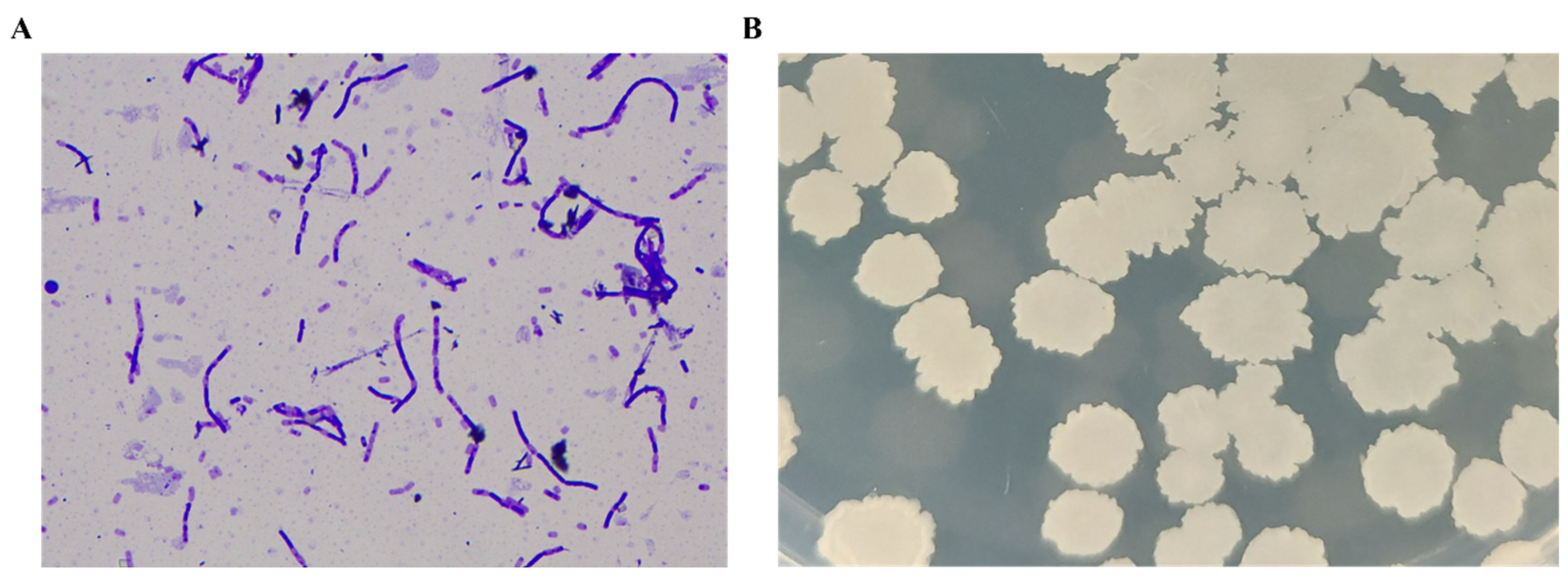
Preliminary identification was performed on the isolated high-yielding strain A-1. The strain exhibited rapid growth on LB solid medium, forming single colonies that appeared rough, opaque, and off-white to pale yellow after 12 h of incubation at 37 °C. Following 24 h of incubation, characteristic radial wrinkles appeared around the colonies, a distinctive morphological feature typical of Bacillus subtilis-like strains (Figure 1A). In liquid culture, the broth produced a typical hydrogen sulfide-like odor. Gram staining and microscopic examination confirmed that the strain consisted of Gram-positive rods (Figure 1B).
Further physiological and biochemical tests (Table 3) showed that the strain was positive for catalase and Voges–Proskauer (VP) tests, capable of hydrolyzing starch and gelatin, and able to grow in medium containing 7% NaCl. Although glycerol utilization is a characteristic commonly associated with Bacillus species, it was not included in the physiological tests for strain identification, as morphological, biochemical, and subsequent molecular analyses collectively confirmed the strain as Bacillus subtilis. In separate fermentation experiments, glycerol was evaluated as a carbon source but resulted in lower NK production compared to malt powder and soy peptone, and was therefore not used in subsequent optimization. Based on the colony morphology, microscopic characteristics, and physiological and biochemical properties described above, and by comparison with Bergey’s Manual of Determinative Bacteriology and the Manual for Identification of Common Bacteria, the isolated strain was preliminarily identified as Bacillus subtilis.
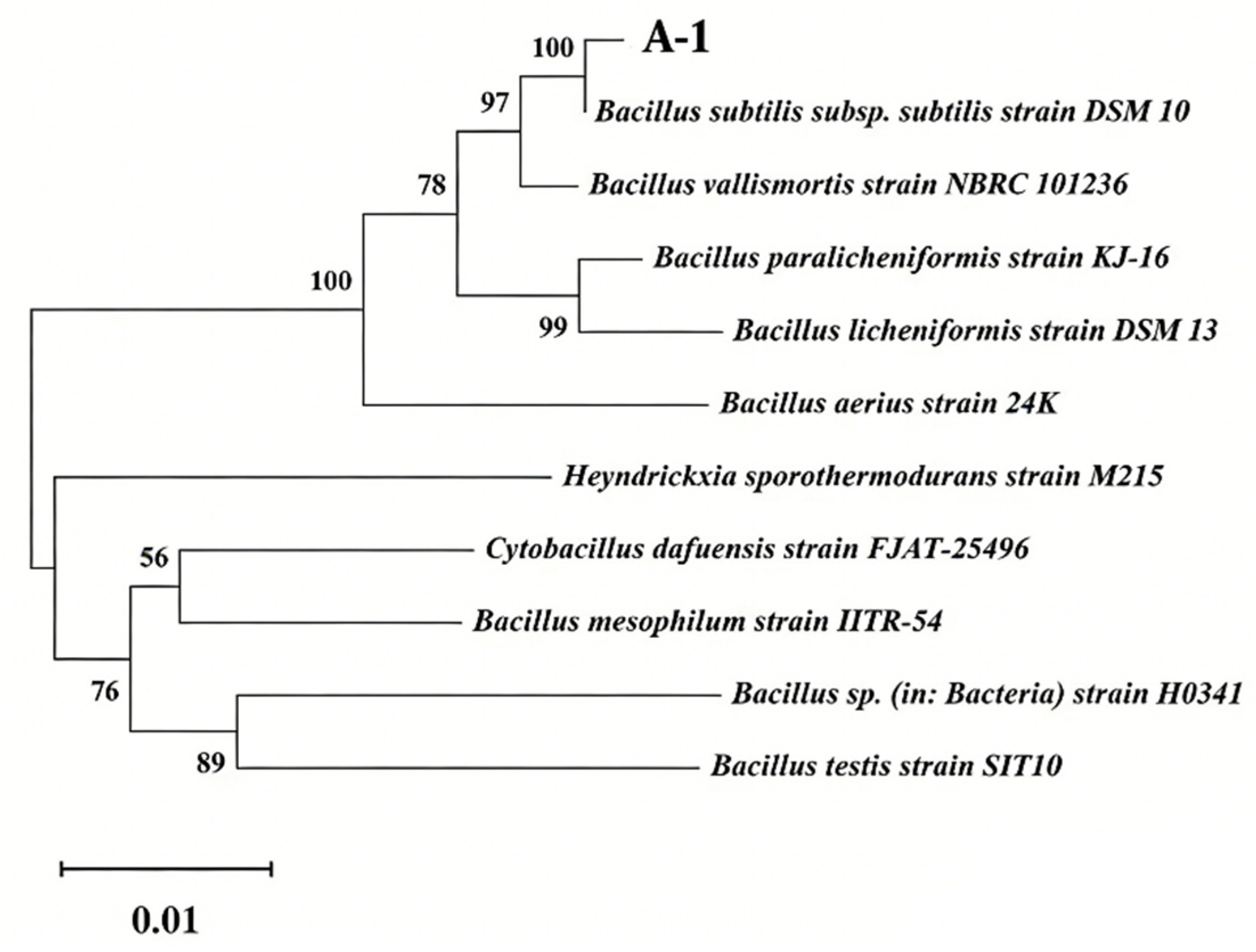
The isolated strain A-1 was subjected to 16S rRNA gene sequencing, yielding a full-length sequence of 1516 bp (see Supplementary Materials for details). Homology analysis was performed using the NCBI database, and a phylogenetic tree was constructed with MEGA 11.0 software using the neighbor-joining method (Figure 2). The results indicated that the strain exhibited 99.8% sequence similarity to Bacillus subtilis subsp. Subtilis strain DSM 10 (NR 102783.2) and 99.2% similarity to Bacillus vallismortis NBRC 101236 (NR 113994.1). Phylogenetic analysis demonstrated that the strain clustered closely with Bacillus subtilis DSM 10, sharing high sequence similarity. Based on this molecular evidence, combined with its colony morphology—creamy white, rough surface, irregular edges—and typical Gram-positive rod-shaped structure, the strain was identified as B. subtilis. This strain will serve as the starting strain for subsequent mutagenesis breeding to develop mutants with high NK production [31].

3.2. Screening of NK-Producing Strains with Resistant to 3-RIF, KAN, and GEN by ARTP

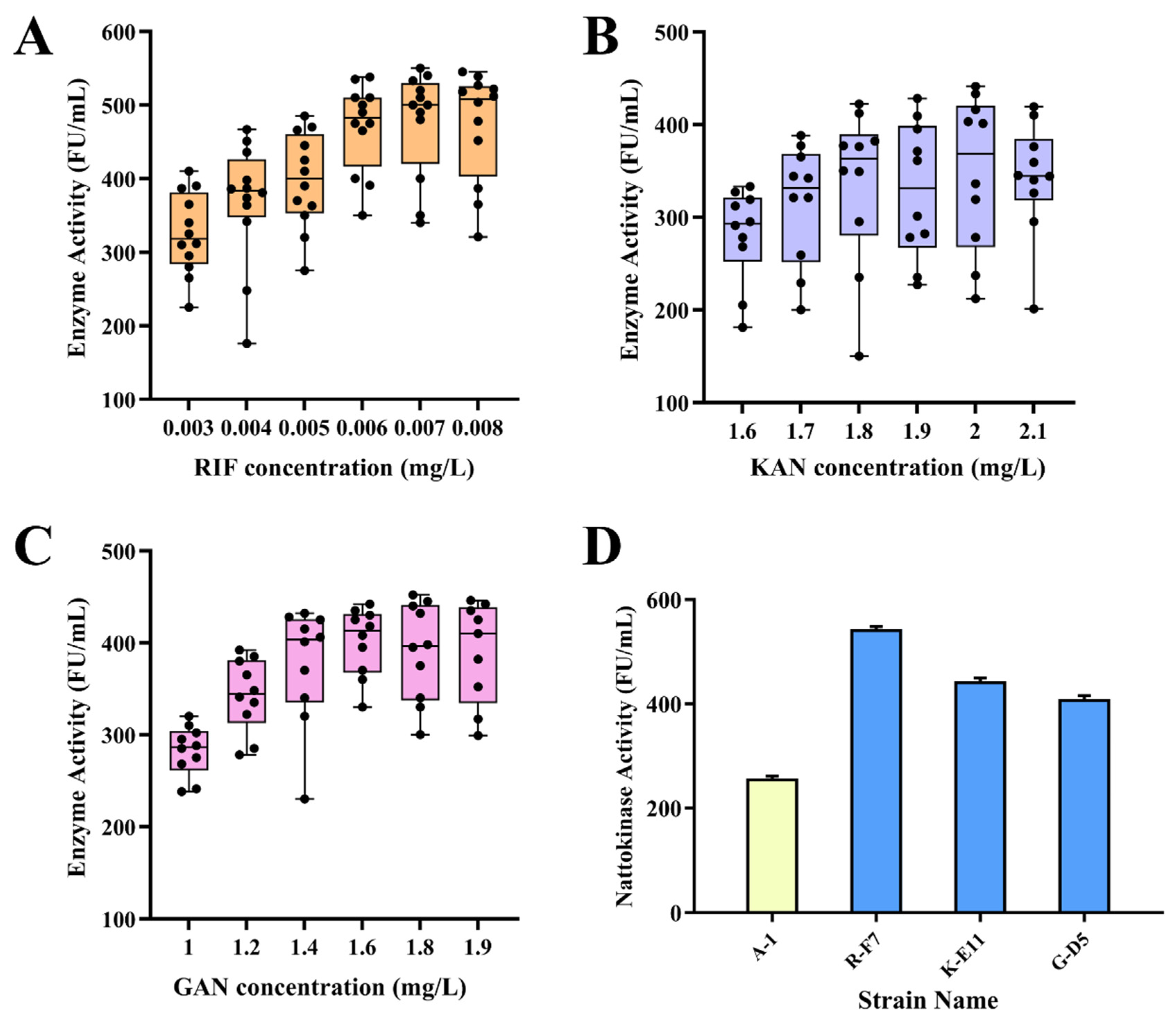
Mutant strains were screened by inoculating them onto LB agar plates containing selective antibiotics. The concentrations used for screening resistant mutants were gradually increased as follows: 3-RIF from 0.003 mg/L to 0.007 mg/L, KAN from 1.5 mg/L to 2 mg/L, and GEN from 1 mg/L to 1.8 mg/L. When the concentration of 3-RIF exceeded 0.007 mg/L, further mutagenesis did not result in higher production (Figure 3A). Similarly, when KAN resistance was raised above 2 mg/L, mutant yields plateaued (Figure 3B). After GEN resistance reached 1.8 mg/L, no further increase in production was observed (Figure 3C).
Finally, three high-yield NK-producing strains obtained through mutagenesis were designated R-F7 (resistant to 0.007 mg/L 3-RIF), K-E11 (resistant to 2 mg/L KAN), and G-D5 (resistant to 1.8 mg/L GEN). The NK activities of R-F7, K-E11, and G-D5 reached 543 ± 8.5 FU/mL, 448 ± 7.5 FU/mL, and 414 ± 7.5 FU/mL, respectively, representing increases of 113.78%, 76.38%, and 62.99% compared to the parental strain A-1 (Figure 3D). These results demonstrate that ARTP mutagenesis combined with antibiotic resistance screening is an effective strategy for obtaining high-yield NK-producing strains [19].

3.3. Screening of NK-Producing Strains with Resistance to 3-RIF, KAN, and Gen by Protoplast Fusion

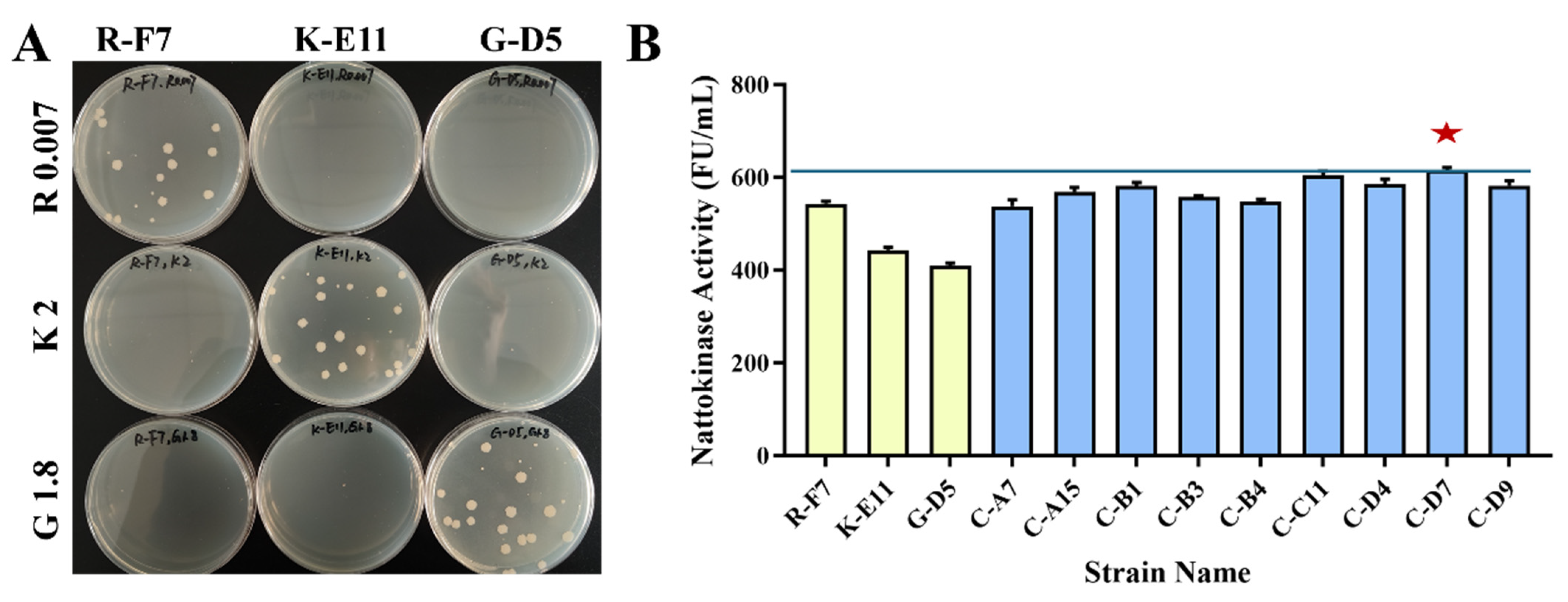
The 3-RIF-resistant mutant R-F7 obtained by ARTP mutagenesis was spread onto LB solid plates containing KAN (2 mg/L) or GEN (1.8 mg/L). Similarly, the KAN-resistant mutant K-E11 was plated on medium supplemented with 3-RIF (0.007 mg/L) or GEN (1.8 mg/L), and the GEN-resistant mutant G-D5 was plated on medium containing 3-RIF (0.007 mg/L) or KAN (2 mg/L). After incubation at 37 °C for 24 h, no colony growth was observed (Figure 4A). These results indicate that strain R-F7 is sensitive to KAN and GEN, strain K-E11 is sensitive to 3-RIF and GEN, and strain G-D5 is sensitive to 3-RIF and KAN.
Previous studies have demonstrated that protoplast fusion technology can be employed to obtain fusants harboring multiple mutational traits, thereby enabling the generation of strains with enhanced target product yields [18,20]. To achieve higher NK production, we selected the highest-yielding mutants from each of the three selection conditions—namely, the 3-RIF-resistant mutant R-F7, the KAN-resistant mutant K-E11, and the GEN-resistant mutant G-D5—as parental strains for protoplast fusion. Following protoplast fusion, nine colonies exhibiting favorable growth morphology were selected from triple-antibiotic LB plates for shake-flask fermentation. As shown in Figure 4B, the fused strain C-D7 produced 610 ± 1.5 FU/mL of NK, representing a 140.16% increase compared to the parental strain A-1 (254 ± 3.5 FU/mL).

3.4. Fermentation and Process Optimization in Bioreactor for NK Production

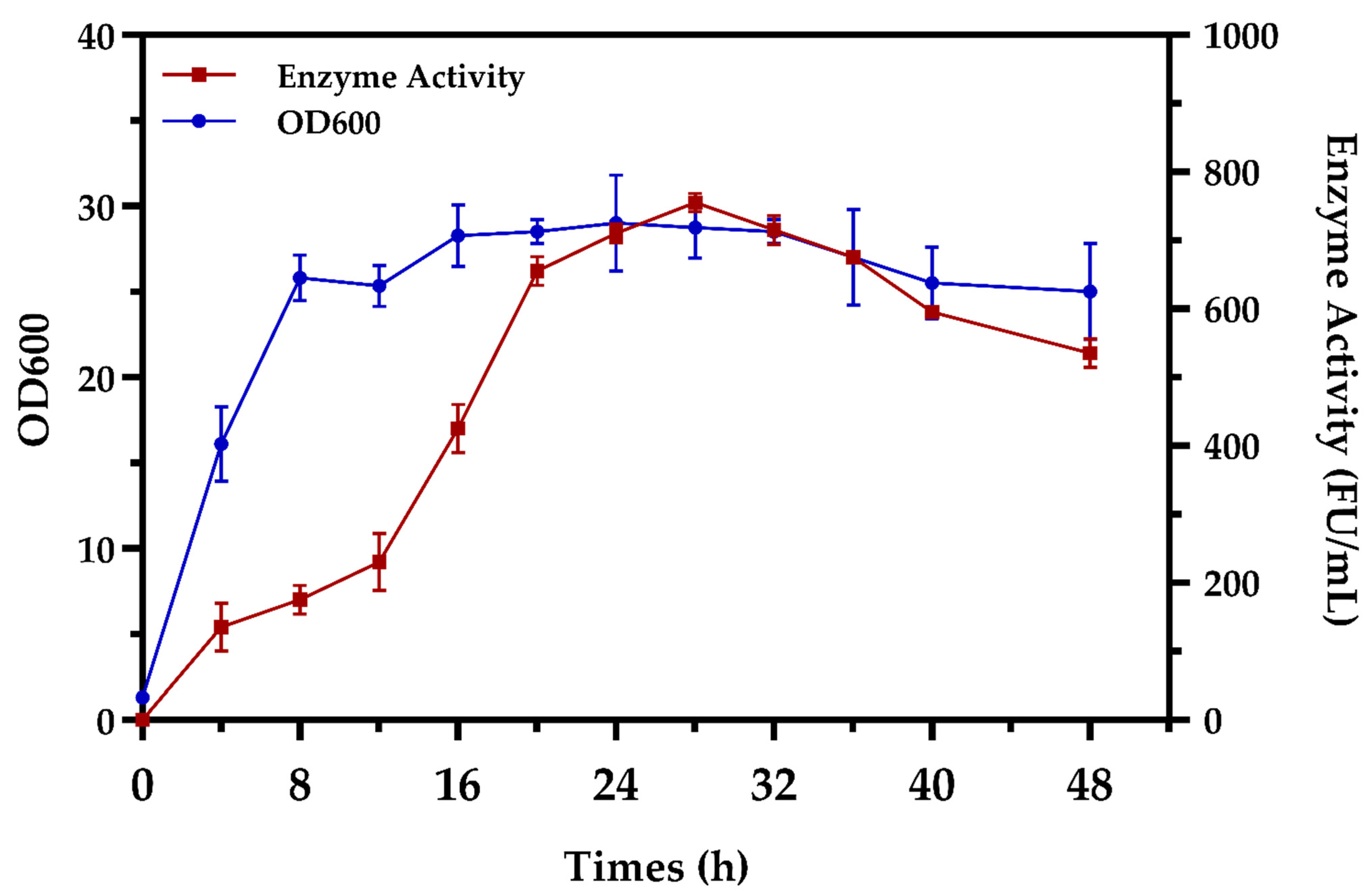
To elucidate the accumulation kinetics of NK and determine the optimal fermentation period, a preliminary batch fermentation of strain C-D7 was conducted in a 5 L bioreactor under free pH conditions. Enzyme activity assays of the fermentation broth revealed that NK synthesis began primarily after 12 h of cultivation and peaked at approximately 26 h, reaching 755 ± 25 FU/mL (Figure 5). However, enzyme activity declined significantly after 30 h. Based on these observations, a baseline fermentation period of 32 h was established for subsequent process optimization to avoid enzyme activity loss and ensure maximum yield.

3.4.1. Optimization of pH Control Strategy During Fermentation

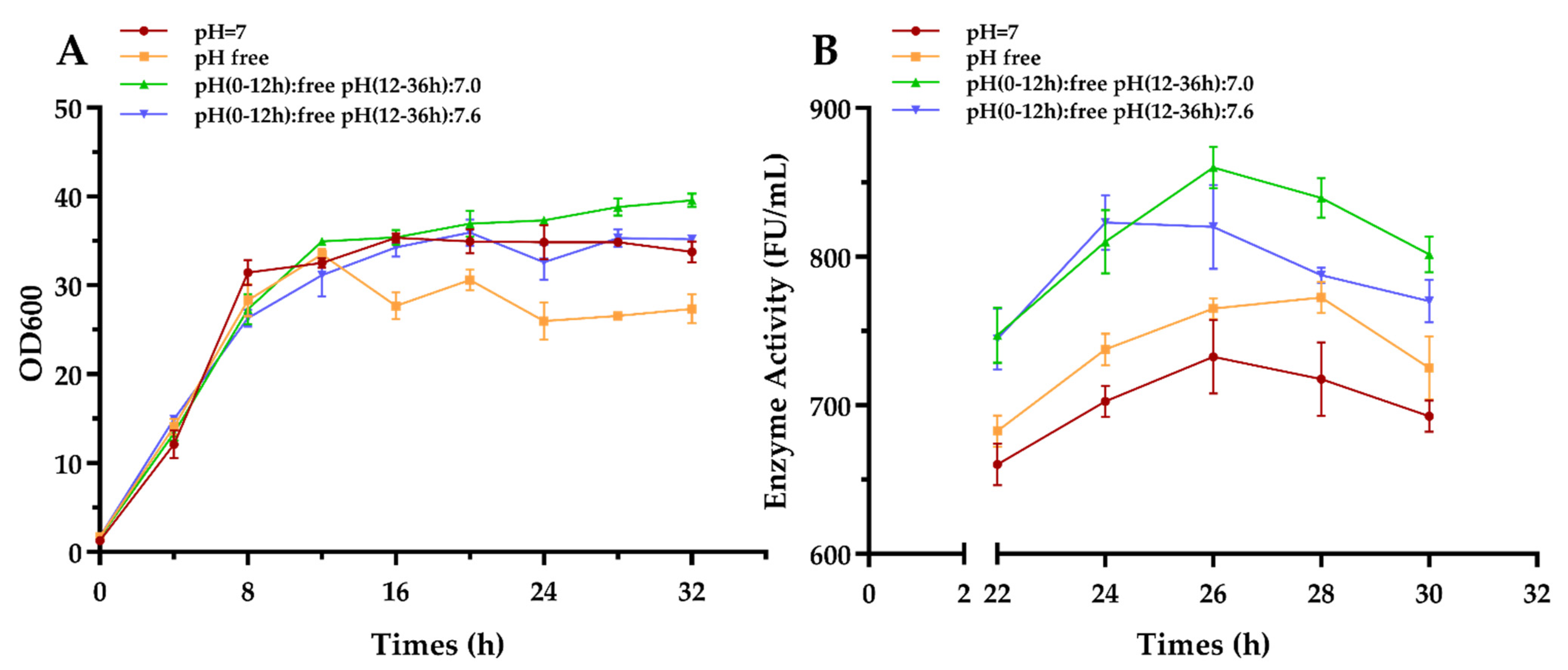
To optimize the pH control strategy, four experimental protocols were designed and compared: maintaining pH at 7.0 throughout the entire fermentation; applying no pH control at any stage; allowing free pH fluctuation for the first 12 h followed by stabilization at 7.0 for the subsequent 24 h; and allowing free pH fluctuation for the first 12 h followed by stabilization at 7.6 for the subsequent 24 h. By monitoring biomass accumulation and NK activity at 22, 24, 26, 28, and 30 h, the results indicated that the strategy of no pH control during the initial 12 h followed by pH stabilization at 7.0 was most conducive to NK production, with enzyme activity reaching 860 ± 20 FU/mL at 26 h (Figure 6).
These findings suggest that a freely varying pH environment during the rapid growth phase (0–12 h) may facilitate efficient biomass accumulation in Bacillus subtilis, whereas maintaining pH at 7.0 during the enzyme production phase (after 12 h) provides an optimal environment for NK synthesis and stability. This phased approach effectively balances the distinct pH requirements for bacterial growth and product synthesis.

3.4.2. Optimization of Feeding Strategy During Fermentation

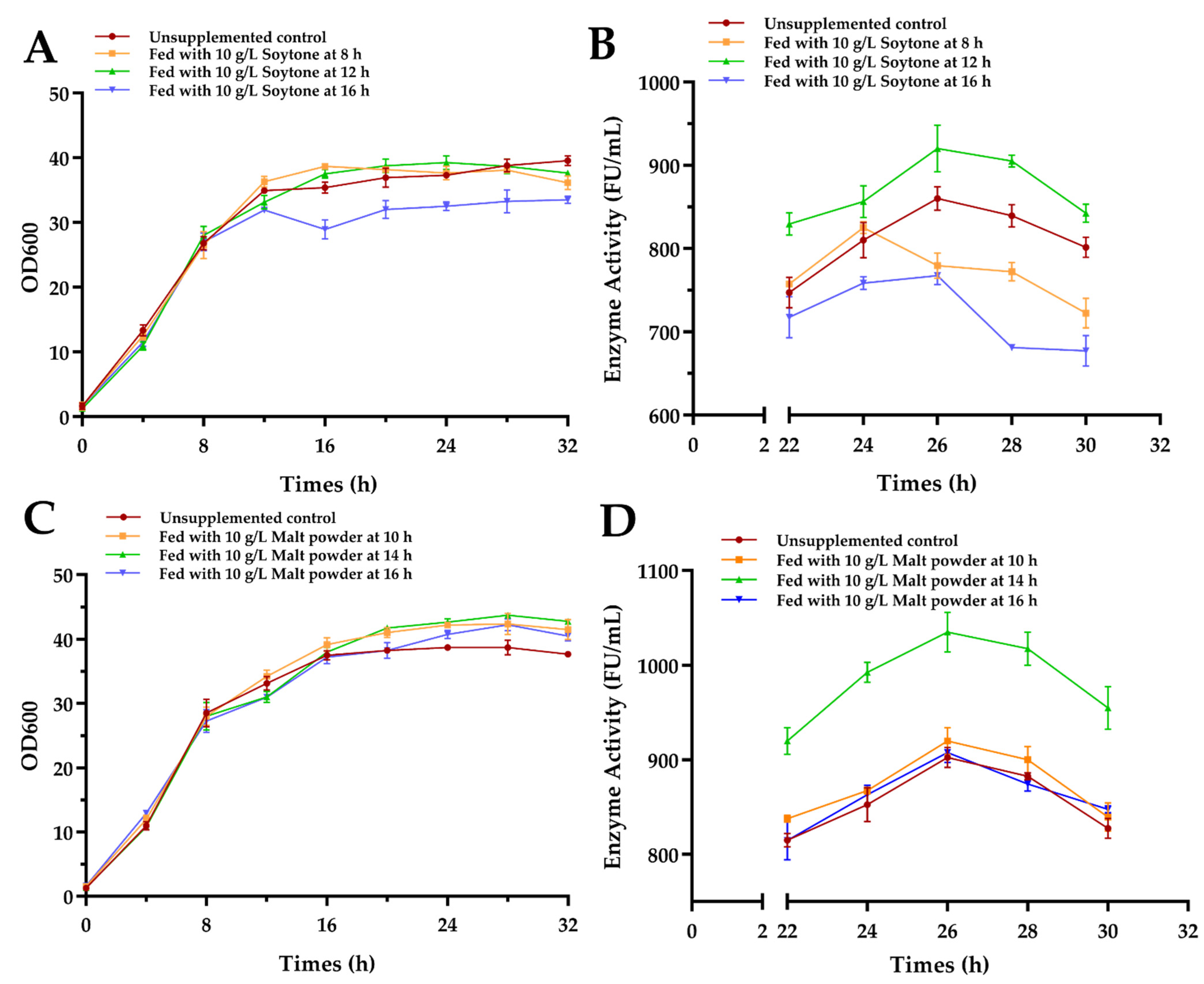
Based on the previously determined optimal fermentation period and pH control strategy, the feeding strategy during fermentation was systematically optimized. First, the effect of nitrogen source (soy peptone) supplementation at different time points on NK production was investigated. Experimental groups included a no-feeding control and treatment groups supplemented with 10 g/L soy peptone at 8, 12, and 16 h of fermentation, respectively [26].
The results showed that the 12 h feeding group achieved the highest enzyme activity, with a peak value of 920 ± 28 FU/mL, significantly exceeding that of the other treatment groups (Figure 7A,B). This time point corresponds to the transition phase from bacterial growth to product synthesis, and timely nitrogen supplementation effectively promoted enzyme protein synthesis without inhibiting cell growth.
To further enhance yield, the optimal timing for carbon source (malt powder) supplementation was examined following the fixed addition of 10 g/L soy peptone at 12 h. Malt powder (10 g/L) was supplemented at 10, 14, and 16 h of fermentation, respectively [24,27]. The results indicated that all malt powder supplementation groups further increased enzyme activity, with the most significant improvement observed when supplemented at 14 h, raising the final peak enzyme activity to 1020 ± 35 FU/mL (Figure 7C,D). These findings suggest that after nitrogen sources initiate the enzyme production process, timely carbon source supplementation can provide sustained energy and metabolic precursors for enzyme synthesis, thereby extending the high-yield phase.
In summary, this study established a staged feeding strategy: supplementation with 10 g/L soy peptone at 12 h of fermentation, followed by 10 g/L malt powder at 14 h. This approach effectively aligns with the differential nutritional requirements of Bacillus subtilis during the growth and enzyme production phases, providing a feasible technical protocol for the efficient synthesis of NK.

3.5. Genomic Analysis and Identification of Key Gene Mutations

Whole-genome sequencing and genomic resequencing have become key tools for elucidating the genetic basis of high-yield NK-producing strains, providing systematic approaches to clarify the mechanisms underlying their high-yield traits. These approaches enable researchers to uncover the molecular mechanisms of NK synthesis and regulation from multiple dimensions. For instance, some studies employing whole-genome comparative analysis have found that mutations in specific regulatory genes can significantly enhance NK yield and stability by influencing secretion pathways and protease activity [16]. Other studies integrating transcriptomic and proteomic analyses have revealed key regulatory networks and metabolic adaptation mechanisms that facilitate efficient NK expression during Bacillus subtilis fermentation [12].
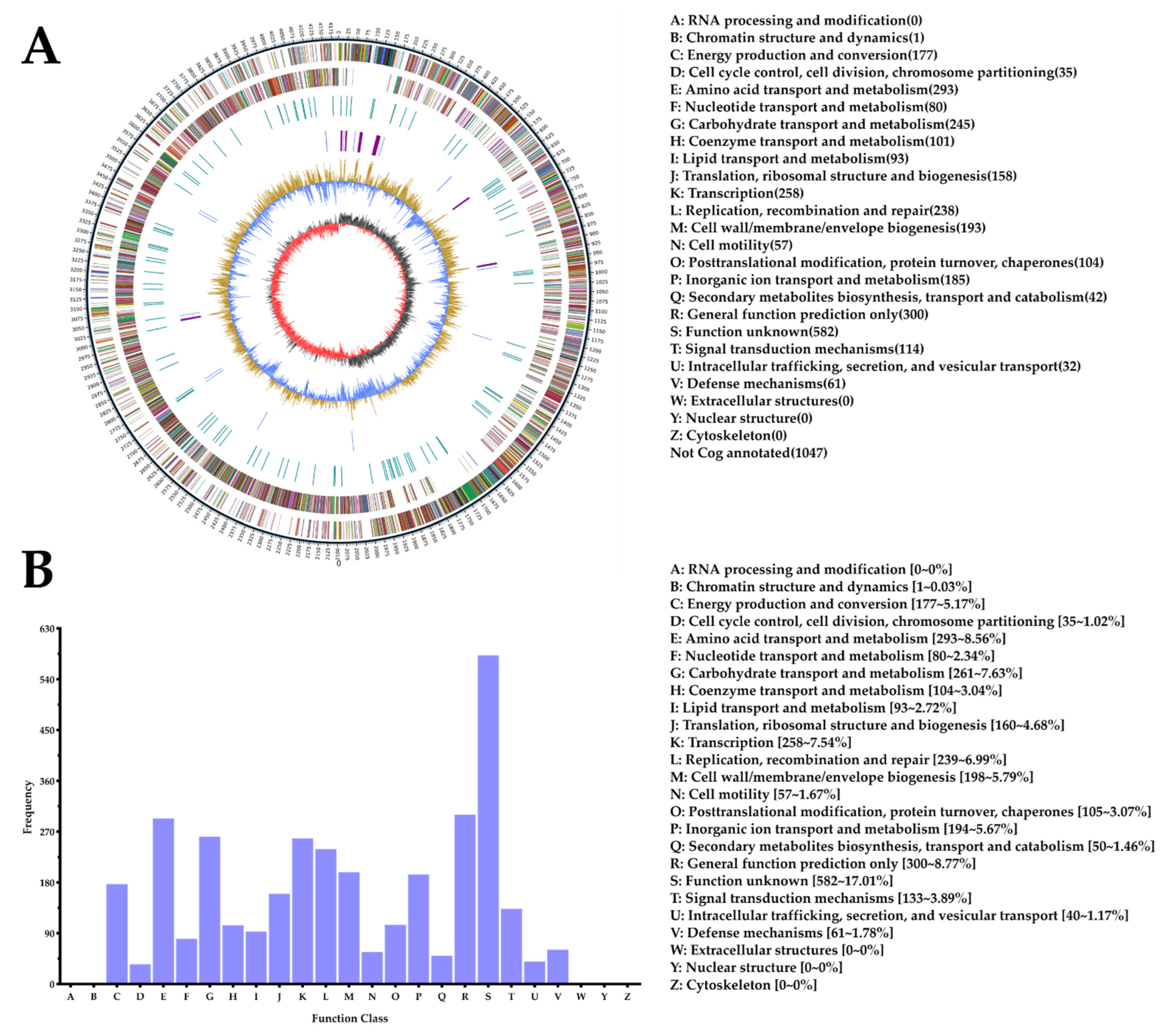
To investigate the genetic basis of the high-yield phenotype of strain C-D7 obtained in this study, its complete genome was sequenced. The sequencing results (Figure 8A) revealed a single circular contig of 4,194,361 bp with a GC content of 43.37%. A total of 4383 coding genes and 118 non-coding RNAs were predicted, including 88 tRNA genes. Functional annotation was performed using the eggNOG, GO, KEGG, nr, Pfam, Swiss-Prot, and TrEMBL databases, identifying 3349, 3372, 2978, 4376, 3701, 3852, and 4368 functionally annotated genes, respectively.
Detailed analysis of the annotation results from the eggNOG database revealed that, after excluding the categories “General function prediction only (R)” and “Function unknown (S)”, the highest number of annotated genes was associated with “Amino acid transport and metabolism (Category E)” (293 genes), followed by “Carbohydrate transport and metabolism (Category G)” (261 genes) and “Transcription (Category K)” (258 genes) (Figure 8B). These annotation results indicate that strain C-D7 possesses strong functional potential in protein synthesis and metabolic regulation, carbohydrate utilization, and gene transcriptional expression.
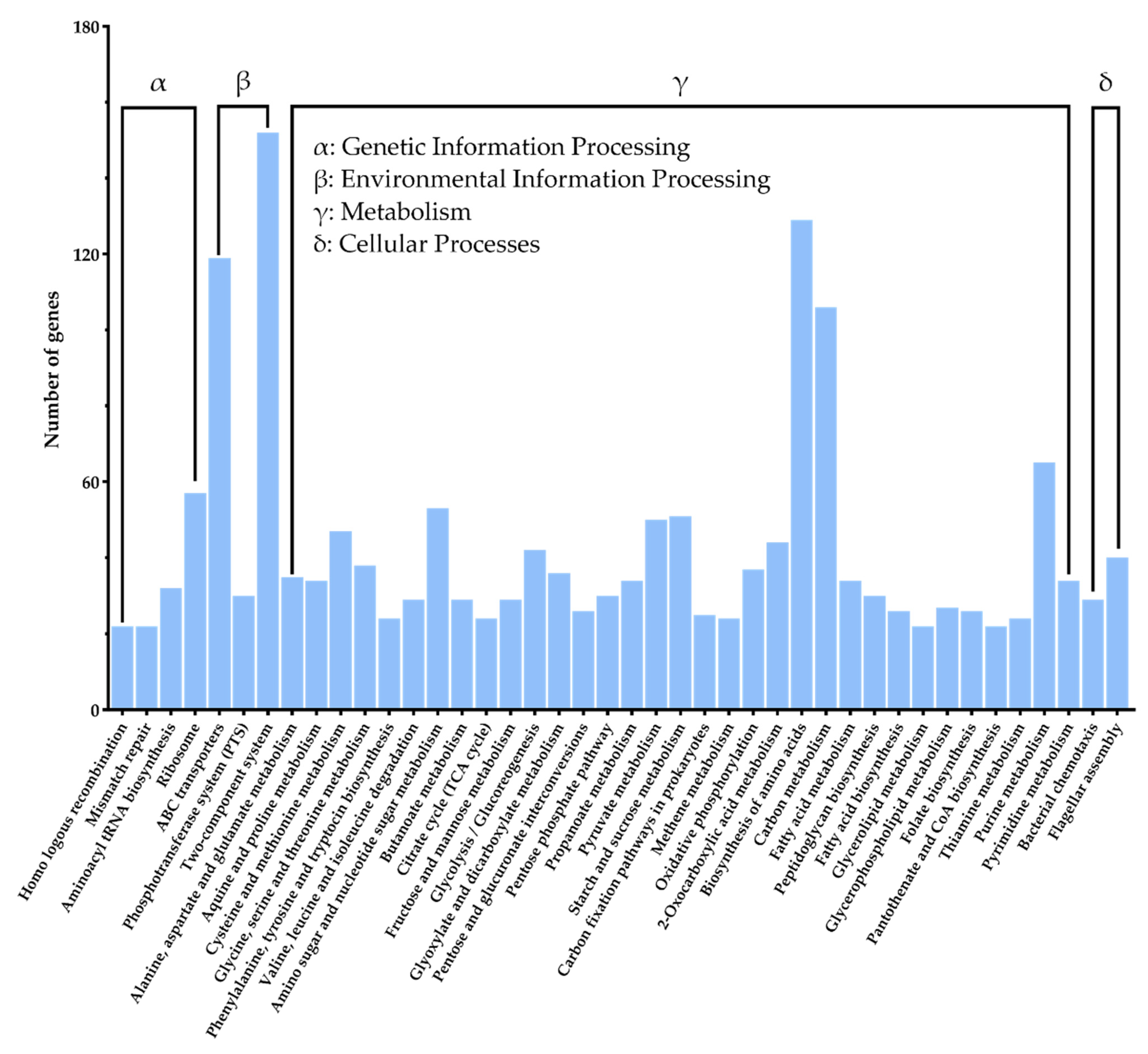
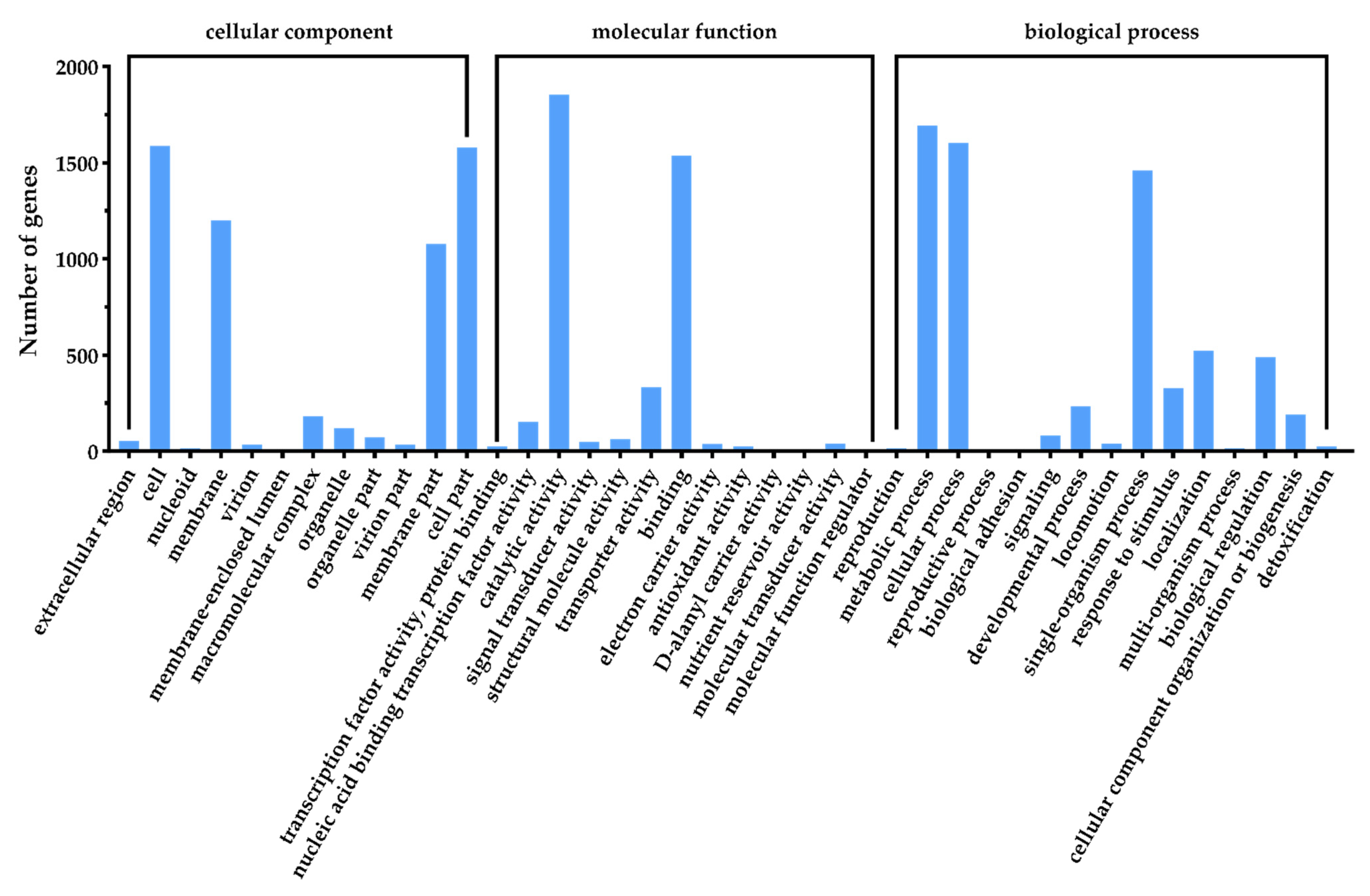
To elucidate the genetic basis underlying the high NK production of the fusant strain C-D7, integrated GO functional annotation and KEGG pathway analysis were performed (Figure 9 and Figure 10). The results showed that the molecular functions of C-D7 are significantly enriched in catalytic activity and binding, while the predominant biological processes are metabolic processes and cellular processes. This indicates an active material and energy metabolism network that efficiently utilizes nutrients to sustain cell growth and protein synthesis.
KEGG pathway analysis further elucidated the corresponding genetic pathways. The high enrichment of the ribosome pathway provides core support for efficient translation of NK. The significant enrichment of two-component systems and ABC transporters reflects the strain’s ability to dynamically adapt to fermentation conditions and its efficient extracellular secretion mechanism for NK, which aligns well with the high-yield phenotype observed under the two-stage pH control and feeding strategies. Additionally, amino acid biosynthesis and carbon metabolism pathways supply sufficient precursors and energy for NK synthesis. The presence of mismatch repair and homologous recombination pathways confirms the strain’s stable DNA repair and genetic recombination capacity following ARTP mutagenesis and protoplast fusion.
In summary, integrated GO and KEGG analysis systematically revealed the genetic foundation underlying the high NK yield of C-D7: an efficient protein synthesis and secretion system, a robust environmental adaptation and metabolic regulation network, and an adequate supply of precursors and energy. These features collectively support its high performance during mutagenesis, fusion, and high-density fermentation, and also provide precise genetic targets for further enhancing enzyme production through metabolic engineering.

3.6. Foam Reduction via Surfactant Gene Knockout

During fermenter cultivation of strain C-D7, substantial persistent foam emerged just 3 h after inoculation, leading to a sharp increase in antifoam agent consumption. Excessive antifoam not only inhibits cell growth but may also impair NK production. Whole-genome sequencing results revealed that, compared to the wild-type B. subtilis DSM 10, strain C-D7 harbored no mutations in the ituD and srfAC genes (Figure S1). To suppress foam formation, we proposed knocking out these two genes. To this end, the knockout plasmids pHT-AIO-ituD and pHT-AIO-srfAC were constructed, and the single-knockout strains C-D7-ΔsrfAC and C-D7-ΔituD, as well as the double-knockout strain C-D7-ΔDouble, were successfully generated (Figure S2). Shake-flask fermentation assays showed that knockout of these genes did not significantly inhibit cell growth or NK accumulation (Table 4).
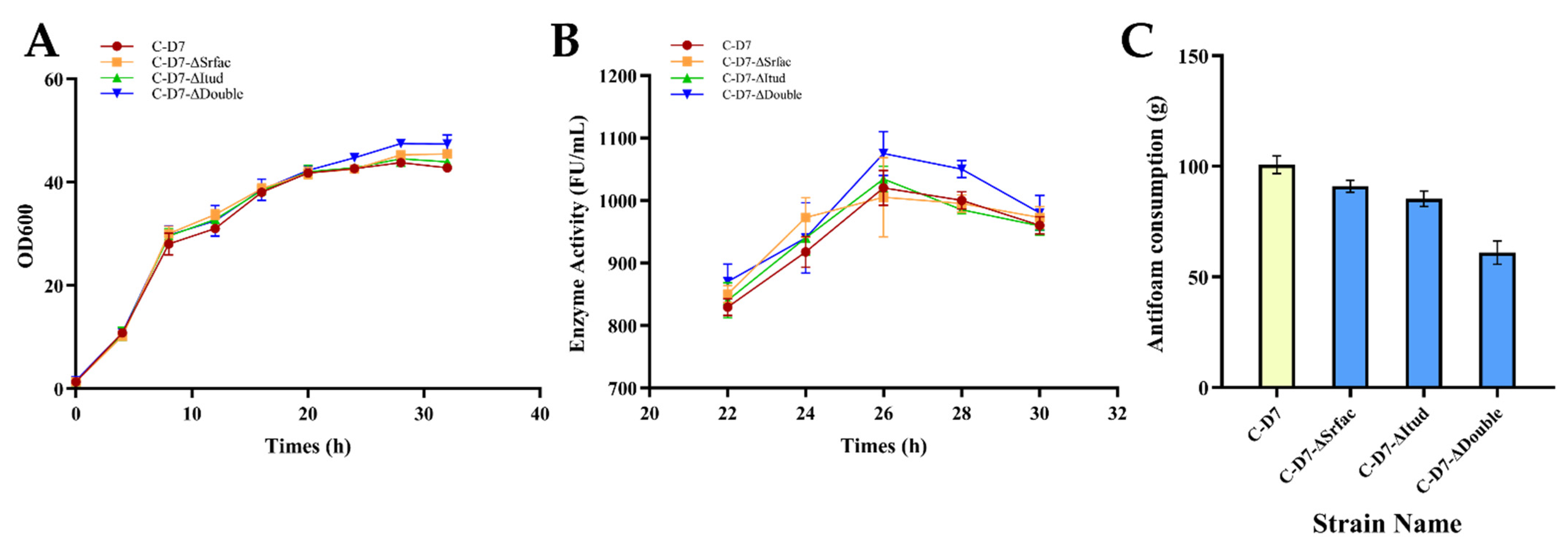
It should be noted that the deletion of ituD and srfAC effectively alleviated the foam generation (Figure S3). The foam overflow of strain C-D7-ΔDouble was delayed by approximately 3 h, and the total consumption of antifoam agent was significantly reduced from an average of 161 g to 61 g (Figure 11). Meanwhile, the cell density during the stationary phase increased, and the average enzyme activity was also enhanced by about 5%.

4. Conclusions

In this study, a multi-scale breeding strategy integrating ARTP mutagenesis, ribosome engineering-based selection, and protoplast fusion was successfully employed to construct a high-yield NK producing strain, Bacillus subtilis C-D7. Starting from the wild-type isolate A-1 (254 FU/mL), sequential selection for resistance to rifampicin, kanamycin, and gentamicin yielded individual mutants R-F7, K-E11, and G-D5, which exhibited significantly enhanced NK activity, with increases of up to 113.78%. Subsequent protoplast fusion of these three mutants generated the fusant C-D7, which demonstrated a remarkable 140.16% improvement in NK yield (610 FU/mL) in shake-flask fermentation.
Further process optimization in a 5-L bioreactor, employing a two-stage pH control strategy (uncontrolled for the first 12 h, followed by maintenance at pH 7.0) and a two-step feeding strategy (soy peptone at 12 h and malt powder at 14 h), boosted NK production by C-D7 to 1020 ± 35 FU/mL. Whole-genome sequencing analysis of C-D7 revealed that the high-yield phenotype is likely attributable to a constellation of mutations in genes critical for protein secretion, global transcriptional regulation, and ribosomal function. Collectively, these mutations may remodel the cellular machinery to favor efficient NK synthesis and secretion.
To address the practical challenge of excessive foaming during fermentation, the foam-related genes ituD and srfAC were knocked out in the C-D7 background. The resulting engineered strain, C-D7-ΔDouble, exhibited a significant reduction in antifoam agent consumption (by approximately 62%) and a delay in foam formation of about 3 h, without compromising cell growth or enzyme production. This modification enhances process controllability and economic viability.
In conclusion, this work not only provides a genetically stable, high-yield, and low-foaming B. subtilis chassis strain but also establishes an optimized fermentation process, offering a comprehensive microbial resource and a solid technical foundation for the cost-effective industrial production of NK.

Supplementary Materials

The following supporting information can be downloaded at: https://www.mdpi.com/article/10.3390/fermentation12030130/s1, Table S1. Primers used in this study. Figure S1. Sequence alignments of ItuD and SrfAc. Analysis of the alignments indicates no mutations in either protein sequence. Figure S2. Verification of gene knockout by agarose gel electrophoresis. Lane 1: DNA marker. Lanes 2–6: PCR products from ΔituD knockout strains (expected band size: ~2000 bp). Lanes 7–10: PCR products from ΔsrfAC knockout strains (expected band size: ~2000 bp). The expected band size of approximately 2000 bp confirms the successful knockout of the target genes. The revised figure has been uploaded as a high-resolution file in the Supporting Information. Figure S3. C-D7-Δdouble. A comparative analysis of foam generation between strain C-D7 and C-D7-ΔDouble in a 5 L bioreactor after 12 h of fermentation. Left: C-D7 exhibits substantial foam accumulation. Right: C-D7-ΔDouble shows significantly reduced foam formation.

Author Contributions

J.-C.L. conducted the experiments and wrote the paper. S.-P.T. performed the data analysis. J.-Z.X. contributed to the conception and design of the experiments and acquired funding. All authors have read and agreed to the published version of the manuscript.

Funding

This research was funded by the National Natural Science Foundation of China (Grant number 32271534), the Class I project of independent innovation of agricultural science and technology in Jiangsu Province (grant numbers CX (22) 1012), the Green Bio-fabrication Program of China (Grant number 2021YFC2100900) and the Top-Notch Academic Programs Project of Jiangsu Higher Education Institutions, the 111 project (Grant number 111-2-06).

Institutional Review Board Statement

Not applicable.

Informed Consent Statement

Not applicable.

Data Availability Statement

The original contributions presented in this study are included in the article and Supplementary Materials. Further inquiries can be directed to the corresponding author.

Conflicts of Interest

The authors declare no conflicts of interest.

References

  1. Dabbagh, F.; Negahdaripour, M.; Berenjian, A.; Behfar, A.; Mohammadi, F.; Zamani, M.; Irajie, C.; Ghasemi, Y. Nattokinase: Production and application. Appl. Microbiol. Biotechnol. 2014, 98, 9199–9206. [Google Scholar] [CrossRef] [PubMed]
  2. Weng, Y.; Yao, J.; Sparks, S.; Wang, K.Y. Nattokinase: An Oral Antithrombotic Agent for the Prevention of Cardiovascular Disease. Int. J. Mol. Sci. 2017, 18, 523. [Google Scholar] [CrossRef] [PubMed]
  3. Cai, D.; Zhu, C.; Chen, S. Microbial production of nattokinase: Current progress, challenge and prospect. World J. Microbiol. Biotechnol. 2017, 33, 84. [Google Scholar] [CrossRef] [PubMed]
  4. Yuan, L.; Liangqi, C.; Xiyu, T.; Jinyao, L. Biotechnology, Bioengineering and Applications of Bacillus Nattokinase. Biomolecules 2022, 12, 980. [Google Scholar] [CrossRef]
  5. Sumi, H.; Hamada, H.; Tsushima, H.; Mihara, H.; Muraki, H. A novel fibrinolytic enzyme (nattokinase) in the vegetable cheese Natto; a typical and popular soybean food in the Japanese diet. Experientia 1987, 43, 1110–1111. [Google Scholar] [CrossRef]
  6. Hodis, H.N.; Mack, W.J.; Meiselman, H.J.; Kalra, V.; Liebman, H.; Hwang-Levine, J.; Dustin, L.; Kono, N.; Mert, M.; Wenby, R.B.; et al. Nattokinase atherothrombotic prevention study: A randomized controlled trial. Clin. Hemorheol. Microcirc. 2021, 78, 339–353. [Google Scholar] [CrossRef]
  7. Zhang, Y.; Pei, P.; Zhou, H.; Xie, Y.; Yang, S.; Shen, W.; Hu, L.; Zhang, Y.; Liu, T.; Yang, K. Nattokinase-Mediated Regulation of Tumor Physical Microenvironment to Enhance Chemotherapy, Radiotherapy, and CAR-T Therapy of Solid Tumor. ACS Nano 2023, 17, 7475–7486. [Google Scholar] [CrossRef]
  8. Granito, M.; Alvarenga, L.; Ribeiro, M.; Carvalhosa, P.; Andrade, T.; Mesquita, C.T.; Stockler-Pinto, M.B.; Mafra, D.; Cardozo, L.F. Nattokinase as an adjuvant therapeutic strategy for non-communicable diseases: A review of fibrinolytic, antithrombotic, anti-inflammatory, and antioxidant effects. Expert Rev. Cardiovasc. Ther. 2024, 22, 565–574. [Google Scholar] [CrossRef]
  9. Wei, C.; Cai, R.; Song, Y.; Liu, X.; Xu, H.L. Research Progress of Nattokinase in Reducing Blood Lipid. Nutrients 2025, 17, 1784. [Google Scholar] [CrossRef]
  10. Li, D.; Hou, L.; Hu, M.; Gao, Y.; Tian, Z.; Fan, B.; Li, S.; Wang, F. Recent Advances in Nattokinase-Enriched Fermented Soybean Foods: A Review. Foods 2022, 11, 1867. [Google Scholar] [CrossRef]
  11. Lampe, B.J.; English, J.C. Toxicological assessment of nattokinase derived from Bacillus subtilis var. natto. Food Chem. Toxicol. 2016, 88, 87–99. [Google Scholar] [CrossRef] [PubMed]
  12. Krüger, A.; Welsch, N.; Dürwald, A.; Brundiek, H.; Wardenga, R.; Piascheck, H.; Mengers, H.G.; Krabbe, J.; Beyer, S.; Kabisch, J.F.; et al. A host-vector toolbox for improved secretory protein overproduction in Bacillus subtilis. Appl. Microbiol. Biotechnol. 2022, 106, 5137–5151. [Google Scholar] [CrossRef] [PubMed]
  13. Neal, M.; Brakewood, W.; Betenbaugh, M.; Zengler, K. Pan-genome-scale metabolic modeling of Bacillus subtilis reveals functionally distinct groups. mSystems 2024, 9, e0092324. [Google Scholar] [CrossRef]
  14. Zhang, X.; Zhang, C.; Zhou, Q.Q.; Zhang, X.F.; Wang, L.Y.; Chang, H.B.; Li, H.P.; Oda, Y.; Xing, X.H. Quantitative evaluation of DNA damage and mutation rate by atmospheric and room-temperature plasma (ARTP) and conventional mutagenesis. Appl. Microbiol. Biotechnol. 2015, 99, 5639–5646. [Google Scholar] [CrossRef] [PubMed]
  15. Zhang, Q.; Miao, R.; Feng, R.; Yan, J.; Wang, T.; Gan, Y.; Zhao, J.; Lin, J.; Gan, B. Application of Atmospheric and Room-Temperature Plasma (ARTP) to Microbial Breeding. Curr. Issues Mol. Biol. 2023, 45, 6466–6484. [Google Scholar] [CrossRef]
  16. Guo, L.; Chen, Y.; He, Z.; Wang, Z.; Chen, Q.; Chen, J.; Oz, F.; Xu, Z.; Zeng, M. Genomic and Transcriptomic Analysis of Mutant Bacillus subtilis with Enhanced Nattokinase Production via ARTP Mutagenesis. Foods 2025, 14, 898. [Google Scholar] [CrossRef]
  17. Ochi, K.; Okamoto, S.; Tozawa, Y.; Inaoka, T.; Hosaka, T.; Xu, J.; Kurosawa, K. Ribosome engineering and secondary metabolite production. Adv. Appl. Microbiol. 2004, 56, 155–184. [Google Scholar] [CrossRef]
  18. Gokhale, D.V.; Puntambekar, U.S.; Deobagkar, D.N. Protoplast fusion: A tool for intergeneric gene transfer in bacteria. Biotechnol. Adv. 1993, 11, 199–217. [Google Scholar] [CrossRef]
  19. Zheng, D.Q.; Wu, X.C.; Wang, P.M.; Chi, X.Q.; Tao, X.L.; Li, P.; Jiang, X.H.; Zhao, Y.H. Drug resistance marker-aided genome shuffling to improve acetic acid tolerance in Saccharomyces cerevisiae. J. Ind. Microbiol. Biotechnol. 2011, 38, 415–422. [Google Scholar] [CrossRef]
  20. Hospet, R.; Thangadurai, D.; Cruz-Martins, N.; Sangeetha, J.; Anu Appaiah, K.A.; Chowdhury, Z.Z.; Bedi, N.; Soytong, K.; Al Tawaha, A.R.M.; Jabeen, S.; et al. Genome shuffling for phenotypic improvement of industrial strains through recursive protoplast fusion technology. Crit. Rev. Food Sci. Nutr. 2023, 63, 2960–2969. [Google Scholar] [CrossRef]
  21. Zhang, K.; Duan, X.; Wu, J. Multigene disruption in undomesticated Bacillus subtilis ATCC 6051a using the CRISPR/Cas9 system. Sci. Rep. 2016, 6, 27943. [Google Scholar] [CrossRef] [PubMed]
  22. Hao, W.; Suo, F.; Lin, Q.; Chen, Q.; Zhou, L.; Liu, Z.; Cui, W.; Zhou, Z. Design and Construction of Portable CRISPR-Cpf1-Mediated Genome Editing in Bacillus subtilis 168 Oriented Toward Multiple Utilities. Front. Bioeng. Biotechnol. 2020, 8, 524676. [Google Scholar] [CrossRef] [PubMed]
  23. Cho, Y.H.; Song, J.Y.; Kim, K.M.; Kim, M.K.; Lee, I.Y.; Kim, S.B.; Kim, H.S.; Han, N.S.; Lee, B.H.; Kim, B.S. Production of nattokinase by batch and fed-batch culture of Bacillus subtilis. New Biotechnol. 2010, 27, 341–346. [Google Scholar] [CrossRef] [PubMed]
  24. Kwon, E.Y.; Kim, K.M.; Kim, M.K.; Lee, I.Y.; Kim, B.S. Production of nattokinase by high cell density fed-batch culture of Bacillus subtilis. Bioprocess. Biosyst. Eng. 2011, 34, 789–793. [Google Scholar] [CrossRef]
  25. Modi, A.; Raval, I.; Doshi, P.; Joshi, M.; Joshi, C.; Patel, A.K. Heterologous expression of recombinant nattokinase in Escherichia coli BL21(DE3) and media optimization for overproduction of nattokinase using RSM. Protein Expr. Purif. 2023, 203, 106198. [Google Scholar] [CrossRef]
  26. Ye, Y.; Yue, W.; Hu, R.; Li, X.; Li, L.; Chen, Y.; Li, B.; Li, Z.; Hong, J. Enhanced nattokinase production by optimized fermentation conditions of douchi-derived Bacillus subtilis natto NK11 and evaluation of its thrombolytic activity. Antonie Leeuwenhoek 2025, 118, 181. [Google Scholar] [CrossRef]
  27. Zhao, S.; Sun, Z.; Zhao, S.; Liu, T.; Yu, J.; Wei, Y. Liquid fermentation technology optimization of nattokinase: From Lab-scale to Pilot-scale. Bioprocess. Biosyst. Eng. 2025. [Google Scholar] [CrossRef]
  28. Bhatt, T.C.; Mandaliya, V.B.; Ibrahim, M.; Bhimani, A.; Detroja, A.; Koradiya, J.; Sanghvi, G.; Bishoyi, A.K. Multifaceted microbial enzyme nattokinase: A comprehensive review on therapeutics applications, production technologies and intellectual property landscape. Curr. Res. Biotechnol. 2025, 10, 100316. [Google Scholar] [CrossRef]
  29. Coutinho, S.B.; Shirodkar, R.R.; Kanjirakkandy, A.; Arulmozhi, V.; Vaithilingam, M.; Chandrasekaran, S.D. Production of Nattokinase from Bacillus amyloliquefaciens MRS18: A Bacterial Strain Isolated from Fermented Beans. Cardiovasc. Hematol. Agents Med. Chem. 2024, 22, 223–229. [Google Scholar] [CrossRef]
  30. Rockstroh, T. [Changes in the nomenclature of bacteria after the 8th edition of Bergey’s Manual of the Determinative Bacteriology]. Z. Arztl. Fortbild. 1977, 71, 545–550. [Google Scholar]
  31. Weisburg, W.G.; Barns, S.M.; Pelletier, D.A.; Lane, D.J. 16S ribosomal DNA amplification for phylogenetic study. J. Bacteriol. 1991, 173, 697–703. [Google Scholar] [CrossRef]
Figure 1. Identification of the isolated strains. (A) Morphology of the A-1 strain under an optical microscope after Gram staining (Oil immersion lens 100 × 10 magnification); (B) colony morphology of the A-1 strain on agar plate culture medium.
Fermentation 12 00130 g001
Figure 2. The phylogenetic tree was constructed based on the 16S rRNA sequencing results of strain A-1.
Fermentation 12 00130 g002
Figure 3. Validation of enzyme activity in mutant strains through three independent fermentations. (A) Strain R-F7 was obtained as the highest-yielding isolate after screening at a 3-RIF concentration of 0.007 mg/L. Further mutagenesis and selection at higher antibiotic concentrations did not yield mutants with increased enzyme activity. (B) Strain K-E11 was selected as the top producer at a kanamycin (Kan) concentration of 2 mg/L. When the selection pressure exceeded this level, no mutants with higher enzyme production were obtained; instead, a decline in yield was observed. (C) Strain G-D5 was isolated as the highest-yielding strain under selection with 1.8 mg/L gen-tamicin (Gen). Similarly, further escalation of the gentamicin concentration failed to identify im-proved producers. (D) Comparison of NK activity among the three single-resistance mutants (R-F7, K-E11, G-D5) and the parental strain A-1. All data are presented as mean ± SD from three independent experiments (n = 3).
Fermentation 12 00130 g003
Figure 4. Verification of resistance and enzyme activity screening for three parental strains used in protoplast fusion. (A) The three parental strains, R-F7, K-E11, and G-D5, can only grow under their respective selective conditions of R0.007, K2, and G1.8, and cannot grow under the other two resistance conditions. This characteristic provides a critical basis for subsequent experiments: by constructing a growth environment containing all three resistance types, fusion strains can be effectively selected. (B) Comparison of NK yields among nine selected high-yield recombinants and the three parental strains. Among them, the fusion strain C-D7 exhibited the highest yield, reaching 610 FU/mL, which represents a 140.16% increase compared to the original strain A-1 (254 FU/mL). All data represent the mean from three independent experiments (n = 3).
Fermentation 12 00130 g004
Figure 5. Batch fermentation profile of NK production and cell growth for strain C-D7 in a 5 L bioreactor. Enzyme activity and OD600 were monitored over a 48-h fermentation period without pH control or feeding. Peak enzyme activity (755 ± 25 FU/mL) was observed at approximately 26 h. Data are from two independent fermentation runs (n = 2).
Fermentation 12 00130 g005
Figure 6. (A) Time course of biomass accumulation (OD600) under four pH control schemes: constant pH 7 (red), no pH control (orange), no control for the first 12 h followed by pH 7 maintenance (green), and no control for the first 12 h followed by pH 7.6 maintenance (blue). (B) Time course of nattokinase (NK) activity under the same four pH strategies. Enzyme activity is expressed in FU/mL. Strategy (green) (no control 0–12 h, then pH 7) yielded the highest NK activity (860 ± 20 FU/mL) at 26 h. Data represent the mean ± standard deviation of two independent experiments (n = 2).
Fermentation 12 00130 g006
Figure 7. Effect of different feeding times on cell growth and NK accumulation during fermentation of strain C-D7. (A) Effect of soy peptone feeding at different time points on cell growth (OD600), showing that supplementation at 12 h of fermentation most promoted growth. (B) Corresponding NK activity accumulation under the same conditions, indicating that the highest enzyme activity was achieved when soy peptone was added at 12 h. (C) Effect of malt powder feeding at different time points on cell growth, based on the fixed supplementation of soy peptone at 12 h, demonstrating that adding malt powder at 14 h provided the most significant growth promotion. (D) Corresponding NK activity accumulation under these conditions, further confirming that the highest enzyme activity was obtained when malt powder was added at 14 h. Data are from two independent experiments (n = 2).
Fermentation 12 00130 g007
Figure 8. Figure presents the genomic circular map (A) and the histogram of COG functional classification (B) for strain C-D7.
Fermentation 12 00130 g008
Figure 9. KEGG pathway functional classification statistics of Strain C-D7.
Fermentation 12 00130 g009
Figure 10. GO functional classification statistics of Strain C-D7.
Fermentation 12 00130 g010
Figure 11. Effects of ituD and srfAC gene knockout on the fermentation performance of strain C-D7. (A) Changes in biomass during fermentation. Compared with strain C-D7, the double-knockout strain exhibits higher cell density during the stationary phase. (B) Comparison of NK activity among the knockout strains and the parental strain C-D7. (C) Foam formation and antifoam consumption in different knockout strains. The double-knockout strain showed effective suppression of foaming and a reduction in antifoam agent consumption by approximately 62%. All data are from three independent experiments (n = 3) and are presented as mean ± SD.
Fermentation 12 00130 g011
Table 1. Main strains and plasmids used in this study.
Strain and PlasmidDescriptionSource
Strain   
Escherichia coli JM110Cloning hostBeyotime
A-1Wild-type Bacillus subtilisThis study
R-F7Carrying rifampicin-resistant mutants
K-E11Kanamycin-resistant mutants
G-D5Gentamicin-resistant mutants
C-D7Mutants carrying three resistances
Plasmid  
pHT-AIO-ganApHT01 derived plasmid containing P43-Cpf1, crRNA targeting ganA, and homologous arms for ganA deletionCollection of this laboratory [22]
pHT-AIO-ituDpHT01 derived plasmid containing P43-Cpf1, crRNA targeting ituD, and homologous arms for ituD deletionThis study
pHT-AIO-srfACpHT01 derived plasmid containing P43-Cpf1, crRNA targeting srfAC, and homologous arms for srfAC deletionThis study
Table 2. NK Activity of the isolated strains.
Sample NameA-1A-2A-3A-4A-5A-6
NK activity (FU/mL)254 ± 3.5229 ± 5207 ± 3.5174 ± 4216 ± 3198 ± 4
Table 3. Physiological and biochemical experiments.
Experimental ProjectResult
Voges–Proskauer (V–P) test+
Lactose
Glucose+
Maltose+
Sucrose+
Mannitol
Hydrogen sulfide production test
Table 4. NK Activity of the knockout strain.
Sample NameC-D7C-D7-ΔsrfACC-D7-ΔituDC-D7-ΔDouble
Biomass(OD600)25 ± 1.524.5 ± 1.725.5 ± 224.8 ± 1.5
NK activity (FU/mL)610 ± 15600 ± 20600 ± 17610 ± 17
Data were measured at 48 h of shake-flask fermentation. Values represent mean ± SD from three independent experiments (n = 3).
Disclaimer/Publisher’s Note: The statements, opinions and data contained in all publications are solely those of the individual author(s) and contributor(s) and not of MDPI and/or the editor(s). MDPI and/or the editor(s) disclaim responsibility for any injury to people or property resulting from any ideas, methods, instructions or products referred to in the content.