Article

Effect of Operational Parameters on Dark Fermentative Hydrogen Production and Volatile Fatty Acids from Agro-Industrial By-Products


by
Angeliki Maragkaki
1,*,
Andreas Kaliakatsos
2,
Nikolaos Markakis
1,
Emmanouela Maragkaki
1,
Napoleon Christoforos Stratigakis
3,
Iosifina Gounaki
2,
Danae Venieri
2,
Kelly Velonia
3 and
Thrassyvoulos Manios
1
1
Department of Agriculture, Hellenic Mediterranean University, Estavromenos, 71410 Heraklion, Greece
2
School of Chemical and Environmental Engineering, Technical University of Crete, 73100 Chania, Greece
3
Department of Materials Science and Engineering, University of Crete, 71003 Heraklion, Greece
*
Author to whom correspondence should be addressed.
Fermentation 2026, 12(2), 99; https://doi.org/10.3390/fermentation12020099
Submission received: 4 December 2025 / Revised: 2 February 2026 / Accepted: 4 February 2026 / Published: 10 February 2026
(This article belongs to the Special Issue Women’s Special Issue Series: Fermentation)

Abstract

The purpose of this study was to examine how hydraulic retention time (HRT) influences biohydrogen generation and the formation of end-products during the co-digestion of olive mill wastewater (OMW), cheese whey (CW), and sewage sludge (SS) mixed in a 40:40:20 (v/v/v) ratio. The relationship between the substrates, resulting metabolites, and microbial communities was also explored. Continuous fermentation trials were carried out under both mesophilic (37 °C) and thermophilic conditions using HRTs of 12, 24 and 48 h. Acetic, propionic, and butyric acids were identified as the main end-products. The highest hydrogen production rate (4.4 ± 0.5 L H2/Lreactor/day) occurred under thermophilic conditions at an HRT of 24 h, whereas under mesophilic operation at the same HRT the hydrogen production reached 3.0 ± 0.3 L H2/Lreactor/day. In contrast, the greatest accumulation of volatile fatty acids (VFAs) was observed under mesophilic conditions (10.02 g/L), while thermophilic operation at 24 h HRT resulted in 5.54 g/L of total VFAs. The improved performance under thermophilic fermentation is likely linked to the suppression of hydrogen-consuming bacteria at elevated temperatures, which favors rapid hydrogen producers. Microbial community analysis indicated dominance of Firmicutes and persistent Lactobacillus prevalence across conditions. Shorter HRT at 37 °C promoted community diversification with genera such as Olsenella, Dialister, and Prevotella increasing in relative contribution. Under thermophilic operation, consortia remained Lactobacillus-dominant but showed significant temporal restructuring. The predominance of acetic acid (~2.80 g/L) and butyric acid (~2.60 g/L) indicates that hydrogen generation mainly followed the acetic and butyric pathways. This study reveals how targeted control of HRT and temperature can steer microbial communities toward highly hydrogen-productive consortia in the continuous dark fermentation of mixed agro-industrial wastes.

1. Introduction

The rising worldwide energy requirements and escalating environmental concerns, encompassing pollution, greenhouse gas releases, and exhaustion of fossil fuel reservoirs, underscore the pressing necessity for alternative energy remedies. Within this context, advocating for renewable energy outlets is pivotal, with biohydrogen emerging as a promising contender in tackling these dilemmas [1]. Biohydrogen is recognized for its sustainability and eco-friendliness, due to its low carbon footprint and efficient generation from diverse organic waste sources [2,3]. In addition to biohydrogen, VFAs possess significant scientific and economic value as versatile platform chemicals, serving as precursors for biofuels, bioplastics, and other value-added biochemicals. Their recovery and utilization enhance resource valorization, by enabling the conversion of organic waste into high-value products within sustainable biorefinery frameworks [4,5]
Dark fermentation (DF) is a biological process that converts organic matter into hydrogen (H2)—along with volatile fatty acids, lactate, and ethanol—under anaerobic, light-independent conditions. These metabolites reflect the metabolic pathways of the active microbial community and the interactions among microbial groups [6].
DF performance is influenced by a range of parameters, including pH, temperature, organic loading rate, inhibitory compounds, and nutrient availability, all of which affect H2 yields and product distribution [7,8,9]. For example, pH governs metabolic pathway selection, while temperature affects microbial growth and substrate conversion efficiency. Optimal organic loading supports acidogenic activity, but excessive loading can cause inhibition.
Agro-industrial by-products not only provide a rich pool of carbohydrates and other nutrients, but also carry indigenous microbial communities, including lactic acid bacteria that convert sugars into lactic and other organic acids. At the same time, dark fermentation systems fed with such wastes typically harbor a mixture of hydrogen-producing bacteria, such as Clostridiales, Bacillus, Prevotella and Enterobacteriaceae, which are capable of generating H2 together with VFAs. Changes in operating conditions, such as temperature and hydraulic retention time (HRT), can trigger shifts in community structure, leading to markedly different hydrogen yields and VFA profiles, even when the same waste feedstock is used.
Recent advancements in molecular biology techniques led to the development of various culture-independent methods that can be used to investigate the microbiome in biohydrogen-producing reactors [10]. The application of omics techniques can yield key insights into the taxonomic diversity, structure, and composition of microbial communities, thereby supporting the identification of optimal conditions for converting biowastes into biohydrogen and VFAs.
Mesophilic anaerobic fermentation at 37 °C creates favorable conditions for the proliferation of diverse microorganisms, facilitating a consistent fermentation process due to the moderate temperature [2,11]. Thermophilic dark fermentation at 50 °C promotes the dominance of bacterial strains adapted to high temperatures, thereby increasing enzymatic activity and significantly enhancing hydrogen production [12]. Furthermore, operating under thermophilic conditions inhibits the proliferation of hydrogen-consuming microorganisms, thereby minimizing hydrogen-loss pathways and improving overall H2 yields [2]. Culture mode is a critical factor influencing the performance of the fermentation process. In batch systems, the initial substrate concentration and the accumulation of fermentation byproducts directly affect microbial activity and process stability. In contrast, fed-batch operation allows the gradual addition of substrate, preventing inhibition caused by high substrate levels and reducing the negative effects of product accumulation. As a result, fed-batch culture supports a more stable and sustained production of H2 [2,13].
Various inoculum pretreatment methods have been extensively investigated in mixed microbial communities to promote the selection of hydrogen-producing microorganisms over hydrogen-consuming ones. Under adverse environmental conditions, certain hydrogen-producing bacteria, such as Clostridium, Bacillus, and Thermoanaerobacterium, form endospores as a protective mechanism, enhancing their survival compared to non-spore-forming competitors [14]. Spore-forming H2 producers exhibit greater survival potential than non-spore-forming microorganisms, because their endospores can regerminate once conditions become favorable. Temperature and pH shocks are among the most applied pretreatment strategies, as they selectively inhibit hydrogen-consuming populations, while promoting the enrichment and activity of hydrogen-producing bacteria within mixed microbial communities [15]. High temperatures cause the disruption of cell membranes in non-sporulating microorganisms, leading to cell lysis and protein denaturation [14].
The main objective of this study was to examine how HRT influences biohydrogen generation and the formation of end-products during the co-digestion of olive mill wastewater, cheese whey, and sewage sludge mixed in a 40:40:20 (v/v/v) ratio. Also, this study aims to characterize the bacterial community structure and composition in continuous dark fermentation using 16S rRNA gene amplicon sequencing. The relationship between the substrates, resulting metabolites, and microbial communities was also explored. The novelty of this study lies in the integrated evaluation of HRT, temperature, and microbial community dynamics in a continuous CSTR treating a mixed waste stream of OMW, CW and SS, an operational–microbial link that has not been previously reported. Unlike earlier studies focusing on single substrates or batch systems, our results reveal how thermophilic 24 h HRT specifically restructures the bacterial community toward Clostridium-associated hydrogenogenic pathways, leading to the highest observed hydrogen yields. The authors believe that this study can offer valuable insights for the development of novel and innovative valorization pathways for OMW and other waste streams within the framework of the circular bioeconomy aimed at hydrogen and VFA production, while also elucidating the bacterial community structure and composition involved in continuous dark fermentation processes through 16S rRNA gene amplicon sequencing.

2. Materials and Methods

2.1. Inoculum

This research utilized anaerobic sludge as the initial microbial inoculum, sourced from a municipal wastewater treatment facility in Crete, Greece. The sludge had a volatile solid (VS) concentration of approximately 13.1 g/L, and the indigenous microbial community exhibited a near-neutral pH of around 7.2. To inhibit methanogenic activity, enhance biohydrogen production and prevent methane formation, the sludge was subjected to a thermal pretreatment process. This pretreatment involved heating and agitating the sludge at 100 °C for 20 min [6]. Following pretreatment, the anaerobic sludge showed an increased VS content of 17.2 g/L, and the pH of the microbial consortium rose to approximately 8.0.

2.2. Feedstock Used in Fermentation Experiments

SS was obtained from the Heraklion Municipal Sewage Treatment Plant (MSTP), which serves a population of approximately 175,000 residents. To maintain its integrity, the sludge was refrigerated at 4 °C for no more than 24 h prior to use, minimizing potential changes in its composition. Fresh OMW was sourced from an olive oil production facility in Heraklion that employs a three-phase decanter centrifugation method for oil extraction. To ensure consistency in feedstock composition throughout the study, given its seasonal availability and susceptibility to fermentation, the OMW was stored at −18 °C. CW was collected from a nearby cheese processing plant that utilizes traditional production methods. Table 1 presents the average physicochemical characteristics of the untreated SS, CW and OMW.
Table 2 summarizes the properties of the composite substrate employed as the feed material.

2.3. Lab-Scale Anaerobic Digester and Experimental Procedure

The research was carried out using a 3 L laboratory-scale continuous stirred-tank reactor (CSTR) constructed from stainless steel and equipped with a double-walled design. The reactor was operated under both mesophilic (37 °C) and thermophilic (55 °C) conditions, supported by water jackets connected to a water bath system for precise temperature control. Mesophilic experiments were first conducted to determine the optimal HRT, and this best-performing condition was subsequently tested under thermophilic operation. Agitation was provided by a motor-driven unit positioned at the top of the reactor. The reactor contents were stirred intermittently for 15 min, twice per hour.
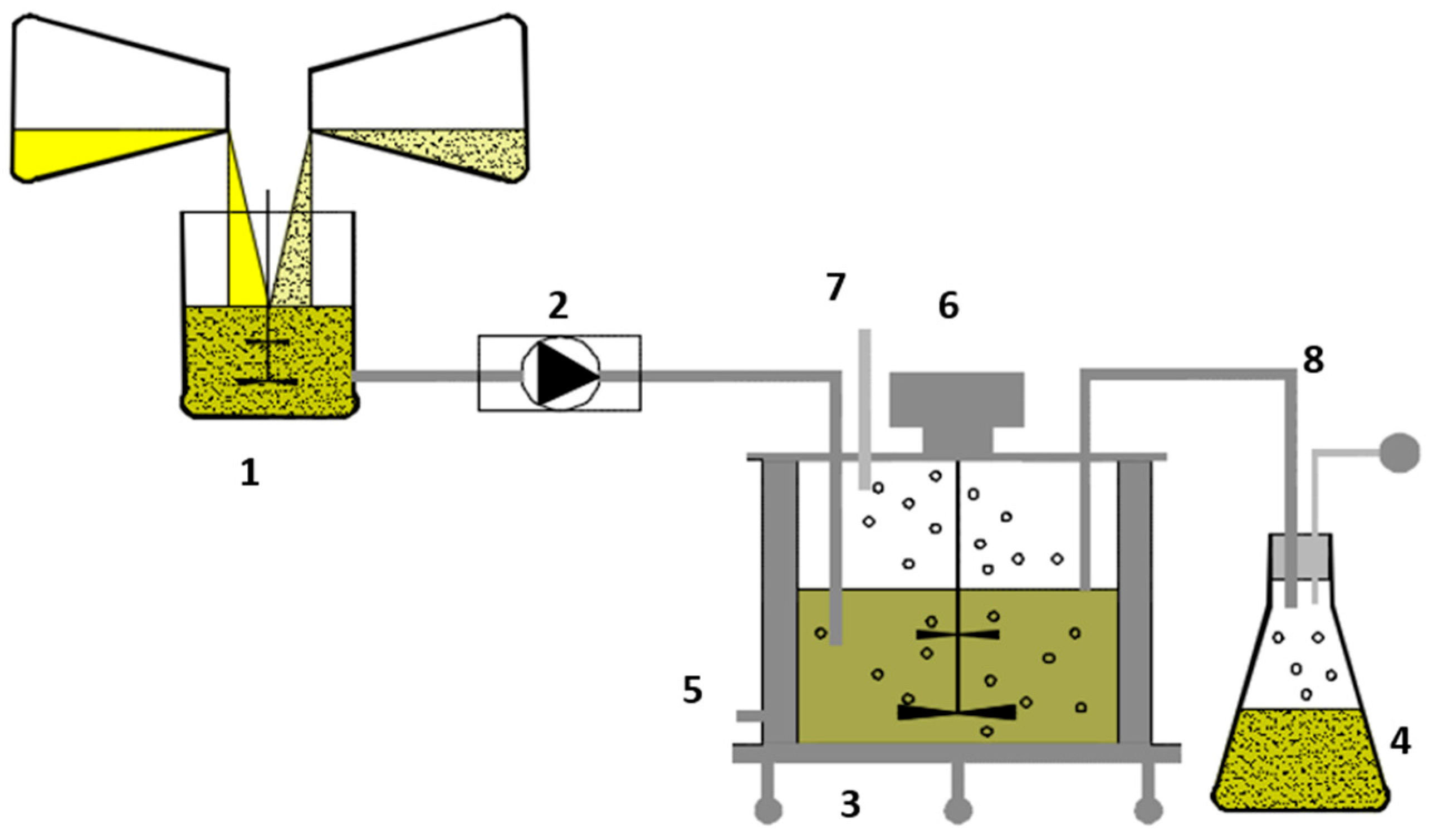
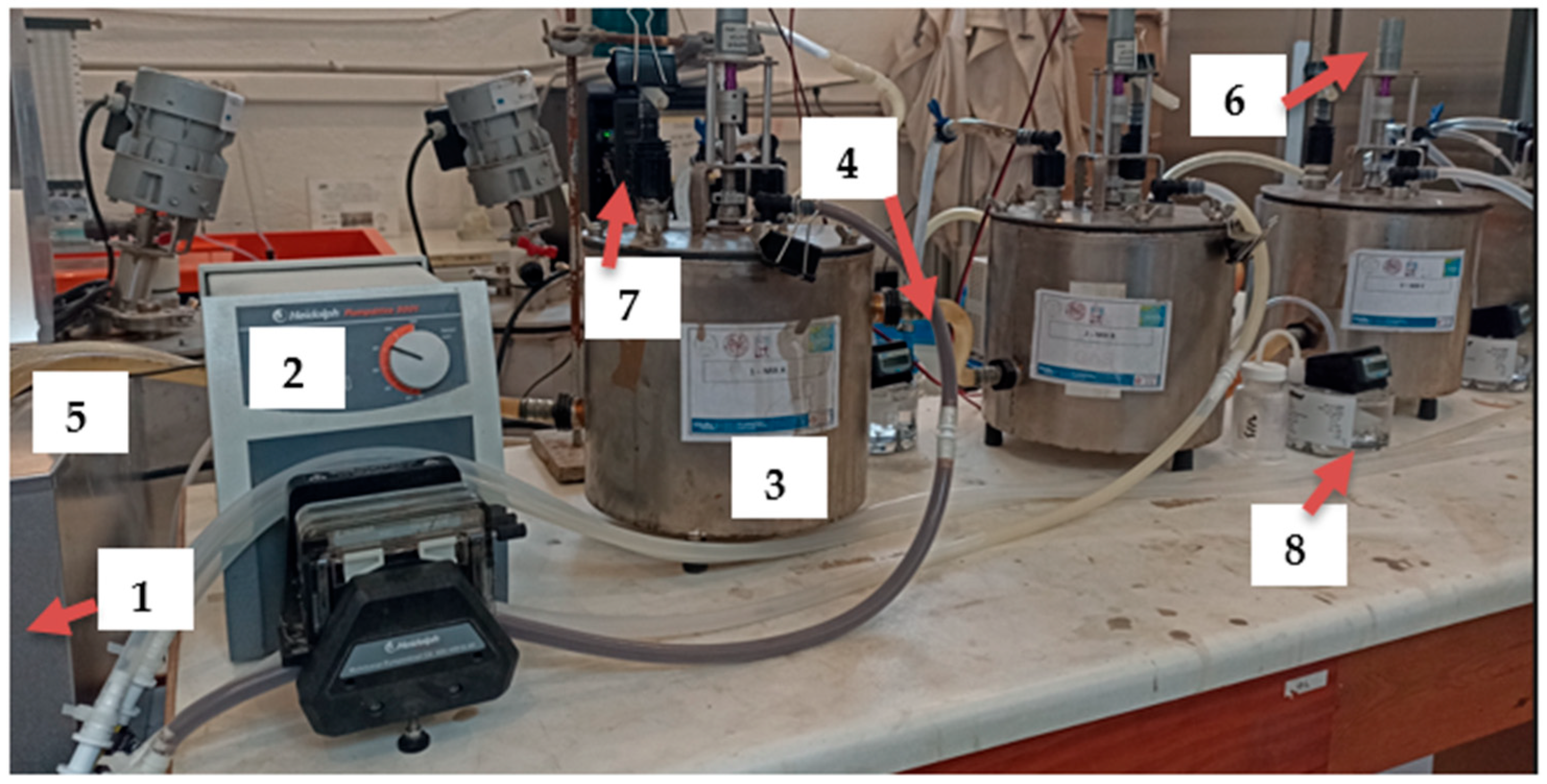
The raw material was stored in 60 L plastic containers within a refrigerated environment to maintain a constant temperature of 4 °C. Feedstock was introduced into the system every 6 h, with total daily volumes of 1.5 L (HRT = 48 h), 3 L (HRT = 24 h), and 6 L (HRT = 12 h). Fresh influence was prepared weekly and stored in identical 60 L containers, which were agitated for 2 min prior to feeding. The pH of the mixtures was adjusted to 6.4–6.5 using 5 M NaOH, whereas it was introduced to the reactor continuously via a peristaltic pump, and this pH range was maintained throughout reactor operation. The digester was operated for a minimum of 30 days for each HRT. Both influent and effluent samples were analyzed for Total Solids (TS), Volatile Solids (VS), pH, Total Chemical Oxygen Demand (TCOD), Total Carbon (T-Carb), Total Nitrogen (TN), Total Organic Carbon (TOC), and hydrogen content in the produced biogas. Volumetric biogas production was also measured for all reactors. The digester layout is shown in Figure 1 and Figure 2, while detailed specifications and operational parameters are provided in Table 3.

2.4. Analytical Methods

The pH was measured using a pH meter (GLP21 model, Crison, Barcelona, Spain), while BOD, total nitrogen (TN), total phosphorus (TP), total chemical oxygen demand (TCOD), and soluble chemical oxygen demand (sCOD) were determined using standard assay kits (Hach, Düsseldorf, Germany) and spectrophotometric methods, in accordance with APHA guidelines [17]. Crude protein (CP) was calculated by multiplying total nitrogen by a factor of 6.25, based on the assumption that nitrogen constitutes approximately 16% of most proteins [18]. L-tryptophan, sulfuric acid, and boric acid were used for the determination of total and soluble carbohydrate concentrations [19]. This reaction resulted in the formation of a chromatic sugar derivative, which was subsequently quantified by colorimetric analysis at a wavelength of 520 nm. VFAs, including acetic, propionic, iso-butyric, butyric, iso-valeric, and valeric acids, were also measured. Gas samples were collected using gas-tight syringes, sealed with butyl rubber stoppers, and transferred to the gas chromatograph for analysis. For hydrogen and methane determination, a 20 µL sample was injected into an Agilent 6890N GC System (Agilent Technologies, Inc., Santa Clara, CA, USA) equipped with a capillary column (Agilent GS-Carbonplot, 30 m × 0.32 mm, 3 µm) and a thermal conductivity detector. The detector temperature was set to 150 °C, while the column was maintained isothermally at 80 °C. Helium was used as the carrier gas at a flow rate of 15 mL/min. Hydrogen production was monitored until its rate declined, and volumetric biogas generation was quantified using MilliGascounters (Ritter, MGC-1 V3.4 PMMA, Waldenbuch, Germany). The same GC was used for the VFAs. The separation column was a capillary column (Agilent Technologies Inc., 30 m × 0.53 mm) and the detector was a flame ionization detector (FID). The carrier gas consisted of a mixture of hydrogen, helium, and air, all of high purity. For the analysis of volatile fatty acids, a temperature program was used on the column, which was initially set at 105 °C and then gradually increased—first at a rate of 15 °C/min for 3.67 min, and then at a rate of 20 °C/min for 6.75 min. The detector temperature was 225 °C.

2.5. Microbial Community Analysis

Selected samples were taken from the suspension of the reactors for microbial community analysis. From Experiment A1, samples were collected on Day 1, Day 4 and Day 7; from Experiment A2, on Day 1 and Day 12; and from Experiment A4, on Day 1, Day 3 and Day 5. Day 1 corresponds to the start of the experiment and samples collected immediately after reactor start-up. In particular, the Day 1 sample of A2 corresponds to the transition time point following the HRT change in the reactor that was already running and is the same sampling point as Day 7 of A1, reflecting the reactor community at the moment the HRT was adjusted. The DNA extraction was performed using the NucleoSpin® Soil (Macherey-Nagel GmbH & Co. KG, Dueren, Germany) kit. The bacterial community was characterized by 16S rRNA gene amplicon sequencing using a two-step PCR protocol based on the Illumina 16S Metagenomic Sequencing Library Preparation workflow. The V4 region of the 16S rRNA gene was amplified with primers 515F (5′-GTGYCAGCMGCCGCGGTAA-3′) [20] and 785R (5′-GACTACHVGGGTATCTAATCC-3′) [21]. Each first-round PCR reaction (25 μL) contained KAPA HiFi HotStart ReadyMix polymerase (Roche, Basel, Switzerland), primers at 0.2 μM, and 2.5 μL of template DNA. Thermal cycling consisted of an initial denaturation at 95 °C for 3 min, followed by 25 cycles of 95 °C for 30 s, 50 °C for 30 s and 72 °C for 30 s, with a final extension at 72 °C for 5 min. Amplicons were purified with AMPure XP beads (Beckman Coulter, Brea, CA, USA) and used as templates for an index PCR (8 cycles) to attach dual indices and Illumina adapters. Positive controls (ZymoBIOMICS Microbial Community DNA Standard, Zymo Research, Irvine, CA, USA) and negative controls (PCR-grade water) were processed in parallel to monitor amplification performance and potential contamination. Indexed libraries were purified, quantified with a Qubit dsDNA HS Assay (Thermo Fisher Scientific, Waltham, MA, USA), pooled in equimolar amounts and sequenced on an Illumina NextSeq 2000 (San Diego, CA, USA) platform using paired-end 2 × 300 bp chemistry.
Raw paired-end reads were quality-checked with FastQC and processed in QIIME 2 (version 2024.5.0) using the DADA2 plugin for quality filtering, denoising, paired-end merging and chimera removal. The resulting amplicon sequence variants (ASVs) and feature table were used for downstream analyses. A pre-trained classifier based on the [SILVA 138] 16S rRNA reference database, trimmed to the 515F–785R region, was used for taxonomic annotation.
Alpha diversity indices included observed ASVs, Shannon diversity, Faith’s phylogenetic diversity and Pielou’s evenness. Beta diversity was quantified using Bray–Curtis dissimilarity and weighted and unweighted UniFrac distances, followed by principal coordinate analysis (PCoA). QIIME 2 (version 2024.5.0) artifacts (feature tables, phylogenetic trees, taxonomic assignments and alpha/beta diversity vectors) were subsequently imported into R (version 4.3.3) via the qiime2R (version 0.99.6) and phyloseq (version 1.46.0) packages for additional statistical analyses and graphical visualization.

2.6. Statistical Analysis

The analyses were carried out in triplicate to ensure reproducibility and statistical reliability. Data analysis was performed using Origin 9.0 software, with thorough evaluation of mean values, variance, and standard deviation. One-way analysis of variance (ANOVA) was conducted, followed by Tukey’s post hoc test to identify significant differences (p < 0.05) among the mean values of normally distributed variables.

3. Results and Discussion

3.1. BioH2 Production

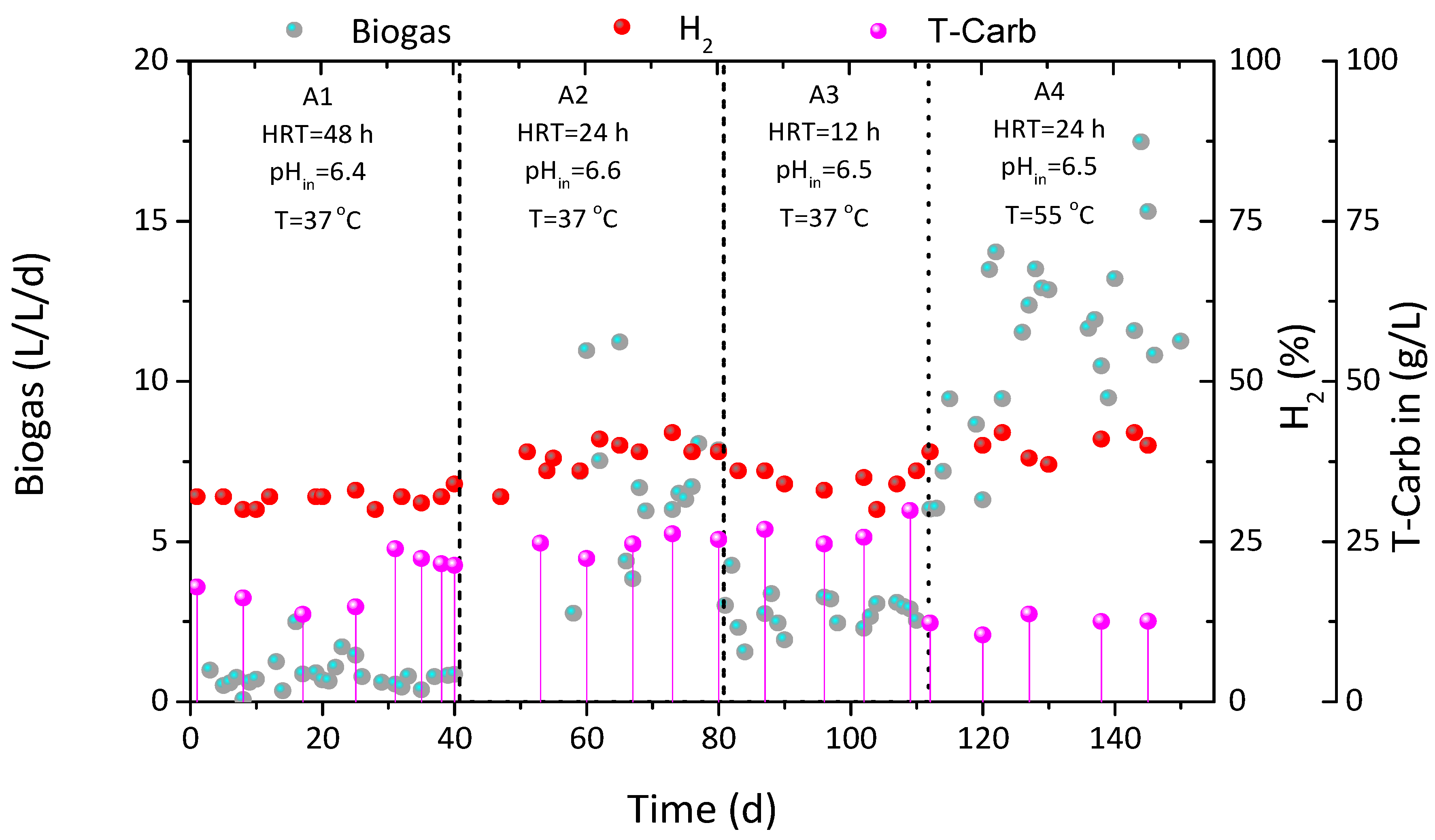
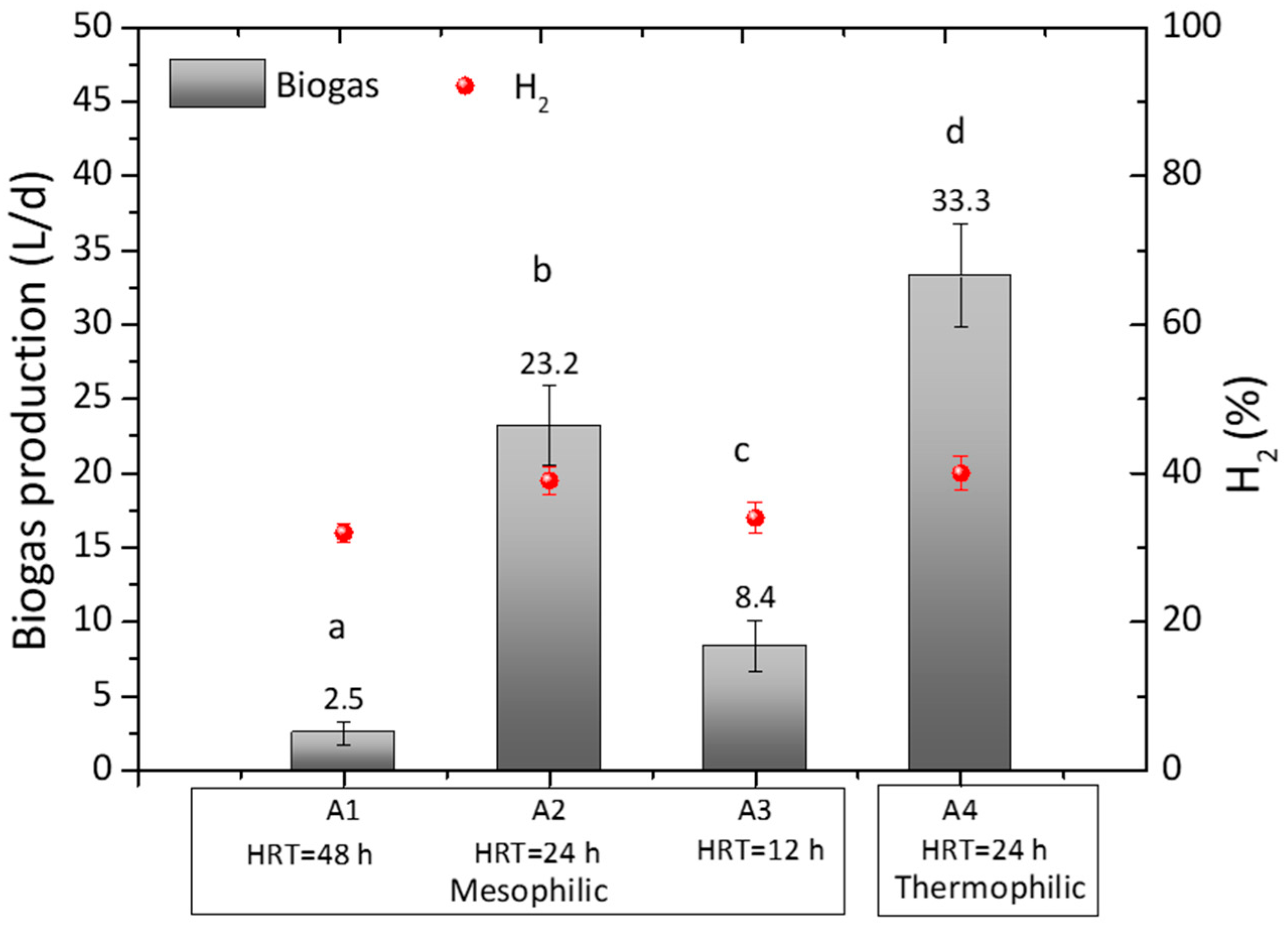
Figure 3 illustrates the biogas and BioH2 production as a function of HRT. Under mesophilic conditions, at an HRT of 48 h (A1), biogas production was maintained at 2.5 ± 0.8 L/d, corresponding to an OLR of 20.2 kg VS/m3/d. At an HRT of 24 h (A2), production increased to 23.2 ± 2.7 L/d with an OLR of 38.3 kg VS·m−3·d−1, whereas at an HRT of 12 h (A3), biogas production decreased to 8.4 ± 1.7 L/d with an OLR of 79.0 kg VS·m−3·d−1. Under thermophilic conditions, at an HRT of 24 h (A4), the system achieved an average biogas production of 33.3 ± 3.5 L/d with an OLR of 39.9 kg VS·m−3·d−1.
At an HRT of 24 h, biogas production reached 23.2 L/d, exceeding the yields at HRTs of 48 h (2.5 L/d) and 12 h (8.4 L/d) by factors of 9.3 and 2.8, respectively.
Enhanced biogas production can be attributed to improved pH regulation combined with lower OLR [22]. The reduced HRT promotes microbial adaptation in continuous processes, supporting stable hydrogen production by selectively enriching hydrogen-producing bacterial communities.
Sivagurunathan et al. (2016a) [23] reported a significant shift in microbial communities associated with methanogenic bacteria and observed mass transfer limitations due to the lack of mixing at a 12 h HRT. Similarly, Santos et al. (2014) [24] found that biogas production and organic matter removal efficiency decreased at an OLR above 60 g COD L−1 d−1, while OLRs below 10 g COD L−1 d−1 also led to reduced biogas yields. These observations are consistent with the results obtained in the present study.
In the context of BioH2 production, a consistent yield of 30–34% was observed from day 0 to day 40 at an HRT of 48 h. When the HRT was reduced to 24 h, BioH2 production gradually increased, exceeding 40% between days 62 and 73 before subsequently declining. The remaining gas was primarily composed of CO2. At an HRT of 12 h, BioH2 production remained steady at 30–36% from day 83 to day 110, followed by a gradual increase from day 112 to day 123, eventually surpassing 40% under thermophilic conditions at the 24 h HRT. While mesophilic conditions provided greater stability than thermophilic conditions, the average BioH2 content remained largely consistent.
A BioH2 content exceeding 20% in the biogas was considered a key indicator of stability for the CSTR during DF. Similar results were reported by Cruz-López et al. (2024) [22] where cheese whey feedstock produced an average BioH2 content of up to 45%, with yields declining at shorter HRT. Likewise, Ramos & Silva (2018) [25] observed a reduction in BioH2 content during the co-digestion of cheese whey and glucose in a Fixed-Bed Reactor (FBR) at lower HRTs, attributed to high OLR of 200 g COD L−1 d−1. The influence of HRT on BioH2 content and yield followed a comparable trend, as shown in Figure 3 and Figure 4.
Thermophilic environments significantly enhanced BioH2 production capacity compared to mesophilic conditions, irrespective of the cultivation method (Figure 3). Previous studies have shown that the utilization of thermophilic dark fermentation between (55–70 °C), utilizing synthetic wastewater as a substrate, results in more efficient BioH2 production compared to mesophilic conditions at (37 °C) [26]. Studies have shown that employing fruit waste as a substrate results in increased BioH2 production yields at 55 °C, compared to 30 °C. Likewise, investigations utilizing food waste as a substrate have validated enhanced BioH2 production at 55 °C relative to 35 °C [27,28]. These results indicate that thermophilic bacteria demonstrate enhanced efficacy in converting substrates when utilizing organic waste, leading to increased capacity for BioH2 production [29,30]. Moreover, under thermophilic conditions, the suppression of BioH2-consuming microorganisms, particularly methanogenic bacteria, is enhanced, concurrently promoting the proliferation of hydrogen-producing bacterial populations [29]. Despite the advantages of exploiting thermophilic conditions for improving BioH2 generation, further research is essential to optimize crucial operational parameters such as substrate makeup, retention time, and reactor configurations to maximize hydrogen output and maintain process stability. Moreover, conducting comparative analyses on bacterial community dynamics in thermophilic and mesophilic environments has the potential to provide valuable understanding of the mechanisms facilitating increased H2 production. Advancing investigations in these domains will play a crucial role in enhancing the efficacy and sustainability of anaerobic dark fermentation methods.

3.2. The Effect of the HRT on Hydrogen Production Performance

In the initial series of trials examining the influence of HRT, the acidogenic reactor operated anaerobically for 150 days. Beginning with an HRT of 48 h under mesophilic conditions, the HRT was gradually reduced to 24 h and subsequently to 12 h, with each transition occurring only after a stable operational state had been achieved. Additional experiments were then conducted under thermophilic conditions to further optimize performance. During the final 40-day phase, the reactor operated at an HRT of 24 h under thermophilic conditions. Notably, methane was absent throughout the entire operational period of the hydrogen-producing reactor, as confirmed by methane measurements.
Figure 3 presents the hydrogen content in the gas phase and the biogas production rates. The reactors demonstrated stable and sustained performance, with hydrogen contents ranging from 30% to 40%. As expected, reducing the HRT from 48 h to 24 h increased both biogas and hydrogen production rates. However, a further reduction to 12 h resulted in a decline in both parameters.
At an HRT of 48 h, the hydrogen production rate was 0.8 ± 0.2 L H2/d, increasing at 24 h and decreasing again at 12 h. The maximum hydrogen and biogas production rates occurred at an HRT of 24 h, reaching 9.1 ± 1.0 L H2/d and 23.2 ± 2.7 L biogas/d, respectively.
Table 4 shows that the highest hydrogen production yield, 3.0 ± 0.3 L H2/L reactor/d, was obtained at an HRT of 24 h. The yield exceeds those reported for similar reactor configurations using brewery wastewater and cheese whey [22].
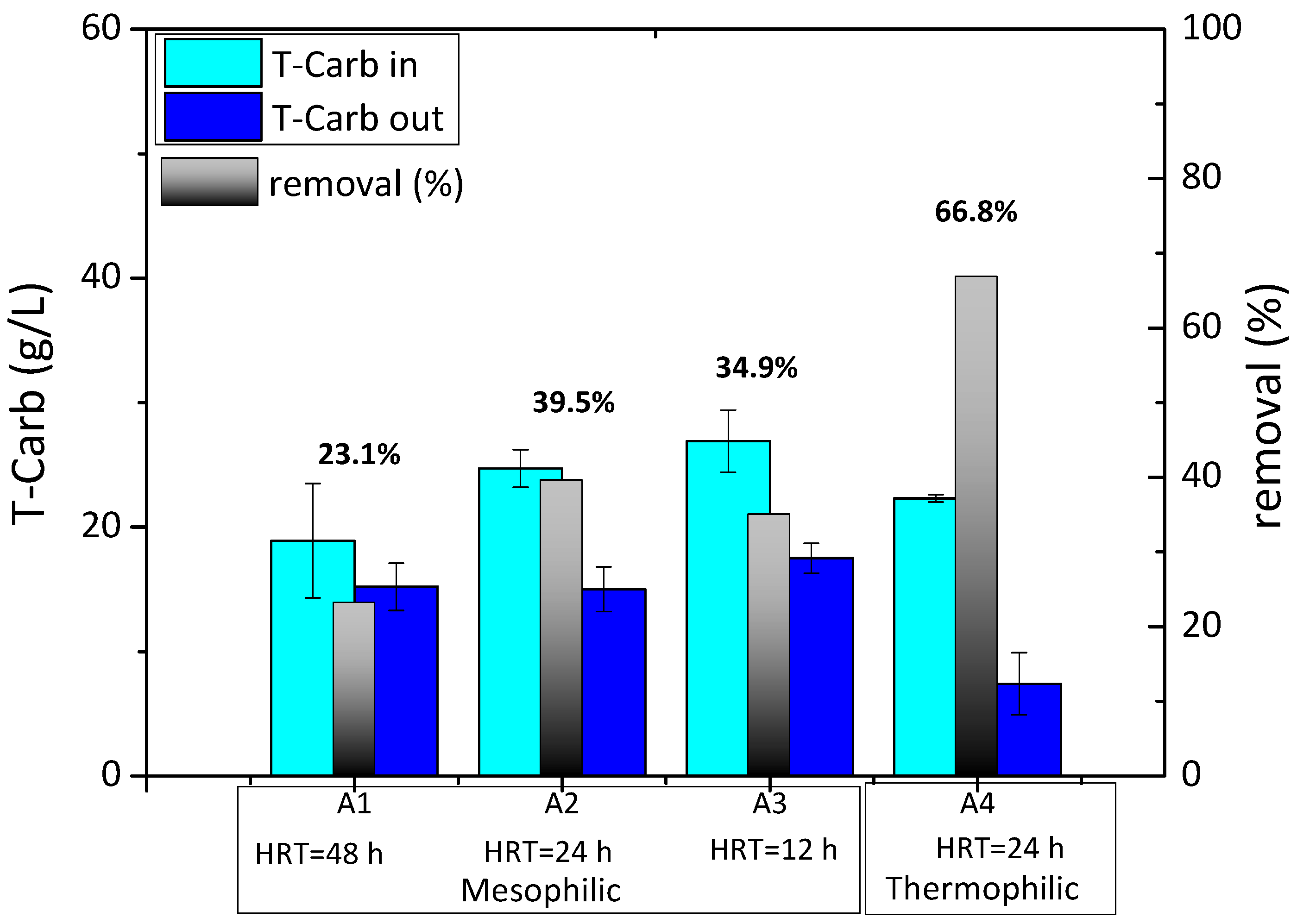
Analysis of Figure 3, together with Table 4, highlights the substantial influence of total carbohydrate removal on system performance. At HRTs of 24 and 12 h, total carbohydrate concentrations were 24.7 ± 1.5 g/L and 26.9 ± 2.5 g/L, with corresponding removal rates of 39.5% and 34.9%. At an HRT of 48 h, a lower concentration of 18.9 ± 4.6 g/L was observed, along with a removal rate of 23.1%. This reduction suggests a kinetic limitation under these conditions, as 14.3 ± 2.2 g/L of carbohydrates remained unconsumed.
Although carbohydrate removal efficiency decreased at shorter HRTs, the simultaneous increase in hydrogen production implies that substrates other than carbohydrates contributed to hydrogen generation. Proteins present in the feedstock, such as cellulose and lignocellulosic components, can undergo hydrolysis to amino acids, which are subsequently metabolized to hydrogen and volatile fatty acids during acidogenesis, as noted by [31].
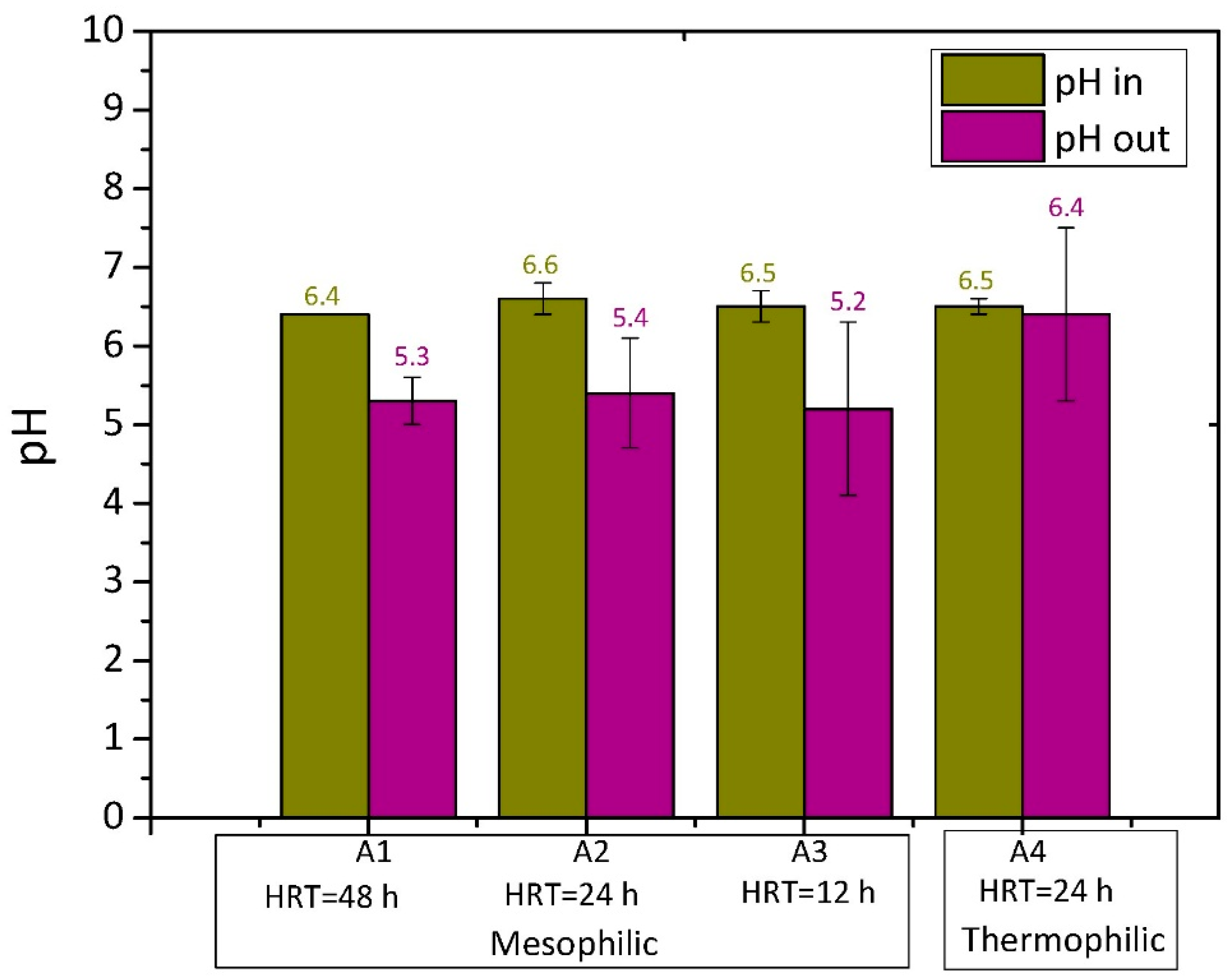
The reactor pH showed minor fluctuations, ranging from 5.2 to 5.4, as illustrated in Figure 5. According to Alexandropoulou et al. (2018) [31], maintaining pH values between 5.5 and 6.0 is essential for suppressing methanogenesis, a key requirement for ensuring stable and efficient hydrogen production. This pH range is consistent with the findings of Cruz-López [22], who reported optimal hydrogen yields during fermentative hydrogen production from brewery wastewater and cheese whey at a pH of 5.5 across different HRTs. Although the literature generally identifies an optimal pH range of 5.0–5.7 for fermentative hydrogen production, various studies have reported different optimal values depending on substrate type and reactor conditions.
Ramu et al. (2021) [32] investigated dark fermentative biohydrogen production from rice mill wastewater and reported that the highest cumulative H2 production for B. thuringiensis RH1 occurred at pH 5.5, while B. aerophilus RH2 and B. beringensis AARAT1 reached their peak production at pH 6.5. In another study, Ribeiro et al. (2022) [33], working with cheese whey under mesophilic conditions and without pH buffering, observed operational pH values below 3.0. These variations in optimal pH can be attributed to differences in inoculum, substrates, reactor configurations, and the pH ranges evaluated [31]. Collectively, these findings highlight the importance of substrate-specific optimization, as different waste materials may require distinct pH set points to achieve maximum hydrogen production yields, despite the general preference for a slightly acidic environment.
Previous studies on the DF of cellulose waste have shown that, when pH is not controlled, lactic acid becomes the predominant end product, with no associated hydrogen production [34]. This outcome is attributed to the inhibitory effect of acidic conditions on hydrogen-producing microorganisms, while lactic acid-producing bacteria flourish due to their ability to maintain intracellular pH homeostasis [35]. Conversely, under optimal pH conditions, the high organic carbon content of cellulose waste provides a favorable environment for efficient biohydrogen production. This beneficial effect can be further enhanced through co-fermentation with cow manure, as demonstrated in earlier anaerobic digestion studies [36] and supported by the findings reported by Hangri et al. (2024) [35].

3.3. Organic Removal

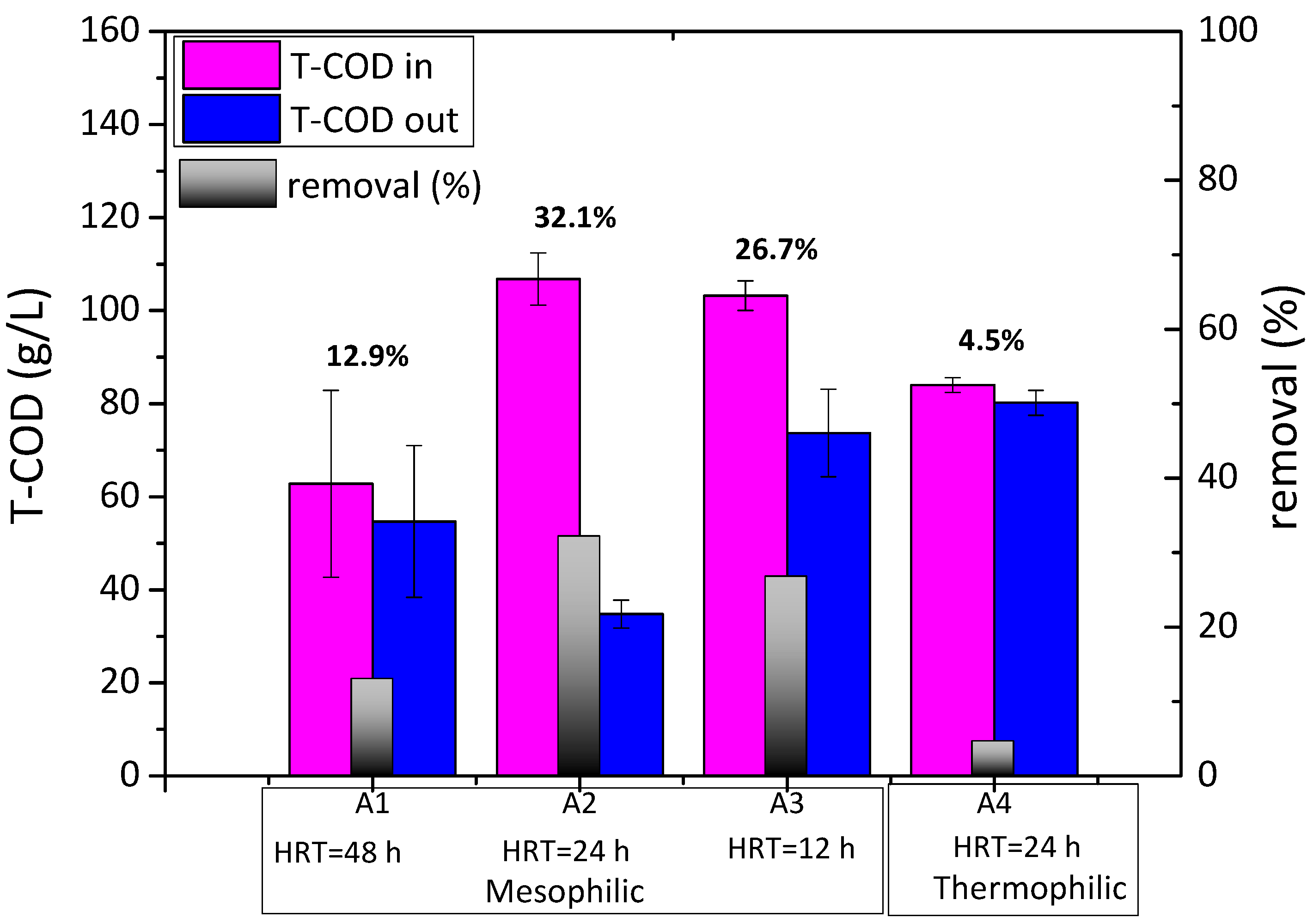
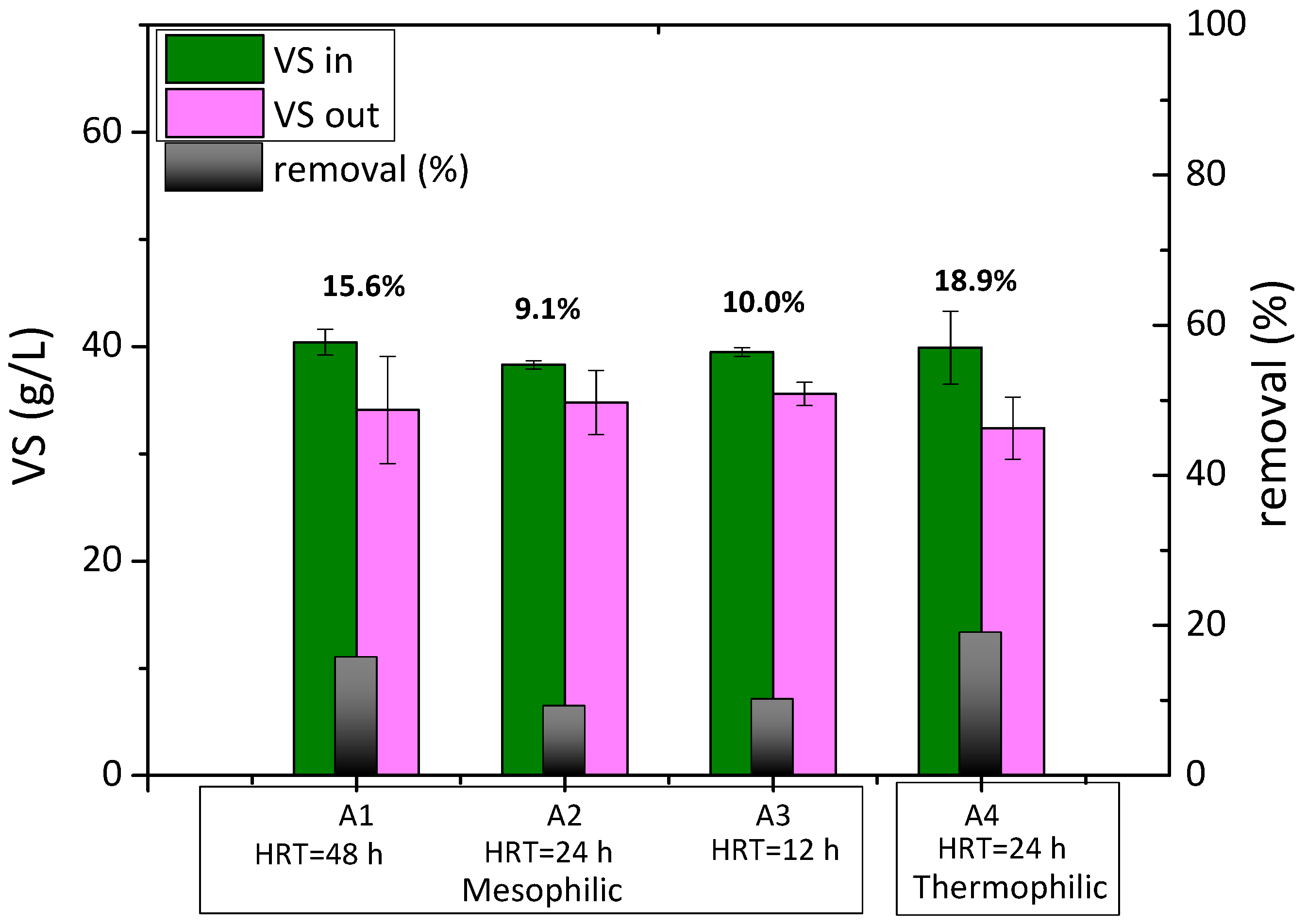
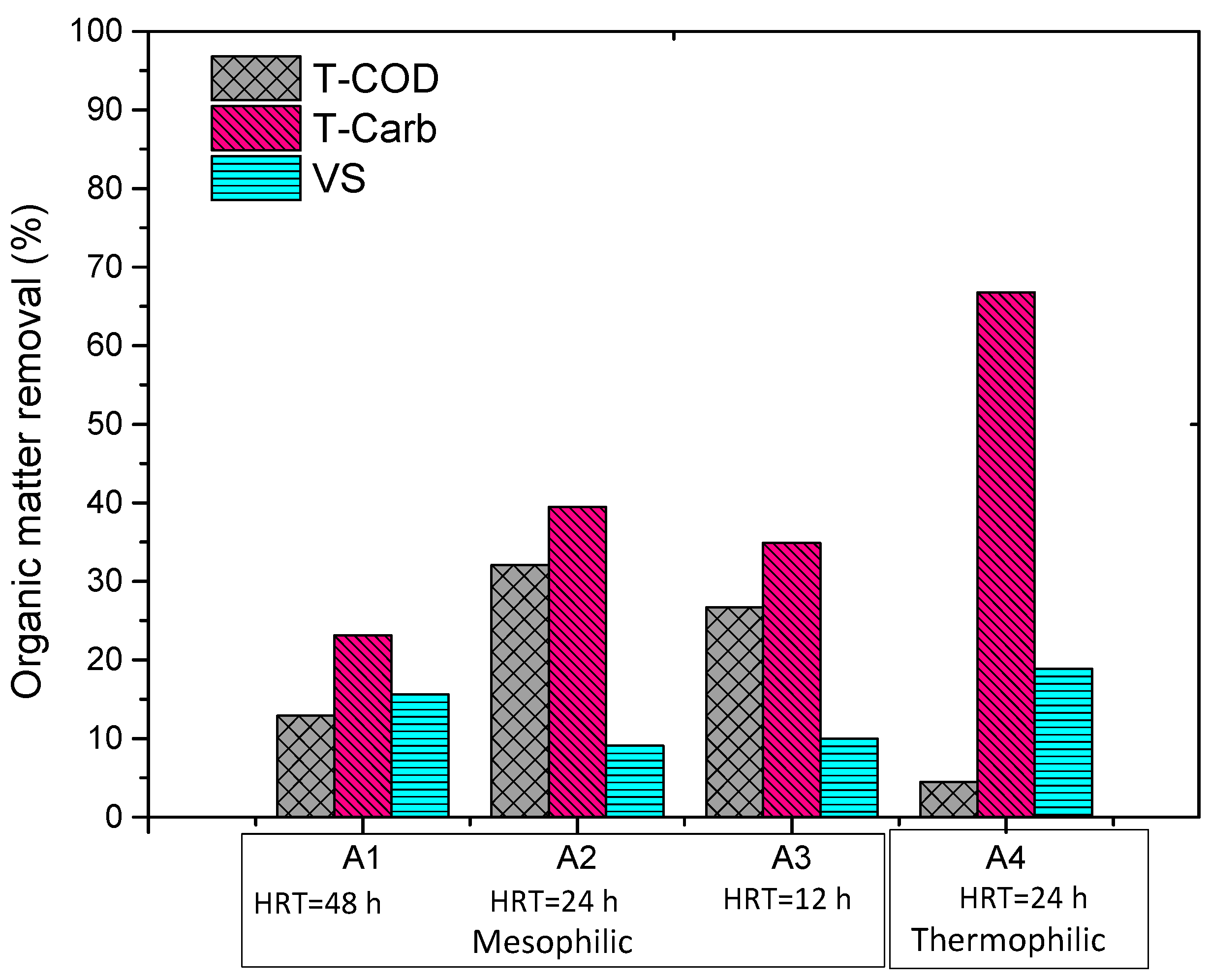
The study also evaluated the influence of HRT on the degradation of organic matter throughout the operational period. VS were monitored to assess biomass washout from the reactor. At an HRT of 48 h, the removal efficiencies ranged from 12.9% to 32.1% and 20.6% to 37.2% for T-COD; 23.1% to 39.5% and 5.1% to 10.4% for T-Carb; and 9.1% to 15.6% and 27.4% to 41.1% for VS, respectively (see Figure 6, Figure 7 and Figure 8). Figure 9 presents the removal efficiencies of T-COD, T-Carb, and VS across different HRTs and substrate mixtures.
The removal efficiency of T-Carb was highest under mesophilic conditions at an HRT of 24 h. Under thermophilic conditions, T-Carb removal reached up to 66.8%, showing the most effective removal performance. These results are consistent with observations by Cruz-López et al. (2024) [22], who reported that increasing HRT promotes more efficient conversion of T-Carb relative to T-COD, thereby resulting in higher removal rates of T-Carb.
HRT = 12 h demonstrated greater stability in solid retention, whereas 48 h HRT resulted in more pronounced variability in VS retention. The 12 and 24 h HRTs exhibited superior VS retention relative to 48 h HRT, enabling these conditions to achieve T-Carb and T-COD removal rates exceeding 35% and 25%, respectively. In contrast, 48 h HRT produced mean removal efficiencies of approximately 20% for T-Carb and 13% for T-COD.

3.4. VFAs

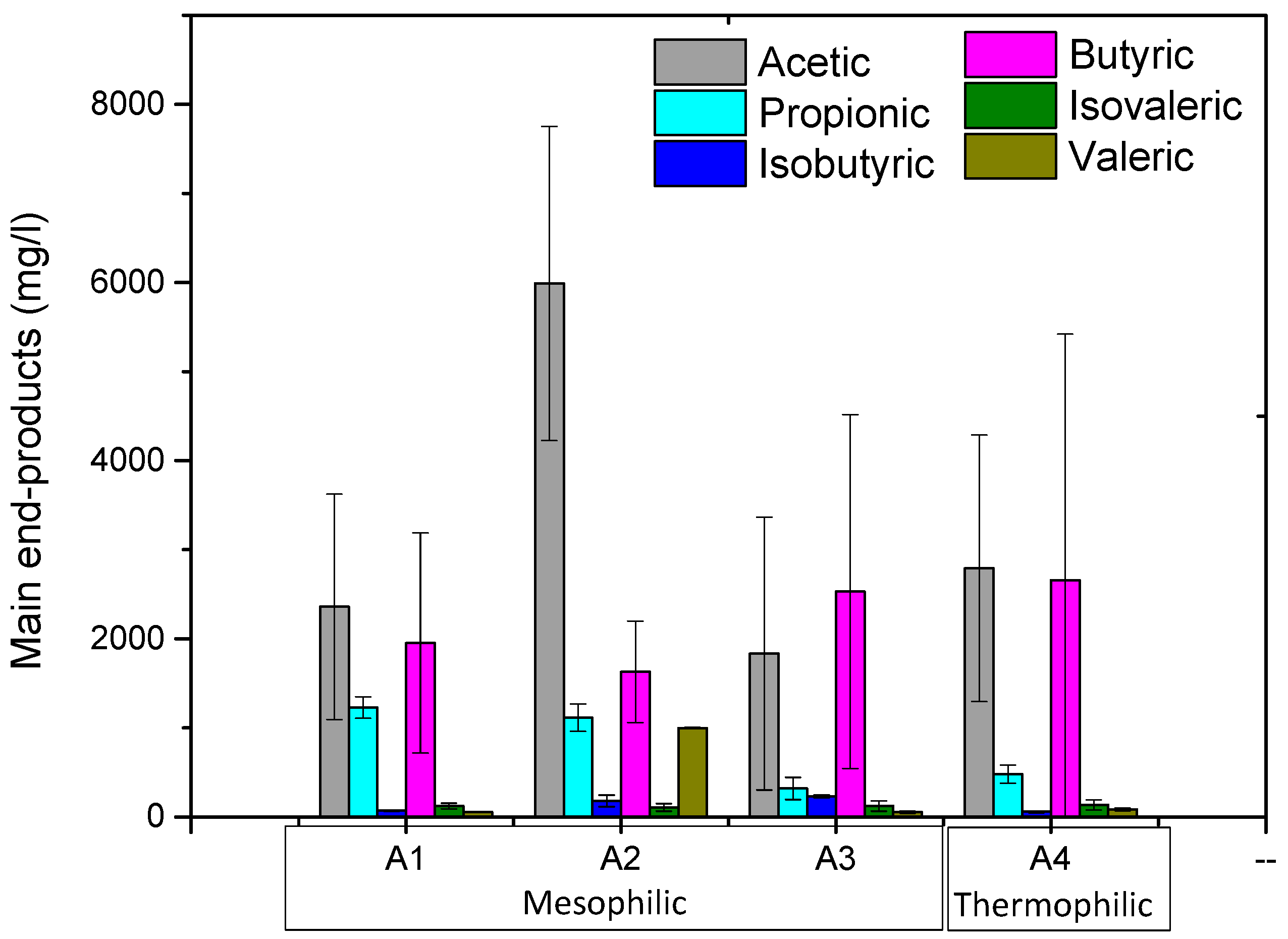
During each biohydrogen production trial, VFAs were analyzed to elucidate the metabolic pathways active during DF. The main VFAs detected were acetic, butyric, and propionic acids, with their distribution patterns varying under different experimental conditions. Concentrations of these primary metabolites throughout the operational period of the hydrogen-producing reactor, corresponding to various HRTs, are presented in Figure 10, with cumulative levels summarized in Table 4. Minor amounts of iso-butyric, iso-valeric, and valeric acids were also detected.
The low levels of propionic acid observed at an HRT of 12 h indicate efficient hydrogen production, as propionate formation is associated with reduced hydrogen yields [37]. Propionic acid decreased in A3 and A4 because shorter HRT favored faster butyrate producing pathways, while thermophilic conditions further suppressed propionate-forming bacteria. Distinct profiles of metabolic byproducts were evident across different HRTs and substrate compositions. Acetic acid dominated at an HRT of 24 h, reaching 5.9 g/L. At an HRT of 12 h, butyric acid became predominant (2.5 g/L), while acetic acid declined to 1.8 g/L. At an HRT of 48 h, both butyric and acetic acids were prevalent, with concentrations of 1.9 g/L and 2.4 g/L, respectively. Under thermophilic conditions at an HRT of 24 h, both butyric and acetic acids were again dominant, with levels of 2.6 g/L and 2.8 g/L, respectively. Propionic acid concentrations were similar at HRTs of 48 and 24 h, measuring 1.2 g/L and 1.1 g/L, while at an HRT of 12 h under thermophilic conditions, propionic acid decreased further to 0.2 g/L and 0.4 g/L, respectively.
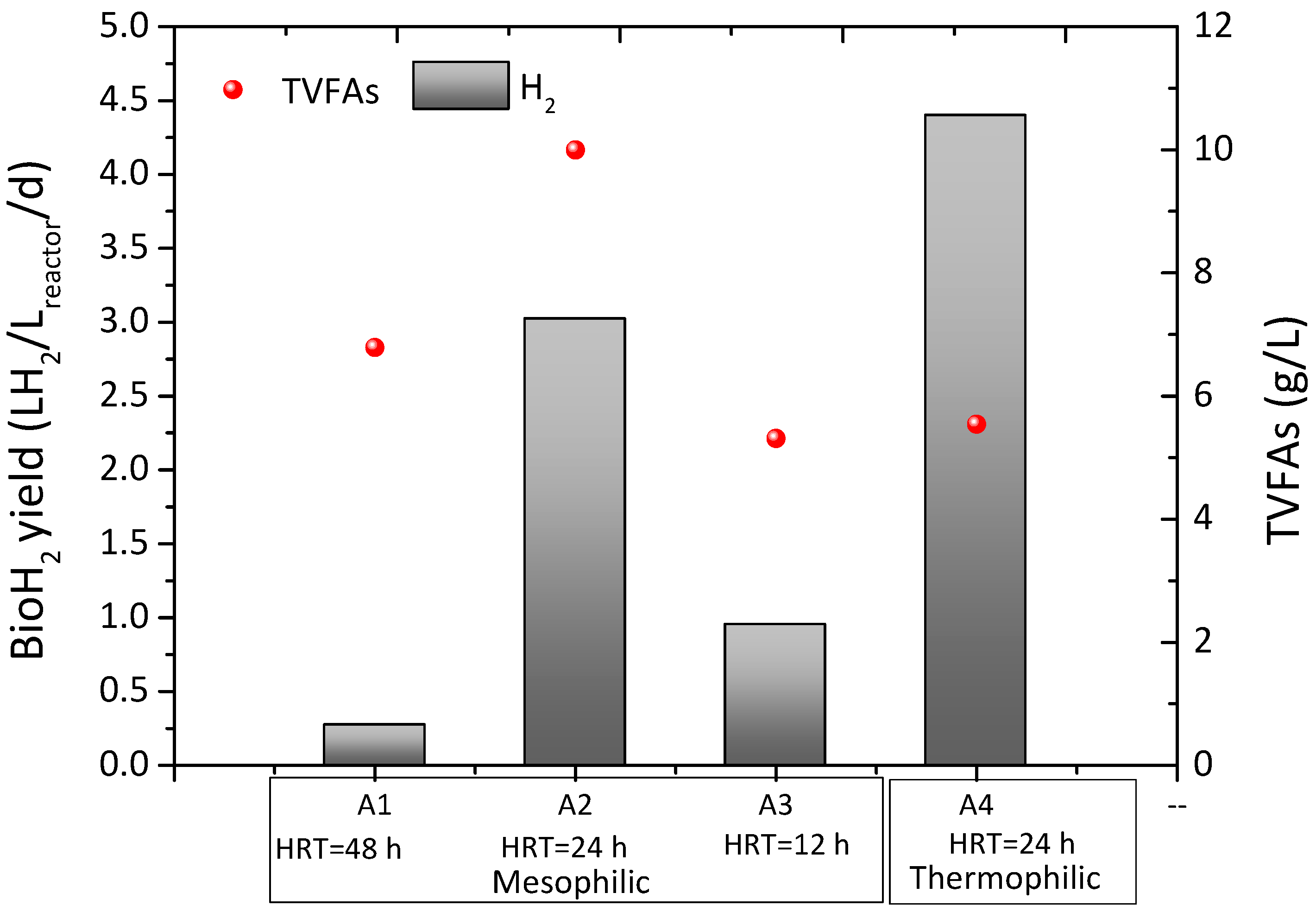
Literature indicates that acetate or butyrate formation serves as the primary pathway for biohydrogen production [38], with optimal bio-H2 yields achieved when fermentation favors the butyrate-acetate route. In contrast, propionic acid conditions are undesirable, as it negatively impacts hydrogen production [39]. Figure 10 and Figure 11 show that extending the HRT to 24 h under both mesophilic and thermophilic conditions resulted in a marked decrease in propionic acid within the total VFA profile.
The metabolic pathways, as described in Equations (1)–(3), illustrate the formation of VFAs, including acetic acid (CH3COOH), butyric acid (CH3CH2CH2COOH), and propionic acid (CH3CH2COOH), as intermediates or secondary products during biohydrogen generation via fermentation [40,41].
C6H12O6 + 2H2O → 2CH3COOH + 4H2 + 2CO2
C6H12O6 → CH3CH2CH2COOH + 2H2 + 2CO2
C6H12O6 + 2H2 → 2CH3CH2COOH + 2H2O
Based on Equations (1)–(3), biohydrogen production is closely linked to the metabolic pathways leading to acetic and butyric acid formation, whereas propionic acid production inhibits hydrogen generation. Among these pathways, acetic acid formation is the most efficient, theoretically yielding 4 mol H2 per mol of glucose. The butyric acid pathway also contributes to hydrogen production, with a stoichiometric yield of 2 mol H2 per mol of glucose, with a lower efficiency compared to the acetate pathway.
The butyric acid metabolic pathway is often advantageous for microorganisms, particularly under mildly acidic conditions with high substrate concentrations. In such environments, microbial metabolism tends to favor glucose conversion via the butyric acid pathway over competing routes, such as propionic acid formation. This shift is typically accompanied by a reduction in acetate production, resulting in an overall increase in H2 generation. In contrast, the propionic acid pathway consumes 2 moles of H2 per mole of substrate, yielding a negative net hydrogen balance that is detrimental to bio-H2 production. Therefore, the predominance of the butyric acid pathway in these conditions contributes to enhanced H2 yields, despite its lower stoichiometric efficiency, by avoiding H2-consuming reactions and supporting microbial activity [41].
The combined production of acetate and butyrate, along with the butyric-to-acetic acid (HBu/HAc) ratio, is a key determinant of H2 yield in the system. Figure 10 and Figure 11 show that under thermophilic conditions with an HRT of 24 h, achieved the highest combined acetate and butyrate production, accounting for 88% of total VFAs, and exhibited a notable HBu/HAc ratio of 0.9, surpassing mesophilic setups. Comparisons between mesophilic and thermophilic conditions further indicate that thermophilic operation generally promotes greater accumulation of these VFAs.
These metabolic pathways are critical for H2 production, as butyrate formation can theoretically yield 2 mol H2 per mol of glucose and is energetically favorable for microbes under certain conditions. However, relying solely on these pathways does not guarantee maximal H2 production due to limitations associated with slow recovery from acidic conditions. Enhancing biohydrogen yields therefore requires maintaining a high HBu/HAc ratio while facilitating rapid restoration from acidified environments [41].

3.5. Linking Microbial Community Shifts with VFA Patterns and Hydrogen Production

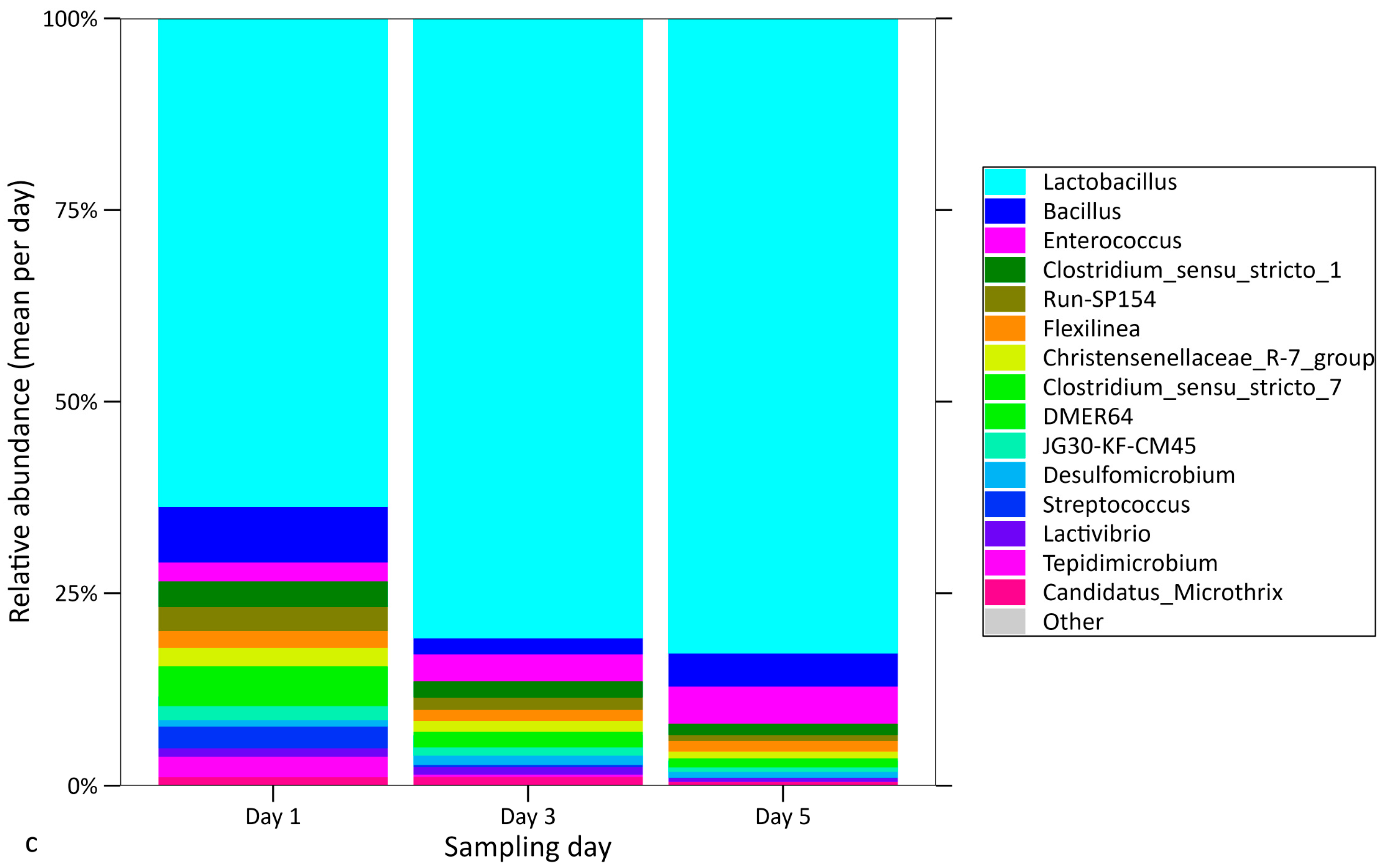
The 16S microbial analysis was conducted on selected samples in order to examine the microbial shifts after the changes in operational parameters. First, the analysis revealed that in the waste mixture, Lactobaccilus was the dominant genus, which is probably attributed to the cheese whey presence.
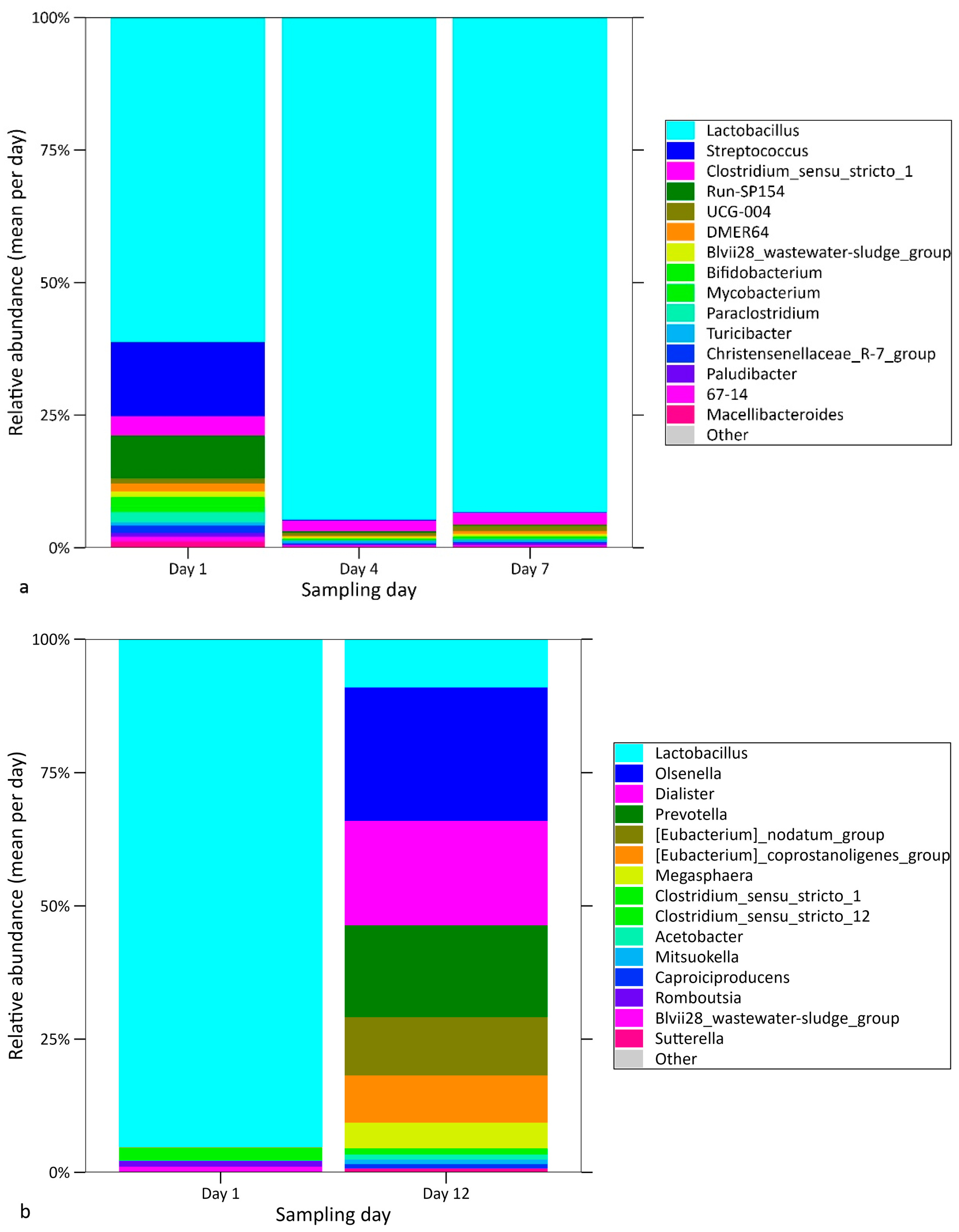
At the phylum level, at 37 °C and HRT 48 h, the bacterial composition of Day 1 consisted of Firmicutes 54.2%, Proteobacteria 16.3%, Actinobacteriota 8.6%, Bacteroidota 6.1%, Chloroflexi 3.5% and Spirochaetota 1.9%; after 4 days, the composition changed to Firmicutes 89.3%, Bacteroidota 3.8%, Proteobacteria 3.2%, Actinobacteriota 2.3%, Spirochaetota 0.5% and Chloroflexi 0.49%. At Day 7, the community consisted of Firmicutes 85.8%, Bacteroidota 5.3%, Proteobacteria 2.8%, Actinobacteriota 2.5%, Spirochaetota 0.7% and Chloroflexi 0.6%. As presented in Figure 12a, at the genus level, the community remained strongly dominated by Lactobacillus from Day 1 and throughout the operation. The relative abundances for Day 1 were Lactobacillus 35.5%, Streptococcus 8.1%, uncultured bacteria 12.3% and Clostridium sensu stricto 1 2.1%. On Day 4, they were Lactobacillus 82.5%, uncultured bacteria 2.3% and Clostridium sensu stricto 1 1.7%, while for Day 7, they were Lactobacillus 79.5%, uncultured bacteria 3.2% and Clostridium sensu stricto 1 1.9%. Alpha-diversity tests showed only limited temporal variation, and only Pielou’s evenness showed a significant change over time (p = 0.044), indicating a redistribution of relative abundances. Beta-diversity analyses indicated a clear temporal restructuring of the community. Overall, 538 out of 4596 ASVs (11.71%) lacked genus-level assignment and were therefore grouped as uncultured/unassigned in the genus-level analyses and Figure 12. These unassigned ASVs accounted for a mean relative abundance of 3.94% (SD 2.52%) across the analyzed samples.
The community structure observed on Day 7 of A1, associated with moderate VFA levels (7.8 g/L) characterized by a mixed acetate/butyrate profile, with comparatively high propionate fractions (~20% of total VFAs), and with low biogas and hydrogen production (0.81 L/L/d biogas and 0.24 L/L/d H2).
Upon maintaining the bioreactor’s functionality, but with an HRT of 24 h and the same temperature (A2), a restructuring of the bacterial community appeared. The structure of the community on Day 1 was Firmicutes 89%, Bacteroidota, 4.4%, Proteobacteria 2.2%, Actinobacteriota 1.8% and Chloroflexi 0.5%, while at Day 12, the community shifts to Firmicutes 52%, Actinobacteriota 24.5%, Bacteroidota 17%, Proteobacteria 4.8% and Chloroflexi 0.24%. At the genus level (Figure 12b), on Day 1, the community was dominated by Lactobacillus 82.8%, followed by uncultured bacteria 2.12%, Clostridium sensu stricto 1 2% and Romboutsia 0.96%. By Day 12, the genus synthesis was Olsenella 22.9%, Dialister 18%, Prevotella 15.8%, [Eubacterium]_nodatum_group 10%, Lactobacillus 8.3%, [Eubacterium]_coprostanoligenes_group 8.1%, Megasphaera 4.4%, uncultured 1.1% and Clostridium sensu stricto 12 0.9%. In this case, 169 out of 1806 ASVs (9.36%) lacked genus-level assignment, and this accounted for a mean relative abundance of 1.11% (SD 0.33%) across the analyzed samples.
This diversification was associated with higher VFA concentration (~10 g/L), a shift towards an acetate-dominated profile with reduced propionate, and an approximately one-order-of-magnitude increase in hydrogen productivity (2.32 L/L/d), indicating a transition towards more H2-favorable fermentation pathways.
When the reactor was operated with HRT 24 h and the temperature was elevated at 55 °C (A4), the community structure was characterized by the presence of Firmicutes 52.6%, Proteobacteria 14.2%, Actinobacteriota 7.6%, Chloroflexi 4.8%, Bacteroidota 4.3%, 1.7% of Synergistota and Halobacterota, and 1.5% of Planctomycetota and Spirochaetota. At Day 3, the structure was Firmicutes 57.7%, Proteobacteria 12.13%, Actinobacteriota 5.6%, Bacteroidota 5%, Chloroflexi 4.4%, Desulfobacterota 2.2% and about 2% of Synergistota, Spirochaetota, Halobacterota and Planctomycetota. At Day 5, the consortium was Firmicutes 67.6%, Proteobacteria 9.9%, Actinobacteriota 4%, Bacteroidota 4%, Chloroflexi 3%, and about 1.5% of Desulfobacterota, Synergistota, Spirochaetota, and Planctomycetota. At the genus level (Figure 12c), Lactobacillus was dominant on Day 1 with 27.8% followed by uncultured bacteria 9.9%, Bacillus 3.1% and Clostridium sensu stricto 7 1.7%. At Day 3, there was Lactobacillus 46% followed by uncultured bacteria 8.3%, Enterococcus 2%, Bacillus 1.2% and Clostridium sensu stricto 1 1.2%. On Day 5, there was Lactobacillus 54.3% followed by uncultured bacteria 5.8%, Enterococcus 3.1%, Bacillus 2.8% and Clostridium sensu stricto 1 1%.
For the A4 reactor, alpha-diversity metrics did not change significantly over time. In contrast, the community composition shifted strongly with time. PERMANOVA on Bray–Curtis dissimilarities showed a significant effect of sampling day (R2 ≈ 0.45, p = 0.01), and the effect was even stronger for weighted UniFrac distances (R2 ≈ 0.59, p = 0.013), indicating pronounced phylogenetically weighted changes in the relative abundance structure.
In this context, the community demonstrated again a Lactobacillus dominance, but the thermophilic fermentative consortium showed that remained simpler than the mesophilic 24 h system. Under these conditions, biogas and hydrogen productivities were highest (up to 14.03 and 5.61 L/L/d, respectively), and the VFAs shifted from acetate-rich to butyrate-dominated profiles, with butyrate accounting for ~79% of total VFAs at the latest sampling point and propionate remaining below 10%. The unassigned ASVs were 1427 of 7607 in total, with a mean relative abundance of 8.86% (SD 2.22%) across the analyzed samples.
The abovementioned results indicated that the operational conditions caused a restructuring of the bacterial community, which is consistent with the shifts in VFAs and hydrogen production. Although Lactobacillus is capable of producing hydrogen and VFAs [42], a more diverse bacterial community could potentially enhance productivity. A shorter HRT pushes the system towards higher total VFAs and much higher H2, as genera such as Clostridium sensu stricto, Megasphaera, Dialister and Olsenella became more prominent. In general, short HRTs in dark fermentation are commonly employed to wash out slow-growing methanogens and select acidogenic, hydrogen-producing consortia, whereas longer HRTs favor the growth of hydrogen-consuming bacteria and shifts metabolism away from H2 production [43].
Under thermophilic conditions, the H2 yields increased, probably due to the suppression of methanogens, which thereby maximizes hydrogen production.
The use of mixed agro-industrial wastes seems to help to enrich functionally complementary bacteria and achieve a more efficient hydrogen-producing consortium. By way of illustration, manipulation of the Lactobacillus/Clostridium ratio might be a strategy to improve the hydrogen production [44]. Even though Clostridium sensu_stricto 1 is only about 1–2% of the relative abundance in the reactors of this study, the literature mentioned that relatively low abundances of this genus can still drive butyrate formation. Multivariate analyses in similar systems have shown that pH and HRT co-select for specific fermentative taxa, such as Clostridium sensu stricto 1, Bacteroides and Megasphaera, and thereby shift VFA patterns from acetate- to butyrate-type fermentation [44]
At the same time, in all reactors, the phylum Chloroflexi remained at low relative abundance; this is in line with previous research which showed that Chloroflexi-rich communities are typically associated with lower VFA yields, whereas a decrease in Chloroflexi correlates with improved VFA production in mixed-culture dark fermentation systems [45].
A deeper understanding of bacterial communities and their role in dark fermentation systems could reveal the key species that could be offered by wastes, reveal additional key players and provide further tools to optimize VFA and hydrogen production.

4. Conclusions

This study demonstrated the potential of continuous dark fermentation for biohydrogen and volatile fatty acid production from the co-digestion of olive mill wastewater, cheese whey, and sewage sludge. The main findings can be summarized as follows: (i) hydraulic retention time was a key operational parameter, with 24 h identified as the optimal HRT for maximizing hydrogen productivity and process stability; (ii) thermophilic operation (55 °C) at 24 h HRT significantly enhanced hydrogen production, achieving up to 4.4 ± 0.5 L H2/Lreactor/d, while mesophilic conditions favored higher VFA accumulation; (iii) hydrogen generation was primarily linked to acetic and butyric acid metabolic pathways, whereas propionic acid formation remained limited under optimal conditions; and (iv) variations in HRT and temperature induced pronounced microbial community shifts, promoting hydrogen-producing and acidogenic bacteria while suppressing hydrogen-consuming populations. Overall, the results underline the importance of combined operational and microbial control for efficient resource recovery from agro-industrial by-products through dark fermentation.

Author Contributions

Methodology, A.M., D.V., K.V., T.M. and A.K.; software, A.M. and A.K.; validation, A.M., D.V., K.V., T.M. and A.K.; formal analysis, A.M., N.C.S., A.K., I.G., N.M. and E.M.; investigation, A.K. and A.M.; data curation, A.M. and A.K.; writing—original draft preparation, A.M., A.K. and N.C.S.; and supervision, D.V., K.V. and T.M. All authors have read and agreed to the published version of the manuscript.

Funding

This research has been financed by Hellenic Foundation for Research and Innovation (HFRI) through Action 2. Funding Projects in Leading-Edge Sectors–RRFQ: Basic Research Financing (project code: 015890).

Institutional Review Board Statement

Not applicable.

Informed Consent Statement

Not applicable.

Data Availability Statement

The original contributions presented in this study are included in the article. Further inquiries can be directed to the corresponding author.

Conflicts of Interest

The authors declare no conflicts of interest.

References

  1. Kandpal, V.; Jaswal, A.; Santibanez Gonzalez, E.D.R.; Agarwal, N. Energy Efficiency and Renewable Energy Technologies. In Sustainable Energy Transition; Springer: Berlin/Heidelberg, Germany, 2024; pp. 89–123. [Google Scholar] [CrossRef]
  2. Kim, G.; Cho, K.S. Comparative Analysis of H2 Production and Microbial Communities during Dark Fermentation of Food Waste under Varying Temperature and Cultivation Modes. Bioresour. Technol. Rep. 2025, 31, 102279. [Google Scholar] [CrossRef]
  3. Machhirake, N.P.; Vanapalli, K.R.; Kumar, S.; Mohanty, B. Biohydrogen from Waste Feedstocks: An Energy Opportunity for Decarbonization in Developing Countries. Environ. Res. 2024, 252, 119028. [Google Scholar] [CrossRef] [PubMed]
  4. Lee, W.S.; Chua, A.S.M.; Yeoh, H.K.; Ngoh, G.C. A Review of the Production and Applications of Waste-Derived Volatile Fatty Acids. Chem. Eng. J. 2014, 235, 83–99. [Google Scholar] [CrossRef]
  5. Atasoy, M.; Owusu-Agyeman, I.; Plaza, E.; Cetecioglu, Z. Bio-Based Volatile Fatty Acid Production and Recovery from Waste Streams: Current Status and Future Challenges. Bioresour. Technol. 2018, 268, 773–786. [Google Scholar] [CrossRef]
  6. Tsigkou, K.; Sivolapenko, N.; Kornaros, M. Thermophilic Dark Fermentation of Olive Mill Wastewater in Batch Reactors: Effect of PH and Organic Loading. Appl. Sci. 2022, 12, 2881. [Google Scholar] [CrossRef]
  7. Elbeshbishy, E.; Dhar, B.R.; Nakhla, G.; Lee, H.S. A Critical Review on Inhibition of Dark Biohydrogen Fermentation. Renew. Sustain. Energy Rev. 2017, 79, 656–668. [Google Scholar] [CrossRef]
  8. De Gioannis, G.; Muntoni, A.; Polettini, A.; Pomi, R. A Review of Dark Fermentative Hydrogen Production from Biodegradable Municipal Waste Fractions. Waste Manag. 2013, 33, 1345–1361. [Google Scholar] [CrossRef]
  9. Mokhtarani, B.; Zanganeh, J.; Moghtaderi, B. A Review on Biohydrogen Production Through Dark Fermentation, Process Parameters and Simulation. Energies 2025, 18, 1092. [Google Scholar] [CrossRef]
  10. Dzulkarnain, E.L.N.; Audu, J.O.; Wan Dagang, W.R.Z.; Abdul-Wahab, M.F. Microbiomes of Biohydrogen Production from Dark Fermentation of Industrial Wastes: Current Trends, Advanced Tools and Future Outlook. Bioresour. Bioprocess. 2022, 9, 16. [Google Scholar] [CrossRef]
  11. Le, H.Q.; Chen, S.S.; Duong, C.C.; Nguyen, N.C.; Nguyen, T.X.Q.; Chien, I.C.; Hsiao, S.S. Assessment of Temperature Dynamics and Microbial Community Responses in Aerobic Membrane Bioreactors from Mesophilic to Hyper-Thermophilic Conditions. In Environmental Science and Pollution Research; Springer: Berlin/Heidelberg, Germany, 2024; Volume 31, pp. 65849–65865. [Google Scholar] [CrossRef]
  12. Kanekar, P.P.; Kanekar, S.P. Thermophilic, Thermotolerant Microorganisms. In Diversity and Biotechnology of Extremophilic Microorganisms from India; Springer: Berlin/Heidelberg, Germany, 2022; pp. 117–153. [Google Scholar] [CrossRef]
  13. Grangeiro, L.C.; de Mello, B.S.; Rodrigues, B.C.G.; Rodrigues, C.V.; Marin, D.F.C.; de Carvalho Junior, R.P.; Pires, L.O.; Maintinguer, S.I.; Sarti, A.; Dussán, K.J. Dark Fermentation and Principal Routes to Produce Hydrogen. In Materials for Hydrogen Production, Conversion, and Storage; John Wiley & Sons, Inc.: Hoboken, NJ, USA, 2023; pp. 181–223. [Google Scholar] [CrossRef]
  14. Dessì, P.; Porca, E.; Frunzo, L.; Lakaniemi, A.M.; Collins, G.; Esposito, G.; Lens, P.N.L. Inoculum Pretreatment Differentially Affects the Active Microbial Community Performing Mesophilic and Thermophilic Dark Fermentation of Xylose. Int. J. Hydrogen Energy 2018, 43, 9233–9245. [Google Scholar] [CrossRef]
  15. Wang, J.; Yin, Y. Principle and Application of Different Pretreatment Methods for Enriching Hydrogen-Producing Bacteria from Mixed Cultures. Int. J. Hydrogen Energy 2017, 42, 4804–4823. [Google Scholar] [CrossRef]
  16. Maragkaki, A.E.; Fountoulakis, M.; Kyriakou, A.; Lasaridi, K.; Manios, T. Boosting Biogas Production from Sewage Sludge by Adding Small Amount of Agro-Industrial by-Products and Food Waste Residues. Waste Manag. 2018, 71, 605–611. [Google Scholar] [CrossRef]
  17. APHA. Standard Methods for the Examination of Water and Wastewater, 19th ed.; American Public Health Association (APHA): Washington, DC, USA, 2005. [Google Scholar]
  18. Nollet, L.M.L. Handbook of Food Analysis—3 Volume Set; CRC Press: Boca Raton, FL, USA, 2004. [Google Scholar] [CrossRef]
  19. Guo, X.; Wang, J. The Gompertz Model for Biohydrogen Production Kinetics: Origin, Application and Solving Methods. Int. J. Hydrogen Energy 2024, 88, 242–250. [Google Scholar] [CrossRef]
  20. Parada, A.E.; Needham, D.M.; Fuhrman, J.A. Every Base Matters: Assessing Small Subunit RRNA Primers for Marine Microbiomes with Mock Communities, Time Series and Global Field Samples. Environ. Microbiol. 2016, 18, 1403–1414. [Google Scholar] [CrossRef]
  21. Klindworth, A.; Pruesse, E.; Schweer, T.; Peplies, J.; Quast, C.; Horn, M.; Glöckner, F.O. Evaluation of General 16S Ribosomal RNA Gene PCR Primers for Classical and Next-Generation Sequencing-Based Diversity Studies. Nucleic Acids Res. 2013, 41, e1. [Google Scholar] [CrossRef] [PubMed]
  22. Cruz-López, A.; Cruz-Méndez, A.; Suárez-Vázquez, S.I.; Reyna-Gómez, L.M.; Pecina-Chacón, D.E.; de León Gómez, H. Effect of Hydraulic Retention Time on Continuous Biohydrogen Production by the Codigestion of Brewery Wastewater and Cheese Whey. Bioenergy Res. 2024, 17, 1155–1166. [Google Scholar] [CrossRef]
  23. Sivagurunathan, P.; Anburajan, P.; Kumar, G.; Kim, S.H. Effect of Hydraulic Retention Time (HRT) on Biohydrogen Production from Galactose in an up-Flow Anaerobic Sludge Blanket Reactor. Int. J. Hydrogen Energy 2016, 41, 21670–21677. [Google Scholar] [CrossRef]
  24. Santos, S.C.; Ferreira Rosa, P.R.; Sakamoto, I.K.; Amâncio Varesche, M.B.; Silva, E.L. Continuous Thermophilic Hydrogen Production and Microbial Community Analysis from Anaerobic Digestion of Diluted Sugar Cane Stillage. Int. J. Hydrogen Energy 2014, 39, 9000–9011. [Google Scholar] [CrossRef]
  25. Ramos, L.R.; Silva, E.L. Continuous Hydrogen Production from Cofermentation of Sugarcane Vinasse and Cheese Whey in a Thermophilic Anaerobic Fluidized Bed Reactor. Int. J. Hydrogen Energy 2018, 43, 13081–13089. [Google Scholar] [CrossRef]
  26. Dessì, P.; Porca, E.; Waters, N.R.; Lakaniemi, A.M.; Collins, G.; Lens, P.N.L. Thermophilic versus Mesophilic Dark Fermentation in Xylose-Fed Fluidised Bed Reactors: Biohydrogen Production and Active Microbial Community. Int. J. Hydrogen Energy 2018, 43, 5473–5485. [Google Scholar] [CrossRef]
  27. Cahyari, K.; Hidayat, M.; Syamsiah, S.; Sarto. Optimization of Hydrogen Production from Fruit Waste through Mesophilic and Thermophilic Dark Fermentation: Effect of Substrate-to-Inoculum Ratio. Malays. J. Anal. Sci. 2019, 23, 116–123. [Google Scholar] [CrossRef]
  28. Shin, H.S.; Youn, J.H.; Kim, S.H. Hydrogen Production from Food Waste in Anaerobic Mesophilic and Thermophilic Acidogenesis. Int. J. Hydrogen Energy 2004, 29, 1355–1363. [Google Scholar] [CrossRef]
  29. Jain, V.; Cope, A.L. Examining the Effects of Temperature on the Evolution of Bacterial TRNA Pools. Genome Biol. Evol. 2024, 16, evae116. [Google Scholar] [CrossRef]
  30. Rittmann, S.; Herwig, C. A Comprehensive and Quantitative Review of Dark Fermentative Biohydrogen Production. Microb. Cell Factories 2012, 11, 115. [Google Scholar] [CrossRef]
  31. Alexandropoulou, M.; Antonopoulou, G.; Trably, E.; Carrere, H.; Lyberatos, G. Continuous Biohydrogen Production from a Food Industry Waste: Influence of Operational Parameters and Microbial Community Analysis. J. Clean. Prod. 2018, 174, 1054–1063. [Google Scholar] [CrossRef]
  32. Ramu, S.M.; Dinesh, G.H.; Thulasinathan, B.; Thondi Rajan, A.S.; Ponnuchamy, K.; Pugazhendhi, A.; Alagarsamy, A. Dark Fermentative Biohydrogen Production from Rice Mill Wastewater. Int. J. Energy Res. 2021, 45, 17233–17243. [Google Scholar] [CrossRef]
  33. Ribeiro, J.C.; Mota, V.T.; de Oliveira, V.M.; Zaiat, M. Hydrogen and Organic Acid Production from Dark Fermentation of Cheese Whey without Buffers under Mesophilic Condition. J. Environ. Manag. 2022, 304, 114253. [Google Scholar] [CrossRef] [PubMed]
  34. Policastro, G.; Lamboglia, R.; Fabbricino, M.; Pirozzi, F. Enhancing Dark Fermentative Hydrogen Production from Problematic Substrates via the Co-Fermentation Strategy. Fermentation 2022, 8, 706. [Google Scholar] [CrossRef]
  35. Hangri, S.; Derbal, K.; Policastro, G.; Panico, A.; Contestabile, P.; Pontoni, L.; Race, M.; Fabbricino, M. Combining Pretreatments and Co-Fermentation as Successful Approach to Improve Biohydrogen Production from Dairy Cow Manure. Environ. Res. 2024, 246, 118118. [Google Scholar] [CrossRef]
  36. Zhang, Z.; Zhang, G.; Li, W.; Li, C.; Xu, G. Enhanced Biogas Production from Sorghum Stem by Co-Digestion with Cow Manure. Int. J. Hydrogen Energy 2016, 41, 9153–9158. [Google Scholar] [CrossRef]
  37. Sivagurunathan, P.; Sen, B.; Lin, C.Y. High-Rate Fermentative Hydrogen Production from Beverage Wastewater. Appl. Energy 2015, 147, 1–9. [Google Scholar] [CrossRef]
  38. Wang, J.; Wan, W. Factors Influencing Fermentative Hydrogen Production: A Review. Int. J. Hydrogen Energy 2009, 34, 799–811. [Google Scholar] [CrossRef]
  39. Ren, N.Q.; Chua, H.; Chan, S.Y.; Tsang, Y.F.; Wang, Y.J.; Sin, N. Assessing Optimal Fermentation Type for Bio-Hydrogen Production in Continuous-Flow Acidogenic Reactors. Bioresour. Technol. 2007, 98, 1774–1780. [Google Scholar] [CrossRef] [PubMed]
  40. Jain, R.; Panwar, N.L.; Jain, S.K.; Gupta, T.; Agarwal, C.; Meena, S.S. Bio-Hydrogen Production through Dark Fermentation: An Overview. Biomass Convers. Biorefinery 2022, 14, 12699–12724. [Google Scholar] [CrossRef]
  41. Nemati, B.; Kamali, M.; Aminabhavi, T.M.; Dewil, R.; da Cruz Tarelho, L.A.; Alavi-Borazjani, S.A.; Gomes, H.G.M.F.; Costa, M.E.V.; Capela, I. Dark Fermentation of Cheese Whey—Supplement Materials Control the Conversion Pathways. Int. J. Biol. Macromol. 2025, 332, 148604. [Google Scholar] [CrossRef]
  42. Pandey, A.; Srivastava, S.; Rai, P.; Duke, M. Cheese Whey to Biohydrogen and Useful Organic Acids: A Non-Pathogenic Microbial Treatment by L. acidophilus. Sci. Rep. 2019, 9, 8320. [Google Scholar] [CrossRef] [PubMed]
  43. Ghimire, A.; Frunzo, L.; Pirozzi, F.; Trably, E.; Escudie, R.; Lens, P.N.L.; Esposito, G. A Review on Dark Fermentative Biohydrogen Production from Organic Biomass: Process Parameters and Use of by-Products. Appl. Energy 2015, 144, 73–95. [Google Scholar] [CrossRef]
  44. Lv, N.; Cai, G.; Pan, X.; Li, Y.; Wang, R.; Li, J.; Li, C.; Zhu, G. PH and Hydraulic Retention Time Regulation for Anaerobic Fermentation: Focus on Volatile Fatty Acids Production/Distribution, Microbial Community Succession and Interactive Correlation. Bioresour. Technol. 2022, 347, 126310. [Google Scholar] [CrossRef]
  45. Atasoy, M.; Eyice, O.; Schnürer, A.; Cetecioglu, Z. Volatile Fatty Acids Production via Mixed Culture Fermentation: Revealing the Link between PH, Inoculum Type and Bacterial Composition. Bioresour. Technol. 2019, 292, 121889. [Google Scholar] [CrossRef]
Figure 1. Biogas lab digester schematic diagram: 1—influent storage vessel, 2—influent pump for reactor, 3—biogas reactor, 4—effluent bottle, 5—heating, 6—mixer, 7—sampling, and 8—outlet and gas collector. Reproduced with permission from A.E. Maragkaki, Volume 71/Waste Management; published by Elsevier, 2018 [16].
Fermentation 12 00099 g001
Figure 2. The lab-scale digesters at Hellenic Mediterranean University, 1–8 explanation (Figure 1).
Fermentation 12 00099 g002
Figure 3. Biogas production, hydrogen percentage of the produced gas and T-Carb of the influent, as a function of time. A1–A4: 40% OMW & 40% CW & 20% SS.
Fermentation 12 00099 g003
Figure 4. Percentage composition of the produced biogas in hydrogen, as a function of time. Average biogas production and average percentage hydrogen composition of the produced gas for the different periods of DF. The bars indicate the standard deviation. Different letters indicate significant differences with p < 0.05. Error bars indicate standard deviation of biogas production. A1–A4: 40% OMW & 40% CW & 20% SS.
Fermentation 12 00099 g004
Figure 5. Average feedstock and reactor pH during dark fermentation under selected conditions. Bars indicate standard deviation. A1–A4: 40% OMW & 40% CW & 20% SS.
Fermentation 12 00099 g005
Figure 6. Average feedstock and reactor T-COD during dark fermentation under selected conditions and T-COD removal. Bars indicate standard deviation. A1–A4: 40% OMW & 40% CW & 20% SS.
Fermentation 12 00099 g006
Figure 7. Average T-Carb concentrations of influent, effluent, and removal during dark fermentation under selected conditions. The bars represent the standard deviation. A1–A4: 40% OMW & 40% CW & 20% SS.
Fermentation 12 00099 g007
Figure 8. Average feedstock and reactor VS during dark fermentation under selected conditions and VS removal. Bars indicate standard deviation. A1–A4: 40% OMW & 40% CW & 20% SS.
Fermentation 12 00099 g008
Figure 9. Organic matter removal for different conditions. A1–A4: 40% OMW & 40% CW & 20% SS.
Fermentation 12 00099 g009
Figure 10. Volatile fatty acids and ethanol profiles during hydrogen production for different conditions. A1–A4: 40% OMW & 40% CW & 20% SS.
Fermentation 12 00099 g010
Figure 11. Total volatile fatty acids and BioH2 yield for different conditions. A1–A4: 40% OMW & 40% CW & 20% SS.
Fermentation 12 00099 g011
Figure 12. Stacked bar plots showing the mean relative abundance of the 15 most abundant bacterial genera: (a) reactor A1 (HRT 48 h, 37 °C), (b) reactor A2 (HRT 24 h, 37 °C) and (c) reactor A4 (HRT 24 h, 55 °C).
Fermentation 12 00099 g012aFermentation 12 00099 g012b
Table 1. Composition of sewage sludge (SS), cheese whey (CW) and olive mill wastewater (OMW).
ParametersSSCWOMW
pH6.5 ± 0.55.3 ± 0.14.4 ± 0.1
TS (g/L)39.5 ± 0.7101.4 ± 2.579.1 ± 0.3
VS (g/L)27.2 ± 0.590.5 ± 4.071.5 ± 0.3
T-COD (g/L)46.3 ± 6.2136 ± 2.6185.3 ± 22.4
sCOD (g/L)1.5 ± 1.276.5 ± 1.211.4 ± 0.7
BOD5 (g/L)8.0 ± 0.052.00 ± 0.020.0 ± 0.0
TN (g/L)1.4 ± 0.02.1 ± 0.01.3 ± 0.0
Proteins (%)0.9 ± 0.01.3 ± 0.00.8 ± 0.0
TP (mg/L)138.5 ± 0.1220 ± 1.00236 ± 2.05
Total carbohydrates (g/L)3.9 ± 0.117.9 ± 2.57.6 ± 0.95
TOC (%)38.7 ± 0.149.9 ± 0.250.6 ± 0.0
C/N10.623.731.7
Table 2. Characteristics of experimental materials as feedstock for mesophilic and thermophilic conditions.
ParametersA1A2A3A4
pH5.1 ± 0.04.9 ± 0.25.5 ± 0.2 5.5 ± 0.2
TS (g/kg)52.6 ± 0.258.1 ± 0.257.3 ± 1.263.7 ± 0.7
VS (g/kg)40.4 ± 1.238.3 ± 0.439.5 ± 0.439.9 ± 3.4
T-COD (g/L)62.8 ± 20.1106.8 ± 5.6103.2 ± 3.284.0 ± 1.6
TN (g/L)1.6 ± 0.01.5 ± 0.11.5 ± 0.11.2 ± 0.1
Proteins (%)1.0 ± 0.00.9 ± 0.00.9 ± 0.00.7 ± 0.0
Total carbohydrates (g/L)18.9 ± 4.624.7 ± 1.526.9 ± 2.522.3 ± 2.7
TOC (%)44.7 ± 4.340.1 ± 2.539.2 ± 3.540.2 ± 1.5
A1–A4: 40% OMW & 40% CW & 20% SS.
Table 3. Manipulations/experimental periods of dark fermentation.
Code
Reactor
Qualitative and Quantitative Composition of Feed Mixture (v/v)Experiment Duration (Days)Temperature (°C)HRT (Hours)pHinOLR
(kgVSm−3d−1)
A140% OMW & 40% CW & 20% SS40 days37486.420.2
A240% OMW & 40% CW & 20% SS40 days37246.638.3
A340% OMW & 40% CW & 20% SS30 days37126.579.0
A440% OMW & 40% CW & 20% SS40 days55246.539.9
Table 4. Biogas and biohydrogen production, biogas composition and yield, TVFAs, T-COD, VS and T-carbohydrate removal for different conditions.
ParametersA1A2A3A4
HRT (hours)48241224
Temperature (°C)37373755
Biogas production rate (L/d)2.5 ± 0.823.2 ± 2.78.4 ± 1.733.3 ± 3.5
BiH2 composition (%) 32 ± 1.239 ± 1.934 ± 2.140 ± 2.3
BioH2 production rate (L/d)0.8 ± 0.29.1 ± 1.02.8 ± 0.613.3 ± 1.3
BioH2 yield, L H2/Lreactor/d0.3 ± 0.13.0± 0.30.9± 0.24.4± 0.5
pHin6.4 ± 0.06.6 ± 0.26.5 ± 0.26.5 ± 0.1
pHout5.3 ± 0.35.4 ± 0.75.2 ± 1.16.4 ± 1.1
T-COD removal (%)12.932.126.74.5
VS removal (%)15.69.110.018.9
T-Carbohydrate removal (%)23.139.534.966.8
TVFAs (mg/L)6794 ± 34210,019 ± 6275315 ± 1815542 ± 1504
A1–A4: 40% OMW & 40% CW & 20% SS.
Disclaimer/Publisher’s Note: The statements, opinions and data contained in all publications are solely those of the individual author(s) and contributor(s) and not of MDPI and/or the editor(s). MDPI and/or the editor(s) disclaim responsibility for any injury to people or property resulting from any ideas, methods, instructions or products referred to in the content.