Article

A Co-Fermentation Strategy from Corncob Hydrolysate to Enhance Simultaneous Co-Production of Lactic Acid and Ethanol

1
Department of Environmental Science and Engineering, School of Energy and Environmental Engineering, University of Science and Technology Beijing, Beijing 100083, China
2
Key Laboratory of Environmental Pollution Control and Remediation at Universities of Inner Mongolia Autonomous Region, College of Resources and Environmental Engineering, Inner Mongolia University of Technology, Hohhot 010051, China
*
Authors to whom correspondence should be addressed.
Fermentation 2026, 12(2), 95; https://doi.org/10.3390/fermentation12020095
Submission received: 19 January 2026 / Revised: 2 February 2026 / Accepted: 5 February 2026 / Published: 7 February 2026
(This article belongs to the Topic Separation Techniques and Circular Economy)

Abstract

Efficient co-utilization of mixed sugars from lignocellulosic hydrolysates is often hindered by carbon catabolite repression and pretreatment-derived inhibitors. In this study, a co-fermentation strategy using Saccharomyces cerevisiae (S. cerevisiae) and Enterococcus mundtii (E. mundtii) was developed to simultaneously produce ethanol and lactic acid from non-detoxified corncob hydrolysate. Co-fermentation performed at 39 °C significantly improved substrate utilization compared with monoculture systems, achieving pentose and total sugar utilization percentages of 67.1% and 83.7%, respectively. S. cerevisiae preferentially consumed glucose and effectively detoxified furfural and 5-hydroxymethylfurfural (5-HMF), thereby alleviating inhibitory stress and carbon catabolite repression on E. mundtii. By optimizing the inoculation sequence, a 3 h delayed inoculation of E. mundtii significantly enhanced pentose utilization from 68.6% to 80.2% and increased total sugar utilization to 90.4%. This synergistic co-fermentation strategy provides an effective approach for improving mixed-sugar utilization and multi-product bioconversion efficiency in lignocellulosic biorefineries.

1. Introduction

Against the backdrop of a global energy transition and carbon reduction strategies, expanding the utilization of renewable energy and reducing dependence on fossil fuels have become critical priorities [1]. Among renewable energy sources, lignocellulosic biomass (LCB) is particularly attractive due to its abundance, low cost, and non-competition with food resources. It is estimated that approximately 998 million tons of agricultural and forestry residues are generated worldwide annually [2], positioning LCB as one of the most promising renewable carbon sources [3]. Corncob, a typical representative of LCB, has been widely employed for the production of biochar [4,5], ethanol [6], xylitol [7], and furfural [8]. However, similar to other types of LCB, corncobs are primarily composed of cellulose, hemicellulose, and lignin, whose intricate cross-linked structures form a recalcitrant barrier to biodegradation. Consequently, pretreatment and enzymatic hydrolysis are generally required to release fermentable sugars prior to bioconversion. Among various pretreatment strategies, including acid hydrolysis [9], alkaline hydrolysis [10], and steam explosion [11], hydrothermal decomposition has emerged as an environmentally friendly and economically feasible approach, as it uses only hot water, avoids toxic chemicals, and requires relatively low energy input [12,13].
Bioethanol is a strategically important renewable liquid fuel, and bioethanol produced from lignocellulosic biomass (LCB) has attracted increasing attention due to its potential to avoid competition with food resources and improve overall sustainability [14]. Bioethanol production via LCB fermentation can effectively reduce production costs and enhance overall process economics. Although various native or engineered microorganisms, such as Scheffersomyces stipitis, Pichia pastoris, and Zymomonas mobilis, have been explored for pentose or mixed-sugar fermentation, Saccharomyces cerevisiae (S. cerevisiae) remains the most industrially robust ethanol-producing microorganism due to its high ethanol tolerance and process stability [15]. However, most S. cerevisiae strains are capable of metabolizing only hexoses and are inefficient in utilizing the pentose fractions in LCB hydrolysates [3]. Furthermore, ethanol fermentation often generates by-products such as glycerol, lactic acid, and acetic acid [16]. Notably, lactic acid (LA), a soluble and highly hygroscopic organic acid, possesses broad industrial applications. Its polymer, poly lactic acid, a biodegradable and biocompatible polymer material, has attracted increasing attention in recent years [17,18,19]. Currently, more than 90% of LA worldwide is produced through microbial fermentation [20], with a wide variety of LA-producing microorganisms, including bacteria and fungi [21,22,23]. Importantly, several lactic acid bacteria (LAB) exhibit the capability to simultaneously metabolize hexoses and pentoses, rendering them attractive partners for overcoming the intrinsic sugar-utilization limitations of yeast-based ethanol fermentation when processing lignocellulosic hydrolysates [24].
In recent decades, the co-production of ethanol and LA has been extensively investigated, with numerous studies reported since the 1990s using various microbial systems and substrates [25,26,27,28]. However, most existing studies have relied on synthetic sugar media, detoxified hydrolysates, or genetically engineered strains, leaving critical challenges insufficiently addressed under realistic lignocellulosic hydrolysate conditions [29]. These challenges include efficient co-utilization of mixed sugars, robustness against fermentation inhibitors, and stable metabolic coordination between co-cultured microorganisms [30]. As a result, translating the co-production of ethanol and LA from laboratory concepts to practical lignocellulosic biorefineries remains nontrivial. Enterococcus mundtii (E. mundtii) is a facultative heterofermentative LAB that has attracted increasing interest due to its broad substrate spectrum, tolerance to acidic environments, and relatively high resistance to inhibitory compounds derived from lignocellulose pretreatment [31]. Previous studies have reported that E. mundtii can efficiently metabolize pentoses such as pentose and arabinose, maintain metabolic activity under moderate concentrations of furfural and organic acids, and produce bacteriocins that suppress contaminating microorganisms, thereby offering potential process advantages in open or non-sterile fermentation systems [32,33]. In contrast, S. cerevisiae is well known for its high ethanol productivity, ethanol tolerance, and partial detoxification capacity through the reduction in aldehyde inhibitors [34]. The complementary metabolic characteristics of E. mundtii and S. cerevisiae suggest that their consortium may enable synergistic pentose and hexose conversion while simultaneously mitigating inhibitor stress through functional division of labor.
Therefore, the central scientific question addressed in this study is whether microbial synergy between E. mundtii and S. cerevisiae can be harnessed to achieve efficient simultaneous co-production of ethanol and LA from non-detoxified corncob hydrolysate, under mixed-sugar and inhibitor-rich (furfural, 5-HMF and phenol) conditions. To this end, this study compares product profiles and sugar utilization patterns between mono-fermentation and co-fermentation, systematically evaluates the effects of temperature on the growth and metabolism of both strains, and investigates the influence of inoculation order on co-fermentation performance using product concentration and substrate conversion efficiency as key indicators. In addition, the inhibitory effects of representative fermentation inhibitors on both strains are examined, along with the potential detoxification role of S. cerevisiae within the system. Rather than proposing ethanol and LA co-production as a novel concept, this work aims to provide mechanistic insights and process-level guidance for designing robust co-fermentation strategies applicable to realistic lignocellulosic biorefineries.

2. Materials and Methods

2.1. Substrate Preparation

Corncobs were sourced from a local agricultural market in Bozhou, Anhui Province, China. The corncobs were first ground and mixed with water to form a slurry. The slurry was diluted to a solid-to-liquid ratio of 1:9 and subjected to hydrothermal pretreatment in a high-pressure reactor with 1–1.2 MPa at 160 °C for 40 min. The pretreated slurry was adjusted to pH 4.8, supplemented with cellulase (SIGMA-ALDRICH, St. Louis, MO, USA) at a loading of 20 FPU/g dry corncob, and hydrolyzed at 55 °C and 150 rpm for 72 h. Corncob hydrolysate, obtained following the procedure detailed in the previous section, was employed as the fermentation substrate.

2.2. Microorganisms

S. cerevisiae was purchased from Angel Yeast Co., Ltd. (Yichang, China). One gram of dry yeast powder was rehydrated in 100 mL of sterilized 2% (w/v) sucrose solution at room temperature for 30 min to obtain the yeast seed. Cellulase (filter paper activity 200 FPU/mL) was purchased from Sigma-Aldrich (Shanghai, China) Trading Co., Ltd. E. mundtii CGMCC 22227, a highly efficient homofermentative LA-producing strain preserved at the China General Microbiological Culture Collection Center (CGMCC), was used in this study. The strain was activated by cultivation in Man-Rogosa-Sharpe (MRS) broth at 43 °C for 24 h [35]. Subsequently, 10 mL of the activated culture was inoculated into 90 mL of sterilized MRS medium (pre-adjusted to pH 6.8) and incubated at 43 °C for 8 h to obtain the E. mundtii seed culture.

2.3. Experiment Methods

2.3.1. Effect of Temperature on Fermentation Process

Sterilized glucose-based medium (10 g/L peptone, 4 g/L yeast extract, 20 g/L glucose, 2 g/L K2HPO4, 2 g/L ammonium citrate dibasic, 5 g/L sodium acetate) was inoculated at 10% (v/v) with either S. cerevisiae or E. mundtii. Specifically, S. cerevisiae was used for ethanol fermentation and incubated at 31, 33, 35, 37, 39, and 41 °C, whereas E. mundtii was employed for LA fermentation and cultivated at 35, 37, 39, 41, 43, and 45 °C. All fermentations were performed under shaking at 150 rpm. Each test was performed in triplicate. The end of fermentation was defined as the time point when product concentrations stabilized.

2.3.2. Effects of Inhibitors on the Two Microorganisms

To decouple the inhibitory effects of individual lignocellulose-derived compounds from the compositional complexity of corncob hydrolysate, the tolerance of S. cerevisiae and E. mundtii to typical inhibitors was first evaluated using synthetic media under well-controlled conditions. The concentration ranges of furfural, 5-HMF, and acetic acid were selected to cover typical inhibitory levels commonly reported for lignocellulosic hydrolysates, and were intended for comparative screening rather than precise determination of tolerance thresholds [36].
For S. cerevisiae, various concentrations of furfural and 5-HMF (0, 2, 4, 6, and 8 g/L) and phenol (0, 1, 2, 3, and 4 g/L) were added to PDB medium. The medium was sterilized at 115 °C for 15 min, inoculated with 10% (v/v) S. cerevisiae, and fermented at 35 °C and 150 rpm. Concentrations of sugars, inhibitors, and ethanol were monitored during the fermentation process.
For E. mundtii, different concentrations of furfural and 5-HMF (0, 0.5, 1, 2, and 4 g/L) and phenolic compounds (0, 2, 4, 6, and 8 g/L) were added to MRS broth, and the initial pH was adjusted to 6.8. After sterilization at 115 °C for 15 min, the medium was inoculated at 10% (v/v) with E. mundtii and incubated anaerobically at 43 °C and 150 rpm. LA concentration was measured at the end of fermentation.

2.3.3. Comparison of Mono-Fermentation and Co-Fermentation

Hydrolysate obtained from direct saccharification of pretreated corncobs was transferred to the reactor, and its pH was adjusted to 6.8 using 10 mol/L NaOH. Three inoculation strategies were evaluated: S. cerevisiae-only, E. mundtii-only, and co-fermentation of both strains. Each inoculation was performed at 10% (v/v), using inocula prepared under identical cultivation conditions and harvested at comparable physiological states. The inoculation level was defined on a volumetric basis to ensure consistent relative inoculation across treatments, rather than absolute cell number normalization. For the co-fermentation, the inoculation ratio of E. mundtii to S. cerevisiae was 1:1 (v/v), and the volumetric ratio was kept constant across all experiments to maintain internal comparability. Mono-fermentations were carried out at each strain’s optimal temperature (35 °C for S. cerevisiae and 43 °C for E. mundtii), whereas co-fermentations were conducted at 39 °C, within the overlapping optimal temperature range of both strains. The pH was maintained at 6.8 throughout the fermentation by periodic adjustment with 10 mol/L NaOH. Fermentation was carried out for 120 h, with samples collected every 12 h.

2.3.4. Experiments of Inoculation Sequence on Co-Fermentation

Substrate preparation followed the same procedure as in Section 2.1. S. cerevisiae was first inoculated, followed by E. mundtii at intervals of 1, 3, 6, or 9 h. The total inoculation volume was maintained at 10% (v/v), with an inoculation ratio of E. mundtii to S. cerevisiae of 2:1 (v/v), based on inoculum volumes prepared under identical pre-cultivation conditions and at comparable physiological states. Although cell concentrations were not normalized by biomass or cell number, this volumetric inoculation strategy was consistently applied across all treatments to ensure experimental comparability. Fermentations were performed at 39 °C and pH 6.8, which were selected as a compromise condition within the overlapping operational ranges of S. cerevisiae and E. mundtii, as identified in the temperature optimization experiments (Section 3.1). Samples were collected every 3 h after S. cerevisiae inoculation and every 12 h after E. mundtii inoculation to determine the concentrations of target products (LA and ethanol), intermediates (pentoses and hexoses), and inhibitors (acetic acid, formic acid, furfural, 5-HMF, phenolic compounds, etc.).

2.3.5. Statistical Analysis and Experimental Design

Experiments in Section 2.3.1 (temperature optimization) and Section 2.3.2 (comparison of mono- and co-fermentation) were performed in triplicate, and results are expressed as mean values. Experiments in Section 2.3.3 (inhibitor effects) and Section 2.3.4 (inoculation sequence) were conducted as preliminary screening trials under controlled conditions, and data are presented from single representative runs. Where applicable, reproducibility was confirmed through repeated independent experiments.

2.4. Analytical Methods

Cellobiose, glucose, pentose, LA, acetic acid, and ethanol concentrations were determined using high-performance liquid chromatography (HPLC-20AT, Shimadzu, Kyoto, Japan). Total phenolics were quantified according to [37]. pH was measured with a PHS-3C pH meter (Shanghai Jingmi Scientific Instruments Co., Ltd., Shanghai, China). All reagents were supplied by Sinopharm Chemical Reagent Co., Ltd. (Shanghai, China).
The linear additive reference of yeast or LAB in co-culture fermentation was calculated as:
Linear additive reference = Monoculture concentration × Inoculation fraction
Cellulose and hemicellulose conversion efficiencies were calculated using the following equations:
P e n t o s e   c o n s u m p t i o n C p , g / L = C x y l 0 + C a r a 0 C x y l + C a r a
H e x o s e   c o n s u m p t i o n C h , g / L = C c e l 0 + C g l u 0 C c e l + C g l u
H e m i c e l l u l o s e   c o n v e r s i o n   e f f i c i e n c y β , % = C p × 0.88 × V M h e m 0 × 100
C e l l u l o s e   c o n v e r s i o n   e f f i c i e n c y α , % = C h × 0.9 × V M c e l 0 × 100
where C x y l 0 and C x y l are the initial and final pentose concentrations (g/L), C a r a 0 , C a r a are the initial and final arabinose concentrations (g/L), C c e l 0 , C c e l are the initial and final cellobiose concentrations (g/L), C g l u 0 , C g l u are the initial and final glucose concentrations (g/L), V is the fermentation broth volume (mL), M h e m 0 and M c e l 0 are the initial hemicellulose and cellulose contents of corncobs (g), respectively.
Pentose and total sugar conversion efficiency (%) was calculated as:
Pentose conversion efficiency (%) = Pentose consumption (g/L)/Initial pentose concentration (g/L) × 100%
Total sugar conversion efficiency (%) = Total fermentable sugar consumption (g/L)/Initial total fermentable sugar concentration (g/L) × 100%

3. Results and Discussion

3.1. Determination of the Optimal Co-Fermentation Temperature

During fermentation, temperature tolerance is primarily determined by the microorganisms involved. Generally, the optimal fermentation temperature for yeast ranges from 30 to 38 °C, while thermotolerant strains are capable of maintaining activity at higher temperatures. In contrast, the LAB always exhibits greater heat tolerance, with an optimal fermentation range of 40–45 °C [38,39]. To determine an appropriate temperature for co-fermentation of the two strains, S. cerevisiae and E. mundtii were individually inoculated into glucose-based media and subjected to fermentation under different temperature conditions.
As shown in Figure 1a, S. cerevisiae achieved the highest ethanol concentration (10.19 g/L) at 35 °C, while maintaining ethanol levels above 8.5 g/L within the range of 33–39 °C, indicating favorable growth and metabolic activity in this interval. However, its activity declined sharply when the temperature exceeded 41 °C, with ethanol concentration decreasing to 6.47 g/L. Meanwhile, as shown in Figure 1b, E. mundtii exhibited an optimal fermentation temperature range of 39–45 °C, with the highest LA concentration (19.82 g/L) observed at 43 °C. Within this range, LA production remained above 19 g/L, whereas at 35 °C it dropped significantly to 16.47 g/L. These findings indicate that the optimal temperature for ethanol production (35 °C) is unsuitable for LA fermentation, while the optimal temperature for LA production (43 °C) does not favor ethanol generation. Notably, the upper limit of the suitable temperature range for S. cerevisiae (39 °C) overlaps with the lower limit for E. mundtii (39 °C), indicating a compatible operational temperature window that enables the simultaneous activity of both microorganisms, thereby facilitating efficient co-fermentation and overall sugar conversion rather than prioritizing a single target product. Therefore, 39 °C was selected as the optimal temperature for the co-fermentation of S. cerevisiae and E. mundtii. Such temperature-dependent trade-offs between yeast-driven ethanol fermentation and LAB metabolism have been widely reported in co-culture and co-fermentation systems, where a compromise temperature is often selected to balance microbial activity rather than to maximize the performance of a single strain.

3.2. Synergistic Effect of Co-Fermentation on Corncob Hydrolysate

To compare the performance of co-fermentation with mono-fermentation and to evaluate whether a synergistic effect exists, S. cerevisiae, E. mundtii, and their mixed culture were inoculated into non-detoxified corncob hydrolysate. Changes in substrate sugar consumption and fermentation product accumulation were monitored.
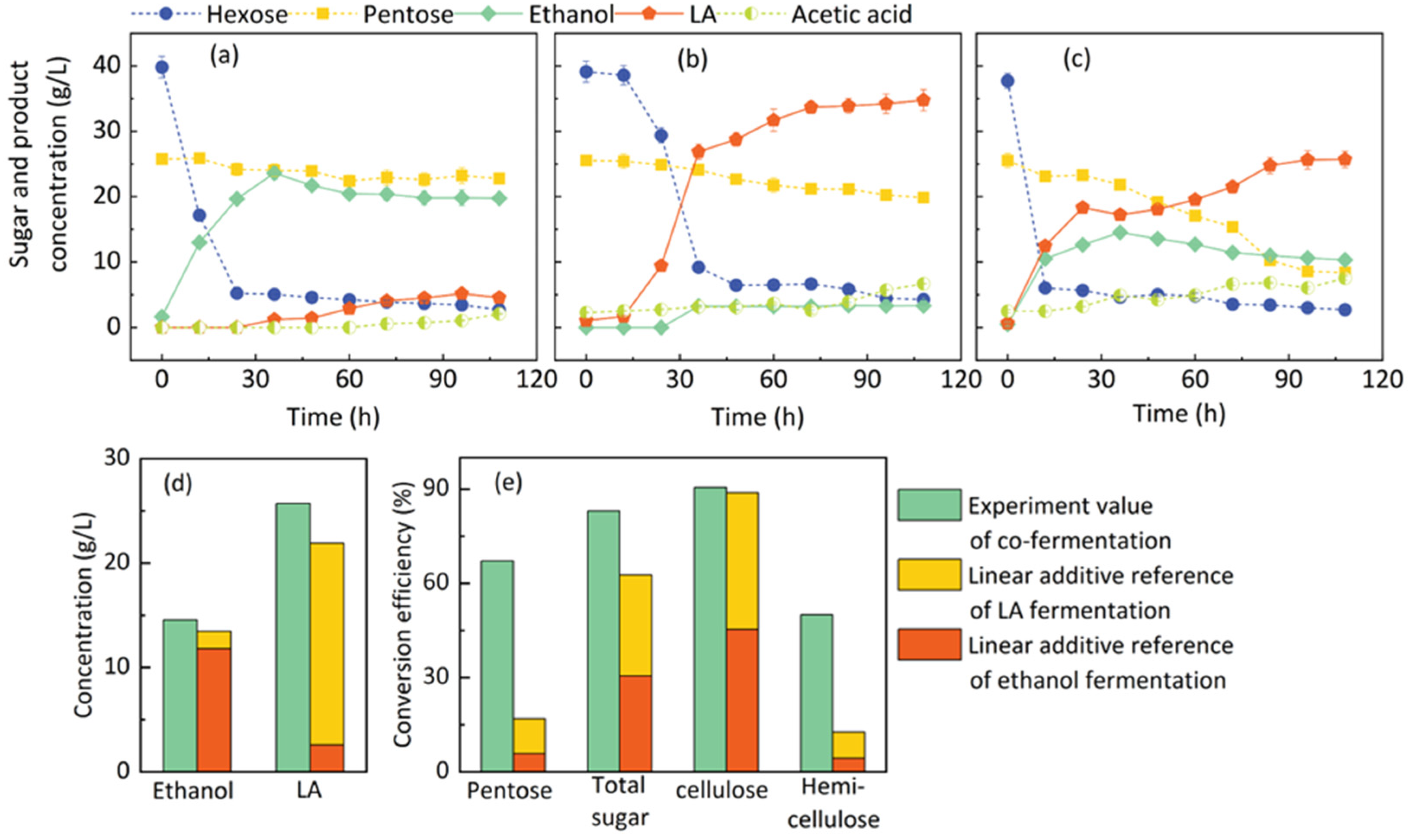
As presented in Figure 2a, when S. cerevisiae was used as the sole inoculum, hexoses were rapidly consumed, and ethanol reached its maximum concentration of 23.6 g/L at 36 h, while pentoses remained almost unutilized. This result is consistent with previous findings that S. cerevisiae is unable to metabolize pentoses [40]. In the late fermentation stage, a small amount of LA (5.18 g/L) was detected, which may have resulted from minor by-products of yeast metabolism.
Figure 2b shows that when E. mundtii was inoculated alone, the hexose consumption rate during the initial 12 h was considerably slower than that of ethanol fermentation, and LA production exhibited a distinct lag phase, with a marked increase observed only after 12 h. This lag is likely attributable to inhibitory compounds present in the hydrolysate that hindered E. mundtii growth [41,42]. As a result, E. mundtii required an adaptation period during early fermentation. By 48 h, hexoses were almost completely consumed, and lactic acid production stabilized, reaching 34.76 g/L. However, only 22.29% of the pentoses were utilized. The low pentose utilization could be explained not only by the presence of inhibitors but also by CCR [43] and product inhibition caused by high lactic acid concentrations during the late fermentation stage.
In contrast, when S. cerevisiae and E. mundtii were co-inoculated (Figure 2c), the initial hexose consumption rate was significantly higher than in either monoculture, with the order of consumption rate during the first 12 h being co-fermentation > ethanol fermentation > LA fermentation. This phenomenon is likely due to the combined metabolic activity of both strains during the early fermentation phase, leading to a higher overall glucose uptake rate compared to monoculture systems. Similar enhancements in early-stage sugar consumption have been reported in co-culture fermentation systems, where parallel glucose uptake by multiple microorganisms increases the overall substrate assimilation capacity [44]. At the same time, LA concentration increased rapidly within the first 12 h, indicating that the lag phase was eliminated under co-fermentation conditions. Ethanol reached its maximum concentration of 14.5 g/L at 36 h, and LA ultimately accumulated to 25.7 g/L. Notably, pentose consumption was substantially improved, with a utilization rate of 67.1%, which was threefold higher than that of the LA fermentation. This suggests that the rapid glucose consumption by S. cerevisiae alleviated the CCR effect imposed on E. mundtii during pentose metabolism, thereby enhancing pentose utilization. The complementary substrate utilization of the two microorganisms improved total sugar consumption and enabled efficient carbon allocation.
As shown in Figure 2d,e, co-fermentation exhibited system-level synergistic effects primarily reflected in enhanced pentose and total sugar utilization, as well as improved cellulose and hemicellulose conversion, despite the fact that individual ethanol and LA concentrations were lower than those obtained in the corresponding mono-fermentation systems. Specifically, the actual pentose and total sugar utilization rates in the co-fermentation system were 50.18% and 20.4% higher, respectively, than the linear additive references, while hemicellulose conversion increased by 37.4%. These findings indicate that co-fermentation significantly optimized overall conversion efficiency through improved carbon source distribution, most likely because S. cerevisiae alleviated the metabolic constraints faced by E. mundtii in pentose degradation [45].

3.3. Effects of Inhibitors on LA and Ethanol Fermentation

To further elucidate the synergistic mechanism underlying co-fermentation, typical inhibitors generated during corn cob pretreatment, namely furfural, 5-HMF, and phenolic compounds [46,47], were selected. The tolerance of E. mundtii and S. cerevisiae to these inhibitors was systematically investigated in order to clarify the intrinsic mechanism of synergistic enhancement observed in the mixed culture.

3.3.1. Effects of Furfural and 5-HMF on Ethanol Fermentation

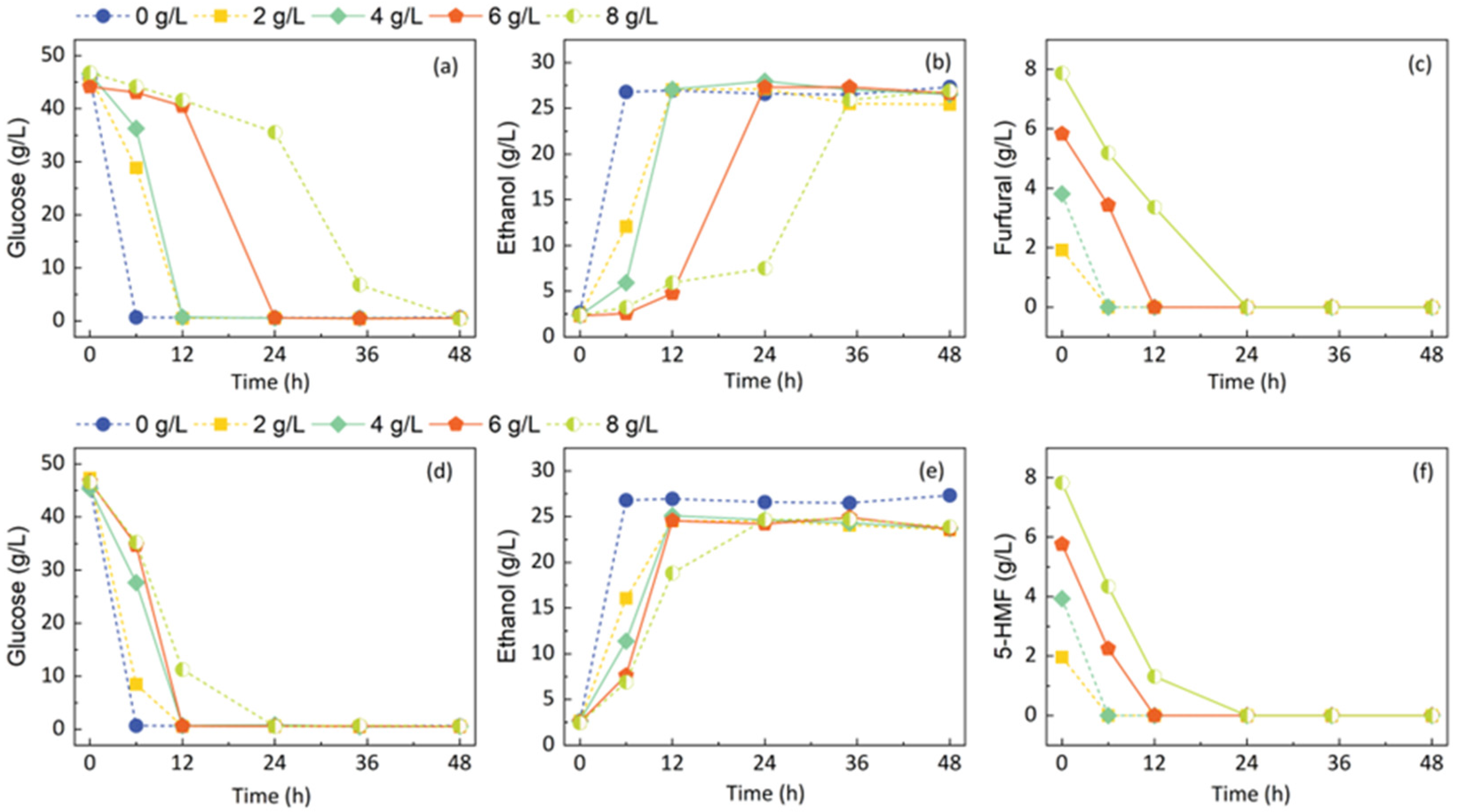
As illustrated in Figure 3a–c, furfural at 2–8 g/L did not affect the final ethanol concentration but markedly delayed the fermentation process. In the control without inhibitors, ethanol reached its peak concentration at 6 h. When furfural was 2–4 g/L, the peak was delayed to 12 h, whereas at 6 and 8 g/L, ethanol accumulation was postponed to 24 h and 36 h, respectively. This indicates that furfural caused a concentration-dependent lag in ethanol production, with an inhibition threshold of 2 g/L.
S. cerevisiae was capable of converting furfural to acetic acid, but the degradation rate decreased with increasing concentration. At concentrations below 4 g/L, furfural was completely degraded within 6 h, glucose was consumed within 12 h, and ethanol reached its maximum simultaneously. At 6 and 8 g/L, degradation required 12 h and 24 h, respectively, with glucose depletion and ethanol accumulation accordingly delayed to 24 h and 36 h. These results suggest that S. cerevisiae preferentially metabolizes furfural, and only after its depletion does rapid glucose utilization and ethanol production occur, thereby explaining the observed lag phase [48].
As shown in Figure 3d–f, the effects of 5-HMF on S. cerevisiae were similar but less pronounced. While 5-HMF exerted a lag effect, it had only a minor impact on the final ethanol concentration. The threshold for a significant inhibitory effect was also identified at 2 g/L. S. cerevisiae was able to degrade 5-HMF, and its removal accelerated glucose utilization. The metabolic rate of 5-HMF was slightly faster than that of furfural. Previous studies have shown that furfural and 5-HMF primarily inhibit glycolytic enzymes, particularly triose phosphate dehydrogenase and alcohol dehydrogenase [49]. It has also been reported that furfural is reduced to furfuryl alcohol by yeast cells, while 5-HMF may be cleaved and subsequently transported into cells, although its metabolic products remain unclear [50].

3.3.2. Effects of Furfural and 5-HMF on LA Fermentation

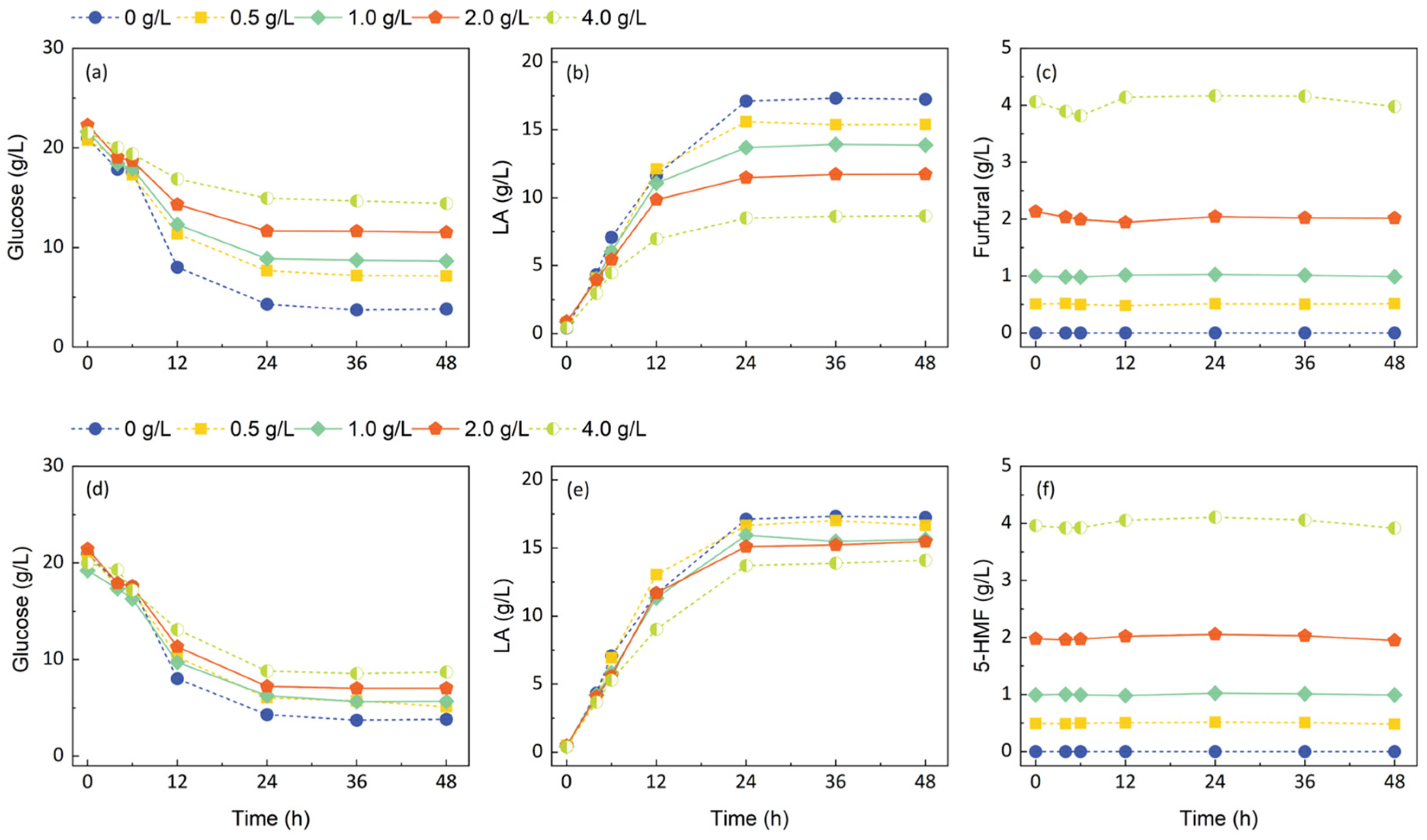
Furfural and 5-HMF were supplemented into MRS medium at different concentrations (0, 0.5, 1, 2, and 4 g/L) with glucose as the sole carbon source, followed by inoculation with E. mundtii under the fermentation conditions. Glucose, LA, and inhibitor concentrations were periodically monitored. As shown in Figure 4a–c, when furfural concentrations were 0.5 and 1.0 g/L, the maximum LA titer decreased by 11.5% and 20.2%, respectively. In contrast, 5-HMF at 0.5 g/L had little effect, but at 1 and 2 g/L it reduced LA concentration by 10.6% and 11.0%, respectively. With increasing inhibitor concentrations, the rate of glucose consumption declined, leaving higher residual sugar at the end of fermentation. At equal concentrations, furfural exerted greater toxicity than 5-HMF, as shown in Figure 4d–f. The stronger inhibitory effect of furfural is generally attributed to its higher reactivity toward intracellular nucleophiles and its stronger interference with redox balance in LAB compared to 5-HMF [51]. Considering an inhibition effect above 10% as significant, the inhibition thresholds for E. mundtii were determined to be 0.5 g/L for furfural and 1.0 g/L for 5-HMF.

3.3.3. Effects of Phenol on LA and Ethanol Fermentation

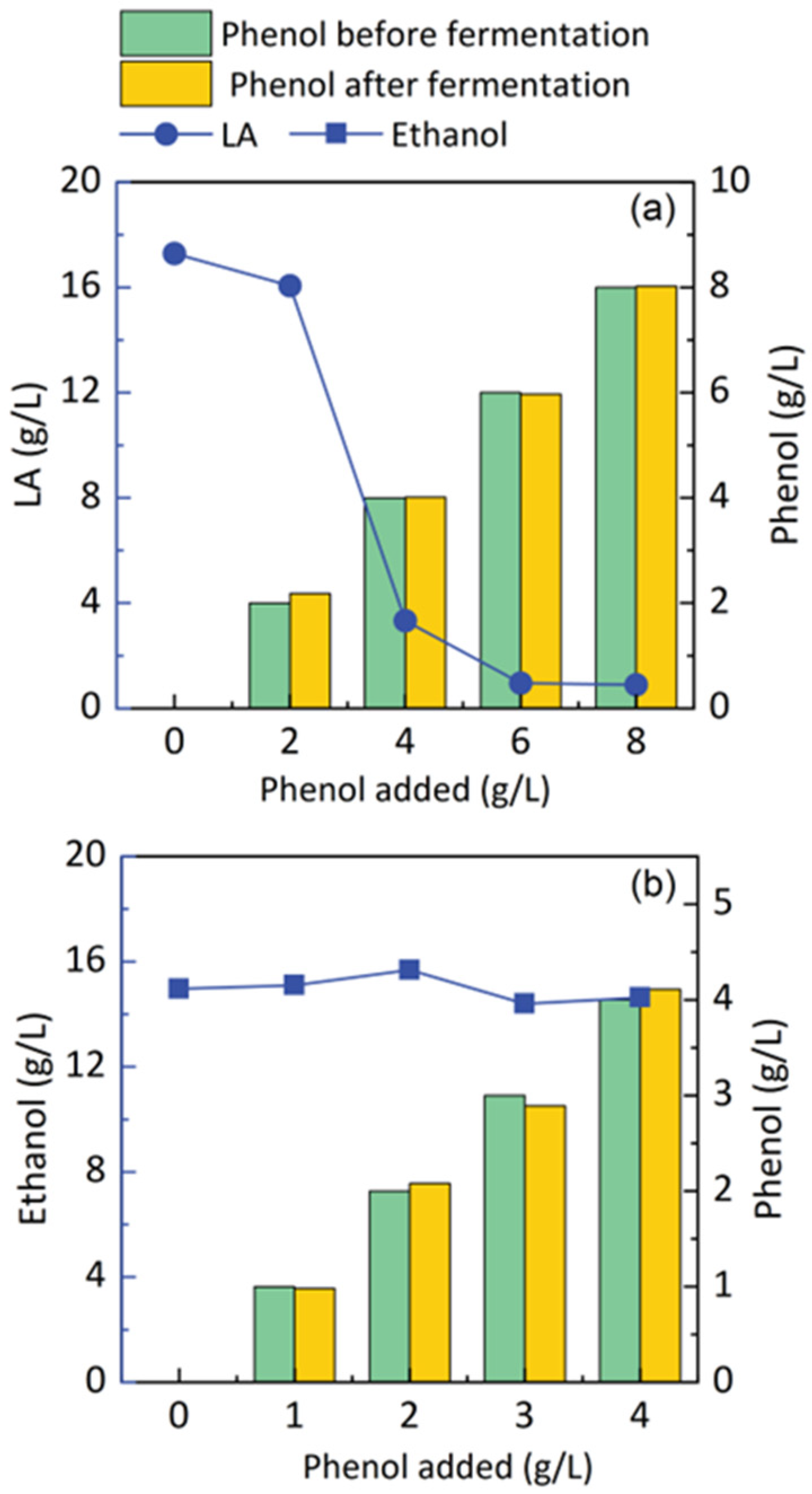
As shown in Figure 5a, phenol at 2 g/L exerted only a mild inhibitory effect on LA production; however, concentrations above 4 g/L significantly suppressed metabolism, with fermentation almost completely arrested. Thus, the inhibition threshold for E. mundtii was determined to be 2 g/L. For S. cerevisiae, phenol caused a delay in ethanol accumulation but did not affect the final ethanol concentration (Figure 5b). Furthermore, phenol concentrations remained essentially unchanged throughout fermentation, indicating that neither E. mundtii nor S. cerevisiae could degrade phenolic compounds. The limited biodegradability of phenolics by conventional yeast and LAB strains has been widely reported, highlighting phenolics as persistent inhibitors in lignocellulosic fermentations. Therefore, phenolic compounds are generally recognized as persistent inhibitory components in lignocellulosic fermentation systems. However, in this study, the total phenol concentration in the corncob hydrolysate was 1.8 g/L, which was below the reported inhibitory threshold for the tested microorganisms, and no apparent inhibitory effects on co-fermentation performance were observed under the experimental conditions applied.

3.4. Effect of Inoculation Sequence on Co-Fermentation

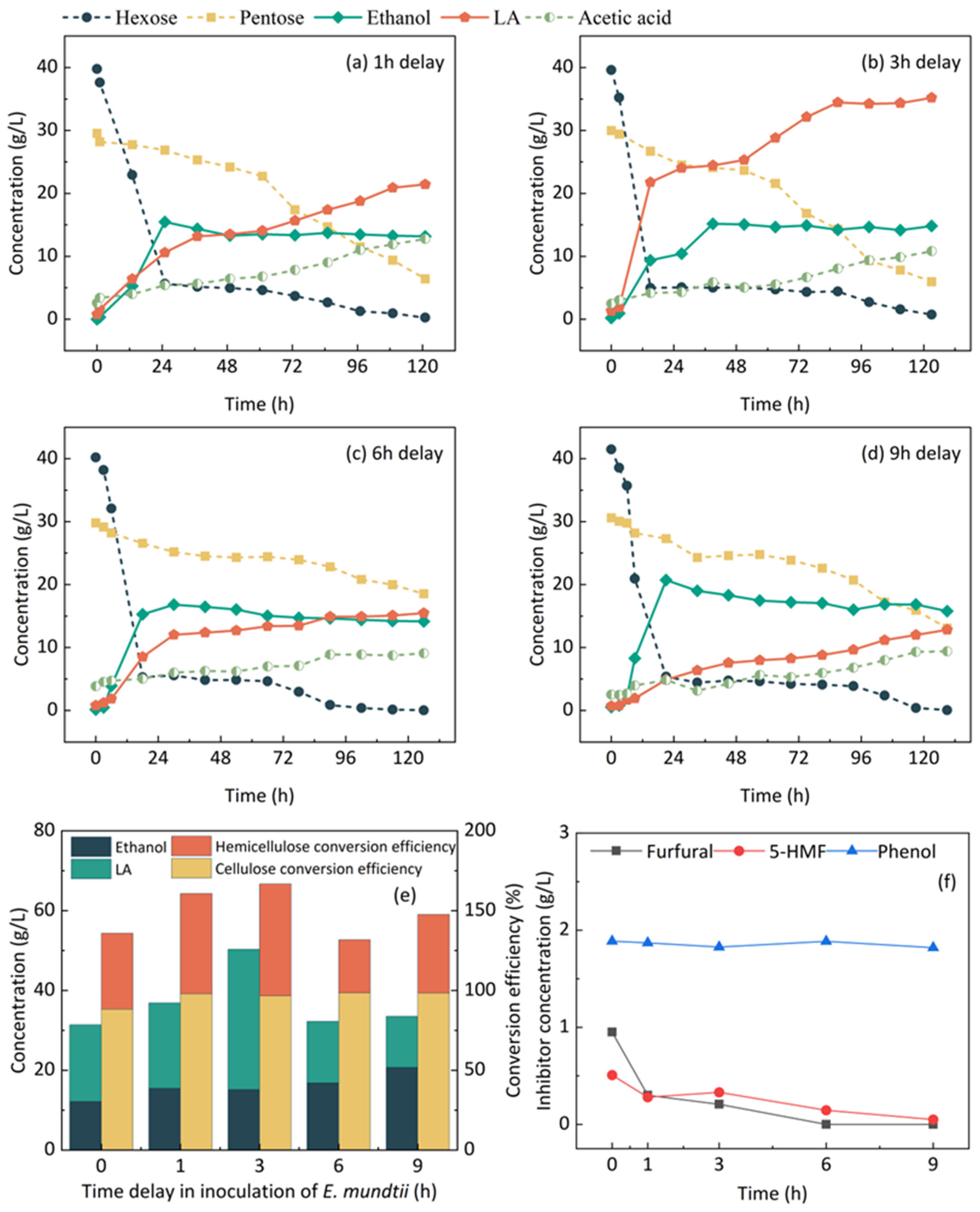
As shown in Figure 6a–d, ethanol production gradually increased with the delayed inoculation of E. mundtii, indicating that a longer delay allowed S. cerevisiae to utilize more carbon sources for ethanol synthesis. Among the tested groups, the 3 h delay in inoculation achieved the highest LA concentration (35.2 g/L), followed by the 1 h delay group, whereas LA production was markedly lower when the delay was extended to 6 h and 9 h. This phenomenon is likely related to the detoxification of inhibitors. In the 3 h delay group, S. cerevisiae not only consumed glucose efficiently but also degraded most of the furfural and 5-HMF, reducing their concentrations to below 0.5 g/L (Figure 6f), consistent with the results obtained in pure medium experiments (Figure 3c,f). This created a more favorable environment for E. mundtii. Such a sequential detoxification-first strategy has been widely reported to enhance the performance of inhibitor-sensitive microorganisms by shortening the lag phase and improving metabolic activity [52]. In contrast, in the 1 h delay group, the detoxification effect was less pronounced, resulting in partial inhibition of E. mundtii. Compared with simultaneous co-inoculation at 0 h, when the inoculation was delayed by 6 h or 9 h, hexoses were rapidly consumed by S. cerevisiae before the introduction of E. mundtii, leaving insufficient carbon sources for LA production and thus leading to poor LA concentrations.
The concentration profiles of phenolic compounds further demonstrated that the S. cerevisiae employed in this study was unable to metabolize phenolics in the fermentation broth (Figure 6f), consistent with the results of glucose-based pure culture experiments (Figure 5). Consequently, residual phenolic compounds continued to exert inhibitory effects on E. mundtii. This observation agrees with previous studies reporting that conventional S. cerevisiae strains exhibit limited capability to detoxify phenolic compounds derived from lignin, which often remain a major bottleneck for LAB-based fermentations [53]. This limitation highlights the need for future studies to explore alternative detoxification strategies or to employ yeast strains capable of degrading phenolic compounds to mitigate such inhibition.
Moreover, in the absence of hexoses (glucose), delayed inoculation impaired the growth and reproduction of E. mundtii, thereby weakening their ability to metabolize pentoses. As a result, both pentose and total sugar utilization are clarified in Table 1. In contrast, the 3 h delay group achieved the highest pentose utilization rate, which was 18.7% higher than that of the simultaneous inoculation group. This outcome was consistent with its highest LA concentration, indicating that under favorable growth conditions, E. mundtii could efficiently metabolize pentoses.
As shown in Figure 6e, the ethanol and LA concentrations in the 3 h delay group were 24.9% and 82.9% higher, respectively, compared to the simultaneous inoculation group. Meanwhile, cellulose and hemicellulose conversion rates reached 96.7% and 70.1%, representing improvements of 8.5 and 22.5 percentage points, respectively. The enhanced hemicellulose conversion was attributed to S. cerevisiae-mediated removal of inhibitors, which enabled E. mundtii to effectively utilize pentoses derived from hemicellulose hydrolysis, thereby promoting further hemicellulose degradation. This result further supports the concept that sequential inoculation facilitates metabolic division of labor, leading to conversion efficiencies beyond those achievable by simultaneous inoculation [45].
Overall, sequential inoculation, in which S. cerevisiae was introduced prior to E. mundtii, proved superior to simultaneous inoculation. In particular, a 3 h delay in inoculation of E. mundtii provided optimal conditions for synergistic interactions, allowing it to thrive in an environment with reduced inhibitor concentrations. Nevertheless, 19.9% of pentoses remained unutilized in this study, suggesting that further optimization of the co-production process is still required.

3.5. Proposed Synergistic Mechanism of Co-Fermentation

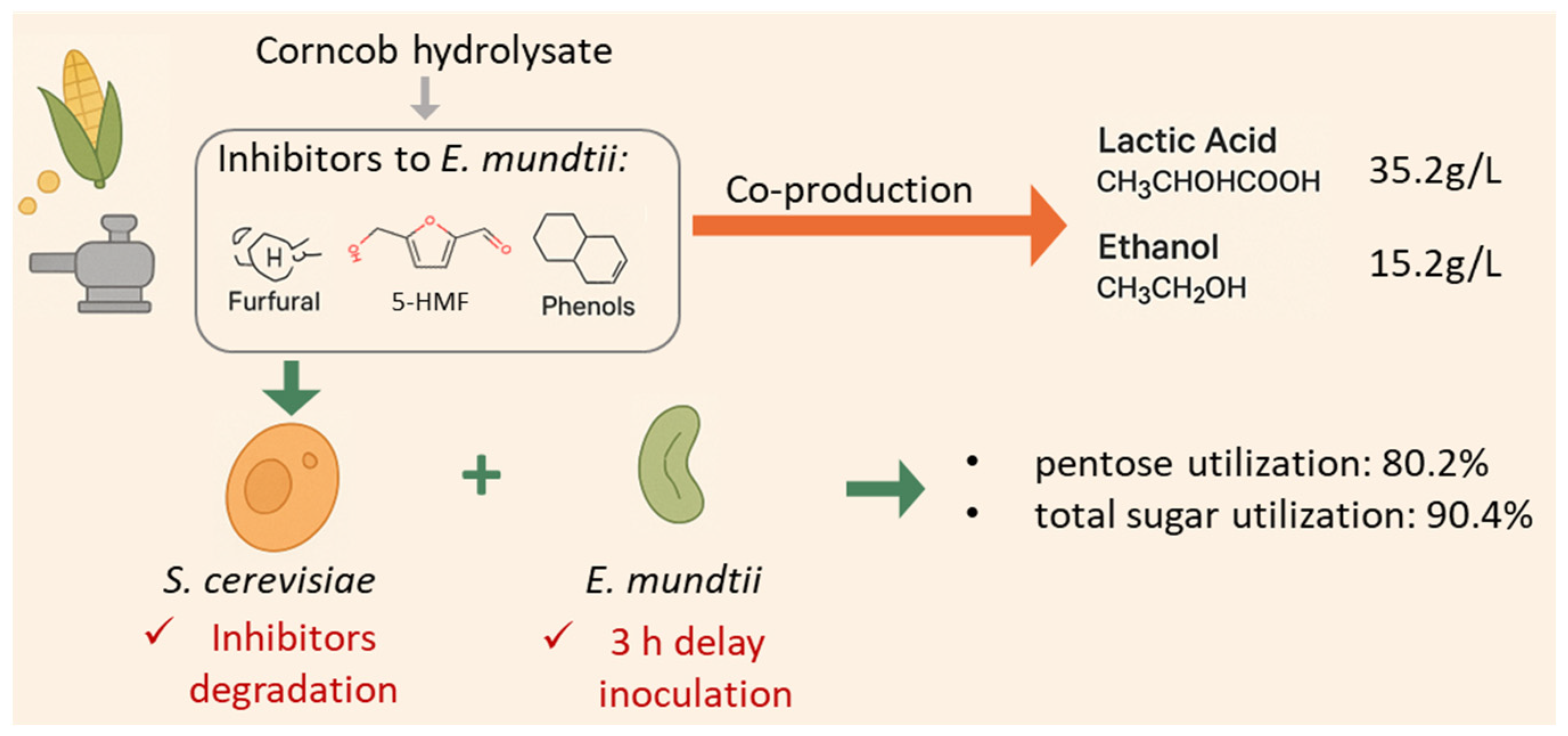
The synergistic interaction between S. cerevisiae and E. mundtii can be explained by an integrated mechanism involving carbon source partitioning, inhibitor detoxification, and temporal metabolic coordination, as schematically illustrated in Figure 7. During the initial stage of fermentation, S. cerevisiae preferentially consumed glucose from the corncob hydrolysate, which effectively relieved carbon catabolite repression on E. mundtii and facilitated subsequent pentose assimilation. Concurrently, S. cerevisiae exhibited strong detoxification capacity toward furan derivatives, particularly furfural and 5-HMF, thereby reducing inhibitor concentrations to levels tolerable for LAB and shortening the lag phase of LA fermentation [15].
Following glucose depletion and inhibitor detoxification, E. mundtii efficiently utilized pentose sugars, especially pentose, for LA production. Importantly, the implementation of a sequential inoculation strategy further enhanced this metabolic coordination by preventing excessive glucose competition and mitigating product inhibition during the early fermentation phase. As a result, both microorganisms were able to operate within their favorable metabolic windows, enabling stable and efficient co-fermentation. This coordinated microbial synergy ultimately led to enhanced mixed-sugar utilization, achieving a pentose utilization of 80.2% and a total sugar utilization of 90.4%, while simultaneously producing LA (35.2 g/L) and ethanol (15.2 g/L) from non-detoxified corncob hydrolysate.

4. Conclusions

This study systematically compared mono-fermentation and co-fermentation of corncob hydrolysates and proposed a co-fermentation strategy in which E. mundtii and S. cerevisiae simultaneously produced lactic acid and ethanol within the same system. Compared with mono-fermentation, the pentose utilization rate in the co-fermentation system increased to 67.1%, while total sugar utilization improved to 83.0%. The S. cerevisiae efficiently degraded furfural and 5-hydroxymethylfurfural while metabolizing glucose, resulting in their complete removal. Moreover, optimization of the inoculation strategy showed that delaying the inoculation of E. mundtii by 3 h relative to S. cerevisiae substantially improved sugar utilization efficiency. Under this condition, the pentose utilization rate reached 80.0%, and the total sugar utilization increased to 90.4%, demonstrating the strongest synergistic effect and the highest substrate conversion efficiency.

Author Contributions

Investigation, Data curation, Formal analysis, Validation, Writing—original draft, Writing—review & editing, X.W.; Resources, Methodology, Data curation, Investigation, Y.L.; Investigation, Methodology, Data curation, Y.Z.; Conceptualization, Investigation, Methodology, writing—original draft, Writing—review & editing, Y.R.; Writing—review & editing, H.M.; Investigation, Writing—review & editing, J.L.; Supervision, Conceptualization, Q.W. All authors have read and agreed to the published version of the manuscript.

Funding

This work was supported by the National Natural Science Foundation of China (Grant NOS. 52470137 and 52170121) and Program for Young Talents of Science and Technology in Universities of Inner Mongolia Autonomous Region (Grant NO. NJYT22083).

Institutional Review Board Statement

Not applicable.

Informed Consent Statement

Not applicable.

Data Availability Statement

The original contributions presented in this study are included in the article. Further inquiries can be directed to the corresponding authors.

Conflicts of Interest

The authors declare no conflicts of interest.

References

  1. Sun, H.; Zheng, T.; Liu, Y.; Li, Y.Y.; Tu, M.; Zhou, Y.; Wang, X.; Ma, H.; Wang, Q. Resource Recovery from Food Waste. Annu. Rev. Environ. Resour. 2025, 50, 483–509. [Google Scholar] [CrossRef]
  2. Periyasamy, S.; Karthik, V.; Senthil Kumar, P.; Isabel, J.B.; Temesgen, T.; Hunegnaw, B.M.; Melese, B.B.; Mohamed, B.A.; Vo, D.V.N. Chemical, Physical and Biological Methods to Convert Lignocellulosic Waste into Value-Added Products. A Review. Environ. Chem. Lett. 2022, 20, 1129–1152. [Google Scholar] [CrossRef]
  3. Cubas-Cano, E.; López-Gómez, J.P.; González-Fernández, C.; Ballesteros, I.; Tomás-Pejó, E. Towards Sequential Bioethanol and L-Lactic Acid Co-Generation: Improving Pentose Conversion to l-Lactic Acid in Presence of Lignocellulosic Ethanol with an Evolved Bacillus Coagulans. Renew. Energy 2020, 153, 759–765. [Google Scholar] [CrossRef]
  4. Charoensuk, P.; Chaiwong, S.; Suwunwong, T.; Halley, P.J.; Suwantong, O. Preparation and Utilization of Biochar from Agricultural Wastes as Ethylene Absorber for ‘Gros Michel’ Banana Ripening. Ind. Crops Prod. 2024, 222, 119860. [Google Scholar] [CrossRef]
  5. Jankovská, Z.; Peikertová, P.; Tokarský, J.; Matějová, L. Carbons Prepared by Microwave Co-Pyrolysis of Waste Scrap Tyres and Corn Cob: Effect of Cation Size and Charge on Xylene Adsorption. J. Environ. Chem. Eng. 2024, 12, 114374. [Google Scholar] [CrossRef]
  6. Wen, P.; Liao, H.; Zhu, J.; Xu, Y.; Zhang, J. Production of Xylo-Oligosaccharides and Ethanol from Corncob by Combined Tartaric Acid Hydrolysis with Simultaneous Saccharification and Fermentation. Bioresour. Technol. 2022, 363, 127977. [Google Scholar] [CrossRef]
  7. Kwon, S.G.; Park, S.W.; Oh, D.K. Increase of Xylitol Productivity by Cell-Recycle Fermentation of Candida Tropicalis Using Submerged Membrane Bioreactor. J. Biosci. Bioeng. 2006, 101, 13–18. [Google Scholar] [CrossRef]
  8. Edumujeze, D.; Fournier-Salaün, M.C.; Leveneur, S. Production of Furfural: From Kinetics to Process Assessment. Fuel 2025, 381, 133423. [Google Scholar] [CrossRef]
  9. Chen, X.; Shekiro, J.; Elander, R.; Tucker, M. Improved Xylan Hydrolysis of Corn Stover by Deacetylation with High Solids Dilute Acid Pretreatment. Ind. Eng. Chem. Res. 2011, 51, 70–76. [Google Scholar] [CrossRef]
  10. Du, J.; Qian, Y.; Xi, Y.; Lü, X. Hydrothermal and Alkaline Thermal Pretreatment at Mild Temperature in Solid State for Physicochemical Properties and Biogas Production from Anaerobic Digestion of Rice Straw. Renew. Energy 2019, 139, 261–267. [Google Scholar] [CrossRef]
  11. Li, M.; Wang, L.; Zhao, Q.; Chen, H. High Concentration of Fermentable Sugars Prepared from Steam Exploded Lignocellulose in Periodic Peristalsis Integrated Fed-Batch Enzymatic Hydrolysis. Appl. Biochem. Biotechnol. 2022, 194, 5255–5273. [Google Scholar] [CrossRef]
  12. Fan, Q.; Fu, P.; Song, C.; Fan, Y. Valorization of Waste Biomass through Hydrothermal Liquefaction: A Review with Focus on Linking Hydrothermal Factors to Products Characteristics. Ind. Crops Prod. 2023, 191, 116017. [Google Scholar] [CrossRef]
  13. Baptista, M.; Costa, C.E.; Domingues, L. Engineering Thermotolerant Kluyveromyces Marxianus Strains for Resveratrol Production by Simultaneous Saccharification and Fermentation of Whole Slurry Corn Cob. Bioresour. Technol. 2025, 416, 131755. [Google Scholar] [CrossRef]
  14. Choi, S.; Song, C.W.; Shin, J.H.; Lee, S.Y. Biorefineries for the Production of Top Building Block Chemicals and Their Derivatives. Metab. Eng. 2015, 28, 223–239. [Google Scholar] [CrossRef] [PubMed]
  15. Limayem, A.; Ricke, S.C. Lignocellulosic Biomass for Bioethanol Production: Current Perspectives, Potential Issues and Future Prospects. Prog. Energy Combust. Sci. 2012, 38, 449–467. [Google Scholar] [CrossRef]
  16. Onyishi, C.L.; Moneke, A.N.; Ndubuisi, I.A.; Onyia, O.O.; Amadi, O.C. Tolerance of Natural Yeast Isolates to Inhibitor Compounds Associated with the Fermentation of Lignocellulosic Hydrolysates to Ethanol. Microbe 2026, 10, 100656. [Google Scholar] [CrossRef]
  17. Reddy, G.; Altaf, M.; Naveena, B.J.; Venkateshwar, M.; Kumar, E.V. Amylolytic Bacterial Lactic Acid Fermentation—A Review. Biotechnol. Adv. 2008, 26, 22–34. [Google Scholar] [CrossRef]
  18. López-Gómez, J.P.; Latorre-Sánchez, M.; Unger, P.; Schneider, R.; Coll Lozano, C.; Venus, J. Assessing the Organic Fraction of Municipal Solid Wastes for the Production of Lactic Acid. Biochem. Eng. J. 2019, 150, 107251. [Google Scholar] [CrossRef]
  19. Cubas-Cano, E.; González-Fernández, C.; Ballesteros, M.; Tomás-Pejó, E. Biotechnological Advances in Lactic Acid Production by Lactic Acid Bacteria: Lignocellulose as Novel Substrate. Biofuels Bioprod. Biorefining 2018, 12, 290–303. [Google Scholar] [CrossRef]
  20. Tan, J.; Abdel-Rahman, M.A.; Sonomoto, K. Biorefinery-Based Lactic Acid Fermentation: Microbial Production of Pure Monomer Product. Adv. Polym. Sci. 2017, 279, 27–66. [Google Scholar] [CrossRef]
  21. Tian, X.; Chen, H.; Liu, H.; Chen, J. Recent Advances in Lactic Acid Production by Lactic Acid Bacteria. Appl. Biochem. Biotechnol. 2021, 193, 4151–4171. [Google Scholar] [CrossRef] [PubMed]
  22. Taskin, M.; Esim, N.; Ortucu, S. Efficient Production of L-Lactic Acid from Chicken Feather Protein Hydrolysate and Sugar Beet Molasses by the Newly Isolated Rhizopus Oryzae TS-61. Food Bioprod. Process. 2012, 90, 773–779. [Google Scholar] [CrossRef]
  23. Martín, C.; Dixit, P.; Momayez, F.; Jönsson, L.J. Hydrothermal Pretreatment of Lignocellulosic Feedstocks to Facilitate Biochemical Conversion. Front. Bioeng. Biotechnol. 2022, 10, 846592. [Google Scholar] [CrossRef] [PubMed]
  24. Abdel-Rahman, M.A.; Xiao, Y.; Tashiro, Y.; Wang, Y.; Zendo, T.; Sakai, K.; Sonomoto, K. Fed-Batch Fermentation for Enhanced Lactic Acid Production from Glucose/Pentose Mixture without Carbon Catabolite Repression. J. Biosci. Bioeng. 2015, 119, 153–158. [Google Scholar] [CrossRef]
  25. Mandegari, M.A.; Farzad, S.; van Rensburg, E.; Görgens, J.F. Multi-Criteria Analysis of a Biorefinery for Co-Production of Lactic Acid and Ethanol from Sugarcane Lignocellulose. Biofuels Bioprod. Biorefining 2017, 11, 971–990. [Google Scholar] [CrossRef]

  26. Lopez-Hidalgo, A.M.; Magaña, G.; Rodriguez, F.; De Leon-Rodriguez, A.; Sanchez, A. Co-Production of Ethanol-Hydrogen by Genetically Engineered Escherichia Coli in Sustainable Biorefineries for Lignocellulosic Ethanol Production. Chem. Eng. J. 2021, 406, 126829. [Google Scholar] [CrossRef]
  27. Jarunglumlert, T.; Bampenrat, A.; Sukkathanyawat, H.; Prommuak, C. Enhanced Energy Recovery from Food Waste by Co-Production of Bioethanol and Biomethane Process. Fermentation 2021, 7, 265. [Google Scholar] [CrossRef]
  28. Li, Y.; Sun, H.; Zhang, Y.; Wang, X.; Gao, M.; Sun, X.; Wang, Q. Research Progress for Co-Production Ethanol and Biobased Products. Ind. Crops Prod. 2024, 212, 118351. [Google Scholar] [CrossRef]
  29. Hao, J.; Yang, M.; Dabbour, M.; Mintah, B.K.; Dai, C.; Zhang, R.; Zhang, Z.; Ma, H.; He, R. Enhancing Ethanol Tolerance and Metabolic Activity of Saccharomyces Cerevisiae during Rice Fermentation by Fixed-Frequency Ultrasound. Food Res. Int. 2025, 218, 116892. [Google Scholar] [CrossRef]
  30. Wang, Y.; Liu, J.; Cai, D.; Zhao, G. Co-Generation of Ethanol and l-Lactic Acid from Corn Stalk under a Hybrid Process. Biotechnol. Biofuels 2018, 11, 331. [Google Scholar] [CrossRef]
  31. Ahmad, A.; Banat, F.; Taher, H. A Review on the Lactic Acid Fermentation from Low-Cost Renewable Materials: Recent Developments and Challenges. Environ. Technol. Innov. 2020, 20, 101138. [Google Scholar] [CrossRef]
  32. Gomez, J.S.; Vallejo, M.; Parada, R.B.; Marguet, E.R.; Bellomio, A.; Gianni de Carvalho, K. Exploring the Bioactive Potential of Enterococcus mundtii TW278: Synthesis and Utilization of Biomolecules in Yogurt Production. Food Biosci. 2024, 61, 104760. [Google Scholar] [CrossRef]
  33. Hoheneder, R.; Fitz, E.; Bischof, R.H.; Russmayer, H.; Ferrero, P.; Peacock, S.; Sauer, M. Efficient Conversion of Hemicellulose Sugars from Spent Sulfite Liquor into Optically Pure L-Lactic Acid by Enterococcus mundtii. Bioresour. Technol. 2021, 333, 125215. [Google Scholar] [CrossRef] [PubMed]
  34. Yu, H.; Shi, L.; Chen, C.; Ge, C.; Pan, X.; Chen, Q.; Tian, H. Co-Fermentation of Hanseniaspora Uvarum and Saccharomyces Cerevisiae Improves Flavor in Low-Alcohol Peach Beverages. Food Res. Int. 2026, 225, 118040. [Google Scholar] [CrossRef]
  35. Ma, X.; Gao, M.; Liu, S.; Li, Y.; Sun, X.; Wang, Q. An Innovative Approach for Reducing the Water and Alkali Consumption in the Lactic Acid Fermentation via the Reuse of Pretreated Liquid. Bioresour. Technol. 2022, 352, 127108. [Google Scholar] [CrossRef]
  36. Park, S.E.; Koo, H.M.; Park, Y.K.; Park, S.M.; Park, J.C.; Lee, O.K.; Park, Y.C.; Seo, J.H. Expression of Aldehyde Dehydrogenase 6 Reduces Inhibitory Effect of Furan Derivatives on Cell Growth and Ethanol Production in Saccharomyces Cerevisiae. Bioresour. Technol. 2011, 102, 6033–6038. [Google Scholar] [CrossRef]
  37. Ma, X.; Gao, M.; Wang, N.; Liu, S.; Wang, Q.; Sun, X. Lactic Acid Production from Co-Fermentation of Food Waste and Spent Mushroom Substance with Aspergillus Niger Cellulase. Bioresour. Technol. 2021, 337, 125365. [Google Scholar] [CrossRef]
  38. John, R.P.; Nampoothiri, K.M.; Pandey, A. Fermentative Production of Lactic Acid from Biomass: An Overview on Process Developments and Future Perspectives. Appl. Microbiol. Biotechnol. 2007, 74, 524–534. [Google Scholar] [CrossRef]
  39. Abdel-Banat, B.M.A.; Hoshida, H.; Ano, A.; Nonklang, S.; Akada, R. High-Temperature Fermentation: How Can Processes for Ethanol Production at High Temperatures Become Superior to the Traditional Process Using Mesophilic Yeast? Appl. Microbiol. Biotechnol. 2009, 85, 861–867. [Google Scholar] [CrossRef]
  40. Cubas-Cano, E.; González-Fernández, C.; Tomás-Pejó, E. Evolutionary Engineering of Lactobacillus Pentosus Improves Lactic Acid Productivity from Pentose-Rich Media at Low PH. Bioresour. Technol. 2019, 288, 121540. [Google Scholar] [CrossRef]
  41. Sun, C.; Xia, A.; Liao, Q.; Guo, X.; Fu, Q.; Huang, Y.; Zhu, X.; Ding, L.; Chen, C. Inhibitory Effects of Furfural and Vanillin on Two-Stage Gaseous Biofuel Fermentation. Fuel 2019, 252, 350–359. [Google Scholar] [CrossRef]
  42. Monlau, F.; Sambusiti, C.; Barakat, A.; Quéméneur, M.; Trably, E.; Steyer, J.P.; Carrère, H. Do Furanic and Phenolic Compounds of Lignocellulosic and Algae Biomass Hydrolyzate Inhibit Anaerobic Mixed Cultures? A Comprehensive Review. Biotechnol. Adv. 2014, 32, 934–951. [Google Scholar] [CrossRef] [PubMed]
  43. Abdel-Rahman, M.A.; Tashiro, Y.; Zendo, T.; Sonomoto, K. Improved Lactic Acid Productivity by an Open Repeated Batch Fermentation System Using Enterococcus mundtii QU 25. RSC Adv. 2013, 3, 8437–8445. [Google Scholar] [CrossRef]
  44. Palmqvist, E.; Hahn-Hägerdal, B. Fermentation of Lignocellulosic Hydrolysates. II: Inhibitors and Mechanisms of Inhibition. Bioresour. Technol. 2000, 74, 25–33. [Google Scholar] [CrossRef]
  45. Bader, J.; Mast-Gerlach, E.; Popović, M.K.; Bajpai, R.; Stahl, U. Relevance of Microbial Coculture Fermentations in Biotechnology. J. Appl. Microbiol. 2010, 109, 371–387. [Google Scholar] [CrossRef]
  46. Kim, H.; Son, J.; Lee, J.; Yoo, H.Y.; Lee, T.; Jang, M.; Oh, J.M.; Park, C. Improved Production of Bacterial Cellulose through Investigation of Effects of Inhibitory Compounds from Lignocellulosic Hydrolysates. GCB Bioenergy 2021, 13, 436–444. [Google Scholar] [CrossRef]
  47. Ishida, Y.; Nguyen, T.T.M.; Izawa, S. The Yeast ADH7 Promoter Enables Gene Expression under Pronounced Translation Repression Caused by the Combined Stress of Vanillin, Furfural, and 5-Hydroxymethylfurfural. J. Biotechnol. 2017, 252, 65–72. [Google Scholar] [CrossRef]
  48. Heer, D.; Sauer, U. Identification of Furfural as a Key Toxin in Lignocellulosic Hydrolysates and Evolution of a Tolerant Yeast Strain. Microb. Biotechnol. 2008, 1, 497–506. [Google Scholar] [CrossRef]
  49. Jordan, D.B.; Braker, J.D.; Bowman, M.J.; Vermillion, K.E.; Moon, J.; Liu, Z.L. Kinetic Mechanism of an Aldehyde Reductase of Saccharomyces Cerevisiae That Relieves Toxicity of Furfural and 5-Hydroxymethylfurfural. Biochim. Biophys. Acta -Proteins Proteom. 2011, 1814, 1686–1694. [Google Scholar] [CrossRef]
  50. Liu, Z.L.; Slininger, P.J.; Dien, B.S.; Berhow, M.A.; Kurtzman, C.P.; Gorsich, S.W. Adaptive Response of Yeasts to Furfural and 5-Hydroxymethylfurfural and New Chemical Evidence for HMF Conversion to 2,5-Bis-Hydroxymethylfuran. J. Ind. Microbiol. Biotechnol. 2004, 31, 345–352. [Google Scholar] [CrossRef]
  51. Wang, L.; Tang, P.; Fan, X.; Yuan, Q. Effect of Selected Aldehydes Found in the Corncob Hemicellulose Hydrolysate on the Growth and Xylitol Fermentation of Candida Tropicalis. Biotechnol. Prog. 2013, 29, 1181–1189. [Google Scholar] [CrossRef]
  52. Almeida, J.R.M.; Modig, T.; Petersson, A.; Hähn-Hägerdal, B.; Lidén, G.; Gorwa-Grauslund, M.F. Increased Tolerance and Conversion of Inhibitors in Lignocellulosic Hydrolysates by Saccharomyces Cerevisiae. J. Chem. Technol. Biotechnol. 2007, 82, 340–349. [Google Scholar] [CrossRef]
  53. Taherzadeh, M.J.; Karimi, K. Fermentation Inhibitors in Ethanol Processes and Different Strategies to Reduce Their Effects. In Biofuels: Alternative Feedstocks and Conversion Processes; Academic Press: Cambridge, MA, USA, 2011; pp. 287–311. [Google Scholar] [CrossRef]
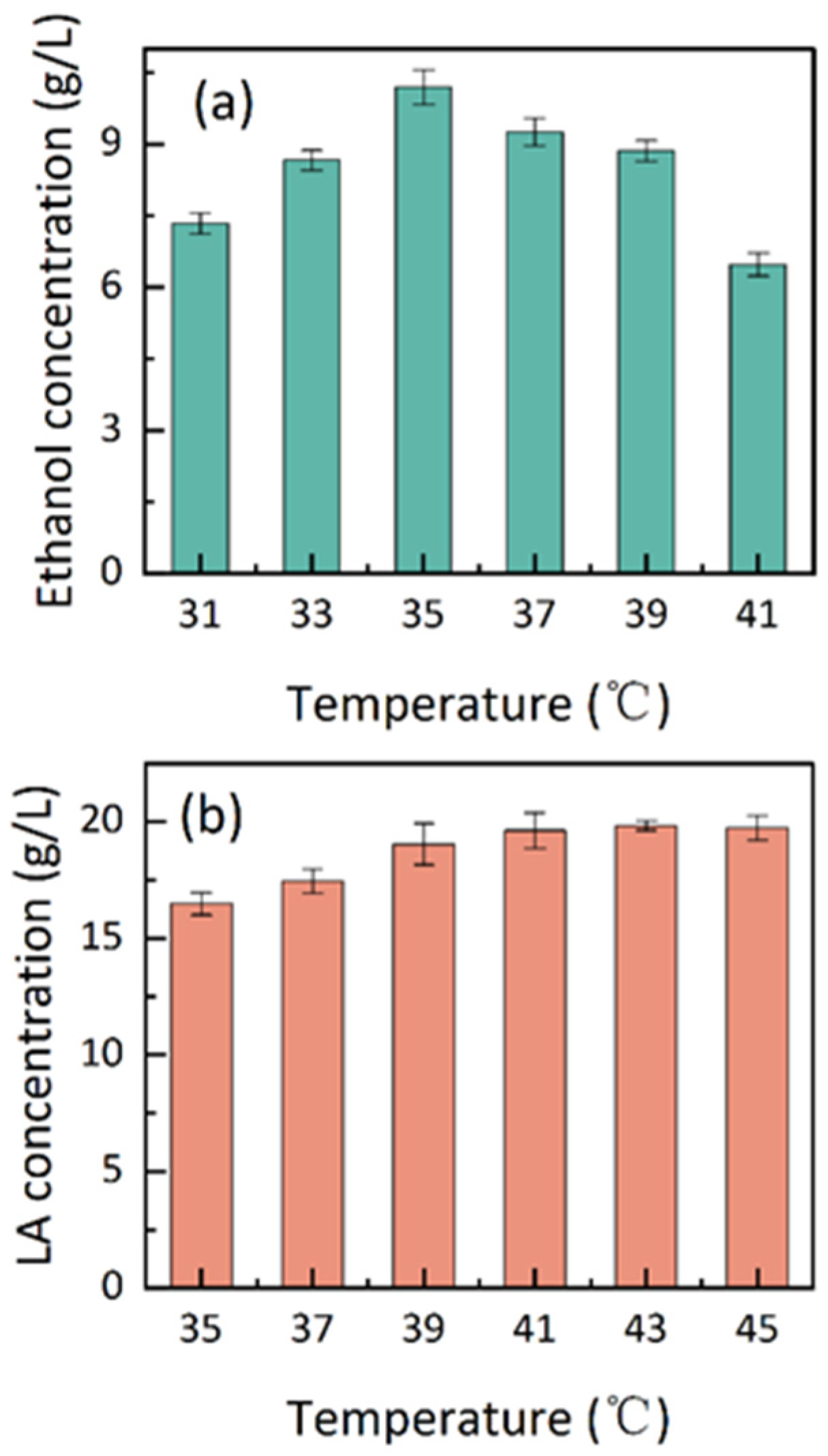
Figure 1. Effect of temperature on ethanol fermentation with S. cerevisiae and LA fermentation with E. mundtii after 72 h. (a) ethanol fermentation; (b) LA fermentation.
Fermentation 12 00095 g001
Figure 2. Fermentation process curves for different inoculation strains ((a). ethanol fermentation with S. cerevisiae, (b). LA fermentation with E. mundtii, (c). co-fermentation with two strains) and synergistic effect of co-fermentation analysis ((d). concentration of products, (e). conversion efficiency of substrate).
Fermentation 12 00095 g002
Figure 3. Changes in concentration of various substances in the ethanol fermentation process: (ac) affected by furfural concentrations, (df) affected by 5-HMF concentrations.
Fermentation 12 00095 g003
Figure 4. Changes in concentration of various substances in the LA fermentation process: (ac) affected by furfural concentrations, (df) affected by 5-HMF concentrations.
Fermentation 12 00095 g004
Figure 5. Effect of phenol concentration on (a) LA fermentation with E. mundtii and (b) ethanol fermentation with S. cerevisiae after 72 h.
Fermentation 12 00095 g005
Figure 6. Fermentation process curves at different inoculation delay times ((a): 1 h delay, (b): 3 h delay, (c): 6 h delay, (d): 9 h delay), (e) overall fermentation performance, and (f) final inhibitor concentrations prior to E. mundtii inoculation.
Fermentation 12 00095 g006
Figure 7. Proposed synergistic mechanism of sequential co-fermentation by S. cerevisiae and E. mundtii using corncob hydrolysate.
Fermentation 12 00095 g007
Table 1. Effect of inoculation sequence on substrate consumption and product concentration.
Time Delay in Inoculation of E. mundtii (h)Product Concentration (g/L)Pentose Conversion Efficiency (%)Total Sugar Conversion Efficiency (%)
EthanolLAAcetic Acid
0 h12.528.79.268.683.7
1 h15.521.412.871.587.5
3 h15.235.210.880.190.4
6 h16.815.59.137.873.5
9 h20.712.89.457.281.8
Disclaimer/Publisher’s Note: The statements, opinions and data contained in all publications are solely those of the individual author(s) and contributor(s) and not of MDPI and/or the editor(s). MDPI and/or the editor(s) disclaim responsibility for any injury to people or property resulting from any ideas, methods, instructions or products referred to in the content.