
Review

Pullulan Production from Lignocellulosic Plant Biomass or Starch-Containing Processing Coproduct Hydrolysates
Department of Chemistry, East Texas A&M University, Commerce, TX 75429, USA
Fermentation 2026, 12(2), 84; https://doi.org/10.3390/fermentation12020084
Submission received: 6 December 2025 / Revised: 10 January 2026 / Accepted: 15 January 2026 / Published: 3 February 2026
(This article belongs to the Special Issue Lignocellulosic Biomass Valorisation, 2nd Edition)

Abstract

The complex polysaccharide pullulan is characterized as a glucose-containing biopolymer that is both water-soluble and neutral in polarity. A variety of commercial applications exist for pullulan, including its utilization as a flocculant, a blood plasma substitute, a food additive, a dielectric material, an adhesive, or a packaging film. The fungus Aureobasidium pullulans has used several hydrolysates derived from plant biomass or starch-containing processing coproducts to support polysaccharide production. These include various plant biomass or processing coproduct streams such as lignocellulosic-containing peat, prairie grass, stalks, hulls, straw, shells, and pods or starch-containing coproducts from the processing of corn, rice, jackfruit seeds, palm kernels, cassava, and potatoes. The pullulan concentration produced by A. pullulans and the pullulan content of the polysaccharide depend on the plant hydrolysate carbon content and the strain used. If a lower-cost culture medium for fungal pullulan production were to be developed, a more economical approach to synthesizing commercial pullulan would be the utilization of plant-derived hydrolysates. This review examines the ability of selected hydrolysates of lignocellulosic plant biomass or plant-derived starch-containing processing coproducts to support A. pullulans polysaccharide synthesis in order to identify those substrates with the greatest potential for reducing the cost of commercial pullulan.

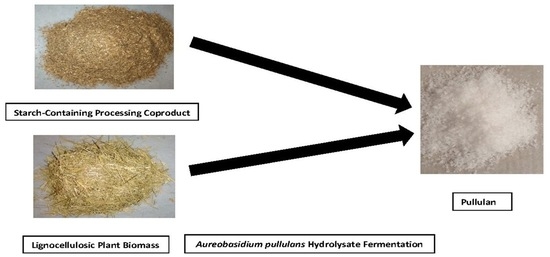
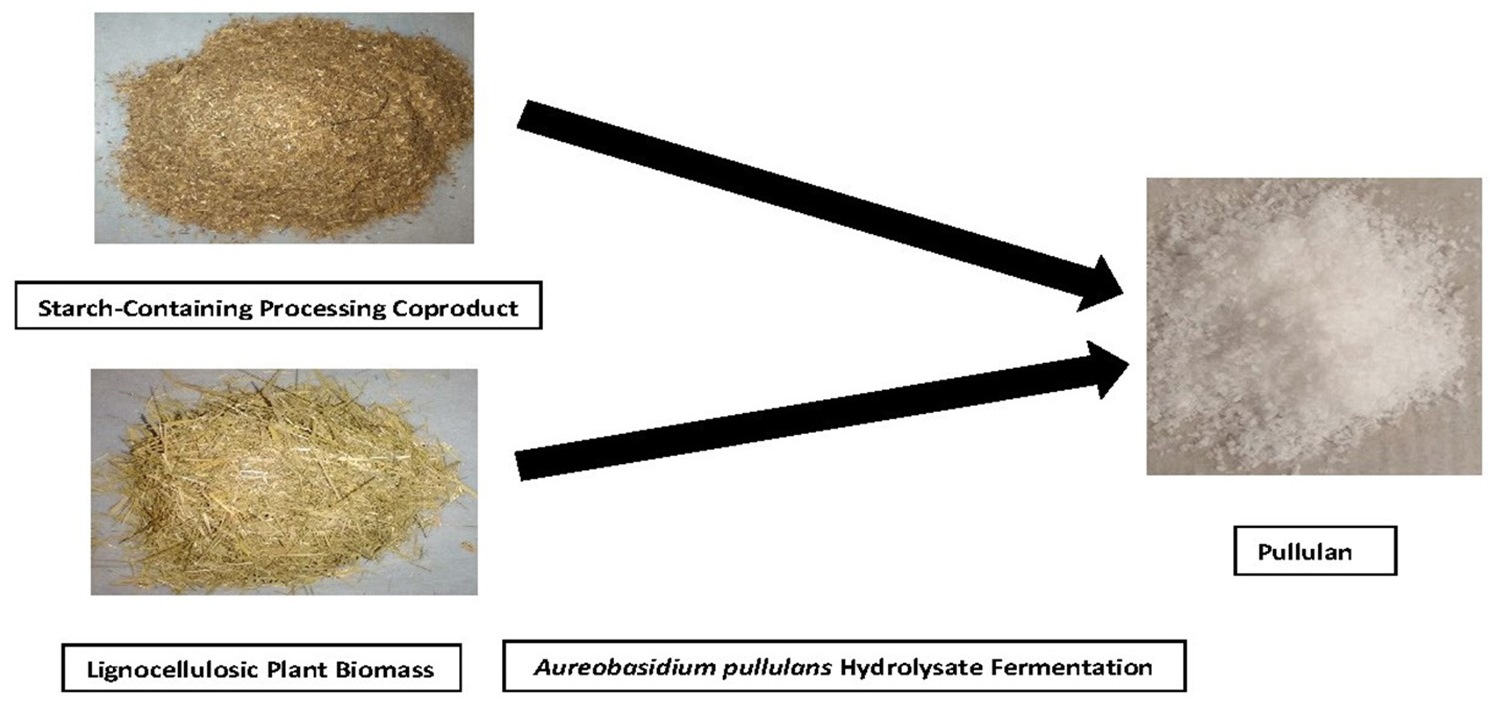
Graphical Abstract

1. Introduction

The extracellular complex polysaccharide pullulan is synthesized by the imperfect fungus Aureobasidium pullulans, characterized as a black yeast [1]. The synthesis of pullulans is not observed for all species classified within the genus Aureobasidium [2]. Instead, only certain strains of A. pullulans have been shown to be capable of synthesizing pullulan [2]. Pullulan is characterized as a water-soluble neutral biopolymer that can be precipitated by the addition of alcohol for gravimetric determinations [3].
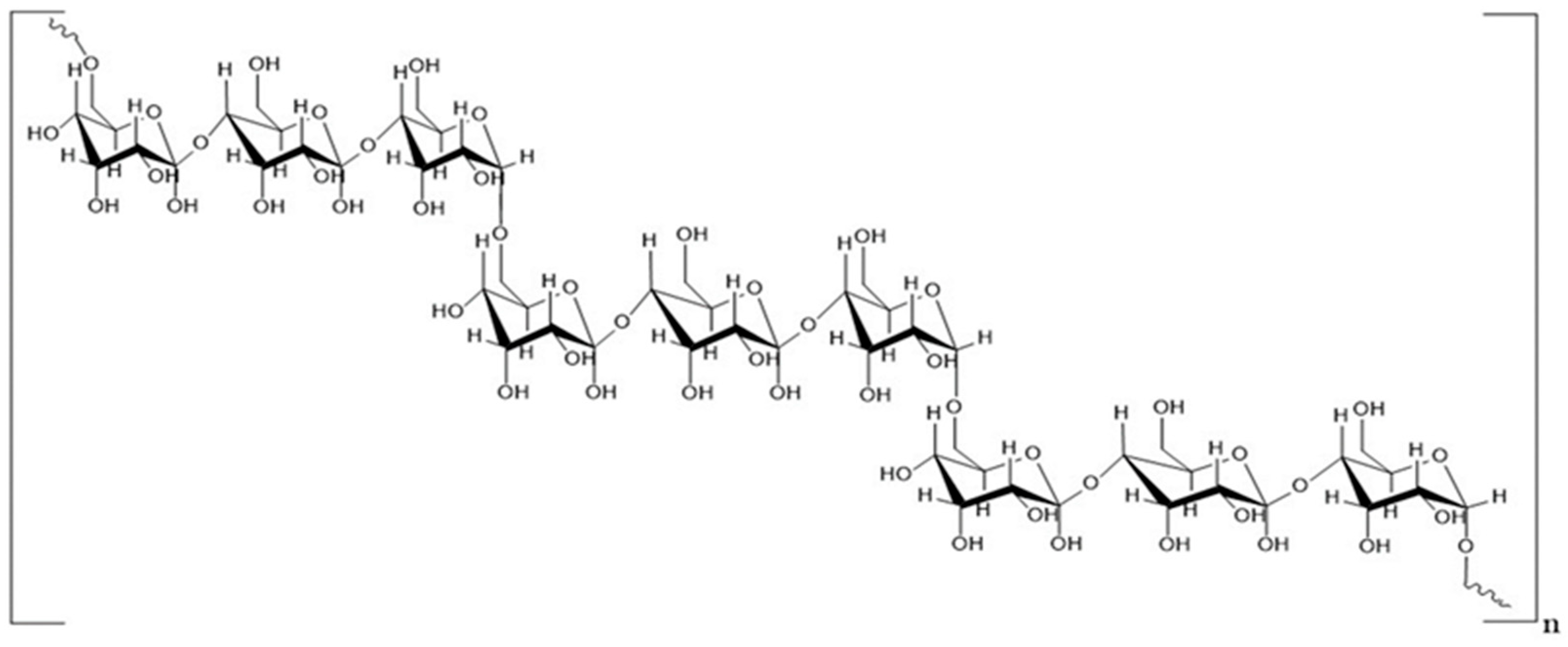
The structure of pullulan (Figure 1) is a complex linear polysaccharide composed of maltotriose units linked through α-D-(1→6) bonds on its terminal glucose residues [4,5,6,7]. Depending on the A. pullulans strain chosen, as well as the selected growth conditions, the molecular weight of pullulan has been found to vary from 50,000 to 2,500,000 daltons, providing a range of pullulan biopolymers that could be used for different commercial applications [4]. A pullulan-degrading activity has been detected in A. pullulans ATCC 42023 that likely affects the molecular weight of the polysaccharide after its activity appears after 120 h of fermentation [5].
In this review, the production of pullulan relative to growth conditions, as well as the existing commercial applications for pullulan as a polysaccharide gum, were explored. Subsequently, the ability of lignocellulosic plant biomass hydrolysates to be used to support pullulan production by A. pullulans cells was investigated. Lastly, hydrolysates of starch-containing plant biomass processing coproducts were studied as possible substrates to sustain pullulan production by A. pullulans. Studying these plant biomass hydrolysates should help identify which hydrolysates could make the production of pullulan more economical from a feedstock perspective.

2. Production and Applications of Pullulan

Several studies have investigated how growth conditions affected how strains of A. pullulans influence the amount of pullulan synthesized, as well as the quality of the polysaccharide produced. Many studies have examined which carbon sources can be used to support the utilization of pullulan synthesis by different A. pullulans strains [6,7,8]. It was noted that the carbon source present in the culture medium affected both pullulan production and content. If glucose or high maltose corn syrup served as a carbon source instead of sucrose, pullulan production by the fungus was generally lower, but the pullulan content of the polysaccharide was higher [9,10]. The fermentation by the fungus of the carbon source decreases the pH of the culture medium, with the resultant acidity being critical to pullulan elaboration [11,12]. Prior work has explored how the culture medium pH is important to cells having the ability to elaborate pullulan. It has been found that, depending upon the carbon source used, the optimal initial pH of the culture medium was between 6.0 and 6.5 [12]. Limited nitrogen availability, as well as the type of nitrogen source supplemented, is also crucial to the rate of fungal pullulan production [13,14,15,16,17]. Regardless of the carbon or nitrogen used to grow the fungus, the optimal temperature for polysaccharide production by the fungus is 26 °C [18]. Beyond the carbon or nitrogen source added to the culture medium, other components supplemented into the medium affect fungal polysaccharide synthesis [19]. An important component is yeast extract. Yeast extract supplementation can stimulate pullulan production by the fungal cells [20]. If yeast extract is not supplemented into the culture medium, the optimal culture medium pH is reduced to 5.5 or below for maximal pullulan production, with the optimal pH being dependent on the carbon source added [21]. The possibility of replacing yeast extract due to its high cost, with specific vitamins being added instead to stimulate fungal pullulan production, was studied previously, but no specific vitamin supplement or supplements could substitute for the effect yeast extract supplementation had on fungal pullulan production [22]. Previous studies have reported that hydrolyzed plant biomass may be able to serve as a yeast extract substitute in the production medium [22,23,24]. When supplemented, the mineral salt ferric chloride or manganese chloride stimulated fungal pullulan production [21,25,26]. Fungal pullulan synthesis has also been shown to be impacted by growth factors, including fungal cell density and oxygen concentration, that are also important to pullulan synthesis [20,27,28]. In addition to studying growth conditions, strain improvement of A. pullulans has been a focus in the effort to reduce the processing cost of producing the polysaccharide [29]. A reduced pigmentation mutant of A. pullulans ATCC 42023 has been isolated, where its cellular and polysaccharide pigmentation was substantially reduced several-fold [10]. Another reduced pigmentation mutant strain was identified following ultraviolet mutagenesis and was able to synthesize pullulan using corn syrup or sucrose as a carbon source, similar to its parent strain [30]. In a prior study, the use of a non-pigmented A. pullulans strain used for batch and fed-batch culture production of pullulans has been reported [31]. Discoloration of pullulan by melanin is a significant problem during its production, since a step involving activated carbon is required for the removal of the pigment [9]. The inactivation of the enzyme tyrosinase in A. pullulans cells blocks the formation of melanin, resulting in reduced pigmentation [32]. It has also been shown that culture conditions, including medium composition and its pH, can suppress the formation of melanin by A. pullulans cells [33,34,35]. The isolation of A. pullulans overproducer mutant strains has also been reported in an attempt to increase the pullulan concentration that can be produced during large-scale fungal cell fermentation [11,36,37,38,39,40,41]. Recently, it has been demonstrated that A. pullulans genome shuffling can be used to genetically engineer cells that produce elevated pullulan concentrations on glucose as a carbon source [42]. The biochemistry of pullulan synthesis by A. pullulans has been investigated, with some of the glycolytic pathway enzymes being involved. The enzymes hexokinase and glucose isomerase provide the necessary substrates for pullulan synthesis to continue [43,44,45]. The enzymes required for the actual synthesis of the polysaccharide are uridine diphosphoglucose pyrophosphorylase, glycosyltransferase, and pullulan synthase, which are thought to exist within an enzyme complex [46,47]. The A. pullulans strains capable of pullulan production have been found to have genes for these enzymes to be upregulated [43,44,45].
Pullulan is considered a commercially emerging complex polysaccharide that has possible uses in the food, pharmaceutical, cosmetic, and water treatment industries [48,49,50,51,52]. The properties of the polysaccharide biopolymer, such as water-solubility, biodegradability, non-toxicity, and biocompatibility, make it a commercially important polysaccharide gum [48,49,50,51,52]. Pullulan can be blended with other polysaccharide gums or chemically modified to carboxylmethyl pullulan to increase its range of commercial applications. Commercial production of pullulan is performed primarily by Hayashibara Co., which is now a subsidiary of Nagase Viita. Nagase Viita has an agreement with Lonza Ltd. to supply pullulan to pharmaceutical, biotechnology, and specialty ingredient markets. The commercial production of pullulan involves fungal fermentation on a starch hydrolysate in large-volume fermenters, where the culture medium is collected and the fungal cell removed by filtration. With a starch hydrolysate being used commercially to synthesize pullulan, the ability of other starch hydrolysates was studied in this review for their ability to support fungal pullulan production. The filtrate was heat sterilized, and the melanin was removed by ion exchange chromatography. The polysaccharide was precipitated by alcohol, and the precipitated polysaccharide was dried and then ground to a powder. New extractive fermentation techniques are also being explored to separate pullulan from the fermentation medium [53]. These techniques include combining fermentation and extraction in a single step using an aqueous two-phase system to separate pullulan from the cells [53]. Pullulan cost ranges from USD 10 to 300/kg, depending on whether it is food-, cosmetic-, or pharmaceutical-grade. The quality of the pullulan produced by A. pullulans is characterized by its physical (instrumental analysis) or chemical properties (digestion by the enzyme pullulanase) [41]. With respect to the food industry, pullulan has a variety of uses. The current uses are as a packaging agent, a coating, a stabilizer, a binder, an intensifier, or a texture improver in foods or beverages [54,55,56,57,58,59,60]. It has been shown that blends of pullulan and pectin produce a packaging material with excellent mechanical stability and decreased water vapor permeability [58,59,60]. Pullulan-based films have been found to prevent rancidity and oxidation [59,60]. Edible coatings of pullulan applied to foods such as fruits or vegetables have exhibited improved shelf life [59,60]. Pullulan-based films represent a more ecofriendly approach than petroleum-based films in food preservation. Relative to the use of pullulan films in the pharmaceutical industry, the polysaccharide biopolymer has demonstrated applications in drug delivery, plasma extenders, tissue engineering, vaccinations, pharmaceutical coatings, and oral hygiene products [2,61,62,63,64,65,66,67,68,69,70]. Commercial applications of pullulan are films in Listerine PocketPaks® and Listerine Whitening Quick Dissolving Strips® marketed by Johnson and Johnson. In the cosmetic industry, chemically modified pullulan, a cationic biopolymer, can be utilized as a component in shampoos, lotions, facial masks, makeup, and hair sprays or gels [71,72]. Furthermore, it is utilized in mascara and eyelash products. In the water treatment industry, pullulan can be used as a flocculant for removing impurities from water that is being purified. It has been shown that pullulan hydrogels are capable of removing heavy metals, dyes, and pesticides from wastewater for several cycles of use during the treatment process [73]. Further, chemically modified pullulan has expanded the number of pullulan applications to graft pullulan composites, polymer blends, and hydrogels [56,57]. The pullulan composites, in particular, demonstrate enhanced molecular properties with increased strength and improved durability, catalytic activity, and electrical conductivity [56,57]. Chemical modification of pullulan to cyanoethylpullulan has allowed it to be used as a dielectric material in the electronics industry. A number of patents exist regarding its possible use in various applications [54,68].
Considering that pullulan has a number of commercial applications, an effort has been made to synthesize the biopolymer more economically from various types of plant biomass. This review explores the types of potential plant biomass substrates that have been tested for their ability to support fungal polysaccharide production. It also examines whether the polysaccharide being synthesized by the fungus is actually pullulan. Although the fungus A. pullulans can synthesize the polysaccharide from a number of plant processing bioproducts, it has often been found that the polysaccharide being produced has a low pullulan content. For a plant biomass-based process for the production of pullulan to be commercially viable, the fungal polysaccharide must resemble the quality of commercially produced pullulan. The subsequent sections examine what is known regarding the use of processing coproducts derived from plant or hydrolysates of plant biomass.

3. Lignocellulosic Plant Biomass Used for Pullulan Production

Previous investigations [74] have examined the use of low-value plant biomass hydrolysates to sustain pullulan production by A. pullulans strains (Table 1). It should be noted that the concentration of pullulan produced by the polysaccharide-producing strains is generally higher than the concentration of biomass synthesized because the polysaccharide is a loosely associated fungal slime that is released into the culture medium by yeast-like, swollen A. pullulans cells. Subsequently, the clarified culture medium supernatant from centrifugation containing the polysaccharide is alcohol-precipitated, then dried to constant weight [1,3,4,6,7,14]. With the majority of the polysaccharide remaining in the culture medium supernatant, the cell pellet resulting from centrifugation of the culture medium is washed with water and then again centrifuged. The washing of the cell pellet with water removes any water-soluble polysaccharides remaining [1,3,4,6,7,14]. The cell pellet is collected and dried to a constant weight. This ensures that the cell biomass contains little polysaccharide, resulting in lower fungal biomass levels. It is possible that polysaccharide levels often exceed the cell biomass levels because alcohol precipitation not only precipitates the crude polysaccharide but also other compounds contained within the culture medium. A dilute acid-autoclaved extract of peat was studied for its ability to support polysaccharide production by A. pullulans strains 140B, 142, and 2552 [75]. When the peat hydrolysate was utilized, the addition of a phosphate or nitrogen source to the fungal culture medium was not needed [75]. The three strains tested produced at least 10 g/L pullulan after 168 h of growth at room temperature [75]. The pullulan content of the polysaccharide synthesized by the strains was not determined. The ability of an acid hydrolysate of peat derived from a lake in Yugoslavia to support fungal pullulan production was explored in a more recent study [76,77]. When A. pullulans strain CH-1 was grown in a phosphate-buffered medium (pH 6.0) containing yeast extract, magnesium sulfate, and ammonium sulfate as a nitrogen source, and peat hydrolysate for 148 h with aeration on a rotary shaker (200 rpm) at 26 °C (Table 1), low polysaccharide concentrations were detected [76,77]. The polysaccharide that was produced by strain CH-1 was confirmed to be authentic pullulan [76,77].
Prairie grasses, such as the North American prairie cordgrass (Spartina pectinata), represent a low-value plant biomass with significant lignocellulosic content that could be utilized for fungal pullulan production (Table 1). A prior study analyzing the content of cordgrass found that it was composed of 33% cellulose, 13.5% xylose, and 21% lignin [23]. The cellulosic fraction of the grass can be hydrolyzed for its glucose content, making the glucose available for utilization by A. pullulans to produce pullulan. A hydrolysate of the cellulosic fraction of the cordgrass supported the polysaccharide production by A. pullulans ATCC 42023 grown on a phosphate-buffered (pH 6.0) medium containing the prairie cordgrass hydrolysate alone for 168 h at 30 °C (Table 1). The polysaccharide concentration produced by ATCC 42023 was 9.7 g/L, with the pullulan content of the polysaccharide being 77% [23]. The pullulan content of the polysaccharide produced by ATCC 42023 was 77%, indicating that a high-quality polysaccharide was being synthesized [23]. Treatment of the xylan-containing hemicellulose fraction prepared from the prairie cordgrass resulted in a xylan hydrolysate [24]. Using the xylan hydrolysate supplemented with yeast extract, ATCC 42023 synthesized 11.2 g/L polysaccharide after 168 h at 30 °C. Interestingly, the pullulan content of the fungal polysaccharide synthesized was only 42%, unless both yeast extract and ammonium sulfate were added to the hydrolysate-containing medium, when the pullulan content of the polysaccharide rose to 70% [24]. Unfortunately, only low pullulan concentrations were produced by ATCC 42023 after 168 h [24].
Sugarcane bagasse is a lignocellulosic material that has been used for energy generation and for alcohol production from cellulose fermentation, and hydrolysates were prepared to learn if they could support fungal pullulan production (Table 1). Using a sugar-cane bagasse hydrolysate hydrolyzed by cellulase treatment, pullulan production by A. pullulans LB83 was examined using liquid fermentation [25]. A phosphate-buffered medium containing yeast extract, ammonium sulfate, magnesium chloride, sodium chloride, and bagasse hydrolysate was utilized. Using a bubble column bioreactor at 25 °C over a 96 h period in the presence of blue light-emitting diode lighting, 18 g/L pullulan was produced by the fungus [78]. In another report, pullulan production by A. pullulans strain AY82 on sugarcane bagasse hemicellulose hydrolysate (70% xylose, 12% glucose, 7% arabinose, and 11% miscellaneous substances) was also investigated [79]. The hydrolysate was reported to have a reducing sugar content of 50 g/L [79]. In addition to the hydrolysate, a phosphate-buffered medium (pH 5.0) containing yeast extract, magnesium sulfate, sodium chloride, and ammonium sulfate was utilized [79]. Using a stirred-tank reactor, polysaccharide production by the strain was followed over a period of 168 h at 28 °C, with its production being reduced on the hydrolysate-containing medium compared to its production on a xylose-based medium [79]. The polysaccharide synthesized by the strain appeared to be authentic pullulan following its characterization [79]. A disadvantage of growing the fungal cells on the hydrolysate is that fungal melanin production is increased, causing melanin discoloration of the pullulan elaborated [79]. A recent study utilized a sugarcane bagasse hemicellulosic hydrolysate for the production of pullulan by A. pullulans ATCC 42023 in a bubble column reactor [80]. The level of polysaccharide produced by ATCC 42023 in the bubble column bioreactor was 28.62 g/L after 120 h at 26 °C [80]. Analysis of the polysaccharide indicated that it was authentic pullulan [80].
Quinoa stalks are the lignocellulosic material associated with the pseudo-cereal quinoa that were tested to determine if hydrolysates could sustain pullulan production (Table 1). Hydrothermal and cellulase treatment of quinoa stalks revealed that the stalk composition was 32% cellulose, 14% xylan, and 20% lignin [81]. Using the resultant quinoa stalk hydrolysate as a culture medium for A. pullulans ATCC 42023, the strain was grown at 25 °C for 96 h and produced 8.9 g/L pullulan with a yield of 0.51 g/g compared to 12.67 g/L pullulan with a yield of 0.54 g/g on a 3.5% (w/v) glucose-based medium [81]. From the spectroscopic analysis, the polysaccharide was comparable to commercial pullulan. Biomass production by ATCC 42023 was found to be reduced in the hydrolysate-containing medium compared to a 3.5% glucose-based medium [81].
Rice hull is a lignocellulose-containing processing coproduct of rice that can be utilized for its sugars upon hydrolysis [82]. Rice hull hydrolysate was studied as a possible substrate for pullulan production (Table 1). The ability of A. pullulans CCTCC M 2012259 to synthesize pullulan from rice hull hydrolysates was investigated [82]. Sodium hydroxide pretreated rice hull supported greater pullulan production than untreated or boiled rice hull. The fungus was grown at 30 °C for 60 h on a largely xylose-containing phosphate-buffered medium (pH 6.8), supplemented with ammonium sulfate, magnesium sulfate, sodium chloride, and yeast extract [82]. The strain was capable of producing pullulan (15.1 g/L) on the rice hull hydrolysate with a yield of 0.50 g/g [82].
Acid hydrolysates of chestnut shells were examined as possible substrates for pullulan production (Table 1) by strain AZ-6 [83]. The maximum pullulan concentration produced by strain AZ-6 on the chestnut shell hydrolysate was 22.23 g/L after 200 h at 28 °C. The maximum biomass concentration produced by strain AZ-6 was 4.83 g/L after 120 h at 28 °C [83]. Also, acid hydrolysates of hazelnut shells were examined as possible substrates for pullulan production by A. pullulans strain AZ-6 [83]. The maximum pullulan concentration produced by strain AZ-6 was 10.09 g/L after 50 h at 28 °C. The maximum biomass concentration produced by strain AZ-6 was 2.45 g/L after 120 h at 28 °C [83]. A second study explored optimization of a hazelnut husk hydrolysate-containing medium by A. pullulans strain AZ-6 [84]. Acid hydrolysates of almond husks were also treated ultrasonically and with cellulase to prepare a hydrolysate that could be used as a carbon source for the production of pullulan by A. pullulans strain KY767024 [85]. After 168 h at 27 °C, the pullulan level synthesized by the strain was 34.3 g/L, with a biomass level of 19.3 g/L being determined [85]. Structural characterization of the pullulan produced indicated that it was similar to the structure of commercially available pullulan [85].
Corn straw and corn stover represent lignocellulosic biomass from corn production that could be possible substrates to support pullulan production (Table 1). Sulfuric acid-treated hydrolysates of corn straw or corn cob were tested to learn if they could support pullulan elaboration by A. pullulans CCTCC M 2012259. Batch pullulan fermentation using a 5 L stirred fermenter was examined after 72 h at 30 °C with aeration (400 rpm) [86]. It was found that the strain produced slightly higher levels of pullulan on the corn cob hydrolysate-containing culture medium compared to the corn straw hydrolysate-containing culture medium after 72 h of growth [86]. The pullulan yield by the strain on the corn straw hydrolysate was 0.33 g/g, while the pullulan yield on the corn cob hydrolysate was 0.32 g/g [86]. The molecular weight of the pullulan produced from the corn cob hydrolysate was 3.7 × 10⁵ daltons, while the molecular weight of the pullulan produced from the corn straw hydrolysate was only 5 × 10⁴ daltons [86]. In comparison, the strain produced pullulan with a molecular weight of 1.8 × 10⁶ daltons on a medium containing glucose as the carbon source [86]. It is clear that low-molecular-weight pullulan was synthesized by the strain if corn cob or corn straw hydrolysate were used as the substrate for polysaccharide production [86].
Carob pods are the fruit of the carob tree (Ceratonia siliqua) and are utilized as animal feed. Carob pods are known to be composed largely of lignocellulose, with their composition being about 45% cellulose and the remaining material being hemicellulose and pectin (Table 1). A carob seed hydrolysate was prepared to determine whether it could support A. pullulans pullulan production. The carob seed hydrolysate allowed A. pullulans SU No. M18 to produce pullulan as a carbon source [87]. The optimum conditions for polysaccharide synthesis by the strain grown at 30 °C occurred when the initial sugar concentration of the pod hydrolysate in the medium (pH 6.5) was 25 g/L [87]. After 72 h using a 10% (v/v) inoculum, the polysaccharide yield was 27%, the fermentation efficiency was 89%, and the molecular weight of the synthesized polysaccharide was found to be 1–2 × 10⁵ daltons [87]. The polysaccharide produced was subjected to spectroscopic analysis and found to be the same as commercially available pullulan [87].
When comparing the lignocellulosic plant biomass hydrolysates tested as substrates for pullulan production, it appeared that peat hydrolysates were best suited to support polysaccharide production by the strains utilized. At least two different pullulan-producing strains synthesized high polysaccharide concentration on the peat hydrolysates following incubation for 72–168 h (Table 1).

4. Pullulan Production from Starch-Containing Processing Coproducts

Prior investigations [74] have explored the use of starch-containing processing coproducts of food crops such as corn, rice, jackfruit, palm kernel, cassava, and potatoes for fungal pullulan production using liquid fermentation or solid-state fermentation. The food crop processing coproducts investigated for their ability to support pullulan production by A. pullulans can be seen in Table 2.
During the wet milling of corn grain for starch, the primary processing coproducts are corn starch and corn bran, which have been used in liquid fermentation (Table 2). An amylase-treated corn starch hydrolysate was used as a carbon source for A. pullulans CCTCC M 2012259 to produce pullulan after 72 h at 30 °C with a yield of 0.45 g/g [86]. The molecular weight of the pullulan was 1.23 × 10⁶ daltons [86]. Corn bran, another processing coproduct, has been tested for its ability to support fungal pullulan production in A. pullulans strain KY767024 [88]. When the amylase-treated corn bran hydrolysate was included in a medium (pH 5.5) with 0.2% yeast extract, the strain produced the highest pullulan concentration after 96 h at 30 °C (Table 2). Structural analysis of the polysaccharide indicated that it was authentic pullulan with a molecular weight of 1.22 × 10⁵ daltons [88].
De-oiled rice bran is a processing coproduct of the rice milling industry (Table 2). The composition of rice bran is primarily starch, with a composition of 59% starch [89]. The rice bran was treated by high pressure and temperature in an autoclave for 15 min [89]. The treated rice bran was used in a phosphate-buffered medium that was supplemented with yeast extract and ammonium sulfate in batch cultures to grow the pullulan-producing strain A. pullulans MTCC 6994 [89]. Polysaccharide production by strain MTCC 6994 was found to be synthesized at a high concentration after 168 h at 30 °C [89]. The polysaccharide synthesized by the strain on rice bran was compared to pure pullulan, and after spectrometric analysis, it was concluded to be authentic pullulan [89]. A subsequent study examined pullulan production by strain MTCC 6994 on a rice bran-containing culture medium in a stirred-tank reactor at 30 °C with aeration (250 rpm) [90]. The polysaccharide and biomass levels were at a maximum after 192 h [90]. Similar to the previous study [89], the spectral attributes of the pullulan were very similar to those of authentic pullulan [90].
During the processing of jackfruit (Artocarpus heterophyllus Lam.), a coproduct of its processing is jackfruit seeds, representing 15–18% of the total fruit weight [91]. Jackfruit seeds contain about 70% starch, which could be used to support pullulan production by A. pullulans (Table 2). In a liquid fermentation medium containing potassium phosphate, yeast extract, and zinc sulfate, as well as a jackfruit seed powder (2%, w/v), pullulan production by A. pullulans MTCC 2195 was examined for its ability to support pullulan and biomass production after 168 h at 30 °C [91]. Using solid-state fermentation, jackfruit seeds as a starch-containing substrate were also tested for their ability to support fungal polysaccharide production by A. pullulans NCIM 1049 [92]. The maximum level of pullulan was produced by strain NCIM 1049 from jackfruit seed pieces supplemented with potassium phosphate, zinc sulfate, and sodium chloride, with a moisture content of 47.9% [92].
Solid-state fermentation of the Asian Palmyra palm kernel or cassava bagasse was investigated for its ability to produce fungal pullulan. It appeared that solid-state fermentation of these substrates by A. pullulans strains produced low pullulan concentrations (Table 2). Palm kernels are the major coproduct (which contain about 38% starch) when oil palms are processed for their oil [93]. Using palm kernel supplemented with sodium chloride and zinc sulfate in a buffered medium of pH 6.6, it was shown that A. pullulans MTCC 2670 was capable of synthesizing pullulan when grown at 30 °C [93]. The processing coproduct, cassava bagasse, is derived from the processing of cassava roots. Cassava bagasse is a low-value coproduct that contains over 50% starch, with tons of cassava bagasse being produced per day from industrial processing. Cassava bagasse has been studied as a carbon source for fungal pullulan production using solid-state fermentation [94]. A number of variables, such as fermentation time, carbon source, nitrogen source, and moisture content, were explored for their effect on pullulan production of A. pullulans MTCC 2670 using cassava bagasse [94]. Operating at room temperatures, the optimal pH for the solid-state fermentation of the cassava bagasse (substrate:moisture content being 1:2) by MTCC 2670 to pullulan was 5.5, with sodium nitrite as the nitrogen source and supplemented with 5% (w/w) mannose as an additional carbon source [94]. After solid-state fermentation of Asian palm kernels and cassava bagasse by A. pullulans MTCC 2670, recovery of pullulan by solid–liquid extraction was examined [94]. Greater pullulan recovery was observed using water during solid:liquid extraction of cassava bagasse compared to Asian palm kernel [94]. Solid-state fermentation by A. pullulans MTCC 1991 of cassava starch (phosphate-buffered at pH 5.5) to produce pullulan was explored in another report, where mineral salts and yeast extract were supplemented to the medium [95]. After 168 h at 30 °C, A. pullulans MTCC 1991 produced a low pullulan concentration [95]. The polysaccharide synthesized by the strain was confirmed to be authentic pullulan following spectral analysis [95]. A final investigation compared the production of pullulan by A. pullulans CCTCC 2012259 after 72 h when grown at 30 °C in a liquid medium (lacking yeast extract) containing cassava starch as a carbon source and corn steep liquor of soy meal hydrolysate as a nitrogen source with a minimal amount of ammonium sulfate present [96]. It was determined that the strain produced 25.9 g/L polysaccharide when soy meal hydrolysate served as the nitrogen source compared to 21.1 g/L polysaccharide when corn steep liquor was the primary nitrogen source [96]. Similarly, biomass production and pullulan yield by the strain were higher if the soy meal hydrolysate served as the nitrogen source instead of corn steep liquor [96]. The molecular weight of the pullulan produced by the strain on the soy meal hydrolysate was lower at 7.7 × 10⁵ daltons compared to the polysaccharide synthesized by the strain on the corn steep liquor 2.52 × 10⁶ daltons after 72 h of growth [96]. It was concluded that low-cost substrates such as cassava starch, corn steep liquor, or soy meal hydrolysate could be utilized in liquid fermentation to lower the cost of commercial pullulan production.
Potato starch hydrolysates were examined as carbon sources for pullulan production by A. pullulans NRRLY-6220, and pullulan quality produced by the strain depended on how the starch was treated [97]. Treatment of the potato starch with α-amylase resulted in low polysaccharide yields, with the polysaccharide being low in pullulan content [97]. If the potato starch was treated with α-amylase, pullulanase, and amyloglucosidase, fungal pullulan yields were enhanced, but the highest pullulan yields were produced by strain NRRLY-6220 on the potato starch hydrolyzed by β-amylase and pullulanase (Table 2). The highest pullulan yields were reported when the strain was grown on maltose-rich potato hydrolysates [97]. Using the reduced pigmentation strain A. pullulans P56, another investigation reported that a potato starch hydrolysate, produced by treating it in a packed bed reactor containing immobilized amyloglucosidase and pullulanase, supported the elaboration of low levels of pullulan by the strain [98]. To stimulate pullulan synthesis by strain P56, it was necessary to supplement yeast extract as a nitrogen source to the hydrolysate [98]. Pullulan production by strain P56 was optimal after about 112 h at 28 °C on the buffered hydrolysate (pH 7.26) when a pullulan concentration of 19.2 g/L was measured [98]. Using a batch 10 L bioreactor, A. pullulans ATCC 201253 growth in a medium containing a mixture of potato starch hydrolysate and sucrose increased pullulan yields compared to the potato starch hydrolysate alone, as might be expected due to the additional sugar being supplemented as a carbon source [99]. Using a raw sweet potato hydrolysate (produced by α-amylase treatment), a marine isolate of A. pullulans, designated CJ001, synthesized pullulan from a phosphate-buffered medium (pH 5.5) containing ammonium sulfate, magnesium chloride, and sodium chloride, aerated (200 rpm) at 28 °C. The highest pullulan concentration was produced by the strain after 96 h [100]. Recently, an isolate of A. pullulans was isolated from soil that was capable of producing pullulan [101]. The strain, designated HIT-LCY3T, was subjected to adaptive evolution on potato starch hydrolysate to increase its ability to produce pullulan from these hydrolysates [101]. The adapted strain was tested for its ability to produce pullulan in a 5 L bioreactor following growth for 120 h at 26 °C on the potato starch hydrolysate and was found to produce more than double the polysaccharide concentration than its parent strain (10.58 g/L). The molecular weight of the pullulan produced by the adapted strain was 6.4 × 10⁵ daltons [101].
Comparison of polysaccharide production by the strains tested on the hydrolysates of the starch-containing processing coproducts revealed that there was quite a range in the ability of these hydrolysates to support pullulan production. Of the starch-containing processing coproduct hydrolysates screened, rice bran hydrolysates appeared to support fungal pullulan production more effectively than the other hydrolysates (Table 2). At least one of the potato starch hydrolysates sustained fungal pullulan production comparable to the fungal pullulan production on the rice bran hydrolysates (Table 2).

5. Conclusions

The commercially valuable polysaccharide pullulan can be produced from a variety of lignocellulosic plant biomass hydrolysates as well as starch-containing crop processing coproducts by different A. pullulans strains with resultant polysaccharide concentrations being variable. Similarly, the quality of the polysaccharide produced by these strains depended on the hydrolysate utilized. The use of the cellulosic fraction of plant biomass or starch-containing processing coproduct hydrolysate in a medium would seem to be a better approach to reducing the cost of producing pullulan by the A. pullulans strains. Another factor in reducing the cost of producing pullulan would be to replace other components of the fungal culture medium. The replacement of yeast extract in the fungal culture medium will likely be necessary if the commercial production of pullulan is going to be decreased. It may be possible to use corn steep liquor as a nitrogen source to replace ammonium sulfate as the nitrogen source in an effort to reduce the cost of producing pullulan. Once an economical culture medium has been devised for pullulan production, the quality of the pullulan being synthesized by the fungus still has to be recognized as the most crucial factor in developing a commercial fungal pullulan production process where authentic pullulan is synthesized. The future of large-scale pullulan production from lignocellulosic plant biomass hydrolysates or hydrolysates of processing coproducts will likely require the isolation of A. pullulans mutant strains or natural isolates that can be grown under optimized culture conditions that most effectively convert the hydrolysate to authentic pullulan. In addition, pullulan yields by these strains will have to be taken into account when optimizing the production process. Only by producing large quantities of authentic pullulan from low-cost substrates can the price of pullulan be reduced sufficiently so that it is universally used as a low-viscosity polysaccharide gum. Moreover, the current industrial applications of pullulan usage would likely be increased significantly by the price reduction in the polysaccharide gum. Clearly, further research on pullulan production by A. pullulans strains from more economical substrates is necessary to reduce its production cost and increase its appeal as a low-viscosity polysaccharide gum in a variety of commercial applications.

Funding

This research was funded by the Welch Foundation Grant T-0014.

Institutional Review Board Statement

Not applicable.

Informed Consent Statement

Not applicable.

Data Availability Statement

No new data were created or analyzed in this study. Data sharing is not applicable to this article.

Conflicts of Interest

The author declares no conflicts of interest.

References

  1. Zajic, J.E.; LeDuy, A. Flocculant and chemical properties of polysaccharide from Pullularia pullulans. Appl. Microbiol. 1973, 25, 628–635. [Google Scholar] [CrossRef] [PubMed]
  2. Singh, R.S.; Kaura, N.; Rana, V.; Kennedy, J.F. Pullulan: A novel molecule for biomedical applications. Carbohydr. Polym. 2017, 171, 102–121. [Google Scholar] [CrossRef]
  3. Ueda, S.; Fujita, K.; Komatsu, K.; Nakashima, Z. Polysaccharide produced by the genus Pullularia. l. Production of polysaccharide by growing cells. Appl. Microbiol. 1963, 11, 211–215. [Google Scholar] [CrossRef] [PubMed]
  4. Leal-Serrano, G.; Ruperez, P.; Leal, J.A. Acidic polysaccharide from Aureobasidium pullulans. Trans. Brit. Mycol. Soc. 1980, 75, 57–62. [Google Scholar] [CrossRef]
  5. West, T.P.; Strohfus, B. A pullulan-degrading activity of Aureobasidium pullulans. J. Basic Microbiol. 1996, 5, 377–380. [Google Scholar] [CrossRef]
  6. Bouveng, H.O.; Kiessling, H.; Lindberg, B.; McKay, J. Polysaccharides elaborated by Pullularia pullulans. l. The neutral glucan synthesized from sucrose solutions. Acta Chem. Scand. 1962, 16, 615–622. [Google Scholar] [CrossRef]
  7. Sowa, W.; Blackwood, A.C.; Adams, G.A. Neutral extracellular glucan of Pullularia pullulans (de Bary) Berkhout. Can. J. Chem. 1963, 41, 2314–2319. [Google Scholar] [CrossRef]
  8. Catley, B.J. Pullulan, a relationship between molecular weight and fine structure. FEBS Lett. 1970, 10, 190–193. [Google Scholar] [CrossRef]
  9. West, T.P.; Reed-Hamer, B. Ability of Aureobasidium pullulans to synthesize pullulan upon selected sources of carbon and nitrogen. Microbios 1991, 67, 117–124. [Google Scholar]
  10. West, T.P.; Reed-Hamer, B. Polysaccharide production by a reduced pigmentation mutant of the fungus Aureobasidium pullulans. FEMS Microbiol. Lett. 1993, 113, 345–349. [Google Scholar] [CrossRef][Green Version]
  11. West, T.P.; Reed-Hamer, B. Elevated polysaccharide production by mutants of the fungus Aureobasidium pullulans. FEMS Microbiol. Lett. 1994, 124, 167–172. [Google Scholar] [CrossRef]
  12. Catley, B.J. Role of pH and nitrogen limitation in the elaboration of the extracellular polysaccharide pullulan by Pullularia pullulans. Appl. Microbiol. 1971, 22, 650–654. [Google Scholar] [CrossRef]
  13. West, T.P.; Reed-Hamer, B. Effect of pH on pullulan production relative to carbon source and yeast extract composition of growth medium. Microbios 1993, 75, 75–82. [Google Scholar]
  14. Catley, B.J. The rate of elaboration of the extracellular polysaccharide, pullulan, during growth of Pullularia pullulans. J. Gen. Microbiol. 1973, 78, 33–38. [Google Scholar] [CrossRef]
  15. Reed-Hamer, B.; West, T.P. Effect of complex nitrogen sources on pullulan production relative to carbon source. Microbios 1994, 80, 83–90. [Google Scholar]
  16. West, T.P.; Reed-Hamer, B. Pullulan production by Aureobasidium pullulans grown on corn steep solids as a nitrogen source. Microbios 1997, 92, 7–18. [Google Scholar]
  17. West, T.P.; Reed-Hamer, B. Effect of nitrogen source on pullulan production by Aureobasidium pullulans grown in a batch bioreactor. Microbios 1999, 99, 147–159. [Google Scholar]
  18. Wang, D.; Chen, F.; Wei, G.; Jiang, M.; Dong, M. The mechanism of improved pullulan production by nitrogen limitation in batch culture of Aureobasidium pullulans. Carbohydr. Polym. 2015, 127, 325–331. [Google Scholar] [CrossRef] [PubMed]
  19. West, T.P.; Reed-Hamer, B. Effect of temperature on pullulan production in relation to carbon source. Microbios 1993, 75, 261–268. [Google Scholar]
  20. He, C.; Zhang, Z.; Zhang, Y.; Wang, G.; Wang, C.; Wang, D.; Wei, G. Efficient pullulan production by Aureobasidium pullulans using cost-effective substrates. Int. J. Biol. Macromol. 2021, 186, 544–553. [Google Scholar] [CrossRef]
  21. Reeslev, M.; Nielsen, J.C.; Olsen, J.; Jensen, B.; Jacobsen, T. Effect of pH and the initial concentration of yeast extract on regulation of dimorphism and exopolysaccharide formation of Aureobasidium pullulans in batch culture. Mycol. Res. 1991, 95, 220–226. [Google Scholar] [CrossRef]
  22. West, T.P.; Reed-Hamer, B. Influence of vitamins and mineral salts upon pullulan synthesis by Aureobasidium pullulans. Microbios 1992, 71, 115–123. [Google Scholar]
  23. West, T.P. Fungal production of the polysaccharide pullulan from a plant hydrolysate. Z. Naturforsch. C 2017, 72, 491–496. [Google Scholar] [CrossRef]
  24. Kennedy, D.E., II; West, T.P. Effect of yeast extract addition to a mineral salts medium containing hydrolyzed plant xylan on fungal pullulan production. Z. Naturforsch. C 2018, 73, 319–323. [Google Scholar] [CrossRef]
  25. Hilares, R.T.; Resende, J.; Orsi, C.A.; Ahmed, M.A.; Lacerda, T.M.; DaSilva, S.S.; Santos, J.C. Exopolysaccharide (pullulan) production from sugarcane bagasse hydrolysate aiming to favor the development of biorefineries. Int. J. Biol. Macromol. 2019, 127, 169–177. [Google Scholar] [CrossRef]
  26. West, T.P.; Strohfus, B. Effect of manganese on polysaccharide production and cellular pigmentation in the fungus Aureobasidium pullulans. World J. Microbiol. Biotechnol. 1997, 13, 233–235. [Google Scholar] [CrossRef]
  27. Rho, D.; Mulchandsani, A.; Luong, J.H.T.; LeDuy, A. Oxygen requirement in pullulan fermentation. Appl. Microbiol. Biotechnol. 1988, 28, 361–366. [Google Scholar] [CrossRef]
  28. Wecker, A.; Onken, U. Influence of dissolved oxygen concentration and shear rate on the production of pullulan by Aureobasidium pullulans. Biotechnol. Lett. 1991, 13, 155–160. [Google Scholar] [CrossRef]
  29. West, T.P. Impact of Aureobasidium species strain improvement on the production of the polysaccharide pullulan. Polysaccharides 2024, 5, 305–319. [Google Scholar] [CrossRef]
  30. Pollock, T.J.; Thorne, L.; Armentrout, R.W. Isolation of new Aureobasidium strains that produce high-molecular-weight pullulan with reduced pigmentation. Appl. Environ. Microbiol. 1992, 58, 877–883. [Google Scholar] [CrossRef] [PubMed]
  31. Youssef, F.; Roukas, T.; Biliaderis, C.G. Pullulan production by a non-pigmented strain of Aureobasidium pullulans using batch and fed-batch culture. Process Biochem. 1999, 34, 355–366. [Google Scholar] [CrossRef]
  32. Kang, B.-K.; Yang, H.-J.; Choi, N.-S.; Ahn, K.-H.; Park, C.-S.; Yoon, B.-D.; Kim, M.-S. Production of pure β-glucan by Aureobasidium pullulans after pullulan synthetase gene disruption. Biotechnol. Lett. 2010, 32, 137–142. [Google Scholar] [CrossRef]
  33. Liu, F.; Zhang, J.; Zhang, L.; Diao, M.; Ling, P.; Wang, F. Correlation between the synthesis of pullulan and melanin in Aureobasidium pullulans. Int. J. Biol. Macromol. 2021, 177, 252–260. [Google Scholar] [CrossRef]
  34. Li, B.-X.; Zhang, N.; Peng, Q.; Yin, T.; Guan, F.-F.; Wang, G.-L.; Li, Y. Production of pigment-free pullulan by swollen cell in Aureobasidium pullulans NG which cell differentiation was affected by pH and nutrition. Appl. Microbiol. Biotechnol. 2009, 84, 293–300. [Google Scholar] [CrossRef]
  35. Zheng, W.; Campbell, B.S.; McDougall, B.M.; Seviour, R.J. Effects of melanin on the accumulation of exopolysaccharides by Aureobasidium pullulans grown on nitrate. Bioresour. Technol. 2008, 99, 7480–7486. [Google Scholar] [CrossRef]
  36. West, T.P.; Strohfus, B. Polysaccharide production by a reduced pigmentation mutant of Aureobasidium pullulans NYS-1. Lett. Appl. Microbiol. 2001, 33, 169–172. [Google Scholar] [CrossRef]
  37. Tarabasz-Szymafiska, L.; Galas, E. Two-step mutagenesis of Pullularia pullulans leading to clones producing pure pullulan with high yield. Enzym. Microb. Technol. 1993, 15, 317–320. [Google Scholar] [CrossRef] [PubMed]
  38. Moscovici, M.; Ionescu, C.; Oniscu, C.; Fotea, O.; Hanganu, L.D. Exopolysaccharide biosynthesis by a fast-producing strain of Aureobasidium pullulans. Biotechnol. Lett. 1993, 15, 1167–1172. [Google Scholar] [CrossRef]
  39. Singh, R.S.; Saini, G.K. Pullulan-hyperproducing color variant strain of Aureobasidium pullulans FB-1 newly isolated from phylloplane of Ficus sp. Bioresour. Technol. 2008, 99, 3896–3899. [Google Scholar] [CrossRef]
  40. Yadav, K.L.; Rahi, D.K.; Soni, S.K. An indigenous hyperproductive species of Aureobasidium pullulans RYLF-10: Influence of fermentation conditions on exopolysaccharide (EPS) production. Appl. Biochem. Biotechnol. 2014, 172, 1898–1908. [Google Scholar] [CrossRef] [PubMed]
  41. Chen, S.; Zhong, H.; Gao, J.; Song, H.; Bai, W. High-level production of pullulan and its biosynthesis regulation in Aureobasidium pullulans BL06. Front. Bioeng. Biotechnol. 2023, 11, 1131875. [Google Scholar] [CrossRef]
  42. Li, X.; Zhao, S.; Chen, L.; Zhou, Q.; Qui, J.; Xin, X.; Zhang, Y.; Yuan, W.; Tian, C.; Yang, J.; et al. High-level production of pullulan from high concentration of glucose by mutagenesis and adaptive laboratory evolution of Aureobasidium pullulans. Carbohydr. Polym. 2023, 302, 120426, Correction in Carbohydr. Polym. 2023, 120552. https://doi.org/10.1016/j.carbpol.2023.120552. [Google Scholar] [CrossRef] [PubMed]
  43. Cheng, K.-C.; Demirici, A.; Catchmark, J.M. Pullulan: Biosynthesis, production, and applications. Appl. Microbiol. Biotechnol. 2011, 92, 29–44. [Google Scholar] [CrossRef] [PubMed]
  44. Sheng, L.; Liu, C.; Tong, Q.; Ma, M. Central metabolic pathways of Aureobasidium pullulans CGMCC1234 for pullulan production. Carbohydr. Polym. 2015, 134, 333–336. [Google Scholar] [CrossRef]
  45. Chen, X.; Wang, Q.-Q.; Liu, N.-N.; Liu, G.-L.; Chi, Z.; Chi, Z.-M. A glycosyltransferase gene responsible for pullulan biosynthesis in Aureobasidium melanogenum P16. Int. J. Biol. Macromol. 2017, 95, 539–549. [Google Scholar] [CrossRef] [PubMed]
  46. Chen, T.-J.; Liu, G.-L.; Wei, X.; Wang, K.; Huc, Z.; Chi, Z.; Chi, Z.-M. A multidomain α-glucan synthetase 2 (AmAgs2) is the key enzyme for pullulan biosynthesis in Aureobasidium melanogenum P16. Int. J. Biol. Macromol. 2020, 150, 1037–1045. [Google Scholar] [CrossRef]
  47. Wei, X.; Liu, G.-L.; Jia, S.-L.; Chi, Z.; Hu, Z.; Chi, Z.-M. Pullulan biosynthesis and its regulation in Aureobasidium spp. Carbohydr. Polym. 2021, 251, 117076. [Google Scholar]
  48. Yuen, S. Pullulan and its applications. Process Biochem. 1974, 9, 7–9. [Google Scholar]
  49. Leathers, T.D. Biotechnological production and applications of pullulan. Appl. Microbiol. Biotechnol. 2003, 62, 468–473. [Google Scholar] [CrossRef]
  50. Shingel, K.I. Current knowledge on biosynthesis, biological activity, and chemical modification of the exopolysaccharide, pullulan. Carbohydr. Res. 2004, 339, 447–460. [Google Scholar] [CrossRef]
  51. Prajapati, V.D.; Jani, G.K.; Khanda, S.M. Pullulan: An exopolysaccharide and its various applications. Carbohydr. Polym. 2013, 95, 540–549. [Google Scholar] [CrossRef]
  52. Sugumaran, K.R.; Ponnusami, V. Review on production, downstream processing and characterization of microbial pullulan. Carbohydr. Polym. 2017, 173, 573–591. [Google Scholar] [CrossRef]
  53. Badhwar, P.; Kumar, P.; Dubey, K.K. Extractive fermentation for process integration and amplified pullulan production by A. pullulans in aqueous two phase systems. Sci. Rep. 2019, 9, 32. [Google Scholar] [CrossRef]
  54. Prasongsuk, S.; Lotrakul, P.; Ali, I.; Bankeeree, W.; Punnapayak, H. The current status of Aureobasidium pullulans in biotechnology. Folia Microbiol. 2018, 63, 129–140. [Google Scholar] [CrossRef]
  55. Wang, P.; Jia, S.-L.; Liu, G.-L.; Chi, Z.; Chi, Z.-M. Aureobasidium spp. and their applications in biotechnology. Process Biochem. 2022, 116, 72–83. [Google Scholar] [CrossRef]
  56. Aquinas, N.; Chithra, C.H.; Bhat, M.R. Progress in bioproduction, characterization and applications of pullulan: A review. Polym. Bull. 2024, 81, 12347–12382. [Google Scholar] [CrossRef]
  57. Chang, J.; Li, W.; Liu, Q.; Chen, X.; Lyu, Q.; Liu, G. Preparation, properties, and structural characterization of β-glucan/pullulan blend films. Int. J. Biol. Macromol. 2019, 140, 1269–1276. [Google Scholar] [CrossRef]
  58. Oguzhan, P.; Yangilar, F. Pullulan: Production and usage in food industry. Afr. J. Food Sci. Technol. 2013, 4, 57–63. [Google Scholar]
  59. Farris, S.; Unalan, I.U.; Introzzi, L.; Fuentes-Alventosa, J.M.; Cozzolino, C.A. Pullulan-based films and coatings for food packaging: Present applications, emerging opportunities, and future challenges. J. Appl. Polym. Sci. 2014, 131, 40539. [Google Scholar] [CrossRef]
  60. Ghosh, T.; Priyadarshi, R.; de Souza, C.K.; Angioletti, B.L.; Rhim, J.-W. Advances in pullulan utilization for sustainable applications in food packaging and preservation: A mini-review. Trends Food Sci. Technol. 2022, 125, 43–53. [Google Scholar] [CrossRef]
  61. Autissier, A.; Letourneur, D.; Le Visage, C. Pullulan-based hydrogel for smooth muscle cell culture. J. Biomed. Mater. Res. A 2007, 82A, 336–342. [Google Scholar] [CrossRef]
  62. Mishra, B.; Vuppu, S.; Rath, K. The role of microbial pullulan, a biopolymer in pharmaceutical approaches: A review. J. Appl. Pharm. Sci. 2011, 1, 45–50. [Google Scholar]
  63. Kumar, D.; Saini, N.; Pandit, V.; Ali, S. An insight to pullulan: A biopolymer in pharmaceutical approaches. Int. J. Basic Appl. Sci. 2012, 1, 202–219. [Google Scholar] [CrossRef]
  64. Singh, R.S.; Kaur, N.; Kennedy, J.F. Pullulan and pullulan derivatives as promising biomolecules for drug and gene targeting. Carbohydr. Polym. 2015, 123, 190–207. [Google Scholar] [CrossRef]
  65. Bulman, S.E.; Coleman, C.M.; Murphy, J.M.; Medcalf, N.; Ryan, A.E.; Barry, F. Pullulan: A new cytoadhesive for cell-mediated cartilage repair. Curr. Stem Cell Res. Ther. 2015, 6, 34. [Google Scholar] [CrossRef]
  66. Singh, R.S.; Kaur, N.; Rana, V.; Kennedy, J.F. Recent insights on applications of pullulan in tissue engineering. Carbohydr. Polym. 2016, 153, 455–462. [Google Scholar] [CrossRef]
  67. Grigoras, A.G. Drug delivery systems using pullulan, a biocompatible polysaccharide produced by fungal fermentation of starch. Environ. Chem. Lett. 2019, 17, 1209–1223. [Google Scholar] [CrossRef]
  68. Singh, R.S.; Kaur, N.; Hassan, M.; Kennedy, J.F. Pullulan in biomedical research and development—A review. Int. J. Biol. Macromol. 2021, 166, 694–706. [Google Scholar] [CrossRef]
  69. Ganie, S.A.; Rather, L.I.; Li, Q. A review on anticancer applications of pullulan and pullulan derivative nanoparticles. Carbohydr. Polym. Technol. Appl. 2021, 2, 100115. [Google Scholar] [CrossRef]
  70. Shaat, F.; Pavaloiu, R.-D.; Hlevca, C. Current status of the applications of pullulan and its derivatives in biomedical field. Sci. Bull./Ser. F. Biotechnol. 2022, 26, 125–132. [Google Scholar]
  71. Coltelli, M.-B.; Dant, S.; De Clerck, K.; Lazzeri, A.; Morganti, P. Pullulan for advanced sustainable body- and skin-contact applications. J. Funct. Biomater. 2020, 11, 20. [Google Scholar] [CrossRef] [PubMed]
  72. Singh, R.S.; Kaur, N.; Singh, D.; Purewal, S.S.; Kennedy, J.F. Pullulan in pharmaceutical and cosmeceutical formulations: A review. Int. J. Biol. Macromol. 2023, 231, 123353. [Google Scholar] [CrossRef]
  73. Ghaimici, L.; Constantin, M. A review of the use of pullulan derivatives in wastewater purification. React. Funct. Polym. 2020, 149, 104510. [Google Scholar] [CrossRef]
  74. Wani, S.M.; Mir, S.A.; Khanday, F.A.; Masoodi, F.A. Advances in pullulan production from agro-based wastes Aureobasidium pullulans and its applications. Innov. Food Sci. Emerg. Technol. 2021, 74, 102846. [Google Scholar] [CrossRef]
  75. Boa, J.M.; LeDuy, A. Peat hydrolysate medium optimization for pullulan production. Appl. Environ. Microbiol. 1984, 48, 26–30. [Google Scholar] [CrossRef]
  76. Radulovic, M.D.; Cvetkovic, O.G.; Vrvic, M.M.; Polic, P.S.; Jakovljevic, D.M. Peat (Vlasina Lake, Yugoslavia) as a substrate for pullulan synthesis with Aureobasidium pullulans strain CH-1. J. Environ. Prot. Ecol. 2002, 3, 205–209. [Google Scholar]
  77. Radulovic, M.D.; Cvetkovic, O.G.; Nikolic, S.D.; Dordevic, D.S.; Jakovljevic, D.M.; Vrvic, M.M. Simultaneous production of pullulan and biosorption of metals by Aureobasidium pullulans strain CH-1 on peat hydrolysate. Bioresour. Technol. 2008, 99, 6673–6677. [Google Scholar] [CrossRef]
  78. Hilares, R.T.; Orsi, C.A.; Ahmed, M.A.; Marcelino, P.F.; Menegatti, C.R.; da Silva, S.S.; dos Santos, J.C. Low-melanin containing pullulan production from sugarcane bagasse hydrolysate by Aureobasidium pullulans in fermentations assisted by light-emitting diode. Bioresour. Technol. 2017, 230, 76–81. [Google Scholar] [CrossRef] [PubMed]
  79. Chen, Y.; Guo, J.; Li, F.; Liu, M.; Zhang, X.; Guo, X.; Xiao, D. Production of pullulan from xylose and hemicellulose hydrolysate by Aureobasidium pullulans AY82 with pH control and DL-dithiothreitol addition. Biotechnol. Bioprocess Eng. 2014, 19, 282–288. [Google Scholar] [CrossRef]
  80. Tagne, R.F.T.; Cruz-Santos, M.M.; Antunes, F.A.F.; Shibukawa, V.P.; Miano, S.B.; Kenfack, J.A.A.; da Silva, S.S.; Ngomade, S.B.L.; Santos, J.C. Pullulan production from sugarcane bagasse hemicellulosic hydrolysate by Aureobasidium pullulans ATCC 42023 in bubble column reactor. Fermentation 2024, 10, 322. [Google Scholar] [CrossRef]
  81. Ortiz Silos, N.; Guevara Soto, V.I.; Colina Andrade, G.J.; Pacheco Tanaka, D.A.; Santos, J.C.; Terán Hilares, R. Exopolysaccharide pullulan production from enzymatic hydrolysate of quinoa stalks via citric acid–assisted hydrothermal pretreatment. Biomass Convers. Biorefin. 2025, 15, 16059–16071. [Google Scholar] [CrossRef]
  82. Wang, D.; Ju, X.; Zhou, D.; Wei, G. Efficient production of pullulan using rice hull hydrolysate by adaptive laboratory evolution of Aureobasidium pullulans. Bioresour. Technol. 2014, 164, 12–19. [Google Scholar] [CrossRef]
  83. Oktay, B.A.; Bozdemir, M.T.; Ozbas, Z.Y. Evaluation of some agro-industrial wastes as fermentation medium for pullulan production by Aureobasidium pullulans AZ-6. Curr. Microbiol. 2022, 79, 93. [Google Scholar] [CrossRef]
  84. Oktay, B.A.; Bozdemir, T.M.; Ozbas, Z.Y. Optimization of hazelnut husk medium for pullulan production by a domestic A. pullulans strain. Prep. Biochem. Biotechnol. 2023, 53, 317–330. [Google Scholar] [CrossRef]
  85. Najari, Z.; Khodaiyan, F.; Yarmand, M.S.; Hosseini, S.S. Almond hulls waste valorization towards sustainable agricultural development: Production of pectin, phenolics, pullulan, and single cell protein. Waste Manag. 2022, 141, 208–219. [Google Scholar] [CrossRef] [PubMed]
  86. He, C.; Zhang, X.; Zhang, Z.; Wang, C.; Wang, D.; Wei, G. Whole-crop biorefinery of corn biomass for pullulan production by Aureobasidium pullulans. Bioresour. Technol. 2023, 370, 128517. [Google Scholar] [CrossRef] [PubMed]
  87. Roukas, T.; Biliaderis, C.G. Evaluation of carb pod as a substrate for pullulan production by Aureobasidium pullulans. Appl. Biochem. Biotechnol. 1995, 55, 27–44. [Google Scholar] [CrossRef]
  88. Haghighatpanah, N.; Khodaiyan, P.; Kennedy, J.F.; Hosseini, S.S. Optimization and characterization of pullulan from corn bran hydrolysates by Aerobasidium pullulan KY767024. Biocatal. Agric. Biotechnol. 2021, 33, 101959. [Google Scholar] [CrossRef]
  89. Singh, R.S.; Kaur, N. Understanding response surface optimization of medium composition for pullulan production from de-oiled rice bran by Aureobasidium pullulans. Food Sci. Biotechnol. 2019, 28, 1507–1520. [Google Scholar] [CrossRef]
  90. Singh, R.S.; Kaur, N.; Pandey, A.; Kennedy, J.F. Hyper-production of pullulan from de-oiled rice bran by Aureobasidium pullulans in a stirred tank reactor and its characterization. Bioresour. Technol. Rep. 2020, 11, 100494. [Google Scholar]
  91. Sharmila, G.; Muthukumaran, C.; Nayan, G.; Nidhi, B. Extracellular biopolymer production by Aureobasidium pullulans MTCC 2195 using jackfruit seed powder. J. Environ. Polym. Degrad. 2013, 21, 487–494. [Google Scholar] [CrossRef]
  92. Sugumaran, K.R.; Sindhu, R.V.; Sukanya, S.; Aiswarya, N.; Ponnusami, V. Statistical studies on high molecular weight pullulan production in solid state fermentation using jack fruit seed. Carbohydr. Polym. 2013, 98, 854–860. [Google Scholar] [CrossRef]
  93. Sugumaran, K.R.; Shobana, P.; Balaji, P.M.; Ponnusami, V.; Gowdhaman, D. Statistical optimization of pullulan production from Asian palm kernel and evaluation of its properties. Int. J. Biol. Macromol. 2014, 66, 229–235. [Google Scholar] [CrossRef]
  94. Sugumaran, K.R.; Ponnusami, V. Conventional optimization of aqueous extraction of pullulan in solid-state fermentation of cassava bagasse and Asian palm kernel. Biocatal. Agric. Technol. 2017, 10, 204–208. [Google Scholar] [CrossRef]
  95. Sugumaran, K.R.; Jothi, P.; Ponnusami, V. Bioconversion of industrial solid waste-cassava bagasse for pullulan production in solid state fermentation. Carbohydr. Polym. 2014, 99, 22–30. [Google Scholar] [CrossRef]
  96. Viveka, R.; Varjani, S.; Ekambaram, N. Valorization of cassava waste for pullulan production by Aureobasidium pullulans MTCC 1991. Energy Environ. 2021, 32, 1086–1102. [Google Scholar] [CrossRef]
  97. Barnett, C.; Smith, A.; Scanlon, B.; Israilides, C.J. Pullulan production by Aureobasidium pullulans growing on hydrolysed potato starch waste. Carbohydr. Polym. 1998, 38, 203–209. [Google Scholar] [CrossRef]
  98. Göksungura, Y.; Uzunogulları, P.; Dagbaglı, S. Optimization of pullulan production from hydrolysed potato starch waste by response surface methodology. Carbohydr. Polym. 2011, 83, 1330–1337. [Google Scholar] [CrossRef]
  99. An, C.; Ma, S.; Chang, F.; Xue, W. Efficient production of pullulan by Aureobasidium pullulans grown on mixtures of potato starch hydrolysate and sucrose. Braz. J. Microbiol. 2017, 48, 180–185. [Google Scholar] [CrossRef] [PubMed]
  100. Wu, S.; Lu, M.; Chen, J.; Fang, Y.; Wu, L.; Xu, Y.; Yang, S. Production of pullulan from raw potato starch hydrolysates by a new strain of Aureobasidium pullulans. Int. J. Biol. Macromol. 2016, 82, 740–743. [Google Scholar] [CrossRef] [PubMed]
  101. Lin, C.; Zhang, K.; Zhao, S.; Wang, W.; Ru, X.; Song, J.; Cong, H.; Yang, Q. Screening and identification of a strain of Aureobasidium pullulans and its application in potato starch industrial waste. Environ. Res. 2022, 214, 113947. [Google Scholar] [CrossRef]
Figure 1. Structure of polysaccharide pullulan.
Fermentation 12 00084 g001
Table 1. Pullulan production by species of Aureobasidium grown on hydrolyzed lignocellulosic plant biomass.
Lignocellulosic Plant BiomassAureobasidium pullulans StrainGrowth ConditionsPullulan Level (g/L)Biomass Level (g/L)References
Peat140B72 h, 25 °C16014.0[75]
142168 h, 25 °C15012.0[75]
2552168 h, 25 °C16.012.0[75]
CH-1144 h, 26 °C6.95.6[76,77]
Prairie cordgrassATCC 42023120 h, 30 °C9.05.2[23]
ATCC 42023144 h, 30 °C10.55.4[23]
ATCC 42023168 h, 30 °C11.36.0[23]
Sugarcane bagasseLB8396 h, 25 °C12.7NR[25,78]
AY82168 h, 28 °C18.610.5[79]
ATCC 42023120 h, 26 °C28.6NR[80]
Quinoa stalksATCC 4202396 h, 25 °C8.9NR[81]
Rice hullCCTCC M 201225960 h, 30 °C15.18.1[82]
Chestnut shellAZ-6200 h, 28 °C22.22.5[83]
Hazelnut shellAZ-650 h, 28 °C10.12.3[83,84]
Almond hullsKY767024168 h, 27 °C34.319.3[85]
Corn strawCCTCC M 201225972 h, 30 °C14.77.1[86]
Corn cobCCTCC M 201225972 h, 30 °C14.87.4[86]
Carob podsSU No. M1872 h, 30 °C6.06.2[87]
Abbreviation: NR, not reported.
Table 2. Pullulan production by species of Aureobasidium grown on starch-containing processing coproducts.
Processing CoproductAureobasidium pullulans StrainGrowth ConditionsPullulan Level (g/L)Biomass Level (g/L)References
Corn starchCCTCC M 201225972 h, 30 °C21.910.0[86]
Corn branKY76702496 h, 30 °C19.5NR[88]
Rice branMTCC 6994168 h, 30 °C59.28.9[89]
MTCC 6994192 h, 30 °C81.59.9[90]
Jackfruit seedMTCC 2195168 h, 30 °C18.020.1[91]
NCIM 104930 °C0.6NR[92]
Palm kernelMTCC 267026 °C0.3NR[93]
Cassava bagasseMTCC 267096 h, 30 °C0.2NR[93,94]
MTCC 1991168 h, 30 °C6.5NR[95]
CCTCC 201225972 h, 30 °C25.99.7[96]
Potato starchNRRLY-6220168 h, 29 °C56.026.0[97]
P5696 h, 28 °C20.67.2[98]
ATCC 201253100 h,28 °C34.014.0[99]
CJ00196 h, 28 °C20.68.0[100]
HIT-LCY3T120 h, 26 °C23.5NR[101]
Abbreviation: NR, not reported.
Disclaimer/Publisher’s Note: The statements, opinions and data contained in all publications are solely those of the individual author(s) and contributor(s) and not of MDPI and/or the editor(s). MDPI and/or the editor(s) disclaim responsibility for any injury to people or property resulting from any ideas, methods, instructions or products referred to in the content.