
Article

Enhanced Squalene Production by Thraustochytrium sp. RT2316-16 by Polyphenols from Barley Bagasse


1
Program of Doctorate in Engineering Science with Specialization in Bioprocess, Universidad de La Frontera, Temuco 4780000, Chile
2
Program of Master in Engineering Science with Specialization in Biotechnology, Universidad de La Frontera, Temuco 4780000, Chile
3
Department of Chemical Engineering, Center of Food Biotechnology and Bioseparations, BIOREN, and Centre of Biotechnology and Bioengineering (CeBiB), Universidad de La Frontera, Temuco 4780000, Chile
*
Author to whom correspondence should be addressed.
Fermentation 2026, 12(1), 63; https://doi.org/10.3390/fermentation12010063
Submission received: 24 December 2025 / Revised: 17 January 2026 / Accepted: 19 January 2026 / Published: 21 January 2026
(This article belongs to the Special Issue Fermentation Processes and Product Development)

Abstract

Squalene, a hydrocarbon with several industrial applications, is obtained from plants, animals, and microorganisms. Oleaginous thraustochytrids are also potential sources of squalene. In eukaryotes, squalene, an intermediary in the sterol/cholesterol pathway, accumulates when the activity of squalene epoxidase or an Alternative SQualene Epoxidase (AltSQE) is inhibited. The objective of this study was to evaluate the polyphenols extracted from barley bagasse for enhancement of the squalene content in Thraustochytrium sp. RT2316-16. In the media supplemented with terbinafine, an antifungal compound known as an inhibitor of squalene epoxidase, or the polyphenols from barley bagasse 72 h after inoculation, the squalene concentration was 308.7 ± 0.8 and 286.5 ± 0.1 mg L−1 after 168 h, respectively, whereas in the control medium, it was 85.6 ± 0.2 mg L−1. The final concentrations of the lipid-free biomass (4.5 ± 0.1 g L−1) and total lipids (2.5 ± 0.3 g L−1) were not affected by the polyphenols from barley bagasse; on the contrary, the concentration of total lipids in the terbinafine treatment was 30% lower than in the control. In RT2316-16, the gene coding for AltSQE, which is not found in all thraustochytrids, was upregulated under the control treatment, whereas its relative expression was not affected by terbinafine. The squalene accumulation in RT2316-16 in response to the treatment with polyphenols and the antifungal agent makes this strain a promising source of the triterpenoid.

1. Introduction

Squalene is an unsaponifiable lipid classified as a terpene. The molecule contains 30 carbon atoms and 50 hydrogen atoms, with six double bonds. The triterpenoid is widely used in the cosmetic, pharmaceutical, and nutraceutical industries. Its emollient and moisturizing properties [1] and its biocompatibility with the skin [2] are attractive for the production of skincare products, serums, makeup, and sunscreens. Because squalene acts as an immune system booster, it is used as an adjuvant in vaccines and in therapies for the prevention of tumors [3] and against different types of cancer [4]. The antioxidant and cardioprotective properties of squalene allow its use in the development of nutraceuticals [5]. In 2024, the squalene market reached a value of USD 165.7 million [6]. Squalene is an intermediary in the pathway dedicated to the synthesis of sterols, among which is cholesterol, a regulator of cell membrane properties. Since squalene is an intermediate compound, it does not accumulate naturally in cells because the enzymes responsible for the production and oxidation of the triterpene are highly efficient.
Squalene is mainly obtained from the liver of deep-sea sharks (15–69% by weight [7]) and, in recent decades, from plants such as olives (4.52 mg g−1 oil [8]) and amaranth (14.38 g 100 g−1 oil [9]). The main drawback of some of the animal and plant sources of squalene is their sustainability. Because microorganisms have the capability to transform renewable raw material into valuable chemicals, the microbial production of squalene has been proposed.
Public information on the industrial production costs of squalene is scarce. Production costs are determined by the raw material, process conditions and the quality of the final product. The market price of squalene varies depending on the source: squalene from shark liver is valued at USD 15–25/kg [10], the price of vegetable squalene ranges from USD 40 to USD 70/kg [11], and the price of microbial squalene is between USD 20 and USD 40/kg [12] (depending on the microorganism and the substrates). Sustainability and public concern, the low content of squalene in oil seeds, and the few overproducer microorganisms are, respectively, the disadvantages of these squalene sources.
Some eukaryotic microorganisms can accumulate lipid compounds, mainly triacylglycerides but also squalene, in lipid droplets. The assembly of lipid droplets occurs through multiple steps in the endoplasmic reticulum, from where they are released into the cytoplasm [13]. In fungi and mammalian cells, these lipid pools do not exist, so squalene and other lipids (fatty acids, sterols, ceramides, sphingolipids) accumulate in cell membranes altering their properties, which might result in mitochondrial dysfunction and endoplasmic reticulum stress, leading to lipoapoptosis. In yeast strains with a reduced capability to produce lipid droplets, the induction of squalene accumulation disturbs the maintenance of membrane potential, increases the plasma membrane’s permeability to rhodamine 6G, and increases sensitivity to osmotic stress [14].
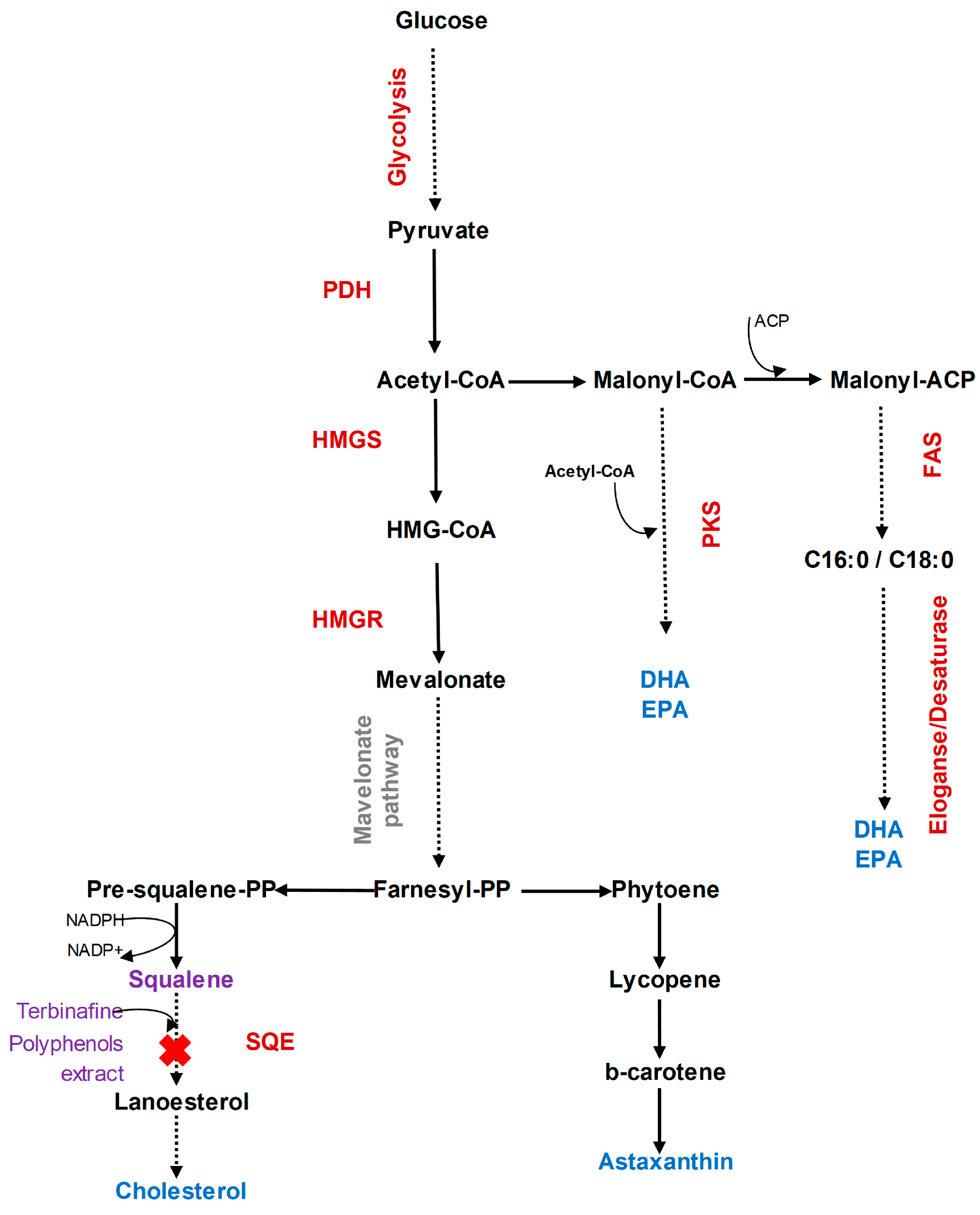
In eukaryotic microorganisms, farnesyl diphosphate, the precursor of carotenoids, squalene, and sterols, is synthesized in the mevalonate pathway (Figure 1), starting from acetyl-CoA. In oleaginous microorganisms, acetyl-CoA is produced in the reaction catalyzed by ATP citrate lyase; this cytoplasmic enzyme converts citrate into oxaloacetate and acetyl-CoA. Acetyl-CoA can also be transformed into malonyl-CoA, the substrate of fatty acid synthase (FAS), a multi-enzyme complex that produces palmitic acid (C16:0) and stearic acid (C18:0).
In the sterol and cholesterol pathway, the enzymes responsible for squalene accumulation are squalene synthase (EC 2.5.1.21) and squalene epoxidase (EC 1.14.14.17) [15]. Squalene synthase catalyzes two reactions that transform farnesyl diphosphate into presqualene diphosphate, and presqualene diphosphate into squalene. The last reaction requires NADPH as a cofactor [16,17]. In the absence of NADPH, presqualene diphosphate is accumulated. SQualene Epoxidase (SQE), also known as squalene monooxygenase, catalyzes the stereospecific conversion of squalene to 2,3(S)-oxidosqualene, the first oxygenation step in the synthesis of sterols. Inhibition of squalene epoxidase is a target for the treatment of hypercholesterolemia, cancer, and fungal infections [18], and also when the accumulation of squalene is desired.
Cells faced with low sterol/cholesterol levels respond by increasing the expression of genes coding for enzymes that stimulate their biosynthesis. One of these enzymes is 3-hydroxy-3-methylglutaryl-CoA (HMG-CoA) reductase (HMGR), which controls the rate of the mevalonate pathway [19]. This enzyme can be activated in response to stress factors, such as reactive oxygen species (ROS), UV radiation, detergents, alcohols, mechanical agitation, and osmotic and heat stress that damage cell membrane [20,21,22,23].
A non-invasive way to induce the accumulation of squalene is to inhibit the activity of squalene epoxidase, preventing squalene from being oxidized. One of the most studied inhibitors of squalene epoxidase is terbinafine, a synthetic allylamine (C21H25N) used mainly as an antifungal. Terbinafine would be a non-competitive inhibitor of squalene epoxidase [24].
The effect of the glucose and terbinafine concentration (0.1–100 mg L−1) on the production of squalene by Aurantiochytrium sp. was evaluated [25]. The authors showed that as the terbinafine concentration increased, so did the squalene content of the biomass. The maximum squalene content of the biomass was 0.53 mg g−1 when the thraustochytrid was cultivated in a medium supplemented with 100 mg L−1 of terbinafine, a content that was 1.4-fold higher than in the biomass cultivated in the medium without terbinafine.
Thraustochytrium sp. RT2316-16 is a psychrophile marine heterotrophic protist. RT2316-16 is an oleaginous microorganism able to store lipids (30–50% of its dry weight). As in other thraustochytrids [26,27], the total lipid content of the biomass depends on the growth phase, culture conditions, and culture medium’s composition [28,29,30]. The total lipids in RT2316-16 contain eicosapentaenoic acid (EPA, C20:5n3), docosahexaenoic acid (DHA, C22:6n3), carotenoids (astaxanthin and β-carotene [28]), coenzyme Q10 [29], and squalene [30]. The effect of the medium’s composition and culture conditions on squalene production by Thraustochytrium sp. RT2316-16 was evaluated in a 3.8 L bioreactor [30]. The study showed that when RT2316-16 was cultivated in a medium containing 20 g L−1 glucose, maintaining the dissolved oxygen at 20% of air saturation, the squalene concentration reached 1485 mg L−1 (the squalene content of the biomass was 218 mg g−1) after 149 h; when glycerol (20 g L−1) was used as a carbon source and dissolved oxygen was kept at 20% of air saturation, the squalene concentration and squalene content of the biomass were 875 mg L−1 and 143 mg g−1, respectively, in the same period of time.
This study aimed to determine the effect of polyphenols extracted from barley bagasse on the squalene content in Thraustochytrium sp. RT2316-16. The culture medium was also supplemented with terbinafine for a comparison. To explain the results, the expression of genes coding for two key enzymes in the mevalonate pathway was determined using real-time PCR. The expression of an alternative squalene epoxidase known to be involved in the accumulation of squalene in another thraustochytrid [31] was also determined.

2. Materials and Methods

2.1. Culture Experiments

Thraustochytrium sp. RT2316-16 isolated from samples collected at the seaside of Professor Julio Escudero Antarctic Base [28] was used. The strain was preserved in 50% (v v−1) glycerol at −18 °C and monthly subculturing. The first inoculum was cultivated in a 250 mL Erlenmeyer flask containing 100 mL of the sterile control medium (CM: 20 g L−1 glucose (Merck KGaA, Darmstadt, Germany), 6 g L−1 of yeast extract (Merck), and 0.6 g L−1 of monosodium glutamate (Merck) in 50% v v−1 of artificial seawater (ASW) diluted with distilled water) [32]. Sterile filtered (0.2 µm pore size) solutions of trace elements (24 mL L−1) and vitamins (Solution I, 3.6 mL L−1; Solution II, 3.6 mL L−1) were aseptically added to the medium. Detailed formulations of the mineral and vitamin solutions are provided in Table S1 (Supplementary Material). Next, 1 mL of the stock culture (0.006 g dry weight L−1) was added. Incubation the conditions were orbital shaking (ZHWY211C, Zhicheng, Guangzhou, China) at 150 rpm and 15 °C under dark conditions for 5 days. A second inoculum was prepared, transferring 5 mL of the first inoculum into 100 mL of sterile CM; incubation was performed under identical conditions. This second culture served as the inoculum for experimental assays.

2.2. Effect of Terbinafine and Polyphenols from Barley Bagasse on Squalene Production by Thraustochytrium sp. RT2316-16

Preliminary culture experiments showed that terbinafine (10 and 60 mg L−1) inhibited the growth of RT2316-16 when the antifungal was added at inoculation. Thus, terbinafine was added 72 h after inoculation. In these culture experiments, the highest squalene content in the biomass of RT2316-16 was obtained with a concentration of terbinafine equal to 45 mg L−1 (156 μM).
The effects of terbinafine and the polyphenols from barley bagasse were evaluated in shake flasks (Erlenmeyer flasks 250 mL) containing 100 mL of the sterile CM that were inoculated with 5 mL of the second culture (Section 2.1). Incubation was made with the same conditions described for the inoculum for 7 days. Every 24 h, two flasks were withdrawn and the biomass was harvested (4000× g, 10 min, 4 °C), washed with diluted ASW, frozen, lyophilized, and stored at −18 °C until analysis. The biomass-free broth was stored at −18 °C for analysis of the residual concentration of glucose and amino acids.
In the first set of the culture experiments, terbinafine (45 mg L−1) was added to the Erlenmeyer flasks 72 h after inoculation. In another set of experiments, the polyphenols from barley bagasse were added to the Erlenmeyer flasks 72 h after the inoculation; the extract was added to achieve a concentration of 45 mg of gallic acid-equivalent L−1. The third set of experiments consisted of Erlenmeyer flasks containing the CM (control assay).

2.3. RNA Extraction

Total RNA was isolated using TRIzol reagent according to the manufacturer’s instructions (Invitrogen, Carlsbad, CA, USA). For this, 2 mL of each culture medium was centrifuged (7000× g, 5 min, 4 °C), and the cell pellet was kept at −20 °C until the assay was performed. Cells were lysed using 1 mL of TRIzol per 250 µL of culture medium and gentle pipetting for one minute on ice; the protocol was continued from here without any modifications. Degradation and the quality of the sample was monitored on a 1% w v−1 agarose gel run at 100 mV for 30 min. Purity and integrity were verified by measuring the absorbance at 260/280 nm in a Synergy HT plate reader (BIOTEK, Instruments, Shoreline, WA, USA). The same equipment was used to calculate the RNA concentration.

2.4. Conversion of RNA to cDNA

The RNA was treated with DNase (Promega, Madison, WI, , USA) to eliminate any DNA contamination. One microliter of random primers, mainly random hexanucleotides (500 µg mL−1, Promega, USA), which bind randomly to the RNA strand, was added to perform the conversion. A conversion mix (5× M-MLV RT reaction buffer, M-MLV RT transcriptase, Rnasin, and dNTPs; all the reactants in the mix are Promega, USA) was added to the mixture. The following program was used for the PCR: 5 min, 20 °C; 45 min, 37 °C; 5 min, 95 °C; 4 °C until removal from the equipment. A PCR (MultiGene optiMAX, Tewksbury, MA, USA) was performed using 18s subunit primers (Table 1) to verify the conversion. The following program was used for PCR 2: 3 min, 95 °C; 30 cycles (1 min, 94 °C; 1 min, 61 °C; 1 min, 72 °C); 10 min, 72 °C; 4 °C until removal from the equipment.

2.5. Conventional PCR

Conventional PCR was performed to confirm or rule out the presence of genes. Five primer pairs were used, two of them as housekeeping (Ribosome-Binding ATPase (RBA) and Mitochondrial Folate Transporter (MFT)) and three pairs of primers for the gene expression of Alternative SQualene Epoxydase (AltSQE), 3-Hydroxy-3-MethylGlutaryl-CoA Synthase (HMGS), and 3-Hydroxy-3-MethylGlutaryl-CoA Reductase (HMGR). The sequences are shown in Table 1, with their respective references.
The reaction was carried out in a final volume of 20 µL, then 4 µL of cDNA synthesized in the previous step (Section 2.4) was added, and Master Mix Green (PROMEGA, San Luis Obispo, CA, USA) was used according to the manufacturer’s specifications. The amplification results were verified on a 1% w v−1 agarose gel run at 100 mV, 30 min.

2.6. qRT-PCR

The genes of interest were validated and quantified relatively by real-time PCR. Total RNA was obtained and treated according to the steps described in Section 2.5. For this 10 µL of treated RNA was used for cDNA synthesis using M-MLV reverse transcriptase (PROMEGA, USA). qRT-PCR was performed on the Step One Plus PCR System (Applied Biosystem, Foster City, CA, USA), and the reaction was carried out in a final volume of 10 µL using 5× HOT FIREPol EvaGreen qPCR Mix Plus (ROX) according to the manufacturer’s protocols (Solis Biodyne, Tartu, Estonia). The program used was as follows: 15 min, 95 °C; 45 cycles (15 s, 95 °C; 20 s, 60 °C; 20 s, 72 °C); 4 °C until removal from the equipment. The melting curve was performed at the end of each reaction to confirm the specificity of each amplification. All reactions were performed in triplicate.

2.7. Concentration of Biomass

The dry weight biomass concentration (x g L−1) was determined gravimetrically. A culture sample (10 mL) was centrifuged (2057× g, 10 min), and the cell pellet was dried to constant weight at 60 °C. The concentration of lipid-free biomass (Xlf, g L−1) was calculated using the following equation:
X l f = x 1 l 100
In the above equation, l is the mass percentage of total lipids in the dry biomass. The concentration of total lipids (TL g L−1) was calculated using the following equation:
T L = x   l 100

2.8. Concentration of Glucose

The residual concentration of glucose in the biomass-free culture samples was measured using the reducing sugar method with 3,5-dinitrosalicylic acid [35].

2.9. Extraction of Total Lipids and Determination of the Fatty Acid Profile

The dry biomass sample (50 mg) was extracted with 9.5 mL of the solvent mixture (chloroform/methanol/phosphate buffer (50 mM, pH 7.4) at 2.5/5.0/2.0 v/v/v) for 1 h under orbital agitation (150 rpm) [36]. The suspension was poured into a separatory funnel that contained 2.5 mL of chloroform, mixed, added to 2.5 mL of the phosphate buffer, mixed, and allowed to separate for 1 h. The organic phase was recovered, and the chloroform was evaporated in a fume hood. The weighed residue corresponded to the total lipids in the biomass sample. Fatty acids in the total lipids were methylated using KOH in methanol (2 M). Fatty acid methyl esters (FAMEs) were recovered with petroleum ether (1/10 by volume) after centrifugation (10,000× g, 4 °C, 5 min), and the solvent was evaporated in a fume hood. The profile of FAMEs was determined as described by Leyton et al., [37] using a gas chromatograph (GC-2010 Plus; Shimadzu, Kyoto, Japan).

2.10. Squalene Content in the Biomass

The squalene content was measured in the total lipids extracted from the biomass by gas chromatography as previously reported [38]. Serial dilutions of a standard solution of squalene (0 to 32.9 mg mL−1; Sigma-Aldrich, St. Louis, MO, USA) were prepared in chloroform. The calibration curve was linear (R2 = 0.993) in the concentration range specified above.

2.11. Analysis of the Residual Concentration of Amino Acids

The concentration of amino acids was determined using the O-phthaldialdehyde method [39]. The reaction solution was prepared with O-phthaladehyde (OPA), 2-mercaptoethanol, and a 50 mM carbonate buffer (pH 10.5). Next, 1 mL of the reaction solution was mixed with 100 µL of the sample and incubated for 1 to 2 min at 25 °C, and the absorbance at 340 nm was measured. A calibration curve built with lysine (concentrations between 0 and 1 g L−1) was used.

2.12. Extraction and Quantification of Polyphenols from Barley Bagasse

Acetone at 60% v v−1 (diluted in distilled water) was used as the solvent for the extraction of phenolic compounds from a barley bagasse (Maltexco S.A., Temuco, Chile). For the extractions, 1 g of dry barley bagasse was mixed with 20 mL of the solvent in a 100 mL Erlenmeyer flask; extraction was performed for 30 min at 150 rpm and 60 °C. The extract was recovered by filtration (Whatman N1 filter paper, Sigma Aldrich, St. Louis, MO, USA), and the acetone was evaporated in a rotary evaporator (50 °C, DLAB, Beijing, China). The content of polyphenols in the extract was determined with Folin–Ciocalteu reagent [40]. Briefly, 100 µL of the sample was mixed with 400 µL Na2CO3 (75% w v−1 in distilled water) and 500 µL of a 0.2 N Folin–Ciocalteau solution (Sigma Aldrich, USA; in distilled water). The mixture was incubated for 15 min at 45 °C, and the absorbance was measured at 765 mm. A calibration curve built with gallic acid (Merck, Germany) solutions having concentrations in the range of 0 to 100 mg mL−1 was used. The polyphenol extract concentration was reported as gallic acid equivalent (GA-eq) per L.

2.13. Statistical Analysis

The assays were performed in triplicate. ANOVA and Tukey’s test at the 5% level of confidence was used to establish the significance of the effects using Minitab V17 Statistical Software (Minitab LLC, State College, PA, USA).

2.14. Kinetic Parameters

The specific growth rate of the lipid-free biomass (rX), the specific synthesis rate of total lipids (rL) and squalene (rSQ), and the specific consumption rate of glucose (−rG) and amino acids (−rA) were estimated from the slope of the curves fitted to the experimental data. The following relationship was used to fit the experimental data (concentration of lipid-free biomass, total lipids, squalene, glucose and amino acids):
y = C 1 + C 2 1 + e t C 3 C 4
For each dataset, parameters C i , i = 1 , , 4 were determined by minimizing the sum of the squared residuals using Microsoft Excel Solver. The values are shown in Table S2 (Supplementary Material). The specific rate (synthesis or consumption) of each y-variable was estimated from the following:
r y = 1 X l f d y d t

3. Results

3.1. Effect of Terbinafine and Polyphenols from Barley Bagasse on the Biomass Growth and Squalene Content in Thraustochytrium sp. RT2316-16

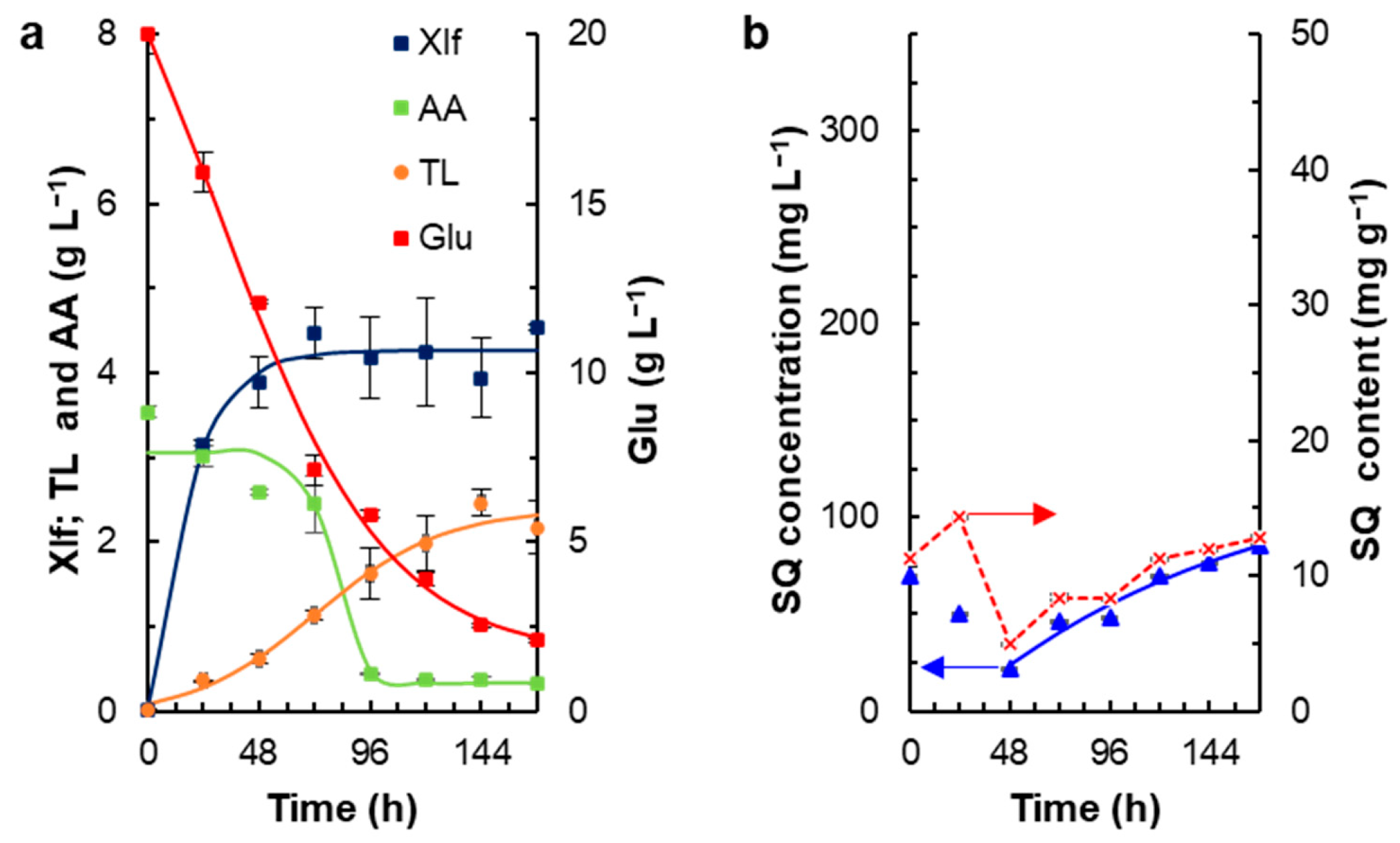
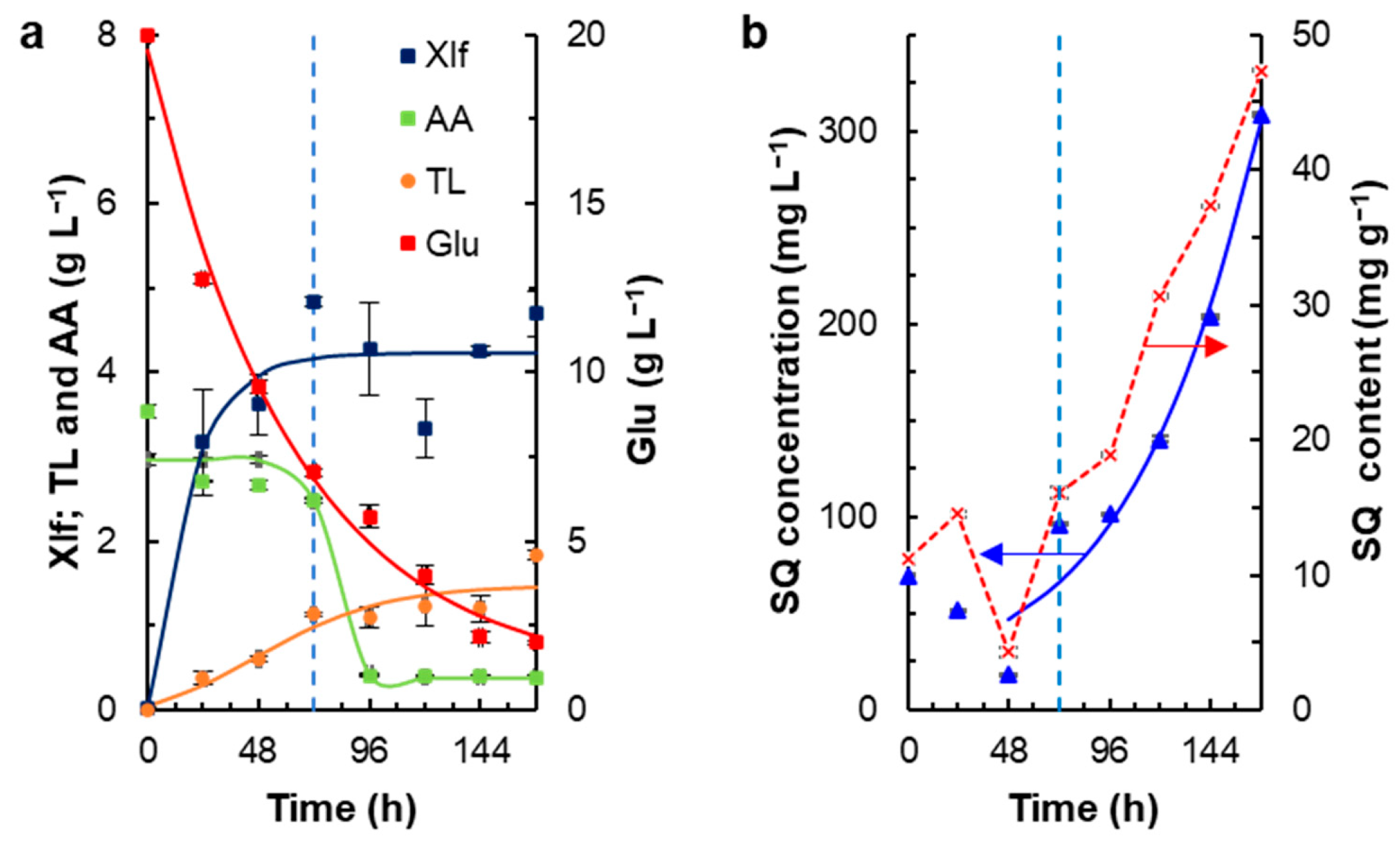
The time profiles of the concentrations of the lipid-free biomass (Xlf), total lipids (TLs), residual glucose (Glu), and the residual concentration of amino acids in the control culture experiment are shown in Figure 2. The maximum concentration of the lipid-free biomass and total lipids was 4.5 ± 0.1 g L−1 (168 h) and 2.5 ± 0.3 g L−1 (144 h), respectively; the glucose yield into lipid-free biomass was 0.25 g g−1. After 168 h, 90.6% of the initial glucose and 90.1% of the initial amino acids were consumed by RT2316-16. During the first 48 h, the concentration of squalene decreased from 70.0 to 22.3 mg L−1 and then increased (72 h onwards), reaching a maximum concentration of 85.6 ± 0.2 mg L−1. The biomass with the highest squalene content (12.8 ± 0.1 mg g−1) was that harvested at the end of the culture experiment (168 h).
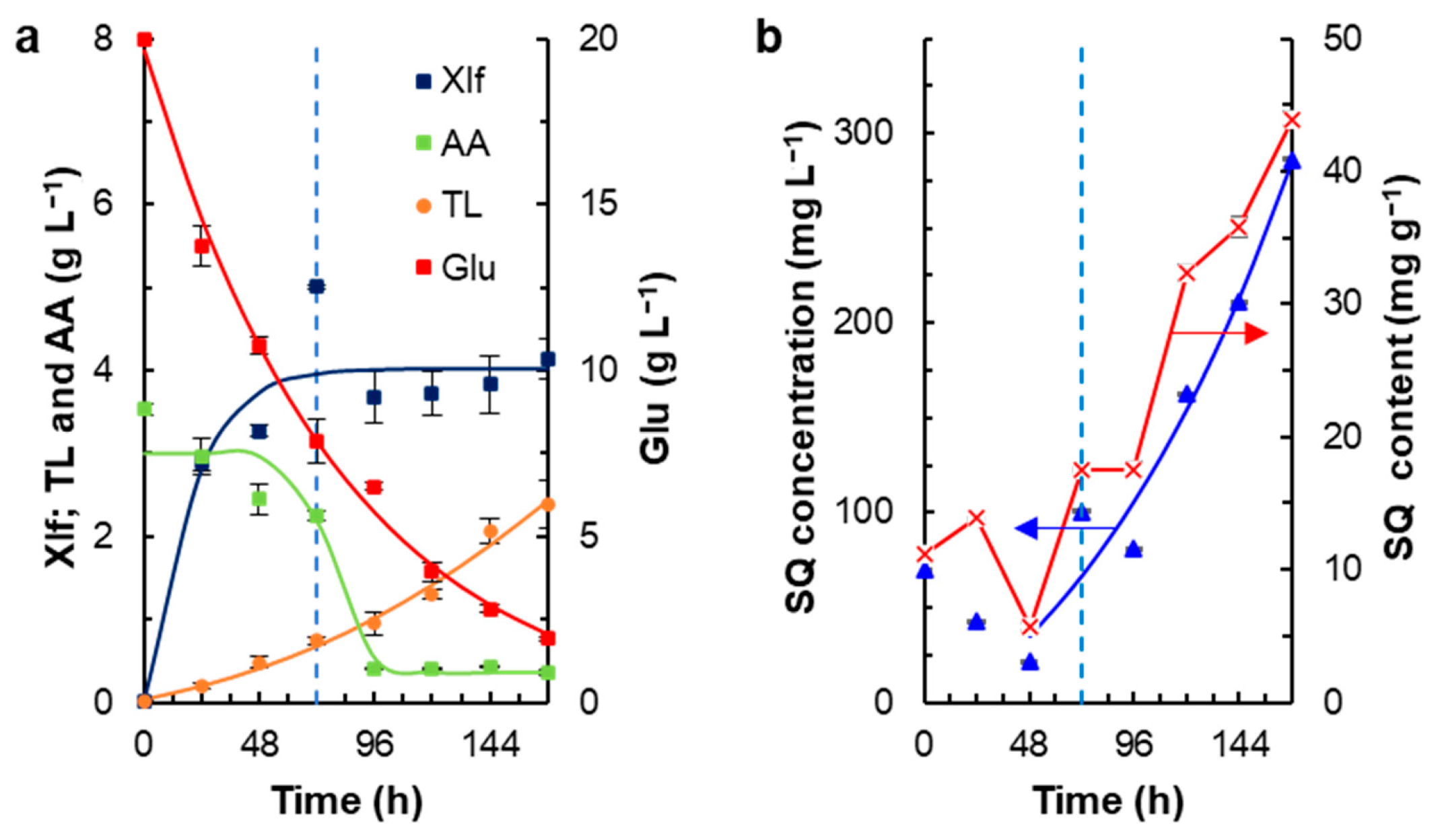
The effect of terbinafine on the biomass growth and squalene content of the biomass of RT2316-16 was evaluated by adding the antifungal 72 h after inoculation to reach a concentration of 45 mg L−1 (Figure 3a). Under these culture conditions, terbinafine had no significant effect (p > 0.05) on the final concentration of the lipid-free biomass (4.7 ± 0.3 g L−1; 168 h) compared with the control (Figure 2a); terbinafine had no effect on the glucose yield into lipid-free biomass (0.25 g g−1). However, the concentration of total lipids (1.8 ± 0.1 g L−1) was 30% lower than the concentration in the control experiment (Figure 2a). After 168 h, 90.0% and 88.9% of the initial glucose and amino acids were consumed.
In this culture experiment, the concentration of squalene (Figure 3b) decreased to 18.1 ± 0.1 mg L−1 after 48 h; however, after the addition of terbinafine (72 h), the squalene concentration started to increase, reaching a final concentration (308.7 ± 0.8 mg L−1) that was 3.6-fold higher than the concentration in the control experiment (Figure 2b). The increase in the squalene concentration was explained by the enhanced accumulation of squalene in the biomass (Figure 3b), which was 3.7-fold higher than in the biomass cultivated without the antifungal (Figure 2b).
In the culture experiment supplemented with the polyphenols from barley bagasse to reach a concentration of 45 mg GA-eq L−1 in the culture medium 72 h after inoculation, the final concentrations of the lipid-free biomass and total lipids (Figure 4a) were not significantly different (p > 0.05) from the concentrations in the control experiment (Figure 2a). In this culture experiment, the yield of glucose into lipid-free biomass was lower (0.23 g g−1) than in the control experiment. The polyphenols from barley bagasse did not affect the consumption of glucose and amino acids (Figure 4a); 90.3% and 88.5% of the initial glucose and amino acids, respectively, were consumed. After the addition of the polyphenols, the squalene concentration started to increase (Figure 4b), reaching a final value equal to 286.5 ± 0.1 mg L−1, which was 7% lower than the concentration obtained when the culture medium was supplemented with terbinafine (Figure 3b) and 3.4-fold higher than the concentration in the control medium (Figure 2b).
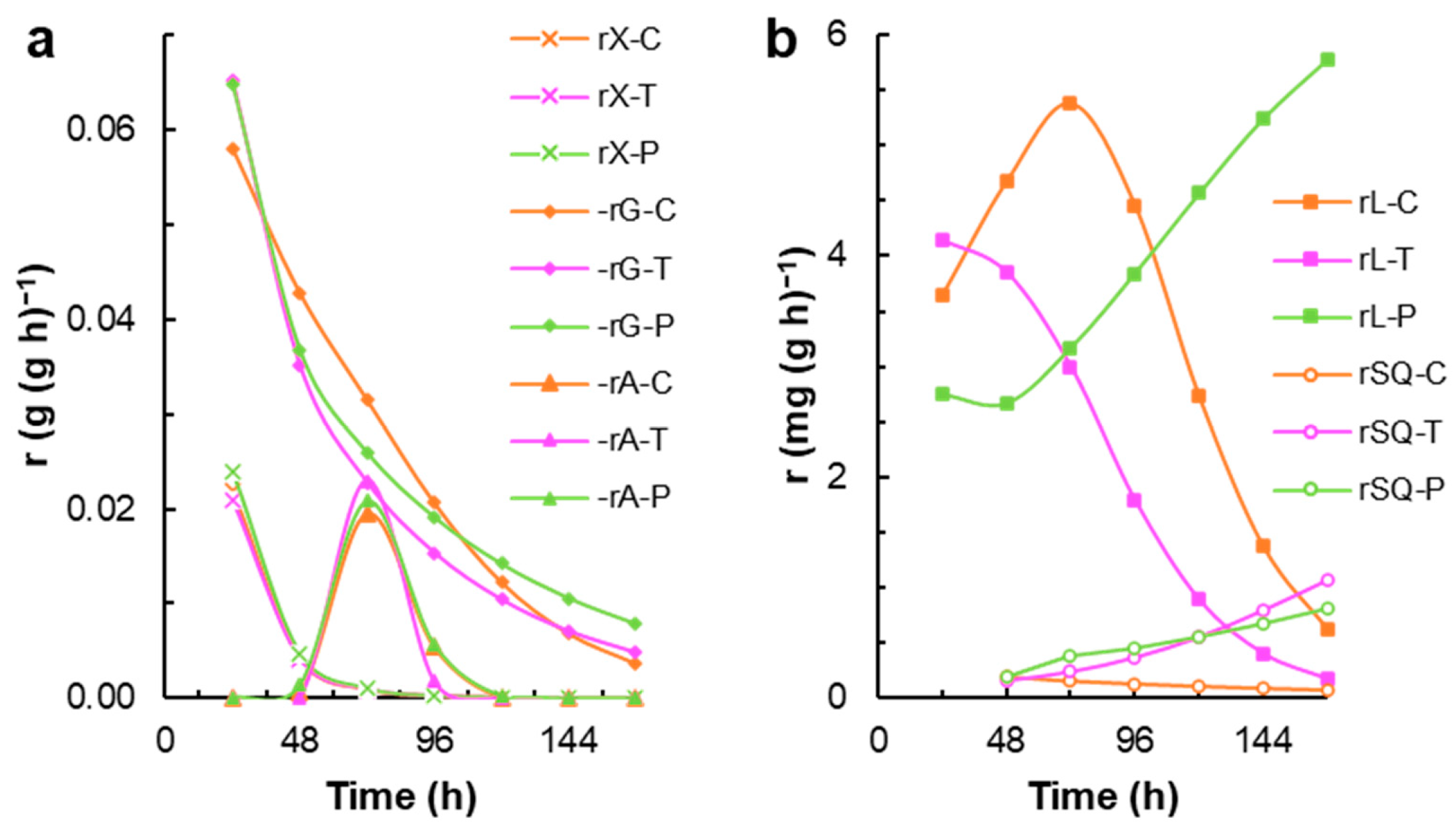
To determine the effect of terbinafine and the polyphenols on the kinetics of growth of RT2316-16, the specific growth rate of the lipid-free biomass (rX) was estimated from the non-linear curve fitted to the experimental data (Section 2.14); the specific synthesis rate of total lipids (rL) and squalene (rSQ) and the specific consumption rate of glucose (–rG) and amino acids (–rA) were also determined. The results in Figure 5 show minor differences in the specific growth rate of RT2316-16 in the control culture and the culture supplemented with terbinafine and the polyphenols at 24 h (0.021–0.024 h−1) (Figure 5a). In the three culture experiments, the highest specific consumption rate of amino acids (0.019–0.023 g (g h)−1) was achieved after 72 h. Between 48 and 96 h, the specific rate at which RT2316-16 consumed glucose in the control culture (0.043–0.021 g (g h)−1) was higher than in the culture supplemented with the polyphenols (0.037–0.019 g (g h)−1) and terbinafine (0.035–0.015 g (g h)−1) (Figure 5a). The specific rate at which the total lipids were synthesized presented important changes during the culture period and between the treatments (Figure 5b). In the control culture and in the culture supplemented with terbinafine, rL decreased after 72 and 24 h, respectively. On the contrary, in the culture supplemented with the polyphenols, the specific synthesis rate of total lipids increased from 3.2 (at 48) to 5.8 mg (g h)−1 (at 168 h). The specific rate of squalene synthesis decreased in the control culture, while it increased in the culture supplemented with terbinafine and the polyphenols (Figure 5b); after 168 h, rSQ reached values of 0.1, 1.1 and 0.8 mg (g h)−1, respectively.

3.2. Effect of Terbinafine and the Polyphenols from Barley Bagasse on the Fatty Acid Composition of the Total Lipids in Thraustochytrium sp. RT2316-16

The concentration of fatty acids produced by RT2316-16 changed with time and with the addition of terbinafine and polyphenols (Tables S3–S5 in the Supplementary Material). The main fatty acids in the total lipids were palmitic acid (C16:0), stearic acid (C18:0), oleic acid (C18:1cis), eicosapentaenoic acid (EPA, C20:5), nervonic acid (C24:1), and docosahexaenoic acid (DHA, C22:6). At the end of the culture period (168 h), the six fatty acids represented 82.6% of the total fatty acids (1164.9 mg L−1) in the control medium, 87.5% of the total fatty acids (882.9 mg L−1) in the medium supplemented with terbinafine, and 79.9% of the total fatty acids (1180.6 mg L−1) in the medium supplemented with the polyphenols. On average, total fatty acids represented 50.6 ± 2.9% of the total lipids at 168 h, while squalene was, on average, 10.9 ± 6.5% of the total lipids.
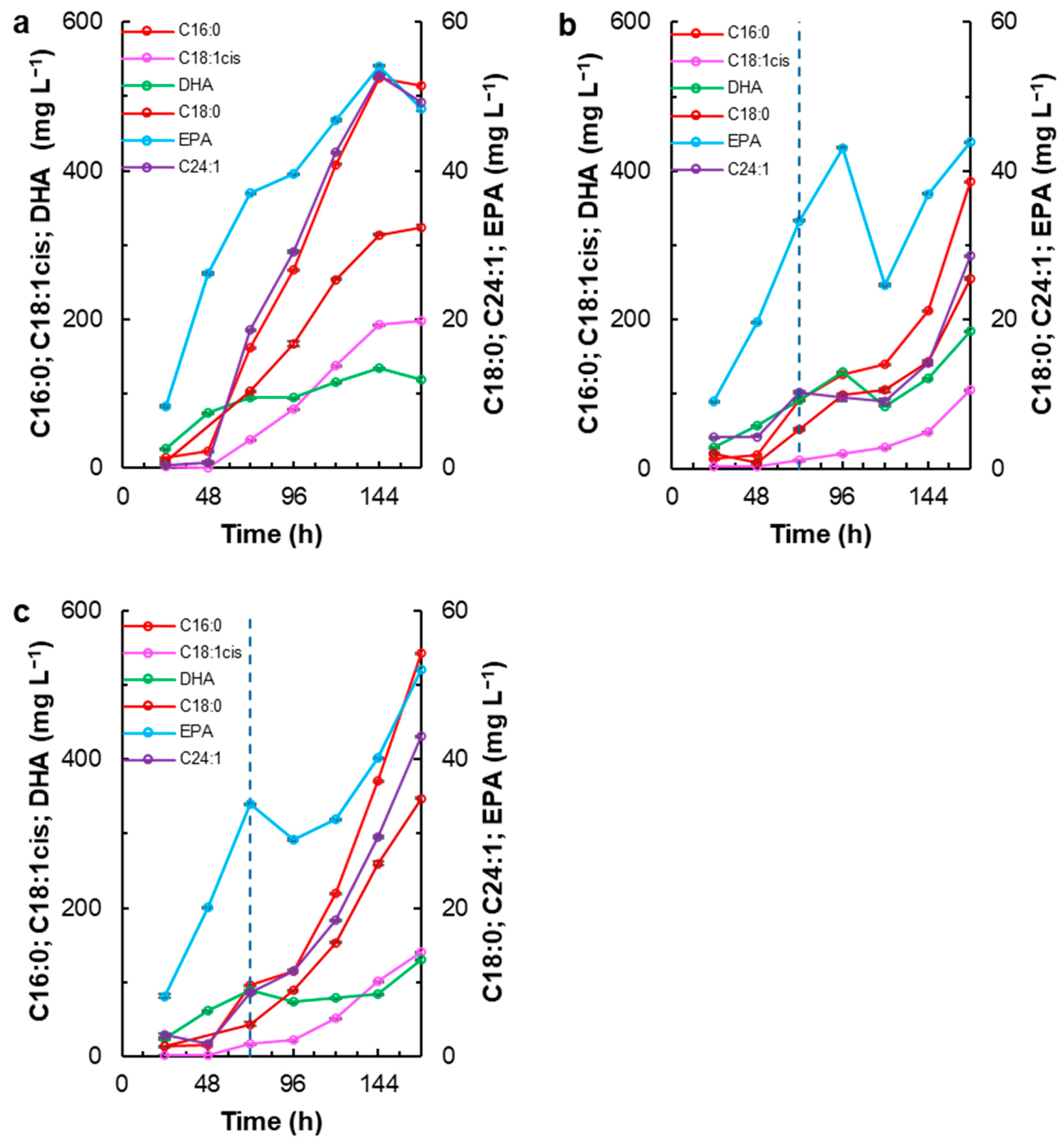
Figure 6a shows the time profile of the concentrations of the six main fatty acids produced by RT2316-16 cultivated in the control medium; the concentration of palmitic acid, oleic acid and nervonic acid started to increase after 48 h. The highest concentration of C16:0 was 525.2 ± 0.3 mg L−1 at 144 h. The EPA concentration increased throughout the culture reaching 54.1 ± 0.1 mg L−1 after 144 h. At this time, the concentration of DHA reached the maximum, which was equal to 135.2 ± 0.1 mg L−1.
The concentration of main fatty acids in the culture experiment carried out to test the effect of terbinafine (Figure 6b) presented some differences compared with the control (Figure 6a) even before 72 h, the time at which the antifungal was added. At this time, the concentration of C16:0 was 57% lower than in the control experiment (Figure 6a). The addition of terbinafine had a negative effect on the concentration of EPA and DHA, which nonetheless increased after 144 h. In this culture experiment, the maximum concentration of EPA (43.8 ± 0.1 mg L−1) was 20% lower than the concentration obtained in the control experiment, while the final concentration of DHA (184.64 ± 0.16 mg L−1) was 1.5-fold higher than in the control experiment (Figure 6a).
Minor differences in the concentration of the main fatty acids in the culture experiments carried out to test the effect of polyphenols from barley bagasse (Figure 6c) and terbinafine (Figure 6b) before 72 h, the time at which the cultures were supplemented with the antifungal or the polyphenols, were observed. After the addition of the polyphenols, only the concentration of EPA and DHA decreased (Figure 6b). The final concentrations of C16:0, C18:0, C18:1, C24:1, EPA, and DHA were 542.4 ± 0.4, 34.8 ± 0.1, 140.4 ± 0.1, 43.1 ± 0.11, 52.1 ± 0.1, and 130.3 ± 0.1 mg L−1, respectively. Polyphenols contributed to an important increase (1.7-fold) in the final concentration of C16:0 and moderate increases in the concentrations of C18:0, EPA, and DHA. On the contrary, the concentrations of the monounsaturated fatty acids, C18:1 and C24:1, were negatively affected by the polyphenols from barley bagasse (Figure 6c).

3.3. Relative Expression of Genes in the Mevalonate Pathway in Thraustochytrium sp. RT2316-16

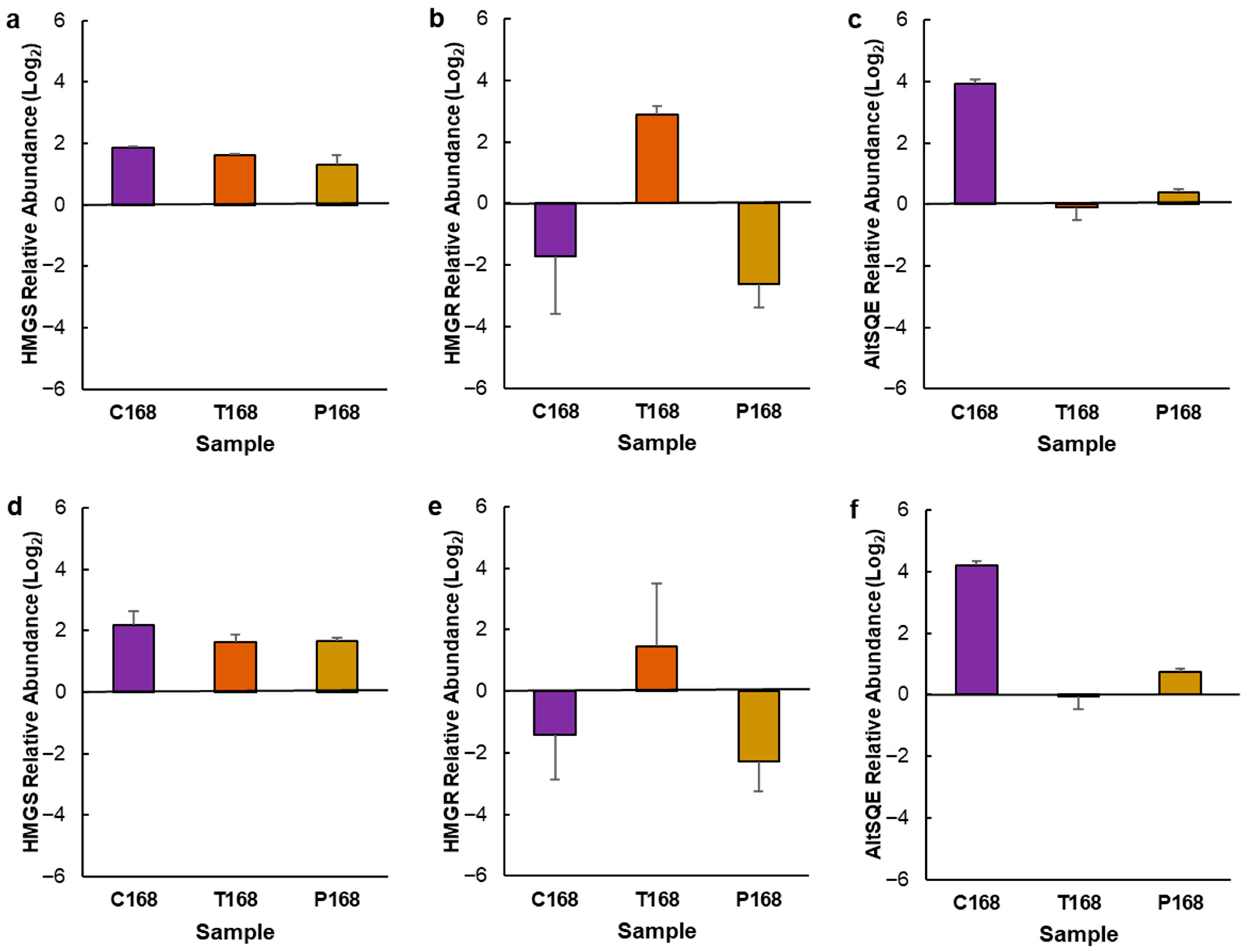
The relative expression (48 h) of two genes coding enzymes in the mevalonate pathway (HMGS and HMGR) 96 h after the addition of terbinafine or polyphenols from barley baggase was determined (Figure 7). Transcriptional analysis revealed that HMGS was significantly upregulated in the control experiment (C168), the culture supplemented with terbinafine (T168), and the culture supplemented with the polyphenols (P168); the differences among the samples were not significant (p > 0.05). The same result was obtained with the two reference genes (MTF and RBA).
The gene coding for HMGR was downregulated in the control treatment (C168) and under the treatment with the polyphenols from barley bagasse (P168), whereas under the terbinafine treatment, the gene was upregulated (Figure 7b,e). The relative expression of the gene coding for the alternative squalene epoxidase (AltSQE) showed a trend opposite to that of HMGR; AltSQE was upregulated in the control treatment and under the polyphenol treatment, whereas it was not regulated under the terbinafine treatment (Figure 7c,f). These results were not affected by the genes used as references.

4. Discussion

4.1. Terbinafine and Polyphenols from Barley Bagasse Enhancers of the Squalene Content in Thraustochytrium sp. RT2316-16

The growth of Thraustochytrium sp. RT2316-16 is consistent with other studies that have used the same growth medium [30], in which the average concentration of the lipid-free biomass was close to 5 g L−1. Supplementing the culture medium with either terbinafine or the polyphenols from barley bagasse after 72 h did not affect the consumption of glucose or amino acids provided in the yeast extract. This was confirmed by the small differences in the specific rate of the lipid-free biomass and the specific consumption rate of amino acids (Figure 5a). After 72 h, the concentration of the lipid-free biomass reached the maximum value and remained without significant changes until the end of the culture period. Nevertheless, the total biomass concentration (lipid-free biomass plus total lipids) was still increasing due to the synthesis of total lipids until 144 h (Figure 2a). The addition of polyphenols had no effect on the total lipid concentration. On the contrary, after the addition of terbinafine, the concentration of total lipids remained nearly constant in time. The specific rate at which RT2316-16 synthesized total lipids was affected differently by terbinafine and the polyphenols (Figure 5b). Fan et al. [25] demonstrated that terbinafine added at the start of a culture of Aurantiochytrium mangrovei FB3 had a negative effect on biomass growth, and as the concentrations of terbinafine increased (0.1 to 100 mg L−1), the specific growth rate decreased. These results were explained because terbinafine inhibits the synthesis of cholesterol, and new cells, if formed, contain fragile membranes that eventually break down due to agitation and/or aeration [41,42]. Moreover, terbinafine contributes to the production of reactive oxygen species (ROS), another source of cell damage [43]. In terbinafine-treated fungi, ROS are induced in the mitochondria, triggering lipid peroxidation; during lipid peroxidation, lipid radicals are formed, which, if not controlled by the cellular antioxidant system (enzymes and metabolites), damage polyunsaturated fatty acids in the cell membranes. ROS are attributed to the electron transfer through respiratory Complex I [44]. Under conditions that alter the properties of the inner mitochondrial membrane, the autoxidation of the ubisemiquinone radical anion may promote the production of superoxide [45] that can be dismutated into hydrogen peroxide [46].
The results showed that the squalene content of the biomass decreases during the first 48 h of culture, the period during which RT2316-16 grew rapidly; as the nutrients were depleted and the culture entered the stationary growth phase, the squalene content of the biomass increased to reach a value close to the initial one (Figure 2b).
Terbinafine was able to produce a biomass of RT2316-16 with a content of squalene that was 3.6-fold higher than the content in the biomass cultivated without the antifungal. Terbinafine, a synthetic compound used mainly as a fungicide, has the capability to inhibit squalene epoxidase, halting the synthesis of cholesterol and sterols [47]. Thus, in fungi treated with terbinafine, squalene, the substrate of squalene epoxidase, accumulates because it has no other metabolic function. One of the side-effects of terbinafine treatment in RT2316-16 was the reduction in the concentration of total lipids compared with the control (Figure 3a) due to decreases in the specific synthesis rate of total lipids (Figure 5b).
The polyphenols extracted from barley bagasse (45 mg GA-eq L−1), added 72 h after inoculation, also increased the content of squalene in the biomass but, in this case, without affecting the concentration of total lipids. According to Zhang et al. [48] and Gangopadhyay et al. [49], barley bagasse contains catechin and catechin dihexoside, organic acids (caffeic, coumaric, ferulic, syringic, vanillic), quercetin, isoquercetin, sesamol, and cyanindins, among other polyphenols. These polyphenols could exert antioxidant activities that might explain the small increase in the content of polyunsaturated fatty acids (EPA and DHA) that are prone to oxidation. Catechin has been reported as a polyphenol with squalene epoxidase inhibitory activity [50,51]. On the other hand, caffeic acid [52] and coumaric acid [53] are associated with lipid regulation; both organic acids activate AMP kinases (AMPKs) that decrease lipogenesis, mainly affecting the synthesis of cholesterol and triglycerides.

4.2. Fatty Acid Profile of the Lipids Produced by Thraustochytrium sp. RT2316-16

A unique feature of RT2316-16 is that it produces EPA and DHA simultaneously; the percentages of these fatty acids presented important changes during the culture period (4–20% and 10–57% of the total fatty acids, respectively; average EPA/DHA mass ratio equal to 0.38). The EPA and DHA content in fish oils, the main source of these fatty acids, varies among fish; the EPA and DHA content in a crude fish oil was reported to be in the range of 6.02–9.97% and 17.00–20.83%, respectively [54]. The polyphenols from barley bagasse used for increasing the squalene content in the biomass of RT2316-16 did not affect the concentration of EPA and DHA (Figure 6a,c). Polyphenols can be used to enhance lipogenesis in microorganisms; tannic acid, one of the polyphenols in barley (10 to 12 mg catechin equivalents/100 g; [55]), was shown to increase the lipid and polyunsaturated fatty acid content in the microalga Phaeodactylum tricornutum through an unknown mechanism that alters the expression of several genes [56]. Another plausive explanation of the slight increase in the concentration of EPA and DHA in the culture supplemented with the polyphenols is the antioxidant activity of the extract [57,58], which might prevent the oxidizing of polyunsaturated fatty acids.
Terbinafine had a negative effect on the concentrations of main fatty acids, with DHA being the exception (Figure 6b). Because the concentration of fatty acids is determined by the concentration of the biomass and the fatty acid composition of the total lipids, the different contributions must be considered. Regarding the fatty acids, a low content of saturated fatty acids (C16:0 and C18:0) in the biomass would suggest an effect of terbinafine on the activity of the fatty acid synthase and/or altered availability of the substrate (malonyl-CoA) and nicotinamide adenine dinucleotide phosphate (NADPH). In microorganisms that synthesize the long chain polyunsaturated fatty acids through the action of elongases and desaturases (the aerobic pathway), as has been reported for some thraustochytrids [59], an increased activity of rate limiting steps in the aerobic pathway can explain the reduced content of C16:0 and C18:0 and the increased content of DHA. Reports on the effect of halted sterol synthesis in microorganisms that use the aerobic pathway for the synthesis of polyunsaturated fatty acids were not found.

4.3. Relative Expression of Some Genes in the Mevalonate and Sterol/Cholesterol Pathway in Thraustochytrium sp. RT2316-16

HMG-CoA synthase (HMGS) catalyzes the first committed step in the mevalonate pathway in which the building block of isoprenoids is synthesized in eukaryotes, including a related thraustochytrid [31]. In RT2316-16, the expression of HMGS was upregulated towards the end of the culture (168 h), and the same behavior was observed under the treatments with terbinafine and the polyphenols from barley bagasse. The second reaction in the mevalonate pathway transforms HMG-CoA into mevalonate due to the activity of HMG-CoA reductase (HMGR); this reaction is generally considered as a limiting step in the mevalonate pathway. The treatments had a different effect on the relative expression of the HMGR gene. The upregulation of the HMGR gene under the terbinafine treatment could be a response to compensate for the lack of sterol/cholesterol expected due to the important increase in the squalene content of the biomass (Figure 3b). A different response was reported in Schizochytrium sp. S31 cultivated with terbinafine [31]; in that study, the transcriptional analysis did not show any significant change in the expression of the HMGR gene, possibly because a low concentration of terbinafine (50 μM = 14.6 mg L−1) was used [31]. Downregulation of the HMGR gene in RT2316-16 cells from the control and the polyphenol treatments may be due to the growth phase; after 168 h, the lipid-free biomass has ceased to grow and thus, sterol/cholesterol are not required (Figure 2a and Figure 4a). These results show that the important increase in the content of squalene in RT2316-16 due to the polyphenols occurs through a mechanism that is different from that exerted by statins, drugs that inhibit the activity of HMGR [60]. In the terbinafine treatment, RT2316-16 resumed its growth 48 h after the antifungal was added (Figure 3a). To do this, after the cell detects a decrease in the content of sterol/cholesterol, unknown signals trigger the expression of the HMGR gene. In other cells, the regulation of the HMGR gene is carried out through proteins that bind to sterol regulatory elements (SREBPs), a conserved family of transcription factors [61].
In this work, the expression of a gene coding for an Alternative SQualene Epoxidase (AltSQE) in RT2316-16 was evaluated. AltSQE is part of the fatty acid hydroxylase superfamily [31,62] and has been described in other eukaryotic species, including microalgae, diatoms, and Schizochytrium sp. [31]. In the Schizochytrium genome, no squalene epoxidase orthologs were identified and one candidate AltSQE was identified [31]. The upregulation of the AltSQE gene in RT2316-16 under the control treatment explains why the squalene content in the biomass remained at a low level (Figure 2b). The AltSQE gene was also upregulated under the treatment with the polyphenols from barley bagasse, although to a significantly lower level (p < 0.05) than in the control treatment. It is possible that the sterols are required for the accumulation of total lipids that, in this case, still occurred during the late growth phase (Figure 5b). The terbinafine treatment had no effect on the relative expression of the AltSQE gene in RT2316-16. This behavior might be related to the insensitivity of AltSQE to terbinafine [62].

5. Conclusions

The polyphenol extract from barley bagasse acts as an effective enhancer of squalene accumulation in the biomass of Thraustochytrium sp. RT2316-16 when it is added at the late growth phase. The squalene content of the biomass increased by more than threefold compared with the control, without affecting the concentration of lipid-free biomass or the total lipid content of the biomass. The effect of the polyphenol extract on the squalene content in RT2316-16 was similar to that exerted by terbinafine.
Under the culture conditions evaluated, RT2316-16 expresses a gene encoding an Alternative SQualene Epoxidase (AltSQE), which likely accounts for the low squalene content in the biomass cultivated without terbinafine and the polyphenols. In RT2316-16, the expression of the gene encoding HMGR responds differently to terbinafine and the polyphenols.

Supplementary Materials

The following supporting information can be downloaded at https://www.mdpi.com/article/10.3390/fermentation12010063/s1. Table S1: Composition of the vitamin solutions (Vitamins I and Vitamins II) and the solution of mineral salts used for the growth of Thraustochytrium sp. RT2316-16. Table S2: Parameters in the relationship (Equation (3)) used to fit the experimental data (concentrations of lipid-free biomass, Xlf; glucose, Glu; amino acids, AA; total lipids, TL; squalene, SQ) that were determined by minimizing the sum of the squared residuals using Microsoft Excel Solver. Table S3: Concentration of fatty acids (mg FA L−1) in the culture of Thraustochytrium sp. RT2316-16 grown in the control medium that contained glucose (20 g L−1), yeast extract (6 g L−1), and monosodium glutamate (0.6 g L−1). Table S4: Concentration of fatty acids (mg FA L−1) in the culture of Thraustochytrium sp. RT2316-16 grown in the control medium that contained glucose (20 g L−1), yeast extract (6 g L−1), and monosodium glutamate (0.6 g L−1). After 72 h, terbinafine was added to the culture to reach a concentration of 45 mg L−1. Table S5: Concentration of fatty acids (mg FA L−1) in the culture of Thraustochytrium sp. RT2316-16 grown in the control medium that contained glucose (20 g L−1), yeast extract (6 g L−1), and monosodium glutamate (0.6 g L−1). After 72 h, polyphenols from barley bagasse were added to the culture to reach a concentration of 45 mg GA-eq L−1.

Author Contributions

Conceptualization, P.P. and C.S.; methodology, P.P., J.I., and C.S.; formal analysis, P.P. and J.I.; investigation, P.P., J.I., and C.S.; writing—original draft preparation, P.P.; writing—review and editing, C.S.; supervision, C.S.; funding acquisition, C.S. and P.P. All authors have read and agreed to the published version of the manuscript.

Funding

This research was funded by ANID doctoral grant 21200659, the Centre for Biotechnology and Bioengineering (CeBiB) CEBIB AFB240001.

Institutional Review Board Statement

Not applicable.

Informed Consent Statement

Not applicable.

Data Availability Statement

The original contributions presented in this study are included in the article and Supplementary Materials. Further inquiries can be directed to the corresponding author.

Conflicts of Interest

The authors declare no conflicts of interest.

References

  1. Huang, Z.R.; Lin, Y.K.; Fang, J.Y. Biological and pharmacological activities of squalene and related compounds: Potential uses in cosmetic dermatology. Molecules 2009, 14, 540–554. [Google Scholar] [CrossRef]
  2. Kim, S.K.; Karadeniz, F. Biological importance and applications of squalene and squalane. Adv. Food Nutr. Res. 2012, 65, 223–233. [Google Scholar] [CrossRef]
  3. Zhu, J.; Wang, Y.; Zhu, K.; Zhang, C. Advances in understanding the role of squalene epoxidase in cancer prognosis and resistance. Mol. Biol. Rep. 2025, 52, 162. [Google Scholar] [CrossRef]
  4. Ahmed, B.S.; Mhammad, H. Squalene Exploring Its Vital Roles in Vaccine Production, Skincare, Cholesterol Metabolism, Anti-Cancer Strategies, Cardiovascular Health, and Antioxidant Potency. Bull. Pharm. Sci. Assiut Univ. 2024, 47, 437–448. [Google Scholar] [CrossRef]
  5. Ibrahim, N.I.; Mohamed, M.I. Interdependence of anti-inflammatory and antioxidant properties of squalene–implication for cardiovascular health. Life 2021, 11, 103. [Google Scholar] [CrossRef]
  6. Grand View Research, Inc. Squalene Market Size and Share|Industry Report, 2030. Grand View Research. Available online: https://www.grandviewresearch.com/industry-analysis/squalene-market (accessed on 8 January 2026).
  7. Deprez, P.P.; Volkman, J.K.; Davenport, S.R.B. Squalene Content and Neutral Lipid Composition of Livers from Deep-sea Sharks Caught in Tasmanian Waters. Aust. J. Mar. Freshwater Res. 1990, 41, 375–387. [Google Scholar] [CrossRef]
  8. Hernández, M.L.; Muñoz-Ocaña, C.; Posada, P.; Sicardo, M.D.; Hornero-Méndez, D.; Gómez-Coca, R.B.; Belaj, A.; Moreda, W.; Martínez-Rivas, J.M. Functional Characterization of Four Olive Squalene Synthases with Respect to the Squalene Content of the Virgin Olive Oil. J. Agric. Food Chem. 2023, 71, 15701–15712. [Google Scholar] [CrossRef] [PubMed]
  9. Srivastava, S.; Sreerama, Y.N.; Dharmaraj, U. Effect of processing on squalene content of grain amaranth fractions. J. Cereal Sci. 2021, 100, 103218. [Google Scholar] [CrossRef]
  10. Chabrol, R. The Hideous Price of Beauty. An Investigation into the Market of Deep-Sea Shark Liver Oil. Bloom Association. 2012. Available online: https://www.google.com/url?sa=t&source=web&rct=j&opi=89978449&url=https://www.bloomassociation.org/en/wp-content/uploads/2013/10/ENG_Squalene_4-pager.pdf&ved=2ahUKEwichorB-5iSAxX2mSYFHXp3GgYQFnoECCQQAQ&usg=AOvVaw1WtxmXQy2dRtbJGq9Q3iVW (accessed on 18 January 2026).
  11. DataVagyanik. Squalane (Hydrogenated Squalene) Market Size, Production, Price, Market Share, Import vs Export, and Top Latest Trends, Till 2035. DataVagyanik. 2025. Available online: https://datavagyanik.com/reports/squalane-hydrogenated-squalene-market-size-production-sales-average-product-price-market-share-import-vs-export (accessed on 8 January 2026).
  12. PW Consulting Chemical & Energy Research Center. Squalene Market. 2024. Available online: https://pmarketresearch.com/chemi/squalene-market (accessed on 8 January 2026).
  13. Olzmann, J.A.; Carvalho, P. Dynamics and functions of lipid droplets. Nat. Rev. Mol. 2019, 20, 137–155. [Google Scholar] [CrossRef] [PubMed]
  14. Csáky, Z.; Garaiová, M.; Kodedová, M.; Valachovič, M.; Sychrová, H.; Hapala, I. Squalene lipotoxicity in a lipid droplet-less yeast mutant is linked to plasma membrane dysfunction. Yeast 2020, 37, 45–62. [Google Scholar] [CrossRef] [PubMed]
  15. Pan, J.-J.; Solbiati, J.O.; Ramamoorthy, G.; Hillerich, B.S.; Seidel, R.D.; Cronan, J.E.; Almo, S.C.; Poulter, C.D. Biosynthesis of squalene from farnesyl diphosphate in bacteria: Three steps catalyzed by three enzymes. ACS Cent. Sci. 2015, 1, 77–82. [Google Scholar] [CrossRef] [PubMed]
  16. Ohtake, K.; Saito, N.; Shibuya, S.; Kobayashi, W.; Amano, R.; Hirai, T.; Sasaki, S.; Nakano, C.; Hoshino, T. Biochemical characterization of the water-soluble squalene synthase from Methylococcus capsulatus and the functional analyses of its two DXXD (E) D motifs and the highly conserved aromatic amino acid residues. FEBS J. 2014, 281, 5479–5497. [Google Scholar] [CrossRef]
  17. Lee, S.; Poulter, C.D. Cloning, solubilization, and characterization of squalene synthase from Thermosynechococcus elongates BP-1. J. Bacteriol. 2008, 190, 3808–3816. [Google Scholar] [CrossRef]
  18. Padyana, A.K.; Gross, S.; Jin, L.; Cianchetta, G.; Narayanaswamy, R.; Wang, F.; Wang, R.; Fang, C.; Lv, X.; Biller, S.A.; et al. Structure and inhibition mechanism of the catalytic domain of human squalene epoxidase. Nat. Commun. 2019, 10, 97. [Google Scholar] [CrossRef]
  19. Grundy, S.M. HMG-CoA reductase inhibitors for treatment of hypercholesterolemia. N. Engl. J. Med. 1988, 319, 24–33. [Google Scholar] [CrossRef]
  20. Wang, L.; Sha, Y.; Wu, D.; Wei, Q.; Chen, D.; Yang, S.; Jia, F.; Yuan, Q.; Han, X.; Wang, J. Surfactant induces ROS-mediated cell membrane permeabilization for the enhancement of mannatide production. Process. Biochem. 2020, 91, 172–180. [Google Scholar] [CrossRef]
  21. Wolkers, W.; Oldenhof, H.; Tang, F.; Han, J.; Bigalk, J.; Sieme, H. Factors affecting the membrane permeability barrier function of cells during preservation technologies. Langmuir 2018, 35, 7520–7528. [Google Scholar] [CrossRef] [PubMed]
  22. Park, J.; Fan, Z.; Deng, C.X. Effects of shear stress cultivation on cell membrane disruption and intracellular calcium concentration in sonoporation of endothelial cells. J. Biomech. 2011, 44, 164–169. [Google Scholar] [CrossRef] [PubMed]
  23. Silver, S.; Wendt, L. Mechanism of action of phenethyl alcohol: Breakdown of the cellular permeability barrier. J. Bacteriol. 1967, 93, 560–566. [Google Scholar] [CrossRef]
  24. Nowosielski, M.; Hoffmann, M.; Wyrwicz, L.S.; Stepniak, P.; Plewczynski, D.M.; Lazniewski, M.; Ginalski, K.; Rychlewski, L. Detailed Mechanism of Squalene Epoxidase Inhibition by Terbinafine. J. Chem. Inf. Model. 2011, 51, 455–462. [Google Scholar] [CrossRef]
  25. Fan, K.W.; Aki, T.; Chen, F.; Jiang, Y. Enhanced production of squalene in the thraustochytrid Aurantiochytrium mangrovei by medium optimization and treatment with terbinafine. World J. Microbiol. Biotechnol. 2010, 26, 1303–1309. [Google Scholar] [CrossRef] [PubMed]
  26. Quilodrán, B.; Cortinez, G.; Bravo, A.; Silva, D. Characterization and comparison of lipid and PUFA production by native thraustochytrid strains using complex carbon sources. Heliyon 2020, 6, e05404. [Google Scholar] [CrossRef]
  27. Jakobsen, N.A.; Aasen, I.M.; Josefsen, K.D.; Strøm, A.R. Accumulation of docosahexaenoic acid-rich lipid in thraustochytrid Aurantiochytrium sp. strain T66: Effects of N and P starvation and O2 limitation. Appl. Microbiol. Biotechnol. 2008, 80, 297–306. [Google Scholar] [CrossRef]
  28. Leyton, A.; Flores, L.; Shene, C.; Chisti, Y.; Larama, G.; Asenjo, J.A.; Armenta, R.E. Antarctic thraustochytrids as sources of carotenoids and high-value fatty acids. Mar. Drugs 2021, 19, 386. [Google Scholar] [CrossRef]
  29. Flores, L.; Shene, C.; Asenjo, J.A.; Chisti, Y. Coenzyme Q in Thraustochytrium sp. RT2316-16: Effect of the Medium Composition. Mar. Drugs 2023, 21, 586. [Google Scholar] [CrossRef]
  30. Paredes, P.; Flores, L.; Bustamante, M.; Chisti, Y.; Asenjo, J.A.; Shene, C. Production of squalene and fatty acids by Thraustochytrium sp. RT2316-16: Effects of dissolved oxygen and the medium composition. Bioresour. Bioprocess. 2025, 12, 98. [Google Scholar] [CrossRef]
  31. Bi, Y.; Guo, P.; Liu, L.; Chen, L.; Zhang, W. Elucidation of sterol biosynthesis pathway and its co-regulation with fatty acid biosynthesis in the oleaginous marine protist Schizochytrium sp. Front. Bioeng. Biotechnol. 2023, 11, 1188461. [Google Scholar] [CrossRef] [PubMed]
  32. Shene, C.; Leyton, A.; Rubilar, M.; Pinelo, M.; Acevedo, F.; Morales, E. Production of lipids and docosahexaenoic acid by a native Thraustochytrium strain. Eur. J. Lipid Sci. Technol. 2013, 115, 890–900. [Google Scholar] [CrossRef]
  33. Li, S.; Hu, Z.; Yang, X.; Li, Y. Effect of nitrogen sources on Omega-3 polyunsaturated fatty acid biosynthesis and gene expression in Thraustochytriidae sp. Mar. Drugs 2020, 18, 612. [Google Scholar] [CrossRef]
  34. Ma, Z.; Tan, Y.; Cui, G.; Feng, Y.; Cui, Q.; Song, X. Transcriptome and gene expression analysis of DHA producer Aurantiochytrium under low temperature conditions. Sci. Rep. 2015, 5, 14446. [Google Scholar] [CrossRef] [PubMed]
  35. Miller, G.L. Use of dinitrosalicylic acid reagent for determination of reducing sugar. Anal. Chem. 1959, 31, 426–428. [Google Scholar] [CrossRef]
  36. Bligh, E.G.; Dyer, W.J. A rapid method of total lipid extraction and purification. Can. J. Biochem. Physiol. 1959, 37, 911–917. [Google Scholar] [CrossRef]
  37. Leyton, A.; Shene, C.; Chisti, Y.; Asenjo, J.A. Production of carotenoids and phospholipids by Thraustochytrium sp. in batch and repeated-batch culture. Mar. Drugs 2022, 20, 416. [Google Scholar] [CrossRef]
  38. Budge, S.M.; Barry, C. Determination of squalene in edible oils by transmethylation and GC analysis. MethodsX 2019, 6, 15–21. [Google Scholar] [CrossRef] [PubMed]
  39. Nielsen, P.M.; Petersen, D.; Dambmann, C. Improved method for determining food protein degree of hydrolysis. J. Food Sci. 2001, 66, 642–646. [Google Scholar] [CrossRef]
  40. Meneses, N.G.; Martins, S.; Teixeira, J.A.; Mussatto, S.I. Influence of extraction solvents on the recovery of antioxidant phenolic compounds from brewer’s spent grains. Sep. Purif. Technol. 2013, 108, 152–158. [Google Scholar] [CrossRef]
  41. Han, J.Y.; Seo, S.H.; Song, J.M.; Lee, H.; Choi, E.S. High-level recombinant production of squalene using selected Saccharomyces cerevisiae strains. J. Ind. Microbiol. Biotechnol. 2018, 45, 239–251. [Google Scholar] [CrossRef]
  42. Tang, W.Y.; Wang, D.P.; Tian, Y.; Fan, X.; Wang, C.; Lu, X.Y.; Li, P.W.; Ji, X.J.; Liu, H.H. Metabolic engineering of Yarrowia lipolytica for improving squalene production. Bioresour. Technol. 2021, 323, 124652. [Google Scholar] [CrossRef]
  43. Lam, P.-L.; Wong, M.-M.; Hung, L.-K.; Yung, L.-H.; Tang, J.C.-O.; Lam, K.-H.; Chung, P.-Y.; Wong, W.-Y.; Ho, Y.-W.; Wong, R.S.-M.; et al. Miconazole and terbinafine induced reactive oxygen species accumulation and topical toxicity in human keratinocytes. Drug Chem. Toxicol. 2020, 45, 834–838. [Google Scholar] [CrossRef]
  44. Shekhova, E.; Kniemeyer, O.; Brakhage, A.A. Induction of mitochondrial reactive oxygen species production by itraconazole, terbinafine, and amphotericin B as a mode of action against Aspergillus fumigatus. Antimicrob. Agents Chemother. 2017, 61, 10–1128. [Google Scholar] [CrossRef]
  45. Nohl, H.; Gille, L.; Schonheit, K.; Liu, Y. Conditions allowing redoxcycling ubisemiquinone in mitochondria to establish a direct redox couple with molecular oxygen. Free Radic. Biol. Med. 1996, 20, 207–213. [Google Scholar] [CrossRef]
  46. Turrens, J.F.; Alexandre, A.; Lehninger, A.L. Ubisemiquinone is the electron donor for superoxide formation by complex III of heart mitochondria. Arch. Biochem. Biophys. 1985, 237, 408–414. [Google Scholar] [CrossRef] [PubMed]
  47. Sagatova, A.A. Strategies to Better Target Fungal Squalene Monooxygenase. J. Fungi 2021, 7, 49. [Google Scholar] [CrossRef]
  48. Zhang, D.; Jian, Y.P.; Zhang, Y.N.; Li, Y.; Gu, L.T.; Sun, H.H.; Liu, M.D.; Zhou, H.L.; Wang, Y.S.; Xu, Z.X. Short-chain fatty acids in diseases. Cell Commun. Signal. 2023, 21, 212. [Google Scholar] [CrossRef] [PubMed]
  49. Gangopadhyay, N.; Rai, D.K.; Brunton, N.P.; Gallagher, E.; Hossain, M.B. Antioxidant-guided isolation and mass spectrometric identification of the major polyphenols in barley (Hordeum vulgare) grain. Food Chem. 2016, 210, 212–220. [Google Scholar] [CrossRef] [PubMed]
  50. Kamel, E.M.; Allam, A.A.; Rudayni, H.A.; Alkhedhairi, S.; Alkhayl, F.F.A.; Alwaili, M.A.; Lamsabhi, A.M. Mechanistic Insights into Polyphenols-mediated Squalene Epoxidase Inhibition: Computational Models and Experimental Validation for Targeting Cholesterol Biosynthesis. Cell Biochem. Biophys. 2025, 83, 4531–4550. [Google Scholar] [CrossRef]
  51. Abe, I.; Seki, T.; Umehara, K.; Miyase, T.; Noguchi, H.; Sakakibara, J.; Ono, T. Green tea polyphenols: Novel and potent inhibitors of squalene epoxidase. Biochem. Biophys. Res. Commun. 2000, 268, 767–771. [Google Scholar] [CrossRef]
  52. Muhammad Abdul Kadar, N.N.; Ahmad, F.; Teoh, S.L.; Yahaya, M.F. Caffeic acid on metabolic syndrome: A review. Molecules 2021, 26, 5490. [Google Scholar] [CrossRef]
  53. Yoon, S.A.; Kang, S.I.; Shin, H.S.; Kang, S.W.; Kim, J.H.; Ko, H.C.; Kim, S.J. p-Coumaric acid modulates glucose and lipid metabolism via AMP-activated protein kinase in L6 skeletal muscle cells. Biochem. Biophys. Res. Commun. 2013, 432, 553–557. [Google Scholar] [CrossRef]
  54. Mgbechidinma, C.L.; Zheng, G.; Baguya, E.B.; Zhou, H.; Okon, S.U.; Zhang, C. Fatty acid composition and nutritional analysis of waste crude fish oil obtained by optimized milder extraction methods. Environ. Eng. Res. 2023, 28, 220034. [Google Scholar] [CrossRef]
  55. Abidi, I.; Mansouri, S.; Radhouane, L.; Riadh, K.; El Felah, M.; Bouzid, S. Phenolic, Flavonoid and Tannin Contents of Tunisian Barley Landraces. Int. J. Agric. Innov. Res. 2015, 3, 1417–1423. [Google Scholar]
  56. Zou, L.G.; Zheng, D.L.; Yao, Y.T.; Wen, F.F.; Li, D.W.; Yang, Y.F.; Yang, W.D.; Balamurugan, S.; Kwok, H.F.; Li, H.Y. Polyphenols modulate microalgae metabolism with a particular increment in lipid accumulation. Fuel 2023, 352, 129085. [Google Scholar] [CrossRef]
  57. Liu, S.; Zhu, Y.; Liu, N.; Fan, D.; Wang, M.; Zhao, Y. Antioxidative properties and chemical changes of quercetin in fish oil: Quercetin reacts with free fatty acids to form its ester derivatives. J. Agric. Food Chem. 2021, 69, 1057–1067. [Google Scholar] [CrossRef]
  58. Feng, J.; Cai, H.; Wang, H.; Li, C.; Liu, S. Improved oxidative stability of fish oil emulsion by grafted ovalbumin-catechin conjugates. Food Chem. 2018, 241, 60–69. [Google Scholar] [CrossRef]
  59. Qiu, X.; Hong, H.; MacKenzie, S.L. Identification of a Delta 4 fatty acid desaturase from Thraustochytrium sp. involved in the biosynthesis of docosahexanoic acid by heterologous expression in Saccharomyces cerevisiae and Brassica juncea. J. Biol. Chem. 2001, 276, 31561–31566. [Google Scholar] [CrossRef] [PubMed]
  60. Sugerman, D.T.; Livingston, E.H.; Lynm, C. Statins. J. Am. Med. Assoc. 2013, 309, 1419. [Google Scholar] [CrossRef]
  61. Gómez, M.; Baeza, M.; Cifuentes, V.; Alcaíno, J. The SREBP (Sterol Regulatory Element-Binding Protein) pathway: A regulatory bridge between carotenogenesis and sterol biosynthesis in the carotenogenic yeast Xanthophyllomyces dendrorhous. Biol. Res. 2021, 54, 34. [Google Scholar] [CrossRef]
  62. Pollier, J.; Vancaester, E.; Kuzhiumparambil, U.; Vickers, C.E.; Vandepoele, K.; Goossens, A.; Fabris, M. A widespread alternative squalene epoxidase participates in eukaryote steroid biosynthesis. Nat. Microbiol. 2019, 4, 226–233. [Google Scholar] [CrossRef] [PubMed]
Figure 1. Pathways related to the synthesis of farnesyl diphosphate, the precursor of the synthesis of sterols in eukaryote cells. Continuous lines represent consecutive reactions; segmented lines represent more than one consecutive reaction. Terbinafine and polyphenols affect the transcription of squalene epoxidase (SQE), preventing the conversion of squalene to lanosterol. PDH: pyruvate dehydrogenase; HMGS: 3-hydroxy-3-methylglutaryl-CoA synthase; HMGR: 3-hydroxy-3-methylglutaryl-CoA reductase; ACP: acyl carrier protein; PKS: polyketide synthase; FAS: fatty acid synthase; DHA: docosahexaenoic acid; EPA: eicosapentaenoic acid.
Fermentation 12 00063 g001
Figure 2. Time profiles of the concentrations of lipid-free biomass (Xlf), total lipids (TL), residual glucose (Glu), residual amino acids (AA) (a), and squalene (SQ) content of the biomass and concentration of SQ (b) in the culture of Thraustochytrium sp. RT2316-16. Curves fitted from the experimental data are shown as continuous lines. The medium had the following initial composition (g L−1): glucose, 20; yeast extract, 6; monosodium glutamate, 0.6; trace minerals and vitamins in a 1:1 v v−1 mixture of artificial seawater and distilled water.
Fermentation 12 00063 g002
Figure 3. Time profiles of the concentrations of lipid-free biomass (Xlf), total lipids (TL), residual glucose (Glu), residual amino acids (AA) (a), and squalene (SQ) content of the biomass and concentration of SQ (b) in the culture of Thraustochytrium sp. RT2316-16 supplemented with terbinafine (45 mg L−1). Curves fitted from the experimental data are shown as continuous lines. The vertical semi-continuous line divides the culture period before and after the addition of terbinafine. The medium had the following initial composition (g L−1): glucose, 20; yeast extract, 6; monosodium glutamate, 0.6; trace minerals and vitamins in a 1:1 v v−1 mixture of artificial seawater and distilled water.
Fermentation 12 00063 g003
Figure 4. Time profiles of the concentrations of lipid-free biomass (Xlf), total lipids (TL), residual glucose (Glu), amino acids (AA) (a), and squalene (SQ) content of the biomass and concentration of SQ (b) in the culture of Thraustochytrium sp. RT2316-16 supplemented with the polyphenols from barley bagasse (45 mg GA-eq L−1). Curves fitted from the experimental data are shown as continuous lines The vertical semi-continuous line divides the culture period before and after the addition of the polyphenols. The medium had the following initial composition (g L−1): glucose, 20; yeast extract, 6; monosodium glutamate, 0.6; trace minerals and vitamins in a 1:1 v v−1 mixture of artificial seawater and distilled water.
Fermentation 12 00063 g004
Figure 5. Kinetic parameters of Thraustochytrium sp. RT2316-16 cultivated in the control culture (C) and the cultures supplemented with terbinafine (T) or the polyphenols from barley bagasse (P) as a function of culture time. The specific growth rate of the lipid-free biomass (rX) and the specific consumption rate of glucose (–rG) and amino acids (–rA) (a), and the specific synthesis rate of total lipid (rL) and squalene (rSQ) (b).
Fermentation 12 00063 g005
Figure 6. Time profile of the concentration of some of the fatty acids (palmitic acid, C16:0; oleic acid, C18:1cis; docosahexaenoic acid, DHA; stearic acid, C18:0; nervonic acid, C24:1; and eicosapentaenoic acid, EPA) in the cultures of Thraustochytrium sp. RT2316-16 in the control medium (a) and the control medium supplemented with terbinafine (45 mg L−1) (b) and the polyphenols from barley bagasse (45 mg GA-eq L−1) (c). The vertical semi-continuous line in Panels (b,c) denotes the time at which the terbinafine and polyphenols were added, respectively. The medium had the following initial composition (g L−1): glucose, 20; yeast extract, 6; monosodium glutamate, 0.6; trace minerals and vitamins in a 1:1 v v−1 mixture of artificial seawater and distilled water.
Fermentation 12 00063 g006
Figure 7. Relative abundance of the expression of genes coding for HMG-CoA synthase (HMGS) (a,d), HMG-CoA reductase (HMGR) (b,e), and an alternative squalene epoxidase (AltSQE) (c,f), using the housekeeping genes MFT (ac) and RBA (df). The data are expressed as the log2 (fold change) values of transcripts relative to the control (48 h after the inoculation), determined by qRT-PCR. Data represent the means ± SD (n = 3). The samples were collected 168 h after inoculation from the control culture (C) and the cultures supplemented with terbinafine (T) and polyphenols from barley bagasse (P) after 72 h.
Fermentation 12 00063 g007
Table 1. Primers used for the identification of genes related to squalene synthesis in Thraustochytrium sp. RT2316-16. The sequences are separated into forward primers (_F) and reverse primers (_R).
GeneAbbreviationSequenceTm (°C)Reference
Mitochondrial folate transporterMFT_FACACTACCGCAGCCTATCAC56.8[33]
MFT_RATCCATCTGTCAAGCCATCC54.7
Ribosome-binding ATPaseRBA_FCCTTGGGCATGTCTACTTCT54.3[33]
RBA_RGTCTGAAACGAGCGAACACC56.3
3-Hydroxy-3-methylglutaryl-CoA synthase HMGS_FAACTCGTGCTACCTTCGC55.0[31]
HMGS_RAAGTCCTCACCGTAAGCC54.3
3-Hydroxy-3-methylglutaryl-CoA reductaseHMGR_FGACGCTACTGCTACCTGC55.5[31]
HMGR_RCTGGGCTTCTTGTCGGTA54.3
Alternative squalene epoxidaseAltSQE_FGGACGTCAAGCACCATCTCA57.2[31]
AltSQE_RTGCGGCCTTCAACTACAACT57.0
Ribosomal RNA 18s18s_FTGCCGACTTGCGATTGTTG56.4[34]
18s_RTTCAGCCTTGCGACCATACT56.5
Disclaimer/Publisher’s Note: The statements, opinions and data contained in all publications are solely those of the individual author(s) and contributor(s) and not of MDPI and/or the editor(s). MDPI and/or the editor(s) disclaim responsibility for any injury to people or property resulting from any ideas, methods, instructions or products referred to in the content.