


Abstract
Concentrated wastewater streams, like vacuum blackwater (VBW), pose significant management challenges due to their high organic strength and pathogen loads. This review evaluates an integrated biorefinery model employing sequential black soldier fly larvae (BSFL) bioconversion and thermophilic anaerobic digestion (TAD) as a circular solution for effective VBW management. The BSFL pretreatment facilitates bio-stabilization, mitigates ammonia inhibition via nitrogen assimilation, and initiates contaminant degradation. However, this stage alone does not achieve complete hygienization, as it fails to inactivate resilient pathogens, including helminth eggs and spore-forming bacteria, thus precluding the safe direct use of frass as fertilizer. By directing the frass into TAD, the system addresses this limitation while enhancing bioenergy recovery: the frass serves as an optimized, nutrient-balanced substrate that increases biomethane yields, while the sustained thermophilic conditions ensure comprehensive pathogen destruction, resulting in the generation of a sterile digestate. Additionally, the harvested larval biomass offers significant valorization flexibility, making it suitable for use as high-protein animal feed or for conversion into biodiesel through lipid transesterification or co-digestion in TAD to yield high biomethane. Consequently, the BSFL-TAD synergy enables net-positive bioenergy production, achieves significant greenhouse gas mitigation, and co-generates digestate as sanitized organic biofertilizer. This cascading approach transforms hazardous waste into multiple renewable resources, advancing both process sustainability and economic viability within a circular bioeconomy framework.
1. Introduction
The convergence of global population growth and urbanization has driven the adoption of centralized, water-efficient sanitation technologies, including vacuum collection systems [1]. While these systems reduce freshwater consumption, they produce concentrated vacuum blackwater (VBW), a high-strength organic waste stream characterized by elevated chemical oxygen demand (COD), nutrient loads, and pathogen content [2]. VBW contains trace elements, including heavy metals, primarily sourced from endogenous dietary intake. According to Tervahauta et al. [3], the strategic application of its stabilized sludge as a soil amendment can reduce the net anthropogenic flux of these metals into the agronomic cycle compared to conventional fertilizers. However, unmanaged discharge poses significant risks and underutilizes the potential resources present in VBW. Its high phosphorus (P) load can act as a point-source pollutant, directly driving eutrophication in phosphorus-limited freshwater systems [4]. Subsurface infiltration may contaminate groundwater, while the effluent’s high biochemical oxygen demand (BOD) can induce hypoxic conditions in aquatic environments, degrading biodiversity [5]. Conventional VBW management methods, including incineration and landfilling, are both environmentally harmful and financially unviable [6]. Additionally, anaerobic digestion faces significant challenges, such as process instability from free ammonia (FA) inhibition due to high nitrogen (N) concentrations, incomplete pathogen removal, and suboptimal recovery of embedded energy and nutrients [7]. This inefficiency contravenes the principles of a circular bioeconomy, which demands the transformation of VBW into valorized products to mitigate environmental impacts and resource scarcity.
Black Soldier Fly larvae (BSFL) (Hermetia illucens) bioconversion has emerged as a robust pretreatment technology for organic wastes [8,9]. BSFL processing mediates bio-stabilization through heterotrophic assimilation, effectively reducing the organic load and critical inhibitory factors for downstream processes. The study by Xiang et al. [10] investigated the dynamic changes in N and carbon (C), greenhouse gas emissions, microbial community structure, and functional gene abundance in organic waste treated with BSFL compared to non-aeration composting. The findings revealed that 55% of N and 30% of C in the organic waste were stored in larval biomass, and the BSFL bioreactor reduced greenhouse gas (GHG) emissions such as nitrous oxide (N2O), methane (CH4), and carbon dioxide (CO2) by 95%, 62%, and 87%, respectively [10]. Specifically, larval N uptake lowers the carbon-to-nitrogen (C/N) ratio of the residual frass, mitigating free ammonia (FA)-induced inhibition in subsequent anaerobic treatment. Furthermore, BSFL metabolism contributes to the attenuation of enteric pathogens [11,12,13,14,15]. Research has demonstrated that BSFL can effectively reduce populations of Escherichia coli O157:H7 and Salmonella enterica serovar Enteritidis in chicken manure [11], decrease Escherichia coli levels in dairy manure [12], eliminate Salmonella spp. in human feces within eight days [13], target both Salmonella spp. and viruses in mixed organic waste [14], and significantly reduce Escherichia coli, Shigella spp., Salmonella spp., and Staphylococcus aureus in kitchen waste [15]. Additionally, the process co-produces valuable larval biomass, which is a source of protein, lipids, and chitin. However, BSFL frass may retain recalcitrant pathogens and require further stabilization for safe agricultural use. For example, a field application demonstrated that BSFL can process under-treated pit latrine fecal sludge, producing a residue that complies with compost standards, except for the presence of persistent helminth egg, Ascaris suum ova, bacteriophage ΦX174, or Enterococcus spp. [13,16].
Thermophilic anaerobic digestion (TAD), operating at elevated temperatures (typically 50–60 °C), presents a synergistic subsequent stage [17,18]. TAD has been validated as an effective treatment for VBW, achieving pathogen removal and resource recovery comparable to mesophilic systems and superior to hyper-thermophilic processes. Moerland et al. [17] found that TAD facilitates nutrient recovery via P precipitation and FA stripping, demonstrating removal efficiencies of 75% for P and 70–80% for COD. Furthermore, TAD converts 60% of the total COD to CH4 at a 30-day solids retention time and hydraulic retention times of 6–9 days. In addition, Zhang et al. [18] reported that discontinuing effluent recirculation in a thermophilic Upflow Anaerobic Sludge Blanket (UASB) reactor treating VBW significantly enhanced methanogenic efficiency from 45.0% to 56.7%, while concurrently reducing effluent volatile fatty acid (VFA) concentration from 0.64 to 0.15 g/L and residual COD accumulation from 17.2% to 3.8%. This operational modification resulted in increased acetoclastic and hydrogenotrophic methanogenic activities and facilitated a dominant microbial transition from Methanothermobacter (67%) to Methanosarcina (62%). The observed performance improvements were attributed to enhanced microbial syntrophy and upregulation of genetic functions associated with metabolite transport, thereby promoting syntrophic oxidation and hydrogenotrophic methanogenesis [18]. Their study underscores the potential of thermophilic UASB systems for efficient VBW treatment and biomethane recovery.
This review posits that the sequential integration of BSFL bioconversion and TAD represents a superior technical paradigm for the valorization of VBW. We critically evaluate this hybrid system as a closed-loop strategy that maximizes resource recovery by directing larval biomass toward feed or biorefining pathways, such as converting lipids to biodiesel and exoskeletons to chitin, while harnessing frass for combined energy generation and nutrient recycling. This integration effectively addresses the core limitations of standalone systems, enhancing overall process robustness, energy output, and product safety, thereby advancing a viable model for sustainable VBW management within a circular bioeconomy framework.
2. Generation and Characteristics of Vacuum Blackwater
Vacuum blackwater is defined as the wastewater stream generated exclusively by vacuum flush toilets, which utilize air pressure differentials and minimal water to transport waste [1,2]. This system operates with a flush volume of only 0.5 to 1.2 L, a stark contrast to conventional (9 L/flush) or dual-flush (3/6 L/flush) toilets [7]. The defining characteristic of VBW is its high concentration, as the low water volume does not dilute the constituent human excreta, namely urine, feces, toilet paper, and the minimal flush water. This results in a waste stream rich in organic matter and nutrients but also in pathogens, making it distinct from both greywater and blackwater from other toilet systems [19]. The composition of VBW, including its vacuum-derived variant, is inherently variable, influenced by diet, health, and the specific flushing volume. Despite this variability, its nutrient profile is significant. Wang et al. [20] showed that, on an annual per-person basis, VBW is estimated to contain 17.6 to 19.4 kg of COD, 2.1 to 4.6 kg of N, 0.3 to 0.6 kg of P, and 1.2 to 1.8 kg of potassium (K). This stream accounts for the majority of nutrients in domestic sewage, with approximately 97% of N originating from VBW.
The potential for resource recovery from these nutrients is considerable. For instance, according to Mihelcic et al. [21] in 2009, the P available globally from human urine and feces was estimated at approximately 1.68 million metric tons from each source. If fully collected, this could meet about 22% of the world’s total P demand, with projections suggesting an increase to 2.16 million metric tons from each source by 2050 due to population growth. The available P from urine and feces produced in urban settings is currently approximately 0.88 million metric tons and is expected to increase with population growth to over 1.5 million metric tons by 2050 [21]. Based on the per-person nutrient ranges (2.1 to 4.6 kg N, 0.3 to 0.6 kg P, and 1.2 to 1.8 kg K) reported by Wang et al. [20], and a global population of approximately 8 billion, the annual theoretical recovery from human excreta is approximately 26.8 million metric tons of N, 3.6 million metric tons of P, and 12 million metric tons of K. Compared to global agricultural demand (approximately 110 million tons of N, 45 million tons of P2O5, and 35 million tons of K2O) [22], and converting oxides to elemental values (P2O5: 44% P, K2O: 83% K), this resource could meet an estimated 24% of global N demand, 18% of P demand, and 41% of K demand if fully captured. These figures represent a theoretical maximum, as practical recovery would be lower due to system losses, but they underscore the significant potential of human excreta as a nutrient resource. Table 1 shows the characteristics of the variations in blackwater collected from different toilet systems.
Table 1.
Properties of Blackwater Collected from Various Toilet Systems [7,19].
However, the very high organic load concentration that makes VBW attractive for nutrient recovery also presents technical challenges, primarily due to FA inhibition. Gao et al. [7] revealed that the high N levels can be toxic to microbial processes, such as AD, potentially reducing biomethane yield compared to more diluted blackwater from conventional toilets. Furthermore, conducting reproducible research with real blackwater is challenging due to its variable nature and pathogen content [19]. Consequently, synthetic feces and fecal sludge formulations are often used in studies to provide a consistent and safe substrate for experimentation. The application of vacuum toilets is particularly prevalent in the transportation sector because of their space efficiency and significant water savings. Their use on aircraft, ships, and high-speed trains greatly reduces the volume of waste produced, thereby extending the service intervals for onboard storage tanks [2]. This generation source constitutes a specific and substantial waste stream. For example, in China alone, high-speed rail systems serving over 1.3 billion passengers annually produce more than 5.3 million tons of VBW [1]. While comprehensive annual data on VBW generation from high-speed trains and aircraft across Europe and North America are not uniformly detailed in the available literature, the scale is undoubtedly significant, given the extensive passenger rail networks and high volume of air travel in these regions. The quality of this wastewater is highly dynamic, fluctuating with travel duration, distance, and the variable introduction of washing water into the system, adding another layer of complexity to its management and treatment.
3. Assessment of Black Soldier Fly
The BSF is an insect species of significant industrial interest due to its capacity to convert organic waste into valuable biomass [9]. This process, often termed entomoremediation, utilizes the insect’s larval stage to degrade a wide array of organic residues, subsequently generating products useful as animal feed, fertilizer, and potential food ingredients [23]. The life cycle of the BSF is relatively short and consists of several distinct stages: egg, larva, prepupa, pupa, and adult. Only the larval stage actively consumes feed and accumulates mass, developing through five progressively larger phases, or instars, over a period as brief as 13 days under optimal conditions [13]. Larval growth is highly variable, influenced by diet and environment, with maximum live weights approaching 300 mg before maturation [24]. Following the larval stage, the insect enters a non-feeding prepupal phase, during which it empties its digestive tract and undergoes morphological changes, including the hardening of its cuticle [8]. This transition results in a loss of weight but offers practical advantages for commercial harvesting; the prepupae are easier to collect and present a reduced risk of carrying pathogens from the substrate [23]. The nutritional profile of both larvae and prepupae is consistently high in protein, averaging around 50%, while fat content is more variable but often near 30% [25]. This biomass composition is directly influenced by the quality and quantity of the rearing substrate, which can include various decaying organic materials.
Environmental parameters are critical for efficient cultivation. Optimal larval development occurs within a temperature range of approximately 27 °C and a substrate moisture content of 45–75% [8,16]. These conditions support a complete life cycle within about 45 days, enhancing adult longevity and reproductive success. The insect’s remarkable ability to thrive on diverse waste streams is underpinned by both genomic and microbial adaptations [24,26]. The BSF possesses a moderately sized genome rich in repetitive sequences and an expanded set of genes related to detoxification, immune function, and olfactory reception. This genetic toolkit encompasses 14,000 to 17,000 protein-coding genes that facilitate metabolic pathways for processing proteins, lipids, and complex carbohydrates [26]. In the study by Sukmak et al. [27], genomic analysis of the Hermetia illucens KUP strain reveals a 1.68 GB genome with a GC content of 42.13%, in which 12,046 of the 14,036 protein-coding genes were functionally assigned. Notably, 4218 genes are involved in metabolic pathways, constituting 32.86% of the categorized functions. Comparative genomics highlights specific enrichments in amino acid metabolism, such as cysteine and methionine pathways, as well as in lipid biosynthesis [27]. These molecular traits directly underpin the larvae’s exceptional capacity to synthesize proteins and lipids from VBW, confirming their suitability for resource recovery applications. Table 2 presents the various substrates used for the application of BSFL.
Table 2.
Application of Black Soldier Fly Larva on Various Substrates [25,28].
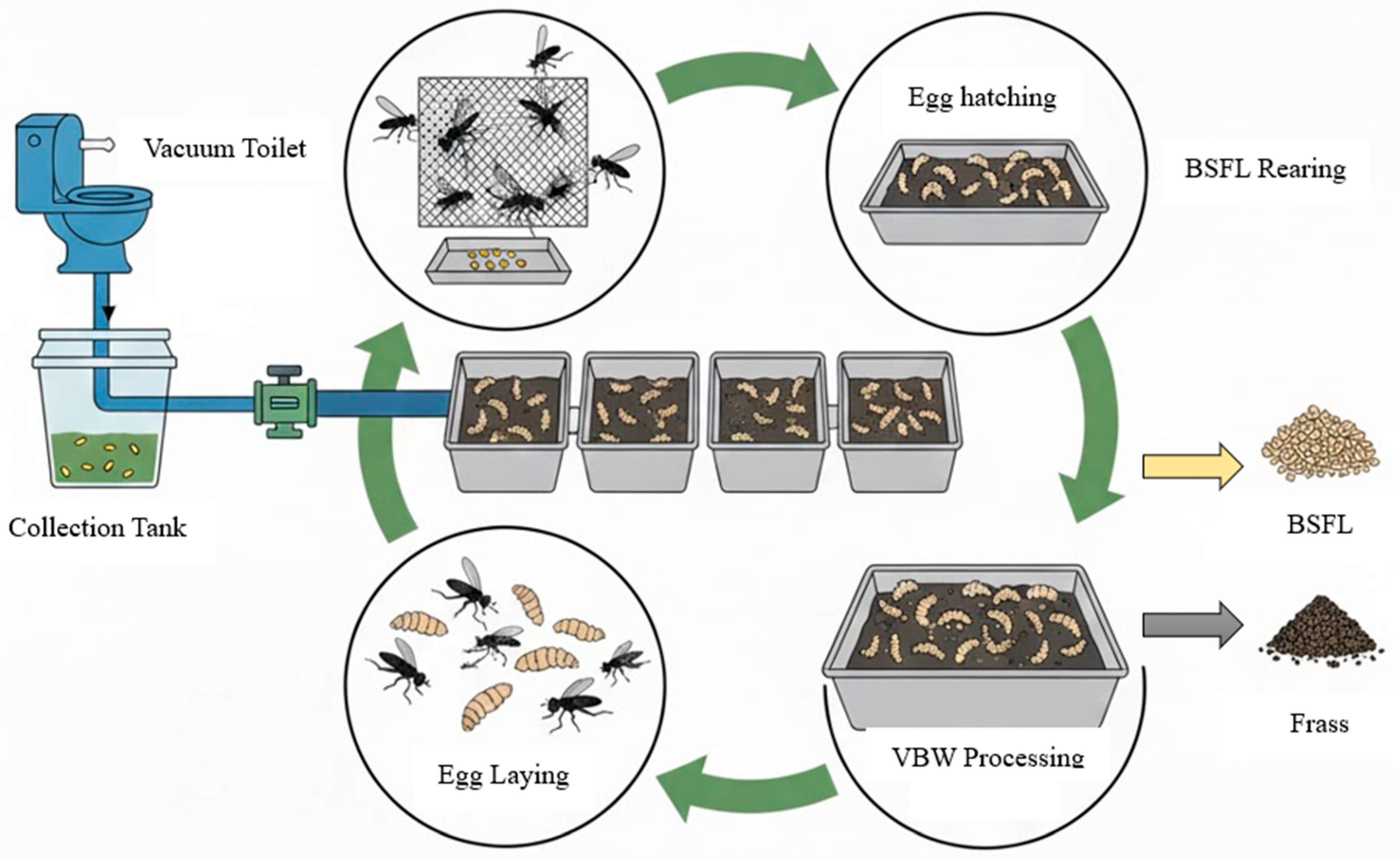
As presented in Table 2, BSFL demonstrated high performance across various waste streams, achieving a survival rate of 101.5%, a bioconversion rate of 30.9%, and reducing organic waste by up to 84.8%, with the resulting biomass containing up to 80.4% protein. Formulations F1, F4, and F7 showed particularly strong waste reduction (61.1% to 65.2%), with F7 yielding 47.7% larval protein. While primary sludge supported high waste reduction, its bioconversion rate was lower than that of the formulated feeds. For challenging wastes such as human feces, reduction rates varied between 39.1% and 48.6%, while Lalander et al. [13] achieved a 73.0% reduction, indicating the potential for efficient valorization of human waste. Among the formulations containing a percentage of human feces, formulations F1, F3, and F6 showed that F1 led to a maximum of 99.8% survival, 31.8% bioconversion, and 64.1% waste reduction, while F6 resulted in the highest larval protein content of 39.0%. Human feces-3 demonstrated lower waste reduction compared to human feces-1 and human feces-2, with Gold et al. [25] reporting a pH of 6, moisture content of 76.1%, protein content of 20.1%, non-fiber carbohydrates at 1.7%, fiber at 27.9%, lipids at 20.9%, organic matter at 86.4%, a protein-to-non-fiber carbohydrates ratio of 12:1, and a caloric content of 288. The reduced waste reduction in human feces-3 can be attributed to a critical nutrient imbalance, particularly the 12:1 protein-to-carbohydrate ratio, which leads to inefficient N metabolism in the larvae. Additionally, the high indigestible fiber content physically limits conversion efficiency, while the suboptimal pH further hinders enzymatic digestion [24]. Thus, it is of prime importance that blended waste streams with compatible nutritional profiles are designed to maximize waste diversion and the accumulation of larval biomass. The life cycle of BSFL in VBW treatment is illustrated in Figure 1.
Figure 1.
Life cycle of Black Soldier Fly in Treatment of Vacuum Blackwater.
Vacuum-collected blackwater, characterized by its exceptionally high N concentration and undiluted organic load, presents a highly suitable and efficient feedstock for BSFL bioremediation and bioconversion [13,28]. According to Tokwaro et al. [16], for optimal processing, the feedstock requires stabilization to a moisture content of approximately 60% and should be introduced to BSF eggs or neonate larvae under controlled environmental conditions, typically maintained at 27.5 ± 2 °C with a relative humidity of 60%. A feeding rate that avoids overloading, often calculated as 50 mg of dry matter per larva over a rearing period of 12 to 18 days, allows for maximum biomass accumulation [8]. Harvesting the protein-rich prepupae is critical and should be conducted precisely as the larvae cease feeding and before they begin pupation, ensuring a yield containing up to 40–45% protein and 30–35% lipids [9]. This nutrient-dense larval biomass serves as a premium alternative protein source for aquaculture and livestock feed, while its high lipid content also positions it as a viable substrate for biodiesel production, contributing to bioenergy security [28]. Although BSF processing significantly reduces enteric pathogens like Salmonella enterica serovar Enteritidis, Escherichia coli, Salmonella spp., Shigella spp., and Staphylococcus aureus through competitive exclusion and antimicrobial peptides [11,12,13,14,15], a critical limitation remains in the residual frass, which may still harbor resilient pathogens such as Ascaris suum ova, bacteriophage ΦX174, Enterococcus spp., and helminth eggs [13,16]. This poses a secondary pollution risk if directly applied to agriculture. Moreover, in the study by Lalander et al. [29], while BSFL treatment effectively reduces many pathogens in organic waste, more than 95% of Ascaris suum eggs can survive the process, highlighting a potential risk if the resulting frass is applied without additional sanitization. Furthermore, direct land application underutilizes the frass’s remaining energy potential. To fully valorize all resources and guarantee a sanitized output, a subsequent treatment stage is advantageous. Introducing the frass into a thermophilic anaerobic digester, operating at 50–60 °C, achieves dual objectives: it thoroughly sterilizes the material by eliminating persistent pathogens and converts residual organic matter into biogas, a renewable energy source [18]. This integrated approach creates a circular system where the generated biogas supplements bioenergy needs, and the resulting stable, pathogen-free digestate serves as a high-quality organic fertilizer [17]. This process enhances soil properties and fertility, thereby reducing agricultural dependence on synthetic chemical fertilizers and closing the nutrient loop within a sanitized, resource recovery framework.
4. Principles and Applications of Anaerobic Digestion
Anaerobic digestion is a microbial process through which complex organic matter decomposes in oxygen-free environments, resulting in the production of biogas, a bioenergy source primarily composed of CH4 and CO2 [7]. This well-established technology facilitates the stabilization and conversion of diverse organic wastes into bioenergy via four sequential biological stages: hydrolysis, acidogenesis, acetogenesis, and methanogenesis [30]. In addition to generating biogas, the process yields digestate, a nutrient-rich solid residue that holds significant promise for sustainable resource recovery within a circular bioeconomy [31]. As a carbon-neutral energy solution, AD presents an environmentally benign alternative for organic waste management, simultaneously addressing waste disposal challenges and providing renewable energy. China, with its large population and agricultural economy, exemplifies the potential for scaling this technology. The country produces substantial organic waste, including significant quantities of VBW from its advanced rail network alone, where an estimated 1.3 billion annual passengers generate over 5.3 million tons of this waste [1]. If fully utilized in AD, this volume could produce approximately 53 million cubic meters of biogas, based on a conservative yield of 10 m3 per ton. This biogas could be used for heat, power, or vehicle fuel, representing a potential energy value of roughly $15.9 million annually, assuming a biogas price of $0.30 per cubic meter. Scaling this potential to include advanced transportation systems across Asia, Europe, and North America—regions that collectively generate vastly greater quantities of VBW from trains, aircraft, marine vessels, and advanced centralized sanitation systems—would multiply this energy output and its corresponding economic value considerably, highlighting a major untapped resource for renewable energy production.
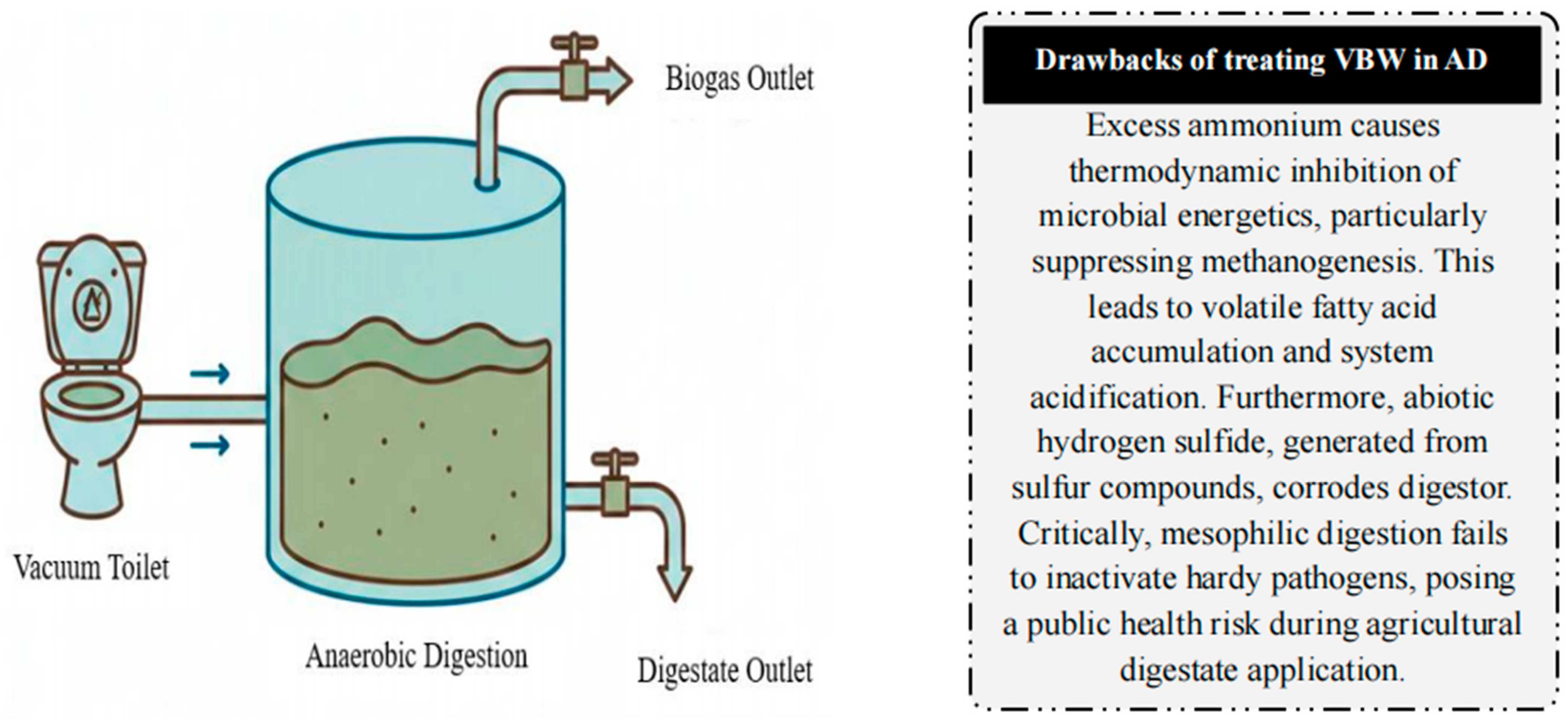
Zhang et al. [32] found that the efficiency of a biogas plant depends on careful management of operational parameters, including feedstock composition, temperature, pH, retention time, and organic loading rate, as the microbial consortia involved are sensitive to environmental changes. Proper monitoring is essential to prevent process inhibition or failure. The resulting biogas typically contains 50–75% CH4, with the remainder largely consisting of CO2, along with trace gases and water vapor [17]. This composition differs from purified natural gas but can be utilized directly or upgraded. A key advantage of AD technology is its adaptability; VBW can be processed in existing digestion facilities, enabling decentralized, local energy production and enhancing energy security. The digestate byproduct is equally valuable. For every cubic meter of biogas produced from VBW, an estimated 5 kg of digestate can be generated. A hypothetical VBW digestion plant with a 1 MW energy output capacity could therefore produce around 2000 tons of digestate annually. This material is rich in nutrients and organic matter, serving as an effective organic fertilizer [31]. In the European Union and North America, the existing 22,500 AD plants processing various organic wastes collectively produce more than 205 million tons of digestate annually [33]. In China, where a large percentage of planned food waste treatment projects employ AD, 1500 tons of digestate are generated daily [34]. Globally, harnessing VBW for AD would add substantially to this output, creating a sizable market for organic soil amendments [21]. According to the World Biogas Association, substituting one ton of chemical fertilizer with digestate can save the equivalent of 5–9 tons of CO2 emissions, 108 tons of water, and one ton of oil, underscoring its environmental and economic value in sustainable agriculture [31]. Thus, the systematic AD of VBW offers a dual opportunity: capturing significant renewable energy from a common waste stream and producing valuable digestate to reduce reliance on synthetic fertilizers. With strategic investment and integration into global waste management infrastructure, this approach can significantly contribute to energy diversification, emission reduction, and the advancement of a circular bioeconomy. The treatment of VBW through AD is illustrated in Figure 2.
Figure 2.
Treatment of Vacuum Blackwater under Anaerobic Digestion.
Despite the theoretical sustainability of AD for VBW, owing to its high organic load and potential for energy and nutrient recovery, the process is confronted with significant technical hurdles that can compromise stability and efficiency. A primary challenge is the inherent variability in the physicochemical composition of the feedstock, which induces fluctuations in the microbial community and disrupts the establishment of steady-state AD conditions [19]. Fundamentally, the nutrient profile of VBW presents a paradoxical scenario. It often exhibits a high C/N ratio while simultaneously creating a high-N environment upon degradation. According to Xiao et al. [35], this imbalance initially promotes the rapid activity of hydrolytic and acidogenic bacteria, which can outcompete critical methanogenic archaea for substrates. Concurrently, the robust breakdown of nitrogenous compounds leads to the accumulation of FA, a potent inhibitor. Gao et al. [7] note that elevated FA levels specifically impair the enzymatic systems of both acetoclastic and hydrogenotrophic methanogens, suppressing biogas yield and potentially leading to process failure. This inhibition is frequently exacerbated by the accumulation of VFAs, a consequence of the disrupted metabolic balance between acidogenesis and methanogenesis.
Operational management is further complicated by the need for meticulous control of parameters such as temperature, pH, and hydraulic retention time to maintain microbial equilibrium [32]. The often-acidic nature of VBW necessitates corrective measures to maintain a pH range suitable for methanogenesis [19]. Additionally, the common presence of sulfur compounds introduces the risk of biological sulfate reduction, resulting in the generation of hydrogen sulfide (H2S). Hang et al. [36] reported that this compound is directly toxic to methanogenic microorganisms, inhibits key metabolic enzymes, and promotes the corrosion of reactor and piping infrastructure. Its presence in the biogas stream mandates costly purification steps before energy use [36]. Finally, the valorization of the resulting digestate is not without its concerns. The nutrient-rich byproduct may contain persistent hazardous substances and pathogens, the concentrations of which are directly influenced by the source of the VBW. This necessitates rigorous post-treatment and quality control to ensure its safe application as a fertilizer, adding another layer of complexity to the process chain. Consequently, the successful AD of VBW is not a simple matter of waste loading but requires a sophisticated, monitored, and integrated approach to overcome these substantial biochemical and operational challenges.
5. The Role of Coupling Black Soldier Fly Larva Bioconversion with Thermophilic Anaerobic Digestion for the Treatment of Vacuum Blackwater
The integration of BSFL bioconversion with TAD represents a robust circular economy strategy for the sustainable management of VBW. This synergistic coupling leverages the strengths of each biological process to sequentially overcome the inherent challenges of this concentrated waste stream, transforming it into valuable products. The system begins with BSFL pretreatment, where larvae actively consume the organic fraction of the VBW. This stage is critically effective due to the larvae’s resilient digestive enzymes, which allow them to process diverse and variable blackwater compositions, thereby stabilizing the feedstock’s physicochemical characteristics [13,16,25]. This initial stabilization mitigates the fluctuations in the microbial community that typically hinder subsequent anaerobic processes, creating a more consistent substrate for digestion [32]. A primary challenge of VBW is its high N content, leading to an elevated C/N ratio that is suboptimal for AD [19,35]. BSFL bioconversion directly addresses this by assimilating N into their own biomass, producing protein-rich larvae [24,37,38]. Chen et al. [38] developed a combined bioreactor system using BSFL and introduced nitrifying bacteria (NB) isolated from the larval gut. This integrated BSFL + NB system increased larval weight, biomass, and protein gain while improving N use efficiency by 11.3% compared to BSFL alone. The system achieved an 80% removal of total N from wastewater and reduced FA emissions by up to 21.1%. Microbial analysis linked this performance to an enriched population of Klebsiella sp., with heightened activity of key functional genes, including the nitrification gene amoA and the denitrification genes narG and nirS [38]. This N uptake balances the C/N ratio in the residual frass, preventing FA inhibition in the downstream digester [35]. The reduction in FA is a key benefit, as ammonia is a potent inhibitor of methanogenic archaea [7]. Furthermore, BSFL metabolism helps regulate VFA accumulation within the frass, maintaining a stable, slightly alkaline pH [39]. This pH environment is ideal for the thermophilic methanogens responsible for high-rate biogas production, effectively eliminating the common issue of acidification that can stall digestion.
The pretreatment also delivers significant hygienization and detoxification. BSFL significantly reduces pathogen loads through competitive exclusion and antimicrobial compounds in their gut [11,12,13,14,15,23]. Additionally, they starve sulfur-reducing bacteria of substrates, minimizing their presence in the frass. This pre-elimination is crucial because it prevents the formation of H2S during TAD, thereby protecting biogas quality and digester components from corrosion [36]. The process also contributes to the biosorption or biotransformation of trace contaminants, such as heavy metals and antibiotic residues, further refining the feedstock profile. Li et al. [40] showed that BSFL significantly enhance the degradation of the antibiotics amoxicillin (AMX) and penicillin sodium (PEN). The presence of BSFL increased degradation rates to 71.00% for AMX and 80.89% for PEN, while reducing their environmental half-lives to 238 h and 160 h, respectively. Key gut microbes involved included Proteobacteria, Firmicutes, Acinobacteriota, and Bacteroidota. From these, five β-lactam-resistant bacteria were isolated. Among them, Morganella morganii showed high antibiotic tolerance and achieved removal rates of 58.99% to 95.87% in experiments. The degradation mechanism involved gut bacteria breaking down the core β-lactam structures, producing at least seven metabolites from AMX and five from PEN [40]. A study by Nalunga et al. [41] evaluated BSFL composting of fecal sludge cake (FSC) blended with fruit and vegetable waste (FVW) or cattle manure (CM). Co-composting consistently enhanced heavy metal reduction and pathogen removal compared to FSC alone. Lead (Pb) reduction ranged from 33.0% to 60.9%, with the lowest larval bioaccumulation (4.4 mg/kg) in the 55% FSC:45% CM blend. Reductions for other metals peaked in specific blends: copper (Cu) at 43.1%, zinc (Zn) at 48.2%, chromium (Cr) at 32.4%, and iron (Fe) at 28.7%. Pathogen removal was highly effective, with one blend achieving a 99.8% reduction in Escherichia coli and another a 94.9% reduction in Staphylococcus aureus. The results confirm that BSFL composting with co-substrates mitigates health risks from FSC, providing a viable waste management option [41].
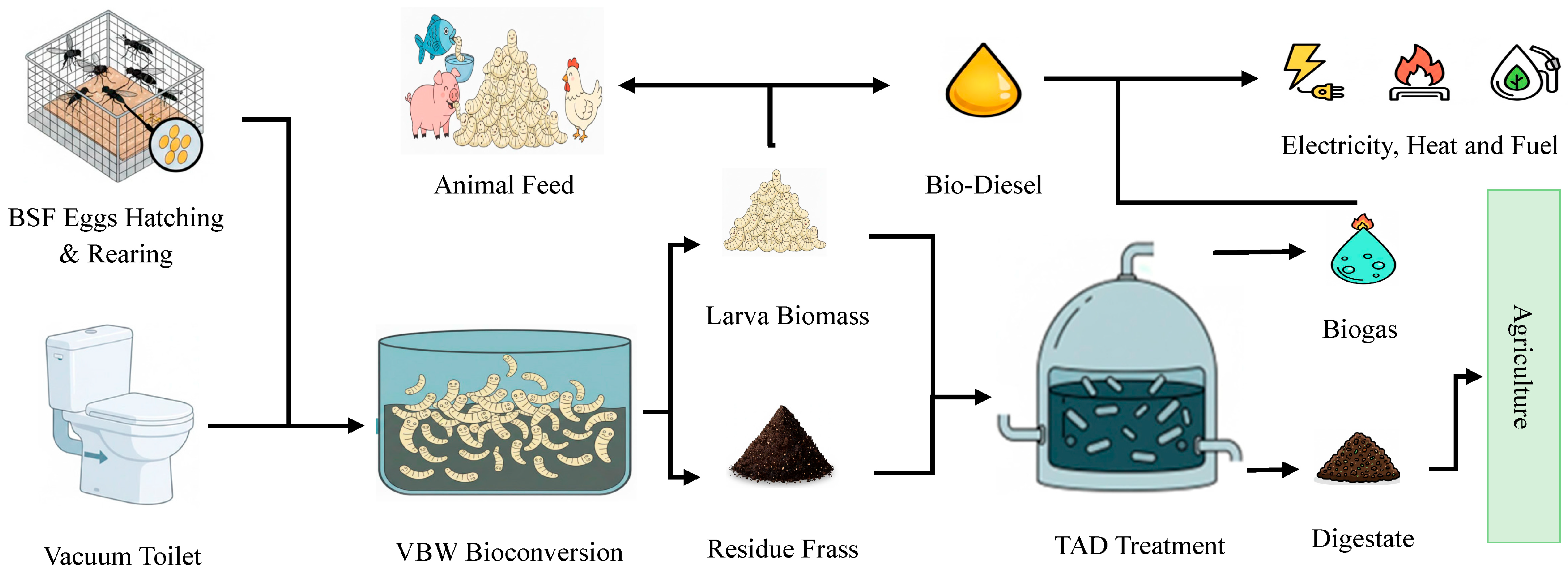
In addition, BSFL significantly reduces GHG emissions [10,37]. Pang et al. [37] studied the effects of pH on C and N conversion rates, as well as GHG and FA emissions during BSFL bio-treatment of food waste. They found that pH is a crucial factor in this process. The average wet weight of harvested BSFL ranged from 13.26 to 95.28 mg per larva, with recycled C and N from the substrate varying between 1.95 and 13.41% and 5.40–18.93%, respectively, across a pH range of 3.0 to 11.0. Cumulative emissions for N2O, CH4, FA, and CO2 were 0.02–1.65 mg/kg, 0.19–2.62 mg/kg, 0.15–1.68 g/kg, and 88.15–161.11 g/kg, respectively. Compared to open composting, BSFL bio-treatment results in lower emissions of GHG [37]. Therefore, this integrated system operates on multiple value-creation pathways. The BSFL stage generates valuable larval biomass, a source of protein for animal feed, lipids for biodiesel, and chitin for biopolymers [25]. Concurrently, it engineers the frass into an optimized, stabilized feed for TAD. While frass may occasionally harbor residual pathogens [13,16,29], the subsequent high-temperature TAD process acts as a final sterilization stage, ensuring the destruction of persistent microorganisms and other hazardous materials [17,18,42,43]. Figure 3 shows a schematic of the co-processing of BSFL bioconversion with TAD for the treatment of VBW.
Figure 3.
Schematic of Co-processing Black Soldier Fly Larva Bioconversion with Thermophilic Anaerobic Digestion for Treatment of Vacuum Blackwater.
TAD serves as a sustainable downstream treatment for the by-products of BSFL bioconversion, as shown in Figure 3. While BSFL processing significantly reduces pathogen loads in organic waste streams like VBW, the resulting frass often retains residual pathogens and other hazardous contaminants [11,12,13,14,15,16,29]. TAD directly addresses this limitation by subjecting the frass to high-temperature microbial digestion, which ensures the complete elimination of pathogens and results in a sanitized output [42,43]. This process concurrently converts the organic matter into two valuable streams: biogas and a sterilized, nutrient-rich digestate [17]. A study by Seruga et al. [42] evaluated the inactivation kinetics of key pathogens during TAD. Laboratory-scale experiments demonstrated that the required time for complete elimination was 10 h for Ascaris suum eggs, 5.5 h for Enterococcus spp., and 6.06 h for Salmonella Senftenberg W775. These results were successfully validated under full-scale operational conditions using Kompogas reactors at a treatment plant in Poland. The process consistently achieved digestate sanitization and maintained stable operational performance, confirming TAD’s efficacy for reliable hygienization [42]. The study by Al-Sulaimi et al. [43] quantified helminth ova in municipal wastewater, finding concentrations of 16 ova/L. Species identification revealed a predominance of Ascaris, Trichuris, Hymenolepis, and Toxocara. The application of TAD achieved complete removal of helminth ova and a 97.1% reduction in total suspended solids from the wastewater. A comparative study by Bi et al. [30] evaluated mesophilic and TAD for treating food waste. In both batch and continuous experiments, TAD demonstrated superior performance, achieving higher CH4 production and significantly greater pathogen reduction compared to mesophilic AD. These results establish TAD as a more effective integrated solution for the simultaneous energy recovery and sanitization of challenging waste streams.
The biogas produced can be harnessed to generate electricity, heat, or fuel, thereby contributing to the energy requirements of the treatment facility itself [18]. Any surplus energy can be supplied to external markets, creating an additional revenue stream. Meanwhile, the stabilized digestate serves as a high-quality organic fertilizer, effectively closing the nutrient loop by returning minerals to agricultural systems [31]. Furthermore, the system’s flexibility allows for the inclusion of BSFL larval biomass itself as a TAD feedstock. Research indicates that larval tissue possesses high biomethane potential (BMP), offering a strategic alternative to its conversion into biogas. Win et al. [44] assessed the BMP of BSFL biomass across various biorefinery pathways. The mean BMP for whole BSFL was 671 mL CH4/g VS, significantly exceeding that of common feedstocks like algae and energy crops by 1.5 to 2 times. Component analysis revealed BMP values of 570 mL CH4/g VS for adult flies and 343 mL CH4/g VS for the chitinous cuticle. Lipid extraction prior to digestion yielded 363 mL CH4/g VS and concurrently produced 0.12 g of biodiesel per gram of dry BSFL, with the lipid-extracted residue itself retaining a BMP of 334 mL CH4/g VS. The study further found that the larvae’s diet did not significantly alter TAD performance. Notably, the residue left by larvae after consumption showed a BMP of 502 mL CH4/g VS, which is higher than that of untreated food waste, indicating that BSFL bioprocessing acts as a beneficial pretreatment step that enhances subsequent biogas production [44]. This integrated approach, transitioning from BSFL bioconversion to TAD, creates a cohesive circular model for VBW. It efficiently converts waste into valuable outputs like renewable bioenergy, animal feed precursors, and sanitized fertilizer. By ensuring complete pathogen inactivation and optimizing energy recovery, the BSFL-TAD synergy significantly enhances the sustainability, resilience, and economic viability of waste management systems.
6. Analysis of the Techno-Economic and Environmental Aspects of the Proposed Technology
The integration of BSFL bioconversion with TAD constitutes a sophisticated biorefinery model capable of transforming the significant challenge of VBW into a multi-product resource stream. Applying this model to the reported annual generation of 5.3 million tons of VBW from rail transport in China allows for a realistic assessment of its scale, economic potential, and environmental benefits [1]. The initial BSFL bioconversion stage utilizes larvae to metabolize the organic fraction of VBW [13,24]. Crucially, a substantial portion of the consumed C is respired as CO2. Applying a conservative wet mass conversion efficiency of 12% (reflecting both larval assimilation and respiratory losses), the annual processing of 5.3 million tons of VBW yields approximately 636,000 tons of fresh BSFL biomass. This larval biomass, with a typical dry matter (DM) content of 35% (222,600 tons DM), is rich in protein and lipids [25]. Concurrently, the process generates a larger volume of residual frass, estimated at 3.8 million tons (wet weight), comprising undigested organics, microbial biomass, exuviae, and residual moisture [9]. This frass is chemically stabilized, with a balanced C/N ratio and reduced inhibitor content, making it an optimized feedstock for subsequent digestion [35,38].
The larval biomass can be valorized through two primary pathways. First, direct lipid extraction (at 35% of DM) with a 90% conversion efficiency to biodiesel yields an estimated 70,119 tons of biodiesel annually [45]. Alternatively, diverting the entire fresh larval biomass to TAD capitalizes on its exceptional BMP of 671 mL CH4/g VS [44]. Assuming the fresh larvae are 30% TS with 85% VS, this pathway generates roughly 109 million cubic meters of biomethane. The frass stream represents the major feedstock for TAD [31]. With a BMP of 502 mL CH4/g VS [44], a TS content of 25%, and a VS content of 80% of TS, the digestion of 3.8 million tons of wet frass can produce approximately 382 million cubic meters of biomethane. If the larval biomass is also directed to TAD, the combined biogas output reaches 491 million cubic meters of CH4, equivalent to about 28.4 petajoules (PJ) of energy. The parasitic energy demand of the integrated facility (encompassing conveyance, mixing, reactor heating for thermophilic conditions, and lighting) is estimated at 1.1 kWh per cubic meter of waste processed. For 5.3 million tons of VBW, this translates to an annual energy requirement of approximately 5.8 PJ. Therefore, the system produces a substantial net energy surplus of 22.6 PJ. This surplus, sold as electricity or refined biomethane, forms a core revenue stream, with an annual market value estimated between $85 million and $115 million, contingent on local energy prices.
Beyond energy, the system generates high-value co-products. The TAD process yields a sanitized, nutrient-rich digestate [18,42,43]. The combined digestate from frass and larval digestion is estimated at 4.2 million tons annually. As a premium organic fertilizer substitute for chemical alternatives, with a conservative market value of $25/ton [9], this stream could generate $105 million annually. The economic fate of the larval biomass presents a strategic decision. The biodiesel pathway ($70,119 tons at ~$1200/ton) offers ~$84 million in potential revenue. However, the higher-value alternative is likely the production of insect meal for aquaculture or animal feed, where defatted larval meal can command prices of $1500–$2000 per ton [46]. This could yield revenue exceeding $150 million annually, significantly enhancing project economics. The inherent flexibility to switch between these product streams based on market dynamics adds significant resilience to the business model. The environmental economics of the system are profound. It directly mitigates GHG emissions by avoiding methane release from conventional VBW lagooning or landfilling, displacing fossil fuels with renewable biogas, and offsetting synthetic fertilizer production [37]. A conservative life cycle assessment estimates an annual net greenhouse gas mitigation of 1.8 to 2.3 million tons of CO2-equivalent [10]. In a compliance or voluntary carbon market priced at $30/ton CO2-eq, this represents an additional annual value of $54 million to $69 million. Furthermore, the system delivers substantial co-benefits: the near-complete elimination of pathogens and micropollutants protects water resources and public health, while the recovery of nutrients for fertilizer use reduces eutrophication risks and closes nutrient loops. This presents a scalable, circular economy solution that transforms a costly waste liability into a generator of renewable energy, sustainable feed, and organic fertilizer, offering a robust template for sustainable VBW management.
7. Limitations and Engineering Challenges of the Proposed Systems, Future Directions, and Conclusions
Despite its promising potential, the practical implementation of the integrated BSFL-TAD system faces significant limitations and engineering hurdles that must be rigorously addressed. A primary constraint is the inherent variability of VBW, where fluctuations in dilution, salinity, and contaminant loads can stress larval viability and destabilize the carefully engineered gut microbiome essential for efficient bioconversion and detoxification [13,16,24,25,28]. While BSFL reduces pathogen loads, the potential for bioaccumulation of certain heavy metals, as observed in blended feedstocks, necessitates stringent pre-screening of VBW sources and continuous monitoring of larval biomass and frass to ensure the safety of downstream products (animal feed, fertilizer) [11,12,13,14,15,41]. Furthermore, the system’s efficacy in removing complex emerging contaminants, beyond the studied β-lactam antibiotics, requires broader validation [40]. Substantial engineering challenges center on energy and mass flow optimization at scale. Maintaining thermophilic conditions in TAD is energy-intensive, and the system’s claim to net-positive energy relies on efficient heat recovery and the consistent quality and quantity of biogas produced [44]. Scaling BSFL bioconversion to process millions of tons of VBW annually demands the development of continuous, automated reactor systems for larval rearing, feeding, and harvesting, a significant leap from current batch-based operations [13]. Integrating the aerobic BSFL stage with the anaerobic TAD stage requires sophisticated process control to balance feedstock throughput, moisture content, and C/N ratios, ensuring the frass is consistently optimal for digestion [18,24,35].
The financial analysis, while optimistic, is predicated on high-value markets for insect protein and carbon credits; these markets are nascent and subject to regulatory and consumer acceptance uncertainties [46]. Future research must therefore pivot toward intensification, intelligence, and integration. Chen et al. [38] building on the BSFL + NB concept, research should explore tailored microbial consortia to enhance the removal of specific pollutants like pharmaceuticals or per- and polyfluoroalkyl substances. Genetic selection for BSFL strains with higher tolerance to VBW variability and improved conversion efficiencies is another critical frontier [38]. For TAD, optimizing co-digestion recipes for frass with other organic wastes could further stabilize the process and boost methane yields [44]. The development of pilot-scale, continuous integrated facilities with advanced instrumentation is paramount. These pilots must validate the mass and energy balances proposed in theoretical models and provide real-world data for comprehensive life cycle assessments and techno-economic analyses. Implementing sensor networks for real-time analysis of key parameters (ammonia, VFAs, specific pathogens), coupled with AI-driven process control algorithms, will be essential to dynamically manage feedstock variability, preempt process upsets, and guarantee consistent product quality and sanitization, as demonstrated in full-scale TAD operations.
In conclusion, the sequential integration of bioconversion and TAD constitutes a synergistic bioprocessing cascade for the holistic valorization of recalcitrant organic wastes like VBW. This multistage biorefinery model embodies a circular economy framework by transforming a hazardous substrate into multiple high-value streams. The BSFL unit operation functions as an effective biological pretreatment, achieving rapid bio-stabilization, amelioration of FA-mediated inhibition via N assimilation, and partial contaminant degradation through the action of discrete larval gut microbiomes. Crucially, the subsequent TAD stage provides an essential thermophilic barrier, ensuring the complete inactivation of recalcitrant pathogens that persist through BSFL processing. This guarantees the sanitary safety of the final digestate. Furthermore, the frass, as an N-balanced and partially hydrolyzed feedstock, significantly enhances the BMP within the digester, optimizing volumetric biogas yield and composition. The system’s economic robustness is underpinned by flexible product diversification. Harvested larval biomass can be fractionated into defatted protein concentrate for animal feed, with concomitant lipid extraction for biodiesel production via transesterification. Alternatively, direct co-digestion of larval biomass capitalizes on its high intrinsic BMP for maximal biomethane recovery. The resulting renewable bio-energies (biomethane or upgraded biodiesel) provide carbon-neutral energy vectors for combined heat and power generation or transportation fuel. The terminal output is a sterile, nutrient-replete digestate, suitable as an organic soil amendment to close the nutrient loop. Thus, this BSFL-TAD synergy demonstrates a closed-loop resource recovery paradigm, characterized by a net-positive energy balance, stringent pathogen control, and the co-production of marketable bio-based products. It presents a technically viable and economically compelling strategy for advancing sustainable waste management within a rigorous circular bioeconomy context.
Author Contributions
N.J.M., writing original draft, conceptualization, investigation, and data analysis; H.N.G., review and editing; A.S.G., supervision and writing, review and editing; Y.R. and Z.W., conceptualization, writing, resources, funding, review and editing. All authors have read and agreed to the published version of the manuscript.
Funding
This work was supported by the Start-Up Funding for Research of Nanchang Institute of Science and Technology (NGRCZX-22–03), School of Civil and Environmental Engineering, Nanchang, Jiangxi, China.
Institutional Review Board Statement
Not applicable.
Informed Consent Statement
Not applicable.
Data Availability Statement
No new data were created or analyzed in this study. Data sharing is not applicable to this article.
Acknowledgments
The authors acknowledged the support received from the School of Civil and Environmental Engineering, Nanchang Institute of Science and Technology, Nanchang, China. During the preparation of this work, the authors used Perplexity AI tools in order to correct grammatical errors. After using this tool/service, the authors reviewed and edited the content as needed and take full responsibility for the content of the publication.
Conflicts of Interest
The authors declare no conflicts of interest.
References
- Wu, H.; Wang, G.; Li, L.; Gao, Z.; Wang, M.; Wang, J.; Zhang, Z.; Wang, A.; Tian, X.; Li, J. Partial nitritation and nitrogen removal of vacuum toilet wastewater from high-speed trains in a sequential batch reactor. Chemosphere 2023, 329, 138657. [Google Scholar] [CrossRef] [Scilit]
- Jadhav, N.; Brown, T.; Williams, L.; Pidou, M. Characterisation of blackwater from human transportation systems equipped with vacuum toilets and controlled emissions tanks and its impact on solid/liquid separation technologies. J. Water Process Eng. 2024, 66, 106083. [Google Scholar] [CrossRef] [Scilit]
- Tervahauta, T.; Rani, S.; Leal, L.H.; Buisman, C.J.N.; Zeeman, G. Black water sludge reuse in agriculture: Are heavy metals a problem? J. Hazard. Mater. 2014, 274, 229–236. [Google Scholar] [CrossRef] [Scilit]
- Akinnawo, S.O. Eutrophication: Causes, consequences, physical, chemical and biological techniques for mitigation strategies. Environ. Chall. 2023, 12, 100733. [Google Scholar] [CrossRef] [Scilit]
- Mustafa, S.A.; Al-Rudainy, A.J.; Salman, N.M. Effect of environmental pollutants on fish health: An overview. Egypt. J. Aquat. Res. 2024, 50, 225–233. [Google Scholar] [CrossRef] [Scilit]
- Xu, J.; Yang, L.; Zhou, X. A systematical review of blackwater treatment and resource recovery: Advance in technologies and applications. Resour. Conserv. Recycl. 2023, 197, 107066. [Google Scholar] [CrossRef] [Scilit]
- Gao, M.; Zhang, L.; Florentino, A.P.; Liu, Y. Performance of anaerobic treatment of blackwater collected from different toilet flushing systems: Can we achieve both energy recovery and water conservation? J. Hazard. Mater. 2019, 365, 44–52. [Google Scholar] [CrossRef] [Scilit] [PubMed]
- Tariq, M.R.; Liu, S.; Wang, F.; Wang, H.; Mo, Q.; Zhuang, Z.; Zheng, C.; Liang, Y.; Liu, Y.; Rehman, K.U.; et al. Black Soldier Fly: A Keystone Species for the Future of Sustainable Waste Management and Nutritional Resource Development: A Review. Insects 2025, 16, 750. [Google Scholar] [CrossRef] [Scilit]
- Wilson, D.D.; Ray, R.L.; Lohakare, J. Black soldier fly Hermetia illucens applications in circular economy and agricultural sustainability: A review. Discov. Sustain. 2025, 6, 1347. [Google Scholar] [CrossRef] [Scilit]
- Xiang, F.M.; Han, L.Y.; Jiang, S.Y.; Xu, X.H.; Zhang, Z.J. Black soldier fly larvae mitigate greenhouse gas emissions from domestic biodegradable waste by recycling carbon and nitrogen and reconstructing microbial communities. Environ. Sci. Pollut. Res. 2024, 31, 33347–33359. [Google Scholar] [CrossRef] [Scilit]
- Erickson, M.C.; Islam, M.; Sheppard, C.; Liao, J.; Doyle, M.P. Reduction of Escherichia coli O157:H7 and Salmonella enterica serovar enteritidis in chicken manure by larvae of the black soldier fly. J. Food Prot. 2004, 67, 685–690. [Google Scholar] [CrossRef] [Scilit]
- Liu, Q.; Tomberlin, J.K.; Brady, J.A.; Sanford, M.R.; Yu, Z. Black soldier fly (Diptera: Stratiomyidae) larvae reduce Escherichia coli in dairy manure. Environ. Entomol. 2008, 37, 1525–1530. [Google Scholar] [CrossRef] [Scilit]
- Lalander, C.; Diener, S.; Magri, M.E.; Zurbrügg, C.; Lindström, A.; Vinnerås, B. Faecal sludge management with the larvae of the black soldier fly (Hermetia illucens)—From a hygiene aspect. Sci. Total Environ. 2013, 458-460, 312–318. [Google Scholar] [CrossRef] [Scilit] [PubMed]
- Lalander, C.H.; Fidjeland, J.; Diener, S.; Eriksson, S.; Vinnerås, B. High waste-to-biomass conversion and efficient Salmonella spp. reduction using black soldier fly for waste recycling. Agron. Sustain. Dev. 2015, 35, 261–271. [Google Scholar] [CrossRef] [Scilit]
- Xu, L.; Lin, Q.; Wang, S.; Chen, S.; Yang, R.; Liu, C.; Hu, Q.; Zhao, Z.; Cao, Z. Efficacy of black soldier fly larvae in converting kitchen waste and the dynamic alterations of their gut microbiome. J. Environ. Manag. 2025, 377, 124613. [Google Scholar] [CrossRef] [Scilit] [PubMed]
- Tokwaro, R.; Semiyaga, S.; Niwagaba, C.B.; Nakagiri, A.; Sempewo, J.I.; Muoghalu, C.C.; Manga, M. Application of black soldier fly larvae in decentralized treatment of faecal sludge from pit latrines in informal settlements in Kampala city. Front. Environ. Sci. 2023, 11, 1118635. [Google Scholar] [CrossRef] [Scilit]
- Moerland, M.J.; Pérez, L.C.; Sobrino, M.E.R.V.; Chatzopoulos, P.; Meulman, B.; de Wilde, V.; Zeeman, G.; Buisman, C.J.; van Eekert, M.H. Thermophilic (55 °C) and hyper-thermophilic (70 °C) anaerobic digestion as novel treatment technologies for concentrated black water. Bioresour. Technol. 2021, 340, 125705. [Google Scholar] [CrossRef] [Scilit]
- Zhang, L.; Guo, B.; Mou, A.; Li, R.; Liu, Y. Blackwater biomethane recovery using a thermophilic upflow anaerobic sludge blanket reactor: Impacts of effluent recirculation on reactor performance. J. Environ. Manag. 2020, 274, 111157. [Google Scholar] [CrossRef] [Scilit] [PubMed]
- Gao, M.; Zhang, L.; Zhang, H.; Florentino, A.P.; Liu, Y. Energy recovery from municipal wastewater: Impacts of temperature and collection systems. J. Environ. Eng. Sci. 2019, 14, 24–31. [Google Scholar] [CrossRef] [Scilit]
- Wang, X.; Chen, J.; Li, Z.; Cheng, S.; Mang, H.-P.; Zheng, L.; Jan, I.; Harada, H. Nutrient recovery technologies for management of blackwater: A review. Front. Environ. Sci. 2023, 10, 1080536. [Google Scholar] [CrossRef] [Scilit]
- Mihelcic, J.R.; Fry, L.M.; Shaw, R. Global potential of phosphorus recovery from human urine and feces. Chemosphere 2011, 84, 832–839. [Google Scholar] [CrossRef] [Scilit]
- Dobermann, A. Global and Regional Trends in Nitrogen, Phosphorus and Potassium Nutrient Use Efficiency; Consortium for Precision Crop Nutrition: Benguérir, Morocco, 2024. [Google Scholar]
- Eriksen, N.T. Metabolic performance and feed efficiency of black soldier fly larvae. Front. Bioeng. Biotechnol. 2024, 12, 1397108. [Google Scholar] [CrossRef] [Scilit]
- Purkayastha, D.; Sarkar, S. Performance evaluation of black soldier fly larvae fed on human faeces, food waste and their mixture. J. Environ. Manag. 2023, 326, 116727. [Google Scholar] [CrossRef] [Scilit]
- Gold, M.; Cassar, C.M.; Zurbrügg, C.; Kreuzer, M.; Boulos, S.; Diener, S.; Mathys, A. Biowaste treatment with black soldier fly larvae: Increasing performance through the formulation of biowastes based on protein and carbohydrates. Waste Manag. 2020, 102, 319–329. [Google Scholar] [CrossRef] [Scilit]
- Muchina, P.; Kinyua, J.; Khamis, F.; Tanga, C.M.; Gebreyesus, G.; Cai, Z.; Sahana, G. The genomic landscape of Hermetia illucens: Exploring the potential of the black soldier fly through molecular insights. J. Insects Food Feed 2025, 11, 2049–2074. [Google Scholar] [CrossRef] [Scilit]
- Sukmak, R.; Suttinun, C.; Kovitvadhi, U.; Kovitvadhi, A.; Vongsangnak, W. Uncovering nutrients and energy related gene functions of black soldier fly Hermetia illucens strain KUP. Gene 2024, 896, 148045. [Google Scholar] [CrossRef] [Scilit]
- Lalander, C.; Diener, S.; Zurbrügg, C.; Vinnerås, B. Effects of feedstock on larval development and process efficiency in waste treatment with black soldier fly (Hermetia illucens). J. Clean. Prod. 2019, 208, 211–219. [Google Scholar] [CrossRef] [Scilit]
- Lalander, C.; Lopes, I.G.; Gyftopoulos, N.; Vinnerås, B. The impact of scale and frass recirculation on pathogen inactivation dynamics in black soldier fly larvae bioconversion. Front. Microbiol. 2025, 16, 1539486. [Google Scholar] [CrossRef] [Scilit] [PubMed]
- Bi, S.; Wang, C.; Wang, H.; Du, Y.; Yu, X.; Wang, Y. Comparison of mesophilic and thermophilic anaerobic digestion of food waste: Focusing on methanogenic performance and pathogens removal. Renew. Energy 2024, 233, 121184. [Google Scholar] [CrossRef] [Scilit]
- Jacob, S.; Kundu, D.; Chintagunta, A.D.; S, S.K.N.; Samanta, P.; Mahata, C.; Dey, S.; Shibirathna, R.G.; Barathi, A.; Kumar, S.; et al. Anaerobic digestion-derived digestate valorization: Green chemistry innovations for resource recovery and reutilization. Green Chem. 2025, 27, 7472–7505. [Google Scholar] [CrossRef] [Scilit]
- Zhang, X.; Wang, Y.; Jiao, P.; Zhang, M.; Deng, Y.; Jiang, C.; Liu, X.-W.; Lou, L.; Li, Y.; Zhang, X.-X.; et al. Microbiome-functionality in anaerobic digesters: A critical review. Water Res. 2023, 249, 120891. [Google Scholar] [CrossRef] [Scilit]
- Dekker, H. Biomethane in Europe’s Decarbonisation Strategy. In Biomethane: A Global Stocktake (webinar agenda); International Energy Agency: Paris, France, 2024; Available online: https://iea.blob.core.windows.net/assets/2435a59e-f5e4-4034-b2fb-3c2053606f67/IEAWebinaronbiomethane_Agenda.pdf (accessed on 10 December 2025).
- Liu, M.; Ogunmoroti, A.; Liu, W.; Li, M.; Bi, M.; Liu, W.; Cui, Z. Assessment and projection of environmental impacts of food waste treatment in China from life cycle perspectives. Sci. Total Environ. 2022, 807, 150751. [Google Scholar] [CrossRef] [Scilit]
- Xiao, Y.; Zan, F.; Zhang, W.; Hao, T. Alleviating nutrient imbalance of low carbon-to-nitrogen ratio food waste in anaerobic digestion by controlling the inoculum-to-substrate ratio. Bioresour. Technol. 2022, 346, 126342. [Google Scholar] [CrossRef] [Scilit]
- Vu, H.P.; Nguyen, L.N.; Wang, Q.; Ngo, H.H.; Liu, Q.; Zhang, X.; Nghiem, L.D. Hydrogen sulphide management in anaerobic digestion: A critical review on input control, process regulation, and post-treatment. Bioresour. Technol. 2022, 346, 126634. [Google Scholar] [CrossRef] [Scilit] [PubMed]
- Pang, W.; Hou, D.; Chen, J.; Nowar, E.E.; Li, Z.; Hu, R.; Tomberlin, J.K.; Yu, Z.; Li, Q.; Wang, S. Reducing greenhouse gas emissions and enhancing carbon and nitrogen conversion in food wastes by the black soldier fly. J. Environ. Manag. 2020, 260, 110066. [Google Scholar] [CrossRef] [Scilit] [PubMed]
- Chen, L.; Luo, L.; Qin, W.; Zhu, X.; Tomberlin, J.K.; Zhang, J.; Hou, D.; Chen, H.; Yu, Z.; Zhang, Z.; et al. Recycling nitrogen in livestock wastewater for alternative protein by black soldier fly larvae bioreactor. Environ. Technol. Innov. 2023, 29, 102971. [Google Scholar] [CrossRef] [Scilit]
- Ijdema, F.; Lievens, S.; Smets, R.; Poma, G.; Van Der Borght, M.; Lievens, B.; De Smet, J. Modulating the fatty acid composition of black soldier fly larvae via substrate fermentation. Animal 2025, 19, 101383. [Google Scholar] [CrossRef] [Scilit] [PubMed]
- Li, F.; Wang, C.; Zhao, Z.; Yang, C.; Gao, B.; Yu, Z.; Zhang, J.; Cai, M.; Yu, C. Pathway of typical β-Lactam antibiotics degradation by black soldier fly and response characteristic of its intestinal microbes. Bioresour. Technol. 2025, 419, 132067. [Google Scholar] [CrossRef] [Scilit] [PubMed]
- Nalunga, A.; Komakech, A.J.; Karungi, J.; Kabenge, I.; Schwarzböck, T. Black soldier fly larvae composting as a bioremediation approach for heavy metals and pathogens in fecal sludge cake. Discov. Environ. 2025, 3, 97. [Google Scholar] [CrossRef] [Scilit]
- Seruga, P.; Krzywonos, M.; Paluszak, Z.; Urbanowska, A.; Pawlak-Kruczek, H.; Niedźwiecki, Ł.; Pińkowska, H. Pathogen reduction potential in anaerobic digestion of organic fraction of municipal solid waste and food waste. Molecules 2020, 25, 275. [Google Scholar] [CrossRef] [Scilit] [PubMed]
- Al-Sulaimi, I.; Nayak, J.K.; Al-Mamun, A.; Sana, A. Effective removal of Helminths Ova from wastewater and its inactivation from sewage sludge using thermophilic anaerobic digestion. Environ. Nanotechnol. Monit. Manag. 2023, 20, 100793. [Google Scholar] [CrossRef] [Scilit]
- Win, S.S.; Ebner, J.H.; Brownell, S.A.; Pagano, S.S.; Cruz-Diloné, P.; Trabold, T.A. Anaerobic digestion of black solider fly larvae (BSFL) biomass as part of an integrated biorefinery. Renew. Energy 2018, 127, 705–712. [Google Scholar] [CrossRef] [Scilit]
- Jung, S.; Jung, J.-M.; Tsang, Y.F.; Bhatnagar, A.; Chen, W.-H.; Lin, K.-Y.A.; Kwon, E.E. Biodiesel production from black soldier fly larvae derived from food waste by non-catalytic transesterification. Energy 2022, 238, 121700. [Google Scholar] [CrossRef] [Scilit]
- Nunes, A.J.P.; Yamamoto, H.; Simões, J.P.; Pisa, J.L.; Miyamoto, N.; Leite, J.S. The Black Soldier Fly (Hermetia illucens) Larvae Meal Can Cost-Effectively Replace Fish Meal in Practical Nursery Diets for Post-Larval Penaeus vannamei under High-Density Culture. Fishes 2023, 8, 605. [Google Scholar] [CrossRef] [Scilit]

Disclaimer/Publisher’s Note: The statements, opinions and data contained in all publications are solely those of the individual author(s) and contributor(s) and not of MDPI and/or the editor(s). MDPI and/or the editor(s) disclaim responsibility for any injury to people or property resulting from any ideas, methods, instructions or products referred to in the content. |
© 2026 by the authors. Licensee MDPI, Basel, Switzerland. This article is an open access article distributed under the terms and conditions of the Creative Commons Attribution (CC BY) license.