Article

Modulation of Alcohol Content in Wines Using Mixed Cultures

1
Área Enología y Biotecnología de Fermentaciones, Facultad de Química, Universidad de la República, Montevideo 11800, Uruguay
2
Laboratorio de Biotecnología de Aromas, Facultad de Química, Universidad de la República, Montevideo 11800, Uruguay
*
Authors to whom correspondence should be addressed.
Fermentation 2026, 12(1), 57; https://doi.org/10.3390/fermentation12010057
Submission received: 24 December 2025 / Revised: 15 January 2026 / Accepted: 15 January 2026 / Published: 19 January 2026
(This article belongs to the Special Issue Applications of Microbial Biodiversity in Wine Fermentation)

Abstract

Reducing the alcohol content of wines has received increasing attention, and various strategies have been proposed for this aim. In this study, non-Saccharomyces yeasts isolated from Uruguayan vineyards were screened to identify strains with low ethanol production for use in mixed cultures. Twenty-six strains belonging to six species were evaluated, considering key oenological parameters such as ethanol and glycerol production, glucose and fructose consumption, and absence of organoleptic defects. Based on these criteria, three strains from two genera were selected: Starmerella bacillaris (Sb1 and Sb2) and Metschnikowia fructicola (Mf2). In pure cultures, Starmerella bacillaris showed high sugar consumption along with high glycerol production. Subsequently, co-inoculation and sequential inoculation conditions were tested by combining the selected strains with commercial Saccharomyces cerevisiae (Sc). With Mf2 + Sc sequential inoculation, high sugar consumption, increased glycerol production, and a significant reduction in ethanol were observed compared to the control. For Starmerella bacillaris, only Sb1 achieved consistent alcohol reductions in sequential strategies. With co-inoculation, both strains reduced ethanol by 0.2–1% v/v, although only Sb1 showed complete sugar depletion. Overall, the results demonstrate a marked dependence of fermentation behavior on the strain and highlight the importance of studying biocompatibility and inoculation strategy in mixed cultures.

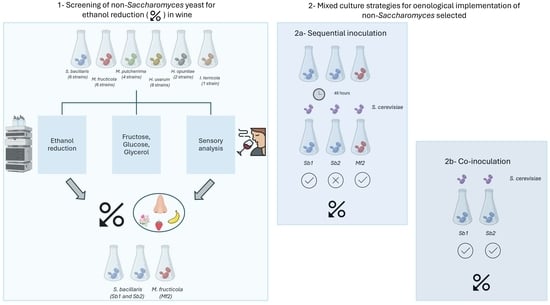
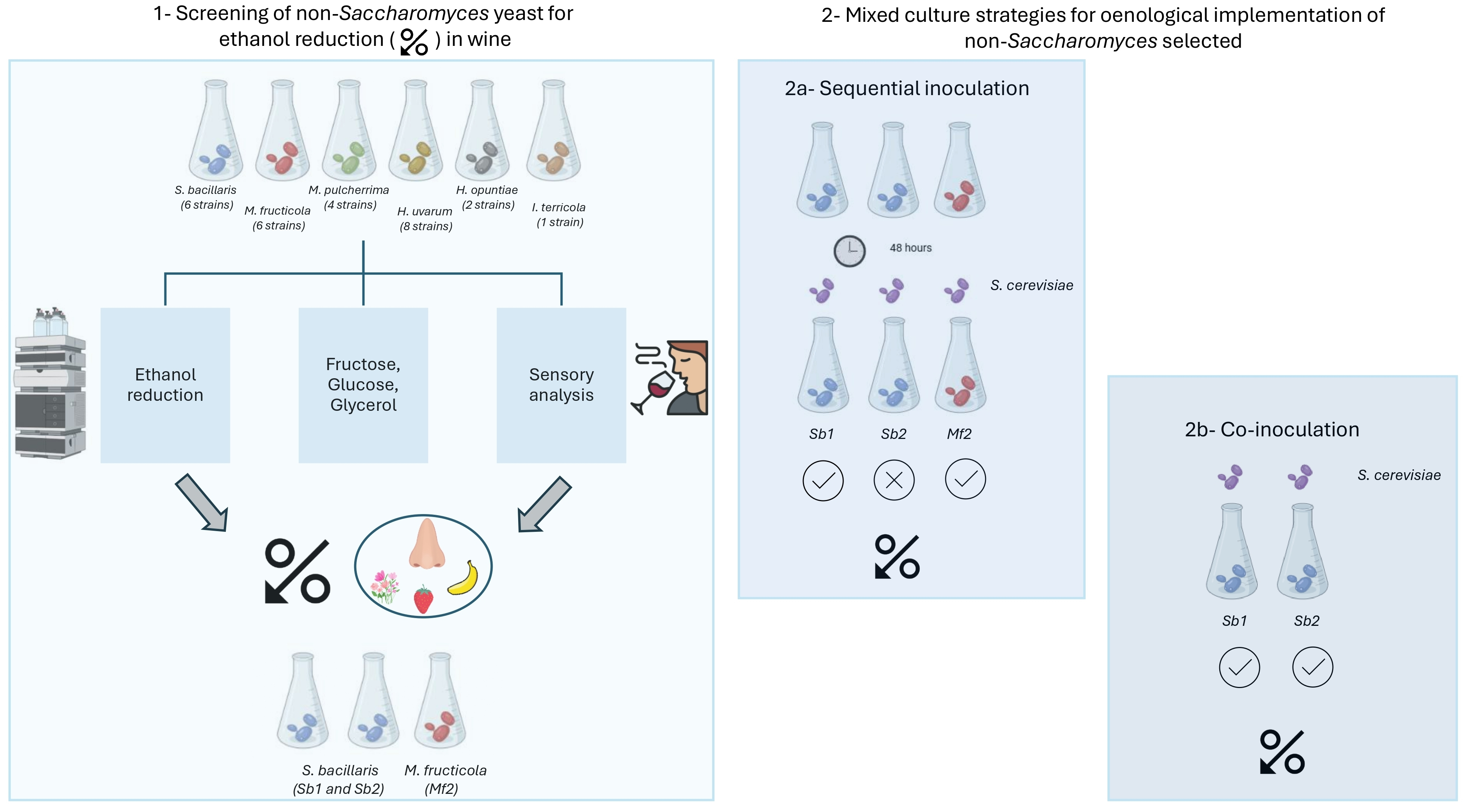
Graphical Abstract

1. Introduction

Alcohol is the main product of alcoholic fermentation. In recent years, the alcohol content in wines has been increasing, especially in warmer areas due to changing climatic conditions [1]. This is considered a negative change since a high alcohol content is associated with various problems. For example, from a consumer health perspective, it is associated with liver disease and cardiovascular problems [2]. In addition to health issues, there are countries where taxes increase as alcohol content increases [3]. As a result, the consumption of wines with moderate, reduced, and even no alcohol content has gained popularity [4]. For example, low-alcohol wine consumption constitutes about 40% of the total wine consumption in the USA [5].
The causes of high alcohol content in wines may differ depending on the wine-growing region; however, the main cause is the effects of climate change and rising temperatures during the harvest season [6].
In the specific case of high-end wines from Uruguay, the aim is to improve the quality of the grapes by concentrating secondary metabolites, which are key to the wine’s organoleptic quality. One strategy to achieve this is to delay the harvest date to increase the maturity of polyphenols (mainly in the seeds); thus, as a side effect, higher sugar levels and, consequently, higher potential alcohol levels (up to 16% vol.) are achieved. The polyphenolic composition impacts the sensory attributes of wine: visually, due to their color, and in terms of astringency [5], especially in wines made from the Tannat grape variety, which is characterized by its high tannin content [7,8].
There are different strategies through which alcohol content in wines can be moderated, ranging from vineyard management methods, such as leaf removal, to microbiological strategies, like the use of yeast with a lower capacity to convert sugar into ethanol. There are also post-fermentation methods, including blending (coupage), separation methods, thermal processes, and mechanical assistance, among others [5]. The most effective approach for reducing ethanol would be a combination of the above strategies, allowing for a more substantial decrease in ethanol concentration without adversely affecting the sensory profile of the resulting wines [6].
Regarding microbiological strategies, the use of different yeasts has been studied, especially non-Saccharomyces (NS) types, because some strains exhibit lower ethanol production, instead redirecting their metabolism toward the production of other compounds such as glycerol or pyruvic acid [4].
Among the yeasts most commonly reported for their ability to reduce ethanol production is Metschnikowia pulcherrima (M. pulcherrima) [4,9], which, in addition to reducing ethanol content, increases the production of various volatile compounds and glycerol, enhancing the sensory complexity of the wines obtained. Yeasts of the genus Hanseniaspora have also been reported to decrease ethanol content while increasing the concentration of volatile compounds of interest [4,10,11]. Starmerella bacillaris (S. bacillaris), on the other hand, stands out for its fructophilic nature [12] and for growing in environments with high sugar content, as well as its ability to reduce the ethanol content [4,6,13,14]. In the case of Metschnikowia fructicola (M. fructicola), this species stands out for its ability to biologically control grapevine phytopathogens and improve aromatic complexity [15,16]. However, there are no previous reports of this species being used to produce low-ethanol wines, either in pure or mixed cultures. The only mention is in the work of Harlé et al. (2019) [17], which shows a lower yield compared to Saccharomyces cerevisiae (S. cerevisiae). On the other hand, Issatchenkia terricola (I. terricola) was previously reported for its high β-glucosidase capacity, which contributes to the volatile profile of the wines produced [18].
Based on the above, the objective of this study was to analyze, within our laboratory’s collection of native yeasts, previously documented species and other less explored species in order to identify those that do not present defects and that can moderately reduce the ethanol content in wines.

2. Materials and Methods

2.1. Yeasts

A total of twenty-six strains belonging to the collection of native yeasts of the Enology and Fermentation Biotechnology Area of the Faculty of Chemistry, isolated from Tannat, Merlot, Cabernet Franc, Cabernet Sauvignon, and Arinarnoa grapes, were used (Table 1). The yeasts belonged to the genera Starmerella, Metschnikowia, Hanseniaspora, and Issatchenkia and were pre-selected if they produced a lower ethanol yield than S. cerevisiae and were free of any undesirable sensory aromas. I. terricola was used for its β-glucosidase activity [18].
Each strain is assigned an internal identifier (Abbreviation) for use throughout the manuscript. The original isolation identifier (Isolation code) is also provided and includes information about the grape variety from which the isolate originated (T: Tannat, M: Merlot, CF: Cabernet Franc, C: Cabernet Sauvignon, A: Arinarnoa), followed by the year of isolation and a sequential strain number. The final letter indicates the sampling stage: “G” denotes isolates obtained from the grape surface, whereas “F” corresponds to isolates collected during the first third of spontaneous fermentation.
Yeast strains were stored in YPD medium slants (1% yeast extract, 2% peptone, 2% glucose, 2% agar, containing 0.1 M citrate-phosphate buffer, pH 4.5) in a −70 °C freezer with 20% glycerol solution.
One well-isolated colony of each different type was selected and streaked on plates with Wallerstein Laboratory nutrient (WLN) differential culture medium [19] to obtain isolated colonies.
A commercial S. cerevisiae yeast, Lalvin BM 4X4 TM (Lallemand Inc., Toronto, ON, Canada), was used as a control in all treatments.

2.2. Molecular Identification

The yeasts were genetically identified by sequencing the variable D1/D2 region of the 26S rDNA gene. DNA was extracted according to the method of Godoy [20], and DNA was quantified using a NanoDrop® spectrophotometer (NanoDrop Technologies, LLC, Wilmington, DE, USA). PCR amplification and sequencing were carried out by Macrogen (Seoul, Republic of Korea) using primers NL-1 (5′-GCATATCAATAAGCGGAGGAAAAG-3′) and NL-4 (5′-GGTCCGTGTTTCAAGACGG-3′) [21] for PCR, and primer NL-1 for sequencing.
The obtained sequences were analyzed and refined according to quality criteria and compared against the NCBI database. For strains belonging to the same yeast species, nucleotide differences in the D1/D2 region were considered acceptable when ≤1% [6].

2.3. Microvinifications

Fermentations were carried out in triplicate in 125 mL flasks containing 60 mL of chemically defined model must (CDMM), using an inoculum size of 1 × 10⁶ cells/mL, under semi-anaerobic conditions (flasks closed with cotton plugs) and at 20 °C, according to the method described by Listur et al. (2025) [22], with the sole modification of adjusting the total yeast assimilable nitrogen to 150 mg N/L. Equimolar concentrations of glucose (Carlo Erba Reagents S.A., Val-de-Reuil, France) and fructose (Sigma-Aldrich, St. Louis, MO, USA) were added to reach a total sugar concentration of 200 g/L, and pH 3.5.

2.4. Descriptive Odor Analysis

Individuals with prior experience in wine sensory analysis were initially recruited from the department staff. Following a two-month training period using a commercial aroma reference kit (Le Nez du Vin®, Cassis, France), 10 panelists (6 females and 4 males; aged 23–65 years) who achieved an aroma identification accuracy above 95% were selected to participate in the study. Sensory analyses were conducted in triplicate at the end of alcoholic fermentation using this trained panel. Samples (30 mL) were served at 20 ± 1 °C in 250 mL clear tulip-shaped glasses (ISO 3591:1977 [23]), covered with a watch glass and coded with random three-digit numbers. Panelists were allowed to report primary, secondary, and tertiary aroma descriptors. Evaluation consisted solely of non-ingestive olfactory assessments. Panelists did not taste or ingest the samples, no personal data were collected, and no procedures involving risk or physical intervention were performed. In accordance with Uruguayan national regulations (Decree No. 158/019) [24], ethics committee approval was not required.

2.5. Chemical Analysis

The 0.45 μm membrane-filtered samples were analyzed by HPLC-RID (Shimadzu system, Singapore). A Supelcogel C-610H column (Supelco®, Bellefonte, PA, USA; 30 cm × 7.8 mm, 9 μm) was used with an isocratic mobile phase of 0.005 N H2SO4, a flow rate of 0.5 mL/min, and a column temperature of 60 °C.
The system included an SIL-10AD autosampler, an LC-20AT pump, a CTO-10AS column oven, and a RID-10A refractive index detector.
Identification and quantification were performed using calibration curves prepared with standard solutions of D-glucose (Sigma Aldrich® #50-99-7), D-fructose (Sigma Aldrich® #57-48-7), absolute ethanol (Sigma Aldrich® #64-17-5), and glycerol (Sigma Aldrich® #56-81-5).
Chromatographic data were processed using the LabSolutions LC software package (version 5.106). The ethanol yield (g/g) was calculated as ethanol production (g/L)/sugar consumption (g/L).

2.6. Mixed Cultures

Mixed cultures were carried out using NS yeasts in combination with S. cerevisiae. The commercial strain S. cerevisiae BM 4X4 is hereafter referred to as Sc, and the NS strains used were S. bacillaris Sb1, S. bacillaris Sb2, and M. fructicola Mf2.
All fermentations were performed using the general experimental conditions described in Section 2.3, including CDMM composition, pH, lipid supplementation, temperature, semi-anaerobic conditions, and monitoring procedures. The only modification made was to the working volume, adjusted to 120 mL in 250 mL flasks. Each fermentation was carried out in triplicate.
In the sequential inoculation strategy, each fermentation was initiated with 1 × 10⁶ cells/mL of the corresponding NS strain. At 48 h, Sc was inoculated at 1 × 10⁶ cells/mL [14,25], and nutrient supplementation was performed by adding 50 mg N/L diammonium phosphate (DAP); 50 mg N/L from amino acids (AAs) + DAP (following the proportional composition of each compound as reported by Listur et al. [22]; 2.5 mg/L yeast extract; and 0.3 mg/L thiamine, in order to replenish nutrients consumed during the initial phase and to support the establishment of Sc.
In the co-inoculation strategy, the strain combinations evaluated were Sb1 + Sc and Sb2 + Sc. Both strains were inoculated simultaneously, using 1 × 10⁶ cells/mL for the NS strain and 1 × 10⁵ cells/mL for Sc [25], in CDMM containing 200 mg N/L from the onset. At 72 h, the same supplementation used in the control was applied.
The control consisted of a monoculture of Sc, initiated in CDMM containing 200 mg N/L, and supplemented at 72 h with 50 mg N/L DAP, 2.5 mg/L yeast extract, and 0.3 mg/L thiamine, according to experimentally established requirements.
Yeast population dynamics were monitored using plate counts on WLN medium, using appropriate serial dilutions prior to plating, with sampling every 48–72 h. A summary of the experimental conditions used in both strategies is provided in Table 1.

2.7. Killer Activity

Killer activity and sensitivity to the killer system were evaluated in strains Sb1, Sb2, and Mf2 according to the protocol established by the OIV-OENO 370-2012 [26] resolution. To assess killer activity, the tested strains were grown on a lawn of a sensitive strain, whereas sensitivity or resistance to the killer system was determined by the growth of the evaluated strains on a lawn of K2 killer strains.
As reference strains, the K2 killer strains S. cerevisiae 4X4 and KUI, as well as the sensitive strain S. cerevisiae Montrachet 522 (M522), from the University of California, were used; the killer and sensitive phenotypes of these strains had been previously confirmed by Medina et al. [27]. Killer activity was evaluated based on the presence or absence of inhibition zones around the colonies, allowing for the classification of the strains as killer, sensitive, or neutral.

2.8. S02 and Ethanol Tolerance

Growth assays in the presence of ethanol and SO2 were performed in microplates by measuring optical density using a microplate reader (Omega PolarStar, BMG Labtech, Ortenberg, Germany), operated with Magellan software (version 7.2) following an adaptation of the protocol described by Mauriello et al. [28]. In this adaptation, agarized grape must was replaced with liquid Ugni Blanc grape must (pH 3.6; 220 g/L reducing sugars; 150 mg N/L), and all assays were conducted in triplicate.
To evaluate growth in the presence of SO2, potassium metabisulfite (K2S2O5) was used as a source of sulfur dioxide, and final concentrations of 25, 40, 50, 75, 100, and 150 mg/L were tested, with incubation times of 24 and 48 h. For ethanol assays, final concentrations of 3, 6, 10, 12, 14, and 16% (v/v) were evaluated, with an incubation time of 24 h.
Cell growth was expressed as relative growth (%) compared to the control without ethanol or SO2, using a commercial S. cerevisiae strain as the reference control. According to the criterion proposed by Englezos et al. [29], isolates showing growth below 10% were considered non-resistant.

2.9. Statistical and Data Analysis

Analysis of variance (ANOVA) was carried out on the obtained data using Statistica 7.1 software. Significant differences were evaluated using Fisher’s LSD test. In all cases, differences with p values ≤ 0.05 were considered statistically significant.

3. Results

3.1. Screening of NS Yeast

In this study, 26 native NS yeast strains were evaluated through microvinifications in synthetic medium with a moderate nitrogen concentration (150 mg N/L) in order to identify candidates for use in mixed cultures with Sc used for reducing the ethanol content in wine. The selection was carried out in two stages, the first based on the aromas produced and the other based on fermentation parameters of ethanol yield and sugar consumption.
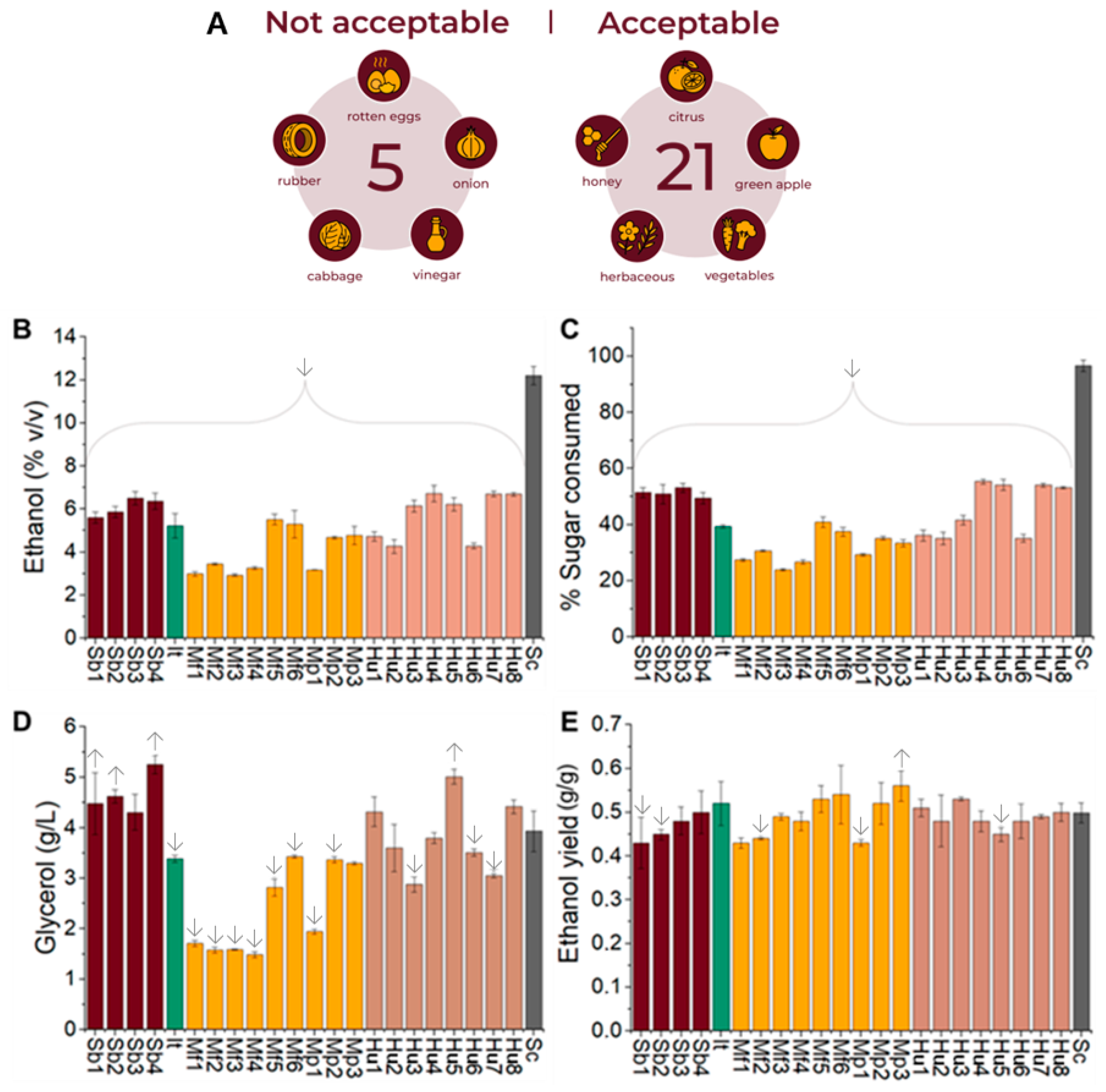
During the first selection stage, strains that, at the end of fermentation, produce wines with aromatic descriptors associated with defects, such as rotten egg, onion, garlic, or rubber, were discarded. Thus, five strains were eliminated, and the study continued with the remaining strains (Figure 1A, Table 1, and Supplementary Material Table S1).
From the first screening stage, 21 strains were selected that showed incomplete sugar consumption and lower ethanol production during alcoholic fermentation compared to those shown by Sc, in accordance with the characteristic fermentation behavior of the NS species evaluated (Figure 1A,B, Table 2, and Supplementary Material Table S2) [30]. In this regard, the S. bacillaris strains produced around 6.0% v/v ethanol and consumed approximately 50% of the sugars present in the must, while I. terricola reached 5.2% v/v with 39.4% sugar consumption. The strains of M. fructicola and M. pulcherrima presented ethanol values between 2.9 and 5.5% v/v and sugar consumption of 23–40%. The H. uvarum strains showed the widest range within the NS group, with a range of 4.3–6.7% v/v and sugar consumption between 35 and 55%.
Glycerol production varied significantly among the NS species (Figure 1D, Table 2, Supplementary Material). Some S. bacillaris strains (Sb1, Sb2, and Sb4) generated concentrations significantly higher than those recorded for Sc (4.5–5.3 g/L versus 3.8 g/L), in line with the known ability of this species to accumulate glycerol [29]. In contrast, I. terricola (3.4 g/L) and the Metschnikowia spp. strains presented significantly lower values (1.5–3.4 g/L). In H. uvarum, production ranged from 3.0 to 5.0 g/L, with strain Hu5 standing out with a value significantly higher than that recorded for Sc (5.0 g/L).
On the other hand, the ethanol yield was lower for five strains compared to that produced by S. cerevisiae, including the S. bacillaris strains (Sb1 and Sb2), M. fructicola strain (Mf3), M. pulcherrima strain (Mp1), and H. uvarum strain (Hu5) (Figure 1E). In contrast, the M. pulcherrima strain (Mp3) showed a significantly higher ethanol yield than Sc.
The strains selected to advance to the mixed-fermentation stage were S. bacillaris Sb1 and Sb2 and M. fructicola Mf2, based on the screening results. Strain selection prioritized low ethanol yield together with a minimum fermentative capacity, defined as sugar consumption above a predetermined threshold (≥30% of the initial sugars; ≥60 g/L), according to comparable studies [10,31]. In addition, Sb1 and Sb2 exhibited oenologically relevant technological traits, including high glycerol production and a fructophilic profile consistent with S. bacillaris [32].

3.2. Mixed-Culture Strategy

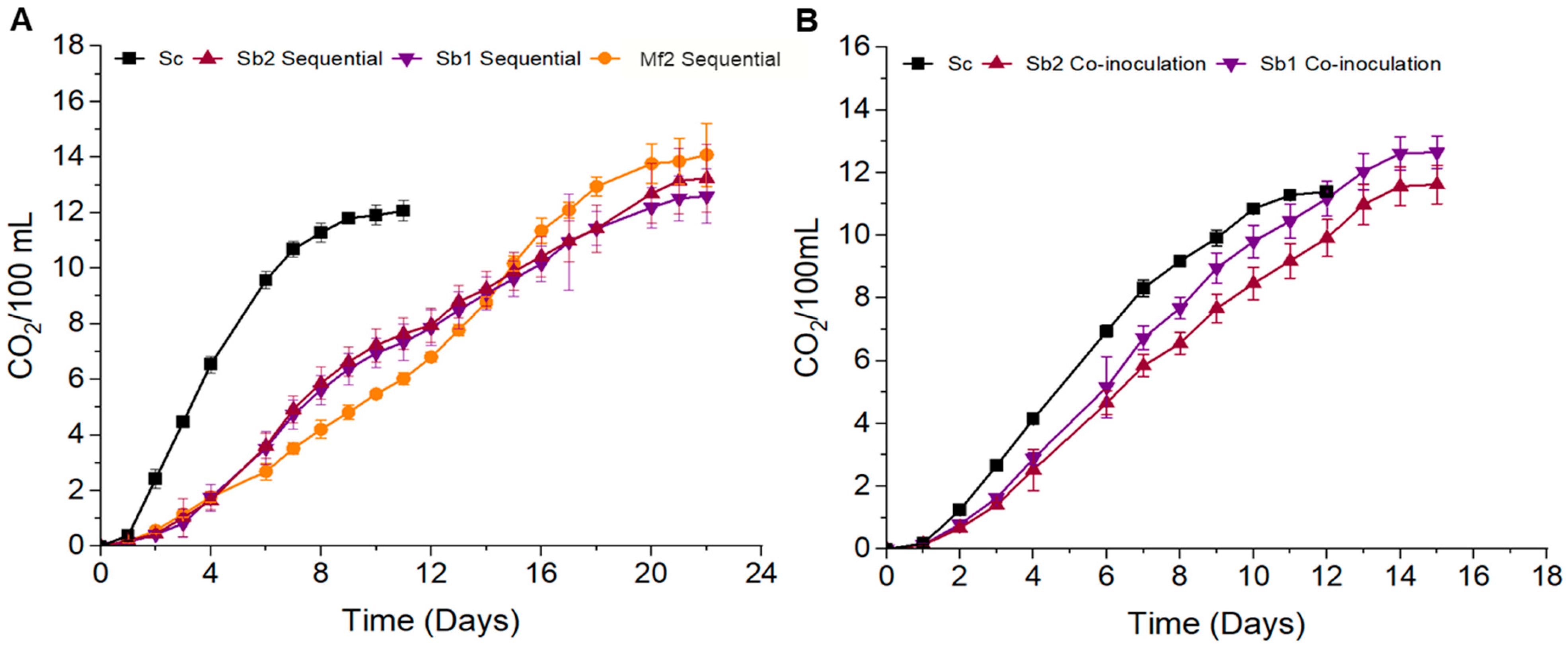
Figure 2 shows the fermentation kinetics of the mixed cultures created with S. bacillaris (Sb1 and Sb2) and M. fructicola (Mf2), together with the control cultures of S. cerevisiae corresponding to each experimental series.
In the sequentially mixed cultures (Figure 2A), the Sc control reached the end of fermentation on day 11. In contrast, all of the mixed combinations progressed more slowly and extended fermentation to approximately 22 days. The kinetics of Sb1 and Sb2 were practically identical, reflecting very similar behavior between the two strains. Mf2, on the other hand, showed slower fermentation kinetics until day 14 when the sequential strategy was used. In the co-inoculated mixed cultures (Figure 2B), the kinetics of Sb1 and Sb2 were more similar to the control culture’s profile. Although the mixed cultures progressed slightly slower than Sc, the duration compared to the control was reduced (approximately 3 days), unlike what was observed in the sequential strategy. In this strategy, Sb1 and Sb2 showed similar behavior to each other.
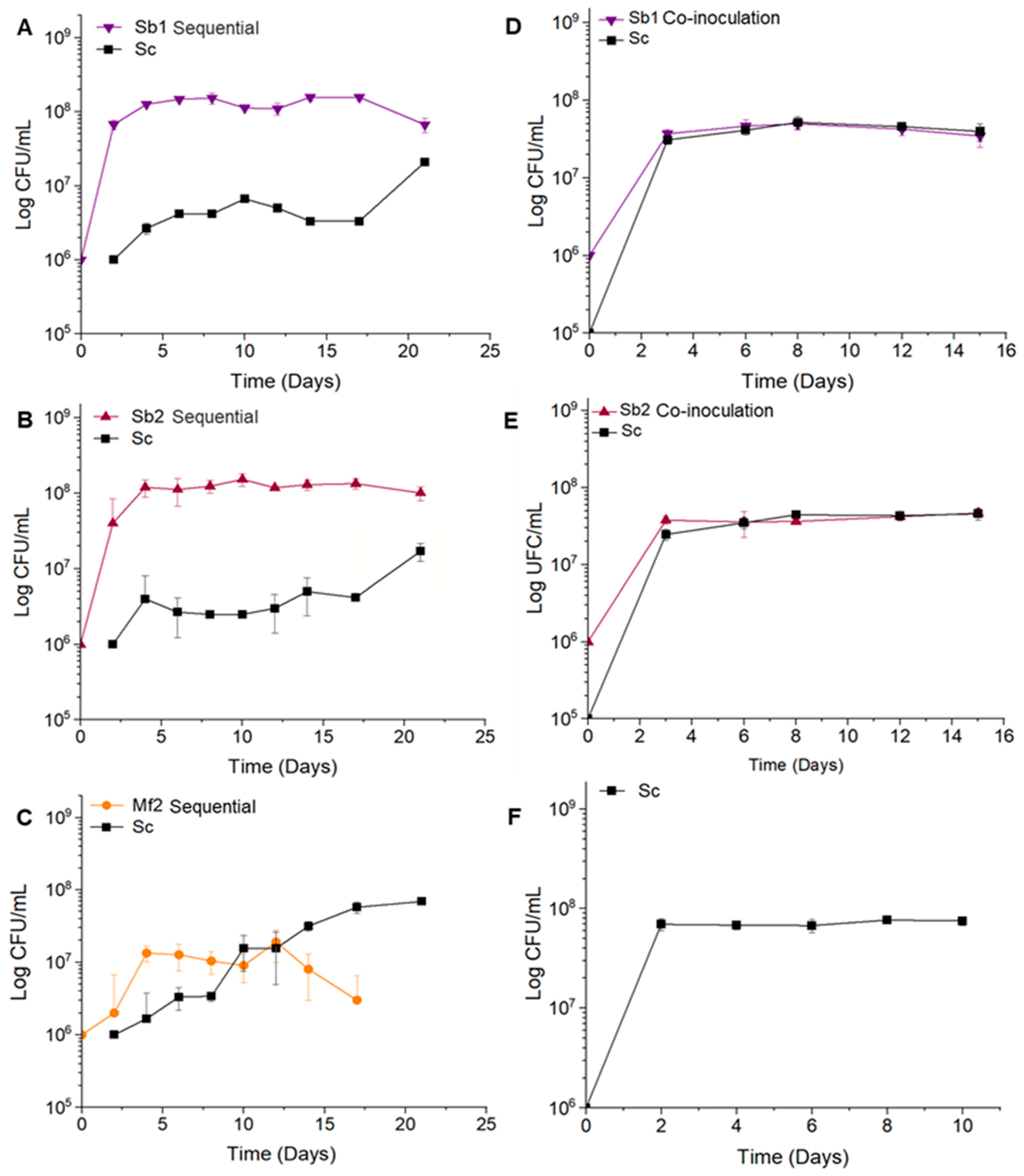
Figure 3 shows the evolution of yeast populations during mixed fermentations. In sequential cultures with S. bacillaris, strains Sb1 and Sb2 (Figure 3A,B) reached densities close to 1 × 10⁸ CFU/mL and remained the predominant populations throughout fermentation. In both cases, S. cerevisiae showed more limited growth, exceeding 1 × 10⁷ CFU/mL only towards the end of the process.
In the sequential culture with Mf2 (Figure 3C), M. fructicola reached maximum values between 106 and 107 CFU/mL and predominated in the early stages, subsequently being replaced by S. cerevisiae, which reached approximately 1 × 10⁸ CFU/mL towards the end of fermentation.
In the co-inoculated cultures (Figure 3D,E), Sb1 and Sb2 coexisted stably with S. cerevisiae, with both species remaining between 107 and 108 CFU/mL. However, in none of the mixed combinations—neither sequential nor co-inoculated—did S. cerevisiae reach the density observed in the control culture, even at the end of alcoholic fermentation.
In the S. cerevisiae control culture (Figure 3F), the reference strain reached approximately 1 × 10⁸ CFU/mL within the first 48 h and maintained this density until the end of the process, a population level that was not achieved under any of the mixed strategies evaluated.
Table 3 shows the final glucose, fructose, and glycerol concentrations obtained in the mixed cultures produced by sequential inoculation and co-inoculation. In the sequential strategy, the combinations with S. bacillaris (Sb1 and Sb2) presented the highest levels of residual glucose, with values between 6.13 and 13.87 g/L. In contrast, the culture with M. fructicola (Mf2) showed no detectable glucose at the end of fermentation, although residual fructose content (1.96 g/L) was observed.
With this same strategy, all of the combinations exhibited higher glycerol production than the control culture; Sb1 and Sb2 stood out in this regard, with values between 8.21 and 8.62 g/L. The Mf2 culture also increased the glycerol concentration compared to the control, although to a lesser extent (5.73 g/L).
In the co-inoculated cultures, the residual glucose varied depending on the S. bacillaris strain used. Sb1 consumed practically all of the available glucose (1.34 g/L), while Sb2 left a considerable amount (11.73 g/L). Fructose was not detectable in any of the co-inoculated cultures. In all cases, glycerol production remained above that achieved with the reference strain, reaching between 5.15 and 5.56 g/L, respectively.
In Table 3, the column labeled “ethanol reduction” shows the 95% confidence intervals corresponding to the difference in ethanol content between each mixed culture and its control. In the sequential strategy, the Sb1 and Mf2 combinations showed significant reductions in ethanol, with ranges of 0.3–4.0% v/v and 0.7–4.0% v/v, respectively. With the sequential strategy, the Sb2 combination did not show a significant reduction, whereas in the co-inoculated cultures, both S. bacillaris strains also showed significant decreases, although of lesser magnitudes (0.2–0.7% v/v for Sb1 and 0.7–1.0% v/v for Sb2).

3.3. Oenological Characterization of the Selected Strains

Table 4 summarizes the growth in the presence of ethanol and SO2, as well as the sensitivity to the K2 killer system and killer phenotype of the selected strains of S. bacillaris (Sb1 and Sb2) and M. fructicola (Mf2).
The two S. bacillaris strains showed high growth at moderate ethanol concentrations: Sb1 maintained 100% growth at 3% v/v and 76% growth at 6% v/v, while growth was significantly reduced (13–29%) at concentrations above 10% v/v. Sb2 showed a similar pattern, although with slightly lower values than Sb1 at most concentrations.
The M. fructicola strain Mf2 exhibited limited growth in the presence of ethanol: At 3% v/v, it reached 57% relative growth, while at 6% and 10% v/v, the values decreased to 18% and 10%, respectively. No growth was observed at ethanol concentrations of 12% and 14% v/v.
Growth in the presence of SO2 showed more marked differences between species. After 24 h of incubation, Sb1 and Sb2 showed moderate growth at 25–40 mg/L, but this decreased abruptly from 75 mg/L, with values of 19–22%, and was considered non-resistant at 100 mg/L.
At 48 h, both strains showed a slight increase in growth, although this remained low at high concentrations.
In contrast, Mf2 recorded significantly higher growth rates. At 24 h, it showed values between 51 and 69% at 40–75 mg/L and maintained growth even at 100 mg/L and 150 mg/L (10% and 17%, respectively). At 48 h, growth remained high, reaching 85% at 75 mg/L and 71% at 100 mg/L, making it the strain with the highest growth in the presence of SO2 among those evaluated.
None of the strains evaluated showed killer activity (a negative killer phenotype) or sensitivity to K2 toxin, so all are classified as killer-neutral strains.

4. Discussion

4.1. Interpretation of the Results of Non-Saccharomyces Yeast Screening

Screening the 26 NS yeast strains allowed for the identification of isolates with potential for application in mixed cultures with S. cerevisiae, with the aim of reducing the ethanol content in wines. The selection was based on both the fermentation behavior and the odor quality of the wines obtained. Unlike previous experiences reported in the literature with NS strains [31,33,34], where short fermentations of 4 to 5 days were used, in this case, the microvinifications were maintained until the end of fermentation. This type of monitoring allowed for the overall aromatic expression of the fermentation process to be evaluated, identifying strains with favorable aromatic profiles and discarding those that produced aroma defects commonly associated with a lack of nitrogen. The presence of undesirable aromas, such as rotten egg, onion, or rubber, is related to excessive production of hydrogen sulfide (H2S) and derived compounds (ethanethiol, ethyl S-thioacetate, diethyldisulfide) [35,36], a phenomenon that is often associated with limited nitrogen availability [37].
Under the conditions evaluated, high variability was observed between the strains in terms of ethanol and glycerol production as well as sugar consumption (Figure 1A–E, Table S2, Supplementary Material). This heterogeneity is consistent with what has been reported in extensive studies characterizing NS yeasts, which indicate that many traits of oenological interest—including ethanol yield—are highly dependent on the strain and cannot be extrapolated to the species level [10,38,39,40]. This background, together with our results, emphasizes the need for strain-level selection to identify yeasts with true oenological potential.
Within the Metschnikowia genus, M. pulcherrima produced much lower levels of ethanol than S. cerevisiae, reflecting its low fermentative capacity and reduced sugar consumption (Figure 1A,B). This behavior coincides with what has been reported for the species, whose effect on alcohol yield in pure cultures is usually limited and depends markedly on both the strain used and the availability of oxygen in the initial stages of fermentation [9,41,42,43]. The combination of a predominantly oxidative metabolism and low ethanol tolerance further contributes to restricting its fermentation performance under semi-aerobic conditions such as those applied in this study. In this context, M. fructicola is a particularly novel contribution; although it has been used almost exclusively as a biocontrol agent [44,45,46] and, more recently, for its aromatic impact in mixed fermentations [47,48], its fermentative behavior has scarcely been studied. Under our conditions, all of the strains evaluated showed limited fermentative capacity and, in two trials, a significantly lower alcoholic yield than S. cerevisiae, without parallel increases in glycerol (Figure 1E). This pattern suggests lower fermentation efficiency, possibly associated with residual respiration and/or greater carbon investment in biomass, mechanisms that can reduce alcohol yield even under limited oxygen availability. Taken together, these results provide novel and relevant information on the oenological performance of M. fructicola, a species that is still poorly characterized in this context.
In this study, H. uvarum showed high variability between strains in terms of the fermentation parameters evaluated, a behavior consistent with what has been previously reported for this species, characterized by marked phenotypic heterogeneity and low fermentation performance under oenological conditions [10,40].
Among the strains evaluated, the species S. bacillaris stood out for both its high sugar consumption with high glycerol production, the latter contributing to the body and sweetness of wine [49]. Some reports indicate that increased glycerol production is associated with higher acetic acid levels [50]. However, evidence from studies on S. bacillaris suggests that this relationship is not necessarily observed, even in mixed cultures with S. cerevisiae, in which comparable or even lower acetic acid levels have been reported [51,52]. Its fructophilic nature also makes it a particularly suitable species for mixed fermentations with S. cerevisiae, as it helps to prevent the accumulation of residual fructose, an increasingly common problem due to the increase in the fructose/glucose ratio in grapes [53,54]. Likewise, its marked osmotic tolerance, documented in media with high sugar concentrations [55,56], contributes to reducing osmotic stress during fermentation and has been associated with lower acetic acid production in mixed cultures [57]. Taken together, these traits justify the selection of strains Sb1 and Sb2 for evaluation in mixed fermentations.

4.2. Performance of Mixed-Culture Strategies

The mixed-culture strategy allows for the industrial use of NS yeasts, as it ensures total sugar consumption and appropriate progression of fermentation [58,59]. However, it should be noted that interactions between S. cerevisiae and NS yeasts depend heavily on the species used, as well as on the inoculation strategy applied. In the case of inoculation with Mf2, this strain dominated the early stages of fermentation and subsequently declined due to its low ethanol tolerance, allowing Sc to complete fermentation. Although M. fructicola has been described as having a limited impact on alcohol reduction [47,48], in this study, Mf2 was associated with good sugar consumption, higher glycerol production, and significant ethanol reductions under semi-aerobic conditions. This behavior contrasts with that of M. pulcherrima, whose more pronounced alcohol reductions require controlled aeration [9,41] and decrease almost completely in the absence of oxygen [42,43]. In line with the above, considering that the semi-aerobiosis applied here does not necessarily imply sustained aeration, but rather a probably limited availability of O2 in the initial stages, these results open up the possibility that M. fructicola can take advantage of low/transient oxygen levels to modify the early metabolic balance and reduce the overall alcoholic yield of the system [60,61]. In this context, measuring dissolved oxygen and its consumption dynamics during the first hours of fermentation would allow for a direct evaluation of the contribution of this mechanism. Part of the observed fermentation slowdown could be due to nitrogen competition, a phenomenon documented in mixed NS/S. cerevisiae fermentations [62].
In sequential fermentations with Sb1 and Sb2, both quickly reached populations close to 108 CFU/mL and remained dominant throughout the process, while Sc only exceeded 107 CFU/mL in late stages. This dynamic coincides with that reported by Englezos et al. [14,52], where sequential inoculation confers an initial competitive advantage to S. bacillaris. Unlike some studies that describe a population decline towards the end of fermentation, under the particular conditions of this trial, no loss of viability was observed, indicating that the conditions were compatible with the permanence of the species until the end of the process.
In co-inoculation, the population dynamics were markedly different: S. cerevisiae and NS coexisted in similar proportions throughout fermentation. This pattern is indicative of biocompatibility, understood as an interaction in which both species maintain their activity without inhibiting each other and can contribute complementarily to the fermentation profile [63]. In systems where early competition tends to favor the rapid dominance of S. cerevisiae, this observed coexistence suggests that the physiological characteristics of the strains evaluated allow for a balanced interaction under the conditions applied. In this context, it has been proposed that certain losses of viability in mixed fermentations may be associated with cell–cell contact-dependent inhibition phenomena [64,65]; however, no abrupt decreases suggesting this type of interaction were detected here. On the other hand, the killer effect does not explain the population dynamics of yeasts recorded during fermentation. Although the S. cerevisiae strain used produces the K2 toxin, whose spectrum of action has been described as limited [66], a possible inhibitory effect on non-Saccharomyces yeasts was ruled out. To this end, in addition to analyzing population evolution, agar plate tests were performed using a sensitive strain (S. cerevisiae Montrachet) as a reference, which confirmed that Sb1, Sb2, and Mf2 do not exhibit killer activity or sensitivity to this toxin. Consequently, the strains evaluated can be considered killer-neutral under the conditions studied.
It was observed that the impact on ethanol production depended both on the strain of S. bacillaris used and on the inoculation strategy. In the sequential strategy, only the Sb1 strain achieved consistent reductions in alcohol content (0.3–0.4% v/v), while Sb2 did not produce a net decrease, as residual glucose was observed in the wine obtained. In contrast, in the co-inoculation strategy, both strains generated reductions between 0.2 and 1% v/v; however, only Sb1 consumed the sugars in the medium.
The differential behavior observed between Sb1 and Sb2 highlights the strain-dependent nature of this species on alcoholic yield. This is a widely recognized characteristic of S. bacillaris, whose fermentative properties and interaction with S. cerevisiae vary significantly depending on the strain used [12]. Capece et al. (2022) [67] demonstrated that coexistence with S. bacillaris can alter the physiology and transcriptomic profile of S. cerevisiae, generating more pronounced responses than those induced by other NS yeasts (e.g., Zygosaccharomyces bailii). In particular, the simultaneous activation of glycolytic and gluconeogenic genes reported in this context suggests the possible induction of futile cycles, which consume energy without net metabolic benefit and could result in less efficient glucose utilization, contributing to a decrease in final ethanol yield. Taken together, these findings support the idea that yeast–yeast interactions can modulate central pathways of fermentative metabolism and, therefore, condition ethanol production. In this context, the results obtained in this work, together with the additional tests included in the supplementary material (Tables S4 and S5, and Figure S1 of the Supplementary Material) for S. bacillaris, are consistent with a significant and specific effect of each strain combination, and highlight the importance of evaluating both yeast interaction and inoculation strategy to understand and manage their fermentative impact.
Given the pronounced strain-dependent variability observed, especially for S. bacillaris, the outcomes reported here should not be extrapolated at the species level, particularly in applied or industrial contexts. Careful evaluation of strain combinations and inoculation strategy is required to maximize their contribution at the oenological level.
The ethanol reductions achieved in this study through mixed-culture fermentations fall within the range typically reported for microbiological strategies based on NS yeasts combined with S. cerevisiae, whose impact is generally moderate and strongly dependent on the species/strain and inoculation scheme [4,68]. In contrast, post-fermentative technologies enable much larger and more controllable ethanol reductions by physically removing ethanol from finished wines (e.g., membrane-based processes and vacuum distillation/spinning cone columns), potentially reaching partially dealcoholized wines or even <0.5% v/v, although at the cost of higher technological requirements and an increased risk of altering the chemical and sensory profile relative to the original wine [69,70]. Therefore, several review articles agree that alcohol reduction can be viably addressed through an integrated approach combining measures at different stages (vineyard, pre-fermentation, fermentation, and/or post-fermentation), as no single strategy simultaneously maximizes the degree of reduction, preservation of typicity, and industrial viability [68,71,72].

5. Conclusions

Based on a selection of native NS yeasts from Uruguayan vineyards, it was possible to select strains of the species S. bacillaris and M. fructicola for use in the production of wines with lower alcohol content and without organoleptic defects.
Under the conditions evaluated, high variability was observed between species and strains for both ethanol and glycerol production and glucose and fructose consumption, suggesting that fermentation characteristics are strongly influenced by the strain used.
M. fructicola showed a lower alcoholic yield than S. cerevisiae, with no increase in glycerol and almost total consumption of sugars, making it a promising species for the production of low-ethanol wines. In this context, and to our knowledge, this is the first report on the oenological characterization of this species for the production of wines with lower alcohol content.
In turn, trials with pure S. bacillaris cultures combined high consumption of sugars, mainly fructose, with high glycerol production.
With regard to the mixed cultures, the fermentation dynamics also proved to be greatly influenced by the different biocompatibilities between the strains studied, as well as by the inoculation strategy employed. With sequential inoculation of M. fructicola + S. cerevisiae, good sugar consumption, higher glycerol production, and a significant reduction in ethanol were observed compared to the control test with a pure culture of the commercial strain. In turn, with the sequential inoculation of S. bacillaris, only Sb1 achieved consistent ethanol reductions, while Sb2 did not generate net decreases due to the presence of residual glucose. In the co-inoculation trials, both strains reduced ethanol to between 0.2 and 1% v/v, although only Sb1 achieved total sugar consumption.
The results obtained show a marked dependence on the strain used, which emphasizes the need to conduct biocompatibility studies and to further investigate inoculation strategies that maximize their oenological contribution.

Supplementary Materials

The following supporting information can be downloaded at https://www.mdpi.com/article/10.3390/fermentation12010057/s1, Table S1. Aromatic descriptors associated with each non-Saccharomyces strain based on odor evaluation. Species, isolation codes, and dominant aroma attributes detected are presented. Table S2. Ethanol concentration; ethanol yield (g of ethanol generated/g of sugar consumed); percentage of sugar consumed; and concentration of glycerol, glucose, and fructose per trial of the selected strains (absence of aromatic defects) at the end of fermentation. Table S3. Concentration of glucose, fructose, glycerol, and ethanol, and ethanol reduction for each sequential mixed culture at the end of fermentation. Table S4. Experimental design of Series A, B, and C. Table S5. Residual sugars, glycerol concentration, and ethanol content at the end of fermentation for the different mixed-culture strategies (Series A, B, and C) using S. bacillaris strains Sb1 and Sb2 with S. cerevisiae. Figure S1. Growth kinetics of S. bacillaris Sb1 and Sb2 in mixed fermentations with S. cerevisiae under three inoculation strategies. Series A, B, and C correspond to simultaneous inoculation, sequential inoculation, and simultaneous inoculation, respectively. Data represent mean values from three biological replicates.

Author Contributions

M.B.L.: formal analysis, investigation, writing—original draft preparation; V.M.: conceptualization, methodology, investigation, resources, funding acquisition, writing—original draft preparation; L.F.: conceptualization, methodology, investigation, funding acquisition, resources, writing—original draft preparation; E.B.: methodology, validation; E.D.: methodology, funding acquisition; F.C.: methodology, funding acquisition; K.M.: conceptualization, methodology, investigation, funding acquisition, resources, writing—original draft preparation. All authors have read and agreed to the published version of the manuscript.

Funding

This research was funded by projects CSIC I+D 2101 and CSIC I+D 2327 from Comisión Sectorial de Investigation Científica—Udelar, and Belen Listur has a fellowship from Comisión Académica de Posgrado-UdelaR.

Institutional Review Board Statement

Ethical review and approval were waived for this study according to Uruguayan national regulations (Decree No. 158/019), ethics committee approval is required only for research involving human participants when there is potential physical, psychological, or social risk. The study involved only non-ingestive olfactory assessments; panelists did not taste or ingest samples, no personal data were collected, and no procedures involving risk or physical intervention were performed. Therefore, ethics committee approval was not required.

Informed Consent Statement

Participants were informed about the nature of the sensory activity, and panelists could withdraw at any time without consequence. No personal or identifiable data were collected, and no ingestion or physical intervention occurred. In any case, each participant was duly informed before beginning the tests.

Data Availability Statement

The original contributions presented in this study are included in the article and Supplementary Materials. Further inquiries can be directed to the corresponding authors.

Conflicts of Interest

The authors declare no conflicts of interest.

References

  1. Silva, P. Low-Alcohol and Nonalcoholic Wines: From Production to Cardiovascular Health, along with Their Economic Effects. Beverages 2024, 10, 49. [Google Scholar] [CrossRef]
  2. Global Status Report on Alcohol and Health and Treatment of Substance Use Disorders; World Health Organization: Geneva, Switzerland, 2024.
  3. Catarino, M.; Mendes, A. Dealcoholizing Wine by Membrane Separation Processes. Innov. Food Sci. Emerg. Technol. 2011, 12, 330–337. [Google Scholar] [CrossRef]
  4. Testa, B.; Coppola, F.; Succi, M.; Iorizzo, M. Biotechnological Strategies for Ethanol Reduction in Wine. Fermentation 2025, 11, 159. [Google Scholar] [CrossRef]
  5. An, J.; Zhang, Z.; Jin, A.; Tan, M.; Jiang, S.; Li, Y. A Critical Review of Alcohol Reduction Methods for Red Wines from the Perspective of Phenolic Compositions. Food Sci. Nutr. 2025, 13, e70401. [Google Scholar] [CrossRef]
  6. Listur, B.; Baldivia, G.; Coniberti, A.; Martín, V.; Boido, E.; Medina, K.; Carrau, F.; Dellacassa, E.; Fariña, L. Estrategias Combinadas Para La Obtención de Un Vino Tannat Con Un Contenido Moderado de Alcohol. BIO Web Conf. 2023, 68, 02045. [Google Scholar] [CrossRef]
  7. Carrau, F.; Boido, E.; Gaggero, C.; Medina, K.; Disegna, E.; Dellacassa, E. Vitis Vinifera Tannat, Chemical Characterization and Functional Properties. Ten Years of Research. In Multidisciplinary Approaches on Food Science and Nutrition for the 21st Century; Rosana, F., Ed.; Research Signpost/Transworld Research Network: Kerala, India, 2011; Volume 661, pp. 53–71. ISBN 9788178955049. [Google Scholar]
  8. González-Neves, G.; Charamelo, D.; Balado, J.; Barreiro, L.; Bochicchio, R.; Gatto, G.; Gil, G.; Tessore, A.; Carbonneau, A.; Moutounet, M. Phenolic Potential of Tannat, Cabernet-Sauvignon and Merlot Grapes and Their Correspondence with Wine Composition. Anal. Chim. Acta 2004, 513, 191–196. [Google Scholar] [CrossRef]
  9. Contreras, A.; Hidalgo, C.; Henschke, P.A.; Chambers, P.J.; Curtin, C.; Varela, C. Evaluation of Non-Saccharomyces Yeasts for the Reduction of Alcohol Content in Wine. Appl. Environ. Microbiol. 2014, 80, 1670–1678. [Google Scholar] [CrossRef] [PubMed]
  10. Rossouw, D.; Bauer, F.F. Exploring the Phenotypic Space of Non-Saccharomyces Wine Yeast Biodiversity. Food Microbiol. 2016, 55, 32–46. [Google Scholar] [CrossRef] [PubMed]
  11. Yang, H.; Wei, Y.; Feng, W.; Zhang, H.; Jiang, J.; Qin, Y. Screening of Indigenous Hanseniaspora Strains from China for Ethanol Reduction in Wine. Foods 2025, 14, 1113. [Google Scholar] [CrossRef]
  12. Paramithiotis, S.; Patra, J.K.; Kotseridis, Y.; Dimopoulou, M. Utilization of Non-Saccharomyces to Address Contemporary Winemaking Challenges: Species Characteristics and Strain Diversity. Fermentation 2025, 11, 665. [Google Scholar] [CrossRef]
  13. Rolle, L.; Englezos, V.; Torchio, F.; Cravero, F.; Río Segade, S.; Rantsiou, K.; Giacosa, S.; Gambuti, A.; Gerbi, V.; Cocolin, L. Alcohol Reduction in Red Wines by Technological and Microbiological Approaches: A Comparative Study. Aust. J. Grape Wine Res. 2018, 24, 62–74. [Google Scholar] [CrossRef]
  14. Englezos, V.; Rantsiou, K.; Cravero, F.; Torchio, F.; Ortiz-Julien, A.; Gerbi, V.; Rolle, L.; Cocolin, L. Starmerella bacillaris and Saccharomyces cerevisiae Mixed Fermentations to Reduce Ethanol Content in Wine. Appl. Microbiol. Biotechnol. 2016, 100, 5515–5526. [Google Scholar] [CrossRef] [PubMed]
  15. Liu, J.; Arneborg, N.; Toldam-Andersen, T.B.; Petersen, M.A.; Bredie, W.L. Effect of Sequential Fermentations and Grape Cultivars on Volatile Compounds and Sensory Profiles of Danish Wines. J. Sci. Food Agric. 2017, 97, 3594–3602. [Google Scholar] [CrossRef]
  16. Vicente, J.; Ruiz, J.; Belda, I.; Benito-Vázquez, I.; Marquina, D.; Calderón, F.; Santos, A.; Benito, S. The Genus Metschnikowia in Enology. Microorganisms 2020, 8, 1038. [Google Scholar] [CrossRef]
  17. Harlé, O.; Legrand, J.; Tesnière, C.; Pradal, M.; Mouret, J.-R.; Nidelet, T. Investigations of the Mechanisms of Interactions between Four Non-Conventional Species with Saccharomyces cerevisiae in Oenological Conditions. bioRxiv 2019. bioRxiv:363531. [Google Scholar] [CrossRef]
  18. Shi, W.K.; Wang, J.; Chen, F.S.; Zhang, X.Y. Effect of Issatchenkia Terricola and Pichia Kudriavzevii on Wine Flavor and Quality through Simultaneous and Sequential Co-Fermentation with Saccharomyces cerevisiae. LWT 2019, 116, 108477. [Google Scholar] [CrossRef]
  19. Pallmann, C.; Brown, J.; Olineka, T.; Cocolin, L.; Mills, D.; Bisson, L. Use of WL Medium to Profile Native Flora Fermentations. Am. J. Altern. Agric. 2001, 3, 198–203. [Google Scholar] [CrossRef]
  20. Godoy, A. Aislamiento e Identificación Molecular de Especies de Levaduras No-Saccharomyces Presentes En Uvas. Bachelor’s Thesis, Universidad de la República, Montevideo, Uruguay, 2013. [Google Scholar]
  21. Kurtzman, C.; Robnett, C. Identification of Clinically Important Ascomycetous Yeasts Based on Nucleotide Divergence in the 5′ End of the Large-Subunit (26S) Ribosomal DNA Gene. J. Clin. Microbiol. 1997, 35, 1216–1223. [Google Scholar] [CrossRef]
  22. Listur, M.B.; Martín, V.; Medina, K.; Carrau, F.; Boido, E.; Dellacassa, E.; Fariña, L. A Novel Approach for Enhancing the Terpenoid Content in Wine Using Starmerella bacillaris. Fermentation 2025, 11, 496. [Google Scholar] [CrossRef]
  23. ISO 3591:1977; Sensory analysis—Apparatus—Wine-tasting glass. International Organization for Standardization (ISO): Geneva, Switzerland, 1977.
  24. Comisión Nacional de Ética en Investigación. Decreto 158.019 Investigación en Seres Humanos; Ministerio de Salud Pública: Montevideo, Uruguay, 2019. [Google Scholar]
  25. Zhu, X.; Torija, M.J.; Mas, A.; Beltran, G.; Navarro, Y. Effect of a Multistarter Yeast Inoculum on Ethanol Reduction and Population Dynamics in Wine Fermentation. Foods 2021, 10, 623. [Google Scholar] [CrossRef]
  26. International Organisation of Vine and Wine. OIV-OENO 370-2012—Guidelines for the Characterization of Wine Yeasts of the Genus Saccharomyces Isolated from Vitivinicultural Environments; International Organisation of Vine and Wine: Paris, France, 2012. [Google Scholar]
  27. Medina, K.; Carrau, F.M.; Gioia, O.; Bracesco, N. Nitrogen Availability of Grape Juice Limits Killer Yeast Growth and Fermentation Activity during Mixed-Culture Fermentation with Sensitive Commercial Yeast Strains. Appl. Environ. Microbiol. 1997, 63, 2821–2825. [Google Scholar] [CrossRef]
  28. Mauriello, G.; Capece, A.; D’Auria, M.; Garde-Cerdán, T.; Romano, P. SPME-GC Method as a Tool to Differentiate VOC Profiles in Saccharomyces cerevisiae Wine Yeasts. Food Microbiol. 2009, 26, 246–252. [Google Scholar] [CrossRef]
  29. Englezos, V.; Rantsiou, K.; Torchio, F.; Rolle, L.; Gerbi, V.; Cocolin, L. Exploitation of the Non-Saccharomyces Yeast Starmerella bacillaris (Synonym Candida Zemplinina) in Wine Fermentation: Physiological and Molecular Characterizations. Int. J. Food Microbiol. 2015, 199, 33–40. [Google Scholar] [CrossRef]
  30. Ivit, N.N.; Longo, R.; Kemp, B. The Effect of Non-Saccharomyces and Saccharomyces Non-Cerevisiae Yeasts on Ethanol and Glycerol Levels in Wine. Fermentation 2020, 6, 77. [Google Scholar] [CrossRef]
  31. Contreras, A.; Hidalgo, C.; Schmidt, S.; Henschke, P.A.; Curtin, C.; Varela, C. The Application of Non-Saccharomyces Yeast in Fermentations with Limited Aeration as a Strategy for the Production of Wine with Reduced Alcohol Content. Int. J. Food Microbiol. 2015, 205, 7–15. [Google Scholar] [CrossRef]
  32. Raymond Eder, M.L.; Rosa, A.L. Genetic, Physiological, and Industrial Aspects of the Fructophilic Non-Saccharomyces Yeast Species, Starmerella bacillaris. Fermentation 2021, 7, 87. [Google Scholar] [CrossRef]
  33. Quirós, M.; Rojas, V.; Gonzalez, R.; Morales, P. Selection of Non-Saccharomyces Yeast Strains for Reducing Alcohol Levels in Wine by Sugar Respiration. Int. J. Food Microbiol. 2014, 181, 85–91. [Google Scholar] [CrossRef]
  34. Zhu, X.; Navarro, Y.; Mas, A.; Torija, M.J.; Beltran, G. A Rapid Method for Selecting Non-Saccharomyces Strains with a Low Ethanol Yield. Microorganisms 2020, 8, 658. [Google Scholar] [CrossRef] [PubMed]
  35. Swiegers, J.H.; Pretorius, I.S. Modulation of Volatile Sulfur Compounds by Wine Yeast. Appl. Microbiol. Biotechnol. 2007, 74, 954–960. [Google Scholar] [CrossRef] [PubMed]
  36. Kinzurik, M.I.; Herbst-Johnstone, M.; Gardner, R.C.; Fedrizzi, B. Hydrogen Sulfide Production during Yeast Fermentation Causes the Accumulation of Ethanethiol, S-Ethyl Thioacetate and Diethyl Disulfide. Food Chem. 2016, 209, 341–347. [Google Scholar] [CrossRef] [PubMed]
  37. Ailer, Š.; Jakabová, S.; Benešová, L.; Ivanova-Petropulos, V. Wine Faults: State of Knowledge in Reductive Aromas, Oxidation and Atypical Aging, Prevention, and Correction Methods. Molecules 2022, 27, 3535. [Google Scholar] [CrossRef] [PubMed]
  38. Ciani, M.; Comitini, F.; Mannazzu, I.; Domizio, P. Controlled Mixed Culture Fermentation: A New Perspective on the Use of Non-Saccharomyces Yeasts in Winemaking. FEMS Yeast Res. 2010, 10, 123–133. [Google Scholar] [CrossRef] [PubMed]
  39. Lleixà, J.; Manzano, M.; Mas, A.; del C. Portillo, M. Saccharomyces and Non-Saccharomyces Competition during Microvinification under Different Sugar and Nitrogen Conditions. Front. Microbiol. 2016, 7, 1959. [Google Scholar] [CrossRef] [PubMed]
  40. Gobbi, M.; De Vero, L.; Solieri, L.; Comitini, F.; Oro, L.; Giudici, P.; Ciani, M. Fermentative Aptitude of Non-saccharomyces Wine Yeast for Reduction in the Ethanol Content in Wine. Eur. Food Res. Technol. 2014, 239, 41–48. [Google Scholar] [CrossRef]
  41. Canonico, L.; Comitini, F.; Ciani, M. Metschnikowia Pulcherrima Selected Strain for Ethanol Reduction in Wine: Influence of Cell Immobilization and Aeration Condition. Foods 2019, 8, 378. [Google Scholar] [CrossRef]
  42. Hranilovic, A.; Gambetta, J.M.; Jeffery, D.W.; Grbin, P.R.; Jiranek, V. Lower-Alcohol Wines Produced by Metschnikowia Pulcherrima and Saccharomyces cerevisiae Co-Fermentations: The Effect of Sequential Inoculation Timing. Int. J. Food Microbiol. 2020, 329, 108651. [Google Scholar] [CrossRef]
  43. Guindal, A.M.; Morales, P.; Tronchoni, J.; Gonzalez, R. Reduction of Ethanol Content in Wine with an Improved Combination of Yeast Strains and Process Conditions. Food Microbiol. 2023, 115, 104344. [Google Scholar] [CrossRef]
  44. Kurtzman, C.P.; Droby, S. Metschnikowia Fructicola, a New Ascosporic Yeast with Potential for Biocontrol of Postharvest Fruit Rots. Syst. Appl. Microbiol. 2001, 24, 395–399. [Google Scholar] [CrossRef]
  45. Liu, J.; Wisniewski, M.; Droby, S.; Tian, S.; Hershkovitz, V.; Tworkoski, T. Effect of Heat Shock Treatment on Stress Tolerance and Biocontrol Efficacy of Metschnikowia Fructicola. FEMS Microbiol. Ecol. 2011, 76, 145–155. [Google Scholar] [CrossRef]
  46. Martín, V.; Boido, E.; Listur, B.; Carrau, F.; Medina, K. Exploring the Bioprotective Potential of Native Non-Saccharomyces Yeasts in Winemaking: Preliminary Results. In Proceedings of the Centenary of the OIV 45th World Congress of Vine and Wine, Dijon, France, 14–18 October 2024. [Google Scholar] [CrossRef]
  47. Boscaino, F.; Ionata, E.; La Cara, F.; Guerriero, S.; Marcolongo, L.; Sorrentino, A. Impact of Saccharomyces cerevisiae and Metschnikowia Fructicola Autochthonous Mixed Starter on Aglianico Wine Volatile Compounds. J. Food Sci. Technol. 2019, 56, 4982–4991. [Google Scholar] [CrossRef] [PubMed]
  48. García-Luque, E.; González, R.; Cao, R.; Soto, E.; Blanco, P. Sequential Fermentation with Non-Saccharomyces Yeasts Improves the Chemical and Sensory Characteristics of Albariño and Lado Wines. Fermentation 2025, 11, 73. [Google Scholar] [CrossRef]
  49. Mestre Furlani, M.V.; Maturano, Y.P.; Combina, M.; Mercado, L.A.; Toro, M.E.; Vazquez, F. Selection of Non-Saccharomyces Yeasts to Be Used in Grape Musts with High Alcoholic Potential: A Strategy to Obtain Wines with Reduced Ethanol Content. FEMS Yeast Res. 2017, 17, 10. [Google Scholar] [CrossRef]
  50. Scanes, K.T.; Hohmann, S.; Priori, B.A. Glycerol Production by the Yeast Saccharomyces cerevisiae and Its Relevance to Wine: A Review. S. Afr. J. Enol. Vitic. 2017, 19, 17–24. [Google Scholar] [CrossRef]
  51. Nadai, C.; da Silva Duarte, V.; Sica, J.; Vincenzi, S.; Carlot, M.; Giacomini, A.; Corich, V. Starmerella bacillaris Released in Vineyards at Different Concentrations Influences Wine Glycerol Content Depending on the Vinification Protocols. Foods 2023, 12, 3. [Google Scholar] [CrossRef] [PubMed]
  52. Englezos, V.; Rantsiou, K.; Cravero, F.; Torchio, F.; Giacosa, S.; Ortiz-Julien, A.; Gerbi, V.; Rolle, L.; Cocolin, L. Volatile Profiles and Chromatic Characteristics of Red Wines Produced with Starmerella bacillaris and Saccharomyces cerevisiae. Food Res. Int. 2018, 109, 298–309. [Google Scholar] [CrossRef]
  53. Bagheri, B.; Zambelli, P.; Vigentini, I.; Bauer, F.F.; Setati, M.E. Investigating the Effect of Selected Non-Saccharomyces Species on Wine Ecosystem Function and Major Volatiles. Front. Bioeng. Biotechnol. 2018, 6, 422413. [Google Scholar] [CrossRef]
  54. Tronchoni, J.; Gamero, A.; Arroyo-López, F.N.; Barrio, E.; Querol, A. Differences in the Glucose and Fructose Consumption Profiles in Diverse Saccharomyces Wine Species and Their Hybrids during Grape Juice Fermentation. Int. J. Food Microbiol. 2009, 134, 237–243. [Google Scholar] [CrossRef]
  55. Sipiczki, M. Candida Zemplinina Sp. Nov., an Osmotolerant and Psychrotolerant Yeast That Ferments Sweet Botrytized Wines. Int. J. Syst. Evol. Microbiol. 2003, 53, 2079–2083. [Google Scholar] [CrossRef]
  56. Horváth, B.O.; Sárdy, D.N.; Kellner, N.; Magyar, I. Effects of High Sugar Content on Fermentation Dynamics and Some Metabolites of Wine-Related Yeast Species Saccharomyces cerevisiae, S. Uvarum and Starmerella bacillaris. Food Technol. Biotechnol. 2020, 58, 76. [Google Scholar] [CrossRef]
  57. Rantsiou, K.; Dolci, P.; Giacosa, S.; Torchio, F.; Tofalo, R.; Torriani, S.; Suzzi, G.; Rolle, L.; Cocolina, L. Candida Zemplinina Can Reduce Acetic Acid Produced by Saccharomyces cerevisiae in Sweet Wine Fermentations. Appl. Environ. Microbiol. 2012, 78, 1987–1994. [Google Scholar] [CrossRef]
  58. Padilla, B.; Gil, J.V.; Manzanares, P. Past and Future of Non-Saccharomyces Yeasts: From Spoilage Microorganisms to Biotechnological Tools for Improving Wine Aroma Complexity. Front. Microbiol. 2016, 7, 411. [Google Scholar] [CrossRef] [PubMed]
  59. Jolly, N.P.; Varela, C.; Pretorius, I.S. Not Your Ordinary Yeast: Non-Saccharomyces Yeasts in Wine Production Uncovered. FEMS Yeast Res. 2013, 14, 215–237. [Google Scholar] [CrossRef]
  60. Ciani, M.; Morales, P.; Comitini, F.; Tronchoni, J.; Canonico, L.; Curiel, J.A.; Oro, L.; Rodrigues, A.J.; Gonzalez, R. Non-Conventional Yeast Species for Lowering Ethanol Content of Wines. Front. Microbiol. 2016, 7, 642. [Google Scholar] [CrossRef]
  61. Puyo, M.; Simonin, S.; Bach, B.; Klein, G.; Alexandre, H.; Tourdot-Maréchal, R. Bio-Protection in Oenology by Metschnikowia Pulcherrima: From Field Results to Scientific Inquiry. Front. Microbiol. 2023, 14, 1252973. [Google Scholar] [CrossRef]
  62. Medina, K.; Boido, E.; Fariña, L.; Gioia, O.; Gomez, M.E.; Barquet, M.; Gaggero, C.; Dellacassa, E.; Carrau, F. Increased Flavour Diversity of Chardonnay Wines by Spontaneous Fermentation and Co-Fermentation with Hanseniaspora Vineae. Food Chem. 2013, 141, 2513–2521. [Google Scholar] [CrossRef]
  63. Vejarano, R.; Gil-Calderón, A. Commercially Available Non-Saccharomyces Yeasts for Winemaking: Current Market, Advantages over Saccharomyces, Biocompatibility, and Safety. Fermentation 2021, 7, 171. [Google Scholar] [CrossRef]
  64. Ciani, M.; Comitini, F. Yeast Interactions in Multi-Starter Wine Fermentation. Curr. Opin. Food Sci. 2015, 1, 1–6. [Google Scholar] [CrossRef]
  65. Englezos, V.; Rantsiou, K.; Giacosa, S.; Río Segade, S.; Rolle, L.; Cocolin, L. Cell-to-Cell Contact Mechanism Modulates Starmerella bacillaris Death in Mixed Culture Fermentations with Saccharomyces cerevisiae. Int. J. Food Microbiol. 2019, 289, 106–114. [Google Scholar] [CrossRef] [PubMed]
  66. El Dana, F.; Hayar, S.; Alexandre, H. Killer Yeast in Winemaking: A Comprehensive Review. Food Biosci. 2025, 73, 107631. [Google Scholar] [CrossRef]
  67. Capece, A.; Pietrafesa, A.; Pietrafesa, R.; Garrigós, V.; Tedesco, F.; Romano, P.; Matallana, E.; Siesto, G.; Aranda, A. Impact of Starmerella bacillaris and Zygosaccharomyces Bailii on Ethanol Reduction and Saccharomyces cerevisiae Metabolism during Mixed Wine Fermentations. Food Res. Int. 2022, 159, 111649. [Google Scholar] [CrossRef] [PubMed]
  68. Varela, C.; Dry, P.R.; Kutyna, D.R.; Francis, I.L.; Henschke, P.A.; Curtin, C.D.; Chambers, P.J. Strategies for Reducing Alcohol Concentration in Wine. Aust. J. Grape Wine Res. 2015, 21, 670–679. [Google Scholar] [CrossRef]
  69. Akhtar, W.; Ceci, A.T.; Longo, E.; Marconi, M.A.; Lonardi, F.; Boselli, E. Dealcoholized Wine: Techniques, Sensory Impacts, Stability, and Perspectives of a Growing Industry. Compr. Rev. Food Sci. Food Saf. 2025, 24, e70171. [Google Scholar] [CrossRef]
  70. Longo, R.; Blackman, J.W.; Torley, P.J.; Rogiers, S.Y.; Schmidtke, L.M. Changes in Volatile Composition and Sensory Attributes of Wines during Alcohol Content Reduction. J. Sci. Food Agric. 2017, 97, 8–16. [Google Scholar] [CrossRef]
  71. Coppola, F.; Testa, B.; Succi, M.; Paventi, G.; Di Martino, C.; Iorizzo, M. Viticultural and Pre-Fermentation Strategies to Reduce Alcohol Levels in Wines. Foods 2025, 14, 2647. [Google Scholar] [CrossRef]
  72. Ozturk, B.; Anli, E. Different Techniques for Reducing Alcohol Levels in Wine: A Review. BIO Web Conf. 2014, 3, 02012. [Google Scholar] [CrossRef]
Figure 1. Evaluation of odor acceptance and fermentation parameters of NS yeast strains at the end of alcoholic fermentation. (A) Diagram of aromatic descriptors where twenty-one strains presented acceptable descriptors and five strains showed unacceptable aromas. (BE) Fermentation parameters evaluated in the twenty-one NS strains, where (B) shows ethanol concentration (% v/v), (C) shows percentage of sugars consumed, (D) shows glycerol production (g/L), and (E) shows ethanol yield (g/g). Content value significantly lower than those in Sc is represented by down arrow (↓), up arrow (↑) represents content values significantly higher than those in Sc (p < 0.05) according to Fisher’s LSD test. Data are means (from three biological replicates) ± standard deviation.
Fermentation 12 00057 g001
Figure 2. Fermentation kinetics expressed as CO2 release/100 mL as a function of time. (A) Sequential inoculation of mixed cultures with S. bacillaris (Sb1, Sb2) and M. fructicola (Mf2). (B) Co-inoculation of mixed cultures with Sb1 and Sb2. Data are means (from three biological replicates) ± standard deviation.
Fermentation 12 00057 g002
Figure 3. Population dynamics of mixed cultures under sequential strategy ((A): Sb1 + Sc; (B): Sb2 + Sc; (C): Mf2 + Sc) and co-inoculation strategy ((D): Sb1 + Sc; (E): Sb2 + Sc), (F) shows Sc control, included as a single representative curve due to the equivalence among independent controls. Values are log CFU/mL (mean ± SD; n = 3).
Fermentation 12 00057 g003
Table 1. Native yeast strains used in this study.
AbbreviationSpeciesIsolation Code
Sb1Starmerella bacillarisM10_02G
Sb2Starmerella bacillarisC10_46F
Sb3Starmerella bacillarisCF10_31F
Sb4Starmerella bacillarisT10_25F
Sb5Starmerella bacillarisT10_20F
Sb6Starmerella bacillarisA10_74F
Mf1Metschnikowia fructicolaT11_193F
Mf2Metschnikowia fructicolaA10_77F
Mf3Metschnikowia fructicolaT11_191F
Mf4Metschnikowia fructicolaM12_01G
Mf5Metschnikowia fructicolaM12_02G
Mf6Metschnikowia fructicolaM12_03G
Mp1Metschnikowia pulcherrimaM11_56F
Mp2Metschnikowia pulcherrimaT11_233G
Mp3Metschnikowia pulcherrimaT11_235G
Mp4Metschnikowia pulcherrimaM00_19G
Hu1Hanseniaspora uvarumM18_161F
Hu2Hanseniaspora uvarumC12_203G
Hu3Hanseniaspora uvarumT18_147G
Hu4Hanseniaspora uvarumM12_04G
Hu5Hanseniaspora uvarumM12_05G
Hu6Hanseniaspora uvarumM18_158G
Hu7Hanseniaspora uvarumC12_208G
Hu8Hanseniaspora uvarumT12_152F
Ho1Hanseniaspora opuntiaeT12_153F
Ho2Hanseniaspora opuntiaeM18_13G
ItIssatchenkia terricolaM16_21G
Table 2. Experimental conditions used in sequential and co-inoculation mixed-culture strategies.
StrategyStrain CombinationInitial Inoculum (Cells/mL)Supplementation (Time and Type)
SequentialSb1 + ScNS: 1 × 10⁶At 48 h: 50 mg N/L DAP + 50 mg N/L AAs + DAP; 2.5 mg/L yeast extract; 0.3 mg/L thiamine
Sc: 1 × 10⁶ (48 h)
SequentialSb2 + ScNS: 1 × 10⁶At 48 h: 50 mg N/L DAP + 50 mg N/L AAs + DAP; 2.5 mg/L yeast extract; 0.3 mg/L thiamine
Sc: 1 × 10⁶ (48 h)
SequentialMf2 + ScNS: 1 × 10⁶At 48 h: 50 mg N/L DAP + 50 mg N/L AAs + DAP; 2.5 mg/L yeast extract; 0.3 mg/L thiamine
Sc: 1 × 10⁶ (48 h)
ControlSc (monoculture)1 × 10⁶At 72 h: 50 mg N/L DAP; 2.5 mg/L yeast extract; 0.3 mg/L thiamine
Co-inoculationSb1 + ScNS: 1 × 10⁶At 72 h: 50 mg N/L DAP; 2.5 mg/L yeast extract; 0.3 mg/L thiamine
Sc: 1 × 10⁵
Co-inoculationSb2 + ScNS: 1 × 10⁶At 72 h: 50 mg N/L DAP; 2.5 mg/L yeast extract; 0.3 mg/L thiamine
Sc: 1 × 10⁵
Table 3. Final sugar and glycerol concentrations and ethanol reduction (95% CI) in mixed cultures created using sequential or co-inoculation strategies.
StrategyMixed Culture StrainGlucose (g/L)Fructose (g/L)Glycerol (g/L)Ethanol Reduction (95% CI vs. Control)
SequentialSb1 + Sc6.1 ± 0.5 XND8.2 ± 0.3 X0.3–4.0 *
Sb2 + Sc13.9 ± 2.9 XND8.6 ± 0.3 X
Mf2 + ScND1.9 ± 0.1 X5.7 ± 0.1 X0.7–4.0 *
Co-inoculationSb1 + Sc1.3 ± 0.1ND5.2 ± 0.2 X0.2–0.7 *
Sb2 + Sc11.7 ± 0.7 XND5.6 ± 0.1 X0.7–1.0 *
Data are mean ± standard deviation (n = 3). ND: not detected. (X) indicates values significantly higher than the control. (*) denotes a significant reduction in ethanol compared to the control. Ethanol reduction values correspond to the 95% confidence interval (CI 95%) of the difference in ethanol content between each mixed culture and its respective S. cerevisiae control. Control values are provided in Supplementary Table S3.
Table 4. Percentage growth of strains Sb1, Sb2, and Mf2 at different ethanol and SO2 concentrations after 24 and 48 h of incubation, together with their K2 sensitivity and killer phenotype.
Strain% Growth in
Ethanol (% v/v)
% Growth in SO2 (mg/L)K2 SensitivityKiller Phenotype
24 h48 h
36101214254075100254075100150
Sb110076291310905919NR99947721NRNN
Sb29067181210895722NR97915030NRNN
Mf2571810NRNR856951109788857117NN
Values represent growth relative to control. NR indicates that there is no growth observed under these conditions. N indicates the absence of killer sensitivity and/or killer phenotype.
Disclaimer/Publisher’s Note: The statements, opinions and data contained in all publications are solely those of the individual author(s) and contributor(s) and not of MDPI and/or the editor(s). MDPI and/or the editor(s) disclaim responsibility for any injury to people or property resulting from any ideas, methods, instructions or products referred to in the content.